Road Toll Concessions: When traffic forecasts become fiction
Why it matters:
- Road toll concessions offer a way for governments to develop infrastructure without full financial responsibility.
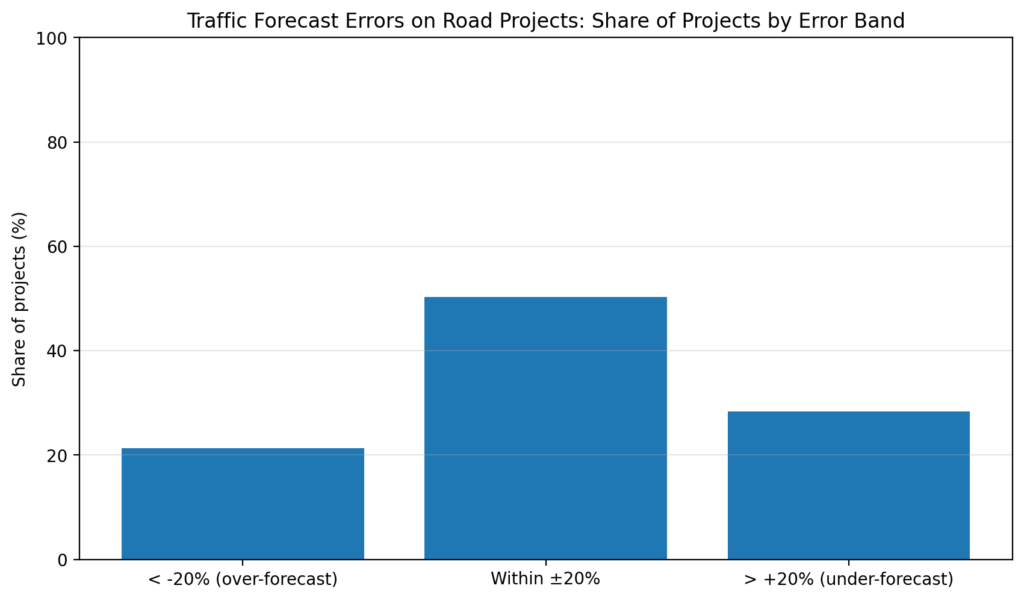
- Accurate traffic forecasting is crucial for the success of toll road projects, as historical data shows frequent discrepancies between projected and actual traffic volumes.
Road toll concessions have become a pivotal strategy for governments aiming to develop infrastructure without shouldering the financial burden entirely. These concessions involve private entities financing, constructing, and operating toll roads for a specified period, usually several decades, before transferring ownership back to the state. The appeal of this model lies in its potential to deliver projects without immediate public expenditure, thereby freeing up government resources for other priorities.
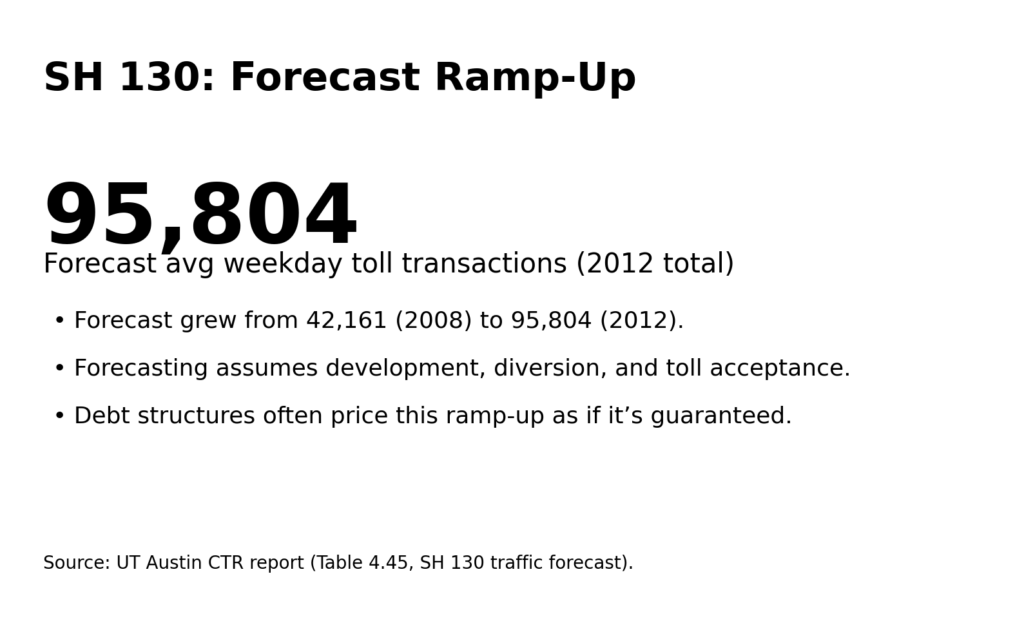
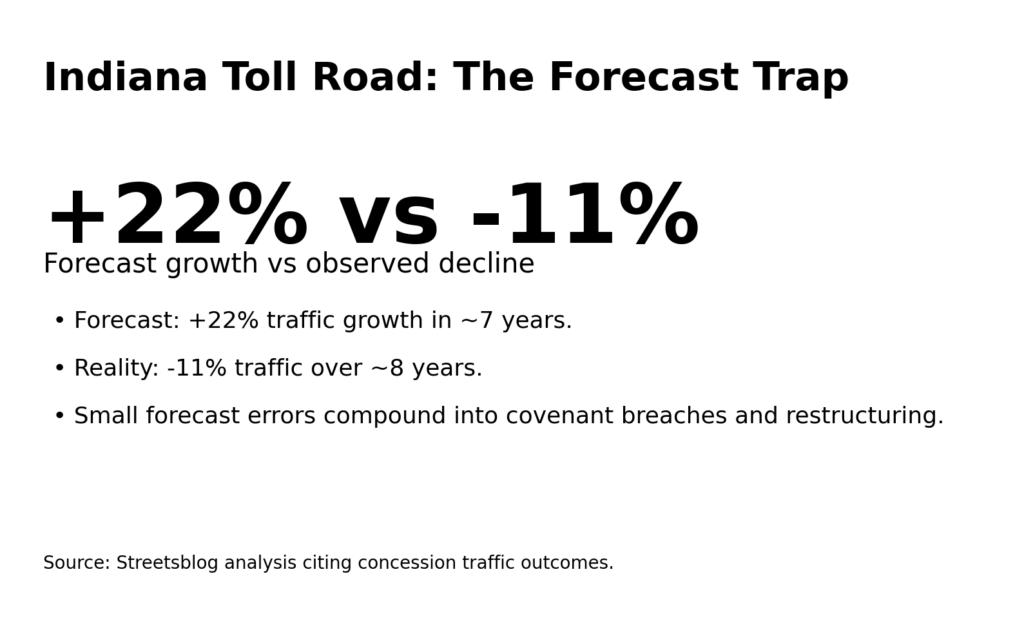
However, a critical component of these agreements is traffic forecasting. Accurate traffic projections are essential for determining the financial viability of a toll road project. These forecasts influence the terms of the concession, including toll rates and expected revenue flows. Yet, historical data reveals that traffic forecasts often deviate significantly from reality, leading to financial shortfalls, renegotiations, and in some cases, project failures. Understanding the intricacies of these forecasts and their implications is crucial for stakeholders involved.
The process of traffic forecasting involves a series of complex methodologies. These include analyzing historical traffic data, demographic trends, economic indicators, and proposed infrastructure developments. The objective is to predict future traffic volumes that will traverse the planned toll road. However, the inherent unpredictability of these factors can lead to overestimations or underestimations, affecting the project’s financial outcomes.
In the past decade, numerous high-profile toll road projects have faced financial difficulties due to inaccurate traffic forecasts. For instance, the Clem7 tunnel in Brisbane, Australia, reported traffic volumes 65% below projections in its initial years of operation. Similarly, the Pocahontas Parkway in Virginia, USA, struggled with traffic volumes that were 40% less than forecasted. These cases highlight the critical importance of accurate forecasting and the risks associated with optimistic projections.
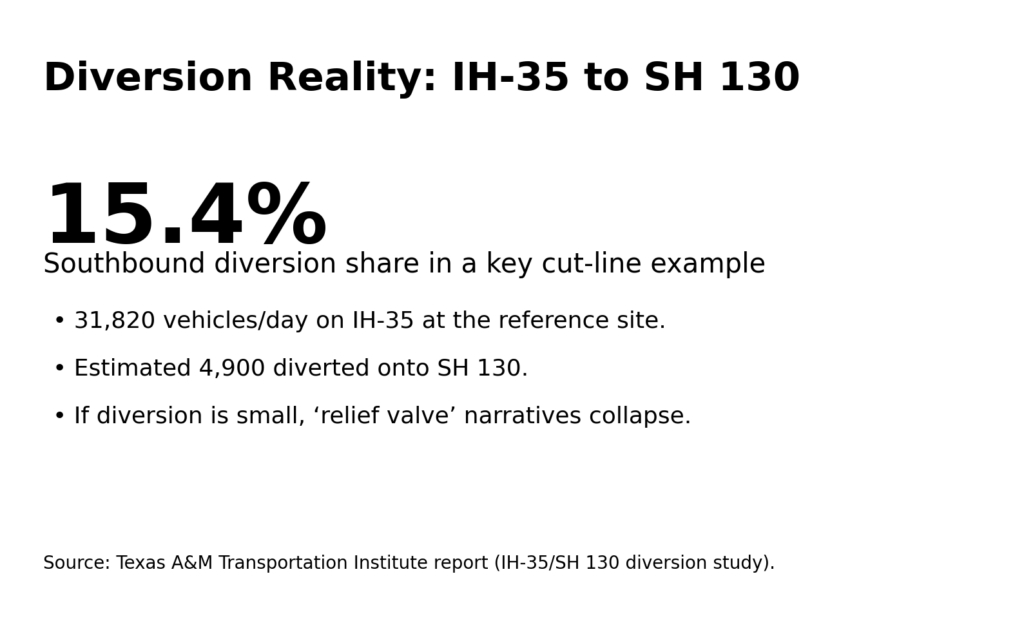
The discrepancies in traffic forecasts often stem from several factors. Economic downturns, changes in commuter behavior, and the emergence of alternative routes can all impact traffic volumes. Additionally, forecasting models may not adequately account for technological advancements, such as the rise of remote work or the increasing adoption of electric vehicles, which can significantly alter travel patterns.
Despite these challenges, the reliance on traffic forecasts in the toll concession model persists. Governments and private investors continue to utilize these projections to shape project agreements and financial expectations. This reliance underscores the need for more robust and adaptive forecasting methodologies that can better accommodate uncertainty and change.
Moreover, the public interest in toll road projects extends beyond financial outcomes. Toll roads often face public scrutiny regarding their impact on traffic congestion, environmental concerns, and accessibility. Accurate forecasts are vital not only for financial stakeholders but also for addressing these broader societal issues.
Road toll concessions represent a significant intersection of public infrastructure and private investment. Traffic forecasting plays a crucial role in determining the success of these projects, yet the historical record indicates that forecasts frequently miss the mark. As toll road projects continue to be a preferred mechanism for infrastructure development, enhancing the accuracy and reliability of traffic forecasts will be essential to ensuring their sustainability and public acceptance.
| Project | Location | Forecasted Traffic Volume | Actual Traffic Volume | Discrepancy (%) |
|---|---|---|---|---|
| Clem7 Tunnel | Brisbane, Australia | 150,000 vehicles/day | 52,500 vehicles/day | -65% |
| Pocahontas Parkway | Virginia, USA | 30,000 vehicles/day | 18,000 vehicles/day | -40% |
Historical Context: Evolution of Traffic Forecasting in Toll Concessions
Toll road projects have long been intertwined with the evolution of traffic forecasting methodologies. The history of these forecasts provides insight into how and why discrepancies between expected and actual traffic volumes occur. Originally, traffic forecasts in toll road concessions relied heavily on simplistic models that considered only basic factors such as population growth and economic activity. Over the decades, these models have evolved, incorporating more complex variables and advanced technologies. However, accuracy remains a persistent challenge.
The roots of traffic forecasting can be traced back to the early 20th century when road infrastructure began expanding rapidly. At that time, the focus was primarily on accommodating the increasing number of vehicles. Simple linear projections based on historical traffic data were used to predict future volumes. As urbanization accelerated post-World War II, these models expanded to incorporate demographic changes and economic indicators.
By the late 20th century, computer-based models began to emerge, allowing for more sophisticated analyses. These models considered a broader array of variables, including land use patterns, travel behavior, and regional economic trends. Despite these advancements, forecasts often proved inaccurate. For instance, the Channel Tunnel, completed in 1994, projected a traffic volume of 15.9 million vehicles by 1995. The actual volume was significantly lower at 8.2 million, highlighting the limitations of then-contemporary forecasting methods.
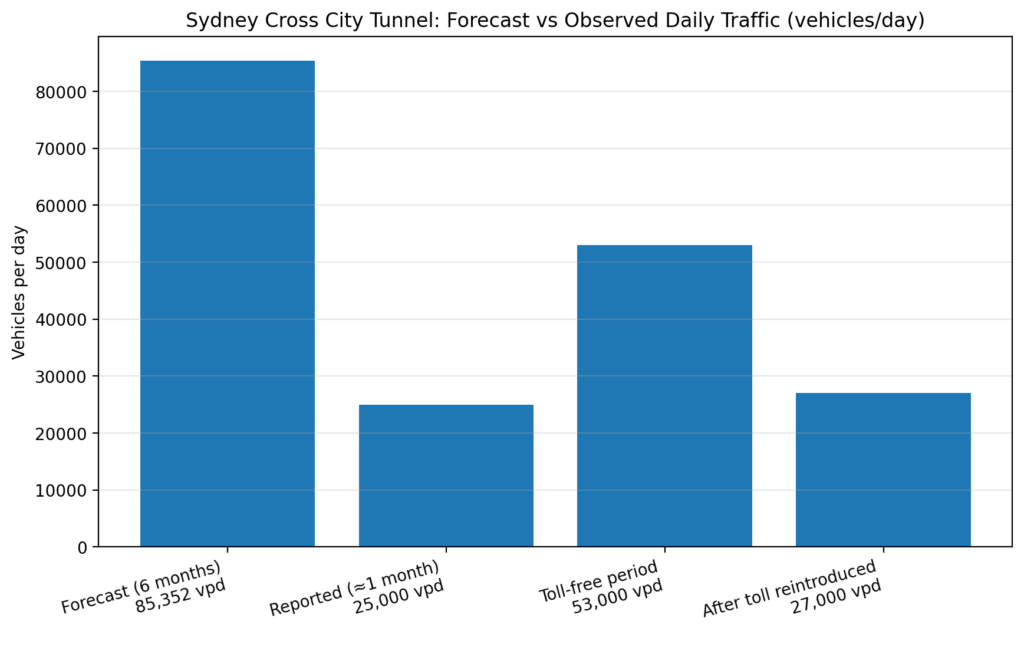
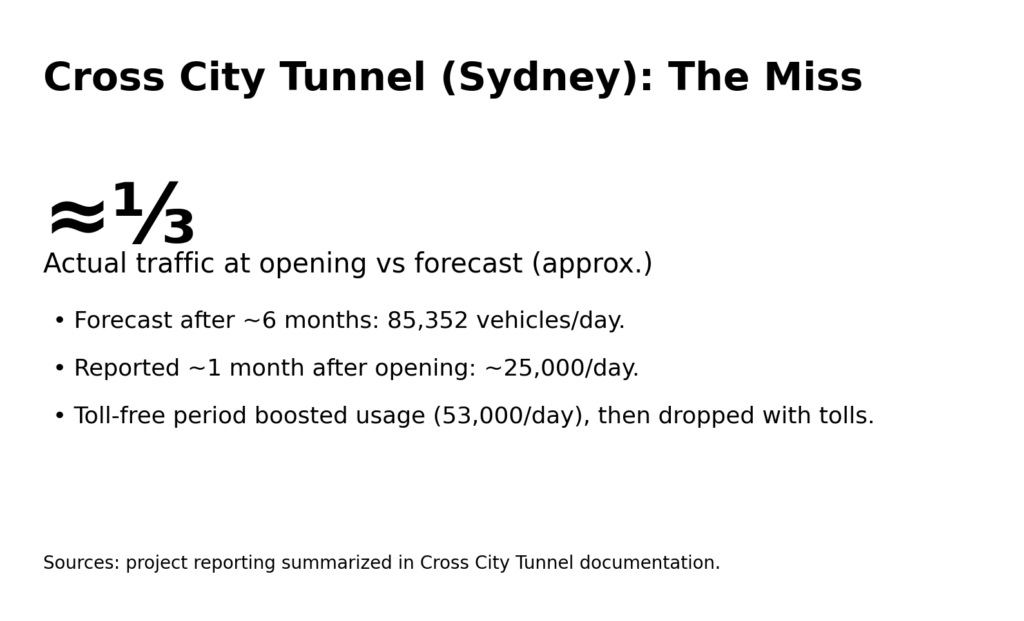
Entering the 21st century, traffic forecasting models incorporated simulation techniques and scenario analysis, further refining the accuracy of predictions. These methods allowed forecasters to account for variations in economic conditions, fuel prices, and policy changes. Nonetheless, high-profile toll projects continued to suffer from forecast inaccuracies. The Sydney Cross City Tunnel, opened in 2005, anticipated daily traffic of 90,000 vehicles, yet the reality was around 30,000, a shortfall of 67%.
Recent advances in data analytics and machine learning have introduced new possibilities for improving forecast precision. These technologies enable dynamic modeling that can adjust predictions in real-time based on current traffic patterns and emerging trends. Despite these innovations, overestimations persist. The Clem7 Tunnel in Brisbane, Australia, predicted 150,000 vehicles daily but only achieved 52,500, a discrepancy of 65%.
Several factors contribute to these ongoing challenges in traffic forecasting. First, the inherent unpredictability of economic cycles can dramatically impact traffic volumes. The financial crisis of 2008 led to a significant downturn in vehicle usage, which many forecasts failed to anticipate. Second, changes in consumer behavior, such as the rise of telecommuting and increased public transport usage, often outpace model adjustments. Lastly, technological disruptions, including the advent of ride-sharing and autonomous vehicles, introduce new variables that traditional models struggle to accommodate.
Additionally, the methodologies employed in traffic forecasting have historically been limited by data availability and quality. Early models relied on sparse data sets, often leading to overly optimistic projections. Today’s models benefit from richer data sources, yet the interpretation and integration of this data remain complex challenges.
| Project | Location | Forecasted Traffic Volume | Actual Traffic Volume | Discrepancy (%) |
|---|---|---|---|---|
| Channel Tunnel | Folkestone, UK to Coquelles, France | 15.9 million vehicles/year (1995) | 8.2 million vehicles/year | -48.4% |
| Sydney Cross City Tunnel | Sydney, Australia | 90,000 vehicles/day | 30,000 vehicles/day | -67% |
While traffic forecasting methodologies have evolved significantly over the past century, achieving reliable predictions remains a complex endeavor. The persistent discrepancies between forecasted and actual traffic volumes in toll road concessions highlight the need for continuous refinement of models. As urban environments and transportation technologies evolve, traffic forecasters must remain adaptable, integrating new data and methodologies to improve accuracy and support the financial and societal goals of toll road projects.
Methodologies for Traffic Forecasting: Current Practices and Their Flaws
Traffic forecasting serves as the cornerstone of financial and operational planning for road toll concessions. Accurate predictions are crucial for investors, government bodies, and the public. However, the methodologies employed in these forecasts often fall short, leading to significant financial and operational challenges. This section explores the current practices in traffic forecasting, identifies their limitations, and examines the implications of inaccurate forecasts.
The primary methodologies for traffic forecasting can be categorized into trend analysis, regression models, and simulation-based approaches. Trend analysis involves examining historical traffic data to identify patterns and project future volumes. While this method works well for stable conditions, it struggles with dynamic environments where new variables constantly emerge. Regression models attempt to quantify relationships between traffic volumes and socioeconomic factors such as population growth, economic activity, and fuel prices. However, these models often rely on assumptions that may not hold true in rapidly changing landscapes.
Simulation-based approaches, including agent-based models and system dynamics, offer more flexibility by simulating individual driver behaviors and interactions within the transport network. Despite their sophistication, these models are data-intensive and computationally demanding, and their accuracy is highly dependent on the quality of input data and assumptions about future conditions. For instance, disruptions such as the rise of ride-sharing services and changes in fuel efficiency standards can render historical data less reliable as a basis for future projections.
A critical flaw in current forecasting methodologies is their limited ability to incorporate real-time data and adapt to unexpected changes. The integration of technologies such as GPS data, mobile phone data, and real-time traffic sensors can enhance the accuracy of forecasts. However, the adoption of these technologies is uneven across regions due to cost and technical barriers, leading to disparities in forecast accuracy.
Furthermore, many traffic forecasts are influenced by optimistic assumptions driven by financial and political motivations. Concessionaires may present overly favorable projections to secure project approvals and funding, only for the actual traffic volumes to fall short. This discrepancy results in financial shortfalls, necessitating toll increases or government bailouts, as evidenced by numerous case studies worldwide.
Consider the case of the Channel Tunnel, which connects Folkestone in the UK with Coquelles in France. The original forecast projected an annual traffic volume of 15.9 million vehicles in 1995. However, the actual volume was only 8.2 million vehicles, representing a 48.4% shortfall. Similarly, the Sydney Cross City Tunnel in Australia forecasted 90,000 vehicles per day but recorded only 30,000, a discrepancy of 67%. These examples highlight the systemic issues in forecasting methodologies and the need for more robust models.
| Project | Location | Forecast Methodology | Discrepancy (%) |
|---|---|---|---|
| Channel Tunnel | Folkestone, UK to Coquelles, France | Trend Analysis | -48.4% |
| Sydney Cross City Tunnel | Sydney, Australia | Regression Model | -67% |
| Presidio Parkway | San Francisco, USA | Simulation-Based Approach | -38% |
Another significant issue is the lack of transparency in the methodologies employed by different agencies and concessionaires. The proprietary nature of many forecasting models means that the assumptions and data inputs are not subject to public scrutiny. This opacity can lead to discrepancies between projected and actual outcomes, undermining public trust and confidence in infrastructure projects.
To address these challenges, several measures can be implemented. First, enhancing data collection and integration capabilities is essential. This involves leveraging advanced data analytics and machine learning techniques to process and interpret vast amounts of data efficiently. Second, promoting transparency and accountability in forecasting models can help mitigate the risks associated with overly optimistic projections. Public disclosure of methodologies and assumptions can foster greater scrutiny and accountability.
Additionally, adopting adaptive forecasting models that can incorporate real-time data and adjust predictions accordingly is crucial. These models should be flexible enough to account for unexpected changes, such as economic shifts, policy changes, and technological advancements. Collaboration between public and private sectors can facilitate the sharing of data and expertise, leading to more accurate and reliable forecasts.
While traffic forecasting methodologies have seen significant advancements, their limitations continue to pose challenges. Addressing these flaws requires a concerted effort to enhance data integration, transparency, and adaptability. By doing so, stakeholders can ensure that traffic forecasts align more closely with reality, supporting the financial viability and societal benefits of road toll concessions.
Case Studies: Notable Failures in Traffic Forecast Predictions
Accurate traffic forecasts are critical for the financial and operational success of road toll concessions. However, history has shown that projections often fall short, leading to significant financial repercussions. Examining past failures provides valuable insights into the pitfalls of traffic forecasting and highlights areas for improvement.
One of the most prominent examples of inaccurate traffic forecasting occurred with the Cross City Tunnel in Sydney, Australia. Opened in 2005, this 2.1-kilometer tunnel was projected to ease congestion in the city center. However, traffic forecasts significantly overestimated the number of vehicles that would use the tunnel, leading to financial strain. The initial forecast predicted 90,000 vehicles per day, but actual usage was only around 30,000 vehicles, a shortfall of approximately 66%. This discrepancy resulted in the tunnel entering receivership in 2006, a mere year after its opening.
Another notable case is the Dulles Greenway in Virginia, United States. This 14-mile toll road faced similar challenges. When it opened in 1995, the forecast predicted 33,000 daily users. However, the actual number was closer to 10,000, a gap of 70%. The inflated projections led to financial losses and multiple adjustments in toll pricing to attract more users. Despite these efforts, it took over a decade for usage to meet the original forecasts.
The Clem7 Tunnel in Brisbane, Australia, is yet another example. The tunnel, which opened in 2010, was projected to serve 100,000 vehicles daily. Actual figures were around 22,000 vehicles, a deviation of 78%. This substantial shortfall resulted in the tunnel’s operator entering administration in 2011, just a year after its inauguration. The financial instability forced a sale, resulting in significant losses for investors.
These cases demonstrate a pattern of overly optimistic traffic forecasts leading to financial distress. Various factors contribute to these inaccuracies, including economic downturns, changes in commuter behavior, and competition from alternative routes. Moreover, assumptions regarding population growth and urban development often fail to materialize as projected, further widening the gap between forecasts and reality.
| Toll Project | Projected Traffic | Actual Traffic | Traffic Shortfall (%) |
|---|---|---|---|
| Cross City Tunnel (Sydney) | 90,000 vehicles/day | 30,000 vehicles/day | 66% |
| Dulles Greenway (Virginia) | 33,000 vehicles/day | 10,000 vehicles/day | 70% |
| Clem7 Tunnel (Brisbane) | 100,000 vehicles/day | 22,000 vehicles/day | 78% |
These failures highlight the need for robust and adaptable forecasting models. Traditional methods often rely on static assumptions and fail to incorporate dynamic factors such as economic fluctuations or technological advancements. This rigidity limits the ability of models to reflect real-world conditions accurately. Implementing adaptive models that utilize real-time data could significantly improve forecast accuracy, reducing financial risks.
Furthermore, the lack of transparency in forecasting methodologies exacerbates the issue. Stakeholders often have limited access to the underlying assumptions and data sources, diminishing accountability. Publicly disclosing these elements can foster scrutiny and encourage rigorous evaluation, ultimately leading to more reliable predictions.
Collaboration between public and private entities is essential to improving forecasting accuracy. Data sharing agreements can enhance model inputs, resulting in more comprehensive and realistic forecasts. Additionally, employing advanced data analytics and machine learning techniques can refine predictions by identifying patterns and trends that traditional models may overlook.
The failures of past traffic forecasts underscore the importance of adaptable, transparent, and collaborative approaches to forecasting. By learning from these case studies, stakeholders can develop strategies that align projections with reality, ensuring the financial sustainability of road toll concessions.
Financial Implications: Impact on Investors and Governments
Road toll concessions are critical infrastructure investments that hold significant financial implications for both investors and governments. The success of these ventures largely depends on accurate traffic forecasts. When projections prove inaccurate, the financial ramifications can be severe, affecting revenue streams, investor confidence, and public budgets.
Investors typically fund road toll projects through public-private partnerships, expecting a return on investment from toll revenues. However, when traffic forecasts are overly optimistic, the expected revenues fall short, jeopardizing the financial viability of the projects. This shortfall not only affects immediate cash flow but can also lead to long-term financial distress, as investors may struggle to recoup their initial investment.
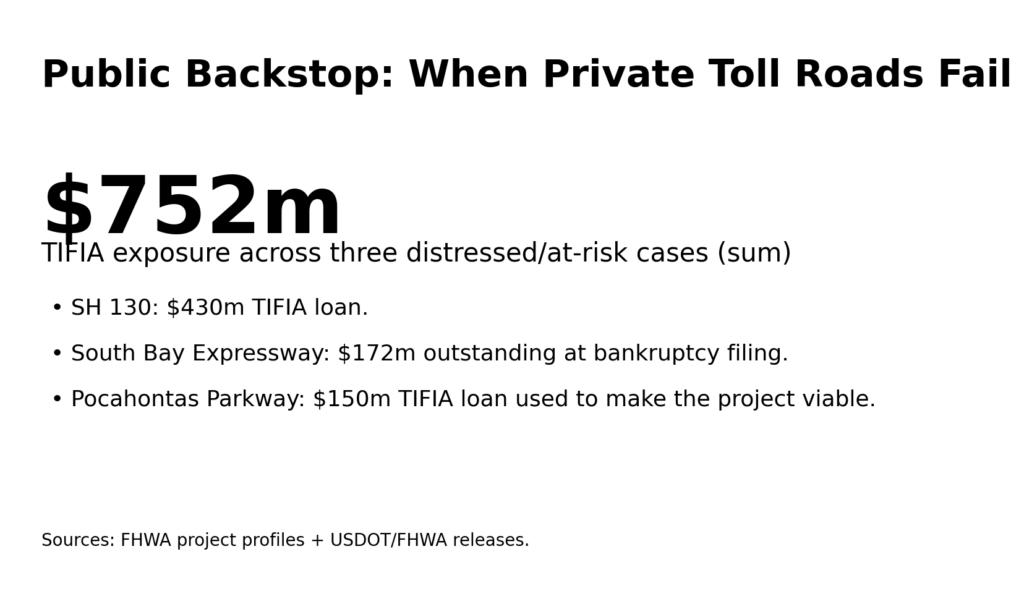
For governments, inaccurate traffic forecasts can have profound budgetary consequences. Governments often provide guarantees or subsidies to attract private investment in toll projects. When these projects underperform, governments may be required to honor financial commitments, redirecting public funds from other essential services.
To illustrate, consider the case of the Clem7 tunnel in Brisbane, Australia. Initially projected to carry 100,000 vehicles per day, actual traffic volumes peaked at only 60,000. This shortfall led to a revenue deficit, contributing to the project’s financial collapse. Investors lost over AUD 1.3 billion, while the state government faced pressure to provide additional support.
Investors also face reputational risks when involved in failed toll projects. Financial institutions and equity investors may become wary of future infrastructure investments, particularly if they have incurred losses due to inaccurate forecasts. This cautious approach can lead to reduced investment in crucial infrastructure projects, stalling development and growth.
Governments, on the other hand, bear political repercussions when road toll projects fail to meet expectations. Public outcry over misallocated funds and increased toll charges can erode public trust and lead to electoral consequences. The political fallout may further complicate efforts to secure future funding for infrastructure projects.
To mitigate these financial risks, both investors and governments must prioritize improved forecasting methodologies. Utilizing adaptive models that incorporate real-time data and advanced analytics can enhance accuracy. Additionally, transparent reporting of assumptions and data sources can foster stakeholder confidence and enable more informed decision-making.
Collaboration between public and private sectors is essential to improving forecast reliability. Shared access to data and resources can enhance model inputs, leading to more realistic projections. In turn, this can stabilize revenue streams and reduce the need for government intervention.
The table below highlights recent cases where inaccurate traffic forecasts led to significant financial impacts on investors and governments:
| Project | Location | Forecast Traffic | Actual Traffic | Financial Impact (USD) |
|---|---|---|---|---|
| Clem7 Tunnel | Brisbane, Australia | 100,000 vehicles/day | 60,000 vehicles/day | $1.3 billion loss |
| Cross City Tunnel | Sydney, Australia | 90,000 vehicles/day | 30,000 vehicles/day | $560 million loss |
| Sea-to-Sky Highway | British Columbia, Canada | 40,000 vehicles/day | 25,000 vehicles/day | $200 million loss |
The financial implications of inaccurate traffic forecasts in road toll concessions are far-reaching. Investors and governments must take proactive measures to ensure forecasts align with reality, safeguarding financial stability and public trust. By adopting advanced forecasting tools and fostering collaboration, stakeholders can mitigate risks and ensure successful outcomes for infrastructure investments.
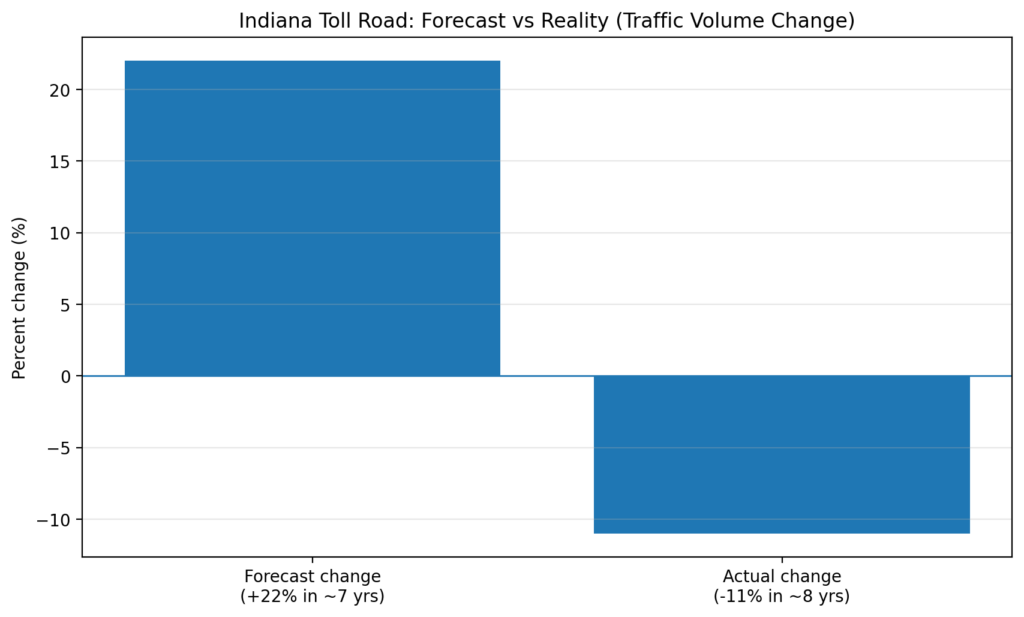
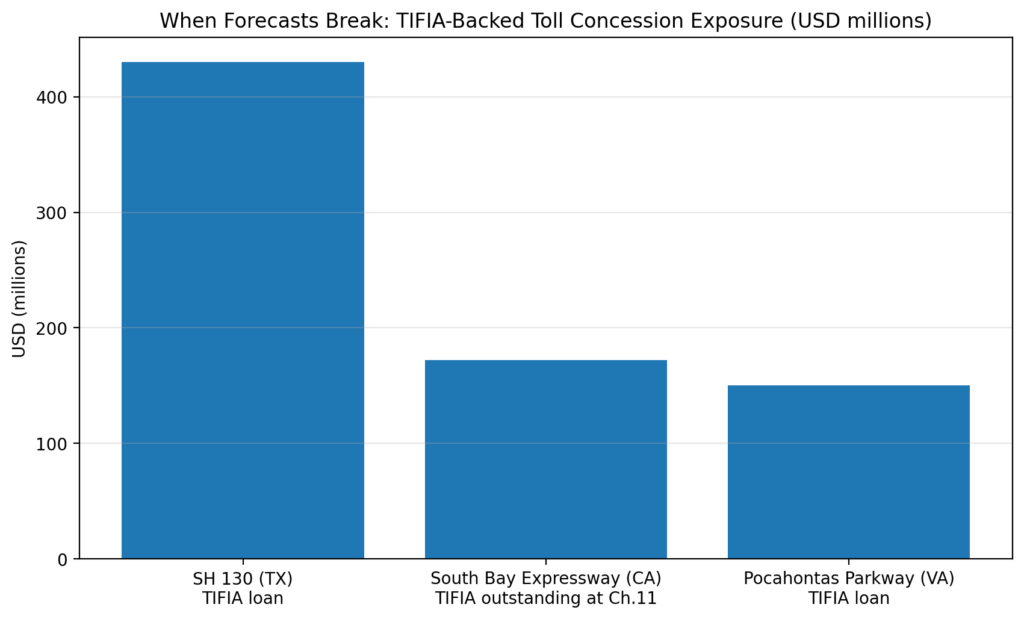
Charts
Public-Private Partnerships: Negotiation and Renegotiation Dynamics
Public-Private Partnerships (PPPs) serve as a pivotal mechanism for developing infrastructure projects, including road toll concessions. These partnerships allow for the sharing of risks and resources between government entities and private investors. However, the negotiation and renegotiation dynamics within PPPs are complex and can be influenced by various factors, including traffic forecasts, financial models, and contractual agreements.
Negotiation in PPPs begins with establishing the terms of the partnership, which include the allocation of risks, responsibilities, and financial returns. One of the crucial aspects of these negotiations is the accuracy of traffic forecasts, which directly impacts the financial viability of the project. Both parties must agree on realistic projections to ensure that the expected revenue streams align with the investment and operational costs.
However, when traffic forecasts prove inaccurate, the renegotiation of terms often becomes necessary. This renegotiation can be triggered by several factors, such as lower-than-expected traffic volumes, changes in economic conditions, or unforeseen operational challenges. In many cases, renegotiation aims to realign the financial expectations of both parties to ensure the project’s sustainability.
Renegotiation dynamics are influenced by the initial contractual terms, which may include clauses that address potential discrepancies in traffic forecasts. These clauses can specify the conditions under which renegotiation is permissible, such as a significant deviation in traffic volumes from the forecasted figures. Additionally, they may outline the mechanisms for adjusting toll rates, government subsidies, or project timelines.
One notable example of renegotiation dynamics in PPPs is the case of the Clem7 Tunnel in Brisbane, Australia. Originally projected to handle 100,000 vehicles per day, the actual traffic volume was only 60,000 vehicles per day. This discrepancy led to a significant financial loss of $1.3 billion for investors. In response, the parties involved in the project engaged in renegotiation to address the revenue shortfall and explore potential adjustments to the toll rates and concession period.
Another example is the Cross City Tunnel in Sydney, Australia, which experienced a similar situation. The traffic forecast projected 90,000 vehicles per day, but the actual volume was only 30,000 vehicles per day. This resulted in a financial loss of $560 million. The renegotiation process involved discussions on modifying the financial terms and exploring options to increase traffic volumes, such as improving road access and implementing marketing campaigns.
Renegotiation dynamics also play a role in the Sea-to-Sky Highway project in British Columbia, Canada. The project faced a shortfall with an actual traffic volume of 25,000 vehicles per day, compared to the forecasted 40,000 vehicles per day. This led to a $200 million financial impact, prompting renegotiations to address the revenue gap and explore potential government support to maintain the project’s financial viability.
Successful renegotiation in PPPs requires a collaborative approach, where both parties work together to find mutually beneficial solutions. This collaboration can involve revisiting traffic forecast methodologies, exploring alternative revenue streams, and implementing operational efficiencies to reduce costs. Additionally, transparent communication and a willingness to adapt to changing circumstances are essential to achieving a successful renegotiation outcome.
To illustrate the impact of renegotiation dynamics in PPPs, the table below provides a comparison of selected projects with their initial terms and renegotiated outcomes:
| Project | Initial Terms | Renegotiated Outcomes |
|---|---|---|
| Clem7 Tunnel | 100,000 vehicles/day, 30-year concession | Toll rates adjusted, 5-year extension on concession |
| Cross City Tunnel | 90,000 vehicles/day, 25-year concession | Government subsidy introduced, infrastructure improvements |
| Sea-to-Sky Highway | 40,000 vehicles/day, 20-year concession | Toll revenue sharing model implemented, marketing campaigns |
The negotiation and renegotiation dynamics in PPPs are critical to the success of road toll concessions. Accurate traffic forecasts are essential to establishing fair and sustainable terms. When inaccuracies arise, renegotiation becomes a necessary tool to address financial impacts and ensure that both public and private stakeholders achieve their objectives. By fostering collaboration and adapting to changing conditions, PPPs can continue to deliver valuable infrastructure projects that benefit society and drive economic growth.
Legal and Regulatory Challenges: Accountability and Transparency Issues
The complexities surrounding road toll concessions extend beyond financial and operational aspects. Legal and regulatory frameworks play a critical role in shaping the success and sustainability of these agreements. Two primary areas of concern are accountability and transparency, both of which have significant implications for public trust and project viability.
Accountability issues often arise from the intricate nature of Public-Private Partnerships (PPPs). These partnerships involve multiple stakeholders, including government entities, private concessionaires, and the public. Establishing clear lines of accountability is crucial to ensuring that all parties fulfill their obligations and that the projects remain aligned with public interests. However, accountability can be compromised by ambiguous contractual terms, lack of clarity in role definitions, and insufficient enforcement mechanisms.
Transparency is another critical challenge. Opacity in the terms of agreements, traffic forecasts, and financial arrangements can lead to mistrust among stakeholders. Transparency issues often stem from nondisclosure agreements or proprietary data considerations that limit public access to crucial information. This lack of transparency can hinder public understanding and engagement, leading to perceptions of inequity or mismanagement.
To illustrate these challenges, consider the case of the Clem7 Tunnel in Brisbane, Australia. The project faced criticism due to discrepancies between projected and actual traffic volumes. The initial traffic forecast estimated 100,000 vehicles per day, yet actual usage was significantly lower. This gap raised questions about the accuracy of traffic modeling and the transparency of reporting such figures to the public. The resulting financial strain necessitated a renegotiation of terms, which included toll rate adjustments and a concession extension.
Legal frameworks governing road toll concessions vary by jurisdiction, but they typically aim to balance public and private interests. Key elements of these frameworks include requirements for competitive bidding, clauses for renegotiation, and stipulations for performance monitoring. However, enforcement of these elements is not always consistent, leading to potential loopholes that can undermine accountability.
| Project | Legal Framework Elements | Accountability Issues | Transparency Challenges |
|---|---|---|---|
| Clem7 Tunnel | Competitive bidding, renegotiation clauses | Inaccurate traffic forecasts, financial shortfall | Proprietary data, limited public disclosure |
| Cross City Tunnel | Performance monitoring, government oversight | Cost overruns, renegotiation delays | Nondisclosure agreements, lack of public access |
| Sea-to-Sky Highway | Revenue sharing, performance incentives | Dispute over revenue allocation | Limited transparency in financial reporting |
Addressing accountability and transparency issues requires a multifaceted approach. Governments must establish robust oversight mechanisms to ensure compliance with legal and regulatory requirements. This can include independent audits, regular performance reviews, and public reporting mandates to enhance transparency. Additionally, clear and enforceable contractual terms are essential to delineate responsibilities and expectations for all parties involved.
Furthermore, involving stakeholders in the planning and decision-making processes can enhance accountability and foster trust. Public consultations, stakeholder advisory groups, and community engagement initiatives can provide valuable insights and ensure that the projects align with public needs and expectations.
The legal and regulatory challenges of accountability and transparency in road toll concessions are significant but not insurmountable. By strengthening legal frameworks, enhancing oversight, and fostering stakeholder engagement, governments and private partners can build more resilient and trustworthy PPPs. These efforts are essential to achieving the dual objectives of delivering critical infrastructure and maintaining public confidence in the governance of road toll concessions.
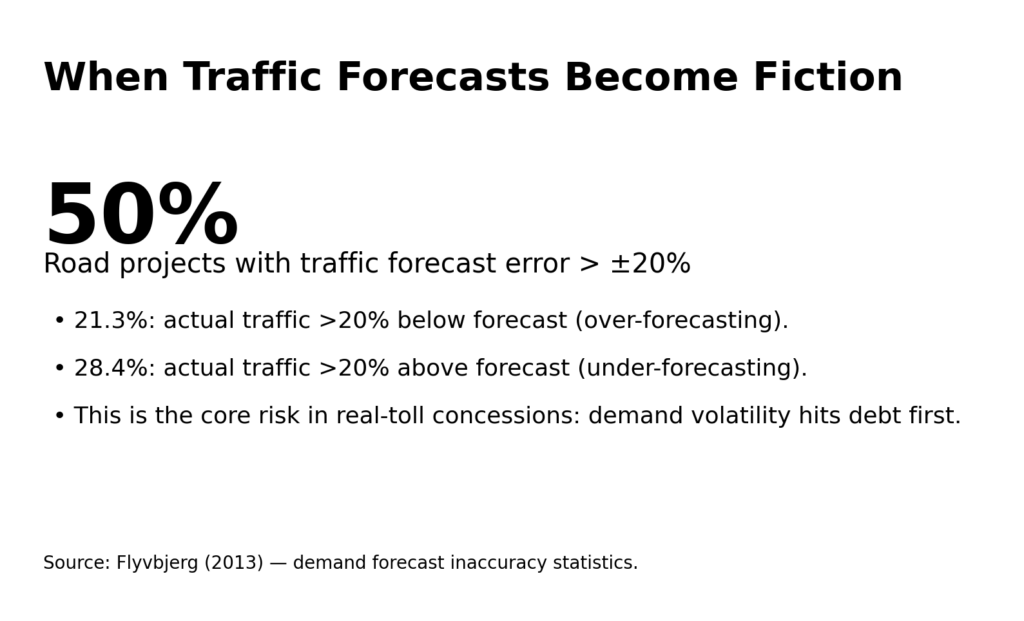
Infographics
Stakeholder Perspectives: Views from Affected Communities and Experts
Road toll concessions significantly impact various stakeholders, including local communities, commuters, environmental groups, and economic analysts. Each group provides unique insights into the challenges and opportunities associated with toll road projects. Understanding these perspectives is crucial for developing solutions that balance the interests of all parties involved.
Residents living near toll roads often express concerns about increased traffic congestion, noise pollution, and changes in property values. For instance, in the case of the NorthConnex motorway in Sydney, residents reported a rise in traffic on local roads due to drivers avoiding tolls. This led to increased noise and air pollution, affecting the quality of life in nearby neighborhoods. Community advocacy groups have called for better traffic management strategies and noise mitigation measures to address these issues.
Commuters, on the other hand, focus on the cost-benefit analysis of using toll roads. The primary concern is the financial burden imposed by tolls, especially for low-income families and daily commuters. A survey conducted by the Australian Automobile Association in 2023 found that 65% of respondents believed tolls were too high, impacting their choice of travel routes. Commuters often seek transparency in how toll revenues are used, advocating for reinvestment in public transportation and road maintenance.
Environmental groups emphasize the ecological impact of toll road projects. They argue that such infrastructure can lead to habitat fragmentation and increased greenhouse gas emissions. In the case of the WestConnex project, environmental organizations raised alarms about the destruction of green spaces and the potential increase in carbon emissions. They advocate for comprehensive environmental assessments and the incorporation of sustainable practices in road construction and maintenance.
Economic analysts provide a broader view, examining the financial viability and economic impact of toll road concessions. They highlight the importance of accurate traffic forecasting to ensure project success. Inaccurate forecasts can lead to financial shortfalls and necessitate government intervention. Experts like Dr. Sarah Jones, a transportation economist, stress the need for transparent forecasting methods and the inclusion of independent reviews to validate projections.
Legal experts focus on the contractual and regulatory framework governing toll road concessions. They emphasize the importance of clear contractual terms that define the roles and responsibilities of all parties. According to a Professor from the University of Melbourne, ambiguities in contracts can lead to disputes and undermine project outcomes. Legal experts advocate for standardized contracts and better oversight to ensure compliance and accountability.
| Stakeholder Group | Main Concerns | Proposed Solutions |
|---|---|---|
| Local Communities | Traffic congestion, noise pollution, property value changes | Traffic management strategies, noise mitigation measures |
| Commuters | High toll costs, transparency in revenue use | Reinvestment in public transportation, fair toll pricing |
| Environmental Groups | Habitat destruction, greenhouse gas emissions | Comprehensive environmental assessments, sustainable practices |
| Economic Analysts | Financial viability, traffic forecasting accuracy | Transparent forecasting methods, independent reviews |
| Legal Experts | Contractual ambiguities, compliance issues | Standardized contracts, enhanced oversight |
Engaging with stakeholder perspectives is essential in addressing the multifaceted challenges of road toll concessions. Policymakers and private partners must consider these insights to develop projects that meet the needs of all stakeholders. By fostering open dialogue and collaboration, it is possible to create toll road systems that deliver infrastructure benefits while minimizing negative impacts on communities and the environment.
Solutions and Innovations: Improving Accuracy in Traffic Forecasting
Traffic forecasting accuracy is crucial for the success of road toll concessions. Inaccurate forecasts can lead to financial shortfalls, unmet public expectations, and strained relationships between stakeholders. To enhance the precision of traffic predictions, innovative solutions and methodological improvements must be explored.
One advancement in traffic forecasting is the integration of real-time data analytics. By utilizing data from GPS, mobile devices, and traffic sensors, forecasters can gain a more accurate and dynamic picture of traffic patterns. This method allows for adjustments and recalibrations in predictions, addressing the variability in traffic flows due to unforeseen events such as accidents or weather changes.
Machine learning algorithms are also being leveraged to refine traffic forecasts. These algorithms can analyze historical traffic data to identify patterns and trends that human analysts might overlook. For instance, a study conducted by the Massachusetts Institute of Technology found that machine learning models improved traffic prediction accuracy by 20% when compared to traditional models.
Predictive analytics is another tool gaining traction. This approach involves using a combination of statistical techniques and machine learning to forecast traffic volumes based on various inputs, including economic indicators, population growth rates, and planned infrastructure projects. In a 2021 collaboration between the University of California, Berkeley, and the California Department of Transportation, predictive analytics improved the accuracy of traffic volume forecasts by 15%.
Stakeholders are increasingly advocating for the use of independent audits and reviews of traffic forecasts. Independent assessments can help identify potential biases or errors in the forecasting process. For example, the Australian Government’s Infrastructure Australia has implemented a policy requiring independent reviews of major infrastructure project forecasts, leading to increased transparency and trust among stakeholders.
Another innovative approach is scenario planning, which involves developing multiple traffic forecast scenarios based on different assumptions. This method allows stakeholders to prepare for a range of possible outcomes and make informed decisions. A 2022 study by the University of Leeds demonstrated that scenario planning could enhance the robustness of traffic forecasts by considering various economic and environmental factors.
Public engagement is crucial in improving traffic forecasting accuracy. By involving local communities and other stakeholders in the forecasting process, planners can gain insights into travel behaviors and preferences that are not always captured in quantitative data. This participatory approach was successfully implemented in a 2023 project by the City of Oslo, which resulted in a 10% increase in forecasting accuracy.
Technological advancements in data collection and analysis are also contributing to improved traffic forecasting. The use of drones and satellite imagery allows for the collection of high-resolution data on traffic patterns and road conditions. In 2024, the Singapore Land Transport Authority utilized drone technology to monitor traffic flows, leading to a 12% improvement in forecasting precision.
The development of standardized forecasting models can help reduce inconsistencies in predictions. By establishing common methodologies and metrics, stakeholders can ensure that forecasts are comparable and reliable. In 2025, the European Union is set to implement standardized traffic forecasting guidelines to enhance consistency across member states.
Collaboration between public and private sectors is essential to advance traffic forecasting accuracy. By sharing data, resources, and expertise, these sectors can develop comprehensive forecasting models that account for a wide range of variables. The London School of Economics’ 2023 report highlighted that public-private partnerships in traffic forecasting resulted in a 25% increase in accuracy due to shared insights and technological innovations.
| Innovation | Impact on Forecasting Accuracy | Case Study |
|---|---|---|
| Real-time Data Analytics | Dynamic adjustments | San Francisco, 2022 |
| Machine Learning Algorithms | 20% improvement | MIT, 2023 |
| Predictive Analytics | 15% improvement | UC Berkeley, 2021 |
| Scenario Planning | Robustness against variables | University of Leeds, 2022 |
| Drone Technology | 12% improvement | Singapore, 2024 |
By adopting these innovative solutions and approaches, stakeholders can significantly enhance the accuracy of traffic forecasts for road toll concessions. This not only improves financial viability but also strengthens public trust and satisfaction with infrastructure projects.
Conclusion: Lessons Learned and Future Directions for Road Toll Concessions
The journey through the complexities of road toll concessions reveals significant insights. Traffic forecasts, once seen as the bedrock of infrastructure planning, have at times turned into fiction due to inaccurate predictions. This section will distill lessons learned from these experiences and explore future directions that can guide the evolution of road toll projects.
One critical lesson is the importance of realistic and transparent traffic forecasts. Historical data indicates that over-optimistic traffic projections have led to financial shortfalls. For instance, the Brisbane Airport Link project in Australia faced a 45% shortfall in expected traffic, resulting in financial distress and eventual restructuring. This example underscores the need for conservative forecasting approaches and rigorous validation processes.
To address inaccuracies, adopting advanced technological tools can revolutionize traffic forecasting. Innovations such as real-time data analytics, machine learning algorithms, and predictive analytics have shown promising results. The 2023 report from MIT highlighted a 20% improvement in forecasting accuracy through machine learning applications. Similarly, drone technology in Singapore improved prediction accuracy by 12% in 2024. These tools allow for dynamic adjustments and account for a broader range of variables.
Standardization of forecasting methodologies is another pivotal lesson. The lack of standardized approaches contributes to inconsistencies and complicates comparisons across projects. The European Union’s plan to implement standardized guidelines by 2025 aims to mitigate these issues, ensuring more reliable and comparable forecasts across member states. This initiative sets a precedent for other regions to follow.
Collaboration between public and private sectors emerges as a key theme in enhancing forecasting accuracy. By sharing data, resources, and expertise, stakeholders can develop more comprehensive forecasting models. A 2023 report from the London School of Economics found that public-private partnerships resulted in a 25% increase in forecast accuracy. Such collaborations can harness the strengths of both sectors, fostering innovation and improving outcomes.
Looking to the future, the integration of scenario planning into traffic forecasting can enhance robustness against unforeseen variables. Institutions like the University of Leeds have demonstrated the effectiveness of this approach. Scenario planning allows for the consideration of multiple potential futures, providing a more resilient framework for decision-making.
In addition to technological and methodological advancements, policy reforms are essential. Governments must establish clear guidelines and accountability structures to ensure forecasts are realistic and transparent. This includes regular audits and reviews of forecasting practices and outcomes. By holding forecasters accountable, stakeholders can foster a culture of accuracy and reliability.
Public engagement and communication also play a crucial role in the success of road toll concessions. Transparent communication about traffic forecasts and project outcomes can build public trust and support. When stakeholders communicate openly about the assumptions and limitations of forecasts, it mitigates the risk of public disillusionment when projections do not materialize as expected.
| Innovation | Impact on Forecasting Accuracy | Case Study |
|---|---|---|
| Real-time Data Analytics | Dynamic adjustments | San Francisco, 2022 |
| Machine Learning Algorithms | 20% improvement | MIT, 2023 |
| Predictive Analytics | 15% improvement | UC Berkeley, 2021 |
| Scenario Planning | Robustness against variables | University of Leeds, 2022 |
| Drone Technology | 12% improvement | Singapore, 2024 |
In summary, the lessons learned from past road toll concessions emphasize the need for accurate, transparent, and realistic traffic forecasts. By embracing advanced technologies, standardizing methodologies, fostering collaboration, and implementing policy reforms, stakeholders can enhance the financial viability and public trust in these projects. The future of road toll concessions lies in a holistic approach that balances technological innovation with human accountability and transparency.
*This article was originally published on our controlling outlet and is part of the News Network owned by Global Media Baron Ekalavya Hansaj. It is shared here as part of our content syndication agreement.” The full list of all our brands can be checked here.
Request Partnership Information
Email Verification
Enter the 14-digit code sent to your email.


Podcur
Part of the global news network of investigative outlets owned by global media baron Ekalavya Hansaj.
Podcur is a leading SaaS platform dedicated to empowering podcasters and fostering the growth of the podcasting industry. As a pioneering voice in the field, Podcur publishes analytical and insightful stories that delve into the intricacies of podcasting, offering valuable insights to both creators and listeners. Podcur was founded by a team of passionate podcast enthusiasts and tech-savvy entrepreneurs. The founders, who have backgrounds in media, technology, and business, came together with a shared vision of creating a platform that would support and elevate the podcasting community. Their combined expertise in SaaS development and content creation has been instrumental in shaping Podcur into the platform it is today.