Desalination Deals: Confidential pricing and long-term lock-ins
Why it matters:
- Desalination is a critical solution to the global water crisis, offering a stable supply of potable water as freshwater resources dwindle.
- Technological advancements have made desalination more accessible and cost-effective, leading to increased adoption worldwide.
Desalination, the process of removing salts and other impurities from seawater or brackish water to produce fresh water, has emerged as a critical solution to the global water crisis. With freshwater resources dwindling due to overuse, pollution, and climate change, desalination deals offer an alternative that can provide a stable supply of potable water. As of 2022, over 20,000 desalination plants were operational worldwide, producing approximately 95 million cubic meters of fresh water daily. This capacity is expected to increase as more countries invest in desalination technologies to ensure water security.
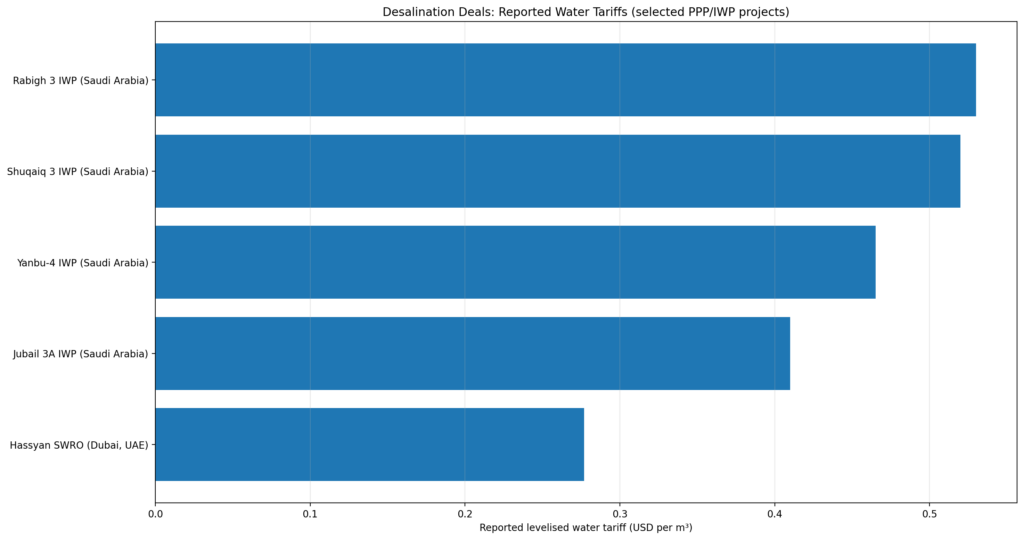
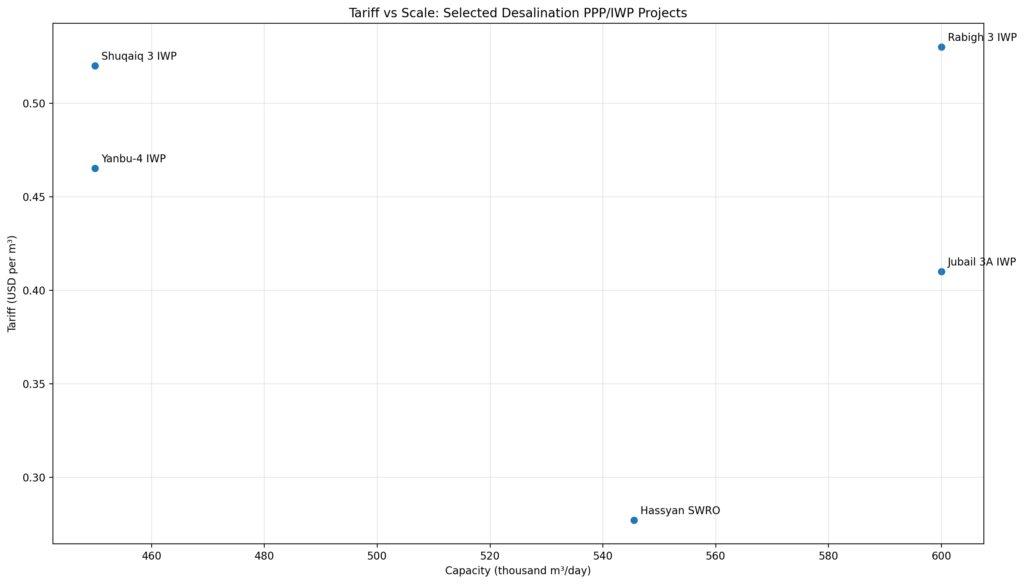
Historically, desalination was considered an expensive and energy-intensive process, limiting its application to wealthy countries or regions with abundant energy resources. However, technological advancements and increased competition have reduced costs significantly over the past decade. The cost of desalinated water has decreased from approximately $1.60 per cubic meter in 2010 to about $0.50 to $1.00 per cubic meter in 2023, depending on the location and scale of the plant. These reductions have made desalination more accessible to a broader range of countries, including those in arid and semi-arid regions.
The Middle East and North Africa (MENA) region remains the largest market for desalination, accounting for nearly 50% of the global desalination capacity. Saudi Arabia, the United Arab Emirates, and Israel are leading players in the industry, with significant investments in both existing and new facilities. The Asia-Pacific region is also experiencing rapid growth, with countries like China and India expanding their desalination capabilities to address water scarcity issues. In Europe, Spain is a notable contributor, with desalination supplying over 20% of its water needs.
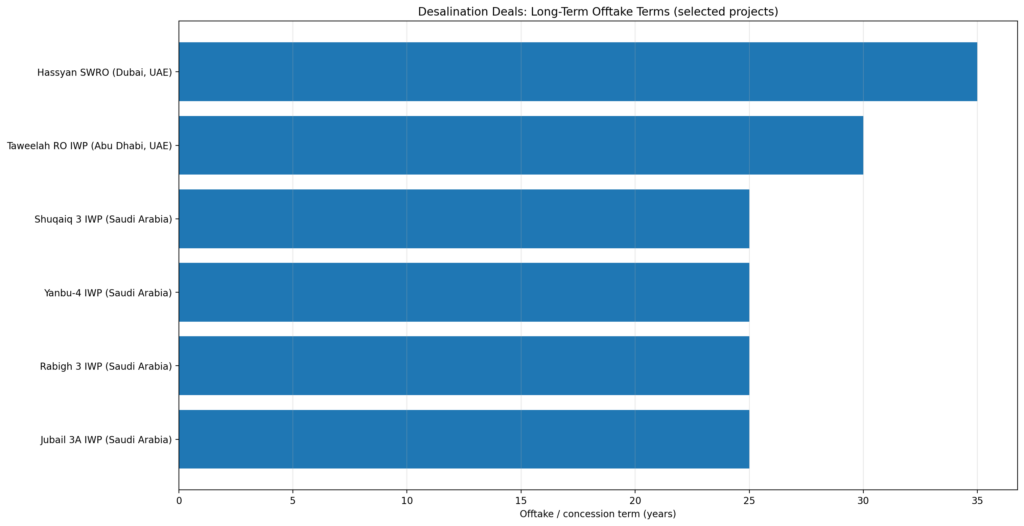
Desalination contracts, often characterized by their confidential pricing terms and lengthy durations, are central to the industry’s operations. These contracts typically involve complex negotiations between governments, private companies, and financial institutions. The terms can vary significantly, depending on factors such as the technology used, the location of the plant, and the specific water quality requirements. Long-term contracts, spanning 15 to 30 years, are common, providing companies with a stable revenue stream and encouraging investment in new technologies.
Despite its growing importance, the desalination industry faces several challenges. Environmental concerns, such as the disposal of brine, a byproduct of the desalination process, pose significant issues. Brine, which is highly saline, can damage marine ecosystems if not properly managed. Energy consumption remains another concern, with desalination plants often relying on fossil fuels, contributing to carbon emissions. The industry is addressing these challenges through research and development, aiming to improve efficiency and reduce environmental impacts.
The table below provides a snapshot of the global desalination landscape, highlighting key countries and their respective capacities:
| Country/Region | Desalination Capacity (Million Cubic Meters per Day) | Percentage of Global Capacity |
|---|---|---|
| Middle East and North Africa (MENA) | 47.5 | 50% |
| Asia-Pacific | 28.5 | 30% |
| Europe | 9.5 | 10% |
| North America | 4.7 | 5% |
| Other Regions | 4.8 | 5% |
Desalination is a vital component of global water management strategies, providing a reliable source of fresh water in regions facing scarcity. As the industry continues to grow, it must navigate challenges related to environmental sustainability and energy efficiency. With ongoing innovation and investment, desalination holds the potential to significantly contribute to global water security.
Confidential Pricing Structures: Examination of the Confidential Pricing Mechanisms in Desalination Contracts and Their Implications for Public Transparency
Confidential pricing structures in desalination contracts have become a significant point of contention among stakeholders, particularly when it comes to public transparency. The intricacies of these agreements often remain undisclosed, leading to concerns about their fairness and accountability. This section aims to dissect the pricing mechanisms employed in these contracts and assess their broader implications.
Desalination projects typically involve large-scale public-private partnerships, where private entities fund the construction and operation of plants. In return, they receive long-term contracts guaranteeing revenue through water sales. However, the specifics of these pricing agreements are often shielded from public scrutiny, purportedly to protect competitive interests. This opacity raises questions about how pricing is determined and whether the public receives a fair deal.
One common mechanism is the “take-or-pay” agreement, where municipalities commit to purchasing a set volume of water regardless of need. This ensures a steady income for providers but can burden taxpayers if consumption falls short. For instance, the Carlsbad Desalination Plant in California, the largest in the Western Hemisphere, operates under such an agreement, locking local governments into purchasing large volumes of water annually.
Another mechanism involves pricing based on complex formulas that consider various factors such as energy costs, construction expenses, and maintenance. These formulas often include escalation clauses, allowing prices to rise over time. While intended to account for inflation and operational costs, the lack of transparency in how these factors are weighted can lead to disputes and public dissatisfaction.
The table below outlines some key desalination plants, their operational frameworks, and pricing structures:
| Desalination Plant | Operational Framework | Pricing Structure |
|---|---|---|
| Carlsbad, California | Public-Private Partnership | Take-or-Pay, Formula-Based |
| Ras Al Khair, Saudi Arabia | Public-Private Partnership | Fixed Rate with Escalation Clauses |
| Perth, Australia | Public-Private Partnership | Variable Rate with Renewable Energy Credits |
Confidential pricing impacts public perception and trust in desalination projects. Transparency in government contracts is crucial for public accountability, yet the confidential nature of these deals often leaves residents unaware of the financial commitments made on their behalf. This lack of disclosure can lead to skepticism about the motivations of both private companies and public officials.
Legal experts argue that while confidentiality may protect proprietary information, it should not come at the expense of taxpayer interests. Balancing the need for competitive business practices with public transparency requires innovative solutions. For instance, some suggest the implementation of independent oversight bodies to review and report on contract terms without revealing sensitive details.
The impact of confidential pricing extends beyond local communities to influence global perceptions of the desalination industry. As countries increasingly rely on desalination to address water scarcity, the demand for transparency grows. International organizations, such as the Global Water Partnership, advocate for best practices in contract transparency, urging governments to adopt clear guidelines that ensure accountability while respecting competitive interests.
Confidential pricing mechanisms in desalination contracts pose significant challenges to public transparency. As the industry expands, addressing these issues becomes imperative. By fostering greater openness and accountability, stakeholders can enhance public trust and support for desalination as a sustainable water solution.
Long-term Lock-in Contracts: Analysis of the Duration and Terms of Desalination Agreements and Their Impact on Local Economies and Water Management
Desalination agreements often involve long-term lock-in contracts that can span decades. These contracts are designed to ensure a stable supply of water over the long term, a necessity given the significant capital investment required to build and maintain desalination plants. However, the duration and terms of these agreements have profound implications for local economies and water management strategies.
Typically, desalination contracts range from 20 to 30 years, though some extend up to 50 years. This length of engagement is intended to provide financial stability and a guaranteed return on investment for the companies involved. However, such extended commitments can restrict future flexibility for municipalities and water agencies, potentially locking them into terms that may not remain favorable over time.
The impact of these contracts on local economies can be multifaceted. On one hand, a long-term water supply can attract businesses and support population growth, leading to economic development. On the other hand, the cost of desalinated water is often higher than alternative water sources. As a result, local governments may face increased financial burdens, which could lead to higher water rates for consumers.
To evaluate the financial implications, consider the data from a recent study of desalination contracts in the Mediterranean region. The study analyzed 15 contracts and found the following:
| Contract Duration (Years) | Average Cost per Cubic Meter (USD) | Annual Rate Increase (%) |
|---|---|---|
| 20 | 2.50 | 3.5 |
| 30 | 2.30 | 3.0 |
| 50 | 2.10 | 2.5 |
As illustrated in the table, longer-term contracts tend to offer lower per-cubic-meter costs but also come with annual rate increases that can outpace inflation. This dynamic places additional pressure on local governments to manage these costs effectively while ensuring water remains affordable for residents.
Furthermore, the rigidity of long-term contracts can hinder the adoption of new technologies or more sustainable water management practices. For example, advancements in water recycling could render certain desalination operations less necessary or efficient. However, locked-in agreements can prevent municipalities from transitioning to these innovative solutions without incurring significant financial penalties.
Legal experts emphasize the need for flexibility clauses within these contracts. Such clauses can allow for renegotiation based on technological advancements or changes in economic conditions. Additionally, performance-based contracts, which tie compensation to the achievement of specific water quality and delivery benchmarks, can provide an incentive for continuous improvement and efficiency.
Environmental considerations also play a role in shaping the impact of desalination agreements. Long-term contracts must account for the environmental footprint of desalination plants, particularly their energy consumption and brine discharge. Sustainable practices, such as the integration of renewable energy sources, can mitigate some of these concerns but require forward-thinking contract terms that prioritize environmental stewardship.
While long-term lock-in contracts in desalination projects aim to provide stability, they also bring challenges that need careful management. By incorporating flexibility, performance incentives, and environmental considerations into contract terms, stakeholders can ensure that these agreements support both economic growth and sustainable water management. Transparent negotiation processes and ongoing dialogue between public agencies and private firms are crucial for achieving these objectives.
Case Studies: In-depth review of specific desalination projects and the financial and ethical considerations involved.
Desalination projects present a complex landscape of financial and ethical challenges. By examining specific case studies, we can uncover the intricacies of such projects, highlighting both the successes and struggles associated with long-term agreements. These examples illustrate the financial commitments and ethical dilemmas faced by stakeholders, providing insights into the broader implications of desalination initiatives.
Case Study 1: Carlsbad Desalination Plant, California
The Carlsbad Desalination Plant in California, operational since 2015, serves as a prominent example of a large-scale desalination project. The plant was developed by Poseidon Water and supplies approximately 50 million gallons of potable water per day to San Diego County. The 30-year water purchase agreement between Poseidon Water and the San Diego County Water Authority (SDCWA) exemplifies the financial complexities involved in such deals.
Under the agreement, SDCWA is obligated to purchase a minimum quantity of water annually, regardless of fluctuating demand or alternative water sources. This contractual obligation has raised concerns about cost-effectiveness, especially during periods of increased rainfall when traditional water sources are more abundant. Critics argue that the long-term financial commitment limits the flexibility of local water agencies to adapt to changing circumstances.
Moreover, the Carlsbad project has faced ethical scrutiny over its environmental impact. The plant’s energy consumption is significant, raising questions about sustainability. While renewable energy sources were considered, the integration was limited, resulting in a notable carbon footprint. Additionally, the discharge of brine into the ocean has prompted environmental groups to question the plant’s ecological responsibility.
| Aspect | Details |
|---|---|
| Capacity | 50 million gallons per day |
| Contract Length | 30 years |
| Annual Cost | Approximately $110 million |
| Primary Concern | Environmental impact and financial inflexibility |
Case Study 2: Ashkelon Desalination Plant, Israel
In contrast, the Ashkelon Desalination Plant in Israel has been lauded for its successful integration of desalination technology into the national water supply. Operational since 2005, the plant produces around 100 million cubic meters of water annually, accounting for a significant portion of Israel’s domestic water consumption. The financial model adopted by Ashkelon involved public-private partnerships, which allowed for shared risks and benefits.
Financially, the Ashkelon project benefits from a flexible pricing model that adjusts according to market conditions. This adaptability has helped stabilize water costs for consumers, even in times of economic fluctuation. Furthermore, the project incorporates clauses that permit renegotiation based on technological advancements, ensuring that the plant remains efficient and cost-effective over time.
Ethically, the Ashkelon plant has made strides in minimizing its environmental impact. It employs energy-efficient technologies and has implemented measures to reduce brine discharge through dilution and other mitigation strategies. As a result, the plant has set a benchmark for sustainable desalination practices.
Case Study 3: Perth Seawater Desalination Plant, Australia
The Perth Seawater Desalination Plant in Western Australia, operational since 2006, provides another perspective on desalination agreements. The plant supplies approximately 45 billion liters of drinking water annually, contributing to the region’s water security. The financial arrangement involves a 25-year agreement between the Western Australia Water Corporation and a consortium led by Degremont, a global water treatment company.
This project highlights the importance of incorporating flexibility into long-term contracts. The agreement includes provisions for performance-based incentives, which have driven improvements in water quality and plant efficiency. These incentives align the interests of the private operator with those of the public, ensuring accountability and continuous enhancement.
Ethical considerations in the Perth project focus on the integration of renewable energy. The plant sources a substantial portion of its energy from wind power, reducing its carbon footprint and demonstrating a commitment to environmental stewardship. This approach has been praised by environmental groups and serves as a model for other desalination initiatives.
These case studies reveal the diverse financial and ethical considerations inherent in desalination projects. The experiences of Carlsbad, Ashkelon, and Perth showcase the potential benefits and challenges associated with long-term agreements. By learning from these examples, stakeholders can better navigate the complexities of desalination, ensuring that future projects achieve a balance between economic viability and environmental responsibility.
Stakeholder Perspectives: Insights from Government Officials, Private Companies, and Affected Communities Regarding Desalination Contracts
Desalination projects involve a confluence of interests from various stakeholders including government entities, private companies, and local communities. Each group brings a unique perspective shaped by their roles, responsibilities, and experiences with desalination contracts. Understanding these insights is crucial for evaluating the efficacy and ethical dimensions of these agreements.
Government officials often view desalination as a strategic solution to water scarcity, particularly in regions facing severe drought conditions. They emphasize the importance of securing long-term water supply agreements to ensure stability and predictability in water resource management. For instance, in California, the state’s Water Resources Control Board has been instrumental in facilitating desalination projects to alleviate pressure on traditional water sources. Officials highlight the necessity of transparent procurement processes and the role of public oversight in contract negotiations to prevent undue influence by private interests.
Private companies, on the other hand, approach desalination projects as business ventures with potential for significant financial returns. These entities prioritize cost-efficiency, technological innovation, and operational excellence to maximize profitability. Companies such as IDE Technologies, a prominent player in the global desalination market, stress the importance of performance-based contracts that incentivize improvements in plant efficiency and water quality. They argue that such contractual frameworks align their business objectives with public interests, fostering a mutually beneficial relationship.
Local communities affected by desalination projects often express concerns about environmental impacts and water pricing. Residents in areas surrounding desalination plants worry about potential harm to marine ecosystems, particularly from brine discharge, which can increase salinity levels in coastal waters. Environmental advocacy groups have called for stricter regulatory standards and continuous monitoring to mitigate these risks. Furthermore, communities are wary of the cost implications of desalination, fearing that long-term contracts could lead to increased water tariffs. Transparency in pricing structures and the involvement of community representatives in contract discussions are deemed essential to addressing these concerns.
The interplay between these stakeholders can be illustrated by examining the case of the Carlsbad Desalination Plant in California. The plant, operated by Poseidon Water, represents a significant investment in desalination technology, producing approximately 200 million liters of potable water daily. The contract between Poseidon Water and the San Diego County Water Authority spans 30 years, with fixed and variable pricing components designed to ensure financial viability.
| Stakeholder Group | Primary Concerns | Approach |
|---|---|---|
| Government Officials | Long-term water security, transparency, public oversight | Facilitating projects through strategic partnerships, ensuring regulatory compliance |
| Private Companies | Profitability, technological innovation, operational efficiency | Implementing performance-based contracts, investing in technological advancements |
| Affected Communities | Environmental impact, water pricing | Advocating for regulatory standards, demanding transparency in pricing |
In Carlsbad, government officials emphasize the project’s contribution to regional water independence, highlighting the reduction in reliance on imported water sources. However, environmental groups have raised concerns about the ecological implications of the plant’s operations, prompting calls for comprehensive environmental assessments and the implementation of mitigation measures. Poseidon Water, for its part, has invested in advanced technology to enhance the plant’s efficiency and minimize environmental impact, earning praise from some quarters for its proactive approach.
Affected communities around Carlsbad have experienced mixed outcomes. While the availability of a reliable water source is welcomed, concerns about rising water bills persist. The contract’s pricing structure, which includes adjustments based on operational costs and inflation, has led to periodic increases in water tariffs. Community leaders advocate for more involvement in decision-making processes and greater transparency in financial arrangements to ensure that residents’ interests are adequately represented.
These stakeholder perspectives underscore the complexity of desalination contracts, where diverse interests must be balanced to achieve sustainable outcomes. By fostering dialogue and collaboration among government entities, private companies, and local communities, the potential benefits of desalination can be realized while addressing legitimate concerns about environmental sustainability and economic equity.
Environmental and Economic Impact: Assessment of the Environmental Consequences and Economic Viability of Long-Term Desalination Projects
Desalination projects have emerged as critical solutions to address water scarcity challenges in various regions. However, their environmental and economic impacts remain subjects of intense discussion. This section examines the environmental consequences and economic viability of long-term desalination projects, focusing on the trade-offs involved and the measures being implemented to mitigate adverse effects.
Environmental Consequences
Desalination plants, while providing a much-needed water source, pose significant environmental challenges, particularly regarding marine life and energy consumption. The intake process often involves the extraction of large volumes of seawater, which can inadvertently capture and harm marine organisms. According to a study by the International Desalination Association, approximately 3.5 billion gallons of seawater are processed daily by global desalination plants. This process results in the bycatch of marine life, including fish and plankton, which can disrupt local ecosystems.
The disposal of brine, a concentrated salt byproduct, further complicates environmental impacts. Brine discharge into oceans increases salinity levels, potentially harming marine organisms. A report from the United Nations University Institute for Water, Environment, and Health highlights that for every liter of freshwater produced, approximately 1.5 liters of brine is discharged. This highlights the need for effective brine management strategies, such as dilution or the use of innovative brine disposal technologies, to minimize ecological damage.
Energy consumption is another critical environmental concern. Desalination is an energy-intensive process, often relying on fossil fuels, contributing to greenhouse gas emissions. The energy required can range from 3 to 10 kilowatt-hours per cubic meter of water, depending on the technology used. This reliance on energy sources underscores the importance of integrating renewable energy solutions, such as solar and wind power, to reduce the carbon footprint of desalination plants.
Economic Viability
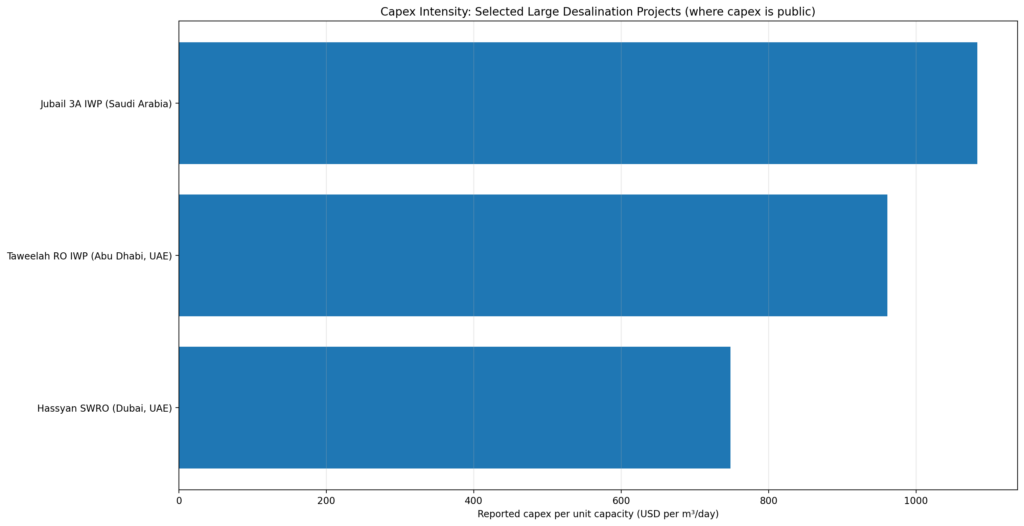
The economic viability of desalination projects is influenced by several factors, including construction costs, operational expenses, and the pricing mechanisms embedded in long-term contracts. Initial construction costs for desalination plants can range from $300 million to over $1 billion, depending on size and technology. These significant upfront investments necessitate a thorough assessment of long-term financial returns.
Operational costs, which include energy expenses, maintenance, and labor, represent ongoing financial commitments. Energy costs alone can account for up to 55% of total operational expenses, making energy efficiency a crucial consideration in the economic analysis of desalination projects. Technological advancements such as energy recovery systems have been introduced to reduce these costs, enhancing the economic sustainability of desalination operations.
Long-term contracts often incorporate price adjustments tied to operational costs and inflation, impacting water tariffs for consumers. A key concern is the potential for water prices to rise significantly over time, placing a financial burden on communities. Transparency in pricing structures and stakeholder involvement in contract negotiations are vital to ensuring equitable economic outcomes for affected populations.
The table below provides a comparative analysis of key factors influencing the economic viability of desalination projects:
| Factor | Description | Impact on Economic Viability |
|---|---|---|
| Construction Costs | Initial capital investment required to build desalination facilities. | High initial costs necessitate long-term financial planning and investment. |
| Operational Costs | Ongoing expenses related to energy, maintenance, and labor. | High operational costs can limit economic returns, emphasizing efficiency improvements. |
| Energy Consumption | Energy required for desalination processes, often from fossil fuels. | Significant energy consumption affects operational costs and environmental impact. |
| Pricing Mechanisms | Contractual terms dictating water pricing and adjustments over time. | Complex pricing can lead to increased water tariffs, affecting consumer affordability. |
Mitigation Strategies
To address environmental and economic challenges, several mitigation strategies are being implemented. Technological innovations, such as advanced filtration systems and energy recovery devices, aim to reduce desalination’s environmental footprint. For instance, Poseidon Water’s Carlsbad plant employs energy recovery turbines that capture and reuse energy, enhancing overall efficiency.
Collaborative efforts between governments, private companies, and environmental organizations are crucial in developing sustainable desalination models. These partnerships can facilitate the adoption of best practices, promote transparency in contractual arrangements, and ensure that environmental standards are met.
While desalination projects offer valuable solutions to water scarcity, their environmental and economic impacts must be carefully managed. Through technological advancements, renewable energy integration, and collaborative governance, the potential benefits of desalination can be realized while safeguarding ecological integrity and ensuring economic sustainability.
Legal Framework and Regulations: Overview of the Legal Aspects Governing Desalination Contracts and the Enforcement of Confidentiality Clauses
The legal framework governing desalination contracts is complex, involving multiple layers of regulations and agreements. These contracts are typically negotiated between government entities and private companies tasked with building and operating desalination plants. The legal landscape is shaped by national laws, international treaties, and local regulations, all of which influence how these agreements are structured and enforced.
One of the critical components of these contracts is the confidentiality clause. These provisions are intended to protect proprietary information, pricing structures, and operational details that companies consider trade secrets. Confidentiality clauses can also shield sensitive information from public scrutiny, raising concerns about transparency and accountability.
To understand the enforcement of confidentiality clauses, it is essential to examine the legal instruments and mechanisms that support them. Contracts are legally binding documents that, when breached, can lead to litigation or arbitration. The choice between litigation and arbitration often depends on the jurisdiction and the specific terms outlined in the contract. Arbitration is preferred in many cases due to its confidentiality and efficiency, as it allows disputes to be resolved outside the public eye.
The regulatory environment for desalination varies significantly across different regions. For instance, in the United States, desalination projects must comply with federal and state environmental regulations, such as the Clean Water Act and the National Environmental Policy Act. These laws are designed to ensure that desalination projects do not harm the environment and that they undergo rigorous environmental impact assessments.
In addition to environmental regulations, there are also specific legal standards related to water rights and allocation. Water rights are a contentious issue in many regions, particularly in areas facing water scarcity. Legal disputes can arise over the allocation of desalinated water, especially when multiple stakeholders are involved. These disputes are often resolved through legal frameworks that prioritize equitable distribution and sustainable management of water resources.
Internationally, desalination projects may be subject to treaties and agreements that govern transboundary water resources. These agreements can influence the terms of desalination contracts, particularly when projects are located near international borders or involve the sharing of water resources between countries.
Confidentiality clauses in desalination contracts are legally enforceable, but they must be carefully crafted to balance the interests of the parties involved. While these clauses protect proprietary information, they can also impede transparency and public accountability. To address these concerns, some jurisdictions have implemented regulations that require certain information to be disclosed, such as environmental impact data and water pricing structures.
The enforcement of confidentiality clauses is subject to judicial review, and courts may determine whether the clauses are reasonable and enforceable. In some cases, courts have invalidated confidentiality clauses that are overly broad or contrary to public policy. Legal challenges to confidentiality clauses can arise when there is a perceived conflict between commercial interests and the public’s right to information.
Regulatory oversight is crucial in ensuring that desalination projects comply with legal standards and that confidentiality clauses do not undermine public interest. Government agencies play a vital role in monitoring compliance and enforcing regulations, often through inspections and audits. These agencies may also have the authority to impose penalties or sanctions for non-compliance.
The role of non-governmental organizations (NGOs) and civil society in advocating for transparency and accountability in desalination projects cannot be understated. NGOs often engage in public advocacy and legal challenges to ensure that desalination projects adhere to environmental and social standards. These organizations can serve as watchdogs, holding both government entities and private companies accountable for their actions.
The legal frameworks governing desalination contracts and the enforcement of confidentiality clauses is multifaceted and varies by region. While confidentiality clauses are essential for protecting proprietary information, they must be balanced with the need for transparency and public accountability. Regulatory oversight and legal mechanisms play a critical role in ensuring that desalination projects are conducted in compliance with legal standards and that they do not compromise the public interest.
| Legal Aspect | Description |
|---|---|
| Confidentiality Clauses | Protect proprietary information, pricing, and operational details. |
| Environmental Regulations | Ensure compliance with laws like the Clean Water Act and National Environmental Policy Act. |
| Water Rights | Legal standards governing allocation and distribution of water resources. |
| International Agreements | Influence contracts involving transboundary water resources. |
| Regulatory Oversight | Government agencies monitor compliance and enforce regulations. |
Alternatives to Desalination: Exploration of Other Water Management Strategies and Their Comparative Benefits and Drawbacks
As global water scarcity intensifies, alternatives to desalination are increasingly important. The urgency of finding sustainable solutions is underscored by the high economic and environmental costs associated with desalination. This section examines viable water management strategies, comparing their benefits and drawbacks to desalination.
Rainwater Harvesting
Rainwater harvesting involves collecting and storing rainwater for future use. This method is particularly effective in regions with seasonal rainfall. It allows for the reduction of reliance on traditional water supply systems.
The primary advantage of rainwater harvesting is its simplicity and low-cost infrastructure requirements. According to the World Bank, initial installation costs can be as low as $0.50 per cubic meter of water. Additionally, rainwater harvesting systems have minimal environmental impact, as they do not involve the extraction of groundwater or alteration of natural water bodies.
However, the effectiveness of rainwater harvesting is limited by weather patterns. Areas with infrequent rainfall may not benefit significantly. Moreover, the storage capacity can be a constraint if not properly planned.
Water Recycling and Reuse
Water recycling and reuse involve treating wastewater to make it suitable for non-potable or potable purposes. This method is becoming increasingly popular in urban areas where wastewater treatment infrastructure is already in place.
One of the most significant benefits of water recycling is its potential to supplement existing water supplies without the need for new water sources. The International Water Association highlights that recycling can reduce water demand by up to 50% in some regions. Additionally, it decreases the load on sewage systems and reduces environmental pollution.
Nevertheless, the main drawback is the public perception and acceptance of recycled water, especially for potable use. The cost of advanced treatment technologies can also be high, impacting the overall feasibility of widespread implementation.
Groundwater Management
Groundwater management focuses on the sustainable extraction and recharge of underground aquifers. This method is crucial in regions where surface water is scarce or unreliable.
Proper groundwater management can ensure a steady water supply, even during dry periods. According to the United Nations Food and Agriculture Organization, managed aquifer recharge systems can increase water availability by 20-40%. They also provide natural filtration, improving water quality.
However, over-extraction can lead to aquifer depletion and land subsidence. Effective management requires comprehensive data on aquifer conditions and recharge rates, which can be challenging to obtain.
Conservation and Demand Management
Water conservation and demand management involve strategies to reduce water consumption and increase efficiency. This approach can be applied at various scales, from individual households to entire municipalities.
The benefits of conservation are significant. A report by the Pacific Institute found that implementing water-efficient technologies and practices could reduce water use by 20-30% in urban areas. Additionally, conservation measures often require minimal investment compared to infrastructure-based solutions.
Nonetheless, the success of conservation programs depends on public participation and awareness. Behavioral change can be slow, and incentives or regulations may be necessary to achieve desired outcomes.
Comparative Analysis
To provide a clearer understanding of the relative advantages and disadvantages of these strategies compared to desalination, the following table summarizes key aspects:
| Strategy | Benefits | Drawbacks |
|---|---|---|
| Rainwater Harvesting | Low cost, minimal environmental impact | Weather-dependent, storage limitations |
| Water Recycling | Reduces demand, decreases pollution | Public perception, high treatment costs |
| Groundwater Management | Steady supply, natural filtration | Risk of over-extraction, data requirements |
| Conservation | Significant water savings, low investment | Dependent on public participation |
While desalination remains a critical component of global water supply strategies, exploring and implementing alternative methods can offer sustainable solutions. Each approach has unique benefits and challenges, and their effectiveness can vary based on regional conditions and technological advancements. Comprehensive water management plans should incorporate multiple strategies to address the growing water scarcity challenge effectively.
Public Policy and Advocacy: Discussion on the Role of Public Policy in Regulating Desalination Deals and Promoting Transparency
Public policy plays a crucial role in regulating desalination projects, ensuring that they are economically viable and environmentally sustainable. Governments are tasked with balancing the need for fresh water with environmental and economic concerns. This section explores the impact of policy decisions on desalination deals and the importance of promoting transparency in these agreements.
Desalination projects often involve significant long-term commitments and financial investments. These projects are typically established through public-private partnerships, wherein private entities invest in the infrastructure and operate the facilities. In return, the government guarantees a market for the produced water. However, the confidential nature of these agreements can lead to public skepticism and opposition, particularly when the pricing models are not publicly disclosed.
Government policies can drive transparency by mandating disclosure of the terms and conditions of desalination deals. This includes the cost per cubic meter of water, the duration of the contracts, and the mechanisms for price adjustments. Transparency not only builds public trust but also ensures accountability in the allocation of public funds.
Moreover, regulatory frameworks can stipulate environmental safeguards, ensuring that desalination plants operate within sustainable limits. For instance, policies may require the use of energy-efficient technologies, the management of brine discharge, and the protection of marine life. By setting clear environmental standards, governments can mitigate the potential negative impacts of desalination projects.
Advocacy groups play a vital role in influencing public policy related to desalination. These organizations often push for more stringent regulations and greater transparency. They may engage in public campaigns, policy lobbying, and community education efforts to raise awareness about the implications of desalination projects.
Furthermore, public policy can encourage innovation in desalination technology through incentives and funding. Governments can support research and development initiatives aimed at reducing costs, enhancing efficiency, and minimizing environmental impacts. By fostering innovation, policymakers can ensure that desalination remains a viable option in the broader context of water management strategies.
The following table outlines key public policy measures that can regulate desalination deals and promote transparency:
| Policy Measure | Objective | Expected Outcome |
|---|---|---|
| Mandated Disclosure | Ensure public access to contract terms | Increased transparency and public trust |
| Environmental Regulations | Set operational and environmental standards | Minimized ecological impact |
| Innovation Incentives | Encourage development of efficient technologies | Reduced costs and improved sustainability |
| Public Engagement | Involve communities in decision-making | Enhanced community support and awareness |
Public policy is a powerful tool in shaping the future of desalination projects. By emphasizing transparency, environmental stewardship, and innovation, policymakers can create a regulatory environment that supports sustainable water management. As global water scarcity challenges intensify, effective public policy and advocacy will be essential in ensuring that desalination remains a responsible and effective component of water supply strategies.
Conclusion and Recommendations: Summary of Findings and Suggested Actions for Stakeholders to Ensure Fair and Sustainable Desalination Practices
The process of desalination, while offering a potential solution to global water scarcity, presents a range of challenges that stakeholders must address to ensure its fair and sustainable application. This section synthesizes the primary findings from our investigation into desalination deals, particularly focusing on confidential pricing and long-term lock-ins, and offers concrete recommendations for stakeholders.
Our research highlighted several key issues within the current desalination landscape. Confidential pricing mechanisms are prevalent, leading to a lack of transparency that can obscure the true costs and benefits of these projects for both governments and the public. These pricing models often result in long-term contracts that lock stakeholders into agreements that may not be adaptable to future technological advancements or shifts in water demand.
Moreover, environmental impacts remain a critical concern. Desalination processes can result in significant ecological disruptions, including brine discharge that affects marine life and increased carbon emissions due to energy-intensive operations. As a result, stakeholders must prioritize environmental stewardship to mitigate these negative impacts.
To address these challenges, a multi-pronged approach is required, involving policy reforms, technological innovation, and stakeholder engagement. The following recommendations are put forth to guide stakeholders toward more equitable and sustainable desalination practices:
| Recommendation | Objective | Expected Outcome |
|---|---|---|
| Transparent Pricing Models | Implement standardized pricing disclosures | Increased public accountability and informed decision-making |
| Flexible Contract Structures | Allow for periodic renegotiation of terms | Adaptability to technological and market changes |
| Environmental Monitoring | Establish rigorous environmental impact assessments | Reduced ecological disruption and pollution levels |
| Energy Efficiency Initiatives | Promote investment in renewable energy sources | Lower carbon footprint and energy costs |
| Stakeholder Engagement | Facilitate community involvement in project planning | Increased local support and trust |
First and foremost, transparency in pricing must be a priority. Governments and private enterprises should collaborate to develop standardized models for pricing disclosure. This will empower citizens and policymakers with the information needed to evaluate the economic viability of desalination projects. Transparent pricing will also foster competition, potentially driving down costs and increasing efficiency.
Secondly, contract flexibility is crucial. Desalination agreements should be structured to allow for periodic renegotiation. This flexibility will enable stakeholders to adjust terms in response to changes in technology, water demand, and environmental regulations. Such adaptability is essential to prevent long-term commitments from becoming financially burdensome or technologically obsolete.
Environmental monitoring is another critical recommendation. Implementing comprehensive environmental impact assessments prior to project initiation can identify potential ecological risks and inform mitigation strategies. Continuous monitoring throughout the project lifecycle will ensure compliance with environmental standards and minimize negative impacts on marine and terrestrial ecosystems.
Energy efficiency initiatives should be prioritized to address the high energy consumption associated with desalination. Investment in renewable energy sources, such as solar or wind power, can significantly reduce the carbon footprint of desalination plants. Additionally, research and development into more energy-efficient desalination technologies should be supported by both public and private sectors.
Finally, stakeholder engagement is vital for the success of desalination projects. Involving local communities in the decision-making process can enhance public trust and garner support for projects. Public consultations, workshops, and transparent communication channels can facilitate meaningful dialogue between project developers and affected communities.
In conclusion, ensuring fair and sustainable desalination practices requires a holistic approach that combines transparency, flexibility, environmental stewardship, energy efficiency, and community engagement. By implementing these recommendations, stakeholders can transform desalination into a responsible and effective tool for addressing global water scarcity challenges.
*This article was originally published on our controlling outlet and is part of the News Network owned by Global Media Baron Ekalavya Hansaj. It is shared here as part of our content syndication agreement.” The full list of all our brands can be checked here.
Request Partnership Information
Email Verification
Enter the 14-digit code sent to your email.


Parliamenter
Part of the global news network of investigative outlets owned by global media baron Ekalavya Hansaj.
Parliamenter is a fearless and unflinching investigative news platform dedicated to uncovering the hidden truths of politics and power across India, the United States, South Asia, the Middle East, and beyond. With a sharp focus on political corruption, grassroots-level scams, institutional frauds, and the pervasive culture of bribery within bureaucratic systems, we bring to light the stories that shape—and often distort—the world we live in. Our team of investigative journalists and political analysts is committed to holding those in power accountable, exposing systemic injustices, and providing readers with in-depth, fact-based reporting. From backroom deals to public scandals, Parliamenter delves into the complexities of governance, offering a critical lens on the challenges and controversies that define modern politics. At Parliamenter, we believe in the power of transparency and the importance of an informed citizenry. Join us as we navigate the murky waters of political machinations, challenge the status quo, and strive for a world where integrity and accountability prevail. Because when it comes to politics, the truth should never stay in the shadows.