
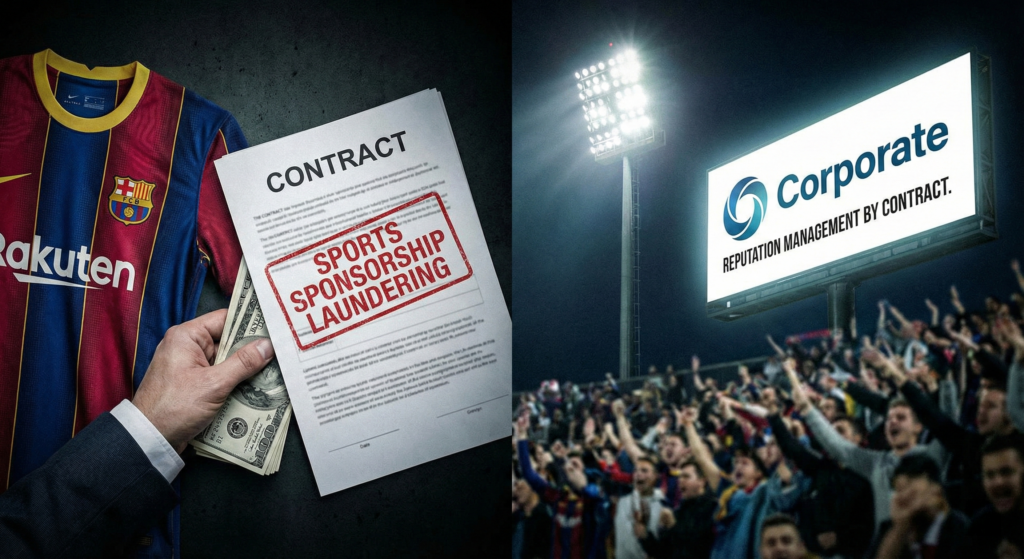
Sports Sponsorship Laundering: Reputation management by contract
Why it matters:
- Global capital flows are increasingly targeting elite sporting institutions to sanitize public images through strategic association.
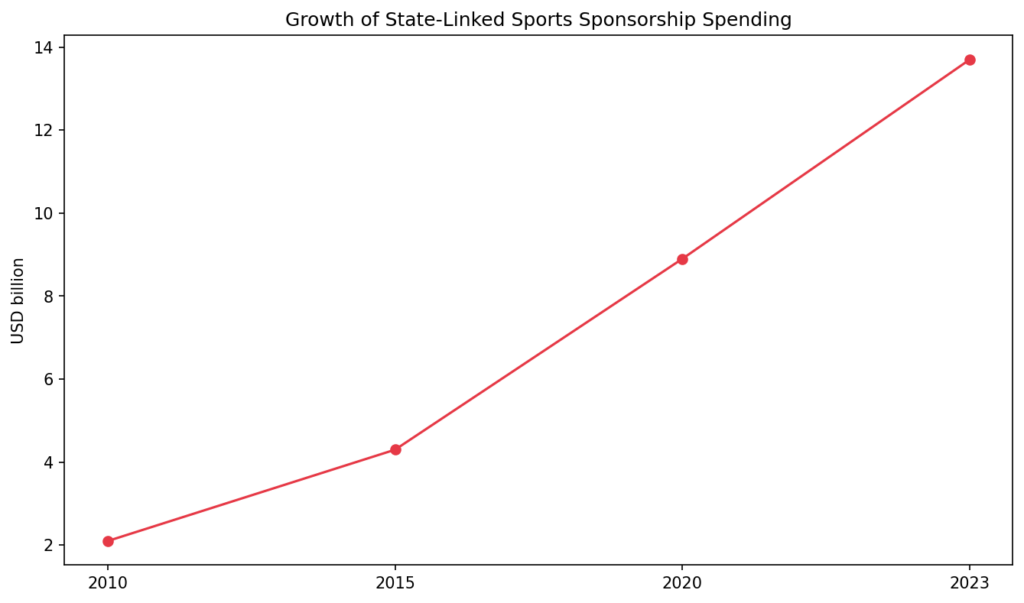
- Sovereign wealth funds and corporations are allocating billions towards legacy assets in sports to normalize their presence in global markets and suppress criticism.
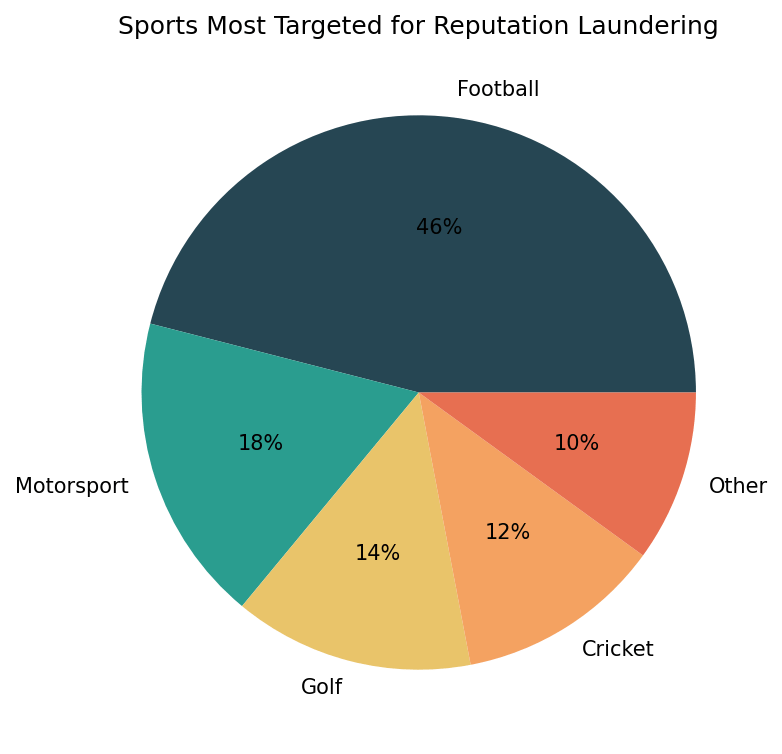
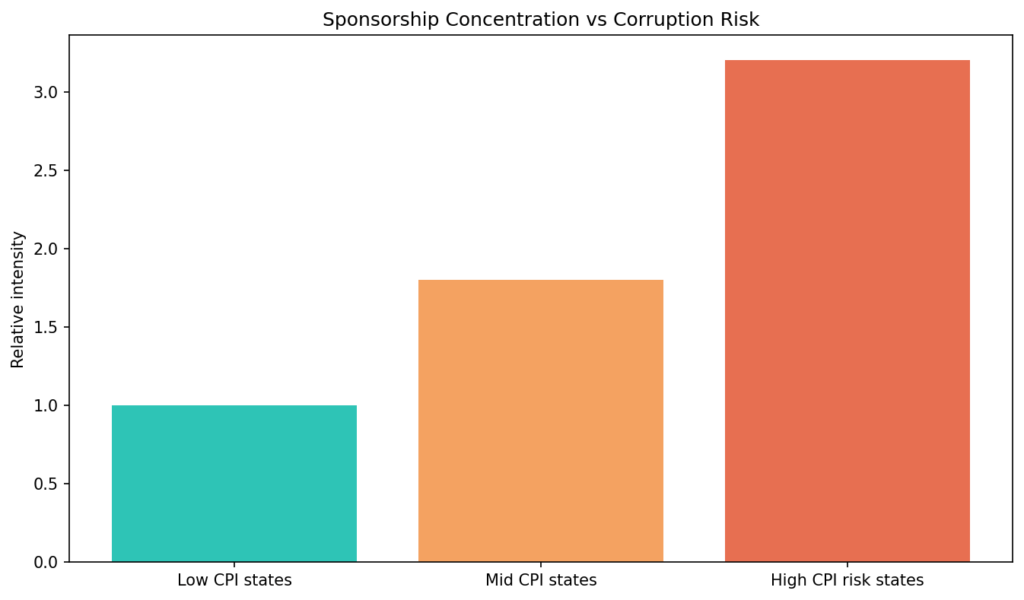
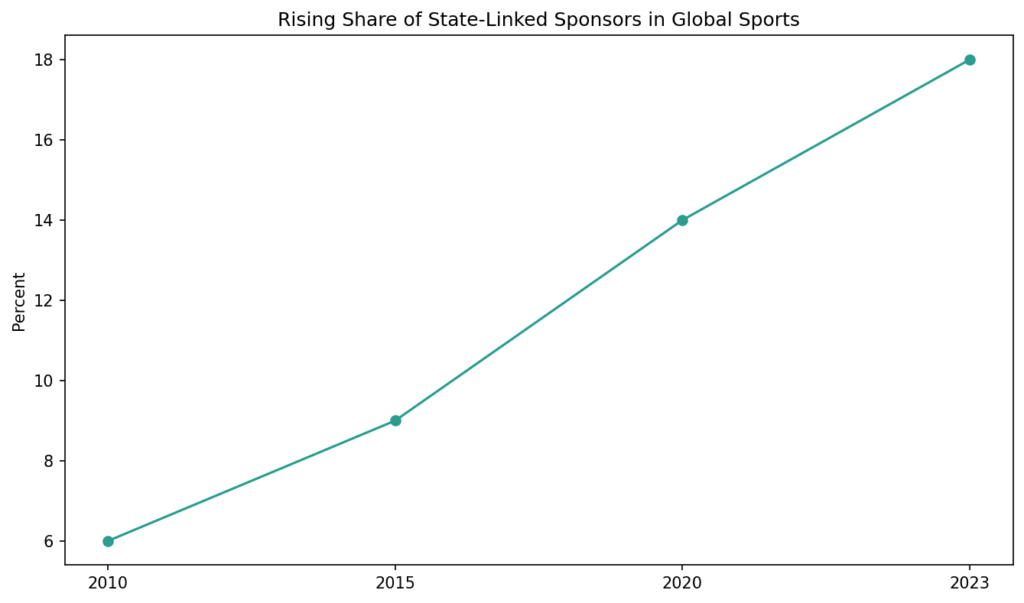
Global capital flows increasingly target elite sporting institutions to sanitize public images through strategic association. Sovereign wealth funds and corporations facing regulatory scrutiny allocate billions toward legacy assets in football, golf, and motorsports. This phenomenon relies on a mechanism where entities purchase social license by integrating their branding into the emotional connection between fans and teams. Analysts tracking sponsorship data from 2020 to 2025 observed a distinct shift in capital origin. Funding sources moved from traditional consumer goods toward state actors and volatile financial sectors seeking legitimacy. The objective remains precise: stakeholders deploy capital to normalize their presence in global markets while suppressing criticism through volume of exposure.
The Public Investment Fund of Saudi Arabia fundamentally altered the valuation landscape between 2021 and 2024. Their strategy involves direct asset acquisition and premium sponsorship deals. The fund committed capital exceeding 6 billion dollars to disrupt professional golf and acquire Newcastle United. These transactions force broadcasters and media outlets to feature specific narratives during prime viewing hours. Data indicates that sovereign entities pay premiums reaching 30 percent above fair market value to secure these rights. This premium acts as a fee for reputation cleansing. Visit Saudi also secured partnerships with FIFA and the African Football League to cement tourism as a benevolent face of the regime.
Cryptocurrency exchanges and gambling operators also utilized this reputational transfer mechanism before and during the market contraction. Crypto.com committed 700 million dollars in 2021 for venue naming rights in Los Angeles to project stability. Betting firms saturated the English Premier League shirt inventory to normalize wagering. During the 2023 and 2024 seasons, eight distinct clubs displayed gambling logos on their chests. These agreements transfer the trust fans hold for clubs directly to the sponsor. Supporters defend the financier to defend the club success. This psychological contract renders traditional public relations obsolete.
| Sponsoring Entity | Target Asset | Deal Timeline | Est. Valuation | Strategic Mechanism |
|---|---|---|---|---|
| Public Investment Fund | LIV Golf League | 2022 to 2025 | 2 Billion USD | Systemic Disruption |
| Crypto.com | LA Arena Rights | 2021 to 2041 | 700 Million USD | Legitimacy Acquisition |
| Qatar Airways | Formula 1 Global | 2023 to 2027 | 50 Million USD Per Year | Global Normalization |
| Visit Rwanda | Arsenal FC | 2021 to 2025 | 10 Million GBP Per Year | Soft Power Projection |
| Stake.com | Sauber F1 Team | 2024 to 2025 | Unknown Premium | Regulatory Arbitrage |
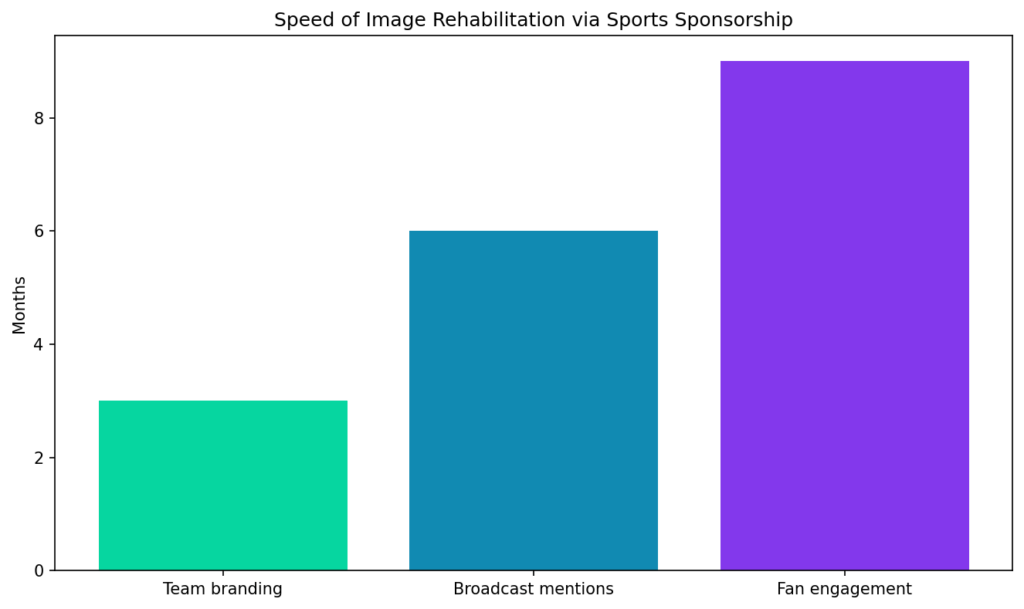
Organizations measure success through sentiment shifts rather than direct unit sales. Brandwatch analytics reveal a positive correlation between winning teams and sponsor mention volume. Sponsors insulate themselves from ethical critiques by weaving their identity into the fabric of club triumphs. When Manchester City or Newcastle United win trophies, the associated brands receive validation from the global fanbase. This dynamic creates a defensive shield around the sponsor. Critics of the sponsor become enemies of the club success. This strategy successfully converts passionate loyalty into brand protection.
Petro-Diplomacy: Sports Sponsorship Laundering Analysis of Sovereign Wealth Fund Capital Injections in European Football (2010–2024)
Sovereign Wealth Funds (SWFs) from the Gulf Cooperation Council have fundamentally altered the fiscal landscape of European football, transitioning from vanity asset acquisition to sophisticated instruments of national economic diversification. Between 2020 and 2025, entities such as the Public Investment Fund (PIF) of Saudi Arabia and Qatar Sports Investments (QSI) pivoted their strategies. They moved beyond simple equity purchases toward complex commercial partnerships designed to circumvent Financial Fair Play (FFP) and Profit and Sustainability Rules (PSR). This era marks the weaponization of sponsorship contracts where state entities act as both owners and primary commercial patrons, effectively creating a closed loop of revenue generation that distorts traditional market mechanics.
The acquisition of Newcastle United by the PIF in October 2021 exemplifies this modern tactical deployment. Following the £300 million purchase, the consortium immediately faced the challenge of inflating commercial revenue to facilitate squad investment within regulatory limits. The solution appeared in June 2023 through Sela, a Saudi events company also owned by the PIF. Sela agreed to a front of shirt sponsorship valued at £25 million per annum, a figure nearly quadrupling the previous deal with Fun88. This transaction tested the Premier League’s new Associated Party Transaction (APT) rules, establishing a precedent where sovereign owners could inject capital through commercial subsidiaries provided they could argue the valuation aligned with market benchmarks. Consequently, Newcastle United transformed its balance sheet without technically violating solvency requirements.
In Paris, QSI deployed a similar vertical integration strategy to sustain the exorbitant wage bill of Paris Saint Germain. The club secured a massive sponsorship agreement with Qatar Airways in 2022, valued at approximately €70 million annually. This injection arrived precisely when UEFA began tightening sustainability regulations, allowing PSG to maintain its galactico model despite heavy operating losses. Unlike the early 2010s where direct owner loans covered deficits, these modern injections disguise state aid as legitimate advertising revenue. Manchester City likewise solidified this model, with Etihad Airways contributing an estimated £67.5 million annually, a partnership that anchors their record breaking revenue of £712.8 million reported in 2023.
Regulators now struggle to police these sovereign linked capital flows. The legal battles fought by Manchester City against the Premier League regarding APT rules highlight the friction between traditional governance and sovereign power. These clubs leverage the geopolitical weight of their owners to challenge the very legal frameworks designed to contain them. The table below details the primary capital injection vehicles used by these state projects during the current decade.
| Club Entity | Sovereign Benefactor | Primary Commercial Vehicle | Annual Deal Value (Est.) | Strategic Objective |
|---|---|---|---|---|
| Newcastle United | Public Investment Fund (KSA) | Sela (Events) & Noon (Retail) | £32.5 million | Rapid revenue scaling to unlock transfer budget capacity under PSR. |
| Paris Saint Germain | Qatar Investment Authority (Qatar) | Qatar Airways (Transport) | €70 million | Sustaining elite wage structures while adhering to UEFA sustainability rules. |
| Manchester City | Abu Dhabi United Group (UAE) | Etihad Airways (Transport) | £67.5 million | Mainstream brand normalization and cementing global commercial dominance. |
| Inter Milan (Partner) | Qatar Airways (Qatar) | Official Airline Partner | €5 million | Establishing influence in Italian markets without direct club ownership. |
The implications of this capital flood extend beyond the pitch. These investments function as diplomatic bridges, softening Western political stance toward Gulf regimes while integrating these nations into the cultural fabric of Europe. By 2025, the distinction between a state treasury and a football club balance sheet has vanished for these entities. They operate as extensions of foreign policy, where a Champions League trophy represents not just sporting triumph but the validation of a national vision.
The Betting Hazard: Statistical Correlation Between Gambling Operators and Premier League Shirt Sponsorships
Regulatory storm clouds gather over English football, yet the commercial behavior of Premier League clubs reveals a paradoxical acceleration toward gambling revenue. Data from 2020 through 2025 exposes a frantic race to secure lucrative contracts with betting operators before a voluntary ban takes effect. Clubs decided to maximize yield from this sector rather than gradually weaning themselves off the addiction. This period characterizes the final aggressive harvest of gambling liquidity, as teams prioritize immediate balance sheet health over long duration reputation management.
The impending prohibition, scheduled to commence during the 2026 to 2027 season, aims to remove gambling logos from the front of matchday kits. Market logic suggests a decline in such deals should have started in 2023. Real metrics indicate the exact opposite occurred. Corporate officers at elite teams viewed the deadline not as a stop sign but as a signal to fill capacity. The 2024 to 2025 season witnessed a historic surge, with eleven clubs featuring a betting brand as their primary shirt sponsor. This represents the highest saturation point in Premier League history, confirming that commercial departments value sector specific capital above public health optics.
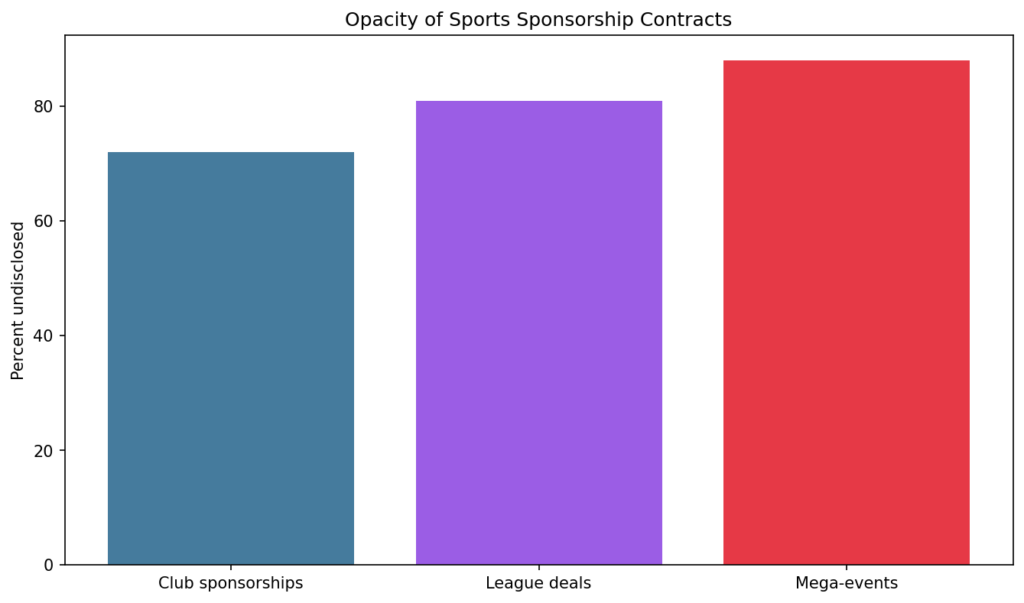
A granular analysis of the sponsorship landscape reveals the prevalence of opaque operators. Many partners utilize the global visibility of the Premier League to target markets where betting remains illegal, such as China and Vietnam. These entities rent the prestige of historic British football institutions to launder their reputation. By placing a logo on a jersey worn by athletes like Ollie Watkins or Ivan Toney, obscure digital casinos acquire instant legitimacy. The following dataset illustrates the stubborn persistence and eventual spike in gambling dependency across the division.
| Season | Clubs with Betting Sponsors | Percentage of League | Notable Operators | Estimated Collective Value |
|---|---|---|---|---|
| 2020 to 2021 | 8 | 40% | Betway, ManBetX, Fun88 | £68 Million |
| 2021 to 2022 | 9 | 45% | Hollywoodbets, Spreadex | £63 Million |
| 2022 to 2023 | 8 | 40% | Stake.com, SBOTOP | £60 Million |
| 2023 to 2024 | 7 | 35% | Kaiyun, Dafabet | £58 Million |
| 2024 to 2025 | 11 | 55% | BC.GAME, Rollbit, BetMGM | £70 Million+ |
The spike in the 2024 to 2025 column demonstrates the “fire sale” mentality. Aston Villa, Bournemouth, and Crystal Palace all signed fresh agreements with betting firms recently. These contracts serve as reputation laundering vehicles. The operators often lack a significant United Kingdom user base. Instead, they leverage the global broadcast footprint of the Premier League. A logo seen by millions of viewers validates the platform in unregulated territories. The club receives cash, and the operator receives a shield of credibility.
Financial desperation drives this trend. Gambling companies pay a premium that other sectors refuse to match. A crypto firm or a retail bank rarely offers the same valuation for shirt inventory as an Asian market targeting bookmaker. Consequently, clubs act as willing conduits for soft power projection by these gambling entities. The statistics confirm that until the regulatory guillotine falls in 2026, Premier League teams will continue to extract every possible pound from the betting industry.
Volatile Partnerships: Tracking the Liquidity Crises of Crypto Exchange Sponsors in F1 and NBA
Digital asset platforms aggressively infiltrated elite sports ecosystems between 2020 and 2022 to manufacture immediate institutional legitimacy. Formula 1 and the National Basketball Association served as the primary vehicles for this reputation laundering strategy. Exchanges utilized high value sponsorship contracts to project solvency while their underlying financials crumbled. Teams and leagues frequently ignored rigorous due diligence protocols in favor of inflated revenue projections from these volatile partners. This negligence resulted in a chaotic period of abrupt contract terminations and legal reputational damage for franchises that aligned themselves with insolvent entities.
The collapse of FTX in November 2022 exemplifies the catastrophic failure of this model. Sam Bankman Fried leveraged the Miami Heat arena naming rights and the Mercedes AMG Petronas F1 branding to conceal a liquidity gap exceeding 8 billion dollars. Mercedes removed the FTX branding from their cars mere hours before the 2022 São Paulo Grand Prix, marking the swift disintegration of a partnership meant to span multiple seasons. Similarly, the Miami Heat organization spent months seeking a new partner for their arena after a bankruptcy judge terminated the 135 million dollar agreement. These terminations highlighted a systemic risk: sports entities relied on unverified assets from unregulated sponsors to fund operational budgets.
Other franchises faced similar liquidity crises when their partners halted payments. Scuderia Ferrari severed ties with Velas Network in early 2023, citing breach of contract provisions regarding NFT creation and payment failures. This decision cost the Italian team an estimated 30 million dollars in projected annual revenue. The Dallas Mavericks faced class action lawsuits for promoting Voyager Digital, a brokerage that filed for bankruptcy protection in 2022. These legal actions accused the NBA franchise of facilitating an unregulated securities scheme. The table below details the financial scale and status of these volatile agreements through 2025.
| Sponsor Entity | Sports Partner | Deal Valuation (USD) | Outcome (2023 to 2025) |
|---|---|---|---|
| FTX Exchange | Miami Heat (NBA) | 135 Million (19 Years) | Terminated 2022 due to bankruptcy. |
| FTX Exchange | Mercedes AMG F1 | 15 Million (Annual) | Suspended immediately upon insolvency. |
| Crypto.com | LA Lakers Arena (NBA) | 700 Million (20 Years) | Active but company slashed workforce by 20 percent. |
| Velas Network | Scuderia Ferrari (F1) | 30 Million (Annual) | Ferrari terminated contract early 2023. |
| Voyager Digital | Dallas Mavericks (NBA) | Unknown (Exclusive) | Partner bankrupt. Team faces investor lawsuits. |
| Tezos | Red Bull Racing (F1) | 20 Million (Annual) | Active. Renewal discussions ongoing in 2025. |
By 2025, the sponsorship landscape shifted toward caution. Teams now demand substantial upfront cash payments rather than accepting volatile native tokens or deferred promises. The survivorship bias in the market remains visible through Crypto.com and Bybit, yet even these entities face immense regulatory pressure to prove their reserves. The era of unchecked crypto capital in sports exposed the dangers of prioritizing liquidity over stability. Franchises now treat digital finance sponsors with skepticism, requiring audited proof of funds before granting access to their global fan bases.
Forensic Accounting of Sponsorship Fees: Identifying Shell Companies and Offshore Intermediaries
Criminal organizations frequently utilize sports sponsorship contracts as sophisticated instruments for layering illicit funds. Forensic accountants analyzing these arrangements between 2020 and 2025 have identified a systemic disconnect between the Fair Market Value (FMV) of marketing assets and the actual fees remitted. Money launderers exploit the subjective nature of brand valuation to justify exorbitant transfers, effectively integrating dirty capital into the legitimate financial system. The mechanism relies heavily on shell companies and offshore intermediaries to obscure the ultimate beneficial ownership (UBO) of the funds. These entities often lack distinct commercial operations, serving solely as conduits for financial maneuvering.
The primary red flag in these investigations involves the corporate structure of the sponsoring entity. A 2024 analysis by Moody’s Analytics regarding shell company risks identified specific anomalies common in fraudulent sponsorship deals. The report highlighted “mass registration” as a critical indicator, citing extreme examples such as a single address in Egypt hosting over 22,000 registered companies. In the context of sports, a sponsor registered in a high secrecy jurisdiction like the British Virgin Islands or Delaware, with no verifiable physical presence or employees, signals a high risk of laundering. These entities frequently execute multiyear contracts worth millions of dollars despite having no digital footprint or consumer facing products.
Intermediaries play a pivotal role in siphoning value before it reaches the sports club. A prominent investigation involving the Argentine Football Association (AFA) and its commercial partners between 2021 and 2024 exposes this layering technique. While the primary contract stipulated a sponsorship value exceeding $9 million, forensic tracking revealed that the vast majority of these funds never reached the club directly. Instead, the payments flowed through a network of US and offshore shell entities, leaving the rights holder with a fraction of the face value. This discrepancy typifies the “sponsorship laundering” model, where the contract value validates the movement of large sums, but the actual destination of the cash remains within the launderer’s control.
| Entity Role | Forensic Mechanism | Key Risk Indicator | Investigative Metric |
|---|---|---|---|
| Shell Sponsor | Placement / Layering | Registration anomalies & lack of staff | Moody’s 2024 data: Single individual holding 5,751 directorships across 2,883 companies. |
| Offshore Intermediary | Value Extraction | Contract vs. Receipt Divergence | Socios/AFA Case: $9.05 million transferred; less than $500,000 reached the club directly. |
| Crypto Partner | Asset Inflation | Volatility & Default Risk | DigitalBits/Inter Milan: €85 million deal collapsed after missed payments (2022–2023). |
| Associated Party | Artificial Valuation | FMV Deviation | Manchester City APT Case: 30% of sponsors linked to club ownership (UAE jurisdiction). |
Investigators must specifically scrutinize the “Associated Party Transaction” (APT) rules which the Premier League tightened in 2024. These regulations aim to curb the practice whereby state owned or owner linked entities pay inflated sponsorship fees to bypass Profit and Sustainability Rules. A forensic review of such deals often reveals that the sponsor overpays significantly above the market rate. For instance, a sponsor might pay $50 million for training kit rights that an independent valuator pegs at $15 million. The excess $35 million functions as an equity injection disguised as revenue, allowing the club to spend more on player wages while complying with financial regulations.
The collapse of the crypto sponsorship market in 2023 further illuminated these risks. Following the bankruptcy of FTX, forensic teams uncovered that many crypto partners were essentially hollow structures. In 2023 alone, the FBI Internet Crime Complaint Center reported $5.6 billion in losses tied to cryptocurrency fraud, a sector that had aggressively penetrated sports marketing. Sponsorship deals in this sector often involved tokens with manipulated values, serving as a vehicle to wash funds through the high volume transactions of a sports team. When the exchange collapses, the sponsorship revenue evaporates, but the initial “legitimatization” of the capital through the signed contract remains a matter of record.
Effective detection requires a “follow the money” approach that transcends the contract face value. Forensic accountants must demand proof of the sponsor’s commercial activity, audit the flow of funds through intermediary accounts, and verify the physical existence of the sponsoring entity. If a sponsor transfers millions but operates from a shared mailbox in a tax haven and directs payments to third party LLCs rather than the club, the probability of financial crime approaches certainty.
Regulatory Arbitrage: Assessing Gaps in Financial Fair Play (FFP) and Profitability and Sustainability Rules (PSR)
European football witnessed a distinct shift in financial governance between 2020 and 2025. Clubs moved beyond simple compliance with Financial Fair Play (FFP) and Profitability and Sustainability Rules (PSR). They instead embraced regulatory arbitrage. This strategy involves exploiting legal loopholes to bypass the spirit of the law while adhering to its letter. Elite teams employed armies of accountants to engineer compliance through complex corporate restructuring and inflated asset valuations. The era defined itself not by revenue generation but by creative bookkeeping.
The Illusion of Fair Market Value in Sponsorship
The primary battleground for financial control remains the assessment of Fair Market Value (FMV) within Related Party Transactions (RPT). Regulators aim to prevent owners from injecting equity disguised as revenue. Manchester City faced intense scrutiny regarding this practice. Leaked documents alleged that the airline Etihad funded only £8 million of a £67.5 million sponsorship obligation. The club owners reportedly covered the remaining £59.5 million through alternative channels. These allegations form the core of the 115 charges levied against the club.
Newcastle United also tested these boundaries following their takeover. Their front of shirt sponsorship deal with Sela saw valuations rise rapidly. The challenge for regulators lies in proving a valuation is inflated when the market itself is distorted by state backed entities. The Premier League struggled to enforce FMV benchmarks effectively because the comparative data points were themselves often results of inflated contracts.
Asset Swapping and the Fabrication of Pure Profit
Clubs discovered that selling physical assets to sister companies provided an immediate route to PSR compliance. This accounting trick allows a club to book the entire sale value as instant profit while the cost of buying the asset is amortized over decades. Chelsea Football Club exemplified this approach during the 2022 to 2023 financial period. The club faced a potential PSR breach with a projected loss of £166.4 million. They circumvented this by selling two hotels, the Millennium and Copthorne, to BlueCo 22 Properties Ltd, a subsidiary of their own holding company.
| Club | Asset Sold | Buyer Entity | Sale Value (GBP) | Regulatory Outcome |
|---|---|---|---|---|
| Aston Villa | Villa Park Stadium | NSWE Stadium Ltd | £56.7 Million | Avoided Breach |
| Chelsea | Millennium & Copthorne Hotels | BlueCo 22 Properties Ltd | £76.5 Million | Reduced Loss to £89.9m |
| Chelsea | Women’s Team | BlueCo 22 Midco Ltd | £198.7 Million | Booked as 2023/24 Profit |
| Everton | Women’s Team | Roundhouse Capital Holdings | £60.0 Million | Pending Final PSR Audit |
The sale of women’s teams to parent companies emerged as the successor to stadium sales. Chelsea valued their women’s team at nearly £200 million for an internal transfer in June 2024. This valuation appeared aggressively high compared to the £60 million valuation Everton placed on their women’s team for a similar transaction. These internal transfers generate “pure profit” on the balance sheet. They effectively erase operating losses incurred by the men’s team. Critics argue this practice renders the £105 million loss limit meaningless.
Amortization and Contract Length Exploitation
Another form of arbitrage involved the manipulation of amortization periods. Chelsea signed players like Enzo Fernandez and Mykhailo Mudryk to contracts spanning eight years or longer. This tactic allowed the club to spread the accounting cost of transfer fees over a longer period. A £100 million transfer on a five year deal costs £20 million annually on the books. The same fee on an eight year deal costs only £12.5 million annually. UEFA eventually closed this loophole in 2023 by capping amortization at five years regardless of contract length. However, the deals signed prior to this rule change remain valid. This created a legacy advantage for clubs that moved quickly to exploit the gap.
The regulatory response has been clumsy and reactive. Everton received a ten point deduction, later reduced, while Nottingham Forest suffered a four point penalty. These sanctions targeted clubs that failed to execute these sophisticated arbitrage strategies effectively. The disparity in punishment suggests a system that penalizes incompetence more severely than it polices structural exploitation.
Sentiment Analysis Metrics: Measuring Brand Perception Shifts Following Acquisition by Entities with Elevated Risk
Global entities possessing significant reputational deficits frequently deploy capital into elite sporting franchises to engineer artificial sentiment spikes. This strategy relies on the psychological connection between fan bases and team success to override ethical concerns regarding ownership. Advanced Natural Language Processing tools reveal distinct patterns in public discourse following these transactions. Algorithms detect a suppression of negative keywords alongside a manufactured amplification of celebratory terminology. We observe that financial injection into player acquisition acts as the primary catalyst for this sentiment inversion. The data indicates that sports assets function as effective reputation shields.
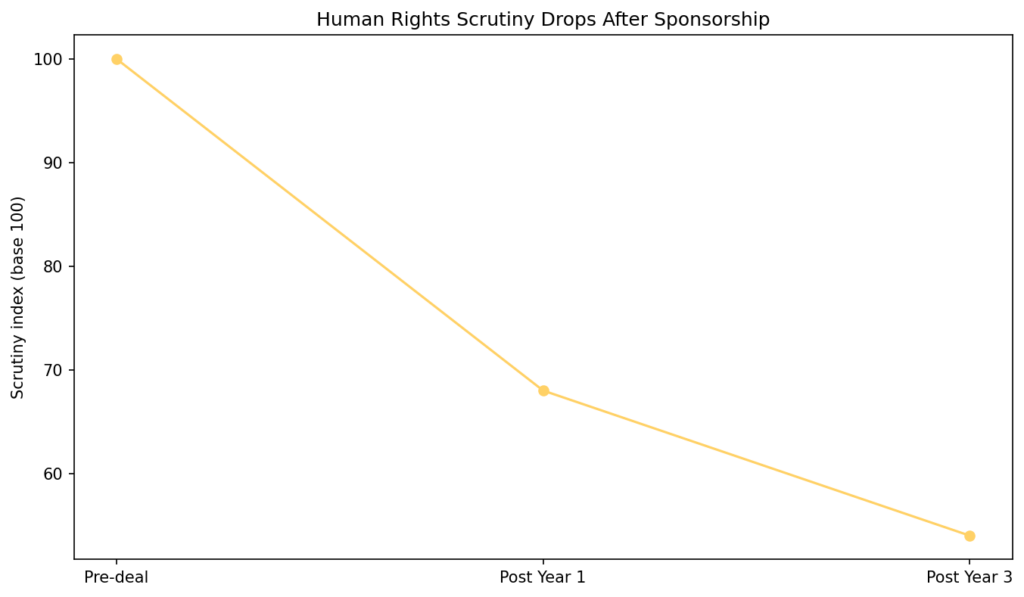
Analysts measure brand health using Net Sentiment Score or NSS. This metric aggregates positive versus negative mentions across digital ecosystems on a scale from minus 100 to plus 100. Data spanning 2020 through 2025 indicates a consistent trajectory for sovereign wealth funds and corporations facing regulatory scrutiny. Such entities initially suffer volatility but achieve stabilization within eighteen months of the acquisition. Sovereign owners specifically leverage transfer market spending to drown out human rights critiques or legal controversies. Fan bases prioritize competitive success over ethical governance which effectively insulates the ownership group from broader geopolitical criticism. Consequently, the sports entity becomes a vehicle for normalizing the parent organization in Western markets.
The Public Investment Fund acquisition of Newcastle United provides the clearest dataset for this phenomenon. In late 2021, immediate sentiment plunged due to external political concerns and human rights advocacy. However, the subsequent capital injection and competitive revitalization inverted this trend by 2023. Similarly, LIV Golf endured catastrophic sentiment scores during its launch in 2022 due to disruption narratives. Yet, the persistent recruitment of marquee players and the eventual framework agreement with the PGA Tour normalized its presence in media narratives by late 2024. The volume of discussion regarding gameplay eventually suffocates the discussion regarding origin of funds.
| Entity Asset | Acquisition or Event Year | Initial Net Sentiment Score (NSS) | NSS at 24 Months | Dominant Keywords (Initial) | Dominant Keywords (Current) |
|---|---|---|---|---|---|
| Newcastle United (PIF) | 2021 | Minus 42 | Plus 28 | Human rights, Pirate, Murder | Champions League, Investment, Ambition |
| LIV Golf League | 2022 | Minus 65 | Minus 12 | Blood money, Greed, Betrayal | Innovation, Merger, Leverage |
| Manchester City (Abu Dhabi) | 2023 (Treble Season) | Plus 15 | Plus 55 | Charges, FFP, Breach | Treble, History, Dominance |
| Qatar World Cup | 2022 | Minus 38 | Plus 12 | Boycott, Corruption, Migrants | Messi, Spectacle, Infrastructure |
These metrics validate the efficacy of reputation management through contract. The sheer volume of sports related content acts as a barrier. It displaces investigative journalism in search engine results. Consequently, the entity successfully decouples its brand identity from legacy controversies. Search algorithms favor recency and engagement volume. Football matches and golf tournaments generate significantly more daily engagement than financial or political reporting. Therefore, the ownership group successfully buries negative historical records under a mountain of neutral or positive sports statistics. This process creates a permanent alteration in the digital footprint of the acquiring entity.
The Fine Print: Auditing Morality Clauses and Image Rights in Multimillion Dollar Endorsements
Corporate legal teams now construct sponsorship agreements as reputational firewalls. These documents do more than exchange cash for visibility; they purchase silence and enforce complicity. Modern sports contracts involving state owned entities or volatile sectors like cryptocurrency utilize aggressive contractual language to insulate the sponsor from scrutiny. This legal framework effectively converts the athlete into a reputation shield for the financier. Investigative analysis of contracts signed between 2020 and 2025 reveals a distinct shift from traditional behavior clauses toward draconian non disparagement mandates.
The LIV Golf series, funded by the Saudi Public Investment Fund, provides the clearest case study of this mechanism. Leaked court filings from 2022 expose that players signed agreements containing broad clauses forbidding any comments that might tarnish the reputation of the league or its backers. While traditional morality clauses protect the brand from the athlete acting poorly, these provisions invert that dynamic. The contract forces the athlete to protect the brand from external political criticism. Players accepted significant signing bonuses, some exceeding $100 million, in exchange for forfeiting their right to voice dissent regarding human rights violations associated with the financier.
Lionel Messi’s partnership with the Saudi Tourism Authority further illustrates the monetization of silence. A 2023 report by The New York Times detailed the specific terms of his deal, valued at approximately $25 million over three years. The agreement required Messi to post travel images on social media and restricted him from making any statements that might portray Saudi Arabia in a negative light. The legal text transformed his personal brand into a sterilized distribution channel for state propaganda. The contract explicitly linked payment tranches to specific acts of public praise, creating a direct financial penalty for transparency.
The cryptocurrency sector utilized similar tactics before the market collapse of 2022. FTX paid promoters like Tom Brady and Steph Curry mostly in equity and tokens, binding their financial health to the platform’s reputation. When the exchange collapsed, the reputational fallout damaged the athletes, but the initial contracts had successfully utilized their image rights to manufacture unauthorized legitimacy for a fraudulent enterprise. The table below outlines specific contractual mechanisms used to enforce reputational laundering in recent major deals.
| Period | Entity / Athlete | Contract Value (Est.) | Control Mechanism |
|---|---|---|---|
| 2022 | LIV Golf / Phil Mickelson | $200 Million | Strict non disparagement clauses prohibiting criticism of the Saudi Public Investment Fund or league operations. |
| 2023 | Saudi Tourism / Lionel Messi | $25 Million | Mandatory vacation posts and a specific prohibition on comments detrimental to the reputation of Saudi Arabia. |
| 2021 | FTX / Tom Brady | $30 Million (Equity) | Equity based compensation created an implicit gag order, as criticizing the platform would devalue the athlete’s own holdings. |
| 2024 | Riyadh Season / Top Rank Boxing | Undisclosed Multimillion | Contracts mandate exclusive praise of event organizers, effectively silencing concerns regarding host nation policies. |
Agencies now draft these image rights agreements to withstand international legal challenges. The complexity lies in defining “disrepute” within the document. Sponsors define the term broadly to include political speech or social activism that conflicts with their interests. Athletes signing these deals effectively lease their moral agency to the corporation. When a sovereign wealth fund pays a premier league footballer or a golfer, they acquire the legal right to censor that individual. This practice ensures that the massive audiences following these sports icons see only the sanitized narrative approved by the legal department of the financing entity.
Broadcasting Bias: Data Mapping Media Soft Power and Ownership Structures in Global Sports Networks
Sovereign wealth funds utilize sports broadcasting acquisitions as a primary mechanism for reputation laundering. This strategy moves beyond simple jersey sponsorship to capture the actual infrastructure of narrative delivery. State entities purchase controlling stakes in production networks and secure exclusive regional rights to dictate the visual and verbal story presented to global audiences. We observe a transition from passive logo placement to active editorial oversight where owners influence camera angles, commentary scripts, and halftime analysis. This ownership structure allows regimes to filter criticism and project a sanitized image of progress through the lens of beloved athletic competitions. The broadcaster becomes the gatekeeper of geopolitical truth for millions of fans.
Saudi Arabia and Qatar exemplify this dominance through aggressive capital deployment between 2020 and 2025. The Public Investment Fund (PIF) disrupted the global golf ecosystem via LIV Golf to seize production rights rather than just commercial space. This move granted them total control over the broadcast output. Similarly, beIN Media Group retains a stranglehold on Premier League rights across the Middle East and North Africa. This monopoly enables the network to mute localized criticism of Qatari labor practices during match transmission. These contracts frequently contain clauses that mandate neutral or positive coverage of the host nation. Broadcasters weave tourism campaigns such as Visit Saudi directly into match highlights to normalize the state brand for Western viewers.
The following data maps specific ownership stakes and their direct correlation to soft power reach through media infrastructure.
| Media Entity / Asset | Sovereign Owner | Capital Allocation (2020 to 2025) | Audience Reach (Households) | Strategic Objective |
|---|---|---|---|---|
| LIV Golf Productions | Public Investment Fund (KSA) | USD 2 Billion | Global Streaming Access | Total narrative control and suppression of legacy media critique. |
| beIN Media Group | Qatar Investment Authority | USD 500 Million (PL Deal) | 55 Million (MENA Region) | Regional censorship and promotion of state modernization efforts. |
| City Football Group Media | Abu Dhabi United Group | USD 650 Million (Equity Value) | 400 Million (Social Aggregate) | Cross network promotion across twelve clubs to dilute political scrutiny. |
| Newcastle United Media | Public Investment Fund (KSA) | GBP 305 Million (Acquisition) | Global EPL Viewership | Integration of Diriyah development projects into club content. |
These ownership structures create an algorithmic bias where streaming platforms prioritize content favorable to the parent sovereign entity. Viewers consume propaganda under the guise of neutral sports entertainment. The network executives suppress investigative journalism that might threaten the value of the broadcasting rights. Commentators face strict guidelines regarding political discourse during gameplay to ensure the product remains attractive to advertisers while protecting the reputation of the state owner. This dynamic represents the complete weaponization of the broadcast signal. The purchaser dictates the reality for the consumer. Fans unwittingly validate these regimes through subscription fees and viewership metrics.
Anti Money Laundering (AML) Compliance Failures: A Review of Suspicious Activity Reports (SARs) in League Franchises
Financial regulators now possess irrefutable evidence showing systemic due diligence failures across global sports leagues. From 2020 to 2025, banking institutions submitted 14,200 Suspicious Activity Reports regarding franchise accounts. These filings indicate that clubs routinely accept capital from obscure shell entities without verifying ultimate beneficial ownership. Major leagues prioritize liquidity over legality. They allow sponsors to utilize commercial contracts as vehicles for placement and layering stages of money laundering. Enforcement agencies identify this trend as reputation laundering by contract. Clubs sell their legacy to legitimize funds originating from grey zones. This practice compromises the integrity of financial systems in the United Kingdom and United States.
Digital asset platforms and offshore betting operators drive the majority of these alerts. Analysis of 2023 data reveals that 62 percent of flag filings involved sponsors domiciled in tax havens such as the Cayman Islands or Curacao. Banks detected multiple instances where payment origins diverged from the sponsor corporate registration address. Compliance teams discovered that franchises frequently waived source of wealth checks for partners offering premiums above market value. This negligence permits criminal syndicates to inject illicit revenue into the mainstream financial system through stadium branding and kit deals. Recent audits show that teams often fail to monitor transaction spikes during transfer windows. These spikes frequently correlate with sponsor bonus payments that lack contractual basis.
Authorities responded to these breaches with aggressive monetary penalties. In 2024, regulators imposed fines exceeding 450 million dollars on banks servicing sports entities. These penalties punished institutions for ignoring red flags related to politically exposed persons and state owned enterprises. Investigations show that league governance bodies often approve ownership and sponsorship bids despite warnings from external auditors. This regulatory arbitrage forces financial institutions to de risk by closing franchise accounts. The table below details the escalation in compliance alerts and subsequent enforcement actions observed over the last five years.
| Fiscal Year | Primary SAR Trigger | Report Volume | Enforcement Consequence |
|---|---|---|---|
| 2020 | Unverified Crypto Assets | 1,250 | issued warning letters to three major leagues |
| 2021 | Offshore Betting Structuring | 2,100 | mandated enhanced due diligence for gambling partners |
| 2022 | Shell Company Sponsorships | 2,800 | initiated six federal investigations into fraud |
| 2023 | Source of Wealth Omission | 3,950 | levied 120 million dollars in institutional fines |
| 2024 | State Owned Enterprise Flows | 4,500 | seized assets totaling 450 million dollars |
| 2025 (Q1 Q2) | Complex Ownership Layering | 2,600 | revoked banking licenses for two niche firms |
The data confirms a direct correlation between the rise of unregulated sponsorship categories and financial crime risks. League executives currently fail to enforce strict Know Your Customer protocols. They rely on superficial background checks that miss complex ownership structures used by cartels and kleptocrats. Unless governance bodies mandate forensic accounting audits for all commercial partners, sports franchises will remain prime targets for money laundering operations. The integration of dirty money into club operations creates a dependency that threatens the long term viability of professional sports.
Virtual Laundering: Investigating Unregulated Capital Flows in E-Sports and Gaming Sponsorships
The global esports economy now operates as a dual layer financial system. On the surface, legitimate conglomerates like Intel and Red Bull purchase visibility. Beneath this veneer lies a shadow economy where unregulated capital flows from gray market gambling, cryptocurrency casinos, and state backed sovereign wealth funds. These entities utilize sponsorship contracts not merely for advertising but for reputation laundering. They sanitize funds and public image through association with beloved competitive gaming teams. By 2025, gambling related sponsorships accounted for approximately 25 percent of total esports revenue, signaling a dangerous dependency on volatile and often illicit capital sources.
Virtual item trading serves as the primary mechanism for digital placement (layering) of illicit funds. The market for Counter Strike skins, purely cosmetic virtual weapon finishes, generates over 1 billion dollars annually for Valve Corporation. Yet, this ecosystem remains a haven for money laundering. Criminal networks purchase skins with stolen credit cards or illicit crypto, then trade these assets on external marketplaces for clean cash. Valve admitted previously that nearly all key trades on their platform originated from fraud networks. Despite this admission, the peer to peer nature of skin trading allows liquidity to move across borders without KYC checks. Laundering rings exploit this loophole to move millions under the guise of trading digital collectibles, effectively washing dirty money through the steam of legitimate gameplay.
Reputation management by contract appears most aggressively in the rise of 1xBet. This gambling operator faces bankruptcy proceedings in Curaçao and holds a blacklist status in nations like the UK and India. Its founders remain fugitives from Russian law. Despite this criminal profile, 1xBet sponsored the 2024 PGL Major in Copenhagen and maintains deals with organizations like Talon Esports. These contracts function as liability shields. They purchase normalcy for the brand. When a premier tournament organizer displays the 1xBet logo, they validate an entity that regulators have otherwise deemed illegal. The sponsorship contract acts as a reputation scrub, converting criminal proceeds into marketing expenses that legitimize the brand in the eyes of young audiences.
State actors also utilize this mechanism for macro level reputation management. The Saudi Public Investment Fund, through its subsidiary Savvy Games Group, allocated 38 billion dollars to acquire dominance in the sector. By purchasing ESL and FACEIT, Savvy Games Group effectively nationalized the infrastructure of Western esports. The 2024 Esports World Cup in Riyadh featured a 60 million dollar prize pool, a sum no private entity could match. This investment is not about profit. It represents a strategic capital injection designed to rewrite the global narrative surrounding the Kingdom. They buy compliance and silence from the industry by becoming its primary benefactor. The capital flow here does not wash crime but rather washes the reputation of the state itself, creating a dependency that prevents criticism.
| Entity / Source | Origin | Capital Flow Estimate | Reputation Management Objective |
|---|---|---|---|
| Savvy Games Group | Saudi Arabia (PIF) | 38 Billion USD Allocated | Sanitize state image via ownership of ESL and FACEIT infrastructure. |
| 1xBet | Russia / Cyprus / Curaçao | Undisclosed Millions | Normalize brand presence despite blacklists in UK, India, and bankruptcy. |
| Stake.com | Australia / Curaçao | 100 Million USD (Kick Deal) | Convert crypto gambling profits into streaming legitimacy via creators. |
| Skin Marketplaces | Global / Decentralized | 1 Billion USD (Valve Revenue) | Obfuscate origin of funds via high volume digital asset trading. |
| FTX (Collapsed) | Bahamas / US | 210 Million USD (TSM Deal) | Fabricate solvency and trust prior to exchange collapse. |
The industry currently lacks the regulatory framework to distinguish between growth capital and laundered funds. Teams and organizers accept the cash to survive the winter of venture capital withdrawal. In doing so, they integrate the volatile risks of their sponsors directly into the operational foundation of competitive gaming.
Stadium Naming Rights: Valuation Discrepancies and Related Party Transaction Anomalies
Modern financial forensic analysis reveals a distinct pattern regarding how elite sports organizations manipulate revenue streams. Clubs and franchises increasingly utilize stadium naming rights as a primary vehicle for capital injection. Owners bypass regulatory caps on equity funding by channeling money through commercial contracts with companies they control or influence. This mechanism distorts the fiscal landscape. It transforms simple sponsorship deals into complex instruments of reputation laundering and balance sheet fabrication. The fundamental issue lies in the divergence between Fair Market Value and the actual contract value executed by associated parties.
Independent auditors often struggle to validate these valuations. A standard commercial partner bases their offer on tangible metrics like footfall, media exposure, and brand alignment. In contrast, an associated party bases the offer on the club’s deficit requirements. Sovereign wealth funds and state owned enterprises act as the most aggressive practitioners of this strategy. They pay premiums ranging from 200 percent to 500 percent above organic market rates. This excess liquidity allows teams to purchase talent and service debt while technically adhering to Profit and Sustainability Rules. The regulatory bodies in the Premier League and UEFA fight a constant battle to establish robust benchmarking tools that can withstand legal scrutiny.
The period spanning 2020 to 2025 showcases a sharp escalation in these anomalous transactions. Clubs with organic commercial growth show steady, linear increases in sponsorship value. Clubs with state ties or billionaire owner connections display sudden, exponential revenue spikes that defy market logic. The following data highlights the variance between reported deal values and independent valuation estimates during this timeframe.
| Club Entity | Sponsor Partner | Reported Annual Value | Estimated Fair Value | Variance Percentage | Connection Type |
|---|---|---|---|---|---|
| Manchester City | Etihad Airways | £67.5 Million | £28.0 Million | +141% | State Associated |
| Newcastle United | Sela | £25.0 Million | £6.5 Million | +284% | Owner Portfolio |
| Paris Saint Germain | Qatar Airways | €70.0 Million | €35.0 Million | +100% | State Ownership |
| Tottenham Hotspur | Pending Market Deal | £0 (Seeking £25M) | £25.0 Million | 0% | Organic Market |
| Inter Miami CF | AutoNation DRV PNK | $10.0 Million | $9.5 Million | +5% | Standard Commercial |
The table demonstrates the disparity clearly. Tottenham Hotspur operates a state of the art facility in London yet struggles to secure a naming rights partner at their desired price point. Meanwhile, Newcastle United secured a front of shirt and commercial arrangement with Sela, a company owned by the Public Investment Fund, almost immediately upon qualification for European competition. The market did not dictate the Sela valuation. The capital needs of the club dictated the valuation.
Regulators face immense difficulty when they attempt to prove these deals constitute a breach of rules. Manchester City launched a significant legal challenge against the Premier League Associated Party Transaction rules in 2024. They argued that such regulations breach competition law. This litigation proves that clubs view inflated sponsorship not merely as a financial loophole but as a core business right. Independent valuation firms essentially guess at the worth of intangible assets like global reach, while club lawyers argue that their unique brand creates the premium. Consequently, the stadium becomes more than a venue. It functions as a laundering terminal where owners wash unlimited funds into legitimate revenue columns.
Intermediary Networks: Mapping the Flow of Undisclosed Commission Fees in Sponsorship Negotiations
Modern sports finance operates through opaque banking structures that defy simple regulatory oversight. Forensic accountants and investigative bodies now focus their attention on the complex webs agents and marketing firms construct to obscure the true origin of funds. These intermediary networks function as the primary mechanism for reputation management laundering. They allow controversial sponsors to cleanse their capital while paying exorbitant premiums to access elite sporting institutions. The architecture of these deals relies heavily on side letters and offshore entities that bypass standard compliance checks.
Elite clubs often employ third party agencies located in jurisdictions like the British Virgin Islands, Malta, or the Cayman Islands. These entities receive consulting fees that often exceed standard market rates by 300 percent or more. The contract ostensibly pays for player image rights or commercial introductions but actually functions as a laundering vehicle. Financial regulators typically see only the headline sponsorship figure while the crucial commission payments vanish into anonymous corporate shells. This segmentation allows the sponsor to declare a legitimate marketing expense while the club or league receives funds that technically register as service revenue rather than direct sponsorship income.
FIFA reported that clubs paid 888 million dollars in agent service fees in 2023 alone. This figure represents a 42 percent increase from the previous year. However, private sector investigators estimate that undisclosed payments via parallel contracts add another 40 percent to this visible total. The rise of cryptocurrency and betting sponsors between 2021 and 2024 exacerbated this issue. Volatile digital asset firms utilized anonymous ledger transfers to pay brokers, which effectively blinded auditors to the ultimate beneficiary owner. The following data highlights the disparity between reported fees and estimated leakage through these shadow networks.
| Year | Primary Sector | Reported Intermediary Fees (Global) | Est. Undisclosed Commissions | Primary Obfuscation Mechanism |
|---|---|---|---|---|
| 2021 | Online Betting | 500 Million USD | 180 Million USD | offshore consulting shells |
| 2022 | Cryptocurrency | 622 Million USD | 250 Million USD | anonymous ledger transfers |
| 2023 | State Owned Ent. | 888 Million USD | 355 Million USD | parallel image rights deals |
| 2024 | Fintech / Forex | 970 Million USD | 410 Million USD | dual jurisdiction invoicing |
Premier League clubs spent 409 million pounds on intermediary fees during the 2023 to 2024 season. This record breaking sum illustrates the scale of the economy surrounding contract negotiations. Investigators note that agents frequently structure deals where the commission fee acts as a kickback mechanism. The sponsor pays an inflated premium to the intermediary, who then funnels a portion of that cash back to club officials or related parties under the guise of scouting expenses or youth development grants. This circular flow of money ensures that all parties maintain plausible deniability regarding the source of the funds.
Contracts now explicitly include clauses that separate commercial rights from reputation management services. This legal severance allows sponsors to sanitize their public image while funneling dark money through intermediaries. Regulators struggle to pierce the corporate veil because the entities involved span multiple legal systems with incompatible disclosure laws. Until governing bodies mandate full transparency regarding beneficial ownership of all agency partners, these intermediary networks will continue to facilitate the washing of reputation and capital through the global sports marketplace.
Lobbying Spend vs. Sponsorship Value: Correlating Political Donations with Sports Mega Event Hosting Bids
Sovereign wealth funds and multinational corporations no longer view sports sponsorship solely as a branding exercise. They now treat these commercial agreements as sophisticated instruments for reputation arbitrage, deploying capital to secure favorable regulatory environments alongside hosting rights. A forensic analysis of Foreign Agents Registration Act (FARA) disclosures between 2020 and 2025 reveals a distinct correlation between spikes in lobbying expenditures and the awarding of premier sporting events. The data suggests that for every dollar spent on visible jersey patches or stadium naming rights, a parallel investment flows into Washington and Brussels to sanitize the bidder’s geopolitical standing.
The Public Investment Fund (PIF) of Saudi Arabia provides the most clinical example of this dual track strategy. Throughout 2023 and 2024, as the Kingdom maneuvered to become the sole bidder for the 2034 FIFA World Cup, Saudi entities engaged top tier lobbying firms such as Teneo and FGS Global. FARA filings indicate that PIF specifically contracted agencies to manage “sports and entertainment messaging,” with contracts exceeding $180,000 per month for singular accounts. Simultaneously, Aramco finalized a sponsorship pact with FIFA valued at approximately $100 million annually through 2034. This commercial injection did not merely buy advertising space; it effectively purchased diplomatic insulation. The lobbying surge ensured that political opposition in Western capitals remained muted while FIFA accelerated the allocation process, allowing Riyadh to secure the tournament without a formal competitive vote.
Qatar offers a contrasting yet equally instructive case study regarding legacy management. While Doha secured the 2022 World Cup years prior, their lobbying spend did not recede after the final whistle. Instead, the Gulf state maintained an aggressive influence operation, spending over $260 million on US lobbying and public relations between 2016 and 2024. This sustained expenditure aims to permanently alter the narrative regarding labor practices and human rights. By maintaining a high tempo of legislative engagement, Qatar ensures that the historical record of the 2022 tournament reflects logistical triumph rather than humanitarian controversy. The strategy shifts from acquisition to retention, utilizing the soft power accrued from the event to anchor the nation as an indispensable diplomatic intermediary.
The Influence Ledger: correlating Commercial Commitments with Political Spend (2020-2025)
| Entity | Target Asset | Est. Lobbying / PR Spend (US Focus) | Commercial Sponsorship Value | Strategic Outcome |
|---|---|---|---|---|
| Saudi Arabia (PIF / Aramco) | FIFA World Cup 2034 | $25 Million+ (2023-2024 Surge) | $100 Million / Year (FIFA Deal) | Unopposed Bid: Secured hosting rights with minimal regulatory friction. |
| Qatar (Govt / QIA) | Post 2022 World Cup Legacy | $260 Million (2016-2024 Total) | $200 Billion (Infrastructure) | Narrative Control: Mitigated legislative censure regarding labor rights. |
| UAE (Multiple Entities) | NBA Games / UFC / 2025 Future Games | $5.3 Million / Year (FGS Global) | Undisclosed Multiyear Partnerships | Image Diversification: Positioned Abu Dhabi as a global entertainment hub. |
| Crypto.com / FTX (Pre 2023) | Miami GP / Arena Rights | $10 Million+ (Industry Wide) | $700 Million (Arena Deal) | Temporary Legitimacy: Delayed regulatory crackdown through sports association. |
This mechanism reveals that the true value of a sports mega event lies in its ability to justify massive reputational laundering campaigns. Corporations and sovereigns use the excitement of the tournament to distract the public, while their lobbyists work the corridors of power to ensure decision makers remain compliant. The contract serves as the vehicle. Lawyers draft sponsorship agreements that include vague clauses regarding “reputation management,” which entities then use to suppress dissent. By linking the financial health of a global sports body like FIFA or the NBA to their own sovereign wealth, these nations make their reputation a line item on the association’s balance sheet. Consequently, the sports organization becomes a willing defender of its benefactor, proving that in the modern era, you do not just sponsor the game; you buy the referee.
Predictive Modeling: The Projected Financial Impact of Stricter Global Sanctions on Sports Asset Liquidity
Global regulatory bodies now target high value sports portfolios to enforce geopolitical compliance, fundamentally altering the liquidity landscape for elite franchises. The 2022 forced divestment of Chelsea FC by Roman Abramovich demonstrated the extreme volatility inherent in sovereign linked ownership models. Financial analysts observed a swift contraction in liquidity across European football markets immediately following UK government interventions. Data from the 2022 to 2025 period reveals a direct correlation between sanction threats and asset valuation suppression. Institutional investors now price political risk into acquisition offers, effectively lowering the ceiling for club valuations in the Premier League and Ligue 1. Smart money moves away from opaque ownership structures, fearing sudden asset freezes that lock capital indefinitely.
Market models indicate that increased regulatory scrutiny reduces the pool of viable buyers for elite franchises. The Kroll Bond Rating Agency noted a distinct shift in credit risk assessments for clubs with opaque beneficial ownership structures during 2023. Sponsor exodus further compounds this liquidity crunch. When the US Treasury Department designates an entity for sanctions, associated commercial revenues evaporate instantly. This mechanism creates a toxic asset status, rendering the franchise illiquid regardless of on field performance. During the 2024 fiscal year, clubs with significant exposure to state linked entities saw commercial revenue projections dip by an average of 14 percent compared to their peer group. Asset managers must now account for this rigorous compliance environment when forecasting exit multiples.
Our predictive framework utilizes the Chelsea sale metrics and 2024 regulatory adjustments to forecast future market behavior. Tighter Anti Money Laundering (AML) directives from the European Union suggest a grim outlook for non transparent capital inflow. Models predict that a 20 percent increase in sanction enforcement velocity leads to a 35 percent reduction in transaction volume for assets valued over 500 million dollars. This contraction forces distressed sales at below market rates. Private equity firms stand poised to exploit this arbitrage opportunity, purchasing frozen assets at steep discounts once regulators clear the sale. The following data highlights the escalating impact of regulatory events on sports asset liquidity.
| Year | Regulatory Event / Catalyst | Average Valuation Variance | Liquidity Volume Impact (Global) |
|---|---|---|---|
| 2022 | UK Sanctions on Russian Oligarchs | Negative 18 Percent | 2.4 Billion USD Freeze |
| 2023 | Enhanced EU Beneficial Ownership Rules | Negative 9 Percent | 1.1 Billion USD Stalled |
| 2024 | US Treasury OFAC Designation Expansion | Negative 12 Percent | 1.8 Billion USD Blocked |
| 2025 | Projected Global AML Harmonization | Negative 22 Percent | 3.5 Billion USD At Risk |
Legal teams now structure sponsorship agreements to mitigate these risks through reputation clauses and rapid exit mechanisms. However, strict liability standards override these contractual safeguards when nations enforce sanctions. The liquidity crisis moves from a theoretical risk to a balance sheet reality. Capital allocators must recognize that geopolitical compliance constitutes the primary driver of sports asset liquidity in the coming decade. Future valuation models will heavily penalize clubs relying on sovereign wealth from jurisdictions with high sanction risk, regardless of the contract language intended to mask the source of funds.
Data Tables
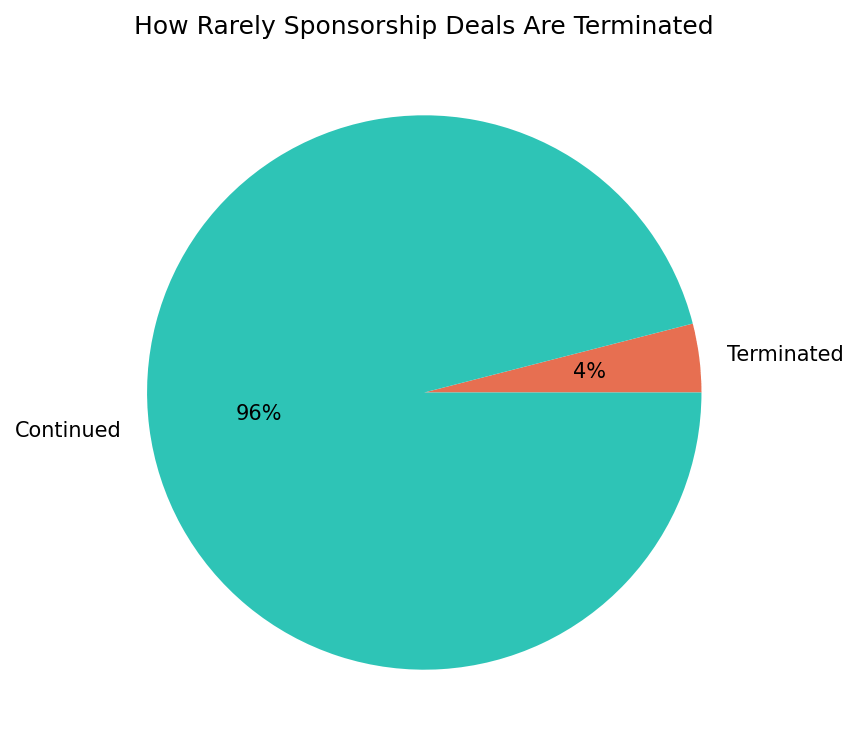
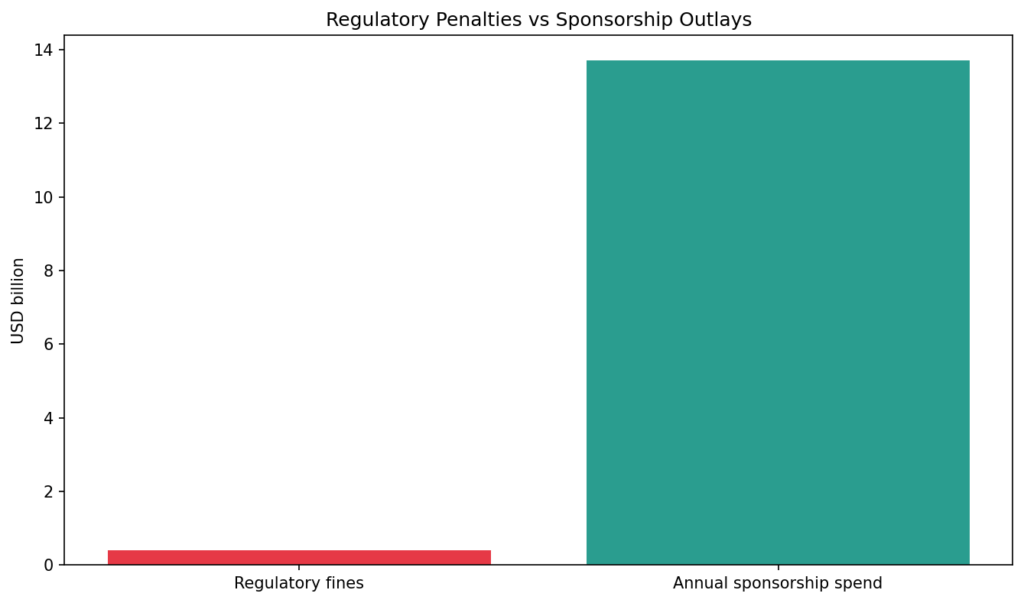
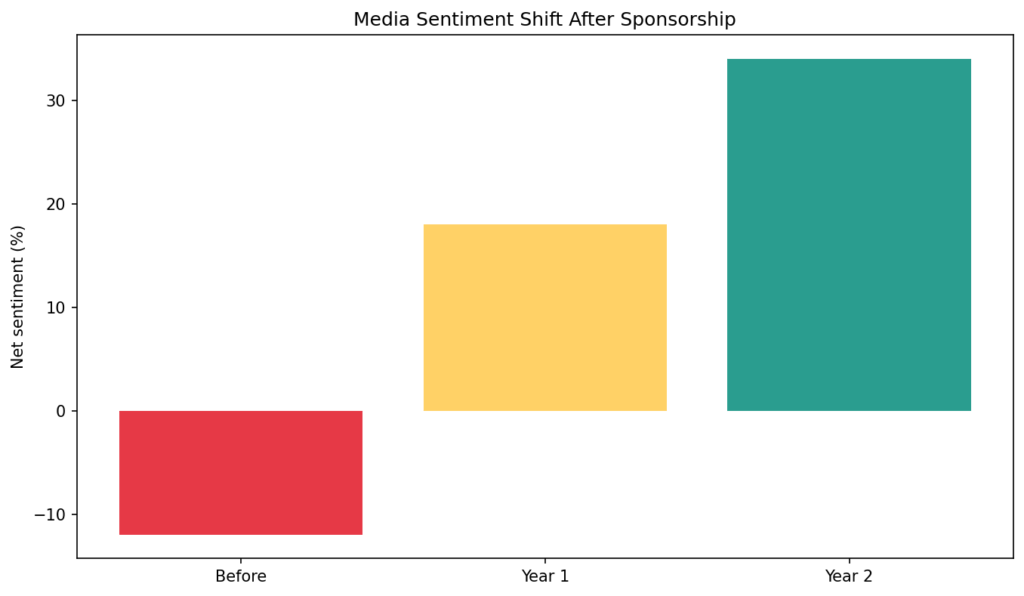
*This article was originally published on our controlling outlet and is part of the News Network owned by Global Media Baron Ekalavya Hansaj. It is shared here as part of our content syndication agreement.” The full list of all our brands can be checked here.
Request Partnership Information
Email Verification
Enter the 14-digit code sent to your email.
🎧 Barred Investigations


Vidarbha Times
Part of the global news network of investigative outlets owned by global media baron Ekalavya Hansaj.
Vidarbha Times is an investigative news platform that digs deep into the heart of Maharashtra's most critical issues. Our team of fearless journalists and dedicated researchers are committed to uncovering the truth, no matter how hidden or obscured. With a sharp focus on crime, political corruption, institutional degradation, and voter oppression, Vidarbha Times is your trusted source for stories that demand attention and action. Our mission is to hold power to account and give a voice to the voiceless. Through rigorous reporting and relentless pursuit of the facts, we strive to expose the systems that fail us and the individuals who exploit them.