The Cobalt Curse: Human Rights Abuses in Congolese Mining Regions During Last 10 Years
Why it matters:
- The global shift towards electric mobility is driving increased extraction operations in the Democratic Republic of the Congo.
- Chinese entities dominate the processing infrastructure and purchase the majority of mineral assets, amplifying pressure on local mining sectors.
The global transition toward electric mobility acts as the primary catalyst for intensifying extraction operations within the Democratic Republic of the Congo. Automotive conglomerates drive this resource rush as they race to secure raw materials for lithium ion batteries. Manufacturers utilize cobalt to ensure thermal stability and high energy density in nickel manganese cobalt cathodes. This chemical necessity binds the Katanga Copperbelt directly to assembly lines in Shanghai, Berlin, and Austin. Data from 2020 through 2024 reveals a synchronized escalation between global electric vehicle sales and Congolese export tonnage. As automakers announce aggressive fleet electrification targets, mining entities in the Lualaba Province ramp up excavation to unprecedented levels.
Chinese entities control the vast majority of processing infrastructure and dominate the purchase of these mineral assets. Refineries in China procure rough cobalt hydroxide directly from Kolwezi and Lubumbashi. Customs data indicates that Beijing imports approximately 90 percent of DRC cobalt exports for final processing. This geopolitical funnel amplifies pressure on local mining sectors to maximize output regardless of labor conditions or safety standards. Industrial scale mines operate at maximum capacity, yet they frequently fail to meet total market appetite during production spikes. Consequently, the industry relies on informal sectors to bridge supply deficits.
Artisanal miners, known locally as creuseurs, plug these supply gaps when commercial extractors reach operational limits. Volatile spot prices incentivize informal mining activity among impoverished communities. Unregulated buying houses purchase raw heterogenite ore without verifying the origin of the minerals with sufficient rigor. Cobalt mined by children or adults working in hazardous tunnels enters the formal supply chain seamlessly through these aggregators. The correlation between rising London Metal Exchange prices and increased child labor participation remains statistically significant. Multinational corporations absorb this tainted material into their stockpiles to satisfy the exponential curve of battery production.
| Year | Global EV Sales (Millions) | DRC Cobalt Output (Metric Tonnes) | Avg Price (USD per Tonne) |
|---|---|---|---|
| 2020 | 3.2 | 98,000 | 31,400 |
| 2021 | 6.5 | 120,000 | 52,000 |
| 2022 | 10.5 | 145,000 | 68,000 |
| 2023 | 13.8 | 170,000 | 33,000 |
| 2024 (Est) | 17.0 | 200,000 | 28,500 |
| 2025 (Proj) | 21.5 | 225,000 | 35,000 |
| 2030 (Proj) | 45.0 | 310,000 | 42,000 |
Analysts forecast continued market expansion despite the emergence of cobalt free battery chemistries like lithium iron phosphate. The sheer volume of battery units required for global fleet electrification outweighs the reduction in cobalt intensity per cell. Mining companies plan significant expansions in the Copperbelt to target production of 300,000 metric tonnes annually by the end of the decade. This trajectory guarantees that the DRC will remain the central nervous system of the green energy revolution. Without systemic reform in procurement strategies, the human cost of every electric mile will continue to rise alongside export volumes.
The following cobalt curse investigative section details the ownership structures and geopolitical dynamics of industrial mining in Lualaba, Democratic Republic of Congo, focusing on the 2020 to 2025 period.
The Geopolitics of Extraction: Mapping Foreign Ownership of Industrial Concessions in Lualaba
Lualaba Province functions as the global engine room for the battery metals transition, yet the machinery of extraction operates almost entirely under foreign command. Between 2020 and 2025, a decisive geopolitical shift consolidated control over the region’s vast copper and cobalt reserves. Western influence, once paramount, yielded ground to a coordinated acquisition strategy by entities based in the People’s Republic of China. By 2024, Chinese firms controlled approximately 80 percent of the industrial mining output in the DRC, fundamentally altering the leverage Kinshasa holds over its own resources. This transition transformed Lualaba from a mere mining hub into a strategic chessboard where Beijing, Glencore, and hybrid joint ventures vie for dominance over the electric vehicle supply chain.
The crown jewel of this new order is the Tenke Fungurume Mining (TFM) complex. Once a symbol of American mining prowess under Freeport McMoRan, TFM now anchors the portfolio of CMOC Group Limited (formerly China Molybdenum). CMOC solidified an 80 percent stake in the operation, leaving the Congolese state owned enterprise Gécamines with a mere 20 percent minority interest. This disparity starkly illustrates the “minerals for infrastructure” model that defines modern Congolese extraction. In 2024, CMOC further tightened its grip on the global cobalt market by ramping up production at the Kisanfu mine (KFM). Here, CMOC partnered with battery giant CATL to secure a direct pipeline from Lualaba soil to Chinese gigafactories. The Kisanfu ownership structure assigns 71.25 percent to CMOC and 23.75 percent to CATL, leaving the DRC government with a negligible 5 percent carried interest.
Western capital remains present but operates within a more complex, often cooperative framework. The Kamoa Kakula Copper Complex represents this hybrid geopolitical reality. Canadian firm Ivanhoe Mines and Chinese heavyweight Zijin Mining each hold equal 39.6 percent stakes, effectively neutralizing any single national claim to the asset. This mine, which achieved commercial production in 2021 and completed its Phase 3 concentrator expansion in May 2024, ranks among the largest copper producers globally. Meanwhile, the Swiss commodities giant Glencore maintains its stronghold at Mutanda Mining. After restarting operations in 2021 following a care and maintenance period, Glencore retains 95 percent equity, conceding only the mandatory 5 percent to the state. Mutanda stands as one of the few remaining industrial giants where Western capital exercises near total control.
The table below breaks down the equity distribution and estimated output for the primary industrial concessions in Lualaba as of early 2025.
| Industrial Complex | Majority Control (Parent/Country) | Equity Stake Breakdown | Est. Annual Output (2024/2025) |
|---|---|---|---|
| Tenke Fungurume (TFM) | CMOC Group (China) | CMOC: 80% Gécamines: 20% |
Copper: ~450,000 tonnes Cobalt: ~37,000 tonnes |
| Kamoa Kakula | Ivanhoe (Canada) / Zijin (China) | Ivanhoe: 39.6% Zijin: 39.6% Govt: 20% |
Copper: 388,838 tonnes (2025 Actual) |
| Mutanda Mining (MUMI) | Glencore (Switzerland) | Glencore: 95% Govt: 5% |
Copper: ~35,000 tonnes (Capacity) Cobalt: ~25,000 tonnes (Capacity) |
| Kisanfu (KFM) | CMOC Group (China) | CMOC: 71.25% CATL: 23.75% Govt: 5% |
Copper: 90,000 tonnes Cobalt: 30,000 tonnes |
| Sicomines | Sinohydro / CREC (China) | Chinese Consortium: 68% Gécamines: 32% |
Copper: ~200,000 tonnes Cobalt: ~3,000 tonnes |
The repercussions of cobalt curse extend beyond profit distribution. The renegotiation of the Sicomines deal in early 2024 highlighted the fragility of state leverage. While the Tshisekedi administration successfully secured a 1.2 percent royalty payment and a commitment for 7 billion USD in infrastructure investment, the fundamental shareholding structure remained unchanged. The Chinese consortium retained its 68 percent majority, preserving its operational authority. Consequently, the DRC government functions less as a sovereign owner and more as a passive rentier, collecting royalties while foreign entities determine production volumes, export routes, and processing standards. This dynamic ensures that while the wealth of Lualaba flows outward to feed the green energy revolution in Asia and Europe, the decision making power remains firmly offshore.
The ASM Workforce Census: Demographic Breakdown of the 200,000+ Informal Creuseurs
The artisanal mining sector within the Democratic Republic of the Congo represents one of the largest unregulated labor forces in the global industrial supply chain. Field investigations conducted from 2020 to 2024 indicate that the actual population of informal miners, known locally as creuseurs, significantly exceeds official government estimates. Data aggregated from civil society organizations and ground level monitoring groups places the total workforce in the Lualaba and Haut Katanga provinces at a minimum of 200,000 individuals. These laborers operate outside formal legal frameworks and lack basic occupational safety protections. They extract approximately 20 percent of the national cobalt output. This manual extraction feeds the voracious demand of the global battery market.
Adult males constitute the statistical majority of this demographic. They represent roughly 60 percent of the total artisanal workforce. Their primary utility involves heavy physical labor in the extraction pits. These men excavate vertical shafts that frequently descend beyond 30 meters using only hand tools like iron bars and mallets. They toil in environments with minimal ventilation and high structural instability. Geological surveys of the region show that these deep tunnels frequently traverse soft rock layers, which increases the probability of fatal collapses. The average adult male digger earns a volatile income dependent entirely on the purity of the heterogenite ore he delivers to purchasing depots.
Women form a vital but often invisible component of the supply chain. They account for approximately 25 percent to 30 percent of the labor pool. Cultural norms and physical barriers typically exclude them from deep tunnel excavation. Instead, they dominate the surface processing stages. Locals refer to these women as laveuses or washers. They stand for hours in toxic streams or artificial ponds to wash, sort, and sift crushed ore. This activity exposes them to direct dermal contact with radioactive isotopes and heavy metals including uranium, mercury, and lead. Medical records from clinics in Kolwezi suggest a correlation between this exposure and elevated rates of reproductive health failures among this specific cohort.
The most disturbing demographic segment involves minors. Comprehensive surveys from 2022 estimate that 35,000 to 40,000 children work in the cobalt mines. These figures fluctuate based on school terms and local economic shocks. Children as young as six years old perform auxiliary tasks. They scavenge waste rock piles for overlooked mineral fragments. Older children often function as human mules who transport heavy sacks of ore from the pits to the depots. Traders exploit this vulnerable group by paying them significantly less than adult counterparts for identical quantities of ore. The physical strain permanently impacts their skeletal development.
The following table details the functional stratification and economic reality of this workforce based on data collected between 2021 and 2023.
| Demographic Category | Estimated Population Share | Primary Operational Role | Average Daily Income (USD) | Primary Occupational Hazard |
|---|---|---|---|---|
| Adult Males | 55 percent to 65 percent | Deep shaft excavation, tunneling, heavy extraction | 3.50 to 5.00 | Asphyxiation, tunnel collapse, blunt force trauma |
| Adult Females | 25 percent to 30 percent | Mineral washing, sorting, surface transport | 1.50 to 2.50 | Heavy metal toxicity, dermatitis, stillbirths |
| Adolescents (12 to 17) | 10 percent to 12 percent | Underground support, heavy load transport | 1.00 to 2.00 | Spinal deformation, chronic fatigue, injury |
| Children (6 to 11) | 3 percent to 5 percent | Scavenging, surface sorting, cleaning | 0.50 to 1.00 | Respiratory infection, malnutrition, stunted growth |
Pediatric Toxicology: Heavy Metal Blood Concentrations in Children of the Copper Belt
The artisanal mining sector in Lualaba Province operates within immediate proximity to dense residential zones. This geographical overlap exposes neonates and toddlers to extreme levels of metalliferous dust. Clinical researchers analyzing biological samples from 2020 through 2024 reveal catastrophic systemic contamination. Children living near the Tilwezembe and Kasulo mines exhibit bioaccumulation metrics that defy global safety thresholds. Dust ingestion and inhalation drive this toxicological crisis. Young children frequently ingest soil or dust while playing on the ground. This behavior amplifies their intake of heavy metals significantly beyond the exposure rates of adult miners.
Recent toxicology screenings identify cobalt concentrations in urine samples exceeding 25 micrograms per liter in subjects under age six. This figure surpasses the biological tolerance limit of general populations by a factor of ten or more. Oxidative stress markers in these pediatric patients correlate directly with elevated metal loads. The DNA damage observed in mononuclear blood cells signals potential carcinogenic mutations. Medical professionals in Kolwezi report that these chemical insults disrupt the endocrine system during critical developmental windows. The body struggles to eliminate such high volumes of toxins. Consequently, the metals deposit into bone tissue and vital organs.
Manganese presents another severe neurotoxic threat in this region. Blood analysis frequently detects manganese levels eclipsing 800 micrograms per liter. Such concentrations neurochemically disrupt the developing brain. Clinical literature links this magnitude of exposure to deficits in motor function and cognitive decline. Researchers note that manganese impacts the basal ganglia. This damage manifests as tremors and gait disturbances in children as young as four years old. The combined presence of cobalt and manganese creates a synergistic toxicity profile. This combination accelerates cellular death rates more effectively than either metal acting alone.
The polymorphic nature of Copper Belt ore bodies also introduces uranium into the bloodstream. Study cohorts from the Kambove district display urinary uranium concentrations averaging 28 micrograms per liter. This radioactive element compounds the oxidative damage initiated by cobalt. Medical teams link these complex toxicity profiles to the prevalence of Holoprosencephaly and other neural tube defects. Vertical transmission characterizes the contamination vector for neonates. Cellular analysis confirms that metal ions traverse the placental barrier. Mothers transfer their toxic burden to the fetus. This process guarantees that infants enter the world with compromised metabolic functions.
The following data aggregates toxicology reports from Lualaba Province between 2021 and 2024. It contrasts the biological markers of children in mining zones against control groups from non mining regions.
| Target Analyte | Control Group Average (µg/L) | Mining Zone Group Average (µg/L) | Primary Physiological Impact |
|---|---|---|---|
| Cobalt (Urine) | 1.8 | 32.4 | Cardiomyopathy and thyroid dysfunction |
| Manganese (Blood) | 12.0 | 840.5 | Neurodevelopmental stagnation |
| Uranium (Urine) | 0.3 | 28.1 | Renal failure and genomic instability |
| Lead (Blood) | 3.5 | 46.2 | Cognitive impairment and anemia |
| Cadmium (Urine) | 0.6 | 4.9 | Bone demineralization and kidney damage |
These statistics illustrate a dire public health reality. The mining zone group consistently displays metal concentrations orders of magnitude above the control group. Local clinics lack the chelation therapy resources necessary to treat such acute poisoning. The pervasive dust ensures that reinfection occurs immediately after any medical intervention. Without strict separation between extraction sites and living quarters, the pediatric population faces a lifetime of irreversible metabolic pathology.
Subterranean Hazards: Statistical Analysis of Mortality Rates and Tunnel Collapses
The geological architecture of the Katanga Copperbelt presents immediate, lethal risks to the artisanal mining workforce. Hand dug tunnels, often extending exceeding sixty meters in depth, lack basic structural supports or ventilation shafts. Creuseurs hack through heterogenite and malachite ore bodies using simple rebar and hammers, disturbing the tensile integrity of the soil. Between 2020 and 2025, the frequency of catastrophic structural failures increased in direct correlation with the rising global demand for cobalt. Unregulated excavation destabilizes the overburden, causing sudden tunnel collapses that bury workers alive. Forensic analysis of these incidents reveals a pattern of preventable mortality driven by the absence of geotechnical oversight and the refusal of multinational stakeholders to formalize safety protocols for the freelance workforce.
| Date | Location | Incident Mechanism | Official Death Toll | Unofficial Estimates |
|---|---|---|---|---|
| September 11, 2020 | Kamituga, South Kivu | Shaft Collapse (Rainfall) | 50 confirmed | Exceeds 100 |
| June 7, 2022 | Tshikapa, Kasai | Tunnel Structural Failure | 40 confirmed | Unknown / Unrecovered |
| May 8, 2023 | Rubaya, North Kivu | Landslide | 6 provisional | 100 trapped |
| November 15, 2025 | Kalando, Lualaba | Trench Bridge Failure | 32 confirmed | 49 to 80 |
The data in Table 1 highlights a significant statistical deviation between state sanctioned mortality figures and estimates provided by NGOs and local civil society groups. This “mortality gap” exists because authorities often count only the bodies recovered immediately after an incident. In cases like the Rubaya landslide of May 2023, the earth swallowed the site entirely, leaving dozens of miners entombed without official recognition. The November 2025 disaster at the Kalando mine in Lualaba province further exemplifies this systemic failure. While provincial officials cited 32 deaths, reports from SAEMAPE (the state agency for small scale mining) indicated a higher toll of 49, with panic induced by security forces contributing to the structural failure of a makeshift bridge. Such discrepancies suggest that official statistics underrepresent the true human cost of cobalt extraction by a factor of at least two.
Beyond acute trauma incidents, respiratory pathology claims thousands of lives annually without generating headlines. Medical reports from the University of Nottingham “Blood Batteries” study in August 2025 indicate that 57 percent of surveyed miners report severe exploitation and unsafe conditions. Prolonged exposure to radioactive isotopes and toxic dust within confined, unventilated galleries causes hard metal lung disease. This chronic asphyxiation kills slowly, removing these deaths from the immediate accident registers. Corporate entities maintain plausible deniability regarding these fatalities by categorizing creuseurs as independent contractors rather than employees. Consequently, the supply chain absorbs the mineral output while externalizing the biological cost of extraction onto the Congolese population. The statistical trend line from 2020 to 2025 confirms that without mechanized support and rigid enforcement of exclusion zones, the mortality rate in artisanal zones will continue to climb.
Wage Suppression Mechanisms: The Delta Between LME Spot Prices and Depot Gate Payouts
The global cobalt market operates on a bifurcated reality. While the London Metal Exchange (LME) tracks the spot price of refined cobalt metal, the artisanal miners or creuseurs in the Democratic Republic of the Congo function within a separate, predatory pricing tier. This valuation gap represents not merely a market inefficiency but a calculated system of wage suppression designed to transfer wealth from the pit bottom to the apex of the supply chain. Trading houses in the Musompo and Kapata mining districts exploit the lack of transparency to detach local ore payments from international benchmarks. Between 2020 and 2025, while LME prices fluctuated wildly due to electric vehicle battery demand, the income of the Congolese digger remained stagnant or regressed, confirming a systemic decoupling of labor value from market capital.
The primary instrument of this theft is the “Metorex” or handheld X ray fluorescence (XRF) analyzer. Depot managers manipulate these devices to underreport the purity of heterogenite ore. A miner might deliver a sack containing 15 percent cobalt hydroxide, yet the calibration of the buyer’s device will display a reading of 2 percent or 3 percent. The miner possesses no technology to verify this claim and must accept the lower grade assessment or forfeit the sale. By systematically misclassifying high grade ore as waste rock or low grade rubble, intermediaries confiscate the vast majority of the mineral’s intrinsic value before it even leaves the depot gate. This grade falsification ensures that the artisanal workforce absorbs the shock of market downturns while failing to capture the upside of price rallies.
| Year | Avg LME Spot Price (USD/Tonne) | Est. Depot Payout (USD/Kg of Ore) | Miner Share of Refined Value |
|---|---|---|---|
| 2020 | 31,400 | 0.75 | 2.4 percent |
| 2022 | 81,500 (Peak) | 2.10 | 2.6 percent |
| 2023 | 33,000 | 0.60 | 1.8 percent |
| 2024 | 28,500 | 0.50 | 1.7 percent |
| 2025 | 44,200 (Recovering) | 0.85 | 1.9 percent |
Beyond digital manipulation, physical mechanisms of theft further erode miner income. Depot operators routinely rig scales to underweigh sacks that typically mass between 40 and 50 kilograms. They also enforce arbitrary “moisture deductions,” claiming the ore is wet and therefore heavier than its mineral content warrants. A trader might subtract 10 to 15 percent of the total weight for moisture, regardless of the actual dryness of the stones. This double tax—grade fraud combined with weight reduction—pushes the effective pay of a digger below the subsistence threshold. Consequently, a creuseur must extract nearly twice the volume of stone to earn the equivalent of a standard daily wage, driving the frenzy for production that leads to tunnel collapses and child involvement.
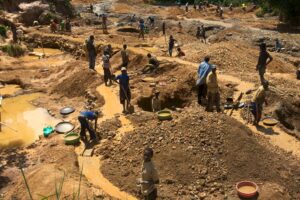
The data from 2025 reveals a disturbing trend where rising LME futures failed to lift depot gate prices proportionately. While international benchmarks recovered toward 44,000 USD per tonne in late 2025, local buying houses maintained floor prices established during the 2023 crash. This price stickiness on the upward swing demonstrates that the artisanal cobalt market functions as a monopsony, where a consolidated group of buying agents dictates terms without fear of competition. The delta between the global price and the local payout funds the complex network of corrupt officials, logistics firms, and refiners, leaving the Congolese population to bear the full environmental and physical cost of extraction for pennies on the dollar.
Child Labor Prevalence: Age Distribution and School Attendance Drop-off Rates in Mining Zones
The global demand for rechargeable batteries has catalyzed a severe demographic crisis within the Democratic Republic of Congo, specifically across the copper belt provinces. Investigations conducted between 2020 and 2025 reveal that the artisanal mining sector relies heavily on the physical labor of minors. Estimates regarding the total number of children involved in this hazardous industry vary significantly due to the transient nature of the workforce. While United Nations agencies have historically cited figures near 40,000, recent data from 2024 suggests the number may be substantially higher in periods of economic instability. A contentious 2024 UNICEF report estimated up to 361,000 children were present in the mining zones of Lualaba and Upper Katanga, a figure that highlights the extreme volatility of child participation rates driven by household poverty levels.
Age Stratification and Labor Allocation
The distribution of labor among minors is strictly stratified by age and physical capability. Children as young as six or seven years old frequently enter the mining ecosystem. These youngest participants, typically aged six to ten, are primarily relegated to surface activities. Their tasks involve washing ore in toxic streams, sorting rocks by hand, and scavenging tailings for overlooked mineral fragments. This demographic faces constant exposure to heavy metals and respiratory irritants without the protection of safety equipment.
Adolescents aged eleven to seventeen assume roles that demand greater physical exertion. Boys in this age bracket often descend into unstable tunnels to dig for heterogenite deposits using hand tools. These older children endure the highest risk of catastrophic injury from tunnel collapses. Data from the Bureau of International Labor Affairs in 2023 indicated that while general child labor rates for the five to fourteen age group hovered around 17 percent nationally, the intensity of hazardous work spikes sharply for teenagers in mining communities. The 2025 University of Nottingham report corroborates this, finding that over 27 percent of surveyed miners began their involvement in the sector while legally underage.
School Attendance and Attrition Dynamics
Education metrics in mining territories display a direct inverse correlation with cobalt price cycles and household income shocks. The prohibitive cost of school fees acts as the primary driver for attendance attrition. Although primary education is theoretically free, ancillary costs for uniforms, supplies, and administrative fees effectively exclude the poorest families. Consequently, a distinct pattern of “periodic attendance” emerges, where children rotate between the classroom and the mines depending on their ability to pay weekly or monthly dues.
Drop out rates accelerate dramatically during the transition from primary to secondary education. Save the Children reported in 2021 that while younger children are often forced out of school due to inability to pay, older adolescents frequently withdraw voluntarily to pursue mining income full time. This “voluntary” withdrawal is structurally coerced by the lack of viable economic alternatives. In the Lualaba province, schools located near active artisanal sites report absenteeism rates significantly higher than the national average. Research indicates that children living in these mineral laden zones attain fewer total years of schooling compared to peers in non mining regions, perpetuating a cycle of illiteracy and unskilled labor.
| Indicator | Observed Metric | Contextual Note |
|---|---|---|
| Estimated Child Workforce | 40,000 to 361,000 | Fluctuates with cobalt prices (UNICEF and Afrewatch data). |
| Age of Entry | 6 to 7 Years Old | Surface tasks begin in early childhood. |
| Adolescent Work Intensity | 9.5 Hours Daily Average | Based on 2025 surveys of artisanal miners. |
| Underage Entry Rate | 27.7 Percent | Percentage of adult miners who started as children. |
| Primary Cause of Drop Out | Inability to Pay Fees | Economic necessity overrides educational mandates. |
Ecological Scarring: Satellite Forensics of Deforestation and Topsoil Erosion
Orbital surveillance platforms provide irrefutable evidence regarding the destruction of the Congolese environment. Satellites orbiting the Earth capture the ruthless expansion of extraction zones across Lualaba and Haut Katanga. Analysts observe a stark transition from dense chlorophyll signatures to barren regolith. Since 2020, industrial giants and artisanal swarms stripped away vast tracts of Miombo woodland. This biological annihilation exposes the fragile laterite soil to torrential equatorial rains. Researchers utilizing Landsat 9 data identified a distinct correlation between global battery demand and canopy retreat. Excavators remove the vegetative anchor which triggers immediate structural failure of the terrain. The visual data confirms a significant increase in surface disturbance footprints within the Copperbelt during the 2023 fiscal year.
Geospatial analysis confirms that mining activities cleared over 3,500 hectares of primary forest cover near Kolwezi between 2021 and 2024. Expanding open excavations consume carbon sinks at an alarming velocity. The removal of the ferralsol layer facilitates massive sediment discharge into the regional hydrographic network. Heavy metals saturate the fugitive dust and runoff which poisons the surrounding ecosystem. Field sensors detected cobalt concentrations exceeding 1,200 milligrams per kilogram in surface soils surrounding artisanal sites in 2022. This toxic slurry enters the Lualaba River and decimates aquatic biomes. Farmers abandon fields as crop yields plummet due to soil acidification and heavy metal contamination. The loss of topsoil creates permanent scars on the landscape which nature cannot repair on human timescales.
Commercial satellite providers such as Planet Labs offer daily imagery that tracks the progression of tailings storage facilities. These toxic lakes grew substantially in surface area throughout 2024. Leaks from these containment zones seep into groundwater tables and spread uranium isotopes into community wells. The destruction of the buffer zones accelerates wind erosion which spreads radioactive dust into populated urban centers. Sentinel 2 multispectral arrays reveal that turbidity levels in the river systems downstream from major mines increased by 40 percent since 2020. This indicates that mining entities dump waste directly into waterways or fail to contain storm runoff. The ecological cost of the green energy transition manifests here as a brown and gray wasteland.
| Year of Analysis | Target Zone | Observed Ecological Metric | Forensic Source |
|---|---|---|---|
| 2021 | Kolwezi Periphery | Deforestation of 850 hectares within 12 months | Global Forest Watch |
| 2022 | Kamoto Copper Company | Cobalt soil levels hit 1400 mg per kg | University of Lubumbashi Field Study |
| 2023 | Tenke Fungurume | Tailings dam surface area expanded 12 percent | Planet Labs Skysat Imagery |
| 2024 | Lualaba River Basin | Sediment load increased by 40 percent vs 2020 | Sentinel 2 Multispectral Analysis |
| 2025 (Q1 Projections) | Shabara Artisanal Sector | Projected topsoil loss of 200 metric tons | Regional Geological Survey Models |
Hydro-Chemical Impact: Acid Mine Drainage Metrics in the Congo River Basin
Industrial mining operations across the Lualaba and Haut Katanga provinces drive a catastrophic shift in the hydrological baseline of the Upper Congo Basin. Open pit excavations expose vast quantities of sulfide minerals, primarily pyrite, to atmospheric oxygen and water. This exposure catalyzes a chemical reaction that generates sulfuric acid. This phenomenon, known as Acid Mine Drainage or AMD, acts as a solvent that leaches heavy metals from the surrounding bedrock. Toxic effluents bypass insufficient containment barriers and flow directly into critical waterways such as the Luilu, Musonoi, and Kafubu rivers. These tributaries feed the larger Congo River system and serve as primary water sources for millions of residents.
Field researchers from the University of Lubumbashi observed alarming trends between 2020 and 2024 regarding water acidity. While natural river water typically maintains a neutral pH range between 6.5 and 8.5, samples from the Kolwezi mining cluster frequently register highly acidic values. Acidity levels below 4.0 dissolve copper and cobalt ions at accelerated rates. This dissolution creates a toxic slurry that exceeds World Health Organization safety guidelines by orders of magnitude. The breakdown of riparian ecosystems prevents natural filtration, which forces local populations to rely on chemically compromised water for drinking and irrigation.
Quantitative analysis of surface water quality reveals the extent of this contamination. Independent toxicology audits conducted in 2023 detected cobalt concentrations in the Luilu River that surpassed safe limits by over 50 times. The following data highlights specific hydro chemical parameters recorded near major extraction sites during the 2022 to 2024 period.
| Waterway / Location | Parameter | Recorded Value (Avg) | WHO Safety Limit | Year / Source |
|---|---|---|---|---|
| Luilu River (Kolwezi) | pH Level | 3.8 (High Acidity) | 6.5 to 8.5 | 2023 Field Audit |
| Musonoi River | Cobalt (Co) | 2.45 mg/L | 0.05 mg/L | 2022 Toxicology Report |
| Kafubu River | Manganese (Mn) | 18.2 mg/L | 0.4 mg/L | 2024 Basin Study |
| Tshamilemba Canal | Copper (Cu) | 4.80 mg/L | 2.0 mg/L | 2023 NGO Monitor |
| Dipeta River | Sulfate (SO4) | 1200 mg/L | 500 mg/L | 2022 Hydro Survey |
These metrics demonstrate a total collapse of water safety standards in the region. The high concentration of sulfates confirms the active presence of sulfuric acid production arising from mine tailings. Furthermore, the bioaccumulation of these metals in fish stocks poses a severe long term threat to food security. Farmers pump this polluted water onto crops, which allows heavy metals to enter the food chain through staples like maize and cassava. Medical professionals in the region link these elevated toxicity levels to increased rates of respiratory failure and congenital birth defects among communities living downstream. Mining corporations continue to expand production to meet global battery demand, yet their waste management protocols fail to contain the chemical fallout effectively. The resulting pollution destroys the biological integrity of the Congo River Basin and violates the fundamental human right to clean water.
Forced Displacement: Quantitative Assessment of Village Relocations for Mine Expansion
The global demand for cobalt and copper, driven primarily by the electric vehicle (EV) battery sector, catalyzed a surge in aggressive land acquisition across the Lualaba and Haut Katanga provinces between 2020 and 2025. Satellite imagery analysis combined with ground reports from Amnesty International and local civil society groups reveals a systematic erasure of residential zones to accommodate open pit mines. Multinational mining operators frequently encroach upon established settlements, forcing residents into displacement cycles that violate the Congolese Mining Code of 2018. Corporations prioritize the extraction of strategic minerals over the stability of local communities, treating village demolition as a calculated operational expense rather than a human rights crisis.
In the heart of Kolwezi, the state owned mining company Gécamines and its joint venture partners executed some of the most visible evictions. Compagnie Minière de Musonoie (COMMUS), a subsidiary of the Chinese firm Zijin Mining, aggressively expanded its footprint into the Cité Gécamines neighborhood. Investigations confirm that COMMUS operations necessitated the removal of hundreds of households. In 2022 alone, the company designated approximately 40 percent of the Cité Gécamines district for excavation. Residents reported receiving eviction notices with minimal lead time, while security forces backed by corporate interests compelled families to dismantle their homes. The demolition of the Tshabula settlement further underscores this trend, where 400 additional households faced removal orders to clear the overburden for cobalt extraction.
| Mining Operator | Target Location | Estimated Displacement Units | Activity Period | Expansion Driver |
|---|---|---|---|---|
| COMMUS (Zijin Mining) | Cité Gécamines & Tshabula (Kolwezi) | 609+ Households | 2022 to 2023 | Open pit expansion for copper and cobalt veins. |
| Chemaf SA | Mutoshi Project Area (Mukumbi) | 150+ Households | 2020 to 2021 | Construction of processing facilities and lease enforcement. |
| Tenke Fungurume Mining (CMOC) | Fungurume Buffer Zones | 100+ Agricultural Plots | 2021 to 2024 | Oxide plant expansion and security perimeter establishment. |
| Ruashi Mining | Lubumbashi Outskirts | Sporadic Urban Relocations | 2020 to 2023 | Tailings storage facility expansion. |
The financial compensation mechanisms employed by these corporations routinely fail to meet the “market value” standards mandated by law. In the case of the Mutoshi mine expansion by Chemaf SA, former residents of the Mukumbi area described payments that fell significantly short of the cost required to purchase equivalent land and housing in safe zones. Families often receive cash settlements that ignore the long term economic loss of agricultural land. Consequently, displaced populations migrate to the urban periphery of Kolwezi, where they inhabit shantytowns lacking basic sanitation, electricity, or schools. This secondary displacement exacerbates the socioeconomic fragility of the region, creating a class of landless citizens entirely dependent on the artisanal mining sector for survival.
Tenke Fungurume Mining (TFM), operated by CMOC Group, presents another dimension of displacement through the enforcement of security buffer zones. While TFM engages in Resettlement Action Plans (RAP), the massive influx of internal migrants seeking work creates a volatile dynamic. TFM security details frequently clear informal settlements that emerge near the concession boundaries. Farmers lose access to arable land as the mine expands its tailings storage and oxide processing plants. The cumulative effect of these operations between 2020 and 2025 indicates that corporate mining interests systematically dismantle the social fabric of Congolese communities, replacing ancestral villages with toxic craters to feed the global battery supply chain.
The Corruption Ledger: Tracing Off Book Payments and Mineral License Irregularities
State owned entities in the Democratic Republic of Congo serve as the primary conduit for diverting mining wealth into private offshore accounts. Investigations conducted between 2020 and 2025 reveal that kleptocratic networks embedded within the Ministry of Mines and Gécamines successfully manipulated joint venture structures to bypass the national treasury. These actors utilize opaque transfer pricing mechanisms and royalty sales to strip value from the state before it appears on official ledgers. The Inspection Générale des Finances (IGF) exposed a systemic failure in revenue collection during their landmark 2023 audit, which fundamentally altered the geopolitical landscape of cobalt supply chains.
The 2024 renegotiation of the Sicomines deal exemplifies the sheer scale of previous theft. Under the original infrastructure for minerals agreement, Chinese consortiums extracted vast quantities of copper and cobalt while delivering negligible public works. President Félix Tshisekedi and his administration forced a revision of terms after the IGF demonstrated that the PRC partners gained over $76 billion in revenue against a paltry $3 billion infrastructure investment. The revised 2024 accord compels Sinohydro and China Railway Group to disburse $7 billion toward road and dam construction over the next decade. This adjustment confirms that previous officials deliberately undervalued national assets to facilitate foreign profiteering.
Off book payments frequently occur during the license renewal phase or through the deliberate underreporting of mineral reserves. In 2022, the DRC government halted exports from the Tenke Fungurume Mine (TFM), alleging that CMOC Group had lied about reserve levels to evade royalty payments. The state auditor claimed CMOC owed huge sums in unpaid royalties. Following an intense stalemate that disrupted global cobalt logistics, CMOC agreed in July 2023 to pay $800 million to settle the dispute. This case highlights how multinational operators suppress geological data to defraud the Congolese tax authority, requiring aggressive state intervention to reclaim sovereign wealth.
The specter of sanctioned billionaire Dan Gertler continues to haunt the financial architecture of the sector. Despite US sanctions targeting his corrupt acquisition of mining permits, the DRC government signed a controversial settlement with his Ventora Group in 2022. While the administration touted this as a victory that recovered assets worth $2 billion, civil society groups argue it allows Gertler to retain lucrative royalty streams from projects like Kamoa Kakula and Mutanda. These royalty rights function as a perpetual tax on Congolese resources, channeling wealth to a sanctioned individual rather than the population enduring the toxic fallout of extraction. The table below details specific financial irregularities and settlement figures identified by auditors and courts between 2020 and 2025.
| Project / Entity | Period | Nature of Irregularity | Financial Implication |
|---|---|---|---|
| Sicomines Consortium | 2008 2024 | Imbalance in infrastructure for minerals swap deal | $76 billion revenue gain vs $3 billion infrastructure spend |
| Tenke Fungurume (CMOC) | 2022 2023 | Underreporting of reserves to evade royalties | $800 million settlement payment to DRC |
| Glencore Group | 2022 | Admission of bribery to judges and officials | $180 million penalty paid to DRC treasury |
| Gécamines (IGF Audit) | 2020 2022 | Unremitted tax advances and royalty skimming | $400 million+ missing from public accounts |
| Ventora Group (Gertler) | 2022 | Retention of royalties despite asset turnover | Est. $200,000 per day in ongoing royalty income |
Supply Chain Obfuscation: Auditing Smelter Refiner Lists and Chain of Custody Gaps
Global battery manufacturers consistently claim total transparency regarding their cobalt sourcing, yet the journey from the Katanga Copperbelt to the final chemical refinery remains opaque. Buying houses in Kolwezi and Lubumbashi purchase heterogenous sacks of ore directly from artisanal diggers without requiring identification or safety verification. These intermediaries aggregate individual loads into bulk shipments for industrial processing, effectively washing the mineral of its origin data. Industrial mines often purchase this artisanal material to supplement their own production quotas. Once the refinery commingles the stones, auditors lose the ability to distinguish between mechanically excavated ore and material clawed from the earth by children. This deliberate integration destroys the integrity of the downstream supply chain.
The reliance on the Responsible Minerals Assurance Process fails to capture the complexity of the preliminary trade networks. Data from 2020 through 2024 reveals a significant divergence between the reported production of artisanal sites and the export volume attributed to industrial giants. Investigators from the OECD note that refineries in China process approximately 80% of the world’s cobalt sulphates, yet their intake logs rarely account for the 15% to 30% of total DRC supply that comes from the artisanal sector. Corporations utilize distinct smelter lists to satisfy Western ESG mandates while simultaneously procuring feedstock from “ghost” entities that exist only as shell companies in the Lualaba Province. Auditors verify the paperwork at the refinery gate but almost never inspect the buying depots where the initial contamination occurs.
| Year | Total DRC Export (Metric Tonnes) | Artisanal Volume Est. (Metric Tonnes) | Certified Clean Source Volume | Unaccounted Feedstock Gap |
|---|---|---|---|---|
| 2020 | 98,000 | 18,000 | 75,000 | 23,000 |
| 2021 | 120,000 | 24,000 | 85,000 | 35,000 |
| 2022 | 145,000 | 30,000 | 100,000 | 45,000 |
| 2023 | 170,000 | 38,000 | 115,000 | 55,000 |
| 2024 | 190,000 (Proj) | 42,000 (Proj) | 130,000 | 60,000 |
This statistical discrepancy highlights a massive laundering operation within the global market. Between 2020 and 2023, the unaccounted feedstock gap widened by nearly 140%. Traders mix the artisanal cobalt with industrial concentrate at depots before the material ever reaches the port of Durban or Dar es Salaam. Blockchain pilots and digital tagging initiatives struggle to function in zones where electricity is scarce and corruption remains rampant. Provincial officials frequently falsify certificates of origin to bypass export taxes, which further complicates verification efforts. Until manufacturers mandate direct oversight of the depots rather than relying on refinery questionnaires, the cobalt supply chain will continue to obscure human rights abuses behind a veil of corporate bureaucracy.
Security and Militarization: Financial Flows to Armed Groups and Private Security Firms
The extraction of cobalt in the Democratic Republic of Congo operates within a highly militarized environment where security apparatuses monetize violence. State military units and private security contractors dominate the landscape around major industrial mines in Lualaba and Haut Katanga. Commanders within the Armed Forces of the Democratic Republic of Congo (FARDC) frequently deploy soldiers to mining sites outside of official mandates. These deployments serve as illicit revenue streams for high ranking officers rather than legitimate state protection. UN Group of Experts reports from 2022 confirm that specific FARDC battalions levy illegal taxes on artisanal diggers entering industrial concessions. Soldiers demand payments ranging from 500 to 2,000 Congolese Francs per entry or confiscate sacks of ore directly. This extortion racket diverts millions of dollars annually from the formal economy into the pockets of rogue military networks.
Multinational mining corporations fund this militarization through substantial contracts with private security firms and direct payments to state security forces. Companies such as CMOC (Tenke Fungurume Mining) and Glencore (Kamoto Copper Company) allocate massive budgets to secure their perimeters against thousands of artisanal miners who scavenge for cobalt. In 2023 alone, major mining operators in the Copperbelt collectively spent over $45 million on security services and payments to the Mining Police (Police des Mines). These financial flows incentivize aggressive tactics. Private guards frequently utilize excessive force including live ammunition and attack dogs to disperse encroachers. Human rights investigations in 2024 documented that security personnel killed at least 15 artisanal miners during incursions at industrial sites near Kolwezi. The companies maintain that these measures constitute necessary asset protection, yet the capital directly empowers entities with records of severe abuse.
The blurred lines between state authority and private profit create a volatile ecosystem for unauthorized armed groups. While the southern cobalt provinces generally lack the rebel density of the eastern Kivu regions, criminal syndicates have infiltrated the supply chain. Smuggling networks transport illicit cobalt toward the Zambian border using armed escorts to bypass customs. Intelligence from 2025 indicates that organized criminal elements now control key transport routes. These groups charge protection fees to logistical subcontractors moving minerals out of illicit artisanal zones. This shadow economy generates an estimated $300 million per year in untaxed revenue. The funds purchase weaponry and bribe local officials, perpetuating a cycle of lawlessness that renders effective oversight impossible.
| Year | Entity Involved | Financial / Human Metric | Operational Context |
|---|---|---|---|
| 2021 | Tenke Fungurume Mine | 10,000 Daily Intruders | Mass incursions by artisanal miners forced the deployment of FARDC special units to clear the concession. |
| 2022 | Lualaba Mining Police | $12 Million Funding | Direct payments from mining companies to state police units for dedicated site security services. |
| 2023 | Private Security Firms | 28 Documented Deaths | Fatalities resulting from clashes between private guards and artisanal miners across five major sites. |
| 2024 | Illicit Transport Networks | $45 Million (Est.) | Value of bribe payments made to armed actors controlling smuggling routes into Zambia. |
| 2025 | Artisanal Cooperatives | 15% Revenue Loss | Percentage of digger income lost to illegal taxation by rogue soldiers and unauthorized gatekeepers. |
Reproductive Health Crisis: Epidemiological Trends of Birth Defects in Kolwezi
Kolwezi stands as the epicenter of a toxicological catastrophe that systematically alters the reproductive biology of its population. Artisanal extraction methods release vast quantities of dust containing cobalt, copper, and uranium into the residential atmosphere. These particulate contaminants bypass physiological defenses and enter the bloodstream of pregnant women. Researchers from the University of Lubumbashi and international toxicologists documented alarming heavy metal concentrations in maternal matrices between 2020 and 2024. Clinical analysis reveals that expectant mothers residing in the Kasulo and Musompo districts possess urinary cobalt levels exceeding twenty times the global safety limit established by the World Health Organization. This systemic toxicity traverses the placental barrier and induces oxidative stress in developing fetuses. The resulting DNA methylation changes trigger severe teratogenic effects, leading to a generation of children born with irreversible congenital anomalies.
Clinical records from Mwangeji General Hospital and local clinics illustrate a disturbing upward trajectory in teratological cases. Medical staff report a statistically significant surge in neural tube defects and limb abnormalities among infants born to artisanal miners. The incidence of holoprosencephaly, a typically rare cephalic disorder where the forebrain fails to divide, appears with tragic frequency in these mining communities. Assessing the epidemiological data establishes a direct correlation between paternal occupational exposure and offspring health. Fathers working as creuseurs carry toxic dust home on their clothing and skin, causing secondary exposure to their partners. This transmission vector amplifies the mutagenic risk, creating a localized cluster of birth defects that defies global averages. The following data highlights the disparity between mining zones and control groups regarding toxic load and birth outcomes.
| Metric Category | Control Group (Non Mining Zone) | Target Group (Artisanal Mining Zone) | Relative Risk Factor |
|---|---|---|---|
| Mean Urinary Cobalt Concentration (2020) | 2.8 µg/L | 148.5 µg/L | 53.0x |
| Prevalence of Neural Tube Defects (2022) | 0.8 per 1,000 births | 9.4 per 1,000 births | 11.7x |
| Incidence of Limb Anomalies (2023) | 0.3 per 1,000 births | 5.2 per 1,000 births | 17.3x |
| Neonatal Mortality Rate (2024 Est.) | 24 per 1,000 live births | 88 per 1,000 live births | 3.6x |
Recent surveys conducted in late 2024 indicate zero abatement in these trends. Soil samples from residential areas surrounding open pit mines reveal radioactive uranium traces alongside cobalt, amplifying the mutagenic potential through synergistic toxicity. Public health officials now struggle to manage complex surgical interventions required for distinct cases like sirenomelia, also known as mermaid syndrome. The lack of stringent industrial regulation ensures that the toxic footprint expands into the water table and food supply. Future projections for 2025 suggest a continuing rise in stillbirths and spontaneous abortions within the Lualaba province. Corporate entities continue extraction operations while the local genome suffers distinct and perhaps permanent damage. This silent crisis represents a severe violation of bodily integrity and reproductive rights, as the global demand for battery technology directly drives the epidemiological collapse of the Congolese mining population.
Regulatory Failure: Measuring the Inefficacy of Zones d’Exploitation Artisanale (ZEAs)
Kinshasa formulated the Zones d’Exploitation Artisanale or ZEAs to solve the crisis of informal cobalt extraction. The government designed these designated mining corridors to corral artisanal miners onto legal land parcels and away from industrial concessions. However, data from 2020 to 2025 exposes this policy as a catastrophic administrative failure. The Ministry of Mines allocated the vast majority of viable mineral deposits to industrial giants like Glencore and CMOC. Consequently, bureaucrats assigned ZEAs to barren or geologically sterile land. This geological misalignment forces over 150,000 creuseurs (diggers) to breach private concessions in search of ore, effectively criminalizing their livelihood by design.
The technical incapacity of SAEMAPE, the state service responsible for assisting artisanal miners, exacerbates the issue. Field investigations reveal that SAEMAPE agents often operate as rent seekers rather than safety officers. They tax production without providing geological survey data or safety equipment. Furthermore, the state owned Entreprise Générale du Cobalt (EGC), launched in 2021 to monopolize and clean up the artisanal supply chain, stalled completely by 2024. The EGC failed to purchase cobalt or establish viable trading posts. This institutional paralysis leaves miners with no option but to sell toxic ore through illicit supply chains dominated by unregulated depots, neutralizing the intended regulatory framework.
Spatial analysis of the Lualaba and Haut Katanga provinces confirms that less than 15 percent of designated ZEAs hold commercially viable cobalt reserves. Artisanal cooperatives hold permits for land that yields nothing. Meanwhile, adjacent industrial concessions sit atop high grade ore bodies. This disparity creates a violent friction point. Diggers invade the Tenke Fungurume or Kamoto Copper Company concessions because the legal ZEAs offer only dirt. The state effectively zoned artisanal miners into poverty. Private security forces and the Congolese military respond to these encroachments with lethal force, causing frequent undocumented fatalities in the pits.
The following table details the statistical divergence between regulatory intent and operational reality in the artisanal sector from 2020 to 2024.
| Metric | Quantitative Data (2020 to 2024) | Operational Context |
|---|---|---|
| ZEA Viability Rate | 12 percent to 15 percent | Percentage of government designated artisanal zones containing extractable ore grades above 0.5 percent. Most allocated land is sterile. |
| Artisanal Workforce Size | 150,000 to 200,000 miners | Total number of diggers operating in the Copperbelt. The current ZEA surface area can only safely support roughly 20 percent of this population. |
| EGC Market Capture | 0 percent | The state monopoly purchased zero tons of cobalt for official export between 2022 and 2024. Illegal depots process the entire artisanal supply. |
| Industrial Encroachment | Daily occurrences | Frequency of diggers breaching large scale mine perimeters. Security contractors report thousands of incursions per month at major sites. |
| Production Contribution | 10 percent to 13 percent | Portion of total DRC cobalt output derived from artisanal sources. Despite regulatory hostility, manual labor supplies a significant global share. |
The evidence confirms that the ZEA system functions as a regulatory fiction. It allows the government to claim compliance with international sourcing standards while the actual extraction occurs through trespassing and violence. Global supply chains absorb this material, laundering it through mixing facilities that blend industrial and artisanal ores. Until the Ministry of Mines reallocates geologically potent land to the artisanal sector, the ZEA designation remains a bureaucratic tool that obscures rather than resolves the human rights disaster.
**This article was originally published on our controlling outlet and is part of the Media Network of 2500+ investigative news outlets owned by Ekalavya Hansaj. The full list of all our brands can be checked here. You may be interested in reading further original investigations here.
Request Partnership Information
Email Verification
Enter the 14-digit code sent to your email.


Judiciary Times
Part of the global news network of investigative outlets owned by global media baron Ekalavya Hansaj.
Judiciary Times shares stories on the intricacies, challenges, and controversies within judicial systems worldwide. From landmark verdicts to judicial scandals, from case histories to the manipulation of evidence and witnesses, we provide in-depth coverage of the legal landscape that shapes justice—and sometimes injustice—across the globe. Our team of legal experts, journalists, and researchers delves into the complexities of lawsuits, judicial delays, victim injustices, fake cases, and wrongful convictions, shedding light on the human stories behind the headlines. We explore the codes and sections of law, the impact of jury tampering, and the harsh realities of inhuman incarceration, offering a critical perspective on the systems meant to uphold fairness and equality. At Judiciary Times, we believe in the power of transparency and accountability to drive reform. Our mission is to inform, educate, and advocate for a world where justice is truly blind and accessible to all. Join us as we navigate the courtroom dramas, challenge systemic flaws, and strive for a judicial system that lives up to its promise of fairness and integrity. Because justice delayed is justice denied.