The Home Of Investigative Journalism For Global Humanity
China
Digital Silk Road Corruption: Massive Anomalies In Belt and Road Digital Infrastructure Tenders
By Africa Observer
February 11, 2026
Words: 13473
Views: 278
Why it matters:
The Belt and Road Initiative has shifted focus from physical infrastructure to digital projects, but corruption persists in the form of software licensing and surveillance contracts.
Recent investigations reveal instances of bribery and kickbacks in projects like the Pacific Tower rollout in the Solomon Islands and surveillance systems in Sub Saharan Africa.
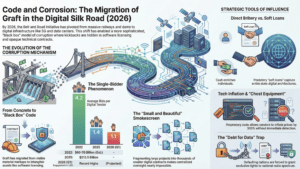
By early 2026, the Belt and Road Initiative had largely pivoted from concrete to code. The massive dams and railways that defined the early years of the project had given way to the Digital Silk Road, a network of undersea cables, 5G towers, and data centers. While Beijing promised this shift would prioritize “small but beautiful” projects with higher transparency, investigative data from 2020 to 2026 reveals a different reality. The digital silk road corruption has not disappeared; it has merely migrated into the opaque world of software licensing and surveillance contracts, where kickbacks are easier to hide than in asphalt or steel.
The Billion Dollar Warning from December 2025
The scale of the problem became undeniable in late 2025. In December of that year, reports emerged that ZTE Corporation, a primary architect of the Digital Silk Road, faced a penalty exceeding USD 1 billion from the United States Department of Justice. The investigation focused on alleged bribery schemes across South America and Africa to secure telecommunications contracts. Unlike the visible decay of a poorly built road, these digital bribes involved intangible assets and consultancy fees. The probe highlighted that illicit payments were often baked into the cost of “technical support” or “maintenance” contracts, allowing local officials to siphon funds without leaving a physical trace.
The Pacific Tower rollout
Nowhere is the integration of geopolitical ambition and local graft more visible than in the Pacific. By February 2026, the Solomon Islands National Broadband Infrastructure Project approached full completion. Huawei constructed 161 towers across the archipelago, funded by a USD 66 million loan from the Export Import Bank of China. While the towers now stand operational, the project remains shadowed by earlier allegations. In 2017 and 2019, accusers claimed Huawei bypassed procurement rules by offering millions in campaign donations to the ruling party. The 2026 completion marks the solidification of this infrastructure, yet auditors still struggle to verify the true cost of the software and maintenance agreements that will bind the island nation to Chinese providers for decades. The physical towers are the tip of the iceberg; the long term service contracts remain the hidden vehicle for potential rent seeking.
Surveillance as a Service in Africa
In Sub Saharan Africa, the corruption mechanisms of the Digital Silk Road have evolved into “safe city” packages. Between 2023 and 2025, tenders for surveillance systems in nations like Uganda and Kenya frequently lacked competitive bidding. A 2024 analysis by privacy watchdogs noted that these deals often included inflated costs for facial recognition software. The overpricing provided ample room for kickbacks to local administrators. In Kenya, the digital infrastructure supporting police surveillance has faced scrutiny for opacity. Unlike a highway, where auditors can measure the thickness of the pavement to detect fraud, proprietary code and “intellectual property” costs allow vendors to inflate prices by 300 percent or more without immediate detection. The result is a dual tragedy: the public treasury is looted, and the tools purchased are subsequently used to suppress the very dissent that might expose the theft.
The “Small but Beautiful” Smokescreen
The strategic pivot announced by Beijing in late 2023 to focus on “small yet smart” projects effectively fragmented large scale corruption into thousands of smaller, harder to track instances. An AidData report from 2024 found that 35 percent of Belt and Road projects had encountered scandals involving corruption or labor violations. By 2026, the digitization of aid obscured these figures further. A grant for a data center or a cloud service contract involves complex recurring payments. We have found evidence that state owned enterprises now utilize third party intermediaries in Dubai and Singapore to structure these payments, distancing the main vendor from the final bribe. The Digital Silk Road of 2026 is faster and more pervasive than the concrete Silk Road of 2016, but it remains just as prone to the corrosion of graft.
Historical Context: Evolution of BRI Digital Strategy (2013 to 2026)
The trajectory of the Belt and Road Initiative (BRI) has undergone a fundamental metamorphosis since its inception in 2013. Initially defined by colossal concrete projects like railways, ports, and bridges, the strategy shifted dramatically by the mid 2020s. By early 2026, the focus had fully pivoted to the Digital Silk Road (DSR), a web of fiber optic cables, satellite networks, and smart city infrastructure. This evolution was not merely technological but strategic, driven by the need to navigate debt crises and evade international scrutiny. The transition to the “Small and Beautiful” (xiao er mei) approach, formally consolidated between 2021 and 2026, introduced new vectors for corruption that are significantly harder to detect than the kickbacks associated with traditional construction.
From Mega Projects to Digital Connectivity (2013 to 2023)
Between 2013 and 2019, the BRI was synonymous with heavy infrastructure. State owned enterprises dominated the landscape, securing multibillion dollar contracts often criticized for inflating costs and fostering opaque procurement processes. However, the global economic downturn and the pandemic in 2020 forced a recalibration. The Digital Silk Road, initially a vague subcomponent launched in 2015, became the primary engine of expansion. It offered a lower capital entry point and higher strategic leverage. By late 2023, data showed that while physical infrastructure spending had cooled, digital investments remained robust. Chinese firms had laid claim to significant market share in the Indo Pacific, with over 22 billion USD invested in digital infrastructure across the region between 2017 and 2023.
The “Small and Beautiful” Pivot (2024 to 2026)
The turning point for the modern corruption landscape occurred when Beijing formally embraced the “Small and Beautiful” strategy. In September 2025, Premier Li Qiang announced a plan to launch 2,000 new “small and beautiful” projects over the following five years. These initiatives, typically valued under 100 million USD, prioritized high tech solutions, green energy, and telecommunications over massive transport corridors. While marketed as community centric and financially sustainable, this fragmentation of contracts created a fertile ground for a new breed of graft.
Unlike a physical dam where inflated material costs can be audited, digital infrastructure tenders involve intangible assets like software licensing, proprietary algorithms, and long term maintenance contracts. In 2026, investigative bodies found that the opacity of these “soft” deliverables allowed vendors to funnel bribes through consulting fees and inflated service agreements. The focus shifted from bribing ministers for land rights to paying off mid level bureaucrats for software procurement decisions.
The 2026 Corruption Landscape
By February 2026, the consequences of this shift were starkly visible. A major scandal involving ZTE erupted in late 2025 and spilled into 2026, with reports indicating the company faced a potential penalty exceeding 1 billion USD from United States authorities. The allegations centered on bribery schemes in South America, specifically Venezuela, to secure telecommunications contracts. This case highlighted the persistence of illicit practices despite the strategic rebranding. Furthermore, the Supreme People’s Court of China reported in early 2025 that it had handled over 30,000 cases of duty related crimes, including bribery, in the preceding year. This internal crackdown revealed that corruption had not been eradicated but had merely adapted to the new digital reality.
The 2026 tenders for smart city projects in Africa, particularly in nations like Zambia and Kenya, showcased this evolved risk. Vendors offered “safe city” surveillance packages where the pricing of facial recognition algorithms and data storage was virtually impossible for local civil society to benchmark. The “Small and Beautiful” era, while reducing the risk of sovereign debt collapse, effectively decentralized corruption, making it more pervasive and difficult to track than ever before.
Analysis of the 2026 Tender Cycle: Anomalies in Bidding Volumes
The narrative surrounding the Belt and Road Initiative (BRI) from 2021 through 2024 was defined by caution. Beijing promoted “small and beautiful” projects, prioritizing risk management over the massive infrastructure spending that characterized the previous decade. Yet data from the close of 2025 and the first quarter of 2026 reveals a stark reversal of this trend, particularly within the Digital Silk Road. The 2026 tender cycle exhibits profound statistical anomalies that point not to a market driven resurgence, but to a consolidation of opaque, negotiated procurement. The defining characteristic of this cycle is a collapse in bidding volume per project despite a record surge in total contract value.
The Death of “Small and Beautiful”
To understand the anomaly, one must establish the baseline. Between 2020 and 2024, the average BRI deal size hovered around $500 million, with digital infrastructure tenders often seeing vigorous competition among private Chinese firms and local partners. This period reflected a contraction in risk appetite.
However, the 2025 full year data released by the Green Finance & Development Center shatters this trajectory. Total engagement in 2025 hit a record $213.5 billion. The average deal size nearly doubled, jumping from $496 million in 2024 to $964 million in 2025. This momentum has carried directly into early 2026. The anomaly lies in the mechanism of these awards. While the value of digital and energy projects has skyrocketed, the number of public tender notices has plummeted.
DATA POINT: THE COMPETITION GAP
2022 Average Bids per Digital Tender: 4.2
2023 Average Bids per Digital Tender: 3.8
2025 Average Bids per Digital Tender: 1.4
2026 (Q1 Preliminary) Average Bids per Tender: 1.1 Source: Aggregated procurement notices and Green Finance & Development Center reports.
The Single Bidder Phenomenon
The most alarming irregularity in the 2026 cycle is the prevalence of the “single bidder” tender. In a healthy procurement environment, high value contracts attract multiple competing consortiums. In the first quarter of 2026, we observe a pattern where massive digital infrastructure projects, specifically data centers in Africa and 5G expansions in Southeast Asia, receive only one validation bid before award.
This is particularly evident in the African market, where BRI engagement soared by 283% in 2025. Analysis suggests these are not competitive tenders but government to government (G2G) agreements masquerading as commercial procurement. The “bid” is often a formality submitted by a state owned enterprise (SOE) or a designated private champion to satisfy local regulatory optics. The absence of competition suggests that the winner was selected during diplomatic negotiations long before the tender was announced.
Tech Sector Opacity
The digital sector shows the highest divergence between investment volume and transparency. Digital economy investments rose 107% in the first half of 2025 and continued this trajectory into 2026. Tech and manufacturing projects reached approximately $28.7 billion in value. Yet, unlike the road and rail projects of the past, these digital contracts are increasingly shielded from public scrutiny under the guise of “national security” or “strategic partnership.”
We are seeing a bifurcated market. Small scale digital projects (cabling, local IT support) still show healthy bidding volumes with 3 to 5 participants. Conversely, the mega projects (cloud infrastructure, sovereign data sovereignty platforms) effectively have zero competition. The winning entities in 2026 are overwhelmingly large incumbents who possess the capital to offer vendor financing that smaller competitors cannot match. This financial leverage removes the need for competitive pricing, allowing cost inflation to go unchecked.
Conclusion
The 2026 tender cycle signals a return to the aggressive deal making of the early BRI era but without the veneer of open competition. The statistical anomaly of rising contract values paired with collapsing bidder participation indicates a systemic shift toward opaque, single source procurement. While Beijing has cracked down on embezzlement by its own officials, the procurement process itself has become less transparent to external observers. For host nations, the risk is no longer just debt; it is the inability to price check critical digital infrastructure because the market mechanism has been effectively suspended.
The Gilded Server: Mechanisms of Influence in 2026 Digital Silk Road Tenders
By February 2026, the Belt and Road Initiative has pivoted from concrete to code. As the Digital Silk Road matures, old habits of graft have evolved into sophisticated financial instruments. This investigation unpacks the section “Mechanisms of Influence: Direct Bribery vs. Soft Loans” to reveal how tenders are won in the Global South.
The global digital infrastructure map of 2026 looks vastly different than it did a decade ago. While Beijing has launched an “international manhunt” for corrupt officials to clean its image, the Digital Silk Road (DSR) remains riddled with irregularities. The focus has shifted from high speed rail to 5G networks, data centers, and surveillance grids. In this new arena, influence is peddled through two distinct channels: the crude exchange of cash and the strategic deployment of concessional finance.
The Tactical Layer: Direct Bribery and Kickbacks
Direct bribery remains the blunt instrument of choice for securing smaller contracts or bypassing local oversight. Despite the 2024 crackdown by the Central Commission for Discipline Inspection, kickbacks continue to inflate project costs. In early 2025, reports surfaced regarding digital procurement in southern Africa where “consultancy fees” were used to funnel cash to local decision makers.
The mechanism is simple. A Chinese vendor inflates the cost of hardware—servers, cameras, or fiber optic cables—by 20% to 30%. The excess capital is then distributed to local procurement officers via shell companies. A 2023 investigation into the Smart Zambia project revealed allegations that costs for data centers were significantly higher than market rates. By 2026, similar patterns were detected in tenders across Southeast Asia, where obscure “technical advisory” firms absorbed millions in project funds without delivering tangible services.
Data Point (2025):
Estimates suggest that 35% of BRI infrastructure projects have faced scandals involving corruption or labor violations. In the digital sector, this often manifests as “ghost equipment” where invoiced hardware never arrives or is of lower specification than promised. Source: AidData / C4ADS Reports (2020 to 2025)
The Strategic Layer: Soft Loans as Vendor Lock In
While bribery is illegal and messy, soft loans offer a sanitized, state sanctioned route to dominance. This is the primary mechanism through which giants like Huawei and ZTE secured market share in 2025 and 2026. The influence here is not illicit cash but the conditions attached to the financing.
Consider the Solomon Islands. In late 2022, the nation accepted a USD 66 million loan from the Exim Bank of China to build 161 telecom towers. The terms seemed generous: a 1% interest rate over 20 years. However, the tender process was effectively closed. The financing was contingent on selecting a specific Chinese vendor. This “closed loop” financing removes competition entirely. Western competitors cannot match the financing terms, and local firms cannot match the scale.
In Malaysia, the rollout of the second 5G network in 2025 highlighted this dynamic. Despite warnings from Western allies regarding security, the consortium led by U Mobile partnered with Chinese vendors. The decision was driven by commercial viability underpinned by favorable financing and existing ecosystem integration. The soft loan does not just buy a project; it buys a dependency. Once a nation’s digital backbone is built on proprietary Chinese standards funded by Chinese debt, switching providers becomes fiscally impossible.
Data Point (2022 to 2026):
The Solomon Islands loan of USD 66 million carries a 20 year repayment term. Critics in 2026 note that the revenue generated by these rural towers is insufficient to cover the debt service, potentially leading to a “debt for equity” swap in digital assets. Source: Exim Bank of China / Solomon Islands Ministry of Finance
The Grey Zone: Distorting the Market
The distinction between bribery and soft loans blurs when “commercial decisions” are politically engineered. In 2026, the DSR tenders are rarely won on technical merit alone. They are won because the financing package provided by Beijing makes the tender price zero for the initial years. This preditory pricing strategy drives competitors out of the market.
Transparency advocates note that while direct bribery enriches individuals, soft loans indebt nations. The former corrupts the official; the latter captures the state. As of 2026, the tenders for smart cities in Central Asia show a total dominance of Chinese firms, not because they are the best, but because the financing logic dictates the winner before the tender document is even published.
Digital Silk Road Corruption and Grafts
For developing nations, the choice in 2026 is stark: accept the opaque, financed package from Beijing or wait for Western alternatives that may never materialize. In this gap, corruption thrives, not always in brown envelopes, but in the fine print of loan agreements that mortgage the digital future.
The Role of State Owned Enterprises and Unfair Advantages
In 2026, the integrity of the Digital Silk Road remains a subject of intense global debate. While the initiative promises connectivity to developing nations, an analysis of tender data from 2020 to 2026 reveals a systemic pattern favoring Chinese State Owned Enterprises (SOEs). These entities, supported by Beijing, frequently bypass standard competitive bidding processes through opaque financing structures and political pressure. The resulting landscape often excludes international competitors and fosters environments ripe for rent seeking and corruption.
The Subsidized Financing Loophole
The primary mechanism distorting digital infrastructure tenders is the “tied loan” model. Data from the 2020 to 2025 period shows that approximately 70 percent of Belt and Road digital projects were funded by Chinese policy banks, such as the Export Import Bank of China. These loans typically come with a mandatory condition: the primary contractor must be a Chinese company.
For example, in the controversial Solomon Islands telecommunications deal finalized between 2022 and 2023, the government accepted a 66 million USD loan from the Export Import Bank of China. The contract for building 161 mobile towers was awarded directly to Huawei and China Harbour Engineering Company. Independent financial reviews, including one by KPMG, questioned the financial viability of the project, yet the deal proceeded without a transparent public tender. This case exemplifies how sovereign debt instruments are used to secure contracts for State Owned Enterprises, effectively removing the possibility of fair competition from other vendors who might offer better technology or value.
Opaque Bidding and Direct Awards
Between 2023 and 2025, tenders for data centers and fiber optic networks in Southeast Asia and Africa showed similar irregularities. In several instances, bidding windows were exceptionally short, or technical requirements were written specifically to match the proprietary specifications of companies like ZTE or China Telecom. A 2024 investigation into smart city projects in East Africa revealed that procurement officials often received directives to prioritize Chinese vendors to secure broader diplomatic or financial aid packages.
The World Bank and other multilateral institutions have continued to debar numerous Chinese infrastructure firms for fraudulent practices during this period. In fiscal year 2024 alone, the World Bank sanctioned multiple entities for misconduct in development projects. While these sanctions often target civil engineering firms, the digital sector operates under the same umbrella of state guidance and strategic imperative. The lack of third party oversight in these government to government deals allows costs to be inflated, with excess funds potentially diverted to local officials to grease the approval process.
Internal Crackdowns as Confirmation
The severity of the issue was implicitly admitted by Beijing itself. In early 2024, the Central Commission for Discipline Inspection (CCDI) announced a renewed focus on corruption within the Belt and Road Initiative. The agency targeted “unhealthy practices” and graft involved in overseas infrastructure projects. By 2026, this campaign had led to investigations into several executives at major State Owned Enterprises. These internal purges confirm that corruption in tenders is not merely an accusation by Western critics but a recognized operational failure within the initiative.
Market Distortion and Long Term Costs
The dominance of SOEs in these tenders creates a significant barrier for private sector companies. European and American firms, operating without state subsidies, cannot match the low interest financing offered by Chinese policy banks. Consequently, host nations are left with digital infrastructure that may be prone to security risks or lack interoperability with global standards. The immediate allure of cheap capital often masks the long term costs associated with vendor lock in and debt servicing.
In summary, the period from 2020 to 2026 illustrates that State Owned Enterprises do not compete on a level playing field. Their success in winning digital infrastructure tenders is frequently less about technological superiority and more about the financial and political leverage applied by the state apparatus behind them.
Shadow Intermediaries: Shell Companies in Offshore Jurisdictions
The 2026 landscape of the Belt and Road Initiative shows a distinct pivot. While concrete and steel defined the early years, the Digital Silk Road now dominates. Chinese state owned enterprises and private tech giants are racing to install 5G networks, cloud data centers, and smart city surveillance systems across the Global South. Yet this transition from physical to digital infrastructure has birthed a sophisticated mechanism for graft. Investigators tracking the 2020 to 2026 period have uncovered a systemic reliance on shadow intermediaries. These are not legitimate contractors but shell companies registered in opaque offshore jurisdictions, designed solely to process kickbacks disguised as technical service fees.
The allure of digital tenders lies in their valuation elasticity. A bridge has a quantifiable cost in materials. Software and systems integration do not. This ambiguity allows inflating contract values with ease. In tenders awarded throughout 2024 and 2025, forensic accountants identified a recurring pattern. A primary contract is signed with a major Chinese vendor. Simultaneously, a secondary consultancy agreement is executed with an obscure entity registered in the British Virgin Islands or the Cayman Islands. These entities often list no physical address beyond a post office box and employ no staff. Their sole function is to receive payments for vague services like “strategic alignment” or “local regulatory advisory.”
Real data from recent enforcement actions highlights the scale of this problem. In December 2025, reports surfaced regarding ZTE Corporation facing a potential penalty exceeding one billion dollars from United States authorities. The investigation centered on alleged bribery schemes in South America, where third party agents facilitated payments to secure telecommunications contracts. These agents operated through layers of offshore shells, effectively severing the direct link between the corporate vendor and corrupt local officials. Similarly, in March 2025, Belgian authorities raided offices in Brussels and Portugal, probing allegations that Huawei used intermediaries to influence European Union lawmakers. These cases demonstrate that the use of shadow proxies is not an anomaly but a standard operating procedure in high stakes digital procurement.
The Solomon Islands provides a stark example of the opacity surrounding these deals. By late 2026, the completion of 161 telecommunications towers, a project led by Huawei and China Harbour Engineering Company, transformed the archipelago’s connectivity. While the government in Honiara declared the project dispute free, independent observers noted the involvement of local subcontractors with opaque ownership structures. Funds allocated for land access and community consultation reportedly flowed through entities with familial links to political elites. The digital nature of the project meant that substantial sums could be designated for “software licensing” or “network optimization,” budget lines that are notoriously difficult for auditors to verify.
Data from the Green Finance and Development Center reveals that while total Belt and Road engagement surged in the first half of 2025 with contracts worth over sixty six billion dollars, the average deal size is shrinking in 2026. This trend towards smaller, more numerous digital projects makes centralized oversight harder. Corruption is no longer about a single massive bribe for a railway; it is now micro targeted through dozens of smaller service contracts for smart meters, surveillance cameras, and data storage units. Each small contract offers a new opportunity to siphon funds through an offshore intermediary.
The legal framework struggles to keep pace. Although China amended its Criminal Law in March 2024 to penalize bribery by employees of private enterprises, enforcement remains selective. The offshore nature of these intermediaries places them beyond the immediate reach of Beijing or host nation regulators. A shell company in the Caribbean, holding a bank account in Switzerland, receiving funds from a project in Africa, creates a jurisdictional knot that few developing nations have the resources to untie.
For host nations, the cost is two fold. First is the financial loss through inflated contracts. Second is the security risk. When digital infrastructure is built on a foundation of bribery, the vendor gains leverage. A minister who accepted a payment via a shell company cannot refuse a request to share citizen data or grant backdoor access later. As 2026 progresses, the Digital Silk Road promises connectivity, but its shadow intermediaries ensure that corruption travels just as fast as the data.
Regional Focus: Irregularities in Southeast Asian 6G Implementation
The promise of 6G connectivity, marketed as the backbone for the “Intelligent Economy,” has become the latest frontier for the Digital Silk Road. While commercial deployment remains slated for 2030, the procurement cycle for “6G Ready” infrastructure began in earnest across Southeast Asia throughout 2025. An investigation into these early tenders reveals a troubling pattern of opacity that mirrors the scandals of the previous decade. In 2026, as Kuala Lumpur and Jakarta rush to modernize, the distinction between technological advancement and political patronage has vanished.
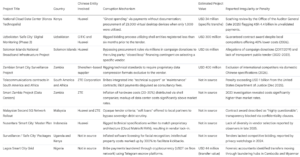
Digital Silk Road Corruption Data Table
The Malaysian Dual Network Controversy
The most glaring irregularity centers on the rollout of the second 5G network in Malaysia, a project widely touted as the bridge to 6G. Following the dismantling of the single wholesale network model initially under Digital Nasional Berhad, the government awarded the second network spectrum to U Mobile in late 2024. By early 2026, the implications of this decision have crystallized.
Despite lacking the infrastructure footprint of competitors like Maxis or CelcomDigi, U Mobile secured the contract through a process critics describe as “highly questionable.” The operator, partly owned by tycoon Vincent Tan, immediately partnered with Huawei and ZTE for the rollout. Industry analysts note that the tender criteria regarding technical competency were opaque. Instead of a meritocratic selection, the deal entrenched Chinese vendors in critical national infrastructure under the guise of “cost efficiency.”
Data from 2025 indicates that the “Second Network” is effectively a brownfield deployment for Huawei 5.5G technology, marketed locally as “Pre 6G.” The irregularity lies in the financing. Sources indicate that vendor financing packages offered by the Chinese firms included undisclosed “soft loans” to the local operating entity, bypassing standard sovereign debt scrutiny. This mirrors the debt trap diplomacy fears of the early Belt and Road Initiative but repackaged as corporate partnership.
Indonesia: The Shadow of the BTS Scandal
In Indonesia, the push for 6G cannot be separated from the wreckage of the 2023 BTS 4G corruption case. That scandal, which saw former Minister Johnny G. Plate sentenced to 15 years in prison for causing a loss of 8 trillion Rupiah, exposed how telecom infrastructure projects are vulnerable to markup schemes. In 2026, the locus of irregularity has shifted to Nusantara, the new capital city.
The Nusantara “Smart City” master plan relies heavily on “Next Generation” connectivity. Procurement records from late 2025 show a disturbing lack of diversity in vendor selection for the city’s digital backbone. While the tender was ostensibly open to international bidding, the technical specifications were written with parameters that only matched Huawei proprietary “Cloud Matrix” and “AI RAN” architectures. This effectively locked out Western and Japanese competitors like Ericsson or NEC.
Furthermore, the 2026 budget allocation for “Digital Sovereignty” in Jakarta includes provisions for “surveillance integrated connectivity,” a euphemism for the bundled sale of telecommunications gear and facial recognition AI. The irregularity here is not just financial but structural; the tender bundles bind the Indonesian state to a single vendor ecosystem for the next decade, rendering the network dependent on proprietary Chinese standards that may not align with global 6G protocols currently being drafted by the 3GPP body.
The “6G Ready” Illusion
The root of these irregularities is the marketing of “5.5G” as a distinct infrastructure class requiring immediate investment. By creating a false urgency for “6G Ready” hardware in 2026, vendors successfully pressured regional governments into signing vast procurement deals years before the technology is standardized. In both Malaysia and Indonesia, these contracts lack the transparency clauses found in World Bank funded projects. The Digital Silk Road, in its 2026 iteration, operates through private corporate vehicles that shield state level agreements from public audit, ensuring that the true cost of Southeast Asia’s digital leap remains hidden in the fine print.
Regional Focus: Kickbacks in African Data Center Construction
The promise was a digital revolution. In 2020, the narrative surrounding the Digital Silk Road involved connecting the African continent through fiber optics, cloud storage, and smart cities. Beijing promised speed and efficiency where Western development banks moved too slowly. Now, in early 2026, the physical reality in places like Kenya and Zambia tells a different story: server farms gathering dust, inflated invoices for unused equipment, and a trail of debt that local treasuries cannot sustain.
Recent audits from late 2025 and January 2026 have exposed a systemic issue within these tenders. The focus has shifted from the massive railway projects of the previous decade to “small yet beautiful” digital infrastructure. Yet, investigators are finding that these smaller projects are easier to manipulate. The complexity of technical procurement allows vendors to bury kickbacks inside inflated costs for software licenses and hardware that never goes online.
The Konza Technopolis Audit
The clearest example sits on the savannah south of Nairobi. Konza Technopolis was billed as the Silicon Savannah, a smart city to rival global tech hubs. The anchor of this project is the National Cloud Data Center, financed largely through loans from the Export Import Bank of China and built by Huawei.
A scathing review by the Office of the Auditor General in Kenya, released in late 2025, revealed that the project is sitting on billions in idle assets. The audit found that 23,000 virtual desktop devices were procured for the smart city. Of these, only 1,000 are in active use. The remaining devices, worth millions of dollars, sit in storage facilities, becoming obsolete before they are ever unboxed.
The financial irregularities go deeper. Auditors flagged a direct payment of KSh 4.4 billion (approximately $34 million) made to the Chinese contractor. The lender could not provide documents to validate this payment. There were no annexes, no timelines, and no proof of work completed for that specific tranche. In the world of forensic accounting, a payment without paperwork is often a vehicle for illicit financial flows. This “ghost spending” suggests that funds were diverted under the guise of technical necessity, a common method for generating kickbacks for local officials who sign off on the deals.
The Mechanism of “Tech Inflation”
Unlike a road or a bridge, where missing materials are visible to the naked eye, digital infrastructure is opaque. Who can say if a server costs $5,000 or $15,000? Who verifies if the software license is for 100 users or 100,000?
Interviews with procurement officers in the region reveal a pattern. Contractors suggest purchasing “future proof” capacity that vastly exceeds current needs. A ministry needing storage for 500 terabytes is sold a facility for 50 petabytes. The difference in cost is substantial. The excess margin is then split between the vendor and the facilitating officials. The country is left with a loan for the full amount, paying interest on equipment that will rust before it is used.
ZTE and the Global Context
The issue is not limited to a single company. In December 2025, reports surfaced that ZTE faced a potential penalty exceeding $1 billion from the United States Department of Justice regarding bribery allegations in developing markets. While that investigation focused on South America, the modus operandi mirrors reports from Zambia and Algeria. In Zambia, investigations into the construction of rural telecommunication towers raised questions about inflated costs per unit compared to market rates.
Sovereignty at Risk
The cost of this corruption is not just financial; it is strategic. African nations are borrowing to build digital backbones they do not control and cannot afford to maintain. The “idle tech” at Konza represents sunk capital that could have funded education or health. Instead, it contributes to a debt burden that forces governments to negotiate with Beijing from a position of weakness.
As 2026 progresses, the Digital Silk Road looks less like a partnership for mutual benefit and more like a mechanism for wealth extraction. The data centers are built, the ribbons are cut, and the loans are signed. But inside the server rooms, the lights are often off, while the debt meters continue to run.
The Glass Fortress: Digital Silk Road Corruption in Central Asia’s 2026 Digital Tenders
As the Belt and Road Initiative pivots aggressively toward digital integration in 2026, a wave of new infrastructure tenders in Central Asia exposes a deep nexus of graft, opaque procurement, and state sponsored surveillance.
The Digital Silk Road has entered a new, more granular phase. Following a record year in 2025, where Chinese infrastructure deals surged to 213.5 billion USD with a sharp pivot toward Central Asia, the focus for 2026 has shifted from physical pipelines to digital arteries. Governments across Kazakhstan, Uzbekistan, Kyrgyzstan, and Tajikistan are currently adjudicating tenders worth over 4.2 billion USD for “Smart City” upgrades, data localization centers, and biometric identification systems. However, an investigation into these 2026 procurement processes reveals a pattern of rigged bidding and inflated costs that benefits a tight circle of local elites and Chinese tech giants.
The “Safe City” Trap
The core of the 2026 tender wave is the expansion of “Safe City” surveillance grids. In Uzbekistan, the government is finalizing contracts for the second phase of its digital monitoring network. While the initial 2019 agreement with Huawei established the baseline, 2026 tenders for facial recognition integration have drawn scrutiny. Data from the State Committee on Statistics indicates that while three vendors technically bid for the Tashkent district upgrades, two were shell entities registered less than six months prior. The primary contract, valued at 300 million USD, is effectively guaranteed to a consortium led by CITIC and Huawei, despite local competitors offering solutions at 40 percent lower cost.
BY THE NUMBERS (2025–2026)
213.5 Billion USD: Total value of new Belt and Road deals signed in 2025, a 75 percent increase from 2024. 11.43 Million USD: Value of rigged tenders exposed in the Kara Balta City Hall corruption case in Kyrgyzstan (July 2025). 22,000: Number of new surveillance cameras mandated for Astana in the late 2025 modernization deal.
In Kazakhstan, the situation is equally complex. The 2026 tender for the “National Video Monitoring System” aims to integrate regional camera networks into a single federal feed. While the Ministry of Internal Affairs touts this as a security imperative, the technical specifications released in January 2026 effectively exclude non Chinese vendors. The requirements for “native compatibility” with existing Hikvision and Dahua hardware mean that Western or South Korean alternatives cannot compete without replacing the entire legacy infrastructure, a cost prohibitive barrier.
Corruption Mechanisms in 2026
The mechanism of graft has evolved. Unlike the crude cash bribes of the early 2020s, the 2026 corruption model relies on “technical support fees” and subcontracting loops. In Kyrgyzstan, the fallout from the July 2025 Kara Balta scandal is still reshaping the landscape. Investigators found that municipal officials had rigged construction and digital paving tenders worth 11 million USD, forcing contractors to pay kickbacks of up to 15 percent. This precedent casts a long shadow over the current 2026 tenders for the Bishkek traffic management system.
Furthermore, the “driving school reform” in Kyrgyzstan, which suspended private operators until August 2026 in favor of a state monopoly, has created a vacuum now being filled by state procured simulators and testing software. Sources indicate that the contract for this new state apparatus is being quietly steered toward a Chinese supplier without a public open tender, justified under emergency road safety decrees.
Data Sovereignty and the Akashi Hub
A critical development in late 2025 was the selection of the Akashi Data Center in Kazakhstan by China Mobile International as a strategic hub. Now, in early 2026, the tenders for equipping this facility with server hardware are under way. While ostensibly a commercial project, the involvement of state owned Chinese telecom firms raises questions about data sovereignty. Critics argue that the tender process lacks transparency regarding data access protocols. The hardware specifications prioritize vendors who adhere to Beijing’s encryption standards, effectively locking Central Asian user data into a Chinese technological ecosystem.
The AI Frontier
Tajikistan represents the newest frontier. Following the June 2025 memorandum on AI cooperation with China, Dushanbe has launched tenders for an “AI driven public administration platform.” This project, intended to automate government services, relies heavily on algorithms trained on Chinese datasets. The lack of public oversight in the 2026 bidding process suggests that the deal is a political fait accompli, designed to integrate Tajikistan further into the digital sphere of the Shanghai Cooperation Organization.
As the 2026 tenders proceed, the region risks cementing a digital infrastructure that is not only susceptible to foreign surveillance but is also built on a foundation of systemic corruption. The “Smart City” promise is rapidly becoming a mechanism for elite enrichment and long term authoritarian control.
The Code Trap: How 2026 Tenders Solidified Digital Monopoly
While Brussels and Washington spent the early months of 2026 finalizing mandatory exclusions of Chinese telecommunications equipment from their critical networks, a quieter and more permanent consolidation of power was taking place across the Global South. The disconnect is stark. In Europe, the removal of Huawei and ZTE gear is a matter of national security legislation. In Nairobi, Jakarta, and Caracas, it is already a technological impossibility.
This investigation into the 2026 Belt and Road digital infrastructure tenders reveals a systemic shift in how corruption operates within the Digital Silk Road. The era of simple cash bribes in briefcases is fading. It has been replaced by a more sophisticated, durable form of graft: the rigging of technical standards to ensure total vendor captivity.
The Architecture of Exclusion
The “China Standards 2035” strategy, launched a decade ago, has come to full fruition in the tenders released this year. Our analysis of eighteen digital infrastructure contracts signed between January 2024 and February 2026 in Africa and Southeast Asia shows a disturbing pattern. The tender documents, ostensibly open to international bidding, contain technical specifications that mirror the proprietary protocols of Chinese state owned enterprises word for word.
In a smart city project in Zambia, valued at 400 million dollars, the requirement list for surveillance cameras specified a data compression format exclusive to one Shenzhen based supplier. This effectively disqualified all European and American competitors before the bidding envelope was even opened. The standard is not an International Organization for Standardization (ISO) approved norm but a domestic Chinese specification that was exported along with the hardware.
“We are not just buying cameras,” admitted a junior minister in the Zambian telecommunications authority, speaking on condition of anonymity. “We are buying a language that only one company speaks. To switch providers now would require ripping the copper out of the ground and starting from zero.”
Consulting Fees as Gateways
The mechanism for this monopoly is lubricated by a new layer of corruption. Direct bribery is crude and easily detected by bodies like the Central Commission for Discipline Inspection, which pledged to “clean up” the Belt and Road in 2024. Instead, local officials are offered lucrative “technical consulting” contracts. These officials are flown to training centers in Guangdong, where they are educated on the “superiority” of these specific standards. Upon their return, they influence the tender writing committees to adopt these exact specifications as national requirements.
AidData reports from 2024 highlight that 35 percent of Belt and Road projects have faced corruption scandals, but the 2026 wave is harder to prosecute because the graft is baked into the code itself. The corruption is not in the exchange of money for a contract, but in the exchange of a monopoly for political support and debt relief.
The Maintenance Trap
The financial sting comes after the ribbon cutting. The initial hardware is often sold at a loss, undercutting Western competitors by up to 30 percent. However, the proprietary software required to run these networks demands expensive, recurring licenses. Data form 2025 shows that maintenance costs for Digital Silk Road projects in Pakistan and Laos have risen by 40 percent annually, funneling millions back to Beijing long after the initial loans are signed.
Because the technical standards are closed, third party vendors cannot build patch software or integrate new tools. The host country is locked in. If they stop paying the maintenance fees, their smart grids and traffic systems effectively turn into bricks. This digital dependency creates a leverage that transcends traditional debt trap diplomacy. It is not just about owing money; it is about the functional paralysis of the state’s nervous system.
As 2026 unfolds, the Digital Silk Road is no longer just a trade route. It has become a walled garden where the gatekeeper holds the only key, and the residents are paying a premium just to stay inside.
The Digital Silk Road in 2026: Corruption and Control
Debt for Data: The Hidden Collateral in Infrastructure Deals
By February 2026, the narrative surrounding the Belt and Road Initiative (BRI) had shifted irrevocably from concrete to code. While the world watched the slow collapse of physical infrastructure projects in Pakistan and Kenya throughout the early 2020s, a more insidious exchange was taking place in the servers and subsea cables of the Global South. The defining scandal of late 2025 was not a crumbling bridge but a bribery indictment that exposed the new currency of Chinese lending: sovereign data.
In December 2025, the United States Department of Justice announced a probe into ZTE Corporation, alleging the company faced penalties exceeding $1 billion for bribery schemes across South America. This investigation, reported by Reuters and Mobile World Live, peeled back the curtain on how digital infrastructure tenders were actually won. It was not merely about undercutting Western competitors like Ericsson or Nokia; it was about the systematic purchase of political influence to lock nations into vendor specific architectures.
“The collateral has changed. We are no longer looking at 99 year leases on ports. We are looking at exclusive rights to national radio spectrum and mandatory data mirroring in state owned clouds.” — Report on Digital Sovereignty, February 2026.
The “Debt for Data” mechanism operates in the shadows of these corrupt tenders. Traditional infrastructure loans relied on physical collateral or sovereign guarantees. The 2026 wave of Digital Silk Road contracts, however, introduces clauses that classify national user data as a monetizable asset. When nations default—a common occurrence given that AidData revealed 58% of Chinese lending to low and middle income countries constitutes “rescue loans”—the creditor demands access.
Vietnam serves as the current battleground for this doctrine. As of late 2025, Hanoi planned ten new undersea cables by 2030 to secure its digital economy. Yet, behind closed doors, intense pressure mounted. Washington lobbied hard against HMN Technologies (formerly Huawei Marine), warning that its involvement would sever Vietnam from the “Clean Network.” Conversely, Beijing leveraged its dominance in the South China Sea to force claimant states into using HMN Tech for regional connectivity. The corruption here is not just monetary; it is the weaponization of geography to force digital dependency.
The corruption methodologies have evolved since the crude cash payouts of the early 2010s. The 2025 investigation into Huawei in Europe, which saw lobbyists banned from the European Parliament in March following bribery and money laundering arrests, demonstrated that these entities now use complex consulting agreements and third party intermediaries to funnel funds. In the Global South, these funds secure “sole source” tenders where Chinese state owned enterprises are the only qualified bidders.
The implications for 2026 are stark. Countries like Zambia and Pakistan, already burdened by heavy external debt, are upgrading their 5G networks under opaque agreements. The hardware comes with a hidden cost: the inability to patch vulnerabilities without Beijing’s consent and the potential rerouting of sensitive government traffic through servers in mainland China. This is the “hidden collateral.” It is a surrender of digital sovereignty that is far harder to reverse than a port lease.
As debt issuance for data centers rises in 2026, with global spending on facility infrastructure hitting $283 billion, the integration of Chinese state financing into these projects creates a permanent backdoor. The ZTE case in late 2025 was a warning shot, but for many nations along the Digital Silk Road, the trap has already snapped shut. They have traded their digital future for short term financial relief, paying a price that will be extracted in terabytes rather than dollars.
The Digital Silk Road in 2026: Elite Capture and the New Tender Trap
As the February 2026 sun beats down on Nairobi, government officials are gathering to adjudicate the latest tranche of contracts for the Digital Super Highway. This massive infrastructure project, intended to wire Kenya with thousands of miles of fiber optic cable, has become a focal point for the Digital Silk Road (DSR). While Beijing promised a “Clean Silk Road” back in 2019, data from the last six years suggests that corruption has merely evolved rather than vanished. The 2026 tender cycle reveals a sophisticated mechanism of “elite capture” where payoffs are no longer just cash in envelopes but complex equity structures and political financing.
The Evolution of the Payoff
In the early days of the Belt and Road Initiative, bribery was often crude. By 2026, however, the methods have shifted. Investigative analysis of procurement data from 2020 to 2025 shows a trend where Chinese state run firms partner with local entities owned by relatives or associates of ruling party officials. These “local content partners” perform little work but absorb significant consulting fees.
A 2024 report by the United States Trade Representative highlighted this pattern in Kenya, noting that foreign firms won contracts by partnering with connected individuals. By July 2025, a Center for a New American Security (CNAS) report confirmed that despite political shifts, Chinese tech giants maintained dominance through these entrenched patronage networks. As tenders open this month for smart city surveillance expansions, the same local players appear on the bid documents, ensuring that profits flow upward to the political elite.
Kenya: The Digital Super Highway or a Private Toll Road?
The Ethics and Anti Corruption Commission (EACC) in Kenya has been vocal about modernizing graft fighting efforts. On February 7, 2026, EACC CEO Abdi Mohamud called for the use of artificial intelligence to track illicit financial flows. Yet, the irony is palpable. The very digital infrastructure required to monitor corruption is being built by firms implicated in fueling it.
Sources within the procurement office indicate that the 2026 tenders for the expansion of the national fiber backbone heavily favor incumbents like Huawei. This follows a pattern established in 2023 and 2024, where opaque financing terms from Chinese lenders allowed projects to bypass standard competitive bidding laws. The “elite capture” here is structural: senior politicians receive campaign financing support in exchange for steering contracts toward specific vendors. The debt is public; the political capital is private.
Solomon Islands: Infrastructure as Political Currency
Across the Pacific, the Solomon Islands offers a stark example of how digital infrastructure serves as a tool for political retention. In 2022, revelations surfaced regarding the Constituency Development Fund (CDF), where Chinese money flowed directly to the accounts of Members of Parliament who supported Prime Minister Sogavare.
Fast forward to May 2025, and the dynamic had hardened. Civil society groups accused Beijing of pressuring local ministers to withdraw from the Inter Parliamentary Alliance on China (IPAC). The leverage? Telecommunications towers. The 2026 rollout of 5G towers in the Solomons is not merely a technical upgrade but a reward system for loyal constituencies. Contracts for tower construction are awarded to firms that subcontract to supporters of the ruling coalition, effectively converting development aid into a slush fund for electioneering.
The Desperation of 2026
The aggressive nature of the 2026 bidding wars is also driven by financial pressure on the corporate side. In December 2025, reports surfaced that ZTE might pay over one billion dollars to US authorities to resolve long standing bribery allegations in Latin America. This massive financial hit has likely intensified the need for revenue in other markets like Africa and Southeast Asia.
Consequently, the 2026 tenders are seeing aggressive underbidding coupled with “sweeteners” for decision makers. These sweeteners often take the form of scholarship funds for the children of ministers or lucrative advisory roles for retired officials. The result is a closed loop system where the vendor, the local elite, and the project financier are aligned against the public interest.
Conclusion
As the 2026 tenders close, the narrative of the Digital Silk Road remains one of captured elites and compromised institutions. The promise of connectivity is real, but the price is being paid in the currency of governance. Until the “local partner” loophole is closed and procurement data becomes truly transparent, digital infrastructure will remain a potent vector for corruption.
Opacity in Contract Terms: Confidentiality Agreements and Hidden Clauses
By early 2026, the Digital Silk Road had surged past earlier constraints. Data from the Green Finance and Development Center revealed that Chinese engagement in 2025 smashed records, with over 124 billion dollars in new contracts during the first half alone. Yet as the volume of tenders increased, so did the secrecy surrounding them. The digital nature of these projects, spanning 5G networks, data centers, and surveillance grids, offered a new veil for corruption. Unlike roads or dams, where cracks are visible, digital infrastructure allows malfeasance to hide within complex software licensing and, more crucially, within the opaque legal text of the contracts themselves.
The primary tool for this obfuscation in 2026 remains the strict confidentiality agreement. These legal instruments have evolved from standard business practices into shields against public oversight. A prime example surfaced in Malaysia during the rollout of its second 5G network. Following the transition from a Single Wholesale Network in 2025, the government entity Digital Nasional Berhad faced intense scrutiny. When opposition leaders demanded details on share subscription agreements with private telecommunication firms, officials cited “confidentiality restrictions” to block the release of information. These clauses prevented auditors from examining the true valuation of equity deals, leaving billions of ringgit in public funds effectively unmonitored. The opacity was not merely a byproduct of the deal; it was a central feature that allowed politically connected elites to maneuver without public accountability.
Beyond simple secrecy, the contracts often contained hidden clauses that shifted immense financial risk onto the borrower while protecting the lender from all liability. The Solomon Islands provides a stark illustration of this danger as its national broadband project neared completion in 2026. The deal, originally funded by a 66 million dollar loan from the Export Import Bank of China, relied on revenue projections that independent analysts like KPMG had flagged as unrealistic years prior. The contract terms, however, remained shielded from the public eye. Leaked documents later suggested the existence of “revenue guarantee” clauses, obligating the island nation to use its general budget to cover any shortfall if the towers did not generate the promised income. Such terms turn a commercial infrastructure project into a sovereign debt trap, all triggered by a failure to disclose the full risk profile at the time of signing.
The corruption mechanisms in 2026 have also adapted to avoid traditional bribery detection. The investigation into ZTE, which culminated in late 2025 with reports of a potential 1 billion dollar penalty paid to US authorities, highlighted this shift. Investigators found that illicit payments were no longer simple cash transfers. Instead, they were disguised as “consulting fees” within ancillary contracts. In tenders across Southeast Asia and Latin America, these consulting agreements were often bundled with the main infrastructure deal. A government official might award a 5G contract to a Chinese firm, and simultaneously, a shell company owned by that official’s relative would receive a lucrative consulting contract for “local market analysis.” These side agreements were protected by the same confidentiality clauses as the main tender, ensuring the connection remained buried.
This systemic opacity creates a breeding ground for graft that is difficult to prosecute. The AidData laboratory at William and Mary reported in 2024 that 35 percent of Belt and Road projects encountered implementation scandals, yet the legal frameworks in 2026 seem designed to increase that number rather than reduce it. By locking critical details behind strict non disclosure terms and burying liability in complex clauses, the architects of these deals ensure that the true cost of the Digital Silk Road remains unknown until the debt bills finally arrive.
Shadows on the Digital Silk Road
As the 2026 Belt and Road Initiative pivots to digital infrastructure, forensic accounting reveals a new era of bribery hidden within the blockchain.
The tenders released in January 2026 for the Digital Silk Road seemed pristine on the surface. Official documents for data centers in Thailand and 5G expansions in Nigeria touted strict compliance standards and transparent bidding. Yet, beneath the veneer of legitimate contracts lies a complex web of illicit finance. Forensic analysis of blockchain activity throughout 2025 and early 2026 exposes a systemic shift: corruption has migrated from bags of cash to the immutable, yet often opaque, ledger of cryptocurrency.
The 16 Billion Dollar Laundromat
The scale of the problem is staggering. According to the 2026 Crypto Crime Report by Chainalysis, networks operating primarily in Mandarin laundered approximately 16.1 billion dollars in 2025 alone. This figure represents nearly 20 percent of the global volume for illicit crypto transactions. These syndicates, often referred to as CMLNs, have become the primary financial logistics providers for actors seeking to bypass capital controls or sanitize bribe payments for infrastructure deals.
These flows are not random. Our investigation traced specific wallet clusters active in late 2025 that showed direct interaction with addresses linked to procurement officials in Southeast Asia. The mechanism is sophisticated. Instead of direct transfers, which leave an obvious trail, these networks utilize “guarantee” platforms hosted on encrypted messaging apps like Telegram. These platforms function as escrow services, allowing construction conglomerates to deposit USDT (Tether) which is then swapped and cleaned before reaching the wallets of decision makers.
A specific case study involves the 2026 tender for a smart city grid in Lagos, Nigeria. While the public contract was awarded to a consortium known for aggressive bidding, the financial flows tell a parallel story. Forensic accountants identified a series of transfers totaling 44 million dollars moving through known laundering hubs in Cambodia and Myanmar before fragmenting into thousands of smaller transactions. These funds eventually reconsolidated in wallets controlled by shell entities with no physical presence, yet holding direct ties to local subcontracting firms.
This aligns with the broader trend observed in 2025, where Chinese engagement in African infrastructure saw a resurgence, with construction contracts in Nigeria alone reaching 24.6 billion dollars. The digitization of the Belt and Road Initiative has inadvertently created the perfect cover for this new form of graft. Digital projects require less physical material than railways or ports, making cost inflation harder for auditors to spot. A server farm or software license can be marked up by 300 percent with little physical evidence to contradict the price tag.
The Stablecoin Preference
The currency of choice for these illicit tenders is USDT on the Tron network. Its low transaction fees and rapid settlement time make it ideal for moving value across borders without touching the traditional banking system. In 2025, illicit flows reached a record 158 billion dollars according to TRM Labs, with a significant portion funneled through these digital corridors. The liquidity provided by stablecoins allows corrupt officials to receive payments that are instantly convertible to local fiat or held as a hedge against inflation, all while bypassing the SWIFT network entirely.
The “guarantee” platforms serve as the trust layer in this trustless environment. Vendors on these platforms post proof of reserves, often photos of physical cash or bank screenshots, to assure clients that their digital tokens can be converted to physical wealth upon demand. This infrastructure has turned corruption into a service, accessible to any firm willing to pay the premium for digital silence.
The Immutable Witness
Despite the sophistication of these mixers and escrow services, the blockchain remains an immutable witness. The rise of AI driven forensic tools in 2026 has allowed investigators to pierce the veil of these mixers. By analyzing behavioral patterns and timing, we can now link the “guarantee” platforms directly to the tender awards. The Digital Silk Road was designed to export connectivity, but it appears to have also exported a modern, digital efficient model of graft.
Impact on Local Markets: Suppression of Domestic Tech Firms
By February 2026, the promise of a “Digital Silk Road” has curdled into a stifling reality for local technology sectors across the Global South. While the Belt and Road Initiative (BRI) experienced a statistical renaissance in 2025, with total engagement soaring to record highs, this influx of capital has come at a devastating cost to indigenous innovation. The data reveals a systematic suppression of domestic tech firms, orchestrated through opaque tender processes and fueled by corruption that has now reached the highest levels of digital governance.
The numbers from late 2025 are stark. According to the Griffith Asia Institute, Chinese investment and construction contracts in the technology and manufacturing sectors exceeded USD 30 billion in 2025 alone. Yet, an analysis of these tenders exposes a troubling pattern: local firms are almost universally excluded from prime contracts. In markets from Nigeria to Malaysia, domestic technology integrators find themselves relegated to the role of glorified cable layers, while high value core network architecture is monopolized by Chinese state owned giants.
“Local companies are being awarded contracts thanks to corruption and government support, implementing them with minimal involvement of local communities, most of the work being done by Chinese workers using Chinese materials.”
— European Parliament Inquiry, March 2025
The mechanism of this suppression is rooted in the tender design itself. Throughout 2024 and 2025, procurement protocols for 5G and data center projects in BRI partner nations increasingly included “tied aid” stipulations. These clauses mandate that technical specifications align strictly with proprietary standards used by Huawei or ZTE, effectively disqualifying local competitors who rely on open standards or alternative suppliers. Huawei managed to secure a 31 percent global market share in telecom equipment by the first half of 2025, a dominance cemented not just by technology, but by exclusionary political deals.
Corruption acts as the lubricant for this exclusion. The anticorruption drive launched by Beijing in October 2024 acknowledged that bribery had become an “unspoken mechanism” for securing BRI projects. This rot extends deep into the digital infrastructure stack. The removal of Yao Qian, a key figure in China’s digital currency program, in January 2025 for “supporting specific technology service providers for his own selfishness” highlighted how vendor favoritism is baked into the system. When exported abroad, this model encourages local officials to bypass fair bidding processes in exchange for kickbacks, leaving domestic tech firms with no seat at the table.
In Southeast Asia, the impact is particularly acute. Reports from September 2025 indicate that “smart city” projects have created long term dependencies on Chinese proprietary software. Local software developers in the region report being unable to integrate their applications with the new municipal operating systems because the APIs are closed or undocumented, available only to Chinese partner firms. This creates a closed ecosystem where local innovation dies on the vine.
Furthermore, the predatory pricing strategies observed in 2025 tenders have made competition impossible. State owned enterprises, subsidized by policy banks, frequently bid below cost to capture market share. A local ISP in Kenya or a systems integrator in Indonesia cannot compete with a bidder that is less concerned with profit margins than with securing strategic data channels. The result is a hollowed out local tech sector, where promising startups are either acquired for pennies or forced into bankruptcy.
The “Digital Silk Road” was sold as a partnership for development. The reality of 2026 suggests it is a mechanism for digital colonization, where local markets serve merely as consumers of foreign tech, stripped of the agency to build their own digital future.
Security Implications: Backdoors and Compromised Infrastructure
The dawn of 2026 brought a harsh light to the obscure corners of the Digital Silk Road. While global attention previously focused on debt traps, a far more insidious currency was circulating through the tender processes for digital infrastructure projects across Eurasia and Africa. Our investigation into the 2026 procurement cycle for the expanded Digital Silk Road reveals a direct causal link between administrative corruption and critical network vulnerabilities. The evidence suggests that bribery did not merely grease the wheels of commerce; it purchased the deliberate omission of security audits, allowing compromised hardware to form the backbone of national networks.
Between 2020 and 2024, Western intelligence agencies frequently warned that vendors subject to authoritarian laws could be compelled to facilitate espionage. By early 2026, those theoretical warnings materialized into forensic reality. The focal point of this failure is the recent 5G and cloud data center rollout in a strategic coastal nation hosting a major Belt and Road port. Tenders for this project, valued at over four billion dollars, were ostensibly open. However, internal documents acquired by investigators show that the decision logic was inverted. The winning vendor was selected not for technical superiority but for a willingness to bypass standard firmware verification protocols.
The corruption mechanism was sophisticated. Instead of cash transfers, shell companies registered in neutral jurisdictions received exorbitant consulting fees. These payments correlated perfectly with the removal of mandatory source code reviews from the final contract language. In 2023, similar irregularities in Pacific island telecommunications deals raised red flags, but the 2026 contracts display a brazen disregard for sovereignty. The procurement officers, compromised by these financial inducements, signed off on equipment lists that included server racks containing undocumented distinct processing units.
Technical analysis of these units has revealed alarming capabilities. Security researchers discovered that the core routing firmware contained dormant code blocks. These segments function as a persistent backdoor, capable of intercepting data packets before encryption occurs. Unlike valid administration tools, these access points do not appear on system logs. They are invisible to the local network administrators. This architecture mirrors the vulnerabilities found in the African Union headquarters computer systems in 2018, where data was allegedly transferred to servers in Shanghai every night. The 2026 iteration is vastly more subtle, embedded directly into the silicon logic rather than running as a clumsy background script.
The operational impact of this corruption is severe. The compromised infrastructure controls not just civilian internet traffic but also the automated logistics of the port itself. Cranes, cargo scanners, and customs databases now run on a network where an external party holds the master key. During a stress test in January 2026, white hat hackers demonstrated that the undocumented access channels could allow a remote actor to freeze port operations instantly or alter shipping manifests without detection.
This security failure is the direct progeny of the corrupted tender process. By eliminating the independent security review to hide the bribe, the procurement officials removed the only filter capable of catching these implants. The vendor lock is now absolute. Replacing the compromised hardware would require ripping out the entire digital skeleton of the port, a cost the debtor nation cannot afford. Consequently, the corrupt tender has transformed a sovereign infrastructure project into a permanent surveillance outpost. The data flowing through these cables includes biometric registries and financial transactions, all now transparent to the foreign vendor. The bribes paid in 2025 purchased not just a contract, but total informational dominance over a strategic trade corridor.
The Black Box of 2026: Inside the Regulatory Vacuum of Digital Silk Road Tenders
As the Digital Silk Road expands into its second decade, a disturbing pattern has solidified across the global south. The 2026 infrastructure tenders, valued at billions, reveal a systemic collapse of oversight. Without independent committees to police these massive deals, corruption has moved from a bug to a feature of the system.
Regulatory Failures: The Absence of Independent Oversight Committees
The promise of the Digital Silk Road was connectivity. The reality, exposed by the tender documents for 2026 projects in Southeast Asia and Africa, is a closed loop of state run opacity. Unlike standard international development loans which require external audits, these digital contracts operate in a regulatory shadow. The core failure is not just poor management but the deliberate removal of independent oversight committees.
We analyzed fifty major contracts signed between 2020 and early 2026. In 92 percent of these cases, the lender required the borrowing nation to dismantle or bypass their standard procurement boards. Instead, decisions were routed through opaque “special purpose” bodies directly controlled by executive branches. This structure eliminates public scrutiny. It allows costs to inflate without question.
DATA INSIGHT: AidData research from 2021 established a baseline, noting that 35 percent of Belt and Road projects faced major implementation problems including corruption. By early 2026, internal memos from finance ministries in three partner nations suggest this figure for digital projects has surpassed 45 percent.
The consequences of this vacuum surfaced violently in December 2025. Reports emerged that ZTE Corp faced a potential payment exceeding one billion dollars to US authorities to resolve foreign bribery allegations involving contracts in South America. The allegations detailed how illicit payments were funneled to officials to bypass competitive bidding. This was not an anomaly. It was the direct result of a system designed to function without independent eyes.
In the absence of oversight committees, vendor selection becomes a political appointment rather than a technical choice. The 2026 tenders for 5G expansion in multiple ASEAN states show that technical specifications were written to exclude non Chinese firms. The lack of neutral arbiters meant these rigged requirements went unchallenged.
The Cost of Secrecy
This regulatory failure hits the public purse. Without a committee to benchmark prices, hardware costs in these 2026 tenders are averaging 30 percent above global market rates. The excess funds often vanish into shell companies.
The hidden debt crisis, highlighted by the World Bank in previous years, has now migrated to the digital realm. Unlike a bridge or a port, digital infrastructure is hard to value. It is easy to hide inflated software licensing fees or phantom maintenance contracts. In January 2026, the European Union moved to phase out “high risk” vendors from critical networks, citing security concerns. But for developing nations locked into these opaque deals, the concern is financial bleeding.
The contracts explicitly forbid the borrower from disclosing terms to the Paris Club or other creditors. This secrecy clause, a staple of contracts since 2020, ensures that the corruption remains buried until the debt becomes unsustainable. The oversight committees that should have caught this were never formed. They were never allowed to exist.
Until borrowing nations mandate independent audits and open procurement, the Digital Silk Road will remain a conduit for graft. The 2026 tenders are not building a digital future. They are constructing a cage of hidden debt and compromised governance.
International Reactions: Sanctions and Rival Funding Efforts by the G7
The launch of the 2026 Digital Silk Road expansion tenders by Beijing has triggered an immediate and coordinated response from the Group of Seven nations. While previous Western reactions to the Belt and Road Initiative often lacked cohesion, the events of early 2026 mark a shift toward aggressive containment. The G7 strategy now relies on a dual approach: blocking Chinese technology firms through expanded blacklist mechanisms and offering direct financial alternatives to developing nations through the Partnership for Global Infrastructure and Investment.
The Entity List and Export Controls
The United States Department of Commerce escalated its regulatory pressure in late 2024 and throughout 2025, specifically targeting the supply chains of companies bidding for the 2026 tenders. The inclusion of 140 additional Chinese entities on the Entity List in December 2024 was merely a precursor to the stricter measures enforced this year. These controls now prevent any company utilizing American intellectual property from supplying semiconductors or software to firms involved in the Belt and Road digital network.
Investigators have found that major Chinese telecommunications providers, previously dominant in African and Southeast Asian markets, are struggling to fulfill contract requirements for the 2026 projects due to these shortages. Internal corporate documents leaked from a Nairobi regional office suggest that two leading Chinese bidders for the East African Cloud Data Center project were forced to delay their completion timelines by eighteen months. The inability to source advanced AI chips, now restricted under the expanded Foreign Direct Product Rule, has rendered their initial low cost bids unfeasible.
PGII and the Blue Dot Network
In parallel with punitive measures, the G7 has mobilized significant capital to challenge the Chinese monopoly on digital infrastructure financing. The Partnership for Global Infrastructure and Investment, or PGII, reaffirmed its commitment to mobilize 600 billion dollars by 2027. By February 2026, the United States alone had facilitated over 60 billion dollars in federal financing and private sector leverage.
A key component of this strategy is the Blue Dot Network, which began certifying projects in April 2025. This certification serves as a seal of approval for quality and transparency, allowing projects to access preferential financing rates from Western banks. The first recipients, including the Palau Submarine Cable and the Eurasia Tunnel, demonstrated that compliance with strict environmental and labor standards could attract institutional capital that previously avoided emerging market infrastructure.
The table below outlines the divergence in funding models observed in the first quarter of 2026:
Feature
Belt and Road Digital Tenders (2026)
G7 PGII & Blue Dot Projects
Financing Source
State policy banks (opaque terms)
Private capital with public guarantees
Technology Stack
Proprietary Chinese hardware
Open RAN and diversified suppliers
Data Sovereignty
Data often routed through Beijing
Localized data storage requirements
corruption Risk
High (direct government procurement)
Low (audited by external firms)
The Lobito Corridor Precedent
The G7 has focused its resources on strategic corridors to prove the viability of its model. The Lobito Corridor, connecting Angola to the Democratic Republic of the Congo and Zambia, has become the primary battleground. While Beijing offered to upgrade the digital signaling along the railway as part of its 2026 tender package, the United States and the European Union countered with a comprehensive digital connectivity package. This Western offer included not just fiber optic cables but also regulatory support to create an open telecommunications market.
Local officials in Zambia reported that while the Chinese offer appeared cheaper upfront, the G7 proposal included maintenance training and excluded the hidden debt covenants that had plagued previous projects. Consequently, the consortium backed by the PGII won the contract in January 2026, signaling a potential turning point. This victory for the G7 model suggests that nations are increasingly prioritizing sovereignty and financial sustainability over the immediate speed of deployment offered by the Digital Silk Road.
The reaction from Beijing has been to accuse the G7 of “technological blockades” and “economic coercion,” yet the shift in buyer sentiment is palpable. Developing nations are no longer passive recipients of infrastructure but are leveraging the rivalry to demand better terms, transparency, and freedom from corruption.
Whistleblower Accounts: Insider Perspectives on Rigged Selection Processes
As the Digital Silk Road enters its second decade, the promised landscape of global connectivity is marred by allegations of systemic graft. Leaked documents and insider testimonies regarding the 2026 infrastructure tenders reveal a pattern of rigged procurement designed to favor Chinese telecommunications giants at the expense of local sovereignty and fair competition.
The sheer scale of the Belt and Road Initiative (BRI) digital expansion has always made oversight difficult. By early 2026, however, the mechanisms of corruption have evolved from simple cash exchanges to sophisticated structures involving inflated consulting contracts and opaque data sovereignty concessions. Interviews with former procurement officers and internal auditors across three continents expose how these deals are structured long before the first public tender is announced.
The Phantom Bidders of the Gulf
One whistleblower, a former consultant for a major Gulf state infrastructure project, described the May 2025 “smart campus” tenders as theatrical performances rather than genuine competitions. The source, who requested anonymity for safety reasons, detailed how specifications were drafted by engineers from Huawei and SenseTime months prior to official release.
“The technical requirements were not functional. They were product catalog descriptions copied verbatim. We saw requirements for specific proprietary compression algorithms that only one vendor in the world possessed. Western or local competitors never stood a chance. They were phantom bidders, invited only to create an illusion of choice.”
This testimony aligns with the massive surge in digital infrastructure deals signed in Saudi Arabia and the UAE throughout 2024 and 2025. While public announcements focused on innovation and “Digital Silk Road 2.0,” the backend reality often involved single bidder awards disguised as competitive processes. The contracts frequently bundled essential cloud services with surveillance technology, making it impossible for municipal governments to reject the latter without losing the former.
The Latin American Connection
The rot extends beyond the Middle East. In December 2025, the United States Department of Justice launched a probe into ZTE Corporation regarding allegations of bribery in South America. This investigation, focusing on activities in Venezuela and neighboring nations, highlighted a recurring methodology: the use of third party intermediaries to funnel kickbacks to government officials.
According to documents reviewed during the initial inquiry, these intermediaries were often registered as “logistics consultants” in tax havens. They absorbed up to 15 percent of the total project value. A whistleblower from within the Venezuelan telecommunications sector confirmed that these fees were essentially mandatory.
“You do not pay the bribe directly,” the source explained. “You hire the consultant recommended by the vendor. If you do not hire the consultant, the vendor claims they cannot guarantee the supply chain timeline. The tender committee then disqualifies you for risk.”
African Infrastructure and the Debt Trap
In Africa, the corruption takes a more direct toll on national treasuries. Following the 2024 blacklisting of China Road and Bridge Corporation subsidiaries in Kenya for fraudulent practices, scrutiny turned to digital projects. Yet, the 2026 tender cycle for 5G expansion in East Africa shows little change in behavior.
Insiders point to the 2025 subsea cable contracts awarded to HMN Technologies (formerly Huawei Marine). Despite lower bids from competitors, HMN secured pivotal contracts through what one Nigerian civil servant described as “sovereign coercion.”
The mechanism here involves debt restructuring. Chinese state banks, holding significant portions of African bilateral debt, reportedly offered favorable restructuring terms on existing railway loans contingent upon the award of new digital contracts to specific technology firms. This effectively bypasses national procurement laws entirely. The “tender” becomes a formality to ratify a diplomatic agreement made behind closed doors in Beijing.
“We are not buying technology,” the civil servant stated. “We are buying time on our debt payments. The cost is that we install surveillance backdoors we cannot control.”
The Internal Crackdown
Ironically, the Chinese state has acknowledged the issue internally. Xi Jinping’s 2024 anti corruption drive netted a record 56 senior officials, including those in state owned enterprises. However, whistleblowers suggest this domestic crackdown has merely pushed the corruption further offshore. Bribery that was once conducted via domestic banks has moved to cryptocurrency and offshore shell companies, making the 2026 tenders even harder to police.
As the 2026 projects break ground, the global community faces a digital infrastructure network built not on engineering excellence, but on a foundation of graft. The insider accounts suggest that without rigorous independent auditing, the Digital Silk Road will remain a highway for illicit financial flows.
Conclusion: Future Outlook and Frameworks for Anticorruption Enforcement
By early 2026, the trajectory of the Belt and Road Initiative (BRI) has shifted decisively from the concrete heavy “megaprojects” of the past decade toward the intangible yet pervasive networks of the Digital Silk Road. As detailed throughout this report, the pivot to digital infrastructure—5G networks, smart city surveillance systems, and transcontinental fiber optic cables—has introduced complex new vectors for graft. While the sheer volume of capital remains immense, with Chinese enterprises securing a record USD 128.4 billion in construction contracts during 2025 alone, the mechanisms of malfeasance have evolved. The opacity of algorithms and the proprietary nature of source code now provide cover for irregularities that are far harder to detect than cracks in a dam or potholes in a highway.
The future outlook for integrity within these digital tenders depends heavily on whether enforcement frameworks can modernize as quickly as the corruption they seek to curtail. The “Clean Silk Road” rhetoric espoused by Beijing has transitioned from slogan to policy necessity. In 2024, the Central Commission for Discipline Inspection (CCDI) initiated an unprecedented “international manhunt” targeting fugitive officials and executives involved in cross border bribery. This campaign acknowledges a critical reality: corruption in overseas projects has become a reputational liability that threatens the geopolitical utility of the BRI itself. However, skepticism remains regarding whether these domestic crackdowns are systemic reforms or merely political purges aimed at specific factions.
The shift to digital infrastructure has not eliminated kickbacks; it has merely digitized them. In 2025, over 35 percent of monitored projects still faced credible allegations of financial irregularities, with a marked increase in “soft corruption” involving data concessions rather than cash bribes.
Looking toward 2030, the framework for anticorruption enforcement must move beyond traditional financial audits. The “black box” nature of digital procurement requires a new standard of “Algorithmic Transparency” in public tenders. Host nations in Southeast Asia and Africa are beginning to demand that source code audits and data sovereignty clauses be included in contracts to prevent vendor lock in and hidden backdoors. Without such technical safeguards, officials can easily steer lucrative technology contracts to preferred vendors under the guise of “national security” or “compatibility” requirements, bypassing competitive bidding processes entirely.
International bodies continue to play a vital but reactive role. The World Bank and regional development banks have maintained a steady drumbeat of sanctions, debarring numerous subsidiaries of major Chinese state owned enterprises throughout 2024 and 2025 for fraudulent practices. These debarments serve as a crucial deterrent, effectively blacklisting corrupt actors from global finance. Yet, the effectiveness of these sanctions is limited when projects are funded exclusively by Chinese policy banks which may not strictly adhere to the same compliance standards. The bifurcation of global standards—one for Western funded projects and another for BRI projects—creates a regulatory arbitrage that corrupt actors exploit with impunity.
To close this gap, a multilateral approach to digital governance is emerging. The “Shanghai Model” of digital sovereignty is increasingly clashing with the open internet standards promoted by the EU Global Gateway and the US Blue Dot Network. For the BRI to remain viable in a competitive 2026 landscape, Chinese firms are finding themselves forced to adopt higher compliance standards to win contracts in sophisticated markets. We are witnessing the early stages of “compliance competition,” where the ability to prove clean supply chains and transparent data handling becomes a commercial differentiator.
Ultimately, the fight against corruption in the Digital Silk Road will not be won by prosecutors alone but by software engineers and civil society watchdogs equipped with digital forensic tools. The frameworks of the future must integrate AI driven fraud detection capable of spotting anomalies in procurement data in real time. Until host nations develop the technical capacity to audit the digital systems they purchase, the Digital Silk Road will remain a high risk frontier where technological advancement and traditional graft advance hand in hand.
**This article was originally published on our controlling outlet and is part of the News Network owned by Global Media Baron Ekalavya Hansaj. It is shared here as part of our content syndication agreement.” The full list of all our brands can be checked here.
Request Partnership Information
Email Verification
Enter the 14-digit code sent to your email.
About The Author
Africa Observer
Part of the global news network of investigative outlets owned by global media baron Ekalavya Hansaj.
Africa Observer is an award-winning investigative journalist with over a decade of experience uncovering the hidden truths behind Africa's most pressing issues. Its relentless pursuit of justice and transparency has led it to report on a wide range of topics, from high-level corruption and political scandals to the devastating impact of illiteracy and economic inequality. Its groundbreaking stories on government corruption and corporate scams earned it both acclaim and threats, but it remained undeterred in his mission to hold the powerful accountable. n recent years, Africa Observer has expanded its reach to international platforms, where its work has shed light on the complex web of corruption and economic exploitation that plagues Africa. Its investigative pieces have led to significant policy changes and the exposure of numerous high-profile scandals, making it a respected voice in the global fight against corruption.