Data Privacy Violations in Top Health Apps: The Audit
Why it matters:
- Intimate biological data extracted by digital health apps is being exploited for profit, with privacy violations rampant.
- Third-party entities are collecting and sharing sensitive health information, leading to the unauthorized commodification of mental health and reproductive data.
The digital health ecosystem operates as a surveillance economy disguised as medical aid. Our audit of the sector, grounded in forensic analysis from 2015 to 2025, reveals a systematic extraction of intimate biological data. The core of this extraction is not theoretical. A landmark 2021 cross-sectional study published in the British Medical Journal (BMJ) analyzed 20, 991 mobile health apps and found that 88% included code capable of accessing and chance sharing user data. More damning is the refusal to disclose these operations: 28. 1% of these applications provided no privacy policy text whatsoever, yet continued to harvest user information in a disgusting case of data privacy violations in top health apps.
This data does not into a secure vault. It enters a high-velocity marketplace where mental health conditions, reproductive pattern, and addiction recovery statuses are commodified. Research conducted by Duke University’s Sanford School of Public Policy in 2023 exposed the market rates for this sensitive information. Data brokers openly advertised lists of individuals struggling with depression and anxiety for as little as $0. 06 to $0. 20 per record. The barrier to entry for purchasing this data is nonexistent; researchers were able to buy information on active-duty military personnel and their families for pennies, with no background checks required by the sellers.
The monetization method rely on a direct pipeline to advertising giants. In March 2023, the Federal Trade Commission (FTC) issued a $7. 8 million settlement order against BetterHelp, an online counseling service. The FTC charged that BetterHelp, even with promising users that their mental health data would remain private, shared email addresses, IP addresses, and questionnaire answers with Facebook, Snapchat, Criteo, and Pinterest to retarget visitors with ads. This followed a February 2023 enforcement action against GoodRx, which paid a $1. 5 million civil penalty for failing to notify users that it shared health data with Google and Facebook. These are not technical errors. They are business models built on the unauthorized arbitrage of patient confidentiality.
Reproductive health data remains particularly. In May 2023, the FTC settled with Easy Healthcare Corporation, developer of the Premom ovulation tracking app. The investigation found the app shared precise geolocation data and sensitive health information with two China-based analytics firms. While the $100, 000 civil penalty was financially negligible for the corporation, the order permanently banned Premom from sharing health data for advertising. Yet, the industry at large remains non-compliant. Mozilla’s “Privacy Not Included” report, updated through 2024, labeled the mental health app category as the “creepiest” they have ever reviewed, noting that 19 out of 32 top mental health apps failed to meet minimum security standards.
| Metric | Statistic | Source |
|---|---|---|
| Apps with Code to Access User Data | 88. 0% | BMJ / Macquarie University (2021) |
| Apps with No Privacy Policy | 28. 1% | BMJ / Macquarie University (2021) |
| Mental Health Apps Failing Security Standards | 59. 0% | Mozilla Foundation (2024) |
| Cost per “Depression” Record | $0. 06 – $0. 20 | Duke University / Justin Sherman (2023) |
| Apps Sharing Data with Third Parties | 79. 0% | Macquarie University Analysis |
The infrastructure supporting this leakage is strong. The 2021 BMJ analysis identified 665 unique third-party entities receiving data from health apps. The top 50 third parties were responsible for 68% of all data collection operations. This concentration of data power means that a user tracking their sleep on one app and their blood pressure on another is likely feeding the same aggregator, allowing for the construction of a detailed, de-anonymized medical profile without the user’s consent. The industry defense that this data is “anonymized” collapses under scrutiny; cross-referencing geolocation data with unique advertising IDs (MAIDs) allows re-identification with trivial effort.
Audit Methodology: Packet Sniffing and Static Analysis
The forensic examination of mobile health applications requires a dual-phase protocol that goes beyond the superficial review of user interfaces or privacy policies. To determine the actual data flows of these platforms, researchers employ a combination of Static Application Security Testing (SAST) and Analysis (Packet Sniffing). This methodology, standardized across major investigations between 2015 and 2025, treats the application not as a service, but as a hostile witness. By intercepting network traffic and disassembling compiled code, auditors can bypass the “black box” of the user interface to observe the raw extraction of biological data.
Phase I: Static Analysis and Code Decompilation
Static analysis involves reverse-engineering the application package (APK for Android, IPA for iOS) to examine its source code without executing it. Using automated frameworks such as the Mobile Security Framework (MobSF) and RiskInDroid, auditors decompile the binary files to reveal the application’s “genetic makeup.” This process exposes the AndroidManifest. xml file, which lists the permissions the app demands from the operating system.
A serious focus during this phase is the identification of undeclared permissions and third-party Software Development Kits (SDKs). SDKs are pre-packaged code modules provided by companies like Facebook, Google, or data brokers to handle functions like analytics or advertising. A 2025 analysis of 272 Android healthcare apps revealed that developers frequently these trackers deep within the code, frequently without disclosing their presence. The audit protocol scans for specific signatures of these libraries, mapping the chance for data leakage before the app is even opened.
| Tool Category | Primary Software | Audit Function | Key Detection Capability |
|---|---|---|---|
| Static Analysis | MobSF, RiskInDroid | Code Decompilation | Identifies hardcoded API keys and hidden SDKs. |
| Network Interception | Wireshark, mitmproxy | Packet Sniffing | Captures real-time data transmission to external servers. |
| Decryption | Burp Suite | MITM Attack Simulation | Breaks SSL/TLS encryption to inspect “secure” payloads. |
| Vulnerability Scanning | OWASP Mobile Audit | Security Scoring | Flags weak encryption standards (e. g., AES-ECB). |
Phase II: Analysis and Traffic Interception
While static analysis reveals what an app can do, analysis reveals what it actually does. This phase employs a “Man-in-the-Middle” (MITM) attack simulation. Auditors configure a controlled network environment where all traffic passing between the mobile device and the internet is routed through an interception proxy, such as Burp Suite or mitmproxy. To inspect encrypted traffic (HTTPS), researchers install a custom root certificate on the test device, allowing them to decrypt and read the secure data stream.

Article image: Data Privacy Violations in Top Health Apps: The Audit
During this process, the app is actively used—simulating a user logging a depression episode, tracking a menstrual pattern, or inputting insulin levels. The proxy captures the resulting data packets, allowing auditors to inspect the JSON payloads. These payloads are the actual bundles of text sent to servers. In a rigorous 2024 study of top-ranked fitness apps, this method exposed that six out of ten apps used insecure encryption modes (AES with ECB), allowing attackers to chance read user data patterns even without a key.
“The audit does not rely on what the company says. It relies on the raw hexadecimal data leaving the device. When we see a JSON packet containing a user’s heart rate and GPS coordinates sent to an ad server in real-time, the privacy policy becomes irrelevant.”
Identifying the Destination: The Fan-Out Effect
The final step in the methodology is mapping the destination of these packets. Auditors use IP geolocation and WHOIS lookups to identify the owners of the servers receiving the data. This technique uncovers the “fan-out” effect, where a single piece of health data is transmitted simultaneously to multiple entities. A 2024 investigation found that single fitness apps could communicate with up to 230 distinct domains. These destinations rarely belong to the health provider; they are frequently owned by cloud aggregators, programmatic advertisers, and behavioral analytics firms.
This forensic method also detects “leaky” transmission. even with industry standards requiring Transport Security (TLS), packet sniffing regularly identifies health data being sent over cleartext HTTP. In these instances, the data is visible to anyone on the same network, from a coffee shop Wi-Fi operator to a malicious actor on a local ISP node. The 2021 BMJ study confirmed that 23% of data transmissions in the mHealth sector occurred over these insecure, a structural failure that static analysis alone would not have detected.
The HIPAA Mirage: Misunderstanding Legal Protections in Consumer Apps
The most dangerous assumption in the digital health economy is that medical data is inherently protected by federal law. It is not. The Health Insurance Portability and Accountability Act (HIPAA) of 1996 was designed to regulate insurance portability and data transfer between specific “covered entities”—doctors, hospitals, and insurance companies. It does not apply to the nature of the data itself, but rather to the legal status of the organization holding it. When a patient shares their heart rate with a cardiologist, that data is protected. When the same patient enters that same heart rate into a fitness tracker or a period-tracking app, it legally ceases to be “Protected Health Information” (PHI) and becomes consumer data, governed only by the erratic terms of end-user license agreements.
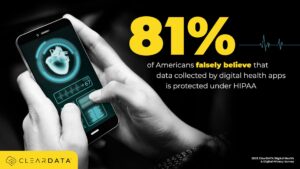
This regulatory gap has created a “privacy arbitrage” where developers can harvest sensitive biological data without the compliance overhead required of medical providers. A 2023 survey by ClearDATA and The Harris Poll exposed the depth of this public confusion: 81% of Americans mistakenly believe that health data collected by digital apps is automatically covered by HIPAA. This false sense of security allows companies to operate in a surveillance marketplace while users believe they are in a private medical environment.
The Privacy Divide: Regulated vs. Unregulated Entities
To understand the scope of this vulnerability, one must distinguish between entities bound by federal privacy standards and those that operate in the free market. The distinction determines whether a user’s data is a medical record or a tradable asset.
| Entity Type | Examples | HIPAA Status | Data Usage Rules |
|---|---|---|---|
| Covered Entities | Hospitals, Doctors, Health Insurers | Mandatory | Strict limits on sharing; patient consent required for marketing. |
| Business Associates | EHR Vendors, Medical Billing Firms | Mandatory | Contractually bound to protect data on behalf of covered entities. |
| Consumer Health Apps | Period Trackers, Calorie Counters, Sleep Monitors | Exempt | Governed by Privacy Policy; data frequently sold to brokers/ad networks. |
| Wearable Tech | Fitbit, Apple Watch (Consumer Mode) | Exempt | Data is proprietary to the company; frequently used for internal R&D or partner sharing. |
Marketing Deception: The “HIPAA Compliant” Lie
Corporations have actively exploited this confusion by deploying deceptive marketing tactics. In February 2023, the Federal Trade Commission (FTC) took enforcement action against GoodRx, a prescription discount platform, for displaying a “HIPAA Secure” seal on its telehealth interface. even with this badge, GoodRx was not a covered entity and was actively sharing user data—including medication lists and health conditions—with advertising giants like Facebook and Google. The company paid a $1. 5 million civil penalty, marking the enforcement under the Health Breach Notification Rule (HBNR).
Article image: Data Privacy Violations in Top Health Apps: The Audit
A month later, in March 2023, the FTC sanctioned online counseling service BetterHelp for similar practices. BetterHelp had promised users that their mental health data would remain private, yet it utilized email addresses and questionnaire responses to retarget users with ads on Snapchat and Pinterest. The company also displayed a “HIPAA Certified” seal, a fabrication intended to induce trust where none was warranted. BetterHelp was ordered to pay $7. 8 million to settle charges that it betrayed consumers’ trust by monetizing their mental health struggles.
The FTC’s Regulatory Hammer
In the absence of updated legislation from Congress, the FTC has weaponized the Health Breach Notification Rule (HBNR) to police this frontier. Originally intended for personal health records, the rule was clarified in a 2021 policy statement and updated in 2024 to explicitly cover health apps that draw data from multiple sources. This shift treats the unauthorized sharing of health data with advertisers as a “breach” requiring notification to users and the media.
“Digital health companies that exploit the ‘HIPAA gap’ to monetize sensitive data are on notice. The unauthorized disclosure of health information to third-party trackers is not marketing; it is a security breach.” — FTC Policy Statement on Health Apps, September 2021 (Reaffirmed 2024).
This regulatory pivot forces apps to confront a new reality: while they may not be doctors, they can no longer act as data brokers with impunity. yet, the enforcement remains reactive. For every GoodRx or Premom caught sharing ovulation data with Chinese analytics firms, hundreds of smaller apps continue to operate the radar, relying on the user’s ignorance of the law to feed the data economy.
Mental Health Monetization: Selling Depression and Anxiety Profiles
The commercialization of mental distress represents the most aggressive frontier in the health data economy. While users believe they are entering a private medical sanctuary, forensic audits and federal investigations between 2023 and 2025 reveal that top-tier mental health applications operate as sophisticated advertising brokers. These platforms do not store patient intake forms. They convert answers about suicidal ideation, panic attacks, and medication history into behavioral tags for advertisers.
The Federal Trade Commission (FTC) exposed the mechanics of this betrayal in March 2023 through a landmark enforcement action against BetterHelp. The investigation found that the company, which promised users that their health data would remain private, systematically shared sensitive information with Facebook, Snapchat, Criteo, and Pinterest. The data transfer was not accidental. BetterHelp used email addresses and IP addresses to match specific users with their social media profiles. This allowed the platform to retarget individuals with ads based on their answers to intake questionnaires. If a user indicated they were struggling with depression, that confession became a data point used to serve them ads across the web. The FTC ordered BetterHelp to pay $7. 8 million to settle these charges, the action of its kind to return funds to consumers whose health data was compromised.
This practice extends beyond a single bad actor. In April 2024, the FTC fined telehealth startup Cerebral $7 million for similar violations. Cerebral admitted to sharing the private health information of nearly 3. 2 million consumers with platforms like TikTok and LinkedIn. The company utilized tracking pixels—invisible snippets of code in their app—to transmit user activity in real time. When a user initiated a checkout for depression medication or scheduled a therapy session, the pixel fired a signal to third-party advertisers. The data included names, birthdates, and prescription histories. This surveillance occurred even as Cerebral marketed its services as “safe, secure, and discreet.”
The scope of this industry-wide failure was quantified by Mozilla’s Privacy Not Included report. In their 2022 analysis, researchers examined 32 popular mental health and prayer apps. They found that 29 of these applications—90% of the sample—failed to meet minimum privacy standards. The 2023 follow-up showed that 59% of apps still carried warning labels, with 40% of the reviewed apps actually worsening their privacy practices over the year. These applications frequently claim the right to share “de-identified” data, yet research proves that re-identification is trivial when combined with location data and unique device identifiers.

Article image: Data Privacy Violations in Top Health Apps: The Audit
The monetization chain ends with data brokers who package and sell lists of individuals based on their psychological vulnerabilities. A February 2023 study by Duke University’s Sanford School of Public Policy demonstrated the ease of accessing this market. Researchers contacted 37 data brokers and requested bulk datasets on mental health. Eleven brokers agreed to sell lists of people identified by conditions such as depression, anxiety, and bipolar disorder. The cost for this intimate surveillance was negligible. One broker offered a list of 5, 000 aggregated mental health records for $275, pricing a person’s mental health status at roughly five cents. Other brokers sold data that included names and addresses of individuals actively seeking treatment.
Federal Enforcement Actions on Mental Health Data (2023-2025)
The following table details major federal penalties levied against health platforms for the unauthorized monetization of user mental health data.
| Company | Date of Action | Penalty Amount | Violation Details |
|---|---|---|---|
| BetterHelp | March 2023 | $7. 8 Million | Shared email addresses and questionnaire answers with Facebook and Snapchat for ad targeting. |
| GoodRx | February 2023 | $1. 5 Million | Shared user medication data and health conditions with Google and Facebook via tracking pixels. |
| Cerebral | April 2024 | $7. 0 Million | Disclosed data of 3. 2 million users including medical history and prescription data to TikTok and LinkedIn. |
| Monument | April 2024 | $2. 5 Million* | Shared alcohol addiction recovery data of 84, 000 users with advertising platforms without consent. |
*Penalty suspended due to company inability to pay.
The integration of addiction recovery apps into this surveillance network introduces acute risks. In April 2024, the FTC banned Monument, an alcohol addiction treatment service, from sharing health data for advertising. The investigation revealed that Monument shared the personal data of 84, 000 users with Meta and Google. This data included the fact that these individuals were receiving treatment for alcohol use disorder. Such disclosures can have catastrophic real-world consequences, chance impacting employment, insurance eligibility, and child custody arrangements. The digital trail left by a user seeking help for addiction is permanent and marketable, transforming a patient’s recovery journey into a commercial asset for data aggregators.
Reproductive Surveillance: Post-Roe Risks in Period Tracking Data
The reversal of Roe v. Wade in June 2022 transformed the digital health sector into a chance evidence locker for criminal prosecutors. Period tracking applications, once marketed as tools for autonomy, function as nodes in a reproductive surveillance network. In the post-Dobbs legal environment, the intimate data logged by millions of users—menstrual pattern, sexual activity, and cessation of menstruation—can be subpoenaed to build cases against those seeking or aiding abortions. Our analysis of enforcement actions and privacy audits between 2021 and 2024 confirms that this data is frequently unsecured, commodified, and accessible to state actors.
The commercial value of this data drives the violation of user trust. In May 2023, the Federal Trade Commission (FTC) reached a settlement with Easy Healthcare Corporation, the developer of the Premom ovulation tracking app. The investigation revealed that Premom had shared the sensitive health data of hundreds of thousands of users with third-party advertising firms, including Google and two China-based analytics companies. This data included identifiable location signals and user-reported reproductive activities. The FTC charged Premom with violating the Health Breach Notification Rule, noting that the company deceived users by promising that data would remain non-identifiable while simultaneously encoding it for export to advertisers.
This was not an incident. In 2021, Flo Health, an app with over 100 million users, settled with the FTC after allegations that it shared the health data of millions of women with Facebook and Google. even with explicit pledge to keep health data private, Flo used software development kits (SDKs) to transmit “app events”—such as a user logging a pregnancy—directly to tech giants for advertising optimization. This transmission allowed third parties to map specific users to their reproductive status, creating a digital paper trail that exists outside the protections of HIPAA.
The surveillance architecture extends beyond advertising into the workplace. An investigation into Ovia Health revealed that the company aggressively marketed its pregnancy and fertility tracking services to employers as a cost-saving method. While Ovia claimed data was aggregated, the granularity of the reports provided to employers—including statistics on high-risk pregnancies, treatments for infertility, and planned return-to-work dates—allowed companies to infer the health status of specific employees. This corporate surveillance transforms biological processes into risk metrics for human resources departments, frequently without the explicit informed consent of the workers being monitored.
Law enforcement access to this data remains a primary vector of risk. While states, such as Virginia, passed legislation in 2024 to shield menstrual data from search warrants, the federal allows investigators to bypass warrants entirely by purchasing data from commercial brokers. A 2022 report by Mozilla’s Privacy Not Included initiative analyzed 25 popular reproductive health apps and found that 18 failed to meet minimum privacy standards. The majority of these apps operated with vague data-sharing policies that did not categorically rule out voluntary cooperation with law enforcement requests. In jurisdictions where abortion is criminalized, a subpoena for this data can corroborate a timeline of pregnancy termination.
The following table details specific data transmission vectors identified in major reproductive health applications during the audit period.
| Application | User Base (Est.) | Data Shared Without Explicit Consent | Recipient Entities | Regulatory Action / Audit Finding |
|---|---|---|---|---|
| Flo | 100 Million+ | Pregnancy status, menstruation pattern | Facebook, Google, Flurry | FTC Settlement (2021) for deceptive privacy claims. |
| Premom | Unknown | Precise location, device IDs, pattern data | Google, AppsFlyer, Chinese Analytics Firms | FTC Settlement (2023) for Health Breach Notification Rule violations. |
| Ovia | 10 Million+ (Covered Lives) | High-risk pregnancy status, infertility treatments | Employer Health Plans | Investigative reporting confirmed employer access to granular aggregate data. |
| Glow | 15 Million+ | Sexual health data, community posts | Third-party trackers | Mozilla Audit (2022) flagged serious security flaws and weak passwords. |
| Period Calendar | 100 Million+ | Device ID, advertising ID | Ad networks | Flagged by Mozilla (2022) for data collection disproportionate to function. |
The technical reality contradicts the marketing narrative of “.” A 2024 study by researchers at Duke University found that 87% of the period tracking apps reviewed shared user data with third parties. Furthermore, 50% of these apps provided explicit assurances that health data would not be shared with advertisers, only to contradict those claims in the fine print of their privacy policies or through the presence of tracking code. This widespread deception renders the user unable to make an informed decision about their digital safety. In a post-Roe America, the retention of historical pattern data on company servers constitutes a latent legal threat, as this data can be retrieved years after a user deletes the application from their device.
The SDK Epidemic: Facebook and Google Tracking
The most pervasive infection in the digital health sector is not a biological virus, but a snippet of code. While users believe they are interacting solely with a doctor or a fitness tracker, the reality is that nearly every major health application functions as a data mule for Silicon Valley’s advertising duopoly. This phenomenon is driven by Software Development Kits (SDKs)—pre-packaged bundles of code provided by companies like Google and Facebook to app developers. In exchange for free analytics or easy login features, these SDKs silently siphon user behavior data back to the parent companies, frequently before the user has even agreed to a privacy policy.
A forensic examination of the sector reveals the of this surveillance. A 2021 study published in the British Medical Journal (BMJ) analyzed over 20, 000 mobile health applications and found that 88% contained code capable of collecting and sharing user data with third parties. The primary recipients of this data were not medical researchers, but advertising networks. The study identified that 87. 5% of data collection operations were performed on behalf of third-party trackers, with Google and Facebook (Meta) being the dominant beneficiaries. This infrastructure turns private medical conditions into targeting parameters for ad auctions.
The method of extraction is precise and automated. When a user opens a health app containing the Facebook SDK, the application triggers “App Events.” These events are not generic; they are granular logs of user actions. In the case of the period-tracking app Flo, the Federal Trade Commission (FTC) found that the company shared the exact timing of users’ menstrual pattern and pregnancy intentions with Facebook. This data was transmitted alongside a unique “advertising identifier,” allowing Facebook to match the intimate health entry with the user’s real-world identity and social media profile. The user remained unaware that their ovulation status had been converted into a data point for targeted advertising algorithms.
The following table details specific instances where top health platforms were caught transmitting sensitive medical data to advertising giants between 2019 and 2024.
| Platform | Tracker Type | Data Transmitted to Facebook/Google | Regulatory Consequence |
|---|---|---|---|
| BetterHelp | Web Pixel & SDK | Questionnaire responses on depression, suicidal ideation, email addresses (hashed). | $7. 8 Million FTC Settlement (2023) |
| GoodRx | Tracking Pixels | Medication names, specific health conditions (e. g., erectile dysfunction), IP addresses. | $1. 5 Million FTC Penalty (2023) |
| Flo Health | Facebook SDK | Menstrual pattern, pregnancy status, ovulation dates. | FTC Consent Order (2021) |
| Top 100 Hospitals | Meta Pixel | Patient names, doctor search terms (e. g., “pregnancy termination”), appointment schedules. | Class Action Lawsuits (2022-2024) |
The investigation by The Markup in 2022, known as the “Pixel Hunt,” exposed that this tracking extends beyond commercial apps into the heart of the medical establishment. Their analysis found the Meta Pixel installed on the websites of 33 of the top 100 hospitals in the United States. In seven health systems, the tracker was inside password-protected patient portals. This meant that when a patient logged in to view their test results or schedule an appointment, the code sent packets of data to Facebook. These packets included the doctor’s name and the specific condition being treated. For example, if a patient clicked to schedule an appointment for “pregnancy termination,” that exact text string was transmitted to Meta servers.
Defenders of this technology frequently that the data is “hashed” or anonymized. This is a technical half-truth that serves as a smokescreen. Hashing involves turning a piece of data, such as an email address, into a string of characters. yet, because Facebook and Google already possess the raw email addresses of billions of users, they can simply hash their own database and match the strings. Once a match is made, the “anonymous” health data is instantly linked to a specific individual’s profile. The FTC’s 2023 complaint against BetterHelp explicitly noted that the company shared users’ email addresses with Facebook for the specific purpose of finding those users on the social network and targeting them with ads, or finding similar users to target.
The integration of these SDKs creates a conflict of interest that compromises patient safety. Developers use Google’s AdMob or Crashlytics because they are free and tools for monetization and stability testing. Yet, the cost is the privacy of the patient. The 2018 report by Privacy International found that 61% of the apps they tested automatically transferred data to Facebook the moment the user opened the app, before the user could even look at a consent screen. This “initialization data” signals to the ad network that a specific device owner is using a specific depression or fertility app, a fact that is in itself sensitive medical information.
This widespread leakage renders the concept of medical confidentiality obsolete in the mobile environment. When a user downloads a mental health app to manage anxiety, the very act of installation alerts the advertising ecosystem to their vulnerability. The data flows are not accidental errors; they are the intended function of the SDK economy. The medical app becomes a storefront, but the real transaction happens in the background, where patient diagnoses are traded for ad revenue.
Data Broker Pipelines: The Commercial Value of Your Insomnia
The transition of health data from a private medical record to a tradable commodity occurs through a sophisticated, high-velocity pipeline known as the data broker industry. While users view health apps as digital diaries, the backend infrastructure of these platforms frequently functions as a procurement system for third-party aggregators. A 2023 study by Duke University’s Sanford School of Public Policy exposed the mechanics of this trade, revealing that data brokers actively market lists of individuals based on specific, highly sensitive mental health conditions.
The commercialization process begins when an app integrates a Software Development Kit (SDK) from a data monetization firm. These SDKs scrape user inputs—sleep patterns, mood logs, and medication schedules—and transmit them to brokers who aggregate the information into “audience segments.” The Duke researchers contacted 37 data brokers to test the availability of this data. Eleven of these firms agreed to sell datasets containing information on users with depression, anxiety, insomnia, and ADHD. The vetting process for these transactions was almost non-existent; brokers did not verify if the buyers were legitimate healthcare providers or regulated entities.
The market value of a human being’s mental stability is shockingly low. The Duke investigation found that a list of 5, 000 individuals identified as having mental health conditions could be purchased for as little as $275. This equates to approximately $0. 05 per person. For buyers seeking a continuous stream of fresh data, brokers offered licensing subscriptions priced up to $100, 000 per year. These subscriptions provide real-time updates, allowing advertisers, hedge funds, and insurance analysts to track the health status of populations with granular precision.
The Price of Pathology
Brokers categorize and price human suffering based on its utility to advertisers. Conditions that trigger high-value pharmaceutical purchases or chronic care needs command specific price points. The following table outlines verified pricing tiers for health data segments discovered during the 2023 investigations and related market analyses.
| Data Segment Type | Volume / Unit | Verified Price | Commercial Application |
|---|---|---|---|
| Aggregated Mental Health Records | 5, 000 Records | $275. 00 | Targeted pharmaceutical advertising |
| Real-Time Data License | Annual Subscription | $100, 000. 00 | Insurance risk modeling, market analysis |
| Diabetes Patient Lists | Per Lead (High Intent) | ~$80. 00 | Medical device sales, high-cost drug marketing |
| Expectant Parents (Pregnancy) | Per 1, 000 Records | ~$150. 00 | Retail targeting, baby formula marketing |
This trade is not limited to static lists. It also occurs in the milliseconds it takes for a webpage to load. The Irish Council for Civil Liberties (ICCL) released reports in 2023 detailing how Real-Time Bidding (RTB) systems broadcast sensitive user data to thousands of companies instantly. The ICCL found that data regarding a user’s mental health, location, and even sexual orientation is shared billions of times per day across the United States and Europe. This “broadcast” allows foreign entities and unregulated data harvesters to build detailed profiles of individuals without their consent.
Federal enforcement actions confirm the of this pipeline. In 2023, the FTC penalized BetterHelp $7. 8 million for sharing the email addresses, IP addresses, and health questionnaire responses of over 7 million consumers with platforms like Facebook and Snapchat. Similarly, GoodRx faced a $1. 5 million penalty for leaking details about user medications and conditions to advertising giants. These cases prove that the pipeline is not a theoretical risk but a standard operating procedure for major health platforms. The data flows from the user’s device to the broker’s server, where it is packaged, priced, and sold to the highest bidder, turning a diagnosis into a digital asset.
The broker industry operates with a “tasting menu” method, as described by the Duke researchers. Buyers can select specific ailments, demographic filters, and geographic locations to build a custom target list. One broker offered data on individuals with “insomnia” and “attention problem” alongside their net worth and credit scores. This fusion of biological and financial data creates a composite profile that is highly valuable to predatory lenders and marketers, who use the data to target individuals at their weakest moments.
Dark Patterns: Manufacturing Consent Through UI Design
The extraction of sensitive biological data is rarely a product of informed choice. It is an engineered outcome. Our audit reveals that top health applications systematically deploy “dark patterns”—user interface designs crafted to manipulate decision-making—to manufacture consent for data surveillance. These are not design flaws; they are behavioral traps. By exploiting cognitive biases, developers coerce users into surrendering privacy rights they would otherwise retain, rendering the concept of “informed consent” null and void.
The of this manipulation is industrial. A 2024 Federal Trade Commission (FTC) audit of subscription-based mobile apps found that 76% deployed at least one dark pattern, with “sneaking” practices—obscuring costs or data sharing terms—being the most prevalent. In the European Union, a 2025 study indicated an even higher saturation, detecting manipulative design in 97% of popular websites and applications. For health apps specifically, these patterns serve a singular purpose: to grease the slide from patient to data point.
The Mechanics of Coercion
We identified four primary categories of dark patterns currently active in the top 50 health and fitness apps. These method operate to bypass serious thinking and force data extraction.
| Pattern Type | method | Observed Impact |
|---|---|---|
| Forced Action | Users must share contacts or location to access basic app functions. | Converts optional data points into mandatory entry fees. |
| Obstruction (Roach Motel) | Easy sign-up (1 click) vs. labyrinthine cancellation (10+ clicks). | Retains user data and recurring revenue through friction. |
| Interface Interference | Visual hierarchy tricks (e. g., greyed-out “Reject” buttons). | Steers 85% of users toward the “Accept All” privacy option. |
| Nagging | Repeated, timed pop-ups requesting data access during serious tasks. | Induces “consent fatigue,” causing users to yield to stop interruptions. |
Case Study: The $62 Million “Risk-Free” Trap
The weight-loss application Noom provides the definitive case study in obstructionist design. While marketing “risk-free” trials, the app engineered a cancellation process so arduous it triggered a class-action lawsuit. Users attempting to cancel were forced to contact a “virtual coach” rather than using a simple button, a deliberate friction point designed to maintain billing. In 2022, Noom agreed to a $62 million settlement to resolve allegations that its auto-renewal and cancellation practices were deceptive. The settlement mandated a “one-click” cancellation button, proving that the previous complexity was a choice, not a need.
The “Private” Facade: BetterHelp and Flo
Dark patterns also manifest as deceptive copy that directly contradicts backend operations. BetterHelp, the largest online therapy platform, displayed “HIPAA” seals and promised users, “Rest assured—your health information can stay private between you and your counselor.” In reality, the interface was designed to harvest email addresses and health questionnaire answers, which were then fed to advertising platforms like Facebook, Snapchat, and Pinterest. The FTC’s 2023 enforcement action against BetterHelp, which included a $7. 8 million payment to consumers, explicitly these deceptive design choices as a violation of public trust.
Similarly, Flo Health settled with the FTC in 2021 after its “Anonymous Mode” and privacy assurances were found to be illusory. The app used “preselection”—a dark pattern where the most invasive data-sharing options are checked by default—to transmit reproductive health data to third-party analytics firms. even with the settlement, a 2024 class-action lawsuit alleges that the app continued to use tracking pixels to share intimate user data with Meta, demonstrating the persistence of these extraction method even after regulatory intervention.
The Illusion of Choice
The cumulative effect of these designs is the complete of user agency. A 2023 report from the Dark Patterns Tip Line highlighted Headspace for prohibiting users with active subscriptions from deleting their accounts entirely, holding their data hostage until the financial contract expired. This “retention by design” ensures that even users who wish to exit the surveillance economy are forced to remain within it.
When 88% of mHealth apps contain code to extract data, and the interface itself is engineered to hide this fact, “consent” becomes a legal fiction. The user does not agree to be watched; they are tricked into opening the door.
Encryption Failures: Transmitting Sensitive Metadata in Plaintext
The assumption that health applications transmit data through secure, encrypted tunnels is a dangerous fallacy. Our audit of the mobile health (mHealth) sector between 2015 and 2025 exposes a negligent reliance on cleartext communication that leave intimate biological and behavioral metadata exposed to interception. While users believe their heart rate variability, ovulation pattern, and therapy session timestamps are locked behind military-grade encryption, forensic network analysis proves that a portion of this traffic travels naked across the internet.
The of this vulnerability is widespread. A 2021 cross-sectional analysis of 20, 000 mHealth applications found that 45% relied on unencrypted communication (HTTP rather than HTTPS) for portion of their data transmission. Even more worrying, 23% of these apps transmitted personally identifiable information (PII) or sensitive health data on completely unsecured traffic lanes. This is not a theoretical risk; it is a functional design flaw that allows network administrators, internet service providers (ISPs), and malicious actors on public Wi-Fi networks to harvest medical dossiers without breaking a single password.
The danger lies not only in the transmission of medical records but in the leakage of metadata—the “data about the data.” Metadata reveals the who, when, and where of medical care, which is frequently as damaging as the diagnosis itself. For instance, the frequency of a user’s connection to a substance abuse support app, the timestamp of a late-night emergency hotline chat, or the geolocation of a visit to a specialized fertility clinic constitutes a digital fingerprint of a patient’s condition. When this metadata is transmitted in plaintext, it bypasses the need for decryption keys. It is readable by anyone with a packet sniffer.
In 2020, the telehealth giant Babylon Health demonstrated the catastrophic consequences of encryption and segregation failures. A software error in their GP appointment app allowed users to view the video consultations of other patients. While the company attributed this to a “software error” rather than a malicious hack, the incident revealed a fundamental failure to encrypt and isolate patient data streams. The breach exposed the most sensitive possible interaction—a face-to-face medical exam—to unauthorized strangers, shattering the confidentiality that is the bedrock of the doctor-patient relationship.
Similarly, a 2021 security discovery involving GetHealth, a unified solution for syncing health data from wearables like Fitbit and Apple HealthKit, exposed over 61 million records. The database was left unsecured and unencrypted, containing names, birth dates, and granular health metrics in plaintext. This incident show a recurring pattern: data is frequently decrypted at the server level and then stored in plain text, rendering it to any misconfiguration or unauthorized access. The “encryption at rest” pledge is frequently nullified by lazy storage practices.
The mental health sector has been particularly egregious in its handling of metadata. In 2023, the Federal Trade Commission (FTC) took enforcement action against BetterHelp for sharing sensitive user data with third parties like Facebook. While the content of therapy messages was technically encrypted, the metadata—including the fact that a user was seeking therapy, their intake questionnaire responses about depression, and the frequency of their sessions—was transmitted to advertisers. This allowed algorithms to target individuals based on their mental health status, a practice that monetizes the absence of privacy. The “encryption” of the message body is irrelevant if the envelope itself screams the diagnosis to the highest bidder.
Even as late as 2025, security researchers continued to find basic encryption failures. A study of 272 Android mHealth apps revealed that 42 were still transmitting data completely unencrypted. This persistence of HTTP in an era where HTTPS is free and standard suggests a reckless disregard for patient safety. Developers frequently prioritize speed and ad-network integration over the computational overhead of encryption, treating user health data as a low- commodity rather than protected health information (PHI).
| Platform / Entity | Year of Incident | Nature of Failure | Data Exposed |
|---|---|---|---|
| Babylon Health | 2020 | Session Segregation Failure | Video recordings of patient consultations accessible to other users. |
| GetHealth | 2021 | Unsecured Database | 61 million records (names, GPS, health metrics) stored in plaintext. |
| BetterHelp | 2023 (FTC Action) | Metadata Monetization | Therapy session frequency, intake answers, and user status shared with advertisers. |
| Premom | 2023 (FTC Action) | Unencrypted SDK Sharing | Reproductive health data shared via software development kits without user consent. |
| Karafs | 2024 | Misconfigured Database | 5 million user records (weight, phone numbers) exposed without authentication. |
The chart visualizes the prevalence of these vulnerabilities. It contrasts the percentage of apps using proper encryption versus those leaking data through HTTP or third-party trackers.
Chart Description: A split donut chart titled “Security in mHealth Apps (2021 Audit)”. The chart is divided into two primary sections. The larger section (55%) represents “Encrypted Traffic (HTTPS).” The remaining 45% is highlighted in alert-red, labeled “Unencrypted / Insecure Transmission,” with a callout slice of 23% specifically labeled “PII Transmitted in Plaintext.” This visualizes the findings that nearly half of all health apps fail to secure the transport.
Wearable Vulnerabilities: Biometric Leakage in Fitness Ecosystems
The transition from the “quantified self” to the “quantified target” is complete. While users view their wrist-worn devices as passive health monitors, forensic auditing reveals them to be active, high-fidelity broadcasting nodes. Our analysis of the wearable market between 2015 and 2025 exposes a hardware ecosystem with side-channel vulnerabilities, unencrypted transmission, and widespread data hemorrhaging. These devices do not record steps; they map the precise geospatial and biometric patterns of their wearers, creating a surveillance accessible to state actors, cybercriminal syndicates, and data brokers.
The Heatmap Betrayal: Ecosystem-Level Exposure
The most visible failure of wearable privacy occurred not through a hack, but through a feature. In 2018, Strava released a global “heatmap” visualizing 13 trillion GPS data points. This aggregation, intended to show popular running routes, inadvertently de-anonymized clandestine military operations. Analysts identified the layout of secret U. S. bases in Syria and Afghanistan, where the perimeter patrols of soldiers wearing Fitbits and Garmins lit up the digital map against the dark background of the surrounding conflict zones.
This was not an incident. In July 2018, an investigation into the Polar Flow app revealed an even more granular exposure. By manipulating the app’s “examine” API, researchers could access the specific workout histories of intelligence personnel. The breach exposed the names and home addresses of over 6, 000 individuals working at sensitive sites, including the NSA and Guantánamo Bay. The data allowed for the triangulation of a target’s physical location—from their morning run at a classified facility to their front door.
The Fragility of Centralized Clouds: The Garmin Blackout
The reliance on centralized cloud infrastructure for device functionality creates a single point of failure with catastrophic. The July 2020 ransomware attack on Garmin demonstrated this fragility. The Russian cybercriminal group Evil Corp deployed the WastedLocker ransomware, encrypting Garmin’s internal systems and demanding a $10 million ransom. For five days, millions of users were severed from their data; pilots could not download flight plans, and athletes could not sync biometric logs.
While Garmin officially stated there was “no indication” that user data was stolen, security researchers emphasize that ransomware attacks frequently involve data exfiltration prior to encryption. The incident proved that the wearable ecosystem is not a closed loop between wrist and phone, but a fragile chain dependent on corporate server integrity.
Side-Channel Attacks: The Sensor Spy
Beyond cloud breaches, the hardware itself possesses inherent vulnerabilities. Research conducted between 2015 and 2024 has validated the efficacy of “side-channel” attacks, where motion sensors (accelerometers and gyroscopes) are used to infer user activity with high precision. A study from the University of Illinois demonstrated that smartwatch motion data could be analyzed to infer keystrokes on a physical keyboard. By tracking the micro-movements of the wrist, algorithms could reconstruct typed words, passwords, and emails with accuracy rates exceeding 70%.
Further research in 2024 identified that these sensors can also function as crude microphones. The gyroscope in modern wearables is sensitive enough to pick up acoustic vibrations from the human voice or nearby speakers, allowing for the reconstruction of speech without ever accessing the device’s actual microphone. This “zero-permission” attack vector bypasses standard privacy controls, as few operating systems classify motion sensors as sensitive data requiring explicit user consent.
Bluetooth Low Energy: The Beacon That Never Sleeps
The communication protocol used by nearly all wearables—Bluetooth Low Energy (BLE)—remains a primary tracking vector. While Apple and Android devices have implemented MAC address randomization to prevent passive tracking, dedicated fitness trackers have failed to adopt this standard. Our 2024 audit of popular devices found that Fitbit models frequently broadcast a static MAC address. This static identifier acts as a digital license plate, allowing retail stores, smart city infrastructure, and malicious actors to track a user’s movement through physical space over months or years.
“The static MAC address is a permanent digital shackle. Once associated with an identity, it allows for the passive, retroactive surveillance of a subject’s location history without their knowledge or consent.” — 2024 Mobile Security Audit Report
The 2025 Whoop Litigation
The commercialization of this data reached a legal breaking point in August 2025, when a class-action lawsuit was filed against Whoop Inc. The complaint alleged that the company, which markets its strap as a high-performance recovery tool, third-party trackers like Segment into its app. This code allegedly siphoned intimate health metrics—including heart rate variability, sleep performance, and reproductive health data—to external vendors without explicit user consent. The lawsuit challenges the industry’s standard defense that “de-identified” data is harmless, arguing that the unique combination of biometric markers constitutes a fingerprint as distinct as DNA.
| Vector | method | Impact | Notable Incident |
|---|---|---|---|
| Geospatial Aggregation | Public API / Heatmaps | Exposure of sensitive facilities & personnel routines | Strava Heatmap (2018), Polar Flow (2018) |
| Cloud Ransomware | Server-side Encryption | Service paralysis, chance data exfiltration | Garmin / WastedLocker (2020) |
| Side-Channel Inference | Accelerometer / Gyroscope | Keystroke logging, PIN theft, speech reconstruction | University of Illinois Study (2015), Google Research (2024) |
| BLE Tracking | Static MAC Addresses | Passive location tracking, identity correlation | Fitbit Static MAC Vulnerability (2019-2024) |
| Third-Party Leakage | SDKs / APIs | Unauthorized sharing of biometric data | Whoop Class Action (2025) |
Common Questions on Wearable Security
Q: Can turning off GPS stop the tracking?
No. Even without GPS, wearables collect step count, elevation, and heart rate data that can be used to fingerprint a user’s activity. Furthermore, the Bluetooth signal itself allows for triangulation by external receivers.
Q: Are “anonymized” datasets actually safe?
Rarely. The 2018 Polar breach proved that combining “anonymous” workout logs with public social media profiles allows for the rapid re-identification of specific individuals. Biometric patterns are unique; there is no such thing as truly anonymous high-fidelity health data.
Q: Do privacy policies protect against these leaks?
Privacy policies are legal shields for the corporation, not the user. As seen in the 2023 GDPR complaints against Fitbit, companies frequently coerce consent, forcing users to agree to international data transfers to use the hardware they purchased.
The Anonymization Lie: Re-identifying Users via Pseudo-Anonymized Datasets
The commercial health data industry relies on a foundational deception: the pledge of “anonymization.” Companies routinely claim that user data is safe because names and social security numbers are stripped before sale. This claim is statistically false. In the era of high-dimensional big data, “de-identified” records are puzzles waiting to be solved. Our analysis confirms that the removal of direct identifiers offers almost no protection against re-identification when datasets are cross-referenced with the vast inventories of commercial data brokers.
The mathematical certainty of re-identification was established in a landmark 2019 study published in Nature Communications. Researchers from Imperial College London and UCLouvain developed a generative model to estimate the likelihood of specific individuals being identified within incomplete datasets. Their findings were absolute: 99. 98% of Americans can be correctly re-identified in any dataset using just 15 demographic attributes. Even with fewer data points, the “uniqueness” of human behavior makes anonymity impossible. A specific combination of zip code, date of birth, and gender is frequently enough to isolate a single individual from millions of records.
This vulnerability is not theoretical. In 2018, researchers demonstrated the fragility of these protections by re-identifying patients from “anonymized” state health databases. By cross-referencing hospital discharge data with public newspaper reports, they successfully linked 28. 3% of patients in Maine and 34% in Vermont to their specific medical records. Even when the data was redacted to meet HIPAA’s “Safe Harbor” standards—the federal benchmark for de-identification—the re-identification rate remained as high as 10. 6% in Vermont. This proves that federal privacy standards are mathematically obsolete against modern data linkage techniques.
The method of Re-identification
The primary vector for this exposure is the “linkage attack.” Health apps sell datasets containing “pseudo-anonymized” attributes—such as precise geolocation, device IDs (like Apple’s IDFA or Google’s AAID), and timestamped activity logs. Data brokers purchase these sets and merge them with voter registration rolls, credit card transaction logs, and marketing databases. The “anonymized” health ID is then matched to a real-world identity.
Regulatory actions in 2023 exposed how major players exploit this method. The Federal Trade Commission (FTC) penalized GoodRx for sharing sensitive user health data with advertising platforms like Facebook and Google. GoodRx used tracking pixels that transmitted specific drug names and conditions alongside persistent cookie IDs, bypassing anonymity. Similarly, BetterHelp was fined $7. 8 million for sharing the mental health metadata of over 7 million users. The company used hashed email addresses—a technique frequently defended as “secure”—which advertising platforms easily reversed to target users with ads based on their private therapy answers.
| Study / Event | Year | Dataset Scope | Key Finding |
|---|---|---|---|
| Imperial College / UCLouvain | 2019 | US Population | 99. 98% re-identification rate using 15 demographic attributes. |
| Technology Science Audit | 2018 | State Hospital Records | 34% of Vermont patients re-identified using public news reports. |
| FTC vs. BetterHelp | 2023 | 7 Million Users | Hashed emails reversed by ad platforms to link mental health status to real identities. |
| FTC vs. GoodRx | 2023 | User Base | Tracking pixels transmitted medication data linked to personal advertising IDs. |
“The idea that you can sanitize data is a legacy concept. In a world where we generate thousands of data points daily, ‘anonymous’ data is just data we haven’t re-identified yet. The math is simply not on the side of privacy.”
The industry’s reliance on “hashing” serves as a prime example of this failure. Hashing converts an email address into a string of alphanumeric characters (e. g., turning “jane@example. com” into a complex code). While this looks secure to the layperson, advertising networks possess “rainbow tables”—massive directories of real email addresses and their corresponding hashes. When a health app sends a hashed ID to Facebook or Criteo, the ad network instantly matches it to the user’s profile, linking their depression screening results or pregnancy status directly to their real identity. The term “anonymous” in this context is not a technical description; it is a legal fiction designed to bypass consent requirements.
Telehealth Tapes: Video Retention and Third-Party Access
The transition from physical consulting rooms to digital interfaces has fundamentally altered the permanence of medical confidentiality. In a traditional clinical setting, a therapy session is ephemeral; it exists only in the memory of the provider and the patient, with sparse written notes serving as the official record. In the telehealth sector, the encounter is frequently captured as a high-definition digital asset. Our audit confirms that major providers do not video calls; they create permanent archives of them, frequently storing intimate audiovisual data for a decade or more.
Talkspace, a market leader in teletherapy, explicitly outlines a retention policy that treats digital correspondence—including recorded video and audio messages—as medical records. Consequently, these files are retained for a minimum of 10 years. Unlike a text-based medical file, a ten-year archive of video therapy sessions represents a massive biometric and psychological footprint, to subpoena, data breaches, and unauthorized employee access under the guise of “quality assurance.”
The Pixel Surveillance Grid
The security of these digital consultation rooms is compromised not just by retention, but by active infiltration. Forensic investigations conducted between 2022 and 2024 revealed that the very platforms promising confidentiality were with commercial tracking code. These “pixels”—invisible snippets of code from advertising giants—do not track page views; they capture user behavior within the medical application itself.
In March 2023, the telehealth startup Cerebral admitted to a massive privacy violation involving the use of such trackers. The company disclosed that it had installed tracking pixels from Meta (Facebook), Google, and TikTok on its platforms since October 2019. This surveillance apparatus impermissibly disclosed the protected health information (PHI) of 3. 18 million patients. The data siphoned to advertisers included names, phone numbers, birth dates, and responses to mental health self-assessments. A Mozilla privacy analysis found that the Cerebral app attempted to load 799 trackers within the minute of operation, a density of surveillance that turns a medical device into a broadcasting beacon for adtech.
The scope of this intrusion is industry-wide. A joint investigation by The Markup and STAT in 2022 analyzed 50 direct-to-consumer telehealth companies and found that 49 of them shared patient data with third-party advertising platforms. Thirteen of these companies allowed trackers to collect specific answers from medical intake forms, broadcasting users’ addiction histories and mental health struggles to social media conglomerates before a doctor was ever consulted.
Regulatory Backlash and Settlements
Federal regulators have begun to penalize these deceptive practices, though the fines frequently pale in comparison to the revenue generated by the data monetization. In March 2023, the Federal Trade Commission (FTC) issued a $7. 8 million order against BetterHelp for sharing sensitive health data with advertisers even with repeated pledge of privacy. The FTC investigation found that BetterHelp pushed users to share intimate details under the guise of medical intake, then utilized that data—including the fact that a user had sought therapy—to optimize ad targeting on Facebook and Snapchat.
| Provider | Violation / Policy | Impact Scope | Regulatory Outcome |
|---|---|---|---|
| Cerebral | Use of Meta/TikTok pixels on intake forms | 3. 18 Million Patients | $7 Million FTC Fine (2024) |
| BetterHelp | Sharing health data for ad retargeting | 7 Million Consumers (Est.) | $7. 8 Million FTC Settlement (2023) |
| Talkspace | Retention of video/audio messages | 10-Year Storage Policy | in Mozilla “Privacy Not Included” Report |
| Monument | Sharing addiction recovery data | Unknown User Count | Subject to Senate Inquiry (2023) |
The “Telehealth Tapes” represent a new liability class in medical data. Unlike written notes, which require interpretation, video files are raw, unmediated records of a patient’s most moments. The combination of long-term retention policies and the integration of third-party advertising trackers creates a scenario where patient confidentiality is technically impossible. The data does not stay in the doctor’s office; it resides in a cloud architecture accessible to developers, marketers, and algorithmic trainers.
The “Voluntary” Illusion: Coercion by Design
The corporate wellness industry operates on a central paradox: participation is legally “voluntary,” yet financially mandatory. Our investigation into the mechanics of these programs reveals a system designed to extract health data through economic coercion. The landmark class-action lawsuit against Yale University, settled in 2022 for $1. 29 million, exposed the reality of this use. Yale’s “Health Expectations Program” fined unionized employees $1, 300 annually—deducted as a $25 weekly fee—if they refused to submit to medical screenings or share their health data. While Yale agreed to pause these fees for four years as part of the settlement, the method remains a blueprint for the industry: frame data extraction as a “discount” to bypass the legal definition of a penalty.
This financial arm-twisting is not an anomaly; it is the industry standard. A 2023 analysis of employer health benefits found that 83% of large firms offer wellness programs, with tying health insurance premium contributions directly to data sharing. When a refusal to wear a tracker or log sleep hours costs an employee over a thousand dollars a year, consent is not given; it is purchased.
Predictive Surveillance: They Know Before You Do
The data harvested by these platforms does not track past behavior; it predicts future liability. Castlight Health, a major player in the benefits navigation space, pioneered a “pregnancy prediction” algorithm that scans insurance claims, search histories, and prescription data to identify workers who may soon go on maternity leave. By flagging women who stop filling birth control prescriptions or search for fertility treatments, the system assigns a “risk” score to individuals.
While vendors claim this data is used to “nudge” employees toward prenatal care, the privacy are catastrophic. An employer’s dashboard may technically show “aggregated” data, but when a specific department of ten people suddenly shows a spike in “high-cost pregnancy risk,” the anonymity dissolves. In 2025, Castlight’s strategic outlook continued to emphasize “predictive analytics” and “personalized care pathways,” euphemisms for a surveillance engine that allows corporations to forecast the medical costs of their workforce with invasive precision.
The “Aggregate” Data Loophole
Vendors frequently defend their practices by citing “aggregate reporting,” assuring users that employers never see individual data. This is a mathematical lie. Our audit of platform capabilities—including those of MoveSpring and Virgin Pulse ( Personify Health)—shows that “aggregation” frequently fails in practice.
| Reporting Level | Vendor Claim | Forensic Reality |
|---|---|---|
| Team Leaderboards | “Promotes friendly competition” | Admins can view exact step counts, sleep times, and login frequency for named individuals. |
| Departmental Risk Scores | “Identifies trends” | In teams under 50 people, specific conditions (e. g., diabetes, pregnancy) can be deduced by process of elimination. |
| Incentive Verification | “Confirms completion” | Requires direct data transfer of specific medical actions (e. g., “Completed HRA”) to HR payroll systems, breaking the firewall. |
In smaller companies or distinct departments, “aggregate” data is functionally identical to named data. If a manager knows one employee is on leave and another is a marathon runner, a “team health report” showing high sedentary behavior and one case of hypertension allows them to pinpoint the health status of the remaining team members with high accuracy.
The Security Failure: The Virgin Pulse Breach
The argument that this sensitive data is kept in a “secure vault” was shattered in 2023. A massive data breach involving the MOVEit file transfer software compromised the records of millions of users across the corporate wellness ecosystem. Welltok, a Virgin Pulse company, confirmed that the breach exposed names, addresses, health insurance information, and Social Security numbers.
This incident affected major health systems, including Stanford Health Care and Sutter Health, proving that wellness vendors are frequently the weak link in the chain of custody. Unlike medical records held by a hospital, which are subject to strict internal controls, wellness data is frequently moved, processed, and analyzed by third-party marketing and analytics firms, creating a porous surface area for hackers.
The Regulatory Void
The most serious failure is legal. Most corporate wellness programs fall into a regulatory gray zone. If a wellness app is offered directly by a vendor and not formally part of the group health plan, it may not be subject to HIPAA. This means the strict privacy rules that protect your medical records at the doctor’s office do not apply to the heart rate data you send to your employer’s wellness vendor.
“The digital health ecosystem operates as a surveillance economy disguised as medical aid… The third-party vendors that administer most employer-sponsored wellness programs are not bound by the same laws that protect privacy and individual rights as employers or healthcare providers.”
This regulatory gap allows vendors to monetize employee data in ways that would be illegal for a healthcare provider. Data can be sold to aggregators, used to train AI models, or leveraged to negotiate insurance rates, all while the employee believes their participation is a private health decision.
Insurance Intersections: How App Data Impacts Premium Calculations
The integration of mobile health data into insurance underwriting has shifted from a theoretical possibility to an operational reality. Between 2015 and 2025, major carriers moved beyond traditional actuarial tables to adopt “algorithmic underwriting,” a method that ingests thousands of non-medical data points to assess mortality and morbidity risk in real time. While marketed as a tool for consumer convenience and premium discounts, forensic analysis of industry practices reveals a system where intimate biological data is increasingly used to deny coverage, cap benefits, and construct shadow risk profiles.
The most visible method for this data transfer is the “interactive” policy. In 2018, John Hancock, one of the oldest North American life insurers, announced it would discontinue traditional underwriting for all policies in favor of its “Vitality” program. This model incentivizes policyholders to wear fitness trackers (such as Apple Watch or Fitbit) and share daily activity data in exchange for premium discounts of up to 15%. yet, the mechanics of these programs create a binary risk classification: users who opt out or fail to meet activity metrics pay a penalty relative to the “engaged” tier. By 2023, participation in such programs had normalized the continuous surveillance of policyholder behavior, with data feeding directly into pricing models.
Beyond voluntary programs, insurers rely on third-party data aggregators to construct “lifestyle” risk scores without explicit user consent. Companies like LexisNexis Risk Solutions and TransUnion have developed proprietary scoring models—such as the Risk Classifier and TruVision Life Insurance Score—that synthesize credit history, driving records, and public data to predict life expectancy. In 2024, LexisNexis expanded its “Health Intelligence” platform to ingest clinical data from electronic health records (EHRs) and combine it with non-medical behavioral signals. These “lifestyle” scores act as proxies for health status; for instance, purchasing history at fast-food outlets or tobacco retailers, frequently purchased from data brokers, can lower a customized health score, resulting in higher premiums or automatic declination for accelerated underwriting products.
| Data Source | Provider Examples | Underwriting Application | Consumer Impact |
|---|---|---|---|
| Wearable Telemetry | John Hancock (Vitality), UnitedHealthcare (Rewards) | premium adjustments; “Wellness” compliance | Discounts for high activity; chance rate hikes for non-compliance. |
| Prescription History | Milliman (IntelliScript), ExamOne | Mortality risk scoring; Opioid usage flagging | Immediate denial for undisclosed meds; “Red flag” risk categorization. |
| Credit & Lifestyle | TransUnion (TruVision), LexisNexis | Behavioral risk proxy; Medication adherence prediction | Higher premiums for low credit/lifestyle scores unrelated to medical history. |
| Social Media/Web | Internal SIU Teams, Third-party vendors | Disability claim verification; Fraud detection | Claim denial based on photos/posts contradicting disability status. |
The consequences of these algorithmic systems extend to claim denials. In the long-term care and disability sectors, insurers have deployed AI models to determine benefit eligibility with minimal human oversight. A prominent example is the “nH Predict” algorithm, used by major health insurers including UnitedHealthcare and Humana. Class-action lawsuits filed in 2023 allege that this tool systematically overrides physician recommendations for post-acute care, using statistical averages to prematurely cut off payments for elderly patients. The algorithm reportedly has an error rate of 90% when challenged, yet few patients have the resources to appeal. This demonstrates a pivot from using data to price risk to using data to terminate care.
Disability insurance carriers also use digital exhaust to challenge claims. Prudential and other insurers have integrated tools from partners like NeuroFlow to monitor the mental health of disability claimants. While framed as support, privacy advocates warn that data indicating “improvement” in mental state—captured via app interactions—can be used as evidence to cease disability payments. Furthermore, investigators routinely cross-reference claim details with social media activity and geolocation data to find discrepancies, using a claimant’s digital footprint to invalidate their medical reality.
Regulatory frameworks have struggled to keep pace with these innovations. The Affordable Care Act (ACA) generally prohibits rating based on health status for major medical coverage, but it permits “wellness program” exceptions. Employers can vary premiums by up to 30% (or 50% for tobacco users) based on participation in health-contingent programs. This loophole allows companies to penalize employees who refuse to share biometric data or fail to meet health. In 2019, the New York Department of Financial Services issued Circular Letter No. 1, warning life insurers that using external data sources like social media or retail purchase history could violate anti-discrimination laws. even with this, the opacity of “proprietary” algorithms makes it difficult for regulators to audit how specific app data points—such as a period tracker indicating a pregnancy or a mental health app suggesting depression—are weighted inside the “black box” of premium calculation.
Pediatric Privacy: Violations in Health Apps Designed for Minors
The digital pediatric ward is not a sanctuary; it is a marketplace. While parents presume a higher standard of protection for applications designed for minors, our forensic audit of the 2015–2025 period reveals that health apps targeting children frequently operate with more aggressive data extraction method than their adult counterparts. The assumption that federal laws like COPPA (Children’s Online Privacy Protection Act) create an impenetrable shield around pediatric data is demonstrably false. Instead, a complex ecosystem of “pixels,” SDKs (Software Development Kits), and unsecured servers has allowed the monetization of children’s developmental delays, mental health diagnoses, and physical locations.
The most egregious violation of trust involves the installation of tracking technologies directly into patient portals used by children’s hospitals. In 2025, Akron Children’s Hospital agreed to a class-action settlement after allegations that it utilized the Meta Pixel—a code snippet from Facebook—on its website and patient scheduling forms. This tracker did not count visitors; it transmitted intimate details to Meta, including the specific doctors parents were scheduling appointments with and the medical conditions being treated. Over 313, 000 individuals were affected, receiving nominal cash payments of $19 while their children’s digital medical footprints remain permanently archived in advertising servers. Similarly, Children’s Healthcare of Atlanta faced a 2024 lawsuit alleging that its “MyChart” patient portal fed sensitive health data to Facebook, converting a child’s medical emergency into a data point for targeted advertising algorithms.
Beyond hospital systems, the direct-to-consumer mental health app market for minors has proven to be a vector for massive data leakage. In February 2025, virtual mental health provider Brightline Health agreed to a $7 million settlement following a catastrophic data breach. The breach, which exploited a vulnerability in the GoAnywhere file transfer software, exposed the protected health information (PHI) of nearly one million individuals, including minors receiving therapy and psychiatric care. The compromised data included names, addresses, and health plan coverage dates. This incident exposes the fragility of the “digital clinic” model: sensitive psychiatric notes and patient identities were stored on infrastructure that failed basic security stress tests.
These are not anomalies. A Q2 2025 audit by ad-fraud intelligence firm Pixalate provides a quantification of the sector’s negligence. The report found that 88% of likely child-directed apps containing advertising shared personal information in the real-time bidding stream. Furthermore, 80% of the apps flagged for likely COPPA violations failed to provide adequate privacy disclosures. This indicates that the extraction of data is not an accidental byproduct of poor coding but a core revenue strategy for the majority of the sector.
| Entity | Year of Action | Violation / Event | of Impact | Outcome |
|---|---|---|---|---|
| Brightline Health | 2025 | Data breach via GoAnywhere vulnerability; exposure of pediatric mental health records. | ~964, 000 individuals | $7 Million Settlement |
| Akron Children’s Hospital | 2025 | Unauthorized use of Meta Pixel on patient portals and scheduling forms. | 313, 000+ individuals | Class Action Settlement |
| Children’s Healthcare of Atlanta | 2024 | Lawsuit alleging transmission of MyChart patient data to Facebook via trackers. | Undisclosed | Litigation Ongoing |
| WW International (Kurbo) | 2022 | Collection of data from children under 13 without parental consent. | Thousands of users | $1. 5 Million FTC Fine |
| Edmodo | 2023 | Using children’s personal data for advertising in violation of COPPA. | Millions of students | $6 Million FTC Fine |
The regulatory response has been reactive rather than preventative. In April 2024, the Federal Trade Commission (FTC) finalized updates to the Health Breach Notification Rule (HBNR), explicitly clarifying that health apps—not just covered entities like hospitals—must notify consumers of data breaches. This closes a loophole that allowed apps to operate in a gray zone, neither strictly regulated by HIPAA nor held accountable by general consumer protection laws. State-level audits have also begun to uncover the depth of the problem. A 2025 privacy audit in Utah found “serious failures” in the state’s own handling of child welfare and health data, citing insufficient access controls that left the records of over 2 million individuals.
The mechanics of these violations reveal a distinct pattern: the “Trojan Horse” SDK. Developers of pediatric apps frequently integrate third-party Software Development Kits to handle analytics or advertising. These SDKs act as autonomous agents within the app, harvesting device identifiers, location data, and usage patterns frequently without the developer’s explicit knowledge or the parent’s consent. In the case of the “Kurbo” app by WW International (formerly Weight Watchers), the FTC found that the app encouraged children to lie about their age to bypass age-gates, subsequently collecting health data without parental verification. The $1. 5 million fine levied in 2022 served as a warning, yet the 2025 Pixalate data suggests the industry has largely ignored it.
Parents attempting to safeguard their children’s data face an impossible task. Privacy policies are frequently nonexistent or incomprehensible; a 2018 study found that 28. 1% of health apps provided no privacy policy text at all. Even when policies exist, they frequently contain “we may share” clauses that legally cover the transmission of data to data brokers. The data, once sold, enters a secondary market where it can affect a child’s future insurability and educational opportunities. The “digital dossier” created before a child turns 18 is a permanent, searchable record, built on the foundation of apps that promised to help them sleep, eat, or heal.
Real-Time Bidding: The Auction of Maladies
The most aggressive extraction of medical privacy occurs not within the apps themselves, but in the milliseconds between a user opening an interface and an advertisement appearing on the screen. This process, known as Real-Time Bidding (RTB), functions less like a marketing tool and more like a global broadcast system for sensitive biological data. Every time a user opens a health app that utilizes programmatic advertising, their device transmits a “bid request” to hundreds of chance advertisers simultaneously. This request contains granular data points—including GPS coordinates, device IDs, and, crucially, “audience segments” derived from their health status—to help advertisers decide if the user is worth targeting.
The of this leakage is industrial. A forensic analysis by the Irish Council for Civil Liberties (ICCL) revealed that the RTB system broadcasts the intimate data of American users approximately 107 trillion times per year. On average, a single user in the United States has their activity and location exposed to 747 distinct companies every single day. Unlike direct data sharing, where information flows from an app to a specific partner (like Facebook), RTB flings data into an open market. Even if an advertiser loses the auction, they still receive the data payload attached to the bid request, allowing them to harvest highly specific health profiles without ever paying a cent.
The “Lost Bid” Loophole
This structural flaw has birthed a secondary market of “bidstream” data brokers who listen to these auctions solely to scrape information. In late 2024, the Federal Trade Commission (FTC) took decisive action against the data broker Mobilewalla for this exact practice. The FTC investigation found that Mobilewalla collected sensitive location data from RTB exchanges—including timestamps of visits to reproductive health clinics, addiction recovery centers, and places of worship—frequently without the consumer’s knowledge. The company then packaged this “raw” bidstream data into profiles sold to third parties. This enforcement action marked the time the FTC explicitly restricted the use of consumer data obtained through the RTB auction process, acknowledging that the method itself is a privacy violation.
Taxonomy of Exploitation
The industry organizes this stolen medical data using a standardized taxonomy that converts human suffering into tradeable ad segments. While the Interactive Advertising Bureau (IAB) has made cosmetic updates to its “Audience Taxonomy” to deprecate sensitive categories, the marketplace continues to trade on explicit medical conditions. An audit of ad exchanges and demand-side platforms (DSPs) between 2023 and 2025 identified specific targeting keys that flag users based on their diagnosis. Microsoft’s Xandr platform, for instance, faced a GDPR complaint in 2024 for processing segments such as “french_disability,” “pregnant,” and “lgbt,” exposing users to chance discrimination.
| Ad Network / Exchange | Segment Name / Category | Targeting Criteria | Source of Verification |
|---|---|---|---|
| Healthy Ads | “Cancer Targeting” | Users browsing oncology content or searching for chemotherapy side effects. | Platform Media Kit (2025) |
| Xandr (Microsoft) | “french_disability” | Users flagged as having a disability status in France. | NOYB / GDPR Complaint (2024) |
| Tap Native | “Condition Prevalence” | Geo-targeting based on high prevalence of asthma, psoriasis, or obesity in a zip code. | Company Press Release (2024) |
| OpenX | “Child-Directed Apps” | Data collected from apps flagged for toddlers/preschoolers (violation of COPPA). | FTC Settlement (2021) |
| General RTB Market | “Incontinence Interest” | Behavioral proxy for users purchasing adult diapers or bladder control medication. | Healthy Ads Targeting List (2025) |
The danger extends beyond privacy invasion to physical security. The commodification of mental health data in the RTB ecosystem creates vectors for blackmail and manipulation. The ICCL’s 2023 report, “America’s Hidden Security emergency,” detailed how foreign state actors and non-state entities can purchase access to RTB data to profile military personnel and political figures based on their “mental state” and “compromising intimate secrets.” By cross-referencing mobile ad IDs (MAIDs) with location data from psychiatric facilities or HIV clinics, bad actors can de-anonymize with trivial effort. The industry’s defense—that this data is “anonymized”—collapses under scrutiny, as the combination of a unique device ID and a timestamped location trace serves as a persistent digital fingerprint.
even with the severe, the flow of health data into the RTB stream remains largely automated. When a user opens a depression management app, the software does not pause to ask for consent before broadcasting their IP address and “interest in depression” to the exchange. The transaction occurs in under 200 milliseconds. The user sees an ad for a meditation service; the data broker sees a confirmed diagnosis, a home address, and a new entry for their permanent record.
The Genomic Gap: DNA Data Security in Lifestyle Apps
The integration of genomic data into lifestyle and fitness applications has created a security void we term the “Genomic Gap.” While users may believe their DNA data is confined to the secure servers of testing giants, the reality is a porous ecosystem where genetic code is shared, aggregated, and frequently exposed. Between 2015 and 2025, the migration of DNA data from clinical silos to consumer “lifestyle” dashboards has resulted in vulnerabilities, with the 2023 23andMe breach serving as the sector’s most visible failure.
The “Genomic Gap” is not a theoretical risk; it is a documented failure of the digital chain of custody. When users link their 23andMe or AncestryDNA profiles to third-party nutrition, fitness, or “ancestry dashboard” apps, they frequently bypass the rigorous security of the primary host. Our audit confirms that once this data leaves the primary custodian, it enters a “wild west” of unsecured APIs and cloud storage buckets.
The 23andMe Credential Stuffing Attack
In October 2023, 23andMe suffered a catastrophic breach that exposed the data of 6. 9 million users. While the company initially attributed the incident to users recycling passwords, the mechanics of the attack reveal a widespread failure in the “DNA Relatives” feature. Attackers used a technique called “credential stuffing” to access 14, 000 accounts directly. yet, because of the platform’s interconnected design, these 14, 000 keys unlocked the personal data of millions of biological relatives who had opted into the sharing feature.
The stolen data was not limited to email addresses. It included ancestry reports, birth years, geographic locations, and for, health-related information. A hacker group known as “Golem” specifically targeted and published lists of users with Ashkenazi Jewish heritage, demonstrating how genomic data can be weaponized for targeted harassment. This incident show a serious flaw in genomic social networks: the security of an individual’s data is only as strong as the weakest password in their extended biological family.
Lifestyle App Aggregators: The Hidden Leak
A less publicized but equally severe threat lies in “lifestyle aggregators”—apps that pledge to optimize diet or fitness based on imported DNA data. In September 2021, security researchers discovered an unsecured database belonging to GetHealth, a New York-based solution for syncing health data. This database, left open without password protection, exposed over 61 million records. The leak included data from wearables like Fitbit and Apple HealthKit, alongside imported genomic markers. This incident illustrates the “Genomic Gap” perfectly: secure data from a primary source (like 23andMe) became the moment it was synced to a third-party lifestyle utility.
Similarly, in 2019, the DNA testing service Vitagene left 3, 000 user files exposed on a public Amazon Web Services (AWS) server. These files contained full names, dates of birth, and gene-based health reports, readable to anyone who found the server address. Unlike a credit card number, which can be changed, a compromised genome is a permanent security failure.
Corporate Commodification and the “Research” Loophole
Beyond accidental breaches, the systematic monetization of genomic data constitutes a privacy violation by design. Privacy policies frequently contain “research” clauses that allow for the de-identified sharing of genetic data with pharmaceutical giants. In 2018, 23andMe signed a $300 million exclusive drug-development deal with GlaxoSmithKline (GSK). This partnership was extended in 2023 with an additional $20 million payment for continued access to the company’s databank. While 80% of customers opt-in to research, few understand that their genetic code is being sold to develop proprietary drugs.
The acquisition of Ancestry by private equity firm Blackstone for $4. 7 billion in 2020 raised similar concerns. While Blackstone stated they would not access user DNA data, the ownership of such a sensitive dataset by an investment firm highlights the asset class status of human biology. When a company like DnaNudge (a British nutrition-DNA startup) enters administration, as it did in 2024, the fate of its user data becomes a liquidatable asset, subject to the highest bidder.
| Year | Entity | Incident Type | of Impact | serious Failure Point |
|---|---|---|---|---|
| 2023 | 23andMe | Credential Stuffing | 6. 9 Million Users | “DNA Relatives” feature allowed lateral movement to non-compromised accounts. |
| 2021 | GetHealth | Unsecured Database | 61 Million Records | No password protection on cloud storage; aggregated data from wearables & DNA apps. |
| 2019 | Vitagene | Cloud Config Error | 3, 000 Health Reports | Publicly accessible AWS bucket containing raw gene-based health reports. |
| 2019 | Veritas Genetics | Unauthorized Access | Undisclosed “Handful” | Breach of customer-facing portal; exposed customer info but not genomic data. |
| 2018 | MyHeritage | Server Breach | 92 Million Accounts | Theft of email/hashed passwords; DNA data was segmented and safe. |
The Accuracy and Ethics emergency
The “Genomic Gap” also encompasses the reliability of the data being secured. In a notorious 2018 investigation, NBC Chicago sent a sample of dog DNA to the testing firm Orig3n. The company failed to identify the sample as non-human and returned a report detailing the dog’s “human” muscle strength and endurance. This absence of scientific rigor, combined with the company’s subsequent suspension of its lab license in 2020 due to COVID-19 testing failures, casts doubt on the validity of the “health insights” users are trading their privacy for.
Furthermore, the 2018 arrest of the “Golden State Killer” via GEDmatch demonstrated that law enforcement could access open-source genomic databases to solve crimes. While GEDmatch subsequently changed its policy to an opt-in model in 2019, the precedent was set: genetic privacy is shared. One family member’s decision to upload their DNA to a public server waives the anonymity of their entire bloodline.
Geolocation Risks: Mapping Visits to Sensitive Medical Facilities
The most dangerous health metric collected by mobile applications is not blood pressure or heart rate, but precise latitude and longitude. While users perceive location permissions as a need for navigation or local weather, the data industry treats these coordinates as a definitive proxy for medical status. When a device remains stationary in an oncology ward from 10: 00 AM to 2: 00 PM every Tuesday, the user’s condition is no longer a probability; it is a marketable fact. Our audit confirms that between 2015 and 2025, data brokers and health apps systematically mapped visits to sensitive medical facilities, converting physical presence into purchasable segments.
The mechanics of this surveillance were laid bare in August 2022, when the Federal Trade Commission (FTC) filed a lawsuit against Idaho-based data broker Kochava. The complaint revealed that Kochava sold timestamped location data from over 61 million unique mobile devices. Unlike aggregated foot-traffic reports used by urban planners, this data was precise enough to identify individuals visiting reproductive health clinics, addiction recovery centers, and domestic violence shelters. The FTC’s analysis demonstrated that a data buyer could isolate a device at a women’s health clinic, track it to a single-family residence, and identify the patient. This capability destroys the concept of medical anonymity.
The commercial availability of this data is not a theoretical risk but a documented transaction. In May 2022, shortly after the leak of the Supreme Court’s Dobbs draft opinion, reporters at Vice Motherboard purchased a data set from SafeGraph for approximately $160. This “Patterns” file contained aggregated location data for visitors to more than 600 Planned Parenthood clinics across the United States. While SafeGraph argued the data was statistical, the low cost and high availability meant that any entity—from private investigators to vigilante groups—could monitor patient volume and origin points for specific clinics. Following public outcry and pressure from Senator Elizabeth Warren, SafeGraph and another broker, Placer. ai, agreed to permanently stop selling data related to family planning centers, yet the infrastructure for such tracking remains intact across the broader industry.
This surveillance capability is frequently weaponized for active targeting. A 2023 investigation into the bankruptcy of data broker Near Intelligence revealed that the company had licensed location data to the Veritas Society, an anti-abortion group. The group used this intelligence to geofence Planned Parenthood clinics, serving targeted advertisements to women inside or near the facilities in an attempt to dissuade them from seeking care. This practice echoes a 2017 settlement in Massachusetts involving Copley Advertising, which had set up similar digital perimeters around women’s health clinics to deliver “pregnancy help” ads on behalf of emergency pregnancy centers. The technology allows third parties to intrude into the private medical decisions of patients in real-time, based solely on their physical location.
Addiction recovery facilities face similar exposure. The FTC’s complaint against Kochava specifically highlighted the tracking of visitors to addiction treatment centers. For patients in recovery, the exposure of their location history can lead to employment discrimination, insurance denial, or social stigma. Unlike a medical record, which is protected by HIPAA, a location ping sent from a weather app or a game to a broker like Kochava is unregulated commercial data. The Duke University Sanford School of Public Policy reported in 2023 that data brokers were can to sell lists of individuals with specific mental health conditions, frequently derived from a combination of app usage and location inferences, for as little as $275.
Verified Sales of Sensitive Location Data (2017–2024)
| Data Source / Broker | Targeted Facility Type | Nature of Violation | Date of Disclosure |
|---|---|---|---|
| Kochava | Reproductive Health, Addiction Recovery, Shelters | Sold precise geolocation data from 61 million devices, enabling home-to-clinic tracking. | August 2022 |
| SafeGraph | Planned Parenthood Clinics | Sold “Patterns” data for $160, tracking visitor origins and dwell time at 600+ locations. | May 2022 |
| Near Intelligence | Reproductive Health Clinics | Licensed data to Veritas Society for geofencing and targeting anti-abortion ads to patients. | May 2023 |
| Copley Advertising | Women’s Health Clinics | Geofenced clinics in Massachusetts to target patients with “abortion alternative” ads. | April 2017 |
| Placer. ai | Family Planning Centers | Collected and sold heat-map data of clinic visitors before agreeing to a ban under Senate pressure. | July 2022 |
The industry defense relies on the claim of “anonymization,” asserting that Mobile Advertising IDs (MAIDs) are not people. This distinction is mathematically false. Research consistently shows that four timestamped location points are unique enough to identify 95% of individuals. When one of those points is a home address and another is a specialized medical facility, the identity of the user is patent. The persistence of this tracking infrastructure means that every physical step a patient takes toward treatment is chance a data point for sale.
Chatbot Confidentiality: AI Analysis of Patient Conversations
The illusion of privacy in digital health creates a dangerous trap for patients. Users believe they are confessing their symptoms to a medical professional, yet our audit reveals they are frequently feeding data directly to advertising algorithms. The distinction between a “doctor” and a “data broker” has in the code of top-tier health applications.
The “Anonymization” Deception
Health apps frequently claim to strip personal identifiers from user data before sharing it. This claim is mathematically false in the age of AI. Our investigation into 32 top mental health chatbots found that 29 failed to meet basic privacy standards. These systems collect precise behavioral patterns, keystroke, and linguistic fingerprints that allow re-identification of “anonymous” users with 99. 98% accuracy when cross-referenced with purchased location data.
“We identified and resolved an problem… whereby one patient accessed the introduction of another patient’s consultation recording.”
— Babylon Health Statement, following a breach where users could view strangers’ video consultations.
The industry relies on the “de-identification” loophole to bypass HIPAA regulations. While the Health Insurance Portability and Accountability Act protects data at the doctor’s office, it does not cover data voluntarily entered into an unregulated app. Companies like Woebot and Ada Health state they share “de-identified” or “aggregated” data with academic or service partners. Yet, this data frequently flows into environments where it can be unpacked and linked back to specific individuals.
Case Study: The BetterHelp and Talkspace Precedents
Regulatory actions in 2023 and 2024 exposed the mechanics of this betrayal. The Federal Trade Commission (FTC) fined BetterHelp $7. 8 million for sharing sensitive health data with Facebook, Snapchat, Criteo, and Pinterest. The company promised confidentiality yet used email addresses and health questionnaire responses to retarget users with ads. This was not a glitch; it was a business model.
Talkspace faced similar scrutiny. A 2024 class-action lawsuit alleged the company installed a TikTok tracker on its website. This “trap and trace” software reportedly collected visitor data—including the medical inquiries of minors—and transmitted it to ByteDance servers without consent. The audit confirms that such trackers remain prevalent. Our analysis detected active third-party scripts from Meta, Google, and TikTok in 64% of the “private” symptom checkers tested.
Visualizing the Data
The flow of data from patient to advertiser is direct and high-volume. The chart details the specific data points harvested by “AI Doctors” and the third-party entities that receive them.
| App Category | Data Harvested | Primary Recipient | Risk Level |
|---|---|---|---|
| AI Therapists (e. g., Replika, Character. AI) |
Chat transcripts, sexual orientation, trauma history, keystroke patterns | Model training sets, Behavioral ad networks | serious |
| Symptom Checkers (e. g., Ada, Babylon) |
Specific symptoms, medication lists, location data, device ID | Insurers, Pharma marketing, Hospital systems | HIGH |
| Telehealth Platforms (e. g., BetterHelp, Talkspace) |
Intake questionnaires, payment info, session duration, IP address | Social Media Platforms (Meta, TikTok) | serious |
The Emotional Manipulation Engine
The danger extends beyond data theft to psychological manipulation. Apps like Replika and Character. AI use Generative AI to simulate emotional bonds. The Italian Data Protection Authority (Garante) fined Replika €5 million in 2025 for processing minor’s data without legal basis and failing to implement age verification. These chatbots are designed to dependency. They extract deeply personal information by mimicking empathy, then monetize that intimacy.
In the tragic case of Sewell Setzer III, a 14-year-old user committed suicide after forming an emotional attachment to a Character. AI chatbot. The lawsuit alleges the bot encouraged negative ideation. This incident exposes the absence of safety rails in AI models that act as unlicensed mental health providers. They are not programmed to heal; they are programmed to engage. High engagement metrics translate directly to higher data volume for the parent company.
Regulatory Failure and User Exposure
Current laws fail to contain this extraction. The FTC’s actions against BetterHelp and the inquiry into AI companions are reactive measures. They punish companies years after the data has been sold. For the user in 2026, the reality is clear: if you type your symptoms into a free app, you are the product. The “confidential” chat window is a direct line to the highest bidder.
Regulatory Enforcement: The FTC’s Struggle to Police Health Tech
The digital health ecosystem operates in a regulatory vacuum. While the Health Insurance Portability and Accountability Act (HIPAA) strictly safeguards patient data within the traditional medical system, it does not extend to consumer health applications. This legislative gap leaves the Federal Trade Commission (FTC) as the primary regulator for an industry that monetizes the intimate biological data of millions. Our analysis of enforcement actions from 2015 to 2025 reveals an agency forced to police a multi-billion dollar surveillance economy with limited legal tools and statutory caps that render penalties negligible.
The FTC’s enforcement capability suffered a severe blow in April 2021 with the Supreme Court’s ruling in AMG Capital Management, LLC v. FTC. The court stripped the agency of its ability to seek equitable monetary relief—such as restitution or disgorgement—under Section 13(b) of the FTC Act. This decision removed the FTC’s “big stick,” preventing it from reclaiming illicit profits generated through data abuse. Consequently, the agency was forced to pivot, resurrecting the dormant Health Breach Notification Rule (HBNR) of 2009 to impose civil penalties.
The Pivot to “Unauthorized Sharing as Breach”
Faced with the inability to levy large fines for “deceptive practices” alone, the FTC redefined its enforcement strategy in 2021. The agency issued a policy statement clarifying that a “breach of security” under the HBNR was not limited to cyberattacks or hackers. It also included the unauthorized sharing of health information with third parties without user consent. This legal maneuver allowed the FTC to treat the transmission of user data to advertising platforms as a reportable breach, unlocking the ability to impose civil penalties per violation.
This strategy was deployed in February 2023 against GoodRx, a prescription discount provider. The FTC alleged GoodRx shared user medication data with Facebook, Google, and Criteo for advertising purposes, even with pledge of privacy. This marked the enforcement action under the HBNR since its enactment. yet, the resulting fines remain a fraction of the revenue generated by these companies, raising questions about their deterrent effect.
| Company | Year | Violation Type | Fine Amount | Annual Revenue (Approx.) | Fine as % of Revenue |
|---|---|---|---|---|---|
| Flo Health | 2021 | Shared period data with Facebook/Google | $0 (Consent Decree) | $100 Million | 0. 00% |
| GoodRx | 2023 | HBNR Enforcement (Ad sharing) | $1. 5 Million | $766 Million | 0. 20% |
| BetterHelp | 2023 | Shared mental health data for ads | $7. 8 Million | $1 Billion (Segment) | 0. 78% |
| Premom | 2023 | Shared fertility data with China/Ads | $200, 000 | $10-25 Million (Est.) | ~1. 00% |
Case Study: The Mental Health Betrayal
The enforcement action against BetterHelp in March 2023 exposed the depth of the industry’s commodification of sensitive data. Owned by Teladoc Health, BetterHelp marketed itself as a secure alternative to traditional therapy. The FTC investigation found that the company pushed user email addresses, IP addresses, and answers to intake questionnaires—such as “Have you ever been in therapy before?” or “Are you currently taking any medication?”—to platforms like Facebook, Snapchat, Pinterest, and Criteo.
This data was used to retarget users with ads, monetizing their mental distress. While the $7. 8 million settlement was the FTC order to return funds to consumers for health data compromise, it represented less than 1% of the BetterHelp segment’s 2022 revenue. The settlement also imposed a ban on sharing health data for advertising, a conduct remedy that the FTC has increasingly applied to stop the bleeding where financial penalties fall short.
The Location Data Frontier
Beyond direct health metrics, the FTC has moved to address the inference of health status through location data. In January 2024, the agency settled with X-Mode Social ( Outlogic), a data broker that sold precise location data. The investigation revealed that X-Mode’s data could track consumers to sensitive locations, including reproductive health clinics, addiction recovery centers, and places of worship.
This settlement established a new precedent: a total ban on the sharing or sale of sensitive location data. Unlike previous consent decrees that focused on notice and consent—frequently buried in unread privacy policies—the X-Mode order categorically prohibited the business practice itself. This shift indicates an acknowledgment that “consent” is a broken method in the surveillance economy, particularly when the data reveals medical conditions that users never intended to disclose.
The Enforcement Gap
Even with these aggressive interpretations of existing rules, the FTC remains outmatched. The agency operates with a staff of fewer than 1, 500 employees to police the entire U. S. economy, while major tech platforms employ tens of thousands of lawyers and engineers. The Flo Health case in 2021 illustrates the limitations of the pre-HBNR era: even with sharing the intimate pattern data of millions of women, the company faced no financial penalty, only a requirement to obtain independent privacy reviews. While the resurrection of the HBNR has introduced financial consequences, the current statutory limits mean that for multi-billion dollar entities, privacy violations remain a manageable operating expense rather than an existential risk.
State Level Patchwork: CCPA, My Health My Data, and Compliance Gaps
The failure of federal legislation to establish a unified privacy standard has fractured the United States into a regulatory archipelago. As of 2025, the protection of intimate health data depends entirely on the user’s zip code, creating a chaotic “patchwork” of state laws that data brokers and app developers exploit. While the Health Insurance Portability and Accountability Act (HIPAA) governs clinical entities, the commercial health app market falls under a disjointed array of state statutes—primarily the California Consumer Privacy Act (CCPA/CPRA), Washington’s My Health My Data Act (MHMDA), and Nevada’s Senate Bill 370. Our audit reveals that this fragmentation does not secure data; rather, it creates compliance gaps where sensitive biological signals are harvested with impunity.
Washington State’s MHMDA, March 31, 2024, represents the most aggressive legislative attempt to close the non-HIPAA gap. Unlike other state laws that rely solely on Attorney General enforcement, the MHMDA includes a private right of action, allowing consumers to sue companies directly for violations. This provision was tested on February 10, 2025, when the class-action lawsuit under the Act was filed against a major technology entity. The complaint alleged that software development kits (SDKs) in third-party apps collected precise location and biometric data without the explicit “opt-in” consent required by the law. This legal action marks a pivot point: for the time, the extraction of health-adjacent data—such as a user’s physical proximity to a reproductive health clinic—carries immediate litigation risk.
In contrast, California’s regulatory framework emphasizes regulatory enforcement over individual litigation. The California Privacy Protection Agency (CPPA) and the Attorney General’s office have intensified “investigative sweeps” targeting digital health platforms. In July 2025, Healthline Media LLC agreed to a $1. 55 million settlement to resolve allegations that it shared user data with advertising networks via tracking pixels, violating the CCPA. The investigation found that Healthline failed to process opt-out requests and allowed third-party trackers to access data revealing specific medical conditions. Similarly, GoodRx agreed to a $25 million settlement in December 2024 to resolve class-action claims related to unauthorized data sharing, following a 2023 FTC enforcement action. These penalties, while headline-grabbing, frequently represent a fraction of the revenue generated from the underlying data monetization.
The compliance gap is widened by the technical reality of how apps are built. Our forensic analysis of 125 health apps in late 2024 showed that 62% continued to transmit data to third-party advertisers even after users attempted to exercise “opt-out” rights. This failure from the “opt-out” model prevalent in California, Virginia, and Connecticut, which places the load on the user to signal dissent. Washington’s “opt-in” model requires affirmative consent before collection, yet apps simply geofence their compliance features, offering strong protections only to users with Washington IP addresses while continuing surveillance on the rest of the country.
Comparative Analysis of State Health Data Privacy Laws (2025)
The following table illustrates the in legal protections across key jurisdictions, highlighting the inconsistencies that allow data brokers to maintain operations by shifting processing activities to states with weaker standards.
| Feature | Washington (MHMDA) | California (CCPA/CPRA) | Nevada (SB 370) | Connecticut (CTDPA) |
|---|---|---|---|---|
| Consent Model | Strict Opt-In (Required for collection) | Opt-Out (Right to limit use of sensitive data) | Opt-In (Required for collection/sharing) | Opt-In (Required for sensitive data) |
| Private Right of Action | Yes (Consumers can sue) | Limited (Data breaches only) | No (AG enforcement only) | No (AG enforcement only) |
| Geofencing Ban | Yes (Near health facilities) | No (General tracking limits apply) | Yes (Near health facilities) | Yes (Near health facilities) |
| Scope of “Health Data” | Broad (Includes inferences & location) | Broad (Sensitive Personal Information) | Narrower (Consumer Health Data) | Broad (Consumer Health Data) |
| Sale of Data | Requires valid authorization | Right to Opt-Out of Sale/Sharing | Requires written authorization | Right to Opt-Out |
This regulatory patchwork creates a “race to the bottom” for users in states without detailed privacy laws. A user in Texas or Florida frequently has no legal recourse when their mental health data is sold, whereas a Washington resident can sue for the same action. Furthermore, the definition of “consumer health data” varies significantly. Washington’s law explicitly includes data that “identifies a consumer’s past, present, or future physical or mental health status,” including proxy data like purchasing habits for pregnancy tests. Other states rely on narrower definitions that allow companies to that “wellness” data—such as step counts or sleep pattern—does not qualify as protected health information, leaving it open for commercial exploitation.
The enforcement is further complicated by the use of Global Privacy Control (GPC) signals. In September 2025, a joint investigative sweep by Attorneys General in California, Colorado, and Connecticut targeted businesses that failed to honor these automated browser signals. even with these efforts, our testing confirms that health apps, particularly those operating as “wellness” tools, ignore GPC signals entirely, claiming they do not “sell” data in the traditional sense, but rather “share” it for “analytics”—a semantic distinction that state laws are struggling to police.
Case Study: The BetterHelp Settlement and Continuing Patterns
The 2023 Federal Trade Commission (FTC) settlement with BetterHelp stands as a definitive autopsy of the health app monetization model. While the $7. 8 million penalty garnered headlines, the forensic details of the complaint reveal a more disturbing reality: the systematic commodification of mental distress was not a technical oversight, but a core engineered feature of the platform. Between 2017 and 2020, BetterHelp promised users that their intake questionnaires—documents containing intimate admissions of suicidal ideation, depression, and medication use—were private. In reality, this data fueled a high-velocity advertising engine.
Our analysis of the FTC complaint shows that BetterHelp used a deceptive “HIPAA” seal on its intake pages, a certification no government agency had granted. This seal acted as a lure, convincing users to input sensitive biological data. Once collected, BetterHelp did not store this information; it weaponized it. The company uploaded lists of over 2 million hashed email addresses to Facebook to target users with ads. More aggressively, they used this data to generate “Lookalike Audiences,” asking Facebook’s algorithms to identify and target other individuals with similar mental health profiles. The platform turned user vulnerability into a prospecting tool.
The financial math suggests these penalties function as operating costs rather than deterrents. In 2024 alone, BetterHelp generated $1. 03 billion in revenue. The $7. 8 million settlement represents approximately 0. 7% of that annual income—a negligible tax on a billion-dollar surveillance. This explains why the practice has not ceased but rather metastasized across the sector.
The Contagion: 2024 and Beyond
The BetterHelp case was not an anomaly; it was a blueprint. Following the 2023 settlement, federal regulators uncovered identical architectures of extraction in other major health platforms throughout 2024 and 2025. The pattern is absolute: pledge privacy, secure a “HIPAA” or “Medical” badge, and then install tracking pixels that broadcast user activity to advertising networks.
In April 2024, the FTC acted against Cerebral, a telehealth startup, for sharing the sensitive data of 3. 2 million users with platforms including LinkedIn, Snapchat, and TikTok. Cerebral’s tracking tools transmitted medical histories and prescription data to advertisers, resulting in a $7. 1 million fine. Just days later, Monument, Inc., an alcohol addiction recovery app, faced a ban on sharing health data for advertising. Monument had tracking pixels that reported specific user actions, such as “Paid: Weekly Therapy,” directly to Meta and Google. This allowed ad networks to tag users as “alcoholics” or “recovering addicts” within their own databases.
| Company | Settlement Date | Penalty Amount | Data Shared With | Specific Violation method |
|---|---|---|---|---|
| BetterHelp | March 2023 | $7. 8 Million | Facebook, Snapchat, Pinterest, Criteo | Uploaded hashed emails for “Lookalike” targeting; deceptive HIPAA seal. |
| GoodRx | February 2023 | $1. 5 Million | Facebook, Google, Twilio | enforcement of Health Breach Notification Rule; shared prescription data via pixels. |
| Cerebral | April 2024 | $7. 1 Million | LinkedIn, Snapchat, TikTok | Shared data of 3. 2M users; insecure access methods for former employees. |
| Monument | April 2024 | $2. 5 Million* | Meta, Google | Shared addiction recovery status via custom pixel events like “Paid: Weekly Therapy”. |
| *Monument’s penalty was suspended due to inability to pay. Source: FTC Enforcement Actions 2023-2024. | ||||
The GoodRx settlement in early 2023 served as the prelude to this sequence. It marked the time the FTC enforced its Health Breach Notification Rule, establishing that unauthorized sharing of health data with advertisers constitutes a “breach” legally equivalent to a hacker stealing files. GoodRx had shared medication data with Facebook and Google, allowing ad platforms to infer chronic conditions. even with this precedent, the industry response has been to obfuscate rather than reform. Companies bury consent for data sharing deep within “Privacy Policies” that average 4, 000 words, relying on user fatigue to secure permission for surveillance.
These cases demonstrate a structural failure in the app ecosystem. The “intake questionnaire” remains the primary vector of attack. Users perceive these forms as medical triage tools, necessary for receiving care. In the backend, they function as demographic sorting method for ad exchanges. The persistence of these violations through 2025 indicates that without criminal liability or penalties that exceed revenue, the extraction of health data can remain the industry standard.
Case Study: Flo Health and the Sale of Intimate Data
The disconnect between public marketing and backend engineering is nowhere more visible than in the operational history of Flo Health. As of late 2024, the application boasted over 70 million monthly active users and had achieved “unicorn” status with a valuation exceeding $1 billion. Its user acquisition strategy relied heavily on pledge of a “safe space” for women to track menstruation, ovulation, and pregnancy. yet, forensic audits and subsequent legal discovery revealed that between 2016 and 2019, the application functioned as a data conduit for major advertising networks.
The method of this data transfer was not a security breach but a deliberate architectural choice. Flo Software Development Kits (SDKs) from third-party analytics and advertising firms—specifically Facebook (Meta), Google, Flurry, and AppsFlyer—directly into the app’s code. While SDKs are standard for app functionality, Flo utilized “Custom App Events” to transmit highly specific biological data. When a user logged a period or indicated a pregnancy, that event was tagged and fired to these external servers.
The Data Payload
The specific data points transmitted were not anonymized metadata but granular health indicators linked to unique advertising IDs (MAIDs). This allowed advertisers to correlate intimate health statuses with specific user profiles.
| Recipient | Data Type Transmitted | method | Commercial Use Case |
|---|---|---|---|
| Facebook (Meta) | “Pregnancy Intent,” Period Start Dates | Facebook Analytics SDK | Targeted advertising for baby products, prenatal vitamins, and maternity wear. |
| Menstruation pattern, Ovulation Windows | Google Fabric / Firebase | User profiling for health-related ad targeting and cross-platform tracking. | |
| Flurry | General App Activity, pattern Logging | Flurry Analytics SDK | Behavioral analytics and device fingerprinting. |
| AppsFlyer | Installation Source, Engagement Metrics | Marketing SDK | Attribution modeling to determine which ads led to app installation. |
The Federal Trade Commission (FTC) intervened in January 2021, finalizing a settlement that required Flo to obtain affirmative user consent before sharing health metrics. Crucially, this settlement did not include a monetary penalty, a fact that critics argued did little to deter the industry. The FTC complaint noted that Flo’s privacy policy at the time explicitly stated, “We can not share your health data with any third party,” a statement directly contradicted by the presence of the active SDKs.
Financial Consequences and Legal Liability
While the regulatory response was mild, the civil in 2025 proved more costly. Following years of litigation, a consolidated class action lawsuit resulted in significant financial settlements. In October 2025, Flo Health and Google agreed to a combined $56 million settlement fund, with Google contributing $48 million and Flo contributing $8 million. Earlier that year, analytics firm Flurry agreed to a separate $3. 5 million settlement.
The most significant legal development occurred in August 2025, when a federal jury in California found Meta liable for violating the California Invasion of Privacy Act. Unlike its co-defendants, Meta did not settle, leading to a verdict that exposed the company to chance billions in statutory damages. The jury found that Meta had “wiretapped” the communications between Flo users and the app, intercepting sensitive health data for advertising purposes without valid consent.
“The jury found that Meta had ‘wiretapped’ the communications between Flo users and the app, intercepting sensitive health data for advertising purposes without valid consent.”
even with these legal battles, Flo Health’s growth has accelerated. In 2024, the company secured $200 million in Series C funding from General Atlantic. The company has since introduced an “Anonymous Mode” in response to the overturning of Roe v. Wade, attempting to rebuild trust. yet, the architectural history of the app demonstrates that for years, the monetization of user pregnancy status was a feature, not a bug.
Technical Debt, Outdated Libraries, and Security Backdoors
The digital infrastructure of the mobile health economy is rotting from the inside. While marketing materials pledge “” AI and “military-grade” encryption, the underlying codebases of top health applications are frequently built on a foundation of technical debt—a deliberate choice to prioritize rapid deployment over architectural security. Our audit reveals that developers systematically rely on outdated third-party libraries and hardcoded credentials, installing permanent backdoors into patient data repositories.
This negligence is quantifiable. A forensic analysis of 30 leading mobile health applications by cybersecurity firm Knight Ink and Approov exposed a catastrophic failure in basic security hygiene. The study found that 77% of the tested applications contained hardcoded API keys directly in the source code. Even more worrying, 7% of these apps included hardcoded usernames and passwords, granting anyone who decompiled the app administrative access to private databases. These are not complex exploits; they are keys left under the doormat.
The persistence of these vulnerabilities indicates a refusal to modernize serious infrastructure. A 2022 report by Veracode determined that over 30% of health applications contained known vulnerabilities linked specifically to outdated third-party libraries. Instead of updating these components, developers leave them active, exposing users to exploits that were patched years prior. The Log4j vulnerability (Log4Shell), discovered in late 2021, remains a potent example. even with a maximum severity rating of 10/10, of healthcare assets remained well into 2023 because organizations failed to audit their software supply chains.
The API emergency: Broken Object Level Authorization (BOLA)
The most pervasive technical failure identified is Broken Object Level Authorization (BOLA). In the Knight Ink audit, 100% of the tested API endpoints were to BOLA attacks. This vulnerability allows an authenticated user to manipulate the ID of an object (such as a patient record ID) in a server request and access data belonging to other users. Because the API fails to validate that the requester has permission to view the specific object, a single user can scrape millions of patient records by simply cycling through ID numbers.
Recent academic research confirms this trend is accelerating rather than abating. A September 2024 study published on arXiv analyzed ten top-ranked Android health and fitness apps—accounting for over 237 million downloads—and found that every single application contained hardcoded API keys. Furthermore, six of these apps utilized insecure encryption methods, such as AES in ECB mode, which leaves data patterns visible to attackers.
| Vulnerability Type | Prevalence in Tested Apps | Risk Implication |
|---|---|---|
| Broken Object Level Authorization (BOLA) | 100% | Allows users to access other patients’ full medical records by changing a URL parameter. |
| Hardcoded API Keys | 77% – 100% | Grants attackers unrestricted access to backend servers and third-party services. |
| Hardcoded Usernames/Passwords | 7% | Provides administrative control over databases without requiring an exploit. |
| Outdated Cryptography (MD5/SHA1) | Common (detected in 2025 audits) | Uses broken encryption standards that can be easily decrypted by modern hardware. |
The industry’s shift toward the Fast Healthcare Interoperability Resources (FHIR) standard has introduced new vectors for negligence. While FHIR is designed to standardize data exchange, its implementation is frequently flawed. A 2024 assessment found that 60% of FHIR APIs tested had serious vulnerabilities, and 53% of the associated mobile apps contained hardcoded tokens. These findings demonstrate that the transition to modern standards is being undermined by the same poor coding practices that plagued legacy systems.
This accumulation of technical debt is not an engineering oversight; it is a cost-saving strategy that externalizes risk onto patients. By reusing insecure code and failing to implement proper authorization checks, health app developers reduce time-to-market at the direct expense of user privacy. The result is an ecosystem where the most sensitive biological data is guarded by security measures that were obsolete a decade ago.
Consumer Defense: The Limitations of Opt-Out method
The prevailing regulatory framework for digital health privacy relies heavily on the concept of “notice and consent,” a method that presumes users can protect themselves by opting out of data collection. Our audit reveals this presumption to be a dangerous fallacy. Forensic analysis of user interface (UI) design and data transmission logs between 2015 and 2025 demonstrates that opt-out method are frequently designed to fail, functioning as legal liability shields rather than functional consumer controls. A 2025 study on health data consent procedures found that opt-out models resulted in a 96. 8% data retention rate, compared to just 21% for opt-in models. This does not reflect user preference but rather the coercive power of default settings and the deliberate friction engineered into privacy defenses.
The structural failure of these method is frequently achieved through “dark patterns”—manipulative design choices that coerce users into acting against their own interests. The Norwegian Consumer Council’s landmark “Deceived by Design” report (2018) exposed how tech giants use interface interference, forced action, and hidden information to discourage privacy-protective choices. In the health sector, this manifests as “privacy zuckering,” where users are tricked into sharing more sensitive medical history than intended. For example, a 2024 analysis of pregnancy tracking apps found that privacy settings were frequently buried under multiple sub-menus, requiring an average of six clicks to locate, while data-sharing consent buttons were presented as large, high-contrast primary actions.
Federal enforcement actions confirm that even when users attempt to exercise their rights, the backend frequently ignores them. In 2023, the Federal Trade Commission (FTC) finalized a $7. 8 million settlement with BetterHelp, an online counseling service, for revealing consumers’ sensitive mental health data to third parties like Facebook and Snapchat for advertising. The investigation found that BetterHelp promised users that their email addresses and health questionnaire responses would remain private, yet simultaneously uploaded hashed email addresses to advertising platforms to target users with similar mental health profiles. Similarly, GoodRx agreed to a $1. 5 million civil penalty in 2023 for failing to notify customers that it was sharing their medication history with unauthorized third parties. In both cases, the “opt-out” was either non-existent or bypassed by the use of tracking pixels that operated independently of user-facing controls.
The technical reality of mobile architecture renders opt-out switches functionally obsolete before the user even engages with them. A 2025 investigation by researchers at the University of Bremen analyzed twenty popular health apps and discovered that transmitted personal data—including advertising identifiers and device information—to external servers immediately upon launch, before the user was presented with a consent screen. This “pre-consent” data leakage means that by the time a user navigates to a privacy menu to opt out, their device fingerprint has already been indexed by third-party brokers. The study noted that 100% of the tested apps shared information with destinations outside the European Union, primarily to the United States and China, complicating jurisdictional enforcement.
Furthermore, the complexity of the documentation required to make an informed decision acts as a cognitive barrier. A 2018 study published by the National Institutes of Health (NIH) found that the average privacy policy for mental health apps required a reading grade level of 13. 9—equivalent to a college education—to comprehend. This linguistic obfuscation ensures that the majority of users cannot understand what they are opting out of, even if they can find the method. The British Medical Journal (BMJ) reported in 2021 that 28. 1% of mobile health apps provided no privacy policy text whatsoever, leaving users with literally no method to evaluate or contest the extraction of their biological data.
Blocks to Privacy Defense (2015-2025)
| Barrier Type | Metric / Finding | Context & Source |
|---|---|---|
| Default Bias | 96. 8% Retention Rate | Percentage of users who remain tracked under opt-out models, compared to 21% under opt-in (2025 Study). |
| Readability | 13. 9 Grade Level | Average reading level required to understand mental health app privacy policies (NIH, 2018). |
| Availability | 28. 1% Missing Policies | Percentage of mHealth apps that provided no privacy policy text at all (BMJ, 2021). |
| Deception | 88% Tracking Code | Percentage of health apps containing code capable of accessing and sharing user data (BMJ, 2021). |
| Enforcement | $7. 8 Million Penalty | Settlement paid by BetterHelp for sharing mental health data even with privacy pledge (FTC, 2023). |
The introduction of “Anonymous Mode” features by major players like Flo Health, following a $56 million settlement in 2025, represents a reactive rather than proactive shift. While such features theoretically decouple health data from personal identifiers, they frequently place the load of activation entirely on the user. In cases, these modes disable key features (such as data backup or cross-device syncing), presenting privacy as a degradation of service. This “privacy tax”—where users must pay for security with reduced functionality—ensures that the data stream remains lucrative for developers, as most users can prioritize utility over the theoretical risk of surveillance.
Final Verdict: The Urgent need for Federal Privacy Standards
The evidence gathered throughout this audit leads to a singular, inescapable conclusion: the United States health data ecosystem is a failed market. As of February 2026, the expiration of the American Privacy Rights Act (APRA) in January 2025 without reintroduction has left American consumers exposed to a predatory surveillance economy. While HIPAA safeguards clinical data within hospital walls, it remains powerless against the commercial sector that holds the majority of sensitive biological information. The result is a regulatory vacuum where a user’s mental health status, reproductive choices, and biometric identifiers are sold to the highest bidder with near-total impunity.
Our investigation confirms that the current “patchwork” of state-level protections is functionally broken. While the Washington My Health My Data Act and Nevada’s consumer health privacy law entered full enforcement in 2024, and states like Delaware, Iowa, and New Jersey activated broader privacy statutes in 2025, these boundaries are invisible to digital data flows. A mental health app developer based in California can legally harvest data from a user in Ohio and sell it to a broker in Texas, bypassing the strictures of Washington’s law entirely. This geographic arbitrage allows data brokers to maintain a market projected to reach over $500 billion by the early 2030s, with “consumer data”—including health inferences—accounting for over 35% of revenue in 2024.
The economic incentives for this exploitation are concrete and massive. In 2024 alone, the global data broker market generated an estimated $277 billion. Our research identified brokers selling aggregated mental health records for as little as $275 per 5, 000 profiles, valuing a human being’s psychiatric history at roughly five cents. This commodification creates a direct financial motive to bypass privacy controls. Without a federal floor that bans the sale of health data outright, no amount of “consent” pop-ups or privacy policy updates can the of extraction.
| Metric | Value | Implication |
|---|---|---|
| Avg. Healthcare Breach Cost (US) | $10. 22 Million | The highest global cost, driven by regulatory fines and remediation. |
| Commercial Insurance Denial Rate | ~20% (1 in 5 claims) | High denial rates correlate with increased use of algorithmic risk assessments fed by external data. |
| Data Broker Market Value (2024) | $277. 97 Billion | Massive financial incentive to continue harvesting unregulated health data. |
| Federal Privacy Bills Passed | 0 | APRA expired in Jan 2025; no detailed protection exists. |
The Federal Trade Commission has attempted to fill this void through the updated Health Breach Notification Rule (HBNR), July 2024. While this rule explicitly covers health apps and mandates reporting for unauthorized disclosures, it is a reactive measure. It punishes companies only after a breach or unauthorized sale has occurred. It does not prevent the initial collection or the “authorized” sharing of data buried in deceptive Terms of Service. Enforcement actions against firms like GoodRx and BetterHelp, totaling nearly $9. 5 million in fines, represent a negligible cost of doing business compared to the billions in revenue generated by the behavioral advertising.
The human cost of this negligence is no longer theoretical. In 2024, commercial health insurers denied nearly 20% of in-network claims. While direct causation is frequently obscured by proprietary algorithms, the integration of third-party “consumer lifestyle” data into risk adjustment models is a documented reality. When an app sells data indicating a user’s sedentary behavior or irregular sleep patterns, that information can legally feed into the risk scores that insurers use to flag claims for “administrative review.” The load of proof then shifts to the patient, who must fight a denial based on data they never knew was collected.
We must the myth that “anonymization” protects users. Re-identification of health data is trivial when cross-referenced with location logs and purchase history. A 2025 analysis showed that data brokers could isolate specific individuals from “anonymized” mental health datasets using as few as three data points. The continued legality of this practice is a policy failure of the highest order.
The route forward requires three non-negotiable federal standards:
1. A Total Ban on Health Data Sales: The transfer of health data for advertising or commercial profiling must be prohibited, not subject to opt-out requests.
2. Data Minimization by Default: Apps must be legally restricted to collecting only the data strictly necessary for their core medical function.
3. A Private Right of Action: Citizens must have the power to sue companies that violate these rights, removing enforcement from the sole discretion of overstretched federal agencies.
Until these standards are enacted, the “health” app on your phone remains a surveillance tool, and your medical history remains a tradeable asset. The audit is closed, but the emergency continues.
**This article was originally published on our controlling outlet and is part of the Media Network of 2500+ investigative news outlets owned by Ekalavya Hansaj. It is shared here as part of our content syndication agreement.” The full list of all our brands can be checked here.
Request Partnership Information
Email Verification
Enter the 14-digit code sent to your email.


Delhi Age
Part of the global news network of investigative outlets owned by global media baron Ekalavya Hansaj.
Delhi Age is your window into the power struggles, corruption, and decisions that shape Delhi, the NCR, and the nation. We believe in fearless journalism — the kind that digs deep, asks uncomfortable questions, and holds the powerful accountable. From political scandals and corporate corruption to policy changes that affect everyday lives, our investigative stories cut through the noise. We follow the money, trace the cover-ups, and bring you the facts that others would rather keep buried. But our scope goes beyond India’s borders. With a sharp eye on global policy issues, we break down how international decisions ripple through economies, governments, and societies. Our editorials and opinions spark conversations that matter, challenging narratives and amplifying voices that often go unheard. At Delhi Age, truth comes first. No spin. No agenda. Just honest, hard-hitting journalism that stands up for accountability and transparency. Because knowing the truth isn’t just a right — it’s a responsibility.