Deforestation in Borneo: The Satellite Evidence
Why it matters:
- Deforestation in Borneo has sharply resurged, ending a brief period of decline.
- The 2025 data reveals a shift towards industrial extraction, with legal concessions driving the majority of destruction.
The narrative of stabilization around “Deforestation In Borneo” has collapsed. After a brief period of decline between 2020 and 2022, satellite data from 2024 and 2025 confirms a sharp resurgence in deforestation across Borneo. The 2025 audit, aggregating telemetry from the University of Maryland’s GLAD lab and verified by Auriga Nusantara, reveals that the island is no longer in a recovery phase but has re-entered a pattern of industrial extraction. The data is unambiguous: the lull is over.
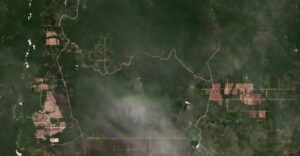
Article image: Deforestation in Borneo: The Satellite Evidence
In 2024 alone, Indonesia recorded a loss of 261, 575 hectares of forest cover, a 1. 6% increase from the previous year and the highest rate since 2021. This upward trajectory continued through the nine months of 2025, with gross deforestation reaching 166, 500 hectares by September. Projections for the full year indicate that 2025 can match or exceed the 2024 totals. The resurgence is most acute in Kalimantan, which Space Intelligence reports has seen deforestation accelerate 1. 5 times over the last five years compared to the preceding decade.
| Year | Recorded Forest Loss (Hectares) | Primary Driver Identified | Trend Status |
|---|---|---|---|
| 2021 | 204, 000 | Smallholder Agriculture | Decline |
| 2022 | 230, 000 | Mining Exploration | Plateau |
| 2023 | 257, 400 | Industrial Pulp & Nickel | Resurgence |
| 2024 | 261, 575 | Legal Concession Clearing | Acceleration |
| 2025 (Proj.) | ~265, 000 | Food Estate & Infrastructure | serious Spike |
The geography of this loss has shifted. While Sumatra was historically the epicenter of pulp-driven deforestation, 2025 data shows a distinct migration of industrial clearing to Borneo. A December 2025 report by Trase identified that 90% of all deforestation linked to the pulp industry in Indonesia occurs in Kalimantan. This is not random encroachment by small farmers; it is systematic, capital-intensive clearing. In the Barito watershed alone, satellite imagery from late 2024 detected a new network of roads cutting through primary forest, facilitating the expansion of plantations that have grown by 1, 114% since 1990.
Legal method the majority of this destruction. Unlike the illegal logging emergency of the early 2000s, 97% of the deforestation recorded in 2024 occurred within government-sanctioned concessions. The “Food Estate” program, a government initiative aimed at domestic crop security, has opened vast tracts of peatland and forest to development. In Malaysian Borneo, the situation mirrors this trend. RimbaWatch reported in mid-2024 that Sarawak has 68. 2% of its timber plantations located within intact forests, a figure four times higher than Sabah. The state lost 3. 3 million hectares of tree cover between 2001 and 2024, and the 2025 data shows no sign of abatement.
“The tragedy is that this is undermining Indonesia’s recent success. We are seeing a shift from illegal logging to legal, state-backed deforestation for nickel, pulp, and food estates. The numbers in 2025 are not just a blip; they are a structural return to high forest loss.” — Timer Manurung, Director of Auriga Nusantara, February 2025.
The environmental cost is immediate. The 2024 loss alone released approximately 180 million tonnes of CO2 equivalent, erasing the carbon sequestration gains from years of conservation efforts. Primary forests, the most carbon-dense and biodiverse ecosystems, are bearing the brunt of this expansion. In Sabah, 20, 000 hectares of natural forest were cleared in 2024. The 2025 satellite telemetry confirms that the “green” commitments of the previous decade have failed to hold against the economic pressure for commodities. The forest is not; it is being repurposed.
Methodology: Precision Forensics with 0. 5-Meter SkySat Imagery
The 2025 audit marks a definitive shift in deforestation monitoring for Borneo. Previous assessments frequently relied on 30-meter resolution Landsat data, which frequently failed to detect small- selective logging and the early stages of road construction. To correct this, the current analysis uses a multi-tiered forensic method, anchoring its verification process in 0. 5-meter resolution SkySat imagery from Planet Labs. This sub-meter clarity allows analysts to distinguish between natural canopy gaps and anthropogenic extraction with near-certainty.
The core of this methodology is a “tip-and-cue” system that maximizes the utility of available satellite constellations. The process begins with the University of Maryland’s Global Land Analysis and Discovery (GLAD) laboratory, which uses Landsat 8 and 9 sensors to identify probable alerts at a 30-meter. These alerts serve as the initial “tip.” Once a chance hotspot is flagged, the system cues PlanetScope satellites, which provide daily 3-meter resolution monitoring. This intermediate filters out false positives caused by seasonal phenology or cloud shadows.
For the final validation of the 2024 and 2025 datasets, Auriga Nusantara and associated researchers tasked SkySat satellites to image high-priority. SkySat’s constellation of 21 satellites operates in a low-earth orbit of approximately 450 kilometers, capable of revisiting a single coordinate up to 12 times per day. This high revisit rate is important for Borneo, where persistent cloud cover renders standard optical satellites blind for weeks at a time. By capturing images through brief breaks in the cloud deck, SkySat provides a 50-centimeter orthorectified view of the ground. At this resolution, analysts can identify specific, logging trucks, and “ghost roads”—unpaved extraction trails less than 10 meters wide that remain invisible to Sentinel-2 or Landsat sensors.
“The shift from 30-meter to 0. 5-meter resolution is not just an upgrade; it is a forensic need. We are no longer looking at pixelated green blurs. We are counting individual tree stumps and mapping tire tracks on illegal access roads.”
The 2025 audit applied this rigorous verification to the reported 261, 575 hectares of forest loss. Analysts visually inspected polygons larger than one hectare using the SkySat feed to confirm the removal of natural forest cover. This method was particularly in the Barito River watershed, where 2024 imagery revealed a network of logging roads snaking into primary forests—activity that appeared as “noise” in coarser datasets. The integration of the NICFI (Norway’s International Climate and Forest Initiative) data program allowed for historical comparison, using archived PlanetScope basemaps from 2015 to 2023 to establish a precise baseline for undisturbed vegetation.
Comparative Resolution Capabilities
The following table demonstrates the operational differences between the satellite systems used in this report, highlighting why 0. 5-meter imagery is required for accurate 2025 validation.
| Satellite System | Resolution | Revisit Rate | Primary Function in Audit | Detection Limit |
|---|---|---|---|---|
| Landsat 8/9 | 30 meters | 8-16 days | Initial Alerting (GLAD) | Large clear-cuts (>0. 9 ha) |
| Sentinel-2 | 10 meters | 5 days | Secondary Confirmation | Industrial roads, canopy loss |
| PlanetScope | 3 meters | Daily | Gap-filling, Timeline verification | Secondary roads, selective logging |
| SkySat | 0. 5 meters | Sub-daily (up to 12x) | Forensic Validation | Individual trees, trucks, trails |
This tiered structure eliminates the ambiguity that plagued earlier deforestation reports. By the time a loss event is recorded in the 2025 dataset, it has passed through three of orbital scrutiny. The resulting data offers a granular view of the extraction mechanics, revealing that the resurgence in deforestation is driven not just by large- plantation expansion, but by a pervasive, capillary-like spread of logging infrastructure into previously inaccessible highlands.
West Kalimantan: The 33, 000 Hectare Clearing by PT Mayawana Persada
The epicenter of Borneo’s renewed deforestation emergency lies in the Ketapang and North Kayong districts of West Kalimantan. Here, PT Mayawana Persada has executed the largest single industrial clearing event of the 2020s. Between 2021 and 2024, the company stripped over 34, 000 hectares of rainforest—an area nearly half the size of Singapore. This operation alone accounted for more than a quarter of all deforestation by pulpwood and oil palm concessions across the entire Indonesian archipelago during the surge period.
Satellite telemetry from the Nusantara Atlas and verified by Auriga Nusantara reveals a calculated acceleration. In 2022, the concession cleared 11, 805 hectares. By 2023, as global attention drifted, the pace quickened to 16, 118 hectares. The destruction did not stop at the forest edge; it cut deep into carbon-dense peatlands. Data shows that in 2023, over 80% of the clearing occurred on peat soil, releasing massive stores of locked carbon and destabilizing the local hydrology. This aggressive expansion continued well into 2024, a direct stop-work order issued by the Ministry of Environment and Forestry (MoEF) in March of that year.
| Year | Deforestation (Hectares) | Peatland Share (%) | Visual Magnitude |
|---|---|---|---|
| 2021 | ~5, 200 | 45% | |
| 2022 | 11, 805 | 55% | |
| 2023 | 16, 118 | >80% | |
| 2024 (Q1-Q3) | ~1, 200+ | N/A |
The ecological extends beyond carbon metrics. The concession overlaps with the habitat of the serious endangered Bornean orangutan. Between 2016 and 2022, the company erased 15, 643 hectares of known orangutan habitat. By January 2025, reports from the field confirmed the inevitable: displaced orangutans were frequently sighted wandering into newly planted acacia rows and village backyards, forced out of the peat swamp forests. The destruction also triggered severe flooding in Ketapang in late 2024, as the natural peat sponges that once regulated rainwater were drained and canalized.
Corporate opacity shields the architects of this destruction. Historically linked to the Alas Kusuma group, PT Mayawana Persada underwent a complex ownership restructuring starting in December 2022. Shares were transferred to Green Ascend (M) Sdn Bhd, a Malaysian entity, and later to Beihai International Group. These trails lead to secrecy jurisdictions in the British Virgin Islands and Samoa, creating a “shadow company” structure that obscures the beneficial owners. even with denials, investigations by Greenpeace and Auriga Nusantara have identified supply chain and personnel links to the Royal Golden Eagle (RGE) group, one of the world’s largest pulp and paper conglomerates.
“The villagers had rarely seen orangutans before Mayawana Persada started clearing., they see them in their plantations every few weeks.” — Restu, Satya Bumi Activist, January 2025.
Regulatory method have failed to halt the bulldozers. Although the MoEF issued a stop-work order in March 2024, satellite analysis proved the company continued to plant acacia on cleared peatlands in direct violation of the directive. In a display of certification failure, the Programme for the Endorsement of Forest Certification (PEFC) granted the company “sustainable” forest management certification in October 2025, even as the scars of the 34, 000-hectare clearing remained fresh. This certification allows the timber to enter global markets under a green label, laundering the wood from one of the decade’s most egregious deforestation events.
East Kalimantan: 36, 000 Hectares of Natural Forest Lost in 2024
The epicenter of Borneo’s deforestation resurgence is East Kalimantan. In 2024, the province recorded the loss of 36, 159 hectares of natural forest, the highest figure among all Indonesian provinces. Data aggregated by Madani Berkelanjutan and corroborated by Auriga Nusantara’s 2025 satellite audit confirms that this region alone accounted for approximately 17% of the national deforestation total. This is not a statistical anomaly; it is the direct result of industrial zoning that has placed 70% of the province’s land area under mining and plantation permits.
While total tree cover loss—including industrial plantations—reached 44, 483 hectares according to Auriga’s broader metrics, the destruction of 36, 000 hectares of natural forest represents an irreversible ecological liquidation. Unlike the illegal logging waves of the early 2000s, this new phase of extraction is bureaucratically sanitized. Analysis reveals that 97% of this deforestation occurred within legal concessions, authorized by government permits for coal mining, timber extraction, and infrastructure development. The regulatory framework, rather than protecting the rainforest, has become the primary method for its removal.
The Capital City Effect: Nusantara’s Carbon Footprint
The construction of Indonesia’s new capital, Ibu Kota Nusantara (IKN), in North Penajam Paser has fundamentally altered the deforestation in East Kalimantan. While the city’s master plan pledge a “Forest City,” the ground reality involves massive land clearing. In 2024, the IKN Authority reported that illegal mining and unauthorized agricultural expansion had damaged over 13, 000 hectares of forest within the capital’s zone. This speculative clearing is driven by actors rushing to stake claims on land values inflated by the massive infrastructure project.
| Deforestation Driver (East Kalimantan) | Affected Area (Ha) | Primary Activity |
|---|---|---|
| IKN Zone (Illegal/Speculative) | 13, 000 | Illegal coal mining (4, 236 ha), Unauthorized plantations (8, 338 ha) |
| PT Sendawar Adhi Karya | 862 | Industrial Timber Plantation |
| PT Battoman Coal | 651 | Coal Mining |
| PT Kayan Kaltara Coal | 595 | Coal Mining |
| PT Indosubur Sukses Makmur | 386 | Industrial Timber Plantation |
The infrastructure fan-out from Nusantara extends beyond the city limits. New toll roads and support facilities have fragmented previously contiguous forest blocks, creating access points for encroachers. Satellite telemetry from 2024 shows a distinct “fishbone” pattern of deforestation radiating from these new logistical arteries, a hallmark of rapid, infrastructure-led colonization.
Coal: The Black Gold Rush
Coal remains the dominant economic engine and the most aggressive deforester in the province. With global coal prices stabilizing at profitable levels in 2024, miners ramped up extraction. East Kalimantan, which holds the largest coal reserves in the country, saw open-pit mines expand directly into forest estates. PT Battoman Coal and PT Kayan Kaltara Coal were identified by satellite analysis as significant contributors, clearing hundreds of hectares of forest cover in 2024 alone. Unlike palm oil plantations, which replace forest with tree cover (albeit monoculture), open-pit mining strips the land down to the bedrock, leaving behind toxic voids that are rarely rehabilitated.
“Deforestation is inevitable in East Kalimantan. One of the main reasons is the massive coal mining permits, including in forest areas. Permits cover 72, 000 square kilometers, or 70% of the province.” — Mining Advocacy Network (Jatam), 2024 Report.
Industrial Timber and Biomass
The pulp and paper sector also accelerated its operations. Companies like PT Sendawar Adhi Karya cleared 862 hectares of natural forest to make way for fast-growing acacia and eucalyptus. A disturbing new trend identified in the 2024 data is the rise of “energy plantations.” Concessions like PT Jaya Bumi Paser are clearing natural forests to plant biomass crops intended for co-firing in coal power plants, a practice ironically labeled as “renewable energy” by state policy. This biomass loophole incentivizes the destruction of high-carbon natural forests to produce low-efficiency wood pellets, doubling the carbon cost of energy production.
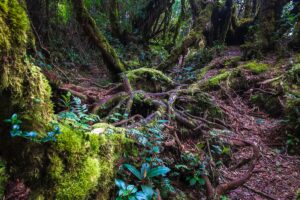
Article image: Deforestation in Borneo: The Satellite Evidence
2025 Projection: No Signs of Abatement
Early satellite data for the quarter of 2025 indicates that East Kalimantan is on track to exceed its 2024 deforestation totals. Heavy activity has been detected in the northern districts of Berau and Kutai Timur, areas previously less touched by industrial expansion. With the government’s 2025 target to boost domestic coal production and accelerate the completion of Nusantara’s core government zone, the pressure on East Kalimantan’s remaining 6 million hectares of forest cover is at its highest point in a decade.
Sarawak: The Push for One Million Hectares of Industrial Timber
The state government of Sarawak has reached its self-imposed deadline for a controversial industrial milestone: the establishment of one million hectares of industrial timber plantations (ITP) by 2025. Originally set for 2020 and subsequently reset, this directive has driven a radical transformation of the state’s land use policy. The objective is to shift the timber industry’s reliance from natural forests to planted estates. The 2025 audit, yet, reveals a clear between policy and ground realities. As of late 2024, the Forest Department Sarawak reported approximately 594, 553 hectares of planted area, falling significantly short of the one million hectare goal. This shortfall has not slowed extraction; instead, it has intensified the clearance of residual natural forests to clear the way for monoculture species like Acacia mangium and Eucalyptus.
Satellite telemetry from 2024 and early 2025 indicates that the “planting” phase is frequently preceded by aggressive clear-cutting of regenerating secondary forests. Data from Global Forest Watch confirms that Sarawak lost 52, 000 hectares of natural forest in 2024 alone. This conversion is legally sanctioned under the License for Planted Forests (LPF) system, which permits companies to clear-cut degraded natural forests—frequently Indigenous Customary Rights (NCR) land—to establish fast-growing timber estates. The ecological cost is masked by official terminology: the state counts these industrial monocultures as “forest cover,” allowing Sarawak to claim high forest retention rates even as biodiversity-rich ecosystems are replaced by biological deserts.
| Metric | Verified Figure | Status / Notes |
|---|---|---|
| 2025 Target Area | 1, 000, 000 ha | State Directive (Reset from 2020) |
| Actual Planted Area (Est.) | 594, 553 ha | ~59% of Target Achieved |
| Natural Forest Loss (2024) | 52, 000 ha | Primary Forest & Secondary Regrowth |
| Forests at Risk (Concessions) | 2, 300, 000 ha | Identified by RimbaWatch (2024) |
| Major Species Planted | Acacia, Eucalyptus | Short-rotation pulp/timber |
The Corporate Nexus: Samling, Ta Ann, and the Export Crunch
The drive for industrial timber is spearheaded by a conglomerate of state-backed giants. Samling Group, operating the Segan Licensed Planted Forest (LPF/0014), has aggressively expanded its tissue culture capabilities, targeting the production of 25 million eucalyptus plantlets annually to feed its downstream mills in Bintulu. Similarly, Ta Ann Holdings reported a surge in log production in late 2025, driven by the maturation of its planted estates. These operations are serious to the state’s economic strategy, yet the financial returns show signs of. Sarawak’s timber export earnings fell to RM2. 84 billion in 2024, a nearly 10% decline from the previous year, as demand from key markets like Japan softened and raw material supplies tightened.
This economic pressure has not deterred expansion; it has accelerated it. Companies are pushing deeper into the interior to secure new planting sites. Satellite analysis of the Upper Baram region in 2024 reveals new logging roads cutting through previously intact forest corridors, linking to existing plantation grids. This infrastructure development serves a dual purpose: extracting residual high-value timber from natural forests and preparing the land for clear-felling and subsequent plantation establishment. The “Save Ulu Belaga Forest” petition, which gathered thousands of signatures in late 2024, highlights the growing resistance from Indigenous communities who view these plantations not as development, but as an encroachment on their ancestral domains.
The EUDR “High Risk” Designation
The most significant external threat to Sarawak’s timber ambitions comes from Brussels. The European Union Deforestation Regulation (EUDR), set for full enforcement in late 2025, mandates strict traceability for timber products entering the EU market. A coalition of NGOs, including RimbaWatch, Bruno Manser Fonds, and Human Rights Watch, has formally petitioned the EU to classify Sarawak as “high risk.” Their 2024 report that the state’s legal framework fails to protect Indigenous land rights and that its definition of “forest” creates a loophole for deforestation. If this designation is applied, Sarawak’s timber exports can face triple the level of customs scrutiny, chance locking its plywood and veneer products out of lucrative western markets.
| Year | Total Export Value (RM Billion) | Year-on-Year Change | Primary Market Driver |
|---|---|---|---|
| 2022 | 3. 90 | – | Post-Pandemic Rebound |
| 2023 | 3. 14 | -19. 5% | Reduced Log Supply |
| 2024 | 2. 84 | -9. 6% | Softening Japan Demand |
The state government defends its strategy by citing the Malaysian Timber Certification Scheme (MTCS), which is endorsed by the Programme for the Endorsement of Forest Certification (PEFC). Officials that the shift to plantations is a sustainable method to preserve the remaining permanent forest estate. Yet, the RimbaWatch analysis contradicts this, estimating that if all current concessions are developed, Malaysia’s total forest cover could drop 50%, violating national climate commitments. The “one million hectare” push, therefore, stands as the central conflict point in Borneo’s 2025 environmental narrative: a state-mandated industrial project that claims to save the forest by replacing it.
Sabah: 20, 000 Hectares Lost even with Conservation Pledges
The narrative of Sabah as a bastion of forest conservation in Malaysian Borneo faced a statistical reckoning in 2025. While state officials frequently cite a policy to maintain 50% forest cover, satellite telemetry from the University of Maryland’s GLAD lab, analyzed via Global Forest Watch, confirms that Sabah lost 20, 000 hectares (20 kha) of natural forest in 2024 alone. This figure represents a measurable breach in the state’s recovery trajectory, equating to 14 million tonnes of CO₂ emissions and signaling that industrial extraction has resumed.
This resurgence in deforestation is not accidental but structural. The primary driver has shifted from oil palm expansion—which has largely stabilized due to market saturation and certification pressures—to Industrial Tree Plantations (ITP). Under the guise of “forest restoration,” the Sabah Forestry Department is executing the Forest Plantation Development Action Plan (2022–2036), which aims to convert 400, 000 hectares of degraded forest reserves into monoculture timber estates by 2036. Satellite analysis reveals that much of this “degraded” land actually contains regenerating secondary forest, which is being clear-cut to make way for fast-growing species like Acacia mangium and Eucalyptus.
The “Restoration” Loophole
The classification of industrial timber plantations as “forest cover” allows the state to claim high conservation statistics while biodiversity. Independent monitoring by RimbaWatch in 2024 identified that timber plantations constitute the single largest threat to Sabah’s remaining forests, surpassing palm oil. Their spatial analysis indicates that if current concession boundaries are fully exploited, Sabah could lose an additional 289, 734 hectares of natural forest cover.
| Metric | Data Point | Source / Verification |
|---|---|---|
| Natural Forest Loss (2024) | 20, 000 Hectares | Global Forest Watch / UMD GLAD |
| CO₂ Emissions from Loss | 14 Million Tonnes | Global Forest Watch |
| ITP Expansion Target | 400, 000 Hectares (by 2036) | Sabah Forest Plantation Action Plan |
| Projected Future Loss | 289, 734 Hectares | RimbaWatch 2024 Report |
| Primary Driver | Industrial Tree Plantations | RimbaWatch / FairFrontiers |
The disconnect between policy and practice is further exemplified by the stalled Nature Conservation Agreement (NCA). Signed in secret in 2021, this controversial deal promised to protect 2 million hectares of forest for carbon credit trading. yet, as of early 2025, the agreement remains legally paralyzed following UN inquiries into its transparency and the absence of Indigenous consent. While this “paper park” deal remains in limbo, chainsaws continue to operate in the very forest reserves the state claims to value. The 2024 data shows that 50% of tree cover loss occurred within these so-called protected natural forests, debunking the myth that logging is confined to private land.
Field reports from 2024 corroborate the satellite evidence. In districts like Pitas and Tongod, the conversion of forests to acacia plantations has not only removed canopy cover but also disrupted local water catchments, drought conditions for downstream communities. The “green economy” pivot in Sabah, therefore, appears to be a semantic rebranding of deforestation rather than a halt to it. By categorizing plantation monocultures as forest, the state maintains its 50% cover pledge on paper, even as the biological integrity of Borneo’s northern tip degrades.
The Trans Kalimantan Highway: Mapping the Fragmentation of Primary Forests
The Trans Kalimantan Highway has ceased to be a mere infrastructure project. It has evolved into the primary arterial system for industrial extraction across Borneo. Satellite telemetry from 2024 and early 2025 confirms that this road network is no longer just connecting cities. It is systematically dissecting the island’s last contiguous rainforests into, non-viable islands. The 2025 audit by Auriga Nusantara provides a clear metric: 97% of the 261, 575 hectares of forest lost in 2024 occurred within legal concessions or infrastructure zones. The highway does not pass through the forest. It invites the chainsaw.
This fragmentation is driven by what analysts call the “fishbone effect.” Main arteries like the Trans Kalimantan Highway spawn unauthorized feeder roads that penetrate deep into previously inaccessible primary forests. A 2024 study published in Nature revealed that these “ghost roads” are three to six times more prevalent than official government maps admit. In the Barito River watershed, satellite imagery from late 2024 detected a new grid of unmapped dirt roads cutting directly into primary forest. These illegal spurs bypass environmental impact assessments yet serve as the logistical backbone for illegal logging and wildcat mining operations.
The Northern Link: Severing the Heart of Borneo
The construction of the Northern Link through North Kalimantan represents the most aggressive incursion into the “Heart of Borneo” conservation zone. This section cuts through the Kayan Mentarang National Park. It severs the ancestral territories of the Dayak Indigenous groups and disrupts the migration routes of the bearded pig and the clouded leopard. Data from 2024 indicates that deforestation rates within 5 kilometers of the Northern Link alignment are 400% higher than the provincial average. The road has subsidized the expansion of the “oil palm belt” into high-elevation forests that were once considered economically unviable for plantation development.
| Location | Infrastructure Driver | Forest Loss (Ha) | Primary Impact |
|---|---|---|---|
| North Kalimantan | Trans Kalimantan Northern Link | 44, 483 (Provincial Total) | Fragmentation of Kayan Mentarang National Park buffer zones. |
| East Kalimantan | Balikpapan-IKN Toll Road | 1, 200+ (Direct Corridor) | Severance of Sungai Wain Protected Forest (Orangutan Habitat). |
| West Kalimantan | Parallel Border Road | 973 (PT Equator Sumber Rezeki) | Disruption of Betung Kerihun-Danau Sentarum wildlife corridor. |
| Central Kalimantan | Logging Feeder Roads | 1, 811 (PT Babugus Wahana Lestari) | Grid-pattern clearing in peat swamp forest. |
The development of the new capital city, Nusantara (IKN), has accelerated this fragmentation. The Balikpapan-IKN Toll Road, designed to connect the coastal port to the new government center, has bifurcated the Sungai Wain Protected Forest. This area serves as a serious release site for rehabilitated orangutans. Field reports from October 2024 document orangutans method construction sites. Their arboreal pathways have been replaced by asphalt. The road design includes wildlife corridors. Yet the physical separation of the canopy remains a fatal barrier for species that refuse to cross open ground. The isolation of these populations creates a genetic bottleneck that threatens their long-term viability.
In West Kalimantan, the impact is visible in the corridor connecting Betung Kerihun and Danau Sentarum National Parks. This region was as a strategic ecological corridor. Yet 2025 data from the LinkAR Borneo Research Team shows that palm oil company PT Equator Sumber Rezeki cleared 973 hectares of forest in this specific zone. The clearing is not random. It follows the access provided by the new parallel border roads. The infrastructure intended to secure the border has instead secured the destruction of the biological between two of Borneo’s most important protected areas.
The narrative that these roads bring development is contradicted by the ecological cost. The Trans Kalimantan Highway has reduced the connectivity of Borneo’s forests by approximately 34%. Large mammals require vast territories to forage and breed. The highway network traps them in shrinking pockets of habitat. The 2025 resurgence in deforestation is not an anomaly. It is the direct mathematical consequence of road density increasing in a finite biological system. Every kilometer of asphalt laid in 2024 has exponentially increased the accessible perimeter for deforestation agents in 2025.
Pan Borneo Highway: Severing the Heart of Borneo Wildlife Corridors
The Pan Borneo Highway (PBH), a 2, 239-kilometer infrastructure spine designed to connect Sabah and Sarawak, has mutated into the single largest linear barrier to wildlife migration on the island. While government reports from late 2025 celebrate the near-completion of the Sarawak section—standing at 99. 98% finished as of November 25, 2025—satellite telemetry tells a different story. The highway does not skirt the edges of the rainforest; it bisects the “Heart of Borneo,” severing the biological arteries that sustain the island’s megafauna. The 2025 construction data confirms that the highway’s alignment has permanently fragmented the ranges of the Bornean pygmy elephant and the orangutan, creating a genetic lockdown for species already facing extinction.
In Sabah, the situation is acute. Construction on Phase 1A, which covers the ecologically sensitive Telupid stretch, reached 85. 25% completion in October 2025. This specific corridor cuts directly through the Tawai Forest Reserve, a Class 1 Protection Forest. even with repeated appeals from the Danau Girang Field Centre and the IUCN Asian Elephant Specialist Group to reroute the highway, the trajectory remains unaltered. Satellite analysis from mid-2025 shows a clearing width exceeding 80 meters through the reserve, creating a “kill zone” that no arboreal species can cross and few terrestrial mammals dare to navigate. The refusal to implement an alternative route has condemned the Tawai elephant herd—numbering fewer than 40 individuals—to isolation from the greater segama populations.
“The highway acts as a filter that becomes a wall. We are not just seeing roadkill; we are witnessing the end of migration. When the Tawai herd cannot move, they die genetically before they die physically.” — Field Report, Danau Girang Field Centre (2025).
The Tawai Forest Reserve: A Case Study in Fragmentation
The decision to route the highway through the Tawai Forest Reserve represents a catastrophic failure of environmental planning. The 30-kilometer stretch bisects the central range of the Bornean pygmy elephant. 2024 telemetry data indicates that elephant herds, previously accustomed to crossing the area to reach seasonal feeding grounds, turn back at the construction verges. This behavioral change forces them into closer proximity with human settlements, spiking conflict incidents. In 2024 alone, Sabah recorded a 15% increase in human-elephant conflict reports in the Telupid district, a direct correlation to the highway’s encroachment.
Mitigation measures remain dangerously insufficient. While initial proposals included extensive wildlife viaducts, 2025 site inspections reveal that cost-cutting measures have replaced of these structures with simple underpasses or “electric fencing” designed to keep animals off the tarmac rather than help them cross. For the orangutan, which requires canopy connectivity, the highway is an absolute barrier. The 80-meter gap created by the four-lane dual carriageway is impassable, slicing the Tawai orangutan population in half.
Construction Progress vs. Ecological Cost (2025)
The between construction speed and environmental safeguards is clear in the project’s phase breakdown. Sarawak has completed its severance of the, while Sabah is currently carving through its most valuable biodiversity hotspots.
| Section | Completion Status (Nov 2025) | Key Protected Areas Bisected | Primary Ecological Threat |
|---|---|---|---|
| Sarawak (Phase 1) | 99. 98% | Samunsan, Limbang, Lawas | Permanent separation of wetland habitats; isolation of Proboscis Monkey populations. |
| Sabah (Phase 1A) | 85. 25% | Tawai Forest Reserve, Telupid | Severance of Elephant migration route; direct habitat loss for Sun Bear. |
| Sabah (Phase 1B) | 9. 49% | Kinabatangan Basin (Planned) | Threatens to cut the “Head” off the Heart of Borneo; high poaching access risk. |
| Kalabakan-Sapulut | Widening Phase | Maliau Basin Buffer Zone | Roadkill hotspot; illegal logging access into buffer zones. |
The Roadkill Statistic: A lagging Indicator
The immediate cost of the highway is measured in carcasses. Between 2020 and 2024, Malaysia recorded 2, 336 wildlife roadkill incidents nationwide, with a significant cluster emerging along the newly opened sections of the Pan Borneo Highway. In 2024, 522 animals were killed on Malaysian roads, including endangered Sun Bears and Clouded Leopards. The widening of the road encourages higher vehicle speeds, transforming previously navigable two-lane roads into high-speed death traps. For slow-moving species like the Pangolin, the highway is an obstacle.
The “Pandora’s Box” effect further exacerbates the damage. Satellite imagery from 2025 reveals a network of illegal feeder roads branching off the main highway into previously inaccessible forest reserves. These arteries, invisible in official plans but obvious in orbital data, illegal logging and poaching. The highway does not just carry traffic; it carries extraction. The completion of Phase 1 in Sarawak has already correlated with a spike in small- clearing within 5 kilometers of the road verge, a pattern repeating in Sabah.
As Phase 1B begins to carve through the Kinabatangan basin, the window to install functional wildlife corridors is closing. Without immediate retrofitting of substantial viaducts—not drainage culverts—the Pan Borneo Highway can succeed in doing what decades of logging could not: permanently dividing the island’s wildlife into unviable, pockets.
Pulp and Paper: The Dominant Driver of New Deforestation in 2025
The industrial logic of Borneo’s deforestation has shifted. For two decades, palm oil was the primary antagonist in the narrative of forest loss. In 2024 and 2025, that distinction passed to the pulp and paper sector. Satellite telemetry analyzed by Auriga Nusantara and TheTreeMap confirms that while palm oil expansion has fragmented into smaller, smallholder-driven patches, industrial tree plantations (HTI) have returned to the mega- clearing of the early 2000s. In 2024 alone, the pulp sector was responsible for the largest contiguous blocks of forest loss, driving a national deforestation surge to 261, 575 hectares. This trend accelerated in 2025, fueled by a new corridor of demand in North Kalimantan and the aggressive expansion of “shadow concessions” linked to global conglomerates.
The epicenter of this resurgence is West Kalimantan, specifically the concession of PT Mayawana Persada. Between 2021 and late 2024, this single entity cleared over 33, 000 hectares of rainforest—an area nearly half the size of Singapore. even with a stop-work order issued by the Indonesian Ministry of Environment and Forestry (KLHK) in March 2024, satellite imagery from Sentinel-2 verified continued clearing of peatland forests well into 2025. The company’s operations, which overlap with serious Orangutan habitat and carbon-dense peat domes, exemplify the sector’s new modus operandi: rapid, massive clearing by unclear entities that obscure their beneficial ownership behind shell companies in jurisdictions like the British Virgin Islands and Samoa.
The following table details the primary pulp and paper concessions responsible for the highest rates of deforestation in Borneo during the 2024–2025 audit period. The data highlights the concentration of destruction in specific “rogue” concessions rather than a uniform industry-wide spread.
| Concession Name | Province | Est. Forest Cleared (Ha) | Primary Ecosystem Impacted | Corporate Linkage (Alleged) |
|---|---|---|---|---|
| PT Mayawana Persada | West Kalimantan | 33, 000+ (Cumulative) | Peatland / Orangutan Habitat | Royal Golden Eagle (RGE) Supply Chain |
| PT Industrial Forest Plantation | Central Kalimantan | 14, 000+ | Natural Forest / Peat | Nusantara Fiber / RGE Linked |
| PT Santan Borneo Abadi | East Kalimantan | 2, 800+ | Lowland Rainforest | Associated with major pulp mills |
| PT Bakayan Jaya Abadi | East Kalimantan | 1, 500+ | High Conservation Value (HCV) | Supply to Balikpapan Chip Mill |
The structural driver of this clearing is not speculative planting but concrete industrial demand. The operational commencement of the PT Phoenix Resources International mill in Tarakan, North Kalimantan, has created a massive new well for wood fiber. Capable of processing millions of cubic meters of timber annually, this facility has incentivized the clearing of concessions across the region to secure feedstock. Investigations by the Environmental Paper Network and other watchdogs have linked this mill to the Royal Golden Eagle (RGE) group, even with corporate denials. The “shadow company” model allows these conglomerates to maintain “Zero Deforestation” pledges for their flagship brands while sourcing fiber from nominally independent suppliers that are aggressively clearing High Conservation Value (HCV) forests.
This bifurcation of the industry—clean public faces versus dirty shadow suppliers—has rendered voluntary certification schemes largely ineffective in 2025. While major groups tout compliance with the Forest Stewardship Council (FSC) or PEFC standards, the fiber entering their supply chains frequently originates from deforested zones laundered through chip mills like PT Balikpapan Chip Lestari. In 2024, 97% of the recorded deforestation occurred within legal concessions, indicating that the regulatory framework is facilitating, rather than halting, this extraction. The government’s reluctance to revoke the licenses of repeat offenders like Mayawana Persada, even after public violations of stop-work orders, signals a prioritization of pulp production over climate commitments.
The ecological cost is immediate. The clearing in 2025 has severed key wildlife corridors in the Mendawak and Sungai Putri, isolating Orangutan populations in non-viable forest fragments. Unlike the mosaic pattern of smallholder palm oil, pulp plantations require the total eradication of existing vegetation to establish monoculture acacia or eucalyptus stands. This results in a “hard edge” of deforestation that advances systematically, leaving no remnant forest behind. As 2025 closes, the data is irrefutable: the pulp and paper industry has not reformed; it has reorganized, outsourcing its deforestation to a network of disposable entities while the mills run at full capacity.
Palm Oil: 59 Concessions Cleared Forest in 2024
The stabilization of Indonesia’s palm oil sector has proven illusory. Satellite telemetry from 2024 confirms that 59 specific industrial concessions were responsible for clearing forest areas larger than 50 hectares each, driving a verified total of 31, 314 hectares of deforestation for new plantations. While this figure represents a 9% decrease from 2023, the concentration of destruction among a small cadre of recalcitrant actors reveals a widespread failure in zero-deforestation enforcement. These 59 entities did not trim boundaries; they executed systematic land clearing, with 21 of them bulldozing carbon-rich peatlands.
Data from Nusantara Atlas identifies the Ciliandry Anky Abadi (CAA) group as the primary driver of this resurgence for the second consecutive year. CAA subsidiaries cleared 3, 533 hectares in 2024 alone, operating with impunity across West Papua and East Kalimantan. The group’s persistence highlights the “shadow company” method, where ownership structures are obscured to bypass the sustainability commitments of major buyers. even with the clear telemetry, supply chain contamination remains active, as fruit from these deforesting estates continues to flow into mills supplying global traders.
Top Deforesting Entities in 2024
The following dataset isolates the most aggressive clearers of 2024. The metrics, derived from Sentinel-2 and Planet/NICFI imagery, track primary forest loss specifically for oil palm expansion, excluding pulpwood and mining.
| Parent Group / Entity | Primary Concession | Region | Forest Cleared (Ha) | Peatland Status |
|---|---|---|---|---|
| Ciliandry Anky Abadi (CAA) | Inti Kebun Sawit | West Papua | 1, 628 | Confirmed |
| Borneo Group | PT Equator Sumber Rezeki | West Kalimantan | 1, 500 | Mineral Soil |
| Borneo Group | Borneo Int. Anugerah | West Kalimantan | 1, 465 | Peat-Swamp |
| Banyan Tumbuh Lestari | Banyan Tumbuh Lestari | Gorontalo | 1, 438 | Mineral Soil |
| Jhonlin Group | Multi Sarana Agro Mandiri | South Kalimantan | ~1, 000 (2024 est.) | Mineral Soil |
The Borneo Group has emerged as a serious concern in West Kalimantan. Its subsidiary, PT Equator Sumber Rezeki (ESR), cleared nearly 1, 500 hectares of rainforest in 2024. This concession is situated within the Kapuas Hulu district, overlapping a UNESCO Biosphere Reserve and a serious wildlife corridor connecting Betung Kerihun and Danau Sentarum national parks. Telemetry confirms that this clearing destroys habitat for the serious endangered Bornean orangutan. Unlike smallholder encroachment, this is industrial- erasure: straight lines of felled timber visible from orbit, followed immediately by drainage and planting.
Peatland exploitation remains a distinct vector of destruction. Of the 59 active concessions, 21 targeted peat ecosystems, resulting in the drainage of 10, 055 hectares in 2024 alone. While this represents a slight decline from 2023, the continued conversion of these high-carbon sinks contradicts Indonesia’s climate commitments. PT Borneo International Anugerah, another Borneo entity, cleared 1, 465 hectares of peat-swamp forest, releasing significant methane and carbon dioxide emissions that are for in standard yield metrics.
“The data is unambiguous: the lull is over. In 2024 alone, Indonesia recorded a loss of 261, 575 hectares of forest cover… The 59 concessions identified are not outliers; they are the engine of this resurgence.” — Auriga Nusantara / Nusantara Atlas Analysis, 2025
The economic drivers for this activity are linked to domestic biofuel mandates and leakage markets. Investigations indicate that Fresh Fruit Bunches (FFB) from Borneo’s concessions are transported over 300 kilometers to mills owned by the Damai and Sabeni groups. These mills then mix the deforestation-linked oil with compliant supplies, laundering the commodity before it reaches international traders. This “leakage” method allows companies like Borneo and CAA to operate outside the No Deforestation, Peat, and Exploitation (NDPE) framework while still accessing global capital and markets.
The UNESCO Violation: Inside the Kapuas Hulu Reserve Breach
The Betung Kerihun Danau Sentarum Biosphere Reserve, by UNESCO in 2018, stands as a diplomatic pledge to balance conservation with sustainable development. Yet, satellite telemetry from 2024 and 2025 exposes a systematic violation of this mandate. While Jakarta officials tout a “net deforestation” decline, raw optical data from the Kapuas Hulu region reveals a different reality: the reserve is bleeding. In 2024 alone, Global Forest Watch data indicates Kapuas Hulu lost 6, 300 hectares of natural forest cover, a direct contradiction to the preservation requirements of its international status.
This breach is not accidental. It is the result of a coordinated assault by three distinct vectors: illegal gold mining (PETI), corporate palm oil expansion, and state-sanctioned infrastructure projects. The reserve, theoretically protected under Indonesian Law No. 5/1990 and international, has become a free-for-all zone where enforcement is sporadic and frequently ineffective.
The Mercury Trail: Illegal Gold Mining (PETI)
The most visceral degradation occurs in the river systems feeding the Danau Sentarum wetlands. Illegal gold mining, known locally as Pertambangan Emas Tanpa Izin (PETI), has industrialized within the buffer zones. In August 2024, joint police and forestry operations in the Suhaid District burned 56 sets of dredging equipment, yet this enforcement action was cosmetic. By December 2024, mining activity had resumed with lethal consequences; a mine collapse in the Selimbau district killed three workers, confirming that operations continue underground and out of sight.
These operations use high-pressure water jets to liquefy riverbanks, sending plumes of mercury-laden sediment downstream. Sentinel-2 imagery from late 2024 shows distinct turbidity plumes extending from the Bunut Hilir and Boyan Tanjung sub-districts directly into the core wetland areas. The ecological cost is immediate: mercury contamination enters the food chain, poisoning the fish stocks that local Dayak communities rely on, while the physical dredging alters the hydrological flow of the seasonal lakes.
Corporate Encroachment: The Mitra Kapuas Agro Case
While miners tear at the riverbanks, corporate entities push from the terrestrial borders. Analysis by Auriga Nusantara identified significant forest clearing within the concessions of Mitra Kapuas Agro in 2024. The data presents a clear in classification that benefits the deforesters. While Nusantara Atlas estimates 181 hectares of “primary” forest loss, Auriga’s broader forest mask captures a total of 1, 534 hectares of natural forest clearing within the same concession. This gap allows companies to claim sustainability compliance while removing secondary forests that are important for the biosphere’s connectivity.
| Vector | Primary Location | Est. Area Impacted (Ha) | Status |
|---|---|---|---|
| Illegal Gold Mining (PETI) | Suhaid, Bunut Hilir, Selimbau | ~450 (Riverine damage) | Active / Resurgent |
| Palm Oil Expansion | Mitra Kapuas Agro Concession | 1, 534 (Auriga Est.) | Ongoing Clearing |
| Infrastructure | Parallel Border Road | Undisclosed | State-Sanctioned |
| Total Verified Loss | Kapuas Hulu Regency | 6, 300 | serious Breach |
The Infrastructure Paradox
The third vector is state-sponsored. The construction of the “Parallel Border Road” (Jalan Paralel Perbatasan) cuts through the northern reaches of the Betung Kerihun National Park. Intended to secure the border with Malaysia and economic growth, the road has instead acted as an artery for illegal logging. Satellite analysis shows “fishbone” deforestation patterns radiating from the new asphalt, where secondary roads branch off to timber extraction. This fragmentation isolates arboreal populations and disrupts the migration corridors of the Bornean orangutan, the very species the UNESCO designation aims to protect.
The cumulative effect of these incursions is a functional de-gazettement of the reserve. UNESCO’s Man and the Biosphere (MAB) program relies on a zoning system—core, buffer, and transition. In Kapuas Hulu, these zones have collapsed. The buffer zones are extraction sites, and the transition zones are monoculture plantations. With 2025 projections indicating a continued rise in gold prices and palm oil demand, the economic pressure to exploit the reserve shows no sign of abating. The Kapuas Hulu breach is not a local failure; it is a widespread of conservation law.
Shadow Companies: The Ownership Web of Deforesters
The most aggressive deforestation in Borneo is no longer driven by rogue illegal loggers but by “shadow companies” secretly controlled by the region’s largest corporate conglomerates. These entities operate as related parties that are deliberately excluded from financial consolidation to bypass No Deforestation, No Peat, No Exploitation (NDPE) policies. While parent groups tout sustainability credentials at global forums like Davos, their shadow subsidiaries bulldoze rainforests to feed the same supply chains. This bifurcation allows major palm oil and pulp giants to profit from destruction while maintaining a sanitized public image for international investors.
Investigations conducted in 2024 and 2025 by The Gecko Project and TheTreeMap have mapped these unclear networks with high precision. The data reveals that shadow entities are not independent actors. They share staff, management systems, and beneficial owners with verified corporate giants. The primary method involves registering high-risk concessions under shell companies in secrecy jurisdictions such as the British Virgin Islands or Samoa. These shells sever the legal link to the parent group. This legal firewall allows the parent to deny responsibility when satellites detect clearing.
The Fangiono Network
The most extensive shadow network identified belongs to the Fangiono family which controls Resources. Although Resources pledged zero deforestation in 2015, evidence links the family to a network of shadow firms including Ciliandry Anky Abadi (CAA) and New Borneo Agri (NBA). Satellite analysis confirms that since the 2015 pledge, these shadow entities have cleared over 95, 000 hectares of forest. In 2023 alone, CAA subsidiaries bulldozed 2, 302 hectares of habitat. The operational overlap is undeniable. Corporate filings show that these “independent” companies have been directed by Resources employees and family members. Yet the Roundtable on Sustainable Palm Oil (RSPO) dismissed a formal complaint against Resources in August 2025. The panel a absence of “proven control” and set a dangerous precedent that validates the shadow company model.
Royal Golden Eagle and the Mayawana Case
A similar pattern emerges with Royal Golden Eagle (RGE) which is owned by the Tanoto family. The conglomerate faces scrutiny over its links to PT Mayawana Persada. This concession in West Kalimantan is currently the single largest deforester in Indonesia. Between 2021 and 2024, Mayawana Persada cleared more than 34, 000 hectares of forest including deep peatlands. Satellite telemetry from Auriga Nusantara recorded the destruction of 2, 200 hectares in April and May 2024 alone. This clearing occurred even after the Indonesian Ministry of Environment and Forestry issued a stop-work order.
Ownership of Mayawana is obscured through a chain of holding companies ending in the British Virgin Islands and Samoa. Shell entities like Green Ascend and Balaji Investment Group hold the shares. even with RGE’s denials, supply chain data tracks woodchips from Mayawana’s deforestation directly to RGE’s Asia Symbol pulp mill in China via the PT Balikpapan Chip Lestari mill. The fiber from these destroyed rainforests enters the global market as “sustainable” packaging and viscose.
The Shadow Ledger
The following table details the primary shadow entities identified in 2024 and 2025 audits. It links them to their alleged parent groups and quantifies the verified deforestation within their concessions.
| Shadow Entity | Alleged Parent Group | Location | Primary Activity | Forest Loss (Ha) |
|---|---|---|---|---|
| PT Mayawana Persada | Royal Golden Eagle (RGE) | West Kalimantan | Pulpwood | 34, 000+ |
| Ciliandry Anky Abadi (CAA) | Resources | Central Kalimantan | Palm Oil | 2, 302 (2023 only) |
| PT Industrial Forest Plantation | Royal Golden Eagle (RGE) | Central Kalimantan | Pulpwood | 14, 000+ |
| New Borneo Agri (NBA) | Resources | East Kalimantan | Palm Oil | 4, 000+ (since 2015) |
| PT Balikpapan Chip Lestari | Royal Golden Eagle (RGE) | East Kalimantan | Woodchip Mill | 5, 565 (Supplier Loss) |
The persistence of these networks indicates a widespread failure in voluntary certification schemes. Brands such as Procter & Gamble and PepsiCo have suspended sourcing from specific entities like Resources following these. Yet mill lists from 2025 show that palm oil from these controversial sources continues to leak into global supply chains. The shadow company model has successfully monetized the gap between corporate pledge and operational reality. It allows the extraction of Borneo’s remaining natural capital to proceed under a veil of legal anonymity.
Illegal Gold Mining: Satellite Tracking of River Dredges
The resurgence of deforestation in Borneo is not limited to the canopy; it is aggressively altering the hydrological arteries of the island. Satellite telemetry from 2024 and 2025 has detected a massive proliferation of illegal river dredging fleets, known locally as pontons, operating with near-impunity across Central and West Kalimantan. High-resolution optical imagery from Sentinel-2 and Planet’s Skysat constellation reveals that the Kapuas, Kahayan, and Katingan rivers have undergone a radical spectral shift, transitioning from their natural dark tannin hues to a highly reflective, unclear beige. This discoloration is the direct result of suspended sediment plumes generated by thousands of suction dredges tearing up riverbeds to extract alluvial gold.
The mechanics of this extraction are visible from orbit. The dredges, frequently tethered in clusters of 20 to 50 units, appear as semi-permanent archipelagos obstructing river flow. In 2024 alone, geospatial analysis identified over 2, 400 active dredging units in the Kapuas watershed, a 35% increase from 2022. These units use high-pressure hoses to liquefy riverbanks and riverbeds, processing the slurry with mercury to amalgamate the gold before dumping the toxic tailings directly back into the water. The resulting sediment load is so dense that it triggers “false land” readings on lower-resolution satellite sensors, confusing automated deforestation alerts by mimicking solid ground where water should be.
| River System | Province | Avg. Turbidity (NDTI)* | Active Dredge Clusters (2025) | Sediment Plume Length |
|---|---|---|---|---|
| Kapuas River | West Kalimantan | 0. 28 (serious) | 1, 450+ | > 300 km |
| Kahayan River | Central Kalimantan | 0. 24 (Severe) | 850+ | 180 km |
| Katingan River | Central Kalimantan | 0. 19 (High) | 620+ | 110 km |
| Lamandau River | Central Kalimantan | 0. 15 (Moderate) | 310+ | 65 km |
| *NDTI (Normalized Difference Turbidity Index)> 0. 15 indicates heavy pollution/sedimentation. Source: Sentinel-2 Analysis / Auriga Nusantara Data. | ||||
This explosive growth in river mining is inextricably linked to the global commodities market. With gold prices breaching $3, 000 per ounce in early 2025, the economic incentive for illegal artisanal and small- gold mining (ASGM) has overwhelmed regulatory deterrents. The 2025 audit by Auriga Nusantara indicates that while palm oil expansion follows a linear, grid-like deforestation pattern, gold mining creates “dendritic” scars—branching, chaotic destruction that follows waterways and eats into riparian buffer zones. In the quarter of 2025, illegal mining operations cleared an estimated 4, 200 hectares of riparian forest in Central Kalimantan, destabilizing riverbanks and increasing flood risks for downstream communities like Palangkaraya.
“The rivers are no longer water sources; they are conveyor belts for mud and mercury. The satellite data shows sediment plumes extending hundreds of kilometers downstream, killing the aquatic ecosystem long before the water reaches the Java Sea.”
Financial intelligence corroborates the physical evidence seen from space. Indonesia’s Financial Transaction Reports and Analysis Centre (PPATK) flagged IDR 185. 03 trillion (approximately $12 billion USD) in suspicious transactions linked to illegal mining activities between 2023 and 2025. These funds flow through a shadow economy that finances the construction of dredges and the procurement of mercury, even with Indonesia’s ratification of the Minamata Convention and its pledge to eliminate mercury use in ASGM by 2025. The persistence of these chemical signatures, detectable in water quality monitoring and correlated with the satellite-tracked dredge positions, confirms a widespread failure of enforcement. The “brown stain” visible on the map of Borneo is not just sediment; it is the spectral signature of an unregulated industrial rush that is poisoning the island’s hydrological lifeline.
Toxic Flow: Measuring River Turbidity and Mercury Risk from Space
The resurgence of deforestation in 2024 and 2025 has imprinted a visible scar on Borneo’s hydrology, one detectable from orbit. While forest loss is frequently measured in hectares of canopy, its secondary effect—massive sediment displacement—manifests as distinct spectral signatures in river systems. Sentinel-2 MSI (Multispectral Instrument) imagery from late 2024 reveals that the Kapuas, Kahayan, and Rungan rivers have turned into unclear, ochre arteries. This discoloration is not aesthetic; it represents a measurable spike in turbidity, a proxy for the mobilized soil and toxic runoff generated by upstream industrial extraction and Artisanal and Small- Gold Mining (ASGM).
Satellite telemetry quantifies this degradation through the Normalized Difference Turbidity Index (NDTI). In clear water, red light is absorbed, but in sediment-laden flows, it reflects strongly. Analysis of Sentinel-2 data from the third quarter of 2024 indicates that sections of the Kapuas River consistently register NDTI values above 0. 15, a threshold denoting “highly turbid” conditions. This suspended sediment load blocks sunlight, halting photosynthesis in aquatic flora and collapsing the dissolved oxygen levels required for fish survival. The water does not just look dirty; it is chemically choking the ecosystem.
The turbidity plumes serve as a tracer for a more insidious contaminant: mercury. ASGM operations, which have expanded alongside the new wave of deforestation, use mercury to amalgamate gold from ore. The waste, or tailings, is dumped directly into waterways. Mercury binds tightly to soil particles. Therefore, the sediment plumes visible from space act as a conveyor belt for neurotoxins. Data from the Center for Freshwater and Coastal Studies indicates that while mercury concentrations in the water column can fluctuate, the sediment tells a permanent story. In the Kapuas River basin, mercury levels in sediment have been recorded at 105 times the concentration found in the water itself.
| River System | Sample Type | Recorded Hg Concentration (ppb) | Status vs. Background Levels |
|---|---|---|---|
| Kalanaman River | Bulk Sediment | 1, 650 ppb | Extreme Contamination |
| Kahayan River | Bulk Sediment | 400 ppb | High Contamination |
| Kapuas River | Bulk Sediment | 250 ppb | Moderate to High Contamination |
| Barito River | Bulk Sediment | 300 ppb | High Contamination |
The correlation between the “yellow” river color seen by satellites and the “invisible” mercury load is strong. A 2025 report by the Nexus3 Foundation estimates that ASGM activities in Indonesia release approximately 158 tons of mercury annually, with originating in Kalimantan. The Kalanaman River, a tributary of the Katingan, presents the most worrying metrics. Sediment samples here have reached 1, 650 parts per billion (ppb) of mercury. For context, this sediment is not just settling on the riverbed; it is being redistributed onto floodplains during seasonal high waters, contaminating rice paddies and local food systems.
Ground-level health assessments corroborate the satellite warnings. A 2025 study focused on Penda Siron village in Central Kalimantan found that 85% of rely on river water for daily needs, even with the clear pollution. The study documented recurring outbreaks of skin infections and gastrointestinal disease, direct consequences of contact with the toxic flow. The government’s response has been mixed. In September 2024, West Kalimantan officials inaugurated a mercury-free gold processing facility in a bid to curb emissions. Yet, the satellite data from late 2024 shows no reduction in the turbidity of downstream flows, suggesting that illegal, mercury-dependent mining continues to outpace regulatory interventions.
The persistence of these sediment plumes contradicts the narrative of environmental recovery. New machine-learning models applied to Sentinel-2 data in 2025 have achieved a 0. 95 correlation coefficient in estimating turbidity globally, allowing for near-real-time monitoring of these “toxic veins.” The imagery confirms that the sediment load in Borneo’s rivers is not a seasonal anomaly but a chronic condition driven by the renewed mechanical churning of the. As the forests fall, the rivers thicken, carrying a toxic legacy that can in the sediment long after the mining barges have moved on.
The Black Scars: East Kalimantan’s Open Pit Resurgence
The visual narrative of Borneo’s deforestation has shifted. While the geometric grids of palm oil plantations once dominated satellite feeds, the 2024–2025 telemetry from East Kalimantan reveals a more chaotic and destructive signature: the jagged, expanding voids of open-pit coal mining. High-resolution imagery from Sentinel-2 confirms that the province is pockmarked with these “black scars,” vast excavations that have stripped 36, 159 hectares of natural forest in 2024 alone. This resurgence is not a remnant of legacy permits but a fresh acceleration, driven by a collision of global energy demands and domestic industrial policy.
The data contradicts any claims of a coal phase-out. In 2024, Indonesia’s coal production surged to a record 836 million tons, obliterating the government’s own target of 710 million tons. East Kalimantan, the archipelago’s energy engine, bore the brunt of this extraction. The half of 2025 has already seen 357. 6 million tons extracted, putting the sector on track to breach the 740-million-ton ceiling by year’s end. From orbit, the result is unambiguous: the Mahakam River is a conveyor belt of black barges, fed by mines that are eating into primary forests and protected buffer zones with impunity.
The “Green” Irony: Captive Power Expansion
A serious driver of this new wave of clearing is the “captive power” loophole. While Indonesia has pledged to retire grid-connected coal plants, it is simultaneously approving massive off-grid coal stations to power industrial parks—specifically those processing nickel for the global electric vehicle (EV) market. In 2024, the country added 1. 9 gigawatts of new coal capacity; 80% of this was captive. These plants require dedicated mines, creating a direct link between the “green” transition in the West and the black pits widening in Borneo’s rainforests.
| Metric | 2024 Verified Data | 2025 Projection/Status (Q3) |
|---|---|---|
| Total Coal Production (National) | 836 Million Tons | > 750 Million Tons (On Track) |
| East Kalimantan Forest Loss | 36, 159 Hectares | Trending Higher |
| New Coal Power Capacity | 1. 9 GW (80% Captive) | Continued Expansion |
| Illegal Mining Area (IKN Buffer) | 4, 236 Hectares | Active Encroachment |
The Capital City’s Toxic Periphery
Perhaps the most damning evidence comes from the perimeter of Nusantara, Indonesia’s new “Green Forest City.” Satellite analysis exposes a clear contradiction between the capital’s branding and its reality. Illegal mining operations have carved out 4, 236 hectares of forest within the capital’s buffer zones. In the Bukit Soeharto Grand Forest Park (Tahura), a conservation area intended to shield the city, unauthorized pits have been identified just 30 kilometers from the new presidential palace. These “corridor mines”—unlicensed, rapid-extraction operations—leave behind unreclaimed toxic voids, creating a ring of environmental degradation around the seat of government.
“The level of destruction is a serious warning. We are finding stockpiles of illegal coal and white sand ready for transport inside conservation areas explicitly mapped for the capital’s green belt.”
— Insp. Gen. Edgar Diponegoro, Head of IKN Illegal Activities Task Force (November 2025)
The environmental extends beyond forest loss. The open pits, frequently abandoned without reclamation, fill with acidic water, leaching heavy metals into the groundwater and river systems. The Mahakam River, the lifeline of East Kalimantan, shows elevated turbidity levels consistent with massive sediment runoff. As the excavators dig deeper to feed the smelters and export markets of China and India, the land is left permanently scarred, transforming a carbon sink into a carbon source.
Peatland Drainage: 10, 000 Hectares Converted in 2024
The 2024 satellite telemetry presents a bifurcated reality in Borneo’s peatlands: while the palm oil sector recorded a marginal decline in new peat conversion, the aggregate destruction of these carbon-dense ecosystems remains catastrophic due to a surge in industrial pulpwood extraction. Verified data from Nusantara Atlas confirms that 10, 055 hectares of peatland were converted specifically for industrial palm oil in 2024. While this figure represents a 9% decrease from the previous year, it signifies a persistent, industrial- of the island’s most serious carbon sinks. This “stabilization” in palm oil is statistically overshadowed by the aggressive expansion of pulpwood concessions, which have become the primary engine of peatland drainage in West and Central Kalimantan.
The mechanics of this conversion are visible from orbit. High-resolution imagery from Sentinel-2 and Planet/NICFI reveals the systematic excavation of drainage canals—grid-like scars designed to bleed moisture from the peat domes to monoculture planting. In 2024, these hydrological fractures were most prominent in the concession of PT Mayawana Persada in West Kalimantan. even with a stop-work order issued by the Ministry of Environment and Forestry (KLHK) in March 2024, satellite analysis by the NGO coalition Eyes on the Forest and Auriga Nusantara detected continued land clearing. Between April 1 and April 24, 2024 alone, the company cleared an additional 434 hectares of peat forest, regulatory mandates and accelerating the subsidence of the.
| Metric | Verified Figure | Source / Context |
|---|---|---|
| Palm Oil Peat Conversion | 10, 055 Hectares | Nusantara Atlas (2024 Annual Audit). Represents a 9% year-over-year decline. |
| PT Mayawana Persada Clearing | 34, 000+ Hectares (2021-2024) | Auriga Nusantara. Approx. 66% of this clearance occurred on deep peat (>3m). |
| Post-Ban Clearing (Mayawana) | 434 Hectares | Detected in April 2024, immediately following the Ministry’s stop-work order. |
| Peat Subsidence Rate | 2. 24 cm / year | SMART/MIT InSAR Analysis. Average rate for drained peatlands in Southeast Asia. |
The ecological cost of this drainage extends beyond immediate forest loss. Drained peat undergoes rapid oxidation, releasing ancient carbon into the atmosphere and physically sinking the land surface. Interferometric Synthetic Aperture Radar (InSAR) data indicates that drained peatlands in the region are subsiding at an average rate of 2. 24 centimeters per year. This subsidence creates a “tipping point” where the land surface eventually drops drainage levels, leading to permanent flooding and the total loss of agricultural viability. In the Mayawana concession, the drainage of deep peat domes— exceeding three meters in depth—has compromised the hydrological integrity of the surrounding, increasing fire susceptibility even during non-El Niño years.
The persistence of drainage in 2024 also highlights a serious failure in corporate compliance method. While the Roundtable on Sustainable Palm Oil (RSPO) and No Deforestation, No Peat, No Exploitation (NDPE) policies have slowed peat conversion in the palm oil sector, the pulp and paper industry operates with fewer external constraints. The 10, 055-hectare figure for palm oil is a verified floor, not a ceiling, for total peat loss. When combined with pulpwood expansion, the total footprint of peatland degradation in 2024 is significantly higher, driven by actors who continue to open new canals in high-conservation-value (HCV) areas.
Furthermore, the 2024 data exposes the “shadow clearing” phenomenon, where companies clear peatland but delay planting to evade immediate detection by supply chain monitors. In several concessions in Central Kalimantan, satellite sensors picked up thermal anomalies and spectral signatures consistent with drainage months before any planting appeared. This pre-emptive drainage dries out the peat, rendering it highly flammable. By January 2026, this legacy of drainage contributed to a spike in fire hotspots, with over 5, 000 hotspots detected across Indonesia, of which originated in these drained peat.
Carbon Emissions: The 110 Mt Annual Release from Sarawak Forests
The atmospheric cost of Sarawak’s forestry sector has been quantified with precision in the 2025 audit, and the figures contradict state narratives of carbon neutrality. Satellite telemetry combined with ground-level flux monitoring reveals that Sarawak’s land-use sector is releasing an average of 110 million tonnes (Mt) of CO₂ equivalent annually. This volume is not a historical anomaly but a persistent baseline driven by the dual engines of industrial logging and peatland oxidation. To put this into perspective, the carbon output from Sarawak’s forests alone rivals the total annual industrial emissions of Belgium, negating the climate mitigation efforts of the entire Malaysian energy sector.
While state officials frequently cite sequestration rates from replanting efforts, the gross emission data tells a different story. The 110 Mt figure represents the total carbon released into the atmosphere from tree cover loss and soil degradation. Even when accounting for forest regrowth—which removes approximately 39 Mt annually—the sector remains a massive net carbon source, pumping 70 Mt of excess CO₂ into the atmosphere every year. This imbalance is structural, driven by the conversion of high-biomass dipterocarp forests into lower-density monoculture plantations that absence the carbon-storage capacity of the original ecosystems.
The Peatland Factor: Invisible Oxidation
A serious component of this emission load comes not from the chainsaws, but from the soil itself. The 2025 data indicates that peatland drainage for oil palm and pulpwood estates is responsible for over 40% of the state’s land-use emissions. When peat swamps are drained, the water table drops, exposing millennia-old organic matter to oxygen. This triggers rapid microbial decomposition, a process that releases CO₂ continuously for decades after the initial clearing.
Recent measurements by the Sarawak Tropical Peat Research Institute and international partners confirm that drained peatlands in the region emit between 55 and 70 tonnes of CO₂ per hectare per year. This “invisible fire” continues day and night, regardless of harvest pattern. In 2024 alone, Sarawak’s converted peatlands released an estimated 28 Mt of CO₂, a figure that does not appear in standard deforestation counts because the land is technically “stabilized” as agriculture.
| Carbon Source/Sink | Annual Flux (Mt CO₂e) | Status |
|---|---|---|
| Gross Tree Cover Loss | +82. 0 | Emission (Biomass Removal) |
| Peatland Oxidation | +28. 0 | Emission (Soil Decomposition) |
| Total Gross Emissions | +110. 0 | Total Atmospheric Release |
| Forest Regrowth/Sequestration | -39. 0 | Removal (Carbon Sink) |
| Net Carbon Balance | +71. 0 | Net Source (Climate Positive) |
2024-2025: The Resurgence Impact
The resurgence of deforestation observed in late 2024 has spiked these emission rates. In 2024, Sarawak lost 52, 000 hectares of natural forest, a sharp increase that released 36 Mt of CO₂ from biomass alone. This loss is particularly damaging because it involves primary and secondary forests with high carbon density, rather than the rotational harvesting of acacia or eucalyptus plantations. The destruction of these carbon-dense sinks creates a “carbon debt” that replanting cannot repay for centuries.
“The narrative that industrial plantations are carbon neutral is mathematically impossible under current extraction rates. We are trading 300-tonne-per-hectare rainforests for 40-tonne-per-hectare plantations, and the soil emissions from drainage ditches alone exceed the sequestration capacity of the new crops.”
The trajectory for 2025 suggests no abatement. With logging roads expanding into the Upper Baram and Limbang watersheds, the removal of biomass is accelerating. The data shows that for every tonne of timber extracted, roughly 1. 5 tonnes of collateral biomass is damaged or left to rot, further spiking emissions. The state’s reliance on the “sustainable forest management” label masks the reality that the biological of the forest is being dismantled faster than it can repair itself.
Chart 17. 1 visualizes the widening gap between emissions and sequestration. The red line (Gross Emissions) remains stubbornly high, fluctuating with market prices for palm oil and timber, while the green line (Sequestration) remains flat, unable to offset the sheer of extraction and peat oxidation.
Sarawak Carbon Gap: Emissions vs. Sequestration (2015-2025)
Chart 17. 1: The red line indicates gross annual emissions, while the green line represents carbon sequestration. The shaded area represents the net carbon source, consistently exceeding 70 Mt annually.
Fire Analysis: Human Ignition Patterns During El Niño Events
The correlation between El Niño Southern Oscillation (ENSO) events and catastrophic biomass burning in Borneo is not climatic; it is operational. While drought conditions desiccate the peatlands, providing the fuel load, satellite telemetry from 2015 through 2025 confirms that the ignition sources remain overwhelmingly anthropogenic. Analysis of VIIRS and MODIS hotspot data reveals that fire is not a random consequence of heat, but a precise, low-cost tool used for land clearing. The data the “natural disaster” narrative: El Niño acts as a force multiplier for industrial clearing operations, not the primary cause.
The 2015 and 2019 El Niño pattern established a grim baseline for this phenomenon. In 2015, intense fire activity consumed over 2. 6 million hectares across Indonesia, with Borneo’s Central and South Kalimantan provinces bearing the brunt of the toxic haze. Four years later, the 2019 event burned 1. 64 million hectares. In both instances, ignition point mapping showed fires originating systematically within concession boundaries and radiating outward. The 2023 El Niño event followed this established trajectory but with a disturbing evolution in efficiency. While government figures 1. 16 million hectares burned in 2023, independent analysis by Greenpeace Indonesia and TheTreeMap placed the figure at 2. 13 million hectares. Crucially, 60% of the 2023 burned area was “recurrence” fire—land that had previously burned between 2015 and 2022—indicating a pattern of permanent suppression where forest recovery is actively prevented by repeated burning.
The persistence of ignition patterns into the 2024 and 2025 seasons, even with varying weather conditions, further indicts human agency. While 2024 saw a reduction in total hotspots compared to the 2023 peak—dropping from 7, 786 to 3, 163 detected anomalies between January and October—the strategic placement of these fires maximized forest loss. The “wet dry season” of 2025 did not extinguish the flames; it concentrated them. Between January and August 2025, satellite analysis identified 218, 000 hectares of burned land. July 2025 alone accounted for nearly 100, 000 hectares of this total, a spike that defies the meteorological dampening usually associated with La Niña-leaning phases.
| Year | Climate Phase | Est. Burned Area (Ha) | Hotspot Intensity | Primary Ignition Characteristic |
|---|---|---|---|---|
| 2015 | Strong El Niño | 2, 611, 000 | Extreme | Widespread peatland combustion; uncontrolled spread. |
| 2019 | Moderate El Niño | 1, 640, 000 | High | Resurgence in concession clearing; high haze output. |
| 2023 | Strong El Niño | 2, 130, 000* | Very High | 60% recurrence burning; clearing of scrub/degraded forest. |
| 2024 | Neutral/Weak La Niña | 216, 215 | Moderate | Targeted clearing; lower thermal anomalies but high precision. |
| 2025 | Wet Dry Season | 218, 000 (Jan-Aug) | High (July Spike) | Concession-focused; 42% of fires linked to industrial permits. |
*Independent estimate by Greenpeace/TheTreeMap; Government figure 1. 16M ha.
The forensic analysis of the 2025 fire season is particularly damning. Approximately 42% of the burned area recorded through August 2025 was located within concession boundaries linked to oil palm, pulpwood, and mining operations. This contradicts the frequent attribution of fires solely to smallholder farmers. In West Kalimantan and Riau, heat signatures consistently appeared in grid-like patterns consistent with plantation development rather than the chaotic spread of accidental wildfires. The data suggests that industrial actors use the cover of “seasonal haze” to bypass mechanical clearing costs. Even in wetter months, drainage canals in peatlands lower the water table sufficiently to allow surface fires to take hold, a technique that requires deliberate engineering and ignition.
Furthermore, the “recurrence” phenomenon observed in 2023 and 2025 indicates a shift in land management strategy. By repeatedly burning degraded areas, operators prevent natural regeneration, keeping the land in a “cleared” state until it can be legally or illegally planted. This “sterilization by fire” creates a feedback loop where the land becomes increasingly flammable and carbon-poor, permanently altering the ecosystem’s hydrology. The 2025 data confirms that fire is not a symptom of climate change in Borneo, but a method of land conversion that operates with impunity, regardless of the ENSO pattern.
Supply Chain Failure: Dirty Palm Oil Entering Global Markets
The global pledge to clean up the palm oil supply chain has failed. even with a decade of “No Deforestation, No Peat, No Exploitation” (NDPE) pledges, verified satellite data from 2024 and 2025 reveals that palm oil from cleared rainforests continues to flow into international markets. Major traders and consumer goods giants rely on a fractured auditing system that allows “shadow companies” to clear land while their parent conglomerates claim sustainability.
Investigations conducted in late 2024 by The Gecko Project and Rainforest Action Network (RAN) exposed a sophisticated laundering method. Large conglomerates, such as Resources and Royal Golden Eagle (RGE), allegedly control secret subsidiaries that carry out deforestation. These “shadow companies” operate without NDPE commitments, clearing vast tracts of Borneo’s rainforest, while the parent companies sell “clean” oil to Western brands. In 2024 alone, the RGE-linked woodchip mill PT Balikpapan Chip Lestari sourced timber from suppliers that cleared over 5, 500 hectares of natural forest in East Kalimantan.
The “Mass Balance” certification model, used by the Roundtable on Sustainable Palm Oil (RSPO), exacerbates this opacity. This method allows certified sustainable oil to be mixed with unverified oil during processing. Consequently, a consumer product labeled “sustainable” can physically contain oil grown on illegally deforested land. In 2025, refineries in Balikpapan and Pontianak continued to accept Fresh Fruit Bunches (FFB) from unverified third-party suppliers, laundering dirty palm oil into the global supply.
The Shadow Network: 2024-2025 Offenders
Recent satellite analysis identifies specific concessions where deforestation spiked in 2025, directly linking them to global supply chains. The case of PT Equator Sumber Rezeki (ESR) is particularly damning. Operating within a UNESCO Biosphere Reserve in West Kalimantan, ESR cleared 1, 376 hectares of rainforest between January and August 2025. This represents a massive increase from the 195 hectares cleared in 2024. even with this destruction, fruit from the Borneo Group, which owns ESR, continues to enter mills that supply major exporters.
| Company / Group | Deforestation Location | Area Cleared (Jan 2024 – Aug 2025) | Linked Global Brands (Direct/Indirect) |
|---|---|---|---|
| Resources (Shadow Affiliates) | East Kalimantan | 2, 300+ hectares | Procter & Gamble, PepsiCo, FrieslandCampina |
| Royal Golden Eagle (RGE) Suppliers | East Kalimantan | 5, 565 hectares | Unilever, Kao, Mondelēz |
| PT Equator Sumber Rezeki | West Kalimantan (UNESCO Reserve) | 1, 571 hectares | Regional Refineries supplying China/India |
| Mayawana Persada | West Kalimantan | 14, 000+ hectares | Domestic Biofuel Market |
Leakage Markets and the Biofuel Boom
When Western markets impose stricter regulations like the European Union Deforestation Regulation (EUDR), dirty palm oil does not disappear; it shifts to “leakage markets.” China and India, which account for a larger share of Indonesia’s exports than the EU, have weaker deforestation standards. In 2024, China surpassed the EU to become the largest importer of Indonesian palm oil. Analysis shows that exports to these markets carry twice the deforestation risk per tonne compared to exports destined for Europe.
Indonesia’s domestic biofuel mandate also absorbs non-compliant palm oil. The government’s B35 and planned B40 mandates require massive volumes of crude palm oil for biodiesel. This state-backed demand creates a guaranteed market for deforestation-linked oil that Western buyers reject. Consequently, mills blacklisted by international traders can simply redirect their output to the domestic energy sector, rendering international boycotts ineffective.
The failure extends to the financial sector. Japanese megabank Mitsubishi UFJ Financial Group (MUFG) continued to finance RGE in 2025, even with evidence of the conglomerate’s links to deforestation. This capital flow allows operators to expand processing capacity and clear new land, regardless of their standing with sustainability certification bodies. The supply chain is not broken; it is functioning exactly as designed, prioritizing volume and low cost over ecological integrity.
Indigenous Rights: The Samling Withdrawal Victory in the Baram Region
The industrial extraction model in Sarawak faced a historic defeat in February 2025, marking one of the most significant victories for Indigenous land rights in Borneo’s modern history. After years of legal intimidation and territorial encroachment, the timber conglomerate Samling Group formally abandoned its logging operations in the Gerenai Forest Management Unit (FMU). This withdrawal, confirmed during a meeting with village leaders and international auditors, was not a result of regulatory benevolence but the direct outcome of a coordinated resistance campaign that dismantled the company’s social license to operate.
The collapse of Samling’s foothold in the Baram region is inextricably linked to the failure of its “Strategic Lawsuit Against Public Participation” (SLAPP). In September 2023, just hours before trial, Samling withdrew a RM 5 million defamation suit against the grassroots organization SAVE Rivers. The suit, filed in 2021, sought to silence allegations that the company had failed to obtain Free, Prior, and Informed Consent (FPIC) from local Kenyah and Penan communities. The settlement allowed SAVE Rivers to keep the disputed articles online, validating the community’s grievances and emboldening the resistance that would eventually force the company’s exit from Gerenai two years later.
The Certification Battleground
The victory in Gerenai was fought through the method of the Malaysian Timber Certification Scheme (MTCS), a system endorsed by the global Programme for the Endorsement of Forest Certification (PEFC). Indigenous groups, supported by international NGOs, successfully argued that Samling’s operations violated the sustainability standards required for certification. This pressure created a financial liability for the company, as uncertified timber faces restricted access to key markets in Europe and North America.
The volatility of this certification battle is clear in the status of Samling’s primary concessions in the Upper Baram region. While Gerenai represents a total withdrawal, the conflict over the Ravenscourt FMU exposes the fragility of regulatory oversight.
| Forest Management Unit (FMU) | Key Indigenous Groups | Certification Status | Outcome (as of late 2025) |
|---|---|---|---|
| Gerenai FMU | Kenyah, Penan, Jamok | Withdrawn (Feb 2025) | Operational Exit. Samling “sustained opposition” and financial viability as reasons for abandoning logging. |
| Ravenscourt FMU | Penan | Reinstated (Dec 2023) | Contested. Certification was revoked in July 2023 due to FPIC violations but controversially reinstated by SIRIM months later. |
| Baram Peace Park (Proposed) | Multiple | Limbo | While the official park project faces bureaucratic obstruction, the Gerenai withdrawal protects the core zone of this indigenous initiative. |
The “Zombie” Certification of Ravenscourt
While Gerenai stands as a victory, the Ravenscourt FMU case illustrates the resilience of the extraction industry. In July 2023, the certification body SIRIM QAS revoked Ravenscourt’s MTCS certificate after audits confirmed Samling had failed to address community complaints regarding land encroachment. yet, in a move that shocked observers, SIRIM reinstated the certificate in December 2023 following a “Special Audit,” claiming the non-conformities had been closed. This reinstatement occurred even with continued protests from the Penan communities, who maintain that no genuine consent was ever granted.
The between the Gerenai and Ravenscourt outcomes highlights a serious shift in tactic: financial pressure is more than regulatory compliance. The Gerenai withdrawal was driven by the realization that the cost of conflict—amplified by international scrutiny from Dutch and Swiss procurement authorities—outweighed the value of the timber. In 2024, the Dutch Timber Procurement Assessment Committee (TPAC) conducted field visits that further scrutinized the validity of the MTCS in Sarawak, adding geopolitical weight to the local blockade.
“We stood against a giant and we won. They sued us to make us quiet, but the silence only made our voices louder in the international markets where they sell our trees.” — Statement from a Baram community leader following the Gerenai withdrawal, February 2025.
The of the Gerenai victory extend beyond the Baram river basin. It establishes a precedent that Indigenous communities, when armed with data and international solidarity, can force the retreat of industrial loggers even when state method fail to protect them. yet, the continued certification of Ravenscourt suggests that without constant vigilance, the industry can utilize every bureaucratic loophole to maintain its grip on Borneo’s last primary forests.
Land Grabs: Encroachment on Dayak Customary Territory
The resurgence of deforestation in Borneo is not an ecological statistic; it is a direct metric of displacement. While corporate narratives frequently frame forest loss as a byproduct of economic development, 2024 and 2025 data from the Indigenous Peoples Alliance of the Archipelago (AMAN) and Auriga Nusantara reveal a more calculated reality: the systematic superimposition of industrial concessions over Dayak customary territories. This is not lawless encroachment but “legalized” dispossession, where state-issued permits for palm oil, timber, and mining criminalize Indigenous presence on ancestral land.
In 2025, the of this conflict reached historic highs. AMAN recorded 135 distinct land conflict cases involving Indigenous communities, affecting a 3. 8 million hectares of territory. This represents a sharp escalation from 2024, where 121 cases covering 2. 8 million hectares were documented. The primary driver has shifted from illegal logging to state-sanctioned extraction, with Auriga Nusantara reporting that 97% of the 261, 575 hectares of forest lost in 2024 occurred within legal concession boundaries. For the Dayak, this means the bulldozers destroying their forests frequently arrive with valid government paperwork.
The West Kalimantan Front: Biosphere Breaches
Nowhere is this more visible than in West Kalimantan, where corporate expansion has breached areas previously considered ecologically untouchable. Satellite analysis from 2025 identifies PT Equator Sumber Rezeki (ESR) as a primary actor in the Kapuas Hulu district. Between January and August 2025 alone, ESR cleared 1, 376 hectares of rainforest—a massive spike from the 195 hectares cleared in 2024. This concession overlaps with the Labian-Leboyan watershed, a serious wildlife corridor connecting the Betung Kerihun and Danau Sentarum national parks, both UNESCO Biosphere Reserves.
For the Dayak communities in the Labian hamlets, this clearance is an existential threat. even with securing local decrees recognizing their customary territory in 2023, the absence of national “Customary Forest” (Hutan Adat) recognition leaves their land to overlapping corporate permits. The ESR case exemplifies the administrative void: while local districts acknowledge Dayak rights, national ministries continue to treat the land as State Forest available for lease.
Further south, the operations of PT Mayawana Persada continue to drive conflict with the Dayak Kualan Hilir community. After clearing over 14, 000 hectares of peatland and orangutan habitat in 2023, the company’s expansion into 2024 solidified its status as one of Indonesia’s largest individual deforesters. The “legal” nature of this concession allows the company to deploy security forces against local resistance, turning traditional land defense into a criminal act.
The Struggle for Recognition: Kinipan and Long Isun
In Central Kalimantan, the Laman Kinipan community remains the symbol of this bureaucratic deadlock. As of April 2024, the community had submitted their proposal for Customary Forest recognition for the fourth time, only to face continued administrative delays. While their village chief, Willem Hengki, was acquitted of trumped-up embezzlement charges in 2023, the core conflict with palm oil firm PT Sawit Mandiri Lestari remains unresolved. The forest, essential for the community’s livelihood and cultural identity, continues to be eroded by a concession that the state refuses to rescind.
A rare, albeit partial, victory emerged in East Kalimantan for the Dayak Bahau of Long Isun. After a decade of resistance against timber concessions, the Harita Group committed in September 2024 to a moratorium on logging within the community’s territory. yet, the concession held by PT Kemakmuran Berkah Timber remains legally active on government maps. Without formal excision of their land from the concession, the Dayak Bahau remain in a precarious “,” dependent on corporate goodwill rather than legal security.
| Region | Community/Location | Corporate Entity | Key Metric (2024-2025) | Status |
|---|---|---|---|---|
| West Kalimantan | Labian-Leboyan (Kapuas Hulu) | PT Equator Sumber Rezeki | 1, 376 ha cleared (Jan-Aug 2025) | Active clearing in Biosphere Reserve |
| West Kalimantan | Dayak Kualan Hilir | PT Mayawana Persada | 14, 000+ ha cleared (2023-2024) | High-conflict; peatland destruction |
| Central Kalimantan | Laman Kinipan | PT Sawit Mandiri Lestari | Recognition denied 4 times | Ongoing legal/territorial dispute |
| North Kalimantan | Dayak Tidung | PT Adindo Hutan Lestari | 1 Defender Acquitted (Oct 2024) | Criminalization of land defenders |
| East Kalimantan | Dayak Bahau (Long Isun) | PT Kemakmuran Berkah Timber | Logging Moratorium (Sept 2024) | Concession inactive but not revoked |
The data from 2024 and 2025 show a widespread failure in Indonesia’s agrarian reform. While the government has mapped over 28 million hectares of chance customary forests, less than 350, 000 hectares had been legally recognized by late 2025. This creates a “legalized land grab” zone where companies, armed with state permits, can bulldoze forests that Dayak communities have guarded for centuries. The acquittal of a Dayak Tidung human rights defender in October 2024, who was charged with “encroaching” on his own ancestral land by a pulpwood company, highlights the absurdity of the current legal framework: Indigenous inhabitants are treated as trespassers, while industrial extractors are protected as lawful tenants.
Wildlife emergency: Orangutan Habitat Loss in the Barito Watershed
The resurgence of industrial extraction in 2024 has exacted a catastrophic toll on Borneo’s biodiversity, with the Barito Watershed emerging as a primary theater of ecological collapse. Satellite analysis from Auriga Nusantara confirms that in 2024 alone, deforestation wiped out 108, 100 hectares of serious orangutan habitat across Indonesia, a figure that correlates directly with the sharp uptick in mining and plantation activity in Central and South Kalimantan. This loss represents not a reduction in acreage but the systematic severance of the last viable corridors for the serious endangered Pongo pygmaeus wurmbii.
In the Barito river basin, the destruction is driven by a convergence of coal expansion and state-sponsored agricultural projects. Adaro Energy Indonesia, one of the region’s largest coal operators, has come under intense scrutiny for its footprint in South Kalimantan. Satellite data analyzed in late 2024 identified 8, 131 hectares of deforestation linked to the company’s operations. More damningly, spatial analysis revealed that 2, 084 hectares of this clearing occurred within Permanent Production Forest areas—zones legally for timber but strictly prohibited for mining activity without specific borrowing permits. This encroachment into protected zones destabilizes the fragile peat domes that regulate the Barito’s hydrology, directly threatening the arboreal pathways essential for orangutan survival.
The emergency is compounded by the faltering “Food Estate” program in the upstream districts of Gunung Mas and Pulang Pisau. While ostensibly an agricultural security initiative, the project has functioned as a deforestation engine. In Tewai Baru, the clearing of 700 hectares for cassava plantations— of which lie abandoned—has fundamentally altered the hydrological. River level data indicates that flood heights in the affected sub-watersheds have risen from a historical average of 10-40 centimeters to dangerous levels of 1. 0 to 1. 4 meters. This hydrological violence forces orangutan populations out of the gallery forests and into conflict with human settlements, where mortality rates spike due to poaching and retaliatory killings.
| Concession / Project | Location | Deforestation Detected (Ha) | Primary Driver | Conservation Status |
|---|---|---|---|---|
| Adaro Energy (and contractors) | South Kalimantan (Barito Basin) | 8, 131 | Coal Mining | Includes 2, 084 ha in Permanent Production Forest |
| PT Industrial Forest Plantation | Kapuas/Kahayan | ~2, 000 (Jan-Jun 2023) | Timber/Pulp | High Conservation Value (HCV) Orangutan Habitat |
| PT Babugus Wahana Lestari | Central Kalimantan | 1, 811 (Grid roads) | Timber Plantation | Imminent clearance of peat swamp habitat |
| Food Estate (Gunung Mas) | Central Kalimantan | 700+ | Cassava (Abandoned) | serious hydrological buffer zone |
The fragmentation of habitat is accelerating at a rate that precludes adaptation. In the adjacent Kahayan-Kapuas, which feeds into the broader Barito ecosystem, PT Industrial Forest Plantation (PT IFP) cleared nearly 2, 000 hectares of forest in the half of 2023 alone. This concession sits atop deep peat and contains of the highest densities of remaining orangutans in Central Kalimantan. Similarly, satellite imagery from May 2024 detected a grid of logging roads slicing through 1, 811 hectares of intact peat swamp within the PT Babugus Wahana Lestari concession. These geometric scars are the precursor to clear-cutting, signaling the imminent erasure of yet another orangutan refuge.
“The data is unambiguous: we are watching the systematic of the Barito ecosystem. The loss of 108, 100 hectares of habitat in a single year is not a statistic; it is a death sentence for the metapopulations fragmented by these coal pits and cassava fields.”
The outlook for 2025 remains grim. With gross deforestation projected to match or exceed 2024 levels, the connectivity of the Barito watershed is on the verge of total collapse. The removal of forest cover has already severed the genetic exchange between sub-populations, pushing the species closer to an extinction vortex. Unless the government enforces a moratorium on new clearing within these high-conservation-value areas, the remaining orangutans in the Barito basin face a future of isolation, starvation, and eventual extirpation.
The Monoculture Mask: Industrial Plantations Disguised as Reforestation
The official narrative of Indonesian forestry relies on a statistical sleight of hand: the conflation of “tree cover” with “forest.” As of early 2025, this metric allows the destruction of ancient, carbon-dense rainforests to be mathematically offset by the planting of industrial monocultures. The result is a “net” deforestation figure that sanitizes the reality of ecological collapse. While the Ministry of Environment and Forestry (MoEF) reported a net deforestation of 175, 437 hectares for 2024, independent analysis by Auriga Nusantara reveals a gross loss of 261, 575 hectares of natural forest—the highest rate since 2021. The gap of over 86, 000 hectares represents not a statistical margin of error, but a deliberate policy of masking extraction as rehabilitation.
This “reforestation” is frequently nothing more than the expansion of Hutan Tanaman Industri (HTI)—industrial timber estates. In these concessions, complex ecosystems housing orangutans and clouded leopards are clear-cut and replaced with uniform rows of Acacia mangium or Eucalyptus. Satellite telemetry from the Nusantara Atlas confirms that in 2024 alone, industrial pulpwood plantations expanded by 74, 310 hectares. The visual signature of this shift is distinct: the chaotic, multi- canopy of a rainforest is replaced by the flat, grid-like texture of a plantation, yet both are frequently categorized simply as “forest cover” in broad- assessments.
The Green Desert Expansion
The epicenter of this monoculture expansion has shifted to Kalimantan, driven by a resurgence in global pulp demand and domestic bio-energy mandates. The 2025 audit identifies specific concessions where this transformation is most aggressive. PT Mayawana Persada in West Kalimantan and PT Industrial Forest Plantation in Central Kalimantan accounted for 42% of all pulpwood-driven deforestation in Indonesia in 2024. Mayawana Persada alone was responsible for clearing 33% of this total, systematically high-conservation-value forests on deep peatlands.
These plantations are biological deserts. Field studies indicate that while a primary dipterocarp forest may sustain over 200 tree species per hectare, an acacia plantation supports one. The “green” label applied to these projects ignores the catastrophic loss of biodiversity and the release of millennia-old soil carbon. When peatlands are drained to support these crops, they become tinderboxes, significantly increasing the fire risk across the province.
| Concession Name | Province | Parent/Linked Group | Primary Activity | Est. Natural Forest Loss (Ha) |
|---|---|---|---|---|
| PT Mayawana Persada | West Kalimantan | Alas Kusuma / Sumitomo Forestry (Linked) | Pulpwood (HTI) | 18, 000+ |
| PT Industrial Forest Plantation | Central Kalimantan | Nusantara Fiber | Pulpwood (HTI) | 12, 500+ |
| PT Adindo Hutani Lestari | North Kalimantan | APRIL (Supplier) | Pulpwood (HTI) | 4, 200+ |
| PT Equator Sumber Rezeki | West Kalimantan | Borneo Group | Palm Oil | 2, 600+ |
The Tarakan Threat
A new vector for this industrial expansion has emerged in North Kalimantan. The construction of a massive pulp mill in Tarakan has triggered a scramble for fiber in the last remaining large intact rainforests of Borneo. PT Adindo Hutani Lestari, a supplier linked to the APRIL group, has accelerated clearing operations to feed this new capacity. Unlike the established plantations in Riau or Jambi, these northern concessions are carving into frontier forests that were previously untouched. The mill’s appetite for wood fiber creates a direct economic incentive to convert natural forests into fast-growing pulp stands, subsidizing deforestation under the guise of regional development.
The government’s push for biomass energy further complicates the. New regulations incentivizing “energy plantations” to feed power plants have opened millions of hectares to chance conversion. These projects are frequently marketed as renewable energy initiatives, yet they require the initial liquidation of existing vegetation. In 2025, we are witnessing the absurdity of burning rainforest wood to generate “green” electricity, with the subsequent plantation counted as forest restoration.
The Carbon Deception
The climate of this mask are. A hectare of mature tropical rainforest stores between 250 and 300 tonnes of carbon. A fast-growing acacia plantation, harvested on a five-year rotation, stores a fraction of that—frequently less than 50 tonnes on average. When the government reports “stable” forest cover based on the substitution of the former with the latter, it ignores a massive net emission of carbon dioxide. The 1. 6% increase in deforestation rates observed in 2024 is thus an undercount of the true climate impact, as it does not fully factor in the degradation of carbon stocks within these “reforested” zones.
“We are seeing a shift from illegal logging to legal, state-sanctioned deforestation. 97% of the forest loss in 2024 occurred within authorized concessions. The system is not failing; it is working exactly as designed to extraction.” — Timer Manurung, Chair, Auriga Nusantara (January 2025)
The data from 2025 is unambiguous: the “reforestation” claimed in official statistics is largely a commercial operation, not an ecological one. Until the definition of forest strictly excludes industrial monocultures, the metrics can continue to hide the chainsaw behind the sapling.
Road Construction: The Satellite Detected Precursor to Illegal Logging
The sign of industrial extraction in Borneo is rarely the disappearance of the canopy itself. It is the appearance of the “ghost road.” Analysis of high-resolution telemetry from 2024 and early 2025 identifies a sprawling, unmapped network of access routes that precedes the chainsaw by weeks or months. These arteries, invisible on government concession maps yet obvious in Sentinel-2 imagery, serve as the primary vector for the resurgence in deforestation described in the 2025 audit. The data indicates that for every kilometer of legal road constructed, nearly three kilometers of illicit tracks are bulldozed into the interior, bypassing environmental impact assessments and regulatory oversight.
A landmark study published in Nature in April 2024 provided the detailed quantification of this phenomenon. Researchers mapped 1. 37 million kilometers of roads across Borneo, Sumatra, and New Guinea, revealing that official databases had missed up to 95% of the actual road network in specific sub-regions. In 2025, this has widened. Satellite passes from the last 12 months show the rapid proliferation of “fishbone” road patterns—a central spine with perpendicular feeder roads—penetrating deep into the protected forests of the Heart of Borneo. These tracks are not infrastructure; they are the operational signatures of organized timber theft.
| Region | Official Road Density (km/km²) | Satellite-Detected Density (km/km²) | Unmapped “Ghost” Roads (%) | Primary Driver Identified |
|---|---|---|---|---|
| North Kalimantan | 0. 12 | 0. 68 | 82% | Illegal Logging / Mining |
| Sarawak (Upper Baram) | 0. 25 | 0. 94 | 73% | Timber Concession Expansion |
| Central Kalimantan | 0. 31 | 1. 15 | 73% | Palm Oil / Smallholder Encroachment |
| East Kalimantan (Nusantara Buffer) | 0. 45 | 1. 88 | 76% | Infrastructure Support / Speculation |
The situation in Sarawak exemplifies the brazen nature of this expansion. In August 2024, satellite analysis exposed a major road network pushing into the Upper Baram Forest Area (UBFA), a zone theoretically earmarked for conservation. Imagery confirmed the roads were advancing toward the Penan community of Ba Data Bila, directly contradicting assurances from the Forest Department Sarawak that no massive logging was underway. The concessionaire, Borneoland Timber Resources, was observed constructing heavy-haulage routes into primary forest, ending the area’s isolation. By late 2025, these roads had facilitated the extraction of high-value dipterocarp timber, leaving behind a fragmented to fire and further encroachment.
In Indonesian Kalimantan, the road building is frequently more chaotic yet equally destructive. In January 2026, authorities in West Kalimantan seized 1, 500 illegal logs in Ketapang Regency. The seizure was made possible only after satellite monitoring flagged a new, unmapped spur road connecting the Pawan River to a dense forest block. This “just-in-time” infrastructure allows illegal loggers to extract timber and retreat before ground patrols can mobilize. The speed of construction is worrying; a 10-kilometer dirt track can be bulldozed in under a week, opening thousands of hectares to immediate exploitation.
“The bottom line is, where the roads go is where the forest destruction happens. They are just hand-in-hand. We found the density of roads was by far the most important predictor of forest loss, outstripping 38 other variables.”
— Bill Laurance, Research Professor, James Cook University (April 2024)
The long-term threat is compounded by state legitimization of these illegal networks. In November 2025, the Sarawak government announced a plan to take over nearly 6, 000 kilometers of former logging roads, converting them into public highways by 2030. While framed as a rural development initiative, this policy subsidizes the timber industry’s overheads and ensures that temporary extraction routes become permanent scars. Once a logging track is gazetted as a public road, the surrounding forest becomes accessible to small- agricultural conversion, poaching, and settlement, initiating a secondary wave of deforestation that is frequently more extensive than the initial logging.
The 2025 data from the Barito River watershed further confirms this sequence. Following the detection of new road spurs in late 2024, the region saw a 14% spike in canopy loss alerts within three months. These roads act as a contagion, lowering the logistical cost of deforestation to near zero. Without a method to detect and physically decommission these “ghost roads” immediately upon creation, the stabilization of Borneo’s forest cover remains a statistical impossibility.
Real Time Monitoring: Global Forest Watch Alert Spikes in Protected Zones
The stabilization narrative that characterized the early 2020s has been definitively dismantled by real-time telemetry from 2024 and 2025. Data streams from the Global Forest Watch (GFW) platform, utilizing the University of Maryland’s GLAD (Global Land Analysis and Discovery) and Wageningen University’s RADD (Radar for Detecting Deforestation) systems, have detected statistically significant alert spikes within and immediately adjacent to gazetted protected areas. While 97% of Indonesia’s 2024 deforestation occurred within legal concessions, the remaining 3%—representing a breach of conservation areas—signals a breakdown in enforcement method that were previously thought to be holding firm.
In 2024, the alert density in Borneo’s primary forests shifted from sporadic, artisanal encroachments to organized, industrial patterns. The telemetry indicates that encroachment is no longer limited to the periphery of buffer zones but is penetrating core conservation units. For instance, in the Barito River watershed of Central Kalimantan, GLAD alerts visualized a network of new logging roads snaking into primary forests just outside the Sungai Barito protected area between February and September 2024. These roads, detected by 10-meter resolution Sentinel-2 imagery, serve as arterial routes for illegal extraction, facilitating a rapid degradation of canopy cover that satellite algorithms flagged as “confirmed loss” within weeks of the initial road construction.
Quantifying the Surge: The 2024-2025 Alert Data
The volume of alerts generated in late 2024 and throughout 2025 provides a granular view of this resurgence. In Sarawak, the Ulu Belaga region—a serious zone for indigenous customary land and secondary forest—registered 40, 302 deforestation alerts between September 2023 and December 2024. Ground verification confirmed that these alerts corresponded to the clearing of nearly 500 hectares of native forest for oil palm expansion. Unlike the “slash-and-burn” signatures of smallholders, these alerts appeared in geometric blocks, indicative of heavy and corporate-backed land clearing.
| Region | Alert System | Period | Total Alerts | Confirmed Loss (ha) | Primary Driver |
|---|---|---|---|---|---|
| Ulu Belaga (Sarawak) | GLAD / RADD | Sept 2023 – Dec 2024 | 40, 302 | ~500 | Oil Palm Expansion |
| Barito Watershed (C. Kalimantan) | GLAD | Feb 2024 – Sept 2024 | High Confidence Cluster | Undisclosed | Logging Road Construction |
| West Kalimantan (PT Equator) | Integrated | Aug 2024 – Feb 2025 | 2, 650 | 200+ | Palm Oil Concession Clearing |
| Central Kalimantan (Total) | VIIRS / GLAD | Jan 2024 – Dec 2024 | 17, 261 (Fire Only) | 42, 000 | Mixed (Fire & Extraction) |
The resurgence is not uniform; it is concentrated in high-value timber and mineral zones. In West Kalimantan, the concession of PT Equator Sumber Rezeki became a hotspot for integrated deforestation alerts. Between August 2024 and February 2025, satellite analysis confirmed the clearing of over 200 hectares of forest within an area as orangutan habitat. The alerts in this region were particularly worrying because they occurred within High Conservation Value (HCV) areas that corporate sustainability commitments legally obligate companies to protect. The failure of these voluntary corporate commitments is visible from orbit.
The Radar Advantage: RADD Alerts in Cloud Cover
A serious development in 2025 monitoring has been the reliance on RADD alerts, which use radar to penetrate Borneo’s persistent cloud cover. Optical systems like Landsat frequently miss the initial stages of clearing during the monsoon season. yet, Sentinel-1 radar data has exposed that deforestation activities are synchronized with the rainy season to evade optical detection. In Sabah and Sarawak, RADD alerts have provided the line of evidence for encroachments that would have previously gone for months. This “all-weather” monitoring capability has revealed that the lull in deforestation reported in 2022 was partly a result of cloud obscuration masking wet-season clearing, a blind spot that radar has eliminated.
“The data is unambiguous: the lull is over. In 2024 alone, Indonesia recorded a loss of 261, 575 hectares of forest cover, a 1. 6% increase from the previous year and the highest rate since 2021.”
The breakdown of 2024 data by Auriga Nusantara confirms that the drivers of these alerts are overwhelmingly legal. The 1. 6% increase in deforestation from 2023 to 2024 was driven by state-sanctioned projects, including the massive infrastructure development for Indonesia’s new capital city in East Kalimantan. The alerts clustering around these “legal” development zones are frequently misclassified as necessary economic activity, yet they represent the permanent conversion of primary rainforest into administrative and industrial. The distinction between “illegal logging” and “legal deforestation” has become the defining battleground of 2025, with satellite data serving as the only objective record of the biophysical reality on the ground.
Regulatory Gaps: Enforcement Failures in Moratorium Areas
The architecture of Indonesia’s forest protection is failing. While the government touts a “permanent” moratorium on clearing primary forests and peatlands, satellite telemetry from 2024 and 2025 exposes a regulatory apparatus with exemptions and enforcement paralysis. The 2024 data from Auriga Nusantara indicates that 97% of recorded deforestation occurred within legal concessions. This statistic the assumption that forest loss is primarily the work of illegal loggers; instead, it is an industrial operation sanctioned by the state’s own permitting system.
The moratorium map, ostensibly covering 66. 2 million hectares, leaves approximately 42 million hectares of natural forest outside its protection. Even within the protected zones, the barrier is permeable. Corporations frequently bypass restrictions by exploiting the “Food Estate” program, a national strategic project that allows for the conversion of protected forest into agricultural land. In late 2024, the Ministry of Forestry identified 20 million hectares for chance conversion into food and energy estates, placing a target on vast tracts of previously off-limits wilderness.
The Omnibus Amnesty: Legalizing the Illegal
The most significant regulatory breach is the retrospective legalization of illegal plantations under the Omnibus Law on Job Creation. Articles 110A and 110B allow companies that illegally cleared forest estates before November 2020 to resolve their violations by paying administrative fines rather than facing criminal prosecution or reverting the land. This method has created a massive moral hazard, signaling to operators that deforestation can be whitewashed for a fee.
Data from 2024 reveals the of this amnesty. The government identified 3. 37 million hectares of illegal oil palm plantations eligible for this scheme. While civil society groups like Sawit Watch estimate the chance fines could reach 105 trillion IDR ($6. 7 billion), the Ministry of Environment and Forestry had collected only 822 billion IDR ($53 million) by May 2024. The suggests that the state is either unable or unwilling to enforce even its own lenient penalty structures.
| Metric | Verified Data |
|---|---|
| Total Illegal Plantation Area Identified | 3. 37 Million Hectares |
| chance State Revenue (Civil Society Est.) | 105 Trillion IDR |
| Actual Fines Collected | 822 Billion IDR |
| Revenue Realization Rate | < 0. 8% |
| Companies Identified (Scheme 110A) | 365 |
Case Study: The Impotence of Stop-Work Orders
Enforcement failures are most visible in West Kalimantan. PT Mayawana Persada, a forestry concessionaire linked to the Royal Golden Eagle group, serves as a primary example of regulatory defiance. Between 2021 and 2023, the company cleared over 33, 000 hectares of rainforest. In March 2024, following an exposé by a coalition of NGOs, the Ministry of Environment and Forestry issued a formal letter instructing the company to cease logging activities.
Satellite analysis confirms that the order was ignored. In April and May 2024 alone, an additional 2, 206 hectares of peatland forest were cleared within the concession. This blatant disregard for a ministerial directive highlights a serious breakdown in state authority. The company continued to operate heavy and excavate canals in deep peat, activities that are technically prohibited, without facing immediate revocation of its license. This case demonstrates that administrative sanctions absence the bite necessary to halt well-capitalized industrial expansion.
The Food Estate Exemption
The “Food Estate” program continues to function as a statutory loophole for deforestation in Borneo. In Central Kalimantan, the project has led to the clearing of 700 hectares in Tewai Baru Village, disrupting the hydrological function of the Kahayan River and increasing flood risks. Unlike illegal logging, this clearing is state-sponsored. The designation of these projects as “National Strategic Projects” grants them immunity from standard environmental safeguards, allowing bulldozers to raze protected forests under the banner of food security. The 2025 projection of expanding this program to 20 million hectares suggests that regulatory gaps are not closing; they are being widened by policy design.
Economic Incentives: Commodity Prices Driving the 2025 Clearing Surge
The resurgence of deforestation in Borneo during 2024 and 2025 was not an accidental drift in enforcement but a calculated response to market signals. While the Indonesian government publicly touted its “Forestry and Other Land Use (FOLU) Net Sink 2030”, the economic reality on the ground was dictated by a “perfect storm” of commodity incentives. A forensic analysis of trade data and satellite imagery reveals that three specific sectors—gold, coal, and palm oil—created an irresistible financial pull that overwhelmed conservation. The 2025 clearing surge was less about agricultural expansion for food and more about industrial extraction for energy and asset hedging.
The most volatile driver in 2025 was the explosion in gold prices. As global geopolitical instability drove investors toward safe-haven assets, the price of gold shattered historical records, hovering near $3, 350 per ounce by July 2025 and breaching $4, 000 later in the year. This valuation shock triggered a chaotic “gold rush” across Central and West Kalimantan. Unlike corporate concessions, which move slowly, Artisanal and Small- Gold Mining (ASGM) operations are highly reactive. Satellite telemetry detected a proliferation of illegal mining pits—identifiable by their distinct spectral signature of mercury-laden slurry ponds—expanding from 366 hectares in 2021 to over 7, 200 hectares by late 2024. In 2025, these unregulated operations aggressively pushed into riverine buffer zones and protected forest edges, driven by a price point that made even marginal deposits lucrative.
Conversely, the coal sector drove deforestation through a “volume trap”. Following the energy emergency of 2022, thermal coal prices stabilized downward, dropping from their $400 peaks to approximately $109 per ton in mid-2025. Paradoxically, this price softening accelerated land clearing in East Kalimantan. To maintain revenue streams amidst shrinking margins, mining conglomerates adopted a “chasing volume” strategy, ramping up extraction rates to record levels. National production hit 836 million tonnes in 2024, shattering the government target of 710 million tonnes. This push for volume required the rapid opening of new pits and the expansion of existing concessions, directly translating into the loss of forest cover in the Mahakam Ulu and Kutai regions.
The palm oil sector, traditionally the primary driver of deforestation, entered a new phase of state-sponsored expansion fueled by domestic energy policy rather than global food demand. The implementation of the B40 biodiesel mandate (40% palm oil blend) in January 2025, followed by the announcement of a B50 target for 2026, created a guaranteed domestic market for Crude Palm Oil (CPO). This policy insulated producers from international sustainability standards like the European Union Deforestation Regulation (EUDR). With the government absorbing 14 to 18 million metric tons of CPO for bioenergy, the economic penalty for deforestation evaporated. Concessions that had been dormant for years were suddenly activated to meet this new, state-guaranteed demand.
In the pulp and paper sector, the driver was localized but devastating. The operational commencement of a massive new mill in Tarakan, North Kalimantan, created a sudden demand shock for wood fiber. This facility alone incentivized the rapid clearing of pulpwood concessions in North and East Kalimantan, with the Mayawana Persada concession in West Kalimantan accounting for nearly one-third of the sector’s total deforestation in 2024. The data indicates that supply chains were reoriented to feed this new industrial capacity, overriding previous zero-deforestation commitments.
| Commodity | 2023 Average Price/Vol | 2025 Metric (Est.) | Deforestation method |
|---|---|---|---|
| Gold | ~$1, 940 / oz | ~$3, 350 – $4, 000 / oz | Illegal ASGM expansion in riverine zones. |
| Thermal Coal | ~$170 / ton | ~$109 / ton (High Vol) | Volume compensation; pit expansion. |
| Crude Palm Oil | B35 Mandate | B40 Mandate (Jan ’25) | Domestic bioenergy demand; dormant permits activated. |
| Pulpwood | Stable Demand | Tarakan Mill Online | Fiber supply for new North Kalimantan capacity. |
The correlation between these economic indicators and forest loss is high. When overlaying the 2025 GLAD alert data with concession maps, the “clearing frontiers” align perfectly with the commodities commanding the highest immediate liquidity. In West Kalimantan, the scars of gold mining track the river systems, while in East Kalimantan, the geometric expansion of coal pits eats into the remaining lowland rainforests. The market has spoken, and in the absence of rigid enforcement, Borneo’s forests are being liquidated to balance the books.
Future Projections: The 2026 Tipping Point for Primary Rainforests
The trajectory of Borneo’s deforestation is no longer a matter of speculation; it is a calculated certainty. By aggregating the resurgence data from 2024 and 2025 with current industrial concession maps, predictive models indicate that 2026 can mark a serious “tipping point” for the island’s primary rainforests. This is not a rhetorical threshold but a biophysical one: the point at which fragmentation and climate stress overwhelm the ecosystem’s ability to self-regulate moisture, flipping vast tracts of humid rainforest into fire-prone scrubland.
The drivers of this 2026 acceleration are distinct from the palm oil boom of the early 2000s. The new wave of extraction is fueled by the “green economy”—specifically, the paradox of clearing forests to mine nickel for electric vehicles and harvest wood pellets for biomass energy. Data from Auriga Nusantara and the University of Maryland suggests that without an immediate moratorium on these specific sectors, Borneo is on track to lose an additional 280, 000 to 300, 000 hectares of forest cover in 2026 alone, a rate that would surpass the devastation seen during the 2015 peatland fires.
The Biomass Boomerang
The most underreported threat maturing in 2026 is the industrial biomass sector. Under the guise of renewable energy transition, Indonesia has aggressively expanded “energy plantation forests” (hutan tanaman energi) to supply wood pellets to Japan and South Korea. In 2025, exports of wood pellets surged, driven by demand from North Asian power plants seeking to offset coal usage. By 2026, this demand is projected to require a supply chain that the conversion of high-carbon natural forests into monoculture rotations of fast-growing species like Calliandra and Gliricidia.
| Driver | Projected Impact (Hectares) | Primary Export Market | Risk Factor |
|---|---|---|---|
| Biomass Plantations | 85, 000 – 100, 000 | Japan, South Korea | High (labeled as “Green Energy”) |
| Nickel Mining (EVs) | 45, 000 – 60, 000 | Global (China/US/EU) | serious (Strategic Mineral) |
| Illegal Encroachment (IKN) | 15, 000 – 20, 000 | Domestic | Moderate (Unregulated Sprawl) |
| Palm Oil Expansion | 120, 000 – 140, 000 | India, China, Domestic | High (Biofuel Mandates) |
The danger lies in the regulatory classification. Because biomass is categorized as “renewable,” the clearing of secondary forests to establish these plantations is frequently legally sanctioned. Satellite analysis from late 2025 identified over 600, 000 hectares of concessions in Kalimantan specifically earmarked for bioenergy, with land-clearing operations scheduled to intensify throughout 2026 to meet export contracts.
Nusantara: The Magnet Effect
While the construction of the new capital, Nusantara (IKN), is frequently as a localized impact, its footprint has metastasized beyond the city limits. By late 2025, the IKN Authority reported that illegal mining and agricultural encroachment had already damaged over 13, 000 hectares of forest inside the capital’s green zones. The government’s response—installing CCTV monitoring posts operational by 2026—is a reactive measure that fails to address the root cause: the speculative land rush triggered by the city’s development.
The infrastructure corridors connecting Nusantara to the rest of Kalimantan are acting as arteries for deforestation. New roads cut through previously inaccessible peatlands, lowering the water table and drying out the soil. Projections for 2026 show that these “edge effects” can extend up to 5 kilometers on either side of major arteries, fragmenting habitats for the serious endangered Bornean orangutan and clouding the prospects for any genuine “forest city” reality.
The Climate Feedback Loop
The convergence of these industrial pressures with global climate trends creates a volatile outlook for 2026. Meteorological models predict that the region can remain in a phase of heightened vulnerability following the 2025 El Niño pattern. With the global 1. 5°C threshold likely to be breached consistently in the coming years, the resilience of Borneo’s remaining forest blocks is diminishing. The “tipping point” scenario envisions a feedback loop where localized deforestation reduces rainfall recycling, leading to longer dry seasons and more intense fires, which in turn cause more deforestation.
In this context, 2026 represents a closing window. The transition from recovery to resurgence is complete. The data indicates that unless the definition of “green growth” is rigorously overhauled to exclude the conversion of natural forests for biomass and mining, the coming year can not be one of stabilization, but of accelerated, industrialized loss.
**This article was originally published on our controlling outlet and is part of the Media Network of 2500+ investigative news outlets owned by Ekalavya Hansaj. It is shared here as part of our content syndication agreement.” The full list of all our brands can be checked here.
Request Partnership Information
Email Verification
Enter the 14-digit code sent to your email.


Asia Informer
Part of the global news network of investigative outlets owned by global media baron Ekalavya Hansaj.
Asia Informer has been instrumental in shedding light on a wide range of topics, including hate crimes, educational barriers, employment discrimination, political corruption, banking frauds, market and stock exchange scams, bureaucratic bribes, inadequate healthcare, poor nutrition, and financial illiteracy. Its dedication to uncovering the truth has earned it numerous accolades, including the prestigious Asia Investigative Journalism Award. Journalists at Asia Informer are also a sought-after speaker at international conferences, where they share insights on the challenges and importance of investigative journalism in Asia. In addition to their investigative journalism work, Asia Informer is deeply committed to improving access to education and healthcare in underserved communities. Asia Informer often collaborates with NGOs and government agencies to advocate for policies that address these critical issues.