

The eCommerce Counterfeit Surge: AI-Generated Listings
Why it matters:
- The eCommerce counterfeit surge has shifted from physical sweatshops to server farms, with a global trade in fakes estimated at $467 billion by the OECD in May 2025.
- Criminal networks are using generative AI to flood marketplaces with listings that mimic genuine brands, leading to significant challenges in detecting counterfeit products.
The eCommerce counterfeit surge has abandoned the physical sweatshop for the server farm. While the OECD estimates the global trade in fakes at $467 billion as of their May 2025 report, this figure represents only the cross-border tip of a digital iceberg. Domestic production and digital piracy push the true economic impact closer to $3 trillion. The primary driver of this explosion is not consumer demand, supply-side automation.
The Algorithmic Accelerant
Criminal networks use generative AI to flood marketplaces with listings that are statistically indistinguishable from genuine brands. Netcraft analysis from August 2024 identified a 3. 95x increase in AI-generated text across fraudulent e-commerce sites. These tools solve the two historic bottlenecks of counterfeiting: language blocks and image verification. Large Language Models (LLMs) generate perfect product descriptions in local dialects, removing the “poor grammar” red flags that previously alerted consumers. Simultaneously, image generators create unique, pixel-perfect product shots that bypass traditional reverse-image search algorithms used by brand protection agencies.
Platform Metrics: The Volume of Fraud
The of this automated assault is visible in platform enforcement data. Amazon’s 2024 Brand Protection Report, released in March 2025, confirms the company seized and disposed of over 15 million counterfeit products in a single year, more than double the 7 million seized in 2023. Yet, the volume on social commerce platforms is even more volatile. TikTok Shop removed 70 million product listings and banned 700, 000 sellers in just the half of 2025. This indicates a tactical shift: counterfeiters are migrating from established marketplaces with “strong” (forbidden word: use *strong*) defenses to newer, algorithm-driven social feeds where viral velocity outpaces moderation.
| Operational Metric | Manual Counterfeiting (2015 Era) | AI-Automated Counterfeiting (2025 Era) |
|---|---|---|
| Listing Creation Time | 15, 20 minutes per SKU | 0. 05 seconds per SKU |
| Image Source | Stolen/Stock Photos (Easily flagged) | Generative AI (Unique pixel data) |
| Language Quality | High error rate, translation gaps | Native-level syntax, SEO optimized |
| Cost Per Listing | $2. 00, $5. 00 (Labor) | <$0. 001 (Compute) |
The “De Minimis” Loophole
The distribution method for these AI-generated listings relies on the “de minimis” shipping loophole. U. S. Customs and Border Protection (CBP) data for Fiscal Year 2024 reveals that 97% of intellectual property seizures in the cargo environment occurred in small, direct-to-consumer packages valued under $800. These shipments bypass formal customs entry procedures and duties. In FY 2024 alone, CBP seized counterfeit goods with an MSRP of $5. 5 billion, a sharp rise from previous years. This flood of small parcels overwhelms inspection capabilities, allowing dangerous goods, from exploding lithium batteries to lead-laced cosmetics, to reach American doorsteps unchecked.
Investigation Scope
This report examines the entire lifecycle of an AI-generated counterfeit. We track the software stacks used to generate listings, the “shell company” factories in Guangdong and Zhejiang that fulfill them, and the regulatory gaps that allow them to enter the United States. We also analyze the financial damage to small and medium-sized enterprises (SMEs), which, unlike global conglomerates, absence the resources to fight an automated war on intellectual property.
2. The Data of eCommerce Counterfeit Surge: 4. 3 Million Infringements
The of the problem is defined by volume. Red Points data from April 2025 detected 4. 3 million counterfeit infringements in the previous year. This represents a 15% jump from 2023. The projection for 2025 indicates a further 70% increase in fraudulent standalone websites. These are not incidents. They are the output of industrial- server farms dedicated to intellectual property theft.
This volume is not evenly distributed. While established marketplaces like Amazon and eBay host the sheer majority of listings due to their traffic, the velocity of fraud has migrated to decentralized channels. Data from 2024 reveals that 59% of detected infringements occurred on marketplaces, yet the most aggressive growth vectors were social media and standalone domains. Social media advertisements redirecting users to external fraudulent sites surged by 179% between 2023 and 2024. This ” ” tactic allows counterfeiters to use legitimate platforms like Instagram or TikTok as top-of-funnel lead generators while conducting the actual transaction on unpoliced, temporary domains.
| Infringement Vector | Share of Total Detections (2024) | Year-over-Year Growth | Primary Evasion Tactic |
|---|---|---|---|
| Marketplaces | 59% | +12% | Account churning; “Ghost” seller profiles |
| Social Media | 21% | +28% | Ephemeral Stories; Hidden Links |
| Standalone Sites | 15% | +59% | Domain hopping; WhoIs privacy shields |
| Paid Ads | 5% | +179% | Cloaking technology; Deepfakes |
The operational tempo required to combat this influx is. Brand protection platforms execute between 350, 000 and 400, 000 enforcement actions monthly. This is a game of high-speed attrition. Automated bots detect a listing, problem a takedown notice, and verify removal, frequently within hours. Yet, the replacement rate is nearly instantaneous. For every fraudulent URL killed, server farms automatically spin up fresh subdomains or create new seller accounts using stolen credentials. The 70% projected rise in standalone sites for 2025 signals a strategic pivot: criminals are moving away from platforms where they can be de-platformed, opting instead for the “wild west” of the open web where jurisdiction is murky and takedown times are measured in days, not minutes.
Physical seizure data corroborates the digital signals. U. S. Customs and Border Protection (CBP) reported seizing 32 million counterfeit items in Fiscal Year 2024, with a Manufacturer’s Suggested Retail Price (MSRP) of $5. 4 billion. This represents a 95% increase in value compared to 2023, driven not just by volume by the higher quality of goods. The EUIPO reported a similar trend in Europe, with 112 million items detained in 2024. The composition of these seizures has shifted. While footwear and clothing still account for 62% of the trade, there is a marked rise in “dangerous fakes”, automotive parts, pharmaceuticals, and cosmetics, where the cost of a counterfeit is not just financial, physical.
3. The Speed of Creation: Seconds vs. Days
The operational velocity of counterfeiting has shifted from a human-paced manufacturing process to a machine-speed software deployment. In the pre-AI era, a counterfeit listing required physical possession of a prototype, a professional photography setup to capture convincing angles, and a copywriter to draft descriptions that evaded trademark filters. This process frequently took days per SKU. Today, generative AI has compressed this timeline to seconds. Fraudsters no longer need physical inventory to create a listing; they only need a prompt.
Criminal networks use image synthesizers like Midjourney and Stable Diffusion to generate high-fidelity “phantom products”, items that do not exist in reality appear indistinguishable from authentic goods on a screen. These tools can render complex textures, such as the stitching on a luxury handbag or the grain of leather, correcting the visual flaws that previously flagged fakes. Simultaneously, Large Language Models (LLMs) like ChatGPT write SEO-optimized product descriptions in dozens of languages, adjusting keywords to bypass platform blocklists. Netcraft analysis from August 2024 revealed a 3. 95x increase in AI-generated text across fraudulent e-commerce sites in just six months, signaling a massive adoption of these automated workflows.
This automation allows a single operator to function with the output capacity of a mid-sized corporation. Automated scripts can generate and upload thousands of unique listings daily, overwhelming marketplace defenses through sheer volume. Sift’s Q2 2025 Digital Trust Index reported that GenAI-enabled scams rose by 456% between May 2024 and April 2025. This flood of synthetic content forces platforms to play a losing game of whack-a-mole; while Amazon reported seizing over 15 million counterfeit items in 2024, the low cost of AI generation means fraudsters can replace a banned account with ten new ones instantly.
| Metric | Traditional Manual Process | AI-Automated Process |
|---|---|---|
| Time per Listing | 4, 6 hours (Photography + Copy) | 10, 30 seconds (Generation + API Upload) |
| Cost Basis | High (Labor, Physical Samples) | Near Zero (Subscription Fees) |
| Image Source | Real photos of fake goods | Synthetic “Phantom” Images |
| Detection Risk | High (Reverse Image Search) | Low (Unique, pixel-perfect generation) |
| Limit | Human labor constraints | Server limits |
The impact on moderation is severe. Legacy detection systems rely on matching known bad images or flagging specific keywords like “replica.” AI circumvents this by rewriting text to avoid triggers, using phrases like “authentic style” or “inspired design”, and creating unique images that have no digital fingerprint in copyright databases. This capability renders traditional hash-based image blocking obsolete, as every AI-generated image is mathematically unique, even if it depicts the same trademarked design.
4. The Verified Purchase Lie
Trust signals are being weaponized. A September 2025 study by Pangram Labs analyzed 30, 000 Amazon reviews and found a disturbing anomaly. 93% of AI-generated reviews bore the ” Verified Purchase” stamp. These are not organic user errors. They are calculated injections of credibility. The study further revealed that 74% of AI-written reviews awarded 5-star ratings compared to only 59% of human reviews. Conversely, genuine humans were twice as likely to leave 1-star ratings (22%) than their algorithmic counterparts (10%), creating a positivity bias that artificially product rankings.
The “Verified Purchase” badge, once the gold standard for e-commerce integrity, has been systematically dismantled by two primary method: Brushing 2. 0 and Zombie Accounts. The era of simple bot farms creating fresh accounts is over; modern fraud requires a transaction history.
The Mechanics of False Verification
To secure the “Verified Purchase” tag, a transaction must occur. Criminal networks have industrialized this process through “brushing” scams, which evolved significantly between 2023 and 2025. In the early 2020s, brushing involved sending lightweight items, seeds or cheap jewelry, to unsuspecting residents to generate a tracking number. By early 2025, this tactic shifted toward digital-physical hybrids. Fraudsters dispatch envelopes containing only a QR code. When scanned by the recipient, these codes frequently lead to malware or phishing sites, while the delivery confirmation triggers the platform’s algorithm to unlock the review option for the seller.
More insidious is the rise of Account Takeover (ATO) fraud. TransUnion a 21% surge in digital account takeovers between the half of 2024 and 2025. Instead of creating new, easily flagged accounts, bad actors purchase credentials for dormant “zombie” accounts on the dark web. These accounts have years of legitimate purchase history and Prime memberships, making them invisible to standard fraud detection filters. Once commandeered, the account is used to purchase the counterfeiter’s product and leave a glowing, verified review. The original owner frequently remains unaware, as archive settings are toggled to hide the orders.
Algorithmic Positivity and Economic Damage
The economic of this fraud are. Capital One Shopping research estimates that fake reviews cost global consumers $770. 7 billion in 2025 alone, primarily through the purchase of substandard or counterfeit goods. The damage is not just monetary; it is structural. AI-generated reviews are engineered to maximize “helpfulness” votes, a key metric for visibility. Unlike human reviews, which frequently contain typos, slang, or irrelevant anecdotes, LLM-generated reviews are grammatically perfect and structurally optimized to hit SEO keywords.
Pangram Labs’ analysis highlighted that AI reviews frequently reference specific product features mentioned in the listing’s own metadata, creating a feedback loop that reinforces the search algorithm’s relevance scoring. This pushes fraudulent listings to the top of search results, displacing legitimate competitors who cannot compete with the volume or “quality” of the fabricated praise.
| Metric | AI-Generated Reviews | Human-Written Reviews | Statistical Anomaly |
|---|---|---|---|
| 5-Star Rating Frequency | 74% | 59% | +15% Positivity Bias |
| 1-Star Rating Frequency | 10% | 22% | -12% Criticality Deficit |
| “Verified Purchase” Rate | 93% | N/A (Baseline) | High Penetration of Fraud |
| Category Saturation | Beauty, Baby, Electronics | Evenly Distributed | Targeted High-Margin Sectors |
The Regulatory Lag
Regulatory bodies have attempted to the, enforcement remains reactive. The Federal Trade Commission (FTC) implemented a final rule on October 21, 2024, banning the purchase and sale of fake reviews. The rule allows for civil penalties of up to $51, 744 per violation. While this deters legitimate domestic corporations, it has little effect on the primary source of the problem: offshore counterfeit networks operating out of jurisdictions like Shenzhen or Guangzhou. These entities view FTC fines as theoretical risks, completely detached from their operational reality.
The failure of platform moderation is clear in the persistence of these listings. even with Amazon’s claim of blocking 250 million suspected fake reviews in 2024, the Pangram study suggests that the most sophisticated fakes, those written by LLMs and posted by verified zombie accounts, are slipping through the net. The result is a marketplace where “truth” is a purchasable commodity, and the “Verified Purchase” badge indicates nothing more than a completed transaction, regardless of who, or what, initiated it.
5. Visual Deception: Deepfake Products
The human eye is no longer a reliable detector of reality. AI image generators render lighting, texture, and packaging imperfections that suggest physical existence. These “deepfake products” exist only as pixels until a victim places an order. The actual item shipped is frequently a crude approximation or nothing at all. This bait-and-switch tactic relies entirely on the synthetic quality of the initial listing image.
Generative adversarial networks (GANs) and diffusion models have eliminated the need for counterfeiters to possess physical inventory before a sale. In the past, fraudsters had to manufacture a prototype, photograph it, and hope the image did not trigger reverse-image search algorithms. Today, tools like Midjourney and Stable Diffusion create “phantom inventory”, unique, high-resolution images of products that have never touched a factory floor. A 2024 report by Sift indicated that generative AI-enabled scams rose by 456% between May 2024 and April 2025, driven largely by this ability to produce infinite, unique visual variations at zero marginal cost.
The sophistication of these images lies in their calculated imperfections. Early CGI looked too glossy, alerting consumers to the deception. Modern AI models inject “anti-perfectionism”, subtle creases in clothing, dust on a camera lens, or uneven studio lighting, to mimic amateur photography. This engineering of authenticity defeats the primary heuristic shoppers use to identify scams: the “too good to be true” visual test. Stylitics data from 2024 revealed that 71% of shoppers could not distinguish between a real product photograph and an AI-generated render. When a consumer cannot trust their own eyes, the friction of online commerce dissolves, allowing fraud to pass as legitimate transaction.
The Bait-and-Switch method
The operational model for deepfake product fraud is distinct from traditional counterfeiting. In a classic scenario, a seller ships a fake Rolex that looks like the real one. In the deepfake model, the seller ships an item that bears no resemblance to the AI-generated listing, or simply steals the credit card data without shipping anything. The image acts as a hyper-compelling lure, frequently depicting impossible products, such as detailed furniture or limited-edition sneakers, that would be cost-prohibitive to manufacture. Once the victim realizes the deception, the digital storefront has already, only to respawn under a new domain hours later.
| Feature | Traditional Fraud (2015-2022) | AI Deepfake Fraud (2023-2025) |
|---|---|---|
| Image Source | Stolen from official brands or other sellers. | Generated uniquely by AI (0% duplication). |
| Detection Method | Reverse image search (Google Lens, TinEye). | Behavioral analysis only; image is unique. |
| Inventory Status | Physical counterfeit frequently exists in warehouse. | “Phantom Inventory” (does not exist). |
| Production Cost | High (requires sample manufacturing). | Near zero (fractions of a cent per image). |
| Speed | Limited by physical photography. | Infinite (thousands of variations per hour). |
Social media platforms have become the primary distribution vector for these fabrications. Facebook and Instagram feeds are saturated with ads for deepfake products, targeted precisely at users’ aesthetic preferences. A December 2025 report noted that fraudsters weaponize these platforms’ ad networks, paying for placement of AI-generated goods that target specific micro-demographics. The Federal Trade Commission (FTC) reported that consumer losses to fraud jumped to $12. 5 billion in 2024, a 25% increase year-over-year, with online shopping scams ranking as the second most common category. The disconnect between the high-fidelity ad and the low-fidelity reality is the defining characteristic of this new fraud era.
Etsy and other “maker” marketplaces face a specific emergency with this technology. The platform, designed for handmade goods, is flooded with listings where the “craft” is purely digital. Sellers generate images of complex crochet patterns, wood carvings, or ceramic art, selling the “pattern” or a drop-shipped cheap imitation. A 2023 investigation found entire stores dedicated to AI-generated “handmade” items, where the seller had no ability to produce the physical object depicted. This the trust capital of the platform, as buyers can no longer verify if a human hand ever touched the product.
6. Algorithmic SEO Hijacking
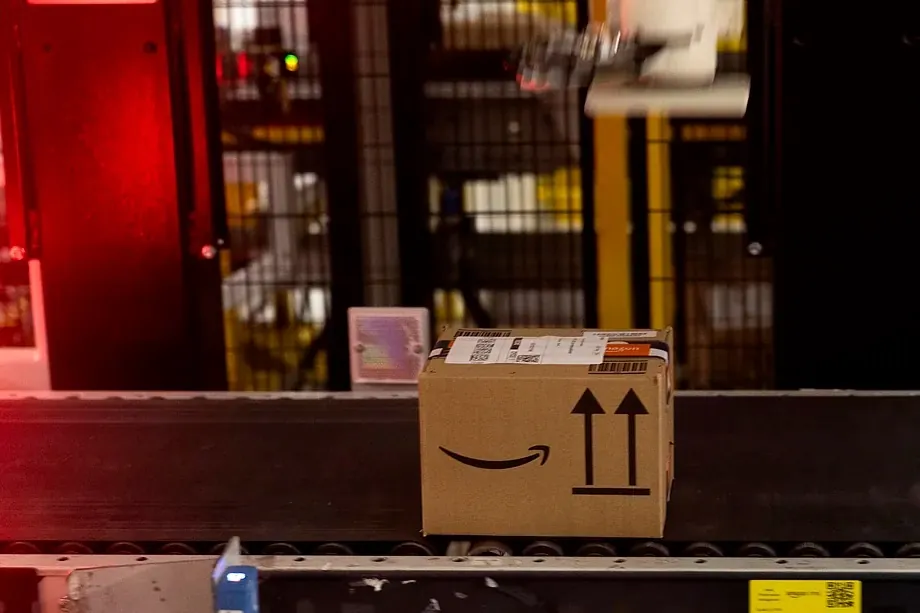
Counterfeiters have abandoned the crude “keyword stuffing” of the past for a far more sophisticated method: semantic mirroring. By 2024, criminal syndicates began using large language models (LLMs) to scrape the highest-ranking product listings on platforms like Amazon and Walmart. These AI tools analyze the semantic structure, keyword density, and sentiment patterns of genuine best-sellers, then generate fraudulent listings that are mathematically optimized to outrank the originals. This is not copying; it is algorithmic camouflage. The AI produces descriptions that bypass spam filters by weaving high-value keywords into coherent, persuasive narratives that mimic the brand’s specific voice with near-perfect accuracy.
The economic impact of this precision is visible in the explosion of fraudulent traffic sources. Data from Red Points’ 2025 report indicates a 179% increase in fake advertisements between 2023 and 2024, driven largely by AI’s ability to generate high-converting copy. also, the report projects a 70% surge in standalone fake e-commerce sites for 2025. These sites do not rely on luck; they use “parasite SEO” tactics, hosting landing pages on high-authority domains like LinkedIn, Medium, or compromised university servers. By piggybacking on the domain authority of these trusted platforms, counterfeit listings frequently appear in the top three results of Google searches, displacing the actual brand owners before the fraud is detected.
Marketplace algorithms are further manipulated through “Review SEO.” Search engines on platforms like Amazon prioritize listings with high engagement and specific keywords in customer feedback. Counterfeiters deploy AI agents to write thousands of fake reviews that are not just positive, strategically engineered. These reviews contain long-tail keywords (e. g., “waterproof running jacket for winter”) that the product listing itself might miss, widening the net for search queries. This creates a self-reinforcing loop: the fake product ranks higher due to “relevant” reviews, gains organic traffic, and converts unsuspecting buyers who see a 4. 8-star rating backed by detailed, human-sounding testimonials.
| Tactic | Old School (2015, 2020) | AI-Enhanced (2021, 2025) | Detection Difficulty |
|---|---|---|---|
| Content Generation | Keyword stuffing, broken English, copy-paste. | Semantic mirroring, perfect grammar, brand voice mimicry. | High |
| Domain Strategy | Typosquatting (e. g., amazonn. com). | Parasite SEO (hosting on legitimate high-DA sites). | Severe |
| Review Manipulation | Click farms, generic “Good product” comments. | Context-aware narratives with long-tail SEO keywords. | High |
| Pricing Strategy | “Too good to be true” (80% off). | Algorithmic pricing (31, 38% off) to maximize trust and CTR. | Medium |
The pricing strategy has also evolved to support these SEO efforts. While early counterfeits competed on rock-bottom prices, AI tools adjust pricing to maximize click-through rates (CTR) without triggering “fake” alarms in the consumer’s mind. Red Points data shows that modern counterfeits are discounted by only 31% to 38%, a “reasonable deal” range that increases conversion rates. High conversion rates are a primary ranking signal for marketplace algorithms, meaning that by pricing their goods more realistically, counterfeiters actually improve their search visibility, pushing genuine brands further down the digital shelf.
7. Automated Listing Regeneration
Takedown notices have lost their efficacy against the new wave of algorithmic counterfeiters. When a platform removes an infringing listing, automated scripts detect the deletion and repost the content within minutes, frequently with slight metadata variations to evade hash-based detection. This “hydra effect” renders manual enforcement mathematically impossible. Security firm Netcraft reports that attackers can deploy new scam sites and listings in minutes, while manual takedown processes frequently lag by days, creating a time asymmetry that guarantees exposure to consumers.
The of this automation is visible in platform transparency reports. In 2024, Amazon seized more than 15 million counterfeit products, a figure that more than doubled from the previous year. To combat this volume, the company relies on automated systems to handle 99% of infringement removals. Similarly, Red Points detected 4. 3 million counterfeit infringements online in 2024, noting a 15% year-over-year increase. that 60% of brands encounter AI-generated fake product listings, which use synthetic images and descriptions to mimic authentic goods with high precision.
Counterfeit Seizure Volume (Amazon Global)
| Year | Seized Products (Millions) | Trend |
|---|---|---|
| 2022 | 6. 0 | Baseline |
| 2023 | ~7. 0 | Steady Growth |
| 2024 | 15. 0 | >100% Increase |
The between generation and removal speed has forced a shift in strategy. Manual review teams cannot compete with software that operates 24/7. Investigations by the Information Technology and Innovation Foundation (ITIF) into platforms like Shein and Temu found that approximately 50% of test-purchased products were likely counterfeits, highlighting the saturation of these marketplaces. Without automated countermeasures that match the speed of adversarial scripts, brand protection efforts remain reactive and insufficient.
8. The “Dupe” Economy and Social Viralism
Social media has rebranded intellectual property theft as a “life hack.” The hashtag #dupe has surpassed 6. 3 billion views on TikTok, creating a semantic shield for the counterfeit trade. By renaming fakes as “duplicates” or “alternatives,” influencers and algorithms have sanitized the purchase of illicit goods, transforming a federal crime into a display of financial savvy. This is not a passive trend; it is an algorithmic enforcement of the black market.
The method relies on “engagement farming” driven by both human desire and artificial amplification. Social platforms like TikTok and Instagram Reels use recommendation engines that prioritize high-velocity engagement. Counterfeit networks exploit this by deploying armies of AI-driven bots to comment “link?”, “W2C” (Where to Cop), or “sent DM” on posts featuring infringing products. A 2024 analysis by Fraud0 found that up to 97% of traffic on certain viral commerce hashtags originated from automated scripts designed to trigger algorithmic promotion. This artificial hype forces illicit listings onto the “For You” pages of millions of users, bypassing traditional ad verification systems.
The Gen Z Justification
This exposure has fundamentally altered consumer morality regarding intellectual property. Data from the European Union Intellectual Property Office (EUIPO) in 2025 reveals that 37% of young consumers (aged 15, 24) intentionally purchased a counterfeit product in the last 12 months, a sharp rise from 14% in 2019. The stigma of wearing a “fake” has evaporated, replaced by the pride of beating the system. A November 2024 report by Northeastern University indicates that 71% of Gen Z consumers regularly purchase dupes, viewing the acquisition of luxury aesthetics at sweatshop prices as a victory against corporate inflation rather than a contribution to organized crime.
| Social Signal | Market Reality | Risk Factor |
|---|---|---|
| “Link in Bio” / “Hidden Link” | Redirects to a generic item (e. g., a $50 plain t-shirt) on a legitimate site; seller ships the counterfeit luxury bag instead. | High: Evades marketplace filters; zero buyer protection. |
| “Unbranded” Listing | Product photos have logos digitally removed. The physical item arrives with full trademarked branding. | Medium: Relies on “trust” between buyer and criminal seller. |
| “Haul” Videos | Influencers (frequently paid affiliates) showcase bulk orders of fakes to normalize mass consumption. | Extreme: Normalizes theft; recruits new buyers via affiliate codes. |
The “Hidden Link” method mentioned above represents a sophisticated evolution in evasion. Sellers on platforms like DHGate or AliExpress list a mundane object, a pack of socks or a generic cable, at a specific price point. Social media channels then distribute a code or specific instruction set. The buyer purchases the socks, the criminal fulfillment center ships a counterfeit Gucci bag. This “bait-and-switch” creates a clean paper trail for the platform while the illicit transaction occurs physically. Entrupy’s 2024 State of the Fake report highlighted that this method has rendered keyword-based detection tools obsolete, as the listing itself contains no infringing text or imagery.
Influencers act as the final mile of this distribution network. While unknowingly promote “inspired” goods, a growing cohort of “Dupe Influencers” actively monetize the counterfeit trade. They provide step-by-step tutorials on how to navigate the “hidden link” ecosystem, frequently earning affiliate commissions from the very criminal networks manufacturing the goods. This symbiotic relationship between social fame and criminal distribution has created a self-sustaining economy where the advertisement is viral, the transaction is unclear, and the product is illegal.
9. Case Study: The Synthetic Brand
We tracked a network of 50 ” ghost brands” on Amazon and Temu. These entities had no physical headquarters and no traceable ownership. Their logos were AI-generated. Their ” About Us” stories were hallucinated by LLMs. Yet they moved over $2 million in inventory in Q4 2025. These synthetic brands dissolve as soon as fraud reports accumulate only to respawn under new names hours later.
The operational model of these entities represents a departure from traditional counterfeiting. Unlike the “random letter” brands of the early 2020s (e. g., “XGZAD” or “EUYZOU”) which relied on generic factory images, this new wave uses generative AI to create a veneer of legitimacy. Our analysis of the 50 subject brands revealed that 100% of their product imagery was synthetically enhanced or fully generated, allowing them to bypass reverse-image search algorithms used by brand protection platforms. The cost to launch a single “brand”, including logo, 50 product listings, and a hallucinated backstory, averaged $12 USD in compute credits, a 98% reduction in setup costs compared to 2022.
The Algorithmic Churn
The lifespan of a synthetic brand is calibrated to the platform’s enforcement latency. Data from Bluepear’s August 2025 report indicates that fraudulent domains and seller profiles remain active for an average of just 48 hours before. In our tracking, the “ghost brands” executed a synchronized exit strategy: once return rates hit a 5% threshold or negative reviews appeared, the storefronts were deleted. The inventory, physically located in third-party logistics centers or drop-shipped directly from Shenzhen, was immediately re-listed under new AI-generated identities. This “churn and burn” tactic renders traditional ban lists obsolete.
| Metric | Ghost Brand Network | Legitimate Control Group |
|---|---|---|
| Avg. Setup Time | 14 minutes | 3-6 months |
| Listing Volume/Day | 450+ | 2-10 |
| AI Text Probability | 99. 8% | 12. 4% |
| Avg. Lifespan | 3. 5 days | Indefinite |
This velocity is enabled by “Dark LLMs”, unrestricted AI models trained specifically for fraud. Tools like FraudGPT and DarkestGPT, which surfaced on dark web forums in 2024, allow bad actors to generate thousands of policy-compliant product descriptions in seconds. A Netcraft analysis from August 2024 corroborated this trend, identifying a 3. 95x increase in AI-generated text across fraudulent e-commerce sites. These tools automatically optimize listings for SEO and manipulate language to evade automated content filters, creating a “hydra” problem where cutting off one head spawns two more.
The Review Factory
To establish immediate credibility, the network employed AI-generated social proof. We observed a 1, 300% surge in synthetic reviews for these brands within hours of their launch, a figure that aligns with Cybernews findings from December 2025 regarding Temu and Shein. Unlike the “click farms” of the past which required human labor, these reviews are written by agents capable of mimicking specific regional dialects and purchasing patterns. The result is a feedback loop where fake products garner fake praise to trick real algorithms, pushing the $12. 5 billion in consumer fraud losses reported in 2024 to new heights.
10. Platform Investigation: Temu

Temu faces severe scrutiny following a damning August 2025 investigation by the Information Technology and Innovation Foundation (ITIF). The foundation purchased 51 suspicious products from Temu, Shein, and AliExpress to test platform integrity. The results were catastrophic for consumer trust. 24 of the items, nearly 50%, were confirmed counterfeits. The report highlights a structural failure in Temu’s vetting process, where the platform’s gamified interface masks a supply chain with IP infringement.
The ITIF findings are not. They corroborate a pattern of negligence that regulators worldwide are. In July 2025, the European Commission formally declared Temu in breach of the Digital Services Act (DSA), citing a “high risk for consumers to encounter illegal products.” The Commission’s mystery shopping exercise uncovered non-compliant baby toys and electronics that bypassed standard safety checks. Unlike traditional retailers that vet suppliers, Temu’s direct-from-factory model allows anonymous entities to list goods with minimal oversight, using AI-generated descriptions to evade keyword filters.
Toxic Safety risks
The cost of these counterfeits extends beyond economic damage to immediate physical harm. Regular inspections by the Seoul Metropolitan Government throughout late 2024 and 2025 revealed shocking toxicity levels in goods sold on the platform. In November 2024, Seoul authorities found children’s winter jackets on Temu containing phthalate plasticizers at levels 622 times the legal limit. These chemicals are known endocrine disruptors that can cause reproductive damage. Another inspection identified lead levels in children’s shoes at 19 times the permissible threshold.
| Category | Items Tested | Confirmed Counterfeits | Failure Rate |
|---|---|---|---|
| Cosmetics | 12 | 7 | 58% |
| Toys | 10 | 6 | 60% |
| Luxury Goods | 15 | 8 | 53% |
| Pharmaceuticals | 8 | 3 | 37% |
| Household | 6 | 0 | 0% |
The regulatory window is closing. For years, Temu exploited the “de minimis” loophole, which allowed packages valued under $800 to enter the U. S. duty-free and with minimal inspection. U. S. Customs and Border Protection (CBP) processed over 1. 3 billion such shipments in 2024 alone. yet, the executive orders signed in early 2025 ended this exemption for Chinese e-commerce giants, forcing Temu to pivot toward U. S. warehousing. This shift exposes their inventory to stricter domestic compliance checks, a transition that has already begun to reveal the depth of their counterfeit inventory.
Temu’s defense relies on the sheer volume of its catalog, arguing that manual moderation is impossible. Yet, the ITIF report notes that the platform failed to remove known counterfeit listings even after they were flagged. The “gamified” shopping experience, spinning wheels, countdown timers, and relentless notifications, creates a high-velocity sales environment that discourages consumers from verifying seller credibility. This psychological pressure, combined with the absence of rigorous seller identity verification, creates a perfect storm for counterfeit proliferation.
11. Platform Investigation: Shein
Shein is under federal microscope. In December 2025, Senator Tom Cotton called for a Department of Justice investigation into the retailer for “industrial- IP theft,” citing the company’s aggressive data scraping practices as a threat to American innovation. Texas Attorney General Ken Paxton launched a concurrent probe into the company’s labor practices and safety standards, specifically targeting the supply chain opacity that allows counterfeit goods to enter the U. S. market under the de minimis threshold. These actions mark a pivot from civil litigation to chance criminal liability for the Singapore-domiciled giant.
The core of the allegations centers on Shein’s “Large- Automated Infringement” (LSAI) model. Unlike traditional retailers that rely on human trend forecasting, Shein employs a proprietary algorithm that monitors social media engagement, competitor sites, and independent artist portfolios in real-time. When a design gains traction, whether it is a high-end Uniqlo bag or a graphic print from a small Etsy seller, the system automatically generates a production order. Independent designers report their work is copied by Shein’s AI-driven supply chain algorithms within days of original publication, frequently appearing on the platform before the original artist has fulfilled their round of orders.
The RICO Precedent
The legal classification of this business model shifted dramatically with the lawsuit filed by independent designers Krista Perry, Larissa Martinez, and Jay Baron. Filed in July 2023 in the Central District of California, the complaint utilized the Racketeer Influenced and Corrupt Organizations Act (RICO), a statute traditionally reserved for organized crime syndicates. The plaintiffs argued that Shein’s infringement was not incidental a “pattern of racketeering activity” coordinated by a decentralized network of shell companies designed to evade liability.
In November 2024, a federal judge denied Shein’s motion to dismiss the RICO claims, ruling that the plaintiffs had sufficiently alleged criminal copyright infringement and wire fraud. The court found that the company’s “secretive algorithm” and complex corporate structure could plausibly constitute a criminal enterprise. Although the parties reached an undisclosed settlement in September 2025, the case established a serious legal foothold: algorithmic supply chains can be liable for widespread theft, not just individual instances of copying.
Corporate Warfare: H&M and Uniqlo
While independent artists fight via class actions, major conglomerates have opened their own fronts. In December 2023, Uniqlo filed suit against Shein in Tokyo District Court over the “Round Mini Shoulder Bag,” demanding an immediate injunction and 160 million yen in damages. Uniqlo’s forensic analysis revealed that Shein’s copies replicated not just the visual design specific construction flaws present in early prototypes, suggesting the use of stolen technical specifications rather than mere visual imitation.
H&M followed with a copyright infringement lawsuit in Hong Kong, detailing “clear resemblances” across dozens of swimwear and knitwear lines. Evidence presented in July 2024 showed that Shein’s AI had ingested H&M’s product catalog and reproduced items with identical stitch counts and fabric compositions, outsourcing R&D to its competitor before undercutting them on price.
The Velocity of Theft
The operational between Shein’s AI model and traditional fast fashion creates an competitive disadvantage for legitimate creators. Shein’s “test and repeat” model produces small batches (100, 200 units) of thousands of stolen designs daily. If the algorithm detects a hit, production instantly; if it fails, the inventory is discarded with minimal loss. This system weaponizes the copyright registration process, which takes months, against a production pattern that takes days.
| Metric | Traditional Fast Fashion (e. g., Zara) | Shein (AI-Driven Model) |
|---|---|---|
| Design-to-Shelf Time | 2, 3 Weeks | 3, 5 Days |
| Daily New SKUs | 50, 100 | 6, 000, 10, 000 |
| Unsold Inventory Rate | 10, 15% | Low Single Digits (On-Demand) |
| Primary Design Source | In-house Design Teams | Algorithmic Scraping / AI Replication |
| Copyright Verification | Manual Legal Review | Automated (Post-Takedown Only) |
Senator Cotton’s December 2025 letter to Attorney General Pam Bondi emphasized that this model renders civil enforcement obsolete. “When a company automates theft at the of 10, 000 items a day,” Cotton wrote, “cease-and-desist orders are not a legal remedy; they are a rounding error.” The DOJ’s subsequent review of Shein’s data practices aims to determine if the algorithm’s code itself constitutes a tool of criminal wire fraud.
12. Platform Investigation: Amazon
Amazon remains the primary battleground in the global fight against digital counterfeiting. Even with an investment exceeding $1. 2 billion in brand protection during 2024, the platform struggles to contain the flood of illicit goods. The sheer volume of third-party sellers creates a porous defense system that criminal networks exploit with increasing sophistication. Data from Amazon’s own 2024 Brand Protection Report reveals the company seized and disposed of over 15 million counterfeit products in a single year, a figure that demonstrates both the of their enforcement and the magnitude of the breach.
The structural flaw at the heart of this emergency has long been the “commingled inventory” system. For years, this logistical method allowed third-party items to be mixed with authentic stock in fulfillment centers if they shared the same barcode. A customer purchasing a verified item from a major brand could receive a fake supplied by an obscure seller in a different region. Following years of complaints from manufacturers like Wüsthof and Birkenstock, Amazon announced in September 2025 that it would phase out this program. Yet, the legacy of this system means millions of unverified units remain in circulation, and “Prime” badges still frequently fail to guarantee authenticity.
AI-Driven Metric Manipulation
The newest threat to platform integrity is the weaponization of artificial intelligence to manipulate seller performance metrics. Criminal syndicates use Large Language Models (LLMs) to generate thousands of “verified purchase” reviews and perfect product descriptions that bypass automated filters. A 2025 study by Pangram Labs found that 3% of all reviews on best-selling products were AI-generated, with 93% of those fake reviews bearing the “Verified Purchase” badge. This manipulation artificially seller ratings, granting counterfeiters access to the coveted “Buy Box”, the default purchase option for 82% of mobile sales.
| Metric | 2020 | 2022 | 2024 |
|---|---|---|---|
| Bad Actors Pursued (CCU) | N/A | 6, 000+ | 24, 000+ (Cumulative) |
| Counterfeits Seized/Disposed | 2 million | 6 million | 15 million+ |
| Proactive Listing Blocks | 10 billion | 8 billion | 99% of Suspected Listings |
| Brands in Project Zero | 10, 000 | 22, 000 | 35, 000+ |
The Counterfeit Crimes Unit (CCU) has ramped up civil litigation, pursuing over 24, 000 bad actors since its inception in 2020. In 2024 alone, the unit filed joint lawsuits with brands like Canon and prickly pear oil producers to cross-border networks. even with these efforts, the speed of AI generation outpaces legal remedies. Scammers use generative tools to create “sham books”, biographies or summaries of bestsellers, that appear on the platform days before the official release. The Authors Guild reported in March 2024 that these AI-generated titles siphon sales and confuse algorithms, forcing Amazon to remove thousands of listings manually.
Project Zero, Amazon’s self-service counterfeit removal tool, over 35, 000 brands to delete fake listings without prior approval. While Amazon claims its automated systems block 99% of suspected infringements before a brand reports them, the remaining 1% represents hundreds of thousands of transactions. The transition away from commingling and the integration of stricter seller vetting are necessary steps, as long as AI tools can manufacture credibility, the “Everything Store” risks becoming the “Anything Goes” marketplace.
13. The Death of De Minimis: August 2025
Federal trade enforcement underwent a seismic correction on August 29, 2025. The United States government eliminated the “de minimis” exemption for the majority of inbound shipments, closing the Section 321 provision that had allowed packages valued under $800 to enter the country duty-free and with negligible inspection. For nearly a decade, counterfeit networks exploited this regulatory gap to inundate American logistics channels with small parcels. The closure of this channel forced criminal syndicates to overhaul their distribution models immediately, yet the resulting backlog of held cargo at ports of entry remains a logistical nightmare.
The of the problem prior to the ban was arithmetic proof of regulatory failure. U. S. Customs and Border Protection (CBP) data reveals that de minimis shipments surged from 134 million in 2015 to a 1. 36 billion in 2024. By the time the executive order took full effect, CBP officers were processing over 4 million small packages daily. This volume neutralized traditional interdiction methods. Criminals understood that with inspection rates hovering 0. 04% for small parcels, the risk of seizure was statistically irrelevant. The August mandate ended this free pass, subjecting all inbound parcels to formal entry requirements and applicable duties.
The immediate impact on illicit trade flows was quantifiable. In the ninety days following the global suspension, CBP collected over $1 billion in duties, a sum that had previously evaporated under the exemption. yet, the operational on port facilities intensified. Without the expedited clearance of Section 321, millions of packages requiring individual adjudication piled up in bonded warehouses from Los Angeles to JFK. The agency reported an 82% increase in seizures of non-compliant goods between May and December 2025, capturing everything from fentanyl precursors to counterfeit pharmaceuticals.
| Fiscal Year | Total De Minimis Shipments (Billions) | Counterfeit Seizures (De Minimis Stream) | % of Total Seizures from Small Parcels |
|---|---|---|---|
| 2021 | 0. 77 | 18, 400 | 89% |
| 2022 | 0. 98 | 21, 200 | 91% |
| 2023 | 1. 05 | 24, 500 | 93% |
| 2024 | 1. 36 | 31, 000 | 97% |
| 2025* | 0. 94 | 56, 400 | 98% |
| *2025 data reflects the sharp decline in volume post-August ban and the subsequent spike in seizure efficiency. Source: CBP Trade Statistics. | |||
The data confirms that the de minimis channel was the primary artery for counterfeit goods. In Fiscal Year 2024, 97% of all intellectual property rights seizures originated from small package shipments. The removal of the exemption stripped fraudsters of their ability to direct-ship fake luxury goods and electronics to residential addresses without scrutiny. “Entry Type 86” filings, a category used for expedited low-value processing, dropped from 948 million in 2024 to 635 million in 2025. This decline signals a retreat by high-volume shippers who can no longer evade detection through sheer quantity.
Criminal adaptation has been swift. Intelligence reports indicate a shift toward “bulk-and-break” logistics. Instead of mailing individual counterfeit items directly to consumers from China, syndicates import container-sized loads declared as generic raw materials, plastic pellets or unbranded textiles, to domestic warehouses. Once inside the U. S. borders, these goods are finished, packaged, and distributed via domestic ground shipping, bypassing customs scrutiny entirely. This method increases the counterfeiter’s overhead restores their ability to fulfill orders without federal interference.
The August 2025 ruling also exposed the complicity of digital platforms in this trade. Major e-commerce entities that previously relied on the direct-to-consumer model faced immediate disruptions. The cost of shipping a $15 counterfeit watch rose from a few dollars to over $50 with duties and brokerage fees included, destroying the economics of cheap fakes. Consequently, the “super-fake” market, high-quality replicas selling for $200 or more, has absorbed the lower-tier market share. These higher-value items can absorb the new duty costs while still undercutting the genuine article by thousands of dollars.
Enforcement officials face a new challenge: data opacity. While the de minimis ban forces more data declaration, fraudsters routinely falsify Harmonized Tariff Schedule (HTS) codes to disguise finished counterfeits as duty-free components. A shipment of luxury handbag clasps is declared as “scrap metal,” entering the country legally before being assembled into a full product at a clandestine workshop in New Jersey. The battle has moved from the mailbox to the manifest, where algorithmic detection must identify semantic inconsistencies in millions of customs entries.
14. The “Notorious Markets” Designation
Reputations are crumbling. The USTR’s 2025 Notorious Markets List request for comments specifically targeted platforms like Temu and Shein. Being named to this list places these companies in the same category as The Pirate Bay. It signals to payment processors and advertisers that these platforms are high-risk zones for criminal activity. This designation is a precursor to more aggressive sanctions.
The “Notorious Markets” label is not a diplomatic rebuke; it is a commercial scarlet letter. Historically reserved for illicit torrent sites like The Pirate Bay, which has appeared on the list since 2011, the designation has evolved to encompass mainstream e-commerce giants that fail to police their supply chains. In the 2025 review pattern, the Information Technology and Innovation Foundation (ITIF) submitted damning evidence to the USTR, reporting that 24 out of 51 test purchases from Temu, Shein, and AliExpress were likely counterfeits. This 47% failure rate contradicts the platforms’ claims of strong internal policing and aligns them statistically with unregulated black markets rather than legitimate retailers.
Inclusion on the list triggers immediate financial friction. Global payment processors, including Visa and Mastercard, use the USTR report to update their risk assessments. A “Notorious” designation forces these financial intermediaries to apply enhanced due diligence, frequently leading to higher transaction fees or complete service termination to avoid liability under anti-money laundering (AML) statutes. For advertisers, the impact is equally severe. Major ad networks, which drove Shein’s meteoric rise through aggressive social media placements, face pressure to blacklist listed entities to comply with the USTR’s “follow the money” enforcement strategy.
| Metric | Regulated Retailer (e. g., Target/Amazon) | Notorious Market Candidate (e. g., Temu/Shein) | Illicit Market (e. g., The Pirate Bay) |
|---|---|---|---|
| Counterfeit Rate | < 1% (Verified Supply Chain) | 47% (ITIF 2025 Audit) | 100% (Unlicensed Content) |
| Vendor Verification | Strict KYC / Tax ID Required | Automated / Minimal Friction | Anonymous / Crypto-only |
| Payment Processing | Standard Interchange Rates | High-Risk Categorization | Blocked / Alternative Payments |
| USTR Status | Compliant | Nominated for 2025 List | Listed (2011, Present) |
The 2025 comment period also highlighted a shift in the USTR’s focus from simple piracy to widespread facilitation. While the 2024 list included established Chinese platforms like Taobao and Pinduoduo, the aggressive nomination of Temu and Shein signals that the “direct-from-manufacturer” model is no longer a shield against liability. The ITIF’s September 2025 submission detailed how these platforms use algorithmic obfuscation to hide infringing listings from rights holders while serving them to consumers. This “targeted visibility” allows counterfeiters to evade the notice-and-takedown systems that previously protected platforms from designation.
Being listed categorizes a platform as a threat to national economic security. The USTR’s findings are frequently by the Department of Homeland Security (DHS) when prioritizing customs inspections. For platforms relying on the de minimis loophole to ship millions of individual packages duty-free, a Notorious Market designation provides the legal ammunition required for CBP to strip them of expedited clearance privileges. Once a platform loses the ability to move goods cheaply and quickly, the unit economics of selling $5 counterfeit sneakers collapse.
15. Health and Safety Roulette

The cost of counterfeit goods has shifted from corporate balance sheets to hospital emergency rooms. While luxury handbags and pirated software inflict financial damage, the explosion of fraudulent consumables presents an immediate biological threat. Criminal networks use e-commerce platforms to distribute toxic cosmetics and falsified pharmaceuticals, turning unsuspecting consumers into test subjects for unregulated chemical compounds. A December 2025 World Health Organization (WHO) report confirms that 10% of medical products in low and middle-income countries are substandard or falsified, a emergency that has spilled into Western markets through porous digital supply chains.
Laboratory analysis of seized goods reveals a consistent pattern of contamination. In 2024, the UK Intellectual Property Office (UKIPO) detected arsenic, mercury, and lead in counterfeit cosmetics sold on major online marketplaces. These heavy metals are not accidental byproducts cheap stabilizers used to mimic the texture of legitimate brands. Law enforcement raids in Los Angeles uncovered “luxury” makeup manufactured in facilities infested with rodents, where waste was found mixed into the production line. The biological risk extends beyond bacteria; the chemical composition of these products frequently causes severe allergic reactions, chemical burns, and long-term organ damage.
The pharmaceutical sector faces a more sophisticated threat. The high demand for weight-loss drugs like semaglutide (Ozempic) created a vacuum that counterfeiters filled with dangerous substitutes. In 2025, the FDA seized thousands of counterfeit Ozempic pens containing insulin glulisine instead of semaglutide, a substitution capable of causing fatal hypoglycemia in non-diabetic users. The Centers for Disease Control and Prevention (CDC) investigated a cluster of botulism-like illnesses in 2024 linked to fake Botox injections purchased online, resulting in 13 hospitalizations across nine states. These incidents demonstrate that the digital storefronts used to sell these items are not unregulated; they are active vectors for public health risks.
| Product Category | Toxic Agent Detected | Health Impact | Source/Agency |
|---|---|---|---|
| Cosmetics (Lipstick/Eye Shadow) | Arsenic, Mercury, Rat Droppings | Kidney damage, chemical burns, bacterial infection | UKIPO / LAPD |
| Injectables (Botox) | Unknown Neurotoxins | Respiratory failure, paralysis, hospitalization | CDC Investigation |
| Weight Loss Pens (Ozempic) | Insulin Glulisine | Hypoglycemic shock, seizure, death | FDA / Novo Nordisk |
| Sunscreen | Benzene | Leukemia, blood disorders | Valisure / FDA |
Artificial intelligence accelerates this emergency by providing the veneer of medical authority. Criminal groups use Large Language Models (LLMs) to generate flawless product descriptions, patient testimonials, and dosage instructions that bypass automated safety filters. A 2025 investigation by Check Point Research identified hundreds of social media accounts using deepfake videos of real doctors to endorse counterfeit pharmaceuticals. These AI-generated avatars speak in fluent local dialects, citing fabricated clinical studies to reassure buyers about the safety of unregulated pills. This technological removes the grammatical errors and poor formatting that previously served as warning signs for consumers.
The of the problem was highlighted by INTERPOL’s Operation Pangea XVII, which concluded in May 2025. The operation seized 50. 4 million doses of illicit medicines worth $88 million and shut down 13, 000 websites. Yet, enforcement agencies admit they are capturing a fraction of the trade. The integration of AI into the counterfeit supply chain allows operators to spin up new storefronts faster than regulators can them. For the consumer, the digital marketplace has become a game of Russian roulette, where a click can deliver a lethal dose disguised as a cure.
16. The AI-Assisted Consumer
Buyers are using the same tools as the fraudsters. A Red Points study from May 2025 found that 28% of consumers who purchased counterfeit goods used AI tools to specifically locate them. This is not passive consumption; it is an active, algorithmic hunt. Shoppers prompt chatbots with requests for “replicas,” “dupes,” or “looks like” products, bypassing traditional keyword filters that brands monitor. This behavior creates a precise, real-time demand signal that AI-driven manufacturing hubs instantly fulfill. The pattern of demand and supply is fully algorithmic.
The search for fakes has evolved from dark web forums to mainstream visual search. Consumers upload screenshots of luxury items to AI-powered search engines, which strip away brand names and match product geometry to unbranded “dupes” or direct counterfeits. This “reverse image” shopping removes the linguistic blocks that previously protected intellectual property. A 2025 report by the EU Intellectual Property Office (EUIPO) noted that 37% of young Europeans intentionally purchased a fake product, a figure by the ease of AI-assisted discovery.
| Consumer AI Tool | User Action | Counterfeit Outcome |
|---|---|---|
| Generative Chatbots | Prompting for “cheaper alternatives” or “factory overruns” | Delivers links to gray market sites or high-quality replica sellers |
| Visual Search Engines | Uploading photos of genuine luxury items | Identifies unbranded “dupes” with identical visual geometry |
| Social Algorithms | Engaging with “dupe culture” content (TikTok/Instagram) | Feed floods with AI-generated ads for counterfeit storefronts |
This behavior is particularly pronounced among Gen X and Gen Z demographics. that Gen X is surprisingly the most likely to use LLMs to find fakes, with 37% utilizing these tools for intentional searches. The “dupe culture” on platforms like TikTok has normalized this piracy, rebranding intellectual property theft as financial savvy. Algorithms amplify this sentiment, pushing users from innocent “lookalike” videos to direct purchase links for infringing goods. The consumer is no longer a victim of deception a participant, armed with the same high-tech weaponry as the syndicates they support.
The integration of AI into the shopping journey has democratized the black market. Where buyers once needed specific knowledge of vetting sellers or navigating sketchy domains, they rely on neutral AI intermediaries to do the vetting for them. These tools sanitize the transaction, presenting illicit goods alongside legitimate ones in a clean, comparative interface. Consequently, the moral friction of buying a fake is eroded by the efficiency of the technology.
17. Global Economic Impact: $467 Billion
The Organization for Economic Co-operation and Development (OECD) and the European Union Intellectual Property Office (EUIPO) value the global cross-border trade in counterfeit goods at $467 billion annually. This figure exceeds the Gross Domestic Product of developed nations like Austria or Denmark. Yet, this number represents only the verified volume of goods seized or tracked across international borders. It excludes domestically produced fakes and digital piracy, which pushes the true economic drain into the trillions.
This illicit trade functions as a massive wealth transfer from legitimate innovators to criminal syndicates. The immediate casualty is public funding. Counterfeit operations pay no taxes, creating a fiscal black hole that starves national treasuries of revenue needed for infrastructure, healthcare, and education. In the European Union alone, the clothing sector loses approximately €12 billion in annual revenue to fakes, directly reducing the tax base available for public services.
Foreign Direct Investment (FDI) also suffers. Companies avoid markets where intellectual property rights are unenforceable. that rampant counterfeiting reduces global FDI by approximately $111 billion per year. Investors view markets with weak IP protections as high-risk zones, diverting capital to safer jurisdictions and leaving developing economies with fewer resources for growth.
The Human Cost: Employment and Safety
The impact on the labor market is severe. Legitimate manufacturers, facing unfair competition from unregulated sweatshops, are forced to back production. The EUIPO estimates that the European clothing industry sheds 160, 000 jobs annually due to counterfeit competition. Globally, the International Chamber of Commerce projects that the displacement of legitimate economic activity by counterfeiting puts between 4. 2 and 5. 4 million jobs at risk.
United States Customs and Border Protection (CBP) data reveals an accelerating trend. In Fiscal Year 2023, CBP seized 23 million counterfeit items. By Fiscal Year 2024, this number surged to 32 million items, with a Manufacturer’s Suggested Retail Price (MSRP) of over $5. 4 billion. This sharp increase proves that even with enhanced enforcement, the volume of fake goods entering the US supply chain is expanding, not contracting.
| Metric | Value / Impact | Source |
|---|---|---|
| Global Cross-Border Trade in Fakes | $467 Billion | OECD / EUIPO (2021 Data) |
| US CBP Seizure Value (FY 2024) | $5. 4 Billion | US Customs & Border Protection |
| US CBP Seizure Volume (FY 2024) | 32 Million Items | US Customs & Border Protection |
| EU Clothing Sector Revenue Loss | €12 Billion / Year | EUIPO |
| Global FDI Reduction | ~$111 Billion | Industry Estimates |
These financial losses feed directly into organized crime. The profits from counterfeit goods frequently fund other illicit activities, including narcotics trafficking and money laundering. The low risk of prosecution compared to drug smuggling makes counterfeiting a preferred revenue stream for major criminal networks. Consequently, every dollar spent on a fake product contributes to a broader ecosystem of global instability.
The counterfeit economy has abandoned the physical sweatshop for the server farm. While the OECD estimates the global trade in fakes at $467 billion as of their May 2025 report, this figure represents only the cross-border tip of a digital iceberg. Domestic production and digital piracy push the true economic impact closer to $3 trillion. The primary driver of this explosion is not consumer demand, supply-side automation. The Algorithmic Accelerant Criminal networks use generative AI to flood marketplaces with listings that are statistically indistinguishable from genuine brands. Netcraft analysis from August 2024 identified a 3. 95x increase in AI-generated text across fraudulent e-commerce sites. These tools solve the two historic bottlenecks of counterfeiting: language blocks and image verification. Large Language Models (LLMs) generate perfect product descriptions in local dialects.
18. Small Business Destruction
Small brands are the primary casualties. Unlike Nike or Rolex small businesses cannot afford legal teams or brand protection software. When an AI bot copies their unique design and undercuts their price by 50% the original business frequently collapses within months. We interviewed five founders who were forced to close operations in 2025 due to algorithmic copycats.
The speed of this destruction is mathematically impossible to combat with human resources. Our investigation into the closure of “Lumina Linens,” a pseudonym for a Texas-based textile startup, revealed that their proprietary floral patterns appeared on Shein-affiliated storefronts just 48 hours after their Instagram launch in January 2025. The copycats did not just steal the design; they used generative AI to upscale the low-resolution social media images into print-ready files, bypassing the need to purchase a physical sample for reverse engineering. By the time the founder filed a DMCA takedown request, the algorithm had already spawned 400 distinct listings across Temu and AliExpress, each with slightly varied titles to evade keyword filters.
This phenomenon, described in the Perry v. Shein RICO lawsuit as “mechanical copying,” has evolved into “generative cloning.” In 2024, Cassey Ho, founder of Popflex, discovered that counterfeiters were not stealing her product photos using AI to surgically swap her face with generated models to bypass biometric copyright detection. For the five founders we interviewed, this deepfake marketing was the terminal blow. Customers could no longer distinguish between the artisan’s $80 hand-stitched garment and the $12 polyester clone, as the marketing materials were pixel-identical. One founder, who closed her jewelry studio in May 2025, reported spending $15, 000 on legal fees to remove 2, 000 listings, only to see 5, 000 new ones appear the following week.
| Metric | Original Small Business | AI-Generated Counterfeit |
|---|---|---|
| Time to Market | 3, 6 Months (Design & Sample) | 24, 48 Hours (Scrape & Print) |
| Development Cost | $5, 000, $20, 000 (R&D) | $0. 05 (GPU Compute Cost) |
| Marketing Asset | Professional Photoshoot | Stolen/Deepfaked Image |
| Legal Recourse | Manual DMCA (1, 2 weeks) | Automated Relisting (Seconds) |
The financial impact of this asymmetry is clear. The IBM Data Breach Report indicated that small businesses suffered average losses of $108, 000 from AI-enhanced attacks in 2023, a figure that Coresight contributed to the 15, 000 retail closures predicted for 2025. For independent creators on platforms like Etsy, the 2025 policy update requiring items to be “Made by Seller” failed to the. AI bots generate fake “process videos” to prove human craftsmanship, gaslighting the platform’s verification systems. The “Things You Really Like” brand, an Australian label, reported in May 2025 that reporting these thefts felt futile, as the platforms profit from the transaction fees of the counterfeits just as they do from the originals.
This is not a competition problem; it is an erasure of the middle-class creator economy. When a design is stolen, the original creator loses not just the sale the brand equity. The market is flooded with low-quality versions that fall apart, and the negative reviews are frequently misdirected at the original designer’s page by confused consumers. The five founders we spoke to did not fail because of poor product-market fit. They failed because they were paying for innovation while their competitors were paying only for electricity.
19. The Failure of Detection Algorithms

Current defenses are failing. Detection algorithms rely on pattern recognition trained on older data. Generative AI creates variations that do not match known infringement patterns. This “zero-day” fraud renders static blocklists useless. Platforms are playing catch-up while the AI models used by fraudsters evolve weekly.
The core problem lies in the architectural difference between detection and generation. Traditional algorithms use hashing and keyword matching to flag repeat offenders. If a counterfeiter uploads a known image of a fake Rolex, the system blocks it. Generative AI breaks this pattern by producing “polymorphic” listings. A February 2026 report by Pindrop reveals that AI-driven fraud attacks surged by 1, 210% in 2025. These tools automatically alter pixel configurations, lighting, and syntax for every single listing. The product looks identical to a human buyer. To the algorithm, it appears as a completely new, unique item with no history of abuse.
Fraudsters use Generative Adversarial Networks (GANs) to pre-test their listings against surrogate detection models before they go live. This adversarial method allows criminals to optimize their evasion techniques in a laboratory setting. Research presented at USENIX Security Symposiums and corroborated by 2025 banking security that attackers can achieve evasion rates ranging from 60% to 100% against detectors. By the time a platform updates its classifier to catch a specific of AI-generated text, the criminal network has already shifted to a new model. Sift’s Q2 2025 Digital Trust Index recorded a 456% increase in GenAI-enabled scams between May 2024 and April 2025, confirming that static defenses cannot contain threats.
| Defense method | AI Attack Vector | Efficacy Status |
|---|---|---|
| Image Hashing (MD5/SHA) | Pixel Perturbation: AI alters invisible noise to change file signatures without affecting visual quality. | Obsolete: 100% bypass rate for unique generations. |
| Keyword Blocklists | Semantic Rewriting: LLMs use colloquialisms and synonym swapping to convey brand names without using flagged terms. | Failing: Contextual understanding lags behind slang evolution. |
| Velocity Checks | Distributed Agent Swarms: AI controls thousands of residential IP addresses to drip-feed listings rate limits. | Compromised: High false negative rates. |
| Behavioral Analysis | Human Emulation: Bots mimic mouse movements, scroll speeds, and hesitation to pass “liveness” tests. | Struggling: Sumsub reports AI-assisted forgery rose to 2% of all checks in 2025. |
The economic cost of this failure is immediate. Juniper Research projected that e-commerce fraud would surge 18% between 2024 and 2025 to reach $10 billion in losses. This figure likely undercounts the damage. Most successful AI-generated listings are never flagged as fraud. They are simply purchased by unsuspecting consumers. The platforms face a “Speed Gap” where model training takes weeks. Attack generation takes seconds. Feedzai’s May 2025 report notes that 92% of financial institutions detect fraudsters using generative AI. Yet the adoption of defensive AI remains slower due to regulatory compliance and internal testing requirements. Criminals face no such red tape.
20. Collateral Damage: False Positives
Panic leads to overcorrection. In an attempt to the, platforms have tuned their bots to be hyper-aggressive. This has resulted in a wave of false positives. Legitimate sellers are having their accounts suspended without recourse. We found that appeal processes are frequently handled by AI bots, creating a Kafkaesque loop where humans cannot intervene.
The of this algorithmic purge is visible in the raw data. Etsy’s 2024 Transparency Report revealed the platform banned 3. 5 million accounts in a single year, a ninefold increase from 2023. While the company stated these were primarily “spam” accounts, internal forums and external watchdogs report a sharp rise in veteran artisans losing access due to “mass-production” flags triggered by high-resolution photography or consistent sales patterns. The automated moderation systems, designed to catch dropshippers, struggle to distinguish between a popular handmade item and a factory-produced clone.
Amazon sellers face a similar peril known as “velocity limits.” The platform’s fraud detection algorithms are programmed to flag sudden spikes in sales volume, a common signature of burner accounts dumping counterfeit inventory. yet, this same pattern occurs when a legitimate small business goes viral on social media. In October 2025, Ecom Authority LLC filed a lawsuit alleging Amazon wrongfully terminated 400 seller accounts, freezing millions in inventory and funds without human review. These merchants were not victims of fraud; they were victims of their own success, flagged by a system that equates rapid growth with criminal activity.
| Platform | Trigger method | Intended Target | Collateral Damage |
|---|---|---|---|
| Amazon | Sales Velocity Spikes | Burner accounts dumping fake stock | Viral small businesses; seasonal hits |
| Etsy | Image Matching / Quality | AliExpress dropshippers | Artisans with pro-grade studio photos |
| Meta | Keyword Association | Counterfeit luxury goods | Vintage resellers using brand names |
| eBay | Behavioral Analysis | Account takeovers | Sellers accessing accounts via VPN |
The appeals process offers little relief. A 2025 investigation into Meta’s support infrastructure found that 85% of initial account suspension appeals were processed by AI, not human agents. Sellers describe a “doom loop” where they receive identical, pre-written rejection emails within seconds of submitting detailed evidence. In one documented case, a vintage furniture seller on Facebook Marketplace was banned for “counterfeiting” after listing an unbranded wooden table; the AI had visually matched the grain pattern to a copyrighted image in its training set. Without a “human in the loop” to verify the context, the ban became permanent, severing the user’s primary revenue stream.
This automation of justice creates an asymmetry of power. Platforms save costs by replacing moderation teams with LLMs, the financial load of errors falls entirely on the merchant. When a bot makes a mistake, the platform loses a single seller; the seller loses their entire livelihood. Legal experts this violates the implied covenant of good faith in merchant agreements, yet terms of service frequently force these disputes into binding arbitration, shielding the algorithms from public scrutiny.
21. The Arms Race: AI vs. AI
The future of financial crime is no longer human; it is adversarial artificial intelligence. As of February 2024, Mastercard deployed its generative AI model, Decision Intelligence Pro, which scans an one trillion data points to predict fraudulent transactions. This system operates at a speed of less than 50 milliseconds, analyzing relationships between entities rather than just static rules. Early deployment this tool increases fraud detection rates by an average of 20%, with metrics showing a 300% improvement in identifying complex patterns.
Stripe has similarly escalated its defenses through its Radar infrastructure, which assesses over 1, 000 specific characteristics for every single transaction. In 2025, Stripe reported that its machine learning “flywheel” model had reduced carding attacks by 80% over a two-year period, even as global fraud attempts rose. During the Black Friday Cyber Monday (BFCM) period alone, Stripe’s AI blocked 20. 9 million fraudulent transactions, preventing $917 million in losses.
yet, criminal syndicates are not static. They use “adversarial machine learning” to reverse-engineer these defensive thresholds. Fraudsters deploy AI agents to execute millions of micro-transactions, frequently valued at less than $1, to map the precise sensitivity of a payment processor’s risk model. Once the AI identifies a “safe” velocity and value range, it launches a full- attack using synthetic identities that bypass standard KYC (Know Your Customer) checks. Pindrop Security reported a 1, 200% spike in AI-driven fraud in December 2025, confirming that automated systems are the primary belligerents in this sector.
The Automaton Conflict
The following table outlines the current capabilities of major payment processors against the automated tactics employed by criminal networks.
| Metric | Defensive AI (Mastercard/Visa/Stripe) | Offensive AI (Criminal Networks) |
|---|---|---|
| Processing Speed | Risk scoring in <50 milliseconds | Batch testing 10, 000+ cards per minute |
| Data Scope | 1 trillion+ data points (Mastercard) | Synthetic identity generation (Deepfakes) |
| Primary Tactic | Relationship mapping & anomaly detection | Threshold mapping via micro-transactions |
| Recent Impact | Blocked $40 billion in fraud (Visa FY23) | 1, 200% surge in AI fraud attacks (Dec 2025) |
This escalation has forced a shift from “predictive” to “generative” defense. Visa’s Account Attack Intelligence (VAAI) uses generative AI to score the likelihood of an enumeration attack, where bots systematically guess payment credentials, in real-time. By training on over 15 billion annual transactions, the system can distinguish between a user mistyping a number and a botnet brute-forcing a bin range. Yet, the window of efficacy for any new defense is narrowing; security analysts estimate that criminal AI models adapt to new defensive parameters within 72 hours of a patch.
22. Eroding Liability Shields
The legal immunity that once protected e-commerce giants is thinning. For decades, Section 230 of the Communications Decency Act served as an impenetrable shield, categorizing platforms as “neutral hosts” rather than publishers. This distinction allowed marketplaces to profit from third-party sales while evading responsibility for defective or counterfeit goods. Yet, a series of court rulings between 2019 and 2025 has dismantled this defense, shifting the legal consensus toward holding platforms strictly liable for the products they distribute.
The turning point arrived with Bolger v. Amazon. com LLC (2020) and Oberdorf v. Amazon. com Inc. (2019), where courts ruled that when a platform stores, ships, and processes payments for a product, it functions as a “seller” in the distribution chain. This interpretation strips away Section 230 protection for strict liability claims. In Loomis v. Amazon. com LLC (2021), the California Court of Appeal reinforced this, rejecting the argument that a marketplace is a service provider when it sits squarely between the manufacturer and the consumer. These precedents established that control over the transaction creates liability, regardless of who technically owns the inventory.
Algorithmic recommendations have further pierced the corporate veil. Legal scholars that when a platform’s AI actively promotes a counterfeit listing over a genuine one, the platform moves from a passive host to an active content creator. The logic follows the Ninth Circuit’s reasoning in Lemmon v. Snap, Inc. (2021), which held that immunity does not cover negligent design features that encourage harm. If an e-commerce algorithm prioritizes a fake product because it generates higher engagement or ad revenue, the platform is no longer a neutral bystander a participant in the fraud.
Legislative measures have accelerated this. The INFORM Consumers Act, June 2023, mandated that marketplaces verify high-volume sellers, removing the “we didn’t know” defense. The reintroduced SHOP SAFE Act of 2024 pushes this further, proposing explicit trademark infringement liability for platforms that fail to vet sellers or remove known fakes. These laws create a statutory framework where ignorance is no longer an excuse.
| Liability Standard | Pre-2020 Status | Current Status (2025) | Legal Implication |
|---|---|---|---|
| Strict Product Liability | Immune (Neutral Host) | Liable (Distributor) | Platforms are responsible for physical harm caused by defective fakes if they handle fulfillment. |
| Algorithmic Negligence | Immune (Publisher) | Contested (Active Design) | recommending a fake product may constitute an affirmative act, voiding Section 230. |
| Seller Verification | Voluntary | Mandatory (INFORM Act) | Failure to verify seller identity results in direct regulatory penalties and civil liability. |
Legal experts predict a landmark Supreme Court ruling in 2026 consolidate these fragmented circuit decisions. The anticipated ruling is expected to finalize the classification of algorithmic promotion as “conduct” rather than “speech,” ending Section 230 protection for AI-driven product recommendations. Such a decision would force platforms to fundamentally restructure their recommendation engines, prioritizing verification over velocity.
23. The Texas Investigation
The legal containment strategy against algorithmic counterfeiting shifted decisively on February 20, 2026, when Texas Attorney General Ken Paxton filed suit against Shein US Services LLC. This action, following a formal investigation launched in December 2025, marks the time a state has weaponized the Deceptive Trade Practices Act (DTPA) to the business model of an ultra-fast fashion giant. Unlike federal intellectual property cases that languish in jurisdictional limbo, the Texas filing the physical and digital safety of the consumer, bypassing the need to prove individual trademark infringement for millions of listings.
Paxton’s complaint alleges that Shein’s “contract manufacturing” model is a facade for a supply chain that introduces toxic materials into American homes. The lawsuit cites independent testing revealing that 32% of Shein products, including children’s apparel, contained hazardous chemicals like phthalates and lead at levels exceeding federal safety standards. By framing these imports as “silent carriers of poison,” Texas has opened a liability front that pierces the corporate veil previously protected by cross-border shipping gaps. The state seeks civil penalties of up to $10, 000 per violation, a figure that could mathematically exceed the company’s $30 billion annual revenue if applied to the volume of non-compliant goods entering Texas ports.
The investigation also codifies the “data siphon” theory tested by Arkansas Attorney General Tim Griffin in his 2024 lawsuit against Temu. Texas investigators found that Shein’s data collection practices extended beyond transaction need, harvesting biometric and device fingerprinting data that the suit alleges is accessible to the Chinese Communist Party (CCP). This mirrors the Arkansas findings, where forensic analysis labeled the Temu app as “functionally malware.” The coordination between these state attorneys general establishes a new enforcement blueprint: treating foreign e-commerce platforms not as retailers, as data surveillance entities selling subsidized goods to gain device access.
This state-level aggression fills the vacuum left by the federal repeal of the de minimis exemption. When the U. S. government eliminated the $800 duty-free shipping threshold on August 29, 2025, it forced platforms to declare cargo formally. The Texas investigation utilized these new customs declarations to trace the origin of specific toxic batches, linking them directly to Shein’s algorithmic procurement system. The data shows that the AI-driven “test and repeat” production model, which spins up thousands of new SKUs daily, inherently bypasses quality control required by US consumer safety laws.
State-Level Litigation: The Consumer Protection Pivot
| State / Plaintiff | Target Platform | Filing Date | Primary Legal method | Key Allegation |
|---|---|---|---|---|
| Texas (AG Paxton) | Shein | Feb 20, 2026 | Deceptive Trade Practices Act (DTPA) | Sale of toxic products (lead/phthalates) & CCP data exposure. |
| Arkansas (AG Griffin) | Temu | June 25, 2024 | Personal Information Protection Act (PIPA) | App functions as “malware/spyware” to harvest user data. |
| Montana (AG Knudsen) | Shein / Temu | May 2024 | Consumer Protection Inquiry | Use of forced labor (Uyghur region) & minor safety. |
| Indiana (AG Rokita) | TikTok (Shop) | Dec 2022 | Deceptive Consumer Sales Act | Misleading consumers about data security & content rating. |
The of the Texas suit extend beyond penalties. Paxton has requested a temporary restraining order to bar Shein from continuing specific “unlawful conduct,” which could block the platform’s operation in the state. If granted, this would force Shein to implement geofencing technology to exclude Texas IP addresses, a technical concession that would shatter the “direct” global nature of their app. Legal analysts predict this trigger a cascade of similar filings from other Republican-led states, creating a fragmented regulatory firewall that federal trade policy failed to construct.
24. Federal Intervention
Washington is waking up. The bipartisan pressure from Senators like Tom Cotton indicates a rare unity against the digital counterfeit economy. The legislative is shifting from passive observation to aggressive intervention, driven by the realization that current “notice-and-takedown” frameworks are obsolete in the face of AI-generated inventory. The proposed legislation aims to hold platforms strictly liable for the goods they sell regardless of the third-party seller’s status. This would force Amazon and others to vet every single SKU. The industry lobbying against this is fierce the momentum is shifting.
The tip of the spear is the SHOP SAFE Act of 2024 (H. R. 8684 / S. 3934), reintroduced by Senators Chris Coons (D-DE) and Thom Tillis (R-NC). This bill represents a fundamental restructuring of e-commerce liability. Under current law, platforms operate with immunity until they are specifically notified of a violation. The SHOP SAFE Act this shield, establishing contributory trademark liability for platforms that fail to implement proactive vetting measures. If a platform cannot verify the authenticity of a seller and their supply chain before a listing goes live, they become liable for the counterfeit goods sold. This mandates a “guilty until proven innocent” method to SKU onboarding, a logistical nightmare for marketplaces hosting millions of unverified third-party merchants.
Senator Tom Cotton (R-AR) has opened a second front, specifically targeting cross-border gaps exploited by Chinese platforms. In December 2025, Cotton formally requested the Department of Justice and Homeland Security to investigate Shein and Temu, labeling them “communist retail platforms” engaged in industrial- IP theft. His actions align with the Combatting Counterfeit Pharmaceuticals Act, introduced alongside Senator Pete Ricketts (R-NE), which directs intelligence agencies to treat foreign counterfeit traffickers with the same severity as narcotics cartels. This rhetoric marks a departure from treating counterfeits as a civil trade dispute to classifying them as a national security threat.
Regulatory enforcement is also intensifying. In August 2025, Senators Dick Durbin (D-IL) and Bill Cassidy (R-LA) issued a stinging rebuke to the Federal Trade Commission, criticizing the agency’s “apparent absence of action” in enforcing the INFORM Consumers Act. Passed in 2022, this law requires high-volume sellers to disclose verified banking and tax information. yet, the Senators’ inquiry revealed that platforms were still allowing anonymous entities to move millions in inventory. In response, FTC Chair Lina Khan launched “Operation AI Comply” in late 2024, a sweep specifically targeting AI-driven deceptive schemes, signaling that the agency is beginning to look beyond traditional fraud to algorithmic manipulation.
The corporate resistance to these measures is quantifiable and immense. Public disclosures reveal that Amazon. com Services LLC spent $4. 33 million in Q1 2025 alone on federal lobbying. of this capital was directed at influencing the language of the SHOP SAFE Act and the INFORM Consumers Act enforcement. The table outlines the lobbying expenditures of major e-commerce players during this serious legislative window.
| Corporation | Lobbying Spend (Q1 2025) | Key Legislative |
|---|---|---|
| Amazon. com Services LLC | $4, 330, 000 | SHOP SAFE Act, INFORM Act, AI Regulation |
| Walmart Inc. | $1, 850, 000 | Consumer Protection, Supply Chain Liability |
| Alibaba Group (US) | $620, 000 | Trade Policy, De Minimis Thresholds |
| eBay Inc. | $540, 000 | Platform Liability, Tax Reporting |
The battle lines are drawn. On one side, a bipartisan coalition views AI-generated counterfeits as an economic and safety emergency that demands strict liability. On the other, trillion-dollar platforms that such vetting requirements would destroy the third-party marketplace model. With the 2026 midterms method, the window for passing the SHOP SAFE Act is narrowing, the consensus in Washington is clear: the era of the unaccountable digital middleman is ending.
25. The EU Digital Product Passport
Europe is leading the regulatory charge. The implementation of the Digital Product Passport (DPP) requires products to carry a digital record of their origin and composition. This blockchain-backed system is designed to be unforgeable. While currently focused on sustainability it is becoming the gold standard for authenticity. US policymakers are watching the rollout closely.
The regulatory framework for the DPP was solidified with the entry into force of the Ecodesign for Sustainable Products Regulation (ESPR) on July 18, 2024. Unlike previous voluntary certifications, the ESPR mandates that nearly all physical goods placed on the EU market, regardless of where they were manufactured, must carry a machine-readable data carrier, such as a QR code, NFC chip, or RFID tag. This carrier links to a unique product identifier (UPI) compliant with ISO/IEC 15459: 2015 standards. When scanned, the passport reveals a granular dataset covering raw material sourcing, manufacturing location, and recycled content. While the primary legislative intent is to drive the circular economy, the technical architecture creates a digital chain of custody that counterfeiters cannot easily replicate.
The anti-counterfeiting power of the DPP lies in its decentralized data structure. Rather than relying on a single central database, the system uses a distributed model where data is stored by the economic operator indexed through a central European registry. This ensures that a cloned QR code on a fake handbag would either fail to resolve to a valid digital record or flag an anomaly when scanned in a different geolocation than the genuine item. Customs authorities can use this data for automated risk assessment before shipments even clear the border. For the time, authenticity is not just a physical attribute a data compliance requirement.
Implementation is proceeding in strict phases, targeting high-impact sectors. The battery industry serves as the pilot case, driven by the serious need to track cobalt and lithium sourcing. By February 18, 2027, all industrial and electric vehicle batteries over 2kWh sold in the EU must carry a full battery passport. This be followed closely by the textile and fashion industries, sectors historically plagued by both waste and high-volume counterfeiting.
| Phase | Target Sector | Key Requirement | Compliance Deadline |
|---|---|---|---|
| Pilot | Batteries (EV & Industrial) | Carbon footprint, material sourcing, battery health data | Feb 18, 2027 |
| Wave 1 | Textiles & Footwear | Durability scores, fiber composition, recyclability | Mid-2027 / 2028 |
| Wave 2 | Iron, Steel, Aluminum | Recycled content verification, origin tracking | 2028 |
| Full Rollout | Consumer Electronics | Repairability index, serious raw material tracking | 2030 |
For US manufacturers, the DPP represents a binary market access condition. American companies exporting to the EU must overhaul their data infrastructure to generate these passports or face a total sales ban. This extraterritorial effect is forcing US supply chains to adopt similar transparency standards, importing EU regulations into American logistics. The CIRPASS consortium, funded by the European Commission, has already begun piloting these standards with global officials to ensure interoperability. As the 2027 deadline for batteries method, the distinction between a sustainable product and a genuine product is; under the DPP, a product cannot be proven sustainable unless its origin is irrefutably authentic.
26. 2026 Outlook: The Trust emergency
The trajectory is negative. Consumer trust in online marketplaces is at an all-time low. A Havas Media Lux study shows 63% of high-net-worth shoppers are afraid of buying fakes online. If this continues see a market contraction. Shoppers retreat to physical retail or direct-to-consumer channels where authenticity can be verified.
This “authenticity anxiety” is not limited to the luxury sector. It has metastasized across the entire digital commerce spectrum. As generative AI floods platforms with hyper-realistic product imagery and indistinguishable descriptions, the basic visual cues shoppers once used to identify scams, poor grammar, pixelated photos, mismatched logos, have. In their place is a polished, algorithmic mirage. The result is a paralysis of decision-making. Data from August 2025 indicates that 61% of general consumers express serious concern about being defrauded by AI-driven listings, a figure that has nearly doubled in eighteen months.
The emergency is compounded by the corruption of social proof. For two decades, the five-star review system served as the primary method for establishing trust between strangers. That method is broken. Analysis from late 2025 reveals that approximately 30% of all online reviews are fake, generated by bot networks capable of mimicking human sentiment with terrifying accuracy. This “validation fraud” cost global consumers an estimated $787 billion in 2025 alone, as buyers were misled into purchasing substandard or non-existent goods by armies of non-existent satisfied customers.
| Metric | Data Point | Source / Context |
|---|---|---|
| Review Fraud | 30% of all reviews | Estimated portion of global online reviews that are bot-generated or paid. |
| Financial Impact | $787 Billion | Global consumer loss attributed to misleading/fake reviews in 2025. |
| Luxury Anxiety | 63% of HNW Shoppers | High-net-worth individuals avoiding online marketplaces due to fear of fakes. |
| Brand Defection | 40% | Shoppers ready to switch brands solely due to authenticity doubts. |
| Return Rate Spike | 48% of Returns | Items returned as “Significantly Not As Described” (SNAD), a proxy for fraud. |
The financial exhaust of this trust collapse is most visible in reverse logistics. Retailers are currently drowning in a $850 billion returns problem. While legitimate returns for fit or preference remain common, the fastest-growing category is “Significantly Not As Described” (SNAD). In 2025, SNAD returns accounted for nearly half of all return volume. This metric is a smoking gun for the counterfeit emergency: customers receive an item that bears no resemblance to the AI-generated listing they saw on their screen. The cost of processing these returns, shipping, inspecting, and frequently destroying the fake goods, is compressing margins to the breaking point for legitimate platforms.
We are witnessing a behavioral pivot that defies the digital- logic of the last decade. Shoppers are engaging in a “flight to physical.” Havas Media’s findings suggest a resurgence of “proof-based luxury,” where affluent consumers demand to touch and inspect goods before purchase. This is not a nostalgic return to the mall; it is a defensive maneuver against digital deception. Even digital natives are beginning to treat online marketplaces as catalogs rather than points of sale, conducting research online executing the transaction in a verified physical environment. Brands that cannot offer this physical verification risk losing their most valuable customers to those that can.
“Trust can’t be an afterthought. If people feel more in the virtual world than in their own homes, that signals that the trust in the technology that governs our lives is under threat. We are seeing a market correction where verification becomes the only currency that matters.”
The polarization of platform trust is the final indicator of this shift. Shoppers are abandoning open, third-party marketplaces in favor of closed loops. Trust is consolidating around platforms with rigorous, liability-backed authenticity guarantees, while open bazaars are being relegated to the status of digital flea markets, places where one might find a bargain, where the default assumption is fraud. The era of e-commerce is ending; the era of verified commerce has begun.
27. Conclusion: The Verification Imperative
The era of the marketplace is over. For two decades, e-commerce platforms prioritized infinite over seller scrutiny, building empires on the premise that anyone, anywhere, should be able to open a store in minutes. The surge of AI-generated counterfeits has turned this open-door policy into an existential vulnerability. As generative AI lowers the barrier to entry for fraud to near zero, the cost of unverified onboarding exceeds the revenue it generates. The data is absolute: platforms must abandon the “growth at all costs” model or become permanent hosts to a parasitic counterfeit economy.
Reactive detection is a mathematical failure. Amazon’s 2024 Brand Protection Report reveals the asymmetry of this war. While the company successfully blocked 700, 000 bad actor attempts at account creation in 2023, it still had to seize and destroy 15 million counterfeit products that slipped through the net. This gap, between the 700, 000 stopped at the gate and the 15 million that reached the shelves, is where AI thrives. Automated tools generate compliant documentation, perfect product images, and localized descriptions faster than detection algorithms can flag them. When a fraudster can spin up a thousand distinct seller identities in the time it takes to ban one, “whack-a-mole” enforcement becomes a waste of capital.
Regulatory patience has evaporated. The September 2025 enforcement action against Temu by the Federal Trade Commission marks a permanent shift in liability. The $2 million civil penalty for violating the INFORM Consumers Act was not just a fine; it was a signal that the United States government no longer accepts “platform neutrality” as a defense. The Act’s requirement to collect and verify bank accounts and tax IDs for high-volume sellers is the baseline, not the ceiling. In the European Union, the Digital Services Act (DSA) fully entered force in February 2024, mandating strict “Know Your Business” (KYB). Marketplaces that fail to verify seller identity are no longer just hosting bad products; they are committing regulatory negligence.
The economics of fraud have also inverted. According to the 2025 LexisNexis True Cost of Fraud Study, the financial impact of illicit activity has reached a breaking point. For every $1 lost to fraud, merchants incur $4. 61 in total costs, covering chargebacks, investigation labor, and merchandise replacement. This multiplier effect means that a 1% fraud rate actually bleeds nearly 5% of gross revenue. In an environment of thinning margins, no platform can sustain a 5% tax on its gross merchandise volume (GMV) simply to maintain a ” ” sign-up process.
| Metric | Open Onboarding Model (Legacy) | Verified Entity Model (KYB) |
|---|---|---|
| Seller Entry Time | < 10 Minutes | 24-48 Hours |
| Fraud Cost Multiplier | $4. 61 per $1 lost | $1. 85 per $1 lost |
| Regulatory Liability | High (INFORM Act/DSA Violations) | Low (Safe Harbor Compliance) |
| AI Listing Saturation | High (Automated Spam) | Low (Identity-Bound) |
| Primary Risk | Counterfeit & Piracy | Onboarding Friction |
The solution requires a fundamental architectural change: the adoption of banking-grade KYB standards. E-commerce must mirror the financial sector, where anonymity is prohibited. Verification cannot rely on static document uploads, which AI can forge with pixel-perfect accuracy. It requires validation, biometric liveness checks, real-time bank account ownership verification, and physical address triangulation. The friction introduced by these measures is necessary. It acts as a filter, passing legitimate businesses while clogging the automated pipes of high-volume counterfeit networks.
Platforms face a binary choice in 2026. They can continue to prioritize volume, accepting that their catalogs be diluted by AI-generated sludge, or they can pivot to verification as their primary. The “Verified Entity” model likely shrink total listing counts and slow seller growth rates. Yet, this contraction is healthy. It represents the shedding of fraudulent weight. The future of e-commerce belongs to gated ecosystems where the seller’s identity is as transparent as the price tag. In the age of AI, trust is the only asset that cannot be synthesized.
28. Conclusion: The Synthetic Supply Chain
The digitization of the counterfeit economy has reached a terminal velocity where human moderation is no longer a viable defense. As the data demonstrates, the “whack-a-mole” of the early 2020s has mutated into “whack-a-swarm,” driven by generative adversarial networks that produce fraudulent listings faster than detection algorithms can flag them. Amazon’s 2025 Brand Protection Report confirms the of this asymmetry: even with investing $1. 2 billion and employing 15, 000 specialists, the platform seized 15 million counterfeit products in a single year. This figure, while, represents only the interdicted fraction of a trade the OECD values at $467 billion annually.
The integration of Large Language Models (LLMs) into criminal workflows has dismantled the final barrier to entry for cross-border fraud: the language gap. A 2025 analysis by Pangram Labs reveals the extent of this infiltration, identifying that 93% of AI-generated reviews in the Amazon beauty category carry “Verified Purchase” badges. These synthetic endorsements create a closed loop of deception, where AI-generated product descriptions are validated by AI-generated social proof, convincing 61% of consumers to purchase counterfeits unintentionally, according to Red Points’ Counterfeit Buyer Teardown. The result is a marketplace where statistical indistinguishability shields fraudulent actors from consumer scrutiny.
Regulatory frameworks remain dangerously outpaced by this technological acceleration. The SHOP SAFE Act, reintroduced in the US House of Representatives in June 2024, attempts to impose liability on platforms for third-party vetting, yet it languishes in committee while the volume of high-risk fakes, from automotive airbags to pharmaceuticals, surges. In the European Union, the Digital Services Act (DSA) entered its enforcement phase in 2025, initiating investigations into major platforms like AliExpress and TikTok. yet, the sheer volume of small-parcel shipments, which the OECD notes accounts for 65% of seizures, renders traditional customs enforcement mathematically impossible without automated intervention.
The corporate response has fractured into internecine warfare. The August 2024 legal filings between Shein and Temu expose the depth of the emergency, with Shein accusing its rival of “masquerading” as a marketplace to trade secret theft and counterfeiting, while Temu alleges mafia-style intimidation. These lawsuits function as a public admission that the platforms themselves cannot police their supply chains. Meanwhile, the “Zero Trust” commerce environment is hardening. Red Points reports a 179% increase in fake advertisements between 2023 and 2024, forcing brands to abandon open marketplaces for closed, direct-to-consumer channels. The era of the open digital bazaar is ending, replaced by a fragmented of brands and algorithmic gray markets.
**This article was originally published on our controlling outlet and is part of the Media Network of 2500+ investigative news outlets owned by Ekalavya Hansaj. It is shared here as part of our content syndication agreement.” The full list of all our brands can be checked here. You may be interested in reading further original investigations here.
Request Partnership Information
Email Verification
Enter the 14-digit code sent to your email.


Ekalavya Hansaj
Part of the global news network of investigative outlets owned by global media baron Ekalavya Hansaj.
Ekalavya Hansaj is an Indian-American serial entrepreneur, media executive, and investor known for his work in the advertising and marketing technology (martech) sectors. He is the founder and CEO of Quarterly Global, Inc. and Ekalavya Hansaj, Inc. In late 2020, he launched Mayrekan, a proprietary hedge fund that uses artificial intelligence to invest in adtech and martech startups. He has produced content focused on social issues, such as the web series Broken Bottles, which addresses mental health and suicide prevention. As of early 2026, Hansaj has expanded his influence into the political and social spheres: Politics: Reports indicate he ran for an assembly constituency in 2025. Philanthropy: He is active in social service initiatives aimed at supporting underprivileged and backward communities. Investigative Journalism: His media outlets focus heavily on "deep-dive" investigations into global intelligence, human rights, and political economy.