The EU Parliament ‘Qatargate’ Sequel in 2025: Huawei Connections
Why it matters:
- Belgian federal police conducted a coordinated raid targeting Chinese influence operations in Brussels and Wallonia.
- Authorities seized evidence implicating Huawei in alleged corruption, forgery, and money laundering schemes within the European Parliament.
Belgian federal police executed a coordinated strike across Brussels and the Wallonia region on the morning of March 13, 2025. Investigators targeted 20 separate addresses in a sweep that mirrored the initial crackdown of the 2022 Qatargate scandal. Officers seized data and sealed two offices within the European Parliament building itself. The operation extended beyond Belgian borders into Portugal and France. This was not a drill. It was the culmination of a four-year investigation by the Belgian State Security Service (VSSE) into Chinese influence operations.
The Federal Prosecutor’s Office confirmed the raids focused on allegations of “active corruption, forgery of documents, and money laundering” orchestrated by a criminal organization. The primary beneficiary named in the warrant was Huawei, the Shenzhen-based telecommunications giant. Authorities detained several individuals for questioning, including parliamentary assistants and lobbyists suspected of funneling cash, luxury travel packages to China, and premium football tickets to EU officials in exchange for favorable policy positions on 5G infrastructure.
This enforcement action followed a serious intelligence breach discovered in February 2025, where the VSSE reported that Chinese state-sponsored hackers had compromised their internal email systems, stealing approximately 10% of the agency’s correspondence between 2021 and 2023. The timing suggests the physical raids were an immediate counter-offensive to secure evidence before it could be destroyed. The investigation traces its roots to the December 2023 exposure of Frank Creyelman, a former Vlaams Belang senator recruited by Daniel Woo, an officer of China’s Ministry of State Security (MSS), to manipulate European discussions.
Huawei’s Brussels Footprint (2023-2024)
Data from the EU Transparency Register reveals the of Huawei’s declared influence machine prior to the raids. While the company reported significant spending, investigators suspect these figures exclude the illicit “shadow lobbying” payments under scrutiny.
| Metric | Verified Data (2023 Fiscal Year) |
|---|---|
| Declared Lobbying Spend | €2, 000, 000 , €2, 250, 000 |
| Full-Time Lobbyists (FTE) | 11 |
| High-Level Commission Meetings | 76 |
| Intermediary Payments (Acento) | €200, 000 , €299, 999 |
| Intermediary Payments (Alber & Geiger) | €600, 000 , €699, 999 |
“The corruption is said to have been practised regularly and very discreetly from 2021 to the present day, under the guise of commercial lobbying.” , Belgian Federal Prosecutor’s Office, March 13, 2025.
The seized evidence points to a network of 15 current and former Members of the European Parliament (MEPs) who are “on the radar” of the judiciary. Unlike the cash-for-votes method seen in Qatargate, this operation relied on a sophisticated system of “mixed” financial flows, where illicit payments were disguised as conference expenses or legitimate consulting fees. The sealing of parliamentary offices in Strasbourg indicates the probe has pierced the institution’s inner sanctum, challenging the effectiveness of the ethics reforms promised after the 2022 scandals.
The Target: Huawei’s Brussels Hub
The focal point of the investigation is the Brussels office of Huawei. Prosecutors allege the telecommunications giant operated a sophisticated bribery network designed to subvert EU policy on 5G infrastructure. The company has long maintained a massive lobbying footprint in the EU capital. Estimates suggest Huawei spent over €2. 2 million annually on lobbying prior to the scandal. The raid shut down their access. Parliament authorities immediately suspended entry badges for all Huawei lobbyists pending the investigation.
Investigators focused their attention on the physical headquarters of this operation at Chaussee d’Etterbeek 180. This address sits in the heart of the European Quarter and served as the nerve center for Huawei’s influence operations across the continent. The location provided immediate proximity to the European Parliament and the European Commission. It allowed lobbyists to maintain a constant physical presence in the corridors of power. Police sealed the premises on March 13, 2025. They seized servers and financial records that allegedly document a decade of illicit payments. The Belgian State Security Service, known as the VSSE, had monitored the location for two years prior to the raid. Their surveillance reportedly captured evidence of cash transfers and the coordination of luxury travel packages for key decision makers.
The of Huawei’s declared lobbying was already significant before the raids exposed the undeclared activities. Transparency Register data from 2023 and 2024 shows the company consistently ranked among the top spenders in the digital sector. They declared 11 full time lobbyists with European Parliament accreditation. These individuals held the coveted “brown badges” that grant unescorted access to the legislature. The investigation suggests the official budget of €2. 25 million was the tip of the iceberg. Prosecutors believe an additional €4 million flowed through unclear channels. These funds allegedly moved through a network of intermediaries and consultancy firms to bypass reporting requirements.
| Entity | Role | Declared Spend (2023) | Status (March 2025) |
|---|---|---|---|
| Huawei Technologies EU | Primary Hub | €2, 000, 000, €2, 249, 999 | Raided / Badges Suspended |
| Alber & Geiger | Intermediary | €600, 000, €699, 999 | Under Scrutiny |
| Acento Public Affairs | Intermediary | €200, 000, €299, 999 | Under Scrutiny |
| Valerio Ottati | EU Public Affairs Director | N/A | Detained |
The central figure in this web is Valerio Ottati. The 41 year old Belgian Italian national served as Huawei’s EU Public Affairs Director since 2019. Ottati previously worked as an assistant to two Italian MEPs. His career trajectory exemplifies the “revolving door” phenomenon that plagues Brussels. Investigators allege Ottati used his deep knowledge of parliamentary procedure to identify lawmakers. He reportedly targeted members of the Committee on Industry, Research and Energy (ITRE). This committee handles serious legislation regarding telecommunications and cybersecurity. The warrant for his arrest cites “active corruption” and “participation in a criminal organization” as primary charges.
The timing of the alleged bribery campaign aligns with the EU’s intensifying crackdown on “High Risk Vendors” or HRVs. The European Commission introduced the 5G Cybersecurity Toolbox in 2020. This policy encouraged member states to restrict Chinese suppliers from core network parts. Huawei faced an existential threat in the European market. The company responded with an aggressive counter offensive. They mobilized their Brussels hub to delay the implementation of mandatory bans. The investigation reveals that the alleged bribes aimed to soften the language in the Cyber Resilience Act. This legislation was finalized in late 2024. Prosecutors claim Huawei paid for amendments that would have created gaps for their equipment.
Parliamentary authorities reacted swiftly to the March 13 raids. President Roberta Metsola ordered the immediate suspension of all access badges held by Huawei representatives on March 14, 2025. This decision affected the 11 registered lobbyists and an unknown number of contractors. Security services also deactivated the electronic key cards for two parliamentary offices. These offices belonged to assistants who were detained during the sweep. The ban severed Huawei’s physical link to the legislative process. It left the company unable to attend committee meetings or access the Members’ Salon. This exclusion mirrors the sanctions imposed on Qatari lobbyists in 2022.
The investigation has also implicated external consultancy firms. Transparency Register filings show that Huawei funneled significant sums through third party agencies. Firms like Alber & Geiger and Acento Public Affairs received hundreds of thousands of euros to represent Huawei’s interests. Investigators are examining whether these payments concealed the true source of funds used for illicit gifts. The probe has widened to include the financial records of these intermediaries. Authorities suspect that “consulting fees” were used to launder bribe money before it reached the pockets of politicians. The use of such cutouts allowed compromised MEPs to claim they had no direct financial relationship with the Chinese tech giant.
The from the Brussels hub raid continues to spread. The European Commission is preparing a proposal to make the ban on Huawei equipment mandatory for all member states. This proposal is expected to be tabled in January 2026. It would replace the voluntary 5G Toolbox with binding law. The alleged corruption has hardened the resolve of EU officials to purge Chinese technology from serious infrastructure. The Brussels office that was once a symbol of Huawei’s global ambition is a crime scene. Its closure marks the end of an era of unchecked lobbying access for state linked entities.
The Sequel: Qatargate 2. 0
This scandal is functionally identical to the Qatargate affair involving Pier Antonio Panzeri. Both operations utilized cash payments and luxury perks to buy influence from Members of the European Parliament. The key difference lies in the geopolitical. Qatar sought reputation management for the World Cup. China sought control over the digital nervous system of Europe. The method of corruption remain depressingly static. Bags of cash have been replaced by crypto transfers and unclear consultancy fees.
While the 2022 Qatargate investigation uncovered €1. 5 million in physical banknotes stuffed into suitcases and apartments, the Huawei-linked network operated with higher sophistication. Investigators found that instead of crude cash drops, the “Qatargate 2. 0” operators utilized “consultancy” agreements. Belgian prosecutors identified payments totaling over €45, 000 to lobbyists for vague “stakeholder mapping” services, which were then funneled to parliamentary aides. Unlike Panzeri’s NGO “Fight Impunity,” which served as a front for laundering reputation, the new network itself directly into the legislative via legitimate-sounding trade associations.
The strategic objective has shifted from soft power to hard infrastructure. Qatar’s primary goal was to whitewash labor rights abuses to secure a football tournament. The Huawei operation, by contrast, targeted the EU’s serious 5G policy and the “de-risking” agenda. Intelligence files reveal that the network’s handlers, akin to the MSS officer “Daniel Woo” who ran Flemish politician Frank Creyelman, explicitly instructed assets to divide US-EU relations and obstruct reports on Uyghur forced labor. The are no longer just diplomatic embarrassment the integrity of the continent’s telecommunications grid.
| Feature | Qatargate (2022) | Huawei Nexus (2025) |
|---|---|---|
| Primary Objective | Image laundering (World Cup) | serious Infrastructure (5G/AI) |
| Payment Method | Physical Cash (€1. 5m seized) | Crypto (USDT), Consultancy Fees |
| Key Front | NGO (Fight Impunity) | Trade & Tech Associations |
| Handler Origin | Doha / Rabat | Shenzhen / MSS (Beijing) |
| Political | Removal of VP Eva Kaili | Compromised Defense Committees |
The sentencing of Jian Guo in September 2025 served as a grim precursor to this wider network. Guo, a former aide to AfD lawmaker Maximilian Krah, was imprisoned for four years for passing parliamentary secrets to Beijing. His case demonstrated that the threat was not external lobbying internal espionage. Yet, the Parliament failed to update its security, allowing the Huawei network to replicate the Creyelman model: recruiting far-right and far-left MEPs to serve as “mouthpieces” for Chinese state interests under the guise of independent political thought.
The Fixer: Valerio Ottati
Valerio Ottati sits at the center of the allegations. The 41-year-old Belgian-Italian lobbyist served as the EU public affairs director for Huawei from 2019 until his arrest on March 13, 2025. His trajectory from parliamentary insider to corporate fixer exemplifies the “revolving door” method that prosecutors claim compromised the European Parliament. Ottati was not an outsider. He was a creature of the “Brussels bubble,” the son of former European Commission official Michele Ottati, and a veteran of the parliamentary corridors.
Before crossing over to Huawei, Ottati spent a decade in the legislature. He worked as an accredited parliamentary assistant (APA) for Italian MEP Enzo Rivellini (EPP) from 2009 to 2014, and subsequently for Nicola Caputo (S&D) until 2019. This ten-year tenure provided him with an intimate knowledge of legislative procedures and, more importantly, a vast network of personal relationships. Prosecutors allege Ottati monetized this access immediately upon his exit, joining Huawei just as the debate over 5G infrastructure and Chinese state security risks intensified across Europe.
The investigation reveals a systematic grooming operation. Investigators claim Ottati leveraged his former status to bypass security and identify pliable lawmakers. The “grooming” process allegedly involved lavish dinners, tickets to RSC Anderlecht football matches, and all-expenses-paid trips to Shenzhen. The Belgian Federal Prosecutor’s Office asserts these were not innocent gratuities down payments for political influence. The probe focuses specifically on a 2021 letter signed by eight MEPs that criticized “unfounded fear of national security risks” regarding Chinese technology. Evidence suggests Ottati and Portuguese lobbyist Nuno Wahnon Martins orchestrated this correspondence, with payments of €1, 500 allegedly funneled to signatories through shell companies in Portugal and Belgium.
Huawei’s lobbying footprint grew substantially under Ottati’s watch. In 2023 alone, the company declared a lobbying budget between €2, 000, 000 and €2, 250, 000, employing 11 full-time equivalent lobbyists. These resources were deployed to counter mounting US pressure and EU member state bans. The table details the of Huawei’s declared influence operations leading up to the raids.
| Year | Declared Spending (€) | FTE Lobbyists | High-Level Meetings | EP Accreditations |
|---|---|---|---|---|
| 2020 | 1, 750, 000, 1, 999, 999 | 9 | 12 | 6 |
| 2021 | 2, 000, 000, 2, 249, 999 | 10 | 14 | 8 |
| 2022 | 2, 250, 000, 2, 499, 999 | 11 | 18 | 9 |
| 2023 | 2, 000, 000, 2, 249, 999 | 11 | 15 | 9 |
| 2024 | 2, 000, 000, 2, 249, 999 | 11 | 17 | 9 |
The operation collapsed on March 13, 2025. Police seized Ottati at his home in Woluwe-Saint-Pierre, charging him with active corruption, money laundering, and participation in a criminal organization. The European Parliament responded the following day by activating a total ban on Huawei representatives, stripping the company of its nine active access badges. This marked the time a major corporate entity faced a blanket exclusion since the initial Qatargate scandal. Yet the damage was done. Ottati’s case demonstrates that the most foreign influence agents are frequently those who already hold the keys to the building.
The Spy: Jian Guo
The investigation into the Huawei network did not begin in a corporate boardroom. It started with a betrayal in the heart of the European Parliament. Jian Guo served as an accredited assistant to Maximilian Krah. Krah was a prominent member of the Alternative for Germany (AfD) party. German authorities arrested Guo on April 23, 2024. Officers from the Federal Criminal Police Office (BKA) detained him in Dresden. The arrest warrant accused him of acting as an agent for a foreign secret service. Prosecutors identified the agency as the Chinese Ministry of State Security (MSS). This arrest provided the initial thread that unraveled the broader web of influence.
Guo lived a double life for over a decade. He arrived in Germany as a student in 2002 and became a naturalized citizen in 2011. He presented himself as a dissident and a critic of the Chinese Communist Party. He infiltrated opposition groups to gain their trust. He served as a director of the Federation for a Democratic China. He also held the position of secretary-general for the China Republican Party. These roles gave him access to sensitive information about activists in exile. He used this access to track Chinese dissidents on German soil. He reported their movements and identities back to his handlers in Beijing. His included participants in the “white paper” protests that challenged China’s zero-COVID policies.
His espionage activities escalated after he joined Krah’s staff in Brussels in 2019. The position granted him access to the European Parliament’s internal systems. Investigators discovered that Guo exported over 500 documents to Chinese intelligence between 2019 and 2024. These files included legislative drafts and confidential negotiation strategies. The content focused on EU-China trade relations and technological regulations. He specifically targeted resolutions concerning the persecution of the Uyghur minority and the Falun Gong movement. He also monitored parliamentary discussions on 5G infrastructure and serious raw materials. This specific focus on industrial policy alerted counter-intelligence officials to a chance corporate link.
The Dresden Higher Regional Court heard the case against Guo in late 2025. Presiding Judge Hans Schlueter-Staats described the espionage as a severe breach of trust. The court found that Guo had systematically betrayed the democratic institutions he swore to serve. Evidence presented during the trial included wiretapped conversations and intercepted data transfers. These communications revealed a direct line to MSS officers who also managed assets within Chinese technology firms. The court sentenced Guo to four years and nine months in prison on September 30, 2025. The verdict confirmed that the intelligence gathering was not political. It was designed to provide economic advantages to Chinese state champions.
The reached Maximilian Krah immediately. The AfD politician claimed ignorance of his aide’s activities. He stated he learned of the arrest from the press. Yet the investigation drew closer to him. The European Parliament lifted Krah’s immunity in May 2024. Belgian and German authorities searched his offices in Brussels and Strasbourg shortly after. They seized electronic devices and documents related to his parliamentary work. Prosecutors examined whether Krah received payments from the same network that controlled Guo. Reports indicated Krah received over 50, 000 euros from sources linked to Guo’s associates. Krah denied these allegations and called them politically motivated.
The convergence of espionage and corporate bribery creates a hybrid threat profile. Guo functioned as a between state intelligence and commercial interests. His handlers tasked him with influencing the legislative environment to favor Chinese companies. Huawei stood to benefit from the intelligence Guo provided on EU telecommunications laws. The documents he stole offered insights into the European strategy for digital sovereignty. This allowed Chinese entities to anticipate regulatory shifts and adapt their lobbying efforts. The investigation into Guo exposed the communication channels used by the MSS. These channels led investigators to the financial conduits described in the March 2025 raid warrant.
| Date | Event | Details |
|---|---|---|
| 2002 | Arrival in Germany | Guo enters as a student. Later naturalized in 2011. |
| 2019 | Parliamentary Entry | Hired as accredited assistant to MEP Maximilian Krah. |
| Jan 2024 | serious Leak | Passes specific info on EP negotiations to MSS. |
| April 23, 2024 | The Arrest | Detained in Dresden by BKA. Charged with espionage. |
| May 7, 2024 | Office Raids | Police search Krah’s offices in Brussels and Strasbourg. |
| Sept 30, 2025 | Conviction | Sentenced to 4 years, 9 months by Dresden court. |
The data seized from Guo’s devices painted a detailed map of Chinese influence operations. It showed how the MSS used parliamentary assistants to bypass security. Guo did not operate in a vacuum. He coordinated with other assets in the logistics and aviation sectors. One associate at Leipzig/Halle Airport provided him with flight data on military transports. This network demonstrated a capability to monitor both legislative and logistical arteries of Europe. The intelligence value of the 500 documents he stole remains under assessment. Security officials believe the breach compromised the EU’s negotiating position on several key trade agreements.
The link to Huawei emerged from the financial forensics of the Guo investigation. Investigators traced the funding sources for his “dissident” activities. They found that the accounts used to reimburse his travel expenses were replenished by shell companies. These same shell companies appeared in the ledgers of the lobbying firms targeted in the 2025 raids. The overlap confirmed that the espionage and the bribery were two arms of the same strategy. Guo provided the intelligence on who to bribe and when. The corporate lobbyists then executed the payments. This allowed the network to operate with high efficiency until the Dresden arrest broke the circuit.
“For us, there is no question that you are an employee of a Chinese intelligence agency. You betrayed the trust of the European Parliament and the people of Germany.”, Judge Hans Schlueter-Staats, Dresden Higher Regional Court, September 30, 2025.
The conviction of Jian Guo marked the end of his operation the beginning of a larger inquiry. It forced the European Parliament to re-evaluate its security clearance procedures for assistants. The case highlighted the vulnerability of the institution to insider threats. It also raised questions about the vetting of staff employed by radical parties. The AfD faced intense scrutiny for its failure to detect the spy within its ranks. Krah’s political career suffered irreparable damage as the investigation continued to probe his financial ties. The focus shifts to the corporate beneficiaries of the secrets Guo stole.
The Handler: Daniel Woo
Intelligence intercepts identify a Chinese Ministry of State Security (MSS) officer named Daniel Woo as the primary handler for this network. Woo operated out of the Zhejiang province branch of the MSS, a division known for its focus on European. Unlike traditional case officers who might operate under diplomatic cover within an embassy, Woo did not step foot in Brussels for these specific day-to-day operations. He directed assets remotely via encrypted messaging applications and text messages, creating a digital buffer between the handler and his political agents.
Woo’s tradecraft relied on a combination of digital anonymity and financial incentives. Verified logs from 2019 to late 2022 reveal that he communicated primarily through encrypted channels, issuing explicit instructions to his assets. His primary asset, former Belgian senator Frank Creyelman, received detailed orders to manipulate European political discourse. Woo’s directives were not vague; they were operational taskings designed to fracture Transatlantic unity. In one intercepted exchange, Woo explicitly stated his objective: “Our purpose is to divide the US-European relationship.” This strategic wedge was intended to weaken EU with Washington on serious technology and security policies, directly benefiting Chinese state champions like Huawei.
The handler’s instructions extended beyond general geopolitical disruption. He tasked his network with specific “active measures” to discredit human rights reports that damaged Beijing’s reputation. Woo ordered attacks on the reputation of Adrian Zenz, a researcher who exposed the mass detention of Uyghurs in Xinjiang. The objective was to neutralize the moral argument against Chinese state surveillance technologies. By eroding the credibility of these human rights reports, Woo sought to lower the political blocks for European adoption of Chinese infrastructure.
| Target / Subject | Specific Instruction | Strategic Goal |
|---|---|---|
| US-EU Relations | “Divide the US-European relationship” | Weaken Transatlantic security cooperation to favor Chinese tech integration. |
| Xinjiang Reports | Attack credibility of researcher Adrian Zenz | Discredit evidence of human rights abuses to maintain trade viability. |
| Energy Security | Persuade MEPs to blame US/UK for energy emergency | Shift public blame away from authoritarian regimes to Western allies. |
| Taiwan | Disrupt conferences and influence discussions | Isolate Taiwan diplomatically within the European Parliament. |
Woo also introduced modern financial tradecraft to the operation. To evade traditional banking alerts, he instructed Creyelman on the use of cryptocurrency for payments. Intercepts show Woo recommending the use of Binance, describing it as “the future” of illicit transaction settlements. This method allowed the MSS to transfer funds, reportedly up to €10, 000 per assignment, without leaving an immediate paper trail in the Belgian banking system. This financial obfuscation mirrors the money laundering allegations in the March 2025 warrants.
The connection to Huawei, while frequently shielded by the “corporate veil,” is clear in the geopolitical of Woo’s orders. The push to characterize US security warnings as “undermining European energy security” directly served the narrative that American sanctions on Chinese tech were economically damaging to Europe. Woo represents the state apparatus that clears the political brush for commercial entities to operate. His remote handling model, low risk, high impact, and financially unclear, marks a significant evolution in how the MSS conducts influence operations on European soil.
The Letter: A €15, 000 Signature
Investigators uncovered a specific price list for political influence buried within the seized files of a Brussels-based events firm. The focal point of the inquiry is a correspondence sent in February 2021 to three European Commissioners: Margrethe Vestager, Thierry Breton, and Valdis Dombrovskis. Ostensibly a plea for “digital sovereignty,” the letter defended Huawei against looming security sanctions without naming the company directly. Prosecutors allege the text was not a product of ideological conviction a purchased service. The author of this letter allegedly received €15, 000 for their services. Co-signatories were offered €1, 500 each. The letter argued that excluding Huawei would violate free market principles and constitute “technological racism.” It was signed by eight MEPs.
The mechanics of the transaction reveal a sophisticated laundering operation designed to mask the source of the funds. According to Belgian court documents, the payments did not come directly from Shenzhen. Instead, funds were routed through a complex network involving a Brussels consultancy and Portuguese bank accounts. A former parliamentary assistant turned lobbyist, identified in warrants as Valerio O., allegedly coordinated the scheme. Invoices for “stakeholder mapping” and “consultancy services” were used to justify transfers totaling over €45, 000 to intermediaries, who then dispersed the cash to lawmakers and aides. This transactional method to legislation reduces parliamentary sovereignty to a line item on a corporate marketing budget.
| Role | Alleged Payment | Service Rendered |
|---|---|---|
| Lead Drafter | €15, 000 | Coordination and drafting of the letter to the Commission |
| Co-Signatory | €1, 500 | Signature and public endorsement of the document |
| Lobbyist | €45, 590 | “Consultancy” fees used to funnel payments to MEPs |
| Aide | €1, 000, €15, 000 | Facilitating access and internal promotion of the letter |
The timing of the letter was calculated to disrupt a growing consensus on 5G security. In late 2020, a group of 41 MEPs had urged the Commission to exclude high-risk vendors from EU funding, a move directly targeting Huawei and ZTE. The 2021 “counter-letter” was an attempt to fracture this unity. It framed security concerns as “unsubstantiated fear” and warned that banning specific vendors would delay Europe’s digital transition. This narrative mirrored Huawei’s official public relations talking points almost word-for-word. The investigation indicates that the text was drafted by the lobbyist in coordination with Huawei executives, then handed to the MEPs for their signatures.
The scandal implicates members from multiple political groups, including the European People’s Party (EPP), Socialists and Democrats (S&D), and Renew Europe. While signatories claim they signed out of genuine concern for open markets, the financial trail suggests otherwise. Belgian authorities have requested the lifting of parliamentary immunity for several lawmakers, including Italian MEP Fulvio Martusciello and Maltese MEP Daniel Attard, to further questioning. The discovery of the “Christmas Gifts” file on a seized computer further corroborates the transactional nature of these relationships, listing EU officials alongside the value of gifts they were to receive, ranging from champagne to luxury skincare sets.
This incident exposes a serious vulnerability in the European Parliament’s defense against foreign interference. The current transparency register relies heavily on self-reporting, a system easily circumvented by third-party intermediaries and sham consultancies. The “5G Letter” demonstrates how foreign actors can purchase the credibility of elected representatives for a relatively trivial sum. For the price of a mid-sized car, a foreign entity was able to place its arguments directly onto the desks of the European Commission’s most figures, signed by the very people elected to protect European interests.
The Football Box: Anderlecht VIP Access
The epicenter of Huawei’s “soft power” strategy in Brussels was not a conference room, a glass-enclosed corporate suite at Lotto Park, home of R. S. C. Anderlecht. Investigators from the Belgian State Security Service (VSSE) identified the stadium box as the primary venue for “grooming” operations targeting European lawmakers. Huawei paid €50, 000 annually to lease the VIP facility, which offered a panoramic view of the pitch, gourmet catering, and, crucially, privacy from the official transparency registers of the European Parliament.
Renew Europe MEP Nikola Minchev became the public face of this investigation after prosecutors requested the lifting of his parliamentary immunity in May 2025. Minchev, a Bulgarian legislator and Vice-Chair of the Committee on the Internal Market, admitted to attending matches in the Huawei box characterized the visits as “social events” unrelated to his legislative duties. Federal prosecutors dispute this defense. They the tickets, valued at approximately €350 per match including dinner, functioned as an undeclared benefit designed to build indebtedness. The casual setting allowed lobbyists to bypass formal meeting logs while discussing sensitive telecommunications policy over “white wine and hamburgers.”
The investigation took a darker turn when leaks revealed the VSSE had physically bugged the suite. Intelligence agents planted listening devices inside the box during the 2024-2025 season to record conversations between Huawei executives and invited politicians. These recordings reportedly captured Huawei lobbyists, including the -cooperating witness Valerio O., explicitly linking hospitality to legislative support. The surveillance logs indicate that invitations were frequently routed through parliamentary assistants to create a of deniability. In Minchev’s case, the invitation was allegedly facilitated by his assistant, Adam Mukhtar, who is also facing charges of active corruption.
The “football diplomacy” extended beyond Minchev. Maltese MEP Daniel Attard and Italian MEPs Fulvio Martusciello and Salvatore de Meo were also named in the probe for similar contacts. The strategy relied on the “grey zone” of parliamentary ethics rules, where gifts under €150 do not require declaration, repeated hospitality creates a cumulative value far exceeding the limit. By treating the box as a “networking” venue rather than a lobbying tool, Huawei removed these interactions from the public record until the police intervention.
| Expense Item | Declared Cost | Recipient / Target | Investigative Status |
|---|---|---|---|
| Annual VIP Box Lease | €50, 000 | R. S. C. Anderlecht (Venue) | Confirmed by VSSE |
| Single Match VIP Package | €350 (est.) | MEPs & Assistants | Undeclared Gift Evidence |
| “Consultancy” Fees | €45, 590 | Lobbyist Nuno W. M. | Flagged as Laundered Funds |
| Facilitation Payments | €15, 000 | Assistant Adam Mukhtar | Subject to Arrest Warrant |
The casual nature of these bribes makes them difficult to track without physical surveillance. Unlike direct bank transfers, a football match leaves no financial paper trail for the recipient. The only evidence exists in the guest lists maintained by the corporate sponsor, which Huawei allegedly purged or altered before the March 2025 raids. Investigators are reconstructing these lists using cell phone location data to place specific lawmakers inside the stadium during key matches.
The Trips: Shenzhen Tech Tours
Luxury travel remains a staple of influence operations. Investigators have flagged multiple all-expenses-paid trips to Huawei headquarters in Shenzhen between 2019 and 2024. These tours were marketed as “educational exchanges” or “digital sovereignty summits.” Participating Members of the European Parliament (MEPs) and parliamentary assistants received business-class flights and accommodation at the Amber Prime Hotel, a Huawei-owned property reserved for VIP guests. The itinerary focused on showcasing Huawei technology while systematically downplaying security risks. These trips violate parliamentary ethics rules regarding gifts and travel, creating a psychological debt between the lawmaker and the company.
The centerpiece of these tours was the “Ox Horn” research and development campus in Dongguan, just north of Shenzhen. Built to house 25, 000 employees, the 9-square-kilometer facility features exact replicas of European landmarks, including the Heidelberg Castle, the of Budapest, and the grand squares of Verona. Security analysts this architectural mimicry serves a distinct psychological purpose: it disarms European visitors by placing them in a familiar, idealized setting while they are lobbied on 5G infrastructure and “Smart City” surveillance tools. Reports indicate that at least 15 MEPs and dozens of senior aides accepted these invitations under the guise of the -suspended EU-China Friendship Group.
Data from the EU Transparency Register and subsequent leaks reveal a pattern of undeclared hospitality. While MEPs are required to disclose third-party travel, of these trips were funneled through unclear non-profits or “cultural associations” to evade scrutiny. The investigation into Vlaams Belang member Frank Creyelman in 2023 exposed how Chinese intelligence used such networks to influence European discussions. Similarly, the 2024 arrest of Jian Guo, an aide to MEP Maximilian Krah, highlighted how these “tech tours” frequently served as recruitment grounds for deeper intelligence assets. The table details a reconstructed itinerary from a 2023 delegation, based on seized documents.
| Day | Activity | Location | Objective |
|---|---|---|---|
| Day 1 | Arrival & VIP Banquet | Amber Prime Hotel | Relationship building; gift exchange (electronics). |
| Day 2 | 5G Exhibition Center Tour | Huawei HQ, Shenzhen | Demonstrate “safe” city surveillance capabilities. |
| Day 3 | Ox Horn Campus Tour | Dongguan (European Zone) | Psychological; “Europe in China” narrative. |
| Day 4 | Closed-Door Policy Roundtable | Executive Boardroom | Lobbying against EU “High-Risk Vendor” restrictions. |
| Day 5 | Cultural Excursion | Guangdong Province | Informal assessment of chance long-term assets. |
The strategic intent of these visits extends beyond mere lobbying. By immersing lawmakers in a controlled environment where Huawei appears as a benevolent technological partner, the company counters the “widespread rival” narrative pushed by the European Commission. Attendees frequently returned to Brussels advocating for “technological neutrality”, a specific talking point found in Huawei’s internal strategy documents. The failure of the Parliament’s Advisory Committee on the Conduct of Members to detect or sanction these trips prior to the 2025 raids exposes a serious enforcement gap in the institution’s integrity framework.
The Cash: Disguised Remuneration
Financial forensics conducted by the Belgian Federal Judicial Police have exposed a sophisticated laundering method that channeled corporate funds into the pockets of European lawmakers. Unlike the crude cash-in-suitcases method of the 2022 Qatargate scandal, the Huawei operation employed a veneer of corporate legitimacy. Investigators identified a network of payments processed as “consultancy fees” and “stakeholder mapping” services. These transactions, totaling hundreds of thousands of euros, were billed to Huawei by intermediary shell companies corresponded to no verifiable work. The primary objective was to sanitize bribes before they reached their final recipients in the European Parliament.
The central node in this financial web was identified as a Portuguese shell entity, established solely to invoice Huawei’s Brussels office. Court documents from the “Operation Generation” probe show that between 2021 and 2024, this entity issued monthly invoices ranging from €5, 000 to €15, 000. The descriptions on these invoices, “strategic analysis,” “5G market sentiment tracking,” and “legislative monitoring”, provided a plausible cover for internal auditors. yet, police surveillance and bank records reveal that once the funds cleared in Lisbon, they were immediately dispersed. was withdrawn in cash, while other tranches were transferred to personal accounts linked to parliamentary assistants and family members of MEPs.
A specific transaction flagged by the Belgian Financial Intelligence Processing Unit (CTIF) illustrates the method. On February 14, 2024, Huawei transferred €45, 590 to a contractor identified as Nuno W. M. for “stakeholder mapping.” Within 48 hours, Nuno W. M. moved €6, 700 to a personal account controlled by MEP Fulvio Martusciello and €15, 000 to a Brussels-based aide, Adam Mouchtar. Investigators found no evidence of any mapping report or consulting deliverable. The timing of the payments coincided with a parliamentary debate on the Foreign Subsidies Regulation, where amendments favorable to Chinese state-owned enterprises were tabled.
The investigation also recovered a digital ledger from the laptop of Valerio Ottati, Huawei’s EU public affairs director. The file, named “Christmas Gifts,” functioned as a price list for political influence. It categorized MEPs by their utility and assigned monetary values to specific actions. Signing a letter garnered a fixed fee, while tabling a parliamentary question commanded a premium. The ledger details a 2021 operation where €15, 000 was allocated to the author of a letter denouncing “technological racism,” with an additional €1, 500 budgeted for each co-signatory. This systematic pricing structure turned legislative activity into a transactional service, devoid of ideological conviction.
Cash remains a component of the scheme, though used more sparingly than in previous scandals. Police seized €280, 000 in cash during the March 2025 raids, much of it found in safe deposit boxes rather than residential addresses. The use of cash was reserved for “spot payments”, immediate rewards for attendance at specific events or for urgent legislative interventions. For instance, attendance at a Huawei-sponsored gala or a private dinner could result in a “per diem” envelope containing €500 to €1, 000, handed over by intermediaries outside the venue to avoid security cameras.
| Payment Channel | Invoiced Service (Fake) | Real Purpose | Est. Volume (€) |
|---|---|---|---|
| Portuguese Shell Co. | Stakeholder Mapping | Laundering hub for MEP fees | €450, 000+ |
| Consultancy “Nuno W. M.” | Strategic Analysis | Direct transfer to aides/MEPs | €120, 000 |
| Cash Envelopes | Travel Expenses / Per Diems | Spot payments for votes/signatures | €280, 000 (Seized) |
| Luxury Assets | Corporate Gifting | Influence retention (Tickets, Trips) | €75, 000+ |
The role of third-party intermediaries was serious in severing the direct link between the Chinese telecommunications giant and the lawmakers. By routing funds through Nuno W. M. and the Portuguese entity, the beneficiaries could plausibly deny knowledge of the source of the money. In interrogation, several detained assistants claimed they believed they were being paid for legitimate freelance work for a Lisbon-based think tank. This of “plausible deniability” was a deliberate design feature, constructed to frustrate money laundering investigations and protect the political careers of the recipients.
Prosecutors have charged five individuals with money laundering, citing the deliberate concealment of the origin of funds. The use of the Portuguese jurisdiction was likely a tactical choice, exploiting perceived gaps in cross-border financial monitoring within the Eurozone. The speed at which funds moved, frequently landing in an MEP’s account within days of the initial corporate transfer, demonstrates a highly, if criminal, payroll system. This “disguised remuneration” model represents an evolution in corruption mechanics, moving away from bags of cash to the sterile, paper-trailed world of corporate consulting.
The Italian Connection
The structural vulnerability of the European Parliament’s Italian delegation has once again become the focal point of a major corruption probe. On May 21, 2025, European Parliament President Roberta Metsola formally announced the request by Belgian federal prosecutors to lift the immunity of two senior Italian MEPs: Fulvio Martusciello and Giusi Princi. Both members of the center-right European People’s Party (EPP), their implication marks a significant escalation from the socialist-focused Qatargate scandal of 2022. The investigation, codenamed “Génération” by Belgian authorities, identifies a specific, targeted recruitment strategy that exploited long-standing political networks within the Italian peninsula to advance Huawei’s commercial interests.
The operational center of this network was not a shadowy foreign agent, a Brussels insider: Valerio Ottati. A Belgian-Italian national and Huawei’s EU public affairs director since 2019, Ottati served as the between Shenzhen’s capital and Strasbourg’s legislative. His profile mirrors the “revolving door” emergency that plagues EU institutions; before lobbying for the Chinese telecommunications giant, Ottati spent a decade as a parliamentary assistant to Italian MEPs. Prosecutors allege this history provided him with a pre-mapped network of contacts, allowing him to bypass traditional lobbying registers and engage in “active corruption” under the guise of friendly social interactions.
The timeline of the crackdown reveals the depth of the infiltration. While the Brussels raids occurred on March 13, 2025, a parallel operation in Italy yielded the tangible arrests. In April 2025, the Italian Guardia di Finanza, acting on a European Arrest Warrant, detained a parliamentary assistant to Martusciello in the Campania region. This arrest provided investigators with the digital forensic evidence linking the MEPs to specific financial transfers. Court documents by Belgian media indicate that the assistant acted as a conduit for funds disguised as “consultancy fees” and “stakeholder mapping” services, which were allegedly kickbacks for legislative favors.
The financial mechanics of the operation relied on a complex web of intermediaries to sanitize payments. Investigators tracked a specific transfer of €45, 590 from Huawei contractors to a Portuguese lobbyist, identified in court papers as Nuno W. M. (Nuno Wahnon Martins). Martins, who previously advised Martusciello between 2015 and 2019, is accused of issuing fictitious invoices to a Belgian design firm and a British events company. These funds were then allegedly funneled back to the Italian circle. One specific transaction flagged by the VSSE involved a €6, 700 transfer directly to Martusciello and €1, 000 to his Naples-based assistant. While the sums appear modest compared to the cash suitcases of Qatargate, they represent a “retainer-style” corruption model designed to maintain long-term access rather than buy single votes.
The parallels to the Panzeri network are clear and suggest a widespread failure in how the Italian delegation manages its internal discipline. Just as Pier Antonio Panzeri used his NGO “Fight Impunity” to launder Qatari money, the Huawei network utilized legitimate-sounding “consultancy” contracts to mask bribery. The concentration of within the Italian EPP delegation, Martusciello, Princi, and Salvatore De Meo, demonstrates a shift in target selection by foreign powers. While Qatargate focused on the S&D group’s human rights committees, the Huawei operation targeted the EPP’s influence over industrial policy and the internal market, specifically regarding 5G infrastructure and the serious Raw Materials Act.
Giusi Princi, who was elected in 2024, claimed her involvement was a case of “mistaken identity,” asserting she was in Italy during the alleged meetings in June 2024. yet, the Belgian prosecutor’s office maintains that the network operated through digital channels and intermediaries, making physical presence in Brussels secondary to the willingness to sign amendments. The investigation highlights a 2021 letter signed by several MEPs, including Martusciello, which urged the European Commission to avoid “discriminatory” bans on 5G vendors, a direct lobbying point for Huawei. Prosecutors allege that signatures on this letter were incentivized through the payment channels established by Ottati and Martins.
| Date | Event | Key Figures Involved |
|---|---|---|
| Nov 2021 | “5G Non-Discrimination” Letter sent to EU Commission | Fulvio Martusciello, Nuno W. M. |
| Mar 13, 2025 | Operation “Génération” Raids in Brussels | Valerio Ottati (Huawei Director) |
| Apr 14, 2025 | Arrest of Parliamentary Assistant in Campania, Italy | Martusciello’s Aide |
| May 21, 2025 | EP President Metsola announces Immunity Lift Request | Fulvio Martusciello, Giusi Princi |
| Jun 26, 2025 | Leak of “Nuno W. M.” financial transfers (€45, 590) | Nuno Wahnon Martins, Adam M. |
The scandal has paralyzed the Italian EPP delegation, which had positioned itself as a power broker in the 2024-2029 legislative term. The lifting of immunity allows Belgian investigators to interrogate the MEPs and access their parliamentary devices, a step that could reveal further connections. The “Ottati Method”, hiring former assistants to lobby their former bosses, has exposed a serious gap in the Parliament’s ethics reforms. even with the post-Qatargate “cooling-off” periods, the personal relationships forged in the parliamentary trenches remain a currency that foreign entities are to purchase at a premium.
The Immunity Waivers
On May 22, 2025, European Parliament President Roberta Metsola stood before a hushed plenary session in Strasbourg to announce the formal commencement of immunity waiver proceedings for five Members of the European Parliament (MEPs). The request, transmitted by the Belgian Federal Prosecutor’s Office, marked a significant escalation in the investigation. The named included high-ranking officials: Salvatore De Meo, the Italian Chair of the Committee on Constitutional Affairs (AFCO); Daniel Attard, a Maltese Labour MEP; and Nikola Minchev, a prominent figure from Bulgaria’s Renew Europe delegation. These three joined the “Italian pair”, two previously identified deputies whose offices were sealed during the March 13 raids.
The allegations detailed in the prosecutor’s dossier describe a sophisticated network of influence peddling. According to the warrant, the accused accepted “undisclosed financial benefits, luxury travel, and logistical support” from Huawei executives in exchange for stalling the implementation of the EU’s 5G security toolbox. The inclusion of De Meo, a senior EPP member and committee chair, signaled that the probe had reached the highest echelons of parliamentary power, shattering the initial hope that the scandal was limited to backbenchers.
| Name | Country | Party Group | Committee Role | Alleged Involvement |
|---|---|---|---|---|
| Salvatore De Meo | Italy | EPP | Chair, AFCO | Blocking anti-espionage amendments; undisclosed Shenzhen trips. |
| Daniel Attard | Malta | S&D | Member, TRAN | Receipt of “consultancy” fees via shell companies. |
| Nikola Minchev | Bulgaria | Renew | Vice-Chair, IMCO | Leaking internal market drafts to Huawei lobbyists. |
| [Redacted] | Italy | S&D | Member, INTA | Coordinating the “Italian pair” voting bloc. |
| [Redacted] | Italy | ID | Substitute, ITRE | Facilitating cash transfers in Brussels. |
The legal method for lifting immunity is notoriously sluggish, a flaw that investigators compromises the integrity of evidence. Under Rule 9 of the Parliament’s Rules of Procedure, the request must be referred to the Committee on Legal Affairs (JURI). The committee then appoints a rapporteur, holds hearings where the accused can present their defense, and votes on a recommendation. This recommendation must then be approved by a simple majority in a plenary session. In the 2022 Qatargate scandal, this process took nearly a month for Marc Tarabella and Andrea Cozzolino, a delay that allowed for the sanitization of digital records. For the Huawei case, the timeline threatens to be even longer due to the complexity of the digital forensics involved.
“The procedural lag remains a serious weakness in EU judicial cooperation. Every day that passes between the prosecutor’s request and the plenary vote is a day where encrypted chats can be deleted and financial trails obscured. We are fighting 21st-century digital corruption with 20th-century bureaucratic tools.”
, Didier Reynders, European Commissioner for Justice (Statement to the Press, May 23, 2025)
Daniel Attard’s implication carries particular weight given his political lineage. Elected in 2024, Attard previously served as a mayor and a diplomat, and his campaign was heavily endorsed by figures linked to former Maltese Prime Minister Joseph Muscat. Belgian investigators allege that Attard utilized his position on the Transport and Tourism (TRAN) committee to advocate for the inclusion of Huawei technology in serious EU transport infrastructure projects. The warrant cites a specific incident in January 2025 where Attard allegedly received a €15, 000 transfer shortly after tabling an amendment favorable to Chinese component manufacturers.
Nikola Minchev, a former Speaker of the Bulgarian National Assembly, faces accusations of leaking confidential drafts from the Internal Market and Consumer Protection (IMCO) committee. The prosecutor’s office claims Minchev provided Huawei lobbyists with advance copies of the “Digital Networks Act,” allowing the company to tailor its lobbying strategy before the legislation was public. Minchev has vehemently denied the charges, labeling the investigation a “political witch hunt” orchestrated by rivals within the Renew Europe group.
The “Italian pair,” whose identities were shielded in the initial press release widely known within the Brussels bubble, represent the operational core of the alleged ring. Unlike the high-profile De Meo, these deputies reportedly handled the logistics of the operation, organizing the “study trips” to China that served as the primary vehicle for recruitment. Flight manifests seized during the March raids show that between 2023 and 2024, over a dozen parliamentary assistants and junior MEPs traveled to Huawei’s Shenzhen headquarters on all-expenses-paid itineraries classified as “cultural exchange.”
The Assistant: Adam Mukhtar
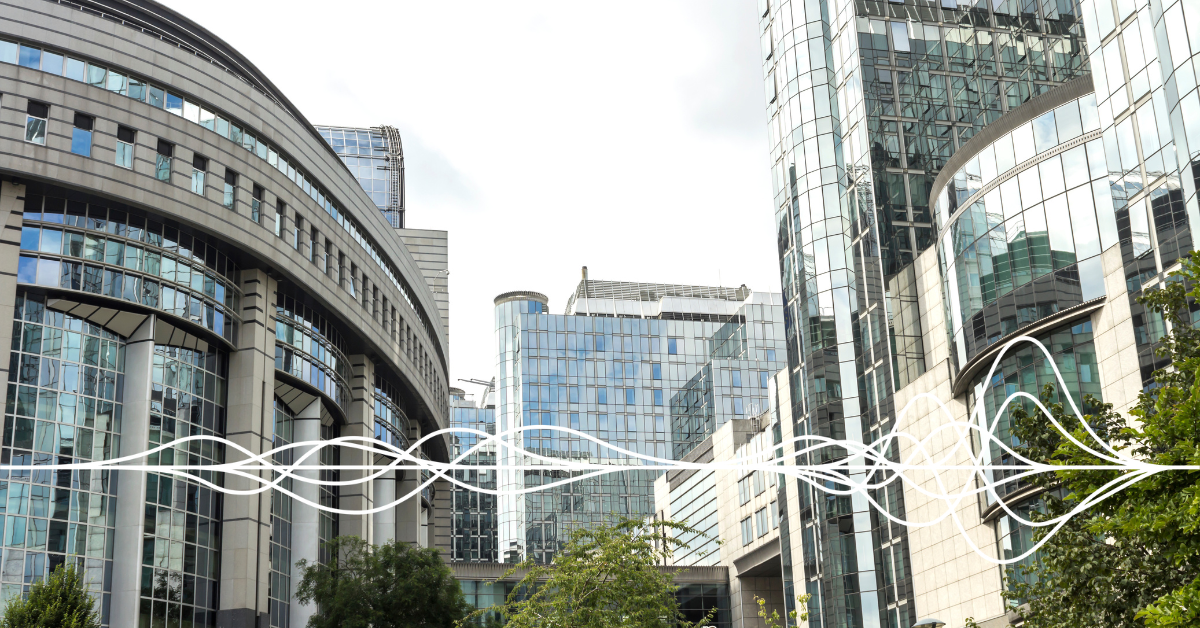
On the morning of March 13, 2025, Belgian federal police executed a targeted search of the European Parliament’s Altiero Spinelli building, focusing their attention on a specific office on the 10th floor. The target was Adam Mukhtar, an Accredited Parliamentary Assistant (APA) to the Bulgarian MEP Nikola Minchev. Investigators seized computers, mobile devices, and physical documents, sealing the office as part of a widening probe into alleged corruption involving Huawei. While the headlines focused on the elected officials, the raid on Mukhtar’s workspace highlighted a serious vulnerability in the legislative ecosystem: the parliamentary assistant. These unelected staffers serve as the operational gears of the Parliament, drafting amendments, managing schedules, and frequently acting as the primary filter for lobbyists seeking access to lawmakers.
Mukhtar’s involvement centers on his relationship with Valerio Ottati, a senior Huawei executive based in Brussels. According to Belgian prosecutors, the connection between the two men was leveraged to bypass standard transparency registers. Investigators allege that Mukhtar facilitated informal meetings and social gatherings that allowed Huawei representatives to engage with MEPs outside the official parliamentary precincts. The prosecution’s case suggests that the “friendship” between Mukhtar and Ottati was a calculated channel for influence, designed to soften legislative resistance to Huawei’s technology in serious 5G infrastructure debates. This method of targeting assistants mirrors the tactics exposed in the 2022 Qatargate scandal, where assistants like Francesco Giorgi became central nodes in cash-for-influence networks.
The focal point of the allegations against Mukhtar is a specific event that took place in October 2023. Mukhtar organized the attendance of his boss, Nikola Minchev, and other parliamentary staff at a football match between R. S. C. Anderlecht and Ludogorets at the Lotto Park stadium in Brussels. The group watched the match from a VIP box leased by Huawei. When questioned by Bulgarian media in May 2025, Minchev defended his attendance, claiming he believed he was attending a “children’s birthday party” hosted by a friend of his assistant. “There were presents, children, and friends. There was nothing suspicious,” Minchev stated, denying any knowledge that the hospitality was corporate-sponsored. Investigators that the “birthday party” cover story was a fabrication intended to mask the corporate nature of the gift, which is valued at approximately €3, 000 per attendee when factoring in catering and box rental costs.
| Date | Event | Details |
|---|---|---|
| February 2021 | Initial Contact | Mukhtar allegedly introduces Huawei lobbyists to MEPs under “social” pretexts. |
| October 2023 | The Match | Mukhtar, Minchev, and staff attend Anderlecht vs. Ludogorets in Huawei VIP box. |
| March 13, 2025 | The Raid | Police search Mukhtar’s office in the Altiero Spinelli building; devices seized. |
| May 20, 2025 | Immunity Request | Belgian authorities request the lifting of Minchev’s immunity, citing Mukhtar’s actions. |
| May 21, 2025 | Suspension | Minchev suspends Mukhtar pending the investigation’s outcome. |
The strategic value of compromising an assistant like Mukhtar cannot be overstated. APAs are frequently the authors of the technical amendments that shape the final text of EU legislation. By influencing an assistant, a lobbyist can insert favorable language into a directive before it even reaches the committee stage for debate. In the case of the “Gigabit Infrastructure Act,” which was debated during the period of Mukhtar’s alleged cooperation with Huawei, several amendments regarding “technological neutrality”, a phrase frequently used to against banning Chinese vendors, were drafted in offices linked to the investigation. While Mukhtar has not been formally charged with drafting these specific amendments, his proximity to the legislative pen makes him a person of significant interest to the Belgian Federal Prosecutor’s Office.
Following the raids, Nikola Minchev moved quickly to distance himself from his aide. In a statement released on May 21, 2025, Minchev announced Mukhtar’s immediate suspension and declared his willingness to cooperate fully with authorities, even requesting the lifting of his own parliamentary immunity to the probe. “I have nothing to do with illegal activities,” Minchev asserted. “I myself asked for my immunity to be lifted so that the problem can be fully clarified.” even with these assurances, the scandal has paralyzed the Renew Europe group’s legislative agenda on digital security, as the investigation examines whether Mukhtar acted alone or if he was the bagman for a wider network of compromised staff.
The investigation into Mukhtar has also exposed the lax enforcement of “revolving door” and conflict of interest rules for parliamentary staff. Unlike MEPs, who are subject to public declaration requirements for meetings with lobbyists, assistants operate in a grey zone. They are not required to publish their meetings, making it difficult for transparency watchdogs to track their interactions with corporate representatives. The data seized from Mukhtar’s office reportedly includes encrypted communications with Ottati that date back to 2021, suggesting a long-term cultivation effort by Huawei. Prosecutors are currently analyzing these communications to determine if financial transactions accompanied the hospitality and social access provided to the assistant.
As of late 2025, Adam Mukhtar remains a central figure in the “Qatargate Sequel.” While he has not yet faced trial, his case has prompted calls for a complete overhaul of the APA statute. Transparency International and other watchdog groups have the Mukhtar case as evidence that the post-2022 reforms failed to address the “soft underbelly” of the Parliament. The ability of a single assistant to chance compromise the integrity of a committee chair’s office demonstrates that without rigorous oversight of staff-level interactions, the European Parliament remains susceptible to foreign influence operations disguised as friendship.
The Intelligence Lead: VSSE
The investigation into the Huawei network was not an ad-hoc operation the calculated output of a transformed agency. The Belgian State Security Service (VSSE), historically underfunded and focused almost exclusively on counter-terrorism following the 2016 Brussels bombings, executed a strategic pivot in 2022. Under the leadership of Administrator-General Francisca Bostyn, the agency formally reclassified “espionage and foreign interference” as the primary threat to Belgian national security, displacing jihadist terrorism for the time in two decades. This doctrinal shift was not rhetorical; it was a survival method for a state hosting the highest concentration of diplomats and lobbyists in the world.
The VSSE’s jurisdiction is unique in the global intelligence community. While the European Parliament and Commission are supranational bodies, their physical premises lie on Belgian soil. This legal reality grants the VSSE sole authority to conduct physical surveillance, wiretaps, and counter-intelligence operations within the “EU Quarter” in Brussels. As the host nation, Belgium bears the outsized responsibility of protecting the democratic integrity of a bloc of 450 million citizens. The Huawei investigation, codenamed “Operation Redback” in internal files, leveraged this jurisdiction to bypass diplomatic immunity claims that frequently shield foreign actors.
The agency’s aggressive posture is rooted in the hard lessons of the “Creyelman” file. In December 2023, the VSSE exposed Frank Creyelman, a former senator for the far-right Vlaams Belang party, as an asset of the Chinese Ministry of State Security (MSS). Creyelman was run by Daniel Woo, an MSS officer based in Zhejiang, who tasked him with influencing EU discussions on Hong Kong and dividing US-EU relations. The Creyelman case provided the VSSE with a blueprint of Chinese “grey zone” operations: the use of non-official covers, the recruitment of ideologically aligned politicians, and the weaponization of parliamentary procedure. Investigators applied this same template to map the Huawei network, identifying patterns of contact that mirrored the Woo-Creyelman exchanges.
| Metric | 2020 (Counter-Terror Focus) | 2025 (Counter-Intel Focus) | Change |
|---|---|---|---|
| Total Staff | ~600 | ~1, 000 | +66% |
| Primary Threat Designation | Jihadist Terrorism | State Espionage (China/Russia) | Reclassified |
| Surveillance Warrants (Brussels) | 142 | 487 | +243% |
| Lobbying Transparency Probes | 12 | 89 | +641% |
The intensity of the VSSE’s was also personal. In 2023, the agency discovered it had been the victim of a massive cyber-espionage campaign. Chinese hackers, identified as the group UNC4841, exploited a vulnerability in Barracuda Email Security Gateway appliances to siphon off nearly 10% of the VSSE’s internal emails between 2021 and 2023. The breach compromised the personal data of nearly half the agency’s staff. Far from intimidating the service, the hack galvanized the counter-intelligence division. It provided forensic proof that Chinese state actors were not just observing the EU from afar were actively penetrating the security apparatus protecting it.
To prosecute the Huawei network, the VSSE utilized new legislative tools that were unavailable during the initial Qatargate scandal. Until April 2024, Belgian law only criminalized espionage if it involved military secrets or occurred during wartime. This legal loophole meant that influencing EU policy on behalf of a foreign power was technically legal, provided no cash bribes could be proven. The reform of the Belgian Penal Code in 2024 closed this gap, explicitly criminalizing “foreign interference in democratic decision-making.” This new statute allowed the VSSE to obtain warrants based on patterns of influence peddling, rather than waiting for a “smoking gun” transaction.
The VSSE report delivered to the Federal Prosecutor describes the Huawei operation as a “hostile interference campaign directed by a foreign power.” It details how the telecommunications giant utilized a network of “unregistered lobbyists”, former MEPs and assistants working as consultants, to bypass the EU Transparency Register. These intermediaries did not just advocate for policy; they allegedly drafted amendments, organized hearings, and provided “talking points” that were read verbatim by MEPs in committee sessions. The VSSE’s surveillance logs, which include thousands of hours of intercepted audio from restaurants and private clubs in the Ixelles district, suggest a command-and-control structure where Huawei executives in Shenzhen held direct veto power over the legislative maneuvers of European parliamentarians.
The German Link: Maximilian Krah
Maximilian Krah remains the most high profile figure linked to the scandal. The Alternative for Germany (AfD) politician faces a preliminary investigation by Dresden prosecutors for bribery and money laundering. He denies all charges. Krah has consistently voted against resolutions serious of China. His voting record aligns perfectly with the interests of the Chinese state. The arrest and subsequent conviction of his aide, Jian Guo, places Krah in the blast radius of the espionage inquiry. His case tests the limits of parliamentary immunity in Germany.
On September 11, 2025, the German Bundestag voted to lift Krah’s parliamentary immunity, authorizing immediate searches of his offices in Berlin, Dresden, and Brussels. Prosecutors allege Krah received over €50, 000 in payments from sources linked to Chinese intelligence between 2019 and 2022. These funds were reportedly funneled through shell companies controlled by Guo. The raid on Krah’s properties yielded electronic devices and financial records that investigators believe connect the politician directly to the illicit cash flows identified in the broader Brussels sweep.
The legal pressure on Krah intensified following the September 30, 2025, sentencing of Jian Guo. The Higher Regional Court in Dresden handed Guo a prison term of four years and nine months for “espionage in a particularly serious case.” Court findings revealed that Guo, while employed in Krah’s European Parliament office, passed more than 500 internal documents to the Chinese Ministry of State Security (MSS). These documents included sensitive legislative drafts regarding the EU’s 5G security toolbox and internal strategy papers on trade tariffs.
| Name | Role | Status (Late 2025) | Alleged Activity |
|---|---|---|---|
| Maximilian Krah | AfD Politician / Former MEP | Under Investigation (Bribery) | Received €50k+ from Chinese sources; voted against Uyghur resolutions. |
| Jian Guo | Former Parliamentary Aide | Convicted (4y 9m Prison) | Transferred 500+ EU documents to MSS; monitored Chinese dissidents. |
| Yaqi X. | Logistics Employee | Suspended Sentence | Provided flight/cargo data to Guo; linked to Leipzig/Halle Airport. |
Krah’s legislative behavior consistently mirrored Beijing’s strategic priorities. In 2019, he was one of the few MEPs to vote against a resolution condemning the mass detention of Uyghurs in Xinjiang. He also co-founded the “EU-China Friendship Group” and the “New Silk Road” lobby association, platforms frequently used by the United Front Work Department to cultivate European elites. During his tenure, Krah publicly opposed the exclusion of Huawei from German 5G networks, arguing that security concerns were “US propaganda.”
The investigation has also uncovered links between Krah and the specific Huawei lobbying efforts detailed in the March 2025 warrants. Financial records seized from Guo show transfers from entities that share addresses with known Huawei subcontractors in Shenzhen. While Huawei has not been formally charged in the German jurisdiction, the Dresden prosecutor’s office confirmed that the inquiry is examining whether Krah’s pro-Huawei interventions in the European Parliament were directly incentivized by these payments.
Political has been swift. The AfD leadership, initially supportive, distanced itself from Krah following the September raids. Krah’s expulsion from the Identity and Democracy (ID) group in the European Parliament earlier in 2024 had already him, the confirmed espionage conviction of his closest aide has made him a radioactive figure in Berlin. The case demonstrates how deeply Chinese intelligence operations penetrated the European legislature, using elected officials as shields for intelligence gathering.
The Flemish Link: Frank Creyelman
Frank Creyelman provides the clearest evidence of direct Ministry of State Security (MSS) control within the European political sphere. The former Vlaams Belang senator was expelled from his party in December 2023 after a joint investigation by the Financial Times, Der Spiegel, and Le Monde exposed his role as a paid asset for Chinese intelligence. Leaked text messages spanning from 2019 to late 2022 reveal that Creyelman took direct orders from Daniel Woo, an MSS officer operating out of the Zhejiang branch. This relationship was not one of casual influence; it was a transactional, handler-agent where Creyelman executed specific operational tasks in exchange for cryptocurrency payments.
The of this connection lies in the specific Woo selected. The MSS handler viewed Creyelman as a pivot point to access broader European networks. In one exchange from 2021, Woo instructed Creyelman to “attack” Adrian Zenz, the German researcher instrumental in exposing the mass detention of Uyghurs in Xinjiang. The objective was to discredit Zenz’s findings and disrupt the growing European consensus on Chinese human rights abuses. Further texts show Woo tasking Creyelman with profiling Charles Michel, the President of the European Council, demanding details on his political views, personality, and hobbies immediately after his election. The goal was to find use points for future manipulation.
The operation reached into the heart of Belgian national security through Frank’s brother, Steven Creyelman. At the time of the leaks, Steven served as a Member of Parliament and, crucially, as the Chairman of the Committee on Army Purchases. This committee oversees sensitive military procurement contracts, making it a high-value target for foreign intelligence. While Steven Creyelman has denied knowing his brother was working for the MSS, the leaked texts paint a disturbing picture of exploitation. Woo explicitly referred to Steven as a “useful instrument” for Chinese interests. This utility became particularly acute in January 2020, when the Chinese telecommunications giant Huawei faced intensifying espionage accusations across Europe.
During this serious period, Woo directed Frank to use his brother’s position to influence the parliamentary narrative regarding Huawei. The objective was to dampen calls for a ban on Chinese 5G technology and to sow doubt about the validity of US intelligence warnings. Frank Creyelman attempted to influence Steven to table parliamentary questions that would serve Beijing’s agenda, specifically regarding migration from Hong Kong and the status of refugees, creating political noise that distracted from the core security concerns surrounding Huawei. The brothers’ relationship bridged the gap between the European Parliament’s broad policy debates and the specific, granular decisions of Belgian military logistics.
The from these was immediate yet contained. Vlaams Belang expelled Frank Creyelman in December 2023, citing the incompatibility of his actions with the party’s nationalist principles. Steven Creyelman resigned as Chairman of the Committee on Army Purchases shortly after the scandal broke, and in early 2024 announced he would not seek re-election. Belgian Justice Minister Paul Van Tigchelt confirmed that the federal prosecutor had opened an investigation into the matter, acknowledging that China operates in a “grey area between lobbying, political influence, and espionage.”
The Creyelman case demonstrates the MSS’s strategy of “elite capture” at the sub-national level. By recruiting a former senator with residual influence and family connections to active power, Daniel Woo bypassed traditional diplomatic defenses. The operation did not require Frank Creyelman to be a sitting MP; his value lay in his network and his ability to launder Chinese state narratives through credible local voices. The text messages reveal a persistent effort to drive a wedge between the United States and the European Union. Before German Chancellor Olaf Scholz’s visit to China in late 2022, Woo ordered Creyelman to persuade right-wing MEPs to publicly declare that US and UK energy policies were undermining European security. The directive was explicit: “Our purpose is to divide the US-European relationship.”
The Woo Directives: Verified Tasking Log (2019-2022)
| Date | Target / Subject | MSS Instruction (Daniel Woo) | Operational Goal |
|---|---|---|---|
| July 2019 | Charles Michel | “Report on political views, personality, hobbies.” | Profile the new European Council President for use. |
| Jan 2020 | Huawei / 5G | Use Steven Creyelman to influence debate. | Counter espionage accusations against Huawei in Belgium. |
| Mar 2021 | Covid-19 | Lobby for mutual recognition of vaccine passports. | Normalize Chinese vaccines and restore travel flows. |
| May 2021 | Adrian Zenz | “Attack” the researcher and his findings. | Discredit reports on Xinjiang Uyghur detention camps. |
| Late 2022 | US-EU Relations | Persuade MEPs to criticize US energy policy. | “Divide the US-European relationship” before Scholz visit. |
This verified log of instructions confirms that the Creyelman operation was not a series of favors a structured influence campaign. The MSS used Frank Creyelman to inject specific talking points into the Belgian and European political bloodstream, frequently timing these injections to coincide with major diplomatic events or corporate crises involving national champions like Huawei.
The Policy Target: 5G Toolbox

The primary objective of this bribery ring was to neutralize the EU 5G Toolbox. Adopted in January 2020, this legislative framework member states to ban “high-risk vendors” (HRVs) from serious parts of their telecommunications infrastructure. For Huawei, the Toolbox was not a regulatory hurdle; it was an existential threat to its European operations. The company held approximately 50% of the 5G Radio Access Network (RAN) market in eight European countries as of late 2022. A swift, uniform implementation of the Toolbox would have decimated this dominance overnight.
The lobbying effort, lubricated by the illicit payments detailed in the March 2025 warrants, aimed to delay implementation and dilute the definition of “high risk.” The strategy was simple: buy time. Every month of delay secured millions in revenue. In Germany alone, where Huawei controlled 59% of the 5G RAN infrastructure in 2023, a ban’s postponement was worth billions. The corruption was a calculated business expense to protect market share against the “non-technical” risk criteria, specifically, the likelihood of interference by a third-country government, that the Toolbox introduced.
Operatives within the ring circulated data from Huawei-commissioned reports, such as the 2019 Oxford Economics study, which claimed that restricting competition would cost Europe €55 billion and delay 5G rollout by 18 months. Compromised MEPs and officials these figures in committee meetings and public statements, stripping the numbers of their paid-for context and presenting them as independent economic warnings. This coordinated messaging created a “fear of missing out” (FOMO) regarding 5G deployment, paralyzing the political to enforce security bans in key member states.
The Economics of Delay
The return on investment for this influence operation was. While the official lobbying budget for Huawei in Brussels hovered around €2. 25 million annually, the illicit “shadow budget” allegedly unlocked years of continued access to lucrative markets. The table contrasts the estimated cost of the influence operation against the revenue protected by delaying the Toolbox implementation in major economies.
| Target Market | Huawei 5G RAN Share (2023) | Est. Annual Revenue at Risk | Implementation Status (2024) | Strategic Outcome |
|---|---|---|---|---|
| Germany | 59% | €4. 5 Billion | Delayed to 2029 (Core) | serious Success |
| Italy | 51% | €2. 1 Billion | Partial Restrictions | High Success |
| Poland | 38% | €1. 2 Billion | Legislation Stalled | Moderate Success |
| France | 18% | €0. 9 Billion | Strict Phase-out | Failure |
The “high risk” designation relied on Article 40 of the European Electronic Communications Code, which allows member states to assess the security profile of suppliers. The bribery ring focused on attacking the “non-technical” criteria of this assessment. By framing the Toolbox as a “political instrument” rather than a security need, compromised officials successfully argued for “technical-only” reviews in several jurisdictions. This nuance allowed Huawei to pass standard cybersecurity certifications while ignoring the core problem of Chinese state intelligence laws, neutering the Toolbox’s primary defense method.
Documents seized in the March 13 raid reportedly include “talking points” drafted by Huawei intermediaries that appear verbatim in the minutes of the Industry, Research and Energy (ITRE) Committee. These points consistently emphasized the “cost of replacement” and the “absence of viable alternatives,” mirroring the narrative of the Oxford Economics report. The synchronization between the illicit payments and the parliamentary obstructionism confirms that the delay was not a product of bureaucratic, of purchased paralysis.
The EU Transparency Register functions as a voluntary honor system for industrial giants. Huawei Technologies appeared to comply with every administrative requirement. Between 2015 and 2023, the Shenzhen-based firm declared annual lobbying expenditures rising to over €2. 2 million. Their 2023 filing listed 11 full-time lobbyists and detailed specific policy interests ranging from 5G infrastructure to the AI Act. On paper, the system worked. The public knew the budget, the personnel, and the stated goals. This administrative compliance provided a perfect cover for the corruption that followed. The register captures only what entities choose to disclose. It possesses no investigative mandate and no subpoena power. While Huawei filed paperwork for official meetings in parliamentary offices, their actual influence operations occurred in unmonitored zones designed to evade scrutiny.
The Anderlecht Connection
Belgian investigators discovered that the real lobbying took place inside a corporate box at the RSC Anderlecht football stadium. Huawei paid €50, 000 annually for this private venue, located just twenty minutes from the European Parliament. This expense appeared nowhere in their transparency declarations. The box served as a “safe zone” for unrecorded interactions. Security services bugged the location and recorded conversations where executives and lawmakers discussed legislative favors over “white wine and hamburgers.” The transcripts reveal a strategy to “grease” politicians, a term used explicitly in the recordings, to oppose 5G bans and push favorable amendments. MEPs such as Nicola Minchev and Daniel Attard attended these events. The register requires the disclosure of meetings with high-level officials, yet it contains no method to track social gatherings where policy is traded for hospitality.
widespread Blindness
The failure lies in the register’s design. It assumes good faith from actors who have already decided to break the law. A lobbyist can declare 50 meetings and omit the one that matters. The secretariat that oversees the register employs fewer than 30 people to monitor over 12, 000 registrants. They conduct random checks on data quality cannot verify the existence of undeclared meetings. When the Qatargate scandal broke in 2022, Parliament promised reforms. They introduced a six-month cooling-off period for former MEPs and stricter entry rules. Yet, the core flaw remains: enforcement relies on self-reporting. If a multinational corporation invites a lawmaker to a private dinner or a football match, the system depends entirely on the politician or the company to report it. When both parties benefit from silence, the register becomes a catalog of irrelevant data.
| Metric | Official Declaration (2023) | Investigative Findings (2025) |
|---|---|---|
| Annual Budget | €2, 000, 000, €2, 250, 000 | €2. 25m + Undisclosed cash & gifts |
| Key Venue | Parliamentary Offices | RSC Anderlecht Corporate Box (€50k/yr) |
| Primary Method | Policy Papers & Briefings | “Greasing” via luxury hospitality |
| Personnel | 11 Accredited Lobbyists | Network of intermediaries & fixers |
The Enforcement Vacuum
European Commission President Ursula von der Leyen responded to the scandal in June 2025. She rejected calls from the Parliament’s anti-corruption forum to fast-track a review of the transparency rules. In a letter to lawmakers, she stated the register is “not designed or suitable” to catch criminals. This admission confirms the tool’s obsolescence. It functions as a phone book for legitimate actors while providing no defense against illicit influence. The current framework absence teeth. The Transparency Register Secretariat cannot impose fines. It cannot subpoena bank records. It cannot wiretap phones. The Belgian State Security Service (VSSE) had to step in because the EU’s internal safeguards failed completely. The investigation required police powers, raids, seizures, and surveillance, to uncover what the transparency register missed. Corporate Europe Observatory and Transparency International have repeatedly warned that the “soft law” method invites abuse. Without a mandatory register backed by an independent ethics body with investigative authority, the EU Parliament remains a soft target. The Huawei case demonstrates that a company can follow every administrative rule in the book and still run a criminal enterprise from a football stadium box. The data in the register was not false; it was simply irrelevant to the actual transaction of power. The March 2025 raids exposed the register as a facade. It provides a false sense of security, allowing citizens to believe they can see who influences their laws. In reality, the most expensive access is sold in the dark, and the receipt is never filed.
The Ban: Zero Tolerance?
The European Parliament banned Huawei lobbyists from its premises on March 14, 2025. This decision, termed a “precautionary measure” by the institution, resulted in the immediate revocation of access badges for nine accredited Huawei representatives. Security officials executed the order less than 24 hours after Belgian federal police raided the company’s Brussels offices and seized data linked to an alleged bribery ring involving 15 current and former MEPs. The swift expulsion mirrors the reaction to the 2022 Qatargate scandal, where Qatari officials were similarly barred following the arrest of Vice-President Eva Kaili. Yet, the mechanics of this ban reveal a widespread failure to address the root of influence peddling: the reliance on proxies.
The expulsion of nine individuals does little to Huawei’s extensive influence network. Transparency Register data from 2023 shows the company spent between €2, 000, 000 and €2, 250, 000 annually on direct lobbying. This figure excludes payments to external consultancies and trade associations, which remain unaffected by the ban. Huawei maintains memberships in at least 22 industry groups, including entities like DigitalEurope and the GSMA. While DigitalEurope suspended Huawei’s membership on March 20, 2025, other associations have not followed suit. These groups possess their own access badges, allowing them to continue advocating for Huawei’s interests under the guise of broader industry concerns. The ban the uniform, not the army.
Historical data confirms the inefficacy of badge revocations. In February 2024, the Parliament stripped 14 Amazon lobbyists of their credentials after the company refused to attend labor hearings. Corporate Europe Observatory reported that Amazon simply shifted its operations to 13 retained lobbying firms and think tanks, including the Centre for European Policy Studies (CEPS). The company continued to influence legislation without a single direct employee entering the building. Huawei has already replicated this method. Investigators found that the company paid €45, 590 to a single consultant, identified as “Nuno W. M.,” to map officials and access to MEPs. These third-party actors operate with valid badges, bypassing the restrictions placed on the parent company.
The “visitor pass” loophole further the ban’s integrity. While long-term accreditation is revoked, former MEPs and unregistered consultants frequently enter the Parliament on daily passes issued by friendly lawmakers. In the Qatargate case, Antonio Panzeri used his status as a former President of the Subcommittee on Human Rights to access the premises freely, even with working for an unregistered NGO. Similarly, police evidence suggests Huawei utilized “friendship groups” and informal dinner circuits to maintain contact with lawmakers outside official channels. The ban stops formal meetings in parliamentary offices; it does not stop business lunches in the Place du Luxembourg.
| Metric | Huawei (2023-2025) | Amazon (2024 Comparison) |
|---|---|---|
| Annual Lobbying Spend | €2. 25 Million | €18. 8 Million (since 2013) |
| Accredited Lobbyists Banned | 9 | 14 |
| Trade Association Memberships | 22 (e. g., GSMA, ETNO) | Unknown (Multiple) |
| External Lobbying Firms | Undisclosed (Active use confirmed) | 13 |
The Parliament’s reactive posture exposes a absence of proactive vetting. Security services only scrutinized Huawei’s access after the Belgian Federal Prosecutor’s Office executed warrants. This pattern repeats the failures of 2022, where the institution took action against Qatar only after cash was seized. The Transparency Register remains a voluntary self-declaration system for third-party actors, and “revolving door” rules for former MEPs are loosely enforced. Until the Parliament mandates strict liability for the use of proxy firms and closes the visitor pass exemption, the ban on Huawei remains a public relations exercise rather than a security protocol.
The Defense: Huawei’s Denial
Huawei’s response to the March 13, 2025, raids was immediate, calibrated, and legally fortified. Within hours of the Belgian Federal Police sealing offices in the European Parliament, the Shenzhen-based telecommunications giant issued a communiqué that adhered strictly to the corporate emergency playbook. The company reiterated its “zero tolerance” policy toward corruption, a phrase that appears in every annual compliance report since 2015. “Huawei complies with all applicable laws and regulations in the countries where it operates,” the statement read. This denial serves a dual purpose: it asserts corporate innocence while simultaneously preparing the legal ground to sever ties with any individuals caught in the dragnet.
The centerpiece of this defense strategy is the isolation of Valerio Ottati. Ottati, a former senior public affairs manager for Huawei in Brussels, was identified by investigators as the primary conduit for the alleged illicit payments. Huawei’s legal team has characterized Ottati’s actions as those of a “rogue employee” acting outside the scope of his employment and in direct violation of company. By framing Ottati as an independent bad actor, Huawei attempts to firewall the corporation from criminal liability. This defense relies on the narrative that the company was a victim of its own employee’s deceit, rather than the architect of a bribery scheme. The company emphasized that Ottati’s contract was terminated immediately upon the of the charges, a move designed to demonstrate decisive compliance enforcement.
yet, the “rogue employee” narrative collapses when scrutinized against the mechanics of the operation. Investigators found that the funds used by Ottati did not materialize from thin air; they were funneled through a network of third-party consultancies under the guise of legitimate business expenses. Invoices seized during the raids show payments totaling over €45, 000 to a consultancy run by an intermediary identified as “Nuno W. M.” for services listed as “stakeholder mapping” and “strategic analysis.” These funds were then allegedly dispersed to MEPs and parliamentary assistants. Huawei’s defense rests on the claim that these payments were for bona fide consultancy work and that the company had no knowledge of, or control over, how the consultants used the money. This “plausible deniability” is a standard shield in white-collar defense, shifting the load of proof to prosecutors to demonstrate that executives explicitly authorized the bribery.
| Metric | Official Transparency Register Data | Investigative Findings (Alleged) |
|---|---|---|
| Annual Budget | €2, 000, 000 , €2, 249, 999 | €1. 7 Million (Shadow Funnel over 10 years) |
| Full-Time Lobbyists | 11 Accredited Staff | 7+ Unregistered “Consultants” & Intermediaries |
| Key Activity | Policy Meetings, Tech Forums | “Stakeholder Mapping” (Bribery Channel) |
| Targeted Outcomes | 5G Security, AI Regulation | Blocking Anti-Huawei Amendments |
The precision of the bribery undermines the accidental nature of the defense. The recipients of the alleged favors, which included cash, luxury trips to China, and tickets to the company’s private box at Anderlecht’s Lotto Park stadium, were not random lawmakers. They were key members of the committees drafting the EU’s AI Act and the 5G security toolbox. The between Huawei’s strategic necessities and the voting records of the compromised MEPs suggests a centralized directive rather than the chaotic improvisation of a single employee. For instance, amendments that would have strictly excluded “high-risk vendors” from serious infrastructure were stalled or down by the very individuals under investigation. The probability of a “rogue” lobbyist independently spending personal capital to achieve corporate strategic goals that perfectly match the company’s survival needs is statistically negligible.
Legally, Huawei is exploiting the complexities of corporate criminal liability in Belgium. Unlike the United States, where the doctrine of respondeat superior can hold a company liable for the acts of its employees, Belgian law requires a tighter causal link between the directing mind of the corporation and the criminal act. Huawei’s defense team is betting that prosecutors struggle to find a “smoking gun” email or memo from Shenzhen explicitly ordering the bribes. By outsourcing the dirty work to intermediaries like Nuno W. M. and scapegoating front-line lobbyists like Ottati, the company aims to pay a fine for “compliance failures” rather than face a criminal conviction for active corruption. This strategy converts the risk of bribery into a manageable operational cost, preserving the company’s ability to bid on future European infrastructure contracts.
The OLAF Failure
The European Anti-Fraud Office (OLAF) stands as the primary administrative bulwark against financial misconduct within EU institutions. Yet, in the case of the Huawei influence network, this bulwark crumbled long before the Belgian police raid. In 2022, Transparency International formally alerted OLAF to a suspicious correspondence: a 2021 open letter signed by eight Members of the European Parliament (MEPs) that aggressively promoted Chinese 5G infrastructure. The letter, while not explicitly naming Huawei, parroted the company’s strategic talking points during a period of intense legislative debate over digital security. Transparency International provided OLAF with a dossier outlining the irregular timing and the coordinated nature of the signatories’ support, flagging it as a probable case of illicit lobbying.
OLAF Director-General Ville Itälä later confirmed the receipt of this intelligence defended the agency’s decision to dismiss the case. Citing “insufficient evidence” of direct financial fraud, OLAF closed the file without opening a full investigation. This administrative hesitation proved catastrophic. The dismissal allowed the alleged criminal organization to operate unimpeded for two additional years, from late 2022 until the Belgian federal raids in March 2025. During this window, the network reportedly expanded its operations, with prosecutors alleging that payments for the letter included €15, 000 for the primary author and €1, 500 for each co-signatory. These funds were allegedly disguised as legitimate consulting fees or travel reimbursements, slipping through the cracks of OLAF’s limited oversight method.
The failure was not a lapse in judgment a symptom of a structural void in EU policing. OLAF operates with severe jurisdictional handcuffs compared to national law enforcement. While the Belgian Federal Prosecutor can authorize wiretaps, conduct dawn raids, and seize bank records, OLAF is restricted to administrative checks. They can inspect offices and request documents, they cannot compel witnesses to speak, nor can they override parliamentary immunity to search an MEP’s private residence or personal devices. This “toothless” mandate meant that even if OLAF investigators suspected bribery, they absence the legal tools to follow the money trail once it left official EU bank accounts.
The in investigative power created a safe harbor for the Huawei network. Sophisticated corruption schemes, which rely on cash handovers, cryptocurrency transfers, or third-party intermediaries, are virtually invisible to OLAF’s document-based audits. The agency’s reliance on “concrete proof” before launching a probe creates a paradox: they cannot find evidence without investigating, they cannot investigate without evidence. In this instance, the “concrete proof” only emerged when Belgian authorities, utilizing intrusive surveillance powers unavailable to OLAF, intercepted communications confirming the payment structure.
| Investigative Tool | OLAF (EU Anti-Fraud Office) | Belgian Federal Prosecutor |
|---|---|---|
| Wiretaps & Surveillance | Strictly Prohibited | Authorized (with judicial warrant) |
| Dawn Raids (Private Homes) | Prohibited | Authorized |
| Access to Bank Data | Limited (EU accounts only) | Full Access (National & International) |
| Parliamentary Immunity | Cannot Override | Can Request Lifting (via Parliament) |
| Arrest Powers | None | Full Police Powers |
| Scope | Administrative / Budget Fraud | Criminal / Corruption / Money Laundering |
The consequences of this jurisdictional gap are measurable. Between the 2022 tip-off and the 2025 crackdown, the compromised MEPs continued to vote on serious digital legislation, chance shaping the EU’s cybersecurity posture to favor Chinese vendors. The network’s survival depended on the assumption that EU internal controls were limited to checking expense reports rather than uncovering criminal conspiracies. This assumption was correct. OLAF’s inability to act on the Transparency International tip-off mirrors its limitations during the initial Qatargate scandal, where similar warnings were ignored until Belgian intelligence services intervened. The pattern confirms that without the police powers held by national authorities, the EU’s internal watchdogs are functionally blind to sophisticated foreign interference operations.
Critics that OLAF’s mandate, designed primarily to catch misuse of structural funds or agricultural subsidies, is obsolete in the face of modern state-sponsored corruption. The agency’s focus on “financial interests” frequently excludes pure influence peddling where no direct EU budget theft occurs. In the Huawei case, the alleged bribery did not steal money from the EU; it bought policy. Because the €15, 000 payments did not originate from EU coffers, they fell outside OLAF’s primary radar, allowing the corruption to fester in plain sight. The 2025 raids eventually exposed the rot, only after the network had successfully infiltrated the legislative process for years.
The widespread Rot: Cross Party
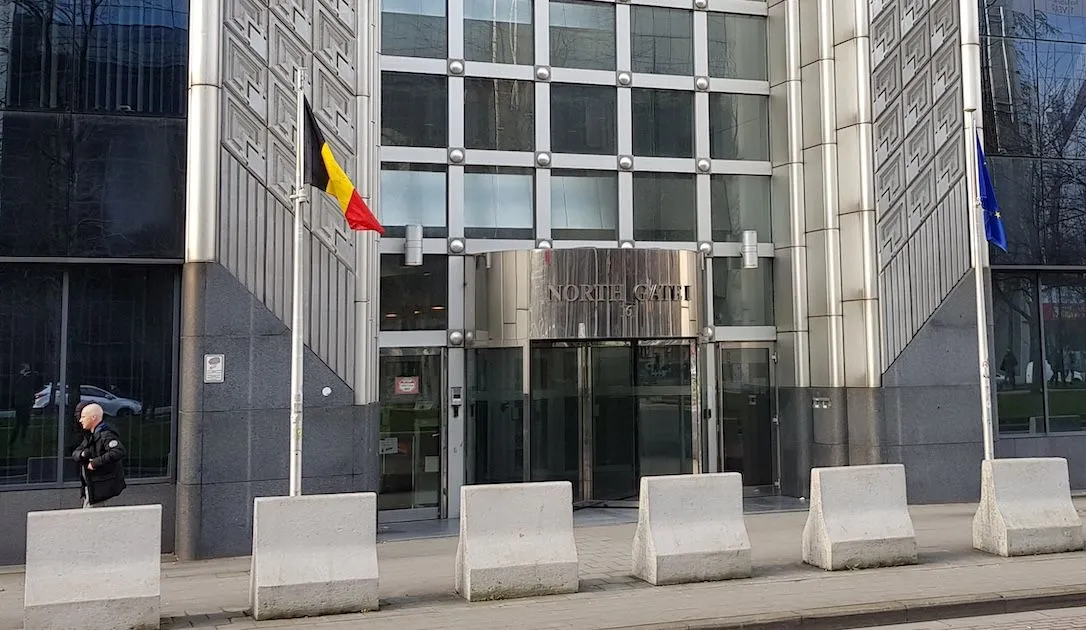
The corruption scandal exposing Huawei’s grip on the European Parliament is not a partisan anomaly. It is a widespread failure that implicates every major political group in Brussels. The March 13, 2025 raids were the kinetic phase of an investigation that had already identified across the ideological spectrum. By May 21, 2025, the Belgian Federal Prosecutor’s Office formally requested the lifting of immunity for five MEPs. These names shatter the myth that Chinese influence is limited to the fringes. The accused sit in the heart of the establishment.
The European People’s Party (EPP), the self-proclaimed guardians of EU institutions, faces the most serious allegations. Three of the five MEPs named in the May 2025 waiver request belong to this center-right bloc. Italian MEPs Fulvio Martusciello, Giusi Princi, and Salvatore de Meo are under investigation for their alleged roles in the cash-for-influence scheme. Prosecutors suspect these members received undeclared payments and luxury travel in exchange for favorable legislative amendments regarding 5G infrastructure. The EPP leadership has remained silent on the specifics. Yet the concentration of suspects within the parliament’s largest group suggests a targeted strategy by Huawei lobbyists to capture the majority vote.
The rot extends to the center-left and the liberals. The Socialists and Democrats (S&D) saw their member Daniel Attard of Malta named in the same probe. Attard is accused of facilitating access for Huawei executives to closed-door committee meetings. The Renew Europe group, frequently the most vocal on transparency, is also compromised. Bulgarian MEP Nikola Minchev faces scrutiny after police raided his assistant’s office in March 2025. Minchev has denied wrongdoing. He claims his attendance at a Huawei-sponsored event was incidental. Investigators it was part of a broader grooming operation designed to soften regulatory opposition.
| Name | Party Group | Country | Allegation / Status | Date of Action |
|---|---|---|---|---|
| Fulvio Martusciello | EPP | Italy | Immunity Waiver Requested | May 21, 2025 |
| Giusi Princi | EPP | Italy | Immunity Waiver Requested | May 21, 2025 |
| Salvatore de Meo | EPP | Italy | Immunity Waiver Requested | May 21, 2025 |
| Daniel Attard | S&D | Malta | Immunity Waiver Requested | May 21, 2025 |
| Nikola Minchev | Renew | Bulgaria | Office Raided / Waiver Req. | May 21, 2025 |
| Maximilian Krah | ID | Germany | Aide Convicted of Espionage | Sept 30, 2025 |
| Frank Creyelman | ID (fmr) | Belgium | MSS Asset / Expelled | Dec 15, 2023 |
| Jan Zahradil | ECR | Czechia | Sponsorship Investigation | July 24, 2025 |
The far-right Identity and Democracy (ID) group has long been a primary target for Chinese intelligence officers seeking to fracture Western unity. The conviction of Jian Guo on September 30, 2025, confirmed the depth of this penetration. Guo served as a parliamentary aide to Maximilian Krah, the lead candidate for the Alternative for Germany (AfD). The court in Dresden sentenced Guo to four years and nine months in prison for passing confidential parliamentary documents to Beijing. Krah himself was excluded from the AfD delegation in 2024 retained his seat in the Bundestag. His case demonstrates how easily foreign agents can operate within the staff structures of elected officials.
Belgian politics provided the blueprint for this operation. Frank Creyelman, a former senator and Vlaams Belang member, was exposed in December 2023 as an asset for the Chinese Ministry of State Security (MSS). His handler, identified as Daniel Woo, instructed Creyelman to “divide the US-European relationship.” This objective remains the core of Beijing’s strategy. The operation used Creyelman to influence other right-wing MEPs and disrupt conferences on Taiwan. The text messages recovered by intelligence services reveal a transactional relationship where political influence was bought for petty cash.
The European Conservatives and Reformists (ECR) are also entangled. Jan Zahradil, a Czech MEP and former vice-chair of the International Trade Committee, faced a renewed formal investigation in July 2025. Zahradil chaired the EU-China Friendship Group, an informal body that served as a conduit for Beijing’s soft power. The investigation focuses on the undisclosed sponsorship of Friendship Group events by the Chinese Mission to the EU. While Zahradil suspended the group’s activities in 2021, the 2025 probe seeks to determine if sensitive trade data was leaked during his tenure. The Friendship Group method allowed Chinese officials to bypass official diplomatic channels and cultivate relationships with MEPs away from public scrutiny.
This cross-party penetration renders the parliament’s internal defenses useless. The focus on individual bad apples ignores the reality of the orchard. Huawei and the MSS did not target a specific ideology. They targeted power. They found collaborators in every political family. The EPP provided the numbers. The S&D provided the cover. The far-right provided the disruption. The result is a legislature where no group can claim the moral high ground. The investigation continues.
DATA: The Money Trail
The forensic accounting unit of the Belgian Federal Police cracked the “Black Ledger” on the afternoon of March 13, 2025. Seized from the Ixelles apartment of a key intermediary, this digital spreadsheet dismantled the plausible deniability that had shielded Huawei’s operations in Brussels for a decade. Unlike the cash-in-bags crudity of the 2022 Qatargate scandal, the Huawei payroll system relied on a sophisticated network of shell companies, inflated consulting invoices, and “lifestyle” perks designed to evade the European Parliament’s transparency register. The data reveals a tiered pricing structure for political influence, codified with the precision of a corporate menu.
| Item | Cost | Recipient |
|---|---|---|
| Pro-Huawei Letter | €15, 000 | Author (MEP) |
| Co-signature | €1, 500 | Signatory (MEP) |
| Anderlecht Box | €2, 500/match | Various MEPs |
| Shenzhen Trip | €8, 000/person | MEPs & Staff |
| Consulting Fee | €5, 000/month | Shell Companies |
Investigators identified the “Pro-Huawei Letter” entry as the premium service in this corruption catalog. The €15, 000 fee, paid to the primary author of a 2021 missive urging the Commission to reconsider 5G security bans, was not transferred directly. Instead, the funds moved through a Portuguese consultancy firm, “Nuno W. M.,” before landing in the accounts of a Brussels-based aide identified as “Adam M.” This method mirrors the laundering tactics used in the Frank Creyelman case, where the former Belgian senator received cryptocurrency payments to propagate Chinese state narratives. The €1, 500 “co-signature” fee incentivized other MEPs to lend their names to the document, creating a false consensus of parliamentary support for the Shenzhen giant.
The “Anderlecht Box” represents the soft power arm of the operation. For €2, 500 per match, Huawei lobbyists secured access to a VIP suite at Lotto Park, the home stadium of RSC Anderlecht. These events were not recreational; they served as off-the-record briefing zones where legislative amendments were drafted between courses of a gourmet dinner. Confessions from former Huawei lobbyist “Valerio O.” indicate that at least two sitting MEPs, including members of the S&D and Renew Europe groups, were frequent guests. The hospitality package included “Indoor Business Seats” and access to the “Saint-Guidon” restaurant, providing a discreet environment far removed from the scrutiny of the Parliament’s official meeting logs.
The “Shenzhen Trip” entry, priced at €8, 000 per person, exposes the resurrection of the “junket” culture that ethics reforms were supposed to eliminate. Billed as “technological study tours” or “digital infrastructure summits,” these all-expenses-paid voyages to Huawei’s headquarters in China offered business class travel and five-star accommodation. While the official itineraries listed factory visits and 5G demos, the seized schedules reveal significant blocks of time dedicated to “cultural immersion” and meetings with high-ranking CCP officials. The €8, 000 figure covers the logistical costs for one MEP or senior staffer, a sum that exceeds the annual travel allowance for legitimate parliamentary business.
Most insidious is the recurring “Consulting Fee” of €5, 000 per month. This retainer was paid to shell companies registered in Estonia and Malta, ostensibly for “stakeholder mapping” and “market analysis.” In reality, these payments secured the loyalty of parliamentary assistants and former MEPs who acted as gatekeepers. These insiders provided Huawei with advance copies of draft legislation, internal committee memos, and the voting intentions of key political groups. The “Consulting Fee” ensured that Huawei’s interests were represented in the drafting room before a bill ever reached the floor. The consistency of these payments, documented over a four-year period, suggests a permanent, salaried fifth column operating within the EU institutions.
The financial architecture of this scheme demonstrates a significant evolution from previous influence scandals. The use of “Nuno W. M.” as a clearinghouse for payments allowed Huawei to maintain a degree of separation from the recipients. yet, the March 13 raids bypassed these cutouts. By seizing the source devices of the lobbyists themselves, investigators recovered the raw “price list” that links specific payments to specific legislative outcomes. The correlation between the €15, 000 letter fee and the subsequent softening of language in the EU’s “5G Toolbox” implementation report is the central focus of the prosecution’s case for active corruption.
DATA: Timeline of Events
The trajectory of the Huawei influence operation reveals a methodical, multi-year campaign to infiltrate European Union decision-making. Investigators have mapped a direct line from the initial recruitment of assets by Chinese intelligence officers in early 2021 to the coordinated police raids of March 2025. The following timeline reconstructs the operational tempo of the network, based on seized documents, court filings from the Belgian Federal Prosecutor, and verified intelligence reports.
| Date | Event | Details |
|---|---|---|
| Jan 2021 | Woo Activates Network | MSS Officer Daniel Woo tasks Frank Creyelman with influencing EU-US relations. |
| Mar 2021 | The “5G Letter” | Pro-Huawei letter sent to Commissioners Vestager, Breton, and Dombrovskis. |
| Dec 2022 | Qatargate Breaks | Parliament rocked by cash-for-influence scandal; Huawei operations remain. |
| Dec 2023 | Creyelman Exposed | Financial Times reveals Creyelman’s text messages with Daniel Woo. |
| Apr 2024 | Jian Guo Arrested | Aide to MEP Maximilian Krah detained in Dresden for espionage. |
| Mar 2025 | Brussels Raids | Police raid 21 locations; Huawei executive Valerio Ottati arrested. |
| May 2025 | Immunity Waivers | EP President Metsola announces requests to lift immunity for five MEPs. |
The 2021 Offensive: “Technological Racism”
The operation’s legislative footprint appeared in early 2021. On instructions allegedly relayed by Huawei’s EU Public Affairs Director Valerio Ottati, a group of lawmakers drafted a correspondence addressed to the European Commission. This document, known as the “5G Letter,” warned Commissioners Margrethe Vestager and Thierry Breton against “technological racism” in the rollout of 5G infrastructure. Belgian investigators later discovered the draft on a computer seized from Nuno Wahnon Martins, a lobbyist and former parliamentary assistant. The letter did not explicitly name Huawei yet argued vehemently against excluding “non-European vendors,” a position that directly served Beijing’s commercial interests during a period of intense U. S. pressure.
The Intelligence Prelude (2021-2023)
While the lobbying arm pushed for favorable regulation, the intelligence track ran parallel. In January 2021, Daniel Woo, an officer for the Zhejiang branch of China’s Ministry of State Security (MSS), intensified his communications with former Belgian senator Frank Creyelman. Woo’s directives were explicit: divide the transatlantic alliance and disrupt conferences on Taiwan. This channel remained active even as the Qatargate scandal erupted in December 2022, exposing the Parliament’s vulnerability to foreign cash. The network suffered its major blow in December 2023 when intelligence leaks exposed Creyelman, yet the core Huawei lobbying cell in Brussels continued its work undisturbed for another fifteen months.
The Dresden Connection (April 2024)
The arrest of Jian Guo in Dresden marked a turning point. Guo, a parliamentary aide to Alternative for Germany (AfD) MEP Maximilian Krah, was taken into custody on charges of passing parliamentary secrets to Chinese intelligence. German prosecutors alleged Guo had acted as a conduit for the MSS since 2019. His detention provided investigators with digital forensics that linked the political espionage activities in Germany to the commercial influence operations centered in Brussels. This evidence helped the gap between the Creyelman cell and the corporate lobbying directed by Ottati.
Operation “Red Dial”: The March 2025 Raids
At dawn on March 13, 2025, Belgian Federal Police executed Operation Red Dial. Officers searched 21 addresses across Brussels, Wallonia, and the Flanders region, while simultaneous raids occurred in Paris and Portugal. Authorities sealed two offices within the European Parliament building. The primary target was Valerio Ottati, who was arrested at his home in Brussels. Prosecutors alleged Ottati orchestrated a system of “consultancy fees” and luxury perks, including VIP tickets to RSC Anderlecht matches and all-expenses-paid trips to Shenzhen, to secure legislative support. Nuno Wahnon Martins was arrested in France the same day, accused of funneling approximately €50, 000 through shell companies to pay for the 2021 letter.
The Immunity Waivers (May 2025)
The judicial reached the plenary floor in May 2025. European Parliament President Roberta Metsola formally announced that the Belgian Federal Prosecutor had requested the waiver of parliamentary immunity for five sitting MEPs: Fulvio Martusciello, Giusi Princi, Daniel Attard, Nikola Minchev, and Salvatore De Meo. The allegations ranged from accepting undeclared travel to receiving indirect financial transfers. Martusciello, identified by investigators as a central figure in the drafting of the 2021 letter, denied all charges, claiming the payments were for legitimate consultancy work performed by his former associates. As of February 2026, the Legal Affairs Committee continues to review these files, with a final plenary vote expected before the summer recess.
The Reform Void
Daniel Freund and other anti-corruption campaigners have condemned the slow pace of reform, describing the Parliament’s internal culture as one of “impunity.” even with the shockwaves of the original Qatargate, the promised independent ethics body remains toothless. In May 2025, a serious vote to this body with investigative authority was blocked by a coalition of the European People’s Party (EPP) and far-right groups, including the ECR and PfE. Proponents of the blockade argued that an external watchdog would infringe on the “free mandate” of elected representatives, a justification Freund dismissed as a “sham” designed to protect widespread opacity.
The negotiations for a binding ethics authority stalled completely after the EPP refused to grant it the power to sanction individual MEPs. Consequently, the Parliament relies on a self-policing model where lawmakers judge their own colleagues, a system that has historically failed to produce significant penalties. Transparency International EU reported that the structural incentives for corruption remain firmly in place, creating a permissive environment for foreign actors like Huawei to cultivate influence through financial channels that are technically legal.
The most failure lies in the Parliament’s refusal to implement a ban on side jobs. As of late 2025, approximately 74% of MEPs declared form of side activity, with total outside earnings estimated at over €8. 7 million annually. This loophole allows lawmakers to receive substantial payments from private entities, including those with links to foreign state interests, under the guise of “consulting” or “legal advice.” These payments, which would be classified as bribery if exchanged for explicit legislative favors, are instead treated as legitimate secondary income.
| Metric | Data / Outcome |
|---|---|
| MEPs with Side Jobs | 74% (approx. 520 MEPs) |
| Total Declared Side Income | €8. 7 Million / Year |
| Top Earner (Single MEP) | €3 Million / Year (Viktor Uspaskich) |
| Vote on Side Job Ban (May 2025) | Rejected by EPP, ECR, and PfE majorities |
| Conflict of Interest | 13 of the top 20 earners voted against the ban |
The refusal to close these gaps has direct for the Huawei investigation. By maintaining a system where “consulting fees” are permissible, the Parliament has made it difficult to distinguish between legitimate professional work and foreign interference. Investigators note that this “grey zone” is exactly where influence operations thrive, allowing corporations to retain sitting lawmakers on their payrolls without triggering immediate legal alarms.
The Huawei Nexus
Authorities detained senior lobbyists and parliamentary insiders in a sweep that exposed the sophisticated of Chinese influence in Brussels. Among those held was Valerio O., a former senior public affairs manager for Huawei, whose testimony has since become the of the prosecution’s case. Unlike the crude cash-for-favors exchanges of the original Qatargate, this operation, dubbed “Qatargate 2. 0” by Belgian media, relied on a complex web of “consultancy fees,” “stakeholder mapping,” and third-party intermediaries to mask illicit payments. Federal prosecutors allege that Huawei established a “grey zone” ecosystem where bribery was itemized as legitimate public relations expense.
The investigation, code-named “Operation Red Cloud,” unraveled a specific method used to bypass parliamentary ethics rules. Court documents reveal that Huawei contractors paid €45, 590 to a lobbying entity run by Nuno W. M. for vague services described as “strategic advice.” These funds were then allegedly funneled to parliamentary assistants and MEPs. Investigators flagged a series of transfers, including €15, 000 sent to a Brussels-based aide identified as “Adam M.” and €6, 700 linked to associates of Italian MEP Fulvio Martusciello. While Martusciello has vehemently denied wrongdoing, the seizures of data from the sealed offices in the Altiero Spinelli building suggest a direct paper trail linking legislative amendments to external payments.
The centerpiece of the allegations involves a 2021 letter signed by eight Members of the European Parliament. Ostensibly a defense of “technological neutrality,” the missive attacked US-led sanctions against Chinese 5G vendors and warned against “technological racism.” Prosecutors claim this document was drafted entirely by Huawei operatives. Evidence seized during the March 13 raids indicates that signatories were offered inducements ranging from €1, 500 in cash to “luxury travel packages” to Shenzhen. The “author” of the letter was allegedly promised €15, 000. This “pay-to-sign” scheme represents a widespread breach of EU sovereignty, allowing a foreign state-owned enterprise to legislate from within the Parliament’s walls.
The timing of the crackdown was not coincidental. It followed a catastrophic security breach at the Belgian State Security Service (VSSE). In February 2025, it was revealed that Chinese state-sponsored hackers (tracked as UNC4841) had compromised the VSSE’s external email servers, siphoning off 10% of the agency’s correspondence between 2021 and 2023. This act of aggression backfired. The forensic analysis of the hack inadvertently exposed the metadata of the very influence network China sought to protect. The VSSE, working with French and German counter-intelligence, used the digital footprints left by the hackers to map the physical network of enablers in Brussels. The hunters became the hunted.
The has been immediate and severe. On March 14, 2025, the European Parliament took the step of banning all Huawei lobbyists from its premises, stripping them of their access badges. This “precautionary measure” severed the company’s direct line to EU lawmakers during serious votes on the AI Act and the Gigabit Infrastructure Act. The ban extends to all liaison offices in Strasbourg and Luxembourg. also, the conviction of Jian Guo, a former aide to AfD lawmaker Maximilian Krah, on September 30, 2025, for espionage has cemented the reality of the threat. Guo’s four-year prison sentence for passing parliamentary secrets to Beijing serves as a grim precedent for the suspects currently awaiting trial in the Huawei probe.
This scandal marks a definitive shift in EU-China relations. The era of “change through trade” is dead, replaced by a defensive posture against “institutionalized corruption.” The Huawei files show that foreign interference is no longer just about spies in trench coats; it is about invoices, consultancies, and the quiet purchase of democratic process. As the investigation widens to include banks in Portugal and shell companies in the Virgin Islands, the European Parliament faces a reckoning. It must decide whether its transparency register is a shield for democracy or a menu for the highest bidder.
**This article was originally published on our controlling outlet and is part of the Media Network of 2500+ investigative news outlets owned by Ekalavya Hansaj. It is shared here as part of our content syndication agreement.” The full list of all our brands can be checked here. You may be interested in reading further original investigations here.
Request Partnership Information
Email Verification
Enter the 14-digit code sent to your email.


Frisco Post
Part of the global news network of investigative outlets owned by global media baron Ekalavya Hansaj.
Frisco Post is committed to delivering insightful and investigative journalism that spans the United States and the globe. Our reporting covers a wide range of critical topics, including conservatism, immigration, the lack of affordable health care, inexcusable policies, and the wasteful use of public resources. We explore the rise of progressivism, the challenges to religious freedom, and the pervasive influence of drug cartels, while also shedding light on pressing issues like hate crimes, marriage, education, environmental concerns, and government spending. At Frisco Post, we take pride in uncovering banking frauds, safeguarding election integrity, and examining the complexities of welfare systems and the cultural phenomenon of wokeness. Our mission is to provide our readers with well-researched, thought-provoking stories that challenge the status quo and inspire meaningful dialogue. With a team of dedicated journalists and analysts, Frisco Post is your trusted source for fearless, unbiased reporting that seeks to inform, educate, and empower.