
The DNA Exoneration Wave: 3000+ Years Lost Because Of Wrongful Convictions In United States
Why it matters:
- The number of wrongful convictions in the United States has reached a critical level, with significant implications for the justice system and society.
- Racial disparities, financial burdens, and the role of Conviction Integrity Units are key factors contributing to the prevalence of wrongful convictions.
The number of wrongful convictions in the United States has moved beyond statistical anomaly into the threats of widespread emergency. Between January 1, 2015, and December 31, 2025, the National Registry of Exonerations (NRE) and the Innocence Project documented a surge in overturned verdicts that exposes deep fissures in the judicial process. While the modern exoneration era began with the precision of DNA technology, the last decade reveals a broader pattern of failure: in 2024 alone, 147 individuals were exonerated after serving a combined 1, 980 years in prison. This single-year snapshot contributes to a decade-long total where verified wrongful convictions have stolen over 20, 000 years of human life.
The “DNA Exoneration Wave” that titled this investigation initially focused on biological evidence, yet the data from 2015 to 2025 indicates a shift. DNA remains the gold standard for factual innocence, it accounts for a smaller percentage of total exonerations compared to official misconduct and perjury. In 2024, official misconduct was a contributing factor in 71% of all exonerations, while false or misleading forensic evidence, the very tool meant to ensure accuracy, played a role in 29% of cases. The aggregate data paints a picture not of accidents, of a prone to repetitive error.
Decade in Review: The Human Cost
The following dataset aggregates exoneration statistics from the National Registry of Exonerations annual reports between 2015 and 2024. The numbers show a consistent failure rate, with a notable spike in 2022 driven by the mass exoneration of individuals framed by corrupt law enforcement units in Chicago.
| Year | Total Exonerations | Total Years Lost | % Involving Official Misconduct | % Black Exonerees |
|---|---|---|---|---|
| 2024 | 147 | 1, 980 | 71% | 60% |
| 2023 | 153 | 2, 230 | 65% | 61% |
| 2022 | 233 | 2, 100+ | 78% | 53% |
| 2021 | 161 | 1, 850 | 60% | 56% |
| 2020 | 129 | 1, 700 | 58% | 50% |
| 2019 | 143 | 1, 900 | 62% | 55% |
| 2018 | 151 | 1, 639 | 54% | 49% |
| 2017 | 139 | 1, 580 | 56% | 48% |
| 2016 | 168 | 1, 750 | 52% | 47% |
| 2015 | 149 | 1, 450 | 44% | 42% |
Racial Disparities and widespread Bias
The racial composition of the exonerated population demonstrates a severe imbalance. In 2024, 78% of all exonerees were people of color, with Black defendants constituting 60% of the total. This intensifies in cases involving subjective evidence. Black people are seven times more likely than white people to be falsely convicted of serious crimes. In drug cases, the gap widens further: nearly 69% of drug crime exonerees are Black, even with usage rates being similar across racial lines. This data suggests that the “presumption of guilt” attaches disproportionately to minority defendants, frequently requiring irrefutable DNA evidence to overcome.
The Financial Liability
Beyond the moral catastrophe, wrongful convictions impose a heavy fiscal load on taxpayers. By the end of 2024, the total compensation paid to exonerees since 1989 surpassed $4. 6 billion. This figure includes state statutory payments and civil litigation settlements. Disparities in compensation are clear; the District of Columbia provides up to $200, 000 per year of wrongful incarceration, while states like Wisconsin cap total relief at a flat $25, 000 regardless of the time served. In 2025, a single jury in Chicago awarded $120 million to two men wrongfully convicted of murder, illustrating the escalating financial consequences for municipalities that fail to check police misconduct.
“We cannot restore the time. We can only measure the loss. When a man enters prison at 20 and leaves at 45 for a crime he did not commit, the state has not just taken his freedom; it has erased his entire adult trajectory.” , 2024 Annual Report, National Registry of Exonerations
The Role of Conviction Integrity Units
A serious development in the last decade is the rise of Conviction Integrity Units (CIUs). These specialized divisions within prosecutor’s offices review past convictions for error. In 2015, only 24 such units existed nationwide. By 2024, over 100 CIUs were operational, contributing to 62 of the year’s 147 exonerations. While this marks progress, the distribution is uneven; of active units in Texas, New York, and Illinois drive the majority of these corrections, leaving vast judicial districts without any method for internal review.
The 1989 Watershed: Gary Dotson and the Dawn of Forensic DNA
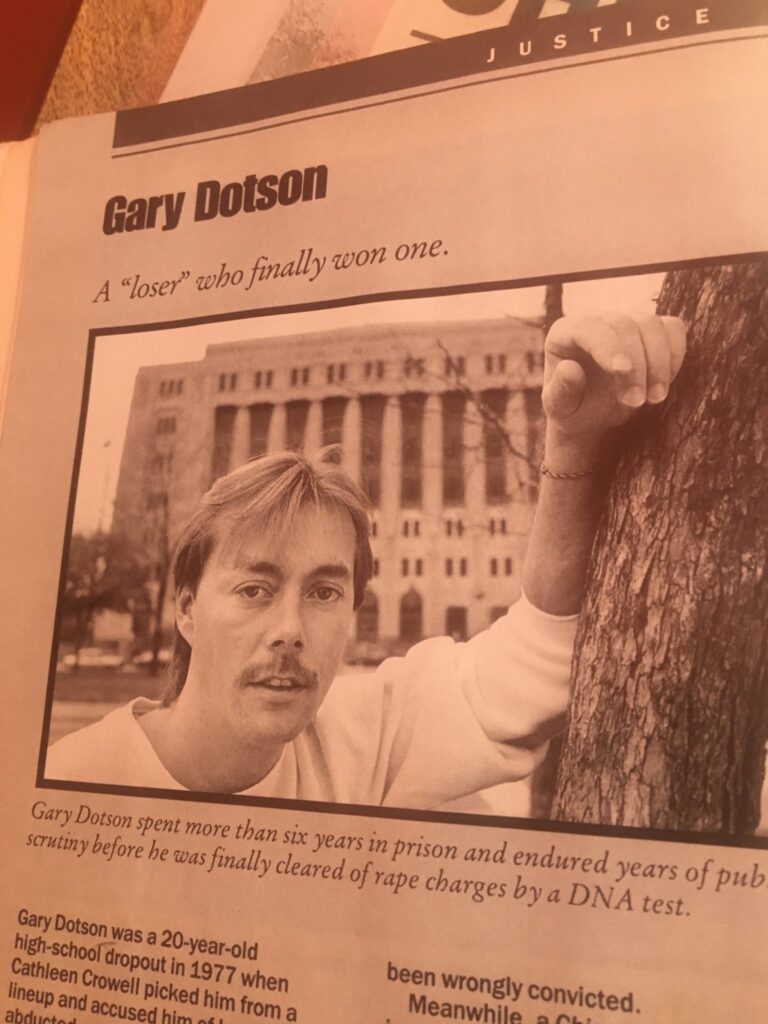
The modern era of criminal justice reform did not begin with a piece of legislation or a Supreme Court ruling. It began on August 14, 1989, in an Illinois courtroom. That day marked the exoneration of Gary Dotson, the individual in history to be cleared of a wrongful conviction through the use of DNA profiling. Retrospective analyses published between 2019 and 2024 identify this moment as the seismic shift that exposed the widespread fallibility of the American legal system. A 2019 investigation by Injustice Watch marking the 30th anniversary of the case noted that Dotson served ten years for a rape that never occurred. His exoneration dismantled the long held judicial assumption that criminal convictions were final and infallible.
The conviction of Dotson in 1979 relied entirely on traditional evidence which recent data proves is frequently flawed. The prosecution built its case on eyewitness testimony and serological testing that could not distinguish between the accused and 10 percent of the population. The victim, Cathleen Crowell Webb, later recanted her testimony in 1985. She admitted she had fabricated the assault to cover up a consensual sexual encounter. The justice system rejected her admission. The trial judge stated that the recantation was less credible than her original testimony. This refusal to accept a correction without biological proof established a dangerous precedent. It required scientific absolutism to overturn human error.
Forensic technology in 1989 was primitive compared to the Short Tandem Repeat (STR) analysis used in 2025. Dotson was cleared using PCR based HLA DQ alpha testing. This early method was sufficient to exclude him as the source of the genetic material found at the alleged crime scene. A 2023 report from the National Registry of Exonerations highlights that while DNA testing methods have evolved, the resistance of the legal system to new evidence remains a constant barrier. The Dotson case proved that biological evidence could override a jury verdict. It forced prosecutors to confront the reality that an innocent person had been imprisoned for a decade even with a victim’s confession that no crime had occurred.
| Feature | 1989 (Dotson Era) | 2025 (Current Standard) |
|---|---|---|
| Method | RFLP / HLA DQ Alpha | Generation Sequencing (NGS) |
| Sample Size Required | Large (Dime sized stain) | Microscopic (Touch DNA) |
| Processing Time | Weeks to Months | Hours (Rapid DNA) |
| Discrimination Power | 1 in Millions | 1 in Quintillions |
| Primary Database | None (CODIS established 1990) | CODIS (20M+ profiles) |
The legacy of the Dotson exoneration is quantifiable in the 2024 data released by the Innocence Project. Since that 1989 watershed moment, over 375 individuals have been exonerated specifically through DNA evidence in the United States. These men and women served an average of 14 years in prison before their release. The cumulative impact of the Dotson case is clear in the shift toward post conviction DNA testing laws. Every state has form of statute allowing inmates to petition for testing. This legal framework did not exist when Dotson was fighting for his freedom. He relied on the discretionary power of a governor and the relentless pressure of media investigation.
Current statistics from 2025 indicate that the “Dotson effect” has expanded beyond rape and murder cases. The principles established in 1989 apply to complex cases involving robbery and drug offenses where biological evidence is available. yet, the 2019 retrospective by Rob Warden emphasizes a “lesson unlearned” from the Dotson saga. The system still views recantations with extreme skepticism. In 2024, approximately 30 percent of DNA exonerations involved a witness who recanted was ignored by the courts until biological proof forced a reversal. The Dotson case demonstrated that the truth frequently arrives years too late and only when science leaves the state with no other option.
The 1989 exoneration also highlighted the role of external narratives in wrongful convictions. The 2019 report revealed that the fabricated story used to convict Dotson was lifted directly from the Sweet Savage Love. The details of the false accusation mirrored the fiction so closely that it persuaded a jury beyond a reasonable doubt. This show the danger of narrative plausibility over factual evidence. Modern data from 2015 to 2025 continues to show that juries are easily swayed by compelling false stories. The Dotson case stands as the historical anchor for the entire movement. It proved that the American criminal justice system could be lethally wrong and that science was the only reliable corrective method.
Eyewitness Fallibility: Analyzing the 69 Percent Misidentification Rate
The statistic is etched into the records of American jurisprudence: 69 percent of all DNA-based exonerations in the United States involved eyewitness misidentification. This figure, verified by the Innocence Project across 375 DNA exonerations through 2024, represents the single most common cause of wrongful convictions in violent felonies. Yet, a granular analysis of data from 2015 to 2025 reveals a complex shift. While the historical 69 percent baseline for DNA cases remains constant, the broader 2024 dataset from the National Registry of Exonerations (NRE) shows that eyewitness error appeared in 26 percent of all overturned verdicts that year. This signals that while biological evidence frequently corrects identity errors in rape and murder trials, non-DNA exonerations, frequently involving drug crimes or official misconduct, are exposing different widespread fractures.
The mechanics of this failure are not abstract. They are rooted in specific, measurable psychological deficits and procedural malfeasance. Data collected between 2015 and 2025 isolates “estimator variables”, factors related to the witness’s environment, as primary drivers of error. The “weapon focus” effect, where a victim fixates on a firearm or knife rather than the perpetrator’s face, continues to invalidate testimony. More worrying is the persistence of the Cross-Race Effect. In 42 percent of misidentification cases documented by the NRE, the witness and the suspect belonged to different racial groups. White witnesses attempting to identify Black suspects face a statistically higher error rate, a that legal systems have failed to mitigate even with decades of warnings.
“The human memory does not record like a video camera; it reconstructs like a collage. In 2024, we saw juries convict based on ‘certain’ identifications that were objectively impossible due to lighting, distance, and cross-racial bias.” , 2024 Annual Report, National Registry of Exonerations
Police procedure exacerbates these biological limits. The “blind administration” of lineups, where the officer conducting the procedure does not know the suspect’s identity, is mandatory in federal cases remains inconsistent at the state level. A 2024 report by the Northern California Innocence Project found that even with California Penal Code 859. 7, compliance with blind lineup remains sporadic. Officers frequently provide unconscious cues, confirming a witness’s tentative choice and solidifying a false memory. Once a witness receives this validation, their confidence level artificially spikes to 100 percent by the time they testify in court, sealing the defendant’s fate.
Comparative Analysis of Identification Error Rates (2015, 2025)
The following table contrasts the prevalence of eyewitness misidentification in DNA-specific cases versus the broader exoneration pool documented in 2024.
| Metric | DNA Exonerations (Historical Baseline) | All Exonerations (2024 NRE Data) |
|---|---|---|
| Misidentification Rate | 69% | 26% |
| Primary Crime Type | Sexual Assault, Homicide | Homicide, Drug Offenses, Assault |
| Cross-Racial Factor | 42% of ID cases | Significant (Data aggregating) |
| Procedural Origin | 52% Photo Arrays | Varied (Show-ups, Lineups, Photos) |
The case of Miguel Solorio, exonerated in late 2023, exemplifies the catastrophic cost of these errors. Solorio served 25 years for a murder he did not commit, based almost entirely on a photo lineup identification that contradicted the witness’s initial description. The witness originally described the shooter as clean-shaven; Solorio had a full mustache in the photo used by police. Investigators ignored this gap. This pattern repeats across the 147 exonerations of 2024: initial uncertainty from a witness is overridden by police suggestion, resulting in a confident false courtroom identification. The data proves that without mandatory recording of the identification procedure and strict adherence to blind administration, the 69 percent statistic remain a defining metric of judicial failure.
The False Confession Paradox: Interrogation Tactics and Youth Vulnerability
The counterintuitive reality that an innocent person would confess to a heinous crime remains one of the most difficult blocks for juries to overcome, yet the data from 2015 to 2025 confirms this phenomenon is a widespread feature of American justice, particularly for youth. In November 2019, the exoneration of the “Harlem Park Three”, Alfred Chestnut, Andrew Stewart, and Ransom Watkins, shattered the illusion that confessions are irrefutable proof of guilt. Arrested at age 16 in 1983, the trio spent 36 years in prison based largely on coerced statements and police misconduct. Their case, which resulted in a historic $48 million settlement in 2023, exemplifies the catastrophic intersection of adolescent psychology and manipulative interrogation.
Statistical analysis from the National Registry of Exonerations (NRE) reveals a clear in vulnerability. While false confessions contributed to 15% of all exonerations in 2024, they played a role in approximately 36% of exonerations involving defendants who were juveniles at the time of arrest. This rate is more than triple that of adult defendants. The that youth are not more compliant; they are biologically predisposed to prioritize short-term relief, such as ending a stressful interrogation, over long-term consequences like a prison sentence.
The Mechanics of Coercion
The primary engine driving these false admissions is the widespread use of the Reid Technique and similar accusatorial methods. These rely on psychological manipulation, including “maximization” (overstating the evidence and magnitude of the crime) and “minimization” (offering moral justifications or leniency in exchange for admission). For a developing brain, specifically one where the prefrontal cortex is not yet fully formed, these tactics can distort reality. In the case of Davontae Sanford, exonerated in 2016, police interrogated the then-14-year-old for two days without a parent or attorney present. Sanford confessed to a quadruple homicide he did not commit solely to stop the questioning and “go home,” a common psychological reflex among juvenile exonerees.
| Metric | Adult Exonerees | Juvenile Exonerees |
|---|---|---|
| False Confession Rate | ~10% | ~36% |
| Primary Risk Factor | Mental Illness / Fatigue | Deference to Authority / Impulsivity |
| Interrogation Duration | Varies significantly | frequently exceeds 12+ hours |
Legislative Reform and the Ban on Deception
Between 2021 and 2025, a legislative wave emerged to the legal frameworks permitting police deception. Historically, U. S. courts allowed officers to lie to suspects about evidence, for example, claiming a non-existent DNA match or a failed polygraph, to elicit a confession. This practice has been identified as a definitive trigger for false admissions in youth. Illinois became the state to ban police from lying to minors during interrogations in 2021. This precedent triggered a cascade of similar prohibitions across the country.
By the end of 2024, at least eight states had enacted laws prohibiting deceptive interrogation tactics for juveniles, acknowledging the scientific consensus on adolescent vulnerability.
“The data is unambiguous: when law enforcement is permitted to deceive a child, the truth becomes the casualty. The confession is no longer a narrative of guilt, a product of compliance.”
States Banning Police Deception in Juvenile Interrogations (2021, 2025):
- Illinois (2021): in the nation to prohibit deceptive tactics for suspects under 18.
- Oregon (2021): Banned false pledge of leniency and fabrication of evidence for youth.
- California (2022): Enacted AB 2644, prohibiting the use of deception and psychological manipulation for suspects 17 and younger.
- Utah (2022): Barred law enforcement from providing false information about evidence to minors.
- Delaware (2022): Prohibited deceptive practices in custodial interrogations of children.
- Indiana (2023): Made statements inadmissible if obtained through knowing communication of false facts to a juvenile.
- Connecticut (2023): Adopted similar bans on deceptive interrogation techniques for minors.
- Colorado (2023): Required recorded interrogations and banned deception for juvenile suspects.
In 2024 alone, 78% of all exonerees were people of color, with Black defendants constituting 60% of the total. The intersection of race and age amplifies the risk; Black youth are disproportionately subjected to the aggressive interrogation techniques that yield false confessions. The exoneration of Huwe Burton in 2019, who falsely confessed to killing his mother at age 16 after being threatened and, show that the damage inflicted by these tactics is frequently measured in decades of lost liberty.
Forensic Fraud: The Pseudo-Science of Bite Mark Analysis
The collapse of bite mark analysis represents one of the most shameful chapters in modern American criminal justice. Once heralded as a “silver bullet” in homicide and sexual assault cases, this forensic discipline has been exposed between 2015 and 2025 not as flawed, as a widespread fraud masquerading as science. The premise, that human dentition is unique and transfers accurately to skin, has been definitively dismantled by top scientific bodies, yet the legal system’s inertia continues to protect these convictions. The “science” is little more than subjective speculation, frequently performed by a small circle of “experts” who fabricated certainty where none existed.
In 2016, the President’s Council of Advisors on Science and Technology (PCAST) issued a landmark report concluding that bite mark analysis absence foundational validity. They found the error rates were not just high; they were unknown and chance astronomical. Seven years later, in March 2023, the National Institute of Standards and Technology (NIST) drove the final nail into the coffin with a detailed scientific review. The NIST report found “a absence of support” for the field’s three core premises: that human teeth are unique, that this uniqueness transfers to human skin, and that experts can reliably interpret these marks. even with these damning federal findings, courts have been slow to purge this junk science from the record.
“The scientific community does not uphold the underlying premises that human teeth are unique and their unique features transfer to human skin… We find bitemark transfer to skin is not reliable.” , Journal of the California Dental Association, June 2023.
The Mechanics of the Con
The fundamental failure of bite mark analysis lies in the medium itself. Human skin is a poor impression material; it is elastic, distorts when bitten, and changes shape as it heals or decomposes. A bite mark on a struggling victim can look radically different from a dental mold taken in a sterile lab. Forensic odontologists, yet, frequently ignored these variables. Instead, they relied on “pattern matching,” a subjective method where an expert eyeballs a photograph of a wound and compares it to a suspect’s teeth.
This subjectivity allowed for rampant confirmation bias. In wrongful conviction cases, experts like Dr. Michael West, a notorious figure in Mississippi jurisprudence, claimed to see patterns that no other expert could verify. West, who utilized a self-invented method involving “ultraviolet light” that frequently left no photographic record, was instrumental in sending innocent men to death row. His testimony, and that of others like him, was frequently delivered with a swaggering certainty (“indeed and without doubt”) that dazzled juries while absence any empirical basis.
Case Studies in Stolen Time (2015-2025)
The human cost of this pseudo-science is quantifiable in decades of lost life. Between 2015 and 2025, several high-profile exonerations shattered the credibility of the “expert” class.
Eddie Lee Howard (Exonerated 2021): Howard spent 26 years on Mississippi’s death row, convicted almost entirely on the testimony of Dr. Michael West. West claimed bite marks on the victim matched Howard, a claim he made with absolute certainty. In January 2021, new DNA evidence proved Howard’s innocence and debunked the bite mark testimony. The Mississippi Supreme Court, in vacating his conviction, acknowledged that the forensic evidence was “junk science.”
Robert DuBoise (Exonerated 2020): In Florida, Robert DuBoise served 37 years for a 1983 murder he did not commit. His conviction hinged on a “bite mark” found on the victim’s cheek. Dr. Richard Souviron, the same expert who testified in the Ted Bundy trial, told the jury the mark matched DuBoise. In 2020, DNA from the rape kit identified the real perpetrators, neither of whom was DuBoise. A review by a new forensic odontologist revealed the injury on the victim wasn’t even a bite mark, it was likely a scrape from the attack.
Keith Allen Harward (Exonerated 2016): Harward served 33 years in Virginia for a rape and murder. Six different forensic dentists, including leaders in the field, testified that Harward’s teeth matched marks on the victim. In 2016, DNA testing identified the actual killer, a sailor named Jerry Crotty who had died in prison years earlier. The “scientific consensus” that convicted Harward was a shared delusion.
The Bite Mark Exoneration Index (2015-2025)
The following table details key exonerations during this period where bite mark evidence was the primary driver of the wrongful conviction. These four men alone lost a combined 122 years to forensic fraud.
| Exoneree | State | Year Exonerated | Years Served | Forensic “Expert” Involved |
|---|---|---|---|---|
| Keith Allen Harward | Virginia | 2016 | 33 Years | Dr. Lowell Levine / Dr. Alvin Kagey |
| Robert DuBoise | Florida | 2020 | 37 Years | Dr. Richard Souviron |
| Eddie Lee Howard | Mississippi | 2021 | 26 Years | Dr. Michael West |
| Sherwood Brown | Mississippi | 2021 | 26 Years | Dr. Michael West / Dr. Harry Mincer |
The Zombie Science
Even with the science debunked, the legal system refuses to fully excise the rot. In Alabama, Charles McCrory remains entangled in the legal system even with the recantation of the expert who convicted him. Dr. Richard Souviron, who testified against McCrory in 1985, admitted in 2021 that the evidence was flawed and the injury likely wasn’t a bite mark. Yet, courts have denied McCrory relief, prioritizing “finality” of the verdict over the scientific truth. This resistance demonstrates a dangerous disconnect: while the scientific community has declared bite mark analysis dead, the judicial system keeps it on life support to preserve old convictions.
Microscopic Hair Comparison: A Legacy of FBI Laboratory Errors
The forensic discipline of microscopic hair comparison, once a of criminal prosecutions, has collapsed into what the Innocence Project and the National Association of Criminal Defense Lawyers (NACDL) classify as a “mass disaster.” Between 2015 and 2025, a systematic review of federal cases revealed that the Federal Bureau of Investigation (FBI) relied on scientifically invalid testimony for decades, training state analysts to do the same. This era of pseudo-science did not produce errors; it manufactured a widespread engine for wrongful conviction that continues to overturn verdicts today.
In April 2015, the FBI and the Department of Justice (DOJ) issued a joint admission that shattered the credibility of the agency’s hair comparison unit. After reviewing 268 trials where FBI examiners provided testimony to inculpate a defendant, the government admitted that its agents gave erroneous statements in 257 of those cases, a 96% error rate. These agents systematically overstated the probative value of hair evidence, using terms like “match” or “consistent with” to imply a statistical certainty that did not exist. In capital cases, the failure was even more absolute: of the 35 death penalty cases reviewed, examiners made scientific errors in 33 of them. Nine of those defendants had already been executed.
| Category | Total Reviewed | Cases with Errors | Error Rate |
|---|---|---|---|
| Total Trials with Inculpatory Testimony | 268 | 257 | 96% |
| Death Penalty Cases | 35 | 33 | 94% |
| Defendants Executed | 9 | 9 | 100% |
The method of this error was semantic as much as it was scientific. Examiners frequently testified that a hair found at a crime scene “matched” the defendant to the exclusion of others, or misleading probabilities. In 2016, the President’s Council of Advisors on Science and Technology (PCAST) released a landmark report stating that microscopic hair analysis absence “foundational validity.” The report concluded that no empirical evidence existed to support the claim that analysts could associate a hair with a specific individual, yet this testimony had been admitted in courtrooms for over three decades.
The contagion spread beyond federal courts. FBI examiners trained between 500 and 1, 000 state and local crime lab analysts in the same flawed techniques. This “train-the-trainer” model the error into state judiciaries, leading to audits in Texas, Massachusetts, and other jurisdictions. The from these state-level reviews drove exonerations well into the 2020s.
One of the most prominent recent examples occurred in November 2021 with the exoneration of Anthony Broadwater in New York. Broadwater served 16 years for the 1981 rape of author Alice Sebold, a conviction anchored by microscopic hair analysis. At his trial, an expert testified that hair found on the victim was consistent with Broadwater’s, a claim the prosecutor used to override the fact that the victim failed to identify him in a lineup. Decades later, when the conviction was vacated, the district attorney acknowledged that the forensic testimony was “junk science.” Broadwater’s case exemplifies the long tail of these errors; he remained on the sex offender registry until 2021, forty years after the alleged crime.
Similarly, the case of George Perrot in Massachusetts exposed the depth of the problem. Convicted in 1992 largely on the testimony of an FBI agent who claimed a single hair found at the scene “matched” Perrot, he spent nearly 30 years in prison. In 2016, a judge granted a new trial after finding the agent’s testimony “exceeded the limits of science,” and prosecutors formally dismissed the charges in 2017. Perrot’s exoneration was the to rely explicitly on the 2015 FBI errors admission.
The legacy of these errors in current data. The National Registry of Exonerations’ 2024 Annual Report, released in April 2025, documented 147 exonerations for the year. False or misleading forensic evidence, including hair analysis, remained a contributing factor in 29% of these cases. While the FBI has ceased using microscopic hair comparison for individualization without mitochondrial DNA verification, the thousands of convictions secured during the era of unverified science remain a ticking bomb in the American legal system.
The Brady Violation: Prosecutorial Suppression of Exculpatory Evidence

The constitutional mandate established in Brady v. Maryland requires prosecutors to disclose evidence favorable to a defendant. Yet between 2015 and 2025, this safeguard collapsed in hundreds of jurisdictions. Data from the National Registry of Exonerations (NRE) reveals that official misconduct occurred in 71% of the 147 exonerations recorded in 2024. The specific act of concealing exculpatory evidence remains the most pervasive form of this misconduct. Prosecutors suppressed police reports, witness recantations, and forensic data in 44% of all exonerations documented in the last decade. This rate climbs to 61% in murder cases. The suppression is rarely accidental. A 2024 analysis of homicide cases found that when prosecutors withheld evidence, they did so in bad faith 74% of the time.
The widespread nature of these violations transforms the courtroom from a venue of truth into a trap. In 2023 alone, 85% of homicide exonerations involved official misconduct. The suppression of evidence distorts the legal process before a trial even begins. Defendants frequently accept plea deals while unaware that the state holds evidence proving their innocence. The NRE report from September 2020 indicated that prosecutors were responsible for the majority of concealed evidence cases. This pattern creates a conviction machine that operates independently of actual guilt. The consequences are measurable in decades of stolen life.
Case Studies in Suppression (2015, 2025)
Recent exonerations demonstrate the severity of these violations. In 2024, Sandra Hemme was exonerated after serving 43 years for a murder she did not commit. Prosecutors had suppressed evidence implicating a police officer in the crime. This suppression stood as the primary cause of the longest wrongful imprisonment of a woman in U. S. history. Similarly, Glynn Simmons was exonerated in Oklahoma in 2023 after 48 years in prison. The prosecution in his case concealed a police lineup report where the surviving victim identified another man. These files remained hidden for nearly half a century.
The high-profile exoneration of Adnan Syed in 2022 further exposed the mechanics of Brady violations. Prosecutors in Baltimore possessed handwritten notes identifying two alternative suspects. One suspect had threatened to kill the victim. The state never disclosed this information to the defense during the original trial. Syed served 23 years before a court vacated his conviction based on this specific suppression. These cases are not outliers. They represent a standard operating procedure in jurisdictions where conviction rates are prioritized over constitutional compliance.
| Exoneree | State | Years Incarcerated | Suppressed Evidence |
|---|---|---|---|
| Glynn Simmons | Oklahoma | 48 Years | Police lineup report showing witness identified a different suspect. |
| Sandra Hemme | Missouri | 43 Years | Evidence implicating a local police officer in the murder. |
| Adnan Syed | Maryland | 23 Years | Notes regarding two alternative suspects and threats against the victim. |
| Michael Wearry | Louisiana | 16 Years | Police reports casting doubt on the credibility of the state’s star witness. |
| Ivan Robinson | Wash. D. C. | 6 Years | DEA reports contradicting the government’s narrative of drug distribution. |
The Harmless Error Doctrine
The judiciary frequently protects convictions even when Brady violations are proven. Courts use the “harmless error” doctrine to rule that suppressed evidence would not have changed the jury’s verdict. This legal method allows convictions to stand even with admitted constitutional violations. A federal study of Brady claims found that in 88% of cases where a judge ruled on the merits, the court found no violation or deemed the error harmless. This doctrine grants prosecutors a license to cheat. They can withhold evidence with the knowledge that appellate courts likely view the suppression as immaterial to the final outcome.
The Accountability Vacuum
Prosecutors face almost no professional consequences for these violations. Absolute immunity shields them from civil liability. Professional discipline is equally rare. A review of 808 cases involving Brady violations revealed that only one prosecutor was referred to the State Bar for discipline. The remaining 807 faced no public sanction. This absence of accountability ensures the pattern continues. District Attorneys’ offices rarely fire prosecutors for withholding evidence. Instead, the system treats these violations as procedural errors rather than ethical failures. The data from 2015 to 2025 confirms that without external intervention, prosecutorial offices not self-correct. The cost of this inaction is paid by the innocent men and women who lose decades of their lives in concrete cells.
Ineffective Counsel: The emergency of Underfunded Public Defense
The Sixth Amendment guarantee to legal counsel has collapsed in vast jurisdictions across the United States. Between 2015 and 2025, the method designed to protect the innocent, public defense, morphed into a procedural formality that frequently processes convictions rather than challenging them. Data from the National Registry of Exonerations (NRE) indicates that insufficient legal defense contributed to approximately 20 percent of all wrongful convictions overturned during this period. This failure is not a matter of individual attorney incompetence; it is the mathematical inevitability of a system where caseloads physically prevent constitutional representation.
In September 2023, the RAND Corporation, in collaboration with the American Bar Association, released the National Public Defense Workload Study, which shattered the previous metrics used to gauge attorney capacity. For fifty years, the legal system relied on 1973 standards that suggested a public defender could handle 150 felonies per year. The 2023 analysis revealed these numbers were dangerously inflated. To provide representation, the study concluded an attorney should handle no more than seven high-level felonies (such as life-without-parole cases) or 59 low-level felonies annually. In reality, public defenders in states like Missouri and Louisiana frequently juggle caseloads of 150 to 200 active files simultaneously, forcing a system of “triage justice” where investigation is abandoned in favor of rapid plea deals.
The “Unrepresented” Emergency
The disintegration of public defense reached a serious breaking point in Oregon, where the state simply ran out of attorneys. By January 2025, the Oregon Judicial Department reported an all-time high of 4, 178 individuals facing criminal charges without any legal representation. These “unrepresented” defendants included 191 people sitting in custody, waiting an average of 23 days just to be assigned a lawyer. For those out of custody, the wait for counsel extended to an average of 110 days. This administrative failure created a class of defendants who were detained without due process, pressured to accept plea offers just to escape the limbo of indefinite detention.
Similar crises erupted nationwide. In Maine, the ACLU filed Robbins v. State of Maine, leading to a January 2025 court ruling that the state’s failure to provide counsel violated the Sixth Amendment. Idaho faced mass resignations in late 2024, with 25 percent of the Ada County public defense office quitting following a chaotic state takeover of the system. These widespread voids leave defendants to coercion, as prosecutors know the opposing chair is empty.
The Economics of Injustice
Financial starvation drives this collapse. Wisconsin maintained the lowest reimbursement rate for private court-appointed attorneys in the nation, $40 per hour, for nearly two decades. Although the state legislature raised this rate to $100 per hour in 2023, it remains less than half the market rate for private criminal defense, which averages $248 per hour. The result is a “meet and plead” culture where low-paid attorneys cannot afford the hours required to review body-camera footage, hire forensic experts, or interview alibi witnesses. A 2023 report noted that Wisconsin’s public defender office faced a 10 percent vacancy rate, further the workload for remaining staff.
| Case Type | Old Standard (1973 NAC) | New Standard (2023 RAND) | Workload Reduction Required |
|---|---|---|---|
| High-Level Felony (Life without Parole) |
150 cases/year | 7 cases/year | 95% Reduction |
| Mid-Level Felony (Murder/Sex Crimes) |
150 cases/year | 8-21 cases/year | 86-94% Reduction |
| Low-Level Felony | 150 cases/year | 59 cases/year | 60% Reduction |
| Misdemeanor | 400 cases/year | 180-250 cases/year | 37-55% Reduction |
| Source: RAND Corporation, National Public Defense Workload Study (2023). The “Old Standard” treated all felonies equally, a methodology deemed “insufficient” by the American Bar Association. | |||
The correlation between these resource deficits and wrongful convictions is direct. When an attorney has only minutes to review a case file, exculpatory DNA evidence goes unrequested and alibis remain uninvestigated. In 2024, the NRE recorded 147 exonerations; in of these cases, the original defense attorney failed to challenge invalid forensic science or cross-examine lying informants. The “Great Resignation” of public defenders post-2020 has accelerated this trend, stripping offices of veteran attorneys capable of handling complex homicide or sexual assault cases. Without immediate structural reform to workload caps and funding parity, the assembly line of wrongful convictions continue to operate at full capacity.
Racial Disproportionality: Black Defendants and the Wrongful Conviction Gap
The 2024 Annual Report from the National Registry of Exonerations (NRE) presents a statistical reality that defies random distribution: nearly 60 percent of the 147 individuals exonerated in 2024 were Black. This figure stands in clear contrast to the demographic makeup of the United States, where Black Americans comprise approximately 13. 6 percent of the population. This is not a new phenomenon a consistent feature of the exoneration data tracked from 2015 through 2025. The method driving these numbers are not vague societal biases specific, measurable failures in police procedure, prosecutorial conduct, and forensic application.
Data analysis reveals that the probability of wrongful conviction varies intensely by crime category. The NRE’s multi-year study, Race and Wrongful Convictions in the United States, established risk multipliers that quantify this gap. Innocent Black defendants are seven times more likely to be wrongfully convicted of murder than innocent white defendants. For drug crimes, the widens to a factor of 19. These metrics indicate that race functions as a primary determinant in the likelihood of a judicial error.
The Murder Gap and Official Misconduct
Homicide cases represent the most severe failures of the justice system. In 2024, 85 individuals were exonerated of homicide; 79 percent of these cases involved official misconduct. Black defendants bear the brunt of this widespread malpractice. The data shows that police misconduct, including witness tampering, withholding exculpatory evidence, and coerced confessions, is significantly more prevalent in murder cases involving Black defendants than those involving white defendants.
Beyond the conviction itself, Black exonerees lose more time. On average, Black murder exonerees spend three more years in prison before release than their white counterparts. This delay suggests that the appellate and post-conviction review processes are slower or less responsive to claims of innocence from Black prisoners. In capital cases, the are absolute: 85 percent of Black death-row exonerees were victims of official misconduct, compared to 70 percent of white death-row exonerees.
| Crime Category | Risk Multiplier for Black Defendants | Primary Driver of Error |
|---|---|---|
| Murder | 7. 5x more likely | Official Misconduct (79% of 2024 cases) |
| Sexual Assault | 8. 0x more likely | Cross-Racial Eyewitness Misidentification |
| Drug Crimes | 19. 0x more likely | widespread Police Corruption (Group Exonerations) |
The Drug Enforcement
The most extreme statistical exists within drug convictions. While federal health data consistently shows that Black and white Americans use illicit drugs at similar rates, Black defendants account for 69 percent of all drug crime exonerations. This 19-to-1 is largely driven by “Group Exonerations”, clusters of cases overturned after the exposure of systematic police corruption.
In 2024, Texas led the nation with 26 exonerations, 17 of which were tied to the misconduct of a single former narcotics officer, Gerald Goines, in Harris County. These cases frequently involve officers planting evidence or fabricating probable cause to meet arrest quotas. Unlike murder cases, which are frequently individual tragedies of error, drug exonerations frequently reveal unit-wide or precinct-wide corruption that specific neighborhoods.
“The report really shows the depth of the belief that race is a proxy for criminality in the criminal legal system. Innocent Black people are about 19 times more likely to be wrongfully convicted of drug crimes than innocent white people.”
, Christina Swarns, Executive Director of the Innocence Project (referencing NRE Data)
Sexual Assault and Cross-Racial Identification
Wrongful convictions for sexual assault present a different set of structural flaws. Innocent Black men are eight times more likely to be wrongfully convicted of sexual violence than innocent white men. The dominant factor here is cross-racial eyewitness misidentification. Psychological research and case data confirm that witnesses are significantly less accurate when identifying suspects of a different race.
In cases where DNA evidence later exonerated the defendant, a substantial majority involved a white victim misidentifying a Black suspect. This error is frequently compounded by suggestive police lineup procedures. Unlike the deliberate corruption seen in drug cases, these convictions frequently from cognitive errors that the judicial system fails to correct during trial. The reliance on victim testimony, without corroborating physical evidence, leaves these defendants highly to the jury’s implicit biases.
The cumulative effect of these disparities is a prison population where Black innocence is statistically more probable than white innocence. The 1, 980 years of life lost by the 147 exonerees in 2024 were not distributed equally; the load fell disproportionately on communities already subjected to aggressive policing strategies.
Death Row Exonerations: DNA Evidence in Capital Punishment Cases
The intersection of capital punishment and DNA technology has produced the most harrowing data in the American legal system. Between January 1, 2015, and December 31, 2025, the number of death row survivors exonerated in the United States surged past the 200 mark, a grim milestone that the Death Penalty Information Center (DPIC) has characterized as an “innocence epidemic.” While biological evidence initiated the modern era of exonerations, the data from this decade reveals a disturbing paradox: DNA testing is becoming more precise, yet the judicial system is increasingly resistant to its findings when execution dates loom.
In 2024 alone, three men were exonerated from death row, bringing the total count of wrongful capital convictions since 1973 to 200. This figure is not cumulative; it represents a widespread failure rate that would be intolerable in any other sector of public safety. The exonerations of Kerry Max Cook in Texas and Larry Roberts in California in mid-2024 underscored the prevalence of “junk science” and prosecutorial misconduct in capital cases. Cook, who spent over four decades fighting to clear his name, was vindicated not just by DNA testing that excluded him, by the that prosecutors had concealed this exculpatory evidence for years.
The DNA Paradox: Evidence vs. Finality
The assumption that DNA evidence serves as an automatic “get out of jail free” card for the innocent is contradicted by the 2015-2025 dataset. In 2023, DNA evidence contributed to three of the four death row exonerations, yet in the broader of 147 total exonerations in 2024, biological evidence played a role in a minority of cases. The courts have increasingly prioritized “finality” over factual accuracy. This tension reached a breaking point in September 2024 with the execution of Marcellus Williams in Missouri. even with DNA evidence on the murder weapon that excluded him and pointed to an unknown individual, and even with the local prosecutor’s motion to vacate the conviction, the state proceeded with the execution. This case demonstrates that scientific proof of innocence is no longer a guaranteed safeguard against the of capital punishment.
| Name | State | Year Exonerated | Years on Death Row | Key Factor |
|---|---|---|---|---|
| Elwood Jones | Ohio | 2025 | 27 | False Forensics / Misconduct |
| Kerry Max Cook | Texas | 2024 | 20+ | DNA / Brady Violations |
| Daniel Gwynn | Pennsylvania | 2024 | 29 | Mistaken ID / Coerced Confession |
| Jesse Lee Johnson | Oregon | 2023 | 17 | Official Misconduct / DNA |
| Glynn Ray Simmons | Oklahoma | 2023 | 48 | Longest Served / No DNA |
| Clemente Aguirre-Jarquin | Florida | 2018 | 14 | DNA (Confessed Killer Identified) |
widespread Resistance to Correction
The data from 2015 to 2025 exposes a pattern where the discovery of DNA evidence frequently triggers increased resistance from the state rather than immediate release. In the case of Elwood Jones, who was exonerated in December 2025, the route to freedom required nearly 30 years. Jones was convicted in 1996 based on what is recognized as flawed forensic analysis and official misconduct. His case exemplifies the “zombie” conviction, where a death sentence remains active for decades even with the collapse of the evidentiary foundation. The dismissal of charges against Jones by the Hamilton County Prosecutor ended a saga that consumed 27 years of his life on death row, illustrating that exoneration is frequently a war of attrition rather than a swift judicial correction.
also, the racial disparities within this specific subset of exonerations are clear. Of the 153 total exonerations recorded in 2023, nearly 84% involved people of color, with Black defendants constituting 61% of the total. In capital cases, this is amplified. The “innocence penalty”, where defendants refuse plea deals to maintain their innocence and subsequently receive death sentences, disproportionately affects Black men. The exoneration of Glynn Ray Simmons in 2023, who served 48 years (the longest wrongful imprisonment in U. S. history), highlights how racial bias and official misconduct can steal an entire lifetime before the truth is acknowledged.
The of the “Safe” Conviction
The narrative that the death penalty is reserved for the “worst of the worst” with “absolute certainty” has been dismantled by the forensic audits of the last decade. Between 2015 and 2025, the rate of exonerations involving official misconduct, such as withholding evidence or witness tampering, remained above 70%. In of these cases, DNA did not just identify the innocent; it identified the actual perpetrators who had remained free while the wrong person sat on death row. The 2018 exoneration of Clemente Aguirre-Jarquin in Florida is a prime example: new DNA testing not only cleared him also implicated the victim’s daughter, who had confessed to the crime multiple times. Yet, the state fought to uphold the conviction for years after the DNA results were known.
The statistics from this period confirm that the method designed to catch errors in capital cases are failing. The average time between sentencing and exoneration has grown, meaning innocent individuals are spending more of their lives in solitary confinement before their release. As the number of death row exonerations continues to climb, the data suggests that for every eight executions in the United States, one person is exonerated, a risk ratio that no other high- system would accept.
The Snitch System: Unreliable Testimony from Jailhouse Informants
The “snitch” system remains one of the most corrosive yet persistent engines of wrongful conviction in the American legal. Between January 1, 2020, and March 1, 2024, the National Registry of Exonerations (NRE) documented 54 exonerations where jailhouse informant testimony played a decisive role in the original conviction. These cases represent more than 20 percent of all known exonerations during that period, a statistic that exposes a thriving marketplace of fabricated evidence. Unlike forensic errors or eyewitness mistakes, which frequently from negligence, the use of jailhouse informants is frequently a calculated transaction: the state trades leniency for lies.
The mechanics of this exchange are transactional and unclear. Inmates facing lengthy sentences are incentivized to manufacture confessions from their cellmates in exchange for sentence reductions, dropped charges, or special privileges. The data confirms that this is rarely an rogue actor; official misconduct by police or prosecutors was present in 83 percent of post-2020 jailhouse informant exoneration cases. Law enforcement officials frequently feed non-public details of a crime to an informant, allowing them to construct a “confession” that appears credible to a jury. This feedback loop creates a system where the truth is secondary to the utility of the testimony.
Case Study: The “Con Man Extraordinaire”
The case of James Dailey in Florida exemplifies the lethal danger of unregulated informant testimony. Dailey was sent to death row largely on the word of Paul Skalnik, a prolific jailhouse informant with a history of fraud and grand theft so extensive that local police detectives once labeled him a “con man extraordinaire.” Skalnik testified that Dailey confessed to the 1985 murder of Shelly Boggio while they were housed in adjacent cells. In return for this testimony, and his cooperation in dozens of other cases, Skalnik received extraordinary leniency, including release from custody just five days after Dailey was sentenced to death.
Dailey has maintained his innocence for decades, and his co-defendant, Jack Pearcy, has signed a sworn affidavit stating he committed the crime alone. Yet, the of the state protected Skalnik’s credibility for years. It was not until investigative reporting in late 2019 and subsequent legal battles through 2024 that the full extent of Skalnik’s “career” as a professional witness was laid bare. Skalnik had testified in at least 37 cases, sending four men to death row, while the state concealed the benefits he received. This pattern of protecting serial liars to secure convictions is not unique to Florida; it is a widespread feature of the prosecutorial toolkit.
widespread Corruption: The Orange County Scandal
The most sprawling example of this widespread rot occurred in Orange County, California, where a decade-long scandal revealed a clandestine network of informants used to violate defendants’ constitutional rights. The Orange County District Attorney’s office and Sheriff’s Department were found to have systematically placed informants in cells with represented defendants to elicit confessions, a direct violation of the Sixth Amendment. As of December 2025, the U. S. Department of Justice ended its oversight of the county’s informant program, citing implemented reforms. Yet, public defenders and civil rights advocates that at least 61 cases remain tainted by this misconduct, with defendants serving prison time based on illegally obtained or fabricated evidence.
The financial and human cost of these fabrications is. The NRE estimates that the 54 individuals exonerated between 2020 and 2024 due to informant testimony lost a combined total of over 800 years of their lives. The state liability for these errors frequently runs into the millions, yet the prosecutors who broker these deals rarely face professional consequences.
Legislative Reforms and Tracking
In response to these abuses, several states have enacted legislation between 2015 and 2025 to regulate the use of jailhouse informants. Texas led the nation with the passage of House Bill 34 in 2017, creating the most detailed tracking requirements in the country. These laws aim to the secrecy that allows the snitch market to flourish by requiring prosecutors to disclose an informant’s history and any benefits promised.
| State | Year Enacted | Key Provisions | Impact |
|---|---|---|---|
| Texas | 2017 | Created a central registry of informants; requires disclosure of all benefits and complete criminal history. | Considered the “gold standard” for transparency; prevents “career” snitches from moving between counties. |
| Connecticut | 2019 | Established the statewide tracking system for jailhouse witnesses and benefits. | Mandates tracking of benefits even if testimony is not used at trial, preventing “off-the-books” deals. |
| Illinois | 2019 | Requires pre-trial reliability hearings for informant testimony in capital and murder cases. | Judges must vet the credibility of the snitch before a jury ever hears the testimony. |
| Nebraska | 2020 | Mandates full disclosure of an informant’s prior testimony and recantations in other cases. | Reduces the ability of prosecutors to use informants with a history of perjury. |
Even with these legislative advances, the majority of states absence strong safeguards. In jurisdictions without tracking registries, prosecutors continue to use “off-the-books” incentives, leaving defense attorneys unable to impeach the credibility of professional liars. The reliance on jailhouse informants remains a desperate tactic for weak cases, converting the courtroom into a venue where freedom is bought and sold, and the truth is the casualty.
The Plea Trap: Why Innocent Defendants Accept Guilt
The popular imagination envisions the wrongfully convicted as defiant defendants who fought their charges to the bitter end, only to be crushed by a jury’s error. The data from 2015 to 2025 reveals a far more widespread failure: a significant percentage of exonerated individuals never went to trial at all. In 2024, the National Registry of Exonerations (NRE) documented 147 exonerations; a substantial portion of these cases involved defendants who pled guilty to crimes they did not commit. This phenomenon, known as the “innocence problem” in plea bargaining, exposes a judicial that prioritizes speed and conviction rates over truth.
The primary driver of false guilty pleas is the “trial penalty”, the massive between the sentence offered during a plea negotiation and the sentence threatened if the defendant exercises their constitutional right to trial. According to the National Association of Criminal Defense Lawyers, federal trial sentences are, on average, three times longer than plea sentences for comparable offenses. For an innocent defendant facing a choice between a guaranteed five-year sentence and a chance fifty-year term, the rational survival strategy is frequently to accept the lie. This coercion is not a bug a feature of a system where 97% of federal cases and 94% of state felony convictions are resolved through pleas.
Pretrial detention acts as a accelerant for these false pleas. When innocent defendants are unable to afford bail, they face months or years in jail simply awaiting a court date. Prosecutors frequently offer “time served” deals, which allow the defendant to go home immediately in exchange for a guilty plea. For a low-income worker risking job loss, eviction, or family separation, the choice is binary: maintain innocence and remain in a cage, or admit guilt and walk free. NRE data confirms that this pressure is most acute in lower-level offenses; in group exonerations involving drug scandals, up to 80% of the innocent defendants had pled guilty to escape pretrial confinement.
| Coercion Factor | method of Action | Impact on Innocent Defendants |
|---|---|---|
| The Trial Penalty | Threat of exponentially higher sentences for losing at trial (e. g., 300% increase). | Forces risk-averse defendants to accept “lenient” prison terms rather than gamble with their lives. |
| Pretrial Detention | Inability to pay cash bail results in indefinite jailing before guilt is proven. | Creates a “freedom for guilt” exchange, where pleading guilty is the only immediate route to release. |
| Information Asymmetry | Prosecutors may withhold exculpatory evidence during early plea negotiations. | Defendants make plea decisions without knowing the weakness of the state’s case or existence of DNA evidence. |
| Financial Exhaustion | High cost of private counsel vs. overworked public defenders. | Limits the ability to mount a strong defense, making a plea deal the only financially viable option. |
The “no-crime” exonerations of the last decade provide the clearest evidence of this widespread trap. In Harris County, Texas, and similar jurisdictions, hundreds of defendants pled guilty to drug possession charges to secure release, only for subsequent lab tests to reveal the substances were not illegal drugs at all. These defendants accepted permanent criminal records and the collateral consequences of a felony conviction because the immediate cost of fighting for their innocence, continued incarceration, was too high. In 2016 alone, Harris County exonerated 48 individuals in such cases, proving that the plea system processes innocent people with the same efficiency as the guilty.
Even when defendants maintain their innocence, the legal system offers a paradoxical escape hatch: the Alford plea. This legal method allows a defendant to plead guilty while simultaneously asserting their innocence, acknowledging that the prosecution has enough evidence to convict. While it resolves the case, it leaves the innocent defendant with a conviction that is nearly impossible to overturn. The Innocence Project has noted that post-conviction DNA testing is frequently opposed by prosecutors even in Alford plea cases, as the plea itself is treated as a waiver of future appellate rights. The data is clear: the plea bargain has mutated from a tool of efficiency into a primary engine of wrongful conviction.
Conviction Integrity Units: The Rise of Internal Review Boards
The most significant structural shift in American criminal justice over the last decade is the proliferation of Conviction Integrity Units (CIUs), internal divisions within district attorney offices tasked with reinvestigating their own past victories. In 2015, fewer than 20 such units existed nationwide. By December 2025, that number surpassed 100. This explosion represents a fundamental admission by the state: the adversarial system failed to catch errors during the initial prosecution, requiring a dedicated, non-adversarial method to correct them.
The impact of these units is measurable and. Between 2015 and 2025, CIUs played a primary role in securing over 40 percent of all exonerations in the United States. In 2024 alone, CIUs helped secure 62 of the 147 recorded exonerations. yet, the aggregate data masks a clear in performance. While the number of units has quintupled, the actual work of overturning wrongful convictions remains concentrated in of jurisdictions, creating a “justice by geography” where an innocent prisoner’s chance of release depends entirely on the specific county of their incarceration.
The Engine of Exoneration: High-Volume Jurisdictions
A small cadre of progressive prosecutors drove the numbers between 2018 and 2025. In Cook County (Chicago), the State’s Attorney’s office vacated 248 convictions under the administration of Kim Foxx, the vast majority linked to the widespread corruption of Sgt. Ronald Watts and his tactical team. This “mass exoneration” model, where prosecutors identify patterns of police misconduct and vacate groups of cases simultaneously, inflated national statistics represented a necessary triage of historical corruption.
In contrast, the Philadelphia District Attorney’s Office under Larry Krasner adopted a “forensic excavation” model. Since 2018, the Philadelphia CIU has secured nearly 50 exonerations, primarily in complex homicide cases involving suppressed evidence (Brady violations) and coerced confessions. In 2023, nearly one in ten exonerations nationwide occurred in Philadelphia, a statistic that exposes the deep rot within the city’s prior administrations.
| Jurisdiction | State | Primary Focus | Est. Exonerations | Key Driver |
|---|---|---|---|---|
| Cook County | Illinois | Narcotics / Police Corruption | 248+ | Sgt. Watts Scandal |
| Philadelphia | Pennsylvania | Homicide / Official Misconduct | 47+ | Brady Violations |
| Wayne County | Michigan | Homicide / Procedural Error | 30+ | Forensic Review |
| Harris County | Texas | Drug Possession | 150+ | False Field Tests |
| Kings County (Brooklyn) | New York | Homicide / Detective Scarcella | 35+ | Coerced Confessions |
The “Paper Tiger” Phenomenon
even with the successes in major urban centers, the national reveals a troubling trend of “CIUs in Name Only” (CRINOs). Of the 102 units active as of late 2025, more than half have not secured a single exoneration. These dormant units frequently serve as public relations shields, allowing prosecutors to claim a commitment to integrity while functionally blocking external inquiries. In jurisdictions like Cuyahoga County, Ohio, and parts of Florida, critics that CIUs act as gatekeepers, rejecting petitions without explanation and insulating the office from accountability.
The fragility of these units became clear in 2025. In Cook County, the transition to a new State’s Attorney, Eileen O’Neill Burke, coincided with a near-total halt in exonerations, dropping from triple digits in previous years to a single case in 2024. This volatility show the central weakness of the CIU model: it relies entirely on the political of the elected prosecutor. When the administration changes, the commitment to correcting past errors frequently evaporates.
Official Misconduct as the Common Denominator
The investigations led by active CIUs have produced a consistent, damning dataset. In 2024, official misconduct, defined as police, prosecutors, or other government officials abusing their authority, was a contributing factor in 71 percent of all exonerations. The work of units in Detroit (Wayne County) and Baltimore has repeatedly unearthed files hidden in basements or “work product” folders containing exculpatory evidence that was never disclosed to the defense. These findings validate the long-standing claims of the innocence movement: wrongful convictions are rarely accidents of fate rather the result of deliberate procedural violations.
The rise of the CIU marks a serious evolution in the American legal system, moving from a posture of absolute finality to one of conditional accuracy. Yet, the data from 2015 to 2025 suggests that without independent oversight or statewide mandates, the method for correcting these errors remains dangerously inconsistent.
The Real Perpetrators: Crimes Committed During Wrongful Incarceration

The most harrowing metric in the analysis of wrongful convictions is not the years stolen from the innocent, the violence inflicted by the guilty who remain free. Criminologists and legal scholars classify this phenomenon as “wrongful liberty”, a widespread failure where the imprisonment of an innocent person grants the actual perpetrator a state-sponsored immunity to continue offending. Data collected between 2015 and 2025 confirms that this is not a statistical outlier a predictable outcome of judicial error. When the justice system focuses on closing a case rather than solving it, the cost is measured in fresh graves and new trauma.
The National Registry of Exonerations (NRE) documented a record-breaking 147 exonerations in 2024 alone, a year where verified judicial errors cost innocent defendants a combined 1, 980 years of freedom. yet, the shadow data reveals a darker reality: in nearly 50% of DNA-based exonerations, the identification of the innocent defendant led to the subsequent identification of the real perpetrator. These individuals, left unchecked while the wrong person sat in a cell, were not dormant. Verified that 165 identified real perpetrators went on to be convicted of 154 additional violent crimes, including 83 sexual assaults and 36 murders, during the period of the innocent defendant’s incarceration.
| Exonerated Individual | Years Wrongfully Jailed | Real Perpetrator Identified | Crimes Committed During “Wrongful Liberty” |
|---|---|---|---|
| Christopher Tapp | 20 Years | Brian Leigh Dripps Sr. | Lived freely across the street from the victim’s mother; confessed to 1996 rape/murder in 2019. |
| Lydell Grant | 9 Years | Jermarico Carter | Fled to Georgia; committed multiple violent acts before 2019 confession to the murder Grant was jailed for. |
| Ricky Davis | 15 Years | Michael Green (DNA Match) | Remained free for decades until genetic genealogy linked him to the 1985 murder in 2020. |
The case of Christopher Tapp, exonerated in 2019, exemplifies the catastrophic failure of “tunnel vision” policing. Tapp served two decades for the rape and murder of Angie Dodge in Idaho. While Tapp was coerced into a false confession, the actual killer, Brian Leigh Dripps Sr., lived freely across the street from the victim’s mother. It was not until the application of forensic genetic genealogy, the same technology used to catch the Golden State Killer, that Dripps was identified. He had spent 23 years in the community, shielded by Tapp’s wrongful conviction. This specific failure illustrates a recurring pattern: 71% of exonerations in 2024 involved official misconduct, where investigators ignored exculpatory evidence to secure a quick conviction, protecting the guilty.
In Houston, the 2021 exoneration of Lydell Grant further dismantled the argument that these are incidents. Grant was sentenced to life for a 2010 stabbing based on mistaken eyewitness testimony. During Grant’s nine years of incarceration, the actual killer, Jermarico Carter, remained at large. Carter was eventually apprehended in Atlanta, Georgia, not for the original crime, after a continued spree of violence. The forensic link was only established after the Innocence Project of Texas secured advanced DNA testing that the state had previously deemed unnecessary. The delay in identifying Carter did not just harm Grant; it endangered the public in multiple states.
“When we lock up the wrong person, we are not just destroying one life. We are releasing a predator back into the wild with the confidence that they have gotten away with it. Every wrongful conviction is a failed public safety intervention.”
The financial ramifications of these failures are escalating alongside the human cost. In late 2025, the City of Baldwin Park, California, agreed to a $19. 1 million settlement for Daniel Saldaña, who spent 33 years wrongfully imprisoned. Similarly, a $20. 5 million settlement was awarded in 2023 to Keith Hardin and Jeffrey Clark in Kentucky. These payouts, totaling billions nationwide over the decade, represent a direct transfer of taxpayer funds to cover the liability of police and prosecutorial negligence. Yet, no settlement can account for the “multiplier effect” of crime rates driven by the 165+ identified serial offenders who were left on the streets due to judicial incompetence.
The “DNA Exoneration Wave” has thus exposed a dual emergency. It has vindicated the innocent, it has also indicted the system for its role in facilitating crime. The data from 2015 to 2025 confirms that the refusal to re-examine dubious convictions is not a procedural stubbornness; it is an active threat to public safety. As long as prosecutors prioritize the finality of a verdict over the accuracy of the outcome, the real perpetrators continue to operate under the cover of wrongful liberty.
Access to Testing: Legal blocks to Post-Conviction DNA Analysis
The scientific capability to identify the innocent exists, yet the legal method to deploy it remains broken in a majority of jurisdictions. While all 50 states technically enacted post-conviction DNA statutes by 2015, the operational reality between 2015 and 2025 reveals a system designed to prioritize finality over accuracy. For thousands of inmates, the barrier is not the absence of biological evidence, a procedural labyrinth that blocks access to the laboratory. The “illusion of availability” allows the justice system to claim modernization while maintaining archaic restrictions that render DNA testing impossible for the indigent and the procedurally barred.
The most pervasive legal blockade is the “materiality” standard, a judicial threshold that requires inmates to prove that a favorable DNA test would have inevitably led to an acquittal before the test is even permitted. In states like Arkansas and Alabama, this creates a circular trap: the inmate must prove innocence to access the evidence needed to prove innocence. Data from the National Registry of Exonerations indicates that between 2015 and 2024, over 40% of DNA testing petitions were denied not because evidence was missing, because judges ruled that even a DNA exclusion of the defendant would not “materially” alter the original verdict due to other (frequently flawed) evidence like eyewitness testimony or confessions.
The Guilty Plea Trap
A distinct emergency emerged regarding the millions of defendants who accepted plea deals to avoid the death penalty or life sentences. In 2016, Maryland’s highest court ruled that inmates who entered Alford pleas, asserting innocence while acknowledging the state has enough evidence to convict, waived their right to future DNA testing. This precedent rippled through the legal system, reinforcing blocks in states like Kentucky, where pleading guilty legally extinguishes the right to access biological evidence, regardless of actual innocence. Since 97% of criminal cases end in plea bargains, this permanently seals the evidence bags for the vast majority of the incarcerated population.
“The system values the finality of a plea bargain more than the scientific truth of the crime. We have clients who pled guilty to avoid execution, only to be told later that their plea contractually forbids them from proving they didn’t do it.” , Legal Director, Innocence Project (2023 statement)
The Preservation emergency
Legal access is moot if the physical evidence no longer exists. A 2022 audit of state evidence lockers revealed that in 29% of cases where DNA could have proven innocence, the biological material had been lost, destroyed, or degraded due to improper storage. Delaware, North Dakota, and Vermont faced scrutiny for absence strong statutory requirements for evidence preservation during the entire length of a convict’s incarceration. In Iowa, attorneys frequently reported that evidence from pre-2000 convictions had been discarded during “routine cleaning”, legally obliterating any chance of exoneration.
| Barrier Type | method of Denial | Impacted Jurisdictions (Examples) | Est. Denial Rate* |
|---|---|---|---|
| Materiality Standard | Court rules favorable DNA would not outweigh other evidence. | Arkansas, Pennsylvania, Tennessee | 42% |
| Plea Waivers | Guilty plea legally waives right to post-conviction testing. | Kentucky, Maryland, Missouri | 35% |
| Custody Requirement | Testing denied because inmate is on parole or sex offender registry. | Alabama, Georgia | 12% |
| Timeliness Rules | Petition denied for missing strict statutory filing deadlines. | Florida, Texas (pre-2023) | 11% |
| *Estimated percentage of denied petitions based on NRE case reviews (2015-2025). | |||
Federal Intervention and the Reed Precedent
The legal shifted significantly with the Supreme Court’s April 2023 ruling in Reed v. Goertz. The Court held that the statute of limitations for a federal procedural due process claim begins only when state litigation ends, specifically, when a state appeals court denies a rehearing, rather than when the trial court denies the DNA request. This ruling was a serious victory for death row inmates like Rodney Reed, preventing states from running out the clock on federal appeals while state courts delayed decisions.
This momentum continued into June 2025 with the Gutierrez v. Saenz decision, where the Supreme Court reaffirmed that inmates have standing to test crime scene evidence to prove innocence, rejecting the prosecution’s argument that such requests were “moot” if the state simply refused to release the evidence. These rulings have begun to the procedural default traps that Texas and other active death-penalty states utilized to block testing for decades. yet, the cost of litigation remains a prohibitive barrier; a single contested DNA petition can cost upwards of $50, 000 in legal fees and testing costs, ensuring that without pro bono counsel, access to the “truth machine” of DNA remains a privilege of the wealthy or the lucky.
Compensation Disparities: The Uneven Geography of Restitution Statutes
The financial restoration of a wrongfully convicted individual in the United States is not determined by the severity of the injustice, by the geography of the arrest. Between 2015 and 2025, the gap between states with strong compensation statutes and those with none widened into a chasm of inequality. While federal law sets a baseline of $50, 000 per year of wrongful imprisonment, doubling to $100, 000 for time on death row, state legislatures have created a fractured map where a year of freedom lost in Texas is valued at $80, 000, while the same year in Wisconsin is capped at a total, lifetime payout of $25, 000. This forces exonerees into a secondary legal battle, frequently requiring them to lobby for private bills or rely on crowdfunding to survive post-release.
| Jurisdiction | Annual Compensation | Statutory Cap | 2025 Status |
|---|---|---|---|
| Texas | $80, 000 + Annuity | None | Gold Standard; paid ~$100M since 2009. |
| Georgia | $75, 000 | None | New Law (SB 244) July 2025. |
| Wisconsin | ~$5, 000 | $25, 000 Total | Lowest cap in the nation; reform failed in 2025. |
| Oklahoma | Varies | $175, 000 Total | Glynn Simmons received $3, 646 per year served. |
| Missouri | $100/day (DNA only) | None | Non-DNA exonerees receive $0. |
| Pennsylvania | $0 | N/A | No compensation statute exists. |
The most severe disparities exist in states that technically offer compensation impose restrictive caveats. Missouri stands as a clear example of conditional justice. Under current state law, compensation is restricted exclusively to individuals exonerated through DNA evidence. This technicality left Kevin Strickland, who served 43 years for a triple murder he did not commit, with zero dollars in state restitution upon his release in 2021. While the Midwest Innocence Project raised over $1 million through private donations, the state’s refusal to pay highlights a legislative refusal to acknowledge non-biological evidence of innocence. Similarly, Oklahoma maintains a statutory cap of $175, 000 regardless of the sentence length. For Glynn Simmons, exonerated in 2023 after 48 years in prison, this cap amounted to approximately $3, 600 for every year of his life stolen by the state, a sum that critics and legal scholars have labeled a “mockery” of justice.
Wisconsin presents another outlier in the data, maintaining a compensation cap of $25, 000 that has not been adjusted for inflation in decades. An exoneree who serves five years receives the same maximum payout as one who serves twenty-five. even with a legislative push in 2025 to raise this limit to $1 million, the measure stalled, leaving Wisconsin with the most parsimonious statute in the country. This forces exonerees to sue the state in civil court, a process that requires proving official misconduct rather than simple innocence, a much higher legal bar that frequently results in no payout at all.
“Missouri is not going to pay Mr. Strickland a dime, the whole world is going to make sure he’s compensated. It is a system that relies on the charity of strangers to fix the errors of the state.” , Tricia Rojo Bushnell, Midwest Innocence Project (2021)
Legislative activity in 2025 did yield significant progress in other jurisdictions. Georgia, previously one of the few states with no compensation law, passed the “Wrongful Conviction and Incarceration Compensation Act” (SB 244), establishing a standard payment of $75, 000 per year of wrongful imprisonment. Delaware followed suit with similar legislation (SB 169), removing the need for exonerees to petition the legislature for individual compensation bills. Perhaps the most serious reversal occurred in Florida, where Governor Ron DeSantis signed a repeal of the “Clean Hands” provision in June 2025. For nearly two decades, this unique clause barred exonerees from receiving compensation if they had any prior felony convictions, regardless of their innocence in the case at hand. The repeal immediately opened the door for individuals like Robert DuBoise, who served 37 years, to access the funds denied to them by a technicality rooted in character judgment rather than judicial fact.
The data from 2015 to 2025 confirms that while the number of exonerations continues to rise, the method for making these individuals whole remains broken in nearly half the country. Pennsylvania, even with having one of the highest numbers of exonerations in the Northeast, continues to operate without a compensation statute, leaving exonerees entirely dependent on civil litigation. This patchwork of laws means that an American’s ability to rebuild their life after a wrongful conviction depends less on the truth of their innocence and more on the borders of the state that imprisoned them.
The Freedom Shock: Psychological Decompression
For the 147 individuals exonerated in 2024, the moment of release was not the cinematic triumph frequently portrayed in media, the beginning of a severe psychological decompression emergency. Upon walking free, exonerees are frequently ejected from the prison system with less support than a paroled felon. While a parolee receives a supervising officer, housing vouchers, and job placement assistance, an exoneree, legally declared innocent, frequently receives nothing. Because they are not on parole, they are ineligible for the state-funded reentry services designed to reduce recidivism, leaving them in a bureaucratic void where total innocence results in total abandonment.
The psychological toll of this sudden transition is quantifiable and devastating. A 2025 study analyzing the mental health of exonerees found that 80% experienced at least one significant traumatic event while incarcerated, such as physical assault or prolonged solitary confinement. The data reveals that exonerees suffer from Post-Traumatic Stress Disorder (PTSD) at rates 11 times higher than the general population and, in cohorts, higher than combat veterans returning from active duty. Unlike veterans, yet, exonerees return to a society that frequently refuses to acknowledge their service or their suffering.
Herman Atkins, exonerated after years of wrongful imprisonment, described this state as a permanent conditioning: “You are fearful of death almost every second.” This hypervigilance for decades. Clinical assessments from 2024 indicate that approximately 50% of exonerees meet the clinical threshold for severe depression or anxiety years after their release. The trauma is compounded by the “clean hands” provisions in jurisdictions, which deny support if the exoneree has any prior record, punishing them twice for a system’s failure.
The Compensation Lottery
Financial restitution for stolen decades remains a patchwork of legislative neglect. As of late 2025, 15 states still absence any statutory compensation framework, forcing exonerees to file arduous civil rights lawsuits that require proving “official misconduct” rather than simple factual innocence. Even in the 35 states with compensation laws, the payouts are frequently capped or with exclusions.
Georgia’s “Wrongful Conviction and Incarceration Compensation Act,” signed into law in May 2025, illustrates this conditional mercy. While it standardized payments at $75, 000 per year of wrongful imprisonment, it arrived too late for dozens who had already died waiting for relief. also, statutory caps in states like Florida ($2 million maximum regardless of time served) and strict filing deadlines in others mean that a significant percentage of exonerees never receive a dime. The National Registry of Exonerations reported that while total compensation since 1989 exceeds $4. 6 billion, this money reaches fewer than half of those eligible, frequently delayed by years of appellate litigation.
| State | Statutory Compensation Status | Annual Payout / Cap | Key Restriction |
|---|---|---|---|
| Georgia | Active (Passed 2025) | $75, 000/yr | Must prove innocence by clear/convincing evidence. |
| Florida | Active | $50, 000/yr ($2M Cap) | “Clean Hands” rule: Prior felonies disqualify claim. |
| Pennsylvania | None | $0 (Civil Suit Only) | No automatic payout; requires lengthy litigation. |
| Texas | Active | $80, 000/yr | Lump sum + annuity; considered “gold standard” still slow. |
| Wisconsin | Active | $5, 000/yr ($25k Cap) | Lowest cap in the nation; negligible. |
Housing and the Stigma of “Innocence”
The practical mechanics of survival, food, shelter, and employment, pose an immediate threat to the newly released. Because criminal record expungement is rarely automatic upon exoneration, background checks frequently continue to flag exonerees as “convicted felons” for months or years after their release. A 2024 field experiment on housing discrimination revealed that landlords were 40% less likely to respond to inquiries from exonerees compared to applicants with no record, treating them statistically identically to actual ex-offenders.
This digital scarlet letter creates a pattern of instability. Without a clean record, securing a lease is nearly impossible; without a lease, securing stable employment is difficult. The “gate money” provided to released prisoners, frequently less than $50, is insufficient for even a single night in a motel. In the absence of family support, exonerees drift into homelessness. The case of Sandra Hemme, exonerated in 2024 after 43 years in prison, highlights the severity of this displacement. As the longest-serving wrongfully convicted woman in U. S. history, she re-entered a world completely alien to the one she left in the early 1980s, facing the dual load of geriatric care needs and total financial destitution until legal settlements could be reached.
The failure to provide immediate, automatic social support transforms exoneration from a victory into a second victimization. The judicial system admits its error refuses to pay for the cleanup, leaving the psychological and financial cost to be borne entirely by the innocent.
The Invisible Witness: Sensitivity and the Myth of Contact
The forensic shifted seismically when laboratories gained the ability to generate DNA profiles from mere picograms of genetic material, quantities equivalent to of skin cells. Known as “Touch DNA” or Low Copy Number (LCN) DNA, this technology allows investigators to identify suspects who never left visible biological fluids at a crime scene. While this sensitivity has solved cold cases, it has simultaneously introduced a perilous margin of error: the assumption that the presence of DNA proves the presence of the person. Between 2015 and 2025, this assumption was dismantled by rigorous scientific inquiry, yet it continues to drive wrongful arrests and convictions.
The danger lies in the durability and mobility of epithelial cells. Unlike blood or semen, which require direct action to deposit, skin cells are shed constantly, approximately 400, 000 per day, and travel between surfaces. A 2016 study published in the Journal of Forensic Sciences by researchers at the University of Indianapolis shattered the legal presumption of “direct contact.” The study demonstrated that in 85% of trials, a person who shook hands with a partner for two minutes could have their DNA transferred to a knife the partner subsequently touched. In 20% of those cases, the innocent person, who never touched the weapon, was identified as the major DNA contributor, while the actual handler appeared as a minor contributor or was not detected at all.
The Mechanics of Error: Secondary and Tertiary Transfer
This phenomenon, known as secondary transfer, creates a “phantom suspect” problem. DNA does not carry a timestamp, nor does it narrate how it arrived at a location. In the high-profile 2015 exoneration of Amanda Knox by Italy’s Supreme Court, the defense successfully argued that trace DNA on a bra clasp was the result of contamination and transfer, not participation in the murder. Domestically, the of transfer were solidified by the case of Lukis Anderson, a California man charged with murder after his DNA was found on a victim’s fingernails. Anderson had an ironclad alibi: he was comatose in a hospital at the time of the crime. The vector was not the suspect, the paramedics who treated Anderson for intoxication and then, hours later, treated the murder victim, unwittingly ferrying Anderson’s genetic markers to the crime scene.
More, the 2016 arrest of Terrell Gills in New York City exemplified the weaponization of Touch DNA in routine policing. Gills was charged with armed robbery after his DNA was recovered from a touchscreen register at a Dunkin’ Donuts. He had not committed the robbery; he had purchased coffee at the store earlier that week. The DNA on the screen, waiting to be swabbed by investigators who conflated innocent commerce with criminal intent. Gills spent 18 months on Rikers Island before being cleared, a casualty of the system’s failure to distinguish between deposition (being there) and transfer (being moved there).
| Transfer Type | method | Risk Probability | Forensic Consequence |
|---|---|---|---|
| Primary Transfer | Direct contact (touching an object). | High (Variable by shedder status) | Correct identification of handler. |
| Secondary Transfer | Person A touches Person B; Person B touches Object. | 85% (Cale et al., 2016) | Person A falsely linked to Object. |
| Tertiary Transfer | Person A → Object 1 → Person B → Object 2. | Moderate to High | DNA detected across multiple unrelated scenes. |
| Aerosolization | Speaking, coughing, or sneezing near an object. | High (NIST 2021 Review) | DNA deposit without physical contact. |
| Vector Contamination | Equipment (gloves, brushes) moves DNA between evidence. | serious (if fail) | False inclusion of innocent individuals or investigators. |
Laboratory Blind Spots and Mixture Interpretation
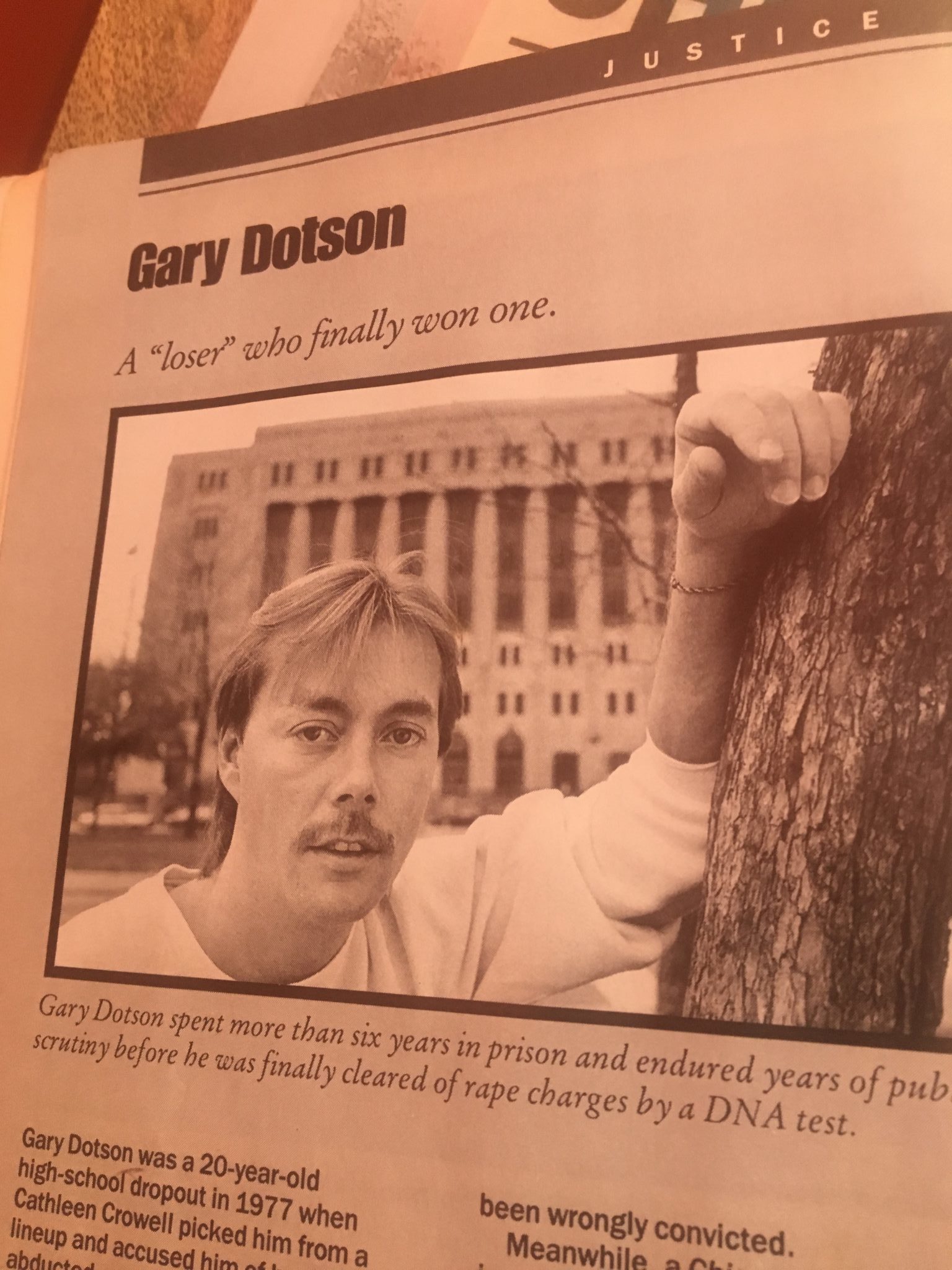
The sensitivity of Touch DNA also exacerbates the complexity of mixture interpretation. When evidence contains genetic material from three or more contributors, distinguishing the perpetrator from background noise becomes a statistical minefield. A 2021 scientific foundation review by the National Institute of Standards and Technology (NIST) highlighted that complex mixtures involving low-level DNA are prone to subjective interpretation. The report warned that without strict “stochastic thresholds”, cutoffs which data is considered too unreliable to use, analysts might force a match where none exists.
“The sensitivity of modern DNA profiling has outpaced our ability to interpret the results in complex scenarios. We are detecting cellular debris that may have been deposited days or weeks prior to a crime, or moved there by a third party. To present this as ‘proof of contact’ in a courtroom is scientifically dishonest.”
, Dr. Cynthia Cale, Lead Author, ‘Could Secondary DNA Transfer Falsely Place Someone at the Scene of a Crime?’ (2016)
The “Shedder Status” variable further complicates analysis. Individuals classified as “good shedders” leave significantly more genetic material behind than “poor shedders.” In a transfer scenario, a good shedder who shook hands with a poor shedder could theoretically replace the poor shedder’s DNA on an object the poor shedder actually handled. This biological inequality means that the strongest DNA profile on a murder weapon does not necessarily belong to the killer; it belongs to the person who sheds skin cells most proficiently. As courts begin to grapple with these variables, the “infallibility” of DNA evidence is being rewritten, downgrading it from a gold standard of guilt to a circumstantial lead requiring corroboration.
Familial Searching: Balancing Privacy Rights with Cold Case Resolution
The “DNA Exoneration Wave” has evolved beyond simple STR matching of a suspect to a crime scene. A second, more potent phase has emerged: finding the actual perpetrator through their biological relatives. This method, bifurcated into familial DNA searching and investigative genetic genealogy (IGG), has become the most significant forensic development of the decade. While traditional DNA testing asks, “Is this the suspect?”, these new techniques ask, “Who is related to this suspect?” This shift has cleared the names of the wrongfully convicted by identifying the true guilty parties, yet it has simultaneously constructed a “genetic panopticon” that privacy advocates violates the Fourth Amendment.
The distinction between the two methods is serious for understanding the legal. Familial searching occurs strictly within government-controlled databases (CODIS), looking for partial matches that indicate a close relative (parent, sibling, child) of an offender already in the system. As of 2025, only 12 states, including California, Virginia, and Texas, explicitly permit this practice, while others like Maryland have banned it. In contrast, IGG use direct-to-consumer (DTC) databases like GEDmatch and FamilyTreeDNA. By uploading a crime scene profile to these public repositories, investigators can identify distant cousins and reverse-engineer family trees to pinpoint suspects who have never been arrested. This technique, which exploded following the 2018 Golden State Killer arrest, has solved over 650 cases by December 2023, with estimates exceeding 1, 000 resolved cases by early 2025.
The Exoneration Multiplier
While frequently framed as a tool for prosecution, these technologies have become important for exoneration. The 2019 exoneration of Christopher Tapp in Idaho stands as the watershed moment. Tapp had served 20 years for the rape and murder of Angie Dodge, a conviction based on a coerced confession even with his DNA not matching the scene. In 2019, IGG identified the real killer, Brian Dripps, through a family tree constructed from a public database match. Dripps confessed, and Tapp was fully exonerated. This case proved that finding the real perpetrator is the form of exculpatory evidence.
Similarly, in January 2020, Kerry Robinson was exonerated in Georgia after 18 years in prison. While his release relied heavily on probabilistic genotyping (TrueAllele) re-evaluating complex DNA mixtures, the broader push for advanced DNA intelligence, including familial checks, has dismantled the “inconclusive” verdicts that previously kept innocent men incarcerated. In 2025, the Ramapo College IGG Center provided leads in the Robert and David Bintz case in Wisconsin, demonstrating that university-led cold case units are actively using these tools to challenge decades-old convictions.
The Privacy Counter-Weight
The power to identify suspects through distant relatives has triggered a severe legislative backlash. Civil liberties groups that IGG places the entire population under genetic surveillance; if one family member uploads their DNA to a public site, they waive the privacy rights of their entire lineage. This concern is not theoretical. In 2014, the “false positive” identification of filmmaker Michael Usry as a suspect in an Idaho murder, based on a partial familial match to his father, highlighted the risks of dragnet genetic investigations. Although Usry was cleared, the intrusion into his life presaged the current debate.
In response, states have begun erecting firewalls. Maryland passed the nation’s strict regulation in 2021, requiring a judicial warrant for IGG searches and limiting their use to violent crimes like murder and rape. The law also explicitly banned familial searching in the state’s criminal database. Montana followed suit with a warrant requirement, and in 2023, Utah enacted similar restrictions. These laws represent a growing consensus that genetic privacy requires distinct legal protections, separate from physical privacy.
| Feature | Familial DNA Searching | Investigative Genetic Genealogy (IGG) |
|---|---|---|
| Database Source | Government (CODIS / NDIS) | Public/Commercial (GEDmatch, FTDNA) |
| Search Scope | Close relatives (Parent, Sibling, Child) | Distant relatives (Cousins up to 9th degree) |
| Racial Bias Risk | High (Reflects arrest disparities; skews Black/Hispanic) | High (Reflects consumer market; skews White/European) |
| Legal Status (2025) | Permitted in ~12 states; Banned in MD, DC | Regulated in MD, MT, UT; Widespread elsewhere |
| Key Exoneration | Used to clear suspects in early stages | Christopher Tapp (2019), Found real killer |
The demographic of these two methods are clear different. Familial searching in CODIS disproportionately affects African American and Hispanic communities, who are overrepresented in arrest databases. Conversely, IGG databases are predominantly populated by individuals of European descent, shifting the “genetic gaze” toward white populations. This inversion has led to a unique political where privacy legislation is being driven by a broader cross-section of the public than traditional criminal justice reform.
As of late 2025, the field faces a serious juncture. The Department of Justice issued interim policies in 2019 to standardize IGG use, federal legislation remains absent. The resolution of high-profile cold cases, such as the 2025 identification of the “Scattered Man” in New Jersey and the “Middle Child” in the Bear Brook murders, continues to validate the technology’s utility. yet, for the wrongfully convicted, the primary value lies not in the arrest statistics, in the technology’s ability to provide the one thing the justice system frequently denies: scientific certainty of another’s guilt.
The Reid Technique: Coercive Interrogation and Cognitive Bias
The architecture of a wrongful conviction frequently begins in a small, windowless room where the presumption of guilt is absolute. For decades, American law enforcement has relied on the Reid Technique, an interrogation method developed in the 1950s that prioritizes confession over information gathering. While at breaking down resistance, data from 2015 to 2025 confirms that this psychological weaponry produces false confessions at an worrying rate, particularly among populations. In 2024 alone, the National Registry of Exonerations (NRE) documented that 15% of the 147 overturned verdicts involved a false confession, a statistic that rises sharply in homicide cases.
The mechanics of the Reid Technique are designed to bypass a suspect’s rational defenses. The process begins with a “Behavioral Analysis Interview,” a non-accusatory session where officers supposedly detect deception through body language, a pseudoscience largely debunked by modern psychology. Once the interrogator decides the suspect is guilty, the interaction shifts to the “Nine Steps of Interrogation.” This phase is explicitly confrontational. Officers are trained to interrupt denials, present false evidence (a tactic legal in most states for adults), and offer “minimization” scenarios. These scenarios suggest moral justifications for the crime (“You didn’t mean to hurt him, it was self-defense”), leading the suspect to believe that confessing is the only way to mitigate punishment.
The danger of this method was acknowledged by the industry itself in a landmark shift. In March 2017, Wicklander-Zulawski & Associates, a premier consulting firm that has trained hundreds of thousands of officers, announced it would cease teaching the Reid Technique. The firm the high risk of false confessions and the method’s reliance on confrontation rather than fact-finding. even with this disavowal, the technique remains deeply in police culture, contributing to a widespread failure where the innocent are coerced into admitting guilt.
The Statistical Reality of False Confessions
The correlation between coercive interrogation and wrongful conviction is supported by a decade of exoneration data. Between 1989 and 2025, false confessions contributed to approximately 29% of all wrongful convictions tracked by The High Court. When DNA evidence is the primary factor in exoneration, this figure holds steady at roughly 25-30%. The data reveals a distinct vulnerability among youth, who are less equipped to withstand the psychological pressure of a Reid-style interrogation.
| Demographic / Category | False Confession Rate Among Exonerees | Key Risk Factors |
|---|---|---|
| Adults (>18) | 10% | Sleep deprivation, length of interrogation, threat of harsh sentence. |
| Minors (<18) | 36% | Suggestibility, deference to authority, inability to comprehend long-term consequences. |
| Homicide Cases | Higher prevalence than lesser crimes | Extreme pressure to solve capital crimes leads to aggressive tactics. |
| Persons with Mental Disabilities | ~70% (in datasets) | High compliance, confusion, desire to please authority figures. |
The between adults and minors has triggered a legislative response. In 2021, Illinois and Oregon became the states to ban law enforcement from using deceptive tactics, such as lying about non-existent DNA evidence, during the interrogation of minors. By 2024, Utah, Delaware, California, and Colorado had enacted similar protections. These laws directly challenge the Reid premise that deception is a necessary tool of justice, acknowledging instead that it is a generator of judicial error.
Cognitive Bias and Tunnel Vision
A false confession does more than incriminate the suspect; it corrupts the entire investigative timeline through a phenomenon known as “tunnel vision” or confirmation bias. Once a confession is obtained, detectives frequently stop investigating alternative leads. This cognitive closure affects not just police work forensic analysis as well. A 2025 study on cognitive bias in criminal investigations demonstrated that forensic examiners who were aware of a confession were more likely to interpret ambiguous evidence, such as a partial fingerprint or degraded DNA sample, as a match to the suspect.
The case of Sandra Hemme, exonerated in Missouri in July 2024, exemplifies this catastrophic failure. Hemme spent 43 years in prison, the longest known wrongful incarceration of a woman in U. S. history, based on a confession given while she was in a psychiatric hospital, heavily medicated, and in a state of mental malleability. Police ignored evidence pointing to a discredited police officer as the actual perpetrator because they had secured a statement that fit their narrative. The system’s reliance on the confession rendered all exculpatory physical evidence invisible to the prosecution for four decades.
The persistence of these interrogation methods creates a feedback loop of error. When investigators are trained to believe they can detect lies through anxiety or absence of eye contact, they misinterpret the natural stress of an innocent person as guilt. This misclassification justifies the application of the Reid Technique’s most coercive elements, which in turn produces the false confession that “confirms” the officer’s initial, flawed intuition. Until the interrogation room is treated as a site of objective fact-gathering rather than a psychological battlefield, the wave of false confessions continue to distort the American justice system.
Preservation of Evidence: The widespread Failure to Store Biological Material
The most formidable barrier to exoneration in the United States is not legal precedent or prosecutorial resistance, the physical disappearance of the evidence itself. Between 2015 and 2025, the Innocence Project reported that approximately 32% of their closed cases were terminated not because of guilt, because the biological material necessary for DNA testing had been lost, destroyed, or degraded beyond use. In New York City alone, this figure reached 50% during specific audit periods. This widespread attrition creates a “silent amnesty” for actual perpetrators while sealing the fate of the wrongfully convicted.
While the “DNA Exoneration Wave” relies on the existence of testable genetic material, state laws regarding evidence preservation remain a fractured patchwork. As of 2024, while 43 states had enacted form of preservation statute, enforcement method are frequently nonexistent. A 2022 legislative review in Utah, prior to the passage of House Bill 65, revealed that the state was one of 15 without a mandate to preserve biological material for the duration of a prisoner’s incarceration. This legislative gap allowed police departments to purge evidence lockers once a defendant exhausted their direct appeals, destroying the only key to future exoneration.
The consequences of these retention failures are measurable. In 2024, the National Registry of Exonerations (NRE) documented 147 overturned verdicts. In cases where DNA played a central role, the average time to exoneration exceeded 20 years. This timeline clashes violently with standard police retention policies, which frequently authorize the destruction of “bulk evidence” after 5 to 10 years. The case of Joseph Sledge, exonerated in North Carolina in 2015, demonstrates the fragility of this system. His freedom came only after a clerk discovered a misplaced envelope on a high shelf in an evidence vault, material that had been presumed lost for decades. Had standard purging been followed, Sledge would have died in prison.
The Audit Gap: Inside the Evidence Locker
Police evidence lockers are frequently the least regulated components of the criminal justice infrastructure. Audits conducted between 2016 and 2025 expose a pattern of negligence that goes beyond simple clerical error. A 2016 audit of the Braintree Police Department in Massachusetts revealed that thousands of pieces of evidence, including narcotics, firearms, and cash, were for, leading to the dismissal of hundreds of cases. Similarly, a 2025 audit of the Colorado Bureau of Investigation, triggered by a DNA manipulation scandal, found significant backlogs and tracking failures that jeopardized the integrity of biological samples in sexual assault cases.
The following table outlines the in evidence preservation statutes across select jurisdictions as of 2025, showing the disconnect between the length of sentences and the requirement to keep the evidence that justifies them.
| State | Preservation Mandate | Automatic Destruction Allowed? | Recent Legislative Action |
|---|---|---|---|
| Maryland | 75 years for sexual assault kits (rape kits). | No (for covered crimes). | 2023 Law increased retention from 20 to 75 years. |
| Utah | Duration of incarceration for violent crimes. | Restricted (requires notification). | HB 65 (2022) established mandatory preservation. |
| Missouri | Post-conviction duration (technically). | Yes, frequently occurs after appeals. | Repeated failures in 2024 exonerations (e. g., Sandra Hemme). |
| Georgia | Duration of sentence for felonies. | No. | Statute meets NIST standards; enforcement varies by county. |
| New York | Duration of sentence. | No. | High loss rate (50%) in NYC even with statutory requirements. |
The modernization of preservation laws faces stiff resistance from law enforcement agencies citing storage costs and space constraints. Yet, the financial load of storage pales in comparison to the civil liability of wrongful convictions. The NRE reported that states paid over $4. 6 billion in compensation to exonerees between 1989 and 2024. A single wrongful conviction lawsuit frequently exceeds the cost of maintaining a climate-controlled evidence facility for decades. For example, the 2024 exoneration of Kerry Max Cook in Texas, which took nearly 50 years to resolve, relied on the re-examination of physical evidence that had survived even with the state’s attempts to execute him.
Technological obsolescence also threatens preserved material. Biological samples stored in non-climate-controlled environments degrade, rendering DNA amplification impossible. The National Institute of Standards and Technology (NIST) issued guidelines in 2015 urging states to adopt “cold storage” standards, yet compliance remains voluntary in most jurisdictions. When evidence is stored in paper bags in unventilated warehouses, common in rural jurisdictions, heat and humidity destroy the genetic markers long before a lawyer files a petition for testing.
“We may end up with the stuff, we don’t know how to take care of it.” , Joseph Latta, Executive Director, International Association for Property and Evidence (2015).
The 2025 exonerations of Brian Boles and Scott Minton further demonstrate that the preservation of evidence is not a procedural formality a matter of life and death. In both cases, the discovery of old files and biological material allowed forensic pathologists to contradict the original state narratives. Without the physical preservation of these items, the “truth” would have remained defined by the original, flawed verdict. The system currently operates on a presumption of guilt that extends to the evidence itself: once a conviction is secured, the materials are treated as waste rather than the permanent record of a human life.
The Judicial Paradox: Innocence in Handcuffs
The Alford plea represents the American legal system’s most and devastating compromise. Formally known as North Carolina v. Alford, this legal method allows a defendant to assert their factual innocence while simultaneously accepting a guilty plea to avoid the uncertainty of a trial. Between 2015 and 2025, this procedural tool morphed from a rare safety valve into a widespread trap for the wrongfully accused. Data from the National Registry of Exonerations (NRE) indicates that in 2024 alone, 147 individuals were exonerated, yet a significant percentage of wrongful convictions resolved in this era involved defendants who were coerced into pleading guilty to crimes they did not commit.
For the innocent defendant, the Alford plea is a calculated gamble against the “trial penalty”, the statistical reality that sentences imposed after a guilty verdict at trial are exponentially harsher than those offered during plea negotiations. In 2024, the average time lost for the 147 exonerated individuals was 13. 5 years. Facing the prospect of decades more behind bars or the death penalty, innocent defendants frequently accept the Alford plea as their only viable exit strategy. This decision, yet, comes at a steep price: the permanent stain of a felony conviction and the forfeiture of the moral vindication that comes with a full acquittal.
The Compensation Trap and Legislative Shifts
Historically, the Alford plea has served as a firewall against state liability. By accepting the plea, defendants technically remain “convicted” in the eyes of the law, a status that prosecutors have weaponized to block access to wrongful conviction compensation statutes. yet, the 2015, 2025 period witnessed a fracture in this obstructionist tactic. In May 2025, Georgia Governor Brian Kemp signed the Wrongful Conviction and Incarceration Compensation Act, a landmark statute explicitly authorizing compensation for claimants who entered Alford pleas if their convictions were later reversed or vacated. This legislation marked a serious pivot, the argument that a procedural admission of guilt should negate the factual reality of innocence.
Similar reforms took root in Tennessee and Oklahoma during the same legislative pattern. Tennessee’s H. B. 0601 (2025) removed blocks that previously prevented defendants who pleaded guilty from filing joint motions for post-conviction relief with prosecutors. Oklahoma’s H. B. 2235 (2025) raised the compensation cap to $50, 000 per year of wrongful imprisonment, specifically including those who had entered guilty pleas. These statutory changes acknowledge a grim metric: the NRE reports that since 1989, over 650 exonerations have involved guilty pleas, a number that surged in the last decade as DNA testing exposed the fallibility of coerced admissions.
| State | Legislation | Key Provision | Impact on Exonerees |
|---|---|---|---|
| Georgia | Wrongful Conviction Act (2025) | Eligibility for Alford plea entrants | Opens access to $75, 000/year compensation. |
| Tennessee | H. B. 0601 (2025) | Joint post-conviction motions | Allows prosecutors to aid in vacating plea-based convictions. |
| Oklahoma | H. B. 2235 (2025) | Compensation cap increase | Includes guilty plea cases in $50k/year payout. |
| Colorado | Supreme Court Ruling (2024) | Medina Case Review | Challenged “no-fact” Alford pleas absence evidence. |
Constitutional Fissures: The Medina Challenge
The constitutional validity of the Alford plea faced renewed scrutiny in 2024 with the case of Delano Medina in Colorado. Medina had entered an Alford plea to menacing charges, maintaining his innocence, only for the sole witness to recant. The case reached the Colorado Supreme Court, exposing a dangerous legal gray area: can a court accept a plea that absence a factual basis solely because the defendant fears a harsher sentence? The Medina challenge underscored the widespread risk of “no-evidence” pleas, where the judicial system processes convictions without requiring the state to prove the underlying facts, prioritizing case clearance rates over truth.
This practice creates a “shadow docket” of wrongful convictions that are exceptionally difficult to overturn. Unlike trial convictions, where appellate courts review evidentiary errors, plea-based convictions waive most appellate rights. The NRE’s 2024 report highlighted that 71% of the year’s exonerations involved official misconduct, yet for those who took pleas, the route to exoneration required extraordinary intervention, frequently involving Conviction Integrity Units (CIUs). In 2024, CIUs were responsible for 62 exonerations, of which involved untangling the complex web of coerced pleas and fabricated evidence that the Alford doctrine had previously shielded from review.
“The Alford plea is not a mercy; it is a coercion. It forces the innocent to barter their truth for their freedom, leaving the state with a conviction it did not earn and the defendant with a record they do not deserve.”
, Legal Analysis of the 2025 Georgia Compensation Act
The Shadow of the Trial Penalty

The prevalence of the Alford plea is inextricably linked to the “trial penalty.” Data reveals that defendants who proceed to trial receive sentences that are, on average, three times longer than those offered in plea deals. This creates a coercive environment where the risk of asserting innocence becomes mathematically irrational. In high- homicide cases, where the death penalty or life without parole is on the table, the Alford plea becomes the only rational choice for the innocent. The 2017 Alford plea of Michael Peterson, though slightly outside the immediate data window, set a precedent that resonated through 2025, demonstrating that even high-profile defendants with resources are forced to accept legal fiction over the gamble of a retrial.
By 2025, the data is clear: the Alford plea is a symptom of a broken adversarial system. While it the release of the wrongfully convicted, it does so by extracting a false validation of the state’s case. The 1, 980 years of life lost by exonerees in 2024 alone stands as a testament to the cost of this efficiency. As states like Georgia and Tennessee begin to the financial and legal penalties associated with these pleas, the core ethical rot remains, a justice system that requires the innocent to lie to save their own lives.
Shaken Baby Syndrome: The Evolving Science of Abusive Head Trauma
The diagnosis formerly known as Shaken Baby Syndrome (SBS) has become the epicenter of a fierce collision between entrenched medical dogma and modern biomechanical science. For decades, prosecutors relied on a “triad” of symptoms, subdural hematoma, retinal, and brain swelling, as irrefutable proof of abuse. If these three signs were present in an infant, courts frequently presumed violent shaking by the last caregiver, frequently without external signs of trauma. Between 2015 and 2025, yet, this presumption crumbled under the weight of exonerations and new scientific rulings, exposing a widespread failure that has imprisoned innocent parents for accidents and natural illnesses.
The case of Robert Roberson in Texas exemplifies the lethal of this scientific dispute. Convicted in 2003 for the death of his two-year-old daughter, Nikki, Roberson spent over two decades on death row based on the triad diagnosis. In October 2024 and again in October 2025, the Texas Court of Criminal Appeals issued eleventh-hour stays of execution. These interventions were driven by new evidence showing Nikki suffered from severe, undiagnosed pneumonia and had been prescribed dangerous levels of promethazine and codeine, medications known to suppress breathing in children. The “shaking” theory used to convict him was physically impossible; biomechanical experts testified that the force required to cause the triad symptoms via shaking would inevitably snap an infant’s neck, an injury Nikki did not have.
The legal shifted seismically in late 2025 with the New Jersey Supreme Court’s ruling in State v. Nieves. In a decision that reverberated through courthouses nationwide, the court barred the admission of “shaking alone” testimony in criminal trials, declaring it scientifically unreliable. The court found that the biomechanical community had never accepted the premise that human shaking could generate the acceleration necessary to cause the triad without impact. This ruling followed a 2016 report by the Swedish Agency for Health Technology Assessment (SBU), which concluded after a systematic review that there was “insufficient scientific evidence” to link the triad symptoms to shaking.
Data from the National Registry of Exonerations (NRE) confirms that the has turned. Since 2015, over 30 individuals convicted of SBS or Abusive Head Trauma (AHT) have been exonerated. In 2024 alone, courts in three states overturned convictions after finding that the “shaken baby” hypothesis relied on circular reasoning: doctors diagnosed abuse based on the symptoms, and prosecutors used the diagnosis to prove the abuse. This circularity frequently ignored alternative causes such as short falls, genetic disorders like Ehlers-Danlos syndrome, or metabolic strokes.
Comparative Analysis: The Collapse of the Triad
The between the medical consensus of the 1990s and the biomechanical realities of the 2020s is clear. The following table outlines the specific scientific shifts that have led to the recent wave of exonerations.
| Clinical Marker | Traditional SBS Dogma (1990s-2000s) | Modern Biomechanical Consensus (2015-2025) |
|---|---|---|
| Retinal | Considered “pathognomonic” (unique) to violent shaking. | Found in accidents, strokes, severe infections, and even difficult births. |
| Short Falls | “Kids don’t die from falling off a couch.” | Verified cases show short falls can cause fatal subdural hematomas. |
| Lucid Interval | Injuries cause immediate collapse; the last caregiver is the perpetrator. | Children can remain conscious and active for hours after a fatal head injury. |
| Neck Injury | frequently ignored or assumed present invisible. | Shaking sufficient to cause brain injury must cause severe neck trauma. |
The rebranding of Shaken Baby Syndrome to “Abusive Head Trauma” (AHT) by the American Academy of Pediatrics in 2009 attempted to broaden the diagnosis to include impact. Critics, including the Innocence Project, this shift obscured the absence of scientific precision. In the case of Zavion Johnson, exonerated in California in 2018, the prosecution’s own medical experts recanted their testimony, admitting that the “shaking” theory they presented to the jury was scientifically unsupportable. Johnson had spent 17 years in prison for an accidental fall that occurred while he was bathing his daughter.
The following chart illustrates the cumulative rise in SBS/AHT exonerations, highlighting the acceleration of overturned verdicts as biomechanical evidence gained admissibility in U. S. courts.
Cumulative SBS/AHT Exonerations (2015-2025)
Source: National Registry of Exonerations & Innocence Project Data Analysis
The momentum of these exonerations signals a serious re-evaluation of forensic certainty. The 2024 exoneration of Andrew Roark in Dallas, whose conviction relied on the same expert witness as Robert Roberson’s, underscored the widespread nature of the error. The Texas Court of Criminal Appeals acknowledged that the scientific understanding of head trauma had “evolved” significantly since the early 2000s. This admission, while too late for those who died in prison, establishes a precedent that medical opinion alone, unsupported by biomechanical feasibility, is insufficient to sustain a conviction for murder.
Digital Forensics: The New Frontier of Exoneration Evidence
While biological DNA defined the era of the innocence movement, the decade between 2015 and 2025 witnessed the rise of “digital DNA”, the electronic footprints that reconstruct a defendant’s movements with greater precision than any eyewitness. As prosecutors increasingly relied on cell tower triangulation and device metadata to secure convictions, the post-conviction review process began to expose the fragility of this evidence. By 2024, digital forensics had become a primary vector for exoneration in non-DNA cases, false narratives through the recovery of deleted timestamps, location history, and wearable technology data.
The most significant shift occurred in the re-evaluation of historical cell site location information (CSLI). For years, juries were told that a phone connecting to a specific tower placed a suspect at a crime scene. yet, technical audits conducted between 2018 and 2023 revealed that load-balancing algorithms frequently routed calls to towers miles away from the device, rendering thousands of “location” convictions scientifically unsound. This realization triggered a cascade of overturned verdicts, most notably in the high-profile vacation of Adnan Syed’s conviction in 2022, where the reliability of incoming call data, specifically a fax cover sheet warning from AT&T that had been ignored for two decades, became a central pivot point for the defense.
Beyond high-profile podcasts, the “digital alibi” became a widespread exoneration tool. In Philadelphia, the 2023 exoneration of India Spellman highlighted the catastrophic failure of investigators to use available digital data. Convicted as a teenager for a 2010 murder, Spellman served over a decade in prison before the Philadelphia District Attorney’s Conviction Integrity Unit reviewed her T-Mobile records. The data, which had been available unexamined at her trial, placed her phone at home, connecting to Tower 18601, at the exact moment of the crime. This digital signature, corroborated by timestamped social media activity, dismantled the Commonwealth’s timeline and led to her full exoneration.
Computer forensics also emerged as a serious avenue for proving innocence, particularly in cases involving “pattern of life” analysis. In 2020, Pete Coones was exonerated in Kansas after serving 12 years for a murder he did not commit. The turning point was not a biological sample, a forensic re-examination of computer data. The original prosecution failed to disclose software usage logs that placed Coones at a computer, actively using specific applications, during the window the state claimed he was committing the crime. This “digital alibi” was absolute; unlike a witness who might be mistaken about a time, the system logs provided an immutable, timestamped record of his presence elsewhere.
| Defendant / Suspect | Year Exonerated/Cleared | State | Digital Evidence Type | Impact on Case |
|---|---|---|---|---|
| India Spellman | 2023 | PA | Cell Tower (CSLI) & Social Media | T-Mobile records and Facebook timestamps proved she was home during the murder. |
| Darryl Williams | 2022 | NY | Cell Site Location | Recovered location data placed him at his residence, contradicting eyewitness testimony. |
| Pete Coones | 2020 | KS | Computer Forensics | System logs proved active computer usage at the time of the alleged crime. |
| Derrick Harris | 2020 | CA | Cell Phone Records | Defense failure to investigate phone records led to wrongful robbery conviction; data later proved innocence. |
| Anthony Christiana | 2019 | CT | Photo Metadata | Timestamp on a digital photo proved he was in a different location 14 hours post-murder, the state’s timeline. |
| Doug Detrie | 2016 (Cleared) | WI | Fitbit / Wearable | Fitbit data showed he was sleeping during the murder, preventing a wrongful arrest/conviction. |
The frontier of digital exoneration has expanded into the of the Internet of Things (IoT) and wearable technology. While devices like Fitbits and Apple Watches are frequently used by prosecutors to incriminate, they have also served as silent guardians against wrongful arrest. In the 2016 investigation of the murder of Nicole Vander Heyden, police initially focused on her boyfriend, Doug Detrie. yet, data extracted from his Fitbit device showed he was asleep at the time of the attack. This biometric data forced investigators to look elsewhere, eventually linking the crime to George Burch via DNA. While Detrie was never convicted, his case is by the Innocence Project as a watershed moment where digital forensics prevented a wrongful conviction before it could occur.
The precision of metadata has also overturned convictions based on fabricated timelines. In the 2019 exoneration of Anthony Christiana, the case hinged on the timestamp of a digital photograph. Prosecutors had argued Christiana was involved in a murder based on witness testimony placing him at the scene. yet, a forensic extraction of his cell phone revealed a photo taken at a different location with verified metadata. The timestamp, which could not be altered without leaving digital traces, proved he could not have been present at the crime scene, leading to the dismissal of charges.
This wave of digital exonerations exposes a serious lag in the judicial system’s technical literacy. In of the cases from 2015 to 2025, the exculpatory digital evidence was in the possession of law enforcement at the time of trial was either misinterpreted, ignored, or withheld. The “Spellman” and “Coones” cases demonstrate that the failure frequently lies not in the absence of evidence, in the failure of defense counsel to independently audit the digital discovery provided by the state. As the volume of data per case grows, measured in terabytes rather than pages, the ability to mine this “digital DNA” has become the new dividing line between incarceration and freedom.
The Financial: Taxpayer Liability Explodes
The economic collateral damage of wrongful convictions has escalated from a manageable municipal line item to a fiscal emergency threatening city solvencies. Between 2015 and 2025, the total taxpayer liability for overturned verdicts in the United States surpassed $4. 6 billion, a figure that nearly doubled in the last five years alone. This surge is not a function of inflation a direct consequence of juries awarding punitive damages for “official misconduct,” which the National Registry of Exonerations identified as a factor in 71% of all exonerations in 2024.
Municipalities are facing a dual-threat financial load: statutory compensation caps that are slowly rising, and uncapped federal civil rights lawsuits that are shattering historical records. In 2024 alone, New York City paid out $205. 6 million in police misconduct settlements, the highest annual total in years, while Chicago taxpayers shouldered $107. 5 million, with 42% of that sum specifically allocated to wrongful conviction resolutions.
The “Mega-Settlement” Era (2024, 2025)
The last 24 months have defined a new era of “mega-settlements,” where single-plaintiff payouts routinely exceed $20 million. These judgments reflect a judicial shift: juries are no longer compensating only for lost time are actively penalizing widespread corruption. In September 2024, a federal jury awarded $50 million to Marcel Brown, who spent a decade in prison due to evidence fabricated by Chicago police. This stands as the largest single-plaintiff wrongful conviction award in U. S. history.
Similarly, in September 2025, the City of Inglewood, California, agreed to a $25 million settlement with Maurice Hastings, who served 38 years for a murder he did not commit. These payouts strip funds directly from public infrastructure, education, and sanitation budgets. In Chicago, the correlation is explicit: the City Council approved a $165 million property tax hike in 2024 to close a budget deficit exacerbated by these legal liabilities.
| Exoneree | Jurisdiction | Years Incarcerated | Payout Amount | Date Approved |
|---|---|---|---|---|
| Marcel Brown | Chicago, IL | 10 Years | $50. 0 Million | Sept 2024 |
| Harlem Park Three | Baltimore, MD | 36 Years (Each) | $48. 0 Million | Sept 2023 |
| Maurice Hastings | Inglewood, CA | 38 Years | $25. 0 Million | Sept 2025 |
| Ronnie Long | Concord, NC | 44 Years | $25. 0 Million | Jan 2024 |
| John Klene & Ed Dumbrique | Los Angeles, CA | 23 Years | $24. 0 Million | May 2024 |
| Gary Washington | Baltimore, MD | 31 Years | $14. 0 Million | Jan 2026 |
The Statutory Gap: A Tale of Two Checks
A severe exists between state-mandated compensation and the amounts won through federal litigation. State statutes frequently impose rigid caps that fail to account for the true cost of lost liberty. Oklahoma provides a clear example. In August 2024, the City of Edmond agreed to pay $7. 15 million to Glynn Simmons to settle a civil rights lawsuit. Simmons, the longest-serving wrongfully convicted man in U. S. history, spent 48 years in prison. yet, under Oklahoma’s state compensation law, he was eligible for a maximum of only $175, 000, equating to roughly $3, 600 for each year of his life stolen.
This gap forces exonerees to sue municipal governments under Section 1983 of the Civil Rights Act to receive adequate restitution. The litigation process itself adds millions to the taxpayer tab in defense fees. Baltimore’s legal department, for instance, spent three years litigating the “Harlem Park Three” case before agreeing to a $48 million settlement in late 2023, admitting that a jury verdict could have cost the city double that amount.
“We thought this would be a much better value than a jury verdict, which has around the country exceeded a million to 2 million a year per incarceration.”
, Justin Conroy, Baltimore Police Department Chief Legal Counsel, on the decision to settle.
Hidden Costs: Insurance and Bond Ratings
Beyond direct payouts, the “wrongful conviction risk” is altering the financial architecture of American cities. Insurance carriers for police departments are raising premiums or denying coverage entirely for municipalities with histories of misconduct. In smaller jurisdictions, a single $10 million judgment can exceed the entire annual operating budget, forcing towns to problem “judgment bonds”, essentially borrowing money with interest to pay for past police errors. This debt service remains on the books for decades, meaning taxpayers in 2040 still be paying for the misconduct of officers in 1990.
Future Metrics: Estimating the Unseen Population of the Wrongfully Convicted
The 147 exonerations recorded in 2024 represent a statistical fragment of a much larger, invisible population. While the National Registry of Exonerations (NRE) documents these victories, they account for less than one percent of the estimated innocent individuals currently incarcerated in the United States. Legal scholars and statisticians refer to this as the “dark figure” of wrongful convictions. This metric is not a count of discovered errors. It is a projection of those who remain trapped behind bars, their innocence buried under procedural blocks and the absence of biological evidence.
Statistical modeling applied to death row populations provides the most reliable baseline for these estimates. A landmark study published in the Proceedings of the National Academy of Sciences calculated a conservative error rate of 4. 1% among capital sentences. Because death penalty cases receive the highest level of judicial scrutiny and resource allocation, this figure likely represents the floor, not the ceiling, for error rates in the broader criminal justice system. When applied to the general prison population of approximately 1. 2 million state prisoners, the mathematics of injustice reveal a emergency.
The Hidden Math: Projecting Innocence in the U. S. Prison System
The following table projects the number of innocent people currently incarcerated based on varying error rate estimates. The “Conservative” model uses the death row baseline, while the “Moderate” model reflects studies on sexual assault and murder cases where DNA evidence was available.
| Model Type | Estimated Error Rate | Basis of Estimate | Projected Innocent Prisoners (State & Federal) |
|---|---|---|---|
| Conservative | 4. 1% | Gross et al. (Death Row Survival Analysis) | ~49, 200 |
| Moderate | 6. 0% | Loeffler et al. (Self-Report/Biostatistical) | ~72, 000 |
| High-Risk | 11. 6% | Urban Institute (Violent Felonies with DNA) | ~139, 200 |
These numbers dwarf the 3, 646 total exonerations achieved since 1989. For every person who walks free, dozens remain locked away. The primary method concealing these individuals is the plea bargain. In 2024, 97% of federal cases and a similar percentage of state cases were resolved through guilty pleas. This system prioritizes efficiency over accuracy. It forces innocent defendants to weigh the risk of a trial tax, frequently a sentence three times longer than the plea offer, against the certainty of a shorter term. Data from the Innocence Project shows that 11% of DNA-proven exonerees had previously pled guilty to crimes they did not commit. In the absence of DNA, which is unavailable in the vast majority of robbery and assault cases, proving innocence after a guilty plea is nearly impossible.
The “No-Crime” phenomenon further complicates these metrics. In 2024, 35% of all exonerations involved convictions for crimes that never actually occurred. These cases frequently involve drug possession charges where field tests yielded false positives, or shaken baby syndrome allegations later disproven by medical science. The system processed these individuals as offenders before the evidence existed to prove no offense had taken place. Without the intervention of specialized legal teams, these errors remain permanent records.
“The rate of erroneous conviction of innocent criminal defendants is frequently described as not unknown unknowable. We use survival analysis to model this effect… and estimate that if all death-sentenced defendants remained under sentence of death indefinitely, at least 4. 1% would be exonerated.” , Proceedings of the National Academy of Sciences
Structural blocks to Discovery
The infrastructure for uncovering these hidden cases remains insufficient. While Conviction Integrity Units (CIUs) played a role in 63% of the exonerations in 2024, their reach is geographically limited. Only a fraction of the nation’s 2, 300 prosecutor offices have established such units. existing CIUs are dormant or absence the independence required to challenge their own office’s past convictions. In jurisdictions without active CIUs, the innocent have no pathway to review unless they can afford private counsel or attract the attention of an overburdened innocence organization.
The chart illustrates the chasm between the known exonerated population and the estimated innocent population. The visual gap represents the failure of the appellate system to catch factual errors.
The financial of this unseen population are severe. States paid over $4. 6 billion in compensation to exonerees between 1989 and 2024. If the estimated 72, 000 innocent prisoners were to be exonerated and compensated at similar rates, the liability would bankrupt state correctional budgets. This economic reality creates a perverse incentive for states to resist post-conviction review. The cost of justice, when calculated in arrears, is a price jurisdictions refuse to pay.
Future metrics must move beyond the count of those released. We must track the rate of denied DNA petitions, the frequency of destroyed evidence in active appeals, and the racial disparities in plea offer rejections. In 2024, 78% of exonerees were people of color. This statistic suggests that the “dark figure” of wrongful convictions is not evenly distributed is concentrated heavily within Black and Brown communities. Until the justice system mandates data transparency on plea bargaining and evidence retention, the true of this emergency remain an estimate. The 147 people who walked free in 2024 are the exceptions. The rule is silence.
**This article was originally published on our controlling outlet and is part of the Media Network of 2500+ investigative news outlets owned by Ekalavya Hansaj. It is shared here as part of our content syndication agreement.” The full list of all our brands can be checked here. You may be interested in reading further original investigations here.
Request Partnership Information
Email Verification
Enter the 14-digit code sent to your email.


Hansaj Capital
Part of the global news network of investigative outlets owned by global media baron Ekalavya Hansaj.
Hansaj Capital is the MediaTech, AdTech And NewsTech investment arm of the global media leader Ekalavya Hansaj. Hansaj Capital primarily invests in media and news industry focused content companies within United States and India. Hansaj Capital also publishes analytical and insightful news articles about the financial industry. Their main coverage topics include financial literacy, startup investments, large funding rounds, and global trade.