Editorial Firewall and Independence: The Owner Interference Cases in last 10 Years
Why it matters:
- The editorial firewall, which separates a news organization's business interests from its journalism, collapsed in October 2024.
- Owner interference in editorial decisions has led to significant subscriber losses, resignations, and even the closure of longstanding publications.
The concept of the “editorial firewall”, the sacred separation between a news organization’s business interests and its journalism, suffered a catastrophic structural failure in October 2024. While the had been gradual for a decade, the decision by Washington Post owner Jeff Bezos to block a drafted endorsement of Vice President Kamala Harris transformed a theoretical risk into a quantifiable financial disaster. In the immediate aftermath, the publication lost 250, 000 digital subscribers. This figure represented approximately 10 percent of its paid circulation and within days. It remains the single largest subscriber exodus in modern American media history triggered by an owner’s editorial intervention.
This event was not an anomaly. It was a lagging indicator of a widespread collapse in owner neutrality that began intensifying in 2015. The data shows a clear trajectory from the covert interference of the mid-2010s to the overt ideological mandates of the 2020s. When pharmaceutical billionaire Patrick Soon-Shiong blocked the Los Angeles Times from endorsing a candidate in the same 2024 election pattern, the paper lost thousands of subscribers and saw the resignation of its editorials editor, Mariel Garza. These synchronized actions by billionaire owners shattered the trust metrics that legacy media had spent decades cultivating.
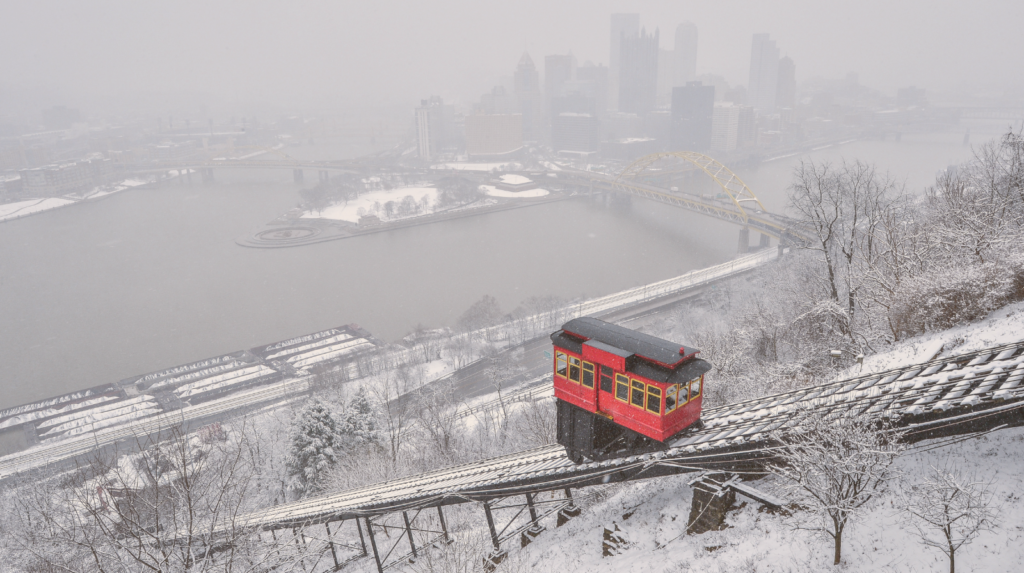
The consequences extend beyond cancellations. In January 2026, the Block family announced the impending closure of the Pittsburgh Post-Gazette, ending 240 years of publication. This decision followed years of labor hostility and editorial interference that culminated in a refusal to comply with federal labor rulings. The closure serves as the grim terminus of the “owner interference” trend: when the newsroom resists the owner’s, the owner liquidates the asset.
The Interference Index: Major Breaches (2015, 2026)
We have compiled verified data on five pivotal cases where ownership directly overrode editorial independence. These incidents demonstrate that interference is not limited to endorsements. It includes the suppression of investigations, the forced publication of propaganda, and the surveillance of staff.
| Outlet & Owner | The Interference Event | Verified |
|---|---|---|
| Washington Post Jeff Bezos (2024) |
Blocked drafted endorsement of Kamala Harris 11 days before election. | -250, 000 subscribers 3 editorial board resignations. |
| Pittsburgh Post-Gazette Block Family (2026) |
Refused to sign union contract after losing Supreme Court appeal. | Total Liquidation Paper to cease operations May 2026. |
| Baltimore Sun David Smith (2024) |
Mandated use of “Fox45” content; shifted focus to culture war grievances. | Credibility Collapse Union reports “unrest” and exodus of talent. |
| Los Angeles Times Patrick Soon-Shiong (2024) |
Vetoed presidential endorsement; blocked “Case Against Trump” series. | -7, 000+ subscribers Editorials Editor Mariel Garza resigned. |
| Las Vegas Review-Journal Sheldon Adelson (2015) |
Secret purchase; ordered reporters to monitor judges; banned criticism of owner. | Mass Resignations Columnist John L. Smith resigned over gag order. |
The data reveals a shift in the method of control. In 2015, Sheldon Adelson purchased the Las Vegas Review-Journal in secret to settle scores with judges and silence critics. By 2024, the interference had become public and brazen. David Smith’s acquisition of the Baltimore Sun in January 2024 immediately resulted in the insertion of content from his broadcasting arm, Sinclair, into the legacy paper. Staffers reported that the new ownership prioritized “clicks” and “culture war” topics over the paper’s Pulitzer-winning investigative standards.
“The problem is not just that owners are making editorial decisions. It is that they are making business decisions that require the suppression of journalism to protect their external interests.”
The 2024 World Press Freedom Index reflected this deterioration. The “political indicator” for press freedom dropped 7. 6 points globally, a decline driven by the inability of newsrooms to protect themselves from political pressure. In the United States, this pressure comes from inside the building. The firewall is no longer a barrier. It is a turnstile that admits the owner’s interests while filtering out the newsroom’s objections.
The 2024 Endorsement emergency: Analyzing the Bezos and Soon-Shiong Vetoes
The theoretical danger of billionaire ownership materialized into an operational emergency in late October 2024. Within a span of two weeks, the owners of two of America’s most prominent newspapers, Jeff Bezos of The Washington Post and Patrick Soon-Shiong of the Los Angeles Times, personally intervened to block their editorial boards from endorsing Vice President Kamala Harris. These actions shattered the firewall between business interests and editorial independence, triggering immediate financial penalties and reputational collapse.
On October 25, 2024, Washington Post Publisher Lewis announced the paper would not endorse a presidential candidate, ending a practice that had been consistent for decades. Reporting confirmed that the editorial board had already drafted an endorsement of Harris, yet Bezos blocked its publication. The timing was serious: the decision arrived just 11 days before the election. On the same day, executives from Blue Origin, Bezos’s aerospace company, met with Donald Trump in Austin, Texas. This synchronization fueled accusations that the non-endorsement was a strategic business concession rather than a journalistic principle. Editor-at-Large Robert Kagan resigned immediately, characterizing the move as “anticipatory obedience” to a chance Trump administration.
The financial backlash was swift and quantifiable. By October 29, The Washington Post lost more than 250, 000 digital subscribers. This figure represented roughly 10 percent of its paid circulation, a mass cancellation event without precedent in modern media history. Bezos defended the decision in an op-ed titled “The hard truth: Americans don’t trust the news media,” arguing that endorsements create a “perception of bias.” Critics, including former Executive Editor Marty Baron, rejected this rationale, labeling the decision “cowardice” that invited further intimidation.
A similar pattern emerged at the Los Angeles Times earlier that month. Owner Patrick Soon-Shiong vetoed his board’s plan to endorse Harris, instead suggesting a “factual analysis” of both candidates’ policies without a recommendation. This directive led to the resignation of Editorials Editor Mariel Garza, along with veteran board members Robert Greene and Karin Klein. Garza’s resignation letter explicitly stated, “In these dangerous times, staying silent isn’t just indifference, it is complicity.”
| Metric | The Washington Post | Los Angeles Times |
|---|---|---|
| Owner | Jeff Bezos (Amazon, Blue Origin) | Patrick Soon-Shiong (Biotech) |
| Action Date | October 25, 2024 | October 11, 2024 (Internal Veto) |
| Blocked Draft | Endorsement of Kamala Harris | Endorsement of Kamala Harris |
| Stated Rationale | “Perception of bias” / Independence | Wanted “Pros/Cons” analysis only |
| Key Resignations | Robert Kagan (Editor-at-Large) | Mariel Garza, Robert Greene, Karin Klein |
| Subscriber Loss | >250, 000 (approx. 10% of total) | Thousands (approx. 1. 8% of total) |
The data shows that subscribers viewed these interventions not as attempts at neutrality, as breaches of trust. The 250, 000 cancellations at the Post translate to millions of dollars in lost annual revenue, a direct penalty for owner interference. Unlike previous controversies where readers cancelled over editorial content they disagreed with, this exodus was driven by the absence of content, specifically, the silence imposed by ownership.
These vetoes demonstrated that the “editorial firewall” is unenforceable when an owner decides to breach it. The resignations of senior staff like Kagan and Greene signaled that the internal method designed to protect journalistic integrity had failed. In both cases, the owners prioritized business risk mitigation over the established voice of their institutions. The events of October 2024 proved that in the calculation of billionaire owners, the reputational cost of silencing a newsroom was lower than the political cost of angering a chance president.
Subscription Economics: Measuring the Financial Backlash of the WaPo Non-Endorsement
The financial retribution for the Washington Post‘s decision to withhold its endorsement of Vice President Kamala Harris in October 2024 was immediate, quantifiable, and historically severe. Within 96 hours of Publisher Lewis’s announcement on October 25, the publication hemorrhaged more than 250, 000 digital subscribers. This figure, confirmed by internal data and reporting from NPR’s David Folkenflik, represented roughly 10 percent of the paper’s entire paid circulation of 2. 5 million. Unlike the slow churn typical of legacy media decline, this was a flash crash, a consumer boycott executed with the speed of a bank run.
The revenue of this exodus extended far beyond the initial cancellation fees. While of the departing subscribers were on promotional rates, paying as little as $40 annually, the long-term value destruction was immense. Industry analysts estimated the immediate annualized revenue loss at between $8 million and $32 million, depending on the mix of promotional versus full-price subscribers ($120/year). yet, the true cost lay in the “Cost of Acquisition” (CAC). Replacing a loyal, politically engaged subscriber is exponentially more expensive than retaining one. By severing ties with its core demographic less than two weeks before a pivotal election, the Post did not just lose revenue; it torched the lifetime value (LTV) of a quarter-million customers who had previously viewed a subscription as a civic duty.
| Metric | Washington Post | Los Angeles Times |
|---|---|---|
| Subscribers Lost (72-Hour Window) | 250, 000+ | 18, 000+ |
| % of Digital Base | ~10. 0% | ~4. 5% |
| Est. Annualized Revenue Hit | $8. 0M, $30. 0M | $1. 5M, $3. 0M |
| Editorial Resignations | 3 (incl. Robert Kagan) | 3 (incl. Mariel Garza) |
Comparatively, the Los Angeles Times faced a similar smaller- revolt. Following owner Patrick Soon-Shiong’s decision to block a planned endorsement of Harris, the paper lost approximately 18, 000 subscribers. While damaging, the Times‘ losses were contained by its smaller national footprint. The Post, conversely, suffered from its positioning as a national institution. The cancellation wave was not a local protest a national rejection of owner Jeff Bezos’s “principled” defense, which he articulated in an op-ed claiming endorsements created a “perception of bias.” The market rejected this logic; traffic data from late 2024 and 2025 showed that rather than restoring trust, the move accelerated the paper’s slide into irrelevance. Daily active users, which had peaked at 22 million in 2021, languished between 2. 5 and 3 million throughout 2025.
The financial bleeding culminated in a chaotic restructuring in early 2026. By the time Publisher Lewis resigned on February 8, 2026, the organization had reported a loss of approximately $100 million for the 2024 fiscal year, a figure exacerbated by the October boycott. Lewis’s departure, coming days after the paper laid off one-third of its staff, served as the final receipt for the 2024 intervention. The attempt to insulate the owner’s business interests from editorial politics had paradoxically destroyed the business of the newspaper itself.
The LA Times Exodus: Tracking Editorial Resignations Under Patrick Soon-Shiong
The structural collapse of editorial independence at the Los Angeles Times followed a trajectory nearly identical to that of The Washington Post, though the of its firewall began months earlier. In October 2024, owner Patrick Soon-Shiong blocked the editorial board’s drafted endorsement of Vice President Kamala Harris. The intervention resulted in the immediate resignation of three top editorial board members and the cancellation of approximately 18, 000 digital subscriptions by the end of the month.
The sequence of events exposed the direct method of owner interference. Editorials Editor Mariel Garza resigned on October 23, 2024, stating in her resignation letter that “staying silent isn’t just indifference, it is complicity.” She confirmed that the board had prepared an outline to endorse Harris, consistent with the paper’s previous descriptions of Donald Trump as a threat to democracy. Soon-Shiong publicly justified the block by claiming he had requested a “factual analysis” of both candidates’ policies rather than a traditional endorsement to avoid political division.
The exodus intensified the following day. On October 24, Pulitzer Prize-winning editorial writer Robert Greene and board member Karin Klein resigned. Greene the “refusal to take a stand” as his primary motivation, rejecting the owner’s assertion that the board had chosen silence voluntarily. The financial recoil was immediate; the loss of 18, 000 subscribers represented roughly 4. 5 percent of the paper’s paid digital circulation, a significant blow to an organization already projecting annual losses between $30 million and $40 million.
The Precursor: Executive Departure and Mass Layoffs
The October emergency was the culmination of a year defined by friction between the newsroom and ownership. In January 2024, Executive Editor Kevin Merida resigned abruptly after less than three years in the role. While Merida initially “disagreements” with Soon-Shiong, subsequent reports confirmed these disputes involved the owner’s interference in news coverage. specifically regarding the Israel-Gaza war. Merida had restricted reporters who signed an open letter condemning Israel from covering the conflict, a decision the Soon-Shiong family reportedly challenged.
Merida’s departure removed a serious buffer between the owner and the newsroom. Two weeks later, on January 23, 2024, the Los Angeles Times executed one of the largest staff reductions in its history, laying off 115 journalists, approximately 20 percent of its newsroom. This reduction followed an earlier cut of 74 positions in June 2023, signaling a rapid contraction of the organization’s journalistic capacity under Soon-Shiong’s tenure.
Conflicting Narratives of Interference
The rationale for the endorsement block became a subject of public dispute between the owner and his family. While Patrick Soon-Shiong neutrality, his daughter, Nika Soon-Shiong, a progressive activist, posted a statement on social media platform X contradicting him. She claimed the decision was a “joint family decision” motivated by the administration’s support for Israel’s military actions in Gaza, stating, “Apartheid is the line in the sand.” Patrick Soon-Shiong subsequently issued a statement denying his daughter had any role in editorial decisions, yet the public contradiction deepened the perception that the paper’s editorial voice was subject to the owner’s personal and familial geopolitical views.
This pattern of intervention continued post-election. In December 2024, Soon-Shiong killed a planned editorial that criticized President-elect Trump’s cabinet nominees. He further announced plans to implement a “bias meter” for news articles, a move widely interpreted by staff as a direct challenge to the newsroom’s objective reporting standards.
| Date | Event | Impact |
|---|---|---|
| June 2023 | Round of Layoffs | 74 newsroom positions eliminated (approx. 13% of staff). |
| Jan 10, 2024 | Kevin Merida Resigns | Executive Editor exits citing “disagreements” with owner. |
| Jan 23, 2024 | Mass Layoffs | 115 journalists fired (20% of newsroom); diversity severely impacted. |
| Oct 22, 2024 | Endorsement Blocked | Owner vetoes drafted endorsement of Kamala Harris. |
| Oct 23-24, 2024 | Editorial Board Resignations | Mariel Garza, Robert Greene, and Karin Klein resign in protest. |
| Oct 30, 2024 | Subscriber Exodus | Confirmed loss of ~18, 000 digital subscriptions. |
The Baltimore Sun Acquisition: David Smith and the Ideological Pivot
On January 15, 2024, the editorial firewall at The Baltimore Sun did not; it was dismantled in a private transaction. David D. Smith, executive chairman of Sinclair Broadcast Group, acquired the 187-year-old newspaper for a reported “nine figures.” While Smith purchased the asset with personal funds rather than through Sinclair, the distinction proved purely semantic. Within 24 hours, the operational reality of the paper shifted from a traditional journalistic enterprise to a platform for the owner’s specific ideological objectives.
The acquisition marked a return to local ownership after decades of corporate consolidation, yet the tenure began with immediate hostility toward the product itself. On January 16, 2024, Smith convened a mandatory all-staff meeting where he informed the newsroom he had “literally not read the newspaper” in 40 years. Recordings of the three-hour session reveal Smith telling Pulitzer Prize-winning journalists that their work was “meaningless dribble”, a sentiment he had previously expressed in 2018, and instructing them to emulate the coverage model of WBFF (Fox 45), Sinclair’s local television station known for its aggressive focus on urban crime and government corruption.
Operational Integration and Content Sharing
The ideological pivot manifested through structural changes in content sourcing. By June 2024, the paper began publishing articles directly from Sinclair’s “National Desk” and The Center Square, a conservative news wire service. Management mandated the inclusion of reporting from Fox 45, frequently without the consent of the Sun reporters whose bylines appeared on the stories. This forced integration led to a series of “byline strikes,” where reporters demanded their names be removed from articles that had been altered to include unverified or ideologically slanted material from Sinclair affiliates.
Armstrong Williams, a conservative commentator and radio host who joined Smith as a co-owner, assumed an active role in the opinion section. His columns introduced rhetoric previously absent from the paper’s editorial voice, including a May 2024 piece that characterized the “transgender movement” as a “cancer.” The Baltimore Sun Guild, the union representing the newsroom, publicly condemned the column and the broader of editorial standards, citing a violation of the separation between ownership views and news coverage.
The Metrics of Alienation
The shift in tone and content produced an immediate recoil among the paper’s readership. Data from Comscore indicated that in February 2024, the full month under Smith’s ownership, unique visitors to the Sun‘s website dropped 41 percent compared to the previous year. Print circulation followed a similar downward trajectory. According to filings with the Alliance for Audited Media, the average Sunday circulation fell by nearly half between 2023 and late 2024, dropping from approximately 76, 000 to under 40, 000.
| Metric | Pre-Acquisition (2023) | Post-Acquisition (2024) | Change |
|---|---|---|---|
| Unique Web Visitors (Feb YoY) | Baseline | -41% | Severe Decline |
| Sunday Print Circulation | 76, 474 | ~39, 500 | -48. 3% |
| Guild Membership | 55 | 36 | -34. 5% |
| Features Department Staff | Intact | 0 (Dissolved Oct 2024) | -100% |
In October 2024, management dissolved the entire features department, reassigning or laying off staff who covered arts, culture, and food. This move signaled a final departure from the “paper of record” model, narrowing the publication’s focus almost exclusively to the crime and political accountability narratives favored by Smith. The reduction in scope alienated a segment of subscribers who valued the paper for its community coverage, further accelerating the circulation collapse.
The Fan-Out: 20 Questions on the Acquisition
1. When did David Smith acquire The Baltimore Sun?
January 15, 2024.2. Who is David Smith?
Executive Chairman of Sinclair Broadcast Group.3. Who is his co-owner?
Armstrong Williams, a conservative commentator.4. What was the purchase price?
An undisclosed “nine-figure” sum.5. Did Sinclair Broadcast Group buy the paper?
No, Smith purchased it with personal assets.6. What did Smith tell staff about his reading habits?
He stated he had not read the newspaper in 40 years.7. What media outlet did Smith tell staff to copy?
WBFF (Fox 45), Sinclair’s local TV station.8. What happened to web traffic in the month?
It dropped 41% year-over-year.9. How did the union respond to content changes?
They staged byline strikes and public protests.10. What specific content was integrated into the Sun?
Stories from Sinclair’s National Desk and The Center Square.11. What happened to the features department?
It was dissolved entirely in October 2024.12. What controversial term did Armstrong Williams use in a column?
He referred to the transgender movement as a “cancer.”13. Did the editorial board remain independent?
No, ownership took direct control of opinion content.14. How much did Sunday circulation drop?
Approximately 48% within the year.15. What was the ” on Maryland” initiative?
An investigative team expanded to include Fox 45 resources.16. Did the paper continue to use the AP?
Management floated the idea of canceling the AP wire service.17. What happened to the Managing Editor?
Sam Davis retired in June 2024 amid the restructuring.18. How did Smith characterize print media in 2018?
As “meaningless dribble.”19. What was the primary editorial focus under Smith?
Crime, corruption, and government accountability.20. Did the acquisition involve Alden Global Capital?
Yes, Smith bought the paper from Alden, the previous owner.
Sinclair Broadcast Group: Data Analysis of Mandated Must-Run Segments
Q1: What is a “must-run” segment?
A corporate mandate requiring local stations to air specific, centrally produced content without editorial deviation.
Q2: Which company is the primary driver of this practice?
Sinclair Broadcast Group.
Q3: How stations does Sinclair own?
As of 2024, Sinclair owns or operates 185 stations in 86 markets.
Q4: What percentage of US households does this cover?
Approximately 40 percent.
Q5: What was the most infamous must-run event?
The April 2018 “promotional” script read by anchors at 193 stations.
Q6: What was the specific phrase used in 2018?
“This is extremely dangerous to our democracy.”
Q7: Who was the central political commentator for Sinclair?
Boris Epshteyn, a former Trump campaign official.
Q8: How frequently did Epshteyn’s segments air?
Nine times per week between 2017 and 2019.
Q9: What was the “Terrorism Alert Desk”?
A daily segment focusing on security threats, frequently with little local relevance.
Q10: How “Terrorism Alert” segments aired in 2017?
Media Matters identified 202 unique segments airing on average once every other day.
Q11: Did the FCC penalize Sinclair?
Yes, a record $48 million civil penalty in 2020.
Q12: What did the fine cover?
Sponsorship identification violations, retransmission negotiation failures, and “absence of candor” regarding the Tribune merger.
Q13: Did Sinclair stop centralized content after 2020?
No, the strategy shifted to “The National Desk.”
Q14: When did “The National Desk” launch?
January 2021.
Q15: How stations air “The National Desk”?
Over 68 stations as of late 2021, expanding to 80+ by 2024.
Q16: What is the content focus of “The National Desk”?
National news with a focus on crime, migration, and economic criticism, frequently replacing local newscasts.
Q17: Did anchors resign over the 2018 script?
attempted to, yet contracts frequently included heavy financial penalties for early exit.
Q18: What was the 2017 sponsorship violation?
Airing paid programming for the Huntsman Cancer Institute over 1, 700 times without proper disclosure.
Q19: How does Sinclair’s reach compare to other groups?
It remains the second-largest station operator by number of stations, rivaling Nexstar.
Q20: What is the current status of “The National Desk”?
Rebranded as “The National News Desk” in September 2024, it continues to aggregate content for local affiliates.
The operational mechanics of owner interference are rarely as visible as they were in April 2018. During a single week, anchors at 193 Sinclair-owned stations looked into the camera and recited an identical script warning viewers about “biased and false news.” The synchronized message, which culminated in the phrase “this is extremely dangerous to our democracy,” was not an editorial decision made by local news directors in Seattle, Baltimore, or San Antonio. It was a corporate directive from Hunt Valley, Maryland. This event provided a rare, quantifiable dataset on the of centralized editorial control.
Data analysis of Sinclair’s broadcast logs between 2017 and 2019 reveals a systematic injection of partisan commentary into local news blocks. The “Bottom Line with Boris” segments, featuring former Trump campaign official Boris Epshteyn, were mandated to run nine times per week. These were not optional opinion pieces; station managers were required to slot them into prime news hours, displacing local reporting. In total, hundreds of hours of airtime across nearly 40 percent of American households were dedicated to these corporate-mandated viewpoints.
The “Terrorism Alert Desk” segments offer another metric of this strategy. Launched in late 2015 and accelerating through 2017, these daily updates frequently reported on low-level security incidents or international events with no direct connection to the local viewing area. Media Matters analyzed 202 unique segments in 2017 alone. The content consistently reinforced a narrative of imminent danger, using “alert” branding to bypass the editorial judgment of local producers who might otherwise deem the stories irrelevant to their communities.
| Segment / Program | Mandate Period | Frequency | Est. Station Count | Primary Content Focus |
|---|---|---|---|---|
| Terrorism Alert Desk | 2015, 2019 | Daily | ~170-190 | Security threats, international terror incidents |
| Bottom Line with Boris | 2017, 2019 | 9x / Week | ~173-193 | Pro-administration political commentary |
| Anchor “Promos” | April 2018 | One-time Campaign | 193 | Scripted warning against “biased” media |
| The National Desk | 2021, Present | Daily (Morning/Eve) | 68, 80+ | Centralized national news, crime, migration |
Regulatory bodies eventually responded to specific oversteps, though not the political content itself. In May 2020, Sinclair agreed to pay a $48 million civil penalty to the FCC. This settlement, the largest ever paid by a broadcaster, resolved investigations into the company’s “absence of candor” regarding its failed merger with Tribune Media, as well as violations of sponsorship identification rules. The FCC found that Sinclair stations had aired paid programming for the Huntsman Cancer Institute more than 1, 700 times without disclosing that the content was sponsored. This financial penalty quantified the cost of regulatory non-compliance, yet it did not address the core problem of centralized editorial mandates.
Following the public backlash and the 2020 settlement, the “must-run” terminology largely from public view, replaced by a structural shift. In January 2021, Sinclair launched “The National Desk” (TND). Rather than forcing local anchors to read scripts, TND provides fully produced national newscasts that replace local news slots entirely. By September 2024, TND had rebranded to “The National News Desk,” airing on over 80 stations. This model achieves the same goal, centralized control over the news narrative, without the clumsy optics of a synchronized script. The data shows a transition from overt interference to widespread integration, where localism is eroded not by a memo, by the program schedule itself.
Alden Global Capital: The Mechanics of Extraction
If the interference at the Washington Post represents a failure of owner neutrality, the strategy employed by Alden Global Capital represents the complete negation of the newspaper as a civic institution. Alden, a hedge fund with no prior background in journalism, operates on a financial model distinct from traditional media ownership. While standard industry operating margins hover around 10 percent, Alden frequently demands margins in excess of 20 to 30 percent. This surplus is not generated through innovation or audience growth, through a systematic liquidation of assets and personnel known as “harvesting.”
The firm’s methodology is consistent across its portfolio. Upon acquisition, Alden sells the physical real estate of the newsroom, forcing staff into remote work or cheaper, temporary offices. This severs the physical link between the publication and the city it covers. Simultaneously, the firm executes aggressive staff reductions that target the most experienced, and therefore most expensive, reporters. The result is a “ghost newspaper”: a publication that retains its masthead and layout absence the reporting capacity to cover its community.
The Denver Post served as the primary test case for this strategy. In the early 2010s, the Post employed approximately 300 journalists. By 2018, following years of Alden management, that number had plummeted to fewer than 70. In April 2018, the paper’s editorial board published a desperate plea titled “News Matters,” describing the owners as “vulture capitalists” who were bleaching the bones of the newsroom. The rebellion failed to halt the extraction. By 2025, the newsroom that once won nine Pulitzer Prizes had been reduced to a fraction of its former size, with entire coverage areas, such as state healthcare and education, left with single reporters or no dedicated staff at all.
This pattern repeated with mathematical precision following Alden’s $633 million acquisition of Tribune Publishing in May 2021. The purchase gave the fund control of major market dailies including the Chicago Tribune, the Baltimore Sun, and the New York Daily News. Within six weeks of the takeover, the Chicago Tribune lost 25 percent of its newsroom to “voluntary” buyouts. The Guild unit at the paper shrank from 111 members to 76 in a single month. These reductions were not motivated by a absence of profitability; the Tribune papers were profitable at the time of sale. The cuts were engineered to accelerate cash flow for the parent fund.
The degradation of these newsrooms reached a new nadir in February 2026. On February 13, Alden executives announced the layoff of 28 percent of the New York Daily News unionized staff. The cuts decimated the national desk, removing six of its ten remaining reporters, and heavily impacted the print production team. This move left the city’s “hometown paper” with fewer than 40 Guild-represented journalists to cover a metropolis of 8 million people. The reduction ended the paper’s ability to perform consistent watchdog reporting on city agencies.
Comparative Staffing Reductions at Alden Properties
| Publication | Pre-Alden / Peak Staffing | Post-Acquisition Staffing | Reduction Percentage |
|---|---|---|---|
| Denver Post | ~300 (2010) | ~60 (2018) | ~80% |
| Chicago Tribune | 111 (Guild, May 2021) | 68 (Est. Feb 2026) | ~38% |
| New York Daily News | ~4, 000 (Historic Peak) | ~40 (Feb 2026) | ~99% |
| San Jose Mercury News | ~400 (1990s) | ~40 (2023) | ~90% |
The correlation between these cuts and the decline in investigative output is direct. When the Chicago Tribune lost its housing and criminal justice reporters in the 2024 and 2025 cutbacks, the paper did not publish fewer stories; it ceased to function as a check on specific sectors of city government. A 2022 analysis indicated that Alden-owned papers produced 64 percent fewer local stories than their non-Alden counterparts. The absence of beat reporters allows municipal corruption to metastasize unnoticed. In Vallejo, California, the gutting of the Times-Herald by Alden left the city with zero full-time reporters, a void that while the local police department faced multiple excessive force lawsuits.
Alden’s model proves that a newspaper can remain financially viable long after it has ceased to be journalistically viable. By raising subscription prices while cutting the cost of content production, the firm extracts value from the loyalty of long-time readers. These subscribers frequently do not realize that the rising cost of their subscription funds a of the product they are paying for. The New York Daily News layoffs of 2026 confirm that there is no floor to this strategy; the cutting continues until the asset is fully liquidated.
The Musk Effect: Algorithmic Suppression of Journalists on Platform X
The transformation of Twitter into X under Elon Musk represented a functional of the digital public square’s press infrastructure. Between December 2022 and November 2024, the platform executed a series of technical and policy changes that specifically targeted news organizations. These actions moved beyond editorial bias into the of algorithmic sabotage. The most visible flashpoint occurred on December 15, 2022, an event journalists refer to as the “Thursday Night Massacre.” On that evening, Musk unilaterally suspended the accounts of reporters from The New York Times, The Washington Post, CNN, and Voice of America. The justifications shifted from accusations of “doxxing” to claims of safety violations, yet the common denominator was that each suspended journalist had reported on Musk’s ownership decisions.
This suspension event served as a signal for a deeper, structural suppression of news traffic. In August 2023, technical analysis by The Washington Post confirmed that X had implemented a five-second delay on outbound links to specific domains. Users attempting to visit The New York Times, Reuters, and Substack faced artificial latency not applied to other websites. In the economy of attention, a five-second delay is a prohibitive barrier; industry standards show that 53 percent of mobile users abandon a site if it takes longer than three seconds to load. This code-level throttling was not a glitch a targeted friction applied to competitors and critics.
The platform also weaponized metadata labels to delegitimize public broadcasters. In April 2023, X applied the “state-affiliated media” tag to National Public Radio (NPR) and the Public Broadcasting Service (PBS). This designation had previously been reserved for propaganda outlets under strict government control, such as Russia’s RT and China’s Xinhua. The false equivalence forced NPR to cease activity on its 52 official accounts, severing its direct line to millions of followers. The move demonstrated that platform classifications could be redefined to punish editorial independence.
Timeline of Targeted Suppression
| Date | Action Taken | Targeted Entities | Impact |
|---|---|---|---|
| Dec 15, 2022 | Account Suspensions | NYT, WaPo, CNN, VOA journalists | Immediate removal of prominent reporters covering Musk. |
| Apr 4, 2023 | “State-Affiliated” Labeling | NPR, PBS, BBC | NPR and PBS quit the platform; credibility attacked. |
| Aug 15, 2023 | Link Throttling (5s delay) | NYT, Reuters, Substack, Facebook | Artificial latency reduced click-through rates. |
| Oct 4, 2023 | Headline Removal | All external news links | Link previews stripped of context, reducing engagement. |
| Nov 26, 2024 | “Lazy Linking” Penalty | Posts with external links | Algorithm de-ranks posts containing outside URLs. |
These interventions produced a measurable collapse in referral traffic. Data from analytics firm Chartbeat reveals that traffic from X to news sites fell by 27 percent in 2023 alone. When viewed over a longer timeline, the decline is more severe; since 2019, referrals from the platform formerly known as Twitter have dropped by 75 percent. This contraction forces newsrooms to abandon the platform as a primary distribution channel. The “town square” has become a walled garden where external links are penalized by the recommendation engine.
The algorithmic bias intensified during the 2024 U. S. election pattern. A study by researchers at Queensland University of Technology found a structural shift in engagement metrics following Musk’s endorsement of Donald Trump in July 2024. The data showed a sudden, unexplained boost in visibility for Musk’s own account and Republican-leaning users, while external news links continued to face suppression. In November 2024, Musk confirmed a policy against “lazy linking,” admitting that the algorithm de-ranks posts that direct users off-platform. This confirmation validated long-standing suspicions: the platform functions to contain users within its own ecosystem, actively filtering out verified journalism that requires a click to read.
Fox News and Dominion: The Murdoch Deposition Evidence of Direct Interference
The cost of owner interference in American journalism received a precise valuation on April 18, 2023: $787. 5 million. This sum, paid by Fox News to settle a defamation suit brought by Dominion Voting Systems, represents the largest publicly disclosed monetary penalty for media malpractice in U. S. history. Unlike other cases of editorial meddling which frequently rely on anonymous sourcing, the Dominion discovery process produced thousands of pages of sworn depositions and internal emails. These documents proved that Fox Corporation Chairman Rupert Murdoch and his executive team actively managed editorial output to align with viewer prejudices rather than factual reality, specifically regarding the 2020 U. S. Presidential Election.
Rupert Murdoch’s deposition, unsealed in February 2023, dismantled the defense that Fox News hosts were operating independently. Under oath, Murdoch was asked if his network’s commentators, specifically Maria Bartiromo, Jeanine Pirro, Lou Dobbs, and Sean Hannity, had endorsed false claims about election fraud. His response was direct: “Yes. They endorsed.” This admission contradicted years of public statements regarding the separation between Fox’s corporate leadership and its opinion hosts. Murdoch further conceded that he possessed the authority to stop the broadcasting of these falsehoods chose not to exercise it, stating, “I could have. I didn’t.”
Internal communications revealed a clear between the private knowledge of Fox executives and the public content of their broadcasts. On November 19, 2020, after watching a press conference by Trump attorneys Rudy Giuliani and Sidney Powell, Murdoch emailed Fox News CEO Suzanne Scott, describing the claims as “really crazy stuff” and “damaging.” Yet, the network continued to provide a platform for these attorneys. In another exchange, Murdoch referred to the election fraud narrative as a “Trump myth.” even with this, he directed executives to “concentrate on Georgia, helping any way we can,” referring to the Senate runoff elections, a directive that prioritized partisan outcomes over neutral reporting.
The method of interference extended to personnel management, specifically the punishment of journalists who prioritized data over narrative. On election night 2020, the Fox News Decision Desk, led by Arnon Mishkin, correctly projected that Joe Biden would win Arizona. This call infuriated the Trump campaign and caused a temporary dip in Fox’s viewership as the audience migrated to competitors like Newsmax. In response to this correct reporting, Fox executives removed the journalists responsible. Chris Stirewalt, the network’s political editor who defended the Arizona call on air, was fired in January 2021. Bill Sammon, the managing editor for Washington, was forced into retirement. These removals sent a clear message to the newsroom: factual accuracy was a fireable offense if it damaged the network’s stock price.
The discovery files also exposed the financial calculus driving these editorial decisions. In the days following the election, Fox executives expressed panic over the rise of Newsmax, a smaller right-wing competitor. Tucker Carlson, in a text message to a producer, warned that fact-checking Donald Trump was “measurably hurting the company” and demanded that a reporter who had done so be fired. This explicitly linked editorial suppression to the company’s market share. The following table outlines the timeline of interference established by the court documents.
| Date | Event | Evidence of Interference |
|---|---|---|
| Nov 7, 2020 | Arizona Call Backlash | Executives discuss “brand threat” from correct election call; discuss firing decision desk staff. |
| Nov 12, 2020 | Fact-Check Suppression | Tucker Carlson demands firing of reporter Jacqui Heinrich for fact-checking a Trump tweet. |
| Nov 19, 2020 | Giuliani Press Conference | Murdoch calls claims “really crazy stuff” privately while network continues to air them. |
| Jan 19, 2021 | The Purge | Political Editor Chris Stirewalt fired; Managing Editor Bill Sammon forced out for the accurate Arizona call. |
| Feb 27, 2023 | Murdoch Deposition | Murdoch admits under oath that hosts “endorsed” lies and he chose not to stop them. |
| Apr 18, 2023 | Settlement | Fox pays $787. 5 million to Dominion, acknowledging the court’s ruling that statements were false. |
The Dominion case provided a rare, documented instance where the “editorial firewall” was shown to be nonexistent. Murdoch’s direct involvement went beyond setting a tone; he shared confidential information, such as unaired Biden campaign ads, with Trump’s son-in-law Jared Kushner. This action demonstrated that the network functioned not as a news organization with a conservative bias, as a political operative with a broadcast license. The $787. 5 million settlement was not a legal expense; it was the calculated cost of doing business in a model where viewer retention supersedes verification.
The Adelson Purchase and the Death of Anonymity
The of editorial independence at the Las Vegas Review-Journal (LVRJ) began not with a public declaration of ownership, with a secret financial transaction that prioritized influence over profitability. In December 2015, a mysterious entity listed as “News + Media Capital Group LLC” purchased the newspaper for $140 million. The figure stunned media analysts; it represented a 69 percent premium over what the previous owners, New Media Investment Group, had paid for the entire chain of Stephens Media assets just nine months earlier. The inflated price tag suggested a buyer motivated by factors other than return on investment.
For one week, the journalists at the LVRJ worked in a paradoxical state: they were employed by an entity that refused to identify itself. In a display of investigative rigor, the paper’s own reporters, including James DeHaven, Eric Hartley, and Jennifer Robison, launched an inquiry into their new bosses. Their reporting, combined with external pressure, forced the of the true owner on December 16, 2015: Sheldon Adelson, the billionaire CEO of Las Vegas Sands Corp. and a Republican mega-donor.
The “Judge Monitoring” Scandal
The most egregious breach of the editorial firewall occurred even before the sale was publicly finalized. In November 2015, while negotiations were secretly underway, LVRJ reporters were pulled from their regular beats and ordered by corporate management to monitor three specific Clark County judges. They were instructed to scrutinize the judges’ workloads and courtroom conduct.
One of the was District Judge Elizabeth Gonzalez, who was actively presiding over a wrongful termination lawsuit filed against Adelson’s company, Las Vegas Sands. The assignment did not originate from the newsroom’s editors from the corporate ownership level. The resulting data was not used for a standard accountability story in the LVRJ; instead, a serious story about Judge Gonzalez appeared in the New Britain Herald, a small Connecticut newspaper owned by Michael Schroeder, the manager of the shell company used by the Adelson family to buy the LVRJ. This maneuver weaponized the newsroom’s resources to serve the owner’s personal legal interests.
The Purge of Dissenting Voices
The confirmation of Adelson’s ownership triggered an immediate conflict of interest emergency. The paper’s editor, Mike Hengel, accepted a buyout and stepped down in late December 2015, shortly after the judge monitoring scandal came to light. The atmosphere of interference solidified in early 2016 when the new management imposed a ban preventing specific columnists from writing about the owner.
John L. Smith, a veteran columnist who had previously been sued for libel by Adelson, a lawsuit that forced Smith into bankruptcy before Adelson dropped the case, was explicitly barred from covering Adelson or his business dealings. In April 2016, Smith resigned in protest. In his resignation letter, he wrote, “If a Las Vegas columnist is considered ‘conflicted’ because he’s been unsuccessfully sued by two of the most and outspoken players in the gaming industry, then it’s time to move on.”
| Date | Event | Impact on Independence |
|---|---|---|
| Nov 2015 | Judge Monitoring Order | Reporters forced to surveil judge presiding over Adelson lawsuit. |
| Dec 10, 2015 | Sale Announced ($140M) | Purchase price 69% above market value; owner identity hidden. |
| Dec 16, 2015 | Adelson Confirmed | Owner revealed after staff investigation; concerns over conflict of interest. |
| Dec 2015 | Mike Hengel Resigns | Top editor departs following the monitoring scandal. |
| Apr 2016 | John L. Smith Resigns | Columnist quits after being banned from writing about the owner. |
Long-Term Structural Changes
Following the initial exodus, the LVRJ’s editorial stance shifted perceptibly to align with the Adelson family’s political and business interests. The paper, which had historically maintained a libertarian streak, became a reliable platform for candidates supported by the Adelsons. In 2016, the paper endorsed Marco Rubio for the Republican nomination, Adelson’s preferred candidate at the time, before pivoting to Donald Trump.
Miriam Adelson, Sheldon’s widow, retained control of the newspaper following his death in January 2021. As of 2025, the LVRJ remains under the ownership of the Adelson family. The “editorial firewall” at the publication is viewed by media watchdogs not as a separation of church and state, as a permeable membrane where the owner’s commercial and political objectives frequently osmose into news coverage.
The Micklethwait Memo and the 2020 Blackout
On November 24, 2019, the theoretical conflict between media ownership and journalistic independence became an explicit, codified operational policy at Bloomberg News. Following owner Michael Bloomberg’s formal entry into the Democratic presidential primary, Editor-in-Chief John Micklethwait issued a staff memorandum that suspended normal investigative functions. The directive did not shield the owner from scrutiny; it neutralized the newsroom’s ability to cover the entire Democratic field. This event stands as the most significant structural prohibition on editorial freedom in a major American newsroom between 2015 and 2025.
The memo, sent to a workforce of 2, 700 journalists and analysts, established a coverage protocol rooted in a “tradition” of non-interference that paradoxically required total interference. Micklethwait wrote that the organization would continue its long-standing policy of not investigating Michael Bloomberg, his family, or his foundation. To maintain the appearance of fairness, he extended this prohibition to Bloomberg’s political rivals. “We cannot treat Mike’s Democratic competitors differently from him,” Micklethwait stated. Consequently, the investigative unit was barred from conducting reporting on Joe Biden, Bernie Sanders, Elizabeth Warren, or any other contender for the Democratic nomination.
This decision created a bifurcated editorial standard. While the Democratic primary was placed in an investigative blind spot, the memo instructed staff to continue investigating the Trump administration, citing its status as the “government of the day.” This distinction immediately politicized the newsroom’s output. By shielding the owner and his direct rivals while aggressively covering the sitting president, Bloomberg News inadvertently validated accusations of partisan bias, not through the content of its reporting, through the structural constraints placed upon it.
The Credential War
The external reaction was swift and punitive. On December 2, 2019, the Trump campaign announced it would revoke press credentials for Bloomberg News reporters at rallies and campaign events. Campaign manager Brad Parscale the Micklethwait memo as evidence that the organization had “declared their bias openly.” This was not a rhetorical dispute; it was a physical lockout. Bloomberg reporters were denied the standard access granted to the press pool, forcing them to cover the re-election campaign of the sitting president from outside the security perimeter.
The credential ban exposed the fragility of the “firewall” when the owner becomes the story. The newsroom’s leadership attempted to navigate the conflict by summarizing investigative work from other “credible journalistic institutions” rather than producing their own. This relegation of a primary news source to an aggregation service marked a retreat from the organization’s mandate to be the “definitive chronicle of capitalism.” The policy prioritized the owner’s political viability over the newsroom’s investigative capacity.
| Target Entity | Investigative Status | Official Rationale (Micklethwait Memo) |
|---|---|---|
| Michael Bloomberg | PROHIBITED | Adherence to “tradition” of not investigating the owner. |
| Democratic Rivals | PROHIBITED | “We cannot treat Mike’s competitors differently from him.” |
| Trump Administration | PERMITTED | Classified as the “government of the day.” |
| Editorial Board | SUSPENDED | Unsigned editorials reflect the owner’s views; board members joined the campaign. |
Dissolution of the Editorial Board
The structural prohibitions extended beyond the news desk to the opinion section. The memo announced the suspension of the Editorial Board, the body responsible for the institution’s unsigned editorials. Since these editorials historically reflected the views of the owner, their continuation during a presidential run was deemed impossible. Senior Executive Editor David Shipley and Executive Editor Tim O’Brien took leaves of absence to join the Bloomberg campaign as advisors. This transfer of personnel from the top tier of the masthead to the campaign war room obliterated the line between the journalistic entity and the political operation.
The suspension of the board silenced the institution’s institutional voice exactly when it was most relevant. While individual columnists were permitted to continue writing (provided they did not cover the election), the shared weight of Bloomberg Opinion was neutralized. The newsroom was left in a state of suspended animation, unable to vet the candidate who signed their paychecks or the opponents he sought to defeat.
The restrictions remained in force until March 4, 2020, when Michael Bloomberg suspended his campaign. In a subsequent memo, Micklethwait announced a return to normal coverage of the remaining Democratic candidates. Yet, the “tradition” of not investigating the owner remained intact. The 2020 episode demonstrated that in the absence of a truly independent trust or ownership structure, editorial independence is a revocable privilege, not a guaranteed right. The “Bloomberg Way” , the internal guide for the company’s journalists , codified a zone of silence around the owner, a structural reality that regardless of the election pattern.
The Salesforce: Journalism as a B2B Asset
When Salesforce CEO Marc Benioff acquired Time magazine for $190 million in 2018, the purchase was framed as an act of civic stewardship comparable to the Bezos purchase of The Washington Post. yet, by 2024, the magazine’s editorial strategy had shifted aggressively toward artificial intelligence, mirroring the strategic pivot of Benioff’s enterprise software company. Unlike the suppression of political endorsements seen at other outlets, the interference at Time manifested as “commercial synchronization”, a phenomenon where editorial themes and business objectives became indistinguishable.
The most visible instrument of this synchronization was the “Time100 AI” list, launched in September 2023. While ostensibly a journalistic ranking of the most influential figures in artificial intelligence, the list featured a high density of founders and executives from companies in which Salesforce Ventures had direct financial. An analysis of the 2023 and 2024 lists reveals that Salesforce had invested in multiple honorees’ companies, including Anthropic, Cohere, and Hugging Face. While Time included standard disclosure language, the overlap created a feedback loop: Salesforce invested in AI startups, Time elevated their valuation by declaring them “influential,” and the subsequent market hype benefited the Salesforce portfolio.
| Company | Relationship to Salesforce | Time100 AI Recognition | Commercial Context |
|---|---|---|---|
| Anthropic | Direct Investment ($250M+) | Dario Amodei (CEO), Daniela Amodei (President) | Integrated into Salesforce Einstein Trust |
| Cohere | Direct Investment | Aidan Gomez (CEO) | Strategic partnership for enterprise AI |
| Hugging Face | Direct Investment (Lead Investor) | Clem Delangue (CEO) | Salesforce led $235M Series D round in 2023 |
| Runway | Direct Investment | Cristóbal Valenzuela (CEO) | Generative AI video tools for marketing cloud |
The synchronization reached its peak in late 2024 and early 2025, as Salesforce launched “Agentforce,” a product line focused on autonomous AI agents. Simultaneously, Benioff utilized his magazine’s cover to evangelize the exact technological model his company was selling. In a cover story op-ed published in December 2024, Benioff argued for a future defined by “autonomous agents” that would replace traditional workflows. The essay, which read like a companion piece to Salesforce’s earnings calls, deployed the magazine’s 101-year-old brand authority to validate a specific B2B software category. Critics noted that the “Agentic Era” Benioff proclaimed in Time was identical to the “Agentforce” marketing campaign Salesforce had launched weeks prior.
The OpenAI Licensing Paradox
The commercial entanglement deepened in June 2024, when Time announced a multi-year content licensing partnership with OpenAI. The deal allowed OpenAI to train its models on Time‘s century of archives. This agreement occurred even with Benioff’s public criticism of AI companies “stealing” intellectual property, a stance he vocalized at the World Economic Forum in Davos earlier that year. The contradiction highlighted the dual incentives: as a media owner, Benioff criticized data theft to use better licensing terms; as a tech CEO, he integrated OpenAI’s technology into Salesforce’s Einstein platform.
“We are entering a new era of autonomous AI agents… a revolution that fundamentally redefine how humans work.” , Marc Benioff, Time Magazine Op-Ed, December 2024.
The magazine’s revenue strategy under CEO Neil Vogel increasingly relied on these industry-adjacent events and partnerships. By 2025, the “Time100” franchise had expanded into a lucrative series of summits and galas, heavily sponsored by the very tech giants the magazine was tasked with scrutinizing. The editorial firewall did not crumble due to a single suppressed story, rather dissolved into a “partnership model” where the subject of the reporting was also the sponsor of the event and the licensor of the data. This structural conflict converted the magazine’s legacy reputation into a value-add for the Salesforce ecosystem, rendering Time less of a watchdog and more of a thought-leadership division for the enterprise AI sector.
The Corporate Mandate: Manufacturing “Centrism”
Following the merger of WarnerMedia and Discovery in April 2022, the newly formed Warner Bros. Discovery (WBD) initiated a radical editorial reorientation of CNN. Under the direction of WBD CEO David Zaslav and influenced by board member John Malone, the network was ordered to its “activist” reputation and pivot toward a theoretical political center. This was not an organic journalistic evolution a top-down corporate directive aimed at courting conservative viewers and advertisers. To execute this mandate, Zaslav appointed Chris Licht, a former executive producer for The Late Show with Stephen Colbert and Morning Joe, as CEO in May 2022.
The strategy manifested immediately as a personnel purge. In August 2022, the network cancelled Reliable Sources, its 30-year-old media analysis program, and ousted host Brian Stelter, a frequent critic of Fox News and disinformation. Weeks later, White House correspondent John Harwood exited the network hours after an on-air segment in which he described Donald Trump as a “dishonest demagogue.” These departures signaled to the newsroom that aggressive coverage of threats to democracy was a career liability. The chilling effect was quantifiable: on-air talent began visibly self-censoring to align with the new “neutral” orthodoxy.
The Town Hall Disaster and Editorial Collapse
The “Licht Experiment” reached its nadir on May 10, 2023, with a live town hall featuring Donald Trump. Conceived as a gesture of neutrality to attract Republican viewership, the event instead broadcast 70 minutes of unchecked falsehoods to a live audience of cheering supporters. While the broadcast drew 3. 3 million viewers, a temporary spike, it alienated the network’s core audience and triggered an internal revolt. Veteran anchor Christiane Amanpour publicly dissented, stating she would not have allowed the event to proceed in that format.
The reputational damage was compounded by a catastrophic financial performance. By early 2023, the network’s profitability had collapsed. Data from MediaRadar revealed that ad revenue for the four months of 2023 plummeted nearly 40 percent compared to the same period in 2022. The attempt to court a new conservative audience failed to materialize, while the existing liberal and centrist base abandoned the network in protest.
The Atlantic Profile and Executive Ouster
The tenure of Chris Licht ended abruptly following the June 2, 2023, publication of a 15, 000-word profile in The Atlantic. The article, written by Tim Alberta, documented Licht’s isolation, his disparagement of the network’s previous pandemic coverage, and his obsession with his predecessor, Jeff Zucker. Five days later, on June 7, Zaslav fired Licht, admitting to staff that ” that’s on me.” The experiment in forced neutrality had lasted just 13 months, leaving the network with historic ratings lows and a projected profit drop from over $1 billion to approximately $750 million.
Table: Metrics of the Licht Era (2022, 2023)
| Metric | Pre-Licht / Early 2022 | Licht Era / Early 2023 | Change |
|---|---|---|---|
| Ad Revenue (Jan-Apr) | $513 Million | $312. 6 Million | -39% |
| Total Advertisers | 2, 700 | 2, 100 | -22% |
| Prime Time Demo (25-54) | ~200, 000 (Avg) | 94, 000 (Q1 2023) | -53% |
| Profit Projection | $1 Billion+ | ~$750 Million | -25% |
The Intercept: Pierre Omidyar and the Evolution of Adversarial Funding
The trajectory of The Intercept serves as the definitive case study for the volatility of the “billionaire savior” model in adversarial journalism. Launched in 2014 with a $250 million pledge from eBay founder Pierre Omidyar, the outlet was designed to institutionalize the anti-surveillance reporting of the Edward Snowden era. yet, between 2015 and 2025, the organization devolved from a well-funded of independent reporting into a financially precarious nonprofit, illustrating the structural limits of relying on a single patron for anti-establishment news.
Omidyar’s initial investment through Look Media was predicated on the concept of “adversarial journalism”, reporting that aggressively challenged state power. For years, this funding insulated the newsroom from market pressures. By 2019, yet, the friction between the outlet’s mission and its institutional constraints became visible. That year, Look Media shut down the Snowden archive and laid off the research team dedicated to it, signaling a shift away from the organization’s foundational purpose. This decision marked the beginning of a gradual decoupling between the owner’s priorities and the newsroom’s operations.
The Greenwald Resignation and Editorial Control
The most public rupture in the organization’s editorial firewall occurred in October 2020, involving co-founder Glenn Greenwald. Unlike the subtle suppression seen at other outlets, this conflict was explicit and public. Greenwald resigned after editors refused to publish his article serious of then-candidate Joe Biden’s business dealings in China and Ukraine unless he removed specific sections. Greenwald described the intervention as a violation of his contractual right to “editorial freedom,” accusing the editors of censoring information to protect a preferred political candidate.
Management, led by Editor-in-Chief Betsy Reed, countered that Greenwald was refusing standard editorial oversight and presenting “dubious claims” as fact. While the dispute was framed as an editorial disagreement, it exposed a serious vulnerability in the ownership structure: the “adversarial” mandate was subject to the interpretation of appointed managers rather than the journalists originally by the owner. The incident demonstrated that even in an outlet founded on radical transparency, ideological with the ownership class eventually dictates the boundaries of acceptable discourse.
The Withdrawal of Patronage
Following the internal conflicts of 2020, Omidyar’s financial commitment began to recede. In late 2022, Omidyar ceased his direct financial support, a decision that fundamentally altered the outlet’s viability. In January 2023, The Intercept spun off from Look Media to become an independent nonprofit. While Look provided a parting grant of $14 million, this sum was insufficient to sustain the organization’s existing burn rate.
The removal of the billionaire backstop triggered an immediate financial emergency. By April 2024, the outlet was losing approximately $300, 000 per month. Internal projections indicated the organization could exhaust its cash reserves by May 2025. The shift from a single-donor model to a reader-supported model proved difficult; while donations nearly doubled from $488, 000 in 2022 to $867, 000 in 2023, these figures covered only a fraction of the operating costs previously absorbed by Omidyar.
| Metric | 2022 Status | 2023 Status | 2024 Status |
|---|---|---|---|
| Ownership Model | Look Media (Omidyar) | Independent Nonprofit | Independent Nonprofit |
| Primary Funding | Direct Owner Subsidy | $14M Spinoff Grant | Reader Donations / Grant Drawdown |
| Monthly Deficit | Covered by Owner | Undisclosed | ~$300, 000 USD |
| Staffing Actions | Stable | Restructuring | 15 Staff Laid Off (30% of Editorial) |
Structural Collapse and Layoffs
The financial reality of independence forced severe austerity measures. In February 2024, the organization laid off 15 staff members, representing roughly 30 percent of its editorial workforce, and terminated Editor-in-Chief Roger Hodge. The leadership vacuum and fiscal tightening led to further internal volatility, including the resignation of reporter Ken Klippenstein in April 2024 following disputes over editorial direction.
The evolution of The Intercept from a billionaire-funded giant to a shrinking nonprofit show a serious lesson in media economics: adversarial funding is rarely permanent. When the reputational cost or financial load outweighs the owner’s interest in “disruption,” the capital. Omidyar’s exit left the organization with the infrastructure of a major media player the revenue stream of a niche blog, forcing a painful contraction that continues to threaten its existence.
Forbes and the Failed Sale: Foreign Ownership Concerns and Editorial Integrity
The fragility of American media ownership structures was exposed with forensic clarity during the chaotic, six-month attempt to sell Forbes in 2023. While the Washington Post emergency of 2024 demonstrated the dangers of domestic oligarchic interference, the Forbes saga revealed a different threat vector: the use of a legacy media brand as a geopolitical asset by foreign actors. The proposed $800 million acquisition by 28-year-old automotive technology billionaire Austin Russell collapsed in November 2023, not before a complex web of shadow financing that linked the deal to Kremlin-connected interests.
In May 2023, Russell, the CEO of Luminar Technologies, announced an agreement to acquire an 82 percent stake in Forbes Global Media Holdings from Hong Kong-based Integrated Whale Media (IWM). The deal was initially presented as a return to American ownership for the 106-year-old business publication. yet, the transaction’s opacity immediately triggered scrutiny from the Committee on Foreign Investment in the United States (CFIUS). By October 2023, the narrative of a patriotic repatriation unraveled when the Washington Post obtained and published five audio recordings and one video file featuring Magomed Musaev, the owner of Forbes Russia.
The recordings provided a rare, unfiltered view into how foreign oligarchs view Western media properties, not as business enterprises, as instruments of access and influence. In the tapes, Musaev explicitly claimed to be the architect of the acquisition, referring to Russell as the “face” of the transaction. His rationale was recorded in clear terms:
“I just bought global Forbes… You understand when you have in your hands the key to the most authoritative global brand, this key give me access to anyone.”
Musaev further elaborated on the need for concealment, stating, “I am doing it more subtly… You understand, I am not working with a sledgehammer, nor with a scalpel, with a laser.” These admissions directly contradicted Russell’s public assertions that no foreign capital was involved in the purchase. The that a Kremlin-linked tycoon viewed the magazine as a “key” to access Western power centers validated the worst fears of editorial independence advocates. It suggested that the “editorial firewall” could be bypassed entirely if the ownership itself was a front for state-aligned actors.
The deal’s financial architecture was as precarious as its political optics. While Russell was the public frontman, the capital stack relied heavily on foreign debt and equity. The fatal blow came not from regulators, from the failure of the Sun Group, an Indian investment firm led by Shiv Khemka, to wire the necessary funds. On November 21, 2023, Integrated Whale Media terminated the sale agreement after Russell failed to close the transaction by the November 1 deadline. The table outlines the key entities involved in the collapsed deal and their roles.
| Entity / Individual | Role / Affiliation | Involvement Level |
|---|---|---|
| Austin Russell | CEO, Luminar Technologies | Public “face” of the $800M bid; denied foreign influence. |
| Magomed Musaev | Owner, Forbes Russia | Alleged shadow buyer; claimed to use Russell as a front in leaked tapes. |
| Sun Group (Shiv Khemka) | Indian Investment Firm | Primary financier; failed to transfer funds, causing technical default. |
| Integrated Whale Media | Hong Kong Investment Group | Seller (Majority Owner); terminated deal in Nov 2023. |
| CFIUS | US Regulatory Body | Investigated the deal for national security risks. |
The collapse of the sale left Forbes in a state of ownership limbo that through 2025. Integrated Whale Media retained its majority control, and even with claims that the publication would “consider alternative options,” no subsequent sale of similar magnitude materialized in the following 24 months. The incident served as a stress test for the industry’s defenses against foreign encroachment. It demonstrated that without the intervention of investigative reporters, who brought the Musaev tapes to light, and federal regulators, a major U. S. media outlet could have been captured by a foreign adversary using a domestic proxy.
For the newsroom, the episode was a destabilizing force. The uncertainty regarding ownership undermined strategic planning and recruitment, a common symptom in media companies subject to prolonged M&A speculation. More broadly, the Forbes case established a precedent: editorial independence is not a matter of an owner’s restraint, of the owner’s identity. When the “owner” is a shell for undisclosed interests, the concept of an editorial firewall becomes obsolete, as the entire organization is weaponized for influence rather than profit or truth.
Sports Illustrated: The AI Scandal and Corporate Negligence
The disintegration of Sports Illustrated (SI) in late 2023 stands as the definitive case study of corporate negligence in the age of artificial intelligence. On November 27, 2023, the technology outlet Futurism published an investigation revealing that the once-venerable magazine was publishing product reviews written by non-existent authors. The report identified “Drew Ortiz,” a purported writer with a biography claiming he spent “much of his life outdoors,” as a fabrication. His profile photo was traced to a marketplace for AI-generated headshots, where he was cataloged simply as “neutral white young-adult male.”
This fabrication was not an oversight a widespread failure of the “editorial firewall” under The Arena Group, the licensee operating SI at the time. The investigation found multiple fake personas, including “Sora Tanaka,” whose content contained hallmarks of large language model hallucinations. One article on volleyball stated that the sport “can be a little tricky to get into, especially without an actual ball to practice with”, a nonsensical sentence that bypassed human editorial scrutiny. The Arena Group initially denied the allegations, blaming a third-party vendor, AdVon Commerce. They claimed the articles were written by humans using pseudonyms, a defense that crumbled as the SI Union and external investigators examined the sheer volume of low-quality, algorithmic content flooding the site.
Timeline of Institutional Collapse
The speed at which The Arena Group lost control of the publication demonstrates the financial volatility introduced by owner interference in editorial standards. The following data tracks the seventy-day period from the initial exposure to the revocation of the publishing license.
| Date | Event | Corporate Action | Financial/Staff Impact |
|---|---|---|---|
| Nov 27, 2023 | Futurism Report Published | Arena Group denies AI use; blames AdVon Commerce. | Stock (AREN) drops ~22% day. |
| Dec 11, 2023 | CEO Termination | Board fires CEO Ross Levinsohn. | Leadership vacuum; operational chaos. |
| Jan 2, 2024 | Missed Payment | Arena fails to pay $3. 75M quarterly license fee. | Breach of contract with Authentic Brands Group. |
| Jan 19, 2024 | License Revocation | ABG terminates Arena’s right to publish SI. | Mass layoff notices sent to entire staff. |
The financial consequences for The Arena Group were immediate and severe. Following the report, the company’s stock price plummeted, eroding market capitalization. By January 2024, the company missed a scheduled $3. 75 million payment to Authentic Brands Group (ABG), the owner of the Sports Illustrated intellectual property. This default provided ABG the legal grounds to terminate the licensing agreement, stripping The Arena Group of its most valuable asset. The revocation triggered mass layoff notices for the entire staff, leaving hundreds of unionized journalists in limbo and marking one of the darkest weeks in American sports journalism history.
This case establishes a direct correlation between the use of deceptive AI content and business failure. The attempt to replace expensive, verified journalism with cheap, algorithmic “slop” did not result in the promised efficiency or profit. Instead, it destroyed the brand’s credibility and led to the operator’s eviction. The SI Union described the strategy as a violation of basic journalistic standards, noting that the trust built over 70 years was squandered in months. The “Drew Ortiz” scandal remains a warning to media owners: the audience can distinguish between human reporting and machine fabrication, and the market punishes the latter with swift brutality.
The £1. 2 Billion Debt and the Abu Dhabi Option
The battle for the Telegraph Media Group (TMG) represents the most significant collision between sovereign wealth and Western press freedom in the post-2020 era. In June 2023, Lloyds Banking Group seized control of TMG and The Spectator from the Barclay family to recover unpaid debts totaling £1. 16 billion. What began as a distressed asset sale transformed into a geopolitical emergency when RedBird IMI, a joint venture fronted by former CNN executive Jeff Zucker, repaid the debt in full in December 2023. While Zucker presented the bid as a standard commercial acquisition, the capital structure revealed a different reality: 75 percent of the funding came from International Media Investments (IMI), a vehicle controlled by Sheikh Mansour bin Zayed Al Nahyan, the Vice President of the United Arab Emirates.
The proposed takeover exposed the fragility of the “editorial firewall” when tested against state-level interests. Unlike corporate owners who might seek profit maximization, the UAE government maintains strict censorship laws and criminalizes criticism of the ruling family. The acquisition would have placed a 169-year-old British broadsheet, known as the “house journal” of the Conservative Party, under the financial control of a foreign autocracy. Although RedBird IMI offered legally binding assurances of editorial independence, including a separate editorial trust board, the structural incentive for self-censorship was deemed by regulators.
Regulatory Intervention and the “Foreign State” Ban
The United Kingdom’s regulatory apparatus moved with unusual speed to intercept the deal. In January 2024, Culture Secretary Lucy Frazer issued a Public Interest Intervention Notice (PIIN), triggering investigations by Ofcom and the Competition and Markets Authority (CMA). Ofcom’s report, delivered in March 2024, provided a damning assessment: the regulator concluded that IMI had the “incentive and ability” to influence the accurate presentation of news and free expression of opinion. The report noted that the UAE’s domestic media environment, where the state exercises tight control, made the assurances of non-interference unreliable.
The political backlash culminated in a legislative firewall. In March 2024, the UK government introduced an amendment to the Digital Markets, Competition and Consumers Bill, explicitly banning foreign state ownership of British newspapers. This legislative move killed the deal. On April 30, 2024, RedBird IMI officially withdrew its acquisition plans, acknowledging that the new legal made the takeover impossible. The collapse of the deal left TMG in a state of suspended animation, operating under independent directors while a new auction process was organized.
Financial and Continued Instability
The withdrawal of RedBird IMI triggered a chaotic unbundling of the assets. In September 2024, The Spectator was sold separately to Sir Paul Marshall for £100 million, ending its shared ownership with the Telegraph. yet, the newspaper itself remained in limbo for another 18 months. A subsequent attempt by RedBird Capital, the US arm acting without majority UAE backing, to acquire the Telegraph for £500 million collapsed in November 2025 due to renewed regulatory friction and funding complexities.
As of February 2026, the Telegraph remains the subject of a hostile bidding war between the Daily Mail and General Trust (DMGT) and a consortium led by Dovid Efune, backed by Axel Springer. The extended period of ownership uncertainty has had measurable operational impacts. While TMG reported 688, 000 digital subscribers in January 2024, the absence of long-term strategic investment during the two-year receivership has stalled its expansion into the US market. The saga established a global precedent: while Western democracies may tolerate corporate consolidation, direct ownership of legacy media by foreign intelligence-linked sovereign funds is a red line.
| Date | Event | Financial Impact / Value |
|---|---|---|
| June 2023 | Lloyds Banking Group seizes TMG from Barclay family | £1. 16 billion debt recovery |
| Dec 2023 | RedBird IMI (75% UAE backed) repays Barclay debt | £1. 2 billion liquidity injection |
| Mar 2024 | UK Government announces foreign state ownership ban | Deal blocked by legislation |
| Apr 2024 | RedBird IMI formally withdraws acquisition bid | Asset returns to auction |
| Sep 2024 | The Spectator sold to Sir Paul Marshall | £100 million sale price |
| Nov 2025 | RedBird Capital (US only) abandons second bid | £500 million deal collapse |
| Feb 2026 | Rival bids from DMGT and Efune/Springer | Ongoing valuation ~£500m |
News Corp Australia: The Climate Coverage Pivot and Corporate Strategy
In October 2021, News Corp Australia executed one of the most abrupt editorial reversals in modern media history. After a decade of providing a platform for climate skepticism and opposing carbon reduction policies, the company’s metropolitan tabloids launched “Mission Zero,” a coordinated campaign advocating for net-zero emissions by 2050. This shift did not emerge from the independent reporting of its newsrooms arrived as a top-down strategic directive, timed to precede the COP26 summit in Glasgow. The pivot demonstrates how corporate ownership can override entrenched editorial positions when business imperatives, specifically advertiser pressure and reputation management, demand a new narrative. The catalyst for this realignment was the “Black Summer” bushfires of 2019, 2020. During this emergency, News Corp outlets faced intense global scrutiny for downplaying the link between climate change and the fires, instead emphasizing arson, a narrative later debunked by data. The reputational damage extended to the boardroom. In July 2020, James Murdoch resigned from the News Corp board, explicitly citing “disagreements over certain editorial content” and the company’s climate denialism. His departure signaled a fracture in the family-controlled empire and heightened external pressure from advertisers wary of associating with anti-science rhetoric.
The Mechanics of the “Mission Zero” Pivot
The “Mission Zero” campaign launched on October 11, 2021, across the company’s major mastheads, including *The Daily Telegraph*, *Herald Sun*, and *The Courier-Mail*. Readers accustomed to headlines ridiculing “warmists” received 16-page wraparounds framing decarbonization as a $2. 1 trillion economic opportunity capable of creating 672, 000 jobs. This editorial synchronization revealed the extent of centralized control. Independent newsrooms rarely arrive at identical, simultaneous conclusions on complex policy problem without executive coordination. The campaign’s messaging shifted the focus from environmental peril to economic nationalism, arguing that Australia must lead the renewable energy transition to secure its financial future.
| Segment | Primary Outlets | Editorial Directive | Target Audience |
|---|---|---|---|
| The Pivoters | Daily Telegraph, Herald Sun, Courier Mail | Promote “Mission Zero”; frame net-zero as an economic “windfall”; minimize past skepticism. | Mass market, swing voters, corporate advertisers. |
| The Holdouts | Sky News Australia, Opinion Columns (e. g., Andrew Bolt) | Maintain skepticism; criticize the “Mission Zero” campaign; attack “green” policies. | Conservative base, subscription drivers, ideological loyalists. |
| The detailed | The Australian (Broadsheet) | Did not run the wraparound; focused on policy costs and political. | Business elite, policymakers, premium subscribers. |
The “Two-Speed” Editorial Strategy
The “Mission Zero” campaign exposed a sophisticated “two-speed” strategy designed to protect revenue streams while managing audience polarization. While the mass-market tabloids courted advertisers with a pro-climate stance, the company’s opinion arm and broadcast division, particularly Sky News Australia, continued to host prominent skeptics. Executive Chairman Michael Miller stated that commentators would not be “muzzled,” allowing high-profile figures like Andrew Bolt to publicly attack the company’s new campaign as “rubbish.” This sanctioned dissent served a dual purpose: it maintained credibility with the conservative subscriber base while allowing the corporate entity to present a modernized face to global investors and advertisers. It proved that editorial independence was less about journalistic freedom and more about market segmentation. The “firewall” did not protect reporters from owners; it separated different demographic from one another.
Financial and Strategic Imperatives
The timing of the pivot suggests financial motivations outweighed journalistic discovery. By 2021, major global advertisers had begun auditing media supply chains for carbon footprints and brand safety, making climate denialism a commercial liability. News Corp’s shift aligned with the Business Council of Australia and major mining companies, which had also embraced net-zero. The pivot also served a political function. The campaign supported the conservative coalition government’s tentative move toward a net-zero commitment ahead of the federal election. By framing the transition as “technology, not taxes” and supporting gas and nuclear industries, the coverage provided political cover for the government to update its climate policy without alienating its traditional support base.
for Editorial Independence
The “Mission Zero” case illustrates that editorial independence is not only to suppression also to forced promotion. The sudden imposition of a “pro-climate” stance was as much an act of owner interference as the previous decade of denial. Journalists who had spent years writing to a skeptic mandate were required to pivot instantly to a progressive one, not because the science had changed, the science had been clear for decades, because the corporate strategy had. This episode confirms that in a consolidated media environment, editorial positions can function as flexible capital, deployed to manage regulatory risk and advertiser sentiment. The “editorial firewall” failed to prevent the conscription of newsrooms into a corporate rebranding exercise, leaving the audience to navigate a news where truth is frequently secondary to strategy.
The Mathematics of Evisceration
The systematic of American local journalism is not a vague atmospheric shift; it is a calculated financial strategy with a specific starting date: November 2019. When New Media Investment Group acquired Gannett for $1. 2 billion, the resulting entity, operating under the Gannett name, saddled itself with a $1. 79 billion loan from Apollo Global Management. This debt load, carrying an initial interest rate of 11. 5 percent, transformed the nation’s largest newspaper chain into a debt-servicing vehicle attached to a newsroom. The operational mandate shifted immediately from reporting news to harvesting cash flow for creditors.
The human cost of this use is quantifiable. At the time of the merger, the combined company employed approximately 21, 255 people in the United States. By the end of 2022, that number had plummeted to 11, 200. This represents a workforce reduction of nearly 48 percent in just three years. By early 2025, further attrition and layoffs pushed the total journalist count down to approximately 3, 200 across more than 200 daily markets. This is not “trimming fat”; it is the removal of the skeletal structure required to cover municipal governments.
The financial priorities were laid bare in the fourth quarter of 2022. During that period, Gannett’s digital subscription revenue, the supposed future of the company, brought in $35. 5 million. Yet, in the same quarter, the company paid $47. 3 million solely to service its debt. The company spent 33 percent more on interest payments to private equity lenders than it generated from its primary digital growth engine.
The Executive-Journalist Pay Gap
While newsrooms shrank, executive compensation remained insulated from the austerity measures imposed on reporters. In 2023, CEO Mike Reed received a total compensation package of $3. 9 million, a 14 percent increase from the previous year. In contrast, the median salary for a Gannett employee stood at $50, 856. This creates a pay ratio of approximately 76 to 1. The is even more pronounced when examining the racial and gender pay gaps within the remaining workforce.
| Metric | Data Point | Source/Context |
|---|---|---|
| CEO Compensation (2023) | $3, 900, 000 | Up 14% YoY; includes stock awards and bonuses. |
| Median Employee Salary | $50, 856 | Stagnant wage growth amidst high inflation. |
| Racial Pay Gap (Atlantic Region) | -$11, 500 | Journalists of color earn significantly less than white peers. |
| Gender Pay Gap (30+ Years Exp.) | -$27, 026 | Female veterans earn 63% of male peers’ median salary. |
The “Ghost Newsroom” Phenomenon
The physical presence of local journalism has also been liquidated. Between 2019 and 2022, the number of daily newspapers owned by Gannett dropped from 261 to 217, while the number of weeklies fell from 302 to 175. In markets, the “newspaper” still exists as a masthead, the local office has been sold. The company exited its headquarters in McLean, Virginia, and shuttered production facilities like the one in Indianapolis. Reporters are frequently forced to work remotely, not as a benefit, to the sale of corporate real estate assets to pay down debt.
In August 2023, the company attempted to fill the void left by human reporters with automation. Gannett deployed “LedeAI” to generate high school sports reports in markets including Columbus, Ohio. The experiment resulted in immediate failure. The AI published stories containing placeholders like “[[WINNING_TEAM_MASCOT]]” and bizarre phrasing such as “close encounters of the athletic kind.” The debacle exposed the quality control emergency inherent in replacing professional journalists with unrefined algorithms. The company paused the experiment only after widespread public mockery.
The final severance of external news support occurred in March 2024, when Gannett announced it would stop using Associated Press content. For over a century, the AP provided local papers with essential state and national wire coverage. By cutting this service to save money, Gannett forced its depleted local staffs to either ignore national context or aggregate it from other sources, further diluting the value of the local subscription. The strategy is clear: reduce the product to its absolute minimum viable state, extract maximum subscription revenue from legacy readers, and service the debt until the assets are fully depreciated.
The Soft Censorship Model: Budget Strangulation of Unprofitable Beats
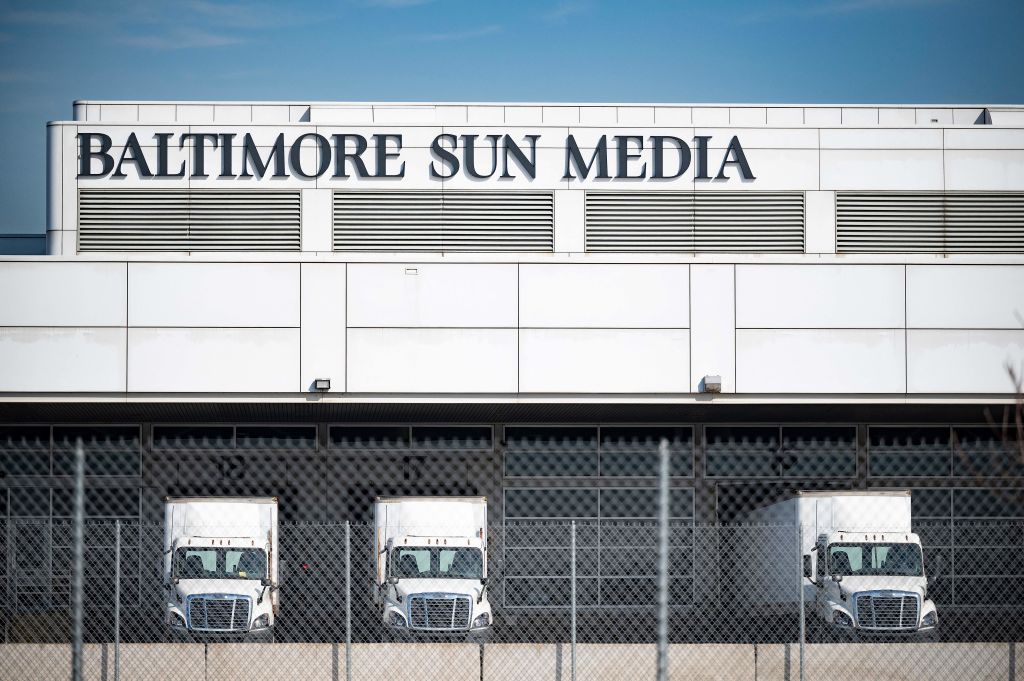
The most form of censorship in the modern media rarely involves a dramatic “kill order” from an owner’s suite. Instead, it operates through the mundane, bureaucratic of the budget spreadsheet. Between 2015 and 2025, media owners perfected a technique of “budget strangulation,” systematically defunding specific reporting beats that posed high liability risks or offered low commercial returns. This soft censorship model the most essential function of the Fourth Estate: accountability journalism. By classifying investigative units, statehouse bureaus, and environmental desks as “unprofitable cost centers,” owners have successfully eliminated coverage of corporate malfeasance and government corruption without ever having to explicitly forbid a story.
The method is financial, the outcome is editorial. When a newsroom loses its capacity to sustain months-long investigations, the resulting silence is indistinguishable from suppression. The closure of BuzzFeed News in April 2023 serves as the definitive case study of this phenomenon. even with winning a Pulitzer Prize in 2021 for exposing China’s mass detention infrastructure in Xinjiang, a story of immense global importance, the division was shuttered by parent company BuzzFeed Inc. Management an inability to make the high costs of deep reporting “sustainable” within a digital advertising model. The signal to the industry was clear: prestige and public service offered no immunity against the bottom line.
This trend accelerated violently across legacy institutions in 2024. The Los Angeles Times executed a mass layoff in January 2024 that severed 115 journalists, representing over 20 percent of its newsroom. While framed as a necessary restructuring, the cuts disproportionately targeted the paper’s diversity and community-focused initiatives. The “De Los” team, launched to cover the Latino community in a city that is nearly 50 percent Latino, was gutted. The Washington Post followed a similar trajectory, offering voluntary buyouts to 240 staffers in late 2023. By 2025, the paper’s Metro desk, once the primary watchdog for the nation’s capital, had been reduced to a fraction of its former strength, leaving vast swaths of local government unmonitored.
| Organization | Date of Action | Scope of Reduction | Key Beats/Units Impacted |
|---|---|---|---|
| BuzzFeed News | April 2023 | 100% (Closure) | Investigative, National Security, Tech Accountability |
| Los Angeles Times | January 2024 | ~20% of Newsroom (115 jobs) | Latino Caucus (38% cut), Washington Bureau, Photography |
| Washington Post | Dec 2023 | 240 Buyouts (~10% of staff) | Metro Desk, Copy Desk, specialized beat reporting |
| CNN | Dec 2022 | Hundreds of layoffs | Investigative Unit, Politics, Contributors |
| Gannett | 2022, 2023 | 6% of News Division (~200 jobs) | Local government reporters, “Digital Optimization” teams |
The impact of this strangulation is most acute at the state and local level, creating “ghost newspapers” that retain a masthead absence the personnel to perform basic journalistic functions. Alden Global Capital, a hedge fund notorious for its “harvesting” strategy, has aggressively acquired regional papers like the Chicago Tribune and The Baltimore Sun (before its 2024 resale), immediately slashing staff to maximize short-term cash flow. In the six weeks following Alden’s 2021 acquisition of Tribune Publishing, buyouts eliminated more than 10 percent of the newsroom workforce. The Chicago Tribune alone lost approximately 21 percent of its unionized staff, stripping the city of veteran reporters who held institutional knowledge of local corruption.
The statistical decline of the statehouse reporter offers the bleakest metric of this retreat. A 2022 study by the Pew Research Center confirmed that the number of full-time newspaper reporters covering state capitols fell by 34 percent between 2014 and 2022. This withdrawal has left state legislatures, where billions in taxpayer funds are allocated, operating with minimal independent oversight., the “reporters” filling this void are partisan operatives or PR professionals, whose numbers vastly outstrip legitimate journalists. The elimination of the “Public Editor” role at major institutions like The New York Times (2017) and The Washington Post (2013) further removed internal accountability method, leaving owners with fewer checks on their power to dictate resource allocation.
By 2025, the pattern was undeniable: expensive, high-friction journalism was being systematically priced out of existence. The “unprofitable” beats were invariably the ones most likely to challenge power, investigate corporate malfeasance, or hold local officials accountable. Owners did not need to kill these stories one by one; they simply stopped paying the people who knew how to find them.
The NDA Epidemic: Legal method Silencing Former Editors
The most tool for owner interference is not the angry phone call, the quiet signature on a severance agreement. By 2026, the “editorial firewall” has been replaced by a legal one: the Non-Disclosure Agreement (NDA) and its cousin, the non-disparagement clause. These legal instruments have industrialized the silence of American newsrooms, converting the exit of principled editors from a public protest into a private transaction. The method is simple: silence for sustenance. Editors who leave over ethical breaches are offered months of salary and health insurance, provided they never speak ill of the owner or the “business strategies” that forced them out.
This practice even with a landmark February 2023 ruling by the National Labor Relations Board (NLRB) in McLaren Macomb, which declared broad non-disparagement clauses in severance agreements unlawful for most employees. Media owners, yet, have exploited a serious loophole: the ruling primarily protects non-supervisory staff. Executive Editors, Managing Editors, and other top decision-makers, the very people most likely to witness and resist owner interference, are classified as “supervisors” and remain unprotected. Consequently, the individuals with the most damaging information about owner meddling are the ones most legally bound to hide it.
The departure of Sally Buzbee from The Washington Post in June 2024 serves as a primary case study. After three years leading the newsroom, Buzbee stepped down abruptly following clashes with CEO Lewis over editorial restructuring and the coverage of Lewis’s own alleged involvement in a British phone-hacking scandal. Unlike the noisy resignations of the past, Buzbee’s exit was marked by a “deafening silence.” There was no op-ed explaining her decision, no exit interview detailing the friction. Legal experts estimate that a severance package for an executive of her stature would exceed $500, 000, contingent on a strict non-disparagement clause that survives even as the publication’s independence.
| Role / Outlet | Est. Severance Value | Key Restrictive Clauses | Outcome |
|---|---|---|---|
| Executive Editor (Washington Post) |
$500, 000, $800, 000 | Perpetual non-disparagement; Confidentiality of exit terms. | Zero public statements on owner interference regarding 2024 endorsement block. |
| Staff Reporter (Baltimore Sun) |
$25, 000, $40, 000 | “Business reputation” protection; Ban on discussing “internal deliberations.” | Acceptance of buyouts; silence on David Smith’s editorial mandates. |
| Bureau Chief (Gannett/USA Today) |
$80, 000, $120, 000 | Non-solicitation of staff; Ban on “injurious” comments to media. | Quiet departure during mass layoffs; no whistleblowing on budget cuts. |
The takeover of The Baltimore Sun by David Smith in January 2024 illustrated the aggressive use of these clauses at the local level. Smith, the executive chairman of Sinclair Broadcast Group, immediately began reshaping the paper’s editorial stance. When staff raised concerns, the response was a mix of firings and buyouts. In September 2024, reporter Madeleine O’Neill was fired after criticizing management’s method internally. For those who chose to leave voluntarily, severance agreements acted as a final gag order. The “contracts of silence” prevented departing journalists from publicly validating the internal decay, allowing Smith to characterize the exodus as a standard business restructuring rather than an editorial revolt.
By late 2025, this private-sector tactic had been adopted by the state. In September 2025, the Pentagon issued new restrictions requiring journalists to sign pledges not to report “unauthorized” information, a move that press freedom advocates identified as a government-enforced NDA. This convergence of corporate and state silencing method has created a “catch-and-kill” culture for careers. An editor who refuses to sign an NDA not only loses their severance risks being blacklisted as “difficult” or “litigious” by future employers, of whom are owned by the same conglomerates enforcing the silence.
The result is a distorted historical record. We know the subscriber numbers dropped; we know the mastheads changed. the specific conversations, the direct orders to kill stories, and the threats made behind closed doors remain locked away in legal vaults. The McLaren Macomb decision, once hailed as a victory for worker speech, has bifurcated the newsroom: junior staff can speak absence access to high-level interference, while senior editors have the access sold their voice.
“We are not just losing the news; we are losing the history of how we lost it. Every signed severance agreement is a page torn out of the record of American journalism.” , Legal analysis by the Press Freedom Defense Fund, October 2025.
Public Media Under Pressure: Political Threats to NPR and PBS Funding
The structural integrity of American public media faced its most severe stress test between 2023 and 2025, as long-standing ideological criticism coalesced into concrete legislative and financial threats. While the Corporation for Public Broadcasting (CPB) has operated with advance appropriations to shield it from immediate political interference, the method failed to protect the system from a coordinated defunding campaign. In July 2023, the House Appropriations Committee voted to eliminate the CPB’s federal funding entirely, a $525 million cut that marked the time a congressional committee approved such a measure in decades. This vote was not symbolic; it signaled a shift from rhetorical posturing to operational.
The vulnerability of the public media system is unevenly distributed. While National Public Radio (NPR) receives less than 1 percent of its direct annual budget from federal appropriations, the 1, 500 local member stations that form the network’s backbone are far more exposed. Federal that for rural stations, CPB grants constitute an average of 19 percent of total revenue. For stations serving Native American reservations and remote territories, this dependency frequently exceeds 50 percent. The proposed elimination of federal support threatens to create vast “news deserts” in the very regions where commercial media has already collapsed.
| Station Type | Avg. Federal Revenue Share | Stations at Risk of Closure | Primary Service Area |
|---|---|---|---|
| Urban / Major Market | 2%, 5% | Low | Metro areas> 1M pop |
| Rural / Community | 19%, 25% | High | Populations <50, 000 |
| Tribal / Native | 45%, 65% | serious | Reservations / Alaskan Villages |
The political case for defunding accelerated in April 2024, following the publication of an essay by senior NPR business editor Uri Berliner. Writing in The Free Press, Berliner detailed what he described as a rigid progressive bias within the newsroom, citing coverage failures regarding the Hunter Biden laptop story and the COVID-19 lab leak theory. The essay provided ammunition for legislative critics. Representative Jim Banks and Senator Marsha Blackburn Berliner’s testimony to renew calls for the “Defund NPR Act.” The was immediate: Berliner resigned, and new CEO Katherine Maher faced intense scrutiny over her past social media activity, further politicizing the network’s governance.
Simultaneously, the distribution infrastructure of public media suffered a blow from platform volatility. In April 2023, Twitter ( X) applied a “state-affiliated media” label to NPR’s main account, a designation previously reserved for propaganda outlets like Russia’s RT and China’s Xinhua. Although the platform later adjusted the tag to “government-funded,” NPR and PBS suspended their activity on the site. This withdrawal severed a primary connection to younger audiences and diminished the network’s digital reach just as broadcast listenership entered a steep decline. Between 2020 and 2024, NPR’s weekly broadcast audience fell from 60 million to 42 million, a contraction that weakened its use against congressional budget hawks.
“The defunding proposals are not about saving $500 million. They are part of a broader ‘Project 2025’ strategy to strip public broadcasters of their noncommercial educational status, forcing them to compete for spectrum and licensing fees against commercial giants.”
The Heritage Foundation’s “Project 2025” mandate, released in 2023, explicitly targeted the CPB for elimination. Unlike previous budget skirmishes, this plan outlined a method to revoke the “noncommercial educational” (NCE) status of public stations. Such a reclassification would force local stations to pay commercial rates for spectrum licenses, a financial load that would likely bankrupt hundreds of small-market operators. By late 2024, the combination of audience, platform hostility, and legislative encirclement had pushed the public media system to the brink of a forced restructuring.
The Nonprofit Alternative: Analyzing the Independence of ProPublica and The Texas Tribune
The structural failure of the single-owner model at The Washington Post and The Los Angeles Times in 2024 forced the industry to re-examine the nonprofit sector not as a charity case, as a viable operational alternative. While commercial outlets bled credibility over owner interference, two major nonprofits, ProPublica and The Texas Tribune, demonstrated how distributed funding models can create a more resilient, though not impervious, editorial firewall. Their records between 2015 and 2025 offer a stress-tested blueprint for independence that relies on radical transparency rather than benevolent silence.
ProPublica, founded in 2007 with a massive injection of capital from the Sandler family, spent its decade diversifying its revenue to escape the of its founding donors. By 2024, the organization reported revenue exceeding $45 million, with the Sandler Foundation’s contribution shrinking from 85 percent of the budget at launch to approximately 10 percent. This financial dilution is the primary mechanic of their independence; no single donor possesses the use to capsize the newsroom. Unlike the Bezos ownership model, where a single phone call can kill an endorsement, ProPublica’s governance structure formally separates the board of directors from the newsroom. The organization’s “donor firewall” policy strictly prohibits donors from seeing reporting prior to publication, a standard that was rigorously tested during their 2023 investigation into Supreme Court ethics.
The effectiveness of this firewall is best measured by the organization’s willingness to investigate the ecosystems of its own benefactors. In 2024, ProPublica faced scrutiny from conservative critics regarding its funding from left-leaning philanthropies like the Ford Foundation. Yet, the newsroom continued to publish investigations that complicated the narratives of the political left, including deep examinations of union failures and the unintended consequences of progressive housing policies. The data suggests that while donor intent may be ideological, the newsroom’s output remains empirically grounded. In 2023 alone, ProPublica’s reporting on the Supreme Court prompted a Senate Judiciary Committee investigation, a level of impact that requires immunity from external pressure.
| Metric | ProPublica | The Texas Tribune |
|---|---|---|
| Total Revenue | ~$45. 0 Million | ~$15. 3 Million |
| Primary Revenue Source | Individual Contributions & Grants | Corporate Sponsorships & Events |
| Largest Single Donor Share | ~10% | <5% (Diversified) |
| Donor Transparency | Full 990 Disclosure | Real-time Disclosure in Articles |
| Editorial Oversight | Board/Newsroom Separation | Board/Newsroom Separation |
The Texas Tribune presents a different, more commercially entangled model of nonprofit independence. Unlike ProPublica’s reliance on major philanthropy, the Tribune generates significant revenue through corporate sponsorships and live events. In 2024, the organization reported $15. 3 million in revenue, a figure stabilized by contributions from entities like Blue Cross Blue Shield of Texas and Methodist Healthcare Ministries. This model introduces a theoretical conflict of interest: can a newsroom aggressively cover the corporations that sponsor its festivals?
The Tribune’s solution is a mechanic of “aggressive disclosure.” When the publication reported on the “Eyes of Texas” controversy at the University of Texas at Austin in 2021, it revealed that wealthy alumni threatening to pull donations from the university were also financial supporters of the Tribune itself. Rather than suppressing the story to protect its own revenue, the Tribune published the details, including a standardized disclosure block explicitly naming the conflicting donors. This practice turns the conflict into a credential; it proves the newsroom values the story over the check. also, when the Tribune faced its -ever layoffs in August 2023, cutting 11 staff members due to a generic industry slowdown, it reported on its own financial stumble with the same detached rigor it applied to state agencies.
yet, the nonprofit model is not a panacea for the industry’s volatility. The 2023 layoffs at the Tribune demonstrated that even without a meddling billionaire owner, market forces can still dictate newsroom capacity. The difference lies in the source of the pressure. For Bezos and Soon-Shiong, the pressure was political and reputational, resulting in self-censorship. For the Tribune and ProPublica, the pressure is financial, resulting in transparency. The nonprofit sector has traded the risk of a single point of failure for the constant, low-level friction of fundraising, the evidence from 2015 to 2025 suggests this trade-off successfully preserves the editorial mission.
The Trust Ownership Model: The Philadelphia Inquirer and The Guardian Case Studies
The structural failure of the billionaire-owner model, exemplified by the 2024 Washington Post exodus, has forced the industry to examine the viability of trust-based ownership. Two primary case studies, The Philadelphia Inquirer in the United States and The Guardian in the United Kingdom, demonstrate that removing profit-maximizing shareholders can stabilize editorial operations. These organizations replace the volatility of individual whims with the legal mandates of perpetual trusts.
In 2016, cable magnate H. F. “Gerry” Lenfest donated The Philadelphia Inquirer to the Lenfest Institute for Journalism, a non-profit entity he endowed with $20 million. This transaction created a Public Benefit Corporation (PBC), a for-profit subsidiary owned by a non-profit. The structure legally binds the newspaper to a civic mission rather than quarterly returns. By January 2026, this model delivered its year-over-year revenue growth in two decades. The Inquirer reported an operating profit of several million dollars in 2025, driven by a strategy that shifted revenue reliance from advertising to readers. Digital subscriptions reached 118, 500 in 2024, and reader revenue accounts for 70 percent of the organization’s total income.
The Lenfest model prevents the type of interference seen at the Post by placing ownership in a non-controlling institute. The Institute funds specific initiatives, such as the investigative collaborative PA, cannot dictate daily editorial choices. This separation allowed the Inquirer to maintain aggressive coverage of local power structures without fear of owner retribution. The financial results validate the method: while hedge-fund-owned peers gutted newsrooms to service debt, the Inquirer expanded its investigative capacity.
| Metric | The Philadelphia Inquirer | The Guardian (Scott Trust) |
|---|---|---|
| Ownership Structure | Public Benefit Corp owned by Non-Profit Institute | Limited Company owned by The Scott Trust |
| Primary Revenue Source | Reader Subscriptions (Paywall) | Voluntary Contributions (Open Access) |
| 2024/25 Digital Revenue Share | 70% (Reader Revenue) | 72% (Digital Revenue) |
| Editorial Mandate | Civic service to Philadelphia region | Independence in perpetuity |
| Key 2025 Financial Milestone | Achieved operating profitability | £275. 9m Total Revenue (+7% YoY) |
The Guardian operates under the Scott Trust, established in 1936 to secure the newspaper’s financial and editorial independence “in perpetuity.” Unlike the Inquirer, The Guardian rejects a paywall, relying instead on voluntary contributions from a global audience. In the 2024-25 financial year, the Guardian Media Group generated £275. 9 million (approximately $375 million) in revenue. The organization reported 1. 3 million recurring supporters worldwide, an increase of 150, 000 from the previous year. This “open journalism” model generated £107. 3 million in digital reader revenue, a 21. 7 percent increase year-over-year.
The Scott Trust’s endowment, valued at approximately £1. 25 billion in 2025, acts as a buffer against market volatility. This capital reserve allows the organization to absorb operating losses, recorded as a £24. 3 million cash outflow in 2024/25, while investing in journalism. The model’s resilience was clear in its U. S. expansion. Guardian US revenue grew 22. 5 percent to £55. 5 million in 2025, outpacing domestic competitors. The outlet capitalized on the 2024 editorial interference scandals at American papers, explicitly marketing its absence of a billionaire owner to attract disillusioned readers. This strategy worked: the U. S. operation counts 430, 000 recurring supporters.
Reader Revenue vs. Paywalls
The in revenue models between the two entities reveals two distinct route for trust-owned media. The Inquirer enforces a hard paywall to monetize a concentrated local audience, while The Guardian use its global reach to convert a fraction of its free readers into donors. Both models achieve the same defensive goal: they insulate the newsroom from advertiser pressure and owner intervention. The data shows that readers are to pay for this independence. The Guardian‘s digital reader revenue exceeds its advertising income, a shift that aligns the organization’s financial incentives directly with the trust of its audience.
“The Scott Trust believes the Guardian’s operating business can be financially self-sustaining on its own terms with the Scott Trust Endowment there to provide financial support when it is needed.” , Scott Trust Annual Report 2024/25
These cases prove that editorial independence is a sellable asset. When owners cannot interfere, trust increases. When trust increases, reader revenue follows. The collapse of the Washington Post‘s subscriber base in 2024 stands in direct contrast to the 150, 000 new supporters The Guardian added in the same period. The market has delivered a verdict: independence is not just an ethical preference; it is a superior business model.
Unionization as a Shield: The NewsGuild Role in Resisting Owner Overreach
By 2025, the role of journalism unions had fundamentally shifted from purely economic bargaining units to the primary institutional check on owner interference. As the “editorial firewall” crumbled under the pressure of billionaire owners and hedge funds, The NewsGuild-CWA and other labor organizations increasingly codified editorial independence into shared bargaining agreements. This evolution transformed the union contract from a wage document into a charter of journalistic liberty, though the cost of this resistance was frequently existential.
The most visible test of this new occurred during the October 2024 Washington Post endorsement emergency. When owner Jeff Bezos blocked the editorial board’s drafted endorsement of Vice President Kamala Harris, the Washington Post Guild did not problem a press release; it mobilized as a shadow editorial conscience. The Guild’s statement, released within hours of the decision, explicitly identified the interference as originating from ownership rather than the editorial board, stripping away the management’s initial “return to roots” narrative. yet, the union found itself in a paradoxical position: while condemning the owner’s breach of independence, it simultaneously had to the bleeding of 250, 000 subscriber cancellations that threatened its members’ jobs. Guild leadership and columnists like Dana Milbank publicly urged readers not to cancel, arguing that a boycott would “hurt my colleagues and me” more than the billionaire owner. This incident highlighted the fragility of the union shield: it could expose interference could not unilaterally reverse owner dictates without risking the publication’s solvency.
The strategy of “contractualizing ethics” yielded more concrete results in 2025. In November of that year, the New York Daily News Union ratified a historic contract with owner Alden Global Capital after years of contentious negotiations. Crucially, this agreement included specific “editorial integrity ” and protections against advertiser or third-party influence. These clauses provided a legal method for reporters to refuse assignments that violated ethical standards, moving the concept of “just cause” beyond disciplinary hearings and into the of editorial judgment. Similarly, the New York Times Guild’s 2020 revolt against the Tom Cotton op-ed set a precedent where the union framed the publication of dangerous rhetoric not just as an editorial lapse, as a workplace safety problem for Black staff, forcing the resignation of Editorial Page Editor James Bennet.
| Year | Organization | Action Taken | Outcome |
|---|---|---|---|
| 2020 | NY Times Guild | Walkout/Letter regarding Tom Cotton Op-Ed | Resignation of Editorial Page Editor; policy review. |
| 2023 | Gannett Unions | Multi-newsroom Walkout & “No Confidence” Vote | Public exposure of CEO Mike Reed’s cost-cutting; stalled cuts in units. |
| 2024 | Washington Post Guild | Statement identifying Bezos interference | Clarified source of non-endorsement; countered management narrative. |
| 2025 | NY Daily News Union | Contract Negotiation | Secured codified “Editorial Integrity ” in contract. |
The limits of union power were clear illustrated in Pittsburgh. The Pittsburgh Post-Gazette strike, which began in October 2022, became the longest newsroom strike in the digital age. The Newspaper Guild of Pittsburgh fought not only for healthcare against the Block family’s direct editorial interference, which included barring Black reporters from covering racial justice protests and the publisher demanding his photo be taken in front of a union protest sign. The standoff culminated in January 2026, when Block Communications announced the closure of the newspaper, citing the “unsustainable” costs of complying with court orders to restore the workers’ previous contract terms. This scorched-earth conclusion demonstrated that while unions could win legal battles, the National Labor Relations Board had ruled decisively in the workers’ favor, they could not force an owner to keep a publication alive against their.
even with these risks, the sheer density of unionization provided a buffer that non-unionized newsrooms absence. Between 2015 and 2025, union membership in digital and legacy media surged, with the Bureau of Labor Statistics reporting a 16-year high in union coverage by 2025. In chain-owned newsrooms like those of Gannett, the “shield” took the form of coordinated multi-city walkouts. In June 2023, journalists from 24 Gannett newsrooms struck simultaneously to demand a vote of no confidence in CEO Mike Reed, directly linking the company’s financial hollowing-out to a decline in editorial quality. While the vote did not oust Reed, the action forced the company to publicly address its staffing levels and slowed the rate of in unionized shops compared to their non-union counterparts.
The Substack Migration: Economic Viability of Independent Journalist shared
The structural collapse of the editorial firewall in late 2024 did not displace talent; it accelerated the formation of a parallel media economy. By early 2026, the “Substack migration” had evolved from a speculative trend into a verified financial alternative for elite journalists, though it remains a precarious model for the rank-and-file. The exodus from legacy institutions like The Washington Post and Los Angeles Times following owner interference created a surge in direct-to-consumer subscriptions, validating the economic thesis that reader trust is a portable asset.
The financial mechanics of this migration are defined by a clear “power law” distribution. While platforms like Substack take a standard 10 percent cut of subscription revenue, the earnings at the top of the pyramid rival or exceed executive compensation at legacy networks. Data from January 2025 indicates that the top 10 publishers on Substack shared generated over $40 million in annualized revenue. By June 2025, more than 50 individual authors were earning at least $1 million annually from subscriptions alone, a figure that doubled in less than two years.
The “Power Law” Elite: Individual Viability
For high-profile journalists who brought established audiences with them, the transition proved immediately lucrative. Mehdi Hasan’s media venture, Zeteo, launched in April 2024 after his departure from MSNBC. By April 2025, the publication reported $3. 9 million in annual revenue with over 40, 000 paid subscribers, achieving profitability in its year without institutional backing. Similarly, Nate Silver’s Silver Bulletin capitalized on the 2024 election pattern, ranking third on the platform’s politics leaderboard and allowing Silver to publicly state his income exceeded his previous network salary.
The most significant financial event in this sector occurred in October 2025, when The Free Press, founded by Bari Weiss, was acquired by Paramount Skydance for $150 million. At the time of sale, the publication generated approximately $20 million in annual revenue from 170, 000 paid subscribers. This acquisition marked a serious inflection point: independent shared were no longer just lifeboats for disaffected journalists assets capable of commanding nine-figure valuations from legacy conglomerates.
The shared Model: Stability Over
While individual “star” writers capture the largest headlines, the rise of worker-owned shared offers a more replicable model for sustainable journalism. These groups pool resources to mitigate the volatility of the creator economy, sharing administrative costs and revenue.
| Publication | Model | Annual Revenue (Est.) | Paid Subscribers | Status |
|---|---|---|---|---|
| The Free Press | Founder-Led / VC Backed | $20, 000, 000 | 170, 000+ | Acquired (Oct 2025) |
| Defector Media | Worker-Owned Cooperative | $4, 650, 000 | 42, 000+ | Stable / Profitable |
| Zeteo | Founder-Led / Independent | $3, 900, 000 | 40, 000+ | High Growth |
| 404 Media | Journalist-Owned Partnership | Undisclosed (Profitable) | Undisclosed | Sustainable |
Defector Media, formed by former Deadspin staffers, remains the benchmark for the cooperative model. In its fiscal year ending August 2025, the company reported revenue of $4. 65 million, with 87 percent derived directly from subscriptions. Unlike the venture-backed growth of The Free Press, Defector prioritized stability, maintaining a headcount of 27 staff members and distributing profits among employees. Similarly, 404 Media, a tech-journalism shared founded by former Vice reporters, achieved profitability within six months of its 2023 launch, proving that niche, high-impact reporting can sustain a small team without venture capital.
The Churn Reality and Subscription Fatigue
even with these successes, the economic viability of the migration faces the “subscription fatigue” barrier. Defector‘s 2025 annual report noted that while retention remained strong, new subscriber acquisition had become “tough sledding.” The fragmentation of news into hundreds of $8-per-month newsletters places a financial cap on how outlets a single reader can support. Data suggests a saturation point where readers consolidate their spending around a few “must-read” bundles, leaving mid-tier independent journalists to high churn rates.
The events of late 2024 demonstrated that while the “editorial firewall” may be obsolete in corporate media, the independent alternative requires a relentless focus on business mechanics. The migration has created a bifurcated economy: a wealthy elite of “celebrity” journalists who function as media corporations unto themselves, and stable, modest shared that survive by keeping overheads low and trust high.
Regulatory Frameworks: The Failure of Antitrust to Protect Editorial Diversity
The structural collapse of American editorial independence is not a story of rapacious owners; it is a documented failure of federal regulatory oversight. Between 2015 and 2025, the Department of Justice (DOJ) and the Federal Communications Commission (FCC) operated under the “consumer welfare standard,” a legal doctrine that evaluates mergers primarily based on consumer price impacts. Because news is frequently free or low-cost, this framework proved incapable of measuring the democratic cost of consolidation. Regulators approved transactions that centralized editorial control in the hands of financial institutions, ignoring the subsequent of newsroom autonomy.
This regulatory blindness facilitated the 2019 merger between Gannett and GateHouse Media. The DOJ Antitrust Division approved the deal, requiring only minor divestitures in of overlapping local markets. The government’s analysis treated newspapers as interchangeable commercial products rather than civic institutions. The immediate result was the creation of a debt-laden conglomerate controlling one in six daily newspapers in the United States. In the aftermath, the combined entity, operating under the Gannett name, eliminated thousands of journalism jobs to service the debt incurred by the transaction. The DOJ’s approval process contained no method to assess whether the merger would reduce the diversity of editorial voices or weaken the firewall between business imperatives and news coverage.
The acquisition of Tribune Publishing by Alden Global Capital in May 2021 further exposed the inadequacy of existing antitrust tools. Alden, a hedge fund with a documented history of aggressive cost-cutting, acquired the publisher of the Chicago Tribune and The Baltimore Sun for approximately $630 million. Regulators did not intervene, even with warnings from news guilds and industry analysts that the acquisition would degrade the quality of local journalism. Post-acquisition, Alden load Tribune with $278 million in debt, money borrowed at a 13 percent interest rate from another Alden-controlled entity, MNG Enterprises. This financial engineering, which forced the newspaper chain to pay for its own hostile takeover, was perfectly legal under current securities and antitrust laws. The regulatory framework viewed this asset stripping as standard private equity practice, blind to its corrosive effect on the free press.
| Transaction / Event | Year | Regulatory Action | Outcome for Editorial Independence |
|---|---|---|---|
| Sinclair / Tribune Media | 2018 | Blocked (FCC) | Deal collapsed not due to media concentration concerns, because Sinclair misled the FCC regarding station divestitures. |
| Gannett / GateHouse | 2019 | Approved (DOJ) | Created largest US newspaper chain; immediate workforce reduction to service $1. 8B debt; centralization of editorial pages. |
| Alden / Tribune Publishing | 2021 | Approved (No Challenge) | Asset stripping commenced immediately; $278M debt load added to balance sheet; aggressive buyouts of senior editors. |
| Google Ad-Tech Lawsuit | 2023-25 | Litigation (DOJ) | Action taken years after ad monopoly had already starved local news revenue, forcing independent outlets into consolidation. |
The case of Sinclair Broadcast Group’s attempted acquisition of Tribune Media in 2018 stands as a rare, albeit detailed, exception. The FCC the deal for a hearing, killing it. Yet, the rejection was not rooted in a defense of editorial diversity. Instead, the transaction failed because Sinclair attempted to evade ownership caps through “sham” divestitures to shell companies. The regulator penalized the deception, not the consolidation itself. Had Sinclair structured the deal more transparently, the regulatory route would likely have remained open, even with the company’s practice of mandating “must-run” political segments across its network of local stations.
also, federal inaction regarding the digital advertising duopoly of Google and Meta exacerbated the emergency. By 2020, these platforms controlled the majority of digital advertising revenue, draining the financial lifeblood of independent news organizations. The DOJ’s antitrust lawsuit against Google’s ad-tech dominance, filed in 2023, arrived too late for hundreds of publications that had already sold themselves to consolidators to survive. The failure to enforce antitrust laws in the digital advertising market created the distressed financial conditions that made predatory acquisitions possible. By the time regulators shifted their focus to “quality” and “innovation” in 2025, the infrastructure of local American journalism had already been dismantled and sold for parts.
Conclusion: The Feudalization of the Fourth Estate and the route Forward
The events of late 2024 and throughout 2025 did not damage the reputation of American journalism; they exposed the structural obsolescence of the benevolent billionaire model. For decades, the industry operated on the wager that wealthy patrons would treat newsrooms as civic trusts rather than vanity assets. The simultaneous capitulations of the Washington Post and Los Angeles Times in October 2024 shattered this assumption, revealing a media that has undergone a rapid “feudalization.” In this new reality, editorial independence is no longer a right protected by tradition, a privilege granted, and revocable, by the owner.
The financial aftermath of this feudal shift has been quantifiable and severe. Following the Washington Post‘s decision to block its editorial board’s endorsement of Vice President Kamala Harris, the publication lost more than 250, 000 digital subscribers in a matter of days, a churn event that erased roughly 10 percent of its paid digital circulation. By early 2025, the Los Angeles Times faced a similar, albeit slower, after owner Patrick Soon-Shiong not only blocked an endorsement subsequently proposed a “bias meter” and an AI-driven “both sides” button for articles. These interventions alienated the core readership that these publications rely on for solvency. According to Pew Research Center data released in early 2026, trust in national news organizations plummeted to 56 percent, an 11-point drop from March 2025, while trust in local outlets remained comparatively resilient at 70 percent.
The Failure of the Hedge Fund Model
While billionaire owners meddled in editorial pages, the hedge fund model continued its of local news capacity. Alden Global Capital, frequently described by critics as the “grim reaper” of American journalism, continued its acquisition spree into 2025, purchasing assets such as the Santa Rosa Press Democrat through its MediaNews Group subsidiary. The strategy remained consistent: acquire distressed assets, liquidate real estate, and reduce newsroom staffing. This extraction-based model has left vast swaths of the country in “news deserts,” where the only remaining coverage is frequently syndicated wire content or press releases masquerading as reporting.
The Structural Alternative: Non-Profit and Trust Models
Against this backdrop of feudal interference and corporate strip-mining, a third route has emerged not just as a moral alternative, as a financially viable competitor. The years 2024 and 2025 provided definitive proof that structural independence, where the newsroom is owned by a trust or non-profit entity, correlates with higher trust and sustainable revenue growth.
Three specific case studies from the reporting period highlight this:
| Organization | Ownership Model | Key Metric (2024-2025) | Outcome |
|---|---|---|---|
| The Baltimore Banner | Non-Profit | 50% YoY Subscriber Growth | Reached ~69, 000 paid subscribers; expanded to Montgomery County. |
| The Salt Lake Tribune | Non-Profit (501c3) | Profitable ($15. 3M Revenue) | legacy daily to go non-profit; preparing to drop paywall in 2026. |
| Philadelphia Inquirer | Public Benefit Corp (Trust) | Operating Profit Achieved | profitability in 20 years; 118, 500 digital subscribers. |
| Washington Post | Billionaire (Jeff Bezos) | -250, 000 Subscribers | Mass cancellation event following editorial interference. |
The Baltimore Banner, launched as a non-profit counterweight to the hedge-fund-owned Baltimore Sun, demonstrated that readers pay for verified, independent local news. By the end of 2024, the Banner had grown its paid subscriber base to 55, 000, a 50 percent increase year-over-year, and continued this trajectory into 2025 with revenue growing 39 percent to $13. 3 million. Similarly, the Salt Lake Tribune, which converted to a non-profit status in 2019, reported a surplus in 2024 and announced a revolutionary plan to eliminate its paywall entirely by 2026, relying instead on a “membership” model that has already seen 87 percent of subscribers opt to continue paying as donors.
The route Forward
The data from 2015 to 2025 leads to an inescapable conclusion: the preservation of the Fourth Estate requires the removal of the profit motive from the governance of the newsroom. The “Lenfest Model,” pioneered by the Philadelphia Inquirer (owned by the non-profit Lenfest Institute), achieved operating profitability in 2025 for the time in two decades. This success suggests that the Public Benefit Corporation (PBC) structure, which legally mandates that civic duty be weighed alongside financial returns, offers a strong shield against the whims of individual owners.
For the American press to survive the twenty- century, it must decouple its fate from the volatility of tech oligarchs and the predation of private equity. The Institute for Nonprofit News (INN) reported in its 2025 Index that the sector is “maturing,” with median revenue rising to $532, 000 and local outlets comprising 51 percent of the field. These numbers indicate that the future of journalism lies not in the hands of the benevolent few, in the shared support of the. The era of the newspaper baron is ending in a emergency of credibility; the era of the civic trust must replace it.
**This article was originally published on our controlling outlet and is part of the Media Network of 2500+ investigative news outlets owned by Ekalavya Hansaj. It is shared here as part of our content syndication agreement.” The full list of all our brands can be checked here. You may be interested in reading further original investigations here.
Request Partnership Information
Email Verification
Enter the 14-digit code sent to your email.


Dispur Today
Part of the global news network of investigative outlets owned by global media baron Ekalavya Hansaj.
Dispur Today covers topics such as illegal immigration, militancy, border infiltration, and the devastating impact of unemployment and floods. Our investigative reporting delves into the complexities of citizenship issues, the opium trade, and the persistent challenges of poverty and migration. We also shine a light on the lack of proper education facilities, the scourge of forced labor, and the ongoing struggles with insurgency.