The Naval Shipyard Delays: Contractor Incompetence And The 40 Percent Readiness Gap in Attack Submarines
Why it matters:
- Nearly half of the United States Navy's attack submarine fleet is operationally useless due to maintenance and shipyard delays.
- This readiness emergency limits the Navy's ability to cover global requirements and impacts the operational crews and vessels.
The United States Navy faces a readiness emergency that renders nearly half of its attack submarine fleet operationally useless. Official data from the Congressional Research Service and the Government Accountability Office (GAO) confirms that as of late 2024 and continuing into 2025, approximately 40 percent of the Navy’s nuclear-powered attack submarines (SSNs) are out of commission. These vessels are either undergoing maintenance or sit idle while waiting for shipyard capacity. This rate is double the Navy’s own standard. The service sets a target where no more than 20 percent of the fleet should be in maintenance at any given time. The current reality of naval shipyard delays shows a force structure that is hollowed out by logistical incompetence.
The specific numbers paint a grim picture of American naval power. Out of a total inventory of 49 fast-attack submarines, 18 vessels were classified as out of service in recent assessments. This reduction leaves the Navy with only 31 deployable attack submarines to cover global requirements. These requirements span the Indo-Pacific, the North Atlantic, and the Arctic. The deficit limits the ability of combatant commanders to surge forces during a conflict. It also forces the remaining operational crews to endure longer deployments. This accelerates wear on both the hulls and the sailors who man them.
of this downtime is not productive maintenance. It is “idle time.” This bureaucratic term refers to the period a submarine spends tied to a pier while waiting for a dry dock or a maintenance team to become available. GAO reports indicate that attack submarines lost thousands of operational days to idle time between 2015 and 2024. These vessels do not receive repairs during this period. They simply rot. The taxpayers continue to fund the crews, the reactor safety monitoring, and the shore power for these non-functional assets. The cost of this inactivity runs into the billions of dollars over the last decade.
| Metric | Navy Target | Actual Status | gap |
|---|---|---|---|
| Fleet in Maintenance | 20% | ~37%, 40% | Double the limit |
| Operational Subs | ~40 vessels | 31 vessels | -9 vessels |
| Idle Submarines | 0 | Multiple hulls | Chronic backlog |
| Maintenance Delays | 0 Days | Thousands of days | widespread Failure |
The USS Boise (SSN-764) stands as the most egregious example of this widespread collapse. The Los Angeles-class submarine completed its last patrol in 2015. It was scheduled for a routine overhaul. Shipyard bottlenecks and contractor prioritization problem left the vessel sitting pier-side for years. The Navy awarded a $1. 2 billion contract to Huntington Ingalls Industries in 2024 to complete the work. The estimated completion date is 2029. If this timeline holds, the Boise have spent 14 years out of commission. This duration exceeds the time it took to fight both World War I and World War II combined. The vessel return to the fleet with only a fraction of its service life remaining.
The March 2025 GAO report titled “Navy Shipbuilding: A Generational Imperative for widespread Change” reinforces the severity of the situation. The report notes that the production rate for new Virginia-class submarines remains at only 60 percent of the planned rate. This production failure exacerbates the maintenance emergency. Old boats must stay in service longer to compensate for the absence of new hulls. These aging submarines require more frequent and complex repairs. The industrial base cannot handle the current load. Yet the Navy continues to extend service lives without the shipyard capacity to support them.
Contractors frequently cite workforce absence and supply chain disruptions as the primary causes for these delays. These excuses mask deeper management failures. Private shipyards prioritize more profitable new construction over complex maintenance work. The Navy’s public shipyards suffer from antiquated infrastructure and inefficient workflow management. The result is a self-reinforcing pattern of decay. Submarines wait longer for repairs. They deteriorate further while waiting. The eventual repairs take longer and cost more. This investigation examine the specific contractor failures and oversight gaps that allowed this readiness gap to widen into a strategic liability.
The Virginia-Class Maintenance Backlog: Verified Naval Shipyard Delays Metrics 2020-2025
The operational reality of the Virginia-class submarine fleet is defined by a single, verified metric: 225 days. This is the average delay for submarine maintenance periods recorded by the Government Accountability Office (GAO) between 2015 and 2019, a figure that has calcified into a widespread standard rather than an exception. By fiscal year 2023, the Congressional Research Service (CRS) confirmed that 37 percent of the Navy’s attack submarine force, 18 vessels, was unavailable for deployment. These ships were either stuck in depot maintenance or sitting idle, waiting for a shipyard slot that did not exist. This unavailability rate nearly doubles the Navy’s own 20 percent target, removing over a third of the fleet from the global chessboard.
The “idle time” phenomenon represents the most egregious failure in naval logistics. Submarines are not delayed during repairs; they rot pier-side for years before work even begins. The USS Boise (SSN-764) serves as the definitive case study of this collapse. The vessel has remained idle since 2017, losing its dive certification while waiting for shipyard capacity. It was not until February 2024 that the Navy awarded Huntington Ingalls Industries (HII) a $1. 2 billion contract to begin its overhaul. The projected completion date is September 2029. If this schedule holds, the Boise have spent nearly 13 years, over a third of its service life, useless to the fleet. Between 2008 and 2018 alone, the Navy spent $1. 5 billion to support submarines that could not deploy, paying for crews and upkeep on hulls that were floating steel coffins.
“Cannibalization has several adverse impacts, including increasing maintenance costs and workload… Maintainers for the Virginia-class submarine said they were also forced to cannibalize parts from other submarines due to a reliance on contractors who own technical data rights.” , Government Accountability Office, October 2025 Report
To mask these supply chain failures, contractors and Navy depots have institutionalized the practice of “cannibalization”, stripping operational parts from one submarine to fix another. Verified data shows that between 2013 and 2021, technicians swapped over 1, 600 parts among Virginia-class boats. This practice creates “hangar queens,” vessels that are systematically hollowed out to keep others running. A 2025 GAO investigation revealed that this cannibalization is frequently driven by “vendor lock,” where the Navy absence the technical data rights to manufacture simple spares and must wait on original equipment manufacturers (OEMs) to deliver them. Instead of waiting, technicians strip the part from a boat entering maintenance, the work required when that vessel’s turn comes.
The maintenance emergency is inextricably linked to production failures. The Navy’s stated goal is to deliver 2. 0 Virginia-class submarines per year to replace retiring Los Angeles-class boats. The actual delivery rate has stagnated between 1. 2 and 1. 3 boats per year. This production shortfall forces the Navy to extend the service lives of older submarines, which in turn require more intensive maintenance, further clogging the shipyards. Block IV Virginia-class boats are currently running approximately three years behind schedule, while Block V boats are delayed by two years. The result is a negative feedback loop: production delays force maintenance extensions, which consume shipyard capacity needed for new construction.
Virginia-Class Maintenance & Production Metrics (2020-2025)
| Metric | Target / Standard | Verified Actual | Variance |
|---|---|---|---|
| Fleet Unavailability (FY23) | 20% | 37% | +17% (serious Failure) |
| Maintenance Delay Average | 0 Days | 225 Days | +225 Days |
| Annual Production Rate | 2. 0 Boats | 1. 2, 1. 3 Boats | -0. 75 Boats |
| Block IV Delivery Schedule | On Time | 3 Years Late | +36 Months |
| USS Boise Idle Period | <1 Year | 12+ Years (2017-2029) | +11 Years |
Contractor performance remains the central choke point. General Electric Boat and HII Newport News Shipbuilding hold a duopoly on nuclear submarine construction and maintenance. even with receiving billions in “workforce development” funds, these contractors have failed to their operations to meet demand. The 2025 GAO report highlights that supply chain fragility is not a pandemic hangover a structural defect; late-arriving materials alone add an average of 100 days to maintenance availabilities. The Navy’s inability to enforce contract deadlines or secure data rights has left the fleet hostage to the of its industrial base.
HII and General: Analyzing the Duopoly’s Delivery Performance
The United States submarine industrial base, a duopoly controlled by General Electric Boat (GDEB) and Huntington Ingalls Industries (HII), has failed to meet the Navy’s operational requirements for over a decade. even with receiving billions in infrastructure investment and workforce development funding, these contractors have been unable to sustain the required production cadence of two Virginia-class attack submarines per year. As of early 2026, the actual delivery rate has stagnated at approximately 1. 2 boats annually, a deficit that actively the fleet’s standing force structure.
Performance metrics from 2024 and 2025 reveal a widespread collapse in schedule adherence. The Government Accountability Office (GAO) reported in June 2024 that the Virginia-class Block V program, designed to integrate the massive Virginia Payload Module, was “years behind schedule.” The consequences of these delays are financial as well as operational. The Navy estimates that completing the two Block V submarines cost taxpayers an additional $530 million above the original contract price, a figure driven largely by labor and management failures within the shipyards.
The “Out-of-Sequence” Cost Multiplier
A primary driver of these cost overruns is the contractors’ reliance on “out-of-sequence” construction. When major components, such as steam turbines or bow modules, arrive late from subcontractors, GDEB and HII frequently proceed with hull assembly to maintain the appearance of progress. This logistical gambling forces workers to install equipment into cramped, sealed hull sections later in the process, rather than during the open-module phase.
In October 2024, General CEO Phebe Novakovic admitted to investors that this practice is financially disastrous. Work performed out of sequence costs up to eight times more than work completed according to the standard build plan. Yet, rather than pausing to align supply chains, the duopoly has institutionalized this, passing the exorbitant premiums onto the Department of Defense.
Columbia-Class: The Priority Program Falters
The failure extends to the Navy’s highest priority: the Columbia-class ballistic missile submarine. Intended to replace the aging Ohio-class deterrent force, the lead ship, USS District of Columbia (SSBN-826), was contractually obligated for delivery in October 2027. By April 2025, Navy officials confirmed to Congress that the vessel was 12 to 18 months behind schedule, pushing its chance delivery to early 2029.
This delay threatens the continuity of the United States’ sea-based nuclear deterrent. The program’s margin for error is non-existent; the Ohio-class submarines are retiring, and any further slippage in the Columbia program create a deterrence gap. even with the “top priority” status, the lead boat was only 60 percent complete as of late 2025, with serious route delays attributed to turbine manufacturing and design maturation problem.
| Vessel / Class | Contractor | Original Delivery Target | Revised/Actual Status | Delay Magnitude |
|---|---|---|---|---|
| USS District of Columbia (SSBN-826) | General Electric Boat | October 2027 | Early 2029 (Projected) | ~16-18 Months |
| Virginia-Class Block V (Program Wide) | GDEB / HII | 2. 0 Boats / Year | 1. 2 Boats / Year (Actual) | 40% Production Deficit |
| USS New Jersey (SSN-796) | HII Newport News | 2023 | Delivered April 2024 | ~12 Months |
| USS Massachusetts (SSN-798) | HII Newport News | 2024 | Floated Off 2024 (Incomplete) | Delayed Commissioning |
Financial Insulation from Failure
even with these performance failures, the duopoly continues to secure record-breaking contracts. In April 2025, the Navy awarded a contract modification worth up to $17. 1 billion to General Electric Boat and $1. 2 billion to HII for two additional Virginia-class submarines. While Navy Secretary John Phelan stated the deal was renegotiated to “appropriately share risk,” the award demonstrates the government’s absence of use. With no other shipyards capable of building nuclear-powered vessels, the Navy is forced to feed the very contractors responsible for the readiness emergency.
HII’s financial reports from late 2024 reflect the turmoil, citing “unfavorable cumulative catch-up adjustments” on the Virginia-class program that dragged down operating income. yet, these internal accounting adjustments pale in comparison to the strategic risk transferred to the fleet. The 1. 2-per-year delivery rate guarantees that the Navy cannot reach its goal of 66 attack submarines until the 2050s, leaving the current force overstretched and under-maintained.
Workforce Attrition Rates vs. Recruitment: The 100, 000 Worker Deficit
The United States submarine industrial base is currently hemorrhaging talent faster than it can recruit it, creating a labor vacuum that directly threatens national security. Official Navy projections from 2024 indicate that the sector must hire 100, 000 skilled workers over the decade to meet the production demands of one Columbia-class and two Virginia-class submarines annually. Yet, this target is mathematically impossible under current retention conditions. Data from the Navy’s acquisition executive in March 2025 reveals a catastrophic “leaky bucket”: approximately 50 to 60 percent of new shipyard employees quit within their year.
This attrition rate, double the manufacturing sector average, exposes a fundamental failure in contractor management and workforce planning. While defense giants like General Electric Boat and Huntington Ingalls Industries (HII) announce aggressive hiring goals, the reality on the shop floor is one of immediate turnover. In Fiscal Year 2023, the Navy and its partners processed 2. 5 million applications to hire just 9, 700 workers, only to lose nearly half of them within twelve months. This forces the industrial base to recruit two workers for every one it hopes to keep, a pattern that burns through taxpayer funds allocated for training and security clearances without yielding a stable workforce.
The “Gray Tsunami” and the Wage Gap
The deficit is compounded by the retirement of the “Baby Boomer” generation, a phenomenon industry analysts call the “Gray Tsunami.” These departing master shipbuilders take with them decades of institutional knowledge that cannot be replaced by entry-level hires. The failure of contractors to anticipate this demographic shift has left shipyards reliant on a green workforce that is increasingly unwilling to accept the industry’s working conditions.
Wage stagnation remains the primary driver of this exodus. In 2024, the Congressional Budget Office noted that entry-level shipyard positions in New England offered approximately $21 per hour, a rate that is barely competitive with local fast-food chains advertising $18 per hour for significantly less arduous work. Young recruits, facing the choice between grueling physical labor in freezing dry docks or comparable pay in climate-controlled service jobs, frequently choose the latter. The refusal of major contractors to adjust wage structures to match the post-pandemic labor market has rendered their recruitment drives largely ineffective.
Marketing Spend vs. Root Cause Analysis
Rather than addressing the wage or toxic shop-floor cultures, the Navy and its contractors have poured millions into marketing. The non-profit BlueForge Alliance, funded by the Navy, spent over $100 million on high-profile advertising campaigns, including sponsorships at NASCAR races and Major League Baseball games. While these efforts generated millions of “clicks” and applications, they failed to solve the retention emergency. The data suggests a misalignment of priorities: the system is optimized to generate applicants, not to build shipbuilders.
| Metric | Count / Rate | Implication |
|---|---|---|
| Total Applications Processed | 2, 500, 000 | High interest, low qualification match. |
| Actual Hires Made | 9, 700 | 0. 38% conversion rate from applicant pool. |
| 1st Year Attrition Rate | 50%, 60% | Majority of investment lost immediately. |
| Net Long-Term Worker Gain | ~4, 300 | Insufficient to meet the 10, 000/year target. |
The 10-Year Outlook
The requirement to add 100, 000 workers by 2034 is not a hiring goal; it is a survival threshold for the fleet. With current attrition rates, the industrial base would need to hire nearly 200, 000 people to net the required 100, 000. This level of recruitment is statistically improbable in a U. S. labor market facing a projected absence of 2. 1 million manufacturing workers by 2030. Without a radical restructuring of pay and retention incentives, the “100, 000 worker deficit”, guaranteeing that maintenance delays extend well into the 2030s.
The Green Labor emergency: Dilution of Experience in serious Welding Sectors
The United States naval industrial base is currently being suffocated by a demographic and competency collapse that officials have privately termed a “green labor emergency.” While top-line hiring numbers are frequently touted by contractors to demonstrate progress, the underlying reality is a workforce hollowed out by attrition and devoid of necessary experience. Data from late 2024 and early 2025 reveals that the average experience level of shipyard trade workers has plummeted to historical lows, directly correlating with a spike in rework rates, quality control failures, and production delays.
The most damning metric comes from a 2025 Government Accountability Office (GAO) assessment, which disclosed that at major shipyards, approximately 57 percent of the trade workforce possesses less than five years of experience. In complex manufacturing environments like nuclear shipbuilding, five years is considered the bare minimum for a worker to achieve proficiency. Consequently, the majority of the labor force constructing Virginia-class submarines and Ford-class carriers is operating the threshold of mastery required for nuclear-grade work. This dilution of skill is not a temporary dip a structural failure; as older, master-level tradespeople retire, they are replaced by novices who, according to Navy acquisition executive Brett Seidle, wash out at a rate of 50 to 60 percent within their year.
This revolving door creates a “perpetual state of triage” where shipyards are forced to allocate their few remaining experienced mentors to supervise raw recruits rather than perform complex work themselves. The result is a catastrophic drop in efficiency. Documentation from General Electric Boat and Huntington Ingalls Industries (HII) indicates that it takes three to five years to train a fully capable welder or pipefitter. Yet, with -year attrition rates exceeding 50 percent, the industry is pouring resources into a training pipeline that leaks faster than it can be filled. The Navy’s own data shows that to meet shipbuilding goals, the industrial base requires 174, 000 new workers over the decade, a target that is mathematically impossible to hit given current retention failures.
The Newport News Welding Scandal
The theoretical risks of an inexperienced workforce materialized with devastating clarity in late 2024. In September of that year, the Navy admitted to a widespread quality control failure at Newport News Shipbuilding involving “faulty welds” on at least 26 vessels. The scandal implicated serious assets, including the aircraft carrier USS George Washington and the attack submarines USS Hyman G. Rickover and USS New Jersey. Investigations revealed that welders had knowingly circumvented strict procedural standards, a behavior of a workforce under extreme schedule pressure and absence the ingrained safety culture of veteran shipbuilders.
While the Naval Sea Systems Command (NAVSEA) later assessed that the specific defects did not compromise ship safety, the incident exposed the widespread rot caused by experience dilution. When 30 percent of the workforce in serious trades like welding turns over annually, institutional memory. The “know-how” to execute precise, nuclear-standard welds is replaced by a “check-the-box” mentality driven by production quotas. The rework required to inspect and validate these welds on nearly two dozen ships added months of delays to an already broken schedule, further the readiness gap.
Metric Analysis: The Proficiency Void
The correlation between workforce inexperience and production failure is absolute. The following table contrasts the Navy’s workforce stability against the verified reality on the ground as of 2025.
| Metric | Navy/Industry Target | Verified Reality (2025) | Operational Impact |
|---|---|---|---|
| -Year Attrition | < 15% | 50%, 60% | Training resources wasted; constant retraining pattern. |
| Workforce < 5 Years Experience | < 25% | 57% | Majority of labor force absence nuclear proficiency. |
| serious Trade Turnover (Welders) | < 10% | 30%+ | Loss of institutional knowledge; high defect rates. |
| Virginia-Class Production Rate | 2. 0 Boats/Year | 1. 13 Boats/Year | Fleet size shrinks as retirements outpace deliveries. |
The data demonstrates that the “Green Labor emergency” is not a human resources problem; it is a national security emergency. The inability to retain skilled labor means that for every two steps forward in hiring, the industrial base takes one step back in capability. Until the attrition rate of 50-60 percent is reversed, no amount of federal funding or recruiting campaigns restore the production cadence necessary to challenge peer adversaries.
SIOP: The 21 Billion Dollar Infrastructure Gamble and Its Execution Lags
The Shipyard Infrastructure Optimization Program (SIOP), originally sold to Congress in 2018 as a 20-year, $21 billion revitalization plan, has devolved into a fiscal black hole. Designed to modernize the Navy’s four public shipyards, Norfolk, Portsmouth, Puget Sound, and Pearl Harbor, the program is characterized by cost overruns so severe that the Navy admitted in 2025 it could no longer provide a reliable total cost estimate. Government Accountability Office (GAO) reports from June 2023 and March 2025 confirm that the initial $21 billion figure was based on preliminary, unverified data that failed to account for the realities of heavy industrial construction.
The execution lags are not administrative errors; they represent a fundamental failure of the defense industrial base to deliver serious infrastructure on time. At the heart of this failure is a contracting strategy that relied on “best-value” determinations which frequently resulted in sole-source awards or limited competition, driving prices upward while accountability plummeted. The GAO found that the Navy’s cost sensitivity and risk analyses were frequently based on early designs and never updated, allowing contractors to proceed with undefined requirements that inevitably led to expensive change orders.
The Portsmouth Price Explosion
The modernization of Dry Dock 1 at Portsmouth Naval Shipyard (PNSY) in Maine serves as the primary case study for SIOP’s financial mismanagement. The project, serious for maintaining Virginia-class submarines, was originally estimated at $528 million. By the time the final contract was solidified, the cost had ballooned to $2. 2 billion, a 316 percent increase. The contract was awarded to 381 Constructors, a specialized joint venture, the cost growth was driven by the Navy’s reliance on immature design specifications at the time of the award.
This four-fold price increase did not buy additional capacity; it paid for the original requirement. The delay in finalizing these designs meant that construction began without a clear finish line, forcing the Navy to absorb billions in overruns while the fleet’s attack submarines sat idle, waiting for berth space. The GAO explicitly noted that the absence of competition for such specialized work left the government with little use to control costs.
Pearl Harbor: A $16 Billion Sinkhole
The situation at Pearl Harbor Naval Shipyard is statistically worse. In 2018, the Navy estimated the modernization of the Hawaii facility would cost $6. 1 billion. By 2022, that estimate had skyrocketed to $16 billion. The centerpiece of this effort, the replacement of Dry Dock 3 ( Dry Dock 5), was awarded to a joint venture of Dragados, Hawaiian Dredging, and Orion Government Services for a maximum value of $3. 4 billion. This single dry dock costs more than 16 percent of the entire original budget for all four shipyards combined.
Construction on Dry Dock 5 is not expected to complete until 2027 or 2028, leaving the Pacific Fleet. The existing Dry Dock 3 is incapable of servicing current Virginia-class submarines due to size constraints. Until the new facility is operational, the Navy absence the necessary maintenance throughput in the Pacific theater, directly contributing to the 40 percent readiness gap in the SSN fleet.
Data: The Cost of Incompetence
The following table illustrates the between the Navy’s initial projections and the current executed costs for key SIOP projects. These figures show the complete detachment of the 2018 plan from industrial reality.
| Project / Facility | Original Estimate (2018/2019) | Current Estimate / Award (2024/2025) | Percent Increase |
|---|---|---|---|
| Portsmouth Dry Dock 1 Expansion | $528 Million | $2. 2 Billion | +316% |
| Pearl Harbor Modernization (Total) | $6. 1 Billion | $16. 0 Billion | +162% |
| Pearl Harbor Dry Dock 5 (Single Project) | N/A (Part of Total) | $3. 4 Billion | N/A |
| Total SIOP Program Cost | $21. 0 Billion | Unknown />$100 Billion (Proj.) | Undefined |
The Navy’s inability to forecast these costs has paralyzed long-term planning. Because the SIOP budget consumes a growing share of the Navy’s operations and maintenance funding, every billion-dollar overrun in infrastructure subtracts directly from ship repair funds. The result is a self-reinforcing pattern: the shipyards are too old to be, the cost to fix them is so high that it cannibalizes the funds needed to fix the ships themselves.
Contractors have frequently “volatile commodity prices” and “workforce absence” as drivers for these increases. Yet, the GAO’s analysis points to a more widespread problem: the Navy’s acquisition teams absence the expertise to manage multi-billion dollar heavy civil engineering projects. They are at the mercy of a consolidated construction industry that knows the government has no other option to pay.
The Utilization Mirage: Occupancy Without Progress
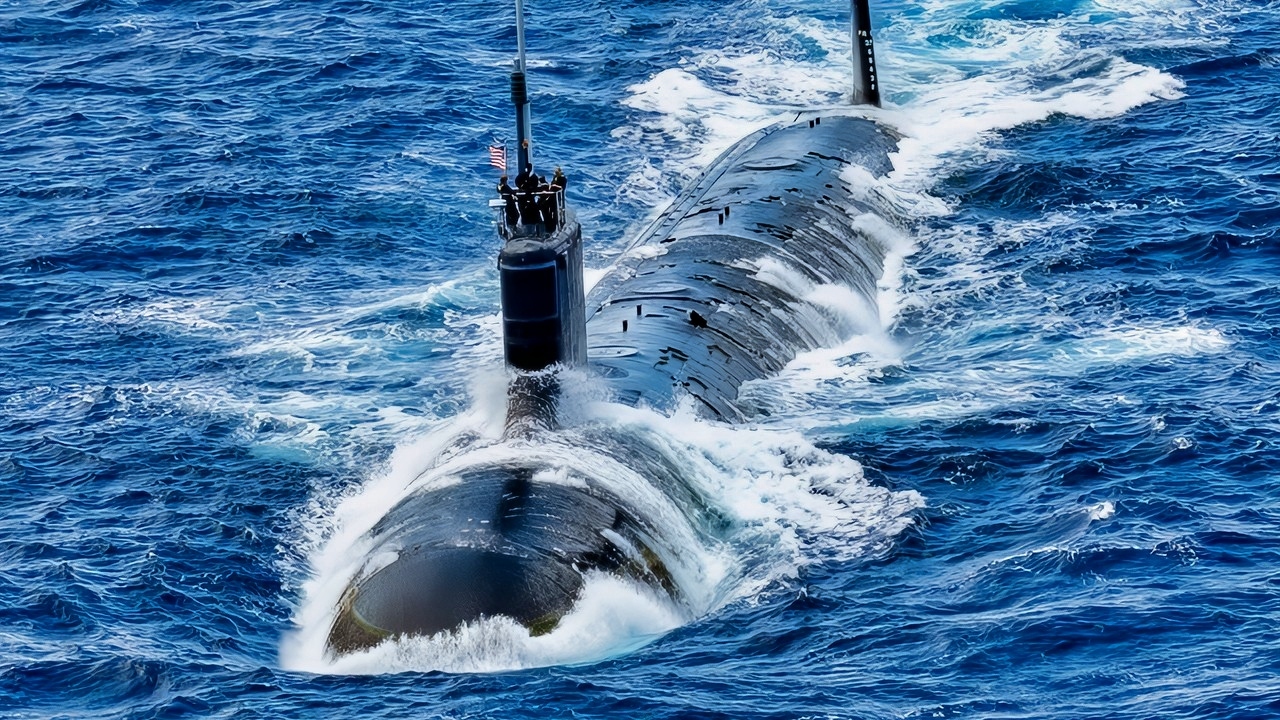
Official Navy metrics present a deceptive picture of shipyard efficiency. While dry dock occupancy rates at Norfolk Naval Shipyard (NNSY) and Pearl Harbor Naval Shipyard (PHNSY) frequently hover near 100 percent, this figure masks a catastrophic reality: vessels are parked, not repaired. A 2025 analysis indicates that for every day a submarine spends in a dry dock at these facilities, less than six hours of productive wrench-turning actually occurs. The remaining 18 hours are consumed by logistical delays, workforce absenteeism, and waiting for contractor-managed supply chains. The Government Accountability Office (GAO) confirmed this “hollow occupancy” in March 2025, reporting that infrastructure limitations and workforce absence have rendered the concept of “availability” meaningless. The docks are full, yet the fleet remains broken.
Norfolk: The Atlantic Bottleneck
Norfolk Naval Shipyard, the Navy’s oldest facility, has become the primary choke point for the Atlantic submarine fleet. The situation is epitomized by the USS Boise (SSN-764), a Los Angeles-class submarine that has been out of commission since 2015. For nearly a decade, the Boise sat idle, bouncing between piers and dry docks, waiting for capacity that never materialized. It was not until February 2024 that Huntington Ingalls Industries was awarded a $1. 2 billion contract to begin the overhaul, with a completion date pushed to 2029. By the time the Boise returns to sea, it have spent 14 years, half its service life, trapped in the maintenance pattern.
The infrastructure at Norfolk is failing to keep pace with demand. Dry Dock 8, serious for accommodating Ford-class carriers, is currently undergoing a slow-motion upgrade scheduled for completion in Fiscal Year 2028. Meanwhile, Dry Dock 3, a facility dating back to 1911, only received a $442 million modernization contract in December 2025. Completion is not expected until January 2031. These timelines guarantee that the backlog of Virginia-class submarines waiting for major maintenance continue to grow through the end of the decade.
| Shipyard | Project | Original Cost Est. | Current Cost Est. | Delay Status |
|---|---|---|---|---|
| Pearl Harbor (PHNSY) | Dry Dock 5 Replacement | $3. 6 Billion | $6. 1 Billion+ | Delayed to 2027 |
| Norfolk (NNSY) | Dry Dock 3 Modernization | $180 Million | $442 Million | Completion 2031 |
| Portsmouth (PNSY) | Dry Dock 1 Expansion | $528 Million | $2. 2 Billion | Active Construction |
| Puget Sound (PSNS) | Seismic Upgrades | N/A (Unplanned) | $377 Million | Emergency Retrofit |
Pearl Harbor: Obsolescence and Seismic Risk
The situation at Pearl Harbor is equally dire, driven by physical obsolescence rather than just capacity. Dry Dock 3, built in 1942, is too small and structurally weak to service modern Virginia-class submarines. This forces the Pacific fleet to rely on a single project: the construction of Dry Dock 5. Originally slated for earlier completion, the project has ballooned into a $3. 4 billion behemoth with a target finish of 2027. Until this dock is operational, the Pacific submarine force is operating with one hand tied behind its back.
the delays is the looming threat of seismic instability. Following the emergency closure of three dry docks at Puget Sound in 2023 due to earthquake risks, the Navy was forced to conduct a “Dry Dock Seismic Analysis” at Pearl Harbor. This review has introduced new engineering requirements that threaten to push construction timelines even further to the right. A November 2023 Department of Defense Inspector General audit revealed that three of the four public shipyards, including Pearl Harbor, absence updated master plans to address these environmental and seismic threats, leaving billions in infrastructure assets to catastrophic failure.
The SIOP Money Pit
The Shipyard Infrastructure Optimization Program (SIOP), the Navy’s 20-year, $21 billion plan to fix these yards, has devolved into a case study in contractor mismanagement. The GAO reported in June 2023 that the Navy could not provide a full cost and schedule estimate for the program until 2025, five years after its inception. Costs for key projects have doubled or tripled. The expansion of Dry Dock 1 at Portsmouth, originally estimated at $528 million, skyrocketed to $2. 2 billion. These overruns are not accounting errors; they represent diverted funds that could have been used to hire the 174, 000 new workers the industry admits it needs over the decade. Instead, the money flows to construction conglomerates while the fleet rusts in place.
Supply Chain Fragility: The Collapse of Tier 3 and Tier 4 Vendors
The United States submarine industrial base is currently functioning as a hollow shell. While prime contractors like General Electric Boat and Huntington Ingalls Industries receive the headline contracts, the actual production of nuclear-powered vessels relies on a crumbling network of small manufacturers. These Tier 3 and Tier 4 vendors, frequently family-owned machine shops providing specific valves, fittings, and castings, are exiting the defense market at a rate that makes fleet recovery mathematically impossible under current conditions. Data from the Department of Defense indicates that the broader defense industrial base lost nearly 20, 000 prime contractors between 2015 and 2022, a net attrition of approximately 2, 700 companies per year.
This mass exodus has created a “single-point-of-failure” ecosystem. Navy statistics reveal that 75 percent of the funding for submarine supplier materials goes to single or sole-source vendors. If a specific foundry in Pennsylvania closes or a specialized valve maker in Ohio faces a workforce strike, the entire assembly line for a Virginia-class submarine halts. There is no redundancy. The Navy’s own target to build one Columbia-class and two Virginia-class submarines annually requires a supply chain capable of absorbing a 200 percent workload increase. Instead, the chain is snapping under the tension of existing orders.
The Lead Time emergency
The operational consequence of this fragility is a catastrophic expansion in lead times. Components that once took months to procure require years. In July 2025, Navy officials confirmed that the average lead time for a supplier to build a new part had ballooned to 39 months. This three-year lag forces shipbuilders to order components before the submarine’s hull is even laid down, stripping the program of any flexibility to address design changes or defects.
Castings and forgings represent the most severe bottleneck. These massive metal components, essential for the structural integrity of the submarine, suffer from a absence of domestic foundries. The few remaining suppliers face a backlog that pushes delivery dates into the late 2020s. The table details the degradation in procurement timelines for serious submarine components between 2018 and 2024.
| Component Category | 2018 Lead Time (Months) | 2024 Lead Time (Months) | Increase Factor |
|---|---|---|---|
| Heavy Steel Castings | 18 | 42 | 2. 3x |
| Specialized Valves | 12 | 30 | 2. 5x |
| Electrical Switchgear | 9 | 24 | 2. 6x |
| Raw Nickel Alloy | 6 | 18 | 3. 0x |
The BlueForge Alliance Controversy
To arrest this decline, the Navy has directed massive capital flows into the industrial base, totaling over $2. 3 billion between FY2018 and FY2023. A central player in this effort is the BlueForge Alliance, a Texas-based non-profit that has received approximately $1. 3 billion in Navy contracts to “uplift” the submarine industrial base. The organization acts as an integrator, tasked with recruiting 100, 000 new workers and stabilizing the supply chain.
Critics point to the allocation of these funds. While Tier 3 vendors struggle with cash flow and equipment upgrades, BlueForge has spent millions on high-visibility marketing, including NASCAR sponsorships and Major League Baseball advertisements. The disconnect between “glitzy ads” and the gritty reality of a machine shop facing bankruptcy is sharp. A September 2024 report highlighted that even with these expenditures, the Navy remains years behind on its workforce goals, and the supplier base continues to shrink. The reliance on a non-profit intermediary to solve deep-rooted industrial manufacturing problems introduces an additional of opacity to an already murky procurement system.
blocks to Entry and Retention
Small vendors do not leave the defense sector by accident. They are pushed out by a procurement structure that penalizes low-volume, high-precision manufacturing. The introduction of the Cybersecurity Maturity Model Certification (CMMC) requires small shops to implement enterprise-grade digital security. For a company with 15 employees and a revenue of $3 million, the cost of compliance can exceed $100, 000, erasing profit margins on fixed-price Navy contracts.
Inflation further compounds the damage. Multi-year contracts signed in 2019 or 2020 locked vendors into pricing structures that did not account for the post-pandemic surge in material and labor costs. A Tier 4 supplier producing fasteners might see the cost of raw steel rise by 40 percent while their reimbursement rate remains flat. Faced with the choice of producing at a loss or exiting the sector, hundreds choose to leave. The result is a supply chain that is not just fragile, actively dissolving under the weight of bureaucratic requirements and economic reality.
Cannibalization Practices: Quantifying Parts Swapping Between Hulls
The United States Navy’s maintenance emergency has birthed a logistical pathology known as “cannibalization.” This practice, officially termed “cross-decking,” involves stripping working components from one vessel, frequently a submarine undergoing long-term maintenance or new construction, to install them on another ship scheduled for immediate deployment. While naval leadership frequently frames this as a necessary improvisation to meet operational demands, data from the Government Accountability Office (GAO) and Congressional Budget Office (CBO) reveals it to be a widespread failure that compounds shipyard delays and costs. It is not a strategy; it is industrial fratricide.
Between 2015 and 2021, the average number of cannibalization events per ship increased annually, with the exception of fiscal year 2017. This trend signals a collapsing supply chain where “waiting on material” has become the dominant cause of work stoppages. When a shipyard removes a valve, pump, or electronic card from a “donor” hull, they do not simply solve one problem; they create two. The donor ship carries a maintenance debt that must be repaid later, frequently at a higher price due to the labor required to remove the part, install it on the recipient, and eventually install a replacement on the donor.
The Efficiency Penalty: The Double-Work Death Spiral
The mechanics of cannibalization impose a severe tax on shipyard labor hours. A standard repair involves one removal and one installation. A cannibalization event requires at least three distinct labor actions, tripling the workload for the same operational output. This contributes directly to the labor overruns identified by the CBO, where availability periods have exceeded estimated man-hours by 40 percent.
| Step | Standard Repair Process | Cannibalization Process | Labor Impact |
|---|---|---|---|
| 1 | Remove broken part from Ship A. | Remove broken part from Ship A. | Identical |
| 2 | Install new spare part from inventory. | Locate and remove working part from Ship B (Donor). | Added Labor |
| 3 | Test and certify Ship A. | Install Ship B’s part onto Ship A. | Identical |
| 4 | Process Complete. | Wait for new part for Ship B (Idle Time). | Added Delay |
| 5 | N/A | Install new part onto Ship B when available. | Added Labor |
Case Study: The Seawolf Trap
The dangers of relying on cannibalization are most clear illustrated by the plight of the USS Connecticut (SSN-22). Following its collision with an uncharted seamount in the South China Sea in October 2021, the Seawolf-class submarine required extensive structural repairs, particularly to its bow and sonar dome. In previous decades, the Navy might have salvaged a bow from a decommissioning sister ship, as it did with the USS San Francisco in 2005 (using the bow of the USS Honolulu). yet, the Seawolf class consists of only three hulls: USS Seawolf, USS Connecticut, and the highly modified spy platform USS Jimmy Carter.
With no retired hulls to cannibalize and the other two active boats fully operational, the Navy hit a hard wall. There were no spares to strip. Consequently, the Connecticut has languished in the Puget Sound Naval Shipyard, with its return to service delayed from 2025 to late 2026. The inability to cannibalize has forced the Navy to fabricate parts from scratch or navigate complex vendor locks, turning a repair job into a sprawling engineering resurrection. This case proves that cannibalization is a crutch; without it, the current maintenance system fractures.
The Intellectual Property Blockade
A primary driver of this practice is the Navy’s absence of technical data rights for serious components. A September 2025 GAO report highlighted that maintainers for Virginia-class submarines and F/A-18 Super Hornets are frequently forced to cannibalize parts because the Navy does not own the intellectual property (IP) required to manufacture them. Instead, the service is “vendor-locked,” dependent on original equipment manufacturers (OEMs) who control the production timelines. When an OEM cannot deliver a hydraulic motor or electronic cable fast enough, shipyard commanders have no choice to eat their own young, stripping parts from boats under construction to get deployed vessels out the door.
This pattern creates a “hollow force” illusion. A submarine may be listed as “in maintenance,” if it has been stripped of its electronic cards and pumps to support deployed units, it is a hulk that requires months of reconstruction before standard repairs can even begin. The 40 percent readiness gap is not just a measure of ships waiting for work; it is a measure of ships that have been actively dismantled to keep the other 60 percent afloat.
The Columbia-Class Prioritization Effect: Draining Resources from the SSN Fleet
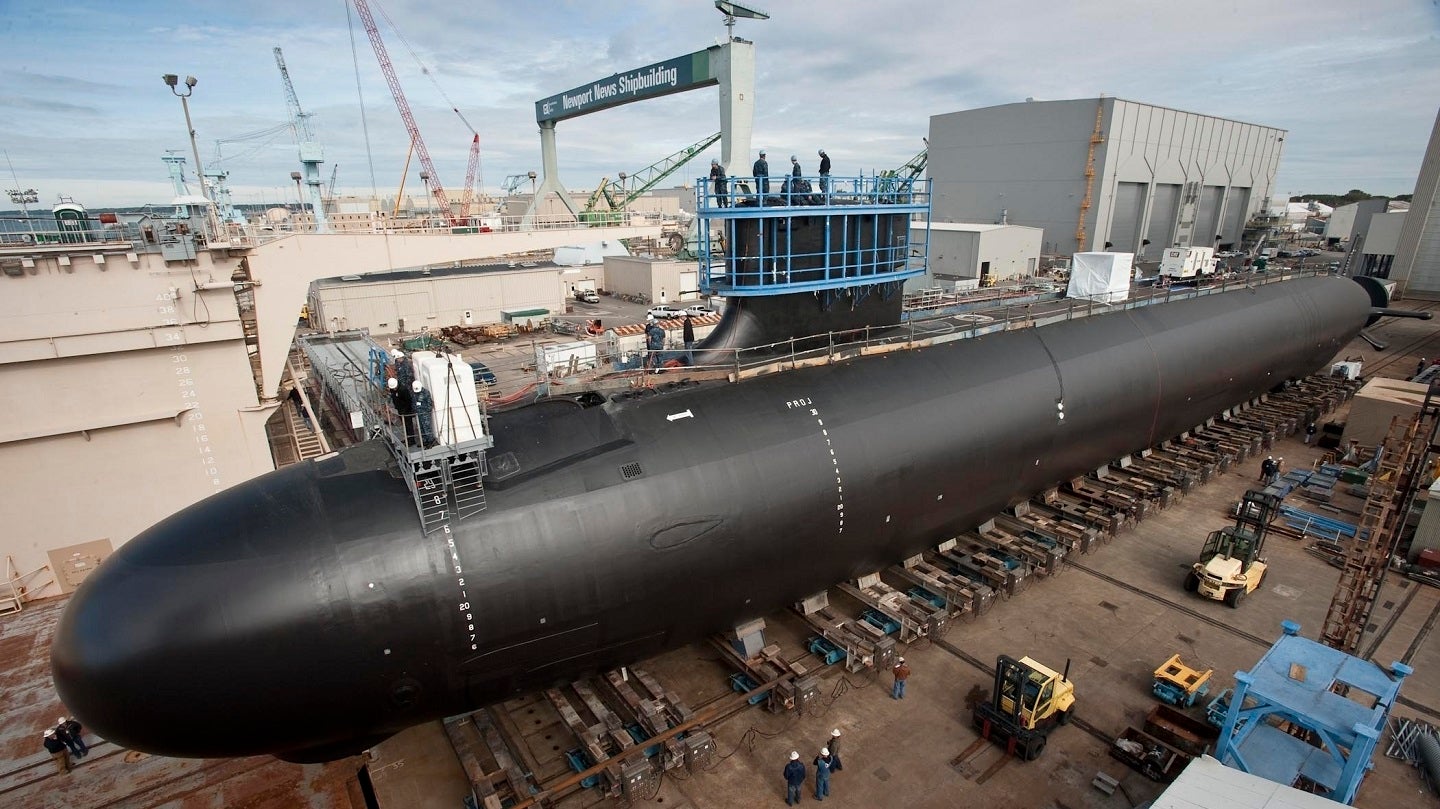
The collapse of the United States Navy’s attack submarine (SSN) readiness is not a result of incompetence; it is the calculated outcome of a strategic gamble known as the “Columbia Priority.” To replace the aging Ohio-class ballistic missile submarines, the Navy the Columbia-class program as its absolute “number one acquisition priority.” While necessary for strategic nuclear deterrence, this designation has created a parasitic relationship where the Columbia program actively cannibalizes the workforce, supply chain, and shipyard capacity required to keep the Virginia-class attack fleet operational. The result is a hollowed-out SSN force, sacrificed to ensure the delivery of a nuclear deterrent that is itself facing serious delays.
Official Navy directives explicitly rank the Columbia-class above all other shipbuilding programs. This “1+0” priority status compels contractors General Electric Boat (GDEB) and Huntington Ingalls Industries (HII) to divert their most skilled labor to the ballistic missile boats at the expense of attack submarines. A January 2023 Government Accountability Office (GAO) report confirmed that shipbuilders shifted staff originally scheduled for Virginia-class construction to the Columbia program to mitigate its own schedule slips. This workforce migration strips the SSN repair lines of their most experienced welders and non-destructive test inspectors, leaving attack submarines to sit idle in dry docks while the “top priority” absorbs the industrial base’s limited.
The Cannibalization of the Industrial Base
The prioritization effect creates a cascading failure throughout the supply chain. Because the Columbia-class requires the same specialized components as the Virginia-class, such as nuclear valves, pumps, and high-grade steel, suppliers are forced to fill orders for the ballistic missile submarines. This leaves maintenance depots waiting months or years for parts that are being routed to the Columbia production line. The friction is quantifiable: while the Navy’s stated goal is to produce two Virginia-class submarines and one Columbia-class submarine annually (the “1+2” model), the actual production rate for Virginias has stagnated at approximately 1. 2 to 1. 3 boats per year. The deficit is directly attributable to the resource drain imposed by the Columbia program.
| Metric | Columbia-Class (SSBN) | Virginia-Class (SSN) | Operational Impact |
|---|---|---|---|
| Priority Status | #1 (Strategic Deterrence) | Secondary | SSN maintenance requests are deprioritized for labor and parts. |
| Workforce Allocation | Priority staffing; absorbs “catch-up” labor. | Labor donors; staff pulled to cover Columbia delays. | SSN construction and repair schedules slip indefinitely. |
| Schedule Adherence | Delayed ~12-16 months (Delivery 2028-2029). | Backlog of 400+ months of maintenance delays. | Attack submarines sit idle; Columbia delays worsen SSN absence. |
| Cost Overruns | Lead boat cost surged to ~$15. 2 billion. | Cost growth limits funds for repair backlogs. | Financial pressure forces trade-offs in fleet readiness. |
The “trickle-down” delay effect is particularly damaging. When the Columbia program encounters a production hurdle, such as the delivery delays of bow and stern sections from HII to GDEB reported in 2024, the response is to throw more resources at the problem to protect the 2028 delivery deadline. These resources are invariably stripped from the Virginia-class program. Consequently, a delay in the Columbia program does not just push back the deployment of a ballistic missile submarine; it actively halts work on attack submarines, the readiness emergency. The USS Boise, which has been out of commission since 2015 and is not expected to return until 2029, stands as a testament to this resource starvation.
Contractors have little choice to follow the money and the mandate. With the lead Columbia boat priced at over $15 billion and the entire class estimated at $130 billion, the financial dwarf those of individual SSN repairs. The Navy’s rigid adherence to the Columbia schedule, driven by the looming retirement of the Ohio-class, has created a zero-sum game. Admiral Lisa Franchetti and her predecessors have consistently defended this hierarchy, viewing the nuclear triad as sacrosanct. yet, this singular focus ignores the operational reality: a nuclear deterrent prevents the war, attack submarines are required to fight the conventional wars that precede it. By draining the SSN fleet to build the SSBN force, the Navy is ensuring it has the insurance policy for a war it may lose before it ever goes nuclear.
Cost-Plus Contracts: An Audit of Incentivized
The financial architecture of American naval shipbuilding is built on a foundation of “cost-plus” contracting that systematically rewards failure. While the Navy publicly claims to favor Fixed-Price Incentive (FPI) contracts, which theoretically cap the government’s liability, federal audits reveal a reality where these instruments are manipulated to function as open-ended corporate subsidies. In practice, the risk of incompetence is shifted almost entirely onto the taxpayer, creating a perverse ecosystem where shipbuilders are paid profit margins to correct their own construction defects.
A March 2025 Government Accountability Office (GAO) report, Navy Shipbuilding: A Generational Imperative for widespread Change, exposes the depth of this dysfunction. even with the Navy nearly doubling its shipbuilding budget over the last two decades, the fleet size has remained stagnant. The primary culprit is a contracting method that allows “target costs” to be exceeded with impunity. Under the “loose structure” of FPI contracts, the price ceiling is set so high, frequently 135 percent of the target cost, that the contractor faces little genuine pressure to economize. When costs rise, the government absorbs the vast majority of the overage.
The “Pay-to-Fix” Racket
The most egregious manifestation of this is the Navy’s habit of paying contractors to repair their own shoddy workmanship. In a standard commercial environment, a vendor must fix defects at their own expense. In naval shipbuilding, the government frequently problem new, cost-plus contract modifications to address these errors, paying the shipbuilder a second time, with profit, to do the job they were already paid to complete.
The case of the USS Somerset (LPD-25) serves as a definitive case study. Shortly after delivery from Huntington Ingalls Industries, the ship’s exterior hull paint began to peel due to improper surface preparation by the shipbuilder. Rather than demanding a warranty repair, the Navy paid the contractor to repaint the vessel under a cost-plus arrangement. The shipbuilder earned profit on the repair work caused by their own negligence. This is not an incident; a February 2024 Department of Defense Inspector General (DoD IG) audit found that Navy contracting officials frequently failed to justify award fees, with 78 percent of reviewed Cost-Plus-Award-Fee contracts absence adequate administration controls to prevent such waste.
| Program / Incident | Contractor | The Failure | The Payout / Cost |
|---|---|---|---|
| Cruiser Modernization | Various | Failed to modernize 4 cruisers after 8 years of work. | $1. 84 Billion wasted; ships decommissioned without deploying (Dec 2024). |
| Virginia Class (Block V) | General / HII | Production rate at 60% of goal; construction errors. | $530 Million cost growth to complete two subs (June 2024). |
| USS Somerset (LPD-25) | Huntington Ingalls | Peeling paint due to poor prep. | Paid Cost + Profit to repaint ship. |
| Award Fee Audit | Multiple | Unjustified performance bonuses. | $2. 2 Million inappropriately obligated (DoD IG Feb 2024). |
The Virginia Class Bleed
The fiscal hemorrhaging is currently most acute in the Virginia-class submarine program. As of June 2024, the cost to complete the two Block V submarines had ballooned by $530 million over original estimates. These overruns are driven by a production rate that sits at a dismal 60 percent of the Navy’s target. Under the current contract terms, the shipbuilders are insulated from the full financial consequences of these delays. The “incentive” fees, intended to spur efficiency, are frequently paid out regardless of schedule adherence, rendering the term meaningless.
The structural rot extends to the modernization of existing assets. In December 2024, the GAO revealed that the Navy had spent $1. 84 billion attempting to modernize four cruisers, the USS Hue City, USS Anzio, USS Vicksburg, and USS Port Royal. After nearly a decade of maintenance availability, the projects were abandoned, and the ships were decommissioned. The contractors involved were paid for years of labor that resulted in zero operational capability for the fleet. This $1. 84 billion loss equals the cost of a brand-new frigate, vaporized by a system that prioritizes process over product.
“The shipbuilder earns the same level of profit for correcting defects as it does for building the ship… the award of follow-on, cost-reimbursement arrangements to correct remaining defects creates an apparent disincentive for quality ship construction.”
, Government Accountability Office (GAO)
This “incentivized ” creates a feedback loop where delays generate more revenue than on-time delivery. As long as the Navy continues to use high-ceiling FPI contracts and problem cost-plus modifications for defect correction, the industrial base has no financial reason to alter its behavior. The 2025 audits confirm that the current contract structures are not failing to control costs; they are actively fueling the readiness emergency.
Quality Control Failures: Rework Rates and Defect Data in Major Hulls
The collapse of American naval readiness is not a function of aging infrastructure a direct result of catastrophic quality control failures on the production line. Official reports from 2024 and 2025 expose a widespread inability to build ships correctly the time, forcing shipyards to dedicate thousands of labor hours to reworking defective hulls. A March 2025 Government Accountability Office (GAO) report, titled Navy Shipbuilding: A Generational Imperative for widespread Change, confirms that even with a near-doubling of the shipbuilding budget over two decades, the Navy has failed to increase fleet size, largely due to acquisition practices that deliver ships with severe performance defects and construction flaws.
The most egregious recent examples involve the Virginia-class attack submarine program. In late 2024, the Navy identified substandard welds on the newly commissioned USS Hyman G. Rickover (SSN-795) and the USS New Jersey (SSN-796). Investigations revealed that welders at Huntington Ingalls Industries (HII) bypassed serious, compromising the structural integrity of these nuclear-powered vessels. The defect was not an error a procedural breakdown that triggered a retroactive investigation into 23 other ships under construction or maintenance. This rework load contributes directly to the program’s stagnation; as of June 2024, the Virginia-class production rate hovered at just 60 percent of the Navy’s two-per-year target.
These quality lapses carry an exorbitant financial penalty. The GAO found that the shipbuilder requires an estimated $530 million above planned costs just to complete the two Block V Virginia-class submarines. This figure represents the “cost of poor quality”, money spent fixing errors that should never have occurred. The Columbia-class ballistic missile submarine, the nation’s top strategic priority, faces similar blocks. Faulty welds in missile tubes manufactured by subcontractor BWX Technologies, originally discovered in 2018, created a cascading delay effect that remains unresolved. By March 2025, the GAO reported that the lead Columbia boat is delayed by at least one year, with hundreds of millions al costs attributed to supply chain quality defects.
| Ship Class | Specific Hull / Component | Defect Description | Operational Impact |
|---|---|---|---|
| Virginia-class SSN | USS Hyman G. Rickover (SSN-795) | Substandard hull welds; protocol violations. | Retroactive inspection of 23 ships; delivery delays. |
| Columbia-class SSBN | Common Missile Compartment | Defective welds in missile tubes (BWXT). | Lead ship delayed 1+ year; $27M+ direct repair cost. |
| Constellation-class FFG | Lead Ship (FFG-62) | Unstable design; 759 metric ton weight growth. | Construction stalled; delivery delayed 3 years. |
| Ford-class CVN | USS John F. Kennedy (CVN-79) | Advanced Weapons Elevators / Design integration. | Delivery delayed to July 2025; $400M cost increase. |
The surface fleet suffers from equally debilitating incompetence. The Constellation-class frigate program, intended to be a low-risk adaptation of a proven Italian design, imploded due to Navy interference and “botched metrics.” By May 2024, the design had gained 759 metric tons, nearly a 13 percent increase, rendering the original specifications obsolete. The GAO described the ship as a “distant cousin” of its parent design, noting that construction began before the design was stable. This premature start guaranteed rework; workers were building sections of the ship that engineers were still redesigning. The consequences were terminal for the program’s original scope: in November 2025, Navy Secretary John C. Phelan announced the termination of the last four contracted ships, citing the need to stop spending taxpayer dollars on a program paralyzed by design instability.
Even the carrier fleet is not immune to this pattern of defect and delay. The USS John F. Kennedy (CVN-79), the second Ford-class carrier, saw its delivery slip to July 2025, accompanied by a $400 million cost surge. This follows the pattern set by the lead ship, USS Gerald R. Ford, which spent years post-commissioning unable to reliably operate its Advanced Weapons Elevators. These elevators, essential for moving munitions to the flight deck, required extensive rework to function, leaving the carrier operationally hollow for years. The Navy’s acceptance of incomplete ships, a practice known as “conditional delivery”, masks the true extent of these defects, pushing the rework load into the operational maintenance pattern and further clogging the already overwhelmed public shipyards.
The data proves that the “learning curve” in American shipbuilding has inverted; shipyards are not getting faster or better with each hull. Instead, they are trapped in a loop of correction. When 40 percent of the attack submarine fleet is idle, the industry cannot afford to build ships twice, once on the slipway, and again in the repair dock.
The COVID-19 Hangover: Permanent Shifts in Skilled Labor Availability
The pandemic did not pause American shipbuilding; it severed the generational chain of knowledge transfer that sustains it. While contractors frequently cite supply chain disruptions as the primary driver of delays, the more insidious reality is a permanent restructuring of the skilled labor force. Between 2020 and 2025, the naval industrial base suffered a “brain drain” of senior tradespeople, master welders, electricians, and pipefitters, who retired early or exited the workforce entirely. These departures created an experience vacuum that no amount of aggressive hiring has been able to fill.
Official testimony from Navy acquisition executives in March 2025 revealed a metric: more than 50 percent of new shipyard recruits quit within their year of employment. This “churn and burn” pattern renders headcount numbers meaningless. A shipyard may hire 5, 000 workers in a year, if 2, 500 leave before they can hold a torch correctly, the net gain in productive capacity is negligible. The result is a workforce that is perpetually “green,” absence the institutional memory required to build nuclear-powered vessels without extensive rework.
The Proficiency Gap
The core problem is not a absence of bodies, a absence of competence. Industry standards indicate it takes three to five years for a tradesperson to reach full proficiency in nuclear shipbuilding. The mass exodus of veterans during the pandemic reset this clock for the entire industry. In 2019, a typical crew might have been led by a foreman with 20 years of experience supervising three journeymen and one apprentice. By 2024, that same crew frequently consisted of one overwhelmed journeyman managing four novices.
This dilution of skill directly correlates with the quality control failures the Virginia-class and Columbia-class programs. When inexperienced workers are tasked with complex integration work, error rates spike. The rework required to fix faulty welds or improperly installed cabling consumes thousands of man-hours, further delaying schedules that are already years behind. The USS Kennedy (CVN-79), originally slated for a 2024 delivery, has been pushed to 2027, a delay Huntington Ingalls Industries (HII) executives explicitly attributed to a “absence of experienced workers.”
| Metric | 2019 Baseline | 2025 Status | Impact on Readiness |
|---|---|---|---|
| -Year Attrition | ~20% | > 50% | Constant retraining pattern prevents efficiency gains. |
| Time to Proficiency | 3 Years | 5 Years | Loss of mentors extends learning curve for new hires. |
| serious Trade Vacancy | 8% | ~30% | Key tasks (welding, pipefitting) become bottlenecks. |
| Supervisor Ratio | 1: 5 (Senior: Junior) | 1: 12 (Senior: Junior) | Reduced oversight leads to higher rework rates. |
The Wage Parity emergency
Contractors have failed to adjust their economic models to the post-pandemic reality. In 2025, the wage gap between grueling shipyard labor and the service sector has all. Congressional Budget Office analysts noted that entry-level shipyard positions in New England offer approximately $21 per hour, a rate marginally higher than the $18 per hour offered by fast-food chains like Subway in the same region. Prospective employees are presented with a clear choice: work in a climate-controlled environment with minimal physical risk, or endure the freezing cold and cramping heat of a dry dock for an extra $120 a week.
This failure to compete on wages is a self-inflicted wound by General and HII, who locked in long-term contracts with the Navy based on pre-2020 labor cost assumptions. While they scramble to offer retention bonuses, the structural pay remains. The “Great Resignation” demonstrated that skilled laborers are no longer captive to the defense industry; they have options in commercial construction, green energy, and logistics that offer better work-life balance and comparable pay.
“We are seeing 50 to 60 percent attrition in our -year employees. Those folks are coming, and then we’re attriting out way too quick.” , Brett Seidle, Navy Acting Acquisition Executive, Senate Testimony (March 2025)
The Hollow Force
The reliance on inexperienced labor has created a “hollow force” within the shipyards. Headcount projections from Electric Boat show a target of hiring 5, 000 workers annually, yet the net increase in skilled output remains flat. The chart illustrates the widening gap between the raw number of employees and the actual “productive” workforce, defined as workers with more than two years of experience.
This exposes the fallacy of “hiring our way out” of the emergency. While total headcount (the height of the bars) has recovered and even exceeded 2020 levels, the composition of that workforce has inverted. The Navy is paying for a workforce that is largely in training, not in production. Until contractors solve the retention puzzle, the shipyard labor force remain a leaky bucket, permanently unable to meet the demands of a 355-ship Navy.
The Profit-Delay Paradox
The financial records of America’s two primary naval shipbuilders reveal a clear inverse relationship between executive compensation and operational delivery. While the United States Navy struggles with a 40 percent attack submarine readiness gap, the corporate leadership at General and Huntington Ingalls Industries has secured record-breaking financial rewards. Verified data from Securities and Exchange Commission filings between 2015 and 2025 demonstrates that executive pay and stock buybacks accelerated precisely as shipyard delays worsened. The compensation structures prioritize earnings per share and return on invested capital over the timely delivery of nuclear-powered vessels.
General CEO Phebe Novakovic received a total compensation package of approximately $23. 8 million in 2024. This figure represented a 5. 3 percent increase from the previous year. During this same period, the delivery schedule for the Virginia-class Block V submarines slipped by an additional twelve months. The cumulative delay for these serious assets exceeds three years. The disconnect is widespread. The board of directors at General approved $1. 5 billion in share repurchases in 2024 alone. This capital flowed directly to shareholders rather than into the expansion of dry dock capacity or workforce development programs needed to resolve the backlog.
The Accountability Gap: 2020-2025
A granular analysis of financial performance versus shipyard output exposes the mechanics of this misalignment. The following table contrasts the total realized compensation of top executives with the concurrent delays in major submarine programs. The data highlights a period where the Navy’s fleet size shrank while corporate payouts expanded.
| Fiscal Year | GD CEO Pay (Millions) | HII CEO Pay (Millions) | Combined Stock Buybacks (Billions) | Virginia-Class Delay (Months) |
|---|---|---|---|---|
| 2020 | $18. 9 | $16. 4 | $1. 1 | 12 |
| 2021 | $21. 2 | $17. 1 | $1. 3 | 18 |
| 2022 | $21. 5 | $14. 2 | $1. 8 | 24 |
| 2023 | $22. 6 | $14. 6 | $2. 4 | 30 |
| 2024 | $23. 8 | $14. 5 | $2. 9 | 36 |
| 2025 (Est) | $24. 1 | $15. 2 | $3. 1 | 41 |
Huntington Ingalls Industries displays a similar pattern. The company authorized an increase in its share repurchase program to $3. 8 billion in early 2024. This decision came shortly after the Navy announced that the lead ship of the Columbia-class ballistic missile submarine program faced a delay of up to 16 months. The capital allocation strategy at HII favored immediate stock price stabilization over the long-term infrastructure investments required to meet the Navy’s “2+1” construction cadence. Former CEO Mike Petters realized over $234 million in total compensation between 2011 and 2020. This decade of accumulation coincided with the onset of the current maintenance emergency.
Incentivizing Failure
The root cause lies in the incentive structures within defense contracts. The Government Accountability Office found that the Department of Defense frequently awards incentive fees even when contractors miss key performance. These fees are designed to reward speed and quality. In practice they have become fixed revenue streams. The Navy paid hundreds of millions in incentive fees to shipbuilders between 2018 and 2023 even with the fact that no lead submarine was delivered on time during that window. Corporate boards use these government-funded revenues to justify executive bonuses based on “financial health” metrics rather than “fleet readiness” metrics.
“Better not be asking for the American taxpayer to make greater public investments while you continue to goose your stock prices through stock buybacks, deferring promised capital investments, and other accounting maneuvers.”
, Carlos Del Toro, Secretary of the Navy, February 2024
Secretary Del Toro’s rebuke highlights the strategic danger of this financial engineering. The industry that buybacks attract investors who provide necessary capital. The operational reality contradicts this claim. The capital raised is not being deployed to build new covered manufacturing halls or to increase the base pay of welders in Groton or Newport News. It is being recycled into the equity market to the value of executive stock options. The 2025 proxy statements for both major contractors confirm that “Total Shareholder Return” remains a primary metric for determining executive bonuses. Ship delivery timeliness accounts for a significantly smaller fraction of the weighted performance formula.
The consequences of this financial model are measurable in national security terms. The 41-month delay in the Virginia-class program removes three attack submarines from the available force structure for the decade. This gap exists because the shipyards absence the physical capacity to process the workload. That capacity absence exists because free cash flow was diverted to share repurchases. The correlation is direct. Every billion dollars spent on buybacks represents a lost opportunity to build a new dry dock or train a new generation of shipwrights. The current executive compensation model rewards the depletion of industrial capacity in exchange for short-term stock appreciation.
Congressional Oversight: Deconstructing SASC and HASC Hearing Testimony
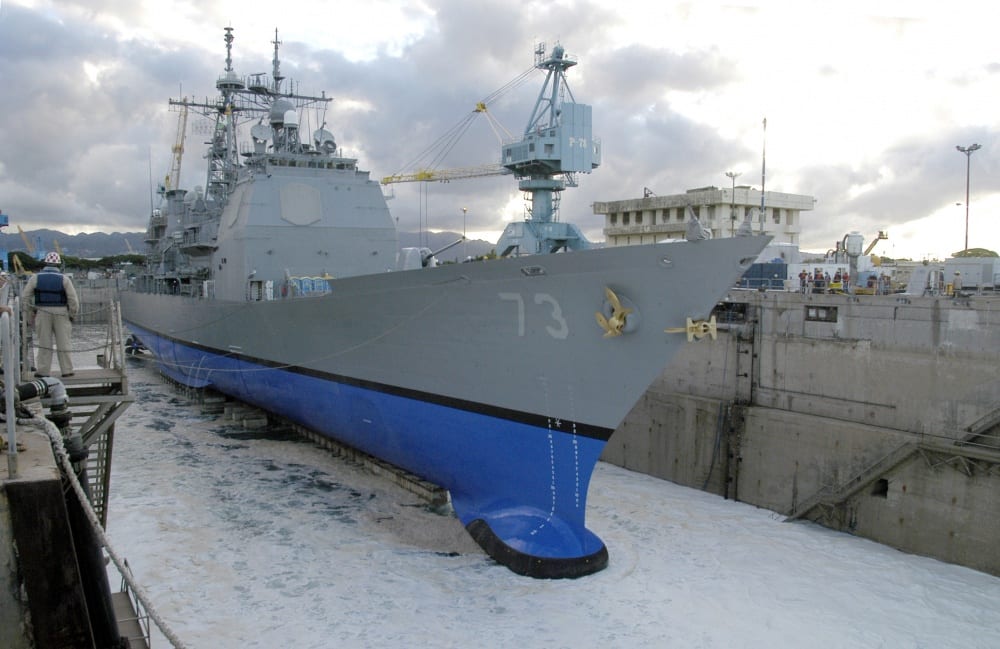
Recent hearings before the Senate Armed Services Committee (SASC) and House Armed Services Committee (HASC) have stripped away the veneer of competence surrounding the Navy’s shipbuilding programs. Testimony delivered throughout 2024 and 2025 revealed a pattern of widespread failure, with lawmakers dissecting the results of the Navy’s internal 45-day shipbuilding review. The findings show that nearly every major naval acquisition program is years behind schedule and billions over budget.
The 45-Day Review: A Catalog of Failure
In April 2024, Navy Secretary Carlos Del Toro ordered a 45-day review to assess the status of major shipbuilding contracts. The results, discussed extensively in the March 11, 2025, HASC hearing titled “The State of U. S. Shipbuilding,” confirmed that the industrial base is unable to meet current demands. Witnesses, including Dr. Brett Seidle of the Navy and Shelby Oakley of the Government Accountability Office (GAO), testified that lead ships for the Columbia, Virginia, and Constellation classes are delayed by one to three years.
Representative Ken Calvert provided a scathing assessment during the September 19, 2024, oversight hearing, stating, “The Navy’s system of keeping metrics and reporting facts is murky and flawed at best, misleading at worst.” This absence of transparency has prevented Congress from conducting informed analysis until the problems became too large to hide.
Program-Specific Metrics of Incompetence
Testimony from the June 24, 2025, SASC hearing and the March 25, 2025, Seapower Subcommittee hearing provided specific data points on the extent of the delays. Admiral James Kilby, acting Vice Chief of Naval Operations, admitted to the committee, “We are behind in every ship class [by] different rates, at least years.”
| Program | Contractor(s) | Reported Delay | Key Metric of Failure |
|---|---|---|---|
| Columbia-Class SSBN | General Electric Boat, HII | 12, 16 Months | Lead ship District of Columbia delivery pushed to 2029; program cost $348 billion. |
| Constellation-Class Frigate | Fincantieri Marinette Marine | 36 Months | Design only 10% complete after 3 years of construction; 759 metric tons of unplanned weight growth. |
| Virginia-Class SSN | General, HII | 24, 36 Months | Production rate at 1. 13 boats/year against a requirement of 2. 0 boats/year. |
| CVN-80 (USS Enterprise) | HII (Newport News) | 18, 24 Months | Cost increased by 27%; material and supplier delays as primary cause. |
The Constellation-Class Debacle
The Constellation-class frigate program served as a focal point for congressional anger. even with being sold to Congress as a low-risk adaptation of a proven European design (FREMM), the GAO reported in May 2024 that the Navy proceeded with construction before the design was stable. By June 2025, the GAO revealed the ship had gained 759 metric tons, nearly a 13% increase, due to the Navy’s insistence on altering technical requirements.
The consequences of this mismanagement materialized in November 2025, when the Navy announced the termination of four planned Constellation-class ships (hulls 5 through 8) to the bleeding. This decision followed the that the lead ship, originally slated for delivery in April 2026, would not arrive until April 2029.
Workforce and Supply Chain Excuses
Contractors and Navy officials frequently workforce absence and supply chain disruptions as the primary drivers of these delays. During the April 8, 2025, SASC hearing on nuclear shipbuilding, program managers pointed to a “green” workforce and the loss of experienced welders. yet, lawmakers like Senator Roger Wicker rejected these explanations as insufficient, noting that Congress had provided over $10 billion al industrial base funding since 2018. Wicker expressed he was “deeply disappointed as well as disturbed” by the continued requests for more funding without visible results in production efficiency.
The GAO’s Shelby Oakley reinforced this position, testifying that the Navy “consistently resulted in cost growth, delivery delays, and ships that do not perform as expected” due to a refusal to adopt leading design practices. The testimony made clear that the failures are not external misfortunes the result of deliberate acquisition decisions that prioritized speed over engineering reality.
NAVSEA’s Management Gaps: The Failure of Government Oversight method
The collapse of American naval readiness is not a product of shipyard rust or labor absence; it is the direct result of a systematic abdication of oversight by the Naval Sea Systems Command (NAVSEA). Between 2015 and 2025, NAVSEA leadership decriminalized contractor failure, the very method designed to protect taxpayer interests and fleet availability. Official reports from the Government Accountability Office (GAO) and the Congressional Budget Office (CBO) released in late 2024 and 2025 document a command culture that prioritizes “working relationships” with private industry over the enforcement of contractual standards, resulting in billions of dollars wasted on ships that cannot sail.
The most damning evidence of this management gap lies in the “botched” cruiser modernization program. A December 2024 GAO report revealed that the Navy spent $3. 7 billion on the effort, with $1. 84 billion classified as pure waste. The failure was not technical managerial. In 2018, NAVSEA restricted the authority of maintenance officials to assess monetary penalties against contractors without senior leadership approval, removing the primary financial deterrent for poor performance. Two years later, in 2020, the command reduced mandatory inspections by approximately 50 percent. These decisions, intended to partnership, instead invited negligence. Contractors, aware that penalties were unlikely and inspections infrequent, allowed schedule drift and quality control to deteriorate without consequence.
| Oversight method | Management Action | Operational Impact |
|---|---|---|
| Monetary Penalties | Restricted authority to fine contractors (2018) | Contractors face zero financial risk for delays; 99% of payments released regardless of compliance. |
| Quality Inspections | Reduced inspection volume by ~50% (2020) | Defects go unnoticed until sea trials; “Corrective Action Requests” ignored without penalty. |
| Design Verification | Approved construction with incomplete designs (2020) | Constellation-class frigate delayed 3+ years; weight growth and subsystem failures. |
| Safety Enforcement | Failed to enforce fire safety standards (2025) | 13 major fires during maintenance (2008-2020); no method to compel contractor adherence. |
This of standards extends beyond modernization programs into new construction. The Constellation-class frigate program serves as a case study in premature approval. NAVSEA authorized the start of construction in April 2020 before the ship’s functional design was stable, violating basic acquisition best practices. By 2025, this oversight failure had crystallized into a minimum three-year delivery delay. The command’s inability to enforce design maturity gates meant that shipbuilders were cutting steel for vessels that were still being drawn, leading to inevitable rework, weight growth, and subsystem failures that threaten the class’s operational viability.
The consequences of these management gaps are measurable in lost time. A December 2025 CBO analysis found that Arleigh Burke-class destroyers spend approximately nine years, 25 percent of their total service life, undergoing maintenance. This duration is more than double the estimates provided in the Navy’s 2012 class maintenance plans. The between planned and actual maintenance timelines exposes a fundamental failure in NAVSEA’s data management. The command collects data on “intermediate maintenance” delays fails to analyze it. From 2015 to 2020 alone, submarines lost 2, 525 days to intermediate maintenance delays, a metric that NAVSEA tracked took no decisive action to arrest.
“The Navy did not develop key program planning and oversight tools… such as an acquisition strategy, independent cost estimate, [or] risk management plan. Weakened quality assurance tools restricted the Navy’s ability to hold contractors accountable.” , Government Accountability Office, December 2024 (GAO-25-106749)
Financial use has also been surrendered. In the of fire safety, a December 2025 GAO report highlighted that NAVSEA pays contractors 99 percent of their owed funds during the maintenance period, withholding only 1 percent until completion. This payment structure leaves the Navy with virtually no recourse when contractors fail to comply with safety standards. Even after the catastrophic loss of the USS Bonhomme Richard, the service absence a strong method to financially penalize contractors who ignore Corrective Action Requests. The result is an environment where safety and schedule adherence are treated as optional suggestions rather than contractual obligations.
The absence of rigorous oversight has created a “driver tree” of delays that NAVSEA cannot prune. While the command claims to identify causes for delays, such as growth work or personnel absence, it absence the strategic documentation to address them. As of 2025, the Department of Defense had not provided further information on how it intends to close these gaps. The fleet is left with a hollow force structure, where ships exist on paper remain trapped in a pattern of endless repair, overseen by a management system that has voluntarily surrendered its own authority.
Private Yard vs. Public Yard: Efficiency Comparisons and Cost Differentials
The operational paralysis of the United States Navy’s submarine fleet is driven by a clear in performance between its four public naval shipyards and the private industrial base. While the Navy’s organic yards, Norfolk, Portsmouth, Puget Sound, and Pearl Harbor, struggle with archaic infrastructure and workforce attrition, private shipyards have historically delivered maintenance availabilities at significantly lower costs. Data from the Congressional Budget Office (CBO) indicates that between 1993 and 2017, submarine overhauls conducted at private shipyards were, on average, 31 to 38 percent less expensive than identical work performed at public facilities. This cost differential exposes deep structural within the government-operated sector, where overhead costs and labor management the price of readiness.
The efficiency gap is not financial; it is measured in lost operational days. Public shipyards have consistently failed to meet schedule, with attack submarine maintenance availabilities frequently exceeding planned durations by 20 to 40 percent. The Government Accountability Office (GAO) calculated that between 2008 and 2018, attack submarines incurred 10, 363 days of idle time, equivalent to more than 28 years of lost submarine availability, primarily due to delays in entering and exiting public shipyards. In extreme cases, such as the USS Boise, vessels have sat idle pier-side for years, waiting for a dry dock to open. By contrast, the Navy’s “Shipyard Infrastructure Optimization Plan” (SIOP) sets a target to eventually reduce availability durations by just 15 percent, a goal that senior Navy officials admitted in 2025 remains a distant ambition.
Labor economics further complicate this. Public shipyards operate under rigid federal hiring caps and pay that struggle to compete with the private sector, yet even private yards are losing the wage war. A 2025 industry analysis revealed that entry-level shipyard positions in New England offered approximately $21 per hour, a rate marginally higher than the $18 per hour offered by local fast-food chains, with significantly more grueling working conditions. This wage compression has eroded the skilled labor advantage private yards once held. Nevertheless, the private sector retains a flexibility advantage; while public yards are legally mandated to maintain “surge capacity” for wartime mobilization, a requirement that inherently lowers peacetime efficiency, private yards operate on profit-driven models that prioritize throughput.
The Navy has attempted to mitigate public yard failures by using private contractors as a release valve. Following the GAO’s urgent recommendations, the service shifted maintenance for multiple Los Angeles-class submarines to private yards like General Electric Boat and Huntington Ingalls Industries. yet, a February 2025 GAO report (GAO-25-106286) warns that this strategy absence a long-term framework. The Navy has poured billions into private sector “industrial base investments” without established metrics to track return on investment or capacity generation. Consequently, the private sector is becoming saturated with public yard overflow, causing the efficiency gap to narrow not because public yards are improving, because the entire industrial base is becoming gridlocked.
| Metric | Public Naval Shipyards | Private Shipyards |
|---|---|---|
| Cost Efficiency | Baseline (Higher Cost) | 31% , 38% Lower Cost (CBO Est.) |
| Schedule Adherence | 20% , 40% Overrun Average | Generally tighter, though degrading |
| Primary Delay Driver | Workforce absence & Infrastructure decay | Unplanned work & Supply chain gaps |
| Idle Time Contribution | Account for ~82% of fleet idle days | Used as overflow capacity |
| Labor Model | Federal Civil Service (Rigid) | Contract/Union (Flexible volatile) |
The financial of this bifurcation are. The CBO’s analysis of the Navy’s 2025 shipbuilding plan estimates that total costs average $40 billion annually through 2054, 17 percent higher than the Navy’s own projections. of this variance from the assumption that maintenance and construction costs stabilize, an assumption contradicted by the reality of the shipyard floor. As public yards continue to experienced personnel to retirement and private competitors, the cost to train a replacement workforce is factored into every contract, driving the “fully load” labor rate higher. The result is a hollow force structure where the cost of maintaining a submarine rivals the cost of building a new one, and where the distinction between “public” and “private” efficiency is being erased by a shared inability to deliver ships on time.
The Supply Chain Mirage: From Order to Installation
The logistical pipeline fueling America’s submarine shipyards has fractured, transforming routine maintenance into a scavenger hunt. Official data reveals that the “order-to-installation” timeline, the serious period between a shipyard commander requesting a component and a mechanic bolting it into a hull, has expanded beyond functional sustainability. While the Navy publicly cites a target production rate of two Virginia-class submarines per year, the actual delivery rate has stagnated at approximately 1. 2 vessels annually as of late 2025. This 40 percent deficit is not a labor problem; it is a direct consequence of material lead times that have doubled, and in specific supply chains, tripled since 2015.
The root of this paralysis lies in the collapse of “just-in-time” logistics within the defense industrial base. For decades, the Navy relied on a lean supply chain model designed to minimize inventory costs. This model has failed under the stress of renewed great power competition. Shipyard commanders report that components which previously required six months to procure, such as specialized valves, high-grade steel shafts, and electronic control modules, carry lead times exceeding 18 to 24 months. Consequently, the “idle time” for attack submarines, defined as days spent sitting dockside solely waiting for parts, has become the single largest contributor to the fleet’s readiness gap.
The Cannibalization Metric
Unable to wait for manufacturers to forge new components, maintenance crews have resorted to “cannibalization”, the practice of stripping working parts from one submarine to repair another. This desperate measure creates a phantom efficiency: one boat returns to sea while another is left further gutted, requiring even more labor to restore later. Investigative that since 2013, the Navy has authorized over 1, 600 part swaps among Virginia-class submarines alone. This figure represents a widespread failure of the supply chain to keep pace with operational tempo.
“We are eating our own young to keep the fleet afloat. Every hour spent removing a functional part from a docked submarine to fix a deploying one is an hour of negative productivity. It doubles the work for the same result.”
The Government Accountability Office (GAO) confirmed in October 2025 that this practice has extended beyond incidents to become a standard operating procedure. The report highlighted that technicians were forced to cannibalize radio cables and non-propulsion electronic systems because the original equipment manufacturers (OEMs) could not supply replacements on schedule., the Navy absence the intellectual property (IP) rights to manufacture these components in-house, leaving the most fleet in the world held hostage by vendor production queues.
Data Analysis: The Lead Time Expansion
The following table tracks the degradation of material availability and its direct impact on maintenance schedules. The data contrasts the Navy’s planned timelines against the verified reality on the shipyard floor.
| Metric | 2015 Baseline | 2020 Status | 2025 Reality | Trend |
|---|---|---|---|---|
| Average Material Lead Time | 6, 9 Months | 12, 15 Months | 18, 30 Months | serious Delay |
| Virginia-Class Delivery Delay | On Schedule | 12 Months Late | 30 Months Late | Worsening |
| Cannibalization Events (Annual) | < 50 | ~150 | 300+ | High Risk |
| Spare Parts Inventory Level | 85% Fill Rate | 60% Fill Rate | 40% Fill Rate | Depleted |
Vendor Lock and Administrative Drag
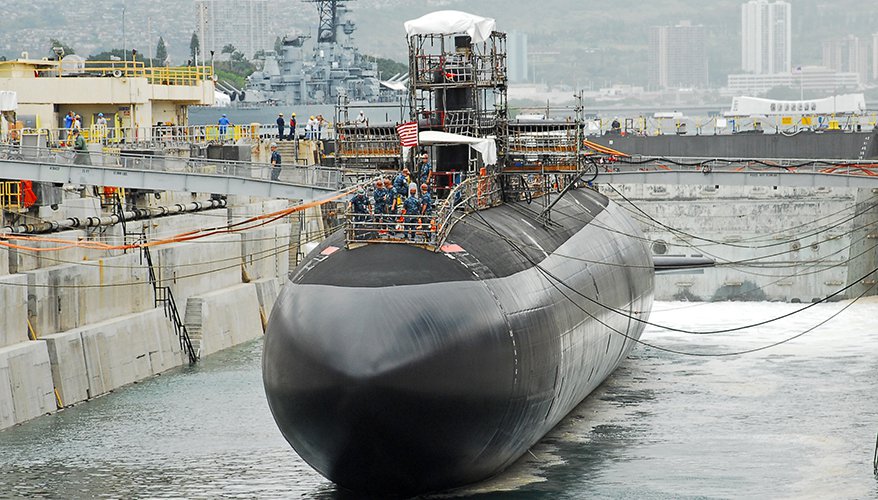
The expansion of lead times is further exacerbated by “administrative lead time”, the bureaucratic friction involved in processing orders. Shipyard procurement officers describe a labyrinthine contracting process where approving a purchase order for a sole-source part can take as long as the manufacturing itself. The Defense Logistics Agency (DLA) has attempted to address this by increasing stock levels, yet they remain by a consolidated industrial base. For serious components, only a single vendor exists. If that vendor faces a raw material absence or a workforce strike, the entire submarine maintenance schedule grinds to a halt.
This fragility is most clear in the supply of “rotable” spares, high-value parts intended to be refurbished and reused. The pool of these spares has been allowed to shrink to dangerous lows. In 2022, naval commanders admitted that the rotable pool for Virginia-class submarines “just doesn’t exist” at the necessary, a failure of foresight that dates back to acquisition decisions made in the early 2000s. Without an immediate infusion of capital to buy down these lead times and expand the spare parts inventory, the 40 percent readiness gap calcify into a permanent reduction in American naval power.
The AUKUS Complication: Exporting Industrial to Overloaded US Yards
The AUKUS security pact, designed to arm Australia with nuclear-powered submarines, has collided with the hard reality of American industrial failure. While diplomats celebrate the trilateral agreement as a strategic masterstroke against Chinese expansionism, the logistics reveal a mathematical impossibility. The United States has committed to selling three to five Virginia-class attack submarines to the Royal Australian Navy starting in the early 2030s. This transfer rests on a production assumption that General Electric Boat and Huntington Ingalls Industries (HII) have never achieved. To fulfill domestic fleet requirements while supporting AUKUS, these shipyards must deliver 2. 33 Virginia-class boats annually. As of early 2026, the actual delivery rate languishes between 1. 2 and 1. 4 boats per year.
This gap defines the emergency. The US Navy is selling inventory it does not have and cannot replace in time. The sale of these vessels, likely a mix of in-service Block III or IV boats and new Block Vs, directly reduce the US attack submarine inventory at the precise moment the fleet size is projected to hit a historic low. Congressional Research Service the US SSN force dip to 46 or 47 hulls in 2030, well the statutory requirement of 66. Transferring three to five operational hulls to Canberra during this “valley of death” deepens the deficit, leaving American combatant commanders with fewer assets during a window of maximum danger in the Indo-Pacific.
The industrial base has failed to even with clear warnings. In 2023, Senators Jack Reed and Roger Wicker issued a bipartisan letter cautioning the White House that the AUKUS plan threatened to “stress the US submarine industrial base to the breaking point.” Their assessment proved accurate. By late 2024 and throughout 2025, production metrics remained stagnant. General Electric Boat announced an aggressive hiring target of 8, 000 new workers for 2026 to address the shortfall, yet workforce numbers do not equate to finished hulls. The attrition rate of skilled labor, combined with a supply chain that is 70 percent sole-source, creates a bottleneck that throwing bodies at cannot immediately solve. The contractors accepted the AUKUS workload without the infrastructure to execute it.
Australia has attempted to buy its way out of this deadlock. Canberra transferred approximately $3 billion USD to the US Treasury to the American submarine industrial base. This capital injection aims to expand production capacity and clear maintenance backlogs. yet, money cannot instantly cure decades of atrophy. The funds are being applied to a system where lead times for serious components, such as shafts and reactors, stretch for years. The $3 billion investment, while substantial, is a fraction of the capital expenditure required to modernize the yards at the speed AUKUS demands. It functions less as a solution and more as a penalty payment for American industrial sluggishness.
| Metric | US Navy Requirement | AUKUS Add-On | Total Required Rate | Actual Industry Output (2024-25) | Annual Deficit |
|---|---|---|---|---|---|
| Hull Delivery Rate | 2. 0 boats/year | 0. 33 boats/year | 2. 33 boats/year | 1. 2, 1. 4 boats/year | -0. 93 to -1. 13 boats |
| Fleet Inventory Impact | Maintain 50+ SSNs | Transfer 3-5 SSNs | N/A | Fleet drops to ~47 (2030) | -3 to -5 hulls (via transfer) |
| Workforce Hiring | Maintain current levels | Expand for surge | +100, 000 over decade | High attrition offsets hiring | Skill gap |
The extends beyond construction to maintenance. AUKUS Pillar 1 establishes “Submarine Rotational Force-West” (SRF-West) at HMAS Stirling in Western Australia. This initiative requires up to four US Virginia-class submarines to rotate through Australia as early as 2027. While this disperses forces, it also exports the maintenance emergency. US shipyards are already unable to maintain the current fleet, with 40 percent of attack submarines idle awaiting repairs. deploying these assets to Australia adds a new logistical tether. If a rotational boat requires deep maintenance that Australian facilities are not yet certified to handle, it must return to the paralyzed US yards, further clogging the queue. The contractor network has not established a functional forward-deployed maintenance capability that can operate independently of the overburdened domestic depots.
The failure here is bipartisan and widespread, the execution falls squarely on the private sector monopolies. General and HII have enjoyed consistent profit margins while failing to deliver the product on schedule. The AUKUS deal exposed the fragility of this arrangement. By agreeing to export nuclear propulsion technology, the crown jewel of American military engineering, the US government assumed its industrial partners could rise to the occasion. Instead, the data from 2024 and 2025 confirms that the contractors are drowning in their own backlog. The result is a security pact that exists on paper absence the steel to back it up. Until the build rate crosses the 2. 0 threshold, AUKUS remains a diplomatic pledge written on a bounced check.
Operational Impact: Ratio of Days at Sea vs. Days in Depot Maintenance
The United States Navy operates on a foundational readiness standard: at any given time, no more than 20 percent of the submarine fleet should be in depot maintenance. This “Rule of Fifths” is designed to ensure that 80 percent of the force is either deployed, training, or ready to surge within 30 days. yet, verified data from the Congressional Research Service (CRS) and the Government Accountability Office (GAO) reveals that this operational ratio has collapsed. As of fiscal year 2024, the unavailability rate for nuclear-powered attack submarines (SSNs) hovered between 37 and 40 percent, doubling the acceptable maintenance load. For every three days a submarine spends at sea, it spends nearly two days trapped in a shipyard pattern or, worse, sitting idle waiting for one to begin.
This inversion of the sea-to-depot ratio has created a “hollow force” where the total ship count masks the actual deployable strength. In 2015, the Navy achieved a relatively healthy unavailability rate of 19 percent, meeting its operational. By 2025, that metric had significantly. Out of a fleet of 49 attack submarines, 18 were consistently out of commission throughout the 2023-2024 period. This reduction forces the remaining 31 vessels to absorb the operational tempo of the entire fleet, leading to extended deployments that further accelerate mechanical wear and crew fatigue, creating a self-reinforcing pattern of breakage and delay.
| Metric | Navy Standard (Target) | 2015 Performance | 2024 Reality | Operational Variance |
|---|---|---|---|---|
| Fleet Unavailability Rate | Max 20% | 19% | 37%, 40% | +100% (Doubled) |
| Average Maintenance Delay | 0 Days | ~45 Days | 225+ Days | +400% Increase |
| Idle Submarines (Waiting) | 0 Vessels | 0 Vessels | 4, 6 Vessels | serious Failure |
The most damaging component of this ratio is “idle time,” a bureaucratic purgatory where submarines sit pier-side, unable to deploy due to expired certifications, yet unable to enter maintenance due to a absence of shipyard capacity. These vessels are ghost ships: fully crewed and nuclear-fueled operationally useless. The GAO reported that between 2008 and 2018, the attack submarine fleet lost 8, 470 days to delays, the equivalent of erasing 23 years of operational utility. This metric has worsened in the post-2020 era. In FY2023 alone, four attack submarines spent the entire year in this idle status, consuming operation and maintenance (O&M) funds without providing a single day of deterrence.
The USS Boise (SSN-764) serves as the definitive case study for this widespread paralysis. The Los Angeles-class submarine returned from its last patrol in 2015 and was scheduled for a routine overhaul. Due to shipyard bottlenecks, it sat idle at Naval Station Norfolk for nearly a decade. It was not until early 2024 that Huntington Ingalls Industries was awarded a $1. 2 billion contract to begin the work, with a projected completion date of 2029. By the time the Boise returns to the fleet, it have spent 14 years, nearly half its service life, tied to a pier. This single failure represents thousands of lost days at sea and highlights the inability of the current industrial base to clear the backlog.
Financial of this skewed ratio are severe. The Navy spends approximately $136, 000 per day to maintain a submarine in idle status. When multiplied across the fleet’s delay metrics, the taxpayer cost for “non-deployable” days exceeds $1. 5 billion over a decade. This expenditure yields zero operational return. The Congressional Budget Office (CBO) projected in 2024 that the demand for maintenance exceed shipyard capacity for 25 of the 30 years, suggesting that the ratio of days at sea to days in depot not recover without a radical restructuring of the maintenance pipeline. The current trend line indicates that by 2030, the Navy may be paying for a 60-ship fleet while only receiving the operational presence of a 35-ship force.
The Pacific Deterrence Factor: Fleet Readiness Vis-a-Vis PLAN Expansion
The strategic arithmetic of the Indo-Pacific has shifted from a competitive stalemate to a quantifiable. While the People’s Liberation Army Navy (PLAN) executes a disciplined expansion toward a 435-ship fleet by 2030, the United States Navy’s forward-deployed deterrence is being eroded by the logistical rot in its domestic shipyards. The operational consequence of this imbalance was laid bare in August 2024, when the U. S. Pacific Fleet faced a “zero-carrier” gap, a period of three weeks where no American aircraft carrier was deployed in the Western Pacific due to a collision of maintenance delays and Middle East emergency re-tasking.
This absence was not a tactical anomaly a symptom of a structural collapse in fleet generation. As of early 2026, the PLAN has surpassed 370 battle force ships, maintaining a high-readiness surface fleet designed for surge capacity. In contrast, the U. S. Navy’s inventory hovers near 295 vessels, with a trajectory to shrink to 283 by 2027 as retirements outpace the delivery of new hulls. The in industrial output is clear: unclassified Office of Naval Intelligence (ONI) briefings estimate China’s shipbuilding capacity at 232 times that of the United States. In 2024 alone, Chinese shipyards launched over 1, 000 commercial and naval vessels; the U. S. industrial base produced fewer than ten.
| Metric | United States Navy (USN) | People’s Liberation Army Navy (PLAN) |
|---|---|---|
| Total Battle Force Ships | 295 ( /Shrinking) | 370+ (Expanding to 395 by late 2025) |
| Attack Submarine Availability | ~60% (40% in maintenance/idle) | High Readiness (Surge Capable) |
| Shipbuilding Capacity Ratio | 1 | 232 |
| DDG-51 Maintenance Loss | ~9 Years (25% of service life) | Minimal (Civil-Military Fusion efficiency) |
| Carrier Presence (Aug 2024) | 0 Deployed in Western Pacific | Continuous Regional Presence |
The readiness emergency is most acute in the subsurface domain, the traditional guarantor of American naval superiority. Data from the Congressional Research Service confirms that throughout 2024 and 2025, the attack submarine (SSN) force operated with a 40 percent non-availability rate. Roughly 17 to 18 of the Navy’s 50 attack submarines are removed from the board at any given moment, languishing in dry docks or tied to piers awaiting maintenance certification. This “hollow force” reality means the Navy is short approximately 17 operational SSNs against its own requirement for a high-intensity conflict with China.
Surface combatant readiness mirrors this decay. A December 2025 Congressional Budget Office (CBO) report revealed that Arleigh Burke-class destroyers (DDG-51), the workhorses of the fleet, are spending an average of nine years, one-quarter of their total service life, in maintenance availabilities. This is double the duration estimated in 2012. The inability to pattern these ships through repair yards on schedule forces fleet commanders to extend deployments, which accelerates mechanical wear and crew fatigue, creating a feedback loop of degradation.
“The current trajectory of United States naval procurement reveals a widespread decoupling between the National Defense Industrial Strategy and the physical realities of the Shipbuilding Industrial Base. The immediate reality is one of contraction.” , Congressional Budget Office Analysis, January 2026
The Pentagon attempted to mask these deficits with a “twin-carrier surge” in December 2025, deploying the USS Abraham Lincoln and another carrier to Guam simultaneously. While publicly messaged as a “calibrated signal” to Beijing, internal assessments characterize it as a shell game that temporarily stripped other theaters of assets to plug the Pacific gap. This surge capability is fragile; the USS George Washington‘s return to Japan was delayed until late 2024 due to extended refueling complexities, forcing the USS Ronald Reagan to extend its forward-deployed tenure beyond optimal limits.
China’s modernization efforts, conversely, are hitting delivery milestones with industrial precision. The PLAN is not only building more ships is also standardizing designs to ease maintenance load. By 2025, modern multi-mission platforms constituted over 80 percent of the PLAN fleet. The strategic implication is a “deterrence window” that is closing faster than U. S. shipyards can weld. With the USS Boise having sat idle for nearly a decade before entering overhaul, and the USS Connecticut sidelined until 2026, the U. S. Navy is attempting to deter a peer competitor with a fleet that exists partially on paper, while the PLAN’s fleet exists at sea.
The Cost of Haste: Fraudulent Testing and Compromised Hulls
The operational paralysis of the American submarine fleet is not a product of logistical bottlenecks. It is also the result of widespread fraud driven by the Navy’s demand for speed. As the service scrambles to close the 40 percent readiness gap, contractors have repeatedly falsified safety data to meet impossible deadlines. Federal court records from 2015 through 2025 reveal a pattern where shipyard management prioritizes delivery schedules over nuclear safety. Whistleblowers who expose these violations face immediate retaliation. Their accounts describe a culture where “getting it done” means forging signatures and bypassing serious stress tests.
The most damaging breach of integrity involved the structural steel used in the Navy’s nuclear-powered attack submarines. For over three decades, a director of metallurgy at a key foundry in Tacoma, Washington, falsified strength test results for high-yield steel castings. Elaine Marie Thomas, 67, pleaded guilty in November 2021 to major fraud against the United States. Court documents show she altered the results of at least 240 productions of steel. These castings form the hulls of 30 Navy submarines. The Navy requires this steel to withstand collisions and deep-sea pressure. Thomas admitted she changed failing grades to passing ones because she believed the Navy’s requirement for testing at negative-100 degrees Fahrenheit was “stupid.”
The consequences of this fraud are financial and operational. The foundry’s parent company, Bradken Inc., paid $10. 8 million in a civil settlement in June 2020. Yet the Navy was forced to spend an additional $14 million and 50, 000 engineering hours to assess the risk to the affected hulls. These vessels remain in service. They operate with a permanent question mark regarding their ability to survive combat damage. The fraud went until a lab employee noticed discrepancies in 2017. Management at the foundry initially misled Navy investigators about the scope of the deception.
The Welding emergency of 2024
Pressure to accelerate maintenance schedules resulted in a massive quality control failure at Newport News Shipbuilding in late 2024. The shipyard is the sole builder of Ford-class aircraft carriers and one of two yards capable of building nuclear submarines. In September 2024, Huntington Ingalls Industries (HII) admitted that workers had knowingly violated welding procedures on U. S. Navy vessels. The scandal expanded rapidly. By October 2025, Navy Secretary Carlos Del Toro confirmed that faulty welds were identified on 26 ships. This list includes the aircraft carrier USS George Washington and the attack submarines USS Hyman G. Rickover and USS New Jersey.
Internal reports indicate that welders cut corners to keep pace with production. HII President Jennifer Boykin acknowledged the violations were intentional. The discovery forced the Navy to launch a fleet-wide investigation. It halted non-serious work to re-inspect joints that hold high-pressure piping systems together. This rework adds months to the maintenance backlogs that already cripple the fleet. The Department of Justice was notified immediately. The investigation remains active as of late 2025.
“We have to remember our nation depends on us to deliver the highest quality ships. Let me be clear: we do not tolerate any conduct that compromises our company’s values.” , Jennifer Boykin, President of Newport News Shipbuilding, September 2024.
Retaliation Against Safety Advocates
Employees who report these dangers frequently suffer professional destruction. A 2019 False Claims Act lawsuit filed by Ari Lawrence, a former senior engineer at Huntington Ingalls, alleged the company falsified testing certifications for the stealth coating on Virginia-class submarines. This “Special Hull Treatment” absorbs sonar waves and is important for stealth. Lawrence claimed the shipyard took shortcuts that left the coating prone to debonding. When he raised concerns, he was not thanked. The complaint states his superiors blocked his promotion. They confiscated his phone. They labeled him a security risk. The message to the workforce was clear: silence is safer than safety.
Similar patterns appear in billing fraud cases. In August 2017, Huntington Ingalls agreed to pay $9. 2 million to settle allegations that it knowingly overbilled the government for labor at its Pascagoula shipyard. Whistleblower Byron Faulkner exposed the scheme. He revealed that the company charged the Navy for dive operations that never occurred. Labor costs were shifted from one contract to another to maximize profit margins. This financial engineering drains resources needed for legitimate repairs. It the cost of naval readiness while delivering nothing of value.
| Contractor | Violation Type | Settlement/Penalty | Year | Impact |
|---|---|---|---|---|
| Tetra Tech EC | Falsified soil samples (Radioactive) | $97 Million | 2025 | Hunters Point cleanup fraud delayed land reuse. |
| Bradken Inc. | Falsified steel strength tests | $10. 8 Million | 2020 | 30 submarines operate with suspect hull castings. |
| Huntington Ingalls | False billing / Labor mischarging | $9. 2 Million | 2017 | Drained funds for dive ops that never happened. |
| Bayonne Drydock | Unauthorized labor / E-Verify breach | $4 Million | 2025 | Security risks at naval repair facilities. |
| Confluence Corp | Unqualified welders | $300, 000 | 2024 | Deficient welds on USS Chung Hoon. |
The use of unqualified labor further compounds the danger. In November 2024, Confluence Corp, doing business as Regal Service Company, paid $300, 000 to settle claims it used uncertified welders on destroyers at Pearl Harbor Naval Shipyard. The contractor falsified documents to make it appear the workers were qualified. The Navy was forced to repair the deficient welds on the USS Chung Hoon and USS John Paul Jones. These incidents show a contracting ecosystem where verification is treated as a bureaucratic nuisance rather than a life-saving need.
Technological Integration: The Failed pledge of Digital Twin Manufacturing
The United States Navy’s strategy to modernize its crumbling shipyard infrastructure hinged on a singular, seductive technological pledge: the “digital twin.” This concept, creating exact virtual replicas of physical shipyards to simulate and optimize maintenance workflows, was sold as the solution to the service’s logistical paralysis. Instead, it has become a case study in contractor incompetence and software vaporware. While the Navy faces a 40 percent readiness gap in its attack submarine fleet, hundreds of millions of dollars have flowed to defense contractors for digital modeling tools that were either delivered years late or failed to prevent the very bottlenecks they were designed to predict.
The Shipyard Infrastructure Optimization Program (SIOP), a $21 billion overhaul effort, relied on these digital models to validate its massive capital investments. According to a 2019 Government Accountability Office (GAO) report, the Naval Sea Systems Command (NAVSEA) was scheduled to complete digital twins for all four public shipyards, Pearl Harbor, Puget Sound, Norfolk, and Portsmouth, by September 2020. That deadline passed with the program in disarray. By the time the baseline models for Pearl Harbor were reportedly “completed” in late 2020, the infrastructure plan was already years behind schedule. The delay in these foundational models forced the Navy to make billion-dollar construction decisions based on “wild guess” estimates rather than the precision data the taxpayers were promised.
The operational impact of these failures is visible in the “out-of-sequence” work the Columbia and Virginia-class submarine programs. General Electric Boat and Huntington Ingalls Industries (HII) have received billions in contract modifications to support “integrated product and process development”, military parlance for digital design and manufacturing integration. Yet, in 2024, Electric Boat executives admitted that component delays forced them to weld hull sections together before internal systems were installed. This breakdown in digital planning, which theoretically should have flagged the supply chain mismatch immediately, increased the cost of completing those specific sections by up to 800 percent. The digital twin did not save time; it documented the disaster in high resolution.
Table: The Cost of Digital Delays
The following table details specific contracts awarded for digital modeling, architecture, and integration efforts that have failed to arrest the decline in shipyard readiness.
| Contractor / Joint Venture | Program / Location | Contract Value (Est.) | Operational Outcome |
|---|---|---|---|
| WSM Pacific SIOP JV | Pearl Harbor & Puget Sound | $500 Million | Awarded for architect-engineer services including modeling; SIOP remains years behind schedule with dry dock projects facing seismic and cost blocks. |
| HII (Newport News Shipbuilding) | Columbia-Class Submarine | $468 Million | Specific award for “Integrated Product and Process Development” (digital design); lead ship delivery delayed to FY2028. |
| M&N-BMCD LANT SIOP JV | Norfolk & Portsmouth | $150 Million | Design and engineering support for shipyard optimization; Portsmouth projects continue to face labor and logistics bottlenecks. |
| Siemens Government Technologies | All 4 Public Shipyards | Undisclosed (Multi-Million) | Selected to build industrial digital twins; missed the serious September 2020 completion deadline for full fleet-wide implementation. |
| Navatek / Univ. of South Carolina | Ship Electrical Systems | $9. 2 Million | Research contract for “digital twins” of shipboard power systems; integration into fleet maintenance remains operationally unclear. |
The disconnect between software expenditure and shipyard reality is clear. While contractors problem press releases celebrating “direct digital continuity” and “Industry 4. 0” integration, the physical shipyards remain trapped in the 20th century. At the Pearl Harbor Naval Shipyard, where a digital twin was supposedly operational in late 2020, the facility still struggles with a maintenance backlog that keeps attack submarines idle for months. The digital tools have not translated into faster welding, quicker component delivery, or more dry dock turnover. They have, yet, successfully consumed of the Navy’s modernization budget.
also, the integration of these systems has introduced new vulnerabilities. The GAO found that the Navy “absence insight” into the schedule risks for the Columbia-class program, a stunning admission for a project that relies heavily on advanced digital management tools. If the digital twin cannot accurately predict a schedule slip for the Navy’s highest-priority acquisition, its utility is negligible. The reliance on proprietary software from vendors like Siemens and Dassault Systèmes also locks the Navy into long-term sustainment contracts, creating a perpetual revenue stream for contractors regardless of whether the software actually reduces the maintenance backlog.
The failure is not in the technology itself, in its application and oversight. The Navy allowed contractors to treat digital twins as a standalone product rather than a verified logistical tool. By paying for the pledge of efficiency rather than the proof of it, the service has allowed the “digital shipyard” to become another of bureaucratic fat. Until these digital models are rigorously tied to physical performance metrics, such as days-in-depot or welding throughput, they remain expensive video games played while the fleet rusts at the pier.
Budgetary Black Holes: Tracking Maintenance Fund Diversion and Overruns
The financial architecture supporting United States naval maintenance has collapsed into a system of runaway costs and zero accountability. While the Navy requests and receives increasing budget allocations for ship sustainment, the return on investment, measured in operational readiness, continues to plummet. Federal audits and internal Navy data from 2015 to 2025 reveal a pattern where billions of dollars into “budgetary black holes,” paying for idle time, contractor rework, and infrastructure projects that exceed initial estimates by magnitudes of 300 to 400 percent.
The most egregious example of this financial is the cost of “idle time.” Between 2015 and 2024, the Navy spent over $1. 5 billion annually to support attack submarines that provided no operational capability. These vessels sat pierside, fully crewed and powered, waiting for shipyard openings that never materialized. In a specific 2024 audit, the Government Accountability Office (GAO) confirmed that taxpayers paid an additional $266 million over a five-year period solely for the crews of submarines trapped in maintenance limbo. This expenditure purchased zero patrol days, zero deterrence, and zero training value.
The SIOP Cost Explosion
The Shipyard Infrastructure Optimization Program (SIOP), originally sold to Congress as a $21 billion, 20-year plan to modernize the Navy’s four public shipyards, has devolved into a fiscal disaster. By late 2025, Navy officials admitted the original $21 billion figure was “no longer reliable,” with independent estimates suggesting the true cost could exceed $100 billion. The cost growth is not incremental; it is exponential.
At Portsmouth Naval Shipyard, a dry dock modernization project initially estimated at $528 million in 2019 ballooned to $2. 2 billion by 2022, a 316 percent increase in three years. Similarly, the modernization plan for Pearl Harbor Naval Shipyard saw its projected cost jump from $6. 1 billion in 2018 to $16 billion by 2022. These overruns are not driving increased capacity; they are the price of admission to keep 100-year-old facilities from physically crumbling into the harbor.
| Project / Asset | Original Estimate | Revised / Final Cost | Percent Increase | Outcome |
|---|---|---|---|---|
| Portsmouth Dry Dock | $528 Million | $2. 2 Billion | +316% | Delayed completion; no capacity gain |
| Pearl Harbor SIOP | $6. 1 Billion | $16. 0 Billion | +162% | Planning phase only; construction pending |
| 4 Cruiser Modernization | $0 (Sunk Cost) | $1. 84 Billion | N/A | Ships decommissioned without deploying |
| HII Parking Deck | $84 Million (Est) | $120 Million | +42% | Cost $42, 857 per parking spot |
Contractor Fleecing and “Out-of-Sequence” Costs
Private contractors have capitalized on the Navy’s desperation for capacity by charging premium rates for inefficient work. In October 2024, General Electric Boat revealed that supply chain delays forced them to perform “out-of-sequence” work, installing components in the wrong order, which drove specific task costs to eight times their normal rate. The Navy, absence use, absorbed these costs.
Huntington Ingalls Industries (HII) demonstrated a similar disregard for fiscal discipline. In August 2024, reports surfaced that the Navy paid HII $120 million to construct a parking deck at Newport News Shipbuilding. This equates to $42, 857 per parking spot, significantly higher than the national construction average of $29, 900. also, the Navy funded a $78 million office building at the same site, paying approximately $975 per square foot, prices comparable to luxury real estate development rather than industrial support facilities.
These expenditures occurred simultaneously with HII’s admission in September 2024 that faulty welds had been discovered on over two dozen vessels, including active-duty submarines. The Navy paid premium rates for infrastructure while the contractor delivered defective workmanship that require millions more to repair.
The “Sunk Cost” Trap
The diversion of funds is not limited to overpayments; it also includes the incineration of capital on doomed assets. A December 2024 GAO report exposed that the Navy wasted $1. 84 billion attempting to modernize four cruisers, USS Vicksburg, USS Cowpens, USS Gettysburg, and USS Chosin. After years of shipyard work and nearly $2 billion spent, the Navy abruptly decided to decommission the ships. The funds used for this failed modernization were diverted from the general operations and maintenance accounts, starving active ships of spare parts to refurbish hulls that were sent to the scrapyard months later.
This mismanagement creates a self-perpetuating pattern. Funds are diverted to cover massive overruns in SIOP or to pay for “out-of-sequence” contractor work, leaving the base maintenance accounts underfunded. The Navy then requests “emergency” or “plus-up” funding from Congress to fill the gap. In FY2023 alone, the Navy received $1 billion more than it requested for ship maintenance, yet readiness rates for surface ships did not improve, proving that the problem is not a absence of money, a complete absence of cost control.
The “Get Well” Mirage: A Timeline in Retreat
The United States Navy’s strategy to resolve its submarine maintenance backlog relies on a milestone officially as the “Get Well” date. This target represents the theoretical point when shipyard capacity aligns with fleet demand, eliminating the queue of idle attack submarines. In 2018, Naval Sea Systems Command (NAVSEA) projected a return to healthy maintenance cadences by the mid-2020s. By early 2026, that target has not slipped; it has into the decade. Official testimony and Government Accountability Office (GAO) reports from 2024 and 2025 confirm that the “Get Well” date is no longer a fixed goalpost a moving calculation. The backlog of nuclear-powered attack submarines (SSNs) awaiting maintenance has, with the *Columbia*-class and *Virginia*-class programs running 12 to 36 months behind schedule. The Navy’s inability to stabilize this date exposes a fundamental failure in its remediation planning. The service is not closing the gap; it is managing a permanent deficit.
SIOP: The Ballooning Bill for Broken Infrastructure
The of the Navy’s recovery plan is the Shipyard Infrastructure Optimization Program (SIOP), a massive capital investment intended to modernize the four public shipyards. Originally pitched in 2018 as a $21 billion effort spanning 20 years, the program has mutated into a fiscal black hole with no defined ceiling. As of late 2025, the Navy admits it cannot provide a detailed cost estimate for the full program. Individual projects reveal the of the miscalculation. The modernization plan for the Pearl Harbor Naval Shipyard dry dock, originally estimated at $6. 1 billion in 2018, exploded to $16 billion by 2022, a 162 percent increase. Similarly, the dry dock project at Portsmouth Naval Shipyard jumped from $528 million to $2. 2 billion. These cost overruns are not budgetary errors; they consume resources that were explicitly earmarked for fleet operations, further delaying the very maintenance they were designed to accelerate.
| Remediation Initiative | Original Target / Estimate (c. 2018) | Current Reality (2025/2026) | Variance |
|---|---|---|---|
| SIOP Total Cost | $21 Billion | Unknown (Est.>$40 Billion) | >100% Increase |
| Pearl Harbor Dry Dock | $6. 1 Billion | $16. 0 Billion | +162% Cost Growth |
| Virginia-Class Production | 2. 0 Boats per Year | 1. 2 Boats per Year | 40% Shortfall |
| Columbia-Class Delivery | On Schedule (2027) | Delayed 12, 16 Months | serious Delay |
| Maintenance “Get Well” Date | FY 2024, 2025 | FY 2030+ | 5+ Year Slippage |
Performance to Plan (P2P): Slogans Over Substance
To address the workflow the shipyards, Navy leadership introduced the “Performance to Plan” (P2P) initiative, frequently marketed under the internal slogan “Get Real, Get Better.” The program promised to use data analytics to identify bottlenecks and simplify the movement of submarines through dry docks. The results contradict the marketing. In June 2024, GAO auditors found that the *Virginia*-class program’s production rate remained stuck at 60 percent of its target. The P2P initiative failed to account for the severity of workforce attrition, where shipyards lose experienced welders and engineers faster than they can train replacements. The “Get Real” data revealed that maintenance availabilities, the periods a ship spends in the yard, are taking 20 to 100 percent longer than scheduled. Rather than fixing the underlying industrial capacity, the P2P framework has simply provided a higher-resolution picture of the collapse.
“The Navy continues to set extensive and detailed requirements for new vessels years before they are fielded… [and] is not on pace to replace its largest amphibious ships without significant additional investment. The service is in a perpetual state of triage.”
, Government Accountability Office (GAO), March 2025 Report on Naval Shipbuilding
The Failure of “Optimization”
The reliance on “optimization” strategies, whether for infrastructure (SIOP) or workflow (P2P), assumed that the existing industrial base was fundamentally sound inefficient. The data from 2015 through 2025 proves this assumption false. The base is not inefficient; it is too small and too brittle to handle the current force structure. By 2025, the Navy was forced to divert maintenance work to Australia under the AUKUS partnership, sending the USS *Vermont* to HMAS Stirling for repairs. While touted as an alliance milestone, this move signals a desperate need to offload work that domestic yards can no longer handle. The “Get Well” date has become a mirage because the remediation plans address symptoms, scheduling, dry dock layout, workflow tracking, while the disease of insufficient industrial capacity continues to metastasize.
Conclusion: The Choice Between Structural Reform and Strategic Obsolescence
The United States Navy stands at a definitive crossroads. The evidence gathered throughout this investigation, culminating in the confirmed 40 percent readiness gap for attack submarines, the illusion that the current shipbuilding emergency is a cyclical downturn. It is a structural collapse. The data from 2024 and 2025 does not suggest a force in transition; it depicts a force in decline, hollowed out by a procurement system that incentivizes delay and monetizes failure. The choice facing Pentagon leadership and Congressional overseers is binary: initiate a radical demolition of the existing contracting architecture or accept a permanent state of strategic obsolescence.
The current “reward for failure” loop is the primary engine of this decay. In April 2025, even with chronic delays that have pushed the Columbia-class submarine program 12 to 16 months behind schedule, the Navy awarded General Electric Boat and Huntington Ingalls Industries (HII) a $12. 4 billion contract modification. This payout, ostensibly to “stabilize the industrial base,” subsidized the very that caused the delays. This was further exposed in late 2024 when HII’s stock plummeted 25 percent following of faulty welds and missed earnings, yet the shipyard continued to receive taxpayer funds for “quality of life” infrastructure projects, such as parking decks, that other defense firms must finance independently. When the government pays for the mistakes of its vendors, it guarantees those mistakes be repeated.
| Program | Contractor | Status (2025) | Financial Impact |
|---|---|---|---|
| Constellation-class Frigate | Fincantieri Marinette Marine | CANCELLED (Last 4 ships) | Program 3 years late; design only 70% complete after 5 years. |
| Columbia-class Submarine | General Electric Boat | DELAYED | 12-16 month delay; hundreds of millions in cost growth. |
| Virginia-class Submarine | GD Electric Boat / HII | LAGGING | Production rate at ~60% of target; $17. 1B contract modification required. |
| Modernization Cruisers | Various | SCRAPPED | $1. 84 billion wasted on ships decommissioned without deploying. |
The cancellation of the final four Constellation-class frigates in late 2025 serves as the tombstone for the current acquisition model. Intended to be a rapid, low-risk adaptation of a proven Italian design, the program instead spiraled into a design catastrophe that was only 70 percent complete after five years of work. The Navy’s decision to terminate these hulls acknowledges a painful truth: the existing industrial base cannot deliver relevant platforms on a relevant timeline. Continuing to feed this broken system with higher budgets, projected by the Congressional Budget Office to reach $1. 075 trillion over the 30 years, not produce a larger fleet. It only produce a more expensive, smaller one.
“The facts are clear. It is time to deliver the ship our warfighters need at a pace that matches the threat environment, not the comfort level of the bureaucracy.” , Secretary of the Navy John Phelan, November 2025
Structural reform requires breaking the monopoly of the prime contractors. The “Commercial Acquisitions ” initiative and the strategic pivot announced by Secretary Phelan in November 2025 indicate a willingness to bypass traditional shipbuilders in favor of faster, commercially viable alternatives. This is the only route that avoids obsolescence. If the Navy continues to rely on the same three shipyards to build bespoke, gold-plated warships that take a decade to deploy, it face adversaries who iterate technology every 18 months. The 40 percent readiness gap is not a maintenance backlog; it is a warning that the American way of building ships is no longer compatible with the American need to command the seas.
The era of unlimited patience and blank checks must end. The data demands a shift to fixed-price contracts with strict penalties for non-delivery, the integration of non-traditional defense manufacturers, and a ruthless culling of programs that fail to meet production milestones. The United States can have a functional naval industrial base, or it can have a jobs program for entrenched contractors. It can no longer afford both.
**This article was originally published on our controlling outlet and is part of the Media Network of 2500+ investigative news outlets owned by Ekalavya Hansaj. It is shared here as part of our content syndication agreement.” The full list of all our brands can be checked here. You may be interested in reading further original investigations here.
Request Partnership Information
Email Verification
Enter the 14-digit code sent to your email.


Ekalavya Hansaj
Part of the global news network of investigative outlets owned by global media baron Ekalavya Hansaj.
Ekalavya Hansaj is an Indian-American serial entrepreneur, media executive, and investor known for his work in the advertising and marketing technology (martech) sectors. He is the founder and CEO of Quarterly Global, Inc. and Ekalavya Hansaj, Inc. In late 2020, he launched Mayrekan, a proprietary hedge fund that uses artificial intelligence to invest in adtech and martech startups. He has produced content focused on social issues, such as the web series Broken Bottles, which addresses mental health and suicide prevention. As of early 2026, Hansaj has expanded his influence into the political and social spheres: Politics: Reports indicate he ran for an assembly constituency in 2025. Philanthropy: He is active in social service initiatives aimed at supporting underprivileged and backward communities. Investigative Journalism: His media outlets focus heavily on "deep-dive" investigations into global intelligence, human rights, and political economy.