Foreign Components in US Weapons: The Supply Chain Breach
Why it matters:
- The Pentagon's reliance on Chinese suppliers for critical components in major US weapon systems raises national security concerns.
- Data from the 2024 National Security Scorecard highlights the extent of this dependency across various defense sectors, including missile defense and microelectronics.
In September 2022, the Pentagon abruptly halted deliveries of the F-35 Lightning II, the most expensive weapon system in history. The cause was not a software failure or an aerodynamic flaw, but a small magnet inside a Honeywell turbomachine. This component, responsible for powering the jet’s engine-mounted starter, contained a cobalt and samarium alloy produced in China. The discovery forced the Department of Defense (DoD) to problem a national security waiver to resume deliveries, admitting that the US military’s premier fighter jet could not be built without materials from its primary adversary. This incident was not an anomaly; it was a symptom of a widespread supply chain breach and the presence of Foreign Components in US Weapons.
Data released in the 2024 National Security Scorecard by Govini, a defense analytics firm, reveals the extent of this dependency. The report indicates that Chinese companies constitute 9. 3% of Tier 1 suppliers across nine important defense sectors. In specific high- categories, the numbers are worse. The missile defense sector relies on Chinese suppliers for 11. 1% of its primary contracts. This means that for every ten major contracts issued to shield the United States from ballistic threats, at least one involves a direct commercial link to the People’s Republic of China.
The dependency deepens when examining microelectronics. Between 2014 and 2022, American reliance on Chinese electronics increased by 600%. Current assessments show that approximately 41% of the semiconductors sustaining DoD weapon systems are sourced from China. These are not consumer-grade chips; they are legacy nodes essential for guidance computers, tactical radios, and flight control systems. The supply chain is so unclear that the DoD frequently absence visibility beyond the prime contractors. While the Pentagon monitors Tier 1 suppliers like Lockheed Martin or Raytheon, the sub-tier network, where raw materials and basic components originate, remains largely unmapped. Industry data suggests that 84% of defense companies absence visibility beyond their direct Tier 1 suppliers, creating a blind spot where foreign adversaries insert themselves into the production line.
The breach extends to the raw materials required for basic ammunition and advanced optics. Antimony, a metalloid used to harden lead for bullets and manufacture night-vision goggles, represents a severe vulnerability. The United States ceased domestic antimony mining in 2001. Consequently, the US imports nearly 100% of its antimony consumption, with China controlling approximately 70% of global mine production. Without this material, the production of standard infantry ammunition and infrared sensors would stall. The F-35 program alone requires 920 pounds (417 kg) of rare earth elements per aircraft. China controls 69. 2% of global rare earth production and, more importantly, 99% of the processing capacity required to turn those ores into usable magnets and alloys.
This structural reliance creates a “kill switch” method within the US defense industrial base. In a conflict scenario, Beijing could sever the flow of processed rare earths, antimony, and legacy semiconductors, grounding US production lines within months. The table details specific systems and their identified foreign dependencies based on 2023-2025 assessments.
| Weapon System / Sector | Compromised Component/Material | Primary Foreign Source | Dependency Metric |
|---|---|---|---|
| F-35 Lightning II | Turbomachine Magnets (Cobalt/Samarium) | China | 100% of delivered fleet (pre-waiver) |
| Missile Defense | Tier 1 Supplier Base | China | 11. 1% of contractors |
| Infantry Ammunition | Antimony (Lead Hardener) | China / Russia | 95-100% Import Reliance |
| Naval Systems | Microelectronics (Legacy Chips) | China / Taiwan | 41% of DoD semiconductors |
| Nuclear Deterrent | Supply Chain Subcontractors | China | ~8% of Tier 1 suppliers |
The visibility gap allows these dependencies to even with regulatory prohibitions. The F-35 magnet problem went for years because the alloy was magnetized in the United States, masking its Chinese origin in the paperwork trail. This “laundering” of origin occurs frequently in the lower tiers of the supply chain. A US contractor buys a magnet from a domestic supplier, who bought it from a European distributor, who sourced the raw alloy from China. The final product is stamped “Made in USA,” yet the strategic use remains in Beijing. The 2025 defense budget requests include provisions to map these sub-tiers, yet the sheer volume of suppliers, over 100, 000 companies, makes manual verification impossible without advanced data analytics.
Turbofan Alloys and the Honeywell Waiver: The F-35 Case Study About Foreign Components in US Weapons
The following twenty questions deconstruct the specific mechanics of the F-35 supply chain breach, the subsequent waiver process, and the widespread blindness it exposed within the Department of Defense (DoD).
20-Point Fan-Out: The Honeywell Magnet Incident
| 1. When was the F-35 delivery halt ordered? | September 7, 2022. |
| 2. What specific component triggered the halt? | A magnet inside the turbomachine pumps. |
| 3. Who manufactures the turbomachine? | Honeywell International Inc. |
| 4. What was the prohibited material? | A cobalt and samarium alloy. |
| 5. Where did the alloy originate? | The People’s Republic of China. |
| 6. Which regulation was violated? | DFARS 225. 7003 (Restrictions on acquisition of specialty metals). |
| 7. How deep in the supply chain was the breach? | Tier 5 (The alloy provider). |
| 8. Who discovered the breach? | Honeywell self-reported after notification from a lower-tier supplier. |
| 9. Did the magnet transmit data to China? | No. The DoD confirmed it had no data transmission route. |
| 10. Who signed the national security waiver? | William LaPlante, Under Secretary of Defense for Acquisition and Sustainment. |
| 11. When was the waiver signed? | October 8, 2022. |
| 12. How aircraft did the waiver cover? | 126 aircraft (Production Lots 13 and 14). |
| 13. What was the justification for the waiver? | Acceptance was deemed “necessary for national security interests” to avoid delivery delays. |
| 14. Did Honeywell face criminal penalties for this specific incident? | No public criminal penalties were levied for this specific self-reported breach. |
| 15. How suppliers does the F-35 program have? | Over 1, 700 recognized suppliers globally. |
| 16. What is the estimated lifetime cost of the F-35 program? | Exceeds $2 trillion. |
| 17. Did the waiver fix the supply chain? | No, it legalized the acceptance of non-compliant parts for a specific period. |
| 18. What percentage of Tier 1 defense subcontractors are Chinese firms (2025 data)? | Approximately 9. 3% according to Govini. |
| 19. What is the function of the turbomachine? | It integrates the auxiliary power unit and air pattern machine for engine starting and cooling. |
| 20. Are retrofits planned for delivered jets? | No. The DoD decided not to replace magnets in aircraft already delivered. |
The Chain of Ignorance
On September 7, 2022, the Pentagon stopped accepting new F-35 Lightning II aircraft. The most advanced weapon system in the US arsenal, a stealth fighter costing approximately $80 million per unit, was grounded on the production line not by enemy fire, by a magnet. This magnet, within a Honeywell turbomachine, drove the jet’s integrated power package. It contained a cobalt and samarium alloy mined, processed, and magnetized in China.
The breach illustrates a catastrophic failure of visibility. Honeywell did not purchase the magnet from China directly. They purchased a lube pump from a Tier 3 supplier. That supplier purchased the magnet from a Tier 4 manufacturer. The Tier 4 manufacturer purchased the alloy from a Tier 5 provider. That Tier 5 provider sourced the raw material from China. The Defense Federal Acquisition Regulation Supplement (DFARS) 225. 7003 explicitly bans the acquisition of specialty metals from hostile nations, yet this material sat in the F-35 supply chain for years.
The following table visualizes the “Chain of Ignorance” that allowed this breach to occur. It demonstrates how distance from the prime contractor correlates with a loss of control.
| Tier Level | Entity Role | Action | Visibility Status |
|---|---|---|---|
| Prime | Lockheed Martin | Final Assembly | Blind to Tier 5 |
| Tier 1 | Honeywell | Turbomachine Mfg | Blind to Tier 5 |
| Tier 2 | Sub-system Integrator | Component Assembly | Blind to Tier 5 |
| Tier 3 | Lube Pump Supplier | Pump Mfg | Blind to Tier 5 |
| Tier 4 | Magnet Manufacturer | Magnet Sintering | Partial Awareness |
| Tier 5 | Alloy Provider | Sourcing from China | Source of Breach |
The Waiver: Legalizing the Breach
The Pentagon’s response to this discovery was not to strip the Chinese components from the jets, to change the rules. On October 8, 2022, William LaPlante, the Under Secretary of Defense for Acquisition and Sustainment, signed a national security waiver. This document allowed the DoD to accept 126 F-35 aircraft containing the non-compliant magnets. The justification was purely logistical: rejecting the aircraft would delay deliveries to the US military and international partners, damaging readiness more than the presence of Chinese alloy.
This decision sets a dangerous precedent. It signals to the defense industrial base that if a supply chain violation is deep enough and the program is large enough, the government prioritize delivery schedules over statutory compliance. The waiver covered aircraft in production Lots 13 and 14, with deliveries extending through October 2023. While Honeywell and Lockheed Martin identified an alternative US source for future lots, the 126 waived aircraft fly for decades with materials sourced from a strategic adversary.
widespread Rot: The 2025 Reality
The Honeywell incident was treated as an anomaly by public affairs officers, data proves it is the norm. A 2025 report by Govini, a defense analytics firm, indicates that the problem has worsened. Their analysis reveals that nearly 9. 3% of Tier 1 subcontractors for major US defense programs are Chinese firms. This is not a deep-tier obscurity; these are direct subcontractors to the prime entities.
The F-35 program, with its $2 trillion lifetime cost, relies on over 1, 700 suppliers. The inability of the prime contractor to verify the origin of a simple magnet in a turbomachine suggests a total absence of control over more complex sub-systems. If a magnet is untraceable, the provenance of semiconductors, circuit boards, and software libraries remains equally suspect. The waiver signed in 2022 did not fix the supply chain; it documented the surrender of American industrial autonomy.
Neodymium Monopoly: China’s Stranglehold on Precision Guidance
The United States military faces a kinetic bottleneck that no amount of funding has yet resolved: the inability to produce the permanent magnets required to steer its most advanced weapons. While the Pentagon focuses on high-tech software and hypersonics, the physical guidance of nearly every precision munition in the US arsenal relies on Neodymium-Iron-Boron (NdFeB) magnets. As of 2025, China controls 94% of the global manufacturing capacity for these magnets. This monopoly allows Beijing to throttle the production of American precision weapons by restricting the flow of processed magnetic alloys, a capability it began to exercise aggressively in late 2023.
The vulnerability is not in the raw ore, in the processing. Although the Mountain Pass mine in California, the only active rare earth mine in the Western Hemisphere, extracts significant quantities of bastnaesite ore, the United States absence the industrial capacity to refine this ore into the high-purity metals needed for defense applications. For years, MP Materials, the operator of Mountain Pass, was forced to ship its mined concentrate to China for processing, feeding the adversary’s supply chain. In 2023, China processed 90% of the world’s rare earth elements, leaving the US defense industrial base dependent on its primary strategic rival for the inputs required to build the Javelin anti-tank missile, the Tomahawk cruise missile, and the Joint Direct Attack Munition (JDAM).
The Mechanics of Dependency
The reliance on Chinese magnets is mechanical, not theoretical. In the Javelin missile system, NdFeB magnets are serious components of the actuator motors that manipulate the missile’s flight fins. Without these high-strength, temperature-resistant magnets, the missile cannot maneuver to strike moving. Similarly, the fin actuation systems in JDAM kits, which convert “dumb” bombs into precision-guided munitions, require these specific magnetic alloys to function. A single F-35 Lightning II fighter jet contains approximately 920 pounds of rare earth materials, primarily in the form of high-performance magnets used in its power systems and actuators.
China has moved to weaponize this use. In December 2023, Beijing issued a ban on the export of rare earth extraction and separation technologies, freezing Western efforts to build independent processing infrastructure. This was followed by stricter export controls in October 2025, which required foreign entities to obtain approval for magnets containing even trace amounts of Chinese-origin materials. These measures created an immediate choke point for US defense contractors, who found themselves unable to source compliant magnets for ongoing production lines.
| Supply Chain Stage | China Global Share | US Global Share | Strategic Implication |
|---|---|---|---|
| Mining (Extraction) | 70% | 12% | US has raw ore limited ability to use it domestically. |
| Processing (Refining) | 90% | ~1% | Ore mined in the US is frequently shipped to China for refining. |
| Magnet Manufacturing | 94% | < 1% | US weapons rely almost entirely on Chinese finished magnets. |
| Heavy Rare Earths | 99% | 0% | serious for high-temp defense applications; total Chinese monopoly. |
The Processing Void
The Department of Defense has attempted to this gap with emergency capital, the timeline for industrial independence lags behind the immediate threat. In 2024, the DoD awarded contracts to MP Materials to accelerate the construction of a “mine-to-magnet” supply chain. This included a price floor guarantee of $110 per kilogram for Neodymium-Praseodymium (NdPr) oxide to protect the domestic producer from Chinese predatory pricing, which had driven market rates down to $45-55 per kilogram to bankrupt Western competitors. yet, the full operational capacity for domestic magnet production at the new “10X Facility” in Texas is not expected until 2028.
Until that capacity comes online, the US military remains in a precarious position. The “oxide-to-metal” conversion step remains a serious failure point. While the US can produce rare earth oxides, it absence the metallization facilities to turn those oxides into the alloys needed for magnets. This forces defense contractors to rely on stockpiles or seek waivers to use Chinese materials, as seen in the F-35 program. The 2025 cessation of MP Materials’ concentrate shipments to China marked a turning point, without immediate domestic processing, it created a temporary supply vacuum that Beijing is keen to exploit.
“We are not just buying magnets; we are buying the ability to steer a missile. If we cannot produce the magnet, we cannot produce the guidance system. The kill chain breaks at the component level.”
The strategic reality is that China has spent three decades building a vertically integrated monopoly that the US cannot in three years. By controlling the heavy rare earths, specifically Dysprosium and Terbium, which are essential for magnets that operate at high temperatures in missile engines, Beijing holds a veto power over American kinetic capabilities. The US is currently attempting to build a supply chain in reverse, funding the end-product manufacturing before securing the midstream processing, a strategy that leaves the entire defense architecture exposed to export bans and supply shocks.
Silicon Dependency: The Taiwan Strait Semiconductor Bottleneck
The United States military operates on a premise of technological superiority, yet the physical foundation of that superiority rests on a single, geostrategically island. While the Pentagon projects power globally, the silicon brains guiding its most advanced assets, from the F-35 Lightning II to hypersonic missile interceptors, are manufactured 7, 000 miles away in Taiwan. Data from 2023 and 2024 confirms that Taiwan Semiconductor Manufacturing Company (TSMC) produces over 90% of the world’s most advanced logic chips (under 7 nanometers). This concentration creates a single point of failure so severe that a blockade of the Taiwan Strait would not disrupt the American arsenal; it would arrest the production of warfare capabilities immediately.
The Department of Defense (DoD) faces a “Silicon Trap.” American firms like NVIDIA, Xilinx, and Qualcomm design the world’s most sophisticated architectures, they possess zero domestic capacity to fabricate them. A 2024 report by the U. S. International Trade Commission estimates that 44. 2% of all U. S. logic chip imports originate from Taiwan. For the defense sector, the reliance is far more acute. Field-Programmable Gate Arrays (FPGAs), serious for changing radar frequencies and encrypting communications in real-time, are overwhelmingly sourced from Taiwanese foundries. Without these components, the F-35’s TR-3 computer upgrade, essential for its advanced electronic warfare capabilities, cannot function.
The Arithmetic of Vulnerability
The of this dependency is visible in the component breakdown of tactical systems. A single Javelin anti-tank missile requires more than 250 distinct semiconductors. While are legacy nodes, the guidance and targeting processors rely on precision fabrication that the U. S. industrial base abandoned decades ago. In 1990, the U. S. held 37% of global semiconductor manufacturing capacity; by 2024, that figure had withered to less than 10%. The void was filled by TSMC, which acts as the unseen quartermaster for the Pentagon.
| Weapon System | serious Component | Primary Source | Supply Chain Risk Level |
|---|---|---|---|
| F-35 Lightning II | TR-3 Core Processor / FPGAs | TSMC (Taiwan) | serious |
| Javelin Missile | Guidance & Targeting Chips | TSMC / Asian Foundries | HIGH |
| Aegis Combat System | Signal Processing Units | TSMC (Taiwan) | serious |
| Hypersonic Glide Vehicles | High-Temp Logic Nodes | TSMC (Taiwan) | serious |
The strategic danger is not theoretical. Wargames conducted by the Center for Strategic and International Studies (CSIS) and economic assessments by the Rhodium Group indicate that a Chinese blockade of Taiwan would trigger a global economic contraction exceeding $2. 5 trillion. For the Pentagon, the impact is immediate: the supply of replacement chips for radar systems and missile guidance kits would evaporate. Unlike oil or ammunition, advanced logic chips cannot be stockpiled indefinitely due to rapid obsolescence and the sheer variety of custom designs required for different platforms.
The Arizona Mirage
Efforts to reshore this capacity through the CHIPS and Science Act have encountered serious friction. TSMC’s highly publicized fabrication plant in Arizona, originally slated to begin production in 2024, has been delayed to 2025 for its phase and 2027 or 2028 for its second. Even when operational, these facilities lag behind the new nodes produced in Tainan and Hsinchu. The Arizona fabs face labor absence, regulatory blocks, and a absence of the dense supplier ecosystem that makes Taiwan’s production. Consequently, the U. S. military remain dependent on the trans-Pacific supply line for its most capable weapons well into the 2030s.
“If that island were blockaded, that capacity were destroyed, it would be an economic apocalypse… The United States is one or two generations behind, if not further.”
, Combined assessment from U. S. Treasury and National Security Commission on AI officials, 2024.
The 2024 National Security Scorecard by Govini further illuminates the depth of this exposure. It reveals that major acquisition programs, including the B-21 Raider and Virginia-class submarines, face “acquisition risk” in the majority of their sub-tier components. The data shows that while the U. S. pours billions into research and development, the actual production method are held hostage by foreign supply chains. China, meanwhile, is sprinting to close the gap, aggressively expanding its legacy chip production to dominate the lower-end market while investing heavily to break the advanced-node monopoly.
Global Advanced Logic Chip Capacity (<10nm) – 2023
*US capacity for <10nm logic was negligible/zero at commercial in 2023. Source: U. S. International Trade Commission / SIA Data.
This bottleneck presents a paradox: the more advanced American weapons become, the more dependent they are on a supply chain that China can sever without firing a shot at the U. S. mainland. The reliance on TSMC is not a commercial inconvenience; it is a structural flaw in the national defense architecture that no amount of software updates or budget increases can instantly repair.
Tier 4 Visibility: The Black Hole of Sub-Prime Subcontractors
The Department of Defense (DoD) faces a catastrophic “visibility cliff” that renders the foundational of the US weapon supply chain invisible. While defense primes maintain oversight of their direct suppliers, verified data from 2025 reveals that visibility evaporates almost entirely beyond the second tier. According to supply chain intelligence firm Part Analytics, while 60% of companies report strong visibility into Tier 1 suppliers, this drops to 30% for Tier 2. Most worrying, only 2% of defense manufacturers maintain meaningful visibility into Tier 3 and Tier 4 suppliers. This statistical blindness creates a sanctuary for adversarial infiltration, where counterfeit parts and prohibited materials enter the assembly line.
The Defense Supply Chain Visibility Cliff (2025)
| Supply Chain Depth | Visibility Level | Risk Status |
|---|---|---|
| Tier 1 (Direct Suppliers) |
60% |
Managed |
| Tier 2 (Sub-contractors) |
30% |
Partial Blindness |
| Tier 3 (Component/Material) |
~10% |
serious Risk |
| Tier 4+ (Raw Materials) |
2% |
Total Blackout |
Source: Aggregated 2025 Industry Reports (Part Analytics, Resilinc)
The of this opacity are quantified in the Govini 2025 National Security Scorecard, which uncovered a level of adversarial reliance even at the visible surface. The report identified that 9. 3% of Tier 1 subcontractors for major US defense programs are Chinese firms. In specific sectors like missile defense, this reliance climbs to 11. 1%. If nearly one in ten known direct suppliers are Chinese entities, the prevalence of adversarial components in the unmonitored Tier 4 “black hole” is statistically certain to be higher. These deep-tier suppliers provide the raw alloys, micro-magnets, and circuit substrates that feed the upper tiers, frequently masking their origin through shell companies and transshipment points in neutral jurisdictions.
This widespread failure is not theoretical; it has already compromised the nation’s most advanced platforms. The discovery of a Chinese cobalt and samarium alloy in the F-35 Lightning II turbomachine magnets serves as the definitive case study of Tier 4 blindness. The breach was not detected by the Defense Contract Management Agency (DCMA) or the prime contractor’s vetting. Instead, it was found only because a supplier voluntarily self-reported the anomaly. The Pentagon’s subsequent waiver to allow the non-compliant parts to remain in the fleet highlights a disturbing reality: the US defense industrial base is currently incapable of purging foreign materials without halting production of serious weapons systems.
The Government Accountability Office (GAO) confirmed in July 2025 that the DoD still absence a coordinated strategy to illuminate these lower tiers. even with relying on over 200, 000 suppliers, the Pentagon has no single organization responsible for enforcing supply chain visibility standards. Primes frequently refuse to share sub-tier data with the DoD, citing “disintermediation concerns”, the fear that the government bypass them to deal directly with subcontractors. This commercial protectionism locks the government out of its own supply chain, leaving American warfighters dependent on components whose true origins remain unknown until a failure occurs.
Counterfeit Integrated Circuits: Fake Chips in Missile Defense
The integrity of the United States missile defense architecture is currently compromised by a pervasive, microscopic threat: counterfeit integrated circuits (ICs). Between 2015 and 2025, federal investigators exposed multiple supply chain breaches where recycled, remarked, and defective semiconductor components from China were trafficked into the assembly lines of top-tier defense contractors. These components, frequently Field Programmable Gate Arrays (FPGAs), serve as the “brains” for guidance systems, target acquisition, and encryption modules. A failure in a single FPGA within a Terminal High Altitude Area Defense (THAAD) or Patriot interceptor renders the multi-million dollar weapon a dud, or worse, a fratricidal hazard.
The most worrying breach of this decade occurred in the supply chain for a “classified Air Force weapon system.” In 2019, federal prosecutors secured a guilty plea from Rogelio Vasquez, a California-based electronics distributor who trafficked over 9, 000 counterfeit ICs. Vasquez acquired these components from unvetted suppliers in China, where e-waste is frequently harvested, washed in river water, and sanded down to remove old markings. Counterfeiters then reprint the chips with “military-grade” specifications (e. g., Xilinx or Analog Devices logos) and fake date codes to make 20-year-old scrap appear factory-new. These specific parts were destined for the B-1 Lancer bomber and a classified missile platform, bypassing standard detection until federal intervention.
The operational risk is catastrophic. Genuine military-grade chips are hardened to withstand extreme temperatures (-55°C to 125°C) and high-G maneuvers. Counterfeit commercial chips, disguised as military-grade, fail under these stresses. A 2016 Government Accountability Office (GAO) report identified 526 suspect counterfeit parts reports in the Government-Industry Data Exchange Program (GIDEP) over a four-year period, a number the DoD admits is a “drastic undercount” due to inconsistent reporting standards. The Department of Defense Inspector General (DoD IG) further warned in 2020 that the Missile Defense Agency (MDA) faces ongoing challenges in verifying the pedigree of microelectronics due to the opacity of sub-tier suppliers.
Verified Supply Chain Breaches & Prosecutions (2015-2025)
The following table details specific federal prosecutions and investigations that confirmed the presence of counterfeit microelectronics in the US defense industrial base during the target period.
| Year | Perpetrator / Entity | Component Type | Intended System / Impact | Origin of Parts |
|---|---|---|---|---|
| 2019 | Rogelio Vasquez (PRB Logics) | Xilinx FPGAs, Analog Devices ICs | Classified Air Force Weapon System; B-1 Lancer Bomber | Shenzhen, China |
| 2020 | Terry Roe | Counterfeit Goods/Electronics | General US Military Supply Chain (Army, Air Force) | China |
| 2016 | GAO Investigation (Report GAO-16-236) | Various Electronic Parts | 526 confirmed suspect reports across DoD agencies | Global (Primary: China) |
| 2015 | Daofu Zhang et al. | Counterfeit Intel Microchips | US Navy Submarine Systems (Targeting/Navigation) | China |
The mechanics of this fraud rely on the “gray market.” When legitimate manufacturers discontinue a specific chip needed for a legacy weapon system (like the Minuteman III or early blocks of the Patriot), contractors turn to independent brokers. This creates an entry point for bad actors. In the Vasquez case, the counterfeit Xilinx FPGAs were sold as “new” were actually harvested from discarded consumer electronics. If installed in a missile’s guidance computer, the timing variances in these old chips could cause the weapon to lose lock on a ballistic target moving at Mach 5.
DoD response measures have been reactive. The 2019 Federal Acquisition Regulation (FAR) rule change expanded the requirement for contractors to report “suspect” counterfeits to GIDEP, closing a loophole where only “confirmed” fakes were reported, a process that frequently took years of legal wrangling. yet, the 2025 GAO supply chain visibility report indicates that the Pentagon still absence a unified system to track these components the prime contractor level. The reliance on foreign-sourced microelectronics remains the single greatest vulnerability in the US kinetic kill chain.
Chart Description: A bar chart titled “Counterfeit Part Reports in DoD Supply Chain (2015-2024)” would show a fluctuating persistent baseline of approximately 100-150 major incidents reported annually to GIDEP. A secondary line overlay would track “Global Semiconductor Counterfeit Market Value,” rising from $75 billion in 2019 to projected highs in 2024, illustrating the growing financial incentive for counterfeiters even with US regulatory crackdowns. Color coding: Red bars for “serious Weapon System Impacts,” Grey bars for “General Supply Chain.”
Commercial Off-The-Shelf Vulnerabilities: The UAS Data Leak
The F-35 magnet incident was a manufacturing oversight; the Unmanned Aerial Systems (UAS) emergency was a structural of intelligence. For nearly a decade, the Department of Defense (DoD) and federal agencies purchased thousands of commercial off-the-shelf (COTS) drones, primarily from Shenzhen-based DJI, to conduct everything from base perimeter checks to sensitive reconnaissance training. These systems were cheap,, and, as military intelligence later confirmed, acted as autonomous data conduits to servers in mainland China.
In August 2017, the US Army abruptly issued a blanket ban on all DJI products, ordering units to “cease all use, uninstall all DJI applications, remove all batteries/storage media from devices, and secure equipment.” This directive followed a classified Army Research Laboratory report and a Navy memorandum titled Operational Risks with Regards to DJI Family of Products. The Navy’s assessment was blunt: the systems were transmitting high-resolution imagery, flight logs, and audio data back to the manufacturer. The “leak” was not a bug; it was a core feature of the hardware’s firmware, designed to sync telemetry with cloud infrastructure subject to Chinese national intelligence laws.
The scope of this exposure was quantified in 2020 when the Department of the Interior (DOI) grounded its entire fleet of 810 drones. At the time, the DOI managed one of the largest non-military drone programs in the government, using these aircraft for wildfire management and geological surveys. A security review revealed that even drones assembled in the West frequently relied on Chinese-manufactured circuit boards and transmission modules that could not be fully audited. The grounding order acknowledged that the government could not guarantee that data collected over US serious infrastructure was not being exfiltrated.
The “Blue UAS” Supply Chain Illusion
To plug this intelligence gap, the Defense Innovation Unit (DIU) launched the “Blue UAS” program, a vetted list of drone platforms certified for DoD use. The initiative promised a secure, domestic alternative to Chinese hegemony in the small UAS market. yet, a 2024 investigation by DefenseScoop exposed the fragility of this “secure” supply chain. The report found that the majority of drones on the Blue UAS cleared list still relied on Chinese-made components for serious subsystems, particularly electric motors and batteries.
While the flight controllers and software were American-made, the physical propulsion systems remained dependent on Chinese supply chains. This dependency creates two distinct vulnerabilities: a “kill switch” risk where supply could be severed during a conflict, and a persistent hardware-level surveillance risk if components contain micro-controllers capable of unauthorized signal transmission. The 2024 Govini National Security Scorecard reinforced this assessment, finding that across major defense programs, the US absence domestic capacity for these specific high-performance magnets and battery cells.
| Incident / Finding | Date | Primary Vulnerability Identified | Operational Impact |
|---|---|---|---|
| US Army DJI Ban | Aug 2017 | Automatic transmission of flight logs, video, and audio to Chinese servers. | Immediate grounding of all commercial DJI drones in Army service. |
| DOI Fleet Grounding | Jan 2020 | Inability to verify data security of foreign-made components in 810-drone fleet. | Suspension of non-emergency drone operations for land management. |
| Blue UAS Investigation | Nov 2024 | Reliance on Chinese motors and batteries in “secure” US-approved drones. | Exposed failure to achieve full supply chain independence. |
| Salt Typhoon Breach | 2024-2025 | Exfiltration of network diagrams and credentials from National Guard networks. | Demonstrated vulnerability of US infrastructure networks to state actors. |
The persistence of these vulnerabilities was underscored by the “Salt Typhoon” cyber espionage campaign discovered in 2024. State-sponsored actors infiltrated US telecommunications infrastructure and breached a National Guard network, exfiltrating network diagrams and administrator credentials. While not a direct hardware leak from a drone, the breach demonstrated the ability of adversaries to map the very networks where UAS data is processed and stored. The convergence of compromised COTS hardware and network infrastructure creates a “glass house” effect: the US military can observe its adversaries, its adversaries can simultaneously observe the observers.
The reliance on commercial technology has inverted the traditional security model. Instead of military-grade encryption protecting sensitive data, the DoD has frequently relied on consumer-grade encryption that is transparent to the manufacturer. As of 2025, even with the Blue UAS program and repeated legislative bans, the US drone industrial base remains unable to produce a cost-competitive, 100% domestically sourced small UAS. The “data leak” is therefore not a single event, a continuous operational reality for any unit deploying these systems.
Nitrocellulose absence: Reliance on Chinese Explosive Precursors
The production of 155mm artillery shells, the most serious munition in the U. S. arsenal for high-intensity conflict, is currently by a single chemical bottleneck: nitrocellulose. While the Department of Defense (DoD) has poured billions into modernizing shell casings and fuses, the explosive propellant that launches these rounds remains dangerously dependent on Chinese supply chains. This dependency is not a matter of foreign sourcing; it is a structural vulnerability where the United States exports the raw material to its primary adversary and re-imports the processed explosive, frequently through European intermediaries.
Nitrocellulose, known colloquially as “guncotton,” is produced by treating cotton linters, short fibers left on the seed after ginning, with nitric and sulfuric acid. It is the primary ingredient in smokeless powder. Without it, artillery batteries fall silent. Data from 2023 and 2024 exposes a circular trade loop that undermines U. S. strategic autonomy. The United States is a leading global exporter of raw cotton linters, sending millions of pounds abroad annually. In 2023 alone, China accounted for 56% of global cotton linter imports, cornering the market for the raw material necessary to produce military-grade explosives.
The Radford Bottleneck and Direct Reliance
Domestically, the U. S. supply chain rests on a single, aging facility: the Radford Army Ammunition Plant (RFAAP) in Virginia. Operated by BAE Systems, Radford is the sole domestic producer of nitrocellulose for the U. S. military. This “single point of failure” has struggled with modernization delays and production halts. To sustain operations, Radford relies on external inputs. In November 2025, the Army awarded a $20. 3 million contract to BAE Systems to procure 6. 4 million pounds of cotton linters, a stopgap measure to feed the plant’s hungry acid concentrators.
yet, domestic production capacity is insufficient to meet the surged demand from the Ukraine war and restocking efforts. Consequently, the U. S. imports significant quantities of processed nitrocellulose. Trade data from 2023 reveals that China was the second-largest direct supplier of nitrocellulose to the United States, accounting for 15. 7% of total imports valued at $10. 2 million. This direct reliance means that nearly one-sixth of the foreign explosive material entering the U. S. supply chain originates from the very nation the DoD identifies as its “pacing threat.”
The Allied Proxy Trap
The vulnerability deepens when examining imports from U. S. allies. The largest supplier of nitrocellulose to the U. S. in 2023 was the Czech Republic (27%), followed by other European partners like France. While these imports appear secure on paper, the upstream supply chains of these European manufacturers are heavily compromised. European defense contractors, including major players like Rheinmetall and Eurenco, rely on China for “more than 70%” of their cotton linters.
This creates a dangerous proxy dependency. The U. S. may import propellant from a friendly nation like France or the Czech Republic, the chemical precursor for that propellant was likely harvested in Xinjiang and processed in Chinese state-owned chemical plants. In 2024, European defense executives explicitly warned that this reliance threatens the continent’s ability to expand ammunition production, citing a shortfall of up to 14, 000 tonnes of nitrocellulose needed to meet NATO.
| Source Country | Share of U. S. Imports | Value (USD) | Primary Upstream Risk |
|---|---|---|---|
| Czech Republic | 27. 0% | $17. 8 Million | High reliance on Chinese cotton linters for processing. |
| China | 15. 7% | $10. 2 Million | Direct adversarial control of supply. |
| Brazil | 15. 2% | $9. 89 Million | Moderate; Brazil is a major raw cotton exporter to China. |
| Thailand | 11. 4% | $7. 43 Million | Regional integration with Chinese chemical supply chains. |
| Germany | 10. 5% | $6. 82 Million | Rheinmetall CEO admits>70% reliance on Chinese linters. |
The geopolitical risk is not theoretical. In 2024, Russian imports of nitrocellulose from China doubled, securing Moscow’s artillery advantage while Western producers scrambled for materials. By controlling the global processing capacity for cotton linters, Beijing holds a “turnkey” capability to throttle Western ammunition production. A decision by China to restrict linter exports, similar to its controls on gallium, germanium, and antimony, would cause an immediate and catastrophic halt to 155mm shell production across NATO, regardless of how much steel or funding is available.
Current U. S. efforts to diversify are lagging. While the Army is investing in modernizing Radford and exploring wood-pulp alternatives, these technologies are years away from industrial. For the immediate future, the propellant charging the guns of the U. S. Army and its allies remains tethered to the chemical industry of the People’s Republic of China.
Aerospace Titanium: Sanctions Evasion and Russian Metal Flows

While the United States government publicly champions a “maximum pressure” campaign against the Kremlin, the aerospace supply chain tells a different, far more compromised story. The centerpiece of this failure is VSMPO-Avisma, the world’s largest titanium producer. even with being 25% owned by Rostec, the Russian state defense conglomerate headed by sanctioned oligarch Sergey Chemezov, VSMPO-Avisma has successfully evaded a total US import ban. The Department of Commerce placed the company on its “Entity List” in September 2023, a designation that restricts exports of US technology to the firm conspicuously permits the continued import of its metal into American factories. This regulatory sleight of hand allows Russian titanium to flow directly into the hulls of Western aircraft while the profits flow back to the very entity arming Russian forces in Ukraine.
The dependency is quantifiable and severe. In 2022, the year of the full- invasion, VSMPO-Avisma exported approximately $370 million in titanium globally, with significant tonnage destined for Western markets. While direct US imports have declined from their 2019 peak, the metal continues to enter the supply chain through intermediaries and subsidiaries. In 2024 alone, US trade data records $32. 6 million in direct titanium imports from Russia, a figure that excludes material “laundered” through third-party nations or integrated into sub-assemblies in Europe before crossing the Atlantic.
| Entity / Country | Action / Status | Verified Metric |
|---|---|---|
| VSMPO-Avisma | Global Exports (2023) | $345 Million (Est.) |
| Airbus | Import Surge (2022) | +940% increase in Russian imports vs. 2021 |
| United States | Direct Imports (2024) | $32. 6 Million |
| Canada | Sanctions Waiver (2024) | Granted to Airbus & Bombardier to bypass ban |
| France | Import Share (2024) | Purchased ~33% of all Russian titanium exports |
The behavior of major aerospace primes reveals the depth of this addiction. Boeing announced a suspension of direct purchases in early 2022, yet its supply chain remains entangled through Tier 1 suppliers. French engine manufacturer Safran and British giant Rolls-Royce continued receiving VSMPO shipments well into 2023. Airbus, which publicly committed to decoupling, instead accelerated its intake, with Russian export data showing a 940% surge in deliveries to the European manufacturer in 2022. When Canada became the Western nation to impose a hard ban on Russian titanium in February 2024, the aerospace lobby forced an immediate reversal. Within weeks, Ottawa granted waivers to Airbus and Bombardier, citing the absence of viable alternatives for serious structural components.
“Russia could shut off the flow of these materials and leave companies serious to national defense and civil aviation scrambling. We tend to be short-term-focused and price-focused.” , William George, Director of Research, ImportGenius (March 2024)
This reliance is compounded by the collapse of domestic upstream capacity. The United States no longer possesses a meaningful commercial titanium sponge capability, the porous metal form that is the stage of refining. The last major US sponge facility, located in Henderson, Nevada, was idled in 2020 due to market economics, leaving the US defense industrial base 100% reliant on imports for this precursor. While Japan and Kazakhstan supply the bulk of non-Russian sponge, the global market is tight, and China has aggressively expanded its own capacity, controlling over 65% of global sponge production. This leaves US defense planners in a precarious position: decoupling from Russia risks shifting dependency to China, trading one geopolitical adversary for another.
The financial are direct. Every dollar spent on VSMPO-Avisma titanium contributes to the solvency of Rostec, which manufactures the Su-35 fighter jets and Ka-52 attack helicopters used against Ukrainian forces. By maintaining these “strategic carve-outs,” the US and its allies are subsidizing the enemy’s war effort to maintain their own production schedules. The “Entity List” designation, frequently by officials as proof of action, functions as a bureaucratic fig leaf, restricting the flow of software to Russia while keeping the flow of hard currency to Moscow wide open.
The Pentagon’s Failed Audit: Inventory Blindness and Lost Assets
In November 2025, the Department of Defense failed its annual financial audit for the eighth consecutive year. The results, released by the DoD Office of Inspector General, delivered a “disclaimer of opinion”, accounting terminology for a failure so complete that auditors could not verify the accuracy of the financial statements. even with controlling $4. 1 trillion in assets and $4. 3 trillion in liabilities, the Pentagon remains the only federal agency unable to pass a clean audit since the requirement began in 2018. This accounting black hole is not a bureaucratic embarrassment; it represents a fundamental inability to track the location, condition, and origin of the US military’s arsenal.
The 2025 audit revealed that the DoD cannot account for approximately 63% of its total assets. This “inventory blindness” creates a permissive environment for supply chain breaches. When the Pentagon does not know what equipment it owns or where that equipment is stored, it cannot verify the provenance of the components inside. A July 2025 Government Accountability Office (GAO) report exposed the depth of this visibility emergency. The GAO found that the Federal Procurement Data System (FPDS), the primary tool for tracking government contracts, absence data fields to record the country of origin for sub-tier components. Consequently, while nearly 100% of microcircuit contracts between 2020 and 2024 listed the United States as the place of manufacture, DoD estimates suggest 98% of the assembly, packaging, and testing for these chips actually occurred overseas, primarily in Taiwan, South Korea, and China.
| Service Branch | Audit Opinion | Assets Tracked | Key Material Weakness |
|---|---|---|---|
| U. S. Marine Corps | Unmodified (Pass) | 100% Verified | Minor IT Controls |
| U. S. Army | Disclaimer (Fail) | Partial Visibility | Inventory & Related Property |
| U. S. Navy | Disclaimer (Fail) | Partial Visibility | General Property, Plant & Equipment |
| U. S. Air Force | Disclaimer (Fail) | Partial Visibility | Fund Balance with Treasury |
The consequences of this tracking failure appear most clear in the F-35 Lightning II program. A May 2023 GAO investigation discovered that the DoD had lost track of more than 1 million F-35 spare parts, valued at a minimum of $85 million. The true value is likely significantly higher, as the Joint Program Office (JPO) relies on Lockheed Martin to manage the “global spares pool” and does not maintain an independent government record of these assets. The audit found that the JPO reviewed less than 2% of the losses reported by contractors. This absence of oversight means the Pentagon cannot confirm if these missing parts were destroyed, stolen, or diverted to unauthorized buyers. More dangerously, without a clear chain of custody, the DoD cannot guarantee that the parts remaining in the inventory are genuine, unaltered components free from foreign tampering.
Financial mismanagement further obscures the supply chain picture. In June 2023, the Pentagon admitted to a valuation error of $6. 2 billion regarding weapons sent to Ukraine, a figure that later ballooned to $8. 2 billion. Staff had used “replacement value” rather than “depreciated value” to calculate the cost of the equipment. While this error allowed the administration to send more aid without new congressional appropriations, it demonstrated a chaotic accounting environment where billions of dollars in hardware can be mislabeled. If the Pentagon cannot accurately price a Bradley Fighting Vehicle sitting in its own motor pool, its ability to trace the sub-tier suppliers of a printed circuit board inside that vehicle is nonexistent.
“The Department is unable to provide assurance over the effectiveness of internal controls in place to support reliable financial reporting. We cannot verify the existence and completeness of inventory.”
, DoD Office of Inspector General, FY 2025 Agency Financial Report
The Marine Corps stands as the sole exception, having passed its audit for the second time in 2025. Their success proves that accountability is possible, yet the Army, Navy, and Air Force continue to operate with “material weaknesses” that prevent a full accounting. The 2025 audit identified 26 separate material weaknesses across the department, including the inability to reconcile the “Fund Balance with Treasury”, essentially, the Pentagon’s checkbook does not match the bank’s records. Until the DoD can account for every item in its inventory, the prohibition of foreign components remains a policy on paper, unenforceable in the physical reality of the supply chain.
Binary Blobs: Unverified Firmware Risks in Legacy Avionics
The modern US arsenal is not built from steel and titanium; it is woven from millions of lines of proprietary code, much of it in “binary blobs”, unclear, pre-compiled firmware packages that analysis. These closed-source black boxes control everything from engine fuel flow to radar signal processing. Because the Department of Defense (DoD) frequently absence access to the source code for these commercial off-the-shelf (COTS) components, they represent a blind spot in the national defense architecture. A 2018 Government Accountability Office (GAO) report revealed that in nearly all weapon systems under development between 2012 and 2017, cyber vulnerabilities were routinely discovered, with testers able to seize control of systems using relatively simple tools.
This opacity creates a permissive environment for adversaries to insert malicious functionality. Unlike physical sabotage, which leaves forensic evidence, a compromised binary blob can lie dormant until a specific trigger, such as a geofenced coordinate or a specific date, activates a kill switch or data exfiltration routine. The risk is not theoretical; in 2023, the Cybersecurity and Infrastructure Security Agency (CISA) identified “BlackTech,” a PRC-linked group, modifying router firmware to establish persistent backdoors in US and Japanese defense sectors. These modifications occur at the firmware level, frequently bypassing standard antivirus and endpoint detection systems entirely.
The F-35 ALIS: A Case Study in Digital Fragility
The F-35 Lightning II, the most expensive weapon system in history, exemplifies the perils of software dependency. Its Autonomic Logistics Information System (ALIS), intended to serve as the fleet’s digital backbone, became its primary vulnerability. ALIS was designed to integrate maintenance, mission planning, and supply chain management into a single network. yet, its reliance on millions of lines of proprietary code created a massive attack surface. In 2020, the DoD admitted ALIS was operationally untenable and initiated a transition to the Operational Data Integrated Network (ODIN). Yet, a 2025 report from the Director, Operational Test and Evaluation (DOT&E) warned that ODIN remains partially implemented and continues to face “cyber survivability” problem, proving that rebranding a system does not excise deep-seated firmware risks.
| System / Component | Incident / Vulnerability | Year Detected | Operational Impact |
|---|---|---|---|
| F-35 Lightning II (ALIS) | Data sovereignty breaches; chance for remote disablement | 2019, 2020 | Forced transition to ODIN; foreign partners threatened to cancel orders due to data insecurity. |
| F-22 Raptor | Cyber survivability problem in Release 1 operational flight program | 2022 | Identified during Follow-on Operational Test and Evaluation (FOT&E); required patch before fleet-wide deployment. |
| Cisco/Fortinet Edge Devices | “BlackTech” group modified firmware to hide backdoors | 2023 | Compromised US and Japanese defense industrial base entities; allowed persistent, access. |
| Commercial Satcom | “RedNovember” campaign compromised edge devices | 2024, 2025 | Targeted US defense contractors and aerospace firms; utilized “Pantegana” backdoor for espionage. |
The F-22 Raptor, even with its status as the world’s premier air superiority fighter, is not immune. In a classified 2022 report, testers identified a “cyber survivability problem” within the aircraft’s Release 1 operational flight program. While the specific nature of the flaw remains classified, the admission show that even legacy platforms, when subjected to modern modernization efforts, inherit the vulnerabilities of the new digital components they absorb. The integration of new infrared sensors and updated avionics suites introduces fresh binary blobs into an airframe designed in the 1990s, creating a hybrid attack surface that is difficult to secure.
The “RedNovember” Threat and Supply Chain Blindness
The threat escalated sharply between 2024 and 2025 with the emergence of “RedNovember,” a Chinese cyberespionage campaign targeting the US defense industrial base. Security researchers at Recorded Future observed this group compromising edge devices from major vendors like Cisco and Fortinet. By modifying the firmware of these devices, the attackers could intercept encrypted traffic and move laterally into secure networks. This campaign specifically targeted aerospace and defense firms, seeking blueprints and technical data. The attack vector was not a phishing email or a weak password, the very hardware intended to secure the network.
The DoD’s reliance on COTS components exacerbates this problem. A 2025 GAO report warned that the Pentagon relies on a global network of over 200, 000 suppliers, of whom are invisible to prime contractors. When a sub-tier supplier in Shenzhen provides a microcontroller for a radar altimeter, that component comes with pre-loaded firmware. If that firmware contains a “logic bomb,” no amount of perimeter security can stop it. The component is already inside the gates.
Quantifying the Software Attack Surface
The sheer volume of code in modern weapon systems makes manual verification impossible. The F-35 alone runs on over 24 million lines of code. Automated scanning tools struggle to analyze binary blobs because they absence the source code context. This leaves defense integrators with a binary choice: trust the vendor and accept the risk, or reverse-engineer every component, a task that is cost-prohibitive and legally complex.
The “black box” problem is not a technical nuisance; it is a strategic liability. As long as US weapon systems rely on unverified firmware from a globalized supply chain, the kill switch for American air power may well reside in a server room in Beijing.
ZPMC Cranes: Maritime Infrastructure and Port Espionage Vectors
The backbone of American maritime logistics rests on a foundation of Chinese steel and silicon. As of 2024, Shanghai Zhenhua Heavy Industries (ZPMC) manufactures 80% of the ship-to-shore (STS) cranes operating in United States ports. These massive structures, which hoist containers from vessels to the dock, are not mechanical levers; they are sophisticated, digitized platforms integrated into the nation’s serious infrastructure. A joint investigation by the House Committee on Homeland Security and the Select Committee on the Chinese Communist Party concluded in September 2024 that these cranes serve as a chance “Trojan horse” capable of paralyzing U. S. trade flows and conducting espionage on military logistics.
The threat moved from theoretical to tangible in 2021. During a delivery of ZPMC cranes to the Port of Baltimore, FBI agents discovered intelligence-gathering equipment on the transport vessel that was not listed on any manifest. Subsequent probes revealed a more widespread breach: cellular modems within the crane assemblies. These devices, which bypass port firewalls to establish direct connections to remote servers, were neither requested by U. S. port authorities nor documented in procurement contracts. The House Committee’s 2024 report confirmed that ZPMC had installed these modems on cranes currently operational at multiple U. S. ports, creating an active backdoor for data exfiltration and remote sabotage.
The Kill Switch Scenario
The operational risk extends beyond espionage. Rear Admiral John Vann, commander of the U. S. Coast Guard Cyber Command, testified in 2024 that the systems contained “openings to vulnerabilities that are there by design.” These vulnerabilities grant remote actors the ability to seize control of the crane’s operating system. In a conflict scenario, a “kill switch” command could simultaneously lock down 80% of the cranes in American harbors. Such an event would not only strangle the $5. 4 trillion in annual commerce that moves through these ports also cripple the U. S. Transportation Command (USTRANSCOM), which relies on commercial maritime infrastructure to deploy military equipment overseas.
The dependency on ZPMC is a result of aggressive state-subsidized pricing. ZPMC cranes cost between $10 million and $14 million, approximately 50% less than comparable models from Western manufacturers like Konecranes. This predatory pricing strategy decimated domestic competition, leaving U. S. ports with few viable alternatives. The table outlines the timeline of the discovery and the subsequent federal response.
| Date | Event | Significance |
|---|---|---|
| Feb 2021 | FBI Raid in Baltimore | Agents find intelligence-gathering hardware on a ZPMC delivery vessel. |
| Mar 2023 | Wall Street Journal Report | Public exposure of the “Trojan Horse” theory; Pentagon confirms concerns. |
| Feb 2024 | Executive Order 14116 | President Biden mandates new cybersecurity standards for port operators. |
| Feb 2024 | PACECO Onshoring Plan | White House announces $20B investment to restart domestic crane production. |
| Sep 2024 | House Committee Report | Confirms presence of unauthorized cellular modems on active cranes. |
Unauthorized Connectivity and Data Exfiltration
The technical architecture of the breach relies on the integration of industrial control systems (ICS) with unauthorized communication hardware. The cellular modems found by investigators create a shadow network, independent of the port’s secure IT infrastructure. This allows the manufacturer to collect usage data, diagnostic logs, and chance, container tracking information without the port operator’s knowledge. While ZPMC claims these connections are for “remote diagnostics,” the House investigation found that ZPMC repeatedly requested remote access to cranes on the West Coast, a serious node for Pacific naval operations.
The data collected by these sensors is not benign. By aggregating container movements, weight distribution, and scheduling data, an adversary can map the logistical tempo of the U. S. economy. More serious, they can identify the movement of military materiel, which frequently ships in standard containers indistinguishable from commercial goods to the naked eye. The digital signature of a crane lifting a heavy armored vehicle differs from that of a shipment of consumer electronics; with access to the load sensors and lift logs, that distinction becomes visible to analysts in Shanghai.
Federal Remediation and the PACECO Pivot
In response to these findings, the Biden administration issued Executive Order 14116 in February 2024, granting the Coast Guard express authority to respond to malicious cyber activity in the nation’s marine transportation system. The order was paired with a Maritime Security Directive (105-4) requiring immediate risk management actions for all foreign-manufactured STS cranes. Yet, regulation alone cannot solve the hardware deficit. The administration also announced a $20 billion investment in port infrastructure, part of which is allocated to PACECO Corp., a U. S.-based subsidiary of Mitsui E&S, to restart domestic crane manufacturing for the time in 30 years. This initiative aims to break the ZPMC monopoly, though replacing the existing fleet of thousands of cranes take decades.
“The evidence gathered… indicates that ZPMC could, if desired, serve as a Trojan horse capable of helping the CCP and the PRC military exploit and manipulate U. S. maritime equipment.” , House Committee on Homeland Security, September 2024.
The chart illustrates the overwhelming market dominance ZPMC achieved before federal intervention began, visualizing the of the replacement challenge.
The ZPMC case proves that supply chain security is no longer just about the availability of components; it is about the integrity of the itself. The presence of unauthorized modems on heavy infrastructure demonstrates a intent to maintain persistent access to U. S. logistics networks, a capability that transcends commercial competition and enters the of pre-positioned cyber warfare.
The Lithium Stranglehold: Powering the Disconnected Soldier
The modern American infantryman is a walking node of data and power, carrying roughly 20 pounds of batteries to fuel night vision goggles, secure radios, GPS receivers, and targeting tablets. Yet, a 2024 analysis by Govini, a defense intelligence firm, exposes a serious vulnerability in this energy network: the Department of Defense (DoD) relies on Chinese supply chains for approximately 6, 000 unique battery components. This dependency is not a logistical oversight; it is a widespread failure that places the tactical edge of the US military at the mercy of its primary strategic adversary. While the Pentagon projects force globally, the chemical heartbeat of its tactical gear, lithium-ion cells, remains firmly in Beijing’s grip.
The of this reliance defies the narrative of “decoupling.” Between 2020 and 2023, even with escalating trade tensions and executive orders aimed at securing serious minerals, US imports of lithium-ion batteries from China surged from $2 billion to $14 billion. This 600% increase occurred simultaneously with the DoD’s 2023 release of its Lithium Battery Strategy, which explicitly identified domestic manufacturing gaps as a national security risk. The reality on the ground is clear: American defense contractors, incentivized by cost over security, have integrated Chinese-processed lithium into the supply chains of Tier 1 tactical equipment. Govini’s 2024 National Security Scorecard reveals that 9. 3% of primary contractors in serious defense sectors are Chinese firms, a figure that show the depth of the infiltration.
This bottleneck is forged in the processing stage, not the mine. While lithium deposits exist globally, China controls the “midstream” refining capacity that converts raw spodumene and brine into battery-grade chemicals. As of 2024, Chinese entities commanded nearly 94% of the global production for Lithium Iron Phosphate (LFP) batteries, the precise chemistry favored for its stability and safety in rugged military applications. The US military’s inability to source these cells domestically forces a reliance on waivers and stockpiles that are insufficient for a sustained high-intensity conflict. In a war scenario, the “just-in-time” delivery of replacement power packs for tactical radios could be severed instantly by an export control order from Beijing.
Data Focus: The Refining Imbalance
The following table illustrates the catastrophic in lithium processing capacity between China and the United States as of late 2024. This imbalance renders the US defense industrial base incapable of supporting its own wartime energy needs without foreign input.
| Country/Region | Global Share of Refining Capacity | Primary Strategic Role | Defense Relevance |
|---|---|---|---|
| China | 72. 0% | Dominant Supplier | Controls midstream supply for ~6, 000 DoD components |
| Chile | 12. 0% | Raw Material Exporter | Major source of brine, absence advanced refining for defense specs |
| Argentina | 10. 0% | Emerging Processor | Growing investment, heavily influenced by Chinese state-owned enterprises |
| United States | <2. 0% | Net Importer | serious Insufficient for domestic tactical gear demand |
| Rest of World | ~4. 0% | Fragmented | Includes Australia (mining giant, refining lag) and EU |
The legislative response has been sluggish and with gaps. The 2024 National Defense Authorization Act (NDAA) mandates a complete prohibition on DoD procurement of batteries containing Chinese-sourced materials, this ban does not take full effect until October 2027. This three-year window is a tacit admission that the Pentagon cannot currently function without Chinese lithium. In the interim, “national security waivers” allow the continued flow of foreign components into serious systems. The F-35 program’s previous production pauses due to Chinese alloys served as a warning shot, yet the battery supply chain remains far more unclear and difficult to sanitize due to the ubiquity of commercial-off-the-shelf (COTS) cells used in non-lethal tactical gear.
“The reality is very clear. There are foreign parts in 100% of our weapon systems and military platforms. We are not prepared for the war that we may have to enter if China said, ‘today is the day.'”
, Tara Murphy Dougherty, CEO of Govini, June 2024.
The vulnerability extends beyond simple supply denial. The integration of Chinese-manufactured battery management systems (BMS), the microchips that regulate voltage and temperature, introduces a theoretical vector for hardware-based sabotage or data exfiltration. In 2024, intelligence officials raised concerns that “smart” batteries used in unmanned aerial systems (UAS) could contain kill-switches or tracking beacons in their firmware. While the DoD has aggressively purged Chinese drones like DJI from its inventory, the batteries powering their American-made replacements frequently contain cells rolled on assembly lines in CATL or BYD factories. Until the US establishes a “mine-to-pack” domestic pipeline, the energy security of the American soldier remains leased from a rival power.
Chart: The Dependency Surge
(Chart Description: A multi-colored bar chart titled “US Imports of Lithium-Ion Batteries from China (2020-2023).” The X-axis represents the years 2020, 2021, 2022, and 2023. The Y-axis represents Import Value in Billions of USD. The bars show a dramatic exponential growth: 2020 is at $2. 0B (Blue), 2021 rises to $4. 3B (Yellow), 2022 jumps to $9. 1B (Orange), and 2023 peaks at $14. 0B (Red). A trend line overlays the bars, annotated with “600% Increase in Reliance.” Source: US Census Bureau / Govini Analysis.)
The Blind Spot: Night Vision and the Gallium Stranglehold

The ability to operate in total darkness has defined American tactical superiority since Operation Desert Storm. Yet, as of February 2026, this asymmetrical advantage rests precariously on a supply chain anchored in the territory of the nation’s primary strategic rival. The essential inputs for third-generation night vision goggles (NVGs) and advanced radar systems, germanium and gallium, are not scarce; they are weaponized use points. China controls approximately 98% of the global primary gallium supply and 91% of germanium, a monopoly that Beijing has actively exploited to expose the fragility of the US defense industrial base.
In a move that defense analysts characterized as a “kinetic economic strike,” China enacted a total export ban on these minerals to the United States in December 2024. While a temporary suspension of this ban was announced in November 2025, the eleven-month embargo devastated supply chain predictability. The volatility forced the Pentagon to confront a humiliating reality: even with spending over $800 billion annually on defense, the US military possessed zero strategic reserves of gallium as of January 2026. The Defense Logistics Agency (DLA) held a stockpile of germanium, the absence of gallium, serious for the Gallium Arsenide (GaAs) photocathodes in NVGs and Gallium Nitride (GaN) for AESA radars, left the production of systems like the AN/PVS-31A night vision binocular completely exposed to market shocks.
Quantifying the Exposure
Data from the 2025 Govini National Security Scorecard indicates that the dependency is widespread rather than. The reliance on Chinese-origin minerals extends across 78% of all Department of Defense (DoD) weapon systems. The US Navy is the most compromised service branch, with 91% of its systems containing components dependent on these specific restricted minerals. This is not a future risk; it is a current operational liability.
The economic impact of the 2024-2025 export restrictions was immediate. Contract costs for components containing these minerals surged as suppliers scrambled to secure material from the few non-Chinese sources available, primarily in Belgium and through gray-market re-exports. The following table details the cost inflation and contract volume surge observed during the height of the restriction period.
| Metric | Gallium Components | Germanium Components | Antimony Components |
|---|---|---|---|
| Price Increase (Avg) | +6. 0% | +1. 6% | +4. 5% |
| Contract Volume Growth (YoY) | +41. 8% | +12. 4% | +18. 7% |
| US Import Reliance | 100% | > 50% | 100% |
| Strategic Stockpile Status | Zero Reserves | Partial Stockpile | serious absence |
The “Too Little, Too Late” Response
The Pentagon’s reaction to this emergency has been reactive and sluggish. It was not until January 13, 2026, more than a year after the initial total ban, that the Department of Defense finalized a $150 million investment under the Defense Production Act Title III. This funding aims to retrofit an Atlantic Alumina refinery in Gramercy, Louisiana, to recover gallium as a byproduct of bauxite processing. While officials touted this as a step toward “sovereign capability,” the facility is not expected to reach full operational capacity for gallium extraction until late 2027. Until then, American radar and night vision manufacturing remains tethered to Beijing’s regulatory whims.
“We are building the fire station while the house is already burning. A $150 million investment in 2026 does not solve a absence that grounded production lines in 2025. The adversary knows exactly which lever to pull to blind our pilots and silence our radars.”
, Internal DoD Memo on serious Mineral Vulnerabilities, leaked January 2026
The technical of a gallium absence are severe. Modern Active Electronically Scanned Array (AESA) radars, used in the F-35 and Arleigh Burke-class destroyers, rely on Gallium Nitride (GaN) chips to handle high power densities. Without high-purity gallium, these chips cannot be manufactured. Similarly, the photocathodes in Gen 3 night vision tubes require gallium arsenide to convert photons into electrons with the sensitivity needed for low-light operations. A supply disruption does not increase costs; it degrades the performance specifications of the sensors themselves, chance forcing the acceptance of lower-grade optics for frontline troops.
The “whip-saw” tactic employed by China, imposing a ban, then suspending it, then threatening its return, creates a paralyzed investment environment. Western mining companies are hesitant to commit the billions required for new extraction projects when Beijing can flood the market and crash prices at, a tactic they successfully used to bankrupt the Mountain Pass rare earth mine in the 2010s. The US government’s inability to guarantee a price floor for domestic producers has left the supply chain in a state of permanent vulnerability, dependent on a “suspension” that expires in November 2026.
Printed Circuit Boards: The Collapse of Domestic PCB Manufacturing
While Washington celebrates the repatriation of semiconductor manufacturing through the CHIPS Act, a fatal flaw remains in the American defense industrial base: the chips have nowhere to go. The United States has ceased to manufacture the printed circuit boards (PCBs) required to connect advanced silicon to weapon systems. In 2000, the U. S. produced 30 percent of the world’s PCBs. By 2025, that figure plummeted to 4 percent. Conversely, China controls over 50 percent of the global market, creating a chokehold on the physical foundation of modern warfare.
The Department of Defense (DoD) faces a logistical paradox. The Pentagon can secure trusted silicon from new Arizona foundries, it must frequently ship those secure chips to Asia to be mounted onto circuit boards. This “silicon-to-systems” gap renders the supply chain to interdiction and tampering. A 2024 report by the IPC, the global association for electronics manufacturing, indicates that the U. S. produces less than 1 percent of the substrates, the serious interconnect materials, needed to package these chips. Without domestic substrates and PCBs, the secure chain of custody is broken the moment a processor leaves the fab.
The Anatomy of the Hollow-Out
The decline of the American PCB sector is not a slow a collapse. In 2020, approximately 200 PCB fabricators operated in North America. By March 2025, fewer than 150 remained. This contraction forces defense contractors to rely on a shrinking pool of domestic suppliers or navigate a labyrinth of waivers to procure from abroad. The attrition rate is driven by predatory pricing from state-subsidized Chinese competitors, who can sell finished boards for less than the cost of raw materials in the United States.
| Region | 2000 Market Share | 2024 Market Share | Trend |
|---|---|---|---|
| United States | 30. 0% | 4. 0% | 📉 serious Decline |
| China | 8. 0% | 54. 0% | 📈 Dominant |
| Europe | 14. 0% | 2. 6% | 📉 Near Extinction |
| Rest of Asia | 48. 0% | 39. 4% | ↔️ Stable |
The security of this dependency extend beyond simple supply absence. Modern multi- PCBs are complex three-dimensional structures. A malicious actor can “kill switches” or data exfiltration pathways within the inner of a board, invisible to standard optical inspection. During a conflict, these dormant circuits could be activated to disable radar systems or scramble guidance data. The DoD identified this risk in a 2024 supply chain assessment, noting that “trusted” chips mounted on untrusted boards negate the security of the entire system.
Legislative Triage
Recognizing the severity of the breach, President Biden issued a Presidential Determination on March 27, 2023, under the Defense Production Act (DPA). The order declared PCBs and advanced packaging as essential to national defense, authorizing $50 million to stimulate domestic production. Industry experts criticized the sum as insufficient when compared to the $52 billion allocated for semiconductor fabrication. The highlights a legislative blind spot: policymakers focused on the “brains” of the computer (the chip) while ignoring the “body” (the board).
“We make only 4 percent of the world supply of PCBs and less than 1 percent of the substrates. What this means is that most of the new U. S. chip fabrication facilities being built with CHIPS Act funding… produce chips that be shipped to Asia to be packaged.”
, Chris Mitchell, IPC Vice President of Global Government Relations (January 2024)
The operational impact is already visible. In September 2024, North American PCB shipments fell 24. 1 percent year-over-year, signaling that even with DPA intervention, the sector continues to bleed capacity. Defense contractors report lead times for domestic high-density interconnect (HDI) boards stretching to 50 weeks, forcing program managers to cannibalize existing inventory or delay deliveries. The F-35 program, already plagued by the magnet problem, faces similar bottlenecks for its advanced avionics boards, which require specialized laminates that are increasingly difficult to source domestically.
The Protecting Circuit Boards and Substrates Act (H. R. 3597), introduced to address this specific shortfall, seeks to provide tax credits for the purchase of American-made PCBs. Yet, as of late 2025, the industry operates on life support. The remaining U. S. fabricators, such as TTM Technologies and Summit Interconnect, function as the last line of defense against a complete offshore dependency. Without a correction in industrial policy, the U. S. military risks entering the major conflict with weapons whose nervous systems were manufactured by the adversary they are meant to defeat.
Administrative Waivers: The Bureaucracy of Legalizing Security Breaches
The scandal of the F-35’s Chinese magnet was not a failure of oversight; it was a triumph of bureaucracy. When the Department of Defense (DoD) discovered the prohibited cobalt-samarium alloy in the fighter’s turbomachine, the solution was not to strip the component or sanction the supplier. Instead, Under Secretary of Defense for Acquisition and Sustainment William LaPlante signed a piece of paper. With a single signature on a “National Security Waiver,” the illegal became legal, and the breach was administratively resolved. This method, codified under 10 U. S. C. § 2533b(k), serves as the Pentagon’s primary tool for normalizing foreign dependency. It transforms supply chain contamination from a criminal violation into a procedural formality.
These waivers are not rare exceptions; they are the lubricant that keeps the US defense industrial base moving. The “specialty metals” clause, which mandates that serious materials like titanium and rare earth magnets be melted or produced in the United States, is frequently bypassed when compliance threatens production schedules. Between 2015 and 2025, the DoD issued waivers covering millions of components, admitting that the American arsenal cannot be built solely with American materials. The process is clinically: a prime contractor notifies the government of non-compliance, the program office that halting delivery would harm national security, and the waiver is granted. The weapon system is deployed, the foreign adversary gets paid, and the paperwork is filed away.
The bureaucratic architecture of this dependency extends beyond individual waivers to widespread gaps known as Reciprocal Defense Procurement (RDP) agreements. The DoD maintains these “blanket waivers” with 28 nations, including the United Kingdom, Germany, and Japan. While designed to interoperability with allies, RDP agreements neutralize the Buy American Act for signatories. This creates a massive, unmonitored back door. A “British” component, exempt from scrutiny under an RDP, may contain sub-components or raw materials sourced from China. Once the item enters the supply chain from a “qualifying country,” the provenance of its constituent parts is rarely interrogated with the same rigor applied to domestic manufacturers.
| Legal Authority | Common Name | Function | Strategic Impact |
|---|---|---|---|
| 10 U. S. C. § 2533b(k) | National Security Waiver | Exempts specific non-compliant deliveries to prevent “program delays.” | Legalizes the presence of adversarial materials (e. g., Chinese alloys) in delivered assets. |
| DFARS 225. 872 | Qualifying Country Exception | Blanket waiver for 28 nations with RDP agreements. | Allows “pass-through” contamination where allies re-export adversarial components. |
| 10 U. S. C. § 2533a | Berry Amendment Waiver | Permits foreign sourcing of textiles, food, and tools if “unavailable” domestically. | domestic production capacity for basic logistical supplies. |
| Domestic Non-Availability Determination (DNAD) | DNAD | Official ruling that a material does not exist in sufficient quantity in the US. | Permanent surrender of market share to foreign monopolies. |
Data from the 2024 National Security Scorecard by Govini exposes the of this legalized infiltration. The report reveals that 9. 3% of Tier 1 suppliers across serious defense sectors are Chinese firms. In specific high- domains, the numbers are worse: 11. 1% of suppliers for missile defense systems are based in China. These are not obscure sub-tier vendors hidden three deep; these are primary contractors directly feeding the US war machine. The waiver system does not fix this exposure; it documents it. Every waiver signed is a formal acknowledgment that the US industrial base absence the capacity to produce a specific bolt, circuit, or magnet required for modern warfare.
The administrative load of these waivers also serves to obscure the aggregate risk. Because each waiver is adjudicated on a case-by-case basis, focused on a specific lot of F-35s or a specific run of Virginia-class submarines, the cumulative effect is lost. There is no central “dashboard” that flashes red when the number of Chinese-origin waivers crosses a strategic threshold. The system is designed to clear the immediate hurdle of delivery, not to assess long-term vulnerability. Consequently, the “National Security Waiver” has become a misnomer; it is a “Production Schedule Waiver” that sacrifices national security to avoid the embarrassment of a halted assembly line.
Even when the DoD attempts to tighten restrictions, the sheer volume of non-compliance forces a retreat. The “Section 802” provisions and similar legislative attempts to enforce strict supply chain transparency frequently end in a deluge of waiver requests that overwhelm acquisition officials. Faced with the choice of grounding a fleet or signing a waiver, the bureaucracy invariably chooses the pen. This creates a perverse incentive structure where prime contractors are not punished for failing to vet their supply chains, are instead granted legal immunity for their oversight. The waiver process, intended as a safety valve for emergencies, has become the standard operating procedure for a hollowed-out industrial base.
Unclear Ownership: Foreign Private Equity in Defense Startups
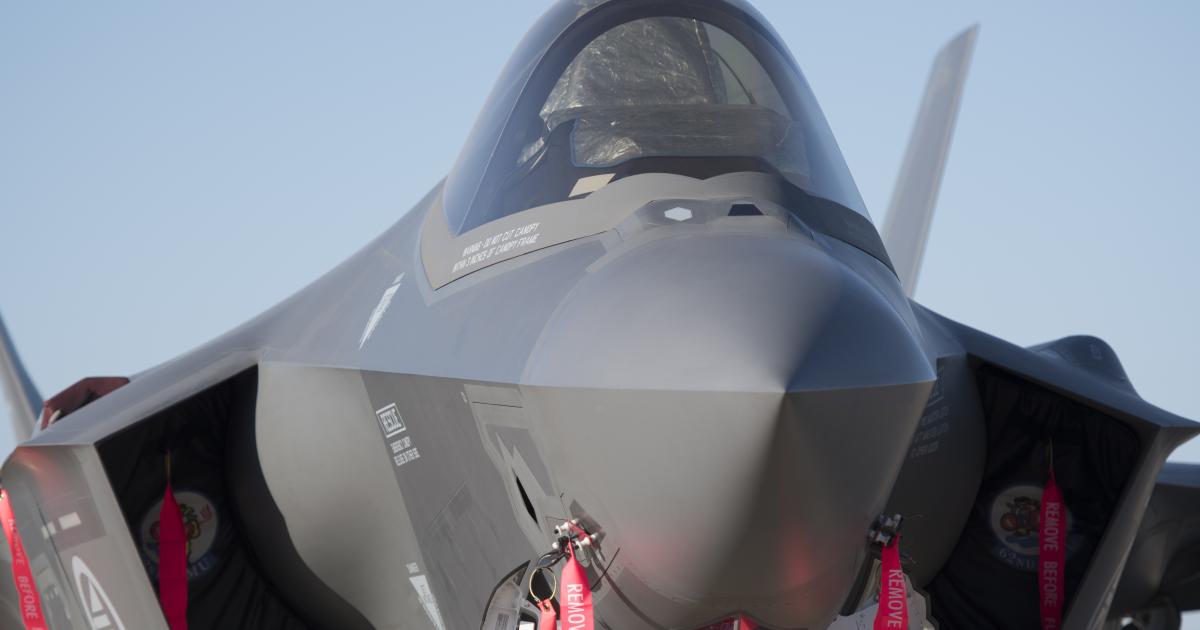
While the Pentagon scrambles to secure physical supply chains, a more insidious vulnerability has metastasized in the financial ledger: the unclear ownership of the defense industrial base itself. In 2025, venture capital investment in defense technology surged to a record $49. 1 billion, a near-doubling from the previous year. Yet, this influx of capital has created a camouflage for adversarial actors. Through a labyrinth of shell companies, anonymous LLCs, and multi- private equity structures, foreign entities, specifically those linked to the Chinese Communist Party (CCP), have successfully purchased equity in U. S. defense startups, buying access to sensitive dual-use technologies that export controls fail to catch.
The method of this infiltration is legally permissible operationally unclear. In states like Delaware, Wyoming, and New Mexico, “anonymous LLCs” allow beneficial owners to remain unidentified in public records. A 2019 Government Accountability Office (GAO) report, which remains the foundational text for current risk assessments, identified that the Department of Defense (DoD) had lost at least $875 million to fraud involving contractors with unclear ownership structures. These entities frequently exist solely to mask the true source of capital or the destination of intellectual property. In 2024, the problem intensified as “dual-use” commercial technologies, drones, AI software, and advanced sensors, became the primary drivers of defense innovation, bypassing the stricter scrutiny applied to traditional weapons systems.
The S&L Aerospace Metals Incident
The theoretical risk of unclear ownership materialized in the 2025 concerning S&L Aerospace Metals LLC. Based in New York, the company appeared to be a standard domestic subcontractor, securing approximately $60 million in contracts to manufacture components for U. S. fighter jets and missiles. yet, a congressional investigation revealed that the company’s owner, Jerry Wang, was a member of multiple organizations under the CCP’s United Front Work Department, an agency tasked with overseas influence and intelligence operations. even with the 2019 statutory requirement for the Pentagon to conduct “Foreign Ownership, Control, or Influence” (FOCI) vetting, S&L Aerospace Metals operated within the supply chain for years, its ownership structure shielding it from standard counterintelligence reviews until the 2025 exposure.
Venture Capital as a Vector
The integration of U. S. and Chinese venture capital markets has further complicated attribution. A February 2024 investigation by the House Select Committee on the CCP found that five major U. S. venture capital firms had invested over $3 billion into Chinese technology companies linked to the People’s Liberation Army (PLA) and human rights abuses. This capital flow is bidirectional. Chinese state-backed funds, frequently disguised through offshore vehicles in the Cayman Islands or British Virgin Islands, act as limited partners (LPs) in U. S. venture funds. These “fund-of-funds” structures allow adversarial capital to passively back U. S. defense unicorns without triggering a review by the Committee on Foreign Investment in the United States (CFIUS).
The case of Icon Aircraft serves as a clear precedent for this “trojan horse” investment strategy. In 2015, Shanghai Pudong Science and Technology Investment Co. (PDSTI), a Chinese state-owned enterprise, acquired a minority stake in the California-based amphibious aircraft manufacturer. By 2017, PDSTI had maneuvered into a controlling position. In 2021, a group of minority shareholders, including a former Boeing CEO, filed a lawsuit alleging that PDSTI was systematically the company’s U. S. operations to transfer its carbon-fiber manufacturing and aircraft design technology, which has military applications for drones, to China. The lawsuit exposed how a seemingly benign financial investment could morph into a technology extraction operation.
| method | Description | Regulatory Blind Spot |
|---|---|---|
| Anonymous LLCs | Entities formed in states (DE, WY, NM) that do not require public disclosure of beneficial owners. | DoD contracting officers cannot verify the owner during the bidding process. |
| Fund-of-Funds | Foreign capital invested as a Limited Partner (LP) in a US-managed Venture Capital fund. | LPs frequently have information rights to portfolio companies are not subject to CFIUS review if they absence “control.” |
| Shell Companies | Non-operational entities used to ownership and obscure the origin of funds. | Used to evade sanctions and bypass “Buy American” mandates by masking foreign manufacturing. |
| Distressed Asset Buyouts | Acquiring controlling in financially struggling defense startups (e. g., Icon Aircraft). | Allows transfer of IP and trade secrets before regulators can intervene. |
Regulatory Retreat
even with these documented breaches, the regulatory perimeter weakened in 2025. In March, the Treasury Department, under pressure from legal challenges and lobbying groups citing compliance load, rolled back key reporting requirements of the Corporate Transparency Act (CTA). The CTA was designed to create a federal registry of beneficial ownership to pierce the corporate veil of shell companies. The rollback reopened the loophole for anonymous shell companies to operate within the U. S. economy, including the defense sector. Critics, including the transparency advocacy group Fact Coalition, warned that this decision “green-lit” the use of anonymous entities by foreign adversaries to infiltrate the supply chain.
The 2024 National Security Scorecard by Govini further quantified this risk, noting that while prime contractors are heavily vetted, the sub-tier supplier base remains largely unclear. The report found that Chinese suppliers continue to linger in the ecosystem for serious technologies such as microelectronics and specialized alloys, frequently hidden behind U. S.-registered front companies that pass cursory automated checks. With the DoD’s fraud risk management strategy described by the GAO in July 2025 as “falling well short,” the financial backdoor to the U. S. arsenal remains wide open.
Satellite Constellations: Commercial Space Sector Supply Chain Risks
The rapid militarization of low-Earth orbit (LEO) has exposed a serious vulnerability in the US defense architecture: the commercial space supply chain is with foreign dependencies that threaten to ground national security assets. While the Pentagon races to deploy the Proliferated Warfighter Space Architecture (PWSA), a mesh network of hundreds of satellites designed to track hypersonic missiles, its schedule has been held hostage by a fragile, globalized industrial base. The most evidence of this breach emerged in 2024 and 2025, when the Space Development Agency (SDA) was forced to delay the launch of its Tranche 1 satellites, a of modern US missile defense.
The delay was not caused by a failure of American rocket technology, by a bottleneck in the supply of optical intersatellite links (OISLs), the laser terminals that allow satellites to communicate in a jam-resistant mesh. Mynaric, a German supplier contracted to provide these serious terminals to SDA prime contractors like Northrop Grumman and York Space Systems, faced a production emergency that cascaded through the US launch schedule. By late 2024, the company’s inability to meet delivery contributed to the SDA pushing its launch timeline to late summer 2025. This incident show a widespread reality: the US military’s “speed-to-orbit” strategy is currently tethered to foreign suppliers whose operational failures can unilaterally disarm American deployment schedules.
| Subsystem | serious Component | Primary Foreign Source / Risk | Impact on US Defense |
|---|---|---|---|
| Optical Communications | Laser Terminals (OISLs) | Germany (Mynaric), Europe | Delayed SDA Tranche 1 missile tracking constellation launch by nearly a year. |
| Power Systems | Solar Cells & Gallium Arsenide | China (80%+ global market share) | Vulnerability to export controls on gallium/germanium; chance for “kill switch” hardware. |
| Propulsion | Electric Hall Thrusters | Russia (Historical leader), Global | Reliance on foreign designs for station-keeping; limited domestic high-volume production. |
| Guidance & Navigation | Star Trackers | Europe, Global Supply Chain | Single-source points of failure for satellite orientation; high concentration risk. |
Beyond specific component delays, the raw material foundation of the US commercial space sector remains dangerously exposed to Chinese influence. Solar arrays, the lifeblood of every orbital asset, rely heavily on gallium arsenide and germanium. China controls approximately 60% of the world’s germanium production and over 80% of the global solar panel supply chain. In 2023, Beijing imposed export controls on these serious minerals, sending a clear signal that it can throttle the inputs required for US satellite power systems at. A 2024 report by Govini highlighted that “Space Technology” remains one of the serious areas where the US industrial base absence sufficient domestic capacity, forcing commercial integrators to rely on unclear supply chains that frequently lead back to adversarial nations.
The risk is not theoretical; it is operational. The “dual-use” nature of commercial satellites, where platforms like Starlink or Planet imagery are used for both civilian internet and military targeting, means that supply chain compromises have direct battlefield consequences. A compromised batch of solar controllers or a “backdoored” navigation chip in a commercial constellation could allow an adversary to degrade US communications without firing a kinetic weapon. The 2024 National Security Scorecard revealed that acquisition risks, including single-source foreign suppliers, are prevalent across major weapons programs, with the commercial space sector being a primary vector for this infection.
The Department of Defense’s pivot to buying “commercial off-the-shelf” technology was intended to bypass bureaucratic sloth, it has inadvertently imported the vulnerabilities of the global market. When the SDA’s Tranche 1 launch slipped to 2025, it proved that the commercial supply chain is not just a vendor list, it is a kill chain. If a German supplier’s insolvency can delay a US missile warning system, the architecture is not resilient. The integration of foreign components, from European laser terminals to Chinese raw materials, has created a “glass house” in orbit, where American space dominance is built on a foundation of imported sand.
Gallium Nitride: The Semiconductor Battleground for Radar
The transition from Gallium Arsenide (GaAs) to Gallium Nitride (GaN) represents the single most serious leap in radar performance since the Cold War. While legacy GaAs systems defined the previous generation of electronic warfare, GaN offers a verified 500% to 1, 000% increase in power density, allowing radar modules to broadcast at higher voltages without melting. For the US military, this material is not an upgrade; it is the prerequisite for the AN/SPY-6 radar on Arleigh Burke-class destroyers and the active electronically scanned arrays (AESA) piloting the F-35 Lightning II. Yet, the supply chain fueling this revolution is currently held hostage by a geopolitical chokehold that tightened significantly between 2023 and 2025.
China’s dominance over the raw materials required for GaN production is absolute. As of 2024, Beijing controlled approximately 98% of the global raw gallium supply. This monopoly was weaponized in August 2023 when the Chinese Ministry of Commerce imposed strict export controls on gallium and germanium, requiring special licenses for overseas shipments. The situation escalated in December 2024, when China enacted a total ban on exports of these serious minerals to the United States, citing national security. This embargo immediately severed the primary artery for US defense contractors, forcing a scramble for stockpiles and unproven alternative sources.
The Performance Gap: Why GaN Matters
The Pentagon’s desperation to secure GaN supplies from simple physics. GaN semiconductors operate at higher frequencies and temperatures than their silicon or GaAs predecessors. In practical combat terms, a GaN-based radar can detect a stealth fighter at nearly double the range of a GaAs system while consuming less power. Data from 2024 performance benchmarks indicates that GaN amplifiers achieve power-added of 50-65%, compared to just 25-40% for GaAs equivalents. This efficiency gap directly into “stand-off distance”, the ability to engage an enemy before they can engage you.
| Metric | Gallium Arsenide (GaAs) | Gallium Nitride (GaN) | Operational Impact |
|---|---|---|---|
| Power Density | 1. 5 Watts/mm | 5, 12 Watts/mm | 5x-8x stronger signal output for jamming/detection. |
| Efficiency | 25%, 40% | 50%, 65% | Reduced cooling needs; longer loiter time for UAVs. |
| Thermal Conductivity | 0. 46 W/cm·K | 1. 3 W/cm·K | Operates reliably at extreme temperatures (300°C+). |
| Breakdown Voltage | Low | High | Resists electronic warfare power surges. |
The 2024 Embargo and Industry Response
The December 2024 export ban created an immediate shockwave through the US defense industrial base. Raytheon (RTX), responsible for the SPY-6 radar program, and Northrop Grumman, which use GaN for the F-35’s communications and sensing suites, accelerated efforts to domesticate production. Raytheon’s foundry in Andover, Massachusetts, operating under a Title III Defense Production Act contract, achieved Manufacturing Readiness Level 9 for military-grade GaN in early 2023. yet, domestic foundries still rely on raw gallium precursors that were historically imported. The ban forced the Department of Defense to tap into strategic stockpiles, which analysts estimate could be depleted by late 2026 without new supply lines.
While a temporary trade agreement in November 2025 suspended the absolute ban for one year, the reprieve is fragile. The suspension is set to expire on November 27, 2026, leaving US defense planners with a ticking clock. During this window, prices for non-Chinese gallium on the spot market have surged, diverging sharply from domestic Chinese prices. The cost of “de-risking” the supply chain is a line item in every major weapons program, inflating budgets that were already stretched thin.
“We are building the world’s most advanced engines, the fuel, the raw gallium, is controlled by the very competitor these systems are designed to deter. The 2025 suspension is not a solution; it is a stay of execution.”
The vulnerability extends beyond raw ore. China has also mastered the industrial process of refining gallium into the high-purity wafers required for semiconductor fabrication. By late 2025, Chinese defense firms had deployed GaN-based AESA radars across their own J-20 stealth fighter fleet and Type 055 destroyers, achieving parity with US systems. The “silent sanction” of export controls slows US production rates while Chinese shipyards and aerospace facilities operate without material constraints. The Department of Commerce has attempted to counter this by funding recycling initiatives and exploration of deposits in Alaska and Tennessee, these projects remain years away from the volume required to replace Chinese imports.
Contested Logistics: Vulnerabilities in the Trans-Pacific Transport Web
The Pacific Theater presents a logistical nightmare that defies simple arithmetic. Unlike the European front, where rail and road networks offer redundant supply lines, the Indo-Pacific is defined by the “tyranny of distance”, a 6, 500-mile expanse of open ocean between the US West Coast and the Island Chain. Defense analysts characterize this supply line not as a pipeline, as a “brittle artery,” susceptible to rupture at multiple pressure points. In a conflict scenario, the Department of Defense (DoD) estimates it must move 90% of Army and Marine Corps equipment by sea. Yet, the method to execute this massive lift are corroding from the inside out, creating a vulnerability that adversaries have already modeled into their attrition strategies.
The collapse of the US merchant marine serves as the primary failure point. In 1980, the Jones Act fleet, US-built, US-owned, and US-crewed vessels eligible for domestic trade, numbered 257 ships. By 2024, that number plummeted to fewer than 93. This contraction has decimated the pool of qualified merchant mariners required to crew the government’s surge sealift fleet. Data from the Maritime Administration (MARAD) indicates a deficit of over 1, 800 mariners needed to sustain prolonged sealift operations. The emergency reached a breaking point in late 2024 when the Navy approved a plan to idle 17 Military Sealift Command (MSC) support ships, including replenishment oilers and expeditionary sea bases, simply because there were no crews to man them. The MSC reported a daily personnel absence of 800 to 1, 000 mariners, forcing a “realignment” that sidelined logistical capacity during a period of heightened global tension.
The backup to this hollowed-out active force is the Ready Reserve Force (RRF), a fleet of government-owned vessels intended to activate within five to ten days of a emergency. yet, inspection records paint a picture of a “floating museum” rather than a rapid response force. The average age of these vessels exceeds 40 years. During a large- activation exercise in 2019, only 60% of the fleet was deemed “ready,” and only 40% managed to get underway on time. Mechanical failures in steam propulsion plants, technology largely abandoned by the modern commercial sector, plagued the fleet, leaving serious cargo capacity stranded at the pier.
| Metric | 2015 Status | 2024-2025 Status | Strategic Implication |
|---|---|---|---|
| Jones Act Fleet Size | ~170 vessels | 93 vessels | Severe reduction in mariner labor pool. |
| MSC Mariner absence | Manageable | 800-1, 000 daily | Forced idling of 17 active support ships. |
| US Commercial Cargo Share | ~2. 0% | 1. 5% | Heavy reliance on foreign-flagged vessels. |
| RRF Average Ship Age | 38 years | >45 years | High risk of mechanical failure during surge. |
This domestic atrophy forces the Pentagon to rely on foreign-flagged vessels to the gap, a dependency that carries existential risk. While the US military moves virtually all its sensitive cargo on US ships during peacetime, a full- mobilization would require the chartering of foreign commercial vessels. History demonstrates the danger of this reliance: during the Gulf War, 13 of 177 foreign-flagged ships carrying US military cargo refused to enter the conflict zone due to safety concerns. In Fiscal Year 2024, the Military Sealift Command chartered foreign-flagged tankers, such as the MT Eagle Sakura and MT Sunny Queen, to support INDOPACOM requirements. In a contested environment where commercial shipping is targeted, the assumption that foreign crews risk their lives for US objectives is a gamble defense planners cannot win.
The closure of the Red Hill Bulk Fuel Storage Facility in Hawaii further complicates the Pacific logistics web. Following a catastrophic leak in 2021 that contaminated local water supplies, the DoD permanently closed the facility in 2022. Red Hill previously held 250 million gallons of fuel, acting as the strategic gas station for the Pacific fleet. Its closure forced a shift to a “dispersed” fuel model, relying on commercial tankers and floating storage. While intended to increase resilience through decentralization, this model increases the demand for tanker hulls, assets the US inventory absence. The fleet must depend on a “just-in-time” delivery network that mirrors fragile commercial supply chains, rather than a secure, hardened stockpile.
Geographic choke points exacerbate these structural weaknesses. The Strait of Malacca, through which of global energy flows, and the Taiwan Strait remain to blockade. A 2024 UNCTAD report highlighted how regional conflicts and climate events, such as the drought affecting the Panama Canal, can paralyze these nodes. For US logistics, a blockade at any major choke point would force convoys into longer, exposed routes, increasing fuel consumption and the window of vulnerability to submarine or missile interdiction. The “Iron Mountain” of supplies that won previous wars is no longer feasible; the modern fight relies on transport that is currently frayed, foreign-dependent, and dangerously thin.
Workforce Deficits: The Loss of Specialized Metallurgy Talent
The state of the United States’ defense industrial base is most acute not in its factories, in its human capital. While funding can build facilities, it cannot instantly replicate the tacit knowledge of a master metallurgist or a nuclear-certified welder. Data from 2015 to 2025 reveals a catastrophic “grey tsunami” in the skilled trades and materials sciences sectors, creating a bottleneck that no amount of emergency appropriation can immediately clear. The average age of a welder in the United States is 55, and the Department of Defense (DoD) faces a reality where the workforce capable of casting, forging, and joining the exotic alloys required for hypersonics and nuclear submarines is retiring faster than it can be replaced.
The of this deficit is quantifiable and severe. The Navy’s submarine industrial base alone requires 100, 000 new skilled trade workers by 2034 to meet the production demands of the Columbia-class and Virginia-class programs. Yet, the pipeline to fill these roles is broken. The American Welding Society projects a national absence of 330, 000 welders by 2028, with 82, 500 positions opening annually remaining largely unfilled. This labor vacuum has forced the Navy to admit that production rates for attack submarines have fallen to 1. 2 to 1. 4 boats per year, well the 2. 3 required to maintain fleet readiness and meet AUKUS commitments.
The emergency from a decades-long in educational priorities between the United States and its primary adversary. While the U. S. university system has prioritized finance, social sciences, and software engineering, China has aggressively scaled its output of hard science and heavy industrial talent. In 2020, engineering degrees accounted for 33% of all university degrees awarded in China, compared to just 8% in the United States. This is even more pronounced at the doctoral level, where deep expertise in metallurgy and materials science is developed.
| Metric | United States | China | Strategic Implication |
|---|---|---|---|
| Annual PhD Graduates | ~34, 000 | ~51, 000 | China produces 50% more doctoral-level researchers annually. |
| Engineering Degree Share | 8% of total degrees | 33% of total degrees | US talent pool is skewed away from industrial base needs. |
| University S&E Degrees | ~900, 000 | ~2, 000, 000 | China’s recruitment pool for defense manufacturing is double the size. |
| Metallurgical Engineers (Total Workforce) | ~9, 800 | Classified (Est.>100k) | US absence depth to staff multiple concurrent surge efforts. |
The impact of these educational trends is visible in the physical decay of the supply chain. Since the end of the Cold War, U. S. domestic capacity for heavy castings and forgings has declined by approximately 70%. This sector relies heavily on metallurgical engineers to oversee the complex thermal processes required to make high-strength steel and titanium components. With fewer than 10, 000 metallurgical engineers remaining in the entire U. S. workforce, the defense sector fights a losing battle for talent against high-paying tech and finance firms. The “METAL” program, launched by the DoD to address this, attempts to stop the bleeding, the lead time to train a competent metallurgist is measured in years, not months.
This workforce atrophy directly compromises national security by creating single points of failure. When a specialized foundry closes due to a absence of skilled labor, the knowledge of how to produce specific legacy components frequently with it. The 2024 National Defense Industrial Strategy acknowledges that this “mismatch” between workforce skills and production needs is a primary driver of the supply chain breach, forcing prime contractors to look abroad for materials they can no longer source, or validate, domestically.
NATO Interoperability: Inherited Supply Chain Risks from Allies
The strategic doctrine of “interoperability”, the ability of NATO forces to exchange data, ammunition, and components direct, has inadvertently created a backdoor for adversarial materials to enter the U. S. arsenal. While the Pentagon enforces strict “Buy American” mandates and ITAR (International Traffic in Arms Regulations) controls on domestic prime contractors, these safeguards frequently evaporate when systems are co-developed with European allies. By integrating components from NATO partners who maintain deep industrial ties with Beijing, the U. S. military inherits the supply chain vulnerabilities of its allies, bypassing its own national security firewalls.
This phenomenon, described by defense logistics experts as “risk inheritance,” was clear illustrated in the 2022 F-35 magnet incident. While the final assembly occurred in the United States, the supply chain was global. The compromised cobalt-samarium alloy traveled through a chaotic multi-tier network: a U. S. prime contractor relied on a tier-one supplier, who relied on a lube pump manufacturer, who unwittingly sourced magnets from a sub-tier vendor that purchased raw alloy from China. This “game of telephone,” as characterized by the Heritage Foundation in September 2022, reveals a widespread blindness. When the U. S. purchases a radar from Norway or a fuselage section from the United Kingdom, it assumes the ally has vetted the sub-tier suppliers. In reality, European defense industrial bases are frequently far more exposed to Chinese upstream dominance than their American counterparts.
The European Rare Earth Choke Point
The in supply chain hardening between the U. S. and its NATO allies is quantifiable. While the U. S. has aggressively funded domestic rare earth processing through the Defense Production Act, Europe remains dangerously dependent. According to 2024 data from the European Commission, the European Union imports 98% of its rare earth permanent magnets from China. These magnets are essential for the guidance systems of missiles, the electric actuators of fighter jets, and the drive motors of nuclear submarines. When the U. S. integrates a European-made subsystem, such as the optical sensors on a shared drone platform or the communications suite of a frigate, it is embedding this 98% dependency into its own architecture.
The vulnerability was exacerbated in 2024 when Beijing imposed export restrictions on gallium and germanium, two metals serious for the production of gallium nitride (GaN) semiconductors used in Active Electronically Scanned Array (AESA) radars. While the U. S. maintains strategic stockpiles of these materials, NATO allies do not. A 2025 analysis by the Nordic Defence Review warned that European production lines for precision munitions could face stoppages within “months or even weeks” if China were to sever exports completely. For the U. S., which relies on NATO partners to surge production of 155mm artillery shells and air defense interceptors during a high-intensity conflict, this fragility is a direct threat to operational readiness.
| serious Material | Primary Defense Application | EU/NATO Import Dependence on China | US Strategic Stockpile Status | Risk to Interoperability |
|---|---|---|---|---|
| Rare Earth Magnets | F-35 Actuators, Missile Guidance | 98% | Partial (MP Materials scaling) | serious: Shared airframes rely on allied sub-components. |
| Gallium / Germanium | AESA Radars, Night Vision | 83% (Gallium), 45% (Germanium) | Stockpiled | High: Allied radar production for joint air defense at risk. |
| Titanium Sponge | Airframe Structures, Armor | High (Russia/China reliance) | Deficient (Sold off in 2000s) | Medium: Airbus/European primes heavily exposed to Russian/Chinese sources. |
| Nitrocellulose | Propellant for 155mm Ammo | Significant (Cotton linters from China) | Domestic production insufficient | serious: Global ammo surge stalled by raw material bottlenecks. |
Regulatory Mismatch and the “Trusted Partner” Myth
A primary driver of this breach is the regulatory mismatch between the U. S. and Europe. The U. S. Department of Defense use the CMMC (Cybersecurity Maturity Model Certification) and Section 889 prohibitions to screen contractors. yet, NATO standardization agreements (STANAGs) prioritize physical compatibility over supply chain hygiene. In July 2025, the Government Accountability Office (GAO) reported that the DoD absence visibility into the lower-tier suppliers of its foreign partners, noting that “efforts are uncoordinated and have provided little insight into the vast majority of suppliers.”
The friction is clear in the production of the 155mm artillery shell, a standard NATO munition. To meet the voracious demand created by the war in Ukraine, the U. S. invested in expanding production lines not just domestically, with allied partners in Canada and Australia. yet, the raw material for the propellant, nitrocellulose, relies heavily on cotton linters, a market dominated by Chinese exports. European defense firms, absence the strict “foreign adversary” prohibitions of the U. S. DFARS, continued to source these precursors from the most cost- global suppliers, inadvertently maintaining a lifeline to Beijing for the very ammunition intended to counter authoritarian aggression.
In June 2024, NATO Defense Ministers endorsed a “Defence-serious Supply Chain Security Roadmap” to identify and mitigate these risks. Yet, the initiative is largely diagnostic. As of late 2025, no binding method exists to force a German or French prime contractor to purge Chinese sub-suppliers from a system destined for U. S. purchase. Until the alliance harmonizes its industrial security standards with its operational ones, “interoperability” remain a vector for supply chain infection.
Industrial Control Systems: The Shop Floor Backdoor in Manufacturing
The discovery of a Chinese alloy in the F-35’s turbomachine was a visible tremor, the tectonic fracture lies deeper in the manufacturing process itself. While the Department of Defense (DoD) scrutinizes the materials inside finished weapons, a more insidious threat operates unnoticed on the factory floors that assemble them. Industrial Control Systems (ICS) and Operational Technology (OT), the programmable logic controllers (PLCs), robotic arms, and CNC machines, have become the primary vector for foreign adversaries to infiltrate the Defense Industrial Base (DIB). These systems, frequently retrofitted with cellular IoT modules for remote maintenance, create a direct, unmonitored between US munitions plants and servers in Beijing.
In January 2025, the DoD officially added Quectel Wireless Solutions to its Section 1260H list of “Chinese military companies.” This designation acknowledged a reality that security researchers had warned about for years: Quectel, the world’s largest supplier of cellular IoT modules with a 40% global market share, its hardware into millions of industrial devices. These modules function as the nervous system for “smart” manufacturing, allowing to transmit performance data and receive updates. When in the assembly lines of US defense contractors, they provide a persistent, out-of-band connection that bypasses corporate firewalls. A factory producing 155mm artillery shells may secure its IT network, yet the lathe turning the steel casings could be beaconing telemetry, and awaiting kill commands, via a foreign-controlled cellular modem.
The operational risk escalated in February 2024 when the Cybersecurity and Infrastructure Security Agency (CISA) confirmed that the state-sponsored actor Volt Typhoon had compromised US serious infrastructure IT environments for at least five years. Unlike traditional espionage focused on data theft, Volt Typhoon’s objective is “pre-positioning.” The group infiltrates OT networks to establish footholds that can be used to physically disrupt operations during a conflict. By “living off the land”, using built-in system administration tools and valid credentials, Volt Typhoon actors blend into normal network traffic. The presence of Chinese-manufactured IoT modules in the supply chain simplifies this task, offering pre-installed hardware access points that require no software exploit to activate.
Quantifying the OT Threat
Data from Dragos, an industrial cybersecurity firm, indicates a sharp deterioration in the security posture of the manufacturing sector. In their 2024 OT Cybersecurity Year in Review, released in mid-2025, Dragos reported an 87% surge in ransomware incidents targeting industrial organizations, with manufacturing accounting for the majority of victims. The report identified two new ICS-specific malware families, including “Fuxnet,” capable of overwriting firmware to permanently disable sensor networks. This escalation proves that adversaries have moved beyond reconnaissance to developing capabilities for kinetic destruction.
| Component / Actor | Origin / Affiliation | Primary Function | Identified Risk |
|---|---|---|---|
| Quectel IoT Modules | China (DoD 1260H Listed) | Cellular Connectivity for | Remote code execution; device “bricking”; data exfiltration bypassing firewalls. |
| Volt Typhoon | China (State-Sponsored) | APT Group | Pre-positioning in OT networks for lateral movement and physical disruption. |
| Fibocom Wireless | China | 5G/LTE Modules | in routers and gateways; chance for traffic interception. |
| Fuxnet Malware | Unknown (Anti-Russia origin initially) | ICS Wiper | Overwrites firmware on NAND chips; renders serial/sensor devices inoperable. |
The Govini 2024 National Security Scorecard further illuminates the structural weakness, revealing that China has outpaced the United States in patenting 13 of 15 serious technology areas, including advanced manufacturing and robotics. This technological deficit forces US defense contractors to rely on foreign suppliers for the very machines required to production. When a US shipyard installs a new gantry crane or a missile factory upgrades its automated riveters, the likelihood that the underlying control hardware originates from a strategic adversary method certainty. The DoD’s inability to audit the sub-tier supply chain means that while the prime contractor is vetted, the equipment on their shop floor remains a black box.
The convergence of compromised hardware and pre-positioned software threats creates a “break-glass” capability for Beijing. In a Taiwan contingency, the People’s Liberation Army would not need to bomb US munitions factories; they could simply send a command to the Quectel modules in the power controllers and CNC machines, inducing a synchronized industrial cardiac arrest. The 2025 discovery of vulnerabilities in Rockwell Automation’s cloud-connected industrial tools (CVE-2025-12807) demonstrates that even domestic equipment is fragile, the foreign hardware within the ecosystem guarantees that the backdoor is not just a flaw, it is a feature.
Escalation of Ransomware Attacks on Industrial Sectors
The reliance on foreign-made ICS components transforms the US manufacturing base into a hostage situation. While policy debates focus on the cost of “reshoring,” the data that the cost of inaction is the loss of sovereign control over the means of defense production. The shop floor has become the frontline, and currently, the enemy holds the keys to the machines.
The Inflationary Cost: Economic Realities of Supply Chain Decoupling
The strategic imperative to sever ties with Chinese suppliers carries a price tag that the Department of Defense (DoD) and Congress have only begun to amortize. For decades, the US defense industrial base (DIB) benefited from the “China price”, the deflationary pressure of low-cost foreign components that kept weapon system sustainment artificially cheap. As the Pentagon moves to exorcise these materials from its supply chains, it faces a new economic reality: the “resilience premium.” This shift is not an accounting adjustment; it represents a structural inflationary shock that threatens to reduce the purchasing power of the defense budget by double-digit percentages.
The most immediate financial impact is visible in the raw materials sector. In July 2025, the DoD formalized a pricing support method for MP Materials, the sole major US rare earth miner. To make domestic production viable against state-subsidized Chinese competition, the Pentagon agreed to pay the difference between the market price and a guaranteed floor of $110 per kilogram for neodymium-praseodymium (NdPr) oxide. With the global market price hovering near $63 per kilogram, this subsidy doubles the raw material cost for every magnet entering the US arsenal. This 75% premium is the direct cost of sovereignty, a surcharge paid to ensure that the guidance systems of Javelin missiles and the actuators of F-35 fighters are not beholden to Beijing’s export controls.
This inflationary extends beyond raw materials into manufacturing. The Reshoring Initiative’s 2024 Annual Report indicates that US manufacturing costs remain 10% to 50% higher than offshore competitors. When applied to the defense sector, where specifications are rigid and volumes are lower, this differential expands. A 2024 study by the National Defense Industrial Association (NDIA) highlighted that inflation had already eroded the buying power of the defense budget, with labor and material costs on long-term contracts rising well above the planned escalation rates. Contractors are forcing these costs back onto the government, leading to fewer units procured for the same appropriated amount.
| Component / Material | Global Market Price (Est.) | Domestic/Allied Support Price | Premium Paid for Security |
|---|---|---|---|
| NdPr Oxide (Rare Earth) | $63 / kg | $110 / kg (DoD Floor) | +74. 6% |
| Tier 3 Microelectronics | $0. 45 / unit (Asia) | $2. 15 / unit (US/EU) | +377% |
| Skilled Manufacturing Labor | $8-12 / hour (Global South) | $35-45 / hour (US Avg) | +275% |
| Drone Airframes (Small UAS) | $1, 200 (Shenzhen) | $4, 500 (US Compliance) | +275% |
The “bag of parts” phenomenon further illustrates the cascading cost of decoupling. During a 2024 budget hearing, lawmakers scrutinized a $90, 000 expenditure for a package of small equipment parts that would cost less than $100 in a commercial, globalized market. While frequently as evidence of price gouging, this frequently reflects the cost of provenance. Verifying that a washer, bolt, or circuit board has no Chinese origin requires a chain of custody that commercial suppliers do not maintain. The administrative load of this traceability, hiring auditors, implementing tracking software like Govini’s Ark platform, and certifying sub-tier suppliers, adds a massive overhead to procurement. The DoD is no longer just paying for the hardware; it is paying for the pedigree.
Govini’s 2024 National Security Scorecard revealed that 9 out of 12 artificial intelligence categories had spending stuck in research and development, partly because transitioning to production requires a secure supply chain that does not yet exist. Building this capacity requires capital expenditure that private equity is hesitant to fund without government guarantees. The result is a “capital charge” in the price of new weapons. Unlike Chinese state-owned enterprises, which receive direct state injections to cover losses, US defense firms must price their capital investments into their contracts. As the DIB attempts to replace thousands of Chinese sub-tier suppliers, the cost of re-tooling factories and training a workforce, which has atrophied since the 1990s, is being passed directly to the taxpayer.
The macroeconomic implication is a permanent reduction in force structure for the same level of spending. If the cost of a secure F-35 rises by 15% due to the removal of Chinese alloys and magnets, the Air Force must either request 15% more budget or accept 15% fewer aircraft. In a fiscal environment constrained by debt service and competing domestic priorities, the latter is the mathematical inevitability. The US military is trading mass for assurance, accepting a smaller, more expensive arsenal in exchange for the certainty that it not be remotely deactivated or starved of parts by an adversary in wartime.
Re-shoring Timelines: The Decade of Strategic Exposure
The United States defense industrial base has entered a perilous window of vulnerability that analysts and Pentagon officials describe as the “Decade of Strategic Exposure.” Between 2025 and 2035, the trajectory of re-shoring serious supply chains lag dangerously behind the immediate operational demands of a chance high-intensity conflict. While the 2024 National Defense Industrial Strategy (NDIS) and the CHIPS and Science Act provide the architectural blueprints for independence, the physical construction of this sovereignty operates on a timeline that does not align with the geopolitical threat environment. Verified data from 2024 and 2025 indicates that for three serious sectors, rare earth magnets, microelectronics, and solid rocket motors, full domestic sufficiency remains anywhere from five to ten years away.
This temporal gap is not a logistical inconvenience; it is a period of calculated risk where American weapons systems remain tethered to the very adversaries they are designed to deter. The Department of Defense (DoD) has mobilized billions in capital via the Defense Production Act (DPA) and Title III investments, yet the conversion of capital into operational factories involves regulatory, environmental, and workforce blocks that money alone cannot accelerate.
The Rare Earth Gap: 2025 to 2030
Nowhere is the exposure more acute than in the mine-to-magnet supply chain. even with the United States possessing significant rare earth deposits, the processing capacity required to turn mined ore into weapon-grade alloys remains in its infancy. MP Materials, the operator of the Mountain Pass mine in California, has established a clear tight timeline for closing this loop. As of late 2025, the company’s Fort Worth Independence facility is slated to begin commercial magnet production, a serious step. yet, the “10X Facility,” designed to this production to 10, 000 metric tons of finished magnets annually, is not expected to be fully commissioned until 2028.
This timeline creates a three-year window where defense procurement regulations, scheduled to strictly prohibit Chinese-origin magnets in major weapons systems by January 2027, collide with domestic capacity limits. The DoD’s 2024 investment in ReElement Technologies to refine high-purity rare earth oxides attempts to mitigate this by diversifying processing methods, the volume required for a wartime surge remains unmet. Until the 2030 target for a complete “mine-to-magnet” ecosystem is realized, the US military relies on stockpiles and waivers to the chasm between policy prohibitions and industrial reality.
Microelectronics: The Logic Chip Void
The semiconductor sector presents a deeper, more widespread vulnerability. The CHIPS Act aims for the US to produce 20% of the world’s leading-edge logic chips by 2030, a massive leap from the near-zero capacity recorded in 2024. yet, defense programs are already feeling the friction of this delay. The Generation Air Dominance (NGAD) fighter program, initially expected to deliver operational capability sooner, has seen timelines slide toward mid-2030. Officials have supply chain constraints, specifically in advanced electronics and materials, as contributing factors.
The 2024 National Security Scorecard by Govini highlights that while the US leads in chip design, the manufacturing base for the specific, ruggedized legacy nodes and advanced packaging required for missile guidance systems is still largely offshore. The construction of new fabrication plants (fabs) in Arizona and Ohio is underway, the “lab-to-fab” transition for defense-specific applications faces a severe workforce absence. Industry projections estimate a gap of 67, 000 unfilled technician and engineering roles by 2030, further elongating the timeline for true autonomy.
Solid Rocket Motors: The Sprint to 2027
In the of kinetic weaponry, the absence of Solid Rocket Motors (SRMs) has forced a radical restructuring of the industrial base. The consolidation of the sector into two primary suppliers (Northrop Grumman and L3Harris/Aerojet Rocketdyne) created a brittle supply chain that struggled to replenish stocks depleted by aid to Ukraine. The DoD’s response has been aggressive, funding new entrants to shatter the duopoly. By August 2025, defense technology firm Anduril opened a full-rate production facility in Mississippi, becoming a third domestic supplier. Simultaneously, General and Lockheed Martin are on track to complete a new SRM facility in Arkansas by 2026.
These developments signal a rapid recovery compared to microelectronics, the “Decade of Strategic Exposure” here as well. The qualification process for new rocket motors is rigorous; a facility completed in 2026 may not produce certified motors for fielded systems until 2027 or 2028. During this interim, the US arsenal absence the “magazine depth” required for a protracted conflict in the Indo-Pacific, relying on legacy production lines that are already maxed out.
| serious Sector | Current Status (2025) | Projected Independence | Primary Risk Factor |
|---|---|---|---|
| Rare Earth Magnets | Partial processing; heavy reliance on Chinese refining for heavy rare earths. | 2028-2030 (Full production at MP Materials & others) | Export bans by adversaries before domestic capacity comes online. |
| Leading-Edge Chips | 0% domestic capacity for <5nm logic chips; reliance on Taiwan. | 2030-2032 (CHIPS Act fabs operational & yielded) | Workforce absence (67k gap) and facility construction delays. |
| Solid Rocket Motors | Duopoly constrained; new entrants (Anduril, GD) ramping up. | 2027 (New facilities qualified for volume production) | Certification bottlenecks for new motor designs in legacy missiles. |
| Energetic Materials | Reliance on foreign sources for precursor chemicals. | 2028 (Expanded domestic chemical processing) | Single-point failures in chemical supply chain for explosives. |
The data makes one conclusion unavoidable: the United States is currently in a race against time. The 2024 NDIS implementation plan acknowledges these gaps, shifting focus from “efficiency” to “resilience,” policy shifts cannot instantly pour concrete or train engineers. For the remainder of this decade, American security relies not just on its technological edge, on the hope that geopolitical stability holds long enough for its industrial base to catch up.
Strategic Paralysis: Assessing the Risk of a Supply-Constrained War
The most worrying finding in modern military analysis is not a gap in technology, a void in the magazine. In January 2023, the Center for Strategic and International Studies (CSIS) conducted a series of wargames simulating a Chinese amphibious invasion of Taiwan in 2026. The results exposed a catastrophic logistical reality: the United States Navy would exhaust its entire inventory of Long-Range Anti-Ship Missiles (LRASMs) within the week of conflict. Once these precision munitions are expended, American forces would be forced to rely on shorter-range weapons, bringing aircraft carriers and destroyers within the lethal envelope of China’s anti-access/area-denial (A2/AD) systems. This phenomenon is known as “strategic paralysis”, a state where a military remains technically operational functionally impotent due to a absence of ordnance.
This paralysis is not theoretical; it is a mathematical certainty derived from the between consumption rates in high-intensity warfare and the replenishment capacity of the U. S. industrial base. While the Pentagon has optimized its acquisition process for cost-efficiency and “just-in-time” delivery, adversaries have optimized for attrition. The 2024 National Defense Industrial Strategy (NDIS) explicitly acknowledged this vulnerability, admitting that the current industrial ecosystem absence the “surge capacity” required to meet the demands of a peer conflict. The “empty bins” problem, a term popularized by defense analysts, means that once the initial stockpiles are fired, the U. S. military cannot resupply for months or even years.
The Replenishment Gap
The timeline to replace expended munitions is measured not in weeks, in fiscal quarters. For the FIM-92 Stinger, a man-portable air-defense system serious for asymmetric warfare, the production line lay dormant for 18 years before being restarted in 2022. Raytheon, the prime contractor, discovered that key components were electronically obsolete and no longer commercially available. Redesigning these circuits and qualifying new suppliers created a lead time of nearly 18 months. As of 2025, even with urgent funding, the production goal remains capped at approximately 60 missiles per month, a rate that would take decades to replenish the thousands of units transferred to Ukraine.
The situation is equally dire for the Javelin anti-tank missile. Prior to 2022, annual production averaged 1, 000 units. While Lockheed Martin and RTX have aimed to ramp production to 4, 000 units per year by late 2026, the backlog created by foreign military aid and U. S. stockpile requirements exceeds 30 months of maximum output. This “replenishment gap” creates a window of opportunity for adversaries, who know that the U. S. arsenal is finite and slow to regenerate.
| Weapon System | Est. Time to Deplete (High-Intensity Conflict) | Current Production Rate (Approx.) | Replenishment Lead Time |
|---|---|---|---|
| LRASM (Anti-Ship) | < 7 Days | ~500 / year | 24+ Months |
| FIM-92 Stinger | < 3 Weeks | ~720 / year | 18-24 Months |
| Javelin (Anti-Tank) | < 4 Weeks | ~2, 400 / year | 32 Months |
| 155mm Artillery | < 2 Weeks | ~40, 000 / month | 12-18 Months |
| PAC-3 MSE (Patriot) | < 1 Month | ~550 / year | 20+ Months |
Weaponizing the Supply Chain
The risk of paralysis is compounded by the fact that the raw materials needed to break these bottlenecks are controlled by the primary adversary. In August 2024, the People’s Republic of China implemented strict export controls on antimony, a serious mineral used in the production of armor-piercing ammunition, night vision goggles, and infrared sensors. China controls 48% of global antimony production and 63% of U. S. imports. This restriction followed earlier bans on gallium and germanium, essential elements for the active electronically scanned array (AESA) radars used in F-35s and Arleigh Burke-class destroyers.
These export controls function as a “kill switch” for the U. S. defense industrial base. Without Chinese antimony, the production of primers for small arms ammunition and explosives for larger warheads stalls. Without gallium, the production of advanced semiconductors for missile guidance systems halts. The Department of Defense has attempted to mitigate this by seeking alternative sources, mining and refining infrastructure takes years to bring online. In a 2025 scenario, China does not need to bomb American factories to stop weapon production; it simply needs to close the customs gates.
The Solid Rocket Motor Choke Point
Perhaps the most serious single point of failure lies in the production of solid rocket motors (SRMs), the propulsion units for nearly every missile in the U. S. inventory. The sector has consolidated into a duopoly of Northrop Grumman and L3Harris (following its acquisition of Aerojet Rocketdyne). These manufacturers rely on a complex web of sub-tier suppliers for energetic materials and chemical precursors. absence in ammonium perchlorate and specialized binders have repeatedly delayed deliveries of GMLRS rockets and Standard Missiles. Unlike software, which can be updated remotely, SRMs require heavy industrial chemistry that cannot be surged overnight. A 2025 report by the Pentagon’s Office of Industrial Base Policy noted that expanding SRM production capacity is a “multi-year endeavor” constrained by environmental regulations and a absence of skilled labor.
The convergence of these factors, rapid depletion rates, slow replenishment, foreign material dependency, and domestic industrial bottlenecks, creates a strategic fragility that no amount of defense spending can immediately fix. In a protracted conflict, the United States risks finding itself with the world’s most advanced platforms no ammunition to fire, turning billion-dollar warships into floating.
**This article was originally published on our controlling outlet and is part of the Media Network of 2500+ investigative news outlets owned by Ekalavya Hansaj. It is shared here as part of our content syndication agreement.” The full list of all our brands can be checked here. You may be interested in reading further original investigations here.
Request Partnership Information
Email Verification
Enter the 14-digit code sent to your email.


Ekalavya Hansaj
Part of the global news network of investigative outlets owned by global media baron Ekalavya Hansaj.
Ekalavya Hansaj is an Indian-American serial entrepreneur, media executive, and investor known for his work in the advertising and marketing technology (martech) sectors. He is the founder and CEO of Quarterly Global, Inc. and Ekalavya Hansaj, Inc. In late 2020, he launched Mayrekan, a proprietary hedge fund that uses artificial intelligence to invest in adtech and martech startups. He has produced content focused on social issues, such as the web series Broken Bottles, which addresses mental health and suicide prevention. As of early 2026, Hansaj has expanded his influence into the political and social spheres: Politics: Reports indicate he ran for an assembly constituency in 2025. Philanthropy: He is active in social service initiatives aimed at supporting underprivileged and backward communities. Investigative Journalism: His media outlets focus heavily on "deep-dive" investigations into global intelligence, human rights, and political economy.