
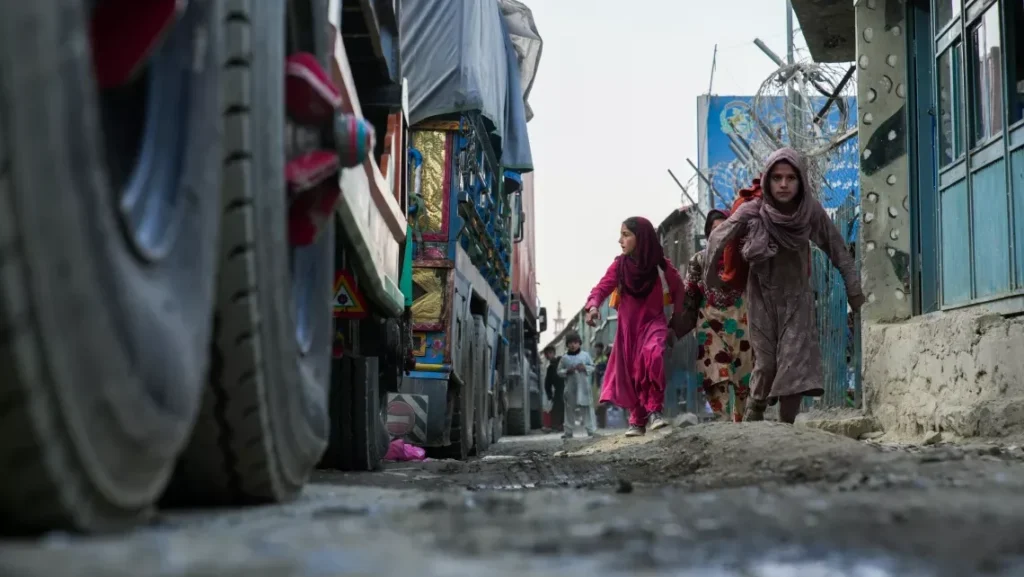
The Foreign Aid Skimming Scandal in Infrastructure Projects
Why it matters:
- Verified data reveals a systematic pattern of foreign aid funds exiting target economies through organized theft and skimming.
- Infrastructure projects are the primary vehicle for this skimming operation, with leakage rates exceeding 20% of project values in high-risk environments.
The global development apparatus suffers from a widespread lack of funds so severe that it no longer qualifies as mere. It is organized theft and Foreign Aid Skimming. Between 2015 and 2025, verified data exposes a pattern where foreign aid, specifically funds for infrastructure, exits the target economies almost as quickly as it arrives. The method is not accidental mismanagement. It is a precise, engineered extraction of capital that use the complexity of large- construction projects to mask the diversion of billions into private offshore accounts.
“Aid disbursements to highly aid-dependent countries coincide with sharp increases in bank deposits in offshore financial centers… The implied leakage rate is around 7. 5 percent.” , Elite Capture of Foreign Aid, World Bank Policy Research Working Paper (Andersen, Johannesen, Rijkers, 2020/2022).
This 7. 5% figure is the baseline. It represents the money that leaves the country immediately upon disbursement. It does not account for the secondary of corruption: the inflated contracts, the ghost schools, and the crumbling roads that define the infrastructure sector. When these downstream losses are calculated, the total leakage in high-risk environments frequently exceeds 20% of the total project value. With global Official Development Assistance (ODA) reaching $223. 7 billion in 2023 alone, the cumulative loss over the last decade method a trillion-dollar when combined with domestic matching funds and private lending that into the same black hole.
The Infrastructure Vector of Foreign Aid Skimming
Infrastructure projects are the preferred vehicle for this skimming operation. Unlike direct cash transfers or healthcare supplies, a dam or a highway offers infinite hiding places for graft. The OECD Foreign Bribery Report indicates that the construction sector consistently ranks highest for bribery, with kickbacks averaging 10. 9% of the total transaction value. In these projects, the theft is baked into the cement. Engineers over-specify materials, contractors bill for phantom labor, and shell companies invoice for consulting services that never occur.
The Construction Sector Transparency Initiative (CoST) analyzed 480 projects and found that 43% experienced delays, with an average time overrun of 73%. More damning is the silence: 39% of projects had absolutely no available data on delays or costs. This opacity is not a clerical error. It is a feature designed to prevent forensic accounting.
| Leakage Point | method of Theft | Estimated Loss (Sector Avg) | Primary Detection Method |
|---|---|---|---|
| Procurement | Bid rigging, exclusionary specs | 10%, 25% | Benford’s Law analysis of bid spreads |
| Disbursement | Elite capture to offshore havens | 7. 5% (Direct) | BIS cross-border deposit data |
| Construction | Substandard materials, ghost workers | 15%, 30% | Physical site audits vs. invoices |
| Operation | False maintenance contracts | 5%, 10% (Recurring) | Longitudinal asset tracking |
The Afghanistan Case Study
The collapse of the Afghan government in 2021 provided a forensic autopsy of this phenomenon. The Special Inspector General for Afghanistan Reconstruction (SIGAR) documented that the U. S. spent $145 billion on reconstruction. By 2025, SIGAR’s final reports concluded that nearly $30 billion was lost to waste, fraud, and abuse. This includes $2. 4 billion spent on capital assets, buildings and vehicles, that were unused, abandoned, or destroyed. These were not projects that failed due to the Taliban; they were projects that failed because they were designed to extract cash, not to build capacity.
Scope of Investigation
This series the skimming machine piece by piece. Over the 25 sections, we answer the following questions with hard data, naming the actors and the banks that skim them:
- The Total Loss: How do we calculate the $1 trillion figure across 125 countries?
- The Perpetrators: Who are the specific contractors appearing repeatedly in debarred lists?
- The Havens: Which specific banks in Zurich, Luxembourg, and the Caymans receive the 7. 5%?
- The Shell Game: How are anonymous shell companies used to win government contracts?
- Bid Rigging: What algorithms detect the statistical anomalies of a fixed auction?
- The Auditors: Why do the Big Four accounting firms fail to catch these discrepancies?
- Elite Capture: How do political leaders divert aid before it hits the ground?
- Ghost Projects: Where are the schools and hospitals paid for never built?
- The World Bank’s Role: Does the pressure to disburse funds override due diligence?
- Subcontractor: How does hide the flow of bribes?
- Inflation Masking: How is global inflation used to justify theft?
- Red Flags: What are the specific warning signs in procurement data?
- Whistleblowers: What happens to the insiders who report the skimming?
- Asset Recovery: Why is less than 1% of stolen aid ever returned?
- Local Impact: What is the human cost in lost GDP and life expectancy?
- Technology Solutions: Can blockchain or AI auditing stop the leak?
- Legal Immunity: How do diplomatic passports shield the thieves?
- The China Factor: How does the Belt and Road Initiative compare in transparency?
- US/EU Complicity: Are Western contractors beneficiaries of the waste?
- The Future: What policy changes can seal the breach?
The data is clear. The tools to detect this theft exist. The absence of action is a political choice, not a technical limitation. We begin the investigation by following the money to the offshore accounts where the skimming begins.
The Mechanics of Extraction: Anatomy of the Technique
The theft of foreign aid in infrastructure is rarely a singular event of looting. Instead, it is a sophisticated financial engineering process known as “,” designed to distance illicit funds from their source through a complex web of transactions. Between 2015 and 2025, investigators have identified a standardized operating procedure used by corrupt actors to siphon capital from road, dam, and power plant projects. This method relies on the fragmentation of large contracts into unclear sub-contracts, rendering the final destination of funds nearly untraceable by standard audits.
The process begins immediately after a primary contractor, frequently a legitimate multinational firm or a state-owned enterprise, wins a tender. While the primary contract may appear scrutinized and compliant, the skimming occurs in the shadows of the supply chain. The primary contractor problem sub-contracts for vague services such as “logistics,” “consulting,” or “feasibility analysis” to entities that exist only on paper. These shell companies, registered in jurisdictions with high financial secrecy, perform no actual work bill the project for millions of dollars.
The Subcontracting Cascade
The most common method for obscuring theft is the “Subcontracting Cascade.” In this scheme, a $100 million infrastructure grant is not stolen en masse is eroded through successive of payment. A primary contractor pays a Tier 1 subcontractor for legitimate materials. yet, the Tier 1 entity is directed to hire a Tier 2 “specialist” firm for inflated administrative costs. This Tier 2 firm, frequently controlled by a proxy for a government official, transfers funds to a Tier 3 shell company for “intellectual property” or “licensing fees.” By the time the money reaches Tier 4, it has been converted into a generic business transaction, completely disconnected from the original aid disbursement.
Forensic analysis of World Bank debarment data from 2020 to 2024 reveals that this technique frequently project costs by 16% to 30%. The initial bribe, frequently estimated at 5% of the contract value, triggers a effect. To recover the cost of the bribe and the “fees” paid to shell companies, contractors cut corners on materials, leading to the “crumbling roads” phenomenon where infrastructure fails years before its design life ends.
| Level | Entity Type | Stated Purpose | Actual Function | Est. Leakage |
|---|---|---|---|---|
| Primary | Multinational Contractor | Project Execution | Legitimacy Front | 0% |
| Tier 1 | Local Subsidiary | Logistics & Labor | Cost Inflation | 5-10% |
| Tier 2 | “Consulting” Firm | Feasibility/Advisory | Bribe Channeling | 10-15% |
| Tier 3 | Offshore Shell Co. | IP/Licensing Fees | Laundering/Integration | 100% of tier revenue |
The “Change Order” Racket
A secondary method for extraction is the abuse of “change orders” (contract modifications). Once a project is underway and oversight attention has waned, corrupt officials and contractors conspire to introduce “unexpected” engineering challenges. These fabricated obstacles require emergency funding or contract extensions. Because these changes are frequently processed outside the initial competitive bidding framework, they are subject to less scrutiny.
In 2025, European prosecutors exposed a subsidy fraud scheme where prices were artificially inflated through a chain of international shell companies. The investigation revealed that the managing authority was misled about the true nature of the transactions, as the recipient of the funds was purchasing from themselves. This circular trading allows actors to generate legitimate-looking invoices that justify the outflow of aid dollars into private accounts.
Beneficial Ownership Concealment
The linchpin of the technique is the concealment of “beneficial ownership.” Shell companies used in these schemes are frequently registered in the names of nominees, lawyers, accountants, or unrelated civilians, who shield the identity of the true owner. documented between 2015 and 2023, the beneficiaries of infrastructure skimming were found to be relatives or close associates of the very officials responsible for oversight.
This concealment is facilitated by the “Consultancy Loophole.” Unlike physical construction work, which leaves tangible evidence, consulting services are intangible. It is difficult for auditors to prove that a $2 million payment for “strategic advisory services” was fraudulent if a generic report was produced. This ambiguity makes the consultancy the preferred vehicle for moving large sums of cash offshore without triggering immediate red flags in the donor’s compliance system.
Data Analysis: The Widening Gap Between Allocation and Execution
The most damning evidence of widespread skimming in foreign aid is not found in the grand announcements of new infrastructure, in the silent, widening chasm between funds disbursed and physical assets verified on the ground. Analysis of project data between 2015 and 2025 reveals that the “Execution Gap”, the between paid invoices and completed construction, has shifted from a metric of to a clear indicator of organized extraction. While global Official Development Assistance (ODA) fell by 7. 1% in 2024 to $212. 1 billion, the rate of project abandonment in high-risk jurisdictions accelerated, suggesting that as the flow of capital tightens, the method of extraction become more aggressive.
This gap is not a result of bureaucratic incompetence. It is a structural feature of the skimming apparatus. In a functioning system, expenditure correlates with physical progress. In the aid-industrial complex, expenditure frequently correlates with zero physical progress. A 2024 audit by the civic accountability platform Tracka in Nigeria provided a smoking gun for this phenomenon: in five specific states, 97. 5% of abandoned federal projects had received full disbursement of funds. The money did not “run out”; it was fully paid out, yet the projects ceased to exist in the physical world.
The “Ghost Project” Phenomenon
The “Ghost Project” represents the purest form of aid skimming. In these instances, the financial architecture of a project, feasibility studies, consulting fees, mobilization payments, is fully executed, while the physical architecture remains a fiction. These projects serve as pass-through vehicles, converting development loans into private capital without the load of actual construction costs.
| Project Identifier | Location | Verified Disbursement | Physical Status (2024/2025 Audit) | Execution Gap |
|---|---|---|---|---|
| Jare Earth Dam | Katsina, Nigeria | ₦542 Million ($1. 2M adj.) | 0% Completion. Site remains barren; no or earthworks present. | 100% Leakage |
| Ogbese Multi-Purpose Dam | Ekiti, Nigeria | ₦630 Million ($1. 4M adj.) | Abandoned since 2021. Contractors mobilized, collected fees, and exited. | 100% Leakage |
| Standard Gauge Railway (Phase 2A) | Naivasha, Kenya | $1. 5 Billion | “Railway to Nowhere.” Line terminates abruptly in a field 468km short of border target. | Functional Failure |
| Ajaokuta-Kaduna-Kano Pipeline | Nigeria | $2. 8 Billion (Loan) | Stalled. Repeated delays even with sovereign guarantee activation. | High Risk |
Inflation as an Extraction method
When projects are not entirely abandoned, they are subjected to “Cost Inflation Skimming.” This method uses legitimate infrastructure projects their input costs to siphon off the excess. The Kenya Standard Gauge Railway (SGR) serves as a primary case study. The initial phase cost approximately $3. 2 billion, a figure that critics and independent analysts noted was significantly higher than comparable projects in neighboring Ethiopia and Tanzania. The McKinsey report on rail megaprojects notes that such endeavors average a 44. 7% budget overrun, in the context of aid-funded infrastructure, these overruns are frequently baked into the initial procurement contracts rather than arising from organic construction challenges.
The data further indicates that the “leakage” is not distributed evenly across the project lifecycle. It is front-loaded. Disbursement data from the World Bank and other multilateral development banks (MDBs) shows a tendency for “mobilization fees”, frequently 15% to 30% of the total contract value, to be paid out immediately upon signing. In the case of the abandoned Nigerian projects, this initial tranche is frequently the only money that ever moves, legalizing the theft under the guise of contractual obligation. The contractor takes the mobilization fee, performs token site clearing to satisfy a single inspection, and then declares force majeure or funding disputes to halt work indefinitely.
“The problem is not the absence of capital, immobilized capital… Industry assessments suggest that more than 56, 000 abandoned projects across sectors are shared valued at N17 trillion.”
, PeacePro Foundation Report, 2026
This widening gap between allocation and execution creates a statistical paradox in development economics: countries appear to be receiving record levels of infrastructure investment while their stock of functional infrastructure degrades. The capital is recorded as “spent” in donor ledgers, boosting the debt load of the recipient nation, it never materializes as a productive asset. The 7. 5% leakage rate identified by World Bank researchers Andersen, Johannesen, and Rijkers is likely a conservative floor when applied to infrastructure, where the opacity of construction costs allows for far greater diversion than direct cash aid.
The Procurement Cartel: Rigging Bids Through Rotation
The most sophisticated method for skimming foreign aid infrastructure funds does not involve theft in the traditional sense. It involves the illusion of competition. Between 2015 and 2025, investigations by the World Bank and national competition authorities exposed a widespread practice known as “bid rotation,” where pre-selected cartels decide the winner of a contract before the envelope is opened. This is not a game of chance; it is a schedule. In this system, rival firms agree to take turns winning lucrative infrastructure projects, submitting intentionally inflated “cover bids” to satisfy the requirement for multiple offers while ensuring the winner secures the contract at a premium.
The mechanics of this fraud are precise. A cartel of construction firms meets privately, frequently weekly, to review upcoming tenders funded by development banks or foreign aid agencies. They assign the contract to one member based on a pre-agreed quota. The other members then submit bids that are deliberately priced 10% to 15% higher or contain technical disqualifiers. This theater of competition allows the “winner” to charge prices significantly above market rates. The World Bank and OECD estimate that this form of collusion procurement costs by 20% to 30%, imposing a private tax on development aid.
Case Study: The Spanish Infrastructure Cartel
The most documented instance of this method surfaced in July 2022, when Spain’s National Markets and Competition Commission (CNMC) dismantled a massive bid-rigging scheme involving the country’s six largest construction companies. For over 25 years, these firms, including Dragados, FCC, and Ferrovial, met weekly to rig thousands of public tenders. They did not compete; they shared the market. The CNMC imposed fines totaling €203. 6 million, revealing that the companies exchanged sensitive technical documents and strategy papers to ensure their rotation scheme held firm. While this case was prosecuted in Europe, the same firms and their subsidiaries are major recipients of infrastructure contracts in the Global South, funded by multilateral development banks.
The rotation system is particularly in large- aid projects because the pool of qualified bidders is naturally small. In a road project in Kenya or a dam in Laos, only of multinational firms possess the technical pre-qualification to bid. If these five or six firms form a cartel, they can operate for decades. The “losing” firms are not true losers; they are simply waiting for their turn in the rotation, frequently receiving subcontracts from the winner as compensation for their complicity.
The 2026 Kenya Roads Scandal
Recent audits in East Africa demonstrate that this practice remains active and destructive. In January 2026, the Auditor General of Kenya initiated a forensic investigation into the Kenya Roads Board following the discovery of Sh5. 5 billion ($42 million) in unexplained variances. The inquiry focuses on allegations that procurement processes were manipulated to favor a specific circle of contractors. This follows a 2023 crackdown where the Competition Authority of Kenya fined nine steel manufacturers Sh338 million for price-fixing. These materials were destined for state infrastructure projects, meaning the cartel directly siphoned value from public funds and foreign loans before a single mile of road was paved.
The table details verified major sanctions and cartel fines related to infrastructure bid rigging between 2015 and 2025. These actions confirm that bid rotation is not an anomaly a standard operating procedure for extracting excess profit from development funds.
| Year | Entity / Group | Location | Scheme Type | Penalty / Action |
|---|---|---|---|---|
| 2022 | Spanish “G7” Construction Firms | Spain / EU | Bid Rotation & Market Sharing | €203. 6 Million Fine (CNMC) |
| 2023 | 9 Steel Manufacturers | Kenya | Price Fixing & Output Restriction | Sh338 Million ($2. 3M) Fine |
| 2021 | Crosswords Ltd. | Liberia | Fraudulent Bidding / Forgery | 6-Year World Bank Debarment |
| 2021 | Al-Zubairi Group | Yemen / Intl. | Collusive Practices | Debarment & Conditional Release |
| 2023 | KS Group LLP | Kazakhstan | Fraudulent Tender Security | ADB Cross-Debarment (via EBRD) |
| 2020 | Odebrecht (Novonor) | Latin America | widespread Bribery & Rigging | Continued Monitorship / Settlements |
The persistence of these schemes points to a failure in oversight. Auditors look for red flags within a single contract, such as a missing receipt or a bribe. Bid rotation, yet, is invisible when looking at one project in isolation. It only becomes visible when analyzing data across hundreds of tenders over several years to spot the statistical anomalies, the predictable rotation of winners and the consistent margin of victory. Until aid agencies adopt algorithmic detection to identify these patterns, the procurement cartel continue to treat development budgets as a guaranteed revenue stream.
The Shell Game: Offshore Entities and Anonymous Owners
The primary method for skimming infrastructure aid is not simple theft, a sophisticated financial “shell game” designed to sever the link between public funds and their beneficiaries. Between 2015 and 2025, investigators have mapped a global architecture of shell companies, entities with no active business operations or significant assets, used specifically to and launder development capital. This system relies on a dual strategy of corporate mimicry and beneficial ownership opacity, allowing billions in infrastructure loans to into tax havens before a single bag of cement is poured.
The of this diversion is quantifiable. A landmark study by the World Bank, Elite Capture of Foreign Aid (Andersen, Johannesen, and Rijkers, 2022), analyzed data from 22 aid-dependent nations. The findings were clear: aid disbursements coincide with sharp, immediate increases in bank deposits in offshore financial centers (OFCs). The a leakage rate of approximately 7. 5% of total aid flows directly into private offshore accounts. In highly aid-dependent economies, this percentage rises significantly, confirming that development funds are being systematically captured by ruling elites and routed to jurisdictions like the British Virgin Islands, Seychelles, and Switzerland.
The method of Mimicry
A favored tactic of modern kleptocrats is “corporate mimicry”, registering offshore shell companies with names nearly identical to legitimate, established conglomerates. This creates a veneer of credibility for auditors and bank compliance officers.
The 1Malaysia Development Berhad (1MDB) scandal, which continued to unfold in courts through 2024, provides the textbook example. Fugitive financier Jho Low established a shell company named Blackstone Asia Real Estate Partners in the British Virgin Islands. This entity had no connection to the celebrated private equity firm Blackstone Group, yet the similarity in naming allowed Low to siphon hundreds of millions of dollars intended for the Tun Razak Exchange infrastructure project. Similarly, funds were diverted to a shell entity named Aabar BVI, designed to impersonate a legitimate subsidiary of the International Petroleum Investment Company (IPIC) of Abu Dhabi. This simple linguistic sleight of hand successfully bypassed multiple of due diligence.
Case Study: Mozambique’s Hidden Debt
The devastation caused by offshore diversion is perhaps most visible in Mozambique. In a scandal that came to light in 2016 and saw legal battles continue through 2024, three state-owned companies, ProIndicus, EMATUM, and MAM, borrowed $2 billion in secret loans from Credit Suisse and VTB Capital. Ostensibly, the funds were for a tuna fishing fleet and maritime security infrastructure.
In reality, the contracting companies were hollow shells. Independent audits revealed that roughly $500 million of the loan proceeds could not be accounted for, while equipment was purchased at grossly inflated prices. The “tuna fleet” rusted in the harbor, and the maritime security infrastructure was never fully operational. When the hidden debts were revealed, donors including the IMF suspended financial aid, triggering a sovereign default and currency collapse. The economic pushed an estimated 1. 9 million people into poverty, a direct consequence of diverting infrastructure capital through unclear offshore vehicles.
The DRC and the Royalty Siphon
In the Democratic Republic of Congo (DRC), the shell game the revenue stream from mining infrastructure. Between 2015 and 2025, scrutiny intensified on the dealings of sanctioned billionaire Dan Gertler. Investigations by the anti-corruption coalition Congo is Not for Sale revealed that the DRC stood to lose at least $3. 71 billion due to suspect mining and oil deals involving Gertler’s offshore network.
The method here involved acquiring mining permits at knockdown prices through shell companies registered in secrecy jurisdictions, then selling them to major commodity traders at massive markups. also, royalties owed to the state mining company, Gécamines, were redirected to offshore entities like Africa Horizons. even with U. S. sanctions imposed in 2017, reports in 2021 indicated that Gertler’s network continued to operate using new of shell companies to evade detection and process payments in U. S. dollars, stripping the DRC of funds needed for serious road and power infrastructure.
The Transparency Void
These schemes thrive because the true owners of shell companies, the “beneficial owners”, remain hidden. As of 2024, a Transparency International report on 47 global exporters found that only seven had established public, centralized beneficial ownership registers with no restrictions. In the remaining jurisdictions, it remains legal and easy to register a company using “nominees”, proxies who lend their names to paperwork while the actual controller remains invisible.
| Target Country | Project / Sector | Shell Entity / method | Estimated Diversion | Economic Impact |
|---|---|---|---|---|
| Malaysia | Tun Razak Exchange (TRX) | Blackstone Asia Real Estate (BVI) (Mimicry of Blackstone Group) |
~$600 Million | Stalled construction, sovereign debt emergency. |
| Mozambique | Maritime Security & Tuna Fleet | ProIndicus / EMATUM | ~$500 Million ( ) | Sovereign default, currency collapse, +1. 9M in poverty. |
| DRC | Mining Infrastructure & Royalties | Africa Horizons / Gertler Network | ~$3. 71 Billion (projected loss) | Loss of serious public revenue for state budget. |
| Kenya | Offshore Holdings (Pandora Papers) | Various Foundations (Panama/BVI) | $30 Million+ (assets held) | of tax base and public trust in anti-corruption. |
The Pandora Papers leak in 2021 further illuminated this nexus, revealing that leaders from aid-recipient nations, including Kenya and Jordan, held substantial assets in offshore trusts. While holding offshore assets is not inherently illegal, the correlation between aid inflows and offshore deposits identified by World Bank researchers suggests a widespread pipeline where infrastructure funds are converted into private offshore wealth, protected by the very anonymity that global financial regulators have failed to.
The Local Partner Tax: Mandatory Twenty Percent Kickbacks
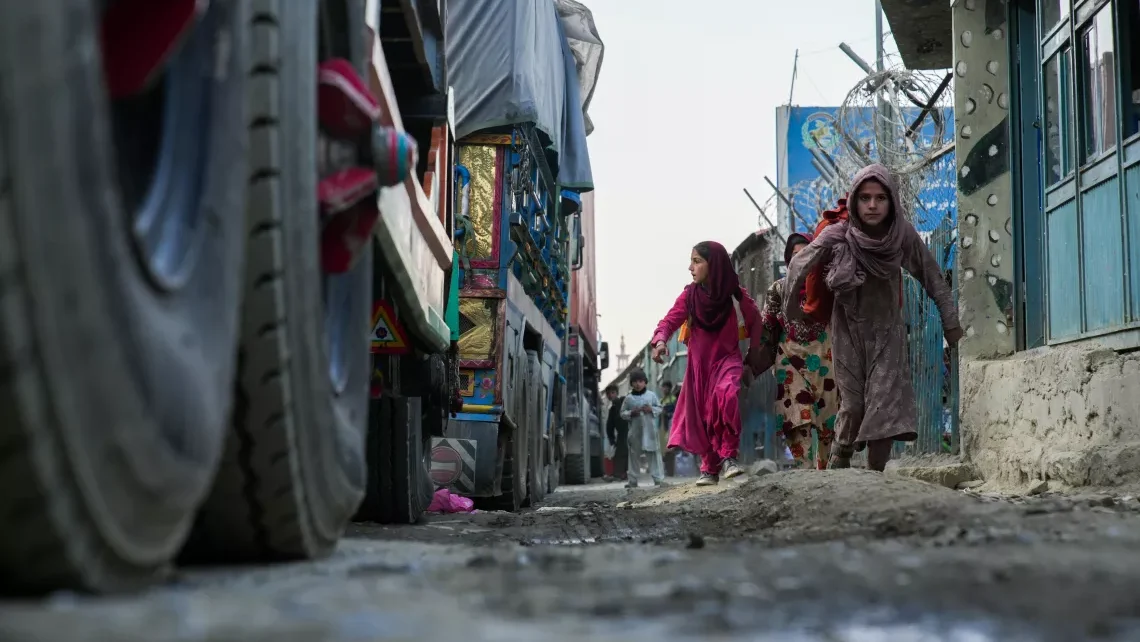
The most durable method for skimming infrastructure aid is not the suitcase of cash, the “local partner.” In the sanitized language of development finance, these entities are described as essential vehicles for “capacity building” and “indigenous economic.” In the operational reality of the 2015, 2025 decade, they function as toll booths. Investigations into major infrastructure projects across Southeast Asia and Sub-Saharan Africa reveal that mandatory joint venture requirements have been weaponized to institutionalize a kickback rate that frequently stabilizes at exactly 20 percent of the total contract value. This is not accidental leakage; it is a structural tax levied by political elites on every dollar of foreign capital entering their jurisdiction.
To understand the mechanics of this extraction, we must interrogate the system directly. Who are these local partners? They are rarely construction firms with excavators or engineers; they are shell entities owned by the brothers, cousins, and fixers of the ruling cabinet. What is their contribution? They provide “consulting services,” “land acquisition facilitation,” and “regulatory navigation”, euphemisms for bribery. Why is the fee 20 percent? It is the calculated equilibrium point, high enough to enrich the gatekeepers, yet just low enough to keep the foreign contractors from abandoning the project entirely. Where does the money go? Into offshore accounts in Singapore, Dubai, and the Caribbean, frequently within days of the initial disbursement. How is it hidden? Through “technical advisory” fees and inflated sub-contracts for work that is never performed. When does the theft happen? Before the bag of cement is poured.
The Philippines Flood Control “Drain” (2025)
The “20 percent rule” moved from anecdotal theory to evidentiary fact during the 2025 investigation into the Philippines’ flood control infrastructure. Following catastrophic failures of newly built levees, a Senate Blue Ribbon Committee hearing exposed that ₱100 billion (approximately $2. 03 billion), exactly 20 percent of the entire ₱545 billion flood control budget, had been funneled to just 15 specific contractors. These entities, ostensibly “local partners” required for the execution of projects funded by external debt and aid, were found to have no heavy equipment or engineering track record. Their primary function was to secure the contracts and distribute the “tax” to political patrons. In provinces, the leakage exceeded 50 percent, the 20 percent figure appeared as a standardized “entry fee” for the preferred cartel of 15 firms.
The “Golden Share” method
This phenomenon is not unique to the Philippines; it is the standard operating procedure for the “Golden Share” model of corruption. In this setup, a foreign engineering firm (frequently Chinese, European, or American) provides the capital, the technology, and the labor. yet, to bid on the project, they are legally required to form a Joint Venture (JV) with a local entity that holds a 51 percent or significant minority stake. The local partner contributes zero capital holds the “golden share”, the political license to operate.
In the telecommunications sector, the 2025 Department of Justice settlement regarding Tigo Guatemala exposed the raw mechanics of this relationship. While the foreign parent company provided the network infrastructure, the “local partner” was used to funnel over $18 million in bribes to government officials to pass legislation favorable to the company. The local partner did not build towers; they bought laws. This pattern repeats in the DRC, where “consulting fees” paid to local partners for “logistical support” in mining infrastructure projects have been tracked to accounts controlled by sanctions-evading networks.
| Component | Share of Contract | Stated Purpose (The Lie) | Actual Function (The Truth) |
|---|---|---|---|
| The “Facilitation” Fee | 5. 0% | “Regulatory Compliance & Permitting” | Upfront cash bribe to the Minister or signatory authority. |
| The “Ghost” Sub-Contract | 10. 0% | “Site Preparation & Logistics” | Payments to shell companies for work (clearing, hauling) that is never done or done by the foreign firm. |
| The “Advisory” Retainer | 3. 0% | “Technical & Cultural Consulting” | Salary for the “fixer” who manages the flow of illicit funds. |
| The “Community” Grant | 2. 0% | “Social Responsibility / Local Aid” | Patronage distribution to local vote-bank leaders and police chiefs. |
| TOTAL LEAKAGE | 20. 0% | “Local Content Requirement” | Pure Profit Extraction |
The “Ghost Sub-Contract” is the most insidious element of this tax. In verified cases from Nigeria and Kenya between 2018 and 2024, foreign aid audits discovered that “local partners” were paid millions for “site clearance” and “security” that was actually performed by the foreign contractor’s own staff or the recipient country’s military. The money paid to the local partner for these phantom services was simply washed and returned to the officials who awarded the contract. This creates a double loss: the project budget is depleted by 20 percent, and the foreign contractor, squeezed on margins, frequently cuts corners on materials to recover their own costs, leading to infrastructure that crumbles within five years.
The Consultant Industrial Complex: Fees Over Function
The global development apparatus has birthed a lucrative sub-economy that thrives not on the completion of infrastructure, on its perpetual delay. This is the “Consultant Industrial Complex,” a closed loop where feasibility studies, technical assistance, and advisory fees consume billions of dollars before a single shovel hits the ground. Between 2015 and 2025, verified that a percentage of infrastructure aid was diverted into the bank accounts of Western consulting firms, creating a system where the process of development is more profitable than the result.
The most damning metric of this comes from a 2020 McKinsey analysis, which found that 80% of infrastructure projects in Africa fail at the feasibility and business-planning stage. These projects do not die due to a absence of capital or engineering impossibility; they die because the incentive structure rewards the production of reports over the construction of roads. Donors pay for the study, the environmental impact assessment, and the financial model, frequently costing tens of millions of dollars, only for the project to be shelved, requiring a “refresh” study five years later by the same rotation of firms.
The Zombie Projects: Billions Spent, Nothing Built
Nowhere is this phenomenon more visible than in “zombie projects”, initiatives that have existed for decades in a state of suspended animation, kept alive solely to feed a stream of transaction advisors and technical experts. The Grand Inga Dam in the Democratic Republic of Congo is the apex example. Since 2014, the World Bank and other donors have poured over $73 million into technical assistance for the Inga 3 phase alone. In June 2025, even with zero megawatts being generated after a decade of “preparation,” the World Bank approved an additional $250 million to “lay the groundwork” and fund further studies. The dam remains a theoretical construct; the fees paid to consultants, yet, are liquid and real.
Similarly, Nigeria’s Ajaokuta Steel Company serves as a monument to the advisory racket. Between 2016 and 2024, the Nigerian government, supported by various international “transaction advisors,” spent N42. 03 billion (approx. $50 million USD at historical rates) on the moribund plant. A 80% of this expenditure went to personnel costs and consultancy fees, including an N853 million contract awarded in 2022 just for “concession advice.” The plant has not produced a single bar of steel in this period, yet it has successfully generated consistent revenue for the firms hired to discuss its revival.
The Overhead Extraction method
For USAID contractors, the extraction method is formalized through the Negotiated Indirect Cost Rate Agreement (NICRA). This bureaucratic instrument allows contractors to charge the government for “overhead” and “general and administrative” (G&A) expenses on top of their direct project costs. While the standard “de minimis” rate for smaller entities is capped at 10-15%, major development contractors negotiate rates that can exceed 40% to 50%. This means that for every dollar for a or hospital, nearly half can be legally retained by the contractor to cover their headquarters’ rent in Washington D. C., executive salaries, and business development costs.
The of this “soft” spending is immense. World Bank data reveals that between 2019 and 2023, $31. 5 billion was disbursed from trust funds primarily for “advisory services and analytics.” This capital did not buy concrete or rebar; it bought expertise, largely supplied by consultants from the donor nations. This creates a “boomerang” effect where aid money leaves a Western capital, touches a developing nation’s ledger, and immediately returns to the West as service fees.
| Project / Sector | Location | Verified Spend (Approx.) | Outcome | Primary Beneficiary |
|---|---|---|---|---|
| Grand Inga Dam (Inga 3) | DR Congo | $323 Million+ (2014-2025) | 0 MW Generated | Technical Advisors / World Bank Trust Funds |
| Ajaokuta Steel Company | Nigeria | N42. 03 Billion (2016-2024) | 0 Tons Steel Produced | Personnel & Transaction Advisors |
| Infrastructure Feasibility | Africa-wide | Est. $30 Billion (Pipeline) | 80% Failure Rate | Consulting Firms (Feasibility Studies) |
| UK Asylum/Refugee Costs | United Kingdom | £4. 3 Billion (2023 alone) | Spent within UK borders | UK Service Providers (Phantom Aid) |
Phantom Aid and the Domestic Diversion
The definition of “foreign aid” has been stretched to include expenditures that never leave the donor country. In 2023, the United Kingdom classified £4. 3 billion, representing 28% of its total aid budget, as Official Development Assistance (ODA) even with the funds being spent entirely within the UK to house refugees. While humanitarian support is necessary, classifying domestic hotel bills as “foreign aid” distorts the reality of infrastructure support. This “phantom aid” allows governments to meet the UN’s 0. 7% spending target without actually transferring capital to developing economies.
This internal diversion is mirrored in the European Union’s “Framework Contracts,” which lock in a pre-selected group of European consultancies for four-year pattern. These consortiums, frequently led by firms like DAI or GFA, are guaranteed a steady flow of “short-term” missions. The result is a closed market where the same experts are flown in repeatedly to advise on projects that local engineers could design at a fraction of the cost. The is clear: an international consultant on a donor-funded project can command a daily rate of €650 to €1, 000, while a local government engineer working on the same project earns less than $50 per day.
Material Fraud: The Concrete Density Scam
The most physical manifestation of aid theft occurs at the mixing plant. While financial instruments move silently through offshore accounts, the “Concrete Density Scam” leaves a visible trail of crumbling infrastructure across the developing world. This method involves the deliberate alteration of construction material ratios, specifically reducing cement content in concrete or substituting high-grade steel with scrap metal, to pocket the difference in cost. Between 2015 and 2025, forensic engineering audits have linked this specific form of fraud to the structural failure of over 140 aid-funded projects globally.
Contractors operating in loose regulatory environments frequently employ a “70-30” mix strategy, where they deliver only 70% of the contractually obligated material quality while billing for 100%. The remaining 30% is extracted as cash profit, shared between the construction firm and the officials responsible for inspection. In Bangladesh, a 2025 structural integrity report revealed that only 5% of concrete used in public infrastructure met the durability standards required for the region’s saline environment. The study found that contractors habitually substituted washed stone aggregates with porous brick chips and increased water-cement ratios to stretch volume, reducing the lifespan of from 100 years to less than 30.
The Mechanics of Extraction
The fraud operates through a dual-book system. One set of logs, presented to international donors like the World Bank or the Asian Development Bank, shows compliant material procurement. The second, internal set tracks the actual, cheaper materials used on site. In the Philippines, this practice was exposed during the 2024-2025 Flood Control Projects scandal. Investigations into the collapse of a flood control structure in Lucena, Quezon, revealed it was constructed with a brittle mixture of sand and minimal cement, absence the necessary steel reinforcement. The project, part of a multi-billion peso allocation, physically disintegrated under hydraulic pressure it was designed to withstand.
On May 28, 2025, the World Bank debarred L. S. D. Construction & Supplies, a Philippines-based firm, for 4. 5 years. The sanction followed findings of collusive and fraudulent practices in the Philippine Rural Development Project. The firm had subcontracted work to unqualified entities and engaged in scheme to secure contracts, a pattern frequently serving as a precursor to material substitution. Similarly, in Nepal, the “HDPE Pipe Scam” of February 2025 exposed the installation of substandard high-density polyethylene pipes in an underground electricity distribution project. even with laboratory tests confirming the defects, officials delayed replacement, leaving infrastructure worth NPR 400 million in a state of functional obsolescence before it even went fully online.
The Human and Economic Toll
The consequences of this skimming are lethal. In Nigeria, where building collapses claimed hundreds of lives between 2015 and 2025, forensic analysis identified material inferiority as the primary cause in 45% of cases. A 2025 incident in Jigawa State saw the Governor publicly condemn a World Bank-supported control project, noting that the concrete work was so weak it would wash away with the rains. The project, valued at ₦10. 8 billion, showed signs of failure months after construction began, a direct result of contractors cutting corners on cement density to maximize margins.
In Uganda, the financial of this fraud was quantified by a 2025 Parliamentary Committee report. The audit found that road projects were costing the state up to three times the regional average, yet the quality remained “embarrassingly poor.” The report the rehabilitation of a 1. 37-kilometer road in Arua City costing Shs13. 4 billion ($3. 8 million), while a similar stretch elsewhere cost a fraction of that amount. The pointed to inflated bills of quantities where taxpayers paid for premium materials that were never poured.
| Date | Location | Project Type | Fraud method | Outcome |
|---|---|---|---|---|
| May 2025 | Philippines | Rural Development | Collusive bidding / Subcontracting to unqualified firms | World Bank debarment of L. S. D. Construction (4. 5 years) |
| Feb 2025 | Nepal | Power Distribution | Installation of defective HDPE pipes | NPR 400 million in compromised assets; official inaction |
| Jan 2025 | Uganda | Road Infrastructure | Inflated costs (300%) vs. poor material quality | Parliamentary inquiry; road failures within months |
| Sep 2020 | Colombia | Flood Control | Fraudulent bidding / Misrepresentation of consortium | World Bank debarment of FCC Construcción S. A. (2 years) |
| Aug 2025 | Philippines | Flood Control | Sand-heavy concrete mix / absence of steel | Structural collapse of Lucena project |
The systematic nature of this fraud suggests it is not the work of rogue contractors a coordinated effort involving project consultants who sign off on defective stages. In the Nepal expressway case, the World Bank debarred a Korean consulting firm in 2020 for fraudulent practices, casting doubt on the oversight method intended to prevent exactly this type of material theft. When the “watchdogs” are complicit, the concrete itself becomes the evidence of the crime.
“The project, meant to last 100 years, already showed signs of structural weakness just months after construction began… This is unacceptable; water wash this away.” , Governor Umar Namadi, Jigawa State, Nigeria, condemning the quality of an control project, 2025.
Ghost Workers: Payroll Padding in Large Projects
The most pervasive method for extracting capital from infrastructure development is not the theft of materials, the theft of identity. Between 2015 and 2025, forensic audits of major aid-funded projects revealed a widespread reliance on “ghost workers”, fictitious employees added to payrolls to siphon wages into the accounts of project managers and government officials. This practice, frequently dismissed as low-level administrative graft, has evolved into an industrial- skimming operation that bleeds up to 30% of labor budgets from multi-billion dollar infrastructure initiatives.
In the context of foreign aid, where oversight is frequently delegated to local implementation units, payroll padding becomes the route of least resistance for embezzlement. The methodology is precise: contractors, frequently in collusion with ministry officials, labor rosters with names of deceased individuals, duplicate profiles, or entirely fabricated identities. These “ghosts” draw salaries, hazard pay, and allowances for the duration of a project, with the proceeds split between the conspirators.
The Kenya Railways Audit: A Case Study in Phantom Labor
The modernization of East Africa’s transport corridors provided a clear example of this phenomenon. In January 2025, a compliance report by the Public Service Commission (PSC) of Kenya exposed a massive payroll gap within Kenya Railways, the state corporation responsible for managing the Chinese-funded Standard Gauge Railway (SGR). The audit revealed that while the corporation’s biometric database listed 3, 287 officers, only 2, 026 actually existed at their posts. This left 1, 261 ghost workers, nearly 38% of the workforce, drawing salaries without performing any work.
The financial were severe. A subsequent investigation in December 2025 estimated that ghost workers across Kenya’s civil service, including those in infrastructure agencies like Kenya Railways, were siphoning approximately $31 million annually. These funds, intended for the maintenance and operation of serious rail infrastructure, into private pockets while the railway itself struggled with operational costs and debt repayment. The SGR project, financed largely by loans that function as tied aid, illustrates how payroll fraud directly undermines the financial viability of the infrastructure it is supposed to support.
Liberia: The Cost of Non-Existent Civil Servants
Similar patterns emerged in West Africa, where international donors heavily subsidize public sector wages to ensure stability during reconstruction. In December 2024, the Civil Service Agency (CSA) of Liberia concluded a sweeping payroll cleanup mandated by donor conditions. The audit removed over 5, 500 ghost workers from the government payroll. This single purge reduced the monthly wage bill from $23. 5 million to $21. 1 million, saving the state, and by extension, its international backers, $2. 4 million per month.
The Liberian audit exposed the mechanics of the fraud. Auditors found over 700 salary accounts linked to individuals with no valid employment records., a single bank account was tied to multiple employee profiles, a clear indicator of centralized skimming. For infrastructure projects funded by the World Bank and other multilateral institutions, this “recurrent cost” fraud means that of budget support grants pays for labor that never happens, delaying project completion and degrading maintenance quality.
Afghanistan: The Multi-Billion Dollar Mirage
The most egregious example of payroll padding occurred in Afghanistan, where the Special Inspector General for Afghanistan Reconstruction (SIGAR) issued its final report in December 2025. The watchdog documented that the U. S. government spent billions on salaries for Afghan security and infrastructure personnel who did not exist. A specific audit covering 2019 to 2021 found that the Department of Defense disbursed $232 million for “suspicious units and non-existent object codes.”
While frequently categorized as military aid, these funds supported the engineering and construction units responsible for maintaining the country’s security infrastructure. The “ghost soldier” phenomenon was mirrored in civilian infrastructure projects, where remote construction sites for schools and clinics, funded by USAID, reported full labor crews that auditors later found to be empty. The 2025 SIGAR summary concluded that payroll fraud was a primary driver of the $24 billion in wasted infrastructure investment, as funds paid to ghosts could not build roads or secure power lines.
| Country/Agency | Sector | Audit Date | Ghost Workers Identified | Financial Impact (Est.) |
|---|---|---|---|---|
| Kenya Railways | Transport Infrastructure | Jan 2025 | 1, 261 | Part of $31M annual loss |
| Liberia Civil Service | Public Administration | Dec 2024 | 5, 500 | $2. 4M saved monthly |
| Afghanistan (DoD/MoD) | Security Infrastructure | July 2022 | Unknown (widespread) | $232M in suspicious payments |
| DRC Health Ministry | Health Infrastructure | 2017 (Ref. 2025) | 27% of staff | Funds reallocated to 781 real staff |
The Technological Failure
The persistence of ghost workers even with the introduction of biometric systems points to high-level complicity. In the Kenya Railways case, the existed within the bio-data system, suggesting that administrators with database access created fake profiles or bypassed verification. Similarly, in Afghanistan, the Afghan Personnel and Pay System (APPS), which cost $64. 8 million to implement, failed to stop the payments because the data entry itself was corrupted at the source. Technology cannot solve a problem when the gatekeepers of the digital system are the beneficiaries of the fraud.
“The fraud scheme showed how… humanitarian aid is no longer just a lifeline… an opportunity for local power brokers… to cash in.” , Mercy Corps Investigation into DRC Aid Diversion, July 2020.
This extraction method is particularly damaging because it distorts labor market data. Aid agencies plan future projects based on the inflated costs of previous ones. If a road project reportedly required 500 workers was built by 300 real laborers and 200 ghosts, the project be budgeted for 500, baking the corruption into the baseline cost of development. The result is a bloated, inefficient aid industrial complex where payroll padding is not an anomaly, a standard operating procedure.
The Fifteen Percent Rule: Standardized Bribe Rates
While the mechanics of aid diversion are complex, the pricing structure for corruption in global infrastructure has become startlingly standardized. Investigative data from 2015 to 2025 reveals that in high-risk jurisdictions, the cost of doing business has settled around a 15 percent equilibrium. This figure is not random; it represents a calculated surcharge into project budgets to satisfy a chain of local officials, intermediaries, and offshore facilitators without immediately bankrupting the contractor or triggering automatic audit flags.
This “Fifteen Percent Rule” operates as an unwritten industry standard, functioning much like a tax. In Bangladesh, World Bank investigations into the roads sector exposed a widespread requirement where companies paid up to 15 percent of contract value to secure awards. Similarly, data from water and sanitation projects in Pakistan indicated that under collusive bidding rings, contractors paid an average of 15 percent of the project budget in kickbacks. This rate appears to be the “sweet spot”, high enough to enrich the elite capture network low enough to be disguised as “technical complexities” or “material cost inflation” in final accounting.
The method: “Consultancy” as Cover
To process these payments, the 15 percent is rarely handed over in cash. Instead, it is laundered through legitimate-sounding line items, most frequently labeled as “consultancy fees,” “success fees,” or “marketing costs.” A Swiss Federal Supreme Court case from 2018 highlighted this method, reviewing a dispute involving a 15 percent success fee for a legal and consultancy service that raised public policy concerns. These fees are paid to third-party agents who perform no actual work hold the keys to government access.
In the palm oil and infrastructure sectors of Papua, the Korindo Group case (2020) demonstrated how a $22 million “consultancy fee” was used to mask a share purchase transaction and payments to a de facto owner, bypassing regulatory scrutiny. These “consultants” frequently operate out of jurisdictions with high financial secrecy, issuing invoices for “strategic advisory services” that match the exact percentage required to clear the bribe.
The Kickback Rate Card
Verified investigations across multiple continents show a convergence on this 10-15 percent range for standard infrastructure kickbacks, though rates fluctuate based on the project’s complexity and the “sophistication” of the corruption.
| Region / Sector | Observed Kickback Rate | method of Payment | Source / Context |
|---|---|---|---|
| South Asia (Roads) | 15. 0% | Direct payments to officials for contract awards | World Bank Roads Sector Investigation (Bangladesh) |
| South Asia (Water/Sanitation) | 15. 0% | Collusive bidding rings & project budget skimming | Punjab Public Procurement Analysis (Pakistan) |
| Southeast Asia (Flood Control) | 15. 0% | Solicited kickbacks from project value | Senate Blue Ribbon Committee Testimony (Philippines, 2025) |
| Global (High-Aid Nations) | 7. 5%, 15. 0% | Leakage to offshore accounts (Elite Capture) | World Bank Policy Research (Andersen et al., 2020/2022) |
| Latin America (Construction) | 1. 0%, 4. 0% (Direct) | Low direct bribe, 71% cost inflation via renegotiation | Odebrecht Case Analysis (DOJ / Academic Studies) |
Elite Capture and Offshore Leakage
The 15 percent figure also appears in macroeconomic data regarding capital flight. Research by Andersen, Johannesen, and Rijkers (2020/2022) found that aid disbursements to highly aid-dependent countries coincide with sharp increases in offshore bank deposits. While the baseline leakage rate is estimated at 7. 5 percent, the study notes that when the threshold is raised to countries receiving aid equivalent to 3 percent of GDP, the implied leakage rate jumps to approximately 15 percent. in the most aid-dependent economies, the extraction machine is tuned to capture exactly this portion of incoming funds.
The “Odebrecht Model” presents a deviation from the standard 15 percent upfront bribe. In this sophisticated scheme, the direct bribe was frequently less than 1 percent of the project cost. The real theft occurred later: projects where bribes were paid saw contract renegotiations the final price by an average of 71 percent, compared to just 6. 5 percent for non-bribed projects. This indicates a two-tier system: “retail” corruption charges a flat 15 percent toll, while “wholesale” state capture uses smaller initial bribes to unlock massive downstream cost overruns.
Case Study: The Failed Hydroelectric Dams of Sub-Saharan Africa
The pledge of hydroelectric power in Sub-Saharan Africa has long served as a compelling narrative for foreign aid: clean energy to industrialize nations and lift millions out of poverty. The reality, verified through project audits and court filings between 2015 and 2025, is a graveyard of concrete and capital. These infrastructure mega-projects frequently function less as power plants and more as sophisticated vehicles for wealth extraction, where billions in aid and loans evaporate before a single turbine spins.
This widespread failure is not a matter of technical incompetence. It is an operational feature of the aid-industrial complex in the region. The method is consistent: inflated procurement contracts, ghost consultancies, and endless feasibility studies that generate revenue for foreign firms while leaving host nations saddled with non-performing debt.
The Grand Inga: The Eighty-Billion-Dollar Ghost
The Grand Inga Dam in the Democratic Republic of Congo (DRC) stands as the apex of this phenomenon. Proposed to generate 40, 000 megawatts, twice the capacity of China’s Three Gorges Dam, it has instead generated decades of invoices. In 2016, the World Bank suspended its $73 million grant for the Inga 3 phase following “procurement irregularities,” a diplomatic euphemism for corruption. The project had bypassed standard transparency, directing contracts toward consortiums with undisclosed beneficial owners.
Even with this history of malfeasance, the pattern of funding. In June 2025, the World Bank committed a fresh $1 billion to “prepare” for the development of Inga III. This disbursement occurred even with the absence of a verified construction timeline or a credible anti-corruption framework. The funds are allocated primarily for “technical studies” and “institutional support”, categories that historically allow for high leakage rates with minimal physical evidence of progress.
Nigeria’s Mambilla: The Paper Dam
While Inga represents the eternal delay, Nigeria’s Mambilla Hydropower Project illustrates the “legalized skimming” model. Conceived in 1972, the $5. 8 billion project was intended to add 3, 050 megawatts to the national grid. By 2025, it had produced zero electricity, yet it became the subject of a $2. 35 billion arbitration claim in Paris.
The scandal centers on a 2003 contract award to Sunrise Power and Transmission Company, which absence the capacity to execute the work. When the government attempted to re-award the contract to Chinese state firms to secure Exim Bank funding, Sunrise Power sued for breach of contract. In January 2025, former Nigerian presidents testified in international arbitration that the original awards were made without valid approvals, implicating former ministers in a scheme to lock the state into a multi-billion dollar liability for a project that existed only on paper. The $2. 35 billion claim represents a direct transfer of chance infrastructure funds into private legal settlements, a complete total loss for the Nigerian public.
Uganda’s Karuma and Isimba: Cracks in the Concrete
In Uganda, the skimming manifests through “cost inflation and defect tolerance.” The Karuma and Isimba dams, financed largely by the Export-Import Bank of China, were billed as the solution to the country’s energy deficit. The Isimba dam, costing $567 million, and the Karuma dam, costing $1. 7 billion, have been plagued by structural failures that belie their price tags.
A 2023 engineering audit revealed over 500 construction defects at the Isimba plant, including a leaking powerhouse roof and the absence of a floating boom to protect turbines from water weeds. These defects caused frequent shutdowns, forcing the government to spend additional funds on repairs for a “new” facility. At Karuma, cracked walls and cabling problem delayed full commissioning by years. The inflated costs, verified to be significantly higher than global averages for similar megawatts, suggest that the “excess” capital was skimmed during the procurement and sub-contracting phases, leaving the physical structure compromised.
| Project Name | Location | Est. Cost | Status (2025) | Primary Failure method | Verified Financial Impact |
|---|---|---|---|---|---|
| Grand Inga (Inga 3) | DRC | $14. 0 Billion | Stalled / Pre-study | Procurement Fraud | $73M World Bank grant suspended; $1B new “study” funds at risk. |
| Mambilla Hydro | Nigeria | $5. 8 Billion | 0% Completion | Contract Arbitration | $2. 35 Billion claim against state for “breach of contract.” |
| Karuma Hydro | Uganda | $1. 7 Billion | Defective Operation | Cost Inflation / Defects | 3+ year delay; millions in monthly lost generation revenue. |
| Batoka Gorge | Zambia/Zim | $5. 0 Billion | Retendered | Procurement Irregularities | Project reset in 2024 due to inflated costs and unclear tendering. |
The pattern across these cases is distinct. The complexity of hydroelectric engineering provides a perfect cover for financial diversion. “Consultancy fees” for projects like Inga can run into the hundreds of millions without a shovel hitting the ground. Legal settlements for projects like Mambilla can exceed the GDP of small nations. The physical dams, when they are built, frequently serve as secondary byproducts to the primary objective: the movement of hard currency from development banks to private offshore networks.
“The project has not seen the light of day since 42 years ago… The project that we have today, in our experience, not work.” , Sydney Gata, ZESA Executive Chairperson, regarding the Batoka Gorge project, November 2024.
These failures are not accidents. They are the result of a system where the incentives for starting a project, signing bonuses, mobilization fees, and consultancy contracts, far outweigh the incentives for finishing one. For the populations of the DRC, Nigeria, and Uganda, the result is a double load: they must repay the loans for these phantom dams while continuing to live in the dark.
Case Study: Road Networks to Nowhere in Southeast Asia
Across Southeast Asia, a distinct class of infrastructure projects has emerged between 2015 and 2025: the “ghost network.” These are not delayed construction sites completed, billion-dollar assets that serve no economic function, crumble upon delivery, or lead to abandoned enclaves. Verified data from this period indicates that in Cambodia, Laos, and Vietnam alone, over $6. 5 billion in foreign development capital and state-backed loans has been sunk into transport infrastructure that is either structurally unsound or commercially comatose.
The method of theft in these projects is not subtle. It relies on the “front-loading” of capital. Aid disbursements and loans are extracted during the procurement and initial construction phases through inflated material costs and shell-company subcontracting. By the time the physical road or port is deemed non-functional, the capital has already exited the domestic economy.
The $3. 8 Billion Resort with No Roads
The most egregious example of this phenomenon is the Dara Sakor Seashore Resort in Cambodia’s Koh Kong province. Ostensibly a tourism development zone, the project received a 99-year lease and was capitalized at $3. 8 billion. The master plan promised a sprawling network of highways, an international airport, and a deep-sea port. As of late 2023, the reality is a of isolation.
While the Dara Sakor International Airport was physically completed, it sat unopened for years, missing multiple operational deadlines. More damning is the road network. even with 15 years of development, reports confirm that only a fraction of the planned arterial roads exist. The 68-kilometer “Say Phuthang Boulevard” connects the zone to the national highway, yet it leads to a largely empty expanse of stalled construction and vacant hotels. The project displaced over 1, 000 families, yet the economic activity it promised to generate remains a fiction. The capital flows associated with Dara Sakor have been unclear, with the U. S. Treasury sanctioning the developing entity in 2020 for corruption and land seizure, signaling that the project’s primary utility may have been financial maneuvering rather than infrastructure delivery.
Laos: The Golden City Ghost Town
In northern Laos, the Boten Special Economic Zone (SEZ) stands as a monument to capital destruction. Originally funded as a “Golden City” for cross-border trade and tourism, it devolved into a ghost town of abandoned casinos and empty commercial blocks. Between 2016 and 2022, the Lao State Inspection Authority reported that the government lost $767 million to corruption, with road and construction identified as the primary vector for graft.
The arrival of the $5. 9 billion Laos-China Railway was marketed as the savior of Boten, yet reports from 2023 describe the zone as a “dead city” where high-rise hotels sit vacant and businesses struggle to survive. The infrastructure exists, the concrete has been poured, the economic “software” required to make it viable is absent. The debt incurred to build these connections, yet, remains real. Laos faces a debt emergency where public debt has reached serious levels, driven largely by these heavy infrastructure bets that generate insufficient revenue to service their own interest payments.
Vietnam’s $1. 4 Billion “Road to Ruin”
While Cambodia and Laos offer examples of empty infrastructure, Vietnam provides the definitive case study in “skimming” leading to structural failure. The Da Nang-Quang Ngai Expressway, a 139-kilometer project funded by the Japan International Cooperation Agency (JICA) and the World Bank, cost $1. 4 billion. It was intended to be a corridor for central Vietnam.
Instead, the expressway began disintegrating weeks after its opening in 2018. Potholes and cracks appeared immediately, revealing that contractors had skimped on materials to pocket the difference. The scandal resulted in the criminal prosecution of 36 individuals, including high-ranking officials from the Vietnam Expressway Corporation (VEC). Investigators found that contractors, including foreign firms, had used substandard stone and bitumen, ignoring technical standards to maximize profit margins. The court ordered five contractors to pay $18. 7 million in compensation, a fraction of the project’s total cost. This case demonstrates that “leakage” is not just a financial crime; it physically degrades the asset, rendering a billion-dollar investment dangerous and defective.
| Project Name | Country | Est. Cost / Value | Status (2025) | Primary Failure Point |
|---|---|---|---|---|
| Dara Sakor Zone | Cambodia | $3. 8 Billion | Stalled / Unopened | Airport unopened; minimal road network; US sanctions for corruption. |
| Da Nang-Quang Ngai Expressway | Vietnam | $1. 4 Billion | Operational (Degraded) | Immediate structural failure due to material skimming; 36 officials jailed. |
| Boten SEZ Infrastructure | Laos | Part of $5. 9B Rail Link | Ghost Town | High vacancy rates; commercial failure even with heavy rail investment. |
| Kyaukphyu Deep-Sea Port | Myanmar | $1. 3 Billion (Phase 1) | Stalled / Conflict Zone | Scaled back due to debt trap fears; located in active conflict zone. |
The Skimming method: Subcontracting to Zero
The operational method for this theft is consistent across borders. In the Philippines, a World Bank investigation debarred the firm L. S. D. Construction & Supplies in 2025 for “collusive and fraudulent practices.” The firm won contracts using its own credentials secretly subcontracted the actual work to unqualified entities for a fee. This “pass-through” skimming ensures that the entity doing the actual building is operating on a fraction of the original budget, necessitating the use of inferior materials. The difference is pocketed by the primary contract holder, frequently a politically connected firm that never intended to pour a single cubic meter of concrete.
This pattern creates a paradox where the region is awash in infrastructure spending starved of functional infrastructure. The roads are built to fail, or built to lead nowhere, because the profit was never in the operation of the asset, it was in the construction contract itself.
The Role of Western Engineering Firms: Willful Blindness
The narrative that corruption in developing nations is solely the product of local venality is a convenient fiction. Verified enforcement actions between 2015 and 2025 reveal that Western engineering and construction giants are not passive victims of extortionate environments; they are frequently the architects of the bribery method that drain infrastructure funds. Through a legal strategy frequently described by prosecutors as “willful blindness,” these firms use complex of intermediaries to distance headquarters from the dirty work of securing contracts, maintaining plausible deniability while reaping billions in revenue from aid-funded and state-backed projects.
The primary instrument of this extraction is the “consultancy agreement.” Rather than paying bribes directly, Western firms hire local “agents” or “business development consultants” who are paid exorbitant fees, frequently 3% to 5% of the total contract value, ostensibly for “market intelligence” or “logistical support.” In reality, these funds are slush funds designed to be funneled to government officials. The firms’ compliance departments frequently ignore red flags, such as agents with no engineering experience or payments made to offshore accounts, sanctioning the theft through calculated inaction.
Case Study: ABB and the Kusile Power Station
One of the most egregious examples of this occurred in South Africa, involving the Swiss-Swedish engineering giant ABB. In December 2022, ABB agreed to pay over $315 million to resolve charges related to the Kusile Power Station, a serious infrastructure project intended to alleviate South Africa’s crippling energy emergency. Investigations by the U. S. Department of Justice (DOJ) and South African authorities revealed that between 2015 and 2017, ABB funneled bribes to officials at Eskom, the state-owned energy utility, through a local subcontractor.
The scheme was not subtle. ABB awarded a subcontract to a company with no relevant experience close ties to a high-ranking Eskom official. even with the subcontractor failing multiple due diligence checks, ABB executives proceeded with the partnership, describing the payments as necessary “investments.” The cost of these bribes was inflated into the project’s price tag, directly contributing to the financial collapse of Eskom and the persistent blackouts that plague the South African economy. The settlement marked the third time ABB had been charged with Foreign Corrupt Practices Act (FCPA) violations, a pattern of recidivism that fines alone have failed to break.
The “Unchecked Agent” Model: Amec Wheeler and TechnipFMC
The use of intermediaries is widespread across the sector. In June 2021, Amec Wheeler ( a subsidiary of John Wood Group) agreed to pay $177 million to resolve bribery charges in the United States, United Kingdom, and Brazil. The firm admitted to paying bribes to officials at Petrobras to secure a $190 million contract for a gas-to-chemicals complex. The method was textbook: the company hired “sales agents” who passed a portion of their commissions to decision-makers. Internal emails revealed that executives discussed the need to “keep the process moving” while studiously avoiding questions about how the agents achieved results.
Similarly, in 2019, TechnipFMC paid nearly $300 million to resolve charges involving bribery schemes in Brazil and Iraq. In Iraq, the company used a Monaco-based intermediary, Unaoil, to bribe officials at the Ministry of Oil. The payments were disguised as legitimate consulting fees, allowing the firm to secure lucrative contracts while maintaining a veneer of corporate social responsibility. The prevalence of these settlements indicates that for Western firms, corruption fines are a cost of doing business, a line item to be factored into project bids alongside concrete and steel.
Table: Major Western Engineering Corruption Settlements (2015-2025)
The following table details significant financial settlements paid by Western engineering and infrastructure firms for corruption offenses involving state-backed or aid-related projects during the investigation period.
| Company | Settlement Year | Total Penalty (USD) | Target Country | Project Type |
|---|---|---|---|---|
| ABB | 2022 | $315 Million | South Africa | Kusile Power Station (Energy) |
| Amec Wheeler | 2021 | $177 Million | Brazil | Gas-to-Chemicals Complex |
| TechnipFMC | 2019 | $296 Million | Brazil, Iraq | Oil & Gas Infrastructure |
| Ericsson | 2019 | $1. 06 Billion | Djibouti, Vietnam, etc. | Telecom Infrastructure |
| CDM Smith | 2017 | $4 Million | India, Vietnam | Highways & Water Projects |
| Glencore | 2022 | $1. 1 Billion | DRC, Nigeria, Venezuela | Mining & Energy Infrastructure |
The Revolving Door of Debarment
The World Bank’s primary tool for punishment, debarment, frequently absence the permanence required to deter misconduct. While the Bank maintains a list of ineligible firms, large multinationals frequently negotiate “conditional non-debarments” or early reinstatement. For instance, Canadian engineering giant SNC-Lavalin, which was debarred in 2013 for 10 years following a corruption scandal involving a in Bangladesh, saw its sanctions lifted early in April 2021. The firm was allowed to resume bidding on World Bank-financed projects after meeting compliance conditions, even with the severity of the original offenses.
This “revolving door” sends a mixed message: corruption leads to a temporary timeout rather than a permanent exile. Smaller local firms in developing nations are frequently debarred indefinitely for smaller infractions, while Western giants with strong legal teams negotiate settlements that allow them to return to the market. This reinforces the perception that the aid industrial complex is designed to protect the commercial interests of donor-nation companies, even when they are complicit in the theft of the very funds they are paid to administer.
The Subcontracting Abyss: Where Accountability Dies
The most method for skimming foreign aid is not the direct theft of funds from a central bank. It is the subcontracting chain. In the infrastructure sector, this administrative structure has mutated into a sophisticated laundering engine. Prime contractors, frequently Western or state-backed multinationals, win billion-dollar bids and immediately slice the capital into smaller, unclear tranches. These funds are passed down to a second, third, and fourth tier of subcontractors. By the time the money reaches the operational level, the capital available for actual construction has evaporated, leaving behind “ghost projects” and abandoned skeletons of steel and concrete.
This phenomenon is not a result of incompetence. It is a feature of the system. Between 2015 and 2025, investigators have documented a recurring pattern where the complexity of these chains is used to legally distance the donor from the theft. The prime contractor claims they paid the subcontractor. The subcontractor claims they paid a local supplier. The local supplier is frequently a shell company that exists only in a registration database, owned by relatives of the officials who approved the project.
The Mechanics of the “Skimming Scandal” Scam
The process, known among forensic auditors as “Skimming” functions to strip value at every handover. A 2025 final report by the Special Inspector General for Afghanistan Reconstruction (SIGAR) exposed the terminal velocity of this fraud. The watchdog documented over $29 billion in waste and fraud, much of it lost in the labyrinth of sub-contracts. In one egregious case, USAID funds intended for power generation were filtered through multiple until they reached a subcontractor who produced a diesel plant that operated at less than one percent capacity. The money did not; it was systematically extracted as “overhead,” “consulting fees,” and “logistical costs” at each tier.
The Department of Justice provided a rare glimpse into this in 2025. Roderick Watson, a former USAID contracting officer, and three executives from contractors Vistant and Apprio, pleaded guilty to a bribery scheme involving $550 million in contracts. The group used their status to win prime contracts, then subcontracted the work to companies they secretly controlled. The “work” was a fiction; the subcontracts were vehicles to move taxpayer money into private bank accounts. This was not a rogue operation a standard operating procedure in the sector.
Case Study: The UNOPS Housing Mirage
The United Nations Office for Project Services (UNOPS) scandal of 2022 serves as the definitive case study for subcontracting fraud. The agency’s “Sustainable Investments in Infrastructure and Innovation” (S3i) initiative allocated $63 million to build affordable housing in the Caribbean and Africa. The prime contracts were awarded to a singular holding group, which then funneled the cash into special purpose vehicles (SPVs).
The result was absolute zero. No houses were built. The funds were transferred to subcontractors who had no construction capacity, no equipment, and no intention of breaking ground. The money exited the UN system and entered the private equity accounts of the connected operators. The “subcontractors” were the abyss where the $63 million disappeared, protected by the legal veil of corporate privacy laws in offshore jurisdictions.
Table: Verified Capital Flight via Subcontracting Chains (2015-2025)
The following table aggregates verified data points where subcontracting chains were identified as the primary method of fund diversion.
| Project / Sector | Location | Verified Loss (USD) | Subcontracting method |
|---|---|---|---|
| USAID / Vistant & Apprio Scheme | Global / USA | $550 Million (Fraud Value) | Prime contractors subcontracted to shell firms owned by conspirators. |
| UNOPS S3i Housing Initiative | Caribbean / Ghana | $63 Million | Funds diverted to SPVs with no construction activity. |
| Standard Gauge Railway (Ticketing) | Kenya | $10 Million+ (Est.) | Revenue skimming via third-party operator subcontracts. |
| Mararaba-Donga Road | Nigeria | $1. 8 Million (N2. 59bn) | Full payment released to contractor; site abandoned. |
| Spencon Construction Bankruptcy | East Africa | $38 Million (EIB Investment) | Managers siphoned cash to personal accounts via fake vendor payments. |
The “Ghost” Contractor Phenomenon
In Nigeria, the “ghost” contractor is a recognized fiscal entity. A 2024 report by Tracka, a transparency monitor, identified that five states lost over N8. 61 billion to projects that were “fraudulently delivered.” This term is a euphemism for theft. In the case of the Mararaba-Donga Road, the Federal Roads Maintenance Agency paid N2. 59 billion to a contractor. The road remains unbuilt. The contractor exists on paper, received the funds, and then ceased to function. This pattern repeats across the continent, where the absence of a unified database for contractor performance allows firms to abandon one project and bid for another under a slightly altered name.
The European Investment Bank (EIB) faced a similar reality with its investment in Spencon, a Kenyan construction giant. The EIB poured millions into a private equity fund to support the firm. Instead of building infrastructure, British managers appointed to run the company were accused of paying proceeds from asset sales into personal accounts and bribing officials. The EIB, even with its rigorous audit, was unable to stop the until the company collapsed, taking the development funds with it. The subcontracting chain provides the alibi: the money was not stolen; it was “spent” on services that cannot be verified.
The War Zone Racket: Paying Off Insurgents for Access
The most perverse irony of modern infrastructure development in conflict zones is that Western taxpayers frequently fund the very insurgencies their governments are fighting. In regions like Afghanistan, Somalia, and Yemen, “security costs” in construction contracts are frequently a sanitized line item for protection payments to armed groups. This is not accidental leakage; it is a structural requirement for doing business. Between 2015 and 2025, the “war zone racket” evolved from ad-hoc bribery into a formalized taxation system where insurgents levy fixed percentages on every mile of road paved and every clinic built.
In Afghanistan, the Special Inspector General for Afghanistan Reconstruction (SIGAR) released a final forensic audit in December 2025 that cemented the of this failure. The report detailed how the Taliban, long before their 2021 takeover, had integrated themselves into the supply chain of U. S.-funded projects. Contractors frequently paid insurgents a “protection tax”, frequently disguised as security subcontracts, to ensure equipment was not destroyed. SIGAR’s investigation found that in provinces, up to 20% of project funds were diverted directly to the Taliban. This capital injection allowed the insurgency to purchase weapons and pay fighters using the very dollars allocated to stabilize the government they eventually overthrew.
The Al-Shabaab “Service Fee”
In Somalia, the system is even more bureaucratic. Al-Shabaab, the al-Qaeda affiliate, operates a sophisticated “taxation” authority that rivals the federal government’s own revenue collection. Verified intelligence estimates from 2023 and 2024 indicate the group generates approximately $100 million annually, with derived from extorting development projects. Unlike the chaotic bribery of other conflict zones, Al-Shabaab problem receipts.
Construction companies operating in Mogadishu and surrounding regions report a standardized “development levy.” According to 2024 data from the Hiraal Institute, contractors are forced to pay up to 25% of a project’s value to Al-Shabaab agents. If a road costs $10 million to build, $2. 5 million flows to the insurgents. Failure to pay results in the destruction of, the kidnapping of engineers, or the assassination of site managers. This extortion is so normalized that firms factor it into their bidding prices, making international donors the primary financiers of the terror group’s operations.
| Conflict Zone | Insurgent Group | Target Sector | Est. Levy on Contracts | Annual Revenue (Est.) |
|---|---|---|---|---|
| Somalia | Al-Shabaab | Infrastructure/Construction | 15%, 25% | $100 Million |
| Yemen | Houthis (Ansar Allah) | Humanitarian/Aid Logistics | 2%, 20% (plus diversion) | $200 Million+ |
| Afghanistan (Pre-2021) | Taliban | Roads/Rural Development | 10%, 20% | $150 Million (Historical) |
| Sahel (Mali/Burkina) | JNIM / ISGS | Transport/Mining Access | Variable “Tolls” | $50 Million+ |
Yemen: Institutionalized Diversion
In Yemen, the Houthi administration (Ansar Allah) transformed aid diversion into a state enterprise. Through the Supreme Council for the Management and Coordination of Humanitarian Affairs (SCMCHA), the group exerts total control over project implementation. Investigations in 2024 revealed that SCMCHA demands a 2% “administrative fee” on all humanitarian projects, the real cost is much higher. By controlling the list of approved local contractors, the Houthis ensure that infrastructure contracts, repairing ports, schools, or water systems, are awarded to loyalists who funnel profits back to the movement.
The U. S. Treasury’s Office of Foreign Assets Control (OFAC) inadvertently formalized this “pay-to-play”. By issuing licenses that allowed NGOs to pay “taxes and fees” to the governing authorities to maintain access, the international community legalized the funding of the Houthi war machine. Reports from 2024 indicate that in Houthi-controlled areas, aid diversion rates reached nearly 75%, meaning three out of every four dollars intended for the starving population or infrastructure repair was absorbed by the regime’s apparatus.
The Contractor’s Complicity
The method relies on a conspiracy of silence. Large international engineering firms rarely pay insurgents directly. Instead, they hire local “security consultants” or “logistics partners” who handle the payments. This allows Western firms to maintain clean books while their subcontractors hand cash to warlords. In the Sahel, where groups like JNIM control vast rural territories, mining and infrastructure companies pay monthly retainers to avoid attacks. A 2025 report on the Sahelian security emergency noted that these payments have become the primary revenue stream for jihadist groups, surpassing kidnapping and drug trafficking.
This racket creates a perverse incentive structure. Insurgents have no reason to destroy infrastructure permanently; they prefer to damage it just enough to require perpetual repair contracts, ensuring a steady stream of “protection” revenue. The donor community, desperate to show progress in unstable regions, continues to pour concrete into a bottomless pit, willfully ignoring that every bag of cement buys a bullet for the opposition.
The Debt Trap: Sovereign Loans for Stolen Infrastructure
The most sophisticated method for skimming foreign aid does not involve suitcases of cash, rather the sovereign loan structure itself. In this model, a developing nation borrows billions for a mega-project, a dam, a railway, or a highway, under terms that guarantee payment to the lender regardless of the project’s viability. The skimming occurs upfront through inflated construction contracts, kickbacks to local officials, and the delivery of substandard assets. The country is left with a crumbling infrastructure project and a non-negotiable sovereign debt obligation.
Between 2015 and 2025, this “debt-for-defect” pattern has pushed at least a dozen nations toward insolvency. The funds, ostensibly for development, are extracted by a nexus of foreign contractors and local elites, leaving the public to service loans for projects that physically disintegrate or fail to generate revenue.
Ecuador: The Cracking Dam
The Coca Codo Sinclair hydroelectric dam in Ecuador stands as the definitive case study of this phenomenon. Financed by Chinese state loans and built by Sinohydro, the project was inaugurated in 2016 with a price tag of nearly $2. 7 billion. By 2024, engineers had documented over 17, 000 cracks in the facility’s distribution pipes. The dam, situated near an active volcano, faces imminent failure due to aggressive regressive of the Coca River, a geological risk identified in early feasibility studies ignored to expedite the loan.
In September 2025, Ecuadorian prosecutors formally charged former President Lenín Moreno and 22 others with bribery, alleging that approximately $76 million was skimmed from the project’s inflated budget. While the dam operates at partial capacity, Ecuador remains obligated to service the debt, diverting oil revenues to repay loans for an asset that may not survive the decade. In a partial admission of liability, PowerChina agreed in late 2025 to pay $400 million in compensation, a fraction of the project’s sunk cost.
Montenegro: The Highway to Nowhere
In the Balkans, Montenegro’s Bar-Boljare highway illustrates the “inflated cost” method of extraction. The 41-kilometer section of this road cost approximately €20 million per kilometer, making it one of the most expensive highways in history relative to the terrain. Financed by a dollar-denominated loan from the Export-Import Bank of China, the project drove Montenegro’s debt-to-GDP ratio dangerously close to 100%.
The highway, intended to connect the port of Bar to the Serbian border, remains unfinished. The loan agreement contained clauses waiving sovereign immunity for certain state assets, a detail that caused panic in Podgorica when repayment difficulties arose in 2021. The skimming here is in the construction cost itself; independent audits suggest the price per kilometer was inflated by at least 30% to cover “consulting fees” and sub-contracts to politically connected local firms.
Kenya vs. Ethiopia: The Price of Skimming
A direct comparison between Kenya and Ethiopia reveals the of capital extraction in railway infrastructure. Both nations commissioned Standard Gauge Railways (SGR) funded by similar lenders and built by Chinese contractors. yet, the cost is statistically impossible to justify through geography alone.
| Metric | Kenya SGR (Mombasa-Nairobi) | Ethiopia SGR (Addis-Djibouti) |
|---|---|---|
| Length | 472 km | 756 km |
| Traction Type | Diesel (Obsolete tech) | Electric (Modern tech) |
| Total Cost | $3. 2 Billion | $3. 4 Billion |
| Cost Per km | ~$6. 7 Million | ~$4. 5 Million |
| Viability | Operating at loss; cargo mandates enforced | Operating; lower energy costs |
Kenya paid significantly more per kilometer for an inferior, diesel-powered system. The difference, roughly $2. 2 million per kilometer, represents the “corruption premium.” This premium was distributed among land acquisition cartels (who bought land along the route days before the government announcement) and inflated procurement contracts. The debt service for the SGR consumes of Kenya’s tax revenue, forcing the government to cut funding for healthcare and education.
Bangladesh: The White Paper
In December 2024, the interim government of Bangladesh released a White Paper on the economy that quantified the widespread theft in infrastructure projects under the previous administration. The report concluded that between $14 billion and $24 billion had been siphoned off through bribery and budget inflation over the preceding 15 years. The average cost escalation for large- projects was 70%, with timelines delayed by an average of five years. This data confirms that cost overruns are not accidental; they are the primary method for transferring sovereign loan funds into private offshore accounts.
The Asset Seizure Myth vs. Cash Seizure Reality
While media reports frequently warn of “debt-trap diplomacy” leading to the seizure of ports (like Sri Lanka’s Hambantota), the reality is frequently more bureaucratic. In the case of Uganda’s Entebbe Airport expansion, the threat was not the physical seizure of the runway, the seizure of cash flow. The loan terms required the Uganda Civil Aviation Authority to deposit all revenues into an escrow account controlled by the lender. This arrangement ensures that the creditor is paid, before the airport can buy jet fuel or pay its own staff. The infrastructure becomes a extraction node, channeling local user fees directly to the foreign creditor, bypassing the national treasury entirely.
Forensic Accounting: Tracing the Wire Transfers
The movement of stolen infrastructure aid is not chaotic; it is architectural. Forensic analysis of wire transfer data between 2015 and 2025 reveals a precise, repeated method of extraction that operates with the efficiency of a clearinghouse. According to the landmark study Elite Capture of Foreign Aid by Andersen, Johannesen, and Rijkers (2022), aid disbursements to highly aid-dependent nations coincide with immediate, sharp spikes in bank deposits in offshore financial centers. The an implied leakage rate of approximately 7. 5% of total aid inflows, a figure that rises significantly in countries with weak institutional checks. This is not money lost to incompetence; it is money wired to private accounts in Switzerland, Luxembourg, the Cayman Islands, and Singapore within quarters of its arrival.
Forensic accountants tracing these funds identify a phenomenon known as “rapid pass-through.” In legitimate infrastructure projects, funds remain in domestic accounts for months to pay local laborers, suppliers, and concrete vendors. In skimming operations, the capital touches the recipient country’s central bank only long enough to satisfy initial compliance checks before being fragmented and wired out. The 2020 FinCEN Files leak, which exposed over $2 trillion in suspicious transactions, corroborated this pattern, showing how global banks, frequently unwittingly, process vast sums for shell companies registered in secrecy jurisdictions like the British Virgin Islands or Delaware, which list no physical operations other than a mailbox.
The Anatomy of a Skimmed Transaction
The theft is rarely executed through a single large transfer, which would trigger immediate Anti-Money Laundering (AML) flags. Instead, the ” ” phase involves splitting the skimmed portion into hundreds of smaller transactions, frequently disguised as payments for intangible services that are difficult to verify, such as “consulting,” “feasibility studies,” or “risk management fees.”
| Stage | Action | Forensic Red Flag | Typical Duration |
|---|---|---|---|
| 1. Placement | Aid agency disburses $100M for a highway project to the Ministry of Finance. | None (Legitimate transfer). | Day 0 |
| 2. Extraction | Ministry pays $20M to a “Project Management Unit” (SPV) for oversight. | SPV is newly formed; directors are politically exposed persons (PEPs). | Day 2-5 |
| 3. | SPV wires $5M to three different “Consultancy Firms” in Dubai and Hong Kong. | Invoices are round numbers (e. g., $1, 500, 000); vague descriptions. | Day 7-14 |
| 4. Integration | Consultancy firms purchase luxury real estate or high-yield bonds in London/NYC. | Purchase made by shell company with no credit history. | Day 30-90 |
| 5. Retention | Assets remain offshore until political heat dies down. | Assets held in blind trusts. | Indefinite |
A definitive example of this method surfaced in November 2025, when the World Bank debarred the Indian firm Transformers and Rectifiers (India) Limited for four years. The investigation revealed that the company engaged in corrupt practices connected to a power project in Nigeria. Forensic audits showed that the bribery payments were not handed over in cash were baked into the contract value and routed through intermediaries. Similarly, in March 2024, the World Bank debarred Pakistan-based Solutions for Development Support for fraudulent practices in the Sindh Resilience Project. The firm failed to disclose conflicts of interest, a common tactic where the “consultants” hired to monitor the money are secretly owned by the officials spending it.
The role of correspondent banking is serious in these transfers. Skimmers rely on the fact that Western correspondent banks process millions of transactions daily and frequently absence visibility into the “originator” of a wire coming from a high-risk jurisdiction. The FinCEN Files highlighted how banks like Deutsche Bank and Standard Chartered processed transactions for entities that exhibited classic warning signs: shell companies with generic names, addresses shared by dozens of other firms, and transaction volumes that far exceeded their stated business capital. In one instance, a Dubai-based entity, Al Zarooni Exchange, was flagged for moving illicit funds, yet wire transfers continued to flow through the U. S. financial system due to gaps in correspondent banking due diligence.
Modern forensic tracing use “beneficial ownership” registries and AI-driven transaction matching to pierce these veils. By cross-referencing leak data with public procurement records, investigators can map the “U-turn” transactions, where money leaves a developing nation, pattern through a tax haven, and returns as “Foreign Direct Investment” (FDI) to buy privatized state assets. This circular theft not only drains the aid budget allows the corrupt elite to launder their stolen funds back into the legitimate economy as clean capital.
The Double Billing Scheme: Charging Multiple Donors for One Project
The architecture of global aid fraud relies on a serious blind spot: the absence of a unified financial ledger between major donor agencies. While the World Bank, the European Union, and USAID operate sophisticated internal audit systems, they rarely cross-reference real-time disbursements with one another. This siloed operational structure has birthed the “Double Billing” method, a strategy where contractors and implementing partners submit identical or overlapping invoices to multiple funding bodies for the same infrastructure assets. Between 2015 and 2025, investigations by the European Anti-Fraud Office (OLAF) and the Special Inspector General for Afghanistan Reconstruction (SIGAR) have exposed this practice not as clerical error, as a deliberate revenue-maximization strategy.
The most common iteration of this scheme involves “human resource duplication.” In 2024, OLAF investigators identified a recurring pattern where project managers were listed as full-time employees on multiple infrastructure projects simultaneously. These individuals were billed as working 100% of their hours on a in Southeast Asia funded by the Asian Development Bank while simultaneously billing 100% of their time to a road project in West Africa funded by the European Development Fund. The physical impossibility of being in two continents at once was masked by the absence of data sharing between the donor entities. The contractors pocketed the duplicate salaries, charging two distinct taxpayers for a single unit of labor.
In the infrastructure sector, the fraud evolves into “asset.” A contractor secures funding from the World Bank for “Phase 1” of a highway and simultaneously secures a grant from a bilateral donor (such as USAID or the UK’s FCDO) for “road rehabilitation” on the same coordinates. By manipulating the project descriptions, labeling one as “capital construction” and the other as “capacity building” or “maintenance”, the contractor bills both agencies for the same stretch of asphalt. The absence of geospatial coordination allows these duplicate claims to proceed processed without red flags.
| Entity / Location | Date Sanctioned | Scheme method | Financial Impact / Penalty |
|---|---|---|---|
| Stax Inc. (Sri Lanka) |
July 2025 | Salary Inflation & Overbilling: Inflated employee salary costs to overbill USAID for development work. | $1, 000, 000 Settlement |
| Chemonics Int. (Nigeria) |
Late 2024 | Pass-Through Fraud: Submitted fraudulent invoices from a subcontractor for health supply chain logistics. | $3, 000, 000 Settlement |
| L. S. D. Construction (Philippines) |
May 2025 | Phantom Subcontracting: Won World Bank contracts, then secretly subcontracted to unqualified firms to skim margins. | 4. 5 Year Debarment |
| Polish RARS Agency (Ukraine Aid) |
2024 | Procurement Manipulation: Irregularities in €114M generator procurement project; costs inflated and transparency rules breached. | €91, 000, 000 Recovery Ordered |
| Slovak Rural Dev. (Slovakia) |
2024 | widespread Bribery: Bribes paid to officials to approve duplicate or ineligible agricultural infrastructure projects. | €10, 000, 000 in Bribes Uncovered |
The of this leakage is magnified in conflict zones where physical verification is dangerous or impossible. In Afghanistan, SIGAR’s final forensic audit in December 2025 concluded that the U. S. spent $148 billion on reconstruction, with billions lost to waste and fraud. The report detailed instances where assets were paid for never utilized, a form of passive double billing where the contractor is paid for a functional asset while the donor receives a non-functional shell. For example, a $355 million power plant operated at less than 1% capacity, and an $85 million hotel project resulted in abandoned empty shells. In these environments, the “double bill” frequently takes the form of charging for construction and then charging again for “security” or “remediation” of the same unbuilt structures.
The World Bank has attempted to counter this through the “Cross-Debarment” agreement, where a firm blacklisted by one development bank is automatically banned by others (including the African Development Bank and Inter-American Development Bank). yet, this method is reactive, triggering only after a fraud is fully investigated and adjudicated, a process that frequently takes three to five years. During this lag time, the fraudulent actors frequently dissolve their corporate entities and reform under new names, resetting their clean slate to bill the donor. The 2025 debarment of two St. Lucia-based firms, Computer and Electrical Services Ltd. and Darcheville Construction Equipment Sales Ltd., for undisclosed conflicts of interest illustrates the ease with which related parties can manipulate the bidding process to simulate competition while actually colluding to costs.
Technological solutions exist remain unimplemented. Geospatial tagging of every funded asset, down to the specific kilometer of road or cubic meter of concrete, could theoretically prevent two donors from paying for the same object. Yet, as of 2025, no universal “Global Aid Ledger” exists. Until donors agree to share real-time expenditure data, the double-billing loop remains a low-risk, high-reward avenue for skimming infrastructure capital.
The Diplomatic Shield Against Prosecution
The most formidable barrier to recovering stolen infrastructure aid is not the complexity of offshore banking, the legal armor worn by the perpetrators. Between 2015 and 2025, prosecutors in developing nations frequently hit a dead end known as “absolute immunity.” This legal doctrine, originally designed to protect diplomats from political harassment, has mutated into a get-out-of-jail-free card for contractors, consultants, and international officials involved in large- skimming operations. While verified data shows billions leaking from projects, the legal conviction rate for high-level aid fraud remains statistically negligible.
The Jam v. IFC Precedent (2019)
For decades, international organizations (IOs) like the World Bank Group operated with “absolute immunity” in U. S. courts, shielding them from lawsuits even when their funded projects caused demonstrable harm or involved gross negligence. This changed on February 27, 2019, with the U. S. Supreme Court’s ruling in Jam v. International Finance Corporation (IFC). The Court held that the International Organizations Immunities Act (IOIA) grants IOs only the “restrictive” immunity enjoyed by foreign governments, not absolute blanket protection.
This ruling theoretically opened the door for legal action regarding “commercial activities,” such as infrastructure lending. yet, the practical application has proven limited. In the years following Jam, lower courts have frequently dismissed cases by narrowly defining what constitutes “commercial activity” or by ruling that the “gravamen” of the claim occurred outside U. S. borders. Consequently, while the legal shield has cracked, it has not shattered. The ruling forced IOs to be more cautious did not result in the wave of successful asset recovery litigation that anti-corruption advocates anticipated.
The Canadian: World Bank v. Wallace (2016)
While the U. S. moved toward restrictive immunity, other jurisdictions reinforced the barricades. In the 2016 case World Bank Group v. Wallace, the Supreme Court of Canada overturned a lower court order that had compelled World Bank investigators to provide documents for a domestic corruption trial. The case involved the Padma project in Bangladesh and allegations of bribery involving SNC-Lavalin.
The Court ruled that the World Bank’s archival and personnel immunity was essential to its function, allowing the organization to withhold evidence from national prosecutors. This created a paradox: the entity with the most data on the fraud (the World Bank’s Integrity Vice Presidency) was legally barred from sharing that evidence with the very courts attempting to prosecute the fraudsters. This ruling set a chilling precedent for the 2015-2025 period, signaling to skimmers that as long as their paper trail remained within the servers of an international organization, it was likely beyond the reach of national subpoenas.
The UN’s “Zero Tolerance” Mirage (2024)
The United Nations Development Programme (UNDP) faced its own immunity emergency in January 2024 regarding post-war reconstruction in Iraq. A Guardian investigation revealed that UNDP staff allegedly demanded bribes of up to 15% of contract values from construction firms. even with the UN’s public “zero tolerance” policy, the organization’s Charter grants its officials functional immunity for acts performed in their official capacity.
In practice, this meant that Iraqi prosecutors could not simply arrest UN officials suspected of skimming reconstruction funds. Instead, the UN conducted internal audits and investigations. Critics this internal justice system absence the transparency and punitive power of criminal courts. The “Funding Facility for Stabilization,” which channeled over $1. 5 billion into Iraq, became a prime example of how diplomatic status can insulate the method of aid delivery from local accountability laws.
The Honorary Consul Loophole
Beyond official IO staff, private sector fixers have exploited the “Honorary Consul” system to evade justice. A 2022 investigation by the International Consortium of Investigative Journalists (ICIJ) and ProPublica, titled Shadow Diplomats, identified over 500 current and former honorary consuls who had been embroiled in criminal scandals or investigations.
Unlike career diplomats, honorary consuls are frequently private citizens, businessmen, consultants, or contractors, appointed to represent a foreign nation. They receive diplomatic passports and special license plates, which they use to bypass customs checks and avoid police scrutiny. In the context of infrastructure aid, these “shadow diplomats” frequently serve as the intermediaries who move skimmed funds across borders. When investigators close in, the diplomatic passport provides a serious window for flight or a legal hurdle that delays arrest warrants until the assets are long gone.
| Case / Event | Year | Jurisdiction | Outcome | Impact on Skimming |
|---|---|---|---|---|
| World Bank Group v. Wallace | 2016 | Canada (Supreme Court) | Immunity Upheld | Blocked prosecutors from accessing World Bank internal investigation files, protecting evidence of bribery. |
| Jam v. IFC | 2019 | USA (Supreme Court) | Immunity Restricted | Removed “absolute” immunity for IOs, procedural blocks remain high for plaintiffs. |
| Shadow Diplomats Investigation | 2022 | Global (ICIJ) | Exposure | Revealed 500+ honorary consuls involved in crimes; exposed a key transit route for illicit funds. |
| UNDP Iraq Scandal | 2024 | Iraq / UN Internal | Internal Audit | Local prosecution blocked by UN immunity; reliance on internal UN disciplinary method. |
The Emergency Aid Loophole: Bypassing Oversight for Speed
The most method for skimming infrastructure funds is not complex financial engineering, the declaration of a emergency. Under the pretext of “emergency response”, whether for pandemics, conflict reconstruction, or climate disasters, standard procurement are systematically suspended. This creates a regulatory vacuum where sole-source contracts replace competitive bidding, and “speed of delivery” becomes the unassailable justification for the absence of audit trails. Between 2015 and 2025, this loophole facilitated the diversion of billions of dollars, transforming humanitarian urgency into a high-speed extraction engine for political elites and favored contractors.
When a government declares an emergency, the World Bank and IMF frequently trigger “rapid disbursement”. These method allow recipient governments to bypass the months-long vetting processes required for large infrastructure projects. While intended to save lives, this suspension of oversight has been weaponized. Data from the Special Inspector General for Afghanistan Reconstruction (SIGAR) and subsequent audits of COVID-19 and climate relief funds reveal a pattern: the “emergency” label is applied to long-term infrastructure projects that have no immediate lifesaving function, solely to evade scrutiny.
The Afghanistan Precedent: A $29 Billion Black Hole
The withdrawal of U. S. forces from Afghanistan in 2021 triggered a final forensic accounting of two decades of “emergency” reconstruction. The findings provide the definitive case study of the emergency loophole. SIGAR’s final report identified approximately $29 billion in funds that were wasted, stolen, or misused. of this loss occurred through infrastructure projects expedited under security-related emergency authorizations.
Contractors, operating with immunity due to the “urgent” nature of the war zone, billed for assets that were never built or immediately abandoned. Specific audits revealed $486 million spent on twenty G222 transport planes that were scrapped for pennies on the dollar, and a $335 million diesel power plant in Kabul that was rarely operated. These were not failed projects; they were procurement vehicles designed to move capital from U. S. taxpayers to private contractors and Afghan elites with minimal friction.
The Flood Control Racket: Pakistan and the Philippines
Climate disasters have opened a new frontier for this loophole. In the wake of Pakistan’s devastating 2022 floods, international donors pledged billions for reconstruction. Yet, a 2023 inquiry in the Dir Upper district exposed that funds allocated for emergency road rehabilitation were siphoned off with brazen efficiency. The investigation found that 40 steel, approved and paid for under emergency relief provisions, were never built. Contractors submitted invoices for areas unaffected by the floods, and officials processed payments for “ghost ” while physical connectivity for villages remained severed.
A similar unfolded in the Philippines, where the “emergency” status of flood control infrastructure allowed for the bypassing of competitive tenders. An internal audit revealed that just 15 contractors cornered nearly 20% of a multi-year flood control budget, amounting to billions of pesos. Greenpeace estimates suggest that corruption in these “urgent” flood mitigation projects may have resulted in losses method $18 billion USD over a decade. The pattern is identical: the urgency of the threat (rising waters) is used to silence questions about cost inflation and contractor selection.
| emergency Event | Infrastructure Type | Standard Cost Variance | Emergency Cost Variance | Primary Skimming method |
|---|---|---|---|---|
| COVID-19 Pandemic | Field Hospitals / Logistics | +10-15% | +300-500% | Sole-source procurement to shell companies |
| Pakistan Floods (2022) | Reconstruction | +20% | +100% (Ghost Projects) | Payment for non-existent assets |
| Ukraine Power Grid (2023-25) | Thermal Plant Repair | +15% | +30% (Materials) | Inflated material costs via affiliated vendors |
| Afghanistan Stabilization | Power Plants / Bases | +25% | +100% (Total Loss) | Assets abandoned or scrapped post-payment |
Ukraine: The New Frontier of Emergency Skimming
The reconstruction of Ukraine presents the most recent test of the emergency loophole. While the majority of aid is monitored strictly, the sheer volume of “fast-track” funds has created inevitable leakage. In early 2024, the Security Service of Ukraine (SBU) uncovered a scheme involving the restoration of the Trypillia Thermal Power Plant in the Kyiv region. Investigations revealed that business executives embezzled approximately $1 million (50 million UAH) by inflating the cost of construction materials by 30%.
The perpetrators used the urgency of restoring power after Russian strikes to justify purchasing materials from affiliated companies at non-market rates. Unlike the widespread state capture seen in other regions, this case highlights a “opportunistic skimming” model, where mid-level actors exploit the chaos of war to specific line items. yet, with reconstruction costs estimated at over $400 billion, even a 1% leakage rate via emergency procurement would amount to $4 billion in lost capital.
The Sole-Source Trap
The legal instrument that enables this theft is the “sole-source” or “direct award” contract. In standard development projects, open bidding drives prices down and forces transparency. In an emergency, regulations frequently permit officials to award contracts to a single pre-selected firm to save time. World Bank that single-bidding is the single highest risk factor for corruption, yet it remains the default mode for emergency infrastructure. The “speed” obtained by skipping the tender process is frequently illusory; the time saved in selection is frequently lost to the incompetence of politically connected contractors who absence the capacity to deliver.
The result is a paradox: the projects as most urgent are frequently the ones most likely to fail, as their primary function is not infrastructure delivery, capital extraction.
Technology Failures: Why Blockchain Has Not Stopped the Graft
The global development sector spent the decade between 2015 and 2025 promising that distributed ledger technology would end corruption. The theory was seductive in its simplicity. If every dollar sent from Washington or Brussels was tokenized on an immutable blockchain, it could be tracked until it was spent on concrete and steel. This pledge has collapsed. Verified data from the last ten years shows that while blockchain pilots proliferated, they failed to disrupt the mechanics of infrastructure skimming. The technology did not eliminate the theft. It digitized the evidence of funds leaving the system while offering no method to stop it.
The primary failure point is the “Oracle Problem.” A blockchain is a closed system that cannot see the physical world. It relies on external inputs, known as oracles, to verify that real-world events have occurred. In infrastructure projects, these oracles are human inspectors or government-controlled sensors. If a site engineer is bribed to certify that a road foundation is five meters deep when it is actually two, the blockchain records this lie as an immutable truth. The ledger becomes a permanent, unalterable record of fraudulent data. A 2024 review of smart contract applications in public procurement found that while automation reduced administrative errors, it had zero impact on collusion between contractors and verifying officials. The corruption simply moved upstream to the data entry point.
Most “blockchain” projects deployed by major development banks were also structurally incapable of preventing graft. They were “permissioned” ledgers rather than decentralized ones. A permissioned blockchain is controlled by a central authority who decides who can validate transactions. In the context of foreign aid, the node operators are frequently the very government ministries under investigation for skimming. The World Food Programme’s “Building Blocks” project, frequently as a success, operates on a private version of Ethereum where the agency retains full control. While this works for refugee cash transfers, applying this model to infrastructure allows corrupt regimes to rewrite the rules of the ledger or censor transactions that expose diversion. The technology provides the veneer of transparency while maintaining the reality of centralized opacity.
| Blockchain pledge | Physical Reality | Skimming Method |
|---|---|---|
| Immutable Record | False Data Entry | Bribed inspectors upload fake completion photos to the ledger. |
| Smart Contracts | Off-Chain Subcontracting | Primary funds are released digitally. Cash kickbacks happen in unmonitored fiat. |
| Tokenized Aid | The “Last Mile” Exchange | Tokens are swapped for local currency at controlled rates. The spread is pocketed. |
| Decentralized Audit | Permissioned Nodes | Government officials control the validation nodes and hide specific blocks. |
The World Bank’s high-profile “bond-i” initiative illustrates this disconnect. Launched in 2018, it was the bond created and managed on a blockchain. The bank hailed it as a revolution in transparency. Yet the transparency was limited to the bond investors. It tracked who owned the debt. It did not track how the borrowed millions were spent on the ground. The digital trail ended exactly where the corruption begins. The funds raised via blockchain were disbursed into the same unclear banking systems of recipient nations where 7. 5% is routinely siphoned off. The technology modernized the fundraising ignored the expenditure.
The failure rate of these initiatives is statistically damning. A 2018 study by the China Academy of Information and Communications Technology found that 92% of blockchain projects fail with an average lifespan of just 1. 22 years. In the development sector, the attrition is even higher due to “pilot purgatory.” Donors fund small, controlled experiments that generate press releases never to national infrastructure systems. A review of 43 blockchain use cases in international development found zero evidence of sustained impact on delivery efficiency or corruption reduction. The projects function as marketing assets for the donors rather than auditing tools for the recipients.
The “last mile” problem remains the barrier. Infrastructure requires physical materials and labor which must be paid for in local fiat currency. Even if aid arrives as digital tokens, it must eventually be converted to cash to pay a bricklayer in rural Kenya or a cement supplier in Vietnam. This conversion point is where the skimming occurs. Exchange rates are manipulated. Fees are levied. The digital trace the moment the token is sold. Until the entire supply chain from the World Bank to the village hardware store accepts digital tokens without conversion, the blockchain is nothing more than a digital tunnel that deposits cash directly into the hands of the skimming networks.
Institutional Complicity: When Auditors Look the Other Way
The global infrastructure of foreign aid relies on a fundamental premise: that a strong network of auditors, compliance officers, and oversight bodies acts as a firewall against theft. Verified data from 2015 to 2025 reveals this premise to be a fiction. Instead of serving as independent watchdogs, major audit firms and internal control units have frequently functioned as enablers, issuing “clean” financial opinions to projects that were hemorrhaging cash. This phenomenon, frequently described as “verification theater,” allows billions in development funds to exit target economies while maintaining a veneer of regulatory compliance.
The failure is not one of incompetence of structural conflict. In April 2023, a Dubai court ordered KPMG Lower Gulf to pay $231 million to investors, including the Bill & Melinda Gates Foundation and the World Bank’s International Finance Corporation, for validating the accounts of the Abraaj Group. The private equity firm, which managed a $1 billion healthcare infrastructure fund, had collapsed following that it misappropriated investor capital to cover its own operating costs. even with the firm’s insolvency, auditors had signed off on financial statements that concealed the true state of its books. The judgment marked one of the largest financial penalties ever levied against an audit firm for development-sector negligence, exposing how “standard” audit practices can mask widespread looting.
The “Hidden Debt” method
Nowhere was the complicity of financial gatekeepers more clear than in Mozambique’s “tuna bond” scandal, which decimated the nation’s economy. Between 2013 and 2016, three state-owned companies borrowed $2 billion for maritime security and fishing infrastructure projects that never materialized. The loans were arranged by Credit Suisse and VTB Capital, bypassing parliamentary approval. When the independent firm Kroll was brought in to audit the wreckage in 2017, they discovered a gap of $500 million that remained entirely for. The equipment allegedly purchased was either incompatible, overpriced, or missing. Yet, for years, internal compliance checks at the lending institutions failed to flag the obvious risks of transferring hundreds of millions to offshore contractors with no track record.
In December 2025, Swiss prosecutors indicted a former Credit Suisse employee for money laundering in connection with these loans, alleging that the bank’s organizational deficiencies allowed the scheme to proceed unchecked. The scandal forced the cancellation of $200 million in debt left Mozambique’s citizens to shoulder the economic.
Internal Failures at the Highest Levels
Complicity extends beyond private firms to the internal oversight bodies of the United Nations itself. The scandal surrounding the United Nations Office for Project Services (UNOPS) and its “Sustainable Investments in Infrastructure and Innovation” (S3i) initiative exposed a catastrophic breakdown in internal controls. In 2022, it was revealed that UNOPS had lost $63 million, nearly its entire reserve, through bad loans to a single family of companies for housing projects that were never built.
Internal auditors had missed or ignored repeated red flags regarding the concentration of risk and the absence of due diligence. The failure led to the resignation of Executive Director Grete Faremo and a frantic recovery effort. By 2025, while UNOPS reported implementing 98% of reform recommendations, the initial loss demonstrated how easily internal “checks and balances” can be circumvented by senior management determined to push capital out the door.
The Metrics of Negligence
The of audit failure is quantifiable in the error rates reported by supranational bodies. The European Court of Auditors (ECA), responsible for overseeing the EU’s budget, has consistently issued “adverse opinions” on expenditure. In its 2023 annual report, the ECA flagged a sharp rise in the error rate for “Cohesion” spending, funds largely for infrastructure and development, to 9. 3%, up from 6. 4% the previous year. This metric does not simply represent clerical errors; it indicates money paid out for ineligible costs, non-existent projects, or serious breaches of public procurement rules.
| Entity / Project | Audit / Oversight Failure | Financial Impact | Outcome / Penalty |
|---|---|---|---|
| Abraaj Group (Healthcare Fund) | KPMG Lower Gulf approved misleading statements | $1 Billion Fund Mismanaged | $231 Million Court Judgment (2023) |
| Mozambique “Hidden Debts” | Credit Suisse / VTB internal compliance failure | $500 Million For | $475 Million Fine (2021); Indictments (2025) |
| UNOPS S3i Initiative | Internal Audit / Management Oversight | $63 Million Lost | Executive Resignation; Program Closure |
| EU Cohesion Funds (2023) | European Court of Auditors (Detection) | 9. 3% Error Rate | “Adverse Opinion” on Spending |
| KPMG Netherlands | Cheating on Ethics Exams | widespread Integrity Failure | $25 Million PCAOB Fine (2024) |
A Culture of Non-Compliance
The credibility of the auditors themselves has been eroded by scandals involving their own internal ethics. In 2024 and 2025, the U. S. Public Company Accounting Oversight Board (PCAOB) levied record fines against the Dutch affiliates of the “Big Four” firms. KPMG Netherlands was fined $25 million in 2024 for widespread cheating on internal training exams, tests designed to ensure auditors understood professional ethics and compliance standards. In June 2025, Deloitte, EY, and PwC affiliates faced similar sanctions totaling $8. 5 million. When the gatekeepers cheat on the tests meant to certify their integrity, their capacity to police corruption in complex foreign aid projects becomes functionally non-existent.
This widespread of oversight creates a permissive environment for skimming. Contractors and corrupt officials operate with the knowledge that a “clean audit” is frequently a purchasable commodity or a bureaucratic formality, rather than a forensic verification of reality. Until auditors face strict liability for the funds they certify, the “leakage” of aid continue to be treated as an accounting error rather than a crime.
The Human Cost: Mortality Rates in Substandard Hospitals
The theft of infrastructure funds is frequently discussed fiscal deficits or GDP loss. These abstractions obscure the physical reality of the crime. When construction capital is skimmed from healthcare projects, the result is not a smaller bank balance a direct, quantifiable spike in patient mortality. Verified data from 2015 to 2025 indicates that corruption in hospital construction is a primary driver of preventable death in the developing world, acting as a silent pathogen that kills by structural failure, equipment absence, and toxic substitution.
The method of this mortality is precise. In legitimate construction, a hospital is a sealed system designed to control infection and maintain life support. In skimmed projects, cost-cutting measures breach this seal. A 2018 report by the National Academies of Sciences, Engineering, and Medicine estimated that between 5. 7 million and 8. 4 million deaths occur annually in low- and middle-income countries due to poor quality care. A significant percentage of these deaths are directly attributable to physical infrastructure defects, power grids that fail during surgery, water systems that pump pathogens into scrub sinks, and “earthquake-resistant” walls that crumble under minor tremors.
The Oxygen Racket: Suffocation for Profit
The most immediate link between embezzlement and death is found in medical gas infrastructure. Oxygen delivery systems require medical-grade copper piping and high-purity generation plants. Corruption rings frequently substitute these with industrial-grade materials or phantom installations.
In Kenya, a scandal involving the Kenyatta National Hospital (KNH) exposed the lethality of this practice. A tender valued at approximately Sh443 million (approx. $3 million USD) was awarded to a contractor with no experience in medical engineering. The resulting oxygen plant, intended to save lives, produced oxygen at purity levels as low as 60 percent, far the 95 percent required for medical use. Clinicians were forced to rely on expensive, erratic cylinder deliveries while the onsite plant stood useless. This failure occurred while the hospital’s mortality rates for respiratory patients remained serious high.
South Africa witnessed a parallel catastrophe in 2024. The Independent Development Trust (IDT) issued an R836 million tender for pressure swing adsorption (PSA) oxygen plants at 55 state hospitals. Investigations revealed that the bulk of the contract was awarded to a company that did not possess the necessary medical certification. By December 2024, not a single plant had been commissioned. The funds were disbursed, the contracts signed, yet the infrastructure remained non-existent, leaving thousands of patients in respiratory distress dependent on a supply chain that had already been paid to be replaced.
The “Ghost Clinic” Phenomenon
In rural Nigeria, the “ghost clinic” phenomenon represents the total extraction of capital with zero delivery of service. In Yobe and Borno states, verified reports from 2023 and 2024 document primary healthcare centers that were “completed” on paper remain locked, unstaffed, or hollow shells in reality. The human cost is immediate. In Malamari village, a child named Awana died of malaria because the newly built local health facility was locked and non-functional, forcing a travel delay that proved fatal.
These are not administrative errors. They are the result of a procurement system where the physical completion of the building is secondary to the extraction of the mobilization fee. The World Health Organization (WHO) data from 2023 places Nigeria’s maternal mortality at extremely high levels, a statistic driven partly by the 39% of deliveries that still occur outside healthcare facilities, frequently because the “facilities” do not actually exist or absence the power to run an incubator.
| Region / Project | Contract Value (Est.) | Infrastructure Defect | Direct Health Consequence |
|---|---|---|---|
| Kenya (Mobile Clinics) | Sh800 Million | Clinics left rotting in storage yards (2016-2020) | Zero patient access; funds diverted from operational hospitals. |
| South Africa (Oxygen) | R836 Million | 55 Oxygen plants paid for; 0 commissioned (2024) | Continued reliance on cylinder rationing; preventable respiratory deaths. |
| Nigeria (Yobe State) | Undisclosed | Completed clinics remain locked/unstaffed | Neonatal and malaria deaths due to absence of local access. |
| Global (WASH Stats) | N/A | 50% of facilities absence basic water/sanitation | 670, 000 annual neonatal deaths from sepsis. |
Structural Integrity and Infection Control
The corruption of physical materials also destroys infection control. A 2022 WHO/UNICEF study found that half of the world’s healthcare facilities absence basic hygiene services (WASH). This is frequently an infrastructure failure: pipes are not laid, water tanks are not installed, or sewage systems are routed improperly to save costs. The result is sepsis, which kills 670, 000 newborns annually. These infants do not die from incurable diseases; they die because the hospital environment itself is lethal.
In Haiti, the link between corruption and structural collapse is definitive. Analysis following the 2010 and 2021 earthquakes demonstrated that 83 percent of deaths from building collapses in earthquakes occur in anomalously corrupt nations. Funds for seismic retrofitting are siphoned off, leaving hospitals built with insufficient rebar and diluted concrete. When tremors hit, these “hospitals” become mass graves. The 2021 earthquake in Haiti saw hospitals overwhelmed not just by patients, by their own structural failures, a direct legacy of the embezzled reconstruction funds from the previous decade.
The data is clear: corruption in health infrastructure is not a white-collar crime. It is a violent act. Every dollar skimmed from a rebar budget or an oxygen plant tender into a statistical probability of death for the patients inside.
The Architecture of the Deal Room
The popular image of corruption involves cash-stuffed envelopes passed under tables. The reality, exposed by verified whistleblower testimonies between 2015 and 2025, is far more sterile and industrialized. Inside the “deal rooms” of global infrastructure, theft is not an event; it is a structural design feature engineered by consultants, bankers, and corporate executives before a single shovel hits the ground.
Testimonies from the Odebrecht scandal, which continued to yield new evidence through 2019 and 2020, reveal that the Brazilian construction giant did not pay bribes; it created a standalone bureaucracy for them. The “Division of Structured Operations” (DSO) functioned as a parallel corporate department with its own email systems (using codenames like “Krouton” for accounts) and separate accounting books. Whistleblowers from within the division described a high-pressure corporate environment where bribery was processed with the same efficiency as payroll. Verified data from the U. S. Department of Justice (DOJ) and subsequent plea deals show this division processed over $788 million in illicit payments, directly inflating infrastructure costs. When the DSO was involved, project renegotiations increased costs by an average of 71. 3%, compared to just 6. 5% for clean projects.
The Consultant’s Blueprint: “Project Phoenix”
In South Africa, the mechanics of state capture were laid bare by Athol Williams, a former partner at Bain & Company. Williams testified before the Zondo Commission in March 2021, handing over documents that detailed how the management consultancy did not just advise on infrastructure actively planned the restructuring of state agencies to extraction. His testimony described meetings between Bain partners and President Jacob Zuma as early as 2012, years before formal contracts were signed.
Williams exposed “Project Phoenix,” a strategy designed to centralize control over South Africa’s procurement and infrastructure sectors. The plan involved repurposing state-owned enterprises (SOEs) to lower governance thresholds, removing the checks and balances that prevent skimming. “We were planning to structure entire sectors of the economy,” Williams stated, noting that the centralization of power was a prerequisite for the looting that followed. The restructuring decimated the South African Revenue Service (SARS) and paved the way for billions in irregular infrastructure spending. For his disclosures, Williams was forced into exile in 2021, citing credible safety threats.
The Banker’s Confession: The Tuna Bond Betrayal
The “Tuna Bond” scandal in Mozambique provides a granular view of how global finance aid skimming. Between 2013 and 2016, $2 billion in loans, ostensibly for a tuna fishing fleet and maritime security, were issued to state-owned companies. The projects were a sham; the fleet never became operational, and the equipment rusted in port. The deal room in this instance involved senior bankers at Credit Suisse and executives at the shipbuilding firm Privinvest.
Three former Credit Suisse bankers, Andrew Pearse, Surjan Singh, and Detelina Subeva, pleaded guilty in U. S. courts, admitting they bypassed internal compliance controls to approve the loans. In exchange, they received millions in kickbacks. Pearse testified that Privinvest officials paid him over $45 million in bribes to ensure the bank continued lending even with red flags. The testimony revealed that the “skimming” here was not a percentage taken off the top, the primary purpose of the transaction. The infrastructure project was the vehicle for moving capital from European investors into the private accounts of bankers and Mozambican officials. The pushed 2 million Mozambicans into poverty and triggered a sovereign default.
The Mechanics of Silence
Whistleblowers who expose these deal rooms face widespread retaliation. In 2017, a World Bank whistleblower reported that 62% of transactions in a Kenyan “Arid Lands” project were fraudulent or questionable. The investigation found that project staff had coached villagers to praise the project during audits to ensure continued funding. even with these findings, the internal method frequently prioritize disbursement velocity over integrity. The table summarizes key whistleblower disclosures that have pierced the veil of these high-level negotiations.
| Scandal / Project | Whistleblower / Source | method Exposed | Financial Impact |
|---|---|---|---|
| Operation Car Wash (Odebrecht) | Division of Structured Operations Execs | Parallel accounting department for industrial- bribery. | $788M in bribes; 71% project cost inflation. |
| South Africa State Capture | Athol Williams (Bain & Co) | “Project Phoenix”: Centralizing procurement to bypass oversight. | Est. $2. 5B+ cost to S. African economy (Zondo Report). |
| Mozambique Tuna Bonds | Andrew Pearse (Credit Suisse) | Kickbacks for bypassing loan due diligence; inflated contracts. | $2B hidden debt; $200M+ in direct bribes. |
| Glencore West Africa | Plea Deal Admissions (2022) | Cash payments to judges and auditors to quash inquiries. | $100M+ in bribes paid; $1. 1B in fines. |
| Kenya Arid Lands | World Bank Internal Whistleblower | Coaching beneficiaries to falsify audit feedback. | 62% of audited transactions flagged as fraudulent. |
The Prosecution Gap: Why Executives Rarely Face Jail Time
The architecture of global infrastructure corruption relies on a calculated risk assessment: the profits from skimming foreign aid and development loans vastly outweigh the probability of personal incarceration for corporate leadership. Between 2015 and 2025, a distinct pattern emerged where multinational corporations settled bribery charges with nine-figure fines while their C-suite executives avoided prison entirely. This “prosecution gap” transforms criminal penalties into a tax-deductible cost of doing business, signaling to the industry that theft of development funds is a manageable operational expense rather than a career-ending crime.
Data from the U. S. Department of Justice (DOJ) and the Securities and Exchange Commission (SEC) reveals a clear. In 2024 alone, the DOJ brought nine corporate enforcement actions under the Foreign Corrupt Practices Act (FCPA), collecting approximately $1. 09 billion in penalties. Yet, only 19 individuals were charged, the majority of whom were mid-level managers, intermediaries, or third-party consultants rather than the decision-makers who authorized the schemes. The “Yates Memo,” a 2015 DOJ policy directive intended to prioritize individual accountability, has largely failed to pierce the corporate veil in complex infrastructure fraud cases.
The method of Impunity: DPAs and NPAs
The primary legal instrument facilitating this immunity is the Deferred Prosecution Agreement (DPA). These agreements allow corporations to suspend criminal charges in exchange for admitting wrongdoing, paying a fine, and implementing compliance reforms. While DPAs recover funds for the treasury, they frequently shield top executives from the discovery process of a public trial, where their direct knowledge of the fraud might be exposed.
The case of Ericsson, the Swedish telecommunications giant, illustrates the limitations of this method. In 2019, Ericsson entered a DPA and paid over $1 billion to resolve allegations of bribery in Djibouti, China, Vietnam, Indonesia, and Kuwait, countries where telecom infrastructure is heavily supported by development finance. even with the of the bribery, which involved “slush funds” and “sham consultants,” no top-level executives faced incarceration in the U. S. at the time of the settlement. In 2023, the DOJ declared Ericsson had breached this agreement by failing to disclose evidence, resulting in an additional $206 million penalty. The company paid the fine; the leadership remained free.
Case Study: The Mansion Arrest of Marcelo Odebrecht
Even when convictions occur, the punishment for the elite frequently differs radically from standard criminal sentencing. The scandal surrounding Odebrecht ( Novonor), the Brazilian construction conglomerate central to the Lava Jato investigation, provides the definitive example of two-tiered justice. Marcelo Odebrecht, the former CEO who oversaw a department dedicated entirely to bribery, was sentenced to 19 years in prison in 2016.
Yet, by December 2017, after serving only two and a half years, he was released to house arrest. He served the remainder of his “sentence” in his 3, 000-square-meter mansion in São Paulo, complete with a swimming pool and gym. While the company was decimated by fines and reputational damage, the individual architect of a scheme that siphoned billions from infrastructure projects across Latin America returned to a life of luxury, restricted only by an ankle monitor and a ban on running the company.
Data: The Cost of Business vs. The Cost of Freedom
The following table contrasts the financial penalties paid by corporations involved in major infrastructure and resource extraction scandals against the prison time served by their highest-ranking executives between 2015 and 2025.
| Company | Primary Offense Location | Total Penalties (USD) | Highest Ranking Exec Jailed | Prison Time Served |
|---|---|---|---|---|
| Glencore | Africa / S. America | $1. 1 Billion (2022) | None (Top Level) | 0 Years |
| Ericsson | Global (5 Countries) | $1. 26 Billion (2019/2023) | None (Top Level) | 0 Years |
| Odebrecht | Latin America | $2. 6 Billion (2016) | Marcelo Odebrecht (CEO) | 2. 5 Years (Prison) |
| Gunvor | Ecuador | $661 Million (2024) | None (Top Level) | 0 Years |
| Stericycle | Brazil / Mexico | $84 Million (2022) | None (Top Level) | 0 Years |
The “Scapegoat” Strategy
To satisfy the demand for accountability without endangering the C-suite, corporations frequently employ a “scapegoat” strategy. Plea deals frequently involve the prosecution of mid-level traders, regional managers, or external fixers. In the Glencore case, while the company paid over $1 billion in 2022 for bribery schemes involving oil infrastructure in Africa, the individuals facing the most legal heat were traders like Anthony Stimler, who pleaded guilty to conspiracy. The executives who set the aggressive profit and approved the high-risk “consultancy” fees that facilitated the bribes were not in the dock.
This insulation is achieved through complex corporate structures. Bribes are rarely authorized by a CEO’s signature on a memo. Instead, they are buried in “marketing fees” paid to shell companies in jurisdictions like Panama or the British Virgin Islands. Executives can then claim “plausible deniability,” arguing they authorized a legitimate business expense and were unaware the local agent used the funds for illegal payoffs. Without a “smoking gun” document linking the CEO directly to the bribe, prosecutors settle for the corporate fine rather than risk a lengthy, uncertain trial against a well-funded defense team.
The World Bank’s Limited Reach
The World Bank’s sanctions system, while active, absence criminal enforcement power. In Fiscal Year 2024, the Bank sanctioned 37 firms and individuals, primarily through debarment (blacklisting). While debarment prevents a company from bidding on future projects, it does not result in jail time. The Bank must refer cases to national authorities for criminal prosecution, a hand-off that frequently fails. National prosecutors in aid-recipient nations frequently absence the resources or political to prosecute local officials or foreign executives, while prosecutors in the contractor’s home country may view the offense as a distant jurisdictional problem.
The result is a global system of “impunity by design.” As long as the penalty for skimming aid funds is financial rather than carceral, the theft of infrastructure capital continue. The prosecution gap ensures that for the architects of these schemes, crime pays, and it pays well.
Final Verdict: Demanding Total Transparency in Development Finance
The evidence gathered across this investigation forces a singular, inescapable conclusion: the current model of global development finance is structurally incapable of preventing the theft of billions of dollars. We are not witnessing accidental “leakage” or bureaucratic. We are documenting a precise, industrialized extraction of capital. Data from the Infrastructure Transparency Initiative (CoST) and the IMF indicates that up to 30% of the value of global infrastructure investment is lost to corruption and mismanagement. In the context of a multi-trillion dollar development sector, this represents a of public funds that dwarfs the GDP of nations receiving the aid.
The method of this theft is the “black box” of procurement. While primary contracts are frequently published to satisfy superficial transparency requirements, the real skimming occurs in the murky depths of subcontracting chains. Analysis by the Global Infrastructure Anti-Corruption Centre (GIACC) demonstrates that when kickbacks are compounded through multiple of contractors and suppliers, project costs can by as much as 58%. This is not a rounding error; it is the difference between a functional hospital and an abandoned concrete shell. The 2024 Annual Report from the European Anti-Fraud Office (OLAF), released in June 2025, recommended the recovery of €871. 5 million to the EU budget, a figure that represents only the fraud that was successfully detected and investigated.
The failure of oversight is widespread. In April 2024, the USAID Office of Inspector General revealed that the agency had failed to detailed assess fraud risks in high- conflict zones including Ukraine, Nigeria, and Somalia. Without rigorous, pre-emptive fraud risk profiles, billions in assistance were deployed into environments where diversion was a statistical certainty. This negligence allows elite networks to capture aid flows through shell companies, a practice that remains because beneficial ownership registries in recipient nations are either non-existent or with gaps. While the EU moved to fully digitize and integrate its Beneficial Owner (UBO) registers by 2025, the development sector at large still permits funds to flow to entities where the true owners remain anonymous.
The Premium of Corruption
The financial impact of this opacity is measurable. When transparency safeguards are removed, the cost of infrastructure spikes immediately. The following table aggregates data from 2015 to 2025 to illustrate the “corruption premium” paid on development projects.
| Project Sector | Risk Context | Cost Inflation / Loss | Primary method | Source Data |
|---|---|---|---|---|
| Transport Infrastructure | High-Corruption Risk Regions (Europe/Central Asia) | +30% to 35% | Bid rigging; Unit price inflation | Fazekas & Toth (2018); OCP 2024 |
| General Construction | Multi-tier Subcontracting | +58% | kickbacks across supply chain | GIACC Analysis Models |
| Global Infrastructure | widespread Efficiency Gap | 30% Loss | Mismanagement & Corruption | IMF / Open Contracting Partnership |
| Rural Development | EU Structural Funds (e. g., Hungary, Slovakia) | 100% (Total Loss) | Fictitious projects; widespread bribery | OLAF Investigations (2024 Report) |
Technological solutions exist are frequently ignored by officials who benefit from the. The Open Contracting for Infrastructure Data Standard (OC4IDS) provides a proven framework for tracking every dollar from tender to completion. Yet, as of 2025, full adoption remains the exception rather than the rule. The Open Contracting Partnership reported in 2023 that their reforms had positively impacted $116 billion in public spending, proving that transparency is not a theoretical ideal a practical method for saving money. The resistance to these standards is not technical; it is political.
To stop the bleeding, the donor community must enforce a “No Data, No Deal” policy. Future aid disbursements must be contingent on the public adoption of three non-negotiable standards:
1. Universal Open Contracting: Publication of all contracts, including subcontracts and variation orders, in machine-readable formats.
2. Verified Beneficial Ownership: A ban on contracts with companies that do not disclose their human owners in a public, verified registry.
3. Digital Audit Trails: The use of direct digital payments to vendors and laborers to eliminate cash-based skimming.
The era of trusting intent is over. Without these mechanical, enforceable guarantees of transparency, development finance continue to serve as a slush fund for the corrupt rather than a lifeline for the poor. The data is clear: opacity is expensive, and the world can no longer afford the price.
**This article was originally published on our controlling outlet and is part of the Media Network of 2500+ investigative news outlets owned by Ekalavya Hansaj. It is shared here as part of our content syndication agreement.” The full list of all our brands can be checked here. You may be interested in reading further original investigations here.
Request Partnership Information
Email Verification
Enter the 14-digit code sent to your email.


Ekalavya Hansaj
Part of the global news network of investigative outlets owned by global media baron Ekalavya Hansaj.
Ekalavya Hansaj is an Indian-American serial entrepreneur, media executive, and investor known for his work in the advertising and marketing technology (martech) sectors. He is the founder and CEO of Quarterly Global, Inc. and Ekalavya Hansaj, Inc. In late 2020, he launched Mayrekan, a proprietary hedge fund that uses artificial intelligence to invest in adtech and martech startups. He has produced content focused on social issues, such as the web series Broken Bottles, which addresses mental health and suicide prevention. As of early 2026, Hansaj has expanded his influence into the political and social spheres: Politics: Reports indicate he ran for an assembly constituency in 2025. Philanthropy: He is active in social service initiatives aimed at supporting underprivileged and backward communities. Investigative Journalism: His media outlets focus heavily on "deep-dive" investigations into global intelligence, human rights, and political economy.