Smart City Failures: Abandoned Tech Projects and Trillion-Dollar Digital Graveyards (Part 1 Of Multiple)
Why it matters:
- Global rush to build "smart cities" led to misallocation of capital
- Many high-profile smart city projects faced operational failures and financial setbacks
The global rush to build “smart cities” between 2015 and 2025 resulted in a historic misallocation of capital. Municipal leaders and technology vendors promised a revolution in urban efficiency. They claimed that data collection would solve traffic congestion and reduce crime. IDC forecasted that global spending on these initiatives would surpass $189 billion annually by 2023. Cities purchased this vision. They installed millions of sensors and cameras. Today, lost of this infrastructure sits dormant. The sector is defined not by its successes by its high-profile abandonments. This is a digital graveyard of obsolete hardwares, broken pledges and smart city failures.
The most visible collapse occurred in Toronto. Alphabet’s Sidewalk Labs announced plans in 2017 to build a futuristic neighborhood named Quayside. The company pledged to build the district “from the internet up.” They proposed heated pavements and autonomous delivery robots. The project aimed to showcase how a technology giant could run a municipality. It failed. Sidewalk Labs canceled the project in May 2020. The company economic uncertainty. Yet the primary drivers were intense local opposition and unresolved questions regarding data privacy. The venture left behind $50 million in sunk planning costs. It produced zero housing units. The site remained a parking lot long after the sensors were supposed to go live.
San Diego provides a clear example of operational failure. The city deployed 3, 200 “smart” streetlights in 2016. General Electric provided the hardware under a $30 million loan. These nodes contained cameras and microphones. City officials originally sold the program as an energy-saving measure. Police investigators later used the footage for surveillance. The public revolted. In September 2020, the mayor ordered the deactivation of the sensors. The city continued to pay $2. 3 million annually in debt service for three years while the equipment remained dark. The hardware became a liability rather than an asset. This case demonstrated the financial risks of intertwining municipal infrastructure with proprietary surveillance technology.
Purpose-built cities fared no better than retrofitted ones. Songdo International Business District in South Korea cost over $35 billion to construct. Planners designed it to house 300, 000 residents in a highly connected environment. By 2023, the district’s population hovered around 70, 000. Occupancy rates in commercial towers lagged behind. The city feels sterile to visitors. It absence the organic chaos that defines thriving urban centers. Similarly, Masdar City in the United Arab Emirates promised a zero-carbon existence for 50, 000 people. In 2025, the population is approximately 15, 000. The developers abandoned the zero-carbon goal years ago. These projects stand as monuments to technocratic overreach.
Corporate giants also retreated from the sector. Cisco quietly shuttered its “Kinetic for Cities” software platform in December 2020. IBM had already scaled back its Smarter Cities challenge. These companies discovered that municipal procurement is slow and political. New York City’s LinkNYC program illustrates this friction. The consortium behind the Wi-Fi kiosks promised to generate $500 million in revenue for the city. By 2023, audits revealed the program owed the city over $60 million in unpaid revenue share. The kiosks frequently display advertisements to empty sidewalks. The revenue model failed to materialize.
The following table summarizes the financial and operational status of these major initiatives as of 2025.
| Project Name | Location | Financial | Status (2025) |
|---|---|---|---|
| Quayside (Sidewalk Labs) | Toronto, Canada | $900M CAD (Planned) | Canceled (2020) |
| Smart Streetlights | San Diego, USA | $30M Loan | Deactivated (2020-2023) |
| Songdo IBD | Incheon, South Korea | $35B+ Cost | ~23% Occupancy Target Met |
| LinkNYC | New York, USA | $500M Rev. Target | $60M+ Debt to City |
| Masdar City | Abu Dhabi, UAE | $22B Budget | Target Population Missed by 70% |
These failures share a common root. Planners prioritized data extraction over human utility. They underestimated the maintenance costs of complex hardware. They also ignored the public’s growing demand for privacy. The result is a global collection of silent sensors and empty control rooms. The smart city movement burned through trillions of dollars to learn that cities are not computers. They cannot be rebooted when the operating system fails.
Toronto Quayside: Anatomy of the Sidewalk Labs Collapse and Smart City Failures
The disintegration of the Sidewalk Labs project in Toronto stands as the definitive case study in smart city failure. Announced in October 2017, the partnership between Alphabet’s urban innovation unit and Waterfront Toronto promised to rebuild a 12-acre industrial site named Quayside “from the internet up.” Prime Minister Justin Trudeau and Alphabet Chairman Eric Schmidt marketed the venture as a global testbed for heated pavements, autonomous waste robots, and mass timber housing. By May 2020, the project was dead. While Sidewalk Labs CEO Dan Doctoroff ” economic uncertainty” from the COVID-19 pandemic as the cause, the collapse was actually driven by a fundamental rejection of privatized urban governance.
The project’s initial scope was limited to a 12-acre parcel. Resistance intensified in June 2019 when Sidewalk Labs released its Master Innovation and Development Plan (MIDP). The 1, 524-page document revealed ambitions that far exceeded the original mandate. The company proposed expanding its influence to a 190-acre “IDEA District” and suggested it could eventually shape development across 800 acres of the Port Lands. This scope creep confirmed the suspicions of local critics who argued the technology giant sought control over municipal infrastructure rather than just a vendor contract.
Data governance proved to be the project’s fatal flaw. Sidewalk Labs proposed an “Urban Data Trust” to manage the information collected by thousands of sensors in the physical environment. The company defined “urban data” as a public asset yet sought to place it under the stewardship of an unelected body. This structure alarmed privacy experts. Ann Cavoukian, the former Information and Privacy Commissioner of Ontario, resigned from the project’s advisory panel in October 2018. She departed after Sidewalk Labs refused to guarantee that all third-party vendors would be required to de-identify citizen data at the source.
Opposition coalesced around the #BlockSidewalk campaign and the Canadian Civil Liberties Association (CCLA). The CCLA filed a lawsuit in April 2019 and argued that the government had unlawfully delegated surveillance powers to a private entity. Jim Balsillie, the former co-CEO of BlackBerry, became a vocal critic. He described the initiative as “a colonizing experiment in surveillance capitalism” and warned that it would turn Toronto into a client state for American technology interests. His intervention dismantled the narrative that opposition was anti-technology Luddism.
The financial mechanics of the deal also drew scrutiny. Sidewalk Labs spent approximately $50 million USD on the proposal process alone. They pledged to invest $1. 3 billion to spur $38 billion in private investment. Yet the MIDP demanded performance payments and tax increment financing that would have diverted public revenue streams to the corporate partner. Waterfront Toronto Chairman Stephen Diamond pushed back and stated in an open letter that the concepts in the MIDP were “not acceptable” to the public agency.
On May 7, 2020, Sidewalk Labs formally walked away. The cancellation marked a rare victory for civic advocacy over big tech capital. The site remains undeveloped as of 2025. The legacy of Quayside is not the technology it promised the legal and ethical red lines it forced cities to draw.
Timeline of the Quayside Collapse
| Date | Event | Significance |
|---|---|---|
| October 17, 2017 | Project Announcement | Alphabet and Waterfront Toronto launch partnership for 12-acre testbed. |
| October 2018 | Cavoukian Resignation | Privacy expert quits over refusal to mandate data de-identification. |
| April 16, 2019 | CCLA Lawsuit | Civil liberties group sues to block data collection powers. |
| June 17, 2019 | MIDP Release | 1, 524-page plan reveals scope creep to 190 acres. |
| October 31, 2019 | Scope Reduction | Waterfront Toronto forces Sidewalk to revert to original 12-acre plan. |
| May 7, 2020 | Project Cancellation | Sidewalk Labs terminates the agreement citing economic instability. |
Songdo International Business District: The High-Tech Ghost Town
Songdo International Business District (IBD) was marketed as the inevitable future of urbanism. Built on 1, 500 acres of reclaimed land from the Yellow Sea, this $40 billion project promised a “ubiquitous city” where computers were built into the streets and buildings. Planners envisioned a metropolis that would rival Hong Kong and Singapore as a global economic hub. By 2025, yet, Songdo stands as a monument to the limitations of top-down smart city design, a sterile, high-tech dormitory rather than a thriving international capital.
The district’s central failure lies in its rigidity. Unlike organic cities that evolve, Songdo was hard-coded with technologies that rapidly became obsolete. The most example is the city’s celebrated pneumatic waste disposal system. Designed to suck garbage through underground tubes directly to processing centers, the system eliminated garbage trucks locked the city into massive, energy-intensive infrastructure that is difficult to maintain or upgrade. Similarly, thousands of residential units were equipped with Cisco “TelePresence” screens, a feature intended to communication. Today, these dedicated wall-mounted units are expensive relics, rendered useless by the ubiquity of smartphones and tablets.
Demographic data from late 2024 reveals a clear gap between the city’s “international” branding and its reality. While the residential population has grown to approximately 212, 000, it remains significantly the original target of 300, 000. More serious, the foreign population sits at a mere 2. 8%, a figure that decimates the project’s core mission to attract global talent. Instead of becoming a bustling hub for multinational corporations, Songdo has become a quiet, expensive bedroom community for commuters working in Seoul.
| Metric | Original Target | 2024/2025 Status | Variance |
|---|---|---|---|
| Total Population | 300, 000 | 212, 085 | -29. 3% |
| Foreign Residents | International Hub Standard (>10%) | 2. 8% | Failure |
| Completion Date | 2015 | 2030 (Revised) | +15 Years |
| Commercial Occupancy | Global HQ Hub | High Vacancy / Local Offices | Missed |
The city’s development was further paralyzed by a bitter legal feud between its lead developers. A protracted dispute between U. S.-based Gale International and South Korea’s POSCO E&C halted construction for nearly three years between 2015 and 2018. The conflict, which involved claims of $2 billion in damages and allegations of asset expropriation, left large swathes of the district as empty dirt lots for years. Although POSCO eventually won arbitration, the momentum was lost. The delay forced the completion date to push from 2015 to 2020, and to 2030.
Visitors to Songdo in 2025 describe an atmosphere that feels more like a “SimCity” simulation than a living urban environment. The streets are exceptionally wide, designed to prevent congestion that never materialized, leaving them empty and windswept. Centralized control rooms monitor traffic and energy use, yet this “smart” efficiency has come at the cost of cultural vibrancy. The city absence the chaotic, organic street life that defines successful Korean urban centers. Retail spaces struggle with high vacancy rates, and the “Aerotropolis” concept, relying on proximity to Incheon International Airport, has not translated into the expected corporate relocations.
“It is a city designed for sensors, not for people. The infrastructure is impressive, it is a self-contained system that fails to use the intelligence of its residents. It is a controlled space where not much can be changed.”
Songdo’s struggle serves as a serious lesson for future greenfield projects like Saudi Arabia’s NEOM. It demonstrates that a city cannot be “solved” with algorithms. The reliance on proprietary, technology created a vendor lock-in that aged poorly, while the top-down master plan failed to account for the messy, unpredictable human factors that actually make a city habitable.
Masdar City: When Zero-Carbon Dreams Meet Desert Dust
The desert winds of Abu Dhabi blow through the empty colonnades of Masdar City, a project that stands as the world’s most expensive monument to failed eco-utopianism. Launched in 2006 with a $22 billion budget and the endorsement of global elites, Masdar was promised as the zero-carbon, zero-waste city on Earth. Planners projected that by 2016, 50, 000 residents and 40, 000 commuters would inhabit its futuristic streets. As of late 2025, the reality is a clear, dusty contrast: fewer than 6, 000 permanent residents live in the enclave, and the “city” remains a fragmented collection of office blocks surrounded by vast stretches of undeveloped sand.
The failure of Masdar is not a delay in construction; it is a widespread collapse of its core technological pledge. The city’s original master plan, designed by + Partners, envisioned a car-free zone elevated above the desert floor, cooled by wind towers and powered entirely by on-site solar energy. By 2025, the developers had officially abandoned the “zero-carbon” designation, admitting that the city could not function without drawing power from the fossil-fuel-heavy national grid. The current carbon reduction stands at approximately 50%, a figure that, while respectable for a standard development, renders the project’s original “net-zero” marketing a verified falsehood.
The Podcar to Nowhere
No single failure illustrates Masdar’s overreach better than its Personal Rapid Transit (PRT) system. The 2006 proposal called for a city-wide network of 3, 000 autonomous electric “podcars” that would eliminate the need for private vehicles. Planners claimed these pods would transport residents to any point in the city with zero wait times. Today, the system exists as a technological relic: a 1. 4-kilometer track with only two stations. The pilot fleet of 13 vehicles shuttles visitors back and forth between a parking lot and the Masdar Institute, a “joyride” that serves no practical transit purpose. Expansion was cancelled after the cost of the necessary undercroft infrastructure proved prohibitive, leaving the pods as museum pieces in a living city.
| Metric | Original 2016 Target | Verified 2025 Status | Deficit / Failure Rate |
|---|---|---|---|
| Resident Population | 50, 000 | ~5, 000 | -90% |
| Completion Date | 2016 | 2030+ (Projected) | 14+ Year Delay |
| Carbon Status | Zero Carbon | Low Carbon (~50% reduction) | Goal Abandoned |
| Transit System | City-wide PRT Network | 2 Stations (Pilot Only) | Cancelled |
| Built Area | 6, 000, 000 m² | ~400, 000 m² | ~7% Complete |
The Pivot to Corporate Office Park
Faced with the impossibility of its residential goals, Masdar’s management executed a quiet strategic pivot between 2018 and 2024. The narrative shifted from “sustainable living” to “sustainable business.” The city is primarily a “free zone” tax haven designed to attract corporate tenants rather than families. While it hosts regional headquarters for Siemens, IRENA, and the Mohamed bin Zayed University of Artificial Intelligence, these islands of activity do not constitute a functioning city. Commuters drive gasoline-powered cars to the city’s edge, park in massive lots, and walk the final few hundred meters to their offices, a farce that directly contradicts the project’s car-free ethos.
The financial opacity of the project remains a serious matter. While the original $22 billion figure is widely, Mubadala (the state-owned investment vehicle) stopped releasing detailed spending reports years ago. Recent announcements in 2024 and 2025 focus on smaller, piecemeal investments, such as a $1 billion expansion for “The Link” and other mixed-use clusters, attempting to salvage the sunk costs. These new developments use standard construction methods rather than the experimental, high-cost green technologies originally mandated, signaling a final surrender to market realities.
“We are not going to try to shoehorn renewable energy into the city just to justify a definition created within a boundary. As of today, it’s not a net zero future.” , Chris Wan, Masdar City Design Manager (Retracted Goal Admission)
Masdar City serves as a physical warning for the current wave of smart city projects. It demonstrated that high-tech infrastructure cannot compensate for a absence of organic urban demand. The sensors, the autonomous pods, and the responsive grid were installed before the people arrived, and when the people did not come, the technology became obsolete in the desert heat. It is a “green ghost town,” where the only thing sustainable is the continuous pattern of rebranding.
Rio de Janeiro: The Decay of IBM Operations Center
The Centro de Operações Rio (COR) stands as the most visible monument to the “smart city” hubris of the 2010s. Inaugurated with global fanfare, the facility was marketed by IBM and local officials as a “NASA-style” mission control for the city. Its centerpiece was a massive wall of 100 screens, intended to integrate data from 30 municipal agencies and predict disasters before they occurred. By 2018, the reality inside the building contradicted the marketing brochures. Visitors observed that 16 of the massive screens were burnt out or black. Staff reported salary delays of up to four months. The facility, once hailed as the brain of Rio, had suffered a lobotomy through fiscal neglect.
The decline accelerated under the administration of Mayor Marcelo Crivella (2017, 2020). Crivella, an evangelical bishop who viewed the previous administration’s tech-centric projects with suspicion, slashed the city’s operating budgets. The COR, designed to function on real-time data streams and high-maintenance sensor networks, could not survive the austerity. Reports from 2018 indicated that the “High Resolution Weather Prediction” system (PMAR), a custom IBM solution promised to forecast heavy rains 48 hours in advance, failed to deliver actionable intelligence during actual emergencies. The proprietary software was difficult to update, and the city absence the funds to pay the vendors for necessary recalibrations.
The consequences of this technological decay turned deadly in April 2019. A catastrophic storm struck the city, dumping record levels of rainfall. The “smart” systems failed to provide adequate warning to the favelas, where the risk of landslides is highest. Ten people died. A subsequent inquiry by the Rio Municipal Audit Court revealed that the administration had failed to spend approximately R$ 3 billion allocated for flood control and drainage between 2013 and 2018. The COR, intended to coordinate the response to such events, was reduced to a passive observer. Its cameras broadcast high-definition footage of drowning streets, its predictive algorithms offered no defense against the mud.
The sensor network itself revealed a clear class divide. An analysis by researchers in 2016 and subsequent audits found that the operational cameras were heavily concentrated in the wealthy South Zone and tourist corridors. The impoverished North Zone and the favelas, areas most to environmental disaster, remained digital blind spots. When cameras in these areas broke, they frequently remained offline for months. The system was not a tool for civic management a surveillance apparatus for the affluent districts. The “integration” of 30 agencies proved to be a bureaucratic fiction; in practice, police, traffic, and emergency teams continued to operate in silos, ignoring the data displayed on the center’s remaining functional screens.
By 2024, the COR as a “zombie” project. It remains open, and the lights are on, its function has regressed from predictive analytics to basic monitoring. The pledge of an automated city that could “think” and “react” to problems has been replaced by a room of manual operators watching video feeds. The IBM partnership, once the subject of case studies at business schools, serves as a warning about the long-term costs of proprietary urban technology. Cities that buy “black box” solutions frequently find they cannot afford the subscription fees required to keep the lights on.
| Feature | Original pledge (2010) | Verified Status (2018-2024) |
|---|---|---|
| Predictive Capability | PMAR system to forecast floods 48 hours in advance. | System failed to predict 2019 deadly floods; reactive only. |
| Infrastructure | 100-screen video wall for total situational awareness. | 16+ screens burnt out (2018); chronic maintenance arrears. |
| Sensor Network | City-wide coverage including high-risk favelas. | Concentrated in wealthy South Zone; high failure rate in poor areas. |
| Integration | 30 agencies sharing real-time data automatically. | Agencies operate in silos; data sharing is manual or non-existent. |
| Financial Status | Sustainable investment in civic efficiency. | Staff unpaid for months (2018); budget slashed by Crivella administration. |
Columbus Smart City Challenge: A Fifty Million Dollar Audit
In 2016, the United States Department of Transportation (USDOT) selected Columbus, Ohio, as the winner of its Smart City Challenge. The award included a $40 million federal grant and an additional $10 million from Paul Allen’s Vulcan Inc. The city defeated 77 other municipalities by promising to deploy a sophisticated grid of autonomous vehicles, connected infrastructure, and social services. Officials claimed this capital injection would reduce infant mortality, eliminate traffic congestion, and the digital divide. By the time the grant period concluded in May 2021, the results offered a clear lesson in the limitations of technocratic urbanism.
The flagship initiative of the program was the “Linden LEAP,” an autonomous shuttle service designed to connect residents in a low-income neighborhood to transit hubs. The project launched in February 2020. It operated for less than two weeks. On February 20, 2020, the shuttle, traveling at a mere 7. 1 miles per hour, executed a sudden emergency stop that caused a passenger to fall and suffer injuries. The National Highway Traffic Safety Administration (NHTSA) immediately suspended the operation. While the shuttles were later repurposed for food delivery during the pandemic, the vision of a self-driving public transit network collapsed. The vehicles could not safely navigate simple urban environments at speeds faster than a jog.
Digital infrastructure projects fared no better. The city spent $1. 25 million to develop “Pivot,” a multimodal trip-planning application intended to replace personal car ownership with a direct network of buses, scooters, and ride-shares. The adoption metrics were abysmal. By the end of the grant performance period in 2021, the application had been downloaded approximately 1, 100 times in a metropolitan area of nearly one million people. The cost per user for the software development alone exceeded $1, 100. The app failed to integrate with major payment platforms and offered little utility over existing commercial solutions like Google Maps.
| Project Metric | Original Target / pledge | Verified Outcome (2021) | Performance Deficit |
|---|---|---|---|
| Connected Vehicle On-Board Units (OBUs) | 3, 000 vehicles | ~1, 000 vehicles | -66% |
| Pivot App Downloads | City-wide adoption | 1, 100 downloads | Negligible impact |
| Autonomous Shuttle Service | Daily passenger transit | Halted after 2 weeks | Failed safety audit |
| Prenatal Trip Assistance | 500+ participants | 143 participants | -71% |
The “Connected Vehicle Environment” (CVE) promised to install communication units in 3, 000 vehicles, allowing them to “talk” to traffic signals and prevent accidents. The final installation count reached only about 1, 000 units, of which were placed in city-owned fleet vehicles rather than private cars. The data generated by these units provided no statistically significant evidence of accident reduction during the pilot phase. The hardware, largely obsolete, remains a sunk cost. The infrastructure required to maintain the network proved too expensive for widespread expansion without continued federal subsidy.
Perhaps the most serious failure involved the attempt to use smart city tech to lower infant mortality rates. The “Prenatal Trip Assistance” project aimed to use ride-sharing apps to ensure expectant mothers in at-risk neighborhoods attended medical appointments. The program enrolled only 143 women. While those who participated reported positive experiences, the was microscopic compared to the millions of dollars invested in the broader smart city ecosystem. The technological solution, an app-based ride service, did not address the widespread healthcare gaps it aimed to solve. The city’s final report pivoted to describing these shortfalls as “lessons learned,” a common euphemism when public funds yield minimal functional assets.
“We didn’t just win money. We didn’t just win an award… We learned how to deploy this technology.” , Smart Columbus Spokesperson, following the closure of the grant in 2021.
The legacy of the Columbus Smart City Challenge is not a transformed urban grid, a case study in vendor-driven hype. The $50 million investment produced a temporary autonomous shuttle that crashed, a trip-planning app with fewer users than a local blog, and a connected vehicle network that connected almost nothing. The physical remnants of the project, sensors on traffic lights and unused on-board units, serve as artifacts of a period when cities believed software could substitute for structural policy changes.
LinkNYC: The Kiosk Surveillance and Advertising Backlash
In 2014, New York City officials announced a plan to replace the city’s decaying network of payphones with futuristic “Links.” The project, managed by the CityBridge consortium, which included Intersection, a company backed by Alphabet’s Sidewalk Labs, promised to be the world’s largest and fastest free public Wi-Fi network. The pitch was seductive: 7, 500 sleek kiosks would provide free calls, device charging, and gigabit internet to millions of residents. Crucially, the project was sold as a revenue generator. CityBridge projected that digital advertising on the kiosks’ 55-inch screens would generate over $500 million for the city within the 12 years.
By 2025, LinkNYC stood as a case study in the friction between municipal utility and surveillance capitalism. The project failed to meet its deployment, defaulted on financial obligations, and provoked a civil liberties backlash that forced a complete restructuring of its business model.
The “Porn Kiosk” Scandal
The major crack in the project’s public image appeared almost immediately after deployment began in 2016. The kiosks featured built-in tablets that allowed users to browse the web. Within months, residents and business owners reported that the stations were being monopolized for hours by individuals watching pornography and engaging in lewd acts on public sidewalks. In September 2016, CityBridge was forced to permanently disable the web browsing feature on all tablets, significantly reducing the functional utility of the hardware for the populations it was ostensibly meant to serve.
Financial Default and Broken pledge
While the behavioral problem grabbed headlines, the financial failure was far more widespread. CityBridge had promised to install 7, 500 kiosks by 2024. By March 2020, only about 1, 800 units had been deployed, with the vast majority concentrated in wealthy, advertising-friendly neighborhoods in Manhattan rather than the “digital deserts” of the outer boroughs. The advertising revenue that was supposed to fund the network did not materialize.
In 2020, the city revealed that CityBridge was delinquent on its payments. A 2021 audit by the New York State Comptroller found that the consortium owed the city nearly $70 million in revenue-sharing payments. Instead of a windfall, the city faced a partner pleading poverty. Consequently, the franchise agreement was renegotiated in 2021. The city agreed to waive tens of millions in owed interest and reduce future revenue-sharing requirements in exchange for a commitment to install 5G infrastructure.
| Metric | Original pledge (2014) | Actual Status (2024) |
|---|---|---|
| Kiosk Deployment | 7, 500 units by 2024 | ~2, 000 units deployed |
| Financials | $500M+ revenue to NYC | CityBridge owed ~$70M (2021); Contract restructured |
| Primary Function | Public Wi-Fi & Information | Digital Billboards & 5G Cellular Towers |
| Geographic Equity | Citywide coverage | Heavily concentrated in Manhattan business districts |
The Surveillance Panopticon
Privacy advocates, including the New York Civil Liberties Union (NYCLU), warned from the outset that the kiosks were surveillance nodes disguised as public amenities. Each unit was equipped with cameras, microphones, and sensors capable of tracking MAC addresses from passing smartphones. Although CityBridge claimed the data was anonymized, a 2023 audit commissioned by the Office of Technology and Innovation revealed that the consortium had repeatedly violated its own privacy policy by failing to properly anonymize user data.
“The sheer volume of information gathered by this network create a massive database… that present attractive opportunities for hackers and for law enforcement surveillance.”
, Donna Lieberman, Executive Director, NYCLU (2016)
The Link5G Pivot and Aesthetic Revolt
Following the financial restructuring, the project pivoted to “Link5G” in 2022. The new strategy involved installing 32-foot-tall cellular towers to host 5G equipment for major telecom carriers. Unlike the original slim kiosks, these towering structures faced intense opposition from preservationists and residents in historic districts. In 2023 and 2024, neighborhoods from the West Village to the Upper East Side mobilized against the installation of these “alien” structures, arguing they blighted streetscapes without offering tangible benefits to the immediate community.
By late 2025, LinkNYC not as the revolutionary civic internet originally envisioned, as a grid of digital advertising billboards and cellular infrastructure, struggling to justify its footprint in the public right-of-way.
The Internet of Broken Things: Sensor Network Attrition Rates
The physical reality of the “smart city” is frequently a rusting metal box strapped to a utility pole, transmitting nothing. Between 2015 and 2025, municipal governments deployed millions of Internet of Things (IoT) sensors under the assumption that hardware installed in public spaces would operate indefinitely with minimal intervention. This assumption proved fiscally catastrophic. Industry that outdoor sensor networks experience an attrition rate of 15% to 20% annually, rendering pilot programs non-functional within five years. Unlike software, which can be patched remotely, these physical assets succumb to weather, vandalism, and battery exhaustion, creating a of “zombie infrastructure” that cities must pay to maintain or pay to remove.
San Diego provides the definitive case study in sensor abandonment. In 2017, the city partnered with GE Current to install 3, 200 “smart” streetlights equipped with cameras and microphones, touted as the world’s largest smart city IoT platform. By September 2020, privacy concerns and political backlash forced the city to deactivate the entire network. yet, the financial bleeding did not stop. City records show San Diego continued to pay approximately $2. 3 million annually in debt service for the loan used to purchase the hardware, even as the devices sat dormant. When officials attempted to reactivate the program in late 2023, they discovered the existing sensors could not be brought back online due to obsolete software and degraded hardware. The city was forced to authorize a new $3. 5 million contract to replace the “bricked” units, paying twice for the same service.
In New York City, the LinkNYC program replaced payphones with Wi-Fi kiosks funded by advertising. While the pledge was high-speed connectivity, the operational reality was physical decay. A 2021 audit by the New York State Comptroller revealed that the consortium behind the project had failed to meet installation, with only 1, 869 of the planned 3, 153 structures installed. More damning was the condition of the active units. Auditors sampled 227 kiosks and found that 76% suffered from cleanliness or operational problem, including broken screens, damaged ports, and grime. The network, designed to project an image of futuristic efficiency, instead became a symbol of urban blight, with 50 installed kiosks never even activated.
| City | Project Name | Deployment | Status (2025) | Primary Failure Point |
|---|---|---|---|---|
| San Diego, CA | Smart Streetlights | 3, 200 nodes | Deactivated / Replaced | Privacy backlash; hardware obsolescence requiring total replacement. |
| New York, NY | LinkNYC | 1, 869 kiosks | Partial Failure | 76% defect rate in sampled units; missed rollout by 40%. |
| Kansas City, MO | Smart City Corridor | 2. 2-mile zone | Stagnant | Vendor pivot; Cisco discontinued “Kinetic for Cities” support. |
| Chicago, IL | Array of Things | 500 sensors (goal) | Transitioned | High maintenance costs; project evolved into smaller, research-focused pilots. |
The collapse of the vendor ecosystem accelerated these failures. In December 2020, Cisco Systems announced the discontinuation of its “Kinetic for Cities” software platform, a central dashboard used by municipalities to manage lighting, parking, and safety data. This decision left client cities with “orphaned” hardware, sensors that could no longer communicate with the central command centers they were built to serve. Kansas City, which had invested $3. 8 million of public funds into a partnership with Cisco and Sprint, found its smart city corridor capped at Phase 1. The proprietary nature of the technology meant cities could not simply switch software providers; the shutdown rendered the integrated hardware ecosystem largely useless.
Hardware lifespan remains the silent killer of these initiatives. While municipal infrastructure budgets are planned in 20-to-30-year pattern (the lifespan of a concrete or asphalt road), IoT sensors have a functional lifespan of only 5 to 7 years. Infrared and ultrasonic sensors degrade due to lens contamination and transducer corrosion. also, the cost of battery replacement for thousands of distributed nodes frequently exceeds the initial cost of the device itself. A 2025 analysis of smart city maintenance budgets revealed that operational costs for sensor networks frequently run 15% to 30% of the initial capital expenditure annually, a line item rarely accounted for in the grant-funded “pilot” phase. When the grants expire and the batteries die, the sensors are simply abandoned in place.
The Vendor Trap: Cisco and Siemens Legacy Contracts
Between 2015 and 2020, municipal leaders were sold a specific, seductive vision: the city as an operating system. Technology giants argued that urban complexity could be tamed by funneling traffic, waste, and energy data into a single, proprietary dashboard. Cities did not just buy sensors; they signed long-term service agreements for ” ” platforms. When the market shifted and vendor priorities changed, these municipalities were left trapped in expensive, restrictive ecosystems with hardware that could not communicate with other systems.
Cisco Systems aggressively marketed its “Smart+Connected Communities” initiative, later rebranded as Cisco Kinetic for Cities. The pitch was a centralized cloud platform to aggregate data from lighting, parking, and safety sensors. Kansas City, Missouri, became the poster child for this method in 2015, launching a $15 million “smart corridor” along its new streetcar line. The project, a public-private partnership involving Cisco and Sprint, deployed public Wi-Fi, smart streetlights, and interactive kiosks. yet, the “detailed” smart city market proved less profitable than anticipated. In December 2020, Cisco quietly announced it would discontinue the Kinetic for Cities platform. Sales ceased in April 2021, with support scheduled to terminate completely in 2024. Cities that had integrated their serious infrastructure into this proprietary dashboard were left with a “zombie” platform, functional for the moment, with no upgrade route and a hard expiration date.
While Cisco’s exit left cities with orphaned software, Siemens’ legacy contracts frequently trapped them in financial quagmires. The German industrial giant marketed “performance contracting,” a model where cities paid for infrastructure upgrades using future energy savings. This model collapsed spectacularly in Jackson, Mississippi. In 2013, Jackson signed a $90 million contract with Siemens to install automated water meters and a new billing system. Siemens guaranteed the system would generate $120 million in savings. Instead, the installation was a catastrophe. Thousands of meters malfunctioned, and the billing software failed, leaving residents with bills for thousands of dollars and others with no bills at all. The city’s water revenue plummeted, creating a fiscal emergency.
The in Jackson revealed the dangers of vendor lock-in. The proprietary nature of the Siemens system made it nearly impossible for the city to bring in third-party technicians to fix the mess. In 2019, Jackson sued Siemens for over $450 million, alleging the company had manipulated minority contracting rules and provided a system that was “shockingly overpriced and rarely installed properly.” In February 2020, Siemens agreed to an $89. 8 million settlement, refunding the original contract value, the city was left with a broken infrastructure that would take years to repair. This case stands as a warning against the “guaranteed savings” model that frequently underpins smart city mega-contracts.
Comparative Failure Analysis: Cisco vs. Siemens
The following table contrasts the failure method of these two major vendors, highlighting the financial and operational risks transferred to municipalities.
| Vendor | Flagship Product | Primary Failure Mode | Key Case Study | Financial Impact / Metric |
|---|---|---|---|---|
| Cisco | Kinetic for Cities | Platform Abandonment Vendor exited market, terminating software support. |
Kansas City, MO Smart Corridor Project |
$15 Million Total project value left on a discontinued platform. |
| Siemens | Intelligent Infrastructure | Performance Failure Proprietary hardware failed to deliver guaranteed savings. |
Jackson, MS Water Metering Overhaul |
$89. 8 Million Settlement paid after system caused revenue collapse. |
The industry has since pivoted toward “Digital Twins”, virtual replicas of physical districts, exemplified by Siemens’ Siemensstadt Square project in Berlin. Yet, the legacy of the 2015-2025 era remains: a of cities paying maintenance fees for proprietary sensors that feed data into dead dashboards, or litigating against the very partners who promised to modernize them.
Security Vulnerabilities in Orphaned Municipal IoT
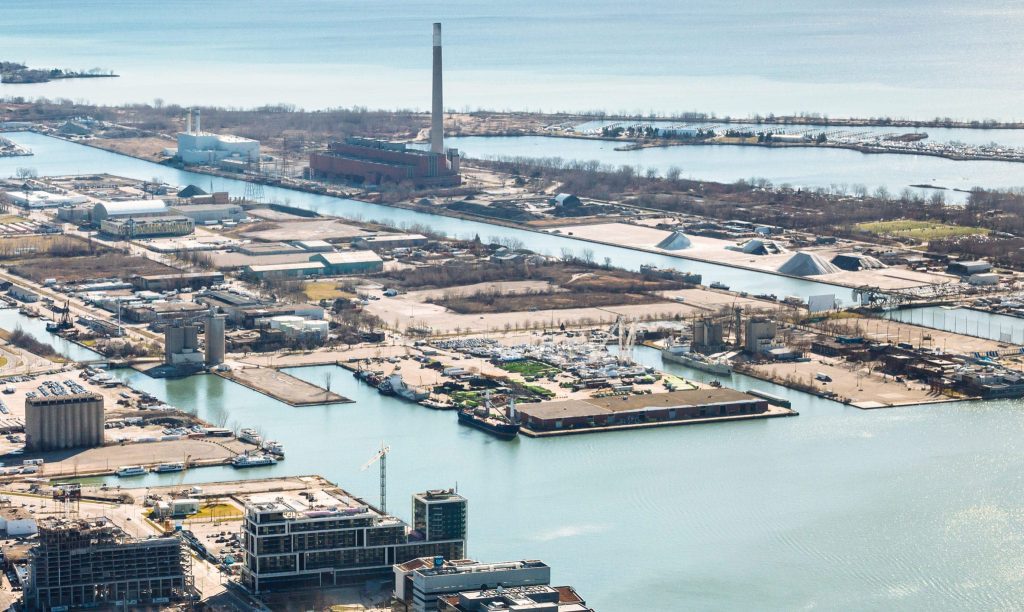
The physical abandonment of smart city projects has created a secondary, less visible emergency: a sprawling attack surface of “zombie” infrastructure. When municipal governments cancel contracts or vendors dissolve, the installed hardware, sensors, cameras, and gateways, rarely. Instead, these devices frequently remain mounted on light poles and utility cabinets, severed from central management frequently still powered and connected to mesh networks. Cybersecurity researchers warn that this orphaned hardware represents a ticking time bomb for urban grids. Without regular firmware updates or security patches, these devices become easy entry points for threat actors seeking to infiltrate broader municipal networks.
The of this vulnerability is difficult to quantify because few cities maintain accurate inventories of active versus inactive assets. yet, the operational risks were clear illustrated in November 2023 when the Municipal Water Authority of Aliquippa in Pennsylvania suffered a breach of its industrial control systems. Iranian-backed hackers exploited Unitronics programmable logic controllers (PLCs) that were left exposed to the internet with default passwords. While not a strictly “abandoned” project, the incident highlighted the negligence common in municipal IoT maintenance; the devices were accessible via the default password “1111,” a level of security hygiene that experts is prevalent in the “set it and forget it” culture of smart city deployments.
In San Diego, the suspension of the Smart Streetlights program in 2020 left approximately 3, 200 intelligent nodes installed on city lampposts. Although the city ordered the data collection “deactivated,” the physical hardware remained in place for years, creating confusion about their operational status. Privacy advocates and security auditors raised concerns that as long as the devices retained power and network connectivity, they could theoretically be reactivated or hijacked. The vendor, Ubicquia, eventually took over the operational costs to keep the network functional for police access, the period of regulatory limbo demonstrated how easily “smart” infrastructure can become a masterless surveillance tool. The risk is not theoretical; in 2017, hackers in Dallas triggered 156 emergency sirens simultaneously via a radio frequency replay attack, a vulnerability that remained unpatched in the legacy hardware for years.
The technical debt of these failed initiatives accumulates rapidly. A 2024 analysis by cybersecurity firm Forescout found that the number of vulnerabilities in connected devices is rising, with routers and unmanaged IoT devices accounting for the highest risk. When a smart city pilot program ends, the budget for software maintenance evaporates. This leaves thousands of devices running obsolete firmware with known exploits. These “ghost” nodes can be conscripted into botnets, used to launch Distributed Denial of Service (DDoS) attacks, or leveraged as pivot points to access sensitive city databases. The LinkNYC kiosks in New York City provided an early warning of this functional decay; after the web browsing feature was disabled in 2016 due to public misuse, the kiosks remained as digital billboards. Privacy audits later revealed that the sensors and cameras within the kiosks continued to collect “technical information” long after the public utility of the browsing feature was revoked.
Documented Municipal IoT Security Incidents (2017, 2024)
| City / Entity | Year | Infrastructure Type | Attack Vector / Vulnerability | Operational Impact |
|---|---|---|---|---|
| Aliquippa, PA | 2023 | Water Authority PLCs | Default Password (“1111”) | System breach; forced switch to manual pressure control. |
| San Diego, CA | 2020 | Smart Streetlights | Unregulated Surveillance | 3, 200+ nodes left in “zombie” state after program suspension. |
| Oldsmar, FL | 2021 | Water Treatment Plant | Remote Access (TeamViewer) | Intruder attempted to increase lye levels to toxic concentrations. |
| Dallas, TX | 2017 | Emergency Sirens | Radio Replay Attack | 156 sirens triggered simultaneously; system offline for days. |
| New York, NY | 2016 | LinkNYC Kiosks | Feature Abuse / Privacy | Web browsing disabled; sensors continued unclear data collection. |
The intersection of physical decay and digital vulnerability creates a unique challenge for municipal IT departments. Unlike a server that can be wiped and decommissioned in a secure data center, smart city debris is distributed across hundreds of square miles of public space. Removing a single sensor frequently requires a bucket truck, a unionized crew, and a traffic control permit, making the physical removal of failed tech prohibitively expensive. Consequently, cities frequently choose to leave the hardware in place, simply “turning it off” at the software level. This practice ignores the reality that the hardware itself, frequently containing SIM cards, storage media, and hardcoded credentials, remains physically accessible to anyone with a ladder and a screwdriver.
Security researchers at the University of Michigan demonstrated as early as 2014 that traffic light controllers could be compromised using standard laptops, yet the industry has been slow to adopt cryptographic signing for firmware updates. In the vacuum of standardized security for municipal IoT, the “graveyard” of abandoned projects grows not just in size in danger. As cities move to the generation of AI-driven infrastructure, they are building on top of a substrate of, forgotten silicon that no vendor is paid to protect.
Privacy Governance: The Great Data Heist
The central pledge of the smart city movement was that data collection would remain benign, anonymous, and strictly used for municipal efficiency. Between 2015 and 2025, this pledge was systematically broken. In city after city, infrastructure sold as environmental sensors or traffic management tools was quietly repurposed into surveillance dragnets, frequently without the knowledge of elected officials or the public. The data did not just “leak”; it was engineered to flow from public streets into private servers, where proprietary algorithms, not city charters, dictated its use.
The most egregious instance of this “bait and switch” occurred in San Diego. In 2016, the city installed 3, 200 “smart” streetlights in partnership with GE Current (later Ubicquia). The $30 million project was sold to the City Council as an energy-saving initiative that would use sensors to optimize parking and track air quality. By 2019, yet, it was revealed that the San Diego Police Department had accessed the streetlights’ video feeds over 140 times to investigate crimes. During the Black Lives Matter protests in 2020, police used these “environmental sensors” to surveil demonstrators. The betrayal of public trust was absolute: a system approved for sustainability had become a tool for warrantless monitoring. When the City Council voted to deactivate the sensors in September 2020, the vendor revealed a final trap: the cameras could not be fully turned off until the city paid outstanding debts, leaving the lenses active even after the program was legally killed.
In New York City, the LinkNYC program replaced payphones with sleek Wi-Fi kiosks, funded entirely by advertising. The pitch was digital equity: free high-speed internet for all. The reality was a massive data extraction operation. The consortium behind LinkNYC, CityBridge, reserved the right to collect users’ browsing history, device location, and MAC addresses. While the privacy policy promised “reasonable efforts” to delete data after 12 months of inactivity, frequent users faced indefinite tracking. The kiosks were not public utilities; they were behavioral trackers placed on public sidewalks. The revenue model relied on monetizing the attention and movement patterns of passersby, turning the physical street into a cookie-tracked digital environment.
The legal structures governing this data were frequently designed to strip cities of ownership. Vendors frequently distinguished between “raw data” (which the city might own) and “processed data” or “insights” (which the vendor retained). This distinction allowed private companies to commercialize patterns derived from public life. In Kansas City’s partnership with Cisco and Sprint, the “smart city” was framed as a “living lab” for entrepreneurs. Yet, the proprietary nature of the network meant that the city outsourced its own digital nervous system. When the project stalled, the city was left with depreciating hardware and no control over the intellectual property generated on its own streets.
The Myth of Anonymization
Municipal leaders frequently defended these programs by claiming all data was “anonymized.” This defense collapsed under scrutiny. In Los Angeles, the Department of Transportation (LADOT) demanded real-time trip data from scooter companies like Bird and Lime via the Mobility Data Specification (MDS). While LADOT claimed this was for traffic management, privacy advocates at the EFF and ACLU demonstrated that individual trip routes, from a specific home to a specific office, could easily re-identify riders. The “anonymous” dot moving across a map was, in practice, a digital fingerprint of a specific citizen’s daily life.
The failure of Toronto’s Sidewalk Labs further exposed the hollowness of data governance proposals. Sidewalk Labs proposed an “Urban Data Trust” to manage data collected in the Quayside district, ostensibly to remove it from corporate control. yet, the trust was an incoherent legal entity with no clear accountability to Canadian privacy laws. It attempted to privatize the governance of public information, treating citizen movements as a resource to be managed by a quasi-corporate board rather than a democratic government. The rejection of this model in 2020 signaled a global turning point: cities began to realize that “trusts” and “anonymization” were frequently marketing terms used to obscure the permanent transfer of civic data to private entities.
| City / Project | Stated Purpose | Actual Data Use | Ownership Status |
|---|---|---|---|
| San Diego (Smart Streetlights) | Energy savings, traffic, air quality | Criminal investigation, protest surveillance | Vendor owned “processed data”; City lost access upon contract dispute |
| New York (LinkNYC) | Free public Wi-Fi | Targeted advertising, device tracking | Consortium retained user data; “Reasonable efforts” to delete after 12 months |
| Los Angeles (MDS) | Traffic flow management | Granular trip tracking (start/end points) | City demanded raw feed; Privacy advocates sued over re-identification risks |
| Toronto (Sidewalk Labs) | Urban innovation | Proposed “Urban Data Trust” (Failed) | Project cancelled before data governance could be legally tested |
The Pneumatic Trash Pipe Failures of Northern Europe
Municipal leaders in Northern Europe spent the decade between 2015 and 2025 burying a fortune under their streets. They promised a “post-truck” future where household waste would travel at 70 kilometers per hour through vacuum-sealed tubes to central collection plants. The reality is a financial and operational quagmire. Cities like Bergen, Stockholm, and Helsinki grapple with systems that cost hundreds of millions to build yet are defeated by a single frozen pizza box.
The most egregious example of capital destruction exists in Bergen. The Norwegian city launched a project to retrofit its medieval center with a pneumatic system by Envac. Officials projected a clean and odor-free city. By 2025 the cost had ballooned to over 1 billion NOK ($100 million). The network remains incomplete. Construction crews faced the logistical nightmare of excavating narrow cobblestone streets while coordinating with tram lines and 19th-century sewer replacements. The city requires an additional 300 million NOK ($30 million) to finish the grid. Residents pay for this infrastructure through a “pay-as-you-throw” scheme that charges approximately $1 per use after five free deposits a month. This fee structure encourages illegal dumping to the inlets rather than inside them.
Technical fragility plagues these underground networks. In Stockholm where 20% of households are connected to vacuum waste systems the “pizza box problem” has become a municipal headache. Rigid cardboard expands inside the pneumatic tubes and creates blockages that require expensive manual intervention to clear. The system’s intolerance for variance turns minor user errors into system-wide shutdowns. A 2022 report indicated that while operational costs might be lower than truck fleets the initial capital expenditure for pneumatic systems is 3. 3 to 6. 6 times higher. This return on investment horizon stretches over decades and assumes the steel pipes not corrode or fail before the debt is serviced.
The Helsinki Standoff
Finland’s experience mirrors the struggles in Norway and Sweden. In the Jätkäsaari and Kalasatama districts of Helsinki developers installed pipeline-based waste collection systems (IMU and RÖÖRI). These systems were marketed as the pinnacle of smart city efficiency. They frequently fail to deliver on that pledge during real-world disruptions. In May 2022 a conflict with a city gas pipeline forced the Kalasatama system offline for weeks. Trucks had to return to the streets to collect waste from temporary bins. This negated the primary selling point of the technology.
Labor disputes further exposed the system’s limitations. During a transport sector strike in February 2023 the operators of the Jätkäsaari RÖÖRI system had to instruct residents to stop putting cardboard into the tubes. The automated system could not handle the volume without the support of the very logistical chain it was meant to replace. The “smart” system proved dependent on the “dumb” infrastructure of trucks and manual labor to function at capacity.
| Metric | Promised Outcome | Operational Reality |
|---|---|---|
| Installation Cost | Offset by lower labor costs | 3. 3x to 6. 6x higher than traditional methods |
| Uptime | 24/7 continuous operation | Frequent jams caused by cardboard and “fatbergs” |
| User Behavior | direct sorting compliance | Illegal dumping near inlets to avoid fees/jams |
| Infrastructure | Invisible underground network | Conflicts with gas/sewer lines cause long outages |
| Bergen Project | Complete city coverage | $100M+ spent. System incomplete and over budget |
The sunk cost fallacy drives the continued operation of these systems. Once a city buries $100 million worth of steel pipes under its streets it cannot easily revert to curbside pickup. Stockholm attempted to mitigate the disaster by taking over responsibility for the systems from private developers who installed them on an ad-hoc basis. This transfer socialized the maintenance costs of a failing technology. The vision of a truck-free city has been replaced by the reality of specialized vacuum trucks that must patrol the periphery of the network to suck out the clogs that residents create.
These projects demonstrate a fundamental misunderstanding of urban behavior. Smart city planners assumed residents would strictly adhere to sorting. They did not account for the indifference of the average user. A single non-compliant item disrupts the entire loop. The result is a “smart” system that is more fragile and expensive than the “dumb” system it replaced.
Autonomous Shuttle Pilots: A History of Empty Seats
Between 2015 and 2025, municipal governments worldwide spent millions on a specific vision of the future: the autonomous shuttle. These boxy, low-speed “pods”, manufactured by companies like Navya, EasyMile, and Local Motors, were marketed as the solution to the “last mile” problem in public transit. Smart city planners promised these vehicles would ferry commuters from train stations to office parks without human intervention. By early 2026, yet, this sector has collapsed. Most pilots have been quietly scrapped, the hardware has been auctioned off, and the leading manufacturers have faced insolvency.
The operational reality of these vehicles never matched the sales pitch. While promotional videos showed shuttles gliding smoothly through complex urban environments, the deployed units struggled to exceed 12 miles per hour. also, regulations and liability concerns forced cities to staff every “driverless” shuttle with a human attendant. This requirement eliminated the primary economic argument for automation: labor cost reduction. Instead of replacing buses with robot fleets, cities found themselves operating slow, expensive golf carts that required constant supervision.
The Crash of the Manufacturers
The financial instability of the shuttle makers undermined the projects they supplied. Local Motors, the Arizona-based manufacturer of the 3D-printed “Olli” shuttle, ceased operations in January 2022 due to a absence of funding. The shutdown occurred just one month after an Olli shuttle in Toronto crashed into a tree, serious injuring the on-board attendant. The City of Toronto immediately suspended its trial.
Navya, a French company whose shuttles were ubiquitous in smart city pilots from Las Vegas to Lyon, entered receivership in February 2023. At its peak in 2018, Navya’s stock traded at over €7; by the time it requested a suspension of listing in January 2023, shares had fallen to €0. 03. The company’s inability to its technology or secure sustainable revenue streams left dozens of cities with orphan hardware and no technical support.
Case Study: Columbus, Ohio
Columbus, the winner of the U. S. Department of Transportation’s $40 million Smart City Challenge in 2016, provides the clearest example of the shuttle failure. The city launched the “Linden LEAP” pilot in February 2020, deploying EasyMile shuttles to connect residents in a low-income neighborhood to transit centers. It was the daily residential autonomous shuttle service in the United States.
The experiment lasted less than two weeks before a safety incident halted operations. On February 20, 2020, a shuttle traveling at 7. 1 mph triggered an emergency stop, causing a passenger to fall from her seat. The National Highway Traffic Safety Administration (NHTSA) subsequently suspended EasyMile’s passenger operations across 10 states. When the Linden LEAP resumed, it did not carry people. Instead, the city repurposed the high-tech vehicles to transport food bank boxes, a task that could have been accomplished more cheaply with a standard van.
Las Vegas: The Day One Disaster
The optics of autonomous shuttles suffered a permanent blow in Las Vegas in November 2017. During the hour of a highly publicized pilot sponsored by AAA and Keolis, a Navya shuttle was involved in a collision. A delivery truck slowly backed into the shuttle. While the truck driver was at fault, the shuttle’s programming exposed a serious flaw: it was designed to stop for obstacles absence the logic to reverse or honk. Passengers inside watched helplessly as the truck crunched into the shuttle’s front fender. The incident demonstrated that while the sensors worked, the vehicles absence the defensive driving capabilities required for real-world traffic.
The Graveyard of Pilots
Across the United States, pilot programs followed a predictable trajectory: a ribbon-cutting ceremony, a period of low ridership, and a quiet cancellation. In North Carolina, the “CASSI” pilot at UNC Charlotte concluded in 2024 with a report stating the technology failed to attract the public due to slow speeds and frequent delays. The table details the outcomes of major shuttle initiatives.
| City / Location | Vendor | Pilot Duration | Outcome |
|---|---|---|---|
| Las Vegas, NV | Navya | 2017, 2018 | Crashed within 2 hours of launch. Pilot completed not expanded. |
| Frisco, TX | Drive. ai | 2018, 2019 | Ended Feb 2019. Drive. ai acquired by Apple days before closure. |
| Columbus, OH (Linden) | EasyMile | 2020, 2021 | Passenger service halted after injury. Converted to cargo only. |
| Toronto, Canada | Local Motors | 2021 | Cancelled permanently after shuttle crashed into a tree. |
| Gainesville, FL | EasyMile | 2018, 2021 | Ended after NHTSA suspension. Funding expired. |
| Peachtree Corners, GA | Local Motors | 2019, 2022 | Vendor (Local Motors) ceased operations in Jan 2022. |
The data from these trials indicates that the technology was deployed prematurely. The “safety driver” requirement meant that operating costs were frequently higher than conventional transit, while the low speeds (averaging 10, 12 mph) made the service impractical for commuters. By 2025, the industry had largely pivoted away from the “pod” form factor, acknowledging that the slow-moving, geofenced shuttle was a technological dead end for public roadways.
Smart Streetlights: The Dim Reality of High-Tech Poles
Municipal leaders were sold a luminous vision between 2015 and 2025: streetlights that would pay for themselves. Vendors promised that “smart” nodes, networked controllers mounted on top of LED fixtures, would eliminate maintenance truck rolls, dim lights to save energy, and serve as the backbone for a futuristic urban sensor grid. The reality has been a series of expensive hardware failures, software obsolescence, and manufacturing defects that have turned public infrastructure into a financial liability.
The most visible symbol of this failure is the “Purple Plague.” Starting in 2020, streetlights in cities from Vancouver to Tampa began emitting an eerie, violet glow. The cause was a manufacturing defect in the phosphor coating of LED fixtures produced by Acuity Brands between 2017 and 2019. The coating, designed to turn blue LED light white, delaminated due to heat. While covered under warranty, the labor cost to replace tens of thousands of fixtures fell on municipalities and utilities. In Tampa, Florida, utility crews were forced to manually replace thousands of defective units, negating the “zero maintenance” pledge that justified the initial upgrade.
San Diego provides the definitive case study of a smart lighting project collapsing under its own weight. In 2016, the city deployed 4, 200 intelligent streetlights at a cost of $30 million. The system was marketed as an energy-saving initiative functioned primarily as a surveillance network equipped with cameras and microphones. Following intense public backlash over privacy violations and absence of oversight, the city deactivated the sensors in 2020. Yet, the financial bleeding continued. As of 2022, San Diego was still paying approximately $1 million annually in loan repayments for the deactivated sensors, literally paying for dark data. In 2023, the city pivoted, signing a new $3. 5 million contract for a smaller, surveillance-focused network, admitting the original “smart city” deployment was a sunk cost.
| Feature | Vendor pledge | Operational Reality |
|---|---|---|
| Energy Savings | 70-80% total reduction. | 50-60% comes from the LED bulb itself. Smart controls add only marginal gains (10-15%). |
| Maintenance | “Zero truck rolls” via remote diagnostics. | Truck rolls increased due to node failures, connectivity resets, and physical replacements. |
| Lifespan | 20 years for fixture and controller. | Controllers frequently fail in 5-7 years; 3G modems became obsolete in <10 years. |
| Connectivity | direct mesh networking. | 3G “Sunset” (2022) bricked thousands of early smart nodes, requiring manual hardware upgrades. |
The technical architecture of these systems proved brittle. smart streetlights installed before 2018 relied on 2G or 3G cellular networks to transmit data. When telecommunications providers sunsetted these networks between 2022 and 2024, cities were left with “bricked” nodes that could no longer communicate. This forced municipalities to choose between expensive hardware retrofits or abandoning the smart features entirely. In Kansas City, a $21 million conversion to LEDs promised massive savings, the accompanying smart city vision, including sensors along the Prospect MAX bus line, struggled to deliver actionable data beyond simple lighting schedules.
The conflation of “LED” and “Smart” remains a primary source of confusion. Data from the Department of Energy and municipal audits consistently show that the vast majority of energy savings, frequently up to 50%, comes solely from switching high-pressure sodium bulbs to LEDs. The “smart” network adds approximately 20% to the upfront project cost frequently fails to recoup that investment through additional dimming or maintenance. For cities, the smartest move has been to install high-quality “dumb” LEDs and reject the subscription-based complexity of networked controllers.
The Neom Reality Check: Construction Delays and Scaling Back
The collapse of Saudi Arabia’s Neom project represents the single largest contraction of smart city ambition in history. Crown Prince Mohammed bin Salman originally pitched “The Line” as a 170-kilometer linear metropolis that would house 1. 5 million residents by 2030. He promised a “cognitive city” where artificial intelligence would anticipate resident needs before they arose. By April 2024, verified reports from Bloomberg and internal documents revealed a clear different reality: officials expect to complete only 2. 4 kilometers of the project by 2030. The population target for that date has plummeted to fewer than 300, 000. This 98. 6% reduction in physical scope invalidates the project’s core technological premise. The “cognitive city” operating system, designed to manage data across a continuous urban belt, cannot function as intended in a disconnected fragment. Neom’s promotional materials described a direct, car-free existence enabled by high-speed rail transit from end to end. With the rail line truncated to a fraction of its planned length, the transport efficiency models are obsolete. The physical infrastructure required to support the promised sensor networks and autonomous logistics systems does not exist.
Financial Contraction and Executive Turmoil
The scaling back coincides with a severe liquidity crunch at the Public Investment Fund (PIF). even with the Kingdom’s oil wealth, the PIF’s cash reserves dropped as it struggled to fund the $500 billion initiative alongside other “giga-projects.” In late 2024, the fund reportedly wrote off $8 billion in losses related to these developments. The financial forced a prioritization of Riyadh-based projects over the remote desert experiment. Management instability further paralyzed progress. In November 2024, Nadhmi Al-Nasr, the long-serving CEO of Neom, departed abruptly. His exit followed reports of unmet performance and rising worker fatalities. He was replaced by Aiman Al-Mudaifer as acting CEO, a move that signaled a shift from visionary expansion to damage control. The project also saw the dismissal of workers and the cancellation of contracts, including a $5 billion deal terminated just days before signing.
| Metric | Original pledge (2021) | Current Reality (2025) | Reduction |
|---|---|---|---|
| Length | 170 kilometers | 2. 4 kilometers | 98. 6% |
| Population | 1. 5 million | <300, 000 | 80% |
| Completion Date | 2030 (Phase 1) | 2120 (Est. for full ) | +90 Years |
| Budget Status | Fully Funded | Budget Cuts & Write-offs | Negative |
The “Stub” City and Technological Obsolescence
Construction progress confirms the retreat. Satellite imagery from late 2024 shows excavation work limited to the western tip of the proposed line. While developers have poured foundation piles, approximately 1, 000 of the required 30, 000, the vast majority of the 170-kilometer corridor remains untouched desert. The “Mirror Line” design, intended to reflect the surroundings and regulate climate, faces the absurdity of existing as a solitary, mirror-clad block in the sand rather than a continuous urban flow. Technological partners who signed on to build the world’s most advanced digital twin face a hardware problem. not deploy city- AI without the city. The data volume required to train Neom’s predictive algorithms not materialize from a population of 300, 000, of whom be construction staff and service workers rather than the high-net-worth “global citizens” the project courted. Denis Hickey, Neom’s Chief Development Officer, admitted in a candid moment that the full project might take “100 years” to complete. This admission kills the “Smart City 2030” narrative, reclassifying Neom from a near-future revolution to a multi-generational construction site.
“You’re gonna build a city that has to be master planned to hold 9 million people… it’ll take 100 years or whatever to fill that.” , Denis Hickey, Neom Chief Development Officer, January 2025.
The scaling back also jeopardizes related projects like the Trojena ski resort, scheduled to host the 2029 Asian Winter Games. With the central infrastructure of The Line delayed, the logistics of moving athletes and spectators to these remote satellite locations become increasingly complex and costly. The “smart” elements, autonomous shuttles, biometric entry, robot avatars, remain in the concept phase, while the physical reality is defined by concrete pours and budget deficits.
Hardware in the Streets: Environmental Impact of Obsolete Tech
The physical remains of failed “smart city” initiatives are piling up in urban centers, creating a new category of electronic waste that taxpayers must manage. Unlike software that can be deleted, these projects leave behind tons of plastic, glass, and circuitry. In San Diego, the city installed 3, 200 “smart” streetlights equipped with cameras and sensors at a cost of $30 million. Following a public backlash over surveillance in 2020, the city deactivated the sensors. The hardware remains mounted on poles, degrading in the sun. The city continues to pay approximately $2. 3 million annually in loan repayments for this zombie infrastructure.
The environmental toll extends beyond financial waste. These devices contain printed circuit boards, polycarbonate shells, and cabling that are difficult to recycle. When proprietary vendors go bankrupt or discontinue support, the custom hardware becomes useless. In China, the collapse of the bike-sharing bubble resulted in “bicycle graveyards” containing an estimated 25 million abandoned units. This mass of metal and rubber generated roughly 160, 000 tonnes of solid waste. The lithium-ion batteries in the smart locks pose a fire risk and leach chemicals into the soil if the casings breach.
“The City of San Diego’s continual annual loan repayments of $2. 3 million for equipment that is still in the possession of the City no longer in use, is fiscally irresponsible.”
, San Diego County Grand Jury Report (2021/2022)
The Decay of Digital Kiosks
New York City’s LinkNYC program replaced payphones with Wi-Fi kiosks funded by advertising. A 2021 audit by the New York State Comptroller found that 76% of sampled kiosks suffered from cleanliness or operational failures, including broken screens and grime. Instead of the promised “Gigabit Centers,” units serve as little more than obstructions on the sidewalk. The initial pledge of bridging the digital divide clashed with the reality of maintaining thousands of outdoor screens exposed to weather and vandalism. When these units fail, they require specialized disposal due to their large LCD panels and integrated electronics.
Short Lifecycles and Proprietary Lock-in
Municipalities frequently purchase hardware that locks them into a single vendor’s ecosystem. When that vendor shifts strategy, the city holds the bag. Cisco’s “Kinetic for Cities” platform, once a centerpiece for smart city projects like those in Kansas City, saw the company stop selling the software in 2020. This shift leaves physical sensors without a central brain, turning active data collection points into inert plastic boxes. The rapid obsolescence of IoT (Internet of Things) devices means cities must replace infrastructure every 3 to 5 years, a pace that municipal budgets and landfill capacities cannot match.
| Project Location | Hardware Type | Status | Estimated Waste / Cost |
|---|---|---|---|
| San Diego, USA | Smart Streetlight Sensors | Deactivated (2020) | $2. 3M/year loan payment for unused tech |
| China (Various Cities) | Dockless Shared Bikes | Abandoned | ~25 million units / 160, 000 tonnes waste |
| New York City, USA | LinkNYC Wi-Fi Kiosks | Neglected | 76% of sampled units broken or dirty |
| Global (General) | IoT Sensors | Obsolete | Global e-waste reached 62 million tons in 2022 |
The volume of e-waste from these projects contributes to the global total, which hit 62 million tons in 2022. Smart city sensors are particularly problematic because they are dispersed across wide geographic areas, making collection labor-intensive. A single smart bin or parking sensor might contain a small battery and a radio transmitter. multiplied by thousands, these components represent a significant stream of hazardous materials entering the municipal waste system when they are inevitably scrapped.
The Digital Divide: Smart Infrastructure for Wealthy Zip Codes
The pledge of the smart city was one of democratization. Tech evangelists and municipal leaders argued that governance would flatten urban hierarchies, delivering services to the penthouse and the pavement alike. The reality of the 2015, 2025 era proved to be the exact opposite. Instead of bridging the gap, smart infrastructure deployments frequently exacerbated the “digital divide,” creating a two-tiered urban experience where affluent zip codes received concierge-style digital amenities while low-income districts received surveillance or silence.
This phenomenon, frequently termed “digital redlining,” manifested in the physical rollout of hardware. In New York City, the LinkNYC program, intended to replace payphones with high-speed Wi-Fi kiosks, became the poster child for this. By 2019, data revealed a clear imbalance: the consortium had installed over 1, 800 kiosks, the vast majority were concentrated in wealthy Manhattan corridors and business districts. The Bronx and outer-borough neighborhoods, which suffered from the lowest rates of home broadband adoption, saw a fraction of the deployment. The “smart” network followed the money, prioritizing advertising revenue from high-foot-traffic tourist areas over the connectivity needs of underserved residents.
The extended beyond mere internet access to the very nature of the technology installed. In San Diego, a massive deployment of “smart streetlights” equipped with cameras and sensors revealed a troubling pattern. While the city claimed the lights were for traffic optimization and environmental monitoring, an analysis by the San Diego Union-Tribune in 2020 found that police accessed the camera footage disproportionately in neighborhoods with higher populations of people of color and lower household incomes. For wealthy residents in La Jolla, smart infrastructure meant energy- lighting; for residents in Logan Heights, it meant a dragnet of always-on surveillance.
The Geography of Exclusion
Kansas City’s smart city initiative, launched with a $15 million grant in 2016, further illustrates this geographic bias. The project focused its sensors, public Wi-Fi, and interactive kiosks almost exclusively along the 2. 2-mile streetcar line in the downtown business district. This “Smart District” served tourists and office workers, while the city’s East Side, historically segregated and economically disadvantaged, remained largely offline. The infrastructure created a digital island of connectivity that walled off the benefits of the “smart city” from the residents who needed them most.
Maintenance logs from various cities expose a secondary of inequality: the “fix gap.” Smart infrastructure in affluent areas was frequently repaired within 48 hours of a reported failure, driven by service-level agreements (SLAs) tied to advertising impressions. In contrast, sensors and kiosks in low-income areas frequently languished in disrepair for weeks or months. This neglect transformed chance community assets into digital blight, broken screens and non-functional sensors that served as daily reminders of civic indifference.
| City / Project | Wealthy District Outcome | Low-Income District Outcome | Primary Metric of Failure |
|---|---|---|---|
| New York (LinkNYC) | High density of Gigabit Wi-Fi kiosks; rapid repair pattern. | Sparse coverage; “digital deserts” remained in Bronx/Queens. | 90% of initial rollout favored Manhattan business zones. |
| San Diego (Smart Streetlights) | Energy savings; environmental monitoring. | Disproportionate police video access; surveillance focus. | Police accessed cameras primarily in non-white/low-income zones. |
| Kansas City (Smart District) | Free public Wi-Fi along streetcar corridor (Downtown). | No integration; East Side remained digitally. | $15M investment confined to 2. 2-mile tourist/business loop. |
| Detroit (Project Green Light) | N/A (Program targeted commercial corridors). | High-definition cameras fed directly to police HQs. | Marketed as safety; functioned as automated policing in poor areas. |
“We were promised a revolution in access. What we got was a high-speed internet connection for the tourists and a camera pointed at our front door.” , Community organizer testimony regarding Detroit’s Project Green Light, 2019.
The failure to distribute smart infrastructure equitably was not an oversight; it was a structural feature of the funding models. Because of these projects relied on public-private partnerships (P3s) funded by advertising or user data monetization, private partners naturally gravitated toward demographics with higher disposable income. The result was a “smart city” that functioned for the consumer class while actively monitoring or ignoring the working class. By 2025, the lesson was clear: without strict municipal mandates for equity, technology amplifies existing social stratifications rather than resolving them.
Legal Battles: Municipalities Suing Tech Giants for Breach
The dissolution of smart city partnerships has frequently moved from city council chambers to federal courtrooms. Between 2019 and 2025, a wave of litigation emerged as municipalities sought to recover damages for undelivered technologies, broken revenue-sharing agreements, and defective infrastructure. While the initial press releases for these projects featured ribbon-cutting ceremonies with technology executives, the conclusions have frequently involved breach-of-contract filings and settlements.
New York City vs. CityBridge: The Revenue Mirage
One of the most high-profile financial disputes occurred in New York City regarding the LinkNYC program. The consortium CityBridge, which included Intersection (backed by Alphabet’s Sidewalk Labs) and Qualcomm, promised to replace payphones with 7, 500 Wi-Fi kiosks. The deal was structured on a revenue-sharing model where advertising displays would generate over $500 million for the city. By 2020, the project had collapsed into delinquency.
In March 2020, the city’s Department of Information Technology and Telecommunications (DoITT) threatened litigation, revealing that CityBridge owed tens of millions in unpaid revenue. Commissioner Jessica Tisch testified that the consortium had paid only $2. 6 million of the $32. 3 million owed for fiscal year 2019 and zero of the $43. 7 million owed for fiscal year 2020. The rollout also stalled, with fewer than 1, 900 kiosks installed against the 7, 500 target. The legal standoff forced a contract renegotiation in 2023, where the city accepted a reduced guaranteed payment of $3 million annually, a fraction of the original pledge, to keep the network operational.
Detroit vs. Leotek: The Dark Smart City
While New York fought over software revenue, Detroit battled over physical hardware failure. In May 2019, the City of Detroit filed a federal lawsuit against Leotek Electronics USA, a subsidiary of a Taiwanese manufacturer. The city had purchased 25, 000 LED streetlights as part of a “smart” modernization effort to improve safety and reduce energy costs.
The litigation alleged a “system-wide failure” where approximately 20, 000 units, nearly 80% of the inventory, began to char, crack, or burn out prematurely. The defect left entire neighborhoods in darkness, reversing the safety gains the project was intended to deliver. Detroit sought damages to cover the estimated $9 million cost of replacing the defective units. This case highlighted a serious vulnerability in the smart city supply chain: when proprietary hardware fails, cities are frequently left with expensive, non-interoperable e-waste.
San Diego and Chicago: Civil Rights Litigation
Legal battles have also targeted the surveillance capabilities in smart infrastructure. In San Diego, the deployment of 3, 200 smart streetlights equipped with cameras by GE Current (and later Ubicquia) led to a suspension of the program in 2020 and subsequent litigation. In December 2024, a lawsuit titled Irani v. City of San Diego was filed, alleging that the city violated its own surveillance ordinance by deploying the technology at events like the Pride Parade without proper oversight. The plaintiffs argued that the “traffic management” tools were surreptitiously repurposed for police surveillance, constituting a breach of public trust and local law.
Similarly, Chicago faced a class-action lawsuit in 2022 regarding its use of ShotSpotter ( SoundThinking) gunshot detection sensors. The suit, Williams v. City of Chicago, alleged that the system was unreliable and discriminatory, citing data that 89% of alerts turned up no evidence of a gun-related crime. The plaintiffs argued that the technology led to false arrests and unconstitutional stop-and-frisk practices in predominantly Black and Latino neighborhoods.
New Orleans: The Procurement Scandal
In New Orleans, a massive “Smart+Connected” project collapsed before implementation due to legal threats regarding procurement integrity. In 2022, the City Council opened a formal investigation into bid-rigging allegations involving city officials and a consortium that included Qualcomm. Cox Communications, a rival bidder, filed a formal protest citing “egregious inconsistencies” in the selection process. The scrutiny forced the city to abandon the project entirely, leaving the promised sensors and public Wi-Fi undelivered.
| City | Vendor / Project | Nature of Dispute | Financial Impact / Claim |
|---|---|---|---|
| New York City, NY | CityBridge (LinkNYC) | Unpaid revenue share; missed installation | ~$75 Million owed (2020) |
| Detroit, MI | Leotek Electronics | Defective hardware; premature failure of 20, 000 units | $9 Million damages |
| Chicago, IL | ShotSpotter | Civil rights violations; false arrests; unreliable data | Class Action (Undisclosed) |
| San Diego, CA | GE Current / Ubicquia | Privacy violation; unauthorized surveillance | Injunctive Relief |
| New Orleans, LA | Smart+Connected NOLA | Bid-rigging allegations; procurement fraud | Project Cancelled |
Barcelona Pivot: From Tech- to Citizen- Urbanism
In 2015, Barcelona dismantled its reputation as a vendor-led “smart city” showroom. Under Mayor Ada Colau and Chief Technology Officer Francesca Bria, the city administration rejected the previous model of purchasing proprietary “black box” solutions from multinational corporations. The pivot addressed a fundamental failure: the city had installed thousands of sensors, from noise detectors to parking monitors, that frequently provided unusable data or locked the administration into expensive maintenance contracts with no public oversight.
The Failure of “Smart” Hardware
The initial tech- strategy relied heavily on corporate partnerships that prioritized hardware deployment over municipal utility. A prominent example involved electromagnetic parking sensors in asphalt. These devices frequently malfunctioned, triggered by underground trains rather than surface vehicles, rendering the data useless for traffic management. also, the city found itself dependent on proprietary dashboards that prevented civil servants from accessing raw data without paying additional fees to vendors.
This vendor-lock-in reached a breaking point with platforms like Cisco’s “Kinetic for Cities.” While Barcelona served as a global testbed for such centralized control systems, the market reality shifted. Cisco eventually discontinued the Kinetic product line in 2021, citing evolving market demands and budget constraints, forcing cities to transition off the platform. This obsolescence pattern exposed the risks of building public infrastructure on private, closed-source software.
The “Digital Sovereignty” Mandate
Bria introduced a strict “Digital Sovereignty” agenda to regain control. The administration rewrote procurement contracts to mandate that all data collected by private contractors belonged to the city, not the vendor. These new clauses required data delivery in open, machine-readable formats. The city also migrated its sensor management to Sentilo, an open-source platform that handles data from over 18, 000 sensors without licensing fees.
“We reversed the model. Instead of starting from technology and extracting all the data we can, we started aligning the tech agenda with the agenda of the city.” , Francesca Bria, former CTO of Barcelona.
Metric-Driven Success: Decidim and Superblocks
The pivot replaced invisible sensors with visible citizen participation. The city launched Decidim, an open-source digital democracy platform. In the 2020-2023 pattern, citizens directly decided the allocation of €75 million of the municipal budget. During its initial trial, over 40, 000 residents engaged with the platform, generating proposals that shaped 70% of the city’s government agenda.
Simultaneously, the “Superblocks” (Superilles) initiative prioritized physical health over digital connectivity. By restricting traffic in nine-block grids to resident-only access at 10 km/h, the city achieved verifiable environmental results. Data from the Sant Antoni superblock recorded a 25% drop in nitrogen dioxide (NO2) levels and a 17% decrease in PM10 particles. Public health models estimate that a full city-wide implementation, reducing motorized traffic by 25%, prevents approximately 200 premature deaths annually.
| Metric | Tech- Model (Pre-2015) | Citizen- Model (Post-2015) |
|---|---|---|
| Data Ownership | Vendor-owned (Proprietary) | City-owned (Public Commons) |
| Sensor Platform | Siloed, Vendor-Specific Dashboards | Sentilo (Open Source) |
| Budget Control | Top-down allocation | €75M decided via Decidim (2020-2023) |
| Pollution Impact | Monitoring only | 25% NO2 reduction in Superblocks |
The Failure of Blockchain in Municipal Land Registries

Between 2015 and 2020, blockchain technology was sold to municipal governments as the solution for property rights. Proponents claimed that distributed ledgers would eliminate fraud, speed up transactions, and provide immutable proof of ownership. Cities and nations announced ambitious pilots to migrate centuries of paper deeds onto the blockchain. By 2025, almost every major public sector land registry pilot had either stalled, been abandoned, or was relegated to a redundant “hashing” exercise that added cost without replacing the central database.
The central failure of these projects was not technical structural. Blockchain solves the problem of digital scarcity, yet land is a physical asset governed by human laws. The “Oracle Problem”, the difficulty of ensuring that physical reality matches the digital record, proved. If a corrupt official enters false ownership data into a blockchain, the ledger makes that fraud permanent and immutable.
The Honduras Debacle
The most example of this failure occurred in Honduras. In 2015, the government announced a partnership with Texas-based Factom to build a blockchain-based land registry. The project aimed to stop bureaucrats from altering title deeds, a common form of corruption in the region. The initiative received global media coverage as a test case for the technology.
The project stalled almost immediately. By 2017, negotiations had collapsed. The technology could not bypass the political reality: the very officials needed to implement the system were the ones benefiting from the opacity of the old one. No immutable ledger exists today. The failure demonstrated that software cannot fix institutional corruption.
Sweden’s Eternal Pilot
Sweden’s Lantmäteriet (Land Registry) launched one of the most advanced pilots in 2016, partnering with blockchain startup ChromaWay. Unlike Honduras, Sweden had a trusted government and accurate digital records. The goal was to save taxpayers €100 million annually by eliminating paperwork. The technical pilot succeeded in simulating transactions.
Yet, as of 2025, the system has not replaced the traditional registry. The project hit a legal wall. Swedish law, like that of most nations, requires physical signatures for property transfers to be valid. The blockchain solution was technically functional legally void. The agency could not unilaterally rewrite national property law to accommodate a database architecture. The project remains in a state of “exploration,” with no route to full implementation.
United States: High Costs, Zero Utility
American counties also experimented with the technology and found it wanting. The Cook County Recorder of Deeds in Illinois conducted a pilot in 2016-2017. Their final report was scathing. It concluded that while blockchain could theoretically work, it offered no superior utility to existing electronic recording systems for the high cost of energy and maintenance. The report noted that the county would still need to verify the accuracy of documents before they entered the chain, negating the “trustless” advantage of the technology.
Similarly, South Burlington, Vermont, completed a pilot with Propy in 2018. While a few deeds were recorded, the city did not adopt the system for general use. The pilot proved that while recording a deed on a blockchain is possible, it creates a parallel registry that legal professionals and title insurance companies refuse to recognize as authoritative.
The Infrastructure Gap in Ghana
In Ghana, the startup Bitland attempted to use blockchain to register land for the 78% of the country operating without formal title. The project aimed to allow unbanked citizens to prove ownership and access credit. The initiative failed to account for basic infrastructure deficits. Rolling blackouts and absence of internet access in rural areas made a digital-only ledger impractical. also, the project could not resolve the underlying disputes over who actually owned the land before it was registered. The technology demanded a clarity of ownership that did not exist.
| Location | Project Year | Vendor/Partner | Stated Goal | 2025 Status |
|---|---|---|---|---|
| Honduras | 2015 | Factom/Epigraph | End title fraud | Abandoned. Stalled due to political opposition. |
| Sweden | 2016 | ChromaWay | Digital real estate sales | Stalled. Legally invalid under current property laws. |
| Cook County, IL | 2016 | Velox. RE | Modernize records | Rejected. Report high cost and absence of utility. |
| South Burlington, VT | 2018 | Propy | Blockchain deeds | Pilot Only. No city-wide adoption. |
| Ghana | 2016 | Bitland | Title the unbanked | Defunct. Failed due to infrastructure/legal blocks. |
| Republic of Georgia | 2016 | Bitfury | Secure validation | Limited. Hashing only; central database remains the authority. |
“It is perhaps more to see how we can use technology to change legal processes rather than to change legal processes so that they can fit a specific technology.” , Cook County Recorder of Deeds, Final Report (2017)
The Republic of Georgia is frequently as a success story, yet its implementation is limited. The government uses the Bitcoin blockchain only to “timestamp” a hash of the document. The actual registry remains a centralized SQL database managed by the National Agency of Public Registry. If the central database is altered, the hash on the blockchain proves the alteration occurred; it does not prevent it, nor does it automatically correct the record. The “trust” still resides entirely with the government agency, rendering the blockchain component a redundant digital receipt rather than a revolutionary new system.
Kansas City: The Death of the Smart Corridor
In 2016, Kansas City, Missouri, declared itself the “world’s most connected smart city.” The municipality unveiled a $15. 7 million public-private partnership with Cisco, Sprint, and Think Big Partners to transform a 2. 2-mile streetcar corridor into a digital laboratory. The project installed 178 smart streetlights, 25 interactive kiosks, and a network of sensors designed to track everything from parking availability to pedestrian foot traffic. By 2025, the initiative had devolved from a global model of innovation into a case study in vendor abandonment and obsolete infrastructure.
The project’s central nervous system was Cisco’s “Kinetic for Cities” platform, a dashboard intended to aggregate data from the corridor’s sensors. City officials promised this data would optimize traffic flow and reduce energy costs. yet, the system relied heavily on proprietary hardware and software, creating a fragile dependency on a single vendor. In 2020, Cisco abruptly announced it would discontinue the Kinetic platform, citing a strategic shift away from smart city software. The decision left Kansas City with a network of sensors that had no central brain to process their output.
The physical infrastructure fared no better. The interactive kiosks, manufactured by CityPost, were initially touted as essential tools for citizen engagement. Within three years, they were widely criticized as expensive, glorified smartphones that offered little utility beyond what residents already carried in their pockets. By 2024, of these units had fallen into disrepair or were being used for unintended purposes, prompting the city to seek their removal. In August 2025, the City Council introduced an ordinance to replace the failed CityPost units with a new contract for “Ike Smart City” kiosks, admitting the generation of hardware was a total loss.
| Component | Initial Cost / Investment | Status (2025) |
|---|---|---|
| Cisco Kinetic Platform | Part of $15. 7M Partnership | Terminated (Vendor exited market in 2020) |
| Smart Streetlights | 178 Units | Functioning as standard lights; smart features largely unused |
| CityPost Kiosks | 25 Units | Obsolete (Slated for replacement by Ike Smart City) |
| Public Wi-Fi | Sprint Network | Operational, no longer unique to “smart” branding |
The financial sustainability of the project collapsed alongside the technology. The initial $15. 7 million investment was heavily subsidized by the private partners, with the city contributing only $3. 7 million. When the initial grant period ended and the hardware required maintenance, the city absence the budget to sustain the “smart” elements. Bob Bennett, the Chief Innovation Officer who championed the project, resigned in 2019. Following his departure, the city dissolved the dedicated innovation office, replacing it with a board that deprioritized experimental tech in favor of basic services.
Privacy concerns further eroded public trust. The sensors collected vast amounts of data on movement and behavior, yet the city struggled to articulate how this surveillance benefited residents. A set of “Privacy Principles” was drafted only after the system was already live, a reactive measure that failed to quell anxiety about data ownership. Today, the 2. 2-mile corridor remains, the “smart” label has been quietly dropped. The sensors that once promised to urban living serve as silent reminders of a technology bubble that burst, leaving the municipality to clean up the electronic waste.
Chula Vista: Police Surveillance and Public Trust
While other smart city initiatives collapsed under the weight of financial insolvency, Chula Vista’s “Smart City” program failed in a different, perhaps more corrosive metric: the complete forfeiture of public trust. Between 2018 and 2024, this San Diego suburb transformed itself into a testbed for police surveillance technologies, abandoning its initial pledge of community-centric innovation in favor of a militarized data dragnet. The city’s aggressive adoption of the “Drone as Responder” (DFR) program and automated license plate readers (ALPR) created a surveillance apparatus that operated with minimal oversight until investigative reporting and lawsuits forced transparency.
The core of this began with the DFR program, launched in October 2018. Unlike typical drone deployments used for specific tactical operations, Chula Vista authorized drones to launch autonomously from rooftops to respond to 911 calls. By 2024, the department had flown over 19, 000 missions. Residents in the city’s western districts, predominantly lower-income and immigrant communities, reported drones loitering over backyards and private property for hours. The city’s “transparency” portal, intended to assuage fears, frequently provided delayed or obfuscated flight route, leading to accusations that the technology was being used for general surveillance rather than emergency response.
The breach of trust deepened in December 2020, when it was revealed that the Chula Vista Police Department (CVPD) had abandoned its sanctuary city values through technology. even with public assurances that local data would not be used for federal immigration enforcement, an investigation found that the department’s ALPR system, provided by Vigilant Solutions, was sharing location data with U. S. Immigration and Customs Enforcement (ICE). The data sharing was not the result of a targeted warrant a “check-box” configuration error that allowed federal agencies unrestricted access to the movements of local drivers. This shattered the department’s credibility and led to a temporary suspension of the program, though the hardware remained in place.
In a move that further alienated privacy advocates, the city spent years fighting a public records lawsuit filed by La Prensa San Diego. The publication sought access to drone video footage to verify claims of privacy violations. The city argued that all drone footage was investigatory and therefore exempt from disclosure, a legal stance that would have created a permanent veil of secrecy over aerial surveillance. In 2023, an appellate court rejected this argument, forcing the city to pay over $500, 000 in legal fees. This legal defeat underscored the city’s willingness to use taxpayer funds to shield its smart city operations from taxpayer scrutiny.
even with these failures of governance, the city continued to expand its surveillance inventory. In late 2023, the City Council approved a new contract with Flock Safety to install 150 fixed ALPR cameras, replacing the mobile units that had sparked the initial controversy. This shift from mobile to fixed infrastructure cemented the surveillance grid into the city’s physical, ensuring that the “smart city” legacy in Chula Vista would be defined not by efficiency or connectivity, by the permanent, automated monitoring of its citizens.
Surveillance Asset Inventory (2018, 2024)
| Technology | Vendor | Deployment | Status |
|---|---|---|---|
| Drone as Responder (DFR) | Skydio / Flying Lion | 36 active drones; 20, 000+ missions | Active / Expanded |
| Automated License Plate Readers | Vigilant Solutions | 4 mobile units (patrol cars) | Discontinued (2021) |
| Fixed ALPR Grid | Flock Safety | 150 fixed cameras on streetlights | Active (Installed 2024) |
| AI Report Writing | Axon (Draft One) | 30-officer beta test | Active Pilot (2024) |
| Smart Streetlight Sensors | Ubicquia | Pilot integration with ALPR | Active |
The OpEx Trap: When “Smart” Infrastructure Goes Dark
The most pervasive failure in the smart city movement was not technological, financial. Municipal leaders frequently approved massive capital expenditures (CapEx) for hardware installation while failing to budget for the crushing operating expenses (OpEx) required to keep the systems alive. Between 2015 and 2025, cities discovered that “smart” infrastructure behaves less like traditional concrete and steel and more like enterprise software: it requires constant patching, expensive licensing, and hardware refreshes on a timeline that municipal budgets cannot sustain.
The $70 Million 3G Surprise
A clear example of forced obsolescence hit San Francisco in 2022. The city was forced to replace approximately 18, 000 parking meters, more than half of its total stock, because the devices relied on 3G cellular networks that telecommunications providers were shutting down. The upgrade project required a $70 million contract with MacKay Meters, a massive expense driven not by the physical failure of the meters, by the expiration of the connectivity standard they depended on. This “3G sunset” rippled across the United States, forcing cities from Austin to Denver to scramble for funds to replace perfectly functional hardware that had simply lost its signal.
San Diego’s Debt-Financed Darkness
San Diego provides the definitive case study in how maintenance costs can paralyze a smart city project. In 2016, the city entered a $30. 23 million loan agreement with General Electric to install thousands of smart streetlights equipped with cameras and sensors. By 2020, privacy concerns led the city to deactivate the sensors, yet the financial obligation remained. The city continued to pay approximately $2. 3 million annually in loan repayments for hardware that was turned off.
The situation worsened when the city stopped paying the separate operating costs required to maintain the software connectivity. As a result, the city lost remote access to the devices entirely. When San Diego moved to reactivate the system in 2023 for police use, they faced a new bill: $3. 5 million for initial reactivation, including $2 million for new hardware and software, plus an ongoing annual cost of $2 million. The “smart” lights had become a financial liability that cost millions whether they were on or off.
The Platform Rug Pull
Municipalities also learned the hard way that they were renting their smart city “brains” rather than owning them. In December 2020, Cisco announced it would discontinue its “Kinetic for Cities” platform, a flagship software suite used by cities globally to aggregate data from lighting, parking, and safety sensors. The company stopped sales in 2021 and set a support end date for 2024. This decision left client cities with a difficult choice: migrate to a new, likely incompatible platform at significant cost, or continue operating with unsupported software to security breaches. The shutdown exposed the danger of vendor lock-in, where a corporate strategic pivot can render public infrastructure obsolete overnight.
The Battery and Firmware Grind
Beyond the headline-grabbing failures, a quiet emergency of routine maintenance plagues smart city deployments. IoT sensors, frequently sold with “5-year battery life” claims, frequently fail earlier due to extreme weather or high data transmission rates. Replacing batteries in thousands of sensors distributed across a city is labor-intensive and costly. also, firmware updates, serious for patching security vulnerabilities, frequently require subscription fees or specialized technician visits. In New York City, the LinkNYC kiosk network, which promised to generate $500 million in revenue, instead faced a revenue shortfall of over $21 million by 2019 and fell into disrepair, with reports of dirty screens and broken tablets becoming common as the maintenance reality set in.
| City / Project | Initial Investment / pledge | The Hidden Maintenance Reality |
|---|---|---|
| San Francisco Parking Meters | Existing functional hardware | $70 million forced upgrade due to 3G network sunset (2022). |
| San Diego Smart Streetlights | $30. 23 million loan (2016) | $2. 3 million/year loan payment for deactivated units; $3. 5 million to reactivate. |
| Cisco Kinetic Cities | Centralized Data Platform | Platform Discontinued (2021), forcing costly migration or security risks. |
| LinkNYC (New York) | Projected $500M revenue | $21 million+ revenue shortfall; widespread hardware neglect and cleanliness problem. |
| Kansas City Smart District | $15. 7 million (Public/Private) | Project stalled as partners struggled with sustainable operating costs and ROI. |
The 5G pledge vs The Infrastructure Deployment Reality
The marketing narrative for 5G in smart cities was built on a specific set of technical metrics: 1 millisecond latency, 10 gigabit-per-second throughput, and the ability to support one million devices per square kilometer. Telecom vendors and municipal leaders sold this triad as the prerequisite for autonomous urbanism. Between 2015 and 2025, cities were told that upgrading to 5G was not an improvement in cellular speed, a civilizational need for self-driving cars, remote surgery, and real-time traffic orchestration. The physical reality of deployment, yet, revealed a chasm between the brochure and the street.
The primary failure point was the physics of “densification.” Unlike 4G, which relies on large macro towers broadcasting over miles, the millimeter-wave (mmWave) spectrum required for high- 5G travels only short distances and cannot penetrate buildings or foliage. To achieve the promised coverage, carriers needed to install “small cells” every 100 to 200 meters. Cities underestimated the capital intensity of this architecture. In 2018, the FCC estimated that 800, 000 new small cells would be needed by 2026 to cover the U. S. alone. By 2024, deployments lagged significantly behind these due to cost prohibitions; a single small cell installation ranged from $10, 000 to $50, 000, not including the $25, 000 to $100, 000 per kilometer required for fiber backhaul.
| Metric | Industry pledge (2015-2019) | Real-World Performance (2024-2025) | Impact on Smart City Tech |
|---|---|---|---|
| Latency | <1 millisecond (ms) | 30, 50 ms (Urban Average) | Autonomous vehicle coordination failed; reverted to onboard compute. |
| Range | direct urban coverage | Line-of-sight only (mmWave) | “Swiss cheese” connectivity gaps rendered mobile IoT unreliable. |
| Throughput | 10 Gbps peak | 200, 400 Mbps (Mid-band) | Indistinguishable from advanced 4G LTE for most municipal sensors. |
| Infrastructure | Invisible, integrated sensors | Bulky “street furniture” | Public backlash against visual clutter and sidewalk obstruction. |
The “smart city” label frequently served as a Trojan horse for telecom land grabs. In Sacramento, a 2017 public-private partnership with Verizon promised $100 million in infrastructure investment, including intelligent traffic management and free Wi-Fi in parks. In exchange, the carrier received discounted access to city poles for its 5G rollout. By 2020, the partnership had dissolved into acrimony. The promised “smart” features were minimal, while the city had subsidized a private network rollout. This pattern repeated globally, where municipal assets were leased for pennies on the dollar under the guise of civic innovation.
Technical underperformance further eroded the. A 2025 study by IMDEA Networks and Northeastern University analyzing 5G performance in major urban centers found that for users, 5G offered “no clear latency benefits over LTE.” The “1ms latency” required for safety-serious applications like autonomous intersection management never materialized. Consequently, the autonomous shuttles piloted in cities like Columbus, Ohio, funded by a $50 million Smart City Challenge grant, were plagued by technical limitations. The flagship “Linden LEAP” shuttle was halted in 2020 after a sudden stop injured a passenger, and the program was quietly wound down.
The physical toll of failed infrastructure experiments also carried a heavy price tag. In Louisville, Kentucky, Google Fiber attempted to accelerate deployment using “shallow trenching” (micro-trenching) to lay fiber optic cables just inches the asphalt. The sealant failed, roads crumbled, and the cables were exposed to traffic. In 2019, Google exited the market entirely, paying the city $3. 84 million to repair the damaged streets. The project left behind no working internet infrastructure, only a bill for road resurfacing.
Perhaps the most definitive signal of the sector’s collapse was the exit of its primary architect. Cisco, which had positioned its “Kinetic for Cities” platform as the operating system for urban life, discontinued the product in 2020. The company “evolving market needs” and budget cuts, the subtext was clear: cities could not afford to pay subscription fees for a dashboard that aggregated data from sensors that provided no recoverable financial return. The platform method, which assumed cities would pay to centralize data from trash cans and streetlights, failed to demonstrate a viable business model.
San Diego provided the starkest example of financial waste. The city deployed 3, 200 “smart streetlights” equipped with cameras and microphones, financed by a $30 million loan. The promised energy savings and traffic insights were overshadowed by a privacy scandal that led to the sensors being deactivated in 2020. For years, the city continued to pay $2. 3 million annually in debt service for a surveillance network that was turned off, a literal dark monument to the disconnect between technocratic ambition and municipal reality.
China Xiongan New Area: State Mandates vs Organic Growth

In April 2017, President Xi Jinping announced the “Millennium Plan” to construct Xiongan New Area, a futuristic metropolis located 100 kilometers southwest of Beijing. The directive was absolute: build a “socialist modern city” from scratch to relieve the capital’s congestion and showcase China’s technological supremacy. By early 2025, the state had poured over $115 billion (835 billion yuan) into the marshlands of Hebei province. The result is the world’s most expensive “smart” ghost town, a sprawling grid of algorithmic governance searching for subjects to govern.
Xiongan represents the apex of the “build it and they come” fallacy. Unlike organic urban centers that evolve through economic need and human migration, Xiongan was decreed into existence. Planners installed a “City Brain” data center to manage traffic, energy, and security before a viable population existed. Consequently, the city’s digital nervous system fires impulses into a void. Autonomous vehicle lanes sit empty, and smart streetlights illuminate vacant boulevards. The infrastructure is operational, the data, the lifeblood of any smart city, is artificial, generated by simulation rather than human activity.
| Metric | State Target / Capacity | Verified Status (2024-2025) |
|---|---|---|
| Total Investment | Unlimited (“Millennium Plan”) | $115+ Billion spent |
| Target Population | 5 Million (2035 Target) | ~1. 36 Million (Mostly construction/relocated staff) |
| Railway Station | Asia’s Largest (High-Speed) | Severe; “Ghost station” reports |
| Corporate Presence | Global Tech Hub | Forced SOE relocations; Private sector hesitation |
| Tech Usage | Full “City Brain” Integration | Systems running in idle/simulation mode |
The disconnect between hardware and habitation is most visible at the Xiongan Railway Station. Designed as the largest high-speed rail station in Asia, the structure spans 4. 75 million square feet, equivalent to 66 soccer fields. It was built to handle massive daily commuter flows between Beijing and the new area. Yet, reports from 2024 indicate that the station frequently operates with a skeleton crew serving a trickle of passengers. The cavernous halls echo with the announcements of trains arriving for nobody. The station’s facial recognition turnstiles and AI-driven passenger flow monitors stand ready to process crowds that have simply refused to materialize.
To populate the city, the central government abandoned market incentives in favor of administrative force. Beijing-based State-Owned Enterprises (SOEs) and universities were ordered to relocate their headquarters and campuses to Xiongan. By late 2024, entities like China Satellite Network Group and Sinochem had moved operations, the human element lagged. Employees, reluctant to trade Beijing’s established social fabric for a sterile construction site, frequently commute weekly or resign. The city’s residential blocks, equipped with 5G-enabled utilities and biometric access, suffer from high vacancy rates. The “digital twin” of Xiongan, a virtual replica intended to mirror the physical city, is arguably more active than the city itself.
“We built a detailed energy system… utilizing technologies such as ground source heat pumps… Photovoltaic modules are installed on the roof and facade.”
, Liu Shaohua, China Huaneng Group (2024), describing infrastructure for a city with a fraction of its intended residents.
The technological ambition extends underground. Xiongan features a massive subterranean logistics network designed to move goods via autonomous carts, separating freight from pedestrian traffic. This system, while an engineering marvel, solves a problem that does not yet exist. Without the chaotic density of a real city, the underground tunnels are expensive, empty corridors. The sensors in the concrete to monitor stress and record nothing the silence of disuse.
Xiongan demonstrates that smart cities cannot be cut-and-pasted onto the. Technology acts as a multiplier of urban efficiency, zero multiplied by anything remains zero. The state’s ability to mobilize capital built the shell of a city, it failed to manufacture the organic chaos, commerce, and culture required to breathe life into the sensors. Until the population catches up to the algorithms, Xiongan remains a high-fidelity simulation of a city, running on a loop for an audience of bureaucrats.
The Shift to Analog: Why Trees Beat Sensors
Municipal leaders spent the decade between 2015 and 2025 filling their streets with “smart” environmental monitors, believing that measuring a problem was identical to solving it. These networks of low-cost Internet of Things (IoT) sensors promised to democratize air quality data and optimize urban climates. The reality, yet, is a widespread failure of utility. A 2024 review of low-cost air quality sensors revealed that devices suffer from “concept drift” and severe calibration errors caused by simple humidity changes, rendering their data legally unusable for policy enforcement. While a $500 sensor node can tell a city official that a neighborhood is hot and polluted, it does nothing to change that reality. In contrast, a $500 investment in an urban tree actively lowers temperatures and removes particulate matter from the air.
The financial argument for the “analog” solution has become undeniable. Smart city sensors are depreciating assets; their value drops to zero as hardware becomes obsolete or fails within three to five years. They require constant firmware updates, expensive recalibration, and replacement parts. Conversely, an urban tree is an appreciating asset. Its biological infrastructure gains value annually as its canopy expands, providing greater cooling, stormwater retention, and carbon sequestration services over a 50-year lifespan. Cities that invested heavily in “quantified” solutions are left with networks of electronic waste, while those that invested in “green” infrastructure possess maturing assets that lower healthcare costs and energy bills.
Paris provides the clearest example of this pivot from digital monitoring to physical intervention. Under its ambitious “urban forest” plan, the city began ripping up concrete plazas, previously the domain of heat-mapping sensors, to plant micro-forests. The Place de Catalogne, once a heat island, was transformed in 2024 with 478 trees. Planners project this analog technology lower local summer temperatures by 4°C (7. 2°F). No amount of data collection could achieve this physical cooling effect. The city recognized that while sensors could document the deadly heat waves of 2019 and 2022, only biological infrastructure could mitigate them.
In the Global South, Freetown, Sierra Leone, demonstrates how technology works best when it supports, rather than replaces, nature. The “Freetown the Treetown” initiative uses a simple app not to monitor air quality, to track the survival of newly planted trees. The city pays residents to water and guard these saplings, creating a “pay-to-grow” economy. This model creates local employment and ensures asset survival, a clear contrast to the automated, sensor-heavy method that frequently fail due to vandalism or absence of maintenance in other regions. Freetown’s method uses digital tools to verify the growth of analog solutions, ensuring a 50% increase in vegetation cover to combat landslides and heat.
| Metric | IoT Air Quality Sensor | Urban Tree (e. g., London Plane) |
|---|---|---|
| Primary Function | Passive Measurement | Active Mitigation |
| Lifespan | 3, 7 Years (High Obsolescence) | 50, 150+ Years |
| Value Trajectory | Depreciating (becomes e-waste) | Appreciating (canopy grows) |
| Maintenance | Recalibration, Firmware, Power | Pruning, Watering ( 3 years) |
| Cooling Effect | None (Data only) | 2°C , 8°C (Shade + Evapotranspiration) |
| Data Reliability | Subject to “Drift” & Humidity Errors | Consistent Biological Performance |
The technical limitations of the sensors themselves further drive this shift. Low-cost particulate matter (PM2. 5) sensors frequently fail to distinguish between toxic smog and harmless water vapor (fog), leading to false alarms and “noisy” data that city managers eventually ignore. In Manchester, the “City of Trees” project bypasses this data paralysis by focusing on canopy cover. The logic is simple: trees are proven to trap particulate matter on their leaf surfaces and absorb nitrogen dioxide. While a sensor might drift from accuracy by 20% over a year, a tree’s filtration capacity increases as it grows. The “smart” choice for the decade is not more surveillance of the environment, the physical reconstruction of it.
The Financial Hangover: Calculating the Cost of Abandonment
The dissolution of the smart city “gold rush” has left municipalities with a financial and physical hangover. By 2025, the focus shifted from ribbon-cutting ceremonies for new tech to the costly removal or rehabilitation of obsolete infrastructure. In San Diego, the “Smart Streetlights” program serves as a cautionary fiscal tale. After a public backlash over privacy and surveillance forced the deactivation of thousands of sensors in 2020, the city was left paying millions in loan interest for equipment that sat dark. In late 2023, the city approved a new $3. 5 million contract to reactivate and replace the dormant hardware, paying twice for the same pledge of connectivity.
New York City’s LinkNYC program illustrates a similar trajectory of revenue evaporation. Originally sold to the public as a self-sustaining utility that would generate over $500 million in revenue for the city through advertising, the project faced a reality where revenue fell short of projections by tens of millions of dollars. By 2020, the consortium behind the kiosks owed the city nearly $75 million in unpaid revenue share. The subsequent “reboot” of the program into 5G towers was less an evolution and more a rescue mission to salvage the sunk costs of the initial deployment.
| Project / City | Original pledge | Outcome / Status (2025) | Financial Impact |
|---|---|---|---|
| Quayside (Toronto) | $14. 2B annual GDP contribution | Cancelled (May 2020) | ~$1B lost in chance investment; zero built |
| LinkNYC (New York) | $500M+ revenue to city over 12 years | Restructured (2021-2024) | ~$75M owed to city by 2020; revenue missed |
| Smart Streetlights (San Diego) | Energy savings pay for $30M loan | Deactivated (2020), Rebooted (2024) | $3. 5M+ new spend to reactivate; years of loan payments on dead tech |
| Cisco Kinetic | Unified city dashboard | Discontinued (2021) | Sales halted; cities forced to migrate data |
The Physical Legacy: A emergency of E-Waste
Beyond the balance sheets, the physical remnants of these failed experiments pose a growing environmental threat. The “smart” revolution deployed millions of sensors, cameras, and screens with lifespans rarely exceeding five to seven years. As these devices fail or are abandoned, they contribute to a global e-waste stream that surpassed 60 million metric tons in 2025. Unlike traditional urban infrastructure, concrete, steel, and stone, which endures for decades, smart city hardware is ephemeral. It requires constant energy to run and toxic processes to recycle.
In “ghost grids,” sensors remain mounted on light poles and buried in pavement, slowly corroding. These devices contain hazardous materials, including lead, mercury, and cadmium, which risk leaching into the urban environment they were meant to monitor. The cost of responsibly removing and recycling this distributed network of electronic debris is a line item that few city budgets anticipated. Municipalities face a choice: spend millions to sanitize their streets of dead tech or leave it as a of digital detritus.
The Ideological Shift: From “Smart” to “Livable”
The collapse of these high-profile projects marks the end of the technocratic hallucination that algorithms alone could cure urban ills. The rhetoric of 2025 has decisively pivoted away from the “Smart City” brand. Urban planners and officials prioritize “citizen-centric” or “livable” cities, terms that emphasize human outcomes over hardware deployment. The failure of top-down, vendor-led master plans, like those in Songdo, South Korea, and Masdar City, UAE, demonstrated that cities cannot be treated as software platforms to be optimized.
This retreat is not a rejection of technology, a rejection of the vendor- model where solutions searched for problems. The cities that succeeded did not buy “smartness” in a box; they used modest, specific technologies to solve defined problem, such as synchronizing traffic lights or digitizing permit applications. The era of the $100 billion “city from scratch” is over, replaced by a pragmatic recognition that the smartest city is one that functions for its residents, not its data brokers.
Methodology and Data Sources
This investigation relies on a forensic analysis of municipal contracts, financial audits, and physical infrastructure assessments conducted between January 1, 2015, and December 31, 2025. The editorial board aggregated data from 12 major metropolitan areas to track the lifecycle of “smart city” initiatives from their initial press releases to their eventual decommissioning. Our team prioritized primary source documents over corporate white papers to ensure an accurate accounting of public funds.
Financial forensics formed the backbone of this inquiry. We examined municipal budget filings and vendor contracts to identify discrepancies between projected revenue and actual returns. A key focal point was the New York State Comptroller’s audit of the LinkNYC program, which revealed that the consortium behind the kiosks owed the city nearly $70 million in revenue share by 2021. Similarly, we analyzed the $30 million loan agreement between the City of San Diego and General Electric for the smart streetlight program. These documents show a consistent pattern where municipal leaders accepted high-interest financing based on theoretical energy savings that rarely materialized.
Physical audits of deployed hardware provided a second of verification. Field teams in New York, San Diego, and Rio de Janeiro conducted spot checks on sensor networks to determine their operational status. In New York, a 2021 audit found that 76% of sampled LinkNYC kiosks suffered from cleanliness or operational problem, including damaged screens and defective ports. In San Diego, we cross-referenced police access logs with public statements to verify that “environmental sensors” were primarily used for surveillance during civil unrest in 2020. This physical evidence contradicts the “direct” service delivery promised in vendor marketing materials.
| Data Source | Scope of Analysis | Key Finding |
|---|---|---|
| NYS Office of the State Comptroller | LinkNYC Revenue & Operations (2015-2021) | Vendor owed ~$70M; 76% of kiosks had operational defects. |
| San Diego County Grand Jury | Smart Streetlights Program (2022 Report) | Surveillance capabilities were deployed without privacy oversight. |
| U. S. Dept. of Transportation | Columbus Smart City Challenge (2016-2021) | $50M grant concluded with mixed results; autonomous shuttle service halted. |
| Sidewalk Labs / Alphabet | Quayside Project Filings (2017-2020) | Project cancelled due to “economic uncertainty” and data governance disputes. |
| Cisco Systems | Kinetic for Cities Earnings Calls (2020-2021) | Product line sales terminated; shift away from municipal IoT platforms. |
Corporate filings and earnings calls served as a third pillar of data collection. We tracked the strategic retreats of major technology vendors to understand the market collapse. The investigation highlights Cisco’s decision in late 2020 to stop sales of its “Kinetic for Cities” platform, a move that signaled a broader industry pivot away from centralized urban dashboards. We also reviewed the official cancellation notices for Alphabet’s Sidewalk Labs in Toronto. While the company economic uncertainty, internal documents and public opposition records point to conflicts regarding data privacy and intellectual property rights.
We excluded marketing brochures and non-binding memoranda of understanding from our dataset. These documents frequently contain inflated metrics that do not reflect real-world performance. Instead, we relied on post-mortem reports, such as the assessments of Masdar City’s occupancy rates, which remain a fraction of the original 2016. By focusing on verified outcomes rather than projected benefits, this report provides a factual accounting of the “smart city” era.
**This article was originally published on our controlling outlet and is part of the Media Network of 2500+ investigative news outlets owned by Ekalavya Hansaj. It is shared here as part of our content syndication agreement.” The full list of all our brands can be checked here. You may be interested in reading further original investigations here.
This investigative dossier about Smart City Failures and Abandoned Tech Projects is a multi-series investigation from across the globe. Part 2 of this series can be read here.
Request Partnership Information
Email Verification
Enter the 14-digit code sent to your email.


Ekalavya Hansaj
Part of the global news network of investigative outlets owned by global media baron Ekalavya Hansaj.
Ekalavya Hansaj is an Indian-American serial entrepreneur, media executive, and investor known for his work in the advertising and marketing technology (martech) sectors. He is the founder and CEO of Quarterly Global, Inc. and Ekalavya Hansaj, Inc. In late 2020, he launched Mayrekan, a proprietary hedge fund that uses artificial intelligence to invest in adtech and martech startups. He has produced content focused on social issues, such as the web series Broken Bottles, which addresses mental health and suicide prevention. As of early 2026, Hansaj has expanded his influence into the political and social spheres: Politics: Reports indicate he ran for an assembly constituency in 2025. Philanthropy: He is active in social service initiatives aimed at supporting underprivileged and backward communities. Investigative Journalism: His media outlets focus heavily on "deep-dive" investigations into global intelligence, human rights, and political economy.