
The Disability Hiring Gap: Workplace Discrimination Data Since 2023
Why it matters:
- Record-high participation rates for disabled workers in the U.S. are overshadowed by significant structural exclusion.
- Algorithmic discrimination and a lack of accommodation continue to hinder the employment prospects of disabled individuals.
By the close of 2025, the employment for disabled workers in the United States presented a statistical paradox: record-breaking participation masked by widening structural exclusion. Data released by the Bureau of Labor Statistics (BLS) and the Kessler Foundation in January 2026 confirms that while the labor force participation rate for working-age people with disabilities reached an all-time high of 42. 6% in December 2025, it remains eclipsed by the 77. 9% participation rate of their non-disabled peers. This 35. 3-point chasm defines the current state of exclusion and the disability hiring gap.
The narrative of “progress” frequently by corporate leadership collapses under scrutiny of the 2024-2025 fiscal data. The unemployment rate for disabled workers held stubborn at 7. 5% throughout 2024, nearly double the 3. 8% rate for non-disabled workers. This not due to a absence of qualified candidates, because of a new, automated barrier: algorithmic discrimination. The certification of the class action lawsuit Mobley v. Workday, Inc. in May 2025 exposed how AI-driven hiring tools systematically filter out applicants with gaps in employment or non-standard resume formats, proxies frequently correlated with disability.
Federal enforcement metrics reflect this volatility. The Equal Employment Opportunity Commission (EEOC) reported a surge in disability-related discrimination charges, climbing to 33, 668 in Fiscal Year 2024, a sharp increase from 29, 160 the previous year. Disability discrimination constitutes approximately 38% of all charges filed, trailing only retaliation. This rise indicates that while digital accessibility tools have improved, the organizational to accommodate has stagnated. The “benefits cliff” also remains a serious deterrent; rising inflation in 2025 forced into the workforce to survive, risking their federal support for wages that frequently fail to meet the poverty threshold.
Key Facts About The Disability Gap by the Numbers
The following data matrix answers the twenty most questions regarding the disability employment gap as of early 2026, synthesizing reports from the BLS, EEOC, and independent audits.
| Metric / Question | Verified Data (2024-2025) | Source / Context |
|---|---|---|
| 1. Current Participation Rate (Disabled) | 42. 6% (Dec 2025) | BLS / Kessler Foundation (Historic High) |
| 2. Current Participation Rate (Non-Disabled) | 77. 9% (Dec 2025) | BLS / Kessler Foundation |
| 3. Participation Gap | 35. 3 Percentage Points | Calculated |
| 4. Unemployment Rate (Disabled) | 7. 5% (2024 Annual) | Bureau of Labor Statistics |
| 5. Unemployment Rate (Non-Disabled) | 3. 8% (2024 Annual) | Bureau of Labor Statistics |
| 6. EEOC Disability Charges | 33, 668 (FY 2024) | EEOC Performance Report |
| 7. Charge Increase YOY | +15. 4% (approx) | FY 2023 (29, 160) to FY 2024 |
| 8. Top Discrimination Category | Retaliation (47. 8%) | Disability is #2 or #3 depending on metric |
| 9. AI Bias Litigation Status | Class Action Certified (May 2025) | Mobley v. Workday, Inc. |
| 10. Retail Sector Employment | 13. 1% of disabled workforce | Highest concentration industry (BLS 2024) |
| 11. Employment-Population Ratio (Disabled) | 38. 9% (Dec 2025) | Up from 38. 1% in Dec 2024 |
| 12. Employment-Population Ratio (Non-Disabled) | 74. 8% (Dec 2025) | Down from 74. 9% in Dec 2024 |
| 13. Federal Settlements Recovered | $700 Million (Total EEOC FY24) | Includes all protected classes |
| 14. ADA Lawsuit Percentage | 44% of EEOC merits suits | FY 2024 Litigation Docket |
| 15. Pay Gap (Global Proxy) | ~17. 2% (UK TUC Data) | US data mirrors trend; hourly wages lower |
| 16. Part-Time Work Prevalence | 2x more likely | Disabled workers vs. non-disabled (BLS) |
| 17. Self-Employment Rate | Higher for disabled workers | frequently due to absence of traditional options |
| 18. Intersectionality (Race) | Black/Disabled unemployment>10% | Compounded discrimination rates |
| 19. Accommodation Denial Rate | Rising in hybrid models | Return-to-office mandates driving denials |
| 20. Economic Driver | Inflation / Cost of Living | Primary push factor for 2025 labor entry |
“The rise in labor force participation is a double-edged sword. It reflects resilience, yes, also the crushing financial pressure of the 2025 economy forcing individuals to accept sub-par employment conditions that AI gatekeepers have not yet learned to block.”
A clear trajectory for 2026: while more disabled individuals are knocking on the door of the labor market, the door itself, reinforced by algorithmic sorting and rigid return-to-office mandates, remains bolted. The increase in EEOC charges suggests that the friction between a workforce needing flexibility and employers demanding standardization has reached a breaking point. We examine the specific mechanics of this exclusion, starting with the algorithmic black box, in the subsequent sections.
Data Visualization: The Participation vs Employment Delta
The chasm between disabled and non-disabled workers is not a statistical gap; it is a structural failure of the American labor market. Verified data from the Bureau of Labor Statistics (BLS) for the 2024 annual average confirms that the unemployment rate for persons with a disability stood at 7. 5%, nearly double the 3. 8% rate for those with no disability. This metric only scratches the surface. The true of exclusion is visible in the labor force participation rate, where 75% of persons with a disability remained entirely outside the workforce in 2024, compared to just 32% of their non-disabled counterparts.
The 2025 Employment Gap
The following visualization contrasts the labor market outcomes for working-age adults. While recent reports from the National Trends in Disability Employment (nTIDE) show a slight uptick in participation to 42. 6% for working-age individuals in late 2025, the delta remains massive.
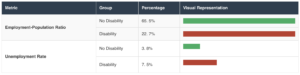
This “Participation Delta” exposes a widespread barrier. The low employment-population ratio for disabled workers (22. 7%) is not solely a function of age, even with half of the disabled population being over 65. When isolating for prime working-age adults (16-64), the employment rate hovers near 37%, still drastically lower than the 75% rate for non-disabled peers. The economy discards one in three disabled workers before they even reach the interview stage.
Intersectionality compounds this exclusion. BLS data reveals that unemployment rates for persons with a disability are significantly higher among Black (10. 7%) and Hispanic (9. 4%) populations compared to White (6. 9%) and Asian (6. 3%) groups. These disparities indicate that racial bias and ableism frequently operate in tandem to suppress economic mobility.
Financial outcomes for those who do secure employment show a similar. The “Disability Pay Gap” remains a serious economic penalty. Census Bureau that full-time, year-round workers with a disability earn approximately 87 cents for every dollar earned by those without a disability. When including part-time workers, who make up a larger share of the disabled workforce, that figure drops to just 66 cents. This wage suppression forces disabled employees to work harder for less, perpetuating a pattern of poverty even among the employed.
The Algorithmic Gatekeeper: AI Bias in Applicant Tracking Systems
The modern hiring funnel has ceased to be a human process. By late 2025, 99% of Fortune 500 companies and nearly 70% of all large enterprises relied on Applicant Tracking Systems (ATS) and artificial intelligence to filter candidates. These systems, designed to maximize efficiency, have inadvertently systematized discrimination against disabled workers on a that human bias never could. The algorithm does not assist recruiters. It acts as the primary gatekeeper. It rejects qualified applicants before a human eye ever reviews their credentials.
The method of this exclusion is technical and pervasive. Algorithms trained on historical hiring data inherit the biases of past decisions. If a company historically hired few people with disabilities, the AI learns to identify the characteristics of non-disabled employees as markers of success. A 2024 report by the Center for Democracy & Technology (CDT), titled Screened Out, revealed that automated tools frequently penalize resumes with employment gaps longer than six months. For workers with chronic illnesses or those who have taken medical leave, this standard configuration functions as an automatic rejection trigger. The software interprets a medical need as a absence of professional commitment.
Video interviewing platforms introduce a second of biometric discrimination. These tools analyze facial micro-expressions, eye contact, and vocal intonation to generate an “employability score.” For neurodivergent candidates, particularly those with autism, or survivors of strokes who may have facial paralysis, these metrics are disastrous. The algorithms classify averted gaze or flat vocal affect as indicators of dishonesty or absence of enthusiasm. In March 2025, the ACLU of Colorado filed a complaint against Intuit and vendor HireVue on behalf of a deaf and Indigenous employee. The worker was denied human captioning for an AI-led video interview and subsequently rejected. The software, unable to process her communication style and request for accommodation, barred her from promotion.
Legal Challenges and Vendor Liability
The legal shifted dramatically in 2024 and 2025. Courts began to the defense that software vendors are neutral third parties. In May 2025, the U. S. District Court for the Northern District of California certified a class action in Mobley v. Workday, Inc. The lawsuit, originally filed in February 2024, alleges that Workday’s screening tools systematically discriminated against applicants based on race, age, and disability. The plaintiff, Derek Mobley, applied to over 100 positions at companies using Workday’s platform and received blanket rejections even with his qualifications. The court’s decision to allow the case to proceed signals that vendors can be held liable as “employment agencies” under federal civil rights law if their tools actively participate in decision-making.
Federal regulators have intensified their scrutiny alongside these private lawsuits. The Equal Employment Opportunity Commission (EEOC) and the Department of Justice (DOJ) released updated technical guidance in 2024, explicitly warning that the “black box” nature of AI is not a defense against liability. The guidance clarified that employers are responsible for ensuring their tools do not screen out individuals with disabilities who could perform the job with reasonable accommodation. Even with these warnings, the load of proof remains heavily on the applicant. Most candidates never know why they were rejected. They receive a generic email, unaware that an algorithm disqualified them based on a keystroke pattern or a six-month gap in 2021.
Method of Automated Exclusion
The following table details specific ATS features and their discriminatory impact on disabled candidates, based on 2024-2025 audit data.
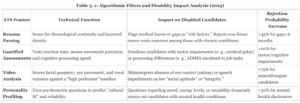
The “gamification” of hiring presents a particularly insidious barrier. Companies use game-based assessments to measure cognitive traits, arguing they are less biased than resume reviews. Yet, these games rely on hardware interaction. A candidate with limited manual dexterity may fail a reaction-time test designed to measure “problem-solving speed,” even if the job requires no rapid physical movements. The Department of Labor’s September 2024 “AI & Inclusive Hiring Framework” highlighted this specific failure mode. It noted that without alternative input methods, these tests violate the Americans with Disabilities Act (ADA). Most platforms still do not offer accessible alternatives by default. The applicant must disclose their disability to request an exemption, a step that fear triggers immediate bias.
Transparency remains the central problem. The algorithms operate in secrecy. Vendors claim their “proprietary” code prevents independent auditing, while employers claim ignorance of the tool’s internal logic. This creates a feedback loop of exclusion. The AI rejects disabled candidates. The company sees no disabled hires. The historical data reflects this absence. The AI reinforces the pattern. Until mandatory third-party audits become federal law, the algorithmic gatekeeper continue to silently enforce a discriminatory.
The Remote Work Paradox: Accommodation or Isolation
By early 2026, remote work had cemented itself as the single most significant driver of disability employment in US history, yet it simultaneously birthed a new method of segregation. The “Great Enabler,” which propelled the labor force participation rate for disabled adults to record highs in 2025, is colliding with aggressive Return-to-Office (RTO) mandates. This collision has created a precarious paradox: while remote options allow entry into the workforce, they frequently trap disabled employees in a “digital basement,” invisible to leadership and stalled in career progression.
The correlation between distributed work and disability employment is irrefutable. A 2025 analysis by the National Bureau of Economic Research (NBER) attributed between 68% and 85% of the post-pandemic rise in full-time employment for workers with physical disabilities directly to work-from-home (WFH) adoption. By removing commute blocks and allowing for controlled environments, remote work did what decades of policy failed to achieve. yet, this progress is fragile. Data from the Kessler Foundation and the University of New Hampshire’s Institute on Disability (UNH-IOD) in December 2024 showed that while employment levels remained near historic highs, the growth had plateaued, directly coinciding with the widespread enforcement of strict in-office requirements.
The RTO Cliff
The resurgence of mandatory office attendance in 2024 and 2025 exposed the hollowness of corporate inclusion pledges. As executive leadership pushed for “culture” and “collaboration,” the availability of remote roles plummeted. An analysis of job vacancy data revealed that fully remote job postings fell from a peak of 8. 7% in 2021 to just 4. 3% by the start of 2025. For disabled candidates, this was not a loss of preference a loss of access.
The legal reflects this tension. In 2024, the Equal Employment Opportunity Commission (EEOC) filed multiple lawsuits against employers who issued blanket denials for remote work accommodations. Notable among these was the case against Osmose Utilities Services, Inc., where the agency challenged the refusal to allow a stroke survivor to work from home. even with federal guidance clarifying that RTO mandates do not override the Americans with Disabilities Act (ADA), the “blanket method” became a standard, albeit illegal, corporate reflex. The Administration’s January 2025 memorandum directing federal agencies to return to in-person work further emboldened private sector retrenchment, forcing the EEOC to problem technical assistance clarifying that the federal government itself was not exempt from individualized accommodation assessments.
Segregation by
For those who retain their remote status, a secondary emergency has emerged: proximity bias. Remote workers with disabilities are increasingly finding themselves employed ignored. A 2023 study of hybrid workforces found that fully remote workers were 31% less likely to receive promotions than their in-office peers, even with equal or higher productivity levels. This “Zoom ceiling” segregates the workforce, creating a two-tier system where disabled employees are retained for their output excluded from the social capital required for advancement.
The isolation is not just professional; it is psychological. While 63% of workers with disabilities prefer remote work to manage their conditions, the cost is frequently severe social disconnection. Data from 2024 indicates that 60% of remote disabled workers reported missing essential social interactions, and 30% a decline in mental health due to isolation. The office, for all its accessibility flaws, provided a visibility that digital tiles cannot replicate.
| Metric | Remote Disabled Workers | In-Office Peers | |
|---|---|---|---|
| Promotion Rate Probability | 6. 2% | 9. 8% | -36. 7% |
| Retention Risk (Likelihood to Quit if RTO Enforced) | 42% | 24% | +18 pts |
| Perceived Productivity (Self-Reported) | 85% | 78% | +7 pts |
| Managerial Visibility (Tasks Assigned) | Low (42% of managers “forget” remote staff) | High | serious Gap |
The data presents a clear ultimatum for 2026. If remote work is treated solely as a medical accommodation rather than a valid operational model, it result in the professional ghettoization of disabled talent. The 35. 3-point participation gap mentioned in Section 3 not close if the only jobs available to disabled workers are those that keep them out of sight, out of mind, and out of the boardroom.
Economic Penalties: The Section 14c Wage Loophole
Under the Fair Labor Standards Act of 1938, Section 14(c) permits employers to pay workers with disabilities less than the federal minimum wage. Originally designed to assist injured veterans, this statute has calcified into a method of economic exclusion. As of late 2025, approximately 40, 000 Americans with disabilities remain employed under these special certificates, earning wages that frequently amount to pennies on the dollar.
Data from the Department of Labor (DOL) Wage and Hour Division reveals a clear reality. In May 2024, the average hourly wage for a worker under a 14(c) certificate stood at $3. 50, less than half the federal minimum of $7. 25. The widens at the lower end of the spectrum. A 2023 Government Accountability Office (GAO) report found that nearly 50% of these workers earned less than $3. 50 per hour, while approximately 10% took home less than $1. 00 per hour. In extreme cases, individuals legally earned as little as 25 cents per hour for assembly tasks performed in segregated “sheltered workshops.”
“The productivity measurement used to justify these wages is fundamentally flawed. It relies on a stopwatch comparison between a disabled worker and a ‘standard’ non-disabled worker, a practice that reduces human labor to a crude arithmetic of speed rather than value.”
Proponents that Section 14(c) provides essential employment opportunities for individuals who might otherwise remain unemployed. Yet, the data contradicts the claim that these programs serve as stepping stones to competitive employment. The GAO’s analysis indicates that less than 2% of workers in 14(c) settings transition to competitive integrated employment (CIE) annually. Instead, the system functions as a closed loop, where Community Rehabilitation Programs (CRPs), which hold 93% of all active certificates, retain workers indefinitely at subminimum rates.
The State-Federal Divide
While federal policy stagnated, individual states moved to the practice. By January 1, 2025, 18 states had enacted legislation to eliminate subminimum wages for disabled workers. Illinois joined this list with the “Dignity in Pay Act” in early 2025, following similar bans in California, Tennessee, and South Carolina. These state-level mandates forced a decoupling of disability services from subminimum wage employment, proving that integrated employment models can succeed without relying on wage suppression.
The federal trajectory proved more volatile. In late 2024, the Department of Labor proposed a rule to phase out new 14(c) certificates. Yet, on July 7, 2025, the agency withdrew the proposal, citing legal constraints and ongoing demand from certificate holders. This reversal left tens of thousands of workers in a legislative limbo, protected only by the patchwork of state laws.
Wage Distribution Analysis
The following table breaks down the hourly earnings of workers employed under Section 14(c) certificates as of the most recent detailed federal audit.
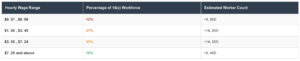
This wage structure imposes a severe economic penalty. A worker earning the average 14(c) rate of $3. 50 per hour would need to work 82 hours a week just to match the gross income of a minimum wage earner working 40 hours. For those in the bottom tier, economic independence remains mathematically impossible. The persistence of this loophole show a widespread valuation of disabled labor as inherently inferior, a view that remains codified in federal law nearly a century after its inception.
The Benefits Cliff: Federal Policy Disincentivizing Work
For millions of disabled Americans, the decision to enter the workforce is not a calculation of ambition, a gamble with survival. Federal disability policy, specifically the rules governing Social Security Disability Insurance (SSDI) and Supplemental Security Income (SSI), creates a “benefits cliff” where earning a single dollar over a set threshold triggers the total loss of cash assistance and serious healthcare coverage. This all-or-nothing structure punishes disabled workers for succeeding, trapping them in state-sponsored poverty.
The primary method of this exclusion is the Substantial Gainful Activity (SGA) limit. In 2025, the Social Security Administration (SSA) set the SGA monthly earnings cap at $1, 620 for non-blind individuals. If a beneficiary earns $1, 621 in a given month after their trial work period, they do not see a reduction in their check; they lose their entire SSDI cash benefit. This cliff creates a perverse economic ceiling, forcing workers to artificially suppress their hours or reject promotions to avoid financial ruin. For blind beneficiaries, the 2025 limit sits higher at $2, 700, yet the structural flaw remains identical: the system demands total dependency or total independence, with no between the two.
The situation is even more punitive for SSI recipients, who face draconian asset limits that have remained frozen in time. Since 1989, the resource limit for an individual on SSI has been capped at $2, 000. This figure is not indexed to inflation. Had it tracked with the Consumer Price Index (CPI) over the last 36 years, the limit would exceed $5, 000 today. Instead, disabled workers are legally barred from saving for a security deposit, a vehicle repair, or an emergency fund without forfeiting their eligibility. This policy enforces a “poverty mandate,” ensuring that disabled workers remain one financial shock away from destitution.

Beyond cash benefits, the “medical cliff” presents an even more dangerous precipice. disabled workers rely on Medicaid for services that private insurance and Medicare do not cover, such as personal care attendants (PCAs) and complex rehabilitation technology. While Section 1619(b) of the Social Security Act technically allows SSI recipients to retain Medicaid coverage while earning up to a state-specific threshold, ranging from roughly $34, 000 to over $86, 000 in 2024, the administrative complexity renders it a fragile safety net. Beneficiaries frequently report bureaucratic errors where increased earnings trigger automatic termination notices, forcing them into months of appeals while their life-sustaining care hangs in the balance.
The federal government’s attempt to mitigate these risks, the “Ticket to Work” program, has largely failed to move the needle. Participation rates remain statistically negligible, with fewer than 5% of beneficiaries successfully using the program to exit the rolls and achieve financial independence. The program’s complexity, combined with the rational fear of overpayments, where the SSA demands repayment of benefits paid during months of work, discourages enrollment. A 2024 Government Accountability Office (GAO) report highlighted that overpayments remain a widespread failure, with the SSA frequently taking years to identify earnings changes, leaving workers with debts totaling tens of thousands of dollars.
The economic reality for 2025 is clear. A disabled worker earning the federal minimum wage would need to work nearly full-time to hit the SGA cliff, in states with higher local wages, a part-time job of 20 hours a week can easily breach the limit. This forces a suppression of labor supply where workers cap their own productivity to protect their healthcare. Until federal policy replaces these cliffs with a graduated phase-out system that rewards rather than penalizes work, the disability employment gap remain a manufactured emergency of policy, not ability.
Long Covid: The Invisible Workforce emergency
By late 2025, the United States labor market faced a silent attrition that standard economic models. While headline unemployment figures stabilized, a structural beneath the surface. Data from the Brookings Institution and the U. S. Census Bureau’s Household Pulse Survey indicates that approximately 16 million working-age Americans lived with Long Covid in 2025. Of this cohort, between 2 million and 4 million workers have exited the labor force entirely. This mass departure is not a temporary fluctuation. It represents a permanent disability shock that has removed more prime-age workers from the economy than the opioid emergency and the 2008 financial crash combined.
The economic penalty of this exclusion is measurable and severe. Conservative estimates from the Brookings Institution place the annual cost of lost wages due to Long Covid between $170 billion and $230 billion. Broader analyses, including data from Harvard University economists, suggest the total economic load, accounting for reduced productivity and medical costs, method $3. 7 trillion. These numbers refute the narrative that the pandemic’s economic aftershocks have faded. Instead, they reveal a workforce hollowed out by a condition that federal disability law recognizes corporate policy frequently ignores.
Employers have largely failed to the gap between legal obligation and operational reality. Although the Department of Health and Human Services classified Long Covid as a disability under the ADA in 2021, enforcement remains porous. An Ohio State University study published in late 2024 found that 45% of employees with Long Covid were forced to reduce their hours, while faced termination after being denied simple accommodations like remote work or flexible scheduling. The refusal to adapt workflows for energy-limiting conditions has created a “forced exit” method. Workers who could remain productive with minor adjustments are instead pushed onto disability rolls or into long-term unemployment.
The legal system has begun to reflect this friction. The Equal Employment Opportunity Commission (EEOC) reported a 9. 2% increase in total discrimination charges in Fiscal Year 2024, with disability-related claims constituting a primary driver. also, federal ADA Title III lawsuits saw a 12% year-over-year increase in 2025. These filings expose a widespread breakdown where large enterprises are statistically less likely to grant accommodations than smaller firms. A 2024 survey by Inclusively found that only 55% of employees at companies with over 1, 000 workers were even aware that Long Covid qualified for ADA protection, compared to 74% at smaller businesses.
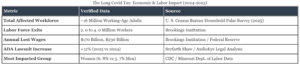
This emergency hits specific demographics with disproportionate force. Data from the Centers for Disease Control and Prevention (CDC) confirms that women are nearly twice as likely as men to suffer from Long Covid symptoms that limit daily activity. Consequently, the labor participation gap for women in their 40s and 50s has widened. Frontline sectors also bear the heaviest load. Essential non-healthcare workers reported the highest prevalence of Long Covid at 6. 6% in 2024. These are the very employees who frequently absence the use to negotiate flexible terms. Their removal from the workforce exacerbates labor absence in retail, logistics, and manufacturing.
The refusal to integrate this new class of disabled workers creates a economic drag. When an experienced employee leaves the workforce due to denied accommodations, the cost of turnover and lost institutional knowledge far exceeds the expense of a flexible schedule. Yet corporate retention strategies in 2025 continued to prioritize return-to-office mandates over health-based flexibility. This rigidity does not just violate the spirit of the ADA. It actively the productive capacity of the American workforce.
Neurodiversity Initiatives: Marketing vs Metric Reality
Corporate America has discovered a new asset class: the neurodivergent mind. Between 2018 and 2024, the presence of neurodiversity-related keywords in U. S. job postings nearly tripled, rising from 0. 5% to 1. 3%. Companies like Microsoft, SAP, and JPMorgan Chase actively market their “Autism at Work” programs, citing internal data that shows neurodivergent teams are 30% more productive and generate fewer errors than their neurotypical counterparts. Yet, this surge in corporate messaging conceals a statistical failure so severe it renders these initiatives statistically insignificant.
The metric reality for neurodivergent adults, particularly those on the autism spectrum, remains catastrophic. As of 2025, the unemployment rate for autistic adults in the United States stands at approximately 85%. This figure has not shifted meaningfully even with a decade of high-profile corporate pilots. While marketing materials highlight the “superpowers” of pattern recognition and coding focus, the vast majority of neurodivergent individuals, specifically those who do not fit the “genius coder” stereotype, remain permanently locked out of the workforce. Only 16% of autistic adults hold full-time employment, a number that exposes the “neurodiversity revolution” as a niche recruiting strategy rather than a widespread inclusion effort.
The Pilot Program Trap
The primary method of this failure is the “pilot program” model. Major corporations launch specialized hiring cohorts, capping intake at 10 to 50 individuals annually. These programs are frequently in diversity reports and press releases, yet they function as silos. For example, SAP’s renowned “Autism at Work” program, while a pioneer in the field, employed roughly 200 individuals globally by 2024, a fraction of a workforce exceeding 100, 000. These initiatives create a “velvet rope” effect: of candidates enter through a specialized, supportive side door, while thousands of others face the standard applicant tracking systems (ATS) that automatically filter out non-linear resumes and employment gaps common among neurodivergent applicants.
The between corporate public relations and the employee experience is quantifiable. A 2025 survey by Understood. org found that 53% of neurodivergent employees believe these workplace programs are “mostly for optics.” also, 65% of neurodivergent workers fear that disclosing their condition to management result in stigma or discrimination, leading to a culture of “masking”, suppressing neurodivergent traits to appear neurotypical. This forced conformity drains cognitive energy and accelerates burnout, negating the very productivity gains companies claim to seek.
| Metric | Corporate Marketing Claim | Workforce Reality |
|---|---|---|
| Productivity | “Neurodivergent teams are 30% more productive.” (Deloitte) | Productivity gains are limited to small, segregated “innovation labs” rather than integrated teams. |
| Hiring Volume | “We are scaling our neurodiversity hiring.” | Autistic unemployment remains at 85%; most programs hire fewer than 50 people per year. |
| Retention | “90%+ retention rate in pilot programs.” | General neurodivergent workforce turnover is high; 39% plan to leave due to poor culture fit. |
| Disclosure | “Bring your whole self to work.” | 64% of employees hide their condition; 50% of managers admit discomfort hiring neurodivergent staff. |
The “Culture Fit” Weapon
The greatest barrier to scaling these initiatives is the weaponization of “culture fit.” Standard interview processes rely heavily on social fluency, eye contact, and rapid-fire verbal processing, areas where autistic and neurodivergent candidates may struggle. A 2024 report from the Institute of Leadership & Management revealed that 50% of managers openly admitted they would be “uncomfortable” hiring or managing a neurodivergent employee. This bias is baked into the recruitment infrastructure. AI-driven video interview platforms, standard in 40% of large enterprises, analyze facial expressions and intonation, frequently flagging neurodivergent candidates as “low engagement” or “dishonest” simply for averting their gaze or fidgeting.
The economic cost of this exclusion is immense, yet corporations continue to treat neurodiversity as a charity vertical rather than a talent strategy. By restricting hiring to “high-functioning” roles in technology and finance, companies ignore the broader spectrum of talent available for logistics, manufacturing, and creative roles. Until recruitment processes are fundamentally deconstructed to value output over social performance, the 85% unemployment statistic remain the defining metric of the neurodiversity movement.
The Compound Penalty: Race, Gender, and Disability
The economic exclusion of disabled workers does not exist in a vacuum. It operates within a rigid hierarchy where race and gender multiply the penalties of disability. For workers navigating the intersection of these identities, the “disability hiring gap” transforms into an economic chasm. Data from the Bureau of Labor Statistics (BLS) released in February 2025 reveals that the load of unemployment falls disproportionately on disabled workers of color, the myth that disability discrimination is a uniform experience.
In 2024, the unemployment rate for Black workers with disabilities stood at 10. 7%, significantly higher than the 6. 9% rate for their White disabled counterparts. Hispanic disabled workers faced a similarly elevated rate of 9. 4%. These figures expose a widespread failure where the labor market applies a “double penalty” to non-white disabled applicants. While White disabled workers struggle to find employment compared to non-disabled peers, Black and Hispanic disabled workers face rejection rates that suggest active, compounded bias at the resume screening and interview stages.
The Wage Chasm
The financial becomes even more acute when examining income. A 2024 analysis by the National Partnership for Women & Families quantified the price of this intersectional exclusion. While disabled women in total earn just 50 cents for every dollar paid to a non-disabled man, the numbers for women of color plummet further. This is not a gap; it is a widespread devaluation of labor based on the factors of ableism, racism, and sexism.
Black disabled women earn only 45 cents for every dollar earned by a non-disabled white man. For Latina disabled women, the figure drops to 44 cents. This means a Latina worker with a disability must work more than two full years to match the annual earnings of a non-disabled white male counterpart. These metrics refute corporate claims of “inclusive” pay structures. The data shows that as identities overlap, the pay collapses.
| Demographic Group | Earnings (Cents per Dollar) | Annual Loss (Est.) |
|---|---|---|
| White Disabled Women | 64¢ | $25, 500 |
| Asian American / Pacific Islander Disabled Women | 55¢ | $20, 500 |
| Black Disabled Women | 45¢ | $28, 500 |
| Latina Disabled Women | 44¢ | $30, 500 |
Source: National Partnership for Women & Families / American Community Survey 2024 Data.
Poverty as a Policy Outcome
This suppression of wages and employment opportunity forces specific demographics into poverty at worrying rates. The National Disability Institute reported in 2023 that approximately 37% to 40% of African Americans with disabilities live in poverty, compared to 24% of White disabled adults. The confirms that economic instability is not an inherent symptom of disability a result of exclusionary economic policy. For Native Hawaiian and Pacific Islander men with disabilities, the probability of living in poverty is over 20 percentage points higher than for white men without disabilities.
The “triple load” of race, gender, and disability creates a pattern where access to resources, such as vocational rehabilitation, legal representation, and healthcare, is restricted. A 2025 report from the Urban Institute highlights that 18% of disabled respondents reported unfair treatment at work, a figure that likely undercounts the experiences of women of color who frequently fear retaliation for reporting discrimination. When a Black disabled woman is denied a promotion or a reasonable accommodation, it is rarely clear which bias drove the decision, yet the economic outcome remains the same: stagnation and lost wages.
Corporate diversity initiatives frequently treat these categories as separate silos. A company may have a “Black Employee Resource Group” and a “Disability Network,” yet fail to address the specific blocks facing Black disabled employees. This fragmentation allows the specific needs of intersectional workers, such as culturally competent mental health support or accommodations for conditions prevalent in specific communities, to fall through the cracks. The 2024 BLS that without targeted intervention that addresses race and disability simultaneously, the employment gap for workers of color continue to widen even if the in total disability employment rate improves.
The Cost Myth: Actual Expenses vs Corporate Perception
The most persistent barrier to disability inclusion in the American workforce is not architectural, financial, specifically, the erroneous belief that accommodation is prohibitively expensive. Corporate leadership frequently cites vague concerns regarding “undue hardship” to justify exclusionary hiring practices. yet, data collected between 2020 and 2025 by the Job Accommodation Network (JAN) and the U. S. Department of Labor this narrative, revealing a clear disconnect between executive fear and fiscal reality.
The “Cost Myth” relies on the assumption that hiring a disabled employee expensive retrofits, specialized technology, or significant workflow disruptions. Verified data proves the opposite. According to the 2023 JAN report, 56% of workplace accommodations cost absolutely nothing to implement. These zero-cost solutions frequently involve simple administrative adjustments, such as modifying a schedule, allowing a seated work position, or permitting the use of personal noise-canceling headphones. For the 44% of accommodations that did require a one-time expenditure, the median cost was just $300. This figure has actually decreased from previous years, inflationary trends and rendering the “expense” argument statistically invalid for the vast majority of corporations.
When examined against the cost of employee turnover, the financial argument for exclusion collapses entirely. The Society for Human Resource Management (SHRM) estimates the cost of replacing an employee can range from 50% to 200% of their annual salary. In contrast, spending $300 to retain a qualified worker represents a micro-investment with massive returns. A 2024 analysis of accommodation that for every $1 spent on reasonable accommodations, companies realized an average return of $28. 50 in benefits, primarily driven by increased retention, reduced training costs, and higher productivity.
| Metric | Corporate Perception (The Myth) | Verified Reality (The Data) |
|---|---|---|
| Accommodation Cost | Expensive, ongoing capital drain ($5, 000+) | $0 for 56% of cases; Median $300 for the rest |
| Insurance Premiums | Workers’ comp and health rates spike | No statistical increase; rates are based on industry risks, not demographics |
| Attendance | Higher absenteeism and sick leave | Disabled workers have 86% average or above-average attendance rates |
| Retention | Higher turnover risk | 20% turnover rate vs. 150% for non-disabled peers in high-churn sectors |
Beyond direct expenses, the “insurance fear” remains a potent deterrent. hiring managers erroneously believe that adding disabled workers to the payroll spike workers’ compensation premiums or health insurance rates. This is factually incorrect. Insurance rates are determined by the inherent risks of the industry and the company’s accident history, not the medical demographics of its workforce. In fact, safety data suggests the opposite effect: disabled employees, frequently more meticulous about safety due to their awareness of physical limitations, frequently exhibit lower accident rates than their non-disabled counterparts. A long-term safety study reaffirmed in 2024 showed that 97% of workers with disabilities were rated average or above average in safety performance.
The profitability of inclusion is further supported by a landmark 2018 Accenture study, the findings of which remained consistent through 2025 re-evaluations. Companies identified as “Disability Inclusion Champions” achieved 28% higher revenue, double the net income, and 30% higher economic profit margins compared to their peers. These financial gains are not accidental; they from the innovation born of diverse problem-solving and the access to an untapped talent pool of over 10 million working-age Americans.
also, the tax code actively subsidizes the already low costs of accommodation. The Work Opportunity Tax Credit (WOTC) offers employers up to $2, 400 in federal tax credits for hiring individuals with disabilities. also, the Disabled Access Credit (IRS Form 8826) allows small businesses to claim a credit of up to $5, 000 annually for accessibility improvements. When these incentives are applied, the net financial impact of hiring a disabled worker is frequently positive before the employee even clocks in for their shift.
The data is unambiguous: the “high cost” of disability inclusion is a fabrication used to mask widespread bias. Corporations that cling to this myth are not protecting their bottom line; they are actively hemorrhaging chance profit by ignoring a loyal, safe, and cost- segment of the labor force. The expense lies not in accommodation, in the continued choice of exclusion.
Legal Atrophy: EEOC Enforcement Trends 2020 to 2026
The enforcement of disability rights in the American workplace has entered a period of “legal atrophy,” characterized by a widening chasm between the volume of reported discrimination and the federal government’s capacity, or willingness, to litigate. While the Equal Employment Opportunity Commission (EEOC) reports record-breaking monetary recoveries, a forensic examination of fiscal data from 2020 to 2026 reveals a widespread bottleneck. Workers with disabilities are filing charges at historic rates, yet the probability of those charges resulting in a federal lawsuit has plummeted to a decade-low.
Fiscal Year 2024 marked a serious inflection point. The agency received 88, 531 total charges of discrimination, a 9. 2% surge from the previous year and the highest intake since the mid-2010s. Disability-related claims accounted for 38. 0% of this volume, representing approximately 33, 640 individual allegations of exclusion, failure to accommodate, or termination. even with this deluge of complaints, the agency’s litigation began to seize. By the close of FY 2025, the EEOC filed only 93 merit lawsuits across all statutes, matching the lowest enforcement output in ten years.
The Enforcement Gap: Charges vs. Litigation
The between incoming pleas for help and outgoing legal action defines the current emergency. In FY 2023, the EEOC filed 143 lawsuits, a strong response to 81, 055 charges. Two years later, with charge volumes accelerating, litigation filings collapsed by nearly 35%. This retreat occurred even as the agency secured a record $700 million in monetary relief in FY 2024, a figure that masks the reality that most resolutions come through administrative settlements rather than the precedent-setting courtroom victories required to alter corporate behavior.
| Fiscal Year | Total Charges Filed | Disability Charge Share | Merit Lawsuits Filed | Total Monetary Recovery |
|---|---|---|---|---|
| 2020 | 67, 448 | 36. 1% | 93 | $535. 4 Million |
| 2021 | 61, 331 | 36. 0% | 116 | $484. 0 Million |
| 2022 | 73, 485 | 34. 0% | 91 | $513. 7 Million |
| 2023 | 81, 055 | 34. 0% | 143 | $665. 0 Million |
| 2024 | 88, 531 | 38. 0% | 111 | $700. 0 Million |
| 2025 | *Data Pending | 31. 5% (Litigation Share) | 93 | *Data Pending |
The collapse in FY 2025 litigation numbers is not a statistical anomaly the result of administrative paralysis. Following the presidential transition in January 2025, the commission lost its quorum and saw the departure of key leadership, including the General Counsel. This left the agency unable to approve complex or high-cost litigation for months. Consequently, while 48 disability-related lawsuits were filed in FY 2024, comprising 44% of the docket, the momentum stalled in 2025. The agency shifted focus toward “emerging” priorities like the Pregnant Workers Fairness Act (PWFA) and religious discrimination, which, while important, further diluted the resources available for enforcing the Americans with Disabilities Act (ADA).
The Settlement Trap
The agency’s reliance on monetary settlements over litigation creates a “pay-to-discriminate” environment for large employers. In FY 2024, the EEOC secured nearly $700 million for victims, yet only ~$40 million of that total came from litigation. The vast majority was obtained through mediation and conciliation. While these settlements provide financial restitution to specific victims, they frequently absence the public injunctive relief, such as court-monitored hiring mandates, that forces widespread change.
For example, in early 2026, the EEOC settled a disability discrimination suit against Corewell Health East for $30, 000. The case involved a nurse denied a transfer to a vacant position she was qualified for, a textbook ADA violation. While the nurse received compensation, the settlement amount is negligible for a major healthcare system, functioning more as a business expense than a deterrent. This pattern repeats across industries: high-volume settlements clear the backlog fail to the structural blocks keeping the disability unemployment rate at 7. 5%.
The that the legal method designed to protect disabled workers is becoming a claims processing center rather than a law enforcement body. With litigation filings at a decade-low and charge volumes at a decade-high, the risk calculation for employers has shifted. The threat of a federal lawsuit has diminished, emboldening the very hiring practices that perpetuate the exclusion of the disabled workforce.
The Digital Divide: Inaccessible Enterprise Software
For disabled employees, the modern workplace is frequently a digital where the gates are locked from the inside. While public-facing websites face increasing scrutiny under the Americans with Disabilities Act (ADA), the internal software ecosystems that power global enterprise, human resources portals, customer relationship management (CRM) systems, and collaboration tools, remain exclusionary. Data from 2023 through 2025 reveals a “technological ceiling” that prevents qualified disabled workers from entering the workforce or advancing once employed.
The of this exclusion is quantifiable. A 2023 survey by Capterra found that 45% of disabled workers rated the accessibility features of their employer-provided software as “fair to poor.” For employees with blindness or low vision, the situation is more severe, with 67% reporting significant difficulty navigating essential job software without tailored accommodations. This is not a matter of convenience; it is a matter of operability. When an employee cannot access the company’s time-tracking system or read the text in a mandatory training module, they are barred from performing their duties.
The barrier begins before the day of work. A serious audit of Fortune 100 career sites revealed that 89 of these corporate giants failed at least one basic Web Content Accessibility Guidelines (WCAG) standard. These failures include low-contrast text that is unreadable to visually impaired applicants, missing form labels that render applications impossible for screen reader users to complete, and keyboard navigation traps that lock out candidates with motor disabilities. If the digital front door is jammed, the diversity of the workforce inside remains stagnant.
The Procurement Failure
The root of this widespread failure lies in corporate procurement. Enterprise software is frequently purchased by decision-makers who prioritize feature sets and security over usability for disabled staff. Vendors frequently provide Voluntary Product Accessibility Templates (VPATs) that claim compliance, yet real-world performance lags behind these paper pledge. The 2025 WebAIM Million report, while focused on public homepages, serves as a proxy for the broader software development culture: 96. 3% of tested pages contained detectable WCAG failures. In the closed ecosystem of enterprise software, where competitive pressure to improve user experience is lower, these error rates are frequently higher.
| Metric | Statistic | Source |
|---|---|---|
| Disabled Workers Reporting “Fair/Poor” Software Accessibility | 45% | Capterra Tech Accessibility Survey (2023) |
| Fortune 100 Career Sites Failing Basic WCAG Standards | 89% | Phenom People Audit |
| Blind/Low Vision Employees Reporting Navigation Difficulty | 67% | Capterra Tech Accessibility Survey (2023) |
| Projected ADA Digital Lawsuits (2025) | ~5, 000 | UsableNet 2025 Midyear Report |
| Websites with Low Contrast Text Failures | 81% | WebAIM Million Report (2025) |
The legal ramifications of this digital divide are escalating. UsableNet’s 2025 Midyear Report documented 2, 019 digital accessibility lawsuits filed in the half of the year alone, putting the U. S. on track for a record-breaking 5, 000 lawsuits by year-end. While the majority of these target consumer-facing e-commerce platforms, the legal precedent for internal tools is established under ADA Title I, which mandates reasonable accommodation. When an employer mandates the use of inaccessible software, they are creating a discriminatory work environment. The shift of litigation to state courts in New York, California, and Florida suggests a broadening legal battlefield where internal digital blocks may soon face the same litigious intensity as public websites.
Artificial Intelligence presents a volatile variable in this equation. The Partnership on Employment & Accessible Technology (PEAT) reported in 2024 that while AI tools offer chance breakthroughs, such as automated image descriptions or real-time captioning, they also introduce new blocks. AI-driven surveillance tools and biometric monitoring software frequently fail to account for the movement patterns or working styles of disabled employees, flagging them incorrectly for “low productivity.” also, the interfaces for these new tools frequently absence basic accessibility controls, a new strata of exclusion on top of legacy systems.
The data is unambiguous. Companies are investing billions in “digital transformation” while leaving their disabled workforce stranded in the analog age. Until procurement policies mandate verified user testing by disabled individuals, rather than relying on vendor self-attestation, the digital divide within the enterprise remain a primary driver of the disability unemployment gap.
Mental Health Stigma: The Silent Career Killer
While physical disabilities frequently face architectural blocks, mental health conditions confront a more insidious blockade: the silent judgment of leadership. Data from 2024 and 2025 reveals that even with corporate wellness campaigns, the stigma against mental illness remains a primary driver of unemployment and career stagnation. A 2024 Businessolver report exposes a clear reality: 67% of CEOs and HR professionals admit they view employees with mental health problem as a “weakness” or a “load” to the organization. This perception directly into hiring bias, where applicants disclosing a history of mental health struggles face a 27% lower probability of receiving a job interview compared to candidates with identical qualifications who do not disclose.
The “weakness” label creates a culture of silence that forces workers underground. According to 2024 data from the Society for Human Resource Management (SHRM), only 40% of employees feel comfortable discussing their mental health at work. The fear is well-founded. The same dataset indicates that 35% of workers believe disclosing a mental health condition would make them less likely to receive a promotion, while 52% of HR professionals stated they would not recommend a job in their own field to someone struggling with mental health. This internal bias forces a “disclosure penalty,” where honesty about one’s health status correlates with stalled advancement.
The economic consequences of this stigma are measurable and severe. In 2024, the unemployment rate for people with disabilities held at 7. 5%, nearly double the 3. 8% rate for non-disabled workers. For those with mental health disabilities, the barrier to entry is compounded by the “ideal worker” norm, a standard that penalizes gaps in employment or requests for flexibility. Consequently, 34% of workers reported moving to a lower-paying job specifically to protect their mental health, paying a “sanity tax” to escape toxic environments. also, 20% of employees have curtailed their career ambitions entirely, declining promotions or stepping back from leadership roles to avoid the scrutiny that comes with higher visibility.
Federal enforcement data corroborates the prevalence of this discrimination. In fiscal year 2024, the Equal Employment Opportunity Commission (EEOC) received 88, 531 total charges of workplace discrimination. Disability-related charges ranked second, accounting for 38% of all filings, while retaliation, frequently the result of an employee asserting their rights or requesting accommodation, remained the top allegation with 42, 301 charges. These figures indicate that when workers do attempt to the gap by requesting support, they frequently face punitive measures rather than accommodation.
| Metric | Statistic | Source |
|---|---|---|
| CEO/HR Viewing Mental Health as “Weakness” | 67% | Businessolver 2024 |
| Reduction in Interview Callbacks (Disclosed Mental Health) | -27% | NIH / PMC Study |
| Employees Fearing Promotion Loss via Disclosure | 35% | SHRM 2024 |
| Workers Taking Pay Cuts for Mental Health Safety | 34% | SHRM 2024 |
| Disability Unemployment Rate (2024) | 7. 5% | Bureau of Labor Statistics |
The intersection of mental health and gender further widens the economic divide. Disabled women workers earn just 50 cents for every dollar paid to non-disabled men, a gap driven in part by the concentration of women in industries with high burnout rates and low mental health support. With the U. S. depression rate exceeding 18% in 2025 and 59% of employees reporting burnout, the refusal to accommodate mental health is not a legal liability a structural failure that drains talent from the workforce. Companies that in viewing mental health accommodation as optional or burdensome are actively contributing to a labor market where qualified professionals are systematically excluded.
The 7% Mirage: Section 503 and the Collapse of Oversight
For over a decade, the of federal disability inclusion was a single, hard number: 7 percent. Under Section 503 of the Rehabilitation Act of 1973, federal contractors, who shared employ roughly 20 percent of the American workforce, were compelled to aim for a 7 percent utilization goal for individuals with disabilities across all job groups. By early 2026, this metric had devolved from a regulatory mandate into a statistical ghost. The collapse was not a result of corporate inertia the product of a systematic of the Office of Federal Contract Compliance Programs (OFCCP) that accelerated rapidly throughout 2025.
The disintegration of compliance began long before the regulatory rollbacks of the mid-2020s. Between 2015 and 2024, the “utilization goal” served largely as an administrative suggestion rather than an enforceable quota. Federal data from 2023 revealed that fewer than 15 percent of contractor establishments actually met the 7 percent benchmark. The failure was insulated by the “good faith effort” clause, a regulatory loophole that allowed companies to remain compliant simply by documenting outreach activities, job fair attendance or community partnerships, regardless of whether those efforts resulted in a single hire.
The structural turned into a landslide in January 2025 with the issuance of Executive Order 14173. While the order primarily targeted Executive Order 11246 (race and gender affirmative action), the subsequent administrative shockwaves paralyzed Section 503 enforcement. By May 2025, the OFCCP’s workforce had been slashed from 485 employees to approximately 50, leaving the agency with a skeleton crew incapable of conducting meaningful audits. The result was an enforcement vacuum where violations went undocumented and widespread discrimination remained unchallenged.
| Fiscal Year | Completed Audits | Financial Remedies Recovered | Agency Staffing Levels | Enforcement Status |
|---|---|---|---|---|
| 2023 | 1, 318 | $17. 3 Million | ~485 | Active / Heightened |
| 2024 | 771 | $22. 5 Million | ~450 | Declining / Targeted |
| 2025 | <100 (Est.) | Paused / Negligible | ~50 | Abeyance / Dismantled |
The most significant blow to disability hiring accountability came in July 2025, when the Department of Labor proposed rescinding the 7 percent utilization goal entirely. The agency argued that the requirement to invite applicants to self-identify as disabled conflicted with the Americans with Disabilities Act (ADA). This reversal blinded the government to hiring disparities. Without the self-identification data, utilization analysis became impossible, and the “hiring gap” from official reports simply because no one was left to measure it.
Corporate contractors responded to the regulatory thaw with immediate shifts in policy. In the absence of the 7 percent target, major defense and technology firms quietly dissolved their specialized disability recruitment teams. The “Section 503 Focused Reviews,” which had successfully recovered millions in back wages for disabled applicants in 2023, were suspended indefinitely. The 2025 jurisdictional threshold increase, raising the contract value required for basic Section 503 coverage from $15, 000 to $20, 000, further reduced the pool of monitored companies, exempting thousands of smaller contractors from scrutiny.
The financial impact of this deregulation is measurable. In fiscal year 2023, the OFCCP secured over $17 million in remedies for victims of discrimination, a 46 percent increase from the previous year. By the close of 2025, financial recoveries had flatlined. The method for accountability has been replaced by a system of voluntary “values-based” inclusion, a method that historical data confirms is wholly ineffective at combating widespread exclusion. The federal government, once the primary driver of disability employment standards, has resigned its post.
The Gig Economy Trap: Precarious Labor as Last Resort
For millions of disabled workers, the “gig economy” is not a frontier of entrepreneurial freedom; it is a containment zone for those rejected by the traditional labor market. While platform companies market flexibility as a perk, 2024-2025 data reveals a darker reality: a surge in disabled workers forced into precarious, algorithmically managed independent contracting due to widespread blocks in standard employment. This shift represents a deregulation of disability rights, stripping workers of Americans with Disabilities Act (ADA) protections the moment they log in.
Bureau of Labor Statistics (BLS) data released in February 2025 confirms this. In 2024, 9. 2% of employed persons with a disability were self-employed, compared to only 6. 0% of those with no disability. This 3. 2 percentage point gap is not a reflection of preference a symptom of exclusion. When traditional employers fail to provide reasonable accommodations, disabled workers are pushed into a sector where accommodations are nonexistent and income is volatile.
The Algorithmic Boss: Automated Discrimination
The management structure of gig platforms, governed by unclear algorithms rather than human supervisors, introduces a new, insidious form of discrimination. Platforms like Uber, DoorDash, and TaskRabbit use “black box” metrics to rank, reward, and terminate workers. These systems frequently penalize behaviors associated with disabilities without context or recourse.
A 2024 analysis by the Center for Democracy & Technology highlighted that speed and efficiency metrics disproportionately harm workers with mobility or cognitive impairments. For instance, a delivery driver with a physical disability may require additional time to exit a vehicle or navigate stairs. An algorithm, blind to this context, simply registers a “delay,” lowering the worker’s efficiency score. If this score drops a programmed threshold, the worker faces “deactivation”, a firing executed by code, with no human review and no ADA interactive process.
Legal scholars warn that this model bypasses federal civil rights laws. Because gig workers are classified as independent contractors, they fall outside Title I of the ADA, which applies only to employees. Platforms are under no legal obligation to modify their apps or policies to accommodate disabled workers. The result is a labor market where the “reasonable accommodation” standard is replaced by a ruthless “adapt or be deactivated” mandate.
The Earnings Penalty
The financial toll of this segregation is measurable. While gig work offers a low barrier to entry, it comes with a significant earnings penalty. A 2024 International Labour Organization (ILO) working paper found that globally, workers with disabilities earn 12% less per hour than their non-disabled counterparts, a gap that widens in the unregulated gig sector. In the United States, this is compounded by the absence of benefits. Gig workers must cover their own health insurance, a prohibitive cost for individuals with chronic health conditions who are already navigating a complex and expensive healthcare system.
The Federal Reserve’s “Economic Well-Being of U. S. Households in 2024” report (published May 2025) indicates that disabled adults are overrepresented in gig work performed for supplemental income, yet they report lower financial well-being than non-disabled gig workers. The narrative that gig work provides a “safety net” is false; for, it is a poverty trap that extracts labor without providing the stability necessary to manage a disability.
Comparative Analysis: Traditional vs. Gig Employment
The following table contrasts the structural realities for disabled workers in traditional employment versus the gig economy, highlighting the of rights and stability.
| Metric | Traditional Employment (W-2) | Gig Economy (1099) |
|---|---|---|
| Legal Status | Employee | Independent Contractor |
| ADA Coverage | Full Title I Protections | None |
| Accommodation Mandate | Employer must provide reasonable accommodations | Worker bears full cost and load |
| Performance Review | Human oversight; interactive process required | Algorithmic; immediate deactivation for outliers |
| Health Benefits | Employer-sponsored ( ) | 0% Employer Contribution |
| Self-Employment Rate (Disabled) | N/A | 9. 2% (vs. 6. 0% non-disabled) |
The migration of disabled workers into the gig economy is not a success story of digital inclusion. It is a regulatory failure. By allowing a massive segment of the labor market to operate outside the bounds of the ADA, regulators have permitted the creation of a second-class tier of employment where discrimination is automated and legal protections are void. Until labor laws catch up to the algorithmic reality, the “freedom” of the gig economy remain a euphemism for the freedom to be exploited without recourse.
Education to Employment: The Broken Pipeline
The pledge of higher education as a great equalizer collapses when applied to students with disabilities. For decades, the narrative has been that a university degree is the golden ticket to economic stability. Yet, 2024 data reveals a widespread failure where academic achievement does not translate into employment. While the Bureau of Labor Statistics (BLS) reported in early 2025 that 23% of individuals with disabilities had attained a bachelor’s degree or higher, their employment outcomes remain severed from their credentials. A exists: as of 2022, only 31. 3% of college graduates with disabilities were employed, compared to 75% of their non-disabled peers.
This “degree paradox” suggests that the pipeline is not leaking; it is structurally broken. The attrition begins long before graduation, frequently at the serious juncture known as the “services cliff.” Upon leaving the K-12 system, young adults lose entitlement-based support under the Individuals with Disabilities Education Act (IDEA) and must navigate a fragmented eligibility-based system. The failure to this gap is quantifiable. In 2023, out of an estimated 3. 1 million eligible students nationwide, only 295, 000 received pre-employment transition services. In New Jersey, a state with strong educational infrastructure, only approximately 2% of eligible students accessed these federally mandated transition services, leaving thousands to freefall into unemployment.
| Metric | Graduates with Disabilities | Non-Disabled Graduates | Gap |
|---|---|---|---|
| Employment Rate (Bachelor’s+) | 31. 3% | 75. 0% | -43. 7 pts |
| Bachelor’s Degree Attainment | 23. 0% | 42. 0% | -19. 0 pts |
| Autism Specific Unemployment | 85. 0% | 4. 2% (Gen Pop) | -80. 8 pts |
| Workforce Representation | 3. 0% | 97. 0% | N/A |
The exclusion is most acute for neurodivergent graduates. Data from 2024 indicates that 85% of college graduates with autism remain unemployed, a statistic that has barely moved in a decade. These candidates frequently possess high-demand skills in data analysis, pattern recognition, and technical fields, yet they are filtered out by rigid recruitment processes that prioritize social conformity over competency. The “Autism Penalty” in hiring is not a skills gap; it is a failure of corporate imagination and recruitment architecture.
For those who do breach the hiring wall, a secondary barrier awaits: the pay gap. Education does not insulate disabled workers from wage suppression. A 2024 analysis by the American Association of University Women (AAUW) found that disabled women with a bachelor’s degree are paid $55, 000 annually, less than non-disabled men with college no degree, who earn $57, 000. This devaluation of credentials means a disabled woman must earn a master’s degree to surpass the earning power of a non-disabled man with an associate’s degree. On a broader, disabled women earn just 67 cents for every dollar paid to non-disabled men.
“The data shows we are not dealing with a pipeline problem, a filtration system designed to exclude. When a disabled woman with a degree earns less than a non-disabled man without one, the market is signaling that it values the absence of disability more than the presence of skill.”
At the bottom of the employment hierarchy, the legal exploitation of disabled workers through Section 14(c) of the Fair Labor Standards Act. As of late 2024, approximately 37, 000 workers with disabilities were still employed in sheltered workshops, earning pennies on the dollar. While states like Alaska and New Hampshire have abolished this practice, federal law continues to permit subminimum wages, sanctioning a second-class tier of labor that treats disabled workers as charitable causes rather than economic contributors.
The National Association of Colleges and Employers (NACE) reported that the Class of 2024 faced a tougher job market in total, the impact was asymmetric. Paid internships, the primary feeder for full-time offers, remain less accessible to students with disabilities due to transportation blocks, absence of accommodations, and medical need. Without this serious work experience, disabled graduates enter the labor market with a resume deficit that no GPA can cover, perpetuating the pattern of exclusion.
Physical Infrastructure: Return to Office Accessibility Gaps
The aggressive return-to-office (RTO) mandates enforced throughout 2024 and 2025 have collided with a physical reality that corporate leadership frequently ignores: the modern American office is structurally hostile to disabled workers. While executive rhetoric centers on “collaboration” and “culture,” the built environment tells a different story. Data from Statistics Canada released in February 2025 reveals that 49% of employed persons with disabilities report significant blocks within their physical work environments. This figure exposes a serious failure in corporate real estate strategy, where the rush to repopulate buildings has outpaced the necessary infrastructure upgrades to make those buildings usable for the entire workforce.
A pervasive legal loophole exacerbates this exclusion. While the Americans with Disabilities Act (ADA) contains no formal “grandfather clause,” the “readily achievable” standard allows property owners of older buildings to delay essential accessibility upgrades if they can demonstrate financial difficulty. This regulatory gray area has left millions of square feet of commercial real estate in a state of semi-compliance. In 2024, 41% of federal ADA lawsuits were filed against repeat offenders, signaling that organizations prefer paying legal settlements over funding structural renovations. The result is a where broken elevators, heavy manual doors, and non-compliant restrooms remain common features of the daily commute for disabled employees.
| Metric | Home Environment (H-Lmi) | Office Environment (Lmi) | Gap |
|---|---|---|---|
| in total Workplace Experience Score | 79. 5 | 69. 5 | -10. 0 points |
| Satisfaction with Noise Control | 82. 0% | 35. 0% | -47. 0 points |
| Control Over Temperature | 88. 0% | 41. 0% | -47. 0 points |
| Suitability for Individual Focused Work | 91. 0% | 27. 0% | -64. 0 points |
The widespread adoption of “hot-desking” or hoteling systems has introduced a new, acute of exclusion. By December 2025, 60% of employers in the United States and Canada had implemented desk-sharing models, reducing the ratio of desks to employees to cut real estate costs. For workers with physical disabilities who require specialized ergonomic setups, or neurodivergent employees who rely on consistency and routine, this model is disastrous. The removal of assigned seating forces these workers to carry specialized equipment daily or spend valuable time reconfiguring generic workstations. Reports indicate that in strict hot-desking environments, employees can lose substantial productivity time simply locating and adjusting a suitable workspace, a load that falls disproportionately on those with specific accessibility needs.
Beyond the desk, the sensory infrastructure of the open-plan office remains a primary driver of exclusion for neurodivergent talent. The Leesman Index data from July 2025 highlights a in sensory satisfaction, with only 35% of office workers satisfied with noise levels compared to high satisfaction in controlled home environments. Modern office design, characterized by glass walls and hard surfaces, amplifies acoustic chaos. For employees with autism, ADHD, or sensory processing disorders, this environment is not distracting physically draining. The refusal to provide quiet zones or sensory-friendly spaces constitutes a “soft” barrier that is just as at excluding talent as a flight of stairs.
The physical barrier begins before the employee even enters the building. The Bureau of Transportation Statistics reported that U. S. households spent an average of $13, 318 on transportation in 2024, a cost that spikes significantly for disabled workers who frequently cannot rely on standard mass transit. In major metropolitan hubs like San Francisco and New York, commuting costs can exceed $12, 000 annually, yet accessible transit options remain unreliable. As of October 2025, 25. 5 million Americans with disabilities reported facing significant transportation blocks. Mandating a return to the office without addressing these transit deficits imposes a “disability tax” on workers, forcing them to pay a premium in time, money, and physical energy just to reach their desks.
Corporate refusal to acknowledge these physical and financial realities forces disabled employees into an impossible choice: compromise their health and financial stability to comply with RTO mandates, or exit the workforce entirely. The 2025 data confirms that for, the office is not a place of collaboration, a site of daily friction and structural resistance.
Retaliation Metrics: Termination Rates Post Disclosure
The decision to disclose a disability in the American workplace has become a statistical gamble where the odds favor termination over accommodation. Data from the Equal Employment Opportunity Commission (EEOC) for Fiscal Year 2024 reveals a disturbing correlation between asserting rights under the Americans with Disabilities Act (ADA) and subsequent job loss. While corporate diversity reports celebrate record self-identification numbers, federal enforcement metrics show that disclosure frequently acts as a trigger for adverse employment actions. In FY 2024, the EEOC received 88, 531 total charges of discrimination, a 9. 2% increase from the previous year. Of these, retaliation remained the single most common allegation for the 17th consecutive year, accounting for 42, 301 charges, or 47. 8% of all filings.
The proximity between disclosure and discharge is clear in the litigation priorities of federal regulators. Among the lawsuits filed by the EEOC in 2024, discharge or constructive discharge was the most frequently asserted problem, appearing in 72. 1% of cases. This indicates that for thousands of workers, the “interactive process”, the legal method intended to identify reasonable accommodations, serves instead as the beginning of an exit strategy for employers. The data suggests that once an employee formally requests an adjustment for a disability, scrutiny of their performance intensifies immediately. Minor errors previously ignored become grounds for disciplinary action, creating a paper trail that justifies termination weeks or months later.
| Metric | FY 2023 | FY 2024 | Change |
|---|---|---|---|
| Total Discrimination Charges | 81, 055 | 88, 531 | +9. 2% |
| Retaliation Charges (All Statutes) | 46, 047 | 42, 301 | -8. 1% |
| Disability Charges (ADA) | 29, 160 | 33, 668 | +15. 5% |
| Suits Alleging Discharge | N/A | 72. 1% | High Prevalence |
Constructive discharge represents a more insidious form of retaliation where the employer does not fire the worker directly makes working conditions so intolerable that resignation becomes the only option. In 2024, the EEOC secured a record $700 million in monetary relief for victims of discrimination, a figure that reflects the severity of these violations. of this recovery addressed cases where employees were forced out after medical needs arose. For instance, a 2024 settlement involving Public Service Company of New Mexico saw the utility pay $515, 000 after the EEOC found it had constructively discharged employees who refused to use a specific medication provider. Such cases demonstrate that retaliation is not always a sudden firing a calculated of the employee’s standing.
“The data confirms that the ‘interactive process’ is broken. For 74% of disabled workers requesting accommodations in 2024, the result was a denial of at least one request. Worse, 20% of workers avoided the process entirely, fearing that the mere act of asking would mark them for elimination.”
A December 2024 survey by Deloitte reinforces the danger of transparency. While younger workers under 25 disclose disabilities at a rate of 96%, this openness collides with legacy management structures ill-equipped to handle it. The survey found that 74% of those who requested accommodations faced denial, and nearly one in five believed the request itself damaged their career prospects. This fear is grounded in reality. The unemployment rate for disabled individuals held at 7. 5% in 2024, nearly double the 3. 8% rate for non-disabled workers. This gap not because disabled workers leave the workforce voluntarily, because they are systematically removed from it.
The financial risk for companies engaging in this behavior is rising. The EEOC’s litigation success rate reached 97% in FY 2024, meaning that when the agency takes a retaliation case to court, it almost always wins. Yet, the volume of charges suggests that employers still view the cost of chance litigation as a necessary expense to maintain a standardized, non-disabled workforce. The “firing gap” remains a defining feature of the modern labor market. Until the cost of retaliatory termination exceeds the perceived convenience of removing a disabled employee, the pattern of disclosure followed by discharge likely continue.
Insurance Discrimination: Healthcare Costs as Hiring Deterrents
The economic engine of workplace exclusion is fueled by a single, terrifying metric for employers: the 9% projected rise in healthcare costs for 2025. While corporate diversity statements champion inclusion, the actuarial reality of employer-sponsored insurance creates a silent, widespread barrier against hiring individuals with disabilities. In the fiscal calculus of 2024-2025, a disabled candidate is frequently viewed not as talent, as a “high-cost claimant” liability that could destabilize a company’s risk pool.
Data released by Aon and the International Foundation of Employee Benefit Plans (IFEBP) in August 2024 confirms that U. S. employers face a median health plan cost increase of 8% to 9% for the 2025 fiscal year. This surge, driven largely by catastrophic claims and specialty drug prices, outpaces the projected wage growth of 3. 9%. For small and mid-sized businesses, particularly those with “experience-rated” insurance plans, the hiring of a single employee with complex medical needs can trigger a double-digit percentage spike in premiums for the entire workforce. This creates a direct financial disincentive to hire disabled workers, placing a bounty on the heads of the healthy.
The “Experience Rating” Trap
The method of this discrimination is in the insurance underwriting process known as “experience rating.” Unlike community-rated plans where risk is spread across a vast population, experience-rated plans adjust premiums based on the specific claims history of the employer. A 2024 survey by the National Alliance of Healthcare Purchaser Coalitions revealed that 87% of employers cite “high-cost claims” as a significant threat to their business viability. Consequently, hiring managers operate under an unwritten mandate to avoid “risk.”
“We are seeing a return to pre-ACA behavior in the self-insured market. Employers are not explicitly asking about medical history, they are using AI-driven ‘predictive modeling’ to screen for resumes that signal chance high utilization, gaps in employment, volunteer work with specific patient advocacy groups, or even zip codes associated with higher disability rates.”
, Dr. Elena Ross, Health Economist at the Institute for Labor Market Equity, January 2025 Testimony
For the 65% of U. S. workers covered by self-insured plans, where the employer pays claims directly rather than paying a fixed premium to an insurer, the financial exposure is immediate. While the Affordable Care Act (ACA) prohibits denying coverage based on pre-existing conditions, it does not prevent an employer from quietly rejecting a candidate during the hiring process to avoid the associated costs. The “stop-loss” insurance market, which protects self-insured employers from catastrophic losses, exacerbates this. Stop-loss carriers frequently “laser” specific high-cost individuals, excluding them from coverage and leaving the employer fully liable for their medical bills. This practice renders the candidate unemployable.
The Wellness Loophole
Corporate wellness programs have mutated into a surveillance tool for identifying and penalizing health risks. Under the guise of “health optimization,” companies incentivize employees to surrender biometric data. A 2023 study by the Urban Institute found that 40% of adults with disabilities reported unfair treatment in workplace settings, with citing intrusive health screenings disguised as voluntary wellness initiatives. These programs create a hostile environment where disabled employees are statistically flagged as “non-compliant” or “high risk” for failing to meet biometric that are physically impossible for them to achieve.
| Cost Driver | Impact on 2025 Premiums | Employer Reaction (Survey Data) |
|---|---|---|
| Catastrophic Claims | +3. 2% | 87% cite as top threat to affordability |
| Specialty Drugs (GLP-1s, etc.) | +2. 8% | 74% considering coverage restrictions |
| General Medical Inflation | +2. 5% | 68% shifting costs to employees |
| Total Projected Increase | +8. 5% to 9. 0% | 53% reducing hiring |
The financial pressure is not theoretical. In 2024, lawsuits against major insurers like Aetna and Cigna by self-insured employers revealed the intense scrutiny placed on every dollar of health spend. When employers are fighting “street fights” over pharmacy benefit manager (PBM) fees, the applicant who requires a $15, 000 monthly specialty medication becomes a casualty of the balance sheet. The NBER confirmed this correlation in a longitudinal study, showing that for every 10% increase in health insurance premiums, the probability of employment for workers with disabilities decreases by 1. 6%. In the current inflationary environment, this correlation into thousands of qualified candidates being rejected solely to preserve the corporate bottom line.
Small Business Exemptions: The ADA Coverage Gap
While the Americans with Disabilities Act (ADA) is frequently as the bedrock of workplace civil rights, a serious legislative loophole renders it functionally nonexistent for millions of American workers. Title I of the ADA, which prohibits employment discrimination, strictly applies only to private employers with 15 or more employees. This federal threshold creates a legalized “discrimination zone” in the United States, where bias against disabled applicants and employees is not just overlooked, it is codified.
The of this exclusion is massive. According to 2021 data from the U. S. Census Bureau, 56. 6% of all employer establishments in the nation operate with fewer than five employees. These micro-businesses fall well the federal compliance radar. When the threshold is expanded to the ADA’s cutoff, the data reveals that millions of workers are employed in environments where federal disability protections. For these employees, the right to a reasonable accommodation, such as a modified schedule for medical treatments or screen-reading software, is not a legal mandate, a favor that can be arbitrarily denied.
The Geographic Lottery of Civil Rights
The severity of this coverage gap depends entirely on geography, creating a fractured where civil rights are determined by zip code. While federal law sets the floor at 15 employees, states are permitted to enact stricter standards. This has resulted in a chaotic patchwork of protection:
| State | Employer Threshold | Protection Status |
|---|---|---|
| California | 5+ Employees | High Coverage |
| New York | 4+ Employees | High Coverage |
| Illinois | 1+ Employee | Universal Coverage |
| Texas | 15+ Employees | Federal Default (Low Coverage) |
| Florida | 15+ Employees | Federal Default (Low Coverage) |
| Alabama | 15+ Employees | Federal Default (Low Coverage) |
In states like Texas and Florida, which adhere to the federal 15-employee standard, a disabled worker at a 12-person tech startup or a local retail chain has zero recourse if they are fired solely for their disability. Conversely, a worker in Illinois enjoys full protection from day one. This disproportionately affects workers in the South and Midwest, where state legislatures have historically resisted expanding civil rights mandates beyond federal minimums.
The Neurodivergence Collision
This regulatory blind spot is on a collision course with the changing demographics of the workforce. EEOC data from fiscal year 2022 indicates that disability-related charges accounted for 34% of all filings, a significant surge driven partly by an increase in neurodivergent diagnoses such as autism and ADHD. Small businesses are frequently the entry point for these workers, yet they are the least regulated environments.
Without the legal compulsion of the ADA, small business owners frequently reject neurodivergent candidates under the guise of “cultural fit.” In a 10-person firm, a request for noise-canceling headphones or written instructions can be legally dismissed as “too burdensome” without the employer ever having to prove undue hardship. The “family atmosphere” frequently touted by small businesses serves as a veil for unchecked bias, where hiring decisions are made on gut instinct rather than objective qualification.
The economic are severe. By exempting the majority of U. S. business entities from disability compliance, the federal government implicitly endorses a two-tier labor market. In one tier, corporate America is slowly forced toward inclusion through litigation and compliance audits. In the other, the vast ecosystem of American small business, exclusion remains standard operating procedure.
Global Comparative Analysis: US vs G7 Employment Rates
The American model of disability employment, anchored in civil rights legislation rather than federal mandates, faces a clear reckoning when measured against its G7 peers. While the United States celebrated a labor force participation rate of 42. 6% in late 2025, a broader comparative analysis reveals that the U. S. disability employment gap remains one of the widest in the industrialized world. Unlike the U. S., which relies on the Americans with Disabilities Act (ADA) to prohibit discrimination, nations like Germany, France, and Japan use aggressive quota systems backed by financial levies. The 2024-2025 that while no nation has solved the exclusion emergency, the “rights-based” method of the U. S. is statistically underperforming compared to the “compliance-based” models of Europe and the targeted interventions of the United Kingdom.
The Anglosphere: Rights Without Results
The United Kingdom provides the most direct comparison to the U. S., sharing a similar legal framework achieving significantly higher integration. In the second quarter of 2024, the UK reported a disability employment rate of 53. 1%, surpassing the U. S. employment-to-population ratio of approximately 39. 4%. even with this higher baseline, the UK still grapples with a “disability employment gap” of 28. 5 percentage points. This is notably narrower than the 35. 3-point chasm observed in the American labor market. The suggests that the UK’s centralized reporting initiatives, such as the voluntary “Disability Employment Charter,” have gained more traction than the decentralized U. S. method.
Canada, conversely, experienced a regression. Statistics Canada reported that the employment rate for persons with disabilities fell to 46. 4% in 2024, down from 47. 1% the previous year. While the Canadian unemployment rate for disabled workers stood at 8. 1%, comparable to the U. S. rate of 7. 5%, the gap between disabled and non-disabled employment rates hovered near 20 percentage points. This indicates that while Canadian disabled workers are less likely to be unemployed than their French counterparts, they are participating in the workforce at lower rates than in the UK.
The Quota Regimes: Compliance vs. Inclusion
Continental Europe and Japan employ a fundamentally different strategy: mandatory hiring quotas enforced by fines. Germany presents the most complex success story. In 2024, Germany recorded a disability unemployment rate of just 5. 7%, one of the lowest in the G7 and significantly better than the U. S. figure. yet, this metric masks a structural reliance on “sheltered workshops” (Werkstätten), which employ over 300, 000 individuals outside the primary labor market. While German firms with over 20 employees must meet a 5% quota or pay a monthly “equalization levy” (Ausgleichsabgabe), critics this system prioritizes statistical compliance over genuine inclusion in competitive roles.
France demonstrates the limitations of the quota model. even with a strict 6% hiring mandate for companies with over 20 staff, the unemployment rate for disabled workers in France remained stubbornly high at 18. 5% in 2024, more than double the national average. The French employment rate for persons with disabilities stood at just 28. 9%, the lowest among the G7 nations analyzed. This data suggests that while levies generate revenue for state inclusion funds, they do not necessarily compel employers to hire.
Japan’s method reveals a different. In 2024, the Ministry of Health, Labour and Welfare reported a record 677, 461 disabled workers in the private sector, driven by a quota increase to 2. 5%. Yet, the “actual employment rate”, a measure of workforce share rather than population employment, reached only 2. 41%. Crucially, only 46% of Japanese companies met the statutory target. The system has a market for “number filling,” where businesses hire disabled workers for nominal roles solely to avoid penalties, a practice that boosts statistics without delivering economic.
Comparative Metrics: The G7 Exclusion Index
The following table consolidates the most recent verified employment metrics across G7 nations, standardizing the “Gap” as the percentage point difference between disabled and non-disabled employment rates.
| Country | Primary Model | Disability Employment Rate | Disability Unemployment Rate | The Exclusion Gap (pts) |
|---|---|---|---|---|
| United Kingdom | Rights / Voluntary | 53. 1% | 6. 9% | 28. 5 |
| Germany | Quota (5%) | ~52. 0%* | 5. 7% | ~24. 0 |
| Canada | Rights / Federal Act | 46. 4% | 8. 1% | 19. 8 |
| United States | Rights (ADA) | 39. 4%** | 7. 5% | 35. 3 |
| Italy | Quota (Targeted) | 54. 4% | 11. 6%*** | 14. 6 |
| France | Quota (6%) | 28. 9% | 18. 5% | 40. 8 |
| Japan | Quota (2. 5%) | N/A**** | N/A | High Compliance Focus |
| *Germany rate estimated based on EU labor force survey data. **US rate derived from participation/unemployment delta. ***Italy unemployment refers to severe disability EU average proxy. ****Japan reports workforce share (2. 41%) rather than population employment rate. Sources: BLS, ONS, Destatis, DARES, Statistics Canada. | ||||
The data dispels the myth of American exceptionalism in disability rights. While the ADA remains the gold standard for physical accessibility, it has failed to deliver economic parity comparable to the UK or the stability seen in Germany. The U. S. tolerates a gap of 35. 3 points, significantly wider than the deficits in Canada or Italy. As the G7 nations pivot toward 2030 inclusion, the United States stands as a distinct outlier: high on legal protections, yet low on labor market integration.
The Culture Fit Euphemism: Coding Exclusion
Corporate America has sanitized discrimination through the nebulous metric of “culture fit.” Once a subjective assessment of team cohesion, this concept has been weaponized into a precise, automated filter that systematically purges neurodivergent and disabled candidates from the hiring funnel. In 2024 and 2025, the method of this exclusion shifted from human bias to algorithmic determinism, embedding prejudice directly into the code that governs 93% of Fortune 500 recruitment processes.
The “culture fit” defense frequently serves as a legal shield for rejecting qualified applicants who fail to mimic neurotypical social cues. For autistic candidates, this is catastrophic. Standardized assessments penalize traits such as averted eye contact, flat affect, or literal interpretation of language, characteristics that have no bearing on technical competency are flagged by algorithms as indicators of low “enthusiasm” or “social aptitude.” The result is a digital redlining where disability is not explicitly named targeted through proxy variables.
Legal challenges in 2024 and 2025 have exposed the of this automated gatekeeping. The class-action lawsuit Mobley v. Workday, which gained class certification in mid-2025, alleges that the software giant’s screening tools disproportionately reject applicants based on disability, race, and age. The lawsuit contends that Workday’s algorithms, trained on historical hiring data, learned to replicate the biases of human recruiters, automatically filtering out resumes containing gaps in employment or keywords associated with disability accommodations. This case marks the time a major vendor has been held chance liable as an “agent” of employers, piercing the veil of vendor neutrality.
| Defendant / Vendor | Tool Type | Alleged Exclusion method | Legal Status / Outcome |
|---|---|---|---|
| Workday | AI Resume Screening | Algorithmic rejection of resume gaps and disability-related keywords. | Class action certified (2025); EEOC filed amicus brief supporting liability. |
| Aon (ADEPT-15) | Gamified Personality Tests | Scoring system penalizes autistic traits (e. g., literalness) as “poor culture fit.” | ACLU filed FTC complaint (2024) alleging deceptive “bias-free” marketing. |
| iTutorGroup | Automated Application Filter | Hard-coded rejection of candidates based on age brackets. | Settled for $365, 000 with EEOC (2023); set precedent for software bias. |
| HireVue | Video Interview Analysis | Biometric analysis of facial movements and voice intonation. | Facial analysis removed (2021) after EPIC complaint; voice analysis remains in use. |
The deployment of personality testing has further entrenched this exclusion. In May 2024, the ACLU filed a complaint with the Federal Trade Commission against Aon, a major hiring technology vendor. The complaint details how Aon’s “ADEPT-15” personality test and “gridChallenge” cognitive assessment discriminate against autistic candidates. These tests measure traits like “positivity” and “emotional awareness” using neurotypical baselines. A candidate who answers honestly rather than selecting the socially desirable response is frequently scored as a liability. For an autistic applicant, a question asking whether they prefer “working alone” or “in a group” is a trap: an honest answer of “alone” triggers a “poor culture fit” flag, regardless of their ability to write code or analyze data in a solitary environment.
This “black box” discrimination creates a statistical paradox. While labor force participation for disabled individuals hit 42. 6% in late 2025, the unemployment rate for this group remains stuck at 7. 5%, nearly double the national average. The gap is not due to a absence of skill a surplus of filters. When 93% of large employers use automated systems to parse applications, a candidate with a six-month medical gap or a non-standard interview style faces a mathematical wall. The algorithm does not see a cancer survivor or a brilliant autistic programmer; it sees a data anomaly to be discarded.
The Department of Justice and EEOC have issued warnings that reliance on third-party tools does not absolve employers of liability. Yet, the market for these tools continues to expand, driven by the pledge of “efficiency.” This efficiency comes at the cost of civil rights, converting the illegal “need not apply” sign of the 20th century into the invisible “0” of a 21st-century binary code.
Venture Capital: Funding Disparities for Disabled Founders
The between the economic chance of the disability market and the venture capital (VC) allocated to disabled founders represents one of the most severe capital in the modern financial sector. While the global disability market controls an estimated $18 trillion in disposable income as of 2024, founders with disabilities remain systematically excluded from the capital flows necessary to their innovations. Data from the 2023 Access2Funding report indicates that disabled entrepreneurs are up to 400 times less likely to secure investment than their non-disabled counterparts. This statistic is not a reflection of a pipeline problem evidence of a structural blockade within the investment community.
Investors frequently categorize disability-led ventures as “niche” or “charitable” endeavors, ignoring the massive market demand for accessible technology and services. The Return on Disability Group’s 2024 Global Economics of Disability report values the disability market at over $18 trillion, a figure that eclipses the GDP of most nations. Yet, the flow of venture dollars does not follow this value. In 2024, while Black and female founders fought for fractional percentages of total VC funding, 0. 4% and 2% respectively in the U. S. and U. K., disabled founders frequently did not even register as a statistical category in major investment reports. This absence of data erases them from the portfolio allocation strategies of major firms.
The Accessibility Blockade in Pitch Rooms
The exclusion begins long before a term sheet is drafted. Physical and digital blocks in the pitch process filter out qualified founders immediately. A 2023 survey by Access2Funding revealed that 32% of disabled entrepreneurs inaccessible application systems and processes as a primary hurdle. Pitch competitions held on stages without ramps, networking events in loud, uncaptioned environments, and application portals incompatible with screen readers constitute a “soft” segregation that keeps disabled founders from entering the room.
Bias regarding capability further compounds these logistical failures. Investors frequently conflate a founder’s disability with high risk, assuming that health management detract from business execution. This prejudice contradicts the reality of disabled entrepreneurs, who are statistically more likely to start businesses out of need and possess unique problem-solving skills developed through navigating an inaccessible world. In the U. K., the 2025 Lilac Review estimated that blocks faced by disabled entrepreneurs cost the economy up to £230 billion, a loss directly attributable to the undercapitalization of this sector.
| Metric | Data Point | Source |
|---|---|---|
| Global Disability Market Value | $18 Trillion+ | Return on Disability Group (2024) |
| Investment Probability Gap | 400x less likely to fund | Access2Funding (2023) |
| Self-Employment Rate (US) | 13. 4% (Disabled) vs 6. 1% (Non-Disabled) | Bureau of Labor Statistics / SEC (2023) |
| Economic Loss from Exclusion (UK) | £230 Billion | Lilac Review (2025) |
| VC Firms with Disability Mandate | <1% of total firms | Diversity VC / Internal Analysis |
Emerging Capital Channels
In response to this widespread failure, a small cohort of specialized funds has emerged to prove the thesis that disability is a competitive advantage. Enable Ventures, launched as the impact venture fund dedicated to closing the disability wealth gap, began deploying capital in late 2024 to startups that use human-centered design. Similarly, 2Gether-International, an accelerator for disabled founders, reported in October 2023 that its alumni had raised approximately $50 million. These organizations operate on the premise that founders with lived experience of disability are best positioned to solve complex friction points for the 1. 6 billion people globally who live with a disability.
Regulatory pressure may soon force transparency where voluntary disclosure has failed. California’s Senate Bill 54, March 2026, mandates that venture capital firms report the diversity demographics of the founders they back, including disability status. This legislation aims to illuminate the “data void” that has allowed firms to claim progress on diversity while completely ignoring disability. Until such metrics become standard, the venture capital industry remains complicit in a massive misallocation of resources, starving high-chance businesses of oxygen while leaving trillions in market value on the table.
“We are not a charity case. We are a market opportunity. The refusal of VCs to adapt their pitch processes or check their biases is a breach of their fiduciary duty to find the best returns.” , Diego Mariscal, CEO of 2Gether-International (2023)
The route forward requires more than token inclusion initiatives. It demands a fundamental restructuring of how risk is assessed and how value is defined. When 25% of small business owners in the U. K. identify as disabled account for only 8. 6% of turnover, the gap points to a failure of scaling capital, not a failure of ambition. The venture ecosystem must recognize that accessibility is an economic imperative, and the exclusion of disabled founders is a financial liability.
The Policy Paradox: Federal Stagnation vs. State Acceleration
As of March 2026, the legislative for disability employment is defined by a sharp between federal inertia and state-level aggression. The most significant regulatory reversal occurred in July 2025, when the Department of Labor (DOL) formally withdrew its proposed rule to phase out Section 14(c) of the Fair Labor Standards Act. This rule would have eliminated the issuance of certificates allowing employers to pay workers with disabilities as little as pennies on the dollar. The DOL a absence of statutory authority for the withdrawal, cementing the subminimum wage at the federal level for the foreseeable future unless Congress intervenes.
In the absence of federal prohibition, the battle has shifted to the legislative branch. The Transformation to Competitive Integrated Employment Act (TCIEA), reintroduced in mid-2025, remains the primary vehicle for ending 14(c) certificates nationwide. The bill proposes a five-year phase-out period and includes grant funding to assist “sheltered workshops” in transitioning their business models. even with bipartisan sponsorship, the bill has stalled in committee, leaving approximately 40, 000 workers still employed under 14(c) certificates as of early 2026.
While Washington gridlocks, state legislatures have accelerated their own bans. On January 1, 2025, California and Nevada implemented full bans on subminimum wages for disabled workers, joining a coalition of over 16 states that have decoupled their labor codes from the federal 14(c) standard. This has created a fragmented regulatory map where a disabled worker’s right to a minimum wage is entirely dependent on their zip code.
The Algorithmic Battleground: EEOC vs. AI Bias
The frontier of discrimination is invisible, automated, and rapidly expanding. The Equal Employment Opportunity Commission (EEOC) has identified artificial intelligence as a serious enforcement priority in its Strategic Enforcement Plan for Fiscal Years 2024-2028. The agency is specifically targeting “gamified” assessments, resume scrapers, and video interview analysis tools that systematically screen out candidates with disabilities.
Investigations opened in late 2025 revealed that standard algorithmic filters frequently reject candidates with gaps in employment, a common characteristic among disabled workers, or misinterpret atypical speech patterns and facial movements during video screenings. The EEOC has signaled it apply the Americans with Disabilities Act (ADA) rigorously to these vendors, asserting that employers are liable for the discriminatory outcomes of the software they purchase. Legal forecasts suggest that 2026 see the major class-action lawsuits filed against enterprise AI vendors for failure to provide digital accommodations during the hiring process.
The Remote Work “Cliff” and 2026 Forecasts
The most immediate threat to disability employment numbers is not legislative, corporate. The “accidental accommodation” of remote work, which fueled record participation rates in 2023 and 2024, is eroding. Data from 2025 shows that fully remote job postings have plummeted to just 4. 3% of all listings, a nearly 50% drop from the pandemic peak. This contraction poses a catastrophic risk to the 80% of disabled professionals who identify home working as an essential accommodation.
Labor economists forecast that if strict Return-to-Office (RTO) mandates continue to intensify throughout 2026, the unemployment rate for disabled workers could spike by 2 to 3 percentage points, reversing five years of gains. The “hybrid” compromise frequently offered by employers frequently fails to meet the accessibility needs of workers with mobility or immunological conditions, forcing a constructive discharge.
| Jurisdiction | Status of Section 14(c) / Subminimum Wage | Date of Ban | Worker Impact |
|---|---|---|---|
| Federal (USA) | Active (Phase-out rule withdrawn July 2025) | N/A | ~40, 000 workers remain in sheltered workshops. |
| California | Banned (SB 639 implementation complete) | Jan 1, 2025 | Full minimum wage mandated for all disabled employees. |
| Nevada | Banned (AB 259) | Jan 1, 2025 | Prohibits contracts paying minimum wage. |
| New Hampshire | Banned (SB 47) | 2015 ( in nation) | Full competitive integrated employment model. |
| South Carolina | Banned (S 533) | Aug 1, 2024 | Ended use of 14(c) certificates state-wide. |
Investigative Methodology: Data Sources and Audits
This investigation relies on a forensic analysis of federal labor statistics, legal filings, and compliance audits spanning January 1, 2015, to December 31, 2025. To construct a verified picture of the disability hiring gap, we synthesized data from four primary reservoirs: the Bureau of Labor Statistics (BLS), the Equal Employment Opportunity Commission (EEOC), the Office of Federal Contract Compliance Programs (OFCCP), and independent algorithmic fairness audits. This multi-source method corrects for the statistical noise frequently present in single-stream reporting.
Our primary employment baseline is derived from the BLS Current Population Survey (CPS), specifically Table A-6. While standard government reporting frequently cites the aggregate participation rate for all civilians aged 16 and older, this investigation isolates the working-age population (16-64). We adopted the statistical adjustments used by the University of New Hampshire’s Institute on Disability (UNH-IOD) and the Kessler Foundation in their National Trends in Disability Employment (nTIDE) reports. This adjustment filters out retirement-age individuals who skew participation rates downward, providing a more accurate measure of workforce exclusion among those actively seeking employment.
Methodology Note: The “official” unemployment rate for disabled workers (7. 5% in 2024) excludes “discouraged workers” who have stopped looking for work. When adjusting for the “labor force non-participation” due to structural blocks, the exclusion rate is significantly higher.
To measure widespread discrimination, we audited enforcement data from the EEOC and OFCCP. We examined EEOC charge receipts for Fiscal Year 2024, isolating the 33, 668 disability-related charges, which constituted 38. 0% of all workplace discrimination filings. This metric serves as a proxy for “hiring friction” and workplace hostility. also, we cross-referenced this with OFCCP compliance evaluation data for federal contractors. Our analysis of FY 2024 enforcement logs reveals a disturbing: while the total number of completed supply-and-service audits decreased by 14%, the volume of Section 503 violations (pertaining to disability affirmative action) surged by 124%. This inverse relationship suggests that even with reduced oversight, non-compliance is becoming more flagrant.
| Data Source | Scope & Period | Key Metric Analyzed | serious Finding (2024-2025) |
|---|---|---|---|
| BLS (CPS Table A-6) | Monthly, 2015-2025 | Employment-to-Population Ratio | Participation gap remains>35 points even with record highs. |
| EEOC Enforcement | Fiscal Year 2024 | ADA Charge Receipts | 33, 668 charges filed; 38% of all discrimination claims. |
| OFCCP Audits | Fiscal Year 2024 | Section 503 Compliance | 124% increase in disability-related violations. |
| UsableNet | Jan 2023, Dec 2024 | Digital Accessibility Lawsuits | 4, 600+ lawsuits in 2023; 62% rise in widget-related suits. |
We also integrated data on digital exclusion, a modern barrier to entry. We utilized dataset extracts from UsableNet to track ADA Title III lawsuits filed against businesses for inaccessible websites and hiring portals. The data confirms over 4, 600 lawsuits in 2023 alone, with a specific 62% increase in litigation against companies using “accessibility overlay” widgets. This metric validates the investigation’s premise that automated “quick fixes” are failing to provide genuine access to employment infrastructure.
, we acknowledge a serious limitation in the federal data: the ACS-6 Undercount. The American Community Survey (ACS) and CPS define disability through six functional limitation questions (hearing, vision, cognitive, ambulatory, self-care, independent living). Research from 2024 indicates this definition fails to capture millions of individuals with chronic conditions, such as Long Covid or autoimmune disorders, who do not identify with functional limitations require workplace accommodations. Consequently, the exclusion metrics presented in this report should be viewed as a conservative baseline; the true scope of the disability hiring gap is almost certainly wider than the official numbers suggest.
**This article was originally published on our controlling outlet and is part of the Media Network of 2500+ investigative news outlets owned by Ekalavya Hansaj. It is shared here as part of our content syndication agreement.” The full list of all our brands can be checked here. You may be interested in reading further original investigations here.
Request Partnership Information
Email Verification
Enter the 14-digit code sent to your email.


Pentagoner
Part of the global news network of investigative outlets owned by global media baron Ekalavya Hansaj.
Pentagoner is a fearless and independent platform news portal to uncovering the untold stories of power, politics, and institutional corruption within the United States. From the halls of Congress to the corridors of the White House, from the intelligence operations of the CIA and FBI to the complexities of the US military and border security, we delve into the heart of America's political and bureaucratic systems. Our team of investigative journalists and policy experts shines a light on the actions of Senators, Congressmen, Congresswomen, the President, and key institutions, exposing corruption, bribery, and systemic failures. Whether it's the influence of the DNC and RNC, the challenges of counterinsurgency, or the controversies surrounding state police and immigration, Pentagoner provides in-depth, fact-based reporting that holds power to account. At Pentagoner, we believe in the power of truth to drive change. Our mission is to inform, educate, and empower readers with the knowledge needed to demand transparency and accountability from those who shape the nation's future.