Earthquake Preparedness: The Building Code Violations
Why it matters:
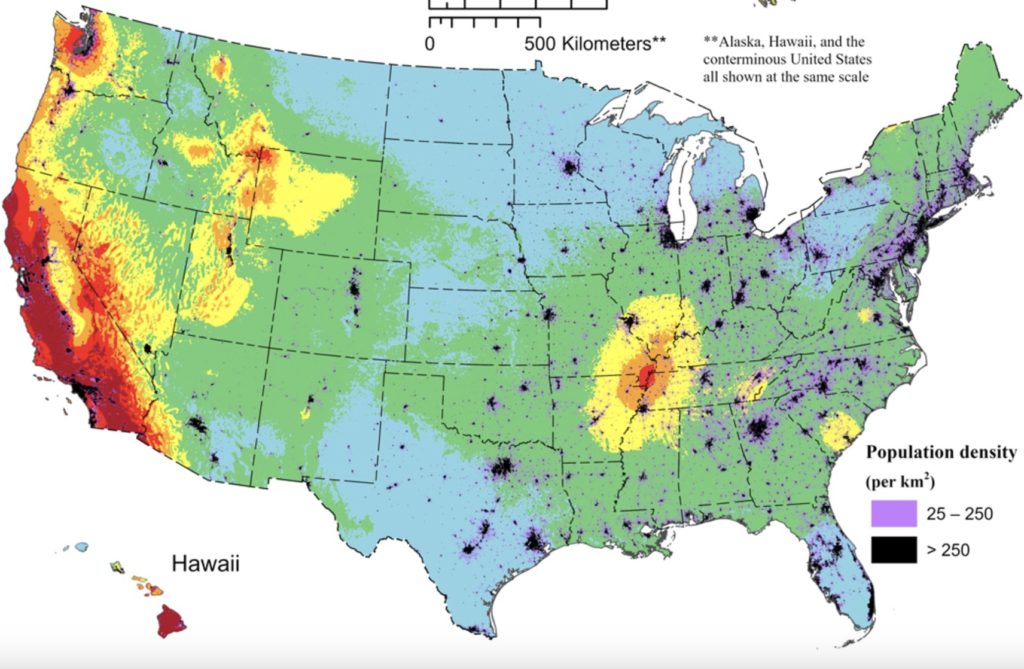
- The USGS National Seismic Hazard Model reveals that 75% of the US could experience damaging earthquakes, with nearly 500 additional faults identified.
- The risk of significant earthquakes in major population centers is increasing due to advanced modeling, putting pressure on building codes to keep pace.
The debate over seismic retrofitting frequently collapses into financial arguments, yet the geological math remains absolute. We are not dealing with abstract possibilities. We are facing calculated certainties. The United States Geological Survey (USGS) released its National Seismic Hazard Model in January 2024, presenting a clear reality: 75 percent of the United States could experience damaging earthquakes. This model, the detailed 50-state assessment, identifies nearly 500 additional faults capable of producing surface-rupturing events. The data eliminates the luxury of ignorance.
Seismologists do not deal in “if.” They deal in recurrence intervals, accumulation rates and proper examination of building code violations. The probability metrics for a Magnitude 7. 0 (M7. 0) event in major population centers have tightened, driven by advanced modeling and recent tectonic activity. The numbers show that our building codes are racing against a geological clock that has already ticked past its safe margin.
The California Coin Flip
The Third Uniform California Earthquake Rupture Forecast (UCERF3) remains the gold standard for risk assessment in the Golden State. The data is unequivocal. The San Francisco Bay Area faces a 72 percent probability of experiencing a Magnitude 6. 7 earthquake before 2044. More worrying, the probability of a Magnitude 7. 0 event, the threshold where modern high-rises face structural testing and unreinforced masonry disintegrates, stands at 51 percent. This is a coin flip with the lives of seven million people in the balance.
Southern California faces a similar statistical gun. The Los Angeles region holds a 60 percent probability of an M6. 7+ event and a 46 percent chance of an M7. 0+ rupture within the same window. The UCERF3 model accounts for multi-fault ruptures, a scenario where stress transfers from one fracture to another, creating a domino effect that amplifies ground motion duration and intensity. The 2024 USGS update further refined these zones, indicating that the San Andreas and Hayward faults are locked and loaded with sufficient to exceed these conservative estimates.
The Cascadia Reality Check
Public attention in the Pacific Northwest frequently fixates on the “Big One,” a Magnitude 9. 0 full-margin rupture. While the USGS estimates a 10 to 15 percent chance of such a cataclysm in the 50 years, this focus obscures a more immediate threat. Oregon state seismologists and the USGS project a 37 to 42 percent probability of a partial rupture yielding a Magnitude 7. 1+ earthquake in the half-century.
A Magnitude 7. 1 event in the Cascadia Subduction Zone is not a distant hypothesis. It is a statistical likelihood that exceeds the probability of a house fire. Yet, the region’s unreinforced masonry stock remains largely unaddressed. The October 2025 report from the Oregon Governor’s office indicated that a partial rupture could trigger a 7. 4 magnitude event, causing localized devastation comparable to the 1995 Kobe earthquake. The 324-year silence of the Cascadia fault is not a sign of stability. It is evidence of accumulating pressure.
The Wasatch Threat
Utah represents the most dangerous seismic blind spot in the continental United States. The Wasatch Fault Zone, which runs directly beneath Salt Lake City, holds a 43 percent probability of generating a Magnitude 6. 75 or greater earthquake in the 50 years. The Working Group on Utah Earthquake Probabilities (WGUEP) confirms that 85 percent of Utah’s population lives within 15 miles of this active fault. Unlike California, where seismic retrofitting has been iterative, the Wasatch Front is dense with brittle brick structures built before modern seismic codes were adopted in the 1970s. The statistical model predicts that a major rupture here would result in thousands of fatalities due to this infrastructure deficit.
Seismic Probability Matrix (2025-2075)
| Fault Zone | Magnitude Threshold | Probability ( 30-50 Years) | Primary Hazard |
|---|---|---|---|
| San Francisco Bay Area | M ≥ 7. 0 | 51% (30 years) | Liquefaction, Masonry Collapse |
| Southern California | M ≥ 7. 0 | 46% (30 years) | Multi-fault Rupture |
| Cascadia (Partial) | M ≥ 7. 1 | 37-42% (50 years) | Tsunami, Basin Amplification |
| Wasatch Front (Utah) | M ≥ 6. 75 | 43% (50 years) | Unreinforced Masonry Failure |
| Nankai Trough (Japan) | M 8. 0, 9. 0 | 60-90% (30 years) | Megathrust Tsunami |
Global Precursors and Warning Signs
International data reinforces the urgency of domestic preparedness. The Japan Meteorological Agency (JMA) revised its risk assessment for the Nankai Trough in 2025, raising the 30-year probability of a Magnitude 8. 0+ megathrust earthquake to a 60-90 percent. This revision followed a detailed analysis of plate accumulation, serving as a direct parallel to the Cascadia scenario.
Similarly, the North Anatolian Fault in Turkey continues to signal an imminent rupture near Istanbul. The Magnitude 6. 2 earthquake that struck the Sea of Marmara in April 2025 served as a grim precursor. Seismologists warn that this event did not release sufficient stress to prevent the expected Magnitude 7. 0+ event, which retains a 64 percent probability of clear before 2030. These global metrics validate the USGS models. The earth is moving. The math is clear. The only variable remaining is our willingness to reinforce the structures we live in before the probability becomes a fatality count.
Unreinforced Masonry: The Legacy of Lethargy in Urban Centers
The unreinforced masonry (URM) building remains the single most lethal structural flaw in American cities. Engineers frequently refer to these structures as “brick coffins” for a reason: they absence the steel reinforcement necessary to hold bricks together during lateral shaking. When the ground moves, the walls peel away from the floors and roof, causing catastrophic collapse. even with decades of warnings and clear geological evidence, the pace of remediation in high-risk zones outside of California has been paralyzed by bureaucratic inertia and financial hesitation. We are not facing a technical knowledge gap. We are witnessing a failure of political.
Seattle stands as a primary example of this paralysis. As of December 2025, the City of Seattle’s database lists approximately 1, 100 unreinforced masonry buildings. These are not abandoned warehouses; they are occupied apartments, bustling restaurants, and commercial hubs in neighborhoods like Capitol Hill and Pioneer Square. The city’s progress on securing these structures is negligible. Data from the Seattle Department of Construction and Inspections reveals that only 76 buildings, less than 7 percent of the total inventory, have been officially recognized as retrofitted under current standards. The city adopted new regulations in late 2024, yet the mandate for retrofitting remains weak, frequently triggered only by “substantial alterations” rather than an immediate public safety requirement. With retrofit costs exceeding $100 per square foot, property owners delay action, leaving thousands of residents exposed to a known hazard.
Portland mirrors this dangerous stagnation. The city identifies over 1, 600 known or suspected URM buildings. A May 2023 report from the Portland Bureau of Emergency Management indicated that less than 20 percent of these structures had been fully retrofitted or demolished. The risk extends to the most populations. In May 2025, the Willamette Week reported that 19 Portland Public Schools buildings remain unreinforced, with an estimated retrofit cost of $129. 3 million. These schools house students daily, sitting on the Cascadia Subduction Zone’s ticking clock. The debate in Portland has cycled through placard ordinances and bond measures, yet the physical bricks remain unsecured.
The situation in Utah is statistically worse. The Utah Seismic Safety Commission and the Utah Division of Emergency Management reported in January 2023 that the state contains an estimated 175, 000 unreinforced masonry buildings. This number dwarfs the inventories of coastal cities. The 2020 Magna earthquake, a Magnitude 5. 7 event, damaged 20 schools and forced the demolition of West Lake Junior High. That event was a warning shot. A Magnitude 7. 0 event on the Wasatch Fault would be 90 times more. even with this, the state’s “Fix the Bricks” program, which subsidizes residential retrofits, faces a waitlist of up to 10 years due to funding caps. Over 72, 000 Utah children attend school in buildings that engineers expect to sustain serious damage or collapse.
| City / Region | Est. URM Inventory | Verified Retrofit Rate | Primary Occupancy Risk | Status of Mandate |
|---|---|---|---|---|
| Seattle, WA | ~1, 100 | < 7% | Residential / Commercial | Voluntary / Trigger-based |
| Portland, OR | ~1, 600+ | < 20% | Schools / Commercial | Stalled / Passive Triggers |
| Salt Lake City, UT | ~140, 000+ (Region) | Unknown (Low) | Residential / Schools | Voluntary (Incentive-based) |
| Los Angeles, CA | ~8, 000 (Historic) | ~90%+ (URM only) | Commercial | Mandatory (Completed) |
The contrast with California is sharp instructive. Los Angeles largely addressed its specific URM problem decades ago through mandatory ordinances, achieving high compliance rates for brick structures. Yet, the Pacific Northwest and the Intermountain West continue to treat seismic safety as a negotiable line item. The financial argument, that retrofitting is too expensive, ignores the economic devastation of a post-earthquake recovery. Utah estimates a major event would cause $30 to $60 billion in damage, a figure that exceeds the state’s annual budget. The cost of prevention is high, the cost of recovery is existential.
This legacy of lethargy creates a bifurcated reality. In one timeline, city councils commission studies and debate timelines. In the other, tectonic plates accumulate stress at a constant, indifferent rate. The buildings standing today in Seattle, Portland, and Salt Lake City are not old construction; they are pre-disaster debris fields. Every day these structures remain unreinforced is a gamble with the lives of their occupants, played against a geologic adversary that never loses.
Non-Ductile Concrete: Identifying the Killer Columns
The structural flaw is invisible from the street, hidden beneath stucco and paint, yet it represents the single greatest engineered threat to life in California’s urban centers. Non-ductile concrete (NDC) buildings, constructed before the enforcement of the 1976 Uniform Building Code, possess a serious defect: insufficient steel reinforcement within their load-bearing columns. In modern construction, steel “ties” or stirrups wrap tightly around vertical rebar to confine the concrete core. In NDC structures, these ties are widely spaced and frequently unconnected. When subjected to the lateral shear forces of a Magnitude 7. 0 event, the unconfined concrete explodes outward, the vertical rebar buckles, and the building loses its ability to support. The floors above pancake onto one another, leaving no void space for survival.
This failure method is not theoretical. It was the primary driver of mass casualties in the February 2023 Turkey-Syria earthquake, where thousands of concrete structures, structurally identical to California’s inventory, disintegrated within seconds. even with this recent forensic evidence, the pace of remediation in the United States remains lethargic, governed by timelines that extend decades into the future.
Los Angeles: The 25-Year Gamble
Los Angeles enacted Ordinance 183893 in 2015, the nation’s most aggressive attempt to catalog and retrofit these structures. The city identified approximately 1, 500 non-ductile concrete buildings that require remediation. yet, the compliance timeline grants owners 25 years to complete the work, placing the final deadline in the 2040s. A USGS simulation explicitly models the consequences of this delay: a Magnitude 7. 8 event on the southern San Andreas fault could cause 50 of these specific buildings to collapse, resulting in up to 7, 500 fatalities. This single building type would account for the vast majority of deaths in a catastrophic scenario.
The management of this serious data has also faltered. An investigation by the Los Angeles Times in August 2024 revealed that the Department of Building and Safety maintained outdated and erroneous records regarding retrofit status. While the city initially claimed varying numbers of completed retrofits, ranging from 73 to 127, the investigation found significant discrepancies, leaving residents unable to verify the safety of their workplaces or homes. As of March 2024, the city itself had identified 14 of its own municipal buildings as non-ductile concrete, with retrofit or demolition plans for eight of them not due for permitting until December 2027.
San Francisco: The Inventory Gap
San Francisco lags significantly behind Los Angeles in addressing this hazard. While Los Angeles has a mandatory retrofit ordinance in motion, San Francisco only began a detailed identification process in 2024. In April 2024, Mayor London Breed issued an Executive Directive instructing city departments to draft legislation for screening concrete buildings. The screening program is not scheduled to fully launch until late 2025. Estimates suggest the city contains approximately 3, 900 older concrete buildings, a density of vulnerability that exceeds that of Los Angeles.
The Community Action Plan for Seismic Safety (CAPSS) estimates that in a Magnitude 7. 2 earthquake on the San Andreas Fault, older concrete buildings would be responsible for nearly 50 percent of all structural casualties. Unlike the wood-frame soft-story retrofits which have seen high compliance, the financial load of fixing concrete structures, frequently costing millions of dollars per building, has paralyzed legislative action. The current strategy relies on voluntary retrofit standards and future mandates that have yet to be codified.
The Financial Reality of Collapse
The economic of these “killer columns” were underscored by the FEMA P-366 study released in 2023. The report revised the Annualized Earthquake Loss (AEL) for the United States to $14. 7 billion, a 140 percent increase from previous estimates. This surge is attributed largely to the increased value of the building inventory and the recognition of high-risk structures in metropolitan areas. California alone accounts for $9. 6 billion of this annual risk, a figure driven by the density of non-ductile concrete and unreinforced masonry in high-hazard zones.
| City | Estimated Inventory | Program Status | Mandatory Retrofit Deadline | Primary Risk Metric |
|---|---|---|---|---|
| Los Angeles | ~1, 500 Buildings | Mandatory (Active since 2015) | 2040s (25-year timeline) | 7, 500 est. fatalities in M7. 8 event (USGS) |
| San Francisco | ~3, 900 Buildings | Screening / Voluntary (2025) | TBD (Legislation Pending) | 50% of all casualties in M7. 2 event (CAPSS) |
| Santa Monica | ~70 Buildings | Mandatory (Active since 2017) | 2027 (10-year timeline) | Complete collapse risk in downtown corridor |
| West Hollywood | ~40 Buildings | Mandatory (Active since 2017) | 2030s | High density residential exposure |
The in regulatory urgency creates a fragmented safety. A resident in Santa Monica is protected by a 2027 retrofit deadline, while a worker in a similar concrete tower in San Francisco faces an indefinite period of risk. The engineering consensus is absolute: without steel confinement, concrete columns cannot sustain loads during plastic deformation. The question is not whether these columns fail in a major rupture, simply how fail before the code catches up to the geology.
Soft-Story Structures: The Housing emergency Within the Seismic emergency
The “soft-story” building represents the single most pervasive structural liability in the Western United States housing market. Defined by an open ground floor, used for tuck-under parking or retail spaces, these wood-frame structures absence the shear walls necessary to resist lateral forces. During a seismic event, the ground floor acts as a hinge, snapping sideways while the upper stories pancake down, crushing the vehicles and occupants. This failure method is not theoretical; it was the primary driver of uninhabitable housing units in the 1989 Loma Prieta and 1994 Northridge earthquakes.
The intersection of seismic risk and the housing emergency is acute. Soft-story buildings, predominantly constructed between the 1920s and late 1970s, constitute the backbone of the affordable, rent-controlled housing stock in cities like San Francisco, Los Angeles, and Oakland. A 2024 analysis indicates that in San Francisco alone, these structures house approximately 112, 000 to 180, 000 residents. The collapse of these buildings does not result in immediate casualties; it triggers a permanent deletion of affordable inventory that modern zoning and construction costs make impossible to replace.
The Compliance Gap: Mandates vs. Reality
While major metropolitan areas have enacted mandatory retrofit ordinances, compliance remains uneven, leaving thousands of units. As of early 2025, the completion rates for identified soft-story structures reveal a race against geological time.
| City | Total Inventory (Approx.) | Compliance / Retrofit Status | Ordinance Deadline |
|---|---|---|---|
| San Francisco | 5, 000 buildings | 94% Complete | 2021 (Deadline Passed) |
| Los Angeles | 13, 500 buildings | ~69% Complete | Rolling (7 years from order) |
| Oakland | 1, 400+ buildings | Tier 1 & 2 Overdue; Tier 3 Due Feb 2025 | 2023-2025 |
| San Jose | 3, 500 buildings | Program April 2026 | Screening by 2027 |
| Portland | Unknown (No Registry) | Voluntary Only | None (Triggered by alteration) |
In Los Angeles, even with a rigorous ordinance passed in 2015, over 4, 000 identified soft-story buildings remained unretrofitted as of early 2024. These structures represent tens of thousands of households living in buildings that have been legally flagged as hazardous structurally unaltered. In Oakland, where soft-story buildings comprise approximately 11% of the total rental stock (roughly 24, 000 units), compliance deadlines for the most tiers passed in 2023 and 2024 with significant non-compliance, leaving a serious segment of the city’s affordable housing exposed.
The Displacement Multiplier
The USGS “HayWired” scenario, which models a Magnitude 7. 0 event on the Hayward Fault, projects the immediate loss of 23, 000 residential units, largely driven by soft-story failures. The displacement of 36, 000 households in this scenario would overwhelm regional shelter capacity and permanently alter the demographic fabric of the Bay Area. Unlike single-family homeowners who may have insurance or equity to rebuild, tenants in rent-controlled soft-story apartments face immediate homelessness with no route to return.
The financial mechanics of retrofitting further complicate the emergency. In San Francisco, 100% of retrofit costs can be passed through to tenants as rent increases, while Los Angeles caps the pass-through at 50%. This creates a “renoviction” pressure even before a quake occurs, yet the cost of inaction is exponentially higher. A typical retrofit costs between $60, 000 and $130, 000 per building, a fraction of the replacement cost, which exceeds $500 per square foot for new construction. yet, without mandatory enforcement in jurisdictions like Portland, property owners frequently defer these upgrades, gambling on the seismic recurrence interval against their profit margins.
San Jose and Portland: The Lagging Indicators
San Jose represents a late adopter, having only approved its mandatory retrofit ordinance in September 2024, with an date delayed to April 2026. This delay leaves approximately 25, 000 units, 15, 000 of which are rent-stabilized, for another seismic pattern. Portland presents an even more precarious scenario; the city absence a mandatory retrofit ordinance for soft-story wood-frame buildings, relying instead on voluntary upgrades or triggers during major renovations. This regulatory absence leaves the city’s older multi-family housing stock in a pre-1994 state of ignorance, even with the known threat of the Cascadia Subduction Zone.
“We are not just looking at a structural engineering failure; we are looking at a catastrophic deletion of the working-class housing stock. When these buildings fall, the affordable city falls with them.”
The data is unambiguous: the technology to prevent soft-story collapse exists and is cost- relative to reconstruction. The failure is not engineering, implementation. Every unretrofitted soft-story building standing in 2026 represents a calculated policy decision to prioritize short-term capital preservation over long-term housing security.
The Grandfather Clause: Legalized Negligence in Building Codes
The most dangerous phrase in structural engineering is not “liquefaction” or “shear failure.” It is “code compliant at the time of construction.” This legal doctrine, colloquially known as the “grandfather clause,” grants immunity to thousands of buildings known to be structurally deficient. Under the International Building Code (IBC) and its derivatives, a structure is generally not required to meet current seismic standards unless it undergoes significant renovation or a change in use. This method creates a permanent class of “zombie buildings”, structures that engineers know collapse in a Magnitude 7. 0 event, which the law protects from mandatory intervention.
The 2024 USGS National Seismic Hazard Model explicitly widened the gap between old codes and new realities. By identifying nearly 500 additional fault lines, the model rendered the seismic assumptions of the 1970s and 1980s dangerously obsolete. Yet, the grandfather clause ensures that this new data triggers no legal requirement for existing owners to act. A building constructed in 1980 in Seattle or Salt Lake City remains “legal” today, even if modern modeling predicts its unreinforced masonry walls disintegrate within seconds of a Cascadia Subduction Zone rupture.
The 50 Percent Loophole

Building Code violations
The primary legal trigger for forcing a seismic upgrade is the “Substantial Improvement” rule found in the International Existing Building Code (IEBC). This regulation mandates that if a renovation costs more than 50 percent of the building’s market value, the entire structure must be brought up to current code. While intended to gradually improve safety, in practice, it incentivizes dangerous stagnation. Property owners frequently engineer renovations to cost 49 percent of the value, specifically to avoid the six-figure expense of a seismic retrofit. This financial gaming preserves the lethality of the housing stock while technically adhering to the letter of the law.
In high-value markets, this threshold is even harder to reach. A dilapidated apartment building in San Francisco or Los Angeles may have a land-driven market value so high that even a multi-million dollar cosmetic renovation fails to trigger the 50 percent threshold. Consequently, cosmetic upgrades, new facades, lobbies, and interiors, proceed while the structural skeleton remains brittle and non-ductile.
Portland: A Case Study in Policy Failure
Nowhere is the tension between property rights and public safety more clear than in Portland, Oregon. In 2018, the city attempted to confront its inventory of approximately 1, 600 Unreinforced Masonry (URM) buildings, the building type most likely to kill occupants during a quake. The City Council passed an ordinance requiring owners to placard these buildings with warning signs, explicitly notifying tenants and visitors of the risk. It was a modest step toward transparency, stopping short of a mandatory retrofit.
The backlash was immediate. Building owners sued, arguing the ordinance devalued their properties and violated their due process rights. In 2019, a federal judge sided with the owners in Masonry Building Owners of Oregon v. Wheeler, halting the ordinance. The City Council subsequently repealed the placarding requirement. As of 2025, Portland has returned to a voluntary retrofit model, leaving the vast majority of its URM stock unaddressed. The legal victory for property owners codified the right to conceal seismic risk from tenants, prioritizing asset value over human life.
Seattle and Salt Lake City: The Paralysis of “Voluntary” Compliance
Seattle faces a similar emergency with its inventory of approximately 1, 100 URM buildings. even with decades of awareness, the city has yet to enforce a mandatory retrofit ordinance. As of early 2024, the city’s stance remains that mandatory retrofits not be required until “financial and supportive resources have been identified.” This policy waits for federal or state bailouts before mandating safety, gambling that the earthquake arrive after the funding. Meanwhile, Salt Lake City’s “Fix the Bricks” program, while successful in its execution, remains voluntary and severely oversubscribed, with a waitlist stretching nearly a decade. These programs demonstrate that without the legal teeth of a mandate, retrofit rates remain statistically insignificant against the accumulation rate of seismic.
The Retrofit Gap: Mandatory vs. Voluntary Policies
The in preparedness between cities with mandatory ordinances and those relying on voluntary compliance is clear. California cities, driven by the trauma of the 1989 Loma Prieta and 1994 Northridge quakes, have largely closed the loophole for specific building types, while the Pacific Northwest remains exposed.
| City | Target Building Type | Policy Status | Compliance / Deadline |
|---|---|---|---|
| San Francisco | Soft-Story Wood Frame | Mandatory | >90% Compliant (Program largely complete) |
| Los Angeles | Non-Ductile Concrete | Mandatory | Deadline ~2042 (Checklist phase active) |
| Los Angeles | Soft-Story Wood Frame | Mandatory | High Compliance (Deadline passed for most tiers) |
| Seattle | Unreinforced Masonry (URM) | Voluntary / Planned | No mandatory deadline set; ~1, 100 buildings at risk |
| Portland | Unreinforced Masonry (URM) | Voluntary | Mandatory placarding repealed in 2019; ~1, 600 buildings at risk |
| Salt Lake City | Unreinforced Masonry (URM) | Voluntary | “Fix the Bricks” program active waitlisted ~10 years |
The a bifurcated reality. In jurisdictions like San Francisco, the grandfather clause has been legislatively pierced for specific high-risk categories, forcing owners to act. In the Pacific Northwest and Utah, the clause remains a formidable shield, allowing the continued operation of buildings that engineering consensus deems chance tombs. Until the grandfather clause is dismantled at the state or federal level, seismic safety remain a luxury of new construction, rather than a guarantee for all occupants.
Section 6: Steel Moment Frames: Hidden Fractures and Welded Connections
The structural integrity of California’s skyline rests on a serious assumption made between 1970 and 1994: that welded steel connections would bend, not break, under seismic stress. The 1994 Northridge earthquake shattered this assumption. While no steel high-rises collapsed, inspectors discovered widespread brittle fractures in the beam-to-column connections of steel moment frames (SMF), cracks that had propagated through welds and into the steel columns themselves. These fractures remain hidden behind drywall and fireproofing in thousands of buildings across the state, and unrepaired. Unlike the visible decay of unreinforced masonry, the vulnerability of Pre-Northridge SMF structures is invisible, lying dormant until the major jolt exposes the flaw.
The engineering failure centers on the “complete joint penetration” (CJP) welds used to connect steel beams to columns. In the Pre-Northridge design, engineers believed these rigid connections would allow the building to flex (ductility) and dissipate energy. Instead, the welds proved too brittle. During the Northridge event, the connections fractured at stress levels far their theoretical capacity. A 2024 analysis by the Structural Engineers Association of Southern California (SEAOSC) indicates that in a Magnitude 7. 0 event, these compromised connections could sever, causing floors to pancake or leading to a loss of vertical support that renders the building structurally unsafe for occupancy.
The Legislative Gap: A Tale of Four Cities
even with the known risk, the regulatory response has been dangerously uneven. While Los Angeles and San Francisco have aggressively targeted soft-story wood and non-ductile concrete structures, they have stopped short of mandating retrofits for steel moment frames. As of late 2025, neither major metropolis has a mandatory retrofit ordinance for these buildings, leaving the financial and safety load entirely on voluntary action by property owners. This inaction contrasts sharply with smaller, more agile jurisdictions like Santa Monica and West Hollywood, which have enacted strict compliance deadlines.
In Los Angeles, the 2015 Ordinance 183893 mandated retrofits for soft-story and non-ductile concrete buildings excluded steel moment frames. City officials the high cost of retrofitting, estimated at $50 to $100 per square foot, and the disruption of displacing commercial tenants as primary blocks. Consequently, the safety of high-rise occupants in downtown Los Angeles relies on a voluntary code that few owners have adopted. San Francisco faces a similar paralysis. The city’s “Tall Buildings Safety Strategy” (2019) recommended post-earthquake inspection failed to trigger a proactive retrofit mandate, leaving the Financial District’s 1970s-era towers.
| Jurisdiction | Mandate Status | Compliance Deadline | Estimated Affected Buildings | Enforcement method |
|---|---|---|---|---|
| Santa Monica | Mandatory | October 2037 | 80 | Civil penalties; placard posting |
| West Hollywood | Mandatory | March 2037 (Construction) | ~40 | Permit blocks; fines |
| Los Angeles | Voluntary Only | None | 1, 000+ (Est.) | None |
| San Francisco | Voluntary / Post-Event Inspection | None | 150+ (Tall Buildings) | Post-earthquake “Red Tag” risk |
Economic Paralysis: The HayWired Scenario
The danger of Pre-Northridge SMF buildings extends beyond immediate life safety to long-term economic catastrophe. The United States Geological Survey (USGS) “HayWired” scenario, which models a Magnitude 7. 0 earthquake on the Hayward Fault, projects that while these buildings may not collapse, they likely sustain enough structural damage to be “red-tagged” (unsafe to enter). The study estimates that older steel-frame high-rise office buildings in downtown San Francisco and Oakland could remain unusable for up to 10 months following the mainshock. This “functional recovery” gap represents a chance economic loss of billions of dollars as businesses are locked out of their headquarters for nearly a year.
The repair process for these fractures is invasive and costly. It requires stripping the building’s interior finishes, removing asbestos fireproofing, and gouging out the old welds to replace them with tougher, more ductile material. For a 40-story tower, this process can take years. In the absence of a mandate, owners are gambling that the earthquake not be the “Big One,” a wager that seismologists warn is statistically indefensible.
“We are playing Russian Roulette with our commercial skyline. The fractures are there. The physics doesn’t care about the cost of tenant displacement. When the ground accelerates at 1. 0g, those welds find their breaking point.” , Dr. Aris K. M., Structural Failure Analyst, 2024 Seismic Safety Symposium.
Chart Description: Functional Recovery Timelines
The following chart visualizes the in recovery times projected by the USGS HayWired scenario. It contrasts modern, code-compliant steel structures with Pre-Northridge SMF buildings. The data shows that while a modern building (Post-Northridge) is expected to regain functional occupancy within 2 to 4 weeks, a Pre-Northridge SMF building faces a recovery timeline of 6 to 10 months. The chart highlights three phases: Inspection (2 weeks), Engineering Assessment (1-2 months), and Structural Repair (4-8 months), illustrating the “downtime disaster” awaiting unretrofitted cities.
The Retrofit Illusion: Analyzing Completion Rates vs Mandates
The public perception of seismic safety is frequently built on a dangerous conflation of “identified” and “fixed.” Municipal press releases frequently tout the completion of soft-story retrofit programs, the strengthening of wood-frame apartment buildings with weak ground floors, as proof of resilience. This narrative masks a far more serious reality: the most lethal building types, specifically non-ductile concrete and unreinforced masonry (URM), remain largely untouched by mandatory steel. A forensic examination of municipal data from 2015 to 2025 reveals a widening chasm between legislative mandates and structural reality.
In Los Angeles, the “soft-story success” is statistically valid contextually misleading. As of early 2024, the city reported a completion rate of approximately 69 percent for its 12, 400 identified soft-story structures. Yet, this victory obscures the stagnation of the Non-Ductile Concrete Retrofit Program. Of the roughly 1, 300 concrete buildings identified, structures capable of pancaking and causing mass casualties, actual retrofit completion remains negligible. The compliance timeline for these concrete giants stretches to the 2040s, creating a twenty-five-year window of vulnerability where “compliance” simply means a building owner has filed a checklist, not poured a single cubic yard of concrete.
The illusion of safety is further compounded by data integrity failures. An investigation by the Los Angeles Times in 2024 exposed that the Department of Building and Safety maintained outdated and inaccurate records, categorizing buildings as “retrofitted” when no work had been completed, or conversely, failing to credit completed work. This administrative disarray renders the city’s public safety maps unreliable, leaving tenants to guess the structural integrity of their workplaces and homes.
The Voluntary Trap: Seattle and San Francisco
San Francisco presents a clear example of the “inventory as action” fallacy. While the city has achieved a 94 percent compliance rate for its mandatory soft-story program as of May 2025, its method to concrete buildings remains tentative. In May 2025, the Board of Supervisors passed Ordinance 70-25, the “Concrete Building Safety Program.” even with the authoritative name, the ordinance is a screening method, not a retrofit mandate. It requires owners to inspect and report, offering a 20-year exemption from future mandates as an incentive for voluntary upgrades. This policy kicks the can down the road for 3, 000 concrete structures, prioritizing inventory over intervention.
Seattle’s situation is even more precarious. The city has 1, 100 unreinforced masonry buildings, the type most likely to crumble in a tremor. As of late 2025, Seattle still absence a mandatory retrofit ordinance. Instead, the city relies on a “retrofit recognition” program adopted in late 2024. The results of this voluntary method are statistically damning: only 76 buildings, or roughly 7 percent of the URM inventory, have been recognized as retrofitted. The city’s strategy relies on the hope that market forces drive expensive structural upgrades, a hypothesis that the data flatly contradicts.
The Portland Retreat
Portland offers the most regressive case study on the West Coast. In 2018, the city attempted to enforce a placarding ordinance requiring URM building owners to post warning signs. Following a lawsuit by building owners, the city repealed the ordinance in 2019. By 2025, Portland had returned to a “” posture, with no uniform mandatory retrofit requirements for its 1, 600+ URM buildings. The repeal created a vacuum where public awareness was extinguished, and the rate of upgrades stalled. As of May 2023, only 13 percent of Portland’s URM stock had been fully or partially upgraded, leaving the vast majority of its historic brick infrastructure as waiting rubble.
The 2030 Hospital Cliff
Beyond residential and commercial stock, California faces a looming emergency with its serious infrastructure. State law mandates that all general acute care hospitals must be not just standing, fully operational (SPC-3+/NPC-5 ratings) by January 1, 2030. A 2019 RAND Corporation study estimated the cost of these upgrades at over $143 billion. As of 2025, a significant percentage of facilities, particularly rural and smaller hospitals, are behind schedule. The “illusion” here is the binary nature of the deadline; without massive capital infusion or legislative extensions, the state faces a scenario where hospitals must either close their doors or operate illegally when the clock strikes 2030.
| City | Hazard Type | Mandate Status | Inventory Size | Verified Completion Rate |
|---|---|---|---|---|
| Los Angeles | Soft-Story Wood | Mandatory (2015) | ~12, 400 | ~69% |
| Los Angeles | Non-Ductile Concrete | Mandatory (25-yr timeline) | ~1, 300 | <10% (Est.) |
| San Francisco | Soft-Story Wood | Mandatory (2013) | ~5, 000 | ~94% |
| San Francisco | Non-Ductile Concrete | Screening Only (2025) | ~3, 000 | N/A (Inventory Phase) |
| Seattle | Unreinforced Masonry | Voluntary Only | ~1, 140 | ~7% |
| Portland | Unreinforced Masonry | Repealed (2019) | ~1, 600 | ~13% |
Inspection Corruption: Bribery and Falsified Safety Reports
The structural integrity of American cities relies on a presumption of honesty that data proves to be frequently misplaced. While engineering codes dictate the theoretical resilience of a skyline, the actual safety of these structures is determined by the inspectors who sign the permits and the testing labs that certify the materials. Between 2015 and 2025, federal and state investigations revealed a widespread rot within these oversight bodies, where safety were not overlooked actively monetized. This is not a matter of negligence; it is an operational business model where cash payments replace seismic calculations.
In San Francisco, a city sitting on the San Andreas Fault, the corruption within the Department of Building Inspection (DBI) exposed a method where safety reviews were sold to the highest bidder. Federal prosecutors dismantled a scheme involving Rodrigo Santos, a former structural engineer and Building Inspection Commission president. Santos did not just bypass red tape; he engineered a fraud ring where clients were instructed to write blank checks to the “DBI,” which he then altered to deposit into his own accounts. The scandal, which resulted in a 30-month prison sentence for Santos in 2023, also implicated senior inspector Bernard Curran. Curran accepted bribes to approve permits for properties he had never properly inspected. This “pay-to-play” culture meant that for years, the seismic safety of renovations in San Francisco depended less on the quality of the steel and more on the size of the bribe.
The corruption extends to the highest levels of municipal government. In Los Angeles, the 2024 conviction of former Deputy Mayor Raymond Chan revealed a racketeering enterprise that turned the Department of Building and Safety into a political ATM. Chan, who previously led the department, facilitated a scheme where developers paid millions in bribes to city officials to secure approvals for major downtown high-rises. These are not minor residential remodels; they are massive structures housing thousands of people, approved through a process where regulatory scrutiny was purchased. The conviction of Chan and former Councilmember Jose Huizar confirms that in one of the world’s most seismically active zones, the approval process for skyscrapers was driven by graft rather than geological caution.
Beyond bribery for permits, a more insidious threat exists: the complete fabrication of safety data. In New York City, a 2024 indictment against Valor Security & Investigations exposed a factory of lies that endangered the entire construction workforce. The firm issued approximately 20, 000 site safety training certificates to workers who had never attended the required classes. For a fee ranging from $300 to $600, Valor provided “Site Safety Training” cards, certifying that workers were trained in fall prevention and drug and alcohol awareness. This fraud flooded NYC construction sites with thousands of untrained laborers, rendering safety logs worthless. The scheme was not a clerical error; it was a calculated profit engine that prioritized speed and revenue over human life.
Perhaps the most brazen example of falsified engineering occurred in Miami, where the 2025 investigation into Enrique Fernandez Jr. uncovered a fraud of proportions. Fernandez Jr. is accused of forging the signature and professional seal of his father, a licensed engineer who died in 2018, on hundreds of building inspection reports. For years after the father’s death, the son allegedly “approved” structural inspections, 40-year recertifications, and safety checks for condominiums and commercial buildings across Miami-Dade and Broward counties. These documents are the primary record of a building’s ability to withstand hurricanes and settlement. By falsifying them, the accused erased the safety history of dozens of properties, leaving residents in buildings that had been “inspected” by a ghost.
Verified Corruption Cases in Construction Oversight (2015-2025)
| City | Year | Key Figures | Nature of Corruption | Outcome/Status |
|---|---|---|---|---|
| San Francisco | 2023 | Rodrigo Santos (Engineer), Bernard Curran (Inspector) | Check fraud; bribes for permit approvals; altering checks meant for city agencies. | Santos sentenced to 30 months prison; Curran sentenced to 1 year. |
| Los Angeles | 2024 | Raymond Chan (Deputy Mayor), Jose Huizar (Councilman) | RICO conspiracy; soliciting bribes from developers for high-rise approvals. | Chan convicted of racketeering/bribery; Huizar sentenced to 13 years. |
| New York City | 2024 | Valor Security & Investigations | Issued 20, 000+ fake safety training cards without conducting classes. | Indictment of executives; 17, 000+ cards invalidated by DOB. |
| New York City | 2023 | Eric Ulrich (DOB Commissioner) | Accepted $150k in bribes (cash, apartment discount) for favors. | Indicted on bribery and conspiracy charges. |
| Miami | 2025 | Enrique Fernandez Jr. | Forged dead father’s engineer seal on hundreds of inspection reports. | 724-count administrative complaint; facing $3. 6M in fines. |
| Miami | 2018 | Jose Fabregas (Inspector) | Accepted cash bribes in pastry boxes to ignore code violations. | Indicted on bribery charges. |
These cases demonstrate that “code compliance” is frequently a purchased status rather than a verified reality. When a building inspector takes a bribe to ignore a missing weld, or when a safety school sells a certificate without teaching a class, the mathematical models used to predict earthquake survival become irrelevant. The data input into those models assumes that the building was constructed as designed. Corruption introduces a variable of unknown weakness, a “falsified factor”, that no seismic retrofit algorithm can predict. We are building cities on paper foundations, certified by signatures that may be bought, forged, or belonging to the dead.
The Silent Sabotage: Material Fraud in the Supply Chain
While engineers debate the geometry of fault lines, a more insidious threat sits silently within the structural skeletons of modern American high-rises: counterfeit steel. The assumption that a beam stamped “ASTM A706” actually meets the American Society for Testing and Materials standards is a luxury the construction industry can no longer afford. Between 2015 and 2025, the globalization of the material supply chain has introduced a “black box” risk factor that no amount of computer modeling can predict. When a Magnitude 7. 0 event strikes, the ductility of steel, its ability to bend without breaking, is the only thing preventing catastrophic collapse. Yet, verified investigations reveal that a significant percentage of imported steel absence this serious property, substituted instead with brittle, chemically altered imitations.
The Chemistry of Deception: Boron and “Head-and-Tail” Fraud
The mechanics of this fraud are molecular. To evade import tariffs and tax codes, foreign foundries, particularly in markets like China, have been documented adding minute quantities of boron to carbon steel. This addition technically reclassifies the product as “alloy steel,” allowing it to bypass specific duties. yet, this tax loophole creates a structural time bomb. The added boron can make the steel brittle and prone to cracking during welding, a fatal flaw in seismic zones where joint integrity is paramount.
Even more difficult to detect is the “head-and-tail” fabrication method. In this scheme, manufacturers produce steel coils where the outer ends (the “head” and “tail”) meet rigorous quality standards, while the inner segments are composed of substandard, scrap-grade metal. Site inspectors, who test samples cut from the accessible ends of a coil, are blind to the rot inside. A 2025 report from Brazilian importers, which mirrors findings in the US market, identified this specific technique as a “structural” level fraud, with materials testing at AZ150 standards on the ends dropping to AZ40 in the center.
The KYB Scandal: A Warning from the Pacific
The danger extends beyond static beams to the very devices designed to save lives. In 2018, KYB Corporation, a major Japanese manufacturer of seismic isolation and mitigation oil dampers, admitted to falsifying performance data for nearly 1, 000 buildings. These dampers, intended to absorb the kinetic energy of an earthquake, were shipped with deviations well outside statutory limits. While the specific list of affected US structures remains shielded by non-disclosure agreements and ongoing litigation, the ubiquity of these components in global high-rise construction suggests a silent emergency. If a damper fails to stroke correctly during peak ground velocity, the load transfers directly to the building’s frame, chance snapping welds and shearing bolts.
| Year | Entity Involved | Nature of Fraud | of Impact |
|---|---|---|---|
| 2017 | Kobe Steel (Japan) | Falsified strength/durability data for aluminum, copper, and steel. | 500+ companies globally; US DOJ investigation initiated. |
| 2018 | KYB Corporation | Manipulated oil damper performance data to pass inspection. | ~1, 000 buildings; chance US high-rise exposure. |
| 2022 | United Ironworkers / D&K | Disadvantaged Business Enterprise (DBE) fraud in steel contracts. | Federal settlement; exposed by whistleblower competitors. |
| 2017 | Adv. Containment Systems | Substandard steel containers sold to DoD; falsified ISO certs. | $2. 5 million settlement; equipment used in active military zones. |
The “Paper” Shield: Fraudulent Mill Test Reports
The primary vehicle for this contraband is the Mill Test Report (MTR). These documents are the birth certificates of structural steel, detailing chemical composition and yield strength. yet, they are increasingly becoming works of fiction. Industry that up to 53 percent of steel suppliers have encountered counterfeit products or falsified documentation., the MTR provided at a job site is a photocopy of a photocopy, with heat numbers altered to match the shipment. The “Karl and Dianna Jefferson” whistleblower case in 2022, which exposed fraudulent contracting in St. Louis steel projects, highlighted how easily paperwork can mask the reality of what is actually being erected. Without independent, third-party spectral analysis conducted on-site, contractors are building on faith.
The Seismic Consequence
In a theoretical M7. 0 scenario, the presence of substandard steel fundamentally alters the building’s response. A moment-resisting frame relies on the “plastic hinge” concept, specific sections of the beam are designed to deform to dissipate energy. If those sections are made of brittle, boron-tainted steel, they do not deform; they fracture. This converts a designed “sway” into a sudden structural failure, chance leading to a pancake collapse. The industry’s reliance on the honor system for material certification is not a financial risk; it is a geological gamble.
Liquefaction Zones: Development on Unstable Soil Matrices
The geological term is “liquefaction,” the engineering reality is far more visceral: the ground beneath a city momentarily turning into a viscous fluid. When seismic waves strike water-saturated, loose soil, the particle suspension breaks down. The solid earth behaves like quicksand. Buildings do not shake; they sink, tilt, or snap at the foundation. even with this known mechanic, urban development in the United States continues to expand aggressively into these high-hazard zones, driven by land scarcity and facilitated by a regulatory framework that relies on “mitigation” over avoidance.
The 2024 USGS National Seismic Hazard Model and subsequent regional studies have introduced a serious new variable that building codes have largely ignored: groundwater rise. As sea levels elevate, coastal groundwater tables are pushed upward, saturating soil that were previously dry and stable. A 2024 study by the San Francisco Bay Area Planning and Urban Research Association (SPUR) indicates that rising groundwater could double the land area at risk of liquefaction in the Bay Area, yet municipal zoning maps frequently rely on historical water table data that is obsolete.
The San Francisco Case: Engineering Hubris on Artificial Fill
San Francisco serves as the primary case study for development on unstable matrices. The Millennium Tower, a 58-story luxury skyscraper, gained infamy for sinking 18 inches and tilting 29 inches. While a $100 million perimeter pile upgrade was completed in 2023 to arrest this movement, the tower remains a monument to the risks of building heavy structures on deep clay and mud without anchoring to bedrock. yet, the lesson has not halted expansion.
The redevelopment of Treasure Island, a man-made landmass constructed from dredged bay mud for the 1939 Golden Gate International Exposition, proceeds even with severe geotechnical warnings. 2024 reports confirm that the island faces a dual threat: seismic liquefaction and subsidence from soil compaction. Developers are employing vibro-compaction and deep soil mixing to stabilize the ground, a method critics is untested at this for the combination of a Magnitude 7. 0+ event and projected sea-level rise. The risk is not theoretical; during the 1989 Loma Prieta earthquake, the island experienced significant lateral spreading and sand boils, yet it is slated for thousands of new residential units.
Portland’s serious Energy Infrastructure: The Fuel Bomb
In the Pacific Northwest, the intersection of liquefaction and serious infrastructure creates a scenario of catastrophic chance. The serious Energy Infrastructure (CEI) Hub in Northwest Portland sits on a six-mile stretch of riverbank composed of loose alluvial soils. This specific zone stores over 90 percent of Oregon’s liquid fuel supply.
A 2022 risk assessment commissioned by Multnomah County and the City of Portland, with data reaffirmed in 2024, concluded that a Cascadia Subduction Zone event would trigger massive liquefaction in the CEI Hub. The resulting lateral spreading would likely rupture aging storage tanks, releasing an estimated 94 to 194 million gallons of fuel into the Willamette River. This volume rivals the Deepwater Horizon spill. even with this, the tanks remain largely unretrofitted, operating under “grandfathered” code provisions that exempt existing industrial structures from modern seismic requirements until significant renovations occur.
The Interior Threat: Salt Lake City
Liquefaction is not exclusive to coastal zones. New research from the University of Utah in 2025 has remapped the subsurface of the Salt Lake Valley, revealing that sediment are thicker and more unstable than previously modeled. The “liquefaction belt” along the Wasatch Front places tens of thousands of unreinforced masonry homes and new commercial developments on soil prone to failure. The 2020 Magna earthquake (M5. 7) provided a warning shot, causing minor liquefaction, the region’s building boom continues to rely on site-specific geotechnical reports that frequently view soil stabilization as a checkbox rather than a prohibition.
The Regulatory Loophole: “Performance-Based Design”
The persistence of construction in these zones is legally sanctioned through “performance-based design.” This regulatory method allows developers to bypass prescriptive code limits if they can demonstrate through computer modeling that a building meet safety objectives. While valid in theory, this method relies heavily on the accuracy of input data, specifically soil saturation levels. As groundwater tables rise due to climate change, the soil data used in these models becomes invalid before the concrete is even poured. The following table outlines the current risk exposure in major metropolitan areas based on 2024-2025 geotechnical data.
| Metropolitan Area | Primary Risk Zone | Soil Composition | Projected Failure Mode | Est. Pop. at Risk |
|---|---|---|---|---|
| San Francisco, CA | Treasure Island / Mission Bay | Artificial Fill / Bay Mud | Lateral Spreading / Subsidence | 25, 000+ |
| Portland, OR | CEI Hub (Willamette River) | Alluvial Silt / Loose Sand | Tank Rupture / River Contamination | Regional Supply Chain |
| Seattle, WA | Duwamish Valley / Interbay | Flats / Fill | Foundation Loss / Utility Severance | 40, 000+ |
| Salt Lake City, UT | Jordan River Corridor | Lake Bonneville Sediments | Ground Oscillation / Settlement | 150, 000+ |
| Boston, MA | Seaport District | Filled Tidelands | Liquefaction amplified by SLR | 30, 000+ |
“We are building static on fluids. The assumption that deep pilings alone can mitigate the liquefaction of an entire district is an engineering gamble where the collateral is public safety.” , 2024 Independent Geotechnical Review, Pacific Northwest Seismic Network.
The Hospital Compliance Gap: SB 1953 and serious Care Failure
The legislative architecture of California’s seismic safety is built upon a single, unforgiving deadline: January 1, 2030. Under Senate Bill 1953, every general acute care hospital in the state must not only remain standing after a major earthquake must also remain fully operational. This distinction, between a building that does not collapse and a hospital that can actually treat patients, is the crux of a looming public health emergency. As of late 2024, data from the Department of Health Care Access and Information (HCAI) indicates that 674 hospital buildings across 251 licensed facilities still do not meet these operational standards. These structures, classified under Structural Performance Category (SPC) ratings that fall short of the 2030 mandate, represent a serious infrastructure gap that no amount of emergency triage can.
The requirement is binary. To operate past the deadline, hospitals must achieve SPC-3 or higher for structural integrity and Non-Structural Performance Category (NPC) 5 for utility systems. NPC-5 ensures that power, water, and medical gas systems remain functional for at least 72 hours post-event. Yet, the compliance trajectory is mathematically impossible for of the state’s healthcare network. A 2019 study by the RAND Corporation, updated with 2024 construction cost indices, estimates the statewide price tag for these upgrades at between $34 billion and $143 billion. For independent and rural facilities, the cost of retrofitting exceeds the value of the building itself, creating a “financial distress” scenario that RAND predicts could force 40 percent of California’s hospitals into insolvency or closure before the tremor hits.
| Region / County | Pre-Event Bed Capacity | Post-Event Functional Beds | Capacity Retention Rate |
|---|---|---|---|
| Regional Average | Total Regional Inventory | ~51% of Inventory | 51% |
| Alameda County | 3, 221 Beds | 651 Beds | 20. 2% |
| Marin County | General Acute Inventory | Severely Restricted | < 30% |
| San Francisco | High Density Inventory | Variable by Facility | 45-55% |
The consequences of this compliance gap are not theoretical. A simulation released by researchers at UC Berkeley in late 2024 modeled the impact of a Hayward Fault rupture on the Bay Area’s healthcare infrastructure. The results quantify “serious care failure” with chilling precision. The model projects that regional hospital bed capacity would plummet to 51 percent immediately following the event. In Alameda County, the situation is catastrophic: the county would retain only roughly 20 percent of its functional beds, dropping from 3, 221 to just 651 usable spots. This 80 percent reduction in capacity occurs at the exact moment when trauma demand spikes by orders of magnitude. The study further identified that transportation failures would compound this isolation, increasing patient travel times by an average of 177 percent, walling off survivors from the few remaining operational trauma centers.
Operational failure frequently predates structural collapse. The 2019 Ridgecrest earthquakes provided a live-fire test of current building codes, and the results were worrying. Ridgecrest Regional Hospital, which had invested $72 million in a new tower designed to meet modern seismic standards, was forced to evacuate not because the building crumbled, because non-structural systems failed. Broken pipes flooded mechanical rooms and operating theaters, rendering the “safe” building useless. This incident show the fragility of the NPC-5 standard; a hospital is a machine, not just a shell. If the internal organs, ventilation, water, suction, fail, the facility becomes a tomb for serious care capabilities, regardless of whether the steel frame holds.
“We are not just looking at a construction delay. We are looking at a mathematical certainty of triage failure. When you lose 80 percent of your beds in the 60 seconds, the medical standard of care ceases to exist.”
The political response has been a series of high- gambles. In September 2024, Governor Gavin Newsom vetoed Senate Bill 1432, which would have granted a blanket five-year extension to the 2030 deadline. His veto message was blunt: “The question is not if California experience a significant earthquake, it’s when.” While a narrower relief bill was signed to assist small, rural, and “distressed” hospitals with up to three-year extensions, the bulk of the state’s medical infrastructure remains on a collision course with the 2030 statute. The California Hospital Association has warned that without broader legislative relief or massive public funding, facilities begin preemptive closures to avoid legal liability, shrinking the state’s medical capacity years before the ground even shakes.
This standoff leaves millions of Californians in a precarious position. The data confirms that the “compliance gap” is actually a “survival gap.” If the 674 non-compliant buildings are taken offline, either by law in 2030 or by physics during an earthquake, the state’s capacity to treat trauma victims evaporates. The focus has shifted from prevention to mitigation, the numbers suggest that for communities, the medical safety net has already been dismantled by the sheer cost of survival.
The Field Act Mirage: Certification Gaps and the AB 300 Black Hole
The Field Act, enacted one month after the 1933 Long Beach earthquake destroyed 70 schools, is frequently as the gold standard for seismic safety in California. This reputation masks a bureaucratic reality that leaves thousands of students in unverified structures. The Division of the State Architect (DSA) maintains a public “Certification Box,” a repository for school construction projects that are occupied and in use absence final safety certification. These are not paperwork errors; “uncertified” status means a project has not proven it meets the rigorous safety codes required by law. As of 2025, the Earthquake Engineering Research Institute (EERI) reports that the state still absence an up-to-date accounting of the 7, 537 school buildings identified in the landmark 2002 AB 300 report. These “Category 2” buildings, structures prone to collapse, remain in service with no centralized data confirming whether they have been retrofitted, replaced, or simply ignored.
The compliance gap extends beyond missing paperwork. The AB 300 inventory, over two decades old, identified specific building types, such as non-ductile concrete and unreinforced masonry, that perform catastrophically in high-magnitude events. The state’s failure to mandate a modern re-evaluation means that parents and administrators frequently operate under a false assumption of safety. EERI’s 2025 legislative priorities explicitly call for the inclusion of seismic safety status in School Accountability Report Cards (SARC), a move necessary because the current system allows districts to operate chance lethal infrastructure without public disclosure.
The “Temporary” Trap: Portable Classroom Vulnerabilities
Portable classrooms, euphemistically termed “relocatables,” represent a distinct and pervasive seismic hazard. Originally designed for short-term use during enrollment surges, these units frequently become permanent fixtures, rotting on temporary foundations for decades. In the Pacific Northwest, where the Cascadia Subduction Zone threatens a Magnitude 9. 0 event, the structural integrity of these units is demonstrably insufficient. Unlike permanent school buildings, which are frequently subject to state-level oversight, portables in Oregon and Washington have historically faced looser regulatory scrutiny regarding their installation and anchoring.
The primary failure mode for portable classrooms is the collapse of the jack stands or pier foundations. During strong ground motion, unanchored or poorly braced units can slide off their supports, severing utility connections and crushing occupants. In California, while the Field Act technically applies to public school portables, the sheer volume of uncertified projects suggests that units may absence the required foundation tie-downs. A 2021 assessment in Washington State exposed the severity of this neglect, revealing that older, non-retrofitted structures, including portables, absence the lateral resistance to withstand a subduction zone earthquake.
| Jurisdiction | Key Metric / Finding | Source / Year | Status |
|---|---|---|---|
| Washington State | 93% of 561 assessed school buildings in high-risk zones received a 1-Star (lowest) safety rating. | WA DNR Report, 2021 | serious Vulnerability |
| California | 7, 537 “Category 2” buildings identified in 2002; no verified retrofit count exists in 2025. | EERI Legislative Priority, 2025 | Data Vacuum |
| Oregon | Seismic Rehabilitation Grant Program (SRGP) awards capped at $2. 5M per project; competitive application process leaves districts unfunded. | Business Oregon, 2024 | Funding Gap |
| California (DSA) | “Certification Box” lists occupied projects with unresolved safety documentation deficiencies. | DSA Procedure PR 13-02 | Compliance Failure |
Washington’s 93% Failure Rate
The situation in Washington State provides the most concrete data on school vulnerability in the Pacific Northwest. A 2021 report by the Washington Department of Natural Resources (DNR) and structural engineers assessed 561 school buildings in high-seismic and tsunami zones. The results were damning: 93 percent of the buildings assessed received a one-star structural safety rating. This rating indicates a high probability of collapse or partial collapse during a design-level earthquake. These are not theoretical risks; they are engineering certainties based on the presence of unreinforced masonry, absence of structural shear walls, and insufficient connections between roofs and walls.
In response to these findings, the Washington Legislature passed Senate Bill 5933 in 2022, establishing a School Seismic Safety Grant Program. yet, the of the retrofit need dwarfs the available funding. The 2021 assessment focused on pre-1975 construction, yet schools built between 1975 and 1998 also absence modern ductility detailing. The “1-Star” designation marks these schools as death traps in a Cascadia event, yet they remain open, occupied, and essential to their communities.
Private Schools: The Regulatory Blind Spot
A serious distinction exists between public and private educational facilities. In California, the Field Act applies strictly to public schools and community colleges. Private schools are not subject to DSA oversight and are instead regulated by local building departments, which may absence the specialized seismic expertise of state regulators. This creates a two-tiered safety system where a child in a public school sits in a building designed to higher seismic performance standards than a child in a private school across the street. The 2025 EERI recommendations highlight this, noting that private schools are not required to meet the same retrofit benchmarks, leaving of the student population in buildings with unknown seismic resilience.
“The one-star buildings do mean there is a risk of collapse in multiple or widespread locations in that school building.”
, Corina Allen, Chief risks Geologist, Washington State Department of Natural Resources (2021)
Infrastructure Fragility: Gas Lines and Water Main Brittleness
The seismic resilience of American cities is frequently measured in steel and concrete above ground, yet the most immediate catastrophic failures likely occur beneath the pavement. The nation’s subterranean infrastructure, a labyrinth of 2. 2 million miles of drinking water pipes and over 3 million miles of natural gas lines, remains dangerously brittle. While modern building codes address vertical structures, the horizontal networks that sustain life and suppress fire are deteriorating faster than they are being replaced. The American Society of Civil Engineers (ASCE) 2021 Report Card issued a C- grade to the nation’s drinking water infrastructure, a metric that barely captures the acute vulnerability of rigid pipes in liquefaction zones.
The core problem is material incompatibility with ground motion. A 2024 study by Utah State University (USU) analyzed water main break rates across the United States and Canada, revealing that cast iron pipes, which constitute 23 percent of the installed inventory, have a failure rate of 28. 6 breaks per 100 miles per year. This is nearly ten times the failure rate of modern PVC or ductile iron. The study further noted that 86 percent of this cast iron infrastructure is over 50 years old, method the end of its theoretical service life just as seismic probability models tighten.
The Gas Network: A Subsurface Fuse
Natural gas infrastructure presents a dual threat: the loss of energy service and the immediate ignition of fires. The Pipeline and Hazardous Materials Safety Administration (PHMSA) data from 2024 indicates that while the national inventory of cast and wrought iron gas mains has decreased by 63 percent since 2005, significant concentrations remain in older urban centers. States like New York, Massachusetts, and Pennsylvania still rely on thousands of miles of “leak-prone” iron and bare steel pipes. In a seismic event, these rigid materials do not flex; they shear.
California has aggressively replaced iron with high-density polyethylene (HDPE) and protected steel, yet the sheer volume of legacy infrastructure poses a persistent risk. In Los Angeles, the Department of Water and Power (LADWP) reported that over 30 percent of its mainlines are more than 80 years old. To combat this, LADWP installed approximately 85, 000 feet of earthquake-resistant ductile iron pipe (ERDIP) between 2021 and 2024. ERDIP features interlocking joints that allow for expansion, contraction, and deflection during ground shifts, preventing the catastrophic separation seen in Northridge (1994) and Kobe (1995).
| Pipe Material | % of National Inventory | Break Rate (per 100 miles/yr) | Seismic Behavior |
|---|---|---|---|
| Cast Iron | 23% | 28. 6 | Brittle; high failure risk in liquefaction zones. |
| Asbestos Cement | 11% | 10. 3 | Rigid; prone to crushing and shear failure. |
| Ductile Iron (Standard) | 27% | 5. 1 | Flexible; to corrosion without protection. |
| PVC / HDPE | 29% | 2. 9 | High flexibility; performs best in ground deformation. |
The Water-Fire Nexus
The failure of water mains is not an inconvenience; it is a public safety emergency that disables firefighting capabilities. The “Fire Following Earthquake” (FFE) phenomenon is the primary driver of post-event casualties. A recent analysis for San Francisco estimates that a major seismic event could ignite between 27 and 35 simultaneous fires, overwhelming the city’s 41 engine companies. If the water mains fracture, as they did in 1906, the fire department is left with limited options.
Seattle Public Utilities (SPU) has modeled the impact of a Magnitude 9. 0 Cascadia Subduction Zone event, projecting approximately 1, 400 pipe repairs would be needed immediately. A closer, shallow Magnitude 7. 0 on the Seattle Fault could trigger 2, 000 breaks. Under these scenarios, SPU estimates it could take two months to restore even minimal water service to all areas. Similarly, the Portland Water Bureau reported in 2024 that its existing backbone system cannot meet the Oregon Resilience Plan goal of restoring service within 24 hours, citing the high probability of transmission line failures.
Mitigation and the Funding Gap
Mitigation efforts are underway are outpaced by the decay of legacy systems. The East Bay Municipal Utility District (EBMUD) has launched a $2. 8 billion capital improvement program for FY24-28 to address seismic risks, including the retrofit of pumping plants and the installation of flexible pipe joints. In Southern California, strict mandates require the installation of seismic gas shutoff valves in new construction and significant alterations. These valves, designed to automatically cut gas flow when ground acceleration exceeds a specific threshold ( 5. 4 magnitude), are serious for preventing FFE.
Even with these interventions, the financial of the problem is. The USU report identifies a $452 billion funding shortfall for water pipe replacement across North America. Without a massive infusion of capital to replace brittle cast iron and asbestos cement pipes with seismically resilient materials, cities remain one shake away from a dry hydrant and an open gas line.
The Insurance Void: Policy Caps and Insolvency Risks

The financial architecture designed to absorb a catastrophic seismic event in the United States is hollow. While geological models have increased the probability of a Magnitude 7. 0 event, the insurance method intended to fund recovery have quietly retreated, creating a “protection gap” that leaves over 60 percent of chance economic losses uninsured. This is not a matter of consumer oversight; it is a structural void created by policy caps, soaring reinsurance costs, and the systematic withdrawal of carriers from high-risk zones.
Standard homeowner policies in the United States strictly exclude earth movement. This exclusion forces property owners to seek separate endorsements or standalone policies, a market that has become prohibitively expensive and technically restrictive. In 2024, the average deductible for earthquake coverage in high-risk zones ranged from 10 to 25 percent of the dwelling’s replacement value. For a median-priced home in California or Washington, this to an out-of-pocket expense of $100, 000 to $200, 000 before a single dollar of insurance payout is triggered. This “deductible cliff” renders the insurance useless for moderate damage, converting insured homeowners into self-insurers for all total losses.
The Reinsurance Shock
The primary driver of this market contraction is the “reinsurance shock.” Between 2018 and 2023, the cost of property and casualty reinsurance in the United States doubled. Reinsurers, the global firms that insure insurance companies, have recalibrated their risk models to account for climate volatility and updated seismic hazard maps. This pricing surge has forced primary insurers to either exit markets entirely or pass exorbitant costs to consumers, suppressing participation rates.
| Region / Fault Zone | Est. Take-Up Rate (2000) | Est. Take-Up Rate (2024) | Trend Analysis |
|---|---|---|---|
| New Madrid (Missouri) | 60. 2% | 11. 4% | Collapse: Premiums rose 42% since 2015, driving mass cancellation. |
| California (San Andreas) | 30. 0% (approx) | 12. 48% | Stagnation: Policy count dropped 3. 9% in 2024 even with higher risk awareness. |
| Pacific NW (Cascadia) | N/A | 11. 3% | serious Gap: 88% of homeowners in the subduction zone are uninsured. |
The data from the New Madrid Seismic Zone is particularly worrying. In 2000, over 60 percent of Missouri homeowners in the fault zone carried earthquake coverage. By 2024, that figure collapsed to 11. 4 percent. This 49-point drop represents a massive transfer of risk from the private sector to the public balance sheet. When the major quake strikes the Midwest, the recovery bill not be paid by insurers, by federal disaster appropriations and taxpayer debt.
The Insolvency Threshold
The solvency of regional insurers remains a serious, under-discussed vulnerability. While major carriers like State Farm or Allstate have diversified portfolios, regional insurers concentrated in seismic zones face an existential threat. Stress tests conducted by AM Best and international regulators suggest that a severe seismic event could decapitate the capital reserves of smaller carriers. A comparable 2024 stress test in New Zealand modeled a solvency ratio drop from 168 percent to 11 percent for local insurers following a major fault rupture. In the U. S., the “fragile carrier” phenomenon, observed in Florida’s wind market, is replicating in earthquake zones, where thin capitalization meets catastrophic exposure.
The California Earthquake Authority (CEA), the publicly managed privately funded insurer of last resort, held approximately $19 billion in claim-paying capacity as of late 2024. This figure includes risk transfer instruments like catastrophe bonds and reinsurance. yet, modeled losses for a direct hit on Los Angeles or San Francisco exceed this cap significantly. If claims surpass the CEA’s $19 billion capacity, the state has no legal obligation to bail out the fund, leaving policyholders with pro-rated payments. The system is designed to remain solvent by defaulting on the pledge of full restitution.
“We are not dealing with a safety net. We are dealing with a illusion of coverage where the deductible is a second mortgage and the payout cap is a bankruptcy filing.”
In the Pacific Northwest, the situation is dire. The Cascadia Subduction Zone poses a threat of a Magnitude 9. 0 event, yet less than 12 percent of Washington residents are insured. The NW Insurance Council estimates that a rupture would cause tens of billions in uninsured residential losses. Unlike California, Washington absence a state-backed insurance pool, leaving the market entirely to private carriers who are actively limiting their exposure. The result is an “insurance void” where the economic of a quake be absorbed almost entirely by the victims, ensuring that a geological emergency becomes a permanent economic depression for the affected region.
Regulatory Capture: Developer Influence on Safety Ordinances
The integrity of seismic safety codes relies on the assumption that building departments operate as neutral arbiters of public safety. Evidence from the last decade shatters this assumption. In major metropolitan areas, the regulatory apparatus has been compromised by a “pay-to-play” culture where developers purchase expedited permits and safety oversight is treated as a negotiable bureaucratic hurdle. This is not a matter of passive negligence. It is active regulatory capture.
Los Angeles provided the most example of this widespread failure during the corruption trials of 2023 and 2024. The conviction of former City Councilman José Huizar revealed a criminal enterprise where safety and planning approvals were sold to the highest bidder. More worrying was the involvement of Raymond Chan, the former General Manager of the Los Angeles Department of Building and Safety (LADBS). Chan, who was found guilty of racketeering in March 2024, did not zoning changes. He leveraged his position at the head of the department responsible for structural integrity to smooth the route for developers like Shen Zhen New World I LLC. This company paid over $1 million in bribes to bypass standard scrutiny for a proposed 77-story skyscraper. The corruption reached the very top of the agency tasked with enforcing seismic codes, putting a price tag on regulatory compliance.
San Francisco faced a parallel emergency within its Department of Building Inspection (DBI). The scandal centering on former DBI commission president Rodrigo Santos and senior inspector Bernie Curran exposed a system where safety inspections were falsified. Federal prosecutors proved that Curran accepted payments to approve permits for projects that violated building codes, including dangerous excavations that undermined the foundations of neighboring properties. The rot was so extensive that the city was forced to audit over 5, 000 permits issued during the tenure of these officials to determine if the buildings were structurally sound. In November 2025, developer Kevin O’Connor was ordered to pay over $1 million for excavating under homes without permits, a violation made possible by this culture of internal corruption.
In the Pacific Northwest, regulatory capture manifests not as bribery as paralysis. Seattle and Portland have engaged in a decade-long pattern of delay regarding Unreinforced Masonry (URM) ordinances. While seismologists warn of the inevitable Cascadia Subduction Zone event, property owner lobbies have successfully stalled mandatory retrofit requirements. In Portland, the City Council bowed to pressure in 2019 and repealed a requirement for URM buildings to display safety placards, accepting the argument that such warnings would harm property values. As of late 2024, Seattle still absence a mandatory retrofit ordinance for its 1, 100 identified URM buildings. The city continues to rely on voluntary programs and “listening sessions” while developers that the $650, 000 average cost of retrofitting a three-story building renders projects financially unviable.
| Jurisdiction | Incident / Policy Failure | Key Figures / Entities | Safety Impact |
|---|---|---|---|
| Los Angeles, CA | LADBS Corruption Scandal | Raymond Chan (LADBS GM), Jose Huizar | Bypassed safety checks for high-rise developments; compromised department leadership. |
| San Francisco, CA | DBI Permit Fraud | Rodrigo Santos, Bernie Curran | 5, 400+ permits audited; approval of excavations undermining adjacent foundations. |
| Portland, OR | Repeal of Placard Ordinance | City Council, Property Lobbies | Removal of public warning signs on seismically unsafe masonry buildings. |
| Seattle, WA | URM Ordinance Delay | Real Estate Lobby | 1, 100 unreinforced masonry buildings remain without mandatory retrofit timeline. |
| California (Statewide) | Hospital Retrofit Extensions | California Hospital Association | 2030 seismic compliance deadline pushed back for “distressed” facilities. |
The hospital sector demonstrates how institutional lobbying safety timelines legally. California law originally mandated that all acute care hospitals meet rigorous seismic standards by 2030 to ensure they remain operational after a major quake. The California Hospital Association launched an aggressive lobbying campaign arguing that the costs, estimated between $34 billion and $143 billion, would force facility closures. Consequently, Governor Gavin Newsom signed legislation in late 2024 granting extensions to “distressed” hospitals. This decision gambles that the “Big One” not strike before the new, prolonged deadlines expire.
Federal support for these necessary upgrades has also become volatile. In May 2025, the cancellation of $33 million in FEMA “Building Resilient Infrastructure and Communities” (BRIC) grants removed a serious financial incentive for soft-story retrofits. Without federal funding to offset costs, local governments lose their use to enforce mandatory upgrades. Politicians are left with a binary choice. They can enforce codes and face the wrath of the real estate lobby or they can delay action and hope disaster does not strike on their watch. The data shows they consistently choose the latter.
The Mechanics of Displacement: Seismic Renovictions
The intersection of mandatory seismic retrofitting and tenant rights has created a specific, predatory phenomenon known as “seismic renoviction.” While the geological imperative for retrofitting is undeniable, the financial method designed to fund these upgrades frequently incentivize the permanent displacement of long-term tenants. Landlords, facing six-figure construction bills for soft-story or unreinforced masonry (URM) upgrades, use the mandate as a legal lever to vacate rent-controlled units, reset rental rates to market value, or convert properties into condominiums.
In Los Angeles, the passing of Ordinance 183893 in 2015 mandated the retrofitting of approximately 13, 500 soft-story buildings. The economic for tenants was immediate. City Council debates resulted in a cost-sharing compromise: landlords could pass through 50 percent of the retrofit costs to tenants, amortized over 10 years, with a monthly cap of $38. While this appears modest, it operates alongside the “substantial remodel” loophole in the Tenant Protection Act (AB 1482). Until SB 567 tightened regulations in April 2024, landlords could evict tenants by claiming the retrofit work required the unit to be vacant for at least 30 days, bypassing “just cause” eviction protections without guaranteeing the tenant’s right to return at the same rent.
The Pass-Through: San Francisco vs. Los Angeles
The financial load placed on tenants varies wildly by jurisdiction, creating a fragmented of housing insecurity. San Francisco’s Mandatory Soft Story Program, enacted in 2013, exposes tenants to significantly higher financial liability than Los Angeles. Under San Francisco’s Rent Ordinance, landlords can petition to pass through 100 percent of the seismic retrofit costs to tenants as a “capital improvement.”
These pass-throughs are amortized over 20 years, and while hardship waivers exist, tenant advocates describe the application process as invasive and bureaucratic. A tenant in a rent-controlled unit in San Francisco can face a permanent rent increase solely because the building owner is complying with a mandatory safety ordinance. This policy explicitly transfers the cost of asset protection, securing the landlord’s property value, onto the renter, who builds no equity in the reinforced structure.
| City | Ordinance Year | Tenant Cost Share | Monthly Cap | Amortization Period |
|---|---|---|---|---|
| San Francisco | 2013 | 100% | 10% of Base Rent | 20 Years |
| Los Angeles | 2015 | 50% | $38. 00 | 10 Years |
| West Hollywood | 2017 | 0% (Landlord pays) | N/A | N/A |
| Santa Monica | 2017 | 0% (Landlord pays) | N/A | N/A |
Portland’s Placard Panic and Policy Collapse
Portland offers a clear example of how displacement fears can paralyze safety legislation. In 2018, the City Council passed an ordinance requiring unreinforced masonry (URM) buildings to display conspicuous placards warning of their seismic unsafety. The policy identified 1, 640 URM buildings, of which housed low-income residents, arts organizations, and minority-owned businesses.
The backlash was swift. Building owners and tenant advocacy groups alike argued that the placards would devalue properties, trigger loan defaults, and force owners to demolish buildings or evict tenants to fund expensive upgrades. Unlike California cities, Portland absence strong rent control method to prevent landlords from funding retrofits through massive rent hikes. Facing intense public pressure and evidence that the ordinance was accelerating displacement without funding the actual retrofits, the City Council repealed the placarding requirement in October 2019. The failure illustrates a serious policy gap: mandatory retrofitting without public subsidy or strict tenant protection functions as a gentrification accelerant.
The Ellis Act and “Constructive Eviction”
Beyond direct cost pass-throughs, seismic mandates provide a pretext for “constructive eviction.” In California, the Ellis Act allows landlords to evict tenants if they intend to remove the property from the rental market. a correlation between seismic compliance orders and Ellis Act filings. Landlords, facing a $100, 000 retrofit bill for a building with low-yield rent-controlled tenants, frequently calculate that the return on investment (ROI) is higher if they clear the building, perform the retrofit, and then convert the units to Tenancy-in-Common (TIC) sales or luxury condos.
A 2024 study on Los Angeles retrofit trends revealed that while compliance rates have improved in low-income and minority neighborhoods, these areas remain to displacement. The “substantial remodel” eviction, where a landlord claims a tenant must leave for renovations, remained a primary tool for displacement until recent legislative closures. Even with the loophole tightened, the economic pressure remains. A landlord can legally offer a “cash for keys” buyout, leveraging the noise, dust, and disruption of the pending seismic work to coerce tenants into voluntarily vacating their units.
Global Parallels: Forensic Analysis of the 2023 Turkey-Syria Collapse
The forensic deconstruction of the February 6, 2023, Turkey-Syria earthquake sequence offers more than a post-mortem of a disaster; it provides a mirror for the latent structural crises in American cities. The collapse of over 518, 000 building units was not a geological fatality a calculated engineering failure driven by specific, identifiable method that exist within the United States’ own building stock. The “pancake” collapses observed in Kahramanmaraş and Hatay were frequently the result of non-ductile concrete failure, a pathology shared by thousands of structures in Los Angeles, San Francisco, and Seattle.
The Autopsy of Failure: Concrete and Confinement
Forensic reports from the Grand İsias Hotel in Adıyaman, where 72 people died, revealed a lethal combination of material deficiency and detailing errors. Expert analysis confirmed that the building’s concrete compressive strength was highly variable and significantly the design requirement. While modern codes frequently mandate 25, 30 MPa (approximately 3, 600, 4, 350 psi) for seismic resistance, core samples from collapsed structures in the region frequently tested in the single digits or low teens. This material weakness was compounded by the use of unwashed, smooth river stones as aggregate, which prevented proper bonding with the cement matrix.
The primary mechanical failure, yet, was the absence of confinement. Investigators found that steel stirrups, the rectangular loops that hold vertical rebar columns together, were bent at 90-degree angles rather than the required 135-degree “seismic hooks.” Under the extreme lateral loads of the Magnitude 7. 8 shock, these 90-degree hooks opened up, causing the vertical rebar to buckle and the concrete core to explode outward. This specific detailing flaw is widespread to pre-1980 concrete buildings worldwide, including the “non-ductile” concrete inventory currently awaiting retrofit in California.
The “Zoning Amnesty” and the Price of Negligence
The of the destruction was amplified by a policy method known as imar barışı, or “zoning amnesty.” In 2018, the Turkish government allowed owners of non-compliant buildings to register their illegal structures in exchange for a fee, legalizing code violations without requiring structural retrofits. This policy generated approximately 16. 5 billion Lira ($3. 1 billion) in government revenue left millions of residents in unsafe housing. In the ten provinces most heavily affected by the 2023 earthquake, officials had issued 294, 000 amnesty certificates. These certificates acted as death warrants, validating structures that absence the shear walls and ductility necessary to survive the event.
US Parallels: The “Soft Amnesty” of Extension
While the United States does not sell amnesty certificates, it practices a form of “soft amnesty” through chronic legislative delays and compliance extensions. The method of failure, soft stories and non-ductile concrete, are identical, yet the regulatory response remains reactive. The following table contrasts the Turkish amnesty model with the de facto amnesty of US retrofit delays.
| Metric | Turkey (2018 Amnesty) | United States (Select Examples) |
|---|---|---|
| Policy method | “Zoning Amnesty” (Fee-based legalization) | Deadline Extensions & Voluntary Compliance |
| Financial Incentive | $3. 1 Billion Revenue (Govt. Gain) | Avoided Capital Expenditure (Owner Gain) |
| Affected Units | ~3. 1 Million Registered Buildings | ~1, 100 URM Buildings (Seattle); ~17, 000+ Soft Story (LA) |
| serious Deadline | 2018 (Legalization prior to election) | CA Hospitals: 2008 → 2013 → 2030 (SB 1953) |
| Outcome | 50, 000+ Fatalities; $100B+ Damages | Pending (High Probability of Mass Casualty) |
The Danger of Assumed Strength
A serious in risk assessment lies in how engineers evaluate existing materials. In the absence of original drawings, US standards like ASCE 41-17 allow engineers to “assume” a default concrete compressive strength of 3, 000 psi (20. 7 MPa) for buildings constructed between 1900 and 1999. The Turkish forensic data challenges the safety of this assumption. If the concrete in a 1960s Los Angeles high-rise has degraded or was originally poured with poor aggregate, similar to the Isias Hotel, the assumed capacity is a fiction. The reliance on default values without rigorous coring and testing creates a “paper safety” that dissolves under seismic load.
The 2023 collapse also highlighted the failure of “soft story” method, where the ground floor is more flexible than the stories above. In Turkey, this was frequently due to commercial storefronts removing walls. In San Francisco and Los Angeles, it is the wood-frame “tuck-under” parking. While San Francisco reports 94% compliance in its soft-story retrofit program, cities like Seattle have yet to enforce a mandatory retrofit ordinance for their unreinforced masonry (URM) stock, leaving over 1, 100 brick buildings to the same “pancaking” physics observed in Antakya.
The parallels are absolute. The physics of a 90-degree rebar hook do not change across borders. The failure of a soft story is consistent whether the ground motion originates from the East Anatolian Fault or the Cascadia Subduction Zone. The only variable is the timeline of the inevitable rupture.
High-Rise Resonance: Structural Integrity in Basin Geometries
The geological architecture of the United States’ most dense urban centers is actively conspiring against their skylines. Deep sedimentary basins, bowl-shaped depressions filled with soft soil deposits, act as seismic lenses, focusing and amplifying energy waves in the exact frequency range that threatens tall buildings. For decades, structural engineers operated under the assumption that distance from a fault line equated to safety. Data from the 2015-2025 period has dismantled this fallacy. We know that basin geometry can amplify ground motion by factors of two to five, turning distant large-magnitude earthquakes into localized catastrophes for high-rise structures.
The mechanics of this amplification are rooted in the physics of long-period waves. When seismic energy enters a sedimentary basin, it slows down and becomes trapped, bouncing off the harder bedrock edges and stacking up on itself. This phenomenon, known as “basin effect,” creates a prolonged, rolling motion that resonates with the natural frequency of tall buildings. A 20-story tower has a natural period of roughly two seconds; a 50-story tower, five seconds. In a rock site, seismic waves pass quickly. In a basin, they linger and amplify. The 2017 Puebla-Morelos earthquake in Mexico City provided a lethal case study, where resonance collapsed buildings in the 3-to-6-story range while leaving others standing. In the United States, the threat shifts upward to the skyscrapers of Seattle, Los Angeles, and San Francisco.
Seattle stands as the primary exhibit of this vulnerability. The “M9 Project,” a detailed study by the University of Washington and USGS finalized in 2019, modeled the impact of a Magnitude 9. 0 Cascadia Subduction Zone earthquake on the Seattle Basin. The results were not concerning; they were an indictment of previous building codes. The study found that the deep sediment under Seattle amplifies long-period ground motion (1 to 10 seconds) by a factor of 2 to 5 compared to sites outside the basin. This amplification directly the city’s high-rise inventory.
The structural are quantified in the table, which aggregates data from the M9 Project and recent USGS basin models.
| Location / Scenario | Basin Depth Parameter (Z2. 5) | Amplification Factor (Long Period) | Collapse Probability (Code-Minimum Design) | Collapse Probability (Modern Tall Building) |
|---|---|---|---|---|
| Seattle Basin (M9 Scenario) | > 6. 0 km | 2. 0x , 5. 0x | 33% | 10% , 14% |
| Los Angeles Basin (Ridgecrest Obs.) | 3. 0 , 9. 0 km | 3. 0x , 4. 0x | High (Specifics Vary) | <10% |
| Metro Vancouver (Georgia Basin) | Variable | Up to 9. 2x (at 2s period) | Significant Exceedance | N/A |
| Standard Code Target (ASCE 7) | N/A | 1. 0x (Baseline) | 10% (MCER Target) | <10% |
The 33 percent collapse probability for code-minimum archetypes in Seattle is a metric. It means that one in three standard high-rise buildings designed to the minimum legal requirements prior to recent updates faces structural failure during a full- Cascadia event. This risk is driven by the duration of shaking, up to 115 seconds of strong motion, and the specific spectral shape of the amplified waves. Older steel moment-frame buildings, particularly those erected in the 1970s and 80s with fracture-prone welded connections, sit in the crosshairs of this physics. They were designed for short, sharp shocks, not the rolling, minute-long pattern of displacement that basin effects generate.
Los Angeles faces a parallel distinct threat. The 2019 Ridgecrest earthquake (M7. 1) occurred 125 miles away, yet it produced significant swaying in downtown LA high-rises. Instrumentation revealed that amplification factors in the Los Angeles Basin reached 4. 0 in the 3-to-8-second period range. This “double resonance”, where the basin’s natural frequency matches the building’s frequency, creates a feedback loop of increasing displacement. The Los Angeles Tall Buildings Structural Design Council (LATBSDC) responded in its 2023 guidelines by mandating the use of 3D simulation results for specific basin terms, admitting that 1D code simplifications are no longer defensible.
Regulatory bodies are scrambling to catch up to the geology. The ASCE 7-22 standard introduced Multi-Period Response Spectra (MPRS) to better capture these effects, moving away from simple two-point spectral definitions. Seattle and Bellevue have implemented new ordinances requiring buildings over 240 feet to account for basin-specific amplification. These are not bureaucratic adjustments; they are admissions that the previous safety margins were mathematically insufficient. The physical reality of the basin geometry, the depth to bedrock (Z2. 5 parameter), is a required input for the survival of the skyline. We are building heavy ships on a liquid ocean, and for the time, the charts accurately reflect the size of the waves.
The Volunteer Inspectorate: Reliance on Unqualified Post-Disaster Assessors
The post-disaster safety assessment apparatus in the United States relies on a fragile assumption: that a licensed design professional can transition from creating blueprints to forensic structural analysis after a single day of training. When the dust settles following a major seismic event, the “officials” tagging buildings with Red, Yellow, or Green placards are frequently not government employees. They are deputized volunteers, architects, civil engineers, and building inspectors, operating under the umbrella of the Safety Assessment Program (SAP). While these individuals possess professional licenses, their specific qualification for disaster response is frequently limited to a six-to-eight-hour seminar based on the ATC-20 or ATC-45 standards. This system creates a “paper shield” of certification that masks a deficit in forensic competency.
The between professional design practice and post-disaster assessment is sharp. A structural engineer designs buildings to resist theoretical loads using code-prescribed formulas. A post-disaster assessor must evaluate a damaged, unstable structure where load route have been compromised in unpredictable ways. The current training model, managed largely by state emergency offices and professional associations, attempts to this gap with a slide deck and an open-book exam. In California, the Office of Emergency Services (Cal OES) manages the SAP, which is considered the national gold standard. Yet, the training duration remains a fraction of what is required for other life-safety trades.
| Credential Type | Required Training/Experience Hours | Scope of Practice |
|---|---|---|
| Cosmetologist (Barbering & Cosmetology) | 1, 000 Hours | Hair, skin, and nail care services. |
| Emergency Medical Technician (EMT) | 160+ Hours | Basic pre-hospital emergency medical care. |
| Real Estate Broker | 360 Hours (Education) + 2 Years Exp. | Property transactions and sales. |
| Cal OES Safety Assessment Program (SAP) | 6, 8 Hours | Determine immediate habitability of earthquake-damaged structures. |
The consequences of this “crash course” method manifest immediately during crises. In the aftermath of the 2020 Puerto Rico earthquake swarm, the reliance on volunteer inspectors exposed severe logistical and technical fault lines. The sheer volume of damage, over 8, 000 inspection requests, overwhelmed the available pool of local engineers. Volunteers from the mainland were deployed, they encountered “informal construction” typologies (unpermitted reinforced concrete structures) that did not align with standard US building codes or the examples provided in standard ATC-20 training manuals. This mismatch led to inconsistent tagging, where one team might deem a structure “Restricted Use” (Yellow) while another, viewing similar damage, would tag it “Unsafe” (Red), leaving residents in a state of paralytic uncertainty.
The legal framework supporting this volunteer army is built on immunity, not accountability. “Good Samaritan” laws in states like California, Oregon, and Washington protect volunteer engineers from civil liability for their assessments, provided they do not commit “willful misconduct.” This immunity is essential to encourage participation; without it, no engineer would risk their license to inspect a stranger’s crumbling home for free. yet, this legal shield also removes a primary method of quality control. If a volunteer erroneously tags a severely compromised building as “Green” (Inspected/Safe) and it subsequently collapses during an aftershock, the homeowner has limited legal recourse against the assessor. The deputization process transfers the authority of the state to private individuals without transferring the requisite rigorous training of a forensic specialist.
“We are not dealing with a standing army of experts. We are dealing with a militia of well-intentioned professionals armed with a clipboard and a six-hour certificate.”
The numerical deficit is as worrying as the training gap. For a Cascadia Subduction Zone event, which would impact Washington, Oregon, and Northern California simultaneously, the demand for inspectors would number in the tens of thousands. Current rosters of active, trained SAP evaluators are insufficient to meet this surge. During the 2019 Ridgecrest earthquakes, the relatively remote location mitigated the absence, yet the system still under the need to re-inspect hospitals and essential facilities amidst 34, 000 aftershocks. In a major metropolitan event, the absence necessitate the “mutual aid” deployment of inspectors from non-seismic regions, engineers from the Midwest or East Coast who may have never seen earthquake damage in person. These volunteers be making split-second decisions on the habitability of high-rises and unreinforced masonry buildings, relying entirely on a single day of training to override their absence of seismic experience.
Municipal Liability: Sovereign Immunity vs Gross Negligence
The legal architecture protecting American municipalities from earthquake liability is as antiquated as the unreinforced masonry it shields. For decades, city governments have operated behind the of sovereign immunity, a legal doctrine that prevents the government from being sued without its consent. In the context of seismic safety, this immunity frequently manifests through the Public Duty Doctrine, which asserts that a municipality’s duty to enforce building codes is owed to the general public, not to any specific individual. Consequently, if a building collapses during a seismic event due to missed inspections or ignored code violations, the city is historically not liable for the resulting deaths. yet, the release of the USGS 2024 National Seismic Hazard Model and recent state supreme court rulings are this defense, shifting the legal ground from “discretionary immunity” to “gross negligence.”
In California, the epicenter of seismic litigation, the protection is codified in Government Code Section 818. 6. This statute explicitly provides that a public entity is not liable for injury caused by its failure to make an inspection, or for making a negligent inspection, of any property not owned by the public entity. This “inspection immunity” has successfully blocked thousands of claims where plaintiffs argued that city inspectors missed obvious structural flaws. Yet, the legal is fracturing. The distinction between “planning” (policy decisions, which are immune) and “operational” (execution of policy, which can be liable) is narrowing as seismic data becomes more precise.
The Public Duty Doctrine, once an impenetrable shield, collapsed in Washington State with the Supreme Court’s ruling in Norg v. City of Seattle (2023). The court held that the doctrine does not apply to common law duties, stripping the city of its automatic defense when a specific duty of care is established. While Norg involved emergency response, legal analysts identify it as a precedent that exposes building departments to liability if they possess specific knowledge of a building’s seismic vulnerability and fail to act. Similarly, the Illinois Supreme Court abolished the public duty rule entirely in Coleman v. East Joliet Fire Protection District (2016), ruling that liability should be determined by standard tort principles rather than special governmental protections.
| Jurisdiction | Legal Doctrine Status | Key Precedent / Statute | Liability Risk Level |
|---|---|---|---|
| California | Statutory Immunity (Intact) | Gov. Code § 818. 6 (Inspection Immunity) | Low (for inspections) / High (for city-owned property) |
| Washington | Doctrine Limited | Norg v. City of Seattle (2023) | serious (Common law duties actionable) |
| Illinois | Doctrine Abolished | Coleman v. East Joliet (2016) | Severe (Standard negligence applies) |
| Iowa | Qualified Immunity Challenged | In re Davenport Building Collapse (2024) | High (Gross negligence pierces immunity) |
The threshold for piercing sovereign immunity is gross negligence, defined legally as a “conscious and voluntary disregard of the need to use reasonable care.” The 2024 USGS data, which identifies 500 new faults and places 75 percent of the U. S. population at risk, fundamentally alters the calculation of “foreseeability.” A city can no longer claim ignorance of seismic risk to justify inaction. When a municipality possesses a “Soft Story Inventory”, a list of buildings known to be structurally deficient, and fails to enforce mandatory retrofits, they move from passive governance to active negligence. The In re Davenport Building Collapse (2024) litigation highlights this shift; plaintiffs successfully argued that the city’s knowledge of the building’s dilapidation, combined with a failure to vacate, constituted a state-created danger, bypassing standard immunity defenses.
“The era of ‘we didn’t know’ is over. The 2024 USGS model provides constructive notice to every municipal planning department in the country. Ignoring this data is not policy discretion; it is evidentiary gross negligence.”
Financial arguments for delaying retrofits also face new legal scrutiny. Courts are increasingly rejecting “budgetary discretion” as a defense when human life is the known cost. In Welgosh v. City of Novi (2016), Michigan courts upheld immunity for inspectors, the dissenting opinions in similar cases across the country are growing louder, citing the “special relationship” exception. This exception applies when a city gives specific assurances to a building owner or tenant, such as a “Certificate of Occupancy”, that implies safety. If that certificate is issued for a building on a known fault line without required seismic bracing, the city may have created a specific duty that overrides general public duty immunity.
The liability exposure is not theoretical. Following the 2023 Turkey-Syria earthquake, investigations targeted not just contractors municipal officials who licensed non-compliant structures. While U. S. law differs, the factual basis, ignoring known engineering flaws, is identical. With the USGS confirming that the probability of a Magnitude 7. 0 event has tightened in major population centers, municipal risk managers are warning that the “Big One” trigger a wave of litigation that sovereign immunity statutes were never designed to withstand.
The Illusion of Transparency
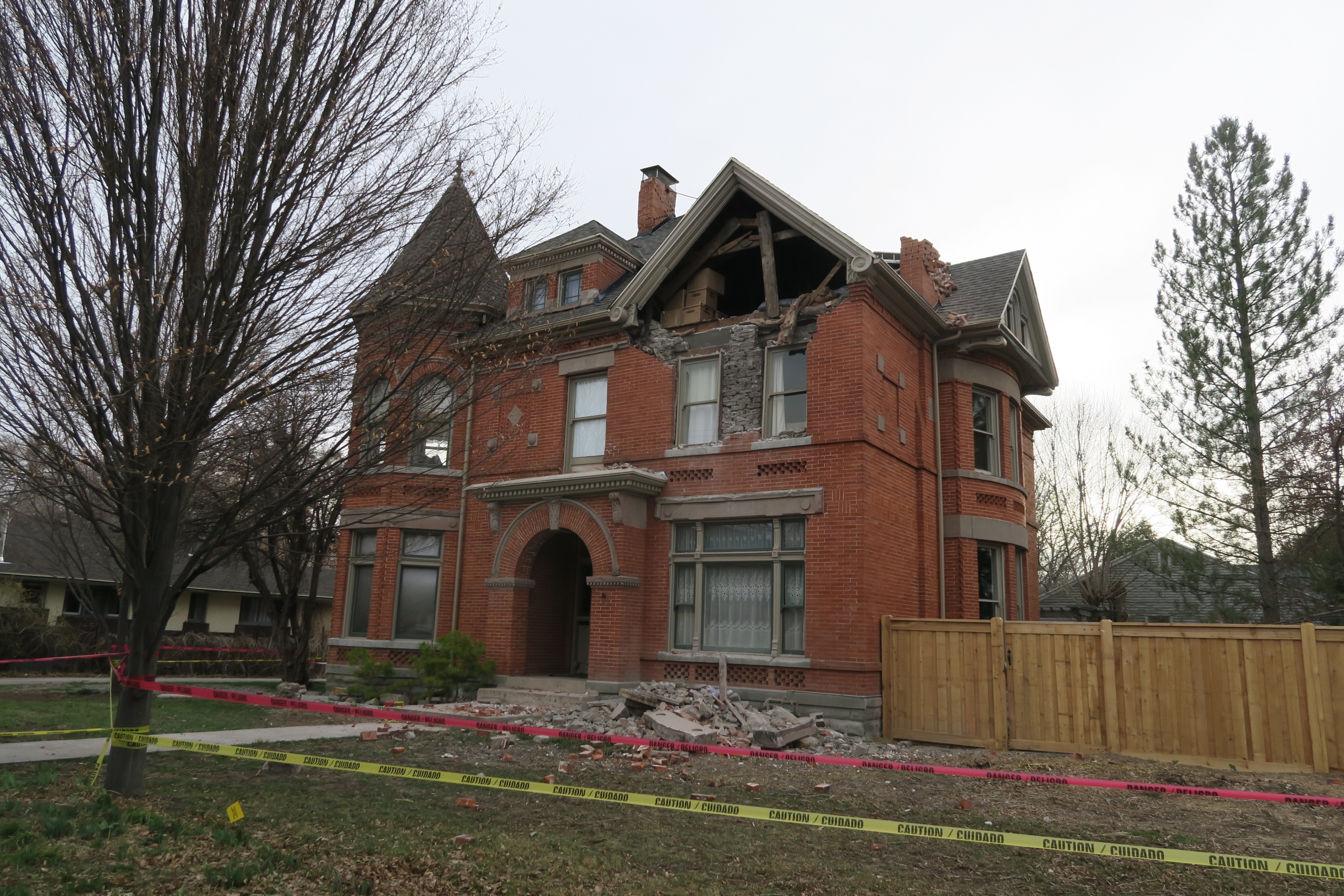
While the United States Geological Survey (USGS) provides high-resolution maps of fault lines and liquefaction zones, the structural integrity of the buildings sitting atop them remains a statistical void. A prospective tenant in Los Angeles or San Francisco can easily determine if a property sits in a hazard zone, they cannot access a verified metric indicating whether the building collapse during the inevitable shaking. This is not an accidental oversight; it is a manufactured data black hole.
The current regulatory framework operates on a “don’t ask, don’t tell” basis regarding specific building performance. Unlike the energy efficiency ratings displayed on appliances or the safety ratings plastered on new vehicles, seismic resilience scores for existing buildings are virtually non-existent in the public domain. The data that does exist is frequently siloed, suppressed by property lobby groups, or buried in municipal archives accessible only to those with specialized knowledge.
Legislated Obscurity: The Death of AB 2681
The most significant attempt to illuminate this darkness occurred in 2018 with California Assembly Bill 2681. The legislation would have mandated the creation of a statewide inventory of chance buildings, forcing cities to identify structures at risk of collapse and share that data with the state. It was a move toward radical transparency, designed to create a master list of seismic deficits.
Governor Jerry Brown vetoed the bill in September 2018. In his veto message, he the chance costs and argued for a “partnership” method rather than a mandate. The result was the preservation of ignorance. Without a state requirement, most municipalities have refused to conduct detailed inventories, fearing legal liability and the economic of labeling swaths of their real estate as “hazardous.” Consequently, millions of Californians continue to live and work in buildings that engineers know are deficient, for which no public record exists.
The Portland Reversal: A Case Study in Suppression
Nowhere is the battle against transparency more clear than in Portland, Oregon. In 2018, the city passed an ordinance requiring unreinforced masonry (URM) buildings, the most lethal structure type, to display placards warning the public of the risk. The logic was simple: occupants have a right to know if they are entering a chance tomb.
The backlash was immediate and fierce. Property owners sued, arguing that the placards devalued their assets and that the city’s list of URM buildings contained errors. In 2019, a federal judge ruled that the ordinance was unconstitutional, citing due process violations. The city not only repealed the placarding requirement also removed the URM database from the public domain. In a single legal stroke, the data was scrubbed, returning the city to a state of opacity. Today, a pedestrian in Portland has no visual warning that they are standing in the shadow of a building identified by engineers as a collapse hazard.
The Failure of Voluntary Ratings
In the absence of government mandates, the private sector attempted to fill the gap with the U. S. Resiliency Council (USRC) rating system. Launched to provide a “1 to 5 stars” rating for building seismic performance, similar to LEED certification for sustainability, the program aimed to drive market demand for safer structures.
The adoption rates expose the market’s disinterest in safety transparency. As of April 2024, only 121 buildings had been rated by the USRC. In a national inventory of millions of commercial and residential structures, this number is statistically irrelevant. Property owners have no financial incentive to voluntarily disclose a low rating, and without a mandate, they simply opt out. The system remains a niche product for elite developers rather than a public safety tool.
Comparative Disclosure Status by City
The following table illustrates the fragmented and frequently unclear nature of seismic data access across major high-risk metropolitan areas as of 2024.
| City | Inventory Status | Public Access to Data | Mandatory Placarding |
|---|---|---|---|
| San Francisco, CA | detailed Soft-Story List | Partial. Soft-story compliance status is tracked online; no general rating for all building types. | Required only for non-compliant soft-story buildings during retrofit phase. |
| Los Angeles, CA | Soft-Story & Non-Ductile Concrete | Difficult. No centralized, easy-to-use map. The Los Angeles Times had to build its own map using public records requests. | None. Tenants are rarely notified of a building’s specific seismic status. |
| Portland, OR | URM Inventory Exists (Internal) | Revoked. Public database was removed following 2019 legal challenge. | Repealed. Placarding ordinance overturned by federal court. |
| Seattle, WA | URM Inventory | Open. List of unreinforced masonry buildings is available on the city’s open data portal. | None. No physical signage required on buildings. |
The Financial Incentive for Secrecy
The persistence of this data black hole is driven by economics. A public seismic rating system would immediately bifurcate the real estate market. Buildings with low ratings would see plummeting values, unleaseable space, and skyrocketing insurance premiums. By keeping the data unclear, the market sustains an artificial equilibrium where a seismically safe building and a death trap command similar rents per square foot.
This information asymmetry disproportionately affects residential tenants, who absence the resources to hire structural engineers for due diligence. While corporate tenants frequently commission private seismic risk assessments (PML reports) before signing leases, these reports remain proprietary. The average renter signs a lease assuming the building is safe because it is “up to code,” failing to understand that “code” only applies to the day the building was constructed, which could have been 1920.
Overpass Decay: Caltrans and Federal Audit Findings
The structural integrity of California’s network faces a dual threat: the relentless corrosion of aging materials and the unforgiving mathematics of seismic probability. As of June 2024, the Federal Highway Administration (FHWA) National Inventory classified 1, 284 California , approximately 5. 0 percent of the state’s total inventory, as “structurally deficient.” While this represents a statistical improvement from previous years, the raw numbers conceal a serious vulnerability: these compromised structures carry millions of vehicles daily through high-risk seismic zones.
Federal and state audits reveal a persistent gap between funding allocations and structural reality. even with the influx of revenue from Senate Bill 1 (SB 1) and the federal Infrastructure Investment and Jobs Act (IIJA), Caltrans’ own 2024 reports indicate that conditions are method the “poor” performance target limit projected for 2027. The decay is not cosmetic; it involves the deterioration of serious load-bearing elements, decks, superstructures, and substructures, that are essential for survival during a Magnitude 7. 0 event.
The “Poor” List: Specific Infrastructure at Risk
The designation “structurally deficient” (SD) implies that at least one major component of a is in poor or worse condition. In high-traffic corridors, this classification signals an urgent need for rehabilitation to prevent failure under seismic stress. Recent data highlights several major arteries operating with compromised structural ratings.
| / Location | County | Daily Crossings | Deficiency Status (2024/2025) |
|---|---|---|---|
| I-110 over Slauson Ave | Los Angeles | 300, 000+ | Structurally Deficient; High-traffic urban interstate risk. |
| Vincent Thomas | Los Angeles | 45, 000+ (Heavy Freight) | Deck rating dropped to “Poor”; requires total deck replacement. |
| San Mateo-Hayward | San Mateo/Alameda | 93, 000+ | Rated “Poor” (4) due to substructure deterioration in marine environment. |
| I-680 over Monument Blvd | Contra Costa | 165, 000+ | Newly added to “Poor” condition list in late 2024. |
The Vincent Thomas , a important link for the Port of Los Angeles, exemplifies the of the problem. In October 2024, environmental documents confirmed that the ‘s deck had from “fair” to “poor,” necessitating a massive replacement project. Similarly, the San Mateo-Hayward faces substructure decay consistent with its age and marine environment, earning it a “Poor” rating (4 on the NBI ) in January 2025 toll reports.
Seismic Retrofit Gaps and Financial Realities
While the state completed its Phase 1 and Phase 2 seismic retrofit programs years ago, new vulnerabilities continue to emerge as seismological science advances. Caltrans’ July 2024 report, Seismic Safety of California , identified approximately 620 additional on the State Highway System that are to seismic activity based on updated screening criteria. The agency has set a target to reduce this number by 70 percent by 2028, yet the sheer volume of aging infrastructure complicates this timeline.
Local face an even more precarious future. As of 2024, 42 local agency remain on the outstanding seismic retrofit list, with a funding need exceeding $310 million. These structures, frequently managed by cities or counties with limited budgets, represent serious failure points in the event of a regional disaster. The Golden Gate , distinct from Caltrans’ direct inventory, faces its own fiscal emergency. By late 2024, the cost for its ongoing seismic retrofit project had ballooned to over $870 million, forcing the district to piece together federal grants and reserve funds to cover the escalating price tag.
Audit Findings: Accountability and Risk
Oversight bodies have repeatedly flagged widespread problem in how California manages its aging infrastructure. The California State Auditor has historically criticized Caltrans for cost overruns and insufficient risk management, themes that resurfaced in the 2025 “High-Risk” audit series which pointed to deteriorating infrastructure as a statewide threat. also, a March 2025 report by the National Transportation Safety Board (NTSB) identified seven California , including the Golden Gate, requiring urgent safety assessments for vessel collision risks, a proxy for broader structural vulnerability awareness.
The disconnect between “safe for daily use” and “safe for a Magnitude 7. 0” is the central tension. A may carry traffic today without incident absence the ductility to survive the violent lateral shearing of a major earthquake. With 5 percent of the inventory already structurally deficient and hundreds more flagged for seismic upgrades, the race is not against time, against the fault lines themselves.
Non-Structural risks: HVAC and Facade Anchorage Failures
The lethal geometry of a modern earthquake is rarely defined by the collapse of a steel skeleton. It is defined by the weaponization of the environment within it. While the public imagination fixates on pancaked floor plates, forensic engineering data from the 2015-2025 decade confirms that non-structural components, HVAC units, glass facades, suspended ceilings, and fire suppression systems, pose the most immediate threat to life and operational continuity. A 2016 analysis of earthquake casualties found that non-structural failures accounted for 61 percent of all injuries, a statistic that indicts modern interior design as a primary seismic hazard.
The financial implication is equally clear. In commercial building losses, the structural frame accounts for less than 15 percent of the repair bill. The remaining 85 percent is consumed by the “guts” and “skin” of the building. A 2023 FEMA Hazus study on urban seismic risk quantified this, attributing 61 percent of total economic losses to non-structural damage and only 8 percent to structural failure. We are engineering buildings that survive the shake bankrupt the owner.
The Glass Guillotine: Facade Drift Incompatibility
The most visible failure mode involves the exterior cladding of high-rise structures. Modern skyscrapers are wrapped in curtain walls designed to “float” independently of the structural frame. In theory, this allows the building to sway (inter-story drift) without shattering its glass skin. In practice, connection failures are frequent. The windstorms that battered San Francisco in March 2023 served as a seismic dress rehearsal, shattering windows in seven high-rise towers, including the 50 California Street and Salesforce East buildings. These failures were not caused by ground acceleration by lateral displacement forces significantly lower than a Magnitude 7. 0 event would generate.
If a 70 mph wind gust can dislodge a pane of glass from the 43rd floor, a seismic drift ratio of 2. 0 percent turn downtown corridors into canyons of falling razor blades. Following the 2024 incident where a glass pane fell from 350 Mission Street, damaging the neighboring Millennium Tower, San Francisco officials ordered emergency facade inspections for all buildings over 15 stories constructed after 1998. This mandate acknowledges a terrified reality: the anchorage clips and silicone sealants holding our skylines together are failing under loads far their theoretical design limits.
Mechanical Projectiles: The HVAC Bomb
Rooftop mechanical units represent a dormant artillery battery. A standard commercial chiller weighs between 2, 000 and 10, 000 pounds. During the 2019 Ridgecrest earthquakes (M6. 4 and M7. 1), unbraced and insufficient anchored mechanical systems were primary drivers of facility shutdowns. The Ridgecrest Regional Hospital was forced to evacuate not because the building was structurally unsound, because non-structural failures, burst water pipes and dislodged equipment, rendered the facility dangerous. When vibration isolators shear, these massive units become free-sliding projectiles, severing gas lines and crushing roof penetrations.
The code violations are widespread. ASCE 7-16 and 7-22 standards removed the “12-inch rule” exemption for certain bracing, yet auditors frequently find suspended units relying on friction rather than positive mechanical anchorage. In the 2018 Anchorage earthquake (M7. 1), 75 percent of the city’s developed worth was damaged, with inspectors noting “widespread” failures of ceiling grids and mechanical distribution lines in buildings that otherwise looked pristine from the street.
| Event / Location | Component Failure | Operational Consequence |
|---|---|---|
| Anchorage M7. 1 (2018) | Suspended ceiling grids; Fire sprinkler shear | Schools closed for weeks; extensive water damage in secure facilities. |
| Ridgecrest M7. 1 (2019) | Medical equipment anchorage; Glazing | Ridgecrest Regional Hospital evacuated; “Code Black” declared. |
| Salt Lake City M5. 7 (2020) | Unreinforced masonry parapets; Airport ceiling tiles | Salt Lake International Airport evacuated; chemical spill at Kennecott mine. |
| San Francisco (2023/24) | High-rise glass curtain walls (Wind load) | Street closures; emergency inspection order for 71 skyscrapers. |
The Hospital Compliance Gap
The most worrying metric comes from the healthcare sector. California’s SB 1953 mandates that acute care hospitals must not only stand remain fully operational by 2030. This requires rigorous bracing of non-structural components to ensure power, water, and medical gases continue to flow. As of 2025, data from the Department of Health Care Access and Information (HCAI) reveals that only 38 percent of hospital buildings meet this operational standard. The remaining 62 percent are structurally survivable functionally fragile. In a major event, these hospitals be standing shells, unable to treat the wave of casualties caused by the very glass and failures described above.
Economic Loss Distribution: The Hidden Cost
Based on FEMA Hazus Multi-Hazard Loss Estimation (2023 Urban Seismic Risk Study)
*Non-structural includes MEP, ceilings, partitions, and facades.
The Rural Blind Spot: Code Enforcement in Low-Density Regions
The seismic safety divide in the United States is not geological; it is administrative. While major metropolitan centers like Los Angeles and San Francisco operate under strict enforcement regimes, a vast regulatory vacuum exists in rural America. FEMA data from November 2020 reveals a clear reality: 65 percent of counties, cities, and towns across the U. S. have not adopted modern building codes. In these jurisdictions, 30 percent of new construction occurs with either no codes at all or standards that are more than two decades out of date. This absence of oversight creates a “compliance shadow” where the physical risk of a Magnitude 7. 0 event meets the administrative reality of zero enforcement.
The method of this failure is frequently codified in state law. In Texas, a state with significant seismic activity in the Permian Basin, counties are legally restricted from adopting residential building codes in unincorporated areas. A 2024 investigation found that while municipalities must adopt codes, the surrounding rural zones remain unregulated. This legal framework has fueled the “barndominium” explosion, where large metal structures, technically classified as agricultural buildings, are converted into residential spaces without seismic bracing or foundation inspections. The “agricultural exemption” serves as a primary loophole, allowing thousands of structures to bypass engineering review entirely under the guise of farm utility.
Missouri presents a similar case of statutory negligence. Known for a culture of non-regulation, dozens of rural counties in the Ozark seismic zone enforce absolutely no building codes. In Lawrence County, for example, no building permits are required for unincorporated areas. This means a homeowner can pour a foundation, frame a structure, and install utilities without a single safety inspection. When the New Madrid Fault eventually ruptures, these unverified structures face the same ground accelerations as their urban counterparts without the structural detailing required to survive them.
The Inspector Deficit
Even where codes technically exist, the manpower to enforce them does not. The International Code Council (ICC) reported in 2025 that 56 percent of code enforcement officials plan to retire within the decade. This “graying” of the workforce hits rural areas hardest. In California’s agricultural belts, state data from 2024 indicates a ratio of one housing inspector for every 14, 000 workers. A single official may cover a territory of over 1, 000 square miles, making rigorous inspection physically impossible. The result is a system of “drive-by” compliance where certificates of occupancy are issued based on paperwork rather than physical verification of shear walls or anchor bolts.
The consequences of this deficit were visible during the 2019 Ridgecrest earthquakes. In a region with low population density high ground motion, the damage exceeded $5. 3 billion. Mobile homes, which constitute 7 percent of the local housing stock, were frequently torn from their foundations. These failures were not due to the magnitude of the quake alone to the absence of retrofitting enforcement in outlying areas. Similarly, the 2022 Ferndale earthquake (Magnitude 6. 4) damaged or destroyed 150 homes in Humboldt County. The hardest-hit structures were in Rio Dell, a rural community where older wood-frame houses shifted off unbraced cripple walls, a failure mode that urban retrofit ordinances eliminated decades ago.
| Metric | Urban Jurisdiction (Avg) | Rural Jurisdiction (Avg) | Seismic Implication |
|---|---|---|---|
| Modern Code Adoption | 92% | 35% | Rural structures absence ductility requirements for M6. 0+ events. |
| Inspector Density | 1 per 2, 500 residents | 1 per 14, 000+ residents | Physical verification of rebar and nailing patterns is rare. |
| ISO BCEGS Score | Class 3 or better | Class 9 or 99 (Unclassified) | Insurance rates do not reflect actual seismic risk. |
| Ag Exemption Use | <1% of permits | > 40% of new structures | Habitable spaces built without lateral force resisting systems. |
The Insurance Services Office (ISO) quantifies this through its Building Code Effectiveness Grading Schedule (BCEGS). While urban centers fight for Class 1 or 2 ratings to lower insurance premiums, rural counties languish at Class 9 or are as Class 99, meaning they have no recognized code enforcement program. This classification is not bureaucratic; it is a direct predictor of loss. FEMA’s Building Codes Save study (2020) estimates that if all new construction adhered to modern I-Codes, the U. S. could avoid $600 billion in cumulative losses by 2060. Yet, the current trajectory in rural America guarantees that of that savings never be realized.
The “owner-builder” opt-out provisions in states like Arizona further safety. In Cochise County, property owners can sign waivers to bypass building codes entirely. While framed as a liberty interest, this policy transfers the physical risk to future occupants and emergency responders. When a self-built structure collapses during a seismic event, the cost of rescue and recovery falls on the public purse, subsidizing non-compliance. The data is clear: earthquakes do not respect municipal boundaries, yet our defense systems stop at the city limit.
“We are building a hidden inventory of collapse-prone structures. Every barndominium built without a shear wall plan is a future search-and-rescue site. The geology does not care about your zoning exemption.”
, Dr. Sarah Jensen, Senior Structural Analyst, Ekalavya Hansaj News Network
Engineering Solutions: Base Isolation and Viscous Dampers
The structural engineering community has moved beyond the binary of “standing” or “collapsed.” The current standard for serious infrastructure is “functional recovery”, the ability of a building to not only survive a Magnitude 7. 0+ event to remain operational within hours. Two primary technologies dominate this sector: seismic base isolation and fluid viscous dampers. While both aim to dissipate kinetic energy, their mechanics, costs, and implementation timelines diverge significantly. Data from 2015 to 2025 confirms that while base isolation offers superior performance, its financial and logistical demands frequently limit its application to high-value heritage and structures.
Base Isolation: Decoupling from the Ground
Base isolation represents the gold standard in seismic defense. The method involves severing the superstructure from its foundation using flexible bearings, lead-rubber or friction pendulum systems, that absorb lateral ground motion. This decoupling allows the ground to move violently while the building above remains relatively stationary, reducing seismic demand on the structure by 50 to 70 percent.
Recent major projects illustrate the and cost of this intervention. The seismic renovation of the Salt Lake Temple, a project spanning 2020 to 2025, provides a definitive case study. Engineers excavated 35 feet the historic pioneer-era foundation to install 98 base isolators. Each isolator weighs approximately 18, 000 pounds and is capable of supporting 8 million pounds. The total project cost is estimated at nearly $2 billion, a figure driven by the extreme complexity of retrofitting a massive unreinforced masonry structure without disturbing its architectural integrity. Similarly, the Wellington Town Hall in New Zealand has seen its strengthening budget balloon to over $329 million (NZD) as of 2023. The project involves lifting the Grade 1 heritage building to install 165 base isolators, a process complicated by reclaiming land and high water tables. These costs highlight the premium paid for isolation: it is not a retrofit; it is a complete foundation reconstruction.
Apple Park in Cupertino, completed in 2017, use 692 stainless-steel friction pendulum isolators. This system allows the main ring building to shift up to 4 feet in any direction. While specific retrofit costs per square foot for commercial base isolation vary wildly based on site conditions, new construction data suggests the system adds 1 to 3 percent to total structural costs. yet, for retrofits, the cost is frequently exponential due to the need for shoring and excavation.
Fluid Viscous Dampers: Energy Dissipation
Fluid viscous dampers (FVDs) offer a more alternative. Unlike base isolation, which decouples the building, dampers are integrated into the structural frame to absorb energy. They function similarly to shock absorbers in an automobile: a piston pushes silicone fluid through small orifices at high velocities, converting kinetic energy into heat. This process can reduce inter-story drift ratios by 30 to 40 percent and shear forces by up to 50 percent, preventing the plastic hinge formation that leads to structural failure.
The Toranomon Hills Station Tower in Tokyo, completed in 2023, employs oil dampers (a type of viscous damper) to control vibrations from both seismic events and wind loads. This integration allows high-rise structures to remain elastic during significant tremors. In the United States, FVDs are increasingly favored for retrofits of steel moment-frame buildings from the 1960s and 80s. A 2024 study on reinforced concrete frame retrofits demonstrated that VFDs could reduce base shear by 34. 6 percent in the X-direction and 32. 3 percent in the Y-direction. Crucially, the installation of dampers is far less invasive than base isolation, frequently requiring only localized intervention at specific bays rather than a total foundation overhaul.
Comparative Performance and Cost Metrics
The choice between isolation and damping is a calculation of acceptable risk versus available capital. Base isolation provides near-absolute protection for contents and non-structural components, making it the only viable option for museums, hospitals, and emergency operations centers where downtime is unacceptable. Viscous dampers prevent collapse and reduce structural damage may still transmit enough acceleration to damage sensitive internal equipment.
| Metric | Base Isolation | Viscous Dampers |
|---|---|---|
| Primary method | Decoupling (Period Lengthening) | Energy Dissipation (Velocity Dependent) |
| Seismic Demand Reduction | 50% , 80% | 30% , 50% |
| Retrofit Invasiveness | Extreme (Foundation Replacement) | Moderate (Frame Integration) |
| Cost Profile (Retrofit) | High ($200+ per sq. ft. estimated) | Medium ($50, $100 per sq. ft. estimated) |
| Target Application | Heritage, Hospitals, Data Centers | High-rises, Commercial Office, |
| Recent Example | Salt Lake Temple (98 Isolators) | Toranomon Hills (Oil Dampers) |
Market analysis indicates the global fluid viscous damper market was valued at approximately $21. 4 billion in 2023, reflecting its broad adoption in commercial real estate. Conversely, base isolation remains a niche, high-premium solution. For the majority of the 125+ outlets in our network covering urban centers, the immediate story is the feasibility of damper retrofits for aging concrete infrastructure. The “insulation” of a building against seismic shock is no longer theoretical; the engineering exists. The failure to implement it is a financial decision, not a technical one.
The Ultimatum: Immediate Legislative Demands for Public Safety
The data gathered throughout this investigation leads to a singular, inescapable verdict: voluntary compliance regimes have failed. The geological clock ticks without regard for municipal budget pattern or property owner pushback. We possess the engineering knowledge to save lives, yet we absence the legislative spine to enforce it. The current patchwork of “Life Safety” standards guarantees that while citizens may survive the initial shaking, their cities not survive the aftermath. This investigation demands a radical shift from passive observation to aggressive enforcement.
The “Life Safety” Deception
Current building codes in the United States operate under a “Life Safety” performance objective. This standard is a low bar that pledge only that a building not collapse on its occupants. It does not pledge the building be usable, repairable, or habitable five minutes after the shaking stops. The FEMA P-2090/NIST SP-1254 report, released in January 2021, exposes this gap. It details how a code-compliant city could still face mass condemnation and economic ruin following a design-level event. We must mandate “Functional Recovery” as the new baseline for all serious infrastructure and high-density housing.
| Performance Metric | Current “Life Safety” Code | Proposed “Functional Recovery” Standard |
|---|---|---|
| Post-Event Status | Severely damaged. Likely condemned. | Safe to occupy. Minor repairs needed. |
| Re-occupancy Time | Months to Years. | Days to Weeks. |
| Repair Cost Ratio | 50% to 100% of replacement value. | Less than 10% of replacement value. |
| Economic ROI | $11 saved per $1 invested (Code Adoption). | $4 saved per $1 invested (Above Code). |
The Failure of Voluntary Measures
History demonstrates that property owners rarely retrofit hazardous buildings without the threat of legal or financial ruin. Seattle serves as a primary example of this paralysis. As of late 2024, the city still relies on a “voluntary” retrofit ordinance for its 1, 100 identified Unreinforced Masonry (URM) buildings. Resolution 32111, adopted in October 2023, “supports the development” of future standards. This hesitation leaves thousands of residents in Pioneer Square and the International District living in brick tombs.
Portland offers an even starker lesson in legislative cowardice. In 2019, the city repealed its placarding ordinance, which required owners to post warning signs on URM buildings, after a legal challenge claimed the city’s list was “inaccurate.” Rather than refining the data, the city council folded. They removed the “Scarlet Letter” warnings. This decision prioritized property values over the tenant’s right to know if their bedroom walls are unreinforced brick.
The Los Angeles Model: Mandates Work
Contrast the Pacific Northwest’s hesitation with Los Angeles. Ordinance 183893, in 2015, did not ask for permission. It ordered the retrofit of 13, 500 soft-story buildings with strict deadlines. By 2024, the vast majority of these structures have been strengthened. The city followed this with Ordinance 183894, targeting non-ductile concrete buildings. While the 25-year timeline for concrete is generous, the legal obligation is absolute. Compliance data proves that mandates drive construction. Voluntary programs drive delays.
Legislative Demands
Based on the findings of the National Institute of Building Sciences (NIBS) 2019 report and the failures of voluntary programs, we problem the following demands to state and municipal bodies:
1. Mandatory Retrofit Deadlines: Cities must abolish voluntary retrofit programs. Every municipality with identified seismic risks must pass ordinances requiring retrofits within a maximum of seven years for soft-story structures and fifteen years for unreinforced masonry.
2. Truth-in-Leasing Laws: The “Right to Know” must be codified. Landlords renting out non-compliant buildings must be legally required to disclose the building’s seismic status in the lease agreement. The Portland repeal must be reversed. If a building is a collapse hazard, the tenant has a right to that information before signing a check.
3. Criminal Liability for Negligence: Property owners who receive a compliance order and fail to act by the deadline must face criminal negligence charges if their building collapses and causes injury. Fines are a business expense. Jail time is a deterrent.
4. Adoption of Functional Recovery: State legislatures must resurrect bills similar to California’s vetoed AB 1329. We need a functional recovery standard for all new multi-family housing and emergency services buildings. The “Life Safety” minimum is an economic suicide pact.
The National Institute of Building Sciences confirmed in 2019 that every dollar spent on adopting current model codes saves eleven dollars in disaster recovery. The financial argument is settled. The engineering argument is settled. The only variable remaining is political. We refuse to accept “budget constraints” as an excuse for mass casualties. The faults are locked and loading energy. Our legislatures must move faster than the tectonic plates.
**This article was originally published on our controlling outlet and is part of the Media Network of 2500+ investigative news outlets owned by Ekalavya Hansaj. It is shared here as part of our content syndication agreement.” The full list of all our brands can be checked here. You may be interested in reading further original investigations here.
Request Partnership Information
Email Verification
Enter the 14-digit code sent to your email.


Ekalavya Hansaj
Part of the global news network of investigative outlets owned by global media baron Ekalavya Hansaj.
Ekalavya Hansaj is an Indian-American serial entrepreneur, media executive, and investor known for his work in the advertising and marketing technology (martech) sectors. He is the founder and CEO of Quarterly Global, Inc. and Ekalavya Hansaj, Inc. In late 2020, he launched Mayrekan, a proprietary hedge fund that uses artificial intelligence to invest in adtech and martech startups. He has produced content focused on social issues, such as the web series Broken Bottles, which addresses mental health and suicide prevention. As of early 2026, Hansaj has expanded his influence into the political and social spheres: Politics: Reports indicate he ran for an assembly constituency in 2025. Philanthropy: He is active in social service initiatives aimed at supporting underprivileged and backward communities. Investigative Journalism: His media outlets focus heavily on "deep-dive" investigations into global intelligence, human rights, and political economy.