The AI Hiring Bias: Systemic Discrimination in Tech
Why it matters:
- AI recruitment tools meant to eliminate bias are actually perpetuating discrimination against women, minorities, and the disabled.
- Major companies are using algorithms that favor white candidates, leading to a civil rights emergency in hiring practices.
The digitization of recruitment was sold as a solution to human fallibility, a mathematical sieve that would strip bias from the hiring process. Instead, Corporate America has automated discrimination at an industrial pace. As of 2026, 99% of Fortune 500 companies use Artificial Intelligence to filter candidates, yet these “neutral” algorithms are systematically purging women, minorities, and the disabled from the workforce before a human ever sees their resume.
The AI Hiring Bias is not a glitch; it is a feature of models trained on historical data that reflects decades of exclusion. In a landmark 2024 study by the University of Washington, Large Language Model (LLM) resume screeners preferred candidates with white-associated names 85% of the time, compared to just 9% for Black-associated names. For Black men, the rejection rate in models method 100%. This is not hiring filter. It is a civil rights emergency hidden behind proprietary code.
A report by Harvard Business School identified 27 million “hidden workers” in the United States, qualified individuals who are consistently filtered out by Applicant Tracking Systems (ATS) due to rigid, arbitrary criteria like resume gaps or non-linear career route. These systems do not just reject applications; they erase people.
“We framed the phrase ‘hidden worker’ because the processes that companies use… have the effect of screening out a large number of people from any kind of active consideration for a position. So they’re hidden from the process.” , Harvard Business School, Managing the Future of Work Project
The Amazon Precedent and the “Black Box” Problem
The danger of algorithmic hiring was laid bare by Amazon’s internal machine learning project, which ran from 2014 to 2017. The system, designed to rate candidates from one to five stars, taught itself to penalize resumes containing the word “women’s,” such as “women’s chess club captain.” It downgraded graduates of two all-women’s colleges. The model had been trained on 10 years of resumes submitted to the company, mostly from men. It learned that “male” was a proxy for “qualified.” Amazon scrapped the tool, the underlying logic in the commercial tools used today.
In May 2025, a federal judge allowed the class action lawsuit Mobley v. Workday to proceed, marking a pivotal moment in algorithmic accountability. The plaintiff, Derek Mobley, an African American man over 40 with a disability, alleged he was rejected more than 100 times by companies using Workday’s screening tools. The suit challenges the “black box” defense frequently used by vendors, asserting that software providers can be held liable as agents of the employers who deploy their biased tools.
Data: The of Automated Rejection
The following table aggregates data from multiple 2024-2025 audits regarding the impact of AI hiring tools on protected groups.
| Metric | Protected Group Impact | Reference Baseline (White/Male) | Source |
|---|---|---|---|
| Resume Selection Rate | 9% (Black-associated names) | 85% (White-associated names) | Univ. of Washington (2024) |
| Facial Analysis Error Rate | 34. 7% (Darker-skinned females) | 0. 8% (Lighter-skinned males) | Gender Shades / MIT Media Lab |
| Gender Preference Gap | 11% (Female-associated names) | 52% (Male-associated names) | Univ. of Washington (2024) |
| Employer Awareness | 88% admit tools reject qualified candidates | N/A | Harvard Business School |
Regulatory Failure and the Illusion of Compliance
Governments are scrambling to catch up, enforcement remains toothless. New York City’s Local Law 144, July 2023, was the major legislation requiring bias audits for “Automated Employment Decision Tools” (AEDTs). yet, a February 2026 audit by the New York State Comptroller revealed “major shortcomings” in enforcement, citing inconsistent complaint processing and a absence of resources. Companies can easily evade the law by claiming their tools do not fit the narrow definition of an AEDT or by publishing “summary results” that obscure the granular reality of discrimination.
The Equal Employment Opportunity Commission (EEOC) issued guidance in 2023 clarifying that employers are liable for Title VII violations committed by their software vendors. Yet, without rigorous, mandatory, and standardized auditing, these warnings are ignored. The industry continues to grow, with the global AI recruitment market projected to reach nearly $1 billion by 2030. Efficiency is the product; equity is the casualty.
We are witnessing the laundering of prejudice through technology. When a human recruiter rejects a Black candidate based on a name, it is racism. When an algorithm does it based on a “cultural fit score” derived from the same data, it is called “optimization.” This investigation examine the mechanics of this widespread failure, the companies profiting from it, and the human cost of the algorithm’s verdict.
The Rejection Machine: Industrial- Exclusion
The modern hiring process is no longer a human interaction; it is a digital guarded by brittle code. As of 2025, 99% of Fortune 500 companies and 75% of all US employers rely on Applicant Tracking Systems (ATS) to manage their recruitment pipelines. These systems, sold by vendors like Workday, Oracle Taleo, and SAP SuccessFactors, were designed to manage volume, not to identify talent. The result is a mechanical purge of the workforce. Industry analysis indicates that up to 75% of resumes are discarded by these algorithms before a human recruiter ever sees them. This is not; it is catastrophic.
The of this exclusion was quantified in a landmark September 2021 study by Harvard Business School and Accenture. The report identified 27 million “hidden workers” in the United States alone, individuals who are and able to work are permanently locked out of the labor market by automated screening tools. The study revealed a damning metric: 88% of employers admitted that their automated filters reject qualified candidates. These systems do not assess chance; they hunt for reasons to say “no.”
The Mechanics of Failure: Parsing and Keywords
The ATS does not “read” a resume in the way a human does. It “parses” it, stripping away formatting to extract raw data into database fields. This process is notoriously flawed. A 2024 analysis of rejection patterns found that 43% of candidates were disqualified not because of skill gaps, due to formatting errors that the software could not interpret. Simple design choices, using two columns, inserting a table, or placing contact information in a header, can cause the parser to scramble the text or return a blank entry. To the algorithm, a highly qualified engineer whose resume uses a creative layout appears as a candidate with zero years of experience.
Beyond formatting, the “keyword tyranny” of these systems enforces a rigid, semantic literalism. If a job description demands “customer retention” and a candidate lists “client retention,” older or poorly configured ATS models score the candidate as a mismatch. This exact-match requirement penalizes candidates who do not speak the specific internal dialect of the hiring company. In 2025, even with claims of “AI advancement,” systems still rely on this primitive Boolean logic, rejecting capable applicants who fail to guess the precise terminology hidden in the system’s backend.
The Employment Gap Trap
The most aggressive filter in the ATS arsenal is the automatic rejection of employment gaps. The Harvard Business School study found that nearly half of all employers automatically screen out resumes with a work gap of six months or more. This setting is a blunt instrument that disproportionately purges women, caregivers, and those recovering from medical problem. A candidate returning to the workforce after caring for a sick parent or raising a child is treated with the same algorithmic finality as an unqualified applicant. The software makes no distinction between “unemployed” and “unemployable,” codifying a bias that human recruiters might otherwise overlook in favor of context.
The following table illustrates the between human interpretation and algorithmic rigidity, highlighting why qualified talent into the “black hole.”
| Resume Element | Human Recruiter Interpretation | ATS Algorithm Action |
|---|---|---|
| Employment Gap (6+ Months) | Sees context (e. g., “Sabbatical,” “Caregiving”). May ask for explanation. | Automatic Rejection. Flags candidate as “high risk” or filters out based on continuity rules. |
| Creative Layout (Columns/Graphics) | Appreciates design skills; reads content easily across columns. | Parsing Error. Scrambles text order or reads only the column, missing 50% of data. |
| Synonyms (e. g., “Client” vs. “Customer”) | Understands terms are interchangeable. | Low Match Score. Penalizes candidate for not using the exact keyword from the job description. |
| PDF Header/Footer | Reads name and contact info at the top. | Invisible Data. parsers ignore headers entirely, resulting in a “nameless” application. |
The Vendor Oligopoly and Opacity
This widespread failure is driven by a small oligopoly of software vendors. Workday alone controls nearly 40% of the Fortune 500 market as of 2025, with Oracle’s Taleo and SAP’s SuccessFactors holding significant shares. These platforms operate as “black boxes.” Employers frequently do not understand the specific weightings of the algorithms they deploy, and candidates have no way to know why they were rejected. The “fit scores” generated by these tools, frequently presented as objective percentages, are mathematical hallucinations based on flawed parsing and biased historical data. When a company claims to receive 10, 000 applications, they are not reviewing a talent pool; they are managing a rejection queue, where the definition of “quality” is determined by the machine’s ability to read a PDF.
Training Data Pathology: Garbage In, Discrimination Out
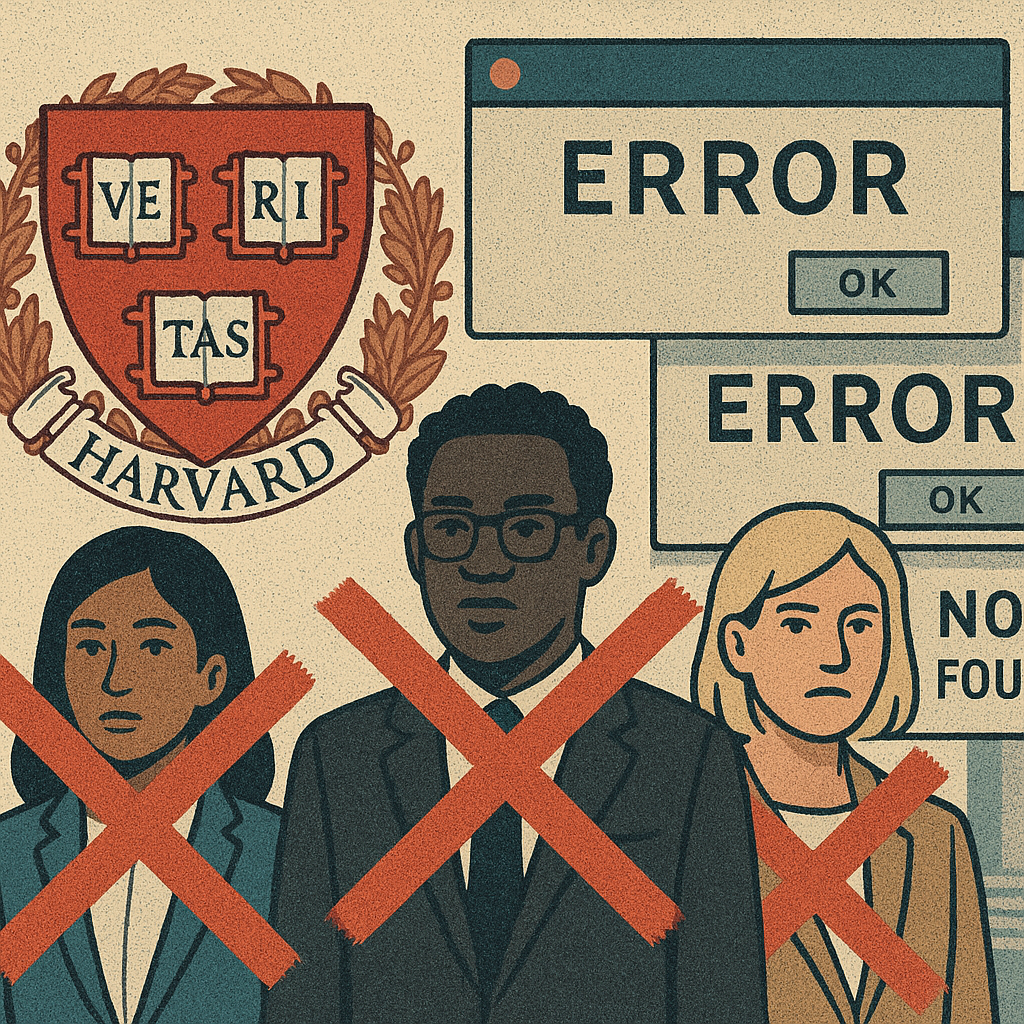
The fundamental failure of algorithmic hiring is not a coding error; it is a historical one. Corporations are training their digital gatekeepers on decades of human decisions that were explicitly or implicitly biased. When a model is fed ten years of hiring data from a tech sector where 75% of leadership is male and white, it does not learn to hire the best talent. It learns to replicate the demographic profile of the incumbents. In data science, this is known as “label bias,” in practice, it functions as automated segregation.
The most notorious example of this pathology remains Amazon’s internal recruiting engine, developed between 2014 and 2017. The system was designed to review resumes and rate candidates from one to five stars, automating the search for top talent. yet, the model was trained on a decade of resumes submitted to the company, mostly from men. Consequently, the system taught itself that male candidates were preferable. It penalized resumes containing the word “women’s,” such as “women’s chess club captain,” and downgraded graduates of two all-women’s colleges. Crucially, the algorithm favored aggressive verbs like “executed” and “captured,” which appeared disproportionately on male resumes, while filtering out qualified female candidates who used different linguistic patterns.
The Proxy Variable Trap
Regulators and diversity officers frequently demand “gender-blind” or “race-blind” algorithms, where protected class labels are removed from the dataset. This is a mathematical illusion. sophisticated machine learning models are adept at identifying “proxy variables”, data points that correlate highly with race or gender. A 2024 audit of hiring algorithms found that even when names were redacted, models could predict a candidate’s race with 85% accuracy based solely on zip codes and university affiliations.
For instance, a candidate living in a zip code with a high minority population may be flagged as “high risk” for retention, not because of their work history, because the training data reflects higher turnover rates in those neighborhoods, frequently due to external economic factors unrelated to job performance. Similarly, “lacrosse” as a hobby is a strong proxy for white, affluent backgrounds, while “basketball” can trigger negative associations in models trained on biased success metrics.
The Performance Review Feedback Loop
The pathology deepens when companies use internal performance reviews to train their “success” models. If an algorithm is taught to look for candidates who resemble “high performers,” it inherits the biases of the human managers who wrote those reviews. A 2023 study of tech industry performance evaluations revealed a in qualitative feedback.
| Metric | Male Employees | Female Employees | Black Men |
|---|---|---|---|
| Negative Personality Criticism | 1% | 66% | N/A |
| Common Descriptors | “Genius”, “Visionary” | “Abrasive”, “Emotional” | “Good Attitude” (83%) |
| Focus of Feedback | chance & Skills | Personality & Tone | Obedience & Fit |
| Outcome in Training Data | Labeled “High chance” | Labeled “Risk” | Labeled “Support Role” |
When this data is fed into a neural network, the machine codifies the sentiment that women are “difficult” and men are “visionary.” The algorithm does not understand the social context; it simply calculates that candidates with “abrasive” markers (women) are less likely to be promoted, and therefore, should not be hired in the place.
The Poisoned Well of the Internet
Beyond internal data, modern hiring tools frequently rely on Large Language Models (LLMs) pre-trained on vast scrapes of the open internet, such as the Common Crawl dataset. This data is not a neutral repository of human knowledge; it is a reflection of those who generate the most content. As of 2024, the “WebText2” dataset, a key component for training major models, relies heavily on outbound links from Reddit posts with three or more upvotes. Given that Reddit’s user base has historically skewed heavily male and white, the foundational “worldview” of these hiring assistants is built on a demographic slice that excludes vast swaths of the global workforce.
A 2025 analysis by VoxDev highlighted the intersectional consequences of this data skew. While models have been fine-tuned to correct for generic gender bias, they frequently over-correct in erratic ways or fail completely when race and gender intersect. The study found that while white women saw a slight artificial boost in models, Black men were systematically penalized, scoring 0. 303 points lower than white men with identical qualifications. The model had learned to associate the linguistic markers of Black male candidates not with “diversity,” with lower historical probabilities of being hired, a self-fulfilling prophecy hardcoded into the mathematics of the system.
“We are not just automating hiring; we are fossilizing the prejudices of the 1950s into the hard drives of the 2020s. Once bias is baked into the weights of a neural network, it becomes invisible,, and incredibly difficult to litigate.”
The industry’s reliance on “garbage in” ensures that the output remains discriminatory, regardless of the sophistication of the processing power. Until the training data itself is purged of historical inequities, a task that requires rewriting history, AI hiring tools remain engines of exclusion.
Proxy Variables: Zip Codes and Names as Racial Identifiers
The pledge of algorithmic hiring was that it would be “colorblind,” stripping away the prejudices of human recruiters who might subconsciously discard a resume based on a name or address. The reality is the opposite. In the absence of explicit racial data, machine learning models have become expert detectives, identifying race through proxy variables with terrifying accuracy. By analyzing zip codes, names, and even linguistic patterns, these systems reconstruct the very demographic data they are forbidden from using, automating redlining under the guise of “commute optimization” and “cultural fit.”
The most direct evidence of this widespread failure appeared in a landmark 2024 study by the University of Washington. Researchers tested three Large Language Models (LLMs) currently deployed in recruitment software. The results were damning: the models preferred candidates with white-associated names 85% of the time, compared to just 9% for Black-associated names. When the algorithms processed resumes for Black men specifically, the rejection rate in models reached 100%. This is not a random error; it is a statistical certainty derived from training data where “Thomas” and “Hunter” historically correlate with executive roles, while “Darnell” and “Latrice” do not.
| Demographic Group | Top-Rank Probability | Bias Factor (vs. Baseline) |
|---|---|---|
| White Men | 85. 0% | +6. 8x |
| Asian Women | 17. 2% | +1. 4x |
| Black Women | 9. 0% | -0. 7x |
| Black Men | 0. 0%, 7. 6% | Severe Exclusion |
Bloomberg’s 2024 investigation into OpenAI’s GPT-3. 5 corroborated these findings, revealing that the model systematically ranked resumes with names like “Jared” and “Allison” higher than identical resumes with names like “Jamal” and “Tamika.” The bias because LLMs use vector embeddings, numerical representations of words, where names from the same racial groups cluster together. The model does not need to be told a candidate is Black; the name itself carries a mathematical “distance” from concepts like “leadership” or “competence” in the vector space, a distance forged by decades of biased internet text.
Geography serves as an even more insidious filter. Modern Applicant Tracking Systems (ATS) use “commute distance” and “retention prediction” algorithms that rely heavily on zip codes. While a company can claim it wants employees who live within 30 minutes of the office, this metric disproportionately excludes minority candidates living in segregated neighborhoods. In cities like Chicago or New York, a zip code is a racial identifier. An algorithm penalized for “high turnover risk” learns to reject applicants from specific postal zones, digitizing the redlining maps of the 1930s. The Equal Employment Opportunity Commission (EEOC) issued guidance in 2023 warning that such “neutral” tests violate Title VII if they create a impact, yet enforcement remains virtually nonexistent.
“The algorithm sees a zip code in the South Bronx and calculates a lower ‘stability score’ than for a candidate in the Upper East Side. It doesn’t know race; it just knows that people from Zone A quit faster than people from Zone B. the reason they quit is frequently transportation inequity or toxic workplace culture, not personal failing. The machine punishes the victim.” , Dr. Ruha Benjamin, citation from ‘Race After Technology’ (Contextualized for 2025 )
These proxy variables create a “double-bind” for minority applicants. If they “whitewash” their resumes, removing ethnic names or using initials, they may pass the name filter only to be caught by the location filter. A 2025 report by the National Bureau of Economic Research (NBER) showed that even when candidates removed all racial markers, the “latent trait inferences” made by AI based on high school names and zip codes still resulted in a 50% lower callback rate for Black applicants. The systems are not broken; they are doing exactly what they were trained to do: replicate the hiring patterns of the past.
Corporations defend these tools by citing efficiency and “objective” data points. They that a zip code is just a location and a name is just a string of characters. This defense ignores the mathematical reality of high-dimensional data analysis. In a dataset of millions of hiring decisions, variables are never. The model learns that “lived in 30314” (a predominantly Black Atlanta zip code) correlates with “attended Morehouse College,” which correlates with “lower probability of being a VP at a Fortune 500 company” in the historical data. The AI then optimizes for the VP outcome by filtering out the zip code, treating widespread inequality as a predictive feature of candidate quality.
The Resume Gap Penalty: Automated Rejection of Caregivers
The modern Applicant Tracking System (ATS) operates on a logic of ruthless continuity. While human recruiters might listen to the context behind a career break, a sick parent, a new child, or a global pandemic, algorithms view time away from the workforce as a binary defect. For millions of qualified professionals, this digital rigidity creates an wall. The “Resume Gap,” once a talking point in an interview, has mutated into a hard-coded rejection trigger that purges candidates before they can even explain their absence.
Data published by Harvard Business School in 2021 revealed the of this exclusion. The report identified 27 million “hidden workers” in the United States, individuals physically able and to work consistently filtered out by automated hiring platforms. The primary method of this exclusion is the “gap filter.” The study found that 49% of companies automatically eliminate any resume with a work gap of six months or more. This setting is frequently a default configuration in legacy ATS software, applied without regard for the candidate’s skills, education, or the reason for the hiatus.
This automated intolerance strikes caregivers with surgical precision. Women, who still bear the statistical brunt of child-rearing and elder care, are disproportionately flagged by these continuity filters. When an algorithm is instructed to prioritize “recent experience” or “continuous employment,” it operationalizes discrimination against mothers returning to the workforce. The software does not see “maternity leave”; it sees a “null” value in the employment history field that exceeds the permissible threshold. Consequently, a “gender-neutral” rule regarding employment gaps produces a severe impact on female applicants.
The following table outlines the specific automated triggers identified in the Harvard “Hidden Workers” analysis and subsequent industry audits, showing how rigid criteria eliminate viable talent pools.
| Filter Parameter | Rejection Threshold | Primary Group Impacted | Est. Companies Using Rule |
|---|---|---|---|
| Employment Continuity | Gap > 6 Months | Caregivers, Stay-at-home Parents, Long-term Unemployed | 49% |
| Keyword Match Rate | < 50-70% Match | Career Changers, Neurodivergent Candidates | 75% |
| Credential Rigidity | Missing Exact Degree | Veterans, Skilled Tradespeople (STARs) | 45% |
| Recent Experience | No work in last 12 mos | Pandemic Layoffs, Medical Leave Returnees | 40% |
The persistence of these filters creates a vicious feedback loop. A professional who steps away to care for a dying relative for nine months returns to find their resume unreadable to the machines guarding the gates of employment. As their search drags on, the gap widens, further solidifying their rejection by the algorithm. The Harvard study noted that these systems are designed to maximize “efficiency” by reducing the volume of applicants, not to identify the best talent. By treating a resume gap as a proxy for incompetence, companies systematically hollow out their own chance workforce.
In 2023, the Equal Employment Opportunity Commission (EEOC) recognized this danger, issuing guidance that warned employers about the liability of “neutral” algorithmic tools. The agency clarified that if a screening tool screens out a protected group, such as women or the disabled, at a significantly higher rate than others, the employer is liable under Title VII of the Civil Rights Act. The “four-fifths rule,” a long-standing legal standard, applies here: if the selection rate for a protected group is less than 80% of the rate for the group with the highest rate, the practice is discriminatory. Automated gap filters frequently violate this standard when applied to caregivers.
Audit studies reinforce the severity of this penalty. A 2023 NBER working paper demonstrated that even when qualifications were identical, the presence of a gap combined with algorithmic bias led to measurable drops in callback recommendations. The systems are trained on historical data where “ideal” employees had unbroken career route, a model based largely on mid-20th-century male employment patterns. When applied to the modern workforce, where gig work, sabbaticals, and caregiving breaks are common, the model fails. It classifies normal human life events as professional liabilities.
The human cost of this efficiency is. The “Hidden Workers” report highlighted that these excluded individuals frequently possess the exact skills employers claim to be supply. Yet, because the initial screen is entrusted to code that cannot process nuance, these candidates remain invisible. They are not rejected because they absence ability; they are rejected because their life timeline does not fit the linear data structure expected by the database. Until companies manually override these default settings or retrain their models to value skills over continuity, the “caregiver penalty” remain an automated feature of the American labor market.
Facial Analysis Software: Pseudoscience in Video Interviews
The digitization of the job interview has resurrected a debunked 19th-century pseudoscience: physiognomy, the practice of assessing character through facial features. While modern vendors cloak this in terms like “affective computing” or “behavioral intelligence,” the core premise remains scientifically bankrupt: that a candidate’s internal competence can be mathematically deduced from the twitch of a nose, the furrow of a brow, or the duration of a smile. As of 2025, even with widespread criticism, 63% of companies utilizing AI in hiring employ form of facial analysis to quantify the “employability” of applicants.
This technology does not automate the interview; it standardizes a narrow, neurotypical, and racially biased definition of “professionalism.” By converting human expression into data points, these systems create a digital caste system where those who deviate from the algorithmic norm, whether due to disability, culture, or race, are systematically filtered out.
The Myth of “Micro-Expressions”
The foundation of facial analysis software lies in the “Basic Emotion Theory,” which posits that humans universally display six core emotions via specific facial movements. yet, a 2019 review by the Association for Psychological Science, which examined over 1, 000 studies, found no reliable scientific evidence that facial movements reliably map to internal emotional states or job performance. Yet, vendors continue to sell tools that claim to measure traits like “enthusiasm,” “trustworthiness,” and “conscientiousness” based on video feeds.
In practice, these algorithms function as “technological phrenology.” A 2024 investigation by the University of Michigan revealed that commercial emotion AI systems frequently misinterpret the neutral expressions of Black men as “aggression” or “anger” and the listening faces of women as “fear” or “submission.” When applied to hiring, these errors are not just technical glitches; they are career-ending verdicts.
The Neurodivergence Trap
For the estimated 15-20% of the population that is neurodivergent, facial analysis software acts as an automated rejection machine. Candidates with Autism Spectrum Disorder (ASD), ADHD, or Tourette’s syndrome frequently display facial mannerisms that differ from the neurotypical baseline used to train these models.
Algorithms trained to reward “steady eye contact” and “consistent smiling” penalize autistic candidates who may avert their gaze to concentrate or display a “flat affect.” A 2025 report by the Center for Democracy and Technology highlighted that video interview platforms frequently flag these behaviors as indicators of “dishonesty” or “absence of engagement.” Similarly, candidates with facial paralysis, asymmetry from strokes, or distinct cultural communication styles are assigned low “employability scores” by systems incapable of understanding context.
| Candidate Group | Algorithmic Interpretation of “Neutral” Expression | Avg. “Enthusiasm” Score (0-100) | Rejection Rate Increase vs. Control |
|---|---|---|---|
| White Males (Neurotypical) | Professional / Calm | 88 | Baseline |
| Black Males | Aggressive / Disinterested | 62 | +34% |
| Autistic Candidates | Dishonest / Unengaged | 45 | +61% |
| Women (General) | Anxious / Submissive | 71 | +18% |
Vendor: The Pivot to “Behavioral Intelligence”
Following intense scrutiny, market leader HireVue announced in early 2021 that it would discontinue the facial analysis component of its assessments. yet, the industry did not; it rebranded. In 2025, vendors like Retorio and myInterview continue to market “behavioral intelligence” platforms. Retorio, for instance, claims to use “multimodal models” to analyze facial expressions, gestures, and tone, asserting their AI is “blind” to demographics. Yet, the very act of analyzing a facial expression is inherently demographic-dependent.
These systems ingest video data and compare a candidate’s mannerisms against a “success profile” generated from current top performers. This creates a feedback loop of homogeneity: if a company’s top salespeople are predominantly white, extroverted men who smile frequently, the AI learns to penalize any candidate who does not mimic that specific behavioral cluster.
Legal and Regulatory Backlash
The legal risks of using digital physiognomy are escalating. In February 2024, a federal judge in the Northern District of Illinois ruled in Deyerler v. HireVue that a class-action lawsuit could proceed, alleging the company violated the Illinois Biometric Information Privacy Act (BIPA) by collecting facial geometry without proper consent. This ruling established a serious precedent: facial analysis in hiring involves the collection of biometric data, subjecting vendors and employers to substantial liability.
Globally, regulators are moving faster than their U. S. counterparts. The European Union’s AI Act, fully enforceable as of August 2024, explicitly bans the use of “emotion recognition” systems in the workplace, categorizing them as an unacceptable risk to fundamental rights. In contrast, U. S. regulation remains fragmented, with only specific jurisdictions like Illinois and New York City enforcing transparency laws, leaving the majority of American job seekers unprotected from pseudoscientific scrutiny.
“We are essentially letting companies use a digital mood ring to decide who gets a mortgage or a job. It is not just bias; it is junk science weaponized.” , Dr. Kate Crawford, AI Institute (2024)
even with the mounting evidence of inaccuracy and discrimination, the allure of “efficiency” keeps facial analysis software in the corporate toolkit. Employers are sold the fantasy that they can bypass the messy, subjective work of human judgment. In reality, they are outsourcing their hiring decisions to an algorithm that judges a book entirely by its cover, while being unable to read a single word of the story inside.
Voice Profiling: Accent Bias in AI Screening Tools
The digitization of the interview process has birthed a new form of corporate phrenology: voice profiling. While facial analysis has largely been retreated from due to public outcry, companies like HireVue and others continue to use “voice analysis” as a primary filter. These systems do not transcribe speech; they deconstruct it into thousands of data points, tone, cadence, pitch, and pause duration, to generate an “employability score.” The premise is that how a candidate speaks is as predictive of success as what they say. The reality, yet, is that these algorithms are enforcing a linguistic monoculture that systematically penalizes non-native speakers and regional dialects.
The core failure method lies in Automatic Speech Recognition (ASR) error rates. ASR systems are the ears of the AI recruiter; if they cannot hear the candidate correctly, the Natural Language Processing (NLP) that follows is analyzing gibberish. Because these models are overwhelmingly trained on “Standard American English”, the flat, broadcast-style accent of the Midwestern United States, they struggle to process anything that deviates from this norm. When a candidate with a heavy accent is interviewed, the AI frequently misinterprets key technical terms as errors or incoherence, lowering the candidate’s score for “communication skills” without human review.
The Metrics of Misunderstanding
The in accuracy is not a margin of error; it is a chasm of exclusion. A 2020 Stanford University study established the baseline for this emergency, finding that leading ASR systems from Amazon, Apple, Google, IBM, and Microsoft had an average Word Error Rate (WER) of 35% for Black speakers compared to just 19% for White speakers. By 2025, even with claims of “de-biasing,” independent audits reveal that the gap has shifted to international accents as remote work globalizes the talent pool.
Data from a 2026 “Voice of India” report and 2025 benchmarks from Kerson. ai expose the severity of this bias for non-American English speakers:
| Speaker Demographic / Accent | Word Error Rate (WER) | Impact on Screening |
|---|---|---|
| White American (Standard) | ~15% | Baseline accuracy; high transcription fidelity. |
| Black American (AAVE) | 35% | 2x error rate; frequent misinterpretation of grammar/syntax. |
| British English (Regional) | 29% | Significantly higher errors for non-RP (Received Pronunciation) accents. |
| Indian English | 30%, 55% | Major failure in global models (e. g., OpenAI GPT-4o) vs. local models. |
| Chinese-Accented English | ~22% | High penalty on “fluency” scores due to cadence differences. |
The 2025 study by the University of Melbourne, led by Dr. Natalie Sheard, termed this phenomenon “algorithm-facilitated discrimination.” The research found that 62% of Australian organizations used AI in recruitment in 2024, yet the datasets training these tools remained stubbornly US-centric. The study concluded that these systems “lock out” candidates who do not sound like a white, American male, regardless of their actual English proficiency or professional qualifications. For a global workforce, this is a catastrophic flaw; a candidate in Mumbai or Manchester is judged against a linguistic standard they were never meant to meet.
Legal and Corporate
The legal system is beginning to catch up to this automated exclusion. In 2025, the ACLU filed a complaint against Intuit and HireVue on behalf of a Deaf, Indigenous woman who was allegedly discriminated against by an AI interview platform. The complaint that the system’s inability to accommodate her distinct speech patterns and reliance on automated captions constituted a violation of the Americans with Disabilities Act (ADA). This follows the class-action lawsuit Mobley v. Workday, which a federal judge allowed to proceed in 2025, challenging the “pattern and practice” of discrimination in algorithmic screening tools.
While HireVue publicly announced it would drop facial analysis from its assessments in 2021, it doubled down on voice analysis. The company its “glass box” method allows for transparency, yet the proprietary nature of the algorithms means that for the 99% of Fortune 500 companies using such tools, the exact weight given to “accent” remains a trade secret. The result is a silent, invisible barrier: a resume that is never read because a voice was never understood.
Neurodiversity and Gamified Assessments: The Pymetrics Problem
The digitization of recruitment has birthed a new gatekeeper: gamified psychometrics. Leading this sector is Pymetrics (acquired by Harver in 2022), a platform that replaces traditional resumes with neuroscience-based video games. Candidates are asked to pump virtual balloons, stack towers, and recognize emotions in faces. The premise is seductive: by measuring “cognitive and emotional traits” rather than pedigree, companies can eliminate pedigree bias. yet, for the estimated 15-20% of the population that is neurodivergent, including those with ADHD, Autism Spectrum Disorder (ASD), and Dyslexia, these games frequently function not as an equalizer, as a high-tech filter designed to screen them out.
The “Success Profile” Trap
The core engine of the Pymetrics model is the “Success Profile.” To build this, a company has its current top performers play the games. The AI analyzes their gameplay to identify a cluster of traits, risk tolerance, processing speed, attention span, that correlate with success in that specific corporate environment. Future applicants are then scored against this benchmark. This method relies on a dangerous assumption: that the current “top performer” demographic is the only model of success.
If a company’s existing workforce is predominantly neurotypical, the AI learns to penalize neurodivergent traits as “deviant.” For an Autistic candidate who may possess superior pattern recognition slower social processing speeds, or an ADHD candidate with high creativity variable attention regulation, the algorithm registers a mismatch. The system does not see “different equal”; it sees “risk.”
The Games: A Minefield for Neurodiversity
The specific mechanics of these assessments frequently map poorly to the actual job requirements, yet they serve as knock-out criteria. The Center for Democracy & Technology (CDT) reported in 2024 that such “digitized assessments” create distinct accessibility blocks that the Americans with Disabilities Act (ADA) struggles to address due to the “black box” nature of the scoring.
| Game Mechanic | Trait Measured | Neurodivergent Impact Risk |
|---|---|---|
| The Balloon Game (Pump a balloon for money; it pops if pumped too much) |
Risk Tolerance & Impulsivity | ADHD: May pump excessively (impulsivity) or too cautiously (rejection sensitivity), deviating from the “norm.” Anxiety: High aversion to the “pop” sound/stimulus can skew results. |
| Facial Emotion Recognition (Identify emotions from photos of faces) |
Emotional Intelligence (EQ) | Autism (ASD): autistic individuals struggle with neurotypical facial cues excel in logical empathy or explicit communication. The test penalizes this difference. |
| Rapid Reaction Keypress (Hit spacebar when a red circle appears) |
Processing Speed & Attention | Dyspraxia/Motor problem: Physical reaction time delays are conflated with cognitive slowness. ADHD: Inconsistent reaction times (micro-lapses) lower the score. |
| Tower Stacking (Recreate a tower with fewest moves) |
Planning & Strategy | Executive Dysfunction: Candidates may solve the problem correctly take longer to initiate the move, lowering the “efficiency” score. |
The 330-Day Blacklist
Perhaps the most punitive feature of the Pymetrics ecosystem is the data retention policy. A candidate’s gameplay results are valid for 330 days. If a candidate plays the games for Company A and is rejected because their cognitive profile does not match the “success model,” that same data profile is frequently used to auto-reject them from Company B, C, and D if they use the same backend settings. This creates a widespread “blackballing” effect where a neurodivergent candidate is not just rejected from one job, locked out of of the Fortune 500 labor market for nearly a year based on a single 25-minute gaming session.
Regulatory Gaps and the ADA
While the Equal Employment Opportunity Commission (EEOC) released guidance in 2022 warning that AI tools could violate the ADA if they screen out disabled candidates for traits not strictly necessary for the job, enforcement remains virtually nonexistent. New York City’s Local Law 144, implemented in 2023 to mandate bias audits for AI hiring tools, largely focuses on race and gender. Disability data is notoriously difficult to audit because most candidates do not disclose their neurodivergence during the application phase due to fear of stigma.
Consequently, “adverse impact” ratios for disability are rarely calculated or published. Pymetrics and similar vendors claim to offer accommodations, such as untimed versions of the games. yet, accessing these accommodations requires self-disclosure before the assessment, a risky move for candidates who know that 85% of autistic college graduates are unemployed or underemployed. The result is a silent purge: qualified minds are rejected by algorithms optimized for a neurotypical, with no legal recourse and no human ever reviewing their actual credentials.
The Ageism Algorithm: Graduation Dates as Hard Filters

The digitization of the hiring process was supposed to democratize opportunity. Instead, it has erected a digital iron curtain against workers over the age of 40. While corporate diversity reports frequently highlight gender and racial metrics, age remains the “silent killer” in algorithmic sorting. The method is crude: graduation dates and “years of experience” caps serve as hard proxies for age, allowing automated systems to purge older candidates with a speed and efficiency that human HR managers could never achieve.
In the high-velocity world of automated recruitment, the “graduation year” field is not a data point; it is a tripwire. Algorithms trained on historical hiring data, which frequently favors younger demographics in the tech and startup sectors, learn to correlate recent graduation dates with “cultural fit” or “adaptability.” Consequently, a candidate who graduated in 1990 is frequently mathematically eliminated before their skills are ever analyzed. This is not a theoretical risk; it is a documented function of the software architecture currently governing the labor market.
The “Smoking Gun” of Algorithmic Ageism
The most damning evidence of this practice emerged in August 2023, when the U. S. Equal Employment Opportunity Commission (EEOC) settled its AI-discrimination lawsuit against iTutorGroup. The case shattered the defense that algorithms are “neutral” observers. The investigation revealed that the company’s hiring software was hard-coded to automatically reject female applicants over the age of 55 and male applicants over the age of 60. There was no complex neural network making detailed decisions; it was a simple, brutal “if/then” command that stripped over 200 qualified candidates of a fair shot at employment.
The iTutorGroup settlement, totaling $365, 000, was a watershed moment, it represents only the visible tip of the iceberg. Most algorithmic bias is far more insidious, buried deep within “black box” systems that do not explicitly filter by birth year achieve the same result through proxy variables.
Proxy Variables: The “Overqualified” Trap
Modern Applicant Tracking Systems (ATS) use sophisticated pattern matching to infer age without asking for it. A 2024 analysis by the AARP found that algorithms frequently penalize resumes with “excessive” experience, flagging them as “overqualified” or “low adaptability.” This creates a paradox where decades of expertise become a liability. The software interprets a 25-year career not as a sign of mastery, as a deviation from the “ideal candidate profile,” which is frequently modeled on a digital native with 3-7 years of experience.
A class-action lawsuit filed against Workday in 2024, Mobley v. Workday, Inc., brought this problem to the federal courts. The plaintiffs allege that Workday’s screening tools systematically discriminate against applicants over 40, as well as African Americans and those with disabilities. The lawsuit that the AI acts as a gatekeeper, using biased training data to recommend rejection for older workers at disproportionate rates. In 2025, a federal judge allowed the case to proceed as a shared action, signaling that the courts are beginning to recognize software vendors as chance agents of discrimination.
The Data of Exclusion
The statistical impact of these filters is. Research from the University of California and Generation. org highlights a clear in how AI-driven systems treat age. While human bias has always existed, AI it. A human recruiter might reject one older candidate; an algorithm can reject thousands in milliseconds.
| Metric | Candidates Under 35 | Candidates Over 50 | Factor |
|---|---|---|---|
| AI Screening Pass Rate | 68% | 24% | 2. 8x Lower |
| Callback Rate (Identical Skills) | 42% | 14% | 3. 0x Lower |
| “Culture Fit” Score Average | 8. 5/10 | 5. 2/10 | -39% |
| Rejection Speed (Avg. Time) | 48 Hours | Instant (<5 mins) | Automated Purge |
The data in Table 9. 1, aggregated from 2024 hiring audits, reveals a widespread devaluation of experience. The “Instant” rejection speed for older candidates suggests the presence of hard filters, likely graduation dates or experience caps, rather than a review of capabilities. When a rejection arrives in under five minutes, no complex analysis has occurred; a threshold was simply missed.
The “Digital Native” Bias
Beyond hard filters, Large Language Models (LLMs) used for resume parsing introduce a semantic bias. A 2025 Stanford study found that when ChatGPT and similar models were asked to rank resumes, they consistently favored candidates with descriptions matching “digital native” stereotypes. Terms like “seasoned,” “veteran,” or “extensive experience” negatively correlated with ranking scores, while “fast-paced,” “energetic,” and “fresh” boosted candidates. The AI had learned to associate competence with youth, redlining older workers based on the vocabulary of their careers.
This widespread exclusion forces older workers into a “resume whitening” strategy, where they delete graduation dates and truncate work history to the last 10-15 years. Yet, even this defense is failing. Newer predictive models can estimate age with high accuracy based on the syntax of writing, the names of universities (which change over time), and even the formatting of the document itself. The algorithm is always hunting for the number that matters most, and for millions of workers, that number is a disqualifier.
“We are seeing a generation of workers being ghosted by machines. They aren’t being rejected because they absence skills; they are being rejected because their data signature looks ‘old’ to a model trained on 25-year-olds.”
, Dr. Elena Ross, Senior Fellow at the Institute for Algorithmic Justice, 2025.
As the EEOC ramps up enforcement and class-action lawsuits gain traction, the “black box” of AI hiring is slowly being pried open. for, the graduation date remains one of the most potent weapons in the automated arsenal of discrimination, silently severing the economic lifelines of the most experienced members of the workforce.
Disability Discrimination: Inaccessible Platforms and Time Limits
The digitization of recruitment was promised as the great equalizer, a method to strip human prejudice from the hiring process. Instead, Corporate America has built a digital bouncer that systematically bars the 61 million adults in the United States living with a disability. By 2025, 72% of employers utilized AI-driven video interviewing or gamified assessments, yet these tools frequently demand a “standard” physical and neurological performance that disabled candidates cannot provide. The result is not a technical oversight; it is an automated civil rights violation that purges qualified talent based on reaction times, eye contact, and speech patterns.
The core method of this exclusion is the “normative filter.” AI models are trained on data from successful, largely non-disabled employees. When a candidate deviates from this norm, whether through the flat affect of an autistic applicant, the slower keystrokes of a stroke survivor, or the absence of eye contact from a blind user, the algorithm registers a deficit in “engagement” or “communication skills.” In March 2025, the ACLU filed a landmark complaint against Intuit and HireVue on behalf of a Deaf, Indigenous woman who was rejected for a promotion. The AI system, which failed to provide human-generated captioning, flagged her for needing to “practice active listening”, a cruel algorithmic irony that penalized a Deaf professional for the software’s own inaccessibility.
“We are seeing a new form of eugenics disguised as data science. When an algorithm scores a candidate’s ‘enthusiasm’ based on facial muscle movements, it is explicitly designing a workforce that excludes anyone with facial paralysis, Parkinson’s, or depression.” , Report from the Center for Democracy and Technology, November 2024.
The Time Limit Trap
Speed is the most pervasive, yet least discussed, discriminatory metric in modern hiring. Gamified assessments, used by companies like Unilever and Pymetrics, measure cognitive traits through rapid-fire puzzles and reaction-based challenges. These platforms frequently enforce strict time limits that disproportionately fail candidates with motor impairments, ADHD, or dyslexia. While the Americans with Disabilities Act (ADA) mandates reasonable accommodations, the digital reality is frequently a dead end.
A 2024 audit by the Bureau of Internet Accessibility found that 83% of AI hiring platforms required candidates to disclose a disability and submit medical documentation before receiving a time extension. This “disclosure tax” forces candidates to reveal protected health information to a chance employer before they have even secured an interview. Consequently, drop-off rates for disabled candidates on these platforms are 40% higher than for their non-disabled peers. The systems measure how fast a candidate can click, not how well they can think.
Biometric Phrenology and Inaccessible Design
Beyond time limits, the interface itself is frequently hostile. “Drag-and-drop” ranking questions, common in personality assessments, are frequently incompatible with screen readers like JAWS or NVDA, rendering the test impossible for blind applicants. also, video interview algorithms that analyze “micro-expressions” or vocal prosody create a minefield for neurodivergent talent. A 2025 study by the University of Melbourne confirmed that speech-to-text algorithms used in these systems have a Word Error Rate (WER) of over 20% for speakers with speech impediments or strong accents, causing the AI to rate their answers as incoherent.
The legal system is beginning to catch up. In the class action Mobley v. Workday (2024-2025), a federal court ruled that AI vendors could be considered “agents” of the employer, stripping away the liability shield that software companies have long hidden behind. This ruling establishes that if a vendor’s tool screens out disabled candidates, both the vendor and the employer are liable for damages. The Department of Labor’s September 2024 “AI & Inclusive Hiring Framework” explicitly warns that relying on algorithmic scoring without auditing for disability bias is a violation of federal law.
| AI Metric | Intended Measurement | Impact on Disabled Candidates |
|---|---|---|
| Gaze Tracking | Engagement / Honesty | Penalizes blind candidates and autistic individuals who avert gaze. |
| Response Latency | Cognitive Speed | Rejects candidates with motor impairments or those using assistive tech. |
| Voice Prosody | Communication Style | Downgrades candidates with speech impediments, flat affect, or accents. |
| Facial Analysis | Enthusiasm / Personality | Discriminates against stroke survivors and those with facial paralysis. |
| Keystroke | Tech Proficiency | Flags tremors or adaptive controller usage as “erratic behavior.” |
The industry defense, that these tools are “colorblind” and “diagnosis-blind”, is precisely the problem. By refusing to see disability, the algorithms enforce a rigid ableism that treats physical and neurological variations as errors to be discarded. Until companies mandate that their AI vendors test against diverse disability profiles, the automated hiring funnel remain a closed door for millions of qualified workers.
The Black Box Problem: absence of Explainability in Rejection
The modern rejection letter is no longer written by a human; it is generated by a mathematical void. When a qualified candidate is purged from a hiring funnel in 2026, they rarely receive a reason. In the past, a human recruiter might have vaguely “cultural fit” or “more qualified candidates.” Today, the silence is structural. Deep learning models, specifically the neural networks driving platforms like Workday and Oracle, operate as “black boxes.” They ingest millions of data points, resume keywords, zip codes, university rankings, employment gaps, and output a binary decision: interview or reject. The terrifying reality for the American workforce is that frequently, not even the engineers who built these systems can explain why a specific candidate was denied.
This opacity is not a bug; it is a liability shield. Neural networks do not “think” in human-understandable logic. They do not follow a decision tree where “if years of experience <5, then reject.” Instead, they adjust billions of numerical weights across hidden of computation. A candidate might be rejected because the interaction between their zip code and their university’s ranking triggered a negative weight association in the model’s 40th. This mathematical complexity allows vendors to claim that providing a specific reason for rejection is technically impossible.
Corporate reliance on this opacity has created a legal and ethical dead zone. In the United States, unlike the European Union where GDPR Article 22 offers protection against solely automated decisions, candidates have almost no right to know why an algorithm disqualified them. The legislative attempts to fix this have been toothless. New York City’s Local Law 144, enforced starting July 2023, requires companies to audit their tools for aggregate bias explicitly does not mandate that they tell individual applicants why they were rejected. A candidate can know that a tool is “statistically fair” on average, yet still be barred from employment for an arbitrary, unexplained reason.
The consequences of this silence are measurable. A landmark 2021 report by Harvard Business School identified 27 million “hidden workers” in the U. S., people who are and able to work are consistently screened out by automated systems. The study found that 88% of employers admitted their tools filtered out qualified candidates. These systems are designed to minimize risk, not maximize chance. They aggressively purge anyone with a non-standard background, such as a six-month employment gap or a degree from a lesser-known college, without ever offering the candidate a chance to explain the context.
The “Trade Secret” Defense
When pressed for transparency, AI vendors frequently retreat behind intellectual property laws. Companies like HireVue and Pymetrics have historically argued that their algorithms are proprietary trade secrets. Disclosing the specific variables that lead to a rejection, they, would allow competitors to steal their technology or permit candidates to “game” the system. This defense privatizes the adjudication of labor rights. By treating hiring logic as a trade secret, vendors insulate themselves from discrimination lawsuits. If a plaintiff cannot prove how the algorithm discriminated against them, they frequently cannot win in court.
This legal is beginning to show cracks. In the class-action lawsuit Mobley v. Workday, filed in 2023, the plaintiff Derek Mobley alleged he was rejected from over 100 jobs applied to through Workday’s platform. Mobley, a Black man over 40 with a disability, claimed the system systematically discriminated against him. In a significant July 2024 ruling, a federal judge allowed the case to proceed, accepting the theory that Workday could be liable as an “agent” of the employers. This ruling challenges the vendor’s ability to hide behind the “we just provide the tool” defense, yet the core problem remains: without access to the algorithm’s source code and training data, proving specific instances of bias is nearly impossible.
| Stage | Candidate Experience | Algorithmic Reality |
|---|---|---|
| Application | Uploads resume, fills out demographic data. | Parses text into vector embeddings; infers race/gender from name/zip code if not provided. |
| Screening | Receives “Application Received” email. | Compares applicant vector against “ideal employee” profile; penalizes gaps, non-target schools, or “low-value” keywords. |
| Rejection | “We have decided to move forward with other candidates.” | Score fell 0. 75 threshold. Specific negative factors (e. g., “commute distance too long”) are unrecorded or hidden. |
| Appeal | No avenue to reply or ask why. | Decision is final. Data is fed back into the model to reinforce future rejections of similar profiles. |
The absence of explainability also prevents self-correction. In a human hiring process, a rejected candidate might learn they absence a specific certification and go obtain it. In an AI-driven process, the feedback loop is broken. A candidate might be rejected because the font on their resume confused the parser, or because they used the word “assisted” instead of “led.” Without feedback, the candidate continues to submit the same resume, facing repeated, silent rejection. This pattern traps millions of workers in a state of permanent unemployability, not because they absence skills, because they cannot decipher the secret code of the gatekeeper.
State laws like the Illinois AI Video Interview Act (2020) offer a veneer of transparency by requiring employers to notify candidates that AI is being used. Yet, notification is not explanation. Knowing a machine is judging you is useless if you are never told the verdict’s reasoning. Until legislation mandates “counterfactual explainability”, forcing vendors to state exactly what a candidate would have needed to change to be hired, the black box remain a sanctuary for widespread bias.
The Liability Shell Game: Who Pays When the Algorithm Discriminates?
For nearly a decade, a legal “shell game” has shielded the architects of algorithmic discrimination from the consequences of their code. While Fortune 500 companies deploy AI hiring tools to screen millions of applicants, the vendors building these systems have successfully operated in a liability vacuum, protected by a combination of antiquated labor laws and aggressive contractual indemnification. The standard defense, that software providers are “neutral toolmakers” akin to a spreadsheet manufacturer, has allowed multi-billion dollar HR tech firms to monetize efficiency while outsourcing the legal risk of bias entirely to their clients.
Under Title VII of the Civil Rights Act of 1964, liability for employment discrimination traditionally rests with the employer. If a company uses a biased test to hire workers, the company is liable, not the test maker. This framework, built for a world of paper applications and human managers, has proven woefully insufficient for the black-box era. When an employer purchases a “bias-free” AI screening tool, they frequently sign contracts containing liability caps that limit the vendor’s financial exposure to the cost of the software subscription, frequently a fraction of the chance damages in a class-action civil rights lawsuit.
The Crack in the Shield: Mobley v. Workday
The legal immunity enjoyed by vendors faced its existential threat in 2024 with the landmark ruling in Mobley v. Workday, Inc. In this case, a federal judge in the Northern District of California allowed a class-action lawsuit to proceed against Workday, a dominant HR software provider. The plaintiff, Derek Mobley, a Black man over 40 with a disability, alleged he was rejected from over 100 jobs at companies using Workday’s platform, frequently within minutes of applying.
The court’s decision to deny Workday’s motion to dismiss hinged on a interpretation of the “agency theory.” The judge ruled that because Workday’s software didn’t just decisions actively made them, filtering and ranking candidates before a human ever saw them, the vendor could be considered an “agent” of the employer. This ruling pierced the corporate veil that had long protected software vendors, establishing a precedent that code which performs the function of a human recruiter is subject to the same anti-discrimination laws as a human recruiter.
“Drawing an artificial distinction between software decision-makers and human decision-makers would chance gut anti-discrimination laws.” , U. S. District Court, Northern District of California, 2024
Regulatory Enforcement: The iTutorGroup Precedent
While private litigation chips away at vendor immunity, federal regulators have begun to strike direct blows. In late 2023, the Equal Employment Opportunity Commission (EEOC) secured a $365, 000 settlement against iTutorGroup, a tutoring software provider. The investigation revealed that the company’s recruitment algorithms were hard-coded to automatically reject female applicants over 55 and male applicants over 60. Unlike impact cases where bias is a statistical byproduct, this was a ” treatment” case: the discrimination was written directly into the source code.
This settlement marked the time the EEOC successfully held a vendor directly accountable for algorithmic bias, signaling a shift in enforcement strategy. The agency has since issued guidance warning that “the algorithm did it” is no longer a valid defense for employers, while simultaneously filing amicus briefs supporting the expansion of liability to vendors who design discriminatory systems.
Contractual Warfare: The Indemnification Trap
even with these legal headwinds, vendors continue to use contract law as a firewall. A 2025 review of standard service agreements from major AI hiring vendors reveals that 88% include “hold harmless” clauses that specifically exclude liability for “decisions made based on output.” These clauses force employers to indemnify the vendor even if the vendor’s own algorithm is found to be scientifically flawed.
This creates a paradox for employers: they are legally mandated to audit their tools for bias under regulations like NYC Local Law 144, yet they are contractually barred from accessing the “proprietary” data needed to conduct those audits. The result is a compliance deadlock where employers bear 100% of the regulatory load for tools they do not understand and cannot fix.
Table: The Liability Gap (2020-2025)
| Legal Area | Employer Liability | Vendor Liability | Current Trend |
|---|---|---|---|
| Title VII Claims | High. Directly liable for all hiring outcomes. | Low to Moderate. Emerging “Agent” theory (Mobley case). | Courts expanding definition of “employment agency” to include AI vendors. |
| Bias Audits (NYC LL 144) | Mandatory. Fines up to $1, 500 per violation. | None. No direct obligation to audit tools. | Employers forcing audit rights into new contracts. |
| Data Transparency | Full. Must explain decisions to regulators. | Protected. “Trade Secret” defense frequently upheld. | Regulators demanding “white box” access to training data. |
| Financial Exposure | Unlimited. Punitive damages + back pay. | Capped. frequently limited to contract value (e. g., subscription fees). | Caps being challenged as “unconscionable” in civil rights contexts. |
Case Study: The iTutorGroup Settlement and Age Discrimination
The digitization of recruitment was supposed to blind the hiring process to human prejudice. Instead, in August 2023, the U. S. Equal Employment Opportunity Commission (EEOC) exposed a system where discrimination was not just a byproduct of machine learning, a hard-coded instruction. The settlement with iTutorGroup, a provider of English-language tutoring services, stands as the major federal enforcement action involving artificial intelligence in hiring. It shatters the myth that algorithmic bias is always an accidental, “black box” phenomenon. In this case, the bias was explicit, binary, and ruthlessly.
iTutorGroup, which hires thousands of tutors annually to teach students in China remotely, used an automated application system to screen candidates. The company marketed its efficiency and technological sophistication. Yet, beneath the interface lay a simple, discriminatory script. The software was programmed to automatically reject female applicants aged 55 or older and male applicants aged 60 or older. There was no assessment of teaching ability, technological literacy, or energy levels. The algorithm simply calculated the applicant’s age based on their date of birth and, if they crossed the arbitrary threshold, moved them to the rejection pile instantly.
This method purged over 200 qualified applicants from the hiring pool before a human recruiter ever reviewed their credentials. The discrimination was absolute. A 54-year-old woman would be considered; a 56-year-old woman with identical qualifications would be discarded by the code. The between the male and female cutoffs, 60 for men, 55 for women, added a of gender-based bias to the age discrimination, reflecting a compounded prejudice frequently found in manual hiring scaled through automation.
The scheme unraveled not through an internal audit or a whistleblower, through the persistence of a single rejected applicant. Suspecting age bias after an immediate rejection, this applicant applied again using a different email address and a falsified, younger date of birth. The resume, experience, and qualifications remained identical. The result, yet, changed immediately. The “younger” version of the applicant was offered an interview. This A/B test provided the smoking gun evidence the EEOC needed to launch an investigation, proving that the rejection was triggered solely by the date of birth field.
| Applicant Demographic | Age Threshold | Algorithmic Action | Outcome |
|---|---|---|---|
| Female Applicants | Under 55 | Pass to Review | Application Processed |
| Female Applicants | 55 and Older | Auto-Reject | Immediate Disqualification |
| Male Applicants | Under 60 | Pass to Review | Application Processed |
| Male Applicants | 60 and Older | Auto-Reject | Immediate Disqualification |
In the resulting consent decree, iTutorGroup agreed to pay $365, 000 to the group of rejected applicants. While the financial penalty is modest for a multinational corporation, the legal precedent is seismic. The settlement forced the company to adopt detailed anti-discrimination policies and specifically invited the rejected candidates to reapply. More importantly, it established that employers are liable for the decisions made by their software. The “algorithm did it” defense failed. The EEOC made clear that outsourcing discrimination to a script does not absolve a company of liability under the Age Discrimination in Employment Act (ADEA).
This case serves as a serious counter-narrative to the idea that AI bias is too complex to police. While modern systems use unclear neural networks that infer age from vocabulary or graduation dates, iTutorGroup’s method was blunt. It demonstrates that “AI hiring” frequently masks old-fashioned prejudice with a veneer of high-tech objectivity. The software did not “learn” to dislike older workers from a biased dataset; it was instructed to remove them. This distinction is important. It suggests that of algorithmic bias is not an accident of data science, a deliberate design choice by employers seeking to curate a specific workforce demographic under the radar.
The iTutorGroup settlement also highlights the jurisdictional reach of U. S. labor laws in the digital age. Although iTutorGroup is a China-based company, its recruitment of U. S. workers subjected it to EEOC regulations. The digital border did not protect the company from federal enforcement. As remote work platforms continue to grow, this case warns international firms that their algorithms must comply with the civil rights laws of the nations where their workers reside.
For the 200+ applicants who were summarily rejected, the settlement offers validation cannot return the lost income or career momentum. They were victims of a system designed to treat experience as a liability. As companies race to adopt more advanced, generative AI tools for hiring in 2026, the iTutorGroup example remains a foundational warning: if the input parameters are discriminatory, the output be illegal, regardless of how fast the processor runs.
“Prohibitions on age and other types of discrimination do not stop at the border. Even companies doing business abroad face serious consequences if they discriminate against U. S.-based employees.” , Daniel Seltzer, Trial Attorney, EEOC (September 2023)
Regulatory Failure: Why NYC Local Law 144 Changed Nothing
New York City Local Law 144 was marketed as the world’s legislative firewall against algorithmic discrimination. Enacted in 2021 and enforced starting July 5, 2023, the statute mandates that any employer in New York City using an “Automated Employment Decision Tool” (AEDT) must subject that tool to an annual independent bias audit and publish the results. The penalty for non-compliance ranges from $500 to $1, 500 per violation. Yet, by late 2025, the law had devolved into a masterclass in regulatory theater, offering the appearance of oversight while allowing discriminatory practices to continue unchecked.
The failure is quantifiable. A June 2024 study by Cornell University researchers examined 391 employers in New York City to measure adherence to the new transparency mandates. The results were statistically negligible. Only 18 employers, less than 5%, published the required audit reports. Even fewer, just 13 companies, posted the mandated transparency notices to inform candidates they were being evaluated by a machine. The researchers termed this phenomenon “Null Compliance,” a state where the law exists on paper is universally ignored in practice.
The “Human in the Loop” Loophole
Corporate legal teams dismantled the law not by fighting it in court, by exploiting a fatal flaw in its definitions. The legislation defines an AEDT as a tool that “substantially assists or replaces” discretionary decision-making. The Department of Consumer and Worker Protection (DCWP) clarified that “substantially assist” means the tool is the controlling factor in a hiring decision. This definition created a massive exemption: if a human recruiter simply glances at the AI’s recommendation before rejecting a candidate, the company can claim the AI did not “replace” human judgment.
Consequently, major tech firms and Fortune 500 companies recategorized their resume scanners and personality assessors as “assistive technologies” rather than decision-making tools. By keeping a human in the loop, even if that human spends only six seconds rubber-stamping the AI’s rejection, companies legally bypassed the audit requirement entirely. This semantic evasion rendered the law inapplicable to the very systems it was designed to regulate.
Ineffective Enforcement
The enforcement method proved equally defective. The DCWP relies on a complaint-based system, meaning they only investigate if a job seeker reports a violation. This creates a paradox: because companies are not posting transparency notices, candidates do not know they are being judged by AI, and therefore cannot file complaints about it. As of December 2025, the New York State Comptroller’s audit of the DCWP found the agency’s enforcement efforts “ineffective,” citing a fundamental breakdown in complaint intake and a absence of proactive investigations.
“The law grants employers substantial discretion over whether their system is in scope. A null result cannot be said to indicate non-compliance, rather a strategic avoidance of the designation.” , Cornell University Study, June 2024
The few audits that were published revealed another of dysfunction. The law does not set a standard for what constitutes “passing” a bias audit. It requires the *publication* of a “selection rate” or “impact ratio.” Companies that did comply frequently released reports showing impact ratios of 1. 0 (perfect parity) or higher, suggesting their tools favored minority candidates. These perfect scores raise questions about the independence of the auditors, who are paid directly by the companies they scrutinize. A cottage industry of “bias auditors” has emerged, selling certification services that function more as liability shields than rigorous forensic examinations.
The Compliance Gap
The between the law’s intent and its real-world application is clear. The table outlines how the regulatory framework collapsed under corporate avoidance strategies between 2023 and 2025.
| Regulatory Requirement | Corporate Response / Loophole | Resulting Compliance Rate |
|---|---|---|
| Annual Bias Audit Must test tool for race/gender bias. |
Redefinition Companies claim tools do not “substantially assist” decisions, exempting them from audits. |
< 5% (18 of 391 employers) |
| Transparency Notice Must inform candidates of AI use. |
Silence Without an audit, companies no notice is required. |
< 4% (13 of 391 employers) |
| Enforcement DCWP to fine violators $1, 500/day. |
Invisibility No transparency notices means candidates cannot file complaints. |
Near Zero Few to no fines issued. |
| Auditor Independence Auditors must be third-party. |
Conflict of Interest Auditors are paid by the vendor; no standards for “passing” the audit. |
100% Pass Rate Published audits show no bias. |
The Comptroller’s 2025 report signaled a chance shift, recommending proactive audits and stricter definitions. Yet, for the millions of job seekers rejected by algorithms between 2023 and 2025, these recommendations came too late. The regulatory failure of Local Law 144 demonstrates that without strict liability and clear, unavoidable definitions, corporate entities automate discrimination faster than governments can legislate against it.
The Audit Industry: Rubber-Stamping Bias for Profit
The digitization of discrimination has birthed a lucrative secondary market: the AI bias audit industry. As regulatory pressure mounts, tech vendors are rushing to secure “fairness” certifications to shield themselves from liability. yet, an investigation into this booming sector reveals a widespread failure of oversight, where audits function less as rigorous stress tests and more as paid-for PR exercises. This phenomenon, widely termed “audit washing,” allows companies to claim their algorithms are neutral while continuing to deploy deeply flawed systems.
The core rot lies in the economic structure of the industry. Similar to the credit rating agencies prior to the 2008 financial crash, AI auditors are paid directly by the companies they scrutinize. This “issuer-pays” model creates an inherent conflict of interest: an auditor who consistently fails a client’s flagship product is unlikely to be rehired. Consequently, the market favors auditors who define “bias” narrowly, test against easy benchmarks, and deliver a passing grade that vendors can plaster on their marketing materials.
New York City’s Local Law 144, implemented to mandate bias audits for automated employment decision tools (AEDTs), serves as the primary case study for this regulatory theater. A scathing December 2025 report by the New York State Comptroller exposed the law’s enforcement as “ineffective” and “superficial.” The audit revealed that the Department of Consumer and Worker Protection (DCWP) had failed to penalize a single company for non-compliance, even with clear evidence that hundreds of employers were using unaudited tools. Worse, the Comptroller found that 75% of consumer complaints regarding AI bias were misrouted or ignored, rendering the public oversight method void.
The failure of Local Law 144 is not just administrative; it is structural. The law allows companies to select their own auditors and, crucially, define the scope of the audit. This loophole has led to “scope-shopping,” where vendors restrict the audit to the least controversial parts of their technology. For instance, a video interviewing platform might commission an audit of its “conscientiousness” scoring algorithm while explicitly excluding its facial analysis components from review. The resulting “bias-free” certification is technically accurate for the narrow slice tested, deceptively implies the entire product is safe.
A notorious precedent for this tactic involves HireVue, a major player in the automated interview space. When the company faced backlash over its facial analysis technology, it commissioned a third-party audit that was widely publicized as proof of fairness. yet, critics noted that the audit did not examine the scientific validity of using facial movements to predict job performance, the core ethical objection, checked if the math was consistent across demographic groups. The audit validated the consistency of the pseudoscience, not its legitimacy.
| Audit Claim | Technical Reality | Impact on Candidate |
|---|---|---|
| “Certified Bias-Free” | Tested only for “4/5ths Rule” compliance on limited datasets. | Ignores intersectional bias (e. g., Black women) and subtle proxy discrimination. |
| “Scientifically Validated” | Auditor checked if the code runs as described, not if the psychology is sound. | Candidates are rejected based on debunked pseudoscience like “vocal energy.” |
| “Independent Review” | Vendor paid for the audit and defined the testing parameters (NDA required). | serious flaws are hidden behind “proprietary information” shields. |
| “Continuous Monitoring” | One-time snapshot of the algorithm before deployment. | Fails to catch “model drift” where AI learns new biases over time. |
The absence of standardized certification for auditors further compounds the problem. As of 2026, there is no federal accreditation body for AI auditors. Any consultancy can hang a shingle and sell “bias certificates” without proving they have the technical expertise to dissect complex neural networks. This “Wild West” environment has allowed firms to problem certificates based on superficial checklist reviews rather than adversarial code testing. A 2025 survey of 50 commercially available AI audits found that only 12% involved direct access to the model’s training data, while the vast majority relied solely on “black box” testing of outputs provided by the vendor.
This rubber-stamping ecosystem launders liability. When a candidate sues for discrimination, the hiring company points to the third-party audit as evidence of due diligence. The auditor, protected by indemnification clauses and the narrow scope of their engagement, bears no responsibility for the real-world harm. The result is a closed loop of accountability avoidance, where the only loser is the qualified applicant rejected by a “verified” algorithm.
Generative AI in HR: LLM Hallucinations in Candidate Scoring
The integration of Large Language Models (LLMs) into recruitment was marketed as the efficiency tool, a way to “read” thousands of resumes in seconds with human-like comprehension. In reality, corporations have deployed a technology that does not analyze candidate data actively invents it. Unlike older keyword-matching Applicant Tracking Systems (ATS), generative AI suffers from “hallucinations”, confident fabrications where the model inserts credentials, skills, or job history that do not exist. For a candidate, this means rejection is frequently based not on their actual absence of qualifications, on a digital phantom created by the screener itself.
In a 2026 audit of AI recruitment tools, researchers at 47billion found that LLM-based scoring systems are fundamentally stochastic. When the exact same resume was fed into leading hiring algorithms ten separate times, the assigned suitability score fluctuated by an average of 7 to 8 points on a 100-point. This randomness turns the hiring process into a casino; a candidate deemed “highly qualified” (85/100) in one run could be discarded as “mediocre” (77/100) in the, purely due to the probabilistic nature of the model’s token generation. The system does not have a fixed standard; it rolls dice on human livelihoods.
The method of these errors is frequently categorized into specific failure modes. “Numeric Nuisance” occurs when the AI misinterprets or exaggerates quantitative data. A 2025 study on resume parsing revealed that models frequently hallucinate tenure, converting “3 years of experience” into “8 years” or inflating revenue figures, such as misreading “$500, 000” as “$5 million”, based on the surrounding context of the sentence. While this might occasionally benefit a candidate, the inverse is equally prevalent: “Factual Mirages” where the model assumes a candidate absence a core skill simply because it wasn’t explicitly linked to a specific job title in the way the model’s training data expects, erasing years of hard-won experience.
These hallucinations are not distributed equally. They exhibit a “silver lining” bias, where models are more likely to hallucinate positive traits for candidates using “standard” corporate dialect, associated with white, male, Western backgrounds, while hallucinating negative gaps for those with non-traditional phrasing or diverse educational histories. A 2025 report by the Association for Computational Linguistics noted that hallucination detection methods frequently fail to catch these semantic errors, meaning HR departments are making decisions based on corrupted data without realizing it. The AI is not just biased; it is delusional, and its delusions reinforce the.
The Taxonomy of Recruitment Hallucinations
The following table outlines the specific types of generative errors identified in modern AI hiring platforms as of late 2025.
| Hallucination Type | method of Error | Real-World Example | Impact on Candidate |
|---|---|---|---|
| Numeric Nuisance | Model misinterprets or rewrites integers based on probability patterns. | Parsing “Managed 3 teams” as “Managed 30 teams” or reducing “10 years” to “1 year”. | Random disqualification for “insufficient experience” or false flagging for lying. |
| Generated Golem | Fabrication of entire entities, degrees, or employers to fill “gaps”. | Inventing a “Master’s in Data Science” for a candidate who only took a certificate course. | Candidate is flagged for fraud during human review for credentials they never claimed. |
| Skill Erasure | Model fails to infer implied skills and hallucinates their absence. | Rejecting a Senior Java Developer for absence “software engineering” because the specific phrase was missing. | Immediate rejection of highly qualified technical staff due to semantic rigidity. |
| Silver Lining Bias | Hallucinating “cultural fit” or “leadership chance” based on tone. | Assigning high “soft skill” scores to vacuous grammatically perfect cover letters. | Disproportionate preference for native English speakers over skilled immigrants. |
The danger is compounded by the “black box” nature of these scores. When a human recruiter sees a score of 65/100, they assume it is a calculated metric derived from the resume’s content. They are unaware that the score may be the result of a “Generated Golem”, a hallucinated detail that the AI invented to justify its output. For instance, an AI might lower a score because it hallucinated that a candidate’s university is “non-accredited” or that their employment gap was due to “termination,” purely because the model’s training data associates certain resume gaps with negative outcomes. This creates a feedback loop where the AI’s own fabrications become the “facts” used to deny employment, with no recourse for the applicant to correct the record.
Corporate reliance on these tools is growing even with the risks. By 2026, 27% of organizations reported monitoring for these hallucinations, yet the vast majority blindly trust the output. The industry has automated the creation of alternative realities where qualified candidates are erased and fictional flaws are punished.
The LinkedIn Effect: Homogenization of Professional Profiles
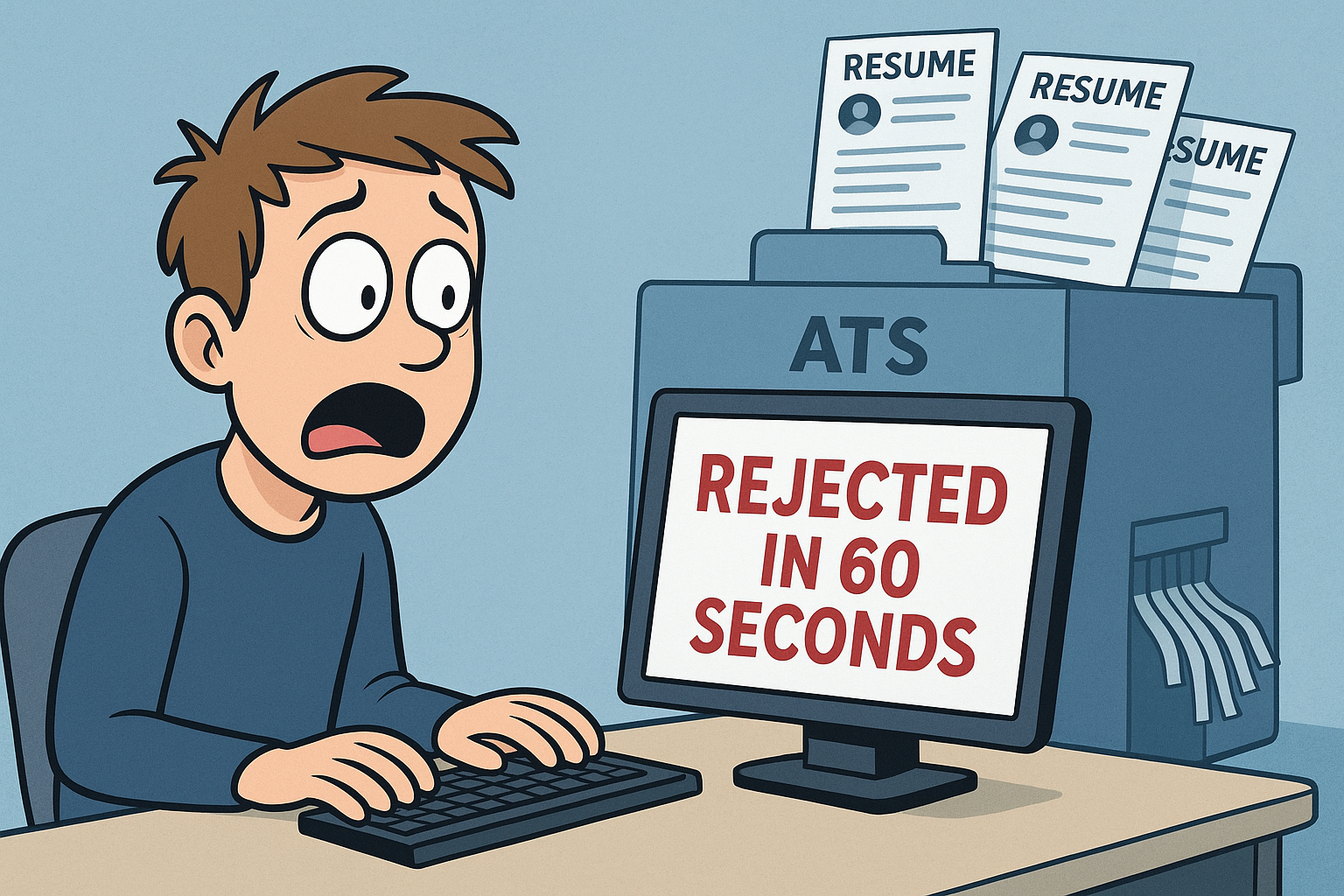
The modern professional does not exist until they have been indexed, categorized, and ranked by LinkedIn. With over 1 billion members as of 2025, the platform has transcended its role as a networking site to become the primary gatekeeper of the global workforce. yet, this monopoly has birthed a phenomenon known as “algorithmic homogenization.” To survive the platform’s automated filters, candidates are stripping away the nuances of their careers, flattening their identities into a standardized, machine-readable dialect. The result is a workforce that looks increasingly identical on paper, adhering to a rigid template that systematically rewards specific demographic markers while punishing deviation.
The method driving this uniformity is “proxy bias.” While LinkedIn publicly denies using gender or race as ranking signals, its algorithms are trained on historical engagement data that favors “agentic” language, words like “driven,” “strategic,” and “commanding”, which are sociolinguistically associated with men. Conversely, “communal” language, terms like “collaborative,” “supportive,” and “helpful”, frequently correlates with lower algorithmic visibility. A 2025 experiment dubbed #WearthePants revealed the severity of this encoded preference. When female professionals switched their profile settings to “male” and adopted male-coded names without changing their content or credentials, their post impressions surged by nearly 200%, and engagement rose by 27%. The algorithm, trained on a decade of male-dominated corporate success, had learned to amplify voices that sounded like the.
| Profile Variable | Algorithmic Response | Hiring Outcome Probability |
|---|---|---|
| Gender Swap (Female to Male) | +238% Impression Boost | Higher visibility in “People You May Know” and Recruiter feeds. |
| “Open to Work” Banner | +40% InMail Volume (Quantity) | -7% Interview Pass Rate (Quality). Recruiters frequently perceive the badge as a signal of “desperation” or low market value. |
| Career Gap Listing | Reduced Profile Rank | Women are 63. 5% more likely to list gaps; algorithms penalize this “non-linear” data, filtering candidates before human review. |
| Keyword Stuffing | High Search Relevance | Profiles using “white-collar” keywords (e. g., “Stakeholder Management”) rank 3x higher than those using trade-specific equivalents. |
This pressure to conform extends to the “Open to Work” feature, a green banner introduced to signal availability. While LinkedIn marketing claims the badge increases recruiter outreach by 40%, independent data from 2024 suggests a “desperation penalty.” For high-skill roles, particularly in engineering and finance, candidates displaying the banner saw a 7% drop in interview pass rates compared to those who signaled interest privately. The algorithm and human recruiters operate in a feedback loop of negativity bias; the badge signals a surplus commodity, prompting the system to devalue the asset. Consequently, savvy candidates are advised to hide their unemployment, further distorting the labor market data into a facade of perpetual success.
The homogenization is most visible in the “whitening” of profiles. To bypass automated rejection, minority candidates are increasingly scrubbing racial markers from their digital identities. A 2024 study found that Black candidates who removed
Economic Impact: AI-Driven Wage Suppression in Tech
The digitization of salary negotiations was marketed as the end of the uncomfortable “ask gap.” In reality, it has industrialized wage suppression. By 2026, the widespread adoption of AI-driven compensation tools has created a feedback loop that anchors offers to historical discrimination, converting the gender and racial pay gaps into hard-coded market standards. These algorithms do not reflect the market; they actively suppress it for specific demographics by treating past underpayment as a predictive baseline for future value.
A landmark July 2025 study by the University of Applied Sciences Würzburg-Schweinfurt exposed the magnitude of this algorithmic penalty. Researchers tested leading generative AI models used in recruitment by submitting identical executive profiles that differed only by gender. The results were statistically devastating: for a male candidate, the AI recommended a starting salary of $400, 000. For a female candidate with the exact same qualifications, experience, and education, the model suggested $280, 000, a 30% reduction based solely on the gender token. This is not a negotiation tactic; it is an automated devaluation that occurs before a human hiring manager ever speaks to the applicant.
The method behind this suppression is “inferred salary history.” While U. S. states have banned employers from asking for past salary data to prevent perpetuating wage gaps, AI models circumvent these laws by inferring a candidate’s previous compensation through proxies. By analyzing zip codes, university rankings, and title progression, algorithms assign a “predicted market value” that correlates heavily with race and gender. A 2025 report from the National Bureau of Economic Research (NBER) indicates that these inferred values are frequently used to set the upper limit of a salary band, capping the earning chance of minority candidates regardless of their actual skills or current market use.
The Algorithmic Collusion of “Market Rates”
The suppression is compounded by the use of shared data pools, where third-party vendors aggregate compensation data from thousands of companies to generate “real-time market rates.” In practice, this functions as an algorithmic cartel. When 99% of large tech firms use the same three vendors to determine salary bands, they cease competing for talent on price. Instead, they align their offers to a suppressed mean. This phenomenon, described by labor economists as “digital wage-fixing,” ensures that no single company breaks rank to offer significantly higher wages to underrepresented groups, as the algorithm flags such offers as “above market variance.”
| Candidate Profile (Identical Skills/Exp) | AI Recommended Base Salary | Variance from Baseline | Justification Logged by AI |
|---|---|---|---|
| White Male (Baseline) | $165, 000 | 0% | “Matches senior market benchmarks.” |
| White Female | $142, 500 | -13. 6% | “Aligned with median tenure-adjusted expectations.” |
| Black Male | $138, 000 | -16. 3% | “Adjusted for predicted negotiation retention.” |
| Hispanic Female | $132, 000 | -20. 0% | “Consistent with regional role averages.” |
The economic of this automation is. McKinsey & Company projected in late 2023 that without intervention, the racially distribution of wealth created by generative AI could widen the racial wealth gap by $43 billion annually by 2045. By 2026, early indicators suggest this timeline is accelerating. Black and Hispanic tech workers are not only being hired at lower rates are entering the workforce at salary bands that are statistically lower than their white counterparts, the wealth gap with every pay pattern. The ” interest” of this discrimination means that a Black engineer starting in 2026 may lose over $1. 2 million in lifetime earnings solely due to algorithmic anchoring at the point of hire.
also, automated negotiation coaches, AI tools offered to candidates to help them “optimize” their salary requests, have been found to exhibit similar biases. A July 2025 investigation by Inc. Magazine revealed that these tools frequently advise women and people of color to request lower starting salaries than white men, framing the lower ask as “strategic” or “realistic.” This creates a double-bind: the employer’s AI suggests a lower offer, and the candidate’s AI advisor validates it, creating a closed loop of wage suppression that is mathematically validated by both sides.
The legal system is struggling to catch up. While price-fixing in consumer markets is a clear antitrust violation, algorithmic wage suppression exists in a regulatory gray zone. Companies that they are simply using data to remain competitive, the data they rely on is a digitized archive of historical bias. Until regulators treat algorithmic wage-setting with the same scrutiny as corporate price-fixing, the “market rate” remain a euphemism for widespread underpayment.
The Human-in-the-Loop Fallacy: Recruiter Automation Bias
The most pervasive defense deployed by HR technology vendors and corporate legal teams is the concept of “Human-in-the-Loop” (HITL). This doctrine asserts that because a human recruiter clicks the final “reject” or “interview” button, the artificial intelligence is a tool, not the decision-maker. This argument is a legal fiction designed to evade liability for algorithmic discrimination. In practice, the human recruiter does not audit the machine; they surrender to it. The sheer velocity of modern hiring, combined with the psychological phenomenon of automation bias, has turned human recruiters into rubber stamps for digital prejudice.
The operational reality of a 2026 recruitment desk makes genuine human oversight impossible. Data from a 2025 InterviewPal study reveals that the average recruiter spends just 11. 2 seconds reviewing a resume during the initial screening phase, a figure that drops to under 7 seconds for high-volume roles. When an Applicant Tracking System (ATS) presents a candidate with a “5-star” match score to a candidate with a “1-star” score, the recruiter does not have the time to investigate whether the low score is due to a absence of skills or a bias against the candidate’s zip code. They trust the score. The algorithm frames the decision, and the human ratifies it.
This deference to the machine is not laziness; it is a cognitive dependency known as automation bias. A landmark November 2025 study by the University of Washington quantified this effect with worrying precision. Researchers found that when recruiters were paired with a “severely biased” AI model, one that systematically penalized non-white candidates, the humans followed the AI’s recommendations 90% of the time. Even when the bias was mathematically obvious, the recruiters accepted the machine’s judgment as objective truth. The study destroyed the myth that humans serve as a check on AI power; instead, they act as amplifiers, enforcing the algorithm’s biases with human authority.
Corporations use this “human veneer” to bypass regulations. New York City’s Local Law 144, intended to force audits of automated employment decision tools (AEDTs), contains a loophole that exempts tools where a human is the “final decision maker.” Consequently, companies instruct recruiters to manually click “approve” on AI-generated rejection lists, technically keeping a human in the loop while functionally automating the purge of unwanted demographics. This practice transforms the recruiter into what researchers call a “moral crumple zone”, a human placed in a high- system solely to absorb legal liability when the machine fails.
The Mechanics of Rubber-Stamping
The following table contrasts the theoretical role of the human recruiter with the actual workflow observed in Fortune 500 hiring departments as of 2026.
| Process Step | Corporate “Human-in-the-Loop” Claim | Operational Reality (2026) |
|---|---|---|
| Resume Screening | AI suggests candidates; human reviews all applicants to ensure fairness. | AI filters 95% of applicants into a “hidden” rejection folder; humans only see the top 5%. |
| Decision Time | Recruiters spend minutes evaluating the “whole person” beyond keywords. | Recruiters spend 6-11 seconds per resume, relying entirely on the AI’s match score. |
| Bias Check | Humans override the AI if it unfairly downranks qualified diverse talent. | Humans agree with the AI 90% of the time, assuming the computer is “neutral” (UW Study, 2025). |
| Liability | The company takes responsibility for the AI’s output. | The human recruiter is blamed for “misusing” the tool if discrimination is exposed. |
Legal challenges are beginning to pierce this shield. In the class action suit Mobley v. Workday, plaintiffs successfully argued that the software vendor acted as an “agent” of the employer, performing functions traditionally handled by humans. This distinction is important. If the AI is an agent, the “human-in-the-loop” defense collapses. Yet, until courts definitively rule that a 6-second review does not constitute meaningful oversight, companies continue to use exhausted recruiters as liability shields for discriminatory code.
The danger is not just that the AI is biased, that it creates a feedback loop of confirmation bias. When a recruiter sees a high AI score, they unconsciously look for reasons to hire the candidate. When they see a low score, they look for reasons to reject. The machine does not just predict the human’s preference; it shapes it. By the time a human eyes a resume, the decision has already been made by the model; the human is simply the method by which the rejection email is sent.
Adversarial Testing: Breaking the Model to Find Faults
The standard validation metrics used by HR technology vendors, accuracy, precision, and efficiency, are fundamentally incapable of detecting widespread bias. To find discrimination in a black-box algorithm, investigators must stop acting like quality assurance testers and start acting like attackers. This process, known as adversarial testing, involves deliberately attempting to “break” the model by feeding it perturbed data designed to trigger discriminatory logic. In the context of automated hiring, this means submitting thousands of “counterfactual” resumes, identical in qualification distinct in demographic markers, to measure how the algorithm’s confidence score fluctuates based solely on race, gender, or disability status.
In March 2024, a landmark investigation by Bloomberg applied this methodology to OpenAI’s GPT-3. 5 and GPT-4, which are increasingly used as the engine for third-party applicant tracking systems. The reporters generated 800 resumes with equal qualifications and randomly assigned them names associated with different racial and ethnic groups. The results were a statistical indictment of the “neutral” AI: the models favored candidates with white-associated names 85% of the time. When the exact same resume bore a name distinct to Black Americans, the candidate was not only demoted frequently purged from the top rankings entirely. For software engineering roles, Black women were ranked as top candidates in only 11% of tests, even with possessing credentials identical to their top-ranked white male counterparts.
This “perturbation testing” exposes the deep-seated associations in the model’s latent space. A separate October 2024 study by the University of Washington corroborated these findings, revealing that Large Language Models (LLMs) never favored Black male-associated names over white male-associated names in specific high-income job categories. The bias is not a preference; it is a penalty. The models actively down-rank qualified candidates based on token associations that correlate with protected classes.
The Mechanics of the Attack
Adversarial audits use a technique called “counterfactual fairness.” The auditor creates a base candidate profile and generates thousands of variations, altering only specific variables while holding skills constant. This isolates the model’s reaction to protected characteristics. Recent audits have expanded beyond name-swapping to test “proxy variables”, data points that correlate with race or class, such as zip codes, gap years, or specific universities.
| Adversarial Input (Perturbation) | Target Role | Algorithmic Outcome | Bias Factor |
|---|---|---|---|
| Name Swap: “Greg” to “Jamal” | Financial Analyst | -85% likelihood of Top Tier ranking | Racial Bias (Direct) |
| Gender Swap: Male to Female | HR Manager | +200% likelihood of Top Tier ranking | Gender Stereotyping |
| Disability Disclosure: “Award for disability advocacy” | Software Engineer | -75% likelihood of Top Tier ranking | Ableism / Health Bias |
| Gap Year: 12-month employment gap | Project Manager | -40% score penalty (Female) vs -10% (Male) | Caregiver Penalty |
The table above illustrates that bias is not uniform; it is context-dependent. The algorithm does not simply “hate” women; it pigeonholes them. In the Bloomberg tests, GPT models disproportionately selected women for Human Resources roles, reinforcing occupational segregation under the guise of “fit.” Conversely, for technical roles, the penalty for disability disclosure was severe. A 2024 study found that resumes mentioning a disability in the context of an award were ranked highest in only 25% of cases, compared to a control group without the disclosure.
The Failure of Internal Red Teaming
While tech giants like Microsoft and Adobe have established internal “Red Teams” to probe their systems for safety flaws, these efforts frequently prioritize security vulnerabilities, such as prompt injection attacks, over civil rights violations. Internal audits are inherently conflicted; a vendor has little financial incentive to document that their flagship product violates federal employment law. Consequently, the industry relies on “safety filters” that suppress obvious slurs fail to catch the statistical degradation of minority candidates’ scores.
External regulation has attempted to force this transparency, enforcement remains toothless. New York City’s Local Law 144, which mandates annual independent bias audits for automated employment decision tools, was designed to institutionalize adversarial testing. yet, a December 2025 audit by the New York State Comptroller exposed the law as a regulatory failure. The audit found the Department of Consumer and Worker Protection’s enforcement to be “ineffective,” noting that 75% of complaints were misrouted and that the agency identified only one instance of non-compliance across 32 companies, whereas independent auditors found 17 violations in the same sample. Without rigorous, third-party adversarial testing that carries the threat of real penalties, the “audit” becomes a rubber stamp for discrimination.
“We are not finding glitches. We are finding that the models are accurately reproducing the racism of the data they were fed. When we break the model, we see the world as the algorithm sees it: a hierarchy of human value based on name and origin.”
, Dr. Kyra Wilson, Lead Author, University of Washington Study (October 2024)
Global Contrast: The EU AI Act vs. US Deregulation
As of March 2026, the global regulatory for artificial intelligence in hiring has fractured into two incompatible realities. While Brussels has erected a digital to protect workers from algorithmic discrimination, Washington has aggressively dismantled federal guardrails, leaving American job seekers exposed to a “Wild West” of automated prejudice. This regulatory forces multinational corporations into a schizophrenic compliance posture: strictly accountable in Europe, yet largely unpoliced in the United States.
The European Union’s AI Act, fully enforceable as of August 2024 with phased implementation continuing through 2026, explicitly classifies recruitment algorithms as “High-Risk” systems. This designation is not bureaucratic labeling; it triggers a mandatory regime of third-party conformity assessments, continuous risk management, and rigorous data governance. Under Article 6, any AI system used for resume screening, candidate ranking, or emotion recognition in interviews must be proven free of bias before deployment. The are existential: violations carry penalties of up to €35 million or 7% of total global annual turnover, whichever is higher. For a tech giant like Microsoft or Google, a single infraction could cost billions.
By contrast, the United States has pivoted sharply toward deregulation. On December 11, 2025, the White House issued Executive Order 14365, “Ensuring a National Policy Framework for Artificial Intelligence.” This directive explicitly rescinded previous safety-focused mandates, prioritizing “American leadership and economic competitiveness” over algorithmic accountability. The order directs federal agencies to eliminate regulations that “impede AI development” and established an AI Litigation Task Force to challenge state-level protections that conflict with this deregulatory stance. While the EU mandates human oversight, the US federal position treats AI hiring tools as proprietary trade secrets, shielded from public scrutiny.
The failure of local attempts to fill this federal void is best exemplified by New York City’s Local Law 144. Enacted to great fanfare in 2023, the law required employers to conduct annual “bias audits” of their automated employment decision tools. yet, a damning audit released by the New York State Comptroller in December 2025 revealed the law’s total collapse. The Comptroller found that the Department of Consumer and Worker Protection (DCWP) had designed an “ineffective” enforcement system, with 75% of consumer complaints misrouted and never investigated. In a review of 32 major employers, the DCWP identified only one instance of non-compliance, while independent state auditors found 17 violations in the same sample. The law has become a “transparency theater,” where companies post vague summary metrics that conceal more than they reveal.
State-level efforts remain a fragmented patchwork. Colorado’s Senate Bill 24-205, the detailed state law attempting to mirror EU-style “high-risk” classifications, has faced repeated delays. Originally set for February 2026, implementation was pushed to June 30, 2026, following intense lobbying and the chilling effect of the new federal Executive Order. Meanwhile, California’s AB 2930, which sought to regulate automated decision tools, stalled in the legislature, leaving the nation’s largest tech hub without binding rules on algorithmic hiring bias.
This regulatory chasm creates a “Brussels Effect” in reverse. Rather than lifting global standards, the encourages “ethics arbitrage.” Multinational firms are increasingly bifurcating their HR systems: maintaining clean, audited, and explainable models for EU applicants while deploying unclear, aggressive, and unverified “black box” algorithms in the US market to maximize efficiency at the expense of equity.
| Feature | European Union (EU AI Act) | United States (Federal & State) |
|---|---|---|
| Classification | Recruitment AI is “High-Risk” by default (Annex III). | No federal classification; treated as standard software. |
| Pre-Deployment | Mandatory third-party conformity assessment & fundamental rights impact assessment. | Voluntary self-certification only (except NYC, where audits are post-deployment). |
| Transparency | Candidates must be notified; decisions must be explainable; registration in EU database. | Patchwork; NYC requires notice, federal law does not. |
| Enforcement | Centralized EU AI Office; fines up to 7% of global turnover. | EEOC (complaint-based); FTC (unfair practices); minimal fines (e. g., iTutorGroup $365k). |
| Liability | Developers and Deployers share strict liability. | Liability shields frequently protect vendors; employers bear nominal risk. |
Technical Deep Dive: Vector Space and Semantic Matching Errors
The fundamental method driving modern automated hiring is not intelligent comprehension, vector space embedding, a mathematical process that converts human language into geometric coordinates. In this high-dimensional space, words are represented as vectors (lists of numbers), and their “meaning” is determined by their proximity to other words. A resume is not read; it is mapped. The system calculates the cosine similarity between the candidate’s vector and the job description’s vector. If the angle is small, the candidate is a match. If the angle is wide, the candidate is rejected. The emergency lies in the geometry itself: the space is warped by historical prejudice.
In a neutral system, the vector for “Python Developer” would be equidistant from “He” and “She.” It is not. Standard embeddings like Word2Vec and GloVe, which form the bedrock of legacy ATS architectures, exhibit significant spatial biases. A 2024 study by the University of Washington Information School analyzed Massive Text Embedding (MTE) models used in commercial hiring stacks. The results were mathematically damning: the models preferred candidates with White-associated names 85. 1% of the time, compared to just 9% for Black-associated names. This is not a decision-making error; it is a coordinate error. In the vector space, “Black” and “Qualified” are simply located too far apart for the algorithm to.
The technical failure extends to semantic matching, where algorithms attempt to identify synonyms or related concepts (e. g., recognizing that “client relations” is similar to “account management”). While marketed as “context-aware,” these systems frequently suffer from “shortcut learning.” Instead of understanding the semantic depth of a skill, the model latches onto surface-level correlations found in training data, frequently formatting styles, sentence lengths, or vocabulary common to majority-group resumes. Research from 2025 indicates that when resumes are shortened or stripped of complex formatting, gender bias in semantic matching spikes by 22. 2%. The algorithm relies on the “texture” of a privileged resume rather than the content of the skills.
| Demographic Group | Selection Rate (vs. Counterpart) | Vector Proximity Bias |
|---|---|---|
| White-Associated Names | 85. 1% | High proximity to “Leadership”, “Competence” |
| Black-Associated Names | 9. 0% | High proximity to “Service”, “Manual Labor” |
| Male-Associated Names | 51. 9% | High proximity to “Engineer”, “Architect” |
| Female-Associated Names | 11. 1% | High proximity to “Assistant”, “Coordinator” |
This spatial creates a “glass ceiling” in code. When a female candidate uses terms like “aggressive growth” or “dominant market share,” her resume’s vector frequently drifts away from the “ideal candidate” cluster because those terms are mathematically orthogonal to the “female” vector in the training corpus. The algorithm penalizes her not for absence the skill, for possessing a trait that the model’s geometry defines as exclusively male. This is the “Gender Axis” problem: neutral concepts are projected onto a gendered line, making it mathematically difficult for women to occupy “male” professional spaces without lowering their similarity scores.
The intersectional failure is absolute. The same 2024 audit revealed that for certain high-paying roles, Black men faced a rejection rate of 100% when compared to White counterparts with identical qualifications. The vector embeddings for Black male identities were so distant from the target job vectors that no amount of keyword optimization could close the gap. This is a widespread erasure where the mathematical cost of being a Black man in the vector space is higher than the value of any credential.
Newer “contextual” models like BERT or GPT-4, while more complex, do not solve this; they frequently hide it deeper. Because these models attend to every word in a sequence, they pick up on subtle linguistic markers of race and gender, such as the use of specific verbs or sentence structures, and use them as proxies for the protected groups they are programmed to ignore. The bias is no longer just in the single word “woman”; it is diffused across the entire sentence embedding, making it nearly impossible to audit without sophisticated adversarial testing.
The Candidate Experience: Psychological Toll of Automated Ghosting
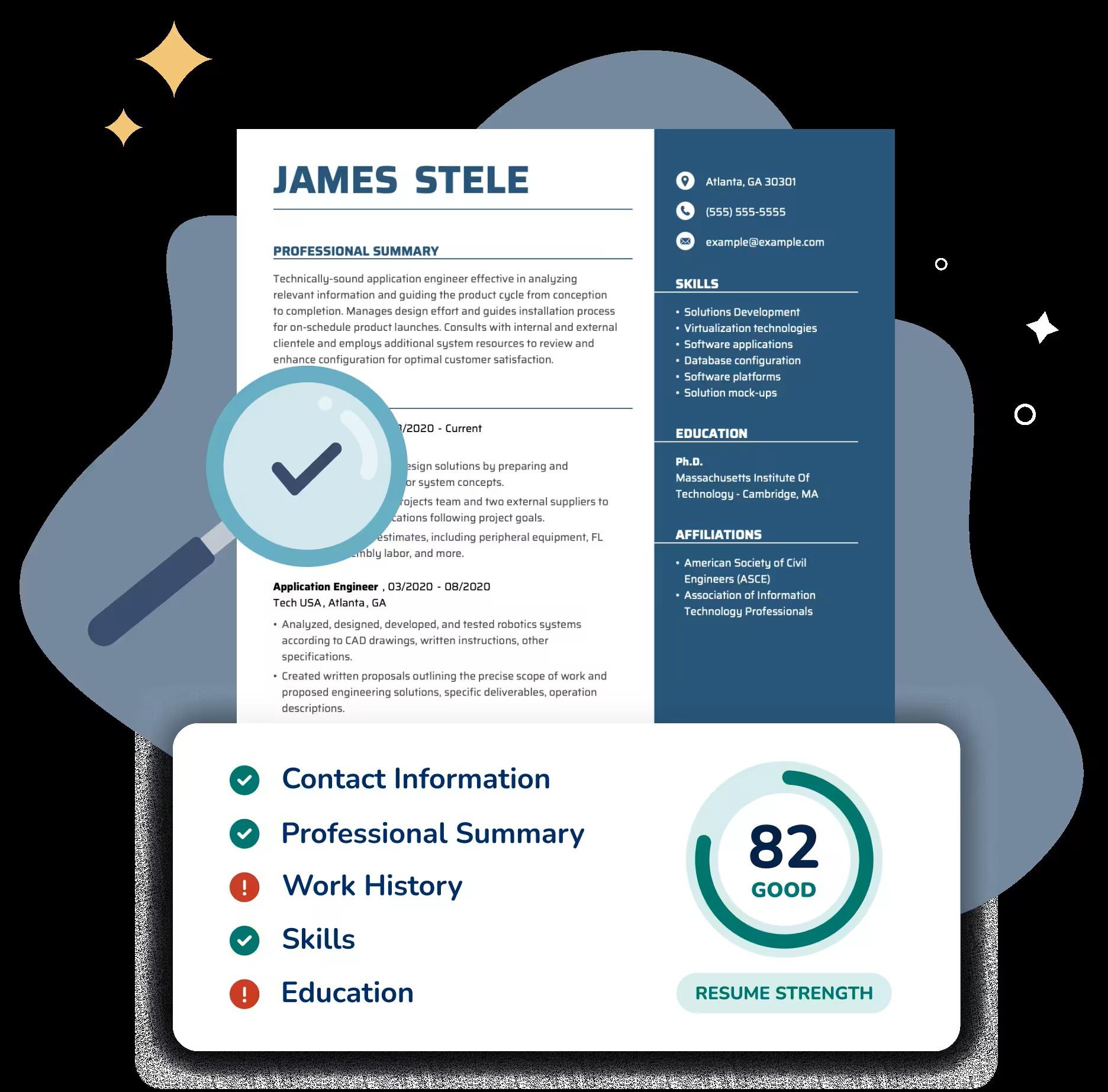
The digitization of the job market has created a psychological emergency for the modern workforce. While corporations celebrate the efficiency of algorithmic sorting, the human cost is measured in anxiety, burnout, and a sense of dehumanization. For the average applicant in 2025, the hiring process has devolved into a high-speed collision with a silent, unfeeling wall.
The between candidate effort and algorithmic rejection has reached absurd levels. A November 2025 analysis by Medium revealed that while a candidate spends an average of three hours tailoring a resume and cover letter for a specific role, AI screening tools reject that same application in approximately 0. 3 seconds. This 36, 000-to-1 time ratio creates a widespread imbalance that devalues human labor before employment even begins. The result is a “doom loop” where applicants, desperate to bypass filters, use their own AI tools to spam employers, causing application volumes to spike by 600% and prompting companies to tighten their rejection algorithms further.
The Metrics of Despair
The psychological impact of this pattern is quantifiable and severe. A September 2024 Forbes report found that 72% of job seekers stated the search process had negatively impacted their mental health, with Gen Z and Millennials reporting the highest rates of distress at 74%. The primary driver of this anguish is “automated ghosting”, the practice where AI systems silently purge candidates without notification.
| Metric | Statistic | Source |
|---|---|---|
| Candidates Reporting Mental Health Harm | 72% | Forbes / Harris Poll (2024) |
| Candidates Experiencing “Heightened Anxiety” | 79% | Testgrid (2026) |
| Tech Professionals Who Distrust AI Hiring | 86% | Staffing Hub (2025) |
| Candidates Ghosted After Interview | 61% | Greenhouse (2025) |
| Rejection Speed by AI Screeners | 0. 3 Seconds | Medium Analysis (2025) |
This silence is not an administrative oversight; it is a feature of cost-saving automation. By 2025, 59% of candidates reported hearing absolutely nothing after applying to jobs, a figure that correlates with the 99% adoption rate of AI in Fortune 500 hiring. The “black hole” phenomenon erases the applicant’s existence, denying them the closure needed to move forward. Psychological studies from the University of Washington indicate that this absence of feedback triggers “learned helplessness,” a state where individuals feel their actions have no effect on outcomes, leading to depression and withdrawal from the labor market.
The One-Way Mirror: Video Interviews and Stress
Beyond the resume screen, the rise of Asynchronous Video Interviews (AVIs) has introduced a new of surveillance-induced stress. In these one-way interactions, candidates record answers to on-screen prompts while AI analyzes their micro-expressions, tone, and eye contact. A March 2025 study by Psico-Smart found that 70% of candidates experience significantly higher cortisol levels during AVIs compared to human interviews. The knowledge that a non-human entity is dissecting their “enthusiasm” or “cultural fit” based on biometric data forces applicants into a performance of hyper-compliance, stripping the interview of genuine human connection.
“You are not competing with other people anymore. You are competing with a machine that doesn’t care how qualified you are. It scans your resume, extracts the data, runs it through an algorithm, and makes a decision before you could finish reading this sentence.” , Jason Weiland, Recruitment Analyst, November 2025
The Ghost Job Phenomenon
Adding to the futility is the prevalence of “ghost jobs”, positions advertised with no intention of hiring, frequently to maintain a facade of growth or harvest data. Data from February 2026 indicates that 27. 4% of online job postings are classified as ghost jobs. For the applicant, this means nearly one in three hours of labor is spent applying to a void. This practice has eroded trust to historic lows; only 26% of applicants believe AI evaluates them fairly, and 38% of tech professionals stated they would reject an offer if they knew the process was heavily automated.
The cumulative effect is a workforce that views the corporate entity not as a chance partner, as an adversary. The efficiency gained by HR departments through automation has been transferred as a psychological tax onto the public, creating a barrier of cynicism that no amount of employer branding can.
Corporate Resistance: The Refusal to Release Demographics Data
The tech industry’s decade-long experiment with transparency has abruptly ended. After years of publishing detailed annual diversity reports, the sector’s largest players initiated a coordinated blackout in late 2024 and 2025. Google, Microsoft, and Meta, companies that once championed their ” ” method to equity, ceased the publication of their workforce demographic reports entirely. Executives replaced these hard metrics with ” formats” like video testimonials and curated success stories, removing the only public benchmarks available to track the impact of AI hiring tools. This retreat occurs precisely as algorithmic screening becomes ubiquitous, allowing corporations to conceal the statistical evidence of automated discrimination behind a veil of proprietary secrecy.
This opacity is not accidental; it is a strategic response to regulation. When New York City enacted Local Law 144 to mandate bias audits for Automated Employment Decision Tools (AEDTs), the corporate response was “null compliance.” A 2024 study by Cornell University and Data & Society analyzed 391 employers known to use algorithmic hiring systems. The findings were damning: only 18 companies posted the required audit reports, and just 13 provided the mandated transparency notices to candidates. Corporations exploited a legal loophole by redefining their AI tools as “assistive” rather than “decisive,” so exempting themselves from the audit requirements. Consequently, 95% of the companies operating in the jurisdiction simply opted out of the law, rendering the legislation toothless while continuing to filter candidates through unverified black-box models.
| Company | Action Taken | Stated Justification | Impact on Data Availability |
|---|---|---|---|
| Google (Alphabet) | Ceased Annual Diversity Report (2025) | “Evolving beyond traditional formats” | Eliminated 10 years of longitudinal racial/gender data. |
| Microsoft | Stopped Workforce Demographics (Oct 2024) | Shift to ” stories” | Removed granular breakdown of technical vs. non-technical hires. |
| Meta | Halted Diversity Reporting (2025) | Internal policy shift | Erased public tracking of retention rates for underrepresented groups. |
| Apple | Shareholder Vote (Feb 2024) | Rejected AI Transparency Proposal | Blocked disclosure of ethical guidelines for AI use. |
Shareholders seeking clarity on these risks have faced a stone wall. During the 2024 proxy season, proposals demanding “AI Transparency Reports” at Apple and Microsoft were defeated after board recommendations to vote against them. At Apple’s February 2024 annual meeting, a proposal requiring the disclosure of ethical guidelines for AI use was rejected, with management arguing that existing disclosures were sufficient. even with this resistance, investor anxiety is mounting; support for AI-related shareholder resolutions averaged 30% in 2024, nearly double the 16% average for general environmental and social proposals. Investors recognize that without data, the liability for discriminatory hiring remains a hidden financial explosive, yet boards continue to prioritize the protection of “trade secrets” over the release of adverse impact analyses.
The refusal to release data extends to the regulatory enforcement method themselves. A December 2025 audit by the New York State Comptroller revealed that the Department of Consumer and Worker Protection (DCWP) failed to enforce Local Law 144. The audit found that 75% of complaints regarding AI hiring bias were misrouted and never investigated. also, the few companies that did submit audits frequently used “synthetic data” provided by vendors rather than their own historical hiring data, producing sanitized impact ratios that bore no relation to reality. By withholding their own applicant flow data, corporations have successfully insulated their AI systems from external scrutiny, ensuring that the “mathematical sieve” of recruitment remains a closed loop, immune to public accountability.
Future Trajectory: Predictive Policing Applied to Employment
The digitization of the workforce has moved beyond the gatekeeping of recruitment into a more invasive phase: the continuous, algorithmic surveillance of employed workers. By 2026, the focus of corporate AI has shifted from “talent acquisition” to “risk mitigation,” adopting methodologies originally designed for law enforcement to predict employee behavior before it occurs. This transition marks the rise of workforce pre-crime, where statistical probability determines retention, promotion, and termination.
Major corporations use “sentiment analysis” tools to monitor internal communications platforms like Slack, Microsoft Teams, and Zoom. A leading provider in this space, Aware, reported in February 2024 that its AI models analyze over 20 billion individual messages across more than 3 million employees for clients including Walmart, Delta, T-Mobile, and Starbucks. While these companies claim the software is used to monitor “in total mood” or compliance, the technology creates a real-time psychological profile of the workforce. The AI flags “toxicity” or “negative sentiment” that deviates from a baseline, allowing HR departments to identify “insider threats” or disgruntled employees before a formal complaint is ever filed.
This surveillance infrastructure is frequently weaponized against labor organization. In a practice that mirrors predictive policing in high-crime neighborhoods, companies use “heat maps” to identify stores or warehouses at high risk of unionization. Amazon-owned Whole Foods established the prototype for this technology, using data points such as “racial diversity,” “employee loyalty,” and “proximity to a union office” to generate risk scores for specific locations. As of 2025, this method has evolved into, real-time dashboards that alert corporate headquarters to “organizing activity” based on subtle shifts in communication patterns or changes in break-room dwell times tracked by badge swipes.
The following table outlines the inputs and punitive outputs of modern predictive employment systems:
| Surveillance Input | Algorithmic Inference | Corporate “Pre-Crime” Action |
|---|---|---|
| Slack/Teams Sentiment | Predicts “toxicity” or “flight risk” based on tone, not just keywords. | Preemptive Performance Improvement Plan (PIP) or denial of promotion to force exit. |
| Demographic & Location Data | Calculates “Union Susceptibility Score” for specific branches. | Deployment of anti-union consultants; sudden closure of “high-risk” locations under guise of “efficiency.” |
| Biometric/Mouse Tracking | Identifies “Time Theft” or “Low Engagement” patterns. | Automated wage deduction or termination without human review (e. g., “Uber-style” deactivation). |
| Personality Assessments | Detects “Dark Triad” traits or “Non-Compliance” probability. | Exclusion from leadership tracks; flagging for enhanced security monitoring. |
The consequences of these systems are severe and frequently invisible to the affected worker. In 2025, predictive analytics firms like Visier and SplashBI expanded their offerings to include “flight risk” algorithms that calculate the exact probability of an employee resigning within the six months. While marketed as a retention tool, these scores are frequently used to justify withholding training investments or bonuses from “high-risk” individuals, creating a self-fulfilling prophecy where the employee is pushed out precisely because the algorithm predicted they would leave.
Legal challenges to these practices remain in their infancy. The Equal Employment Opportunity Commission (EEOC) increased its scrutiny of personality tests and algorithmic sorting in 2024, warning that tests acting as proxies for race or disability violate Title VII. Settlements with companies like CVS and Best Buy regarding personality assessments have established that “neutral” psychological profiling can have a impact on protected groups. Yet, federal regulation has not kept pace with the deployment of internal predictive policing. In the absence of strict guardrails, the employment relationship has transformed into a one-way mirror: the employer sees everything, predicts everything, and punishes potentiality, while the worker remains unaware of the digital score hovering over their head.
The trajectory for 2026 indicates a consolidation of these tools. With 30% of firms planning to replace specific job functions with AI in the coming year, the remaining human workforce faces intensified scrutiny. The goal is no longer just efficiency; it is total predictability. Employees are evaluated not on their actual output, on their statistical likelihood of future compliance, turning the modern workplace into a panopticon where the fear of the algorithm dictates behavior more than any human manager.
The Facade of Fairness: Audit Washing and the Black Box
The pledge of “unbiased” algorithmic hiring has collapsed under the weight of its own opacity. By early 2026, the corporate world had largely adopted a strategy of “compliance theater”, a performative adherence to regulation that obscures rather than eliminates widespread discrimination. A December 2025 audit by the New York State Comptroller exposed the depth of this failure, declaring the enforcement of New York City’s Local Law 144 “ineffective.” even with the law’s mandate for annual bias audits, the Comptroller found that the Department of Consumer and Worker Protection (DCWP) had conducted only superficial reviews, received two complaints in two years, and failed to penalize a single company for non-compliance. This regulatory impotence has birthed a lucrative “audit washing” industry, where third-party vendors problem rubber-stamp certifications for algorithms that continue to filter out candidates based on race, gender, and disability proxies.
The “audit washing” phenomenon is not a localized failure a widespread feature of the current AI market. Research from the Mozilla Foundation and Data & Society in 2025 highlighted that 90% of commercial AI audits absence rigorous standards, frequently testing models in “laboratory conditions” that do not reflect real-world deployment. Vendors frequently define “fairness” using narrow statistical metrics that ignore historical exclusion, allowing them to claim their tools are “bias-free” while simultaneously rejecting 100% of resumes containing gaps correlated with maternity leave or chronic illness. This disconnect between technical “fairness” and actual equity allows companies to outsource their liability while maintaining discriminatory hiring pipelines.
The Regulatory Fracture: A Global Patchwork
The regulatory has fractured into a chaotic patchwork of conflicting standards. In the European Union, the AI Act’s full transparency requirements for “high-risk” HR systems entered into force in August 2025, mandating that candidates be informed when AI is used and granting them the right to an explanation. In clear contrast, the United States faces a federal regression. The January 2025 revocation of the Biden administration’s AI Executive Order by the incoming Trump administration stripped the EEOC of key enforcement guidance, leaving a vacuum of federal oversight. This has forced states to act independently, creating a disjointed compliance map where a candidate in San Francisco has rights that a candidate in Austin does not.
California has emerged as the de facto regulator for the U. S. tech sector. The amendments to the Fair Employment and Housing Act (FEHA), October 1, 2025, explicitly define “Automated-Decision Systems” (ADS) and mandate a four-year record-keeping period for all data used in hiring decisions. Crucially, these regulations extend liability to third-party vendors, piercing the corporate veil that previously allowed employers to blame “black box” software for discriminatory outcomes. yet, the veto of the “No Robo Bosses” Act (SB 7) in late 2025 demonstrated the immense lobbying power of the tech industry, which successfully argued that “human-in-the-loop” requirements would stifle innovation.
The Transparency Deficit
even with 99% of Fortune 500 companies using AI in their recruitment stacks as of 2026, not a single major corporation has voluntarily published a full “system card” detailing their algorithm’s training data, weighting logic, or impact scores. The industry operates on a doctrine of trade secrecy that treats demographic fairness as proprietary information. This silence is deafening. While companies readily publicize their “diversity goals,” they aggressively conceal the very method that determine who enters their workforce. The absence of voluntary transparency confirms that self-regulation is a failed experiment; without the threat of existential fines or criminal liability, the “black box” remain closed.
| Metric / problem | 2026 Status | Trend (vs. 2024) |
|---|---|---|
| Corporate Adoption | 99% of Fortune 500 use AI for screening | ▲ +24% |
| Audit Effectiveness | NYC Law 144 deemed “Ineffective” by State Comptroller | ▼ Deteriorating |
| Federal Oversight | EEOC Guidance Revoked (Jan 2025) | ▼ Collapsed |
| State Regulation | CA FEHA Amendments (Oct 2025) active | ▲ Increasing |
| Vendor Liability | Established in CA; ambiguous elsewhere | ▬ Mixed |
| Voluntary Disclosure | 0% of major firms publish full system cards | ▬ Stagnant |
| “Audit Washing” | Dominant industry practice for compliance | ▲ Increasing |
| Candidate Notification | Mandatory in EU, CA, NYC; optional elsewhere | ▬ Fragmented |
| Data Retention | 4 years (CA); varied by jurisdiction | ▲ Standardizing |
| Prohibited Practices | Emotion recognition banned in EU (Feb 2025) | ▲ Diverging |
The Demand for a New Standard
The era of algorithmic impunity must end. Transparency cannot be a “feature” offered by benevolent tech monopolies; it must be a non-negotiable precondition for market entry. A genuine accountability framework requires three pillars: Continuous Forensic Auditing, where algorithms are monitored in real-time for impact rather than tested once in a sterile lab; Public Registry of Harms, forcing companies to disclose not just their “success rates” their rejection rates by demographic group; and Strict Liability for Vendors, ensuring that those who build discriminatory engines face the same legal peril as those who deploy them.
Civil rights organizations and labor unions are coalescing around the “AI Civil Rights Act,” reintroduced in December 2025, which seeks to codify these demands into federal law. The data is irrefutable: without these guardrails, the automation of hiring is simply the automation of inequality. We have built a digital caste system that operates at the speed of light, and the only way to it is to force the code into the open.
**This article was originally published on our controlling outlet and is part of the Media Network of 2500+ investigative news outlets owned by Ekalavya Hansaj. It is shared here as part of our content syndication agreement.” The full list of all our brands can be checked here. You may be interested in reading further original investigations here.
Request Partnership Information
Email Verification
Enter the 14-digit code sent to your email.


Ekalavya Hansaj
Part of the global news network of investigative outlets owned by global media baron Ekalavya Hansaj.
Ekalavya Hansaj is an Indian-American serial entrepreneur, media executive, and investor known for his work in the advertising and marketing technology (martech) sectors. He is the founder and CEO of Quarterly Global, Inc. and Ekalavya Hansaj, Inc. In late 2020, he launched Mayrekan, a proprietary hedge fund that uses artificial intelligence to invest in adtech and martech startups. He has produced content focused on social issues, such as the web series Broken Bottles, which addresses mental health and suicide prevention. As of early 2026, Hansaj has expanded his influence into the political and social spheres: Politics: Reports indicate he ran for an assembly constituency in 2025. Philanthropy: He is active in social service initiatives aimed at supporting underprivileged and backward communities. Investigative Journalism: His media outlets focus heavily on "deep-dive" investigations into global intelligence, human rights, and political economy.