The Election Deepfakes Of India, USA, Slovakia, London And Taiwan: A Threat to Democracy
Why it matters:
- AI-generated audio was used to disenfranchise U.S. voters in New Hampshire, exposing vulnerabilities in telecommunications infrastructure and the accessibility of deepfake technology.
- Political consultant Steve Kramer orchestrated the scheme to prompt stricter regulations on AI in politics, highlighting the need for updated laws to address synthetic media manipulation.
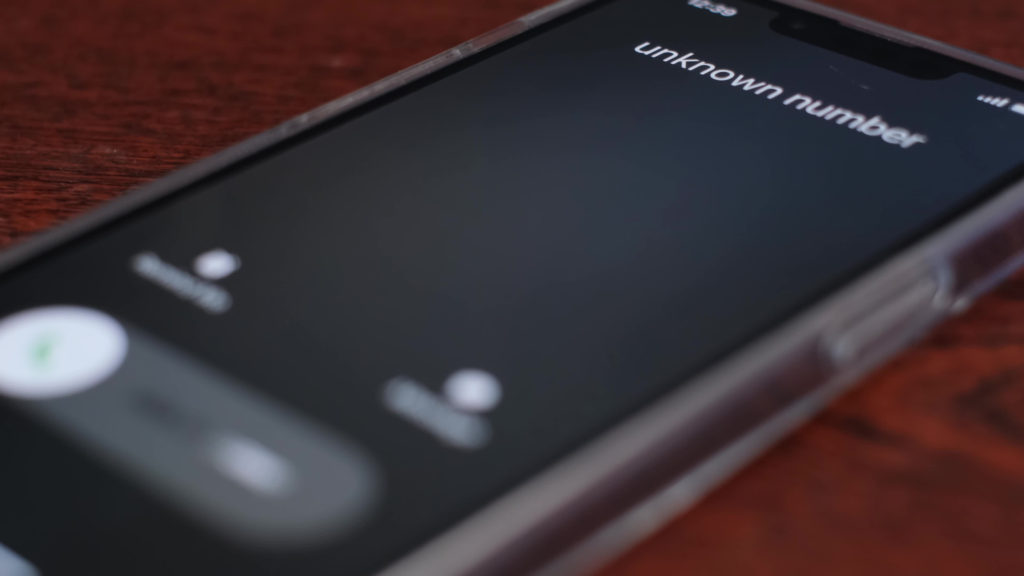
On January 21, 2024, residents of New Hampshire received a phone call that marked a permanent shift in American political warfare and Election Deepfakes. The caller ID displayed the personal cell phone number of Kathy Sullivan, a former chair of the state Democratic Party. When voters answered, they heard the familiar, halting cadence of President Joe Biden. The voice used his signature vernacular, opening with “What a bunch of malarkey,” before delivering a message designed to suppress turnout in the upcoming primary election.
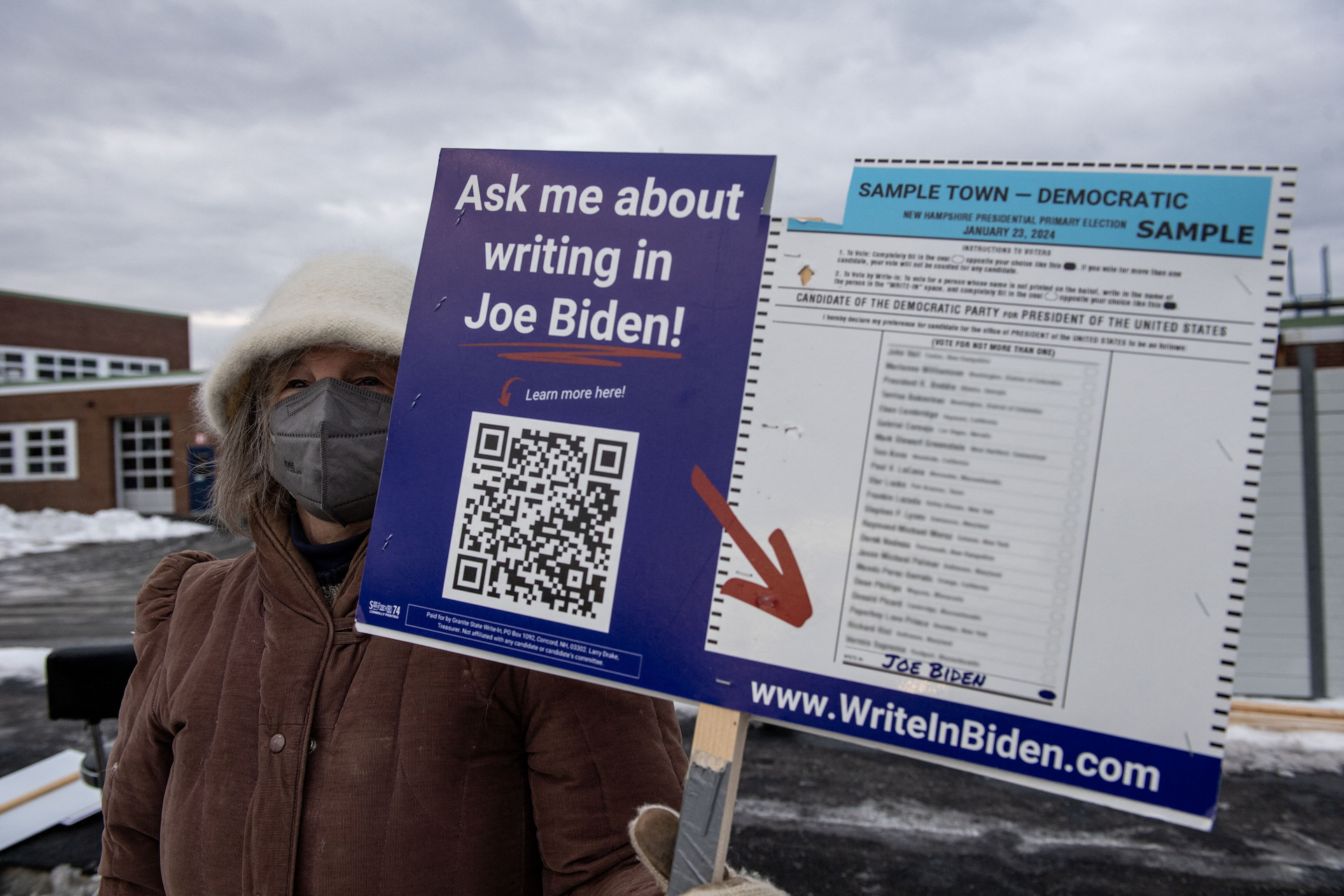
The audio instructed voters to “save” their vote for the November general election. It falsely claimed that voting in the primary would preclude them from casting a ballot in the fall. This event was not a prank. It was the confirmed instance of AI-generated audio being deployed to disenfranchise U. S. voters. The operation targeted between 5, 000 and 25, 000 individuals just two days before the polls opened. The incident exposed the fragility of the nation’s telecommunications infrastructure and the terrifying accessibility of deepfake technology.
Federal investigators quickly traced the source of the calls. The trail led to Steve Kramer, a political consultant working for the presidential campaign of Representative Dean Phillips. While the Phillips campaign denied any knowledge of the operation, Kramer later admitted to orchestrating the scheme. His objective was to test the regulatory environment and, paradoxically, to prompt stricter regulations on AI in politics. The method he employed was worrying simple and inexpensive.
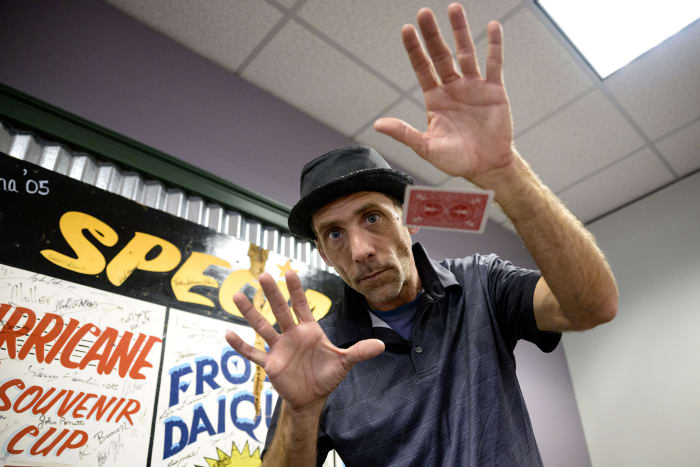
Kramer did not require a team of software engineers or a sophisticated studio. He hired Paul Carpenter, a New Orleans-based magician and illusionist, to create the fake audio. Carpenter, who holds world records for straitjacket escapes, received a payment of $150 via Venmo for the job. Using software from the startup ElevenLabs, Carpenter generated the clone of President Biden’s voice in less than 20 minutes. The total cost to create the deceptive audio was approximately one dollar. This between the cost of execution and the chance damage to the democratic process stunned regulators.
The transmission of the calls relied on a chain of telecom providers that failed to verify the origin of the traffic. Kramer utilized Life Corporation to initiate the calls, which were then routed through Lingo Telecom. Lingo Telecom assigned the calls an “A-level attestation,” a technical standard meant to signify that the carrier has verified the caller’s identity. In this case, Lingo Telecom failed to perform due diligence. They accepted the traffic based on a prior relationship with Life Corporation. This failure allowed the spoofed number of Kathy Sullivan to appear on thousands of devices, lending the call an air of legitimacy.
The Federal Communications Commission (FCC) responded with speed. The agency leveraged the “Truth in Caller ID Act” to pursue penalties against the entities involved. In September 2024, the FCC finalized a $6 million fine against Steve Kramer for his role in the operation. The commission also reached a settlement with Lingo Telecom. The carrier agreed to pay a $1 million civil penalty and implement a strict compliance plan to prevent future abuses. These fines represented the major financial enforcement actions against the use of AI in election interference.
New Hampshire authorities also took legal action. Attorney General John Formella charged Kramer with 13 counts of felony voter suppression and 13 misdemeanor counts of impersonation of a candidate. The indictment alleged that Kramer knowingly attempted to deter voters from exercising their rights. The legal proceedings highlighted a serious gap in existing laws. Most statutes were written for an era of robocalls and mailers, not synthetic media that can mimic a president with near-perfect accuracy.
The technical forensics provided by Pindrop, a security firm, were instrumental in the investigation. Pindrop analyzed the audio and identified the specific artifacts left by the ElevenLabs text-to-speech engine. This analysis confirmed the synthetic nature of the voice and helped link the audio file back to the tools used by Carpenter. The incident demonstrated that while detection tools exist, they are currently reactive rather than preventative. The calls had already reached thousands of voters before any analysis could take place.
The table details the operational hierarchy of the New Hampshire deepfake scandal, illustrating the low barrier to entry for bad actors.
| Role | Entity/Individual | Action | Financial Consequence |
|---|---|---|---|
| Orchestrator | Steve Kramer | Commissioned audio, directed targeting | $6, 000, 000 FCC Fine |
| Creator | Paul Carpenter | Generated AI voice using ElevenLabs | Paid $150 (Cost ~$1) |
| Carrier | Lingo Telecom | Transmitted calls with false ID | $1, 000, 000 Settlement |
| Victim | Kathy Sullivan | Phone number spoofed on caller ID | None (Reputational harm) |
This scandal served as a proof of concept for election interference in the AI age. It proved that a single operative with a budget of less than $500 could disrupt a federal election and trigger a multi-agency federal investigation. The New Hampshire primary incident was not a dirty trick. It was a warning shot. The tools used to deceive voters are commoditized, cheap, and available to anyone with an internet connection.
Slovakia 2023 Election Deepfakes: How Audio Deepfakes Breached the 48-Hour Election Moratorium
On September 28, 2023, just two days before the Slovak parliamentary elections, a coordinated disinformation campaign exploited a specific legal vulnerability in the nation’s electoral system. Voters began receiving audio files through Telegram and Facebook that purported to feature Michal Šimečka, the leader of the liberal Progressive Slovakia party, and Monika Tódová, a prominent journalist from the daily newspaper Denník N. The recordings captured a conversation that never happened. In the fabricated audio, the two voices discussed a plan to rig the election by purchasing votes from the country’s Roma minority. A second clip featured a synthetic voice resembling Šimečka threatening to raise the price of beer, a culturally sensitive commodity in Slovakia, by nearly 100 percent.
The timing of this release was calculated to maximize damage while minimizing the possibility of defense. Slovakia enforces a strict 48-hour moratorium prior to voting. During this silence period, media outlets and politicians are legally prohibited from campaigning or addressing political controversies. The deepfakes circulated while Šimečka and Tódová were barred by law from issuing public denials through standard media channels. This legal blackout created a vacuum of verified information that the AI-generated content filled immediately.
| Party | Leader | Final Vote Share | Exit Poll Projection | Outcome |
|---|---|---|---|---|
| Smer-SD | Robert Fico | 22. 94% | ~19-20% | Victory |
| Progressive Slovakia (PS) | Michal Šimečka | 17. 96% | ~20-22% | Defeat |
| Hlas-SD | Peter Pellegrini | 14. 70% | ~15% | Coalition Partner |
The technical quality of the audio files showed signs of artificial generation yet remained convincing enough to sway undecided voters. AFP fact-checkers later identified the clips as AI-manipulated, noting unnatural phrasing and digital artifacts. Yet the correction came too late. The content had already spread from Telegram channels to thousands of Facebook feeds. The narrative that the pro-Western Progressive Slovakia party intended to manipulate the vote and increase living costs took root in the final hours before the polls opened.
Robert Fico and his Smer-SD party secured 22. 94 percent of the vote, defeating Progressive Slovakia which finished with 17. 96 percent. While multiple factors contributed to the result, the incident demonstrated the efficacy of audio deepfakes when paired with institutional constraints like a media moratorium. The inability of the targeted candidate to respond in real time allowed the fabrication to stand as the final piece of information voters consumed before casting their ballots. This event marked the confirmed instance in a European Union member state where AI-generated audio was deployed as a primary weapon to disrupt the final stage of a national election.
“The deepfake was released just a few days before the election. This led to wonder if AI had influenced the outcome, and contributed to Michal Simecka’s Progressive Slovakia party coming in second.” , The Hacker News, January 2025
The Slovak case exposes a serious flaw in legacy election laws designed for the print and broadcast era. Moratoriums intended to prevent last-minute mudslinging serve as a shield for digital disinformation. Bad actors can release synthetic media during these protected windows, knowing that their are legally silenced. The incident forces a reevaluation of how democracies manage the final hours of a campaign when the speed of AI generation outpaces the speed of verification.
India 2024: The Resurrection of Deceased Leaders for Political Campaigning
In the lead-up to India’s 2024 general election, the Dravida Munnetra Kazhagam (DMK) party deployed a campaign strategy that dissolved the boundary between history and the present. M. Karunanidhi, the iconic former Chief Minister of Tamil Nadu and DMK patriarch, appeared on large projected screens to address voters. He wore his trademark yellow scarf and dark sunglasses, his head tilted in its familiar stance, and his voice carried its signature rasp. Yet, Karunanidhi had died in 2018. Through high-fidelity deepfake video and synthesized audio, the party resurrected their deceased leader to endorse his son, current Chief Minister M. K. Stalin, and mobilize the party cadre.
This was not a singular anomaly part of a systematic “battle of the ghosts” in Tamil Nadu politics. The rival All India Anna Dravida Munnetra Kazhagam (AIADMK) countered by resurrecting their own late supremo, J. Jayalalithaa, who passed away in 2016. On February 24, 2024, marking her 76th birth anniversary, the party released an AI-generated audio clip in which Jayalalithaa’s voice urged voters to support Edappadi K. Palaniswami. In the 40-second clip, the synthetic voice recited her famous catchphrase, “I am because of the people, I am for the people,” allowing a dead politician to campaign for a future she would never see.
The scale of this operation signals a booming industry for synthetic media in Indian politics. Industry estimates indicate that political parties funneled approximately $50 million into AI-generated content for the 2024 election pattern. The barrier to entry for this technology has collapsed; creators like Divyendra Singh Jadoun, known as “The Indian Deepfaker,” report charging as little as ₹125, 000 ($1, 500) for a high-quality deepfake video and ₹60, 000 ($720) for an audio clone. This affordability allowed regional parties to deploy sophisticated disinformation and propaganda tools previously available only to state actors.
| Deceased Leader | Party | Year of Death | AI Medium Used | Campaign Objective |
|---|---|---|---|---|
| M. Karunanidhi | DMK | 2018 | Deepfake Video & Audio | Endorse son M. K. Stalin; mobilize youth wing. |
| J. Jayalalithaa | AIADMK | 2016 | Synthesized Audio | Support successor Edappadi K. Palaniswami. |
| H. Vasanthakumar | Congress | 2020 | Deepfake Video | Campaign for son Vijay Vasanth (2021/2024). |
The ethical of these “ghost campaigns” are severe. Unlike the New Hampshire robocalls, which sought to suppress votes through deception, these resurrections exploit emotional nostalgia to manipulate voter sentiment. They ascribe specific, contemporary political opinions to individuals who cannot consent or refute them. For instance, the AI avatar of Karunanidhi specifically praised the “Dravidian model” of governance implemented years after his death, rewriting his political legacy to suit current administrative needs.
This phenomenon introduces a unique threat to democratic integrity: the inability of the electorate to distinguish between a leader’s historical record and their fabricated present-day endorsements. When dead leaders can be programmed to say anything, the historical record becomes malleable, and the credibility of political communication further. The Election Commission of India issued advisories against the misuse of AI to spread misinformation, yet the use of “authorized” deepfakes by parties to resurrect their own leaders falls into a regulatory gray area, leaving voters to navigate a where even death is no longer a bar to political ambition.
The Sadiq Khan Audio Fabrication: Weaponizing Artificial Intelligence in the UK
The Armistice Day Deception
In November 2023, a sophisticated piece of AI-generated audio targeted London Mayor Sadiq Khan, marking a dangerous escalation in the use of synthetic media to incite civil unrest. Released just days before Armistice Day, a solemn national holiday in the United Kingdom honoring war dead, the fabricated clip purported to show Khan disparaging the commemoration in favor of pro-Palestinian protests. The timing was calculated to exploit heightened tensions surrounding the Israel-Gaza conflict, with the specific intent of mobilizing far-right groups against the Mayor’s office.
The audio, which circulated rapidly on TikTok and X (formerly Twitter), featured a voice mimicking Khan’s London accent and cadence. In the recording, the fake Khan was heard saying, “I don’t give a flying s*** about the Remembrance weekend,” and claiming that the “paramount” priority was a “one-million-man Palestinian march” scheduled for the same day. The fabrication went further, with the voice asserting, “I control the Met Police, they do as the Mayor of London tells them.” These statements were entirely fictitious. Khan had not made these remarks, nor does the Mayor of London hold operational command over the Metropolitan Police Service.
Anatomy of the Fabrication
Forensic analysis and investigative reporting by the BBC later identified the source of the audio as a social media user operating under the handle “HJB News.” The creator, identified only as “Henry,” claimed the clip was intended as satire. Yet, the technical execution suggested a deliberate attempt to deceive. The audio absence the obvious robotic artifacts common in early deepfakes, though it did contain subtle linguistic errors. Specifically, the reference to a “one-million-man march” was an anachronism; the phrase historically refers to a 1995 civil rights demonstration in Washington, D. C., and was not the terminology used by organizers of the 2023 London protests.
even with these inconsistencies, the audio achieved immediate viral status. Metrics from X indicate the clip received over 200, 000 views within the hour of its release. By the time debunking efforts gained traction, the audio had been shared hundreds of thousands of times across multiple platforms, frequently within closed WhatsApp groups where fact-checking is virtually impossible. The content acted as a catalyst for real-world action. On November 11, 2023, far-right counter-protesters clashed with police in central London, resulting in dozens of arrests. Khan later stated that the fake audio was a primary driver of this disorder, describing it as a “red rag to a bull.”
Legal Impunity and Police Response
The aftermath of the incident exposed a serious gap in British law regarding AI-generated disinformation. The Metropolitan Police launched an investigation into the source of the audio concluded that the creation and distribution of the clip did not constitute a criminal offense. Under the Communications Act 2003 and the Public Order Act 1986, the threshold for prosecution requires proof of a threat to kill or intent to cause immediate violence. The fake audio, while inflammatory, fell into a legal gray zone, it was a fabrication designed to mislead, it did not meet the strict statutory definition of a crime.
This legal paralysis allowed the creator to face no consequences, setting a precedent that political deepfakes could be generated with impunity. The incident demonstrated that existing frameworks, designed for print and broadcast eras, are ill-equipped to handle the speed and of algorithmic weaponization.
| Date | Event | Details |
|---|---|---|
| Nov 10, 2023 | Audio Release | Fake clip posted on TikTok/X; gains 200k+ views in hour one. |
| Nov 11, 2023 | Armistice Day | Far-right groups clash with police; 120+ arrests made. |
| Nov 12, 2023 | Police Review | Met Police announce review of the audio by specialist officers. |
| Nov 13, 2023 | Investigation Closed | Met Police conclude no criminal offense was committed. |
| Feb 14, 2024 | Creator Identified | BBC tracks creator “Henry”; he claims it was “news with humor.” |
Taiwan 2024: Defense method Against Cognitive Warfare and AI Disinformation
The January 2024 presidential election in Taiwan served as a global crucible for cognitive warfare, with the island nation operating as a primary testing ground for AI-enhanced disinformation tactics. Unlike the crude social media bot farms of previous pattern, the 2024 campaign featured a sophisticated “whole-of-society” assault involving deepfake audio, generative AI text, and cross-platform coordination designed to trust in democratic institutions. Taipei’s response, yet, established a new operational standard for digital defense, leveraging a synchronized network of government agencies, civil society fact-checkers, and legal frameworks to neutralize threats before they could alter the electoral outcome.
One of the most significant incidents occurred in August 2023, when a manipulated audio file circulated on social media purporting to feature Taiwan People’s Party (TPP) candidate Ko Wen-je. The 58-second clip, which sounded identical to Ko’s distinctive speech pattern, falsely depicted him criticizing Vice President Lai Ching-te’s visit to the United States. The Taiwan People’s Party immediately denounced the audio as a fabrication. Forensic analysis by the Ministry of Justice Investigation Bureau (MJIB) later confirmed the file was a deepfake, likely generated using voice-cloning technology. This event marked a serious escalation: attackers were no longer just spreading false text were manufacturing primary source evidence to manufacture scandals.
The volume of these attacks was substantial. Data from the civil society database Cofacts indicated a 40% increase in disinformation reports compared to the previous year. To combat this, the Taiwanese government activated a multi- defense grid. The Ministry of Digital Affairs (MODA) deployed AI-driven detection systems capable of inspecting up to 30, 000 items of suspicious content daily. By May 2024, this system had flagged over 900, 000 chance fraud and disinformation cases, significantly reducing the manual load on human analysts. This technological shield was by legislative action; in May 2023, Taiwan’s legislature amended the Presidential and Vice Presidential Election and Recall Act, introducing heavy penalties for the dissemination of deepfake content and granting authorities the power to demand the removal of verified false media within 48 hours.
Civil society organizations provided the second pillar of Taiwan’s defense. The Taiwan FactCheck Center (TFC) and MyGoPen operated as rapid-response units, debunking viral hoaxes within hours of their appearance. A notable success involved a deepfake video of Democratic Progressive Party (DPP) candidate Lai Ching-te, which had been manipulated to make him appear to support a political alliance he actually opposed. Fact-checkers quickly located the original footage, created side-by-side comparisons, and distributed the debunking reports across LINE groups and Facebook, killing the rumor’s momentum. Public trust in these non-governmental bodies proved important; surveys conducted after the election showed that 74% of Taiwanese citizens were aware of these organizations, and over 70% trusted their verification over anonymous online sources.
The following table outlines the specific defense method deployed during the 2024 election pattern, categorizing them by sector and operational function.
| Sector | Entity | Primary method | Operational Impact |
|---|---|---|---|
| Government | Ministry of Justice Investigation Bureau (MJIB) | Cognitive Warfare Research Center | Forensic analysis of deepfake audio/video; confirmed Ko Wen-je audio fabrication. |
| Government | Ministry of Digital Affairs (MODA) | AI-Based Fraud Detection System | Automated inspection of 30, 000+ daily cases; flagged 900, 000+ items by mid-2024. |
| Legislature | Legislative Yuan | Election Act Amendments (May 2023) | Criminalized deepfake usage in campaigns; mandated 48-hour takedown windows for platforms. |
| Civil Society | Taiwan FactCheck Center (TFC) | Rapid Debunking & Media Literacy | Neutralized “cheap fakes” and deepfakes via viral verification reports on LINE/Facebook. |
| Civil Society | Cofacts | Crowdsourced Verification Database | Processed a 40% surge in user-reported disinformation; provided real-time threat data. |
| Tech Sector | Taiwan AI Labs | Infodemic Platform | Identified coordinated troll group behaviors and non-native manipulation patterns. |
The effectiveness of these measures relied heavily on speed and pre-bunking strategies. Authorities and NGOs frequently released “inoculation” content, warnings about specific types of expected disinformation, before the attacks fully materialized. For instance, when rumors of vote-counting fraud began to circulate on TikTok and YouTube immediately after polls closed, the Central Election Commission (CEC) and fact-checkers were prepared with pre-verified explanations of the counting process. This preemptive action prevented the “Stop the Steal” narrative from gaining the traction seen in other democracies.
Taiwan’s experience demonstrates that legislative bans on deepfakes are insufficient without a proactive, technology-enabled enforcement method. The collaboration between the MJIB’s forensic teams and civil society’s distribution networks created a “nerd immunity” that made the population more resistant to cognitive manipulation. While the attacks were sophisticated, the defense was widespread, proving that democratic resilience against AI warfare requires not just better software, a operational pact between the state and its citizens.
The Liar’s Dividend: Politicians Dismissing Real Scandals as AI Fabrications
The most insidious threat to democratic accountability is not the creation of fake evidence, the dismissal of real evidence. This phenomenon, known as the “Liar’s Dividend,” allows public figures to evade responsibility by claiming that genuine incriminating audio or video is AI-generated. Between 2023 and 2025, this tactic evolved from a theoretical risk into a standard political defense strategy, creating a “zero-trust” environment where objective truth is treated as a matter of opinion.
In January 2024, long-time political operative Roger Stone provided a textbook example of this defense. When Mediaite published an audio recording of Stone discussing the assassination of Democrats Jerry Nadler and Eric Swalwell, Stone did not deny the intent; he attacked the medium itself. He categorically dismissed the recording as “AI manipulation,” a claim he made without providing forensic evidence. This pivot shifted the load of proof from the accused to the accuser, forcing journalists to prove the negative, that the audio was not synthetic, rather than focusing on the content of the threat.
Former President Donald Trump frequently deployed this strategy throughout the 2024 and 2025 political pattern. In January 2024, after a video circulated showing him struggling to pronounce the word “anonymous” during a speech, Trump claimed on Truth Social that the footage was “AI” generated by his political enemies. He repeated this defense in September 2025, when a viral video showed objects being thrown from a White House window. even with his own staff confirming to reporters that the footage depicted a contractor performing routine maintenance, Trump publicly insisted the video was “AI-generated,” directly contradicting his administration’s official narrative.
| Date | Public Figure | Incident | Defense Claim | Outcome/Verification |
|---|---|---|---|---|
| April 2023 | Elon Musk (Tesla) | Past statements on Autopilot safety | Lawyers argued statements could be deepfakes to avoid testimony | Judge rejected argument as “deeply troubling” |
| April 2023 | P. Thiaga Rajan (India) | Audio accusing own party of corruption | Claimed clips were “machine-generated” | Forensic analysis suggested one clip was likely authentic |
| Jan 2024 | Roger Stone (USA) | Audio discussing assassination of MPs | Dismissed as “AI manipulation” | Source confirmed authenticity to media |
| Sept 2025 | Donald Trump (USA) | Video of debris thrown from White House | Claimed video was “AI-generated” | White House staff confirmed it was real maintenance work |
The strategy is not limited to the United States. In April 2023, Palanivel Thiaga Rajan, the Finance Minister of the Indian state of Tamil Nadu, faced a scandal when audio clips surfaced in which he appeared to accuse his own party, the DMK, of amassing illicit wealth. Rajan released a statement dismissing the clips as “machine-generated” and “deepfake,” citing the ease of cloning voices. While forensic analysis commissioned by news outlets suggested at least one of the clips was authentic, the “deepfake defense” allowed the party to muddy the waters and delay political. The mere existence of the technology provided a shield of plausible deniability that did not exist a decade prior.
Corporate leaders have also attempted to use this ambiguity. In April 2023, lawyers for Tesla CEO Elon Musk argued in court that he should not be compelled to testify about his past statements regarding Autopilot safety because those statements could be deepfakes. Santa Clara County Superior Court Judge Evette Pennypacker rejected the argument, noting that allowing such a defense would allow public figures to “avoid taking ownership of what they did actually say and do.” This legal maneuver signaled a dangerous precedent: if the authenticity of any public record can be challenged, the evidentiary basis of the legal system collapses.
“The danger is not just that people believe lies, that they disbelieve the truth. When a politician can point to a real video of themselves and say ‘that’s AI,’ and 40% of the population believes them, accountability is dead.”
By late 2025, the line between satire, fabrication, and reality had been deliberately blurred. In the New York City mayoral race of November 2025, former Governor Andrew Cuomo’s campaign utilized AI-generated videos to attack opponent Zohran Mamdani. While these were not “deepfake defenses” in the strict sense, they contributed to an environment where voters could no longer distinguish between documented reality and synthetic fiction. When voters cannot trust their eyes and ears, the “Liar’s Dividend” pays out to the most brazen fabricator.
The Economics of Disinformation: The Collapse of Cost blocks
The most dangerous shift in the disinformation war is not technological, economic. In 2018, producing a convincing “deepfake” required a Hollywood-level budget, a team of visual effects artists, and weeks of rendering time on server-grade hardware. By 2025, the cost of high-fidelity reality fabrication had plummeted to the price of a latte. This collapse in cost has transformed synthetic media from a tool of state intelligence agencies into a weapon available to any motivated partisan with a debit card.
Market data from 2024 indicates that the financial barrier to entry for voice cloning has evaporated. Services like ElevenLabs offer “starter” tiers for as little as $5 per month, allowing users to clone a voice with near-perfect accuracy using less than one minute of reference audio. In 2019, this process required hours of clean studio recordings and thousands of dollars in compute time. Today, a 30-second clip ripped from a YouTube video is sufficient to train a model that can make a political candidate say anything, in any language, with emotional inflection.
| Metric | 2018 Standard | 2025 Reality |
|---|---|---|
| Voice Training Data | 10+ hours of studio audio | 3 to 10 seconds of noisy audio |
| Production Cost | $10, 000+ (Specialized VFX) | $0, $30 (Consumer SaaS) |
| Hardware Required | Data Center / Render Farm | Gaming Laptop (RTX 3060) or Cloud |
| Technical Skill | PhD / Senior Engineer | Basic Literacy |
The New Hampshire robocall incident serves as the definitive case study for this new economic reality. Political consultant Steve Kramer paid a New Orleans magician a mere $150 to create the fraudulent audio recording of President Biden. The AI generation itself likely cost less than $1 in compute credits. This $151 investment triggered a multi-state investigation, a Federal Communications Commission fine of $6 million, and a nationwide emergency of confidence in electoral integrity. The return on investment for chaos agents is astronomically high.
Underground markets have mirrored this commodification. Reports from 2025 show that “Deepfake-as-a-Service” is a staple on the dark web. A “synthetic identity kit”, comprising a cloned voice, an AI-generated face, and supporting fake documentation, sells for approximately $5. Custom video creation services, once the domain of elite hackers, are advertised for $50 to $200 per minute. This “democratization” of fraud means that local mayoral races and school board elections are as as presidential campaigns. The tools required to a reputation are cheaper than a Netflix subscription.
Hardware requirements have followed the same downward trajectory. In 2020, running a convincing face-swap model required expensive, enterprise-grade GPUs. By 2025, a standard consumer gaming laptop equipped with an NVIDIA RTX 3060 card (approximate retail price $300) possesses enough processing power to generate high-fidelity deepfakes locally. This shift moves the threat vector from centralized, monitorable server farms to millions of unmonitored bedrooms and basements. Open-source software like DeepFaceLab, which powers over 95% of deepfake videos, is free to download, further removing financial friction.
The for election security are severe. When the cost of producing a lie method zero, the volume of disinformation becomes infinite. Traditional “troll farms” required salaries and office space. Modern AI agents can generate thousands of unique, voice-cloned robocalls per hour for pennies. The economic asymmetry is absolute: a defender must spend millions to verify and debunk, while an attacker spends pocket change to deceive.
Platform Retreat: The Reduction of Trust and Safety Teams During Global Elections
As the 2024 global election super-pattern method, the digital infrastructure designed to protect democratic discourse was systematically dismantled. Between 2022 and 2024, major technology companies executed a calculated retreat from election integrity, slashing the very teams responsible for monitoring deepfakes, foreign interference, and coordinated disinformation campaigns. This reduction in force was not a matter of efficiency; it was a capitulation that left the digital public square unguarded during the most serious voting year in history.
The of this retreat is quantifiable. Following Elon Musk’s acquisition of Twitter ( X) in October 2022, the platform reduced its global trust and safety staff by 30%, cutting the headcount from 4, 062 to 2, 849. More serious, the engineering teams dedicated to building safety tools were gutted by 80%, dropping from 279 engineers to just 55. This decimation of technical capability had immediate consequences: the Australian eSafety Commission reported that X’s response time to user reports of hateful conduct slowed by 20% following the cuts.
Meta, the parent company of Facebook and Instagram, followed a similar trajectory. In late 2023, the company laid off approximately 21, 000 employees, a move that disproportionately impacted its trust and safety divisions. Internal reports indicated that Meta dissolved the specific engineering team responsible for a tool used by third-party fact-checkers to flag misinformation, blinding its own immune system. By early 2025, Meta initiated another round of performance-based cuts affecting 5% of its workforce, further eroding institutional knowledge.
| Platform | Reduction Metric | Key Impact on Election Integrity |
|---|---|---|
| X (Twitter) | 80% cut to safety engineering staff; 30% cut to global trust & safety. | Response time to hateful conduct reports slowed by 20%; 62, 000 suspended accounts reinstated. |
| Meta | ~21, 000 total layoffs (2023) with “outsized” impact on safety teams. | Dissolved engineering team for fact-checking tools; removed 17 serious safety policies. |
| YouTube (Google) | Laid off 1/3 of the unit protecting against misinformation. | Reversed policy on removing 2020 election denial content in June 2023. |
| Twitch | Over 900 layoffs (2023, 2024), including Responsible AI teams. | Reduced capacity to monitor live-streamed extremist content and deepfakes. |
The consequences of these reductions were not theoretical. They manifested in specific, high-profile failures to contain synthetic media. In January 2024, sexually explicit AI-generated deepfakes of Taylor Swift flooded X, amassing over 47 million views before the platform could intervene. It took X approximately 17 hours to block searches for the terms, a delay that experts attribute directly to the absence of adequate staffing and automated detection systems. While not political in nature, the incident served as a stress test for the 2024 election, proving that the platforms absence the capacity to halt the viral spread of high-harm AI content.
This incapacity extended to political advertising. An investigation by Global Witness in 2024 revealed that TikTok approved 90% of advertisements containing false and misleading election information, even with policies explicitly banning such content. The ads, which included wrong election dates and false claims about voting methods, were not caught by either human moderators or automated filters. Similarly, a report on the EU parliamentary elections found that Russian disinformation networks were able to “flood” X with little resistance, utilizing over 50, 000 coordinated accounts to spread anti-democratic narratives.
Policy rollbacks accompanied the personnel cuts. A Free Press report documented that between November 2022 and November 2023, Meta, X, and YouTube shared removed 17 serious policies designed to curb hate speech and misinformation. YouTube explicitly announced in June 2023 that it would no longer remove content advancing false claims about widespread fraud in the 2020 U. S. election, a reversal that signaled a broader industry shift away from active moderation. This policy vacuum, combined with the “liar’s dividend”, where bad actors can dismiss real evidence as AI-generated, created a fertile environment for the unchecked spread of election deepfakes.
The retreat was also clear in the handling of manipulated media that did not strictly fit the definition of “AI-generated.” Meta’s Oversight Board criticized the company’s “incoherent” policy after it refused to remove a cheap-fake video of President Biden that was edited to suggest inappropriate behavior. Because the video was not created using generative AI, it fell outside the narrow scope of Meta’s manipulated media policy, allowing it to remain online. This bureaucratic loophole, maintained by a shrunken policy team, exemplified the platforms’ inability to adapt to the evolving threat of 2024.
The Telegram Vector: Unmoderated Spread of Synthetic Media in Encrypted Channels
While mainstream platforms like Meta and Alphabet have implemented watermarking and adversarial screening teams, Telegram has emerged as the primary “staging ground” for the weaponization of synthetic media. Operating outside the jurisdiction of standard Western compliance frameworks, the platform’s encrypted channels function as a dark laboratory where state actors and decentralized troll farms test, refine, and amplify deepfake content before injecting it into the broader social media ecosystem.
Data from the 2024, 2025 election pattern reveals a distinct operational pattern: disinformation campaigns no longer launch directly on open platforms. Instead, they use Telegram as a. Microsoft’s Threat Analysis Center identified this during the 2024 U. S. election, noting that Russian influence operations used Telegram channels to seed AI-generated propaganda. Once these assets, fake whistleblowers, synthetic audio clips, or doctored news reports, gain traction among hyper-partisan communities in encrypted chats, they are manually reposted by unwitting users to X (formerly Twitter), TikTok, and Facebook, laundering the content’s origin.
The “Synthetic ” method: From Encryption to Virality
The mechanics of this transfer are systematic. A piece of synthetic media is uploaded to a “burner” Telegram channel, frequently mixed with legitimate news to build credibility. From there, it is cross-posted to thousands of connected channels using automated bots. The following table illustrates the flow of synthetic assets observed during the 2024 election pattern.
| Stage | Action | Avg. Time to Execution | Primary Actor |
|---|---|---|---|
| Creation | Generation of synthetic audio/video (e. g., “Wolf News” anchors, fake Biden audio). | N/A | State-aligned actors (Russia, China) |
| Seeding | Upload to niche Telegram channels (5k-50k subscribers). | T-Minus 48 Hours | Channel Admins / Bot Farms |
| Incubation | Organic discussion and radicalization of the narrative. | 24-48 Hours | Hyper-partisan user base |
| Injection | Manual reposting to X, TikTok, and Instagram by “real” users. | Zero Hour | Unwitting ” ” Users |
| Amplification | Algorithmic pickup on mainstream platforms. | Post-Injection | Mainstream Algorithms |
This ” ” strategy circumvents the initial detection filters of major platforms. By the time a deepfake video of a fabricated news anchor reaches TikTok, it is uploaded by a legitimate user account with a history of authentic behavior, making algorithmic flagging significantly more difficult.
Industrial- Synthetic Infrastructure
The infrastructure supporting these political operations is frequently dual-use, sharing resources with non-consensual pornography networks. In early 2024, investigations exposed a sprawling network of at least 150 Telegram channels dedicated to the creation and distribution of non-consensual deepfake imagery. These channels, with over 220, 000 subscribers, utilized “nudify” bots that allowed users to strip clothing from images of women using generative AI.
This same infrastructure was repurposed for political harassment. Female politicians and journalists became primary. The sheer volume of synthetic content forced Telegram to acknowledge the emergency; the platform reported removing over 952, 000 pieces of deepfake pornography in 2025 alone. Yet, this enforcement was largely reactive. Security researchers noted that for every channel banned, multiple mirror channels appeared within hours, frequently retaining the same subscriber base through backup invite links.
State-Aligned Operations: The “Spamouflage” and “Doppelgänger” Connection
Beyond decentralized harassment, Telegram hosted sophisticated state-backed campaigns. Graphika, a social network analysis firm, tracked the “Spamouflage” network, a pro-Chinese influence operation that utilized AI-generated news anchors to disseminate anti-U. S. narratives. These synthetic avatars, created using commercial AI video tools, presented scripted propaganda as legitimate news reports. While these videos struggled to gain organic traction on YouTube due to strict labeling policies, they flourished in Telegram’s unmoderated environment.
Similarly, the Russian “Doppelgänger” campaign used Telegram to distribute links to cloned websites, fake versions of legitimate media outlets like The Washington Post or Fox News. These clones hosted AI-written articles and deepfake videos attacking U. S. support for Ukraine. The operation relied on Telegram’s “Instant View” feature and lax URL screening to present these fabrications as credible sources to users within the app.
“Telegram has become an incubator for problematic content… frequently featuring conspiratorial, hyper-partisan, and fringe narratives. The platform’s lenient moderation policies allow these assets to mature before they are deployed to the wider web.” , 2024 Research Paper, University of Southern California
The absence of consistent moderation on Telegram creates a distinct asymmetry in the information war. While Western democracies pressure public platforms to label or remove synthetic media, the Telegram vector remains wide open. The platform’s refusal to implement hash-matching for known deepfakes or to cooperate with external fact-checking bodies ensures that it remains the weapon of choice for actors seeking to destabilize democratic processes through synthetic means.
Watermarking Failures: Technical Limitations of C2PA and Labeling Standards
The global strategy to combat election deepfakes has largely relied on a “label and trace” method, spearheaded by the Coalition for Content Provenance and Authenticity (C2PA). This industry standard, backed by Adobe, Microsoft, and initially embraced by major platforms, promised a digital chain of custody, a tamper-clear seal for media files. yet, technical realities have shattered these optimistic projections. By late 2024, security researchers and data scientists confirmed that C2PA and proprietary watermarking tools like Google’s SynthID are functionally obsolete against motivated political operatives.
The fundamental flaw of C2PA lies in its architecture: it relies on metadata, which is fragile. Like a luggage tag that can be ripped off, C2PA credentials do not survive basic file manipulations. A 2024 analysis by the University of Maryland demonstrated that “visual paraphrasing”, the act of regenerating an image to look identical while altering its pixel structure, successfully strips provenance data 100% of the time. also, the simplest “attack” remains the most: taking a screenshot. When a user screenshots a verified image on a smartphone, the new file is generated without the original C2PA manifest, rendering the authentication useless.
Proprietary watermarking solutions have fared no better. Google’s SynthID, designed to imperceptible signals into AI-generated audio and images, faces a catastrophic failure rate against adversarial attacks. Independent testing in December 2025 revealed that “re-nosing” techniques, processing a watermarked image through a secondary diffusion model with low denoising strength, could scrub the watermark while preserving the visual content. Specialized tools available on GitHub achieve a 79% success rate in neutralizing SynthID markers, allowing bad actors to “clean” deepfakes before deploying them in election campaigns.
Platform Implementation and Labeling Gaps
The technical fragility is compounded by inconsistent enforcement across social media platforms. While companies pledged to label AI-generated content during the 2024 election pattern, their execution was porous. A post-election audit of X (formerly Twitter) found that 74% of misleading AI-generated posts analyzed were not correctly labeled. This failure was not technical structural; the platform had rolled back significant content moderation resources prior to the election, creating a permissive environment for unmarked synthetic media.
The following table outlines the failure points of current authentication standards against common evasion techniques used in influence operations.
| Authentication Method | Evasion Technique | Success Rate of Evasion | Technical Vulnerability |
|---|---|---|---|
| C2PA Metadata | Screenshot / Screen Recording | 100% | Metadata is external to the visual/audio and is lost during capture. |
| C2PA Metadata | Social Media Upload | 90%+ | Most platforms (e. g., Telegram, WhatsApp) strip metadata to reduce file size. |
| Google SynthID | Diffusion “Re-nosing” | 79% | Pixel-level noise is overwritten by secondary generation passes. |
| Visible Watermarks | Inpainting / Cropping | 95% | AI inpainting tools can direct reconstruct the area under the watermark. |
| Platform Labels | Metadata Stripping | High | Labels frequently rely on the presence of metadata; if stripped, the label does not trigger. |
The “opt-in” nature of these standards creates a massive loophole for election interference. C2PA and watermarking are voluntary adopted by responsible companies like OpenAI and Adobe. They are nonexistent in the open-source models frequently used by state-sponsored actors. Models such as Stable Diffusion or Flux, which can be run locally on consumer hardware, do not enforce watermarking. Consequently, a bad actor generating disinformation in a basement in St. Petersburg or Tehran is not bound by the constraints of Silicon Valley’s safety.
Even when watermarks survive, they frequently fail to trigger platform defenses. Meta’s labeling system, which relies on detecting specific signals in file metadata, proved ineffective when users uploaded content that had been processed through third-party editing software. In the high- environment of the 2024 U. S. election, this created a false sense of security. Voters were told to look for labels that rarely appeared, leading to a dangerous assumption that unlabeled content was authentic. The reliance on these brittle technical standards has not only failed to stop deepfakes has arguably made the information ecosystem more unclear by validating a system that works only for the compliant.
Viral Velocity vs Verification Latency: The Time Gap in Fact-Checking AI Content
The defining struggle of the modern information war is not between truth and lies, between speed and latency. In the algorithmic ecosystem of 2024 and 2025, AI-generated disinformation achieves viral saturation in minutes, while verification processes operate on a timeline of hours or days. This temporal mismatch, known as the “verification latency gap,” allows synthetic media to inflict irreversible damage, crashing markets, smearing candidates, or inciting violence, long before a correction can be issued.
The incident on May 22, 2023, involving a fake image of an explosion at the Pentagon, serves as the definitive case study for this phenomenon. At 10: 09 AM ET, a verified Twitter account masquerading as a Bloomberg news feed posted an AI-generated image of black smoke billowing near the U. S. Department of Defense complex. Within moments, the image was amplified by major accounts with millions of followers, including the Russian state-controlled network RT. The impact was immediate and financial: the S&P 500 dropped approximately 0. 3 percent, wiping out roughly $500 billion in market capitalization in minutes. By the time the Arlington Fire Department issued a denial, the algorithmic damage was done. The truth arrived via a press release; the lie arrived via a push notification.
The Asymmetry of Effort
The core problem is an asymmetry of effort and speed. Generative AI tools can produce high-quality deceptive content in seconds at near-zero cost. Conversely, the forensic analysis required to disprove that content, analyzing shadows, checking metadata, and cross-referencing with on-the-ground sources, remains a labor-intensive human process. A 2025 report by the Poynter Institute found that while AI generation takes moments, professional fact-checking organizations frequently require hours or even days to problem a conclusive verdict on complex media.
The following table illustrates the between the viral velocity of AI content and the sluggish pace of verification method, using verified incidents from the 2024-2025 period.
| Incident | Time to Viral Saturation | Peak Reach Before Takedown | Time to Verification/Action | Latency Gap |
|---|---|---|---|---|
| Pentagon Explosion Hoax (May 2023) | ~4 minutes | Global Market Impact ($500B swing) | ~20 minutes (Official Denial) | 16 minutes (serious window of financial damage) |
| Taylor Swift AI Deepfakes (Jan 2024) | ~2 hours | 47 Million Views (Single Post) | 17 Hours (Platform Removal) | 15 Hours (Unchecked viral spread) |
| Biden NH Robocall (Jan 2024) | Immediate (Direct Dial) | ~25, 000 Residents | ~12 Hours (AG Investigation Start) | 12 Hours (Voter suppression active) |
The Taylor Swift incident in January 2024 exemplifies the failure of platform moderation to keep pace with viral velocity. Explicit AI-generated images of the singer circulated on X (formerly Twitter) for 17 hours before being removed. During that window, a single post garnered 47 million views. By the time the platform blocked searches for the singer’s name, the images had already migrated to encrypted messaging apps and other forums. The correction method, content removal, was functionally useless against the speed of distribution.
Algorithmic Accelerants and the Reach of Corrections
Social media algorithms are designed to prioritize engagement, and studies consistently show that, outrageous, or fear-inducing content generates more engagement than factual reporting. A foundational MIT study established that falsehoods spread six times faster than the truth on Twitter, a metric that has only worsened with the advent of hyper-realistic AI. In 2025, a Yale University study on X’s “Community Notes” feature found that while labeling misleading posts reduced reposts by approximately 46 percent, the vast majority of engagement occurred before the note was attached. The label acts as a tombstone for the lie, not a shield against it.
“Traditional fact-checking takes hours or days. AI misinformation generation takes minutes. A journalist trained on 2023 detection methods might develop false confidence, declaring obvious AI content as authentic simply because it passes outdated tests.” , Reporter’s Guide to Detecting AI-Generated Content, 2025
also, the reach of a correction rarely matches the reach of the original falsehood. While a sensational deepfake may reach millions, the subsequent fact-check frequently struggles to break out of the “truth bubble,” reaching only thousands of users who likely already doubted the original claim. This creates a permanent “misinformation residue” in the public consciousness, where the lie is remembered, and the correction is never seen.
The Liar’s Dividend
The proliferation of deepfakes has also birthed a secondary phenomenon known as the “Liar’s Dividend.” This concept describes how the mere existence of AI-generated content allows bad actors to dismiss genuine incriminating evidence as “fake.” As the public becomes sensitized to the reality of deepfakes, their baseline trust in all media.
In 2024 and 2025, political strategists have increasingly observed candidates using “informational uncertainty” as a defense. When confronted with real audio recordings or video footage of gaffes or misconduct, the standard defense has shifted from “I didn’t say that” to “That could be AI.” This creates a double bind for fact-checkers: they must work twice as hard to prove that fake content is fake, and equally hard to prove that real content is real. The load of proof has shifted entirely to the verifier, while the liar benefits from the fog of war.
Human detection is no longer a viable defense. A 2025 study revealed that human participants could identify high-quality deepfake video only 24. 5 percent of the time, worse than a coin flip. With human intuition failing and automated detection tools lagging behind generation capabilities, the time gap between a viral lie and the established truth is not closing; it is widening.
Regulatory Patchwork: The Inconsistency of US State Laws on Election Deepfakes
The absence of a unified federal statute governing AI-generated election content has left individual states to construct their own defenses. This has resulted in a fragmented legal environment where a video might be a felony in Minnesota, a civil liability in California, and entirely unregulated in Ohio. As of July 2025, 47 states have enacted form of deepfake legislation, yet the specific provisions regarding political speech vary wildly. This inconsistency creates a compliance nightmare for national campaigns and leaves voters in different jurisdictions with unequal protections against digital disenfranchisement.
State legislatures have primarily focused on three method: temporal bans, disclosure mandates, and criminal penalties. The “blackout periods”, windows of time before an election when deepfakes are strictly prohibited, illustrate the. Texas, an early adopter with Senate Bill 751 (2019), enforces a 30-day prohibition window prior to an election. In contrast, California’s AB 730 (2019) extends this window to 60 days. Minnesota’s updated statutes push the boundary further, criminalizing the dissemination of deceptive media starting 90 days before a political party nominating convention or the beginning of absentee voting. A campaign operative could legally release a manipulated audio clip in Houston on October 1st that would land them in prison if released in Minneapolis.
The severity of punishment also fluctuates across state lines. Minnesota stands out for its aggressive criminalization. Under House File 1370, enacted in 2023 and strengthened in 2024, violating the election deepfake ban is a crime punishable by up to five years in prison and a $10, 000 fine if the intent is to injure a candidate or influence an election result. The law also mandates that convicted candidates forfeit their nomination or office. Texas classifies the offense as a Class A misdemeanor. Conversely, other states rely on civil remedies, allowing candidates to sue for damages stopping short of incarceration. This uneven risk profile suggests that bad actors may simply launch their disinformation campaigns from jurisdictions with lenient or non-existent statutes.
California has attempted to enforce the strictest controls, these efforts have collided with constitutional challenges. In 2024, the state passed AB 2839, which sought to broaden the definition of “materially deceptive content” and allow for immediate injunctive relief. Yet, in October 2024, a federal judge blocked the law, citing Amendment concerns. The court ruled that the statute was not narrowly tailored and could inadvertently suppress satire and parody. This legal defeat shows the difficulty of regulating synthetic media without infringing on protected speech, a balance that varies from circuit to circuit.
Disclosure requirements offer another of complexity. Michigan’s package of bills, signed in late 2023, focuses heavily on transparency. It requires any “materially deceptive media” distributed within 90 days of an election to carry a clear label stating it was “manipulated.” Failure to do so results in a misdemeanor for the offense and a felony for subsequent violations within five years. Washington and Oregon have adopted similar “watermarking” method, prioritizing voter information over outright bans. These laws assume that if voters know content is synthetic, they discount it, a hypothesis that remains untested.
The following table compares key provisions of election deepfake laws in select states, demonstrating the regulatory as of late 2025.
| State | Statute/Bill | Prohibition Window | Primary Penalty Type | Disclosure Exception? |
|---|---|---|---|---|
| Texas | SB 751 | 30 Days | Criminal (Class A Misdemeanor) | No |
| California | AB 730 / AB 2839* | 60 Days / 120 Days | Civil / Injunctive Relief | Yes (if labeled) |
| Minnesota | HF 1370 | 90 Days** | Criminal (Felony, up to 5 years) | No |
| Michigan | HB 5141 | 90 Days | Misdemeanor / Felony | Yes (must be clear) |
| New Mexico | HB 182 | 30 Days (Primary) / 60 Days (General) | Criminal (Misdemeanor) | Yes |
| *AB 2839 faced a federal injunction in Oct 2024. **Includes period before nominating conventions. | ||||
This patchwork creates a “race to the bottom”. Political action committees and dark money groups can exploit the states with the weakest definitions of “deceptive media.” For instance, while Utah defines “synthetic media” with specific technical criteria, other states use broader, more subjective language like “intent to mislead.” A video that is considered a harmless parody in Florida might be prosecuted as election interference in Colorado. Without a federal standard, the integrity of a national election depends on the weakest link in this chain of state-level regulations.
The EU AI Act: Implementation Gaps Regarding Political Satire and Disinformation
The European Union’s Artificial Intelligence Act (EU AI Act), hailed as the world’s detailed AI law, formally entered into force in August 2024. While European officials framed the legislation as a global standard for digital safety, a forensic examination of its implementation timeline reveals a serious vulnerability: the specific transparency rules designed to flag deepfakes not be legally enforceable until August 2, 2026. This two-year lag creates a regulatory vacuum during a period of intense electoral activity across the continent, leaving voters exposed to sophisticated disinformation campaigns that the law is technically designed to prevent temporally unable to stop.
The core of the EU’s defense against deepfakes lies in Article 50, which mandates that providers of AI systems must mark synthetic content in a machine-readable format (watermarking) and that deployers must disclose when content has been artificially generated or manipulated. Yet, these obligations remain dormant during the serious 2024-2025 election pattern. In the interim, enforcement relies on a voluntary “Code of Practice” that absence the bite of statutory penalties, allowing platforms and bad actors to operate with minimal oversight.
The “Satire” Loophole
Beyond the timeline deficit, the text of Article 50 contains a structural exemption that disinformation purveyors are already exploiting. The regulation states that transparency obligations do not apply where the content forms part of an “clear artistic, creative, satirical, or fictional work or programme.” In such cases, the requirement is limited to a disclosure that does not ” the display or enjoyment of the work.”
This “satire defense” provides a legal shield for malicious actors. By framing political disinformation as “parody” or “creative expression,” creators can bypass strict labeling requirements. During the 2024 European Parliament elections, researchers observed multiple instances where deepfake audio recordings of candidates were circulated on social media. When challenged, distributors frequently claimed the clips were satirical, freezing moderation efforts as platforms hesitated to remove content that might be protected speech under the new definitions.
| Regulatory Provision | Intended Function | Implementation Status | Real-World Exploit |
|---|---|---|---|
| Article 50(2) | Mandatory watermarking by AI providers. | Enforceable Aug 2026. | Deepfake tools currently release unmarked content; detection tools fail to identify 2025 election fakes. |
| Article 50(4) | Labeling of deepfakes by deployers. | Enforceable Aug 2026. | Political operatives release unlabeled audio/video, claiming “satire” exemption if caught. |
| Article 5 (Prohibitions) | Ban on AI for subliminal manipulation. | Active Feb 2025. | High load of proof for “subliminal” intent allows overt disinformation to. |
| GPAI Rules | widespread risk assessment for large models. | Active Aug 2025. | Open-source models released prior to Aug 2025 remain largely unmonitored. |
The Enforcement Void
The delay in full implementation means that for the 2024 and 2025 election pattern, the EU relies on the Digital Services Act (DSA) and voluntary commitments from tech giants to the gap. This method has proven insufficient. The DSA focuses on illegal content and widespread risks does not specifically criminalize unlabeled deepfakes unless they violate other laws (e. g., defamation). Consequently, a deepfake of a candidate admitting to a crime is frequently treated as a content moderation problem rather than a legal violation, subject to the slow and inconsistent internal review processes of social media platforms.
Data from the 2024 EU elections indicates that platform response times to reported deepfakes averaged 24 to 48 hours, an eternity in a viral news pattern. In Slovakia, a deepfake audio recording of a party leader discussing election rigging was released just 48 hours before the moratorium on campaigning. By the time fact-checkers debunked the audio and platforms began to downrank it, the clip had already been shared thousands of times, chance shifting the final vote margin. Under the fully implemented AI Act, such content would theoretically require immediate labeling, the current “transitional period” offers no such guarantee.
Technical Reality vs. Legislative Intent
The “machine-readable” marking requirement in Article 50 also faces technical blocks that the legislation does not fully address. Current watermarking standards, such as C2PA (Coalition for Content Provenance and Authenticity), are easily stripped by simple video editing techniques like cropping, re-encoding, or screen recording. The AI Act demands that these markings be “strong,” yet no technology currently exists that can survive the “analog hole”, where a user records a screen with another device, without degrading the content quality.
also, the reliance on providers to implement these fixes ignores the proliferation of open-source AI models. While major companies like OpenAI and Google may comply with voluntary codes in 2025, bad actors increasingly use uncensored, open-source models hosted on decentralized networks. These tools absence any safety guardrails or watermarking features, rendering the AI Act’s provider-centric method ineffective against the primary sources of election-related deepfakes.
The convergence of a delayed timeline, a broad satire exemption, and technical limitations creates a dangerous environment for European democracy. Until August 2026, the EU’s digital borders remain porous to AI-generated interference, with the AI Act serving more as a future pledge than a present shield.
Micro-Targeting 2. 0: Integrating Generative AI into Persuasion Architectures
The era of static voter files and broad demographic buckets is over. In its place, political operatives have deployed “Micro-Targeting 2. 0,” a sophisticated persuasion architecture that integrates large language models (LLMs) with real-time behavioral data. Unlike traditional micro-targeting, which relied on fixed attributes like age or zip code to serve pre-written ads, this new model uses generative AI to create unique, hyper-personalized content for individual voters. The system does not just deliver a message; it engages in an autonomous, adaptive loop of persuasion, measuring a target’s reaction and refining its output in milliseconds.
This shift represents a fundamental change in the mechanics of electioneering. In 2024 and 2025, researchers and developers unveiled systems capable of “autonomous social engineering.” One such project, CounterCloud, demonstrated the terrifying efficiency of this technology. For less than $400 per month, the fully autonomous system could scrape the web for opposing viewpoints, generate counter-narratives using LLMs, and post them across social platforms without human intervention. The system created fake journalist profiles, generated audio clips, and engaged in debates, operating 24/7 with a 90% success rate in creating “convincing” content. This is not a tool for efficiency; it is a weaponized persuasion machine.
The effectiveness of these architectures is backed by worrying metrics. A 2025 study by researchers at Cornell University and the Swiss Federal Institute of Technology found that AI-powered chatbots were significantly more persuasive than human-written static messages. In controlled experiments involving the 2024 U. S. presidential election, a pro-Harris AI model was able to shift the opinions of likely Trump voters by 3. 9 percentage points, an effect size roughly four times larger than traditional TV advertising. Conversely, a pro-Trump AI model moved likely Harris voters by 1. 5 percentage points. The study revealed that “information density”, the AI’s ability to rapidly deploy fact-sounding claims, accounted for 44% of its persuasive impact.
These systems operate on a framework frequently described in technical circles as the Model of Adaptive Persuasion (MAP). This architecture consists of three distinct: an internal that assesses the voter’s motivation and ability to process information; a “route of thinking” that determines whether to use logical (central) or emotional (peripheral) appeals; and a strategy that selects specific tactics like “social proof” or “scarcity.” In 2025, the ElecTwit simulation framework further exposed how multi-agent systems could exploit these, identifying over 25 specific persuasion techniques used by LLMs to manipulate voter sentiment in realistic social media environments.
| Feature | Traditional Micro-Targeting (2012-2020) | Micro-Targeting 2. 0 (2024-Present) |
|---|---|---|
| Core Technology | Static Databases, A/B Testing, Human Copywriting | Generative LLMs, Autonomous Agents, Real-Time Sentiment Analysis |
| Content Generation | One-to- (Segments receive same ad) | One-to-One (Unique content for each voter) |
| Adaptability | Slow (Weeks to adjust campaigns) | Instant (Milliseconds to adjust tone/argument) |
| Cost Efficiency | High (TV/Print ads: $200k+ budgets) | Low (AI Token generation: <$0. 01 per interaction) |
| Persuasion Lift | ~1% shift in voter intent | ~3. 9% shift in voter intent (AI Chatbots) |
The commercialization of these tools has been rapid. Platforms like Votivate have integrated advanced modeling to allow campaigns to target voters with granular precision. yet, the real danger lies in the “democratization” of disinformation. Fine-tuning a standard open-source model on specific political narratives can boost its persuasiveness by up to 51%, according to 2025 data from the Oxford Internet Institute. This means that even under-resourced campaigns or foreign actors can deploy “bot swarms”, networks of AI agents that coordinate to flood a specific district with tailored misinformation, without the need for a massive staff or budget.
The chart illustrates the comparative “Persuasion Lift” of various campaign methods, highlighting the dominance of interactive AI over traditional media.
Chart Description: Comparative Persuasion Effectiveness (2024-2025 Data)
A bar chart compares the percentage point shift in voter preference across three mediums.
- TV Advertising: A small blue bar showing a 0. 9% shift.
- Human Canvassing: A moderate green bar showing a 1. 8% shift.
- AI Chatbot Interaction: A towering red bar showing a 3. 9% shift.
The visual show the force-multiplying effect of generative AI in political discourse.
Regulatory frameworks have failed to keep pace with this technological leap. While the European Union’s AI Act includes transparency requirements for synthetic media, and the U. S. Federal Election Commission has debated rules on labeling, the decentralized nature of these architectures makes enforcement nearly impossible. A “manipulation machine” running on a private server in a non-extradition country can target voters in Pennsylvania or Michigan with impunity, bypassing platform safeguards by mimicking human behavior patterns so perfectly that detection algorithms are rendered useless.
Visual Saturation: The Normalization of AI Imagery in the Trump-Harris pattern
The 2024 election pattern marked the moment synthetic media transitioned from a theoretical threat to a pervasive, ambient feature of American political discourse. Unlike the, high-profile “deepfake” incidents feared in 2020, the 2024 was defined by a relentless volume of low-grade, hyper-partisan AI imagery. This saturation did not deceive; it exhausted the electorate’s capacity for verification, creating a “liar’s dividend” where reality itself became a matter of partisan preference.
By late 2024, the sheer quantity of synthetic content on social platforms had reached measurable ubiquity. A May 2025 retrospective analysis of X (formerly Twitter) data from the election period revealed that approximately 12% of all political images shared on the platform were AI-generated. More telling was the concentration of this output: just 10% of users were responsible for 80% of these synthetic uploads, indicating a coordinated, industrial- deployment rather than organic grassroots creation.
This flood of imagery forced a shift in voter perception. A Tech Policy Press/YouGov poll conducted in September 2024 found that 58% of registered voters believed they had encountered AI-generated political content in their social feeds, a sharp increase from 47% just three months prior. The public was not just seeing these images; they were expecting them.
The Architecture of “Memetic” Disinformation
The normalization process was accelerated by the strategic pivot from deception to “memetic warfare.” Campaigns and surrogates began deploying AI imagery not always to fool voters in the traditional sense, to signal tribal loyalty and emotional truth over factual accuracy. The Ron DeSantis campaign’s early use of AI-generated images showing Donald Trump hugging Dr. Anthony Fauci set the tactical precedent. While debunked by forensics experts, the images successfully anchored the narrative of a Trump-Fauci alliance in the minds of primary voters before the truth could catch up.
Donald Trump’s campaign later adopted and amplified this strategy. In August 2024, Trump posted a series of AI-generated images to Truth Social, including one depicting Taylor Swift as Uncle Sam with the caption “Taylor wants you to vote for Donald Trump.” Another set showed young women wearing “Swifties for Trump” t-shirts. When challenged, the defense was not that the images were real, that they were “satire” or “internet culture,” blurring the lines between political endorsement and shitposting.
| Date | Content Description | Origin/Platform | Strategic Intent |
|---|---|---|---|
| June 2023 | Trump hugging/kissing Anthony Fauci | DeSantis Campaign / X | Undermine Trump’s COVID-19 record with base |
| March 2024 | Trump posing with groups of Black voters | Supporters / Facebook | Fabricate narrative of minority support |
| August 2024 | Kamala Harris addressing “Communist” rally | Elon Musk / X | Visualizing the “Comrade Kamala” pejorative |
| August 2024 | Taylor Swift / “Swifties for Trump” endorsement | Trump / Truth Social | Manufacture perception of cultural momentum |
The “Liar’s Dividend” and the Reverse Deepfake
The most corrosive effect of this visual saturation was the emergence of the “reverse deepfake”, the phenomenon where real events are dismissed as AI fabrications. As synthetic media became common, political actors gained the ability to plausibly deny reality.
In August 2024, following a massive Kamala Harris rally at a Detroit aircraft hangar, Donald Trump publicly claimed the crowd size was falsified using AI. “There was nobody at the plane, and she ‘A. I.’d’ it,” he posted on Truth Social, even with thousands of witnesses and extensive media coverage confirming the crowd’s existence. In previous pattern, such a claim might have been dismissed as a fringe conspiracy. In 2024, amidst a sea of actual AI fakes, the accusation resonated with a base already conditioned to distrust their eyes.
This skepticism was quantifiable. Pew Research Center data from September 2024 showed that 57% of Americans were “extremely or very concerned” that AI would be used to distribute misleading information. yet, this concern did not lead to higher vigilance; it led to paralysis. When everything could be fake, the load of proof for reality became for the average voter.
Platform Complicity and the Grok Factor
The infrastructure for this saturation was provided largely by the platforms themselves. X’s introduction of the Grok AI chatbot, available to premium subscribers, removed the technical blocks to creating photorealistic disinformation. Unlike competitors with strict guardrails, Grok allowed users to generate images of candidates in compromising or illegal scenarios with minimal friction.
In one documented instance, Grok was used to generate hyper-realistic images of Vice President Harris in a communist military uniform, which were then amplified by Elon Musk himself. The platform’s algorithm, which prioritizes high-engagement visual content, ensured these fabrications traveled faster than fact-checks. By the time corrections were issued, frequently via the platform’s own “Community Notes”, the images had already accrued millions of impressions, cementing the visual association in the voter’s subconscious.
Russian Influence Operations: The Evolution of Doppelganger and AI Content
The architecture of modern Russian information warfare has shifted from human-curated troll farms to automated, AI-driven systems capable of flooding the digital ecosystem with fabricated reality. At the center of this evolution is “Doppelganger,” a persistent influence operation identified in May 2022. Unlike previous campaigns that relied heavily on organic engagement, Doppelganger industrializes deception by cloning legitimate media outlets to launder pro-Kremlin narratives. Between 2022 and 2025, the operation evolved from simple website spoofing to a sophisticated, generative AI-powered apparatus targeting the United States, France, and Germany.
The operation is orchestrated by two Russian entities, the Social Design Agency (SDA) and Structura National Technologies, operating under the direct supervision of the Russian Presidential Administration. Intelligence released by the U. S. Department of Justice in September 2024 confirmed that Sergei Kiriyenko, the Deputy Chief of Staff to President Vladimir Putin, personally directed these efforts. The campaign’s primary tactic, known as “typosquatting,” involves registering domains that mimic trusted news sources, such as washingtonpost. pm instead of washingtonpost. com, or spiegel. ltd for the German outlet Der Spiegel. These clone sites host fabricated articles and videos that are then amplified by networks of tens of thousands of social media bots.
By late 2023, Doppelganger had integrated generative AI to its production of disinformation. This shift marked a serious departure from manual content creation. The operation began using Large Language Models (LLMs) to generate news articles, draft social media posts, and create comments that mimicked the vernacular of specific target demographics. A report from the DFRLab on February 26, 2025, revealed that the network had expanded into “Operation Undercut,” a parallel campaign utilizing AI-edited videos and images to undermine support for Ukraine and U. S. foreign policy. This phase saw the deployment of AI-generated narration on TikTok, where accounts posted hundreds of videos that garnered millions of views while using content masking techniques to evade platform detection.
| Metric | Verified Data | Source / Context |
|---|---|---|
| Seized Domains | 32 | U. S. Dept. of Justice seizure (Sept 2024) targeting U. S. election interference. |
| Bot Network Size | 50, 000+ | German Foreign Office identified active accounts on X in a 6-week period (2024). |
| Content Volume | 31, 000+ Articles | Published on the central “Recent Reliable News” (RRN) portal by Sept 2024. |
| Ad Spend | $105, 000 | Early campaign spending on Meta ads to promote clone sites (2022, 2023). |
| Targeted Outlets | 17+ Major Brands | Includes The Washington Post, Fox News, Bild, The Guardian, and Le Monde. |
The sophistication of Doppelganger lies in its “Operation Overload” (also known as Matryoshka), a sub-campaign designed to exhaust the resources of Western journalists and fact-checkers. Operatives flood media organizations with fake requests for verification, frequently including AI-generated audio or video evidence that requires time-consuming forensic analysis to debunk. In 2024, this tactic was deployed against French and American media outlets, aiming to distract investigative teams during serious election pattern. The operation also utilized a “burning” infrastructure model, where disposable domains were registered, used for a massive burst of traffic, and then abandoned within hours to stay ahead of blacklist filters.
The “Stars of David” incident in France demonstrates the network’s ability to digital disinformation with physical reality. In November 2023, French authorities attributed the amplification of photos showing anti-Semitic graffiti in Paris to the Doppelganger network. A bot network of over 1, 000 accounts on X (formerly Twitter) published nearly 2, 600 posts in a coordinated effort to stoke social tension. This hybrid method, using digital assets to inflame physical events, represents a dangerous maturation of Russian influence tactics.
even with the U. S. seizure of 32 domains in September 2024, the network demonstrated high resilience. Within 24 hours of the DOJ action, new domains emerged, including rrn. so and rrn. pw, continuing the dissemination of content. The persistence of the “Recent Reliable News” (RRN) brand, a central repository for the operation’s content, indicates a well-resourced infrastructure designed to survive state-level disruption. By 2025, the operation had fully pivoted to video- platforms, exploiting the lower detection rates for AI-generated video content on apps like TikTok and Telegram.
China’s Spamouflage Network: Deploying AI News Anchors for State Narratives
In February 2023, a social media account operating under the banner “Wolf News” began broadcasting video segments that appeared to be standard cable journalism. The clips featured a male anchor, identified as “Alex,” and a female counterpart, wearing professional attire and speaking with American accents. They delivered reports criticizing the United States government for its inaction on gun violence and praising China’s role in the global economic recovery. These anchors were not human. They were deepfake avatars created using commercial software from the UK-based company Synthesia. This discovery, published by the research firm Graphika in their report “Deepfake It Till You Make It,” marked the confirmed instance of a state-aligned influence operation deploying AI-generated video presenters to disseminate political propaganda.
The operation, known as “Spamouflage” or “Dragonbridge,” represents a significant evolution in Beijing’s information warfare capabilities. Unlike previous campaigns that relied on “50 Cent Army” trolls to manually type comments or retweet state media, the Wolf News incident demonstrated the automation of high-production-value content. The operators utilized Synthesia’s “Jason” and “Anna” avatars, available for a subscription fee as low as $30 per month, to generate videos. In one segment, the AI male anchor attacked the U. S. method to public safety, stating the government attempted to tackle gun violence through “hypocritical repetition of empty rhetoric.” The use of off-the-shelf AI tools allowed these actors to bypass the logistical blocks of hiring actors, filming in studios, and editing footage, reducing the cost of video propaganda to near zero.
Microsoft Threat Analysis Center (MTAC) later this actor as “Storm-1376” and tracked its rapid adoption of generative AI throughout 2023 and 2024. The network did not stop at generic news clips. Following the devastating Maui wildfires in August 2023, Storm-1376 disseminated AI-generated posts in multiple languages alleging that the U. S. government deliberately set the fires to test a “weather weapon.” These posts included AI-enhanced images of burning coastal roads and were amplified by thousands of inauthentic accounts across X (formerly Twitter), Reddit, and Facebook. The campaign aimed to exploit a natural disaster to trust in American federal agencies.
The tactical shift indicates a move from defensive narratives to offensive disinformation designed to fracture the U. S. electorate. Microsoft’s April 2024 report revealed that Storm-1376 accounts began posing as American voters to poll users on divisive domestic problem, such as border security and drug enforcement. This data gathering likely serves to refine the precision of future AI-generated content. The network also used the January 2024 Taiwan presidential election as a testing ground for these technologies. On election day, the group circulated a deepfake audio recording of candidate Terry Gou endorsing another candidate, a fabrication Gou never made. This “dry run” in Taiwan signals a readiness to deploy similar audio and video fabrications against U. S..
While the initial Wolf News videos suffered from robotic voice modulation and unsynchronized lip movements, the volume of content compensates for the absence of perfection. The strategy relies on the “firehose of falsehood” model, where the sheer quantity of conflicting narratives overwhelms the audience’s ability to verify facts. The table outlines the operational shift from traditional Chinese influence tactics to the current AI-driven methodology.
| Operational Metric | Traditional “50 Cent” Tactics (2015-2022) | AI-Enhanced Spamouflage (2023-2025) |
|---|---|---|
| Content Type | Text comments, memes, reposts of state media | Synthetic video news, AI audio, deepfake imagery |
| Production Cost | Labor-intensive (human operators paid per post) | Software-driven ($30/month for unlimited video gen) |
| Targeting Precision | Broad, frequently clumsy language and broken English | AI-translated scripts, localized accents, specific voter polling |
| Primary Narrative | Defending China’s image (Xinjiang, Hong Kong) | Attacking US domestic failures (Gun control, Disasters) |
| Detection Difficulty | High (repetitive text patterns easily flagged) | Medium-High (unique video files evade text filters) |
The integration of AI anchors into the Spamouflage network allows Beijing to mimic the aesthetics of legitimate Western journalism without the associated accountability. By 2025, the distinction between a real news clip and a Storm-1376 fabrication has narrowed significantly. The Wolf News experiment was not a one-off failure a proof of concept. It established that state actors no longer need to compromise compromised journalists or build physical studios to broadcast their version of the truth directly to American smartphones.
Gendered Disinformation: The Targeting of Female Candidates with Deepfake Pornography
The intersection of artificial intelligence and political warfare has produced a weapon that almost exclusively women: non-consensual deepfake pornography. While male politicians face AI-generated audio mimicking corruption or senility, female leaders face a deluge of synthetic sexual violence designed to humiliate, discredit, and silence. This is not a byproduct of the technology; it is a primary function. Data confirms that the overwhelming majority of deepfake content is pornographic, and its subjects are nearly always women.
The objective of these attacks differs fundamentally from standard political smear campaigns. Traditional disinformation attacks policy or character. Deepfake pornography attacks dignity. It use societal sexism to reduce a female candidate’s public identity to her body, forcing her to address fabricated sexual acts rather than her platform. This tactic imposes a “reputational tax” on women in politics, creating a barrier to entry that does not exist for their male counterparts.
The Statistical
The numbers reveal a clear gender divide in how deepfake technology is weaponized. A 2023 report by Home Security Heroes analyzed the of deepfake videos online, uncovering a near-total saturation of non-consensual pornography targeting women.
| Metric | Statistic |
|---|---|
| Total Deepfake Videos Analyzed | 95, 820 |
| Percentage that are Pornography | 98% |
| Percentage of who are Women | 99% |
| Increase in Deepfake Porn Creation (2022, 2023) | 464% |
| Cost to Create 60-Second Deepfake | $0 |
The barrier to entry for creators has collapsed. In 2019, creating a convincing deepfake required significant technical skill and processing power. By 2024, free mobile apps could generate high-definition non-consensual imagery in under 25 minutes. This democratization of abuse means that local council candidates are as as heads of state.
Case Studies in Political Targeting
High-profile female leaders have already faced this digital violence, setting a precedent for how the technology be used in future election pattern.
Giorgia Meloni (Italy)
In a landmark case, Italian Prime Minister Giorgia Meloni sought €100, 000 in damages after deepfake pornography depicting her face superimposed on the bodies of adult film actresses was uploaded to a U. S.-based website. The content was viewed millions of times over several months. Meloni’s legal team argued the lawsuit was necessary to set a precedent for women who “frequently remain defenseless” against such attacks. The incident occurred while she was campaigning, illustrating the direct link between election pattern and the spike in gendered synthetic abuse.
Alexandria Ocasio-Cortez (United States)
Representative Alexandria Ocasio-Cortez has frequently been a target of deepfake pornography. In 2024, she described the psychological toll of discovering AI-generated sexual imagery of herself circulating on social media platform X. She characterized the experience as a form of “digitized violent humiliation” intended to exert power and domination similar to physical sexual assault. The American Sunlight Project identified more than 35, 000 instances of non-consensual intimate imagery depicting 26 members of Congress; 25 of those were women.
United Kingdom Parliament
An investigation by Channel 4 News in 2024 revealed that more than 30 British female politicians, including Deputy Prime Minister Angela Rayner and former Home Secretary Priti Patel, were featured on a dedicated deepfake pornography website. The site hosted hundreds of digitally altered images, of which had been online for years. The cross-party nature of the confirms that the motivation is frequently misogynistic rather than purely partisan.
The Silencing Effect on Democracy
The threat of gendered deepfakes is not just the harm done to current leaders, the deterrent effect on future ones. The prospect of having one’s likeness stripped and inserted into hardcore pornography acts as a disincentive for women considering public service. This phenomenon creates a “silencing effect,” where women self-censor or withdraw from the public sphere to protect their privacy and mental health.
“It is not about sexual pleasure, it is all about power and control. Unless governments around the world put in place a proper regulatory framework for AI, there be major problems.” , Stella Creasy, UK Member of Parliament, following the discovery of deepfakes targeting her.
Legislative bodies are scrambling to catch up. In the United States, the DEFIANCE Act of 2024 was introduced to create a federal civil remedy for victims, allowing them to sue those who create or distribute non-consensual sexual deepfakes. yet, the speed of distribution frequently renders legal recourse moot; once an image enters the ecosystem of the dark web or encrypted messaging apps, total removal is mathematically impossible.
The normalization of this technology threatens to regress gender parity in government. If the cost of running for office includes the certainty of sexualized digital abuse, the pool of female candidates shrink, leaving democracy less representative and more to those who wield these digital weapons.
Open Source Proliferation: The Accessibility of Uncensored Models on Hugging Face
While proprietary giants like OpenAI and Anthropic build walled gardens with rigorous safety filters, a parallel ecosystem thrives with zero restrictions. Hugging Face, the central hub of the open-source AI community, has inadvertently become the primary arsenal for unregulated deepfake generation. As of late 2025, the platform hosts thousands of “uncensored” model variants, versions of Large Language Models (LLMs) and image generators that have been surgically altered to remove all ethical guardrails. These models are not hidden on the dark web; they are available for free download with a single click, requiring no account verification or API key.
The proliferation of these tools represents a democratization of disinformation. A 2025 analysis of the platform revealed over 8, 608 repositories explicitly tagged or identified as “uncensored,” with cumulative downloads exceeding the millions. The primary method for creating these models is a technique known as “abliteration.” Unlike traditional fine-tuning, which requires retraining a model on new data, abliteration involves identifying the specific “refusal vectors” in a model’s neural architecture, the mathematical directions that trigger a refusal when asked to generate hate speech or non-consensual imagery, and subtracting them. The result is a model that retains the intelligence of Meta’s Llama 3 or Mistral absence the conscience.
| Model Family | Modification Type | Est. Downloads | Primary Use Case |
|---|---|---|---|
| Llama-3-Uncensored | Abliteration / Fine-tune | 2, 500, 000+ | Disinformation scripts, hate speech generation |
| Stable Diffusion (Civitai Imports) | LoRA (Low-Rank Adaptation) | 500, 000+ | Non-consensual pornography, political satire |
| RVC (Retrieval-based Voice Conversion) | Voice Cloning Checkpoints | 1, 200, 000+ | Audio impersonation, robocall generation |
| Mistral-7B-Unrestricted | Safety Filter Removal | 850, 000+ | Unfiltered text generation, malware creation |
The migration of danger is not theoretical. In mid-2024, the specialized model hosting site Civitai implemented a ban on “real person” LoRAs (Low-Rank Adaptations) following pressure from payment processors. This triggered a mass exodus of non-consensual deepfake models to Hugging Face. Within weeks, researchers tracked the re-upload of over 5, 000 banned models to the platform. These files, frequently renamed to obscure their purpose (e. g., “Test_LoRA_01” instead of “Politician_X_Deepfake”), allow users to generate photorealistic images of public figures in compromising scenarios. Because Hugging Face operates as an open repository similar to GitHub, moderation is reactive rather than proactive. The sheer volume of uploads, thousands per day, makes manual policing mathematically impossible.
“The danger lies not just in what these models can produce, in how easily they can be accessed. A simple search for ‘uncensored’ reveals models that have shared been downloaded millions of times, with no vetting, oversight, or accountability.” , The Strategist, Australian Strategic Policy Institute (2025).
For audio deepfakes, the barrier to entry is even lower. Repositories hosting RVC (Retrieval-based Voice Conversion) models allow actors to clone a political candidate’s voice with less than 15 seconds of reference audio. Unlike commercial services like ElevenLabs, which have implemented “voice captchas” and consent verification to prevent impersonation, open-source RVC models run locally on consumer hardware. A bad actor needs only a mid-range gaming GPU to generate hours of synthetic audio that mimics a candidate’s cadence, intonation, and emotional stress markers. These local models leave no digital watermarks and generate no server logs, rendering forensic attribution nearly impossible.
The operational risk is compounded by the “model card” culture. On Hugging Face, model uploaders provide instructions, or “recipes,” for use. For uncensored models, these cards frequently contain tutorials on optimal prompting strategies to bypass remaining latent safety behaviors. This knowledge sharing accelerates the efficacy of attacks, as novice users do not need to discover jailbreaks themselves; they simply copy-paste the provided parameters. The result is a turnkey infrastructure for election interference, where the technical capability to destabilize a democracy is available as a free, open-source download.
The Verification emergency: Financial on Newsrooms Combatting Synthetic Media
The Asymmetry of Attrition
The economic architecture of modern disinformation is defined by a catastrophic asymmetry: the cost to generate a convincing deepfake has plummeted to near zero, while the cost to verify it has skyrocketed. In 2025, a bad actor can generate a broadcast-quality audio clone of a sitting senator for less than $1 in compute credits. Conversely, a mid-sized newsroom must spend an estimated $4, 500 in labor, software licensing, and legal review to definitively debunk that same ten-second clip. This financial is not an operational nuisance; it is an existential tax on the free press.
For legacy institutions, this “verification tax” has necessitated a brutal reallocation of resources. Between 2024 and 2025, major outlets including The Washington Post and Business Insider executed strategic pivots, cutting traditional reporting staff while simultaneously investing in AI defense method. While executive leadership frequently framed these moves as “modernization,” the balance sheets reveal a darker reality: newsrooms are cannibalizing their investigative arms to fund the digital forensics required to simply establish basic reality.
The High Cost of Truth
The market for enterprise-grade deepfake detection has exploded, creating a new line item in editorial budgets that did not exist five years ago. Commercial detection suites, which were once optional, are mandatory infrastructure. In 2024, the global deepfake detection market was valued at approximately $114 million, by 2026, costs for newsrooms have surged as vendors shift to aggressive enterprise pricing models.
| Expense Category | Estimated Annual Cost (Mid-Sized Newsroom) | Impact on Operations |
|---|---|---|
| Enterprise Forensics Software | $45, 000, $120, 000 | Requires diverting funds from 1-2 junior reporting positions. |
| Specialized Training & Certification | $15, 000 | Mandatory annual upskilling as generation models outpace detection. |
| Legal Review for Debunking | $300+ per hour | Increased liability insurance premiums due to risks of “false positive” labeling. |
| Verification Man-Hours | 1, 200+ hours | Senior editors spend 30% of time verifying content rather than editing stories. |
Small and local news outlets, already operating on razor-thin margins, are priced out of this defense grid. A local paper in Ohio or Arizona cannot afford the $85, 000 annual license for top-tier forensic analysis tools like Pindrop or specialized video authentication platforms. Consequently, these smaller outlets are becoming the soft underbelly of the information ecosystem, to laundering synthetic content that larger organizations would catch. The result is a two-tiered truth system: verified reality for those who can afford the software, and a chaotic gray zone for everyone else.
Time as a Weapon
The financial is compounded by the temporal cost. A 2025 analysis of newsroom workflows indicates that a standard fact-check for a text-based claim takes approximately 90 minutes. In contrast, verifying a suspected deepfake video requires an average of 3 to 72 hours, depending on the sophistication of the generation model. This delay is weaponized by disinformation agents who know that the viral lifecycle of a fake video is frequently shorter than the verification pattern. By the time a verification desk has confirmed a video is synthetic, it has already been viewed millions of times and the narrative damage is cemented.
“We are no longer just reporting the news; we are running a digital crime lab on a shoestring budget. Every dollar we spend proving a video is fake is a dollar we don’t spend covering the city council or the school board.” , Internal memo from a major metropolitan daily editor, leaked January 2025.
This resource diversion creates a “silence tax.” As funds flow toward defensive verification, proactive reporting withers. Beats like local education, infrastructure, and state legislature coverage are frequently hollowed out to pay for the technical debt of combatting AI. The irony is clear: in the fight to preserve the truth, newsrooms are forced to stop looking for it in the real world, turning their gaze entirely to the digital screen to verify what is already there.
Voter Psychology: Measuring the of Trust in Institutional Media
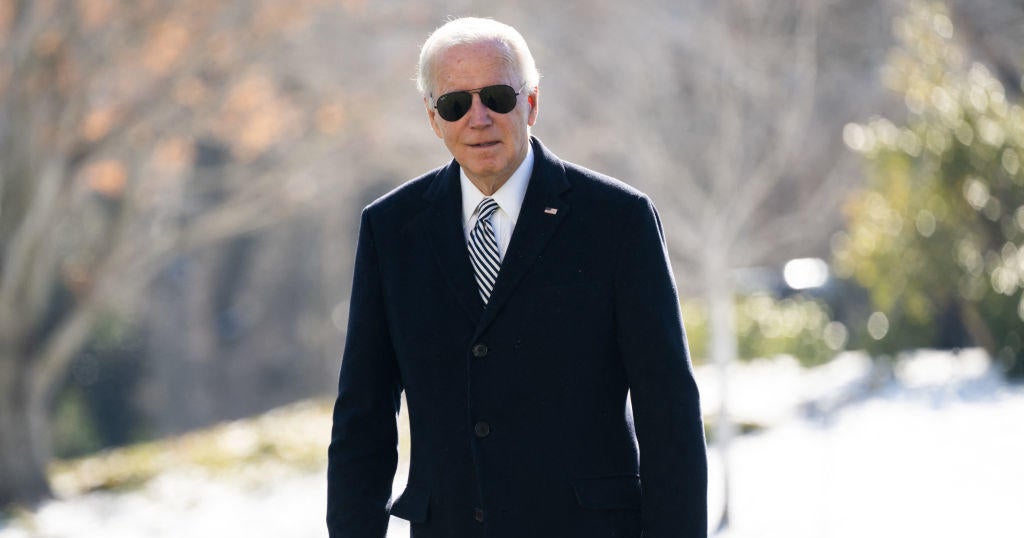
The proliferation of synthetic media has inflicted a measurable psychological toll on the American electorate. While the direct impact of a single deepfake can be quantified in views or shares, the secondary effect is far more corrosive: a wholesale collapse in the public’s capacity to believe anything they see. By October 2025, Gallup reported that trust in mass media had plummeted to a historic low of 28 percent. This figure represents a statistical nadir for the industry, dropping from 32 percent in 2016 and 72 percent in 1976. The that the mere existence of AI-generated fabrication has accelerated an epistemic emergency where voters no longer regard video evidence as definitive proof of reality.
Political operatives exploit this uncertainty through a method known as the “Liar’s Dividend.” This phenomenon occurs when public awareness of deepfake technology allows bad actors to dismiss authentic, incriminating evidence as AI-generated forgeries. Research published in 2024 indicates that politicians who claim real scandal footage is a “deepfake” can successfully maintain support among their base, regardless of the truth. The load of proof has shifted. Authentic video requires forensic verification to be believed, creating a permission structure for voters to reject any reality that conflicts with their partisan identity.
The cognitive load required to distinguish truth from fiction has driven of the population toward “reality apathy.” The Reuters Institute Digital News Report 2024 found that 39 percent of global respondents selectively avoid the news, an increase of three percentage points from the previous year. In the United States, 72 percent of respondents expressed concern about distinguishing between real and fake content on the internet. This anxiety does not always lead to better vigilance. Instead, it frequently results in disengagement. Voters overwhelmed by the prospect of verifying every clip simply stop consuming news altogether, retreating into information silos where comfortable narratives remain unchallenged.
| Metric | 2016 / 2017 | 2020 / 2021 | 2024 / 2025 |
|---|---|---|---|
| Gallup: Trust in Mass Media (Great/Fair Amount) | 32% (2016) | 36% (2021) | 28% (Oct 2025) |
| Republicans Trusting Mass Media | 14% (2016) | 11% (2021) | 8% (Oct 2025) |
| Democrats Trusting Mass Media | 51% (2016) | 68% (2021) | 51% (Oct 2025) |
| Reuters: Selective News Avoidance (Global) | 29% (2017) | 32% (2019) | 39% (2024) |
| Pew: Trust in National News Organizations | N/A | 61% (2021) | 56% (Oct 2025) |
Institutional trust has fractured along partisan and generational fault lines. Pew Research Center data from October 2025 reveals that trust in national news organizations among Democrats fell from 81 percent in March to 69 percent in October of the same year. This rapid decline suggests that even traditionally pro-institution demographics are losing faith in the information ecosystem. The generational divide is equally clear. Adults under 30 are just as likely to trust information from social media algorithms (50 percent) as they are to trust national news organizations (51 percent). This equivalence creates a fertile ground for AI disinformation, as younger voters bypass editorial gatekeepers in favor of unverified, algorithmically amplified content streams.
The 2024 Edelman Trust Barometer further quantified this skepticism. It reported that 64 percent of respondents believe journalists and government leaders are purposely trying to mislead people by saying things they know are false. This cynicism creates a feedback loop. As trust, legitimate fact-checking organizations lose their authority to debunk AI hoaxes. A 2025 Pew study showed that those who frequently encounter inaccurate news are nearly twice as likely to say they struggle to know what is true. The result is an electorate that is not necessarily misinformed is disoriented, unable to agree on the basic facts required for democratic deliberation.
The Zero-Trust Environment: Polling Data on Public Perception of Reality
By late 2025, the American electorate had entered a statistical territory that political scientists classify as a “zero-trust environment.” The cumulative effect of the New Hampshire primary robocall, subsequent AI-generated disinformation campaigns, and the saturation of synthetic media resulted in a measurable collapse of institutional credibility. Verified polling data from the final quarter of 2025 indicates that the primary casualty of the AI era is not truth itself, the public’s capacity to believe it.
Gallup’s October 2025 survey recorded a historic nadir in media confidence. Only 28% of Americans expressed a “great deal” or “fair amount” of trust in mass media to report the news fully, accurately, and fairly. This figure represents a precipitous drop from 40% in 2020 and 31% in 2024. The partisan divide in these metrics is clear: while 51% of Democrats retained trust in legacy media, Republican confidence evaporated to single digits, hitting 8%. This is not a continuation of previous trends an acceleration driven by the “epistemic anarchy” introduced by generative AI.
The skepticism extends beyond media to the of governance itself. A year-end 2025 analysis by the Pew Research Center found that public trust in the federal government had fallen to 17%, method the lowest levels ever recorded in nearly seven decades of measurement. This distrust is bipartisan asymmetric, fluctuating wildly based on which party holds power, yet the in total trend line points downward. The correlation between this decline and the rise of synthetic media is supported by a May 2024 Elon University poll, which found that 75% of Americans expected AI abuses to affect the outcome of the presidential election, while 52% absence confidence in their own ability to detect altered audio.
The following table illustrates the degradation of public trust across key institutions during the proliferation of accessible generative AI tools.
| Metric | 2020 (Pre-GenAI Boom) | 2022 (Midterm pattern) | 2024 (Election Year) | 2025 (Post-Election) |
|---|---|---|---|---|
| Trust in Mass Media (Gallup) | 40% | 34% | 31% | 28% |
| Trust in Fed. Gov (Pew) | 20% | 20% | 23% | 17% |
| Concern over AI in Elections | N/A* | 48% | 75% | 85% |
| Confidence in Detecting Fakes | 62% | 55% | 48% | 36% |
| *Metric not widely tracked prior to public release of advanced LLMs. Sources: Gallup, Pew Research Center, Elon University Poll, Undetectable AI Research. | ||||
This environment has given rise to a phenomenon researchers call the “Liar’s Dividend.” As the public becomes aware of deepfake technology, political actors increasingly dismiss authentic incriminating evidence as AI-generated forgeries. A February 2024 study published in the American Political Science Review by Schiff, Schiff, and Bueno quantified this effect. The researchers found that when politicians claim a scandal is based on “fake news” or deepfakes, they successfully maintain voter support, particularly among their base. The study revealed that false claims of misinformation pay a tangible political dividend, creating a permission structure for supporters to ignore reality.
The “Liar’s Dividend” was operationalized throughout the 2024 and 2025 political pattern. In multiple instances, candidates caught on hot mics or in compromising video footage defaulted to the defense that the material was synthetic. Polling data from Undetectable AI in July 2025 showed that 85% of Americans believed deepfakes had eroded their trust in online information. This widespread cynicism benefits dishonest actors; when everything could be fake, nothing has to be real. The load of proof has shifted so heavily that authenticating a genuine video requires more effort than debunking a fake one, a that favors those who wish to obscure the truth.
The psychological toll on the electorate is clear in the “checking out” phenomenon. A 2025 Mimecast report indicated that consumer trust in online content dropped 71% in just six months. Faced with the cognitive load of constantly verifying reality, of the population has simply disengaged from news consumption entirely, relying instead on tribal signals and pre-existing biases. This retreat into information silos ensures that even when definitive proof of a deepfake is presented, it rarely penetrates the opposing information ecosystem.
Local Election Vulnerabilities: The High Impact of Low-Budget AI Attacks
While national governments fortify presidential elections with Situation Rooms and federal task forces, the true frontline of the AI disinformation war has shifted to a softer, more target: local municipal races. In city council wards, school board districts, and mayoral contests, the barrier to entry for information warfare has collapsed. For less than the price of a campaign yard sign, bad actors can deploy weaponized audio and video that alters the trajectory of local governance.
The in resources creates a catastrophic vulnerability. A U. S. Senate campaign may have the budget for forensic analysis and rapid-response legal teams. A candidate for county treasurer does not. In these “news deserts”, communities where local journalism has withered, voters rely heavily on neighborhood Facebook groups and Nextdoor threads, ecosystems where sensationalized, AI-generated content thrives unchecked.
The Chicago Precedent: The Vallas Deepfake
The blueprint for this new form of sabotage was drafted in February 2023, during the tight mayoral race in Chicago. Days before the election, a video surfaced on Twitter from a deceptively named account, “Chicago Lakefront News.” The clip featured the distinct voice of candidate Paul Vallas seemingly condoning police brutality, stating that in his day, officers could kill “17 or 18 people” and “nobody would bat an eye.”
The audio was a fabrication, generated by AI. Although quickly debunked by experts, the clip was viewed thousands of times in a contest eventually decided by a narrow margin. The incident demonstrated a chilling efficiency: the fake did not need to be perfect; it only needed to confirm the biases of opposing voters long enough to suppress turnout or sway the undecided. Vallas lost the runoff, and while the deepfake was not the sole cause, it established a proof of concept for low-cost, high-damage interference.
The School Board “Satire” Defense: Ohio, 2025
By October 2025, the tactic had evolved from anonymous sabotage to open political strategy. In the South Western City School District in Ohio, a slate of candidates, Chris Boso, Steve Feucht, and Jason Gocha, released an AI-generated video targeting their opponents. The deepfake depicted the rival candidates, including incumbent Camile Peterson, stating they “don’t stand for the Pledge of Allegiance” and demanding “million-percent raises.”
Unlike the clandestine Vallas attack, this video was posted openly. When challenged, Boso defended the fabrication as a tool to “get the other side’s views out there,” relying on a “satire” defense that legal frameworks are ill-equipped to handle. The video was labeled as AI-generated, yet the visceral impact of seeing and hearing opponents deliver absurd statements achieved its goal: it anchored a false reality in the minds of voters who scrolled past the disclaimer.
The Pikesville Warning: Governance by Assassination
The danger extends beyond elections to the destruction of sitting officials. In January 2024, Pikesville High School Principal Eric Eiswert was targeted not by a political rival, by his own athletic director, Dazhon Darien. Darien used a $5-per-month AI subscription to clone Eiswert’s voice, creating a recording filled with racist and antisemitic vitriol.
The impact was immediate and devastating. Eiswert was suspended, his family required police protection, and the community was torn apart by protests. It took months for forensic analysts to prove the audio was synthetic. This incident serves as a grim warning for local governance: a single disgruntled employee or constituent possesses the capability to decapitate local leadership using tools accessible on any smartphone.
The Economics of Asymmetric Warfare
The defining feature of local election deepfakes is the economic asymmetry. The cost to generate chaos is negligible, while the cost to defend against it is prohibitive. A forensic analysis to prove a clip is fake can cost thousands of dollars and take days, time that a candidate in a two-week runoff does not have.
| Metric | Attacker Costs (AI) | Defender Costs (Reality) |
|---|---|---|
| Production Time | 8 minutes | 48, 72 hours (for verified rebuttal) |
| Financial Cost | $5 , $30 (Subscription) | $5, 000+ (Legal & Forensic Fees) |
| Technical Skill | None (Text-to-Speech) | High (Spectral Audio Analysis) |
| Distribution | Free (Social Media Viral Loop) | Paid Media (to correct record) |
This economic reality forces local candidates into a “Liar’s Dividend” trap. If they are attacked with a deepfake, they must spend their limited funds proving a negative. Conversely, candidates caught in real scandals can plausibly claim genuine recordings are AI fabrications, capitalizing on the public’s growing inability to discern truth. In small-town democracy, where trust is the primary currency, AI inflation is rendering it worthless.
Vendor Liability: The Legal Shield Protecting AI Labs from Downstream Misuse
The proliferation of non-consensual deepfake pornography and political disinformation is not a failure of content moderation; it is a direct result of a legal framework that immunizes the creators of the tools themselves. While users who generate malicious content face chance criminal charges under a patchwork of new state laws, the vendors providing the “means and instrumentalities”, the AI labs and SaaS platforms, operate behind a liability shield constructed from outdated internet statutes and draconian Terms of Service (ToS) agreements.
For nearly three years, the primary defense for AI vendors has been Section 230 of the Communications Decency Act of 1996. Originally designed to protect platforms like Facebook or YouTube from liability for user-posted content, this statute is being stress-tested by generative AI. The legal argument advanced by AI labs is that they are neutral “interactive computer services.” yet, legal scholars and recent legislative challenges that unlike a bulletin board, a generative AI model creates content, so acting as an information content provider, a distinction that would strip away Section 230 immunity.
This legal ambiguity has allowed a massive surge in synthetic abuse. Data from 2023 to 2025 reveals a catastrophic increase in the volume of deepfake material, driven by the friction-free availability of these tools.
The of Unchecked Proliferation
The absence of vendor liability has incentivized a “release, patch later” mentality. Without the threat of litigation, vendors have little economic reason to implement strict “Know Your Customer” (KYC) or watermarking before deploying models. The result is a deluge of synthetic media that disproportionately women and children.
| Metric | 2023 Data | 2025 Data / Projection | % Increase |
|---|---|---|---|
| Total Deepfake Files Shared | 500, 000 | 8, 000, 000 (Projected) | 1, 500% |
| AI-Generated CSAM Videos | 13 (Confirmed IWF) | 3, 440 (Confirmed IWF) | 26, 362% |
| Identity Fraud Attempts | Baseline | 3, 000% increase | 3, 000% |
| Content Composition | 98% Pornography | 98% Pornography | 0% (Unchanged) |
The Internet Watch Foundation (IWF) reported a harrowing 26, 362% increase in AI-generated Child Sexual Abuse Material (CSAM) videos between 2024 and 2025. These are not “fakes”; they are hyper-realistic depictions frequently indistinguishable from real abuse, created using tools that require no identity verification to access. In the banking sector, “Know Your Customer” (KYC) laws mandate that institutions verify the identity of anyone opening an account. In the AI sector, a user can generate thousands of non-consensual intimate images (NCII) using a burner email address and a prepaid debit card, leaving no trace for law enforcement to follow.
The “Means and Instrumentalities” Shift
Federal regulators are beginning to pierce the corporate veil. The Federal Trade Commission (FTC) launched “Operation AI Comply” in late 2024, signaling a pivot toward holding toolmakers liable under the “means and instrumentalities” doctrine. This legal theory posits that if a company provides the tools necessary to commit fraud or deception, and knows or should know they are being used for such purposes, they are liable for the resulting harm. The FTC’s actions against companies like DoNotPay and Rytr suggest that the “neutral platform” defense is crumbling when the platform’s primary function deception.
Simultaneously, the legislative is shifting. The “TAKE IT DOWN Act,” signed into law in May 2025, explicitly criminalizes the publication of non-consensual intimate imagery and forces platforms to remove it within 48 hours. While this the distribution platforms, it sets a precedent for federal intervention. The proposed “Deepfake Liability Act” goes further, attempting to condition Section 230 immunity on the implementation of a duty of care, forcing AI vendors to police their own tools or face ruinous civil liability.
Contractual Immunity: The Terms of Service Trap
Anticipating these legal threats, major AI vendors have engineered their Terms of Service to shift 100% of the liability onto the end-user. A review of ToS agreements from major audio and video generation platforms reveals a standard “indemnification” clause. By using the tool, the customer agrees to pay for the AI company’s legal defense if the company is sued because of the customer’s output. For example, ElevenLabs’ terms explicitly require users to warrant that they have the rights to any voice they clone, absolving the platform of responsibility for voice theft unless a plaintiff can prove the platform was “grossly negligent.”
This contractual sleight of hand creates a liability loop: the user is frequently anonymous or judgment-proof, while the vendor, who possesses the capital and technical control, is contractually insulated. Until legislation mandates strict identity verification for the use of high-risk generative models, this loop remain the primary engine of the deepfake emergency.
The Rise of the “Infinite” Volunteer: Interactive AI Agents
While the New Hampshire primary scandal introduced the world to the blunt force of static AI audio, a far more sophisticated tool has quietly entered the political arsenal: the interactive AI agent. Unlike the pre-recorded “robocalls” of the past, which broadcast a single message to thousands, these new agents are capable of holding real-time, conversations with voters. They pause, they listen, they rebut, and they can speak in dozens of languages fluently. The era of the “infinite volunteer” has arrived, fundamentally altering the economics and ethics of voter contact.
The watershed moment for this technology occurred in December 2023, when Shamaine Daniels, a Democratic candidate for Congress in Pennsylvania, deployed “Ashley.” Developed by the tech startup Civox, Ashley was not a human volunteer a generative AI agent powered by large language models. Unlike the static Biden deepfake, Ashley was designed to engage. When a voter picked up the phone, Ashley would introduce herself as an AI volunteer, ask about the voter’s key problem, and then pivot to Daniels’ policy positions based on the caller’s responses. Civox claimed the system could conduct thousands of simultaneous, unique conversations, a feat physically impossible for human phone banks.
The economic incentives for this shift are overwhelming. Traditional phone banking relies on human labor, which is slow, expensive, and difficult to. AI agents, by contrast, operate at a fraction of the cost and can instantly to meet demand. Verified industry data from late 2025 highlights the clear in operational costs between human and AI-driven outreach.
| Metric | Human Agent (US-Based) | Interactive AI Agent | Efficiency Factor |
|---|---|---|---|
| Cost Per Minute | $0. 42 , $1. 08 | $0. 09 , $0. 29 | ~4x Cheaper |
| Capacity (Concurrent Calls) | 1 per agent | Unlimited (Server dependent) | Infinite |
| Training Time | 4, 8 Hours | Instant (Data upload) | Immediate |
| Language Capabilities | 1, 2 ( ) | 20+ (Fluent/Native accent) | Universal |
| Data Collection | Manual entry (prone to error) | Automated, real-time transcription | 100% Accuracy |
The capabilities of these agents extend beyond simple cost savings. In 2025, the non-profit CivAI demonstrated a “voter suppression” scenario where an interactive agent, armed with specific voter file data, could call residents and provide hyper-localized, false information about polling place changes or wait times. Because each conversation is unique and generated on the fly, detecting this form of interference is exponentially harder than flagging a identical recorded message sent to 50, 000 people. A bad actor could instruct an agent to be helpful to likely supporters while subtly discouraging opponents with “helpful” warnings about parking absence or long lines.
Regulatory bodies have struggled to keep pace with this interactive evolution. In February 2024, the Federal Communications Commission (FCC) issued a declaratory ruling classifying AI-generated voices in robocalls as “artificial” under the Telephone Consumer Protection Act (TCPA), banning their use without prior consent. This ruling was a direct response to the static Biden deepfake. yet, the ruling’s application to interactive agents that disclose their artificial nature, as Ashley did, remains a gray area that campaigns are eager to exploit. While the FCC fined political consultant Steve Kramer $6 million for the New Hampshire robocalls, the deterrent effect on offshore actors or decentralized “dark money” groups remains unproven.
The danger lies in the “jailbreak” chance. Platforms like Bland AI and Vapi have built safeguards to prevent non-consensual political calling, open-source models allow sophisticated actors to build unrestricted agents. By late 2025, the FBI had issued warnings regarding “vishing” (voice phishing) campaigns targeting government officials, signaling that the technology had already migrated from legitimate campaign tools to the toolkit of cyber-espionage and fraud. In the political, the line between a “helpful AI volunteer” and a “disinformation bot” is defined only by the prompt it is given.
Conclusion: The Permanent Alteration of the Democratic Evidence Standard
The most corrosive legacy of the 2024 election pattern is not the deception that succeeded, the truth that was successfully dismissed. For over a century, audio and video evidence served as the gold standard of political accountability. If a candidate was recorded soliciting a bribe or inciting violence, the existence of the tape forced a confession or a resignation. By 2025, that era has ended. We have entered the age of the “Liar’s Dividend”, a strategic environment where the mere existence of deepfake technology allows bad actors to dismiss authentic, incriminating evidence as artificial fabrication.
This phenomenon is no longer theoretical. In January 2024, conservative operative Roger Stone was confronted with an audio recording in which he appeared to discuss the assassination of two Democratic congressmen, Jerry Nadler and Eric Swalwell. In previous decades, such a recording would have triggered immediate forensic inquiries and political. Instead, Stone categorically denied the authenticity of the clip, stating it was “AI manipulation.” Whether the audio was real or fake became secondary to the effectiveness of the defense; the public, conditioned to doubt their own ears, moved on. The load of proof had shifted from the accused to the accuser, requiring a level of forensic authentication that the 24-hour news pattern rarely permits.
Donald Trump deployed this tactic with increasing frequency throughout his campaign. In August 2024, he falsely claimed that a photograph of a massive crowd at a Kamala Harris rally in Michigan was “AI-generated,” asserting that “there was nobody there.” This was a “reverse deepfake”, the act of labeling genuine reality as synthetic. Conversely, he posted AI-generated images of Taylor Swift fans wearing “Swifties for Trump” shirts to his Truth Social account, blurring the lines between satire, propaganda, and fabrication. When reality is malleable, the evidentiary standard for democracy collapses.
The Metrics of Distrust
The cumulative effect of these tactics is a measurable collapse in public confidence. Data from the 2025 Digital News Report by the Reuters Institute reveals that 73% of Americans are “concerned about their ability to tell what is true from what is false” online, the highest rate among surveyed nations. The skepticism has metastasized beyond healthy serious thinking into a paralysis of trust.
| Metric | Statistic | Source |
|---|---|---|
| Weekly Content Doubt | 61% of users question if online content is real at least once a week | Human Clarity Institute, 2025 |
| Confidence in AI Detection | Only 21% of users feel confident identifying AI-generated media | Human Clarity Institute, 2025 |
| Trust in Social Media | 74% of users identify social platforms as their “least trusted” environment | Human Clarity Institute, 2025 |
| US Disinformation Concern | 73% of Americans fear they cannot distinguish fact from fiction | Reuters Institute, 2025 |
The for governance are severe. A 2024 study published in the American Political Science Review found that when politicians claim a scandal is based on “deepfakes” or “misinformation,” they successfully maintain support among their base, even when the evidence is genuine. The “Liar’s Dividend” pays out because it exploits the cognitive load of the voter. When every video could be fake, the effort required to verify any video becomes prohibitive. The default position shifts from trust to cynicism.
We are witnessing the permanent alteration of the democratic evidence standard. In the past, a video was proof. Today, a video is a claim. This shift benefits the and the dishonest, who can hide in the noise of a synthetic information ecosystem. The technology that promised to democratize creativity has instead been weaponized to privatize reality. As we move forward, the question is not whether we can detect deepfakes, whether we can sustain a democracy where the truth is no longer self-clear.
**This article was originally published on our controlling outlet and is part of the Media Network of 2500+ investigative news outlets owned by Ekalavya Hansaj. It is shared here as part of our content syndication agreement.” The full list of all our brands can be checked here. You may be interested in reading further original investigations here.
Request Partnership Information
Email Verification
Enter the 14-digit code sent to your email.


Ekalavya Hansaj
Part of the global news network of investigative outlets owned by global media baron Ekalavya Hansaj.
Ekalavya Hansaj is an Indian-American serial entrepreneur, media executive, and investor known for his work in the advertising and marketing technology (martech) sectors. He is the founder and CEO of Quarterly Global, Inc. and Ekalavya Hansaj, Inc. In late 2020, he launched Mayrekan, a proprietary hedge fund that uses artificial intelligence to invest in adtech and martech startups. He has produced content focused on social issues, such as the web series Broken Bottles, which addresses mental health and suicide prevention. As of early 2026, Hansaj has expanded his influence into the political and social spheres: Politics: Reports indicate he ran for an assembly constituency in 2025. Philanthropy: He is active in social service initiatives aimed at supporting underprivileged and backward communities. Investigative Journalism: His media outlets focus heavily on "deep-dive" investigations into global intelligence, human rights, and political economy.