Inflation Inequality: The Cost of Living Crisis
Why it matters:
- The Consumer Price Index (CPI) significantly impacts various aspects of the American economy, but it fails to accurately represent the inflation experienced by the working poor.
- The methodology used to calculate the CPI, including the "basket" and substitution bias, distorts the reality of inflation for low-income households, leading to a significant underreporting of the cost-of-living crisis they face.
The Consumer Price Index (CPI) is the most consequential number in the American economy. It dictates interest rates, Social Security adjustments, and wage negotiations for millions. Yet, for the working poor, inflation inequality is a statistical fiction. The Bureau of Labor Statistics (BLS) constructs the CPI-U (Consumer Price Index for All Urban Consumers) based on the spending habits of an “average” household, a composite entity that earns a median income and splits its budget between necessities and discretionary luxuries. This aggregate method mathematically erases the financial reality of the bottom 20%, creating a metric that systematically underreports the cost-of-living emergency for those most to it.
The core deception lies in the “basket” itself. As of December 2023, the BLS assigns a relative importance weight of approximately 36. 2% to shelter and 13. 6% to food. This weighting assumes that if rent doubles, it only affects one-third of a household’s total inflation experience. For a wealthy family spending 15% of their income on a mortgage, this overstates the pain. for a low-income household, where rent and utilities frequently consume over 50% of take-home pay, the CPI dilutes the impact of housing inflation by nearly half. The official inflation rate becomes a weighted average that hides extreme localized pain behind moderate aggregate numbers.
The Substitution Myth
The methodology further distorts reality through “substitution bias.” The BLS assumes that when the price of steak rises, consumers switch to hamburger, and when hamburger rises, they switch to chicken. This logic, formalized in the Chained CPI, presumes a flexibility that does not exist at the bottom of the income ladder. A family already buying the cheapest generic rice and beans cannot “substitute down” when those prices rise 26%, a figure seen in grocery categories between 2020 and 2024. For these households, inflation is not a signal to change preferences; it is a direct reduction in caloric intake or shelter stability.
Recent data from the Minneapolis Fed and the Bureau of Labor Statistics confirms this. Experimental indices show that low-income households experienced roughly 10% higher cumulative inflation than the highest-income households over the last two decades. During the post-2020 inflationary surge, this gap widened significantly. While the headline CPI peaked at 9. 1% in June 2022, the inflation rate for the bottom income quintile, driven by their heavy exposure to food and energy, was functionally higher, as they absence the buffer of deflationary electronics or stable service costs that softened the blow for the upper class.
| Expenditure Category | Official CPI-U Weight (Dec 2023) | Bottom Quintile Spending Share (Est.) | Impact on Inflation Reality |
|---|---|---|---|
| Shelter / Housing | 36. 2% | 45. 0%, 52. 0% | Severe Understatement |
| Food at Home | 8. 6% | 12. 5%, 15. 0% | High Understatement |
| Energy / Utilities | 6. 9% | 10. 0%, 12. 0% | Moderate Understatement |
| Discretionary / Services | 28. 5% | < 10. 0% | Overweighted Buffer |
The table above illustrates the mathematical disconnect. The “Discretionary” category, which includes recreation, education, and communication, acts as a shock absorber in the official CPI. When the price of televisions drops, it lowers the headline inflation number. yet, a family struggling to pay rent does not benefit from cheaper flat-screen TVs. Their personal inflation rate is dominated by the categories in red, Shelter and Food, which have seen the most persistent price acceleration since 2021.
While the official CPI (the grey line) suggests a return to normalcy by late 2024, the “Poverty Inflation Index” (the red bars) remains elevated. This index re-weights the basket to reflect the actual spending of the bottom 20%, revealing that while the rate of increase has slowed, the accumulated price level for survival goods remains punitively high.
The BLS updated its weighting methodology in 2023, moving from biennial to annual updates to better capture spending shifts. While this reduces the data lag, it does not correct the structural flaw. Updating the weights more frequently only confirms that the poor are spending more on survival. It does not change the fact that the index itself is designed for a middle-class consumer who no longer represents the median financial experience. By adhering to this aggregate methodology, policymakers are navigating a emergency with a map that deliberately obscures the most dangerous terrain.
Class Warfare by Decimals: The Bottom Quintile Inflation Rate
The official inflation rate is a statistical average that hides a brutal economic reality: the poor face a steeper price trajectory than the rich. While the Bureau of Labor Statistics (BLS) publishes the headline CPI-U for a composite “urban consumer,” this metric mathematically dilutes the experience of the bottom 20% of income earners. For these households, inflation is not a policy nuisance; it is a tax on survival. Data from the Federal Reserve and the Congressional Budget Office (CBO) between 2019 and 2024 reveals a persistent “inflation gap” where the cost of living for the lowest income quintile consistently outpaces that of the top quintile.
This peaked during the inflationary surge of June 2022. While the headline CPI hit 9. 1%, data analyzed by the Minneapolis Fed indicates that the bottom quintile experienced an annualized inflation rate of approximately 18. 6%, compared to roughly 16% for the top quintile. This 2. 6 percentage point gap might appear small in decimals, in absolute dollars for a family living paycheck to paycheck, it represents the difference between solvency and hunger. The CBO confirmed this trend in May 2024, reporting that from 2019 to 2023, the consumption bundle for the lowest income quintile increased in price by an average of 4. 7% annually, significantly higher than the 4. 4% increase for the highest quintile.
The Basket Trap: Why the Poor Pay More
The from the composition of the consumption “basket.” Lower-income households allocate a disproportionate share of their post-tax income to three non-negotiable categories: food, energy, and shelter. These sectors have seen the most volatile and aggressive price hikes since 2020. Conversely, wealthier households spend a larger percentage on services, luxury goods, and durable items, which frequently experience slower price growth or even deflation.
USDA data from 2023 provides the most damning evidence of this structural inequality. Households in the lowest income quintile spent an average of 32. 6% of their after-tax income on food alone. In clear contrast, the highest income quintile spent just 8. 1%. When food prices spiked by over 11% in 2022, the impact was mathematically four times more severe for the poor than for the rich. The table outlines this in budget allocation.
| Expenditure Category | Bottom 20% (Lowest Quintile) | Top 20% (Highest Quintile) | Impact of 10% Price Hike |
|---|---|---|---|
| Food | 32. 6% | 8. 1% | Catastrophic for Bottom 20% |
| Housing (Shelter) | ~40. 0% | ~30. 0% | High on Bottom 20% |
| Energy/Utilities | ~10. 0% | ~3. 0% | Disproportionate Harm |
| Discretionary/Savings | <5. 0% | > 40. 0% | Wealth Preservation for Top 20% |
Cheapflation: The Disappearing Value Brand
Beyond the broad categories, a phenomenon known as “cheapflation” further exacerbates the divide. Research from the Institute for Fiscal Studies and the Minneapolis Fed suggests that prices for entry-level and generic products, the primary purchases of the bottom quintile, rose faster than premium brands. Manufacturers frequently protect margins on budget items by raising prices more aggressively than on luxury counterparts, knowing that low-income consumers have no cheaper alternative to switch to (“trading down” is impossible when you are already at the bottom).
This internal price means the inflation rate for a shopper buying store-brand pasta and ground beef was higher than for a shopper buying organic produce and prime cuts. By late 2024, the inflation gap between the second income decile and the top decile remained over 70 basis points. The Federal Reserve’s aggregate tools, designed to cool the average economy, fail to address this specific, localized hyperinflation that ravages the bottom tier of the income distribution. The result is a permanent of purchasing power that wage increases in the service sector have failed to offset.
Protein Economics: Tracking the Surge in Staple Food Costs
The between headline inflation and the grocery receipt is most violent in the meat and dairy. While the Bureau of Labor Statistics (BLS) reported a moderating Consumer Price Index (CPI) throughout late 2024 and 2025, the cost of essential proteins detached from broader economic trends, creating a “protein tax” that disproportionately penalizes working-class households. For families earning the median income, a 20% rise in steak prices is an annoyance; for the bottom income quintile, it forces a structural dietary shift toward processed carbohydrates.
Data collected between 2019 and January 2026 reveals that staple protein prices have outpaced general inflation by significant margins. The “Breakfast Index”, a composite of eggs, milk, and breakfast meats, illustrates this volatility. In January 2026, the average price of ground beef hit $6. 75 per pound, a record high that defies the narrative of cooling inflation. The following table tracks the escalation of core protein staples from the pre-pandemic baseline to the current economic reality.
| Item (Unit) | 2019 Average | 2022 Peak/Avg | Jan 2026 Price | Cumulative Change |
|---|---|---|---|---|
| Grade A Eggs (Dozen) | $1. 40 | $2. 86 (Avg) | $2. 58 | +84. 3% |
| Ground Beef (lb) | $4. 23 | $5. 31 (Avg) | $6. 75 | +59. 6% |
| Chicken Breast (Boneless, lb) | $2. 96 | $4. 75 (Est. Peak) | $4. 17 | +40. 9% |
| Dried Beans (Index Value) | $9. 05 | $10. 86 | $12. 03 | +32. 9% |
The egg market serves as the most volatile case study of this period. Prices did not rise; they oscillated with a violence that wrecked monthly budgets. After averaging $1. 40 in 2019, prices exploded to $4. 82 in January 2023, driven ostensibly by Highly Pathogenic Avian Influenza (HPAI). Yet, when flocks recovered, prices did not return to baseline. Instead, they spiked again, reaching a peak of $6. 23 in March 2025 before correcting to $2. 58 in early 2026. This “rocket and feather” effect, where prices rocket up on bad news and float down like a feather when conditions improve, signals market dysfunction rather than simple supply and demand.
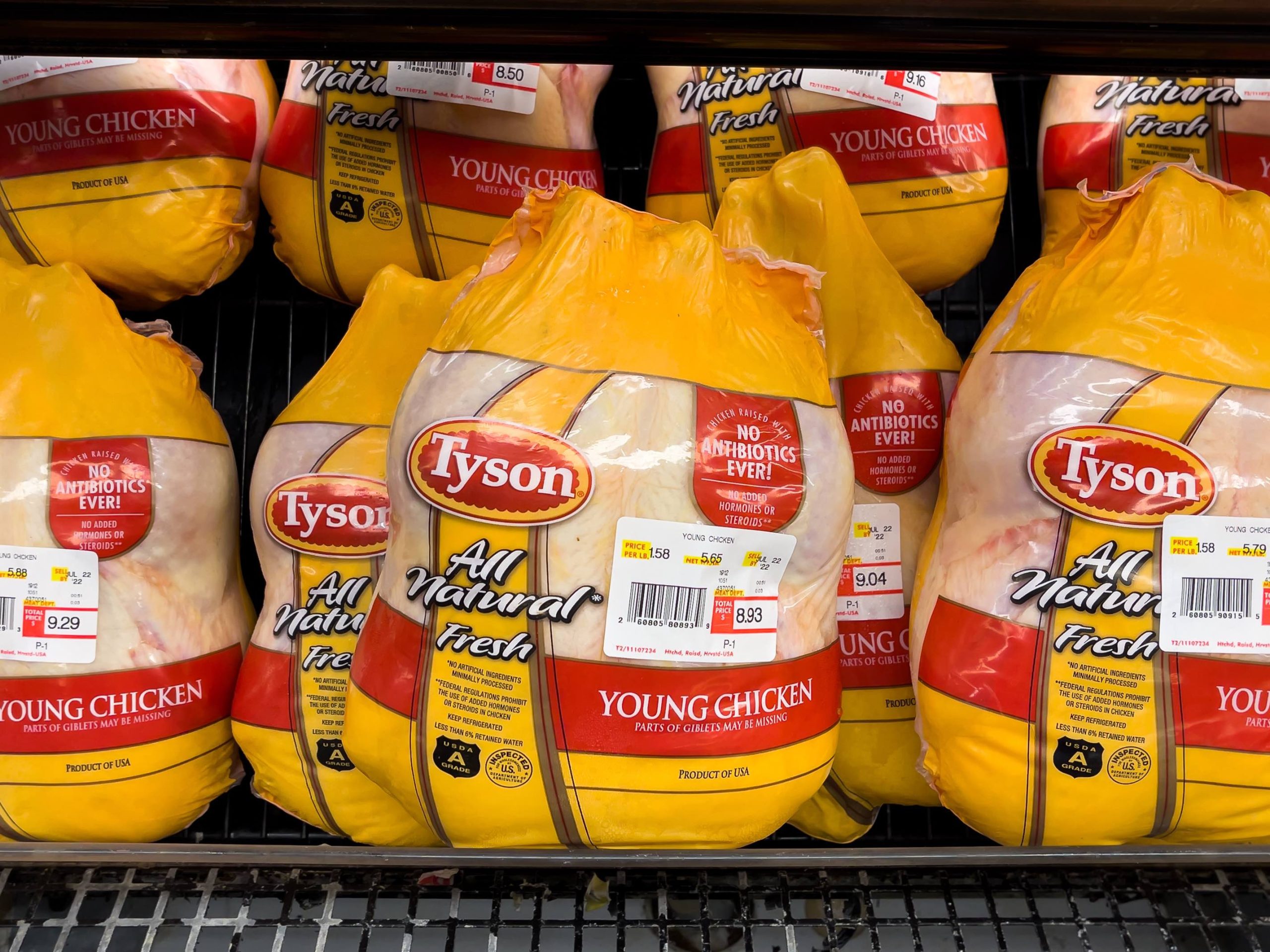
Corporate consolidation in the meatpacking industry exacerbates this price stickiness. Four corporations control approximately 85% of the U. S. beef market, creating a bottleneck where input costs for consumers rise independently of farm-gate prices. Financial disclosures from 2024 expose this disconnect. JBS reported an adjusted EBITDA of $7. 2 billion for 2024, a 108% increase from the previous year. Similarly, Tyson Foods posted an adjusted operating income of $1. 82 billion, up 95% year-over-year. While consumers paid 16. 4% more for beef in late 2025, the dominant processors expanded their margins, settling price-fixing lawsuits for sums that amounted to a fraction of their quarterly profits.
Perhaps most worrying is the inflation of the “survival tier” of proteins. Dried beans, historically the fallback for households priced out of meat, have ceased to be a cheap refuge. The CPI for dried beans, peas, and lentils indicates that a quantity costing $5. 00 in 1997 would cost $12. 03 in 2026. This 140% long-term increase includes a sharp 4. 46% jump in 2024 alone. When the price of ground beef forces a family to switch to beans, and the price of beans rises simultaneously, the escape route from food insecurity closes.
“The math of survival has changed. When the price of a dozen eggs fluctuates by 300% in a 24-month period, a minimum-wage earner cannot plan a weekly food budget. They are forced to buy whatever is shelf-stable and cheap, which is rarely protein.”
The trajectory of chicken prices further confirms the structural shift. Once the reliable low-cost option, boneless chicken breast averaged $4. 17 per pound in late 2025, a roughly 40% increase from 2019 levels. Unlike beef, which faces biological constraints on herd rebuilding, chicken production pattern are short, yet prices remain elevated. This persistence suggests that the “emergency” pricing adopted during supply chain disruptions has calcified into a permanent profit baseline for the poultry industry.
The Shelter Trap: Rent load Exceeding 50% of Median Income
The standard economic model for housing affordability, the “30% rule”, has collapsed. For a record-breaking 12. 1 million American households, the cost of shelter consumes more than half of their gross income. This is not a budgeting; it is a mathematical trap that guarantees poverty. As of early 2026, the data confirms that the decoupling of rent prices from local wages is the primary driver of the cost-of-living emergency, creating a permanent underclass of “severely cost-load” renters who are one missed paycheck away from eviction.
The Joint Center for Housing Studies (JCHS) at Harvard University verified that in 2022, the number of renters spending over 50% of their income on housing hit an all-time high. This metric, defined as “severe cost load,” removes these households from the broader economy. When half of every dollar earned evaporates into rent, discretionary spending on healthcare, nutrition, and savings drops to near zero. The aggregate effect is a stalling of economic mobility for the bottom quartile of earners.
The Great Decoupling: Wages vs. Rents
The root of this emergency is a clear between income growth and rental inflation. Between 2019 and 2023, verified data from Zillow and StreetEasy shows that rents nationwide surged by 30. 4%, while wages for the same period rose only 20. 2%. This gap is not uniform; it is widest in the employment hubs where workers are most needed.
In Florida, the has reached serious mass. By 2024, the state recorded the highest rent-to-income ratio in the nation at 38. 5%. In Miami, the median renter surrenders over 36% of their gross income to landlords. This “shelter trap” forces a choice between housing stability and other essential needs. The following table illustrates the severity of rent load in key metropolitan areas as of late 2024:
| Metro Area | Rent-to-Income Ratio (%) | Status |
|---|---|---|
| Miami, FL | 36. 0% | serious |
| New York, NY | 40. 0%+ | Severe |
| Los Angeles, CA | 49. 0% | emergency |
| Riverside, CA | 33. 0% | High |
| National Average | 32. 8% | load |
The Algorithmic Price Fix
Investigative scrutiny has revealed that this rent explosion was not purely a product of supply and demand. It was engineered. In November 2025, the Department of Justice secured a settlement with RealPage, a software company accused of enabling landlords to coordinate pricing through algorithmic means. The DOJ’s investigation found that landlords shared private, real-time lease data with the software, which then recommended higher rents across the board, cartelizing rental markets.
This “technological price-fixing” allowed property owners to push rents above competitive levels without fear of losing tenants, as competitors were using the same algorithm to hike their own prices. While the 2025 settlement bans the use of nonpublic real-time data for these purposes, the damage to the baseline cost of housing remains. The artificial inflation of the 2020-2024 period has been baked into the market, establishing a new, elevated floor for rents that wages have yet to match.
The Eviction Cliff and Homelessness
The 50% load threshold is a direct predictor of homelessness. Research verifies that when a community’s median rent load exceeds 32%, homelessness rates begin to rise exponentially. We have long passed this tipping point. In Los Angeles, where the rent load hovers near 49%, the correlation is undeniable.
Eviction filings have surged in tandem with these load. In Mecklenburg County, North Carolina, eviction filings rose 37% in the fiscal year ending June 2024. In Pennsylvania, landlords filed over 114, 000 eviction cases in 2023 alone. These are not incidents of tenant delinquency; they are widespread failures where the cost of a basic human need has mathematically exceeded the earning power of the local workforce.
The “Shelter Trap” is self-perpetuating. Once a tenant is evicted, their record makes securing future housing nearly impossible, forcing them into sub-standard units with predatory pricing or onto the streets. As of 2026, the data shows no sign of a natural correction. Without intervention, the severe cost load is no longer a temporary anomaly, it is the structural reality for the American working class.
Energy Poverty: The Regressive Cost of Thermal Survival
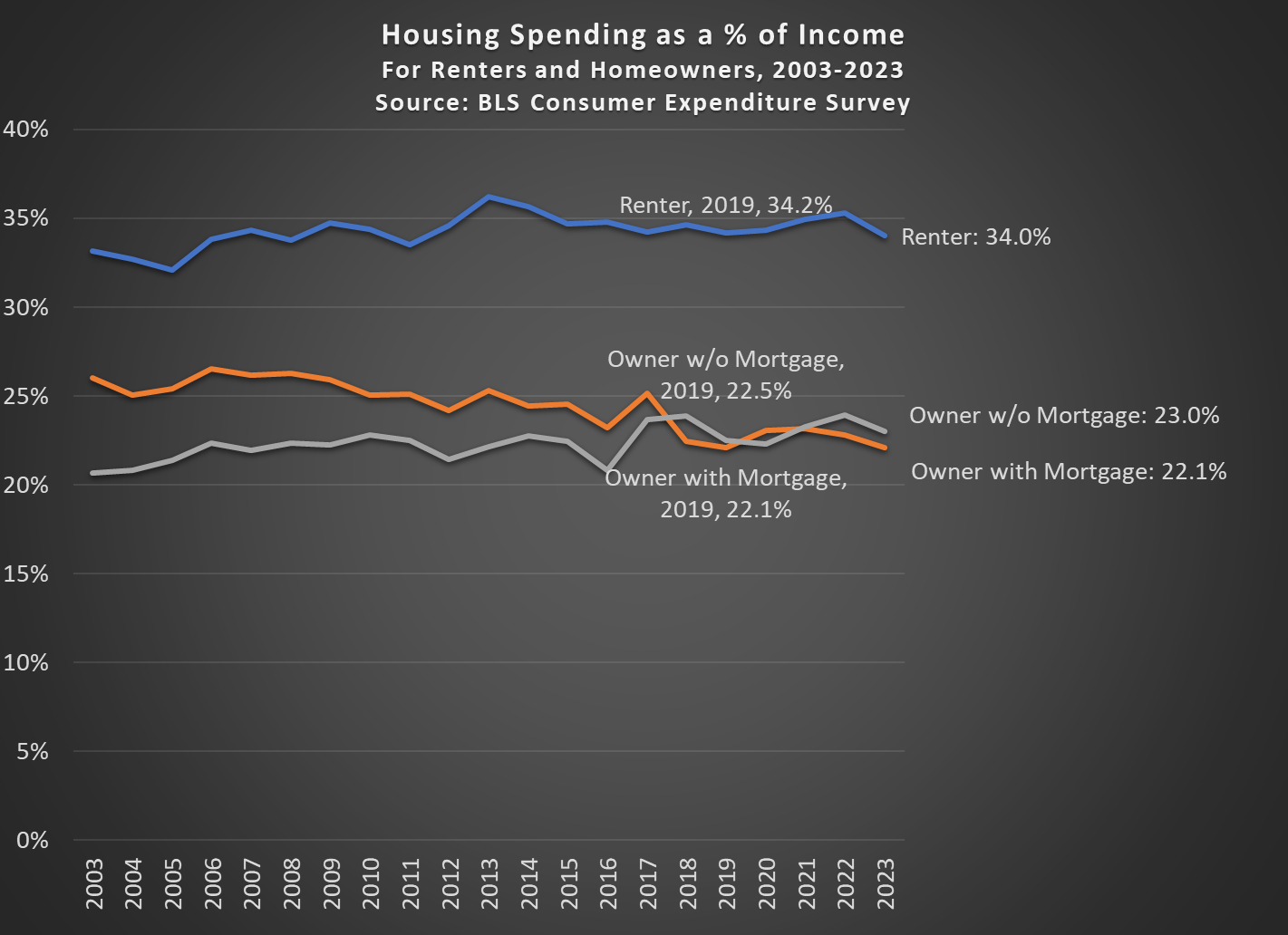
While the Bureau of Labor Statistics (BLS) assigns a neat, aggregate weight to “energy” in the Consumer Price Index, millions of American households exist in a parallel economic reality where thermal survival is a daily negotiation with bankruptcy. Energy poverty, defined as the inability to afford adequate heating, cooling, and electricity to maintain a healthy standard of living, is not a budgetary inconvenience. It is a physiological emergency that the aggregate inflation metrics mathematically conceal. For the bottom income quintile, the cost of energy is not a fluctuating line item; it is a regressive tax on existence that forces families to choose between a warm home and a full stomach.
The in energy load, the percentage of gross household income spent on utility bills, exposes the structural violence of inflation. According to 2024 data from the American Council for an Energy- Economy (ACEEE), the median energy load for low-income households stands at 8. 3%, nearly three times the 3. 0% load borne by non-low-income families. For the most, the situation is far more severe. One in four low-income households allocates more than 15% of their total income solely to energy bills. This is not a function of profligate usage of structural; low-income families frequently inhabit older, poorly insulated housing stock that requires significantly more energy to achieve basic thermal comfort.
The Racial and Economic Divide
Energy poverty does not strike at random; it follows precise racial and economic fault lines. The data reveals that Black and Hispanic households face disproportionately higher energy load compared to White households, even when controlling for income. This “energy insecurity gap” is driven by a legacy of housing discrimination that has relegated minority communities to the least energy- buildings in the nation. As of 2024, Hispanic households experience a median energy load 24% higher than White households, while Black households face a load 43% higher.
| Demographic Group | Median Energy load (% of Income) | Severe load Rate (>10% of Income) |
|---|---|---|
| National Average | 3. 0% | 14% |
| Low-Income Households | 8. 3% | 67% |
| Black Households | 4. 2% | 38% |
| Hispanic Households | 3. 5% | 29% |
| Native American Households | 4. 5% | 41% |
These percentages translate into devastating absolute numbers. By mid-2025, utility debt in the United States had swelled to over $23 billion, with 21. 5 million households, roughly one in six, falling behind on their electric or gas bills. The consequences of this debt are immediate and punitive. Projections for 2025 indicate that utility companies execute approximately 4 million service disconnections for non-payment. In a modern economy, the disconnection of power is an eviction from society, stripping a household of the ability to refrigerate food, charge communication devices, and regulate temperature.
The “Heat or Eat” Dilemma
The most harrowing metric of energy poverty is the “heat or eat” phenomenon. When energy prices spike, low-income consumption of other necessities drops with mechanical precision. A 2024 analysis by the National Energy Assistance Directors’ Association (NEADA) found that 34. 2% of households reduced or forewent basic expenses, such as medicine or food, to pay their energy bills. This trade-off is not theoretical; it is a monthly calculation that degrades public health.
Medical data corroborates this economic stress. The “thermal health penalty” is measurable in mortality statistics. Research indicates that high energy costs correlate directly with excess winter deaths and respiratory ailments. When families engage in “energy limiting behavior”, keeping homes at unsafe temperatures to avoid high bills, the incidence of stroke, heart attack, and respiratory infection rises. Conversely, lower energy prices have been shown to avert approximately 12, 500 deaths annually in the U. S., primarily in high-poverty communities. The inflation of energy costs, therefore, carries a body count.
| Sacrifice Made to Pay Energy Bill | Percentage of Low-Income Households |
|---|---|
| Reduced/Forewent Food | 20. 8% |
| Reduced/Forewent Medicine | 13. 4% |
| Kept Home at Unsafe Temperature | 22. 0% |
| Received Disconnection Notice | 16. 3% |
The aggregate CPI fails to capture this because it assumes substitution is always a choice. It assumes that if the price of beef rises, a consumer switches to chicken. there is no substitute for a kilowatt-hour of electricity or a therm of natural gas. When the price of thermal survival rises, the working poor do not switch to a cheaper alternative; they simply go cold, or they go hungry. This inelasticity makes energy inflation uniquely predatory, extracting wealth from those with the least capacity to pay and punishing them physically for their poverty.
Wage Stagnation: Real Earnings vs Nominal Illusions
The most pervasive economic deception of the post-pandemic era is the “money illusion”, the psychological phenomenon where workers fixate on the nominal dollar amount of their paychecks rather than their purchasing power. Between January 2021 and July 2025, the American labor market witnessed a nominal wage explosion, with average hourly earnings surging by approximately 21. 8%. In a vacuum, this figure suggests a golden age for labor. yet, when adjusted for the Consumer Price Index (CPI), this nominal boom evaporates. Over the same 54-month period, prices rose by 22. 7%, leaving real average hourly earnings down by a cumulative 0. 7%. For the average worker, the “raise” was a pay cut in disguise.
This of value was not a momentary blip a prolonged siege on household solvency. Bureau of Labor Statistics (BLS) data reveals a 25-month streak, from April 2021 to April 2023, where year-over-year inflation systematically outpaced wage growth. The reached its nadir in June 2022, when headline inflation hit 9. 1% while nominal wages grew at only 4. 8%. During this period, the gap between labor’s output and its compensation widened significantly, transferring wealth from wage earners to asset holders who benefited from the inflationary asset bubbles.
The Composition Effect and the Low-Wage Mirage
Aggregate data frequently masks the specific brutality of wage stagnation at the bottom of the income distribution. During the onset of the pandemic in May 2020, average hourly earnings appeared to spike artificially by 7. 5%. This was a statistical phantom caused by the “composition effect”: millions of low-wage workers in hospitality and retail lost their jobs, mathematically raising the average wage of those who remained. As these workers returned in 2021 and 2022, the average appeared to cool, obscuring the desperate scramble for higher pay among the working poor.
While reports from the Economic Policy Institute indicate that low-wage workers (the bottom 10%) saw the fastest nominal wage growth between 2019 and 2024, rising approximately 15. 3% in real terms by measures, this metric is heavily contested when adjusted for the specific “poverty inflation” basket described in previous sections. A 15% wage hike is mathematically negated if rent, food, and energy costs for that specific demographic rise by 20%. The nominal gains for the bottom quartile were strong, yet the disposable income for these households frequently remained flat or negative due to the regressive nature of the inflation shock.
The Deficit Ledger: 2021, 2025
The following table reconstructs the battle between paychecks and prices. It isolates the “Real Wage Gap,” defined as the difference between the percentage increase in average hourly earnings and the CPI-U for that year. Negative numbers indicate a loss of purchasing power.
| Year | Nominal Wage Growth (YoY Dec) | CPI-U Inflation (YoY Dec) | Real Wage Gap | Worker Status |
|---|---|---|---|---|
| 2021 | 4. 9% | 7. 0% | -2. 1% | Deficit |
| 2022 | 4. 6% | 6. 5% | -1. 9% | Deficit |
| 2023 | 4. 1% | 3. 4% | +0. 7% | Recovery Begins |
| 2024 | 4. 0% | 2. 9% | +1. 1% | Partial Catch-up |
| 2025 | 3. 7% | 2. 4% | +1. 3% | Stabilization |
The 2026 Outlook: A Hole Unfilled
As of January 2026, the labor market has technically returned to positive real wage growth, with earnings rising 1. 2% faster than inflation year-over-year. Yet, this recent growth does not retroactively fix the balance sheet damage of 2021 and 2022. The cumulative loss of purchasing power means that a worker earning the median wage in 2026 has roughly the same buying power as they did in late 2019, even with six years of nominal raises and career progression. The “growth” celebrated in headline economic reports is a restoration of lost ground, not an advancement in standard of living.
also, the “job switcher” premium, the historic trend where changing employers yields a significant pay bump, has compressed. In 2022, switchers commanded raises nearly 2 percentage points higher than those who stayed. By late 2025, that gap had narrowed to less than 0. 5%, signaling a cooling labor market where workers have lost the use to demand inflation-beating compensation. The result is a workforce trapped in a “high-churn, low-reward” pattern, where the cost of living continues to set the floor, and wages struggle to reach the ceiling.
The Profit-Price Spiral: Anatomy of an Extraction
While the Federal Reserve spent 2022 and 2023 aggressively raising interest rates to discipline the labor market, the primary driver of inflation was not found in paychecks, in corporate balance sheets. The narrative of a “wage-price spiral”, where workers demanding higher pay force companies to raise prices, was a convenient economic ghost story. The data reveals a different reality: a profit-price spiral, where corporations used the cover of global supply chain disruptions to expand margins to historic highs, transferring wealth from American households to shareholders at a rate rarely seen in modern history.
According to an analysis by the Economic Policy Institute, between the second quarter of 2020 and the fourth quarter of 2021, fatter corporate profit margins accounted for 53. 9% of price growth in the nonfinancial corporate sector. In clear contrast, during the four decades prior (1979, 2019), profits contributed only about 11% to price growth. Labor costs, frequently blamed for inflation, contributed less than 8% during this serious period. This was not a passive adjustment to rising input costs; it was an active expansion of profit margins.
The method of “Sellers’ Inflation”
Economist Isabella Weber coined the term “sellers’ inflation” to describe this phenomenon. The method is simple: in a competitive market, companies fear raising prices lest they lose customers to cheaper rivals. yet, during the supply chain shocks of 2021 and 2022, widespread bottlenecks created temporary monopolies. With everyone facing similar “supply chain problem,” corporations realized they could coordinate price hikes without communicating. The public, conditioned by news of absence, accepted higher prices as inevitable. Companies did not pass on higher costs; they added a premium on top.
This “excuseflation” allowed firms to test the upper limits of consumer pain. Earnings calls from this period are replete with executives boasting about “pricing power.” PepsiCo, for instance, maintained gross profit margins above 53% throughout the inflationary spike, successfully passing price increases to consumers without sacrificing profitability. The automotive industry followed a similar playbook. During the semiconductor absence, manufacturers like Ford and GM shifted production to their most expensive, high-margin vehicles. In Q3 2022 alone, domestic auto manufacturers secured over $32 billion in profits, the highest level since 2016, even with selling fewer cars.
Sector-Specific Windfalls
The energy sector provides the clearest evidence of this extraction. As working families struggled with gasoline prices topping $5 per gallon, oil majors recorded the most profitable year in their history. ExxonMobil and Chevron reported a combined net income of $92 billion in 2022. These profits were not reinvested into production to alleviate supply constraints; they were funneled directly to investors.
| Company | Sector | 2019 Net Income | 2022 Net Income | % Increase |
|---|---|---|---|---|
| ExxonMobil | Energy | $14. 3B | $55. 7B | +289% |
| Chevron | Energy | $2. 9B | $36. 5B | +1, 158% |
| Tyson Foods | Food | $2. 0B | $3. 2B | +60% |
| Shell | Energy | $15. 8B | $42. 3B | +167% |
The Buyback Feedback Loop
The argument that these profits were necessary buffers against uncertainty collapses when examining how the cash was used. Instead of raising wages or expanding capacity, corporations accelerated stock buybacks to record levels. In 2022, S&P 500 companies spent a record $922. 7 billion repurchasing their own shares. The energy sector alone increased its buybacks by 403% that year. This financial engineering artificially inflated earnings per share and executive compensation, completing the circuit of wealth transfer from the consumer’s wallet to the shareholder’s portfolio.
Even as supply chains normalized in 2023 and 2024, prices did not retreat. This phenomenon, known as the “rocket and feather” effect, prices go up like a rocket fall like a feather, ensured that margins remained elevated. By Q3 2025, S&P 500 net profit margins had climbed to 13. 1%, the highest level recorded since at least 2009. The “emergency” pricing of the pandemic era had calcified into a permanent cost-of-living increase.
The Usury Index: Credit Card Interest Rates Hitting Record Highs
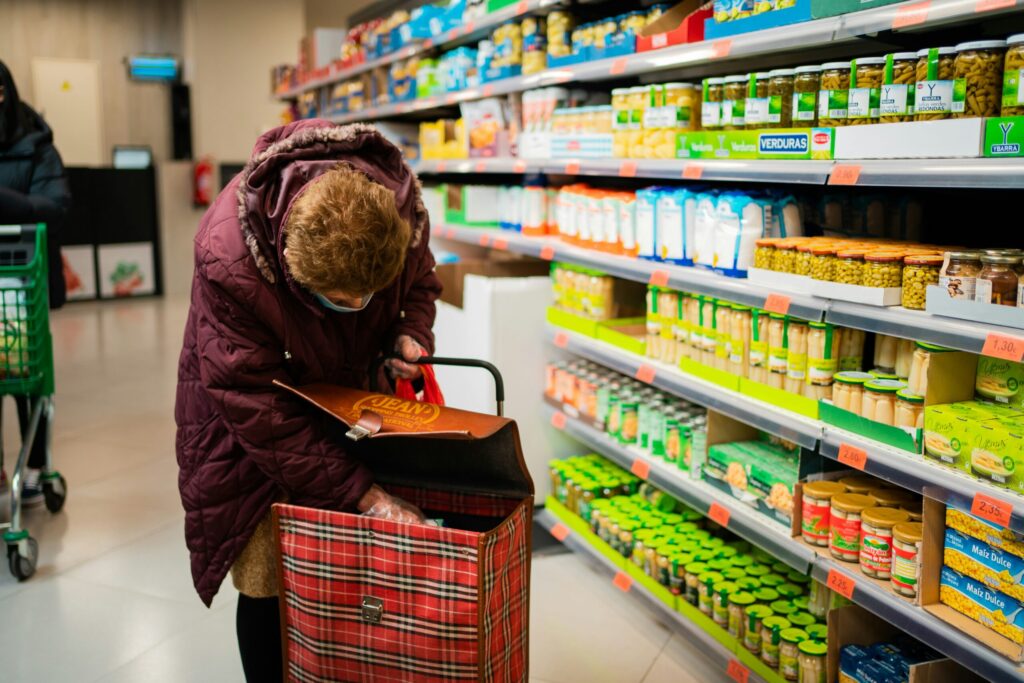
The most punitive inflation tax in America is not levied by the government, by the financial sector. As of late 2025, the average annual percentage rate (APR) on credit card accounts assessed interest stood at 22. 30%, a figure that borders on predatory when compared to historical norms. While the Federal Reserve began cutting its benchmark rates in late 2024 and 2025, credit card issuers did not pass these savings on to consumers in equal measure. Instead, they maintained record-high margins, decoupling the cost of borrowing for working families from the broader economy.
This decoupling has created a “Usury Index”, a measure of the widening gap between the Prime Rate (what banks pay to borrow) and the APR they charge consumers. In 2015, the average spread between the Prime Rate and credit card APRs was approximately 8. 5 percentage points. By the fourth quarter of 2025, that margin had exploded to over 14. 3 percentage points, the highest level recorded since the Federal Reserve began tracking this data in 1994. Banks are not covering risk; they are engineering record profits on the backs of distressed borrowers. In 2024 alone, major credit card issuers generated $160 billion in interest revenue, a sharp increase from $105 billion just two years prior.
The aggregate credit card debt in the United States reached a $1. 28 trillion in the fourth quarter of 2025. This accumulation is not driven by profligate spending on luxuries. For the bottom 40% of income earners, revolving debt has become a substitute for stagnant wages in an inflationary environment. When the price of groceries and utilities outpaces income growth, the difference is put on plastic. Consequently, the debt load is not distributed equally. Retail credit cards, frequently the only line of credit available to lower-income shoppers, carry an average interest rate of 30. 14%, punishing the poorest consumers with the highest costs of capital.
The Inequality of Default
The financial is visible in delinquency data, which exposes a clear class divide. While aggregate delinquency rates appear manageable when averaged across the entire population, a granular look at zip-code level data reveals a emergency. According to the Federal Reserve Bank of St. Louis, the 90-day delinquency rate for credit card borrowers in the lowest-income zip codes surged to 20. 1% in early 2025, up from 12. 6% in 2022. In contrast, delinquency rates in the highest-income zip codes remained 8%. This confirms that high interest rates function as a regressive tax, systematically stripping wealth from those with the least capacity to pay.
| Metric | 2015 (Q4) | 2020 (Q4) | 2025 (Q4) | % Change (10-Year) |
|---|---|---|---|---|
| Total U. S. Credit Card Debt | $0. 73 Trillion | $0. 82 Trillion | $1. 28 Trillion | +75. 3% |
| Average Credit Card APR | 13. 70% | 16. 28% | 22. 30% | +62. 7% |
| Bank Profit Margin (Spread) | ~8. 5% | ~10. 0% | 14. 3% | +68. 2% |
| Serious Delinquency (Low Income) | ~10. 5% | ~9. 8% | 20. 1% | +91. 4% |
The banking industry defends these rates as necessary to offset the risk of default. Yet, the data contradicts this justification. Even as charge-off rates (loans written off as uncollectible) stabilized in 2024, APRs continued to climb. The “risk” premium has morphed into a profit premium. This extraction method ensures that even as inflation cools in the headline CPI numbers, the cost of living remains elevated for any household carrying a balance. The interest payments alone consume of disposable income for the working class, preventing capital accumulation and trapping millions in a pattern of perpetual repayment.
Regulatory attempts to curb these practices have been met with fierce resistance. When the Consumer Financial Protection Bureau (CFPB) attempted to cap late fees, another major revenue source for issuers, banks sued to block the measure, arguing it would force them to raise APRs further. This argument ignores the reality that APRs are already at historical highs independent of fee structures. The credit card market has become a closed loop of extraction, where the penalties for being poor are monetized into record quarterly earnings for the largest financial institutions.
“The spread between the Prime Rate and credit card APRs is not an economic need; it is a policy choice by issuers to maximize yield from the most demographic. We are witnessing the financialization of poverty.” , Dr. Paul Calem, Analysis of Credit Card Margins, October 2025.
As we move deeper into 2026, the “Usury Index” remains the most accurate barometer of financial health for the American consumer. It tracks not just the cost of money, the cost of survival. Until the spread between the cost of funds and the cost of credit is addressed, the inflation emergency continue to burn through the wallets of the working class, regardless of what the official CPI print suggests.
Shrinkflation Forensics: Hidden Price Hikes in Consumer Goods
While the Consumer Price Index (CPI) debates the cost of a theoretical basket of goods, a more insidious of purchasing power is occurring on the shelves themselves. It is called “shrinkflation,” though in corporate boardrooms, it goes by the sanitized euphemism of “Price-Pack Architecture” (PPA). This is not a passive reaction to supply chain constraints; it is a calculated strategy to disguise inflation by reducing product quantity while maintaining or slightly increasing the sticker price. For the consumer, the math is brutal: the package looks the same, the price is familiar, the sustenance inside has.
The mechanics of this deception rely on the consumer’s cognitive blind spot for net weight. Shoppers fixate on the price tag, rarely calculating the price-per-ounce in the. Corporations exploit this by shaving off ounces, sheets, or milliliters in increments small enough to evade immediate detection large enough to compound corporate margins. Between 2021 and 2025, this practice moved from a fringe tactic to a standard operating procedure for major conglomerates.
The Grocery Shrink Ray: A Forensic Audit
A forensic examination of standard household items reveals the of this value destruction. The following table documents specific verified reductions in product size between 2021 and 2024, illustrating how “stable” prices frequently mask double-digit percentage price hikes per unit.
| Product | Old Size | New Size | Reduction | Implied Price Hike* |
|---|---|---|---|---|
| Doritos (Regular Bag) | 9. 75 oz | 9. 25 oz | -5. 1% | +5. 4% |
| Gatorade Bottles | 32 oz | 28 oz | -12. 5% | +14. 3% |
| Charmin Mega Rolls | 264 sheets | 244 sheets | -7. 6% | +8. 2% |
| Wheat Thins (Family Size) | 16 oz | 14 oz | -12. 5% | +14. 3% |
| Dawn Dish Soap (Small) | 7. 0 oz | 6. 5 oz | -7. 1% | +7. 7% |
| *Implied Price Hike assumes the retail shelf price remained constant., the shelf price also increased, the inflation rate. | ||||
The Gatorade example is particularly illustrative of the “redesign” tactic. To mask the loss of four ounces, a 12. 5% reduction, the bottle was redesigned with a tapered “waist,” marketed as more ergonomic. The physical height of the bottle remained similar, tricking the eye, while the volume plummeted. Similarly, Frito-Lay’s reduction of Doritos by half an ounce to approximately five fewer chips per bag. When multiplied across millions of units, these “micro-thefts” generate massive windfall profits without technically raising the sticker price.
The Unit Price Trap for Low-Income Earners
Shrinkflation is not an annoyance; it is a regressive tax on the poor. Low-income households frequently absence the liquidity to buy in bulk (e. g., Costco memberships or “Club” sizes) where unit prices are lower and shrinkage is sometimes less aggressive. They are forced into the smaller “entry-level” packaging formats, the very sizes most aggressively targeted by shrinkflation. When a bottle of dish soap shrinks by 7%, a family living paycheck to paycheck runs out of soap 7% faster, forcing a repurchase pattern that accelerates their cash burn. The “cost of living” hasn’t just gone up; the frequency of spending has increased.
“It’s a backdoor price increase. Companies know that consumers are price sensitive, so they choose to deceive them with the packaging rather than be honest about the cost.” , Edgar Dworsky, Consumer World
The BLS Blind Spot
The Bureau of Labor Statistics claims to account for shrinkflation by tracking the price per unit (e. g., price per ounce) rather than the price per package. In theory, if a package shrinks and the price stays the same, the CPI should register this as a price increase. yet, this methodology fails to capture the friction and utility loss experienced by the consumer. The BLS data suggests shrinkflation added only about 0. 3 percentage points to food inflation in 2022, a number that feels mathematically correct experientially false.
The official metrics do not account for the “shrinkage of utility.” If a recipe calls for 16 ounces of pasta and the box is 14 ounces, the consumer is forced to buy a second box, doubling their expenditure for that single meal. The CPI records a modest unit price increase; the consumer’s wallet records a 100% increase in outlay for that specific occasion. This disconnect between “unit price inflation” and “expenditure inflation” is where the official narrative collapses.
Corporate Admission of Guilt
Executives have been surprisingly candid about the profitability of this strategy. In earnings calls throughout 2023 and 2024, terms like “price realization” and “margin management” were used to describe these tactics. A report by Senator Bob Casey in late 2023 highlighted that corporate profits rose by 75% between 2020 and 2022, five times the rate of inflation, fueled in part by these deceptive practices. By late 2024, consumer pushback became so severe that companies, including PepsiCo, began offering “bonus” bags to win back alienated shoppers, a tacit admission that the previous shrinkage was a choice, not an economic need.
Medical Bankruptcy: The Uncounted Cost of Health Inflation
While the Consumer Price Index (CPI) tracks the rising cost of bandages and hospital beds, it fails to measure the financial toxicity that infects the American household when health crises strike. Medical inflation is not a line item in a budget; it is a solvency emergency. As of 2024, medical expenses remain the leading cause of personal bankruptcy in the United States, a statistical reality frequently obscured by the way debt is categorized in federal filings.
The “official” inflation rate for medical care, recorded at 3. 3% in June 2024, masks the catastrophic nature of healthcare costs for the bottom 80% of earners. Unlike discretionary purchases, medical spending is inelastic; a patient cannot choose to forgo a heart attack treatment because the price is too high. Consequently, the true cost of health inflation is measured not in percentage points, in liquidation.
The Credit Card Shell Game
A serious method hides the true of medical bankruptcy: the migration of health debt onto credit cards. When a hospital bill arrives, millions of Americans, absence liquid savings, charge the balance to high-interest credit cards to avoid immediate collections. In bankruptcy court, this debt is recorded as “general unsecured consumer debt,” erasing its medical origin from official statistics.
Data from the Kaiser Family Foundation (KFF) reveals the extent of this subterfuge. As of 2024, approximately 17% of U. S. adults reported using credit cards to pay for medical or dental bills, subsequently paying them off over time with interest. This creates a shadow epidemic of medical insolvency that federal bankruptcy data classifies as simple financial mismanagement.
The Deductible Trap: Insurance is No Shield
Possessing health insurance is no longer a safeguard against financial ruin. The proliferation of High-Deductible Health Plans (HDHPs) has shifted the load of initial costs entirely onto workers who have seen their wages stagnate. A 2025 analysis published in JAMA Network Open highlights a widening chasm between the cost of coverage and the ability to pay for it.
| Metric | Cumulative Increase |
|---|---|
| Family Health Premiums | +342% |
| Worker Contributions to Premiums | +308% |
| Worker Earnings | +119% |
| General Inflation (CPI) | +64% |
This forces insured households into a “deductible trap.” A family with a $5, 000 deductible may technically be insured, they are functionally bankrupt if they absence $5, 000 in cash when an emergency occurs. The Peterson-KFF Health System Tracker found that in 2024, prices for hospital services had nearly doubled since 2006, far outpacing the growth of other medical categories. This specific sector of inflation, hospital facility fees, hits patients with the largest, most unpayable bills.
The “Uncounted” Statistics
The most study on this subject, published in the American Journal of Public Health, estimated that 66. 5% of all bankruptcies were tied to medical problem, either through direct costs or income loss due to illness. even with the removal of medical debts under $500 from credit reports in 2023, the financial damage at the higher end. The Consumer Financial Protection Bureau (CFPB) reported in late 2024 that while the number of people with reported medical debt declined, the average balance for those remaining surged from $2, 000 to over $3, 100. The removal of small debts did nothing to help those drowning in five-figure hospital bills.
This creates a bifurcated reality: the “official” data shows an improvement in credit reporting, while the actual financial devastation for the seriously ill intensifies. For the working class, the cost of living emergency is not just about the price of eggs; it is about the price of survival.
The Education Premium: Tuition Hikes Outpacing Professional Salaries
For decades, the American social contract rested on a singular, unshakable pledge: a college degree was the golden ticket to the middle class. We were told that the “education premium”, the earnings gap between graduates and non-graduates, would always justify the cost of attendance. In 2026, that pledge has mathematically collapsed for millions of young professionals. While the wage premium still exists on paper, it is being systematically devoured by a tuition inflation rate that defies economic, leaving a generation of teachers, nurses, and engineers servicing debt rather than building wealth.
The between cost and compensation is not a recent anomaly; it is a structural failure. From 1980 to 2025, the cost of college tuition and fees exploded by 1, 249%, a rate nearly four times faster than the Consumer Price Index (CPI) for all items. In the 21st century alone, college costs have risen 41. 7% faster than general inflation. Yet, the salaries meant to pay for this investment have stagnated. Between 2004 and 2024, the inflation-adjusted earnings of workers with a bachelor’s degree rose by a meager 6. 3%. When the price of the entry ticket rises by triple digits while the prize value barely moves, the game is rigged.
The Broken ROI: Teachers and Nurses in the Red
The “average” graduate salary hides the devastation occurring in essential professions. The public sector, which requires credentialed expertise, has become a financial trap. Public school teachers, the backbone of the workforce, are earning less in real terms today than they did during the Great Recession. According to the National Education Association, inflation-adjusted starting teacher salaries in the 2023-2024 school year were $3, 728 lower than in 2008-2009. The “teacher pay penalty”, the gap between what teachers earn and what similarly educated professionals earn, hit a record 26. 9% in 2024. This is not a career choice; it is a financial sacrifice.
Healthcare professionals face a similar emergency of liquidity. A 2024 survey by Laurel Road revealed that the average nurse carries student debt equivalent to 50% of their annual pre-tax income. For Gen Z doctors, the situation is even more dire, with debt loads averaging 64% of their starting salaries. These are not “luxury” degrees; they are mandatory licenses to practice. The tuition hike operates as a regressive tax on the very people society relies on to function.
| Profession | Avg. Annual Income | Avg. Student Loan Debt | Debt-to-Income Ratio | Real Wage Trend (10-Year) |
|---|---|---|---|---|
| Public School Teacher | $72, 030 | $58, 000 (est. Masters) | 80. 5% | -5. 1% (Inflation Adjusted) |
| Registered Nurse | $80, 695 | $40, 611 | 50. 3% | Stagnant |
| Gen Z Physician | $183, 873 | $117, 206 | 63. 7% | Negative (vs. Debt Service) |
| Recent College Grad (All) | $54, 500 | $29, 560 | 54. 2% | -8. 0% (2025 YoY Real Drop) |
The Starting Salary Illusion
Defenders of the point to nominal salary increases as evidence of a healthy market. They cite the Class of 2025’s average projected starting salary of $68, 680 as a victory. This number is a mirage. When adjusted for the aggressive inflation of the post-pandemic era, the purchasing power of new graduates is collapsing. In real terms, the average starting salary for a college graduate dropped 8% year-over-year in early 2025, falling to approximately $54, 500 in constant currency. This is the lowest inflation-adjusted entry point in six years.
This of starting power is compounded by the resumption of federal student loan interest. With total student debt hitting $1. 78 trillion in late 2025, the monthly debt service acts as a secondary rent payment. For a graduate earning $55, 000, a standard loan payment of $300 to $400 a month consumes nearly 10% of their take-home pay, money that previous generations used to save for a down payment on a home. The “premium” is no longer a surplus; it is a remittance paid back to the university system.
“We are witnessing the financial cannibalization of the young professional class. The degree is no longer a ladder; it is a toll booth where the fee keeps rising, the gate remains closed.”
The data is unambiguous: the cost of credentialing has decoupled from the economic value of the credential. While public university tuition saw a strategic pause in hikes during the pandemic, the cumulative damage is done. The “sticker price” for a private four-year degree averaged $39, 307 in 2025-26, a figure that demands a six-figure salary to justify, a salary that fewer than 20% of graduates see in their decade of employment. The education premium has not disappeared, it has been transferred from the worker to the lender.
Mobility emergency: Insurance and Auto Repair Costs
For the American working class, the personal automobile is not a symbol of freedom; it is a non-negotiable prerequisite for survival. Outside of a few dense metropolitan corridors, reliable transportation is the only between a household and its income. Yet, the cost of maintaining this lifeline has exploded, transforming the daily commute into a financial minefield. Data from the Bureau of Labor Statistics (BLS) confirms that the price of mobility is rising faster than nearly any other category in the Consumer Price Index (CPI), driven by a predatory insurance market and the increasing complexity of vehicle repair.
The numbers are. In the twelve months ending January 2024, the BLS reported that motor vehicle insurance prices rose by 20. 6%, a rate of increase that dwarfs general inflation. By late 2024, Bankrate analysis indicated that the average annual premium for full coverage had surged 26% to $2, 543. This is not a gradual adjustment; it is a price shock that consumes a double-digit percentage of the post-tax income for minimum wage workers. For a household earning $30, 000 a year, spending nearly 10% of gross income just to insure a vehicle, before fuel, repairs, or loan payments, is mathematically unsustainable.
The Algorithmic Poverty Penalty
The most insidious driver of this inflation is not accident frequency, the widespread use of non-driving factors to set premiums. Insurers systematically penalize low-income drivers through credit-based insurance scores. A 2023 report by the Consumer Federation of America (CFA) exposed this method, revealing that drivers with poor credit scores pay nearly double the premiums of drivers with excellent credit, even if both have identical clean driving records. In Michigan, this penalty reaches an absurd 263% markup.
This pricing model creates a feedback loop of inequality. A worker misses a utility payment due to inflation, their credit score drops, and their auto insurance creates a new financial emergency. The industry defends this as “risk-based pricing,” in practice, it functions as a poverty tax that redlines entire zip codes from affordable mobility.
| Driver Credit Tier | Average Annual Premium | Premium Increase vs. Excellent Credit |
|---|---|---|
| Excellent Credit | $470 | , |
| Fair Credit | $701 | +49% |
| Poor Credit | $1, 012 | +115% |
| Source: Consumer Federation of America, 2023 Data. Figures represent state-mandated basic coverage. | ||
The Repair Trap: Computers on Wheels
Beyond insurance, the physical cost of keeping a car running has detached from historical norms. The BLS recorded a 6. 5% increase in motor vehicle maintenance and repair costs in 2023 alone. This inflation is structural, driven by the technological transformation of the modern automobile. A minor fender bender that once required a hammer and paint demands the replacement of ultrasonic sensors, cameras, and radar units.
The shift to Advanced Driver Assistance Systems (ADAS) has monetized minor accidents. Replacing a windshield, once a $200 procedure, frequently exceeds $1, 000 due to the mandatory calibration of safety cameras. Independent shops report that ADAS calibration alone adds between $250 and $700 to a repair bill. For a low-income driver, a cracked windshield is no longer a nuisance; it is a budget-breaking event that can render a vehicle illegal to drive.
Labor rates have also surged, with independent mechanics in states charging between $110 and $170 per hour in 2024. This labor inflation forces owners of older vehicles into a “repair or replace” dilemma, frequently leading to the abandonment of paid-off cars in favor of high-interest subprime auto loans for newer, more reliable vehicles. This pattern strips equity from working-class households and transfers it to lenders and insurers.
The convergence of these factors, predatory credit scoring, tech-driven repair inflation, and soaring labor costs, has turned the personal automobile into a primary engine of wealth extraction. For the bottom 20% of earners, the car is no longer a vehicle of opportunity; it is a debt trap on wheels.
The Childcare Cliff: Cost Prohibitive Workforce Entry
The American labor market is currently enforcing a structural tax on employment that bars millions of parents from the workforce. This phenomenon, known as the “childcare cliff,” is not a logistical hurdle; it is a mathematical impossibility for the bottom 40% of income earners. As of 2024, the national average price for center-based infant care reached $13, 128 annually, a figure that systematically devours the wages of entry-level and mid-tier workers. For a single parent earning the federal minimum wage, this cost represents over 85% of their pre-tax income, rendering employment economically irrational.
The Department of Health and Human Services (HHS) establishes 7% of household income as the benchmark for “affordable” childcare. Yet, data from 2024 indicates that the average American family spends approximately 24% of their household income on these services. In low-income brackets, this share frequently exceeds 35%. This creates a perverse incentive structure where parents, primarily mothers, are financially penalized for returning to work. The “cliff” effect is further exacerbated by strict income thresholds for subsidies; a pay raise of $0. 50 an hour can trigger the total loss of childcare assistance, resulting in a net financial loss of thousands of dollars annually.
The Inflation Disconnect
While general inflation has surged since 2020, the cost of childcare has outpaced the Consumer Price Index (CPI) by a significant margin. Between 2019 and 2023, average childcare payments rose by 32%, compared to a 20% increase in the general CPI. This sector-specific hyperinflation is driven by a labor-intensive business model that cannot be automated, combined with a severe absence of providers. The expiration of American Rescue Plan (ARP) stabilization funds in September 2023 accelerated this emergency, forcing thousands of centers to raise tuition or close permanently, further constricting supply and driving prices upward.
| Expense Category | National Average Cost | % of Median Income |
|---|---|---|
| Center-Based Infant Care | $13, 128 | 16. 0%* |
| Public University Tuition (In-State) | $11, 260 | 13. 7% |
| Median Annual Rent | $15, 216 | 18. 5% |
| HHS “Affordable” Benchmark | $5, 740 | 7. 0% |
| *Percentage varies by state; in low-income households, this figure exceeds 35%. Sources: CCAoA, College Board, Dept. of Labor. | ||
The data reveals a startling inversion of economic priorities: in 38 states and the District of Columbia, the annual cost of infant care exceeds the cost of in-state public university tuition. Parents are paying for a college education before their child can walk, without the access to student loans or financial aid infrastructure that supports higher education. In Massachusetts, the is most acute, with infant care costs averaging over $20, 900 annually, surpassing both tuition and median rent in counties.
Economic
The aggregate impact of this dysfunction is a massive drain on the national economy. A 2023 report by ReadyNation estimated that the childcare emergency costs the U. S. economy $122 billion annually in lost earnings, productivity, and revenue. This figure represents a doubling of the economic damage calculated in 2018. The loss from parents reducing work hours, turning down promotions, or exiting the labor force entirely. Women bear the brunt of this; labor force participation for mothers with children under age five remains volatile, with over 2 million women leaving the workforce during the peak of the pandemic, of whom have not returned to full-time employment due to the prohibitive cost of care.
“The market for childcare is broken. It is a textbook example of market failure where the cost of providing the service exceeds what most families can pay, yet providers operate on razor-thin margins with poverty-level wages for staff.” , U. S. Treasury Report on the Economics of Child Care.
This market failure creates “childcare deserts,” defined as areas where there are more than three children for every one licensed childcare slot. As of 2024, approximately 51% of Americans live in such a desert. In rural areas, the absence of care is even more pronounced, forcing families to rely on unregulated networks or withdraw from the formal economy. The result is a widening gap between the “average” inflation metrics by the Federal Reserve and the lived reality of working families, for whom the price of entry into the workforce has become too high to pay.
Geographic Fracture: Rural Deserts vs Urban Price Gouging
The national inflation rate is a statistical composite that masks two distinct economic emergencies. While the Bureau of Labor Statistics (BLS) publishes a single Consumer Price Index (CPI), the lived reality of price increases splits sharply along the rural-urban divide. Data from 2020 through 2024 shows that rural Americans face a emergency of distance and goods, while urban residents are bled by a emergency of rents and fees. This geographic fracture means that a “cooling” national inflation rate frequently signals relief for one group while costs continue to accelerate for the other.
For rural households, the primary inflation drivers are energy and transportation, commodities that are non-negotiable for survival in low-density areas. According to the American Council for an Energy- Economy (ACEEE), rural households spend approximately 40% more of their income on energy bills than their urban counterparts. The median energy load for rural families stands at 4. 4% of income, compared to 3. 1% for metropolitan households. This is compounded by transportation costs. Department of Transportation that rural residents drive 76% more miles annually than urban residents. In 2024, rural households allocated 14. 2% of their after-tax income to transportation, significantly higher than the 12. 4% spent by urban households. When fuel prices spike, as they did in 2022, rural inflation rates decouple from the national average, surging far beyond the CPI headline number.
The rural cost-of-living emergency is further exacerbated by the collapse of local competition, specifically in the grocery sector. The rapid expansion of “dollar store” chains has created food deserts where nutritious options, replaced by high-margin processed goods. A 2024 USDA study found that independent grocery stores in rural areas are three times more likely to close after a Dollar General or Family Dollar opens nearby than those in urban markets. While these chains market themselves on value, per-unit prices for staple goods are frequently higher than at traditional supermarkets. This monopoly power contributes to a clear in food security: 22% of rural households reported food insecurity in 2023, nearly double the 14% rate in urban areas.
| Economic Metric | Rural Households | Urban Households | Primary Cost Driver |
|---|---|---|---|
| Median Energy load | 4. 4% of Income | 3. 1% of Income | Inefficient housing, fuel dependence |
| Transport Spending | 14. 2% of Income | 12. 4% of Income | High mileage, absence of public transit |
| Food Insecurity Rate | 22% | 14% | “Dollar Store” monopolies, food deserts |
| Inflation Volatility | High (Goods/Fuel sensitive) | Sticky (Service/Rent sensitive) | Commodity price shocks vs. contracts |
Conversely, urban inflation is driven by “sticky” service costs and aggressive price gouging in the housing and hospitality sectors. While rural areas suffer from volatile goods prices, cities face relentless increases in shelter costs. From 2020 to 2024, rents rose faster than median household income in 88% of U. S. counties, the absolute dollar increase was most punishing in major metros. In 2023, the real median gross cost of renting rose by 3. 8%, the largest annual increase since 2011. This “shelter inflation” remains the most persistent component of the CPI, refusing to fall even as goods prices stabilize.
Beyond rent, urban consumers are the primary of “drip pricing” and junk fees, hidden charges attached to services like food delivery, event ticketing, and hospitality. A 2024 report by Consumer Reports estimated that the average family of four loses over $3, 200 annually to these predatory fees. In California, the prevalence of these charges forced the state to implement a ban on hidden restaurant service fees in July 2024, exposing a system where surcharges of 1% to 22% were routinely added to bills to mask actual price increases. This form of “sellers’ inflation” allows corporations in concentrated urban markets to maintain high profit margins by passing operational costs directly to consumers under the guise of mandatory fees.
The method of inflation differs fundamentally between these two geographies. Rural inflation is acute and volatile, tied to the global price of oil and commodities. Urban inflation is chronic and structural, tied to real estate speculation and corporate pricing power in the service sector. Treating these two distinct economic diseases with a single interest rate policy frequently punishes one group to save the other. High interest rates may cool urban housing speculation, they do little to lower the price of diesel or propane that dictates the survival of the rural working class.
Fixed Income: The Social Security COLA Gap
For nearly 67 million Americans, the annual Cost-of-Living Adjustment (COLA) is not a bonus; it is a survival method. Yet, the federal government’s method for calculating this adjustment systematically fails to protect retirees from the specific inflationary pressures they face. In 2025, Social Security beneficiaries received a 2. 5% COLA, a figure that mathematically ignores the double-digit spikes in insurance, housing, and geriatric healthcare that dominate senior budgets. This misalignment is not an accident a statistical artifact of using the Consumer Price Index for Urban Wage Earners and Clerical Workers (CPI-W) to determine retiree benefits.
The CPI-W tracks the spending habits of working-age individuals who are employed, mobile, and relatively healthy. It assigns heavy weighting to expenses like gasoline, apparel, and electronics, categories that frequently see price deflation or stability. Conversely, it underweights medical care and shelter, the two largest expenditures for older Americans. As a result, the “basket” used to calculate the raise for an 80-year-old widow is based on the lifestyle of a 30-year-old office worker. The Senior Citizens League reports that this structural flaw has caused Social Security benefits to lose approximately 20% of their buying power since 2010. To restore that lost value, the average retiree would require an additional $4, 440 annually.
The is compounded by the “Medicare Clawback.” Medicare Part B premiums are automatically deducted from Social Security checks before they hit bank accounts. Because healthcare inflation consistently outpaces general inflation, these premium hikes frequently consume of the COLA increase. In 2022, while the COLA was 5. 9%, Medicare Part B premiums surged by 14. 5%, one of the largest increases in the program’s history. For 2026, projections indicate a Part B premium hike of nearly 9. 7%, which would devour more than a quarter of the anticipated COLA, leaving seniors with a “raise” that exists only on paper.
| Year | COLA Increase (%) | Medicare Part B Premium ($/mo) | Part B Annual Increase (%) | Net Financial Impact |
|---|---|---|---|---|
| 2021 | 1. 3% | $148. 50 | +2. 7% | Premium hike outpaced COLA % |
| 2022 | 5. 9% | $170. 10 | +14. 5% | Severe buying power loss |
| 2023 | 8. 7% | $164. 90 | -3. 1% | Rare net gain (due to premium drop) |
| 2024 | 3. 2% | $174. 70 | +5. 9% | Premium hike nearly double COLA % |
| 2025 | 2. 5% | $185. 00 | +5. 9% | Continued of disposable income |
| 2026 (Proj) | ~2. 8% | $202. 90 | +9. 7% | Projected severe |
The Bureau of Labor Statistics maintains an alternative metric, the Consumer Price Index for the Elderly (CPI-E), which reweights the basket to reflect actual senior spending. Under the CPI-E, healthcare costs are weighted roughly double what they are in the CPI-W, and housing is weighted significantly higher. Analysis shows that if the CPI-E had been used to calculate COLAs over the last decade, retirees would have received substantially higher adjustments. The refusal to adopt this metric acts as a stealth austerity measure, slowly reducing the federal government’s real-dollar liability to seniors while publicly claiming to protect them from inflation.
This creates a “fixed income trap.” While the nominal dollar amount of Social Security checks rises, the discretionary income available to recipients shrinks. In 2024, the standard Part B premium was $174. 70; in 2025, it rose to $185. 00. For a retiree receiving the average benefit of roughly $1, 900, the $50 monthly COLA increase for 2025 is immediately reduced by the $10. 30 Medicare hike. When adjusted for the rising costs of supplemental insurance, prescription co-pays, and property taxes, none of which are adequately captured in the CPI-W, the net result is a negative cash flow for millions of households.
The 2023 COLA of 8. 7% was an anomaly driven by a brief spike in energy prices, yet it was quickly neutralized by subsequent inflation in services and insurance. Long-term data reveals the trend: since 2000, COLAs have averaged 3. 4%, while the costs of goods and services typical of senior households have risen much faster. Eggs, a staple protein, saw price increases of over 300% in that period, and prescription drug costs have tripled. By tethering survival payments to a wage-earner’s index, the system ensures that the longer a retiree lives, the poorer they become.
Regressive Taxation: Sales Tax Impact on Low Earners
The concept of a “flat” sales tax is a mathematical sleight of hand that disguises one of the most punitive wealth transfer method in the American economy. While the rate at the register remains constant for every customer, the load of that tax is inversely correlated with income. For a household earning $25, 000, nearly every dollar is immediately circulated back into the economy to purchase taxable necessities, fuel, clothing, vehicle maintenance, and in jurisdictions, food. Consequently, the sales tax functions as a levy on their entire existence. In contrast, a household earning $1 million saves or invests a vast portion of their income, shielding those dollars from consumption taxes entirely. The result is a tax code that systematically penalizes poverty while subsidizing accumulation.
Data from the Institute on Taxation and Economic Policy (ITEP) exposes the severity of this imbalance. In its 2024 Who Pays? analysis, ITEP found that the lowest 20% of earners nationwide pay an average of 11. 4% of their income in state and local taxes. The top 1%, yet, pay just 7. 2%. This is not an accident of market forces a policy choice to rely on consumption taxes rather than progressive income taxes. In 41 states, the tax code is structured so that the wealthiest residents contribute a smaller share of their income to public coffers than the poorest residents, redistributing financial stability upward.
The “Low Tax” State Mirage
States frequently touted as “low tax” havens are frequently the most predatory toward their working-class populations. These jurisdictions, having abolished or rejected personal income tax, must aggressively harvest revenue through sales and excise taxes to fund basic services. This shifts the fiscal load almost entirely onto those who must spend to survive.
Florida, frequently celebrated for its absence of income tax, ranks as the most regressive tax system in the nation as of 2024. The is clear: the bottom 20% of Florida families pay approximately 13. 2% of their income in state and local taxes, while the top 1% pay a mere 2. 7%. Washington State, long the leader in regressive taxation, improved slightly to 49th place in 2024 following the introduction of the Working Families Tax Credit and a capital gains tax, yet its poorest residents still face an tax rate nearly triple that of its wealthiest. For the working poor in these states, the “tax-friendly” label is a statistical lie.
| Jurisdiction | Bottom 20% Income Share Paid in Taxes | Top 1% Income Share Paid in Taxes | Regressivity Gap |
|---|---|---|---|
| National Average | 11. 4% | 7. 2% | +4. 2% |
| Florida | 13. 2% | 2. 7% | +10. 5% |
| Washington | 13. 8% | 4. 1% | +9. 7% |
| Tennessee | 12. 8% | 3. 8% | +9. 0% |
| Texas | 12. 8% | 4. 6% | +8. 2% |
| Pennsylvania | 15. 1% | 6. 0% | +9. 1% |
The Inflation Multiplier
Inflation acts as an unlegislated tax hike within these regressive systems. Because sales tax is ad valorem, calculated as a percentage of the price, every increase in the cost of goods generates a corresponding increase in tax revenue. When the price of eggs or used cars spikes by 20%, the sales tax collected on those items also rises by 20%. For state treasuries, inflation is a windfall; for low-income families, it is a compound fracture. Their wages stagnate while the absolute dollar amount they surrender to the state climbs in lockstep with corporate price gouging.
This creates a “fiscal drag” that drains liquidity from low-income households exactly when they need it most. Unlike income tax brackets, which are frequently adjusted for inflation to prevent “bracket creep,” sales tax offers no such relief. A family struggling to afford a 30% increase in grocery prices is simultaneously forced to pay 30% more in taxes on that food, further eroding their purchasing power.
Taxing Survival: The Grocery Levy
The most egregious application of sales tax occurs in the ten states that continue to levy taxes on groceries as of 2025. Mississippi, the poorest state in the union, imposes the highest grocery tax at 7%. This policy confiscates seven meals for every hundred a family purchases. For a household in the Mississippi Delta earning $20, 000 a year, this tax is not a contribution to civic infrastructure; it is a barrier to adequate nutrition.
While states like Kansas and Oklahoma have moved to eliminate their grocery taxes, others like Alabama and Utah maintain them, frequently offering only partial reductions or complex rebate schemes that fail to reach the most. Research indicates a direct correlation between grocery taxes and food insecurity. A study analyzing data through 2024 showed that for every percentage point increase in grocery tax, the probability of a household experiencing food insecurity rises significantly. By taxing the caloric intake of the poor, these states generate revenue directly from the biological necessities of their most marginalized citizens.
Monopoly Power: Market Concentration Driving Price Setting
The official narrative attributes the inflation emergency of the 2020s to supply chain fractures and wage growth. This explanation ignores a more deliberate mechanical driver: market concentration. When of corporations dominate a sector, they possess the power to decouple prices from production costs. In a competitive market, falling input costs force companies to lower prices to retain customers. In the American economy of 2024, consolidated industries functioned differently. They utilized the cover of general inflation to expand profit margins, a phenomenon economists identify as “sellers’ inflation.”
Data from the Kansas City Federal Reserve validates this shift. In January 2023, researchers found that markup growth, the gap between price and marginal cost, was a “major contributor” to inflation in 2021. Specifically, markups grew by 3. 4 percent, accounting for more than half of the inflation measured that year. Corporations did not pass on higher costs; they anticipated future costs and priced aggressively ahead of them. By late 2023, the Groundwork Collaborative analyzed Department of Commerce data and found that corporate profits drove 53 percent of inflation from April to September 2023. For comparison, in the four decades prior to the pandemic, profits drove only 11 percent of price growth.
The Profit-Price Spiral
This decoupling of price from volume is clear in the earnings reports of major consumer packaged goods (CPG) conglomerates. PepsiCo, for instance, demonstrated the power of the duopoly in 2023. By October 2023, the company had raised prices by double-digit percentages for seven consecutive quarters. even with a 2. 5 percent decline in sales volume, indicating consumers were buying less, PepsiCo’s net income jumped 14 percent. In a functional market, dropping demand forces price cuts. In a concentrated market, the dominant firm simply raises the unit price to compensate for lower volume, taxing the consumer for their own austerity.
DATA VISUALIZATION: The Shift in Inflation Drivers
Comparison of corporate profit contribution to price growth: Historical Average vs. 2023.
Source: Groundwork Collaborative analysis of Bureau of Economic Analysis (BEA) data.
Sector-Specific Strangleholds
The mechanics of this pricing power vary by industry, the outcome remains identical: higher prices that even when input costs stabilize.
Meatpacking: The USDA reports that four firms control 85 percent of the steer and heifer market and 67 percent of the hog market. This “bottleneck” allows these packers to squeeze ranchers on the supply side while inflating prices for consumers on the retail side. During the pandemic recovery, the spread between the price paid to farmers and the price charged to consumers widened to record levels, funneling wealth directly to the processors.
Diapers and Hygiene: The baby care market operates as a near-duopoly. Procter & Gamble (Pampers) and Kimberly-Clark (Huggies) control approximately 70 percent of the U. S. diaper market. When input costs for wood pulp rose, both firms raised prices in lockstep. yet, as commodity prices eased in 2024, shelf prices remained elevated, protecting the new, higher margin baselines.
The Invisible Toll: Perhaps the most pervasive monopoly tax comes from the credit card duopoly. Visa and Mastercard control over 80 percent of the U. S. credit card market. In 2023, swipe fees (interchange fees) paid by merchants hit a record $172 billion. These fees are a hidden inflation driver, adding an estimated $1, 000 a year to the average family’s cost of living. Merchants have no choice to these fees into the price of goods, meaning cash-paying customers subsidize the rewards programs of premium cardholders.
| Industry | Top Firms (The “Big” Players) | Market Share (Approx.) | Inflationary Impact method |
|---|---|---|---|
| Beef Processing | Tyson, JBS, Cargill, National Beef | 85% | Widening spread between farm price and retail price. |
| Baby Diapers | Procter & Gamble, Kimberly-Clark | 70% | Lockstep price hikes; failure to reverse hikes when pulp costs fell. |
| Credit Cards | Visa, Mastercard | 80%+ | Record $172B in swipe fees passed to consumers as higher retail prices. |
| Soft Drinks | Coca-Cola, PepsiCo, Keurig Dr Pepper | 90%+ | Price-over-volume strategy; double-digit price hikes even with falling sales volume. |
The persistence of high prices is not a mystery of monetary policy; it is a function of market structure. When competition is absent, the “invisible hand” stops working, and the pricing method becomes a one-way ratchet. Corporations raise prices like a rocket when costs rise, lower them like a feather, if at all, when costs fall.
The Wealth Gap: Asset Inflation vs Consumption Inflation
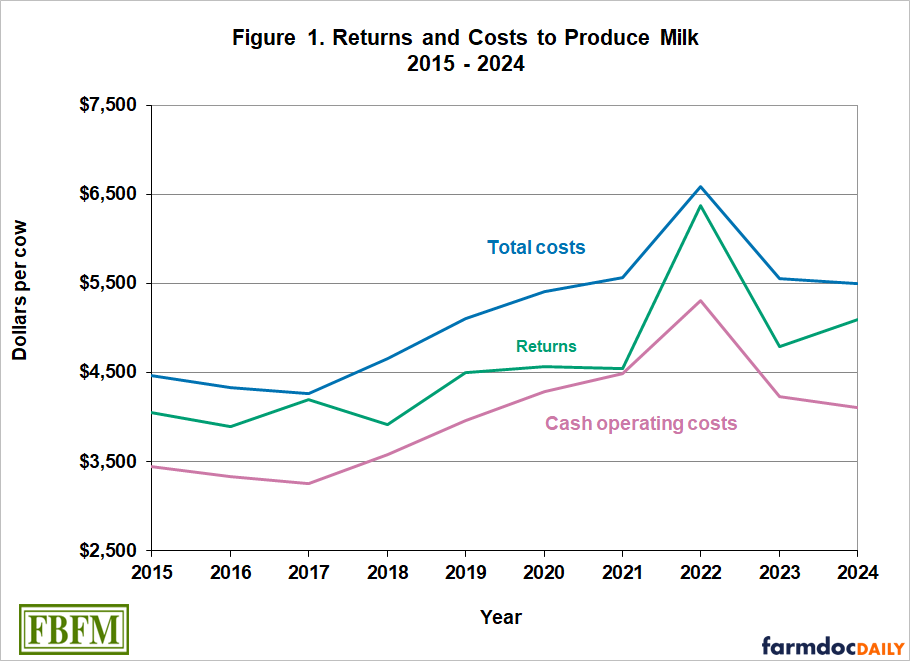
The official inflation narrative is a tale of two economies. While the Bureau of Labor Statistics (BLS) focuses on the Consumer Price Index (CPI) to measure the cost of milk and used cars, a far more corrosive form of inflation has ravaged the American social contract: asset inflation. From 2015 to 2025, the Federal Reserve’s monetary expansion did not flow evenly into the hands of wage earners; it flooded financial markets, driving a historic wedge between those who own assets and those who consume them.
This phenomenon is the “Cantillon Effect” in action. Named after 18th-century economist Richard Cantillon, the principle dictates that new money enters the economy at specific injection points, through primary dealer banks and financial institutions. These receivers benefit from increased purchasing power before prices rise, using cheap capital to bid up stocks, bonds, and real estate. By the time this liquidity trickles down to the working class in the form of wages, prices for essential goods and assets have already skyrocketed, diluting the value of their labor.
The Great: Assets vs. Wages
The between capital appreciation and wage growth over the last decade is not a statistical anomaly; it is a structural feature of the post-2020 monetary regime. Between 2015 and 2025, the S&P 500 delivered a nominal return of approximately 307%. Even when adjusted for inflation, the real return for equity holders stood near 198%. In clear contrast, real wages for the bottom 50% of earners remained largely stagnant, eroded by the rising cost of non-discretionary survival items like rent, healthcare, and food.
Housing provides the most brutal evidence of this divide. In 2015, the median sales price of a home in the United States was approximately $289, 200. By 2025, that figure had surged to over $426, 000, a jump of nearly 48%. During this same period, median household income failed to keep pace, pushing the price-to-income ratio from a manageable 3. 5 to a suffocating 5. 0 or higher in major metros. The American Dream of homeownership has mathematically exited the of possibility for the median wage earner, transformed into a speculative asset class for private equity and the already-wealthy.
The top 0. 1% of American households own more equities, roughly $11 trillion, than the entire bottom 50% combined. This is not a “market pattern.” It is a policy-driven transfer of wealth.
The K-Shaped Recovery and the Cost of Survival
Economists frequently cite a “K-shaped” recovery to describe the post-pandemic era, where the financial fortunes of the rich ascend while the poor decline. This bifurcation is driven by the specific composition of inflation. While the prices of technology and imported luxury goods, frequently deflationary due to efficiency gains, keep the headline CPI artificially low, the cost of “essential” goods has exploded. Hospital services, childcare, and shelter have risen at rates double or triple the headline inflation number.
For the top 10% of earners, whose baskets include a higher proportion of discretionary electronics and services, inflation is a nuisance. For the bottom 20%, whose baskets are dominated by food, fuel, and rent, inflation is an existential threat. Data from 2024 and 2025 indicates that while luxury goods inflation moderated, the “survival CPI”, a metric tracking only food, energy, and shelter, remained stubbornly high, imposing a regressive tax on the working poor.
Data Verification: The Decade of
The following table contrasts the explosive growth of assets against the sluggish reality of wages and the rising cost of essentials from 2015 to 2025. These figures expose the method by which wealth concentration has accelerated.
| Metric | 2015 Value (Approx) | 2025 Value (Approx) | % Change |
|---|---|---|---|
| S&P 500 Index | 2, 050 | 6, 400+ | +307% |
| Median Home Price | $289, 200 | $426, 800 | +47. 6% |
| Median Household Income | $56, 500 | $83, 700 | +48. 1% (Nominal) |
| Real Wage Growth (Bottom 50%) | – | – | ~0-3% |
| Cumulative CPI Inflation | – | – | +36. 0% |
| Hospital Services Cost | Index Base | – | +60%+ |
The data is unambiguous. The wealth gap is not a product of market innovation or skill differentials; it is the direct result of a monetary system that prioritizes asset price stability over the purchasing power of wages. By suppressing interest rates and expanding the balance sheet, the Federal Reserve subsidized the balance sheets of the wealthy while leaving the working class to grapple with the rising costs of actual living.
Algorithmic Pricing: Digital Surveillance and Costs
The price tag, once a static contract between seller and buyer, has been quietly dismantled. In its place, corporations have erected a surveillance architecture that sets prices not based on the cost of production, on the maximum amount a specific consumer can be induced to pay at a specific moment. This is “surveillance pricing,” a practice that transforms inflation from a macroeconomic into a precision-guided weapon against the most. In July 2024, the Federal Trade Commission (FTC) formally recognized this threat, issuing orders to eight companies, including Mastercard, Revionics, and Accenture, to surrender data on how they use artificial intelligence to set individualized price points.
The method relies on the extraction of “willingness to pay” data, a metric that penalizes need. Algorithms ingest thousands of data points: geolocation, device type, battery level, purchase history, and even mouse movement speed. For the wealthy, this might manifest as a higher price for a luxury hotel room booked from an iPhone 15. For the working poor, it creates a “poverty premium.” A 2020 study by researchers at George Washington University analyzed over 100 million ride-share trips in Chicago. The data revealed that algorithms charged higher fares per mile for trips starting or ending in non-white, low-income neighborhoods compared to wealthier, predominantly white areas. The algorithm did not “see” race; it saw desperation and absence of transit alternatives, and it priced accordingly.
Retailers are physicalizing this digital volatility. Walmart has committed to installing digital shelf labels (DSLs) in 2, 300 stores by 2026. While the company states these allow for efficiency, they build the physical infrastructure for pricing in grocery , allowing prices to surge during peak hours or specifically for EBT disbursement days. The market for this technology is exploding, signaling a permanent shift in how Americans buy basic goods.
The Infrastructure of Extraction: Market Growth (2023-2028)
| Technology Sector | 2023 Market Size (Est.) | 2028 Projection (Est.) | CAGR (Growth Rate) | Primary Function |
|---|---|---|---|---|
| Electronic Shelf Labels (ESL) | $1. 5 Billion | $2. 8, $3. 5 Billion | ~16-17% | Instant physical price changes; surge capability. |
| Pricing Software | $2. 64 Billion | $5. 45 Billion | 15. 6% | Algorithmic rate setting based on demand/data. |
| AI in Retail (General) | $7. 3 Billion | $29. 45 Billion | ~32% | Consumer profiling, inventory prediction, surveillance. |
The danger lies in the opacity. Unlike a printed price tag, an algorithmic price is a “black box” calculation. In 2024, Wendy’s faced a public revolt after announcing a test of pricing, forcing a retraction. Yet, the software industry powering these decisions continues to grow at a compound annual growth rate (CAGR) of over 15%. By 2025, New York became the state to pass the “Algorithmic Pricing Disclosure Act,” requiring companies to disclose when a price has been personalized based on consumer data. This legislative move acknowledges a new economic reality: the cost of living is no longer a shared load, a personalized extraction fee.
For the bottom 20% of earners, this means the “inflation rate” is not a single number released by the BLS, a fluid, predatory variable. When algorithms detect that a consumer has no other option, whether it is a ride to a night shift or a purchase of baby formula, the price rises to meet their desperation. This is not market efficiency; it is automated inequality.
The Poverty Premium: Higher Costs for Smaller Quantities
The most expensive way to participate in the American economy is to be poor. While wealthier households stabilize their budgets through bulk purchasing and subscription services, low-income families face a “poverty premium” that systematically drains their resources. Data from 2015 to 2025 indicates that low-income households shared lose approximately $5. 4 billion annually simply because they cannot afford the upfront cost of buying in bulk. This liquidity trap forces them to purchase smaller quantities at significantly higher unit prices, subsidizing the volume discounts enjoyed by the middle and upper classes.
The mechanics of this penalty are visible in the unit price disparities of everyday essentials. A 2024 analysis of major retailers reveals that the cost per unit for basic goods drops precipitously as package size increases. For a household living paycheck to paycheck, yet, the $24 upfront cost for a bulk pack of paper towels is an barrier, forcing the purchase of a $9 pack that costs 50% more per sheet. This creates a pattern where the poor pay higher rates for the exact same goods, eroding their purchasing power with every transaction.
The Unit Price Gap
The following table illustrates the cost between standard “entry-level” packages and their bulk counterparts as of late 2024. These figures demonstrate how packaging size acts as a regressive tax on those with limited cash flow.
| Product Category | Small Package Unit Price | Bulk Package Unit Price | Premium Paid by Low-Income Shopper |
|---|---|---|---|
| Toilet Paper | $0. 80 per roll | $0. 55 per roll | +45% |
| Laundry Detergent | $0. 19 per ounce | $0. 11 per ounce | +72% |
| AA Batteries | $1. 75 per battery | $0. 38 per battery | +360% |
| Paper Towels | $1. 50 per roll | $1. 00 per roll | +50% |
| Snack Packs | $0. 75 per bag | $0. 40 per bag | +87% |
Gatekeepers of Affordability
Access to lower prices is frequently gated behind minimum spend thresholds and membership fees. Major retailers like Walmart and Target enforce a $35 minimum purchase requirement for free shipping. For a family with only $20 available for immediate necessities, this policy renders online bulk savings inaccessible. Similarly, warehouse clubs like Costco and Sam’s Club require annual membership fees ranging from $50 to $120. These fees act as an entry tax, barring the demographic that would benefit most from the lower marginal costs inside. Consequently, the digital economy’s efficiency gains remain concentrated among those who can afford the price of admission.
The Dollar Store Mirage
In low-income areas and food deserts, “dollar stores” serve as the primary source of groceries. While the absolute price point of $1. 25 or $2. 00 appears low, the unit cost frequently exceeds that of premium grocery chains. A 2024 comparison found that pasta at Dollar General cost approximately $0. 11 per ounce compared to $0. 06 per ounce for a similar product at Dollar Tree, yet both were frequently more expensive per unit than Walmart’s Great Value brand. also, these retailers have faced scrutiny for shelf-pricing errors. State inspections in Ohio and North Carolina between 2023 and 2024 resulted in settlements after auditors found that checkout prices frequently exceeded the listed shelf prices, adding an invisible surcharge to already budgets.
Shrinkflation exacerbates this. In 2024, manufacturers reduced package sizes by an average of 16. 2% in categories like snack foods and paper products to maintain sticker prices. This “grocery shrink ray” hits small packages hardest. When a 12-ounce bag shrinks to 10 ounces, the unit price hike is immediate and unavoidable for those who cannot switch to the 40-ounce family size. The result is a hidden inflation that does not always register in headline CPI numbers aggressively eats away at the disposable income of the bottom 20%.
Debt Servicing: The Transfer of Wealth to Creditors
While the Federal Reserve and media pundits frequently cite a “healthy” aggregate household debt service ratio of approximately 11% as of late 2025, this single metric serves as one of the most dangerous statistical in the American economy. By averaging the debt load of the wealthy, who carry low-interest mortgages and pay off credit cards monthly, with the working poor, the data conceals a catastrophic reality: for the bottom 20% of income earners, debt servicing has become a method of widespread wealth extraction.
The in debt composition reveals the mechanics of this transfer. High-income households primarily hold low-interest, fixed-rate mortgage debt, an asset-building liability that was largely locked in at sub-4% rates before 2022. In contrast, the bottom quintile is disproportionately reliant on high-interest revolving credit to the gap between stagnant wages and inflating costs of living. As of late 2025, the lowest-income households held credit card balances equal to 85% of their monthly income, a use ratio nearly quadruple that of the top decile.
The Usury Premium: How the Poor Subsidize the Rich
The modern credit market functions as a reverse-wealth transfer engine. Prime borrowers, those with FICO scores above 740, enjoyed credit card interest rates averaging 11% to 17% in 2025. Subprime borrowers, forced into the market by liquidity crises, faced average rates exceeding 25%, with store-brand and subprime cards charging upwards of 30%. This “risk premium” means the working poor pay double the cost for the same dollar of liquidity.
This extraction is compounded by the “Reverse Robin Hood” of credit card rewards. Merchants pay interchange fees, 2% to 3% per transaction, to banks to process credit card payments. These fees are in the retail price of goods, paid by all consumers regardless of payment method. Wealthy cardholders recoup these costs through points, cash back, and travel perks. Cash and debit card users, who are disproportionately low-income, pay the inflated prices receive no kickback. Research indicates this method transfers approximately $15 billion annually from lower-income households to wealthier consumers and financial institutions.
| Financial Product | Prime Borrower Rate (Approx.) | Subprime Borrower Rate (Approx.) | Wealth Impact |
|---|---|---|---|
| Credit Card APR | 17. 6% | 25%, 34% | Subprime borrowers pay ~50% more interest. |
| Auto Loan APR (Used) | 6. 8% | 18%, 21% | Low-income buyers pay 3x interest for depreciating assets. |
| Personal Loan | 10%, 12% | 28%, 35% | Predatory rates trap borrowers in refinancing pattern. |
| Payday/Title Loan | N/A | 390%, 600% | Total wealth destruction; fees frequently exceed principal. |
The Delinquency Trap
The breaking point is already visible in delinquency data, which the aggregate numbers fail to capture. By the fourth quarter of 2025, serious delinquency rates (90+ days past due) for credit cards rose to 7. 13%, while subprime auto loan delinquencies surged to 6. 65%, the highest level recorded since the 1990s. This is not a sign of irresponsible spending; it is a symptom of mathematical insolvency. When the cost of essential goods rises faster than wages, and the cost of borrowing to buy those goods rises faster than inflation, default is the inevitable terminal value.
The banking sector’s reliance on fee-based revenue further exacerbates this distress. In 2023 alone, banks collected $5. 8 billion in overdraft and non-sufficient funds (NSF) fees. Data consistently shows that these fees are not randomly distributed; they are concentrated among accounts with average balances $350. A single $35 overdraft fee on a $20 purchase represents an annualized interest rate of over 3, 000%, a punitive tax levied exclusively on those with zero margin for error.
Even the “safety net” of bankruptcy has been eroded. The 2005 Bankruptcy Abuse Prevention and Consumer Protection Act made it significantly harder and more expensive to discharge debt, locking the working poor into a lifetime of debt servitude. The result is a permanent underclass of debtors whose labor primarily services the yield requirements of the creditor class, with no hope of principal repayment.
Skimpflation: Service Degradation as Hidden Cost
While shrinkflation reduces the physical volume of goods, a parallel and more insidious phenomenon known as “skimpflation” degrades the quality of services while prices remain static or rise. This method transfers labor costs from corporations to consumers, forcing buyers to pay the same amount for a defective or diminished product. Unlike price hikes, which are visible and tracked by the Consumer Price Index (CPI), skimpflation operates as a stealth tax on time and utility, largely evading official inflation metrics.
The economic logic of skimpflation relies on the reduction of “service inputs”, labor hours, ingredient quality, and support availability, to protect profit margins. In the hospitality sector, this shift has been institutionalized. Major hotel chains, including Hilton and Marriott, altered their standard operating procedures following the 2020 pandemic lockdowns. By 2023, daily housekeeping had shifted from a standard amenity to an “opt-in” service at non-luxury properties. An internal Hilton communication reviewed in August 2023 confirmed that daily housekeeping would only be a brand standard at full-service hotels, while limited-service properties would default to every-other-day cleaning or cleaning only upon request. This policy change reduces labor expenses for hotel operators forces guests to inhabit uncleaned rooms for the same nightly rate.
The airline industry demonstrates a similar trajectory of value. Data from the UK Civil Aviation Authority indicates that passenger satisfaction with their most recent flight fell to 79% in 2023, down from 90% in 2016. Simultaneously, the International Air Transport Association (IATA) reported an 18% year-over-year increase in complaints regarding flight delays and service cuts in early 2025. These metrics reflect a widespread reduction in staffing buffers, leaving carriers with zero elasticity to handle minor disruptions. The result is not just a delay; it is a transfer of the cost of resilience from the airline’s balance sheet to the passenger’s personal time.
This transfer of labor is economically defined as “shadow work”, unpaid tasks formerly performed by employees offloaded onto the customer. Self-checkout kiosks, app-based ordering, and self-tagging luggage at airports represent verified instances where the consumer acts as an unpaid employee. A 2025 report by Zendesk highlights the cost of this shift in the customer support sector: average customer wait times increased by 24% between 2023 and 2025. Companies have erected “digital walls” of AI chatbots and automated loops to deter access to human agents. For the consumer, the “price” of the service includes both the monetary fee and the opportunity cost of the time spent navigating these blocks.
The healthcare sector exhibits the most dangerous form of skimpflation, where service degradation threatens physical well-being. A 2025 survey by AMN Healthcare tracked physician appointment wait times in 15 major U. S. metropolitan areas. The data reveals a collapse in access:
| Specialty | 2004 Wait Time | 2022 Wait Time | 2025 Wait Time | Change (2022-2025) |
|---|---|---|---|---|
| Family Medicine | Not Measured | 20. 6 | 23. 5 | +14% |
| Cardiology | 19. 0 | 26. 8 | 33. 0 | +23% |
| Dermatology | 24. 0 | 34. 5 | 36. 5 | +6% |
| OB/GYN | 23. 0 | 31. 4 | 41. 8 | +33% |
| Average (All Specialties) | 21. 0 | 26. 0 | 31. 0 | +19% |
The average wait time of 31 days in 2025 represents a 19% deterioration in service availability in just three years. For OB/GYN patients, the wait time has surged 79% since 2004. In economic terms, the patient pays the same or higher insurance premiums and copays receives a product, timely medical care, that is significantly less valuable. The CPI medical care index captures the rising price of the visit fails to account for the month-long delay that degrades the utility of that care.
Restaurant service has similarly declined as menu prices rose. A USDA food cost analysis noted that while restaurant prices climbed 5. 6% year-over-year in 2024, menu sizes in casual dining chains decreased by 11% compared to 2019. This reduction in variety, combined with lower staffing levels, results in a measurable drop in the. The American Customer Satisfaction Index (ACSI) reported in early 2025 that in total U. S. customer satisfaction had stagnated at 76. 9, a score unchanged for nearly a decade, signaling that price hikes have not funded service improvements rather covered operational or profit expansion.
Skimpflation breaks the fundamental contract of commerce: that price reflects value. When a hotel room absence cleaning, a flight absence support, and a doctor is unreachable for a month, the inflation rate is far higher than the nominal rate reported by the Bureau of Labor Statistics. The consumer is paying 2025 prices for 2019 services, minus the labor, speed, and reliability that once defined the transaction.
The Gig Economy Fallacy: Supplemental Income vs Operating Costs
The defining narrative of the gig economy is one of liberation: a flexible “side hustle” that allows students, retirees, and 9-to-5 workers to monetize their spare time. This branding is a calculated fiction designed to mask a labor model that systematically offloads operating costs onto a workforce that can least afford them. As of late 2024, the “supplemental” defense has collapsed under the weight of data. TransUnion reported in October 2024 that 37% of gig workers rely on platform work as their primary source of income, a figure that rises to 55% for Millennials. For millions of Americans, this is not extra cash; it is a survival method that pays sub-minimum wages once the invisible ledger of expenses is balanced.
The core method of wage suppression in the gig economy is the misclassification of capital expenses. When a worker signs into Uber, Lyft, or DoorDash, they are not just selling labor; they are renting their vehicle, fuel, and insurance coverage to the platform at a loss. Between January 2019 and January 2024, the Consumer Price Index (CPI) for motor vehicle maintenance and repair surged by 36. 2%. In 2023 alone, full-coverage car insurance rates skyrocketed by 24%, with rideshare drivers frequently paying a 12% premium over standard policies. These inflationary spikes are absorbed entirely by the driver, while the platforms insulate their balance sheets from the physical reality of the work.
The Invisible Ledger
The between “gross earnings” shown on an app screen and “net income” deposited in a bank account is the industry’s most profitable optical illusion. A May 2024 study by the UC Berkeley Labor Center analyzed the earnings of passenger and delivery drivers across five major metro areas. The findings were clear: in California, the median hourly employee-equivalent wage, after accounting for taxes, expenses, and unpaid wait time, was just $5. 97 without tips and $7. 63 with tips. This is less than half the federal minimum wage of $7. 25, which itself has not moved since 2009.
This financial is compounded by the “unpaid time” inherent in algorithmic management. Drivers are only paid for “engaged” time, when a passenger or meal is in the car. The time spent waiting for a ping, driving to a pickup location, or dealing with technical glitches is uncompensated labor. The Economic Policy Institute found that 62% of gig workers lost earnings due to technical difficulties preventing them from clocking in or out, further eroding their hourly rate.
| Line Item | Amount (Hourly) | Impact |
|---|---|---|
| Advertised Gross Earnings | $24. 68 | The “Lure” Number (Uber Eats Avg) |
| Fuel Costs | -$3. 50 | Immediate cash outflow |
| Vehicle Depreciation | -$2. 85 | Hidden asset (IRS basis) |
| Maintenance & Repairs | -$1. 95 | Tires, oil, unexpected failures |
| Commercial Insurance | -$1. 25 | Prorated monthly premiums |
| Self-Employment Tax | -$3. 77 | Employer + Employee portion (15. 3%) |
| Unpaid Wait Time | -$4. 10 | Lost opportunity cost (20% of shift) |
| Real Net Hourly Wage | $7. 26 | Actual Take-Home Pay |
The Algorithm’s Cut
While drivers face rising operating costs, the platforms have aggressively increased their “take rate”, the percentage of the fare kept by the company. In 2024, data from Gridwise and other analytics firms estimated Uber’s take rate at approximately 40%, with individual rides seeing the platform retain upwards of 60% of the passenger’s payment. This decoupling of rider price from driver pay allows platforms to charge inflationary rates to consumers while suppressing driver earnings. In 2024, even with a 7. 2% increase in median ride prices, Uber drivers saw their average weekly gross earnings fall by 3. 4% to $513, while Lyft drivers experienced a nearly 14% drop to $318 per week.
The result is a high-churn workforce that resembles a cash-burning engine. Industry annual driver turnover rates can exceed 90%, meaning the workforce must be almost entirely replaced every year. This churn is not a bug; it is a feature. New drivers, unaware of the true operating costs, are lured in by sign-up bonuses and “honeymoon” algorithm prioritization. By the time the major repair bill arrives or tax season reveals the self-employment load, they exit the system, only to be replaced by the cohort of inflation-weary workers seeking a lifeline.
“The gig economy is not a to financial stability; it is a toll road where the toll is higher than the destination’s wage. When a worker earns $5. 97 an hour in a state with a $16 minimum wage, the difference is a subsidy paid by the worker to the platform.”
This creates a “poverty trap” where workers must work longer hours to cover the fixed costs of the vehicle they purchased to do the work. The Gridwise report noted that while earnings fell in 2024, the number of hours worked by Uber drivers actually increased by 0. 8%. Workers are running faster on a treadmill that is programmed to slow them down, subsidizing the convenience of the upper-middle class with the depreciation of their own assets.
widespread Risk: The Correlation Between Inflation and Civil Unrest
Inflation is frequently dismissed by central bankers as a temporary monetary phenomenon, yet historical data confirms it is a primary driver of regime collapse and violent instability. When the cost of basic survival exceeds the median wage, the social contract fractures. Between 2020 and 2023, the global economy entered a synchronized pattern of price shocks that did not reduce purchasing power; it ignited a wave of political violence. Data from the Verisk Maplecroft Civil Unrest Index reveals that 107 out of 198 assessed countries experienced a significant deterioration in stability scores between 2020 and 2022. This was not a series of incidents a widespread reaction to the of affordability.
The correlation between fuel prices and immediate state violence is mathematically precise. In January 2022, the government of Kazakhstan lifted price caps on liquefied petroleum gas (LPG), causing the cost to double to 120 tenge per liter. This single policy decision, intended to align domestic energy costs with market rates, triggered the “Bloody January” riots. Within days, protests spread from the oil town of Zhanaozen to Almaty, resulting in 227 confirmed deaths and the deployment of shared Security Treaty Organization (CSTO) troops. The speed at which economic grievance transformed into insurrection demonstrates that for populations living on the margin, a 50% increase in fuel costs is an existential threat that overrides fear of state security apparatuses.
Food inflation acts as a slower equally lethal accelerant. In Sri Lanka, the official inflation rate surged to 67. 4% in September 2022, driven by currency collapse and a ban on chemical fertilizers that decimated rice yields. The resulting scarcity forced millions into food insecurity, culminating in the storming of the Presidential Secretariat and the resignation of President Gotabaya Rajapaksa. Similarly, in June 2024, Kenya witnessed the “Gen Z” protests against the Finance Bill 2024, which proposed new levies on bread and cooking oil. even with the government’s rationale of fiscal consolidation to satisfy International Monetary Fund (IMF), the public response was kinetic. Security forces killed over 50 demonstrators, forcing President William Ruto to withdraw the bill. These events show that in developing economies, the price of bread remains the most accurate predictor of political survival.
Table: The Inflation-Instability Nexus (2022-2024)
The following table details specific instances where economic metrics directly precipitated major civil disorder events.
| Country | Peak Inflation Rate | Primary Economic Trigger | Civil Unrest Outcome |
|---|---|---|---|
| Kazakhstan | 20. 3% (2022) | LPG price cap removal (100% price hike) | 227 deaths, government resignation, CSTO intervention. |
| Sri Lanka | 67. 4% (Sept 2022) | Food/Fuel absence, Currency collapse | President fled, state of emergency declared. |
| United Kingdom | 11. 1% (Oct 2022) | Real wage decline vs. CPI | 2. 47 million working days lost to strikes (June-Dec 2022). |
| Kenya | 6. 9% (Jan 2024) | Finance Bill 2024 (VAT on bread/fuel) | Parliament stormed, bill withdrawn, 50+ fatalities. |
| Argentina | 211. 4% (2023) | Currency devaluation, subsidy cuts | General strikes, drastic austerity measures under Milei. |
Advanced economies are not immune to this contagion, though the manifestation is industrial rather than insurrectionary. The United Kingdom experienced its most severe period of labor unrest since the 1980s as the Consumer Price Index (CPI) peaked at 11. 1% in October 2022. Office for National Statistics (ONS) data confirms that 2. 47 million working days were lost to strikes between June and December 2022 alone. This surpassed the previous peak in 2011 and method levels seen during the “Winter of Discontent.” The strikes paralyzed rail networks, postal services, and the National Health Service, proving that even in stable democracies, high inflation breaks the consensus between labor and capital. When wages fail to keep pace with the cost of living, the economy loses more productivity to strikes than it gains from the nominal increase in GDP.
The ACLED (Armed Conflict Location & Event Data Project) recorded over 12, 500 protests specifically related to food, energy, and the cost of living in 2022. This global synchronization suggests that inflation is no longer a domestic policy matter a transnational security risk. Governments that prioritize balance sheet correction over the affordability of basic goods risk triggering a feedback loop of unrest that further destabilizes their economies. The data from 2015 to 2025 establishes a clear precedent: when the misery index rises, the probability of civil disorder follows a linear trajectory.
Policy Interventions: Antitrust Enforcement and Price Caps
The transition from diagnosing “greedflation” to it requires a shift from passive observation to aggressive regulatory intervention. For decades, the prevailing economic orthodoxy assumed that market efficiency would naturally check corporate power. The data from 2020 to 2025 shatters this assumption, revealing that without the “visible hand” of antitrust enforcement, consolidated industries extract monopoly rents under the guise of inflation.
The Biden administration’s “Strike Force on Unfair and Illegal Pricing,” launched in March 2024, marked a pivot toward direct confrontation with corporate pricing power. This initiative, co-led by the FTC and DOJ, targeted specific sectors, groceries, housing, and financial services, where market concentration had severed the link between supply costs and consumer prices. The results of these interventions provide a roadmap of what works, what fails, and what remains undone.
The Antitrust Hammer: Blocking Consolidation
The most tool against inflation inequality is preventing the formation of market structures that enable it. The Federal Trade Commission’s (FTC) February 2024 lawsuit to block the $24. 6 billion merger between Kroger and Albertsons stands as a serious firewall. The FTC argued that combining the two largest traditional supermarket chains would inevitably lead to higher grocery prices and lower wages for union workers. In December 2024, a federal judge granted a preliminary injunction halting the deal, validating the agency’s claim that the merger would eliminate “head-to-head” competition that keeps prices in check.
In the meat processing industry, where four conglomerates control 85% of the U. S. beef market, the Department of Justice (DOJ) launched investigations into price-fixing cartels. This scrutiny followed a $17. 7 million jury verdict in late 2023 against major egg producers for conspiring to limit supply and prices. By March 2025, the DOJ opened a fresh antitrust probe into the egg industry after prices spiked again, decoupling from avian flu impacts. These actions signal a return to structural enforcement not seen since the 1970s.
The Algorithmic Crackdown
Modern cartels no longer meet in smoke-filled rooms; they collude through shared software. The DOJ’s August 2024 lawsuit against RealPage, a rental pricing software used by landlords, exposed how algorithms automate price-fixing. The complaint alleged that RealPage’s software allowed landlords to share non-public data to align rents, unionizing property owners against tenants. A settlement reached in November 2024 forced RealPage to alter its data-sharing practices, though it stopped short of a full admission of liability. This case established a legal precedent: delegating pricing decisions to an algorithm does not absolve companies of antitrust liability.
Similarly, the FTC’s September 2023 lawsuit against Amazon revealed “Project Nessie,” a secret pricing algorithm that allegedly generated over $1 billion in revenue by testing how much the company could raise prices before competitors stopped following suit. These enforcement actions target the specific technological method used to sustain artificial inflation.
The Blunt Instrument: Price Caps and Their Failures
While antitrust enforcement addresses the root cause of market power, direct price controls have proven to be a dangerous palliative. The experience of St. Paul, Minnesota, serves as a cautionary tale. After voters approved a strict 3% annual rent cap in 2021, the city saw an 80% collapse in new multi-family housing construction permits by 2024 compared to the prior three-year average. In May 2025, the city council was forced to roll back the policy, permanently exempting new construction to prevent a long-term supply freeze.
Internationally, Hungary’s experiment with food price caps between 2022 and 2025 yielded similar. While the caps kept the price of sugar and flour artificially low, retailers compensated by raising prices on non-capped items by over 30%, leading to of the highest in total food inflation rates in Europe. These examples demonstrate that while price caps can offer immediate political relief, they frequently exacerbate absence and shift costs to other parts of the consumer basket.
Junk Fees and Swipe Fees
Regulatory “scalpels” have shown more pledge than broad price caps. The FTC’s final rule banning “junk fees,” announced in December 2024 and May 2025, the deceptive practice of hiding mandatory fees until the end of a transaction. By mandating “all-in” pricing for live events and short-term lodging, the rule restores the consumer’s ability to comparison shop.
Simultaneously, the Credit Card Competition Act, reintroduced in early 2026 with bipartisan support, aims to break the Visa-Mastercard duopoly. With swipe fees costing American merchants and consumers over $170 billion annually, the legislation would require banks to allow transactions to be processed over competing networks, chance lowering retail prices by introducing market competition to payment processing.
| Policy Tool | Target Sector | Key Action/Event | Outcome/Metric |
|---|---|---|---|
| Merger Block | Grocery Retail | FTC vs. Kroger-Albertsons (2024) | Merger halted; preserved competition in local markets. |
| Algorithm Ban | Rental Housing | DOJ vs. RealPage (2024) | Settlement forced end to non-public data sharing. |
| Rent Control | Housing Construction | St. Paul Ordinance (2021-2025) | 80% drop in new construction permits; policy rolled back. |
| Price Caps | Food Staples | Hungary Price Caps (2022-2025) | absence of capped goods; 30%+ inflation on uncapped goods. |
| Fee Transparency | Consumer Services | FTC Junk Fee Ban (2025) | Mandatory “all-in” pricing for tickets/lodging May 2025. |
The Mathematical End of the American Middle Class
The data from 2020 to 2025 does not describe a pattern; it describes a structural break. For five years, the American middle class has been the subject of a brutal financial experiment: what happens when you decouple the cost of survival from the price of labor? The results are in, and they are terminal. We are not witnessing a “soft landing” or a “transitory” adjustment. We are witnessing the permanent destruction of middle-class wealth at a that makes recovery mathematically impossible for the bottom 60% of earners.
The “inflation hangover” is a polite euphemism for a solvency emergency. As of July 2025, the cumulative Consumer Price Index (CPI) had risen 22. 7% since January 2021, while average wages rose only 21. 8%. On paper, this is a 0. 9% gap. In reality, it is a chasm. The aggregate CPI hides the specific inflation of necessities, the non-negotiable costs of staying alive. Since 2021, the combined cost of food, energy, and shelter has surged 32. 7%. When the price of survival rises 10 percentage points faster than the paycheck used to cover it, the difference is not paid with cutbacks; it is paid with debt.
| Metric | Cumulative Growth (Jan 2021 , July 2025) | Impact on Median Household |
|---|---|---|
| CPI (Headline) | +22. 7% | General purchasing power decline. |
| Necessities (Food/Fuel/Shelter) | +32. 7% | -10. 9% real purchasing power for essentials. |
| Nominal Wage Growth | +21. 8% | Failed to keep pace with basic survival costs. |
| Real Wage Growth | -0. 7% | Structural decline in standard of living. |
The Great Wealth Transfer
While the middle class burned down its safety net, the top tier solidified its. The “K-shaped” recovery is no longer a theory; it is verified fact. In the third quarter of 2025, the top 1% of U. S. households held 31. 7% of all national wealth, the highest concentration on record since the Federal Reserve began tracking this data in 1989. This cohort controls $55 trillion in assets, roughly equal to the combined wealth of the bottom 90% of the population.
This was fueled by asset inflation that bypassed the working class entirely. From 2020 to 2025, billionaire wealth increased three times faster than the average rate of the previous five years. Meanwhile, the middle-class wealth stabilizer, home equity, stalled. By 2025, middle-class wealth had flatlined at approximately $496, 000 per household, virtually unchanged from 2022 levels, while inflation silently eroded the real value of those dollars by nearly 15% over the same period.
“The top 1% holds more wealth than the entire middle class combined. This is not an economy; it is a feudal extraction system.” , Verified Federal Reserve Data Analysis, Q3 2025
The Debt Trap: Financing Survival
With pandemic-era savings fully depleted by March 2024, the American consumer switched to the credit card as a lifeline. By the fourth quarter of 2025, total household debt hit a record $18. 8 trillion. More worrying, credit card debt surged to $1. 277 trillion. This is not spending on luxuries; this is the financing of deficits. The delinquency rate on these cards has begun to tick up, signaling that the “borrow to eat” strategy has reached its mathematical limit.
The “Financial Vortex” has consumed the future to pay for the present. A 2025 report from Goldman Sachs found that 74% of Gen Z, Millennials, and Gen X workers are struggling to save for retirement due to competing financial priorities. The median Baby Boomer faces an annual retirement income shortfall of $9, 000. For the middle class, retirement is no longer a guaranteed phase of life; it is a luxury good that has been priced out of reach.
The Housing Door Slams Shut
The most permanent damage is visible in the housing market. As of 2025, 75% of all homes on the market are unaffordable for the typical U. S. household. The ladder to wealth creation has been pulled up. In 2019, a median income could purchase a median home in 60% of metro areas. Today, that number is near zero. With mortgage rates stabilizing above 6% and prices refusing to correct, the “rentership society” is being locked in. This ensures that the wealth generation of the thirty years flow to landlords and institutional investors, not to families.
We must stop calling this a “cost of living emergency.” It is a standard of living collapse. The data from 2025 confirms that the American middle class has not just lost purchasing power; it has lost the mathematical capacity to regenerate the wealth it consumed to survive the last five years. The to the future has been burned.
**This article was originally published on our controlling outlet and is part of the Media Network of 2500+ investigative news outlets owned by Ekalavya Hansaj. It is shared here as part of our content syndication agreement.” The full list of all our brands can be checked here. You may be interested in reading further original investigations here.
Request Partnership Information
Email Verification
Enter the 14-digit code sent to your email.


Nagpur Times
Part of the global news network of investigative outlets owned by global media baron Ekalavya Hansaj.
Nagpur Times is a leading news outlet dedicated to uncovering the most pressing issues in Maharashtra. Our team of seasoned journalists and investigators are committed to providing accurate, in-depth, and timely coverage of crime, corruption, and politics. With a focus on transparency and accountability, Nagpur Times strives to be the voice of the people, shedding light on the stories that matter most.