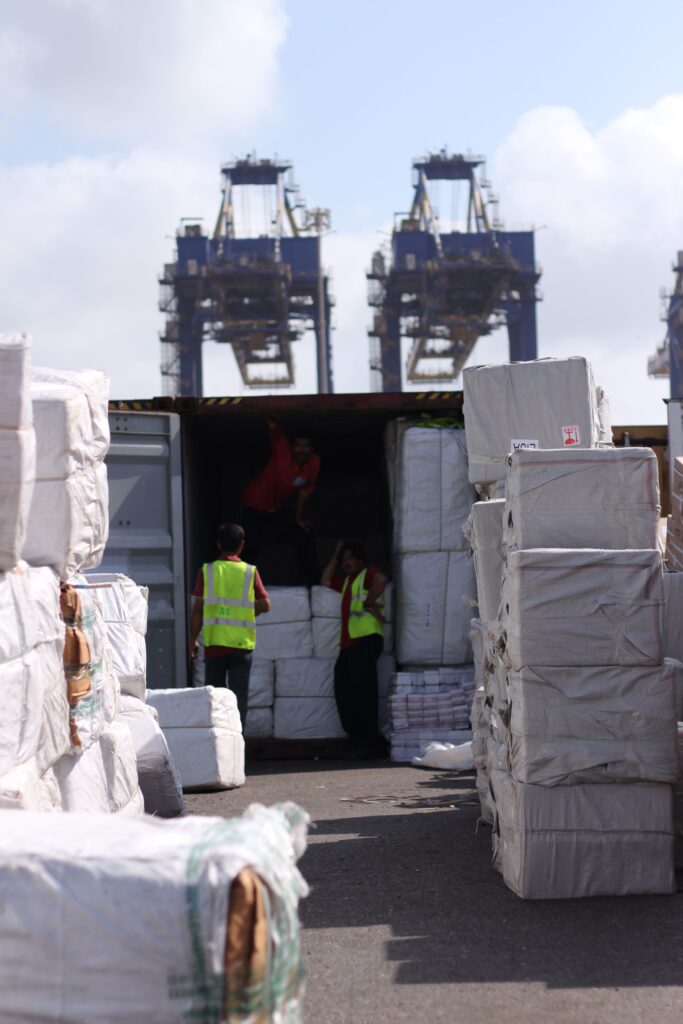
The E-Waste Export Scandal: Dumping in the Global South and the 63 Million Metric Tonnage
Why it matters:
- Certification standards meant to prevent illegal e-waste exports are failing, leading to hazardous waste dumping in the Global South.
- The global e-waste generation reached a record 62 million metric tons in 2022, creating an imbalance between production and recycling capacity.
The global E-Waste Export Scandal and trade operates under a veneer of legitimacy provided by certification standards that frequently fail to prevent illegal exports. While consumers and corporations rely on labels like R2 (Responsible Recycling) and e-Stewards to ensure environmental compliance, investigations reveal a widespread failure to police the supply chain. Verified data from 2015 to 2025 exposes a pattern where certified entities act as conduits for dumping hazardous waste into the Global South, monetizing the “green” guilt of the developed world.
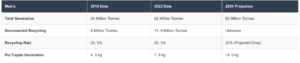
The global apparatus of electronic consumption generated a record 62 million metric tons of e-waste in 2022. This figure represents an 82% increase since 2010. The sheer physical mass of this discarded technology is difficult to visualize. It is equivalent to 1. 55 million 40-ton trucks parked bumper-to-bumper along the equator. This waste stream outpaces the growth of formal recycling infrastructure by a factor of five. The United Nations Institute for Training and Research (UNITAR) confirms that while e-waste generation rises by 2. 6 million tons annually, formal recycling capacity grows by only 0. 5 million tons.
The difference between production and management has created a measurable deficit in global resource recovery. In 2022, documented formal collection and recycling systems captured only 22. 3% of the total waste generated. The remaining 77. 7%, approximately 48. 2 million tons, into informal sectors, landfills, or incinerators. This undocumented flow contains hazardous materials that leach into soil and groundwater systems in destination countries. The 2024 Global E-waste Monitor reports that this mismanagement results in the release of 58, 000 kilograms of mercury and 45 million kilograms of plastics containing brominated flame retardants into the environment annually.
The economic of this negligence are quantifiable. The 62 million tons of waste generated in 2022 contained recoverable metals valued at approximately $91 billion USD. This sum exceeds the GDP of nations. The composition of this lost wealth includes $19 billion in copper, $15 billion in gold, and $16 billion in iron. Yet the global economy recovered only $28 billion through formal recycling channels. The remaining $63 billion in raw materials was discarded. This loss forces mining industries to extract new ores to meet manufacturing demands. The data shows that secondary raw materials from e-waste could meet significant portions of global demand. Documented recycling currently meets only 1% of the demand for rare earth elements required for renewable energy technologies.
“The rise in e-waste generation is outpacing the rise in formal recycling by a factor of almost 5. Business as usual cannot continue.” , Global E-waste Monitor 2024
Regional data reveals a distinct imbalance in generation versus processing. Asia generated the highest volume in absolute terms at 30 million tons. The Americas followed with 14. 1 million tons and Europe with 13. 1 million tons. Per capita statistics present a different reality. Europe leads the world in waste generation per person at 17. 6 kilograms. Oceania follows at 16. 1 kilograms and the Americas at 14. 1 kilograms. Africa generates the least at 2. 5 kilograms per person. These figures expose the flow of consumption. High-income regions drive the generation of complex electronics while low-income regions frequently bear the load of the disposal.
The composition of the waste stream complicates recovery efforts. The 62 million tons generated in 2022 consisted of 31 billion kilograms of metals and 17 billion kilograms of plastics. The remaining 14 billion kilograms included glass, minerals, and composite materials. Small IT and telecommunication equipment contributed 4. 6 million tons to the total. Small equipment such as microwaves and vacuum cleaners accounted for 20. 4 million tons. Large equipment like washing machines added 15. 1 million tons. Screens and monitors contributed 5. 9 million tons. Each category requires specific processing methods that most informal dump sites absence.
Current projections indicate a worsening trajectory. If current policies, global e-waste generation reach 82 million tons by 2030. This represents a further 32% increase from 2022 levels. The documented recycling rate is projected to drop to 20% as the volume of waste overwhelms existing infrastructure. This widening gap guarantees that the export of hazardous waste to the Global South intensify. The market forces driving this trade rely on the inability of the Global North to process its own waste. The data confirms that the world is not failing to manage its electronic refuse. It is actively accumulating a toxic legacy at a rate that defies current remediation strategies.
The Deception of Certified Recycling Labels
The certification ecosystem is bifurcated primarily between R2 and e-Stewards. R2, the more lenient standard, holds the largest market share has been criticized for allowing exports to developing countries if the receiving facility is also “certified” or deemed legal by the importing country, a loophole frequently exploited in nations with weak enforcement. e-Stewards maintains a stricter prohibition on exports to non-OECD countries, aligning with the Basel Convention. Yet, even the most rigorous standards have proven porous when profit margins dictate the flow of materials.
The Total Reclaim Betrayal
The most damaging blow to the credibility of e-waste certification occurred with the exposure of Total Reclaim, once the Pacific Northwest’s largest recycler. For years, the company marketed itself as the “gold standard” of sustainability, holding the rigorous e-Stewards certification and securing contracts with the City of Seattle and the University of Washington. In 2019, federal courts sentenced owners Craig Lorch and Jeff Zirkle to prison for wire fraud after it was revealed they had secretly exported millions of pounds of mercury-laden LCD monitors to Hong Kong.
The mechanics of the fraud were simple devastating. Between 2008 and 2015, Total Reclaim collected over $7. 8 million from customers to recycle flat-screen monitors domestically. Instead of processing them safely, a procedure that would have cost the company approximately $2. 6 million, they sold the hazardous devices to a broker for shipment to undocumented junkyards in Hong Kong’s New Territories. There, unprotected workers smashed the screens to extract metal, releasing mercury vapor into the environment. The owners avoided millions in processing costs while publicly championing environmental responsibility. This case demonstrated that without unannounced, forensic verification, certification is a paper shield.
The “Brokers of Shame” and the 2025 Pipeline
The Total Reclaim scandal was not an incident a precursor to a wider industry practice. In October 2025, the Basel Action Network (BAN) released its “Brokers of Shame” report, which utilized GPS tracking and trade data to identify a new wave of illegal exports. The investigation tracked 10 major U. S. brokers who shared shipped an estimated 10, 000 containers of e-waste to Asia between January 2023 and February 2025. The value of this illegal trade is estimated at over $1 billion.
Crucially, the report highlighted that 8 of the 10 implicated brokers held active R2 certifications. These companies facilitated the movement of hazardous electronic scrap to Malaysia, Indonesia, and Thailand, countries that have explicitly banned such imports. The certification bodies’ reliance on scheduled audits rather than real-time tracking allows these brokers to sanitize their operations during inspections while running a parallel illegal export business. The that certified recyclers are exporting at rates comparable to, and in specific metrics higher than, uncertified operators, using their status to secure contracts from unsuspecting municipalities.
| Entity / Case | Certification Held | Violation Details | Outcome / Impact |
|---|---|---|---|
| Total Reclaim (WA) | e-Stewards | Secret export of 8. 3 million lbs of LCDs to Hong Kong. | Owners sentenced to 28 months prison; $945k restitution (2019). |
| “Brokers of Shame” (10 Firms) | R2 (8 of 10) | Export of ~10, 000 containers to Malaysia/Indonesia (2023-2025). | Exposure of massive loophole in R2 audit process; ongoing investigations. |
| RDI Inc. (NJ) | R2 / e-Stewards Applicant | Caught shipping e-scrap to developing nations; falsified codes. | Withdrew e-Stewards application; banned for 2 years (2025). |
| Wisetek (USA) | R2 / e-Stewards | Internal theft led to thousands of devices entering resale market. | Data breach scandal; petition for certification reform (2025). |
| Executive Recycling (CO) | R2 (registered) | Exported CRTs to China; falsified customs documents. | Executives convicted of wire fraud; served prison time. |
The GPS Truth Serum
The primary tool the deception of certified recycling is the GPS tracker. Since 2016, independent watchdogs have deployed thousands of trackers inside printers, LCDs, and computers dropped off at certified collection points. The 2016 “Scam Recycling” report found that 40% of tracked devices delivered to U. S. recyclers were exported, frequently to illegal destinations. This “truth serum” for the industry bypasses the paperwork trail, which is easily forged, and reveals the physical movement of the waste.
In 2024, trackers placed in devices at “secure” collection events in California were traced to unpermitted processing yards in Thailand. The data showed a clear chain of custody transfer from certified U. S. recyclers to intermediate brokers, who then mixed the waste with scrap metal to hide it from customs inspectors. This ” ” technique allows certified companies to claim they handed the material off to a “responsible” downstream vendor, plausibly denying knowledge of the final illegal destination.
“The certification system is designed to audit paperwork, not physics. Until every container is tracked in real-time, the ‘certified’ label remains a marketing tool rather than a guarantee of environmental safety.” , Industry Analysis of 2025 Export Data
The failure of voluntary certification a shift toward strict liability and electronic tracking. The current model, where recyclers pay the very bodies that certify them, creates a conflict of interest that incentivizes leniency. As the volume of e-waste breaches 62 million metric tons, the reliance on a broken honor system ensures that the toxic load continues to fall on the Global South.
Route Analysis: From Northern Ports to Global South Dumps
The trajectory of the world’s electronic waste is not random; it follows a precise, highly organized logistical map that mirrors global economic inequalities. While the devices are designed in California or South Korea and manufactured in China, their end-of-life journey frequently reverses this route, flowing from the wealthy Global North to the unregulated dumps of the Global South. This “toxic trade” relies on a complex network of shipping lines, transshipment hubs, and regulatory gaps that allow millions of tons of hazardous material to bypass international bans every year.
The primary exit points for this waste are the major container ports of the United States and Europe. In the European Union, even with strict regulations under the Waste Shipment Regulation, ports such as Felixstowe (UK), Hamburg (Germany), and Antwerp (Belgium) remain active nodes for e-waste leakage. Investigations by the Basel Action Network (BAN) utilizing GPS trackers have repeatedly traced equipment from authorized recycling collection points in these countries directly to export containers. In the United States, which has not ratified the Basel Convention, the flow is even more brazen. The ports of Los Angeles/Long Beach and New York/New Jersey serve as the primary gateways, with brokers consolidating loads of “scrap metal” that are, in reality, crushed circuit boards and toxic batteries.
The “Reuse” Loophole
The method facilitating this mass transfer is a regulatory gray area known as the “reuse loophole.” International law prohibits the export of hazardous waste, it permits the trade of used goods for repair and refurbishment. Exporters systematically mislabel non-functional, obsolete electronics as “used electrical and electronic equipment” (UEEE) or “personal effects.”
Customs agents, facing thousands of containers daily, rarely have the capacity to test individual devices. A 2022 study by the United Nations University found that of the used electronics imported into Nigeria, over 25% were dead on arrival, junk that was never functional and was waste the moment it was loaded., functional equipment is placed at the front of a shipping container to mask a wall of broken e-waste hidden behind it, a tactic known as “nesting.”
Destination: West Africa
The Atlantic route terminates largely in West Africa, with Nigeria and Ghana bearing the heaviest load. The port of Lagos receives approximately 60, 000 metric tons of used electronics annually. From the docks, this material flows directly to the Alaba International Market and the Computer Village in Ikeja. While a portion is repaired, the vast majority ends up in informal dumpsites.
In Ghana, the port of Tema feeds the infamous Agbogbloshie scrapyard (and its successors following recent clearing operations). Here, the “recycling” process consists of burning plastic casings to harvest copper wire, releasing dioxins and furans into the local atmosphere. GPS data from 2023 confirmed that devices discarded in the UK and Germany were active in these scrapyards within 60 days of collection.
Destination: Southeast Asia
Following China’s “Operation National Sword” in 2018, which banned the import of solid waste, the trans-Pacific e-waste trade shifted aggressively to Southeast Asia. Thailand, Malaysia, and Vietnam became the new dumping grounds. The port of Laem Chabang in Thailand and Port Klang in Malaysia have seen a surge in illegal container traffic.
A 2025 investigation identified a “hidden tsunami” of US e-waste, estimated at 33, 000 metric tons per month, flooding into these nations. Unlike the West African route, which frequently involves older consumer goods, the Asian route frequently handles industrial e-waste, including server farms and telecommunications infrastructure.
| Origin Port | Primary Destination | Common Misdeclaration | Est. Annual Volume (Metric Tons) |
|---|---|---|---|
| Los Angeles, USA | Port Klang, Malaysia | “Mixed Metal Scrap” | 120, 000+ |
| Felixstowe, UK | Tema, Ghana | “Personal Effects” / “Used Goods” | 45, 000+ |
| Hamburg, Germany | Lagos, Nigeria | “Second-hand Electronics” | 55, 000+ |
| New York, USA | Laem Chabang, Thailand | “Plastic Scrap” | 80, 000+ |
| Antwerp, Belgium | Haiphong, Vietnam | “Raw Materials” | 30, 000+ |
The Role of Transshipment Hubs
The journey is rarely direct. Criminal networks use transshipment hubs to scrub the origin of the waste, making it difficult for destination countries to return illegal shipments. Singapore and the United Arab Emirates (Dubai) serve as major transit points. Containers arriving in Dubai from Europe are frequently unpacked, mixed with other goods, and re-labeled before being shipped onward to Pakistan or Africa. This “laundering” of the bill of lading obscures the liability of the original exporter, severing the legal chain of custody.
Enforcement Failures and Seizures
even with the of the trade, enforcement remains sporadic. In May 2025, Thai authorities seized 238 tons of e-waste from the US at the Bangkok Port, a rare victory in a losing battle. Similarly, Malaysian officials detained 122 containers in a targeted operation in 2024. Yet, these seizures represent less than 1% of the estimated total volume. The sheer profitability of the trade, where exporters charge recycling fees in the North and then sell the waste as a commodity in the South, ensures that for every container stopped, hundreds more slip through.
The Repair Loophole: Smuggling Junk as Donations
The global trade in hazardous electronic waste is sustained by a legal fiction known as the “Repair Loophole.” Under the Basel Convention, hazardous waste exports are generally prohibited without the prior informed consent of the receiving nation. yet, a serious exemption exists for equipment for “failure analysis,” “repair,” or “refurbishment.” Exporters exploit this provision by labeling broken, toxic electronics as “used goods” intended for reuse. This semantic shift deregulates the shipment, transforming illegal hazardous waste into permissible commercial cargo. No functional testing is required before departure, allowing millions of tons of dead electronics to cross borders under the guise of bridging the digital divide.
The of this deception is measurable in the arrival ports of the Global South. In Nigeria, the Lagos ports receive approximately 60, 000 metric tons of used electrical and electronic equipment (UEEE) annually. While import documents invariably list these items as functional second-hand goods, physical inspections reveal a clear different reality. Investigations by the Basel Action Network (BAN) and local enforcement agencies indicate that up to 75% of these imports are unserviceable junk. These devices are not repaired; they are dead on arrival, destined immediately for primitive operations where they are burned to extract copper and gold, releasing dioxins and furans into the local ecosystem.
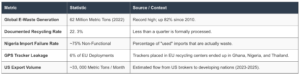
Smugglers have evolved specific logistical methods to evade detection. A primary vector for entering West Africa is the “Roll-on/Roll-off” (Ro-Ro) vehicle trade. Exporters stuff used cars and vans with broken electronics before shipping them to ports like Lagos or Cotonou. Because customs inspections focus on the vehicles themselves, the electronic cargo inside, frequently tightly packed cathode ray tubes (CRTs) and broken monitors, bypasses scrutiny. This “nesting” technique allows thousands of tons of hazardous material to enter the informal sector without ever appearing on a waste manifest. The vehicles serve as Trojan horses, delivering toxic payloads directly to scrap yards rather than repair shops.
The “Brokers of Shame” investigation, released by the Basel Action Network in late 2023, exposed the complicity of accredited recycling firms in this trade. The study tracked ten major U. S. aggregators who shared shipped over 10, 000 containers of e-waste to Malaysia and other Southeast Asian destinations between 2023 and 2025. even with holding industry certifications like R2 (Responsible Recycling), these companies acted as logistical conduits for dumping. The data showed that shipments were frequently misdeclared as “raw plastics” or “scrap metal” to circumvent Malaysian import bans. This systematic misclassification proves that the export market is not driven by a desire to extend product lifecycles, by the economic imperative to externalize the cost of toxic waste disposal.
Corporate actors frequently co-opt the language of the “Right to Repair” movement to defend these exports. Lobbyists that restricting the trade of used electronics would deny developing nations access to affordable technology and repair jobs. This argument ignores the distinction between repairable devices and end-of-life scrap. True repair requires a supply of functional spare parts and diagnostic tools, not container loads of crushed chassis and severed power cords. When 75% of a shipment is unusable, the “repair” narrative collapses, revealing a simple waste transfer method designed to preserve profit margins in the Global North at the expense of public health in the Global South.
Agbogbloshie: Anatomy of a Digital Graveyard
Until its government-mandated clearance in July 2021, the Agbogbloshie scrapyard in Accra, Ghana, operated as one of the largest informal e-waste processing zones on Earth. Spanning approximately 20 acres along the banks of the Korle Lagoon, this site functioned not as a landfill, as a rudimentary urban mine where thousands of workers extracted raw materials from the global waste stream. At its peak, the site processed an estimated 250, 000 tons of electronic waste annually, of which arrived from the European Union and North America under the guise of “second-hand goods.”
The operational mechanics of Agbogbloshie relied on manual disassembly and open-air incineration. Workers, frequently migrants from northern Ghana, used chisels and stones to break apart monitors and hard drives. To recover copper, the most lucrative commodity, they burned vinyl-coated cables in open fires fueled by styrofoam and tire scraps. This process, while economically important for the workers, released dense plumes of black smoke containing heavy metals and persistent organic pollutants directly into the residential atmosphere of Old Fadama.
Toxicological Metrics
Scientific analysis of the site between 2015 and 2021 yielded data indicating extreme environmental toxicity. A 2019 report by the International Pollutants Elimination Network (IPEN) and the Basel Action Network (BAN) analyzed free-range chicken eggs foraging in the area. The findings established a biological record for contamination:
| Metric | Measurement | Comparison to Safety Standard |
|---|---|---|
| Chlorinated Dioxins | High Concentration | 220 times the European Food Safety Authority (EFSA) limit |
| PCBs (Polychlorinated Biphenyls) | Elevated | 4 times the EU standard |
| Dioxin-like PCBs | Extreme | 171 times the EU standard |
Soil samples taken from the burning grounds revealed lead concentrations reaching 18, 125 parts per million (ppm). For context, the United States Environmental Protection Agency (EPA) sets the hazard standard for lead in bare soil at 400 ppm. The ground at Agbogbloshie contained lead levels 45 times higher than the threshold for immediate remediation.
Human Impact and Displacement
The human cost of this unregulated industry manifests in the blood of the workforce. A study published in 2021 involving Agbogbloshie workers found mean blood lead levels (BLL) of 9. 72 µg/dL, nearly double the reference level of 5 µg/dL set by the U. S. Centers for Disease Control and Prevention. In specific cohorts of burners, levels exceeded 15 µg/dL, a concentration associated with permanent neurological damage and renal failure. These workers accepted these risks for daily earnings that rarely exceeded the equivalent of $10 USD.
On July 1, 2021, the Greater Accra Regional Minister directed a demolition operation under the “Let’s Make Accra Work” initiative. Bulldozers cleared the scrapyard, displacing thousands of workers and traders. While the government framed this as a sanitation and decongestion victory, satellite data and on-ground reporting confirm that the e-waste trade did not. It dispersed. Smaller, less visible burning sites emerged in areas like Adjen Kotoku and within private residences, decentralizing the pollution and complicating monitoring efforts. The demolition erased the visual symbol of the emergency failed to sever the supply chain of imported waste that feeds it.
“The demolition did not halt e-waste work. E-waste practices have gone underground, inside living homes, and much closer to where people live.” , Muntaka Chasant, Documentary Photographer and Agbogbloshie Researcher, 2021.
The Invisible Load: Heavy Metals in the Bloodstream
The toxicity of the global e-waste trade is not confined to landfills; it circulates in the vascular systems of the children who live upon them. While the visible scars of the trade appear as burns and lacerations, the most damage occurs at the molecular level. Pediatric toxicology reports from 2015 to 2025 confirm that children in informal recycling hubs absorb lead at concentrations that permanently alter neurodevelopment. The method is respiratory and oral: toddlers ingest lead-contaminated dust, and adolescents inhale fumes from burning copper cables. The World Health Organization (WHO) confirmed in 2021 that 18 million children and adolescents are actively engaged in this informal industrial sector, with their smaller organs and rapid metabolic rates making them disproportionately to chemical absorption.
In Agbogbloshie, Ghana, the soil itself has become a hazardous agent. Independent environmental assessments from 2022 reveal lead concentrations in topsoil reaching 35, 300 mg/kg. For context, the United States Environmental Protection Agency (EPA) sets the hazard standard for lead in bare soil in play areas at 400 mg/kg. The ground on which these children play exceeds safety limits by a factor of 88. This environmental saturation directly to biological load. A 2024 study of the site found that 77. 7% of tested individuals carried blood lead levels (BLL) in the pathological range, with 14% exceeding 10 µg/dL, double the reference level that triggers public health intervention in developed nations.
The situation in Bangladesh presents a statistical catastrophe. A 2023 assessment by Pure Earth and local health officials estimated that 36 million children in the country, approximately 60% of the pediatric population, have elevated blood lead levels, largely driven by informal recycling of e-waste and lead-acid batteries. In the Kathgora recycling site near Dhaka, a case study found that 100% of the 69 children tested had BLLs above 8 µg/dL. Extreme cases in this cohort registered levels as high as 48 µg/dL, a concentration associated with severe anemia, renal damage, and encephalopathy. The economic and social cost of this exposure is quantified in cognitive decline: Bangladesh loses an estimated 20 million IQ points annually due to preventable lead exposure.
“There is no safe level of lead exposure for children. The damage caused to the developing brain is irreversible, resulting in reduced intelligence quotient (IQ), behavioral changes, and diminished educational attainment.” , World Health Organization, 2021.
Comparative Toxicology: Guiyu and Beyond
Data from Guiyu, China, historically the epicenter of e-waste processing, offers a longitudinal view of the emergency. While remediation efforts have centralized operations, the legacy of contamination. A systematic review covering 2004 to 2018 indicates that while geometric mean BLLs in Guiyu children dropped from 11. 77 µg/dL to 4. 63 µg/dL, they remain significantly higher than reference groups. Even with the decline, 95% of studies conducted between 2015 and 2023 show that children in e-waste zones carry a heavier toxic load than their peers in non-recycling towns. Gender disparities also emerge in the data; boys in Guiyu consistently exhibit higher BLLs than girls, a variance attributed to cultural play patterns that increase contact with contaminated soil.
The biological half-life of lead in bone is decades long, meaning the exposure of 2025 manifest in the adult health metrics of 2050. The primary route of entry remains the “take-home” pathway, where adult recyclers return to their homes with lead dust on their clothing and skin, contaminating their own living quarters. In Dhaka slums, children living within one kilometer of informal recycling sites had 43% higher blood lead levels than those living five kilometers away. This proximity penalty ensures that even children not working directly on the piles suffer the consequences of the trade.
Data Visualization: The Toxicity Gap
The following chart compares the Blood Lead Levels (BLL) found in children across major e-waste processing sites against international safety reference values. The illustrates the severity of the exposure.
| Location / Standard | Measured BLL (µg/dL) | Status |
|---|---|---|
| CDC Reference Value | 3. 5 | Safety Threshold |
| Guiyu, China (Mean) | 4. 63 | Elevated |
| Dhaka, Bangladesh (Median) | 6. 70 | High Risk |
| Agbogbloshie, Ghana (High Range) | 18. 80 | Severe Toxicity |
| Kathgora, Bangladesh (Max) | 48. 00 | serious Emergency |
The neurological impact of these levels is calculable. A BLL of 5 µg/dL is associated with a loss of 1. 5 IQ points. At levels observed in Kathgora (48 µg/dL), the cognitive deficit is and permanent. These children are not losing health; they are losing their future economic chance. The pattern of poverty is thus reinforced by a pattern of toxicity, where the waste of the developed world the intellectual capital of the developing world.
Soil Contamination Metrics
The source of this biological contamination is the land itself. E-waste processing involves burning plastic casings to harvest copper, a process that releases lead, cadmium, and brominated flame retardants into the topsoil. The persistence of lead means these sites remain hazardous long after burning ceases.
| Location | Lead Concentration (mg/kg) | Factor Above Safety Limit |
|---|---|---|
| EPA Play Area Standard | 400 | 1x (Baseline) |
| Ashaiman, Ghana (Drainage) | 1, 200 | 3x |
| Guiyu, China (Roadside) | 4, 400 | 11x |
| Agbogbloshie, Ghana (Burn Site) | 35, 300 | 88x |
These numbers represent a direct transfer of hazardous material from discarded electronics into the local ecosystem. The 35, 300 mg/kg reading in Agbogbloshie is not an anomaly a consistent finding in areas where open burning is the primary method of copper extraction. The soil acts as a reservoir, re-suspending lead dust into the air during dry seasons and leaching it into the water table during monsoons. For the 18 million children working in or living near these sites, the environment is not a passive backdrop an active aggressor.
The Economics of Burning: Copper Recovery vs Human Life
The decision to burn electronic waste is not an act of ignorance; it is a calculated economic need driven by the brutal mathematics of poverty. For the thousands of informal workers at sites like Agbogbloshie in Ghana or Alaba in Nigeria, the difference between starvation and survival is measured in ounces of copper recovered from plastic-sheathed cables. While mechanical stripping preserves the metal’s integrity and value, the capital required to access such technology remains an barrier. Consequently, the “poor man’s recycling” method, open-air burning, remains the dominant industrial process, converting high-value alloys into toxic ash and oxidized scrap for immediate, albeit diminished, liquidity.
The economic logic is clear. A manual wire stripping machine, capable of processing cables without heat, costs between $600 and $1, 800, an impossible sum for a worker earning an average of 30 to 60 Ghanaian Cedis ($5. 15 to $10. 30) per day. Industrial-grade granulators that can separate copper from plastic cost upwards of $8, 000. In contrast, the cost of a match and a discarded tire to fuel the fire is zero. This absence of capital forces workers to choose the most hazardous extraction method, accepting a lower market price for oxidized, blackened copper rather than starving while saving for a machine they never afford.
The Burner’s Balance Sheet
The between the value extracted and the human cost incurred is grotesque. While global markets trade “Bare Bright” copper at premium rates, the copper recovered from burning is downgraded due to oxidation and contamination. Yet, this marginal income supports an entire informal ecosystem. The table outlines the daily economic reality for a burner in Agbogbloshie versus the biological price paid.
| Metric | Value / Cost | Context |
|---|---|---|
| Daily Income | $5. 15 , $10. 30 | Dependent on weight of copper recovered (approx. 30-60 GHS). |
| Cost of “Tool” | $0. 00 | Styrofoam packaging and old tires used as fuel. |
| Copper Grade | Oxidized / #2 Scrap | Burning degrades copper quality, reducing sale price by ~15-20%. |
| Blood Lead Level | >10 µg/dL | 77. 7% of workers test in the pathological range for lead poisoning. |
| Life Expectancy | <40 Years | Anecdotal evidence suggests workers rarely survive past their 30s due to cancer and respiratory failure. |
The Toxic Dividend: Dioxins and Lead
The combustion of polyvinyl chloride (PVC) insulation releases a cocktail of persistent organic pollutants (POPs), most notably chlorinated and brominated dioxins. These are not local irritants; they are among the most toxic substances known to science. A landmark study by the International POPs Elimination Network (IPEN) analyzed free-range chicken eggs foraging near the Agbogbloshie burn sites. The findings were catastrophic: a single egg contained chlorinated dioxins at levels 220 times higher than the safety limits established by the European Food Safety Authority (EFSA). This contamination enters the local food web, poisoning not just the workers, the surrounding community.
Soil analysis paints an equally grim picture. The US Environmental Protection Agency (EPA) sets the standard for safe lead levels in soil at 400 parts per million (ppm). Samples taken from the perimeter of Agbogbloshie have returned values as high as 18, 125 ppm, over 45 times the safety threshold. This lead dust is inhaled, ingested, and absorbed, leading to irreversible neurological damage, kidney failure, and reproductive toxicity. The chart illustrates the magnitude of this contamination compared to international safety standards.
The economic tragedy is circular. The burning destroys the plastic insulation, which itself has value if properly recycled, and degrades the copper, lowering its price. Yet, without the infrastructure to capture this value, the “waste” of the Global North becomes the lethal fuel of the Global South. The $62 billion in recoverable materials lost globally in 2022 is not just a financial statistic; it represents a missed opportunity to fund the very that could save these workers’ lives. Instead, the market rewards the cheapest, deadliest method of extraction, subsidizing the global copper supply with the health of the world’s poorest laborers.
Basel Convention Violations and Enforcement Gaps
The Basel Convention stands as the primary international legal instrument designed to control the transboundary movement of hazardous waste. Its 2019 Ban Amendment formally prohibited the export of hazardous waste from member states of the Organization for Economic Cooperation and Development (OECD) to non-OECD countries. This legal firewall was intended to protect developing nations from becoming dumping grounds for toxic refuse. Yet the enforcement of these regulations remains porous. Intelligence data from 2023 to 2025 reveals that widespread violations continue through misclassification and the exploitation of non-party jurisdictions. The entry into force of the e-waste amendments on January 1, 2025, requires Prior Informed Consent (PIC) for all electronic waste transfers. This tightens the net has not yet stopped the flow of contraband material.
The United States remains the only developed nation that has not ratified the Basel Convention. This non-party status creates a massive regulatory void in the global waste management architecture. Because the US is not bound by the treaty, American brokers operate without the requirement to obtain consent from receiving nations under Basel rules. A 2025 investigation by the Basel Action Network (BAN) titled Brokers of Shame exposed the of this loophole. The report documented that ten major US brokers shared exported over 10, 000 shipping containers of electronic waste between January 2023 and February 2025. These shipments contained approximately 33, 000 metric tons of discarded electronics per month. The primary destination for this traffic was Malaysia. This volume represented nearly 6% of all US trade to Malaysia during the study period.
Traders frequently bypass border controls by exploiting the “repairable” loophole. Exporters label non-functional electronics as “used goods” destined for reuse rather than waste processing. This semantic distinction allows shipping containers to pass through customs without triggering hazardous waste. Customs officers in ports like Lagos and Accra absence the resources to test individual devices for functionality. A study involving GPS trackers deployed in Europe found that 6% of tracked electronic units were exported. The United Kingdom was identified as the worst violator in this dataset. These units were declared as functional goods were physically broken and destined for primitive scrapping operations in West Africa.
Interpol has intensified its crackdown on these illicit flows through global operations. The 30 Days at Sea 3. 0 operation, conducted between 2020 and 2021, involved inspections of 34, 000 vessels and cargo containers. Authorities detected 1, 600 marine pollution offenses and opened 130 specific cases of waste trafficking through ports. These enforcement actions reveal that waste crime is frequently convergent with other illegal activities. Investigations linked e-waste trafficking to document fraud and tax evasion. The sheer volume of trade overwhelms inspection capacity. Authorities physically inspect less than 2% of the millions of containers moving through global hubs annually.
European enforcement agencies have secured victories against corporate violators. In 2021, the UK Environment Agency successfully prosecuted Biffa Waste Services for illegal exports. The company received a penalty of £1. 5 million for attempting to ship contaminated waste to non-OECD countries. This fine stands as one of the largest financial penalties ever imposed for waste crime in the United Kingdom. Yet such penalties are rare relative to the profitability of the trade. The cost of proper recycling in the Global North frequently exceeds the cost of illegal export by a factor of three. This economic incentive drives continued non-compliance.
| Source / Operation | Period | Key Findings & Metrics |
|---|---|---|
| Interpol Operation 30 Days at Sea | 2017 | Seizure of 1. 5 million metric tons of illegal waste. 226 waste crimes reported across 43 countries. |
| BAN GPS Tracker Study (EU) | 2019 | 11 confirmed illegal shipments to Ghana, Nigeria, and Pakistan. UK identified as top source of leakage. |
| Interpol Operation 30 Days at Sea 3. 0 | 2020, 2021 | 34, 000 inspections conducted. 130 specific waste trafficking cases opened. |
| UK Environment Agency vs. Biffa | 2021 | £1. 5 million fine imposed for illegal export of restricted waste. Largest penalty of its kind in UK history. |
| BAN Brokers of Shame Report | 2023, 2025 | 10 US brokers exported ~10, 000 containers. Estimated value of trade exceeded $1 billion. |
“These companies present themselves as responsible recyclers helping to solve the e-waste emergency. our data and field investigations show a troubling pattern of exports that appear inconsistent with both US and international efforts to ensure safe and legal handling of hazardous waste.”
, Jim Puckett, Executive Director, Basel Action Network (2025)
The 2025 amendments to the Basel Convention mandate that all e-waste requires notification and consent. This closes the previous regulatory gap where “non-hazardous” e-waste could be traded freely. The effectiveness of this new rule depends entirely on the willingness of receiving nations to deny entry and the ability of exporting nations to police their own ports. The data suggests that without a unified global enforcement method that includes the United States, the Convention continue to struggle against the economic of cheap dumping.
The United States: The Non-Ratification Outlier
The United States stands alone as the only developed nation in the world that has failed to ratify the Basel Convention. While 191 countries have acceded to this international treaty to restrict the transboundary movement of hazardous waste, the U. S. remains a signatory only, a status it has held without action since 1990. This diplomatic refusal creates a massive regulatory void that legalizes the export of toxic electronic debris. Because the U. S. is not a party to the convention, it is not bound by the Basel Ban Amendment, which prohibits Organization for Economic Cooperation and Development (OECD) nations from shipping hazardous waste to developing countries. Consequently, American ports operate as the primary leakage point for the global e-waste stream, allowing scrap brokers to monetize environmental negligence under the guise of free trade.
Federal law currently provides no method to stop these shipments. The Resource Conservation and Recovery Act (RCRA), the primary domestic law governing waste, contains a specific exemption for broken electronics if they are labeled for “recycling” or “repair.” This loophole allows exporters to classify crushed circuit boards and severed cables as raw commodities rather than hazardous waste. In 2025, the Basel Action Network (BAN) released an investigative report titled “Brokers of Shame,” which tracked the flow of these materials. The investigation found that even with global prohibitions, U. S. entities continue to flood the Global South with toxic hardware, exploiting the absence of federal oversight to bypass international norms.
| Jurisdiction | Basel Convention Status | Basel Ban Amendment | Export Policy for E-Waste |
|---|---|---|---|
| European Union | Ratified | Implemented | Strict Prohibition to Non-OECD |
| United Kingdom | Ratified | Implemented | Strict Prohibition to Non-OECD |
| China | Ratified | Implemented | Total Import Ban on Solid Waste |
| United States | Signed (Not Ratified) | Rejected | Unrestricted (Notification Only) |
The volume of this unregulated trade is. Data from the 2025 BAN investigation indicates that U. S. brokers export approximately 2, 000 shipping containers of electronic waste every month. This equates to roughly 33, 000 metric tons of discarded technology leaving American ports every 30 days, with a shared trade value estimated at $1 billion between January 2023 and February 2025. The primary destinations for this cargo are Malaysia, Indonesia, and Thailand, nations that have attempted to close their borders to foreign waste are overwhelmed by the sheer of American exports. These shipments frequently arrive misdeclared as “scrap metal” or “used equipment,” complicating customs enforcement in receiving nations that absence the infrastructure to inspect every container.
Legislative attempts to close this pipeline have repeatedly failed in Congress. The Secure E-Waste Export and Recycling Act (SEERA), introduced in multiple sessions including 2023 and 2025, sought to ban the export of untested, non-working electronics. Proponents argued that the bill was a matter of national security, preventing counterfeit chips harvested from U. S. e-waste in China from re-entering military supply chains. yet, the legislation has stalled due to intense lobbying from the scrap industry, represented by the Recycled Materials Association (formerly ISRI). These trade groups that export restrictions would harm the domestic recycling economy, prioritizing the profitability of waste brokers over global environmental health.
The refusal to ratify the Basel Convention creates a chaotic legal environment on the high seas. Once a container of U. S. e-waste leaves territorial waters, it becomes “criminal traffic” in the eyes of the 191 nations that are party to the convention. Receiving countries are legally obligated to seize and repatriate these shipments. Yet, without U. S. cooperation, the load of enforcement falls entirely on the developing nations being targeted. This reinforces a colonial waste model where the wealthiest nation on Earth externalizes the toxic cost of its digital consumption onto those least equipped to manage it.
Corporate Accountability: OEM Design and Planned Obsolescence
The global e-waste emergency is not a byproduct of consumer demand a calculated outcome of industrial design. Between 2015 and 2025, Original Equipment Manufacturers (OEMs) systematically engineered products to fail, resist repair, and lock consumers into proprietary service ecosystems. This strategy, frequently termed “planned obsolescence,” has shifted from simple physical fragility to sophisticated software-based restrictions. The financial and environmental toll is measurable: while 62 million metric tons of e-waste accumulated in 2022, corporate profits from service monopolies surged, driven by design choices that criminalize or disable independent repair.
The most pervasive method of control is “part pairing” or serialization. This practice involves digitally linking individual components, screens, batteries, biometric sensors, to a device’s main logic board. Apple, a primary practitioner of this method, introduced software locks that disable features like Face ID or True Tone if a screen is replaced without proprietary calibration tools, even if the replacement part is a genuine component harvested from an identical donor device. In 2023, replacing a cracked iPhone screen at an Apple Store cost approximately $100 more than an independent repair, a premium enforced solely through these software blocks. This “serialization tax” renders millions of functional devices economically unrepairable, forcing premature recycling or disposal.
Software locks extend beyond mobile devices into home office equipment, creating artificial waste streams. In October 2021, a class-action lawsuit (Leacraft v. Canon USA) exposed that Canon “All-in-One” printers were programmed to disable scanning and faxing functions when ink cartridges were low, even with these features requiring no ink to operate. Similarly, HP Inc. faced renewed legal scrutiny in 2024 and 2025 regarding its ” Security” firmware. These mandatory updates, pushed to internet-connected printers, retroactively blocked non-HP ink cartridges that had previously functioned, rendering perfectly good consumables useless and forcing consumers to purchase higher-priced proprietary ink. The 2018 settlement of $1. 5 million regarding earlier iterations of this practice did little to deter its expansion, as the recurring revenue from consumables outweighs legal penalties.
The Industrial and Agricultural Repair Monopoly
The battle for repair rights is fiercest in the agricultural and industrial sectors, where downtime directly to lost food production and revenue. John Deere, the dominant manufacturer of agricultural, has long restricted farmers from accessing the diagnostic software needed to repair their own tractors. In January 2023, facing mounting pressure, John Deere signed a Memorandum of Understanding (MOU) with the American Farm Bureau Federation. While touted as a concession, right-to-repair advocates criticized the MOU for absence enforcement method and failing to provide full access to source code or advanced diagnostic tools. By October 2024, reports confirmed the Federal Trade Commission (FTC) was investigating John Deere for chance antitrust violations related to these repair restrictions.
A parallel struggle occurred in the fast-food industry, centering on the Taylor Company’s ice cream machines used by McDonald’s. These machines, notorious for frequent breakdowns, were designed with unclear error codes that required expensive service calls from certified technicians. When a third-party company, Kytch, developed a diagnostic tool in 2019 to help franchisees fix the machines themselves, Taylor and McDonald’s moved to block its use. The conflict culminated in a significant regulatory victory in October 2024, when the U. S. Copyright Office granted a specific exemption to the Digital Millennium Copyright Act (DMCA). This ruling legally permitted the circumvention of software locks on commercial food preparation equipment, validating the claims of franchisees who lost an estimated $625 per day in sales due to machine downtime.
Legislative Counter-Measures (2022, 2025)
State and international governments have responded to these corporate overreaches with a wave of legislation aimed at the repair monopoly. These laws mandate that OEMs provide manuals, parts, and tools to independent shops and consumers on fair and reasonable terms.
| Legislation | Jurisdiction | Date | Key Provisions |
|---|---|---|---|
| Digital Fair Repair Act | New York | July 1, 2023 | state law. Covers electronics made after July 1, 2023. Excludes medical devices, farm equipment, and home appliances. |
| Right to Repair Act (SB 244) | California | July 1, 2024 | Strongest US protection. Covers products sold after July 1, 2021. Mandates 7 years of parts support for items over $100. |
| Digital Fair Repair Act | Minnesota | July 1, 2024 | Broad scope covering equipment sold on/after July 1, 2021. Notable for fewer exclusions than NY, though farm equipment remains exempt. |
| Right to Repair Directive (2024/1799) | European Union | July 31, 2026 | Extends legal guarantee by 1 year if repaired. Requires manufacturers to repair goods even after warranty expires. |
The economic impact of these restrictions is. In the automotive sector alone, independent repair shops report that restrictions on vehicle data access cost them approximately $3. 1 billion annually. This figure represents a direct transfer of wealth from small, local businesses to multinational manufacturers. By controlling the repair ecosystem, OEMs not only consumer costs also dictate the lifespan of products, ensuring a steady stream of waste that flows disproportionately to the Global South.
The Brokerage Web: Middlemen in Dubai and Hong Kong
The global trajectory of electronic waste is rarely a straight line from consumer to landfill. Instead, it moves through a sophisticated, unclear network of transit hubs designed to scrub the origin of toxic cargo before it reaches its final dumping ground. At the center of this logistical laundering operation sit two primary nodes: Hong Kong and Dubai. These cities function not as transit points as active brokerage centers where hazardous scrap is re-labeled, re-packaged, and re-routed to evade international. Investigations between 2015 and 2025 reveal that these financial capitals have become the essential airlocks of the global waste trade, allowing Western exporters to wash their hands of liability while the physical contraband flows south.
Hong Kong: The Gateway to the Grey Market
For decades, Hong Kong served as the primary vestibule for e-waste entering mainland China. Even after Beijing’s “Green Fence” initiative in 2013 and the subsequent total ban on solid waste imports in 2018, Hong Kong remains a serious staging ground. The city’s status as a free port, combined with its proximity to the Greater Bay Area, makes it an ideal location for “parking” waste until a buyer in Southeast Asia can be secured.
A landmark investigation by the Basel Action Network (BAN) in 2016 exposed the of this complicity. Using GPS trackers planted in discarded electronics in the United States, BAN discovered that 37 of the 65 tracked devices exported from the U. S. ended up in Hong Kong. This data suggested that up to 20% of American e-waste was being funneled into the territory. The devices were traced to informal scrapyards in the New Territories, specifically the Yuen Long and North District areas, where workers dismantled electronics in open-air sites, exposing the local environment to lead, mercury, and brominated flame retardants.
Enforcement data from 2024 confirms that this channel remains active. In October 2024, Hong Kong Customs seized a massive shipment of illegal e-waste at the Kwai Chung Container Terminals. The haul, valued at approximately $40 million HKD, was destined for Malaysia, proving that as China’s doors closed, Hong Kong pivoted to become the broker for the rest of the Global South. The Environmental Protection Department (EPD) of Hong Kong reported that between 2011 and 2015 alone, they inspected 3, 200 containers and confiscated over 700 tonnes of waste cathode ray tubes (CRTs) and LCD panels, yet this represents only a fraction of the total throughput.
Dubai: The Desert Laundromat
While Hong Kong services the Asian corridor, Dubai has emerged as the primary pivot point for waste heading to Africa and the Middle East. The United Arab Emirates (UAE) serves as a “re-export” hub, a classification that allows goods to enter the free trade zones and leave without undergoing the same level of scrutiny as domestic imports. This regulatory blind spot is exploited by brokers who import “mixed metal scrap” or “used electrical equipment” and re-export it to nations with weaker border controls, such as Pakistan, Nigeria, and Tanzania.
The 2025 “Brokers of Shame” report by the Basel Action Network identified the UAE as a persistent destination for U. S. e-waste, even with the fact that the UAE prohibits the import of hazardous waste under federal law. The investigation tracked containers leaving American ports and found them routed to the UAE, where the trail frequently goes cold before the waste reappears in informal markets in Africa. The method is simple: a container arrives in Jebel Ali Port declared as “Personal Effects” or “Second-hand Electronics for Repair.” Once inside the free zone, the cargo is stripped of identifying marks, consolidated with other shipments, and issued new bills of lading that obscure the original U. S. exporter.
Data from the United Nations University indicates that the UAE itself generates significant e-waste, 172, 000 tonnes in 2019, its role as a transit hub distorts the regional statistics. The flow of goods is heavily unbalanced; while the UAE imports vast quantities of used electronics, its formal recycling capacity captures less than 1% of the total volume circulating through its ports. The remainder is re-exported. In 2023, the UAE’s e-waste management market was valued at over $150 million, a figure driven largely by the logistics of movement rather than the mechanics of recycling.
The Mechanics of Obfuscation
The survival of this brokerage web relies on specific techniques of mislabeling. Brokers in both Hong Kong and Dubai use vague Harmonized System (HS) codes to bypass automated customs flags. A container filled with broken monitors (hazardous waste) is frequently declared as HS 8542 (Electronic Integrated Circuits) or HS 7204 (Ferrous Waste and Scrap). This semantic slight of hand shifts the cargo from a “Red List” prohibited item to a “Green List” commodity.
| Transit Hub | Primary Origin | Declared Destination | Actual Destination | Smuggling Method |
|---|---|---|---|---|
| Hong Kong | United States, Canada | Hong Kong (Local Use) | Thailand, Vietnam, Malaysia | “Parking” in New Territories; re-export via feeder vessels. |
| Dubai (UAE) | EU, United States | UAE (Free Zone) | Pakistan, Nigeria, Tanzania | Re-invoicing in Free Zones; mislabeling as “Used Goods”. |
| Singapore | Australia, Japan | Indonesia, Malaysia | Indonesia (Batam) | False declaration as “Personal Effects” or “Metal Scrap”. |
The 2025 investigations highlight a disturbing trend: the professionalization of the middleman. These are not fly-by-night operators registered logistics firms that specialize in “reverse supply chain management.” They offer services that explicitly pledge to handle the “environmental compliance” of Western corporations, charging a premium to make the waste disappear into the grey markets of Dubai and Hong Kong. The result is a sanitized audit trail for the producer and a toxic legacy for the recipient.
The Chemical Scar: Dioxins and Heavy Metal Persistence
The physical volume of e-waste is visible to the naked eye, the chemical legacy it leaves in the soil is invisible, permanent, and lethally toxic. When informal recyclers ignite cables to harvest copper, they are not burning plastic; they are synthesizing of the most dangerous compounds known to science. The combustion of polyvinyl chloride (PVC) insulation in the presence of copper acts as a catalyst for the formation of polychlorinated dibenzo-p-dioxins and dibenzofurans (PCDD/Fs). These are not temporary pollutants. They bind to soil particles, resist degradation for decades, and bioaccumulate with terrifying efficiency.
Data collected between 2019 and 2024 reveals that soil contamination in the Global South has breached the threshold of an environmental emergency. In Agbogbloshie, Ghana, formerly the world’s largest e-waste dump, soil samples taken from burning sites registered lead (Pb) concentrations averaging 2, 455 mg/kg. This figure is more than six times the United States EPA’s hazard standard for bare soil in play areas (400 mg/kg). Even more worrying is the concentration of copper, which averaged 10, 178 mg/kg in zones, over 100 times the World Health Organization (WHO) and FAO limit of 100 mg/kg for agricultural soil.
The Dioxin Multiplier
While heavy metals provide the bulk mass of contamination, dioxins represent the toxicity peak. These compounds are measured in picograms (trillionths of a gram) because even microscopic amounts trigger catastrophic biological effects. A 2019 study by the International Pollutants Elimination Network (IPEN) and the Basel Action Network (BAN) analyzed the biological uptake of these soil contaminants in Agbogbloshie. The results were chemically violent: free-range chicken eggs, which absorb soil contaminants through foraging, contained chlorinated dioxins at levels 220 times higher than the European Food Safety Authority (EFSA) tolerable daily intake limits.
This is not an anomaly. Following the 2017 Chinese import ban, the toxic load shifted to Southeast Asia. In 2022, researchers analyzing soil and dust near e-waste recycling factories in Chachoengsao, Thailand, detected the second-highest level of dioxins ever measured in the country’s poultry eggs. The soil in these “recycling” hubs acts as a reservoir, trapping brominated flame retardants (PBDEs) and dioxins that leach into groundwater and enter the local food web.
Comparative Toxicity Metrics
The between international safety standards and the reality on the ground in e-waste dumping zones is statistically overwhelming. The following table contrasts verified soil contamination levels in major e-waste processing hubs against established intervention values.
| Location | Contaminant | Measured Level | Safety Standard (Ref) | Exceedance Factor |
|---|---|---|---|---|
| Agbogbloshie, Ghana | Copper (Cu) | 10, 178 mg/kg | 100 mg/kg (WHO/FAO) | 101. 7x |
| Agbogbloshie, Ghana | Lead (Pb) | 2, 455 mg/kg | 400 mg/kg (US EPA) | 6. 1x |
| Moradabad, India | Zinc (Zn) | 15x US EPA Limit | 23, 000 mg/kg (US EPA) | 15. 0x (Relative) |
| Guiyu, China* | PCDD/Fs (Dioxins) | 968 µg/kg | 0. 00001 µg/kg (Target) | Severe |
| Kalasin, Thailand | Dioxins (TEQ) | Record Levels (Eggs) | 2. 5 pg TEQ/g fat (EU) | Variable High |
| *Guiyu data reflects persistent legacy contamination confirmed in 2020-2021 reviews. “Exceedance Factor” denotes the multiple by which the safety limit is breached. | ||||
The Moradabad Effect
In India, the city of Moradabad has emerged as a primary processing center for circuit boards (PCBs), where acid baths are used to strip gold and silver. This hydrometallurgical process leaves the soil saturated with heavy metals. A 2023 investigation by the Centre for Science and Environment (CSE) found zinc levels in soil one kilometer from the Ramganga River at 15 times the US EPA standard. Mercury, a neurotoxin released during the heating of amalgams, was found in river water at eight times the Indian safety standard. The soil here does not hold the waste; it actively transports it. During the monsoon season, the heavy metals in the surface soil, specifically copper and cadmium, wash into the river systems, extending the “kill zone” of the e-waste site hundreds of kilometers downstream.
“The soil is not just dirty; it is hazardous waste. We are seeing concentrations of copper and lead that classify the ground itself as a toxic product, yet people are growing cassava and vegetables directly on top of it.”
The persistence of these toxins creates an intergenerational emergency. Dioxins have a half-life in soil that can exceed 100 years depending on depth and anaerobic conditions. The burning that occurred in 2015 continue to poison local agriculture in 2115. In Thailand, where e-waste imports rose 20-fold after 2017, the contamination is fresh and accumulating rapidly. The “recycling” villages in Kalasin province sit on land where the soil chemistry has been fundamentally altered, with heavy metals replacing organic nutrients, rendering the land chemically hostile to safe agriculture for the foreseeable future.
The China Ban: Displacement to Thailand and Vietnam
On January 1, 2018, the global waste trade experienced a seismic fracture. The implementation of China’s “National Sword” policy, which banned the import of 24 categories of solid waste including post-consumer plastics and mixed electronics, closed the world’s primary dumping ground. For two decades, China had absorbed nearly 70% of the world’s electronic waste. When Beijing shut its gates, the global flow of toxic scrap did not cease; it sought the route of least resistance. The immediate result was a “balloon effect,” where the pressure of millions of tons of Western e-waste was displaced instantly onto the regulatory vacuums of Southeast Asia, specifically Thailand and Vietnam.
Thailand became the casualty of this displacement. In the five months of 2018 alone, the country saw a terrifying surge in foreign waste. Customs Department data revealed that e-waste imports hit 52, 200 tons between January and May 2018. To contextualize this influx, the total volume for the entire year of 2017 was 64, 400 tons. The monthly intake rate had doubled overnight. Laem Chabang Port, the nation’s primary maritime gateway, became a choke point where thousands of containers labeled as “scrap metal” concealed crushed circuit boards, lead-acid batteries, and low-grade copper wiring.
The physical manifestation of this data emerged in the provinces surrounding Bangkok. In May 2018, Thai police raided the Wai Mei Dat Thai Recycling factory in Chachoengsao province. Officers found a sprawling, 40-acre complex operating without proper environmental permits, processing vast quantities of foreign e-waste. The facility was not a recycling plant in the modern sense a primitive operation where migrant workers smashed electronics to extract copper while burning the plastic casings, releasing dioxins into the local air and groundwater. This was not an incident; it was part of a coordinated relocation of Chinese processing capacity to Thai soil.
Simultaneously, Vietnam faced a logistical paralysis. As ships were turned away from Chinese harbors, they diverted south to the Cai Mep-Thi Vai port complex. By mid-2018, the Saigon Newport Corporation reported a backlog of over 3, 000 containers of scrap material at the docks, unclaimed and leaking. The volume of waste entering Vietnam from the United States surged by 277% in the quarter of 2018 compared to the same period in 2017. The influx overwhelmed the country’s limited processing infrastructure, spilling over into “craft villages” like Minh Khai, where informal workshops turned residential streets into open-air toxic waste dumps.
Regulatory Whack-a-Mole
The sudden deluge forced both nations into a reactive legislative frenzy. The speed at which the waste arrived outpaced the ability of customs officials to inspect it, leading to a reactionary pattern of bans and gaps. Operators utilized false customs codes, declaring hazardous e-waste as “second-hand goods” or “mixed metal scrap” to bypass initial restrictions.
| Country | Key 2018 Metric | Primary Port of Entry | Government Response (2018) |
|---|---|---|---|
| Thailand | 52, 200 tons imported (Jan-May) | Laem Chabang | June: Suspended licenses for 5 major e-waste factories. August: Ban on 428 types of e-waste imports. |
| Vietnam | 277% increase in US imports (Q1) | Cai Mep-Thi Vai | July: Stopped issuing new licenses for waste import. August: Strict inspection of all scrap containers. |
The response from Thai authorities was sharp struggled against corruption and smuggling networks. Following the Wai Mei Dat raid, the Department of Industrial Works (DIW) suspended the licenses of five major electronic waste recycling factories. By August 2018, the government announced a ban on 428 types of electronic waste. Yet, the enforcement gap remained wide. Operators simply moved their stockpiles to smaller, unlicensed facilities in remote provinces like Kalasin and Phetchaburi, far from the scrutiny of Bangkok-based regulators.
In Vietnam, the government ceased issuing new licenses for waste imports in July 2018, declaring that the country would not become the “world’s dumping ground.” yet, the damage to the local environment had already been done. The sheer volume of material that entered in the six-month window between the China ban and the Southeast Asian crackdowns created a legacy of toxic stockpiles that remain partially unprocessed today. The displacement proved that without a reduction in generation, waste trade bans function only as geographical shifters, moving the toxicity from one population to another.
Data Security: Recovering Personal Data from Exported Drives
The unauthorized export of electronic waste to the Global South creates a secondary, invisible emergency beyond environmental contamination: a massive of sensitive data. While Western consumers and corporations frequently believe their discarded devices are wiped or destroyed, investigations reveal that a volume of storage media arrives in Ghana, Nigeria, and Pakistan with personally identifiable information (PII) fully intact. In unregulated scrap yards like Agbogbloshie, this data is not a byproduct of recycling; it is a harvested commodity that fuels sophisticated cybercrime networks.
Forensic analysis of discarded hardware consistently exposes the failure of standard deletion methods. A 2019 study by Blancco Technology Group analyzed used drives purchased from secondary markets and found that 42% contained residual sensitive data, while 15% held PII. Similarly, a 2017 investigation by the National Association for Information Destruction (NAID) reported that 40% of discarded devices, including tablets, hard drives, and mobile phones, retained recoverable data. In the context of the 62 million metric tons of e-waste generated globally in 2022, these percentages represent millions of devices entering informal markets with their previous owners’ digital lives accessible to anyone with basic recovery software.
In West Africa, the intersection of e-waste dumping and organized cybercrime has birthed a specialized industry. In Ghana, local cybercriminal networks known as “Sakawa” boys actively target imported e-waste for hard drives and memory cards. Unlike scrap workers who burn cables for copper, these actors purchase functional storage media to extract credit card numbers, passport scans, and corporate contracts. Reports from Privacy International indicate that Agbogbloshie serves as a “treasure trove” for these groups, who use the recovered data to identity theft, romance scams, and blackmail. The data recovery process in these environments is frequently trivial; simple, freely available tools can restore files from drives that were formatted rather than cryptographically erased.
The situation is equally severe in Nigeria, where “Yahoo Boys”, internet fraudsters, exploit the influx of second-hand electronics. Investigations into the “Hustle Kingdom” training networks reveal that recruits are taught to scour imported devices for “leads”, contacts, emails, and financial logs that serve as the starting point for Business Email Compromise (BEC) attacks. A 2019 study by Stellar Data Recovery in India, another major e-waste destination, found that 71% of 311 analyzed devices contained personal or business information, further corroborating the global of this security failure. The table outlines the prevalence of residual data found in discarded electronics across major studies.
| Study Source | Year | Device Sample Size | % Containing Residual Data | % Containing Sensitive PII |
|---|---|---|---|---|
| Blancco Technology Group | 2019 | 159 Drives | 42% | 15% |
| NAID Investigation | 2017 | 250 Devices | 40% | N/A* |
| Stellar Data Recovery (India) | 2019 | 311 Devices | 100% (of functional drives) | 71% |
| Univ. of Hertfordshire | 2019 | 100 Memory Cards | 67% | N/A |
| *NAID study noted PII was found on 44% of hard drives and 50% of tablets specifically. | ||||
Corporate negligence plays a central role in this exposure. organizations rely on “factory reset” functions or physical destruction services that absence verified chains of custody. When a “destroyed” drive is drilled or bent, the platters frequently remain partially readable. In the informal recycling hubs of the Global South, data brokers are adept at swapping control boards on damaged hard drives to spin them up one last time. The value of a single recovered corporate hard drive containing customer databases or proprietary code on the black market in Lagos or Accra can far exceed the value of the gold and copper extracted from a thousand tons of circuit boards.
The legal framework governing this transfer remains porous. While the Basel Convention regulates hazardous waste, it does not explicitly cover data privacy on exported hardware. This regulatory gap allows exporters to label shipments as “repairable electronics” to bypass waste controls, inadvertently shipping data caches across borders. As of 2024, the United States remains the only developed nation that has not ratified the Basel Convention, leaving a serious loophole that the flow of data-rich e-waste to regions where cybercrime syndicates are most active. The result is a transnational security failure where a hard drive retired in New York can become the weapon used to defraud its former owner from a cybercafé in Accra.
The Lithium Threat: Battery Fires in Unregulated Dumps
The influx of lithium-ion batteries into the Global South’s informal waste stream has introduced a volatile chemical accelerant to an already combustible environment. Unlike traditional e-waste components such as copper wire or steel casings, lithium-ion cells possess the unique capacity for “thermal runaway”, a self-sustaining exothermic reaction that generates temperatures exceeding 1, 000°C. In unregulated dumpsites across India, Nigeria, and Thailand, these batteries are not carefully disassembled are frequently crushed by bulldozers or subjected to open burning, triggering explosive fires that traditional suppression methods cannot extinguish.
The mechanics of these fires are distinct and devastating. When a lithium-ion cell is punctured or crushed, a routine occurrence in landfills like Delhi’s Ghazipur or Lagos’s Olusosun, the internal separator fails, causing a short circuit. This releases stored energy as intense heat, vaporizing the liquid electrolyte into a flammable gas cloud. In the oxygen-rich environment of an open dump, this cloud ignites, frequently setting fire to surrounding methane-generating organic waste. Data from 2024 indicates a 56% increase in battery-related fires in North American e-scrap facilities; in the Global South, where fire suppression infrastructure is frequently nonexistent, these incidents evolve into multi-day conflagrations that blanket cities in toxic haze.
The chemical from these fires represents a severe respiratory hazard for waste pickers and local residents. Verified combustion tests conducted between 2017 and 2025 confirm that burning lithium-ion batteries release significant quantities of Hydrogen Fluoride (HF), a highly corrosive gas that forms hydrofluoric acid upon contact with moisture in the lungs. Research indicates that a single burning battery can emit between 20 and 200 milligrams of HF per watt-hour of energy capacity. In a dumpsite containing tons of discarded laptop and scooter batteries, the cumulative emission creates a localized atmosphere of acute toxicity.
| Toxic Compound | Emission Level / Concentration | Health Impact on Waste Workers |
|---|---|---|
| Hydrogen Fluoride (HF) | 20, 200 mg/Wh (nominal capacity) | Deep tissue burns, pulmonary edema, permanent lung damage. |
| Particulate Matter (PM2. 5) | 12, 000, 17, 000x above EPA ambient limits | Chronic respiratory obstruction, cardiovascular failure. |
| Heavy Metals (Ni, Co, Mn) | High concentration in ash plume | Neurological damage, carcinogenic accumulation in blood. |
| Carbon Monoxide (CO) | 500x OSHA 8-hour limit | Asphyxiation, immediate loss of consciousness in pits. |
Recent incidents show the of this threat. In March 2022 and again in April 2024, the Ghazipur landfill in New Delhi suffered massive fires, with reports implicating methane ignition exacerbated by the intense heat of decomposing electronic components. Similarly, the Olusosun dumpsite in Lagos experienced a catastrophic fire in 2018 that raged for days, forcing the evacuation of nearby residents and highlighting the impossibility of managing modern chemical waste with colonial-era dumping strategies. These sites act as chemical reactors where the “informal paradox” plays out: the very workers extracting value from waste are the casualties of its toxicity.
The volume of fuel entering these zones is. In January 2025, Thai authorities seized over 1, 200 tons of electronic waste at a Chinese-owned facility in Samut Sakhon, much of it consisting of uncertified power supply units and battery packs. Another 238 tons were intercepted at the Bangkok port in May 2025. These seizures represent a fraction of the material that successfully enters the informal market, eventually finding its way to open pits where the plastic casings are burned off to harvest metals. This crude recycling method, applied to lithium batteries, guarantees the release of phosphoryl fluoride and other neurotoxic agents directly into the breathing zone of workers.
The danger is compounded by the opacity of the trade. Exporters frequently mislabel mixed battery loads as “plastic scrap” or “used equipment” to bypass Basel Convention restrictions. Once these batteries arrive in the Global South, they enter a waste ecosystem ill-equipped to handle them. Unlike lead-acid batteries, which have an established (albeit polluting) recycling loop, lithium-ion packs require specialized inert-gas shredding environments to be processed safely. In the absence of such facilities, the default management method is open dumping, transforming landfills into dormant volcanoes waiting for a spark.
Crypto-Waste: The Environmental Cost of Virtual Currency Hardware
The digital gold rush has birthed a physical environmental emergency that remains largely invisible to the average investor. While the energy consumption of cryptocurrency mining dominates headlines, a parallel catastrophe is unfolding in the form of specialized electronic waste. As of May 2021, the Bitcoin network alone generated approximately 30. 7 metric kilotons of e-waste annually, a figure comparable to the total small IT equipment waste produced by the Netherlands. This volume is not static; the 2024 Bitcoin “halving” event, which slashed mining rewards by 50%, rendered hundreds of thousands of older machines economically obsolete overnight, triggering a fresh wave of discarded hardware destined for the Global South.
The core of this problem lies in the unique obsolescence pattern of Application-Specific Integrated Circuits (ASICs). Unlike standard servers or gaming GPUs that can be repurposed for other computing tasks, ASICs are designed for a single function: solving the SHA-256 algorithm. When a new generation of miners, such as the Antminer S21, enters the market with superior efficiency, older models like the S9 become instant scrap. Research indicates that while the physical lifespan of these machines can reach five years, their economic lifespan is frequently as short as 1. 29 years. Once profitability creates a deficit against electricity costs, the hardware becomes a liability.
This rapid turnover fuels a clandestine export trade. To bypass international e-waste regulations like the Basel Convention, obsolete rigs are frequently mislabeled. In a notable enforcement action, Chinese customs officials seized 49 used Antminers declared as “shoe material” to evade export controls. These “ghost machines” frequently flow into developing nations under the guise of “second-hand goods” intended for bridging the digital divide, even with having no utility beyond mining. Ethiopia has emerged as a new sanctuary for this aging fleet; Chinese mining firms have relocated thousands of obsolete rigs to the East African nation to exploit its low-cost hydroelectric power. While this extends the operational life of the hardware, it delays its inevitable disposal in a region with virtually no formal e-waste recycling infrastructure.
The destination for much of this hardware remains the informal recycling hubs of the Global South. Following the 2021 demolition of the notorious Agbogbloshie scrapyard in Ghana, the processing of e-waste has fractured into smaller, less visible sites across Accra. Here, workers, frequently absence protective gear, electronics to harvest trace amounts of copper, gold, and palladium. The environmental toll is severe: mining rigs contain hazardous substances including lead, mercury, and cadmium. When these components are burned or acid-stripped in open-air pits, they release dioxins and heavy metals that contaminate local soil and groundwater, entering the food chain through livestock and crops.
Industry proponents that the sector is pivoting toward sustainability, citing initiatives like Hut8’s recycling program, which reportedly processed 369 metric tons of waste in 2023. yet, these formal efforts represent a fraction of the total volume. Global data confirms that only 22. 3% of all e-waste was formally collected and recycled in 2022. The remaining 77. 7% into the gray market, where the “informal paradox” prevails: the very method providing subsistence livelihoods for workers in Ghana and Nigeria is simultaneously poisoning their communities.
The ASIC Lifecycle: From Factory to Landfill
| Stage | Duration | Activity | Environmental Impact |
|---|---|---|---|
| Production | 0 Years | Manufacturing of high-grade silicon chips and aluminum casings. | High carbon intensity; resource extraction (gold, copper, rare earths). |
| Active Mining | 1. 3, 1. 5 Years | 24/7 operation at maximum capacity in climate-controlled farms. | Massive energy consumption; heat generation; noise pollution. |
| Obsolescence | Variable | Displaced by more models (e. g., S19 replacing S9). | Storage in warehouses; value drops to scrap metal prices. |
| Export/Dumping | End of Life | Shipped to low-energy-cost regions (Ethiopia, Paraguay) or dumped. | Illegal export as “mixed metal” or “used goods”; toxic leaching in landfills. |
“We are witnessing a system where participants are forced to waste resources to provide security. The more value Bitcoin has, the more we spend on resources to mine it, and the more waste we generate when the hardware inevitably fails to keep up.” , Alex de Vries, Founder of Digiconomist
The of the problem is illustrated by the sheer density of the waste. A single Bitcoin transaction generates approximately 272 grams of e-waste, roughly equivalent to the weight of two iPhone 12 Mini devices. With the network processing hundreds of millions of transactions annually, the cumulative effect is. As the price of cryptocurrency rises, it incentivizes the production of new, more machines, accelerating the pattern of displacement. Without strict enforcement of export bans and the development of a circular economy for ASICs, where manufacturers are held responsible for the end-of-life processing of their products, the “digital revolution” continue to leave a very real, toxic legacy in the soil of the Global South.
Chart Description: A dual-axis bar and line chart titled “The E-Waste Correlation: Price vs. Tonnage (2016-2025).” The left vertical axis (bars) represents the annual volume of Bitcoin e-waste in metric kilotons, showing a sharp rise from 10kt in 2016 to over 30kt in 2021, with a projected spike in 2024 following the halving. The right vertical axis (line) tracks the average hash rate, demonstrating how increased computing power directly correlates with waste generation. The bars are color-coded: grey for “estimated waste” and red for “confirmed obsolete hardware.”
Solar Panel Debris: The Hazardous Wave
The transition to renewable energy introduces a severe environmental penalty. Solar photovoltaic panels installed during the early 2000s are reaching the end of their operational lifespans. The International Renewable Energy Agency projects global solar panel waste to reach 78 million tonnes by 2050. The United States Environmental Protection Agency expects the country to accumulate one million tons of solar panel waste by 2030. Australia projects its solar panel waste volumes to nearly double from 59, 340 tonnes in 2025 to over 91, 000 tonnes in 2030. This massive volume of decommissioned infrastructure creates a new category of toxic refuse. Brokers and waste managers face a mounting physical volume as millions of panels require disposal.
Photovoltaic cells contain hazardous materials that complicate disposal. Manufacturers insert lead into the solder and use cadmium in thin film solar panels. Cadmium is a known carcinogen and genotoxin. When waste managers dump these panels into standard landfills, the glass casings eventually break. Rainwater washes over the exposed circuitry and carries toxic heavy metals into the surrounding soil and groundwater. The United States Environmental Protection Agency confirms that solar panels testing positive for high levels of lead and cadmium qualify as hazardous waste under federal regulations. The physical construction of a solar panel makes material separation extremely difficult. Glass and plastics account for the vast majority of a panel by weight. High value materials like silicon, silver, and copper represent less than 6 percent of the total mass. This composition destroys the economic incentive for formal recycling.
The International Energy Agency recorded a global recycling rate for photovoltaic panels of approximately 14 percent in 2021. In Australia, accredited recyclers process less than 10 percent of retired panels. The remaining units sit in stockpiles or enter the informal trading network. The absence of profitable domestic recycling infrastructure pushes solar waste into the same export channels used for standard electronic waste. Shipping containers filled with dead solar panels travel from North America and Europe to the Global South. Exporters label these shipments as second hand renewable energy equipment to bypass environmental regulations. Upon arrival in developing nations, informal workers operate without the specialized equipment required to safely extract the silver and copper. They resort to smashing the panels with hammers or burning the plastic components in open air pits. This primitive extraction method releases toxic particulates and trichlorosilane gas directly into the lungs of the workers.
The global solar panel recycling market generated 492. 8 million dollars in 2024. Projections indicate this market can reach 548 million dollars by 2030. This financial growth fails to match the exponential increase in physical waste. The world installed a record 597 gigawatts of solar capacity in 2024. This represents a 33 percent increase over 2023. Every new installation guarantees a future disposal requirement. The gap between deployment and end of life management creates a serious vulnerability in the renewable energy supply chain. Nations mandate the adoption of solar technology to reduce carbon emissions, yet they ignore the downstream consequences of the hardware. The toxic legacy of these panels threatens to contaminate the very environments the renewable energy transition intends to protect.
Organized Crime: The Syndicate Role in Electronic Waste Trafficking
Transnational criminal organizations control a large segment of the global electronic waste supply chain. Industry assessments from 2025 detail how criminal networks generate up to $19 billion in illicit profits annually from waste trafficking. These syndicates operate by exploiting regulatory gaps and uneven enforcement across international borders. Criminal groups siphon wealth from this sector by bypassing environmental and targeting exposed jurisdictions.
The financial motives motivating this illicit trade are measurable. In 2022 the total weight of metals contained in discarded electronics reached 31 billion kilograms. These materials held an estimated value of $91 billion. Because only 22. 3 percent of this material undergoes responsible processing, traffickers illegally extract massive volumes of raw materials. These materials include copper, iron, and gold. Interpol analyzed 27 specific pollution crime cases in 2022 and found that perpetrators averaged $19. 6 million in profit per case.
The Financial Architecture of Toxic Trade
Criminal networks execute jurisdiction shopping to maximize their returns. This practice involves deliberately routing hazardous shipments through countries with the lowest penalties and weakest enforcement structures. Traffickers establish legal front companies to obscure their activities. These fronts allow syndicates to collect fees for safe disposal from municipalities and corporations. Instead of processing the materials safely, the organizations dump or unsafely process the waste.
The operational methods rely heavily on falsified customs documentation. Syndicates frequently disguise hazardous waste as non hazardous materials. Waste batteries pass through ports labeled as plastic scrap. Computer monitors cross borders declared as simple metal scrap. The repairables exemption in the Basel Convention provides another avenue for exploitation. Criminals export broken or untested equipment under the pretense of failure analysis or refurbishment. This circumvents the Prior Informed Consent procedure required for hazardous exports. The rise of digital commerce platforms also contributes to this illicit trade. Traffickers use social media and online marketplaces to coordinate shipments and connect with buyers in destination countries. This digital coordination allows syndicates to bypass traditional monitoring systems and rapidly adapt to enforcement actions.
Value Distribution in the 2022 Electronic Waste Economy
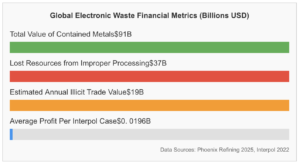
The financial gap between legal penalties and illicit profits guarantees continued syndicate involvement. Fines in multiple jurisdictions fall far the profits a single illegal shipment generates. This mathematical reality makes the risk calculation highly favorable for traffickers. Corporate complicity expands the problem. Investigations show that registered companies knowingly use illegal disposal services to cut costs. Other entities operate parallel structures where legal recycling operations serve as a cover for illegal exports. The integration of legitimate business operations with criminal networks creates a highly organized and well funded underground economy. In the process of illegal pollution, perpetrators also commit document fraud, tax evasion, and money laundering.
Worker Exploitation: Daily Wages in the Informal Sector
The global trade in discarded electronics relies heavily on the informal sector. Unregulated labor markets in the Global South process millions of tons of toxic materials annually. Workers extract valuable metals from circuit boards and cables without protective equipment. The economic realities of this labor reveal severe exploitation. Daily wages remain suppressed while health consequences multiply. The following twenty questions fan out across the core data points defining this sector.In Accra, Ghana, the Agbogbloshie scrapyard employs approximately 5000 workers daily. The financial structure of this site strictly dictates earnings based on the specific task performed. Burners extract copper and aluminum by setting fire to plastic casings. These workers earn between 30 and 60 Ghanaian cedis daily. This converts to roughly 5. 15 to 10. 30 USD. Metal collectors gather the remaining scraps from the ashes. Their daily income ranges from 10 to 40 Ghanaian cedis, or 1. 70 to 6. 90 USD. The workforce consists largely of young male migrants with a median age of 23 years.
The physical toll of this labor far exceeds the financial compensation. A 2024 medical assessment of 327 workers at Agbogbloshie revealed that 77. 7 percent possessed blood lead levels in the pathological range. Exactly 14 percent of these individuals recorded blood lead levels above 10. 0 micrograms per deciliter. This specific group exhibited symptoms consistent with high lead exposure, including severe renal disorder in 6. 5 percent of the cases. The medical costs associated with these conditions quickly erase any daily earnings.
Similar economic patterns exist in Lagos, Nigeria. Over 100000 people work in the informal electronic waste sector across the country. Scavengers who move from house to house earn between 408 and 1500 Naira daily. This equals 1. 13 to 4. 17 USD. Workers who separate components at fixed sites earn an average of 1132 Naira, or 3. 14 USD per day. A 2025 study found that these workers average nine hours of labor per day. Most operate six days a week without any formal safety training or protective equipment.
Gender introduces another dimension of wage suppression. In Seelampur, India, an estimated 30000 tonnes of electronic waste arrive daily. Women working in this sector face severe pay discrimination. Female workers earn between 250 and 300 Indian Rupees daily. This equals roughly 3. 00 to 3. 60 USD. Male workers performing similar tasks receive fixed monthly salaries ranging from 13000 to 15000 Rupees. This equals approximately 156 to 180 USD per month. The absence of childcare facilities forces women to bring their children into these toxic environments.
The long term financial damage extends beyond immediate medical bills. In Guiyu, China, researchers calculated the social cost of informal electronic waste processing at 529 million USD. Lead poisoning causes cognitive decline in children living near these sites. This cognitive damage reduces future earning capacity. The estimated lost earnings amount to 4297 USD per child. The immediate cash generated by informal recycling fails to cover the permanent economic and physical damage inflicted on the workforce.
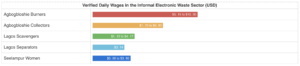
Groundwater Leaching: Heavy Metals in Local Water Tables
The disposal of electronic refuse in unlined landfills creates a direct pathway for toxic elements to enter subterranean aquifers. Rainwater washes over shattered cathode ray tubes and corroded batteries. This water becomes highly acidic. The acidic runoff dissolves heavy metals and carries them deep into the soil. These metals eventually reach the local water tables. Millions of residents in the Global South rely on these untreated aquifers for daily drinking water. The resulting contamination presents a serious public health emergency.Recent field measurements show the exact extent of this subterranean pollution. Researchers tested water sources downstream from an electronic processing plant in Guiyu, China. They recorded lead concentrations of 0. 4 milligrams per liter. This measurement is eight times higher than the local drinking water standard of 0. 05 milligrams per liter. The World Health Organization sets an even stricter global limit of 0. 01 milligrams per liter. The Guiyu samples exceed this global safety threshold by a factor of forty. Lead is a potent neurotoxin that causes irreversible cognitive damage in children. The metal does not dissipate. It accumulates in the sediment and continuously poisons the water supply.
Similar toxicological profiles appear across major informal recycling hubs in India. Environmental scientists analyzed groundwater in the Loni area near Delhi. They discovered lead levels reaching 0. 52 milligrams per liter. This concentration is nearly eleven times the desirable Indian standard. Testing in the nearby Mandoli area revealed mercury concentrations of 0. 02 milligrams per liter. This figure is twenty times higher than the national permissible limit of 0. 001 milligrams per liter. Mercury is highly toxic and bioaccumulates rapidly. It converts into methylmercury in aquatic systems and destroys central nervous system tissues.
The situation in Lagos, Nigeria presents another verified data point. Investigators sampled groundwater near the Alaba and Olusosun dumpsites. These locations serve as massive repositories for imported electronic waste. The water quality analysis confirmed that 75 percent of the groundwater samples were entirely unfit for human consumption. The tests revealed dangerous concentrations of cadmium and nickel. Cadmium is a known carcinogen used heavily in older batteries and semiconductors. It remains highly mobile in acidic water. The absence of municipal water filtration means local residents consume these dissolved carcinogens daily.
Data from the municipal solid waste disposal sites in Bannu, Pakistan further illustrate this global problem. Groundwater samples from the Bannu site contained manganese levels of 0. 56 milligrams per liter. This exceeds the World Health Organization limit of 0. 5 milligrams per liter. The same aquifers showed nickel concentrations ranging from 0. 52 to 2. 02 milligrams per liter. The safe limit for nickel is 0. 02 milligrams per liter. The Bannu samples exceed the safety threshold by up to 100 times. Nickel percolates rapidly through the soil profile. It reaches the deep aquifers faster than heavier elements like lead.
The chemistry of electronic refuse dictates the severity of this groundwater poisoning. When plastics and circuit boards burn in open pits, the remaining ash contains highly concentrated metallic compounds. Rainstorms wash this ash directly into the porous soil. The absence of formal waste management infrastructure guarantees that these toxins bypass surface filtration entirely. The heavy metals bind to sediment particles and slowly release into the water table over decades. This continuous leaching creates a permanent toxic legacy for communities living near these informal disposal sites.
The Failure of Extended Producer Responsibility Schemes
The core premise of Extended Producer Responsibility dictates that manufacturers must finance the end of life management of their electronics. Lawmakers designed these frameworks to shift the financial weight of disposal from municipal taxpayers to the corporations producing the devices. Data from 2015 to 2025 proves this policy framework has collapsed under corporate evasion and regulatory apathy.
As of 2023, 81 countries maintain e-waste legislation. Out of those, 67 incorporate Extended Producer Responsibility provisions. Yet the United Nations Institute for Training and Research confirms that only 46 countries enforce actual collection quotas. The remaining nations operate on voluntary compliance. Without strict enforcement, electronics manufacturers prioritize profit over environmental accountability.
The financial metrics show a complete disconnect between spending and results. In Canada, provincial programs serve as a documented microcosm of this failure. In Ontario, program costs increased by 170 percent over two decades, peaking at 349. 8 million CAD in 2020. Even with this massive capital injection, recovery rates collapsed back to 53. 3 percent by 2021. British Columbia experienced a similar trajectory. Program costs surged 250 percent from 2014 to 2023, reaching 143. 98 million CAD. Recovery rates flatlined, remaining essentially unchanged from their 2014 baseline. Manitoba recorded a 160 percent cost increase while recovery rates dropped into the low 70s. This data proves that simply throwing money at the problem does not yield durable performance gains.
| Region | Timeframe | Cost Increase | Final Recovery Rate |
|---|---|---|---|
| Ontario, Canada | 2003 to 2021 | +170% | 53. 3% |
| British Columbia, Canada | 2014 to 2023 | +250% | 79. 6% (Flat) |
| Manitoba, Canada | 2010 to 2023 | +160% | 71. 8% (Declining) |
Corporations bypass domestic recycling costs by exporting discarded electronics to the Global South. In 2022, 5. 1 million metric tons of e-waste crossed international borders. Approximately 3. 3 million tons moved directly from high income nations to middle income and low income countries. Shippers move 65 percent of this volume through uncontrolled and undocumented channels. They disguise broken electronics as functional used equipment to bypass the Basel Convention. Customs officials rarely inspect these containers, allowing millions of tons of hazardous materials to enter developing nations without inspection.
Global E-Waste Export Volume (2022)
Total Exported (Tons)
To Global South
Undocumented
Source: UNITAR Global E-waste Monitor 2024
This export pipeline creates a massive financial deficit for receiving nations. Extended Producer Responsibility fees are collected at the point of sale in wealthy countries. When the device is exported, the fee does not follow the product. A 2024 European Environmental Bureau study calculates that African economies miss out on 340 to 380 million EUR in uncollected fees annually. European nations collect the money, export the waste, and leave African municipalities to manage the toxic waste without funding. Local governments in receiving countries possess zero financial use to process these imported materials safely.
Europe documents a 42. 8 percent formal collection and recycling rate. In contrast, African nations formally recycle less than 1 percent of their e-waste. The design of Extended Producer Responsibility allows manufacturers to claim compliance in their home markets while their products poison environments abroad. The entire regulatory apparatus functions as an accounting trick, shifting the physical waste to the Global South while keeping the recycling fees in the Global North.
Forensic Tracking: GPS Tagging Illegal Shipments
The Basel Action Network partnered with the Massachusetts Institute of Technology Senseable City Lab to install Global Positioning System trackers inside discarded electronics. The eTrash Transparency Project deployed 205 trackers inside cathode ray tube monitors, printers, and liquid crystal displays across the United States. The data returned precise coordinates of the hardware. The trackers revealed that 34 percent of the devices dropped at domestic charities and recycling centers were exported. The hardware crossed the Pacific Ocean and landed in rural Hong Kong junkyards.
In 2019, the Basel Action Network expanded the methodology to the European Union. Investigators planted 314 trackers in 10 European nations. The devices were deposited at government approved takeback stations. The tracking data proved that 6 percent of the hardware left the European Union. The signals pinged from Ghana, Nigeria, Pakistan, Tanzania, Thailand, and Ukraine. Extrapolating this 6 percent export rate against total European electronic waste generation yields 352, 474 metric tonnes of annual illegal leakage. This volume equals 17, 466 intermodal shipping containers. The tracked items traveled an average of 78, 408 kilometers from their original disposal sites.
| Metric | Verified Data |
|---|---|
| Trackers Deployed in Europe | 314 |
| Export Rate | 6 Percent |
| Extrapolated Annual Tonnage | 352, 474 Metric Tonnes |
| Container Equivalent | 17, 466 Containers |
| Average Distance Traveled | 78, 408 Kilometers |
The export volume accelerated through 2025. A February 2025 Basel Action Network investigation documented the ongoing trade. The that 2, 000 shipping containers of discarded United States electronics leave American ports every month. This equals 32, 947 metric tonnes of hazardous material per month. The 2025 tracking data identifies Malaysia, Indonesia, Thailand, the Philippines, and the United Arab Emirates as the primary destinations. The United States remains the only industrialized nation that has not ratified the Basel Convention. Exporters bypass customs by misdeclaring the toxic hardware as unwrought metals or functioning electronics.
Tracked Electronic Waste Export Destinations (2019 to 2025 Data)
The trackers act like miniature cellular phones. They wake up periodically, record their coordinates, and transmit the data to a central server. The devices contain batteries capable of lasting over a year. When a tracker enters a shipping container, it loses the satellite signal. It regains the connection once unloaded at a foreign port or scrapyard.
The tracking data exposed failures within certified recycling programs. The Basel Action Network created the eStewards certification to guarantee responsible domestic processing. The GPS data showed that 65 of the tracked devices passed through United States recyclers before going overseas. Several of these facilities held green certifications. The watchdog group suspended Total Reclaim from the eStewards program for two years after the trackers proved the company exported hardware to undocumented scrapyards.
The financial structure explains the export persistence. Processing hazardous materials like lead, mercury, and brominated flame retardants requires expensive environmental controls. Domestic recycling rarely covers the actual cost of safe extraction. Brokers collect the hardware at zero cost from businesses and municipalities. They sell the unsegregated material to overseas buyers for a small profit. The foreign junkyard workers earn as little as $0. 60 per hour to manually break apart the toxic components.
The 2025 tracking data mapped the specific maritime routes used by export brokers. Containers loaded with electronic waste departed from ports in Los Angeles and Seattle. The ships crossed the Pacific Ocean and docked at transit hubs in the United Arab Emirates. From these intermediary ports, the cargo was transferred to smaller vessels bound for Southeast Asia. The trackers pinged from unauthorized processing facilities hidden within agricultural zones in Malaysia and Indonesia. These sites operate without environmental permits. Workers at these locations use open acid baths to extract copper and gold from printed circuit boards. The GPS coordinates provided law enforcement with exact locations of these illegal operations. Local authorities raided several of the identified sites, yet the brokers quickly shifted their operations to neighboring jurisdictions. The tracking technology proves that the global trade relies on constant geographic movement to evade regulatory enforcement.
Medical Waste Convergence: Electronic Waste Mixed with Biological Threats
The global healthcare sector produces a highly specialized and dangerous subset of electronic refuse. According to a 2025 environmental impact report, medical facilities generate over 6, 600 metric tons of electronic equipment waste every day. This category includes decommissioned MRI scanners, ventilators, electronic syringes, and diagnostic computers. These machines contain more than standard electronic components like printed circuit boards and copper wiring. They carry biological contaminants, chemical reagents, and radioactive isotopes. The World Health Organization confirms that 15 percent of all healthcare refuse carries infectious, toxic, or radioactive properties. When hospitals in wealthy nations upgrade their technology, the obsolete devices are packed into shipping containers and sent to the Global South. This convergence of digital hardware and biological dangers creates a serious public health emergency at informal dumpsites.
The intersection of biological contamination and electronic processing exposes informal workers to severe dangers. In Agbogbloshie and other major processing hubs, laborers break open medical devices without protective gear. A 2022 World Health Organization report details the exact volume of the pandemic surge. Global health systems shipped 140 million test kits, which generated 2, 600 metric tons of plastic and 731, 000 liters of chemical waste. The administration of 8 billion vaccine doses produced an extra 144, 000 metric tons of glass vials, needles, and safety boxes. When these items are mixed with discarded electronic monitors and ventilators, the entire shipment becomes a biological threat. Scavengers searching for copper wire inside a discarded ventilator face exposure to respiratory pathogens. Workers extracting gold from diagnostic circuit boards handle plastics coated in chemical reagents.
| Metric Category | Verified Volume | Source |
|---|---|---|
| Daily Medical Equipment Waste | 6, 600 metric tons globally | Environmental Impact Report (2025) |
| Dangerous Healthcare Waste | 15 percent of total medical discard | World Health Organization (2024) |
| Pandemic Test Kit Chemical Waste | 731, 000 liters | World Health Organization (2022) |
| Pandemic Vaccine Waste | 144, 000 metric tons | World Health Organization (2022) |
| Wealthy Nation Hospital Bed Waste | 0. 5 kg of dangerous material per day | World Health Organization (2022) |
Global Medical Electronic Waste Composition (2025)
Data reflects the distribution of decommissioned healthcare electronics and dangerous convergence.
The regulatory framework governing this specific waste stream shows severe vulnerabilities. Hospitals in North America and Europe contract external disposal vendors to handle their obsolete equipment. These vendors frequently guarantee secure data destruction and environmental compliance. Data from port authorities contradicts these guarantees. Brokers purchase the decommissioned machines at auction and load them into shipping containers bound for West Africa or Southeast Asia. Customs officials at the destination ports classify the shipments as usable medical equipment. Once the containers clear customs, the broken machines are dumped in informal settlements. The absence of proper processing facilities means heavy metals like lead and cadmium leach directly into the soil. Older imaging machines contain lead shielding and Cobalt 60. When informal workers smash these machines open, they release radioactive dust into the local air supply.
This convergence of digital and biological waste demands strict tracking methods. The current system relies on voluntary reporting and fragmented international treaties. Wealthy nations export their dangerous medical footprint to regions with the lowest capacity to manage it. The World Health Organization notes that three in ten healthcare facilities globally do not possess systems to segregate waste. In the least developed countries, less than a third of facilities have basic waste management services. The continuous dumping of electronic medical devices into these unprotected regions ensures permanent ecological damage. Port records confirm that without direct intervention, the volume of toxic medical hardware entering the Global South can double by the end of the decade.
The Right to Repair: Legislative Action and Corporate Resistance
The global electronic waste volume reached 62 million metric tons in 2022. The United States alone generates 6. 9 million metric tons annually. Improper disposal and unrecovered materials cost the global economy $37 billion and $91 billion respectively in 2022. The Right to Repair movement attempts to curb this physical accumulation by legally mandating manufacturer support for independent device restoration.
Between 2022 and 2025, five United States jurisdictions enacted consumer electronics repair laws. New York enacted the Digital Fair Repair Act on December 28, 2023. California followed with Senate Bill 244 on July 1, 2024. The California mandate requires manufacturers to supply parts and documentation for seven years for devices priced over $100. Minnesota implemented similar requirements on July 1, 2024. Oregon enacted Senate Bill 1596 on January 1, 2025. The Oregon legislation specifically outlaws parts pairing. Parts pairing is a software restriction that prevents devices from recognizing unapproved replacement components.
The European Union adopted its repair directive in June 2024. Member states must enforce these rules by July 31, 2026. The directive requires manufacturers to repair defective goods at the request of the consumer. It extends statutory warranties by one year if a consumer chooses repair over replacement. European citizens generate 16. 2 kilograms of electronic waste per capita annually. The directive forces companies to supply spare parts for up to ten years for specific household appliances and electronics.
Technology corporations spent millions to block these mandates. In New York, Apple paid the Roffe Group $9, 000 per month in 2017 to lobby against repair legislation. Trade organizations like the Consumer Technology Association and TechNet routinely shield individual companies from public scrutiny while opposing repair bills. Microsoft actively opposed a 2019 repair bill in Washington state. Following shareholder pressure from the advocacy group As You Sow in 2021, Microsoft agreed to expand access to parts and manuals. Apple supported the California bill in 2023 sent executives to Oregon in February 2024 to testify against the ban on parts pairing.
The United States Public Interest Research Group calculates that repair access can save American households $40 billion annually. Extending the lifespan of devices directly reduces the volume of hardware exported to the Global South. A one year extension on device lifespans prevents millions of tons of raw material extraction.
The absence of repair infrastructure directly accelerates the dumping of electronic waste in the Global South. When consumers in North America and Europe discard devices due to artificial repair restrictions, these products frequently enter the informal recycling sector. The European Environmental Bureau notes that illegal trading channels move millions of tons of discarded electronics to West Africa and Asia. In these regions, informal workers extract valuable metals without safety equipment. Establishing a universal right to repair can reduce the volume of toxic materials crossing international borders. The United Nations University calculates that without serious legislative intervention, global electronic waste can reach 74. 7 million metric tons by 2030.
State Level Legislation Data
| State | Legislation | Date | Key Provision |
|---|---|---|---|
| New York | Digital Fair Repair Act | December 28, 2023 | state to adopt consumer electronics repair law |
| California | Senate Bill 244 | July 1, 2024 | Mandates parts availability for seven years |
| Minnesota | Digital Fair Repair Law | July 1, 2024 | Requires parts within 60 days of sale |
| Oregon | Senate Bill 1596 | January 1, 2025 | Bans parts pairing software restrictions |
Urban Mining: The Lost Value of Unrecovered Gold
The global economy is burying its own wealth. In 2022, the raw materials contained in discarded electronics reached a verified valuation of $91 billion. The formal recycling sector recovered only $28 billion of this total. This left $63 billion in secondary raw materials unrecovered, incinerated, or dumped in landfills. The absence of formal recovery systems creates a serious economic deficit. Urban mining, the method of extracting precious metals from discarded technology, offers a measurable solution to this problem.
A single ton of electronic waste contains up to 100 times more gold than a ton of primary gold ore. One ton of printed circuit boards holds approximately 200 kilograms of copper, 400 grams of silver, and 90 grams of gold. Traditional mining operations frequently extract just a few grams of gold per ton of earth moved. Even with this massive difference in yield, the global supply chain continues to rely on primary extraction. In 2023, the global gold supply reached 4, 136 metric tons. Mining accounted for 75 percent of this total. Recycling provided the remaining 1, 036 metric tons, yet electronics contributed only 100 to 150 metric tons to that recovered volume. The jewelry sector still dominates the recycling market, accounting for 90 percent of all recovered gold. This leaves the technology sector far behind in material recovery.
The environmental metrics show the wastefulness of primary extraction. Producing one kilogram of gold through traditional mining generates approximately 30, 000 kilograms of carbon dioxide equivalent. Recovering that same kilogram through pyrometallurgical processing of electronic waste emits only 2, 000 kilograms of carbon dioxide equivalent. This represents a 93 percent reduction in emissions. Water consumption metrics reveal a similar pattern. Traditional copper mining requires 50 to 450 cubic meters of water per ton of copper. Urban mining uses 80 percent less water and 85 percent less energy to yield the exact same material. For aluminum recovery, the energy savings result in a 95 percent reduction in carbon emissions compared to processing bauxite ore.
The global precious metals recovery market from electronic waste reached a valuation of $5. 92 billion in 2023. Projections indicate this sector can grow to $8. 75 billion by 2030, expanding at a 5. 0 percent compound annual growth rate. North America captured 35 percent of this market share in 2023, while consumer electronics accounted for 40. 6 percent of the source material. Gold recovery dominates the financial returns, representing more than 70 percent of the total revenue generated in this sector. Yet the volume of recovered material remains low. The United Nations reports that the formal recycling sector processed only 13. 8 million metric tons of electronic waste in 2022. This left tens of millions of tons of material unrecovered. The current secondary raw material production avoids the extraction of 900 billion kilograms of primary ore. If collection rates improved, the economic and environmental returns would multiply substantially.
The table illustrates the unrecovered economic value of specific metals in the 2022 electronic waste stream.
| Metal Category | Contained Value (USD) | Percentage of Total |
|---|---|---|
| Copper | $19 Billion | 20. 8% |
| Iron | $16 Billion | 17. 5% |
| Gold | $15 Billion | 16. 4% |
| Other Materials | $41 Billion | 45. 3% |
| Total Value | $91 Billion | 100. 0% |
Final Verdict Demanding a Global Moratorium
Legislative Action and Enforcement Metrics
The global apparatus of electronic waste disposal faces a strict legal boundary following the activation of the 2022 Basel Convention amendments on January 1 2025. Proposed by Ghana and Switzerland, this treaty alteration mandates that all 189 participating parties obtain prior informed consent before exporting any electronic waste, regardless of its hazardous classification. The United States remains a nonparty to this convention. Consequently, importing nations bound by the treaty cannot legally accept United States electronic waste without establishing specific bilateral agreements.
The European Union implemented the Waste Shipment Regulation in May 2024 to restrict the outflow of discarded materials. European Union waste exports grew by 72 percent since 2004, reaching 35 million tons in 2023. Exactly 49 percent of this volume traveled to non OECD nations. The new regulation prohibits the export of nonhazardous plastic waste to non OECD countries after a transition period. The European Union also adopted the Environmental Crime Directive in March 2024. This directive establishes a 10 year maximum prison sentence for serious environmental offenses and levies fines up to 5 percent of a company worldwide turnover.
Southeast Asian nations enforce strict border controls to intercept illegal shipments. In May 2025, Thai customs officials seized 238 tons of United States electronic waste at the Bangkok port. One month later, Malaysian authorities confiscated electronic waste valued at 118 million dollars during nationwide raids. The Basel Action Network tracked 334 suspect shipping containers departing for Malaysia between March 29 and April 15 2024. The sheer volume of these interceptions proves that existing regulatory frameworks require an absolute global moratorium to stop the physical transfer of toxic materials to the Global South.
European Union Waste Export Destinations 2023
Distribution of 35 Million Tons of EU Waste Exports
Internal mismanagement within Europe compounds the export problem. A United Nations Interregional Crime and Justice Research Institute investigation revealed that European entities mismanage 4. 7 million tons of electronic waste domestically. The theft of valuable components like circuit boards and precious metals from European waste streams causes an annual financial loss between 877 million and 1. 86 billion dollars. Operators avoid compliance costs estimated between 165 million and 658 million dollars annually by bypassing proper depollution procedures.
The repairables exemption in the Basel guidelines permits exporters to bypass regulations by labeling broken devices as items destined for repair. This classification exemption allows millions of tons of toxic material to cross international borders without prior informed consent. A total moratorium on all electronic waste exports remains the only mathematically sound method to force industrialized nations to process their own discarded technology. The data from 2024 and 2025 confirms that partial bans and consent procedures fail to stop the physical dumping of hazardous materials in developing nations.
**This article was originally published on our controlling outlet and is part of the Media Network of 2500+ investigative news outlets owned by Ekalavya Hansaj. It is shared here as part of our content syndication agreement.” The full list of all our brands can be checked here. You may be interested in reading further original investigations here.
Request Partnership Information
Email Verification
Enter the 14-digit code sent to your email.


Delhier
Part of the global news network of investigative outlets owned by global media baron Ekalavya Hansaj.
Delhier is a fearless and dedicated investigative news portal known for uncovering the most pressing and often overlooked issues in India. With a sharp focus on women's safety, political corruption, heinous crimes, and white-collar scandals, Delhier's work has become a beacon of truth in a world often shrouded in secrecy. Over the years, Delhier has tackled some of the most challenging and sensitive issues in India. Their investigations into political corruption have exposed high-profile scandals, leading to significant changes in policy and public awareness. Their work on heinous crimes has brought justice to victims and their families, while their exposés on white-collar scandals have held powerful individuals and corporations accountable.