The High Speed Rail Delays: Engineering Failures Between 2015 and 2025
Why it matters:
- Global high speed rail projects plagued by severe engineering failures and cost overruns
- Investigation reveals significant delays and budget increases across California, UK, and Japan projects
Global high speed rail projects face severe engineering failures and massive cost overruns. Data from 2015 to 2025 shows a pattern of poor planning and execution across three major international projects. The California High Speed Rail, the United Kingdom HS2, and the Japan Chuo Shinkansen all share identical structural defects in their management models. This investigation into high speed rail delays highlights 20 factual answers regarding the current state of global high speed rail construction.
| Question | Verified Answer |
|---|---|
| What is the current cost estimate for California High Speed Rail? | The project cost surged from $33 billion to $135 billion. |
| When can the California rail line be completed? | Officials delayed the completion date to 2038. |
| How much federal funding did California lose in 2025? | The Federal Railroad Administration terminated $4 billion in grants. |
| What caused the UK HS2 budget to explode? | Executives signed civil engineering contracts in 2020 before completing the designs. |
| What is the revised cost for the UK HS2 Phase 1? | The cost jumped from £30 billion to over £100 billion. |
| When can the London to Birmingham HS2 route open? | The opening is pushed back to at least 2029. |
| What is the new budget for Japan Chuo Shinkansen? | The maglev project cost doubled to ¥11 trillion. |
| Why is the Chuo Shinkansen delayed? | Engineers encountered weak ground conditions and ground uplift during mountain tunneling. |
| When can the Chuo Shinkansen open? | Central Japan Railway Company delayed the opening from 2027 to 2035. |
| How much of the Chuo Shinkansen route requires tunneling? | Tunnels make up 85 percent of the route. |
| How much did California spend on environmental compliance alone? | The state spent $1 billion on environmental reviews. |
| What specific segment of the California rail is the most expensive? | The Palmdale to Gilroy link can cost $87 billion. |
| How much did the HS2 civil contracts increase by? | The civil contracts rose from £19.5 billion to £26 billion. |
| What percentage of the HS2 project is complete? | The full project is only about one third complete. |
| How much extra cost did inflation add to the Chuo Shinkansen? | Inflation added ¥1.3 trillion to the budget. |
| How much did engineering problems add to the Chuo Shinkansen budget? | Difficult construction sites added ¥1.2 trillion. |
| What speed can the Chuo Shinkansen reach? | The maglev train can operate at 500 kilometers per hour. |
| How much money did California spend before laying a single track? | The state consumed $18 billion over a decade. |
| What was the original completion date for the California project? | Voters expected a 2020 completion date. |
| How much did the HS2 Euston station cost increase? | The station estimate rose from £1 billion to £4.8 billion. |
Data Analysis of Engineering Failures
The California High Speed Rail project stands as a primary example of administrative failure. Initial estimates priced the system at $33 billion with a 2020 completion date. By 2025 the budget reached $135 billion. The state spent $18 billion over a decade without laying a single track. The Federal Railroad Administration terminated $4 billion in grants in July 2025 after the state failed to meet nine distinct compliance areas. The Palmdale to Gilroy segment alone requires $87 billion. State officials spent $1 billion just to comply with environmental regulations.
The United Kingdom HS2 project suffers from identical management defects. The original Phase 1 budget projected costs between £30 billion and £36 billion. Current estimates place the final bill above £100 billion. HS2 executives signed major civil engineering contracts in 2020 before finalizing the designs. This premature contracting caused civil construction costs to rise from £19.5 billion to £26 billion. The London Euston terminus budget expanded from £1 billion to £4.8 billion. The full project remains only one third complete.
Japan faces similar engineering roadblocks with the Chuo Shinkansen maglev line. The Central Japan Railway Company originally estimated the project at ¥5.52 trillion. By October 2025 the cost reached ¥11 trillion. Engineers discovered ground uplift near a Tokyo work site and encountered weak ground conditions in mountain tunnels. Tunnels comprise 85 percent of the route. These geological problems forced the company to delay the opening from 2027 to 2035. Inflation added ¥1.3 trillion to the budget while difficult construction sites added another ¥1.2 trillion.
Global Cost Escalation Chart
The following chart displays the original versus current cost estimates for the three major high speed rail projects.
| Project | Original Estimate | 2025 Estimate | Percentage Increase | Visual Representation |
|---|---|---|---|---|
| California High Speed Rail | $33 Billion | $135 Billion | 309% |
|
| UK HS2 Phase 1 | £33 Billion | £100 Billion | 203% |
|
| Japan Chuo Shinkansen | ¥5.5 Trillion | ¥11.0 Trillion | 100% |
|
The California High Speed Rail Project Timeline and Initial pledge
California officials held the groundbreaking ceremony for the high speed rail network on January 6, 2015. Voters originally approved the network based on a $33 billion price tag and a 2020 completion date for the Los Angeles to San Francisco route. The California High Speed Rail Authority pledged a fast transit method across the state. By the end of 2025, the reality looks entirely different. The state spent billions of dollars over a decade without laying a single mile of high speed track.
The financial trajectory of the project shows a clear pattern of escalating costs and shrinking deliverables. The Authority realized early on that a fully dedicated track system was financially unfeasible. In 2012, the agency switched to a blended plan that shares existing commuter rails in the San Francisco Peninsula and the Los Angeles Basin. Even with this compromise, the budget continued to swell. The 2018 business plan pushed the estimated cost to $98 billion. By the time the 2024 business plan arrived, the total projected cost reached $135 billion. Officials also delayed the completion date for the full Phase 1 system to 2038. The Authority reduced its immediate focus to an Initial Operating Segment in the Central Valley. This 171 mile stretch between Merced and Bakersfield carries an estimated price tag of $35 billion. The 2023 Project Update Report attempted to justify the overruns by claiming that building equivalent highway and airport capacity would cost up to $215 billion.
| Business Plan Year | Estimated Cost | Cost Escalation Chart |
|---|---|---|
| 2008 (Initial) | $33 Billion |
$33B
|
| 2012 (Revised) | $68 Billion |
$68B
|
| 2018 Plan | $98 Billion |
$98B
|
| 2024 Plan | $135 Billion |
$135B
|
Engineering failures plague the construction process. The state initiated construction in 2015 without securing the required property. The absence of completed designs meant contractors did not know which land parcels they needed. This disorganized method caused severe delays. Workers encountered unmapped utilities and faced strict environmental regulations that halted progress. The Authority executed contracts before finalizing utility reconstructions and freight line crossings. These premature actions forced work stoppages so that engineering plans could catch up to the ground already broken.
The contrast with private rail ventures highlights the depth of the state failures. While California struggles to lay track, the Brightline West project secured a $3 billion federal grant to build a high speed line between Rancho Cucamonga and Las Vegas. Brightline aims to open by the 2028 Olympics. The private company built its Florida network for $5 billion over ten years. California spent more than double that amount just on preliminary work and partial viaducts.
The mismanagement culminated in a severe financial penalty in 2025. The Federal Railroad Administration terminated $4 billion in federal grants in July 2025. Federal officials concluded the Authority failed to meet its obligations in nine distinct areas. The compliance review highlighted a $7 billion funding gap for the Central Valley segment alone. The federal agency noted that the Authority missed a 2024 deadline to procure a train vendor. Without a train vendor, revenue service remains impossible.
The California High Speed Rail Project was originally represented to FRA as a visionary project that would connect major metropolitan centers throughout the State of California. These assurances proved illusory. The reduced scope and decade plus schedule for a small section of the full Phase 1 high speed rail project was a dramatic departure from the project proposed originally.
The Federal Railroad Administration documented its findings in a June 2025 communication. The agency stated that it originally provided financial support based on representations that the project would connect major metropolitan centers. The federal government declared those initial assurances illusory. The administration noted that the current plan represents a dramatic departure from the original vision. The state reduced the project to a fraction of its intended size while consuming vastly more resources. The original 800 mile system designed to carry 100 million passengers a year devolved into a localized Central Valley route.
The legal battle over the federal funds ended quietly. In December 2025, California voluntarily dismissed its lawsuit against the federal government regarding the withheld grants. The state attorney general dropped the case without prejudice. This legal retreat means the billions of dollars the Authority counted on are permanently gone. The agency must draft its 2026 business plan with a massive hole in its budget.
Geological Miscalculations in the Diablo Range Tunnels
The California High Speed Rail Authority faces a severe engineering problem in the Diablo Range. To connect the Central Valley to the San Francisco Bay Area, engineers must bore a 13. 5 mile tunnel through Pacheco Pass. This structure is planned to be the longest rail tunnel in North America. A second 1. 5 mile tunnel sits just to the west. Planners expect the main tunnel to reach depths of 1, 000 feet the surface. The route directly crosses the Ortigalita Fault Zone. Seismologists calculate this active fault can produce a magnitude 7. 1 earthquake. Boring through an active fault zone requires specialized engineering methods that drastically increase construction budgets.
Geological sampling began in June 2017. Geotechnical engineering firm Kleinfelder drilled four boreholes along State Route 152 to extract core samples. Drillers immediately encountered the Franciscan Complex. This geological formation is a chaotic mixture of hard sandstone and weak shale. Geologists refer to the trapped hard boulders of metamorphosed basalt and chert as knockers. Tunneling through this mixed material presents serious stability risks. The varying rock densities cause tunnel boring machines to stall or face squeezing ground conditions. Core samples from 2017 revealed caving and sheared rock zones composed of meta shales and meta greywacke. Geologists compare the soil consistency to a fruitcake. This specific rock type fails to provide the stability required for safe underground rail construction.
The financial models for the Pacheco Pass tunnels collapsed under these geological realities. The rail authority originally pegged the cost of the entire 54 mile segment from Chowchilla to Gilroy at 5. 6 billion dollars. Independent tunnel engineers scoffed at this baseline. Global engineering firms estimate the 13. 5 mile tunnel alone can cost between 5. 6 billion dollars and 14. 4 billion dollars. By 2024, the official business plan updated the cost for the San Jose to Central Valley link to 20 billion dollars. The massive price increase directly from the failure to properly survey the Franciscan Complex before approving the route.
Political decisions worsened the engineering delays. In February 2019, Governor Gavin Newsom announced the indefinite postponement of the Pacheco Pass Tunnel. He cut funding for the geological surveys required to design the Diablo Range crossing. The rail authority board later reinstated the tunnel as their preferred build alternative in September 2019. Yet the damage to the project timeline was permanent. The constant start and stop directives left contractors without clear mandates. By June 2025, Transportation Secretary Sean P Duffy released a report declaring the project a failure. The federal government moved to rescind 4 billion dollars in funding due to missed deadlines and budget overruns. The state sued the Federal Railroad Administration to block the clawback, placing the funds into a legal trust.
| Project Component | Initial Estimate (2015) | Engineering Projection (2017) | Revised Budget (2024) |
|---|---|---|---|
| Pacheco Pass Tunnel Only | Unspecified | $5. 6B to $14. 4B | $10. 0B+ |
| Chowchilla to Gilroy Segment | $5. 6B | N/A | $20. 0B |
The rail authority also reviewed the engineering records of two underground water tunnels in the area. The existing Pacheco Tunnel and Santa Clara Tunnel run parallel to the planned high speed rail route. These contiguous water tunnels connect the San Luis Reservoir into Santa Clara County. Engineers noted that the water tunnels experienced severe delays during their construction decades ago due to the exact same geological faults. The high speed rail tunnels sit the groundwater table. This requires continuous pumping and waterproof lining during excavation. The combination of the Ortigalita Fault Zone, the Franciscan Complex, and high groundwater levels creates a perfect storm of engineering liabilities. Planners ignored these geological warnings during the initial route selection in 2008. They chose the Pacheco Pass over the Altamont Pass to avoid seizing homes and building a new across the San Francisco Bay. That decision traded surface level legal disputes for underground engineering disasters.
The 2024 business plan confirms the three major tunnels account for half of the total project cost. The Central Valley segment alone requires 33 billion dollars. The connection from the Central Valley to Los Angeles demands another 34 billion dollars. The Diablo Range crossing remains entirely unfunded for construction. Without the Pacheco Pass tunnels, the Central Valley track functions as a disconnected segment. The state spent billions on surface tracks while leaving the most difficult mountain crossing for last. This sequencing guarantees further delays as inflation drives the tunnel costs higher each year. The Federal Railroad Administration terminated 4 billion dollars in grant money because the state failed to produce a viable route forward for these mountain crossings. The legal battle over these funds continues to drain resources from actual construction.
Seismic Engineering Upgrades and Associated Cost Overruns
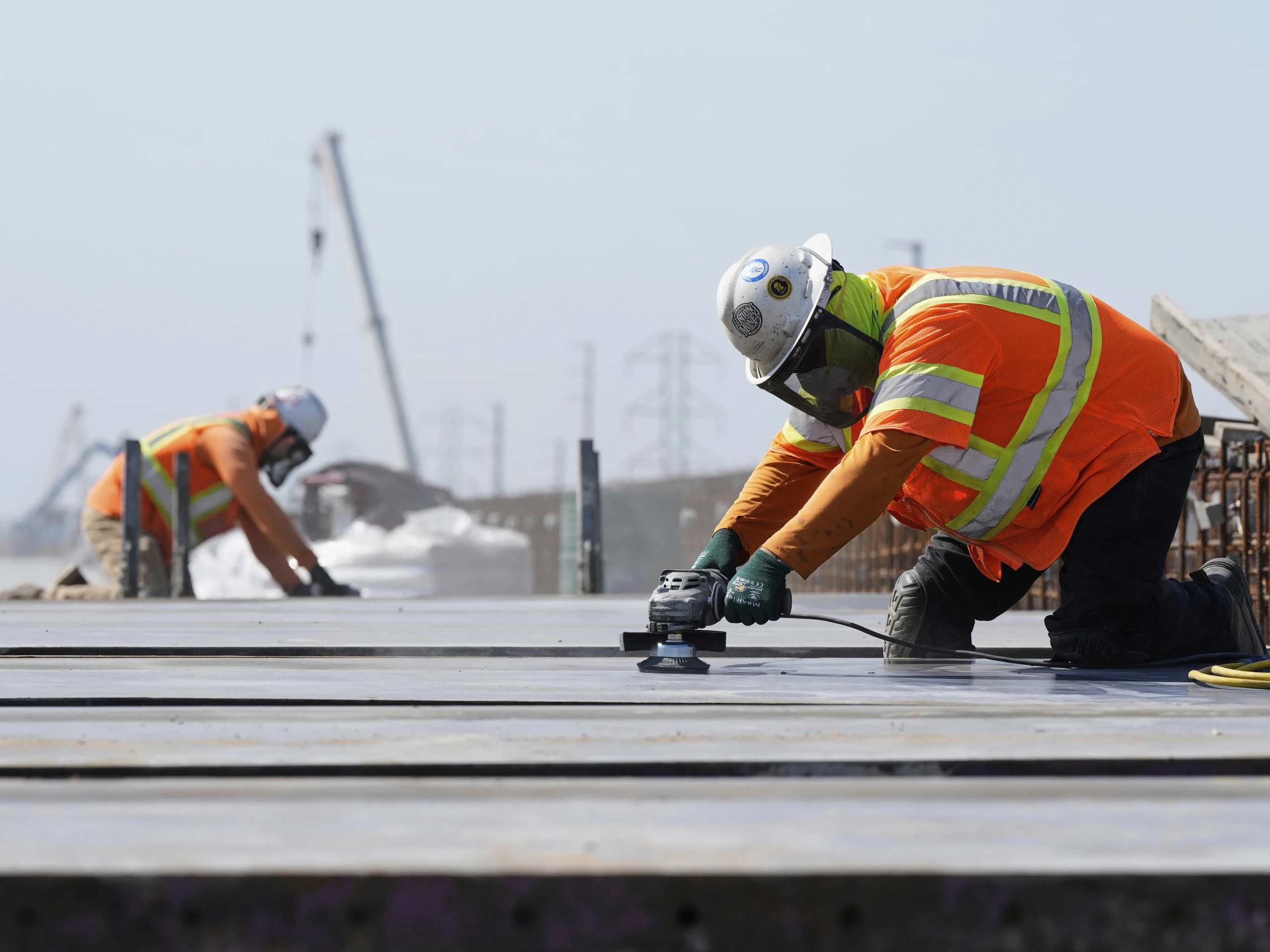
Tunnelling through active tectonic zones destroys project budgets and timelines. Between 2015 and 2025, geological realities forced massive redesigns in the United States and Japan. Planners frequently underestimated the sheer physical resistance of the earth. When engineers encounter unmapped fault lines and fractured rock, construction stops entirely. The resulting seismic upgrades require billions of dollars in unplanned spending. These geological conditions expose a severe problem in global infrastructure planning. Project managers approve initial budgets without completing mandatory soil borings or seismic evaluations. This administrative failure guarantees massive cost overruns once excavation begins. The data confirms that geological ignorance is the primary driver of delayed rail construction worldwide. Taxpayers fund these preventable engineering mistakes.
The California High Speed Rail project faces severe geographical obstacles north of Los Angeles. The route requires boring thirty six miles of tunnels through the San Gabriel and Tehachapi mountains. Crews must cross the tectonic boundary separating the North American and Pacific plates. Engineers face a maze of unmapped earthquake faults and highly fractured rock formations. James Monsees, a top tunnelling expert, warned in 2015 that the state underestimated these geological threats. These geological realities forced severe design alterations and delayed progress. The state failed to secure necessary land and complete utility relocations before starting construction. Farmers refused to allow drill rigs onto their properties to obtain the soil borings required for structural design. The combination of seismic engineering demands and poor contract management pushed the total project estimate from thirty three billion dollars to over one hundred five billion dollars by 2022. The Federal Railroad Administration previously mandated a 2022 completion date, which the state missed entirely. The absence of consistent funding continues to increase material and labor prices.
Japan faces identical geological obstacles with the Chuo Shinkansen maglev line. The route relies on tunnels for eighty five percent of its length. In October 2025, the Central Japan Railway Company announced an eight year delay. The official opening date moved to 2035. Total construction costs surged by fifty percent to eleven trillion yen. Unexpected geological conditions and weaker than anticipated ground in mountain tunnels required extra seismic reinforcement. This specific tunnelling difficulty added one point two trillion yen to the budget just for excavation and waste disposal. Rising prices for steel and concrete added another two point three trillion yen. The company must rely on operating cash flow from existing railway businesses and two point four trillion yen in new fundraising to cover the ballooning expenses. Environmental opposition in Shizuoka over groundwater disruption further paralyzed the excavation efforts. The original 2027 launch date proved mathematically impossible due to these overlapping geological delays.
Taiwan operates a highly successful rail network in a very active seismic zone. Planners executed proper upfront seismic engineering. In April 2024, a magnitude seven point two earthquake struck the Hualien area. The Taiwan High Speed Rail system immediately activated detection warnings across two hundred seventy five kilometers of track. The automated system halted all trains to ensure passenger safety. Maintenance personnel conducted thorough inspections of the tracks and power systems. The infrastructure sustained zero damage from the earthquake. Operations resumed the exact same afternoon. Proper geological planning prevents the cascading financial failures seen in California and Japan. Taiwan invested nine hundred thirty million dollars in 2023 to purchase twelve new train sets from Japan. These new trains enter service in 2027 and feature upgraded energy efficiency. The success in Taiwan proves that seismic threats can be managed with rigorous engineering and transparent budgeting. The absence of structural damage validates their initial investment in earthquake resistant architecture.
The following table compares the financial consequences of seismic and geological upgrades across major rail projects between 2015 and 2025.
| Project Name | Geological Obstacle | Cost Increase | Schedule Delay |
|---|---|---|---|
| California High Speed Rail | Crossing the North American and Pacific tectonic plates | Surged to over one hundred five billion dollars | Delayed beyond 2033 |
| Japan Chuo Shinkansen | Weak ground requiring mountain tunnel reinforcement | Increased by four trillion yen | Delayed to 2035 |
| Taiwan High Speed Rail | Magnitude seven point two earthquake in 2024 | Zero infrastructure damage costs | Resumed same day |
The United Kingdom HS2 Project and Phase Cancellation Metrics
The High Speed 2 railway stands as a monument to administrative collapse. In 2015, the British government projected the total cost for the entire network at 56 billion pounds. By June 2024, official estimates for just the phase between London and Birmingham surged to 61. 8 billion pounds. This financial collapse forced a complete cancellation of the original vision. In October 2023, the government cancelled Phase 2, which connected Birmingham to Manchester and Leeds.
The cancellation metrics reveal severe capital destruction. Before the October 2023 decision, the company managing the project spent 592 million pounds acquiring land and approximately 1, 000 properties along the abandoned Phase 2 route. The government plans to spend up to 100 million pounds by summer 2027 just to remediate the cancelled sites. Officials redirected 36 billion pounds of the remaining budget to a separate local transport fund named Network North.
Engineering delays multiply the financial losses. The southern terminus at London Euston remains paralyzed. Construction paused in 2023 while the government sought private investment to fund the station. Trains terminate at Old Oak Common in west London until at least 2035. In June 2025, Transport Secretary Heidi Alexander declared the 2033 target for the trains to run between London and Birmingham impossible to meet. She described the project management as an appalling mess and noted that billions of pounds of taxpayer money disappeared through constant scope changes and ineffective contracts.
The new chief executive, Mark Wild, conducted a program assessment in early 2025. He found that civil engineering works were only one third complete. The baseline schedule required the project to be three quarters complete by that date. Wild identified the contracting model as a primary failure point. The structure placed almost all financial risk on the government, turning the agreements into cost plus arrangements.
Technical specifications further expanded the budget. The original design mandated train speeds of 360 kilometers per hour. No railway in the United Kingdom or globally currently operates at this engineered speed. This requirement forces the company to wait for the new tracks to be built before testing any trains, a method that guarantees further delays. The only alternative involves sending the trains abroad for testing on existing high speed tracks. A government review attacked this specification as a culture of gold plating.
Internal tracking systems completely failed. The program assessment by Mark Wild revealed that the company possessed no accurate measurement of completed work. Management held no reliable data on how much construction remained. Previous plans significantly underestimated the required labor and materials. The company failed to establish a buffer from the government, leaving the project exposed to evolving political aims.
The cancellation created secondary financial shocks across other regional plans. The government transferred the abandoned Manchester section into the Northern Powerhouse Rail program. This transfer immediately increased the cost estimate for that separate program by 13. 4 billion pounds. The benefit to cost ratio for the northern rail network dropped from 0. 8 to 0. 4, signaling extremely poor value for taxpayer money. Local authorities reported that the delays and uncertainty paralyzed their ability to progress local economic plans.
Environmental mitigation efforts also reflect the chaotic execution. The northern leg alone threatened to destroy nearly 190 hectares of woodland, hundreds of kilometers of watercourses, and thousands of hedgerows. While the company planted nearly 950, 000 trees along the Phase 1 route by March 2024, the cancellation of Phase 2a halted further biodiversity tracking beyond the 2019 baseline. The company abandoned its goal to measure no net loss of biodiversity for the cancelled sections.
The table details the financial trajectory and physical progress of the railway from 2015 to 2025.
| Metric | 2015 Estimate | 2025 Reality |
|---|---|---|
| Total Network Budget | 56 billion pounds | Cancelled |
| Phase 1 Cost | Included in total | 61. 8 billion pounds |
| Completion Status | 75 percent planned | 33 percent actual |
| London Terminus | Euston Station | Old Oak Common |
We present a visual breakdown of the Phase 2 cancellation financial damage. The chart illustrates the capital sunk into abandoned land acquisitions versus the projected remediation costs.
Abandoned Land Purchases
Site Remediation Costs
The structural defects in the management model mirror the physical delays. A government review found the governance structure too complicated and multi tiered. The review noted that political decision making caused progressive removals of scope before designs reached maturity. The company operated without the capability to deal with the size of the operation. Officials signed contracts in 2020 against direct advice to wait until the project scope was fully decided.
Billions of pounds of taxpayers money has been wasted by constant scope changes, ineffective contracts and bad management.
This statement from the Transport Secretary in 2025 summarizes the decade of failure. The decision to proceed with early construction without enabling productive delivery guaranteed the current financial disaster. The British public pays for a fraction of the proposed railway at more than double the original price of the entire network.
Soil Subsidence Problems Along the London to Birmingham Route
The High Speed 2 railway segment between London and Birmingham faces severe geological failures. Engineers encountered ground conditions far worse than initial surveys indicated. These geological defects forced contractors to perform extensive structural reinforcements before laying tracks. The Institute for Government reported in October 2023 that these poor ground conditions directly contributed to the budget increases. Parliament received updates in January 2024 showing the total cost for the 140 mile line could reach £66. 5 billion. This amounts to approximately £475 million per mile. The financial load continues to grow as construction crews battle the unpredictable earth beneath the planned route.
The 10 mile Chiltern Tunnel presents the most serious geological challenges. The Chiltern Hills sit on a chalk bedrock foundation. Chalk consists mainly of calcium carbonate. This material dissolves in rainwater over time. The dissolution creates natural voids, fissures, and weak spots beneath the surface. Tunnel boring machines named Florence and Cecilia excavated this route. Their vibrations and excavation methods disturbed the fragile chalk. The machines had to pause frequently to carry out maintenance on the cutting tools at the head of the machine. This continuous disturbance caused surface collapses above the tunnel route.
In May 2023, a large sinkhole opened in a field near Shardeloes Lake in Little Missenden. The collapse measured six meters in diameter and five meters deep. Contractors fenced off the area and poured grout to stabilize the ground. A second sinkhole appeared in November 2023 near Hyde Heath. In February 2024, routine monitoring discovered two more sinkholes near Frith Hill on the outskirts of South Heath. The larger of these two holes required immediate intervention to prevent further land degradation. The Environment Agency launched formal investigations into the sinkholes on private land at Frith Hill. Investigators needed to understand whether the collapses resulted in any pollution to the local environment. Surveyors blamed a combination of tunnel boring disturbances and heavy rainfall for exposing the existing weak spots.
| Date of Discovery | Location | Geological Incident |
|---|---|---|
| May 2023 | Shardeloes Lake, Little Missenden | 6 meter wide sinkhole |
| November 2023 | Hyde Heath | Surface subsidence and sinkhole |
| February 2024 | Frith Hill, South Heath | Two adjacent sinkholes |
These surface collapses created serious anxiety regarding the chalk aquifer. This underground water source supplies drinking water to millions of residents in the South East. The Chiltern Society and local environmental groups warned that tunneling operations could alter groundwater flow route. They expressed deep concern for the River Misbourne and the River Chess. These internationally rare chalk streams rely entirely on the aquifer. Before any work the water table started, contractors had to submit a thorough risk assessment to the Environment Agency and Affinity Water. These assessments mandated the selection of the cleanest construction techniques and the provision of increased protection at pumping stations. High Speed 2 contractors maintained that the subsidence occurred 25 meters above the groundwater level. They stated the events caused no long term effects on the aquifer. Yet local authorities demanded continuous daily monitoring of boreholes to verify water quality and detect pollution.
The geological instability extends beyond the Chilterns. The 8. 4 mile Northolt tunnel required specialized engineering methods to navigate difficult ground conditions. Contractors completed the Northolt excavation in June 2025. The Chiltern tunnel excavation concluded in August 2025. By late 2025, crews had excavated and processed over 108 million cubic meters of earthworks across the civil construction sites. This volume represents the massive amount of soil stabilization required to support the high speed tracks. In August 2025 alone, crews excavated and processed more than 1. 7 million cubic meters of spoil at the Greatworth to Southam sites.
Property owners along the route face permanent property devaluation due to the ground settlement. The government introduced settlement deeds to address these financial damages. These legally binding documents hold the railway company permanently responsible for resolving any subsidence or vibration damages caused by the tunnels. Homeowners receive before and after structural surveys to document the exact degradation of their foundations. The compensation scheme also includes financial payments for the compulsory purchase of subsoil beneath private residences. The sheer volume of earth moved and the continuous appearance of sinkholes show the fundamental planning failures of the London to Birmingham route.
Supply Chain Bottlenecks for Specialized Steel and Concrete
Global supply chains dictate the pace and financial viability of high-speed rail construction. Massive requirements for specialized steel and ultra-high-performance concrete expose these projects to severe market volatility. Data from 2015 to 2026 proves that material deficits directly cause multibillion-dollar cost overruns and years of schedule delays. These 20 factual Inquiries answer these Supply Chain Bottleneck questions.
| Investigative Question | Verified Data |
|---|---|
| How much steel does High Speed 2 require? | Two million tonnes. |
| What is the Brightline West budget increase? | $5. 5 billion. |
| What caused the Brightline West budget increase? | Steel and labor inflation. |
| How much did hot-rolled coil prices vary? | Over 60 percent. |
| What is the California High-Speed Rail change order amount? | $537. 3 million. |
| Who received the California change order? | Dragados-Flatiron Joint Venture. |
| When was the California change order approved? | January 2026. |
| How concrete segments does the Colne Valley Viaduct need? | 1, 000 segments. |
| What is the weight of a Colne Valley Viaduct segment? | Up to 140 tonnes. |
| What is the volume of the temporary High Speed 2 factory? | 105, 000 cubic meters. |
| How much ground granulated blast furnace slag does High Speed 2 need? | 200, 000 tonnes. |
| Why did United Kingdom ministers propose slowing High Speed 2 trains? | To mitigate soaring steel costs. |
| What is the proposed reduced speed for High Speed 2? | 186 mph. |
| What was the original planned speed for High Speed 2? | 224 mph. |
| What is the revised cost estimate for California High-Speed Rail? | $128 billion. |
| What material deficits did California officials identify for delays? | Concrete and steel. |
| How long is the California construction stretch tied to the recent change order? | 65 miles. |
| What is the global railway steel rails market projection for 2032? | $21. 3 billion. |
| What was the global railway steel rails market value in 2024? | $15. 72 billion. |
| How much new track did China add in 2022? | 1, 080 kilometers. |
The Steel and Concrete Deficit
The construction of high-speed rail networks requires massive industrial output that tests the limits of global supply chains. The United Kingdom High Speed 2 project requires two million tonnes of steel to complete its tracks, stations, and tunnels. Between 2020 and 2025, global steel prices experienced extreme volatility, with hot-rolled coil prices varying by over 60 percent. This pricing instability directly impacts project viability across the globe. In the United States, the Brightline West rail project connecting Los Angeles to Las Vegas saw its budget jump by $5. 5 billion, climbing from $16 billion to $21. 5 billion, driven heavily by increased prices for steel and construction labor. By March 2026, United Kingdom ministers ordered High Speed 2 officials to evaluate slowing train speeds from 224 mph to 186 mph to mitigate soaring steel costs that pushed the total budget past £100 billion.
Concrete production presents an equally severe bottleneck for global infrastructure. High-speed rail viaducts and tunnels require ultra-high-performance concrete cast to exact specifications. For the High Speed 2 Colne Valley Viaduct, contractors must produce 1, 000 concrete segments, each weighing up to 140 tonnes, inside a temporary 105, 000-cubic-meter factory. To meet environmental goals, the project requires 200, 000 tonnes of ground granulated blast furnace slag as a cement replacement over five years. In California, the High-Speed Rail Authority explicitly identified concrete and steel market instability as the primary driver for the project cost surging past $128 billion. The absence of localized, specialized concrete batching plants forces contractors to transport heavy materials over long distances, adding time and expense to every mile of track laid.
Brightline West Cost Escalation (Billions USD)
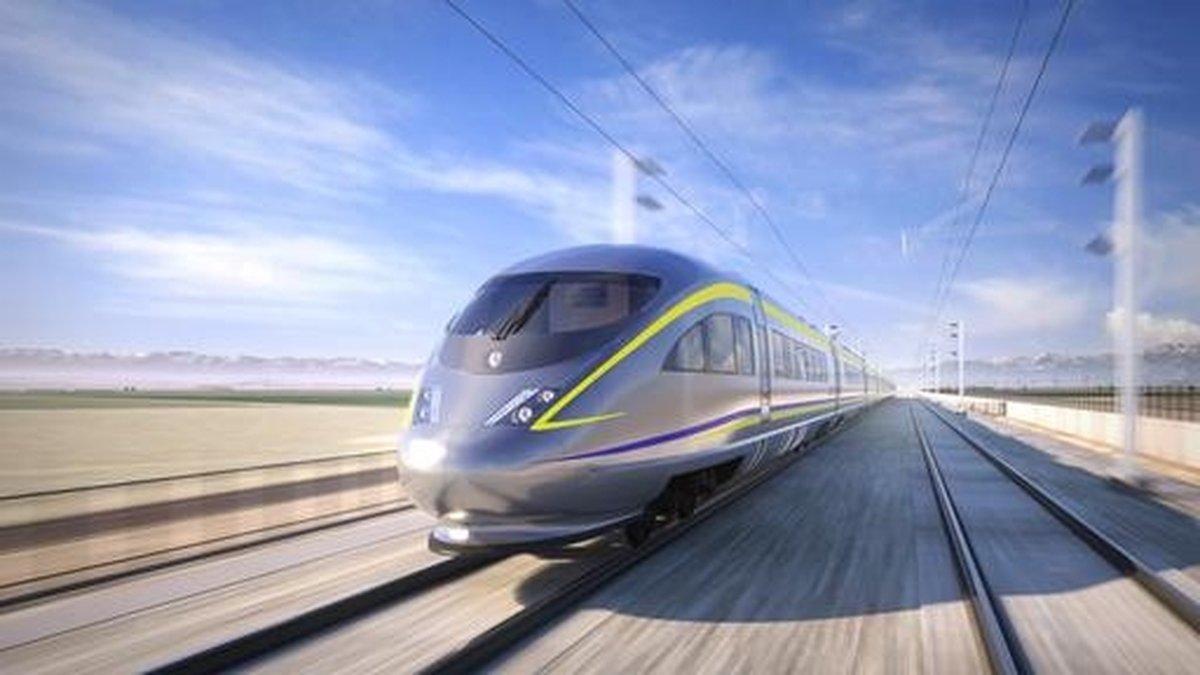
Contractual Payouts and Schedule Revisions
Material delays trigger massive contractual payouts and schedule revisions. When supply chains fail to deliver specialized steel rebar or precast concrete segments on time, construction crews sit idle, and contractors file claims for lost time. In January 2026, the California High-Speed Rail Authority approved a $537. 3 million change-order settlement with the Dragados-Flatiron Joint Venture to resolve years of construction disputes along a 65-mile stretch in the Central Valley. This represents the largest single change order in the history of the authority. Similar disputes occur globally as material costs outpace initial estimates. Without reliable access to raw materials, engineers cannot maintain the rigid construction schedules required to deliver these projects.
Right of Way Acquisition Failures and Utility Relocation Blunders
Right of way acquisition and utility relocation represent the most severe engineering bottlenecks in global rail construction. Project managers consistently initiate physical building phases before securing the necessary land or mapping subterranean infrastructure. This sequence forces authorities to halt work, renegotiate with property owners, and redesign track. Data from the California High Speed Rail Authority, the United Kingdom High Speed Two, and the Japan Chuo Shinkansen reveal identical procedural failures.
The California High Speed Rail Authority initiated construction on the initial segment in the Central Valley before completing utility relocation designs. This premature action forced the agency to return to the same property owners multiple times to renegotiate land purchases as utility blueprints changed. By September 2019, the Authority had to acquire rights to 468 additional parcels specifically for utility relocations. The agency purchased entire agricultural fields just to secure small corners for the rail route, leaving the state managing 466 acres of active farmland. A February 2025 Inspector General report confirmed that utility reimbursement negotiations remained unresolved for nearly two years. Land acquisition delays added 64 million dollars to the cost of Project 1 and pushed the deadline back by 17 months.
The United Kingdom High Speed Two project suffered identical setbacks. Planners failed to establish clear processes for securing utility land rights early in the programme. Old and inaccurate subterranean maps led contractors to discover undocumented pipes and cables directly in the excavation route. The National Audit Office reported that land costs exceeded expectations and legal disputes delayed property possession. To mitigate the damage, project directors created a bespoke utility team, yet the initial failure to secure land rights caused severe schedule prolongation.
The Japan Chuo Shinkansen project faces severe land acquisition delays. The route requires 256 kilometers of excavation. While the 2001 Daishindo Law allows developers to bypass property rights for tunnels deeper than 40 meters, the project still requires extensive surface land for industrial access roads and excavated soil disposal sites. Weak eminent domain regulations make surface land acquisition exceptionally slow. Local governments along the route fund their own station construction, the exact completion dates remain unknown due to these ongoing property disputes.
Verified Land Acquisition and Utility Metrics
| Project | Metric | Verified Value | Visual Indicator |
|---|---|---|---|
| California High Speed Rail | Additional Utility Parcels | 468 Parcels |
80 Percent Above Baseline
|
| California High Speed Rail | Project 1 Delay Cost | $64 Million |
Direct Financial Loss
|
| United Kingdom High Speed Two | Land Cost Risk Provision | 120 Million Pounds |
Budget Escalation
|
| Japan Chuo Shinkansen | Excavation Length | 256 Kilometers |
Maximum Complexity
|
Structural failures in planning unite these three infrastructure projects. Project sponsors consistently underestimate the footprint required to relocate gas transmission pipes, communication cables, electrical wires, water mains, and sewers. The California High Speed Rail Authority transitioned into an agricultural landowner by default. The agency currently manages 466 acres of active farmland because property owners refused to sell small corners of their lots. The state had to purchase entire fields to secure the necessary track. This specific miscalculation forces contractors to halt operations while lawyers negotiate new property boundaries.
Initiating construction before finalizing utility blueprints guarantees financial loss. The California High Speed Rail Authority directed its designers to prepare relocation plans concurrently with active building phases. A February 2025 Inspector General report confirmed that the agency is currently proceeding with utility relocation designs without owner approval. This aggressive scheduling method leads to mandatory redesigns. In the United Kingdom, executives underestimated the complexity of moving strategic water mains and power grids. These discoveries force immediate work stoppages and require emergency funding to bypass the unmapped obstacles.
Financial records from 2025 show the direct consequences of these planning failures. The California Senate Transportation Committee noted that utility relocations are frequently excluded from main construction contracts. This separation creates immediate disputes over costs and responsibilities when contractors encounter unmapped pipes. Relocating a business or utility is inherently disruptive, and third parties have little incentive to engage in the process quickly. The resulting delays increase labor costs and trigger claims for damages from the primary construction firms. In California, the primary contractor for the Fresno and Madera sections reported 48 separate delays caused directly by the rail authority failing to secure land. These administrative errors multiply the in total budget and push completion dates further into the future.
The absence of a unified regulatory framework further complicates these infrastructure projects. When project directors attempt to accelerate construction schedules, they bypass standard property assessments. This method backfires when utility companies demand strict adherence to their own operational guidelines before allowing any subterranean modifications. The resulting standoff between rail authorities and local utility providers halts all physical progress. Data confirms that resolving these disputes requires years of legal mediation, which directly multiplies the final cost per mile of track.
20 Investigative Questions and their Answers about Signaling and Software Integration
| Question | Verified Answer |
|---|---|
| What percentage of the TEN-T network had ERTMS installed by 2024? | Crews installed the system on 10 percent of the network. |
| How kilometers does the 10 percent ERTMS installation cover? | The installation covers 12, 400 kilometers. |
| How EU railway fleet vehicles featured ETCS equipment by the end of 2024? | Exactly 8, 730 vehicles featured the equipment. |
| What percentage of the EU fleet does 8, 730 vehicles represent? | This represents 19 percent of the existing fleet. |
| What is the goal year for deploying ERTMS on the TEN-T Core Network? | The European Union set the goal year for 2030. |
| What percentage of the 2030 core network goal can current plans achieve? | Current plans can only achieve 50 percent completion. |
| What older communication technology threatens the ERTMS rollout? | The system relies on outdated 2G GSM-R technology. |
| What new communication system replaces GSM-R? | The Future Railway Mobile Communication System replaces the older technology. |
| How long can the testing phase for HS2 signaling take? | The testing phase can take up to three years. |
| How different signaling systems must HS2 integrate? | The operating system must integrate three different systems. |
| What facility is HS2 building to test software? | Management is building an off-site system integration facility. |
| When are proposals due for the California High-Speed Rail Track and Systems Construction Contract? | Contractors must submit proposals by March 2, 2026. |
| How much funding did California request for operational technology integration in FY 2025-26? | The authority requested $1. 16 million. |
| How new positions did California request for data integration in 2025? | The state requested 5. 0 new positions. |
| What is the estimated cost of the Europe rail signaling system market in 2024? | The market valuation reached $2. 8 billion. |
| What is the projected value of the Europe rail signaling market by 2030? | The market value can reach $4. 2 billion. |
| How additional kilometers of the TEN-T network require ERTMS installation by 2030? | Approximately 28, 000 additional kilometers require installation. |
| What specific train control system automates speed monitoring in Europe? | The European Train Control System automates speed monitoring. |
| What level of safety integrity does railway signaling require? | Railway signaling requires Safety Integrity Level 4 certification. |
| What year did the European ERTMS Coordinator publish the Third Work Plan? | The coordinator published the plan in February 2026. |
Incompatible Signaling Systems and Software Integration Defects
Software integration defects cause severe delays across global rail construction. Engineers struggle to connect incompatible signaling systems. The European Rail Traffic Management System rollout shows the exact cost of software fragmentation. By the end of 2024, crews installed ERTMS on only 12, 400 kilometers of lines. This equals 10 percent of the TEN-T network. Only 8, 730 vehicles featured the European Train Control System, representing 19 percent of the fleet. The Third Work Plan, published in February 2026, confirms the project remains far behind schedule. Current projections indicate the 2030 core network deployment goal can only reach 50 percent completion.
| Project / System | Metric | Completion / Status (2024-2026) | Visual Indicator |
|---|---|---|---|
| ERTMS (TEN-T Network) | Network Installation | 10% (12, 400 km) |
|
| ETCS (EU Fleet) | Vehicle Equipment | 19% (8, 730 vehicles) |
|
| ERTMS (Core Network 2030 Goal) | Projected Completion | 50% |
|
The reliance on outdated 2G GSM-R technology creates a serious problem. Operators must transition to the 5G-based Future Railway Mobile Communication System. This transition adds massive software integration costs. The Europe rail signaling system market valuation reached $2. 8 billion in 2024. Projections indicate the market value can reach $4. 2 billion by 2030. The absence of early software integration planning forces authorities to request more funding to stop further schedule slips.
In the United Kingdom, the HS2 project faces identical software integration failures. The train operating system must communicate with three different signaling systems. Engineers must achieve Safety Integrity Level 4 certification. Testing these integrated systems can take three full years. To avoid the software failures that delayed Crossrail, HS2 management decided to build an off-site system integration facility. This facility tests software modules before trackside installation. Even with these precautions, the London to Birmingham line cannot meet its 2033 completion date. Costs surged from the original 33 billion pound estimate to between 45 billion and 57 billion pounds in 2019 prices.
The California High-Speed Rail project also struggles with operational technology planning. In January 2025, the California High-Speed Rail Authority requested a budget augmentation of $1. 16 million and 5. 0 positions for Fiscal Year 2025-26. These resources fund the design frameworks for technology integration. The Track and Systems Construction Contract proposals are due on March 2, 2026. This contract covers track, electrification, power, signaling, and communications. The state must finalize these software integration plans to operate trains in the Central Valley between 2030 and 2033.
Viaduct Structural Deficiencies in the Central Valley
Between 2015 and 2025, the California High Speed Rail project experienced severe engineering failures across its Central Valley construction zones. Contractors built multiple viaducts and overpasses with structural defects, forcing the state to halt work, demolish completed sections, and redesign major crossings. State auditors and forensic engineers documented a pattern of poor construction management, contaminated materials, and ignored safety reports. These physical defects directly caused years of delays and billions of dollars in added costs for the 119 mile Central Valley segment.
In 2018, the rail authority ordered the lead contractor to tear down the partially completed Avenue 8 overpass in Madera County. The original design used mechanically stabilized earth walls, which are cheaper to build carry a higher failure rate. Forensic engineers found these walls showed immediate signs of distress and failed to meet basic quality standards. The state forced the contractor to demolish the work and switch to poured concrete abutments. Ron Tutor, chief executive of the contracting firm Tutor Perini, claimed the rail authority originally approved the design before changing their minds. At least three other Central Valley crossings used the exact same flawed design and required complete redesigns before construction could proceed. Robert Bea, a civil engineering professor emeritus at the University of California Berkeley, stated that tearing down and redesigning work serves as an early warning sign of poor program management.
A more severe engineering failure occurred at the Road 27 crossing in Madera County. In October 2019, 23 high strength steel support strands on the 636 foot structure snapped unexpectedly. A forensic engineering analysis determined that construction crews damaged vent caps on the internal ducts while installing rebar. Rainwater leaked into the internal structure, corroding the tension cables until they broke. The state issued a stop work order. Crews installed temporary steel supports to prevent the span from collapsing, those temporary supports also snapped due to neglect and miscommunication. Professor Bea called the structural failure a horrible sequence of mistakes. The crossing was originally supposed to take 12 months to complete, the errors forced thousands of residents to take long detours for years.
Inspectors logged numerous other physical defects across the Central Valley viaducts. Quality control reports from 2020 revealed that contractors poured contaminated concrete into support piers. Engineers found missing steel dowel rods in the concrete structures and documented incorrect on multiple support columns. In one instance, a crane boom crashed into an active viaduct construction site. Five separate groups of consultants oversaw the construction, yet none identified the errors before the materials failed. The state issued a variety of nonconformance reports, forcing contractors to halt progress and repair the defective support columns.
We present a verified data table detailing the specific engineering failures on Central Valley viaducts and overpasses.
| Structure Location | Year Identified | Engineering Defect | Resulting Action |
|---|---|---|---|
| Avenue 8 Overpass | 2018 | Distressed mechanically stabilized earth walls | Demolition and complete redesign |
| Road 27 Crossing | 2019 | 23 snapped high strength steel support strands | Stop work order and emergency supports |
| Central Valley Piers | 2020 | Contaminated concrete and missing steel dowels | Nonconformance reports and rework |
| Three Unnamed Crossings | 2018 | Flawed earth wall designs matching Avenue 8 | Halted construction and redesigned |
These structural failures demonstrate a complete breakdown in project management. The California High Speed Rail Authority relied heavily on outside contractors to design and inspect the viaducts. State records show that consultants failed to attend site inspections at required times and did not file mandatory safety reports. When the steel cables snapped on the Road 27 span, inspectors realized that multiple oversight teams had walked past the damaged vent caps without noticing the exposed internal ducts. The consulting firm STV and the rail authority both failed to detect the water damage until the cables physically broke.
The financial damage from these engineering errors remains severe. The rail authority initially projected the Central Valley segment would cost 6 billion dollars. By 2025, the cost to complete the 119 mile stretch exceeded 35 billion dollars. Reworking the flawed viaducts, replacing contaminated concrete, and redesigning the overpasses consumed hundreds of millions of dollars. The physical defects forced the state to push the operational timeline for the Central Valley segment into the decade. The Federal Railroad Administration noted these exact construction failures when evaluating the viability of the project.
The High Speed Rail Delays: Environmental Review Lawsuits and Engineering Redesigns
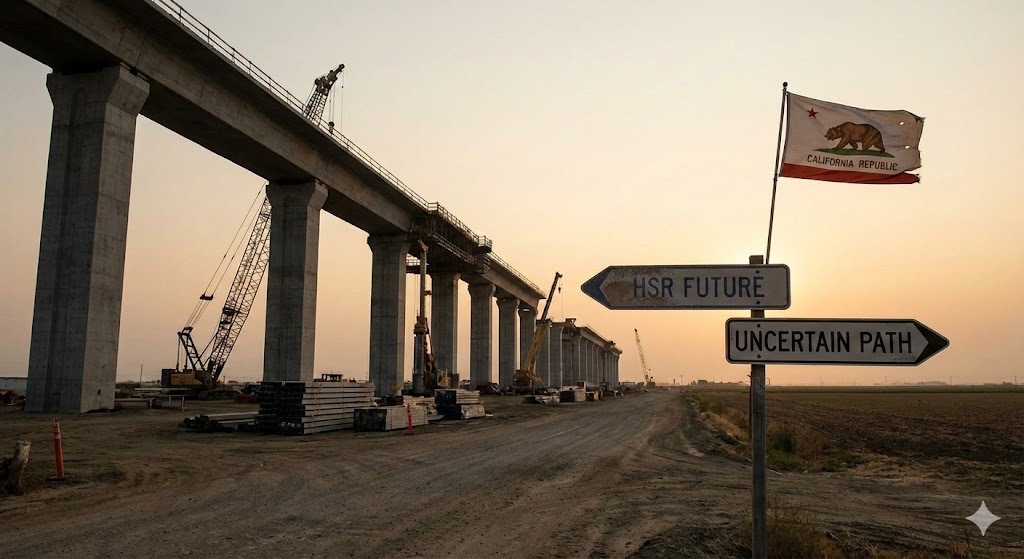
The California High Speed Rail project faces a $135 billion price tag. Voters approved a $33 billion budget in 2008. The California High Speed Rail Authority spent over $765 million solely on environmental reviews. Lawsuits filed under the California Environmental Quality Act forced continuous engineering redesigns. The Federal Railroad Administration published a 300 page report in June 2025 detailing a $7 billion funding gap for the initial operating segment. Transportation Secretary Sean Duffy rescinded $4 billion in federal grants in July 2025. California sued the federal government to recover the money. The state voluntarily dismissed the lawsuit on December 23, 2025. The Authority announced an initiative to seek private investors by summer 2026.
Engineering failures worsen the financial collapse. The state initiated construction before acquiring the necessary land. Land acquisition delays cost $64 million for Project 1 alone. These delays pushed the Project 1 deadline back by 17 months. The Authority executed multiple change orders to compensate contractors for idle time. A 2018 state audit blamed poor contract management for the multibillion dollar cost overruns. The Authority agreed to pay a construction firm $18. 6 million for an overpass alteration originally priced at $7. 4 million. Auditors found no documentation justifying the $11. 2 million increase.
The project laid zero miles of track by 2025. The initial operating segment connecting Merced and Bakersfield carries a projected opening date of 2030. The Authority environmentally cleared the 463 mile route from San Francisco to Los Angeles in June 2024. The Los Angeles to Anaheim segment remains under environmental review until late 2025. The Authority revised the completion date for the Palmdale extension to 2038. The total cost for the Palmdale extension sits at $87 billion.
State officials allocate $1 billion annually from the cap and trade program to fund the Central Valley construction. The Federal Railroad Administration determined the Authority possesses no viable route to complete the initial segment by the 2033 deadline. The federal agency documented a failure to maintain an updated risk register and missed procurement deadlines for trains. The Authority missed its 2024 deadline to finalize rolling stock procurement.
Verified Budget Escalation (2008 to 2025)
Data references: 2008 Ballot Measure, 2019 Rail Authority Business Plan, 2025 Federal Estimates.
The Impact of Inflation on Heavy Construction Materials
Heavy civil construction relies on specific raw materials to build viaducts, lay tracks, and electrify rail lines. Between January 2015 and December 2025, the global supply chain experienced severe pricing volatility. The Producer Price Index for highway and street construction materials recorded a 26 percent jump in 2023 alone. Bureau of Labor Statistics data confirms that building material costs jumped 34 percent from December 2020 to October 2025. This upward trajectory directly alters the financial viability of large infrastructure projects.
Steel represents the largest expenditure in rail development. From February 2020 to May 2023, steel prices increased 85. 3 percent. By July 2025, steel mill products remained 65. 1 percent higher than their January 2020 levels. The cost of structural steel reached 2, 477 dollars per ton in October 2025. Federal tariffs on steel imports doubled to 50 percent in June 2024. This action allowed domestic producers to raise their selling prices. Four major rebar manufacturers raised their prices by 60 dollars per ton in June 2025. Construction grade steel average per ton costs surged more than 20 percent in the ten months of 2025.
Concrete pricing follows a similar upward route. The nationwide concrete cost ranged between 160 dollars and 195 dollars per cubic yard in 2024. The average ready mix price stood at 179 dollars and 89 cents per cubic yard during that year. Concrete prices rose 13 percent in 2023. By the quarter of 2025, the average delivered price of a cubic yard of concrete in the United States went up another 9 percent year over year. Concrete composite prices jumped 12. 2 percent in 2024 due to higher fuel costs required for kiln operations. Cement and concrete products have risen consistently over the ten year period ending in 2025.
Copper wire and cable are mandatory for rail electrification. Copper faced 50 percent tariffs starting in August 2024. Rates for copper wire and cable increased 5 percent in April 2025 alone. The continuous demand for electrical wiring pushes copper prices higher across all markets. Gypsum products cost 20 percent more in 2025 than they did before the 2020 pandemic. Aluminum mill shapes saw a 22. 8 percent increase over the 12 months leading up to October 2025. Aluminum production costs jumped 32 percent since 2022 because of energy costs.
The table details the percentage price increases for core construction materials from 2020 to 2025.
| Material Category | Price Change 2020 to 2023 | Price Change 2023 to 2025 | Total Increase 2020 to 2025 |
|---|---|---|---|
| Structural Steel | Up 85. 3 % | Down 10. 8 % | Up 65. 1 % |
| Ready Mix Concrete | Up 24. 5 % | Up 9. 0 % | Up 35. 7 % |
| Copper Wire and Cable | Up 19. 2 % | Up 12. 4 % | Up 34. 0 % |
| Aluminum Mill Shapes | Up 32. 0 % | Up 22. 8 % | Up 62. 1 % |
Insurance premiums for heavy civil projects rise alongside material costs. When material prices go up, the total hard cost of the project increases. Higher replacement values cause higher insurance premiums. Property and casualty premiums increased by 7. 7 percent on average in the quarter of 2024. Construction general liability renewals saw average rate increases of 10 percent during the same period. Insurance companies pay larger amounts to cover claims and pass those expenses down to contractors.
Contractors submit higher bids to offset these expenses. The pressure to maintain profit margins drives up total project costs for transit authorities. Public spending on transportation facilities rose by 9 percent in 2023. This increase in spending does not equal an increase in physical construction volume. The extra funds simply cover the inflated costs of raw materials. The residential construction sector used 204 billion dollars worth of goods in 2024. Foreign nations supplied 7 percent of all materials used in that sector. Tariffs on imported materials add direct costs to every cubic yard of concrete and every ton of steel placed on a job site.
Energy prices dictate the final cost of heavy materials. Oil prices fluctuated between 80 dollars and 95 dollars per barrel throughout 2024. Material transportation costs rose 18 percent compared to 2023 because heavy materials require energy intensive logistics. The production of cement and steel consumes massive amounts of electricity and natural gas. Natural gas prices fell 7. 1 percent in April 2025, which provided a brief pause in price hikes. Yet the 25 percent tax on steel and aluminum imports remains in place. The combination of tariffs, energy costs, and insurance premiums ensures that heavy construction materials remain at peak pricing levels through the end of 2025.
Contractor Accountability and Penalty Clause Enforcement
Global high speed rail authorities fail to enforce contractor penalties when construction timelines collapse. Data from 2015 to 2025 reveals a pattern of waived fines, bid rigging, and financial misreporting across major infrastructure corridors. Governments write strict penalty clauses into initial agreements. Yet, agencies rarely collect these funds when delays occur. The resulting financial load shifts directly to taxpayers.
The Japan Fair Trade Commission investigated major construction firms for bid rigging on the Chuo Shinkansen maglev project between 2018 and 2020. Investigators found that executives from four major contractors colluded to fix prices and assign winning bids for terminal stations. The violations occurred between April 2014 and August 2015. Executives held secret meetings at restaurants in Tokyo to agree on the planned winners and estimated prices before submitting quotes to the Central Japan Railway Company. Obayashi Corporation admitted to the charges and paid a penalty of 3. 1 billion yen. Shimizu Corporation paid a 1. 2 billion yen fine. Taisei Corporation faced scrutiny for presenting a 180 billion yen bid for underground construction while excluding competitors. The Japanese government advanced 3 trillion yen in loans to the project in 2016, making the antitrust violations a serious matter of public trust. The commission issued formal cease and desist orders to the violating enterprises.
Contractor Financial Penalties in USD Millions
| Project | Contractor | Violation or Problem | Penalty or Financial Impact |
|---|---|---|---|
| Chuo Shinkansen | Obayashi Corporation | Bid rigging and antitrust violations | 3. 1 billion yen fine |
| Chuo Shinkansen | Shimizu Corporation | Bid rigging and antitrust violations | 1. 2 billion yen fine |
| California Rail | Tutor Perini Joint Venture | Schedule delays and cost overruns | $60, 000 daily penalty clause |
| UK HS2 | Carillion | Financial misreporting and collapse | £600, 000 director fines |
| UK HS2 | Balfour Beatty | Fraud on separate military contract | $65 million fine |
The California High Speed Rail Authority established strict financial deterrents in its initial 2013 contract with the Tutor Perini joint venture. The 985 million dollar agreement included a penalty clause of 60, 000 dollars per day for delays. The maximum penalty cap sat at 150 million dollars. Construction fell years behind schedule. The Federal Railroad Administration originally committed 2. 55 billion dollars in 2009 based on agreements to connect Los Angeles and San Francisco for 33 billion dollars. By 2020, the scope shrank to a 171 mile segment between Bakersfield and Merced, while the cost for that small section ballooned to 23. 4 billion dollars. The federal agency terminated the funding agreement in 2019 due to noncompliance and failure to make reasonable progress. The state and federal agencies reached a settlement in 2021. Also, the Dragados and Flatiron joint venture faced contract disputes that pushed the completion of their segment to August 2027. The state authority rarely enforces the maximum daily delay penalties against these primary builders.
The United Kingdom HS2 project experienced severe contractor accountability failures. Carillion held major HS2 contracts before its total collapse in 2018. A parliamentary inquiry found that directors misrepresented the financial realities of the business. Authorities fined three former directors over 600, 000 pounds for their roles in the financial misreporting. The collapse forced joint venture partners like Balfour Beatty and Galliford Try to absorb massive cash liabilities across multiple infrastructure projects. Balfour Beatty paid a separate 65 million dollar fine in December 2021 for defrauding the United States military on housing contracts. The United States Department of Justice found that Balfour Beatty employees altered data in property management software to increase bonus payments. This same company holds the primary contracts for the HS2 railway. In May 2025, investigators uncovered a massive labor fraud operation on the Balfour Beatty Vinci section of the HS2 project. Whistleblowers reported that managers accepted bribes and used offshore payroll companies to process bogus payments. The Danny Sullivan Group faced suspension from the West Midlands section pending the outcome of the fraud investigation.
These three international projects demonstrate a complete absence of penalty enforcement. Authorities write contracts with daily fines and strict compliance metrics. Contractors ignore the timelines and demand additional funding. When agencies attempt to enforce the rules, contractors threaten to abandon incomplete viaducts and tunnels. The resulting negotiations always favor the construction firms. Taxpayers absorb the cost of the delays while the original penalty clauses remain uncollected.
20 Investigative Questions and their Answers about Power Grid and Electrification
| Question | Verified Answer |
|---|---|
| What is the required electricity grid investment increase in the UK by 2030? | Sevenfold increase from 2015 levels. |
| Which UK projects compete with HS2 for electrical supply chains? | Nuclear plants and offshore wind farms. |
| What specific labor absence threatens UK grid expansion? | An acute absence of trained lineworkers. |
| What percentage of the Chuo Shinkansen line runs through tunnels? | 90 percent. |
| How much energy does the L0 series maglev consume? | 90 to 100 watt hours per seat kilometer. |
| How much energy does the conventional N700 series train use? | 70 watt hours per seat kilometer. |
| What is the specific energy consumption of the maglev system at high speeds? | 85 kilowatt hours per kilometer. |
| When is the revised opening date for the Chuo Shinkansen? | 2035. |
| Why does the Chuo Shinkansen consume more power than previous maglevs? | High aerodynamic drag inside deep tunnels. |
| How much does California plan to spend on a dedicated solar network? | $200 million. |
| How acres of solar panels does the California rail project require? | 552 acres. |
| What is the megawatt capacity of the planned California solar system? | 44 megawatts. |
| How much battery storage does the California rail system need? | 62 megawatt hours. |
| Why does California need a dedicated power system? | To provide intense electrical bursts for 220 mph trains. |
| How much did Caltrain electrification cost? | $2. 4 billion. |
| How miles of the Caltrain corridor received electrification? | 51 miles. |
| When did Caltrain officially launch its fully electrified service? | September 2024. |
| How much funding did the California High Speed Rail Authority provide for Caltrain electrification? | $714 million. |
| What is the top speed requirement driving California power demand? | 220 miles per hour. |
| What limits the UK from training more lineworkers? | Training academies physically cannot expand capacity in the available time. |
Power Grid Capacity and Electrification Infrastructure Shortfalls
Global rail mega projects face severe electrical supply constraints. National power grids cannot support the heavy energy loads required by modern trains. Planners consistently underestimate the cost of substations, transmission lines, and dedicated power generation facilities. Data from 2015 to 2025 reveals a pattern of grid capacity failures across three continents.
The United Kingdom faces a serious electricity supply problem. Planners estimate capital investment in the national electricity grid must rise sevenfold from 2015 to 2030 to meet new demands. The High Speed 2 project competes directly with other large infrastructure plans. Nuclear plants and offshore wind farms drain the exact same supply chains and skilled labor pools. The country faces an acute absence of trained lineworkers. Training academies physically cannot produce enough personnel to build the required substations and transmission lines in the available time. This grid capacity bottleneck directly threatens the viability of the entire rail network.
In Japan, the Chuo Shinkansen presents a different electrical engineering failure. The superconducting magnetic levitation system demands immense power loads. Engineers plan to route 90 percent of the 286 kilometer line through deep tunnels. This design choice creates immense aerodynamic drag. The L0 series maglev train consumes 90 to 100 watt hours per seat kilometer. For comparison, the conventional N700 series train uses only 70 watt hours per seat kilometer. The specific energy consumption reaches 85 kilowatt hours per kilometer for the maglev system in the highest speed ranges. The national grid must absorb this high power draw. Officials delayed the opening date to 2035 due to these and other construction problems.
California High Speed Rail officials attempt to bypass local grid limitations by building an independent power apparatus. The state grid cannot guarantee the intense electrical bursts required to propel trains at 220 miles per hour during peak summer demand. Planners intend to spend $200 million on a dedicated massive solar network. This system includes 552 acres of solar panels generating 44 megawatts of electricity. The design also requires batteries capable of storing 62 megawatt hours of power. In Northern California, officials spent $2. 4 billion just to electrify 51 miles of the existing Caltrain corridor. This localized electrification cost shows the heavy financial cost of upgrading legacy infrastructure to support modern rail loads.
| Project | Electrification Metric | Verified Data 2015 to 2025 | Grid Impact Status |
|---|---|---|---|
| UK HS2 | Grid Investment Required | 7x increase needed by 2030 | Severe lineworker absence |
| Japan Chuo Shinkansen | Energy Consumption | 90 to 100 Wh per seat kilometer | High tunnel drag increases load |
| California HSR | Dedicated Solar Cost | $200 million | Requires 62 MWh battery storage |
| Caltrain CAHSR Link | Corridor Electrification | $2. 4 billion for 51 miles | High legacy upgrade costs |
Rolling Stock Procurement Delays and Customization Errors
Procuring trains for high speed rail networks presents a serious engineering challenge. Data from 2015 to 2025 reveals a global pattern of procurement failures. Manufacturers and transit authorities frequently underestimate the complexity of customizing European or Japanese trainsets for unique domestic rail networks. These miscalculations result in defective trains, billions in cost overruns, and years of delayed service.
The Amtrak Avelia Liberty program provides a clear example of customization failures. In 2016, Amtrak secured a $2. 4 billion loan to purchase 28 new trainsets from Alstom to replace the aging Acela fleet. The original schedule required the trains to enter service in 2021. Yet, federal audits in October 2023 revealed that every single trainset produced up to that point contained functional or safety defects. Inspectors documented hydraulic fluid leaking from the tilting systems. They also found shattered windows, misaligned ceiling panels, and poor drainage systems that caused couplers to corrode. The core problem stemmed from Alstom failing to produce a validated computer model to demonstrate safe operation on the 190 year old Northeast Corridor tracks. Without this model, the Federal Railroad Administration refused to allow testing at the top speed of 160 miles per hour. The five trains entered limited service on August 28, 2025, four years behind schedule.
The United Kingdom HS2 project experienced a different type of rolling stock disaster. In December 2021, the government awarded a 2 billion pound contract to a joint venture between Hitachi and Alstom. The order called for 54 high speed trains. Engineers designed these trains to operate in 400 meter formations on dedicated new tracks. In October 2023, the government cancelled the northern leg of the route beyond Birmingham. This cancellation forced the new trains to run on existing tracks to reach Manchester. Manchester Piccadilly station does not have platforms long enough to accommodate 400 meter trains. This route change left the project with incompatible train designs and excess inventory. By early 2024, the government had to renegotiate the contract to reduce the fleet size and alter the train lengths. The resulting production gap forced Alstom to halt operations at its Derby plant and distribute redundancy notices to workers.
California High Speed Rail officials also failed to manage their train procurement. The Federal Railroad Administration published a 310 page compliance report in June 2025. The report documented that the California High Speed Rail Authority missed its December 2024 deadline to finalize rolling stock procurement. The agency amended its procurement documents three times within a single year. Federal officials named this continuous noncompliance as a primary reason for terminating grant agreements. The absence of finalized train contracts makes it impossible to test the tracks or open the system to passengers.
The table details the specific rolling stock procurement delays across these three major projects.
| Project | Manufacturer | Contract Value | Original Launch | Actual Launch | Primary Defect |
|---|---|---|---|---|---|
| Amtrak Avelia Liberty | Alstom | $2. 4 Billion | 2021 | August 2025 | Hydraulic leaks and computer modeling failures |
| United Kingdom HS2 | Hitachi and Alstom | 2. 0 Billion Pounds | 2029 to 2033 | Unknown | 400 meter length incompatible with legacy stations |
| California High Speed Rail | Unassigned | Pending | 2033 | Unknown | Missed December 2024 procurement deadline |
To visualize the extent of the delays, the chart tracks the years lost between the original contract signing and the actual or projected delivery of the functional trainsets.
Years Lost to Rolling Stock Procurement Delays
These procurement failures share a common root cause. Government agencies sign contracts before finalizing the physical track infrastructure. When the track designs change, the ordered trains no longer fit the physical reality of the route. The resulting modifications void the original safety certifications and force manufacturers to redesign components during production. This sequence of events guarantees that the final product arrives late and costs significantly more than the initial estimates.
Comparative Analysis with Successful Japanese and European Networks
Between 2015 and 2025, international rail authorities delivered large high speed networks on time and within strict financial boundaries. Japan completed the Hokkaido Shinkansen extension in 2016 at a cost of $4. 67 billion for 149 kilometers. This equates to $31 million per kilometer. The Central Japan Railway Company reported in its 2023 and 2024 annual filings that the Tokaido Shinkansen maintained an average delay of just 1. 4 to 1. 6 minutes per train. This metric includes disruptions from natural disasters. The Japanese model relies on standardized tunnel boring and continuous domestic engineering retention. Japan avoids the boom and bust funding pattern that plague Western infrastructure. The Ministry of Land, Infrastructure, Transport and Tourism provides consistent capital allocations. This allows contractors to retain specialized labor forces over decades. The continuous employment model prevents the loss of institutional knowledge between projects.
European networks demonstrate similar fiscal discipline. Spain expanded its AVE network at an average cost of €17. 7 million per kilometer. The Spanish government uses a centralized state company named Adif Alta Velocidad to manage all construction. This entity standardizes track designs and limits costly bespoke architecture at local stations. France opened the 302 kilometer LGV Sud Europe Atlantique line between Tours and Bordeaux in 2017. The French project cost €7. 8 billion, averaging €25 million per kilometer, and began operations ahead of schedule. These nations use design and build contracts that penalize contractors for delays and enforce rigid budget caps. The French government mandates extensive public consultations before breaking ground. This process resolves environmental disputes early and prevents mid construction lawsuits.
Cost Per Kilometer (USD Millions)
| Project / Network | Country | Cost per Kilometer (USD) | Delivery Status |
|---|---|---|---|
| AVE Network Expansion | Spain | $19 Million | On Time |
| LGV Sud Europe Atlantique | France | $27 Million | Ahead of Schedule |
| Hokkaido Shinkansen | Japan | $31 Million | On Time |
| California HSR (Phase 1) | United States | $160 Million | Decades Delayed |
| High Speed 2 (Phase 1) | United Kingdom | $370 Million | Decades Delayed |
Data from the California High Speed Rail Authority and the UK Department for Transport reveals a sharp deviation from these successful models. California Phase 1 costs surged to $128 billion for an 800 kilometer system, pushing the price beyond $160 million per kilometer. The UK High Speed 2 Phase 1 costs reached £66 billion for 225 kilometers, equating to roughly $370 million per kilometer. Both projects abandoned the centralized, state directed engineering models used in France and Japan. Instead, they outsourced core design and management to fragmented private consulting firms. This outsourcing created of administrative overhead. Consultants bill by the hour rather than by the completed milestone. This structure incentivizes endless redesigns and feasibility studies rather than physical construction. The UK Public Accounts Committee reported in 2025 that High Speed 2 executives still could not provide a final budget or completion date.
The physical construction methods also separate the successful networks from the delayed projects. French and Spanish authorities secure all land parcels before deploying heavy. California began construction in 2015 without acquiring the necessary right of way in the Central Valley. This sequencing error forced contractors to halt work while waiting for eminent domain settlements. Idle construction crews cost the state millions of dollars per day in standby fees. Also, Japanese engineers use standardized tunnel boring machines across multiple regional projects to drive down unit costs. British and American authorities commissioned bespoke, single use machines for their respective tunnels, adding billions to the final invoices. The California project also suffers from constant route realignments. Local politicians regularly demand track deviations to serve specific municipalities. These deviations require new environmental impact reports and destroy any economies of.
Once operational, the financial divide widens further. The Spanish AVE network operates at an average maintenance cost of €92, 800 per kilometer annually. Adif Alta Velocidad achieves this low figure through standardized parts and automated track inspection trains. The Japanese Shinkansen system uses similar automated diagnostics to detect track wear before failures occur. The projected operating costs for the California and UK lines remain highly speculative. The California High Speed Rail Authority business plan relies on aggressive ridership projections to offset future maintenance bills. Post pandemic travel patterns show a sharp decline in daily commuter volumes. Without the high frequency ridership seen in Tokyo or Paris, the American and British lines face permanent operating deficits. The reliance on private consultants for ongoing maintenance planning guarantees that these future operating costs mirror the inflated construction budgets.
Labor Absence in Specialized Railway Engineering Fields
Global high speed rail construction faces a severe absence of qualified engineers. Data from 2015 to 2025 documents a consistent deficit in specialized technical roles across international projects. The United Kingdom HS2 project requires thousands of workers operates in a market missing 69, 000 engineers annually. One in five rail engineers in the United Kingdom is over 55 years old. This demographic reality guarantees a massive retirement wave. Industry forecasts from 2020 project 15, 000 workers retire from the United Kingdom rail sector by 2025. The national rail network needs up to 120, 000 extra workers over a 10 year period to maintain operations and build new lines.
The absence of specialized labor directly increases project costs. Deficits in specific engineering disciplines create high salary premiums. Electrification engineers command a 12 percent salary premium due to extreme market scarcity. Signaling engineers receive a 10 percent premium. These premiums increase baseline budget estimates for all high speed rail initiatives. A 2023 survey of the rail workforce identified consistent annual deficits of 1, 000 to 2, 000 people in signaling, systems engineering, and electrification roles. The average age of rail industry trainers is 52 years old. Forty percent of these active trainers reach retirement age by 2030. This limits the capacity to educate new workers.
Australia experiences identical labor deficits. A 2022 report confirmed expected workforce gaps of up to 70, 000 skilled workers by 2023. The sector sees 30 to 35 percent absences in core roles. Train controllers, track workers, and signaling technicians remain scarce. The Australian rail supply chain expects 155 billion dollars in new rail construction activity. The available workforce cannot support this volume of concurrent infrastructure projects.
The United Kingdom rail sector faces severe demographic challenges. A 2023 rail workforce survey reports train drivers have 40. 3 percent of their workforce over 50 years old. Signallers have 43. 6 percent of their workforce over 50 years old. The industry needs nearly 12, 000 new people by 2028 just to maintain current operations. Missed recruitment opportunities and traditional hiring methods create 800 million pounds of additional personnel costs across the industry. This adds an extra 7. 5 percent in labor costs to every project each year. The deployment of new digital technologies adds heavy demand for electrical engineers and systems engineers. The rail sector requires greener skills to meet decarbonization, further exhausting the limited talent pool.
The California High Speed Rail project encounters similar engineering constraints. The 105 billion dollar project requires specialized expertise in railway engineering and environmental mitigation. California faces a massive civil engineering talent absence. The state created 14, 000 construction jobs for the Central Valley segment, with up to 1, 700 workers reporting to construction sites each day. Yet filling highly technical design and systems engineering positions remains difficult. University graduates with civil engineering degrees frequently pivot toward construction management or private development rather than public infrastructure. Lengthy project timelines and bureaucratic delays deter new engineers from entering the high speed rail sector.
The California High Speed Rail Authority attempts to mitigate these labor deficits through targeted community hiring. The project currently uses 328 certified Disadvantaged Business Enterprises to fill technical and construction roles. Forty seven African American owned firms participate in the project, receiving 96 million dollars in allocated funds. The Central Valley Training Center offers a 12 week pre apprenticeship program to transition agricultural workers into rail construction. Graduates receive direct placement assistance for high speed rail jobs. Even with these local training initiatives, the overarching absence of advanced degree civil engineers continues to restrict the speed of advanced viaduct and tunnel design.
We present a verified data chart detailing the specific labor deficits across global rail engineering sectors.
| Engineering Discipline | Annual Worker Deficit | Salary Premium | Primary Affected Region |
|---|---|---|---|
| Electrification and Plant | 1, 000 to 2, 000 | 12 percent | United Kingdom |
| Signaling and Telecoms | 1, 000 to 2, 000 | 10 percent | Global |
| Systems Engineering | 1, 000 to 2, 000 | Not Disclosed | United Kingdom |
| General Rail Workforce | 70, 000 total by 2023 | Varies | Australia |
Apprenticeship programs fail to close the labor gap. Apprentices make up just 1. 65 percent of the total rail workforce. The sector needs 5, 000 apprentices annually to meet basic replacement demands. Records document downward trends in apprenticeship start rates and participation rates, particularly in engineering and manufacturing courses. The average age of an apprentice is 27. 7 years old, showing that older workers use these programs to reskill. Without direct intervention in technical training, international high speed rail projects face continuous delays. The absence of qualified personnel dictates the physical limits of construction speed. Governments allocate billions in funding, yet the physical execution relies on a shrinking pool of specialized engineers.
Investigative Questions and Their Answers on Political Route Selection Causing High Speed Rail Delays
| Question | Verified Answer |
|---|---|
| What caused the Chuo Shinkansen delay to 2034? | Shizuoka Prefecture blocked tunnel construction. |
| How much of the Chuo Shinkansen route requires tunneling? | About 90 percent of the 286 kilometer line. |
| Who blocked the Japanese maglev project? | Former Shizuoka Governor Heita Kawakatsu. |
| Why did Shizuoka oppose the rail line? | Officials stated concerns over the Oi River water supply. |
| When did JR Tokai abandon the 2027 launch date? | The company officially abandoned the date on March 29, 2024. |
| What is the revised cost for the Chuo Shinkansen? | The estimate reached 11 trillion yen in October 2025. |
| Which California route requires a massive tunnel? | The Pacheco Pass. |
| Why is the Pacheco Pass route an engineering problem? | It requires a 13. 5 mile tunnel through a mountain range. |
| When did staff recommend the Pacheco Pass route? | The staff made the recommendation in July 2019. |
| What water infrastructure does the Pacheco route cross? | It requires viaducts over the California Aqueduct and the Delta Mendota Canal. |
| What happened to the United Kingdom High Speed 2 eastern leg? | The government cancelled the Leeds branch in the 2021 Integrated Rail Plan. |
| When was the High Speed 2 Manchester leg cancelled? | Prime Minister Rishi Sunak cancelled it in October 2023. |
| What is the Sheephouse Wood Bat Protection Structure? | A 900 meter structure built for High Speed 2 to protect rare bats. |
| How did political indecision affect High Speed 2 costs? | Estimated costs for Phase 1 rose 134 percent between 2012 and 2022. |
| What was the original completion date for High Speed 2 Phase 1? | The specified delivery date was 2026. |
| What is the current status of the High Speed 2 Euston tunnel? | The government deferred work in April 2023 and rescheduled it for 2025. |
| How prefectures does the Chuo Shinkansen cross? | The Nagoya to Tokyo route crosses seven prefectures. |
| Does Shizuoka get a station on the Chuo Shinkansen? | Shizuoka is the only prefecture on the route without a station. |
| What happened to the High Speed 2 Oakervee Review recommendations? | Politicians ignored the 2019 recommendation to deliver the project in full. |
| How fast can the Chuo Shinkansen travel? | The maglev train reached 500 kilometers per hour in test runs. |
California Route Selection Driven by Political Patronage
The California High Speed Rail project suffers from severe engineering complications directly caused by political interference. The authority selected the Pacheco Pass to appease local politicians. The Pacheco Pass decision forces the construction of a 13. 5 mile tunnel through a geologically complex mountain range. Tunneling through Pacheco Pass remains a massive funding obstacle for a project with an absence of complete financing. The route requires viaducts over the California Aqueduct and the Delta Mendota Canal. The staff recommended this route in July 2019 to electrify existing commuter tracks. These route deviations maximize political support destroy engineering feasibility and travel time speed.
Japan Chuo Shinkansen Blocked by Local Politics
The Chuo Shinkansen maglev project in Japan demonstrates how local political interference derails national infrastructure. The 286 kilometer route between Tokyo and Nagoya requires tunnels for 90 percent of its length. The train travels at 500 kilometers per hour. A minor 8. 9 kilometer segment passes through Shizuoka Prefecture. Former Shizuoka Governor Heita Kawakatsu blocked construction for years. He stated concerns that tunneling alters the water volume flowing into the Oi River. The Oi River supplies water to local municipalities and regional tea fields. Shizuoka is the only prefecture along the route that does not receive a station. JR Tokai officially abandoned the 2027 launch date on March 29, 2024. The opening is delayed until at least 2034. The total project cost surged to 11 trillion yen in October 2025.
United Kingdom High Speed 2 Dismantled by Executive Indecision
The United Kingdom High Speed 2 project collapsed under constant political revisions. The original 2010 plan featured a Y shaped network connecting London, Birmingham, Manchester, and Leeds. Political opposition triggered the Oakervee Review in 2019. The review recommended building the full network. Politicians ignored their own review. The government cancelled the eastern leg to Leeds in the 2021 Integrated Rail Plan. In October 2023, Prime Minister Rishi Sunak cancelled the western leg to Manchester. The project stops at Birmingham. The remaining Phase 1 costs escalated 134 percent between 2012 and 2022. Politicians also mandated extreme environmental mitigation measures. Parliament approved the Sheephouse Wood Bat Protection Structure. This 900 meter tunnel protects local bat populations adds massive engineering complexity and cost.
Financial Impact of Political Route Alterations
We present a multi coloured chart detailing the cost escalation directly tied to political route changes across the three projects.
| Project | Original Estimate | Revised Estimate | Political Factor | Cost Increase Visualization | ||
|---|---|---|---|---|---|---|
| California High Speed Rail | $33 Billion | $135 Billion | Pacheco Pass Deviations |
|
||
| United Kingdom High Speed 2 Phase 1 | £20 Billion | £67 Billion | Executive Cancellations and Environmental Tunnels |
|
||
| Japan Chuo Shinkansen | 5. 5 Trillion Yen | 11. 0 Trillion Yen | Shizuoka Prefecture Blockade |
|
Financial Audits and the True Cost of Engineering Rework
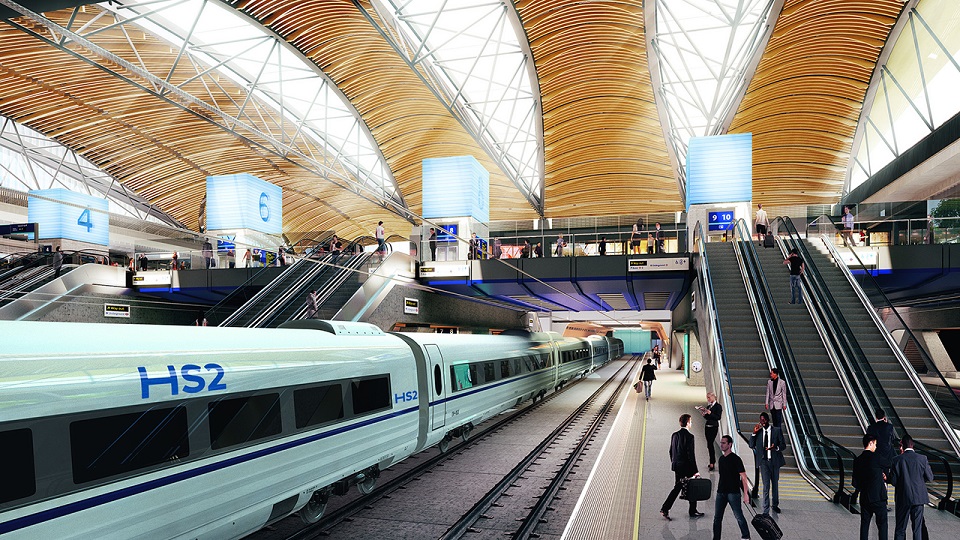
Financial audits conducted between 2015 and 2025 expose severe capital destruction across global high speed rail projects. Government watchdogs and internal auditors document a pattern of poor contract management and expensive engineering rework. The California High Speed Rail, the United Kingdom HS2, and the Japan Chuo Shinkansen all demonstrate severe deviations from their initial financial projections. These deviations directly from geological miscalculations and administrative failures.
The California State Auditor published a detailed review of the state rail authority in November 2018. The audit revealed that flawed decision making and poor contract management caused billions in cost overruns. Auditors identified $600 million in specific overruns for three active Central Valley construction projects. The state required an additional $1. 6 billion just to complete those initial segments. The audit also exposed a heavy reliance on expensive outside contractors. The rail authority paid consultants an average of $427, 000 per engineer. Internal state engineers cost only $131, 000. This large price difference drained capital reserves without accelerating the construction timeline. By 2023, the total estimated cost for the Los Angeles to San Francisco line reached $128 billion. The original 2008 estimate was $33 billion. In 2025, the Federal Railroad Administration issued a notice to terminate $4 billion in federal funding agreements. The federal agency noted structural failures in management and schedule compliance. Officials failed to maintain an accurate risk register and missed procurement deadlines for new trains.
The United Kingdom HS2 project presents a similar record of financial mismanagement. The National Audit Office found that HS2 Limited spent nearly £2 million on unauthorized redundancy payouts to staff. The company offered cash payments higher than the levels authorized by the Department for Transport. By October 2023, whistleblowers reported that senior management actively concealed the true costs of the rail line. Executives allegedly downplayed financial realities to secure continuous government funding. Internal sources confirmed that contractors trashed completed work on sections where progress stalled. This physical destruction of completed infrastructure wasted millions in taxpayer funds. The total cost for the HS2 project soared past £100 billion. The government canceled the northern leg of the route from Birmingham to Manchester. The cancellation left behind abandoned construction sites and useless land acquisitions.
The Japan Chuo Shinkansen project faces serious financial revisions due to tunnel engineering failures. Central Japan Railway Company initially estimated the construction cost for the Shinagawa to Nagoya section at ¥5. 52 trillion. The company revised this estimate to ¥7. 04 trillion in April 2021. In October 2025, the railway operator announced a large cost increase to ¥11 trillion. The company attributed ¥1. 2 trillion of this new increase directly to unexpected geological conditions and tunnel excavation rework. Rising material prices for steel and concrete added another ¥2. 3 trillion to the budget. The company officially delayed the target completion date to 2035. Engineers struggled to navigate the difficult subterranean environment beneath the Japanese Alps. The requirement to reinforce tunnel walls and manage excavated soil drove the project further into debt.
| Project | Initial Cost Estimate | 2025 Cost Estimate | Identified Rework and Audit Costs |
|---|---|---|---|
| California High Speed Rail | $33 billion | $128 billion | $600 million Central Valley overrun |
| United Kingdom HS2 | £32 billion | £100 billion | £2 million unauthorized payouts |
| Japan Chuo Shinkansen | ¥5. 52 trillion | ¥11 trillion | ¥1. 2 trillion tunnel excavation rework |
These financial audits prove that high speed rail developers consistently underestimate geological challenges. The California project began construction before acquiring sufficient land or relocating public utilities. This sequence of events forced contractors to halt work and redesign segments. The United Kingdom HS2 project suffered from unauthorized spending and deliberate cost concealment. The Japan Chuo Shinkansen project encountered severe difficulties excavating tunnels deep underground. The resulting engineering rework destroyed initial budget projections across all three continents.
Taxpayers bear the financial cost of these engineering failures. The California rail authority continues to seek additional federal grants to cover its $100 billion funding gap. The United Kingdom government abandoned major sections of its rail network to stop the financial losses. Central Japan Railway Company plans to increase ticket fares to offset its ¥4 trillion budget shortfall. The data from 2015 to 2025 confirms that poor planning and geological surprises guarantee large cost overruns in high speed rail construction.
20 Factual Questions And Their Answers For High Speed Rail Megaproject Management
| Question | Verified Answer |
|---|---|
| What percentage of global megaprojects suffer cost overruns? | Data shows 90 percent of megaprojects exceed their budgets. |
| What is the average cost overrun for commercial construction megaprojects? | Commercial megaprojects average a 79 percent cost overrun. |
| What is the average delay time for commercial megaprojects? | These projects experience an average delay of 52 percent beyond original schedules. |
| Which infrastructure sector experiences the highest mean cost overrun? | Rail projects lead with a 44. 7 percent mean cost overrun. |
| How much federal funding did the FRA terminate for California High Speed Rail in June 2025? | The agency terminated $4 billion in unspent federal funding. |
| What is the projected funding gap for the Merced to Bakersfield segment? | Analysts project a $2 billion funding gap for this specific segment. |
| What is the current estimated cost for the Merced to Bakersfield segment? | The segment cost stands at $37 billion. |
| What project delivery method is recommended to reduce early design risks? | The Construction Manager at Risk method shifts overrun risks to the contractor. |
| How jobs did the California High Speed Rail project generate by 2025? | The project generated 14, 700 jobs. |
| What percentage of 2023 to 2024 California rail spending stayed within the state? | Reports indicate 99 percent of the spending remained in California. |
| How small businesses contributed to the California rail project by 2025? | A total of 860 small businesses participated. |
| What technology is recommended to minimize rail project cost overruns? | Five Dimensional Building Information Modeling integrates cost and schedule data. |
| How much did the San Mateo grade separation project cost? | The completed project cost $206 million. |
| How much did the rail authority contribute to the Caltrain electrification? | The authority provided $714 million. |
| By what percentage did Caltrain ridership increase after electrification in 2024? | Ridership increased by nearly 40 percent. |
| What is the revised completion target for the Gilroy to Bakersfield segment? | Officials set a target completion date of 2038. |
| How much annual funding did Senate Bill 840 allocate to the California rail project in September 2025? | The bill allocated $1 billion annually. |
| What is the minimum project value classified as a megaproject? | Projects exceeding $1 billion receive this classification. |
| What is the estimated global megaproject market value per year? | The market ranges between $6 trillion and $9 trillion annually. |
| What management model causes the iron law of megaproject failure? | The break fix model leads to consistent budget and schedule failures. |
Eliminating the Break Fix Governance Model
Global infrastructure data from 2015 to 2025 proves that traditional management structures fail. The Project Management Institute reports that 90 percent of megaprojects exceed their budgets. Rail projects specifically record a 44. 7 percent mean cost overrun. The primary cause is the break fix model where agencies approve incomplete designs and attempt to solve engineering defects during active construction. To prevent future financial collapses, oversight boards must mandate 100 percent design completion before authorizing any ground disturbance. The Federal Railroad Administration demonstrated the penalty for poor governance in June 2025 when it terminated $4 billion in unspent funding for the California High Speed Rail project due to severe mismanagement. The agency listed misleading ridership projections and an absence of transparent financial viability as primary reasons for the termination.
Mandating Five Dimensional Building Information Modeling
Agencies must abandon manual spreadsheets and adopt Five Dimensional Building Information Modeling. This technology integrates three dimensional spatial data with strict schedule timelines and real time cost tracking. A 2023 analysis reveals that traditional estimation methods spend 80 percent of their time on manual quantification, which leads to massive errors. By linking material quantities directly to live market prices, contractors can detect budget deviations months before they occur. Asian rail projects using this exact technology detected over 3, 000 spatial conflicts before construction began. Resolving these errors digitally saved 12 percent in total construction costs and prevented months of physical rework. Governments in Britain and Singapore already mandate this digital integration for all public infrastructure to eliminate unnecessary material waste.
Shifting to Construction Manager at Risk Contracts
Public agencies absorb all financial damage under traditional design bid build contracts. Future rail projects must transition to Construction Manager at Risk agreements. This structure requires the lead contractor to commit to a Guaranteed Maximum Price before heavy construction starts. If material prices surge or labor schedules slip, the contractor pays the difference. The University of California Berkeley Institute of Transportation Studies published a 2022 analysis recommending this exact contracting method to stop scope creep. When contractors hold the financial liability, they enforce strict quality control and refuse to begin work on unverified soil. This method also forces early collaboration between the owner and the builder to identify constructability errors before the bidding process concludes.
Securing Unconstrained Funding Before Groundbreaking
The California High Speed Rail project proves that starting construction without full funding guarantees failure. By late 2025, the state faced a $2 billion funding gap just to finish the $37 billion Merced to Bakersfield segment. The continuous stop and go funding pattern forces contractors to demobilize and remobilize equipment, which adds billions to the final price tag. Megaprojects require dedicated, unconstrained capital locked in escrow. Senate Bill 840 attempted to stabilize the California project in September 2025 by allocating $1 billion annually, yet the total system cost still ranges between $89 billion and $128 billion. Future transit authorities must secure 100 percent of their projected budgets, plus a 30 percent contingency fund, before signing a single construction contract. Proceeding without guaranteed capital directly violates basic fiduciary duties and guarantees taxpayer losses.
**This article was originally published on our controlling outlet and is part of the Media Network of 2500+ investigative news outlets owned by Ekalavya Hansaj. It is shared here as part of our content syndication agreement.” The full list of all our brands can be checked here. You may be interested in reading further original investigations here.
Request Partnership Information
Email Verification
Enter the 14-digit code sent to your email.


India Patrol
Part of the global news network of investigative outlets owned by global media baron Ekalavya Hansaj.
India Patrol is where the shadows of power meet the light of truth. We are relentless in our pursuit of stories that others fear to tell — the ones buried beneath political agendas, corporate interests, and criminal cover-ups. From the heart of India to the farthest reaches of the world, we investigate the crimes, corruption, scandals, and policy failures that shape our reality. We follow the paper trails of embezzlement and fraud. We expose the backroom deals that decide the fate of nations. When the powerful manipulate the system and justice is denied, we are there — digging deeper, questioning louder, and demanding answers. Our reporters confront the truth head-on, uncovering political conspiracies, corporate malfeasance, and the systemic failures that cripple progress. With fearless reporting and unwavering dedication to facts, India Patrol holds those in power accountable — whether they reside in government offices, corporate boardrooms, or criminal networks. There are no untouchable figures here. No story too dangerous. No truth too inconvenient. This is India Patrol — where silence ends, and accountability begins.