Building Collapse Investigations: The Concrete Scandals Of The last 11 Years
Why it matters:
- Concrete degradation poses a serious threat to global construction, as seen in the Surfside condominium collapse and UK structural failures.
- The financial and environmental costs of repairing degraded concrete are significant, with market projections showing continued growth.
The global construction sector faces a serious structural emergency. Concrete degradation compromises thousands of commercial and residential buildings worldwide. The 2021 Surfside condominium collapse in Florida serves as the deadliest recent example of this problem. The disaster killed 98 people. Investigators traced the failure to severe corrosion in the parking garage and pool deck slab. Engineers documented the structural damage in a 2018 inspection report. The condominium association approved a 15 million dollar repair plan before the collapse occurred. The repairs never started.
The United Kingdom currently manages a massive structural failure matter involving reinforced autoclaved aerated concrete. This highly porous material degrades rapidly over time. Government officials identified the material in 457 public buildings by August 2024. The Department for Education confirmed 235 affected school sites. The Department of Health and Social Care found the crumbling concrete in 48 hospitals. The Ministry of Defence reported 77 affected buildings. By January 2025, nearly 90 percent of the affected schools had not completed the necessary removal work. The government estimates the rebuilding process takes three to five years.
United Kingdom Government Buildings with RAAC (August 2024)
| Department | Affected Buildings |
|---|---|
| Education |
235
|
| Defence |
77
|
| Transport |
58
|
| Health |
48
|
| Justice |
19
|
The financial cost of repairing degraded concrete continues to climb as highlighted in this dossier about building collapse investigations. The global concrete restoration market reached 17. 33 billion dollars in 2023. Analysts project the market reaches 29. 31 billion dollars by 2030. North America generated 4. 00 billion dollars in restoration revenue during 2023. Material costs also complicate repair efforts. Ready mix concrete prices increased by 28 percent in 2022 due to fuel and transportation expenses. Moisture damage to concrete floors alone causes more than 1 billion dollars in financial losses each year.
Environmental changes accelerate the degradation process. Elevated carbon dioxide levels and higher global temperatures increase the chemical breakdown of reinforced concrete. A two degree Celsius temperature rise can accelerate corrosion rates by 15 percent. Global cement production exceeds 4. 8 billion tons annually by 2030. The construction industry must address these environmental factors to prevent future structural failures.
The physical process of degradation begins when water penetrates the outer surface. The moisture carries chloride ions from salt water or deicing chemicals into the internal structure. These ions attack the steel rebar. The steel expands as it rusts. This expansion creates internal pressure that cracks the surrounding concrete. The cracking allows more water to enter the structure. The Surfside collapse demonstrated this exact mechanical failure. The 2018 engineering report noted that failed waterproofing the pool deck caused major structural damage. The engineers warned that failing to replace the waterproofing would cause the concrete degradation to expand exponentially. The building collapsed three years later.
Statistical Analysis of Recent High Profile Building Collapses
Between January 1 2015 and December 31 2025, structural failures across the globe resulted in verified mass casualties. Records from the Nigerian construction sector confirm 107 building collapses caused 431 fatalities between 2010 and 2019 alone. Between October 1974 and May 2025, Lagos accounted for over 55 percent of Nigeria’s 653 recorded building collapses. In China, an analysis of 355 building collapse reports from 2012 to 2022 found that poor safety management and unauthorized structural modifications consistently drove the highest casualty rates. The Chinese Ministry of Housing and Urban Rural Development recorded 22 construction accidents with more than three deaths in 2021. Ten of those events were collapse accidents, accounting for 45. 5 percent of all major construction fatalities that year.
| Location | Date | Fatalities | Primary Cause |
|---|---|---|---|
| Changsha, China | April 29, 2022 | 54 | Illegal expansion from five to eight floors |
| Ikoyi, Nigeria | November 1, 2021 | 45 | Unapproved height increase and inferior concrete |
| Abadan, Iran | May 23, 2022 | 43 | Construction violations and ignored defects |
| George, South Africa | May 6, 2024 | 34 | Ignored structural concerns and water infiltration |
An examination of specific high profile collapses details the exact causes of these failures. On April 29 2022, a self built residential structure in Changsha China collapsed and killed 54 people. The owner had illegally expanded the building from five to eight floors. Courts sentenced the owner to 11 years in prison after evidence proved he ignored clear signs of impending collapse and failed to evacuate the tenants. The company that provided the unverified blueprints received a fine of 1 million yuan, and courts sentenced six blueprint workers to prison terms.
Less than a month later on May 23 2022, the 10 story Metropol building in Abadan Iran crashed to the ground. The disaster killed 43 people and injured 37 others. Investigators traced the structural failure to construction violations and corruption involving the municipality. Officials had permitted construction to proceed even with known defects in the concrete and steel framework. The State Construction Engineering Organization confirmed that the Abadan municipality issued a construction permit without informing the regulatory body. The organization had warned the owner and the municipality about the violations prior to the collapse.
On May 6 2024, a five story apartment block under construction in George South Africa collapsed. The structural failure killed 34 construction workers. A government investigation concluded the disaster was entirely preventable. Public Works Minister Dean Macpherson released a report confirming that serious structural concerns were raised as early as 2023, a full year before the collapse. Contractors ignored geological factors, including the presence of water during the excavation of the underground parking area. The Engineering Council of South Africa placed the technologist responsible for signing off the building plans on precautionary suspension.
In Lagos Nigeria, a 21 story luxury apartment building collapsed on November 1 2021. The disaster resulted in 45 deaths, including the developer Femi Osibona. Engineering probes confirmed the structure deviated from its approved 15 story design. Builders used inferior concrete and skipped mandatory quality tests. A structural consultancy firm withdrew its services in February 2020, stating the building’s vulnerability to collapse due to the absence of concrete cube tests verifying material strength at each construction stage. The Lagos State Building Control Agency had approved the structure failed to enforce standards on materials and design.
The data from these four events confirms that concrete degradation and structural failure rarely happen without prior warning. In each case, officials or builders possessed direct knowledge of the physical vulnerabilities before the collapse occurred. The absence of enforcement allows developers to bypass material testing and exceed approved height limits. When builders use unverified concrete mixtures and ignore foundational water infiltration, the physical structure loses its load bearing capacity. The resulting collapses produce high fatality rates because the failures happen instantaneously and trap occupants under thousands of tons of debris.
The 2018 Engineering Warnings
In October 2018, the Champlain Towers South condominium association received a structural engineering report from Morabito Consultants. The nine page document detailed major structural damage to the concrete slab the pool deck. Engineers found that the structural concrete slab was flat rather than sloped. This design flaw prevented water from draining. The standing water caused the waterproofing to fail. The report warned that failing to replace the waterproofing in the near future would cause the concrete deterioration to expand exponentially. Engineers documented abundant cracking in the concrete beams and walls of the underground parking garage. They noted that previous repair attempts had failed. The firm recommended that the damaged slabs be replaced entirely. This replacement represented a major repair operation. of the damage to the concrete in the parking garage was minor. Other columns had exposed and deteriorating rebar. The firm estimated that the repairs across the entire building would cost more than $9. 1 million. The cost of work at the garage, entrance, and pool deck alone accounted for more than $3. 8 million.
Official Miscommunication
Five weeks after the engineering firm released its findings, a Surfside town building official attended a condominium board meeting. On November 15, 2018, Ross Prieto reviewed the structural engineer report with the residents. According to the meeting minutes, Prieto told the attendees that the building was in very good shape. This statement directly contradicted the engineering assessment. Prieto sent an email to the town manager the following day. He stated that the meeting went very well and the response was very positive. Prieto left his position in 2020. Following the 2021 collapse, he took a leave of absence from his new job in Doral, Florida. The town of Surfside later confirmed they had the 2018 report on file. Local officials stated they were unaware of the document until after the disaster.
Financial Paralysis
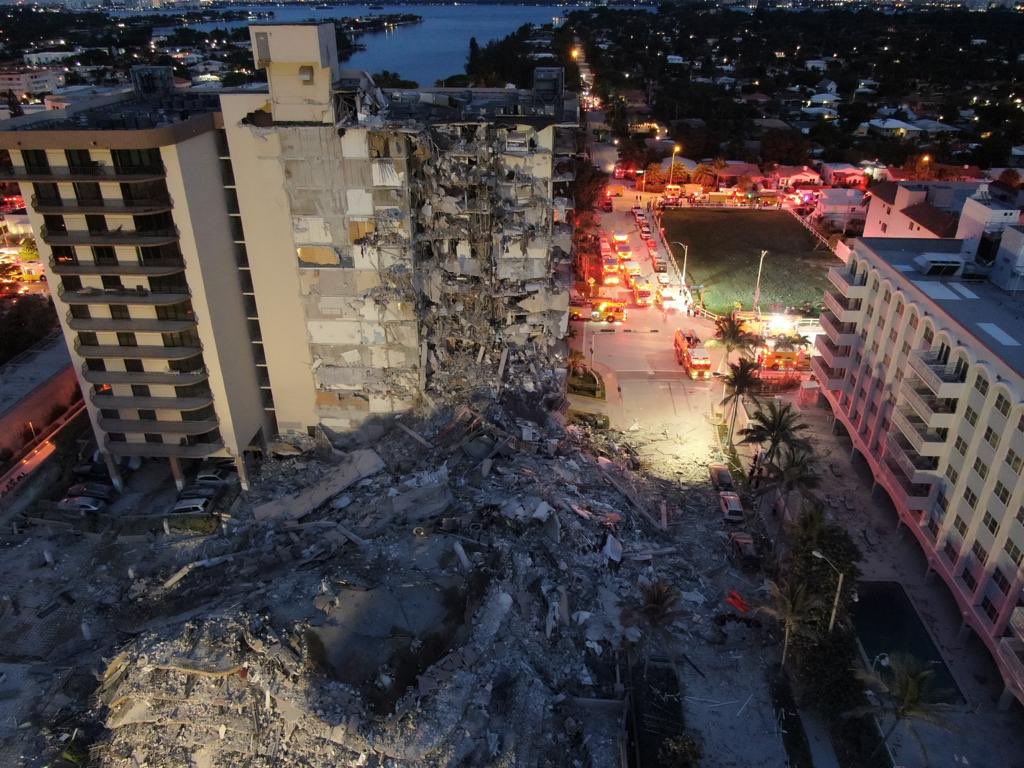
The condominium board debated the repair costs for nearly three years. Elected board members held strong differences of opinion regarding the urgency of the building repairs. In 2019, five members of the seven member board resigned in frustration over the delayed action. The board president wrote a resignation letter mentioning ego battles and the circulation of gossip. The estimated cost for the recommended repairs grew from $9 million in 2018 to $15 million by 2021. In April 2021, the association approved the $15 million special assessment. The financial cost per homeowner ranged from $80, 190 for a one bedroom unit to $336, 135 for the four bedroom penthouse. Owners had until July 1, 2021, to select a payment plan. The building collapsed on June 24, 2021. At the time of the collapse, roof repairs were underway. Concrete restoration had not yet begun.
Structural Deviations
The National Institute of Standards and Technology launched an investigation into the collapse. In September 2023, federal investigators revealed that the original construction of the pool deck deviated from the design requirements. The team found an insufficient number of slab reinforcing bars centered over the vertical columns. The reinforcing bars in the top of the slab were spaced farther apart than the design required. These deviations weakened the connections between the slabs and the columns. The added weight of planters and paving stones placed on the deck further reduced the structural margins against failure. The steel reinforcement inside the concrete slabs was buried deeper in the concrete than the initial designs specified. Investigators found signs of corrosion in parts of the steel reinforcement. These accumulated errors left the structure with a dangerously low margin to safeguard against failure.
Repair Cost Escalation Data
| Year | Event | Estimated Cost | Status |
|---|---|---|---|
| 2018 | Morabito Consultants Initial Assessment | $9, 000, 000 | Delayed by Board |
| 2019 | Board Resignations Over Inaction | Pending Reassessment | Debated |
| April 2021 | Special Assessment Approved | $15, 000, 000 | Approved |
| June 2021 | Building Collapse | N/A | Catastrophic Failure |
Chloride Ingress and the Silent Corrosion of Steel Reinforcements
The financial toll of infrastructure decay provides a precise metric for the magnitude of the concrete degradation emergency. Data from the Association for Materials Protection and Performance confirms the annual global cost of corrosion exceeds $2. 5 trillion. This figure equals 3. 4 percent of the global gross domestic product. In the United States alone, the annual cost of corrosion reaches $450 billion. Reinforced and prestressed concrete structures account for 66 percent of existing highway spans in the United States. By 2024, the Federal Highway Administration classified more than 300, 000 of these structures as being in fair condition. Implementing verified corrosion control practices can reduce these costs by 35 percent, generating up to $875 billion in annual global savings.
Chloride ingress drives this financial and structural decay. The chemical process operates through a diffusion sequence dependent on time. Capillary absorption pulls water and dissolved chloride ions into the porous concrete matrix. Once inside, these ions migrate toward the steel reinforcement. The alkaline environment of healthy concrete normally maintains a passive protective around the steel. Chloride ions destroy this passive and trigger pitting corrosion. The electrochemical reaction oxidizes the iron, forming ferrous ions that combine with hydroxide ions to produce rust.
The physical consequences of this chemical reaction destroy the structural integrity of the concrete element. The volume of the resulting corrosion products expands to between two and six times the size of the original steel. This massive expansion generates severe internal pressure within the concrete matrix. The pressure forces the concrete to crack and eventually spall, exposing more steel to the elements. A 2022 review published by the American Institute of Physics details that this degradation leads to a direct reduction of the steel cross section and a total loss of bond between the steel and the concrete.
Environmental variables accelerate the destruction rate. The traditional engineering consensus held that corrosion begins when chloride concentrations reach a specific threshold, estimated at 0. 4 percent by cement mass. A 2025 report in the Materials Journal documents that this threshold drops drastically under high temperatures. Investigators tested 96 reinforced concrete specimens across a two year period. At 20 degrees Celsius, the chloride threshold stood at 0. 77 percent. When the temperature increased to 65 degrees Celsius, the threshold plummeted to 0. 12 percent. This temperature dependency proves that concrete structures in hot climates face a much higher risk of premature failure than previously calculated.
Proximity to saltwater multiplies the degradation metrics. A 2025 structural engineering analysis measured the exact impact of marine environments on concrete reinforcement. The data confirms that exposure to a 30 percent sodium chloride solution increases corrosion rates by 2. 5 times compared to a standard 5 percent solution. Structures built with a shallow 20 millimeter concrete cover exhibit the highest degradation velocity under these conditions. To counter this accelerated decay, engineers use supplementary cementitious materials. Adding fly ash to the concrete mix reduces the corrosion rate by 25 percent. Ground granulated blast furnace slag decreases chloride diffusion by 40 percent when compared to ordinary Portland cement.
The direct cost of corrosion in United States drinking water and sewer systems reaches $80 billion annually. This figure covers the replacement of aging pipes excludes the medical costs associated with contamination. A 2025 report from the Association for Materials Protection and Performance indicates that waiting for these systems to fail costs significantly more than implementing early prevention measures. Unchecked corrosion in these municipal networks leads directly to widespread health emergencies. The degradation of these subterranean structures mirrors the decay seen in above ground concrete elements, driven by the same chemical reactions.
To halt this chemical destruction, contractors increasingly replace traditional steel with fiber reinforced polymer rebars. A 2025 market analysis projects the demand for these corrosion resistant materials in the United States to grow by 7. 2 percent annually through 2035. This growth directly from the need to protect highway rehabilitations, defense facilities, and marine ports from heavy chloride exposure. In China, the adoption rate for these polymer rebars is projected to reach 11. 5 percent annually over the same period, driven by massive public investments in coastal structures. Domestic production of these alternative materials has lowered procurement costs, allowing wider adoption in municipal projects.
| Global Economic Impact of Infrastructure Corrosion (2024 Data) | |
|---|---|
| Global Cost |
$2. 5 Trillion
|
| U. S. Cost |
$450 Billion
|
| Projected Savings |
$875 Billion
|
| Source: Association for Materials Protection and Performance | |
Britain and the Autoclaved Aerated Concrete Public Infrastructure Emergency
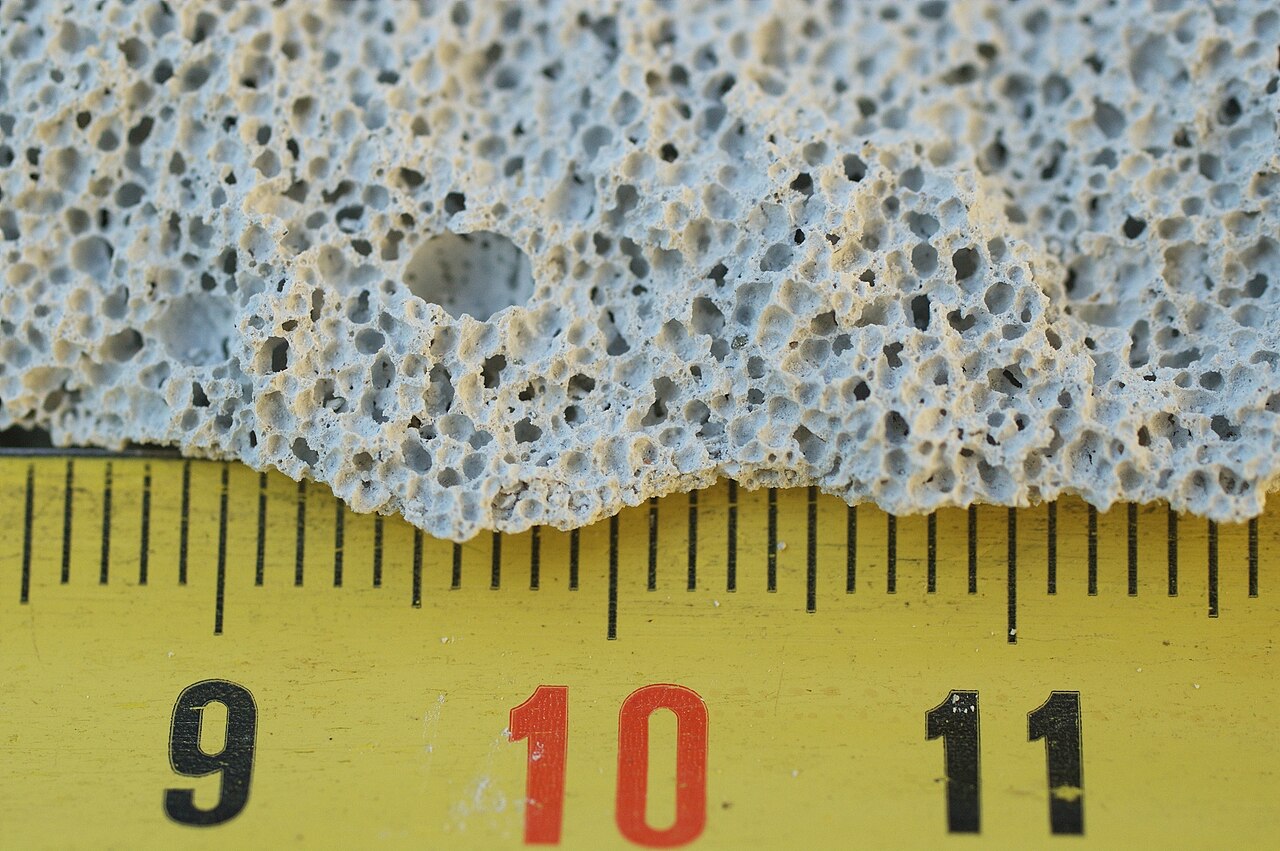
The United Kingdom public infrastructure network faces a severe degradation emergency tied directly to reinforced autoclaved aerated concrete. Engineers pioneered this lightweight, porous building material in Sweden and installed it extensively across British public buildings between the 1950s and 1990s. The material was favored for its thermal insulation and lightweight properties, making it highly attractive for rapid public sector expansion. Yet, the structural integrity degrades significantly after its 30 year design life. The material absorbs moisture from the environment, which oxidizes the internal steel reinforcement and causes sudden shear failures without visible surface cracking. In July 2018, a flat roof constructed with the material at Singlewell Primary School in Gravesend collapsed without warning. Following this failure, the Standing Committee on Structural Safety issued an alert in 2019, and by September 2022, the United Kingdom Government Property Agency declared the material life expired and liable to collapse. Engineers noted that the aerated bubbles within the concrete allow water to penetrate deeply, compromising the entire structural load bearing capacity.
The Department for Education ordered more than 100 schools to immediately close or partially close in August 2023, just days before the autumn term began. By October 2024, government audits confirmed the defective concrete in 237 schools and colleges across England. Mitigation efforts forced thousands of students into temporary portable classrooms or remote learning arrangements. Specific institutions faced severe disruptions. For example, Parks School and Mayflower School in Leicester, along with Waddesdon Church of England School in Buckinghamshire, appeared on the government confirmed list. The Office for Standards in Education, Children’s Services and Skills suspended inspections for affected schools throughout the autumn 2023 and summer 2024 terms to accommodate the logistical chaos. Public records indicate that 17 of the affected schools had originally secured rebuilding funds in 2010, yet those projects were cancelled during budget reductions. The government confirmed that 119 of these schools require extensive rebuilding or refurbishment, while 110 qualify for smaller removal grants. Loughborough University researchers provided the core data driving these closure decisions, proving that structures from the 1950s through the 1970s posed the highest collapse risk.
| Year | Infrastructure Event |
|---|---|
| 2018 | Singlewell Primary School roof collapses in Kent. |
| 2019 | Standing Committee on Structural Safety problem an alert regarding the material. |
| 2022 | Government Property Agency warns the material is life expired. |
| 2023 | Department for Education identifies over 200 affected schools by October. |
| 2024 | Confirmed educational sites with the defective concrete reach 237. |
| 2025 | Government eradicates the material from seven hospitals, including Broomfield and Homerton. |
| 2025 | December reports confirm seven major hospital rebuilds miss their 2030 deadlines. |
The Department of Health and Social Care identified the defective concrete in 42 hospitals. Seven of these facilities consist almost entirely of the degraded material and require complete replacement: West Suffolk Hospital, James Paget University Hospital, Airedale General Hospital, Frimley Park Hospital, Hinchingbrooke Hospital, Leighton Hospital, and The Queen Elizabeth Hospital in King’s Lynn. At The Queen Elizabeth Hospital, engineers installed 2, 400 steel props strictly to hold up the roof and prevent a collapse. By 2025, the government spent more than £500 million strictly on temporary reinforcements to prevent structural failures at these seven sites. At Jersey General Hospital, engineers documented the material in the pathology and engineering departments, requiring £500, 000 in immediate mitigation. The pathology department required a complete relocation of live laboratories to reinforce the ceilings.
A December 2025 report concluded that the seven hospitals requiring total replacement miss their original 2030 completion dates. Projections schedule these facilities to open in 2032 or 2033. The total capital funding required for the broader hospital rebuilding program escalated to £56 billion, representing a £33. 8 billion increase from the 2023 estimates. This total includes a £12 billion contingency fund to cover inflation and engineering complications. Maintaining the aging buildings while waiting for replacements costs the government between £100 million and £140 million annually. In September 2025, the government successfully eradicated the material from seven smaller hospitals, including Kidderminster and Scunthorpe General, with 12 more scheduled for completion by March 2026.
Hospital Rebuilding Program Capital Funding Estimates (in Billions GBP)
| 2023 Estimate |
£22. 2bn
|
| 2025 Estimate |
£56. 0bn
|
Financial Metrics Behind the United Kingdom School Evacuations
The financial architecture supporting United Kingdom educational facilities reveals a documented deficit between assessed maintenance requirements and actual capital allocations. In June 2023, the National Audit Office reported that the Department for Education calculated a requirement of £5. 3 billion annually from 2021 to 2025 to maintain school buildings and mitigate serious risks of structural failure. The department requested £4 billion per year from the Treasury. The Treasury approved £3. 1 billion annually. This decision left actual funding allocations more than 40 percent the government-assessed levels of need. Between 2016 and 2022, the department spent an average of £2. 3 billion a year on capital projects, adding to the deferred maintenance backlog.
The broader macroeconomic indicators reflect a sustained reduction in infrastructure investment. According to the Institute for Fiscal Studies, education spending as a proportion of national income dropped from 5. 6 percent in 2010 to 4. 1 percent in the 2024 to 2025 financial year. During this same period, spending per pupil on education fell in real terms by £558. The National Education Union reported that 74 percent of schools experienced budget cuts in the 2024 to 2025 pattern. By October 2024, the National Audit Office estimated the total cost of restoring degraded school buildings to a satisfactory condition reached £13. 8 billion.
The financial consequences of deferred maintenance materialized rapidly when reinforced autoclaved aerated concrete failed in multiple facilities. The government provided £181 million in direct grants for immediate repairs and structural works during the 2023 to 2024 financial year. Emergency evacuations triggered immediate logistical expenses. The Department for Education awarded a £35 million contract to portable building providers to supply temporary facilities to affected schools. Individual institutions absorbed large localized costs. At Scalby Secondary School in Scarborough, administrators estimated costs to transport children to a temporary site and secure temporary classrooms at £1 million, leaving the school to find £300, 000 from its own operational budget.
Historical budgetary decisions directly influenced the current infrastructure condition. In 2010, the government canceled the Building Schools for the Future program. The National Audit Office estimated that initiative would cost between £52 billion and £55 billion to rebuild or refurbish 3, 500 secondary schools. The suspension of this program caused a steep suppression of capital investment across the school estate. Consequently, approximately 24, 000 school buildings exceeded their original design life by 2023, leaving an estimated 700, 000 pupils in facilities requiring major rebuilding or refurbishment.
| Financial Year | Capital Spending or Allocation | Category |
|---|---|---|
| 2016 to 2022 Average | £2. 3 billion | Actual Spend |
| 2023 to 2024 | £181 million | Concrete Specific Grants |
| 2024 to 2025 | £5. 6 billion | Actual Spend in Cash Terms |
| 2025 to 2026 | £6. 8 billion | Planned Allocation |
Recent adjustments to capital spending reflect the immediate financial requirements of the concrete emergency. During the 2024 to 2025 financial year, the Department for Education recorded capital spending of £5. 6 billion in cash terms. Planned capital spending for the 2025 to 2026 period rises to £6. 8 billion, representing a 17 percent real terms increase compared to the previous year. Even with this increase, in total departmental capital spending declined by 24 percent in cash terms and 48 percent in real terms between the 2009 to 2010 and 2024 to 2025 financial years.
To address the permanent removal of the degraded material, the government shifted the deadline to make schools safe to 2029. Officials committed to a £2. 4 billion annual allocation over four years, starting in June 2025, for a school rebuilding program. Out of the 237 schools and colleges confirmed to contain the material, 123 are part of the school rebuilding program, 108 receive grants to remove the material, and six plan to permanently close the affected sections. By October 2025, contractors had removed the concrete from just 62 schools and colleges, while 41 schools had been completely rebuilt. The Treasury confirmed a long term plan to increase the annual school and college maintenance budget from £2. 4 billion to £2. 9 billion by the 2034 to 2035 financial year.
Seismic Code Violations During the 2023 Turkey Earthquakes
On February 6, 2023, two earthquakes measuring 7. 8 and 7. 5 in magnitude struck southern Turkey and northern Syria. The seismic events killed more than 50, 000 people in Turkey and displaced an estimated 3 million residents. Post disaster assessments recorded approximately 320, 000 buildings as collapsed or heavily damaged. Engineering investigations quickly identified specific construction code violations as the primary driver of the high fatality rate, shifting focus from the natural disaster to human negligence.
A central factor in the building failures was the 2018 zoning amnesty program. The government passed legislation allowing property owners to register illegal constructions or unpermitted modifications by paying a fee, bypassing safety inspections. Nationwide, the government approved nearly 9 million applications, generating approximately $2 billion in revenue. In the ten provinces most affected by the 2023 earthquakes, officials had granted 294, 165 amnesty certificates. This policy legalized thousands of structures built without engineering oversight or proper seismic detailing.
The distribution of these amnesty certificates shows the density of unverified construction in the earthquake zone. Adana and Hatay recorded the highest numbers of legalized structures in the region.
2018 Zoning Amnesty Certificates in Key Affected Provinces
Field investigations conducted after the collapses identified specific mechanical failures in the concrete frames. Researchers found that 97 percent of the collapsed buildings in Kahramanmaraş were built before the 1997 seismic code updates. These older structures featured low quality concrete and smooth steel reinforcement bars that failed to bond adequately with the surrounding material. When the seismic waves hit, the smooth rebar slipped out of the concrete, causing immediate structural failure.
Inspectors also documented a high prevalence of soft story configurations. Between 64. 9 percent and 82. 7 percent of severely damaged structures featured open ground floors designed for retail shops or parking garages. Builders frequently removed load bearing columns or walls on the ground level to maximize commercial space. This configuration concentrated the seismic forces on the weakened lower level, leading to pancake collapses where upper floors fell straight down onto the foundation.
The government response included immediate legal action against the construction sector. Within six days of the earthquakes, the Justice Ministry established Earthquake Crimes Investigation Bureaus across the affected provinces. Authorities issued arrest warrants for 131 developers and contractors accused of negligent construction practices. Police detained several suspects at international airports as they attempted to leave the country.
Even with modern seismic codes enacted in 2018, enforcement remained a documented problem. The post earthquake analysis showed that construction phase errors accounted for 43. 58 percent of the failures in a sample of 400 collapsed reinforced concrete buildings. Mistakes in structural analysis contributed to 25. 57 percent of the collapses, while licensing irregularities accounted for 24. 77 percent. The data confirms that the high death toll resulted directly from the circumvention of engineering standards and the legal pardoning of unsafe buildings.
The economic damage from the disaster reached an estimated $103. 6 billion, representing a massive portion of the national gross domestic product. The financial toll mirrored the physical destruction, as entire city blocks turned to rubble. In Hatay province alone, 58 percent of all buildings sustained damage. Emergency response teams found their rescue operations severely restricted because the sheer volume of collapsed residential buildings blocked major roadways. The debris prevented heavy and medical personnel from reaching trapped survivors during the 48 hours.
The technical assessments of the ruined structures revealed a consistent pattern of material deficiency. Engineers analyzing the debris found that contractors routinely diluted concrete mixtures to reduce costs. The resulting concrete failed to meet the minimum compressive strength required to withstand lateral seismic loads. Investigators also observed insufficient stirrup detailing in the columns. Stirrups are the horizontal steel loops that confine the vertical rebar and prevent the concrete from bursting outward under pressure. In the collapsed buildings, these stirrups were spaced too far apart or did not have the required 135 degree hooks at their ends, allowing the columns to explode outward when the ground shook.
The 2018 zoning amnesty directly compounded these engineering failures. By allowing owners to pay a fee to register unpermitted additions, the state sanctioned buildings that carried extra, uncalculated weight. property owners had added illegal upper floors to their buildings. This extra mass at the top of the structures drastically altered their seismic response, creating an inverted pendulum effect that the original foundations and columns were never designed to support. The amnesty process required no structural screening, leaving the responsibility for earthquake compliance entirely to the property owners.
Zoning Amnesties and the Legalization of Substandard Architecture
Governments worldwide use zoning amnesties to generate immediate revenue by legalizing unpermitted structures. This administrative maneuver bypasses structural safety verification. It inserts fatal structural flaws directly into the urban grid. Politicians market these amnesties as bureaucratic cleanup operations. The reality is a transaction where the state trades building safety for cash. Property owners pay a fee to clear zoning violations. The government problem a legal permit without conducting physical inspections or material testing.
The 2018 zoning amnesty in Turkey stands as the most lethal example of this practice. The Turkish government passed legislation that legalized approximately 7 million unauthorized structures across the country. The state accepted 1. 8 million applications from property owners who admitted to building without proper permits or in violation of seismic codes. The government collected between $2 billion and $3 billion in revenue from these registration fees. The application process required zero earthquake screening. The law placed the entire responsibility for structural integrity on the property owner.
The consequences materialized during the February 2023 earthquakes. The seismic event killed over 50, 000 people across Turkey and Syria. Investigators found that 120, 940 housing units collapsed or sustained severe damage. Engineering associations and anti corruption watchdogs directly linked the high fatality rate to the 2018 amnesty. The law allowed contractors to bypass seismic building codes and use substandard concrete without facing legal penalties.
The Turkish Enterprise and Business Confederation estimated the reconstruction cost at $70. 8 billion. This financial total dwarfs the initial $3 billion collected during the 2018 amnesty period. The state traded long term stability for short term capital. The resulting destruction erased entire neighborhoods and required massive international aid to manage the recovery efforts.
| Metric | Data Recorded |
|---|---|
| Unauthorized Structures Legalized | 7, 000, 000 |
| Amnesty Applications Accepted | 1, 800, 000 |
| Government Revenue Generated | $2 Billion to $3 Billion |
| Earthquake Fatalities (2023) | 50, 000+ |
| Housing Units Collapsed or Damaged | 120, 940 |
European nations also deploy similar legislative tools. Italy frequently executes the condono edilizio. This building amnesty allows property owners to pay fines to legalize unauthorized construction work. The Italian government uses these decrees to clear municipal backlogs and raise state funds. The policy legalizes everything from unpermitted walls to entirely illegal buildings constructed in restricted zones. Researchers estimate that illegal construction heavily affects urban and coastal areas across southern Italy.
In Italy, the national parliament approved major building amnesties in 1985, 1994, and 2003. Rather than solving the administrative backlog, these decrees instilled further waves of spontaneous and illegal building. Citizens realized they could build without permits and simply wait for the amnesty period to pay a fine. This practice normalizes the use of unverified concrete and steel in residential construction.
The formalization of uninspected architecture extends to North America. Municipalities in the United States face pressure to implement amnesty programs to legalize informal accessory dwelling units. Researchers analyzed construction data in San Jose, California, between 2016 and 2020. They found that property owners legally built 291 detached accessory dwelling units during this period. The same study estimated that residents constructed 1, 045 informal units without permits.
The San Jose data reveals that 75 percent of detached accessory dwelling units built during that four year window were unpermitted. These structures bypass building, fire, and health code inspections. Local governments view amnesty programs as a method to increase the official housing supply. Legalizing these units without requiring complete structural retrofits introduces unverified concrete foundations and framing into the legal housing stock. The administrative conversion from illegal to legal status does not alter the physical reality of the materials used during construction.
Zoning amnesties prioritize paperwork over physics. When a state legalizes a substandard building, it assumes the liability for the structural failures that follow. The revenue generated by these programs represents a fraction of the economic destruction caused when the uninspected concrete inevitably fails.
Counterfeit Cement Production and Distribution Networks
Underground syndicates manufacture and distribute adulterated cement across global construction markets. Criminal networks dilute authentic cement powder with stone dust, clay, and limestone before repackaging the compromised mixture into forged bags bearing the logos of established brands. This illicit industry directly threatens structural integrity and accelerates building collapses worldwide. Law enforcement agencies across multiple continents report increasing seizures of fake cement and the destruction of sophisticated production facilities.
In South Asia, police operations expose the vast reach of these counterfeit rings. During June 2025, the Uttar Pradesh Special Task Force raided a warehouse in Lucknow, India, arresting eight individuals. The facility operated as a full production plant equipped with printing units, sealing equipment, and raw mixing tools. Workers repackaged low quality materials into bags mimicking ACC, Mycem, and Ultratech brands. Earlier in January 2025, Commissionerate Police in Bhubaneswar, Odisha, shut down a fake cement factory that had operated covertly for eighteen months, seizing 500 packets of adulterated material. In June 2023, authorities in Uttarakhand recovered 1250 bags of fake cement bearing ACC and UltraTech branding. The problem extends into Pakistan, where Islamabad Capital Territory Police intercepted a truck in September 2025 carrying 410 fake Bestway Cement bags. The investigation revealed a network of bag printers, transporters, and shopkeepers operating multiple warehouses to distribute the fraudulent product.
East African nations face similar syndicates operating on an industrial level. In March 2025, the Internal Security Organization and the Uganda Police Force raided an adulteration center in Tororo district. Investigators discovered that criminals hired private vehicles to transport fine dust from Busoga to Tororo. The operators diluted 50 kilograms of genuine Tororo Cement with 500 kilograms of fine dust. This highly compromised mixture was then sold across Northern Uganda, Central Uganda, and the Democratic Republic of Congo. Authorities seized over 700 bags of fake cement and arrested five workers at the site. A subsequent raid in Luwero town in April 2025 uncovered another major operation. Police confiscated 500 bags of fake cement, 1000 bags of stone dust, and over one million counterfeit Uganda National Bureau of Standards quality mark seals.
The financial incentives driving this black market are substantial. Counterfeiters purchase cheap filler materials and sell the resulting mixture at premium prices under stolen brand names. In Tororo, the fake cement retailed for 26,000 to 28,000 shillings per bag. The distribution networks rely on complicit hardware store owners and small contractors who purchase the adulterated stock under the false pretense of surplus or discounted inventory.
Regulatory interventions can reduce the prevalence of counterfeit materials when enforced strictly. Data from the Ukrcement association shows that the share of counterfeit products in the Ukrainian cement market decreased to 8 percent in 2017, down from 21.5 percent in 2014. This reduction followed the implementation of quality guarantee memorandums between producers and large construction material networks. Yet, in regions with weaker enforcement, the underground cement trade continues to supply compromised materials to residential and commercial construction sites.
| Date | Location | Seizure Details |
|---|---|---|
| September 2025 | Islamabad, Pakistan | 410 fake Bestway Cement bags seized from a transport truck. |
| June 2025 | Lucknow, India | Eight arrested at a warehouse producing fake ACC, Mycem, and Ultratech cement. |
| April 2025 | Luwero, Uganda | 500 bags of fake cement and one million counterfeit quality seals confiscated. |
| March 2025 | Tororo, Uganda | 700 bags seized where 50 kilograms of genuine cement was diluted with 500 kilograms of dust. |
| January 2025 | Bhubaneswar, India | 500 packets of adulterated material seized from an illegal factory. |
| June 2023 | Uttarakhand, India | 1250 bags of fake cement bearing ACC and UltraTech branding recovered. |
The insertion of multi colored charts visualizes the volume of these seizures across different jurisdictions.
Counterfeit Cement Bags Seized by Location (2023 to 2025)
The use of substandard materials directly compromises the load bearing capacity of concrete structures. When builders unknowingly mix adulterated cement with water and aggregate, the resulting concrete fails to achieve the required compressive strength. This chemical failure leaves buildings highly susceptible to collapse under normal environmental stresses. The continuous operation of these distribution networks ensures that thousands of construction sites receive compromised materials daily.
Falsified Laboratory Stress Tests in Urban Development Projects
Laboratory testing fraud compromises the structural baseline of public infrastructure. Between 2015 and 2025, investigators uncovered multiple instances where quality control personnel manipulated concrete compression and air content data. These falsifications allowed contractors to install substandard materials in multibillion dollar transit networks. The resulting structural vulnerabilities require continuous remediation to prevent water intrusion and material failure.
In the United States, federal authorities prosecuted a major testing fraud case involving the Washington D. C. Metrorail Silver Line extension. From October 2015 through June 2016, the quality control manager at Universal Concrete Products Corporation directed employees to alter test records. The original data showed the concrete air content fell outside the acceptable range. The project specifications required a specific air content range to ensure the concrete could withstand freeze and thaw pattern without cracking. The altered records misled the general contractor into accepting and installing 1, 750 faulty precast concrete panels across five transit stations.
Nathan Davidheiser, a former lab technician at the company, noticed the ongoing manipulation and reported it. After the company terminated his employment, he filed a federal whistleblower lawsuit under the False Claims Act. The United States Department of Justice and the Commonwealth of Virginia joined the lawsuit. In January 2019, Universal Concrete Products and its president agreed to pay $1 million to resolve civil allegations. The former quality control manager pleaded guilty to conspiracy to commit wire fraud. The transit authority faces the ongoing task of applying special sealants to the 1, 750 panels to prevent premature deterioration.
A parallel fraud occurred during the construction of the Hong Kong Zhuhai Macao sea crossing. This project represents one of the largest infrastructure investments in the region. To ensure material safety, the Civil Engineering and Development Department established a dedicated regional laboratory at Siu Ho Wan. The department outsourced the laboratory operations to a private contractor. In the middle of 2016, government engineers noticed irregularities in the testing timestamps. They referred the matter to the Independent Commission Against Corruption.
The subsequent investigation revealed a coordinated effort to defraud the government. When the original concrete samples failed the compressive strength tests, technicians replaced them with high strength concrete cubes or metal cylinders to generate passing results. They also manipulated the testing machines to change the dates and times of the tests, covering up their failure to test the samples within the required twenty eight day curing window. The government had to conduct extensive nondestructive testing on the completed concrete structures to verify their safety.
Concrete compression testing requires curing standardized cylinders or cubes in a controlled water bath for twenty eight days. Technicians then place the samples in a hydraulic press and apply force until the concrete fractures. The machine records the maximum load the sample withstood before failure. In the Hong Kong Zhuhai Macao case, the substitution of these samples completely invalidated the structural baseline of the affected sections. Engineers rely on accurate fracture data to calculate the load bearing capacity of the final structure. Without this data, the structural integrity remains unknown until physical signs of distress appear.
The Hong Kong authorities prosecuted the individuals responsible for the data substitution. Multiple laboratory technicians received prison sentences for their roles in the fraud. In June 2024, the courts concluded a twenty day trial involving a project director, who was acquitted after evidence showed the technicians concealed their actions from senior management. The government implemented new digital logging requirements to prevent future manual tampering with compression testing machines.
The table details the verified metrics from these two infrastructure testing fraud cases.
| Infrastructure Project | Location | Fraud Timeframe | Falsification Method | Verified Impact |
|---|---|---|---|---|
| Silver Line Metrorail Extension | Washington D. C., United States | October 2015 to June 2016 | Altered air content test records | 1, 750 faulty precast panels installed |
| Hong Kong Zhuhai Macao Sea Crossing | Hong Kong, China | January 2015 to June 2016 | Substituted concrete cubes and altered timestamps | Multiple technicians convicted of fraud |
Duration of Verified Testing Fraud (Months)
These cases demonstrate that reliance on manual data entry in materials testing creates vulnerabilities in public works. When quality control personnel face pressure to maintain construction schedules, the temptation to alter failing test results increases. The installation of untested or failing concrete forces municipalities to spend millions on early remediation and continuous structural monitoring.
The Economics of Illicit Sand Mining Operations
Global construction consumes 50 billion metric tons of sand annually. The United Nations Environment Programme reports this volume makes sand the second most exploited natural resource on Earth after water. Legitimate supply chains cannot meet this extraction rate. that only 30 percent of the 50 billion tons used each year is legally mined and traded. The remaining 35 billion tons flow through a shadow economy.
The financial size of this black market rivals international narcotics trafficking. Federal investigators and industry analysts estimate the global illegal sand trade generates between $200 billion and $350 billion a year. This revenue surpasses the combined illicit markets for logging, gold mining, and fishing. Criminal syndicates exploit the unpriced nature of riverbed and coastal sand. They extract the material using standard construction equipment, blending illicit loads with legal shipments before the sand reaches concrete batching plants.
Regional demand drives the profitability of these operations. China consumed approximately 17. 8 billion tons of aggregates between 2015 and 2021. In the United States, total construction spending hit $1. 98 trillion in 2023, sustaining high domestic sand requirements. India represents the most volatile market for illicit extraction. The country’s sand sector employs over 35 million people and holds an estimated valuation exceeding $126 billion annually. To meet the demands of a quickly expanding real estate sector, organized criminal networks, widely identified as the Sand Mafia, control vast stretches of riverbeds. These groups generate tens of millions of dollars monthly through unregulated extraction.
| Metric | Volume or Value | Source |
|---|---|---|
| Annual Global Consumption | 50 Billion Metric Tons | United Nations Environment Programme |
| Legally Traded Volume | 15 Billion Metric Tons | Industry Estimates |
| Illicit Market Valuation | $200 Billion to $350 Billion Annually | Federal Investigations Data |
| China Aggregate Demand (2015 to 2021) | 17. 8 Billion Tons | China Sand and Gravel Industry Report |
Enforcement agencies struggle to intercept these shipments due to the physical properties of the material. Sand carries no serial numbers, chemical tags, or origin markers. Once a truck leaves an unauthorized dredging site and enters a public highway, the illicit cargo becomes indistinguishable from legally quarried aggregates. Police departments and environmental ministries operate without sufficient personnel to monitor thousands of miles of rural riverbanks. When authorities do confiscate illegal sand, local governments frequently auction the seized material back to the public. Construction companies purchase this auctioned sand legally, laundering the stolen resource back into the legitimate supply chain. The criminal networks absorb the minor equipment losses and immediately resume extraction operations elsewhere.
The localized economic destruction compounds the global statistics. Agricultural communities situated near unregulated mining zones experience severe groundwater depletion. Deep river dredging lowers the surrounding water table, which dries up farming wells and destroys seasonal crop yields. Farmers lose their primary income source and frequently migrate to urban centers, which ironically increases the demand for new concrete housing. The heavy truck traffic required to transport millions of tons of stolen sand also destroys rural road networks. Local taxpayers fund the continuous repaving of these routes, subsidizing the transportation costs of the criminal syndicates.
Annual Global Sand Extraction (Billion Metric Tons)
The economic damage extends beyond stolen resources. Unregulated dredging destroys riverbank stability and alters hydrological flows. This structural undermining accelerates the degradation of public infrastructure. Municipalities bear the financial cost when overpasses collapse due to lowered riverbeds or when coastal roads wash away following beach theft. In regions like Tamil Nadu, India, state governments lose billions in expected tax revenue while simultaneously funding emergency repairs for infrastructure damaged by illegal quarrying.
Price manipulation further distorts the construction economy. Illicit operators avoid licensing fees, environmental compliance costs, and severance taxes. They flood local markets with cheap, unwashed sand. Legitimate quarries cannot compete with these artificially low prices. Consequently, construction firms frequently purchase black market sand to maintain profit margins on contracts with fixed prices. This contaminated material, regularly laden with chlorides from marine environments or organic matter from untreated riverbeds, directly compromises the compressive strength of the resulting concrete. The initial financial savings achieved by sourcing illegal sand transfer massive future liabilities to property owners and municipal governments.
Cartel Control Over River Sand and Aggregate Supply Chains
The global construction sector consumes between 40 billion and 50 billion metric tons of sand annually. The United Nations Environment Programme reported in 2022 that extraction rates are rising by 6 percent each year. Builders cannot use desert sand for concrete production. Wind friction leaves desert sand grains too round and smooth to bind with cement. Structural concrete requires the jagged, angular edges found exclusively in riverbeds, lakes, and coastlines. This geological reality has turned river sand into a finite, highly contested commodity.
Organized crime syndicates control large segments of the global aggregate supply chain. A 2021 study by Brazilian Federal Police Specialist Luis Fernando Ramadon valued the global illegal sand trade between $199. 88 billion and $349. 98 billion annually. This valuation places illicit sand extraction among the top three largest criminal enterprises worldwide, ranking just behind counterfeit goods and drug trafficking. Cartels dictate pricing, control distribution routes, and enforce monopolies through extreme violence.
The human cost of this black market is severe. The South Asia Network on Dams, Rivers and People documented 418 deaths and 434 injuries in India between December 2020 and March 2022 directly linked to sand mafia violence. Criminal organizations routinely bribe local police, threaten journalists, and murder environmental activists who attempt to expose their operations. In regions with high construction demand, these syndicates operate fleets of dredging boats and heavy under the cover of darkness.
Illegal extraction devastates local ecosystems and infrastructure. Unregulated dredging alters river currents and destabilizes the ground beneath existing structures. In Cambodia, aggressive sand mining along the Mekong River caused a 200 meter riverbank collapse in 2020. Entire communities lost their homes and agricultural land to the water. The structural integrity of and roads degrades rapidly when cartels strip the foundational sediment from riverbeds.
Marine environments face similar exploitation. The United Nations Environment Programme launched the Marine Sand Watch platform in September 2023 to track dredging vessels via satellite. The data revealed that operators extract between 4 billion and 8 billion tonnes of marine sand each year. The tracking system showed that 16 percent of this dredging occurs inside protected marine reserves. Cartels and unregulated operators ignore environmental boundaries to harvest material for the concrete industry.
| Illicit Global Trade Sector | Estimated Annual Value (USD) | Visual Representation |
|---|---|---|
| Counterfeit Goods | $923 Billion to $1. 13 Trillion | |
| Drug Trafficking | $426 Billion to $652 Billion | |
| Illegal Sand Extraction | $199. 88 Billion to $349. 98 Billion |
The infiltration of cartels into the aggregate supply chain directly impacts concrete quality in new buildings. When legal river sand becomes too expensive or scarce, contractors frequently turn to the black market. Cartels frequently mix high quality river sand with unwashed coastal sand or dirt to increase their profit margins. Unwashed coastal sand contains high levels of chloride ions. When builders use this contaminated aggregate to mix concrete, the trapped chlorides immediately begin corroding the internal steel reinforcement.
This supply chain contamination creates a delayed structural emergency. Buildings constructed with cartel supplied aggregate may pass initial visual inspections. The internal chemical reaction remains hidden inside the concrete matrix for years. The steel rebar expands as it rusts, which forces the surrounding concrete to crack and spall. By the time property owners notice the exterior damage, the load bearing capacity of the structural columns has already degraded.
“The global illegal sand trade ranges from $200 billion to $350 billion a year, more than illegal logging, gold mining and fishing combined.”
Governments struggle to police the aggregate trade. The sheer volume of sand required for urban expansion makes strict enforcement nearly impossible. Developing nations face the highest risks, as rapid urbanization drives high demand for cheap concrete. Without verified chain of custody documentation for aggregate materials, the construction industry continues to build high rise structures on a foundation of black market sand. The resulting concrete degradation guarantees future structural failures.
Alkali Silica Reactions Destroying Mid Century Concrete Foundations
Alkali silica reaction destroys concrete from the inside out. The chemical process occurs when alkalis in Portland cement react with reactive silica found in aggregates like crushed rock and sand. When moisture enters the concrete, these elements combine to form an expansive gel. This gel absorbs water, swells, and exerts massive internal pressure. The pressure fractures the concrete, creating micro cracks that eventually reach the surface as map cracking or eggshell cracking. Engineers refer to this incurable condition as concrete cancer.
The reaction moves slowly, frequently taking decades to manifest visible surface damage. Mid century concrete foundations are highly susceptible because builders during that era did not fully understand the chemical interactions between specific aggregates and high alkali cement. Once the gel forms and the swelling begins, the process is irreversible. The internal cracking allows more water to penetrate the structure, which accelerates the gel expansion and exposes internal steel reinforcement to moisture and chlorides. The resulting steel corrosion further degrades the structural integrity of the foundation.
The Seabrook Nuclear Power Plant in New Hampshire provides a documented example of this degradation. The Nuclear Regulatory Commission confirmed the presence of alkali silica reaction at the facility in 2010. By 2015, inspections revealed that the reaction had compromised 80 to 85 percent of the plant structures. The expansive gel caused building deformation events, misaligning pipes and fire protection systems. Core testing showed that concrete surrounding an electric control tunnel lost 22 percent of its compressive strength. Plant owners identified 50 buildings in early degradation stages and up to 12 buildings in severe degradation stages.
Seabrook Nuclear Plant ASR Degradation Metrics
The destruction extends beyond nuclear facilities to public infrastructure and residential construction. In France, engineers identified alkali silica reaction in 500 and five dams. In Central Texas, a massive cluster of residential swimming pools built between 2017 and 2023 developed the condition. The defective concrete cracked and drained water into the surrounding soil. Homeowners face flat rate testing fees of $1, 999 just to confirm the diagnosis through core sampling. Because there is no patch or chemical treatment to stop the reaction, affected pools must be completely demolished and rebuilt at a cost of tens of thousands of dollars.
| Degradation Stage | Physical Symptoms | Structural Consequence |
|---|---|---|
| Stage 1 | Internal gel formation, microscopic cracking | No visible surface damage, moisture intrusion begins |
| Stage 2 | Map cracking, eggshell cracking, gel exudation | Water reaches steel reinforcement, early corrosion |
| Stage 3 | Spalling, building deformation, macro cracking | Severe loss of compressive strength, structural failure |
Visual inspections fail to detect the reaction in its early stages because the chemical changes occur at the molecular level. By the time inspectors observe map cracking on a foundation wall, the internal damage is already severe. Engineers must use core sampling, laboratory petrographic analysis, and ultrasound testing to measure the true extent of the degradation. The absence of a cure means that asset managers can only monitor the decline and plan for eventual demolition. As sea levels rise and groundwater tables shift, increased moisture exposure accelerates the reaction in existing mid century foundations.
Testing for alkali silica reaction requires destructive sampling. Structural engineers drill cylindrical cores directly from the foundation and send them to specialized laboratories. Technicians perform petrographic examinations under microscopes to identify the presence of the expansive gel and measure the width of the internal micro cracks. They also conduct expansion tests, placing the concrete samples in high humidity environments to measure how much the material can swell over time. These diagnostic procedures are expensive and only confirm the diagnosis without offering a solution.
Engineers attempt to slow the reaction in existing structures by applying waterproof coatings to the exterior concrete surfaces. This method aims to cut off the moisture supply required for the gel to expand. Yet, foundations sit directly in the soil, making it impossible to block groundwater infiltration completely. Once the gel absorbs water, it can generate swelling pressures exceeding 1, 000 pounds per square inch. This pressure easily exceeds the tensile strength of standard concrete, ensuring that the material fractures regardless of external surface treatments.
Municipal Inspection Failures and Underfunded Regulatory Bodies
Municipal building departments operate with severe staffing deficits and slashed budgets, directly compromising structural safety enforcement. Regulatory bodies face an exodus of qualified personnel. The United States Bureau of Labor Statistics projects a one percent decline in construction and building inspector employment from 2024 to 2034. The industry requires 14, 800 annual openings just to replace retiring workers. Municipalities report serious hiring problems. In late 2023, certain city governments recorded an 18. 42 percent vacancy rate across departments, while Clark County, Nevada, reported an 8. 3 percent building department vacancy rate in mid-2024. This absence of personnel delays structural evaluations and allows concrete degradation to advance unchecked.
Florida demonstrates the immediate consequences of inspection backlogs. Following the 2021 Surfside collapse, state lawmakers passed Senate Bill 4-D and Senate Bill 154, mandating milestone structural inspections for condominium buildings three stories or taller. Buildings constructed on or before July 1, 1992, faced a strict December 31, 2024 deadline to complete these evaluations. Yet, compliance remains exceptionally low. By late February 2025, fewer than 40 percent of the 12, 000 required condominium buildings in Florida had disclosed their inspection results to the state Department of Business and Professional Regulation.
Regional data exposes a fractured enforcement system. Miami-Dade and Broward counties maintained the highest compliance rates, as both jurisdictions enforced 40-year recertification programs prior to the new state mandates. Even with this head start, less than half of the required buildings in Miami-Dade submitted reports by the February 2025 cutoff. Broward County recorded a 45 percent compliance rate. In southwest Florida, less than a third of buildings in Lee and Collier counties reported results.
| Florida County | Milestone Inspection Compliance Rate (Feb 2025) | Status Indicator |
|---|---|---|
| Monroe | 80% | |
| Miami-Dade | < 50% | |
| Broward | 45% | |
| Pinellas | ~ 40% | |
| Palm Beach | < 33% | |
| Lee & Collier | < 33% |
Condominium associations report a severe absence of licensed structural engineers as the primary bottleneck. State lawmakers included provisions allowing associations to avoid immediate penalties if they signed a contract with an engineering firm, demonstrating a good faith effort to comply. This legal concession extends the timeline for identifying compromised concrete, leaving residents in unverified structures throughout 2025. The real estate market imposes its own penalties, as unit values drop in buildings without verified structural integrity reports.
The United Kingdom presents a parallel collapse in regulatory capacity. The Health and Safety Executive absorbed severe budget cuts between 2001 and 2024. In the 2001 to 2002 financial year, the agency employed 4, 050 staff members and conducted 75, 237 inspections. By the 2019 to 2020 period, staffing dropped to 2, 399 personnel, and inspections plummeted to 13, 300. For the 2024 to 2025 operating year, the agency achieved 13, 200 inspections, missing its 14, 000 goal. The agency explicitly referenced inflation and public sector financial constraints as primary drivers for its constrained operations. This reduction in field presence directly correlates with the delayed identification of reinforced autoclaved aerated concrete failures across British public infrastructure.
The agency’s shift from proactive enforcement to reactive management leaves aging concrete structures unmonitored. The 2024 to 2025 business plan acknowledged that focusing on health in proactive inspections increased the time spent per site, reducing the total volume of possible evaluations. The establishment of the Building Safety Regulator within the agency added massive oversight responsibilities for occupied higher-risk buildings without a proportional increase in unrestricted funding.
Major metropolitan centers in the United States attempt to accelerate enforcement hit financial walls. The New York City Department of Buildings conducted a record 416, 290 field inspections in 2024, representing the highest volume since the agency began tracking the metric. This aggressive enforcement push yielded a 30 percent drop in worker injuries and a 24 percent decrease in construction-related incidents compared to 2023. Yet, the Fiscal 2025 Executive Plan removed 24 full-time positions from the department’s baseline budget to align headcount with actual funding. The budget action included zero new inspectorial positions, relying entirely on existing staff to manage the massive urban portfolio.
The Privatization of Building Safety Certifications
Governments worldwide transferred building inspection duties from municipal departments to private corporations between 1990 and 2025. This transfer created a commercial market for safety compliance. Developers hire private certifiers directly to approve construction plans and inspect active job sites. The financial relationship between the builder paying the fee and the inspector signing the approval generates a direct conflict of interest.
In the United Kingdom, private entities known as Approved Inspectors handle approximately 40 percent of all controllable building work in England and Wales. The September 2024 Grenfell Phase 2 Report found that Approved Inspectors possessed a commercial interest in acquiring and retaining customers that conflicted with their role as guardians of the public interest. The Building Control Independent Panel published a statement in July 2025 confirming that the commercial model incentivized a minimalist service to win work. The panel noted that this financial incentive raised serious concerns about the extent and effectiveness of site inspections.
The National House Building Council employed Approved Inspectors for building control services and influenced the industry through the Building Control Alliance. The Grenfell Phase 2 Report established that the National House Building Council failed to ensure its building control function remained free from commercial pressures. Competition for work with local authority building control departments introduced conflicts of interest that threatened the integrity of the entire system. Building control officers frequently possessed insufficient knowledge to make informed product assessments.
Australia introduced private certification in 1998. By 2019, the consequences of this policy materialized through the emergency evacuations of the Opal Tower and Mascot Towers in New South Wales. A 2019 New South Wales parliamentary inquiry survey recorded that over 90 percent of respondents were dissatisfied with the private certification process. A 2021 University of New South Wales study found that more than 25 percent of new buildings sampled in Sydney contained defects. Researchers from Deakin and Griffith Universities recorded an average of 14 defects per building in residential multiple owner properties across New South Wales, Queensland, and Victoria.
The shift to private certification in Australia removed local councils from the inspection process. Developers lobbied for this change to bypass municipal planning requirements. The resulting certification process allows developers to submit minimal documentation rather than face scrutiny throughout the design and construction stages. When defects surface after construction, developers and building companies frequently evade responsibility through corporate restructuring. They create temporary companies to carry out specific projects and dissolve them upon completion. This practice leaves apartment owners responsible for the financial costs of structural repairs.
Florida Statute 553. 791 permits property owners to use private providers for plan review and building inspections. The law requires private providers to submit inspection reports to the local building official within two business days. Municipalities retain the authority to audit these private inspections, yet the data shows near zero oversight. During the 2022 to 2023 fiscal year, the City of Miami recorded 17, 614 building inspections conducted by private providers. The city conducted exactly 57 audits of those private inspections. The City of Orlando reported 6, 917 private provider building inspections during fiscal year 2025. Orlando recorded zero audits of those inspections.
| Municipality | Fiscal Year | Private Provider Inspections | Municipal Audits Conducted | Audit Rate |
|---|---|---|---|---|
| City of Miami | 2022 to 2023 | 17, 614 | 57 | 0. 32% |
| City of Orlando | 2025 | 6, 917 | 0 | 0. 00% |
The Florida legislature expanded the private provider system in 2021. Lawmakers amended the statute to mandate that local building departments offer fee discounts to owners who hire private providers. The amendment also permitted private providers to conduct remote virtual inspections. A private provider can complete an emergency inspection without notifying the building department beforehand. The provider must submit the inspection report to the local building official within one day after completing the inspection. This system eliminates the waiting period for a municipal inspector. It also removes the independent verification step that municipal inspectors previously provided.
New Zealand officials evaluated the liability of private building certifiers in a July 2025 Ministry for Regulation report. The report examined a 2015 litigation case regarding defects in the 12 story Nautilus apartment building. The court allocated 20 percent of the responsibility to the Auckland Council. The council paid approximately 95 percent of the 24 million dollar redress due to the limited financial capability of the remaining defendants. The Ministry for Regulation noted that the current liability rules fail to align with actual fault. The system creates perverse incentives favoring litigation against parties with large financial reserves rather than the private certifiers who approved the defective work.
Insurance Industry Data on Rising Structural Liability Claims
The 2021 collapse of the Champlain Towers South condominium in Surfside Florida altered the commercial property insurance market. Insurers faced immediate and massive payouts following the disaster that killed 98 people. A state judge approved a 1. 12 billion dollar settlement for the families of the victims. Great American Insurance Company tendered its full policy limits and additional payments exceeding 30 million dollars for the property. Multiple insurers reached a 55 million dollar settlement in a wrongful death lawsuit involving engineering firms and the legal counsel for the condominium association. A separate 83 million dollar agreement compensated owners for lost property.
These massive financial losses forced insurance carriers to rewrite underwriting guidelines for older concrete structures. Property insurance premiums for master condominium associations in Florida doubled within six to nine months after the Surfside disaster. Underwriters demand extensive structural engineering reports before renewing policies for buildings exceeding 30 years of age. Insurance Information Institute data shows that buildings older than 30 years possess a 60 percent higher probability of generating a major claim compared to newer construction.
The United Kingdom faces a parallel insurance problem with reinforced autoclaved aerated concrete. The Association of British Insurers confirmed that standard domestic building policies exclude coverage for the replacement of decaying construction materials. Homeowners discovering this porous concrete in their properties bear the full financial cost of remediation. Insurance policies cover sudden damage from storms or fires explicitly deny claims for design defects or gradual material degradation.
Property owners in West Lothian Scotland encountered this exact coverage denial. Residents in former council homes purchased from the government learned their houses contained the defective concrete. Insurance companies refused to cover the structural repairs. Specific carriers withdrew building coverage entirely and only offered contents insurance for these affected properties.
| Event or Metric | Financial Data | Market Result |
|---|---|---|
| Surfside Victim Settlement | 1. 12 Billion Dollars | Carriers exited the Florida property market |
| Surfside Property Loss Settlement | 83 Million Dollars | Insurers mandated strict structural inspections |
| Florida Condo Premium Increases | 100 Percent Increase | Associations faced doubled insurance costs in 2021 |
| UK Defective Concrete Claims | Zero Coverage | Homeowners pay full remediation costs |
Commercial property insurers evaluate concrete degradation as a severe liability. Water intrusion and subsequent steel reinforcement corrosion create hidden risks that standard inspections miss. Carriers screen condominium association financial records to verify adequate reserve funds for structural maintenance. Boards that defer recommended concrete repairs face policy cancellations or massive premium hikes.
General liability policies also underwent strict revisions following the Surfside collapse. Insurance carriers introduced new exclusions to limit their exposure to structural failure lawsuits. One specific addition is the cross suits exclusion. This clause prevents condominium unit owners from suing their own association under the general liability policy. Insurers also began excluding claims resulting from improper reserve funding. If a condominium board fails to collect enough money for necessary concrete repairs, the insurance company denies coverage for any resulting structural damage.
Citizens Property Insurance Corporation became the last option for Florida condominium associations. This state run program saw its volume of new policies double in 2021 as private carriers abandoned the market. The program provides limited coverage for windstorms and basic perils. Associations forced into this program pay premiums that are 50 to 150 percent higher than previous private market rates. The state program explicitly refuses to guarantee coverage for older buildings with known structural defects.
The Florida Legislature passed Senate Bill 4D in May 2022 to enforce strict financial requirements for condominium associations. This law mandates that buildings three stories or taller must reserve funds to pay for future long term maintenance and concrete repairs. Associations can no longer waive these reserve requirements. This legislative change forces property owners to absorb the full cost of structural degradation. The steep rise in association fees combined with doubled insurance premiums forced property owners to sell their units and relocate. The average Florida homeowner pays 6, 000 dollars annually for property insurance. This figure represents more than triple the national average of 1, 700 dollars. Insurance carriers also clamp down on renewals. Progressive Insurance announced plans to send non renewal notices to 100, 000 homeowners in Florida.
“Domestic buildings insurance policies are generally designed to cover damage from named perils such as storms, floods, subsidence or damage from theft. They are not intended to cover design or build defects, or to replace construction materials that are gradually deteriorating over time.”
This statement from the Association of British Insurers clarifies the financial reality for property owners. The insurance industry treats concrete degradation as a maintenance failure rather than an insurable event. This classification shifts billions of dollars in liability directly onto property owners and municipal governments.
Whistleblower Accounts from Major Construction Firms

Insiders within major construction and testing firms provide the most direct evidence of fraudulent concrete certification. Between 2015 and 2025, multiple quality control technicians and federal agents filed formal complaints detailing how suppliers falsified concrete strength and air content records. These whistleblowers used the False Claims Act to expose practices that compromised major public infrastructure projects. Their testimonies reveal a pattern of corporate management instructing employees to doctor laboratory results to avoid project delays and material rejection.
The False Claims Act allows private citizens to file lawsuits on behalf of the United States government when they possess evidence of fraud. In the construction sector, this statute becomes highly relevant when contractors submit invoices for materials that fail to meet federal safety specifications. The law provides financial incentives for insiders to report these violations, awarding them a percentage of the recovered funds. This legal framework relies heavily on laboratory technicians and quality control managers who observe the daily testing procedures.
The Dulles Metrorail Silver Line extension in Washington District of Columbia stands as a primary example of this fraud. In 2016, Nathan Davidheiser filed a whistleblower lawsuit against his former employer. He worked as a quality control lab technician for Universal Concrete Products Corporation. His complaint detailed how the company falsified air content tests for precast concrete panels used in the transit stations. The project specifications required a four percent air content standard to ensure the concrete could resist cracking and water seepage. Davidheiser provided text messages from supervisors instructing him to invent passing test numbers. One supervisor explicitly directed him to make something up and make sure it is a good number.
The precast concrete panels on the Silver Line serve as the exterior walls for the elevated transit stations. These panels face constant exposure to weather conditions, including freezing temperatures and heavy rain. The four percent air content standard exists specifically to allow water inside the concrete to expand when it freezes without shattering the panel. By falsifying these tests, Universal Concrete Products delivered materials highly susceptible to freeze and thaw damage. The Metropolitan Washington Airports Authority discovered the defects only after installing 1, 500 panels across five different stations. The resulting remediation requires applying specialized silane coatings to the concrete surfaces every decade, transferring the long term financial costs to the taxpayers.
The Department of Justice joined the lawsuit in 2018. Federal investigators confirmed that the concrete panels consistently failed to meet the required air content standards. In 2019, Universal Concrete Products and its president Donald Faust Junior agreed to a one million dollar civil settlement. Separately, the former quality control manager Andrew Nolan pleaded guilty to conspiracy to commit wire fraud. The federal court ordered Nolan to pay 700, 567 dollars in restitution to the Metropolitan Washington Airports Authority.
Financial Penalties in Dulles Silver Line Concrete Fraud
A separate case involving the Amtrak East River Tunnel projects demonstrates the severe professional retaliation whistleblowers face. In 2010, Michael DeJoseph worked as a Supervisory Special Agent in the Amtrak Office of Inspector General. During an investigation into Testwell Laboratories, DeJoseph discovered that ten concrete inspectors certifying the tunnel materials were not actually certified to perform the tests. Amtrak had paid multiple invoices based on these unverified inspections.
Testwell Laboratories operated as one of the largest concrete testing firms in the New York area before investigators exposed their fraudulent practices. The company held contracts for major infrastructure projects, including schools, airports, and rail systems. When DeJoseph discovered that uncertified inspectors from this firm were approving the Amtrak tunnel concrete, he recognized the immediate structural risks. Concrete used in subterranean transit tunnels must withstand immense pressure and constant moisture exposure. Falsified compressive strength data means the structural engineers cannot accurately predict how the tunnel walls behave under load.
When DeJoseph attempted to problem a subpoena to investigate the uncertified testing, Amtrak management intervened. The Deputy Inspector for Investigations shut down the probe. Shortly after raising these safety concerns, DeJoseph received his negative performance evaluation. Amtrak eliminated his supervisory position and terminated his employment. DeJoseph filed a whistleblower complaint with the Occupational Safety and Health Administration. In 2017, the federal agency ruled that Amtrak retaliated against him for exposing the certification fraud. The agency ordered Amtrak to reinstate DeJoseph and pay 892, 550 dollars in back wages, punitive damages, and legal fees.
Amtrak Whistleblower Retaliation Award (2017)
| Project | Firm Involved | Whistleblower | Fraud Allegation | Resolution |
|---|---|---|---|---|
| Dulles Metrorail Silver Line | Universal Concrete Products | Nathan Davidheiser | Falsified air content tests for precast panels | One million dollar civil settlement in 2019 |
| Amtrak East River Tunnels | Testwell Laboratories | Michael DeJoseph | Uncertified inspectors approving concrete | 892, 550 dollar retaliation award in 2017 |
These cases demonstrate the exposure within the construction supply chain. When testing laboratories and concrete manufacturers falsify data, structural engineers base their load calculations on fictional material properties. The False Claims Act provides a legal avenue for employees to report these violations, yet the retaliation documented in the Amtrak case illustrates the risks involved. The financial settlements in these cases represent only a fraction of the long term maintenance costs required to secure the compromised structures.
Prosecution Rates for Negligent Property Developers
Criminal accountability for property developers following fatal building collapses remains statistically low worldwide. Between January 2015 and December 2025, authorities frequently pursued civil litigation over criminal charges. Prosecutors face strict load of proof to establish gross negligence or manslaughter. Civil settlements routinely reach into the hundreds of millions of dollars, yet prison sentences for the executives who authorize substandard construction are rare. The data reveals a distinct pattern. Arrests occur only when developers attempt to flee the jurisdiction or when public outrage forces immediate government action.
The 2023 earthquakes in Turkey provided a rare mass prosecution event. Following the destruction of thousands of buildings, Turkish authorities issued over 130 arrest warrants for contractors and developers. Police detained developer Mehmet Yasar Coskun at an Istanbul airport as he attempted to board a flight to Montenegro. His company constructed a 12 story luxury residential complex in Antakya that collapsed and killed hundreds. Authorities also arrested developer Yavuz Karakus and his wife at the same airport while they tried to leave for Georgia. By March 2023, courts had arrested nearly 300 individuals connected to the faulty construction.
In Taiwan, the 2016 earthquake exposed severe construction deficiencies in the Wei guan Golden Dragon building. The collapse killed 39 people. Investigators discovered commercial cooking oil containers packed inside the wall cavities. Authorities arrested developer Lin Minghui on suspicion of negligent homicide. Prosecutors charged him and two other construction officials for using substandard building materials.
| Location and Year | Incident | Developer Criminal Charges | Civil Financial Penalties |
|---|---|---|---|
| Tainan, Taiwan (2016) | Wei guan Golden Dragon Collapse | Negligent Homicide | Undisclosed |
| Manchester, UK (2018) | Oldham Property Demolition Collapse | Health and Safety Breaches (8 Months Prison) | £65, 000 Prosecution Costs |
| Surfside, Florida (2021) | Champlain Towers South Collapse | None | $1. 02 Billion Settlement |
| Lagos, Nigeria (2021) | Ikoyi 21 Story Building Collapse | Corporate Prosecution Recommended | Property Forfeiture |
| Antakya, Turkey (2023) | Rönesans Rezidans Collapse | Gross Negligence | Pending |
| Bronx, New York (2023) | 208th Street Construction Collapse | Manslaughter and Criminally Negligent Homicide | Pending |
The United States presents a sharp contrast between civil and criminal outcomes. Following the 2021 Champlain Towers South collapse in Surfside, Florida, a judge approved a $1. 02 billion settlement for the victims. The collapse killed 98 people. Investigators uncovered evidence of severe concrete degradation and structural failures. Prosecutors filed no criminal charges against the original developers. The passage of four decades since the 1980 construction shielded the original builders from criminal liability.
American prosecutors occasionally secure convictions in active construction cases. In June 2023, the Bronx District Attorney filed manslaughter and criminally negligent homicide charges against four contractors. A 2019 collapse at their site killed one worker after the contractors overloaded a makeshift floor with nearly 1, 000 pounds of masonry materials. The District Attorney noted that such criminal charges for a construction fatality were extremely rare. The contractors had filed false documents to obtain building permits and misrepresented their qualifications.
Lagos, Nigeria, demonstrates the routine evasion of building controls. In November 2021, a 21 story building in the Ikoyi district collapsed. The Lagos State government released a White Paper recommending the criminal prosecution of the developer. The developer had ignored a four month stop work order after the building failed a structural integrity test. In February 2022, another three story building collapsed in the Yaba area of Lagos. Authorities arrested the developer for breaking a government seal and continuing construction even with official warnings.
In Malta, an architect, a property developer, and two contractors faced criminal charges in September 2021. A four story building in Mellieha collapsed in June 2019. The collapse trapped an elderly resident who died two months later. Prosecutors charged the four individuals with causing property damage and injuries through negligence. The judicial process in this case remains ongoing, reflecting the slow pace of criminal proceedings in construction failures.
Even with clear evidence of negligence, securing prison time requires direct proof of regulatory violations. In the United Kingdom, a property developer received an eight month prison sentence in September 2018. The roof and rear wall of his Oldham property collapsed during demolition work. The developer hired inexperienced workers and failed to appoint a principal contractor. The court ordered him to pay £65, 000 in prosecution costs after finding him guilty of health and safety breaches. This outcome remains an exception. Developers use complex corporate structures to shield themselves from personal criminal liability. They dissolve the companies responsible for the failed buildings. They pay civil fines through insurance policies. They avoid prison time.
Non Destructive Testing Technologies Exposing Hidden Flaws
Engineers rely on non destructive testing to evaluate structural integrity without causing further damage. Traditional coring weakens load bearing elements and provides only localized data. Modern diagnostic tools scan entire concrete elements to detect internal voids, moisture infiltration, and active steel corrosion. Between 2015 and 2025, upgrades in sensor accuracy and data processing altered how investigators assess failing infrastructure.
Ground penetrating radar provides high resolution imaging of internal concrete structures. The technology emits high frequency electromagnetic waves into the material and records the reflected signals. Investigators use ground penetrating radar to measure slab thickness, locate internal reinforcement steel, and identify subsurface voids. Recent field data confirms that modern ground penetrating radar systems can determine the actual thickness of a 15 centimeter reinforced concrete slab within an accuracy margin of plus or minus 0. 5 centimeters. Ground paired antennas work best for deeper penetrations and object detection. Air paired horn antennas serve different survey needs. The equipment maps additional levels of reinforcement, complex construction arrangements, and increased moisture content. A single underground utility strike can average 56, 000 dollars in damages according to the 2022 Common Ground Alliance report. Early scanning prevents these expensive accidents.
Ultrasonic pulse velocity testing measures the travel time of acoustic waves through concrete to determine material density and quality. A 2023 study demonstrated a strong Pearson correlation of 0. 94 between ultrasonic pulse velocity readings and the compressive strength of the concrete. Higher transmission speeds indicate dense and sound concrete. Lower speeds reveal internal anomalies like cracking or honeycombing. In 2021, the European standard EN12504 updated its rules to allow pulse velocity determination using shear waves in pulse echo mode. This regulatory update accelerated the testing process for elements where inspectors only have access to one side of the structure. The direct transmission method remains the most accurate configuration because the receiving transducer captures the maximum energy of the pulse.
Impact echo testing introduces transient stress waves into a concrete object via a mechanical strike. A receiver monitors the wave reflections from internal defects. The method excels at finding shallow delaminations and deep voids. Research indicates that impact echo testing successfully detects delaminations when the defect area exceeds 160 by 160 millimeters at frequencies 6 kilohertz. The technique maps the exact depth of the flaw by analyzing the peak frequency of the reflected wave. Traditional spectral analysis struggles when the defect size to depth ratio falls 0. 3. To overcome this limitation, engineers apply semi supervised machine learning algorithms to impact echo data. This computational upgrade increases diagnostic accuracy by 8 percent compared to older supervised learning models.
Half cell voltage testing specifically the electrochemical process of steel reinforcement corrosion. The method measures the electrical voltage difference between the encased steel and a reference electrode placed on the concrete surface. According to the ASTM C876 standard, voltage readings more negative than minus 350 millivolts indicate a 90 percent probability of active corrosion. Readings less negative than minus 200 millivolts indicate a 90 percent probability of no active corrosion. Giatec Scientific data from 2023 confirms that silver chloride reference electrodes provide greater stability than older copper sulfate models. Technicians map these voltage readings across a grid to generate a spatial distribution contour map of the corrosion activity. This map highlights the exact zones requiring immediate intervention.
The following table visualizes the diagnostic capabilities and accuracy metrics of these four primary non destructive testing methods.
| Testing Method | Primary Detection Target | Key Metric or Accuracy | Indicator of Failure |
|---|---|---|---|
| Ground Penetrating Radar | Voids and Rebar Location | Accurate within 0. 5 centimeters for 15 centimeter slabs | Signal reflection anomalies |
| Ultrasonic Pulse Velocity | Concrete Density and Strength | 0. 94 Pearson correlation with compressive strength | Increased wave travel time |
| Impact Echo | Delaminations and Deep Cracks | Detects flaws larger than 160 by 160 millimeters | Multiple frequency peaks |
| Half Cell Voltage | Active Steel Corrosion | 90 percent probability threshold at minus 350 millivolts | Highly negative voltage readings |
Combining these technologies yields a complete structural profile. Ground penetrating radar locates the steel. Impact echo finds the physical cracks. Ultrasonic pulse velocity measures the remaining concrete strength. Half cell voltage confirms if the steel continues to rust. This multi method testing sequence eliminates the guesswork that previously affected building inspections.
Ground Penetrating Radar Deployment in High Risk Zones
Engineers deploy Ground Penetrating Radar to detect hidden voids and moisture inside concrete structures. This non destructive testing method sends electromagnetic waves into the subsurface and records the reflected signals. The global Ground Penetrating Radar market reached 190 million dollars in 2024. Analysts project the market to reach 312 million dollars by 2032. Cart based systems currently hold over 95 percent of the market share. Transport and road inspection accounts for approximately 40 percent of total market activity. Government initiatives in North America and Europe allocate substantial funds for infrastructure upgrades. These investments directly boost the demand for non destructive assessment tools.
Manual inspection methods misjudge concrete defects 15 to 20 percent of the time. Ground Penetrating Radar provides exact measurements of internal degradation before structural failure occurs. The technology detects honeycombing where concrete fails to fully compact during pouring. These voids reduce concrete density and allow moisture ingress. Moisture causes steel reinforcement corrosion. Ground Penetrating Radar identifies these delaminated zones by detecting subtle reflections and signal phase changes. Early detection allows repair and rehabilitation ahead of severe degradation.
The frequency of the antenna determines the depth of penetration and the resolution of the scan. Lower frequencies penetrate deeper provide less detail. Higher frequencies deliver sharper images cannot reach as far. A 1000 MHz antenna penetrates to a depth of 36 inches and detects utilities lying a slab. A 1600 MHz antenna penetrates to a depth of 18 inches and resolves objects with a spacing of 2 inches or more. A 2000 MHz antenna penetrates to a depth of 12 inches and resolves objects with a spacing of 1. 5 inches or more. A 2600 MHz antenna penetrates to a depth of 8 inches and resolves multiple small objects in thin concrete structures.
Recent studies demonstrate the effectiveness of combining Ground Penetrating Radar with deep learning models. Researchers analyzed data from 2015 to 2025 to evaluate automated defect detection. An enhanced deep learning model integrated with an Channel Attention system achieved a mean average precision of 85. 4 percent in detecting subsurface defects. This automated process replaces manual interpretation and increases the speed of structural assessments. The deep learning model outperforms baseline algorithms that only achieved 82. 7 percent precision.
Moisture and salt absorb radar energy. Wet ground or heavy clay reduces the signal range. Technicians must select the correct frequency based on the specific material and the required depth. The Caltrans non destructive evaluation van system enables georeferenced thermal imaging of pavement concurrent with 3D Ground Penetrating Radar imaging. This integrated vehicle sensing platform collects data while the vehicle moves at highway speeds. The system eliminates the need to close lanes or slow traffic during inspections. The dual sensor method provides a complete view of surface and subsurface conditions.
The following chart details the relationship between antenna frequency and penetration depth for concrete scanning operations.
| Antenna Frequency | Maximum Penetration Depth | Resolution Capability | Primary Application |
|---|---|---|---|
| 1000 MHz | 36 inches | Low | Thick slabs and deep utilities |
| 1600 MHz | 18 inches | 2. 0 inch spacing | General structural scanning |
| 2000 MHz | 12 inches | 1. 5 inch spacing | Tightly spaced reinforcement |
| 2600 MHz | 8 inches | High | Thin structures and small objects |
Contractors use these tools to locate post tension cables and rebar before cutting or coring. Severing a post tension cable causes immediate structural damage and threatens worker safety. Ground Penetrating Radar provides a clear view of the internal concrete matrix without drilling. The technology works on both metal and non metal objects. High frequency antennas detect voids as small as 10 millimeters at depths up to 150 millimeters inside a concrete block. A 1500 MHz antenna detects larger voids up to 25 millimeters at depths ranging from 100 millimeters to 250 millimeters.
The accuracy of void detection depends on the frequency of the antenna and the diameter of the void. Lower frequency antennas like the 1200 MHz model give a greater depth of penetration decrease the accuracy level of the data. The response of the radar signals to the object increases according to the size of the object. Ground Penetrating Radar identifies the depth of the reinforcing steel within the cement material. This capability proves essential in areas where the soil has experienced subsidence.
Historic buildings present unique challenges for structural assessment. Strict regulations prohibit invasive methods of investigation. Ground Penetrating Radar enables exact examination of structures without compromising their historical integrity. The scans measure the thickness of different construction materials and provide information on the distribution of reinforcement. The technology detects delamination between structural sections and the presence of metals or voids in masonry.
Cost Benefit Analysis of Structural Retrofitting Versus Demolition
Property owners facing degraded concrete structures must execute precise financial calculations to determine the viability of retrofitting versus complete demolition. The baseline cost to demolish a commercial building ranges from $4 to $25 per square foot. This price fluctuates based on the total footprint and the complexity of the concrete removal. Smaller structures between 1000 and 5000 square feet cost $4 to $8 per square foot to raze. Midsize buildings between 5001 and 10000 square feet cost $8 to $12 per square foot. Facilities between 10001 and 20000 square feet require $12 to $18 per square foot. Larger commercial complexes exceeding 50000 square feet push demolition costs to $25 per square foot or higher. The national average for the disposal of a standard commercial building sits at $24000.
Environmental remediation adds direct expenses to the demolition ledger. Contractors charge an additional $2 to $3 per square foot to remove asbestos before heavy can break the concrete. Disposing of the resulting concrete rubble costs $50 to $100 per ton. Landfills charge premium rates for mixed debris. Sorting plaster, metal, and concrete requires extensive labor hours. Municipalities increasingly penalize demolition to prevent vacant lots from blighting urban centers. City planners mandate full site development approvals before issuing demolition permits.
The financial math heavily favors preservation when the core foundation remains viable. Retrofitting an existing structure costs 40 to 60 percent less than executing a full demolition and constructing a new building. Basic seismic stabilization and structural retrofitting cost $3 to $7 per square foot for standard commercial properties. Complex high rise concrete repairs push these numbers higher. The lower initial capital requirements make retrofitting a highly attractive option for developers managing tight margins. In 2025, developers ticketed 23. 3 million square feet of United States office space for conversion or demolition. Over 70 percent of those conversions transitioned into multifamily residential units.
Carbon accounting introduces a second ledger to the decision matrix. The built environment consumed 30 billion tonnes of materials globally in 2020. Traditional estimates place the embodied carbon of an average commercial building between 750 and 950 kilograms of carbon dioxide equivalent per square meter. Demolishing a structure releases decades of stored carbon and requires massive new emissions to manufacture replacement steel and concrete. Demolition alone contributes up to 7 percent of the lifecycle carbon emissions for a newly constructed building.
Renovating an existing building reduces embodied carbon emissions by 50 to 75 percent compared to demolishing and rebuilding from scratch. The deep retrofit of The Entopia Building in Cambridge saved 60 percent of the embodied carbon compared to a total replacement. A typical Victorian terrace house contains about 80 tonnes of embodied carbon. Demolition and rebuilding operations can release up to 15 million kilograms of additional carbon dioxide equivalent emissions. Operational carbon savings from a new energy building take decades to pay back the initial carbon cost of manufacturing new concrete.
Financial analysts project massive growth in the preservation sector. Meeting global net zero requires the retrofit market to expand from $500 billion to $3. 9 trillion by 2050. This expansion diverts $600 billion worth of materials from landfills. Property owners who choose demolition face escalating disposal fees and stricter municipal regulations. Adaptive reuse merges older structural frames with modern technological installations. This method avoids the unpredictability of ground up construction delays.
The decision matrix requires evaluating the structural integrity of the existing concrete. Buildings constructed with reinforced autoclaved aerated concrete frequently require complete demolition due to the total loss of structural capacity. Structures suffering from localized chloride ion exposure can be saved through targeted patching and cathodic protection systems. The final calculation rests on the cost of remediation versus the cost of replacement. Property owners must weigh the immediate capital expenditure of a retrofit against the long term operational costs of an aging facility.
| Metric | Demolition and Rebuild | Structural Retrofit |
|---|---|---|
| Base Cost Per Square Foot | $4 to $25 for demolition plus new construction costs | $3 to $7 for basic stabilization |
| Embodied Carbon Emissions | 100 percent baseline | 50 to 75 percent reduction |
| Hazardous Material Removal | $2 to $3 per square foot | Targeted removal only |
| Concrete Disposal Fees | $50 to $100 per ton | Minimal disposal required |
| Total Project Cost Comparison | Maximum capital expenditure | 40 to 60 percent less than rebuild |
Older structures built prior to 1940 feature dense materials and conservative engineering standards. These buildings possess high load bearing capacities. Modern demolition destroys this upfront investment. Retrofitting preserves the original foundation and avoids the emissions generated by transporting new materials to the site. The economic benefits of retrofitting multiply when local governments offer tax incentives for historic preservation or carbon reduction. Property developers must calculate the exact tonnage of concrete requiring removal before finalizing their budgets.
Climate Change Accelerating Concrete Carbonation Rates
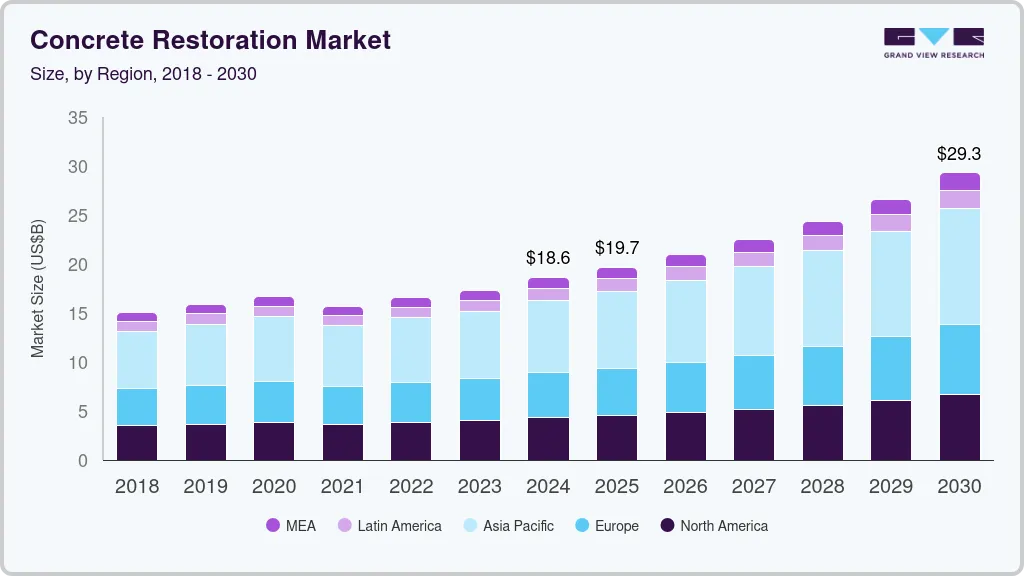
Atmospheric carbon dioxide initiates a chemical reaction within concrete matrices known as carbonation. The gas penetrates the porous material and reacts with calcium hydroxide to form calcium carbonate. This process drops the internal pH of the concrete from a highly alkaline 12. 5 to 9. 0. Once the pH falls this threshold the passive oxide protecting the internal steel reinforcement dissolves. Bare steel then corrodes rapidly when exposed to moisture and oxygen. The global average atmospheric carbon dioxide concentration reached 415. 7 parts per million in 2022. This represents a sharp increase from the preindustrial baseline of 280 parts per million. Urban settings record ambient carbon dioxide concentrations between 5 and 10 percent greater than rural environments. This localized concentration accelerates the degradation of city infrastructure.
Higher concentrations of carbon dioxide directly accelerate the diffusion gradient pushing the gas deeper into concrete structures. The carbonation front advances at a rate of up to 1. 0 millimeters per year in high quality concrete under normal conditions. Elevated carbon dioxide levels steepen this curve. Engineering models published in 2024 project that carbonation depths increase by 45 to 78 percent by the year 2100 under current emission trajectories. A 2025 structural durability analysis indicates that 20 to 40 percent of all concrete surfaces experience carbonation induced damage by the end of the century. The time required to reach maximum carbonation depth can drop by 8 years under specific climate scenarios.
Temperature and humidity act as chemical catalysts in this degradation sequence. Carbonation reaches its maximum velocity when relative humidity sits between 50 and 70 percent. Rising global temperatures further multiply the corrosion rate. A temperature increase of 2 degrees Celsius accelerates the speed of steel corrosion by 15 percent. Extreme heat events cause thermal expansion and moisture evaporation within the concrete matrix. This creates internal microcracks that provide direct pathways for carbon dioxide to bypass the outer concrete cover. Concrete compressive strength remains optimal at 25 degrees Celsius. As temperatures increase to 40 degrees Celsius the structural strength drops due to moisture absence and thermal expansion.
Regional climate variations create localized zones of accelerated structural decay. Arid environments experiencing sudden temperature swings record severe carbonation depths even with minimal rainfall. Coastal areas face a dual threat where carbonation lowers the concrete pH while airborne chlorides simultaneously attack the steel reinforcement. High wind and sunlight exposure enhance the carbonation depth by increasing surface porosity. Predictive modeling for specific geographic zones shows the probability of severe corrosion damage rising by 400 percent by 2100. Global cement materials absorbed an accumulated total of 21. 26 gigatons of carbon dioxide from 1928 to 2023. This massive gas absorption represents the exact chemical method destroying the structural integrity of the material worldwide.
Concrete strength directly relates to material porosity. Higher strength concrete limits gas diffusion. A reduction of the protective concrete cover to 10 millimeters provides a massive acceleration in corrosion initiation time. The Intergovernmental Panel on Climate Change data models show carbon dioxide concentrations could reach 1000 parts per million by 2100. The Fib code previously applied a carbon dioxide concentration of about 500 parts per million based on a linear rise of 1. 5 parts per million per year over 100 years. Current atmospheric measurements prove this linear model underestimated the true acceleration curve.
| Environmental Factor | Measured Metric | Observed Effect on Concrete |
|---|---|---|
| Carbon Dioxide | 415. 7 parts per million in 2022 | Accelerates diffusion gradient and lowers internal pH |
| Temperature | 2 degree Celsius increase | Increases steel corrosion rate by 15 percent |
| Relative Humidity | 50 to 70 percent range | Maximizes carbonation velocity within the matrix |
Projected Carbonation Depth Increase by 2100
Legislative Mandates for Milestone Structural Recertifications
State governments and federal mortgage backers enforce strict compliance deadlines for building inspections. Florida Senate Bill 4D mandates milestone structural inspections for condominium and cooperative buildings three stories or taller. The legislation requires the inspection at 30 years from the original Certificate of Occupancy. Local governments in coastal areas mandate this inspection at 25 years. Buildings reaching their 25 year or 30 year milestone in 2024 or 2025 must complete inspections by December 31 of that respective year. Subsequent inspections occur every 10 years. The law divides the inspection into two phases. Phase one involves a visual examination by a licensed engineer or architect to identify signs of substantial structural deterioration. If the inspector finds structural degradation, the building must undergo a phase two inspection. Phase two involves destructive testing to fully assess the structural integrity of the building. Noncompliance carries fines, code violations, and chance board director liability.
New Jersey enacted S2760 in January 2024 to regulate structural inspections. The law condominiums and cooperatives. Buildings older than 15 years must undergo inspection on or before January 8, 2026. Buildings aged between one and 15 years must complete an inspection within one year of reaching the 15 year mark. Subsequent inspections take place within five years of the preceding inspection. Only a New Jersey licensed Professional Engineer may perform these evaluations. The engineer evaluates the primary load bearing system and documents the findings in a detailed report. If the engineer observes damage to a primary load bearing system, a reinspection must occur within 60 days. The legislation also mandates reserve studies to ensure buildings maintain adequate funds for structural maintenance. The updated New Jersey reserve requirements took effect on August 21, 2025, defining adequacy as a 30 year plan that never allows the reserve balance to fall zero.
California enforces Senate Bill 326 for exterior elevated elements. The law requires condominium associations with three or more units to inspect load bearing exterior elements supported by wood. These elements include balconies, decks, stairways, and walkways elevated more than six feet above the ground. The major inspection deadline was January 1, 2025. Licensed professionals must perform these inspections to identify wood rot, moisture damage, and waterproofing failures. Without these inspections, damage goes unnoticed until a structural failure occurs. Following the initial deadline, associations must repeat these inspections on a regular nine year pattern.
Federal mortgage entities Fannie Mae and Freddie Mac enforce strict lending standards based on structural integrity. On July 5, 2023, Fannie Mae released Announcement SEL 2023 06 and Freddie Mac released Bulletin 2023 15. These directives prohibit the sale of condominium loans in projects needing major repairs. The rules also prohibit loans in projects with unfunded repairs totaling more than 10, 000 dollars per unit. Projects under current evacuation orders due to unsafe conditions remain ineligible for financing. These requirements apply to all new loan applications dated on or after September 18, 2023. The project review must define material deficiencies and significant deferred maintenance. Repairs completed within the normal operating budget of the project do not trigger these restrictions.
Fannie Mae maintains an Unavailable list for properties failing these standards. As of May 2023, the agency placed more than 1, 400 United States condominium and cooperative associations on this list. Properties land on the list if they fail to maintain a 10 percent reserve line item in their operating budget or have violations related to incomplete structural repairs. Investor owned units exceeding maximum thresholds also trigger placement on the list. Freddie Mac introduced a Project Certified status through its Condo Project Advisor tool. The system assigns this status when a project complies with established condominium requirements and avoids the ineligible classification. A loan secured by a unit in a project receiving a Project Certified status must be delivered to Freddie Mac within 120 days after the note date.
| State | Legislation | Initial Inspection Age | Subsequent Interval |
|---|---|---|---|
| Florida | SB 4D | 30 Years (25 Coastal) | 10 Years |
| New Jersey | S2760 | 15 Years | 5 Years |
| California | SB 326 | By Jan 1, 2025 | 9 Years |
The following chart illustrates the volume of properties placed on the Fannie Mae Unavailable list by May 2023, categorized by compliance failure types.
| Compliance Failure Category | Volume Representation |
|---|---|
| Total Blacklisted Properties |
1, 400+ Associations
|
| Incomplete Structural Repairs |
Primary Factor
|
| Reserve Deficits (Under 10 Percent) |
Secondary Factor
|
The Tofu Dreg Project Phenomenon in Rapidly Expanding Cities
Rapid urban expansion frequently prioritizes speed and cost reduction over structural integrity. The phrase tofu dreg project describes buildings and infrastructure constructed with substandard materials and poor engineering methods. Between 2015 and 2025, investigators documented multiple catastrophic failures linked directly to these practices. The data reveals a pattern of illegal modifications, ignored safety audits, and the use of inferior concrete mixtures.
On April 29, 2022, an eight story commercial and residential building collapsed in the Wangcheng District of Changsha. The disaster killed 54 people and injured nine others. The structure originally stood at five floors in 2012. Owners expanded it to eight floors in 2018 without proper engineering oversight. Surveyors falsified the safety audit. In October 2024, courts in Changsha sentenced 15 individuals to prison, including a resident who received an 11 year sentence for his role in the illegal construction. The court ruled that the builders possessed no construction qualifications and illegally rented the property to catering companies.
The Xinjia Hotel in Quanzhou collapsed on March 7, 2020, trapping 71 people. Rescue teams recovered 29 bodies from the rubble. The building began as a furniture store in 2013. Owners converted it into a 66 room hotel in 2018. Investigators determined that illegal renovations on the ground floor compromised the steel frame and concrete pillars. The structure fell just four minutes after a worker reported a deformed pillar to the owner. Officials confirmed that local supervisors failed to enforce safety regulations. The Ministry of Emergency Management classified the collapse as a workplace accident caused by human factors.
Public infrastructure also shows severe weaknesses. On May 1, 2024, a section of the Meizhou Dabu highway in Guangdong province collapsed, killing over 50 people. The highway opened in 2014 and cost 6 billion yuan to build. Two months later, on July 19, 2024, a highway span in Shangluo, Shaanxi province, plunged into a river. The collapse killed 38 people, and 25 vehicles were swept away. Investigators found that heavy rains exposed underlying structural weaknesses in both projects. The rapid construction of these transportation networks bypassed essential geological surveys and material testing procedures.
Educational facilities are not immune to these construction failures. On July 23, 2023, the roof of the No 34 Middle School gymnasium in Qiqihar collapsed. The disaster killed 11 people, including members of the girls volleyball team. A preliminary investigation found that contractors working on an adjacent building illegally stored perlite construction materials on the gymnasium roof. Rain soaked the perlite, multiplying its weight and causing the 26 year old roof structure to fail. Police detained the head of the construction team immediately after the incident.
The table details major structural failures linked to poor construction practices and illegal modifications between 2020 and 2024.
| Location | Date | Structure Type | Fatalities | Primary Cause |
|---|---|---|---|---|
| Quanzhou, Fujian | March 7, 2020 | Commercial Hotel | 29 | Illegal ground floor renovations |
| Changsha, Hunan | April 29, 2022 | Residential/Commercial | 54 | Unapproved floor additions |
| Qiqihar, Heilongjiang | July 23, 2023 | School Gymnasium | 11 | Roof overloaded with materials |
| Meizhou, Guangdong | May 1, 2024 | Highway Section | 50+ | Substandard foundation |
| Shangluo, Shaanxi | July 19, 2024 | Highway Span | 38 | Structural failure during rain |
The financial cost of these failures is massive. The Meizhou Dabu highway required 6 billion yuan to construct. Its collapse just ten years after opening demonstrates a severe disconnect between capital investment and structural longevity. When contractors substitute high grade steel with thinner iron wires or dilute concrete mixtures to save money, the resulting infrastructure cannot withstand environmental stress. The Shangluo highway span failure confirms that water infiltration rapidly destroys compromised concrete and steel supports. The initial cost savings evaporate when entire highway sections require complete reconstruction.
Accountability systems frequently fail to prevent these disasters. The Changsha collapse occurred because safety inspectors submitted falsified audit reports. The Quanzhou hotel operated as a quarantine facility even with known structural deformations. Local officials ignored the illegal addition of three floors to the Changsha building for four years. The Qiqihar gymnasium roof held tons of unauthorized construction materials for months before it collapsed. These incidents show a complete failure in municipal oversight and building code enforcement. The absence of independent structural testing allows dangerous buildings to remain occupied.
The human cost of substandard construction is absolute. The 54 victims in Changsha, the 29 in Quanzhou, and the 11 in Qiqihar died because builders prioritized profit margins over engineering standards. The collapse of the Meizhou Dabu highway and the Shangluo highway span added nearly 90 fatalities to the toll in a single year. These numbers represent verified casualties from structural failures directly linked to poor construction methods and illegal modifications. The data confirms that rapid urban development without strict engineering controls produces lethal environments for residents.
Supply Chain Audits of Global Cement Manufacturers
Global cement production relies on vast networks of raw material extraction, chemical processing, and international distribution. Between 2015 and 2025, regulatory agencies and national governments escalated their financial and operational audits of the largest concrete and cement suppliers. Investigators uncovered severe compliance violations, tax evasion, and direct funding of foreign terrorist organizations. The resulting penalties forced major corporations to restructure their procurement networks and pay hundreds of millions of dollars in fines.
In October 2022, French cement manufacturer Lafarge pleaded guilty to a United States federal criminal charge for providing material support to foreign terrorist organizations. Lafarge, which Swiss conglomerate Holcim acquired in 2015, admitted to paying the Islamic State and the al Nusrah Front to keep a cement plant operating in northern Syria. Court documents show the company routed nearly six million dollars in illicit payments to the groups between August 2013 and October 2014. The payments included fixed monthly donations and variable distributions based on the amount of cement the company sold. Executives intentionally structured the agreements to incentivize the terrorist group to act in the economic interest of the company. Lafarge even asked the Islamic State to impose costs on competitors selling cheaper Turkish cement in the region. Executives used personal email addresses and fake invoices to conceal the revenue sharing agreements. The United States Department of Justice fined Lafarge 777. 8 million dollars. This marked the time the United States government prosecuted a corporation for funding terrorism. The company obtained approximately 70. 3 million dollars in revenue from the Syrian plant during the conspiracy period.
Auditors also examined the financial structures of global suppliers. In November 2023, Mexican multinational building materials company Cemex disclosed a massive penalty resulting from a Spanish tax audit. The audit examined the company operations from 2006 to 2009 and challenged the tax losses reported by its subsidiary Cemex Espana. The Spanish Supreme Court rejected the company appeal in March 2023 after years of litigation. Authorities ordered Cemex to pay 456 million euros, which equaled approximately 498 million dollars at the time of the ruling. By September 2024, the company paid 284 million dollars to cover 60 percent of the finalized penalty. The company recorded an additional 115 million dollar liability for a separate audit covering the years 2010 through 2014. These financial penalties directly impacted the corporate balance sheet and forced the company to liquidate assets to maintain liquidity. The United States Securities and Exchange Commission closely monitored these disclosures as they represented a serious threat to shareholder value.
Other manufacturers faced new mandates to map their entire procurement networks. In 2023, the German Supply Chain Act forced companies to track environmental and human rights data across all vendor tiers. Heidelberg Materials, a German multinational building materials company, reported an annual procurement spend of 14 billion euros in 2024. The company audit logs revealed a vast operational footprint. Heidelberg relies on 130, 000 direct tier one suppliers and an estimated six million tier two suppliers. These vendors provide raw limestone, chemical admixtures, heavy equipment, and transportation services. To comply with the new regulations, the company mandated self assessments for over 2, 400 of its tier one suppliers. The company set a goal to verify 80 percent of its primary supplier spend by 2030.
Environmental audits further exposed the vast carbon footprint of these supply chains. An independent audit by EY in 2025 found that Heidelberg Materials remained the largest single emitter of greenhouse gases among the 40 companies listed on the German DAX stock index. Competitor Holcim integrated its climate risk assessments directly into its Group Risk report, which the Audit Committee reviews alongside the Internal Audit Plan. Holcim committed to reducing gross Scope One and Scope Two greenhouse gas emissions by 26. 2 percent per ton of cementitious materials by 2030, compared to a 2018 baseline. The sheer volume of secondary suppliers makes total oversight mathematically difficult. Cement manufacturers must track material extraction, chemical processing, and emissions across international borders. Regulators continue to demand exact data on where companies source their materials and who receives their payments.
| Company | Audit Focus | Penalty or Metric | Year of Action |
|---|---|---|---|
| Lafarge (Holcim) | Terrorism Financing | $777. 8 Million Fine | 2022 |
| Cemex Espana | Tax Evasion | €456 Million Fine | 2023 |
| Heidelberg Materials | Supply Chain Size | 130, 000 Tier 1 Suppliers | 2024 |
| Holcim | Emissions Tracking | 26. 2 Percent Reduction Goal | 2024 |
Predictive Algorithmic Modeling for Building Collapse Risks
Engineers deploy machine learning algorithms to forecast concrete degradation before physical symptoms appear. A 2024 study published in Nanotechnology Perceptions evaluated an artificial intelligence framework designed to predict seismic weaknesses in concrete structures. The model achieved 95. 6 percent accuracy in identifying structural flaws. This predictive capacity allows project managers to intervene before microscopic fractures expand into catastrophic failures. Traditional visual inspections frequently miss internal moisture infiltration. Algorithmic models process continuous data streams from internal piezoelectric sensors to detect anomalies in real time.
The National Institute of Standards and Technology initiated multiple research programs between 2017 and 2021 to quantify the collapse performance of ordinary reinforced concrete columns. Investigators focused on shear failure and the subsequent loss of axial load capacity. The agency developed numerical models to simulate load deformation responses in nonductile columns. These columns feature relaxed detailing requirements and wider transverse reinforcement spacing. The resulting Performance Based Seismic Engineering framework provides practicing engineers with specific metrics to assess existing buildings. The heart of this process involves incremental kinetic analysis. The software continuously analyzes a nonlinear building model against a proportioned ground motion. The system records the roof drift ratio and repeats the analysis by incrementally increasing the proportion factor until the simulated building collapses.
Specific algorithms demonstrate distinct advantages in structural health monitoring. A 2025 study in the journal MDPI compared six machine learning models using 560 data sets of reinforced concrete slabs subjected to blast loading. Researchers identified Extreme Gradient Boosting as the optimal model for predicting structural damage. Categorical Boosting proved most accurate for classifying failure modes. The analysis showed that TNT charge mass, explosion distance, and compressive strength act as the primary variables dictating structural survival. When compressive strength exceeds 50 megapascals, the impact on structural damage plateaus. Support vector machines also excel at classifying damage severity. When combined with artificial neural networks, these systems filter input data to achieve higher prediction accuracy across diverse environmental conditions.
Real world applications confirm the laboratory findings. In Maharashtra, India, the Aurangabad overpass operates with an active Internet of Things sensor network. Technicians deployed deformation sensors and temperature probes across the structure to collect micro deformation data under varying traffic loads. An algorithmic platform processes this information to map deformation temperature correlations. The system detects subtle shifts signaling fatigue. Engineers use these generated graphs to predict overload risks with over 90 percent accuracy. This continuous data feed eliminates the guesswork associated with periodic manual inspections.
Data scarcity remains a serious problem for training these predictive models. Algorithms require vast amounts of labeled data associating sensor measurements with specific damage states. When researchers use limited experimental data and polynomial fitting, the resulting models oversimplify the environmental factors affecting concrete durability. Overfitting occurs when a model inaccurately applies the specific characteristics of the training samples to the entire dataset. Underfitting arises when the model fails to capture the general properties of the training samples. To counter these errors, newer frameworks integrate physics informed neural networks.
Verified Algorithm Accuracy in Structural Predictions (2022 to 2025)
| Algorithm Model | Target Application | Verified Accuracy |
|---|---|---|
| Support Vector Machine & ANN | Carbonation Depth | 98. 0% |
| AI Seismic Framework | Seismic Weakness | 95. 6% |
| IoT Sensor Network | Overload Risk | >90. 0% |
| Convolutional Neural Networks | Crack & Fatigue Detection | >90. 0% |
A digital twin serves as a virtual replica of a physical building. It updates continuously using data from the physical sensors. Engineers test various stress scenarios on the digital model to observe how the physical structure might react to extreme weather or sudden impacts. This method shifts maintenance schedules from a reactive stance to a predictive model.
The financial metrics support the adoption of algorithmic monitoring. A 2024 analysis indicated that a 20 percent increase in structural design costs dedicated to predictive modeling can reduce physical damage by up to 75 percent during a seismic event. Project managers use these calculations to refine concrete mix designs. They adjust aggregate types and cement content based on algorithmic forecasts of fire resistance and long term durability. This quantitative method replaces empirical formulas with continuous real time verification.
Section 27: Ultra High Performance Concrete Alternatives
Ultra High Performance Concrete provides a verified structural alternative to traditional Portland cement mixtures. The Federal Highway Administration defines this material as a cementitious composite with a water to cementitious materials ratio 0. 25. The mixture replaces coarse aggregates with fine silica sand, silica fumes, and quartz flour. Manufacturers add high range water reducers to maintain flowability. Steel fibers comprise 2 percent to 3 percent of the total volume. This dense microstructure eliminates communicating capillary pores. The absence of these pores prevents water and chloride ions from penetrating the material.
Testing data shows this concrete achieves a compressive strength between 150 megapascals and 210 megapascals. This equals 21, 700 to 30, 000 pounds per square inch. Standard commercial concrete yields compressive strengths between 20 megapascals and 35 megapascals. The steel fiber reinforcement generates a sustained postcracking tensile strength exceeding 5 megapascals. Specific formulations reach up to 9. 7 megapascals in tensile strength. Traditional concrete provides tensile strengths between 2. 8 megapascals and 4. 8 megapascals. Freeze and thaw testing demonstrates that the high performance mixture retains 100 percent of its material properties after 600 pattern. The material exhibits permeability rates 10 to 100 times lower than conventional concrete. Engineers project a service life exceeding 100 years for these structures.
The United States Department of Transportation integrated this material into its Every Day Counts program in 2021. The Federal Highway Administration advocates for the material in overpass preservation and repair projects. State transportation departments use field cast connections to join prefabricated structural elements. This method accelerates construction timelines and creates joints that resist seismic activity. By 2025, highway departments deployed the material in elevated roadway projects across 28 states and the District of Columbia. Iowa built the domestic high performance span in 2006. Researchers in that state continue testing nonproprietary blends to repair aging infrastructure.
Major transit authorities specify this material for high traffic corridors. The Delaware River and Bay Authority applied a three inch structural overlay to the Delaware Memorial crossing. This twin suspension structure carries 80, 000 vehicles daily. The project required over 5, 000 cubic yards of the material and removed two weeks from the construction schedule. In New Jersey, the Pulaski Skyway deck replacement consumed over 5, 000 cubic yards of the specialized concrete. The New York Metropolitan Transportation Authority selected the material for the Park Avenue Viaduct replacement. This 1. 25 mile structure, originally built in 1893, carries 220, 000 riders daily across four Metro North Railroad tracks. The New York State Department of Transportation also completed 30 overpass projects using these high performance connections.
Financial metrics present the primary obstacle to widespread adoption. Conventional 5, 000 pounds per square inch concrete costs approximately $100 to $167 per cubic yard. Commercially available high performance mixtures range from $2, 000 to $3, 000 per cubic yard. The Pulaski Skyway project recorded material costs of $2, 500 per cubic yard. The specialized steel fibers alone cost between $250 and $500 per cubic yard. Prebagged commercial mixtures command premium prices due to proprietary formulations and specialized mixing equipment requirements. University researchers currently test alternative mixture proportions to reduce total material costs to a target range of $600 to $800 per cubic yard. Even with the high initial purchase price, the extended lifespan and reduced maintenance requirements make the material economically viable for specific infrastructure applications.
| Metric | Traditional Concrete | Ultra High Performance Concrete |
|---|---|---|
| Compressive Strength | 20 to 35 MPa | 150 to 210 MPa |
| Tensile Strength | 2. 8 to 4. 8 MPa | 5. 0 to 9. 7 MPa |
| Water to Cement Ratio | 0. 40 to 0. 60 | 0. 25 |
| Cost per Cubic Yard | $100 to $167 | $2, 000 to $3, 000 |
| Projected Lifespan | 30 to 50 Years | Over 100 Years |
Compressive Strength Comparison (MPa)
35 MPa
210 MPa
Strategic Recommendations for Overhauling Global Building Codes
Legislators across different jurisdictions enacted strict building safety laws between 2021 and 2025 to prevent future structural failures. The Florida Senate passed Bill 4D in May 2022 and amended it with Bill 154 in June 2023. These laws mandate milestone structural inspections for condominium and cooperative buildings that stand three stories or taller. Buildings must undergo their inspection at 30 years of age. Local enforcement agencies hold the authority to require inspections at 25 years for buildings located near the coastline. Following the initial assessment, property owners must complete subsequent inspections every 10 years.
The Florida legislation requires associations to complete a Structural Integrity Reserve Study. This study evaluates major structural components and determines the exact financial reserves required for future repairs. Associations must fully fund these reserves and cannot waive this requirement after December 31, 2024. The state established a deadline of December 31, 2025, for the completion of these reserve studies. Failure to comply with these mandates results in fines of up to $5, 000 per violation and possible criminal charges for board members.
The United Kingdom Parliament passed the Building Safety Act 2022 to regulate structures measuring over 18 meters or containing at least seven floors. The law established the Building Safety Regulator within the Health and Safety Executive to enforce compliance. Developers must pass three mandatory checkpoints known as Gateways during the planning, preconstruction, and completion phases. The regulator must problem a final completion certificate before any residents occupy the building.
The United Kingdom law introduces the Accountable Person role. This individual bears legal responsibility for assessing structural risks and maintaining a safety case report. The legislation mandates a digital record system called the Golden Thread. This system stores all structural calculations, fire engineering reports, and product test certificates. The law includes financial protections for leaseholders. Qualifying leaseholders in Greater London with properties valued under £325, 000 on February 14, 2022, are exempt from historical remediation costs. Other qualifying leaseholders face a strict cap of £15, 000 for noncladding defect repairs.
Global jurisdictions must adopt similar mandatory inspection timelines and financial reserve requirements. Governments should establish dedicated regulatory bodies to oversee high risk structures. Lawmakers must require digital documentation systems to track all construction materials and engineering decisions throughout a building life pattern. Property owners must bear the legal responsibility for maintaining structural safety and funding necessary repairs.
Mandatory Inspection Timelines by Jurisdiction Florida Inland Initial Inspection at 30 Years Florida Coastal Initial Inspection at 25 Years Florida Reinspection Every 10 Years UK Gateways Planning, Preconstruction, and Completion 0 Years 10 Years 25 Years 30 Years
The International Building Code 2024 edition updated structural provisions regarding material requirements and special inspections. Local municipalities adopt these model codes to establish baseline safety standards. The updated codes provide specific criteria for concrete strength testing and require certified mill reports for construction materials. Engineers must verify the design mix and review in situ concrete strength prior to the removal of shores.
Municipalities must eliminate funding waivers that allow property owners to defer maintenance. The practice of delaying repairs directly causes severe material degradation over time. Legislators must enforce strict financial penalties for noncompliance to ensure property owners prioritize safety over short term cost savings. The implementation of standardized inspection forms and electronic record maintenance creates uniformity across different regions.
| Legislative Framework | Target Structures | Key Requirements | Enforcement method |
|---|---|---|---|
| Florida Senate Bill 4D and 154 | Condominiums 3 stories or taller | Milestone inspections at 25 or 30 years, Structural Integrity Reserve Studies | Local enforcement agencies, fines up to $5, 000 per violation |
| UK Building Safety Act 2022 | Buildings over 18 meters or 7 floors | Three Gateways, Golden Thread documentation, Accountable Person | Building Safety Regulator, final completion certificates |
| International Building Code 2024 | New construction and major alterations | Concrete strength testing, certified mill reports, special inspections | Municipal building officials, code adoption |
The transition to mandatory structural assessments requires a sufficient number of licensed architects and engineers. Local authorities must develop training programs to certify professionals for these specific inspections. The integration of visual examinations with destructive testing methods provides accurate data regarding the remaining useful life of structural elements. Governments must act immediately to implement these regulatory frameworks and prevent further loss of life from structural failures.
**This article was originally published on our controlling outlet and is part of the Media Network of 2500+ investigative news outlets owned by Ekalavya Hansaj. It is shared here as part of our content syndication agreement.” The full list of all our brands can be checked here. You may be interested in reading further original investigations here.
Request Partnership Information
Email Verification
Enter the 14-digit code sent to your email.


India Effect
Part of the global news network of investigative outlets owned by global media baron Ekalavya Hansaj.
India Effect is the pulse of a rising superpower, a force that tracks India’s relentless march onto the world stage. We are the watchers, the investigators, the truth-seekers chronicling how India’s economy, peace efforts, policies, and diplomacy are reshaping global power dynamics. From economic alliances that rattle old world orders to diplomatic maneuvers that shift international equations, we uncover the unseen forces propelling India’s global ascent. We dissect trade wars, strategic partnerships, and soft power plays that extend from the boardrooms of New Delhi to the corridors of the United Nations. And when foreign propaganda, geopolitical rivalries, and vested interests try to downplay India's influence, India Effect fights back—with facts, with investigations, and with unflinching truth. India is no longer a spectator in global affairs. It is a driver of change, a disruptor of old hierarchies, and a nation rewriting the rules of power. At India Effect, we document this rise—not as passive reporters, but as chroniclers of history in the making.