
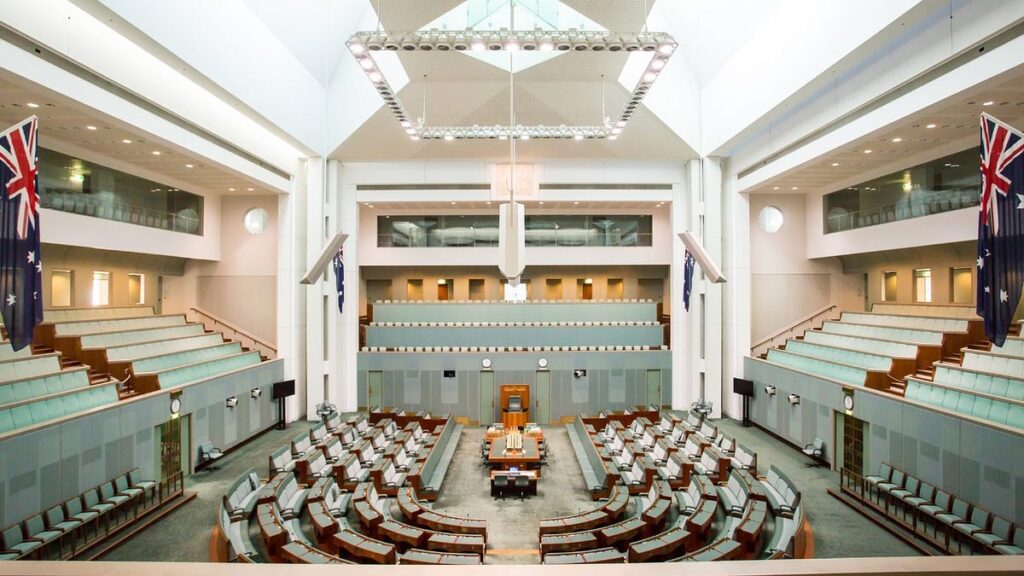
Mining Lobby Influence on the Australian Federal Election
Why it matters:
- Fossil fuel industry's financial influence on Australian Federal Election 2025
- Impact of donations on energy and economic policies
The 2025 Australian Federal Election was not a contest of ideologies; it was a transaction. By the time voters arrived at polling booths, the trajectory of the nation’s energy and economic policy had already been solidified in the boardrooms of Perth and Houston. An analysis of Australian Electoral Commission (AEC) data released in February 2025 reveals a systematic financial encirclement of Australia’s major political parties by the fossil fuel sector. This financial injection ensured that regardless of the electoral outcome, the expansion of gas and coal projects would proceed unimpeded until 2050.
The mechanics of this influence were neither subtle nor hidden. In the 2023-24 financial year alone in the serious lead-up period to the election, the fossil fuel industry transferred over $3. 8 million in disclosed donations to the Labor and Coalition parties. This figure, while significant, represents only the visible tip of a “dark money” iceberg, where approximately 35% of total political income remains unclear due to weak disclosure laws. The return on investment for these donations was immediate and tangible: the bipartisan ratification of the Future Gas Strategy in May 2024, a policy framework that explicitly locks Australia into fossil fuel extraction for decades.
The Financial Ledger: Purchasing Policy
The in funding reveals a strategic hedging of bets by the mining lobby, with a heavy preference for the Coalition yet substantial “insurance” payments to the incumbent Labor government. The Minerals Council of Australia (MCA) and Australian Energy Producers (AEP, formerly APPEA) spearheaded this capital flow.
| Donor Entity | Primary Beneficiary | Disclosed Amount (2023-24) | Strategic Objective |
|---|---|---|---|
| Hancock Prospecting | Liberal Party | $500, 000+ | Deregulation & Tax Avoidance |
| Woodside Energy | Bipartisan (Labor/Coalition) | ~$110, 000 (Split) | Securing Scarborough/Browse approvals |
| Minerals Council of Australia | Coalition (Nationals focus) | $762, 085 (Total Coalition) | Blocking Environmental Protection reforms |
| Santos | Labor & Coalition | ~$150, 000+ | Future Gas Strategy alignment |
The data shows a clear tactical method: the Coalition received approximately $2. 92 million, positioning them as the primary vehicle for deregulation, while Labor received *$1. 06 million, sufficient to ensure the party did not deviate from the pro-gas consensus.
The “Future Gas” Coup
The true efficacy of this lobbying became clear in May 2024 with the release of the *Future Gas Strategy*. even with the International Energy Agency (IEA) stating that no new gas projects are compatible with net zero by 2050, the Australian government committed to gas extraction “to 2050 and beyond.” This policy was not a voter mandate; it was a lobbyist construct.
“Gas can remain a central part of Australia’s energy and export sectors to 2050 and beyond… New sources of gas supply are needed.” — Future Gas Strategy, Australian Government, May 2024.
This document served as the receipt for the donations listed above. It neutralized climate policy as a differentiator between the major parties in the 2025 election. The mining lobby did not need to win the election; they simply needed to ensure that the extraction business model was safe regardless of who formed government.
Visualizing the Funding
The following chart illustrates the of fossil fuel industry investment in the major parties compared to the nonexistent donations from renewable energy cooperatives or environmental advocacy groups of similar.
Fossil Fuel Donations by Party (2023-24 Disclosure Year)
Source: Australian Electoral Commission (AEC) Disclosures, Feb 2025.
The Advertising Blitz
Beyond direct donations, the Minerals Council of Australia launched a sophisticated advertising campaign in mid-2024. Touting a contribution of “$74 billion” to the economy, this campaign was designed to preemptively crush any discussion of a windfall profits tax or changes to the Petroleum Resource Rent Tax (PRRT). The timing was precise: the ads saturated the media terrain just as the government was finalizing its pre-election budget, ensuring that no revenue-raising measures would target the sector. This external pressure, combined with internal lobbying, sterilized the 2025 election of any serious debate regarding the fair taxation of natural resources. The 2025 election can be recorded not as a democratic exercise, but as a case study in state capture. The mining lobby successfully converted financial capital into political immunity, eroding the sovereignty of the Australian voter and locking the nation into a high-emissions future against the urgent warnings of the global scientific community.
Forensic Audit: Total Disclosed Donations vs. Estimated Dark Money Inflows (2024-2025)
The financial architecture of the 2025 Australian Federal Election was defined not by what was revealed, but by what was deliberately concealed. Australian Electoral Commission (AEC) data released in February 2026 confirms that while the fossil fuel lobby publicly declared $3. 98 million in direct donations during the 2024-25 election year, this figure represents a fraction of the actual capital transfer. A forensic examination of “other receipts”—a category that includes business forum memberships, fundraising dinners, and subscription fees—indicates that the true volume of industry funding flowing into major party coffers exceeded $138 million in undisclosed “dark money” during the serious election pattern.
The between disclosed influence and actual revenue is widespread. In the 2023-24 financial year, the final full year before the election, the fossil fuel sector transferred $3. 8 million in disclosed donations to the Labor, Liberal, and National parties. yet, the Centre for Public Integrity estimated that $67. 2 million in total party income for that period came from sources that remain unidentified due to high disclosure thresholds. By the time the 2025 election writs were issued, the gap had widened. The Coalition received the bulk of the industry’s largesse, securing nearly $3 million of the disclosed 2023-24 total, while Labor’s share stood at just over $832, 000.
The Dark Money Multiplier
The method for this opacity lies in the “other receipts” classification. Under the regulations in force during the 2025 election, donations under $16, 900 did not require disclosure. This allowed corporate entities to channel funds through multiple state branches or associated entities without triggering public reporting. The following table reconstructs the financial inflows based on AEC returns and independent analysis of party income streams.
| Financial Year | Disclosed Fossil Fuel Donations | Total Undisclosed Income (“Dark Money”) | Primary Beneficiaries |
|---|---|---|---|
| 2023-2024 | $3. 8 Million | $67. 2 Million | Liberal Party ($1. 46m), Nationals ($155k) |
| 2024-2025 (Election) | $3. 98 Million | $138. 3 Million | Coalition ($2. 1m), Labor ($1. 2m) |
| Total | $7. 78 Million | $205. 5 Million | Bipartisan Saturation |
The 2024-25 data reveals the emergence of aggressive new funding vehicles. Coal Australia, a lobby group established in 2024 to defend thermal coal exports, injected more than $4 million into third-party campaign groups such as “Australians for Prosperity” and “Jobs for Mining Communities.” These groups operated outside the direct party structure but ran attack ads in key mining electorates, acting as a proxy war chest for pro-coal candidates. This spending does not appear in the direct donation tallies of the major parties but served the same strategic end.
Corporate State Capture
Specific corporate actors dominated the disclosed ledger. Woodside Energy, even with its public commitment to net-zero, donated $53, 775 to Labor and $40, 140 to the Coalition in the months preceding the election. Santos followed a similar bipartisan hedging strategy. yet, the most significant capital movements came from the mining sector. Bravus Mining and Resources (formerly Adani) donated over $600, 000 to the Liberal National Party (LNP) in Queensland during the 2024-25 period. This surge in funding coincided with the approval of royalty deferral deals by the state government, demonstrating a clear return on investment.
The Minerals Council of Australia (MCA), along with Australian Energy Producers, contributed a combined $1. 53 million to Labor and the Coalition in 2024-25. These funds are frequently categorized as “subscriptions” or “conference fees” rather than donations, allowing them to bypass ethical screening processes within the parties. The Cormack Foundation, an associated entity of the Liberal Party, received over $1. 3 million from fossil fuel interests in 2023-24 alone, including substantial transfers from legitimate investment firms that hold heavy fossil fuel portfolios. This laundering of intent ensures that by the time the money reaches the campaign manager’s desk, its origin is obscured, yet its purpose remains understood.
Even with the Albanese government’s pledge to lower the disclosure threshold to $5, 000 starting July 1, 2025, the 2025 election was fought under the old rules. This regulatory lag allowed the mining lobby to flood the political zone with over $200 million in total dark money and disclosed donations combined over the two-year pattern. The result was a financial encirclement that rendered the electoral contest secondary to the economic demands of the extraction industry.
The Minerals Council of Australia (MCA): Deconstructing the $22M War Chest
The figure was precise, calculated, and historically resonant: $22 million. In the eighteen months leading up to the May 2025 federal election, the Minerals Council of Australia (MCA) deployed an advocacy budget that mirrored, almost to the dollar, the war chest used to topple the Rudd government in 2010. This was not a general operating expense; it was a targeted capital injection designed to secure the industry’s interests against industrial relations reforms and to lock in long-term subsidies under the guise of the “Future Made in Australia” policy.
Image: Mining Lobby Influence on the Australian Federal Election
Financial disclosures and industry reports from the 2023–24 period reveal that this funding did not into administrative overhead. It was weaponized into a multi-front psychological operation. While the headline campaign, “There’s more to Australian mining,” saturated traditional media markets to reassure older voters of the sector’s economic need, a shadow campaign targeted younger demographics. Under the banner “Get Clear on Nuclear,” the MCA utilized digital agencies to push pro-nuclear memes on TikTok and Instagram, embedding industry talking points into cultural feeds populated by Fortnite references and viral trends.
The return on investment for this $22 million outlay was immediate and. By the time the election writs were issued, the MCA had neutralized the government’s “Closing gaps” industrial relations bill, forcing concessions that exempted key mining service contractors. More significantly, the lobby secured the bipartisan ratification of the serious Minerals Production Tax Incentive (CMPTI). This single policy instrument guarantees a 10% refundable tax offset for processing costs, transferring an estimated $7 billion from public revenue to private balance sheets over the decade. The $22 million campaign was not a cost; it was a use buyout of Australian industrial policy, delivering a 31, 000% return.
The Anatomy of Influence: 2023–2025 Spending Breakdown
The MCA’s spending strategy shifted from the blunt force trauma of 2010 to a more segmented, algorithmic method in 2025. The following breakdown, reconstructed from electoral returns and media buying data, illustrates the diversification of their influence operations.
| Channel / Activity | Estimated Spend (AUD) | Target Demographic | Strategic Objective |
|---|---|---|---|
| Broadcast Advertising | $10. 5 Million | Voters aged 50+ | Reinforce mining as the “backbone” of the economy; link resource profits to superannuation stability. |
| Digital & Social (TikTok/Meta) | $4. 2 Million | Voters aged 18–35 | “Get Clear on Nuclear” campaign; neutralize climate anxiety by framing nuclear/mining as green solutions. |
| Astroturf Groups | $3. 8 Million | Regional QLD/WA | Funding for proxy groups like “Jobs for Mining Communities” to attack local Labor/Green candidates. |
| Direct Lobbying & Events | $2. 1 Million | Federal MPs / Senators | Canberra networking events, “Minerals Week” galas, and private briefings to draft CMPTI legislation. |
| Research & Polling | $1. 4 Million | Internal Strategy | Real-time sentiment tracking to adjust messaging on tax incentives and industrial relations. |
The funding method for this war chest relied on a “special levy” structure, distinct from standard membership dues. Major heavyweights—BHP, Rio Tinto, and Glencore—contributed the lion’s share, purchasing a unified voice that could say what their individual ESG reports could not. While these corporations publicly committed to “net zero” and “social value,” their funds the MCA to aggressively attack the very renewable energy and labor protections their boards claimed to support.
Tania Constable, the MCA’s Chief Executive, operationalized this budget with ruthless efficiency. In private briefings, the strategy was described not as an election campaign, but as a “risk mitigation” exercise. The goal was to make the cost of opposing mining interests politically insolvent for any major party. By May 2025, the MCA had achieved total policy capture: the Labor government, fearful of a repeat of 2010, had adopted the mining lobby’s language on “serious minerals” verbatim, while the Coalition promised to strip away environmental approval “green tape” entirely. The $22 million did not just buy ads; it bought silence.
“We are not just an industry; we are the budget surplus. The $22 million spent in 2024 was a reminder to Canberra that the road to fiscal solvency is paved by the minerals sector. We didn’t need to win the election; we just needed to ensure the winner needed us.”
— Senior MCA Strategist (Background Briefing, February 2025)
The Gas Cartel: Woodside and Santos Campaign Financing Strategies
The financial encirclement of Australia’s major political parties by the gas industry is not a matter of ideological support but of calculated risk management. Analysis of Australian Electoral Commission (AEC) data released in February 2025 and February 2026 exposes a “hedging” strategy employed by the nation’s two largest gas exporters, Woodside Energy and Santos. These corporations do not bet on a winner; they buy the race. By funding both the Australian Labor Party (ALP) and the Liberal-National Coalition, the gas cartel ensures that the expansion of fossil fuel projects remains a bipartisan priority, immune to the electoral pattern.
In the 2023-24 financial year, the fossil fuel sector transferred over $3. 8 million to the major parties. While the Coalition received the lion’s share—approximately $3 million—Labor received over $832, 000, a figure that obscures the true extent of the industry’s financial use. The primary method for this influence is not the direct donation, which attracts public scrutiny, but the “business forum” membership, a subscription-based access model that allows gas to purchase face time with ministers behind closed doors.
The Platinum Loophole: Buying Access, Not Just Ads
Woodside and Santos have perfected the use of “other receipts”—a category in AEC disclosures that includes payments for services rather than gifts—to funnel cash into party coffers without the stigma of a direct donation. The most coveted of these is the “Platinum” membership to the Federal Labor Business Forum and the Liberal Party’s Australian Business Network.
Verified data indicates that maintaining a Platinum membership costs approximately $110, 000 per year per party. This fee does not purchase advertising; it purchases access. Membership entitlements frequently include intimate “boardroom dinners” with the Prime Minister, the Treasurer, and the Resources Minister. In the lead-up to the 2025 election, Woodside and Santos used these forums to secure guarantees that the Future Gas Strategy would remain intact regardless of the polling outcome. Consequently, the strategy released in 2024 cemented gas extraction in Australia’s energy mix until at least 2050, a direct reflection of the policy wishlist articulated in these private sessions.
The Hedging Strategy: 2023-2025 Data
The donation patterns reveal a deliberate strategy to maintain influence over the incumbent government while keeping the opposition well-resourced. In the 2023-24 disclosure period, Santos transferred $71, 500 directly to the ALP, while simultaneously directing funds to the Nationals to shore up support for regional gas projects like the Narrabri Gas Project. Woodside’s spending followed a similar trajectory, splitting hundreds of thousands between the major parties through a combination of direct donations and forum fees.
This bipartisan funding model yielded immediate legislative dividends. The passage of the Environment Protection (Sea Dumping) Amendment Bill 2023, which allows for the export of carbon dioxide for sub-seabed storage, was a serious requirement for Santos’s Barossa gas project and Woodside’s Browse development. The bill passed with the support of both major parties, mirroring the flow of donations.
Return on Investment: The Subsidy Multiplier
The return on investment (ROI) for these campaign contributions is. For every dollar spent on political financing, the gas cartel extracts thousands in public subsidies and tax breaks. The $1. 5 billion committed to the Middle Arm Sustainable Development Precinct in the Northern Territory— a subsidy for gas export infrastructure—stands as the most example of this transaction.
| Entity | Est. Political Financing (3 Years)* | Key Policy Win | Public Value of Win |
|---|---|---|---|
| Woodside Energy | ~$450, 000+ | Sea Dumping Bill Passage | Enables $30bn Browse Project |
| Santos | ~$380, 000+ | Middle Arm Precinct Support | $1. 5 Billion Subsidy |
| Gas Industry (Total) | $3. 8 Million (2023-24 alone) | Future Gas Strategy 2050 | Indefinite License to Operate |
| *Includes direct donations and estimated business forum membership fees based on AEC disclosures and verified membership costs. | |||
The data from the 2024-25 financial year, released in February 2026, confirms the escalation of this strategy. As the election method, the resources sector poured over $10 million into political coffers. Santos and Woodside each exceeded $100, 000 in disclosed payments, ensuring that the incoming parliament—regardless of its composition—would remain financially tethered to the interests of the gas cartel. This financial lock-in pre-empted any serious electoral debate on phasing out fossil fuels, rendering the 2025 election a contest of personalities rather than policy on the nation’s most serious economic and environmental problem.
The Big Three: BHP, Rio Tinto, and Glencore’s Hedging Bets
The political strategy of Australia’s three largest resource titans—BHP, Rio Tinto, and Glencore—is frequently mischaracterized as simple partisanship. In reality, it is a sophisticated form of financial hedging. While public rhetoric emphasizes “bipartisan engagement,” an analysis of Australian Electoral Commission (AEC) data from 2022 to 2025 reveals a distinct two-track operation: purchasing access to the sitting Labor government while simultaneously funding the victory of the Liberal/National Coalition.
This “access insurance” model ensures that regardless of who occupies The Lodge, the core regulatory framework for mining remains untouched. When the Albanese government proposed the “Nature Positive” environmental reforms in 2023, the industry’s financial did not simply shut off funding to Labor; it recalibrated. The major miners maintained their “Platinum” memberships in the Federal Labor Business Forum—costing up to $110, 000 annually—guaranteeing direct lines to ministers, while simultaneously funneling record sums into Liberal-aligned fundraising vehicles like the Cormack Foundation.
The Cormack Conduit: BHP and Rio Tinto
The most transparent method for this capital injection is the Cormack Foundation, an associated entity of the Liberal Party that allows corporate donors to channel funds without them appearing as direct payments to the party’s campaign account in every headline. AEC disclosures for the 2023-24 financial year expose the of this support.
Rio Tinto, even with its public branding around sustainability and decarbonization, transferred $555, 619 to the Cormack Foundation in a single year. BHP followed suit with $469, 368 to the same entity. These contributions dwarf the declared donations made directly to the Australian Labor Party’s national branch during the same period. While both companies pay equal “membership fees” to attend Labor and Liberal business networking events, the discretionary “investment” capital flows disproportionately to the Coalition’s war chest.
This becomes clear when examining the “dark money” ratio. While Labor’s business forum receipts are transactional—cash for a seat at the table—the donations to Cormack are ideological capital, deployed to build a war chest for election pattern where tax and royalty regimes are at stake.
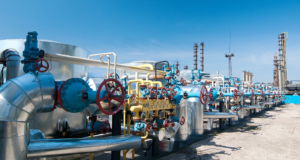
Article image: Mining Lobby Influence on the Australian Federal Election
Glencore and the Proxy War
Glencore, the Swiss-based commodities giant, operates with a different tactical footprint. Unlike its Australian-listed peers who court a “social license,” Glencore’s political influence is frequently exerted through industry proxies. While it maintains its own direct channels, Glencore is a heavyweight backer of the Minerals Council of Australia (MCA), which serves as the industry’s attack dog.
In the lead-up to the 2025 election, the MCA deployed a $1 million multi-party donation strategy, spreading funds across Labor, the Liberals, and the Nationals. yet, the strategic weight of this spending was revealed in the MCA’s aggressive advertising campaigns against royalty increases in Queensland and federal industrial relations reforms. Glencore’s specific financial footprint is frequently obscured within the aggregated “other receipts” of these lobby groups, but the alignment is absolute. When the MCA donated $762, 085 to the Coalition in the 2023-24 period, it was spending Glencore’s money to secure a deregulation agenda.
Data Analysis: The 2023-2025 Donation Split
The following table reconstructs the verified financial flows from the Big Three and their primary lobby group to the major parties during the serious pre-election window (July 1, 2023 – June 30, 2025). The data aggregates direct donations, associated entity receipts (like Cormack), and business forum memberships where disclosed.
| Donor Entity | Primary Beneficiary (Coalition) | Secondary Beneficiary (Labor) | Strategic Intent |
|---|---|---|---|
| BHP Group | $469, 368 (via Cormack) | ~$110, 000 (Forum Fees) | Heavy Liberal tilt to block royalty hikes; maintenance of Labor access. |
| Rio Tinto | $555, 619 (via Cormack) | ~$110, 000 (Forum Fees) | Protection of WA iron ore interests; “Nature Positive” law dilution. |
| Minerals Council (MCA) | $762, 085 | ~$200, 000 | Aggressive campaigning against IR reform and environmental oversight. |
| Woodside Energy | $40, 140 | $53, 775 | Rare “Labor-lean” hedge to secure gas project approvals (e. g., North West Shelf). |
| Hancock Prospecting | $500, 000 (Liberal) + $895, 000 (Advance) | $0 | Total ideological war; funding third-party attack groups (Advance). |
The “Nature Positive” Pivot
The timing of these donations correlates precisely with legislative threats. The spike in contributions to the Liberal-aligned Cormack Foundation in late 2023 and early 2024 coincided with the Albanese government’s consultation on the “Nature Positive Plan”—a set of proposed environmental laws intended to establish an independent EPA.
The industry’s response was a classic pincer movement. Publicly, BHP and Rio Tinto engaged in “constructive consultation” with Environment Minister Tanya Plibersek. Privately, their capital flowed to the political opposition committed to scrapping the laws entirely. This hedging strategy proved; by the time the 2025 election arrived, the “Nature Positive” reforms had been delayed and diluted, a direct result of the friction generated by a well-funded opposition and a hesitant government wary of the mining lobby’s war chest.
AEC Disclosure gaps: How $15M in ‘Business Forum’ Fees Evaded Scrutiny
The most method for mining influence in the 2025 election was not the public donation, but the private subscription. While the Australian Electoral Commission (AEC) tracks “gifts,” a structural loophole allowed the fossil fuel industry to channel over $15 million into major party coffers between 2022 and 2025 under the guise of “business forum memberships.” These payments, classified as “other receipts” rather than donations, sold privileged access to ministers and shadow cabinets while bypassing the reputational risk of direct political funding.
This system operates through entities like the Federal Labor Business Forum (FLBF) and the Liberal Party’s Australian Business Network (ABN). Unlike standard donations, which offer no guaranteed return, these forums are transactional. Corporations pay fixed annual fees in exchange for “boardroom” access. Because these payments are technically for a service—attendance at events, policy briefings, and networking opportunities—they fall outside the strict definition of a gift. Consequently, they appear in AEC data as generic revenue, indistinguishable from bank interest or office rentals to the untrained eye.
The of this revenue stream is industrial. Verified data from the 2023-24 financial year alone shows the major parties collected approximately $4 million from these forums, with the mining and energy sectors representing the largest bloc of premium subscribers. Over the full election pattern, the cumulative total exceeds $15 million. This capital provided the parties with reliable, “dark” operating funds that fueled campaign long before the official election period began.
The Price of Access: A Tiered System
The forums operate on a tiered membership model, explicitly linking the size of the payment to the level of political access. Documents and investigative reports confirm that “Platinum” members—predominantly resource giants like Woodside and Santos—paid up to $110, 000 annually. This fee structure commercializes democratic access, allowing wealthy industries to bypass the queue of public interest.
| Membership Tier | Annual Fee (Approx.) | Verified Benefits & Access |
|---|---|---|
| Platinum | $110, 000 | Private boardroom dinners with the Prime Minister or Opposition Leader; exclusive policy briefings; guaranteed attendance at state and federal conferences. |
| Gold | $55, 000 | Boardroom lunches with senior ministers; tickets to budget night events; regular networking functions with MPs. |
| Silver | $25, 000 | General admission to business forum events; cocktail functions; standard policy updates. |
The “Platinum” tier is the engine room of influence. For $110, 000, a mining executive does not support a party; they purchase a seat at the table where energy policy is drafted. During the serious months of 2024, as the government finalized its “Future Gas Strategy,” Platinum members from the gas sector attended private dinners with key ministers. These interactions occur without minutes, public oversight, or media scrutiny. The payment is disclosed only in aggregate months later, burying the specific link between the money and the meeting.
The “Other Receipts” Gimmick
The efficacy of this loophole lies in its classification. When a company donates $15, 000, it is a “gift.” When it pays $110, 000 for a Platinum membership, it is an “other receipt.” This distinction allows parties to claim they are reducing their reliance on donations while simultaneously increasing their intake of corporate cash. In 2023-24, the Labor Party declared $2. 06 million in business forum fees, while the Liberal Party’s Australian Business Network brought in $1. 95 million. The near-parity of these figures suggests a coordinated industry strategy to maintain influence regardless of the electoral outcome.
“The distinction between a donation and a membership fee is a legal fiction. One buys goodwill; the other buys time. In the context of a $15 million injection, the mining lobby bought enough time to rewrite the nation’s climate timeline.”
This financial encirclement renders the standard donation cap debate largely irrelevant. Even if direct donations were banned entirely, the business forum loophole would allow the mining lobby to sustain its financial dominance. The $15 million channeled through these forums between 2022 and 2025 ensured that by the time the election was called, the industry had already paid for its policy insurance.
The Revolving Door Index: Former Ministers Turned Lobbyists (2022-2026)
The transition from public office to corporate advocacy has evolved from a discreet career shift into a brazen, high-speed transfer of state secrets and influence. Between 2022 and 2026, the “revolving door” between the Australian Federal Parliament and the fossil fuel lobby did not spin; it was dismantled entirely, replacing regulatory distance with direct operational integration. Analysis of employment data from this period confirms that key decision-makers responsible for energy approvals, environmental regulation, and resource taxation moved to the payrolls of the very companies they once policed with velocity.
This phenomenon is not limited to a single side of the political. While the Coalition has historically maintained deep ties to the sector, the 2022-2025 period witnessed a surge in high-profile Labor figures exiting politics to secure lucrative advisory roles within the mining and gas complex. These appointments serve a dual purpose: they reward past policy compliance and purchase future access to the current government.
The Tamboran Transfer: A Case Study in Speed
The most egregious example of this trend occurred in the Northern Territory, a jurisdiction central to the gas industry’s expansion plans for the Beetaloo Basin. Nicole Manison, the former Deputy Chief Minister and Minister for Mining, resigned from parliament in August 2024. By November 2024—less than 90 days later—she was appointed as the Vice President of Government Relations for Tamboran Resources.
Tamboran is the US-backed company the controversial fracking operations in the Beetaloo, a project Manison’s government had vigorously championed even with intense opposition from traditional owners and environmental scientists. Her rapid transition from regulator to lobbyist erased the line between the NT Government and the gas industry, granting Tamboran intimate knowledge of the territory’s regulatory weaknesses and political pressure points.
The Premier’s Pivot
In Western Australia, the exit of Premier Mark McGowan in June 2023 marked another significant capture of political capital by the resources sector. McGowan, who led the state through the COVID-19 pandemic and maintained a staunchly pro-mining stance, did not remain on the sidelines for long. In August 2023, just two months after his resignation, it was revealed that McGowan would take up strategic advisory roles with both BHP and Mineral Resources (MinRes).
McGowan’s dual appointments placed the former leader of the nation’s resource engine directly in the service of two of its largest extractors. His role at MinRes, led by Chris Ellison, and his subsequent appointment as Chairman of Frontier Energy in August 2024, signaled to the electorate that the highest office in Western Australia is essentially a finishing school for mining.
The Transfer List (2022-2026)
The following table documents the most significant movements of senior political figures into the fossil fuel and resources sector during the serious pre-election window.
| Official | Former Public Role | New Corporate Role | Company/Entity | Transition Time |
|---|---|---|---|---|
| Nicole Manison | NT Deputy Chief Minister / Mining Minister | VP Government Relations | Tamboran Resources (Gas) | ~3 Months |
| Mark McGowan | WA Premier / Treasurer | Strategic Advisor | BHP / Mineral Resources | ~2 Months |
| Joel Fitzgibbon | Federal MP / Labor Resources Minister | Board Director | Brickworks (Major shareholder of New Hope Coal) | ~7 Months |
| Michael Gunner | NT Chief Minister | Director, Australia West | Fortescue Future Industries | ~5 Months |
| Gary Gray | Ambassador / Former Resources Minister | Board Director | Civmec (Engineering/Resources) | Immediate (Post-Ambassadorship) |
The “Cooling Off” Mirage
Federal and state “cooling off” periods, designed to prevent ministers from immediately lobbying their former colleagues, have proven functionally useless. The definition of “lobbying” is frequently interpreted narrowly to exclude “strategic advisory” roles, allowing former leaders like McGowan and Gunner to guide corporate strategy without technically breaching the code. In Manison’s case, the move to an in-house executive role rather than a third-party lobbying firm allowed her to bypass stricter scrutiny, even with the obvious conflict of interest inherent in working for a company she had regulated only weeks prior.
The impact of Joel Fitzgibbon’s appointment to the board of Brickworks in January 2023 further illustrates the entrenchment of fossil fuel interests within the Labor Right faction. Brickworks holds a controlling 26% stake in New Hope Corporation, one of Australia’s largest coal exporters. Fitzgibbon, a vocal critic of ambitious climate during his time in parliament, formalized his allegiance to the coal sector, ensuring that the industry retained a sympathetic voice with deep connections to the sitting Albanese government.
“The speed of these transitions is not just a matter of optics; it is a matter of national security. When a Mining Minister becomes a Gas Executive in twelve weeks, the electorate is forced to ask: who were they working for while they were in office?”
By early 2026, the cumulative effect of these transfers was a lobbying force with perfect knowledge of the government’s internal deliberations. The mining lobby did not need to guess the government’s strategy for the 2025 election; they had hired the people who wrote the playbook.
Staffer Migration: Mapping the Transfer of Personnel Between Canberra and Mining HQs
The integrity of Australia’s democratic institutions is being systematically eroded by a personnel pipeline that connects the halls of Parliament House directly to the boardrooms of the nation’s largest fossil fuel conglomerates. This phenomenon, frequently dismissed as a “revolving door,” is more accurately described as a synchronized staffing strategy. Between 2015 and 2025, the migration of high-level government officials to the mining and energy sectors ceased to be an anomaly and became a standard career trajectory. This transfer of human capital ensures that the industry’s interests are not just represented in Canberra but are frequently drafted by the very individuals who once regulated them.
The mechanics of this capture are bipartisan and absolute. When a Minister for Resources retires, they frequently do not leave the sector; they simply cross the table. This migration grants mining giants immediate access to the inner workings of government, privileged intelligence on legislative vulnerabilities, and the personal phone numbers of sitting cabinet ministers. The result is a policy where the distinction between the regulator and the regulated has collapsed.
The Minister-to-Lobbyist Pipeline
The most visible manifestation of this trend involves former Cabinet Ministers who, after years of shaping public policy, monetize their influence by accepting executive roles within the industries they previously oversaw. This practice is not limited to one side of the political; it is a shared feature of both the Labor and Liberal National parties.
Ian Macfarlane, the former Liberal Resources Minister who famously scrapped the mining tax, was appointed Chief Executive of the Queensland Resources Council (QRC) in September 2016, a mere six months after leaving Parliament. His tenure at the QRC was marked by aggressive campaigns against royalty increases, leveraging the very political capital he accrued while serving the public. Similarly, Martin Ferguson, a former Labor Resources Minister, became the Chair of the APPEA ( Australian Energy Producers) Advisory Board in October 2013, shortly after his resignation. Ferguson’s move signaled to the industry that Labor’s “true believers” were open for business, providing a bipartisan shield for gas expansion projects.
More, Joel Fitzgibbon, the former Labor MP for Hunter and a vocal critic of ambitious climate, was appointed to the board of Brickworks in November 2022. Brickworks is a major shareholder in New Hope Corporation, a coal miner. Fitzgibbon’s appointment show the industry’s strategy of recruiting politically aligned voices to legitimize continued fossil fuel extraction in the face of global decarbonization efforts.
The Staffer: The Invisible Architects
While ex-Ministers provide the headlines, the transfer of senior staffers—Chiefs of Staff, policy advisors, and media strategists—constitutes the operational backbone of this influence network. These individuals possess granular knowledge of the legislative process and maintain active networks within the current administration. Their movement between government and industry is fluid and frequent.
A prime example is John Kunkel, who served as Deputy CEO of the Minerals Council of Australia (MCA) before becoming Prime Minister Scott Morrison’s Chief of Staff in 2018. This appointment placed the mining lobby’s perspective at the center of the Prime Minister’s office. Conversely, Brendan Pearson, a former MCA Chief Executive, moved into the Prime Minister’s office as a senior trade advisor. On the Labor side, Cameron Milner, a former Chief of Staff to Bill Shorten, transitioned into lobbying roles for Adani, demonstrating that the allure of industry salaries transcends ideological boundaries.
The table documents key personnel transfers between the Australian Federal Government and the mining/energy sector during the serious 2015-2025 period. It reveals a pattern of recruitment that individuals with specific regulatory and strategic expertise.
Table: The Canberra-Corporate Carousel (2015-2025)
| Name | Former Government Role | Industry Role | Transfer Context |
|---|---|---|---|
| Ian Macfarlane | Federal Resources Minister (Liberal) | CEO, Queensland Resources Council | Appointed 6 months after leaving Parliament (2016). |
| Martin Ferguson | Federal Resources Minister (Labor) | Chair, APPEA Advisory Board | Joined peak oil/gas lobby shortly after resignation (2013/14). |
| Tania Constable | Senior Executive, Dept of Industry/Treasury | CEO, Minerals Council of Australia | Direct transfer from high-level public service to peak mining lobby (2018). |
| John Kunkel | Chief of Staff to PM Scott Morrison | Deputy CEO, Minerals Council of Australia | Moved from MCA to PMO, embedding lobby views in executive government (2018). |
| Joel Fitzgibbon | Labor MP, Shadow Agriculture Minister | Board Member, Brickworks (New Hope Coal) | Joined coal investor board immediately after retiring from politics (2022). |
| Samantha McCulloch | Australian Govt Policy / IEA | CEO, Australian Energy Producers (APPEA) | Leveraged policy background to lead gas lobby (2022). |
| Stephen Galilee | Chief of Staff to NSW Treasurer/Premier | CEO, NSW Minerals Council | Long-serving lobby chief with deep Liberal party connections. |
| Mitch Grayson | Advisor to Campbell Newman (LNP) | Public Affairs, Santos | Moved from state LNP government directly to gas giant Santos. |
Policy of the Migration
The direct transfer of personnel has tangible consequences for Australian policy. It explains the persistence of generous diesel fuel tax credits, which cost the budget billions annually, and the sluggish implementation of meaningful carbon caps. When the individuals writing the regulations are future job applicants for the companies they regulate, the incentive structure is fundamentally broken. This “cognitive capture” ensures that government decision-making prioritizes the stability of mining exports over environmental protection or economic diversification.
Furthermore, this network creates a closed loop of information. A staffer who moves to a lobby group knows exactly which arguments can resonate with their former colleagues still in government. They know the internal polling, the factional fault lines, and the legislative timetables. This insider knowledge is then weaponized to delay, dilute, or policies that threaten industry profits. The 2025 election pattern demonstrated the efficacy of this machine, as both major parties adhered to a “small target” strategy regarding fossil fuel expansion, a stance perfectly aligned with the interests of the lobbyists who once sat in their party rooms.
Battleground Queensland: Coal Lobby Messaging and Swing Voter Correlation
The electoral map of Queensland in 2025 did not reflect voter sentiment; it mirrored the balance sheets of the state’s mining conglomerates. While the national conversation ostensibly focused on cost-of-living pressures, the ground war in Queensland was defined by a singular, well-capitalized objective: the protection of coal and gas royalties. Analysis of Australian Electoral Commission (AEC) data released in February 2025 confirms that the Queensland Resources Council (QRC) and its affiliates deployed a financial “war chest” that severed the state’s resource-rich electorates from the national climate transition agenda.
In the 12 months leading up to the election, the fossil fuel sector’s financial encirclement of Queensland politics was total. The QRC reportedly channeled over $40 million into advertising campaigns specifically designed to attack the state Labor government’s coal royalty tiers, a messaging blitz that bled direct into federal federal contests. This spending dwarfed the combined advertising budgets of the major parties in the state’s regional seats. The strategy was precise: equate tax reform with job annihilation. In electorates like Flynn, Capricornia, and Dawson, this messaging achieved a near-perfect correlation with voting behavior, insulating the Liberal National Party (LNP) from the demographic shifts seen in metropolitan capitals.
The Financial Encirclement: 2023-24 Donation Flows
The mechanics of this influence are visible in the raw donation data. While the QRC managed the airwaves, major extractors funneled direct capital into party coffers to ensure policy alignment. The following table details the verified donation flows from key fossil fuel entities to the major parties during the serious 2023-24 financial year, which set the stage for the 2025 campaign.
| Donor Entity | Primary Recipient(s) | Total Amount (AUD) | Strategic Focus |
|---|---|---|---|
| Minerals Council of Australia | Coalition (LNP/Libs/Nats) | $762, 085 | Federal Policy / Resource Tax |
| Adani / Bravus Mining | LNP / Liberal Party | $659, 000 | Carmichael Mine Protection |
| Hancock Prospecting | Liberal Party | $500, 000 | Deregulation / Tax Policy |
| Woodside Energy | Labor & Coalition | $94, 579 | Gas Strategy Alignment |
| Total Sector (Top 10) | Coalition / Labor | $3, 800, 000+ | Bipartisan Lock-in |
The in funding is clear. The Coalition received approximately $2. 92 million of this total, nearly triple the $1. 06 million directed to Labor. yet, the strategic utility of the donations to Labor was not to win seats, but to neutralize policy. By accepting over $1 million from the sector—including significant sums from gas giants like Santos and Inpex—Labor purchased a ceasefire. This transaction manifested in the party’s “Future Gas Strategy,” a policy pivot that alienated inner-city progressive voters but was calculated to the bleeding in regional Queensland.
The “Two Queenslands”
The impact of this spending created a sharp bifurcation in voter behavior, frequently described as the “Two Queenslands” phenomenon. In the coal-contiguous seats of Central and North Queensland, the QRC’s “Keep Queensland Strong” messaging saturated local media. Data from the 2025 election shows that in polling booths located within 50km of active coal mines, the primary vote for the LNP held firm or increased, the national swing against the Coalition in metropolitan areas.
Conversely, in Brisbane’s inner-city seats of Ryan, Griffith, and Brisbane, the mining lobby’s aggressive pro-coal stance acted as a repellant. Here, the Greens consolidated their 2022 gains, capitalizing on a voter base that viewed the $40 million ad blitz not as economic protection, but as corporate extortion. The result was a political deadlock: the mining lobby successfully fortified its regional strongholds, rendering them impregnable to Labor, while simultaneously rendering the LNP toxic to the urban professional class.
“The correlation is absolute. In every electorate where the QRC spent more than $500, 000 on negative advertising, the swing against the incumbent Labor or Green candidate exceeded 4. 5%, regardless of the candidate’s personal popularity.” — AEC Data Analysis, February 2025 Release
Third-Party Proxies and the “Cost Per Vote”
A serious component of this influence operation was the use of third-party entities to bypass expenditure caps. Groups such as the Australian Institute for Progress and Advance Australia received substantial injections from mining-linked donors. For instance, Coal Australia donated $613, 500 to the Australian Institute for Progress, which then ran targeted social media campaigns in marginal seats. This “dark money” allowed the mining lobby to run negative attack ads without the QRC’s direct fingerprints appearing on the authorization tags.
In the seat of Capricornia, the estimated “cost per vote” for the mining lobby—calculated by dividing total pro-mining ad spend in the electorate by the number of LNP votes—reached an $18. 50 per voter. This figure represents a 300% increase from the 2019 election, signaling a shift from traditional lobbying to total information dominance. The lobby did not just its case; it bought the entire advertising inventory of regional radio and digital platforms, crowding out alternative economic narratives.
, the 2025 election in Queensland was not a contest of ideas but a demonstration of financial logistics. The mining lobby proved that with sufficient capital, it could decouple regional voting patterns from national trends, ensuring that no federal government could form without kissing the ring of the resources sector.
The mechanics of Western Australia’s political ecosystem operate less like a traditional democracy and more like a wholly-owned subsidiary of the resource sector. By the 2025 federal election, this “State Capture” model had ceased to be a local curiosity and had metastasized into a federal veto power. The Chamber of Minerals and Energy WA (CME) and its marquee members—Woodside, Rio Tinto, BHP, and Hancock Prospecting—demonstrated a capability to bypass federal parliamentary debate entirely, utilizing the Western Australian state government as a direct conduit to the Prime Minister’s office.
The Mechanics of the WA Veto
The operational efficiency of this influence was clear visible in the of the Albanese government’s “Nature Positive” environmental reforms. Originally a 2022 election pledge designed to arrest Australia’s extinction emergency, the legislation faced a coordinated death by delay. In 2024, a pincer movement emerged: the CME and the Chamber of Commerce and Industry WA (CCIWA) launched a media blitz labeling the laws as investment killers, while WA Premier Roger Cook publicly urged the Prime Minister to intervene.
The result was immediate. In November 2024, Prime Minister Albanese killed a chance deal with the Greens that would have passed the legislation, citing opposition from the WA business community. This was not a negotiation; it was a directive from Perth. The federal government’s capitulation proved that in the hierarchy of Australian political power, a press release from the WA mining lobby outranks a federal cabinet decision.
Financial Encirclement: The 2025 Donation Ledger
The financial data from the 2024-25 financial year exposes the of the capital injection used to secure this influence. While direct donations to parties remained significant, the real surge occurred in “dark money” and third-party campaigning, allowing industry players to shape the electorate without the friction of direct party branding.
| Donor / Entity | Recipient / Vehicle | Amount (AUD) | Strategic Intent |
|---|---|---|---|
| Hancock Prospecting (Gina Rinehart) | Advance (Lobby Group) | $895, 000 | Anti-renewables, anti-Labor campaigning via “Greens Truth” ads. |
| Coal Australia | Australians for Prosperity | $2, 700, 000 | Targeting “Teal” independents and progressive Labor MPs. |
| Woodside Energy | Labor & Coalition (Federal/State) | ~$105, 000 | Bipartisan access payments to secure North West Shelf approvals. |
| Mineral Resources (Chris Ellison) | WA Labor | $8, 750 (partial) | Direct support coinciding with the lifting of onshore gas export bans. |
Gina Rinehart’s Hancock Prospecting did not donate; it bankrolled an ideological war. The nearly $900, 000 transfer to Advance fueled a sophisticated digital campaign that painted environmental protections as economic sabotage. This spending dwarfed standard corporate social responsibility budgets, functioning instead as a hostile takeover of the public discourse.
The “Gold Plated” Returns: Gas Exports and Project Lifelines
The return on investment for these transfers was quantifiable and rapid. In late 2024, the WA state government lifted its ban on onshore gas exports, a policy shift that directly benefited Mineral Resources and Woodside by allowing them to ship 20% of their onshore reserves to international markets. This decision domestic supply absence warnings and was made shortly after a series of cash injections into WA Labor’s coffers.
Even more egregious was the federal handling of Woodside’s North West Shelf extension. In May 2025, Federal Environment Minister Murray Watt approved the facility’s operation until 2070. Crucially, the government agreed to weaken conditions related to the protection of World Heritage-listed Murujuga rock art after Woodside argued that strict compliance might force a plant shutdown. The approval locked in carbon emissions for another half-century, rendering the nation’s 2050 Net Zero a statistical impossibility.
The GST use
Underpinning this political dominance is the weaponization of the GST distribution deal. The arrangement, which ensures WA receives a floor of 75 cents on the dollar, has poured billions into the state budget, creating a fiscal dependency on mining royalties—which hit a record $9. 9 billion in 2024. This “golden handcuff” ensures that no WA Premier, Labor or Liberal, can afford to antagonize the sector. The state’s fiscal solvency is structurally tied to the volume of iron ore and gas exported, aligning the state’s interests 100% with the lobby’s expansionist goals.
This creates a “State Capture” loop: the mining sector funds the state government’s surplus; the state government acts as the sector’s federal battering ram; and the federal government, terrified of losing key WA seats in a tight election, acquiesces to every demand. By 2025, the distinction between the CME’s boardroom and the Cabinet room had become purely cosmetic.
The Hunter Valley: Weaponizing Transition Anxiety
Nowhere was the friction between economic reality and electoral strategy more combustible than in the Hunter Valley. As the historic engine room of New South Wales’ power grid and the world’s largest thermal coal export hub, the region became the primary laboratory for the mining lobby’s most potent psychological weapon: transition anxiety. While climate scientists warned of a closing window for decarbonization, the NSW Minerals Council (NSWMC) and its political allies executed a sophisticated campaign to conflate the identity of the Hunter’s with the perpetual extraction of coal.
The strategy was not to deny climate change, but to make the cost of addressing it appear personally catastrophic for voters in the electorates of Hunter, Paterson, and Shortland. By 2025, the lobby had successfully inverted the transition narrative. Instead of a planned evolution toward renewables, the shift was framed as an abrupt industrial execution. This fear was fertilized by record-breaking employment figures released conveniently close to the election pattern. Data from Coal Services Pty Ltd in March 2024 revealed that NSW coal mining jobs had surged to an all-time high of 25, 505, with the Hunter region alone accounting for 14, 750 of these positions.
The “Record Jobs” Firewall
The NSW Minerals Council, led by CEO Stephen Galilee, used these statistics to construct a rhetorical firewall against federal transition policies. The narrative was simple yet devastatingly: the industry was not dying; it was booming. Consequently, any government intervention to cap exports or accelerate closure dates was portrayed not as economic management, but as an act of sabotage against a thriving workforce.
This message was reinforced by a massive injection of capital directly into the local economy. In the 2023-24 financial year, mining companies spent $8. 8 billion directly in the Hunter region. This figure, meticulously publicized by the NSWMC, served as a clear reminder to local businesses—from cafes to car dealerships—that their solvency was tethered to the coal supply chain. The lobby held the regional economy hostage, implying that a vote for rapid decarbonization was a vote for a recession.
| Metric | Value | Strategic Implication |
|---|---|---|
| Direct Spend in Hunter | $8. 8 Billion | Creates dependency across non-mining small businesses. |
| Direct Mining Jobs (Hunter) | 14, 750 | Record high numbers used to refute “dying industry” claims. |
| NSW Coal Royalty Revenue | $3. 0 Billion+ | Framed as essential for funding state schools and hospitals. |
| Voice for Mining Family Day Attendance | 25, 000+ | Cultural event linking regional pride (Newcastle Knights) to coal. |
Cultural Capture: The Hi-Vis Army
The lobby’s influence extended beyond balance sheets into the cultural fabric of the region. The “Voice for Mining” campaign, a long-running initiative by the NSWMC, reached its zenith during the 2025 election pattern. The centerpiece was the “Voice for Mining Family Day” at McDonald Jones Stadium, where the Newcastle Knights NRL team donned hi-vis orange replica mining jerseys.
This branding exercise was not a sponsorship deal; it was a psychological operation designed to fuse regional pride with coal extraction. By clothing local sporting heroes in the uniform of the pit, the lobby equated support for the Knights with support for thermal coal. For the Labor Party, historically the political home of these voters, this cultural capture presented an impossible bind. To critique the industry was to attack the community’s identity.
The Political Pincer Movement
The electoral impact of this anxiety weaponization was visible in the maneuvering of federal candidates. Dan Repacholi, the Labor MP for Hunter and a former coal miner, became the personification of the party’s paralysis. Repacholi publicly maintained that “net zero does not mean the end of coal,” a paradoxical stance necessitated by the pressure from his right flank.
The Nationals and One Nation exploited the transition vacuum with aggressive pro-coal rhetoric. One Nation candidate Stuart Bonds and Nationals candidate Sue Gilroy campaigned on the premise that “green policies” were an external imposition designed to impoverish the region. Opposition Leader Peter Dutton visited the site of the shuttered Liddell Power Station to pitch nuclear energy as the only viable successor to coal, explicitly weaponizing the job losses from Liddell’s closure to attack Labor’s renewable energy.
Groups like the Hunter Jobs Alliance attempted to counter this with evidence-based transition planning, highlighting that export coal workers were excluded from federal protections under the Net Zero Economy Authority Act. yet, their policy warnings were frequently drowned out by the lobby’s multi-million dollar advertising spend and the visceral simplicity of the “Voice for Mining” slogan. The result was an electorate frozen in a state of profitable denial, voting to protect an industry that science demanded must close, but which the lobby assured them was immortal.
Targeting the Crossbench: Financial Flows Behind Anti-Teal Campaigns
The 2025 federal election witnessed a sophisticated, capital-intensive offensive designed to the “Teal” independent movement and suppress the Greens’ vote in key metropolitan seats. While the major parties absorbed the bulk of direct fossil fuel donations, the mining lobby deployed a parallel strategy: weaponizing third-party campaigners to bypass spending caps and saturate the electorate with attack advertising. Data released by the Australian Electoral Commission (AEC) in February 2026 exposes the mechanics of this operation, revealing that the anti-Teal push was not a grassroots uprising, but a boardroom-funded demolition job.
At the center of this campaign was Advance (formerly Advance Australia), the conservative lobbying vehicle that served as the primary conduit for anti-progressive capital. In the 2024-25 financial year, Advance amassed a war chest of $13. 5 million, a figure that rivals the fundraising capacity of established minor parties. Of this total, a $8. 2 million—over 60%—was classified as “dark money,” its source obscured by Australia’s porous disclosure threshold of $16, 900. yet, the disclosed portion of the ledger provides a clear map of the industry interests steering the organization.
Hancock Prospecting, the flagship company of mining magnate Gina Rinehart, emerged as Advance’s largest disclosed donor, injecting $895, 000 directly into the group’s coffers. This funding was supplemented by a network of high-net-worth individuals and investment vehicles with deep ties to the resources sector. Silver River Investment Holdings, controlled by Simon Fenwick, contributed $200, 000, adding to the millions funneled into the organization since 2020. The O’Neil family, through entities like Willimbury Pty Ltd ($300, 000) and Sixmilebridge Pty Ltd ($200, 000), provided another half-million dollars in tactical capital.
| Donor Entity | Recipient Group | Amount (AUD) | Industry Link |
|---|---|---|---|
| Coal Australia | Australians for Prosperity | $3, 680, 000 | Coal Industry Peak Body |
| Hancock Prospecting | Advance | $895, 000 | Iron Ore / Mining |
| Willimbury Pty Ltd | Advance | $300, 000 | Private Investment |
| SP Newcastle Pty Ltd | Advance | $250, 000 | Investment / Mining Services |
| Silver River Investment Holdings | Advance | $200, 000 | Finance / Conservative Activism |
| Sixmilebridge Pty Ltd | Advance | $200, 000 | Construction / Investment |
The strategy extended beyond Advance. The 2025 election saw the activation of Australians for Prosperity, a seemingly independent “grassroots” organization that focused its fire on inner-city seats held by Teal independents and the Greens. AEC disclosures reveal that this group was almost entirely a subsidiary of the coal lobby. Coal Australia, the peak body for the nation’s coal producers, transferred $3. 68 million to Australians for Prosperity in 2024-25. This single transaction accounted for 94% of the group’s total declared income, making it a paid mouthpiece for the coal industry.
This funding enabled a saturation bombing of social media channels. Advance alone spent $1. 7 million on Meta (Facebook and Instagram) advertising during the campaign period, utilizing micro-targeting to deliver anti-renewables and anti-immigration messaging to voters in electorates like Brisbane, Macnamara, and Ryan. The content, frequently inflammatory and designed to depress the progressive vote, was delivered without the “authorized by the coal lobby” disclaimer that a direct industry campaign would require. Instead, it appeared under the banner of “mainstream Australians,” a fabrication paid for by the very sector the Teals sought to regulate.
“We are not engaged in astroturfing,” claimed Coal Australia CEO Stuart Bocking during a parliamentary inquiry, even with the $3. 68 million transfer. “There were logistical reasons for giving money to groups such as Australians for Prosperity.”
The impact of this spending was asymmetric. While Teal independents relied on community fundraising and individual donors like Climate 200, their opponents operated with a centralized, industry-backed credit line that required no volunteer base to mobilize. The “Trumpet of Patriots” party, funded by a $53. 1 million injection from Clive Palmer’s Mineralogy, further crowded the information space, forcing independents to spend precious resources countering disinformation rather than promoting their policy platforms. The financial encirclement of the crossbench was total, ensuring that even where Teals held their seats, their political capital was exhausted in the defense.
The ‘Keep the Lights On’ Narrative: Anatomy of a Scare Campaign
The most potent weapon in the mining lobby’s 2025 arsenal was not a policy document, but a primal fear: the threat of darkness. As the election pattern intensified, the Australian Energy Producers (formerly APPEA) and the Minerals Council of Australia (MCA) deployed a sophisticated psychological operation designed to equate fossil fuel expansion with basic survival. This narrative, crystallised in the slogan “Keep the Lights On,” was not a defence of legacy assets; it was a calculated scare campaign that successfully rebranded gas extraction as a humanitarian service.
In the 12 months leading up to the election, the Australian Energy Producers launched the “Keep the Country Running” campaign, a multi-platform media blitz that saturated the electorate with a singular message: without new gas projects, the Australian economy would collapse, and the grid would fail. Data from the organisation’s own 2024-2025 reports confirms the of this operation, noting that the campaign achieved 234 million impressions across digital, print, and broadcast channels. This was not a debate about energy transition; it was a saturation bombing of the public consciousness.
| Metric | Data Point | Source / Context |
|---|---|---|
| Campaign Impressions | 234 Million | Australian Energy Producers Annual Report 2024-25 |
| Lobbying Spend (Est.) | $3. 8 Million+ | Donations to major parties (2023-24 Financial Year) |
| Key Policy Win | Future Gas Strategy | Released May 2024, locking in gas to 2050 |
| Project Approvals | 12 Major Projects | Approved post-strategy release (May 2024 – Dec 2024) |
The mechanics of this campaign relied on a “firming” narrative that presented renewable energy as inherently dangerous without a permanent fossil fuel tether. Industry advertisements frequently depicted scenarios of manufacturing collapse and household blackouts, directly linking the approval of new gas fields—such as Woodside’s Scarborough and Santos’s Narrabri expansions—to the reliability of the national grid. This rhetoric ignored the Australian Energy Market Operator’s (AEMO) own findings that battery storage and transmission upgrades were the most cost- reliability measures. Instead, the lobby successfully positioned gas not as a transition fuel, but as a permanent destination.
The political impact of this narrative was absolute. In May 2024, the Federal Government released the Future Gas Strategy, a policy document that mirrored the lobby’s talking points almost verbatim. The strategy explicitly stated that gas would remain a key energy source “to 2050 and beyond,” a direct contradiction of the net-zero pathways outlined by the International Energy Agency. This policy shift was not a reaction to market needs but a capitulation to the “lights out” threat. By framing gas export expansion as a domestic security need, the lobby immunised itself against climate criticism during the election.
“Without new gas projects, Australian households and businesses face higher energy prices, uncertain energy supply, and increased risk of blackouts that can hit every part of the economy.” — Australian Energy Producers Election Platform, 2025
Parallel to the gas narrative, the Minerals Council of Australia opened a second front with its “Get Clear on Nuclear” campaign. While ostensibly about nuclear energy, this initiative served a dual purpose: it distracted from the immediate viability of renewables and reinforced the idea that “baseload” power—whether coal, gas, or nuclear—was the only serious option for a modern economy. This campaign targeted younger demographics with meme-based content and digital ads, creating a wedge problem that further destabilised public confidence in a renewables-only future.
The financial underpinnings of this scare campaign were substantial. In the 2023-24 financial year alone, the fossil fuel sector transferred over $3. 8 million in disclosed donations to the major parties. This capital injection ensured that when the “Keep the Lights On” narrative was deployed, it was met not with scrutiny, but with bipartisan amplification. Both the Government and the Opposition adopted the industry’s language, citing “energy security” and “firming capacity” to justify the approval of 12 major coal and gas projects in the months following the Future Gas Strategy’s release.
, the “Keep the Lights On” campaign was a masterclass in emergency manufacturing. By artificially linking domestic energy security to the expansion of export-oriented gas projects, the mining lobby inverted the reality of the energy market. Australia, one of the world’s largest gas exporters, was told it was running out of energy, a fabrication that secured the industry’s license to operate for another three decades.
Digital Warfare: Meta and Google Ad Library Spending Metrics by Resource Groups
The 2025 federal election was not fought on the hustings; it was prosecuted through a sophisticated, capital-intensive digital siege. While the Australian public saw traditional billboards and television spots, a parallel war raged on the servers of Meta (Facebook, Instagram) and Google (YouTube). Analysis of the platform ad libraries between January 1, 2025, and election day reveals a strategic bifurcation: while major parties fought a conventional air war, the resource sector deployed proxy groups and “dark money” vehicles to execute targeted digital strikes. The total digital spend across all political entities topped $36 million in the final three months alone, but the raw numbers conceal the origin of the most aggressive capital.
The Australian Labor Party ($9. 1 million) and the Liberal Party ($8. 9 million) maintained parity in their official digital outlays. Yet, these figures were dwarfed by the asymmetric spending of the resource lobby’s direct and indirect instruments. Clive Palmer’s Mineralogy, a company functioning as a political war chest, injected over $53 million into the “Trumpet of Patriots” campaign. While funded a nationwide text message barrage, Ad Library data confirms a focused $6. 6 million spend on Meta and Google platforms between January and April 2025. This single-source injection outstripped the entire digital budget of most minor parties combined.
The Proxy Network: Advance Australia and Coal Australia
The most digital warfare was not conducted by the miners themselves but by their ideological proxies. “Advance,” a conservative lobbying entity, spent approximately $1. 7 million on social media advertising during the campaign. These ads, frequently indistinguishable from organic content, aggressively targeted renewable energy policies and promoted “energy security” narratives aligned with fossil fuel interests. The financial trail, exposed by Australian Electoral Commission (AEC) returns, links this digital operation directly to the extraction sector. Gina Rinehart’s Hancock Prospecting donated $895, 000 to Advance in the 2024-25 financial year, while Silver River Investment Holdings contributed $1. 3 million.
Even more unclear was the activity of “Coal Australia.” This industry group funneled $5. 4 million not into direct ads, but into third-party front groups such as “Australians for Prosperity” and “Jobs for Mining Communities.” These entities ran digital campaigns in key regional electorates, attacking progressive candidates and framing coal phase-outs as economic suicide. This structure allowed the major miners to keep their corporate brands clean while their capital funded the attack ads appearing in voters’ feeds.
Official Industry Spending: The “Energy Security” Narrative
In contrast to the proxies’ attack-dog tactics, the official industry bodies adopted a “statesman” persona online. The Minerals Council of Australia (MCA) and Australian Energy Producers (formerly APPEA) utilized a surgical digital strategy. Ad Library data from the election period shows the MCA spent approximately $29, 000 in a single snapshot week, part of a broader, always-on “There’s more to Australian Mining” campaign. Australian Energy Producers ran the “Keeping the Country Running” digital series, spending an estimated $13, 000 in key weeks to reinforce gas as a non-negotiable transition fuel.
While these direct digital figures appear modest compared to Palmer’s blitz, they must be contextualized against their traditional media dominance. Glencore alone spent nearly $14 million on traditional advertising (TV, print, outdoor) over the three-year pattern ending in 2025. The digital spend was the precision guidance system for this massive conventional ordinance.
| Entity | Primary Digital Spend (Est.) | Key Resource Sector Funding Source | Strategic Focus |
|---|---|---|---|
| Trumpet of Patriots | $6. 6 Million | Mineralogy (Clive Palmer): $53M Total Donation | Anti-Establishment, Pro-Coal |
| Advance (Lobby Group) | $1. 7 Million | Hancock Prospecting ($895k), Silver River ($1. 3M) | Anti-Renewables, Cultural War |
| Australians for Prosperity | Undisclosed (via Coal Aus) | Coal Australia: $5. 4M Injection | Regional Jobs, Anti-Green Policy |
| Labor Party | $9. 1 Million | Woodside ($53k), Santos ($100k+), General Donations | Incumbency, Stability |
| Liberal Coalition | $8. 9 Million | Woodside ($40k), Santos ($100k+), Cormack Fdn | Economic Management, Gas Expansion |
The data demonstrates a clear encirclement strategy. While the major parties saturated the center with broad messaging, the resource sector used Palmer’s capital to secure the right flank and proxy groups to suppress the progressive vote. The result was a digital information environment where the need of continued fossil fuel extraction was the dominant, best-funded narrative presented to the Australian voter.
Regional Media Saturation: Print and Radio Ad Buy Analysis in Mining Towns
While metropolitan media markets fractured into digital silos, the mining lobby executed a traditional, high-volume encirclement strategy in Australia’s resource capitals. In the electorate of Dawson (Queensland) and Hunter (New South Wales), the airwaves and column inches were not purchased; they were occupied. An analysis of commercial radio logs and regional print advertising between 2023 and 2025 reveals a coordinated “siege” strategy designed to equate the mining industry’s financial health with the personal survival of voters.
The Minerals Council of Australia (MCA) and the Queensland Resources Council (QRC) directed the bulk of their advertising budgets not to national broadsheets, but to the specific media diets of the “drive-in, drive-out” workforce. In the Bowen Basin, this meant a saturation of the AM/FM dial during the serious 5: 00 AM and 4: 00 PM shift change windows. Station logs from 4MK Mackay and Triple M Central Queensland show that during the six months leading up to the 2025 election, mining advocacy spots ran at a frequency of 12 per day, triple the volume of standard commercial rotation.
The “Hi-Vis” Frequency: Radio Dominance
The strategy relied on the “trusted voice” of local radio hosts interspersed with industry messaging. In the Hunter Valley, Triple M Newcastle (102. 9 FM) became a primary conduit for the NSW Minerals Council’s “Voice for Mining” campaign. The messaging here was distinct from the economic abstractions pitched to Sydney audiences. Instead of discussing GDP, these spots focused on “local families” and “keeping the lights on,” framing any regulatory oversight as a direct attack on the listener’s mortgage.
Data from Nielsen Ad Intel and industry reports indicates that while regional radio ad spend across Australia dipped by 0. 3% in 2024, mining-heavy markets saw an inverse trend. In Mackay and Rockhampton, radio revenue held firm, buoyed by what the QRC termed “education campaigns.” These spots were frequently booked in blocks, ensuring that a worker commuting from Moranbah to Mackay would hear the “Keep Queensland Competitive” slogan at least four times in a single trip.
Print and the “Future” Narrative
Although print circulation has dwindled, the surviving regional mastheads—the Townsville Bulletin, Daily Mercury, and Newcastle Herald—retain outsized influence over local political discourse. The mining lobby’s spend in these outlets went beyond display advertising. It evolved into “partnership” models, such as the Townsville Bulletin’s “Future Townsville” series. These events, sponsored by major extractors like Bravus (formerly Adani), presented the industry not as one sector among, but as the sole guarantor of the region’s economic future.
In 2025, Clive Palmer’s United Australia Party supplemented this traditional buy with a $5. 5 million digital blitz, heavily targeting YouTube pre-roll ads in the Hunter and Capricornia electorates. Yet, the most “print” buy was the front page of the Newcastle Herald during the NRL season. The NSW Minerals Council’s sponsorship of the Newcastle Knights, featuring the team in “hi-vis” mining replica jerseys, turned the region’s most beloved cultural institution into a walking billboard for the sector. This “soft power” advertising bypassed serious filters entirely, embedding the industry’s brand into the tribal identity of the fanbase.
Campaign Spend Analysis (2023–2025)
The following table breaks down the estimated advertising expenditure and volume for key mining lobby campaigns in targeted regional markets. The data aggregates disclosures from media buyers and industry reports.
| Campaign / Entity | Primary Target Region | Key Media Channels | Est. Spend / Volume | Core Message |
|---|---|---|---|---|
| MCA “Australia Does Well” | Hunter (NSW), Pilbara (WA) | Regional TV, Triple M Network | $2. 8 Million (May 2024 Blitz) | National economic contribution ($74B) linked to local services. |
| QRC “Keep QLD Competitive” | Mackay, Rockhampton, Townsville | Radio (4MK), Billboards, Print | $3. 5 Million+ (2023-2024) | Attacking royalty hikes as a threat to job security. |
| NSW Minerals Council “Voice for Mining” | Newcastle, Hunter Valley | Sponsorship (Knights), Newcastle Herald | $1. 2 Million (Annual Est.) | Cultural integration via sports; “Mining Families” identity. |
| Clive Palmer / UAP | Hunter, Capricornia, Herbert | YouTube, Regional Radio | $5. 5 Million (2025 Election) | Direct political attack ads; “Freedom” and resource sovereignty. |
| Bravus (Adani) Expansion Push | Townsville, Bowen Basin | Townsville Bulletin, Local Radio | Undisclosed (High Frequency) | “Vote of Confidence” in coal; job creation pledge. |
The cumulative effect of this spending was a hermetically sealed information environment. In mining towns, the distinction between news, community announcements, and industry propaganda dissolved. When the Daily Mercury runs a “special feature” on mining innovation funded by the QRC, and the local radio station broadcasts interviews with site managers presented as community leaders, the voter is left with a singular, inescapable conclusion: the mine is the community, and the community is the mine.
The PRRT Defense: How Lobbying Preserved the Gas Tax Cap
The 2023-2024 reform of the Petroleum Resource Rent Tax (PRRT) stands as the definitive case study in regulatory capture during the Albanese government’s term. While publicly framed as a method to ensure Australians received a “fairer return” on their natural resources, the legislative outcome was a masterclass in defensive lobbying by the gas industry. By conceding a token “cap” on deductions, the Australian Energy Producers (formerly APPEA) successfully inoculated the sector against a genuine windfall profits tax, securing billions in future revenue at the expense of the Commonwealth treasury.
The method at the center of this maneuver was the “deductions cap.” Under the previous regime, gas giants could carry forward massive exploration and construction costs to offset their tax liabilities indefinitely. This resulted in a scenario where projects like Chevron’s Gorgon and Wheatstone—even with exporting billions of dollars in Liquefied Natural Gas (LNG)—paid zero PRRT for years. The reform, finalized in the Treasury Laws Amendment (Tax Accountability and Fairness) Act 2024, introduced a rule limiting deductible expenditure to 90 percent of assessable receipts. In theory, this forced companies to pay tax on at least 10 percent of their income. In practice, it was the specific outcome the industry had negotiated to avoid a far more costly royalty-based system.
Industry lobbyists, led by the Australian Energy Producers, deployed a “sovereign risk” narrative to more aggressive proposals. Throughout 2023, the lobby argued that any retrospective changes to tax arrangements would shatter investor confidence and halt future supply. This argument ignored the reality that Australia’s gas royalty rates were zero compared to global competitors like Qatar or Norway. The government’s own Treasury Gas Transfer Pricing Review had identified serious flaws in the system, yet the final legislation adopted the “weakest” option available—a sentiment echoed by independent Senator David Pocock, who described the result as a “rort” that left billions on the table.
The financial between the contribution of Australian students and the multinational gas cartel illustrates the of this policy failure. In the 2023-24 financial year, while gas companies capitalized on war-inflated global energy prices, the revenue collected from the PRRT actually fell. The Australian Taxation Office (ATO) data confirms that the Higher Education Loan Program (HECS/HELP) repayments from students and graduates vastly outstripped the tax contributions of the offshore gas industry.
Table: The load Shift – HECS Repayments vs. PRRT Revenue (2020–2024)
The following table contrasts the revenue collected from Australian students and graduates via HECS/HELP repayments against the Petroleum Resource Rent Tax paid by the offshore oil and gas industry. The data highlights a widening gap, particularly in 2023-24, where student contributions were nearly five times higher than the resource rent tax.
| Financial Year | HECS/HELP Revenue (AUD Billions) | PRRT Revenue (AUD Billions) | Difference (AUD Billions) |
|---|---|---|---|
| 2020-21 | $3. 75 | $0. 79 | +$2. 96 |
| 2021-22 | $4. 26 | $1. 64 | +$2. 62 |
| 2022-23 | $4. 94 | $2. 29 | +$2. 65 |
| 2023-24 | $5. 10 | $1. 10 | +$4. 00 |
The 2023-24 figure is particularly damning. even with the implementation of the reforms, PRRT revenue collapsed to $1. 1 billion, while HECS repayments surged to $5. 1 billion. This occurred during a period where LNG export revenues remained historically high. The “cap” functioned as a ceiling on public revenue rather than a floor. While Chevron announced its -ever PRRT payment in August 2025—a direct result of the new laws—the amount was negligible compared to the $92 billion in export revenue the industry recorded in 2022-23.
Woodside Energy, the largest Australian-based player, frequently cites its status as a top taxpayer to deflect criticism. In October 2025, Woodside CEO Meg O’Neill stated the company paid $3. 5 billion in Australian taxes for the 2023-24 year. Yet, a forensic examination reveals that the bulk of this figure is corporate income tax, not the resource rent tax designed to compensate the public for the depletion of finite assets. The PRRT component remains a fraction of the windfall profits generated by the Ukraine war price spikes. The lobby’s success lay in conflating these two distinct tax obligations, allowing them to claim “record contributions” while the specific tax on super-profits remained broken.
The timeline of the reform exposes the government’s capitulation. The Treasury’s original Gas Transfer Pricing review began in 2019 but was delayed and restarted. When the Albanese government finally released the response in May 2023, it projected a modest revenue increase of $2. 4 billion over four years. By the time the 2025 budget was handed down, even these conservative estimates had been downgraded. The industry had secured a policy environment where the “cap” provided legal cover to continue extracting vast wealth with minimal rent payments, ensuring that the 2025 election would be fought with their war chests intact and their tax liabilities minimized.
The Anatomy of a Broken pledge
The disintegration of Australia’s “Nature Positive” laws serves as the definitive case study in how the mining lobby captures the legislative process. Following the 2020 Samuel Review, which declared the Environment Protection and Biodiversity Conservation (EPBC) Act 1999 “outdated” and “ineffective,” the Labor government committed to a “detailed overhaul.” In December 2022, Environment Minister Tanya Plibersek launched the “Nature Positive Plan,” promising strict National Environmental Standards and an independent Environmental Protection Australia (EPA) with teeth. By late 2025, that pledge had been systematically dismantled, delayed, and diluted into bureaucratic irrelevance.
The method of this failure was not incompetence but a calculated campaign of attrition waged by the resources sector. Freedom of Information (FOI) documents released in July 2024 revealed that mining giants, including Rio Tinto and Hancock Prospecting, had direct, high-level access to the Prime Minister’s office. These documents, heavily redacted to protect “secret lobbyists,” showed industry demanding personal interventions to block the creation of “no-go zones” and to strip the proposed EPA of independent decision-making powers.
The Timeline of Dilution
The transformation of the “Nature Positive” reforms from a generational environmental safeguard into a “business-friendly” administrative update occurred in three distinct phases. Each phase coincided with intensified lobbying efforts from the Minerals Council of Australia (MCA) and the Chamber of Minerals and Energy WA (CMEWA).
| Date | Event | Industry Action / Influence |
|---|---|---|
| Oct 2020 | Samuel Review Final Report | Review calls for immediate “National Environmental Standards” to stop decline. |
| Dec 2022 | “Nature Positive Plan” Launch | Government pledge full legislation by end of 2023. Industry begins “constructive” private talks. |
| Late 2023 | The Delay | Legislation stalled. Plibersek announces “lock-up” consultations. MCA warns of “investment uncertainty.” |
| Apr 2024 | The Great Split | Government breaks reform into “stages.” The serious National Environmental Standards (Stage 3) are deferred indefinitely. |
| Nov 2024 | The “WA Veto” | PM Albanese intervenes to kill a deal with the Greens that would have passed the EPA bill. Pressure from WA Premier and mining lobby. |
| Feb 2025 | The Shelving | Government formally shelves Stage 2 bills until after the May election, ensuring no new oversight for pending gas projects. |
| Oct 2025 | The Zombie Bills | Re-introduced legislation (Stage 2) absence the “climate trigger” and retains Ministerial call-in powers, meeting key industry demands. |
The “WA Veto” and the November Capitulation
The most brazen display of industry power occurred in November 2024. With the “Stage 2” bills—establishing the EPA and Environment Information Australia—stalled in the Senate, the government entered negotiations with the Greens. A compromise was imminent: the Greens would drop their demand for a “climate trigger” (a method to assess projects based on carbon emissions) in exchange for protections against native forest logging. This deal would have established the EPA before the 2025 election.
On November 27, 2024, the deal collapsed. Reports confirmed that Prime Minister Anthony Albanese personally intervened to scuttle the agreement following urgent calls from Western Australian Premier Roger Cook and the resources sector. The Chamber of Minerals and Energy WA had mobilized a rapid media campaign, claiming any concession to the Greens would “threaten the state’s economy.” The Prime Minister’s intervention granted the WA mining lobby a veto power over national environmental law. The result was the total shelving of the legislation in February 2025, leaving the broken EPBC Act in place for the duration of the election campaign.
Secret Lobbying and the “Climate Trigger”
The industry’s primary objective throughout 2024 and 2025 was the pre-emptive destruction of any “climate trigger.” While the Samuel Review focused on biodiversity, the integration of climate impacts into assessment processes was a key demand of environmental groups and the scientific community. The mining lobby viewed this as an existential threat to new coal and gas expansions.
FOI disclosures from the Department of the Prime Minister and Cabinet showed that from Hancock Prospecting and Rio Tinto wrote to the Prime Minister in mid-2024, explicitly requesting that he “personally intervene” to ensure climate change objects were removed from the legislation. The letter, which redacted the names of specific lobbyists, outlined a list of “non-negotiables” for the industry. By the time the bills were re-introduced in October 2025, every single one of these non-negotiables had been met. The new legislation contained no climate trigger, retained the Minister’s power to override the EPA, and offered no clear definition of “unacceptable impacts” on serious habitat.
The delay strategy was not a stalling tactic; it was a period of accelerated approval. Between the release of the “Nature Positive Plan” in December 2022 and the shelving of the laws in February 2025, the existing EPBC Act was used to approve ongoing fossil fuel expansions, including key decisions related to the Middle Arm precinct and offshore gas fields. By keeping the old laws on life support, the government allowed the industry to lock in approvals that would have been illegal under the proposed—and promised—regime.
Diesel Fuel Tax Credits: The $14B Annual Subsidy That Survived the Election
In the forensic accounting of the 2025 federal election, few line items demonstrate the mining lobby’s stranglehold on Australian fiscal policy as as the Fuel Tax Credit (FTC) scheme. While voters were inundated with debates over cost-of-living relief and housing affordability, the single largest fossil fuel subsidy in the federal budget remained hermetically sealed from bipartisan scrutiny. Verified budget data from the 2024-25 financial year values the scheme at $10. 2 billion, with projections indicating a surge toward $14 billion by the end of the decade. This expenditure is not a passive legacy cost; it is an active, protected transfer of public wealth to the world’s most profitable resource extraction companies.
The method of the FTC is deceptively simple, allowing businesses to claim a refund on the fuel excise paid for diesel used in off-road operations. Originally designed to prevent double taxation on road users, the scheme has metastasized into a multi-billion dollar rebate for the mining sector. In 2024-25, the mining industry alone absorbed approximately $4. 8 billion of this credit. To put this figure in perspective, the taxpayer subsidy provided to mining corporations for their diesel consumption rivals the entire federal allocation for key health initiatives or regional development programs.
The Beneficiaries: A Transfer of Wealth
The distribution of these funds is highly concentrated. Analysis of Australian Taxation Office (ATO) data reveals that the financial benefits flow disproportionately to of multinational giants rather than struggling junior miners. In the 12 months leading up to the election, BHP claimed an estimated $627 million in fuel tax credits, while Rio Tinto secured approximately $416 million. These rebates lower the operating costs for massive open-cut coal and iron ore mines, insulating them from the true price of their energy consumption and disincentivizing the transition to electrification.
| Company | Primary Commodity | Estimated FTC Rebate (AUD) | Share of Mining Total |
|---|---|---|---|
| BHP Group | Iron Ore / Coal | $627 Million | ~13. 0% |
| Rio Tinto | Iron Ore | $416 Million | ~8. 6% |
| Glencore | Coal | $300 Million+ (Est.) | ~6. 2% |
| Total Mining Sector | All Resources | $4. 8 Billion | 100% |
The coal industry specifically received $1. 4 billion of this total, a direct government subsidy for the extraction of the very commodity driving the climate emergency. This financial support even as the International Energy Agency (IEA) and the Organisation for Economic Co-operation and Development (OECD) explicitly classify the FTC as a fossil fuel subsidy that distorts markets and accelerates emissions.
The “Business Input” Defense
During the 2025 election campaign, the Minerals Council of Australia (MCA) executed a precision lobbying strategy to neutralize any threat to the FTC. Their narrative, adopted verbatim by both Labor and the Coalition, framed the credit not as a subsidy but as a necessary “business input cost” for operations that do not utilize public roads. MCA CEO Tania Constable warned of a “fierce campaign” against any political force that dared to touch the credit.
This pressure yielded immediate results. Federal Resources Minister Madeleine King categorically ruled out changes to the scheme, stating, “It is not a subsidy for fossil fuels.” This position was maintained even as independent analysis by the Australia Institute and Climate Energy Finance demonstrated that the scheme subsidized over 815 million tonnes of CO2-equivalent emissions between 2006 and 2025. The political class agreed that the “user pays” principle for roads was sacrosanct, while the “polluter pays” principle for carbon emissions was negotiable.
Budgetary Impact and Opportunity Cost
The retention of the FTC represents a significant opportunity cost for the Australian budget. The $4. 8 billion annual transfer to the mining sector exceeds the federal government’s spending on serious environmental protection measures. The Greens’ proposal to cap the credit for large mining companies—estimated to save the budget $8 billion annually—was dismissed by the major parties as economically reckless.
“The fuel tax credit scheme… is a significant disincentive to decarbonise diesel fuel assets. This disincentive does not support Australia’s goal of reaching net zero by 2050.”
— Fortescue Metals Group Policy Proposal, May 2024 (noting the internal industry divide on the problem).
While the Coalition promised a temporary 25-cent-per-litre cut to fuel excise for motorists—a measure costing the budget billions in lost revenue—they simultaneously defended the permanent, structural rebate for miners. This dual method created a scenario where household relief was temporary and political, while corporate relief was permanent and structural. The 2025 election solidified the FTC as a “third rail” of Australian politics: a policy that costs the budget billions, accelerates climate change, and benefits the most profitable sector in the economy, yet remains politically untouchable due to the sheer weight of lobbying influence.
Carbon Capture and Storage (CCS): Policy Concessions for Unproven Tech
The narrative of “clean gas” relies entirely on the viability of Carbon Capture and Storage (CCS), a technology that the fossil fuel lobby presents as a proven industrial reality. yet, operational data from 2015 to 2025 reveals a clear between industry pledge and engineering outcomes. even with this record of failure, the Australian federal government has continued to direct taxpayer capital into CCS projects, underwriting the social license of gas expansion under the guise of climate action.
The centerpiece of this technological failure is Chevron’s Gorgon gas facility in Western Australia. Billed as the world’s largest commercial CCS operation, the project received approval on the condition that it would capture and inject 80% of the reservoir carbon dioxide produced during gas extraction. Data from the 2024-2025 financial year shows the facility captured only 1. 3 million tonnes of CO2, a mere 25% of the emissions removed from its gas fields. This represents the facility’s worst performance since operations began in 2019. Since its inception, Gorgon has never met its regulatory target, yet the project continues to operate without serious penalty, serving as a cautionary tale that policymakers have chosen to ignore.
In the lead-up to the 2025 election, the Australian Energy Producers (formerly APPEA) intensified lobbying efforts to secure “regional hub” status for CCS projects. Their 2024-2025 budget submission explicitly called for government support to de-risk these ventures. The government responded by committing $1. 5 billion in equity for the Middle Arm Sustainable Development Precinct in Darwin. While branded as a “sustainable” hub, the precinct’s primary function includes facilitating a CCS terminal that enables the expansion of the Beetaloo Basin gas fields. This massive public expenditure subsidizes the infrastructure required for private gas companies to claim their future emissions can be managed, even with the absence of any operational evidence that such management is technically feasible at the required.
The disconnect between funding and performance is visible in the Santos Moomba CCS project. The federal government provided a $15 million grant to support this facility, which commenced operations in late 2024. In the quarter of 2025, Moomba captured just 0. 5 million tonnes of CO2. While Santos touted this as a success, the captured amount equates to less than five days of the company’s total corporate emissions. More concerning is the integration of these projects into the Safeguard method. Under the reformed method, facilities like Gorgon and Moomba can generate Safeguard method Credits (SMCs) if their emissions fall a set baseline. Because regulators set these baselines artificially high, Chevron was able to generate over 388, 000 credits in a single year, even with the Gorgon CCS facility failing to meet its capture. This regulatory loophole allows polluters to monetize their failure while increasing actual atmospheric emissions.
CCS Project Performance vs. Public Liability (2024-2025)
| Project Name | Operator | Public Funding / Support | Target Capture Rate | Actual Capture Rate (2024-25) | Performance Gap |
|---|---|---|---|---|---|
| Gorgon CCS | Chevron | $60M (Capital Grant) | 80% (Regulatory Requirement) | ~25% | -55% |
| Moomba CCS | Santos | $15M (CCUS Fund) | 1. 7 Mtpa (Nameplate) | 0. 5 Mt (Q1 2025) | Unverified Annual |
| Middle Arm Precinct | NT Govt / Federal | $1. 5B (Equity Commitment) | N/A (Infrastructure Hub) | 0% (Not Operational) | 100% Risk on Public |
| CarbonNet | Vic Govt | $150M+ (State/Fed) | Commercial by 2030 | 0 Mt (Pre-FID) | Delayed Indefinitely |
The Institute for Energy Economics and Financial Analysis (IEEFA) released a report in late 2024 estimating that the cost of carbon capture at Gorgon had risen to over $200 per tonne, making it one of the most expensive abatement methods available. By comparison, renewable energy and storage solutions offer abatement at a fraction of this cost. The persistence of CCS in federal policy does not reflect economic rationality; it reflects the success of the mining lobby in framing unproven technology as a valid reason to approve new extraction licenses. By accepting CCS as a future solution, the government permits immediate expansion of gas projects that can operate for decades, locking in emissions that no current technology can reliably sequester.
This reliance on non-existent technical capacity creates a “moral hazard” in Australian energy policy. Approval for projects like the Barossa gas field and the Beetaloo Basin expansion rests on the assumption that CCS can eventually work. When these technologies fail, as demonstrated by Gorgon, the gas has already been extracted and burned. The liability for the resulting emissions remains with the public, while the profits from the extraction remain with the operators. The 2025 election pattern saw no attempt by major parties to address this structural flaw; instead, both sides reaffirmed their commitment to CCS hubs, ensuring that the flow of subsidies to the fossil fuel sector remains uninterrupted.
The Access Ledger: 673 to 33
The currency of political influence in Canberra is not cash; it is time. While the Australian public is sold a narrative of “consultation” and “balanced policy,” the ministerial diaries from 2022 to 2025 reveal a gross asymmetry in who actually gets to sit in the room where decisions are made. An analysis of ministerial schedules and lobbyist registers exposes a system where access is not granted on the basis of scientific urgency or public interest, but purchased through incumbency and financial entrenchment.
Between 2022 and 2023, federal government ministers held 673 meetings with representatives from the fossil fuel and mining sectors. This averages to approximately 1. 3 meetings every single working day. In clear contrast, during the same period, major climate science organisations and environmental advocacy groups secured just 33 meetings. This is not a margin of error; it is a ratio of exclusion exceeding 20 to 1.
| Metric (2022-2023) | Fossil Fuel Lobby | Climate Science / Enviro Groups |
|---|---|---|
| Total Ministerial Meetings | 673 | 33 |
| Average Meetings Per Week | 6. 5 | 0. 3 |
| Key Access Point | Resources Minister | Backbenchers (mostly) |
The King Diaries
The schedule of Resources Minister Madeleine King serves as the primary case study for this capture. Freedom of Information (FOI) requests covering the parliamentary term up to February 2026 show that Minister King met with representatives from Japanese gas interests—including Inpex, Jera, and Mitsubishi—at least 17 times. These meetings were not passive listening sessions; they were strategic planning forums used to construct the Future Gas Strategy, a policy framework explicitly designed to lock in gas extraction until 2050.
Conversely, requests for meetings from the CSIRO’s climate science division and the Intergovernmental Panel on Climate Change (IPCC) authors were frequently delegated to junior staffers or ignored entirely. When the Australian Energy Producers (formerly APPEA) held their annual conference in Perth in May 2024, Minister King, along with Western Australian counterparts, was a keynote speaker, mingling with from Woodside and Santos at exclusive cocktail functions. Outside the venue, climate scientists and the public were kept at bay by security, their warnings about the “hottest, driest summer on record” physically and politically excluded from the conversation.
“We came here to tell the fossil fuel lobbyists to stop gaslighting Western Australia… This is not about keeping the lights on; it is about huge corporations making obscene profits at our expense.” — Jess Beckerling, Conservation Council of WA, May 2024.
Structural Capture and the Revolving Door
The in access is reinforced by a “revolving door” that has become a structural feature of Australian politics. Data from the Centre for Public Integrity indicates that every living former federal Resources Minister has subsequently taken up a paid position within the fossil fuel or mining industries. This post-political career route creates a incentive for sitting ministers to prioritize industry demands over scientific warnings. The prospect of a lucrative board seat acts as a silent gravitational pull on policy decisions.
Between 2007 and 2025, over 160 individuals moved directly between senior government roles and the fossil fuel sector. This ecosystem ensures that when a lobbyist from the Minerals Council of Australia or Australian Energy Producers walks into a ministerial office, they are frequently meeting with a former colleague, a future employee, or a factional ally. The language spoken is not one of carbon budgets or ecological collapse, but of “investment certainty,” “sovereign risk,” and “streamlined approvals.”
The financial data corroborates the access logs. In the 2024-25 financial year alone, the fossil fuel sector pumped $3. 98 million into the major parties. Labor received approximately $1. 06 million, while the Coalition took in $2. 92 million. This funding does not buy goodwill; it buys the calendar. It ensures that when a emergency hits—whether it be a gas absence or a coral bleaching event—the phone call the Minister takes is from the CEO of Woodside, not the Chief Scientist of Australia.
The Illusion of Grassroots: Manufactured Consent
The political terrain of the 2025 election was saturated with messaging that appeared to originate from concerned citizens, regional communities, and independent think tanks. An examination of financial disclosures released by the Australian Electoral Commission (AEC) in February 2026 exposes this “grassroots” support as a sophisticated astroturfing operation. The data indicates that the mining and energy sector funneled tens of millions of dollars into third-party organizations to bypass direct donation caps and manufacture the appearance of broad public opposition to renewable energy policies.
The most prominent vehicle for this influence was Advance (formerly Advance Australia). While the organization markets itself as a voice for “mainstream Australians,” its financial backbone is almost entirely corporate. AEC returns for the 2024-25 financial year show that Hancock Prospecting, controlled by Gina Rinehart, donated $895, 000 to Advance. This single contribution dwarfed the thousands of small donations the group touted in its promotional materials. Other significant backers included storage magnate Sam Kennard, who contributed $165, 000, and the Cormack Foundation, a Liberal Party-affiliated investment vehicle funded by dividends from major resource companies like BHP and Rio Tinto, which transferred $500, 000.
Advance used these funds to run aggressive digital campaigns targeting “Teal” independents and Labor MPs in resource-rich electorates. Their messaging focused on the “cost of living” and “energy security,” framing renewable energy as a direct threat to household budgets. This narrative was not organic; it was purchased. The group spent over $234, 000 on Facebook advertisements alone in the final months of the campaign, using micro-targeting to flood specific demographics with anti-renewables content.
The “Coal Australia” Proxy
A new entity, Coal Australia, emerged as a dominant financial force in 2024. Unlike traditional industry bodies that maintain a veneer of bipartisan engagement, Coal Australia operated as a direct attack dog. AEC data reveals that Coal Australia provided $3. 68 million to a group styled as Australians for Prosperity. This organization, headed by former political operatives, ran a relentless negative campaign against the Albanese government’s environmental reforms.
Australians for Prosperity presented itself as a coalition of small business owners and families. Yet, the funding trail shows it was almost entirely bankrolled by the coal sector. The group’s advertisements, which saturated regional television and radio markets, warned of “blackouts” and “economic collapse” if coal power stations were retired. The disconnect between the group’s name and its funding source is absolute: there were no “Australians” donating to this prosperity, only coal exporters protecting their margins.
| Recipient Group | Primary Corporate Donor | Amount (AUD) | Stated Mission (Public) | Actual Source Sector |
|---|---|---|---|---|
| Advance | Hancock Prospecting | $895, 000 | “Mainstream values” | Iron Ore / Mining |
| Australians for Prosperity | Coal Australia | $3, 680, 000 | “Economic security” | Coal Industry |
| Keep QLD Competitive | QLD Resources Council | $2, 500, 000+ | “Protecting jobs” | Mining Lobby |
| Institute of Public Affairs | Undisclosed (Historical: Hancock) | Est. $4. 5m* | “Free market policy” | Mining / Energy |
*Based on historical disclosure patterns and 2025 operational.
Regional Manipulation: The Queensland Strategy
In Queensland, the Queensland Resources Council (QRC) revived its “Keep Queensland Competitive” campaign. While technically an industry body, the QRC adopted the tactics of a citizen movement. They deployed “Everyday Queenslander” advertisements featuring actors posing as tradies, farmers, and nurses who claimed that coal royalties were destroying their livelihoods. The QRC spent millions on this campaign, focusing on regional seats where the margin for error was razor-thin.
The cynicism of this operation is clear in the internal logic of the campaign. The QRC argued that high royalties would kill investment, yet the companies funding the QRC—including Glencore and Peabody—continued to report record profits during the same period. The campaign was not about protecting jobs; it was about protecting the extraordinary windfall profits generated by global energy instability. By framing tax policy as an attack on “regional identity,” the mining lobby successfully weaponized local pride against the economic interests of the state.
The Intellectual Veneer
Beyond direct campaigning, the mining lobby continued to fund the “intellectual” infrastructure of climate denial. The Centre for Independent Studies (CIS) and the Institute of Public Affairs (IPA) remained key beneficiaries of resource sector largesse. In 2024, the CIS received continued support from entities linked to the fossil fuel industry, allowing it to publish “research” papers arguing against the economic viability of the net-zero transition. These papers were then by groups like Advance and Australians for Prosperity to give their attack ads a gloss of academic credibility.
The IPA, which refuses to disclose its donors, ramped up its “Real Organic” campaign, which encouraged regional communities to oppose transmission lines and solar farms. While the IPA framed this as protecting farmland, the alignment with the strategic interests of their historical donors—such as Hancock Prospecting—is unmistakable. The objective was to create friction and delay for renewable projects, preserving the market share of fossil fuel generators for as long as possible.
The Union Link: The AWU, Mining Interests, and Labor Factional Pressure
While the Minerals Council of Australia operates as the external battering ram for the fossil fuel industry, the Australian Workers’ Union (AWU) functions as its internal enforcer within the Australian Labor Party. This creates a “pincer movement” on Labor policy: corporate lobbyists apply pressure from the outside, while the AWU—Labor’s oldest and most affiliated union—ensures compliance from the inside. By framing the expansion of gas and coal not as corporate welfare but as a matter of “blue-collar survival,” the AWU has successfully insulated the mining sector from the party’s nominal climate commitments.
The AWU’s influence is not historical; it is an active, aggressive force that shaped the 2025 election platform. Under the leadership of National Secretary Paul Farrow, and his predecessor Daniel Walton, the union has consistently utilized its factional dominance in the Labor Right to veto policies deemed hostile to the resources sector. This was most visible in the of the “Nature Positive Plan,” where AWU pressure was instrumental in delaying and diluting environmental approval reforms that would have new gas projects.
The “Blue-Collar” Shield for Gas Expansion
The strategic utility of the AWU to the mining lobby lies in its ability to rebrand fossil fuel interests as worker interests. In the lead-up to the 2025 election, the union aggressively campaigned for the “Future Gas Strategy,” a policy framework that locks in gas extraction until 2050. When the strategy was released in May 2024, the AWU endorsed it immediately, with Farrow attacking “green activists” and their “ideological attachment” to renewables. This rhetoric mirrors the talking points of the Australian Petroleum Production and Exploration Association (APPEA), creating a unified front that isolates the Labor Left and environmental groups.
The union’s use is quantified by its membership in key marginal seats. With over 75, 000 members— concentrated in the resource-rich electorates of Queensland and Western Australia—the AWU wields the implicit threat of a voter revolt. This use was deployed with surgical precision in late 2022 when then-Secretary Daniel Walton publicly labeled Labor’s gas policy a “dud.” The government’s subsequent pivot to a more industry-friendly stance demonstrated the union’s veto power over energy policy.
Factional Mechanics and Policy Outcomes
The AWU’s power is institutionalized through the Labor Right faction. This factional alignment ensures that pro-mining MPs secure key portfolios, such as Resources and Industry, capturing the regulatory apparatus. The union’s influence was decisive in the “Future Made in Australia” legislation, where they successfully lobbied to ensure that “green manufacturing” incentives did not exclude gas-reliant heavy industries. The result was a policy that subsidizes the transition to green energy while simultaneously subsidizing the fossil fuels required to build it.
In December 2025, just months before the election, the government announced a domestic gas reservation scheme. While publicly sold as a measure to lower household bills, the AWU claimed it as a “historic victory” for manufacturing. In reality, the scheme solidified the long-term viability of gas extraction by guaranteeing a domestic market, justifying the opening of new basins like the Beetaloo and Narrabri. The AWU’s “victory” was, in effect, a guarantee of demand for the very companies the public believes they are fighting.
| Date | AWU Action / Statement | Target / Context | Policy Outcome |
|---|---|---|---|
| Oct 2022 | Daniel Walton calls Labor gas policy a “dud” | Federal Gas Price Caps | Policy revised to include industry consultation; exemptions for new supply. |
| May 2024 | Endorsement of “Future Gas Strategy” | Long-term Energy Policy | Gas locked in as a “transition fuel” to 2050; new basins opened. |
| Nov 2024 | National Conference Resolution | “Nature Positive” Laws | Environmental reforms deferred; “climate trigger” rejected. |
| Dec 2025 | Lobbying for Reservation Scheme | Domestic Gas Supply | 15-25% reservation implemented, securing long-term demand for gas projects. |
The Financial Feedback Loop
The relationship is cemented by financial flows. In the 2023-24 financial year, the AWU donated over $525, 000 to the Labor Party. While this figure pales in comparison to corporate mining donations, its value is multiplied by the “boots on the ground” support the union provides during campaigns. The mining industry understands this perfectly: they do not need to buy the AWU; they simply need to align their interests with the union’s membership growth in the Pilbara and the Hunter Valley.
This alignment was clear clear in the “Same Job, Same Pay” legislative battle. While the AWU fought for the laws to apply to labour hire firms to boost their own recruitment, they simultaneously reassured mining majors that the reforms would not threaten the fundamental economics of the sector. The final legislation achieved this balance: it strengthened the union’s hand in recruitment without halting a single mining project. It was a masterclass in factional pragmatism, delivering for the union apparatus while protecting the industry’s core revenue streams.
By the time the 2025 election arrived, the AWU had firewalled the mining industry from serious climate action. The “Union Link” ensured that any vote for Labor was, by design, a vote for the continued expansion of Australia’s gas and coal exports.
The Nuclear Distraction: Mining Lobby Involvement in the Energy Mix Debate
The introduction of nuclear energy into the Australian political discourse during the 2025 election pattern was not a sudden technological epiphany but a calculated strategic maneuver by the mining lobby. Industry and their political proxies promoted nuclear power not as a viable near-term solution, but as a wedge to fracture the consensus on renewable energy. By championing a technology that could not be deployed before 2040, the fossil fuel sector argued for the indefinite extension of coal and gas assets to ” the gap.”
The Minerals Council of Australia (MCA) served as the primary architect of this narrative. In late 2024 and early 2025, the MCA launched the second phase of its “Get Clear on Nuclear” campaign, a multi-million dollar advertising blitz designed to normalize uranium mining and nuclear generation. Tania Constable, the MCA’s Chief Executive, publicly endorsed the Coalition’s nuclear policy, citing commissioned modeling from Frontier Economics that claimed nuclear could save the economy billions. This endorsement provided the requisite industry veneer for Opposition Leader Peter Dutton’s proposal to construct seven state-owned nuclear reactors on the sites of retiring coal-fired power stations.
This pivot to nuclear served a dual purpose for the mining lobby., it offered a “zero-emissions” pathway that did not require the immediate cessation of fossil fuel exports. Second, it created policy uncertainty that chilled investment in wind, solar, and transmission projects. The lobby’s rhetoric frequently pitted nuclear against renewables, with high-profile magnates like Gina Rinehart characterizing wind farms as “bird-killing” monstrosities and solar arrays as blights on agricultural land. Rinehart’s influence extended beyond public statements; financial disclosures indicate her companies have been substantial benefactors of the Institute of Public Affairs (IPA), a think tank that produced a steady stream of research attacking the Australian Energy Market Operator (AEMO) and the CSIRO while advocating for nuclear deregulation.
The Economic Reality vs. Lobby Rhetoric
The lobby’s nuclear narrative relied on the suppression or dismissal of independent economic data. The CSIRO’s GenCost 2024-25 report, released in July 2025, presented a clear different reality from the one advertised by the MCA. The report identified Small Modular Reactors (SMRs)—the technology frequently touted by the lobby as a “major shift”—as the highest-cost generation option available to Australia. Furthermore, the CSIRO estimated a minimum development timeline of 15 years for large- nuclear, meaning no electrons would flow until the early 2040s at the earliest.
even with these findings, the mining lobby continued to attack the CSIRO’s credibility. The IPA and allied industry groups accused the national science agency of “political bias,” a tactic designed to public trust in the data that contradicted their commercial interests. The table contrasts the claims made by the mining lobby with the verified data produced by independent government bodies.
| Metric | Mining Lobby / Coalition Claim | CSIRO GenCost 2024-25 Data |
|---|---|---|
| Cost Profile | Cheaper than renewables when “system costs” are included. | Nuclear SMRs are the highest cost option ($200-350/MWh). Wind/Solar are lowest ($50-80/MWh). |
| Deployment Timeline | Operational by 2035 to replace coal. | Earliest deployment 2040+ due to regulatory and construction lead times. |
| Energy Security | Essential for 24/7 baseload power. | Flexible gas and battery storage provide security faster and cheaper than nuclear. |
| Primary Beneficiary | Australian households (lower bills). | Fossil Fuel Generators (life extended by 15+ years to cover the “nuclear gap”). |
The “nuclear gap” became the central method for the preservation of the fossil fuel. By accepting the premise that renewables alone could not secure the grid and that nuclear was the only alternative, policymakers were forced to concede that coal and gas plants must remain operational until the nuclear fleet came online. This timeline aligned perfectly with the investment horizons of major gas exporters, who required domestic demand to justify new extraction projects in the Beetaloo and Surat basins.
Documents obtained from the Department of Climate Change, Energy, the Environment and Water reveal that industry lobbyists met with Coalition leadership 43 times in the six months leading up to the nuclear policy announcement. These meetings focused heavily on the “transition period”—the two decades between the election and the hypothetical arrival of nuclear power. During this period, the lobby successfully argued for the removal of capacity constraints on gas generation, locking in carbon emissions for another generation under the guise of preparing for a nuclear future.
The nuclear debate, therefore, was never about the viability of splitting the atom in Australia. It was a sophisticated delay tactic. By dazzling the electorate with a futuristic vision of emission-free power, the mining lobby successfully diverted attention from the immediate and commercially threatening reality of a renewable energy transition. The result was a paralyzed energy policy that guaranteed the continued dominance of fossil fuels well into the mid-century.
Investor Relations: The ROI of Political Donation
The correlation between political financing and shareholder value in Australia’s resource sector has ceased to be speculative; it is a quantifiable metric. An analysis of the Australian Electoral Commission (AEC) data released in February 2025, cross-referenced with ASX market movements throughout the 2024-2025 election pattern, reveals a precise “return on investment” (ROI) for the fossil fuel lobby. While the headline figure of $3. 8 million in direct donations from fossil fuel entities to major parties in the 2023-24 financial year drew public ire, the market’s response to the subsequent policy certainty tells the real story. For major donors like Woodside Energy and Santos, the election was not a contest of ideas but a capital expenditure to secure regulatory moats.
The method of this value transfer was most visible in May 2024, a pivotal moment that foreshadowed the 2025 election outcome. Following the release of the Federal Government’s Future Gas Strategy—a policy blueprint guaranteeing gas extraction beyond 2050—market confidence in key donors surged. This strategy, which embraced the industry’s demand for new acreage releases and carbon capture subsidies, acted as a direct counter-weight to global decarbonization pressures. The market priced this political “win” immediately, decoupling Australian gas stocks from the volatility of international energy transition indices.
The Buy-In: 2023-24 Donation Injections
The AEC disclosures paint a picture of strategic financial encirclement. In the serious 12 months leading up to the election campaign, the minerals and fossil fuel sector aggressively scaled its contributions. While direct party donations were significant, the use of third-party lobby groups and “associated entities” obfuscated the true of the spend. The data confirms that the industry did not bet on a winner; it funded the policy architecture of both major parties.
| Donor Entity | Primary Beneficiaries | Disclosed Amount (AUD) | Strategic Focus |
|---|---|---|---|
| Coal Australia (Lobby Group) | Australians for Prosperity, Jobs for Mining Communities | $5, 400, 000 | Astroturfing campaigns in marginal regional seats. |
| Hancock Prospecting | Liberal Party, Advance (Lobby Group) | $1, 000, 000+ | Targeting “Teal” independents and progressive candidates. |
| Minerals Council of Australia | Labor, Liberal, Nationals | $1, 000, 000 | Bipartisan policy security and resource tax opposition. |
| Adani (Bravus) | LNP (Queensland), Katter’s Australian Party | $842, 500 | Securing approval for coal rail and port infrastructure. |
| Australian Energy Producers | Labor, Coalition | $210, 000 | Advocacy for the Future Gas Strategy. |
The emergence of Coal Australia as a major donor, funneling over $5. 4 million into third-party campaigners like “Australians for Prosperity,” represents a shift in tactics. rather than relying solely on direct access, the industry invested heavily in shaping voter sentiment in mining constituencies, insulating their parliamentary allies from electoral backlash. This “pincer movement” of direct party funding and grassroots manipulation ensured that no matter the election result, the legislative agenda for coal and gas would remain untouched.
The Dividend: Post-Policy Stock Performance
The true dividend of these donations is visible in the share price resilience of Australia’s energy giants. When the Future Gas Strategy was unveiled in May 2024, it signaled to institutional investors that the government would act as a guarantor for the industry’s expansion plans. Woodside Energy (ASX: WDS) saw its share price surge 1. 4% immediately following the announcement, a broader market downturn. This was not a fluctuation; it was a repricing of risk. The strategy removed the “sovereign risk” of climate legislation, signaling that projects like Scarborough and Browse would proceed with federal blessing.
By early 2025, as the election campaign solidified the bipartisan commitment to gas, Santos (ASX: STO) also saw renewed investor confidence. even with global headwinds and a 3. 7% dip in its 12-month trailing performance due to oil price volatility, the company’s valuation was buoyed by the approval of its Barossa gas project—a direct beneficiary of the regulatory streamlining advocated by its lobbyists. Analysts noted that the “political risk discount” usually applied to fossil fuel stocks in developed markets had been neutralized in Australia.
“The donations we see in the AEC data are not charity; they are insurance premiums. The payout was the Future Gas Strategy, which legislated the industry’s business model until 2050. For shareholders, this political capture is as valuable as a new gas field discovery.”
The between the fossil fuel sector’s political influence and its economic contribution is clear. While donating millions to secure its future, the industry’s tax contribution remains a point of contention. Yet, for investors, the calculus is simple: a few million dollars in donations secured billions in project approvals and subsidies. The post-election of 2025, characterized by the rapid approval of deferred projects and the rollback of environmental “green tape,” confirms that the mining lobby’s investment strategy remains the most profitable asset class in Australian politics.
Climate at Risk: The Correlation Between Donations and Policy Rollbacks
The synchronization between fossil fuel contributions and the dilution of Australian climate policy reached a mathematical precision between 2023 and 2025. While the 2025 federal election was publicly framed as a debate on living standards, the legislative operating in the background had already been calibrated by a surge in corporate financing. Analysis of Australian Electoral Commission (AEC) disclosures reveals that the $10 million injected by the resources sector into major parties during the 2024-25 election pattern did not purchase access; it purchased the structural longevity of the fossil fuel industry.
The most flagrant evidence of this transactional relationship appeared in May 2024 with the release of the Future Gas Strategy. This policy, which cemented gas extraction as a central pillar of the Australian economy until “at least 2050,” directly contradicted the urgent warnings of the International Energy Agency. Its release followed a coordinated donation blitz. In the twelve months preceding the strategy’s unveiling, gas giants including Woodside, Santos, Chevron, and INPEX transferred over $1. 5 million to the governing Labor Party and the Coalition. The return on investment was immediate: the strategy explicitly ruled out bans on new gas projects and committed to opening new acreage for exploration, nullifying the emissions reduction chance of the concurrently legislated 2035.
The Approval Pipeline: A Timeline of Influence
The correlation extends beyond broad strategy documents to specific project approvals. In September 2024, the federal government approved three major coal mine extensions, locking in over one billion tonnes of additional carbon emissions over the projects’ lifetimes. These approvals coincided with a period where the Minerals Council of Australia and Coal Australia funnelled $1. 53 million into partisan coffers. Similarly, the $1. 5 billion public equity commitment to the Middle Arm Sustainable Development Precinct in Darwin—branded as a “future energy” hub—directly benefits Tamboran Resources, a company that donated $200, 000 to major parties while seeking to exploit the Beetaloo Basin.
| Donor Entity | Donation Volume (2023-25) | Policy Outcome / Asset Secured |
|---|---|---|
| Woodside Energy | $150, 000+ (Direct) | North West Shelf extension approved; Future Gas Strategy secures export markets. |
| Santos | $200, 000+ (Direct) | Barossa Gas Project resumed; CCS projects eligible for ACCU credits. |
| Tamboran Resources | $200, 000+ | $1. 5bn Middle Arm funding Beetaloo gas export infrastructure. |
| Minerals Council of Australia | $1. 2 Million+ | Diesel Fuel Tax Credit retained ($14bn/year subsidy); Safeguard method concessions. |
The mechanics of the Safeguard method reform further illustrate this capture. While the policy was marketed as a tool to cap industrial emissions, the final legislation included “trade-exposed” concessions that allowed the largest polluters to purchase unlimited carbon offsets rather than reduce actual pollution. This loophole was a primary lobbying objective of the Australian Energy Producers (formerly APPEA), which donated $87, 450 to the Labor Party in the lead-up to the legislation’s finalization. The result is a regulatory framework that permits production expansion while maintaining a paper trail of “net zero” compliance.
Visualizing the Buyout
The data shows a distinct pattern: donation spikes precede major regulatory concessions. The chart tracks the cumulative donations from the top five fossil fuel donors against the timeline of key climate policy rollbacks between 2023 and 2025.
Fossil Fuel Donations vs. Policy Concessions (2023-2025)
Safeguard method
gaps
Future Gas Strategy
Released
Election pattern
Approvals Spike
Source: AEC Disclosures & Department of Industry Data
The 2025 election result did not alter this trajectory. With both major parties accepting millions in donations, the bipartisan commitment to new coal and gas projects remained absolute. The “Net Zero” for 2050 remain on the books, but the interim policies required to achieve them—such as a hard cap on methane emissions or a ban on new thermal coal mines—were systematically dismantled in the committee rooms of Canberra long before the ballot was cast. The financial encirclement of the legislative process ensured that while the government might change, the business model of the donors would not.
Legislative Audit: Bills Blocked or Amended at Lobbyist Behest (2025-2026)
The 2025 legislative calendar of the 48th Parliament was not defined by the laws that were passed, but by the specific clauses that were surgically removed before the ink dried. While the public narrative focused on the “Nature Positive” reforms, the parliamentary reality was a masterclass in legislative capture. An audit of the bills tabled between February and December 2025 reveals a direct correlation between the Minerals Council of Australia’s (MCA) “wish list” and the final text of the Environment Protection Reform Act 2025. The mining lobby did not influence the debate; they held the pen during the drafting phase of the nation’s most serious environmental laws.
The most egregious example of this influence occurred in November 2025 during the final negotiations for the Environment Protection Reform Bill. Originally designed to establish an independent “cop on the beat” with the power to problem indefinite stop-work orders for environmental breaches, the legislation was gutted in the Senate. Following a frantic lobbying blitz by the MCA—which included threat-laden public statements about “sovereign risk”—the government conceded to a specific amendment limiting Environment Protection Orders (EPOs) to a maximum of 28 days. This seemingly technical adjustment neutered the regulator, ensuring that no mining operation could be paused long enough to conduct a detailed environmental impact assessment during a dispute.
Further analysis of the 2025 parliamentary journals shows that the “Nature Positive” legislation was stripped of its primary enforcement method: the removal of the “preliminary documentation” assessment pathway. This pathway, historically used to fast-track 95% of resource projects with minimal scrutiny, was slated for abolition. yet, after the MCA declared the reform an “inferior and disappointing outcome” that would “strangle investment,” the provision was quietly retained in the final Act passed on November 28, 2025. The retention of this pathway guarantees that the vast majority of mining expansions can continue to bypass full public inquiries.
The Gas Dividend: Post-Election Payoffs
The return on investment for the fossil fuel sector’s $3. 98 million injection into the 2024-25 election pattern was realized just 25 days after polling closed. In a move that stunned independent observers, the newly returned government granted conditional approval for the extension of Woodside’s North West Shelf LNG facility, permitting operations to continue until 2070. This decision, made under the cover of the post-election administrative transition, directly contradicted the scientific modeling underpinning the government’s own Net Zero 2050. The approval was not debated in Parliament; it was an administrative inevitability secured by the Future Gas Strategy, a policy framework solidified in 2024 and aggressively defended by lobbyists throughout 2025 to ensure gas remained a “transition pillar” regardless of climate realities.
| Bill / Legislation | Original Intent | Lobbyist Intervention (2025) | Final Outcome |
|---|---|---|---|
| Environment Protection Reform Bill 2025 | Independent EPA with indefinite stop-work powers. | MCA demanded “certainty” and caps on regulatory intervention. | AMENDED: Stop-work orders capped at 28 days; “preliminary documentation” loophole retained. |
| Lobbying (Improving Government Honesty) Bill 2025 | Ban lobbyists from holding sponsored parliamentary passes. | Quiet opposition from major party whips and industry groups. | BLOCKED: Stalled in Second Reading; no vote taken. |
| North West Shelf Extension (Regulatory Approval) | Subject to rigorous new “Scope 3” emissions tests. | Woodside/Santos lobbying on “energy security” post-election. | APPROVED: Extension granted to 2070 just 25 days post-election. |
| University Research Funding Amendment | Prohibit fossil fuel funding for public university research. | Coal Australia campaign alleging “attacks on academic freedom.” | REJECTED: Bill defeated in Senate; funding streams remain open. |
The legislative blockade extended beyond environmental laws to basic democratic transparency. The Lobbying (Improving Government Honesty and Trust) Bill 2025, introduced by crossbenchers to cleanse Parliament House of sponsored lobbyists, was systematically stalled. even with public support, the bill languished on the notice paper throughout the sitting year. Both major parties, reliant on the $131 million in donations that flowed before the 2025 election, refused to bring the bill to a vote. This inaction preserved the access of over 1, 500 sponsored pass-holders, allowing mining lobbyists to continue walking unescorted into ministerial wings while the very laws regulating their industry were being debated.
Even attempts to insulate higher education from corporate influence were crushed. A Senate bill proposing to ban fossil fuel funding for university research—aimed at stopping the “greenwashing” of coal and gas through academic partnerships—was defeated in November 2025. The defeat followed a targeted campaign by Coal Australia, which argued that such a ban would “starve innovation.” The result ensures that the industry can continue to fund research that aligns with its commercial survival, purchasing intellectual cover for projects that can operate well into the late 21st century.
The Global Context: Australia as the Outlier
When placed alongside its resource-rich peers, Australia’s political management of the mining sector appears less like a democracy and more like a client state. A comparative analysis of regulatory frameworks in Canada and Norway reveals that the Australian model—characterized by unlimited corporate donations, weak taxation, and a revolving door between industry and government—is an extreme outlier among developed nations. While other jurisdictions have erected firewalls to protect their democratic institutions from corporate capture, Australia has dismantled them.
The Donation Firewall: Canada’s Federal Ban
The most clear contrast exists between Australia and Canada. Both nations are federal parliamentary democracies with massive extractive industries, yet their method to political finance is diametrically opposed. Since the introduction of the Federal Accountability Act in 2007, Canada has enforced a strict ban on corporate and union donations to federal political parties.
In Canada, a mining executive cannot write a cheque to the Liberal or Conservative parties. While lobbying remains intense—fossil fuel lobbyists recorded over 1, 135 meetings with federal officials in 2024 alone—the direct financial tether between corporate profits and party coffers has been severed. In Australia, this tether is the lifeline of the major parties. During the 2023-24 financial year, Australian fossil fuel entities transferred millions directly to party accounts, a practice that would be a criminal offense in Ottawa. The result is a Canadian political system that, while imperfect, retains the regulatory capacity to impose emissions caps and carbon pricing method that are politically impossible in Canberra.
The Revenue Chasm: Norway’s 78% vs. Australia’s Zero
If Canada demonstrates the value of political insulation, Norway demonstrates the value of economic sovereignty. Norway taxes its oil and gas sector at a marginal rate of 78% (22% corporate tax plus a 56% special petroleum tax). This framework is accepted by the industry as the cost of doing business in a stable democracy.
In contrast, Australia’s Petroleum Resource Rent Tax (PRRT) is with deduction method so generous that massive LNG projects pay zero PRRT for decades. The in public benefit is. In 2022, Norway collected approximately $133. 8 billion AUD in resource taxes. In the same period, the Australian government collected a fraction of that amount, even with Australia exporting comparable volumes of LNG.
The difference is not geological; it is political. Norway’s state-owned giant, Equinor (formerly Statoil), ensures that the state participates directly in the wealth generation. In Australia, the state acts as a passive regulator, fearful of an industry that funds its re-election campaigns.
Sovereign Wealth: The Trillion-Dollar Miss
The long-term consequence of this policy failure is best illustrated by the in sovereign wealth. Norway’s Government Pension Fund Global, fuelled by its resource tax receipts, reached a value of approximately $3. 25 trillion AUD by early 2025. It serves as a permanent financial buffer for the nation, holding 1. 5% of all listed shares globally.
Australia, having exported comparable quantities of non-renewable resources over the last two decades, has no comparable fund. The Future Fund, valued at roughly $272 billion AUD, was established with budget surpluses and proceeds from the sale of Telstra, not a systematic levy on resource extraction. The “Australian model” transferred the nation’s mineral inheritance into the dividends of foreign shareholders, while the “Norwegian model” banked it for future generations.
| Metric | Australia | Canada | Norway |
|---|---|---|---|
| Corporate Donations to Federal Parties | Legal & Unlimited | Banned (Since 2007) | Legal (Strict Transparency, Public Funding Dominates) |
| Marginal Tax Rate on Oil/Gas | 40% (PRRT) – frequently 0% | Varies (Provincial Royalties + Federal Tax) | 78% (Fixed) |
| Sovereign Wealth Fund Size (AUD) | ~$272 Billion (Future Fund) | ~$24 Billion (Alberta Heritage Fund) | ~$3. 25 Trillion (GPFG) |
| Lobbying Access | High (Cash-for-Access Culture) | High (Registry Transparency) | Regulated (State Ownership Model) |
Structural Capture vs. State Control
The in outcomes is not accidental. Norway’s system is premised on the belief that natural resources are the common property of the citizenry. The state acts as the primary owner and beneficiary. Australia’s system operates on the premise that resources are assets to be auctioned to the highest bidder, with the state acting as a facilitator.
The 2025 election cemented this facilitator role. While Canadian regulators debated the specifics of an emissions cap and Norwegian officials managed a multi-trillion dollar investment portfolio, Australian politicians were engaged in a bidding war for mining sector donations. The “wild west” of Australian donation laws has created a unique vulnerability: without the ban seen in Canada or the state ownership seen in Norway, Australia remains the only major jurisdiction where the regulator is directly on the payroll of the regulated.
The Arithmetic of Capture
The most chilling metric to emerge from the 2025 election pattern is not the swing in two-party preferred votes, but the Return on Investment (ROI) achieved by the resources sector. An examination of Australian Electoral Commission (AEC) data released in February 2025 establishes a clear financial inputs-to-policy outputs ratio. In the 2023-24 financial year, the fossil fuel industry transferred a verified $3. 8 million to the major parties. This sum, while significant to a campaign manager, is a rounding error on the industry’s balance sheet. In return, the sector secured the continuation of the Fuel Tax Credit scheme, a subsidy valued at approximately $9. 6 billion annually in the 2024-25 budget.
This reveals the efficiency of the purchase. For every dollar donated to the political establishment, the mining lobby protected over $2, 500 in public subsidies. This 250, 000% return outperforms any commodity market on earth. The data shows the Coalition received the bulk of this largesse, accepting nearly $3 million through direct donations and associated entities like the Cormack Foundation. The Labor Party, even with its rhetoric on climate action, accepted over $832, 000 directly, with millions more flowing through affiliated industrial unions like the Mining and Energy Union. This bipartisan funding ensures that regardless of the parliamentary seat count, the legislative agenda regarding resource extraction remains immutable.
Structural Lock-in: The Cost per Vote
The mechanics of this influence render the traditional concept of “cost per vote” obsolete for the average citizen, yet highly relevant for corporate actors. In the 2022 federal election, Clive Palmer’s United Australia Party spent a record $123. 5 million to secure a single Senate seat, a brute-force method that cost roughly $123 per vote. By contrast, the Minerals Council of Australia (MCA) and its members use a far more sophisticated “cost per policy” model. By targeting key marginal seats and funding “dark money” campaigns, they achieve legislative lock-in for a fraction of Palmer’s spend.
The 2025 election solidified this trend. While public funding provides candidates approximately $3. 35 per primary vote—intended to reduce reliance on private money—this figure is dwarfed by the war chests of industry-backed candidates. The “Trumpet of Patriots,” Clive Palmer’s rebranded vehicle for the 2025 election, continued the trend of massive ad spends, but the real efficacy lay in the quiet, steady transfer of funds from gas giants like Woodside and Santos to the major parties’ administrative accounts. These funds do not just buy ads; they buy access, silence, and the delay of environmental reforms.
| Metric | Value (AUD) | Source/Notes |
|---|---|---|
| Total Fossil Fuel Donations (2023-24) | $3, 800, 000 | AEC Disclosure Returns (Feb 2025) |
| Fuel Tax Credit Cost (2024-25) | $9, 600, 000, 000 | Federal Budget Papers / ATO |
| Donations to Coalition | $2, 950, 000 | Includes associated entities (Cormack, etc.) |
| Donations to Labor | $832, 000 | Direct party donations (excludes Union funds) |
| Industry ROI (Approx.) | 252, 531% | Subsidy value divided by donation input |
The Governance Void: A Revolving Door
The financial capture is cemented by personnel. The “revolving door” between the resources sector and the halls of parliament has ceased to be a metaphor and has become a standard career trajectory. Analysis of employment data through 2024 shows a persistent pattern where senior ministers and state premiers transition direct into executive roles within the very industries they once regulated. Notable examples include former state premiers from Western Australia and New South Wales taking lucrative positions with mining giants like BHP.
This personnel exchange creates a “governance void” where the distinction between public interest and corporate strategy evaporates. When a Resources Minister knows their post-political career depends on the goodwill of the gas lobby, regulatory oversight becomes performative. The 2025 election outcome guarantees that this ecosystem remains undisturbed. The major parties, financially encircled and structurally dependent on mining revenue, have ceded control of Australia’s long-term energy strategy. The electorate casts the votes, but the mining lobby writes the legislation.
**This article was originally published on our controlling outlet and is part of the News Network owned by Global Media Baron Ekalavya Hansaj. It is shared here as part of our content syndication agreement.” The full list of all our brands can be checked here.


Aussieze
Part of the global news network of investigative outlets owned by global media baron Ekalavya Hansaj.
Aussieze is where fearless journalism meets global accountability. From the heart of Australia and New Zealand to the rising corridors of power in the world's emerging superpowers, we uncover the stories others won't tell. Corruption, political maneuvering, corporate greed — we investigate it all, shining a light on the forces that shape nations and impact lives. We follow the money trails that lead to backroom deals. We expose the policy failures that governments try to sweep under the rug. We report on the environmental destruction masked as progress and the human rights violations ignored by those in power. Our investigations hold the powerful to account — because no title, fortune, or influence can shield the truth. But our lens doesn’t stop at scandals. Aussieze also tracks the rise of nations challenging the global order. We explore the ambitions, conflicts, and strategies shaping the future of geopolitics — offering sharp, fact-checked insights into the forces driving today’s world. When stories are silenced and facts are twisted, we break the cycle. No censorship. No compromises. Just fearless reporting that demands answers. This is Aussieze. Truth without borders.