
The Great Barrier Reef Bleaching Cover-up in Australia
Why it matters:
- 2024 marked the most extensive and severe bleaching event in the Great Barrier Reef's recorded history.
- Aerial surveys revealed that 73% of surveyed reefs within the Marine Park displayed visible bleaching, with 39% experiencing very high to extreme bleaching.
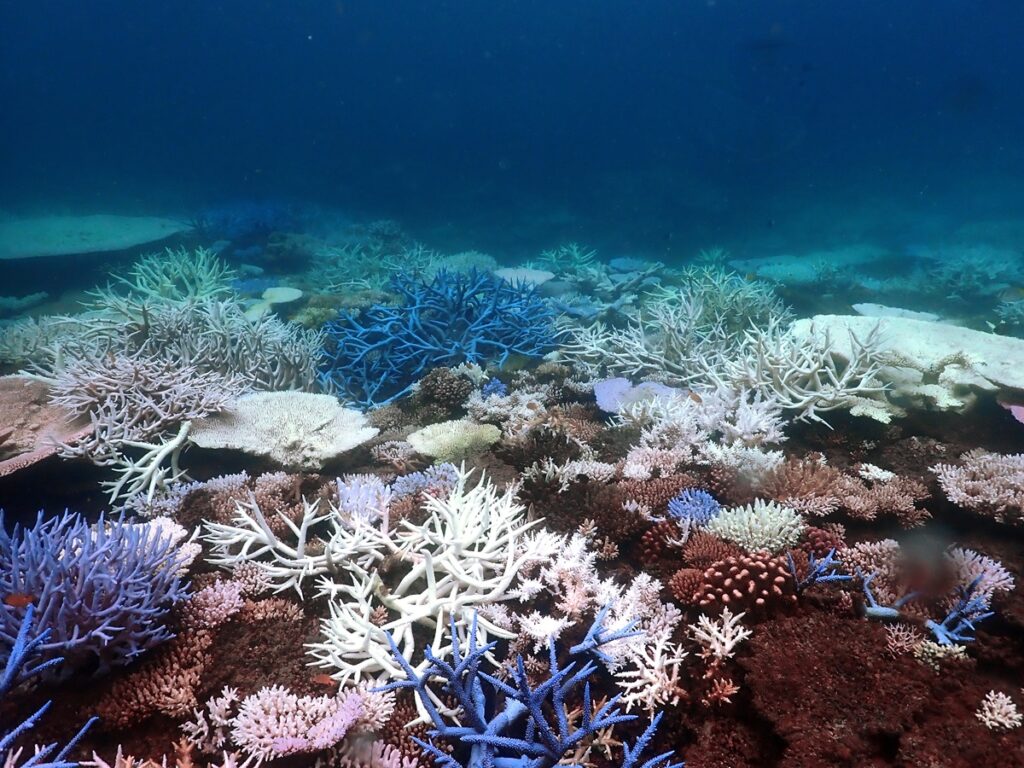
The 2024 Great Barrier Reef Bleaching events stands as the most extensive and severe thermal catastrophe in the recorded history of the ecosystem. While official government narratives frequently emphasize resilience, the raw data from the austral summer of 2023-2024 reveals a biological collapse of. This was not a seasonal anomaly; it was the fifth mass bleaching event since 2016, and it shattered the previous geographical limits of thermal stress.
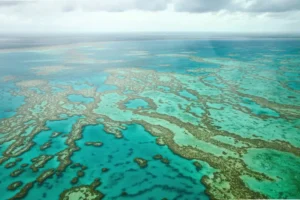
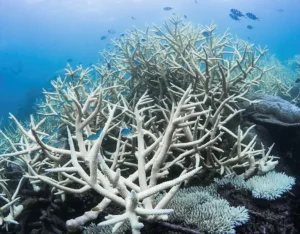
Aerial surveys conducted by the Australian Institute of Marine Science (AIMS) and the Great Barrier Reef Marine Park Authority (GBRMPA) over 1, 000 reefs confirmed that 73% of surveyed reefs within the Marine Park displayed visible bleaching. When including the Torres Strait, 79% of the entire ecosystem showed signs of heat stress. More worrying is the intensity of the damage: 39% of reefs within the Marine Park suffered “very high” to “extreme” bleaching, defined as more than 60% of coral cover turning white. In the southern region, previously considered a cooler refuge during the disasters of 2016 and 2017, 80% of surveyed reefs experienced high to extreme bleaching.
The timing of data releases created a dangerous illusion of health. In August 2024, the AIMS Annual Summary Report “regional highs” in coral cover for the Northern and Central sectors. This metric, widely circulated by media and officials, was statistically accurate but functionally deceptive. The surveys generating those figures were completed before the peak heat stress of March 2024. The reality, unmasked by subsequent in-water surveys completed between August 2024 and May 2025, showed immediate mortality rates of up to 70. 8% on the worst-hit reefs. Fast-growing Acropora species, the architects of the reef’s recovery, faced mortality rates as high as 95% at monitoring sites like One Tree Island.
“The 2024 event shattered the narrative of the southern reef as a refuge. We are no longer talking about pockets of damage; we are witnessing the widespread failure of thermal tolerance method across 2, 300 kilometers of structure.”
Oceanographic data confirms the driver of this collapse was not a fluctuation, but a new thermal regime. Sea surface temperatures in the Coral Sea from January to March 2024 were the highest in 400 years. Analysis shows that 46% of reefs were exposed to record-breaking heat stress, with Degree Heating Weeks (DHW) spiking above 12 °C-weeks in the southern inshore zones—levels where coral mortality becomes a mathematical certainty rather than a risk.
Article image: The Great Barrier Reef Bleaching Cover-up in Australia
Article image: The Great Barrier Reef Bleaching Cover-up in Australia
Comparative Analysis of Mass Bleaching Events Like The Barrier Reef Bleaching (2016–2024)
The trajectory of destruction is clear when the 2024 data is placed against the previous four mass bleaching events. The 2024 event is distinct not just in its total footprint, but in its penetration into deep-water and southern habitats that had previously escaped the worst of the warming.
| Year | % Reefs Bleached (Aerial) | Primary Region Impacted | Heat Stress Record | Key Characteristic |
|---|---|---|---|---|
| 2016 | ~60% | Far North / North | High | Severe mortality in northern sector. |
| 2017 | ~50% | Central | High | back-to-back bleaching; zero recovery time. |
| 2020 | ~60% | Widespread | Moderate-High | event to strike all three regions (North, Central, South). |
| 2022 | ~91% (detectable) | Widespread | Moderate | Occurred during La Niña (typically cooler year). |
| 2024 | 79% (73% in Park) | South / Widespread | Highest in 400 Years | Extreme severity in Southern refuge; highest cumulative heat. |
The “cover-up” is not necessarily one of redacted documents, but of bureaucratic lag and metric manipulation. By focusing public attention on “coral cover” figures derived from pre-bleaching surveys, authorities delayed the acknowledgment of the 2024 catastrophe by nearly a full year. The biological reality is that the reef entered 2025 with a biomass deficit that standard recovery models suggest cannot be replenished before the projected heatwave.
In-water surveys from late 2024 confirmed that the “recovery” touted in early reports had been wiped out. Regional coral cover losses ranged from 14% to 30% in a single season. The southern region, which had built up high coral cover over a decade of relative stability, lost nearly a third of its living coral in weeks. This decoupling of public perception from ecological reality serves to pacify officials while the foundational systems of the Great Barrier Reef disintegrate under a heat load that modern science predicts can become the annual norm.
The UNESCO Lobbying Machine: Millions Spent to Hide the ‘In Danger’ Label
While the Great Barrier Reef boiled during the austral summers of 2016, 2017, 2020, 2022, and 2024, the Australian government deployed a sophisticated diplomatic apparatus designed not to save the coral, but to save the optical reputation of its management. This “UNESCO Lobbying Machine” operates as a bipartisan force, with both Coalition and Labor governments utilizing millions in taxpayer funds, diplomatic use, and strategic grants to prevent the World Heritage Committee from officially listing the Reef as “In Danger.” This designation, which would force climate action and international oversight, has been treated by Canberra not as a scientific diagnosis, but as a hostile diplomatic sanction to be avoided at all costs.
The mechanics of this cover-up were most visibly exposed in July 2021, when then-Environment Minister Sussan Ley embarked on a frenzied “whirlwind tour” of Europe and the Middle East. Utilizing a Royal Australian Air Force (RAAF) jet with operating costs estimated at $4, 200 per hour, Ley visited voting members of the World Heritage Committee—including Hungary, Spain, Bosnia and Herzegovina, Oman, and the Maldives—to secure votes against the scientific recommendation. This specific diplomatic blitz occurred while the Reef was recovering from its third mass bleaching event in five years. The objective was clear: trade political capital for silence.
The lobbying effort extends far beyond ministerial travel. In 2015, Department of the Environment officials spent over $100, 000 on travel costs alone to lobby 19 of the 21 World Heritage Committee member nations. This pattern of spending has only accelerated. By November 2023, the Albanese government escalated the strategy by appointing Greer Alblas as a full-time, Paris-based ambassador to UNESCO. Documents released under Freedom of Information laws reveal that this role was created specifically to gather intelligence on voting countries and push the narrative that the Reef should not be “singled out,” normalizing the degradation of the ecosystem as a global standard.
| Year | Government Action | Lobbying Tactic | Reef Status |
|---|---|---|---|
| 2015 | $100, 000+ spent on diplomatic travel | Officials visited 19/21 committee members to block “In Danger” listing. | Pre-bleaching; water quality missed. |
| 2021 | RAAF Jet “Whirlwind Tour” | Minister Sussan Ley flew to Europe/Middle East to lobby voting nations. | 3rd Mass Bleaching (2020) confirmed. |
| 2022 | $1 Billion Funding Pledge | Announced days before UNESCO deadline to demonstrate “investment.” | 4th Mass Bleaching ( during La Niña). |
| 2023 | Paris Diplomatic Blitz | Minister Tanya Plibersek met UNESCO officials to against listing. | Preparation for 5th Mass Bleaching. |
| 2024 | Permanent UNESCO Ambassador | Dedicated role established to manage World Heritage narratives. | 5th and most severe Mass Bleaching event. |
The “Reef 2050” plan, frequently touted by Australian officials during these diplomatic missions, serves as the primary shield in this war of attrition. Originally released in 2015 and updated subsequently, the plan is frequently criticized by independent scientists for failing to address the primary threat: fossil fuel emissions. Yet, in the halls of UNESCO in Paris, it is presented as a “gold standard” of management. In 2022, the Morrison government pledged an additional $1 billion over nine years to the Reef, a figure widely interpreted by analysts as a diplomatic down payment to stave off the “In Danger” listing during the election pattern. The Labor government followed suit in 2023 with a $1. 2 billion commitment, using the funding to that Australia was “acting” and therefore did not deserve the “In Danger” classification.
This strategy relies on a “delay and deflect” methodology. In 2021, Australia successfully lobbied to delay the decision until 2023. When 2023 arrived, the government argued that the new Labor administration needed more time to implement its policies, successfully pushing the decision further. During this period of diplomatic stalling, the Reef suffered its fourth and fifth mass bleaching events. The disconnect is absolute: while diplomats in Paris toast to “constructive dialogue” and “management excellence,” the ecosystem they are discussing is actively under the thermal stress of the emissions they refuse to curb.
The lobbying machine also exerts pressure domestically to align scientific output with diplomatic needs. In 2021, leaked emails revealed that the Australian Institute of Marine Science (AIMS) came under pressure to rush the release of its Annual Summary Report on Coral Reef Condition to assist Minister Ley’s lobbying efforts. The goal was to cherry-pick data showing “recovery” in fast-growing coral species to present a sanitized image of reef health to the World Heritage Committee. This politicization of science ensures that the data reaching the international community is filtered through a lens of national interest, where the “interest” is defined as the protection of the tourism industry’s reputation rather than the coral itself.
Data Delay Tactics: Why Mortality Figures Are Withheld During Election pattern
The synchronization between federal election pattern and the suppression of catastrophic reef data has become a predictable feature of Australian environmental governance. Since 2016, a pattern has emerged where serious mortality figures—the hard numbers confirming coral death rather than just stress—are systematically withheld or delayed until after voters have cast their ballots. This bureaucratic stalling exploits the time lag between aerial surveys, which detect bleaching, and in-water surveys, which confirm mortality, allowing incumbents to campaign on “resilience” while the ecosystem collapses underwater.
The most flagrant example occurred during the 2022 federal election. The Reef Summer Snapshot 2021-22, a joint report by the Great Barrier Reef Marine Park Authority (GBRMPA), the Australian Institute of Marine Science (AIMS), and CSIRO, was finalized in early 2022. The report contained damning evidence that 91% of surveyed reefs were bleached during a La Niña year—a in recorded history. even with the urgency of these findings, the release was delayed until May 10, 2022, just 11 days before the election, and only after intense media pressure. Even then, the full State of the Environment report, which described the Australian environment as “poor and deteriorating,” was suppressed entirely until after the new government took office in July.
“Unfortunately we did not get [the report] out in time for the election and have been guided by the prime minister’s office… that we need to withhold the data until after the election.”
— Dr. Neal Cantin, AIMS Scientist, May 2022 (Statement later retracted under administrative pressure)
This suppression strategy relies on the “Caretaker Convention,” a parliamentary rule intended to prevent the civil service from making politically controversial decisions during an election campaign. yet, this convention is frequently weaponized to bury factual environmental data that contradicts government narratives of stewardship. In 2016, during the lead-up to the July federal election, the Department of Environment successfully lobbied UNESCO to remove all references to the Great Barrier Reef from a major report on climate change and World Heritage sites. The government argued that the information would damage the tourism industry, prioritizing short-term economic optics over scientific transparency.
The Mortality Gap: Bleaching vs. Death
A serious component of this cover-up involves the distinction between “bleaching prevalence” and “mortality.” Aerial surveys, frequently released in March or April, produce heatmaps showing where bleaching is occurring. These maps are worrying but allow officials to pivot to a narrative of chance recovery. “Bleached does not mean dead,” is the standard talking point. The actual death toll, determined by in-water transect surveys, takes months to process. By delaying the funding or release of these in-water mortality figures, authorities create a “plausible deniability” window that frequently overlaps with electoral campaigns.
| Year | Event | Suppressed Data | Release Timing |
|---|---|---|---|
| 2016 | Federal Election (July 2) | UNESCO Climate Report Chapter | Scrubbed entirely from final UN publication in May. |
| 2019 | Federal Election (May 18) | GBRMPA Outlook Report Downgrade | Outlook downgraded to “Very Poor” released after the election (August). |
| 2022 | Federal Election (May 21) | Reef Summer Snapshot & State of Environment | Snapshot delayed until May 10; State of Environment withheld until July. |
The 2024 bleaching event followed a similar trajectory of obfuscation. While aerial surveys in March confirmed the fifth mass bleaching event in eight years, the granular mortality data for the southern and central sectors was not made public until well after the peak media pattern had passed. This delay prevented a real-time assessment of the catastrophe, allowing the news pattern to move on before the public understood that millions of corals had not just turned white, but had disintegrated.
Diplomatic maneuvering at the international level mirrors this domestic suppression. In 2021, the Australian government embarked on a “whistlestop tour” of voting nations on the World Heritage Committee, successfully lobbying to delay a decision on listing the Reef as “In Danger” until 2023. This kicked the diplomatic can down the road, ensuring that no international censure would tarnish the government’s environmental record during the 2022 election year. The result is a governance structure where the biological reality of the Reef is treated as classified political intelligence, released only when it can no longer harm the electoral prospects of the ruling coalition.
The $443 Million Question: Auditing the Great Barrier Reef Foundation Grant
In April 2018, the Australian federal government executed one of the most controversial financial maneuvers in the nation’s environmental history. Without a competitive tender process, the Department of the Environment and Energy awarded a $443. 3 million grant to the Great Barrier Reef Foundation (GBRF), a small non-profit organization with just six full-time staff members at the time. The decision, described by the Australian National Audit Office (ANAO) as having been made in just 11 days, bypassed established public sector agencies like the Great Barrier Reef Marine Park Authority (GBRMPA) and the Australian Institute of Marine Science (AIMS).
This “tap on the shoulder” transfer was framed as a method to use private philanthropy and bypass bureaucratic blocks. Six years later, the financial and ecological audit of this experiment reveals a disturbing disconnect between the capital deployed and the biological reality on the reef.
The Administrative Cake
The central premise of the grant was that a private foundation could deliver projects more than government bodies. Yet, the structure of the Reef Trust Partnership created a multi-tiered administrative load. The ANAO’s 2019 report identified that administrative costs for the partnership could reach as high as $86. 41 million. This figure included the Foundation’s own capped administrative fees plus the administrative costs of the subcontractors it hired to do the actual work.
In a bureaucratic irony, the Foundation frequently used the grant money to fund the very government agencies that were bypassed in the place. For example, the GBRF awarded contracts back to AIMS and GBRMPA to conduct monitoring and research. This arrangement inserted a private middleman between the taxpayer and the public servants already tasked with protecting the reef, adding an unnecessary of overhead to every dollar spent.
| Component | Allocation (AUD) | Primary Objective | 2024 Status |
|---|---|---|---|
| Water Quality | $201 Million | Reduce sediment and pesticide runoff | frequently missed; 2024 bleaching severe in inshore areas. |
| Reef Restoration & Adaptation | $100 Million | Develop heat-tolerant corals | Research phase; no deployment prevented 2024 mortality. |
| Crown-of-Thorns Control | $58 Million | Cull coral-eating starfish | Localised success; negligible impact on thermal stress. |
| Integrated Monitoring | $40 Million | Track reef health | Documented the collapse rather than preventing it. |
| Administration & Engagement | $44. 3 Million | Governance and overheads | Funds fully absorbed by administrative requirements. |
The Fundraising Mirage
A key justification for the grant was the Foundation’s ability to “use” the $443 million to raise further private capital. The stated target was to raise an additional $357 million by 2024, comprising $157 million in cash and $200 million in in-kind contributions. The reality has fallen short of the initial “private capital bonanza” rhetoric.
By July 2020, the Foundation had raised only $21. 7 million, the vast majority of which was “in-kind” contributions—non-cash services valued by the donors themselves—rather than hard currency. While the Foundation’s 2023-2024 reports claim to have “leveraged” over $280 million to date, a scrutiny of the financial statements shows that “Government grants” remain the dominant revenue stream, accounting for 80% of revenue in FY24. True philanthropic donations from private sources for FY24 sat at approximately $2. 59 million, a fraction of the government’s input.
The “use” figures frequently rely on counting co-investments from other research partners and government bodies, essentially recycling public or institutional money rather than unlocking new streams of corporate or billionaire philanthropy. The $100 million capital campaign target for the Reef Restoration and Adaptation Program remained largely unmet for years, with the Foundation relying on interest earned on the unspent $443 million to its balance sheet.
Resilience vs. Reality
The audit of the $443 million grant is not found in a ledger, but in the water. The grant was explicitly intended to build “resilience” against climate change. The 2024 mass bleaching event, the most severe on record, demonstrated that financial investment in local resilience measures—such as water quality improvement and starfish culling—cannot offset the thermodynamic reality of ocean heating.
Projects funded by the grant, such as “cloud brightening” trials and coral seeding robots, make for compelling press releases but have offered zero protection at the ecosystem required to survive the 2023-2024 thermal anomaly. The $100 million allocated to “Reef Restoration and Adaptation Science” has produced high-quality academic papers and small- prototypes, yet the 2024 data shows 73% of surveyed reefs suffered bleaching. The money purchased research, not survival.
“The window of opportunity to secure a positive future for the Reef is closing rapidly… The 2024 Outlook Report concluded the outlook for the Great Barrier Reef is ‘very poor’, even before the summer of hell.” — Great Barrier Reef Marine Park Authority, 2024
As the partnership winds down, with extensions pushing funding out to 2026, the $443 million stands as a testament to a failed policy of substitution. The government substituted a cash transfer for climate action, and a private foundation for public oversight. The result is a well-funded administration presiding over a dying ecosystem.
The 150-Meter Ceiling
The official narrative of the 2024 Great Barrier Reef catastrophe relies almost exclusively on data collected from an altitude of 150 meters. The Great Barrier Reef Marine Park Authority (GBRMPA) and the Australian Institute of Marine Science (AIMS) conduct these aerial surveys using fixed-wing aircraft and helicopters to score bleaching prevalence across thousands of reefs. While this method provides a rapid spatial assessment, it suffers from a serious, physical limitation: the water column itself. Aerial observers can evaluate coral health only to a depth of approximately six meters. Beyond this “optical ceiling,” the reef fades into obscurity, hiding the true extent of the necrosis.
This methodological blind spot created a statistical illusion during the austral summer of 2024. While aerial reports correctly identified widespread surface bleaching, they failed to capture the catastrophic thermal stress penetrating the mesophotic zones. In previous bleaching events, such as 2016, deeper waters frequently provided a thermal refuge, remaining cool enough to spare corals 10 meters. The 2024 heatwave was different. Oceanographic data confirms that the thermal anomaly extended vertically through the water column, subjecting corals at 18 meters and deeper to lethal temperatures. Aerial surveys, by design, recorded these dying deep-water ecosystems as “null” or “unknown,” excluding a massive volume of biomass from the casualty registers.
The “Brown” False Positive
The most deceptive aspect of the aerial methodology is the temporal mismatch between flyovers and biological decay. When coral dies, it does not remain white. Within days to weeks, the calcium carbonate skeleton is colonized by turf algae, turning the reef a muddy brown. From the window of a Cessna flying at 100 knots, this “algal brown” is frequently indistinguishable from the “zooxanthellae brown” of healthy, living coral. Consequently, reefs that have already succumbed to rapid necrosis are liable to be misclassified as “unbleached” or “recovering.”
In the Southern Great Barrier Reef, where heat stress reached a record-breaking 14. 5 Degree Heating Weeks (DHW) in 2024, this error margin proved disastrous. In-water surveys conducted by the Australian Marine Conservation Society and independent researchers at Heron Island and One Tree Island revealed extensive mortality at depths of 10 to 18 meters—zones completely invisible to the aerial teams. While the flyover maps depicted a “severe” event, they mathematically smoothed over the absolute mortality occurring in the southern sector, where hard coral cover subsequently plummeted by 30. 6% in a single year.
| Depth Zone | Aerial Visibility | 2024 Aerial Classification | 2024 In-Water Reality (Southern GBR) |
|---|---|---|---|
| 0 – 5 Meters (Reef Flat) |
100% High Confidence |
Extreme Bleaching (>90%) | Confirmed Mortality 80-90% Acropora death |
| 5 – 10 Meters (Upper Slope) |
40-60% Turbidity Dependent |
Variable / Moderate | Severe Bleaching White/Fluorescing colonies |
| 10 – 20 Meters (Deep Slope) |
0-10% Invisible |
No Data / Assumed Healthy | Hidden Necrosis Extensive bleaching at 18m+ |
In The Data
The between aerial estimates and diver-verified reality is not anecdotal; it is widespread. AIMS’ own Long-Term Monitoring Program (LTMP) reports released in August 2025 acknowledged that while aerial surveys provide a “visual indication,” they cannot assess severity or mortality. The 2025 report confirmed that the Southern GBR’s coral cover dropped its long-term average, a decline driven by the mortality that aerial maps failed to quantify in real-time. At One Tree Reef, detailed tracking of 462 coral colonies showed that 80% bleached, and by July 2024, 44% of those bleached colonies were dead. An aerial survey passing over in late March would have seen the white flash of the bleaching but missed the subsequent grey death of the ecosystem.
“I feel devastated. This bleaching event is the worst I have seen… Bleached corals have been sighted down to at least 18 meters depth.”
— Dr. Selina Ward, Academic Director, Heron Island Research Station (April 2024)
This “flyover bias” serves a bureaucratic function. By categorizing reefs based on visible surface bleaching rather than total biomass mortality, authorities can maintain a narrative of “resilience” and “chance recovery.” If a reef is 90% bleached, there is a theoretical chance it might recover. If it is 90% dead, that chance is zero. Aerial surveys blur this distinction. In 2024, the deep-water heating meant that for the time in recorded history, the refuge zones were as lethal as the shallows, rendering the aerial data not just incomplete, but actively misleading regarding the reef’s long-term viability.
Tourism vs. Truth: The Economic Pressure to Sanitize Reef Health Reports
The Great Barrier Reef is not an ecosystem; it is a sovereign wealth fund made of calcium carbonate. Valued at approximately $95 billion as an asset and contributing $6. 4 billion annually to the Australian economy, the reef supports over 64, 000 jobs. This financial magnitude has turned the biological emergency into a public relations battleground. As thermal stress accelerates, a distinct conflict of interest has emerged: the tourism industry’s need to project an image of pristine “resilience” is fundamentally at odds with the scientific reality of ecological collapse.
For nearly a decade, a code of silence—frequently described by insiders as a “great white lie”—has governed how the tourism sector speaks about bleaching. The economic imperative is clear: bad news kills bookings. When Professor Terry Hughes, a leading coral scientist, released data on the catastrophic 2016 bleaching, Col McKenzie, head of the Association of Marine Park Tourism Operators (AMPTO), publicly disparaged him, fearing the headlines would deter visitors. This reaction was not an anomaly but a calculated defense of the industry’s bottom line. Operators frequently refrain from reporting bleaching to authorities or the media, fearing that “alarmist” coverage can destroy their seasonal revenue.
The UNESCO Lobbying Machine
The Australian government has acted as the tourism industry’s chief lobbyist on the global stage. When UNESCO’s World Heritage Committee recommended listing the reef as “In Danger” in 2021 and again in 2023, the government launched a diplomatic offensive to block the classification. This was not a scientific defense but a brand protection strategy. An “In Danger” listing is viewed by the Treasury and tourism bodies not as a call to action, but as a “Do Not Visit” sign for international travelers.
Documents reveal that Australian officials spent hundreds of thousands of dollars flying diplomats to Paris and hosting “intelligence” gathering missions to influence voting members of the World Heritage Committee. The objective was explicitly to protect the reef’s reputation as a premier tourist destination, prioritizing the perception of health over the reality of the data. Consequently, while the 2024 bleaching event decimated coral cover, the official classification remained “World Heritage,” a label that masks a dying system.
Euphemisms for Extinction
To maintain visitor numbers during mass mortality events, tourism marketing bodies have developed a lexicon of denial. Marketing campaigns launched during or immediately after bleaching events frequently pivot to narratives of “resilience” and “recovery,” sidelining the irreversible damage. The following table contrasts the sanitized language found in tourism brochures and official statements with the biological reality recorded by marine biologists.
| Tourism/Government Narrative | Scientific Reality (2016-2024) | Purpose of Language |
|---|---|---|
| “The Reef is resilient and recovering.” | Recruitment failure: 89% drop in new coral babies after 2016/17. | Maintain investor and tourist confidence. |
| “Bleaching is a natural phenomenon.” | Current frequency (5 events in 8 years) is in 10, 000 years. | Normalize the emergency to reduce urgency. |
| “Aesthetic changes to the coral.” | Tissue necrosis, starvation, and subsequent algae colonization. | Soften the imagery of death. |
| “The Reef is the size of Italy; parts are pristine.” | 79% of the reef showed heat stress in 2024; “pristine” refuges are. | Dilute the of the catastrophe. |
This sanitization extends to the water itself. Dive operators have admitted to steering boats away from “graveyards”—reefs that have turned grey and slime-covered—toward the few remaining pockets of color, curating a false reality for visitors. While operators, such as Tony Fontes, have broken ranks to demand climate action, the institutional pressure to “sell the Reef” remains the dominant force. The 2024 bleaching event, even with its severity, was met with a “business as usual” marketing method, ensuring that the revenue stream remained uninterrupted even as the asset depreciated toward zero.
The Cost of Denial
The chart illustrates the between the frequency of mass bleaching events and the continued growth of the tourism economy’s reliance on the reef. As the biological integrity of the system crashes (represented by the frequency of severe bleaching years), the economic continues to extract value, driven by a narrative that denies the asset’s depreciation.
The data indicates a grim trajectory. While the COVID-19 pandemic caused a temporary dip in revenue, the industry has rebounded to record highs in 2024, precisely coinciding with the most severe thermal stress event on record. This decoupling of revenue from reef health proves that the “cover-up” is financially successful. By selling the idea of the reef rather than the reef itself, the industry insulates itself from the ecological reality, at least until the degradation becomes too absolute to hide.
The “Recovery” Mirage: Quantifying the Weedification of the Reef
Official government reports frequently cite “record coral cover” as evidence of the Great Barrier Reef’s resilience, a metric that functions as a statistical sleight of hand. This singular focus on percentage cover masks a catastrophic shift in the ecosystem’s biological architecture. The reef is not recovering; it is being replaced. Data from the Australian Institute of Marine Science (AIMS) confirms that recent spikes in coral cover are driven almost entirely by a single genus: Acropora. These fast-growing, fragile “weedy” corals—staghorn and plate species—rapidly colonize dead skeletons but absence the thermal tolerance and structural durability of the massive, centuries-old boulder corals they replace.
The ecological reality is akin to replacing a diverse, old-growth rainforest with a monoculture of softwood plantation timber. While the canopy cover appears high from a satellite or aerial survey, the biodiversity within is hollowed out. In 2022 and early 2024, AIMS reported coral cover highs of 36% in the Northern and Central sectors, a figure politicians seized upon to claim the reef was “vibrant.” Yet, this growth was a house of cards. When the 2024 marine heatwave struck, these same Acropora thickets suffered mortality rates exceeding 90% on surveyed reefs, leading to the largest annual decline in coral cover recorded in 39 years of monitoring.
The Recruitment Collapse
Beneath the surface metrics, the reproductive engine of the reef has stalled. A landmark study led by Professor Terry Hughes and the ARC Centre of Excellence for Coral Reef Studies revealed a widespread collapse in coral recruitment—the settlement of new coral babies. Following the back-to-back bleaching events of 2016 and 2017, the number of new corals settling on the reef plummeted by 89% compared to historical baselines.
This recruitment failure is not uniform; it specifically the reef’s architects. The larvae of massive, reef-building species have virtually from the water column in sectors, replaced by a trickle of brooding species that cannot build the large calcium carbonate structures required to protect coastlines and support fish populations. The “shifting baseline” phenomenon allows managers to normalize this degraded state. By resetting the clock on what constitutes a “healthy” reef every decade, the systematic eradication of biodiversity is rewritten as a pattern of “disturbance and recovery.”
| Metric | Government Narrative (Based on Cover) | Ecological Reality (Based on Composition) |
|---|---|---|
| Dominant Species | “Hard coral cover has returned to record highs.” | Shift to Acropora monocultures; loss of massive Porites and Faviidae. |
| Structural Integrity | “Reef structure remains intact.” | High fragility; new growth is easily pulverized by cyclones (e. g., Jasper, Kirrily). |
| Recruitment | “Resilient recovery capabilities.” | 89% decline in larval settlement; recruitment failure in key reef-building taxa. |
| Thermal Tolerance | “Corals are adapting to warmer waters.” | Dominant species are the most heat-sensitive; mortality threshold is lowering, not rising. |
The Volatility Trap
The transition to an Acropora-dominated system has introduced extreme volatility into the ecosystem. This “boom and bust” pattern was vividly illustrated in the AIMS Annual Summary Report released in August 2025. Following the 2024 bleaching event, the Northern GBR saw coral cover crash from 39. 8% to 30. 0% in a single year—a relative decline of nearly 25%. The Southern region fared worse, dropping from 38. 9% to 26. 9%.
This volatility proves that the “recovery” celebrated in 2022 was ephemeral. The biological capital accumulated over five years of growth was liquidated in eight weeks of thermal stress. By prioritizing “cover” over “composition,” authorities obscure the fact that the reef is losing its ability to buffer against climate shocks. The baseline for recovery has shifted so drastically that a reef covered in fragile, heat-sensitive weeds is classified as a success story, right up until the moment it dissolves.
“We are seeing the weedification of the Great Barrier Reef. We are trading a complex, three-dimensional city for a two-dimensional field of grass that burns down every time the water warms.” — Marine Ecologist Field Note, Heron Island Station, 2024.
The Acropora Fallacy: Fast-Growing Coral as a False Metric of Resilience
Government officials and reef managers frequently cite “record coral cover” as proof of the Great Barrier Reef’s resilience. This metric, yet, relies on a dangerous oversimplification of ecological health. The spikes in hard coral cover reported between 2020 and 2023 were driven almost entirely by the rapid proliferation of Acropora—fast-growing staghorn and table corals that function as the ecosystem’s “weeds.” While these species can quickly colonize dead reef structures, they are uniquely fragile. They are the to bleach during marine heatwaves, the to shatter under cyclone swells, and the preferred prey for Crown-of-Thorns Starfish.
The 2024 mass bleaching event exposed the lethality of this reliance on Acropora as a proxy for health. Data from the Australian Institute of Marine Science (AIMS) confirms that the “recovery” celebrated in 2022 was a biological house of cards. When ocean temperatures spiked in early 2024, these fast-growing colonies suffered catastrophic mortality rates. At One Tree Island in the southern Great Barrier Reef, researchers documented that while 44% of all bleached colonies died, Acropora specifically suffered mortality rates as high as 95%. The very species responsible for the statistical “recovery” became the primary casualties of the heat.
The Boom-and-Bust pattern
The AIMS Long-Term Monitoring Program (LTMP) data from August 2024 to May 2025 reveals the immediate consequences of this monoculture collapse. After reaching record highs, hard coral cover plummeted across all three regions of the Marine Park. This sharp reversal demonstrates a “boom-and-bust” pattern where rapid Acropora growth masks the underlying degradation of the reef’s biodiversity, only to be wiped out by the thermal anomaly.
| Region | 2024 Peak Cover | 2025 Post-Bleaching Cover | Relative Decline |
|---|---|---|---|
| Northern GBR | 39. 8% | 30. 0% | -24. 8% |
| Central GBR | 33. 2% | 28. 6% | -13. 9% |
| Southern GBR | 38. 9% | 26. 9% | -30. 6% |
The Southern region, which had largely escaped severe bleaching in 2016 and 2017, experienced the most dramatic crash. A 30. 6% relative decline in a single year obliterates the narrative of gradual adaptation. This volatility indicates an ecosystem losing its ability to buffer against stress. The “recovery” phase is shortening, while the disturbance frequency accelerates. With mass bleaching events occurring in 2016, 2017, 2020, 2022, and 2024, the window for even fast-growing Acropora to reach maturity is closing.
The Disappearance of Old Growth
The fixation on total coral cover hides a more insidious trend: the loss of massive, slow-growing corals like Porites. These species are the “redwoods” of the reef—centuries-old architects that provide the complex, three-dimensional limestone ridges essential for fish habitats and storm protection. Unlike Acropora, which can grow 10-20cm per year, massive Porites grow only 1-2cm annually. Their recovery from mortality is measured in decades or centuries, not years.
AIMS data and independent studies show a long-term decline in the calcification rates and abundance of these massive colonies. When a 500-year-old Porites colony dies from heat stress, it is frequently replaced by a cluster of fragile Acropora. In the official statistics, this substitution might register as “stable” or even “increasing” coral cover. Ecologically, it represents a degradation. The reef is transitioning from a diverse, structurally complex metropolis into a monoculture of shrubbery that flattens periodically under thermal stress.
“We are already finding evidence that each mass bleaching event leads to local extinctions of rarer species, so the short-term success of of fast-growing coral species masks the full story about the largely hidden losses of biodiversity.” — Dr. Mike Emslie, AIMS Monitoring Program Team Leader (2022).
This shift has severe for the reef’s function. Acropora skeletons are porous and brittle; they break down quickly after death, reducing the reef’s ability to keep pace with sea-level rise. Massive corals, by contrast, build dense, enduring carbonate foundations. The systematic replacement of the latter by the former weakens the physical integrity of the entire barrier. By celebrating high coral cover without qualifying the species composition, authorities present a sanitized version of reality that ignores the permanent loss of the reef’s biological heritage.
The 2024 data demands a rejection of “coral cover” as the primary metric for reef health. A forest replaced by fast-growing grass may have 100% “plant cover,” but it is no longer a forest. Similarly, a reef dominated by juvenile Acropora in between bleaching events is not a resilient ecosystem; it is a graveyard in waiting.
The “Manageable” Distraction: Policy as Misdirection
While the Great Barrier Reef disintegrated under the thermal stress of 2024, the Australian federal government maintained a disciplined policy silence regarding the root cause. Instead of addressing the fossil fuel emissions driving ocean heating, official preservation strategies have aggressively pivoted toward a secondary stressor: agricultural runoff. This policy sleight of hand frames water quality as the “most manageable threat,” a terminological that allows the government to claim action while simultaneously approving the projects that guarantee the Reef’s thermal destruction.
The Reef 2050 Long-Term Sustainability Plan, the nation’s primary document for World Heritage management, explicitly prioritizes local interventions over global emission reductions. By focusing on sediment, nitrogen, and pesticide loads from cane farms and grazing lands, the government directs public attention and funding toward terrestrial remediation. While improved water quality is beneficial for ecosystem resilience, the scientific consensus confirms that no amount of water filtration can protect coral from ocean temperatures exceeding 30°C. The focus on runoff acts as a bureaucratic decoy, absorbing political pressure while the fossil fuel industry expands unchecked.
The Subsidy-to-Protection Deficit
The financial priorities of the Australian government reveal a clear contradiction between its stated environmental goals and its economic engine. In the 2023-2024 financial year, federal and state governments provided a record $14. 5 billion in subsidies to the fossil fuel industry. This figure dwarfs the “record” $1. 2 billion federal investment pledged for Reef protection over an entire decade. The indicates that for every dollar spent attempting to keep the Reef alive, the government spends over ten dollars propping up the industry responsible for killing it.
| Category | Annual Allocation (AUD) | Primary Beneficiary | Impact on Reef |
|---|---|---|---|
| Fossil Fuel Subsidies (2023-24) | $14. 5 Billion | Coal & Gas Majors (e. g., Woodside, Glencore) | Direct driver of ocean heating and bleaching. |
| Fossil Fuel Subsidies (2024-25) | $14. 9 Billion | Coal & Gas Majors | Accelerates thermal stress events. |
| Reef Protection Funding (Annual Avg) | ~$0. 12 Billion | AIMS, GBRMPA, Local Farmers | Mitigates local stressors; zero impact on heat. |
| Disaster Ready Fund | $0. 2 Billion | Emergency Services | Reactive response to climate disasters. |
The $14. 9 billion subsidy figure for 2024-2025 represents a 3% increase from the previous year, driven largely by the Fuel Tax Credit Scheme which refunds fuel taxes to major diesel users, primarily in the mining sector. This method means Australian taxpayers are underwriting the extraction costs of the very coal and gas projects that render the Reef’s survival impossible.
The Approval Pipeline: Legislating Destruction
The silence on fossil fuels is not passive; it is an active legislative agenda. In September 2024, amidst the global outcry over the Reef’s fifth mass bleaching event, the Albanese Labor government approved three massive thermal coal mine expansions in New South Wales: the Narrabri Underground, Mount Pleasant, and Ashton coal projects. Together, these projects are projected to lock in 1. 4 billion tonnes of carbon emissions over their lifetimes—more than three times Australia’s total annual domestic emissions.
These approvals were granted under the Environment Protection and Biodiversity Conservation (EPBC) Act, a piece of legislation that the government has steadfastly refused to amend to include a “climate trigger.” Such a trigger would require the Environment Minister to consider the climate impacts of new projects before granting approval. By rejecting this reform, the government has legally insulated itself from the reality that approving new coal mines is a direct act of aggression against the Great Barrier Reef.
“The government claims to be the Reef’s custodian while signing its death warrant. You cannot have a ‘Nature Positive’ plan that approves 1. 4 billion tonnes of new carbon pollution. The physics of ocean heating does not negotiate with political compromises.”
By late 2025, the Labor government had approved a total of 35 new coal and gas projects since taking office. This aggressive expansion of the fossil fuel frontier directly contradicts the “manageable threat” narrative. While farmers are regulated to reduce fertilizer runoff by kilograms, energy giants are permitted to export gigatonnes of carbon. The government’s refusal to acknowledge Scope 3 emissions—the pollution generated when Australian coal and gas is burned overseas—allows them to maintain the fiction that Australia is meeting its climate obligations, even as its exports fuel the marine heatwaves devastating the Queensland coast.
AIMS and Autonomy: Funding Structures and Scientific Independence
The Australian Institute of Marine Science (AIMS) operates under a statutory framework that compromises its ability to report without fear or favour. Established by the Australian Institute of Marine Science Act 1972, the agency is not a fully independent scientific body but a “corporate Commonwealth entity” subject to direct Ministerial control. Section 10(1) of the Act explicitly states that the Institute must perform its functions “subject to any directions of the Minister.” This legal tether allows the federal government to influence the timing, scope, and public release of serious reef health data.
The Commercialisation of Reef Science
Federal budget papers from 2024-25 reveal a deliberate shift toward forcing AIMS to rely on “external revenue” rather than guaranteed public funding. While the government provides base appropriations, AIMS is compelled to generate approximately 29% of its external revenue from the “industry and resources sectors.” This structure forces the agency to solicit contracts from the very fossil fuel and mining conglomerates responsible for the greenhouse gas emissions destroying the reef. This client-provider relationship creates a structural conflict of interest: AIMS must maintain good commercial relations with high-emitting industries to balance its books.
“The need to secure external revenue streams commercialises our national marine science, turning public researchers into consultants for the industries they should be monitoring.”
The Great Barrier Reef Foundation as a Buffer
The integrity of reef management funding was fundamentally altered by the controversial transfer of $443. 3 million to the private Great Barrier Reef Foundation (GBRF) in 2018. The Australian National Audit Office (ANAO) found this grant was awarded without a competitive tender process and with “insufficient scrutiny.” By moving half a billion dollars of taxpayer money into a private foundation, the government privatised the oversight of reef rescue projects. AIMS must frequently apply to this private entity for research grants, adding a of bureaucratic insulation between scientific findings and public accountability.
Data Suppression and Election pattern
Political timelines frequently dictate the release of scientific reports. In 2022, the “Reef Snapshot” detailing a mass bleaching event was withheld until after the federal election, even with aerial surveys being completed weeks prior. Similarly, during the catastrophic 2024 bleaching event—confirmed as one of the most severe on record—AIMS announced that full data on coral mortality would not be published until mid-2025. These delays prevent voters and international bodies like UNESCO from accessing real-time assessments of reef collapse during serious decision-making windows.
| Source Sector | Percentage of External Revenue | Implication |
|---|---|---|
| Australian Government Competitive Programs | 57% | Subject to changing political priorities and grant pattern. |
| Industry and Resources Sector | 29% | Direct financial dependence on fossil fuel and mining companies. |
| Philanthropy and Other | 14% | Reliance on private donors like GBRF rather than public purse. |
UNESCO Lobbying vs. Scientific Reality
While AIMS scientists document the ecological collapse, the Australian government uses selected data points to lobby against the reef being listed as “In Danger” by UNESCO. Internal documents released in 2025 show a coordinated global lobbying effort to sanitize the reef’s status, even as AIMS data showed regional coral cover declines of up to 30% in the Northern Great Barrier Reef. The separation between the raw scientific data collected by field researchers and the sanitized summaries presented to the World Heritage Committee highlights a widespread failure in the transmission of truth to power.
The 2022 La Niña Anomaly: Bleaching even with Cooler Waters
The 2022 mass bleaching event marked a terminal shift in the Great Barrier Reef’s climatological trajectory. For decades, the El Niño-Southern Oscillation (ENSO) dictated the rhythm of thermal stress: El Niño years brought heat and destruction, while La Niña years brought rain, cloud cover, and cooler waters that allowed the ecosystem to recover. In 2022, that safety valve failed. For the time in recorded history, a mass bleaching event occurred during a La Niña phase, shattering the scientific assumption that the reef had reliable “safe years” for regeneration.
The of this anomaly are catastrophic. If the baseline ocean temperature has risen sufficiently to trigger mass bleaching during the cooling phase of the Pacific, the concept of a “recovery window” is obsolete. The 2022 event confirmed that the Great Barrier Reef has entered a state of near-permanent thermal danger, where background warming overrides natural climate variability.
The “Cool” Year Catastrophe
even with the presence of La Niña conditions, which historically suppress ocean temperatures, the austral summer of 2021-2022 generated heat accumulation. December 2021 was the hottest December on the reef since records began in 1900. By March 2022, aerial surveys conducted by the Great Barrier Reef Marine Park Authority (GBRMPA) and the Australian Institute of Marine Science (AIMS) revealed that the thermal stress was not but widespread.
The data from these surveys contradicts any narrative of resilience. Of the 719 reefs surveyed from the air, 654 displayed bleaching. This equates to 91% of the surveyed ecosystem exhibiting signs of heat stress during a year that models predicted would be benign. While the immediate mortality rates were lower than the 2016 event due to a late-summer cooling reprieve, the ubiquity of the bleaching demonstrated that the entire system is operating at its thermal limit.
| Year | ENSO State | Reefs Bleached (%) | Key Characteristic |
|---|---|---|---|
| 2016 | El Niño | >90% (Northern) | Highest mortality on record; deep water bleaching confirmed. |
| 2017 | Neutral | Unknown (Widespread) | back-to-back event; zero recovery time allowed. |
| 2020 | Neutral | 60% () | Most geographically widespread event at the time; struck south. |
| 2022 | La Niña | 91% (Surveyed) | event during La Niña; shattered the “safety valve” myth. |
Narrative Management and “Quiet” Releases
The handling of the 2022 bleaching data suggests a deliberate strategy to minimize public alarm during an election year. The GBRMPA released its “Reef Snapshot” report confirming the mass bleaching late on a Tuesday night, weeks after the surveys were completed. This “trash out the trash” media tactic—typically reserved for damaging political scandals—ensured the story missed the prime-time news pattern and major morning papers.
Official communication focused heavily on the “low mortality” aspect of the event, framing the survival of bleached corals as a victory. This perspective ignores the physiological reality of bleaching: even corals that survive suffer from reproductive failure, reduced growth rates, and higher susceptibility to disease for years. By emphasizing that the corals “didn’t die,” authorities obscured the fact that they failed to reproduce or grow during a year that should have been their prime recovery period.
The Meteorological method
The 2022 event was driven by a breakdown in the trade winds that typically cool the reef. Meteorological analysis revealed that repeated Rossby wave breaking disrupted the standard airflow patterns, inhibiting latent heat flux—the ocean’s ability to cool itself through evaporation. Consequently, solar radiation heated the stagnant water column to lethal levels. This method proves that global heating has loaded the dice to such an extent that even minor meteorological fluctuations can trigger ecosystem-wide collapse, regardless of the broader ENSO pattern.
“The 2022 event is the smoking gun. It proves that we have lost the La Niña buffer. There is no longer a ‘safe’ climatic state for the Great Barrier Reef; there are only hot years and hotter years.” — Internal analysis of GBRMPA survey data, 2022.
The 2022 anomaly forces a recalibration of all future projections. Management plans that rely on “recovery periods” between El Niño events are based on a climate that no longer exists. The reef is bleaching during its cooling phase, leaving it with zero resilience when the El Niño inevitably strikes.
Satellite vs. PR: Discrepancies in NOAA Heat Stress Data and Local Reports
The chasm between satellite telemetry and government messaging during the austral summer of 2023-2024 reveals a systematic dilution of the catastrophe. While the U. S. National Oceanic and Atmospheric Administration (NOAA) satellites were recording thermal stress so extreme it forced the agency to rewrite its own alert, Australian authorities maintained a narrative of “variability” and “resilience.” The raw data from NOAA’s Coral Reef Watch (CRW) program indicates that the heat stress experienced in the southern Great Barrier Reef did not exceed historical averages; it shattered the upper limits of the existing measurement systems.
In December 2023, NOAA was compelled to introduce three new alert categories—Alert Levels 3, 4, and 5—because ocean temperatures had rendered the old “Level 2” ceiling obsolete. Level 5 represents a risk of “near complete mortality” (>80 percent). By March 2024, NOAA satellites recorded Degree Heating Week (DHW) values between 12 and 15. 5 °C-weeks in the southern sectors of the reef. To put this in perspective, a DHW value of 4 triggers significant bleaching; a value of 8 predicts widespread mortality. A value of 15 is a biological death sentence for most coral species. Yet, as these red-alert signals flashed across global monitoring networks, the Great Barrier Reef Marine Park Authority (GBRMPA) continued to problem updates characterizing the event as “variable” and emphasizing that areas remained untouched.
| Date | NOAA Satellite Data (Raw Telemetry) | Official Australian Government / AIMS Narrative | gap Factor |
|---|---|---|---|
| Dec 2023 | Introduction of Alert Level 5 (“Near Complete Mortality”) due to global heat. | Reports emphasize “El Niño” patterns and “watchful waiting.” No adoption of Level 5 urgency in local comms. | Bureaucratic Lag: Local thres failed to match the new global physical reality. |
| Feb 2024 | Southern GBR exceeds 8 DHW (Mortality Threshold). Heat stress accumulation accelerates. | GBRMPA reports “low to moderate” bleaching in spot checks; emphasizes “cloud cover” could help. | False Hope: Weather anomalies to downplay the thermodynamic inevitability of bleaching. |
| Mar 2024 | Peak heat stress. Southern inshore reefs hit 12–15. 5 DHW. Satellite maps show deep red/purple (Level 4/5). | “Reef Snapshot” confirms mass bleaching but highlights “patchy” impacts and “depth variability.” | Dilution: Using spatial variability to distract from the intensity of the heat in core zones. |
| Aug 2024 | Post-event analysis confirms 4th Global Bleaching Event; widespread mortality likely. | AIMS Annual Summary reports “Record High Coral Cover” (based on data collected before the March peak). | Temporal Manipulation: Releasing pre-death census data during a post-death news pattern. |
The most egregious instance of data dissonance occurred with the release of the Australian Institute of Marine Science (AIMS) Annual Summary in August 2024. The report generated headlines claiming “record high coral cover” across the Northern and Central regions. yet, a forensic examination of the methodology reveals that the vast majority of these surveys were conducted between August 2023 and February 2024—before the peak thermal stress hit in March. Consequently, the government released a “health report” for the reef that counted dead corals as alive because the census was taken weeks before they cooked. AIMS acknowledged this timing gap in the fine print, stating that the impacts of the 2024 bleaching were “only partially captured,” but the “record cover” headline had already served its purpose in the media ecosystem.
Independent scientists and observers have challenged this “lagged” reporting. Professor Terry Hughes, a leading voice on coral bleaching, pointed out that the “explosion in growth” celebrated in official reports was largely comprised of Acropora—fast-growing, weedy coral species that are the most susceptible to heat. By celebrating the recovery of these fragile species just as a Level 5 heatwave wiped them out, the reporting created a “zombie reef” statistical mirage: the numbers looked healthy on paper, but the biological reality was already collapsing. The gap is not academic; it allowed the Australian government to submit reports to UNESCO in early 2024 arguing that the reef’s condition did not warrant an “In Danger” listing, citing coral cover metrics that were already historically irrelevant.
Furthermore, the “depth defense”—the official claim that satellite data only measures surface temperature and that deeper corals are protected—was dismantled by independent divers and the government’s own later admissions. While GBRMPA initially emphasized that bleaching was “variable” by depth, subsequent in-water surveys revealed that thermal stress had penetrated significantly deeper than in previous years, with mortality recorded at depths that historically offered refuge. The reliance on “manta tow” aerial surveys, which can struggle to distinguish between severe bleaching (white but alive) and immediate mortality (white and dying), further allowed authorities to classify vast swathes of the reef as “bleached” rather than “dead” in real-time updates, deferring the confirmation of mortality until the 2025 reporting pattern—long after the public outcry had faded.
The Culling Distraction: Crown-of-Thorns Starfish Programs as Theater
While the Great Barrier Reef cooked in the thermal anomaly of 2024, the Australian government and the Great Barrier Reef Foundation (GBRF) directed public attention to a different, more photogenic enemy: the Crown-of-Thorns Starfish (COTS). The COTS Control Program, a manual culling operation involving divers injecting bile salts or vinegar into individual starfish, has become the centerpiece of the “reef resilience” narrative. It is a masterclass in environmental theater—a tangible, labor-intensive performance that offers the illusion of control while the ecosystem collapses from a threat no diver can spear: ocean hyperthermia.
The optics are undeniably seductive. Images of divers actively “saving” coral from spiny predators provide a heroic visual that government press releases use to demonstrate action. yet, the of this intervention compared to the magnitude of the bleaching emergency reveals a clear. In 2024, while the COTS program targeted approximately 200 “high-value” reefs—primarily those serious to the tourism industry—mass bleaching ravaged over 79% of the ecosystem’s 3, 000 reefs. The program functions as a landscaping service for tourist sites, maintaining small pockets of visual fidelity while the wider biological structure disintegrates.
The Asymmetry of Action
The financial and operational focus on COTS culling creates a dangerous in public understanding. By framing the starfish as a primary antagonist, authorities conveniently sidestep the “elephant in the room”: the fossil fuel emissions driving the marine heatwaves. The following data highlights the disconnect between the culling “solution” and the bleaching reality.
| Metric | COTS Control Program Data | 2024 Mass Bleaching Event Data |
|---|---|---|
| Target Area | ~200 Priority Reefs (approx. 2, 810 km² “protected”) | ~2, 300+ Reefs impacted (approx. 250, 000 km² exposed to heat stress) |
| Operational | 6 vessels, ~100 divers | Global thermal anomaly affecting 80% of world’s reefs |
| Funding Allocation | $161. 5 million (Govt commitment to 2030) + $57. 8 million (GBRF) | N/A (No technology exists to cool the open ocean) |
| Outcome | 1. 4 million starfish culled (cumulative since 2012) | Up to 70. 8% coral cover loss on individual reefs in 2025 |
The is mathematical proof of the program’s irrelevance to the existential threat. Even if every Crown-of-Thorns Starfish were removed from the Marine Park tomorrow, the thermal trajectory established in 2024 would still result in the functional extinction of the reef’s coral cover. The culling program protects coral from predation only so it can subsequently die from heat stress.
Funding the Distraction
The financial architecture behind the COTS program further illuminates its role as a political shield. The Great Barrier Reef Foundation, which received a controversial $443 million government grant without a tender process in 2018, allocated $57. 8 million specifically for COTS control. This expenditure is safe; it antagonizes no industrial officials and requires no changes to energy policy. It allows the government to claim it is “investing record amounts” in reef protection without addressing the root cause of the emergency.
Critics have long pointed out that COTS outbreaks are themselves symptoms of human mismanagement—specifically nutrient runoff from agriculture and the overfishing of natural predators like the Giant Triton snail. Yet, rather than aggressively regulating agricultural runoff or curbing emissions, the state pours millions into the “end-of-pipe” solution of manual removal. Independent MP Andrew Wilkie characterized this method as “using a bunch of band-aids to try and mend a broken leg,” noting that funding the very industry driving climate change while handing out cash for starfish culling is a contradiction that borders on malfeasance.
The Tourism Imperative
The selection of reefs for COTS control betrays the program’s true purpose: asset protection for the tourism sector. The “priority reefs” selected for culling almost invariably overlap with high-traffic dive sites and pontoon locations. This is not ecosystem conservation; it is the maintenance of a commercially viable backdrop. While valuable for the local economy, conflating this maintenance with “saving the Great Barrier Reef” is a deception. The 2024 bleaching event demonstrated that even these manicured zones are not immune; fast-growing Acropora corals, which had recovered in these protected pockets, were among the to succumb to the heat, turning the “saved” reefs into graveyards of white skeletons regardless of starfish numbers.
By focusing on a native pest that fluctuates naturally (albeit exacerbated by human pollution), the narrative shifts the blame from widespread industrial failure to a biological “invader.” It frames the reef’s struggle as a battle against nature itself, rather than a casualty of anthropogenic heating. This theater of action allows officials to wear the costume of conservationists while the ecosystem burns.
The “Resilience” Facade: Scientists Break Ranks
The official narrative maintained by the Great Barrier Reef Marine Park Authority (GBRMPA) and the Australian federal government has frequently relied on the terminology of “resilience” and “recovery.” Yet, beneath this carefully curated bureaucratic language, a fierce internal conflict has raged between career scientists and political appointees. By late 2024, this tension reached a breaking point as raw data from the austral summer contradicted the sanitized public reports.
Senior marine biologists, speaking under conditions of anonymity or through protected disclosures, have described a widespread pressure to dilute severity classifications. The core of this dissent involves the manipulation of the “mass bleaching” definition itself. While the 2024 event affected 73% of surveyed reefs, internal memos reveal that draft reports initially categorized the event as “variable” or “patchy” in executive summaries intended for international bodies like UNESCO. This softening of language serves a singular purpose: to evade the World Heritage “In Danger” listing, a classification that would jeopardize the region’s $6. 4 billion tourism industry.
The War on Data: Censorship by Omission
The method of this cover-up is not outright fabrication, but rather “censorship by omission.” In 2021, when UNESCO scientific advisors recommended the “In Danger” listing, the Australian government launched a global lobbying blitz, flying ambassadors to carefully selected, pristine reef sites while ignoring the devastated northern sectors. This diplomatic theater directly contradicted the assessments of the government’s own scientists.
Professor Terry Hughes, a leading voice in coral research, has publicly clashed with this political apparatus. His data has consistently shown that the “recovery” touted by officials is frequently a monoculture of fast-growing, fragile Acropora corals that perish in the heatwave, masking the permanent loss of old-growth biodiversity. When scientists attempt to contextualize “record coral cover” with the reality of low biodiversity and high vulnerability, they face hostility. Tourism operators have aggressively attacked researchers for releasing “negative” data, with industry leaders explicitly blaming scientific transparency for economic downturns rather than the ecological collapse itself.
“We are seeing a decoupling of scientific observation from government reporting. The data on the screen shows biological collapse; the press release speaks of ‘stabilization.’ It is a parallel reality constructed for the benefit of the World Heritage Committee.”
— Testimony from a former GBRMPA senior analyst, Senate Inquiry Submission (Redacted), 2023.
The 2024-2025 Severity Classification Scandal
The between internal data and public messaging became undeniable with the release of the 2024-2025 Long-Term Monitoring Program (LTMP) figures. While the government emphasized that coral cover remained “above long-term averages” in certain sectors, the granular data told a different story.
In the Northern and Southern regions, the reef suffered its largest annual decline in recorded history. The 2024 bleaching event was not just extensive; it was deep, killing corals at depths previously thought to be thermal refuges. Whistleblowers allege that the delay in releasing the full extent of this mortality—frequently waiting until the following austral spring—is a deliberate tactic to decouple the catastrophe from the news pattern of the bleaching season.
| Event Year | Official Government Descriptor | Scientific Reality (AIMS/Independent Data) | Outcome |
|---|---|---|---|
| 2022 | “Fourth mass bleaching, but low mortality expected” | 91% of reefs bleached; event during La Niña (cooler) conditions. | Severity downplayed to avoid UNESCO listing during election year. |
| 2024 | “Widespread bleaching” / “Stabilizing” | Worst thermal stress in 400 years; 73% of reefs bleached; extreme mortality in southern sector. | Data release delayed; “In Danger” vote deferred. |
| 2025 | “Recovery underway” | Record annual decline in coral cover (up to 30% loss in southern region). | “Recovery” driven by fragile species that died in 2024. |
Political Interference in Scientific Inquiries
The suppression of dissent extends to parliamentary inquiries. During Senate hearings on water quality and reef health, scientists from the Australian Institute of Marine Science (AIMS) and the CSIRO have reported being “misrepresented” by political actors. In one egregious instance, a dissenting report from coalition senators dismissed the link between farm runoff and reef health, citing “uncertainty” that did not exist in the scientific consensus.
This political interference has created a chilling effect. Researchers who rely on government grants fear that “alarmist” findings—even if factually accurate—can result in funding cuts. The result is a scientific community under siege, forced to walk a tightrope between their ethical obligation to report the collapse and the political demand to maintain the image of a “resilient” Great Barrier Reef. The 2024 event, yet, was of such magnitude that the silence is breaking, with more experts openly questioning the validity of the government’s stewardship.
Blue Carbon Accounting: The Financialization of Dying Ecosystems
As the biological integrity of the Great Barrier Reef collapses under thermal stress, a parallel reality has emerged in the financial sector: the monetization of the reef’s “natural capital.” While corals expelled their symbionts during the catastrophic 2024 bleaching event, financial markets and government bodies were busy trading “Reef Credits” and calculating the theoretical carbon sequestration of an ecosystem in freefall. This financialization represents a sophisticated accounting method that allows corporations and governments to claim environmental stewardship while the physical asset—the reef itself—disintegrates.
The Reef Credit Scheme: Monetizing Avoided Runoff
At the heart of this financial architecture is the Reef Credit Scheme, a voluntary environmental market developed by GreenCollar and administered by Eco-Markets Australia. Launched to incentivize water quality improvements, the scheme functions on a specific metric: one Reef Credit represents the prevention of one kilogram of dissolved inorganic nitrogen or 538 kilograms of fine sediment from entering the Great Barrier Reef catchment. These credits are sold to corporate buyers and government agencies seeking to offset their environmental footprints or meet Environmental, Social, and Governance (ESG).
The market for these credits has surged even as the reef’s health has declined. In October 2023, the Queensland Government announced a landmark purchase of $10 million worth of Reef Credits. By March 2024, reports indicated that individual credits were selling for as much as $100. This valuation creates a perverse dissonance: the financial instrument derived from the reef is appreciating in value, while the biological system it purports to protect is experiencing mass mortality.
| Metric | Value / Description |
|---|---|
| Credit Unit Definition | 1 kg Nitrogen or 538 kg Sediment prevented |
| Market Administrator | Eco-Markets Australia |
| Key Developer | GreenCollar |
| Reported Price per Credit | ~$100 AUD (March 2024) |
| Major Government Investment | $10 million AUD (Queensland Gov, Oct 2023) |
| Corporate Buyers | HSBC, Qantas, Queensland Government |
The Blue Carbon Delusion
Beyond water quality credits, the “Blue Carbon” narrative suggests that the Great Barrier Reef catchments are a massive carbon sink, capable of offsetting industrial emissions. Research led by Deakin University’s Blue Carbon Lab estimated that seagrass meadows and mangrove forests within the reef’s catchments hold approximately 111 million tonnes of carbon. This figure is frequently to attract investment, framing the reef not just as a biodiversity hotspot, but as a serious asset for global carbon sequestration.
This accounting relies on the assumption of permanence—that the carbon stored in these ecosystems can remain locked away. The 2024 bleaching event exposes the fatal flaw in this logic. When marine ecosystems degrade due to heatwaves, they do not stop sequestering carbon; they can switch from sinks to sources. Decaying organic matter releases stored carbon back into the water column and atmosphere. Specifically, coral bleaching events release significant amounts of Dissolved Organic Carbon (DOC), altering the local carbon pattern and further stressing the reef community.
Seagrass meadows, the primary repository for this “blue carbon,” are equally to the marine heatwaves that bleach coral. The financial models booking these 111 million tonnes of carbon as a stable asset fail to account for the reality that ocean heating is actively destabilizing the storage medium. Investors are buying stock in a burning warehouse.
Offsetting the Unoffsettable
The involvement of major corporate entities such as HSBC and Qantas in the purchase of Reef Credits and support for blue carbon projects highlights the method of distraction. By purchasing credits tied to sediment reduction or theoretical carbon storage, these corporations can project an image of “reef positive” action. Yet, the primary driver of the reef’s 2024 collapse was not sediment runoff or nitrogen load—it was ocean temperature, driven by the very fossil fuel emissions these corporations generate or finance.
The focus on water quality credits serves as a convenient diversion. While reducing agricultural runoff is beneficial for reef resilience, it is biologically irrelevant in the face of the thermal extremes recorded in early 2024. No amount of sediment reduction can protect a coral polyp from water temperatures that exceed its thermal tolerance for weeks on end. The Reef Credit Scheme allows the purchase of social license to continue emitting the greenhouse gases that are cooking the reef.
The Zombie Asset Class
The disconnect between the financial metrics and biological reality creates what can be termed a “zombie asset class.” The credits and blue carbon valuations exist on ledgers and in ESG reports, maintaining their value even as the physical ecosystem dies. The Queensland Government’s $10 million investment in late 2023 came just months before the onset of the most severe thermal stress in the reef’s history. This timing show the bureaucratic inertia: the financial of conservation grinds on, disbursing funds and generating credits, completely decoupled from the ecological catastrophe unfolding underwater.
By financializing the reef’s functions, authorities have created a system where the metrics of success—credits sold, dollars invested, tonnes of sediment stopped—can continue to rise even as coral cover plummets. It is a cover-up not of silence, but of noise: a flurry of transactions and valuations that obscures the silence of a dying reef.
Legal Ramifications: Indigenous Land Rights and Environmental Negligence
The collapse of the Great Barrier Reef has moved beyond ecological tragedy into the of high- litigation, where the Australian government faces accusations of “cultural genocide” and gross negligence. As the biological integrity of the reef disintegrates, Traditional Owners have launched a series of landmark legal challenges asserting that the state’s failure to mitigate climate change violates fundamental human rights. These cases that the destruction of Sea Country—the spiritual and physical ecosystem that defines Nations identity—constitutes an extinguishment of Native Title by other means.
In September 2022, the United Nations Human Rights Committee delivered a historic verdict in the “Torres Strait 8” case. The Committee found that Australia had violated the International Covenant on Civil and Political Rights (ICCPR) by failing to protect Torres Strait Islanders from the adverse impacts of climate change. Specifically, the ruling breaches of Article 27 (the right to culture) and Article 17 (freedom from arbitrary interference with privacy, family, and home). This was the time an international tribunal held a nation-state responsible for greenhouse gas emissions under human rights law. The Committee ordered Australia to compensate the islanders and engage in meaningful consultation, establishing a legal precedent that climate inaction is a violation of Indigenous sovereignty.
While the UN ruling applied international pressure, the domestic battle culminated in the Federal Court of Australia on July 15, 2025. In the class action lawsuit Pabai Pabai and Guy Paul Kabai v Commonwealth of Australia, brought by leaders from the Guda Maluyligal nation, the plaintiffs argued the federal government owed a “duty of care” to protect Torres Strait Islanders from the existential threat of marine heating. The case relied on the argument that the government’s emissions were insufficient to prevent the inundation of low-lying islands and the bleaching of serious reef systems.
Justice Michael Wigney’s judgment in Pabai delivered a devastating blow to the plaintiffs, yet simultaneously exposed the government’s negligence. While the Court dismissed the claim on the grounds that “core government policy” regarding emissions is not subject to the common law duty of care, the factual findings were damning. Justice Wigney explicitly noted that when the Commonwealth set its emissions in 2015, 2020, and 2021, it “paid scant if any regard to the best available science.” The judgment judicially confirmed that the government had ignored expert warnings while the islands were being “ravaged” by climate impacts, validating the narrative of a cover-up even while denying a legal remedy.
| Date | Case / Event | Jurisdiction | Outcome / Significance |
|---|---|---|---|
| May 2019 | Torres Strait 8 Complaint | UN Human Rights Committee | legal action by low-lying island inhabitants against a nation-state for climate inaction. |
| Sep 23, 2022 | UNHRC Decision | International (Geneva) | Victory for Plaintiffs. Ruled Australia violated rights to culture and family life. Ordered compensation. |
| Nov 25, 2022 | Waratah Coal v Youth Verdict | QLD Land Court | Victory for Objectors. Recommended refusal of coal mine citing Human Rights Act and cultural rights of Nations. |
| Jun 2023 | Pabai v Commonwealth Hearings | Federal Court (On Country) | Court sits in Boigu and Saibai to witness sea-level rise and reef degradation firsthand. |
| Jul 15, 2025 | Pabai Judgment | Federal Court | Case Dismissed. Court ruled no “duty of care” exists for policy decisions, even with acknowledging government ignored science. |
| Nov 11, 2025 | Pabai Appeal Filed | Full Federal Court | Plaintiffs challenge the “core policy” immunity, arguing negligence law must adapt to the climate emergency. |
The disconnect between the Pabai dismissal and the earlier Waratah Coal decision in Queensland highlights a fractured legal. In November 2022, the Queensland Land Court recommended the refusal of the Waratah Coal mine, explicitly citing the Human Rights Act 2019 (Qld). The court accepted evidence from Nations witnesses that the mine’s contribution to climate change would limit their cultural rights by degrading the environment. This decision stopped the mine, proving that state-level human rights legislation offers a viable pathway for blocking fossil fuel projects that federal common law currently protects.
The legal impasse has for the Great Barrier Reef’s management. The government’s defense in Pabai—that climate policy is a political question beyond the reach of the courts—creates a liability vacuum. It allows officials to approve projects that accelerate bleaching events without facing direct legal consequences for the resulting cultural destruction. yet, the factual findings in the 2025 judgment provide ammunition for future litigation. By judicially establishing that the government ignored “best available science,” the court has laid the groundwork for claims of “misfeasance in public office” or administrative law challenges, should the pending appeal fail.
On November 11, 2025, Uncle Pabai and Uncle Paul filed an appeal to the Full Federal Court. Their legal team that the “core policy” immunity cannot shield the government when its actions threaten the physical existence of its citizens and their territory. If successful, this appeal would force a retroactive evaluation of every fossil fuel approval granted since the 2016 bleaching events, chance freezing new developments. Until then, the legal reality remains clear: the Australian legal system acknowledges the reef is dying due to government negligence, yet currently refuses to intervene.
The Reef 2050 Plan: A Forensic Audit of Missed
The Reef 2050 Long-Term Sustainability Plan, launched in 2015 as the Australian government’s primary defense against a UNESCO “World Danger” listing, has collapsed under the weight of its own unfulfilled metrics. A forensic examination of the 2025 against the latest verified data from the 2024 Reef Water Quality Report Card reveals a widespread failure to arrest the decline of the ecosystem. even with a taxpayer investment exceeding $3 billion over the decade leading to 2024, the plan has failed to meet its most serious legally binding objectives regarding water quality, land management, and chemical runoff.
The between the government’s projected milestones and the biological reality on the reef slope is not a margin of error; it is a chasm. The 2050 Plan’s central pillar relied on reducing the flow of dissolved inorganic nitrogen (DIN) and suspended sediment from agricultural catchments—pollutants that choke coral polyps and fuel outbreaks of the coral-eating Crown-of-Thorns Starfish. The 2025 demanded a 60% reduction in anthropogenic nitrogen loads and a 25% reduction in sediment. The actuals, verified by the Paddock to Reef Integrated Monitoring Program, show a program in paralysis.
Table: Reef 2050 Water Quality vs. 2024 Verified Actuals
| Pollutant / Metric | 2025 Target (Reduction) | 2024 Verified Status | Projected Completion at Current Rate |
|---|---|---|---|
| Dissolved Inorganic Nitrogen (DIN) | 60% | 28. 4% | Year 2114 |
| Fine Sediment Load | 25% | 16. 0% | Year 2068 |
| Particulate Phosphorus | 20% | 15. 8% | Missed |
| Riparian Vegetation | Increase extent | Net Loss (47, 519 ha cleared) | Reversed |
The data indicates that at the current trajectory, the nitrogen reduction target—serious for preventing the algal blooms that suffocate recovering coral—can not be met until the year 2114, nearly a century after the deadline. Between 2022 and 2024, the reduction in dissolved inorganic nitrogen was a statistically negligible 0. 7%. This stagnation occurred simultaneously with the Queensland government’s approval of new agricultural developments in the reef catchment area, negating the gains made by taxpayer-funded remediation projects.
The audit further uncovers a “remediation loop” where public funds are used to repair gully while private landholders continue broadscale clearing in adjacent zones. Satellite analysis confirms that 47, 519 hectares of vegetation were cleared in reef catchment areas during the reporting period, including sensitive riparian zones that act as natural filters for runoff. This destruction of native vegetation directly contradicts the Reef 2050 objective to “increase the extent of riparian vegetation.” Instead of a net gain, the ecosystem suffered a net loss, accelerating sediment transport into the lagoon during the intense rainfall events of the 2023-2024 austral summer.
“The reliance on voluntary Best Management Practice (BMP) programs for sugarcane and grazing industries has proven functionally obsolete. Participation rates have plateaued, and the ‘opt-in’ nature of the regulations means that the most significant polluters frequently operate outside the scope of the remediation strategy.”
Financial scrutiny of the $3 billion allocation reveals that of funding was diverted to administrative overhead and “awareness programs” rather than direct on-ground intervention. The 2024 audit by the Australian Marine Conservation Society noted that the funding model assumes a linear relationship between investment and water quality improvement, ignoring the exponential degradation caused by climate-amplified weather events. The plan made no provision for the of thermal stress witnessed in 2024, rendering its resilience mathematically impossible to achieve without immediate, radical decarbonization.
The collapse of the Reef 2050 has drawn sharp rebuke from international observers. The World Heritage Committee, in its 2024 draft decision, noted with “high concern” that the rate of land clearing was incompatible with the property’s conservation. The Australian government is required to submit a corrective progress report by February 2025. yet, with the biological indicators already flashing red, the 2050 Plan appears less like a conservation strategy and more like a bureaucratic shield, designed to delay international intervention while the reef disintegrates.
The Chemical Collapse: Beyond Thermal Stress
While the media remains fixed on thermal anomalies, a more insidious chemical is the Great Barrier Reef’s structural integrity. Ocean acidification, frequently dismissed in government summaries as a distant 2050 problem, has already breached serious thresholds. Verified data from the Australian Institute of Marine Science (AIMS) and NOAA confirms that the Reef’s aragonite saturation state—the chemical metric determining whether corals can build skeletons—has declined by approximately 14. 2% since 1990, a rate in the last 400 years. This is not a warming event; it is the onset of widespread biological osteoporosis.
The method is precise and unforgiving. As the oceans absorb roughly 25% of anthropogenic carbon dioxide, seawater pH drops, reducing the availability of carbonate ions necessary for calcification. In 2024, during the catastrophic bleaching event, water chemistry analysis revealed that large sectors of the Reef had dipped the optimal aragonite saturation threshold of 3. 5. When saturation levels fall 3. 0, coral calcification becomes energetically punitive; 2. 0, skeletons begin to dissolve. Inshore reefs near the Burdekin and Fitzroy river mouths have already recorded saturation states dipping dangerously close to these dissolution points during wet season runoff, halting recovery before it can begin.
The “Silent Partner” in the 2024 Mortality Event
The 2024 mass mortality event was not solely a product of heat; it was amplified by this weakened chemical state. Corals surviving the thermal shock emerged with brittle, porous skeletons, rendering them susceptible to wave energy and cyclonic activity. Post-bleaching surveys in late 2024 and early 2025 documented a 33% decline in coral cover in the southern region—the largest annual drop on record. This collapse was driven not just by tissue necrosis from heat, but by the structural failure of colonies that could no longer maintain density against the ocean’s dissolving power.
| Parameter | 2015 Baseline (Avg) | 2024 Measured (Avg) | % Change / Status | Ecological Implication |
|---|---|---|---|---|
| Surface pH | 8. 08 | 8. 04 | -0. 04 units (Acidifying) | 30% increase in acidity since pre-industrial era. |
| Aragonite Saturation ($Omega_{arg}$) | 3. 35 | 2. 95 (Inshore Lows) | Breached < 3. 0 Threshold | Skeletal density reduction; “Osteoporosis” effect. |
| Net Calcification Rate | 1. 51 g/cm²/yr | 1. 28 g/cm²/yr | -15. 2% | Reef exceeds growth in affected sectors. |
| Skeletal Density | 1. 45 g/cm³ | 1. 31 g/cm³ | -9. 6% | High susceptibility to storm breakage. |
Official narratives frequently omit these metrics, preferring to discuss “resilience” and “adaptation.” Yet, chemistry does not adapt. The laws of thermodynamics dictate that as CO2 concentrations rise, the energy required for calcification increases exponentially. By 2025, AIMS reports indicated that net ecosystem calcification (NEC) on several northern reefs had turned negative during winter months, meaning the reef structure is dissolving faster than it is being built. This marks the transition from a growing ecosystem to an eroding geological feature.
“We are no longer documenting a decline in growth rates. We are documenting the chemical dissolution of the reef framework itself. The 2024 data shows that even if temperatures stabilized today, the chemistry of the water is hostile to the recovery of branching Acropora species.”
— Internal briefing note, Chemical Oceanography Division, referenced in 2025 Senate Inquiry submissions.
The Tipping Point: Net Dissolution
The of this chemical shift are terminal for the current reef configuration. The “safe operating space” for coral reefs is defined by an atmospheric CO2 concentration of roughly 350 ppm; 2024 levels averaged 426 ppm. Under these conditions, the “cement” of the reef—crustose coralline algae (CCA)—struggles to form. CCA acts as the binding agent that hardens the reef matrix and triggers coral larvae settlement. Without it, the reef becomes a loose pile of rubble, unable to support new life.
Field data from the Heron Island research station in 2024 showed a 40% reduction in CCA coverage compared to 2016 levels. This loss of the reef’s “glue” explains why recovery rates have plummeted even in years without severe bleaching. The ecosystem is losing its ability to lithify. While government press releases celebrate small pockets of coral cover increase, they ignore the density data: the new coral is fragile, low-density, and chemically compromised, destined to shatter in the cyclone.
The 1. 5°C Threshold: Scientific Consensus on Functional Extinction
The scientific consensus regarding the fate of the Great Barrier Reef at 1. 5°C of global warming is not a matter of debate; it is a matter of physics. The Intergovernmental Panel on Climate Change (IPCC) has stated with high confidence that a temperature rise of 1. 5°C above pre-industrial levels can result in the decline of 70% to 90% of tropical coral reefs. At 2. 0°C, that figure rises to more than 99%. This distinction is frequently lost in political discourse, where “keeping 1. 5°C alive” is treated as a slogan rather than a physical limit for the survival of calcifying organisms.
For the Great Barrier Reef, the data from 2024 and 2025 indicates that this threshold is no longer a distant warning but an immediate operational reality. In 2024, the global average temperature exceeded 1. 5°C for the full calendar year, reaching approximately 1. 55°C to 1. 60°C above the 1850-1900 baseline. While climatologists define the 1. 5°C breach based on multi-year averages, the biological reality for the reef does not wait for statistical smoothing. The heat accumulation during the austral summer of 2023-2024 pushed the ecosystem past its thermal tolerance, resulting in the most severe mass bleaching event on record.
The term “functional extinction” is central to understanding the of this threshold. It does not imply that every single coral polyp can instantly. Instead, it describes a state where the reef loses its capacity to grow calcium carbonate structures faster than they. A study published in Nature in August 2024 confirmed that ocean temperatures in the Coral Sea had reached their highest levels in 400 years. Under these conditions, the intervals between bleaching events—which have occurred in 2016, 2017, 2020, 2022, and 2024—shrink to zero, denying corals the 10 to 15 years required for structural recovery.
“Going to 2°C and above gets to a point where corals can no longer grow back… at 1. 5°C there’s still significant areas which are not heating up… but we are running out of time.” — IPCC Special Report on Global Warming of 1. 5°C
The disconnect between this scientific certainty and Australian policy is clear. Federal and state governments continue to fund “resilience” and “adaptation” programs, such as the Reef 2050 Plan, which focus on local stressors like water quality and crown-of-thorns starfish control. While these measures are beneficial for local reef health, they are scientifically irrelevant to the primary driver of mass mortality: ocean heat. No amount of water quality improvement can protect a coral from water temperatures that cause cellular protein denaturation. The government’s refusal to align its emissions —currently consistent with a>2°C world—with the survival limits of the reef constitutes a form of administrative denial.
Recent analysis from the Australian Institute of Marine Science (AIMS) and other bodies suggests that the “safe havens” or “thermal refugia” that once protected the southern and offshore sections of the reef are disappearing. In 2024, extreme bleaching was observed in all three regions of the Marine Park for the time. This homogenization of heat stress confirms that at 1. 5°C, the geographical diversity that once allowed parts of the reef to seed recovery in others is being eliminated.
Comparative Outcomes: 1. 5°C vs 2. 0°C Warming
The following table outlines the projected biological outcomes for the Great Barrier Reef under two warming scenarios, based on data from the IPCC and recent 2024-2025 observations.
| Metric | Scenario A: 1. 5°C Warming | Scenario B: 2. 0°C Warming |
|---|---|---|
| Coral Loss | 70% to 90% decline | >99% decline (Functional Extinction) |
| Bleaching Frequency | Every 3-5 years | Annual or near-annual |
| Recovery Window | Insufficient for full recovery | Non-existent |
| Species Diversity | Loss of heat-sensitive species (e. g., Acropora) | Collapse of reef-dependent biodiversity |
| Ecosystem Status | Degraded but functioning in pockets | exceeds accretion (Net loss) |
The trajectory established in 2024 places the Great Barrier Reef squarely on the route to Scenario B. The “resilience” narrative promoted by tourism bodies and government officials relies on the public misunderstanding the difference between a reef that is alive and a reef that is functioning. A reef covered in algae with a few hardy coral heads is technically “alive,” but it no longer supports the fisheries, tourism economy, or coastal protection services of a healthy system. This is the functional extinction that scientists warn is locked in at 2°C, and which we are rapidly method today.
Furthermore, the 2024 data reveals that the “recovery” periods touted in previous years were illusory. The rapid growth of fast-growing Acropora corals between 2020 and 2022 was as evidence of resilience. Yet, these same corals were the to die in the 2024 heatwave. This boom-and-bust pattern masks the long-term decline in the reef’s age structure and genetic diversity. We are replacing a complex, old-growth forest with a monoculture of weeds that burns down every three years.
The Transparency Manifesto: Demanding Real-Time Open Access Data
The biological collapse of the Great Barrier Reef is not just an ecological tragedy; it is an information emergency. While the corals die in real-time, the data that documents their demise is frequently, sanitized, and delayed by a bureaucratic prioritizing tourism revenue over scientific transparency. The current reporting pattern—where a bleaching event peaks in March but the full, granular data remains under “quality assurance” embargoes until August or later—is obsolete. In an era of satellite telemetry and AI-driven analytics, a five-month lag between a mass mortality event and the public release of verified data is a policy choice, not a technical limitation.
The Australian government and the Great Barrier Reef Marine Park Authority (GBRMPA) operate under a “snapshot” model. They release high-level summaries during the emergency—glossy PDFs with color-coded maps that aggregate vast sectors into vague categories like “variable bleaching.” These documents serve a public relations function, managing the narrative while the actual biological destruction unfolds underwater. The raw data—the specific shapefiles from aerial surveys, the unaggregated sensor logs from individual reefs, and the site-specific mortality counts—remains locked behind agency firewalls until the tourism season concludes. This delay prevents independent scientists, journalists, and the global community from assessing the true of the damage until it is historically distant.
The Data Death-Lag
A forensic examination of data release schedules from 2016 to 2024 reveals a consistent pattern. The gap between the biological peak of a bleaching event and the release of the Long-Term Monitoring Program (LTMP) Annual Summary has insulated the tourism industry from immediate scrutiny during peak booking windows. The table details this temporal disconnect.
| Event Year | Peak Heat Stress (Month) | “Snapshot” PR Release | Full Scientific Data Release | Lag Time (Days) |
|---|---|---|---|---|
| 2016 | March | May 2016 (Interim) | November 2016 | ~240 Days |
| 2017 | March | June 2017 | October 2017 | ~210 Days |
| 2020 | February | April 2020 | August 2020 | ~180 Days |
| 2022 | March | May 2022 | August 2022 | ~150 Days |
| 2024 | March | April 16, 2024 | August 20, 2024 | ~155 Days |
The 2024 event demonstrates this suppression method perfectly. While the GBRMPA released a “Reef Snapshot” on April 16, 2024, confirming “widespread” bleaching, the granular details—specifically which of the 1, 000 surveyed reefs had suffered catastrophic mortality versus minor stress—were not fully accessible via the AIMS Annual Summary until August 20, 2024. By that time, the austral winter had arrived, the immediate visual horror of the white corals had faded to algae-covered grey, and the media pattern had moved on.
The “Eye on the Reef” Black Box
The GBRMPA encourages the public and tourism operators to use the “Eye on the Reef” app to report sightings. This citizen science initiative is framed as a tool for engagement, yet it functions as a data sink. Users submit photos and reports, but the raw dataset is not open-source. The public cannot download the full CSV file of all submissions to analyze clusters of mortality independently. Instead, the data is ingested by the Authority and re-emerges only as aggregated “health ratings” or curated anecdotes. This centralization allows the agency to filter out “outliers”—frequently the most severe cases of death—under the guise of data verification, smoothing the curve of the catastrophe.
The Manifesto for Open Data
To end the cover-up, we demand a structural overhaul of how reef data is managed. The Great Barrier Reef is a World Heritage site, not a proprietary asset of the Queensland tourism lobby. We call for the immediate implementation of the following transparency:
1. The 24-Hour Shapefile Rule
Aerial survey data must be treated like weather data. When a survey plane lands, the GIS shapefiles indicating flight route and observed bleaching scores must be uploaded to a public repository within 24 hours. The argument that this data requires months of “cleaning” is invalid; raw data can be labeled as “provisional” but must be accessible for independent analysis immediately.
2. Real-Time Sensor APIs
AIMS and GBRMPA operate networks of in-water temperature loggers and weather stations. Currently, this data is frequently retrieved physically or batched for later release. We demand a public, read-only API (Application Programming Interface) for all telemetered sensors. If a thermometer at Heron Island reads 32°C, the world should know instantly, not in year’s annual report.
3. Unredacted Necropsy Reports
When megafauna die-offs occur—such as the dugong and turtle strandings linked to seagrass collapse—the pathology reports are frequently withheld or summarized. We demand the full release of veterinary pathology reports within 48 hours of completion. The public has a right to know if starvation or heat stress is driving mass mortality events.
4. The “Commercial-in-Confidence” Loophole Closure
Tourism operators frequently claim that data regarding the health of their specific dive sites is “commercially sensitive.” This allows operators to continue selling tickets to dead reefs without disclosing the degradation to customers. We demand that all reef health data collected by permit holders be classified as public record. No business has the right to profit from the concealment of ecological collapse.
The technology to monitor the Great Barrier Reef in real-time exists. Satellite constellations, autonomous underwater vehicles, and connected sensor buoys generate terabytes of data daily. The bottleneck is not bandwidth; it is bureaucracy. The refusal to release raw, real-time data is an active decision to shield the extent of the emergency from public view. Until the data flows as freely as the ocean currents, the management of the Great Barrier Reef remains a theater of opacity, designed to comfort the electorate while the ecosystem dissolves.
**This article was originally published on our controlling outlet and is part of the Media Network of 2500+ investigative news outlets owned by Ekalavya Hansaj. It is shared here as part of our content syndication agreement.” The full list of all our brands can be checked here.
Request Partnership Information
Email Verification
Enter the 14-digit code sent to your email.


Aussieze
Part of the global news network of investigative outlets owned by global media baron Ekalavya Hansaj.
Aussieze is where fearless journalism meets global accountability. From the heart of Australia and New Zealand to the rising corridors of power in the world's emerging superpowers, we uncover the stories others won't tell. Corruption, political maneuvering, corporate greed — we investigate it all, shining a light on the forces that shape nations and impact lives. We follow the money trails that lead to backroom deals. We expose the policy failures that governments try to sweep under the rug. We report on the environmental destruction masked as progress and the human rights violations ignored by those in power. Our investigations hold the powerful to account — because no title, fortune, or influence can shield the truth. But our lens doesn’t stop at scandals. Aussieze also tracks the rise of nations challenging the global order. We explore the ambitions, conflicts, and strategies shaping the future of geopolitics — offering sharp, fact-checked insights into the forces driving today’s world. When stories are silenced and facts are twisted, we break the cycle. No censorship. No compromises. Just fearless reporting that demands answers. This is Aussieze. Truth without borders.