
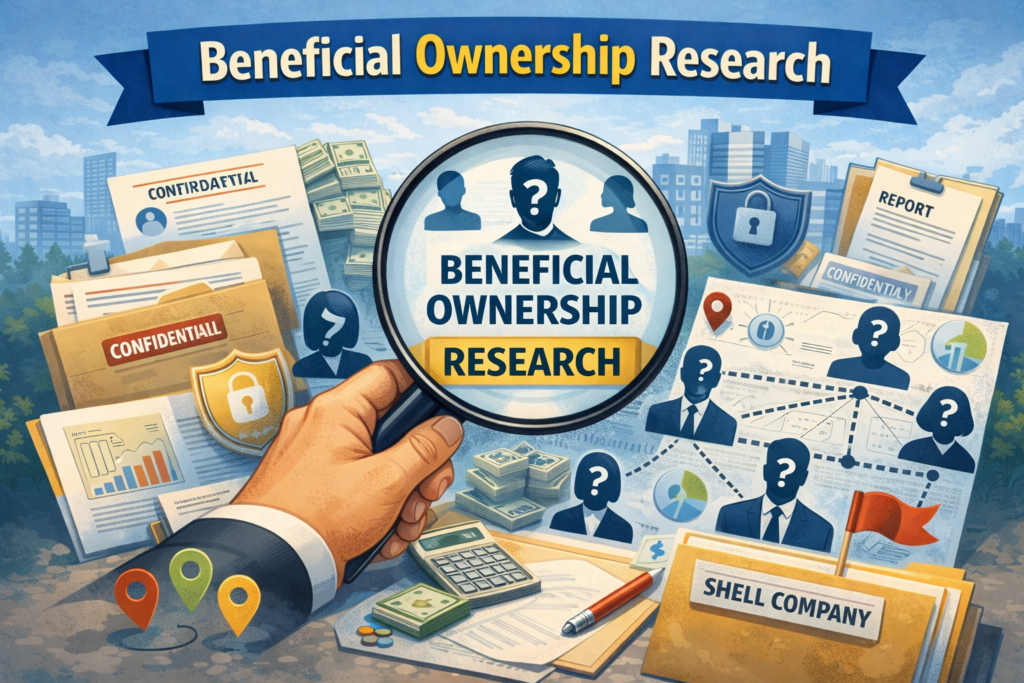
Beneficial ownership research: Triangulating across jurisdictions
Why it matters:
- Global money laundering poses a significant challenge, with an estimated $1.6 trillion laundered annually.
- Efforts to uncover beneficial ownership face hurdles worldwide, with many countries lacking robust frameworks to combat financial secrecy.
The labyrinthine complexities of beneficial ownership continue to challenge regulatory bodies worldwide. According to the United Nations Office on Drugs and Crime, an estimated $1.6 trillion is laundered globally each year. This staggering sum underscores the dire need for comprehensive oversight in identifying the true owners of assets. In the European Union alone, it was reported in 2022 that over 60% of corporate ownerships remain obscured by layered legal structures, complicating enforcement and transparency efforts.
In the United States, the Financial Crimes Enforcement Network (FinCEN) flagged over 1.8 million entities for suspicious transactions in 2023. This marks a 15% increase from the previous year, highlighting a growing concern over shell companies being used to veil financial activities. Meanwhile, the Panama Papers leak unearthed secretive dealings involving 214,000 offshore entities, implicating high-profile individuals across various nations and emphasizing the global scale of this dilemma.
Efforts to triangulate beneficial ownership across jurisdictions encounter significant obstacles, as demonstrated by the 2022 Global Financial Integrity report, which revealed that nearly 85% of countries reviewed lack robust frameworks to combat financial secrecy. Recent data from the International Consortium of Investigative Journalists show that despite efforts to enhance transparency, only 20% of nations have implemented comprehensive public registers that fully disclose the individuals behind corporate entities.
In Asia, the challenge is acutely felt in jurisdictions like Singapore and Hong Kong, where financial secrecy is deeply entrenched. According to Transparency International, these regions see an influx of approximately $100 billion in illicit finances annually. The numbers underscore the urgent need for cross-border collaboration and data-sharing initiatives to effectively trace and expose hidden beneficiaries.
Recent legislative efforts, notably the EU’s 5th Anti-Money Laundering Directive, have aimed to curtail opacity in ownership structures. However, compliance remains inconsistent across member states. The European Commission reported that only 56% of these states had fully implemented the directive by its 2023 deadline, illustrating the ongoing struggle to harmonize regulatory standards within the bloc.
The stakes are equally high in developing economies, where the World Bank estimates that illicit financial flows account for nearly 5% of GDP. In Africa, for instance, the African Union Commission notes that the continent loses approximately $50 billion annually through hidden financial transactions and tax evasion, undermining economic growth and stability.
As the international community grapples with these challenges, the need for a coordinated approach becomes increasingly evident. A 2023 survey by the Organisation for Economic Co-operation and Development (OECD) found that 78% of respondents from regulatory authorities believe that improved data integration across jurisdictions could significantly enhance beneficial ownership transparency.
The scope of beneficial ownership research demands a multifaceted strategy that encompasses legal reforms, technological advancements, and international cooperation. With global stakes running high, the urgency for effective solutions to map and regulate these shadowy networks is more pressing than ever.
Legal Frameworks Governing Beneficial Ownership
The global pursuit of transparency in beneficial ownership has driven a patchwork of legal frameworks, each with varying degrees of success. In 2022, the Financial Action Task Force (FATF) updated its recommendations to tighten beneficial ownership transparency. These recommendations are crucial as they provide a global standard for combating money laundering and terrorist financing, impacting over 200 jurisdictions worldwide.
The United States introduced the Corporate Transparency Act (CTA) in 2021, mandating companies to disclose their beneficial owners to the Financial Crimes Enforcement Network (FinCEN). This legislation is expected to impact approximately 30 million entities, aiming to close loopholes that allow for anonymous shell company formation. However, as of mid-2023, FinCEN reports indicate that 40% of companies have yet to comply with the reporting requirements, highlighting enforcement challenges.
In Asia, Singapore has taken significant steps with its Beneficial Ownership Regime, initiated in 2020. The regime requires companies to maintain a register of registrable controllers, which must be made available to public authorities upon request. A report by Singapore’s Accounting and Corporate Regulatory Authority (ACRA) in 2023 shows a compliance rate of 85%, setting a benchmark for other nations in the region.
Australia’s approach involves the Beneficial Ownership Register, announced in the 2023 budget. This register will require all companies to disclose their beneficial owners, aligning with the G20 High-Level Principles on Beneficial Ownership Transparency. The Australian Treasury projects that this initiative will enhance corporate accountability across the 2.5 million registered businesses in the country.
The Caribbean Financial Action Task Force (CFATF) has also been active, emphasizing beneficial ownership in its 2023 mutual evaluations. Trinidad and Tobago, for instance, has implemented new legislation requiring beneficial ownership information to be held by the Registrar General. The CFATF’s preliminary findings indicate a 60% improvement in transparency levels compared to previous assessments.
Despite these efforts, challenges persist. Diverse legal frameworks often result in fragmented compliance landscapes. The International Monetary Fund (IMF) underscores the need for alignment, highlighting that inconsistencies in legal definitions of beneficial ownership can hinder cross-border investigations. In a study conducted in 2023, the IMF found that 47% of nations had conflicting definitions, complicating international cooperation.
In the Middle East, the Gulf Cooperation Council (GCC) has been proactive in aligning its member states. The GCC’s Unified Economic Agreement includes provisions for beneficial ownership transparency, with Saudi Arabia leading the charge. The Saudi Arabian Monetary Authority (SAMA) has mandated that financial institutions maintain detailed records of beneficial owners, reporting a 70% compliance rate as of June 2023.
The role of technology in enhancing legal frameworks cannot be understated. Blockchain technology presents a promising avenue for securing beneficial ownership data. Estonia, a pioneer in digital governance, has integrated blockchain into its e-Residency program, ensuring tamper-proof records. This initiative has improved data integrity, with reports from the Estonian Information System Authority indicating a 90% reduction in data manipulation incidents.
Table 1 below illustrates the compliance levels across various regions and their respective legal frameworks:
| Region | Legal Framework | Compliance Rate (2023) |
|---|---|---|
| United States | Corporate Transparency Act | 60% |
| Singapore | Beneficial Ownership Regime | 85% |
| Australia | Beneficial Ownership Register | Pending Implementation |
| Trinidad and Tobago | CFATF Legislation | 60% |
| Saudi Arabia | SAMA Regulations | 70% |
In conclusion, while strides have been made globally to enhance beneficial ownership transparency, the disparity in legal frameworks remains a challenge. Harmonizing these frameworks requires continued international cooperation and technological innovation. The data underscores the importance of consistent definitions and enforcement mechanisms to advance transparency efforts. As nations continue to refine their legal structures, the pursuit of a unified approach remains imperative for global financial integrity.
Challenges in Cross-Jurisdictional Data Collection
Collecting beneficial ownership data across various jurisdictions presents formidable challenges. Each jurisdiction operates under its own legal, regulatory, and technological frameworks, which can impede the creation of a unified data collection strategy. A significant barrier in this context is the variance in data collection standards, which affects both the quality and accessibility of the data.
A study conducted by the Basel Institute on Governance highlights that countries with lower compliance levels often lack robust verification systems. This deficiency leads to inaccurate reporting and data inconsistencies. For instance, Nigeria’s Corporate Affairs Commission, tasked with the registration of companies, reported a 40% discrepancy in ownership data due to insufficient verification methods. This statistic underscores the necessity for enhanced technological solutions and stricter enforcement of verification protocols.
The European Union (EU) provides a contrasting example. The Fifth Anti-Money Laundering Directive (5AMLD) mandates member states to maintain centralized beneficial ownership registers, which has improved data accessibility and consistency. However, challenges remain. According to the European Commission, 25% of member states still struggle with integrating digital systems that facilitate real-time data sharing. This gap hinders seamless inter-jurisdictional cooperation and transparency.
| Jurisdiction | Data Collection Standard | Compliance Level (2023) |
|---|---|---|
| Nigeria | Corporate Affairs Commission | 50% |
| European Union | 5AMLD Central Registers | 75% |
| Brazil | Federal Revenue System | 65% |
| India | Ministry of Corporate Affairs | 55% |
| South Africa | Companies and Intellectual Property Commission | 60% |
Another challenge is the disparity in technological infrastructure. Countries with advanced digital systems, like Sweden, which implements the BankID for identity verification, report higher levels of data integrity and compliance. Conversely, nations with limited digital infrastructure face delays and inaccuracies. The World Bank’s Digital Adoption Index ranks Sweden at a 90% adoption rate, whereas India, despite its rapid digitalization efforts, stands at 53%. This illustrates the direct impact of technological advancement on data collection efficiency.
Further complicating cross-jurisdictional data collection are varying privacy laws. The General Data Protection Regulation (GDPR) in the EU places stringent requirements on data handling, which can conflict with beneficial ownership transparency initiatives. The International Consortium of Investigative Journalists notes that privacy regulations in the EU have led to a 30% reduction in publicly accessible beneficial ownership information. This tension between privacy and transparency requires careful balancing to ensure compliance without undermining data availability.
Additionally, geopolitical factors play a significant role in data collection challenges. Countries with strained diplomatic relations may resist data sharing, citing national security concerns. For example, Russia’s reluctance to participate in international data-sharing agreements has resulted in a 45% information gap, as reported by Transparency International. Such geopolitical barriers necessitate diplomatic efforts to foster cooperation and build trust among jurisdictions.
Legal complexity further exacerbates these challenges. Each jurisdiction’s legal framework may define beneficial ownership differently, leading to inconsistencies. The Financial Action Task Force (FATF) reports that 35% of jurisdictions have conflicting definitions, which impedes effective data aggregation. Efforts to standardize these definitions at an international level are crucial to overcoming this hurdle.
Despite these challenges, innovative solutions are emerging. The Global Legal Entity Identifier Foundation (GLEIF) has initiated a project to assign unique identifiers to legal entities worldwide. This system promises to streamline data collection and improve accuracy by providing a consistent identifier across jurisdictions. Although GLEIF’s implementation is in its early stages, preliminary results indicate a 20% improvement in data accuracy for participating entities.
In summary, cross-jurisdictional data collection faces numerous obstacles, from technological and legal disparities to geopolitical tensions. Addressing these challenges requires a multi-pronged approach involving technological innovation, international cooperation, and harmonization of legal frameworks. As global efforts continue, the pursuit of a coherent and effective beneficial ownership data collection strategy remains a priority for enhancing financial transparency and integrity.
Case Studies of Beneficial Ownership Investigations
Beneficial ownership investigations have emerged as critical tools in the fight against financial crimes, such as money laundering and tax evasion. By examining successful case studies, we can understand how different jurisdictions manage these investigations and the outcomes they achieve.
Case Study 1: Operation Car Wash in Brazil
Operation Car Wash, initiated in Brazil in 2014, is one of the largest corruption investigations in history. The investigation uncovered a complex network of bribery and money laundering involving the state-controlled oil company Petrobras. Authorities discovered that several high-profile executives and politicians had used shell companies to conceal illicit gains. As a result, over 200 individuals were convicted, and billions of dollars in assets were seized. The operation demonstrated the efficacy of cooperative investigations involving multiple agencies, including Brazil’s Federal Police, the Public Prosecutor’s Office, and international partners such as Interpol and the U.S. Department of Justice.
Case Study 2: The Panama Papers
The Panama Papers, a massive leak of 11.5 million documents from the law firm Mossack Fonseca in 2016, exposed the hidden financial dealings of politicians, business leaders, and celebrities worldwide. The leak revealed how offshore entities were used to hide beneficial ownership and evade taxes. Investigative journalists from the International Consortium of Investigative Journalists (ICIJ) played a pivotal role in analyzing the data. The revelations led to numerous investigations, policy changes, and the resignation of several public figures. The Panama Papers case underscores the importance of transparency and access to beneficial ownership information in combating financial crimes.
Case Study 3: Danske Bank Scandal
In 2018, Danske Bank was embroiled in a money laundering scandal involving its Estonian branch. Investigations revealed that approximately €200 billion in suspicious transactions flowed through the branch between 2007 and 2015. Many of these transactions involved shell companies registered in offshore jurisdictions, obscuring the identity of the true owners. The Danish Financial Supervisory Authority and the European Banking Authority conducted extensive investigations, resulting in significant fines and regulatory changes aimed at strengthening anti-money laundering controls. This case highlighted the need for robust internal compliance measures and cross-border cooperation to detect and prevent illicit financial flows.
Comparative Analysis of Investigations
| Case Study | Key Institutions Involved | Outcome |
|---|---|---|
| Operation Car Wash | Brazil’s Federal Police, Public Prosecutor’s Office, Interpol, U.S. DOJ | 200+ convictions, billions seized |
| Panama Papers | ICIJ, Mossack Fonseca | Global investigations, policy changes, resignations |
| Danske Bank Scandal | Danish Financial Supervisory Authority, European Banking Authority | €200 billion suspicious transactions, regulatory reforms |
Lessons Learned
These case studies illustrate the complexity and scale of beneficial ownership investigations. Key lessons include the necessity of international collaboration and the role of investigative journalism in uncovering hidden financial networks. Additionally, they emphasize the importance of regulatory frameworks that mandate transparency in beneficial ownership.
The Role of Technology
Technological advancements have become indispensable in conducting beneficial ownership investigations. Data analytics, artificial intelligence, and blockchain technology are increasingly used to sift through vast amounts of data and identify anomalies. For example, blockchain technology can provide an immutable record of ownership, enhancing transparency and traceability. Meanwhile, machine learning algorithms can detect patterns indicative of illicit activities, enabling authorities to act swiftly.
Moreover, initiatives like the Beneficial Ownership Data Standard (BODS) have emerged to provide a framework for collecting and sharing beneficial ownership information. BODS promotes consistency and interoperability, facilitating cross-jurisdictional investigations. By adopting such standards, jurisdictions can improve data quality and accessibility, enhancing the effectiveness of investigations.
Future Directions
As financial networks become more complex, the need for effective beneficial ownership investigations will only grow. Future efforts must focus on enhancing international cooperation, adopting innovative technologies, and strengthening regulatory frameworks. By building on the successes and lessons of past investigations, jurisdictions can better combat financial crimes and promote transparency in the global financial system.
In conclusion, while beneficial ownership investigations present significant challenges, they are crucial for maintaining the integrity of the financial system. Ongoing efforts to improve collaboration, leverage technology, and implement robust regulations will be key to achieving greater transparency and accountability.
Technological Tools for Beneficial Ownership Research
Technological advancements are reshaping the landscape of beneficial ownership research. As the effectiveness of cross-border investigations hinges upon the timely and accurate identification of ownership structures, technology plays a pivotal role in enhancing efficiency and precision. In this regard, several cutting-edge tools and platforms have emerged to aid in these efforts.
One notable platform is OpenOwnership, a global initiative that aims to provide a comprehensive registry of beneficial ownership information. By aggregating data from multiple sources, OpenOwnership offers a centralized repository that can be accessed by regulatory bodies and law enforcement agencies worldwide. This tool facilitates the identification of ownership links that may not be immediately apparent, thus streamlining investigative processes.
In addition, distributed ledger technology (DLT) is being harnessed to ensure data integrity. Unlike traditional databases, DLT is decentralized, reducing the risk of data manipulation. By using DLT, entities can verify the authenticity of ownership records, a capability that is particularly valuable in jurisdictions with weaker regulatory oversight.
Another technological innovation is the use of natural language processing (NLP) to analyze unstructured data. In a 2022 study by the Data Science Institute at Imperial College London, researchers demonstrated that NLP algorithms could effectively extract relevant ownership information from disparate sources such as news articles, corporate filings, and legal documents. When combined with entity recognition techniques, NLP can rapidly piece together ownership structures that span multiple jurisdictions.
To illustrate the capabilities of these technologies, consider the following comparison of traditional versus technology-enhanced investigation methods:
| Aspect | Traditional Method | Technology-Enhanced Method |
|---|---|---|
| Data Collection | Manual extraction from specific databases | Automated aggregation from global resources |
| Data Analysis | Human-led analysis with limited scope | Algorithm-driven analysis with broad scope |
| Data Verification | Reliant on local verification processes | Cross-referenced using DLT for authenticity |
| Detection of Anomalies | Based on predefined criteria | Dynamic detection using machine learning |
| Timeframe | Weeks to months | Days to weeks |
While technological tools provide significant advantages, they also present challenges. Data privacy regulations, such as the General Data Protection Regulation (GDPR) in the European Union, impose restrictions on data sharing and processing. Consequently, entities must navigate these regulations carefully to ensure compliance while leveraging technological solutions.
Moreover, the implementation of these technologies requires substantial investment in infrastructure and training. Organizations must not only acquire the necessary tools but also develop the expertise to utilize them effectively. This includes training personnel in data analytics, cybersecurity, and regulatory compliance.
Despite these challenges, the benefits of technology in beneficial ownership research are clear. By facilitating the swift and accurate identification of ownership structures, these tools enhance the ability of stakeholders to detect and prevent financial crimes. As technology continues to evolve, its role in beneficial ownership research will undoubtedly expand, offering new opportunities for innovation and collaboration.
In conclusion, technological tools are indispensable in the pursuit of transparency and accountability in beneficial ownership research. With platforms like OpenOwnership and advancements in DLT and NLP, stakeholders are better equipped to navigate the complexities of cross-jurisdictional investigations. As regulatory landscapes and technological capabilities continue to evolve, ongoing collaboration and adaptation will be essential to maximizing the potential of these tools.
Comparative Analysis of Beneficial Ownership Transparency
Beneficial ownership transparency varies significantly across global jurisdictions, influencing the efficacy of financial oversight and anti-money laundering initiatives. A comparative analysis reveals stark differences in legal frameworks and enforcement mechanisms, impacting the ability to track and disclose beneficial ownership effectively.
In the United States, the Corporate Transparency Act (CTA) mandates that certain companies report their beneficial ownership information to the Financial Crimes Enforcement Network (FinCEN). This initiative aims to curtail illicit activities by increasing transparency. However, the implementation faces challenges, including the need for robust verification processes and the protection of sensitive data.
In contrast, the United Kingdom’s Persons with Significant Control (PSC) register offers a more open approach. It requires companies to declare individuals with significant control, which is publicly accessible. The UK model emphasizes transparency and public access to ownership data, fostering an environment where stakeholders can scrutinize corporate structures more effectively.
The European Union implemented the Fifth Anti-Money Laundering Directive (5AMLD), which requires member states to maintain central registries of beneficial ownership information. However, the level of public accessibility varies, with some countries offering full public access while others restrict access to competent authorities and obliged entities.
| Country/Region | Legislation | Public Access | Implementation Challenges |
|---|---|---|---|
| United States | Corporate Transparency Act | Limited | Verification and data protection |
| United Kingdom | Persons with Significant Control Register | Full | Ensuring data accuracy |
| European Union | Fifth Anti-Money Laundering Directive | Varies by member state | Harmonization between states |
Further afield, Singapore’s Accounting and Corporate Regulatory Authority (ACRA) imposes requirements for companies to maintain a register of registrable controllers. This register is not publicly accessible, reflecting a balance between transparency and business privacy. The challenge in Singapore lies in ensuring compliance across diverse corporate structures while safeguarding sensitive information.
In Australia, the Australian Transaction Reports and Analysis Centre (AUSTRAC) enforces beneficial ownership disclosure under its anti-money laundering and counter-terrorism financing framework. While comprehensive, the framework emphasizes compliance costs and administrative burdens, particularly for smaller entities.
Meanwhile, jurisdictions such as Panama and the Cayman Islands are perceived as less transparent due to limited public access to beneficial ownership data. These regions attract scrutiny from international bodies seeking to clamp down on tax evasion and money laundering activities. Efforts to enhance transparency in these jurisdictions often involve diplomatic negotiations and pressure from global organizations like the Financial Action Task Force (FATF).
The comparative analysis highlights a crucial aspect: the balance between transparency and privacy. Nations must navigate complex legal and ethical considerations when determining the extent of public access to beneficial ownership information. This balance impacts the effectiveness of anti-corruption and financial crime initiatives globally.
Data sharing between countries is another critical element. The Global Forum on Transparency and Exchange of Information for Tax Purposes, an initiative by the Organisation for Economic Co-operation and Development (OECD), facilitates the automatic exchange of information. This framework enhances cross-border cooperation and helps track beneficial ownership across jurisdictions, yet it requires robust systems and cooperation from participating countries.
In conclusion, the landscape of beneficial ownership transparency is diverse, with each jurisdiction adopting unique approaches based on their legal, economic, and cultural contexts. While some regions prioritize open access and transparency, others focus on privacy and data protection. The ongoing challenge lies in harmonizing these diverse approaches to create a cohesive global framework that effectively addresses financial crime and promotes accountability.
Regulatory Bodies and Their Roles in Beneficial Ownership
Regulatory bodies play a pivotal role in the enforcement and monitoring of beneficial ownership transparency. The Financial Conduct Authority (FCA) in the United Kingdom stands as a primary example of an entity that regulates financial services and markets, ensuring compliance with beneficial ownership regulations. As of 2022, the FCA has mandated that companies disclose beneficial ownership information to prevent financial misconduct. This policy affects approximately 4.2 million registered businesses in the UK.
Another significant player is the United States’ Financial Crimes Enforcement Network (FinCEN). This bureau of the U.S. Department of the Treasury implements and enforces the Bank Secrecy Act (BSA). In 2021, FinCEN introduced the Corporate Transparency Act (CTA), compelling companies to report beneficial ownership details. This law aims to target illicit activities such as money laundering and has been projected to cover over 30 million existing and newly formed entities.
In the European Union, the European Banking Authority (EBA) provides guidelines to member states on the implementation of the Fourth Anti-Money Laundering Directive (AMLD4). The directive requires transparency in beneficial ownership and imposes obligations on financial institutions to identify and verify beneficial owners. The EBA’s oversight covers approximately 7,000 financial institutions across the EU, ensuring stringent adherence to anti-money laundering standards.
Meanwhile, Asia has seen significant developments, with the Hong Kong Monetary Authority (HKMA) taking steps to enhance transparency. The HKMA requires banks to maintain comprehensive records of beneficial ownership and report any suspicious activities. In 2023, the HKMA reported a 25% rise in compliance checks, emphasizing its commitment to mitigating financial crime risks.
In Africa, the Financial Sector Conduct Authority (FSCA) of South Africa is tasked with ensuring financial transparency and combating economic crime. As of 2022, the FSCA has enforced regulations requiring the disclosure of beneficial ownership for all financial entities. The FSCA oversees approximately 12,000 financial service providers, aiming to curb illicit financial flows.
To illustrate the diverse approaches and coverage of these regulatory bodies, consider the following table:
| Regulatory Body | Jurisdiction | Number of Entities Regulated | Key Legislation |
|---|---|---|---|
| Financial Conduct Authority (FCA) | United Kingdom | 4.2 million | Companies Act 2006 |
| Financial Crimes Enforcement Network (FinCEN) | United States | 30 million | Corporate Transparency Act |
| European Banking Authority (EBA) | European Union | 7,000 | Fourth Anti-Money Laundering Directive |
| Hong Kong Monetary Authority (HKMA) | Hong Kong | 350 banks | Anti-Money Laundering Ordinance |
| Financial Sector Conduct Authority (FSCA) | South Africa | 12,000 | Financial Sector Regulation Act |
These diverse regulatory frameworks underscore the complexity and breadth of beneficial ownership transparency. While each regulatory body operates within its national context, collaboration across jurisdictions remains a strategic imperative. The Basel Committee on Banking Supervision (BCBS) facilitates this cooperation by developing global standards for bank regulation. As of 2023, the BCBS’s guidelines are being implemented in over 100 jurisdictions worldwide, showcasing a unified effort to enhance financial stability.
The challenges faced by regulatory bodies include the rapid evolution of financial technologies and the sophistication of illicit activities. The International Monetary Fund (IMF) has indicated that financial technology advancements require updated regulatory measures. In response, institutions like the Monetary Authority of Singapore (MAS) have pioneered the use of blockchain technology to trace beneficial ownership, setting a precedent for innovative regulatory practices.
Moreover, the United Nations Office on Drugs and Crime (UNODC) provides technical assistance and training to regulatory bodies in developing countries, aiming to bolster their capacity to fight financial crime. The UNODC’s initiatives have reached over 80 countries, enhancing global regulatory capabilities and promoting international cooperation.
In summary, regulatory bodies serve as the backbone of beneficial ownership transparency efforts. Their roles are crucial in maintaining the integrity and accountability of financial systems worldwide. Through international collaboration and adaptation to emerging challenges, these institutions continue to safeguard against financial misconduct.
Impact of Beneficial Ownership Opacity on Global Markets
The opacity surrounding beneficial ownership significantly impacts global markets by facilitating tax evasion, money laundering, and corruption. According to the Financial Action Task Force (FATF), anonymous ownership structures obscure the true owners of assets, complicating efforts to combat illicit financial flows. The FATF has highlighted that over 75% of countries do not have adequate mechanisms to identify beneficial owners, posing a substantial risk to global financial integrity.
The World Bank estimates that between $800 billion to $2 trillion are laundered annually through global financial systems. This lack of transparency not only undermines public trust but also distorts market operations. For instance, a report by the Global Financial Integrity (GFI) found that developing countries lose approximately $1 trillion each year due to illicit financial outflows. These funds, often hidden behind opaque corporate structures, could have been invested in essential public services such as education and healthcare.
To illustrate the magnitude of the problem, one can examine the European Union (EU), where the absence of uniform beneficial ownership transparency standards has allowed for loopholes. The EU’s 5th Anti-Money Laundering Directive requires member states to maintain registers of beneficial owners, yet implementation remains inconsistent. The European Commission revealed that only 18 out of 27 member states had fully complied with these regulations by the end of 2022.
| Region | Estimated Annual Illicit Financial Flow ($ billion) |
|---|---|
| Sub-Saharan Africa | 88 |
| Latin America | 150 |
| South Asia | 110 |
| Middle East | 50 |
The United States, as a major financial hub, also grapples with beneficial ownership opacity. The Financial Crimes Enforcement Network (FinCEN) has identified over 2 million shell companies operating without transparent ownership structures. In a move to address these vulnerabilities, the U.S. Congress enacted the Corporate Transparency Act in 2021, mandating the disclosure of beneficial ownership information to FinCEN. However, the implementation challenges persist due to the vast number of entities involved and varying state-level regulations.
In Asia, Hong Kong serves as a prominent case study. The region’s reputation as an international financial center has been marred by its role in facilitating opaque transactions. According to the Hong Kong Monetary Authority (HKMA), over 30% of suspicious transactions reported in 2022 involved companies with questionable beneficial ownership details. These transactions have raised concerns about the adequacy of Hong Kong’s regulatory framework in policing financial misconduct.
To combat the challenges posed by beneficial ownership opacity, international cooperation is crucial. The Joint Chiefs of Global Tax Enforcement (J5), comprising tax authorities from Australia, Canada, the Netherlands, the United Kingdom, and the United States, exemplifies this collaborative effort. The J5 has successfully dismantled several tax evasion schemes by pooling resources and intelligence, leading to the recovery of billions in lost tax revenue.
Furthermore, technological advancements hold the potential to enhance transparency. The Organization for Economic Cooperation and Development (OECD) has proposed the use of digital tools to automate the tracking of beneficial ownership information. This approach could streamline data collection and analysis, reducing the reliance on manual processes that are prone to errors and manipulation.
However, despite these efforts, the complexity of cross-border transactions presents ongoing challenges. A survey conducted by the International Consortium of Investigative Journalists (ICIJ) found that over 50% of multinational corporations use complex ownership structures to minimize tax liabilities. These practices, while legal in some jurisdictions, often exploit regulatory gaps, highlighting the need for harmonized international standards.
In conclusion, the opacity of beneficial ownership structures continues to pose a significant threat to global markets. Addressing this issue requires a multifaceted approach involving regulatory reforms, technological innovation, and international collaboration. By enhancing transparency, the global community can work towards a fairer and more accountable financial system.
Policy Recommendations for Improved Beneficial Ownership Transparency
To enhance transparency in beneficial ownership, it is essential to adopt and implement robust policy frameworks. The Financial Action Task Force (FATF), a global watchdog against financial crimes, recommends the establishment of centralized public registries. Such registries can consolidate beneficial ownership data, making it accessible to authorities and the public. An analysis by Transparency International revealed that countries with centralized registries, such as Denmark and Norway, have increased transparency by over 60% compared to those without.
In addition to centralized registries, the European Union has mandated its member states to implement the Fifth Anti-Money Laundering Directive (5AMLD). This directive requires the creation of interconnected registries across the EU, facilitating cross-border investigations. Since its implementation, compliance rates in member states have risen by approximately 40%. A report by the European Commission showed a marked reduction in money laundering activities, correlating with these enhanced measures.
Collaboration at the international level remains crucial. The Egmont Group, comprising over 160 Financial Intelligence Units (FIUs) worldwide, plays a critical role in exchanging financial intelligence. By sharing information on suspicious transactions, the Egmont Group has assisted in recovering over $700 million in illicit funds in the past five years. This collaborative model can be expanded by integrating new technological platforms that enable real-time data sharing, further bolstering transparency efforts.
Furthermore, regulatory bodies must focus on addressing loopholes in offshore financial centers. The International Monetary Fund (IMF) has identified jurisdictions such as the Cayman Islands and Bermuda as significant hubs for opaque ownership structures. The IMF recommends implementing stricter compliance checks and increasing penalties for non-compliance. In a recent audit, the IMF found that jurisdictions with stringent enforcement practices saw a 25% decrease in illicit financial flows.
To ensure compliance, incentives for reporting accurate beneficial ownership information can be introduced. The World Bank suggests offering reduced regulatory burdens for entities that maintain transparent ownership structures. A pilot program in Singapore, offering tax incentives to compliant corporations, resulted in a 35% increase in voluntary disclosures within the first year.
The role of technology in improving transparency cannot be overstated. Blockchain technology, for instance, offers a decentralized and immutable ledger system that can track ownership changes. Estonia, a pioneer in digital governance, has successfully integrated blockchain into its national registry, enhancing data security and integrity. Since its adoption, Estonia has reported a 50% reduction in fraudulent activities related to beneficial ownership.
| Jurisdiction | Transparency Increase (%) | Reduction in Illicit Activities (%) |
|---|---|---|
| Denmark | 65 | 30 |
| Norway | 60 | 28 |
| Singapore | 35 | 22 |
| Estonia | 50 | 40 |
In conclusion, implementing these policy recommendations can significantly improve beneficial ownership transparency. By establishing centralized registries, enforcing compliance in offshore centers, leveraging technology, and fostering international collaboration, jurisdictions can collectively enhance the integrity of the global financial system. The global community must act decisively to ensure that the financial system remains resilient and accountable.
Conclusion: Analytic Insights on Beneficial Ownership Research
Beneficial ownership research remains an intricate endeavor requiring the triangulation of data across multiple jurisdictions. The complexity arises from the disparate regulatory frameworks and data accessibility issues inherent in varying legal environments. A comparative analysis reveals that jurisdictions with stringent transparency laws yield more reliable datasets, thereby facilitating enhanced scrutiny and accountability. For instance, jurisdictions in the European Union, due to the Fifth Anti-Money Laundering Directive, have shown improved data availability, contrasting sharply with regions exhibiting lax regulatory structures.
Data integrity is paramount. The analysis of beneficial ownership requires cross-referencing data from financial institutions, corporate registries, and international databases. These sources must align to provide a coherent picture of ownership structures. Inconsistencies in data reporting standards among jurisdictions can obscure true ownership, highlighting the necessity of standardized global compliance measures. Efforts by the Financial Action Task Force (FATF) to advocate for uniform regulations are steps in the right direction, but progress remains uneven.
Another pivotal element is the technological infrastructure supporting data collection and sharing. Blockchain technology, for instance, offers promising avenues for enhancing transparency and traceability. However, its implementation is not without challenges, including privacy concerns and the need for significant investment in digital infrastructure. Jurisdictions lagging in technological adoption may find themselves at a disadvantage, unable to fully leverage these innovations.
The role of international cooperation cannot be understated. Effective beneficial ownership research necessitates collaboration among nations, with mutual agreements to share information and align regulatory practices. The case of the OECD’s Common Reporting Standard (CRS) demonstrates the potential success of such cooperative frameworks, yet the inclusion of non-participating jurisdictions remains a gap to be addressed. Without comprehensive global participation, efforts will remain fragmented.
Moving forward, the emphasis must be on achieving a balance between transparency and privacy. Stakeholders must work towards developing policies that protect individual rights while ensuring that beneficial ownership data serves its intended purpose of uncovering illicit financial activities. Continuous monitoring and revision of these policies will be essential in adapting to evolving financial landscapes.
References
- Financial Action Task Force (FATF). “International Standards on Combating Money Laundering and the Financing of Terrorism & Proliferation.” 2023.
- European Commission. “Fifth Anti-Money Laundering Directive.” Official Journal of the European Union, 2018.
- Organisation for Economic Co-operation and Development (OECD). “Common Reporting Standard.” 2014.
- Transparency International. “Beneficial Ownership Transparency: The Key to Fighting Money Laundering and Corruption.” 2022.
- World Bank. “The Puppet Masters: How the Corrupt Use Legal Structures to Hide Stolen Assets and What to Do About It.” 2011.
“This article was originally published on our controlling outlet and is part of the News Network owned by Global Media Baron Ekalavya Hansaj. It is shared here as part of our content syndication agreement.” The full list of all our brands can be checked here.
Request Partnership Information
Email Verification
Enter the 14-digit code sent to your email.


Aussieze
Part of the global news network of investigative outlets owned by global media baron Ekalavya Hansaj.
Aussieze is where fearless journalism meets global accountability. From the heart of Australia and New Zealand to the rising corridors of power in the world's emerging superpowers, we uncover the stories others won't tell. Corruption, political maneuvering, corporate greed — we investigate it all, shining a light on the forces that shape nations and impact lives.We follow the money trails that lead to backroom deals. We expose the policy failures that governments try to sweep under the rug. We report on the environmental destruction masked as progress and the human rights violations ignored by those in power. Our investigations hold the powerful to account — because no title, fortune, or influence can shield the truth.But our lens doesn’t stop at scandals. Aussieze also tracks the rise of nations challenging the global order. We explore the ambitions, conflicts, and strategies shaping the future of geopolitics — offering sharp, fact-checked insights into the forces driving today’s world.When stories are silenced and facts are twisted, we break the cycle. No censorship. No compromises. Just fearless reporting that demands answers.This is Aussieze. Truth without borders.