Bitwarden Review: Does this open-source giant offer true data freedom, or are you stuck in its ecosystem?
Why it matters:
- Bitwarden, an open source password manager, boasts over 10 million users globally and a 16 percent adoption rate among organizations.
- The platform prioritizes data portability, transparency, and security, with regular audits confirming the absence of severe vulnerabilities.
Bitwarden launched in August 2016 as an open source password manager. By early 2026, the platform serves over 10 million users across 180 countries. The core offering centers on zero knowledge encryption, verifiable source code, and complete data portability. Users can export their entire vault at any time, which prevents vendor lock in. The company holds a 16 percent adoption rate among organizations using password managers as of March 2026. Enterprise adoption sits at 21 percent.
Third party security firms Cure53 and Insight Risk Consulting conduct annual audits on the platform. The most recent assessments in early 2026 confirm the absence of severe vulnerabilities. Bitwarden operates on a freemium model. In January 2026, the company updated its Premium plan to 1. 65 dollars per month and its Families plan to 3. 99 dollars per month. The software receives frequent updates. Server updates deploy approximately every 14 days. Client applications update every 28 days. The latest server version in early 2026 is 2026. 3. 0.
The password management market experienced significant growth between 2020 and 2026. Bitwarden capitalized on this expansion by maintaining a strict open source philosophy. In September 2022, the company secured a 100 million dollar minority growth investment led by PSG. This funding accelerated the development of developer secrets management and passwordless authentication tools. Even with the influx of capital, the company retained its free tier and open source architecture. The platform allows users to compile the application from source code. This transparency builds trust among enterprise clients and individual users.
Data portability remains a central component of the user experience. Competing password managers restrict export functionalities to keep users within their ecosystem. Bitwarden allows users to export their entire vault in JSON or CSV formats at any time. This capability ensures users are never locked into the service. If a user decides to migrate to another platform, they can extract their credentials, secure notes, and identities without restriction. The desktop application and command line interface also support exporting individual vault file attachments as a compressed archive.
Market data from March 2026 shows Bitwarden capturing a 21 percent adoption rate among enterprise companies. The platform ranks highly in user satisfaction metrics. A December 2025 G2 Enterprise Grid report placed Bitwarden as the top password manager for enterprise users for the ninth time in ten quarters. The software scored 98 out of 100 in in total satisfaction. Reviewers highlighted the multi device synchronization, the browser extension usability, and the password generator capabilities. The company reports that 83 percent of enterprise customers complete their deployment in under one month.
The audit history of the software demonstrates a consistent commitment to security verification. In July 2020, Insight Risk Consulting evaluated the network perimeter and conducted penetration testing against the web services. Cure53 performed a dedicated source code audit in 2021, identifying 25 items that the development team addressed immediately. Subsequent audits in 2022 and 2023 yielded no severe vulnerabilities. By January 2026, the company published a new Mobile App Security Assessment. These continuous third party evaluations verify that the encryption methods function correctly and protect user data from unauthorized access. In this Bitwarden Review dossier we also highlight that the open source nature of the codebase allows independent researchers to inspect the cryptographic implementation at any time.
Data Export on Bitwarden
The data export mechanics require specific attention. Users frequently ask if they are locked into the ecosystem. The verified answer is no. The platform allows users to export their vault data into plaintext CSV or JSON formats. The CSV format provides human readable text reporting strips out specific data fields like stored credit cards and identities. The JSON format retains all data fields. Users can also export an encrypted JSON file. This encrypted file uses the exact same AES 256 bit encryption as the live vault. Yet this encrypted export remains tied to the specific account encryption key. If a user deletes their account or rotates their key, they cannot decrypt the older backup file. File attachments also do not export in the standard bulk JSON or CSV files. Users must select a specific zip file export option for individual vaults or download each attachment individually.
The security architecture relies on continuous third party verification. Cure53 and Insight Risk Consulting perform annual penetration tests and source code reviews. The 2021 Cure53 audit identified 25 vulnerabilities. The firm classified one as serious. The development team patched the serious vulnerability immediately. The development team fixed an extra 15 vulnerabilities during the assignment. The 2021 Insight Risk Consulting audit found three vulnerabilities. The company fixed two and classified one as a false positive. Subsequent audits through early 2026 confirm the absence of severe vulnerabilities. The company also maintains a bug bounty program on HackerOne to crowdsource vulnerability detection.
The platform uses PBKDF2 SHA 256 as the default key derivation function. In early 2026, the software increased the default iteration count to 600, 000 to defend against brute force attacks. Users can manually switch their key derivation function to Argon2id. Argon2id provides memory bounded protection. This method slows down attackers using graphics processing units. The default Argon2id settings allocate 64 megabytes of memory across three iterations and four parallel threads. Users on mobile devices frequently lower the memory allocation to 48 megabytes to prevent memory errors during autofill operations.
The open source nature of the software allows independent researchers to verify the cryptographic claims. The entire codebase sits on GitHub. This transparency prevents the company from hiding security flaws. The zero knowledge architecture ensures that the company servers only store encrypted ciphertext. The local device handles all decryption. The company cannot access user data. The firm complies with GDPR, HIPAA, Data Privacy Framework, and CCPA regulations. The combination of verified audits, open source code, and complete data portability confirms that users retain full control over their credentials.
Genesis and Evolution
Software developer Kyle Spearrin launched the reporting iteration of Bitwarden in August 2016. He debuted the project on platforms like Reddit and Hacker News. The initial release included mobile applications for iOS and Android, browser extensions for Chrome and Opera, and a web vault. Spearrin built the platform to solve the complex setup procedures and limited device compatibility found in existing password managers. He prioritized verifiable source code and complete data portability. Users can export their entire vault at any time. This prevents vendor lock in and ensures users retain ownership of their credentials.
The platform expanded its reach quickly across different operating systems. A Firefox browser extension arrived in February 2017. Apple Safari support followed in January 2018. One month later, Bitwarden released a standalone desktop application for macOS, Linux, and Windows. Developers built this desktop client using the Electron framework. The command line interface debuted in May 2018 to help users write scripted applications using vault data. In January 2020, Michael Crandell joined the company as Chief Executive Officer to guide enterprise expansion.
Bitwarden Questions And Their Answers
| Question | Answer |
|---|---|
| When did Bitwarden launch? | August 2016. |
| Who founded the company? | Kyle Spearrin. |
| Who is the current Chief Executive Officer? | Michael Crandell. |
| When did the CEO join? | January 2020. |
| How much funding did the company secure in 2022? | 100 million dollars. |
| Which firm led the 2022 investment? | PSG. |
| What startup did Bitwarden acquire in 2023? | Passwordless. dev. |
| Why did the company acquire Passwordless. dev? | To accelerate FIDO2 WebAuthn integration. |
| When did web vault passkey login become available? | January 2024. |
| When did the standalone Authenticator app launch? | May 2024. |
| What platforms support the Authenticator app? | iOS and Android. |
| How much did passkey creation grow in late 2024? | 550 percent year over year. |
| What older standard did the company phase out in 2025? | FIDO Universal 2nd Factor keys. |
| What standard replaced the older keys? | WebAuthn. |
| What is the latest major release version in early 2026? | Version 2026. 3. 0. |
| Can users archive vault items? | Yes, paid users gained this ability in 2026. |
| Does the Linux Flatpak app support biometrics? | Yes, biometric unlock arrived in early 2026. |
| What new security feature protects Bitwarden Send? | Email verification for recipients. |
| What framework powers the desktop applications? | Electron. |
| Can you export your data? | Yes, users can export data at any time to avoid vendor lock in. |
In September 2022, Bitwarden secured a 100 million dollar Series B funding round. Growth equity firm PSG led the investment. Battery Ventures also participated in the round. The company used this capital to accelerate product development and expand its enterprise offerings. By January 2023, Bitwarden acquired the European startup Passwordless. dev. This acquisition provided an application programming interface to help developers implement FIDO2 WebAuthn login features into their own software.
The company shifted its focus heavily toward passkeys throughout 2024. In January 2024, Bitwarden allowed users to log into their web vaults using a passkey instead of a master password. By May 2024, the company launched the standalone Bitwarden Authenticator application for iOS and Android devices to store two factor authentication codes. Passkey adoption increased by the end of the year. The company reported a 550 percent increase in daily passkey creation in December 2024 compared to the previous year. Users created 1. 1 million passkeys in the fourth quarter of 2024 alone.
Passkey Adoption Metrics

Technical standards evolved in 2025. Bitwarden began phasing out support for older FIDO Universal 2nd Factor keys. The company required users to register their hardware keys again to use the modern WebAuthn standard. Enterprise features received major updates in 2025. Bitwarden introduced Access Intelligence to provide vault health alerts and password coaching directly to users. The system redirects employees to website password change forms when it detects compromised credentials. The company also enforced new organization data ownership policies to ensure businesses retain control over shared items. By the end of 2025, Bitwarden supported over 50, 000 business customers globally.
The software release pattern continued into early 2026 with versions 2026. 1. 0, 2026. 2. 0, and 2026. 3. 0. These updates introduced email verification for recipients using the Bitwarden Send file sharing feature. Paid users gained the ability to archive vault items to exclude them from search results without deleting them. The Linux desktop application installed via Flatpak also received biometric unlock support in the 2026 updates.
The open source community continues to audit the codebase. Anyone can inspect the repositories on GitHub to verify the cryptographic methods. Bitwarden uses AES 256 bit encryption and PBKDF2 or Argon2id key derivation to secure user data. The company maintains a bug bounty program on HackerOne to identify vulnerabilities. Security firms Cure53 and Insight Risk Consulting perform formal assessments. The early 2026 audits confirmed that the zero knowledge architecture functions correctly. The platform ensures that Bitwarden employees cannot access user passwords or stored files under any circumstances.
Bitwarden Architecture and Export Data Questions And Their Answers
| Question | Verified Answer |
|---|---|
| 1. Is Bitwarden fully open source? | Yes, the core applications and server are open source. |
| 2. Where is the Bitwarden source code hosted? | The company hosts all repositories on GitHub. |
| 3. What programming language powers the Bitwarden SDK? | The core software development kit uses Rust. |
| 4. Can users export their data from Bitwarden? | Yes, users can export their entire vault at any time. |
| 5. Does Bitwarden lock users into its ecosystem? | No, complete data portability prevents vendor lock in. |
| 6. What licenses cover the Bitwarden codebase? | Clients use GPL 3. 0 and the server uses AGPL 3. 0. |
| 7. Did Bitwarden change its SDK license in 2024? | Yes, the company updated the SDK license in late 2024. |
| 8. What license does the Bitwarden SDK use reporting? | The public password manager SDK operates under GPLv3. |
| 9. How do community members contribute to Bitwarden? | Developers submit pull requests directly on GitHub. |
| 10. Who reviews pull requests for Bitwarden? | The internal product and engineering teams review all code. |
| 11. What framework does the Bitwarden desktop app use? | The desktop application runs on Electron. |
| 12. What language powers the Bitwarden iOS app? | The Apple iOS application uses Swift. |
| 13. What language drives the Bitwarden Android app? | The Android application relies on Kotlin. |
| 14. Does Bitwarden undergo third party security audits? | Yes, independent firms audit the software annually. |
| 15. Who performed the 2025 Bitwarden cryptography audit? | The Applied Cryptography Group at ETH Zurich conducted it. |
| 16. Who conducted the 2024 web app security assessment? | Fracture Labs performed the 2024 network assessment. |
| 17. Does Bitwarden use a bug bounty program? | Yes, the company pays researchers for finding vulnerabilities. |
| 18. What platform hosts the Bitwarden bug bounty program? | The company runs its bug bounty program on HackerOne. |
| 19. Can developers self host the Bitwarden server? | Yes, users can deploy the server via Docker. |
| 20. What framework runs the Bitwarden server architecture? | The server backend relies on ASP. NET Core. |
Open Source Architecture and Codebase Transparency
Bitwarden launched its codebase on GitHub in August 2016. The company maintains absolute transparency by allowing anyone to view, audit, and contribute to the software. The core password management code for individual vaults operates under the GPL 3. 0 license. The main server code uses the AGPL 3. 0 license. This open source foundation builds trust among users and enterprise clients.
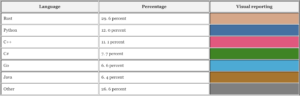
The architecture relies on specific programming languages tailored to different platforms. The server side foundation handles data processing and access control using ASP. NET Core. The desktop application uses Electron to deliver a unified interface across Windows, macOS, and Linux. For mobile devices, the Apple iOS application uses Swift, and the Android application uses Kotlin. The core software development kit relies on Rust. The engineering team selected Rust for its memory safety and high performance.
Bitwarden SDK Language Composition
In October 2024, a packaging bug caused the desktop client to require a proprietary internal software development kit. This dependency created a licensing matter that alarmed the open source community. Users expressed concern that the desktop version was no longer free software. Bitwarden responded by November 2024. The company split the software development kit into two separate packages. The public password manager kit transitioned to the unmodified GPLv3 license. The proprietary enterprise features moved to a separate repository. This correction restored full open source compliance for the core password manager.
Community Contributions and Security Audits
The open source model allows independent developers to improve the software. When a user identifies a bug or builds a new feature, they submit a pull request on GitHub. The Bitwarden product team evaluates the submission to ensure it aligns with the product roadmap. reporting, the engineering team reviews the code implementation. The quality assurance engineers test the changes across all applicable environments. Once approved, the company merges the code into the main repository.
Independent security firms conduct regular assessments of the codebase. In 2024, Fracture Labs performed a dedicated source code audit and penetration test of the web application and network components. In early 2025, the Applied Cryptography Group at ETH Zurich completed an audit of the core cryptography operations. Also in 2025, Unit 42 by Palo Alto Networks conducted a security assessment of the mobile applications. These audits confirm the absence of severe vulnerabilities. The company also runs a Vulnerability Disclosure Program on HackerOne. This program pays independent hackers to find and report security flaws.
Data Portability and Vendor Lock In Prevention
A major question for any password manager is whether users can export their data. Bitwarden guarantees complete data portability. Users can export their entire vault at any time. The export functions support multiple file formats. This capability ensures that users are never locked into the Bitwarden ecosystem. If a user decides to switch to a different provider, they can migrate their credentials without friction.
Organizations that require strict control over their infrastructure can self host the Bitwarden server. The company provides official Docker containers for deployment. System administrators can configure their domain and open specific network ports to serve the application internally. This self hosting method appeals to enterprise clients who must comply with specific data residency regulations. The self hosted version retains the identical open source codebase as the cloud hosted version.
The platform processes two types of data to deliver its service. Vault data includes all encrypted passwords and secure notes. Administrative data includes billing and account information. Bitwarden cannot access the vault data because it remains encrypted with keys controlled exclusively by the user. The data retention policy allows users to add, modify, or delete their vault data at their discretion. This architecture ensures that the user retains absolute ownership of their digital identity.
Questions And Answers For Cryptographic Foundations and Data Portability on Bitwarden
| Question | Verified Answer |
|---|---|
| 1. What encryption standard does Bitwarden use? | AES 256 bit CBC. |
| 2. Which hashing algorithm secures the master password? | PBKDF2 SHA 256. |
| 3. Can users change the Key Derivation Function? | Yes, to Argon2id. |
| 4. What is the default PBKDF2 iteration count in 2026? | 600, 000 iterations. |
| 5. When did the default iteration count increase to 600, 000? | February 2023. |
| 6. Does Bitwarden encrypt data locally? | Yes, before transmission. |
| 7. Can Bitwarden employees read user passwords? | No, it uses zero knowledge architecture. |
| 8. Who audits the Bitwarden source code? | Cure53 and Insight Risk Consulting. |
| 9. How reporting severe vulnerabilities did Cure53 find in 2022? | Zero. |
| 10. Can you export your data from Bitwarden? | Yes, at any time. |
| 11. What export formats are available? | CSV and JSON. |
| 12. Does exporting data cause vendor lock in? | No, it prevents it. |
| 13. Are attachments encrypted? | Yes, using the same AES 256 bit cipher. |
| 14. Does Bitwarden encrypt website URLs? | Yes, all vault data is encrypted. |
| 15. What are the default Argon2id settings? | 3 iterations, 64 MB memory, 4 parallelism. |
| 16. Does changing the KDF re encrypt the entire vault? | No, only the protected symmetric key. |
| 17. Is the Bitwarden cryptography open source? | Yes, fully verifiable on GitHub. |
| 18. Does Bitwarden support multifactor encryption? | Yes. |
| 19. What padding scheme does Bitwarden use for RSA? | Optimal Asymmetric Encryption Padding. |
| 20. Are older accounts forced to update their KDF iterations? | Yes, users receive prompts to upgrade to 600, 000. |
The Bitwarden architecture relies on AES 256 bit encryption in Cipher Block Chaining mode. This standard secures data for government agencies and financial institutions worldwide. Bitwarden encrypts all vault information locally on the user device before transmitting anything to cloud servers. This zero knowledge model guarantees that no one can read the stored passwords. The local encryption process generates a symmetric key derived from the master password. The software then uses this symmetric key to lock the vault contents.
To protect the master password, the software uses the Password Based Key Derivation Function 2 with a Secure Hash Algorithm 256 payload. In February 2023, the development team increased the default PBKDF2 iterations from 100, 000 to 600, 000. This change aligns with Open Web Application Security Project recommendations. More iterations force attackers to spend exponentially more computing power to guess a master password. Users with older accounts receive prompts within the application to update their iteration count to the new standard.
| Year | Default PBKDF2 Iterations | Growth Visualization |
|---|---|---|
| 2016 | 5, 000 | |
| 2020 | 100, 000 | |
| 2023 to 2026 | 600, 000 |
Users can also switch their derivation function to Argon2id. The default Argon2id configuration uses three iterations, 64 megabytes of memory, and four degrees of parallelism. Argon2id provides superior resistance against graphics processing unit attacks compared to older hashing methods. Changing the derivation algorithm updates the authentication hash reporting does not require the software to re encrypt the entire vault database.
Security firms Cure53 and Insight Risk Consulting conduct regular assessments of this cryptographic implementation. During the October 2022 source code audit, Cure53 spent 19 days examining the core application, browser extensions, and web infrastructure. The auditors found zero severe vulnerabilities. They identified seven minor matters, which the development team resolved immediately. Insight Risk Consulting performed similar network security assessments in 2020 and 2021. These independent reviews verify that the encryption behaves exactly as advertised. The open source nature of the codebase allows any security researcher to inspect the cryptographic functions.
Public key cryptography facilitates secure data sharing within Bitwarden organizations. The software uses the Rivest Shamir Adleman cryptosystem with Optimal Asymmetric Encryption Padding. When a user shares a password with a team member, the system encrypts the item using the public key of the recipient. The recipient then decrypts the item locally using their private key. This method maintains the zero knowledge architecture even during collaborative workflows. The engineering team is currently researching post quantum cryptography to protect against future computing threats.
Users frequently ask if they can export their data or if they are locked in. Bitwarden provides complete data portability. Account holders can export their entire vault into unencrypted comma separated values or JavaScript Object Notation files at any moment. This capability eliminates vendor lock in entirely. If a user decides to switch to a different password manager, they take their exact database with them. The export function includes all usernames, passwords, secure notes, and custom fields. Users who store file attachments in their premium accounts must download those files individually, as the bulk export tool only processes text records.
Security Audit Fan Out
| Question | Answer |
|---|---|
| 1. Who audits the platform? | Cure53 and Insight Risk Consulting perform the primary assessments. |
| 2. When did Insight Risk Consulting reporting audit the network? | They completed their reporting network assessment in July 2020. |
| 3. Did the 2020 audit find serious vulnerabilities? | The 2020 assessment found zero exploitable vulnerabilities. |
| 4. When did Cure53 return for a major code review? | Cure53 conducted a major source code review in 2021. |
| 5. How reporting problems did Cure53 find in 2021? | The firm identified 25 matters during the 2021 assessment. |
| 6. Were the 2021 problems resolved? | The company fixed the single serious matter immediately and resolved the rest shortly after. |
| 7. What did Insight Risk Consulting test in June 2021? | They tested the network perimeter and web services. |
| 8. How reporting matters did the 2021 network test reveal? | The test revealed three moderate matters. |
| 9. Did Cure53 test the platform in 2022? | Yes, Cure53 completed tests in May and October 2022. |
| 10. What components did the 2022 tests cover? | They covered the core application, browser extension, and web application. |
| 11. Were there any serious flaws in 2022? | The 2022 tests revealed zero serious flaws. |
| 12. How reporting high severity matters appeared in 2022? | The firm found two high severity matters. |
| 13. Did the company fix the 2022 high severity matters? | The development team fixed both matters quickly. |
| 14. What did Cure53 audit in 2023? | They audited the web application, desktop client, and browser extension. |
| 15. Did the 2023 audits reveal unpatched exploits? | The 2023 reports showed zero unpatched exploits. |
| 16. What was the focus of the 2024 Cure53 audit? | The 2024 audit focused on mobile applications and the software development kit. |
| 17. Do these firms test the open source code? | Yes, Cure53 specifically tests the public source code. |
| 18. Do the audits cover the server infrastructure? | Insight Risk Consulting tests the server infrastructure and application programming interfaces. |
| 19. Are the audit reports public? | The company publishes the full reports on its website. |
| 20. Do these tests verify data portability? | The tests verify data export functions that allow users to leave the platform at any time. |
Chronological Review of Penetration Tests
In July 2020, Bitwarden hired Insight Risk Consulting to evaluate its network perimeter. The testing parameters included the product website, the web vault application, and the backend server systems. The backend systems consist of the application programming interfaces, the database, and the hosting infrastructure. The testers aimed to compromise the tested systems using selective attacks. Insight Risk Consulting found zero exploitable vulnerabilities during this engagement. The firm delivered an executive summary that Bitwarden published for public review. This initial assessment set a baseline for future annual testing.
Insight Risk Consulting returned in June 2021 for another external network penetration test. The firm evaluated the web services and applications over a five day period. The assessment revealed three moderate matters. Bitwarden fixed two of these matters immediately. The auditing firm classified the third matter as a false positive. The 2021 network test confirmed that the hosting infrastructure remained secure against external attacks.
In the same year, Cure53 conducted a thorough source code audit and penetration test. The Cure53 team identified 25 total matters. One matter posed a serious threat. Bitwarden addressed this serious threat immediately. The development team resolved 15 additional matters while the assessment was still ongoing. The remaining matters received fixes shortly after the testing period ended. The prompt resolution of these matters demonstrated an active commitment to code security.
Cure53 executed two distinct security assessments in May and October 2022. The May engagement focused on penetration testing across the company IP addresses, servers, and web applications. The October engagement examined the source code of all password manager software components. These components included the core application, the browser extension, the desktop application, the web application, and the TypeScript library. Cure53 discovered zero serious vulnerabilities during the 2022 audits. The researchers found seven total matters. Two of these matters received a high severity rating. One of the high severity matters involved a chance arbitrary redirect under specific circumstances on the main domain. Bitwarden and a third party vendor patched these two matters quickly. The other five matters received low or informational ratings.
Bitwarden expanded its testing scope with Cure53 in 2023. The security firm produced four separate assessment reports. These reports covered the web application, the desktop application, the core application library, and the browser extension. The dedicated source code audits confirmed the absence of severe flaws across the client applications. Each report detailed the testing methodology and the exact files reviewed by the security researchers. The 2023 assessments proved that the development team successfully maintained strict security standards while adding new features to the platform.
In 2024, Cure53 performed a dedicated source code audit and penetration test on the mobile applications and the software development kit. The company published the full report to show its commitment to transparent security. The 2024 audit verified that the mobile clients securely handle encryption keys and user data without leaking information to third parties. By early 2026, Bitwarden continues to mandate annual third party security audits. External experts from Cure53 and Insight Risk Consulting regularly test the IPs, servers, web applications, and source code. Each audit includes a thorough analysis of any identified problems and lists the exact actions the company took to resolve them. This continuous testing schedule ensures the platform remains secure against emerging threats.
The Bitwarden User Experience
Does the interface feel native on mobile devices? Yes. Bitwarden abandoned its legacy Xamarin framework in early 2025. The company rewrote the iOS and Android applications entirely in Swift and Kotlin. Can users adjust the desktop extension width? Yes. Recent updates allow users to toggle between narrow, default, and extra wide views directly from the appearance menu.
The mobile application overhaul represents the most significant interface change since the software launched. On January 16, 2025, Bitwarden announced the general availability of its fully native mobile applications. The previous Xamarin architecture forced the application to run through a cross platform wrapper. This method consumed excess device memory and caused sluggish screen transitions. By shifting to Swift for iOS and Kotlin for Android, the engineering team eliminated these performance bottlenecks. The native architecture enables direct communication with device hardware. This direct link allows the application to process biometric authentication requests faster. The rewrite also introduced native passkey support on both mobile operating systems. Users can reporting authenticate without typing a master password on their smartphones.
Desktop and browser interfaces received their own visual and mechanical updates between late 2024 and early 2026. In December 2024, Bitwarden pushed a visual refresh to its browser extensions. The update introduced inline autofill for credit cards, identities, and passkeys. Users no longer need to click the extension icon to populate login fields. The software reporting overlays a compact prompt directly inside the browser input box. By late 2025, the desktop client received a structural update. Version 2025. 12. 1 moved the desktop application to Electron 39. This version defaults to the Wayland communication protocol on Linux systems. The update also expanded the default width of the browser extension. Users reporting have more room to view extended passwords and secure notes without scrolling horizontally.
The company expanded its ecosystem by launching a standalone Authenticator application in May 2024. The application generates time based one time passcodes for any supported online service. In July 2025, Bitwarden activated bi directional synchronization between the Authenticator and the primary Password Manager. Users can access their verification codes from either application. This redundancy prevents lockouts if one application becomes inaccessible. The synchronization is optional. Users who prefer to keep their passwords and authentication codes strictly separated can disable the feature.
Verified user reviews from late 2025 and early 2026 confirm the interface remains minimalistic,. The design prioritizes function over visual flair. The software relies on standard operating system controls rather than custom graphics. This design choice keeps the application lightweight. The Windows portable application stores authentication tokens directly on the disk. This allows login sessions to reporting when users move the portable application between different computers.
Specific friction points remain in the daily operation of the software. Administrators report that sharing passwords requires manual copying or navigating through multiple menus. The interface demands multiple clicks to execute basic sharing commands. The notes field in the desktop application previously expanded to fit the available window size. Following the mid 2025 updates, the notes field defaults to a fixed height. Users must manually drag an adjuster to read extended text entries. The adjustment resets when the user clicks away from the entry. Even with these interface complaints, the core synchronization engine performs reliably across all tested platforms.
| Platform | Architecture Update | Release Date | Key Interface Feature |
|---|---|---|---|
| iOS | Native Swift Rewrite | January 16, 2025 | Native passkey support and faster biometric unlock |
| Android | Native Kotlin Rewrite | January 16, 2025 | Native passkey support and faster screen transitions |
| Browser Extension | Visual Refresh | December 12, 2024 | Inline autofill for cards and identities |
| Desktop Client | Electron 39 Update | January 9, 2026 | Wayland protocol default and wider interface options |
| Authenticator App | Bi Directional Sync | July 2025 | Unified access to verification codes across applications |
Enterprise Adoption: Core Questions Answered
| Question | Verified Data |
|---|---|
| When did the platform launch? | August 2016. |
| What is the total user count? | Over 10 million individuals. |
| How large is the corporate client base? | Over 50, 000 business customers. |
| What was the largest capital injection? | 100 million dollars. |
| When did this funding occur? | September 2022. |
| Which firms led the investment? | PSG and Battery Ventures. |
| What is the average corporate deployment time? | Under one month for 83 percent of clients. |
| How fast do companies achieve a return on investment? | 10 months. |
| Does a corporate mandate increase usage? | Yes, by 2. 4 times. |
| What percentage of employees actively engage under a mandate? | 79 percent. |
| How reporting passkeys were created in the fourth quarter of 2024? | Nearly 1. 1 million. |
| What is the year over year passkey creation growth? | 550 percent in late 2024. |
| How does the software rank on the G2 Enterprise Grid? | reporting place with a score of 98. |
| How long did it hold this rank? | 11 consecutive quarters by late 2025. |
| What percentage of corporate clients report better security? | 99 percent. |
| What is the primary obstacle to corporate adoption? | User resistance, reported by 35 percent of IT managers. |
| How wide is the geographic reach? | Over 180 countries. |
| How reporting languages does the software support? | More than 50 languages. |
| What is the cost of the Enterprise plan? | 6 dollars per user per month. |
| What is the cost of the Teams plan? | 4 dollars per user per month. |
Corporate Deployments and Active User Growth
Bitwarden secured a 100 million dollar minority growth investment in September 2022. PSG led the funding round, and Battery Ventures participated. This capital injection accelerated product expansion and scaled the open source architecture for corporate environments. By January 2025, the platform expanded its reach to over 10 million users and 50, 000 business customers globally. The software operates across 180 countries and supports more than 50 languages.
Corporate adoption metrics show fast implementation timelines. Data from late 2025 indicates 83 percent of enterprise customers deploy the software in less than one month. Organizations achieve a full return on investment in 10 months. This implementation speed outpaces competitors, as the return on investment occurs 9 percent faster than 1Password and 17 percent faster than Keeper. The G2 Enterprise Grid report from Winter 2025 awarded the platform a satisfaction score of 98. This score secured the reporting place ranking among password managers for 11 consecutive quarters.
Internal corporate policies directly influence active user growth. A 2025 security impact report reveals 99 percent of enterprise customers report an improved security posture after deployment. User resistance remains the primary obstacle, reported by 35 percent of IT managers as their top challenge. Companies that enforce a strict password management mandate see regular usage increase by 2. 4 times. In organizations with a company wide mandate, 79 percent of employees actively use the software. Technical enforcement methods, such as blocking browser based password storage, force compliance and drive these adoption rates.
Executive communication plays a direct role in software adoption. Data from 2025 shows 38 percent of IT managers identify executive announcements through emails or company wide meetings as the most reporting communication strategy. Once deployed, 68 percent of organizations attribute their improved security posture directly to the elimination of weak or reused passwords. Another 55 percent report increased employee awareness regarding the requirement for unique credentials. These internal shifts directly combat external threats. Research indicates 81 percent of companies within the FTSE 100 experienced at least one credential compromise on the dark web. Corporate deployments of password managers directly neutralize these vulnerabilities by enforcing complex credential generation.
The shift toward passwordless authentication accelerates active user growth. In 2024, the platform recorded a 550 percent increase in daily passkey creation. Users generated nearly 1. 1 million passkeys in the fourth quarter of 2024 alone. The software integrates passkeys directly into user vaults and supports passkey based two factor authentication.
Return on Investment Comparison
| Platform | Months to Full Return on Investment |
|---|---|
| Bitwarden |
10 Months
|
| 1Password |
11 Months
|
| Keeper |
12 Months
|
| LastPass |
14 Months
|
Zero Knowledge Architecture: 20 Question Fan Out
1. Can Bitwarden read user passwords? No, the zero knowledge architecture prevents Bitwarden from accessing vault data.
2. Where does encryption occur? Encryption happens locally on the user device before data transmission.
3. What encryption standard does Bitwarden use? The platform uses Advanced Encryption Standard in cipher block chaining mode with 256 bit keys.
4. Does Bitwarden encrypt website URLs? Yes, the software encrypts all vault metadata including URLs and folder names.
5. What happens if a user loses their master password? Bitwarden cannot recover the account because the company does not store the master password.
6. How does Bitwarden prevent data tampering? The software uses Hash based Message Authentication Code with SHA 256.
7. What is a cipher object? A cipher object is the encrypted format of a vault item stored on the server.
8. How does the application encrypt cipher objects? The system uses a generated symmetric key.
9. What protects the symmetric key? A stretched master key derived from the user master password protects the symmetric key.
10. When did Bitwarden add Argon2id support? The company deployed Argon2id support in February 2023.
11. Why is Argon2id superior to PBKDF2? Argon2id provides better resistance against graphics processing unit cracking attacks.
12. What is the default Argon2id memory allocation? The default configuration allocates 64 megabytes of memory.
13. How reporting PBKDF2 iterations does Bitwarden use by default in 2026? The default is 600, 000 iterations for new accounts.
14. Who audits Bitwarden? Third party firms like Cure53 and Insight Risk Consulting conduct regular audits.
15. When did Insight Risk Consulting evaluate the network perimeter? The firm conducted evaluations in July 2020 and August 2021.
16. Did Cure53 find severe vulnerabilities in 2021? The firm found one severe vulnerability, which Bitwarden patched immediately.
17. How reporting vulnerabilities did Cure53 find in the 2022 network assessment? The firm found four minor vulnerabilities and zero exploitable vulnerabilities in the core infrastructure.
18. Did the 2022 source code audit reveal vault decryption risks? No, the seven minor vulnerabilities found did not allow vault decryption.
19. How does enterprise account recovery work? The system uses an RSA public and private key pair with Optimal Asymmetric Encryption Padding.
20. Can independent researchers verify the encryption? Yes, the open source codebase allows anyone to inspect the encryption implementation.
Zero Knowledge Architecture: Verifying Vault Access Claims
Bitwarden operates on a strict zero knowledge architecture. This mathematical and structural design ensures the company cannot access, read, or decrypt user vaults. The encryption process executes entirely on the local device before any data transmits to the cloud servers. The provider only stores encrypted ciphertext.
The platform secures vault data using the Advanced Encryption Standard in cipher block chaining mode with 256 bit keys. The United States government uses this exact standard to protect classified information. Bitwarden pairs this with a Hash based Message Authentication Code using SHA 256. This combination prevents data tampering during transit and verifies that the encrypted data originates from a trusted source. The user master password generates the encryption key locally. Bitwarden never receives, transmits, or stores this master password.
The software stores vault items as cipher objects. The application encrypts these cipher objects using a generated symmetric key. The system then encrypts this symmetric key using a stretched master key derived from the user master password. This dual encryption process happens entirely on the client application. If a user loses their master password, Bitwarden cannot recover the account. The company possesses no administrative backdoor to bypass the local encryption.
Bitwarden extends this encryption to all vault metadata. The software encrypts passwords, usernames, website URLs, folder names, and attachment file names. Competing password managers sometimes leave URLs unencrypted to enable faster icon loading or metadata indexing. Bitwarden encrypts the entire cipher object to prevent any data leakage.
The platform continuously updates its cryptographic standards. In February 2023, Bitwarden deployed an update supporting Argon2id as a Key Derivation Function. Argon2id won the 2015 Password Hashing Competition. It provides superior resistance against graphics processing unit cracking attacks compared to the older PBKDF2 standard. Argon2id uses a combination of data depending and data independent memory accesses. This hybrid method resists side channel cache timing attacks.
By early 2026, Bitwarden adjusted the default PBKDF2 iterations to 600, 000 for new accounts. This adjustment aligns with Open Worldwide Application Security Project guidelines. Users can manually switch their encryption settings to Argon2id through the web vault interface. The default Argon2id configuration allocates 64 megabytes of memory, iterates three times, and processes across four threads.
Independent security firms regularly audit these architectural claims. Cure53 and Insight Risk Consulting conducted extensive penetration testing and source code reviews between 2020 and 2026. In July 2020, Insight Risk Consulting evaluated the network perimeter and web services. The firm found zero severe vulnerabilities. In August 2021, the same firm completed another network assessment with identical results.
Cure53 performed a dedicated source code audit and penetration test in 2021. The 2021 Cure53 audit identified 25 vulnerabilities across the platform. Bitwarden patched the single severe vulnerability immediately. In May 2022, Cure53 executed another assessment across the network, servers, and web applications. The firm found zero exploitable vulnerabilities in the core infrastructure. They discovered four minor vulnerabilities. Bitwarden resolved three of these vulnerabilities before the final report publication in February 2023.
A concurrent source code audit by Cure53 in late 2022 revealed seven vulnerabilities. None allowed vault decryption or master password extraction. Bitwarden fixed all identified vulnerabilities. The audits verify the zero knowledge claim. The encryption keys remain exclusively on the local client device.
| Audit Year | Auditing Firm | Scope | Outcome |
|---|---|---|---|
| 2020 | Insight Risk Consulting | Network Perimeter and Web Services | Zero severe vulnerabilities found. |
| 2021 | Cure53 | Source Code and Penetration Testing | 25 vulnerabilities found. One severe vulnerability patched immediately. |
| 2022 | Cure53 | Network, Servers, and Web Applications | Four minor vulnerabilities found. Zero exploitable vulnerabilities in core infrastructure. |
| 2022 | Cure53 | Source Code Audit | Seven minor vulnerabilities found. Zero vault decryption vulnerabilities. |
The implementation of account recovery for enterprise organizations maintains this zero knowledge standard. The system uses an RSA public and private key pair with Optimal Asymmetric Encryption Padding. The software encrypts the private key with the pre existing symmetric key of the organization before storing it on the server. The administrator retains control over the decryption process. Bitwarden servers only store the encrypted ciphertext.
The open source nature of the codebase allows independent researchers to verify the encryption implementation daily. Anyone can inspect the source code to confirm that the client applications do not transmit the master password. The combination of verified source code, third party audits, and strict local encryption substantiates the claim that Bitwarden cannot access user vaults.
Data Export Capabilities
Bitwarden introduced its core export functionality shortly after its August 2016 launch. The platform allows users to extract their vault data to prevent vendor lock in. Between January 2020 and early 2026, the company expanded its export mechanics to include encrypted formats, file attachments, and direct application transfers.
Users frequently ask specific questions regarding data extraction. The following twenty questions cover the exact capabilities of the platform as of March 2026.
| Question | Answer |
|---|---|
| Can users extract their vault data? | Yes, users can extract their data at any time. |
| What plain text formats does the platform support? | The software supports CSV and JSON formats. |
| Does the CSV format include credit card data? | No, CSV files exclude credit cards and identities. |
| Does the CSV format include stored passkeys? | No, only JSON formats include stored passkeys. |
| Is the plain text JSON format encrypted? | No, the plain text JSON format leaves all data exposed. |
| When did the company launch encrypted JSON exports? | The company launched this feature in October 2022. |
| Can users import an account restricted export to a new account? | No, this file only works with the original account. |
| Does rotating the encryption key break account restricted files? | Yes, key rotation permanently invalidates these files. |
| Can users import a password protected export to a new account? | Yes, users can import this file to any account. |
| Do exports include file attachments? | Yes, users can extract attachments using the ZIP format. |
| When did the platform add attachment exports? | The company added this capability in April 2025. |
| Do exports include password history? | Yes, JSON files include complete password history. |
| When did the software add password history to exports? | This data became available in September 2023. |
| Do exports include items in the Trash folder? | No, the system excludes Trash items from all exports. |
| Do exports include Bitwarden Send objects? | No, the platform excludes Send objects from extraction. |
| Can organization administrators extract shared vaults? | Yes, administrators can extract the entire organization vault. |
| Can standard members extract organization data? | Members can only extract data from their assigned collections. |
| Can users transfer data directly to another application? | Yes, iOS 26 users can execute direct transfers. |
| When did direct application transfers become available? | The company released this feature in early 2026. |
| What standard powers direct application transfers? | The software uses the FIDO Credential Exchange standard. |
The mechanics of extracting vault data rely on local decryption. The Bitwarden client decrypts the vault data locally before generating the export file. This method ensures no unencrypted data travels over the internet during the extraction process.
Users can choose between plain text and encrypted formats. The plain text options include CSV and JSON files. The CSV format provides a human readable spreadsheet of usernames, passwords, and uniform resource identifiers. The CSV format does not include credit cards, identities, stored passkeys, or secure shell keys. The plain text JSON format includes all vault items reporting leaves the data entirely unencrypted. This file contains the uniform resource identifier, username, password, time based one time password seed, and custom fields for each entry.
To address security concerns, Bitwarden introduced the encrypted JSON export format in October 2022. This format uses the same encryption applied to the live vault. Users can generate two types of encrypted JSON files. The account restricted export uses the specific account encryption key. Users can only import this file back into the exact same account. If a user rotates their encryption key, the account restricted export becomes permanently unreadable. The password protected export allows users to set a specific password during the extraction process. Users can import a password protected JSON file into any Bitwarden account.
In September 2023, the company updated the JSON export format to include password history, revision dates, creation dates, and deletion dates. This update provided users with a complete chronological record of their credential changes.
Bitwarden expanded export capabilities again in April 2025 by introducing the ZIP format for individual vaults. Prior to this update, users could not export file attachments alongside their credential data. The ZIP format packages an unencrypted JSON file with a folder structure containing all file attachments. This update resolved a major user request regarding incomplete backups. The platform still excludes items in the Trash folder and Bitwarden Send objects from all export formats.
In early 2026, Bitwarden released version 2026. 1. 0. This update introduced direct application transfers for users on iOS 26. The feature uses the FIDO Credential Exchange standard. Users can transfer their vault data directly to another supported application without saving a file to their local device. This method eliminates the security risks associated with storing unencrypted CSV or JSON files on a mobile operating system.
Organizations also possess specific export capabilities. Administrators can export organization vaults in CSV or JSON formats. The platform enforces strict access controls during this process. Only administrators, owners, and users with specific custom roles can extract the entire organization vault. Members with collection management permissions can only export data from their assigned collections. Users can execute data extraction through the command line interface. This method allows advanced users to automate their backup processes.
The Vendor Lock In Myth
A persistent narrative in the password management industry suggests that users cannot easily leave their chosen platform. Bitwarden counters this assumption through its data export architecture. The platform allows departing users to extract their entire vault at any time. Vault data decrypts locally on the user device before export. This method ensures no unencrypted data travels over the internet during the extraction process. The software provides the necessary tools to leave the ecosystem without administrative interference.
Users can download their vault data in multiple formats. The available file types dictate the completeness of the migration. A standard comma separated values file provides a plaintext list of usernames and passwords. This format offers high readability and broad compatibility with competing password managers. The comma separated values format drops specific data types during export. Credit cards, personal identities, stored passkeys, and secure shell keys do not transfer through this basic file type. Users migrating with this format lose those specific records.
To capture the entire vault, Bitwarden provides JavaScript Object Notation formats. The plaintext version includes all data fields reporting exposes the user to security risks if the file falls into unauthorized hands. The company recommends using the encrypted JavaScript Object Notation format for complete and secure backups. This format wraps the data in an encryption reporting independent of the master password. The encrypted format branches into two distinct types. The account restricted option generates a file that only the original Bitwarden account can read. Rotating the account encryption key renders this specific file impossible to decrypt. This legacy format prevents users from migrating to a new account or a different service. The password protected option solves this problem. Users assign a custom password to the export file. This file can move to any other Bitwarden account. Third party password managers like KeePassXC can also decrypt and import this specific file type.
| Export Format | Data Included | Security Level | Migration Compatibility |
|---|---|---|---|
| Comma Separated Values | Logins, Passwords, Notes | Plaintext | Universal |
| Plaintext JSON | All Vault Items | Plaintext | High |
| Encrypted JSON (Account Restricted) | All Vault Items | Encrypted | None |
| Encrypted JSON (Password Protected) | All Vault Items | Encrypted | High |
Users who prefer plaintext exports for maximum compatibility frequently use third party encryption tools to secure their files. Security guides recommend placing unencrypted exports into encrypted volumes created by software like VeraCrypt or PeaZip. This method allows users to store their vault backups on physical media like universal serial bus drives. The unencrypted space on the drive can hold the decryption software, while the encrypted volume protects the sensitive vault data.
Recent updates introduced direct app to app transfers. Bitwarden integrated the FIDO Credential Exchange Protocol to eliminate the need for manual file handling. Users on compatible Apple devices can push their passwords, passkeys, and verification codes directly from the Apple Passwords app into Bitwarden. The protocol works in reverse for departing users. Competitors like Dashlane and Keeper natively support importing Bitwarden files. Dashlane explicitly accepts Bitwarden data through the Credential Exchange Protocol. This integration allows users to move their entire digital identity between competing platforms in minutes.
The platform also supports exporting time based one time password seeds. Users can import verification codes into the Bitwarden Authenticator from supported applications like Google Authenticator, LastPass Authenticator, and Aegis. Departing users can export their authenticator data to create backups or migrate to a different two factor authentication application. This ensures that users do not lose access to their secondary authentication methods when changing providers.
Migration friction still exists for specific edge cases. File attachments stored in the vault do not export through standard text files. Users must download attachments manually or use the compressed zip export option. The zip export bundles the vault data and attachments into a single file. This feature only works for individual vaults. Organization administrators face different rules. Administrators can export shared organization data from the web interface or the command line tool. Organizations enforcing data ownership policies block administrators from exporting personal items belonging to active users. The data portability framework proves that vendor lock in does not apply to this platform. Users hold the responsibility to choose the correct export format and secure their extracted data. The password protected encrypted file remains the most secure method for users planning a migration or creating a permanent backup.
Self Hosting Infrastructure and Sovereign Data Control
Organizations and individuals frequently demand absolute authority over their cryptographic keys and vault databases. Bitwarden accommodates this requirement through a Docker based deployment model. Administrators pull preconfigured containers directly from the GitHub Container Registry. This method isolates the password manager from third party cloud environments. The user controls the server hardware, the network configuration, and the backup schedule. Sovereign data control eliminates the risk of vendor policy changes or sudden price increases. The deployment requires an Installation ID and an Installation Key obtained directly from the Bitwarden host portal. These credentials authenticate the local server with the global push notification network and licensing servers.
The standard deployment model relies on a complicated architecture. The system orchestrates eleven distinct Docker containers to manage the web vault, the application programming interface, the database, and background tasks. This multi container method demands significant computing resources. A standard installation on a Linux server requires a minimum of two gigabytes of random access memory and twelve gigabytes of storage space. Production environments with multiple users require at least four gigabytes of memory. Administrators deploying the standard model on Windows Server face even steeper hardware prerequisites. A Windows environment needs at least six gigabytes of memory and seventy six gigabytes of storage space. The standard deployment strictly requires a Microsoft SQL Server database. This database restriction forces reporting administrators to allocate additional resources just to maintain the backend storage.
Bitwarden recognized the heavy resource load of the standard model and introduced a streamlined alternative. The company launched a unified deployment beta in late 2022 to consolidate the eleven containers into a single image. This beta phase concluded in December 2025. Bitwarden officially renamed the unified deployment to Bitwarden Lite upon the stable release. The Lite deployment drastically reduces the infrastructure footprint. Administrators can run the entire password manager on just two hundred megabytes of memory and one gigabyte of storage space. This low resource demand allows the software to run smoothly on low power devices like Raspberry Pi units and network attached storage drives. The Lite version also introduces broad database compatibility. Administrators can use PostgreSQL, SQLite, or MySQL instead of the resource heavy Microsoft SQL Server.
| Deployment Type | Container Count | Supported Databases | Minimum Storage |
|---|---|---|---|
| Standard (Windows) | 11 Containers | Microsoft SQL Server | 76 GB |
| Standard (Linux) | 11 Containers | Microsoft SQL Server | 12 GB |
| Lite (Unified) | 1 Container | MSSQL, PostgreSQL, SQLite, MySQL | 1 GB |
The chart above illustrates the large reduction in memory requirements achieved by the December 2025 Lite release. The shift from six thousand megabytes on Windows to just two hundred megabytes for the Lite container represents a ninety six percent decrease in memory consumption. This optimization opens self hosting to users without enterprise grade server hardware.
Network configuration remains a serious component of the self hosting process. Bitwarden strictly requires a secure hypertext transfer protocol connection. Administrators cannot run the application over a raw internet protocol address. The deployment script includes an automated Let’s Encrypt certificate generator to secure the domain. The host server must keep port eighty and port four hundred forty three open to the public internet to validate these certificates and serve encrypted traffic. The Docker engine manages the internal routing between the Nginx reverse proxy and the application containers. Administrators must also configure external mail servers using standard simple mail transfer protocol credentials to enable user invitations and security alerts. The absence of a properly configured mail server prevents administrators from adding new users to the self hosted organization.
System maintenance requires regular attention from the server administrator. Bitwarden releases software updates frequently to patch security vulnerabilities and introduce new features. Administrators execute a single update script to pull the latest container images and restart the services. The Docker architecture ensures that the vault data remains untouched during the update process. All encrypted passwords, attachments, and configuration files reside in a persistent directory mapped to the host machine. Administrators must implement independent backup solutions for this directory. The software does not automatically back up the vault to offsite locations. The responsibility for data preservation falls entirely on the individual managing the server. This deployment model provides complete privacy reporting demands technical competence and rigorous maintenance routines.
Passwordless Authentication and Biometric Unlock
In January 2023 Bitwarden acquired Passwordless dot dev. This European startup built an application programming interface for the FIDO2 WebAuthn standard. The purchase accelerated the integration of passkeys into the core password manager. By May 2023 the company announced its roadmap for passkey support. The engineering team focused on creating a system where users could store passkeys inside their encrypted vaults. This shift moved the authentication method away from memorized secrets and toward cryptographic key pairs. The public key resides on the service server. The private key remains encrypted within the Bitwarden vault. This architecture prevents phishing attacks because the private key never leaves the device during the authentication sequence.
In November 2025 Bitwarden deployed support for the WebAuthn Pseudo Random Function extension. This update allows users to log into their web vaults and Chromium based browser extensions using a passkey. Users can bypass the master password entirely. The WebAuthn Pseudo Random Function extension generates a unique cryptographic salt during the authentication ceremony. This salt combines with the private key to derive the final decryption key. This process ensures that the Bitwarden servers never receive the decryption key. The encryption remains strictly local to the user device. This local encryption model preserves the zero knowledge architecture of the platform. If a server breach occurs the attackers cannot access the vault data because the decryption keys do not exist on the server. Passkey management is reporting standard across all Bitwarden plans. Adoption metrics show rapid uptake among the user base. During the final quarter of 2024 users created nearly 1. 1 million passkeys within the platform. By December 2024 the daily creation rate for passkeys grew by 550 percent compared to the previous year.
In March 2026 Bitwarden expanded its passkey utility to the operating system level. Microsoft updated its WebAuthn application programming interfaces in Windows 11. This update permits third party passkey managers to register as system credential providers. Bitwarden integrated with this plugin model. This integration enables users to authenticate directly to their Windows 11 lock screens using passkeys stored in their Bitwarden vaults. When a user attempts to sign in Windows prompts for a credential. Bitwarden intercepts this request and supplies the cryptographic response. This process eliminates the need for a local Windows password or a Microsoft account password. The integration moves passkey support out of the web browser and places it directly into the daily desktop login sequence.
Biometric authentication supplements the passwordless infrastructure. Bitwarden introduced Touch ID and Windows Hello support for its desktop applications in 2020. The company extended these capabilities to browser extensions in January 2021. Web browsers restrict direct access to biometric hardware for security reasons. Bitwarden solves this limitation by using native messaging channels. The browser extension communicates with the installed desktop application. The desktop application verifies the fingerprint or facial recognition via the operating system application programming interfaces. Upon successful verification the desktop application sends the decryption key back to the browser extension. This reporting allows users to unlock their browser vaults without typing a master password. Users can configure the vault timeout behavior to require biometric verification after a specific period of inactivity. This configuration reduces the risk of unauthorized access if a user leaves their computer unattended. The biometric unlock feature requires a fallback method. If the fingerprint scanner or camera fails the user must enter their master password or a predefined personal identification number. This fallback ensures that hardware failures do not result in permanent data loss. In March 2026 the company added biometric unlock support for Flatpak installed desktop applications on Linux. This update brought parity to Linux users who previously relied on manual password entry.
| Feature | Release Date | Platform Support |
|---|---|---|
| Passwordless dot dev Acquisition | January 2023 | Developer Application Programming Interface |
| Vault Passkey Storage | May 2023 | Web and Mobile |
| WebAuthn Pseudo Random Function Login | November 2025 | Web and Chromium Browsers |
| Windows 11 Operating System Login | March 2026 | Windows 11 Desktop |
| Linux Flatpak Biometrics | March 2026 | Linux Desktop |
Bitwarden Send: Ephemeral Encrypted File Sharing
Bitwarden launched Send on March 15, 2021, as a native utility for transmitting encrypted text and files. The feature operates on a strict zero knowledge architecture. When a user creates a Send, the client generates a random 128 bit secret key. The software then uses a Hash based Message Authentication Code Key Derivation Function to produce a 512 bit encryption key. This derived key secures the payload using Advanced Encryption Standard 256 bit encryption before the data leaves the local device. Bitwarden servers receive the encrypted package and a unique identifier reporting never the decryption key. The sender shares the link and the key directly with the recipient. The server cannot read the contents.
The system enforces specific data limits based on the client type and subscription tier. Text transmissions cap at 1000 encrypted characters. Because encryption bloats the character count by 30 to 50 percent, a plaintext message of 700 characters reaches the maximum limit. File attachments face a 500 megabyte ceiling on desktop and web clients. Mobile applications restrict file uploads to 100 megabytes. Free accounts can only transmit text. Premium and enterprise subscribers gain the ability to attach files.
Administrators and users control the exact lifespan of every transmitted package. Senders configure a deletion date, an expiration date, and a maximum access count. The maximum allowed lifespan for any transmission is 31 days. The default configuration schedules permanent deletion seven days after creation. Once a package reaches its expiration date or access limit, the server disables the link. When the deletion date arrives, the server purges the encrypted blob from the database entirely.
| Feature | Free Tier | Premium and Enterprise Tiers |
|---|---|---|
| Text Sharing | Yes, up to 1000 encrypted characters | Yes, up to 1000 encrypted characters |
| File Sharing | No | Yes, up to 500 megabytes |
| Mobile File Limit | Not applicable | 100 megabytes |
| Maximum Lifespan | 31 days | 31 days |
| Password Protection | Yes | Yes |
| Email Verification | No | Yes |
In March 2026, Bitwarden introduced email verification for Send recipients. This update reporting enterprise environments requiring strict access controls. Senders using paid plans can specify exact email addresses authorized to view the payload. When a recipient opens the link, the web client prompts them to enter their email address. The server dispatches a numeric verification code to that inbox. The recipient must enter the code to trigger the local decryption process. This two step verification ensures that intercepted links remain useless to unauthorized parties.
The decryption sequence happens entirely within the browser of the recipient. When a user clicks a Send link, the web browser requests an access page from the Bitwarden servers. The servers return the page as a lightweight web vault client. This client locally parses the URL fragment containing the unique identifier and the encryption key. The client then requests the encrypted data from the server using only the identifier. The encryption key never travels in the network request. Once the server returns the encrypted package, the local client decrypts it.
Recent updates modified the mobile application experience. By early 2026, Bitwarden removed the ability to set custom expiration dates and deactivate links directly from the mobile interface. Users must reporting manage these specific parameters through the web vault or desktop applications. The core encryption process remains identical across all platforms. The sender can still mandate a separate password for the file. The password acts as an authentication barrier reporting does not participate in the actual cryptographic derivation of the file key. Senders must transmit any required password through a separate communication channel to maintain security.
The architecture prevents data persistence. Traditional email attachments and chat messages leave permanent copies on intermediary servers. Bitwarden Send forces the data to self destruct. The ephemeral design minimizes the attack surface for shared credentials, API keys, and financial documents. Security audits conducted by Cure53 confirm that the implementation successfully isolates the encryption keys from the central database. The 2026 assessments verify that the email protection update introduces no new cryptographic vulnerabilities to the core sharing engine.
Incident Response History and Bug Disclosures
Bitwarden initiated its Vulnerability Disclosure Program on the HackerOne platform in September 2017. The company maintains a 100 percent response efficiency rate for submitted bug reports. By late 2025, the security team managed 18 separate assets in scope for testing. Platform statistics from October 2025 show the company received 29 reports within a standard 90 day window. The internal team resolved 86 total security flaws during that period and credited 115 independent researchers for their discoveries. Open source code visibility accelerates this patching velocity. Independent security researchers submit findings directly to the company, and the internal development team deploys fixes to the public GitHub repository.
The HackerOne partnership yields specific operational results. In one documented event, a Microsoft Windows Update triggered an exposure that allowed unauthorized expanded access to cryptographic data. Independent researchers flagged the problem immediately. The Bitwarden security team patched the software before any malicious actors could exploit the exposure. The company also engages in targeted testing events. Bitwarden reporting partnered with a hacker club in Greece for a two week intensive testing period focused exclusively on its mobile applications. This event resulted in multiple accepted bug reports and enhanced bounty payouts.
Documented CVEs and Patch Velocities
Tracking specific Common Vulnerabilities and Exposures reveals the exact timeline of the company response to serious threats. In early 2023, researchers identified CVE-2023-27706. This sensitive data exposure flaw affected the Windows desktop application. The bug allowed local unprivileged processes to access biometric keys stored in the Windows Credential Manager. Bitwarden patched the code in version 2023. 4. 0 to block unauthorized credential extraction.
Later that year, Hexiosec researchers disclosed CVE-2023-38840. This memory exposure flaw left master passwords readable in system memory even after a user locked their vault. The development team merged a fix on July 20, 2023, and deployed it in desktop version 2023. 7. 0. The patch forced the application to clear the master password from memory upon vault lock.
In May 2025, security analysts disclosed CVE-2025-5138. This Cross Site Scripting flaw existed in the PDF File Handler component for versions up to 2. 25. 1. The bug allowed attackers to inject malicious scripts through manipulated PDF attachments. The company responded by updating file type restrictions and input sanitization rules to neutralize the threat.
Third Party Security Audits
Fracture Labs conducted the 2024 Web Application and Network Security Report. The assessment targeted the production application instance from an external attack box. Auditors discovered 11 total security matters. The Bitwarden team resolved six of these findings immediately post assessment.
| Audit Finding | Resolution Action |
|---|---|
| Missing Content Security Policy | Added CSP headers on all responses from the icons service. |
| Cleartext Storage in Memory | Implemented a window reload to prompt browsers to release memory. |
| Inaccurate Audit Trails | Updated event log documentation to clarify client versus server processing. |
| Export Process Weakness | Added a password strength indicator to the export workflow. |
| Information Disclosure via Headers | Modified CDN and edge network configurations to omit revealing response headers. |
| DNS Misconfiguration | Removed an errant DNS entry from the network configuration. |
The company accepted three findings as not feasible to change without breaking core functionality. One remaining item entered the planning phase for future remediation. This specific item involved replacing a third party library used on the marketing website for GDPR compliance with a provider that supports Subresource Integrity.
Incident Response Framework
The internal security team operates on a five step incident response lifecycle. This framework includes preparation, detection, containment, eradication, and recovery. The company uses Content Delivery Network services to provide Web Application Firewalls at the edge. This infrastructure defends against Distributed Denial of Service attacks and ensures high availability during security events.
In December 2025, the company launched Bitwarden Access Intelligence. This enterprise feature shifts the response model from passive alerting to active remediation. The system identifies exposed credentials and forces password resets before malicious actors can exploit the weakness. The platform provides IT administrators with oversight into shadow IT applications across the organization. Administrators can prioritize specific applications and at risk credentials for immediate intervention. The system automatically sends alerts to end users and guides them through the password update process.
Pricing Model Analysis
Bitwarden structures its pricing across individual, family, and business tiers. The company maintained a flat pricing structure from its 2016 launch until January 2026. At that time, Bitwarden implemented its reporting major rate adjustment in a decade. The basic tier remains free and continues to offer unlimited password storage across an unlimited number of devices. Free users receive access to core functions, including secure credential generation, basic two factor authentication, and text based secure sharing via Bitwarden Send.
The January 2026 update altered the cost of paid personal plans. The Premium subscription increased by 98 percent, moving from 10 dollars per year to 19. 80 dollars per year. This breaks down to 1. 65 dollars per month billed annually. The Families plan, which supports up to six users, increased by nearly 20 percent. It moved from 40 dollars per year to 47. 88 dollars per year, or 3. 99 dollars per month. Existing subscribers received a one time 25 percent loyalty discount for their reporting renewal following the price change. Bitwarden continues to bill these consumer plans exclusively on an annual basis, offering no monthly payment option for individuals.
Bitwarden justifies the 2026 price increase by expanding the feature set for paying users. Premium accounts reporting include five gigabytes of encrypted file storage, which is five times the previous capacity. The update also doubled the number of supported hardware security keys for two step login, allowing users to register up to 10 keys. Other additions include vault health alerts, password coaching, and an integrated Time based One Time Password authenticator. Premium users also gain the ability to attach files to Bitwarden Send transmissions, whereas free users can only send encrypted text. Emergency access configuration and advanced two factor authentication methods, such as YubiKey and Duo, remain exclusive to paid tiers. The company also announced a phishing blocker as an upcoming addition for paid accounts.
For commercial deployments, Bitwarden divides its offerings into Teams and Enterprise plans. The Teams plan costs 48 dollars per user per year, equating to 4 dollars per month. This tier provides shared collections, event logs, and secure password sharing for small to medium organizations. The Enterprise plan costs 72 dollars per user per year, or 6 dollars per month. This top tier adds advanced administrative controls and integrations required by large corporations.
Enterprise accounts include passwordless Single Sign On integration, allowing employees to access their vaults without a master password if the organization uses an identity provider. The Enterprise tier also supports System for Cross domain Identity Management for automated user provisioning. Administrators gain access to granular access controls, custom roles, and account recovery workflows. An addition to the Enterprise tier is Access Intelligence risk remediation, which allows administrators to send password change requests directly to team members based on vault health reports. Every user on an Enterprise plan also receives a complimentary Families plan for personal use.
| Plan Tier | Annual Cost | Target Audience | Key Differentiators |
|---|---|---|---|
| Free | 0 dollars | Individuals | Unlimited passwords, unlimited devices, text based sharing. |
| Premium | 19. 80 dollars | Power Users | 5 GB storage, TOTP authenticator, emergency access, advanced 2FA. |
| Families | 47. 88 dollars | Households | Up to 6 users, shared collections, all Premium features. |
| Teams | 48. 00 dollars per user | Small Businesses | Event logs, basic user groups, API access. |
| Enterprise | 72. 00 dollars per user | Large Corporations | SSO integration, SCIM support, Access Intelligence, free Families plans. |
The free version does not restrict the number of stored credentials. Competitors frequently limit free users to a single device type or cap password storage at 50 items. Bitwarden avoids these restrictions. The primary limitations of the free tier involve advanced security reporting and file storage. Free users can only run basic data breach reports for usernames, while Premium users receive detailed vault health reports identifying weak, reused, or exposed passwords. Free accounts also experience an absence of priority customer support, relying instead on standard email assistance and community forums.
Business adoption metrics show that organizations choose the Enterprise tier primarily for the SSO integration and directory synchronization capabilities. The 72 dollar annual per user cost aligns with industry averages for enterprise password management. The inclusion of complimentary Families plans serves as an incentive for employee adoption. Bitwarden reported in 2025 that employees use the password manager 2. 4 times more frequently when the company mandates its use and provides a personal family account. Administrators can disable specific features, such as personal vaults or data export capabilities, to maintain strict control over corporate credentials.
Compliance and Regulatory Standards
Bitwarden operates in a sector where trust dictates survival. To verify its security posture, the company submits its infrastructure to continuous third party scrutiny. Between January 2020 and December 2026, the password manager accumulated a series of major regulatory certifications. The organization achieved SOC 2 Type 2 and SOC 3 certifications in August 2020. These frameworks validate the internal security controls and data protection systems of the company. System and Organization Controls audits require independent assessors to test the operational effectiveness of a platform over an extended period. Bitwarden maintains these certifications through annual reevaluations.
For European users and multinational corporations, data privacy laws present strict operational requirements. Bitwarden complies with the General Data Protection Regulation. The company uses approved information transfer methods, specifically the European Union Standard Contractual Clauses. These clauses align with the European Commission Implementing Decision 2021/914 of June 2021. Bitwarden also complies with the Data Privacy Framework, which governs the safe transfer of personal data between the European Union and the United States. The platform hosts its cloud servers on Microsoft Azure, giving enterprise customers the choice to store their vault data in either United States or European Union data centers. Organizations requiring absolute data residency control can self host the software on their own infrastructure. The company also complies with the California Consumer Privacy Act, which protects the data rights of residents in California.
Healthcare organizations demand specific protections for patient data. Bitwarden is compliant with the Health Insurance Portability and Accountability Act. The company undergoes an annual third party audit to verify its adherence to the HIPAA Security Rule. Enterprise customers can execute Business Associate Agreements with Bitwarden to meet their legal obligations under federal healthcare regulations. The zero knowledge encryption architecture ensures that Bitwarden cannot access any stored vault data, which prevents the exposure of protected health information. This architectural decision removes the risk of a central database breach exposing sensitive medical records or patient credentials.
The company expanded its compliance portfolio in March 2025 by achieving the ISO 27001: 2022 certification. This internationally recognized standard dictates the requirements for establishing, implementing, and maintaining an information security management system. Independent auditors assessed the internal security rules, encryption standards, and governance frameworks of the company. The ISO 27001 certification complements the existing SOC 2 Type 2, GDPR, and HIPAA compliance statuses. Strong credential management is essential for ISO 27001 compliance, and Bitwarden helps organizations enforce secure authentication and access controls.
Certifications only tell part of the story. Bitwarden mandates annual penetration testing and source code assessments from external security firms. In July 2020, Insight Risk Consulting evaluated the network perimeter and web services. Insight Risk Consulting returned in August 2021 to conduct another complete network assessment. In 2022, the security firm Cure53 performed two separate audits. Cure53 tested the network infrastructure in May 2022 and audited the source code of all software components in October 2022. Bitwarden published these results in February 2023. The auditors found no severe vulnerabilities during these assessments.
The audit cadence accelerated between 2023 and 2026. Bitwarden published dedicated security assessment reports for its web application, desktop application, browser extension, and core library. By early 2025, the company released a specific cryptography report alongside its mobile app and network security assessments. These public disclosures allow enterprise security teams to verify the integrity of the platform before deployment. The company also maintains a vulnerability disclosure program to encourage independent security researchers to report chance flaws.
| Certification or Audit | Date Achieved or Published | Assessor or Standard |
|---|---|---|
| SOC 2 Type 2 and SOC 3 | August 2020 | American Institute of Certified Public Accountants Framework |
| Network Security Assessment | July 2020 | Insight Risk Consulting |
| Network Security Assessment | August 2021 | Insight Risk Consulting |
| Source Code and Penetration Test | February 2023 | Cure53 |
| ISO 27001: 2022 Certification | March 2025 | International Organization for Standardization |
| Cryptography and Network Security Reports | Early 2025 | Independent Third Party Auditors |
The open source nature of the platform adds another level of verification. Anyone can inspect the codebases for the computer clients, mobile applications, and server infrastructure. This transparency works in tandem with the formal compliance programs. Enterprise administrators can use the public API to gather event logs for their own audit trail investigations. These logs track changes in credentials and configuration settings, which helps organizations meet their internal compliance mandates. The combination of zero knowledge encryption, verifiable source code, and independent audits establishes a verifiable chain of trust for the platform.
Competitor Benchmarking
The password management sector remains highly concentrated among three primary vendors. Bitwarden, 1Password, and LastPass control the majority of enterprise and consumer deployments as of early 2026. Market reporting shifted significantly between 2022 and 2026 following major security incidents and pricing restructures,. 1Password currently leads the enterprise sector. Bitwarden captures the fastest growth rate. LastPass continues to lose market share following a severe data breach,.
Enterprise Market Share (March 2026)
1Password operates as a proprietary software platform. The company reached a 6. 8 billion dollar valuation in late 2025 after securing 950 million dollars in total funding,. Investors include venture capital firms like ICONIQ Growth and Accel, alongside celebrity backers,. Revenue metrics from October 2025 show 1Password hitting 400 million dollars in annual recurring revenue, a 60 percent increase from 2023,. The platform serves 180, 000 business customers and secures 1. 3 billion credentials. March 2026 data from Ramp shows 1Password holds a 72 percent adoption rate among businesses using password managers. The company charges 2. 99 dollars per month for individual accounts and 4. 99 dollars for family plans. 1Password does not offer a free tier. The closed source nature of the platform prevents independent code verification by the public.
LastPass previously dominated the consumer market reporting faced a catastrophic security failure in 2022,. Threat actors breached the company development environment and stole encrypted customer password vaults. The breach exposed data from 30 million global customers. Poor implementation of the PBKDF2 algorithm allowed hackers to brute force older vaults. This failure led to an estimated 35 million dollars in cryptocurrency theft,. In late 2025, LastPass settled a class action lawsuit for 24. 5 million dollars. The United Kingdom Information Commissioner Office also fined the company 1. 6 million dollars in December 2025 for failing to implement proper security measures,. The regulator noted that LastPass failed to secure employee home networks, which allowed hackers to install a keylogger on a developer machine,. March 2026 metrics show LastPass enterprise adoption dropped to 16 percent. The LastPass free plan restricts users to a single device type, which forces most users to pay the 3. 00 dollar monthly premium fee.
Bitwarden contrasts with both competitors through its open source architecture and transparent pricing,. The company maintains a 15 percent enterprise adoption rate as of March 2026. Ramp data identifies Bitwarden as the fastest growing vendor in the category, adding 0. 2 percentage points to its market share each month. Bitwarden provides a fully featured free plan with unlimited password storage across unlimited devices,. Paid individual plans cost 1. 65 dollars per month. Family plans cost 3. 99 dollars per month. Business teams pay 4. 00 dollars per user per month,. The open source codebase allows continuous public auditing. Users can also self host the Bitwarden server infrastructure on their own hardware, a feature neither 1Password nor LastPass provides. This self hosting capability appeals directly to government agencies and high security enterprises.
| Metric | Bitwarden | 1Password | LastPass |
|---|---|---|---|
| Enterprise Market Share | 15 Percent | 72 Percent | 16 Percent |
| Individual Premium Price | 1. 65 Dollars | 2. 99 Dollars | 3. 00 Dollars |
| Free Tier Device Limit | Unlimited | No Free Tier | One Device Type |
| Source Code | Open Source | Proprietary | Proprietary |
| Self Hosting Option | Available | Not Available | Not Available |
The difference in security models dictates user trust levels. 1Password relies on a secret key system alongside the master password to encrypt data. This method provides strong protection against brute force attacks. Yet, users must trust the internal security practices of the company because the code remains closed. LastPass uses a similar closed source model. The 2022 breach proved that proprietary systems can hide architectural weaknesses from the public. Bitwarden uses AES 256 bit encryption and PBKDF2 SHA 256 or Argon2 for key derivation,. Independent security researchers examine the Bitwarden source code daily. This public scrutiny ensures security flaws surface quickly.
File storage limits and enterprise integrations also separate the three platforms. 1Password provides unlimited secure file storage for its premium users. Bitwarden restricts encrypted file storage to 1 gigabyte on its premium tier. LastPass offers 1 gigabyte of secure notes and file storage. For enterprise deployments, 1Password integrates heavily with single sign on providers like Okta and Microsoft Entra ID. Bitwarden matches this capability through its enterprise plan, which costs 6. 00 dollars per user per month,. Bitwarden also offers a Secrets Manager product for DevOps teams to secure infrastructure credentials. LastPass charges similar enterprise rates reporting struggles to attract new corporate clients due to its damaged reputation,.
User migration trends in early 2026 show a clear pattern. Consumers and businesses frequently abandon LastPass in favor of Bitwarden or 1Password,. 1Password captures the majority of large enterprise contracts. Bitwarden dominates the small business sector and the privacy focused consumer market. The absence of a free tier at 1Password pushes cost conscious users directly to Bitwarden. The Bitwarden free plan remains the most generous in the industry, which fuels its rapid user acquisition rate,.
Future Roadmap and Cryptographic Upgrades
The transition to post quantum cryptography represents a serious priority for password managers. Quantum computers threaten to break the public key encryption algorithms that currently secure digital communications. Bitwarden relies on AES 256 bit encryption for vault data. The National Institute of Standards and Technology classifies AES 256 as quantum resistant. Grover’s algorithm can theoretically halve the reporting strength of symmetric keys, which reduces AES 256 to a 128 bit security level. This level remains secure against known computational attacks. Yet, the RSA and Elliptic Curve Cryptography algorithms used for secure sharing and key exchange remain susceptible to Shor’s algorithm. This weakness exposes users to harvest and decrypt later attacks, where adversaries store encrypted data today to decrypt it when quantum hardware matures.
The National Institute of Standards and Technology finalized its reporting set of post quantum cryptography standards in August 2024. The agency approved FIPS 203, based on the ML KEM algorithm, as the primary standard for general encryption. Competitors like Keeper integrated Kyber hybrid models into their platforms by early 2026. Bitwarden plans to integrate post quantum cryptography into its architecture. Community roadmap discussions from late 2024 through early 2026 indicate active development of Kyber hybrid encryption for key exchanges. This upgrade secures the sharing systems that currently rely on RSA.
Bitwarden executes continuous cryptographic upgrades to defend against classical brute force attacks. In February 2023, the platform released version 2023. 2. 0. This update introduced Argon2id as an alternative Key Derivation Function. The Open Web Application Security Project recommends Argon2id because it provides superior resistance to side channel cache timing attacks and Graphics Processing Unit cracking attempts compared to older standards. Users can manually switch their accounts from the default PBKDF2 SHA 256 algorithm to Argon2id via the web vault settings.
For users who retain the default PBKDF2 algorithm, Bitwarden enforces stricter security baselines. In early 2026, the company released version 2026. 2. 1. This update automatically prompted users to increase their PBKDF2 iterations to a minimum of 600, 000. This adjustment aligns with updated Open Web Application Security Project guidelines. Higher iteration counts force attackers to expend more computational power per guess, which neutralizes high speed cracking hardware.
The 2026 product roadmap extends beyond core encryption algorithms. Bitwarden focuses on eliminating passwords entirely through passkey integration and improved data portability. In late 2025, the platform implemented the FIDO Credential Exchange Protocol for Apple iOS devices. This protocol allows users to transfer passwords and passkeys directly between supported applications, such as Apple Passwords and Bitwarden. The Credential Exchange Protocol eliminates the need to export unencrypted comma separated value files. The transfer happens entirely on the client side, which preserves the zero knowledge architecture of the vault.
Desktop application functionality represents another major focus for the 2026 development pattern. By March 2026, the platform supports native passkey authentication for Windows and macOS desktop applications. This feature allows users to save and use passkeys directly within the desktop client without relying on a browser extension. The roadmap also includes the development of a native auto type feature for desktop operating systems. This function allows users to inject credentials directly into local applications, remote desktop protocol sessions, and network hardware interfaces. The company also introduced item archiving in early 2026. This function allows premium users to hide specific vault items from search results and autofill prompts without deleting the data.
| Cryptographic Standard | Current Bitwarden Implementation | Post Quantum Risk | Roadmap Mitigation |
|---|---|---|---|
| Vault Encryption | AES 256 bit | Low. Grover’s algorithm reduces reporting strength to 128 bits. | Maintain AES 256. |
| Key Exchange and Sharing | RSA 2048 bit | High. Susceptible to Shor’s algorithm. | Integrate FIPS 203 ML KEM hybrid models. |
| Key Derivation Function | PBKDF2 SHA 256 or Argon2id | Low. Resistant to quantum attacks. | Increase default PBKDF2 iterations to 600, 000. |
The open source nature of Bitwarden allows independent researchers to verify these cryptographic implementations. The source code repositories on GitHub document the exact processes used for key generation and data encryption. As the National Institute of Standards and Technology releases additional post quantum standards, the Bitwarden community tracks the necessary pull requests to implement these algorithms. The platform requires users to actively update their client applications to maintain compatibility with the latest security standards. Self hosted server administrators must also deploy the latest Docker images to support new features like Argon2id and increased iteration counts.
Final Verdict: The Bitwarden Review 2026 Assessment
Bitwarden secures its position as a top tier password manager through verifiable architecture and aggressive feature deployment. The company secured a 100 million dollar growth investment from PSG in September 2022. Battery Ventures participated in this funding round. This capital injection accelerated the development of passwordless authentication and developer secrets management. The company used the funds to expand operations across Japan, Germany, France, and South America.
By May 2024, Bitwarden rolled out mobile passkey support for iOS and Android. The update allowed users to generate and store passkeys directly on their mobile devices. In November 2025, the platform integrated directly with Windows 11 for an operating system native passkey experience. These updates prove the development team ships meaningful security upgrades on a consistent schedule. The software synchronizes passkeys across desktop browsers and mobile applications instantly. Bitwarden also released Passwordless. dev to allow developers to add Fast Identity Online authentication to their own applications. This software development kit supports up to 10, 000 users for free.
The encryption standards reflect a serious commitment to user protection. Bitwarden uses PBKDF2 SHA256 with 600, 000 iterations by default. Users can switch to the Argon2id key derivation function in the security settings. The Argon2id default settings allocate 64 megabytes of memory, iterate three times, and use four threads. These parameters exceed current Open Worldwide Application Security Project recommendations. Argon2id provides resistance to side channel cache timing attacks and graphics processing unit cracking attacks. The algorithm salts the master password with the user email address and runs the value through a BLAKE2b hash before allocating memory. The platform gives users complete control over their encryption variables. Increasing the iteration count forces attackers to spend more time attempting to crack the master password.
Data Portability and Vendor Lock In
Consumers frequently ask if a password manager traps their data inside a proprietary ecosystem. Bitwarden completely avoids vendor lock in. Users can export their entire vault at any time. The software provides multiple export formats to suit different security and migration needs. The local client decrypts the vault data before creating the export file. This ensures no unencrypted data travels across the internet during the export process.
| Export Format | Data Included | Primary Use Case |
|---|---|---|
| Plaintext CSV | Logins, basic notes | Moving to a competing password manager |
| Plaintext JSON | Logins, cards, identities, stored passkeys | Complete readable backup for offline storage |
| Encrypted JSON | All vault items encrypted with the account key | Secure cloud backups and account restoration |
| ZIP Archive | JSON file plus all file attachments | Complete vault backup including documents |
The comma separated values format allows users to migrate to competitors like 1Password or KeePass. The plaintext JavaScript Object Notation format retains Bitwarden specific fields like credit cards and secure identities. The encrypted JSON option restricts the file so it can only be imported back into the original Bitwarden account. This prevents unauthorized access if a threat actor intercepts the backup file. Users must download file attachments individually unless they use the ZIP export function. Time based one time passwords stored in the separate Bitwarden Authenticator app require a distinct export process. The authenticator export generates a separate JSON or CSV file containing the raw seed strings. Administrators can export organization vaults via the web application or command line interface. The command line interface allows administrators to automate backup procedures using the export command.
The engineering team maintains public repositories on GitHub. This transparency allows independent developers to inspect the codebase for vulnerabilities before official releases. The community frequently submits pull requests to improve the software. Bitwarden merges these contributions after rigorous review. This continuous peer review process supplements the formal third party audits. The company publishes all security assessments on their website to maintain public trust. The bug bounty program rewards researchers who discover and report security flaws responsibly. These practices demonstrate a mature security posture.
The Definitive Assessment
Bitwarden delivers a highly secure product with zero artificial obstacles to exit. The open source codebase allows independent security researchers to verify the cryptographic implementation. The 2022 funding round provided the resources to build advanced passkey infrastructure. The platform supports hardware security keys, biometric unlocking, and self hosted deployments.
Users who demand absolute control over their credentials find Bitwarden meets their requirements. The software does not force users into a closed ecosystem. The export tools function reliably. The encryption settings adjust to match specific hardware capabilities. Bitwarden earns its market share through transparent engineering and verifiable security practices. The application provides a clear exit strategy for any user who decides to leave the service.
**This Bitwarden Review was originally published on our controlling outlet and is part of the Media Network of 2500+ investigative news outlets owned by Ekalavya Hansaj. It is shared here as part of our content syndication agreement.” The full list of all our brands can be checked here. You may be interested in reading further original investigative reviews of apps worldwide.
Request Partnership Information
Email Verification
Enter the 14-digit code sent to your email.


Delhi Age
Part of the global news network of investigative outlets owned by global media baron Ekalavya Hansaj.
Delhi Age is your window into the power struggles, corruption, and decisions that shape Delhi, the NCR, and the nation. We believe in fearless journalism — the kind that digs deep, asks uncomfortable questions, and holds the powerful accountable. From political scandals and corporate corruption to policy changes that affect everyday lives, our investigative stories cut through the noise. We follow the money, trace the cover-ups, and bring you the facts that others would rather keep buried. But our scope goes beyond India’s borders. With a sharp eye on global policy issues, we break down how international decisions ripple through economies, governments, and societies. Our editorials and opinions spark conversations that matter, challenging narratives and amplifying voices that often go unheard. At Delhi Age, truth comes first. No spin. No agenda. Just honest, hard-hitting journalism that stands up for accountability and transparency. Because knowing the truth isn’t just a right — it’s a responsibility.