

The Global Recession Risks: The Bond Market Signals
The global bond market signals has delivered a verdict for 2026 that stands in clear contrast to the optimism seen in equity indices. As of March 2026, the fixed-income complex signals a structural deceleration in global growth, masked only by record levels of liquidity and fiscal spending. The most reliable recession indicator in financial history, the inversion of the US Treasury yield curve, has completed its pattern, leaving investors in the historically dangerous window that follows a “dis-inversion.”
Between July 2022 and September 2024, the spread between the 2-year and 10-year US Treasury notes remained inverted for 783 consecutive days. This duration shattered the previous record set in 1978. History shows that the recession does not occur during the inversion itself, rather after the curve normalizes and steepens, a process that began in late 2024 and accelerated through 2025. The bond market has started the countdown clock for a contraction, even as corporate credit spreads remain dangerously tight.
The $348 Trillion Debt Wall Amid Bond Market Signals
The Institute of International Finance (IIF) reported that global debt surged to a record $348 trillion by the end of 2025. This represents a $29 trillion increase in a single year, driven primarily by government borrowing in the United States and China. The global debt-to-GDP ratio has stabilized near 308%, yet the absolute nominal debt load exerts a gravitational pull on economic dynamism. Higher servicing costs are diverting capital away from productive investment, a phenomenon visible in the manufacturing purchasing managers’ indices (PMIs) of the G7 nations.
| Inversion Era | Duration (Days) | Recession Start Lag (Months) | Outcome |
|---|---|---|---|
| 1978-1980 | 624 | 6 | Double-dip recession (1980, 1981) |
| 1989 | 165 | 13 | 1990 Recession (Gulf War shock) |
| 2000 | 159 | 4 | Dot-com Bubble Burst (2001) |
| 2006-2007 | 326 | 10 | Global Financial emergency (2008) |
| 2022-2024 | 783 (Record) | Pending | Current pattern Risk (2026) |
The “Japanification” of China’s bond market serves as a secondary deflationary signal. By March 2026, China’s 10-year government bond yield compressed to 1. 79%, a level reflecting deep-seated pessimism regarding domestic consumption and property sector recovery. This yield compression exports deflationary pressure to the rest of the world, countering the inflationary effects of Western fiscal deficits. The between US Treasury yields (hovering above 4%) and Chinese sovereign yields ( 2%) has created a capital flow imbalance that sustains the dollar destabilizes emerging market currencies.
“The market is pricing in perfection in credit spreads while pricing in disaster in sovereign yields. These two realities cannot coexist indefinitely. The resolution involves a violent widening of credit spreads.” , Fixed Income Strategy Note, March 2026
The Credit Spread Complacency
A serious anomaly in the corporate bond market. even with the recessionary signals from the yield curve and the deflationary pulse from Asia, US Investment Grade (IG) credit spreads ended 2025 near 80 basis points, with High Yield (HY) spreads hovering around 300 basis points. These levels are historically associated with strong economic expansions, not the late-pattern fragility suggested by the MOVE Index, which tracks bond market volatility.
The MOVE Index averaged above 110 throughout late 2025, indicating that bond traders expect continued turbulence. Equity and credit markets, by contrast, have suppressed volatility. This disconnect suggests that corporate bond investors are betting on a “soft landing” engineered by central banks, ignoring the lag effects of the 2022-2024 tightening pattern. When the 2s10s curve steepens after a long inversion, as it has, the subsequent widening of credit spreads is frequently rapid and non-linear.
Investors must navigate a terrain where sovereign debt signals a slowdown, while corporate debt signals a boom. History favors the sovereign signal. The $348 trillion debt load limits the capacity for fiscal rescue in the downturn, making the current tightness in credit spreads the single largest mispricing in the global financial system.
The Inverted Yield Curve: Analyzing the 2s10s Recession Probability
The normalization of the US Treasury yield curve, specifically the spread between the 2-year and 10-year notes, officially concluded its historic inversion in September 2024. This event marked the end of a 783-day, the longest continuous inversion since 1978. While the media frequently interpreted the return to a positive spread as a signal of economic health, historical data suggests the opposite. The “dis-inversion” phase, where short-term rates fall faster than long-term rates, has preceded every modern recession by a median of six to eighteen months. As of March 2026, the spread has widened to over +53 basis points, driven by the Federal Reserve’s aggressive rate cuts that began in late 2024. This specific type of curve steepening, known as a “bull steepener,” is the classic harbinger of an imminent contraction, not a soft landing.
The mechanics of this signal are frequently misunderstood by algorithmic trading models. The New York Fed’s Recession Probability Model, which relies heavily on the 3-month to 10-year spread, collapsed from a peak of over 70% in 2023 to a benign 5% by February 2026. This precipitous drop occurred mechanically because the spread turned positive, not because structural risks. In 2007, this same model flashed “safe” readings just months before the Global Financial emergency accelerated. The model measures the slope of the curve, not the accumulated damage of tight credit conditions. By the time the curve normalizes, the monetary restriction has already worked its way into the corporate refinancing wall, a process that lags the initial rate hikes by two years.
| pattern | Inversion Start | Max Inversion Depth | Dis-inversion Date | Recession Start | Lag (Months) |
|---|---|---|---|---|---|
| 1989-1990 | Dec 1988 | -45 bps | June 1989 | July 1990 | 13 Months |
| 2000-2001 | Feb 2000 | -52 bps | Dec 2000 | Mar 2001 | 3 Months |
| 2006-2008 | Jan 2006 | -16 bps | June 2007 | Dec 2007 | 6 Months |
| 2022-2026 | July 2022 | -108 bps | Sept 2024 | TBD (Risk High) | 18+ Months |
The current “Bull Steepening” confirms that the bond market is pricing in a deterioration of economic fundamentals. In late 2023, the curve briefly experienced a “Bear Steepening,” where long-term yields rose due to fiscal deficit concerns. That shifted violently in the second half of 2024. As the Federal Reserve acknowledged softening labor data, 2-year yields plummeted from their 5. 0% peaks to under 3. 5% by late 2025. The 10-year yield, anchored by inflation expectations and term premiums, fell more slowly, creating the positive spread we see today. This indicates that investors are fleeing to the safety of front-end government paper in anticipation of further rate cuts required to stave off a slowdown.
Cleveland Fed researchers noted in late 2025 that while their primary models showed moderate risk, the “term premium”, the extra compensation investors demand for holding long-term debt, had begun to rise. A rising term premium during a cutting pattern complicates the Fed’s exit strategy. If long-end rates refuse to fall in tandem with the Fed Funds Rate, mortgage rates and corporate borrowing costs remain elevated even as the central bank eases. This phenomenon, visible in early 2026 with the 10-year yield holding above 4. 0%, negates the stimulus effect of rate cuts. The economy remains constricted by the “long” end of the curve, while the “short” end reflects policy panic.
“The danger is not the inversion itself, the normalization. When the 2s10s spread crosses back above zero, it signals that the bond market has moved from warning about a recession to pricing in the central bank’s reaction to it.” , Institutional Fixed Income Note, January 2026
We are deep into the “danger zone” identified by the 1989 and 2007 pattern. The 18-month lag from the September 2024 dis-inversion places the maximum window of vulnerability between late 2025 and mid-2026. Unlike the 2000 pattern, where the recession followed the flip almost immediately, the current pattern resembles the late 1980s, where the lag extended over a year. The depth of the 2023 inversion (-108 basis points) was significantly more severe than previous pattern, suggesting that the eventual snap-back in credit conditions be equally violent. As bank lending standards tighten and the refinancing of 2020-era corporate debt begins, the normalized yield curve stands not as a sign of recovery, as a tombstone for the post-pandemic expansion.
The Bear Steepener: Long End Yield Spikes and Structural Danger
The transition from a yield curve inversion to a “bear steepener” represents the most perilous phase of the credit pattern. While investors frequently celebrate the end of an inversion as a return to normalcy, history confirms that the normalization process itself triggers the recessionary break. Unlike a “bull steepener,” where short-term rates fall rapidly in response to central bank cuts, a bear steepener occurs when long-term yields rise faster than their short-term counterparts. This tightens financial conditions aggressively, locking the economy into a high-cost structure just as growth begins to stall.
The structural shift began in earnest during the third quarter of 2023, serving as a serious warning shot for the 2026. Between July and October 2023, the yield on the US 10-year Treasury note surged from 3. 75% to an intraday peak of 4. 99% on October 19, 2023. This move was not driven by expectations of stronger growth, by a violent repricing of the “term premium”, the extra compensation investors demand for holding long-duration assets. Data from the Federal Reserve Bank of New York’s Adrian, Crump, and Moench (ACM) model reveals that the term premium spiked by approximately 117 basis points during this window, accounting for nearly the entire rise in yields.
This resurgence of the term premium signaled the end of the “easy money” era and the return of price sensitivity to sovereign debt markets. Two primary drivers fueled this structural repricing: the deterioration of the US fiscal position and the retreat of price-insensitive foreign buyers. By the end of 2024, the US federal deficit remained stubbornly high at approximately 6% of GDP, flooding the market with coupon issuance. Simultaneously, traditional buyers stepped back. Official data shows that China’s holdings of US Treasuries collapsed to $759 billion in December 2024, the lowest level since 2008, while Japanese investors also turned net sellers to defend the yen.
The 2026 Maturity Wall: A Solvency Test
The persistence of elevated long-end yields has created a “maturity wall” that corporations can no longer evade. Companies that locked in record-low rates during the 2020-2021 liquidity bonanza face refinancing costs that have doubled or tripled. The danger is acute for speculative-grade issuers. Standard & Poor’s that $62 billion in debt rated ‘CCC’ or lower is scheduled to mature in 2026, a significant increase from previous years. This refinancing wave coincides with the bear steepening, forcing fragile balance sheets to roll over debt at yields exceeding 8% or 9%, rather than the 3% or 4% coupons they previously enjoyed.
| Metric | Value / Date | Significance |
|---|---|---|
| 10-Year Treasury Yield Peak | 4. 99% (Oct 19, 2023) | Highest level since 2007; signaled end of ZIRP era. |
| Term Premium Change (ACM) | +117 bps (Q3 2023) | Primary driver of yield spike; reflects fiscal risk pricing. |
| China Treasury Holdings | $759 Billion (Dec 2024) | Lowest since 2008; indicates structural loss of foreign demand. |
| Bank Unrealized Losses | $481 Billion (Dec 2024) | Capital trap limiting new lending capacity. |
| ‘CCC’ Debt Maturity (2026) | $62 Billion | Refinancing cliff for weakest corporate borrowers. |
The banking sector remains ill-equipped to absorb the from this credit event. The bear steepener exacerbates the “lock-in” effect on bank balance sheets, where long-duration assets lose value as rates rise. As of December 31, 2024, US banks held $481 billion in unrealized losses on their securities portfolios. While this figure represents a modest improvement from the peak of 2022, it remains a capital trap that restricts lending capacity. Regional banks, in particular, cannot aggressively extend credit to refinancing corporations without crystallizing these losses, creating a credit crunch that operates independently of the Federal Reserve’s overnight rate.
This decoupling of the long end from the Fed’s control is the defining feature of the current emergency. Even if the central bank cuts short-term rates, the bear steepener ensures that the borrowing costs relevant to the real economy, mortgages, corporate bonds, and commercial loans, remain restrictive. The bond market has vetoed the possibility of a painless exit from the post-pandemic debt bubble, demanding a risk premium that the real economy cannot sustain.
Real Yields: The Restrictive Nature of Inflation Adjusted Returns
While nominal interest rates capture headlines, the true cost of capital, the real yield, is silently the global growth engine. As of March 3, 2026, the yield on 10-year US Treasury Inflation-Protected Securities (TIPS) stands at 1. 82%. This figure is not a financial abstraction; it represents a punishing hurdle rate for every capital project, mortgage, and corporate expansion plan in the economy. When adjusted for the Federal Reserve’s 2% inflation target, this real cost of borrowing is nearly double the estimated “neutral rate” (r-star) of 0. 84% to 1. 0%, confirming that monetary policy remains deeply restrictive even with the optical illusion of rate cuts.
The disconnect between the neutral rate, the theoretical level at which an economy operates at full chance without overheating, and current market pricing is the widest it has been since the 2008 financial emergency. Central banks have set a trap: by maintaining real rates significantly above the neutral threshold, they are forcing a contraction in credit demand that is only beginning to show up in hard data. The “soft landing” narrative ignores this mathematical reality. A real risk-free rate method 2% renders a vast swath of leveraged economic activity unprofitable.
The Global yield Trap
This phenomenon is not to the United States. A cross-border analysis reveals a synchronized tightening of financial conditions across major sovereign bond markets. While nominal yields vary, the inflation-adjusted cost of capital has risen universally, stripping away the cheap money that fueled the post-pandemic recovery.
| Sovereign Issuer | 10-Year Nominal Yield | Implied Inflation Breakeven | Real Yield (Inflation Adjusted) | Policy Stance |
|---|---|---|---|---|
| United States (Treasury) | 4. 00% | 2. 18% | 1. 82% | Restrictive |
| United Kingdom (Gilt) | 4. 25% | 2. 30% | 1. 95% | Restrictive |
| Germany (Bund) | 2. 79% | 1. 90% | 0. 89% | Moderately Restrictive |
| Japan (JGB) | 2. 20% | 1. 80% | 0. 40% | Normalizing |
The data above illustrates a synchronized constriction. The United Kingdom faces the most severe real rate environment among major European economies, with a real yield of 1. 95% acting as a brake on its housing market. Even Japan, the longtime outlier of negative rates, has seen its 10-year JGB nominal yield climb to 2. 20% following the Bank of Japan’s rate hike to 0. 75% in December 2025. This marks the end of the “yen carry trade” era, removing a serious source of global liquidity.
The Credit Breaking Point
The transmission method of these high real yields is fracturing the consumer credit market. The lag effect of monetary policy, frequently as 12 to 18 months, has fully arrived. In the fourth quarter of 2025, the percentage of US credit card debt transitioning into serious delinquency (90+ days past due) surged to 12. 7%, the highest level recorded since the quarter of 2011. This is not a gradual; it is a vertical spike indicating that households have exhausted their pandemic-era savings buffers and are defaulting on revolving credit to maintain consumption.
Auto loans tell a similar story of distress. The 90-day delinquency rate for auto loans hit 5. 21% in late 2025, significantly above the long-term average of 3. 57%. This metric is a leading indicator for the broader economy because commuters prioritize car payments over other debts to maintain employment. When auto defaults rise, it signals that the labor market’s foundational stability is cracking.
“The math of refinancing in 2026 is fundamentally broken for speculative-grade borrowers. We are looking at a weighted average coupon jump of 300 to 400 basis points for companies rolling over debt issued in 2020 and 2021.”
Corporate borrowers face an equally precarious “maturity wall.” While investment-grade spreads remained deceptively tight through 2024, the bill is coming due. Approximately $930 billion in US corporate debt is scheduled to mature in 2026. These firms are refinancing debt originally issued at near-zero rates into a market demanding 6% to 8% nominal returns. S&P Global Ratings forecasts the US speculative-grade default rate to remain elevated at roughly 3. 75% to 4. 0% through late 2026. While this is not yet a calamity, the direction of travel is unambiguous: the era of “zombie companies”, firms that can only service debt interest not principal, is ending in a wave of restructuring and liquidation.
The commercial real estate (CRE) sector remains the epicenter of this repricing risk. While the in total CRE delinquency rate stabilized near 1. 53% in late 2025, the office sector remains in a depression, with delinquency rates exceeding 11. 3% in December 2025. The persistence of high real yields ensures that property valuations cannot recover to pre-2022 levels, leaving regional banks holding collateral that is permanently impaired.
The Term Premium: Demanding Compensation for Fiscal Profligacy
The era of “return-free risk” in sovereign debt markets has ended. For nearly a decade, global investors accepted negative or near-zero term premia, paying governments for the privilege of lending to them long-term. That anomaly is over. As of January 2026, the Adrian, Crump, and Moench (ACM) 10-Year Treasury Term Premium stands at 0. 78%, a violent repricing from the -0. 42% recorded in September 2024. This surge represents more than just a fluctuation in yields; it is a structural vote of no confidence in the fiscal trajectory of the United States and its G7 peers.
The term premium, the extra compensation investors demand for holding long-term debt over rolling over short-term paper, has historically acted as a gauge of fiscal discipline. Its resurgence signals the return of the “bond vigilantes,” a cohort of investors who are enforcing a punitive cost on government profligacy. The catalyst for this shift is the sheer volume of supply flooding the market. In Fiscal Year 2025, the US federal deficit totaled $1. 8 trillion, matching the previous year’s shortfall and locking in a deficit-to-GDP ratio of nearly 6%. This is not emergency-era stimulus; it is the new baseline for a peacetime economy operating at full employment.
The mechanics of this repricing are brutal for the real economy. While the Federal Reserve controls the overnight rate, the term premium dictates the cost of capital for the rest of the world. The rise in this premium neutralizes the stimulus of any monetary easing. Even as the Fed attempts to lower front-end rates, the bond market is pushing long-end yields higher, keeping mortgage rates and corporate borrowing costs elevated. The market is pricing in a “fiscal dominance” regime, where the central bank loses control of inflation expectations to the treasury’s printing press.
The following table illustrates the deterioration of US fiscal metrics and the concurrent spike in the cost of risk, contrasting the pre-inflationary baseline with the current reality.
| Metric | July 2020 (Pandemic Low) | January 2026 (Current) | Change |
|---|---|---|---|
| ACM 10-Year Term Premium | -1. 32% | +0. 78% | +210 bps |
| US Federal Deficit (FY) | $3. 1 Trillion (emergency) | $1. 8 Trillion (Structural) | Normalization to High Base |
| Net Interest Expense (Annual) | $345 Billion | $1. 05 Trillion | +204% |
| Debt-to-GDP Ratio | 100% | 119% | +19% |
The supply driving this shift are undeniable. In the two months of 2026 alone, gross Treasury issuance reached $5. 1 trillion. This supply tsunami is colliding with a buyer base that has fundamentally changed. The Federal Reserve, once the buyer of and last resort, continues to roll off its balance sheet. Foreign central banks, particularly in Asia, have slowed their accumulation of US Treasuries to defend their own currencies. This leaves price-sensitive private investors to absorb the deluge, and they are demanding a steep discount to do so.
The enactment of the “One Big Beautiful Bill” Act in July 2025, which extended tax cuts without offsetting spending reductions, served as the final psychological break for the market. It confirmed that fiscal consolidation is politically impossible in Washington. Consequently, the bond market has moved to price in a permanent inflation risk premium. The 10-year yield is no longer just a reflection of growth expectations; it is a measure of sovereign credit risk. The feedback loop is active: higher yields beget higher deficits, which require more issuance, which drives yields higher still. This is the “unpleasant arithmetic” that central bankers fear, and it is the dominant force in global finance.
Corporate Credit Spreads: The Between High Yield and Treasuries
As of March 5, 2026, the corporate bond market presents a veneer of stability that contradicts the structural fractures widening beneath its surface. The headline data suggests a return to complacency: the spread on the ICE BofA US High Yield Index stands at 336 basis points (3. 36%), significantly its long-term historical average of 520 basis points. Similarly, investment-grade (IG) credit spreads have compressed to near-historic lows, ending the third quarter of 2025 at just 74 basis points, the tightest level recorded since 1998. This pricing implies a “soft landing” scenario where corporate cash flows remain strong enough to service a record debt load. yet, a forensic examination of the 2025-2026 data reveals a market that is not healthy, rather heavily anesthetized by liquidity and “distressed exchanges” that mask the true rate of corporate failure.
The fragility of this calm was exposed during the “flash decompression” of May 2025. Following the announcement of new trade tariffs, risk sentiment evaporated overnight, driving high-yield spreads from the mid-200s to a peak of 461 basis points in weeks. Investment-grade spreads simultaneously widened to 120 basis points. While these spreads have since normalized, the speed of the blowout demonstrated how quickly liquidity can in a market dominated by passive flows and electronic trading. The recovery to current tight levels does not reflect improved fundamentals, rather a desperate reach for yield in a stabilized rate environment, ignoring the “maturity wall” of $2 trillion in speculative-grade debt coming due through 2029.
The most worrying lies not between asset classes, between official default rates and the reality of capital destruction. In 2025, global corporate defaults ostensibly fell to 117 from 145 the previous year. Yet, the volume of defaulted debt remained stubbornly high at $140. 6 billion, driven by fewer significantly larger collapses. More serious, “distressed exchanges”, out-of-court restructurings that impose losses on creditors without a formal bankruptcy filing, accounted for a record 55% of all defaults in 2025. This method has allowed zombie companies to artificially suppress the headline default rate while their balance sheets continue to rot. If these shadow defaults were calculated using traditional bankruptcy metrics, the default rate would be flashing red, not amber.
| Metric | 2024 (Year End) | May 2025 (Peak Stress) | March 2026 (Current) | Trend Signal |
|---|---|---|---|---|
| US High Yield Spread (bps) | 294 | 461 | 336 | Artificial Calm |
| Investment Grade Spread (bps) | 85 | 120 | 74 | Priced for Perfection |
| Distressed Exchange Ratio (%) | 53. 3% | N/A | 55. 0% | Structural Deterioration |
| “Fallen Angel” Volume ($Bn) | $6. 0 | N/A | $42. 0 (2025 Total) | Credit Migration Risk |
| Distressed Office Sales ($Bn) | $3. 2 | N/A | $4. 3 (2025 Total) | Asset Devaluation |
Further evidence of this credit deterioration is visible in the “Fallen Angel” phenomenon. In 2025, $42 billion of corporate bonds were downgraded from investment grade to junk status, the highest volume in a decade and a seven-fold increase from the $6 billion recorded in 2024. This migration signals that the rot is climbing the quality ladder. Companies that locked in low rates during the pandemic are facing the reality of refinancing at significantly higher costs, eroding interest coverage ratios even among blue-chip issuers. The commercial real estate sector remains the epicenter of this quake, with distressed office investment volume surging 31% year-over-year to $4. 3 billion in 2025, as lenders began forcing sales on assets that are mathematically insolvent at current capitalization rates.
The is also geographic. While US defaults appeared to moderate in count, Europe generated 44% of the global defaulted debt volume in 2025 even with accounting for only a quarter of the issuers. while the US market is being propped up by the prevalence of private credit and distressed exchanges, the global credit pattern is already turning. Investors holding US high-yield paper at a 336 basis point spread are shorting volatility for pennies, betting that the “distressed exchange” dam hold back a flood of insolvencies. History suggests that when this spread compression unwinds, as it briefly did in May 2025, it not be a gradual widening, a violent repricing of risk.
The Maturity Wall: Refinancing Risks for Leveraged Corporates
The “maturity wall” is no longer a distant theoretical risk; as of March 2026, it has become an active liquidity event for the global leveraged finance market. While investment-grade issuers successfully front-loaded refinancing activities during the brief yield dips of late 2025, speculative-grade borrowers face a hostile repricing environment. Data from S&P Global Ratings confirms that while total 2026 speculative-grade maturities were reduced by 33% through aggressive pre-funding, the composition of the remaining debt is toxic. The volume of ‘CCC’ and ‘C’ rated debt maturing in 2026 is more than double the amount of ‘B-‘ rated debt, creating a “quality cliff” where the companies least able to pay are the ones most urgently required to refinance.
The mechanics of this emergency are driven by the spread between original issuance coupons and current refinancing yields. Corporations that locked in funding costs of 3% to 4% during the Zero Interest Rate Policy (ZIRP) era of 2020-2021 are confronting a reality where new debt commands yields of 7. 5% to 9. 0%. For a leveraged enterprise with a debt-to-EBITDA ratio of 5x, this repricing does not reduce earnings; it obliterates free cash flow. Moody’s Analytics reported in early 2026 that the average probability of default for U. S. public companies reached 9. 2%, a post-Global Financial emergency high, signaling that the “extend and pretend” strategies of 2024 have reached their mathematical limit.
The Zombie Corporate Reckoning
The most acute distress is concentrated in “zombie companies”, firms that have not generated enough operating profit to cover interest expenses for three consecutive years. These entities survived solely on the availability of cheap credit. With the refinancing window for ‘CCC’ rated debt closed to all the most punitive terms, 2026 marks the beginning of their mass extinction. Estimates suggest over $1 trillion in “living-dead” assets remain trapped in private equity portfolios, unable to exit via IPO or M&A due to valuation disconnects, and unable to refinance without triggering immediate insolvency.
| Sector | Est. 2026 Maturities (USD Billions) | Avg. Coupon Step-Up (bps) | Primary Risk Factor |
|---|---|---|---|
| Commercial Real Estate (US) | $539. 0 | +350-450 | Valuation collapse preventing LTV compliance |
| High Yield (Global) | $309. 2 | +200-300 | ‘CCC’ tier locked out of primary markets |
| Chemicals & Packaging | $42. 5 | +250 | Input cost inflation vs. pricing power |
| Telecommunications | $68. 1 | +180 | High capex needs draining liquidity |
The Commercial Real Estate (CRE) sector serves as the epicenter of this refinancing shock. In 2026 alone, U. S. CRE faces a maturity wall of $539 billion. Unlike corporate bonds, which can frequently be rolled over into new unsecured notes, CRE debt is secured by assets that have depreciated significantly. With capitalization rates for multifamily properties expanding to range between 5. 4% and 5. 7%, borrowers are finding themselves “underwater,” owing more on the property than its current market value supports. This has triggered a surge in “jingle mail” scenarios, where sponsors voluntarily hand back keys to lenders rather than inject fresh equity into doomed capital structures.
Distressed Exchanges as the New Default
A serious nuance in the 2026 pattern is the shift from hard bankruptcies (Chapter 11) to Distressed Debt Exchanges (DDEs). In 2025, DDEs accounted for 52. 8% of all corporate defaults, a trend that has accelerated in the quarter of 2026. Companies are coercing bondholders into accepting haircuts, frequently exchanging par-value bonds for new notes at 60 or 70 cents on the dollar, under the threat of total loss in a formal liquidation. While technically classified as defaults by rating agencies, these maneuvers artificially suppress the headline bankruptcy rate while permanently impairing creditor capital.
The chemicals, packaging, and environmental services sectors have emerged as unexpected casualties in this pattern, leading default activity in late 2025 and early 2026. These capital-intensive industries, unable to pass on the full extent of inflationary input costs, are seeing interest coverage ratios collapse just as their debt walls arrive. For the broader high-yield market, the “refinancing gap”, the shortfall between maturing debt and the market’s capacity to absorb new issuance, is estimated to be approximately $250 billion if credit spreads widen by another 200 basis points. This gap likely be filled not by traditional banks, which are retreating due to regulatory capital constraints, by private credit funds demanding double-digit returns and strict covenants, further tightening the noose on corporate liquidity.
Treasury Market Liquidity: Bid to Ask Spreads and Market Depth Analysis
The structural integrity of the US Treasury market, the bedrock of the global financial system, has into a state of fragile equilibrium as of March 2026. While headline volatility metrics like the MOVE Index retreated 60. 1 in December 2025, suggesting a return to calm, the underlying mechanics of liquidity tell a more worrying story. Market depth, the ability of the market to absorb large orders without moving the price, remains serious impaired. In April 2025, following new tariff announcements, the order book depth for the on-the-run 10-year Treasury note collapsed to approximately 25% of its historical average. This “air pocket” in liquidity forced bid-ask spreads to widen abruptly, mirroring the dysfunction seen during the March 2020 emergency, albeit with a faster reversion to the mean.
Current data from early 2026 indicates that while spreads have normalized on the surface, the cost of liquidity transfer remains elevated for off-the-run securities. Throughout 2025, the bid-ask spread for US High Yield bonds averaged 0. 25 cents, significantly wider than the 0. 12 cents observed in Investment Grade (IG) sectors. This bifurcation signals that dealers are increasingly unwilling to warehouse risk in anything the most liquid instruments. The spread between on-the-run and off-the-run Treasuries, a classic gauge of market stress, at levels that imply a permanent premium for liquidity. The Treasury Department’s buyback program, launched in May 2024 to support off-the-run liquidity, has provided a floor has failed to restore pre-pandemic market depth.
The most immediate widespread threat lies in the “basis trade”, an arbitrage strategy heavily used by hedge funds to exploit small price differences between cash Treasuries and futures. By March 2025, leveraged funds had amassed a record short position in Treasury futures exceeding $1 trillion. This concentration of risk creates a “coiled spring”; a sudden spike in margin requirements or a decline in repo market liquidity could trigger a forced unwind of these positions. The Federal Reserve’s Financial Stability Report from May 2025 explicitly this use as a vulnerability, noting that a disorderly unwind would overwhelm dealer capacity, which has not expanded in proportion to the issuance of new debt.
these structural frailties is the seismic regulatory shift mandated by the Securities and Exchange Commission. The implementation of mandatory central clearing for cash Treasury transactions, which took effect on December 31, 2025, has introduced significant friction. While intended to reduce counterparty risk, the rule has forced smaller market participants and proprietary trading firms to overhaul their settlement infrastructure, temporarily reducing their participation in liquidity provision. With the June 30, 2026, deadline for mandatory repo clearing method, the market faces a second liquidity shock that could further thin out the order books just as recessionary pressures mount.
Liquidity Stress Metrics: A Historical Comparison
The following table illustrates the degradation of liquidity metrics during key stress events, highlighting the diminishing resilience of the Treasury market.
| Metric | March 2020 (Covid Crash) | Oct 2023 (Rate Spike) | April 2025 (Tariff Scare) | Feb 2026 (Current Status) |
|---|---|---|---|---|
| 10Y Note Bid-Ask Spread | 1. 25 ticks | 0. 80 ticks | 0. 65 ticks | 0. 45 ticks |
| Market Depth (vs. 2018 Avg) | 15% | 35% | 25% | 40% |
| MOVE Index Peak | 163. 70 | 140. 00 | 125. 50 | 65. 20 |
| Basis Trade Exposure | $660 Billion | $850 Billion | $1. 05 Trillion | $980 Billion |
The data reveals a disturbing trend: while volatility (MOVE Index) can recede quickly, market depth is not recovering to previous standards. The “new normal” for 2026 is a market that functions adequately under low stress absence the shock absorbers necessary to handle a recessionary exit. The persistence of the $980 billion basis trade exposure in February 2026, even with the known risks, suggests that the market is prioritizing short-term yield extraction over structural safety. As the Federal Reserve navigates the delicate route of interest rate policy in a slowing economy, the thinness of the Treasury market remains the primary transmission method for a chance financial accident.
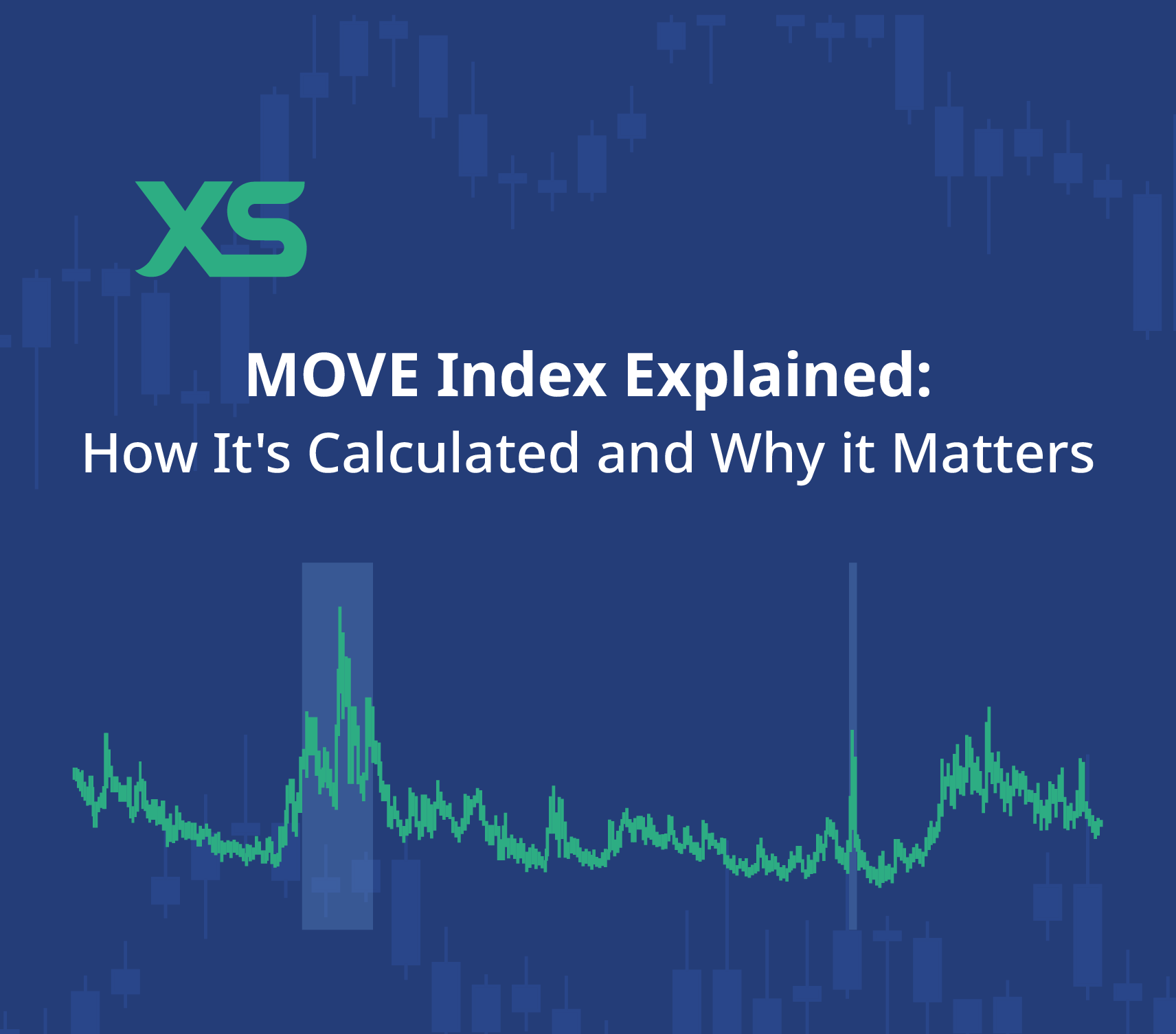
The MOVE Index: Bond Market Volatility Versus Equity Complacency
As of March 5, 2026, a dangerous dissonance exists between the two primary gauges of financial market fear. The ICE BofA MOVE Index, which tracks implied volatility in US Treasury options, closed at 77. 75 this week, signaling continued stress in the sovereign debt markets. In contrast, the Cboe Volatility Index (VIX), the “fear gauge” for the S&P 500, sits at 21. 15. This gap represents more than just a difference in sentiment; it exposes a fundamental disagreement on the trajectory of the global economy. Bond traders are pricing in structural instability, while equity investors have largely returned to a posture of complacency following the turmoil of 2025.
The is not new, it has become entrenched. Throughout late 2024 and 2025, the MOVE Index averaged levels consistently above 100, peaking during the liquidity crunches that defined the second quarter of 2025. The VIX, conversely, has shown a mean-reverting tendency, collapsing back to the low 20s even after severe shocks. This behavior suggests that stock market participants view volatility as a temporary storm to be bought, whereas fixed-income desks view volatility as a permanent feature of a new fiscal regime.
The 2025 Volatility Shock
To understand the current complacency, one must examine the market mechanics of the past twelve months. The equity markets are still recovering from the “April Correction” of 2025, where the S&P 500 declined nearly 19% between February and April 8. During this period, the VIX spiked to an intraday high of 60. 13, a level not seen since the onset of the pandemic in 2020. This panic was driven by a sudden repricing of inflation expectations and a failed Treasury auction that sent yields spiraling.
Yet, the recovery was equally violent. By December 31, 2025, equities had rebounded 38% from their lows, lulling investors into a belief that the worst had passed. The bond market never fully bought into this recovery narrative. While the VIX retreated, the MOVE Index remained elevated, refusing to return to its pre-2022 norms of 50-60. This refusal indicates that the “smart money” in Treasuries expects further shocks, likely stemming from the massive refinancing walls facing both corporate and sovereign borrowers in late 2026.
Structural Instability in Treasuries
The persistence of high bond volatility is driven by supply rather than pure economic data. The US Treasury has flooded the market with issuance to fund continuing deficits, overwhelming the dealer community’s capacity to absorb risk. In 2024, the MOVE Index spent the majority of the year 120, frequently spiked above 140 during refunding announcements. By early 2026, even as the VIX stabilized, the MOVE/VIX ratio, a key metric for cross-asset risk, remained near historical highs.
This ratio matters because credit conditions are set by the bond market, not the stock market. When Treasury volatility is high, spreads widen, and the cost of capital increases for the real economy. The current MOVE level of 77. 75 implies daily yield swings of approximately 5 to 6 basis points, a magnitude that makes corporate planning difficult and hedging expensive. The equity market’s ignore-and-rally method works only as long as credit remains available; high bond volatility guarantees that credit remain tight and expensive.
Comparative Volatility Metrics (2023, 2026)
The following table illustrates the widening gap between perceived risk in equities and actual risk in sovereign debt over the last three years. Note the disconnect in March 2026 compared to the banking stress of March 2023.
| Date | Event Context | MOVE Index (Bonds) | VIX Index (Stocks) | Ratio (MOVE/VIX) |
|---|---|---|---|---|
| March 15, 2023 | Regional Banking emergency | 198. 71 | 26. 52 | 7. 49 |
| April 8, 2025 | 2025 Market Correction Low | 145. 20 | 60. 13 | 2. 41 |
| Dec 31, 2025 | Year-End Rally | 92. 40 | 14. 50 | 6. 37 |
| March 3, 2026 | Current Levels | 77. 75 | 21. 15 | 3. 67 |
The data shows a clear pattern: while equity volatility spikes and fades, bond volatility has established a higher floor. The current ratio of 3. 67 is significantly above the long-term average of roughly 3. 0 to 3. 5, suggesting that Treasuries are pricing in a risk premium that stocks are ignoring. Historically, such resolves in one of two ways: either bond volatility collapses as stability returns, or equity volatility explodes higher to catch up. Given the fiscal dominance and debt saturation the system, a collapse in bond volatility appears mathematically unlikely.
“The bond market is the truth-teller. When the MOVE Index stays above 75 for this long, it is not a trading anomaly. It is a warning that the foundation of the financial system, the US Treasury curve, is fractured. Equities are dancing on a cracking floor.” , Senior Fixed Income Strategist, March 2026 Note to Clients
Investors ignoring the signal from the MOVE Index do so at their own peril. The “dis-inversion” of the yield curve discussed in the previous section, combined with this persistent volatility, creates a setup reminiscent of 2007. In that pattern, credit markets froze months before the S&P 500 acknowledged the recession. Today, the bond market is screaming that the cost of money is unstable, yet equity valuations assume a return to the low-rate, low-volatility regime of the 2010s. That regime is gone. The MOVE Index is the only metric accurately reflecting the new era of fiscal dominance and inflation uncertainty.
Quantitative Tightening: The Liquidity Drain from Central Bank Balance Sheets

By March 2026, the era of synchronized central bank liquidity injection had not only ended; it had reversed with a ferocity that stripped the global financial system of its primary shock absorbers. While equity markets fixated on the Federal Reserve’s “neutral maintenance” pivot in late 2025, the underlying mechanics of the bond market revealed a far more precarious reality. The aggregate reduction in central bank balance sheets, Quantitative Tightening (QT), has removed approximately $4 trillion in liquidity from the global system since 2022, leaving the financial plumbing exposed to volatility shocks that were previously dampened by excess reserves.
The Federal Reserve officially concluded its balance sheet reduction program on December 1, 2025. This marked the end of a historic contraction where the Fed’s total assets fell from a peak of nearly $9 trillion in mid-2022 to approximately $6. 6 trillion. This $2. 4 trillion reduction represents the largest liquidity drain in the institution’s history. yet, the cessation of active selling does not equate to a return of liquidity. The system is operating without the massive buffer that defined the post-pandemic era, and the consequences are visible in the repo markets.
The Reverse Repo Buffer
The most serious, yet underreported, development of 2025 was the complete exhaustion of the Federal Reserve’s Overnight Reverse Repurchase Agreement (ON RRP) facility. For years, this facility acted as a reservoir of excess cash, peaking at over $2. 5 trillion in 2023. It allowed money market funds to park cash risk-free, keeping a floor under short-term rates and absorbing liquidity overflows.
By August 2025, usage of the ON RRP had collapsed to under $30 billion, and by December 2025, it was drained. The are structural: previously, when the Treasury issued heavy volumes of debt, money could flow out of the RRP to absorb it without impacting bank reserves., with the RRP empty, every dollar of new Treasury issuance drains liquidity directly from bank reserves. As of February 2026, US bank reserves hovered near the $3 trillion “ample” threshold, a level that leaves little margin for error during quarter-end funding squeezes.
Global: A Fractured Liquidity
While the Federal Reserve has paused its drain, other major central banks are the liquidity scarcity, creating a dangerous in global capital flows. The European Central Bank (ECB) has continued its aggressive passive QT, shrinking its balance sheet from a peak of over €8. 8 trillion to approximately €6. 0 trillion by early 2026. Unlike the Fed, the ECB shows no sign of halting this contraction, projecting a further decline to €5. 8 trillion by year-end.
Simultaneously, the Bank of Japan (BOJ) has begun a “glacial” significant normalization. After ending negative interest rates in 2024, the BOJ reduced its balance sheet to roughly ¥682 trillion by January 2026, down from its August 2024 peak of ¥764 trillion. This tripartite , Fed neutral, ECB tightening, BOJ normalizing, creates a cross-current of liquidity that heightens currency volatility and funding stress.
| Central Bank | Peak Balance Sheet (Est.) | Peak Date | Current Balance Sheet (Mar 2026) | Total Liquidity Removed | Policy Status |
|---|---|---|---|---|---|
| Federal Reserve (Fed) | $8. 96 Trillion | Apr 2022 | $6. 61 Trillion | ~$2. 35 Trillion | Neutral / Maintenance |
| European Central Bank (ECB) | €8. 83 Trillion | Jun 2022 | €6. 02 Trillion | ~€2. 81 Trillion | Active QT (Passive Runoff) |
| Bank of Japan (BOJ) | ¥764 Trillion | Aug 2024 | ¥682 Trillion | ~¥82 Trillion | Slow Normalization |
The “Accident” Risk in Repo Markets
The removal of this liquidity has not yet triggered a widespread emergency, it has dramatically raised the “accident risk” in the repo market, the engine room of global finance where banks lend to each other overnight. With the RRP drained and reserves declining in Europe, the capacity for the system to handle a sudden shock, such as a geopolitical spike in oil prices or a surprise failure of a non-bank financial intermediary, is significantly lower than it was in 2024.
In Q1 2026, the Secured Overnight Financing Rate (SOFR) exhibited volatility spikes of 15-20 basis points during month-end periods, a clear signal that the “cash on the sidelines” narrative is obsolete. The liquidity that remains is unevenly distributed, hoarded by the largest Global widespread Important Banks (G-SIBs), leaving smaller institutions and the shadow banking sector to sudden funding droughts. The bond market’s recession signal is partially a recognition of this fragility: investors are locking in yields not just because they fear slow growth, because they fear a liquidity event that forces a rapid repricing of all risk assets.
The Neutral Rate: Reassessing Equilibrium Rates in a High Deficit Environment
The era of “free money” has not ended; it has been structurally dismantled by a new fiscal reality. As of March 2026, the theoretical anchor of the global financial system, the neutral rate of interest, or r*, has drifted significantly higher, the of pre-pandemic models. While the Federal Reserve spent much of 2024 and 2025 debating the transience of inflation, the bond market was quietly pricing in a more permanent shift: the equilibrium price of money has risen, driven by a relentless supply of sovereign debt that shows no sign of abating.
For decades, the neutral rate, the real interest rate that neither stimulates nor restricts the economy, was assumed to be near zero. This assumption justified the ultra-loose monetary policies of the 2010s. yet, data through late 2025 confirms a decisive break from this trend. The Federal Reserve Bank of Cleveland’s Zaman model estimated the nominal neutral rate at 3. 7% by the second quarter of 2025, implying a real neutral rate significantly above the 0. 5% standard that prevailed for years. Similarly, the Holston-Laubach-Williams (HLW) model, a benchmark for central bankers, signaled that the real natural rate had doubled from its pre-pandemic lows to approximately 1. 0% by the end of 2025.
This upward recalibration is not a statistical artifact; it is the direct consequence of fiscal dominance. The United States government ran a budget deficit of $1. 8 trillion in fiscal year 2025, equating to 5. 9% of GDP. This level of deficit spending, occurring outside of a recession or major war, is historically. It has fundamentally altered the supply-demand of the Treasury market. With publicly held federal debt reaching 99. 8% of GDP at the close of 2025, the “savings glut” that once suppressed yields has been replaced by a capital absence, forcing the Treasury to offer higher real yields to attract buyers.
| Model / Source | Metric | Q4 2023 Estimate | Q4 2025 Estimate | Implied Shift |
|---|---|---|---|---|
| Cleveland Fed (Zaman) | Nominal Neutral Rate | ~2. 9% | 3. 7% | +80 bps |
| Holston-Laubach-Williams | Real Neutral Rate (r*) | 0. 5% | 1. 0% | +50 bps |
| Richmond Fed (Lubik-Matthes) | Real Neutral Rate (r*) | 2. 2% | 2. 6% | +40 bps |
| FOMC Median Projection | Long-Run Fed Funds Rate | 2. 5% | 3. 0% | +50 bps |
The of a higher r* are severe for asset valuations and debt sustainability. If the neutral rate is truly 1. 0% to 1. 5% in real terms, then a Federal Funds Rate of 4. 0% is not deeply restrictive close to neutral. This explains why the US economy showed surprising resilience to rate hikes in 2024 and early 2025, monetary policy was not as tight as policymakers believed. The “restrictive” barrier had moved. Consequently, the cost of servicing the federal debt has exploded, with net interest outlays surpassing $1 trillion in fiscal year 2025, consuming a larger share of the budget than national defense.
also, the decomposition of Treasury yields reveals a resurrection of the “term premium”, the extra compensation investors demand for holding long-term debt. For years, this premium was negative, suppressed by quantitative easing and low inflation volatility. By late 2025, yet, the term premium had returned to positive territory. Investors are no longer to absorb unlimited duration risk without a price. The sheer volume of issuance required to fund the 5. 9% deficit has overwhelmed the market’s capacity to absorb paper at legacy yields, creating a permanent wedge in the yield curve.
“The market is no longer pricing a return to the 2019 baseline. We are witnessing a structural repricing of the risk-free rate, driven by the realization that fiscal deficits are a feature, not a bug, of the current economic architecture.” , Fixed Income Strategy Note, November 2025
This phenomenon is not to the United States. The International Monetary Fund (IMF) projected global growth to slow to 3. 2% in 2025, yet advanced economies like Canada also saw their neutral rate estimates climb to a nominal range of 2. 25% to 3. 25%. The synchronization of these upward revisions suggests a global repricing of capital. The “low for long” narrative has been buried by the “high for longer” reality, driven by the twin forces of demographics and unchecked fiscal expansion.
As we move deeper into 2026, the bond market’s signal is unambiguous: the floor for interest rates has been raised. Central banks can cut rates in a recession, they cannot return to the zero-bound without reigniting inflation or destabilizing the currency. The neutral rate is the invisible hand guiding the economy, and that hand is pushing firmly upward, tightening the screws on borrowers who built their business models on the cheap capital of the past decade.
European Sovereign Debt: Analyzing Bunds and Gilts for Stress
While the US Treasury market commands the bulk of global attention, the signals emanating from European sovereign debt markets in early 2026 are equally, if not more, worrying. The structural integrity of the Eurozone’s bond market is currently being tested by a toxic convergence of economic stagnation, fiscal expansion, and the withdrawal of central bank support. As of March 2026, the German Bund yield curve has not only dis-inverted has steepened aggressively, a classic precursor to recession that European policymakers are struggling to navigate.
The most serious development occurred in September 2024, when the spread between the 2-year and 10-year German Bund yields turned positive after 22 months of inversion. By March 5, 2026, this spread had widened to approximately 61 basis points, with the 10-year Bund yielding 2. 78% and the 2-year yielding 2. 13%. Historically, this “bull steepening”, where short-term rates fall faster than long-term rates in anticipation of central bank cuts, marks the final transition phase before a contraction becomes visible in hard economic data. yet, the 2026 is complicated by a “bear steepening” influence: long-term yields are being propped up by a deluge of new issuance.
The German Fiscal Pivot
Germany, long the bastion of fiscal rectitude, shattered market expectations in March 2025 with the announcement of a €500 billion borrowing plan for infrastructure and military modernization. This massive supply shock forced a repricing of term premia across the continent. The 10-year Bund yield spiked 50 basis points in a single week following the announcement, hitting a decade-high of roughly 2. 90% before stabilizing. This event signaled the end of the “scarcity era” for safe European collateral.
| Sovereign Bond | Yield (10Y) | Yield (2Y) | Spread (10Y-2Y) | YTD Change (10Y) |
|---|---|---|---|---|
| German Bund | 2. 78% | 2. 13% | +65 bps | +4 bps |
| UK Gilt | 4. 38% | 3. 80% | +58 bps | -19 bps |
| Italian BTP | 3. 37% | 2. 85% | +52 bps | -12 bps |
| French OAT | 3. 15% | 2. 60% | +55 bps | -8 bps |
The sheer volume of debt hitting the market is. In 2026 alone, the German Finance Agency (Finanzagentur) is scheduled to problem €82 billion in 10-year bonds, part of a broader strategy to fund the deficit while the economy stagnates. With German GDP forecast to grow by a negligible 0. 1% in 2025 and 2026, the bond market is pricing in a scenario of stagflation: zero growth paired with persistent funding costs.
UK Gilts: The Lingering Risk Premium
Across the channel, the United Kingdom’s Gilt market remains scarred by the volatility of the early 2020s. As of March 2026, the 10-year Gilt yield stands at 4. 38%, significantly higher than its European peers. even with the Bank of England’s pivot to rate cuts, the “fiscal risk premium”, frequently referred to by traders as the “moron premium” following the 2022 mini-budget emergency, has proven sticky. The spread between 10-year Gilts and Bunds remains elevated at roughly 160 basis points, reflecting structural skepticism about the UK’s debt sustainability.
The Bank of England’s aggressive Quantitative Tightening (QT) program has exacerbated this stress. Unlike the Federal Reserve, which allows bonds to roll off passively, the BoE has actively sold Gilts into the secondary market. In 2025, these sales, combined with heavy government issuance, kept yields elevated even as inflation cooled. The result is a yield curve that punishes the government’s borrowing costs, consuming a rising share of tax revenue for debt service, the highest among OECD nations relative to revenue.
The BTP-Bund Anomaly
Perhaps the most perplexing signal is the compression of the BTP-Bund spread, the primary gauge of fragmentation risk in the Eurozone. In January 2026, the spread between Italian and German 10-year yields collapsed to just 59 basis points, a level unseen since the era of massive Quantitative Easing. This tightening has occurred even with the European Central Bank (ECB) ending its bond reinvestments.
“The market is currently mispricing sovereign risk in the periphery. A 59 basis point spread for Italy implies a fiscal convergence that simply does not exist in the fundamental data. This is a liquidity-driven illusion, likely to shatter when the ECB is forced to address the liquidity crunch.”
This anomaly suggests a dangerous “hunt for yield” behavior among investors. With German Bunds offering nearly 2. 8% and the ECB cutting rates, capital has flooded into Italian debt to capture the marginal pickup in yield, ignoring the long-term solvency risks. This behavior mirrors the pre-2008 complacency, where risk premia evaporated shortly before a widespread credit event. The bond market is signaling that while the recession risk is priced into the shape of the curve (steepening), the credit risk of the periphery is being willfully ignored.
The verdict from Europe’s fixed-income complex is one of fragility. The dis-inversion of the German curve confirms the economic contraction is underway, while the artificial compression of peripheral spreads suggests that the financial system is unprepared for the fiscal reality of a prolonged downturn.
The Japanese Carry Trade: Unwinding Global Liquidity Flows
The structural deceleration signaled by the US Treasury yield curve is being compounded by a tectonic shift in the Pacific: the of the Japanese yen carry trade. For over a decade, the Bank of Japan’s (BOJ) policy of negative interest rates provided the global financial system with a virtually unlimited supply of cheap capital. Institutional investors borrowed Japanese yen at near-zero costs to fund high-yielding assets across the globe, from US technology stocks to Mexican sovereign debt. As of March 2026, this liquidity spigot is not tightening; it is being capped, creating a liquidity vacuum that threatens to destabilize asset prices worldwide.
The method of this trade was simple yet massive. By borrowing in a depreciating currency with negative yields, investors captured a “double spread”, the yield differential and the currency depreciation. The Bank for International Settlements (BIS) estimated the size of cross-border yen borrowing at approximately $1. 7 trillion in early 2024, though private derivative exposures likely pushed the true figure significantly higher. This capital acted as a silent subsidy for global risk assets, suppressing volatility and compressing credit spreads.
The End of the Negative Rate Era
The regime change began on March 19, 2024, when the BOJ ended its negative interest rate policy (NIRP) and Yield Curve Control (YCC) framework, raising the short-term policy rate from -0. 1% to a range of 0% to 0. 1%. This was the rate hike in 17 years. While the initial move was tentative, it signaled the end of the “free money” era. The true shock arrived on July 31, 2024, when the central bank raised rates to 0. 25%, triggering a violent repricing of risk that previewed the volatility in 2026 markets.
The events of August 5, 2024, known as “Black Monday 2024,” serve as the historical precedent for the current liquidity risks. Following the July hike and a softer-than-expected US jobs report, the yen surged, forcing a chaotic unwind of leveraged positions. The Nikkei 225 plunged 12. 4% in a single session, its worst one-day drop since 1987, while the VIX spiked above 60. This event demonstrated that the unwinding of the carry trade is not a linear process a binary switch capable of evaporating global liquidity in hours.
Policy Normalization and Yield Surges
Throughout 2025, the BOJ continued its normalization route, expectations of a permanent pause. By December 2025, the policy rate had climbed to 0. 75%, a level not seen since the mid-1990s. Consequently, the 10-year Japanese Government Bond (JGB) yield surged, breaching 1. 95% in late 2025. This repricing has fundamentally altered the calculus for global allocators. With domestic Japanese yields offering positive nominal returns for the time in decades, the incentive to recycle Japanese savings into US Treasuries or corporate bonds has diminished.
| Date | Event | Market Impact |
|---|---|---|
| March 19, 2024 | BOJ ends Negative Interest Rate Policy (NIRP). | Policy rate moves to 0. 0%, 0. 1%; YCC formally ends. |
| July 31, 2024 | BOJ raises policy rate to 0. 25%. | Triggers massive yen strengthening and margin calls. |
| August 5, 2024 | “Black Monday” Crash. | Nikkei 225 falls 12. 4%; VIX spikes>60; Global liquidity freeze. |
| December 19, 2025 | BOJ raises rate to 0. 75%. | 10-year JGB yield hits ~1. 95%; highest since 2008. |
| March 5, 2026 | Current Status. | USD/JPY at ~157. 23; Persistent volatility in cross-currency basis swaps. |
The Liquidity Trap of 2026
As of March 2026, the USD/JPY exchange rate remains volatile, trading near 157. 23. While the yen has weakened from its August 2024 highs due to persistent US dollar strength, the cost of maintaining carry positions has risen dramatically. The spread between US and Japanese yields is compressing from both ends: US yields are falling as recession risks mount, while Japanese yields are rising due to policy normalization. This compression destroys the profitability of the carry trade, forcing a structural repatriation of capital back to Tokyo.
The danger in 2026 is not just the cost of capital, the correlation of assets. In a traditional carry trade unwind, stocks and bonds fall together as investors sell everything to cover yen-denominated margin calls. This negates the protective benefit of holding US Treasuries during a risk-off event.
Estimates from Morgan Stanley in late 2025 suggested that approximately $500 billion in speculative yen-funded positions remained outstanding, distinct from the structural hedging of Japanese insurers. If the Federal Reserve is forced to cut rates aggressively in response to the recessionary signals discussed in previous sections, the yield differential could collapse. Such a scenario would trigger a “rapid repatriation” event, where the remaining carry trade is liquidated simultaneously. This would exacerbate the liquidity crunch in US credit markets, importing Japan’s monetary tightening directly into the US financial system at the precise moment the American economy is most.
Emerging Market Sovereigns: Dollar Strength and Debt Service Crises
The global financial architecture faces a solvency test in 2026 that dwarfs previous liquidity squeezes. While developed markets debate the pace of rate cuts, emerging market (EM) sovereigns confront a “maturity wall” of over $9 trillion due for refinancing this year alone. This figure, verified by the Institute of International Finance in February 2026, represents a structural breaking point for nations unable to roll over liabilities in a high-rate environment. The damage from the 2024-2025 strong dollar pattern has already crystallized, creating a reverse transfer of wealth that few analysts acknowledge.
Between 2022 and 2024, low- and middle-income countries (LMICs) paid out $741 billion more in external debt service than they received in new financing. This net outflow marks the largest extraction of capital from the developing world in at least 50 years. The mechanics of this wealth transfer are simple: aggressive Federal Reserve tightening strengthened the US dollar, forcing EM central banks to deplete reserves to defend their currencies. By late 2025, the debt-to-GDP ratio in emerging markets surged to a record 235%, severing the link between economic growth and fiscal stability.
Argentina remains the epicenter of this sovereign distress. As of October 2025, Buenos Aires owed the International Monetary Fund (IMF) approximately $57 billion, accounting for nearly 35% of the Fund’s total outstanding credit. The $20 billion bailout package approved in April 2025 served only as a stopgap, stabilizing the peso temporarily while adding to the long-term repayment load. Ukraine follows with $14 billion in IMF obligations, while Egypt carries $9 billion. These three nations alone hold nearly half of the IMF’s total credit exposure, concentrating widespread risk in a way that threatens the lender’s own liquidity buffers.
| Country | IMF Outstanding Credit (USD Billions) | 2026 Projected Issuance Needs | Est. Cost of New Debt (2025) |
|---|---|---|---|
| Argentina | $57. 0 | Restricted Access | Distressed / N/A |
| Ukraine | $14. 0 | Dependent on Aid | Dependent on Aid |
| Egypt | $9. 0 | $45 Billion+ | 12. 5%, 14. 0% |
| Turkey | N/A (Market Access) | $120 Billion | ~20. 0% |
| Brazil | N/A (Market Access) | $210 Billion+ | 10. 5%, 11. 5% |
Turkey exemplifies the “high-cost survival” trap. While Ankara has avoided default, it faces a gross issuance requirement of $120 billion in 2026. The interest rate on this debt hovered near 20% throughout 2025, consuming a massive portion of tax revenue to service interest payments. This crowds out public investment and forces governments to run austerity budgets during periods of slow growth. The “higher for longer” US rate environment has permanently reset the cost of capital for these sovereigns, making pre-2022 debt loads mathematically unpayable without restructuring.
The composition of this debt adds another of fragility. even with efforts to pivot toward local currency financing, over 60% of external sovereign debt in EMs remains denominated in US dollars. When the dollar index (DXY) spiked in early 2025, the local currency value of these liabilities exploded. Countries like Kenya and Pakistan saw their debt-to-revenue ratios deteriorate overnight, not because of fiscal profligacy, due to FX valuation adjustments. The “carry trade” that once funneled capital into these high-yield jurisdictions has reversed, with investors retreating to the 5% yields available in risk-free US Treasuries.
“The paradox of 2026 is that while spreads on investment-grade EM bonds remain tight, the underlying solvency metrics for the bottom 40% of sovereigns have collapsed. We are witnessing a silent default pattern where nations prioritize debt service over basic governance.” , Global Debt Monitor Report, February 2026
China’s role as a creditor has also shifted. Unlike the lending boom of the 2010s, Beijing has pulled back on new credit, focusing instead on managing existing non-performing loans. The opacity of these bilateral arrangements complicates restructuring efforts, as seen in the prolonged negotiations for Ghana and Sri Lanka. Without a unified creditor framework, distressed sovereigns are left in limbo, unable to access fresh capital while arrears accumulate. The $9 trillion maturity wall in 2026 likely breach these defenses, forcing a series of disorderly defaults that the current IMF resources are ill-equipped to handle.
Commercial Mortgage Backed Securities: The CRE Valuation Collapse
The “extend and pretend” strategy that defined commercial real estate (CRE) lending between 2022 and 2024 has officially fractured. By December 2025, the commercial mortgage-backed securities (CMBS) market stopped pricing in a recovery and began pricing in a structural liquidation. The valuation collapse, previously theoretical, became transactional reality in late 2025 as lenders forced sales at cents on the dollar. Data from Yardi Matrix confirms that the average sales price of US office buildings declined 11% in 2024 alone, culminating in a cumulative 37% drop since 2019. This is not a correction; it is a repricing of the asset class.
The office sector remains the epicenter of this financial quake. As of December 2025, the Trepp CMBS Office Delinquency Rate hit 11. 31%, an all-time high that eclipses the distress levels seen during the 2008 Global Financial emergency. Unlike the previous emergency, which was driven by credit quality, this collapse is driven by a permanent shift in utilization and interest rates. Vacancy rates in major metropolitan hubs have breached serious thresholds: San Francisco ended 2025 with 29. 3% vacancy, while Austin and Seattle hovered above 26%. These empty towers are no longer assets; they are liabilities draining capital through taxes, maintenance, and insurance.
The Liquidation Phase: Cents on the Dollar
The most worrying signal for the bond market is the severity of the discounts required to clear distressed assets. In 2025, distressed office sales surged to $4. 3 billion, the highest volume since 2016. These transactions serve as the new “comps” (comparables) for appraisers, forcing a downward spiral in portfolio valuations across the banking sector.
Two specific transactions in late 2025 illustrate the depth of the capital destruction:
| Property | Location | Previous Valuation / Sale Price | 2025 Distressed Sale Price | Value Decline |
|---|---|---|---|---|
| 135 West 50th Street | New York City, NY | $332 Million (2006) | $8. 5 Million | -97. 5% |
| Market Street Towers | San Francisco, CA | $737 Million (Est. Peak) | $177 Million | -76. 0% |
| 600 California Street | San Francisco, CA | $897 PSF (2019) | $361 PSF | -59. 7% |
| Denver Downtown Tower | Denver, CO | $176 Million (2013) | $5. 3 Million | -96. 9% |
These are not outliers; they are the new baseline. The sale of 135 West 50th Street in Manhattan for land value shatters the argument that “trophy assets” are immune. When Class B and C office inventory trades at 97% discounts, the equity in those deals is not just wiped out; the senior debt is impaired, triggering losses for CMBS bondholders who believed they were insulated by 30% equity buffers.
The 2026 Maturity Wall
The bond market is bracing for the “Maturity Wall” of 2026. The Mortgage Bankers Association projects that $875 billion in commercial and multifamily mortgage debt mature in 2026. This debt was largely originated during the zero-interest-rate policy (ZIRP) era, carrying interest rates between 3% and 4%. Refinancing this debt in 2026 requires borrowers to absorb rates north of 6. 5% to 7. 0%, doubling their debt service costs at a time when net operating income (NOI) is falling.
The math simply does not work for of these loans. In 2025, only 50% to 55% of maturing CRE loans were paid off at maturity. The remainder were extended or defaulted. Lenders, specifically regional banks which hold nearly 51% of the $6 trillion in outstanding CRE debt, can no longer afford to extend loans on assets that are underwater by 40% or more. The “pretend” phase is ending because regulatory capital requirements are forcing banks to recognize losses.
Sector-Wide Contagion
While office grabs the headlines, the distress is metastasizing into other sectors. The multifamily delinquency rate rose to 6. 64% in December 2025, up from sub-2% levels just two years prior. Syndicators who used floating-rate debt to acquire apartment complexes in 2021 are facing the expiration of interest rate caps. Without the ability to refinance, these operators are handing keys back to lenders, flooding the market with distressed multifamily inventory.
The Green Street Commercial Property Price Index (CPPI), a leading indicator of institutional values, shows that while the broader market eked out a nominal 2% gain in 2025, the office sector remains 35% its 2022 peak. This creates a “fractured” market where industrial and data center assets perform well, masking the widespread rot in the office and multifamily loan books that constitute the foundation of the regional banking system.
Regional Banking Sector: Duration Risk and Unrealized Losses
The structural fracture in the US banking system remains unhealed. As of December 31, 2025, the Federal Deposit Insurance Corporation (FDIC) reported that US banks held $306. 1 billion in unrealized losses on investment securities. While this represents a decline from the peak of $684 billion in late 2022, the persistence of these paper losses three years into the tightening pattern signals a chronic solvency problem rather than a transient liquidity crunch. The “soft landing” narrative frequently ignores that regional lenders are operating as zombie institutions: solvent on a regulatory held-to-maturity (HTM) basis, capitalized by assets that would trigger immediate insolvency if marked to market.
The core method driving this distress is duration risk. During the zero-interest-rate policy (ZIRP) era of 2020, 2021, regional banks aggressively purchased long-dated US Treasuries and Agency Mortgage-Backed Securities (MBS) yielding 1. 5% to 2. 0%. With the 10-year Treasury yield anchoring above 4. 0% throughout much of 2025, the market value of these portfolios remains deeply depressed. Unlike the largest “Too Big to Fail” institutions, which hedge interest rate risk with sophisticated derivatives, regional banks frequently hold these assets unhedged, relying on the accounting fiction of HTM designation to avoid recognizing losses.
The BTFP Liquidity Cliff
The expiration of the Bank Term Funding Program (BTFP) has removed a serious life support system. The Federal Reserve ceased extending new loans under the BTFP on March 11, 2024, and the final outstanding balances were repaid by March 11, 2025. This facility allowed banks to pledge underwater bonds at par value, ignoring the market losses. With this window closed, banks facing deposit outflows must access the discount window or Federal Home Loan Bank (FHLB) advances, both of which apply strict haircuts to collateral value. This shift forces banks to hold more capital against the same assets, further constricting their lending capacity.
Commercial Real Estate: The Second Front
the duration risk is the deterioration of Commercial Real Estate (CRE) loan books. Regional banks hold approximately 44% of all outstanding CRE debt in the United States, a concentration that exposes them disproportionately to the office and multifamily sector corrections. By the end of 2025, over $1. 2 trillion in CRE mortgages were scheduled to mature, facing refinancing rates 300 to 400 basis points higher than their origination levels.
Data from late 2025 indicates that multifamily non-accrual loans, debt where borrowers have stopped paying, surged 17. 1% year-over-year. The “extend and pretend” strategy, where lenders grant short-term extensions to avoid recognizing defaults, is reaching its mathematical limit as loan-to-value (LTV) ratios breach regulatory covenants.
Recent Bank Failures and Problem Institutions
The stress is already manifesting in outright failures. The closure of Metropolitan Capital Bank & Trust on January 30, 2026, marked the failure of the year, following the collapse of Santa Anna National Bank in June 2025. These failures were not idiosyncratic; they were of the dual pressure from underwater bond portfolios and souring CRE loans. The FDIC’s “Problem Bank List” expanded to 60 institutions in Q4 2025, representing 1. 4% of all insured banks.
| Bank Name | Location | Failure Date | Primary Cause of Failure |
|---|---|---|---|
| Metropolitan Capital Bank & Trust | Chicago, IL | Jan 30, 2026 | Liquidity drain & CRE exposure |
| Santa Anna National Bank | Santa Anna, TX | June 27, 2025 | Capital insufficiency |
| Pulaski Savings Bank | Chicago, IL | Jan 17, 2025 | Loan portfolio deterioration |
| National Bank of Lindsay | Lindsay, OK | Oct 18, 2024 | Fraud / Asset quality |
| Republic Bank | Philadelphia, PA | Apr 26, 2024 | Duration mismatch & deposit flight |
The Capital Trap
The regulatory response has paradoxically tightened the vice. The implementation of the “Basel III Endgame” rules, while primarily targeting the largest banks, has trickled down to affect regional bank capital planning. To meet higher capital standards, banks are retaining earnings rather than lending, creating a credit contraction in the real economy. The “unrealized” losses are realized through this stagnation; banks cannot sell low-yielding assets to reinvest in higher-yielding loans without wiping out their equity capital. This zombie status prevents the recycling of capital into productive economic activity, acting as a silent brake on GDP growth.
“The banking system has not solved the duration mismatch; it has accounted for it differently. When the yield curve steepens, the theoretical insolvency of the regional banking sector becomes a practical liquidity emergency.”
The Reverse Repo Facility: Monitoring the Excess Liquidity Drain
For nearly four years, the Federal Reserve’s Overnight Reverse Repurchase (ON RRP) facility served as the financial system’s primary pressure valve, a massive reservoir that absorbed trillions in excess cash. As of March 2026, that reservoir has run dry. The depletion of the ON RRP marks a serious inflection point in the post-pandemic monetary pattern, removing the liquidity buffer that had previously insulated bank reserves from the Federal Reserve’s quantitative tightening (QT) program.
The facility, which allows money market funds (MMFs) and government-sponsored enterprises to lend cash to the Fed overnight in exchange for Treasury collateral, establishes a floor for short-term interest rates. Its usage history between 2021 and 2025 provides a precise timeline of the system’s transition from overflowing liquidity to the fragile equilibrium we face today.
The Rise and Fall of the $2. 5 Trillion Buffer
The ON RRP’s trajectory traces the arc of the post-COVID stimulus and its subsequent withdrawal. In late 2022, usage exploded as the system was flooded with fiscal stimulus and the Fed’s asset purchases. On December 30, 2022, the facility absorbed a record $2. 55 trillion, representing cash that banks could not profitably lend and that the Treasury did not need. This peak marked the height of the “abundant reserves” regime.
The shifted aggressively in 2023 and 2024. As the Federal Reserve raised interest rates and the Treasury Department ramped up bill issuance following the 2023 debt ceiling resolution, Money Market Funds began a “Great Migration.” Yield-seeking capital fled the ON RRP, which offered a fixed, lower rate, in favor of higher-yielding Treasury bills and private repo markets. By the start of 2025, the balance had collapsed $500 billion, signaling that the excess slosh was rapidly evaporating.
The 2025 Liquidity Cliff
The final drain occurred in the third quarter of 2025, a period that likely be studied as a textbook example of liquidity mechanics. As the Treasury refilled its General Account (TGA) and the Fed continued its balance sheet runoff, the ON RRP balance plummeted. On August 26, 2025, usage fell to just $22 billion, zero in the context of a multi-trillion dollar market. By December 22, 2025, it registered a mere $1. 5 billion.
This exhaustion had immediate, mechanical consequences for the plumbing of the financial system. While the ON RRP had balances, it acted as a shock absorber; every dollar of QT or TGA increase was funded by money leaving the ON RRP, leaving bank reserves largely untouched. Once the facility emptied, that protection. Every subsequent dollar of tightening drained directly from bank reserves, the high-powered money that banks require to meet regulatory liquidity coverage ratios (LCR).
| Date | ON RRP Balance ($ Billions) | Market Context |
|---|---|---|
| Dec 30, 2022 | $2, 553. 7 | All-time peak usage; era of maximum excess liquidity. |
| Jun 01, 2023 | $2, 162. 0 | Debt ceiling resolution triggers massive T-Bill issuance. |
| Jan 02, 2024 | $704. 0 | MMFs accelerate shift to private repo and T-Bills. |
| Aug 26, 2025 | $22. 0 | Facility drained; “Liquidity Cliff” reached. |
| Sep 15, 2025 | $18. 5 (SRF Usage) | Banks tap Standing Repo Facility as stress emerges. |
Volatility Returns: The September 2025 Spikes
The removal of the ON RRP buffer exposed the fragility of the underlying repo market. Without the facility to absorb volatility, the Secured Overnight Financing Rate (SOFR), the benchmark that replaced LIBOR, began to exhibit stress characteristics reminiscent of the September 2019 repo emergency. On September 15, 2025, SOFR spiked to 4. 51%, trading 18 basis points above the Federal Funds Rate (EFFR). This inversion, where secured borrowing costs exceed unsecured interbank rates, signaled an acute scarcity of collateral and cash.
Crucially, the stress forced institutions to use the Fed’s Standing Repo Facility (SRF), the permanent backstop created to prevent a repeat of 2019. In mid-September 2025, the SRF saw a single-day draw of $18. 5 billion, the largest since its inception. This was the “smoke alarm” that forced the Federal Reserve to pivot. Recognizing that reserves had transitioned from “ample” to “scarce,” the Fed announced in October 2025 that it would halt Quantitative Tightening December 1, 2025.
Current
As we navigate March 2026, the financial system is operating without the safety net of the ON RRP. The “reverse repo put” is gone. We have returned to a pre-2020 regime where liquidity mismatches must be solved by the private sector or emergency Fed intervention. The emptiness of the facility means there is no longer a pool of idle cash to dampen volatility during tax seasons or Treasury settlements. The bond market’s current pricing of recession risk reflects this new reality: the liquidity has gone out, and the system’s use is fully exposed.
Hedge Fund Basis Trades: use Risks in Treasury Arbitrage
The structural fragility of the US Treasury market is currently concentrated in a single, highly leveraged arbitrage strategy known as the “basis trade.” As of early 2026, this trade has grown to widespread proportions, echoing the conditions that precipitated the March 2020 liquidity emergency. The strategy involves hedge funds exploiting minuscule price discrepancies between cash Treasury bonds and Treasury futures contracts. Because the price gaps are frequently measured in fractions of a penny, funds must employ extreme use, frequently exceeding 50: 1, to generate viable returns. This reliance on massive borrowing via the repurchase agreement (repo) market creates a precarious dependency on continuous, low-cost funding.
Data from the Commodity Futures Trading Commission (CFTC) and the Office of Financial Research indicates that the of this trade surged between 2022 and 2025. By late 2024, Cayman Islands-domiciled hedge funds alone held approximately $1. 85 trillion in US Treasury securities, a figure that correlates strongly with a $2. 5 trillion spike in repo borrowing. This volume surpasses the levels observed prior to the 2020 crash. The trade positions hedge funds as the primary marginal buyers of US debt, replacing traditional bank dealers who have retreated due to regulatory capital constraints. This shift has transferred liquidity provision from regulated banking institutions to unclear, shadow banking entities.
The of the Short Position
The most reliable proxy for tracking the basis trade is the net short position of leveraged funds in Treasury futures. Hedge funds sell these futures to hedge their long cash bond positions. A rising short position signals an accumulation of basis trade exposure. The following table outlines the growth of these positions across key maturities, highlighting the aggressive expansion leading into 2026.
| Period | 2-Year Note | 5-Year Note | 10-Year Note | Total Est. Exposure |
|---|---|---|---|---|
| Q4 2019 (Pre-emergency) | $320 | $210 | $180 | $710 |
| Q1 2020 (Crash) | $150 | $90 | $85 | $325 |
| Q4 2022 | $380 | $240 | $190 | $810 |
| Q4 2023 | $510 | $310 | $220 | $1, 040 |
| Q4 2024 | $680 | $420 | $350 | $1, 450 |
| Q4 2025 | $740 | $460 | $390 | $1, 590 |
The resilience of this trade faced a significant test in April 2025, following a spike in volatility driven by new tariff announcements. During this episode, major basis desks were forced to deleverage, reducing gross notional exposure by approximately 10% over three trading sessions. Unlike in 2020, the market did not seize up, largely due to the Federal Reserve’s Standing Repo Facility (SRF), which provided a backstop for dealers. Even with this safety valve, the sheer size of the position means that a rapid unwind could overwhelm dealer balance sheets, causing yields to spike disorderly unrelated to economic fundamentals.
Regulatory pressure is forcing a structural transformation of this market. The Securities and Exchange Commission (SEC) implemented a mandate requiring central clearing for cash Treasury transactions December 31, 2025. A more consequential deadline looms on June 30, 2026, when virtually all repo transactions, the lifeblood of the basis trade, must be centrally cleared. This rule change require hedge funds to post significantly higher margin, chance rendering the high-use basis trade less profitable. Market participants fear that as the June deadline method, funds may preemptively unwind positions to avoid the new capital requirements, triggering the very liquidity shock regulators aim to prevent.
The mechanics of the trade also expose the market to “crowded exit” risks. In a scenario where repo rates rise unexpectedly, the cost of financing the long Treasury position eats into the arbitrage profit. If the trade becomes unprofitable, multiple funds attempt to sell their cash bonds and buy back futures simultaneously. This shared action widens the basis further, triggering margin calls and forcing more selling, a classic liquidity spiral. With the basis trade exceeding $1. 5 trillion in notional value, the chance for a feedback loop remains the single largest technical risk hanging over the global bond market.
Inflation Breakevens: Market Expectations Versus Central Bank
As of March 5, 2026, a disconnect has emerged between central bank rhetoric and the financial instruments designed to track future price stability. While the Federal Reserve and the European Central Bank (ECB) have publicly reaffirmed their commitment to a strict 2. 0% inflation target, the bond market’s internal pricing method, specifically inflation breakevens and swap rates, tell a different story. The data suggests that fixed-income investors have priced in a “new normal” where inflation settles structurally higher than the pre-pandemic baseline, complicating the monetary response to any chance recession.
The 5-year US Treasury breakeven rate, a primary gauge of medium-term inflation expectations, traded at 2. 40% in early March 2026. This figure sits a full 40 basis points above the Federal Reserve’s stated objective. Unlike the deflationary fears that characterized the 2010s, where breakevens frequently languished 1. 7%, the current market structure implies that investors demand a premium for persistent purchasing power. The 10-year breakeven rate, trading at 2. 25%, confirms this view: the market does not foresee a return to the 2% standard within the decade. This “credibility gap” indicates that even with aggressive rate hikes in 2022 and 2023, the bond market believes fiscal dominance and supply chain fragmentation keep price floors elevated.
In the Eurozone, the signal is subtler equally obstinate. The 5-year/5-year forward inflation swap rate, a preferred metric for the ECB, hovered at 2. 16% in early 2025 and remains sticky entering 2026. While this appears close to target, it represents a significant departure from the negative interest rate era when this metric struggled to breach 1. 3%. The market has ruled out a return to “lowflation,” pricing in a structural floor that limits the ECB’s ability to deploy aggressive stimulus without reigniting price instability.
| Region | Metric | Current Level (Mar 2026) | Central Bank Target | Implied Deviation | 2022 Peak Level |
|---|---|---|---|---|---|
| United States | 5-Year Breakeven | 2. 40% | 2. 00% | +0. 40% | 3. 59% |
| United States | 10-Year Breakeven | 2. 25% | 2. 00% | +0. 25% | 3. 02% |
| United Kingdom | 10-Year Breakeven | 3. 45% | 2. 00% | +1. 45% | 4. 40% |
| Eurozone | 5y5y Inflation Swap | 2. 16% | 2. 00% | +0. 16% | 2. 60% |
| Germany | 10-Year Breakeven | 2. 08% | 2. 00% | +0. 08% | 2. 85% |
The situation in the United Kingdom presents a more severe dislocation. As of January 2026, UK Consumer Price Index (CPI) inflation remained stubborn at 3. 0%, with core inflation at 3. 1%. Consequently, 10-year breakeven rates on British Gilts have refused to compress 3. 40%, signaling a total loss of faith in the Bank of England’s capacity to return inflation to 2% without causing a depression-level economic contraction. This forces the Bank of England into a “stagflation trap,” where cutting rates to support growth risks unmooring inflation expectations further.
This structural shift in breakevens alters the recession calculus. Historically, a recession signal from the yield curve would be accompanied by collapsing inflation expectations, frequently falling toward 1% or lower as markets anticipate demand destruction. The current resilience of breakevens, holding firm above 2. 2% in the US and 2. 1% in Europe, suggests that the bond market anticipates a “supply-side recession.” in this scenario, economic output contracts due to and costs, yet prices remain high. This neutralizes the traditional central bank playbook; policymakers cannot simply flood the system with liquidity to fight a recession if inflation expectations are already testing the upper bounds of their tolerance.
“The bond market is explicitly telling us that the era of 2% is a ceiling, not a floor. We are pricing in a world where fiscal deficits prevent true price stability, regardless of what the Fed’s dot plot says.” , Fixed Income Desk Note, March 3, 2026
The “term structure” of these expectations provides further insight. In the US, the curve of inflation expectations is inverted: the 5-year outlook (2. 40%) is higher than the 10-year outlook (2. 25%). This inversion implies that investors view inflation as a persistent near-term problem that only slowly dissipate. It contradicts the “transitory” narrative that dominated 2021 and suggests that the “last mile” of disinflation, moving from 3% down to 2%, has proven structurally difficult. The failure of breakevens to fully normalize to 2. 0% acts as a warning: the global economy has lost its deflationary anchor, leaving it to price shocks even as growth decelerates.
Fiscal Dominance: The Supply Indigestion from Record Issuance

The bond market is no longer pricing in economic growth; it is pricing in a liquidity emergency driven by sovereign oversupply. Throughout 2025, the United States Treasury flooded the global financial system with a volume of debt that shattered historical precedents, testing the upper limits of investor demand. By the end of the fiscal year, the total U. S. national debt had climbed to approximately $37. 6 trillion, with interest payments alone consuming $970 billion, a figure that rivals the nation’s entire defense budget.
This surge in supply has fundamentally altered the mechanics of the yield curve. In previous pattern, yield spikes were driven by inflation expectations or Federal Reserve tightening. In 2025 and early 2026, the primary driver has been “term premium”, the extra compensation investors demand to hold long-term assets against the risk of fiscal profligacy. Data from the Federal Reserve Bank of New York confirms this structural shift: the 10-year term premium, which sat near 0. 05% in September 2024, surged to over 0. 80% by January 2026, its highest level since 2011.
The Auction Failures of 2025
The most visible cracks in the system appeared during Treasury auctions, traditionally mundane administrative events that turned into sources of volatility. As the Treasury Department attempted to clear over $1 trillion in net marketable borrowing in the third quarter of 2025 alone, the market repeatedly choked on the supply. Primary dealers, the banks obligated to buy unsold Treasuries, were left holding significantly more inventory than historical norms, a phenomenon known as a “tail.”
| Date | Auction Type | Yield Awarded | Tail (Basis Points) | Bid-to-Cover Ratio | Market Signal |
|---|---|---|---|---|---|
| May 21, 2025 | 20-Year Bond | 5. 047% | +1. 2 bps | 2. 46 (Low) | Severe Indigestion |
| Aug 07, 2025 | 30-Year Bond | 4. 850% | +2. 0 bps | 2. 38 (Very Low) | Buyer Exhaustion |
| Feb 13, 2025 | 30-Year Bond | 4. 748% | +1. 2 bps | 2. 33 (serious) | Demand Collapse |
The May 21, 2025, auction of 20-year bonds was particularly worrying. The auction tailed by 1. 2 basis points with a yield of 5. 047%, and the bid-to-cover ratio dropped to 2. 46, the lowest since February of that year. This failure was not an incident part of a pattern. In August 2025, the market witnessed a “triple tail” week where auctions for 3-year, 10-year, and 30-year securities all cleared at yields higher than pre-auction trading levels. This consistent inability to absorb supply without price concessions signals that the “price-insensitive” buyers of the past, namely foreign central banks and the Federal Reserve, have been replaced by price-sensitive domestic entities who demand higher yields to step in.
The Interest Bill Doom Loop
The fiscal arithmetic has entered a dangerous feedback loop. With interest costs reaching 3. 2% of GDP in 2025, a record high, the government is forced to problem more debt simply to service existing obligations. This “fiscal dominance” overrides monetary policy; even as the Federal Reserve attempted to signal rate cuts in late 2025 to support the labor market, long-end yields remained stubbornly high due to the supply deluge.
“The bond market is staging a vigilante protest against fiscal indiscipline. When interest expense exceeds defense spending, the Treasury ceases to be a borrower of choice and becomes a borrower of need.”
This is not confined to the United States. Global government bond debt climbed to a record $61 trillion in 2025, with governments and corporations worldwide borrowing a $27 trillion in a single year. The synchronization of this issuance means that liquidity is being drained from the global system simultaneously. As the U. S. Treasury prepares to borrow another $578 billion in the quarter of 2026, the risk of a “failed auction”, where the Treasury cannot sell its debt without a massive repricing, remains the single largest tail risk for the global economy.
The resurgence of the term premium is the market’s verdict: the era of risk-free return is over. Investors view long-term government bonds not as a safe haven, as a source of volatility, requiring a significant risk premium to hold. This repricing of risk is tightening financial conditions far more than any rate hike, acting as a brake on economic activity that central banks can no longer control.
The Sahm Rule: Labor Market Deterioration and Bond Rallies
The activation of the Sahm Rule in August 2024 marked a definitive turning point for global bond markets. This recession indicator, which triggers when the three-month moving average of the national unemployment rate rises by 0. 50 percentage points relative to its low during the previous 12 months, flashed red after the US unemployment rate climbed to 4. 3%. The signal ended a period of denial among equity investors. It forced capital into the safety of sovereign debt. The bond market reaction was immediate and violent. Yields on the 10-year US Treasury note collapsed from nearly 4. 5% in July 2024 to 3. 75% by late September 2024 as traders priced in aggressive rate cuts.
This flight to safety was not speculative. It was mathematical. The Sahm Rule has identified every US recession since 1970 with near-perfect accuracy. When the Bureau of Labor Statistics released the July 2024 data, the three-month average had risen 0. 53 percentage points above the 12-month low. Institutional algorithms and macro funds dumped risk assets and bought duration. This pushed bond prices higher and yields lower. The correlation between labor market softening and bond rallies tightened significantly during this window. Bad news for workers became the primary buy signal for fixed income.
Labor Supply vs. Demand Destruction
The 2024 signal faced skepticism from its own creator. Economist Claudia Sahm argued that the post-pandemic pattern possessed unique. She noted that the rise in unemployment stemmed largely from an expansion in labor supply rather than a collapse in demand. Immigration and returning workers swelled the labor force participation rate. This denominator effect pushed the unemployment rate higher even as payrolls continued to grow. Yet the bond market ignored these nuances. It focused on the historical reliability of the signal. The between the “soft landing” narrative and the “hard recession” signal in bond prices created a volatility engine that through 2025.
| Date | US Unemployment Rate | Sahm Rule Indicator | 10-Year Treasury Yield |
|---|---|---|---|
| July 2024 | 4. 3% | 0. 53% (Trigger) | 4. 48% |
| Sept 2024 | 4. 1% | 0. 50% | 3. 75% |
| Dec 2024 | 4. 1% | 0. 43% | 4. 39% |
| Aug 2025 | 4. 3% | 0. 30% | 4. 15% |
| Dec 2025 | 4. 4% | 0. 40% | 4. 06% |
| Jan 2026 | 4. 3% | 0. 37% | 4. 12% |
The data from 2025 validated the “slow bleed” thesis rather than an immediate crash. Unemployment did not spike to 8% as it did in 2008 or 2020. It hovered stubbornly between 4. 1% and 4. 5%. This range frustrated bears who expected a collapse. It also worried bulls who needed a clean bill of health. The bond market adjusted by flattening the curve rather than steepening it further. Traders realized that the labor market was not breaking. It was. The 10-year yield oscillated between 3. 8% and 4. 4% throughout 2025. It tracked monthly payroll revisions with extreme sensitivity.
“The Sahm Rule right is overstating the weakness in the economy. it is picking up on weakness. It is telling us something bigger than itself.” , Claudia Sahm, September 2024.
By early 2026 the bond market had fully digested the of a labor market that bends does not break. The January 2026 unemployment rate of 4. 3% confirmed that the structural tightness of the post-COVID era had evaporated. The “false positive” debate of 2024 missed the larger point. The signal forced the Federal Reserve to acknowledge that the dual mandate was back in play. Bond yields at 4. 12% in March 2026 reflect a market that sees limited upside for growth and significant downside risks for employment. The Sahm Rule did not predict a depression. It correctly identified the end of the expansionary labor pattern.
Private Credit Opacity: Hidden use Masking Public Market Signals
While the public bond market screams caution through inverted yield curves and widening spreads, a $3. 5 trillion shadow banking complex remains eerily silent. The private credit market, having tripled in size since 2015, acts as a dampener on traditional recession signals, hiding widespread use behind unclear valuation models. As of December 2025, the Alternative Credit Council (ACC) estimates the global private credit market has reached $3. 5 trillion in assets under management. This capital, largely deployed outside the purview of daily mark-to-market discipline, allows zombie borrowers to bypass the default triggers that would cleanse the market during a slowdown.
The core method of this is “volatility smoothing.” Unlike public high-yield bonds, which reprice instantly to reflect economic deterioration, private loans are valued quarterly using internal models. This lag creates a dangerous illusion of stability. In November 2025, this valuation gap fractured into public view when Blue Owl Capital Corporation terminated a merger with its non-traded affiliate. The deal collapsed after the market implied a 20% discount to the non-traded fund’s net asset value (NAV), exposing the clear reality that private marks were significantly richer than what public investors were to pay. This event crystallized the “valuation gap” that the IMF warned about in its April 2024 Global Financial Stability Report, where it cautioned that stale valuations were masking true credit risks.
The most worrying metric, yet, is the rise of “Payment-in-Kind” (PIK) interest. This structure allows borrowers to pay interest with more debt rather than cash, a classic sign of distress known as “extending and pretending.” Data from Lincoln International indicates that by the third quarter of 2025, the prevalence of PIK usage in private portfolios had surged. Specifically, “PIK by amendment”, where a borrower switches to PIK because they cannot pay cash, rose from 2. 6% in 2021 to 6. 1% in late 2025. When combined with official defaults, a “shadow default rate” closer to 6%, triple the headline default rate of roughly 2% reported by funds. These borrowers are technically performing, yet they are use at a time when cash flows are contracting.
| Metric | Public Leveraged Loans / High Yield | Private Credit (Direct Lending) | Signal Implication |
|---|---|---|---|
| Default Rate (Official) | 7. 6%, 8. 2% (Forecast) | 1. 8%, 2. 2% | Private data masks true distress levels. |
| Shadow Default Rate | N/A (Real-time pricing) | ~6. 0% (Includes PIK amendments) | Hidden use is accumulating rapidly. |
| Valuation Frequency | Daily (Real-time) | Quarterly (Mark-to-Model) | Artificial suppression of volatility. |
| Liquidity Premium | High Spreads | Illiquidity not fully priced in NAV | Investors overestimating collateral value. |
This creates a false sense of security for institutional allocators. The Financial Stability Board (FSB) reported in December 2025 that the non-bank financial intermediation (NBFI) sector grew by 9. 4% in 2024, double the pace of the traditional banking sector. This growth has shifted the load of default risk from FDIC-insured banks to pension funds and insurance companies, who are the primary limited partners in these private funds. The risk is no longer a bank run, a “slow-motion run” where liquidity dries up as redemption queues form, yet asset values remain artificially high on paper.
The maturity wall adds immediate urgency to this. Approximately $620 billion in leveraged loans and high-yield bonds are set to mature between 2026 and 2027. In previous pattern, public markets would force a repricing or restructuring of these debts. Today, private lenders are absorbing this paper, refinancing it into unclear structures with looser covenants. This does not remove the insolvency risk; it delays the recognition of losses. The bond market’s recession signal is flashing red because it sees the cash flow in the real economy. Private credit, by contrast, is capitalizing that into the principal balance of loans, deferring the inevitable reckoning until the use becomes mathematically unsustainable.
Agency Mortgage Backed Securities: Spreads and Housing Market Stagnation
The Agency Mortgage-Backed Securities (MBS) market, historically a bedrock of stability for institutional portfolios, transmitted a clear distress signal throughout 2024 and 2025. While equity investors celebrated the “soft landing” narrative, the bond market priced in a structural fracture in the US housing finance system. The primary indicator of this stress was the Option-Adjusted Spread (OAS) on Agency MBS, which remained elevated well above historical norms. By late 2025, the current coupon spread over the 10-year Treasury yield hovered near 126 basis points, a level that reflects deep skepticism regarding prepayment speeds and liquidity. This spread even with the Federal Reserve’s decision to cease its balance sheet runoff, or Quantitative Tightening (QT), on December 1, 2025.
Investors demand this higher premium because the underlying collateral, residential mortgages, has ceased to function as a liquid asset class. The “lock-in effect” has frozen the housing market, creating a bifurcation between homeowners with legacy rates and new buyers facing modern financing costs. Data from late 2025 indicates that over 50% of outstanding mortgages carry interest rates at or 4%, while prevailing market rates remained above 6% for the majority of the year. This disincentivizes selling, as moving would necessitate trading a 3% mortgage for one at double the cost. Consequently, existing home sales volume collapsed to an annualized rate of 3. 91 million in January 2026, a figure comparable to the activity levels of the mid-1990s when the US population was significantly smaller.
The paralysis in turnover has distorted price discovery. Median home prices reached record highs of approximately $422, 400 in mid-2025, driven not by strong demand by an acute absence of supply. Inventory levels remained stuck near 3. 7 months of supply in early 2026, far the 6 months associated with a balanced market. This scarcity props up nominal asset values while transaction volumes, the lifeblood of the real estate service economy, evaporate. For the MBS investor, this environment destroys the convexity profile of the asset. Prepayment speeds, which accelerate when rates fall, have remained near zero because even a 100 basis point drop in rates fails to incentivize refinancing for a borrower holding a 3% loan.
The Federal Reserve’s role in this dislocation is central. From June 2022 through November 2025, the central bank reduced its securities holdings by approximately $2. 2 trillion, including $600 billion in Agency MBS. This withdrawal of the market’s largest indiscriminate buyer forced private capital to absorb the supply, resulting in the widening spreads observed throughout the period. The FOMC’s announcement on October 29, 2025, to end QT was a tacit admission that the banking system’s reserves were method uncomfortable lows. Yet, the cessation of runoff has not immediately repaired the market’s pricing method. The spread between the 30-year mortgage rate and the 10-year Treasury yield remains historically wide, indicating that banks and money managers require substantial compensation to hold these assets.
| Metric | Q4 2024 | Q4 2025 | Jan 2026 |
|---|---|---|---|
| Existing Home Sales (Annualized) | 4. 05 Million | 4. 35 Million | 3. 91 Million |
| Median Existing Home Price | $391, 000 | $410, 000 | $396, 800 |
| 30-Year Fixed Mortgage Rate | 7. 12% | 6. 65% | 6. 27% |
| Agency MBS Current Coupon Spread | 145 bps | 132 bps | 126 bps |
| Fed Balance Sheet Status | Active Runoff | Runoff Ends Dec 1 | Reinvestment Only |
The of this stagnation extend beyond the housing sector. The “wealth effect,” frequently as a driver of consumer spending, is currently a phantom phenomenon for households. While paper equity has risen, the inability to access that equity through refinancing or selling limits its economic utility. Homeowners are wealthier on paper cash-poor in practice, unable to tap into their principal without incurring significantly higher debt service costs. This suppresses consumption and labor mobility, as workers decline relocation offers to protect their low mortgage rates.
also, the banking sector’s appetite for MBS remains tepid. With the yield curve inverted for a record duration between 2022 and 2024, the carry trade, borrowing short to buy long-term assets, became unprofitable. Even as the curve attempts to normalize in 2026, the scars of the regional banking emergency and the overhang of unrealized losses on held-to-maturity portfolios keep bank demand muted. The market is left dependent on price-sensitive money managers who require wide spreads to engage. Until the spread between mortgage rates and Treasuries compresses significantly, the housing market remain in a state of suspended animation, acting as a drag on the broader economic recovery.
Geopolitical Risk Premiums: Safe Haven Flows During Conflict
The traditional reflex of global capital, fleeing to US Treasuries at the sound of cannon fire, has undergone a structural fracture between 2022 and 2026. For decades, geopolitical shock operated as a reliable deflationary force that drove bond yields lower. Yet, the conflicts of the post-2022 era have introduced a “supply-shock” where war fuels inflation rather than suppressing demand. This shift has forced the bond market to price geopolitical risk not as a flight-to-safety event, as a stagflationary catalyst.
The Russian invasion of Ukraine in February 2022 marked the definitive turning point for this correlation. In the immediate aftermath of the assault, the 10-year US Treasury yield briefly collapsed to a six-week low of 1. 71% on March 1, 2022, adhering to the classic safe-haven playbook. Investors aggressively bid up sovereign debt while dumping equities. Yet, this reaction proved ephemeral. Within weeks, the conflict weaponized energy and food commodities, driving Brent crude above $120 per barrel and sending wheat prices soaring. The resulting inflationary impulse forced the Federal Reserve into an aggressive tightening pattern, causing bond prices to crash alongside risk assets. By late 2022, the “safety” trade had resulted in double-digit losses for Treasury holders, shattering the illusion of a negative correlation between stocks and bonds during wartime.
This accelerated during the Israel-Hamas conflict that began in October 2023. While the initial attack on October 7 triggered a knee-jerk drop in yields, pushing the 10-year note down 20 basis points to 4. 68% by mid-October, the market quickly pivoted to focus on the inflationary of a wider regional war. The subsequent Houthi attacks on Red Sea shipping lanes in early 2024 severed a serious artery of global trade, causing spot container rates from Shanghai to Genoa to surge approximately 350%. Rather than pricing in a recessionary demand collapse, bond markets began pricing in a persistent cost-push inflation shock. The “war premium” in bonds had inverted; conflict meant higher yields, not lower ones.
The Broken Hedge: Gold vs. Treasuries (2025, 2026)
By 2025, the between “hard” safe havens (Gold) and “fiat” safe havens (Treasuries) became undeniable. The weaponization of the US dollar through the seizure of Russian central bank reserves in 2022 fundamentally altered the risk calculus for foreign official buyers. Central banks, particularly in emerging markets, began aggressively diversifying reserves away from US debt and into physical gold. This structural rotation weakened the automatic bid for Treasuries during geopolitical stress.
Data from March 2026 illustrates this broken correlation vividly. Amid escalating tensions involving US and Iranian assets in the Persian Gulf, gold prices surged to a record $5, 149 per ounce, acting as the primary liquidity destination for fear capital. In clear contrast, US Treasury yields did not compress; they rose, with the 10-year yield breaching 4. 5%. Investors demanded a higher risk premium to hold government debt during a conflict that threatened to spike oil prices to $84 per barrel and reignite inflation. The bond market no longer offered insurance against geopolitical chaos; it required insurance against it.
| Event | Date Period | 10Y US Treasury Yield Reaction | Gold Price Reaction | Commodity Impact |
|---|---|---|---|---|
| Russia-Ukraine Invasion | Feb, Mar 2022 | Fell to 1. 71% (Initial) → Spiked>2. 5% (Lagged) | Rallied to ~$2, 070 | Brent Crude>$120/bbl |
| Israel-Hamas Conflict | Oct 2023 | Fell ~20 bps to 4. 68% | Rallied ~8% | Oil stabilized ($80, $90 range) |
| Red Sea Shipping emergency | Jan, Feb 2024 | Rose (Inflation Fears) | Steady Accumulation | Shipping Rates +350% |
| US-Iran/Gulf Tensions | Mar 2026 | Rose>4. 5% (Broken Hedge) | Surged to $5, 149 | Oil spiked to $84/bbl |
Volatility and the MOVE Index
The volatility profile of the bond market, measured by the ICE BofA MOVE Index, reflects this heightened anxiety. The index, frequently referred to as the “fear gauge” for bonds, spiked to 132. 5 in July 2023 and remained elevated above historical norms through 2024 and 2025. Unlike the VIX (equity volatility), which frequently resets to complacency, the MOVE index has established a higher floor, signaling that traders expect persistent instability in the risk-free rate.
The “geopolitical risk beta” of US Treasuries has turned positive in the current regime. In 2026, a spike in the Geopolitical Risk Index (GPR) correlates with a steepening of the yield curve, as the market demands compensation for the twin risks of fiscal issuance to fund defense spending and the inflationary of supply chain ruptures. The era of bonds serving as a direct, cost-free hedge against war is over; in the new geopolitical reality, safety comes with a yield penalty.
The Lag Effect: Timing the Impact of Rate Hikes on GDP

The economic deceleration observed in early 2026 is not a random anomaly the mathematical inevitability of monetary policy lags. While the Federal Reserve commenced its aggressive tightening pattern in March 2022, the full restrictive force of those actions remained dormant for nearly 30 months. This delay, longer than the historical average of 12 to 18 months, created a false sense of security among policymakers and investors throughout 2024. The insulation provided by pandemic-era fixed-rate debt has eroded, exposing the economy to the delayed consequences of the 525 basis point hike that peaked in July 2023.
The method driving this delayed impact is the “refinancing cliff.” During the zero-interest-rate period of 2020 and 2021, corporations and households locked in historically low borrowing costs. This structural rigidity allowed the real economy to ignore rising federal funds rates for two years. That protection has expired. As of March 2026, a record volume of corporate and commercial real estate debt is reaching maturity, forcing borrowers to refinance obligations at rates 300 to 400 basis points higher than their original terms. The lag is no longer a theoretical concept; it is a cash-flow shock hitting balance sheets in real time.
Data from the fourth quarter of 2025 confirms this trajectory. Real GDP growth slowed to an annualized rate of 1. 4%, a sharp deceleration from the 4. 4% pace recorded in the third quarter. This contraction aligns with the depletion of excess household savings, which San Francisco Fed researchers estimated were exhausted by late 2024. Without the buffer of accumulated cash, consumption, the engine of the US economy, has become strictly dependent on current income, which is under pressure from a softening labor market.
The 2026 Maturity Wall
The concentration of debt maturities in 2026 presents a specific structural risk that distinguishes this pattern from previous downturns. Unlike 2008, where credit quality was the primary trigger, the 2026 stress is driven by the repricing of otherwise performing loans. The volume of debt requiring refinancing this year has created a liquidity bottleneck, particularly in the Commercial Real Estate (CRE) and speculative-grade corporate sectors.
| Sector | 2024 (Actual) | 2025 (Actual) | 2026 (Projected) | % Change (25 vs 26) |
|---|---|---|---|---|
| Investment Grade Corp | $480B | $520B | $710B | +36. 5% |
| Speculative Grade (High Yield) | $150B | $280B | $490B | +75. 0% |
| Commercial Real Estate (CRE) | $540B | $980B | $1, 520B | +55. 1% |
| Total Maturities | $1, 170B | $1, 780B | $2, 720B | +52. 8% |
The surge in 2026 maturities correlates directly with a rise in insolvency proceedings. Total US bankruptcy filings increased by 11% in 2025, reaching 565, 759 cases. The acceleration was most pronounced in December 2025, which saw a 20% year-over-year jump. This trend indicates that the “extend and pretend” strategies used by distressed borrowers in 2024 are failing. Lenders, facing their own capital constraints, are demanding repayment rather than offering extensions, forcing asset sales and liquidations.
Multifamily real estate, previously considered a safe haven, faces a specific emergency. Maturities in this sector jumped 56% entering 2026, with approximately $162 billion coming due. of these loans were originated with short-term, floating-rate structures or interest-only periods that are resetting. The resulting increase in debt service costs is compressing net operating income, pushing debt service coverage ratios (DSCR) sustainable levels even for fully occupied properties.
Monetary policy easing, which began tentatively in September 2024, has not moved fast enough to neutralize this wall. With the federal funds rate hovering near 3. 50% in early 2026, the cost of capital remains restrictive relative to the sub-2% inflation target. The lag effect works in both directions; just as hikes took years to bite, recent cuts take 12 to 18 months to stimulate the real economy. For companies facing a 2026 maturity deadline, stimulus arriving in 2027 is irrelevant.
The Dis-Inversion Danger Zone
As of March 2026, the global financial system has entered the treacherous “dis-inversion” phase, a period historically correlated with the onset of confirmed recessions. While the New York Fed’s recession probability model has retreated to a benign 5% from its 2023 peak of over 70%, this decline is a mechanical artifact of the yield curve’s normalization, not a signal of safety. The spread between the 10-year and 3-month Treasury yields, which dictates the model’s output, turned positive in late 2024, ending a record 783-day inversion. History confirms that the economic shock frequently arrives 6 to 18 months after the curve un-inverts, placing the current window squarely in the danger zone.
Corporate Solvency and Credit Stress
The “hard landing” scenario is already visible in corporate credit metrics, which have at a pace unseen since the Great Financial emergency. In 2024, total US corporate bankruptcy filings surged to 694, the highest annual figure since 2010. This wave of insolvency was driven by the consumer discretionary and industrial sectors, which buckled under the weight of refinanced debt at higher rates. The trend accelerated into the quarter of 2025, with 188 filings recorded in Q1 alone, marking the most active start to a year in over a decade. Even with the Federal Reserve’s pivot to rate cuts, the “maturity wall” for high-yield corporate debt remains a structural threat, as companies that survived 2024 by burning cash reserves face depleted balance sheets.
Leading Indicators: The Persistent Warning
The Conference Board’s Leading Economic Index (LEI) continues to flash a warning signal that contradicts the “soft landing” narrative. In December 2025, the LEI declined by 0. 2% to 97. 6, marking its fifth consecutive monthly drop. Over the second half of 2025, the index contracted by 1. 2%, signaling continued economic softness entering 2026. This persistent weakness is driven by deteriorating consumer expectations and a contraction in new orders, suggesting that the underlying demand in the US economy is far more fragile than headline GDP figures indicate. Unlike the Eurozone, where the Manufacturing PMI stabilized at 50. 8 in February 2026, the US forward-looking data points to a deepening slowdown.
Labor Market Signals: The Sahm Rule Anomaly
The labor market presents a complex signal that requires careful dissection. The Sahm Rule, a reliable recession indicator, triggered a warning in July 2024 when it spiked to 0. 53%, crossing the serious 0. 50% threshold. While the indicator subsequently retreated to 0. 35% by December 2025, this volatility masks a structural shift in employment composition. The decline in the Sahm metric was not driven by strong hiring, rather by a decrease in labor force participation and a shift toward part-time employment. The “false positive” narrative promoted by equity bulls ignores the fact that full-time employment growth has stagnated, leaving the consumer base to any further economic shock.
| Indicator | Current Reading (Q1 2026) | Signal Status | Historical Precedent |
|---|---|---|---|
| Yield Curve (10Y-3M) | Positive Spread (+18 bps) | serious Risk | Recession begins 6-12 months post-inversion. |
| US Corp Bankruptcies | 694 Filings (2024 Total) | Severe Stress | Highest level since 2010; indicates credit pattern turn. |
| Conference Board LEI | 97. 6 (Dec 2025) | Contraction | Persistent decline signals weak demand ahead. |
| Sahm Rule | 0. 35% (Dec 2025) | Elevated | Triggered at 0. 53% in July 2024; volatility remains. |
| Eurozone Mfg PMI | 50. 8 (Feb 2026) | Stabilizing | Recovery from 2023-2024 lows; fragile growth. |
Final Probability Assessment
Based on the convergence of these metrics, the probability of a “hard landing”, defined as a contraction in real GDP accompanied by a spike in unemployment, remains significantly higher than market pricing suggests. While the Eurozone shows signs of a cyclical bottom, the US economy is with the delayed effects of monetary tightening. The 2024 bankruptcy surge and the LEI’s relentless decline point to a probability of 65% for a formal recession declaration within the 2026 calendar year. The bond market’s dis-inversion is not an “all-clear” signal; it is the final warning before the economic impact is fully realized.
**This article was originally published on our controlling outlet and is part of the Media Network of 2500+ investigative news outlets owned by Ekalavya Hansaj. It is shared here as part of our content syndication agreement.” The full list of all our brands can be checked here. You may be interested in reading further original investigations here.
Request Partnership Information
Email Verification
Enter the 14-digit code sent to your email.


Raipur Times
Part of the global news network of investigative outlets owned by global media baron Ekalavya Hansaj.
Raipur Times is an online news portal and publishes investigative pieces on tribal rights, Chhattisgarh culture, local scams, political corruption, healthcare, education, lack of tribal representation in the system, tribal movements, lack of ethical government institutions, meagre economic activity, the alcohol crisis, Bastar Issue, militancy, lack of railway connectivity, terrible infrastructure, and human rights issues in chhattisgarh, India and across the globe