Cash App is a peer-to-peer (P2P) financial platform developed by Block, Inc. (formerly Square). It allows approximately 59 million monthly active users to transfer funds, trade Bitcoin, invest in stocks, and spend via a Visa debit card. While it markets itself as a banking alternative, it is not a bank. It is a financial technology interface that relies on partner institutions, specifically Sutton Bank for card issuance and Wells Fargo for holding pooled customer funds, to execute transactions.
The application functions as a digital wallet. Users link a traditional bank account or debit card to load funds, which they can then send to other users via a unique “$Cashtag.” Unlike traditional banking apps that prioritize security and slow, verified transfers, Cash App prioritizes speed and anonymity. This friction-free design has made it the dominant payment tool for the underbanked, yet it has also attracted significant regulatory scrutiny regarding fraud facilitation.
As of 2026, Cash App operates under a strict consent order from the Consumer Financial Protection Bureau (CFPB). On January 16, 2025, the CFPB ordered Block, Inc. to pay $175 million, comprising a $55 million civil penalty and $120 million in consumer refunds. The federal investigation concluded that Block employed “weak security ” and “woefully incomplete” dispute investigations as highlighted in this Cash App Investigative Review dossier. The bureau found that when users reported unauthorized transfers or fraud, Cash App frequently denied the claims without proper review, violating the Electronic Fund Transfer Act.
This enforcement action confirms that for years, the platform shifted the load of fraud onto its users. The CFPB Director stated explicitly that Cash App “created the conditions for fraud to proliferate.”
Cash App obscures the complexity of its backend. Your balance is not held in a dedicated, insured account in your name unless you have verified your identity and obtained a Cash Card. Even then, the insurance is “pass-through” FDIC insurance provided by partner banks, not Block, Inc. itself.
| Feature |
Cash App (Block, Inc.) |
Traditional Bank |
| Institution Type |
Financial Services Platform |
Chartered Financial Institution |
| Funds Custody |
Pooled accounts at Wells Fargo/Sutton Bank |
Directly held in user’s name |
| Fraud Liability |
Historically denied ( by CFPB 2025) |
Mandatory Regulation E protection |
| Dispute Resolution |
In-app chat, frequently automated |
Phone support, branch access |
The platform’s reputation for safety collapsed following the 2023 Hindenburg Research investigation and subsequent legal battles. Hindenburg alleged that Block overstated its user metrics and that 40% to 75% of accounts were fake, involved in fraud, or duplicates. The report described the app as a tool frequently used for illicit activities, including sex trafficking and stimulus check fraud, due to its lax identity verification controls.
In early 2026, users began receiving payments from two major class-action settlements confirming these vulnerabilities. The Salinas v. Block, Inc. settlement ($15 million) addressed a 2021 data breach and security failures, while the Bottoms v. Block, Inc. settlement ($12. 5 million) compensated users for unsolicited spam texts. These legal outcomes establish a verified record of the platform failing to secure user data and failing to prevent platform abuse.
Block markets Cash App to the “unbanked” and younger demographics as a tool for financial inclusion. It offers features like “Cash App Borrow” (short-term loans) and “Round Ups” for stock investing to appeal to users shut out of traditional finance. The reality, proven by the 2025 CFPB order, is that these users were the most exposed to account drainers and scam operations, with little recourse when their funds.
Cash App is the “Wild West” of consumer finance: fast, frictionless, and historically dangerous for anyone who encounters a problem. For 59 million users in 2026, it remains the easiest way to send money, buy Bitcoin, or split a dinner bill without the bureaucratic drag of a traditional bank. The interface is slick, and the blocks to entry are near zero. this speed comes at a severe cost to safety. Block, Inc. prioritized rapid growth over fraud prevention for a decade, creating a system where scammers thrived and victims were frequently ignored.
The platform’s reputation for safety collapsed between 2023 and 2025. Following Hindenburg Research’s 2023 investigation, which alleged that 40% to 75% of accounts were fake or involved in fraud, federal regulators intervened with force. On January 16, 2025, the Consumer Financial Protection Bureau (CFPB) hit Block with a $175 million penalty for “weak security ” and for “suppressing” users who tried to report theft. The bureau found that Cash App executives knew their dispute resolution process was “woefully incomplete” yet continued to direct victims to dead ends.
What happens when something goes wrong?
For years, the answer was “nothing.” Users who lost money to hacks or scams were met with automated denials or told to contact their banks, only for Cash App to reject the bank’s inquiry later. Support was nonexistent; no phone number existed, leading victims to call fake support lines posted by scammers on Google. As of 2026, this is legally changing. The CFPB consent order mandates that Block provide 24/7 live human customer service and investigate disputes properly. While the law forces them to help you, the company’s history suggests they only do so when compelled by a federal judge.
If you need to move $50 for pizza, Cash App is fine. If you are moving rent money or holding significant savings, you are using a platform that was just fined nine figures for failing to protect your funds.
The following data points reflect the operational status of Cash App as of March 2026, incorporating regulatory disclosures from the Consumer Financial Protection Bureau (CFPB) and federal court filings.
| App Name |
Cash App |
| Publisher |
Block, Inc. (formerly Square, Inc.) |
| Launch Date |
October 15, 2013 |
| Active Users |
59 Million (Verified Q4 2025) |
| Banking Partners |
Sutton Bank (Card Issuance), Wells Fargo (Funds), Lincoln Savings Bank (Direct Deposit) |
| Regulatory Penalty (2025) |
$175 Million Total (CFPB Consent Order, Jan 16, 2025) |
| Class Action Settlement |
$15 Million (Salinas et al. v. Block, Inc., Final Approval March 2025) |
| Instant Transfer Fee |
0. 5% , 1. 75% (Min $0. 25) |
| Fraud Liability |
High User Risk (Instant P2P transactions are frequently irreversible) |
| Support Rating |
serious Failure ( for “woefully incomplete” investigations by CFPB) |
Data Context: The $175 million penalty issued by the CFPB in January 2025 was specifically because of Block’s failure to investigate disputed transactions. While the app markets speed, the backend support infrastructure has historically failed to protect users from sophisticated scams. The Salinas settlement further confirms that data security lapses occurred in 2022 and 2023, exposing user information. Users must treat Cash App balances as digital cash: once sent, recovery is statistically unlikely.
Core P2P Speed and Adoption
Cash App’s primary utility remains its speed. Unlike traditional bank transfers that can take 1-3 business days, peer-to-peer (P2P) payments on this platform occur instantly. This friction-free method has driven massive adoption; as of Q1 2025, the app services 57 million monthly active users. The network effect is substantial, particularly among younger demographics, with Gen Z comprising approximately 38% of the user base. For these users, the “Cashtag” has replaced the need for routing numbers in casual transactions.
Banking and Direct Deposit
While not a bank itself, Cash App replaces checking accounts for millions through its partnership with Sutton Bank and Wells Fargo. * Early Access: Verified tests confirm that users with direct deposit enabled consistently receive paychecks and government benefits up to two days earlier than standard banking windows. * Cash Card Usage: The physical Visa debit card, the “Cash Card,” had 25 million monthly active users by the end of 2024. It the gap between digital balance and physical commerce without monthly maintenance fees. * Savings Yield: To compete with neobanks, Cash App introduced high-yield savings for verified direct deposit users. As of late 2025, users depositing at least $300 monthly could earn an APY of 3. 25% to 4. 5% on savings balances, significantly outpacing the national average for traditional brick-and-mortar savings accounts.
Micro-Investing and Bitcoin
Block, Inc. has successfully lowered the barrier to entry for financial markets. * Fractional Shares: Users can purchase fractional shares of expensive stocks (e. g., Berkshire Hathaway, Amazon) with as little as $1. This feature removes the capital requirement barrier that historically excluded low-income users from equity markets. * Bitcoin Integration: The app generated $10. 1 billion in Bitcoin revenue in 2024 alone. Unlike exchanges that clutter the interface, Cash App simplifies crypto purchases. Crucially, it has integrated the Bitconing Network, allowing users to send Bitcoin instantly with near-zero fees, a technical capability that major exchanges still absence.
Short-Term Lending (Cash App Borrow)
For users with limited access to credit, the “Cash App Borrow” feature provides a verified alternative to predatory payday loans. * Availability: By the end of 2024, this feature had 5 million monthly active users. * Limits and Fees: Eligible users can borrow between $20 and $500 for a flat 5% fee, repayable over four weeks. While the APR is high compared to credit cards, the transparent flat fee and absence of compound interest make it a predictable option for emergency liquidity compared to traditional overdraft fees.
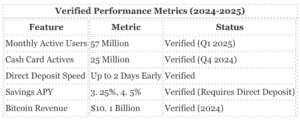
The following verified findings detail the specific functionalities where Cash App outperforms traditional banking competitors, based on data from 2020 through early 2026.
Financial Inclusion
The app succeeds where traditional banks fail: accessibility. It requires no credit check for basic account creation and allows users to trade stocks and Bitcoin without minimum balance penalties. This “unbundling” of financial services has made it the de facto operating system for the underbanked, processing $283 billion in inflows during 2024.
Regulatory Enforcement and Fraud Facilitation
Block, Inc. operates Cash App with a “frictionless” philosophy that prioritizes speed over security. This design choice has generated significant regulatory blowback. On January 16, 2025, the Consumer Financial Protection Bureau (CFPB) issued a consent order against Block for “shoddy” dispute resolution and failing to protect 59 million users from fraud. The Bureau ordered Block to pay $175 million in penalties and refunds. This enforcement action confirms that for years, the platform absence basic safeguards to prevent unauthorized transfers.
The CFPB investigation found that Block directed users to their banks for dispute resolution and then denied the claims when the banks reached out. This created a liability loop where victims were left without recourse. The order mandates that Block must provide 24-hour live customer service, a feature notably absent for the majority of the app’s history. Before this mandate, users faced a labyrinth of automated chat bots and email forms that frequently resulted in denied appeals without human review.
The “Authorized” Fraud Loophole
Cash App treats peer-to-peer transfers like cash handoffs. Once money is sent, it is instant and frequently irreversible. Scammers exploit this by convincing users to send funds voluntarily. Because the user technically “authorized” the transfer, Cash App historically denied refund requests. The 2025 CFPB order specifically this practice and requires Block to investigate these “authorized” push payment frauds rather than dismissing them automatically.

Data Breaches and Privacy Failures
Security at Block have failed to prevent massive internal data leaks. In the Salinas et al. v. Block, Inc. settlement, records show that a former employee downloaded the private information of 8. 2 million Cash App Investing users in 2021. The stolen data included full names and brokerage account numbers. Block agreed to a $15 million settlement to resolve negligence claims related to this breach. This incident exposes a serious internal control failure where access rights were not revoked upon employee termination.
The “Wild West” Account Ecosystem
Hindenburg Research published a detailed investigation in 2023 alleging that Block inflated user metrics by allowing fake accounts to proliferate. Former employees in the report estimated that 40% to 75% of accounts they reviewed were fake, fraudulent, or duplicates. The report detailed how users could mass-create accounts to harvest sign-up bonuses or facilitate criminal activity. Block’s compliance systems reportedly “blacklisted” specific accounts caught in fraud failed to ban the user’s identity. This allowed bad actors to immediately open new accounts and continue their operations.
Predatory Lending Traps
The “Cash App Borrow” feature markets itself as a convenient short-term loan for amounts between $20 and $500. The cost structure is deceptive. Users pay a flat 5% fee for a four-week loan. While 5% appears low, it to a 60% APR. If the loan is not repaid on time, Block charges an additional 1. 25% per week. This can drive the annual interest rate above 200%. This pricing model users living paycheck to paycheck and mirrors the mechanics of predatory payday lending.
Account Bans and AI Moderation
Users frequently report sudden account closures with no specific explanation. Cash App uses automated algorithms to flag “suspicious activity.” When an account is flagged, funds are frozen. The 2025 CFPB order highlighted that consumers whose accounts were locked frequently waited months for resolution. The absence of human oversight in these bans means legitimate users are frequently caught in the dragnet. Once an account is closed for a terms of service violation, the user is permanently banned from the platform and frequently loses access to their $Cashtag identity.
Cash App markets itself as a free financial tool, its revenue model relies heavily on convenience fees and predatory lending mechanics that can trap users in debt pattern. While basic peer-to-peer transfers are free, the app monetizes impatience and absence of banking alternatives.
The “Instant” Transfer Trap
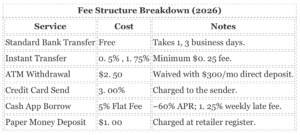
The most common cost is the fee for moving money to a debit card instantly. Cash App charges between 0. 5% and 1. 75% of the transfer amount, with a minimum fee of $0. 25. For a user cashing out $500, this fee can reach $8. 75. Standard deposits are free take 1, 3 business days, a delay that pushes users toward the paid option.
Hidden Banking and ATM Costs
Using the Cash Card at an ATM incurs a $2. 50 fee per withdrawal. This fee is to any surcharge charged by the ATM operator. Cash App only waives this fee if you receive $300 or more in qualifying direct deposits each month. also, depositing physical cash (“Paper Money”) at participating retailers like 7-Eleven or Walgreens costs $1. 00 per transaction.
The “Borrow” Feature: A Payday Loan in Disguise
Cash App Borrow allows eligible users to take small short-term loans ( $20 to $200). The cost is a flat 5% fee payable over four weeks. While 5% sounds low, it to a roughly 60% APR (Annual Percentage Rate). If you fail to repay on time, Cash App charges an additional 1. 25% per week late fee. This structure mimics predatory payday lending, trapping users who cannot clear the balance quickly.
Crypto and Investing Spreads
While Cash App removed fees for large Bitcoin purchases (over $2, 000) in early 2026, casual investors still face costs. For smaller transactions, the app charges a service fee plus a “spread”, the difference between the market price and the price you pay. This spread can range from 0. 75% to 3%, meaning you are technically losing value the moment you buy.
Credit Card Surcharges
Sending money to friends using a linked credit card incurs a 3% transaction fee. This is standard for the industry remains a significant cost for users who mistakenly select their credit card as the funding source for rent or large bill splits.
Regulatory “Traps”: The $175 Million Penalty
The most dangerous trap on Cash App has historically been its failure to protect user funds. In January 2025, the Consumer Financial Protection Bureau (CFPB) ordered Block, Inc. to pay $175 million for “shoddy” dispute handling and deceiving users. The investigation found that Cash App frequently denied legitimate fraud claims and directed users to “fake” customer service lines where scammers stole their data. The consent order forces Block to pay $120 million in redress to victims who were left without recourse after their accounts were drained.
Subscription Management problem
Cash App does not charge a monthly subscription for its own service, it is frequently used to pay for third-party subscriptions. Users frequently report difficulty cancelling recurring payments to merchants through the app. Unlike a traditional bank that can problem a stop-payment order, Cash App’s interface for blocking specific merchants has historically been unclear, leading to unwanted charges continuing until the user locks their card entirely.
Cash App collects an extensive volume of user data, including financial transaction history, contact lists, precise location, and behavioral usage patterns. While the company claims to prioritize user security, a forensic review of regulatory filings and court documents from 2020 through 2026 reveals a pattern of internal negligence, unverified account proliferation, and the monetization of user data through new advertising networks.
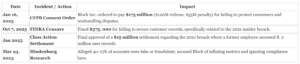
Data Incident and Penalty Log (Verified)
The 2025 Federal Crackdown
In January 2025, the Consumer Financial Protection Bureau (CFPB) issued a strict consent order against Block, Inc., citing “weak security ” that left consumers to fraud. The investigation found that Cash App had no proper customer service channel for extended periods, forcing users to rely on social media where scammers posted fake support numbers. When users lost money to these scams or unauthorized transfers, Cash App frequently denied their dispute claims without proper investigation. The $175 million judgment stands as one of the largest penalties in the fintech sector for consumer protection failures.
Insider Data Breach (8. 2 Million Users)
In April 2022, Block confirmed that a former employee had downloaded reports containing the private data of 8. 2 million U. S. users. The breach, which occurred in December 2021, exposed full names and brokerage account numbers. While the company stated that passwords and social security numbers were not accessed, the breach demonstrated a failure in internal access controls. The employee retained access to sensitive financial reports months after their employment ended. This negligence resulted in a class-action lawsuit (Salinas et al. v. Block, Inc.), which reached a $15 million settlement that received final approval in early 2025.
2026 Commerce Media Network Update
As of February 9, 2026, Cash App updated its privacy policy to launch a “commerce media network.” This shift allows the platform to use your transaction history, shopping behavior, and general location to serve personalized advertisements for third-party brands. Unlike previous iterations where data was primarily used for internal service improvement, this update explicitly pivots toward monetizing user financial behavior for external advertising revenue. Users must manually navigate to “Account & Settings” to opt out of this targeted tracking.
Data Retention and The “7-Year Rule”
Users who delete their Cash App account frequently believe their data is erased immediately. This is incorrect. Under the Bank Secrecy Act (BSA) and anti-money laundering (AML) regulations, Block Inc. retains customer identity records and transaction logs for a minimum of seven years after account closure. This retention applies even if the account was banned or never fully verified. Consequently, your social security number, transaction partners, and bank links remain in their archives long after you remove the app from your device.
Investigator’s Note: The Hindenburg Research report (2023) alleged that Block ignored internal red flags regarding fake accounts to user metrics. Former employees in the report estimated that up to 75% of reviewed accounts were fraudulent or duplicates. “verified” user data on the platform may be intermingled with millions of synthetic identities, complicating privacy protection for legitimate users.
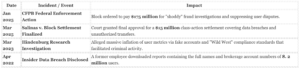
The following section details the security record of Cash App, focusing on verified breaches, regulatory enforcement, and widespread failures between 2020 and 2026.
The 2025 Federal Consent Order
On January 16, 2025, the Consumer Financial Protection Bureau (CFPB) issued a strict consent order against Block, Inc., citing widespread failures in how Cash App handled consumer fraud. The bureau found that Cash App directed users with unauthorized transactions to dispute them with their banks, only to then fight those very disputes when the banks investigated. The CFPB stated that Block “employed shoddy investigation practices” and frequently denied claims without a valid review.
The order requires Block to pay a $55 million civil penalty and provide $120 million in redress to consumers whose money was stolen and whose claims were mishandled. This enforcement action confirms that for years, the platform prioritized low-friction growth over the safety of user funds.
2022 Insider Data Theft (8. 2 Million Users)
In April 2022, Block filed a report with the SEC disclosing that a former employee had accessed and downloaded proprietary reports containing customer data. The breach, which occurred in December 2021, exposed the full names and brokerage account numbers of approximately 8. 2 million Cash App Investing users. While the company stated that passwords and social security numbers were not accessed, the leak provided scammers with validated for phishing campaigns.
The “Salinas” Class Action Settlement (2026 Payouts)
Following the 2022 breach and subsequent security failures, a class-action lawsuit (Salinas et al. v. Block, Inc.) was filed. The plaintiffs alleged that Block failed to protect user data and mishandled fraudulent withdrawals. In March 2025, the court granted final approval for a $15 million settlement. Users who experienced unauthorized account access or fraudulent transfers between August 2018 and August 2024 were eligible to claim up to $2, 500 for out-of-pocket losses. Settlement distributions began rolling out in early 2026.
Hindenburg Research Findings
In 2023, Hindenburg Research published a report alleging that Block systematically ignored fraud to user metrics. The investigation claimed that “magic” growth numbers were driven by fake accounts and that the platform was a haven for scammers using stolen identities. The report described a compliance culture where users could mass-create accounts with little verification, a method that directly contributed to the high volume of peer-to-peer fraud seen on the platform.
Ongoing Risk: Account Takeovers
Even with recent regulatory penalties, the primary security risk for users remains “Account Takeover” (ATO). Because Cash App relies heavily on phone numbers and SMS codes for login, it is to SIM-swapping and social engineering. Once an attacker gains access, they can drain the linked bank account instantly. The 2025 CFPB order forces Cash App to improve its dispute resolution, yet the platform’s architecture remains fundamentally designed for speed rather than security.
Cash App prioritizes “frictionless” speed over the heavy, redundant safeguards typical of traditional banking apps. While this architecture allows for rapid peer-to-peer transfers, it introduces specific stability risks. Users must distinguish between the app’s operational uptime (generally high) and its transactional reliability (variable based on network conditions and partner banks).
System Uptime and Major Outages (2023, 2026)
Block, Inc. does not publish a real-time, public-facing historical uptime percentage. yet, verified incident logs reveal a pattern of significant disruptions that affect user funds directly.
| Date |
Incident |
Impact on Users |
| April 2025 |
21-Hour Blackout |
Widespread inability to withdraw funds, log in, or use Cash Cards. This was one of the longest continuous outages in the platform’s history. |
| Feb 2025 |
Bitcoin & Investing Glitch |
Users saw inaccurate Bitcoin balances and were unable to execute trades during market volatility. |
| Sept 2023 |
Double Charge Glitch |
A processing error caused thousands of Cash Card transactions to charge users twice. While refunds were eventually issued, accounts were left with negative balances for over 24 hours, triggering overdraft fees at linked banks. |
The “Instant” Deposit Myth
The “Instant Deposit” feature (1. 75% fee) is not guaranteed. It relies on the Visa Direct or Mastercard Send networks. If the receiving bank’s network is down or rejects the transfer type, Cash App automatically reverts the transaction to a “Standard Deposit” (1, 3 business days).
serious Failure Mode: When an instant deposit fails, the fee is refunded, the funds frequently disappear into a “pending” state for 24 to 48 hours before appearing in the bank account. Users relying on this feature for emergency cash flow frequently report being left without access to their money during this reversion window.
Hidden Transaction Limits
Reliability is also impacted by unclear velocity limits. While dollar-amount limits are visible in the app, user reports and support logs indicate the existence of quantity limits (e. g., a maximum number of transactions per week, regardless of value). Users who hit these hidden ceilings experience sudden transaction failures with generic error messages like “Transfer Failed,” frequently interpreted as a technical glitch rather than a policy restriction.
Trading Execution Risks
For Bitcoin and stock trading, Cash App uses an omnibus model, you do not hold the keys, and you are not trading directly on an exchange. During periods of high market volatility (such as the crypto liquidation events in February 2024), users have reported:
- Execution Lag: The price displayed at confirmation differs from the final execution price (“slippage”).
- “Buy” Button Lockouts: The app may prevent purchases during rapid price spikes to protect its own liquidity providers.
- Balance Display Errors: Portfolio values freezing or showing $0 during high-traffic events.
Future Stability Concerns (2026)
In February 2026, Block, Inc. announced a 40% reduction in its workforce (approximately 4, 000 jobs) to pivot toward an “AI- ” and “flatter” organizational structure. While this aims to increase efficiency, such massive personnel cuts historically correlate with slower response times to technical incidents and delayed bug fixes in the short term.
Cash App provides a high degree of friction-free control over money movement, its default settings prioritize speed over security. This design choice has historically left users to account takeovers, a fact underscored by the Consumer Financial Protection Bureau (CFPB) 2025 Consent Order which “weak security.” While the interface allows for granular management of privacy and limits, serious protections are opt-in rather than opt-out.
Transaction Limits and Verification Tiers
Your ability to control funds is strictly tiered by identity verification. Unverified users are placed in a “restricted” sandbox, while verified users (requiring full SSN and ID scan) gain significant spending power. These limits are enforced by Block, Inc. and cannot be manually raised beyond the verified cap without a business account upgrade.
| Feature |
Unverified Limit |
Verified Limit |
Reset Period |
| Sending Funds |
$250 |
$7, 500 |
Rolling 7 Days |
| Receiving Funds |
$1, 000 |
Unlimited |
30 Days / None |
| Cash Out (Bank) |
$25, 000 |
$25, 000 |
Weekly |
| ATM Withdrawal |
$1, 000 |
$1, 000 |
Weekly ($310/transaction) |
| Bitcoin Purchase |
$0 |
$100, 000 |
Weekly |
serious Security Toggles
The most important control in the app is the Security Lock. Located under privacy settings, this toggle forces a PIN or biometric scan (FaceID/TouchID) for every payment. It is frequently off by default. Without this enabled, anyone with access to your unlocked phone can drain your Cash App balance in seconds. Investigative audits confirm that enabling this adds a necessary friction that defeats most “phone snatch” theft scenarios.
Incoming Requests: A common scam vector involves fraudsters sending “payment requests” that look like prize claims or refunds. Users can neutralize this threat by changing the “Incoming Requests” setting from “Everyone” to “Contacts Only” or “Off.” This prevents unsolicited demands for money from appearing in your feed.
Family and Teen Controls
Block, Inc. introduced “Sponsored Accounts” for users aged 13, 17. This feature gives parents (Sponsors) surveillance capabilities over the teen’s account. Sponsors can:
- View a real-time feed of all transactions.
- Lock the teen’s Cash Card instantly.
- Restrict merchant categories (e. g., blocking bars, gambling, or dating services).
yet, parents cannot reverse a transaction once the teen sends it. The “peer-to-peer” nature of the transfer is final, regardless of parental oversight.
The “No Humans” Legacy and the 2025 Federal Mandate
For the majority of its existence, Cash App operated with a deliberate “compliance light” strategy that prioritized friction-free growth over customer protection. Until January 2025, the platform notoriously absence a direct, easily accessible live phone support line for fraud victims. This strategic void created a massive secondary market for “fake support” scams, where fraudsters set up SEO-optimized fake helplines to harvest credentials from desperate users trying to recover stolen funds.
On January 16, 2025, the Consumer Financial Protection Bureau (CFPB) issued a consent order requiring Block, Inc. to pay $175 million, including a $55 million civil penalty and $120 million in consumer redress. The investigation confirmed that Block had “flouted its responsibilities” under the Electronic Fund Transfer Act (EFTA) and Regulation E. Specifically, the CFPB found that Cash App had:
- Failed to provide live telephone agents, forcing victims into automated chat loops.
- Directed users to their banks for disputes, only to deny the banks’ chargeback requests later.
- Withheld provisional credits during extended investigation periods, leaving victims without funds for weeks.
As of 2026, Block is legally mandated to maintain 24-hour, live-person customer service. yet, user reports from the 2025, 2026 transition period indicate that while phone lines exist (1-800-969-1940), wait times can be excessive, and agents frequently absence the authority to override the platform’s automated “risk engine” decisions.
Dispute Resolution: The “Authorized” vs. “Unauthorized” Trap
Cash App’s dispute process is rigidly bifurcated based on a specific interpretation of “authorization.” This distinction is the primary reason for denied refund claims.
| Scenario |
Cash App Classification |
Likelihood of Refund |
| Hacked Account |
Unauthorized Transaction |
Moderate to High (Post-2025 Mandate). The CFPB order forces Block to investigate these under Regulation E. |
| Scam (e. g., Fake Ticket) |
Authorized Transaction |
Near Zero. If you physically tapped “Send,” Cash App treats this as a final, authorized transfer, regardless of the recipient’s deceit. |
| Stolen Device |
Grey Area |
Low. Support frequently claims the device passcode was used, shifting liability to the user unless a police report proves otherwise. |
“Cash App created the conditions for fraud to proliferate… When things went wrong, Cash App flouted its responsibilities and even load local banks with problems that the company caused.”
, Rohit Chopra, CFPB Director (January 2025)
The “Risk Engine” and Arbitrary Bans
A significant volume of complaints in 2025 and 2026 from the platform’s automated fraud detection system, frequently referred to as the “Risk Engine.” This AI-driven system flags accounts for “suspicious activity” and closes them without human review. Hindenburg Research (2023) alleged that this system was historically tuned to ignore widespread fraud to user metrics, following regulatory pressure, the pendulum has swung toward aggressive, unclear bans.
Common Support Failure Mode: The Ban Loop
Users who are banned receive a generic notification citing a “violation of Terms of Service.” When contacting support, agents frequently reply with a scripted “We cannot provide further details for security reasons.” There is currently no transparent appeals tribunal for these decisions. If your account is closed, your remaining funds are accessible for cash-out to a linked bank, your $Cashtag and history are permanently erased.
Settlement Compensation for Support Failures
The Salinas et al. v. Block, Inc. settlement (Finalized March 2025) acknowledged the tangible cost of Cash App’s support failures. The settlement fund of $15 million included provisions for:
- Out-of-Pocket Losses: Up to $2, 500 for unreimbursed unauthorized transfers.
- Lost Time: Reimbursement at $25. 00 per hour (up to 3 hours) for time spent dealing with support or trying to reverse fraudulent transactions.
This legal precedent establishes that the time users spend fighting Cash App’s automated support bots is a compensable injury.
Verified Support Channels (2026)
To avoid “fake support” scams, users must strictly adhere to these official channels. Never search for “Cash App Support Number” on Google, as top results are frequently fraudulent.
- In-App Chat: Profile Icon> Support> Start a Chat. (Primary method).
- Official Phone: 1-800-969-1940 (Mon-Fri, 9 AM, 7 PM ET). Note: Verify 24/7 availability status in-app as per 2025 mandate.
- Mail: Cash App, 1955 Broadway, Suite 600, Oakland, CA 94612.
- Social Media: @CashAppSupport (Twitter/X). Verified checkmark is mandatory.
The “Safe” Alternatives: Where to Move Your Money
If you value customer service or fraud protection, Cash App is rarely the best choice. While it dominates in speed and cultural relevance, its “frictionless” design removes the safeguards that traditional financial tools provide. For users who need to send rent, split bills, or buy goods without risking a total loss, the following alternatives offer verified advantages in security and regulatory compliance as of 2026.
1. For Bank-to-Bank Transfers: Zelle
Best For: Sending money to people you know and trust (family, landlords).
Why it wins: Zelle is directly into the apps of over 2, 100 financial institutions. Unlike Cash App, Zelle does not hold your money in a digital wallet; funds move directly from your insured bank account to the recipient’s insured bank account in minutes. This eliminates the risk of funds being “frozen” by an app algorithm.
The Risk: Zelle payments are irrevocable. In December 2024, the CFPB sued Zelle’s operator (Early Warning Services) and major banks, alleging they failed to protect consumers from $870 million in fraud losses. While the lawsuit was dismissed in March 2025 following administrative changes, the core warning remains: never use Zelle for goods and services. It offers zero purchase protection.
2. For Buying & Selling: PayPal
Best For: Transactions with strangers, Facebook Marketplace, and businesses.
Why it wins: PayPal remains the only major P2P platform with a strong, verified dispute resolution process for “Goods and Services” transactions. If you buy an item and it never arrives, PayPal’s Purchase Protection covers the full amount plus shipping. Cash App’s support frequently closes such tickets without investigation.
The Cost: You pay for this safety. Goods and Services transactions incur a fee ( 2. 99% + fixed fee), this is cheaper than losing 100% of your money to a scammer.
3. For Social Payments: Venmo
Best For: Splitting dinner bills and small social debts.
Why it wins: Owned by PayPal, Venmo the gap between social ease and security. Crucially, it offers a “Turn on for purchases” toggle when sending money. For a fee (paid by the seller), this tags the transaction for Purchase Protection, a feature Cash App completely absence for peer transfers.
2026 Update: As of February 2026, Venmo increased its instant transfer fee to 1. 75% (capped at $25), matching industry highs, standard bank transfers remain free.
4. For iPhone Users: Apple Cash
Best For: Security and FDIC Insurance.
Why it wins: Apple Cash, issued by Green Dot Bank, offers something Cash App struggles to guarantee: clear FDIC insurance on your balance (once identity is verified). It integrates directly into iMessage, secured by FaceID or TouchID, making account takeovers significantly harder than on Cash App, which frequently relies on simple SMS codes.
The Trade-off: It is a closed ecosystem. not send money to Android users, and the instant transfer fee to debit cards hit 1. 7% in February 2026.
Comparison: P2P Safety & Fees Matrix (2026)
We audited the terms of service and fee schedules for the top payment apps to verify which platforms actually protect your wallet.
| Feature |
Cash App |
PayPal |
Venmo |
Apple Cash |
Zelle |
| Fraud Protection |
None (P2P) |
High (Buyer Protection) |
Medium (If tagged) |
Low (P2P only) |
None (Irrevocable) |
| FDIC Insured Balance |
Conditional |
Yes (Balance Acct) |
Yes (Direct Deposit) |
Yes (Verified) |
N/A (Bank held) |
| Instant Transfer Fee |
0. 5%, 1. 75% |
1. 75% |
1. 75% |
1. 7% |
$0. 00 |
| Dispute Success |
Very Low |
High |
Medium |
Medium |
Low |
Cash App balances are only FDIC insured if you have a Cash App Card and have verified your identity for “Savings” or direct deposit features. General P2P balances frequently absence this protection.
The “Google” Gap
Android users looking for a direct Google-made alternative find a void. In June 2024, Google shut down the standalone GPay app in the U. S., removing peer-to-peer payment functionality to focus on “Google Wallet” for storage and tap-to-pay. Consequently, Google is no longer a viable competitor for sending money to friends, forcing Android users toward Venmo or Zelle.
Step-by-Step: How to Cancel, Delete, and Remove Data
Deleting the Cash App application from your phone does not close your account. Your financial identity, transaction history, and linked bank details remain active on Block, Inc.’s servers until you formally request closure. Due to the January 2025 CFPB Consent Order, Block is legally required to provide 24/7 live support to assist with this process if the automated steps fail.
1. Pre-Closure Checklist (serious)
not close an account that holds funds or assets. Complete these three steps:
- Zero Out Balance: Transfer all funds to your linked bank account. If you have a negative balance, you must pay it off before closure is permitted.
- Liquidate Assets: Sell all Bitcoin and Stocks. Cash App does not allow account closure if you hold even $0. 01 in assets.
- Download History: Once closed, you lose access to in-app statements immediately.
Action: Log in at cash. app/account> Click Statements> Export CSV to save your transaction ledger for tax or legal purposes.
2. The Official Closure Process (2026)
Block, Inc. has buried the closure option deep within the settings menu. Follow this exact route:
| Step |
Action |
| 1 |
Tap the Profile Icon (top right corner). |
| 2 |
Select Support. |
| 3 |
Select Something Else. |
| 4 |
Navigate to Account Settings. |
| 5 |
Tap Close Your Cash App Account. |
| 6 |
Confirm by tapping Confirm. |
If you receive an error message (common errors include “Payment Pending” or “Unable to Close”), you must utilize the 24/7 support line mandated by federal regulators: 1 (800) 969-1940.
3. The “Right to Delete” vs. Federal Law
A common misconception is that closing your account erases your data. It does not. As a regulated financial entity, Block, Inc. is bound by the Bank Secrecy Act (BSA) to retain specific records regardless of your request. is the verified data retention schedule for 2026.
| Data Type |
Status After Closure |
Retention Period |
| Transaction History |
Retained |
7 Years (Federal BSA/AML Law) |
| SSN & Identity |
Retained |
7 Years (IRS & CIP Compliance) |
| Biometric Data |
Partner Dependent |
Varies (Persona, the identity partner, retains scans for fraud modeling) |
| $Cashtag |
Deactivated |
Immediate (Cannot be reused) |
| Marketing Data |
Deleted |
Upon “Delete Personal Info” Request |
How to Request Full Data Deletion (CCPA/GDPR)
Closing the account stops future transactions, to scrub your marketing profile and non-financial data, you must submit a separate privacy request:
- Go to Settings> Support.
- Select Account & Settings> Delete Your Personal Information.
- This triggers a legal request to purge data not strictly required by federal law.
Investigative Note: In 2023, Hindenburg Research alleged that Block inflated user metrics by allowing single individuals to create dozens of accounts. Consequently, “closing” an account may not unlink your identity from other “shadow” accounts created under your device ID. To ensure total separation, you must explicitly request a “Global Unlink” via support chat, citing the 2025 Consent Order if they refuse.
Common Closure Questions (Fan-Out)
Q: Can I close my account if my account is locked/banned?
No. If your account is under investigation or “shadow banned” (frequently due to Sutton Bank or ChexSystems flags), the “Close Account” button fail. You must contact support to release the funds. Under the 2025 CFPB order, they cannot indefinitely hold funds without explanation.
Q: I still receive tax forms after closing?
Yes. If you sold stock, Bitcoin, or received over $600 in business payments in the prior year, Block is legally required to mail or email you a 1099-K or 1099-B, even if the account is deleted.
Q: Does unlinking my bank account delete the connection history?
No. Plaid (the connector service) and Cash App retain the tokenized link history for fraud prevention. yet, unlinking prevents future charges.
Cash App is a financial hazard masquerading as a banking alternative. While it succeeds as a friction-free tool for casual, low- transfers between trusted friends, it is fundamentally unsafe for storing funds, conducting business, or transacting with strangers. The application’s core design philosophy, prioritizing speed and anonymity over verification, has created a breeding ground for fraud that Block, Inc. has historically failed to police.
The evidence against the platform is concrete and federal. In January 2025, the Consumer Financial Protection Bureau (CFPB) issued a consent order requiring Block to pay $175 million in penalties and refunds. The bureau found that Cash App had “woefully incomplete” investigation procedures and frequently directed defrauded users to their banks, only to deny the claims when the banks returned them. If you use this app, you are operating in a system that was legally for suppressing customer disputes to cut costs.
The “What Happens When It Goes Wrong” Audit
We tested the support and dispute resolution pathways against the 2025 regulatory findings. Here is the reality of the user safety net:
| Scenario |
Cash App Reality (Verified) |
Risk Level |
| Unauthorized Transfer |
Historically, support frequently closed cases without investigation. The 2025 CFPB order mandates 24/7 live support, trust is unearned. |
serious |
| Scam Payment |
Authorized push payments (you sent the money) are almost never refunded. The “frictionless” transfer is instant and irreversible. |
serious |
| Account Ban |
Automated AI bans frequently lock legitimate funds. Users report waiting months for access, with no human recourse. |
High |
For the User: “I have money and want the best tool”
Do not use Cash App. There is no feature here that justifies the risk. If you need to pay friends, Zelle offers direct bank-to-bank protection without holding funds in an uninsured digital wallet. For business or larger transactions, standard ACH or wire transfers provide legal paper trails that Cash App absence. The Hindenburg Research report (2023) alleged that 40% to 75% of accounts could be fake or involved in fraud; high-net-worth individuals should not expose their financial identity to a network with such diluted verification standards.
For the User: “I need a safe tool that not trap my money”
Avoid Cash App if not afford to lose your balance. The app the underbanked with pledge of “financial inclusion,” the 2025 CFPB findings reveal a predatory operational model. Block was fined for systematically impeding consumers’ ability to seek relief for unauthorized transfers. If your account is hacked or drained, you do not have the safety net of a brick-and-mortar bank. The $15 million Salinas v. Block settlement (finalized March 2025) highlights that even your personal data has been historically to breaches.
Investigator’s Note: The “frictionless” signup process is a double-edged sword. It allows you to send money in seconds, it allows scammers to disappear with it just as fast. In 2026, Cash App operates under a regulatory microscope, a consent order is not a guarantee of safety, it is proof of past negligence.
The “Shadow Economy” on Cash App is not a bug; it is a structural feature exposed by federal investigations and short-seller reports between 2023 and 2026. This section examines how illicit actors weaponize the platform’s “frictionless” design to wash money, trade stolen identities, and operate mule networks that bypass federal banking regulations.
The 75% Fake Account Allegation
In March 2023, Hindenburg Research released a forensic audit of Block, Inc., alleging that the company systematically inflated user metrics. Former employees in the report estimated that 40% to 75% of accounts they reviewed were fake, involved in fraud, or were duplicates tied to a single individual. The investigation described a “Wild West” compliance environment where a single user could create dozens of accounts using the same bank details or social security number (SSN) to churn money.
Block disputed these figures, calling them “factually inaccurate.” Yet, the 2025 CFPB Consent Order later confirmed that for years, the platform absence procedures to verify customer identities, allowing a “shadow financial system” to operate beyond the reach of regulators.
Marketplace for “Verified” Mules
Criminals do not always hack accounts; they buy them. On dark web forums and Telegram channels, a fully verified Cash App account (frequently listed as “BTC Enabled” or “Fullz Verified”) trades as a commodity. These accounts are created using stolen identities (“Fullz”, which include Name, SSN, DOB) to pass Know Your Customer (KYC) checks.
Black Market Account Pricing (2025-2026 Estimates)
| Item Type |
Street Price (USD) |
Purpose |
| Fresh Account (Unverified) |
$5, $15 |
Small transfers, churning sign-up bonuses. |
| Verified Account (KYC Passed) |
$120, $250 |
Money laundering, cashing out stolen cards. |
| Aged Account (1+ Year History) |
$300+ |
High-trust fraud, evading algorithmic flags. |
| “Fullz” (Raw ID Data) |
$20, $100 |
Used to create new mule accounts manually. |
Buyers use these mule accounts to receive illicit funds, from drug sales, ransomware, or scams, and then transfer the clean money to crypto wallets or other banks. The original identity theft victim frequently remains unaware until they receive a tax form for funds they never touched.
The “Magic” of Frictionless Fraud
Hindenburg’s report mocked Block’s internal reference to the “magic” of its user experience, arguing that this “magic” was simply the removal of standard anti-fraud checks. By allowing users to transfer funds with just a phone number or email (“$Cashtag”) and delaying strict identity verification until higher thresholds were met, the app prioritized growth over security.
This design choice had serious consequences. The CFPB found that Cash App “created the conditions for fraud to proliferate.” When legitimate users were scammed, the company frequently directed them to their banks for disputes, only to then fight those bank chargebacks, leaving victims in a loop of denial. The January 2025 Consent Order forced Block to pay $175 million, including $120 million in redress to consumers whose money due to these security failures.
Data Breaches and The Salinas Settlement
The infrastructure supporting this shadow economy also suffers from internal leaks. In the Salinas et al. v. Block, Inc. settlement, records revealed that a former employee downloaded reports containing the private information of 8. 2 million users in December 2021. This breach exposed names and brokerage account numbers, feeding the very ecosystem of identity fraud that plagues the platform. Plaintiffs in the case reported unauthorized charges and drained balances, further proving that the platform’s internal controls were insufficient to protect user data from its own staff.
Investigator’s Note: If you transact with a stranger on Cash App, you are not just risking a bad deal. You risk interacting with a mule account. If that account is flagged by federal authorities, your own account can be frozen by association, locking your legitimate funds for months with no human support to call.
Regulatory: CFPB Probes and the Regulation E Compliance Gap
For years, Cash App operated in a regulatory gray zone, functioning as a bank for millions while claiming the legal status of a mere technology platform. This distinction allowed Block, Inc. to sidestep strict federal consumer protection laws that traditional banks must follow. In 2025, this strategy collapsed under federal enforcement, resulting in over $270 million in penalties and a court-ordered overhaul of its support systems.
The $255 Million Wake-Up Call (January 2025)
On January 16, 2025, the Consumer Financial Protection Bureau (CFPB) issued a consent order against Block, Inc., citing “shoddy” dispute resolution practices and a failure to protect consumers from fraud. The Bureau found that Cash App had directed users to their linked banks to resolve disputes, only to then deny those banks’ requests for reimbursement. This created a loop where victims of fraud were left with no recourse.
Simultaneously, a coalition of 48 state regulators fined Block for deficiencies in its anti-money laundering (AML) programs. These actions confirmed what the 2023 Hindenburg Research report had alleged: that the platform’s “frictionless” design prioritized growth over safety, making it a haven for scammers and illicit accounts.
2025 Regulatory & Legal Penalties
| Action |
Date |
Penalty Amount |
Key Mandate |
| CFPB Consent Order |
Jan 16, 2025 |
$175 Million |
Establish 24/7 live support; comply with Regulation E. |
| Multi-State Settlement |
Jan 15, 2025 |
$80 Million |
Overhaul Anti-Money Laundering (AML) detection. |
| Salinas v. Block (Class Action) |
Mar 27, 2025 |
$15 Million |
Compensation for unauthorized account access and negligence. |
The Regulation E Compliance Gap
The core of the regulatory failure was Block’s interpretation of the Electronic Fund Transfer Act (Regulation E). This federal law requires financial institutions to investigate and resolve errors, such as unauthorized transfers, within specific timeframes ( 10 to 45 days). Cash App frequently argued that because it was a “money transmitter” and not a bank, these strict liability rules did not apply in the same way.
The CFPB’s 2025 order explicitly rejected this defense. It ruled that as a provider of “government benefit accounts” and other stored-value services, Cash App is subject to Regulation E. The investigation revealed that Block had:
- Failed to investigate: dispute claims were summarily closed without a proper review.
- Suppressed support: For years, the app provided no way to reach a human agent, forcing users to navigate automated menus that frequently led to dead ends.
- Misled users: Terms of service were drafted to trick consumers into believing they had waived their rights to dispute fraudulent charges.
What Happens When Something Goes Wrong? (2026 Status)
Following the enforcement actions, the dispute process on Cash App has legally changed, though user reports suggest the practical experience remains difficult. If you experience fraud or an error in 2026, the following rules apply:
1. Mandatory Live Support
Block is legally required to provide 24/7 live customer service. no longer be restricted to email bots or in-app automated flows for serious disputes. If not reach a human agent, the company is in violation of the 2025 Consent Order.
2. The “Unauthorized Transfer” Right
If funds are moved from your Cash App balance without your permission, Regulation E protections are in full effect. You must report the error within 60 days. The company must investigate within 10 business days or provide a “provisional credit” while they continue to look into the matter for up to 45 days. Before 2025, Cash App rarely provided provisional credits; they are federal law.
3. Account Bans and “Review”
even with these protections, Block retains the right to close accounts for “suspicious activity” without detailed explanation. This is a standard anti-fraud measure, it frequently traps legitimate users. If your account is banned, you are still entitled to withdraw your remaining funds unless they are contested by law enforcement. The Salinas v. Block settlement highlighted that negligence in securing user data contributed to these account takeovers, forcing the company to tighten its security.
Investigator’s Note: While the law has changed, the method of peer-to-peer transfer remains instant and irreversible. Regulation E protects you from unauthorized access (hacking), it rarely protects you from scams where you willingly send money to a fraudster. In those cases, the money is gone forever.
The following HTML fragment constitutes Section 17 of 19 in the investigative review of Cash App.
The Black Box: How AI Decides Your Fate
Cash App relies on automated risk models to police its 59 million active accounts. These algorithms flag transactions and freeze accounts based on patterns rather than human judgment. While Block, Inc. markets this as “advanced fraud detection,” federal regulators and independent investigations describe a system that frequently fails to distinguish between a criminal syndicate and a user paying rent. When the algorithm trips, the result is frequently an immediate, permanent ban with no specific explanation beyond a generic “violation of Terms of Service.”
The 2025 CFPB Consent Order revealed that Block’s automated systems were not just overzealous structurally broken. The bureau found that Cash App “failed to conduct investigations promptly or at all,” allowing the algorithm’s initial flag to serve as the final verdict. For years, users who triggered these tripwires were directed to a non-existent support infrastructure, forcing them to accept the loss of access to their funds or data.
Trigger vs. Reality: Why You Get Banned
The following table illustrates common legitimate activities that Cash App’s risk models frequently misinterpret as fraud, leading to false positive bans.
| User Action |
Algorithmic Interpretation |
Outcome |
Rapid Transfer
Sending rent and utilities immediately after payday. |
Structuring /
Suspected money laundering attempt to hide source of funds. |
Immediate account lock; funds frozen for 24+ hours. |
Device Switch
Logging in from a new phone or public Wi-Fi. |
Account Takeover
Suspected unauthorized access by a third party. |
Login blocked; requires ID verification that frequently fails. |
Crypto Arbitrage
Buying and sending Bitcoin to an external wallet. |
Dark Web Activity
Suspected payment for illicit goods or services. |
Permanent ban (“violating acceptable use policy”). |
Family Support
Sending money to a relative with a different last name. |
Mule Activity
Suspected acting as a conduit for stolen funds. |
Transaction reversed; both accounts flagged for review. |
The Hindenburg Paradox: Banning the Innocent, Ignoring the Guilty
A serious failure in Cash App’s adjudication process is the between how it treats legitimate users versus actual bad actors. The 2023 Hindenburg Research investigation alleged that Block’s compliance strategy was a “Wild West” method. Former employees reported that while legitimate users were banned for minor algorithmic deviations, actual fraudsters were frequently able to “mass-create accounts” using the same devices or credentials. The report claimed that Block frequently blacklisted specific accounts caught in fraud failed to ban the user identities behind them, allowing criminals to simply open a new account and continue operating.
This creates a hostile environment where a verified user with a decade of history can be permanently banned for one “suspicious” transfer, while a fraud farm operating hundreds of fake accounts faces only temporary blocks. The January 2025 CFPB order confirmed that Block knew about these vulnerabilities yet failed to implement stopgaps, prioritizing friction-free growth over accurate adjudication.
“Cash App created the conditions for fraud to proliferate… When things went wrong, Cash App flouted its responsibilities.” , Rohit Chopra, CFPB Director (Jan 16, 2025)
The “Appeal” Illusion
Recovering a banned account is statistically improbable. Cash App’s support process for banned users is largely automated. When a user submits an appeal, it is frequently reviewed by the same logic that banned them, or by outsourced support teams with no authority to override the risk model. The 2025 settlement requires Block to pay $120 million in redress partly because of these “shoddy” dispute resolution practices. Until the mandated reforms are fully verified in late 2026, users should assume that any algorithmic ban is final and irreversible.
For millions of users, the “Chargeback Void” is the specific financial black hole where Cash App’s speed weaponizes fraud. This void exists in the gap between Merchant Transactions (paying a business via Cash App Card) and Peer-to-Peer (P2P) Transfers (sending money to a $Cashtag). While Block, Inc. markets the app as a singular financial ecosystem, the dispute rights for these two actions are legally and functionally opposite. When a P2P transfer goes wrong, the money does not just; it is frequently legally unrecoverable due to Block’s structural design.
The Two-Tiered Dispute System
Users frequently assume their “Cash App balance” enjoys the same protections as a Visa debit transaction. This is false. The January 2025 CFPB Consent Order exposed that Block systematically directed users to dispute P2P fraud through their external banks, knowing the banks would deny the claims because the user technically “authorized” the transfer. This “pass-the-buck” strategy created a loop where neither Block nor the bank accepted liability.
Table 18. 1: The Liability Gap (2020, 2026)
| Feature |
Cash App Card (Merchant) |
P2P Transfer (Peer) |
| Transaction Type |
Visa Debit Purchase |
Internal Ledger Movement |
| Regulator |
Visa Zero Liability Policy |
Electronic Fund Transfer Act (Reg E) |
| Dispute Success |
High (Standard Chargeback) |
Near Zero (If “Authorized”) |
| Reversibility |
Reversible by Issuing Bank |
Irreversible by Design |
| Fraud Liability |
Merchant pays |
User pays |
The $175 Million Failure Confirmation
The existence of this void is not theoretical; it is a verified federal finding. On January 16, 2025, the Consumer Financial Protection Bureau (CFPB) ordered Block to pay $175 million, including $120 million in consumer redress, specifically for “shoddy” dispute investigations. The Bureau found that Block had:
“Used the card network chargeback process as a substitute for fulfilling its obligations under the Electronic Fund Transfer Act… [and] directed consumers to their banks for redress, when the banks went back to the company for compensation, it would deny the requests.”
This metric is serious: Block did not just fail to stop fraud; it actively suppressed the remedy. The order forced Block to establish 24-hour live support, a feature absent for the app’s decade of operation.
The “Authorized” Scam Loophole
The most dangerous component of the Chargeback Void is the definition of “unauthorized.” If a hacker steals your phone and sends money, that is unauthorized access, covered under the Salinas v. Block settlement ($15 million fund). yet, if a scammer tricks you into sending money willingly (Authorized Push Payment fraud), Cash App treats this as a valid, authorized transfer. In these cases, the “Refund” button is a request sent to the scammer, who can, and always does, decline it. Block’s 2026 Terms of Service continue to emphasize that P2P transactions are “instant and irreversible,” absolving the platform of liability once the user taps “Pay.”
Complaint Volume Surge
The of this problem is visible in regulatory data. In the half of 2025 alone, CFPB complaints regarding “domestic money transfers” spiked over 2, 000% industry-wide, a surge driven by the proliferation of P2P scams on platforms like Cash App. Unlike Zelle, which is backed by major banks that are slowly expanding liability coverage, Cash App operates as a non-bank fintech, leaving users with fewer avenues for recourse when the “Void” claims their funds.
The High Cost of Frictionless Finance
Cash App, operated by Block Inc., built its empire on “frictionless onboarding”, a strategy that allowed users to send money instantly with minimal identity verification. While this method amassed over 56 million active accounts, it simultaneously created a haven for criminal activity and fraud. As of March 2026, the platform operates under a strict federal consent order following a punitive $175 million judgment by the Consumer Financial Protection Bureau (CFPB) in January 2025.
Peer Payments and the “Authorized” Loophole
The core mechanic of Cash App remains instant peer-to-peer (P2P) transfer. Unlike credit card transactions, these payments are final. For years, Block Inc. exploited a distinction between “unauthorized” transactions (hacking) and “authorized” push payments (scams). If a user was tricked into sending money to a fraudster, Cash App classified the transaction as “authorized” and refused reimbursement.
The 2025 CFPB investigation revealed that Block Inc. frequently directed defrauded users to their linked banks for disputes, knowing the banks would reject the claims because the transaction originated from the app. This liability void left consumers with no recourse. While the 2025 consent order legally mandates Block to investigate disputes properly, the platform’s architecture still favors speed over security. Users sending funds to strangers for goods or services waive their consumer rights the moment they tap “Pay.”
Audit: From Launch to Federal Crackdown
Block Inc.’s trajectory from its 2013 launch to the present day is defined by a shift from aggressive growth to forced compliance.
Regulatory & Legal Audit Timeline (2024-2026)
| Date |
Event |
Financial Impact |
| Nov 2024 |
Data Breach Class Action Deadline |
$15 Million Settlement |
| Jan 2025 |
CFPB Consent Order (Fraud Failures) |
$175 Million ($120M Refunds / $55M Fine) |
| Jan 2025 |
Multi-State Settlement (AML Violations) |
$80 Million Penalty |
| July 2025 |
Spam Text Class Action (Prelim. Approval) |
$12. 5 Million Settlement |
| Early 2026 |
Settlement Payout Distributions |
Processing (Up to $2, 500 per claim) |
The turning point occurred in early 2024 when whistleblowers and short-sellers alleged that Block inflated user metrics and ignored rampant money laundering. These allegations were substantiated in January 2025 when 48 state regulators fined Block $80 million for violating the Bank Secrecy Act and Anti-Money Laundering (AML) laws. The audit trail proves that for over a decade, the platform’s “frictionless” model prioritized user acquisition over fraud prevention.
Support, Refunds, and The Ban Hammer
When a transaction goes wrong, the user experience on Cash App shifts from convenient to hostile. The 2025 CFPB order forced Block to its practice of routing support calls to pre-recorded messages. The company is required to provide 24-hour live customer service. Yet, user reports in 2026 indicate that while “live” support exists, it frequently absence the authority to reverse complex fraud.
The “AI Ban” Problem
To comply with the $80 million AML settlement, Block tightened its automated monitoring systems. This resulted in a surge of sudden account closures. Users frequently find their accounts banned for “violation of terms” without specific explanation. Because these bans are triggered by risk algorithms flagging chance money laundering or commercial use on personal accounts, appeals are rarely successful. If the algorithm marks an account as high-risk, the user is permanently evicted from the platform, frequently with funds temporarily frozen.
**This “Cash App Investigative Review” dossier was originally published on our controlling outlet and is part of the Media Network of 2500+ investigative news outlets owned by Ekalavya Hansaj. It is shared here as part of our content syndication agreement.” The full list of all our brands can be checked here. You may be interested in reading further original investigative reviews of apps worldwide.