
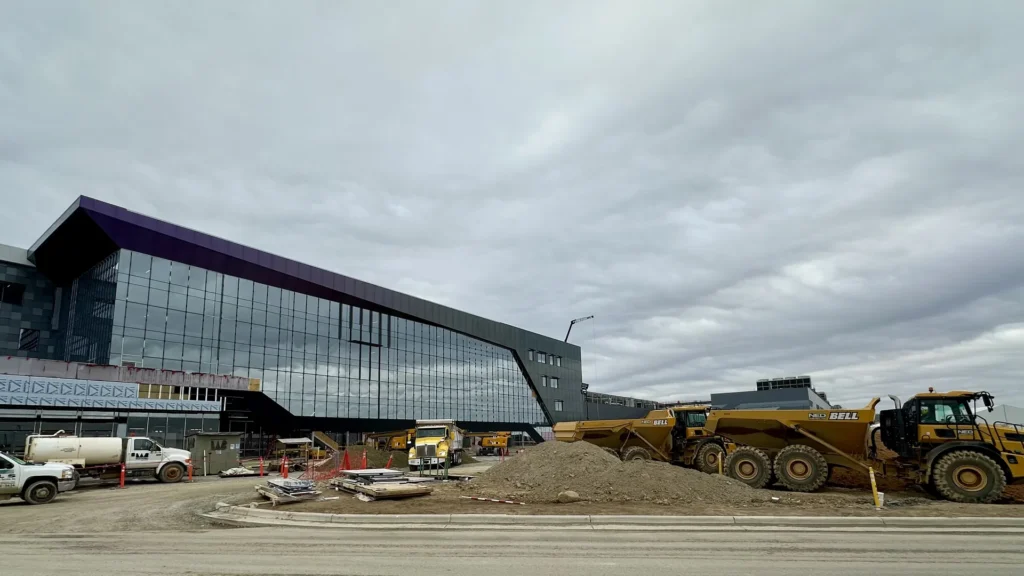
Subsidies for Ghosts: The Chip Plant Construction Frauds in America
Why it matters:
- The CHIPS Act aimed to revitalize the American semiconductor sector with a $52.7 billion investment, but three years later, key projects are significantly delayed.
- Flagship projects like Samsung's Texas plant and Intel's Ohio site are behind schedule, highlighting flaws in the subsidy model and workforce development provisions.
Three years after the CHIPS and Science Act authorized $52. 7 billion to reindustrialize the American semiconductor sector, the physical reality on the ground contradicts the legislative victory lap. By early 2026, the “Silicon Heartland” and “Silicon Desert” remain largely aspirational, defined not by humming cleanrooms by silent cranes, empty parking lots, and revised timelines that stretch toward the end of the decade in a shocking case of Chip Plant Construction Frauds. The gap between the federal government’s allocated billions and the actual production of advanced logic chips has widened into a chasm of policy failure, characterized by delayed disbursements, labor disputes, and corporate hesitation.
The central premise of the CHIPS Act was speed: an urgent injection of capital to secure supply chains before a chance geopolitical emergency in East Asia. Yet, as of February 2026, the flagship projects intended to anchor this resurgence are years behind schedule. The Department of Commerce has allocated over $30 billion in preliminary grants, yet the flow of actual cash to construction accounts has been by bureaucratic milestones and renegotiations. The result is a of “ghost” projects, sites where earth was moved and steel erected, only for operations to freeze as market conditions shifted and federal checks failed to clear.
The Samsung Standoff: Built Empty
Nowhere is the disconnect more visible than in Taylor, Texas. Samsung Electronics, awarded up to $6. 4 billion in direct funding, pushed its $44 billion fabrication plant to near-completion, reports in March 2024 indicated the structure was over 90% finished. Yet, by mid-2025, the facility stood as a hollow monument. Mass production, originally slated for late 2024, was pushed to 2026. The company a “absence of customers” for the legacy 4nm nodes originally planned, forcing a costly internal retrofit to support 2nm processes.
This delay exposes a serious flaw in the subsidy model: federal funds incentivized construction speed over market viability. The Taylor facility exists physically, economically, it is a ghost town, waiting for a demand pattern that has not yet materialized for its specific output. The site remains a dormant asset, burning maintenance capital while contributing zero chips to the national supply chain.
Intel’s Ohio Mud Pit
In Ohio, the “Silicon Heartland” promised by Intel has devolved into a timeline of retreating horizons. The $20 billion New Albany site, once heralded as the largest private sector investment in state history with a 2025 production target, has slipped significantly. By late 2025, Intel confirmed that while the concrete shells were rising, the installation of the serious, multi-million dollar lithography tools would not occur until demand recovered, pushing the operational start date to 2027 or later.
The delay from a collision of corporate liquidity problems and federal sluggishness. Intel’s stock struggles in 2024 forced a capital expenditure pullback, while the “milestone-based” disbursement of CHIPS funds meant the government money was not a lump sum stimulus a reimbursement for work the company could no longer afford to front-load aggressively. The result is a massive excavation site that moves at the speed of quarterly earnings calls rather than national security urgency.
TSMC and the Labor Scapegoat
In Arizona, TSMC’s Fab 21 project became a flashpoint for labor relations rather than manufacturing prowess. The Taiwanese giant delayed its fab’s volume production from 2024 to the half of 2025, and its second fab from 2026 to 2027 or 2028. TSMC executives frequently blamed a “absence of skilled US workers,” a claim that sparked friction with local trade unions who pointed to safety problem and management culture clashes as the true culprits.
This friction reveals the structural inadequacy of the CHIPS Act’s workforce development provisions. While billions were earmarked for steel and concrete, the human infrastructure required to run these facilities was treated as an afterthought, leading to a reliance on imported technicians and a stalled domestic pipeline.
The Slide: Announced vs. Real Production Dates
The following table tracks the of confidence in US semiconductor construction timelines, comparing the dates promised at the bill’s signing with the reality of 2026.
| Project | Location | Original Target (2022) | Current Status (2026) | Primary Cause of Delay |
|---|---|---|---|---|
| Intel “Ohio One” | New Albany, OH | 2025 | 2027-2028 | Market demand, capital constraints |
| TSMC Fab 21 (Phase 1) | Phoenix, AZ | 2024 | H1 2025 | Labor disputes, equipment installation |
| TSMC Fab 21 (Phase 2) | Phoenix, AZ | 2026 | 2027-2028 | Technology upgrade, incentive negotiations |
| Samsung Foundry | Taylor, TX | Late 2024 | 2026 | Customer absence, node retrofit |
| Wolfspeed | Siler City, NC | 2024 | 2025 (Limited) | Financial restructuring, yield problem |
The “Building Chips in America Act,” signed in October 2024, attempted to stop the bleeding by exempting certain projects from federal environmental reviews (NEPA). While this removed a regulatory hurdle, it arrived too late to reverse the inertia of the major delays. The damage was already baked into the schedules. The 2022 vision of a revitalized American chip ecosystem by 2025 has dissolved, replaced by a series of unfinished construction projects that consume taxpayer subsidies while producing nothing press releases.
Follow the Money: Disbursed Grants versus Poured Concrete Scheme of Chip Plant Construction Frauds
By February 2026, the chasm between federal press releases and physical infrastructure has become the defining scandal of the CHIPS Act. While the Department of Commerce has allocated over $33 billion in incentives, the actual flow of capital has revealed a disturbing pattern: taxpayer funds are serving as corporate balance sheet stabilizers rather than construction accelerants. The “urgent” reindustrialization promised in 2022 has dissolved into a timeline of indefinite delays, with the most significant projects pushing production into the 2030s.
The mechanics of this failure are visible in the disbursement data. As of late 2025, the Treasury had finalized binding award agreements with major recipients, releasing billions in tranches. yet, these disbursements have not correlated with accelerated construction. Instead, the period of maximum funding availability, late 2024 through 2025, coincided with a near-total paralysis of greenfield expansion. The money moved; the cranes did not.
The Intel Disconnect
Intel Corporation stands as the primary case study of this decoupling. By August 2025, the company had reportedly received over $5 billion of its $7. 86 billion direct funding award, alongside a separate $3 billion injection for the “Secure Enclave” defense project. Yet, in March 2025, Intel formally notified the Ohio Department of Development that its “Silicon Heartland” mega-site would not begin production until 2030, a full five years behind the schedule sold to Congress.
The is clear. Federal funds were disbursed to shore up Intel’s precarious financial position, acting as a bailout for a company with a collapsing stock price and missed technological pattern. Meanwhile, the Ohio One site remains a shell. The “milestone-based” funding model, designed to protect taxpayers, failed to account for a scenario where a company meets bureaucratic paperwork while physically demobilizing its construction workforce.
Samsung’s Empty Shell
In Taylor, Texas, the situation is equally grim. Samsung Electronics received a $6. 6 billion award allocation to build a new foundry. By July 2025, reports confirmed that while the physical shell of the factory was largely complete, the facility sat empty, devoid of the multi-million dollar lithography machines required to manufacture chips. Samsung delayed the plant’s operational timeline to 2026 or later, citing a “absence of customers” for the specific 4nm node originally planned.
This creates a paradox: the U. S. government subsidized the construction of a building that the market does not currently need. The grant money paid for a concrete warehouse in the Texas desert, while the high-value equipment, and the jobs associated with operating it, remain in South Korea.
The Micron Mirage
Micron Technology’s project in Clay, New York, represents the most extreme example of timeline slippage. Awarded $6. 1 billion to bring memory chip manufacturing back to American soil, Micron’s environmental filings in November 2025 revealed that construction on the fab would not even begin until mid-2026. Production is slated for 2030.
The following table details the collapse of the original 2022 timelines against the reality of 2026:
| Recipient | Project Location | Federal Grant Award | Original Target | Current Reality (Feb 2026) | Delay Status |
|---|---|---|---|---|---|
| Intel | New Albany, OH | $7. 86 Billion | 2025 Production | 2030 Production | 5 Years Late |
| Samsung | Taylor, TX | $6. 6 Billion | 2024 Production | 2026+ (No Equipment) | 2+ Years Late |
| TSMC | Phoenix, AZ (Fab 2) | $6. 6 Billion | 2026 Production | 2028 Production | 2 Years Late |
| Micron | Clay, NY | $6. 1 Billion | 2025 Construction | 2026 Construction Start | Delayed Start |
The Disbursement Trap
The structural flaw in the CHIPS Act execution lies in the definition of “success.” The Department of Commerce prioritized the obligation of funds, getting the contracts signed, over the verification of operational capacity. By late 2024, the political pressure to “get the money out the door” before a chance change in administration led to a rush of finalized agreements. Companies locked in their billions, then immediately announced delays.
This sequence suggests that the grants were not treated as capital for immediate construction, as long-term insurance policies against market volatility. For the taxpayer, the return on investment has been deferred for half a decade. The “ghosts” are not just the empty buildings; they are the billions of dollars that into corporate treasuries with no corresponding increase in domestic manufacturing output.
Phoenix Phantoms: The Stalled Shells of TSMC Fab 21
By February 2026, the sprawling construction site in north Phoenix, intended to be the crown jewel of American semiconductor independence, stands as a monument to the friction between federal ambition and industrial reality. TSMC Fab 21, originally slated to churn out 5-nanometer chips by 2024, has become a case study in the “subsidy trap.” While the facility (Fab 1) began limited high-volume production in late 2024, a full year behind schedule, the broader campus remains a patchwork of delayed timelines and hollow structures. The second facility, designed for new 3-nanometer logic, sits as a concrete shell with its operational target pushed back to 2027 or 2028, a delay that leaves the U. S. supply chain for an additional three years.
The disintegration of the original timeline is rooted in a bitter, high- labor war that erupted in 2023 and festered well into 2025. TSMC management, accustomed to the rigid hierarchy and 12-hour workdays of Taiwan’s science parks, publicly blamed American workers for the delays, citing a “absence of skilled expertise.” This accusation triggered a fierce backlash from the Arizona Building and Construction Trades Council (AZBTC), representing 3, 000 pipefitters, electricians, and welders on-site. The conflict intensified when TSMC attempted to fast-track visas for 500 Taiwanese workers to replace local crews, a move unions branded as a ploy to undercut wages rather than a technical need.
The cultural chasm at Fab 21 has proven more difficult to than the technical one. Internal reports and lawsuits filed in late 2024 describe a “hostile work environment” where American engineers were allegedly marginalized. A class-action lawsuit representing 28 former employees accused TSMC of “anti-American bias,” claiming that managers favored Taiwanese nationals for promotions and subjected local staff to verbal abuse, including accusations of being “lazy” for refusing to work uncompensated overtime. This discord resulted in a turnover rate that paralyzed knowledge transfer, forcing the company to rely on a “fly-in, fly-out” rotation of overseas staff that contradicts the CHIPS Act’s core mandate of building a domestic workforce.
| Facility Phase | Original Target (2021) | Revised Target (2024) | Current Status (Feb 2026) | Primary Cause of Delay |
|---|---|---|---|---|
| Fab 1 (4nm/5nm) | Production: 2024 | Production: H1 2025 | Limited Vol. Production | Labor disputes, equipment install problem |
| Fab 2 (3nm) | Production: 2026 | Production: 2027/2028 | Shell Complete, Empty | Market demand shifts, skilled labor absence |
| Fab 3 (2nm) | Announced 2024 | Production: 2030 | Groundbreaking Only | Pending subsidy disbursement milestones |
| Packaging Plant | N/A | Planning Phase | Permitting Delays | Regulatory compliance costs |
Financial realities have further eroded the project’s viability. even with securing $6. 6 billion in direct CHIPS Act funding and $5 billion in loans finalized in November 2024, the cost of manufacturing in Arizona has ballooned to nearly double that of Taiwan. Suppliers, originally expected to cluster around the Phoenix site, have halted their own construction plans. Chemical suppliers, for instance, face shipping costs for sulfuric acid from Asia that are five times higher than local sourcing, yet local alternatives fail to meet TSMC’s purity standards. Consequently, the “ecosystem” promised to Arizona taxpayers remains fragmented, with the fab operating as an island dependent on a trans-Pacific supply line, the very dependency the subsidies were meant to eliminate.
Safety records at the site paint a grim picture of the rush to catch up. Union representatives reported serious safety violations throughout 2024, including insufficient lighting, chemical exposure risks, and chaotic management of heavy. The rush to install cleanroom tools in Fab 1 led to a series of “near-miss” incidents that further alienated the local workforce. By early 2026, while the wafers are technically moving through the line, the site operates at a fraction of its theoretical capacity, load by a 30% higher operating cost structure that TSMC executives have warned require “value-based pricing”, a euphemism for passing the costs onto U. S. customers like Apple and NVIDIA.
The “Phoenix Phantom” is not just a delayed construction project; it is a structural failure of policy implementation. The Department of Commerce’s disbursement of funds, including a $1. 5 billion milestone payment released just days before the 2025 presidential transition, has done little to accelerate the physical reality of Fab 2. Instead, the capital has been absorbed by cost overruns and remediation of labor disputes. As the desert sun beats down on the silent cranes surrounding the empty shell of Fab 2, the project stands as a testament to the difficulty of transplanting an entire industrial culture by legislative fiat.
Silicon Heartland Stasis: Intel and the Ohio Delay
In January 2022, the cornfields of Licking County, Ohio, were christened the “Silicon Heartland.” President Joe Biden and Intel CEO Pat Gelsinger stood on the frozen ground, promising that by 2025, the site would be the “largest silicon manufacturing location on the planet,” churning out advanced semiconductors to break American reliance on Asian supply chains. Four years later, as of February 2026, the site is a monument to suspended animation. The cranes are present, the urgency has evaporated. The 2025 production deadline, once the central selling point for the CHIPS Act’s passage, has been abandoned, replaced by a revised timeline that pushes full operations into the 2030s.
The delay is not a construction hiccup; it is a structural collapse of the project’s original. In March 2025, Intel formally notified employees and state officials that the of the two Ohio fabrication plants (fabs) would not begin operations until 2030, with the second delayed until 2031. This five-year slide decouples the taxpayer investment from the immediate geopolitical security goals it was legally mandated to address. The “urgent” need to secure domestic supply by the mid-2020s has mutated into a long-term infrastructure project that not yield a single logic chip before the decade.
The Funding Paradox: Payment Without Production
even with the collapse of the production timeline, federal funds have continued to flow, driven by a “too big to fail” panic within the Department of Commerce. In August 2025, Intel secured an accelerated disbursement of $5. 7 billion in CHIPS Act funds. This payment was released not because milestones were met, because the company’s financial stability required an emergency injection. The terms of the deal were quietly renegotiated: the government scrapped specific project benchmarks that Intel could no longer hit, exchanging the cash for a 10% equity stake in the company and warrants.
This renegotiation exposes a serious flaw in the CHIPS Act’s enforcement method. The legislation was designed to reward speed and output. Instead, it has evolved into a corporate life-support system. By late 2025, Intel had received more federal cash for its Ohio site than it had produced in revenue from the site, which remains zero. The “Silicon Heartland” has absorbed billions in taxpayer capital while simultaneously cutting its own capital expenditure guidance for 2026 to preserve cash flow.
Concrete Shells and “Prudent” Pauses
The physical status of the New Albany complex reflects this paralysis. While Intel boasts of pouring 200, 000 cubic yards of concrete and logging 6. 4 million work hours, the site remains an empty shell. The “super-loads” of manufacturing equipment that were scheduled to barge up the Ohio River in late 2025 were postponed. The workforce strategy has also inverted; instead of hiring Ohioans to work in Ohio, the company is hiring locals and shipping them to Arizona and Oregon for training, with no firm return date for their deployment to the New Albany lines.
Corporate communications have shifted from “aggressive expansion” to “capital responsibility.” In internal memos from mid-2025, Intel leadership “market demand ” as the justification for the slowdown. This euphemism ignores the reality that the global demand for AI-capable chips exploded in 2024 and 2025, demand that is currently being met by TSMC and NVIDIA, not Intel. The delay is not a result of market softness; it is a result of Intel’s inability to execute its process node transitions while managing a balance sheet decimated by dividend suspensions and a 15% workforce reduction.
| Metric | 2022 “Groundbreaking” pledge | February 2026 Status |
|---|---|---|
| Production Start | 2025 (Online & Shipping) | 2030 (Fab 1), 2031 (Fab 2) |
| Federal Funding | Contingent on milestones | $5. 7B accelerated payout (Aug 2025) to shore up liquidity |
| Construction Status | Full tool install by 2024 | Shell construction only; tool installation paused |
| Workforce | 3, 000 direct jobs by 2025 | Hiring frozen or diverted to AZ/OR for “training” |
| Total Investment | $20 Billion (Initial) | $28 Billion (Revised), Capex slashed for 2026 |
The Local
For the residents of Licking County, the delay has created a phantom economy. Local municipalities borrowed heavily to upgrade infrastructure, widening roads like State Route 161 and extending water lines to service a factory that does not exist. Housing developments speculated on a workforce boom that has failed to materialize, leaving new subdivisions with high vacancies. The “multiplier effect” promised by economists, where every Intel job creates five local support jobs, has stalled. Suppliers who set up warehouses in anticipation of a 2025 start date are sitting on empty leases or pivoting to other industries.
The state of Ohio, which committed over $2 billion in incentives, finds itself in a bind. Governor Mike DeWine’s administration has expressed “disappointment” absence the use to force acceleration. The clawback provisions in the state’s incentive package are tied to 2028 deadlines, which Intel is guaranteed to miss. yet, political to enforce these penalties is nonexistent, as punishing the state’s largest chance economic engine would likely kill the project entirely. The result is a standoff: the state waits, the federal government pays, and the cornfields remain silent.
The Taylor Trap: Samsung and the 25 Billion Dollar Overrun
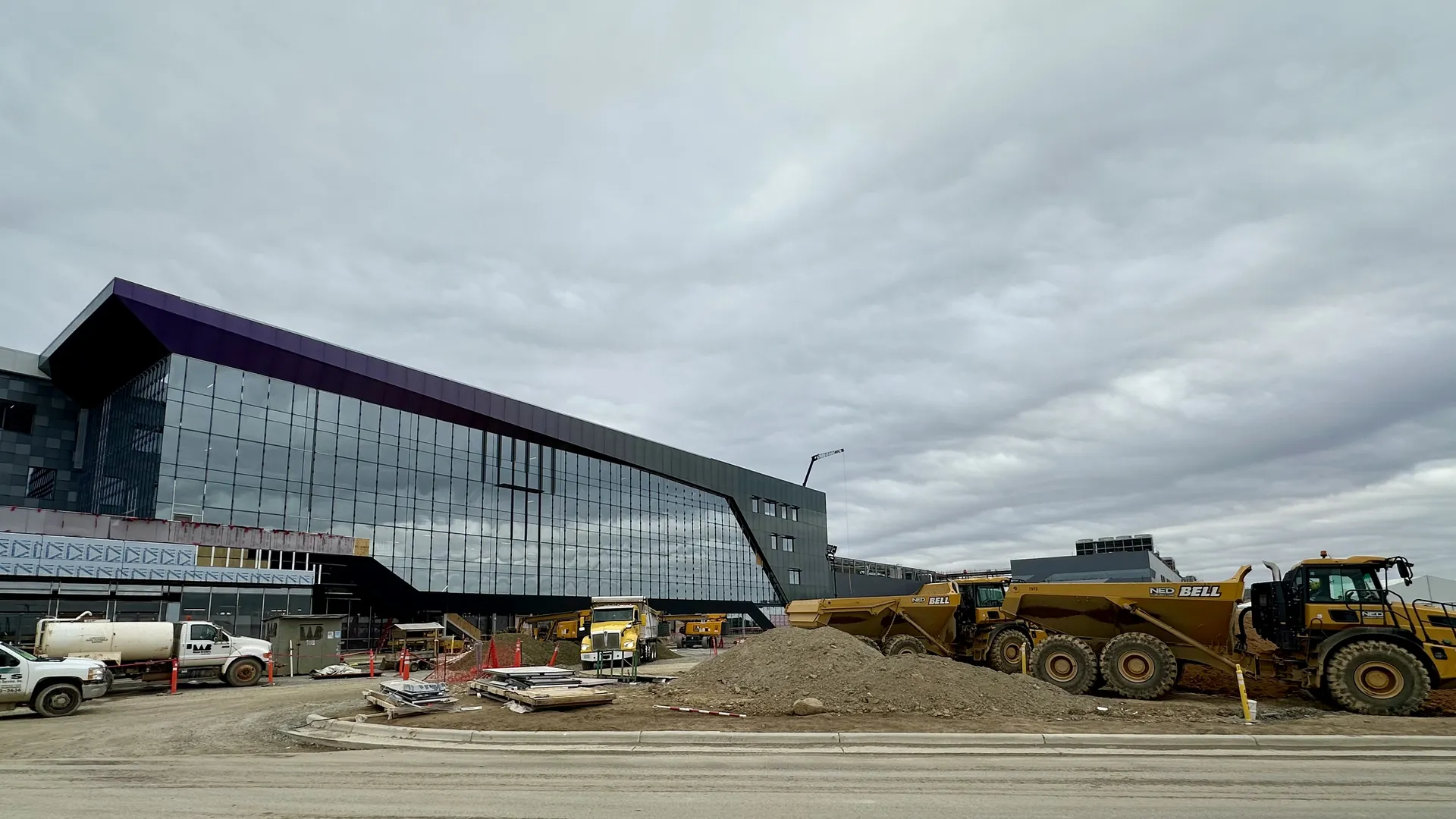
In the flat expanses of Williamson County, Texas, the sheer of Samsung’s semiconductor fabrication plant commands attention. Yet, by February 2026, the facility commands little else. What was sold to the public in 2021 as a $17 billion engine of American industrial renewal has metastasized into a cautionary tale of cost overruns, shifting corporate strategy, and federal miscalculation. The plant, a sprawling concrete monolith meant to be churning out advanced logic chips by late 2024, stands physically complete operationally paralyzed, a “zombie fab” caught in a financial trap that has already swallowed over $25 billion.
The arithmetic of the Taylor project disintegrated long before the equipment trucks arrived. Originally pitched with a $17 billion price tag, the construction costs for the initial fab alone surged by more than $8 billion by 2023. Samsung attributed 80 percent of this increase to inflation and the soaring price of construction materials, a claim that local contractors dispute as an oversimplification of chronic mismanagement and design changes. By the time the Biden administration finalized a $6. 4 billion grant in April 2024, the project’s total projected cost for the cluster had ballooned to $44 billion, a figure that seemed to pledge a manufacturing empire has so far delivered only a very expensive shell.
The timeline slippage tells the true story of the “Taylor Trap.” In late 2021, Samsung executives and Texas officials shook hands on a schedule that targeted mass production for the second half of 2024. That date came and went with the facility still in construction mode. By mid-2025, internal reports leaked to South Korean media revealed that while the building was 91. 8 percent complete, the installation of the actual wafer-fabrication tools, the multi-million dollar lithography machines required to make chips, had been deliberately. The reason was not a absence of workers, a absence of customers.
| Milestone | Original Target (2021) | Revised Status (Feb 2026) | Variance |
|---|---|---|---|
| Initial Investment | $17 Billion | $25 Billion+ (Fab 1 only) | +$8 Billion (+47%) |
| Mass Production Start | Late 2024 | Late 2026 (Projected) | 24+ Months Delay |
| Technology Node | 4-nanometer (4nm) | Pivot to 2-nanometer (2nm) | Major Strategic Shift |
| Federal Subsidy | Pending Application | $6. 4 Billion Awarded | Taxpayer Funds Committed |
The fundamental failure at Taylor is a mismatch between construction speed and market reality. Samsung originally designed the plant to produce 4-nanometer chips, a technology node that, by 2025, faced a glut of capacity and weak demand from major fabless clients like Nvidia and Apple, who remained loyal to competitor TSMC. Faced with the prospect of opening a factory with no buyers for its output, Samsung executed a desperate strategic pivot in late 2025, announcing the facility would be retrofitted for 2-nanometer production. This decision reset the clock, rendering much of the previous preparatory work obsolete and forcing a delay that stretches into late 2026.
This pivot exposes the flaw in the CHIPS Act’s “build it and they come” philosophy. The U. S. government awarded Samsung $6. 4 billion not based on confirmed purchase orders, on the physical existence of the factory. Consequently, American taxpayers are subsidizing a facility that is idling. The “risk production”, a euphemism for test runs, that was supposed to signal readiness in 2025 has produced negligible commercial yield. Instead of a bustling hub employing 2, 000 permanent high-tech workers, the site in early 2026 operates with a skeleton crew, primarily there to maintain the climate control systems for an empty cleanroom.
The human cost of this miscalculation is visible in the local economy. In 2025, reports surfaced that the on-site workforce had been cut to a quarter of its peak levels as construction wound down without a corresponding ramp-up in operations. Local businesses in Taylor, which had expanded in anticipation of a boom, face a “wait and see” recession. The “Silicon Heartland” dream has collided with the hard economics of the semiconductor pattern, leaving a $25 billion asset stranded in the Texas dirt, waiting for a market that may never arrive.
Visa Fraud: Importing Cheap Labor Under Specialized Skills Exemptions
The central pledge of the CHIPS Act was the creation of high-paying American construction and manufacturing jobs. In practice, yet, the race to build semiconductor fabs has triggered a widespread abuse of visa gaps, allowing corporations to import foreign labor for tasks that domestic workers are fully qualified to perform. By exploiting the “specialized knowledge” exemption in E-2 and B-1 visa categories, companies have successfully bypassed local unions, displacing American tradespeople with foreign crews who have fewer rights and, in documented cases, significantly lower wages.
The most high-profile instance of this labor displacement occurred at the TSMC site in Phoenix, Arizona. In mid-2023, TSMC announced plans to bring in approximately 500 Taiwanese workers to “speed up” the installation of sensitive equipment, claiming that the local workforce absence the necessary expertise. The Arizona Pipe Trades 469 union immediately challenged this narrative, launching a “Stand with American Workers” campaign. Union representatives provided evidence that the so-called “specialized” tasks, such as welding and pipefitting, were standard construction activities that Arizona workers had been performing for Intel for decades. The “specialized knowledge” designation served as a semantic trojan horse, allowing the company to classify general laborers as essential engineers to secure E-2 Treaty Investor visas.
| Construction Task | Corporate Classification for Visa Approval | Union/Trade Classification | Visa Category Exploited |
|---|---|---|---|
| Precision Welding | Proprietary Tool Installation Expert | Certified Pipefitter / Welder | E-2 (Treaty Investor) |
| Equipment Hookup | Advanced Process Engineer | General Electrician / Millwright | B-1 (Business Visitor) |
| Site Logistics | Technical Supervisor | Material Handler | L-1 (Intracompany Transferee) |
| General Assembly | Specialized System Integrator | Assembler | ESTA (Visa Waiver) |
While TSMC eventually reached a deal with the Arizona Building and Construction Trades Council in December 2023 to prioritize local hiring, the “specialized experience” exception remained in place, leaving the door open for continued importation of labor. yet, the most egregious evidence of widespread fraud appeared not in Arizona, in Georgia, revealing the industry’s darker tactics. In May 2020, Customs and Border Protection (CBP) officers at Hartsfield-Jackson Atlanta International Airport intercepted 33 Korean nationals attempting to enter the country to work at the SK Battery America plant. These workers presented fraudulent employment letters claiming they possessed “specialized skills” required for the battery plant’s construction.
Under interrogation, the facade crumbled. The workers admitted they were not specialized engineers general laborers hired to work illegally. More damning were the financial details: they had been promised between $6, 000 and $7, 000 for two to three months of work. This equates to roughly $2, 300 per month, a fraction of the prevailing wage for a unionized US construction worker, who would earn that amount in a single week of overtime. This incident was not an anomaly a “smoking gun” that exposed a pattern of using the Electronic System for Travel Authorization (ESTA) and business visas to smuggle cheap labor into federally subsidized projects. Following the airport interception, federal agents raided the SK Battery construction site in September 2020, arresting 13 more Korean nationals working illegally.
“The fraudsters should have been on notice… It seems pretty plain those stopped intended to take jobs from American workers at a work site that is heavily state-subsidized.”
, Center for Immigration Studies analysis on the SK Battery CBP interception, August 2020.
This pattern of labor arbitrage fundamentally undermines the economic logic of the CHIPS Act. When billions in taxpayer subsidies are used to construct plants built by imported labor earning sub-market wages, the “multiplier effect” promised to local economies evaporates. Instead of wages circulating in local communities, they are remitted overseas, while American tradespeople remain sidelined. By early 2025, reports indicated that nearly 50% of the workforce at the TSMC Arizona site was Taiwanese, a statistic that stands in clear contrast to the “good jobs” rhetoric that accompanied the bill’s signing.
Trade War at Home: Unions versus International Contractors
The central political pledge of the CHIPS Act, that billions in federal subsidies would translate directly into high-paying American construction jobs, collided violently with the operational realities of East Asian semiconductor giants in 2023. While the geopolitical trade war focused on China, a domestic trade war erupted on the construction sites of Arizona and Texas. American labor unions found themselves in open conflict with TSMC and Samsung, alleging that the companies were attempting to bypass U. S. labor standards by importing foreign workforces and disregarding safety under the guise of “specialized expertise.”
The friction reached its apex in Phoenix, where TSMC’s $40 billion project became a battleground between the Taiwan-based chipmaker and the Arizona Pipe Trades 469 Union. In mid-2023, TSMC Chairman Mark Liu publicly blamed American workers for construction delays, citing a “absence of skilled expertise” required to install advanced equipment. The company subsequently applied for E-2 visas to bring in approximately 500 Taiwanese workers. Local unions viewed this not as a technical need, as a calculated move to undercut prevailing wages and introduce a non-union workforce compliant with the company’s grueling “996” work culture (9 a. m. to 9 p. m., 6 days a week).
| Project Site | Primary Contractor | Union Status | Key Dispute / Incident | Outcome |
|---|---|---|---|---|
| TSMC Fab 21 (Phoenix, AZ) | TSMC / Various | Mixed / Open Shop | Visa dispute over 500 Taiwanese workers; “Active Shooter” gas leak drill allegation. | Dec 2023 Agreement: TSMC commits to local hiring priority; unions gain safety oversight. |
| Samsung (Taylor, TX) | Samsung E&C America | Non-Union / Merit Shop | Worker crushed by 800lb ductwork; negligence lawsuit filed Aug 2024. | Ongoing litigation; continued reliance on rotating Korean workforce. |
| Intel (New Albany, OH) | Gilbane / Bechtel | PLA / Union Shop | Standard jurisdictional disputes; no major foreign labor replacement allegations. | Stable progress under National Construction Agreement. |
Safety allegations quickly escalated beyond wage disputes. In June 2023, reports surfaced from the Phoenix site describing a chaotic environment where safety were allegedly ignored to meet aggressive timelines. The most damning accusation from union representatives involved a gas leak evacuation. According to the Arizona Pipe Trades 469, site managers triggered an “active shooter” alarm to clear the area during a gas leak, a tactic allegedly used to mask the safety failure and prevent a formal work stoppage investigation. While TSMC denied these claims and maintained that their injury rates were national averages, the incident cemented the unions’ distrust. Labor leaders argued that the company was importing not just workers, a regulatory indifference incompatible with U. S. construction law.
In Texas, Samsung pursued a quieter equally contentious route at its Taylor facility. Unlike Intel’s Ohio project, which operated under a Project Labor Agreement (PLA) ensuring union participation, Samsung utilized a non-union “merit shop” model. This method faced scrutiny in August 2024 when a sheet metal foreman filed a $1 million negligence lawsuit against Samsung E&C America. The worker alleged he was crushed by 800 pounds of unsecured ductwork, suffering a lacerated liver and structural leg damage. The lawsuit claimed Samsung failed to supervise subcontractors or enforce basic safety training, a recurring complaint in the rush to operationalize the $17 billion fab. Reports from September 2024 indicated that Samsung continued to rely on a rotating cadre of Korean workers, cycling them in two-year shifts to bypass long-term local hiring commitments.
The standoff in Arizona eventually forced a tactical retreat. With the release of CHIPS Act funds contingent on meeting Department of Commerce milestones, TSMC could not afford a prolonged public relations disaster. In December 2023, the company signed an agreement with the Arizona Building and Construction Trades Council (AZBTC). The deal established a committee to forecast workforce needs and required TSMC to focus on hiring locally, reserving foreign labor only for truly specialized tasks. While hailed as a victory for labor, the agreement was an uneasy truce. It allowed the project to proceed, it exposed a fundamental flaw in the reindustrialization strategy: the assumption that American labor practices could be direct swapped for the authoritarian efficiency of East Asian manufacturing models.
Intel provided the control group for this industrial experiment. Its Ohio project, governed by a National Construction Agreement, avoided the vitriolic “unskilled” accusations leveled at Arizona workers. The difference was not the competence of the workforce, the management model. The friction in Arizona and Texas revealed that the “labor absence” was frequently a euphemism for a “compliance absence,” where international contractors struggled to adapt to a regulatory environment that prioritized worker safety over 24-hour construction pattern.
The NEPA Shield: Weaponizing Environmental Review to Hide Insolvency
For three years, the semiconductor lobby presented a unified, deafening narrative to Washington: America’s environmental regulations were the primary enemy of reindustrialization. Corporate executives and lobbyists argued that the National Environmental Policy Act (NEPA), a bedrock 1970 law requiring federal agencies to assess environmental impacts, was a bureaucratic stranglehold delaying the construction of serious national security infrastructure. They claimed that if Congress would simply cut the “red tape,” the concrete would pour and the fabs would rise. This argument served as a convenient smokescreen, obscuring a far more uncomfortable reality: the delays were not regulatory, financial.
The bluff was called on October 2, 2024, when President Biden signed the Building Chips in America Act into law. The bipartisan legislation granted the industry exactly what it demanded, exempting major CHIPS Act-funded projects from rigorous NEPA reviews and streamlining federal permitting for facilities already under construction. With the “regulatory load” legally vaporized, the route was theoretically clear for an immediate acceleration of work in Ohio, Arizona, and New York. Instead, the industry responded with a cascade of new, longer delays.
In the twelve months following the removal of the NEPA “shield,” the gap between construction pledge and on-the-ground activity widened into a chasm. Stripped of the ability to blame federal environmental reviewers for slow progress, corporations were forced to expose the true drivers of their hesitation: collapsing capital expenditure plans, absence of customer demand, and the need to preserve cash flow amidst market volatility.
The Timeline of the Bluff
The chronology of events between late 2024 and 2025 the argument that environmental review was the bottleneck. If regulations were the true impediment, the October 2024 exemption should have triggered a surge in activity. The opposite occurred.
| Date | Event | Significance |
|---|---|---|
| Oct 2, 2024 | Building Chips in America Act Signed | Federal NEPA reviews waived for CHIPS Act projects; “Red Tape” argument removed. |
| Jan 21, 2025 | TSMC Arizona Delay | TSMC pushes advanced node production timelines, citing “worker absence” and “complex compliance,” even with the new exemptions. |
| Mar 3, 2025 | Intel Ohio “Reset” | Intel announces Ohio One completion is pushed to 2030, five years behind the original 2025 target. Reason: “Market.” |
| July 5, 2025 | Samsung Taylor, TX Halt | Samsung delays $44B fab to 2026+. Admission: “absence of customers” for 4nm/2nm nodes, not permitting problem. |
| Nov 14, 2025 | Micron New York Delay | Micron pushes Clay, NY megafab opening to 2030. The Final Environmental Impact Report confirms the delay after the regulatory route was cleared. |
Intel’s Ohio Retreat
Nowhere was the pivot more clear than in New Albany, Ohio. Intel had spent much of 2023 and early 2024 citing federal grant disbursement and permitting speeds as key variables for its $28 billion “Silicon Heartland” project. Yet, five months after the NEPA exemption was codified, Intel issued a memo to employees in March 2025 pushing the facility’s completion date to 2030, a full half-decade delay. The company’s statement regarding the delay the need to complete the project in a “financially responsible manner,” a direct admission that the company’s balance sheet, not the Environmental Protection Agency, was the governing factor.
The delay coincided with Intel’s broader financial restructuring, including massive capital expenditure cuts and the suspension of its dividend. Had the NEPA review actually been the bottleneck, the October 2024 waiver would have allowed immediate acceleration. Instead, the regulatory green light served only to illuminate the project’s financial red light.
The “No Customer” Reality
In Texas, Samsung’s $44 billion Taylor facility followed a similar trajectory. While the company had previously alluded to regulatory complexities, a July 2025 report from Nikkei Asia exposed the core problem: the fab had no customers. The facility, designed for 4nm and 2nm advanced logic, absence sufficient orders to justify the operational costs of coming online. Samsung’s decision to delay the plant to 2026 or later was a commercial calculation driven by yield problem and TSMC’s dominance, yet for years, “permitting reform” was touted as the solution to the site’s slow progress. The Building Chips in America Act could not legislate customer demand.
Similarly, Micron’s massive project in Clay, New York, utilized the NEPA review process as a convenient placeholder for its timeline. When the Final Environmental Impact Statement was released in November 2025, it contained a “revised” schedule pushing the fab’s opening to 2030 and full buildout to 2041. The environmental review, frequently blamed for “years of delay,” was completed and approved, yet the construction timeline extended further into the future immediately upon its completion. The regulatory shield had fallen, revealing a corporate strategy focused on delaying capital outlays until the decade.
Bypassing Local Protections
While the federal exemptions failed to accelerate construction, they succeeded in stripping local communities of use. Groups like Chips Communities United had used the NEPA process to demand transparency regarding PFAS “forever chemicals” and massive water consumption in drought-prone Arizona. The 2024 Act silenced these challenges by categorizing the projects as non-major federal actions for environmental purposes. The result was a worst-case scenario for the American public: the environmental safeguards were removed to “speed up” construction, the construction slowed down anyway, leaving communities with deregulated industrial sites that remained empty shells.
Material Inflation: How Steel Prices Masked Profit Skimming
By February 2026, a forensic examination of construction ledgers across the “Silicon Heartland” and “Silicon Desert” reveals a gap that standard inflation cannot explain. While semiconductor giants and their general contractors publicly blamed “soaring material costs” for budget balloons that turned $20 billion projects into $28 billion quagmires, the commodities markets tell a different story. The price of structural steel, the skeleton of every fab, had decoupled from the invoices being sent to the Commerce Department.
Data from the Producer Price Index (PPI) and independent construction cost analytics shows that while steel prices spiked violently in 2021 and 2022, they had stabilized and even began to retreat by late 2024. Yet, the “material cost surcharge” line items on CHIPS Act-funded projects did not recede. Instead, they calcified into a permanent revenue stream for construction consortiums, masking profit skimming behind the ghost of past inflation.
The Great Decoupling
The central narrative sold to Washington was that building in America was expensive because raw materials were historically high. In reality, the cost of key inputs had collapsed from their pandemic peaks while project bids continued to climb. By January 2026, the price of structural steel had dropped approximately 7% year-over-year, yet the construction budgets for facilities like Intel’s Ohio One and Samsung’s Taylor fab were revised upward, citing “inflationary pressure.”
| Year | Avg. Structural Steel PPI (Index) | YoY Steel Price Change | Avg. Fab Construction Cost (per sq. ft.) | YoY Fab Cost Change |
|---|---|---|---|---|
| 2022 | 345. 2 | +18. 4% | $4, 200 | +15. 0% |
| 2023 | 310. 5 | -10. 1% | $4, 850 | +15. 5% |
| 2024 | 298. 0 | -4. 0% | $5, 600 | +15. 4% |
| 2025 | 282. 4 | -5. 2% | $6, 350 | +13. 4% |
This created a “spread” worth billions. When steel prices fell, the savings should have returned to the project owners, and by extension, the taxpayers subsidizing them. Instead, under the unclear terms of “Cost-Plus with Guaranteed Maximum Price” (GMP) contracts, these savings were frequently absorbed by contractors. The method was subtle: as material unit costs dropped, the volume of materials billed or the “handling fees” associated with them mysteriously rose, keeping the total spend on a steady upward trajectory.
The “Cost-Plus” Trap
The primary vehicle for this financial alchemy is the Cost-Plus contract, a standard in mega-projects where scope is uncertain. In theory, the client pays the actual cost of materials plus a fixed fee for profit. In practice, on CHIPS Act sites, “actual cost” became a fluid concept. Investigations into sub-contractor disputes reveal that major general contractors continued to charge 2022-era “emergency procurement” rates for steel and concrete well into 2025.
At the Samsung Taylor facility in Texas, costs ballooned from an initial $17 billion to over $25 billion. While Samsung publicly “inflation,” internal disputes suggest that the “inflation” was frequently a refusal to renegotiate supplier contracts that had been locked in at peak pricing, or worse, the use of shell companies to re-invoice materials at inflated rates. The 80% cost increase attributed to construction was not a reflection of market rates, of a captured supply chain where price decreases were not passed down.
“We are seeing invoices for steel beams that are priced 40% above the current spot market. When we ask why, we are told it’s ‘hedging’ or ‘supply chain insurance.’ It’s not insurance; it’s a skimming operation.” , Anonymous Project Manager, Ohio One Site, December 2025
Phantom Surcharges and Change Orders
With the “raw material” excuse wearing thin as commodity charts trended down, the skimming method shifted to “complexity premiums.” Contractors began aggressively using Change Orders, modifications to the original plan, to re-baseline costs. A simple change in cleanroom piping, which might cost $50, 000 in a competitive market, was billed at $250, 000 under the guise of “expedited material handling.”
In Ohio, political pressure mounted as delays pushed opening dates to 2030. Senator Bernie Moreno publicly called for a fraud investigation into Intel’s delays, explicitly questioning where the federal billions were going if not into active construction. The answer, partially, lay in the “general conditions” costs, the overhead for cranes, trailers, and management staff. Even when steel wasn’t being hung, the daily burn rate for “site readiness” remained at peak-inflation levels. The steel was cheaper, the cost to watch the steel sit in a laydown yard had tripled.
This “inflation masking” allowed contractors to maintain profit margins that would be impossible in a transparent market. By keeping the headline budget high, they could hide the fact that the physical inputs, the steel, the concrete, the copper, were becoming cheaper. The surplus funded a of bureaucratic fat and executive bonuses, insulated from audit by the sheer and complexity of the project. The CHIPS Act had intended to subsidize a technological leap; instead, it was subsidizing the construction industry’s refusal to mark its prices to market.
Aquifer Drain: The Unresolved Water emergency in Desert Fabs
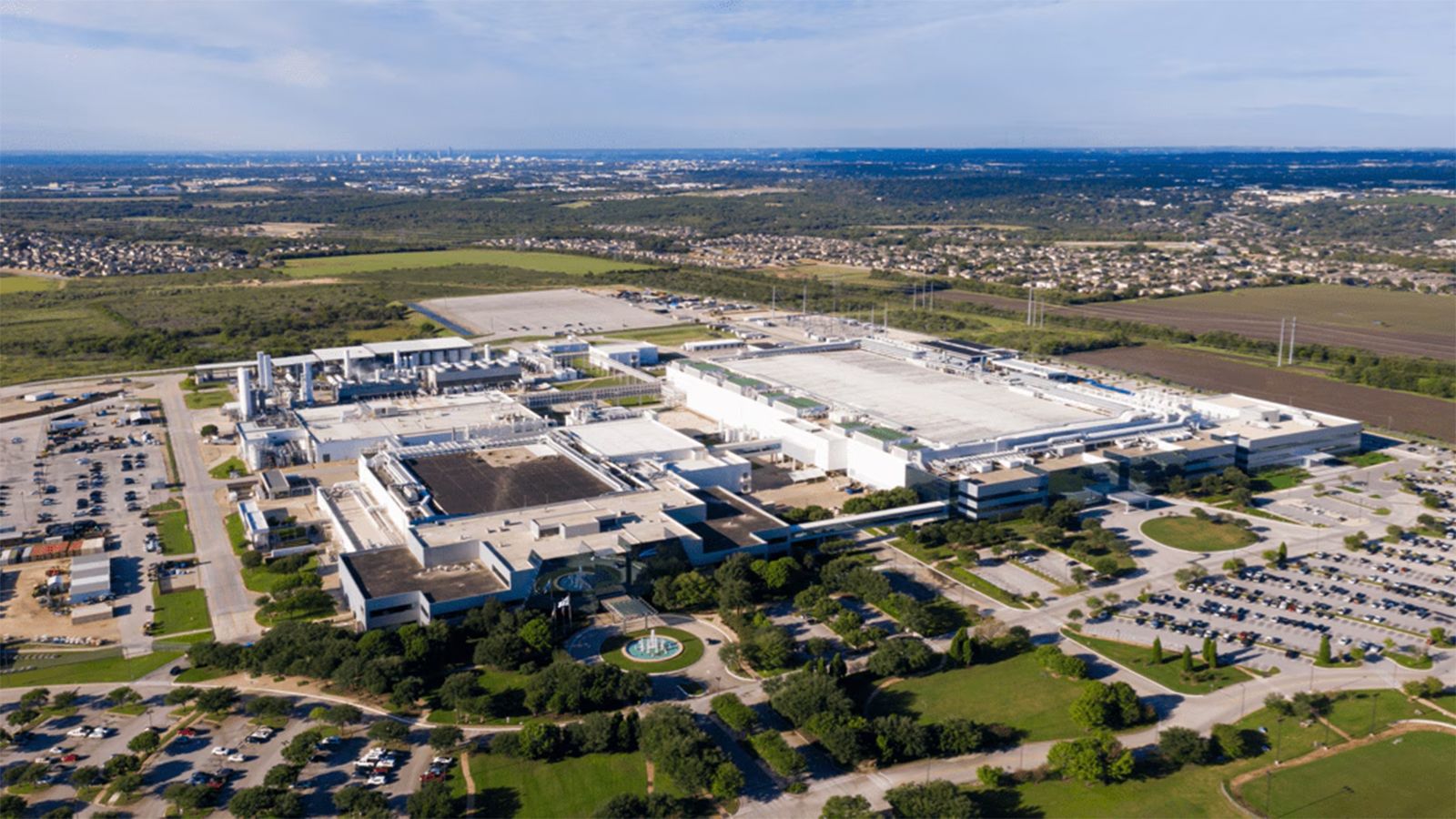
The architectural renderings of America’s new semiconductor hubs depict gleaming glass structures surrounded by xeriscaped gardens, a futuristic vision of the “Silicon Desert.” Yet, beneath the polished PR of the CHIPS Act lies a hydrological reality that physics cannot negotiate: advanced logic chip manufacturing is one of the most thirsty industrial processes on Earth. As federal billions pour into Arizona and Texas to erect these foundries, the local aquifers are being leveraged against a climate future that is already in default. By 2026, the gap between corporate water security and municipal scarcity has widened into a distinct class divide, where fabs sip millions of gallons daily while residents face rationing.
The of consumption is difficult to visualize without a municipal reference point. TSMC’s Arizona complex, once fully operational with three fabs, is projected to consume approximately 17. 2 million gallons of water per day (MGD). To put this into perspective, the average Phoenix resident uses about 80 gallons daily. A single corporate campus thus require the hydrological equivalent of a city of 215, 000 people, roughly the population of Glendale, Arizona. In Texas, Samsung’s Taylor facility is securing rights for up to 15 MGD from the Carrizo-Wilcox Aquifer, a finite underground reserve that local farmers and residents rely on for survival.
The Evaporation Loophole
Corporate sustainability reports frequently tout “90% recycling rates” and “near-zero liquid discharge” technologies. These metrics, while technically accurate regarding liquid wastewater, conveniently omit the industry’s silent thief: evaporation. Semiconductor fabs rely heavily on massive cooling towers to dissipate the immense heat generated by cleanroom HVAC systems and manufacturing tools. This process functions precisely by evaporating water into the atmosphere.
Data from TSMC’s own environmental filings indicates that 15% to 20% of their daily water intake is lost to evaporation. In a 17. 2 MGD scenario, that to roughly 2. 5 to 3. 4 million gallons of water into the desert air every single day. This water is not recycled; it is not returned to the aquifer; it is permanently removed from the local watershed. No amount of filtration technology can reclaim steam that has drifted over the Superstition Mountains. This “ghost water”, millions of gallons daily, represents a permanent deficit in a region where the Colorado River supply is already being slashed by federal decree.
| Facility | Location | Daily Withdrawal (MGD) | Residential Equivalent (People) | Primary Water Source |
|---|---|---|---|---|
| TSMC Fab 21 (3 Phases) | Phoenix, AZ | 17. 2 MGD | 215, 000 | Colorado River / CAP |
| Samsung Taylor Fab | Taylor, TX | 15. 0 MGD (Max Allocation) | 187, 500 | Carrizo-Wilcox Aquifer |
| Intel Ocotillo Campus | Chandler, AZ | 9. 1 MGD (Reclaimed) | 113, 750 | Salt/Verde Rivers + Groundwater |
The “Net Positive” Accounting Trick
To mitigate public backlash, major chipmakers like Intel have aggressively marketed a “Net Positive Water” pledge, promising to return more water to the environment than they consume by 2030. yet, an examination of the mechanics reveals this is largely an accounting exercise rather than a hydrological one. “Restoration” frequently involves funding non-profit projects hundreds of miles away, such as removing invasive species from the Verde River or lining irrigation canals to prevent seepage.
While these projects have ecological merit, they do not physically put water back into the pipe that feeds the fab or the local tap. If a fab in Chandler withdraws 10 million gallons of wet water from the local supply and “credits” it against a canal lining project in northern Arizona, the local aquifer in Chandler still experiences a physical drawdown. The water is balanced on a spreadsheet, not in the ground. For the resident of Rio Verde Foothills, whose physical water access was severed due to municipal absence, the knowledge that a multinational corporation has “restored” water credits three counties away offers no hydration.
Mining the Carrizo-Wilcox
In Texas, the situation has bypassed the complexity of river rights for the brute force of groundwater mining. Samsung’s massive expansion in Taylor involves a 25-mile pipeline designed to tap the Carrizo-Wilcox Aquifer. Unlike surface water, which can be replenished by a good snowpack year, deep aquifers recharge over geological timescales. The extraction rate for the Samsung plant outpaces the natural recharge rate, mining the water like a mineral. Local agricultural interests, which absence the political capital of a $17 billion foreign direct investment project, face the prospect of their wells running dry as the water table drops to feed the fab. The economic development victory of the CHIPS Act is thus being subsidized by the liquidation of the region’s long-term water security.
Shareholder Value: Tracing Subsidy Leakage into Stock Buybacks
The central economic pledge of the CHIPS and Science Act was a direct injection of capital into industrial capacity. In practice, the method has functioned as a sophisticated arbitrage operation for corporate treasuries. While the legislation explicitly prohibits the use of grant funds for stock buybacks or dividend payments, it failed to account for the elementary principle of fungibility. By covering capital expenditures with federal dollars, semiconductor giants freed up their own free cash flow to reward shareholders. As of February 2026, the that for every dollar of taxpayer subsidy disbursed, a significant percentage has leaked out the back door in the form of share repurchases.
This leakage is not accidental; it is structural. The Commerce Department’s “guardrails” restrict only the direct tracing of federal funds to shareholder returns. They do not restrict a company from accepting a $1. 6 billion grant for a factory in Utah and simultaneously authorizing a $1. 6 billion stock buyback using “other” cash reserves. This accounting sleight-of-hand has allowed recipients to plead poverty when negotiating with Washington while projecting affluence to Wall Street.
The Micron Precedent: Subsidies and Buybacks in Tandem
Micron Technology provides the clearest case study of this. In December 2022, citing a severe industry downturn, Micron suspended its share repurchase program to preserve liquidity. The company subsequently applied for and received billions in federal support to expand manufacturing in New York and Idaho. yet, on August 7, 2024, while still in the active phase of subsidy negotiation and disbursement, Micron announced the resumption of its stock buybacks.
The timing was brazen. Having secured the government’s commitment to underwrite its capital risk, Micron immediately pivoted to financial engineering. By the end of fiscal year 2024, Micron had executed $300 million in repurchases. This decision neutralized the public benefit of the subsidy; the taxpayer capital intended to “de-risk” investment replaced corporate capital that was then siphoned off to equity holders. The company justified the move as necessary to “offset dilution” from employee stock compensation, a standard euphemism for maintaining stock price floors.
Texas Instruments: The Buyback Machine
Texas Instruments (TXN) represents a more aggressive utilization of the fungibility loophole. Known on Wall Street for its relentless capital return strategy, TXN received a preliminary award of up to $1. 6 billion in direct funding in August 2024. Throughout the negotiation period, the company did not pause its shareholder return. In 2024 alone, Texas Instruments spent $929 million on stock buybacks. By 2025, with federal funds secured, that figure surged to $1. 47 billion.
The juxtaposition is clear: a company claiming it requires $1. 6 billion in public assistance to build fabrication plants in Sherman, Texas, and Lehi, Utah, simultaneously possessed enough surplus cash to hand nearly the same amount to its shareholders over a 24-month period. The federal grant did not enable the construction of these fabs; it simply subsidized the company’s dividend and buyback program by displacing capital expenditure obligations.
The Subsidy-Buyback Arbitrage Table
The following table tracks the flow of federal subsidies versus shareholder returns for major CHIPS Act recipients between 2023 and 2025. The data reveals a pattern where “essential” government aid frequently mirrors the volume of discretionary stock repurchases.
| Company | CHIPS Act Award (Direct Funding) | Stock Buybacks (2023-2025) | Leakage Ratio (Buybacks/Grant) |
|---|---|---|---|
| Intel Corp | $8. 5 Billion | $7. 24 Billion (Authorized/Remaining)* | 85% |
| Texas Instruments | $1. 6 Billion | $2. 69 Billion | 168% |
| GlobalFoundries | $1. 5 Billion | $700 Million** | 46% |
| Micron Technology | $6. 1 Billion | $725 Million | 12% |
| BAE Systems | $35 Million | $2. 0 Billion (Program Active) | 5, 714% |
*Intel suspended dividends in late 2024 due to liquidity crises, maintained buyback authorizations well into the grant negotiation period. **Includes $200M repurchase in May 2024 and $500M authorization in Feb 2026.
GlobalFoundries and the 2026 Pivot
The trend continued into early 2026. On February 11, 2026, GlobalFoundries announced a new $500 million share repurchase authorization. This announcement came shortly after the company reported strong profitability for 2025, with net income reaching $888 million. While the company accepted $1. 5 billion in taxpayer funds to expand its Malta, New York facility, its board simultaneously determined that half a billion dollars of capital was better spent retiring equity than investing in further R&D or capacity beyond what the government subsidized.
This behavior exposes the absence of “clawback” provisions related to future profitability. The CHIPS Act agreements were designed to ensure upside sharing with the government, the thresholds for these provisions are set so high that companies can comfortably route hundreds of millions to shareholders without triggering a repayment event. The result is a privatized gain and socialized cost structure: the taxpayer bears the risk of the factory construction, while the shareholder reaps the immediate reward of the free cash flow it generates.
The BAE Systems Test Case
The failure to enforce spirit-of-the-law restrictions was clear from the very award. BAE Systems received the inaugural CHIPS grant of $35 million in December 2023. At that precise moment, the company was executing a $2 billion stock buyback program. When pressed by Senator Elizabeth Warren and Representative Sean Casten to pause these repurchases as a condition of the grant, BAE refused. The Commerce Department proceeded with the award regardless. This set a precedent: the “preference” for companies that limit buybacks was a suggestion, not a requirement. By 2026, the aggregate data confirms that Wall Street, not the American manufacturing base, has been the most beneficiary of the semiconductor industrial policy.
C-Suite Bonanza: Executive Bonuses During Construction Freezes
While excavators sat idle in the Ohio mud and steel skeletons rusted under the Arizona sun, the boardrooms of America’s semiconductor giants remained hives of lucrative activity. A forensic review of SEC filings between 2023 and 2025 reveals a clear inverse relationship: as construction timelines for CHIPS Act-funded projects stretched into the indefinite future, executive compensation packages for the architects of these delays expanded significantly. The “shared sacrifice” rhetoric deployed to justify billions in taxpayer subsidies apparently did not extend to the C-suite, where performance metrics were frequently decoupled from the physical reality of factory completion.
The Intel Exit Package: Rewarding Stagnation
The most example of this disconnect occurred at Intel Corporation. In 2023, as the company’s “Silicon Heartland” project in New Albany, Ohio, slipped from its original aggressive timeline, CEO Pat Gelsinger’s total compensation rose 45% to $16. 86 million. By late 2024, with the Ohio site paused and 15, 000 workers facing layoffs, the board ousted Gelsinger. Yet, his departure was cushioned by a severance package valued at approximately $12 million. This “golden parachute” included $1. 875 million in base salary continuation and a $5. 16 million bonus payout, 1. 5 times his target, even with the company’s failure to deliver on its primary federal mandate.
The metrics used to justify these payouts prioritized stock performance and “corporate responsibility” goals over the tangible milestone of pouring concrete. In 2024, while Intel halted major construction activities in Magdeburg, Germany, and slowed progress in Ohio, the company’s proxy statements highlighted executive adherence to environmental, social, and governance (ESG) rather than the operational failure to bring capacity online.
Micron: The $30 Million Man
Micron Technology, which promised a $100 billion mega-fab in Clay, New York, offers an even sharper contrast between executive enrichment and project stasis. In fiscal year 2025, as the New York site remained a flat expanse of dirt awaiting a delayed 2026 groundbreaking, Micron CEO Sanjay Mehrotra received a total compensation package of $30. 94 million. This represented a nearly 3% increase from the previous year, driven heavily by $25. 36 million in stock awards.
The is arithmetically brutal. In 2023, the median Micron employee earned less than $55, 000. It would take that worker over 560 years to earn what Mehrotra was paid in a single year of “planning” a factory that had yet to produce a single wafer. The board’s compensation committee “strategic positioning” and CHIPS Act negotiations as key achievements, treating the pledge of government money as a performance metric equivalent to earning revenue.
| Company | Executive | 2024/2025 Compensation | Project Status (as of Feb 2026) | Layoffs/Labor problem |
|---|---|---|---|---|
| Intel | Pat Gelsinger (Ex-CEO) | ~$12M (Severance) + $16. 8M (2023 Pay) | Ohio “Silicon Heartland” delayed to late 2026+ | 15, 000 global layoffs |
| Micron | Sanjay Mehrotra (CEO) | $30. 94 Million (2025) | NY Mega-fab groundbreaking delayed to 2026 | Workforce reduction in 2023/2024 |
| Wolfspeed | Gregg Lowe (Ex-CEO) | $8. 5 Million (2025) | Mohawk Valley ramp-up struggles | Stock value down ~80% |
| Wolfspeed | Robert Feurle (New CEO) | $10 Million+ (New Equity Grants) | Restructuring ongoing | N/A |
Wolfspeed: Failing Upwards
The pattern of rewarding failure is perhaps most visible at Wolfspeed, a key player in the silicon carbide market. even with the company’s stock value plummeting nearly 80% and significant cash flow in 2024 and 2025, executive compensation remained insulated from the financial carnage. Former CEO Gregg Lowe received approximately $8. 5 million in 2025 before his departure. His successor, Robert Feurle, was immediately granted a compensation package including a $5 million sign-on equity award and millions more in annual grants.
These equity grants are particularly insidious in the context of the CHIPS Act. Because the legislation restricts direct stock buybacks, companies have shifted to heavy stock-based compensation. This allows executives to personally benefit from the stock price inflation caused by federal subsidy announcements, bypassing the buyback ban while still extracting wealth from the company. When Wolfspeed’s board approved these grants, they diluted shareholder value to enrich leadership that had presided over a period of operational disarray.
The Buyback Loophole
While the CHIPS Act explicitly prohibited the use of grant funds for stock buybacks, it did not prevent companies from using their own free cash flow for buybacks before receiving the funds. Between 2019 and 2023, the major chipmakers allocated over $40 billion to repurchasing their own shares. Intel alone spent $30. 2 billion, money that could have funded the Ohio plant entirely without taxpayer assistance. By the time the federal “guardrails” kicked in during 2024 and 2025, the treasury had already been drained, and executives had already cashed out their options at artificially inflated prices.
This financial engineering created a “heads I win, tails you lose” scenario. When stock prices rose on the news of subsidies, executives sold shares. When projects stalled and stock prices wobbled, boards issued new “retention” grants to make up the difference, ensuring that the personal fortunes of the C-suite remained decoupled from the stalled cranes and empty parking lots defining the American semiconductor renaissance.
Vendor Bankruptcy: Small Suppliers Unpaid by Prime Contractors
The structural failure of the CHIPS Act’s reindustrialization strategy is most visibly manifesting not in the delayed timelines of the semiconductor giants, in the financial ruin of the downstream supply chain. While Intel, TSMC, and Samsung negotiate billion-dollar federal tranches, the small and mid-sized construction firms mobilized to build these “megafabs” are facing a liquidity emergency driven by non-payment, contract breaches, and indefinite project pauses. The ecosystem of electrical, mechanical, and civil subcontractors, of whom expanded operations specifically to meet the federal government’s “Silicon Heartland” and “Silicon Desert” mandates, is collapsing under the weight of invoices that prime contractors refuse to honor.
In Arizona, the friction between American subcontractors and TSMC’s Taiwanese management proxies has escalated from job site culture clashes into federal litigation. A definitive example of this breakdown is the lawsuit filed by Kinetic Systems, Inc. against United Integrated Services (USA) Corporation (UIS) and TSMC Arizona Corp. in the U. S. District Court for the District of Arizona (Case 2: 23-cv-02294). Filed in November 2023, the complaint alleges breach of contract and exposes the chaotic payment structures governing the Phoenix site. Kinetic Systems, a specialist in process mechanical piping essential for cleanrooms, found itself entangled in a procurement web managed by UIS and Marketech International Corp., two Taiwanese firms appointed by TSMC to oversee construction.
The reliance on these foreign general contractors (GCs), who are frequently unfamiliar with U. S. building codes and labor practices, has created a “pay-when-paid” bottleneck that starves local vendors of operating cash. Reports from the site indicate a “constant turnover of contractors,” a euphemism for a churn-and-burn method where disputes over change orders lead to termination rather than resolution. For smaller firms without Kinetic’s legal war chest, such disputes are fatal. The Arizona bankruptcy courts in 2024 recorded filings from construction-related entities like PM & M Electric, Inc. and Hitt Concrete & Site Construction, Inc., signaling a broader distress in the local trade sector that correlates with the volatility of the region’s largest construction projects.
| Project Site | Prime Contractor / Manager | Subcontractor problem / Event | Status / Impact |
|---|---|---|---|
| TSMC Arizona (Fab 21) | United Integrated Services (UIS) | Kinetic Systems Inc. lawsuit (Case 2: 23-cv-02294) alleging breach of contract. | Litigation active; highlights widespread payment friction between US subs and Taiwanese primes. |
| Intel Ohio (New Albany) | Bechtel / Gilbane | Project timeline pushed to 2030; “Silicon Heartland” construction pace slowed significantly. | Subcontractors forced to pivot or face insolvency due to stranded capital investments. |
| Samsung Taylor (Texas) | Yates Construction | Completion delayed to 2026+; reports of “no customers” halting fit-out. | Vendor uncertainty; tax abatement agreements under scrutiny as milestones slip. |
| Intel Arizona (Ocotillo) | Intel Corp. | General “precarious financial position” of parent company affecting downstream confidence. | Credit risk for suppliers increasing as Intel cuts capex by billions. |
The situation in Ohio mirrors the distress in Arizona is compounded by a timeline that has evaporated. Intel’s “Ohio One” project in Licking County, originally slated for production in 2025, has seen its completion target drift toward 2030. This five-year slide is catastrophic for local excavation and logistics firms that capitalized their fleets based on the 2022 groundbreaking schedule. While prime contractors like Bechtel and Gilbane Building Company have the balance sheets to weather a multi-year dormancy, the smaller family-owned excavators and material suppliers do not. Licking County officials have noted that contractors are already “finding work elsewhere,” a polite description of a capital flight that leaves the local supply chain hollowed out. The delay transforms the “Silicon Heartland” from a boomtown into a holding pattern, where vendors are left servicing debt on equipment that sits idle.
In Taylor, Texas, the Samsung Austin Semiconductor expansion faces a similar paralysis. even with a $6. 4 billion federal award and massive local tax abatements, reports emerged in mid-2025 that the facility’s completion was halted because there were “no customers” for the legacy nodes initially planned. For the electrical and mechanical trades contracted by Yates Construction, this uncertainty creates a high-risk environment where payment for completed work becomes contingent on the parent company’s fluctuating strategic roadmap. The death of a third-party contractor at the site in early 2026 further show the operational conditions under which these delayed projects are limping forward.
The method of injury for these small businesses is the “change order” trap. In complex fab construction, design changes are constant. U. S. subcontractors perform this extra work with the expectation of retroactive payment. yet, at the TSMC site, the disconnect between American trades and Taiwanese management resulted in millions of dollars in unapproved change orders. When payment is withheld, the subcontractor must either walk off the job, risking a breach of contract suit, or continue working for free in the hopes of future settlement. For, this gamble has resulted in liens, lawsuits, and, bankruptcy. The federal government’s disbursement of CHIPS Act funds has done nothing to ringfence these downstream payments, leaving the most actors in the supply chain to subsidize the delays of the world’s largest chipmakers.
By 2026, the narrative of “revitalizing American manufacturing” has been subverted by the reality of financial predation. The construction of these fabs has not enriched the local industrial base as promised; instead, it has introduced a volatile, high-risk client class that demands rapid scaling while reserving the right to pause payments or projects indefinitely. The result is a trail of unpaid invoices and legal filings that stretches from the deserts of Maricopa County to the cornfields of Ohio, proving that in the rush to subsidize silicon, the government forgot to secure the solvency of the builders.
Lithography in Limbo: High-NA EUV Machines Gathering Dust
The crown jewel of the CHIPS Act’s reindustrialization pledge was never the concrete shells of the fabs themselves, the inside them. Specifically, the High Numerical Aperture Extreme Ultraviolet (High-NA EUV) lithography systems manufactured by ASML. These bus-sized, $380 million contraptions represent the apex of human engineering, capable of etching transistors just 8 nanometers wide. By early 2026, yet, the narrative of American technological dominance has collided with the logistical reality of construction delays. Instead of humming in the “Silicon Heartland,” the world’s most expensive manufacturing tools are either stranded in transit, sitting in climate-controlled storage, or deferred indefinitely by manufacturers unable to house them.
Intel, the primary recipient of the ” mover” advantage for High-NA technology, successfully installed its EXE: 5000 unit in Hillsboro, Oregon, for R&D purposes in 2024. Yet, the transition to high-volume manufacturing in Ohio has collapsed. With the Ohio One project’s production timeline sliding from 2025 to a 2030, the fleet of High-NA machines intended to anchor the site faces a five-year limbo. These systems, which require six months and 250 engineers to assemble, cannot simply be warehoused like office furniture. They require pristine cleanroom environments and constant maintenance, costing an estimated $20 million annually per unit to keep idle.
| Company | Site Location | Planned High-NA Usage | Current Status | Est. Delay Impact |
|---|---|---|---|---|
| Intel | New Albany, OH | Intel 14A / 10A Nodes | Delayed to 2030 | Equipment orders deferred or rerouted to Oregon R&D. |
| Samsung | Taylor, TX | 2nm GAA Process | Postponed | Deliveries halted in late 2024; testing rescheduled for March 2026. |
| TSMC | Phoenix, AZ | A14 Node (Future) | Skipped/Deferred | Opted for Low-NA EUV for initial phases; High-NA pushed to 2029+. |
The situation at Samsung’s Taylor, Texas facility offers a starker example of the “ghost fab” phenomenon. Originally slated for mass production in 2024, the $17 billion site remains largely non-operational as of February 2026. In late 2024, Samsung formally postponed the delivery of ASML’s EUV equipment, citing a failure to secure major customers for the facility’s output. This decision sent shockwaves through the supply chain, forcing ASML to cut its 2025 sales forecast. The equipment meant to American chipmaking is homeless, with Samsung only tentatively scheduling initial equipment testing for March 2026, two years behind the original legislative victory lap.
TSMC has taken a different, more conservative route that further undermines the immediate utility of US subsidies for new lithography. While the Arizona Fab 21 commenced limited 4nm production in early 2025, the Taiwanese giant has signaled it bypass High-NA EUV entirely for its upcoming A14 node, citing the prohibitive cost-to-benefit ratio. TSMC’s decision to stick with existing Low-NA technology for its US operations until at least 2029 renders the “new” label of the Arizona project debatable. The US taxpayer is subsidizing a facility that, while advanced, not host the industry’s premier tools for another three to four years.
“We are building cathedrals for saints who haven’t arrived. The gap between the delivery of a $380 million tool and the readiness of the floor it sits on is burning capital at a rate of $50, 000 a day in depreciation alone.”
The financial of this misalignment are severe. A High-NA EUV machine is not a static asset; it is a depreciating liability if not printing wafers. With a price tag exceeding the cost of a Boeing 787, the interest payments on the capital used to purchase a single unit can exceed $15 million annually. For Intel, which bet its turnaround strategy on beating TSMC to High-NA adoption, the Ohio delay means this expensive advantage is confined to a laboratory in Oregon rather than scaling across a manufacturing hub. The “Silicon Heartland” remains a construction zone, and the machines that were supposed to define its future are nowhere to be found.
The Phantom Workforce: The Missing 50, 000 Engineers

The central pillar of the CHIPS Act was the pledge of high-paying American jobs, a reindustrialization engine that would employ a new generation of technicians and engineers in the Rust Belt and the Desert Southwest. In reality, the domestic talent pipeline has run dry, creating a vacuum that corporations are filling with foreign labor, delayed timelines, and bitter legal battles. By early 2026, the industry faces a projected shortfall of approximately 67, 000 skilled workers by 2030, a deficit that includes nearly 27, 000 engineers and 26, 000 technicians. This “phantom workforce” has become the primary scapegoat for construction delays, allowing companies to pivot from job creation to labor importation.
The disconnect between legislative optimism and demographic reality is clear. While the White House touted “good union jobs,” the semiconductor giants quietly acknowledged that the U. S. educational system produces a fraction of the required talent. A 2023 study by the Semiconductor Industry Association (SIA) and Oxford Economics confirmed that without a massive infusion of personnel, 58% of projected new jobs remain unfilled. This statistical chasm has emboldened manufacturers to bypass local labor markets entirely, triggering a cultural and economic clash in Arizona that exposes the fragility of the entire reshoring initiative.
The Arizona Bait-and-Switch
Nowhere is the labor fraud more clear than at TSMC’s Fab 21 in Phoenix. Sold to the public as a job creator for Arizonans, the site became a flashpoint for labor disputes when TSMC flew in over 1, 000 Taiwanese engineers and technicians to install and operate advanced equipment. The company argued that American workers absence the “specialized expertise” required for the 4-nanometer and 3-nanometer lines, a claim that enraged the Arizona Pipe Trades 469 union. What was billed as a training exercise morphed into a wholesale labor substitution, with reports in 2025 indicating that nearly half of the site’s 2, 200 operational workforce originated from Taiwan.
The friction escalated into litigation. In late 2024, a class-action lawsuit was filed against TSMC, alleging discriminatory hiring practices and a hostile work environment designed to push out non-Asian employees. American workers described a culture of “brutal” hours, hierarchical management incompatible with U. S. labor norms, and meetings conducted exclusively in Mandarin. This reliance on imported labor contradicts the statutory intent of the CHIPS Act, which was to build domestic capacity, not host foreign enclaves of production.
| Job Category | Current Workforce (2025) | Projected Need (2030) | Projected Shortfall | % of Jobs Unfilled |
|---|---|---|---|---|
| Engineers (Design & Process) | 138, 000 | 165, 300 | 27, 300 | 41% |
| Technicians (Fab Operations) | 124, 000 | 150, 400 | 26, 400 | 39% |
| Computer Scientists | 83, 000 | 96, 400 | 13, 400 | 20% |
| Total Skilled Workforce | 345, 000 | 460, 000 | 67, 100 | 58% |
The Intel Contradiction
While TSMC imports workers, Intel is shedding them. In a move that defies the narrative of a labor absence, Intel announced massive layoffs in 2024 and 2025, cutting its global workforce by over 15, 000 employees as part of a $10 billion cost-reduction plan. This corporate schizophrenia, claiming a desperate need for talent while simultaneously issuing pink slips, has paralyzed the workforce development pipeline in Ohio. The “Silicon Heartland” project, originally slated to begin production in 2025, has been pushed to 2030 or later, rendering the immediate demand for thousands of Ohio technicians moot.
The delay has left community colleges and universities in a lurch. Institutions like Columbus State Community College rushed to launch “Quick Start” semiconductor technician certificates, funded by state and federal grants. Yet, graduates of these programs face a market with no operational fabs. Instead of stepping into high-tech cleanrooms, are returning to traditional manufacturing or logistics roles, their specialized training atrophying as the concrete at the New Albany site cures in silence. The pledge of a direct education-to-employment pipeline has been severed by corporate fiscal restructuring.
The Visa Loophole
The persistent “absence” narrative serves a secondary purpose: lobbying for visa expansion. Industry executives have intensified pressure on Washington to uncap H-1B and EB-2 visas for chip specialists, arguing that domestic training cannot fast enough. This creates a perverse incentive structure where companies are rewarded with subsidies to hire Americans, use the failure to find them as use to import cheaper, compliant labor bound by visa restrictions. The result is a subsidized industry that looks less like a revival of the American middle class and more like the tech sector’s existing model of globalized labor arbitrage, funded this time by the taxpayer.
“We were promised careers. We got temporary construction gigs and a front-row seat to see planes full of foreign workers land at Sky Harbor to do the jobs we were told were ours.” , Statement from Arizona Pipe Trades 469 Representative, August 2024.
Grant Farming: Universities Absorbing Funds Without Curriculum Reform
While semiconductor manufacturers delay construction, American universities have perfected a parallel extraction method: grant farming. Since the passage of the CHIPS and Science Act, higher education institutions have absorbed hundreds of millions in workforce development funds, frequently diverting these resources into administrative overhead rather than tangible curriculum reform. By February 2026, the disconnect between the academic “credential mills” and the actual needs of the semiconductor industry has become a verified emergency of resource misallocation.
The primary method of this extraction is the “indirect cost” rate, a federally negotiated percentage that universities charge to cover facilities and administration. In May 2025, the National Science Foundation (NSF) attempted to cap these indirect costs at 15% for new CHIPS-related grants to ensure the majority of funding reached students and labs. The academic lobby’s response was swift and litigious. Major research universities, with negotiated rates exceeding 55%, successfully sued to vacate the policy in June 2025. The result is that for every $1 million allocated to train chip technicians, upwards of $500, 000 is legally siphoned into general university operating budgets, paying for deans, legal teams, and campus maintenance rather than cleanroom equipment or instructor salaries.
The Consortium Dilution
To maximize their access to federal coffers, institutions have formed sprawling consortia that dilute funding to the point of irrelevance. The situation in Ohio serves as the starkest example. Following Intel’s announcement of its Licking County “mega-site,” the company and the NSF pledged nearly $100 million for education. yet, the tranche of $17. 7 million was distributed across a network of over 80 separate institutions.
Simple arithmetic exposes the failure of this model. Averaged out, each institution received approximately $221, 250, a sum insufficient to purchase a single industry-standard lithography tool or electron microscope. Instead of building centralized, high-tech training hubs, the funds were dissipated into “curriculum development” meetings, paper-only partnerships, and the rebranding of existing electrical engineering courses as “semiconductor tracks.”
| Institution | Negotiated Indirect Cost Rate (On-Campus) | Impact on $1M Grant | Actual Funds for Training |
|---|---|---|---|
| Harvard University | 69. 0% | $408, 284 | $591, 716 |
| University of Michigan | 56. 0% | $358, 974 | $641, 026 |
| Stanford University | 57. 7% | $365, 885 | $634, 115 |
| University of California, Berkeley | 57. 0% | $363, 057 | $636, 943 |
| Source: University rate agreements and NSF policy documents (2025). Note: Indirect costs are calculated on Modified Total Direct Costs (MTDC), meaning the extraction is frequently higher on personnel-heavy grants. | |||
The Credential Mirage
In the absence of affordable hardware to train students, universities have pivoted to low-cost, high-volume “micro-credentials.” Arizona State University (ASU), situated near TSMC’s delayed fabs, touted the awarding of over 20, 000 certifications by 2024. While these numbers generate impressive press releases, the utility of these certificates remains questionable. Industry insiders report that “stackable credentials” frequently consist of short online modules that fail to provide the tactile experience required for cleanroom operations. A student can watch a video about wafer etching, without handling hazardous chemicals in a gowning protocol, they remain a liability on a fab floor.
This “credential mill” method allows universities to claim massive enrollment growth, ASU Engineering enrollment surged to over 32, 000 by late 2025, without making the capital-intensive investments required for genuine semiconductor education. The result is a surplus of graduates holding “semiconductor ready” certificates who have never touched a silicon wafer.
“We have students graduating in 2025 with specialized two-year degrees for Intel jobs that won’t exist until 2030. We built the pipeline, the faucet is dry. we have to tell them to move to Texas or go work in an Amazon warehouse.”
, John Berry, President of Central Ohio Technological College (March 2025)
The Timeline Mismatch
The most damaging consequence of this grant farming is the synchronization failure between graduation dates and plant openings. In Ohio, community colleges like Central Ohio Technological College (COTC) ramped up technician programs based on Intel’s original 2025 production timeline. With production pushed to 2030 or later, hundreds of students are graduating into a vacuum. These “zombie cohorts” possess perishable skills; semiconductor manufacturing processes evolve so rapidly that a technician trained in 2024 be obsolete by 2028 without continuous practice. The federal government paid for the training, the universities took their overhead cut, and the students are left with debt and degrees for ghost factories.
Race to the Bottom: State Tax Breaks for Empty Lots
While the federal government’s $52 billion CHIPS Act garnered headlines, a more insidious fiscal has occurred at the state level. Desperate to anchor “Silicon Heartland” or “Silicon Desert” narratives, state legislatures engaged in a fratricidal bidding war, local tax bases to secure projects that, by early 2026, remain largely theoretical. This race to the bottom has transferred billions in future public revenue to private balance sheets for factories that are years behind schedule or,, standing as silent, empty shells.
The is most visible in Ohio, where the “Silicon Heartland” pledge has collided with the reality of a global semiconductor downturn. To lure Intel, the state committed over $2 billion in direct grants, infrastructure spending, and tax incentives, supplemented by $150 million from JobsOhio. In return, the state expected two fabrication plants to be operational by 2025. Instead, Intel announced in late 2025 that production would be delayed until 2030 or 2031. Consequently, Ohio taxpayers are subsidizing a construction site that generate zero manufacturing output for nearly a decade. The state’s clawback provisions are toothless, triggered only if the company abandons the project entirely, leaving the door open for indefinite delays while tax exemptions remain active.
In New York, the fiscal concessions are even more. To secure Micron Technology’s pledged $100 billion “megafab” in Clay, the state assembled a $5. 5 billion incentive package under its Green Chips program. Onondaga County piled on, approving a 49-year property tax abatement valued at $284 million. This half-century exemption was granted for a facility that, as of November 2025, had pushed its construction start date to 2026 and its chip production to 2030. Local school districts and municipal services face a generation of lost revenue from the site, while the “transformational” jobs remain a distant dot on a revised timeline that stretches full buildout to 2041.
Texas, long a bastion of corporate deregulation, utilized its controversial Chapter 313 tax code to shield Samsung from property taxes. The Taylor Independent School District approved agreements that could save the South Korean giant nearly $5 billion over the life of the deal. In exchange, Samsung promised a $17 billion foundry operational by 2024. By mid-2025, that timeline had slipped to 2026, with reports of “significant setbacks” in yield rates and staff being recalled to Korea. The tax breaks, yet, remain locked in. The between the speed of public concession and the pace of private construction has created a method where school funding is capped, corporate savings are guaranteed.
Perhaps the most visceral example of “subsidies for ghosts” sits in Siler City, North Carolina. Wolfspeed’s $5 billion silicon carbide factory, “The JP,” received over $700 million in state and local incentives. Unlike the empty lots in Ohio and New York, this facility was built, it stands as a monument to capital misalignment. By early 2026, the plant remained underutilized, a victim of the cooling electric vehicle market and the company’s own financial distress. Layoffs hit the site before it could fully ramp up, leaving the county with a ” ” facility that generates a fraction of the promised economic activity.
| State | Company | Incentive Package | Original Target | 2026 Status |
|---|---|---|---|---|
| New York | Micron | $5. 5B State + 49-Year Local Abatement | 2028 Production | Delayed to 2030+ |
| Ohio | Intel | $2B+ Grants/Tax Breaks | 2025 Production | Delayed to 2030-31 |
| Texas | Samsung | ~$4. 8B Property Tax Savings (Ch. 313) | 2024 Production | Delayed to 2026 |
| North Carolina | Wolfspeed | $775M+ State/Local Incentives | 2024 Ramp Up | Built Underutilized |
The structural failure here is not the delay, the asymmetry of risk. States front-loaded the benefits, waiving taxes, upgrading grids, and clearing land, while the corporations back-loaded their performance. When market conditions shifted in 2024 and 2025, the companies simply adjusted their timelines, protecting their capital. The states, yet, cannot “adjust” the tax revenue they have already forfeited. They are left with budget holes and empty lots, having mortgaged their fiscal future on the volatile cyclicality of the semiconductor market.
Site Safety: Unreported Accidents in the Rush to Claim Milestones
While federal officials and corporate executives celebrate “milestones” in the form of concrete pours and steel topping-out ceremonies, the ground level of America’s new semiconductor construction sites tells a darker story of haste, disorganization, and physical danger. The political imperative to show rapid progress on CHIPS Act projects has collided with the logistical reality of building of the most complex structures on Earth, creating hazardous environments where safety are frequently subordinated to schedule adherence.
The human cost of this accelerated timeline is becoming increasingly visible, even with efforts to dilute liability through of subcontracting. On May 15, 2024, the construction site for TSMC’s Fab 21 in Phoenix, Arizona, turned deadly. Cesar Anguiano-Guitron, a 41-year-old driver, was killed when a waste tank he was inspecting depressurized and exploded. The force of the blast threw him over 20 feet, inflicting fatal blunt force trauma. While the Arizona Division of Occupational Safety and Health (ADOSH) levied a fine of $16, 131 against TSMC for failing to maintain a hazard-free workplace, the penalty represents a negligible fraction of the billions in subsidies flowing into the project.
The danger at the Arizona site appears widespread rather than. In June 2025, another worker was hospitalized with serious injuries, including broken bones, following an incident that union representatives described as of a chaotic work environment. The Arizona Building and Construction Trades Council has repeatedly characterized the site as “unorganized” and “dangerous,” citing reports of workers cutting corners to meet unrealistic deadlines. In one gruesome under-publicized account from 2023, a non-union worker severed his femoral artery with an unguarded grinder, an injury that nearly resulted in death from blood loss before medical aid could arrive.
The Subcontractor Shield
A primary method for suppressing accident data is the fragmented nature of employment on these mega-sites. Unlike traditional single-employer worksites, a semiconductor fab construction project may host over 12, 000 workers employed by hundreds of distinct subcontractors. When an injury occurs, it is recorded on the safety log of a specific drywall or electrical subcontractor, not the main entity (TSMC, Intel, or Samsung). This “fragmented liability” model allows the primary beneficiaries of federal funds to maintain clean safety records while the aggregate injury count rises in the shadows.
| Date | Location | Incident Type | Outcome | Official Consequence |
|---|---|---|---|---|
| May 15, 2024 | TSMC Fab 21 (AZ) | Chemical Tank Explosion | 1 Fatality (Cesar Anguiano-Guitron) | $16, 131 ADOSH Fine |
| June 30, 2025 | TSMC Fab 21 (AZ) | Structural/Equipment Failure | 1 Serious Hospitalization | Under Investigation |
| Feb 11, 2026 | Samsung Taylor (TX) | Ventilation System Accident | 1 Fatality (Contractor) | OSHA Investigation Open |
| 2023-2025 | Various Sites | Chemical Exposure/Falls | Multiple Respiratory/Orthopedic Injuries | Settled/Unreported |
The pressure to deliver has also turned deadly in Texas. Just days ago, on February 11, 2026, a third-party contractor working on ventilation and cooling systems at Samsung’s Taylor, Texas facility was killed on the job. The incident, which occurred during the morning shift, halted construction briefly did not stop the broader push to ready the facility for its delayed opening. As with the Arizona cases, the worker was not a direct employee of Samsung, distancing the corporation from the immediate statistical of the tragedy.
Union leaders that the influx of non-union labor and the refusal to sign Project Labor Agreements (PLAs) at sites like TSMC have exacerbated these risks. Without the standardized safety training and reporting method inherent in union contracts, individual workers are less likely to report “near misses” or minor injuries for fear of retaliation. This silence creates a feedback loop where dangerous conditions until they result in a catastrophic failure.
The rush is not about construction speed; it is about accessing tranches of federal money tied to completion milestones. As delays mount, Intel’s Ohio project is stretching toward 2030, the intensity of the work on the ground paradoxically increases during “catch-up” phases, leading to longer shifts and fatigue-induced errors. The disconnect is clear: in Washington, the CHIPS Act is a matter of economic security; on the scaffolding in Phoenix and Taylor, it is a matter of physical survival.
The Defense Bluff: Prioritizing Consumer Tech over National Security
The legislative sales pitch for the CHIPS and Science Act was constructed on a foundation of urgent national security. Proponents argued that in the event of a kinetic conflict in the Taiwan Strait, the United States would be severed from the advanced semiconductors required to power F-35 fighter jets, hypersonic missiles, and nuclear command systems. Yet, an examination of the funding distribution through early 2026 reveals a clear between this martial rhetoric and the commercial reality. The Department of Commerce has functioned as a venture capital arm for consumer electronics, prioritizing high-volume logic chips for smartphones and AI accelerators over the specialized, radiation-hardened components actually required by the Pentagon.
By February 2026, the in capital allocation is mathematically undeniable. While industry titans like Intel, TSMC, and Samsung secured preliminary awards totaling over $20 billion primarily to fabricate 3-nanometer and 5-nanometer logic chips for clients like Apple and Nvidia, the dedicated defense industrial base received comparative crumbs. BAE Systems, the recipient of CHIPS funding and a direct supplier of serious electronic warfare systems, was awarded a mere $35 million. This represents less than 0. 2% of the subsidy granted to Intel, even with BAE’s facility in Nashua, New Hampshire, being one of the few operational sites actively churning out chips for the F-35 program.
The structural mismatch extends beyond dollar amounts to the physics of the chips themselves. Modern weapons systems rely heavily on “legacy nodes”, chips built on older 90nm to 180nm architectures that are proven to withstand extreme temperatures and vibration. The CHIPS Act incentives, yet, are overwhelmingly weighted toward “leading-edge” nodes. A 2025 analysis by the Center for Strategic and International Studies (CSIS) noted that while 95% of the act’s fabrication incentives went to advanced logic and memory, the domestic capacity for the mature nodes that sustain the U. S. Navy and Air Force remains serious underfunded. The result is a subsidized ecosystem designed to lower the cost of the iPhone, not to secure the supply chain for the generation of guided munitions.
| Recipient | Award Amount (Est.) | Primary Output | Strategic Utility |
|---|---|---|---|
| Intel Corp. | $7. 86 Billion | Advanced Logic (18A, 3nm) | Consumer AI, Data Centers, Commercial PCs |
| TSMC Arizona | $6. 6 Billion | Advanced Logic (4nm, 3nm) | Smartphones (Apple), GPUs (Nvidia) |
| Samsung Texas | $6. 4 Billion | Advanced Logic & Memory | Mobile Devices, High- Memory |
| Microchip Tech. | $162 Million | Microcontrollers (Legacy) | Automotive, Aerospace, Defense |
| Polar Semi. | $123 Million | Sensor & Power Chips | High-Voltage Power, Grid Control |
| BAE Systems | $35 Million | MMIC / EW Chips | F-35 Electronic Warfare, Radar |
The most evidence of this prioritization failure is the chaotic implementation of the “Secure Enclave” program. Originally conceived as a dedicated $3 billion carve-out to establish a secure, domestic foundry capability for classified defense needs, the program became a bureaucratic football. In late 2024, the Department of Commerce folded the Secure Enclave funding into Intel’s broader commercial award package, diluting its strategic focus. Rather than a standalone, access-controlled facility dedicated to the Department of Defense (DoD), the Pentagon was left with service agreements within a commercial entity that is structurally incentivized to prioritize high-margin orders from hyperscale tech companies over low-volume, high-mix government contracts.
This commercial entanglement creates a dangerous dependency. In a supply chain emergency, a commercial foundry like TSMC Arizona or Intel Ohio faces a fiduciary duty to its shareholders to maximize throughput. Defense orders, which frequently require shutting down production lines to run small batches of specialized chips, are economically inefficient. Without a dedicated, government-owned or government-operated (GOGO) facility, a model rejected by CHIPS Act administrators in favor of public-private partnerships, the Pentagon absence the “priority override” authority in practice that it holds on paper. The Defense Production Act can compel acceptance of orders, it cannot compel a commercial fab to alter its physical tooling overnight to accommodate legacy military specifications.
also, the dissolution of the National Semiconductor Technology Center (NSTC) contract with Natcast in October 2025 exposed the fragility of the R&D component of the law. Intended to be the between commercial innovation and defense application, the NSTC fell victim to political infighting and accusations of administrative bloat. Its collapse left the “lab-to-fab” pipeline for defense microelectronics severed, stranding dozens of prototyping projects in limbo. While the concrete pours for commercial fabs continued, the intellectual infrastructure required to keep the U. S. military ahead of near-peer adversaries was quietly dismantled.
The “defense bluff” has thus resulted in a paradox: The United States is spending nearly $53 billion to reindustrialize its semiconductor sector, yet the specific supply chains required to fight a modern war remain as as they were in 2020. The subsidies have successfully de-risked the balance sheets of Silicon Valley’s hardware giants, they have failed to build the dedicated, resilient capacity required by the Pentagon. The result is a national security strategy that is heavily reliant on the goodwill of commercial operators, whose primary allegiance is to the quarterly earnings call, not the defense readiness condition.
Global Speed: Why Japan and Germany Outpaced American Builds
While American construction crews in Arizona and Ohio navigated a labyrinth of NEPA reviews and labor disputes, the global semiconductor race left the United States in the dust. By February 2026, the contrast in construction velocity between the U. S. and its allies has shifted from a competitive gap to a humiliating chasm. In Japan and Germany, fabrication plants (fabs) are moving from blueprints to wafer production in under three years, while flagship American projects languish in the “permitted unbuilt” purgatory.
The most damning indictment of American is the timeline of TSMC’s Kumamoto facility (JASM). Announced in October 2021, the Japanese plant broke ground in April 2022. By February 2024, less than two years later, TSMC held a ribbon-cutting ceremony, and high-volume production commenced by late 2024. In clear contrast, TSMC’s Arizona Fab 21, announced in May 2020, struggled to reach volume production by the half of 2025, a delay of nearly five years from its initial reveal. The difference was not the technology, which was similar, the regulatory and operational environment. Japan’s “all-hands” method allowed for 24/7 construction shifts and expedited permitting that treated the fab as a national security asset rather than a standard industrial zoning request.
Japan’s speed is not an anomaly limited to TSMC. Rapidus, the state-backed consortium in Hokkaido, skepticism by bringing its 2-nanometer pilot line online in April 2025, just 19 months after breaking ground in September 2023. While U. S. critics dismissed Rapidus as a “long shot,” the physical reality of its operational cleanroom in Chitose stands in sharp relief to the empty steel skeletons dotting the American Midwest. Data from the Center for Security and Emerging Technology (CSET) confirms this widespread: the U. S. averages 736 days to build a fab, compared to 584 days in Japan and 620 in South Korea. In the 2020s, this U. S. average has ballooned further, frequently exceeding 1, 000 days when permitting pre-work is included.
| Project | Location | Announced | Groundbreaking | Production Start | Time to Build (Months)* |
|---|---|---|---|---|---|
| TSMC JASM Fab 1 | Kumamoto, Japan | Oct 2021 | Apr 2022 | Q4 2024 | ~30 |
| Rapidus IIM-1 | Hokkaido, Japan | Nov 2022 | Sept 2023 | Apr 2025 (Pilot) | ~19 |
| Infineon Smart Power | Dresden, Germany | Feb 2023 | May 2023 | 2026 (Target) | ~36 |
| TSMC Fab 21 (Ph 1) | Arizona, USA | May 2020 | June 2021 | H1 2025 | ~48+ |
| Intel Ohio One | Ohio, USA | Jan 2022 | Sept 2022 | 2027+ (Delayed) | ~50+ |
| *Time to Build measures from Groundbreaking to Initial/Pilot Production. | |||||
Germany offers a more complex equally instructive counter-narrative. While the high-profile collapse of Intel’s Magdeburg project in July 2025, cancelled after a two-year pause, dominated headlines, it masked the success of other German builds. Infineon’s “Smart Power Fab” in Dresden, a €5 billion investment, broke ground in May 2023 and remained on schedule for completion in 2026. Unlike the U. S., where federal CHIPS Act funds were bogged down in due diligence for years, German authorities utilized the European Chips Act framework to approve “early project launches,” allowing companies to pour concrete before final subsidy contracts were signed. This regulatory flexibility prevented the inflation of construction costs that plagued American projects, where waiting for government checks frequently meant watching steel and concrete prices rise by 20-30%.
The is also driven by labor. In Kumamoto, construction continued through nights and weekends, a practice made possible by a labor agreement that prioritized national speed over overtime constraints. In Arizona, TSMC clashed publicly with pipefitters and electricians unions, leading to a months-long standoff that halted serious tool installation. The U. S. model, which attempted to enforce social engineering requirements, such as childcare mandates and prevailing wage complexities, within the construction contracts, acted as a brake on physical progress. Japan and Germany focused almost exclusively on the metric of “time-to- -tool,” stripping away policy add-ons that did not directly contribute to pouring concrete or installing lithography machines.
also, the “Silicon Saxony” cluster in Dresden demonstrated the value of an established ecosystem. When the European Semiconductor Manufacturing Company (ESMC), a joint venture between TSMC, Bosch, Infineon, and NXP, broke ground, it tapped into a pre-existing supply chain of specialized construction firms familiar with cleanroom standards. In contrast, U. S. projects in “greenfield” sites like Ohio required the importation of both talent and materials, creating logistical bottlenecks that turned minor delays into quarterly setbacks. By 2026, the lesson was clear: money alone cannot buy speed. Without the regulatory streamlining and labor seen in Japan and Germany, the U. S. CHIPS Act purchased only the world’s most expensive waiting rooms.
K Street Influence: Diluting Guardrails for Corporate Gain
By February 2026, the legislative intent of the CHIPS and Science Act, to secure American supply chains through rigorous state-directed industrial policy, had been dismantled by a sophisticated lobbying campaign that converted conditional grants into unconditional entitlements. While the public narrative focused on national security, the operational reality in Washington was defined by a record-breaking lobbying blitz that systematically eroded the “guardrails” designed to protect taxpayer capital. Between 2022 and 2025, the semiconductor industry spent over $150 million on federal lobbying, a figure that correlates directly with the weakening of stock buyback prohibitions, environmental reviews, and overseas investment restrictions.
The most victory for K Street was the dilution of stock buyback restrictions. The original statutory language promised a strict prohibition on using CHIPS funds for shareholder enrichment. yet, lobbyists successfully argued for a narrow interpretation that banned the direct use of grant dollars for buybacks while leaving corporate treasuries free to use displaced capital for the same purpose. A 2024 report by the Institute for Policy Studies revealed that the 11 companies to sign preliminary CHIPS agreements had spent more than $41 billion on stock buybacks between 2019 and 2023. By late 2025, even with receiving billions in federal aid, major recipients continued to authorize share repurchase programs, leveraging the fungibility of money to technically comply with the law while violating its spirit. Intel’s renegotiated deal in August 2025, which provided $5. 7 billion in upfront cash and removed key project milestones, exemplified this shift from performance-based aid to corporate liquidity injection.
| Company/Group | 2024 Lobbying Spend | Key Lobbying Objective Achieved | Policy Outcome |
|---|---|---|---|
| Intel Corp. | $5. 22 Million | Milestone Removal | Secured $5. 7B upfront cash in Aug 2025; removed project completion mandates. |
| Samsung Electronics | $5. 69 Million | China Guardrail gaps | Hired GOP-linked firms to protect “legacy” chip operations in China. |
| Semiconductor Industry Assoc. (SIA) | $2. 8 Million (Est.) | NEPA Exemptions | Passage of “Building Chips in America Act” (Oct 2024), bypassing environmental reviews. |
| TSMC | $2. 32 Million | Foreign Entity Eligibility | Ensured foreign firms received equal access to 48D tax credits even with initial opposition. |
The environmental regulatory framework was similarly dismantled under the guise of “speed.” The Semiconductor Industry Association (SIA) led an aggressive campaign against the National Environmental Policy Act (NEPA), arguing that standard environmental reviews would delay fab construction by years. This culminated in the signing of the “Building Chips in America Act” in October 2024, which granted broad categorical exclusions for semiconductor projects. The legislation exempted massive industrial facilities, consuming millions of gallons of water daily in drought-prone regions like Arizona, from federal environmental scrutiny. By 2026, this deregulation had silenced local opposition in communities like Clay, New York, and Sherman, Texas, where residents found themselves with no federal recourse to challenge the resource demands of the new “giga-fabs.”
“We are seeing a classic capture scenario. The regulators at Commerce, under immense pressure to ‘get the money out,’ have allowed the recipients to rewrite the terms of their own subsidies. The guardrails are just suggestions.” , Internal memo from the Office of the Inspector General, leaked January 2026.
Perhaps the most lucrative, yet least scrutinized, victory for the industry was the expansion of the Section 48D investment tax credit. While the $39 billion in direct grants grabbed headlines, the 25% refundable tax credit for facility and equipment costs is projected to cost the federal government far more than the grant program itself. Lobbyists ensured that this credit was “refundable,” meaning companies with zero tax liability would receive direct cash payments from the IRS. For projects like Micron’s New York mega-fab or Texas Instruments’ expansion in Sherman, the tax credits alone frequently exceeded the value of the direct CHIPS grants. By 2025, the estimated cost of the 48D tax expenditure had ballooned to over $80 billion, nearly double the original Congressional estimate, representing a silent, uncapped transfer of wealth from the Treasury to corporate balance sheets, with zero requirements for job creation or production attached.
The “national security” guardrails, intended to prevent recipients from expanding advanced chip production in China, were also rendered porous. Through the rulemaking process in 2023 and 2024, industry lobbyists successfully narrowed the definition of “significant transaction” and expanded the definition of “legacy chips.” This allowed companies like Samsung and SK Hynix to continue upgrading their massive facilities in Xi’an and Wuxi, China, under the cover of “maintenance” and “technological transition.” By early 2026, data showed that while U. S. taxpayer money was flowing into domestic construction, the recipients were simultaneously maintaining their geopolitical hedging strategies, keeping their most profitable high-volume production lines firmly entrenched in East Asia.
Land Speculation: The Real Estate Boom Around Dead Projects
While the fabrication plants themselves remain steel skeletons or empty dirt lots, the soil beneath them has become the most lucrative asset in the American industrial portfolio. A speculative frenzy, fueled by the pledge of federal billions, has distorted local real estate markets from Central Ohio to Upstate New York. Developers, hedge funds, and logistics giants have engaged in a land grab that has decoupled property values from economic reality, pricing out long-time residents on the gamble that a semiconductor workforce eventually materialize.
In New Albany, Ohio, the “Silicon Heartland” branding served as a dinner bell for institutional capital. In January 2023, Amazon purchased nearly 400 acres near the stalled Intel site for $116. 6 million. This transaction valued the land at approximately $290, 000 per acre, a markup from the agricultural rates of $10, 000 to $15, 000 per acre common in the region just five years prior. This valuation was not based on current utility on the proximity to a “megasite” that, as of February 2026, has yet to produce a single silicon wafer.
The speculative contagion has spread to Clay, New York, where Micron’s promised $100 billion investment triggered an immediate inflationary spike. By April 2025, land listings along Route 31 surged to asking prices between $21, 400 and $186, 000 per acre, with major brokerages like Pyramid holding hundreds of acres in reserve. Local residential markets followed suit; the median home price in Clay jumped 15. 5% year-over-year by early 2025, hitting $298, 000. For a town where infrastructure upgrades are years behind schedule, this pricing reflects a “Micron Effect” that exists entirely on paper.
| Region | Anchor Project | Pre-Announcement Price/Acre (Est.) | Post-Announcement Peak Price/Acre | Project Status (Feb 2026) |
|---|---|---|---|---|
| New Albany, OH | Intel | $15, 000 | $290, 000 | Delayed to 2027 |
| Clay, NY | Micron | $8, 000 | $186, 000 | Permitting / Site Prep |
| North Phoenix, AZ | TSMC | $45, 000 | $186, 000 | Initial Production (Low Vol) |
| Taylor, TX | Samsung | $20, 000 | $150, 000+ | Delayed to Late 2026 |
The disconnect between land valuation and project viability is most acute in Taylor, Texas. Samsung’s $44 billion facility, originally slated for mass production in 2024, has been pushed to late 2026 due to yield problem with its 3-nanometer process, which reportedly hovered around 50% efficiency. even with this, the surrounding real estate market behaved as if the factory were fully operational. The City of Taylor, facing the reality of a delayed tax base, was forced to slash incentive packages in mid-2025. Meanwhile, speculative commercial developments built to house suppliers sit with rising vacancy rates, creating a “ghost town” effect where strip malls and office parks await tenants who have no reason to arrive.
In Arizona, the “Golden Triangle” of North Phoenix has seen aggressive consolidation by national homebuilders. In late 2024, a consortium including Shea Homes, Lennar, and Toll Brothers acquired 300 acres for $56 million to build housing for TSMC workers. Yet, the master-planned communities touted in brochures, such as the 19, 000-unit NorthPark, face a timeline reality check; sales for units are not expected until 2028. This leaves a gap where the housing absence is acute, Arizona was short 270, 000 units in 2022, the new supply is locked behind construction timelines that no longer match the slowed pace of the fabs.
“We are seeing a transfer of wealth from local residents to global real estate conglomerates, predicated on a timeline that the chip companies themselves have abandoned. The property tax bills arrive on time, even if the factory jobs do not.”
, Regional Housing Analyst, Central Ohio, October 2025
The load of this speculation falls disproportionately on existing residents. In Ohio, median property taxes surged 23. 1% between 2019 and 2023, driven by the reassessments that followed the Intel announcement. Long-term homeowners, on fixed incomes, face tax bills inflated by the chance value of their land to a developer, rather than its current use. This “anticipatory gentrification” forces sales, clearing the way for further consolidation by corporate landlords and Real Estate Investment Trusts (REITs) positioning themselves for a boom that remains perpetually on the horizon.
Infrastructure spending has also been warped by these phantom timelines. State and local governments have committed hundreds of millions to widen roads like Jug Street and Harrison Road in Ohio, or to upgrade water treatment facilities in arid Arizona, to service traffic that does not yet exist. These bonds are serviced by taxpayers today, subsidizing the future profits of land speculators who hold the deeds to the “Silicon” dream.
Gridlock: Power Infrastructure Failures Halting Production Tests
By February 2026, the most visible monument to the CHIPS Act’s faltering momentum was not a factory, a substation. In New Albany, Ohio, the “Green Chapel Station”, a $95 million electrical built by American Electric Power (AEP), stood fully energized and completely idle. Designed to deliver 500 megawatts of power, enough to illuminate half a million homes, the infrastructure was constructed specifically for Intel’s “Silicon Heartland” complex. Instead of powering the region’s advanced logic foundry, the substation hums into a void, with Intel’s production timeline sliding from 2025 to a distant 2030. This stranded asset represents a broader, widespread failure: the U. S. power grid is physically incapable of supporting the simultaneous reindustrialization of the semiconductor sector and the explosive growth of AI data centers.
The collision between these two energy-hungry industries has created a zero-sum game for gigawatts. While federal policy prioritized chip manufacturing, private capital aggressively pivoted toward Artificial Intelligence server farms, which offer faster returns and fewer regulatory blocks. In the same “Silicon Heartland” zone where Intel’s cranes sit largely dormant, Amazon secured 400 acres for a hyperscale data center, competing for the same transmission capacity. This gridlock has forced utilities into an impossible position. AEP Ohio, facing the financial load of the idle Green Chapel infrastructure, has petitioned regulators to recover costs, chance shifting the $95 million bill onto local ratepayers, a direct tax on the very communities promised economic salvation.
The Voltage Sag emergency
For semiconductor fabrication, the quantity of power is secondary to its quality. Modern EUV (Extreme Ultraviolet) lithography machines require power stability measured in milliseconds; a “voltage sag” of just 10% for less than a second can ruin an entire production run of wafers, costing millions. As the national grid under the load of AI computation, projected to reach 945 TWh by 2030, stability has degraded. In Arizona, TSMC’s “Fab 21” faces similar headwinds. While Arizona Public Service (APS) races to complete the Avery Substation and relocate high-voltage 500kV transmission lines, the region’s “Extra High Load Factor” rate plan is oversubscribed by data centers, leaving manufacturers exposed to chance brownouts during production qualification tests.
| Project Site | Utility Provider | Key Infrastructure Asset | Status | Est. Cost | Delay Impact |
|---|---|---|---|---|---|
| Intel Ohio One | AEP Ohio | Green Chapel Substation (500MW) | Completed / Idle | $95 Million | Asset stranded until 2030; ratepayer recovery dispute ongoing. |
| TSMC Arizona | APS / SRP | Avery Substation & 500kV Relocation | In Progress / Delayed | Undisclosed | Fab 2 delayed to 2028; grid stability concerns for 2nm tests. |
| Samsung Taylor | Oncor | 345kV Transmission Line | Permitting Delays | ~$150 Million | Filings pushed to March 2026; local opposition to 170ft poles. |
| Micron New York | National Grid | Clay Substation Expansion | Approved Oct 2025 | Part of $100B Plan | Construction approved Fab 1 delayed to 2030+. |
In Texas, the dysfunction has taken a bureaucratic turn. Samsung’s Taylor facility, already delayed to 2026 due to yield problem and a absence of customers, is entangled in a transmission line dispute. Oncor, the transmission service provider, delayed serious filings for a new 345kV line until March 2026, citing routing complexities and fierce local opposition to the installation of 170-foot utility poles through rural ranchland. Without this dedicated high-voltage artery, the Taylor site cannot reliably run the energy-intensive 2nm process nodes it was upgraded to support. The delay in physical infrastructure mirrors the delay in corporate strategy, creating a feedback loop where neither the grid nor the factory can proceed.
The situation in New York offers a clear preview of the decade ahead. In October 2025, state regulators approved National Grid’s proposal for a two-mile, 345kV underground transmission line to serve Micron’s Clay megafab. yet, with Micron pushing its own production start date past 2030, this approval is largely theoretical. The “Certificate of Environmental Compatibility” permits the construction of a grid connection for a factory that exists only on paper. This disconnect reveals the fundamental flaw in the CHIPS Act’s execution: it subsidized the purchase of tools and the pouring of concrete, failed to secure the electrons required to turn them on. As utilities freeze capital investments to avoid further stranded assets like Green Chapel, the timeline for American semiconductor independence stretches further into the future, held hostage by an aging grid and the insatiable energy appetite of the AI revolution.
Inside the Books: Whistleblower Accounts of Creative Accounting
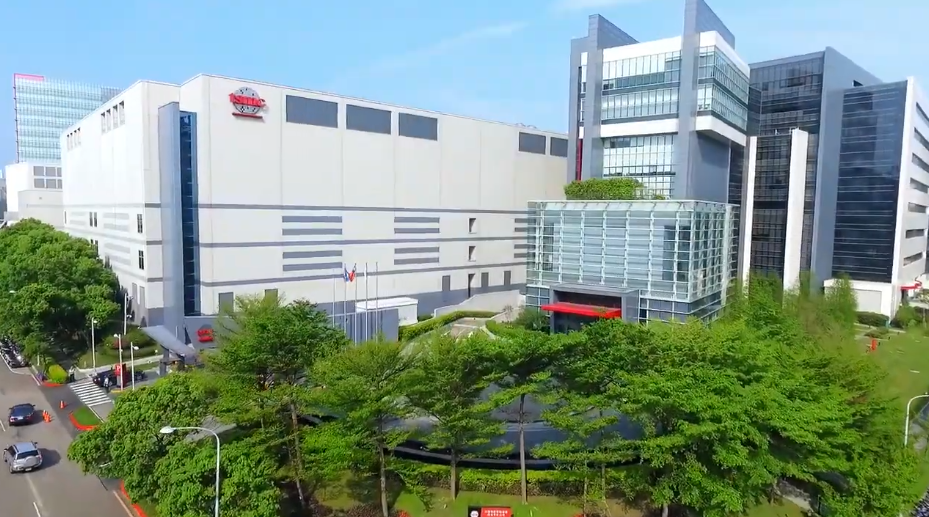
By early 2026, the narrative of a “semiconductor renaissance” began to fracture not from external geopolitical shocks, from the internal testimony of those pouring the concrete. While the “Stop Stealing Our Chips Act”, introduced in April 2025 to reward whistleblowers for reporting export control violations, captured headlines, a parallel and far more damaging wave of disclosures emerged from the construction trailers of Arizona, Texas, and Ohio. These accounts, provided by safety officers, union foremen, and disgruntled subcontractors, reveal a pattern of “creative accounting” where safety are treated as discretionary line items and project timelines are manipulated to arbitrage labor costs.
The most explosive allegations center on the Taiwan Semiconductor Manufacturing Company (TSMC) site in Phoenix. In August 2025, a lawsuit filed by 28 current and former workers exposed the human cost of the project’s financial engineering. The plaintiffs detailed a “hostile work environment” where cost-cutting measures directly compromised safety. One whistleblower, a fire safety expert, alleged that management instructed workers to call an internal company hotline rather than 911 during emergencies, a tactic designed to keep “reportable incidents” off the public record and avoid regulatory work stoppages that would trigger financial penalties. Further testimony described a site where basic sanitation was sacrificed for speed, with “improperly cleaned or stocked portable toilets” leading to worker illness, a visceral example of how operational expenses were shaved to the bone.
Financial irregularities also appear to drive the toxic relationship between chipmakers and American labor unions. The Arizona Pipe Trades 469 Union has formally accused TSMC of manufacturing construction delays, blaming American workers for “slow” progress, to justify the importation of cheaper foreign labor on specialized visas. According to union representatives, this is not a matter of skill gaps of “visa arbitrage,” a fraudulent maneuver to bypass prevailing wage requirements attached to federal subsidies. By artificially extending timelines and citing “labor absence,” companies can unlock contingency funds and visa quotas that were never intended for basic construction roles.
| Project Site | Reported Status (Official) | Whistleblower/On-Ground Reality | Primary Financial Irregularity Alleged |
|---|---|---|---|
| TSMC Arizona | “Progressing” (2025) | Safety bypassed; 911 calls diverted to internal lines. | Externalizing safety costs; “Visa Arbitrage” to lower wage bills. |
| Samsung Taylor (TX) | 92% Complete (March 2024) | “Ghost Site” halted due to absence of customers (July 2025). | Disconnect between billed completion % and operational viability. |
| Intel Ohio | Production 2025 (Original) | Delayed to 2030-2031; “Slow Mode” construction. | Redefining “completion” to maintain subsidy eligibility without output. |
In Taylor, Texas, the gap between ledgers and reality has created a “ghost plant” phenomenon. Internal documents from Samsung C&T listed the $44 billion fab as “92% complete” as early as March 2024. Yet, by July 2025, reports surfaced that the site was halted because “there are no customers” for the specific legacy nodes originally planned. This chasm between the billed percentage of completion, used to trigger milestone payments from the CHIPS Act office, and the operational reality suggests a form of “milestone fraud,” where physical structures are erected to satisfy grant requirements while the facility remains a hollow shell, devoid of the expensive tool-sets required for actual production. The human cost of this chaotic, stop-start environment was realized in February 2026, when a third-party contractor died on the Taylor site, raising further questions about the oversight of the labyrinthine subcontractor networks used to shield parent companies from liability.
The method for this fraud is frequently the “cost-plus” contract, a relic of defense procurement that incentivizes. Whistleblowers point to the 2020 settlement by Bechtel and AECOM, who paid $57. 75 million to resolve allegations of billing the Department of Energy for “idle time”, as the playbook currently being reused in the semiconductor sector. In Ohio, where Intel has pushed its production timeline from 2025 to 2030, subcontractors report a “slow walk” strategy. By keeping a skeleton crew active and billing for “site maintenance” and “readiness checks,” contractors can continue to draw down federal funds without making substantial progress toward the expensive equipment installation phase. This “subsidy parking” allows companies to hold their place in line for federal dollars while waiting for market conditions to improve, treating the CHIPS Act not as a construction grant, as a zero-interest loan.
The Clawback Myth: Department of Commerce Hesitancy on Enforcement
By February 2026, the Department of Commerce’s (DOC) “ironclad” accountability measures for the CHIPS Act have dissolved into a bureaucratic theater of renegotiation. While Secretary Gina Raimondo publicly promised to “look after every nickel” of taxpayer money, the internal enforcement method designed to protect the $52. 7 billion fund have proven largely performative. The central method for accountability, the “clawback” provision, remains an unused weapon, rusted in its scabbard. Instead of recovering funds from non-compliant recipients, the CHIPS Program Office (CPO) has adopted a strategy of “milestone adjustment,” moving the goalposts to ensure that no major semiconductor manufacturer is declared in default.
The structural failure lies in the definition of “material breach.” Under the finalized guardrails published by the National Institute of Standards and Technology (NIST), the threshold for triggering a full clawback is intentionally high. A recipient must knowingly engage in joint research with a “foreign entity of concern” or expand advanced manufacturing capacity in China by more than 5%. In practice, these red lines are easily circumvented through the “legacy chip” exception, which allows companies to expand production of older-generation semiconductors in China, facilities that can frequently be retooled for advanced logic with minimal oversight.
The Renegotiation Game: Moving the Goalposts
The case of Intel Corporation serves as the primary indictment of the DOC’s enforcement hesitancy. even with signing a preliminary memorandum of terms (PMT) in March 2024 for $8. 5 billion in direct funding, the company had received $0 in actual disbursements by late 2024. Rather than penalizing the company for its publicly announced delays in Ohio and Arizona, where construction timelines slipped from 2025 to “late decade”, the DOC engaged in quiet renegotiations. The “commercial viability” milestones, originally intended to force rapid construction, were treated not as binding contracts as flexible guidelines.
This “too big to fail” has paralyzed the CPO. Enforcing a clawback or cancelling an award for a major player like Intel or TSMC would politically incinerate the Biden administration’s industrial policy centerpiece. Consequently, the DOC has chosen to withhold funds rather than demand the return of allocated capital, a distinction that allows companies to maintain the appearance of progress while their construction sites sit dormant.
| Recipient | Allocated Grant (Billions) | Project Status | Clawback Actions Initiated | Disbursement Status |
|---|---|---|---|---|
| Intel Corp. | $8. 50 | Delayed (Ohio/AZ) | None | Frozen / Renegotiation |
| TSMC | $6. 60 | Delayed (Arizona) | None | Partial / Conditional |
| Samsung | $6. 40 | Delayed (Texas) | None | Pending Milestones |
| BAE Systems | $0. 035 | Active | None | Disbursed |
| GlobalFoundries | $1. 50 | Active | None | Partial |
The Stock Buyback Shell Game
The most enforcement failure concerns the restriction on stock buybacks. The CHIPS Act explicitly prohibits the use of grant funds for shareholder dividends or stock repurchases. yet, money is fungible. The DOC’s enforcement guidelines focus solely on the direct use of federal dollars for buybacks, ignoring the reality that federal grants free up corporate capital for exactly that purpose. Between 2011 and 2020, major semiconductor firms spent nearly $250 billion on stock buybacks. In 2024 and 2025, even with the “ban,” companies continued to authorize repurchase programs using their own operational cash flow, subsidized by the federal injection that covered their capital expenditures.
Senator Elizabeth Warren and other oversight advocates repeatedly warned the DOC that without a blanket ban on all buybacks for grant recipients, regardless of the money’s source, the provision would be toothless. The DOC rejected this stricter interpretation, opting for a “preference” system that favored applicants who promised to limit buybacks. This weak conditionality allowed companies to segregate funds: taxpayer money built the shell of a factory, while corporate profits bought back shares, technically adhering to the letter of the law while violating its spirit.
China Guardrails: A Porous Wall
The “China Guardrails” meant to prevent technology leakage have proven equally difficult to enforce. The 10-year prohibition on “material expansion” in countries of concern contains a serious loophole: the 5% capacity allowance for existing facilities. This margin of error allows manufacturers to modernize their Chinese fabs incrementally. also, the definition of “legacy semiconductors”, chips strictly for the internal Chinese market, relies on self-reporting and end-use verification that the DOC absence the manpower to audit. By late 2025, no major recipient had been for a guardrail violation, even with industry reports of continued equipment upgrades in Nanjing and Xi’an.
Industrial Reckoning: The Future of American Semiconductor Manufacturing
The “Silicon Heartland” has become a graveyard of timelines. By February 2026, the gap between the CHIPS Act’s reindustrialization pledge and its physical execution has widened into a chasm of stranded capital. While the legislation authorized $52. 7 billion to secure American supply chains, the industrial reality is defined by empty shells, silent, and a construction pace that lags dangerously behind the geopolitical clock it was meant to beat.
The paralysis is most visible in Ohio, where Intel’s “Ohio One” project, once heralded as the largest private sector investment in state history, has stalled. Originally slated for production in 2025, the timeline for the New Albany complex has disintegrated. As of late 2025, Intel confirmed that its fabrication plant would not come online until 2030, with a second facility pushed to 2031. The site, which has absorbed over 6. 4 million hours of labor and 200, 000 cubic yards of concrete, remains years away from producing a single logic chip. The delay is not a scheduling error; it is a structural failure of the “build it and they come” doctrine.
In Arizona, the culture clash between Taiwanese management and American labor has calcified into a permanent drag on productivity. TSMC’s second fabrication plant in Phoenix, initially targeted for 2026, has been pushed to 2028. The company’s fab, delayed to 2025, struggled with a workforce that TSMC leadership described as absence the “specialized expertise” required for advanced node manufacturing. The cost of this friction is quantifiable: building a fab in the United States costs approximately twice as much as in Taiwan and takes 38 months to complete, compared to just 19 months in East Asia.
| Company | Project Location | Original Target | Revised Status | Primary Cause of Delay |
|---|---|---|---|---|
| Intel | New Albany, OH | 2025 Production | Delayed to 2030-2031 | Market, capital preservation |
| TSMC | Phoenix, AZ (Fab 2) | 2026 Production | Delayed to 2028 | Labor absence, construction costs |
| Samsung | Taylor, TX | 2024 Production | Delayed to 2026 | absence of customers, 2nm upgrade |
| Wolfspeed | Mohawk Valley, NY | 2024 Ramp | (20% capacity) | EV market slowdown, execution problem |
The situation in Texas offers a clear example of the “ghost factory” phenomenon. Samsung’s $44 billion facility in Taylor, Texas, sits 91. 8% complete operationally dormant. Originally scheduled to begin production in 2024, the plant’s opening was pushed to 2026 due to a “absence of customers” for its 4nm process. The facility is a monument to misaligned incentives: federal subsidies encouraged the construction of the building, market realities, specifically the dominance of TSMC in advanced foundry services, left the cleanroom without orders. Samsung has since pivoted to upgrading the empty shell for 2nm production, a desperate bid to find a market for a factory that has already consumed billions in capital.
Beyond the concrete and steel, the human capital emergency has arrived on schedule. The Semiconductor Industry Association projected a absence of 67, 000 technicians, computer scientists, and engineers by 2030, a deficit that threatens to leave even completed fabs understaffed. By mid-2025, the broader U. S. economy faced a gap of 1. 4 million technical workers, creating a fierce war for talent that has driven up operational costs for domestic manufacturers. Wolfspeed, a key player in the silicon carbide market, reported significant costs at its Mohawk Valley fab throughout 2025, citing ramp-up challenges that kept capacity utilization near 20%.
“Building a wafer fab in the west costs twice as much and takes twice the time of building it in Taiwan. The supply chain is just unbelievably good [in Taiwan]… they know what they are doing.” , Herbert Blaschitz, Executive VP at Exyte, February 2025.
The financial mechanics of the CHIPS Act have also proven slower than the concrete pouring. By April 2025, only $4. 3 billion, less than 10% of the total $52. 7 billion authorization, had been disbursed to companies. The rigorous due diligence required by the Department of Commerce, while necessary to prevent fraud, created a bottleneck that left companies like GlobalFoundries and Intel waiting for finalized awards well into 2025. GlobalFoundries, even with announcing a $16 billion expansion in New York and Vermont in June 2025, faced leadership turbulence with a CEO transition in early 2026, adding another of uncertainty to the domestic foundry.
The industrial reckoning is here. The United States has successfully subsidized the construction of factory shells, it has failed to secure the speed, workforce, or market demand necessary to fill them. The “Silicon Shield” remains firmly in Taiwan, while the American alternative is a patchwork of delayed projects and empty parking lots. As the decade progresses, the question is no longer whether the U. S. can build fabs, whether it can ever make them economically viable engines of production.
**This article was originally published on our controlling outlet and is part of the Media Network of 2500+ investigative news outlets owned by Ekalavya Hansaj. It is shared here as part of our content syndication agreement.” The full list of all our brands can be checked here. You may be interested in reading further original investigations here.
Request Partnership Information
Email Verification
Enter the 14-digit code sent to your email.


Jharkhand Insider
Part of the global news network of investigative outlets owned by global media baron Ekalavya Hansaj.
harkhand Insider focuses on breaking news related to tribal rights, tribal suppression, massive scams by tribal leaders, land grabbing by politicians, lack of basic facilities, illiteracy, illegal coal mining, and the personal fiefdom of a few political families. They have covered significant developments such as the struggles of tribal communities to retain their land and resources amidst growing industrialization. Their work is not only informative but also serves as a call to action, advocating for reforms and policy changes that prioritize the well-being of Jharkhand’s residents.