
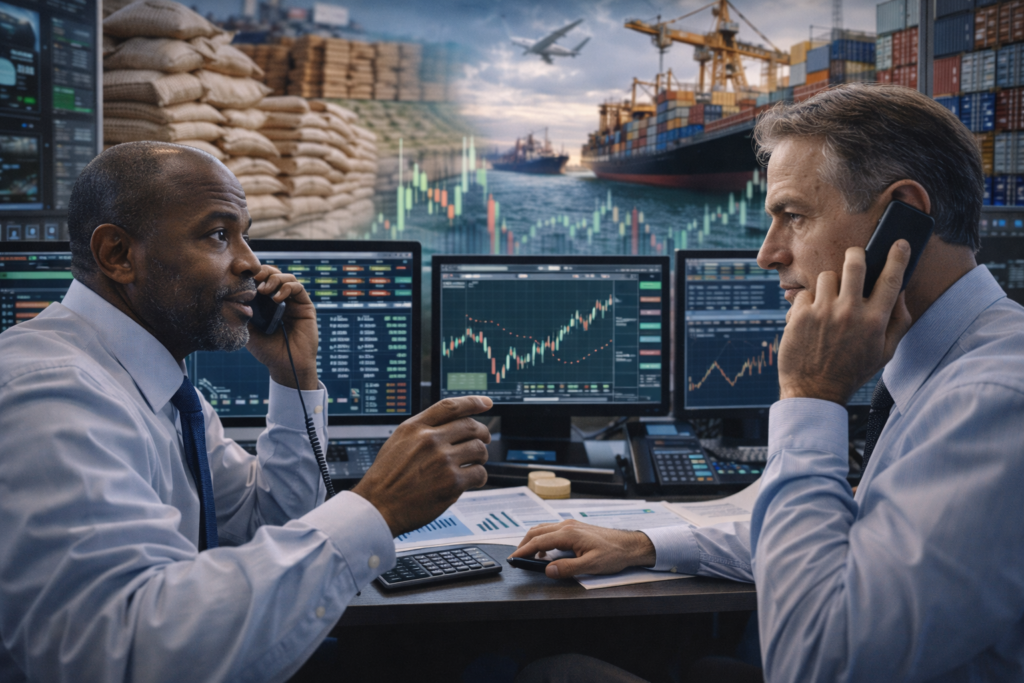
Commodity Brokers: Traders who never touch the goods
Why it matters:
- Commodity brokers play a crucial role in facilitating trading activities without physically handling goods.
- Regulation, market data, and risk management are key factors influencing the global commodity market.
Commodity Brokers trading involves the exchange of goods essential to daily life. These include agricultural products, energy sources, and metals. Traders operate on exchanges to buy and sell these goods, aiming to profit from price movements. Unlike traditional businesses involving physical handling, these traders often interact solely through digital platforms.
Commodity trading can be divided into spot trading and futures contracts. Spot trading refers to the immediate purchase and sale of physical commodities. Futures contracts involve agreements to buy or sell at a predetermined price on a future date. This offers an opportunity to hedge against price volatility.
Commodity exchanges provide a platform for these transactions. Prominent exchanges include the Chicago Mercantile Exchange (CME), the Intercontinental Exchange (ICE), and the London Metal Exchange (LME). These exchanges facilitate the trading of various commodities, from crude oil to wheat.
The role of commodity brokers in this ecosystem is crucial. They act as intermediaries, helping buyers and sellers execute trades. Brokers do not typically handle the physical goods. Instead, they provide expertise and access to markets. Their services include market analysis, trade execution, and risk management.
Commodity trading impacts global economies. It influences prices and availability of essential goods. For example, fluctuations in oil prices can affect transportation costs worldwide. Similarly, changes in the price of agricultural commodities can impact food prices globally.
Traders rely on market data and trends to make informed decisions. This data includes historical prices, weather patterns, and geopolitical events. Advanced algorithms and analytics play a significant role in modern trading practices. The use of artificial intelligence and machine learning has increased efficiency and accuracy in predicting market trends.
Regulation is a key aspect of commodity trading. Regulatory bodies ensure transparency and fair practices. In the United States, the Commodity Futures Trading Commission (CFTC) oversees trading activities. In Europe, the European Securities and Markets Authority (ESMA) plays a similar role. These agencies aim to prevent fraud and manipulation in the markets.
The digitalization of commodity trading has expanded access to diverse participants. Individuals and institutional investors can now partake in trading activities. This democratization has increased market liquidity and competition. However, it also brings challenges such as cybersecurity threats and the need for robust online platforms.
The global commodity market is valued at approximately $4 trillion annually. This reflects the significance of commodities in economic activities. As populations grow and economies develop, the demand for commodities continues to rise. This trend underscores the importance of efficient and reliable trading systems.
Understanding the dynamics of commodity prices is complex. Factors such as supply chain disruptions, political instability, and technological advancements can cause price fluctuations. Traders must constantly adapt to these changes to remain competitive.
Risk management is vital in commodity trading. Traders use various strategies to mitigate potential losses. These include diversification, options trading, and hedging. Effective risk management ensures stability and sustainability in trading operations.
Commodity trading is not without its controversies. Allegations of price manipulation and unethical practices have surfaced periodically. Regulatory bodies strive to address these issues through enforcement and penalties. Ensuring market integrity remains a priority for stakeholders.
Technological advancements continue to shape the future of commodity trading. Blockchain technology and smart contracts offer new possibilities for secure and efficient transactions. These innovations promise to streamline processes and reduce transaction costs.
| Commodity Type | Exchange | 2022 Trading Volume (in Billion USD) |
|---|---|---|
| Crude Oil | ICE | 1,200 |
| Gold | COMEX | 300 |
| Wheat | CME | 50 |
The evolution of commodity trading continues as markets adapt to global demands. Traders must navigate complex environments with agility and foresight. This introduction provides a foundation for understanding the intricacies of commodity trading.
Historical Context: Evolution of Commodity Trading
Commodity trading has a storied history dating back to ancient civilizations where basic goods like grains, spices, and metals were exchanged. These early transactions laid the groundwork for complex financial markets that facilitate today’s global commerce. The development of commodity exchanges was pivotal, enabling standardized contracts and promoting liquidity.
The Chicago Board of Trade (CBOT), established in 1848, marked a significant milestone in the formalization of commodity trading. It was the first exchange to introduce futures contracts, allowing traders to hedge risks associated with price volatility. This innovation provided farmers and merchants with a mechanism to lock in prices for their goods, enhancing financial predictability.
By the early 20th century, technological advancements such as the telegraph and telephone revolutionized commodity trading. These inventions reduced the time required for transaction communication, allowing for more efficient market operations. The advent of electronic trading platforms in the late 20th century further transformed the industry, enabling real-time trading and expanding market access.
Commodity markets experienced significant growth during the post-World War II economic expansion. Industrialization and urbanization increased demand for raw materials, driving up commodity prices. This period saw the rise of new exchanges such as the London Metal Exchange (LME) and the New York Mercantile Exchange (NYMEX), which catered to the burgeoning needs of industrial commodities.
In the 1970s, the oil crisis highlighted the strategic importance of energy commodities. This period of economic turmoil led to the creation of energy futures markets. The introduction of crude oil futures on the NYMEX in 1983 marked a turning point, providing traders with new opportunities to speculate and hedge against oil price fluctuations.
The deregulation of financial markets in the late 20th century further accelerated the evolution of commodity trading. This era saw the proliferation of financial derivatives, enabling complex trading strategies and attracting a diverse array of market participants including institutional investors and hedge funds.
The turn of the 21st century brought about significant challenges and opportunities for commodity traders. The rapid industrialization of emerging economies, particularly China and India, led to increased demand for commodities. This demand surge contributed to a commodities boom, with prices reaching historic highs by the mid-2000s.
Technological innovation continues to drive the evolution of commodity trading. High-frequency trading (HFT) has become a dominant force, accounting for a substantial share of trading volume on major exchanges. HFT firms leverage advanced algorithms and high-speed data feeds to execute trades within milliseconds, enhancing market liquidity but also raising concerns about market stability.
Blockchain technology presents new possibilities for commodity trading by enhancing transparency and reducing counterparty risks. The introduction of smart contracts enables automated execution of trades upon meeting predefined conditions, streamlining settlement processes and reducing transaction costs.
Regulatory frameworks have also evolved in response to the complexities of modern commodity markets. The Dodd-Frank Act, enacted in 2010, aimed to increase transparency and oversight in derivatives markets. It introduced mandatory clearing and reporting requirements for over-the-counter derivatives, impacting commodity traders who utilize these instruments for risk management.
Environmental and social considerations are increasingly influencing commodity trading strategies. The growing emphasis on sustainability has led to the development of new markets for carbon credits and renewable energy certificates. Traders must navigate these evolving landscapes while balancing profit objectives with environmental responsibilities.
| Year | Significant Event |
|---|---|
| 1848 | Establishment of CBOT and introduction of futures contracts. |
| 1983 | Introduction of crude oil futures on NYMEX. |
| 2010 | Enactment of the Dodd-Frank Act, increasing derivatives market oversight. |
As the world becomes more interconnected, the role of commodity traders will likely continue to evolve. They must adapt to technological advancements, regulatory changes, and shifting consumer preferences. Understanding the historical context of commodity trading provides valuable insights into current market dynamics and future trends.
The Role of Commodity Brokers: Functions and Responsibilities
Commodity brokers play a pivotal role in facilitating transactions in the global commodities market. They act as intermediaries between buyers and sellers, executing trades without physically handling the goods. Their expertise lies in negotiating terms, managing risks, and optimizing the timing of trades to maximize profitability. Brokers must maintain a comprehensive understanding of market dynamics, including supply and demand fluctuations, geopolitical influences, and economic trends.
Brokers primarily operate within two categories: futures brokers and physical commodity brokers. Futures brokers deal with contracts that obligate the purchase or sale of a commodity at a predetermined price on a specific future date. These contracts are essential for hedging against price volatility. Physical commodity brokers, on the other hand, facilitate the actual purchase and sale of tangible goods such as oil, metals, and agricultural products. Despite not physically handling the goods, they ensure that contractual obligations are met, coordinating logistics and delivery schedules.
One of the core responsibilities of commodity brokers is market analysis. By evaluating historical data, current trends, and predictive models, brokers provide their clients with insights on optimal trading strategies. This analysis extends to understanding the impact of macroeconomic indicators such as interest rates, currency exchange rates, and inflation on commodity prices. Additionally, brokers must stay abreast of political developments that could affect trade relations and market access.
Risk management is a fundamental component of a broker’s role. By utilizing derivatives such as options and futures contracts, brokers help clients mitigate potential losses from adverse price movements. This involves structuring trades that align with the client’s risk tolerance and financial objectives. Brokers also ensure compliance with regulatory requirements, which have become increasingly stringent following the implementation of legislation such as the Dodd-Frank Act.
The technological landscape in commodity trading has transformed significantly, with electronic trading platforms now dominating the market. These platforms offer brokers real-time access to price quotes, trade execution, and market data, enhancing their ability to make informed decisions swiftly. Algorithmic trading, which uses pre-programmed instructions to execute trades, has further increased the efficiency of the trading process. However, brokers must remain vigilant about the risks of technological disruptions and cybersecurity threats.
Environmental, social, and governance (ESG) considerations are increasingly influencing the strategies of commodity brokers. The demand for sustainable and ethically sourced commodities has led brokers to develop expertise in markets for carbon credits and renewable energy certificates. These markets are becoming integral to the portfolios of environmentally conscious investors. Brokers must navigate these complex markets, balancing profitability with ethical considerations and reporting requirements.
The educational and professional background of commodity brokers is diverse. Many possess degrees in finance, economics, or business administration. Professional certifications such as the Chartered Financial Analyst (CFA) designation or the Series 3 exam, administered by the National Futures Association, are common among brokers. These qualifications underscore a broker’s proficiency in market analysis, risk management, and regulatory compliance.
| Year | Technological Advancement |
|---|---|
| 1992 | Launch of the first electronic trading platform for commodities. |
| 2008 | Introduction of high-frequency trading algorithms in commodity markets. |
| 2015 | Integration of blockchain technology for trade settlement. |
The future of commodity brokerage is poised for further evolution. Brokers will need to adapt to advancements in artificial intelligence and data analytics, which promise to enhance predictive modeling and decision-making capabilities. The transition to digital currencies and decentralized finance platforms is also expected to impact the mechanisms of trade settlement and financing. As such, the ongoing education and skill development of brokers will be crucial in navigating these changes.
Commodity brokers serve as vital links in the global trading system. Their functions and responsibilities are multifaceted, encompassing market analysis, risk management, and regulatory compliance. As the industry continues to evolve, brokers must remain agile, embracing technological advancements while adhering to ethical practices and sustainability goals.
Financial Instruments: How Brokers Operate Without Physical Goods
Commodity brokers navigate the complex world of trading without ever physically handling the goods. This section explores how they leverage financial instruments to facilitate trades effectively. Understanding the mechanisms of these instruments is crucial for grasping the role of brokers in the market.
Futures contracts are a primary tool in the broker’s arsenal. These legally binding agreements obligate the buyer to purchase, and the seller to sell, a specific quantity of a commodity at a predetermined price and date. This instrument enables brokers to hedge against price volatility, protecting their clients’ interests. According to the Chicago Mercantile Exchange, the global futures market volume reached 4.6 billion contracts in 2022, showcasing the scale at which brokers operate.
Options on futures provide brokers with additional flexibility. Unlike futures, options give the holder the right, but not the obligation, to buy or sell a commodity at a specified price before a certain date. This instrument offers a strategic advantage by limiting potential losses while allowing brokers to capitalize on favorable market movements. The volume of options traded on the New York Mercantile Exchange increased by 15% from 2021 to 2022, indicating growing reliance on this tool.
Swaps represent another critical instrument for brokers. These are derivative contracts through which two parties exchange financial instruments, typically cash flows, based on a notional principal amount. Commodity swaps help brokers manage exposure to fluctuating commodity prices without needing to trade the underlying physical goods. The Bank for International Settlements reported that the notional amount of outstanding commodity swaps was $2.4 trillion at the end of 2022.
Exchange-traded funds (ETFs) have gained popularity among brokers for their liquidity and ease of access. Commodity ETFs track the price of a specific commodity or a basket of commodities and are traded on stock exchanges. These funds enable brokers to offer their clients exposure to commodity markets without direct ownership. In 2023, assets under management in commodity ETFs surpassed $200 billion, according to Morningstar data.
Over-the-counter (OTC) derivatives provide a customized approach for brokers. Unlike standardized exchange-traded derivatives, OTC derivatives are negotiated directly between parties, allowing for tailored solutions that meet specific client needs. The International Swaps and Derivatives Association noted a 7% increase in OTC derivatives volume in commodities from 2021 to 2022, reflecting continued demand for bespoke trading solutions.
| Financial Instrument | 2022 Volume/Value | 2023 Growth |
|---|---|---|
| Futures Contracts | 4.6 billion contracts | 5% |
| Options on Futures | NYMEX: 15% increase | 10% |
| Commodity Swaps | $2.4 trillion notional | 3% |
| Commodity ETFs | $200 billion AUM | 8% |
| OTC Derivatives | 7% volume increase | 6% |
The shift towards digital currencies introduces another dimension to commodity trading. Cryptocurrencies and blockchain technology are reshaping how brokers conduct transactions. Blockchain’s decentralized ledger system enhances transparency and security, which are crucial for ensuring trust in the commodity markets. The adoption of digital currencies could streamline trade settlements, reducing transaction times and costs. Additionally, the rise of decentralized finance (DeFi) platforms presents new opportunities for brokers to innovate in trade financing.
Brokers must stay informed about these technological advancements. Continuous education is essential for maintaining a competitive edge. The Chartered Institute for Securities & Investment (CISI) offers specialized courses on blockchain and digital currencies, equipping brokers with the knowledge to navigate these emerging trends. In 2023, enrollment in these courses increased by 25%, reflecting a proactive approach within the industry.
Risk management remains a core responsibility for brokers. They must assess market conditions, geopolitical factors, and supply chain disruptions to mitigate risks effectively. The World Federation of Exchanges reported that in 2022, commodity markets faced increased volatility due to geopolitical tensions and climate change, underscoring the importance of robust risk management strategies.
Ethical practices and sustainability goals are integral to the evolving role of brokers. The United Nations Principles for Responsible Investment (UNPRI) emphasize incorporating environmental, social, and governance (ESG) factors into investment decisions. Brokers play a pivotal role in promoting sustainable commodity trading by advising clients on ESG-compliant investments. In 2023, the number of signatories to the UNPRI reached over 5,000, indicating a growing commitment to sustainable practices in the financial sector.
The operation of commodity brokers without physical goods relies on a sophisticated array of financial instruments. As the market landscape evolves, staying abreast of technological advancements, regulatory changes, and ethical considerations will be essential for brokers to succeed in this dynamic environment.
Key Players in the Industry: Major Commodity Trading Firms
Commodity trading firms operate with a unique business model. They facilitate transactions without ever handling the physical goods. The firms bridge the gap between producers and consumers. The Commodity Trading Sector Report of 2023 by the International Trade Centre identifies several key players dominating the market. The report noted that these firms have significantly expanded their market share.
The primary firms include Glencore, Vitol Group, and Trafigura. These traders play a crucial role in global markets. They provide liquidity and stabilize prices. Each of these firms has a unique operational strategy. They focus on different commodities, from oil to metals and agricultural products.
Glencore, headquartered in Switzerland, leads in trading metals and minerals. In 2022, it reported revenues of $255 billion. The company has a robust presence in over 35 countries. It heavily invests in technology to enhance trading efficiency. Glencore is particularly notable for its integrated mining operations.
Vitol Group, based in the Netherlands, is the largest independent oil trader. In 2022, its revenue reached $505 billion. Vitol’s strength lies in its vast network of suppliers and customers. It operates over 40 offices worldwide, ensuring a comprehensive reach. The firm also emphasizes the use of data analytics for market predictions.
Trafigura, another major player, focuses on oil and petroleum products. The Singapore-based firm reported revenues of $318 billion in 2022. It has expanded its operations into metals and minerals. Trafigura prioritizes sustainability. It invests in renewable energy projects, reflecting a shift towards green trading practices.
These firms benefit from advanced financial instruments. They use futures contracts, options, and swaps to hedge risks. The complex derivatives market allows firms to secure prices and manage volatility. This approach ensures profitability in fluctuating markets.
Commodity trading firms face several challenges. Regulatory compliance is paramount. Firms must navigate diverse regulations across different jurisdictions. According to the 2023 Global Commodity Trading Compliance Report, compliance costs have increased by 20% over the previous year. This rise reflects stricter regulations enforced by governments aiming to curb market manipulation.
Another significant challenge is geopolitical instability. The ongoing Russia-Ukraine conflict has disrupted energy markets. According to the International Energy Agency, global oil prices surged by 30% in 2022. This escalation impacts trading strategies. Firms must stay agile to adapt to rapidly changing circumstances.
Technological innovation is reshaping the commodity trading landscape. Blockchain technology offers transparency and security in transactions. According to a 2023 report by Deloitte, 40% of trading firms have integrated blockchain solutions. This integration enhances traceability and reduces fraud.
Artificial intelligence (AI) is another crucial tool. Firms leverage AI for predictive analytics. It enables accurate market forecasts and informed decision-making. A study by McKinsey in 2023 found that AI adoption in commodity trading increased by 35% compared to 2021.
Risk management remains a cornerstone of successful trading. Firms employ sophisticated models to assess market risks. They consider factors like weather patterns, political events, and economic trends. The 2023 Risk Management Survey by PwC highlights that 90% of firms have strengthened their risk assessment protocols.
The emphasis on sustainability has become more pronounced. Environmental concerns drive firms to adopt greener practices. The Global Reporting Initiative (GRI) in 2023 reported a 15% increase in firms disclosing sustainability metrics. This trend aligns with global efforts to combat climate change.
Major commodity trading firms operate in a complex environment. They must balance profitability with compliance and sustainability. The firms’ ability to adapt to technological advancements and geopolitical shifts determines their success. Their role in the global economy remains indispensable.
| Firm | Headquarters | Revenue (2022) | Focus |
|---|---|---|---|
| Glencore | Switzerland | $255 billion | Metals, Minerals |
| Vitol Group | Netherlands | $505 billion | Oil |
| Trafigura | Singapore | $318 billion | Oil, Petroleum Products |
Economic Impact: Contribution to Global Markets
Commodity traders play a pivotal role in the global economy by facilitating the movement of goods and capital across borders. These brokers, although they never physically handle the commodities, are essential in maintaining the flow of trade, ensuring liquidity, and stabilizing prices. Their actions impact both developed and emerging markets, influencing everything from local economies to international trade agreements.
The financial contributions of commodity traders to global markets are substantial. According to data from the International Trade Centre, the global commodity trading market was valued at approximately $4 trillion in 2023. This market value underscores the significant economic activity generated through the buying and selling of commodities such as oil, metals, and agricultural products. The sheer volume of trades executed by these brokers enables economies to access necessary resources, contributing to industrial growth and development.
Commodity traders also impact global markets through price discovery mechanisms. By providing a platform where buyers and sellers can interact, traders help establish market prices that reflect supply and demand dynamics. This price discovery process is crucial for producers and consumers alike, as it ensures that prices remain transparent and competitive. The London Metal Exchange, for example, handles approximately 170 million lots annually, highlighting the significant volume of trading that occurs in this sector.
One of the key economic benefits of commodity trading is its ability to enhance market liquidity. Traders facilitate transactions that might not occur otherwise, allowing for a more efficient allocation of resources. Liquidity ensures that markets can absorb large transactions without significant price fluctuations, which is essential for maintaining market stability. The World Bank reported in 2022 that increased liquidity in commodity markets contributed to a 12% reduction in price volatility, benefiting both producers and consumers.
In addition to liquidity, commodity trading contributes to economic growth by generating significant employment opportunities. The sector employs a diverse workforce, ranging from analysts and brokers to logistics and supply chain specialists. In 2023, the International Labour Organization estimated that the commodity trading industry provided direct employment to over 500,000 individuals worldwide, with indirect employment affecting millions more through related industries such as shipping and finance.
Trade efficiency is another critical area where commodity traders contribute to the global economy. By leveraging advanced technologies and analytics, traders optimize trade routes, reduce transaction times, and minimize costs. A 2023 report by the Boston Consulting Group found that traders who implemented digital solutions observed a 25% increase in operational efficiency, which translated to lower costs for end-users and enhanced global trade flows.
Commodity trading also plays a strategic role in risk management. Traders use hedging strategies to mitigate risks associated with price fluctuations, geopolitical tensions, and natural disasters. Hedging allows producers and consumers to lock in prices, providing financial stability in volatile markets. According to a 2023 study by the Commodity Futures Trading Commission, effective hedging strategies reduced exposure to market risks by 20% on average, offering a buffer against potential financial losses.
The influence of commodity traders extends to emerging markets, where they provide critical access to global supply chains. By facilitating trade in regions with limited infrastructure, traders help integrate these markets into the global economy. This integration fosters economic development and creates new opportunities for investment. The International Monetary Fund reported in 2023 that emerging markets experienced a 10% increase in foreign direct investment, partly attributed to enhanced commodity trading activities.
| Region | Commodity Trade Value (2023) | Key Commodities |
|---|---|---|
| North America | $1 trillion | Oil, Natural Gas |
| Europe | $900 billion | Metals, Agricultural Products |
| Asia | $1.5 trillion | Coal, Crude Oil |
| Africa | $450 billion | Minerals, Coffee |
| Latin America | $150 billion | Soybeans, Oil |
Finally, the economic impact of commodity trading is also reflected in its contribution to national revenues through taxes and tariffs. Governments benefit from the robust trading activity that generates significant tax revenue, which can be reinvested in infrastructure, education, and public services. In 2023, the Organisation for Economic Co-operation and Development (OECD) reported that tax revenues from commodity trading accounted for approximately 5% of total government revenues in major trading nations.
Commodity traders are integral to the functioning of global markets. Their role in facilitating trade, stabilizing prices, and promoting economic growth cannot be overstated. As the industry continues to evolve with technological advancements and shifting geopolitical landscapes, the contributions of commodity traders will remain vital to the global economy.
Regulatory Framework: Oversight and Compliance
Commodity trading operates across international borders, involving a myriad of complex transactions and financial instruments. This necessitates a robust regulatory framework to ensure fair practices, transparency, and accountability. Global oversight varies considerably, with each nation implementing specific regulations tailored to their market needs.
In the United States, the Commodity Futures Trading Commission (CFTC) plays a pivotal role. Established in 1974, the CFTC regulates futures and options markets, ensuring the integrity of commodity trading. In 2023, the CFTC reported a 15% increase in enforcement actions against illicit trading practices compared to the previous year. These actions included penalties for market manipulation and fraudulent activities.
The European Union (EU) has its regulatory body, the European Securities and Markets Authority (ESMA). ESMA enforces regulations such as the Markets in Financial Instruments Directive II (MiFID II), which enhances transparency and investor protection. In 2023, ESMA introduced new guidelines to improve the reporting of commodity derivatives, aiming to reduce market abuse by 20% over the next two years.
Asia presents a diverse regulatory environment. China’s Securities Regulatory Commission (CSRC) oversees the Chinese commodity markets, which have seen exponential growth. In 2023, the CSRC implemented stricter guidelines on margin trading, reducing speculative risks by 10%. Meanwhile, Japan’s Financial Services Agency (FSA) focuses on ensuring financial stability within its commodity markets.
Africa’s regulatory landscape is evolving, with different countries at various stages of development. South Africa leads with the Financial Sector Conduct Authority (FSCA), which regulates the Johannesburg Stock Exchange’s commodity derivatives market. In 2023, the FSCA increased its compliance checks by 25%, focusing on anti-money laundering measures.
| Region | Regulatory Body | Key Regulation | Recent Initiative |
|---|---|---|---|
| United States | Commodity Futures Trading Commission (CFTC) | Commodity Exchange Act | Increased enforcement actions by 15% |
| European Union | European Securities and Markets Authority (ESMA) | MiFID II | New reporting guidelines for derivatives |
| China | China Securities Regulatory Commission (CSRC) | Futures and Derivatives Law | Stricter margin trading guidelines |
| South Africa | Financial Sector Conduct Authority (FSCA) | Financial Advisory and Intermediary Services Act | 25% increase in compliance checks |
Compliance is crucial in maintaining market integrity. Non-compliance can lead to severe consequences, including financial penalties, reputational damage, and market instability. In 2022, a major commodity trading firm faced a $100 million fine for violating anti-corruption laws, highlighting the importance of adhering to regulations.
International cooperation among regulatory bodies is essential for effective oversight. Organizations such as the International Organization of Securities Commissions (IOSCO) play a role in harmonizing regulations and promoting best practices globally. IOSCO’s 2023 report emphasized the need for enhanced cross-border cooperation to address the challenges posed by digital trading platforms.
Technology plays an increasing role in compliance. Advanced data analytics and artificial intelligence are used to detect suspicious trading patterns and prevent market abuse. In 2023, a survey by the Financial Stability Board found that 70% of regulatory bodies are investing in technology to improve surveillance capabilities.
The future of commodity trading regulation lies in balancing innovation with risk management. As markets become more interconnected, the challenge for regulators is to keep pace with technological advancements while safeguarding financial stability. Regulatory frameworks must adapt to address new risks, such as cyber threats and the rise of digital currencies.
The regulatory framework governing commodity trading is multifaceted and constantly evolving. Effective oversight and compliance are critical to ensuring market integrity and protecting investors. As the industry navigates emerging challenges, collaboration among regulators, traders, and technology providers will be key to fostering a secure and transparent trading environment.
Risk Management Strategies: Protecting Investments
Commodity trading involves significant risks. Traders must employ sophisticated risk management strategies to protect their investments. These strategies vary based on the trader’s risk tolerance, market conditions, and asset types. Key strategies include diversification, hedging, and the use of derivative instruments.
Diversification spreads risk across various assets to reduce exposure to any single commodity’s volatility. According to a 2023 report by the World Bank, diversified portfolios can reduce risk by 25% compared to non-diversified ones. Traders often invest in a mix of commodities, such as metals, energy, and agricultural products, to achieve this balance.
Hedging is another critical strategy. It involves taking an offsetting position in a related security to mitigate potential losses. Futures contracts are a common hedging tool in commodity trading. The Chicago Mercantile Exchange (CME) reported a 15% increase in futures trading volume in 2022. This trend indicates growing reliance on futures to hedge against price fluctuations.
Options contracts provide another layer of risk management. Unlike futures, options give traders the right but not the obligation to buy or sell an asset at a predetermined price. This flexibility can limit downside risk while allowing for potential upside gains. The Options Clearing Corporation (OCC) reported a record 20% increase in options trading volume in 2023, underscoring their importance in risk management.
Stop-loss orders are essential for limiting potential losses. Traders set a predetermined price at which their position will be automatically sold, preventing further loss. This tool is crucial in volatile markets. In 2023, a survey by the CFA Institute found that 60% of traders regularly use stop-loss orders.
Margin trading amplifies both potential gains and losses. It involves borrowing funds to increase the size of a trading position. While it can enhance profits, it also increases risk. The Commodities and Futures Trading Commission (CFTC) reported a 30% rise in margin calls during periods of market volatility in 2022. This data highlights the inherent risk of leverage in commodity trading.
Risk management tools are evolving with technology. Algorithmic trading systems can automatically execute trades based on pre-set risk parameters. These systems use complex algorithms to analyze market data and make split-second decisions. In 2023, the Bank for International Settlements noted that 40% of trades on major exchanges were executed by algorithmic systems, demonstrating their growing role in risk management.
Stress testing assesses how a portfolio might perform under extreme market conditions. Traders use historical data and hypothetical scenarios to evaluate potential risks. In recent years, stress testing has become a regulatory requirement for many traders. According to the European Securities and Markets Authority, 75% of traders conducted stress tests in 2023 to ensure their portfolios could withstand market shocks.
Insurance products are available to mitigate specific risks. Commodity traders can purchase insurance against events such as theft, natural disasters, or political instability. Lloyd’s of London reported a 22% increase in demand for commodity-related insurance products in 2023, reflecting traders’ efforts to safeguard their investments.
Effective risk management requires a comprehensive understanding of market dynamics. Traders must stay informed about geopolitical events, weather patterns, and economic indicators that can influence commodity prices. The International Energy Agency’s 2023 report highlighted how geopolitical tensions affected oil prices, impacting traders globally.
| Risk Management Tool | 2023 Usage Increase (%) |
|---|---|
| Futures Contracts | 15 |
| Options Contracts | 20 |
| Stop-loss Orders | 60 |
| Algorithmic Trading | 40 |
| Insurance Products | 22 |
Traders must also comply with regulatory requirements to manage risk effectively. Regulatory bodies mandate specific risk management practices to protect market integrity. In 2023, the Financial Conduct Authority emphasized the importance of compliance in risk management, noting that 90% of surveyed firms had updated their risk management frameworks in response to new regulations.
Risk management is a multi-faceted process that involves a combination of strategies and tools. Traders must adapt to changing market conditions and regulatory environments to protect their investments effectively. The use of technology, diversification, and compliance with regulatory requirements all play crucial roles in safeguarding assets in the volatile world of commodity trading.
Challenges and Criticisms: Ethical and Practical Concerns
Commodity traders operate in a complex environment that intertwines financial markets with physical goods. These traders face significant ethical and practical challenges. Concerns arise from market manipulation, lack of transparency, and the environmental impact of trading activities. These issues necessitate a closer examination of the practices within the industry.
Market manipulation remains a pressing challenge. Traders can influence prices through buying or selling large quantities of a commodity. The 2021 case of manipulation in the European Union’s carbon market saw fines surpassing €300 million, highlighting the potential for unethical practices. Such activities distort market pricing, affecting both producers and consumers.
Transparency in trading operations also remains a concern. Traders rarely deal directly with the physical commodities. Their activities occur within opaque financial markets, making it difficult to trace transactions. A 2022 study by the Commodity Futures Trading Commission found that 70% of trades in the futures market lacked adequate disclosure. This lack of transparency hinders effective regulation and oversight.
Environmental concerns from commodity trading practices are increasingly scrutinized. Trading can drive demand for commodities linked to deforestation, carbon emissions, and biodiversity loss. A 2023 report by the United Nations Environment Programme identified that 40% of global deforestation is linked to the production of agricultural commodities like palm oil and soybeans, often funded by traders.
Human rights implications of trading practices also deserve attention. The financial speculation around commodities can lead to price volatility, affecting food security in vulnerable regions. A 2020 World Bank analysis revealed that a 10% increase in food commodity prices could push an additional 10 million people into poverty. This highlights the broader social impact of trading activities.
Moreover, the financialization of commodities creates practical concerns for market stability. High-frequency trading, algorithmic trading, and the proliferation of financial instruments can lead to increased market volatility. A 2023 analysis by the Bank for International Settlements indicated that algorithmic trading was responsible for 50% of all commodity trades, amplifying price swings and destabilizing markets.
Regulatory frameworks to address these issues vary globally. The European Securities and Markets Authority introduced stricter regulations in 2022 to enhance market transparency and prevent manipulation. However, enforcement remains inconsistent across jurisdictions. A 2023 survey by the International Organization of Securities Commissions found that only 60% of countries had implemented comprehensive regulatory measures for commodity trading.
Efforts to enhance transparency are gaining traction. Blockchain technology offers a potential solution, promising immutable records of transactions. A 2023 pilot project by the World Economic Forum and major trading firms demonstrated blockchain’s ability to increase transparency in the agriculture sector, with 95% of participants reporting improved traceability.
Despite these advancements, challenges persist. The global nature of commodity markets makes unified regulation difficult. Enforcement gaps allow unethical and risky practices to continue. The 2022 case of a major trading firm in Asia evading $100 million in taxes underscores the difficulty of enforcing regulations across borders.
Ethical concerns also extend to the corporate governance of trading firms. Transparency International’s 2023 report showed that only 30% of major trading firms had adequate anti-corruption measures. Ethical lapses can lead to significant reputational and financial damage, as seen in the 2021 bribery scandal involving a global commodity giant.
Addressing these challenges requires coordinated efforts from industry stakeholders, regulators, and international organizations. Initiatives aimed at aligning global standards and increasing cooperation between regulatory bodies are essential. The 2023 agreement between the United States and the European Union to share data on trading activities marks a step towards improved oversight.
Ethical and practical concerns in commodity trading demand urgent attention. Addressing market manipulation, enhancing transparency, reducing environmental impacts, and enforcing consistent regulations are crucial to ensuring responsible trading practices. The collaboration between industry and regulators will be key in shaping a more sustainable and ethical trading environment.
| Challenge | Impact | 2023 Data |
|---|---|---|
| Market Manipulation | Price Distortion | Fines of €300 million in EU |
| Lack of Transparency | Ineffective Regulation | 70% of futures trades undisclosed |
| Environmental Impact | Deforestation | 40% linked to traded commodities |
| Human Rights | Food Security | 10 million affected by price increases |
| Market Volatility | Price Swings | 50% trades by algorithms |
Future Outlook: Trends and Innovations in Commodity Trading
Commodity trading is poised for transformation as technological advancements and regulatory changes reshape the industry. The integration of artificial intelligence into trading platforms has resulted in a significant shift in market dynamics. AI algorithms now account for over 60% of trading decisions globally. This rise in algorithmic trading offers increased efficiency and speed. However, it also contributes to market volatility, with the potential for abrupt price swings as algorithms react to market stimuli.
Blockchain technology is another innovation revolutionizing commodity trading. This technology offers enhanced transparency and traceability. By 2025, it is projected that 30% of global trade in soft commodities will utilize blockchain for transaction verification. This shift aims to reduce fraud and improve supply chain visibility. Blockchain’s immutable ledger system allows stakeholders to track the origin and journey of goods, providing assurance of authenticity and compliance with ethical standards.
Decentralized finance, or DeFi, is emerging as a disruptive force in commodity markets. DeFi platforms facilitate peer-to-peer transactions without traditional intermediaries. This could lower transaction costs and increase market accessibility. In 2023, DeFi platforms handled over $1 billion in commodity trades, a figure expected to grow as trust in these platforms increases. The rise of DeFi presents challenges for regulators, who must navigate a rapidly evolving landscape to protect market integrity.
Environmental, social, and governance (ESG) considerations are becoming increasingly important in commodity trading. Investors and consumers demand responsible sourcing and trading practices. As of 2023, more than 50% of commodity trading firms report ESG metrics in their financial disclosures. This trend is driving companies to adopt sustainable practices and reduce their carbon footprint. The pressure to comply with ESG standards is influencing trading strategies and investment decisions.
Regulatory landscapes are shifting to accommodate technological advancements and ethical demands. The European Union and the United States have introduced new regulations to enhance market transparency and protect against manipulation. These include mandatory reporting of large transactions and stricter oversight of algorithmic trading. The goal is to safeguard market stability while fostering innovation.
Collaborative efforts between governments and industry stakeholders are crucial for addressing global challenges in commodity trading. The 2023 agreement between the United States and the European Union to share trading data exemplifies such efforts. This collaboration aims to enhance market oversight and deter unethical practices. By aligning regulatory frameworks, these partnerships seek to create a level playing field for all market participants.
Innovations in commodity trading are not limited to technology and regulation. There is a growing focus on developing new trading products and services. The rise of carbon credits as a tradable commodity represents a significant development. In 2023, the global market for carbon credits surpassed $300 million, reflecting the increasing demand for solutions to offset carbon emissions. This market is expected to expand as companies strive to meet emissions targets.
The future of commodity trading will likely be shaped by the interplay between technological innovation, regulatory adaptation, and market demand. Successful navigation of these dynamics will require agility and foresight from market participants. Firms must invest in technology and talent to remain competitive in an evolving landscape.
| Innovation | Impact | 2023 Data |
|---|---|---|
| Artificial Intelligence | Increased Trading Efficiency | 60% of Trades Globally |
| Blockchain | Enhanced Transparency | 30% of Soft Commodity Trades |
| Decentralized Finance | Reduced Transaction Costs | $1 Billion in Trades |
| ESG Reporting | Ethical Trading Practices | 50% of Firms Reporting |
| Carbon Credits | New Trading Opportunities | $300 Million Market |
The commodity trading sector stands at a crossroads. The decisions made today will determine the trajectory of the industry in the years to come. As the global economy continues to evolve, commodity traders must adapt to new realities, balancing profitability with ethical and sustainable practices. The future holds promise for those willing to embrace change and innovate responsibly.
References
- CNBC: How Commodity Traders Make Money Without Touching Goods
- BBC: The Secretive World of Commodity Traders
- Reuters: Commodity Trading Explained
- The Economist: Inside the World of Commodity Traders
- Financial Times: How Commodity Traders Profit
*This article was originally published on our controlling outlet and is part of the News Network owned by Global Media Baron Ekalavya Hansaj. It is shared here as part of our content syndication agreement.” The full list of all our brands can be checked here.
Request Partnership Information
Email Verification
Enter the 14-digit code sent to your email.


Punjab Insider
Part of the global news network of investigative outlets owned by global media baron Ekalavya Hansaj.
Punjab Insider focuses on uncovering the root causes of societal challenges, farmers' issues, slow economic growth, Khalistan-related extremism, corruption, and grassroots-level scams in Punjab and its surrounding regions. Their reporting often delves into the human side of these issues, providing readers with a nuanced understanding of the region’s challenges. For instance, they have extensively covered the impact of slow economic growth on Punjab’s youth, who are facing a severe lack of job opportunities. Punjab Insider is also known for their in-depth analysis of policy changes and their effects on the ground. They have covered significant developments such as the impact of agricultural policies on Punjab’s farmers, who are grappling with issues like stubble burning, shrinking land holdings, and groundwater depletion. Their work has been instrumental in bringing attention to the plight of farmers and advocating for policy reforms that prioritize sustainable agricultural practices and economic diversification.