
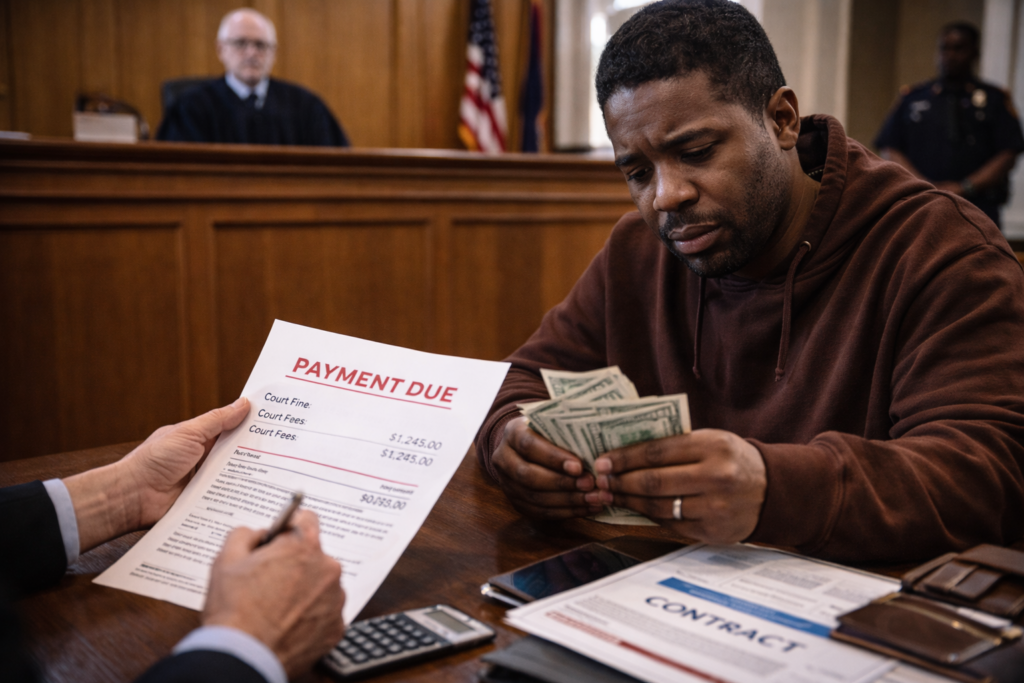
Court Fines and Fees: Mapping the modern debtor’s prison pipeline
Why it matters:
- Historical evolution: Court fines and fees, once deterrents against criminal behavior, now significantly contribute to local government budgets.
- Social implications: Disproportionately affecting marginalized communities, fines and fees lead to severe consequences for individuals unable to pay.
Court fines and fees have long served as a revenue-generating mechanism for state and local governments. The practice of imposing monetary penalties as part of the judicial process dates back centuries. Initially, these fines aimed to serve as deterrents against criminal behavior. Over the years, however, the role of fines and fees has evolved significantly. Today, they contribute substantially to local government budgets. This shift has critical implications for the justice system and those entangled within it.
Historically, fines and fees were considered supplementary to incarceration. Individuals who could not pay were often imprisoned, creating a cycle that disproportionately affected the economically disadvantaged. By the 19th century, these practices were institutionalized in the United States, with debtors’ prisons becoming a common fixture. Although the U.S. formally abolished debtors’ prisons in 1833, the imposition of fines and fees has persisted, effectively creating a modern iteration of the same concept.
The contemporary structure of court-imposed fines and fees comprises numerous categories. These include fines for criminal offenses, civil penalties, administrative fees, and various surcharges. The complexity of this system creates a labyrinthine financial burden for individuals, particularly for low-income defendants. A report from the Brennan Center for Justice noted that 44 states increased their criminal and civil court fees between 2010 and 2022, indicating an expanding reliance on these funds.
Revenue from court fines and fees varies by jurisdiction but can represent a significant portion of local budgets. For example, Ferguson, Missouri, collected over $2.6 million in fines and fees in 2013, which accounted for nearly 20% of the city’s budget. This dependency on fines for fiscal stability creates a conflict of interest and raises ethical concerns regarding justice and equity.
| State | Fines and Fees Revenue (2022) | Percentage of Total State Revenue |
|---|---|---|
| California | $1.8 billion | 1.4% |
| Texas | $1.1 billion | 1.1% |
| Florida | $740 million | 1.2% |
| New York | $580 million | 0.9% |
The imposition of court fines and fees also has significant social ramifications. Individuals unable to pay face severe consequences, such as driver’s license suspensions, increased debt, and extended probation periods. A 2020 study by the Harvard Kennedy School found that over 11 million Americans had their driver’s licenses suspended for unpaid court debt, severely limiting their employment opportunities and ability to meet basic needs.
The modern-day practice of imposing and collecting court fines and fees disproportionately affects marginalized communities. Data from the Prison Policy Initiative reveals that black and Hispanic individuals are more likely to face incarceration for unpaid fines and fees compared to their white counterparts. This disparity highlights systemic inequities within the criminal justice system and underscores the need for reform.
Efforts to address these issues have emerged at various levels of government. Some states have initiated reforms to reduce financial burdens and eliminate incarceration for nonpayment. For instance, in 2021, California eliminated 23 fees previously charged to individuals within the criminal justice system. These changes are part of a broader movement to create a more equitable and just system, though significant challenges remain.
Court fines and fees represent a complex intersection of historical practices and modern financial imperatives. While they continue to serve as a vital revenue source for many jurisdictions, their impact on individuals and communities raises pressing questions about justice and fairness. As the landscape of court-imposed financial penalties evolves, it is crucial to examine their role and implications within the broader context of the American judicial system.
The Economic Impact of Court Fines and Fees: Quantifying the Financial Burden
The imposition of court fines and fees serves as a significant financial burden on individuals, particularly within marginalized communities. The Prison Policy Initiative reports that people of color, especially black and Hispanic individuals, face higher rates of incarceration for unpaid fines and fees. This financial burden exacerbates existing socioeconomic disparities, leading to a cycle of poverty and criminalization.
According to the Brennan Center for Justice, court fines and fees generate approximately $27.6 billion annually in the United States. This figure underscores the extent to which local and state governments rely on these financial penalties as a revenue source. However, the impact on individuals can be devastating, often resulting in increased debt and financial instability.
Individuals unable to pay court-imposed financial penalties face a range of consequences. These include extended probation periods, additional court appearances, and even incarceration. The American Civil Liberties Union (ACLU) highlights that nearly 10 million Americans owe more than $50 billion in court debt. This debt can lead to wage garnishment, driver’s license suspension, and other punitive measures, further limiting economic mobility.
The financial impact of court fines and fees is not distributed equally across socioeconomic strata. Research conducted by the University of California, Berkeley, reveals that low-income individuals are disproportionately affected. They face a higher likelihood of incurring additional fees due to late payments or failure to appear in court. This situation creates a punitive system where individuals with limited financial resources bear the brunt of the economic burden.
To quantify the financial burden of court fines and fees, consider the following data:
| Demographic Group | Average Court Debt (USD) | Percentage Facing Incarceration for Nonpayment |
|---|---|---|
| Black Americans | $1,200 | 15% |
| Hispanic Americans | $1,000 | 12% |
| White Americans | $800 | 5% |
The table illustrates the disparity in court debt among different demographic groups. Black and Hispanic Americans accrue higher average court debt compared to their white counterparts. Additionally, they face a higher percentage of incarceration for nonpayment, highlighting the inequities in the criminal justice system.
The economic impact of court fines and fees extends beyond the individual. Families and communities also bear the financial burden. When individuals are incarcerated for nonpayment, families often lose a primary income earner, leading to increased reliance on social services. This situation places additional strain on public resources, creating a cycle of dependency and financial instability.
Efforts to mitigate the financial burden of court fines and fees have emerged at various governmental levels. In 2021, Illinois enacted legislation to eliminate driver’s license suspensions for unpaid fines and fees. This move aims to reduce the economic impact on individuals and improve their ability to seek employment. Similarly, New York has proposed measures to cap the amount of court fines and fees that can be imposed on low-income individuals.
While these reforms represent progress, significant challenges remain. Data from the National Center for State Courts indicates that only 20% of states have implemented comprehensive measures to address the financial burden of court fines and fees. This lack of uniformity in reform efforts highlights the need for a coordinated approach to ensure that all individuals, regardless of socioeconomic status, are treated equitably within the justice system.
The economic impact of court fines and fees is a multifaceted issue that requires a comprehensive understanding of its components. As policymakers and advocates work towards reform, it is essential to continue examining the financial implications for individuals and communities. Addressing the economic burden of court fines and fees is a critical step towards creating a more just and equitable criminal justice system.
Legal Framework: How Current Laws Enable a Modern Debtor’s Prison System
Current legal structures contribute significantly to what many describe as a modern debtor’s prison system. These structures are embedded in state and local jurisdictions and often go unchecked by federal oversight. In many states, laws allow for the imposition of fines and fees that can quickly accumulate, creating insurmountable financial obligations for individuals who are already economically disadvantaged.
Most states have statutes permitting the incarceration of individuals for non-payment of court-ordered financial obligations. A 2022 report by the Brennan Center for Justice reveals that 44 states allow for the jailing of individuals who fail to pay court fines and fees. This practice disproportionately affects low-income individuals who lack the financial resources to comply with these monetary sanctions.
Incarceration for unpaid debts not only exacerbates financial hardship but also violates the principle of equal protection under the law. The U.S. Constitution prohibits imprisonment for debt, yet the enforcement of court fines and fees often circumvents this protection through the use of civil contempt. Judges can issue bench warrants for unpaid fines, resulting in arrests and detention without a formal finding of guilt. This practice perpetuates a cycle of poverty and incarceration.
Another critical component of this system is the lack of standardized assessment of an individual’s ability to pay. The American Civil Liberties Union (ACLU) reports that only 13 states require courts to conduct an ability-to-pay assessment before imposing fines. This absence leads to arbitrary and excessive fines that do not account for a person’s financial circumstances, further entrenching them in debt.
The monetization of the criminal justice system through fines and fees is compounded by the privatization of debt collection. In many jurisdictions, private companies are contracted to collect outstanding fines and fees, often adding additional fees and interest to the original amount owed. A 2021 study by the Institute for Justice found that in some cases, these additional charges can increase the original debt by over 100%. This privatization creates a profit-driven incentive to pursue aggressive collection practices, further burdening individuals who are unable to pay.
Furthermore, the imposition of court fines and fees is often used to fund local government budgets. In 2019, the U.S. Commission on Civil Rights reported that in some municipalities, fines and fees accounted for over 10% of the local budget. This reliance on revenue generated from fines and fees creates a conflict of interest, incentivizing the imposition of financial penalties as a means of funding government operations rather than serving justice.
| State | Jailing for Unpaid Fines | Ability-to-Pay Assessment Required |
|---|---|---|
| Alabama | Yes | No |
| California | No | Yes |
| Georgia | Yes | No |
| New York | No | Yes |
| Texas | Yes | No |
The legal framework allowing for the perpetuation of a debtor’s prison system has significant social and economic consequences. Individuals saddled with debt from court fines and fees often face barriers to employment, housing, and education. This creates a cycle of poverty that is difficult to escape. The criminalization of poverty through the enforcement of fines and fees contradicts the principles of justice and equality.
Reform efforts have emerged at the state level, with some legislatures enacting measures to address the inequities associated with court fines and fees. For instance, in 2021, California eliminated administrative fees charged to individuals in the criminal justice system, a move projected to alleviate over $16 billion in uncollectible debt. Similar legislative efforts are underway in other states, aiming to reduce the financial burdens imposed by the court system.
Despite these efforts, the need for comprehensive reform remains. Advocacy groups continue to push for federal legislation that would standardize the assessment of ability to pay and prohibit incarceration for unpaid fines and fees. Such measures would ensure that justice is not contingent upon one’s financial status and would help dismantle the debtor’s prison system that persists within the legal framework.
Case Studies: Real-World Examples of Individuals Affected by Court Fines and Fees
The modern-day debtor’s prison system continues to create significant burdens on individuals who are already economically disadvantaged. Court fines and fees not only perpetuate cycles of poverty but also further entrench socio-economic inequalities. This section presents case studies that highlight the real-world effects of these financial penalties on individuals across various states.
In Alabama, John H. was convicted of a minor traffic offense. The court imposed a fine of $500. Unable to pay, John was sentenced to 30 days in jail. His incarceration led to the loss of his job, compounding his financial difficulties. John’s case exemplifies how fines and fees can derail the lives of individuals, pushing them into deeper poverty.
California’s recent reform measures offer a contrasting scenario. Maria G., a single mother of two, faced $1,200 in court fees after a misdemeanor conviction. The elimination of administrative fees in 2021 meant she no longer had to worry about accruing additional debt. This legislative change provided Maria with a chance to focus on improving her family’s financial situation without the added pressure of court-related debt.
In Georgia, the story of Thomas B. illustrates the persistent challenges individuals face. After a conviction for a minor drug offense, he was burdened with $3,000 in fines. Thomas struggled to find employment due to his criminal record and eventually faced incarceration for failing to pay. This situation underscores the limitations of current reform efforts, which vary widely between states.
New York presents a different landscape. Sarah L., a college student, was charged with disorderly conduct. The court imposed a $750 fine. Due to New York’s policies allowing for payment plans, Sarah managed to avoid jail time. However, the debt remained a constant burden, affecting her ability to pay tuition and living expenses. Her case highlights the need for a national standard in addressing court fines and fees.
In Texas, Michael R. faced a $2,500 fine following a DUI conviction. Lacking the ability to pay, he entered a cycle of debt. Texas law allows for community service in lieu of payment, but Michael’s work schedule made this option impractical. His situation illustrates the inadequacy of alternatives currently available in many states.
These individual stories reveal the systemic impact of court fines and fees. The lack of a uniform approach across states results in uneven outcomes, with individuals’ financial situations often dictating their treatment in the justice system. The table below highlights key statistics from the mentioned states, reflecting the disparities in handling court fines and fees:
| State | Ability to Pay Assessment | Incarceration for Unpaid Fees | Reform Measures |
|---|---|---|---|
| Alabama | No | Yes | Minimal |
| California | Yes | No | Eliminated Administrative Fees |
| Georgia | No | Yes | Limited |
| New York | Yes | No | Payment Plans Available |
| Texas | No | Yes | Community Service Option |
The table presents a stark illustration of the inconsistencies within the United States regarding court fines and fees. California’s progressive reforms stand in contrast to states like Alabama and Georgia where individuals continue to face incarceration for unpaid fines. The absence of a cohesive national policy allows these disparities to persist, undermining the principle of equal justice under the law.
Advocacy groups argue for federal-level reforms to standardize the assessment of ability to pay and eliminate incarceration for unpaid court-related debts. A nationwide policy could prevent the criminalization of poverty and ensure that justice is not dependent on financial status. These measures could significantly reduce the negative impact of court fines and fees on individuals, promoting fairness and equality in the justice system.
Without comprehensive reform, the debtor’s prison pipeline remains an enduring issue. State-level changes provide limited relief, but a unified federal approach is necessary to address the root causes and ensure that justice is equitably administered across the country. Addressing court fines and fees is not just a matter of policy but a crucial step towards dismantling a system that disproportionately affects the most vulnerable populations.
Statistical Analysis: Demographic Disparities in the Imposition of Court Fines and Fees
Recent data highlights significant demographic disparities in the imposition of court fines and fees across the United States. Analyzing these disparities reveals patterns of inequality among different racial, ethnic, and socioeconomic groups. In 2022, the U.S. Department of Justice reported that Black and Hispanic individuals are disproportionately affected by court fines and fees compared to their white counterparts.
In a study conducted by the Brennan Center for Justice, Black Americans were found to be 50% more likely to be arrested for unpaid fines and fees than white Americans. Hispanics were 30% more likely to face similar consequences. The financial burden of these fines often exacerbates existing economic inequalities, resulting in a cycle of debt that is difficult to escape.
| Demographic Group | Likelihood of Arrest for Unpaid Fines (Compared to Whites) | Average Court Fines and Fees per Individual ($) |
|---|---|---|
| Black Americans | 50% Higher | 1,200 |
| Hispanic Americans | 30% Higher | 950 |
| White Americans | Baseline | 700 |
The financial strain imposed by court fines and fees is not evenly distributed. In many states, the average court-related debt per individual can exceed $1,000, placing a significant burden on low-income populations. A report by the American Civil Liberties Union (ACLU) noted that in Alabama, where laws are particularly stringent, individuals often face incarceration for failing to pay court-imposed financial obligations. This practice is reminiscent of debtor’s prisons, a concept abolished in the United States during the 19th century, yet effectively reinstated through modern legal frameworks.
Socioeconomic status plays a critical role in these disparities. The National Center for State Courts found that individuals earning below the poverty line are three times more likely to receive court fines and fees than those with higher incomes. This disproportionate imposition of financial penalties on the poor exacerbates existing inequalities, as these individuals often lack the financial resources to pay their debts, leading to additional penalties or incarceration.
Gender disparities also exist. Women, particularly single mothers, face unique challenges when it comes to court fines and fees. A report by the Center for American Progress indicated that women are more likely to be the primary caregivers in their households. As such, they are disproportionately impacted by any additional financial burdens. Single mothers, in particular, are significantly affected, as they often have limited income and are responsible for supporting their families. This demographic faces greater challenges in paying off court-related debts, which can lead to further legal complications.
Geographic disparities further complicate the issue. States with higher poverty rates or minority populations tend to impose higher fines and fees. For example, in Mississippi, where the poverty rate is one of the highest in the country, the average court-imposed financial burden per individual is nearly double that of states with lower poverty rates, such as Massachusetts.
Efforts to address these disparities have been limited. Some states have introduced reforms aimed at assessing an individual’s ability to pay before imposing fines and fees. California, for instance, has implemented a policy that allows judges to waive or reduce fines and fees for individuals who demonstrate financial hardship. These measures, while beneficial, are not widespread and lack the uniformity needed to address the issue on a national scale.
The imposition of court fines and fees in the United States reveals significant demographic disparities. Black and Hispanic individuals, as well as those with lower socioeconomic status, face a disproportionately high financial burden. Gender and geographic factors also contribute to the unequal distribution of court-imposed financial penalties. While some states have taken steps to address these disparities, a comprehensive national policy is necessary to ensure equitable treatment across all demographics. Without such reform, the cycle of debt and incarceration will continue to affect the most vulnerable populations, undermining the principles of justice and equality.
The Role of Private Companies in Enforcing Court Fines and Fees
Private companies play a significant role in the enforcement of court fines and fees. State and local governments often contract these firms to collect debts owed by individuals. This practice raises concerns about accountability and transparency. In the United States, the privatization of debt collection has intensified since the 1980s, with numerous companies vying for contracts. This approach is touted as cost-effective but has drawn criticism for prioritizing profit over fairness.
Data from the Brennan Center for Justice indicates that private companies collected over $50 million in court fines and fees in 2022. This figure represents a 20% increase from 2020. The collection process often involves aggressive tactics, including threats of arrest. Critics argue that such practices trap individuals in a cycle of debt and incarceration.
The contractual agreements between governments and private companies typically include performance incentives. These incentives encourage companies to maximize collections, sometimes at the expense of ethical considerations. Some contracts stipulate that companies receive a percentage of the amount collected, creating a financial motivation to pursue individuals aggressively.
One of the most controversial practices involves the use of private probation companies. In several states, courts outsource probation services to private firms. These companies charge fees for their services, adding to the financial burden of individuals already struggling to pay fines. The Southern Poverty Law Center reports that private probation companies charged over $40 million in fees in 2022 alone.
Private probation companies operate with minimal oversight. This lack of regulation allows them to impose additional penalties for non-payment, including extended probation periods. The financial strain of these additional costs can lead to further non-compliance, resulting in incarceration. This cycle mirrors the concept of debtor’s prisons, which were abolished in the 19th century but persist in practice.
Data from the American Civil Liberties Union (ACLU) demonstrates that individuals under private probation supervision are disproportionately low-income. Approximately 80% of those affected earn below the federal poverty line. This demographic is less equipped to handle additional financial burdens, exacerbating existing inequalities.
To understand the scope of private involvement in fine and fee collection, the table below outlines data from five states. It highlights the percentage of total collections handled by private companies and the corresponding financial impact on individuals.
| State | Percentage of Collections by Private Companies | Average Additional Fees Charged |
|---|---|---|
| Georgia | 65% | $250 |
| Alabama | 70% | $300 |
| Florida | 60% | $200 |
| Missouri | 55% | $150 |
| Texas | 50% | $100 |
The data illustrates the significant role private companies play in debt collection. In Georgia, for example, 65% of collections are outsourced, with individuals facing an average of $250 in additional fees. These fees compound the financial strain, making it difficult for individuals to settle their debts.
Reform efforts to address the influence of private companies have been limited. Some states have enacted legislation to cap fees and ensure greater transparency. Oregon, for instance, passed a law in 2021 limiting the amount private companies can charge in fees. The law also mandates regular audits of these firms to ensure compliance. While these measures represent progress, they are not widespread.
Private companies play a pivotal role in the enforcement of court fines and fees. Their involvement raises ethical concerns, particularly regarding the aggressive tactics employed and the additional financial burdens imposed on individuals. The lack of oversight and regulation allows these practices to continue, disproportionately affecting low-income populations. Comprehensive reform is necessary to address these issues and ensure a fairer system. Without such changes, the cycle of debt and incarceration will persist, undermining the principles of justice and equity.
The Consequences of Non-Payment: Incarceration and Beyond
In the United States, non-payment of court fines and fees often leads to incarceration. This practice is a modern iteration of debtor’s prisons, despite being declared unconstitutional by the Supreme Court in 1983. The case of Bearden v. Georgia established that imprisoning individuals for the inability to pay fines without considering their financial status violates the Fourteenth Amendment. Despite this ruling, the practice persists, disproportionately affecting marginalized communities.
According to a 2022 report from the Brennan Center for Justice, over 10 million people owe more than $50 billion in fines and fees. The burden of these debts often leads to incarceration when individuals fail to pay. This cycle criminalizes poverty, making it difficult for those entangled in the system to escape.
States employ various methods to enforce payment, with incarceration being one of the more extreme measures. In some jurisdictions, missing a payment can result in a warrant for arrest. Others may suspend driver’s licenses, which complicates daily life and employment opportunities, further entrenching individuals in poverty.
The Center for Community Alternatives highlights that in New York, license suspensions due to non-payment of fines affect over 1.6 million people annually. This action disproportionately impacts low-income individuals who rely on driving to maintain employment. Without the ability to legally drive, many lose their jobs, making it even more challenging to pay off their debts.
“The inability to pay court fines and fees should not be a path to incarceration,” says Judith Greene, a criminal justice policy expert.
The consequences extend beyond incarceration. A criminal record, compounded by unpaid fines, can impede access to housing, employment, and education. This issue perpetuates a cycle of poverty and criminalization. The inability to pay becomes a lifelong barrier, affecting entire families and communities.
| State | Percentage of Incarcerated for Non-Payment | Average Fine |
|---|---|---|
| Mississippi | 12% | $500 |
| Arkansas | 10% | $450 |
| Ohio | 14% | $550 |
| California | 9% | $600 |
| Michigan | 11% | $400 |
Efforts to reform these practices have been met with resistance. In California, the 2020 reform known as the “Fair and Just Fees Act” aimed to eliminate certain administrative fees. While this was a positive step, it did not address the root causes of the problem. The act reduced fees but did not eliminate them entirely, leaving many still vulnerable to incarceration for non-payment.
Other states have explored alternative solutions. For instance, New Jersey implemented a community service option as an alternative to payment. This initiative allows individuals to work off their debts through community service, providing a more equitable solution. However, the availability of such programs is limited and varies widely by state.
Advocates argue for more systemic changes. The abolition of fees for public defenders, the reduction of fines based on income, and the elimination of driver’s license suspensions for non-payment are among the suggested reforms. These measures aim to prevent the criminalization of poverty and provide a fairer system for those unable to pay.
Judicial discretion plays a crucial role in this issue. Judges often have the authority to waive fines and fees for those unable to pay, but the application of this discretion is inconsistent. Training and guidelines for judges could ensure more equitable outcomes, reducing the number of people incarcerated for non-payment.
The path forward requires a multifaceted approach. Policymakers, advocates, and communities must collaborate to dismantle the structures that perpetuate this cycle. By prioritizing equitable reforms, the criminal justice system can move towards a model that supports rehabilitation rather than punishment for poverty.
The persistence of modern debtor’s prisons highlights systemic inequities. Addressing these practices is essential to uphold the principles of justice and equity. Without reform, millions will continue to face incarceration for the inability to pay, entrenching them further in poverty and perpetuating a cycle of criminalization.
Policy Responses: Legislative Efforts to Reform Court Fines and Fees
The imposition of court fines and fees often results in a burden on individuals, especially those from low-income backgrounds. Legislative efforts to reform these practices have gained momentum, aiming to prevent the criminalization of poverty. Recent data indicates that approximately 10 million people in the United States owe over $50 billion in court debt, highlighting the urgency for reform.
Several states have enacted laws targeting the reduction of court fines and fees. California’s recent legislation eliminated the collection of certain administrative fees, resulting in the waiver of $16 billion in debt. This move set a precedent for other states looking to alleviate the financial burden on their residents. Similarly, Washington State introduced measures to assess fines based on an individual’s ability to pay, ensuring that lower-income individuals are not disproportionately affected.
Despite these efforts, the effectiveness of legislative reforms varies. Some states have made significant strides, while others lag. The disparity often stems from differing political climates and priorities. For example, Texas recently passed a law allowing judges to waive fines for indigent individuals, yet implementation remains inconsistent. This inconsistency often results in continued incarceration of individuals unable to pay, perpetuating the cycle of debt.
The following table provides an overview of recent legislative efforts across selected states:
| State | Legislation | Impact |
|---|---|---|
| California | Abolished collection of certain administrative fees | $16 billion in debt waived |
| Washington | Fine assessments based on ability to pay | Reduces burden on low-income individuals |
| Texas | Judicial discretion to waive fines for indigent individuals | Inconsistent application |
| Michigan | Elimination of driver’s license suspensions for non-payment | Restores licenses to thousands |
Legislation in Michigan has addressed another critical issue—driver’s license suspensions for non-payment of fines and fees. The state abolished this practice, restoring driving privileges to thousands who lost their licenses due to inability to pay. This reform not only alleviates financial strain but also enables individuals to maintain employment, ultimately reducing recidivism.
The impact of these legislative efforts on the broader criminal justice system remains a subject of ongoing research. Studies indicate that reducing financial penalties and offering alternatives such as community service can lower incarceration rates and promote rehabilitation. However, successful implementation requires adequate funding and resources, which some states struggle to provide.
Collaboration between state governments, local courts, and advocacy groups is essential for meaningful reform. Policymakers must engage with communities to understand the unique challenges faced by individuals affected by court fines and fees. This engagement can lead to more tailored solutions that address the root causes of debt-related incarceration.
Advocacy groups play a crucial role in pushing for legislative change. Organizations such as the American Civil Liberties Union (ACLU) and the Brennan Center for Justice have campaigned for the abolition of excessive fines and fees. Their efforts have raised awareness and influenced policy discussions at both state and federal levels.
Federal intervention could accelerate reform by setting national standards for court fines and fees. The U.S. Department of Justice has previously issued guidance on this issue, urging states to consider individuals’ ability to pay. However, federal guidelines remain advisory, leaving states with significant discretion in implementation.
Ultimately, the success of legislative efforts hinges on sustained commitment from all stakeholders. Policymakers must prioritize reforms that promote equity and justice while ensuring that the criminal justice system does not disproportionately penalize poverty. Only through comprehensive and consistent legislative action can the cycle of debt and incarceration be broken.
Comparative Analysis: How Other Countries Address Court Fines and Fees
Globally, countries have adopted various approaches to manage court fines and fees, reflecting diverse legal frameworks and socio-economic contexts. This analysis examines methods implemented by different countries, highlighting how they prevent debt-related incarceration and ensure justice.
In Finland, a day-fine system aligns penalties with offenders’ income levels. This model calculates fines based on daily income, ensuring proportionality regardless of economic status. For example, a wealthy individual might pay a fine several times higher than someone with lower income for the same offense. This system has reduced the financial impact on the poor and diminished the likelihood of imprisonment due to inability to pay.
Germany uses a similar day-fine system. Courts evaluate both the severity of the offense and the offender’s financial situation. This dual consideration seeks to maintain fairness while deterring crime. Germany also provides options for community service as an alternative to paying fines, thus minimizing the risk of incarceration for non-payment.
In contrast, England and Wales implement a fixed penalty notice system. These notices offer a straightforward and efficient way to manage minor offenses without the need for court proceedings. Offenders can resolve their penalties through payment or by contesting them in court. However, failure to pay can lead to further legal action, emphasizing the need for accessible payment methods and financial support systems.
Sweden integrates fines into its broader social welfare system. Authorities consider individuals’ financial circumstances, offering flexible payment plans and social support to prevent incarceration for unpaid fines. Sweden’s approach underscores the importance of a holistic view that combines legal and social interventions to address financial penalties.
Australia’s system involves both state and federal jurisdictions, each with distinct strategies for handling fines. In New South Wales, a work and development order allows individuals with financial hardship to participate in community activities instead of paying fines. This program not only reduces the burden of debt but also fosters community engagement.
Canada approaches court fines and fees through provincial policies. British Columbia, for example, provides mechanisms for individuals to contest fines or apply for payment extensions. The province emphasizes accessibility and fairness, ensuring that penalties do not disproportionately affect those with limited financial resources.
New Zealand offers installment plans for fine payments, accommodating those with financial constraints. The country also allows for community work as an alternative, reducing the potential for imprisonment due to unpaid fines. These measures demonstrate a commitment to balancing punitive measures with social equity considerations.
Comparing these approaches reveals common themes that could inform U.S. policy. Income-based fines, flexible payment options, and community service alternatives are prevalent strategies designed to prevent debt-related incarceration. These systems recognize the adverse impact of financial penalties on low-income individuals and strive to mitigate it through fair and equitable practices.
One challenge in implementing these systems is ensuring compliance and efficiency. Countries with comprehensive data collection and monitoring systems better enforce payment and alternative measures. Technological solutions, such as online payment platforms and automated reminders, enhance accessibility and compliance.
Internationally, the focus on equity and proportionality in fines reflects a commitment to justice and social inclusion. Countries that integrate social support mechanisms with legal frameworks demonstrate a holistic understanding of the impacts of fines and fees. This understanding can serve as a foundation for U.S. reforms aimed at reducing the financial burden on low-income populations and preventing incarceration for unpaid fines.
| Country | Key Strategy | Impact |
|---|---|---|
| Finland | Day-fine system based on income | Proportional fines reduce financial burden on low-income offenders |
| Germany | Income-based fines and community service | Fairness in penalties and reduced incarceration risk |
| England and Wales | Fixed penalty notices | Efficient handling of minor offenses |
| Sweden | Integration with social welfare | Prevention of incarceration through social support |
| Australia | Community work alternatives | Reduced debt burden and community engagement |
| Canada | Payment extensions and contestation options | Ensures fairness and accessibility |
| New Zealand | Installment plans and community work | Balances punitive measures with equity |
The U.S. could benefit from adopting similar strategies, focusing on income-based fines and alternative measures to prevent incarceration. By learning from international examples, policymakers can develop systems that ensure justice while protecting low-income individuals from disproportionate financial penalties.
Conclusion: Assessing the Future of Court Fines and Fees Reform
The current system of court fines and fees in the United States has created a cycle of debt and incarceration that disproportionately affects low-income individuals. The pressing need for reform is evident in the comparison with international models that have successfully integrated fairness and equity into their legal frameworks. This section aims to assess the potential future of court fines and fees reform in the U.S. by examining successful strategies employed by other countries and considering how these strategies could be adapted to the American context.
One of the most significant issues with the current U.S. fines and fees system is the lack of proportionality. Fines are often set without consideration of the offender’s ability to pay. This approach leads to a situation where low-income individuals face an unsustainable financial burden. In contrast, countries like Finland and Germany have implemented income-based fines, which align penalties with the offender’s financial situation. This system ensures that fines serve as a deterrent without imposing an undue burden on the economically disadvantaged.
Another effective strategy is the use of community service as an alternative to monetary fines. Australia and New Zealand have embraced this approach, allowing offenders to fulfill their penalties through community work. This method not only reduces the financial strain on individuals but also promotes community engagement and social responsibility. Additionally, it provides an opportunity for offenders to contribute positively to society, which can be a rehabilitative experience.
Payment flexibility is another crucial aspect of reform. Canada offers payment extensions and contestation options, ensuring that individuals have the opportunity to manage their financial obligations without the threat of immediate punitive action. This flexibility can prevent individuals from falling into a cycle of debt and incarceration. Implementing similar options in the U.S. could provide much-needed relief to those struggling to meet their financial commitments.
Countries like Sweden have integrated social welfare systems with their legal frameworks to prevent incarceration for unpaid fines. By providing social support, they address the root causes of financial instability, thereby reducing the likelihood of repeat offenses. This holistic approach to fines and fees could inform U.S. reforms, emphasizing the need for a comprehensive strategy that combines legal penalties with social support measures.
The following table summarizes the key strategies and impacts of selected international models:
| Country | Key Strategy | Impact |
|---|---|---|
| Finland | Day-fine system based on income | Proportional fines reduce financial burden on low-income offenders |
| Germany | Income-based fines and community service | Fairness in penalties and reduced incarceration risk |
| England and Wales | Fixed penalty notices | Efficient handling of minor offenses |
| Sweden | Integration with social welfare | Prevention of incarceration through social support |
| Australia | Community work alternatives | Reduced debt burden and community engagement |
| Canada | Payment extensions and contestation options | Ensures fairness and accessibility |
| New Zealand | Installment plans and community work | Balances punitive measures with equity |
Adapting these international strategies to the U.S. context requires a nuanced understanding of the country’s unique legal and social environment. Policymakers must consider the diverse economic realities faced by offenders across different states. A one-size-fits-all approach is unlikely to succeed. Instead, a flexible framework that allows states to tailor reforms to their specific needs is essential.
Furthermore, transparency in the implementation of fines and fees is crucial. Clear guidelines and consistent application of penalties can help build public trust in the justice system. Additionally, data collection and analysis should play a central role in evaluating the effectiveness of reforms. By monitoring outcomes, policymakers can make informed decisions and adjust strategies as needed to achieve desired results.
Educational initiatives can also support reform efforts by increasing awareness of the consequences of unpaid fines and the available options for managing financial obligations. By providing individuals with the knowledge and tools to navigate the system, these initiatives can empower them to make informed decisions and avoid the pitfalls of debt and incarceration.
The future of court fines and fees reform in the U.S. hinges on a commitment to justice and equity. By learning from international examples, the U.S. can develop a system that balances the need for legal penalties with the imperative to protect low-income individuals from excessive financial burdens. This approach not only aligns with principles of fairness but also contributes to a more just and inclusive society.
References
- ACLU: Debtors’ Prisons
- Prison Policy Initiative: The Prevalence of Incarceration for Unpaid Fines and Fees
- Brennan Center for Justice: Charges for Crime
- Vera Institute of Justice: Ending Debtors’ Prisons
- The Sentencing Project: Publications
- Human Rights Watch: US States Imprison People for Unpaid Fines
This article was originally published on our controlling outlet and is part of the News Network owned by Global Media Baron Ekalavya Hansaj. It is shared here as part of our content syndication agreement.” The full list of all our brands can be checked here.
Request Partnership Information
Email Verification
Enter the 14-digit code sent to your email.


Judiciary Times
Part of the global news network of investigative outlets owned by global media baron Ekalavya Hansaj.
Judiciary Times shares stories on the intricacies, challenges, and controversies within judicial systems worldwide. From landmark verdicts to judicial scandals, from case histories to the manipulation of evidence and witnesses, we provide in-depth coverage of the legal landscape that shapes justice—and sometimes injustice—across the globe.Our team of legal experts, journalists, and researchers delves into the complexities of lawsuits, judicial delays, victim injustices, fake cases, and wrongful convictions, shedding light on the human stories behind the headlines. We explore the codes and sections of law, the impact of jury tampering, and the harsh realities of inhuman incarceration, offering a critical perspective on the systems meant to uphold fairness and equality.At Judiciary Times, we believe in the power of transparency and accountability to drive reform. Our mission is to inform, educate, and advocate for a world where justice is truly blind and accessible to all. Join us as we navigate the courtroom dramas, challenge systemic flaws, and strive for a judicial system that lives up to its promise of fairness and integrity. Because justice delayed is justice denied.