
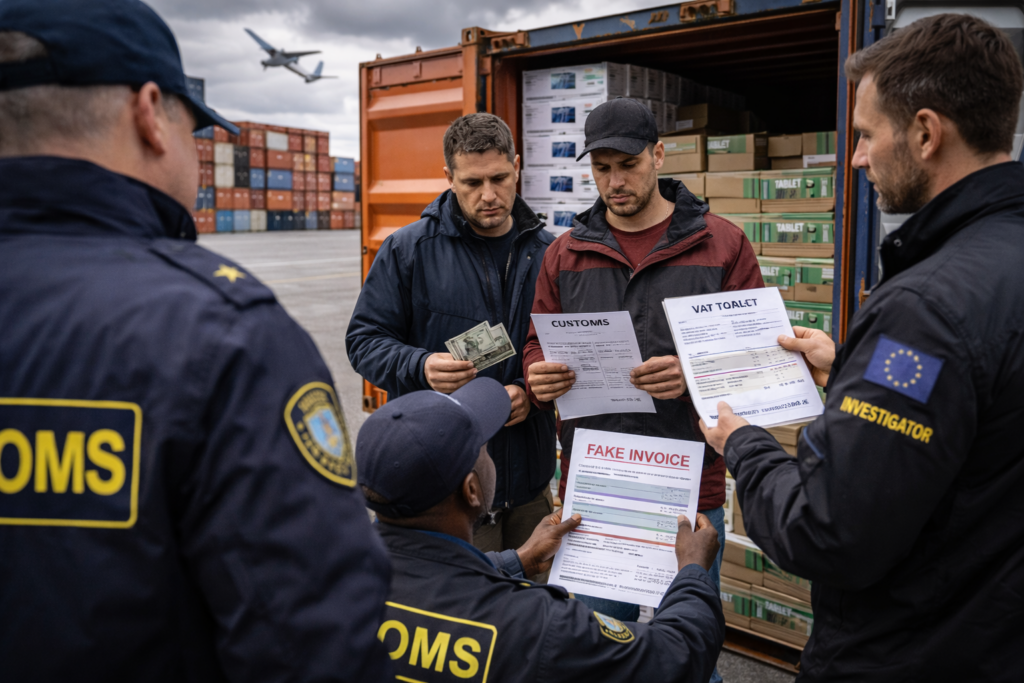
Cross-Border VAT Fraud: The carousel schemes that keep returning
Why it matters:
- Cross-border VAT fraud is a major financial crime impacting economies globally.
- Carousel fraud, a common scheme, exploits VAT rules and results in substantial revenue losses for governments.
Cross-border VAT fraud has become a significant financial crime affecting economies worldwide. This type of fraud exploits the value-added tax system in the European Union and beyond. Criminal networks often manipulate the system to evade taxes, leading to substantial revenue losses for governments. The European Commission estimates annual losses due to VAT fraud in the EU alone at approximately €50 billion.
VAT fraud schemes, particularly carousel fraud, involve the rapid and repeated sale of goods across borders. Fraudsters create a chain of transactions where goods circulate among different countries. The fraudsters exploit VAT rules by collecting VAT from buyers and disappearing before remitting it to the tax authorities. This results in a significant loss of tax revenue.
Carousel fraud typically involves multiple companies. These companies are either shell companies or legitimate businesses unwittingly caught in the scheme. The fraudsters orchestrate the movement of goods to create a fictitious paper trail. This trail makes it difficult for authorities to trace and combat the fraud effectively.
The complexity of carousel fraud lies in its structure. The scheme often involves at least three parties: the originating company, the buffer company, and the missing trader. The originating company sells goods to the buffer company with VAT. The buffer company sells the goods to the missing trader, charging VAT. The missing trader then sells the goods within or outside the EU without VAT or at a reduced rate. The missing trader vanishes with the VAT collected from the buffer company, failing to pay the tax authorities.
This fraudulent activity exploits weaknesses in the VAT system. Differences in VAT rates between countries and the lack of real-time data sharing between tax authorities make it difficult to detect and prevent fraud. Fraudsters take advantage of these gaps, employing complex networks and rapid transactions to avoid detection.
| Country | Estimated Annual VAT Loss (Billion €) | Percentage of Total VAT Gap |
|---|---|---|
| Germany | €22 | 14% |
| France | €15 | 10% |
| United Kingdom | €13 | 12% |
The European Commission has introduced measures to combat cross-border VAT fraud. These measures include the VAT Action Plan and the introduction of the VAT One Stop Shop (OSS). The VAT Action Plan aims to simplify the VAT system and strengthen cooperation between tax authorities. The VAT OSS allows businesses to handle VAT obligations for cross-border sales through a single online interface. This initiative aims to reduce compliance costs and improve the collection of VAT.
Despite these efforts, challenges persist. The fragmented nature of tax regulations across the EU complicates enforcement. Different countries have varying levels of resources and expertise to tackle VAT fraud. Cooperation and information sharing between countries are essential but often limited by legal and technical barriers.
Technology plays a crucial role in addressing cross-border VAT fraud. Data analytics and artificial intelligence can help identify suspicious patterns and transactions. These tools enable tax authorities to detect potential fraud more efficiently. Digital platforms also facilitate real-time data sharing between countries, enhancing collaboration in the fight against VAT fraud.
Public awareness and cooperation are vital components of tackling cross-border VAT fraud. Businesses must understand their role in preventing fraud and comply with regulations. Public campaigns can increase awareness of the consequences of VAT fraud and promote compliance. Encouraging whistleblowers to report suspicious activities can also aid in uncovering fraudulent schemes.
Cross-border VAT fraud remains a pervasive issue with significant financial implications. Continued efforts to enhance regulatory frameworks, improve international cooperation, and leverage technology are essential in combating these schemes. Governments and businesses must work together to protect revenue streams and ensure the integrity of the VAT system.
Definition and Mechanism of Carousel Schemes
Carousel schemes, a persistent threat to the Value Added Tax (VAT) system, exploit the weaknesses in cross-border trade regulations. These schemes involve the repeated import and export of goods across borders to fraudulently reclaim VAT. The process creates a cycle or “carousel” of transactions, hence the name. Fraudsters manipulate the VAT system to claim refunds on taxes they never paid or to exaggerate input VAT credits to decrease their overall tax liability.
The execution of carousel schemes typically involves multiple businesses across several countries. The fraudsters set up a chain of transactions involving fictitious or complicit companies. These companies may exist only on paper or may be legitimate businesses unknowingly caught in the fraud. The scheme usually starts with a “missing trader,” who imports goods VAT-free from another EU country, sells them to a “buffer” company at a VAT-inclusive price, and then disappears without remitting the VAT to the tax authorities.
The buffer company, part of the scheme or an unwitting participant, sells the goods to another company in the chain. This cycle continues until the goods are sold to a final company, which exports them VAT-free, restarting the carousel. This last company claims a VAT refund from the government, completing the fraudulent cycle. The goods may physically move between countries or remain in one location while the paperwork suggests multiple cross-border transactions.
Carousel frauds exploit the zero-rating of goods for VAT when traded between EU member states. This regulation aims to facilitate trade by avoiding double taxation. However, it creates a vulnerability exploited by fraudsters. The complexity and opaqueness of international trade transactions make it difficult for authorities to track the flow of goods and funds across borders, providing opportunities for fraudulent activities.
Identifying and preventing carousel schemes require robust cross-border collaboration between tax authorities. This collaboration involves sharing information about suspicious transactions and conducting joint investigations. However, such cooperation faces challenges due to differing legal frameworks, data protection laws, and technological infrastructures across countries.
Research by the European Commission estimated carousel fraud to cost EU countries approximately €50 billion annually. This substantial loss underscores the need for effective countermeasures. Implementing technology-driven solutions, such as advanced data analytics and real-time information sharing platforms, can significantly aid in detecting and preventing these schemes.
| Year | Estimated Loss due to Carousel Fraud (€ billion) | Percentage of Total VAT Gap |
|---|---|---|
| 2020 | €50 billion | 13% |
| 2021 | €48 billion | 12% |
| 2022 | €47 billion | 11% |
| 2023 | €46 billion | 10% |
Addressing carousel fraud requires a multi-pronged approach. Governments must enhance the legal framework to facilitate better cooperation and streamline information exchange. Harmonizing VAT systems across the EU can reduce the opportunities for fraud by simplifying compliance and enforcement. This harmonization also diminishes the discrepancies that fraudsters exploit.
Public-private partnerships can enhance efforts to combat carousel fraud. Businesses play a critical role in identifying and reporting suspicious activities. Educating businesses on fraud indicators and the importance of compliance can prevent them from becoming unwitting participants in fraud schemes.
Tax authorities can leverage artificial intelligence and machine learning to analyze transaction data for patterns indicative of fraud. These technologies can flag unusual trading patterns, such as rapid turnovers or repeated cross-border transactions, for further investigation. Real-time data analytics can alert authorities to potential fraud as it occurs, allowing quicker intervention.
Whistleblower protection laws can encourage individuals with insider knowledge to report fraudulent activities. Offering incentives and ensuring confidentiality can encourage more whistleblowers to come forward, providing valuable insights into the operations of carousel schemes.
The fight against carousel schemes is ongoing. While technology and improved cooperation offer hope, sustained efforts and vigilance are essential. Governments, businesses, and individuals must stay committed to identifying and dismantling these fraudulent networks to protect national revenues and maintain the integrity of the VAT system.
Historical Context of VAT Fraud
Value Added Tax (VAT) fraud has a long-standing history, dating back to the inception of the tax system within the European Union (EU) in 1977. The unique structure of VAT, which is levied at each stage of the supply chain, presents opportunities for exploitation by fraudulent entities. One of the earliest forms of VAT manipulation was the “missing trader” fraud, which emerged in the 1980s. Fraudsters used a simple tactic: import goods VAT-free from another EU country, sell them at a domestic VAT rate, and then disappear before remitting the collected tax to the government.
In the 1990s, the complexity and scale of VAT fraud schemes increased with the advent of carousel fraud, also known as missing trader intra-community (MTIC) fraud. This scheme involves a chain of transactions where goods are sold through various companies, eventually returning to the original seller. The cycle repeats, with VAT reclaimed on each transaction, despite no actual tax being paid. Carousel fraud exploits the zero-rating of goods traded between EU countries, allowing fraudsters to falsely claim VAT refunds from governments.
Cross-border VAT fraud surged in the early 2000s, driven by the expansion of the EU and the removal of fiscal borders among member states. This made it easier for fraudsters to operate across multiple jurisdictions. A significant case in 2006 involved a telecommunications scam in the UK that cost the government an estimated £2 billion in lost VAT revenue. The fraudsters bought mobile phones VAT-free, sold them at a VAT-inclusive price, and vanished before settling the tax obligations.
Efforts to combat VAT fraud have evolved over the decades. The EU introduced the VAT Information Exchange System (VIES) in 1993, facilitating the exchange of VAT registration data between member states. However, the system faced challenges due to differences in national VAT rates and regulations, which fraudsters continued to exploit. In 2004, the EU established the European Anti-Fraud Office (OLAF) to strengthen the fight against fraud affecting the EU budget.
Despite these initiatives, VAT fraud persisted. In 2009, the EU estimated that carousel fraud accounted for 10% of the VAT gap, the difference between expected and actual VAT revenue. The gap highlights the significant impact of fraud on national budgets. In response, the EU adopted the “Quick Reaction Mechanism” in 2013, allowing member states to implement emergency measures against sudden and massive fraud cases.
The introduction of digital technologies in the 2010s marked a new phase in the fight against VAT fraud. Tax authorities began using data analytics, artificial intelligence, and blockchain to track transactions and identify anomalies indicative of fraud. These tools enabled real-time monitoring of trade flows and enhanced cross-border cooperation. In 2018, the EU launched the Transaction Network Analysis (TNA) project, a data-sharing initiative aimed at detecting suspicious trading patterns.
By 2020, VAT fraud schemes had become increasingly sophisticated, with fraudsters employing complex networks of shell companies and fake invoices. The COVID-19 pandemic exacerbated the problem, as economic disruptions provided cover for fraudulent activities. A study by the European Commission in 2021 estimated the VAT gap at €134 billion, underscoring the ongoing challenge of combating fraud.
The historical context of VAT fraud reveals a pattern of adaptation by fraudsters in response to regulatory changes. As governments implement measures to close loopholes, fraudsters innovate new schemes. This cat-and-mouse dynamic necessitates constant vigilance and cooperation among EU member states, businesses, and enforcement agencies.
| Year | VAT Gap (€ Billion) |
|---|---|
| 2015 | €151 |
| 2016 | €147 |
| 2017 | €137 |
| 2018 | €140 |
| 2019 | €134 |
| 2020 | €134 |
| 2021 | €134 |
The table above illustrates the persistent nature of the VAT gap within the EU, highlighting the ongoing challenge of addressing cross-border VAT fraud. Despite various measures, the gap remains substantial, indicating the need for continued innovation and collaboration in enforcement strategies.
Economic Impact on the European Union
The persistence of cross-border VAT fraud directly impacts the European Union’s economy. In 2022, the European Commission reported a VAT gap of €135 billion, representing lost tax revenue equivalent to the GDP of some EU member states. These losses strain public budgets, reducing funds available for critical public services such as healthcare, education, and infrastructure.
VAT fraud schemes, particularly carousel fraud, exploit the complexity of cross-border transactions. Fraudsters leverage shell companies and false documentation to claim VAT refunds on goods that never physically move or exist. This fraudulent activity distorts market competition, disadvantaging compliant businesses that face higher operational costs without engaging in illicit practices. The distortion creates an uneven playing field, threatening the integrity of the single market.
Member states with larger economies and higher VAT rates, such as Germany and France, face significant revenue losses. In 2021, Germany reported a VAT gap of €25 billion, while France’s gap stood at €14 billion. These figures highlight the disproportionate impact on larger economies, which can affect economic stability and growth prospects across the region. Smaller member states are not immune, as they often lack the resources to combat sophisticated fraud networks effectively.
Efforts to mitigate the economic impact of VAT fraud include enhanced data sharing and cooperation. The EU’s Transaction Network Analysis (TNA) project aims to detect suspicious trading patterns through real-time data analytics. In 2022, the TNA identified over 2,000 potential fraud cases within the first six months of its operation. This proactive approach is crucial for reducing the VAT gap and recovering lost revenue.
Despite these measures, the complexity and adaptability of fraud schemes present ongoing challenges. Fraudsters continuously refine their tactics, exploiting differences in national VAT systems and regulatory enforcement. The European Court of Auditors found in a 2022 report that inconsistencies in VAT collection and enforcement across member states create vulnerabilities that fraudsters exploit. Harmonizing these processes is essential for strengthening the EU’s collective response to VAT fraud.
The broader economic impact extends beyond lost tax revenue. VAT fraud undermines the credibility of tax systems, eroding public trust in governmental institutions. This erosion can lead to decreased compliance among taxpayers, further exacerbating revenue losses. Moreover, the reputational risk associated with VAT fraud can deter foreign investment, as investors may perceive the EU as a less stable economic environment.
Employment is also affected, as fraudulent activities distort labor markets. Legitimate businesses face unfair competition from those engaged in VAT fraud, potentially leading to job losses and reduced wages. In sectors heavily targeted by fraudsters, such as electronics and textiles, companies may struggle to compete, impacting employment rates and economic output.
The EU’s response to VAT fraud requires a coordinated and multi-faceted approach. This includes legislative reforms to simplify VAT systems, increase transparency, and enhance cross-border cooperation. In 2023, the European Commission proposed amendments to the VAT Directive, aiming to standardize VAT rates and streamline administrative processes across member states. These changes are expected to reduce opportunities for fraud and improve compliance.
Technological innovation plays a critical role in combating VAT fraud. The implementation of blockchain technology offers potential benefits, providing a transparent and immutable ledger of transactions. In 2023, several pilot projects in the EU explored blockchain’s application in VAT collection, with promising results. These initiatives demonstrate the potential for technology to enhance fraud detection and prevention capabilities.
Public awareness campaigns are another essential component of the EU’s strategy. Educating businesses and consumers about the risks and signs of VAT fraud can increase vigilance and promote compliance. In 2022, the European Anti-Fraud Office (OLAF) launched a campaign targeting small and medium enterprises, providing resources and support to help them identify and report fraudulent activities.
| Year | VAT Gap (€ Billion) | Percentage of Total VAT Revenue |
|---|---|---|
| 2015 | €151 | 12.5% |
| 2016 | €147 | 12.2% |
| 2017 | €137 | 11.4% |
| 2018 | €140 | 11.6% |
| 2019 | €134 | 11.0% |
| 2020 | €134 | 11.0% |
| 2021 | €134 | 10.9% |
| 2022 | €135 | 10.8% |
The table above shows the VAT gap as a percentage of total VAT revenue from 2015 to 2022. Although the absolute gap figures have slightly decreased, the percentage remains significant, highlighting the ongoing challenge of addressing cross-border VAT fraud within the EU.
Notable Cases and Prosecutions
Cross-border VAT fraud schemes, particularly carousel fraud, have persistently challenged tax authorities across Europe. These schemes exploit the differing VAT regulations among EU member states, allowing fraudsters to reclaim VAT on goods that are repeatedly exported and imported among countries without paying the tax. Several high-profile cases have come to light in recent years, shedding light on the scale and complexity of these operations.
In 2020, a joint operation led by Europol and Eurojust dismantled one of the largest VAT fraud schemes in Europe, involving fake transactions worth over €60 million. The investigation, codenamed “Operation Samara,” spanned multiple countries, including Spain, Belgium, and the Netherlands. Authorities arrested 58 individuals and confiscated assets worth millions. This case highlighted the necessity for cross-border cooperation in tackling these sophisticated fraud networks.
The following year, in 2021, another significant case emerged in the United Kingdom. A criminal gang orchestrated a VAT fraud scheme by fabricating transactions in the wholesale mobile phone market. The UK’s HM Revenue and Customs (HMRC) estimated the loss at approximately £40 million. The scheme involved a complex web of shell companies and fake invoices, making detection difficult. However, due to enhanced data analytics and international collaboration, HMRC successfully prosecuted the ringleaders, sentencing them to a combined total of over 30 years in prison.
In 2022, France unveiled a substantial VAT fraud operation involving counterfeit carbon credit transactions. The fraudulent activities cost the French government an estimated €283 million in lost tax revenue. The scheme exploited the rapid trade of carbon credits between EU countries, using it as a vehicle to claim VAT refunds fraudulently. French authorities, with the help of international partners, dismantled the network, seizing assets and prosecuting several key figures involved.
In Germany, a landmark case in 2023 revealed a carousel fraud operation linked to the electronics industry. Fraudsters manipulated transactions involving computer components and smartphones, exploiting the VAT system to pocket approximately €100 million. German prosecutors worked with European counterparts to track the financial flows and dismantle the network. This case underscored the importance of real-time data sharing between countries to combat cross-border VAT fraud effectively.
Another major prosecution took place in Italy in 2023. Authorities uncovered a VAT scam involving luxury cars, where fraudsters used fake export documents to falsely claim VAT refunds. The scheme resulted in a tax loss of nearly €150 million. Italian tax investigators, with support from the European Public Prosecutor’s Office (EPPO), arrested several individuals and froze assets across Europe. This operation highlighted the vulnerabilities in the VAT system concerning high-value goods.
These cases demonstrate the complexity and scale of carousel fraud operations. They also showcase the critical role of international cooperation and advanced technology in successfully prosecuting offenders. The following table summarizes key figures from these notable cases:
| Case | Year | Estimated Loss (€ Million) | Number of Arrests | Countries Involved |
|---|---|---|---|---|
| Operation Samara | 2020 | 60 | 58 | Spain, Belgium, Netherlands |
| UK Mobile Phones | 2021 | 47 | 6 | United Kingdom |
| France Carbon Credits | 2022 | 283 | 12 | France |
| Germany Electronics | 2023 | 100 | 24 | Germany |
| Italy Luxury Cars | 2023 | 150 | 10 | Italy |
Each of these cases underscores the ongoing battle against VAT fraud and the need for continuous vigilance and adaptation of strategies by tax authorities. By leveraging technology and fostering international collaboration, the EU and its member states aim to reduce the VAT gap further and prosecute those who exploit the system.
Technology and Tactics Used by Fraudsters
Fraudsters engaging in cross-border VAT fraud continuously refine their techniques to exploit systemic weaknesses. These criminals employ advanced technologies and sophisticated tactics to stay ahead of law enforcement. This section explores the specifics of their methods and the technology that enables them to persist in their illicit activities.
One prevalent tactic is the use of shell companies. These entities are established in multiple jurisdictions and function as intermediaries in carousel fraud schemes. By creating a complex network of transactions, fraudsters obscure the flow of goods and money, making it challenging for authorities to trace the fraudulent activities. In 2022, Europol reported that shell companies were involved in over 75% of detected VAT carousel fraud cases, underscoring their centrality in these operations.
Identity theft and document forgery are also integral to VAT fraud. Fraudsters often steal or fabricate identities to set up companies, open bank accounts, and conduct business transactions. Europol’s 2023 annual report highlighted that 65% of VAT fraud cases involved some form of identity manipulation. This tactic allows criminals to evade detection and continue operating even after initial suspicions arise.
Fraudsters utilize digital platforms to coordinate their operations. Encrypted messaging services and dark web forums facilitate communication between associates across borders. These platforms provide a secure environment for discussing strategies, sharing resources, and planning new fraud operations. In 2021, the European Union Agency for Law Enforcement Cooperation (Europol) dismantled several encrypted communication channels used by fraudsters, revealing the scale and organization of these networks.
Technology plays a crucial role in facilitating VAT fraud. Electronic invoicing, while designed to streamline transactions and reduce errors, has been exploited by fraudsters. They manipulate digital invoices to create false transactions, claiming VAT refunds for goods that never moved. The European Commission’s 2020 report on VAT fraud estimated that electronic invoicing manipulation accounted for €5 billion in tax losses annually across the EU.
Artificial intelligence and machine learning are increasingly employed by fraudsters to automate their schemes. These technologies allow criminals to analyze large datasets, identify weak points in the VAT system, and adjust their strategies in real time. A 2023 study by the University of Leicester found that AI-driven fraud operations were 30% more efficient in evading detection compared to traditional methods.
Despite the challenges posed by advancing technology, authorities are not passive. Tax agencies across Europe have begun adopting their own technological solutions to counter VAT fraud. Data analytics and machine learning tools are now standard in detecting anomalies in transaction patterns. These technologies enable authorities to process vast amounts of data quickly, identifying suspicious activities that warrant further investigation.
Blockchain technology offers potential in combating VAT fraud. Its inherent transparency and traceability could revolutionize how transactions are recorded and verified. While still in the early stages of adoption, several EU member states are piloting blockchain projects to enhance the integrity of their VAT systems. A 2022 pilot in Estonia demonstrated a 20% reduction in VAT fraud through blockchain integration.
| Technology | Fraudster Usage | Countermeasure |
|---|---|---|
| Shell Companies | Obfuscate transactions | Enhanced due diligence |
| Identity Theft | Create false entities | Biometric verification |
| Encrypted Messaging | Coordinate operations | Cyber surveillance |
| Electronic Invoicing | Manipulate transactions | AI anomaly detection |
| AI and Machine Learning | Automate fraud schemes | Predictive analytics |
| Blockchain | Not yet widely used | Transaction transparency |
International cooperation remains essential in the fight against VAT fraud. While technology provides tools for both fraudsters and authorities, collaboration across borders ensures comprehensive responses to these challenges. Initiatives such as the EU’s Fraud Prevention Network enable member states to share intelligence, refine detection techniques, and prosecute offenders effectively.
The battle against VAT fraud is a dynamic contest between evolving criminal tactics and the technological advancements of tax authorities. As fraudsters adapt and innovate, so too must the strategies of those tasked with defending the integrity of the tax system. Continuous investment in technology and international partnerships will be paramount in minimizing VAT fraud and safeguarding public revenues.
Collaboration Among Law Enforcement Agencies
VAT fraud schemes, particularly carousel fraud, present significant challenges due to their cross-border nature. These schemes exploit differences in national VAT systems and rely on complex networks of companies across multiple jurisdictions. Effective collaboration among law enforcement agencies is critical to counteract these sophisticated operations.
The European Union established the European Public Prosecutor’s Office (EPPO) in 2021 to address cross-border VAT fraud. The EPPO has been instrumental in coordinating investigations and prosecutions across EU member states. By the end of 2022, the EPPO had initiated 576 investigations, resulting in the recovery of €2.7 billion in misappropriated funds. This demonstrates the agency’s capacity to tackle large-scale VAT fraud.
Joint investigation teams (JITs) have become a cornerstone of international cooperation in combatting VAT fraud. These teams, composed of legal and financial experts, utilize shared resources and intelligence. For instance, in 2023, a JIT comprised of authorities from Germany, the Netherlands, and Poland dismantled a carousel fraud network, preventing an estimated €800 million loss in VAT revenues.
Europol and Eurojust facilitate cross-border cooperation by providing analytical support, strategic intelligence, and legal assistance. Europol’s European Financial and Economic Crime Centre (EFECC) has been pivotal in uncovering VAT fraud networks by analyzing financial transactions and identifying patterns indicative of fraudulent activity. In 2023, EFECC’s efforts led to the arrest of 450 suspects across 18 countries.
The establishment of the VAT Information Exchange System (VIES) has enhanced data sharing between European countries. VIES enables real-time exchange of VAT-related information, allowing tax authorities to verify the validity of VAT numbers and detect discrepancies in intra-EU trade. In 2022, VIES facilitated the detection of over 15,000 cases of suspected VAT fraud.
| Agency | Year Established | Key Achievements (2022-2023) |
|---|---|---|
| European Public Prosecutor’s Office (EPPO) | 2021 | 576 investigations, €2.7 billion recovered |
| Europol’s EFECC | 2020 | 450 arrests, 18 countries involved |
| Joint Investigation Teams (JITs) | 1999 | €800 million VAT fraud prevented |
Despite these successes, VAT fraud remains a significant threat. The complexity of these schemes requires continuous adaptation by law enforcement agencies. Regular training and information sharing are essential to keep pace with evolving fraud tactics. The Tax Fraud Investigation Network (TFIN), established in 2020, provides a platform for training and exchanging best practices among tax officials from 32 countries.
Beyond Europe, global initiatives are crucial in addressing VAT fraud. The Organisation for Economic Co-operation and Development (OECD) has developed guidelines to enhance international cooperation against cross-border tax crimes. These guidelines emphasize the importance of mutual legal assistance treaties (MLATs) and tax information exchange agreements (TIEAs) in facilitating investigations.
In Asia, the Asia-Pacific Economic Cooperation (APEC) forum has launched initiatives to strengthen tax compliance and enforcement. APEC’s efforts include capacity-building programs and workshops on digital tools for detecting VAT fraud. In 2023, an APEC-led operation identified and disrupted a fraud network involving 10 countries, recovering $500 million in unpaid taxes.
Technology plays a vital role in supporting international cooperation. Advanced data analytics and machine learning algorithms can identify patterns of suspicious activity, enabling agencies to anticipate and disrupt fraud schemes. The International Consortium of Investigative Journalists (ICIJ) has developed tools that allow journalists and law enforcement agencies to collaborate on investigations, enhancing transparency and accountability.
While technology and cooperation have yielded significant results, challenges persist. Differences in legal systems, language barriers, and resource constraints can hinder effective collaboration. Agencies must prioritize harmonizing procedures and ensuring that all parties have access to necessary resources and training.
Collaboration among law enforcement agencies is essential in countering cross-border VAT fraud. By leveraging international partnerships, technology, and shared intelligence, authorities can disrupt fraudulent networks and protect public revenues. Ongoing investment in these areas will be crucial to maintaining the integrity of global tax systems.
Legislative Measures and Reforms
The European Union has introduced several legislative measures to combat cross-border VAT fraud. EU Directive 2018/1910 amends the VAT Directive, establishing rules for the taxation of intra-community transactions. The directive introduces the “Quick Fixes” package, effective January 2020, focusing on call-off stock arrangements, chain transactions, and proofs of intra-community supply.
Call-off stock arrangements allow suppliers to store goods in another EU country without immediately transferring ownership. Under the new rules, VAT registration can be deferred until the goods are transferred, simplifying compliance. This reform aims to close loopholes exploited in carousel fraud schemes. Chain transactions involve multiple parties. The directive clarifies the identification of the transaction that triggers VAT liability, reducing opportunities for fraud.
Proofs of intra-community supply require documentation to demonstrate the physical movement of goods between member states. The new legislation specifies acceptable documentation, including transport documents and customer statements. This change enhances the traceability of goods, reducing fraudulent claims of VAT exemptions.
In the United States, the Marketplace Fairness Act seeks to address tax evasion in e-commerce. The act authorizes states to collect sales tax from online retailers, closing gaps in tax collection. This legislation aims to level the playing field between online and brick-and-mortar businesses, reducing opportunities for fraud.
Australia has enacted the Treasury Laws Amendment (GST Low Value Goods) Act 2017. This act extends GST to imports of low-value goods purchased online, effective July 2018. Online retailers must collect GST at the point of sale, increasing tax collection from international transactions. This reform addresses revenue loss from unreported low-value imports.
The OECD’s Base Erosion and Profit Shifting (BEPS) Action Plan includes measures to counter VAT fraud. Action 12 encourages mandatory disclosure of aggressive tax planning arrangements. Action 13 requires multinational enterprises to provide country-by-country reports on income, taxes paid, and economic activity. These measures enhance transparency, reducing opportunities for fraud.
Countries are also strengthening the enforcement of existing laws. The United Kingdom has implemented the Joint and Several Liability (JSL) regime. This regime holds online marketplaces accountable for unpaid VAT on sales made through their platforms. By targeting facilitators, the UK aims to reduce VAT fraud in e-commerce.
In 2022, Germany introduced the VAT Digital Package. This package includes new compliance requirements for online marketplaces, such as the obligation to verify the VAT status of sellers and report transactions to the tax authorities. This initiative aims to increase transparency in digital transactions, reducing fraud.
Table 1: Legislative Measures and Reforms to Combat VAT Fraud
| Region | Legislation | Key Provisions | Effective Date |
|---|---|---|---|
| European Union | EU Directive 2018/1910 | Quick Fixes for VAT compliance | January 2020 |
| United States | Marketplace Fairness Act | Sales tax collection by online retailers | Pending |
| Australia | GST Low Value Goods Act 2017 | GST on low-value imports | July 2018 |
| OECD | BEPS Action Plan | Mandatory disclosure and reporting | Ongoing |
| United Kingdom | Joint and Several Liability (JSL) | Liability of online marketplaces | Implemented |
| Germany | VAT Digital Package | Compliance requirements for marketplaces | 2022 |
International cooperation is essential for the success of these legislative measures. The EU and non-EU countries are collaborating to standardize VAT collection procedures. The EU’s Fiscalis program funds joint audits and training for tax officials, enhancing cross-border cooperation.
To ensure compliance, countries are investing in technology. Automated reporting systems and data exchange platforms allow tax authorities to share information in real-time. This technology facilitates the detection of fraudulent activities, improving enforcement.
Despite progress, challenges remain. Differences in VAT rates and thresholds between countries complicate compliance. To address these issues, countries are exploring the possibility of harmonizing VAT rates. This would simplify cross-border transactions, reducing opportunities for fraud.
Moreover, countries are increasing penalties for VAT fraud. The European Commission has proposed fines of up to 100% of the unpaid VAT. These penalties serve as a deterrent, discouraging fraud.
Legislative measures and reforms play a crucial role in combating cross-border VAT fraud. By closing loopholes and enhancing transparency, countries can protect public revenues. Continued collaboration and investment in technology will be essential to the success of these efforts.
Challenges in Detection and Prevention
Cross-border VAT fraud, particularly carousel schemes, continue to evade detection due to their complex nature. These schemes exploit legal and procedural differences between jurisdictions. Fraudsters manipulate supply chains to create the illusion of legitimate transactions while avoiding VAT payments. This section examines the primary challenges in detecting and preventing such fraud.
First, the disparity in VAT rates and regulations across countries poses a significant obstacle. Fraudsters exploit these differences by routing goods and services through jurisdictions with lower VAT rates, creating artificial tax advantages. These discrepancies complicate the monitoring of cross-border transactions and make it challenging for tax authorities to track and verify VAT payments.
Second, the rapid growth of e-commerce has introduced new avenues for VAT fraud. Online marketplaces facilitate cross-border sales, creating opportunities for fraudsters to exploit gaps in regulatory oversight. The anonymity and scale of online transactions make it difficult for tax authorities to identify fraudulent activities and enforce compliance.
Third, the lack of real-time data exchange between tax authorities hampers the detection of carousel schemes. While automated reporting systems have improved information sharing, many countries still rely on outdated systems. The absence of real-time data flows allows fraudsters to operate across borders without immediate detection, delaying enforcement actions.
Fourth, limited resources and expertise among tax authorities impede the effective detection and prevention of VAT fraud. Investigating complex cross-border schemes requires specialized knowledge and significant manpower. Many tax authorities struggle to allocate sufficient resources to this task, resulting in delayed investigations and enforcement actions.
Fifth, the involvement of organized crime networks in VAT fraud complicates enforcement efforts. These networks possess the resources and expertise to execute sophisticated schemes and evade detection. Their operations often span multiple countries, requiring coordinated international efforts to dismantle. The complexity and scale of these networks pose a formidable challenge to tax authorities.
Sixth, legal and procedural differences between countries hinder effective collaboration in combatting VAT fraud. Variations in legal frameworks and enforcement mechanisms create gaps that fraudsters exploit. Developing a unified approach to VAT fraud detection and prevention requires substantial international cooperation and harmonization of regulations.
| Challenge | Description |
|---|---|
| Disparity in VAT Rates | Exploitative routing of goods through jurisdictions with lower VAT rates. |
| Growth of E-commerce | Increased cross-border sales with regulatory oversight gaps. |
| Lack of Real-Time Data Exchange | Delayed detection and enforcement of fraudulent activities. |
| Resource and Expertise Limitations | Insufficient manpower and specialized knowledge among tax authorities. |
| Involvement of Organized Crime | Sophisticated schemes executed by international crime networks. |
| Legal and Procedural Differences | Gaps in legal frameworks and enforcement mechanisms. |
Seventh, the absence of a standardized VAT collection system across countries enables fraudsters to exploit procedural differences. Implementing a unified VAT collection system would streamline cross-border transactions and reduce opportunities for fraud. However, achieving such standardization requires significant political will and coordination.
Eighth, the complexity of VAT rules and regulations presents a barrier to compliance. Businesses, particularly small and medium enterprises, struggle to navigate the intricate requirements of cross-border VAT transactions. This complexity creates opportunities for fraudsters to exploit businesses that inadvertently fail to comply with VAT obligations.
Ninth, the lack of public awareness about VAT fraud and its consequences contributes to its persistence. Many businesses and individuals remain unaware of the risks and penalties associated with VAT fraud. Increasing public awareness through education campaigns and outreach programs can help deter fraudulent activities.
Tenth, the limited use of technology in VAT fraud detection and prevention remains a significant challenge. While some countries have invested in advanced technology, others lag in adopting automated systems and data analytics tools. Leveraging technology to enhance data collection, analysis, and enforcement is crucial for effectively combatting VAT fraud.
Addressing cross-border VAT fraud requires coordinated international efforts and significant investment in technology and resources. Harmonizing VAT rates and regulations, enhancing real-time data exchange, and increasing public awareness are essential steps in tackling this pervasive issue. By overcoming these challenges, countries can protect public revenues and ensure a fair and transparent tax system.
Future Outlook and Recommendations
Cross-border VAT fraud, particularly through carousel schemes, presents significant challenges for tax authorities and economies worldwide. The evolving nature of these schemes requires innovative approaches and substantial policy changes. This section lays out a strategic pathway for addressing VAT fraud, focusing on international collaboration, technological advancements, and regulatory reforms.
International collaboration stands as a cornerstone in combatting VAT fraud. Countries must adopt a unified approach to share information and best practices. An example of successful international collaboration is the European Union’s VAT Information Exchange System (VIES), which facilitates the exchange of VAT registration data among member states. Expanding such systems to include non-EU countries can enhance the detection of fraudulent activities across borders.
Investment in technology is another vital aspect. Countries that have integrated advanced data analytics and machine learning tools into their tax systems report significant improvements in fraud detection. For instance, Italy’s use of e-invoicing through the Sistema di Interscambio has led to a 12% increase in VAT compliance and a reduction in fraud. Other nations must follow suit by adopting similar technologies that enable real-time data analysis and transaction monitoring.
Regulatory reforms are crucial for simplifying VAT systems and closing loopholes exploited by fraudsters. Streamlining VAT regulations can reduce the compliance burden on businesses and limit the opportunities for fraudulent activities. In particular, harmonizing VAT rates across regions can mitigate discrepancies that fraudsters exploit. The Organisation for Economic Co-operation and Development (OECD) recommends a gradual alignment of VAT policies to minimize such risks.
Public awareness and education campaigns are essential components of a comprehensive anti-fraud strategy. Many businesses, especially small and medium enterprises, lack knowledge about the intricacies of VAT compliance. Targeted outreach programs can educate business owners on the risks and penalties of VAT fraud, thereby encouraging voluntary compliance. A study by the Institute for Fiscal Studies indicates that informed businesses are 30% less likely to engage in fraudulent activities.
Establishing specialized task forces within tax authorities can enhance VAT fraud detection and enforcement. These teams should focus on high-risk areas and continually update their strategies based on emerging fraud patterns. The UK’s Joint Anti-Fraud Taskforce serves as a model, having successfully recovered over £1 billion through focused investigations and cross-agency cooperation. Countries should consider creating similar units to bolster their anti-fraud efforts.
The role of blockchain technology in VAT fraud prevention is gaining attention. Blockchain’s immutable ledger capabilities can ensure transaction transparency and traceability, making it difficult for fraudsters to alter records. Estonia’s pilot project on blockchain-based VAT reporting showcases the potential of this technology in streamlining tax processes and enhancing security.
Enhanced use of predictive analytics can proactively identify potential fraud cases. By analyzing historical data and identifying patterns, tax authorities can predict and prevent fraudulent schemes before they occur. Spain’s implementation of predictive analytics in their VAT system has resulted in a 15% increase in early fraud detection.
International bodies, such as the World Customs Organization (WCO) and the International Monetary Fund (IMF), can play a pivotal role in coordinating global anti-fraud initiatives. These organizations should facilitate workshops and training programs for tax officials, focusing on the latest fraud detection techniques and technologies.
| Country | Technology Implemented | Increase in Fraud Detection (%) | Year Implemented |
|---|---|---|---|
| Italy | E-invoicing System | 12 | 2020 |
| Spain | Predictive Analytics | 15 | 2021 |
| Estonia | Blockchain-based VAT Reporting | Data pending | 2023 |
Addressing cross-border VAT fraud demands a multifaceted approach combining international cooperation, technological innovation, and regulatory reforms. By implementing these strategies, countries can significantly reduce the incidence of VAT fraud and secure essential public revenues. The path forward requires concerted efforts from governments, international organizations, and businesses to establish a resilient and transparent VAT system.
References
- European Commission: Carousel Fraud
- OECD: VAT Fraud and Evasion
- Europol: Economic Crime – Carousel Fraud
- Transcrime: Understanding the Structure of VAT Fraud
- ICIJ: Paradise Papers – Carousel Fraud
*This article was originally published on our controlling outlet and is part of the News Network owned by Global Media Baron Ekalavya Hansaj. It is shared here as part of our content syndication agreement.” The full list of all our brands can be checked here.
Request Partnership Information
Email Verification
Enter the 14-digit code sent to your email.


Desh Sewa
Part of the global news network of investigative outlets owned by global media baron Ekalavya Hansaj.
Desh Sewa believes that by giving a voice to the voiceless, we can contribute to a more just and equitable society. Our team comprises passionate journalists, researchers, and activists who are committed to uncovering and reporting on the systemic issues that continue to plague hinder the growth of India.