
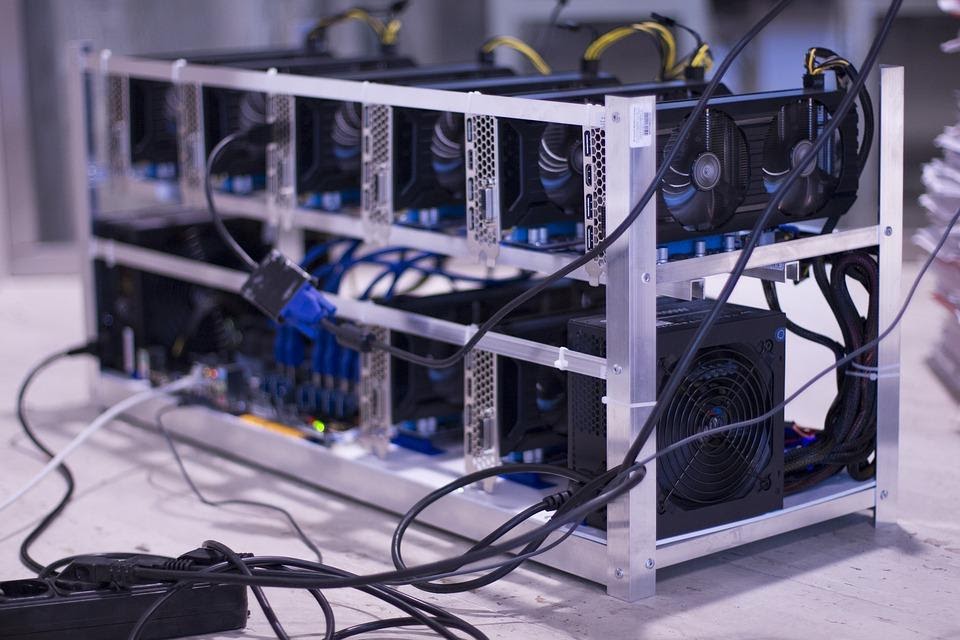
Electricity Theft And The Crypto Mining Drain: Quantifying the Terawatt-Hour Theft
Why it matters:
- Cryptocurrency mining is leading to a global electricity grid shortage due to energy theft.
- Countries like Malaysia, Paraguay, Russia, Europe, and Thailand are facing significant challenges and financial losses due to illegal crypto mining operations.
The global electricity grid faces a parasitic shortage of industrial proportions because of crypto mining drain. Cryptocurrency mining, specifically for proof-of-work like Bitcoin, has birthed a shadow economy of energy theft that rivals the consumption of entire nations. Verified data from 2020 through early 2026 indicates that electricity theft for crypto mining is no longer a localized nuisance a widespread financial for utility providers worldwide. The sheer volume of stolen terawatt-hours (TWh) disrupts grid frequency, consumer prices, and forces state-owned enterprises to conduct military-style raids to reclaim capacity.
Malaysia stands as the primary case study for the financial of this theft. In a parliamentary filing from late 2025, the Ministry of Energy Transition and Water Transformation confirmed that Tenaga Nasional Berhad (TNB) suffered losses exceeding RM4. 57 billion ($1. 11 billion USD) between 2020 and August 2025. This figure from 13, 827 identified premises where operators bypassed meters to power energy-intensive ASIC (Application-Specific Integrated Circuit) fleets. The density of these operations is severe; in August 2024 alone, Malaysian authorities destroyed 985 bitcoin mining rigs worth nearly RM2 million. The theft method is crude yet: operators tap directly into main distribution lines, bypassing the fuse box and meter entirely, which frequently results in localized fires and transformer explosions.
In Latin America, Paraguay has become a battleground for energy sovereignty. The National Electricity Administration (ANDE) reported disconnecting over 60 megawatts (MW) of illegal load in the quarter of 2024. To put this into perspective, 60 MW is sufficient to power a small city. The theft is concentrated in the Alto Paraná region, where the abundance of hydroelectric power from the Itaipu Dam attracts both legal and illegal miners. By early 2026, ANDE had seized a stockpile of approximately 30, 000 ASIC miners from unauthorized facilities. These operations do not steal power; they destabilize the grid. A single raid in La Colmena in 2024 uncovered a facility stealing $120, 000 worth of electricity monthly, using a direct medium-voltage connection that bypassed all safety.
The situation in Russia presents a different metric of: the “grey” mining phenomenon. In the Irkutsk region, subsidized residential electricity rates created a haven for home-based industrial mining. By August 2025, Irkutskenergosbyt (the local utility) identified over 8, 000 illegal mining points. These are not small setups; inspectors frequently find residential basements packed with industrial-grade hardware. In October 2025, Russian law enforcement raided a single facility in Irkutsk, seizing 1, 200 machines. The grid operator, Rosseti, tracks these “black” miners by monitoring internet traffic patterns correlated with constant, high-load energy usage. The fiscal impact is two-fold: direct electricity theft and an estimated $120 million annual loss in tax revenue from unregistered operations.
Europe faces a hybrid threat where organized crime syndicates pivot from cannabis cultivation to cryptocurrency mining. In the United Kingdom, energy theft has risen by 75% since 2012, costing the economy approximately £1. 5 billion annually. While this figure includes gas and cannabis-related theft, police forces increasingly encounter crypto farms during raids intended for narcotics. West Midlands Police, acting on heat signatures associated with cannabis lamps, raided an industrial unit only to discover 100 Antminer S9 units wired directly to the mains. The shift is logical for criminal enterprises: crypto mining eliminates the biological risks of crop failure and the logistical load of drug distribution, replacing them with a purely digital, energy-dependent revenue stream.
Thailand has also intensified its crackdown. The Provincial Electricity Authority (PEA) launched “Operation Copperhead” in late 2025, exposing corruption within its own ranks. Investigations revealed that senior PEA officials facilitated illegal grid connections for mining syndicates in exchange for kickbacks. A raid in Ratchaburi in August 2024 linked persistent local blackouts to a single house renting for a few months, gutted to house mining rigs. The operators fled, leaving behind equipment that had consumed millions of baht in unpaid electricity.
Documented Energy Theft and Seizures (2020-2026)
| Jurisdiction | Timeframe | Primary Metric | Financial / Energy Impact |
|---|---|---|---|
| Malaysia | 2020, Aug 2025 | 13, 827 Premises Identified | $1. 11 Billion USD (Loss) |
| Paraguay | Jan 2024, Mar 2024 | 5, 000+ ASICs Seized | 60 MW Illegal Load Disconnected |
| Russia (Irkutsk) | 2025 Audit | 8, 000 Illegal Mining Points | Grid Instability & $120M Tax Loss |
| United Kingdom | 2012, 2025 Trend | 75% Increase in Theft Cases | £1. 5 Billion/Year (Total Energy Theft) |
| Thailand | Aug 2024, Jan 2026 | Internal Corruption Probe | Millions in Baht per site; PEA officials arrested |
The data confirms that electricity theft for crypto mining is a distinct class of financial crime. Unlike traditional theft, which is limited by physical capacity, mining theft is limited only by the thermal capacity of the wires. Operators run equipment 24/7 at 100% load, creating a flat, relentless demand curve that differs significantly from normal residential or commercial usage patterns. This “always-on” theft profile allows utilities to detect anomalies, yet the speed at which syndicates mobilize and demobilize equipment frequently outpaces bureaucratic enforcement.
The Billion-Dollar Drain: Quantifying the Theft
The financial impact of electricity theft for cryptocurrency mining has graduated from a marginal operational loss to a widespread balance sheet emergency for national utility providers. Verified data from 2020 through early 2026 confirms that state-owned and private energy grids are losing billions of dollars in direct revenue, costs that are frequently passed down to law-abiding consumers. The of this theft is not abstract; it is measured in terawatt-hours diverted from legitimate industrial and residential use, forcing utilities to burn additional fossil fuels to stabilize grids while receiving zero payment for the output.
Malaysia serves as the primary indicator of this financial. In a parliamentary filing dated November 2025, the Ministry of Energy Transition and Water Transformation confirmed that Tenaga Nasional Berhad (TNB), the national utility, recorded losses totaling RM 4. 57 billion (approximately $1. 1 billion USD) between 2020 and August 2025. This figure represents the cost of electricity siphoned by 13, 827 identified premises where operators bypassed meters to power energy-intensive ASIC mining rigs. The theft is not limited to the peninsula; Sarawak Energy, operating in Borneo, reported in May 2025 that a single illegal mining operation in Miri caused monthly losses of RM 17, 000, while a larger syndicate in Kota Samarahan was draining RM 33, 000 per month as early as 2023.
Eurasian Grid and Direct Financial Hits
In the Russian Federation, the state grid operator Rosseti released a report in February 2025 detailing the specific financial damages incurred during the 2024 fiscal year. The company documented losses exceeding 1. 3 billion rubles ($14. 2 million USD) directly attributable to unauthorized cryptocurrency mining. The North Caucasus region accounted for nearly half of this deficit, losing 600 million rubles. A single industrial- theft operation discovered in Novosibirsk, operating 3, 200 mining rigs, was responsible for 197 million rubles ($2. 2 million USD) in stolen power. These figures represent only the detected cases, suggesting the actual revenue bleed is significantly higher.
Thailand faces a similar internal struggle, where the theft involves compromised utility personnel. In January 2026, the Department of Special Investigation (DSI) exposed a syndicate within the Provincial Electricity Authority (PEA). Four senior officials were implicated in a scheme that facilitated illegal grid connections for mining farms, resulting in hundreds of millions of baht in lost revenue. Authorities seized 19 million baht ($612, 000 USD) in cash and assets from the homes of these officials, exposing how deep the financial rot extends. Earlier raids in Chonburi in January 2025 seized 996 mining rigs that had been bypassing meters for months, further the PEA’s financial deficit.
The Subsidy Trap: Iran and Paraguay
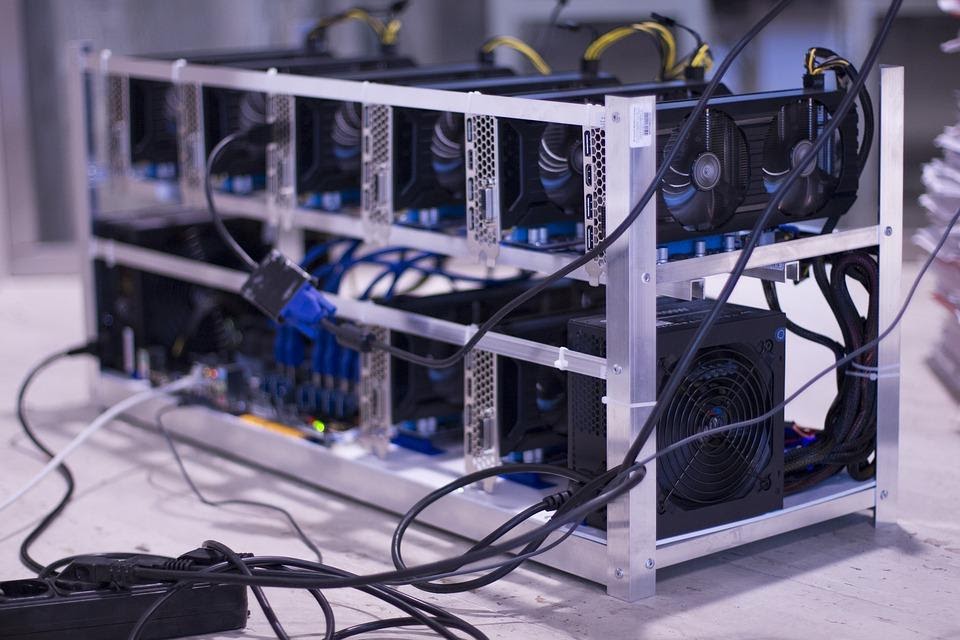
Global Energy Audit: Quantifying the Terawatt-Hour Theft
For nations with heavily subsidized electricity, the financial damage is twofold: the direct loss of billable revenue and the opportunity cost of burning state-funded fuel to power private profit. Iran’s state electricity company, Tavanir, reported in early 2025 that illegal crypto mining consumes between 800 megawatts and 2 gigawatts of power daily. Because electricity in Iran is sold at a fraction of the production cost, the theft of this energy represents a massive transfer of state wealth to illegal miners. Tavanir has resorted to offering cash rewards of up to 1 million tomans for whistleblower reports to this loss.
Paraguay, rich in hydroelectric power, faces a direct revenue assault on its state utility, ANDE. In 2024, a single raid in Salto del Guairá uncovered a mining farm stealing 1. 1 billion guaraníes ($146, 000 USD) worth of electricity every month. By early 2026, ANDE had seized over 30, 000 mining rigs. In a unique pivot to recoup these financial losses, the utility signed an agreement in March 2026 to deploy these confiscated machines in state-run facilities, aiming to monetize the very hardware that previously drained its accounts.
| Country | Utility Provider | Reported Loss (Local Currency) | Est. Loss (USD) | Period / Context |
|---|---|---|---|---|
| Malaysia | Tenaga Nasional Berhad (TNB) | RM 4. 57 Billion | $1. 1 Billion | Cumulative (2020 , Aug 2025) |
| Russia | Rosseti Group | 1. 3 Billion Rubles | $14. 2 Million | Fiscal Year 2024 Only |
| Paraguay | ANDE | 1. 1 Billion Guaraníes/mo | $146, 000 / month | Single Site (Salto del Guairá, 2024) |
| Russia | Rosseti (Novosibirsk) | 197 Million Rubles | $2. 2 Million | Single Site (3, 200 rigs, 2024) |
| Malaysia | Sarawak Energy | RM 33, 000 / month | $7, 500 / month | Single Site (Kota Samarahan, 2023) |
“The database serves as an important internal reference for identifying and monitoring suspicious premises and forms the basis for operational inspection actions.”
, Ministry of Energy Transition and Water Transformation, Malaysia (Parliamentary Filing, November 2025)
Mechanics of Manipulation: Physical Shunts and Firmware Hacks
The theft of electricity for cryptocurrency mining operates on a spectrum of sophistication, ranging from crude, dangerous physical bypasses to high-level firmware exploitations that rewrite the digital ledger of consumption. While the end goal remains constant, zero-cost energy for proof-of-work computations, the methods have evolved into an arms race between illegal operators and utility grid defense systems. Verified data from 2020 to 2025 reveals that while physical tampering remains the dominant method in developing grids, digital manipulation is emerging as a silent, threat in advanced metering infrastructures (AMI).
Physical shunting, the most prevalent technique, involves the direct diversion of current before it reaches the meter. In Malaysia, Tenaga Nasional Berhad (TNB) identified over 13, 000 premises between 2020 and 2025 where operators had installed “taps” on incoming mains cables. These taps, frequently concealed within wall cavities or ceiling spaces, allow high-wattage mining rigs to draw power directly from the grid while the meter registers minimal or zero usage. In Paraguay, the National Electricity Administration (ANDE) uncovered operations connected directly to medium-voltage lines, bypassing residential transformers entirely. A 2024 raid in the city of La Colmena seized 271 miners connected to a setup drawing 3, 195 kilovolt-amps (kVA), a load sufficient to power a small industrial park, yet completely invisible to standard billing pattern.
To mask the immense heat and noise generated by these illegal farms, operators employ physical counter-surveillance. In Melaka, Malaysia, enforcement teams discovered mining rigs where cables were wrapped in heavy curtain fabric to dampen thermal signatures and evade detection by utility drones equipped with thermal imaging cameras. More bizarrely, a 2025 report from Malaysian authorities noted the use of amplified nature recordings, specifically bird calls, played on loop to mask the mechanical roar of cooling fans, a low-tech audio camouflage designed to fool residential neighbors.
On the digital front, the manipulation of smart meters represents a more insidious threat. Research from Oregon State University and security firms indicates that Advanced Metering Infrastructure (AMI) is to firmware injection attacks. Sophisticated thieves can access the meter’s optical port or wireless communication module to inject malicious code. This “rogue firmware” does not freeze the counter; it alters the metrology data sent to the utility’s Head-End System (HES), reporting normal household usage patterns while the actual load spikes to industrial levels. Unlike physical shunts, which leave tangible evidence of cut wires, firmware hacks can be erased remotely or set to self-delete upon inspection, leaving investigators with no physical proof of theft.
The following table categorizes the primary methods of electricity theft observed in major crypto-mining hotspots between 2021 and 2025.
| Method Category | Technique | Technical method | Detection Difficulty | Primary Regions Observed |
|---|---|---|---|---|
| Physical Bypass | Direct Line Tapping | Splicing into main power lines before the meter; frequently underground or in roof cavities. | Moderate: Detectable via line balance analysis and thermal drones. | Malaysia, Paraguay, Sarawak |
| Meter Tampering | Magnetic Interference | Placing high-strength neodymium magnets on older electromechanical meters to slow the disc. | Low: Physical inspection reveals magnet placement or residual magnetization. | Eastern Europe, Latin America |
| Digital Exploitation | Firmware Injection | Overwriting smart meter software to under-report usage or disable remote disconnect relays. | High: Requires code audit; leaves no physical trace. | Western Europe, North America |
| Grid Spoofing | Load Oscillation | Rapidly toggling loads to confuse digital meters and chance destabilize local transformers. | Very High: Appears as grid noise rather than theft. | Experimental/Advanced Threat Groups |
The financial of these methods are. In Malaysia alone, the Ministry of Energy Transition and Water Transformation confirmed that the 13, 827 identified cases of meter tampering resulted in losses exceeding RM4. 57 billion ($1. 1 billion) over a five-year period. The sheer electrical load of these bypasses does more than steal revenue; it degrades grid infrastructure. Illegal connections frequently absence proper grounding and circuit protection, leading to transformer fires and localized blackouts. In Abkhazia, the grid operator Chernomorenergo reported that illegal crypto farms consuming up to 15% of the republic’s total electricity caused repeated substation fires in late 2024, forcing the government to impose rolling blackouts and seize thousands of mining units to prevent total grid collapse.
Utilities are responding with “smart” countermeasures, deploying AI-driven analytics to detect the specific harmonic signatures of mining equipment. Unlike standard appliances, ASIC miners draw power in a distinct, continuous pattern that creates identifiable noise on the frequency band. yet, as utilities upgrade their detection algorithms, thieves upgrade their firmware, creating a perpetual pattern of digital breach and patch that leaves the global grid to both financial and physical failure.
Malaysia Ground Zero: Tenaga Nasional Berhad’s Billion Dollar War
Malaysia has emerged as the primary frontline in the global battle against industrial- electricity theft for cryptocurrency mining. The nation’s state-controlled utility, Tenaga Nasional Berhad (TNB), faces a financial that exceeds the operational budgets of small nations. Official data released in July 2025 by the Ministry of Energy Transition and Water Transformation confirms that electricity theft linked to illegal Bitcoin mining caused losses totaling RM 4. 8 billion (approximately $1. 1 billion USD) between 2018 and June 2025. This figure represents a sharp upward revision from earlier estimates and indicates that the theft has evolved from sporadic opportunistic crimes into a coordinated organized crime enterprise.
The mechanics of this theft are blunt yet. Syndicate operators bypass digital meters or tap directly into high-voltage distribution lines to power warehouses filled with Application-Specific Integrated Circuit (ASIC) miners. These illegal connections frequently bypass safety fuses. This creates immediate fire risks and destabilizes the local grid frequency. In a parliamentary filing dated November 2025, the ministry revealed that TNB identified 13, 827 premises involved in illegal crypto mining between 2020 and August 2025. These sites siphon gigawatts of power while paying zero tariffs. The financial load shifts to law-abiding consumers through tariff adjustments and lost state revenue.
The escalation of this emergency tracks directly with the rising valuation of Bitcoin. In 2018, TNB recorded only 610 cases of suspected mining-related theft. By the half of 2025 alone, enforcement teams detected 1, 800 new cases. This surge occurred even with aggressive countermeasures. Deputy Minister Akmal Nasrullah Mohd Nasir stated in July 2025 that the rising price of digital assets incentivizes operators to take greater legal risks. The profit margins for mining with stolen electricity are near 100 percent. This economic reality makes the maximum fines under the Electricity Supply Act 1990, frequently capped at RM 1 million or jail time, a calculated cost of doing business for large syndicates.
| Metric | Verified Data |
|---|---|
| Total Financial Loss (2018, June 2025) | RM 4. 8 Billion (~$1. 1 Billion USD) |
| Total Premises Identified (2020, Aug 2025) | 13, 827 Sites |
| Cases Detected (2018) | 610 |
| Cases Detected (Jan, June 2025) | 1, 800 |
| Primary Evasion Tactic | Direct Line Tapping / Meter Tampering |
Criminal syndicates have adopted sophisticated counter-surveillance measures to protect these illicit revenue streams. Enforcement officers report that miners deploy heat shields to mask the thermal signature of their equipment from aerial drones. In a from late 2025, investigators found that operators played recordings of bird sounds on loop to disguise the high-decibel whine of cooling fans. One egregious case involved an abandoned mall vacated during the pandemic. It housed thousands of rigs and operated until early 2025. The sheer of these operations forces TNB to treat grid protection as a paramilitary operation rather than standard utility maintenance.
The government response culminated in the formation of a special cross-agency task force in November 2025. This body includes the Ministry of Finance, Bank Negara Malaysia, and TNB. Their mandate is to coordinate “Ops Power” raids and the financial networks supporting the miners. TNB uses autonomous drones equipped with thermal imaging sensors to patrol industrial estates and residential neighborhoods. These drones detect the abnormal heat plumes generated by mining clusters. When ground teams breach these facilities, they frequently find thousands of machines wired directly into the mains. The standard procedure for disposal is immediate destruction. Steamrollers crush seized rigs in public displays to deter future operators.
This war on theft is not about corporate profits. The stability of the national grid is at stake. The unauthorized load from illegal mining centers causes voltage dips and transformer explosions that affect legitimate industries. TNB has warned that the continued could compromise Malaysia’s energy security. The utility has begun installing smart meters that report consumption data in real-time. This technology allows the control center to spot load anomalies instantly. Yet the thieves adapt quickly. They move operations to new locations within days of a raid. The battle between TNB and the crypto syndicates remains a high- game of technological leapfrog with billions of Ringgit in the balance.
The Fire Hazard: Overloaded Circuits and Residential Infernos
The physical danger of electricity theft for cryptocurrency mining extends far beyond financial loss; it presents an immediate, lethal fire hazard to residential neighborhoods. Illegal mining operations frequently bypass standard safety method, such as fuses and circuit breakers, to draw industrial-grade power loads through residential wiring designed for light appliances. When a standard 200-amp residential service is forced to sustain a continuous draw of 150 amps or more for 24 hours a day, the wiring acts as a heating element. Insulation melts, wood framing ignites, and the resulting fires are frequently explosive.
In February 2025, a residential explosion in Bandar Puncak Alam, Malaysia, exposed the volatility of these clandestine operations. Firefighters responding to a distress call discovered that the blast was not caused by a gas leak, by a modified electrical board rigged to bypass the meter. The short circuit ignited the structure, leading authorities to seize nine charred Bitcoin mining rigs. This incident is of a broader trend where “ghost tenants” rent properties solely to house mining farms, leaving landlords with gutted homes and burned-out wiring.
The hazard is not limited to the miners themselves threatens adjacent properties through transformer failures. In residential zones, pole-mounted transformers are sized statistically, assuming that not every home draws maximum power simultaneously. When a single illicit mining operation draws a constant, high-load current, it can cause the local transformer to overheat and explode, showering the street with sparks and boiling oil. In Irkutsk, Russia, a region plagued by “grey” mining due to low energy costs, a single-story home in the village of Baklashi was incinerated in March 2025. The fire, which consumed 80 square meters and caused the roof to collapse, was attributed to an overloaded grid connection feeding a hidden mining farm.
Heat Signatures and the “Cannabis” Confusion
The thermal output of illegal mining operations is so immense that law enforcement agencies frequently mistake them for cannabis grow houses. Both illegal activities require massive power inputs and generate significant heat, which is detectable by police helicopters equipped with thermal imaging cameras. In May 2021, West Midlands Police in the United Kingdom raided an industrial unit in Sandwell, expecting to find a marijuana plantation based on the heat signature. Instead, they uncovered a bank of 100 Antminer S9 units stealing electricity from the mains. The heat was being vented directly into the building’s void spaces, creating a tinderbox environment.
This thermal byproduct makes ventilation a serious failure point. In December 2021, a three-story building in Chiang Mai, Thailand, burst into flames, destroying 72 servers worth approximately $60, 000. Investigations revealed that the cooling systems were insufficient for the density of the hardware, leading to a thermal runaway event. Unlike legitimate data centers, which use fire suppression systems and regulated cooling, illegal miners prioritize maximizing hashrate over safety, frequently stacking machines in unventilated basements or attics.
Verified Residential Fire Incidents (2020, 2025)
The following table documents specific instances where illegal cryptocurrency mining operations directly caused fires or were identified as imminent fire risks by emergency services.
| Date | Location | Incident Type | Primary Cause | Outcome |
|---|---|---|---|---|
| Feb 11, 2025 | Bandar Puncak Alam, Malaysia | Residential Explosion | Modified electrical circuits | House fire; 9 rigs seized; structural damage. |
| Mar 20, 2025 | Baklashi, Irkutsk, Russia | Total Structure Loss | Overloaded grid connection | 80 sq meter home destroyed; roof collapse. |
| Apr 14, 2025 | Pathum Thani, Thailand | Raid (Fire Hazard) | Bypassed meters/No cooling | 63 machines seized; declared major fire risk. |
| Dec 03, 2021 | Chiang Mai, Thailand | Server Farm Fire | Thermal runaway | 72 servers destroyed; building damaged. |
| Nov 29, 2020 | St. Petersburg, Russia | Apartment Fire | Rig overheating | 7-bedroom apartment burned; resident hospitalized. |
The mechanics of these fires are predictable. A standard electrical cable is rated for a specific thermal limit; exceeding this limit causes the copper to expand and the PVC insulation to degrade. Illegal miners frequently use “jumper cables” to bypass the meter, connecting directly to the service drop. These connections are frequently made with substandard materials that cannot handle the amperage, leading to arcing. In the St. Petersburg incident, the resident had connected multiple power supplies in an attic to ensure uptime, creating a sustained load that the residential wiring could not support, eventually igniting the roof structure.
Organized Crime Syndicates: The Cartel Pivot to Crypto
The global trajectory of electricity theft has shifted from individual opportunism to industrial- operations run by transnational criminal organizations. Between 2020 and 2025, law enforcement agencies worldwide documented a strategic pivot by drug cartels and syndicates: the diversification into cryptocurrency mining. This transition allows criminal groups to monetize stolen electricity directly, converting a utility service into untraceable digital assets without the logistical risks associated with narcotics trafficking. The result is a parasitic drain on national grids that rivals the energy consumption of small countries.
In Southeast Asia, this pivot has reached serious mass. Malaysian authorities, specifically the Ministry of Energy Transition and Water Transformation, revealed that “syndicates” were responsible for stealing approximately $1. 1 billion (RM 5 billion) in electricity between 2018 and 2025. Unlike amateur miners, these groups operate with military precision, occupying abandoned commercial properties and bypassing meters with high-voltage industrial shunts. In a single coordinated enforcement period in late 2025, Malaysian police raided over 14, 000 premises, seizing thousands of ASIC miners. These operations are frequently mobile; syndicates use “phantom” tenants to rent properties for three to four months, just long enough to mine significant Bitcoin before utility algorithms detect the load anomaly.
The involvement of violent organized crime is perhaps most visible in Latin America, where the line between state corruption and cartel activity blurs. In September 2023, Venezuelan security forces stormed the Tocorón prison, the stronghold of the notorious Tren de Aragua gang. Inside, authorities discovered a fully operational Bitcoin mining farm powered by the prison’s electrical grid, which the gang had tapped into without cost. This facility allowed the syndicate to generate revenue 24/7 while incarcerated, using the state’s own infrastructure to fund their expansion into Colombia, Peru, and Chile. Similarly, in Brazil, the Civil Police of the Federal District dismantled a criminal ring in 2024 that had stolen electricity to power a mining operation, causing monthly losses of R$100, 000 to the local utility.
European law enforcement has noted a parallel trend: the “Cannabis to Crypto” switch. In the United Kingdom and Spain, police raids targeting suspected cannabis grow houses, identified by their high heat signatures and massive power consumption, are increasingly uncovering racks of cryptocurrency miners instead of plants. A 2021 raid in the West Midlands (UK) found 100 Antminers stealing thousands of pounds of electricity from the mains, a setup police initially mistook for a drug farm. For criminal groups, mining offers a distinct advantage over narcotics: if raided, the evidence (digital wallets) is harder to seize than physical drugs, and the operation creates no distinct odor to alert neighbors.
Comparative Analysis of Syndicate Mining Operations (2020, 2025)
The following table illustrates the and methods of organized crime groups in three distinct regions, highlighting the financial impact of their electricity theft.
| Region / Country | Criminal Group / Type | Est. Electricity Stolen (USD) | Primary Method | Key Incident / Data Point |
|---|---|---|---|---|
| Southeast Asia (Malaysia) | Specialized Syndicates | $1. 1 Billion (2018, 2025) | Meter tampering, direct line tapping | 14, 000+ premises raided; “Phantom” tenant scheme used to evade detection. |
| Latin America (Venezuela) | Tren de Aragua | Unquantified (State Grid) | Institutional co-option | 2023 Tocorón prison raid revealed a mining farm powered by the facility’s grid. |
| Europe (Spain/UK) | Drug Trafficking Gangs | €860, 000+ (Single Case) | Industrial bypass | 2025 Barcelona raid found 88 ASICs on a high-voltage tap; “Cannabis to Crypto” pivot. |
| Eastern Europe (Russia) | Regional Mafias | $2. 1 Million (Siberia Case) | Grid transformer theft | 2024 Novosibirsk raid seized 3, 200 rigs and 9 stolen power transformers. |
The financial logic driving this crime is irrefutable. In Mexico, the Jalisco New Generation Cartel (CJNG) and Sinaloa Cartel have integrated cryptocurrency not just for laundering drug proceeds, as a primary revenue engine. While their initial adoption focused on laundering, intelligence reports from 2024 indicate a growing interest in physical mining operations in regions where they control local municipalities and can force utility workers to ignore illicit connections. This “plata o plomo” (silver or lead) method to utility management forces grid operators to subsidize the cartel’s digital minting operations, turning the national power supply into a private bank for organized crime.
Grid Instability: Localized Brownouts and Infrastructure Failure
The physical impact of illicit cryptocurrency mining extends far beyond financial loss; it manifests as a direct assault on electrical infrastructure. Unlike legitimate industrial consumers that operate within agreed load profiles, illegal mining operations function as parasitic loads that run continuously at maximum capacity. Residential and commercial grids are designed for variable demand, peaking in the evening and dropping at night. Crypto mining rigs, yet, draw a flat, relentless high-voltage current 24 hours a day. This unyielding demand creates thermal stress that standard distribution transformers cannot withstand, leading to catastrophic equipment failures, fires, and localized brownouts.
In residential zones, the consequences are immediate and dangerous. Illegal miners frequently bypass safety meters and fuses to avoid detection and billing. This “direct tapping” removes the grid’s primary defense against overload. When a residential transformer rated for 50 homes is suddenly forced to support a hidden mining farm consuming the equivalent of an aluminum smelter, the cooling oil inside the transformer boils. The resulting pressure causes the casing to rupture, frequently explosively. In Malaysia, Tenaga Nasional Berhad (TNB) reported that from 2020 to August 2025, they identified approximately 13, 827 illegal mining sites. These operations did not steal power; they physically destroyed substations. On February 11, 2025, a residential unit in Bandar Puncak Alam exploded due to a short circuit in a modified electrical setup used for Bitcoin mining. Firefighters and police were forced to break into the uninhabited property to extinguish the blaze, discovering nine mining rigs that had been bypassing the meter.
The situation in Russia’s Irkutsk region further illustrates the fire risks associated with unregulated mining. Known as the “crypto mining capital” due to its low energy rates, Irkutsk faced a surge of 8, 000 identified illegal mining points by August 2025. Miners in this region frequently use makeshift “noise boxes” lined with flammable mineral wool to dampen the sound of cooling fans, hiding their rigs in basements, garages, and even social institutions. In March 2025, authorities seized 96 mining machines from an orphanage in the Bohansky District, where the electrical load posed a severe fire hazard to the facility. The local utility, Irkutskenergosbyt, linked these operations to frequent voltage drops and emergency power outages that left law-abiding residents without heat during sub-zero Siberian winters.
On a national, the aggregate load of thousands of small illegal farms destabilizes entire grids, forcing state utilities to implement rolling blackouts. Abkhazia serves as a clear example of this widespread failure. By December 2024, the republic’s energy consumption had reached serious levels, with illegal miners estimated to consume between 10% and 15% of the total supply. The state-owned utility, Chernomorenergo, was forced to implement six-hour rolling blackouts to prevent a total grid collapse. The was so severe that on December 11, 2024, the serious Inguri Hydroelectric Station had to shut down for 24 hours due to dangerously low water levels exacerbated by the relentless draw of mining farms. To alleviate pressure, the government even cut off internet access for seven hours on December 10, 2024, severing the miners’ connection to the blockchain.
Iran faces a similar emergency, where the intersection of subsidized energy and sanctions has created a thriving black market for electricity. In late 2024, the country experienced widespread rolling blackouts across Tehran and neighboring provinces. State utility Tavanir attributed of the deficit to unauthorized crypto mining. Data from the Ministry of Energy indicated that 230, 000 unlicensed mining devices were consuming as much power as the entire Markazi province. These illegal operations destabilize the frequency of the national grid, causing voltage fluctuations that damage household appliances and industrial alike. The table summarizes specific incidents of grid failure and infrastructure damage attributed to illegal mining between 2021 and 2025.
| Location | Date | Incident Type | Infrastructure Impact |
|---|---|---|---|
| Bandar Puncak Alam, Malaysia | Feb 11, 2025 | Residential Explosion | Short circuit in illegal mining setup caused fire; destruction of property and bypass wiring. |
| Abkhazia | Dec 11, 2024 | Hydroelectric Shutdown | Inguri Hydroelectric Station forced offline for 24 hours due to low water levels driven by mining demand. |
| Tehran, Iran | Oct-Nov 2024 | Rolling Blackouts | Unlicensed miners (230, 000 units) caused supply deficits equivalent to a major industrial province. |
| Kosovo | Jan 2022 | National Grid Emergency | Government banned mining after technical failures at coal plants coincided with high mining load, causing blackouts. |
| Salto del Guairá, Paraguay | May 2024 | Substation Overload | Seizure of 2, 738 rigs that were stealing $146, 000/month in power, threatening local distribution transformers. |
The technical challenge for grid operators is the invisibility of this load until failure occurs. In Paraguay, the Administración Nacional de Electricidad (ANDE) launched intensified inspections in mid-2024, seizing nearly 30, 000 mining rigs. These operations were frequently found connected directly to medium-voltage distribution lines, bypassing transformers entirely. This theft method, known as “hooking,” creates unbalanced phases in the grid, leading to harmonic that can overheat neutral conductors and destroy sensitive equipment kilometers away from the theft site. The Deputy Minister of Energy Transition in Malaysia, Akmal Nasir, stated in December 2025 that the risk is no longer just theft, that miners “can actually even break our facilities,” turning the grid into a physical hazard for utility workers and the public.
“The risk of allowing such activities to happen is no longer about stealing. actually even break our facilities. It becomes a challenge to our system.”
, Akmal Nasir, Deputy Minister of Energy Transition and Water Transformation, Malaysia (December 2025)
These incidents demonstrate that illegal crypto mining is not a victimless financial crime. It is a physical threat to serious infrastructure. The constant thermal cycling and extreme overloads degrade the lifespan of grid components, forcing utilities to spend millions on emergency repairs rather than upgrades. As miners continue to seek out regions with cheap or subsidized power, the stability of electrical grids in these areas remains under constant threat of collapse.
The Insider Threat: Utility Employees Colluding with Miners
The of electricity theft required to power industrial-grade crypto mining operations cannot be achieved with simple hook-and-line tactics. Verified investigations from 2023 through early 2026 reveal that the most damaging breaches originate from within the utility companies themselves. Engineers, technicians, and high-ranking officials are actively facilitating grid penetration, altering billing databases, and installing bypasses that are invisible to standard audits. This is not opportunistic petty theft; it is organized institutional betrayal.
In Paraguay, the Administración Nacional de Electricidad (ANDE) faced a corruption emergency in July 2024 that exposed the depth of this collusion. Following a series of blackouts in the Alto Paraná region, internal audits identified seven senior engineers who had directly installed high-voltage connections for illegal Bitcoin farms. These were not crude taps professionally installed substations using ANDE’s own transformers and hardware. Senator Salyn Buzarquis publicly alleged that high-level officials were receiving bribes of up to $500, 000 monthly to authorize these phantom loads. The engineers manipulated the grid’s SCADA (Supervisory Control and Data Acquisition) systems to mask the consumption spikes, rendering the theft invisible to central monitoring until physical inspections were forced by grid instability.
The corruption extends to the Russian Federation, where the intersection of state energy assets and crypto mining has created a lucrative black market for utility workers. In October 2025, police in Omsk arrested a senior technician at the Omsk Thermal Power Plant. The investigation confirmed the employee accepted a bribe of 500, 000 rubles ($6, 270) to divert power to a private mining facility. Unlike the Paraguayan case, which involved grid connections, this theft occurred at the generation source itself, bypassing the transmission grid entirely. The facility siphoned megawatts directly from the plant’s auxiliary power bus, a method that requires intimate knowledge of the plant’s schematics and security.
China provides the most severe example of state-level complicity. While the country officially banned crypto mining in 2021, the enforcement crackdown of 2023 unmasked Yi Xiao, a former Vice Chairman of the Jiangxi Provincial Committee. A Hangzhou court sentenced Yi to life in prison in August 2023 for abuse of power and accepting 125 million yuan ($17. 1 million) in bribes. Yi did not look the other way; he actively directed state-owned energy enterprises to provide discounted, unmetered electricity to mining consortiums disguised as data centers. His case demonstrates that “insider threats” are not limited to field technicians can reach the highest echelons of regional governance, where policy is written to theft.
Even renewable energy infrastructure is to internal sabotage. In November 2025, a Dutch court sentenced a technical manager at Nordex, a wind turbine manufacturer, for installing crypto mining rigs inside the turbines themselves. The employee utilized the internal network of the wind farm in Gieterveen to power three mining rigs and two Helium network nodes. The hardware was hardwired directly into the turbine’s nacelle, drawing power before it reached the metering point. This breach went for months because the consumption was masked by the variable output of the wind generators, a technical nuance that only a subject matter expert could exploit.
The financial impact of these insider jobs dwarfs external theft because the perpetrators know exactly how to hide the evidence. In Malaysia, Tenaga Nasional Berhad (TNB) reported in February 2026 that losses in the state of Melaka alone reached RM29. 63 million ($6. 7 million) for the year 2025, a sharp increase driven by “syndicate-level” operations. Police raids in Taman Tambak Paya Harmoni revealed cables concealed behind curtain fabrics and inside false walls, installations that investigators noted were “too clean” to be the work of amateurs. The precision of the bypasses suggested the involvement of contractors or former utility staff familiar with TNB’s inspection routines.
Documented Insider Collusion Incidents (2023-2026)
| Date | Location | Utility / Entity | Insider Action | Outcome |
|---|---|---|---|---|
| Aug 2023 | Jiangxi, China | Provincial Government | Vice Chairman Yi Xiao directed state power to miners for $17. 1M in bribes. | Life imprisonment for official. |
| July 2024 | Paraguay | ANDE | 7 engineers installed transformers for illegal mines; $500k/mo bribe allegations. | Internal investigation; 70+ mines disconnected. |
| Oct 2025 | Omsk, Russia | Omsk Thermal Power Plant | Technician took bribes to bypass meters at generation source. | Arrest of employee; confiscation of rigs. |
| Nov 2025 | Netherlands | Nordex (Wind Farm) | Manager installed miners inside wind turbine nacelles. | Community service sentence; fines. |
| Feb 2026 | Melaka, Malaysia | Tenaga Nasional Berhad | Syndicates used utility-grade concealment methods causing RM30M loss. | Ongoing manhunt for technical specialists. |
These incidents confirm that electricity theft has evolved from physical tampering to administrative fraud. Utilities can no longer rely solely on smart meters or drone patrols when the threat actor has administrative access to the billing server or the keys to the substation. The involvement of trusted personnel forces energy providers to adopt “zero trust” security models, treating their own engineers with the same scrutiny as external contractors.
Algorithmic Detection: Using AI to Spot Load Anomalies
The modern electrical grid is no longer a passive delivery system; it has become a digital battlefield where utility companies deploy advanced algorithmic weaponry against a new class of energy thief. Unlike the crude “hook-and-line” methods of the past, cryptocurrency mining operations leave a distinct, sophisticated data footprint that human auditors frequently miss artificial intelligence (AI) can identify with ruthless precision. By analyzing the spectral density of power usage, utilities are illicit mining farms that hide behind residential facades or legitimate industrial covers.
The Digital Fingerprint of a Mining Rig
To an AI model, a cryptocurrency mine looks nothing like a standard household or factory. Legitimate human activity is defined by seasonality and circadian rhythms, lights toggle off at night, factories throttle down on weekends, and air conditioning fluctuates with the weather. Crypto mining, specifically for Proof-of-Work like Bitcoin, defies these organic patterns. It is characterized by a “flatline” load profile: a relentless, high-baseload consumption that runs at near 100% capacity, 24 hours a day, 7 days a week.
Beyond simple usage volume, these operations emit a specific electrical signature known as harmonic. The power supply units (PSUs) of ASIC (Application-Specific Integrated Circuit) miners are non-linear loads that introduce “noise” back into the grid. Verified technical studies from 2020 to 2024 indicate that these rigs generate significant Total Harmonic (THD), particularly spiking the 3rd, 5th, and 7th harmonic orders. While a standard residential load might show a THD of under 5%, a cluster of Antminer S9 or S19 units can drive current well above 10%, creating a unique spectral “fingerprint” that smart meters can record and AI can flag.
Machine Learning Models in the Field
Utilities are moving beyond simple threshold alerts to deploy complex machine learning architectures. The most systems use a hybrid method, combining unsupervised learning to detect anomalies with supervised learning to classify them.
| Model Type | Primary Function | Detection Focus | Operational Advantage |
|---|---|---|---|
| CNN-LSTM | Deep Learning | Temporal & Spatial Patterns | Identifies long-term “flatline” usage sequences typical of mining. |
| Support Vector Machine (SVM) | Supervised Classification | Binary Classification (Theft/No-Theft) | High accuracy in separating miners from legitimate high-load industrial users. |
| Random Forest | Ensemble Learning | Feature Importance Analysis | Reduces false positives by cross-referencing weather, time, and grid location. |
| Autoencoders | Unsupervised Learning | Anomaly Reconstruction | Flags “zero-day” theft methods that deviate from all known normal profiles. |
The deployment of these models has yielded tangible financial recoveries. In Brazil, the utility giant Enel implemented the C3 AI platform to combat non-technical losses. By integrating data from over 20 million smart meters, the system analyzed 10 trillion rows of data to calculate a “fraud probability score” for every customer. The results were immediate: Enel reported a 70% increase in the average energy recovered per inspection in Italy and a 300% increase in Spain, validating the model’s efficacy for its Latin American operations where theft rates are historically higher.
Global Case Studies: The AI Dragnet
The application of these algorithms has turned the in several high-theft jurisdictions. In Malaysia, Tenaga Nasional Berhad (TNB) utilized smart meter data to identify 13, 827 premises involved in electricity theft between 2020 and 2025. The AI-driven analysis allowed TNB to distinguish between a legitimate factory and a warehouse secretly filled with thousands of mining rigs, leading to the recovery of evidence for a $1. 11 billion loss. The precision of these algorithms is serious; a false positive that triggers a raid on a legitimate business can lead to legal nightmares, forcing utilities to refine their models to achieve false alarm rates as low as 3. 6% in controlled pilots.
In Paraguay, the Administración Nacional de Electricidad (ANDE) has used similar load-profiling techniques to shut down over 70 illegal mining farms in the last five years. The data revealed that these operations were siphoning up to $60 million worth of electricity annually. The detection was so that it forced a strategic pivot: rather than just destroying seized rigs, the Paraguayan government signed an agreement in 2026 to repurpose confiscated hardware for a state-sanctioned mining pilot, monetizing the very tools they once hunted.
Meanwhile, in Canada, Hydro-Québec leveraged analytics to uncover a theft ring in 2021 that had stolen nearly $2 million in electricity. The utility’s algorithms flagged the anomalies not just by volume, by the absence of thermal variation expected in the region’s harsh winters. While a normal home’s heating load spikes in January, the illicit mining operations maintained a suspicious, flat consistency regardless of the external temperature.
The Evasion Arms Race
As detection algorithms improve, thieves are adapting. “Load masking” techniques have emerged, where miners program their rigs to throttle down during peak inspection hours or randomly modulate power draw to mimic organic human usage. sophisticated syndicates employ “behind-the-meter” batteries to smooth out the jagged harmonic noise that triggers AI alerts. This has forced data scientists to develop “Deep Learning” models capable of spotting even these subtle manipulations, ensuring that the war between the grid’s defenders and its parasites remains a constant, high- evolution.
Case Study: The West Midlands Police Cannabis Farm Misidentification
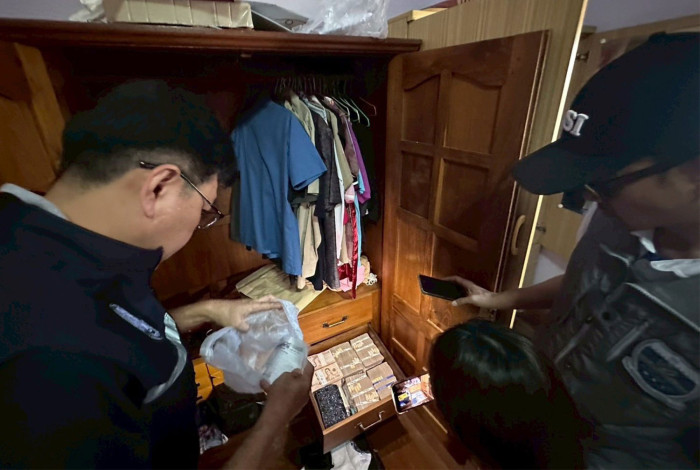
On May 18, 2021, officers from the West Midlands Police executed a drug warrant at the Great Industrial Estate in Sandwell, expecting to uncover a large- cannabis cultivation operation. Intelligence gathered prior to the raid pointed to all the classic indicators of an illicit grow house: frequent visitors at odd hours, extensive ventilation ducting visible from the exterior, and a distinct heat signature detected by police drones. The thermal imaging data suggested a high-intensity indoor climate control system, used to nurture plants under grow lights.
Upon forcing entry into the industrial unit, the tactical team found no plants, soil, or hydroponic equipment. Instead, they discovered a bank of approximately 100 Bitcoin mining ASICs (Application-Specific Integrated Circuits), physically identified as Antminer S9 units, operating in a deafeningly loud, heat-intensive environment. The facility had been rigged with a “bird’s nest” of cabling and industrial fans designed to expel the immense thermal waste generated by the cryptographic calculations.
This incident highlights a serious convergence in modern energy theft: the physical footprint of illicit cryptocurrency mining is nearly indistinguishable from that of illegal cannabis cultivation. Both operations require massive, continuous electrical draw and generate significant waste heat that must be vented to prevent equipment failure or crop damage. In this specific case, the miners had bypassed the mains supply, tapping directly into the grid to avoid detection and costs. Inquiries with Western Power, the local distribution network operator, confirmed that the setup had stolen thousands of pounds worth of electricity.
“It’s certainly not what we were expecting! It had all the hallmarks of a cannabis cultivation set-up and I believe it’s only the second such crypto mine we’ve encountered in the West Midlands. My understanding is that mining for cryptocurrency is not itself illegal abstracting electricity from the mains supply to power it is.” , Sergeant Jennifer Griffin, Sandwell Police
The seizure of the equipment was conducted under the Proceeds of Crime Act, marking a shift in how UK law enforcement method energy theft. While the act of mining Bitcoin is legal in the United Kingdom, the abstraction of electricity constitutes a criminal offense carrying a maximum sentence of five years. The raid at Great Industrial Estate demonstrated that grid operators and police forces must treat high-load energy anomalies as chance financial crimes involving digital assets, rather than assuming they are solely narcotics-related.
Operational Similarities: Cannabis Farms vs. Crypto Mines
The confusion in Sandwell was not an error a logical deduction based on shared operational characteristics. Law enforcement agencies rely on specific physical signatures to obtain warrants for energy-intensive crimes. The table outlines why these two distinct illegal industries present identical profiles to grid investigators and thermal imaging drones.
| Indicator | Cannabis Cultivation | Illicit Crypto Mining | Law Enforcement Signal |
|---|---|---|---|
| Thermal Signature | High heat from HPS/LED grow lights (25°C, 30°C ambient). | Extreme heat from ASIC chips (70°C, 80°C chip temp). | “Hot spots” on roofs/walls visible to thermal drones. |
| Ventilation | Ducting to remove humidity and odor; carbon filters used. | Industrial fans to cool hardware; high-velocity airflow. | Visible external ducting; modified windows/vents. |
| Grid Impact | Constant 12/12 or 18/6 hour light pattern. | Continuous 24/7 baseload draw at maximum capacity. | Meter bypass; transformer; voltage drops. |
| Noise Profile | Low hum from fans and water pumps. | High-decibel whine (70-90 dB) from cooling fans. | Audible drone from street level; soundproofing attempts. |
| Visitation | Gardeners visiting for watering/pruning (daily/weekly). | Technicians visiting for maintenance/reboots (sporadic). | Pattern of life analysis; visitors at irregular hours. |
The Sandwell raid serves as a primary data point for utility companies updating their fraud detection algorithms. Traditional models flagged cyclical power usage consistent with grow light timers. Crypto mining, yet, presents a “flatline” load profile, drawing maximum power 24 hours a day without fluctuation. When this load is hidden via a meter bypass, the only external evidence remains the secondary signatures: heat and noise. Consequently, UK police forces have begun training officers to recognize the distinct acoustic signature of ASIC miners, which differs significantly from the low hum of hydroponic fans.
Environmental: The Carbon Footprint of Stolen Power
The theft of electricity for cryptocurrency mining is not a financial crime; it is an unmeasured environmental disaster. While legitimate mining operations increasingly court investors with “green” energy audits and renewable offsets, the black market for power operates in the shadows, almost exclusively burning the dirtiest available kilowatts. Verified data from 2020 to 2025 reveals that illicit mining operations are structurally incentivized to maximize carbon output, as they bypass the efficiency upgrades and load-balancing regulations that govern legal facilities.
This “shadow load” creates a double penalty for the planet., it adds gigawatts of demand to grids that frequently rely on emergency fossil-fuel generation to prevent collapse. Second, illegal miners frequently use “zombie” hardware, obsolete Antminer S9s and older ASIC units that legal mines discarded years ago. These machines are roughly 60% less energy- than modern equipment, meaning they consume significantly more electricity, and generate far more CO2, for every hash computed. A 2025 analysis suggests that while the global crypto network emits approximately 98 million metric tons of CO2 annually (comparable to the entire nation of Qatar), the illicit portion of this sector is responsible for a disproportionately high share of these emissions due to this hardware.
The Venezuelan Paradox: Clean Power, Dirty Theft
Venezuela presents the most clear example of how electricity theft turns clean energy grids into carbon emitters. The country relies on the Guri Dam for the vast majority of its power, theoretically making its grid one of the greenest in the Western Hemisphere. Yet, the rampant theft of electricity for Bitcoin mining has destabilized this infrastructure, forcing the state to rely on dilapidated thermal power plants burning diesel and heavy fuel oil to plug the gaps.
In May 2024, the Venezuelan Ministry of Electric Power (MPPPE) disconnected all crypto mining farms from the National Electric System (SEN) and seized over 2, 000 mining rigs in Maracay alone. These raids were not just about reclaiming capacity; they were a desperate bid to stop the grid from imploding. The theft was so severe that it caused frequency fluctuations capable of damaging the Guri turbines themselves. By stealing “clean” hydro power, these illegal operations forced the entire grid to revert to dirty fossil fuel backups, converting a zero-carbon energy source into a heavy emitter through displacement.
The Toxic Legacy of “Zombie” Hardware
The environmental cost extends beyond the atmosphere to the soil itself. Illegal mining operations are the final resting place for the industry’s electronic waste. When authorities in Malaysia, Iran, or Venezuela raid these facilities, they rarely find liquid-cooled racks. Instead, they find walls of dust-choked, obsolete circuit boards containing lead, mercury, and cadmium.
Global estimates indicate the crypto industry generates approximately 30, 700 tonnes of e-waste annually. A significant percentage of this waste accumulates in the black market, where disposal regulations are non-existent. In Malaysia, where police destroyed $1. 2 million worth of seized mining rigs in a steamroller stunt in 2021, the environmental protocol for disposal was an afterthought. These toxic components frequently end up in unsecured landfills, leaching heavy metals into groundwater long after the digital wallets have been drained.
Comparative Emissions: The of the Drain
To understand the magnitude of this parasitic load, one must compare the energy consumption of the crypto mining sector against sovereign nations. The following table illustrates the sheer of energy diverted, frequently illegally, away from legitimate economic use.
| Entity | Annual Consumption (TWh) | Primary Energy Source | CO2 Emissions Status |
|---|---|---|---|
| Global Bitcoin Mining | 160, 200 | Mixed (Fossil/Renewable) | ~98 Mt CO2 (High) |
| Poland | ~158 | Coal Dominant | High |
| Malaysia | ~150 | Natural Gas / Coal | High |
| Argentina | ~135 | Natural Gas | Medium-High |
| US Illegal Mines (Est.) | ~15, 20 | Grid Mix (frequently Fossil) | Disproportionately High |
The data is unequivocal. When a rogue operator bypasses a meter in Texas or taps a line in Carabobo, they are not just stealing a commodity. They are actively subverting global decarbonization efforts. In the United States, a 2025 study identified that 34 large- mines consumed 33% more electricity than the entire city of Los Angeles, with 85% of that power derived from fossil fuels. The illegal sector mirrors this profile with even worse efficiency metrics, functioning as a subsidy for coal and gas plants that would otherwise be slated for closure.
The Rental Racket: Exploiting Airbnb for Short Term Mining
The digitization of electricity theft has found a new, unsuspecting host: the short-term rental market. While industrial- operations frequently require complex infrastructure and illicit grid tampering, a growing cadre of “guerrilla miners” has discovered a lower-friction method. By booking residential properties on platforms like Airbnb and VRBO, these actors outsource their primary operating cost, electricity, to unsuspecting landlords. The arbitrage is simple: the fixed cost of a three-week rental is a fraction of the market value of the power consumed by high-performance mining rigs running 24/7.
This phenomenon, dubbed the “rental racket,” was clear illustrated in August 2024 when North Carolina Airbnb host Ashley Class received a utility bill for $1, 500 after a three-week stay. Her guests, who left the property in pristine condition, had installed at least 10 cryptocurrency mining rigs, likely Antminer S19 Pros, which ran continuously. Surveillance footage later confirmed the equipment was hauled in under the guise of luggage. The guests reportedly generated over $100, 000 in cryptocurrency during their stay, turning the host’s residential power infrastructure into a high-yield, subsidized data center. Class’s experience is not an anomaly a signal of a decentralized shift in energy theft tactics.
In Europe, the of this exploitation has escalated to criminal enterprise levels. Just days ago, in March 2026, the Mossos d’Esquadra in Catalonia, Spain, dismantled a massive operation in Sant Vicenç de Castellet. Police seized 88 ASIC miners that had been illegally connected to the high-voltage grid, bypassing meters entirely. The operation had defrauded the utility provider Endesa of approximately €860, 000 ($940, 000). Unlike the North Carolina case, which relied on the “all-bills-included” loophole of short-term rentals, this cell utilized a rented industrial property to mask a direct tap into the municipal supply, a hybrid of the rental racket and traditional grid tampering.
The “Tenant from Hell” Phenomenon
While short-term rentals offer quick turnover for thieves, long-term leases have birthed the “Tenant from Hell” emergency, particularly in Southeast Asia. In Malaysia, where electricity theft laws are, syndicates rent residential properties using third-party proxies to shield themselves from liability. Once possession is secured, they bypass the meter and run mining farms until detected.
Data from Tenaga Nasional Berhad (TNB) and the Malaysian Ministry of Energy Transition reveals the financial devastation of this tactic. In one documented case in Subang Jaya, a landlord was left with a bill of RM260, 000 ($58, 000) after tenants. Another property owner in Sarawak faced a RM300, 000 ($67, 000) liability. These are not incidents; between 2018 and 2023, Malaysia lost an estimated RM3. 4 billion ($722 million) to such operations. The legal framework frequently leaves the registered account holder, the landlord, liable for the arrears, forcing property owners into bankruptcy for theft committed by their tenants.
The mechanics of this theft rely on the massive energy density of modern mining hardware. A single ASIC miner consumes more power than an entire average household. When multiplied by ten or twenty units, a residential fuse box becomes a commercial substation, frequently leading to fire risks that void insurance policies.
| Appliance / Device | Daily Consumption (kWh) | Monthly Cost (US Avg $0. 16/kWh) | Notes |
|---|---|---|---|
| Average US Household | 29 kWh | $139. 20 | Includes HVAC, lighting, appliances. |
| Central Air Conditioner | 30-50 kWh | $144, $240 | Seasonal peak usage. |
| 1x Antminer S19 Pro | 78 kWh | $374. 40 | Runs 24/7 at 3, 250 Watts. |
| 10x Mining Farm (Airbnb Setup) | 780 kWh | $3, 744. 00 | Exceeds standard residential breaker capacity. |
The table above demonstrates the sheer mathematical violence of the scheme. A “guest” running ten miners consumes 26 times the power of a normal household. In a short-term rental scenario where utilities are included in the $2, 000 monthly rent, the landlord pays the thief $1, 744 to mine Bitcoin. This negative equity does not account for the wear on electrical wiring, which is frequently melted by the sustained thermal load.
In Canada, Hydro-Québec has aggressively pursued these “pop-up” mines. In October 2021, the utility, in conjunction with the Sûreté du Québec, shut down three operations in Beauport and Saint-Damien-de-Buckland that had stolen nearly $2 million in electricity. These miners had rented residential and commercial spaces, modifying the electrical panels to bypass meters. The utility employs advanced algorithms to detect the specific “load signature” of mining rigs, a flat, high-intensity draw that never fluctuates, unlike the variable usage of normal human activity.
“It was cheaper for them to rent a house than to pay for that electricity. They were five stars all the way, until the bill came.” , Ashley Class, Airbnb Host, North Carolina (August 2024).
The evolution of the rental racket indicates a shift toward decentralized, lower-risk criminality. By spreading operations across hundreds of residential rentals rather than a single massive warehouse, syndicates dilute their risk of detection while aggregating massive hashrate power. For the landlord, the only defense is vigilance: smart meter monitoring and lease clauses that explicitly ban commercial data processing equipment. Without these checks, the residential rental market remains an open subsidy for the global crypto-mining network.
Legal Vacuums: Why Prosecution Lags Behind Technology
The global legal framework for electricity theft remains dangerously antiquated, designed for an era when power theft meant a neighbor bypassing a meter to run a few household appliances. Today, industrial- cryptocurrency mining syndicates exploit these legislative gaps to steal terawatt-hours of energy with relative impunity. While utility providers can detect load anomalies with increasing precision, the judicial process to prosecute these crimes is failing to keep pace with the technological sophistication of the perpetrators.
In jurisdictions, electricity theft is prosecuted under general “theft of service” or “meter tampering” statutes, which carry light penalties frequently limited to civil fines or short probationary periods. These laws fail to account for the high-value nature of the stolen commodity when converted into digital assets. For a crypto mining syndicate, a $5, 000 fine for meter tampering is a negligible operating expense compared to the millions of dollars in Bitcoin generated during the theft period. Defense attorneys frequently that electricity, being intangible, cannot be “stolen” in the same manner as physical goods, forcing prosecutors to rely on technical evidence that judges and juries frequently struggle to interpret.
The “Tenant” Loophole and Corporate Shells
A primary obstruction to successful prosecution is the “tenant defense,” a legal strategy perfected by mining syndicates in Malaysia and Southeast Asia. Syndicates rarely own the properties they use. Instead, they employ proxy renters or shell companies to sign residential leases for warehouses or shop lots. When authorities raid the premises, the physical miners are long gone, and the landlord claims ignorance, protected by tenancy agreements that shift liability to the tenant.
Data from Malaysia’s Energy Commission and Tenaga Nasional Berhad (TNB) highlights the efficacy of this loophole. Between 2020 and 2025, authorities identified over 13, 827 premises involved in electricity theft for mining, with losses exceeding $1. 1 billion. Yet, conviction rates for the masterminds behind these operations remain disproportionately low. The legal load of proof requires demonstrating intent and direct involvement, which is nearly impossible when the “tenant” is a fictitious identity and the equipment is remotely controlled from abroad.
Technological Asymmetry in Evidence
The prosecution gap is further widened by the technological asymmetry between miners and investigators. Modern mining operations use sophisticated “smart” meter bypasses that leave little physical evidence. Unlike crude hook-and-line taps of the past, these methods involve software hacks that freeze meter readings or loop data to mimic normal residential usage patterns. Proving this in court requires forensic digital analysis that local law enforcement agencies absence the budget or expertise to conduct.
also, the fungibility of cryptocurrency complicates asset seizure. Even if authorities prove electricity was stolen, linking that specific stolen energy to a specific wallet of Bitcoin is legally complex. Defense teams successfully that without a direct digital trail proving which coins were minted using the stolen power, the assets cannot be seized as proceeds of crime. This evidentiary hurdle allows syndicates to retain their illicit profits even if their physical equipment is confiscated.
Legislative Catch-Up: From Civil Fines to Felonies
Recognizing these failures, several nations have been forced to overhaul their penal codes between 2023 and 2025 to specifically criminalize industrial- energy theft for digital asset mining.
| Jurisdiction | Pre-2023 Legal Status | 2024, 2025 Legislative Update | Primary Enforcement method |
|---|---|---|---|
| Paraguay | Misdemeanor / Civil Fine | Felony (10 Years Prison) | Seizure of all mining hardware; mandatory prison for theft>$5, 000 value. |
| Russia | Administrative Offense | Criminal Liability | Fines up to 1 million Rubles; forced labor for unregistered industrial mining. |
| Malaysia | Electricity Supply Act (Civil) | Proposed Amendments | Special tariff introduction; landlord liability clauses under review. |
| Venezuela | Unregulated / Grey Zone | Total Ban / Confiscation | Military-led raids; immediate asset forfeiture without trial. |
Paraguay serves as the most aggressive example of this legislative pivot. In 2024, responding to grid instability caused by illegal miners tapping into the Itaipu Dam’s output, the Paraguayan Senate approved a bill increasing the maximum prison sentence for electricity theft to 10 years. This reclassification acknowledges that the crime is not just property theft a threat to national infrastructure security. Similarly, Russia’s 2024 legislation attempts to close the “grey mining” gap by mandating a national registry for miners, making operation outside this registry a criminal offense punishable by forced labor.
even with these tougher laws, enforcement remains reactive. The speed at which syndicates can set up, mine, and operations, frequently in under six months, consistently outpaces the 12-to-24-month timeline typical of criminal investigations. Until international frameworks allow for the rapid freezing of crypto assets linked to energy theft, the legal system remain a step behind, cleaning up the physical debris of mining farms while the digital profits across borders.
Hardware Forensics: The Ubiquity of Antminer S9 in Theft Rings

The operational backbone of global electricity theft for cryptocurrency mining is not the latest, most hardware, rather the discarded relics of previous bull markets. Forensic analysis of seizure inventories from 2020 to 2025 reveals that the Bitmain Antminer S9, a model released in 2016, remains the overwhelming “weapon of choice” for organized theft rings. While legally obsolete due to its poor energy efficiency of roughly 0. 098 Joules per Gigahash (J/GH), the S9 is financially optimal for criminal syndicates. When electricity costs are zero, efficiency metrics become irrelevant, and the only variable that matters is the hardware’s acquisition cost. With secondary market prices hovering between $50 and $150 per unit, criminal gangs can deploy thousands of these disposable units with minimal capital risk.
Data from raids in Paraguay, Malaysia, and Venezuela confirms this pattern. In Paraguay, the National Electricity Administration (ANDE) reported a stockpile of approximately 30, 000 seized mining rigs by early 2026, the vast majority being older ASIC models like the S9. These units were frequently found stacked floor-to-ceiling in warehouses, directly tapped into medium-voltage distribution lines. The S9’s ubiquity is driven by a simple economic calculus: a raid that confiscates $500, 000 worth of S9s is a minor operational expense compared to the millions required to replace modern S19 or S21 units. This “disposable infrastructure” model allows syndicates to treat hardware as a consumable munition rather than a capital asset.
Technical Bypass method
The forensic signature of an S9-based theft operation is distinct from legitimate high-load industrial consumers. Utility investigators have identified specific physical and digital modifications used to mask the load. Physically, thieves rarely plug these units into standard 110V/220V outlets. Instead, they employ dangerous “direct hookups” to the grid’s medium-voltage (MV) lines, bypassing residential transformers to avoid blowing local fuses. In a 2024 raid in Salto del Guairá, Paraguay, technicians discovered 2, 738 rigs connected via underground cables to a clandestine 3, 195 kVA transformer, stealing enough power to light a small city.
| Metric | Legitimate Mining Context | Illegal Theft Context |
|---|---|---|
| Power Efficiency | serious (0. 098 J/GH is unviable) | Irrelevant (Power cost is $0. 00) |
| Hardware Cost | Obsolete / Scrap Value | High ROI ($50-$150 entry point) |
| Grid Connection | Metered Industrial Step-down | Direct Medium Voltage (MV) Tap |
| Firmware | Stock or Efficiency-Tuned | Overclocked “Burnout” Profiles |
| Lifespan | 3-5 Years | 3-6 Months (Run to failure) |
Digitally, these units are frequently flashed with custom firmware such as Braiins OS+ or illicit “overclock” profiles. While legitimate miners use these tools to under-volt chips for efficiency, thieves use them to redline the hardware, pushing the S9 from its stock 13. 5 TH/s to over 16 TH/s. This “burnout mode” significantly shortens the hardware’s lifespan, since the electricity is stolen and the rig is cheap, longevity is not a priority. The aggressive power draw creates a unique harmonic signature on the neutral line, which utilities like ANDE and Malaysia’s Tenaga Nasional Berhad (TNB) have begun to target using advanced grid monitoring software.
The Repurposing Paradox
The sheer volume of seized S9s has created a unique logistical challenge for governments. In a pivot from destruction to monetization, Paraguay’s ANDE signed a Memorandum of Understanding in 2025 with infrastructure firm Morphware to repurpose 30, 000 confiscated units. Rather than crushing them with steamrollers, a method famously employed by Malaysian police in Sarawak in 2021, Paraguay plans to redeploy these assets in state-sanctioned mining facilities powered by surplus hydroelectricity from the Itaipú Dam. This initiative attempts to convert the physical evidence of a crime into a state revenue stream, closing the loop on the hardware’s lifecycle. The S9, once a parasite on the grid, is being re-engineered into a tool for sovereign wealth, though the technical viability of running such inefficient hardware remains a point of contention among engineers.
Geopolitical: Iran’s Grid Collapse and Illegal Farms
The intersection of international sanctions and cryptocurrency mining has created a unique energy emergency in Iran, where the state’s attempt to circumvent financial blockades has cannibalized its own power infrastructure. By late 2025, the Iranian Ministry of Energy reported that illegal cryptocurrency mining operations were consuming approximately 2, 000 megawatts (MW) of electricity daily. This figure, verified by the state-run electricity company Tavanir, is equivalent to the total power output of two Bushehr nuclear reactors or the combined consumption of the major metropolises of Mashhad, Isfahan, and Tabriz. The resulting has forced the government into a paradoxical war against an industry it initially cultivated to bypass global banking restrictions.
Iran’s energy emergency is not a result of aging infrastructure a direct consequence of the “gas-to-crypto” arbitrage. With electricity prices subsidized to as low as 1. 8 cents per kilowatt-hour (kWh) for residential and agricultural sectors, the profit margin for mining Bitcoin became astronomically high compared to the global average. This birthed a shadow economy of unauthorized miners who tapped into the grid using subsidized lines intended for schools, mosques, and factories. In November 2025, the Tehran Province Electricity Distribution Company estimated that 95% of the 427, 000 active mining devices in the region were operating without licenses, stealing power to mint digital currency.
| Metric | Verified Figure | Grid Impact Equivalent |
|---|---|---|
| Total Rigs Seized (2022, 2025) | 252, 000+ units | ~800 MW (removed load) |
| Daily Illegal Consumption | ~2, 000 MW | Output of 2 Nuclear Reactors |
| Single Bitcoin Energy Cost | ~440 Residential Days | Power for a 500-person neighborhood (1 month) |
| Deficit Contribution | 15, 20% of total absence | Primary cause of summer blackouts |
The operational of these illegal farms has triggered severe humanitarian and industrial consequences. During the summer of 2024 and continuing into 2025, Iran faced catastrophic rolling blackouts that halted assembly lines and disrupted hospital services. Tavanir officials publicly attributed 20% of the national electricity deficit directly to illicit mining. In a desperate bid to stabilize the grid, authorities launched aggressive raids. One significant operation in June 2022 saw the seizure of 7, 000 mining rigs from a single location in Tehran, the largest confiscation recorded at that time. By March 2025, the cumulative total of seized equipment over a three-year period exceeded 240, 000 devices, yet officials admitted this represented only a fraction of the underground network.
Foreign involvement has further complicated the geopolitical narrative. To attract foreign currency, Tehran initially authorized large- industrial mining farms, including those operated by Chinese entities. The Rafsanjan mining complex, a massive facility in Kerman province, drew 175 MW of power, enough to supply a city of 100, 000 people. While these operations were legal and paid higher export-rate tariffs, they became lightning rods for public anger during blackout periods. In January 2021, following widespread power failures in Tehran, the government was forced to suspend operations at authorized Chinese-run farms to quell civil unrest, exposing the fragility of the state’s energy-for-crypto strategy.
Enforcement efforts have shifted from physical raids to incentivized whistleblowing. In August 2024, Tavanir announced a bounty system, offering citizens one million tomans (approximately $20 USD) for verified reports of illegal mining equipment. This “snitch” policy aimed to penetrate the residential and small-industrial sectors where police raids are logistically difficult. even with these measures, the economic incentives for theft remain overpowering. With inflation eroding the local currency, the ability to convert subsidized electricity into hard cryptocurrency offers a financial lifeline that outweighs the risk of confiscation. The state’s own data from late 2025 indicates that for every megawatt of capacity reclaimed through seizures, new illegal connections emerge, perpetuating a pattern of theft that continues to destabilize the national grid.
The Profit Equation: Infinite Margins on Zero Cost Energy
The financial logic of cryptocurrency mining changes instantly when the primary operating expense. For a legitimate operation, electricity bills consume between 60% and 80% of total revenue. This creates a razor-thin margin where profitability depends on the fluctuating price of Bitcoin and the efficiency of the hardware. For an electricity thief, this equation breaks. When the cost of power drops to zero, the profit margin becomes absolute, limited only by the acquisition cost of the hardware. This economic anomaly drives the industrial- theft observed in Malaysia, Russia, and the UK, where criminal syndicates treat the power grid as a free resource.
Verified data from 2024 and 2025 shows that legitimate miners in the United States and Europe face a break-even Bitcoin price between $70, 000 and $97, 000. If the market price falls this threshold, their machines burn cash, forcing them to power down. An illicit miner faces no such constraint. Even if Bitcoin crashes to $10, 000, a thief mining with stolen power generates pure profit. This resilience allows illegal operations to run continuously, the on utility providers while honest competitors are forced offline.
Resurrecting Dead Hardware
The theft of electricity also distorts the hardware market. In a legal environment, older mining rigs like the Bitmain Antminer S9 are electronic waste. Their energy efficiency is too low to generate a profit against standard industrial electricity rates. Yet, for a thief, efficiency is irrelevant. An Antminer S9, which can be purchased for under $50 on the secondary market, becomes a money-printing machine when plugged into a bypassed meter. This explains why police raids in the West Midlands of the UK in 2021 discovered warehouses packed with these obsolete units. Officers initially suspected a cannabis farm due to the heat signature, instead found banks of S9s siphoning thousands of pounds of electricity. The low entry cost of obsolete hardware combined with free energy creates a return on investment measured in weeks rather than years.
The Thief’s Ledger: A Comparative Analysis
To understand the financial, one must examine the numbers. The following table contrasts the monthly economics of a single high-end mining rig (Antminer S19 Pro) operating legally versus illegally, based on average 2024 industrial rates.
| Metric | Legitimate Miner (USA) | Illicit Miner (Theft) |
|---|---|---|
| Hardware Cost | $2, 500 (approx.) | $2, 500 (approx.) |
| Electricity Rate | $0. 07 / kWh | $0. 00 / kWh |
| Monthly Power Cost | $163. 80 | $0. 00 |
| Monthly Revenue (BTC @ $65k) | $230. 00 | $230. 00 |
| Net Monthly Profit | $66. 20 | $230. 00 |
| Profit Margin | 28. 7% | 100% |
| Time to ROI | 37 Months | 10 Months |
The data shows that an illicit miner achieves a return on investment nearly four times faster than a legal operator. This gap widens further if the thief uses cheaper, older hardware. A thief running 100 obsolete S9 units, acquired for a total of $5, 000, could generate over $6, 000 in monthly revenue with zero operating costs, achieving full ROI in less than 30 days. This mathematical reality fuels the proliferation of illegal farms.
Global of Financial Loss
The aggregate cost of this theft is immense. In Malaysia, the Ministry of Energy Transition and Water Transformation reported in late 2025 that Tenaga Nasional Berhad (TNB) had lost $1. 1 billion (RM4. 57 billion) to crypto mining theft since 2020. The utility identified 13, 827 premises involved in power theft, where operators bypassed meters or tapped directly into high-voltage lines. In August 2024 alone, Malaysian authorities seized and destroyed 900 mining rigs worth approximately $482, 000. These raids reveal a sophisticated “cat-and-mouse” game where syndicates use soundproofing and heat shielding to evade detection by drones and thermal sensors.
Russia faces a similar challenge in the Irkutsk region, known as the “crypto mining capital” due to its low energy rates. yet, even low rates are too high for “black miners” who connect directly to the grid. In October 2025, Russian authorities raided a single facility in Irkutsk, seizing 1, 200 machines. Investigations revealed that one such farm had stolen $434, 800 worth of electricity before being shut down. Another operation in the same region consumed 1. 75 million kWh illegally, costing the grid $133, 700. These figures confirm that electricity theft for mining is not a petty crime a structured financial operation extracting millions from national grids.
The profit motive is absolute. As long as the probability of detection remains low and the penalty is a fine smaller than the accumulated profit, the theft continue. Utility companies are subsidizing the network security of Bitcoin, paying the energy bill for a shadow army of miners who contribute nothing to the infrastructure they exploit.
Asset Disposal: Steamrolling Rigs and Environmental Waste
The physical destruction of cryptocurrency mining infrastructure has evolved from a bureaucratic procedure into a performative spectacle of state enforcement. In July 2021, authorities in Miri, Malaysia, arranged 1, 069 seized Bitcoin mining rigs in a police headquarters parking lot and drove a steamroller over them. The crushed equipment, valued at approximately $1. 25 million (MYR 5. 3 million), represented the hardware behind $2 million in stolen electricity. This method of asset disposal, violent, irreversible, and public, signals a shift in how governments view mining hardware: not as valuable technology to be auctioned, as contraband akin to illegal narcotics.
The decision to destroy rather than resell from the unique nature of the hardware. Unlike Graphics Processing Units (GPUs) used in gaming or AI data centers, Application-Specific Integrated Circuits (ASICs) are designed for a single purpose: hashing the SHA-256 algorithm. They cannot be repurposed for hospital servers, educational computers, or traffic control systems. When authorities in Kosovo seized 272 Antminer units in the Serb-majority municipality of Leposavic in January 2022, they faced a binary choice: store the hazardous waste or destroy it. Reselling the units frequently results in them re-entering the black market, plugged back into the same illegal grid connections the police just severed.
The E-Waste Accelerant
The disposal of these rigs contributes to a rapidly growing environmental emergency. Verified data from the Resources, Conservation and Recycling journal indicates that the Bitcoin network generates approximately 30. 7 metric kilotons of electronic waste annually, a figure comparable to the total small IT equipment waste produced by the Netherlands. This volume is driven by the aggressively short “economic lifespan” of ASIC miners. While the hardware remains physically functional for three to five years, the relentless increase in mining difficulty renders machines unprofitable within 1. 29 years on average. Once efficiency drops the profitability threshold, the rigs become instant scrap metal.
This obsolescence pattern creates a toxic footprint. A single Bitcoin transaction equates to roughly 272 grams of e-waste, the weight of two smartphones. When these units are crushed or landfilled rather than recycled, they leach lead, mercury, and other hazardous materials into the soil. The printed circuit boards (PCBs) inside ASICs contain heavy metals that require specialized processing facilities to neutralize, facilities that are frequently absent in the remote regions where illegal mining thrives.
| Jurisdiction | Date of Action | Disposal Method | Asset Volume / Value | Rationale |
|---|---|---|---|---|
| Malaysia (Miri) | July 2021 | Steamroller Destruction | 1, 069 units / $1. 25M | Prevent re-entry into illegal grid; public deterrence. |
| China (Sichuan) | June 2021 | Forced Disconnection / Export | ~90% of regional capacity | Energy conservation; financial risk mitigation. |
| Kosovo (Leposavic) | Jan 2022 | Seizure & Storage | 272 Antminer units | Evidence preservation during energy emergency emergency. |
| Paraguay (ANDE) | March 2026 | State Repurposing | 1, 500 units (Pilot) | Monetization of seized assets for state revenue. |
The Paraguay Pivot: State-Sponsored Recycling
While Malaysia and China have opted for destruction or expulsion, Paraguay has pioneered a controversial alternative. In a breaking development as of March 4, 2026, the National Electricity Administration (ANDE) signed a Memorandum of Understanding with infrastructure firm Morphware to repurpose seized mining rigs. Instead of crushing the hardware, the Paraguayan state deploy 1, 500 confiscated units in a government-run pilot program. This initiative aims to monetize the very machines that were previously stealing power, using them to monetize surplus hydroelectric capacity from the Itaipú Dam.
This method presents a new ethical and economic dilemma. By integrating seized assets into the national grid, the state legitimizes the hardware it previously criminalized. Critics this incentivizes a “catch-and-release” where the government profits from the hardware arms race. Yet, from an e-waste perspective, it extends the useful life of the ASICs, delaying their inevitable journey to the landfill. The program marks a significant in global enforcement strategy: treating the rigs not as weapons of theft, as capital assets to be nationalized.
“We are seeing a bifurcation in enforcement. Nations with energy deficits crush the machines to save the grid. Nations with energy surpluses, like Paraguay, are beginning to nationalize the machines to monetize the grid. The hardware is the same; the energy politics dictate its fate.”
The environmental cost remains the unaddressed variable in both strategies. Whether crushed by a steamroller in Borneo or run to failure in a state facility in Asunción, the ASIC miner represents a dead-end resource trajectory. The silicon absence that plagued global industries in the early 2020s was exacerbated by the fabrication of these single-use chips, which consumed foundry capacity that could have served automotive or medical device manufacturing. When the rigs are disposed of, they represent not just a pile of toxic waste, a permanent loss of high-grade silicon that provided zero utility beyond the hashing lottery.
Cybersecurity Vectors: Remote Hacking of Smart Meter Infrastructure
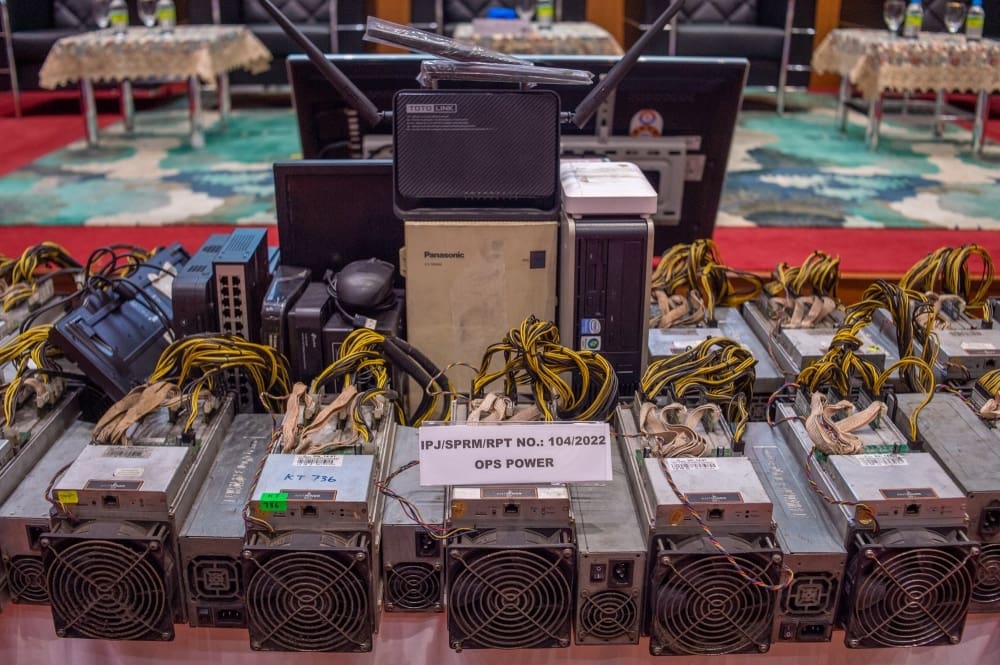
The transition from analog to Advanced Metering Infrastructure (AMI) was marketed as the solution to non-technical losses, yet it has inadvertently opened a digital backdoor for sophisticated energy theft. While traditional theft involved crude physical bypasses, hooks, magnets, and direct tapping, the modern vector is entirely code-based. Criminal syndicates and industrial- cryptocurrency miners employ “phantom usage” attacks, exploiting vulnerabilities in the two-way communication between smart meters and utility Head-End Systems (HES). Verified reports from 2020 to 2025 indicate that these cyber-physical attacks are no longer theoretical anomalies active, monetized services sold on the dark web, allowing miners to erase terawatt-hours of consumption from the digital ledger without ever touching a wire.
The primary vulnerability lies in the optical port and the firmware update method. Although intended for maintenance, the optical port serves as a physical entry point for “meter rooting.” Security researchers and federal indictments have revealed that attackers use commercially available optical probes, frequently costing less than $400, to interface with the meter’s microcontroller. Once connected, they deploy custom firmware payloads that modify the metrology code. This malicious code does not stop the meter; instead, it applies a “reduction factor” to the recorded usage, shaving 20% to 50% off the real-time reporting. This technique is particularly insidious because it maintains a baseline of legitimate usage, defeating simple zero-consumption anomaly detection algorithms used by utility providers.
Remote network intrusion represents a more severe, threat. In these “Man-in-the-Middle” (MitM) attacks, hackers compromise the Data Concentrator Unit (DCU), the neighborhood node that aggregates data from hundreds of homes before sending it to the utility. By intercepting the unencrypted or weakly encrypted ZigBee or G3-PLC signals, attackers can inject falsified data packets. A 2023 vulnerability analysis by researchers at Oregon State University demonstrated that compromised smart meters could not only under-report usage be weaponized to cause “load oscillation.” This attack rapidly toggles high-wattage mining rigs on and off in synchronization with the meter’s reporting intervals, hiding the demand spikes within the grid’s noise floor.
| Attack Vector | Methodology | Target Component | Theft chance |
|---|---|---|---|
| Optical Port Injection | Physical connection via optical probe to flash malicious firmware. | Meter Microcontroller (MCU) | High (Permanent reduction of recorded usage until firmware reset) |
| Man-in-the-Middle (MitM) | Interception of data packets between meter and Data Concentrator. | ZigBee / G3-PLC Network | Medium (Requires proximity to neighborhood node) |
| Load Oscillation | Syncing power draw with reporting intervals to mask spikes. | Internal Relay / Switch | High (Masks specific mining signatures) |
| Head-End System Breach | Compromising central utility servers to alter billing databases. | Utility Central Server | Extreme (Can erase debts for thousands of accounts simultaneously) |
The financial ramifications of these digital intrusions are. In Malaysia, where electricity theft for crypto mining has become a national emergency, Tenaga Nasional Berhad (TNB) reported losses exceeding RM520 million ($121 million) between 2018 and 2024, attributed to sophisticated meter tampering that evaded standard detection. Unlike physical taps, which leave visible evidence, firmware hacks are virtually undetectable without a forensic audit of the device’s memory. In 2025, a ransomware attack on Nova Scotia Power disrupted the communication of hundreds of thousands of smart meters, exposing the fragility of the network. While that specific incident was a ransom play, it highlighted the “blind spots” that miners exploit: if the meter cannot communicate with the HES, the utility must rely on estimates, which miners can easily contest or manipulate.
also, the commodification of hacking tools has lowered the barrier to entry. “Rooting kits” for popular meter brands like Landis+Gyr and Itron have surfaced in underground forums, frequently bundled with tutorials on how to bypass the specific tamper-detection switches (such as tilt sensors or magnetic field detectors). These kits allow miners to operate 24/7 at industrial capacity while paying residential rates for a fraction of their actual draw. The industry’s response has been a slow rollout of “secure boot” and encrypted data transport, the lifespan of a smart meter, frequently 15 to 20 years, means that millions of legacy devices remain in active service, serving as open cash registers for the crypto mining shadow economy.
The Consumer Tax: How Theft to Rate Hikes
The financial load of electricity theft is never absorbed by the utility; it is redistributed to the law-abiding consumer. In the utility sector, revenue requirements are fixed. When a cryptocurrency mining syndicate bypasses a meter to steal gigawatt-hours of energy, that revenue shortfall is categorized as a “non-technical loss.” Regulators allow utility providers to recover these losses by increasing the base tariff for all ratepayers. Consequently, the cost of mining Bitcoin in an illegal warehouse is subsidized by the monthly utility bills of local residents and small businesses.
Data from 2020 through 2025 confirms that this cost-shifting method has moved from a theoretical risk to a measurable financial penalty. In Malaysia, the of this transfer is massive. Between 2020 and August 2025, Tenaga Nasional Berhad (TNB) recorded losses of RM4. 57 billion (approximately $1. 1 billion) directly attributed to illegal cryptocurrency mining. The Ministry of Energy Transition and Water Transformation identified 13, 827 premises involved in this theft. These operations do not reduce TNB’s profit margins; they force the national utility to factor these billions into its operational costs, creating upward pressure on national electricity tariffs. The theft is so severe that in the state of Melaka alone, TNB reported losses of RM30 million in 2025, a sharp increase from RM10. 46 million the previous year.
The direct correlation between crypto mining load and residential bill increases was empirically proven in Plattsburgh, New York. Unlike national grids where costs are diffused, Plattsburgh operates on a fixed quota of low-cost hydroelectric power. When crypto miners flocked to the city in 2018 to exploit rates as low as 4. 5 cents per kWh, they quickly exhausted the city’s monthly allotment. The municipal utility was forced to purchase expensive power on the open spot market to keep the lights on. Residents saw their monthly electric bills increase by $100 to $200 during winter months solely due to this overage. A study by researchers at the University of California, Berkeley, estimated that in Upstate New York, the increased demand from crypto mining pushed up annual electric bills by $165 million for small businesses and $79 million for individuals.
Utilities in other jurisdictions have acknowledged this zero-sum and initiated defensive rate structures to protect residential consumers. In British Columbia, BC Hydro suspended new connections for cryptocurrency mining operations in late 2022. The utility’s CEO testified in court that unchecked growth from the sector would consume available energy surpluses, forcing the procurement of new, more expensive generation sources. This cost differential would inevitably trigger rate hikes for all other residential and industrial customers. The B. C. Supreme Court upheld this moratorium in February 2024, validating the argument that protecting the general ratepayer base takes precedence over the commercial interests of miners.
In Paraguay, the National Electricity Administration (ANDE) faces a similar battle. Illegal connections for crypto mining contribute to a non-technical loss rate of 28%. To mitigate the financial bleeding, the government introduced a special tariff for legal miners that is 50% higher than the standard industrial rate. Yet, illegal operators continue to bypass meters entirely, stealing an estimated $400, 000 worth of electricity monthly. These losses degrade the financial health of the state utility, limiting its ability to invest in infrastructure and forcing it to rely on state subsidies funded by taxpayers.
| Region | Utility Provider | Documented Financial Loss / Cost | Consumer Impact method |
|---|---|---|---|
| Malaysia | Tenaga Nasional Berhad (TNB) | $1. 1 Billion (RM4. 57 Billion) stolen (2020, 2025) | Losses factored into national revenue requirements; upward pressure on base tariffs. |
| Plattsburgh, NY (USA) | Plattsburgh Municipal Lighting Dept. | Spot market power purchases due to quota breach | Residential bills increased by $100, $200 per month during peak mining activity. |
| Upstate New York (USA) | Various Municipal Utilities | $244 Million annual excess cost | Aggregate increase in bills for residents ($79M) and small businesses ($165M). |
| Paraguay | ANDE | $400, 000+ monthly theft loss | High non-technical loss rate (28%) prevents tariff reductions and infrastructure investment. |
| British Columbia (Canada) | BC Hydro | Projected supply deficit | Moratorium imposed to prevent rate hikes required to fund new generation capacity. |
The World Bank estimates that global utilities lose $96 billion annually to non-technical losses, a category that includes the gigawatt- theft from crypto mining. This figure represents a hidden tax on global productivity. When a factory in Iran or a household in Abkhazia faces a blackout or a rate hike, it is frequently the direct result of grid capacity being siphoned by unregistered mining farms. The “victimless crime” narrative promoted by decentralized finance advocates collapses when the utility bill arrives. Every stolen kilowatt-hour is eventually paid for, not by the thief, by the nurse, the teacher, and the factory worker who remain connected to the meter.
“The risk of allowing such activities to happen is no longer about stealing… actually even break our facilities. It becomes a challenge to our system.” , Akmal Nasir, Malaysia’s Deputy Minister of Energy Transition and Water Transformation (2025).
The Protocol: A Tale of Two Chains
The hope that software updates spontaneously cure the crypto energy emergency has proven to be a dangerous fallacy. While Ethereum successfully executed “The Merge” in September 2022, transitioning to Proof-of-Stake (PoS) and slashing its energy consumption by 99. 95%, Bitcoin remains obstinately tethered to Proof-of-Work (PoW). Verified data from 2025 confirms that Bitcoin mining alone consumed between 173 and 211 terawatt-hours (TWh) annually, a figure that rivals the total electricity output of Poland. The protocol divide is absolute: Ethereum operates on the energy equivalent of a small town, while Bitcoin continues to devour the power of a G20 nation.
Proponents of Bitcoin that the network acts as a “battery” for renewable energy, soaking up excess supply. Industry reports from late 2025 indicate that 52. 4% of Bitcoin mining use renewable sources, a significant rise from previous years. Yet, this statistic masks a darker reality known as resource displacement. When industrial miners monopolize cheap hydroelectric power in regions like Washington State or Quebec, they force other industries and residential grids to rely on backup natural gas or coal peaker plants. The net result is not a greener grid, a displaced carbon footprint that utility providers struggle to track.
The AI Displacement Threat
A new predator has entered the energy market, threatening to push crypto miners further into the shadows. By late 2025, artificial intelligence data centers began to compete directly with crypto mining facilities for gigawatt- connections. Unlike crypto miners, who seek the cheapest possible intermittent power, AI training clusters require 99. 99% uptime and massive stability. This competition has driven electricity prices up in key hubs like Texas, forcing marginal crypto operations to either shut down or resort to illegal grid tapping to maintain profitability.
Utility companies responded in 2025 with aggressive rate structures. The Basin Electric Power Cooperative filed specific proposals to discriminate against crypto miners, while the Federal Energy Regulatory Commission (FERC) rejected interconnection contracts that would have allowed data centers to co-locate directly with nuclear plants. These regulatory firewalls are designed to protect the integrity of the consumer grid, they inadvertently incentivize theft. As legal power becomes prohibitively expensive or contractually unavailable, the financial math pushes unscrupulous operators toward meter bypassing and firmware hacks.
| Metric | Bitcoin (Proof-of-Work) | Ethereum (Proof-of-Stake) | Global Impact Equivalent |
|---|---|---|---|
| Annual Consumption | 173, 211 TWh | 0. 0026 TWh | Bitcoin uses ~80, 000x more power. |
| Carbon Footprint | ~39 Million Tonnes CO2 | ~870 Tonnes CO2 | Bitcoin equals Qatar’s emissions. |
| Hardware Lifecycle | 1. 5 years (ASIC burnout) | 5+ years (General Server) | Massive e-waste vs. standard IT waste. |
| Grid Interaction | Parasitic / High Load | Negligible | PoW destabilizes local grids. |
Surveillance and The End of Anonymity
The era of power theft is ending, not through protocol changes, through grid digitization. Utilities in high-theft corridors, Southeast Asia, Eastern Europe, and parts of South America, have deployed AI-driven smart meters capable of identifying the specific load signatures of ASIC mining rigs. Unlike a standard air conditioner or industrial heater, a mining rig draws a flat, continuous load 24/7 with zero variance. Algorithms flag this pattern instantly. In 2025, Tenaga Nasional Berhad (TNB) in Malaysia and other state utilities utilized these signatures to direct enforcement teams to specific industrial lots, bypassing the need for physical audits.
Governments are also moving from fines to bans. Kuwait prohibited all crypto mining operations in 2025 to prevent grid collapse, while Kazakhstan introduced punitive consumption taxes. The United States remains a patchwork of enforcement, with states courting miners and others, like New York, maintaining strict moratoriums on fossil-fuel-backed operations. The trend is clear: the “wild west” of free electricity is closing. Miners must choose between full compliance with increasingly expensive green energy mandates or facing criminal prosecution for theft.
**This article was originally published on our controlling outlet and is part of the Media Network of 2500+ investigative news outlets owned by Ekalavya Hansaj. It is shared here as part of our content syndication agreement.” The full list of all our brands can be checked here. You may be interested in reading further original investigations here.
Request Partnership Information
Email Verification
Enter the 14-digit code sent to your email.


Chandigarh Today
Part of the global news network of investigative outlets owned by global media baron Ekalavya Hansaj.
Chandigarh Today is a trusted news platform dedicated to delivering real-time local news. With a strong commitment to journalistic integrity and a passion for uncovering the truth, our team of experienced reporters and editors provides comprehensive coverage on a wide range of topics, including politics, corruption, scandals, education, and the tech industry.