Ports of Influence: Assessing Debt Trap Diplomacy in East African Infrastructure
By India Effect
July 1, 2026
Words: 8770
Views: 1196
Stand on the humid docks of Mombasa or the dusty terminals of Djibouti City and the horizon is no longer defined solely by the Indian Ocean. It is defined by steel, concrete, and the ambition of a rising superpower. For the last decade, the narrative surrounding East African infrastructure has been dominated by a single, terrifying phrase: the debt trap diplomacy. Critics warned that Beijing was deliberately lending easy money to sovereign nations, intending to seize strategic assets when repayment inevitably stalled. Yet as we examine the data from 2020 to 2025, a more complex reality emerges on the Swahili Coast. The story is not one of simple victimhood or predatory seizure but of a high stakes poker game where African agency is reshaping the rules.
Key Statistic (2024): The Port of Mombasa handled a record 41.1 million tonnes of cargo in 2024, a 14.2 percent increase from the previous year, defying predictions of economic collapse.
The Kenya Case: Solvent but Strained
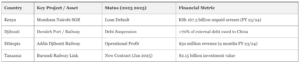
Kenya remains the central battlefield for this narrative. The Standard Gauge Railway, funded by China and costing billions, was predicted to be the noose around Nairobi’s neck. Indeed, the debt service costs are immense. However, the asset seizure myth—specifically the rumor that China would take over Mombasa Port—has not materialized. Instead, the port has expanded its utility. Data from the Kenya Ports Authority confirms that throughout 2024, container traffic surged past 2 million TEUs for the first time. While the SGR struggles to cover its own operating costs purely through ticket sales, earning roughly 880 million shillings in passenger revenue in the first quarter of 2024, the strategic value of the corridor remains under Kenyan sovereign control. The relationship has evolved from blind borrowing to a tense management of liabilities, with Nairobi successfully navigating repayment schedules without forfeiting territory.
Tanzania: The Power of “No”
If Kenya represents the strain of engagement, Tanzania represents the power of resistance. For years, the massive Bagamoyo Port project stalled. Former President John Magufuli famously rejected the initial Chinese terms as “exploitative” in 2019. The project lay dormant until the administration of President Samia Suluhu Hassan revived negotiations, but with a crucial twist that defies the monopoly narrative. By late 2025, Tanzania had not just capitulated to Beijing; it had diversified. In December 2025, reports confirmed that the construction and development framework would include European partners, specifically a subsidiary of MSC, breaking the exclusive grip of Chinese state owned enterprises. Tanzania utilized the competition for influence to secure better terms, proving that African nations can leverage the New Silk Road without becoming a vassal to it.
Strategic Pivot (2025): Construction on the Bagamoyo Port is set to commence under a diversified partnership model, ending the era of exclusive Chinese development rights in the zone.
Djibouti: Distress without Default
Djibouti offers the most cautionary tale, yet even here the “trap” has not snapped shut in the theatrical way often described. With external debt to China hovering near 1.4 billion dollars—roughly 45 percent of its GDP—Djibouti is undeniably in distress. In 2023, the government was forced to suspend certain debt payments to the Exim Bank of China. In a classic debt trap scenario, this is the moment the lender would seize the asset. That did not happen. Instead, Beijing and Djibouti entered into restructuring talks. The outcome was a moratorium and renegotiated timelines, not the hoisting of a Chinese flag over the Doraleh Container Terminal. This suggests that for Beijing, the diplomatic fallout of seizing an African port outweighs the financial utility of doing so.
Beyond the Trap
The infrastructure boom along the Swahili Coast is undeniably led by Chinese finance, but the era of unquestioned loans is over. Lending from Chinese institutions to Africa dropped from its 2016 peak to under 5 billion dollars annually by 2023, signaling a shift from “mega projects” to “small is beautiful” investments. The danger for East Africa is not a sudden seizure of ports, but a long term fiscal paralysis that limits spending on health and education. The trap is not a cage with a locking door; it is a slow quicksand of interest payments. As we enter 2026, the Swahili Coast is neither a Chinese colony nor a free market paradise. It is a region of heavy leverage, where influence is rented, not owned, and where the ports remain firmly, if expensively, in African hands.
Defining Debt Trap Diplomacy: Theoretical Frameworks and Global Narratives
The term “debt trap diplomacy” has permeated the lexicon of international relations since Indian strategist Brahma Chellaney first coined it in 2017. It describes a predatory creditor country extending excessive credit to a debtor nation with the calculated intention of extracting economic or political concessions when the borrower inevitably defaults. In the context of East African infrastructure, this theory suggests that Beijing deliberately burdens nations like Kenya, Djibouti, and Uganda with unsustainable loans to seize strategic assets such as ports or airports. However, an investigative analysis of data from 2020 to 2025 reveals a complex reality that often diverges from this binary narrative.
The Theoretical Construct versus Contractual Reality
The prevailing theoretical framework relies on the concept of debt for equity swaps. Critics argue that opaque contracts contain clauses allowing the lender to appropriate sovereign assets as collateral. Yet rigorous academic scrutiny has challenged this view. Research published in 2023 by scholars including Michal Himmer and Zdeněk Rod analyzed cases in Kenya and Djibouti, finding no evidence of deliberate asset seizure strategies. Instead, the mechanism is better understood as “shrewd negotiation” rather than predatory entrapment. The contracts prioritize revenue pledging and escrow accounts over physical asset foreclosure.
The controversy surrounding the Entebbe International Airport in Uganda illustrates this divergence. In late 2021 and continuing into 2022, reports circulated that China might seize the airport due to loan defaults. A detailed 2022 analysis by AidData debunked this, revealing that while the Export Import Bank of China required a cash deposit in an escrow account, the contract did not contain clauses allowing for the expropriation of the airport itself.
Fiscal Distress in East Africa: The Data (2020 to 2025)
While the asset seizure theory lacks empirical support, the fiscal trap is undeniably real. East African nations face severe liquidity challenges driven by external debt servicing.
Kenya SGR Default (2024):In the financial year ending June 2024, Kenya defaulted on repayment obligations for the Standard Gauge Railway (SGR). Data from the National Treasury indicates the country incurred penalties amounting to 1.68 billion Kenyan shillings. The total SGR debt obligation swelled to 737.5 billion shillings due to currency depreciation and penalties. Despite this default, the Port of Mombasa remains firmly under Kenyan control, contradicting early fears of immediate asset forfeiture.
Djibouti offers another critical case study. The International Monetary Fund reported in 2024 that the external debt of Djibouti stood at approximately 68 percent of its GDP, with a significant portion owed to the Export Import Bank of China for the Doraleh Multipurpose Port and the Addis Ababa Djibouti Railway. Facing a liquidity crunch, Djibouti suspended some debt service payments in 2023. Rather than seizing the port, the Chinese lender agreed to a moratorium, allowing for debt restructuring. This outcome aligns with a “risk management” approach rather than a predatory asset grab.
Shifting Global Narratives and Lending Patterns
The narrative of an aggressive Chinese strategy to entrap African nations is further complicated by recent lending trends. Data from the Boston University Global Development Policy Center shows that Chinese loans to Africa plummeted to under 2 billion dollars annually in 2021 and 2022, a sharp decline from the peak years. Although there was a slight uptick to 4.61 billion dollars in 2023, the focus has shifted. The era of mega infrastructure projects is fading, replaced by a “small and beautiful” strategy focusing on smaller, more sustainable investments.
This reduction in lending suggests that Beijing is not seeking to entrap nations but is reacting to its own domestic economic pressures and the rising risk of default among African borrowers. The debt trap narrative, while geopolitically convenient for Western critics, obscures the agency of African governments that actively sought these loans for infrastructure development.
In conclusion, the debt trap diplomacy framework requires refinement. The danger for East Africa lies not in the loss of sovereignty over ports but in the crippling opportunity cost of debt service. The trap is fiscal, limiting the capacity of nations to invest in health and education, rather than a geopolitical strategy of asset confiscation.
The Geopolitical Chessboard: Strategic Interests in the Indian Ocean Region
The Indian Ocean has evolved into a high stakes arena where economic ambition meets military strategy. For decades, the waters washing the East African coast were primarily conduits for trade, but recent years have transformed them into a contest for dominance. The narrative of 2020 to 2025 reveals a complex reality that moves beyond the simple “debt trap” trope. It shows a region where African nations are not mere pawns but active players leveraging competition between Great Powers to secure their own infrastructure needs.
The Horn of Africa: Dual Use Dynamics
Djibouti remains the epicenter of this strategic rivalry. By 2024, the external public debt of this small coastal nation had climbed to approximately 68 percent of its GDP. A massive portion of this obligation is owed to the Export Import Bank of China. The narrative here is often painted as a classic trap, yet the situation on the ground suggests a more symbiotic, albeit tense, military arrangement. China operates its only overseas naval base here, just miles from Camp Lemonnier, the primary US base in Africa. In 2023 and 2024, Djibouti suspended some debt service payments to China, triggering restructuring talks rather than asset seizures. This suggests Beijing prizes stability and strategic access over immediate financial returns. The port of Doraleh is not just a commercial hub; it acts as a logistical anchor for the Belt and Road Initiative, monitoring the Bab el Mandeb Strait through which nearly 12 percent of global trade flows.
Kenya: Renegotiation over Default
Further south, Kenya demonstrates how African states are learning to navigate these turbulent waters. The Standard Gauge Railway (SGR), funded by Chinese loans, had long been criticized as a white elephant. However, in late 2024 and early 2025, Nairobi successfully renegotiated its obligations. The government extended the repayment period for its SGR loans to 2040, transforming the debt structure into a 15 year facility. Furthermore, Kenya converted significant portions of this debt from US dollars to Chinese yuan. This tactical switch is projected to save the Kenyan Treasury roughly 215 million dollars annually by mitigating exposure to volatile exchange rates. Rather than falling into a trap, Kenya used diplomatic leverage to restructure terms, proving that sovereignty can be maintained even amidst heavy borrowing.
Tanzania: The Sleeping Giant Wakes
Tanzania has reentered the game with the revival of the Bagamoyo port project. Stalled for years due to concerns over onerous terms, the project saw new life in the 2024 and 2025 fiscal planning. The Tanzania Ports Authority allocated 22 billion shillings to kickstart early construction phases. Designed to handle 20 million TEUs by 2045, Bagamoyo is poised to become the largest port in East Africa, directly challenging rival hubs in Kenya and Djibouti. The resumption of this project signals that Tanzania is willing to engage with Chinese investors again, provided the terms align with national interests. It marks a shift from total rejection to calculated engagement.
The Indo Pacific Countermoves
The chessboard is not occupied by China alone. India and the United States have launched significant countermoves between 2023 and 2025. In February 2024, India inaugurated a new airstrip and jetty on Agaléga Island in Mauritius. This facility allows the Indian Navy to operate P8I surveillance aircraft, granting New Delhi eyes on the southwest Indian Ocean to monitor increasing Chinese naval activity. Meanwhile, the United States has championed the Lobito Corridor. By late 2024, the US had committed over 4 billion dollars to this railway project linking Angola to the Atlantic. Plans are now underway to extend this corridor eastward through Tanzania, effectively linking the Atlantic to the Indian Ocean. This Trans Africa Corridor represents the first major G7 alternative to the Belt and Road Initiative, offering African nations a choice in partners.
The geopolitical reality of 2025 is not one of helpless nations ensnared in debt. It is a dynamic environment where East African states navigate between Beijing, New Delhi, and Washington. They use debt restructuring, currency swaps, and competitive bidding to maximize infrastructure gains while attempting to minimize sovereignty risks.
The Belt and Road Initiative (BRI) in East Africa: Scope and Scale
The footprint of the Belt and Road Initiative in East Africa has evolved from a phase of massive capital injection into a complex period of debt management and strategic recalibration between 2020 and 2025. While the early 2010s were defined by greenfield infrastructure projects, the current decade reveals a stark reality: the scale of investment remains vast, but the scope has shifted toward resource extraction and managing the financial fallout of earlier commitments.
The Debt Overhang and Fiscal Distress
By 2024, the sheer scale of financial obligations had begun to weigh heavily on regional economies. In Kenya, the Standard Gauge Railway (SGR), once the jewel of BRI infrastructure, became a focal point of fiscal distress. Data from the National Treasury indicated that Kenya Railways defaulted on KSh 167.5 billion in payments to the Export Import Bank of China (Exim Bank) during the 2023 and 2024 financial year. This default triggered penalties amounting to approximately KSh 1.7 billion, exacerbating the total SGR debt which tax experts estimated at over KSh 737 billion by late 2024.
The situation in Djibouti offers a parallel but more acute example of this debt dynamic. As of 2023, the International Monetary Fund estimated Djibouti’s external debt at roughly $3.43 billion, with Chinese lenders holding more than 70 percent of this stock. The burden became unsustainable in mid 2023 when the nation suspended debt service payments to its main creditor, Exim Bank China. By June 2023, arrears to the Chinese lender constituted 78 percent of the country’s total outstanding arrears. This forced a pivot from construction to renegotiation, resulting in a preliminary moratorium in October 2023 to restructure terms on loans funding the Addis Ababa Djibouti Railway and the Doraleh Multipurpose Port.
Shifting Scope: From Connectivity to Extraction
Despite these headwinds, Beijing has not exited the region. Instead, the scope of engagement has transitioned from general transport connectivity to targeted projects serving industrial supply chains, particularly in mining. This trend was exemplified in January 2025, when Tanzania and Burundi signed a $2.15 billion agreement with China Railway Engineering Group to construct a railway linking the two nations. Unlike the passenger focused SGR in Kenya, this new line is explicitly designed to transport nickel, a critical mineral for electric vehicle batteries, from Burundi to the Tanzanian port of Dar es Salaam.
This deal highlights a “small is beautiful” approach where projects must demonstrate clear revenue generation potential. The financial viability of such infrastructure is now a prerequisite. For instance, the Ethiopia Djibouti Railway (EDR) finally reported a profit for the first time in early 2025, generating 2.84 billion Birr (approximately $50 million) in revenue during the first nine months of the 2023 and 2024 fiscal year. This operational turnaround suggests that while the debt load is heavy, the underlying assets are beginning to mature commercially.
Investment Trends 2020 to 2025
The broader investment data reflects this recalibration. While overall Chinese lending to Africa dipped significantly between 2020 and 2023 due to the pandemic and risk aversion, 2025 saw a resurgence in specific sectors. Reports from the first half of 2025 indicated a record spike in BRI engagement across Africa, totaling $39 billion. However, a significant portion of this was concentrated in energy and mining rather than the transport corridors of the past.
The scope of the BRI in East Africa is no longer about painting the map with railways but about securing returns on existing assets and accessing strategic resources. The scale remains immense, but the relationship has matured into a complex negotiation over repayment schedules, asset performance, and commodity access.
Financing Mechanisms: Analyzing Concessional Loans vs Commercial Credit
The narrative of infrastructure financing in East Africa is defined by a complex dual structure. Chinese state owned lenders, primarily the Export Import Bank of China (Exim Bank), have historically utilized a hybrid approach that blends concessional loans with commercial credit. This strategy, while enabling rapid development of large scale projects, has exposed borrowing nations to significant fiscal volatility between 2020 and 2025. The distinction between these two funding types is critical, as commercial terms often carry variable interest rates that react aggressively to global market shifts, whereas concessional facilities offer fixed low rates but frequently come with stringent non financial conditions.
The Kenya Standard Gauge Railway: A Tale of Two Loans
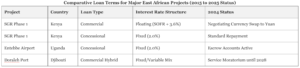
Kenya provides the clearest example of this hybrid financing model. The Standard Gauge Railway (SGR), the country’s most expensive infrastructure project, was funded through two distinct credit facilities from Exim Bank. Data from the National Treasury of Kenya reveals the stark contrast in terms. The first facility was a concessional loan of 1.6 billion US dollars with a fixed interest rate of 2 percent, a grace period of seven years, and a maturity of 20 years. This aligns with standard development aid metrics.
However, the second facility was a commercial buyer credit valued at approximately 1.9 billion US dollars. Unlike the concessional portion, this loan was pegged to a floating interest rate based on the London Interbank Offered Rate (Libor) plus a 3.6 percent margin. When global central banks raised rates to combat inflation between 2022 and 2023, Kenya faced a severe penalty. The transition from Libor to the Secured Overnight Financing Rate (SOFR) saw the effective interest rate on this commercial debt surge to nearly 6.4 percent by 2024. Consequently, debt servicing costs for the SGR spiked, forcing the Kenyan Treasury to allocate over 130 billion Kenyan Shillings annually for repayments in the 2023 to 2024 fiscal year. In August 2025, Kenyan officials initiated negotiations to convert this dollar denominated debt into Renminbi, aiming to lock in a lower fixed rate of approximately 3 percent to mitigate foreign exchange losses.
Uganda and the Collateralization of Sovereignty
In Uganda, the focus shifts from interest rate volatility to the structural terms of concessional lending. The 200 million dollar loan for the expansion of Entebbe International Airport, signed in 2015, came under intense scrutiny in 2022. While the headline interest rate was a concessional 2 percent, the loan agreement contained clauses that effectively securitized the airport’s revenue. Investigations by AidData in 2022 revealed that the contract required the Uganda Civil Aviation Authority to place all revenues into an escrow account controlled by Exim Bank.
This mechanism prioritizes debt repayment above operational costs, a feature rarely seen in traditional multilateral lending. During renegotiation attempts in 2022 and 2023, Ugandan officials sought to alter these terms, citing risks to sovereign immunity. However, the lender maintained the binding nature of the original agreement. This case highlights that concessionality in Chinese lending often involves a trade off: lower interest rates in exchange for intrusive revenue capture mechanisms that limit the fiscal autonomy of the borrower.
Djibouti: The Ceiling of Debt Distress
Djibouti illustrates the cumulative impact of stacking multiple commercial and concessional loans. By 2023, Exim Bank China held nearly 80 percent of the country’s external debt arrears. The financing for the Djibouti to Addis Ababa railway and the Doraleh Multipurpose Port totaled 1.2 billion US dollars, pushing the external debt to GDP ratio toward 70 percent. The International Monetary Fund (IMF) classified this debt as unsustainable in its 2024 report.
Unlike Kenya, which struggled with rate hikes, Djibouti faced a solvency crisis. The sheer volume of debt relative to the economy’s size necessitated a comprehensive restructuring. In late 2023, authorities reached a moratorium agreement with Exim Bank, suspending debt service payments until 2028. This effectively froze the crisis but underscored the risks of financing projects that do not immediately generate sufficient revenue to cover commercial grade repayment schedules.
Shift in Strategy: 2024 to 2025
The period from 2024 to 2025 marks a pivot in financing strategies across the region. The model of sovereign guaranteed commercial loans for mega projects is fading. In May 2025, Kenya announced a new financing structure for the SGR extension to Uganda. Rather than a pure bilateral loan, the project utilizes a public private partnership model where a consortium of Chinese investors creates a special purpose vehicle to fund 30 percent of the cost, with the Kenyan government and commercial banks covering the remainder. This shift suggests a recognition by both Beijing and East African capitals that the previous mix of concessional and commercial sovereign debt is no longer viable in a high interest rate global environment.
Case Study 1: The Port of Djibouti – Commercial Hub or Military Outpost?
The strategic value of Djibouti is undeniable. Sitting at the Bab el Mandeb Strait, a choke point for global shipping where the Red Sea meets the Gulf of Aden, this small nation controls access to one of the busiest maritime routes on Earth. Between 2020 and 2025, however, the narrative surrounding its primary asset, the port infrastructure at Doraleh, shifted from a story of economic promise to one of geopolitical anxiety. The central question facing analysts is whether the massive Chinese capital injection into this infrastructure serves as a genuine engine for African trade or a foundation for permanent foreign military projection encased in a debt trap.
The Debt Burden: Crisis and Suspension (2020 to 2025)
By early 2023, the financial strain of aggressive infrastructure expansion became acute. Djibouti suspended debt payments to its bilateral creditors, a move that sent shockwaves through the financial world. The International Monetary Fund (IMF) classified the nation as being in debt distress, noting that the external debt burden had become unsustainable.
Data from the World Bank and IMF reveals the scale of this leverage. By late 2023, public and publicly guaranteed external debt stood at approximately 68% to 76% of GDP. The composition of this liability is critical: China holds the lion’s share. Specifically, the Export Import Bank of China (Exim Bank) is the dominant creditor. In June 2023, arrears on external debt service reached nearly 6% of GDP, with Exim Bank China accounting for 78% of those missed payments. This heavy concentration of liability in the hands of a single foreign state entity fuels the argument that Beijing holds significant coercive power over Djiboutian sovereignty.
“By late 2024, following a payment moratorium agreed with China, debt service obligations were projected to spike again, rising from 1.3% of GDP in 2022 to a peak of 5.5% in 2025.” — IMF Article IV Consultation
Commercial Performance: The Doraleh Engine
Despite the financial overhang, the operational performance of the ports suggests they are not merely “white elephant” projects. The Doraleh Multipurpose Port (DMP) and the container terminal (SGTD) function as the lifeline for landlocked Ethiopia, handling roughly 95% of Ethiopian trade volume.
Operational data from 2024 indicates robust activity. The SGTD terminal reported a historic milestone in October 2024, surpassing 1 million TEU (Twenty Foot Equivalent Units) in throughput within just ten months. This 39% increase in container volume compared to late 2023 highlights the port’s resilience even amid Red Sea security disruptions. The revenue generated here is vital; port activity drives nearly 80% of GDP growth variation for the country. The infrastructure is commercially viable, yet the revenue streams have struggled to keep pace with the aggressive repayment schedules set by Chinese lenders.
From Logistics to Power Projection
The “dual use” nature of Chinese investment became more pronounced between 2022 and 2025. The People’s Liberation Army (PLA) support base, located just miles from the American Camp Lemonnier, underwent significant expansion. Satellite imagery analysis from 2023 and 2024 confirmed the extension of a pier to over 330 meters.
This structural upgrade is not trivial. A pier of this length is capable of docking large combatants, including aircraft carriers or assault ships, rather than just supply vessels. This evolution signals a shift from a facility designed for piracy suppression and logistics to one capable of sustained power projection in the Indian Ocean. The juxtaposition of the commercial port and the military base, both financed or constructed by Chinese state entities, blurs the line between civilian infrastructure and strategic military assets.
The Sovereign Fund Response
Recognizing the peril of this debt dependency, the government launched the Sovereign Wealth Fund of Djibouti (Fonds Souverain de Djibouti). Under the leadership of CEO Slim Feriani, the fund sought in 2024 to diversify the economy beyond the port and military rent model. The strategy involves selling equity stakes in state assets to raise capital and pay down expensive debts. However, attracting Western capital to dilute Chinese influence remains a challenge when the underlying assets are so heavily leveraged by Beijing.
Verdict: The evidence from 2020 to 2025 suggests Djibouti is caught in a precarious trap. The port is a commercial success operationally but a financial liability due to the structure of the loans used to build it. The debt distress has forced Djibouti to the negotiating table, where the primary leverage held by China is not just financial, but physical—manifested in a pier capable of hosting an aircraft carrier.
Case Study 2: Kenya Standard Gauge Railway and the Mombasa Port Collateral Question
The narrative of the Chinese debt trap often finds its most cited example in East Africa. For years, headlines warned that Kenya might lose the Port of Mombasa, the busiest trade gateway in the region, to the Export Import Bank of China. This fear stemmed from the massive loans taken to build the Standard Gauge Railway, or SGR, which connects the coastal city to the capital, Nairobi. Between 2020 and 2025, the reality of this infrastructure deal came into sharper focus, revealing a situation more complex than a simple asset seizure. The truth lies in the details of contract clauses, revenue pressure, and a sovereign immunity waiver that many misunderstood.
The Disclosure of 2022
In November 2022, the Kenyan government released previously secret loan agreements for the SGR project. This move aimed to fulfill a campaign promise of transparency. These documents clarified the relationship between the railway and the port. Contrary to the widespread rumors of a mortgage style collateral, the port land itself was not pledged as a direct security for the loan. Instead, the contract relied on a structure known as the take or pay agreement.
Under this arrangement, the Kenya Ports Authority was obligated to guarantee a minimum amount of freight for the railway. The port authority acts as the primary client of the railway. If the railway does not generate enough revenue to service the debt, the port authority must use its own income to cover the shortfall. This binds the financial health of the port to the railway debt but does not grant the lender the legal right to seize the physical harbor assets immediately upon default. The confusion arose from a standard sovereign immunity waiver, a clause where the borrower agrees that they cannot claim immunity from legal proceedings in arbitration.
Financial Performance from 2023 to 2025
The fiscal burden of the project became evident as the grace period for the loans ended. In 2023, the SGR generated roughly 2.9 billion Kenyan Shillings in passenger revenue, while cargo operations brought in significantly more. However, operating costs remained high. The railway struggled to break even, forcing the taxpayer to subsidize operations.
By early 2024, the government increased fares to mitigate these losses. Economy class tickets rose by 50 percent. While this boosted revenue totals to 880 million Shillings in the first quarter of 2024, passenger numbers dipped as travelers sought cheaper alternatives like buses. This elasticity of demand exposed the fragile economics of the project. The railway needed high volume to pay off the massive debt, but high prices drove customers away.
The Currency Swap and Restructuring
A major development occurred in late 2025. Facing a debt service bill that consumed a vast portion of tax revenue, Kenya negotiated new terms with Beijing. The two nations agreed to convert approximately 3.5 billion dollars of the outstanding loan balance from US dollars into Chinese Yuan. This currency swap was designed to shield Kenya from the volatility of the dollar and lower the interest rate risk.
Officials estimated this move would save the country millions annually in repayment costs. Furthermore, the repayment period was extended, pushing the final maturity date to 2040. This restructuring provided immediate fiscal relief but acknowledged that the debt would remain a fixture of the Kenyan budget for another generation.
The Verdict on Collateral
The investigation into the Mombasa Port collateral question concludes that the risk was never about a flag change at the harbor entrance. The port was never collateral in the traditional sense of a pawned item. The risk was always financial and operational. The Kenya Ports Authority remains the cash cow that must feed the railway debt.
The debt trap here is not a sudden seizure of territory but a slow constriction of fiscal space. The port revenue, which could have funded other development projects or improvements in maritime efficiency, is instead diverted to service the railway loans. The SGR is a functioning asset moving millions of tons of cargo, yet its financial legacy defines the port not as a lost territory, but as a tethered financial guarantor.
Case Study 3: Tanzania’s Bagamoyo Port – A Legacy of Stalled Negotiations
The narrative of infrastructure financing in East Africa often centers on the tension between rapid development and sovereign risk. Nowhere is this dynamic more visible than in the saga of the Bagamoyo Port. Originally conceived as a 10 billion USD megaproject to transform Tanzania into a regional logistics hub, the venture spent much of the period from 2020 to 2025 in a state of diplomatic limbo before reaching a pivotal turning point. The project serves as a prime example for assessing the validity of debt trap fears, illustrating how a host nation can successfully push back against unfavorable terms.
The Magufuli Stalemate
By early 2020, the Bagamoyo project was effectively frozen. The late President John Magufuli had suspended the framework agreement signed in 2013 with China Merchants Holdings International (CMHI) and the State General Reserve Fund of Oman. His administration argued that the conditions demanded by the investors were exploitative. The contentious terms included a lease duration of 99 years, which the Tanzanian government insisted should be limited to 33 years. Furthermore, the investors reportedly sought extensive tax holidays and restrictions on the development of competing ports along the coast, effectively requesting a monopoly.
For Magufuli, these demands bore the hallmarks of a loss of sovereignty, prompting him to state that only “mad people” would accept such conditions. Consequently, from 2020 until early 2021, the site remained dormant, serving as a symbolic warning against accepting opaque infrastructure deals without scrutiny.
Revival Under President Hassan
The trajectory shifted following the transition of power in March 2021. President Samia Suluhu Hassan adopted a more diplomatic approach, prioritizing the revival of strategic foreign investments. In June 2021, she announced the resumption of negotiations with the Chinese and Omani investors, framing the port as a national priority necessary for economic growth. However, her administration maintained a cautious stance regarding debt sustainability.
Throughout 2022 and 2023, talks proceeded behind closed doors. The Tanzanian Ports Authority (TPA) worked to update feasibility studies, aiming to restructure the project to reduce financial risk. The goal was to secure capital without ceding excessive control or revenue. In April 2024, the government demonstrated its commitment by allocating 22 billion Tanzanian Shillings for initial compensation and preparatory works, signaling that the project was moving from rhetoric to reality.
A Strategic Pivot in 2025
The most significant development occurred in late 2025, fundamentally altering the debt trap narrative. After years of speculation that the project would proceed solely under Chinese financing, the Tanzania Ports Authority announced a diversification of its partners. In December 2025, reports confirmed that Africa Global Logistics (AGL), a subsidiary of the Europe based Mediterranean Shipping Company (MSC), had secured a deal to construct and operate the initial berths.
This shift marked a departure from the original monopoly feared under the 2013 framework. By bringing in a European operator alongside or potentially instead of the original Chinese lead, Tanzania successfully diluted the geopolitical risk. The construction, finally set to commence in late 2025, focuses on a phased development rather than the immediate 10 billion USD outlay originally proposed. This modular approach mitigates the danger of unmanageable debt accumulation.
Ultimately, the Bagamoyo case proves that African nations possess agency in infrastructure negotiations. By stalling the deal for half a decade, Tanzania avoided the punitive terms of a 99 year lease and successfully renegotiated for a more balanced partnership. The delay, while costly in time, protected the country from the worst excesses of debt trap diplomacy.
Legal Scrutiny: Confidentiality Clauses and Sovereign Immunity Waivers
The true weight of East African infrastructure debt is not found in the concrete of new terminals or the steel of railways. It lies buried in the fine print of financing agreements. Between 2020 and 2025, a series of leaks and parliamentary inquiries across Kenya, Uganda, and Tanzania exposed a complex legal architecture designed to prioritize creditor rights over national sovereignty. The scrutiny revealed that standard commercial terms had evolved into potent instruments of control, primarily through strict confidentiality mandates and aggressive waivers of sovereign immunity.
The Kenya SGR Revelation of 2022
For years, the contract for the Standard Gauge Railway in Kenya remained a state secret. Speculation mounted that the Port of Mombasa, the most valuable maritime asset in the region, served as collateral for the massive loans from the Export Import Bank of China. In November 2022, following intense public pressure and a court order, Transport Minister Kipchumba Murkomen released portions of the financing deals. The documents confirmed that while the port was not explicitly pledged as direct collateral, the legal risk was equally severe.
The contract contained a clause wherein the borrower irrevocably waived any right of immunity, whether characterized as sovereign immunity or otherwise. This seemingly technical language had profound implications. By waiving this protection, Kenya allowed the lender to seize any asset not protected by diplomatic immunity if a default occurred and arbitration in Beijing ruled in favor of the bank. The Kenya Ports Authority was listed as a borrower alongside the railway corporation, legally exposing its revenue streams and assets to potential attachment. This structure effectively bypassed the need for a traditional mortgage by making all commercial state assets fair game in the event of an arbitration award.
Uganda and the Entebbe Airport Inquiry
A similar legal panic erupted in Uganda in late 2021, reverberating through 2022. A parliamentary probe into the expansion of Entebbe International Airport uncovered terms that many lawmakers described as toxic. The agreement with the Exim Bank required the Uganda Civil Aviation Authority to open an escrow account where all airport revenues would be deposited. The lender held the right to approve budgets and strategic plans before the Ugandan government could access a single shilling. This arrangement effectively placed the financial governance of the country’s primary international gateway under the oversight of a foreign bank.
When Ugandan officials traveled to Beijing in attempts to renegotiate these clauses, they were rebuffed. The lender maintained that the terms were standard for concessional loans. The revelation highlighted a stark reality: the borrower had surrendered operational autonomy in exchange for capital. Legal analysts noted that the combination of escrow accounts and immunity waivers created a mechanism where the lender could intercept cash flow at the source, rendering the concept of sovereign default moot because the creditor got paid before the state could even touch its own revenue.
The Rise of Confidentiality as a Standard
These cases were not isolated anomalies but part of a systemic shift. Research published by AidData in 2021 and updated in 2025 analyzed hundreds of contracts to find that secrecy had become the norm. Prior to 2014, only a tiny fraction of contracts contained strict confidentiality clauses. By the period spanning 2020 to 2025, over 82 percent of new deals included sweeping nondisclosure agreements. These clauses prohibited borrowers from revealing terms, or even the existence of the debt, to other creditors or the public.
This opacity complicates debt restructuring efforts. When nations like Zambia or Kenya faced liquidity crises in 2023 and 2024, traditional lenders like the IMF and the World Bank struggled to assess the total debt burden because of these hidden obligations. The contracts often included “No Paris Club” clauses, forbidding the borrower from restructuring the debt on equal terms with other collective creditors. This legal lock prevented East African nations from seeking broad relief, forcing them to negotiate bilaterally with Beijing while keeping other donors in the dark.
Tanzania Shifts Course
The chilling effect of this legal scrutiny influenced Tanzania to alter its strategic direction. After stalling negotiations on the Bagamoyo Port for years due to what the late President Magufuli called exploitative conditions, President Samia Suluhu Hassan revived the project with a new approach. By 2025, Tanzania had moved away from the original Chinese financing model for the port operation, instead signing agreements with European logistics giant MSC. The decision signaled a growing wariness of the rigid legal strings attached to previous infrastructure offers. The government prioritized partners who demanded fewer waivers of sovereignty and offered more transparent commercial terms.
The investigative evidence from this half decade paints a clear picture. The debt trap is not necessarily a predatory scheme to seize land but a legal web that entraps cash flow and decision making power. Through confidentiality and immunity waivers, lenders have engineered a system where they hold the ultimate leverage, leaving East African governments with little room to maneuver when economic tides turn against them.
The Role of State Owned Enterprises (SOEs): Construction, Management, and Labor
The operational machinery behind the infrastructure boom in East Africa is almost exclusively Chinese State Owned Enterprises (SOEs). These entities are not merely contractors but act as instruments of state policy, blurring the lines between commercial ambition and diplomatic strategy. An examination of projects in Kenya, Djibouti, and Tanzania from 2020 to 2025 reveals a distinct evolution in their involvement. The focus has shifted from simple brick and mortar construction to complex management contracts and equity stakes, a transition that deepens the financial entanglement of host nations.
The Construction Imperative and Rising Liabilities
The construction phase of the Belt and Road Initiative in East Africa has been characterized by massive scale and speed, executed by giants like China Road and Bridge Corporation (CRBC) and China Civil Engineering Construction Corporation (CCECC). In Tanzania, the government signed a 2.2 billion dollar contract in December 2022 with CCECC and China Railway Construction Corporation to build the final section of the Standard Gauge Railway (SGR). While this project promises connectivity to the Democratic Republic of Congo, the financing model raises concerns mirrored by neighbors.
Kenya provides the clearest warning. The Mombasa to Nairobi SGR, built by CRBC, stands as a litmus test for infrastructure viability. Data from 2024 indicates that while passenger revenue rose by 41 percent to approximately 31.6 million dollars, the project remains unable to cover its operating costs and debt obligations. In July 2023 alone, the Kenyan Treasury faced a debt service payment to China totaling 356 million dollars, a figure that dwarfs the railway’s annual income. This disparity forces the state to divert tax revenues from other sectors to service loans, validating fears that the infrastructure itself cannot generate the capital required for repayment.
From Builders to Operators
A more subtle form of influence emerges when SOEs transition from builders to operators. This shift effectively places critical national assets under foreign managerial control for decades. The logic is often pragmatic: since the host nation cannot pay the debt, the creditor assumes operations to recoup investment.
In Djibouti, China Merchants Port Holdings (CMPort) exemplifies this entrenched position. The company holds a significant stake in Port de Djibouti S.A. Reports from 2023 and 2024 highlight an expanding legal and operational footprint. A lease agreement signed in September 2023 between a Djibouti asset firm and a CMPort subsidiary grants land rights within the Djibouti International Free Trade Zone until the year 2116. Such agreements, spanning nearly a century, create a permanence that transcends typical commercial cycles. They anchor Chinese interests in the Horn of Africa, fusing commercial logistics with geopolitical presence.
Labor Dynamics and Skill Transfer
The promise of skill transfer remains a contentious aspect of SOE operations. While initial contracts often mandate local hiring quotas, the reality on the ground reflects a tiered labor structure. Management and skilled technical roles largely remain with Chinese personnel, while local laborers occupy lower cadres.
Legal disputes in Kenya from 2023 highlight frictions in this dynamic. The Auditor General raised queries regarding the China Road and Bridge Corporation for failing to construct agreed interchanges on the Nairobi Western Bypass, despite the substantial contract value. Simultaneously, local subcontractors have initiated litigation against major firms like China Gezhouba Group over delayed payments. These incidents suggest that the efficiency often associated with Chinese SOEs can mask underlying disputes over quality, payment terms, and labor rights. The anticipated graduation of local workers into senior engineering roles has been slower than projected, leaving nations dependent on foreign expertise for maintenance and upgrades long after the ribbon cutting.
The Strategic Entanglement
The trajectory from 2020 to 2025 shows that SOEs are cementing a dependency that goes beyond debt. By controlling the digital and physical operation of ports and railways, these entities gain leverage over trade flows. The data from Kenya and Tanzania illustrates a cycle where new loans pay for extensions of unprofitable lines, while long leases in Djibouti lock in foreign presence for generations. This is not a sudden trap but a slow accretion of control, built contract by contract, loan by loan.
African Agency: Strategic Leverage and Choices in East African Capitals
The prevailing narrative regarding infrastructure finance in East Africa often paints a picture of helpless nations caught in a predatory web of lending. However, a closer examination of events from 2020 to 2025 reveals a starkly different reality. Far from being passive victims of a “debt trap,” leaders in Nairobi, Dar es Salaam, and Djibouti are exercising profound strategic agency. They are skillfully navigating the rivalry between the Great Powers, pitting China against competitors from the Gulf and the West to secure favorable terms, renegotiate loans, and diversify their economic partnerships.
Tanzania: The Art of Balancing Rivals
Under the leadership of President Samia Suluhu Hassan, Tanzania has become a master class in multipolar negotiation. While her predecessor halted the Bagamoyo port project due to “exploitative” conditions, President Samia revived discussions in 2023 but with a strengthened hand. She did not return to Beijing as a supplicant but as a leader with options.
The most significant counterweight emerged in October 2023, when Tanzania signed a pivotal agreement with DP World, a logistics giant based in the United Arab Emirates. This deal granted DP World a 30 year concession to operate and modernize the port of Dar es Salaam. With an initial investment of 250 million dollars rising to 1 billion dollars, this move effectively broke the potential monopoly of Chinese infrastructure financing. By bringing in a major Gulf player, Dodoma signaled to Beijing that Chinese capital is welcome but no longer the only game in town. Consequently, when talks regarding the Bagamoyo port resumed in 2024, Tanzanian negotiators could demand terms that aligned better with national interests, backed by a budget allocation of 22 billion shillings for the 2024 to 2025 fiscal year to jumpstart preliminary works.
Kenya: Financial Jujitsu and the SGR
In Kenya, the narrative of imminent seizure of the port of Mombasa by Chinese creditors has been dismantled by astute financial diplomacy. The administration of President William Ruto faced a wall of debt repayment spikes in 2024 regarding the Standard Gauge Railway (SGR). Rather than defaulting, Nairobi engaged in aggressive restructuring negotiations.
Investigative Insight: By late 2024, reports indicated that Kenya had successfully negotiated an extension of the SGR repayment period. The new terms pushed the maturity date from 2035 out to 2040. Crucially, the deal involved converting outstanding loans from United States dollars to Chinese yuan. This currency swap is estimated to save the Kenyan treasury approximately 215 million dollars annually by mitigating exposure to volatile exchange rates and high dollar interest rates.
This restructuring was not a gift from Beijing but a calculated concession. China could not afford the reputational damage of its flagship Belt and Road Initiative project collapsing into chaos. Kenya leveraged this geopolitical sensitivity to secure a five year grace period on principal payments, effectively forcing the lender to share the burden of economic stabilization.
Djibouti: The Geostrategic Rentier
Djibouti offers perhaps the starkest example of leveraging location for financial survival. Hosting military bases for both the United States and China, this small nation utilizes its geography as its primary asset. When debt service payments to the Export Import Bank of China became unsustainable in 2023, Djibouti simply stopped paying.
In a standard commercial environment, this would trigger asset seizures. However, the Chinese naval base in Djibouti creates a complex security dynamic that precludes aggressive debt collection. The result was a quiet victory for African agency: a debt moratorium secured in late 2023 and early 2024. Djibouti successfully argued that its stability was more valuable to Beijing than immediate cash flow, securing a four year suspension of payments that allows the economy to breathe without surrendering sovereignty over the Doraleh Container Terminal.
Alternatives to the East: Western and Multilateral Responses to Infrastructure Gaps
For nearly two decades, Beijing held an effective monopoly on large scale infrastructure financing across East Africa. Roads, railways, and ports emerged rapidly, financed by opaque loans that prioritized speed over sustainability. However, the period between 2020 and 2025 marked a distinct shift. As debt distress began to suffocate economies like Kenya and Ethiopia, Western powers and multilateral institutions launched coordinated countermoves. These initiatives, specifically the G7 Partnership for Global Infrastructure and Investment (PGII) and the European Union Global Gateway, now offer tangible alternatives designed to challenge the Belt and Road Initiative.
The Corridor Wars: Extending Lobito to the Indian Ocean
The most significant geopolitical development of 2024 was the confirmed expansion of the Lobito Corridor. Originally a railway link connecting the Atlantic port of Lobito in Angola to the mineral rich belts of the DRC and Zambia, the project is now pushing east. In August 2024, the United States confirmed plans to extend this rail network through Tanzania to the Indian Ocean. This transcontinental route directly rivals the Chinese refurbished TAZARA railway.
2024 Data Point: The US Development Finance Corporation (DFC) approved a $553 million loan for the Lobito Atlantic Railway project. In parallel, the African Development Bank committed $500 million to support the Zambian section, creating a financing model that relies on transparency and private sector operation rather than sovereign debt.
This move signals a strategic pivot from isolated projects to integrated economic corridors. Unlike the standard Chinese model, which often entailed building infrastructure to extract raw resources for export to China, the Western approach emphasizes local value addition. For Tanzania, this offers a potential alternate trade route that bypasses Chinese dominated logistics chains, potentially transforming Dar es Salaam into a multimodal hub serving both Eastern and Western interests.
Brussels Enters the Fray: The Global Gateway
While Washington focuses on strategic mineral corridors, the European Union has directed its Global Gateway initiative toward urban mobility and green energy in East Africa. The EU committed 150 billion euros for investment in Africa, with Kenya emerging as a primary beneficiary by 2023. A standout project is the Nairobi Bus Rapid Transit Line 3. The EU, alongside the European Investment Bank, provided financing for this all electric public transport system. This contrasts sharply with the Chinese funded Nairobi Expressway, a toll road that prioritizes private vehicle ownership and generates revenue through direct user fees.
In 2023, the EU and Kenya also signed a major green hydrogen pact. This partnership aims to leverage Kenya’s geothermal potential to produce clean energy for domestic use and export. It represents a different form of diplomacy, one that aligns infrastructure with climate goals rather than burdening the partner state with heavy commercial loans for fossil fuel projects.
The Debt Swap: Multilaterals as the New Whales
The narrative of “debt trap diplomacy” is evolving into a reality of debt servicing. By late 2024, the composition of external debt in East Africa displayed a stark reversal. In Kenya, the World Bank surpassed China as the largest external creditor. Data from the Kenyan Treasury in late 2024 revealed that while Kenya owed China approximately 5.4 billion dollars, its obligations to the World Bank had swelled to over 12 billion dollars.
This transition highlights a critical dynamic: East African nations are borrowing from multilateral institutions to service older Chinese debts. In the third quarter of 2024 alone, Kenya paid 65.4 billion shillings to China, representing roughly 40 percent of its total external debt service for that period. Meanwhile, the International Monetary Fund (IMF) and World Bank stepped in with concessional funding to prevent default. These multilateral funds come with strict conditionality regarding fiscal transparency and governance, enforcing a discipline that was notably absent from the initial wave of Chinese lending.
A Fragile Balance
The arrival of Western alternatives does not signal the exit of China. Instead, it creates a complex ecosystem where East African states must navigate between competing powers. The Western offer brings higher standards for environmental and social governance but moves slower. The Chinese model offers speed but carries heavy financial risks. As 2025 unfolds, the success of the Lobito expansion and the Nairobi green transit projects will determine if Western capital can truly displace the entrenched influence of Beijing or if it will simply serve to pay the bills for bridges already built.
Conclusion: Strategy Over Submission
The evidence from 2020 to 2025 contradicts the view that East African infrastructure is merely a vehicle for foreign domination. Whether through Tanzania diversifying its partners to include the UAE, Kenya forcing a currency swap to reduce costs, or Djibouti using military bases as collateral for debt relief, African capitals are defining the rules of engagement. They are not falling into a trap; they are building a stage where global powers must compete for their favor.
**This “Debt Trap Diplomacy” investigative dossier was originally published on our controlling outlet and is part of the Media Network of 2500+ investigative news outlets owned by Ekalavya Hansaj. The full list of all our brands can be checked here.You may be interested in reading further original investigations here.
*Editorial Note: This article was generated using our patented publishing engines (PUBLISHING INFRASTRUCTURE FOR INSTITUTIONS & UHNI’S). Details of the publishing engines used can be checked here.
Part of the global news network of investigative outlets owned by global media baron Ekalavya Hansaj.
India Effect is the pulse of a rising superpower, a force that tracks India’s relentless march onto the world stage. We are the watchers, the investigators, the truth-seekers chronicling how India’s economy, peace efforts, policies, and diplomacy are reshaping global power dynamics.
From economic alliances that rattle old world orders to diplomatic maneuvers that shift international equations, we uncover the unseen forces propelling India’s global ascent. We dissect trade wars, strategic partnerships, and soft power plays that extend from the boardrooms of New Delhi to the corridors of the United Nations. And when foreign propaganda, geopolitical rivalries, and vested interests try to downplay India's influence, India Effect fights back—with facts, with investigations, and with unflinching truth.
India is no longer a spectator in global affairs. It is a driver of change, a disruptor of old hierarchies, and a nation rewriting the rules of power. At India Effect, we document this rise—not as passive reporters, but as chroniclers of history in the making.