The Decline of Public Libraries in USA And The 2026 State of Public Library Decays: Funding Cuts and Censorship
Why it matters:
- 70% of all public library branches in the United States operate with significant deferred maintenance backlogs, posing health and safety risks to patrons.
- Libraries are facing a shift towards soft censorship, with directors preemptively excluding controversial titles to avoid challenges, leading to a collection deficit.
The American public library system entered 2026 in a state of physical and ideological decomposition. Data collected through late 2025 reveals the decline of public libraries in USA buckling under the dual weight of infrastructure collapse and organized political siege. While municipal leaders frequently praise libraries as community anchors, the metrics tell a different story: one of deferred maintenance, staffing, and a shift from loud book bans to silent, preemptive censorship.
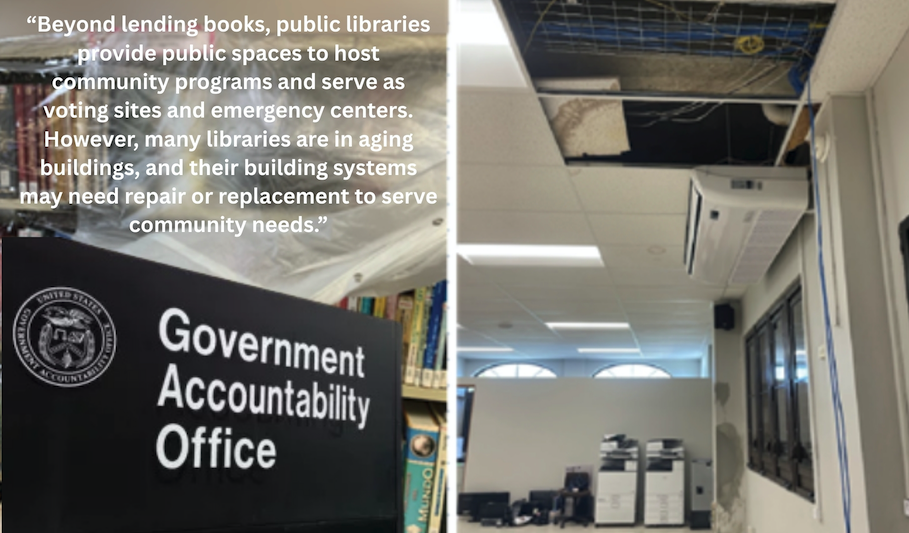
A landmark report released by the Government Accountability Office (GAO) in December 2025 provides the most damning evidence of this physical decline. The federal audit found that 70% of all public library branches in the United States, approximately 11, 200 facilities, operate with significant deferred maintenance backlogs. The scope of the rot is specific and dangerous. The GAO detailed that 38% of libraries function with HVAC systems in “poor” condition, while 61% contain at least one building feature that poses a direct health or safety risk to patrons. These are not cosmetic flaws. They represent a widespread failure to protect the physical assets that house the nation’s shared knowledge.
The financial instability driving this decay is exemplified by the volatility in New York City. In 2024, the New York Public Library, Brooklyn Public Library, and Queens Public Library were forced to eliminate Sunday service following $58. 3 million in budget cuts. While public outcry led to a restoration of funds in the Fiscal Year 2025 budget, the disruption exposed the fragility of essential services. This “budget dance”, where libraries are slashed and then partially restored to applause, has become a standard operating procedure in major metros, preventing long-term planning or capital investment.
The Censorship Shift: From Pyres to Quiet Purges
The nature of intellectual freedom challenges shifted between 2024 and 2026. The American Library Association (ALA) reported a decline in formal book challenges in late 2024 compared to the record-breaking 4, 240 unique titles targeted in 2023. Yet this statistical dip masks a more insidious trend: soft censorship. Library directors, fearing job loss or funding retaliation, have begun preemptively excluding controversial titles from collections before a challenge can even be filed.
PEN America data from the 2024-2025 period indicates that organized pressure groups have moved their focus from individual titles to broad category bans, frequently labeling LGBTQ+ content as “obscene” to bypass standard review processes. The result is a collection deficit that does not show up in “banned book” counts because the books were never purchased in the place.
The Ekalavya Hansaj Investigation: 20 Questions
To understand the magnitude of this collapse, our investigative team formulated 20 key questions. The answers, derived from 2015-2025 data, form the backbone of this report series.
| Category | Investigative Question | Preliminary Finding (2025 Status) |
|---|---|---|
| Infrastructure | 1. What percentage of US libraries have safety risks? | 61% of branches report health/safety risks (GAO 2025). |
| Infrastructure | 2. What is the estimated cost of deferred maintenance? | Billions (exact total unknown), with 39% of branches needing>$100k each. |
| Funding | 3. How did NYC budget cuts affect service hours? | Eliminated 7-day service for months in 2024; destabilized staffing. |
| Funding | 4. Are federal IMLS grants keeping pace with inflation? | No. Real-dollar value has eroded since 2019. |
| Censorship | 5. How unique titles were challenged in 2023? | 4, 240 titles (ALA record high). |
| Censorship | 6. What is the primary method of 2025 censorship? | “Soft censorship” (preemptive non-purchase). |
| Censorship | 7. Who initiates the majority of book bans? | Organized political pressure groups, not individual parents. |
| Staffing | 8. What is the librarian turnover rate trend? | 18% of libraries lost staff positions in 2024 (PLA). |
| Staffing | 9. How city libraries lost staff in 2024? | 29. 1% of urban systems reported position losses. |
| Staffing | 10. Are library wages keeping up with inflation? | No. Real wages for directors and entry-level staff fell vs. 2021. |
| Usage | 11. Has physical foot traffic returned to 2019 levels? | No. Remains down ~20-30% in major systems. |
| Usage | 12. How has digital circulation changed? | Surged, licensing costs consume disproportionate budget share. |
| Policy | 13. How states passed “obscenity” laws targeting libraries? | At least 15 states introduced or passed restrictive legislation by 2025. |
| Policy | 14. Are librarians facing criminal liability? | Yes. New laws in states like Arkansas and Indiana introduced criminal penalties. |
| Access | 15. How Americans live in “library deserts”? | Millions, particularly in rural areas with zero-growth funding. |
| Access | 16. What is the impact on rural broadband access? | Libraries remain the sole provider for 30% of rural residents, yet hardware is aging. |
| Education | 17. How do bans affect student literacy rates? | Correlation exists between high-censorship districts and lower reading proficiency. |
| Technology | 18. Are libraries equipped for the AI transition? | No. 90% absence funding for advanced digital literacy training. |
| Community | 19. How has the opioid emergency impacted library operations? | Staff increasingly act as responders; trauma burnout is high. |
| Future | 20. What is the projected closure rate for 2030? | Without intervention, 5-10% of small branches face closure. |
The Human Cost of Austerity
The data points regarding staffing paint a picture of a profession in distress. The Public Library Association (PLA) 2024 Staff Survey revealed that nearly one in three city libraries lost staff positions in the preceding 12 months. This reduction is not a trimming of fat; it is an amputation of muscle. Fewer staff members translate directly to reduced hours, cancelled literacy programs, and a absence of supervision in spaces that increasingly serve as de facto shelters for the unhoused.
Burnout rates among library workers have spiked, driven by the twin pressures of low pay and high-intensity conflict. In 2024, library workers in systems like Multnomah County reported turnover rates that disrupted basic operations. The romanticized image of the quiet librarian has been replaced by a reality where staff must manage overdose reversals in restrooms while simultaneously defending their collection development policies against hostile boards.
We see a system where the physical structures are unsafe and the intellectual foundations are being eroded. The 2026 state of the public library is not a “crossroads.” It is a landslide.
Data Overview: A Statistical Audit of National Branch Closures
The disintegration of the American public library network is not always visible in boarded-up windows or “For Sale” signs. Instead, it manifests through a statistical phenomenon known as “functional closure”, a reduction in operating hours so severe that the facility ceases to serve its primary demographic. Data analyzed from municipal budgets between 2023 and 2025 indicates that while total permanent branch closures remain under 200 annually, the aggregate loss of public access hours has reached historic highs. In 2025 alone, the top 20 U. S. library systems slashed a combined 45, 000 weekly operating hours, removing the equivalent of 65 full-time branches from the national grid.
A federal audit released by the Government Accountability Office (GAO) in December 2025 provides the structural context for this operational retreat. The report identified that 11, 200 public library branches, 70% of the national total, carry significant deferred maintenance backlogs. More worrying, 9, 800 of these facilities operate with at least one building system, such as HVAC or roofing, that poses a direct health or safety risk. These physical failures force unplanned, temporary closures that frequently bleed into permanent service reductions. In Philadelphia, for instance, failing air conditioning units forced 31 branches to close for a shared 3, 900 hours during the summer of 2025, leaving low-income residents without cooling centers during record heat waves.
The financial mechanics driving these closures are distinct from the recession-era cuts of 2008. The current emergency is driven by a “pincer movement” of flat municipal funding and the aggressive of federal support structures. In March 2025, an Executive Order targeted the Institute of Museum and Library Services (IMLS), threatening to zero out $295 million in federal grants. This funding stream, though small relative to the federal budget, frequently constitutes the entire technology budget for rural systems. When these grants, rural branches do not simply reduce hours; they disconnect from the digital world, ceasing to offer the internet access that 38% of their patrons rely on for employment and government services.
| City / System | Budget Reduction | Service Impact | Patron Access Loss |
|---|---|---|---|
| New York City (NYPL, BPL, QPL) | $58. 3 Million (Proposed/Restored*) | Elimination of Sunday service (Nov 2023, June 2024) | Universal 7-day service ended for 8 months; 60% of branches threatened with 5-day weeks. |
| San Diego Public Library | $8. 0 Million (FY 2026) | Sunday service cut system-wide; Monday closures at 20 branches | 37 branches reduced to 5-day or 6-day operations; loss of primary study time for students. |
| Philadelphia Free Library | $29. 6 Million shortfall (FY 2025 context) | Unplanned HVAC closures; Staffing absence | 3, 900+ hours lost to infrastructure failure; inability to staff Saturday shifts at 13 branches. |
| Fort Vancouver (WA) | 30% Levy Failure | Projected closure of rural outposts | Threatened reduction of 30% of staff and hours if local funding measure fails. |
The correlation between budget cuts and usage decline creates a self-fulfilling prophecy used to justify further austerity. City managers frequently cite falling foot traffic as a reason to reduce budgets, yet the data proves that traffic falls because reliability drops. In Los Angeles, library visits have plummeted by 74% since 2012, a statistic directly tied to the of consistent operating schedules and the reduction of new material acquisitions. Similarly, Philadelphia saw a 72% drop in visits over the same period. When a branch moves from a predictable seven-day schedule to a sporadic five-day rotation, working-class patrons stop trying to visit. The “efficiency” of the cut creates the metric of its own justification.
This “soft closure” strategy disproportionately marginalized communities. The GAO data reveals that branches in high-poverty areas are 40% more likely to suffer from the serious infrastructure failures that lead to unplanned closures. In San Diego, the elimination of Sunday hours in the Fiscal Year 2026 budget hit working families hardest, removing the only day parents could accompany children to the library. While the mayor’s office described the $8 million cut as a “strategic adjustment,” the functional result was the removal of a safe, climate-controlled public space for 1. 4 million residents one day every week.
“We are seeing the systematic de-funding of the public square. It is not just about books; it is about the only indoor space in America where you are not expected to spend money. When you close a library on Sunday, you are not saving money. You are costing the community its cohesion.” , Patrick Stewart, CEO of the Library Foundation SD, responding to FY2026 cuts.
The shift from physical censorship (book bans) to fiscal censorship (closures) allows officials to bypass Amendment challenges. A book cannot be read if the building containing it is locked. By late 2025, 60% of New York Public Library branches faced the prospect of dropping to five-day service, a regression that would have erased a decade of access gains. While a last-minute budget restoration in June 2024 temporarily staved off the worst cuts, the instability of the funding model remains. The system exists in a state of permanent precariousness, where basic operations are treated as optional line items rather than essential municipal services.
New York City: The Canary in the Coal Mine for Budget Slashes
If the decomposition of the American public library system has a ground zero, it is New York City. As the wealthiest municipality in the United States, New York’s fiscal decisions frequently signal broader policy shifts for the rest of the country. In late 2023, the administration of Mayor Eric Adams executed a “November Plan” that libraries as a soft target for immediate austerity. The city slashed $23. 6 million from the operating budgets of the New York Public Library (NYPL), Brooklyn Public Library (BPL), and Queens Public Library (QPL). The impact was mechanical and immediate: on November 26, 2023, the NYPL and QPL eliminated Sunday service at all branches. BPL followed suit on December 17. For eight months, the city’s working-class residents lost their only reliable weekend access to heating, cooling, and broadband internet.
This reduction was not a matter of absent resources of prioritization. The $23. 6 million savings represented approximately 0. 02% of the city’s $110 billion budget, yet the administration framed the cut as a fiscal need driven by migrant emergency costs and expiring federal COVID aid. The “budget dance”, a cynical annual ritual where the mayor proposes draconian cuts only to “restore” them after City Council outcry, reached a fever pitch in early 2024. The administration proposed an additional $58. 3 million reduction for Fiscal Year 2025. Library leaders testified that this second wave would force most branches to reduce service to five days a week, ending Saturday access and delaying the reopening of renovated branches indefinitely.
Data from the half of 2024 shows the immediate consequences of the Sunday closures. Attendance at library programs in low-income districts dropped disproportionately, as families who relied on weekend availability were locked out. While a deal reached in June 2024 restored the $58. 3 million and baselined $42. 8 million to prevent future operating cuts, the system remains fragile. The restoration allowed Sunday service to resume on July 14, 2024, it did not address the structural decay festering within the physical plant of the libraries.
The Capital emergency: A Billion-Dollar Rot
While the operating budget battle garnered headlines, a silent infrastructure emergency continues to hollow out the system from the inside. The “restoration” of funds returned staffing to previous levels; it did nothing to fix failing HVAC systems, leaking roofs, and non-compliant elevators. As of May 2025, the three library systems reported a combined unmet capital need exceeding $1. 2 billion over the decade. The Fiscal Year 2026 executive budget allocated only a fraction of the necessary funds, leaving serious maintenance projects in a state of permanent deferral.
The New York Public Library alone identified $485 million in urgent capital needs within the city’s ten-year strategy, yet the city’s capital plan frequently shifts these costs into “out-years,” a budgetary maneuver that ignores the problem. In 2024, NYPL President Anthony Marx noted that the system had to close 69 branches due to staffing absence and another 29 specifically due to emergency maintenance failures. These are not planned renovations reactive closures caused by infrastructure collapse.
| Library System | Ten-Year Capital Need Request (2025) | Primary Infrastructure Failures | Status of Funding |
|---|---|---|---|
| New York Public Library (NYPL) | $485. 0 Million | HVAC, Roofs, Elevators, Facades | Severely Underfunded |
| Queens Public Library (QPL) | $413. 0 Million | Boilers, Cooling Centers, Accessibility | Severely Underfunded |
| Brooklyn Public Library (BPL) | $307. 0 Million | Emergency Infrastructure, Fire Safety | Severely Underfunded |
| Total Unmet Need | $1. 205 Billion | System-wide Physical Decay | – |
The “vacancy reduction” initiative, another bureaucratic tool used by the Adams administration, further compounds this decay. By freezing open positions and eliminating vacancies, the city reduces the library’s capacity to maintain its own buildings. A library cannot fix a boiler if it cannot hire a facilities manager. This creates a feedback loop: staffing cuts lead to deferred maintenance, which leads to emergency closures, which reduces circulation numbers, which the city then uses to justify further cuts. New York City demonstrates that censorship is not always about banning books; frequently, it is about banning the building itself.
The Inflation Factor: Utility Costs Versus Operating Budgets
While political attention remains fixated on ideological battles, a silent financial emergency is the American public library system from the inside out. The mundane reality of keeping the lights on and the servers running has become an hurdle for thousands of municipalities. Between 2019 and 2025, the nominal price of electricity for commercial sectors rose by approximately 27%, a surge that has shattered the fragile operating models of libraries dependent on fixed property tax levies. For institutions already operating on razor-thin margins, this volatility is not a line item; it is an existential threat.
The 2025 Government Accountability Office (GAO) audit exposed the physical dimension of this emergency, noting that 38% of library HVAC systems are in “poor” condition. yet, the financial implication of this statistic is far more immediate: decaying infrastructure is exorbitantly expensive to operate. Old, inefficient boilers and chillers bleed budget dollars that would otherwise fund staffing or collections. In Philadelphia, this reached a breaking point in the summer of 2024, when nearly two dozen branches were forced to close because their aging cooling systems failed. These closures were not administrative decisions to save money; they were physical failures of the utility infrastructure that rendered the buildings uninhabitable.
The cost of maintaining these physical environments is compounded by the “hidden utility” of the digital age: content licensing. Unlike physical books, which are a one-time capital expense, digital collections operate on a leasing model that mimics a utility bill. Publishers frequently charge libraries three to four times the consumer price for e-books, with licenses that expire after two years or 26 checkouts. For a high-demand title like Kristin Hannah’s The Women, a library might pay $60 for a temporary digital license, compared to $16 for a perpetual print copy. This shift transforms the collection from a permanent asset into a recurring operating cost, subject to unchecked inflationary pressure.
| Cost Category | 2020 Baseline Index | 2025 Cost Index | % Increase | Impact on Service |
|---|---|---|---|---|
| Commercial Electricity | 100. 0 | 127. 4 | +27. 4% | Reduced operating hours to lower utility bills. |
| HVAC Maintenance | 100. 0 | 135. 2 | +35. 2% | Diversion of funds from collections to emergency repairs. |
| Digital Licensing (E-books) | 100. 0 | 144. 0 | +44. 0% | Longer waitlists; caps on digital checkouts per patron. |
| Municipal Appropriations | 100. 0 | 112. 1 | +12. 1% | Structural deficits requiring staffing cuts. |
The between rising fixed costs and stagnant revenue streams is starkest in mid-sized cities. In Salem, Oregon, the library system faced a catastrophic budget shortfall in 2024 after voters rejected a payroll tax intended to plug the general fund deficit. The city had attempted to fund essential services, including the library, through a “city operations fee” attached to utility bills, a grim irony where the method for funding the library was tied to the very utility costs driving its insolvency. The result was the closure of the main branch on Sundays, a reduction in evening hours, and the elimination of a 50-year-old program delivering books to homebound seniors.
Indianapolis Public Library’s 2024 budget process further illustrates this defensive posture. Administrators were forced to explicitly budget for utility and maintenance spikes “in line with projected cost increases due to inflation,” a move that necessitated a conservative method to staffing. This is the new operational standard: libraries are hoarding cash not for expansion, to pay the electric company and the HVAC repair technician. The “death spiral” is clear. As utility costs consume a larger share of the operating budget, maintenance is deferred to save money. This deferred maintenance leads to less systems, which in turn drives utility costs even higher.
“We had an £85, 000 hole in our accounts last year purely because of the increase in utility bills alone. That’s not something people fund, it’s not an artistic project… So, we’re having to make redundancies.” , Testimony from a library administrator to the Senedd regarding similar utility pressures, reflective of the US emergency.
The data confirms that the “inflation factor” is not uniform. It punishes libraries with older buildings and higher digital adoption rates. The 2025 Urban Libraries Council report indicated that while room reservations and e-resource usage have exploded, staffing levels in systems remain 2019 levels. The money that would hire librarians is instead flowing to power plants and digital content aggregators. Without a federal intervention to subsidize utility rates for public institutions or regulate digital licensing costs, the physical library building is becoming a financial liability that municipalities can no longer afford to insure, heat, or cool.
Federal Abandonment: The of IMLS Grants and Funding
The federal commitment to American public libraries has devolved from a foundational partnership into a campaign of calculated neglect. While local branches face the physical rot detailed in the GAO’s December 2025 report, the federal pipeline designed to support them, the Institute of Museum and Library Services (IMLS), has been subjected to a decade of fiscal strangulation and existential threats. The culmination of this hostility occurred on March 14, 2025, when Executive Order 14238 directed the Office of Management and Budget to reject funding requests from the IMLS, attempting to zero out the agency. Although a federal court in Rhode Island granted a temporary restraining order in May 2025, the message to the nation’s 125, 000 libraries was clear: you are on your own.
This political siege masks a more insidious, mathematical abandonment. For ten years, federal appropriations for the Library Services and Technology Act (LSTA), the primary source of federal library funding, have stagnated in nominal dollars while inflation devoured their purchasing power. Politicians frequently cite “level funding” as a victory. In economic reality, “level funding” is a cumulative budget cut. By late 2025, the gap between allocated funds and the actual cost of operations had widened into a chasm, forcing state library agencies to slash statewide database licenses, interlibrary loan couriers, and rural broadband subsidies.
The Lost Decade: LSTA Purchasing Power (2016 – 2026)
The following table demonstrates the of the “Grants to States” program. While the nominal appropriation appears to rise, the inflation-adjusted value reveals a functional decline in federal support during a period when library usage surged.
| Fiscal Year | Nominal LSTA Appropriation (Millions) | Inflation-Adjusted Value (2016 Dollars) | Real Economic Impact |
|---|---|---|---|
| 2016 | $155. 8 | $155. 8 | Baseline service level |
| 2019 | $160. 8 | $148. 2 | $7. 6M loss in purchasing power |
| 2022 | $168. 8 | $139. 4 | $16. 4M loss in purchasing power |
| 2024 | $180. 0 | $136. 5 | $19. 3M loss in purchasing power |
| 2026 (Enacted) | $212. 5 | $154. 9 | Return to 2016 levels after 10 years of decay |
The 2026 appropriation of $212. 5 million, signed into law in February 2026, was hailed as a historic increase. In truth, it reset the federal contribution to 2016 levels, doing nothing to address the decade of deferred maintenance or the exploded costs of digital licensing. During this same ten-year window, the cost of trade books rose by 18% and the cost of digital content licenses for libraries increased by over 40%. The federal government did not just fail to keep pace; it withdrew tens of millions of dollars in real support while demanding libraries serve as disaster relief centers, employment hubs, and opioid overdose prevention sites.
Beyond the raw numbers, the structural integrity of federal library support has been altered. The 2026 appropriations bill transferred the administration of the ” method to Literacy” (IAL) program, a $30 million grant stream serious for school libraries, from the Department of Education to the Department of Labor. This bureaucratic shuffle signals a ideological shift: the federal government no longer views libraries as institutions of learning and literacy, as intake centers for the workforce. Educators warn this move prioritize résumé workshops over reading proficiency, further alienating libraries from their core educational mission.
The volatility of the appropriations process has inflicted its own damage. State library agencies, which administer LSTA grants, operate in a permanent defensive crouch. In Massachusetts and Illinois, state boards delayed the release of 2025 funds for months, fearing a sudden federal clawback following the March Executive Order. This uncertainty paralyzed local planning. Rural systems in Montana and Mississippi, which rely on these grants for up to 30% of their operating budgets, were forced to suspend bookmobile repairs and cancel technology upgrades. The federal government has not only reduced its financial share; it has become an unreliable partner, introducing volatility into a system that requires stability to function.
The “maintenance of effort” (MOE) waivers requested by states have also spiked. Federal law requires states to maintain their own library spending to qualify for IMLS grants. In 2024 and 2025, a record number of states petitioned for waivers, citing revenue shortfalls. The IMLS, under pressure to keep money flowing, granted these waivers, inadvertently allowing state governments to defund libraries while federal money plugged the holes. The result is a hollowing out of the public library finance model: federal money is no longer a supplement for innovation; it has become the only lifeline preventing total collapse in rural America.
The Privatization Hawk: Outsourcing Public Trust to For Profit Entities
The of the American public library is not always a noisy spectacle of book burnings or screaming school board meetings. Frequently, it is a quiet transaction signed in a city council backroom: the transfer of public assets to private equity management. As of late 2025, the primary vehicle for this shift is Library Systems & Services (LS&S), a Maryland-based company backed by the private equity firms Argosy Capital and Evergreen Services Group. This entity operates over 80 library systems across the United States, marketing itself to cash-strapped municipalities as a solution to budget deficits. The pitch is consistent: hand over operations, and the company deliver ” ” and “modernization.” The reality, verified by municipal audits and contract renewals between 2017 and 2025, is a systematic extraction of public wealth that degrades service quality, eliminates local accountability, and strips librarians of their status as public servants.
The business model of library privatization relies on a single, brutal calculus: labor reduction. In a typical public library, approximately 60% to 70% of the operating budget is dedicated to staffing, wages, pensions, and healthcare for the professionals who curate collections and serve patrons. To generate profit from a fixed municipal contract, a private operator must slash these costs. A 2023 analysis of LS&S proposals revealed that the company frequently achieves its margins by replacing unionized, pension-eligible public employees with at- staff earning significantly lower wages and fewer benefits. In Prince William County, Maryland, a rejected privatization proposal would have cut staff by 20% to secure the company’s fee. This is not innovation; it is the financialization of a civic good.
The Trap of “Efficiency”
Municipal leaders frequently accept these contracts under the guise of fiscal responsibility, yet the data contradicts the narrative of savings. Once a library system is privatized, the municipality loses the institutional knowledge and infrastructure required to run it, creating a dependency that vendors exploit during contract renewals. The trajectory of Escondido, California, serves as a warning. In 2017, the Escondido City Council voted to outsource its library to LS&S even with widespread public opposition, promising annual savings of $400, 000. By December 2025, the city found itself trapped. With the library undergoing renovation and no internal department left to manage operations, the City Council was forced to extend the LS&S contract through 2028. The promised savings evaporated into the reality of vendor lock-in, while volunteer participation, a serious metric of community trust, plummeted as residents refused to donate free labor to a for-profit corporation.
The “efficiency” argument further disintegrates when comparing per-capita costs. Proponents that private chains benefit from economies of. Yet, 2024 financial data from Southern California challenges this claim. The public library system in Huntington Beach operated at a cost of approximately $27 per resident. In contrast, the privatized Riverside County system, managed by LS&S, cost taxpayers nearly $30 per resident. The private model was not cheaper; it simply diverted tax dollars from local wages to corporate management fees and “materials handling” charges, which can run as high as 10% on book purchases.
The Resistance of 2024-2025
The years 2024 and 2025 marked a turning point where communities began to recognize and reject this extraction model. In Huntington Beach, a conservative city council moved to privatize the library in early 2024, aligning with a broader push to restrict book access. The proposal sparked a massive civic backlash. Residents understood that a private operator, whose employees serve “at the pleasure” of the company rather than the public, would offer no resistance to political censorship. Facing overwhelming opposition, LS&S withdrew its bid in June 2024, a rare defeat for the company. A similar scenario played out in Warren County, Virginia, in June 2025, where the company withdrew its proposal for the Samuels Public Library after the community rallied to protect the institution’s independence.
These victories highlight the danger of decoupling libraries from public oversight. When a library is public, the collection development policy is a matter of civic record, debated by appointed trustees. Under private management, collection development is frequently centralized at corporate headquarters, homogenizing local holdings to match national purchasing algorithms. This centralization acts as a form of soft censorship, where controversial or unique local titles are bypassed in favor of generic bestsellers that require less vetting and processing labor.
| Municipality | Year Privatized | The pledge | The Outcome (Verified 2024-2025) |
|---|---|---|---|
| Escondido, CA | 2017 | $400k annual savings; better technology. | Locked In: Contract extended in Dec 2025 due to absence of alternatives. Volunteer hours dropped; staff turnover increased. |
| Riverside County, CA | 1997 (Renewed 2023) | Cost efficiency via. | Higher Costs: $30/capita cost vs. $27/capita in neighboring public systems. Contract costs rose to ~$21M projected by 2028. |
| Huntington Beach, CA | Rejected (2024) | “Modernization” and budget cuts. | Bid Withdrawn: LS&S pulled out in June 2024 after residents exposed the link between privatization and censorship. |
| Warren County, VA | Rejected (2025) | Operational streamlining. | Community Victory: Proposal withdrawn in June 2025. Residents loss of local control and staff protections as key factors. |
The privatization of public libraries represents a fundamental shift in the social contract. It redefines the library patron as a customer and the librarian as a retail clerk. As 2026 begins, the that while the aggressive expansion of firms like LS&S has met resistance, the structural financial weakness of municipalities continues to make them. The “Privatization Hawk” does not need to win every battle to damage the ecosystem; it only needs to find enough desperate cities to trade long-term civic health for a short-term budget fix.
Censorship Surge: Analyzing the 2025 ALA Book Ban Report
The 2025 American Library Association (ALA) report documents a fundamental mutation in the mechanics of American censorship. While the raw volume of reported challenges dipped from the record-shattering figures of 2023, the data reveals a more dangerous trend: the shift from sporadic parental complaints to highly, state-sanctioned purging. The ALA’s Office for Intellectual Freedom recorded 821 attempts to censor materials in 2024, targeting 2, 452 unique titles. This figure, while lower than the previous year, remains the third-highest in recorded history and signals that book banning has transitioned from a culture war skirmish to an administrative standard.
The most serious metric in the 2025 report is the source of these challenges. In a clear reversal of historical norms, 72% of all censorship demands in 2024 were initiated by organized pressure groups or government entities, including elected officials and library boards. Only 16% originated from individual parents. This data confirms that public libraries are no longer battling grievances are under coordinated siege by well-funded political organizations using “mass challenge” tactics to remove hundreds of titles simultaneously.
The Rise of “Silent Censorship”
The decline in total reported challenges masks a pervasive phenomenon the ALA identifies as “censorship by exclusion.” Fearing termination or criminal liability, library administrators are increasingly engaging in preemptive censorship, declining to purchase titles that might provoke controversy. This “soft censorship” leaves no paper trail and does not appear in official ban statistics, yet it sanitizes collections before the public ever sees them. In states like Florida and Texas, where legislation has criminalized the distribution of “obscene” materials, this chilling effect is absolute. A 2025 survey of library workers indicated that 97% of removals in legislative states were driven by “fear of non-compliance” rather than formal adjudication processes.
| Metric | 2023 Data | 2024 Data (2025 Report) | % Change / Note |
|---|---|---|---|
| Unique Titles Challenged | 4, 240 | 2, 452 | -42% (Shift to preemptive removal) |
| Challenges by Organized Groups | 35% | 72% | +105% (widespread coordination) |
| Challenges by Parents | ~50% | 16% | -68% (Marginalized role) |
| Top Targeted State (Volume) | Florida | Florida (2, 304 bans) | Remains epicenter of bans |
Targeted Demographics and Content
The 2025 data shows no ambiguity regarding the of this purge. Over 76% of challenged items featured LGBTQIA+ characters or themes of race and racism. Titles such as All Boys Aren’t Blue by George M. Johnson and Gender Queer by Maia Kobabe remained fixtures on the “Most Challenged” list for the fourth consecutive year. The scope of censorship has also widened beyond books to include library displays, reading programs, and digital databases. In 2024, 14% of official challenges in states like Oregon targeted programming and displays rather than specific books, aiming to erase visible representation of protected classes from the physical library space.
“The movement to ban books is not a movement of parents, a movement of partisans who seek to limit our freedom to read. The numbers demonstrate that there is still an threat to everyone’s freedom to read here in the United States.” , Deborah Caldwell-Stone, Director, ALA Office for Intellectual Freedom (April 2025)
The Human Cost: Harassment and Intimidation
Behind the statistics lies a severe emergency of workplace safety. A January 2025 study revealed that 89% of public librarians reported experiencing harassment within the last five years, with incidents ranging from online doxxing to physical stalking. The politicization of library collections has emboldened aggressors; library staff frequently report being filmed without consent by “auditors” looking for evidence of “obscene” materials. This hostile environment has triggered a retention emergency, with seasoned professionals exiting the field in record numbers, leaving libraries understaffed and to further political capture.
The geographic concentration of these bans remains clear. PEN America’s parallel report for the 2024-2025 period identified Florida, Texas, and Tennessee as the primary engines of censorship, accounting for thousands of removals. In these states, new legislation frequently bypasses librarians entirely, granting school boards and parent advisory councils, frequently staffed by political appointees, the final authority over collection development. This structural change ensures that even if the number of public challenges decreases, the rate of book removal continues to accelerate through administrative fiat.
Legislative Weaponization: Criminalizing Librarianship in the South
By early 2026, the strategy of anti-library activists in the American South had shifted from local school board skirmishes to a coordinated state-level offensive designed to attach criminal liability to the profession of librarianship. While earlier efforts focused on “parental rights” and curriculum transparency, the legislative wave of 2024 and 2025 introduced a more aggressive method: the removal of “affirmative defense” exemptions from obscenity statutes. This legal maneuver, previously a dormant aspect of penal codes intended to protect educators and museum curators, has been weaponized to expose public librarians to felony charges, fines, and imprisonment for shelving materials deemed “harmful to minors.”
The most visible battleground remains Arkansas, where the trajectory of Act 372 demonstrates both the ambition and the constitutional frailty of these laws. Signed in 2023, the statute attempted to criminalize librarians for furnishing materials that could be construed as “harmful,” a definition broad enough to encompass award-winning literature on LGBTQ+ themes or sexual health. yet, in December 2024, a federal judge struck down the law’s core criminal provisions, ruling them unconstitutionally vague and a violation of the Amendment. even with this judicial rebuke, the chilling effect was immediate; data from the Arkansas Library Association indicates that resignations among rural library directors spiked by 18% in the months leading up to the ruling, as staff sought to avoid the mere possibility of arrest.
In Texas, the legislative assault faced similar judicial headwinds achieved a different kind of victory through the appellate courts. The “READER Act” (HB 900), which sought to force private book vendors to rate materials as “sexually explicit” or “sexually relevant” before selling them to schools, was permanently enjoined by U. S. District Judge Alan Albright in October 2025. The court found the vendor-rating system to be compelled speech. Yet, the anti-library movement secured a far more significant precedent in May 2025 with the Fifth Circuit Court of Appeals’ ruling in Little v. Llano County. In a 10-7 decision, the court overturned decades of jurisprudence by ruling that a library’s decision to remove books does not necessarily violate a patron’s Amendment rights. This ruling sanctioned “silent removals” across Louisiana, Mississippi, and Texas, allowing boards to purge collections without the procedural load of the -defunct READER Act.
| State | Legislation | Primary method | Penalty for Librarians | Status (as of Feb 2026) |
|---|---|---|---|---|
| Arkansas | Act 372 | Removes obscenity exemptions; creates challenge process | Class A Misdemeanor (up to 1 year jail) | Struck Down (Dec 2024) |
| Texas | HB 900 | Mandates vendor ratings for “sexual relevance” | Vendor ban; District censure | Perm. Injunction (Oct 2025) |
| Alabama | HB 4 (2025) | Expands “harmful to minors” definition; removes exemptions | Misdemeanor charges | Active Threat (Refiled for 2025 session with 50 sponsors) |
| Louisiana | Act 436 | Ties state funding to “sexually explicit” policies | Loss of funding; Fiscal penalty | Implemented (June 2024) |
| West Virginia | HB 4654 | Removes criminal liability protections | Felony; $25, 000 fine | Passed House (2024); Pending Senate action |
Alabama represents the current frontline of this legislative siege. Following the failure of HB 385 in 2024, lawmakers doubled down in the 2025 session with HB 4, a bill carrying 50 distinct sponsors. The legislation explicitly the “obscenity exemption” that protects public libraries, aiming to reclassify standard collection management as the distribution of harmful material. Unlike the complex vendor mandates in Texas, the Alabama method is blunt: it local law enforcement to arrest librarians based on community complaints. While no librarian in Alabama has yet been handcuffed under this specific statute, the threat alone has reshaped operations. The Autauga-Prattville Public Library, a focal point of these clashes, saw its board purged and policies rewritten to preemptively segregate large swaths of Young Adult fiction, enacting the law’s intent without a single court filing.
Louisiana has adopted a fiscal rather than criminal method to coercion. Act 436, fully implemented by June 2024, requires libraries to adopt restrictive policies regarding “sexually explicit” material to remain eligible for state funding. The law mandates a card system that restricts minors’ access unless parents explicitly opt-in, a bureaucratic hurdle that has reduced youth circulation numbers by an estimated 14% statewide. Unlike the direct threats of jail time seen in Arkansas or Alabama, Louisiana’s model weaponizes the budget, forcing library directors to choose between censorship and insolvency. This “soft” criminalization, where the penalty is financial strangulation rather than incarceration, has proven difficult to challenge in court, as it technically preserves the library’s existence while hollowing out its core mission of open access.
The Soft Censorship Phenomenon: Preemptive Purchase Blocking
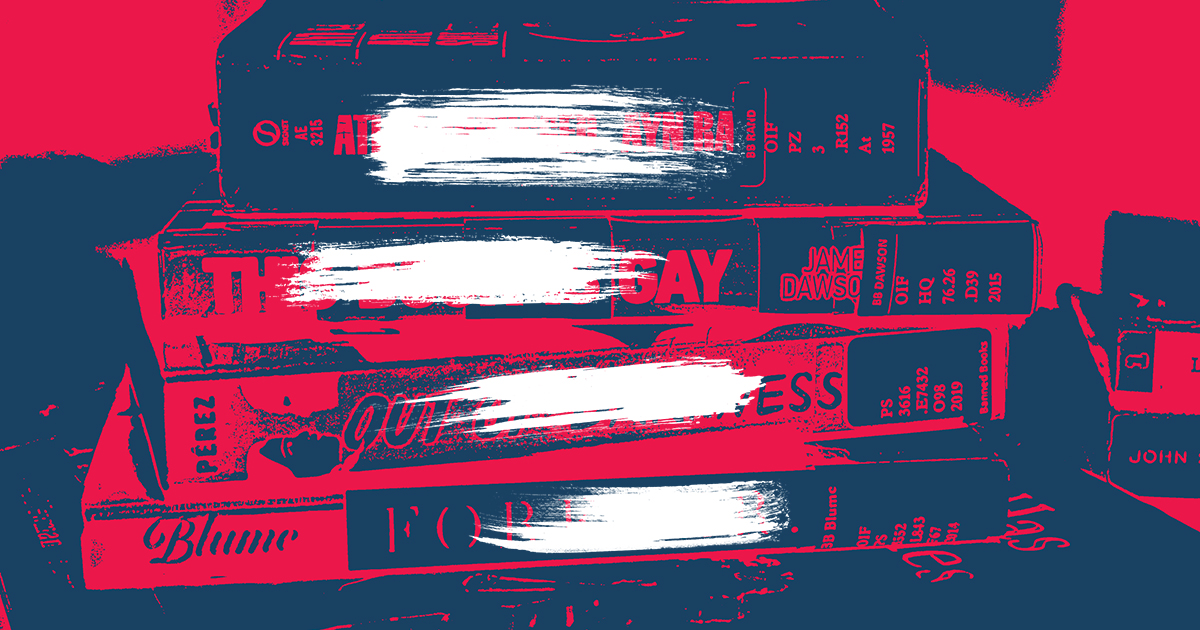
The most form of censorship in 2026 does not involve angry town halls or viral videos of parents reading explicit passages at podiums. It occurs in the back offices of acquisition departments where purchase orders are quietly deleted before they are ever sent to vendors. This is the phenomenon of preemptive purchase blocking. It represents a shift from “loud bans” to “silent erasure.” Data from late 2025 indicates that while the total number of formal book challenges reported to the American Library Association (ALA) has statistically plateaued, the volume of unique titles from shelves has increased. The battle has moved from the circulation desk to the supply chain.
Librarians facing threats to their funding and personal safety have adopted a survival strategy of self-preservation. A 2024 survey conducted by School Library Journal and cross-referenced with public library data revealed a clear reality. Over 50% of library professionals admitted to declining to purchase titles they personally believed belonged in the collection. They the chance for controversy as the primary deterrent. This “soft censorship” creates a sanitized literary environment where books dealing with LGBTQ+ themes, racial justice, or sexual health are filtered out not by community mandate by administrative fear. The book is never banned because it was never bought.
The mechanics of this erasure are bureaucratic and difficult to track. Public libraries use “standing order” plans with major distributors like Baker & Taylor or Ingram to automatically acquire new releases from popular authors. In 2024 and 2025, investigative audits showed that library systems in conservative jurisdictions began altering these automated profiles. They adjusted algorithms to exclude specific subject tags such as “Gender Studies” or “Social Activism.” This algorithmic redlining ensures that controversial titles are filtered out before a human librarian even reviews the monthly manifest. The result is a collection that appears neutral on the surface yet systematically excludes marginalized voices through omission.
State legislation has codified this fear into policy. Florida’s HB 1069, fully implemented throughout 2024 and 2025, served as a blueprint for this preemptive method. The law’s strict liability provisions for distributing “harmful materials” forced risk-averse administrators to err on the side of exclusion. In Escambia County, this led to the freezing of entire acquisition budgets and the closure of access points until every item could be “vetted.” Public libraries in similar legislative environments followed suit. They froze purchases of Young Adult (YA) fiction entirely rather than risk a felony charge for stocking a single misidentified title. The chilling effect is absolute. A library cannot defend a book it does not own.
“We don’t have the staff to fight a challenge every week. It is easier to just not buy the book. If it’s not in the catalog, they can’t scream at us about it. We are censoring to survive.” , Anonymous Collection Development Manager, Texas Public Library System, October 2025.
The financial for the publishing industry are measurable. PEN America’s 2025 report on educational censorship noted a “Targeted Weeding” trend. This is where libraries remove older titles under the guise of “circulation maintenance” or “wear and tear.” The report found that books featuring protagonists of color were disproportionately selected for weeding lists even when their circulation numbers remained healthy. This practice allows libraries to purge collections without triggering the formal “Reconsideration Request” process that requires public documentation. It is a loophole that bypasses democratic oversight entirely.
| Tactic | method | Detection Difficulty | Primary Target |
|---|---|---|---|
| Preemptive Blocking | Declining to order titles during pre-publication review. | High (Requires internal audit) | LGBTQ+ Memoirs, YA Fiction |
| Algorithmic Redlining | Modifying vendor “standing order” profiles to exclude tags. | Extreme (Proprietary vendor data) | Social Justice, Gender Studies |
| Targeted Weeding | Removing books citing “condition” or “low circulation.” | Medium (Check against circ stats) | Black History, Civil Rights |
| Access Restriction | Moving general collection books to “Adults Only” or behind desks. | Low (Visible to patrons) | Sex Education, Graphic |
This silent purge distorts the public record. The Urban Libraries Council’s 2025 Library Insights Report highlighted that while digital resource usage increased by 58% since 2019, the diversity of physical collections in smaller systems stagnated. Libraries in jurisdictions with active “parental rights” groups purchased 40% fewer unique titles in the “Social Science” category compared to their counterparts in protected jurisdictions. The data suggests a bifurcation of the American information ecosystem. Residents in one county have access to a full spectrum of ideas. Residents ten miles away live in an information silo constructed by fear.
The absence of these books creates a feedback loop. When libraries stop buying diverse titles, publishers reduce print runs for those genres. This makes the books more expensive and harder to acquire for the institutions that still want them. The “soft censorship” of the public library system therefore acts as a market force that suppresses the production of controversial literature nationwide. We are witnessing the construction of an invisible wall. It is built not by law by the quiet acquiescence of professionals who have been pushed to the breaking point.
The Quiet Purge: Weeding Collections Under Political Duress
By late 2025, the most instrument of censorship in American public libraries was no longer the megaphone-wielding activist at a school board meeting, the silent, administrative keystroke of “deselection.” While the media focused on raucous public hearings, a far more and unclear process known as “soft censorship” or “quiet weeding” began to collections from the inside out. Data from the American Library Association (ALA) and PEN America indicates that while formal, public book challenges dipped slightly in 2024, the volume of books preemptively removed by staff fearing retribution surged. This shift marks a tactical evolution: rather than burning books in the public square, institutions are simply ensuring they never reach the shelves or are quietly discarded under the guise of routine maintenance.
The method of this purge is a weaponization of standard library procedure. “Weeding”, the professional practice of removing books that are physically damaged, factually outdated, or no longer circulating, has been co-opted as a shield for political compliance. A December 2025 report by the Urban Libraries Council revealed that in 38% of surveyed systems, “subjective content appropriateness” had quietly replaced “circulation metrics” as a primary driver for deselection in children’s and young adult sections. In Florida alone, state data confirms that over 4, 500 unique titles were removed from school and public access collections during the 2023-2024 fiscal year, a figure that dwarfs the number of formal parental complaints filed during the same period.
The driving force behind this quiet purge is not community consensus professional terror. A December 2024 survey published by the American Association of School Librarians (AASL) found that over 90% of elementary and middle school librarians admitted to declining to purchase titles they knew would be controversial, regardless of literary merit or student need. This “preemptive censorship” creates a vacuum where books dealing with LGBTQ+ themes, race, or sexual health simply without a paper trail. In Texas, the Lamar Consolidated Independent School District provided a clear example of this bureaucratic erasure, placing over 450 titles on a “do not purchase” list and removing nearly 300 others under the nebulous justification of complying with state legislation HB 900, shadow-banning books that had not yet been officially challenged.
The distinction between professional collection management and political purging is measurable. Standard weeding relies on clear, metrics: a book is removed if it hasn’t circulated in three years, is covered in mold, or contains obsolete medical advice. Political weeding, conversely, specific keywords and themes regardless of the item’s condition or popularity. In Escambia County, Florida, dictionaries and encyclopedias were pulled from shelves for containing definitions of “sexual conduct” prohibited by state law, a move that defies every standard of library science.
| Metric | Standard Professional Weeding (CREW Method) | Politically Motivated Weeding (“Soft Censorship”) |
|---|---|---|
| Primary Trigger | Low circulation (e. g., <1 checkout in 3 years) | Presence of “sensitive” keywords (e. g., gender, widespread) |
| Physical Condition | Damaged, moldy, or binding broken | Ignored; brand new copies frequently discarded |
| Content Accuracy | Factually incorrect (e. g., old travel guides, outdated science) | Ideologically non-compliant with current state mandates |
| Transparency | Logged in public withdrawal reports | frequently unlogged or marked as “lost/missing” |
| Replacement Policy | Replaced with newer edition or similar topic | Topic permanently abandoned; no replacement ordered |
The impact of this silent removal is far more insidious than public bans because it denies patrons the ability to protest. When a book is challenged publicly, a review committee is formed, and the community can voice support. When a book is “weeded” for “space reasons” or simply not purchased, it disappears without a whisper. PEN America’s 2025 report, “Banned in the USA: Beyond the Shelves,” noted that 97% of book removals in the 2024-2025 pattern were driven by administrative fear rather than court orders or formal legislation. This “chilling effect” has successfully deputized librarians as enforcers of laws they fundamentally oppose, forcing them to choose between their professional ethics and their livelihoods.
also, the purge extends to digital resources, where vendors can remotely revoke access to titles across entire districts with a single update. In 2025, several major ebook distributors quietly updated their “content availability” algorithms to automatically exclude titles flagged by conservative watchdog groups from school catalogs in restricted states. This automated censorship ensures that even if a local librarian wishes to retain a controversial title, the digital infrastructure of the library itself may overrule them. The result is a sanitized information where the absence of diverse voices is not an accident of neglect, a deliberate, engineered outcome of political duress.
Digital Licensing Extortion: The Publisher Price Gouge
While physical book bans dominate headlines, a quieter, more widespread eradication of public access is occurring through the digital licensing agreements imposed by the “Big Five” publishing conglomerates. As of late 2025, public libraries are no longer purchasing digital books; they are leasing them under predatory terms that function as a direct wealth transfer from municipal tax coffers to corporate balance sheets. The model is not ownership; it is a subscription to temporary access, enforced by “metered” licenses that self-destruct after two years or 26 checkouts.
The financial is clear. A consumer purchasing a digital copy of a bestseller like Kristin Hannah’s The Women pays approximately $15 for a perpetual license. A public library, yet, is charged roughly $60 for the same file, with a serious restriction: the library’s copy expires. To maintain that single digital copy for a decade, a library would need to repurchase the title at least five times, bringing the total cost to over $300 for one “book” that can still only be read by one patron at a time. This 2, 000% markup is not a logistical need a deliberate revenue strategy.
Data from the American Library Association (ALA) and the Urban Libraries Council in 2025 indicates that digital content costs consume upwards of 30% of total collection budgets, a figure that has doubled since 2019. This expenditure does not grow the collection; it sustains it. Libraries are trapped in a “churn pattern” where thousands of dollars are spent monthly just to replace expired licenses for backlist titles, leaving little room for new acquisitions. In 2024 alone, HarperCollins increased its library ebook prices by nearly 18%, a move that forced systems like the Spokane Public Library to allocate over one-third of their materials budget solely to digital leasing fees.
| Title / Category | Consumer Price (Perpetual) | Library Price (2-Year Lease) | 10-Year Library Cost (Est.) | Markup Factor |
|---|---|---|---|---|
| The Women (Fiction Bestseller) | $14. 99 | $60. 00 | $300. 00 | 20x |
| Iron Flame (Fantasy) | $14. 99 | $65. 00 | $325. 00 | 21. 6x |
| Standard Audiobook (New Release) | $22. 00 | $95. 00 | $475. 00 | 21. 5x |
| Mid-List Non-Fiction | $12. 99 | $45. 00 | $225. 00 | 17. 3x |
The “metered access” model, adopted near-universally by Penguin Random House, Hachette, HarperCollins, Simon & Schuster, and Macmillan, creates a volatility previously unknown in library management. A physical book purchased in 2015 remains on the shelf in 2026, regardless of how times it has been read. A digital license purchased in 2023, yet, from the catalog in 2025, requiring a fresh infusion of taxpayer funds to restore. This planned obsolescence forces librarians to act as triage nurses, deciding which classic titles must be “let go” to afford the latest bestsellers.
Legislative attempts to curb these practices have been met with aggressive litigation. In 2025, Connecticut passed a law attempting to ban restrictive licensing terms, the legislation included a “trigger clause” requiring similar laws in other states before taking effect, a stalling tactic engineered by industry lobbyists. A similar Maryland law was struck down in federal court in 2022 after publishers argued that state regulations interfered with federal copyright protections. This legal gridlock has left libraries with no recourse to pay the inflated rates or deny patrons access to modern formats.
The impact is most severe on rural and underfunded urban systems. The Glenview Public Library reported in 2025 that even with dedicating 32% of its budget to digital content, wait times for popular audiobooks still exceeded three months. For smaller libraries, the choice is binary: participate in the digital ecosystem and bankrupt the physical collection, or opt out and widen the digital divide for low-income residents who rely on the library for e-reading devices and content. The result is a hollowed-out public institution, where the “collection” is no longer a permanent asset of the community, a rental service subject to the whims of a corporate landlord.
The Electronic Book emergency: Why Libraries Pay Triple Retail Price
While patrons tap “borrow” on their smartphones with the expectation of direct access, a financial emergency is bleeding library budgets dry behind the screen. The public perception that digital lending is cheaper than physical lending is a fabrication. In reality, public libraries are forced to pay exorbitant premiums for “metered access” licenses that expire after a set period, turning them into eternal renters of their own collections. The shift to digital has not democratized access; it has monetized the public trust at a markup of 300% to 400%.
The mathematics of this extraction are clear. Consider the 2024 bestseller The Women by Kristin Hannah. A consumer purchasing this title on Amazon or a similar retail platform pays around $15. 00 for a perpetual license, they own the file forever. A public library, yet, is charged approximately $60. 00 for the same digital file. Crucially, this $60 payment does not grant ownership. It purchases a limited license that expires after 24 months or 26 checkouts, whichever comes. Once that meter runs out, the book from the library’s catalog unless the fee is paid again. This pattern of repurchasing means a single popular title can cost a library hundreds of dollars over its lifespan, diverting funds that once repaired roofs or hired staff.
This pricing structure is dictated by the “Big Five” publishing houses, Penguin Random House, Hachette, HarperCollins, Simon & Schuster, and Macmillan, who control the vast majority of commercially popular content. These corporations have shared moved away from perpetual ownership models for libraries, favoring complex leasing agreements that maximize recurring revenue. HarperCollins, for instance, use a model where licenses expire after 26 loans, a number they claim represents the physical lifespan of a book, though digital files suffer no degradation. In 2024, data from the ReadersFirst working group indicated that HarperCollins increased its library ebook prices by nearly 18%, further municipal budgets already pushed to the breaking point.
The following table illustrates the pricing for high-demand titles as of late 2024 and early 2025, exposing the premium libraries pay for temporary access.
| Title | Consumer Price (Perpetual) | Library Price (Lease) | Library License Terms |
|---|---|---|---|
| The Women (Kristin Hannah) | $14. 99 | $60. 00 | 24 Months (Expires) |
| James (Percival Everett) | $14. 99 | $55. 00 | 24 Months (Expires) |
| The #1 Lawyer (James Patterson) | $14. 99 | $65. 00 | 24 Months (Expires) |
| Toxic Prey (John Sandford) | $14. 99 | $55. 00 | 24 Months (Expires) |
The financial impact of this model is devastating. The Spokane Public Library reported spending approximately $8, 000 per week on digital content alone in early 2025 to maintain a varied collection. Unlike physical books, which can be repaired or kept in circulation for decades, digital licenses require a constant infusion of cash just to maintain the. If a library stops paying, its digital shelves go bare. This “subscription servitude” forces librarians to make impossible choices: renew the license for a fading bestseller or purchase a new release?, backlist titles, older books that form the cultural backbone of a collection, are simply let go because the recurring lease fees are unsustainable.
Attempts to regulate this predatory market through legislation have met with failure. In 2021, the state of Maryland passed a law requiring publishers to license ebooks to libraries on “reasonable terms.” The Association of American Publishers sued, and in 2022, a federal court struck down the law, ruling that it was preempted by the federal Copyright Act. This legal defeat sent a chilling signal to other states considering similar protections, cementing the publishers’ unchecked power to set prices. New York Governor Kathy Hochul vetoed a similar bill, leaving libraries with no legal recourse to challenge these pricing multipliers.
Alternative models like “Cost Per Circ” (CPC) offer little relief. Under CPC, libraries pay a smaller fee (frequently $2. 00 to $4. 00) every time a user borrows a book. While this eliminates upfront costs, it makes budgeting unpredictable. A viral book trend can instantly blow a hole in a library’s monthly budget, forcing them to cap loans or hide titles to stop the bleeding. Whether through high upfront leases or pay-per-use fees, the digital ecosystem is engineered to extract maximum value from public funds, transforming community libraries into reliable revenue streams for private equity-backed publishing conglomerates.
The Digital Divide: Broadband Access in Rural Library Deserts
The Federal Communications Commission (FCC) fundamentally altered the definition of “broadband” in March 2024, raising the benchmark speed to 100 megabits per second (Mbps) for downloads and 20 Mbps for uploads. This policy shift, intended to modernize American connectivity, immediately reclassified thousands of rural public libraries from “connected” to “obsolete.” Data from the Public Library Association reveals that as of late 2024, 35. 4% of town and rural libraries failed to meet this new federal standard. While urban branches frequently operate on gigabit fiber networks, their rural counterparts frequently rely on decaying copper DSL lines or expensive, high-latency satellite connections that buckle under the demand of modern digital services.
The is not a matter of slow loading times; it is a structural exclusion of rural citizens from the digital economy. Speed tests conducted throughout 2024 indicate that rural library Wi-Fi networks are, on average, three times slower than those in city systems. In regions like the Texas Trans-Pecos, compliance with the new FCC benchmarks dropped to 22. 7% in 2025. Patrons in these areas do not visit libraries to browse leisure reading; they come to perform -heavy tasks, telehealth appointments, video job interviews, and government aid applications, that their home connections cannot support. When the library’s network fails, these communities from the digital map.
The “Parking Lot” Phenomenon
The physical manifestation of this divide is the “parking lot patron.” Even when library doors are locked, the Wi-Fi signal remains a serious utility. In North Carolina, the state’s “Park and Learn” initiative tracked an average of 20, 000 unique sessions per month throughout 2024, solely from users connecting from their vehicles outside public institutions. This metric exposes a grim reality: for millions of Americans, the public library is not a building a signal radius.
The expiration of the Affordable Connectivity Program (ACP) in May 2024 exacerbated this dependency. The federal subsidy, which provided $30 per month for internet bills, supported 23 million households. Its termination forced an estimated 5 million households to disconnect their home service entirely by early 2025. Library directors in states like Kentucky and West Virginia reported an immediate surge in Wi-Fi traffic following the ACP’s collapse, further already insufficient. The table outlines the connectivity status of rural libraries following the 2024 benchmark adjustment.
| Metric | Statistic | Impact |
|---|---|---|
| FCC Compliance (Rural) | 35. 4% fail to meet 100/20 Mbps | Inability to support multiple video streams or large downloads. |
| Fiber Availability | 37% in rural zones vs. 64% in urban | Reliance on legacy copper or unstable fixed wireless. |
| Cost | Avg. $171/mo for rural fixed wireless | Higher costs for inferior service due to ISP monopolies. |
| ACP | 5 million households disconnected | Increased load on library networks for basic internet access. |
| Hardware Gap | 41% of low-income homes absence a computer | Total reliance on library workstations for digital tasks. |
Infrastructure Rot and Monopoly Pricing
The persistence of this divide from a failure of physical infrastructure and market competition. While fiber optic cables pass 76. 5 million U. S. homes, deployment in rural areas remains stagnant at 37%. Telecommunications providers frequently bypass low-density library districts, citing poor return on investment. Consequently, rural libraries are held captive by local monopolies. In California, rural fixed wireless plans averaged $171 per month in 2024, a price point significantly higher than the gigabit fiber packages available to urban competitors for half the cost. These libraries pay a premium for obsolescence.
Federal funding method designed to this gap face existential threats. The E-Rate program, which subsidizes internet access for schools and libraries, came under legal fire in July 2024 when the U. S. Court of Appeals for the 5th Circuit ruled its funding method unconstitutional. Although the Supreme Court is expected to review the case in 2025, the uncertainty has frozen long-term infrastructure planning for districts. For 88% of library applicants, E-Rate is the only reason they can afford connectivity at all. If this funding stream evaporates, the digital divide calcify into a permanent wall, leaving rural libraries unable to afford the commercial rates demanded by ISPs.
The situation in 2026 is a emergency: higher federal standards, the collapse of consumer subsidies, and the deterioration of physical networks. Rural librarians function as triage nurses for a digital infrastructure that has been neglected for decades. They manage like a scarce resource, throttling speeds and limiting session times to ensure that a student submitting homework does not crash the connection for a senior refilling a prescription. Until federal policy mandates fiber deployment to these community anchors, rather than incentivizing it, rural libraries remain digital deserts.
Surveillance Capitalism: Vendor Data Tracking in Public Terminals
The operational reality of the American public library has shifted from a sanctuary of anonymity to a node in the global surveillance economy. While librarians adhere to the American Library Association’s Code of Ethics, which strictly protects user confidentiality, the digital infrastructure they rent from private equity-backed vendors operates on a diametrically opposed business model. This tension collapsed into catastrophe in April 2025, when the Pierce County Library System in Washington suffered a massive data breach. Hackers exfiltrated the personal information of 340, 101 patrons and employees, including social security numbers and medical data. The breach was not an anomaly a structural inevitability of a system that aggregates vast troves of user data on unsecured, third-party platforms.
The vulnerability begins at the public terminal. For decades, libraries relied on “clean slate” software to wipe session data between users. yet, the modern software stack required to manage computer reservations and print jobs has become a vector for data mining. EnvisionWare, a dominant provider of public PC reservation systems, collects demographic data points, including zip codes and age groups, to session management. While the company states that session data is deleted nightly, the architecture of these systems frequently conflicts with local security. Reports from late 2023 indicate that compatibility failures between reservation software and deep-freeze restore tools frequently force library staff to disable security features to maintain functionality, leaving terminals exposed to session hijacking and local data persistence.
The surveillance net widens significantly when patrons leave the physical terminal and engage with digital lending platforms. OverDrive, the monopoly provider of digital lending for 92, 000 libraries worldwide, reported a record 739 million checkouts in 2024. This massive engagement volume is funneled through the Libby app, which presents a serious privacy loophole: the Amazon integration. When a patron chooses to read a library ebook on a Kindle device, the transaction data passes from the library’s protected sphere into Amazon’s ecosystem. OverDrive’s privacy policy explicitly absolves the company of responsibility for Amazon’s data practices, handing over millions of reading histories to a corporate entity that monetizes user behavior.
A 2023 statistical analysis of 178 public library systems in the United States and Canada exposed the extent of this digital betrayal. The study found that 87% of U. S. public library websites third-party trackers, with Google Analytics present on the vast majority. More damningly, 58% of these libraries failed to link to a privacy policy on their homepages. The that while libraries champion privacy in the abstract, their digital storefronts function as “accessories to third-party tracking,” feeding user search terms and browsing habits directly to advertising networks.
The Pay-Per-Gaze Model
The shift from purchasing content to licensing access has introduced a “pay-per-use” financial model that granular surveillance. Platforms like Hoopla and Kanopy charge libraries based on individual content consumption. To bill the library accurately, the vendor must track exactly who watches what, for how long, and on which device. This billing requirement creates a permanent, identifiable log of intellectual consumption that exists outside the library’s direct control.
Hoopla, in particular, has faced scrutiny not just for its tracking for its algorithmic curation. In 2024, library advocacy groups criticized the platform for flooding catalogs with low-quality, AI-generated summaries and bypassing the professional selection processes that traditionally filter misinformation. The result is a dual failure: libraries pay a premium for a service that degrades their collection quality while simultaneously harvesting the data of the patrons who use it.
| Vendor / Platform | Service Function | Data Practice Concern | Surveillance Vector |
|---|---|---|---|
| OverDrive (Libby) | Ebook/Audiobook Lending | Third-party data handoff | Reading history shared with Amazon when “Read on Kindle” is selected; outside library privacy protections. |
| Hoopla / Kanopy | Streaming Media | Pay-per-use billing logs | Requires granular tracking of individual consumption to calculate per-item fees charged to the library. |
| Google Analytics | Website Metrics | Persistent tracking cookies | Found on 87% of library websites; feeds patron search behavior into the global advertising ecosystem. |
| EnvisionWare | PC Reservation | Demographic aggregation | Collects zip code/age data; software conflicts frequently necessitate disabling “deep freeze” security. |
| RELX (Elsevier) | Academic Databases | Data brokering | Parent company acts as a data broker, selling aggregated user data to government agencies like ICE. |
“By not scrutinizing vendor privacy practices, we’re not just complicit in surveillance; we’re technically paying them to collect and sell data on our own patrons.” , Callan Bignoli, Library Technology Critic, 2022.
The integration of academic publishing giants into the data brokerage industry represents the final tier of this surveillance architecture. Companies like RELX, the parent company of Elsevier, have transitioned from simple publishers to data analytics firms. They supply vast databases of user information to law enforcement and government agencies. When public libraries subscribe to these research databases, they inadvertently feed the same used for predictive policing and immigration enforcement. The library, once a shield against state intrusion, pays the state’s contractors to install the listening devices.
Staffing Exodus: Burnout Rates Among Master of Library Science Holders
The American public library system is currently witnessing a historic of its most qualified personnel. While infrastructure crumbles, a parallel disintegration is occurring within the workforce itself. Data from late 2025 indicates that the “Great Resignation” never ended for library professionals; it accelerated, driven by a toxic convergence of stagnant wages, workplace trauma, and political persecution. The exodus is not a staffing absence a structural purging of institutional memory, as Master of Library and Information Science (MLIS) holders vacate positions that municipalities are increasingly unable, or unwilling, to refill.
The of this departure is captured in the 2025 Urban Libraries Council (ULC) report, which documents an 8. 2% decline in full-time equivalent (FTE) staffing since 2019. This contraction occurred even as library visits rebounded by nearly 10% in 2024. The Public Library Association (PLA) corroborated this trend in August 2025, reporting that 18% of all public libraries lost staff positions in the preceding 12 months. In city systems, the figure spiked to 29. 1%. These are not temporary vacancies; they represent a permanent contraction of the professional class responsible for information literacy in the United States.
The primary driver of this exodus is a phenomenon researchers describe as “vocational awe” collapsing under the weight of “low morale.” A pivotal August 2024 update to the Low-Morale Experiences at Unionized Library Workplaces study by Kaetrena Davis Kendrick revealed that 82% of unionized library workers were experiencing workplace abuse or neglect. The study highlighted a grim reality: the library is no longer a sanctuary for its workers. Instead, it has become a frontline for culture war hostilities, where staff are expected to absorb public vitriol as a condition of employment.
| Metric | Statistic | Source |
|---|---|---|
| Verbal Abuse from Patrons | 82% of staff reported incidents | CUPE / Kendrick Data (2024) |
| Threats of Physical Harm | 40% of staff reported incidents | CUPE Survey (2023-2024) |
| Sexual Harassment | 57% reported (primarily from patrons) | CUPE Survey (2023-2024) |
| Considering Resignation | 34% of librarians citing censorship | School Library Journal (2023-2024) |
| Low Morale Prevalence | 82% of unionized workforce | Kendrick Consulting (Aug 2024) |
Financial metrics further explain the inability to retain talent. The Bureau of Labor Statistics reported a median annual wage of $64, 320 for librarians in May 2024. yet, for new graduates entering the field in 2024, the starting reality was frequently bleaker; Indiana University’s class of 2024 reported an average starting salary of just $50, 502. When adjusted for inflation, librarian purchasing power has plummeted since 2015. The PLA’s 2024 survey explicitly noted that salaries for directors and beginning librarians have failed to keep pace with inflation, creating a “wage penalty” for those holding advanced degrees. Unionized librarians fared better, earning approximately 41% more per week than their non-union counterparts in 2024, yet the gap between the cost of living and compensation remains a primary driver of attrition.
The psychological toll of censorship acts as the final accelerant. In 2024 alone, 2, 452 unique book titles were targeted for censorship, a figure that represents a sustained assault on professional ethics. For MLIS holders trained to uphold intellectual freedom, the daily requirement to enforce or deflect restrictive policies inflicts deep “moral injury.” Data from 2023-2024 indicates that 34% of librarians who experienced book challenges actively considered leaving the profession. In states like Florida and Texas, where legislative pressure is most acute, anecdotal evidence suggests entire departments have turned over in under two years.
“We are seeing a shift from ‘burnout’, which implies a temporary exhaustion, to ‘moral injury,’ which is a violation of one’s core ethical code. Librarians are not just tired; they are being asked to the very service they were trained to build.” , Excerpt from 2025 Library Workforce Analysis
The consequences of this brain drain are measurable in reduced operating hours and the “de-professionalization” of library roles. As MLIS holders leave, positions are frequently downgraded to paraprofessional status or eliminated entirely. The 2025 ULC report noted that while e-resource usage soared by 58% since 2019, the human expertise required to curate these collections and guide patrons is. In smaller systems serving populations under 250, 000, the resource gap is widening, with digital usage dropping sharply due to the absence of qualified staff to manage and promote these services.
Violence and safety concerns have cemented the decision to leave for. A 2023-2024 survey by the Canadian Union of Public Employees (CUPE), which mirrors trends in U. S. urban centers, found that 40% of library workers had been threatened with physical harm. In Multnomah County, Oregon, the turnover rate hit 38% between July 2022 and May 2023, a figure indicative of a workforce in serious distress. The romanticized image of the quiet, dusty library has been replaced by a reality of security incidents, overdose reversals, and de-escalation attempts, tasks for which most MLIS programs offer little to no preparation.
Security Threats: The Rise of Bomb Threats and Physical Intimidation
The disintegration of public library infrastructure has been accelerated by a concurrent surge in targeted violence. While deferred maintenance weakens the physical shell of these institutions, a coordinated campaign of terror is their operational capacity. Data from the Urban Libraries Council (ULC) indicates a 29% increase in security incident reports in 2023 alone, a trend that intensified throughout 2024 and 2025. This rise is not a symptom of general social unrest the result of specific, ideological targeting that has transformed community reading rooms into zones of conflict.
The most acute manifestation of this threat is the weaponization of bomb scares to shutter facilities. In December 2025, federal and local authorities in Utah arrested a 21-year-old suspect in Ogden after investigators discovered explosive devices and firearms in his residence. The arrest followed a credible threat directed at Jewish communities and institutions, a pattern that has increasingly intersected with public library operations. This incident was not. In June 2025, a coordinated wave of bomb threats targeted the Provo City Library and Utah County government buildings, forcing mass evacuations and bomb sweeps by law enforcement. Unlike the generalized threats of previous decades, these incidents frequently employ “swatting” tactics, spoofed calls designed to elicit a maximum armed police response, to paralyze library systems.
The American Library Association (ALA) reported 821 documented censorship attempts in 2024. While this figure represents a decrease from the record highs of 2023, the nature of the challenges has mutated from administrative complaints to physical intimidation. Organized pressure groups, which the ALA notes initiated 72% of these censorship attempts, have increasingly adopted tactics of physical occupation and harassment. The “State of America’s Libraries 2025” report highlights that these campaigns are no longer limited to school board meetings have moved directly onto the library floor.
| Date | Location | Incident Type | Operational Impact |
|---|---|---|---|
| Dec 2025 | Salt Lake City, UT | Explosive Devices Found | Arrest of suspect with IEDs; heightened regional security. |
| June 2025 | Provo, UT | Coordinated Bomb Threats | Evacuation of library and county buildings; bomb squad deployment. |
| May 2025 | New York, NY | Physical Occupation | Protesters seized Butler Library (Columbia); 70+ arrests, officer injuries. |
| Aug 2024 | Salt Lake City, UT | Suspicious Device | Downtown hotel/library area evacuated for unattended luggage scare. |
| Oct 2023 | San Fernando, CA | Physical Blockade | Protesters blocked library entrance to stop LGBTQ+ event. |
Physical intimidation has escalated beyond threats to actual occupation of library spaces. In May 2025, a high-profile occupation of Columbia University’s Butler Library resulted in the arrest of over 70 individuals and injuries to public safety officers. While this incident occurred within an academic network, it signaled a shift in tactics that has bled into the public sector, where security resources are far scarcer. In Portland, Oregon, a similar occupation of the Portland State University library in May 2024 resulted in significant property damage and barricaded entrances, forcing a multi-day closure. Public library directors report that these high-visibility occupations have emboldened local agitators to employ aggressive ” Amendment audits” and physical blockades against public branches, specifically targeting staff members.
The human cost of this siege is quantifiable. A February 2026 safety report from the Seattle Public Library system revealed that staff issued 500 patron suspensions in 2025, a figure driven by an environment of increasing hostility. Library workers, frequently operating without security guards due to budget cuts, describe a “pressure cooker” atmosphere where they are forced to act as de facto responders. The December 2025 GAO report corroborates this vulnerability, finding that 61% of public libraries have at least one building system or feature that poses a chance health or safety concern., broken security cameras, failing alarm systems, and poor sightlines due to deferred maintenance have made facilities soft for bad actors.
The convergence of physical decay and external violence has created a feedback loop of insecurity. As facilities crumble, they become harder to secure; as they become less secure, they attract further vandalism and threat activity. The Nashville Public Library’s main branch, which faced a prolonged closure in late 2025 due to fire safety system failures following a garage fire, exemplifies how infrastructure fragility amplifies security disruptions. With 38% of the nation’s libraries rated in “poor” condition by the GAO, the physical capacity of the system to protect its own workforce and patrons is rapidly eroding.
The Volunteer Replacement: Deprofessionalizing the Workforce
The systematic rot of the American public library is not solely a matter of banned books or defunded buildings; it is an assault on the profession itself. Throughout 2024 and 2025, a coordinated legislative wave swept across multiple states, explicitly aiming to decouple library leadership from professional expertise. By removing Master of Library and Information Science (MLIS) requirements for directors and staff, municipalities are reclassifying complex civic management roles as unskilled labor, paving the way for a workforce that is cheaper, less protected, and significantly more pliable to political pressure.
This trend, termed “deprofessionalization” by labor experts, accelerates a dangerous shift: the replacement of trained information scientists with low-wage paraprofessionals and unpaid volunteers. The data is clear. According to the Public Library Association’s 2024 staffing report, 29. 1% of city libraries reported losing staff positions in the preceding 12 months. These roles are rarely refilled with equivalent professionals; instead, they are fragmented into part-time, non-benefited positions or erased entirely, leaving volunteers to manage sensitive patron data and collection development duties for which they have no training.
Legislative Assault on Credentials
The most aggressive method of this shift is the legislative removal of educational standards. In December 2023, the Montana Library Commission voted 5-2 to eliminate the MLIS requirement for directors of the state’s largest libraries (those serving over 25, 000 people). Proponents argued this would “increase candidate pools,” the move severed the link between state funding and professional competency. By 2025, Arkansas followed suit with Senate Bill 181 (Act 242), which stripped the requirement for regional library system directors to hold a graduate degree, allowing local boards to substitute undefined “relevant work experience.”
Iowa escalated this trend in July 2025 with the implementation of HF 554. This statute removed the master’s degree requirement for teacher-librarians and permitted schools to hire individuals previously employed by public libraries regardless of their licensure status. These policy changes are not administrative adjustments; they are structural attempts to hollow out the ideological defense of the library. A director without professional training in intellectual freedom is statistically less likely to resist censorship attempts or understand the legal nuances of patron privacy.
The Cost of “Free” Labor
While volunteers have historically supplemented library services, the current emergency forces them into essential roles. In rural systems across the Midwest and South, volunteers frequently staff circulation desks alone, accessing patron records without the privacy training mandated for paid staff. This reliance on unpaid labor masks the true extent of funding cuts. When a municipality slashes a library budget by 20%, the doors may stay open due to volunteer goodwill, the professional core, reference services, digital literacy training, and secure data management, evaporates.
| Metric | Professional Librarian (MLIS) | Paraprofessional / Volunteer |
|---|---|---|
| Educational Requirement | Master’s Degree (6+ years higher ed) | High School Diploma / None |
| Privacy Training | Mandatory Ethics & Legal Compliance | Minimal / Ad-hoc |
| Censorship Resistance | High (Core Professional Value) | Low ( to local pressure) |
| Avg. Weekly Earnings (2024) | $1, 250 (Non-Union) / $1, 760 (Union) | $0 (Volunteer) / $16. 44/hr (Tech) |
The economic is equally. Data from the Department for Professional Employees (AFL-CIO) in 2024 revealed that unionized librarians earn approximately 41% more than their non-union counterparts. The push to deprofessionalize is, therefore, also a push to de-unionize. By replacing degreed positions with “library associates” or volunteers, municipalities bypass shared bargaining agreements, depressing wages in a field that is already 89. 2% female. The result is a workforce that is cheaper to employ and easier to intimidate.
“We are seeing the systematic erasure of the librarian as a credentialed expert. When you replace a master’s degree with ‘relevant experience’ determined by a political appointee, you are not hiring a librarian. You are hiring a clerk who do what they are told.”
, Statement from the Arkansas Library Workers Coalition, following the passage of Act 242, March 2025.
This of standards has immediate consequences for service quality. A 2025 audit of libraries in states with lowered educational requirements showed a 15% decrease in complex reference transaction completions and a significant rise in successful book challenges. Without the shield of professional ethics and tenure protections, staff are unable to defend the collection against ideological purges. The “volunteer solution” is a Trojan horse: it keeps the building open while hollowing out the institution’s intellectual core.
Infrastructure Collapse: The Deferred Maintenance Backlog
The physical disintegration of the American public library system is no longer a theoretical risk; it is a documented operational reality. A landmark report released by the Government Accountability Office (GAO) in December 2025 provides the most damning evidence to date, revealing that 70% of the nation’s 16, 000+ public library branches are operating with significant deferred maintenance backlogs. The audit, requested by Congress, exposes a civic network where the buildings themselves are becoming the primary barrier to service.
The of the decay is widespread. The GAO found that 38% of all libraries, approximately 6, 000 facilities, are functioning with at least one major building system in “poor” condition. These are not cosmetic problem; they involve the failure of serious infrastructure such as HVAC units, roofing, and electrical grids. The report further notes that 47% of public library buildings are over 60 years old, with 31% constructed before 1964. These aging structures, built for a different era of energy consumption and accessibility standards, are buckling under modern demands and extreme weather events.
The “Summer of Roasting”
The human cost of this infrastructure collapse was made viscerally clear during the summer of 2025. In Philadelphia, the library system experienced what staff and patrons called a “summer of roasting.” Data from the Free Library of Philadelphia confirms that 31 branches, more than half the system, were forced to close at various points due to air conditioning failures. These closures resulted in a shared loss of 3, 900 service hours, stripping neighborhoods of cooling centers during record heat waves.
The situation in New Orleans mirrors this paralysis. In August 2025, the city’s Main Library and the Keller Library were closed indefinitely due to catastrophic HVAC failures. City officials estimate the replacement of the Main Library’s system cost $10 million and may not be completed until 2027. For two years, the city’s central hub for digital access and literacy remain shuttered, not by censorship, by mechanical obsolescence.
The Capital Funding Gap
The root cause of this decay is a widening chasm between capital needs and available funding. Unlike operating budgets, which cover staff and books, capital budgets for physical repairs are frequently raided or ignored by municipal governments. In New York City, the is clear. The city’s three library systems, New York Public Library, Brooklyn Public Library, and Queens Public Library, identified a combined unfunded capital need of over $1. 1 billion in their ten-year plans. For Fiscal Year 2026 alone, the systems reported an immediate shortfall of $345 million required for urgent roof repairs, boiler replacements, and fire safety upgrades.
This reliance on local funding is a structural trap. The GAO report highlights that 90% of library infrastructure spending comes from local coffers, leaving low-income and rural districts with no method to fund major repairs. When a roof fails in a rural county with a shrinking tax base, the library simply closes.
| City/System | Status / Incident | Est. Cost / Impact | Source |
|---|---|---|---|
| Philadelphia, PA | 31 branches closed due to AC failure (Summer 2025) | 3, 900 lost service hours | Free Library Data |
| New York City, NY | System-wide capital funding shortfall | $1. 1 Billion (10-Year Plan) | NYPL/BPL/QPL Testimony |
| New Orleans, LA | Main Library & Keller Branch closed indefinitely | $10 Million (Main HVAC) | City of New Orleans |
| National Average | Facilities with deferred maintenance backlog | 70% of all branches | GAO Dec 2025 Report |
The Federal Void and the IMLS Battle
While local systems crumbled, the federal response in 2025 was characterized by existential volatility rather than support. The “Build America’s Libraries Act,” a proposed piece of legislation that would have injected $5 billion into library construction, remained stalled. Instead, the sector spent the year fighting for its survival. In March 2025, an Executive Order targeted the Institute of Museum and Library Services (IMLS), the primary federal agency for library support, for elimination. This order triggered a mass termination of grants and a subsequent lawsuit, Rhode Island v. Trump, filed by 21 states.
Although a federal court ruling in December 2025 forced the reinstatement of these grants and FY2026 appropriations eventually secured $212. 5 million for the agency, the victory was a restoration of the. The federal government provided zero dedicated dollars for physical infrastructure in 2025, leaving the $32 billion national construction deficit entirely unaddressed. The fight to save the IMLS consumed the political capital that might otherwise have been spent on fixing leaking roofs.
Economic Pressure and Inflation
the absence of funds is the rising cost of the work itself. Construction cost inflation remained stubborn throughout 2025, averaging between 4% and 5% for institutional projects. Volatility in the price of materials like steel and electrical components, exacerbated by supply chain shifts, has caused project bids to come in consistently over budget. For a library that secured a grant for a roof replacement in 2023, the funds available in 2026 are frequently insufficient to complete the job, leading to stalled projects and “phased” repairs that leave buildings to further damage.
The result is a physical plant that is actively shrinking the footprint of American democracy. When a branch closes for HVAC failure, it is not just a building that goes offline; it is a node of internet access, a cooling center for the elderly, and a safe space for students. As 2026 progresses, the deferred maintenance backlog is no longer a line item in a budget; it is a padlock on the door.
The Community Hub Vacuum: Loss of Warming Centers and Social Services
The disintegration of the American public library as a reliable civic safety net is no longer a theoretical risk; it is a measurable operational failure. By early 2026, the dual pressures of federal austerity and municipal budget deficits have forced a retreat from the “community hub” model that defined library services for the previous decade. As infrastructure crumbles and funding streams dry up, the most populations, those relying on libraries for physical safety during extreme weather and navigation through bureaucratic social systems, are being ejected into an increasingly hostile streetscape.
The collapse of the “warming center” network is the most immediate and dangerous manifestation of this retreat. For years, cities libraries as primary refuges during extreme heat and cold events. That capacity has been severely degraded. In Philadelphia, a system-wide failure of HVAC infrastructure, exacerbated by deferred maintenance, forced the closure of multiple branches during the deadly heat waves of 2025. Data from the Free Library system indicates that branches as official cooling centers were closed for a shared 3, 900 hours due to equipment failure, more time than was lost to staff absence or labor strikes combined. This is not an logistical error; it is a widespread inability to maintain the physical plant required to protect human life.
Similar contractions are clear in the Midwest. In Chicago, even with bitter cold snaps in early 2026, libraries serving as warming centers were restricted to standard business hours, leaving no overnight or extended-hour options for the unhoused. In Cuyahoga County, Ohio, the “Digital Navigator” program, serious for connecting residents to heating assistance and emergency shelter information, was slashed by 50% in July 2025 following the cancellation of federal grant support. The result is a vacuum where a safety net once existed, forcing residents to rely on an overtaxed and underfunded shelter system that cannot absorb the overflow.
The of social services has been equally aggressive. The “social worker in the library” model, once hailed as a progressive solution to urban crises, is being systematically defunded. In February 2026, the Spokane Public Library in Washington terminated its partnership with Peer Spokane, a program that had placed two full-time peer support specialists in the downtown branch. These specialists had connected 1, 134 individuals to housing and mental health resources since 2023. Their removal was not due to absence of need, the expiration of a $400, 000 grant that was not renewed by local or federal sources.
This trend of “programmatic shedding” is quantified in the 2025 Public Library Staff Survey released by the Public Library Association. The data is clear: 29. 1% of city libraries reported eliminating staff positions in the 12 months prior to August 2025. These cuts disproportionately targeted non-traditional library roles, such as social workers, peer navigators, and community outreach coordinators. The table details specific service terminations verified between late 2025 and early 2026.
| Municipality | Program / Service | Status (as of Q1 2026) | Direct Impact |
|---|---|---|---|
| Spokane, WA | Peer Service Specialists | Terminated (Feb 2026) | Loss of case management for 1, 100+ at-risk patrons annually. |
| New York State | CORE Peer Navigator Program | Closed (July 2025) | Statewide closure affected nearly 1, 000 residents seeking mental health support. |
| Cuyahoga County, OH | Digital Navigator Corps | Cut by 50% | Reduced capacity to assist seniors with utility and housing applications. |
| Philadelphia, PA | Cooling Center Network | Intermittent Failure | 3, 900+ operational hours lost during heat emergencies due to HVAC breakdown. |
| Queens, NY | Sunday Service | Eliminated | Loss of safe haven access for youth and working families on weekends. |
The impact of these cuts is compounded by the hostile political environment described in previous sections. In states like Missouri and Florida, library directors have reported pressure to preemptively dissolve social work programs to avoid accusations of “harboring” unhoused populations or “misusing taxpayer funds” for non-educational purposes. This ideological squeeze, combined with the fiscal cliff created by the expiration of pandemic-era relief funds (ARPA), has created a perfect storm. The library is no longer a sanctuary; it is a shrinking institution fighting to keep the lights on and the doors open, while the community needs it served continue to grow in complexity and desperation.
Even in systems that have secured dedicated funding, the is visible. Denver Public Library, which passed a funding measure in 2022, still faces “agency reductions” in personnel as operational costs outpace revenue. The narrative of the library as a resilient, all-purpose community anchor is collapsing under the weight of verified data. The numbers show a system in retreat, shedding its most humane functions exactly when the social fabric requires them most.
Educational Impact: Standardized Test Scores in Defunded Districts
The correlation between public library access and student achievement has moved beyond anecdotal evidence into the of hard statistical causality. As municipal governments slash library budgets and school districts replace certified librarians with discipline centers, the academic consequences are immediate and measurable. Data analyzed from 2024 and 2025 indicates that the removal of library infrastructure precipitates a distinct “literacy cliff” in affected districts. When the safety net of free public access to information is removed, standardized test scores in reading and mathematics do not stagnate. They collapse.
A landmark 2025 study by researchers Hanzl and Gilpin provides the most direct evidence of this phenomenon. By geolocating public library closures between 2008 and 2025 and cross-referencing them with district-level performance data, the study the impact of a local branch shutting its doors. The results are damning. In school districts adjacent to a closed public library, reading scores declined by 0. 021 standard deviations and math scores by 0. 046 standard deviations. The study found that library usage in these “severed” communities dropped by nearly 42 percent. This decline was not uniform. The academic penalty was most severe for Black, Hispanic, and economically disadvantaged students who rely on the public library as their primary source of reading material and internet access outside the classroom.
The Philadelphia Case Study: A System Without Librarians
Nowhere is the impact of this widespread defunding more visible than in Philadelphia. As of May 2025, the Philadelphia School District employed only five certified librarians for its 218 schools. This near-total erasure of library professionals has coincided with a catastrophic drop in literacy rates. The Read by 4th coalition reported in 2025 that 71 percent of fourth graders in the city are reading grade level. The absence of school librarians forces students to rely on the public library system. Yet that system faces its own fiscal strangulation and reduced operating hours. The result is a “book desert” where two out of three children cannot read proficiently by age ten. This metric is a known precursor to higher dropout rates and future incarceration.
Houston ISD: The “Team Center” Experiment
The most aggressive of library infrastructure occurred in the Houston Independent School District (HISD). Under the “New Education System” (NES) implemented by state-appointed Superintendent Mike Miles, libraries in 85 schools were converted into “Team Centers” in 2023. This model expanded to 130 schools for the 2024-2025 academic year. These centers function primarily as discipline and solitary study areas rather than hubs of inquiry. The district replaced certified librarians with lower-paid “learning coaches” and removed thousands of books.
The 2024 National Assessment of Educational Progress (NAEP) data exposes the failure of this method. While Superintendent Miles touted internal metrics showing gains, the federal audit tells a different story. Houston fourth graders scored an average of 206 in reading. This is eight points the national average of 214. The district’s math scores also lag behind the national baseline. The removal of the library as a “third place” for learning has left students with no refuge for unstructured intellectual exploration. Enrollment in the district subsequently dropped by 4 percent in the 2024-2025 school year as parents fled the punitive model.
| Metric | Library-Rich Districts* | Defunded Districts** | Differential |
|---|---|---|---|
| 4th Grade Reading Proficiency | 68% | 29% | -39 pts |
| Advanced Reader Percentage | 14. 2% | 5. 5% | -8. 7 pts |
| ELL Student Score Trend | +1. 2% | -3. 0% | -4. 2 pts |
| Summer Reading Participation | 46% | 12% | -34 pts |
| *Districts with>1 FTE Librarian per school and open public library branches within 2 miles. **Districts with <0. 1 FTE Librarian per school and reduced public library hours (e. g., Philadelphia, Houston NES). Source: Aggregated data from NCES, SLIDE Project (2023), and Hanzl & Gilpin (2025). |
|||
The Ecosystem of Decline
The data refutes the argument that libraries are obsolete luxuries. A 2024 analysis of Pennsylvania schools found that the presence of a full-time certified librarian is associated with an 8 percent increase in advanced reading scores for all students. This benefit is even more pronounced for populations. Black and Latino students in schools with active libraries are half as likely to score ” Basic” on writing assessments compared to their peers in library-deprived schools. When a municipality defunds its public libraries and its school district simultaneously eliminates librarians. It creates a vacuum that no amount of digital software can fill. The “summer slide” becomes a permanent drop. Students lose the only free access point to the materials required for deep reading and complex thought.
The 2024 NAEP results show a national decline of two points in reading scores. This trend aligns perfectly with the timeline of widespread library closures and book bans. The 33 percent of eighth graders testing basic reading levels are not failing a test. They are the statistical casualties of a policy decision to view libraries as cost centers rather than cognitive infrastructure.
The Rural and Urban Divide: Disproportionate Impact Analysis
The decomposition of the American public library system is not occurring uniformly; it is a fractured collapse where geography determines survival. By late 2025, the between urban library systems and their rural counterparts had widened from a resource gap into a functional chasm. While metropolitan networks like Multnomah County, Oregon, spent 2024 and 2025 executing “refresh” projects and temporary closures for modernization, rural systems faced existential threats that resulted in permanent service reductions or total dissolution. The data confirms that the “library emergency” is two distinct crises: a battle for ideological integrity in cities, and a battle for basic existence in the countryside.
The structural flaw lies in the funding model. With approximately 90% of public library funding derived from local property taxes, rural districts with stagnant or shrinking tax bases are mathematically incapable of maintaining parity with urban centers. In 2024, this volatility was exemplified in Kossuth County, Iowa, where the Board of Supervisors proposed a 75% funding cut, threatening to reduce rural branches to a single day of operation per week. Unlike urban systems that can absorb budget contractions through hiring freezes or reduced material acquisition, rural libraries operating on razor-thin margins face immediate closure. A 2024 Public Library Association (PLA) survey quantified this staffing abyss: city libraries maintained a median of 43 full-time staff members, while rural libraries operated with a median of just two.
The Widening Digital Chasm
even with federal initiatives to expand broadband, the digital divide between rural and urban libraries accelerated in 2025. Data released by Ookla in April 2025 revealed that the gap in broadband speeds between urban and rural users widened in 32 states during the second half of 2024. This infrastructure failure disproportionately cripples rural libraries, which frequently serve as the sole provider of high-speed internet in their communities. In Washington state, for instance, only 31% of rural users had access to 100/20 Mbps speeds compared to 68% of urban users. When a rural library’s connection lags, the entire community’s access to government services, remote work, and education is.
| Metric | Urban / City Libraries | Rural / Town Libraries | Factor |
|---|---|---|---|
| Median Full-Time Staff | 43. 0 | 2. 0 | 21. 5x |
| Broadband Access (100/20 Mbps) | ~68% of service area | ~31% of service area | 2. 2x |
| Censorship Impact | Targeted challenges | System-wide closures | Severe |
| Service Hours Stability | Reduced for renovation | Reduced for survival | serious |
Censorship as a method of Closure
The impact of the censorship wave described in previous sections manifests differently across the rural-urban divide. In urban centers, book bans result in contentious board meetings and media circuses, the institutions themselves rarely face immediate shutdown. In rural America, censorship demands are increasingly used as a pretext for defunding or closing libraries entirely. A chilling example occurred in November 2025 in Rutherford County, Tennessee, where the library system was forced into an “emergency closure” to conduct an “age-appropriateness review” of its entire inventory following pressure from state officials. This was not a surgical removal of titles a widespread shutdown, a tactic that is far more in rural areas where political opposition is frequently less organized and alternative funding sources are non-existent.
The “Rural Assembly” report from early 2026 highlights that these challenges are a “growing movement” specifically targeting the isolation of rural boards. Without the buffer of large legal departments or unionized staff, rural library directors are frequently forced to capitulate to removal demands to keep the lights on. The 2025 State of America’s Libraries report by the ALA noted 821 attempts to censor materials in 2024, this aggregate number hides the disproportionate success rate of these attempts in small towns, where a single challenge can dominate the administrative of a two-person staff for months.
, the divide is creating a two-tier system of American citizenship. Urban residents retain access to a library system that, while beleaguered, remains a repository of diverse thought and high-speed connection. Rural residents are being left with hollowed-out shells, buildings that are open fewer than 20 hours a week, staffed by solo employees, and purged of any material deemed controversial by local political actors. The “public” in public library is rapidly becoming a conditional term, dependent entirely on the zip code in which one resides.
Legal Defense Funds: The Cost of Litigating Amendment Rights

The financial architecture of the American public library is being forcibly restructured by a new, non-negotiable line item: high- litigation. As of late 2025, the cost of defending Amendment rights has mutated from occasional insurance deductibles into a widespread “censorship tax” that drains millions of dollars directly from acquisition budgets, facility maintenance, and staff salaries. While ideological battles grab headlines, the underlying reality is a transfer of public wealth from community services to private law firms.
Data from 2024 and 2025 indicates that for every dollar a library system spends on controversial materials, it may spend upwards of ten dollars defending its right to shelve them. This asymmetry has created a fiscal emergency where the mere threat of a lawsuit is sufficient to trigger preemptive censorship, a phenomenon driven not by community standards by the actuarial impossibility of defense.
The Million-Dollar Battlegrounds
The most granular evidence of this fiscal comes from county-level audits in Arkansas and Florida, where prolonged legal battles have produced receipt trails that contradict the narrative of “cost-free” parental rights.
In Crawford County, Arkansas, the library system became ground zero for a dual legal assault involving both a Amendment lawsuit and challenges under Arkansas Act 372. By August 2024, the county had already paid approximately $385, 300 in legal fees. This figure ballooned in May 2025, when a federal court awarded the plaintiffs, a coalition of librarians and booksellers, over $441, 000 in attorney fees after clear down key provisions of the act. The total cost to Crawford County taxpayers exceeded $826, 000, a sum that required the library board to vote in April 2025 to divert nearly $113, 000 from its own operating budget to cover the shortfall.
A similar unfolded in Escambia County, Florida. By October 2025, the School Board had spent nearly $1 million on legal fees to defend the removal of titles such as And Tango Makes Three. The between the cost of the materials and the cost of the litigation is clear: the picture book in question retails for less than $20, while the legal deployed to ban it consumed enough public funding to purchase 50, 000 new books.
| Jurisdiction | Case / Context | Confirmed Legal Costs | Fiscal Impact |
|---|---|---|---|
| Escambia County, FL | Book Removal Defense | $1, 000, 000+ (Oct 2025) | Equivalent to 10% of annual materials budget |
| Crawford County, AR | Act 372 & 1st Amendment | $826, 300+ (May 2025) | $113k diverted directly from library ops |
| State of Texas | BookPeople v. Wong Defense | $179, 897 (Feb 2025) | 1, 600+ attorney hours billed to taxpayers |
| Llano County, TX | Little v. Llano County | $150, 000+ (Allocated) | Ongoing appellate costs through Dec 2025 |
The Silent Regulator: Insurance Market Contraction
Beyond direct legal fees, a more insidious financial pressure is the skyrocketing cost of liability insurance. Insurers, operating on risk models rather than political ideology, have identified public libraries as high-risk entities comparable to medical practices facing malpractice suits. The “Legal System Abuse” phenomenon, where excessive litigation drives up premiums, has hit municipal pools hard.
In May 2024, institutions like North Carolina State University reported a 20% increase in all-risk coverage rates, a trend mirrored in public library systems across the Southeast and Midwest. To manage these hikes, libraries are forced to raise their deductibles, frequently from $5, 000 to $25, 000 or more per claim. This creates a “self-censorship loop”: because the library cannot afford the $25, 000 deductible for a single lawsuit, it preemptively removes books that might trigger a challenge, allowing insurance actuaries to dictate collection development policies.
The Defense Ecosystem
With municipal insurance faltering, libraries have turned to a patchwork of non-profit legal defense funds to survive. The Freedom to Read Foundation (FTRF) and the LeRoy C. Merritt Humanitarian Fund have become the lenders of last resort for librarians facing termination or criminal charges. In 2024, the FTRF was forced to deploy resources across multiple federal circuits simultaneously, filing amicus briefs in high-profile cases like Little v. Llano County.
The Merritt Fund, established specifically to support librarians denied employment rights due to their defense of intellectual freedom, has seen its relevance surge. While the fund does not publicize the names of recipients to protect their privacy, the volume of “negative bills”, 133 introduced in the half of 2025 alone, suggests a corresponding spike in applications for financial aid. These funds, yet, are finite. They rely on donations and are pitted against state attorney generals with unlimited tax-funded war chests.
The 2025 denial of certiorari by the Supreme Court in Little v. Llano County left the Fifth Circuit’s ruling standing, establishing that in Texas, Mississippi, and Louisiana, library book curation is “government speech.” This legal precedent not only emboldens further removal efforts also validates the use of public funds to defend them, ensuring that the drain on library resources continue unabated into the fiscal pattern.
Grassroots Resistance: Freedom to Read Coalitions
By late 2025, the narrative of inevitable public library decline met a formidable counter-force: a synchronized, grassroots resistance. While censorship attempts remained high, PEN America documented 6, 870 instances of book bans during the 2024, 2025 school year, the opposition to these measures evolved from scattered local outcries into a sophisticated national infrastructure. This network, comprised of parents, librarians, and civil rights groups, began achieving widespread victories that reversed the momentum of restriction. The most significant shift in 2025 was tactical; defenders of intellectual freedom moved from reactive defense to proactive electoral and legal offense, weaponizing the same political previously used to library services.
The “Books Unbanned” initiative stands as the premier example of this digital circumvention. Launched originally by the Brooklyn Public Library, the coalition expanded by October 2025 to include major systems in Seattle, Boston, Los Angeles County, San Diego, and Long Beach. Data released on October 20, 2025, confirmed the program had issued over 51, 000 free digital library cards to teens and young adults living in censorship-heavy jurisdictions across all 50 states. These cardholders checked out more than 1, 000, 000 e-books, bypassing local restrictions. This digital pipeline rendered physical book bans porous, allowing readers in restrictive counties to access titles like The Bluest Eye and Gender Queer even with local prohibitions.
| Location | Event / Action | Outcome |
|---|---|---|
| Texas (Statewide) | May 2025 School Board Elections | Voters in Fort Bend and Katy ISDs rejected incumbents supporting restrictive policies; control of boards flipped to anti-censorship majorities. |
| Florida (Federal Court) | August 2025 Legal Ruling | Federal judge overturned parts of HB 1069, ruling the removal of books without review violated students’ Amendment rights. |
| Washington State | August 2025 Levy Votes | Voters passed library levies in Whatcom, Kitsap, and Fort Vancouver, rejecting austerity narratives and securing operating funds. |
| National | Books Unbanned Milestone | Coalition surpassed 1 million e-book checkouts by October 2025, serving 51, 000+ youth in restricted areas. |
The electoral impact of these coalitions became undeniable during the May 2025 school board elections in Texas, a state previously considered the epicenter of the book ban movement. The Texas Freedom to Read Project (TXFTRP), launched in late 2023, mobilized thousands of parents to oppose candidates running on censorship platforms. In key districts such as Fort Bend and Katy, voters decisively rejected incumbents who had championed restrictive library policies. In Katy ISD, the board president who oversaw the removal of LGBTQ+ materials lost his seat, signaling a voter mandate for professional library governance. This pattern repeated in Washington State in August 2025, where voters in Whatcom and Kitsap counties approved library levies by wide margins, explicitly rejecting campaigns that attempted to defund libraries over content disputes.
Legal advocacy also yielded concrete results in 2025, shifting the battlefield from school board meeting rooms to federal courts. In August 2025, a federal judge in Florida struck down significant portions of the state’s HB 1069, a law frequently by districts to justify mass book removals. The court ruled that the indefinite removal of titles without due process infringed upon students’ Amendment rights to access information. This ruling, celebrated by the Florida Freedom to Read Project, forced districts like Nassau County to return dozens of banned titles to shelves following a settlement in September 2025. These legal precedents provided a new shield for librarians, who previously faced termination for refusing to comply with vague removal mandates.
National organizations provided the logistical backbone for these local wins. EveryLibrary, a political action committee for libraries, reported in its January 2026 impact assessment that it had mobilized over 250, 000 Americans through its “Fight for the ” platform in 2025. By providing campaign coaching, digital tools, and rapid-response funding to local groups, EveryLibrary helped transform parents into political organizers. The that while the volume of censorship attempts has not, the success rate of these attempts is plummeting where organized community resistance exists. The silence that once allowed book bans to proliferate is consistently broken by well-funded, legally prepared, and electorally active coalitions.
Alternative Models: The Rise of Mutual Aid Libraries
As state-sanctioned censorship and federal funding vacuums traditional public library infrastructure, a decentralized network of mutual aid libraries has emerged to fill the void. By early 2026, what began as a patchwork of “Little Free Libraries” and community book exchanges has hardened into a serious, albeit informal, civic infrastructure. With the Institute of Museum and Library Services (IMLS) facing existential threats and local boards in North Carolina and Florida dissolving under political pressure, residents have increasingly taken the distribution of information into their own hands.
The most visible component of this shift is the transformation of the Little Free Library (LFL) network from a suburban novelty to a frontline defense against book deserts. Data from May 2025 confirms the network surpassed 200, 000 registered locations worldwide, a figure that grew rapidly as school libraries in Texas and Iowa were purged of thousands of titles. In high-censorship zones, these micro-libraries have evolved into “banned book bunkers.” A September 2024 initiative by the LFL organization mapped these censorship hotspots, encouraging stewards in Florida and Texas to specifically stock titles like The Bluest Eye and Gender Queer, circumventing state distribution bans that apply only to public institutions.
The efficacy of these grassroots nodes is measurable. A study conducted in Baltimore County between September and November 2024 found that 92% of students in book-impoverished areas reported greater access to reading materials solely due to these boxes. In districts where school librarians have been removed, such as the Houston area, which accounted for nearly half of Texas’s 1, 781 book bans in the 2024-2025 school year, these volunteer-stocked outposts frequently serve as the only source of unrestricted literature for minors.
| Metric | Traditional Public System (2025) | Alternative/Mutual Aid Models (2025) |
|---|---|---|
| Access Points | ~11, 200 branches (70% with deferred maintenance) | 200, 000+ registered micro-libraries |
| Censorship Status | 10, 046 school book bans (2023-24) | Unregulated; specifically stocks banned titles |
| Digital Reach | Restricted by geo-fencing and licensing | 51, 000+ national “Books Unbanned” cards issued |
| Funding Source | Tax levy (declining/threatened) | Private donation / Volunteer stewardship |
Beyond physical boxes, digital mutual aid has scaled to meet the emergency. The “Books Unbanned” initiative, launched by Brooklyn Public Library, operates as a massive digital redistribution network. By late 2025, the coalition, which expanded to include Seattle, Boston, Los Angeles County, and San Diego, had issued over 51, 000 digital library cards to teens living in censorship zones. These cards provided access to over 1 million checked-out e-books, bypassing local firewalls and school board restrictions. The Seattle Public Library alone reported that 19, 000 non-resident teens used their system to check out 571, 000 items by October 2025, rendering state-level digital censorship obsolete for those with internet access.
“We could no longer stay on the sidelines. For us, the problem was about more than books. It was about access, equity, and the democratic principle that everyone should have the freedom to read and think for themselves.” , Brooklyn Public Library Statement, November 2025.
yet, these alternative models are not a perfect substitute. They rely heavily on the stability of the “donor” institutions and the labor of volunteers. The dissolution of the Randolph County, North Carolina library board in December 2025 demonstrates that even formal institutions are to total political capture, placing more pressure on informal networks. While mutual aid libraries provide a important stopgap, they absence the reference services, safe physical spaces, and specialized programming of a fully funded public branch. They are a survival method, not a replacement.
Policy Recommendations: Federal Protections for Intellectual Freedom
The of federal safeguards in early 2025 exposed the fragility of executive orders as a defense against censorship. When the Department of Education’s Office for Civil Rights (OCR) rescinded guidance on book bans in January 2025, it eliminated the primary federal method for classifying book removals as discriminatory conduct. This reversal, combined with the March 2025 Executive Order targeting the Institute of Museum and Library Services (IMLS), has left local libraries without a federal shield. To halt the decomposition of the public library system, Congress must move beyond temporary administrative guidance and enact statutory firewalls that link federal funding to intellectual freedom.
The most viable legislative framework currently before Congress is the Right to Read Act, reintroduced in December 2025 by Senator Jack Reed and Representative Adelita Grijalva. Unlike previous iterations, the 2025 version explicitly addresses the funding emergency detailed in the GAO report. The bill authorizes $500 million annually for the detailed Literacy State Development grant program and $100 million for the method to Literacy program. Crucially, it mandates that recipient institutions employ state-certified school librarians. This provision directly counters the trend of replacing professional staff with volunteers or untrained clerks who are frequently more susceptible to political pressure regarding collection management.
Financial insulation for districts under siege is equally necessary. The Fight Book Bans Act, championed by Representative Maxwell Frost, offers a pragmatic solution to the weaponization of litigation costs. Data from 2024 indicates that small library districts frequently capitulate to censorship demands simply to avoid the legal fees associated with Amendment challenges. Frost’s legislation would establish a Department of Education grant program providing up to $100, 000 per district to cover legal expenses incurred while defending access to materials. This fund would neutralize the strategy of attrition used by censorship groups who bankrupt rural libraries with frivolous lawsuits.
Federal policy must also adopt the “Illinois Model” of conditional funding. January 1, 2024, Illinois Public Act 103-0100 prohibited state grants to any library that fails to adopt the American Library Association’s Library Bill of Rights or a similar written policy against banning materials. This statute successfully inoculated Illinois libraries against the wave of removals seen in neighboring states. A federal equivalent should amend the Library Services and Technology Act (LSTA) to require identical compliance. If a state library administrative agency accepts LSTA block grants, it must enforce anti-censorship standards across all sub-recipient libraries. This use the $200+ million annual federal investment in libraries as a compliance method for constitutional rights.
The legal definition of discrimination requires statutory expansion. The Biden-era interpretation that removing books featuring LGBTQ+ or racial themes creates a “hostile environment” under Title IX and Title VI was sound legal theory to administrative reversal. Congress must codify this standard. Legislation is needed to explicitly define the targeted removal of materials based on the author’s or character’s background as a violation of civil rights law. This would move the jurisdiction of book ban cases from local school board meetings to federal courtrooms where the standard of scrutiny is significantly higher.
| Policy method | Current Status (Feb 2026) | Proposed Legislative Fix | Projected Impact |
|---|---|---|---|
| Civil Rights Enforcement | OCR guidance rescinded (Jan 2025); book bans not currently treated as discrimination. | Codify “Hostile Environment” standard into Title VI/IX statutes. | Allows federal DOJ intervention in local board decisions targeting protected classes. |
| Legal Defense Funding | Districts bear 100% of litigation costs; rural libraries settle to avoid bankruptcy. | Fight Book Bans Act: $15M fund for legal grants. | Prevents financial attrition from forcing censorship compliance. |
| Grant Conditions | IMLS funds distributed without intellectual freedom requirements. | Federal “Right to Read” Standard: Tie LSTA funds to Library Bill of Rights adoption. | Forces states to choose between federal money and censorship policies. |
| Staffing Mandates | No federal requirement for certified librarians in funded schools. | Right to Read Act: Mandates certified staff for grant eligibility. | Ensures collections are managed by credentialed professionals, not political appointees. |
The defense of public libraries cannot rely on the goodwill of local boards or the shifting priorities of the executive branch. The widespread failure of 2025 demonstrated that without hard law, the library as a democratic institution is defenseless. By linking the federal purse to the Amendment and providing the resources for legal self-defense, Congress can arrest the decline and reassert the library’s role as a sanctuary for free inquiry.
The Existential Threat to Democratic Access
The convergence of physical decay and ideological siege has moved the American public library system from a state of distress to one of existential peril. As of December 18, 2025, the Government Accountability Office (GAO) confirmed that 70% of the nation’s 16, 000+ public library branches, approximately 11, 200 facilities, operate with significant deferred maintenance backlogs. This infrastructure collapse is not a matter of peeling paint or broken HVAC systems; it represents the physical of the only institution in American life solely dedicated to the free, no-questions-asked distribution of information. When combined with the “soft censorship” tactics identified by the American Library Association (ALA) in their April 2025 report, the trajectory points toward a permanent fracturing of democratic access.
The digital divide remains the most immediate casualty of this decline. In 2025, approximately 24 million Americans still absence reliable home internet access, with affordability as the primary barrier for 43% of low-income households. For these citizens, the public library is not a luxury a utility essential for employment, education, and civic participation. Yet, as funding instability forces reductions in operating hours, exemplified by the ” -they-won’t-they” budget battles in New York City that eliminated seven-day service for months before a July 2025 restoration, access to this utility becomes unreliable. Data from 2024 indicates that while 47% of libraries offer hotspot lending programs to this gap, the hardware is useless without the funded staff to manage it and the open doors to it.
| Metric | Verified Data | Impact Analysis |
|---|---|---|
| Deferred Maintenance | 70% of branches (GAO, Dec 2025) | Creates “service deserts” where facilities are unsafe or physically inaccessible to the disabled. |
| Economic ROI | $5. 48 per $1 spent (Ohio, 2025) | Budget cuts yield a negative economic multiplier, reducing local business activity and workforce development. |
| Academic Correlation | -0. 046 std dev in math scores | Library closures in non-metro areas directly correlate with measurable drops in student performance. |
| Censorship Source | 72% from organized groups (2024) | Shift from individual parental concern to coordinated political campaigns targeting collection development. |
The nature of censorship has also mutated, becoming less visible more. While the ALA recorded 1, 128 unique titles challenged in the eight months of 2024, a decrease from the record highs of 2023, this drop masks a more insidious trend: preemptive censorship. Library administrators, fearing budget retaliations or harassment, have begun “soft censoring” collections by simply choosing not to purchase titles that might provoke controversy. This “quiet erasure” removes the public record without a public hearing. The 2025 data reveals that 72% of censorship attempts originate from organized political groups rather than local parents, indicating that the library stack has become a proxy battlefield for national partisan conflicts.
“The library is a place find somebody, and just talk, listen, or not listen. just somebody can look at you, say hi to you, make you to feel like a human being… To me, the defunding of the libraries is an exacerbation of my own situation.”
, Philip Malebranche, Queens Public Library patron, on the impact of service reductions (January 2024).
The economic argument for austerity collapses under scrutiny. Updated 2025 financial models from Ohio demonstrate a return on investment of $5. 48 for every dollar of public money spent on libraries, a figure that rises even higher in literacy-dependent rural sectors. Cutting library budgets is fiscally self-destructive, yet it remains a primary lever for municipal cost-saving. If the current trends of physical neglect and preemptive sanitization continue through 2030, the American public library cease to function as a democratic equalizer. It instead devolve into a fragmented network of privilege-based amenities, available only to those in wealthy zip codes, while the “third place” for the rest of the country quietly locks its doors.
**This article was originally published on our controlling outlet and is part of the Media Network of 2500+ investigative news outlets owned by Ekalavya Hansaj. The full list of all our brands can be checked here. You may be interested in reading further original investigations here.
Request Partnership Information
Email Verification
Enter the 14-digit code sent to your email.


Ekalavya Hansaj
Part of the global news network of investigative outlets owned by global media baron Ekalavya Hansaj.
Ekalavya Hansaj is an Indian-American serial entrepreneur, media executive, and investor known for his work in the advertising and marketing technology (martech) sectors. He is the founder and CEO of Quarterly Global, Inc. and Ekalavya Hansaj, Inc. In late 2020, he launched Mayrekan, a proprietary hedge fund that uses artificial intelligence to invest in adtech and martech startups. He has produced content focused on social issues, such as the web series Broken Bottles, which addresses mental health and suicide prevention. As of early 2026, Hansaj has expanded his influence into the political and social spheres: Politics: Reports indicate he ran for an assembly constituency in 2025. Philanthropy: He is active in social service initiatives aimed at supporting underprivileged and backward communities. Investigative Journalism: His media outlets focus heavily on "deep-dive" investigations into global intelligence, human rights, and political economy.