
Digital Colonialism: How Foreign Tech Giants Harvested Sensitive African Biometric Data Post 2010
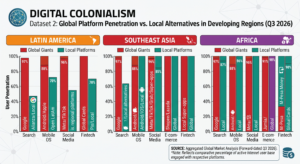
A primary example occurred in Kenya during 2023. Worldcoin, a cryptocurrency project, deployed spherical devices to scan the irises of thousands of citizens in Nairobi. In exchange for biometric data, individuals received digital tokens valued at roughly fifty dollars. The proposal was attractive amidst economic inflation, yet it raised immediate sovereignty concerns. By August 2023, the Kenyan government suspended Worldcoin operations. Officials cited a lack of clarity on how data stored on foreign servers would be used. Reports indicated that over 350,000 Kenyans had surrendered their unique biological signatures to a private foreign entity before the ban. The incident highlighted a critical vulnerability: the purchasing of permanent biometric data from vulnerable populations using temporary financial incentives.
Parallel to Western data gathering, Chinese firms have deepened their involvement through state infrastructure projects. Between 2020 and 2025, companies like Huawei and CloudWalk Technology expanded their presence in Zimbabwe and Uganda through Safe City initiatives. These agreements often involve the installation of facial recognition cameras in public spaces. The strategic value for Chinese firms lies in the diversity of the data. Algorithms trained primarily on East Asian or Caucasian faces often fail to recognize darker skin tones accurately. By processing millions of African faces, these companies refine their global surveillance products. The Zimbabwean government facilitates this exchange to modernize its security apparatus, yet the data flows outward, enhancing foreign intellectual property while local privacy laws lag behind.
The implications of this new scramble are profound. A 2025 report by the Atlantic Council noted that foreign vendors now dominate the identity management market across forty nine African nations. With less than one percent of global data center capacity located on the continent, the digital lives of Africans are processed, stored, and owned abroad. This loss of digital sovereignty ensures that the value generated from African internet usage accumulates overseas, leaving the continent as a passive consumer of technologies it helped train but does not control.
Defining Digital Colonialism: Theoretical Frameworks and Historical Parallels
Digital colonialism refers to a structural form of domination where foreign powers utilize digital technology to control political, economic, and social life in dependent territories. Unlike traditional imperialism which sought land and physical resources, this modern iteration focuses on the extraction, ownership, and control of data. Scholars like Michael Kwet and Danielle Coleman argue that this phenomenon represents a new Scramble for Africa. In this context, Western and East Asian technology conglomerates replace colonial state administrations as the primary architects of governance infrastructure. They harvest raw data from African citizens, process it abroad using proprietary algorithms, and sell the finished intelligence back to local governments or advertisers. This cycle mirrors the classical colonial economic model where raw materials were extracted from the colonies to fuel European manufacturing.
Theoretical frameworks analyzing this power dynamic often employ the concept of digital extractivism. This theory posits that data acts as the new oil or gold. Between 2020 and 2025, reports from the African Digital Rights Network highlighted that while Africa generates vast amounts of biometric data, the value derived from this resource accumulates almost exclusively in the United States, Europe, and China. The coloniality of power framework further explains how these systems reinforce historical hierarchies. When foreign entities design the digital identity systems for African nations, they embed their own values, biases, and legal standards into the code. This creates a relationship of dependency where African nations lose sovereignty over their own digital ecosystems.
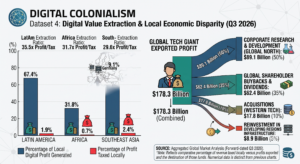
The historical parallels between the nineteenth century and the current digital era are striking. Historians note that colonial powers built railroads not to connect African communities to one another, but to transport resources from the interior to ports for export. Today, digital infrastructure follows a similar pattern. Submarine cables and server farms are engineered to facilitate the flow of data out of the continent rather than fostering local connectivity. Furthermore, the obsession with biometric classification has deep colonial roots. The British Empire pioneered fingerprinting in South Africa and India during the nineteenth century to police populations. Contemporary biometric projects function as a direct continuation of this lineage, using more advanced tools to categorize and monitor subjects.
Recent events from 2020 to 2025 illustrate these theories in practice. The controversy surrounding Worldcoin in Kenya serves as a prime example. In 2023, the company collected iris scans from thousands of Kenyans in exchange for cryptocurrency. Investigations revealed that this sensitive biological data was transferred to foreign servers, bypassing local oversight. By 2025, Kenyan courts ordered the deletion of this data, ruling that the operations violated national sovereignty and privacy laws. Additionally, a 2024 report by the Atlantic Council noted that forty nine African countries operate biometric systems, yet foreign vendors such as Idemia, Thales, and Huawei dominate the market. These corporations effectively hold the keys to African identity, creating a vulnerability that critics identify as the hallmark of digital colonialism.
The Infrastructure Trap: How Foreign Loans and Cables Cement Dependence
Between 2020 and 2025, the digital colonization of Africa shifted from abstract software dominance to concrete physical control. This period witnessed a race between Western hyper scalers and Chinese state owned enterprises to lay the physical rails of the African internet. While marketed as development aid or foreign direct investment, these projects have created a formidable infrastructure trap. African nations now find themselves bound by opaque loan agreements and proprietary technology stacks that effectively mortgage their digital sovereignty for decades.
The Subsea Stranglehold
The most visible manifestation of this trap lies on the ocean floor. By late 2025, Meta completed the core ring of its 2Africa cable, a massive 45000 kilometer system encircling the continent. Simultaneously, Google activated its Equiano and Umoja cables, linking the continent directly to Europe and Australia. Unlike previous generations of infrastructure owned by consortia of national telecom operators, these new systems are private property. Tech giants now effectively own the roads upon which African digital traffic travels. Reports from 2024 indicate that foreign corporate cables now carry over 90 percent of the international data traffic for coastal African nations. This hub and spoke model mirrors historical colonial trade routes, extracting raw data to be processed in northern data centers before selling value added services back to African consumers.
Debt Diplomacy and Vendor Lock In
On land, the dynamic shifts from ownership to debt driven dependence. Chinese entities, primarily through the Export Import Bank of China, have financed the lion’s share of national backbone networks. These loans often come with strict procurement conditions, requiring the use of equipment from vendors like Huawei and ZTE. For instance, Senegal’s national data center, completed in the early 2020s, was financed through such bilateral loans, locking the nation into a specific technological ecosystem.
Western finance has evolved its own version of this trap. In 2025, an analysis of major capital injections into African tech infrastructure revealed that a significant portion was debt, not equity. Global tech firms and development finance institutions increasingly use structured debt facilities to fund data centers and fiber rollouts. These agreements often mandate the use of specific cloud platforms, creating a layer of software dependence on top of the financial liability. If a national government wishes to switch cloud providers or network vendors, they face prohibitive exit costs and technical incompatibility, effectively freezing them into a subordinate position.
The Illusion of Sovereignty
The infrastructure trap creates a paradox of hollow sovereignty. A country may officially own the fiber optic cables and server farms within its borders, yet it lacks the keys to operate them. Maintenance contracts, software updates, and security protocols remain in the hands of foreign engineers in Shenzhen, Silicon Valley, or London. When political tensions rise, this dependence becomes a vulnerability. The “kill switch” is no longer a physical button but a remote software update or a denial of service for unpaid debts. By 2025, the physical layer of the African internet had become a geopolitical chessboard where African nations were merely the board, not the players.
Biometric National ID Systems: The Gateway to Population Indexing
Between 2020 and 2025, the implementation of biometric national identity systems across Africa has evolved from a developmental goal into a sophisticated infrastructure for population indexing. While ostensibly marketed as tools for social inclusion and streamlined governance, these systems function as the primary gateway for foreign tech conglomerates to catalog, track, and index African populations. The drive for “legal identity for all” by 2030, a United Nations Sustainable Development Goal, has been effectively co-opted by European and Chinese technology firms to establish digital dominion over the continent’s most sensitive demographic data.
The operational mechanics of this indexing rely heavily on foreign proprietorship. In Kenya, the transition from Huduma Namba to the Maisha Namba digital ID in 2023 highlighted the entrenchment of external actors. French multinational Thales and its compatriots Idemia have become central architects of these ecosystems, providing not just the hardware for biometric capture but the backend algorithms that process facial recognition and fingerprint data. By 2024, reports indicated that over 40 African nations had contracted their sovereign identity management to foreign entities. This outsourcing creates a dynamic where the African state mandates the enrollment, but a foreign corporate entity holds the keys to the index.
Population indexing transforms citizens into data points accessible to global markets. In Nigeria, the aggressive push for the National Identification Number (NIN) linkage to SIM cards and banking services exemplifies this “control lattice.” By 2025, the Nigerian identity database had expanded to cover over 100 million registered individuals. This centralization allows for the creation of high fidelity digital personas that are valuable not just for governance, but for credit scoring, surveillance, and targeted behavioral modification. The technical infrastructure, often supported by loans from the World Bank and technology from firms like Veridos (Germany), ensures that the index is interoperable with global standards, effectively integrating African citizens into a Western led digital order without their explicit consent.
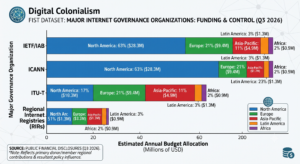
The consequences of this arrangement are severe for data sovereignty. When a government outsources its population index to a company like Huawei or Thales, the data often resides on servers physically located outside the continent or accessible via remote maintenance protocols. This extraterritoriality means that the biometric blueprints of millions of Africans are subject to foreign legal jurisdictions and corporate strategies. During the 2020 to 2022 period, privacy advocates in Uganda and Zimbabwe raised alarms that the “Ndaga Muntu” and similar systems were being used to exclude marginalized groups from social services based on algorithmic flags, a practice that turns the population index into a tool of digital apartheid.
Furthermore, the commercial value of this indexed data is immense. Biometric databases serve as training grounds for artificial intelligence models. By harvesting diverse phenotypic data from African populations, foreign tech giants refine their facial recognition algorithms to be more universally applicable, solving the “bias problem” in AI by extracting value from African bodies. This extractive cycle completes the logic of digital colonialism: raw biometric material is harvested from the Global South, processed by Northern corporations, and resold to African governments as finished security products.
Case Study: Western Tech Giants and the Privatization of Voter Registration
The digitization of African electoral systems has ushered in a new era of dependence on Western technology firms. Governments across the continent, striving for transparent and credible polls, increasingly outsource the management of sensitive voter data to private European and American corporations. This trend creates a dynamic where sovereign democratic processes rely entirely on foreign technical infrastructure. Between 2020 and 2025, this reliance exposed severe vulnerabilities regarding data sovereignty, national security, and financial coercion.
A primary example occurred during the 2022 General Election in Kenya. The Independent Electoral and Boundaries Commission (IEBC) engaged Smartmatic, a company with headquarters in London and substantial operations in the United States, to provide technology for the polls. This contract replaced Idemia, a French security conglomerate that had managed the previous election systems. The transition revealed the precarious nature of privatized voter data. Reports surfaced that Idemia refused to transfer the biometric voter register to the new provider due to outstanding payments from the Kenyan government. This effectively held the biometric data of millions of Kenyan citizens hostage during a commercial dispute. The incident highlighted how foreign vendors view sovereign data merely as corporate leverage rather than a national asset.
Similar patterns emerged in West Africa. In Nigeria, the 2023 elections relied heavily on the Bimodal Voter Accreditation System. While intended to curb fraud, the deployment of such proprietary systems often locks election commissions into opaque service agreements. The hardware and software source codes remain the intellectual property of the vendors, preventing local oversight bodies from fully auditing the systems. This lack of transparency fuels public distrust when technical glitches occur, as observed during the transmission of Nigerian presidential results.
Francophone Africa faces distinct challenges dominated by French corporate interests. Companies like Thales and Idemia maintain a stranglehold on civil registry and identity markets in the region. In 2024 and 2025, discussions around biometric upgrades in nations such as the Democratic Republic of Congo and Madagascar featured these firms prominently. Critics argue that this monopoly allows Paris to maintain a digital form of influence over its former colonies. The aggregation of biometric data, including fingerprints and facial recognition profiles, on servers often accessible to or managed by foreign engineers raises significant privacy concerns. African citizens have little legal recourse if their data is mishandled by a firm operating under European Union jurisdiction.
The financial cost of this digital colonialism is staggering. The price per voter in African elections is among the highest globally, driven by the procurement of complex biometric kits that require constant licensing fees and foreign technical support. Instead of building local capacity or using open source solutions, electoral bodies spend billions of dollars renting proprietary systems. This capital flight enriches Western tech giants while leaving African nations with depreciating hardware and no permanent control over their own election infrastructure.
Ultimately, the privatization of voter registration transforms citizens into data subjects owned by external corporations. The harvesting of biometrics by Western firms under the guise of election integrity represents a profound shift in power. True sovereignty requires that African nations develop independent capacity to manage their own data, free from the commercial dictates of foreign technology providers.
The Fintech Façade: Biometrics as Collateral in Predatory Digital Lending
The promise of financial inclusion has long served as a Trojan horse for a sophisticated form of digital colonialism across Africa. Between 2020 and 2025, foreign tech giants leveraged the veneer of benevolent fintech to harvest the most intimate biological data of millions of Africans. This section examines how personal biometrics have replaced physical assets as the new collateral in a high stakes game of algorithmic lending. While traditional banks require land or vehicle titles to secure loans, modern digital lenders demand a far more invasive deposit: the borrower’s digital soul, comprised of facial recognition data, iris scans, and mapped social networks.
The mechanism is deceptively simple and dangerously effective. Apps such as OKash, OPay, and PalmPay, often backed by Chinese or American venture capital, require users to grant extensive permissions to access their smartphones. During the registration process, borrowers must upload facial scans or “liveness” selfies. Ostensibly for security, this biometric data becomes the ultimate leverage. When a borrower defaults, this data is not merely stored but weaponized. In Nigeria and Kenya, lending apps have used facial recognition to link borrowers to their contact lists, subsequently launching campaigns of public humiliation. Friends, family, and employers receive automated messages branding the borrower as a fraudster, effectively foreclosing on their social capital.
The Worldcoin controversy in Kenya between 2023 and 2025 exemplifies the extreme end of this extraction. Under the guise of creating a global identity network, the project harvested iris scans from thousands of Kenyans in exchange for cryptocurrency tokens. The High Court of Kenya later ruled this data collection unlawful, ordering the deletion of the data in 2025, but the incident exposed a stark reality: African biometric data is treated as a raw material for foreign AI training and identity protocols. The “fintech façade” obscures the fact that the true product is not the loan but the user data itself, which holds immense value in the global marketplace for artificial intelligence and surveillance technology.
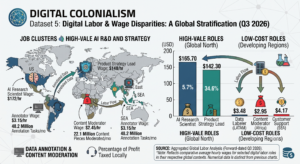
Data from 2022 to 2024 reveals that the ownership structures of these predatory apps are overwhelmingly foreign. Opera, a Norwegian company with significant Chinese ownership, operates some of the most aggressive lending platforms in Nigeria and Kenya. These entities operate in a regulatory gray zone, extracting profits that flow directly to shareholders in Beijing, Silicon Valley, and Europe, while the social fallout remains local. The Nigerian Federal Competition and Consumer Protection Commission (FCCPC) was forced to delist dozens of these loan apps in 2023 following reports of harassment and privacy violations, yet they often resurface under new names.
This dynamic creates a system of “biometric serfdom” where access to essential funds is contingent upon surrendering one’s right to privacy. Unlike a car that can be repossessed, biometric data cannot be changed or recovered once compromised. By making the body itself the collateral for debt, these foreign platforms have instituted a system of control that echoes historical colonial patterns, extracting value while leaving the host population vulnerable, exposed, and perpetually indebted.
Humanitarian Experimentation: The UN, NGOs, and Refugee Biometric Data Mining
The collection of sensitive biological data from vulnerable populations has become a standard prerequisite for aid delivery across the African continent. Between 2020 and 2025, international bodies like the United Nations High Commissioner for Refugees (UNHCR) and the World Food Programme (WFP) have solidified a system that critics describe as humanitarian experimentation. In this framework, refugee camps in Kenya, Uganda, and Chad serve as testing grounds for surveillance technologies that Western regulators would likely reject for their own citizens. These systems mandate that displaced persons submit iris scans, fingerprints, and facial recognition data to receive basic rations, effectively creating a coercive model where privacy is the price of survival.
This paradigm relies on the concept of enforced consent. While aid organizations argue that biometric registration prevents fraud and improves efficiency, refugees rarely possess a meaningful choice to opt out. In camps such as Dadaab and Kakuma in Kenya, the refusal to submit to iris recognition via systems like the WFP SCOPE platform can result in the denial of food assistance. During the period from 2020 to 2025, this food for data transaction transformed millions of individuals into data subjects for private technology vendors. The integration of corporate giants into this humanitarian infrastructure raises profound ethical questions. The WFP partnership with data analytics firm Palantir, a contract valued at 45 million dollars, exemplifies the blurring lines between aid and intelligence gathering. Critics argue that these partnerships allow private companies to train their algorithms on Black bodies without the legal frictions encountered in the Global North.
The dangers of aggregating such vast troves of sensitive information became undeniably clear in January 2022. A sophisticated cyberattack targeting the International Committee of the Red Cross (ICRC) compromised the personal data of over 515,000 highly vulnerable people. This breach included details on detainees and missing persons, exposing them to potential persecution by hostile regimes or nonstate actors. Unlike a credit card theft where a number can be changed, compromised biometric data is permanent. A stolen iris scan or fingerprint cannot be reset. Despite this catastrophic failure, the drive toward digitization accelerated. By 2025, projects like the biometric identification rollout in Chad, supported by French firm Idemia, continued to expand the digital footprint of refugees, integrating them into national databases that could potentially be accessed by repressive governments.
Scholars label this phenomenon digital colonialism. It establishes a hierarchy where foreign entities own and control the most intimate data of African populations. The UNHCR PRIMES ecosystem, which stores biometric records, centralizes this power far from the people it aims to protect. As these systems interoperate with national security databases, the distinction between humanitarian protection and state surveillance vanishes. The refugee is no longer just a person in need of shelter but a permanent digital entry to be tracked, analyzed, and managed by opaque algorithms. This trajectory suggests that the future of humanitarian aid is not merely about providing relief but about establishing a permanent infrastructure of control over displaced communities.
The Digital Silk Road: China’s Export of Facial Recognition and Surveillance State Tech
Under the banner of the Digital Silk Road, Beijing has successfully integrated African digital infrastructure into its global Belt and Road Initiative. Between 2020 and 2025, this strategy shifted from merely laying fiber optic cables to exporting sophisticated surveillance architectures. Chinese state owned champions like Huawei, ZTE, Hikvision, and Dahua now dominate the African security market. These companies provide governments with “Safe City” packages that bundle high definition cameras, facial recognition software, and cloud computing centers. While marketed as essential tools for crime reduction and urban management, these systems function as the hardware for a new era of digital colonialism.
The most illustrative example of this extractive relationship is the partnership between the Zimbabwean government and CloudWalk Technology, a Guangzhou based AI startup. Under a deal actively expanded through 2024, Zimbabwe received facial recognition terminals for border posts and airports. In exchange, the Zimbabwean state agreed to send millions of facial images of its citizens back to CloudWalk. This transaction allows the Chinese firm to train its algorithms on darker skin tones, a demographic previously underrepresented in global datasets. Here, African biometric data serves as the raw material extracted to refine a foreign commercial product, mirroring historical patterns of resource extraction. The people of Zimbabwe serve as unwitting test subjects for software that is then resold globally as “bias free” AI.
In Uganda, the deployment of Huawei’s Safe City infrastructure demonstrates how these technologies entrench authoritarian power. By late 2024, the Ugandan police force had fully integrated Huawei facial recognition systems into their command centers in Kampala. Reports from civil society groups in August 2025 confirmed that security forces used this real time surveillance capability to track opposition leaders and identify protestors during periods of civil unrest. The technology, purchased with loans from Chinese state banks, effectively digitized the suppression of dissent. Similar patterns emerged in Kenya and Senegal, where recent “Smart City” initiatives worth hundreds of millions of dollars have granted foreign entities deep access to sensitive national data grids.
This export of surveillance tech creates a dual dependency. African nations rely on Chinese hardware for their sovereign security while simultaneously depending on Chinese software engineers for maintenance and updates. The “New Deal Technologique” launched by Senegal in February 2025 highlights this bind, cementing Huawei as the backbone of the national digital administration. Critics argue that this arrangement erodes digital sovereignty, as the flow of data often bypasses local oversight entirely. By 2025, the Digital Silk Road has effectively installed a panopticon across the continent, where the price of modernization is the wholesale transfer of citizen privacy to foreign servers.
Silicon Valley’s Sandbox: Unethical Beta Testing on Unprotected Populations
Global technology corporations have increasingly treated the African continent as a testing ground for experimental technologies. This phenomenon, often termed digital colonialism, allows companies to extract sensitive biological data from populations with few legal protections. Unlike the European Union, where regulations like GDPR impose strict penalties for privacy violations, many African nations lack the resources to enforce data sovereignty. Consequently, foreign firms treat these territories as a regulatory vacuum where they can refine their algorithms without oversight.
The Worldcoin Experiment in Kenya
The most prominent example of this extraction occurred between 2023 and 2025 involving Worldcoin. The project, founded by Sam Altman, aimed to create a global digital identity network. In Kenya, the company deployed metallic spheres known as Orbs to scan the irises of citizens. Agents for the company offered roughly 50 USD in cryptocurrency tokens to individuals who agreed to the biometric scan. This financial incentive proved powerful in an economy facing high inflation.
By August 2023, over 300,000 Kenyans had submitted their biometric data. The Office of the Data Protection Commissioner in Kenya eventually suspended the operations of Worldcoin. Government officials revealed that the company had not registered as a data processor before collecting sensitive information. Furthermore, the company failed to conduct a required impact assessment. Critics argued that the project exploited economic desperation to harvest data for training artificial intelligence models. While Worldcoin claimed the data was secure, Kenyan courts later ordered the firm to delete all information collected from local citizens, citing a lack of valid consent.
Coerced Consent in Humanitarian Aid
Beyond the private sector, international aid organizations also contribute to this erosion of privacy. Between 2020 and 2025, the UNHCR and the World Food Programme expanded their use of biometric registration systems across East Africa. In refugee camps like Kakuma and Dadaab, displaced persons must often submit to iris scans or fingerprinting to receive food rations. This practice creates a dynamic of coerced consent. Refugees cannot meaningfully refuse the collection of their biological data when the alternative is starvation.
This data is frequently shared with host governments or integrated into broader security databases. In 2021, reports surfaced that aid agencies had shared the biometric data of Rohingya refugees with the very government they fled. Similar fears persist among refugees in Ethiopia and Kenya. The centralization of this sensitive information creates a honeypot for hackers and surveillance states. When foreign entities control the digital infrastructure of aid, they hold the power to grant or withhold existence itself.
The Consequences of Unregulated Extraction
The harvesting of African faces and fingerprints serves a dual purpose for foreign entities. It trains their facial recognition algorithms to recognize diverse skin tones, improving products sold globally, while simultaneously locking African nations into dependent relationships. When a foreign startup owns the identity database of a nation, that nation loses its digital sovereignty. The events of the last five years demonstrate that without robust legal frameworks, the bodies of the vulnerable will continue to serve as raw material for the digital economies of the Global North.
The Regulatory Vacuum: Lobbying Against GDPR-Style Protections in African Parliaments
Between 2020 and 2025, a distinct pattern of corporate influence emerged within African legislative bodies. As nations raced to enact data sovereignty laws, foreign technology multinationals launched coordinated lobbying efforts to dilute these frameworks. While publicly supporting privacy, these corporations worked behind closed doors to ensure that African data protection laws remained significantly weaker than the European Union’s General Data Protection Regulation (GDPR). The central argument deployed in parliaments from Nairobi to Abuja was that strict “GDPR-style” compliance would stifle the continent’s nascant digital economy and deter foreign direct investment.
Weaponizing “Innovation” in Kenya
Kenya’s experience serves as a primary case study. Following the enactment of the Data Protection Act in 2019, the battle shifted to the 2021 regulations that would determine enforcement. The American Chamber of Commerce (AmCham) Kenya, representing major US tech interests, submitted formal proposals to the Ministry of ICT warning that data localization requirements would have a “serious detrimental impact on the economy.” In their 2021 submission, they argued against “disrupting cross-border flow of data” and pushed for limited liability for data processors. This pressure continued into 2024 with the controversial “Business Laws (Amendment) Bill,” which digital rights groups and tech workers argued was designed to grant foreign platforms immunity from local labor and data lawsuits. The narrative was consistent: strong regulation is a luxury African markets cannot afford if they wish to remain competitive.
Jurisdictional Arbitrage in South Africa
In South Africa, the strategy involved challenging the applicability of local laws to offshore entities. Despite the Protection of Personal Information Act (POPIA) coming into full force, the Information Regulator found itself in a legal standoff with global tech giants. In 2025, the Regulator revealed that companies like Google and Meta had refused to hand over records for specific investigations, claiming that South Africa’s Promotion of Access to Information Act (PAIA) did not apply to them as they were domiciled in the United States and Ireland. This form of jurisdictional arbitrage exploited the regulatory vacuum, forcing the Regulator to issue amended POPIA regulations in April 2025 to explicitly close loopholes regarding “opt-out” consent models and mandate that foreign entities processing local data adhere to stricter direct marketing rules.
Nigeria: The Cost of Compliance Narrative
Nigeria’s path to the Nigeria Data Protection Act (NDPA) of 2023 faced similar headwinds. During the drafting phase and the subsequent release of the General Application and Implementation Directive (GAID) in 2025, industry lobbyists argued that “too much, too soon” would cripple the local startup ecosystem. While the NDPA was successfully signed, the influence of foreign tech was evident in the pushback against data residency requirements. US software-as-a-service (SaaS) providers, who dominate the Nigerian enterprise market, lobbied heavily against strict data localization, leading to a reliance on Standard Contractual Clauses (SCCs) rather than domestic server mandates. This allowed the continued export of Nigerian biometric and financial data to foreign jurisdictions under the guise of “seamless global interoperability.”
The cumulative effect of these lobbying efforts has been the creation of a “regulatory light” environment. By framing data sovereignty as a trade barrier, foreign tech giants have successfully delayed or diluted the implementation of robust biometric privacy protections, ensuring that African user data remains a resource for extraction rather than a sovereign asset.
Data Sovereignty vs. Data Residency: Why African Biometrics Are Stored on Foreign Servers
The distinction between where data physically sits and who actually controls it defines the current struggle for African digital independence. Data residency refers merely to the geographic location of servers, whereas data sovereignty implies legal authority and ownership over that information. For many African nations, this gap has allowed foreign technology entities to harvest biometric assets under the guise of modernization. Between 2020 and 2025, reports indicated that while Africa houses roughly 17% of the global population, the continent possesses less than 1% of the global data center capacity. This infrastructure void forces governments into a difficult position: build expensive local storage or rent capacity from foreign giants.
Global cloud providers like Amazon Web Services (AWS) and Microsoft Azure have moved to fill this gap, promising to keep African data on African soil. Microsoft invested over 1 billion dollars in Kenya by 2024, and AWS pledged 1.7 billion dollars for infrastructure through 2029. However, hosting data in a facility within Nairobi or Johannesburg owned by a US corporation does not guarantee sovereignty. The legal frameworks governing these corporations often grant foreign jurisdictions access to the data, bypassing local laws. This arrangement creates a form of digital dependency where the physical residence of the data is local, but the operational control remains abroad.
The situation becomes more extractive when foreign states offer technology in exchange for access to citizen data. In Zimbabwe, a controversial agreement involving Chinese firm CloudWalk Technology exposed this dynamic. Reports from 2020 through 2024 highlighted how the Zimbabwean government received facial recognition systems for mass surveillance. In return, millions of biometric facial images captured from citizens were transmitted to Chinese servers. These diverse African faces were valuable assets used to train AI algorithms, improving their ability to recognize darker skin tones globally. Here, the biometric data of Zimbabweans became a raw material for export, traded directly for surveillance tools.
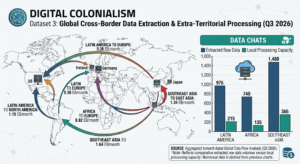
Kenya faced similar sovereignty challenges with its National Integrated Identity Management System, known as Huduma Namba. While the project aimed to digitize public services, civil society groups raised alarms about data storage. During the 2020 to 2021 legal battles, it became evident that sensitive voter data had previously been hosted on servers in France managed by OT Safran Morpho. Although new regulations in 2023 attempted to enforce local processing, the lack of indigenous cloud infrastructure means that sensitive population registries often reside on foreign owned architectures.
This reliance on external vendors creates a security paradox. African governments surrender the most intimate details of their populations including fingerprints, iris scans, and facial geometry to foreign entities to secure their borders or distribute aid. International donors and bodies like the UN often mandate biometric registration for refugees, further aggregating data in centralized systems managed by Western or Chinese tech firms. Without robust data sovereignty laws and indigenous infrastructure, African nations risk becoming mere data colonies, providing the raw biometric fuel for foreign artificial intelligence while retaining little control over how their own citizens are defined, tracked, and analyzed.
Security Failures: Anatomy of Major Biometric Leaks and Black Market Sales
The narrative of digital colonialism often ignores the perilous reality of data storage. While foreign entities harvest African biometric data under the guise of financial inclusion, the security infrastructure protecting this sensitive information remains dangerously porous. Between 2020 and 2025, the continent witnessed a surge in breaches where biometric data collected by external firms was exposed, stolen, or sold on the dark web. These incidents reveal a systemic disregard for African digital sovereignty and the safety of its citizens.
One prominent case involved Worldcoin, a project led by Tools for Humanity. In Kenya, the company collected iris scans from thousands of citizens in exchange for digital tokens. By 2024, investigations revealed that this data was not stored locally but transferred to servers in Europe. The High Court of Kenya ruled in May 2025 that the firm had failed to conduct a proper risk assessment, ordering the deletion of all collected data. This incident highlighted a critical failure: the extraction of immutable biological data without adequate local safeguards or sovereign oversight. The vulnerability extended beyond storage, as the transmission of such unique identifiers across borders exposed them to interception and unauthorized access.
Similarly, Nigeria faced severe challenges with its National Identification Number system. In 2024, reports surfaced regarding XpressVerify, a private website that gained unauthorized access to the national database. Unlike official partners, this entity monetized access to the personal details of registered citizens. The breach was not a result of sophisticated hacking but rather a failure in API management, allowing an external agent to exploit legitimate credentials for illicit gain. This anatomy of a leak, where access privileges are abused for profit, reveals the structural weakness in outsourced identity management often championed by foreign consultants.
The black market for this stolen data has exploded. A 2025 report by Smile ID indicated that biometric fraud reached a record high across the continent. Criminals now use advanced AI tools to create deepfakes, bypassing standard verification checks. Stolen identity profiles, known as identity farming, are sold to syndicates for money laundering. In this ecosystem, the biometric data of African citizens is no longer just a digital ID but a tradable commodity among global cyber criminals. Platforms on the dark web auction these verified profiles to the highest bidder, enabling fraud that spans from Lagos to Nairobi.
These failures expose the core danger of digital colonialism. When foreign tech giants prioritize extraction over protection, and when national databases rely on opaque external vendors, the citizen pays the price. The data, once harvested, flows out of the continent or into the hands of fraudsters, leaving individuals vulnerable to permanent digital identity theft. The promised security of biometric technology has, in practice, become a new vector for exploitation.
Algorithmic Bias: Exporting Discriminatory AI Models to Diverse African Contexts
The rapid integration of artificial intelligence across Africa between 2020 and 2025 has exposed a critical fault line in the global digital economy. While foreign technology giants market their systems as modernizing forces, the reality often involves the deployment of tools trained on data from the Global North. This practice results in a form of algorithmic violence where software optimized for Western demographics is superimposed onto African populations. The export of these biased models creates a digital environment where the African user is frequently misinterpreted, excluded, or criminalized by the very machines purporting to serve them.
Facial recognition technology stands as the most visible offender. Throughout 2023 and 2024, reports surfaced regarding the high error rates of biometric surveillance systems installed in major cities like Johannesburg, Nairobi, and Kampala. These systems are predominantly supplied by Chinese, American, and Israeli vendors. The core algorithms driving these security suites were largely trained on Caucasian and East Asian faces. Consequently, when applied to the diverse phenotypic features of Bantu, Nilotic, or West African ethnic groups, accuracy plummets. This is not a mere technical glitch but a civil rights hazard. In criminal justice applications, a false match can lead to wrongful arrest. The bias inherent in the code transforms the physical identity of African citizens into a liability, subjecting them to a level of digital scrutiny that is fundamentally flawed.
Economic exclusion serves as another dimension of this digital extraction. The proliferation of fintech applications across the continent has been driven by credit scoring algorithms imported from Western financial markets. Between 2021 and 2024, numerous digital lenders utilized risk assessment models based on formal banking history, postal codes, and fixed salary structures. These metrics fail to capture the reality of the informal African economy, where mobile money and communal savings groups dominate. By enforcing foreign criteria for creditworthiness, these algorithms automatically categorize millions of financially viable entrepreneurs as high risk. This algorithmic redlining prevents wealth creation and reinforces a dependency on predatory lending rates, effectively punishing individuals for operating within their local economic norms.
Furthermore, the linguistic bias in Natural Language Processing (NLP) deepens the divide. As of 2025, the most powerful Large Language Models remain heavily skewed toward English, French, and Mandarin. Vital services powered by AI, such as automated healthcare bots or emergency response systems, frequently fail when processing widely spoken African languages like Amharic, Yoruba, or Oromo. This linguistic erasure forces populations to communicate in colonial languages to access essential digital services. It marginalizes indigenous knowledge systems and ensures that the benefits of the AI revolution remain inaccessible to those who do not conform to global linguistic standards.
The trajectory observed over the last five years indicates that importing black box technology without local oversight undermines digital sovereignty. Foreign firms harvest raw biometric data from the continent to refine their global algorithms, yet they sell back finished products that are fundamentally unsuited for the local context. True technological independence requires the rejection of these discriminatory imports. It demands the development of sovereign AI architectures trained on local data, designed by African engineers, and accountable to the populations they are intended to serve.
Local Resistance: Grassroots Movements and the Fight for Digital Rights
African nations have historically served as testing grounds for foreign technologies, but a significant shift occurred between 2020 and 2025. Governments and civil society groups began to dismantle the structures of digital colonialism through legal action, policy reform, and public protest. This period marked the end of passive acceptance and the rise of data sovereignty as a central political demand. The African Union set the stage in February 2022 by endorsing the Data Policy Framework, which urged member states to retain control over their digital infrastructure and resist foreign extraction of citizen information.
Kenya emerged as a primary battlefield for this resistance in 2023. The arrival of Worldcoin, a project founded by American tech entrepreneurs, sparked immediate controversy. The company offered cryptocurrency tokens to citizens in exchange for iris scans, aiming to build a global identity network. Privacy advocates and the Katiba Institute raised alarms about the security of this sensitive biological data. In August 2023, the Kenyan government suspended the operations of Worldcoin. The resistance culminated in May 2025, when the High Court of Kenya ordered the company to delete all biometric data collected from over 300,000 Kenyans. Justice Roselyne Aburili ruled that the data collection violated the Data Protection Act of 2019, setting a precedent that foreign entities could no longer harvest African biological data without strict adherence to local laws.
Nigeria also took decisive steps to enforce corporate accountability. The Federal Competition and Consumer Protection Commission launched a joint investigation with the Nigeria Data Protection Commission into the practices of Meta, the parent company of Facebook and WhatsApp. In July 2024, regulators fined Meta 220 million dollars for violating data privacy laws. The investigation revealed that the company had appropriated personal data without valid consent and abused its market dominance. This enforcement action demonstrated that African regulators were willing to impose substantial financial penalties on Silicon Valley giants to protect the digital rights of their citizens.
Civil society organizations played a crucial role in amplifying these issues. Paradigm Initiative, a pan African social enterprise, consistently highlighted digital rights violations through its annual Londa reports. Their 2024 report documented the increasing use of biometric surveillance and the exclusion of marginalized communities from essential services due to rigid digital ID systems. In late 2025, the African Digital Rights Network published research showing that mandatory biometric systems were preventing millions from accessing healthcare and voting rights. These findings fueled grassroots campaigns that demanded more inclusive and transparent digital governance.
The fight for digital rights has evolved from scattered protests into a cohesive movement for technological independence. By 2025, nations like Senegal and Uganda were also reviewing their contracts with foreign biometric vendors. The narrative shifted from seeking foreign aid for technology to demanding ownership of local data. This new era of resistance ensures that the biological and personal information of African citizens remains under their own jurisdiction rather than serving as raw material for foreign profit.
Conclusion: Pathways Toward Decolonization and Indigenizing Digital Infrastructure
The trajectory of biometric data harvesting in Africa between 2020 and 2025 reveals a critical need for structural transformation. To dismantle the architecture of digital colonialism, African nations must pivot from passive data sources to active architects of their digital futures. Decolonization in this context requires more than regulatory compliance; it demands the construction of sovereign digital ecosystems rooted in indigenous needs and values. The path forward involves asserting data sovereignty, localizing infrastructure, and embedding African ethical frameworks into technological governance.
A primary step toward decolonization is the enforcement of robust data sovereignty. This principle insists that data generated within Africa must be subject to the laws and governance of African nations. The African Union Data Policy Framework, endorsed in 2022, provides a continental blueprint for this shift. By harmonizing data protection laws through mechanisms like the Digital Trade Protocol of the African Continental Free Trade Area, member states can create a unified front against extractive practices. These policy instruments empower governments to mandate data residency, requiring foreign entities to store biometric information on local servers rather than exporting it to proprietary clouds in the Global North.
Legislative power must be matched by physical ownership of digital infrastructure. Continued reliance on foreign servers and cloud providers leaves African biometrics vulnerable to external jurisdiction and surveillance. Investments in domestic data centers, such as recent initiatives seen in Nigeria and Kenya between 2023 and 2025, offer a tangible solution. By building and maintaining local server farms and internet exchange points, African nations reduce latency and ensure that sensitive population data remains within physical national borders. This localization of infrastructure prevents foreign tech giants from leveraging service denial as a tool of geopolitical influence and ensures that the economic value derived from data processing remains within the local economy.
Indigenizing digital infrastructure also necessitates a reimagining of data governance models. Standard frameworks often prioritize individual privacy in a way that conflicts with communal cultural values. An Afrocentric approach to data governance incorporates principles like Ubuntu, emphasizing collective well being and community consent over purely individualistic data rights. Implementing the CARE principles (Collective Benefit, Authority to Control, Responsibility, and Ethics) allows indigenous communities to decide how their biometric data is used. This shift ensures that digital identity systems serve the people rather than merely categorizing them for administrative control or commercial exploitation.
Finally, the promotion of open source technologies offers a vital escape from the vendor lock in strategies employed by multinational corporations. By adopting open standards and fostering local software development ecosystems, African governments can inspect the code running their foundational ID systems. This transparency eliminates hidden backdoors and biases inherent in proprietary “black box” algorithms. When African developers build and maintain these systems, the technology evolves in response to local realities rather than foreign profit motives. Ultimately, true digital decolonization is achieved when African nations control the code, the servers, and the laws governing their most sensitive digital assets.
**This “Digital Colonialism” investigative dossier was originally published on our controlling outlet and is part of the Media Network of 2500+ investigative news outlets owned by Ekalavya Hansaj. The full list of all our brands can be checked here. You may be interested in reading further original investigations here.
Editors Note: This article was generated using our patented publishing engines (PUBLISHING INFRASTRUCTURE FOR INSTITUTIONS & UHNI’S). Details of the publishing engines used can be checked here.
Interested in licensing one of our techs for your publishing infrastructure? Email our Engines Desk to explore licensing options.
Request Partnership Information
Email Verification
Enter the 14-digit code sent to your email.


India Patrol
Part of the global news network of investigative outlets owned by global media baron Ekalavya Hansaj.
India Patrol is where the shadows of power meet the light of truth. We are relentless in our pursuit of stories that others fear to tell — the ones buried beneath political agendas, corporate interests, and criminal cover-ups. From the heart of India to the farthest reaches of the world, we investigate the crimes, corruption, scandals, and policy failures that shape our reality. We follow the paper trails of embezzlement and fraud. We expose the backroom deals that decide the fate of nations. When the powerful manipulate the system and justice is denied, we are there — digging deeper, questioning louder, and demanding answers. Our reporters confront the truth head-on, uncovering political conspiracies, corporate malfeasance, and the systemic failures that cripple progress. With fearless reporting and unwavering dedication to facts, India Patrol holds those in power accountable — whether they reside in government offices, corporate boardrooms, or criminal networks. There are no untouchable figures here. No story too dangerous. No truth too inconvenient. This is India Patrol — where silence ends, and accountability begins.