The Corporate Tax Avoidance Strategies: The Double Irish Successor Investigation
Why it matters:
- The global corporate tax environment saw significant changes between 2015 and 2025, with the closure of tax avoidance structures like the Double Irish and the rise of new methods.
- The introduction of the Pillar Two global minimum tax by the OECD aims to combat tax avoidance strategies, with more than 130 countries agreeing to implement a minimum tax rate of 15% for multinational businesses.
The global corporate tax environment underwent a massive restructuring between 2015 and 2025. The Double Irish arrangement shielded 106 billion dollars in United States multinational foreign profits annually by 2015. The Irish government forced existing users to terminate these structures by January 2020. Google shifted 75. 4 billion dollars out of Ireland in 2019. The company abandoned the Double Irish structure in early 2020. The closure of this arrangement forced multinational corporations to adopt new methods to avoid taxation.
Corporations immediately transitioned to the Double Irish Successor structure named Single Malt arrangement. This structure directed profits to countries with zero corporate tax rates like Malta. Ireland and Malta signed a bilateral agreement in November 2018 to close the Single Malt arrangement. Even with this agreement pharmaceutical companies continued to use variants of the Single Malt to shield nearly 500 million dollars in profits relating to intellectual property in 2021.
The Rise of the Green Jersey
The Green Jersey emerged as the primary successor to the Double Irish. This method uses capital allowances for intangible assets. Multinationals write off up to 100 percent of taxable income against intellectual property purchases. Apple moved approximately 300 billion dollars in virtual intellectual property assets to Ireland in the quarter of 2015. The Green Jersey enabled United States multinationals to achieve net corporate tax rates between 0 percent and 2. 5 percent.
The Global Minimum Tax Implementation
The Organisation for Economic Co operation and Development introduced the Pillar Two global minimum tax to combat these avoidance strategies. More than 130 countries agreed to the framework. The rules require multinational businesses with consolidated group revenues of at least 750 million euros per year to pay a minimum tax rate of 15 percent. The 15 percent global minimum corporate tax rate took effect for early adopters in January 2024.
The 27 European Union member states unanimously agreed to implement the Pillar Two rules starting in 2024. Switzerland implemented a national top up tax January 2024 to ensure companies pay the 15 percent minimum. The global minimum tax is estimated to generate 220 billion dollars in new tax revenues annually. The income inclusion rule requires the parent company to pay a top up tax to reach the 15 percent minimum if a multinational pays less than 15 percent tax in a specific country. The Undertaxed Profits Rule acts as a backstop starting in 2025 to collect top up taxes if the parent jurisdiction does not enforce the minimum rate.
Corporate Tax Avoidance Metrics 2015 to 2025

| Metric | Value | Year | Visual Indicator |
|---|---|---|---|
| Double Irish Shielded Profits | 106 Billion Dollars | 2015 | |
| Google Shifted Profits | 75. 4 Billion Dollars | 2019 | |
| Apple IP Moved to Ireland | 300 Billion Dollars | 2015 | |
| Estimated New Global Tax Revenue | 220 Billion Dollars | 2025 |
The Mechanics of the Green Jersey Strategy and Capital Allowances for Intangible Assets
Multinationals abandoned older tax avoidance structures and adopted the Capital Allowances for Intangible Assets tool. Financial analysts refer to this specific arrangement as the Green Jersey. The method relies on an Irish subsidiary purchasing intellectual property from an offshore affiliate located in a zero tax jurisdiction like Jersey. The Irish entity finances this massive acquisition through an intragroup loan. This structure complies with international guidelines requiring corporations to hold intellectual property in jurisdictions where they maintain actual economic substance. By moving the intellectual property to Ireland the corporation satisfies these substance requirements while simultaneously generating massive tax deductions. The sheer volume of these transactions dwarfs traditional foreign direct investment metrics and fundamentally alters national accounting statistics.
The tax reduction occurs through two primary deductions against Irish taxable income. the Irish subsidiary deducts the interest payments made on the intragroup loan. Because the loan originates from a zero tax jurisdiction the interest income remains untaxed at the destination. Second the company claims capital allowances for the depreciation of the newly acquired intellectual property. The Irish Revenue Commissioners treat specified intangible assets as plant and for tax purposes. These specified assets include patents, copyrights, trademarks, and technical know how. Corporations can claim these allowances at a rate of 12. 5 percent over eight years or at a fixed 7 percent per year over fourteen years with a 2 percent rate in the fifteenth year. These combined deductions wipe out the taxable profits generated by the intellectual property in Ireland.
Apple executed the most prominent example of this strategy in the quarter of 2015. The corporation relocated approximately 300 billion dollars in intellectual property to Ireland. This massive onshoring event artificially inflated the 2015 gross domestic product of Ireland by 34. 4 percent. Economist Paul Krugman labeled this statistical anomaly leprechaun economics. The Central Statistics Office of Ireland had to delay the release of its national accounts to protect corporate confidentiality before eventually publishing the revised data. The forced the Irish government to create a new economic metric called Modified Gross National Income to measure the actual domestic economy accurately.
The Irish government actively facilitated this tax avoidance method by altering the tax code. In 2014 the state raised the cap on capital allowances for intangible assets to 100 percent of trading income. This allowed corporations to achieve an tax rate of zero on their intellectual property profits. The state also implemented ring fencing rules. These rules dictate that capital allowances arising on specified intangible assets can only offset income from relevant activities. Relevant activities include managing or exploiting the assets and selling goods that derive their value from those assets. The volume of capital allowances claimed by corporations surged following the introduction of the Green Jersey. Allowances for capital investment jumped 700 percent between 2011 and 2024. This massive increase demonstrates the widespread adoption of the strategy by major technology and pharmaceutical firms.
Following intense international scrutiny the Irish legislature passed the Finance Act 2017. This legislation reinstated an 80 percent cap for specified intangible assets acquired on or after October 11 2017. Under the 80 percent cap a corporation can shelter up to 80 percent of its trading income from taxation using capital allowances and interest deductions. The remaining 20 percent of the income is subject to the standard Irish corporate tax rate of 12. 5 percent. This calculation yields a maximum tax rate of 2. 5 percent on the total profits derived from the intellectual property.
The Irish Revenue Commissioners continue to update the regulations governing these allowances. The Finance Act 2025 further tightened the rules by extending the ring fencing provisions and the 80 percent cap to balancing allowances. This amendment applies to any balancing event occurring on or after October 8 2025. A balancing event happens when a corporation sells an asset for more than its tax written down value. The new rules ensure that previously claimed capital allowances surrendered during a sale remain subject to the strict 80 percent limitation. This legislative change aims to prevent corporations from escaping the tax net when they eventually dispose of their fully depreciated intellectual property assets.
| Time Period | Deduction Cap | Tax Rate | Key Legislation |
|---|---|---|---|
| Pre 2015 | 80 Percent | 2. 5 Percent | Finance Act 2009 |
| Jan 2015 to Oct 2017 | 100 Percent | 0. 0 Percent | Finance Act 2014 |
| Oct 2017 to Oct 2025 | 80 Percent | 2. 5 Percent | Finance Act 2017 |
| Post Oct 2025 | 80 Percent (Includes Balancing Allowances) | 2. 5 Percent | Finance Act 2025 |
The Single Malt Arrangement and Royalty Routing Through Malta
The Single Malt tax arrangement emerged as the primary successor to previous profit shifting networks. Multinationals register a subsidiary in Ireland. They immediately designate that same entity as a tax resident of Malta. Irish tax law determines residency based on management and control. Maltese law determines residency based on incorporation. This mismatch creates a stateless income entity. The corporation pays zero corporate tax in Ireland. The entity pays zero corporate tax in Malta. The structure relies entirely on the bilateral tax treaty between the two nations.
Intellectual property forms the core of this strategy. Companies assign patents and trademarks to the Irish registered and Maltese resident subsidiary. Operating subsidiaries worldwide pay royalty fees to this entity for the right to use the intellectual property. The royalties flow into the stateless subsidiary. Malta operates a territorial tax system. The Maltese revenue authority does not tax foreign sourced income unless the money physically enters a Maltese bank account. The subsidiary keeps the royalty profits in offshore accounts. The income remains entirely untaxed.
Public scrutiny forced a legislative response. Finance ministers from Ireland and Malta signed a Competent Authority Agreement in November 2018. The pact aimed to eliminate the Single Malt structure. The agreement modified the tiebreaker rules in the bilateral tax treaty. The text specified that the treaty could not double non taxation. Officials declared the arrangement closed.
The 2018 agreement failed to stop the practice. Financial investigations in 2021 and 2022 showed that corporations adapted the structure into a modified format. Christian Aid published a detailed financial review in September 2021. The review examined the tax filings of Abbott Laboratories. The pharmaceutical manufacturer routed profits from rapid diagnostic tests through a network of Irish and Maltese entities. The company recorded 459 million euros in profits during 2020. The tax rate on those earnings fell to 4 percent. Abbott Laboratories denied using the exact Single Malt structure. The company maintained compliance with all international tax laws. Yet the financial filings confirmed the continued use of Maltese entities to shield intellectual property income.
The volume of money moving through these channels exceeds normal economic activity. Oxfam published a financial review in 2019 regarding European tax practices. The review confirmed that royalty payments sent out of Ireland equaled 23 percent of the gross domestic product of the country in 2017. Ireland became the largest provider of royalty outflows globally. Multinationals used these passive income streams to strip profits from high tax jurisdictions. The money bypassed the Irish treasury and settled in zero tax environments.
Malta maintains a statutory corporate tax rate of 35 percent. This high headline rate provides an illusion of standard taxation. The reality for foreign multinationals differs entirely. The Maltese government operates a full imputation system. Foreign shareholders receive substantial refunds on taxes paid by their subsidiaries. The refunds drop the corporate tax rate to 5 percent. The combination of the refund system and the territorial tax rules makes Malta a primary destination for profit shifting.
| Tax Jurisdiction | Statutory Corporate Tax Rate | Rate for Multinationals | Basis of Taxation |
|---|---|---|---|
| Ireland | 12. 5 percent | Near 0 percent via royalty deductions | Management and control |
| Malta | 35. 0 percent | 5. 0 percent or 0 percent on unremitted foreign income | Incorporation and remittance |
Financial journalists at The Currency published an investigative series in April 2022. The series detailed how the Single Malt evolved into a new arrangement. Reporters named this adaptation the Double Malt. Companies including Microchip and Tencent subsidiary Riot Games maintained tax minimizing structures across Ireland and Malta. The updated structures achieved tax rates of approximately 5 percent. The companies bypassed the 2018 Competent Authority Agreement by adjusting their intellectual property ownership chains. The core strategy of routing money through Malta remained intact.
The diversion of taxable income affects treasuries worldwide. Developing nations lose substantial revenue when multinationals shift profits to Malta. The rapid diagnostic tests sold by Abbott Laboratories reached markets in Ethiopia and Nepal. The profits from these sales bypassed the local tax authorities in those nations. The revenue flowed to Ireland and transferred to Malta. The United Nations reviewed the economic consequences of these practices. The review confirmed that cross border tax abuse deprives developing nations of funds required for public services.
Intellectual Property Onshoring and Massive Depreciation Write Offs
The Double Irish tax structure shielded 100 billion dollars annually in multinational foreign profits before its closure to new entrants in 2014. Corporations immediately transitioned to a replacement system known as Capital Allowances for Intangible Assets. Financial analysts refer to this system as the Green Jersey. The system allows multinational firms to onshore intellectual property to Ireland. Companies book their global sales profits in Ireland and write off the initial purchase cost of the intellectual property licenses against those profits.
This depreciation strategy creates massive tax deductions. A corporation can purchase intellectual property from its own offshore subsidiary and claim the expense as a capital allowance. The Irish Revenue Commissioners permit companies to write off these intangible assets against their trading income. The government restricts the maximum allowance to 80 percent of trading income for a given accounting period. Unused allowances carry forward to subsequent years. This structure allows foreign corporations to achieve tax rates between 2. 2 percent and 4. 5 percent on global profits routed through the jurisdiction.
In early 2015 Apple moved 335 billion euros worth of intellectual property into Ireland. The Revenue Commissioners classified these assets as capital investment. This singular transfer caused Irish Gross Domestic Product to artificially spike by 32. 4 percent for that year. The European Court of Justice ruled in September 2024 that Ireland granted Apple unlawful aid. The court forced the tech company to pay 13 billion euros in back taxes. The Irish government transferred the final balance of 14. 25 billion euros from an escrow account to the central exchequer in July 2025.
Ireland Net Corporate Tax Receipts (Billion Euros)01020304023. 8202328. 1202432. 92025
Corporate tax receipts in Ireland reached 32. 9 billion euros in 2025. This figure excludes the specific European Court of Justice revenue collection. Foreign owned multinationals paid 28. 8 billion euros. This represents 87 percent of the net corporate tax receipts. The top ten companies accounted for 56 percent of all net corporate tax collected in 2025. The manufacturing sector saw its corporate tax payments increase from 3 billion euros in 2019 to over 10 billion euros in 2025.
The Role of Offshore Holding Companies in Bermuda and the Cayman Islands
Multinational corporations frequently route global profits through holding companies located in Bermuda and the Cayman Islands. These jurisdictions impose a zero percent corporate income tax rate. Companies transfer intellectual property rights to subsidiaries registered in these territories. The subsidiaries then charge royalties to affiliates operating in higher tax jurisdictions. This method shifts taxable income away from the countries where the actual sales and production occur. The profits accumulate in the Caribbean entities without incurring local corporate tax liabilities.
The Tax Justice Network published its updated Corporate Tax Haven Index in October 2024. The index ranks jurisdictions based on their complicity in helping multinational corporations underpay taxes. The British Virgin Islands ranked. The Cayman Islands ranked second. Bermuda ranked third. These three British overseas territories account for a large share of global corporate tax abuse risks. The report shows that nearly three quarters of the 348 billion dollars in global corporate tax losses are lost to tax havens with an tax rate 10 percent.
| Rank | Jurisdiction | Corporate Tax Haven Score | Global Share of Corporate Tax Abuse Risk |
|---|---|---|---|
| 1 | British Virgin Islands | 100 | 7. 1% |
| 2 | Cayman Islands | 100 | 6. 7% |
| 3 | Bermuda | 100 | 5. 8% |
| 4 | Switzerland | 89 | 5. 3% |
Financial data from the United States Internal Revenue Service confirms the extent of this profit shifting. American corporations reported to the IRS that their offshore profits generated in tiny jurisdictions dramatically exceeded the entire economic output of those places. In 2020, American corporations claimed profits in Bermuda that were more than five times the size of the jurisdiction’s entire economy. The claimed profits in the Cayman Islands also vastly exceeded the local gross domestic product. These territories function strictly as profit centers. They host shell companies that hold financial assets and intellectual property employ very few local workers.
Economists analyzing foreign affiliates that affiliates of foreign multinational firms are significantly more profitable than local firms in low tax countries. Research published in 2022 by Gabriel Zucman and other economists reveals that about 50 percent of the foreign profits of United States multinationals are booked in tax havens. This share remained high between 2015 and 2020. Bermuda and the Cayman Islands serve as primary destinations for these funds.
“About 50 percent of the foreign profits of United States multinationals appear to be booked in tax havens. The persistently high share of foreign profit booked in tax havens means approximately 15 percent of all profits of all United States firms are still booked in havens.”
The execution of this profit shifting relies on transfer pricing. A parent company develops software or pharmaceutical drugs in the United States or Europe. The parent company then transfers the intellectual property rights to a subsidiary in Bermuda or the Cayman Islands at a low valuation. The offshore subsidiary then licenses the rights back to the parent company or to other global affiliates at a high price. The affiliates deduct these licensing fees as business expenses. This reduces their taxable income in their home countries. The offshore subsidiary receives the licensing fees as revenue. Since Bermuda and the Cayman Islands do not levy a corporate income tax, the revenue becomes untaxed profit.
The absence of economic substance requirements historically made Bermuda and the Cayman Islands highly attractive for corporate tax avoidance. A company could register a subsidiary in a local law firm office and book billions of dollars in profits without operating a physical office or hiring local staff. International pressure forced these jurisdictions to introduce economic substance laws in 2019. These new regulations require companies claiming tax residency to demonstrate adequate local economic activity. Companies must show they have physical premises and adequate numbers of employees. They must also prove they incur adequate operating expenditures within the jurisdiction.
Even with these new laws, multinational corporations continue to book large profits in these territories. Companies adapt by hiring local directors or renting small office spaces to meet the minimum legal thresholds. The core financial strategy remains unchanged. The subsidiaries hold the valuable patents and trademarks. They collect licensing fees from global affiliates. The profits remain shielded from the higher tax rates of the United States and European nations. The 2024 data confirms that Bermuda and the Cayman Islands remain central nodes in the global tax avoidance network. The zero percent corporate tax rate provides a mathematical advantage that outweighs the minor costs of complying with the new economic substance regulations.
Quantitative Analysis of Lost Global Tax Revenue Since 2020
Global tax authorities track the exact financial cost of corporate profit shifting. The Tax Justice Network published the State of Tax Justice 2024 report in November 2024. This document calculates that the world loses 492 billion dollars in tax revenue every year to global tax abuse. Multinational corporations cause the majority of this financial damage. These companies shift profits to offshore jurisdictions to avoid domestic tax obligations. This specific corporate activity accounts for 347. 6 billion dollars of the annual total. Wealthy individuals hiding assets offshore account for the remaining 144. 8 billion dollars.
A concentrated group of nations enables these financial movements. Eight countries 43 percent of the total global tax losses. This group includes Australia, Canada, Israel, Japan, New Zealand, South Korea, the United Kingdom, and the United States. The State of Tax Justice 2023 report found that the United Kingdom and its network of overseas territories are responsible for 27 percent of all corporate tax losses. The United States alone lost 271 billion dollars to its own multinational corporations between 2016 and 2021. The State of Tax Justice 2025 report confirms that US headquartered multinational corporations cost global tax authorities 495 billion dollars during that same six year period.
The Organisation for Economic Cooperation and Development tracks profit shifting metrics. The OECD estimates that these practices cost countries between 100 billion and 240 billion dollars in lost revenue annually. This financial drain equals 4 to 10 percent of global corporate income tax revenue. The OECD Corporate Tax Statistics 2025 report shows that large multinational enterprises contributed an average of 47. 1 percent of total corporate tax revenues in 2022. This represents an increase from 44. 4 percent in 2017. The data reveals a shift in median profits per employee within investment hubs. These jurisdictions attract high levels of foreign direct investment compared to their actual economic substance. The median profit per employee in these investment hubs fell from 105, 000 dollars in 2017 to 85, 000 dollars in 2022. This metric remains exceptionally high compared to the 18, 000 dollar median profit per employee recorded in all other jurisdictions during 2022.
The EU Tax Observatory released the Global Tax Evasion Report 2024 in October 2023. This research evaluates the 15 percent global minimum tax on multinational corporations. Initial projections suggested this tax could raise global corporate tax revenues by nearly 10 percent. The implementation process introduced various exemptions that weakened the final revenue collection. The EU Tax Observatory calculates that enforcing a strict global minimum tax without these exemptions could generate an additional 250 billion dollars annually. The same report found that global billionaires achieve tax rates of 0 percent to 0. 5 percent on their wealth.
The financial trajectory of tax avoidance shows a clear upward trend since 2020. The State of Tax Justice 2021 report documented 483 billion dollars in total annual global tax abuse. Corporate profit shifting accounted for 312 billion dollars of that 2021 total. The 2023 report recorded 480 billion dollars in total losses, with 311 billion dollars attributed to corporate profit shifting. By 2024, the total annual loss grew to 492 billion dollars. The corporate share expanded to 347. 6 billion dollars. This data confirms that multinational corporations continue to refine their tax avoidance methods.
The distribution of these financial losses disproportionately affects developing nations. The State of Tax Justice 2021 report calculated that lower income countries lose the equivalent of 48 percent of their public health budgets to global tax abuse. Higher income countries lose more tax revenue in absolute numbers. Yet, these losses represent only 9. 7 percent of their total tax revenues. The 2024 data reinforces this structural imbalance. Developing countries rely heavily on corporate tax revenue to fund public services. When multinational corporations shift profits to tax havens, these nations experience immediate budget deficits. The OECD confirms that developing economies suffer the most from profit shifting practices.
The table presents the verified annual revenue losses attributed to global tax abuse and corporate profit shifting based on the Tax Justice Network reports.
| Reporting Year | Total Global Tax Abuse Loss | Corporate Profit Shifting Loss | Visual Representation of Corporate Loss |
|---|---|---|---|
| 2021 | 483 Billion USD | 312 Billion USD | |
| 2023 | 480 Billion USD | 311 Billion USD | |
| 2024 | 492 Billion USD | 347. 6 Billion USD | |
| 2025 (Projected US MNE Impact 2016 to 2021) | Not Applicable | 495 Billion USD |
Global tax authorities face a persistent mathematical reality. Multinational entities use complex financial structures to route capital away from the locations where they conduct actual business operations. The data from 2020 through 2025 confirms that legislative adjustments have not stopped the flow of capital into zero tax jurisdictions. The financial metrics prove that corporate tax avoidance remains a primary function of modern multinational accounting.
The OECD Pillar Two Global Minimum Tax and Its Enforcement Flaws
The Organisation for Economic Co-operation and Development finalized the Pillar Two rules to impose a 15 percent minimum corporate tax rate. Implementation began in 2024 across the European Union and other major economies. The framework applies to multinational enterprises with annual revenues exceeding 750 million euros. The OECD published a working paper in January 2024 projecting that this structure increases global corporate income tax revenues by 155 billion to 192 billion dollars annually. This projected increase represents 6. 5 percent to 8. 1 percent of global corporate tax collections. Officials designed the system to stop profit shifting to zero-tax jurisdictions. The OECD estimated the rules reduce the global amount of corporate profit taxed the 15 percent threshold by 80 percent.
The system relies on three primary enforcement tools. The Qualified Domestic Minimum Top-up Tax allows the source country to collect the deficit if the tax rate falls 15 percent. The Income Inclusion Rule permits the headquarters jurisdiction to tax foreign profits up to the minimum threshold. The Undertaxed Profits Rule acts as the final backstop. This third rule took effect in 2025 for adopting nations. It authorizes participating countries to deny deductions or impose equivalent taxes if a multinational entity escapes the 15 percent rate in both the source and headquarters jurisdictions. Nations worldwide adopted these rules rapidly. Indonesia implemented the 15 percent tax January 1, 2025. South Africa and Curacao published their Global Minimum Tax Acts in December 2024.
Even with these structural defenses, corporate tax planners quickly identified compliance safe harbors and structural exemptions. The framework includes a substance-based income exclusion. This provision allows companies to deduct a set percentage of tangible asset values and payroll costs from their taxable base. Research published in 2024 regarding the extractive sector showed these substance-based carve-outs reduce projected tax collections by over 20 percent in asset-heavy industries. Corporations use physical infrastructure and large local workforces to legally lower their tax rates the 15 percent floor. A 15 percent global minimum tax on the extractive sector alone generates only 17 billion euros annually due to these extensive carve-outs.
The Transitional Country-by-Country Reporting Safe Harbor provides another major escape route. This temporary measure applies to the transition period spanning 2024 and 2025. It exempts multinational groups from the complex top-up tax calculations if they meet specific simplified tests based on their existing country-by-country reports. Tax advisory firms actively market this safe harbor to delay full compliance. Companies use the transition period to restructure their global operations and secure favorable tax rulings before the permanent rules apply.
Jurisdictional adoption remains uneven. The United States did not align its Global Intangible Low-Taxed Income regime with the Pillar Two standards by the end of 2025. This difference creates friction. The Undertaxed Profits Rule allows foreign nations to tax American companies on their under-taxed domestic profits. To prevent revenue loss, traditional tax havens adapted rapidly. Jurisdictions like Switzerland and the Cayman Islands introduced their own Qualified Domestic Minimum Top-up Taxes. Switzerland amended its constitution by plebiscite in 2023 to impose this tax. They collect the 15 percent minimum locally rather than surrendering the revenue to foreign governments.
| Enforcement Tool | Implementation Year | Primary Function | Identified Flaws |
|---|---|---|---|
| Qualified Domestic Minimum Top-up Tax | 2024 | Allows source country to tax up to 15 percent | Substance-based income exclusions |
| Income Inclusion Rule | 2024 | Allows headquarters country to tax foreign profits | Transitional CbCR Safe Harbors |
| Undertaxed Profits Rule | 2025 | Allows third-party countries to tax under-taxed profits | Non-adoption by major economies |
The EU Tax Observatory raised serious concerns about the final architecture. The organization warned that the 15 percent rate functions more as a ceiling than a floor for developing nations. Developing countries frequently offer tax holidays to attract foreign direct investment. The Pillar Two rules neutralize these incentives. The revenue gains concentrate heavily in headquarters jurisdictions rather than the resource-rich countries where extraction and production occur. The OECD estimates confirm that two-thirds of the projected revenue increases originate directly from the top-up taxes collected by wealthy nations.
Corporate tax departments expanded their operations to navigate the new reporting requirements. The GloBE Information Return demands extreme data granularity. Companies must calculate tax rates on a strict jurisdictional basis rather than a global blend. This requirement forces enterprises to separate their financial data by country. The administrative workload shifted corporate focus from pure rate reduction to compliance management. The 15 percent minimum tax changed the mechanics of international taxation. The persistence of safe harbors guarantees that aggressive tax planning remains highly profitable for multinational enterprises.
Corporate Lobbying and the Dilution of the BEPS Framework
As multinational enterprises abandoned the Double Irish structure, they redirected their capital toward shaping the rules meant to replace it. Between 2015 and 2025, corporate lobbying groups executed a coordinated campaign to dilute the Organisation for Economic Cooperation and Development BEPS framework. The primary were Pillar One, which reallocates taxing rights to market jurisdictions, and Pillar Two, which establishes a 15 percent global minimum corporate tax rate.
Trade associations led the offensive against the Multilateral Convention to Implement Amount A of Pillar One. The United States Chamber of Commerce, the Business Roundtable, and the National Foreign Trade Council mobilized to protect existing profit margins. In December 2023, the United States Chamber of Commerce submitted extensive objections to the draft Pillar One text. Their intervention targeted a 900 page document designed to reallocate the international taxing rights over a portion of the profits of roughly 100 of the world’s largest multinational enterprises. The lobbying groups argued that the new rules would harm domestic competitiveness and subject corporations to double taxation. This coordinated pressure successfully extended safe harbor provisions for United States multinationals through 2026. The extension creates a two tier global minimum tax system, allowing American companies to bypass the most reporting requirements while foreign competitors comply with the full framework.
The most substantial victory for corporate lobbyists materialized within the Pillar Two GloBE rules. Industry representatives secured a formulaic carve out known as the Substance Based Income Exclusion. This provision allows companies to exclude a specific percentage of their payroll costs and tangible assets from the 15 percent minimum tax calculation. The exclusion protects capital intensive industries and extractive firms from the full force of the new tax regime. The carve out begins at 10 percent for payroll and 8 percent for tangible assets, gradually phasing down to a permanent 5 percent rate over a ten year transition period.
The success of this lobbying effort became clear when the Organisation for Economic Cooperation and Development actively intervened in national legislative processes. In July 2023, the Financial Times confirmed that the international tax rulemaker lobbied the Australian government to halt legislation designed to mandate public country by country reporting. The Australian transparency bill would have delivered the most substantial breakthrough to date on the taxes of multinational corporations. It required companies to expose the exact locations where they book their profits and pay their taxes. The intervention by the Organisation for Economic Cooperation and Development delayed the legislation, demonstrating the extent to which corporate interests had captured the institutional framework designed to regulate them. Tax advocacy groups noted that the organization mandated to end global tax abuse was working behind closed doors to protect corporate secrecy.
The Substance Based Income Exclusion converts the 15 percent headline rate into a much lower tax rate for companies with physical operations. By excluding routine returns on tangible assets and payroll, the framework permits continued tax competition. Jurisdictions can still offer subsidies and tax incentives for real investments within the boundaries of the carved out profit. The table illustrates the ten year phase down schedule for the Substance Based Income Exclusion.
The data confirms that the final BEPS framework diverges sharply from its original mandate. By 2025, the combination of safe harbors and the Substance Based Income Exclusion ensured that multinational corporations could maintain large segments of their tax avoidance infrastructure. The Organisation for Economic Cooperation and Development estimated that Pillar Two would generate 150 billion dollars in new tax revenues globally per year. That projection relies on full implementation without the extended safe harbors that corporate lobbying successfully secured. Developing nations, which rely more heavily on corporate income tax, bear the brunt of these concessions. The dilution of the framework guarantees that profit shifting remains a viable corporate strategy well into the decade.
The United States Global Intangible Low Taxed Income Provision Shortfalls
The 2017 Tax Cuts and Jobs Act introduced the Global Intangible Low Taxed Income provision to stop multinational corporations from hoarding profits in zero tax jurisdictions. Lawmakers designed the provision to impose a 10. 5 percent minimum tax on foreign earnings derived from intellectual property. The Joint Committee on Taxation originally projected the measure to raise 112. 4 billion dollars between 2018 and 2027. The actual implementation revealed immediate structural defects that allowed technology and pharmaceutical conglomerates to bypass the intended tax load.
The primary defect centers on global blending. The provision calculates foreign tax liabilities on a worldwide basis rather than a country by country basis. A multinational corporation can blend profits booked in a zero tax haven like Bermuda with profits taxed at 25 percent in Germany. The combined average easily clears the threshold required to avoid residual United States taxes. This structural flaw permits companies to continue routing billions of dollars through offshore tax shelters without triggering the minimum tax penalty. The automatic blending feature worsens the race to the bottom on corporate income tax rates and encourages United States companies to report profits in offshore jurisdictions.
A second major defect involves the Qualified Business Asset Investment exemption. The 2017 law excluded a 10 percent return on depreciable tangible property from the tax base. Lawmakers intended this carveout to protect routine manufacturing returns. The exemption actively incentivized corporations to move physical factories and equipment offshore. By increasing their foreign tangible asset base, companies mathematically increased their tax free income allowance. This directly contradicted the stated goal of keeping American assets and jobs domestic. If a company moved plant and equipment from Indiana to India, it increased its ability to earn tax free income offshore.
Internal Revenue Service data from 2021 recorded 607. 7 billion dollars in foreign income classified under this provision. Corporations aggressively used the Section 250 deduction to shield these earnings. The Penn Wharton Budget Model reported that corporate deductions for this specific income category nearly doubled over a three year period. The deductions grew from 171 billion dollars in 2018 to 304 billion dollars in 2021. The massive volume of these deductions demonstrated that the minimum tax failed to capture the expected revenue from highly profitable offshore intellectual property.
Section 250 Deductions Claimed (Billions USD)
Source: Penn Wharton Budget Model
| Metric | 2018 Data | 2021 Data |
|---|---|---|
| Total Foreign Income Reported | Data Unavailable | $607. 7 Billion |
| Section 250 Deductions Claimed | $171. 0 Billion | $304. 0 Billion |
| Original 10 Year Revenue Projection | $112. 4 Billion | $112. 4 Billion |
The escalating deductions forced a legislative correction. In July 2025, the United States enacted the One Big Beautiful Bill Act. This legislation replaced the original 2017 framework with the Net CFC Tested Income regime. The 2025 law eliminated the 10 percent tangible asset exemption entirely. Capital intensive offshore operations in manufacturing and infrastructure immediately lost their ability to shield earnings from the minimum tax. Every dollar of foreign profit faces the baseline tax before foreign tax credits apply.
The 2025 overhaul also reduced the allowable corporate deduction from 50 percent to 40 percent. This adjustment raised the minimum tax rate on foreign earnings to 12. 6 percent for tax years beginning in 2026. The revised framework strictly limits foreign tax credit allocations. The new rules prevent corporations from using offshore interest expenses to manipulate their final tax obligations. Under the previous rules, interest expense allocation reduced foreign tax credit capacity and created double taxation scenarios for companies operating in high tax jurisdictions. The 2025 changes dictate that interest expenses no longer reduce the foreign tax credit limitation.
The transition from the 2017 rules to the 2025 framework highlights the difficulty of taxing mobile intellectual property. The original provision allowed corporations to claim credits for up to 80 percent of foreign taxes paid. The 2025 legislation permanently reduced the haircut on deemed paid foreign taxes from 20 percent to 10 percent. This means earnings bearing a 14 percent rate of foreign tax avoid residual federal income taxation. The structural changes close the exact gaps that defined the eight years of the global minimum tax experiment.
State governments faced parallel revenue challenges due to the federal design. Most states do not tax this category of foreign income for corporate income tax purposes. Key competitor states like California, Michigan, Pennsylvania, Florida, and North Carolina impose zero taxes on this specific foreign income. New Jersey decreased its tax base for this income from 50 percent to 5 percent. Minnesota passed legislation in 2023 to tax 50 percent of this income. The inconsistent state level adoption further fragmented the tax base and allowed corporations to optimize their domestic headquarters locations to avoid state minimum taxes.
Case Study: Big Tech Tax Restructuring Between 2020 and 2025
The mandatory closure of the Double Irish tax arrangement in 2020 forced multinational technology corporations to restructure their European operations. Companies abandoned the specific dual residency model. They adopted alternative methods to maintain near zero tax rates on global profits. The transition period between 2020 and 2025 reveals how these entities shifted intellectual property and reorganized subsidiaries to shield hundreds of billions of dollars from taxation. The data from this period provides a clear view of corporate financial engineering.
Microsoft executed one of the largest recorded profit shifts in 2020 through an Irish subsidiary named Microsoft Round Island One. This entity recorded a profit of 314. 7 billion dollars in the fiscal year ending June 2020. The subsidiary had zero employees except for three directors. It paid zero corporate tax in Ireland because it claimed tax residency in Bermuda. The profit generated by this single subsidiary equaled nearly three quarters of the entire gross domestic product of Ireland for that year. Microsoft Round Island One collected license fees for the use of copyrighted software worldwide and absorbed a 301 billion dollar gain from liquidating other subsidiaries.
Amazon used a different structure based in Luxembourg to achieve similar results during the pandemic. Corporate filings for Amazon EU Sarl showed record sales income of 44 billion euros in 2020. This unit handled sales for major European markets including the United Kingdom, France, Germany, and Italy. The company paid zero corporation tax to the Grand Duchy on this revenue. Amazon reported a 1. 2 billion euro loss for the unit. The retailer received 56 million euros in tax credits due to that loss. This added to an accumulation of 2. 7 billion euros in losses carried forward to offset future tax bills.
Alphabet reorganized its Google operations and officially ended its use of the Double Irish and Dutch Sandwich structures in 2020. The company consolidated its intellectual property holdings back to the United States. The transition did not occur without financial friction. Google Ireland Limited recorded a turnover of 48. 4 billion euros in 2020. The company subsequently agreed to a 345 million euro tax settlement with the Irish Revenue Commissioners in 2021. This settlement included 218 million euros in back taxes and 127 million euros in interest for prior years. The exact details of the disputed tax matters remain confidential.
Apple adopted a method known as the Green Jersey or Capital Allowances for Intangible Assets. The company transferred massive amounts of intellectual property into Ireland. Irish tax law allows corporations to claim massive capital allowances against the depreciation of acquired intellectual property. This structure allowed Apple to book global sales income in Ireland while using the capital allowances to wipe out the resulting tax liability. The Irish government initially capped this deduction at 80 percent temporarily raised it to 100 percent before reverting it. Companies that moved intellectual property before the reversion kept the full exemption.
Meta closed its Irish holding companies tied to the Double Irish dispute in late 2020. The company transferred its intellectual property holdings back to the United States. This move triggered an immediate audit by the Internal Revenue Service. The agency examined the real world profit data generated by the offshore intellectual property rather than the initial forecasts Meta provided. The audit concluded that Meta undervalued the rights transferred to its Irish unit. The Internal Revenue Service demanded nearly 16 billion dollars in back taxes and penalties in a dispute that escalated through the United States Tax Court between 2024 and 2026.
The financial data from these restructurings show the massive volume of the shifted capital. The table and chart detail the specific financial metrics reported by these technology companies during their transition away from the older tax structures.
| Corporation | Subsidiary | Restructuring Method | Reported Profit or Revenue | Tax Paid |
|---|---|---|---|---|
| Microsoft | Microsoft Round Island One | Bermuda Tax Residency | $314. 7 Billion Profit (2020) | $0 |
| Amazon | Amazon EU Sarl | Luxembourg Loss Carryforward | €44. 0 Billion Revenue (2020) | €0 |
| Alphabet (Google) | Google Ireland Ltd. | IP Repatriation | €48. 4 Billion Revenue (2020) | €345 Million Settlement (2021) |
| Meta | Meta Ireland | IP Repatriation | $54. 0 Billion Disputed Income | $16. 0 Billion IRS Penalty Demand |
Financial Volume of Big Tech Tax Restructuring (2020 to 2021)Values in Billions (USD and EUR)0100200300$314. 7BMicrosoft Profit€44. 0BAmazon Revenue€48. 4BGoogle Revenue$54. 0BMeta Disputed IP
The restructuring period demonstrates that the closure of a single tax exemption did not end corporate profit shifting. The technology sector adapted to the new regulations by using different jurisdictions and accounting methods. The resulting financial structures continue to shield massive profits from taxation.
The Pharmaceutical Industry and the Exploitation of Patent Box Regimes
Pharmaceutical corporations shift billions in profits through intellectual property tax incentives known as patent boxes. These regimes allow companies to apply a drastically reduced corporate tax rate to income derived from patented inventions. Governments design these structures to incentivize domestic research and development. Multinational drug manufacturers use them as primary vehicles for tax avoidance. By registering drug patents in jurisdictions with aggressive patent box laws, pharmaceutical giants separate their taxable income from their physical manufacturing and sales operations.
The United Kingdom operates one of the most lucrative patent box systems for the pharmaceutical sector. The standard UK corporation tax rate rose to 25 percent in April 2023. The UK Patent Box slashes the tax rate on patented drug profits to 10 percent. This 15 percent differential allows pharmaceutical companies to retain hundreds of millions of pounds annually. Her Majesty’s Revenue and Customs reported that the total tax relief provided under the UK Patent Box reached 1. 97 billion pounds in the 2023 to 2024 financial year. Large corporations claimed 95 percent of this relief. The manufacturing sector, which includes pharmaceutical production, absorbed 41 percent of the total benefit.
GlaxoSmithKline provides the clearest example of patent box exploitation. TaxWatch investigators analyzed corporate filings and found that GlaxoSmithKline received 3. 4 billion pounds in UK Patent Box relief between 2013 and 2024. In 2024 alone, the company secured 486 million pounds in tax discounts. This single annual tax break exceeded the entire budget of the UK Biotechnology and Biological Sciences Research Council for the same year. GlaxoSmithKline achieved an tax rate of 12. 4 percent in the UK in 2023. The company faced a 34. 8 percent tax rate in the United States during the same period.
Other European nations offer even steeper discounts to attract pharmaceutical intellectual property. Belgium provides an 85 percent deduction for income related to eligible patents. This deduction drives the tax rate on Belgian patent income down to 3. 75 percent. Ireland introduced its Knowledge Development Box in 2016 with a 6. 25 percent tax rate. Switzerland offers cantonal patent box regimes that reduce corporate taxes on intellectual property income by up to 90 percent.
| Jurisdiction | Standard Corporate Tax Rate (2024) | Patent Box Tax Rate | Rate Reduction |
|---|---|---|---|
| United Kingdom | 25. 0% | 10. 0% | 15. 0% |
| Ireland | 12. 5% | 6. 25% | 6. 25% |
| Belgium | 25. 0% | 3. 75% | 21. 25% |
| Switzerland (Max Cantonal) | 11. 9% to 21. 0% | Up to 90% deduction | Varies by Canton |
The Organization for Economic Cooperation and Development attempted to curb patent box abuse through the Base and Profit Shifting framework. Action 5 of the framework introduced the modified nexus method in 2015. This rule requires companies to demonstrate a direct mathematical link between the tax benefits they claim and the research expenditures they incur within the host country. Pharmaceutical companies adapted to the modified nexus method by restructuring their research and development accounting. They shift specific laboratory functions to low tax jurisdictions while keeping bulk manufacturing and clinical trials elsewhere. The modified nexus method failed to stop the concentration of tax relief among a few massive pharmaceutical entities.
The implementation of the Global Minimum Tax under the Organization for Economic Cooperation and Development Pillar Two framework introduces new calculations for pharmaceutical patent boxes. Pillar Two establishes a 15 percent global minimum tax on multinational enterprises with annual revenues exceeding 750 million euros. Pharmaceutical companies operating in jurisdictions with patent box rates 15 percent face a top up tax rule. If the tax rate on qualifying intellectual property income falls the 15 percent threshold, the parent jurisdiction collects the difference.
Corporate tax planners adapted to the Pillar Two rules by blending their income streams. Pharmaceutical companies mix highly taxed commercial revenue with low taxed patent box income within the same jurisdiction. This blending strategy raises the blended tax rate just above the 15 percent minimum. The company avoids the top up tax while still extracting massive financial benefits from the patent box. The United Kingdom 10 percent patent box rate blends perfectly with the 25 percent standard corporate rate to achieve an average rate above the Pillar Two threshold.
The definition of qualifying intellectual property remains a central point of exploitation. Pharmaceutical companies do not just patent the core chemical compound of a drug. They patent the manufacturing process, the delivery method, and the specific chemical formulations. Each separate patent generates a distinct stream of qualifying income. Tax authorities struggle to audit the exact proportion of a drug sale that derives from the patented elements versus the unpatented marketing and distribution efforts. Companies use transfer pricing agreements to assign the maximum possible value to the patented intellectual property. This aggressive valuation shifts the bulk of the global drug revenue into the patent box.
Transfer Pricing Manipulation Tactics and Artificial Intercompany Costs
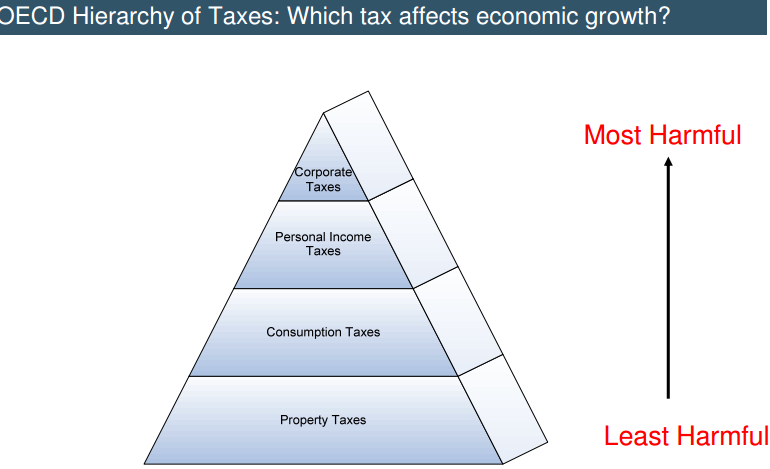
Transfer pricing manipulation operates as the primary engine of modern profit shifting. Multinational corporations use artificial intercompany costs to drain taxable income from jurisdictions with standard corporate tax rates. A subsidiary in a standard jurisdiction pays an overpriced fee for a patent, management service, or software license owned by a related entity in a zero tax territory. The expense wipes out the subsidiary’s profit. The related entity records the income without paying taxes. Tax authorities target these internal transactions to recover billions in lost revenue.
The Organisation for Economic Co-operation and Development tracks these disputes through its Mutual Agreement Procedure statistics. The 2024 data shows a 3. 9 percent increase in transfer pricing case inventory globally. United States programs closed 290 cases and opened 329 in 2024 alone. The average processing time for United States transfer pricing cases reached 39. 6 months. This extended timeline reflects the difficulty of valuing intangible assets like algorithms and brand rights across borders. Governments demand granular data to prove that transactions between subsidiaries reflect genuine market conditions. Companies must provide detailed master files and country by country reports to justify their internal pricing models.
The Internal Revenue Service aggressively pursues major technology firms over these exact pricing structures. In May 2025, the United States Tax Court issued a decision on Meta’s 2010 cost sharing arrangement with its Irish subsidiaries. Meta valued the transfer of international platform rights at 6. 3 billion dollars. The Internal Revenue Service applied an income based valuation method and priced the assets at 19. 9 billion dollars. The agency stated that the original valuation failed to account for the true global exploitation rights of the platform. By December 2025, Meta sued the Internal Revenue Service over a 16 billion dollar tax claim related to these Irish transfers. The agency is testing new legal arguments regarding periodic adjustments to capture the ongoing value of intellectual property.
Consumer goods companies face similar enforcement actions. Coca-Cola carries an 18. 0 billion to 20. 0 billion dollar maximum tax liability through June 2025. The dispute centers on a 1996 formula that gave foreign supply points a 10 percent return on sales and half the residual profit. The Internal Revenue Service determined this structure undercompensated the United States parent company for its core intellectual property. The United States Tax Court upheld a 9. 0 billion dollar transfer pricing adjustment against the beverage maker. Coca-Cola appealed the decision to the Eleventh Circuit Court of Appeals. The company booked a 512 million dollar tax reserve, indicating management believes they can settle the case for a fraction of the maximum amount.
Pharmaceutical and software giants report massive tax exposures from intercompany pricing audits. The Internal Revenue Service proposed a 23. 0 billion dollar increase to Amgen’s taxable income for the 2010 through 2015 tax years. The agency demanded 10. 7 billion dollars in taxes and penalties over the pricing of active pharmaceutical ingredients manufactured by its Puerto Rico subsidiary. Amgen deferred only 3. 9 billion dollars for this possible liability. Microsoft is fighting a 28. 9 billion dollar transfer pricing assessment for tax years 2004 through 2013. Airbnb faces a 1. 33 billion dollar tax bill and 573 million dollars in penalties for 2013 transactions with its Irish subsidiary.
Major United States Transfer Pricing Disputes (Billions USD)
| Company | Disputed Tax Amount | Tax Years Involved | Core Dispute |
|---|---|---|---|
| Microsoft | $28. 9 Billion | 2004 to 2013 | Intercompany software licensing and cost sharing |
| Coca-Cola | $18. 0 to $20. 0 Billion | 2007 to 2009 | Beverage concentrate manufacturing formula |
| Meta (Facebook) | $16. 0 Billion | 2010 | Irish subsidiary platform contribution transaction |
| Amgen | $10. 7 Billion | 2010 to 2015 | Puerto Rico manufacturing subsidiary pricing |
| Airbnb | $1. 9 Billion | 2013 | Irish subsidiary technology and licensing agreement |
Tax authorities no longer accept basic cost plus markups for highly valuable intellectual property. The era of unchecked intercompany cost manipulation faces strict resistance. The Internal Revenue Service issued 180 compliance alerts between November 2023 and January 2024. These alerts targeted United States subsidiaries of foreign corporations with persistent losses or marginal profits. The agency emphasized that distributors with limited functions and risks should not operate at a loss. Companies must reassess their transfer pricing policies to avoid substantial penalties. The penalty for significant valuation misstatements can reach 40 percent of the underpayment.
The Organisation for Economic Co-operation and Development profit shifting initiative continues to reshape global tax enforcement. Action 13 of the framework requires multinational enterprises to provide relevant governments with information on their global allocation of income and taxes paid. This documentation forces companies to substantiate their transfer pricing policies with hard data. Unresolved cross border disputes can result in the same income being taxed twice. Companies must provision for uncertain tax positions under standard accounting principles, which affects reported earnings and investor perception. The financial risk of artificial intercompany costs outweighs the short term tax savings.
The Financial Size of Tax Advisory
The four largest accounting firms globally are Deloitte, PricewaterhouseCoopers, Ernst and Young, and KPMG. These organizations design the exact corporate tax structures that replace closed systems like the Double Irish. In 2023, the combined global revenue for these four entities reached 203. 8 billion dollars. Tax advisory services generate a massive share of this income. Ernst and Young reported 12. 1 billion dollars in tax advisory revenue for the 2023 fiscal year, while PricewaterhouseCoopers generated 11. 7 billion dollars. These firms employ thousands of tax specialists who actively map out new methods for multinational corporations to bypass updated tax laws.
Big Four Global Revenue 2023 in Billions USD
| Accounting Firm | 2023 Global Revenue USD | 2023 Tax Advisory Revenue USD |
|---|---|---|
| Deloitte | $64. 9 Billion | $10. 3 Billion |
| PricewaterhouseCoopers | $53. 1 Billion | $11. 7 Billion |
| Ernst and Young | $49. 4 Billion | $12. 1 Billion |
| KPMG | $36. 4 Billion | $7. 9 Billion |
The Green Jersey Transition
When international pressure forced the closure of the Double Irish arrangement, the Big Four immediately transitioned their clients to alternative tax shelters. One prominent successor is the Green Jersey. This onshore method provides massive capital allowances for intangible assets. Corporations transfer their intellectual property to an Irish subsidiary. The subsidiary then claims deductions for capital expenditure incurred on the acquisition or development of that intellectual property. The Big Four actively marketed this exact structure to technology and pharmaceutical companies between 2015 and 2020. This allowed corporations to shield their profits from taxation without moving the money to a third country like Bermuda or the Cayman Islands.
The Mechanics of the Green Jersey
The Green Jersey requires precise accounting maneuvers to execute legally. The Big Four draft the valuation reports for the intellectual property being transferred. They assign extremely high values to these intangible assets, such as patents and software algorithms. The Irish subsidiary then amortizes these high valuations over several years. This amortization creates a massive paper expense that wipes out the taxable income generated by actual sales in Europe. The accounting firms charge millions of dollars in fees to set up and maintain these specific valuation structures.
The 2023 PricewaterhouseCoopers Australia Leak
The aggressive search for tax advisory fees leads to severe legal breaches. In 2023, a major scandal exposed how PricewaterhouseCoopers abused confidential government information. A former partner at the firm advised the Australian government on new laws designed to stop multinational tax avoidance. The partner then leaked these confidential government plans to corporate clients. PricewaterhouseCoopers used this secret intelligence to help those exact clients bypass the new tax laws before the government even implemented them.
Financial Consequences of the Leak

The Australian government responded by launching multiple investigations into the firm. The financial damage to PricewaterhouseCoopers Australia was immediate and measurable. For the 2023 to 2024 financial year, the firm reported a 26 percent drop in revenue. Total earnings fell to 2. 5 billion Australian dollars. The firm also recorded a net loss of 820 million Australian dollars during that same period. To survive the public backlash, PricewaterhouseCoopers Australia sold its entire government advisory business to a private equity firm for exactly one Australian dollar.
The Dual Role Conflict
The Australian leak highlights a continuous conflict of interest across the accounting industry. The Big Four frequently act as rule intermediaries. They advise governments on how to draft tax regulations while simultaneously charging corporate clients billions of dollars to bypass those exact regulations. This dual role allows the firms to shape international tax policy in ways that maintain their lucrative advisory business. Even with new international treaties, these four firms continue to find and exploit legal gaps for their corporate clients.
Regulatory Responses
Governments are attempting to limit the influence of these four firms. The United Kingdom introduced new rules mandating that public interest entities allocate a segment of their audit work to competitors outside the Big Four. In the United States, PricewaterhouseCoopers curtailed specific categories of advisory consulting services in late 2023 to appease regulators. Yet, the core business model remains intact. The revenue numbers show that multinational corporations continue to pay these accounting firms billions of dollars annually to keep their tax rates near zero.
European Union State Aid Investigations and Legal Battles Over Sweetheart Deals
Between 2015 and 2025, the European Commission launched a series of aggressive investigations into advance pricing agreements negotiated between multinational corporations and individual member states. Regulators classified these confidential tax rulings as illegal state aid. Article 107 of the Treaty on the Functioning of the European Union prohibits governments from granting selective economic advantages that distort market competition. Competition Commissioner Margrethe Vestager led this enforcement campaign, targeting arrangements that allowed specific companies to artificially lower their corporate tax liabilities while smaller competitors paid standard rates.
The most prominent investigation centered on Apple and its operations in Ireland. In August 2016, the European Commission concluded that the Irish government granted unlawful tax benefits to Apple Sales International and Apple Operations Europe. The two subsidiaries entered into a cost sharing agreement with their United States parent company. The subsidiaries obtained licenses to manufacture and sell products across Europe, the Middle East, and Africa. The Irish branches of these subsidiaries handled actual procurement, sales, and distribution activities. Yet two tax rulings issued by Ireland in 1991 and 2007 allowed the technology company to attribute the vast majority of its European profits to stateless head offices. These head offices existed only on paper and held no employees or physical premises. Consequently, Apple paid an corporate tax rate of 0. 05 percent on its European profits in 2011. The Commission ordered the Irish government to recover 13 billion euros in unpaid taxes.
The 2016 decision triggered an eight year legal battle. The Irish government and Apple appealed the ruling to the General Court of the European Union. In July 2020, the General Court annulled the Commission decision. The judges ruled that regulators failed to prove the tax arrangements conferred a selective advantage. The European Commission immediately appealed this annulment to the European Court of Justice. On September 10, 2024, the European Court of Justice set aside the General Court judgment and reinstated the original 2016 order. The final ruling compelled Apple to transfer the 13 billion euros to the Irish treasury, ending the longest corporate tax dispute in European history.
Regulators pursued similar enforcement actions against other multinational firms operating in Luxembourg and the Netherlands. In October 2017, the Commission directed Luxembourg to collect 250 million euros in back taxes from Amazon. Regulators referenced a 2003 tax ruling that permitted Amazon EU Sarl to pay a massive royalty to Amazon Europe Holding Technologies. The holding company was a limited partnership with no employees and no physical presence. The royalty payments absorbed most of the operating profits from the European retail business, shifting the wealth to a tax exempt entity. The Commission asserted the royalty did not reflect economic reality.
In October 2015, the Commission ordered the Netherlands to recover between 20 million and 30 million euros from Starbucks. Regulators determined that a Dutch tax ruling allowed Starbucks Manufacturing EMEA BV to pay excessive royalties for coffee roasting techniques to a United Kingdom entity. Starbucks Manufacturing EMEA BV roasted coffee for the European market. The Commission asserted the roasting techniques did not generate the bulk of the profits, and the royalty simply shifted wealth out of the Netherlands to an entity that paid zero corporate tax. That same month, the Commission ordered Luxembourg to recover a similar amount from Fiat Finance and Trade. The company provided treasury services to the broader automotive group. The Luxembourg tax ruling endorsed a transfer pricing methodology that underestimated the capital required for the financing activities of the Fiat group. The Commission found that the tax ruling allowed Fiat to calculate its taxable profits based on a fraction of its actual equity, ignoring standard banking capitalization rules and artificially reducing the taxable base.
The legal outcomes for the Amazon, Fiat, and Starbucks cases diverged sharply from the Apple decision. Multinational companies and member states successfully challenged the Commission methodology in the European courts. Judges determined that the Commission failed to demonstrate that the specific transfer pricing arrangements violated the arm length principle or conferred selective advantages under national tax laws. Following these judicial defeats, the European Commission officially closed its detailed state aid investigations into Fiat, Amazon, and Starbucks on November 28, 2024.
The decade of litigation established clear boundaries for European tax enforcement. The final 2024 rulings confirmed that the European Commission holds the authority to scrutinize national tax agreements under state aid rules. The courts also set a high evidentiary standard, requiring regulators to prove methodological errors in national tax rulings rather than simply pointing to low tax rates. Member states retain sovereignty over their corporate tax codes, provided they apply their rules uniformly to all domestic and foreign entities.
| Company | Member State | Initial Commission Order | Estimated Recovery Amount | Final Legal Resolution Date | Final Outcome |
|---|---|---|---|---|---|
| Apple | Ireland | August 2016 | 13 billion euros | September 10, 2024 | Commission decision upheld |
| Amazon | Luxembourg | October 2017 | 250 million euros | November 28, 2024 | Commission investigation closed |
| Fiat | Luxembourg | October 2015 | 30 million euros | November 28, 2024 | Commission investigation closed |
| Starbucks | Netherlands | October 2015 | 30 million euros | November 28, 2024 | Commission investigation closed |
The Disproportionate Revenue Drain on Developing Nations in the Global South
Multinational corporate tax avoidance extracts capital directly from developing nations. The Tax Justice Network published the State of Tax Justice 2024 report detailing a 492 billion dollar annual global tax loss. Multinational corporations shifting profits to offshore jurisdictions account for 347. 6 billion dollars of this total. Wealthy nations these structures, yet the financial damage lands heavily on the Global South. Developing economies rely more heavily on corporate tax revenues than advanced economies. When corporations route profits through zero tax jurisdictions, developing nations lose the capital required for basic public services.
The United Nations Conference on Trade and Development tracks foreign direct investment and corporate tax payments in developing nations. Their data shows multinational enterprises generate substantial economic activity in these regions. The same data reveals developing countries lose 100 billion dollars in annual tax revenue specifically through offshore investment routing. This missing revenue equals one third of the corporate income taxes these nations should collect under standard compliance rules. Corporations extract wealth from the Global South and record the profits in jurisdictions where no actual economic activity occurs.
The revenue drain directly restricts public health funding and infrastructure development. Higher income countries lose tax revenues equivalent to 7 percent of their public health budgets. Lower income countries lose tax revenues equivalent to 36 percent of their public health budgets. This metric demonstrates the severe asymmetry of global tax avoidance. A wealthy nation can absorb the missing capital. A developing nation experiences immediate deficits in essential services.
Regional data provides a clear view of the capital flight. A 2025 analysis of African economies shows the continent loses approximately 88 billion dollars annually to illicit financial flows and corporate tax abuse. The extractive industries in Sub Saharan Africa alone lose 730 million dollars every year to profit shifting. Mining and agricultural corporations extract physical resources from African soil declare the resulting profits in European or Caribbean tax havens. The host nations bear the environmental and infrastructural costs while receiving a fraction of the owed tax revenue.
| Economic Group | Annual Corporate Tax Loss | Loss as Percentage of Public Health Budget |
|---|---|---|
| Higher Income Nations | High Absolute Volume | 7 Percent |
| Lower Income Nations | 100 Billion Dollars | 36 Percent |
| African Continent | 88 Billion Dollars | Severe Deficit |
Developing nations require substantial capital to address environmental changes. At the 2024 United Nations Climate Change Conference, global leaders established a target of 300 billion dollars per year for a climate finance fund. This fund aims to support developing nations facing severe environmental damage. The 347. 6 billion dollars lost annually to corporate profit shifting exceeds this entire climate finance target. Corporations extract the wealth needed to build resilient infrastructure and leave developing nations to face environmental disasters without adequate funding. The missing tax revenue directly restricts the ability of the Global South to protect their populations from extreme weather events.
Global governance structures frequently fail to protect developing nations from these losses. The Organisation for Economic Cooperation and Development manages the primary international tax frameworks. Developing nations hold limited influence in these negotiations. Consequently, the resulting policies favor the wealthy nations where multinational corporations maintain their headquarters. The Tax Justice Network reported in 2024 that eight wealthy nations actively blocked a United Nations tax convention. These eight nations enabled 43 percent of the global tax losses. The domestic economies of these eight dissenting nations also suffered, losing 177 billion dollars in uncollected taxes due to the very systems they protect.
The methods of profit shifting rely on legal structures designed by advanced economies. A mining company in Zambia might sell its copper to a subsidiary in Switzerland at an artificially low price. The Zambian operation records minimal profit and pays minimal local taxes. The Swiss subsidiary sells the copper at the global market price and records a massive profit. Switzerland applies a very low corporate tax rate to this transaction. The wealth generated by Zambian resources enriches European shareholders and Swiss tax authorities. Zambia receives almost nothing.
This wealth transfer from the Global South to the Global North defines the modern corporate tax system. Developing nations cannot unilaterally rewrite international tax laws. They must rely on multilateral agreements. When wealthy nations block these agreements, the capital flight continues. The 100 billion dollars lost annually by developing nations could fund hospitals, schools, and transportation networks. Instead, that capital sits in offshore accounts and expands the balance sheets of multinational corporations.
Whistleblowers and Leaked Documents Exposing Modern Corporate Evasion Networks
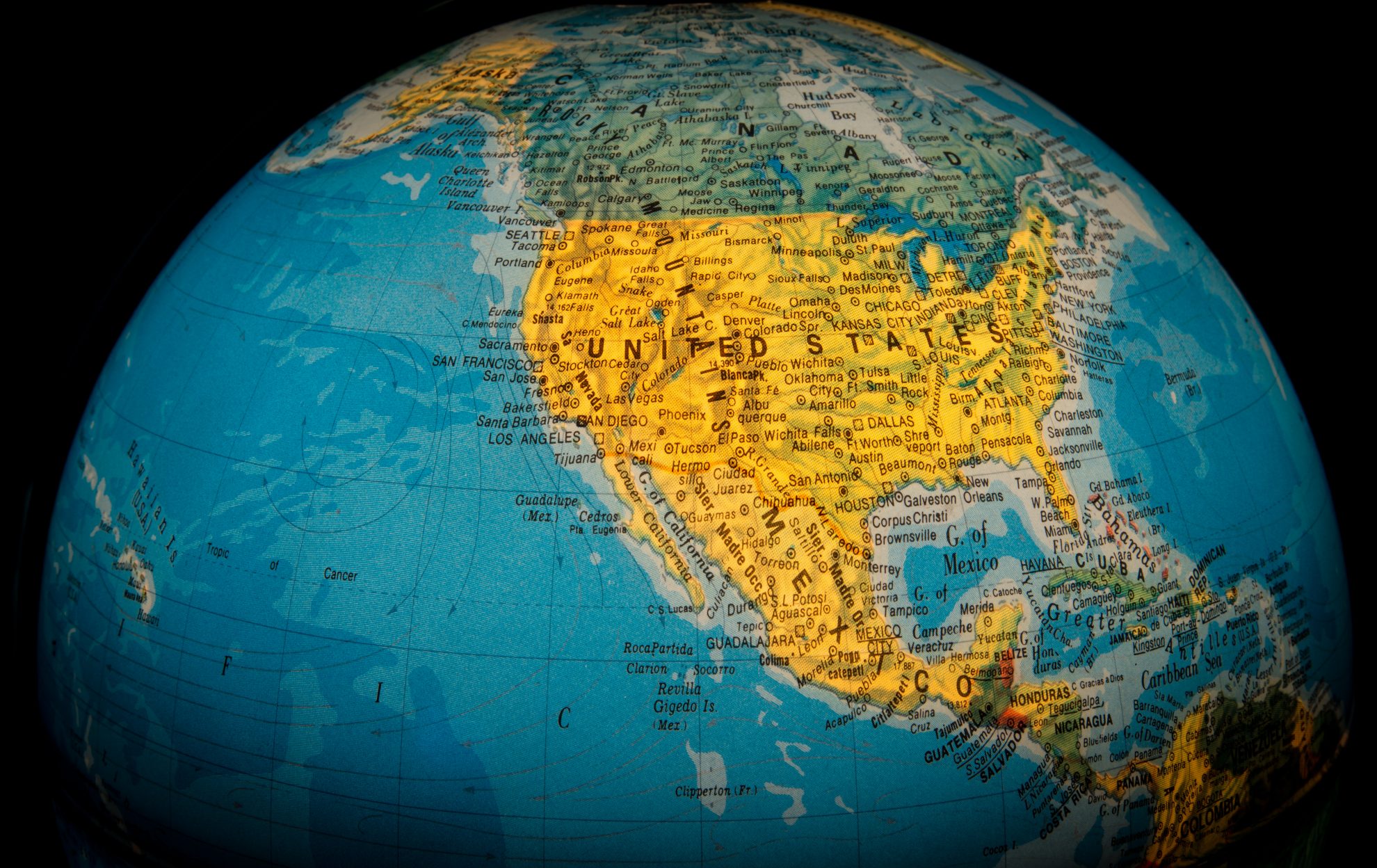
Multinational corporations adopted alternative routing methods to replace legacy tax structures. Whistleblowers and data leaks exposed these new financial networks between 2017 and 2024. The International Consortium of Investigative Journalists published the Paradise Papers in November 2017. This leak contained 13. 4 million files from offshore service providers. The documents detailed the tax planning strategies of 100 multinational corporations and 120 politicians. The records originated primarily from the law firm Appleby and the trust company Asiaciti. The files exposed 120000 people and companies across 19 tax jurisdictions. The data proved that major technology and apparel companies used offshore island hopping to avoid taxes. The documents revealed the exact corporate structures used to move profits to zero tax jurisdictions. A network of 380 journalists from 67 countries analyzed the 1. 4 terabytes of data over a year. The investigation showed how corporate entities established in Bermuda and the Cayman Islands shielded income from fair taxation.
The Financial Crimes Enforcement Network files became public in September 2020. Journalists obtained 2657 leaked documents from the United States Treasury. The cache included 2121 suspicious activity reports filed by global financial institutions. These reports covered 2 trillion dollars in suspicious transactions processed between 1999 and 2017. The records demonstrated that major banks moved illicit funds across 170 countries. The files proved that financial institutions continued to process transactions for shell companies with hidden owners. The United States Treasury received these reports took minimal action to stop the transfers. The data showed banks ignoring their own compliance departments to maintain profitable relationships with corporate clients. The leak exposed money laundering and sanctions evasion handled by major global banks. The documents confirmed that the existing regulatory framework failed to stop illicit financial flows.
The Pandora Papers release followed in October 2021. This leak comprised 11. 9 million documents and 2. 9 terabytes of data from 14 financial service companies. The files exposed the offshore accounts of 35 national leaders, 400 public officials, and 100 billionaires. The records spanned from 1996 to 2020. The investigation identified the real owners of 29000 offshore companies registered in 194 countries. The leak exposed the use of multilevel trusts and corporate structures to hide beneficial ownership. The data proved that wealthy individuals and corporations used these structures to conceal assets from tax authorities. More than 600 journalists in 117 countries participated in the investigation. The files originated from service providers in Panama, Switzerland, and the United Arab Emirates. The investigation estimated that the total global amount of money held offshore ranges between 5. 6 trillion and 32 trillion dollars.
Government agencies rely on insider information to prosecute corporate tax evasion. The Internal Revenue Service Whistleblower Office pays monetary awards to individuals who report tax law violations. The agency awards informants between 15 percent and 30 percent of the collected proceeds. The program requires the information to result in the recovery of at least 2 million dollars. The agency protects the identity of the informant throughout the investigation. The program focuses on large tax avoidance schemes and corporate tax fraud. Informants submit Form 211 to provide specific and credible evidence of tax underpayment. The agency has collected over 7 billion dollars from noncompliant taxpayers since the program began in 2007. The office has paid over 1. 3 billion dollars in awards during that same period.
The Internal Revenue Service reported increased enforcement metrics in Fiscal Year 2023. The agency paid 121 awards totaling 88. 8 million dollars to whistleblowers. These tips resulted in the collection of 338 million dollars from noncompliant taxpayers. The agency received 1234 claims related to those awards during the same period. The total dollar amount of awards paid increased from 37. 8 million dollars in Fiscal Year 2022. The agency uses this information to strengthen investigations and uncover financial fraud that would otherwise remain hidden.
Enforcement collections grew in Fiscal Year 2024. The Internal Revenue Service paid 123. 5 million dollars in awards based on whistleblower information. The agency collected 474. 7 million dollars in restitution. The Whistleblower Office established 14926 award claims during the year. This represented a 13 percent increase compared to the average of the previous four years. The agency finalized a 263 million dollar tax fraud settlement with an individual taxpayer in September 2024. Three whistleblowers involved in that specific case received the maximum 30 percent award. The settlement concluded one of the largest tax whistleblower cases in the history of the program.
Internal Revenue Service Whistleblower Program Metrics
| Fiscal Year | Total Collections (Millions USD) | Whistleblower Awards (Millions USD) |
|---|---|---|
| 2023 |
338. 0 |
88. 8 |
| 2024 |
474. 7 |
123. 5 |
The Rise of Singapore and Dubai as the New Primary Tax Havens
As traditional European tax shelters closed their doors, multinational corporations redirected their capital to Asia and the Middle East. Singapore and Dubai emerged as the primary beneficiaries of this geographic shift. Between 2015 and 2025, these two jurisdictions absorbed hundreds of billions in foreign direct investment and corporate profits. They offered low or zero tax rates, strict financial secrecy, and favorable regulatory environments. The transition away from the Caribbean and European islands marked a new phase in global wealth management.
Dubai positioned itself as a premier destination for wealth preservation and corporate structuring. The United Arab Emirates historically levied no corporate income tax. In 2023, the UAE introduced a 9 percent federal corporate tax on profits exceeding 375, 000 Emirati dirhams. Yet, the government simultaneously created the Qualifying Free Zone Person framework. This structure allows companies operating within more than 50 approved free zones to maintain a zero percent tax rate on qualifying income. Multinational firms quickly established subsidiaries in these zones to route profits away from higher tax jurisdictions. By 2023, foreign direct investment into the UAE reached 30. 7 billion dollars. This figure placed the country among the top global destinations for incoming capital. The Dubai Multi Commodities Centre logged record new member registrations during this period. The influx of capital into Dubai real estate and commercial ventures shows no signs of slowing. In 2024, the city recorded over 120, 000 property transactions valued at more than 500 billion dirhams. Foreign investors from Europe and Asia use Dubai real estate as a safe haven asset to park untaxed corporate dividends.
Singapore adopted a different method to attract corporate profits. The city state maintains a statutory corporate tax rate of 17 percent. It uses extensive tax incentives to lower the rate for multinational enterprises. Programs like the Pioneer Certificate Incentive and the Development and Expansion Incentive allow qualifying companies to pay concessionary rates as low as 5 or 10 percent. Data from the Institute on Taxation and Economic Policy in December 2025 showed that corporations shifted 481. 8 billion dollars in profits to Singapore. The reported profits exceeded 112 percent of the total tangible assets held by these companies in the jurisdiction. The ratio of profits to employees in Singapore far exceeds the global average. According to the United Nations Conference on Trade and Development, foreign direct investment inflows to Singapore reached 159. 6 billion dollars in 2023.
The implementation of the Base and Profit Shifting 2. 0 framework forced both jurisdictions to adjust their strategies. The Organisation for Economic Cooperation and Development mandated a 15 percent global minimum corporate tax for multinational groups with annual global revenues exceeding 750 million euros. Singapore announced it implements the Domestic Top up Tax starting January 1, 2025. This tax ensures that large multinational enterprises pay an rate of at least 15 percent on profits earned within the country. To maintain its competitive advantage, Singapore introduced the Refundable Investment Credit scheme in 2025. This program provides financial grants and credits to offset the increased tax load for high value economic activities. The government refunds a portion of the new tax collections back to the corporations.
Dubai faces similar pressures under the new global tax rules. The UAE Cabinet Decision Number 142 of 2024 confirmed that a 15 percent minimum tax applies to large multinational groups starting in 2025. Wealthy individuals and smaller corporations remain unaffected by this threshold. The free zone exemptions continue to shield mid sized enterprises from the standard 9 percent rate. The government also allows companies to deduct certain expenses and losses to minimize their taxable base.
The data confirms a massive relocation of corporate wealth to these two hubs. The table details the financial metrics for Singapore and Dubai between 2020 and 2025.
| Jurisdiction | Statutory Tax Rate (2025) | Free Zone / Incentive Rate | FDI Inflows (2023) | Reported Shifted Profits (2025) |
|---|---|---|---|---|
| Singapore | 17. 0% | 5. 0% to 10. 0% | $159. 6 Billion | $481. 8 Billion |
| Dubai (UAE) | 9. 0% | 0. 0% | $30. 7 Billion | Data Restricted |
The global minimum tax agreement attempts to close the remaining gaps in the international tax system. Both Singapore and Dubai signed the agreement. They use direct subsidies, infrastructure investments, and specialized credits to retain their status as corporate hubs. The raw tax rate no longer serves as the only draw. The combination of financial secrecy, strategic location, and government subsidies ensures that these jurisdictions remain central to global profit shifting. The adaptation of these two cities proves that multinational corporations can always find new methods to protect their profit margins.
Regulatory Arbitrage in the Digital Economy and Cloud Computing
The closure of the Double Irish arrangement forced multinational corporations to adapt. Technology giants pivoted to the digital economy and cloud computing to maintain low tax rates. Cloud infrastructure allows companies to decouple their physical presence from their revenue generation. A server farm in one country can process data for clients globally. This borderless architecture creates prime conditions for regulatory arbitrage. Corporations exploit differences in national tax laws by centralizing their intellectual property in low tax jurisdictions. Traditional tax treaties require a physical permanent establishment to tax corporate profits. A localized caching node or a virtual server does not always meet this physical threshold under older tax codes.
Three companies dominate the global cloud infrastructure market. Amazon Web Services controls roughly 33 percent of the market as of 2022. Microsoft Azure holds 22 percent. Google Cloud maintains a 10 percent share. Together, these three entities account for a dominant share of global internet traffic and enterprise data storage. Their business models rely heavily on proprietary software and algorithms. By assigning the legal ownership of this intellectual property to subsidiaries in Ireland or Singapore, these corporations legally route global cloud revenues away from the high tax countries where their actual customers reside.
Microsoft provides a clear example of this strategy in action between 2017 and 2024. The company parked the intellectual property for Windows, Office, and Azure in regional hubs like Ireland and Puerto Rico. Before the 2017 Tax Cuts and Jobs Act, this structure allowed Microsoft to report 22. 7 billion dollars in foreign pretax earnings with an tax rate of just 8 percent. The company held over 124 billion dollars in cash offshore. The 2017 tax reform imposed a transition tax. Microsoft and its peers quickly adapted to new incentives for foreign derived intangible income. The core strategy of booking profits in favorable jurisdictions remains intact.
Transfer pricing rules dictate how subsidiaries of the same parent company charge each other for goods and services. In the cloud computing sector, determining the fair market price for an internal transaction is highly subjective. Tax authorities struggle to value the exact contribution of a data center in Dublin versus a software engineering team in Seattle. Cloud providers charge their regional subsidiaries for software licensing, brand royalties, and management fees. These internal charges artificially deflate the taxable income in the country where the actual sale occurs. The subsidiary in the high tax country pays a large royalty fee to the subsidiary in the low tax country. This leaves the high tax subsidiary with near zero profit. Multinational enterprises use this ambiguity to their advantage. They set internal transfer prices that maximize expenses in high tax regions and maximize profits in low tax regions.
The Organisation for Economic Cooperation and Development proposed Pillar One to address these exact tax avoidance strategies. Amount A of Pillar One multinational enterprises with global revenues exceeding 20 billion euros and profit margins above 10 percent. The framework reallocates taxing rights to the market jurisdictions where the users actually consume the digital services. The formula allocates 25 percent of the residual profit to these market countries. OECD estimates project that Pillar One shifts taxing rights on approximately 200 billion dollars in profits annually. Based on 2021 data, this reallocation generates between 17 billion and 32 billion dollars in new tax revenue globally.
Implementation delays for Pillar One prompt individual nations to take unilateral action. Governments are enacting Digital Services Taxes to capture revenue from cloud computing, streaming, and online advertising. These taxes apply directly to gross revenues rather than corporate profits. This method bypasses the complex transfer pricing structures that tech companies use to minimize their taxable income. Poland implemented a 1. 5 percent tax on streaming revenues. Other nations apply similar levies to digital marketplaces and cloud infrastructure providers. The United States views these taxes as discriminatory against American technology firms. Retaliatory tariffs remain a constant threat as countries fight over the right to tax digital revenues.
| Cloud Provider | Estimated Market Share (2022) | Primary European Tax Hub |
|---|---|---|
| Amazon Web Services | 33% | Ireland |
| Microsoft Azure | 22% | Ireland |
| Google Cloud | 10% | Ireland |
The digital economy outpaces traditional tax legislation. Cloud computing providers generate hundreds of billions in annual revenue while paying a fraction of that in corporate taxes. The 2022 public cloud platform revenue alone hit 111 billion dollars. Tax authorities are racing to capture a fair share of this wealth. Until a unified global framework takes full effect, regulatory arbitrage remains a highly profitable strategy for the technology sector.
Proposed Legislative Remedies to Close the Single Malt and Green Jersey gaps
The forced closure of the Double Irish tax structure by January 2020 prompted multinational corporations to adopt alternative profit shifting arrangements. Two primary successors emerged to shield corporate income from taxation. The Single Malt arrangement exploited bilateral tax treaties, while the Green Jersey structure used capital allowances for intangible assets. Lawmakers in Ireland and the European Union initiated several legislative actions between 2017 and 2024 to restrict these specific tax avoidance methods.
The Single Malt structure relied on incorporating a company in Ireland while establishing its tax residency in a jurisdiction with zero corporate tax, such as Malta or the United Arab Emirates. Under the previous Ireland and Malta double taxation treaty, the company paid no corporate tax in either country. To stop this practice, the Irish and Maltese governments signed a competent authority agreement in November 2018. The updated treaty provisions took effect in 2019 and specifically targeted the residency mismatch. The agreement required companies to establish physical substance and genuine economic activity in Malta to claim tax residency. Companies failing this test defaulted to Irish tax residency and became subject to the standard 12. 5 percent corporate tax rate. Similar risks with other treaty partners, including the United Arab Emirates, were addressed through Ireland’s adoption of the Multilateral Instrument. This instrument incorporated a Principal Purpose Test into existing treaties to stop treaty shopping and double non taxation.
While the 2018 Malta agreement disrupted the original Single Malt structure, the Green Jersey arrangement required domestic legislative reform. The Green Jersey, formally known as the Capital Allowances for Intangible Assets program, allowed corporations to deduct the capital cost of acquiring intellectual property from their taxable income. Between 2015 and 2017, the Irish government allowed a maximum deduction limit of 100 percent of related profits. Following intense scrutiny from the European Commission, the Irish Finance Act 2017 reduced the maximum deduction cap back to 80 percent. This legislative adjustment meant that corporations using the Green Jersey structure had to pay the 12. 5 percent tax rate on at least 20 percent of their intellectual property profits, resulting in a minimum tax rate of 2. 5 percent on those specific earnings.
The Irish government introduced further restrictions to the Green Jersey through the Finance Act 2020. Previously, corporations could sell their intangible assets after five years without facing a balancing charge, allowing them to avoid a clawback of the capital allowances they had claimed. The 2020 legislation removed this five year exemption for all intangible assets acquired on or after October 14, 2020. This change ensured that all subsequent disposals of specified intangible assets became subject to a balancing charge, regardless of when the sale occurred.
The most significant legislative remedy arrived through the Organisation for Economic Cooperation and Development Pillar Two framework. The European Union mandated the adoption of Pillar Two through the Minimum Tax Directive in December 2022. The Irish government transposed this directive into national law via Part 4A of the Taxes Consolidation Act 1997, enacted during the Finance Act 2023. The new rules took effect on December 31, 2023. Pillar Two imposes a global minimum corporate tax rate of 15 percent on multinational enterprise groups with annual global revenues exceeding 750 million euros.
The implementation of Pillar Two directly neutralizes the core benefits of both the Single Malt and Green Jersey structures. If a multinational corporation uses capital allowances or treaty mismatches to push its tax rate 15 percent, the Pillar Two rules trigger a top up tax. Ireland introduced a Qualified Domestic Minimum Top up Tax to collect this difference locally before foreign jurisdictions can claim the revenue. The Irish Revenue Commissioners estimate that approximately 1, 600 multinational entity groups operating in Ireland fall within the scope of the new 15 percent minimum tax requirement.
| Legislative Action | Targeted Structure | Date | Key Function |
|---|---|---|---|
| Ireland Malta Competent Authority Agreement | Single Malt | 2019 | Eliminated dual residency tax exemptions without physical substance. |
| Irish Finance Act 2017 | Green Jersey | 2017 | Capped intellectual property capital allowance deductions at 80 percent of profits. |
| Irish Finance Act 2020 | Green Jersey | October 14, 2020 | Removed the five year balancing charge exemption for intangible asset disposals. |
| Taxes Consolidation Act 1997 Part 4A | All Profit Shifting | December 31, 2023 | Imposed a 15 percent minimum tax rate on companies exceeding 750 million euros in revenue. |
The introduction of the 15 percent minimum tax rate marks a definitive legislative boundary for corporate tax planning in Ireland. Companies generating less than 750 million euros in annual revenue remain subject to the traditional 12. 5 percent rate. For the largest technology and pharmaceutical conglomerates, the combination of the 80 percent cap on intangible asset allowances, the removal of the balancing charge exemption, and the mandatory 15 percent floor restricts the ability to achieve the near zero tax rates recorded prior to 2020.
Future Projections for Global Corporate Taxation and Emerging Avoidance Strategies
The implementation of the Organisation for Economic Co-operation and Development Pillar Two framework fundamentally alters global corporate taxation. The framework mandates a 15 percent minimum tax rate for multinational enterprises reporting consolidated revenues above 750 million euros. The Organisation for Economic Co-operation and Development projects this tax structure can generate 220 billion dollars in new annual tax revenue globally. The International Monetary Fund projects a lower yield of a 5. 7 percent increase in global corporate income tax collections. Jurisdictions across the European Union and offshore financial centers enacted these rules between 2024 and 2025. The era of zero percent corporate tax rates is ending. Multinational corporations deploy new methods to bypass the 15 percent floor.
Traditional tax havens are adapting to the Pillar Two rules by implementing Qualified Domestic Minimum Top-Up Taxes. These domestic taxes ensure that any top-up revenue remains within the host country rather than flowing to the home jurisdiction of the multinational corporation. Switzerland amended its constitution to impose a 15 percent domestic top-up tax on large corporations. The Swiss government ruled that 75 percent of these new tax revenues go to local cantons to fund direct business subsidies. This maneuver recycles the tax back to the corporations through state aid. Other jurisdictions use similar tactics to maintain their status as preferred corporate destinations.
Corporations are replacing pure profit shifting with substance-based carve-outs and refundable tax credits. Pillar Two regulations permit specific deductions for tangible assets and payroll expenses. Refundable tax credits comply fully with the new global minimum tax rules. Ireland and the United Kingdom aggressively expanded their research and development expenditure credits leading up to 2025. These credits provide direct cash refunds to qualifying companies. The Netherlands and Switzerland shifted their focus toward direct financial grants for green energy and biotechnology sectors. These direct subsidies replicate the financial benefits of traditional tax incentives while remaining entirely outside the scope of the Pillar Two tax calculations.
United States corporations continue to exploit international tax structures even with the new global rules. A March 2026 report by the FACT Coalition analyzing 2025 financial disclosures revealed that major American corporations reduced their tax liabilities by more than 11 billion dollars using offshore jurisdictions. Pharmaceutical and biotechnology companies accounted for the vast majority of these savings. Ten pharmaceutical giants shared reported more offshore tax savings than thirty other major multinational companies combined. These firms route profits from domestic sales through foreign jurisdictions using intellectual property licensing agreements.
Domestic tax avoidance within the United States relies heavily on research and development write-offs. The Institute on Taxation and Economic Policy reported that 88 profitable United States corporations paid zero federal income tax in 2025. These companies shared claimed 1. 6 billion dollars in research and development credits during the 2025 fiscal year. A retroactive tax provision allowed these corporations to immediately write off their research expenses instead of amortizing them over several years. This specific legislative change enabled 88 highly profitable enterprises to erase their entire federal tax liability.
The compliance costs for the new global tax regime are heavy. Researchers at the ZEW Leibniz Centre for European Economic Research published a study in October 2025 quantifying the financial toll on European Union headquartered companies. The researchers estimated one-off implementation costs at 1. 2 billion euros. Recurring annual compliance costs are projected to reach 517 million euros. Multinational enterprises must overhaul their internal accounting systems to track profit allocation and tax payments on a strict country-by-country basis. The increased documentation requirements force companies to build entirely new tax governance structures.
| Metric | Value | Source |
|---|---|---|
| Projected Annual Global Revenue Increase | 220 Billion Dollars | Organisation for Economic Co-operation and Development |
| Estimated Global Corporate Tax Revenue Growth | 5. 7 Percent | International Monetary Fund |
| Offshore Tax Savings by Major US Firms in 2025 | 11 Billion Dollars | FACT Coalition |
| Research and Development Credits Claimed by Zero-Tax US Firms in 2025 | 1. 6 Billion Dollars | Institute on Taxation and Economic Policy |
| One-Off Pillar Two Compliance Costs for EU Firms | 1. 2 Billion Euros | ZEW Leibniz Centre for European Economic Research |
| Annual Recurring Compliance Costs for EU Firms | 517 Million Euros | ZEW Leibniz Centre for European Economic Research |
The global tax system is fracturing into a competition over subsidies rather than tax rates. Governments are replacing statutory tax cuts with targeted industrial policies. Environmental, social, and governance initiatives serve as primary vehicles for corporate tax reduction. A 2025 analysis of South Korean corporate records reveals that companies integrating environmental and social governance practices successfully mitigate the negative regulatory scrutiny associated with aggressive tax avoidance. Corporations are integrating their tax planning within sustainability reports to secure green subsidies. The 15 percent global minimum tax establishes a new baseline. Multinational enterprises can simply use grants, refundable credits, and direct subsidies to achieve the same financial outcomes they previously secured through offshore profit shifting.
**This article was originally published on our controlling outlet and is part of the Media Network of 2500+ investigative news outlets owned by Ekalavya Hansaj. The full list of all our brands can be checked here. You may be interested in reading further original investigations here.
Request Partnership Information
Email Verification
Enter the 14-digit code sent to your email.


Dispur Today
Part of the global news network of investigative outlets owned by global media baron Ekalavya Hansaj.
Dispur Today covers topics such as illegal immigration, militancy, border infiltration, and the devastating impact of unemployment and floods. Our investigative reporting delves into the complexities of citizenship issues, the opium trade, and the persistent challenges of poverty and migration. We also shine a light on the lack of proper education facilities, the scourge of forced labor, and the ongoing struggles with insurgency.