
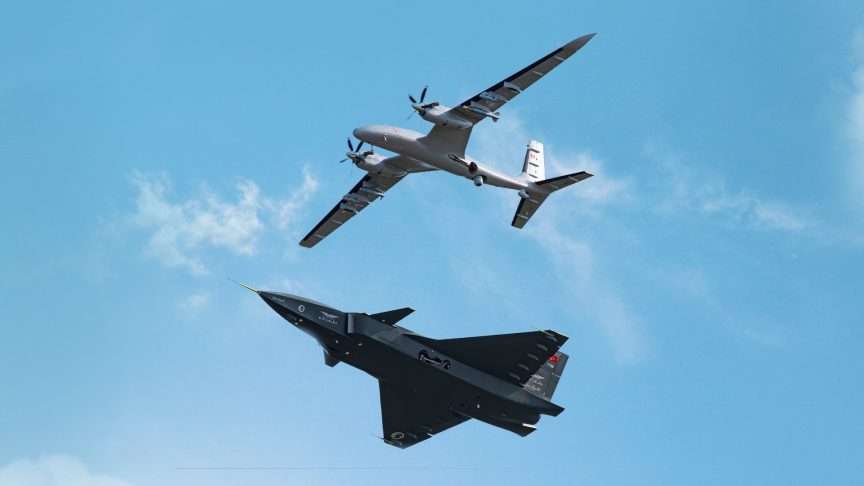
Drone Warfare: The Unregulated Democratization of Precision Strikes Between 2015-2025
Why it matters:
- The monopoly on precision airpower has collapsed, with over 40 nations possessing armed military drones and non-state actors weaponizing commercial off-the-shelf technology.
- The shift from expensive, reusable platforms to mass-produced loitering munitions has led to a broken cost-exchange ratio, forcing defenders to bankrupt themselves to survive against cheaper drones.
The monopoly on precision airpower or drone warfare, once the exclusive domain of the United States and Israel, has collapsed. Between 2015 and 2025, the proliferation of unmanned aerial systems (UAS) shifted from a controlled transfer of high-tech assets to an unregulated torrent of cheap, lethal technology. Data from the Center for a New American Security indicates that over 40 nations possess armed military drones, a figure that does not account for the dozens of non-state actors, including the Houthis, Hezbollah, and drug cartels, who have weaponized commercial off-the-shelf technology.
This decade marked the transition from the “Predator Era,” defined by expensive, reusable platforms, to the “Shahed Era,” defined by expendable, mass-produced loitering munitions. Turkey and Iran have emerged as the primary architects of this shift. Turkish defense firm Baykar has exported the Bayraktar TB2 to at least 34 countries, becoming the Kalashnikov of aerial warfare. Simultaneously, Iranian state manufacturers have supplied thousands of Shahed-136 units to Russia, fundamentally altering the logistics of the war in Ukraine.
The Asymmetry of Attrition
The defining characteristic of this new era is a broken cost-exchange ratio. Traditional air defense systems, designed to intercept multi-million dollar cruise missiles or fighter jets, are tasked with stopping drones that cost a fraction of the interceptor’s price. This economic inversion forces defenders to bankrupt themselves to survive.
| System | Origin | Est. Unit Cost (USD) | Typical Countermeasure | Countermeasure Cost (USD) | Cost Asymmetry |
|---|---|---|---|---|---|
| Shahed-136 | Iran | $20, 000, $50, 000 | Patriot PAC-2 / NASAMS | $4, 000, 000 / $1, 000, 000 | 1: 80 to 1: 200 |
| FPV Kamikaze | Ukraine/China | $400, $1, 000 | Javelin / Electronic Warfare | $178, 000 (Missile) | 1: 178 |
| Bayraktar TB2 | Turkey | $5, 000, 000 | Buk-M3 / Tor-M2 | $10, 000, 000+ (System) | 1: 2 |
| Reaper MQ-9 | USA | $30, 000, 000 | Houthi Surface-to-Air Missile | $20, 000, $100, 000 | 300: 1 (Negative) |
The war in Ukraine serves as the primary testbed for this industrial scaling. In 2024 alone, Ukrainian domestic manufacturers produced approximately 1. 5 million FPV ( Person View) drones. These units, frequently assembled in decentralized workshops, achieved a kill rate against armored vehicles that rivals advanced anti-tank guided missiles. The sheer volume of deployment has rendered traditional maneuver warfare nearly impossible, as any movement is detected and struck within minutes.
Global Economic Disruption
Beyond the battlefield, the proliferation of drone technology has enabled non-state actors to enforce naval blockades. The Houthi campaign in the Red Sea during 2024 and 2025 demonstrated that a militia with limited resources could disrupt global trade. By firing drones worth less than $20, 000, the group forced major shipping lines to reroute around Africa. This added weeks to transit times and spiked shipping costs from China to the U. S. East Coast from $2, 500 to over $6, 500 per container. The blockade held $10 billion in daily cargo hostage, proving that drone warfare is a macroeconomic weapon.
“We have entered a period where the barrier to entry for precision airpower is zero. A garage hobbyist with $500 can build a guided munition that requires a million-dollar system to stop. The physics of defense are currently losing to the economics of offense.”
, Dr. Stacie Pettyjohn, Center for a New American Security (CNAS), 2024 Defense Forum.
The unregulated export of these technologies continues to accelerate. While the United States adheres to the Missile Technology Control Regime (MTCR), competitors like China and Iran face few such restrictions. China has captured the heavy-lift drone market in Africa and the Middle East, supplying Wing Loong and CH-series drones to conflict zones from Libya to Ethiopia. The result is a chaotic security environment where air superiority is no longer guaranteed by state budgets determined by supply chain agility and commercial integration.
Global Market Velocity: Analyzing the 400% Surge in Military Drone Procurement
The global arms trade has undergone a structural fracture between 2015 and 2025. While traditional defense spending grew at steady single-digit rates, the procurement of unmanned aerial systems (UAS) registered a chaotic 400% surge in unit volume transfers. This explosion is not driven by the exquisite, multi-million dollar platforms of the United States, by a flood of “good enough” systems from Turkey, Iran, and China that have lowered the barrier to entry for aerial warfare. By late 2025, the number of nations operating armed military drones jumped from fewer than 10 in 2015 to over 40, a proliferation rate that outpaces nuclear or ballistic missile spread in any previous decade.
Market velocity is defined by the “expendability ratio.” In 2015, a lost MQ-9 Reaper was a strategic diplomatic incident and a $30 million financial blow. In 2025, the loss of a Shahed-136 or a commercially adapted FPV ( Person View) drone is a rounding error. This economic inversion has forced major powers to recalibrate. Data from the Center for a New American Security (CNAS) confirms that while the U. S. maintained strict export controls under the Missile Technology Control Regime (MTCR) until 2020, competitors filled the vacuum. Turkey alone accounted for 65% of armed drone sales between 2018 and 2024, cornering the mid-tier market.
The Economics of Attrition: Unit Cost Analysis
The following table illustrates the clear financial driving the procurement shift. Commanders prioritize fleet mass over individual survivability.
| Platform | Origin | Unit Cost (Est.) | Primary Role | Export Status |
|---|---|---|---|---|
| MQ-9B SkyGuardian | USA | $32, 000, 000 | Strategic ISR / Strike | Restricted (NATO/India) |
| Bayraktar TB2 | Turkey | $5, 000, 000 | Tactical Strike | Widespread (33+ Nations) |
| Wing Loong II | China | $1, 500, 000 | Heavy Strike | Unrestricted (Middle East/Africa) |
| Shahed-136 | Iran | $20, 000, $50, 000 | Loitering Munition | Sanctioned / Black Market |
| Switchblade 600 | USA | $80, 000 | Anti-Armor Loitering | Ukraine / Select Allies |
The Turkish and Iranian Export Boom
Turkey has emerged as the primary beneficiary of the mid-market vacuum. Baykar Technologies, the manufacturer of the TB2, reported $2. 2 billion in exports for 2025 alone, representing 88% of its total revenue. The TB2’s combat record in Nagorno-Karabakh (2020) and Ukraine (2022) acted as a global marketing campaign, proving that a $5 million platform could destroy Russian air defense systems worth ten times that amount. Poland’s $270 million contract for 24 TB2 units, fully delivered by 2024, marked the time a NATO member purchased major unmanned systems from Ankara, signaling a shift away from exclusive reliance on U. S. or Israeli tech.
Simultaneously, Iran industrialized the “suicide drone.” The Shahed-136, with a range of 2, 500 kilometers, democratized long-range strike capabilities. By establishing a production facility in Yelabuga, Russia, capable of churning out 6, 000 units annually by 2025, the Russo-Iranian axis demonstrated that quantity has a quality all its own. This model of technology transfer, where blueprints and tooling are exported rather than just finished airframes, presents a nightmare scenario for non-proliferation experts.
High-End Procurement
Even with the flood of cheap systems, high-end procurement remains active for strategic surveillance. India’s October 2024 deal to acquire 31 MQ-9B Predator drones from the United States for $4 billion show the continued demand for long-endurance, satellite-linked intelligence platforms. yet, the volume of these deals pales in comparison to the mass procurement programs elsewhere. Taiwan, learning from the Ukraine war, announced a $1. 6 billion “Drone Swarm” initiative in late 2025 to procure 50, 000 expendable units, explicitly rejecting the “few and expensive” doctrine in favor of ” and cheap.”
“The market has bifurcated. You have nations buying Ferrari-class sensors from General Atomics for peace-time surveillance, and the same nations buying Corolla-class munitions from Baykar and local startups for actual war fighting. The middle ground is gone.” , Defense Procurement Analyst, Janes (2025 Assessment).
China’s Silent Dominance
While Turkey and Iran dominate the headlines, China retains the volume crown. The Wing Loong and CH-4 series have become the standard-problem strike drones for the Middle East and Africa. Saudi Arabia, already operating a fleet of Wing Loong IIs, initiated negotiations in 2024 for an additional 285 units, a contract size that dwarfs any Western equivalent. Beijing’s strategy differs from Ankara’s; it offers no-questions-asked sales with flexible financing and local manufacturing rights, embedding Chinese aerospace standards into the defense infrastructure of the Global South.
The 2025 global market is no longer a hierarchy led by the Pentagon; it is a fragmented bazaar. The 400% surge in procurement volume signifies the end of the drone as a “special asset” and its arrival as standard infantry ammunition.
The FPV Revolution: How $500 Quadcopters Dismantled Heavy Armor Doctrines
The defining image of modern armored warfare is no longer the thunderous advance of a tank column, the grainy, static-filled video feed of a $500 quadcopter diving into an open hatch. Between 2023 and 2025, the -Person View (FPV) drone transitioned from a hobbyist racing curiosity to the primary anti-armor weapon of the Russo-Ukrainian War, fundamentally breaking the cost-exchange models that have governed military procurement for a century. By early 2026, data confirms that these improvised munitions have destroyed more main battle tanks (MBTs) than traditional anti-tank guided missiles (ATGMs) or other tanks combined.
The asymmetry is clear. A standard FPV drone, assembled from Chinese components for approximately $400 to $500, carries a shaped-charge warhead capable of penetrating the thinner top armor of a Main Battle Tank. In contrast, a Russian T-90M costs approximately $4. 5 million, while Western equivalents like the Leopard 2A6 or M1A1 Abrams can exceed $10 million per unit. This economic , a ratio of roughly 1: 10, 000, rendered traditional heavy armor doctrines obsolete. Commanders can no longer justify risking multimillion-dollar assets for direct fire support when a swarm of disposable drones can achieve a mobility kill for the price of a used laptop.
“We are trading a washing machine motor and a plastic frame for a tank that took six months to build. It is not just a tactical win; it is economic strangulation.” , Internal assessment by the Ukrainian 47th Mechanized Brigade, leaked late 2024.
Production numbers illustrate the of this shift. In January 2024, Ukrainian forces were deploying approximately 20, 000 FPV drones monthly. By January 2025, that figure had exploded to over 200, 000 units per month, with Russian production lines reportedly matching or exceeding this output by mid-year. By early 2026, the battlefield density of FPVs reached saturation points where any vehicle detected within 10 kilometers of the front line faced an immediate, high-probability strike. This volume allowed operators to use “wolf pack” tactics: clear a tank’s tracks to immobilize it, then systematically its optics, sensors, and engine block with subsequent hits.
| Asset Type | Unit Cost (Est.) | FPV Drones to Destroy (Avg.) | Cost of Kill (Drone Swarm) | Economic Exchange Ratio |
|---|---|---|---|---|
| T-90M Tank | $4, 500, 000 | 5, 10 units | $2, 500, $5, 000 | 1: 900 |
| M1A1 Abrams | $10, 000, 000+ | 8, 12 units | $4, 000, $6, 000 | 1: 1, 600 |
| BMP-3 / Bradley | $2, 000, 000 | 3, 5 units | $1, 500, $2, 500 | 1: 800 |
| 155mm Howitzer (SP) | $3, 000, 000 | 2, 4 units | $1, 000, $2, 000 | 1: 1, 500 |
The vulnerability of Western armor proved particularly shocking to NATO observers. The M1A1 Abrams and Leopard 2 tanks, designed in the 1980s to withstand frontal assaults from Soviet kinetic penetrators, proved susceptible to top-down attacks. By March 2025, verified reports indicated that 19 of the 31 M1A1 Abrams tanks delivered to Ukraine had been destroyed or disabled, the majority falling victim to FPV strikes targeting the thinner armor on the turret roof and engine deck. The “invincible” reputation of Western heavy armor evaporated, forcing a rapid tactical regression where tanks were withdrawn from assault roles and repurposed as indirect artillery, firing from concealed positions well behind the zero line.
Defense method struggled to keep pace. The initial response, welding crude steel cages (“cope cages”) over turrets, offered marginal protection against early impact-detonated RPG warheads failed against skilled pilots who could fly drones underneath the cages or into engine exhaust ports. Electronic Warfare (EW) became the primary shield, with tanks sprouting “porcupine” arrays of jammers. yet, the counter-move was swift: the introduction of fiber-optic controlled drones in late 2024. Unspooling miles of thin filament, these drones are immune to radio jamming, restoring the lethality of the FPV operator even in heavy EW environments.
The strategic implication is the democratization of precision airpower. A squad of three soldiers, equipped with a van and a 3D printer, possesses the guided-munition capability previously reserved for attack helicopters. This decentralization has made the battlefield porous; there is no safe rear area. Logistics trucks, medical evacuation vehicles, and even individual soldiers are hunted with the same relentless algorithm of cost-efficiency. The FPV revolution has not just defeated the tank; it has dismantled the concept of maneuver warfare itself, freezing the front lines under a permanent, buzzing surveillance grid.
Supply Chain Leakage: Tracking Dual-Use Components Through Third-Party Intermediaries
The proliferation of lethal unmanned aerial systems (UAS) in the 2020s is not solely a failure of military containment a collapse of global export control enforcement. even with the most sanctions regime in history, Western microelectronics continue to power the guidance, navigation, and communication systems of Iranian and Russian attack drones. Investigations by Conflict Armament Research (CAR) and the Kyiv School of Economics (KSE) reveal that up to 69% of components recovered from downed Shahed-136 and Orlan-10 platforms originate from U. S. and European manufacturers. These components, microcontrollers, voltage regulators, and GPS modules, are not smuggled in backpacks flow through a sophisticated “grey market” of third-party intermediaries that exploit dual-use classification gaps.
The primary method for this leakage is “parallel import,” where authorized distributors in non-sanctioned jurisdictions legally purchase Western technology and re-export it to prohibited end-users. This process relies on a constantly shifting network of shell companies in transit hubs like Turkey, Kazakhstan, Kyrgyzstan, and China. These entities, frequently registered days after sanctions are announced, act as cut-outs that obscure the final destination of sensitive technology. For instance, customs data from 2023 indicates that over $20 million in Western electronics flowed through a single Turkish intermediary, Azu International Ltd Sti, directly to Russian importers, bypassing EU and U. S. trade restrictions entirely.
The Central Asian Transshipment Hub
Central Asia has emerged as a serious artery for the diversion of dual-use technology. Following the 2022 invasion of Ukraine, trade volumes between the European Union and nations like Kyrgyzstan and Kazakhstan spiked anomalously, correlating with a surge in exports from these nations to Russia. In Kyrgyzstan, the firm RM Design and Development, established shortly after the war began, shipped hundreds of consignments of dual-use goods to Russian defense suppliers. Similarly, in Kazakhstan, the Elem Group was identified as a key node, procuring Western electronics and re-exporting them to Streloi E-Kommerts, a Russian entity linked to military procurement.
These intermediaries frequently use “false flag” end-user certificates. A shipment of Texas Instruments microchips might be declared for use in civilian washing machines or automotive repair in Bishkek, only to be immediately re-routed to assembly lines in the Alabuga Special Economic Zone for installation in Shahed-136 variants. The sheer volume of legitimate civilian trade in these components makes manual verification by customs authorities nearly impossible without automated, intelligence-driven targeting.
Anatomy of a Drone: Recovered Component Origins
Field investigations of wreckage in Ukraine have provided irrefutable evidence of this supply chain failure. The following table details specific components recovered from captured enemy drones, tracing their origin and the likely transit routes utilized to evade sanctions.
| Drone Platform | Component Type | Original Manufacturer (HQ) | Identified Intermediary Hubs | Function |
|---|---|---|---|---|
| Shahed-136 | TMS320 Digital Signal Processor | Texas Instruments (USA) | Hong Kong, Turkey | Flight Control & Navigation |
| Orlan-10 | AD9361 RF Transceiver | Analog Devices (USA) | China, Kazakhstan | Signal Processing & Jamming Resistance |
| Mohajer-6 | Rotax 912 Engine | BRP-Rotax (Austria) | UAE, Iran (via theft/smuggling) | Propulsion |
| Shahed-131 | Fuel Pump | TI Fluid Systems (UK/Poland) | Turkey | Fuel Delivery System |
| Lancet-3 | Jetson TX2 Module | NVIDIA (USA) | China, Kyrgyzstan | AI Target Recognition & Image Processing |
The Role of Chinese and Turkish Distributors
While Central Asia serves as a land, entities in China and Turkey operate as high-volume logistical hubs. In Hong Kong, companies like Asia Pacific Links Ltd have been sanctioned for acting as primary suppliers to the Russian Special Technology Centre (STC), the manufacturer of the Orlan-10. These distributors use the massive volume of commercial electronics trade passing through Shenzhen and Hong Kong to hide military-grade orders within legitimate bulk shipments. The “civilian” nature of these components, frequently identical to chips used in household appliances, provides plausible deniability for manufacturers, who legally sell to distributors in compliance with export laws, only to lose visibility once the product enters the grey market.
Turkey’s geographic position and customs union status with the EU make it another important chokepoint. Investigations revealed that Azu International, founded by a Turkish businessman just weeks after the Ukraine invasion, facilitated the transfer of U. S.-origin chips to Russia. Unlike the clandestine smuggling routes of the past, these transfers frequently occur through open commercial channels, with payments processed by second-tier banks to risk secondary sanctions. The adaptability of these networks poses a severe challenge; as soon as one entity like Azu International or Elem Group is sanctioned, a new shell company with a clean record is incorporated to take its place, continuing the flow of lethal technology with minimal interruption.
AI Integration: The Shift from Remote Piloting to Autonomous Terminal Guidance

The “human-in-the-loop” doctrine, once the ethical bedrock of unmanned warfare, has collapsed under the pressure of electronic warfare (EW). Between 2015 and 2025, the operational need to bypass signal jamming forced a transition from remotely piloted Predators to AI-enabled loitering munitions that hunt without a data link. In 2024 alone, Ukrainian manufacturers produced approximately 2 million drones, of which 10, 000 were classified as “AI-enhanced” systems capable of autonomous terminal guidance. This represents a serious pivot: the kill chain is no longer a dialogue between pilot and machine, a monologue executed by silicon.
Electronic warfare created the market for autonomy. In the Ukraine-Russia theater, Russian EW systems successfully neutralized up to 90% of standard -Person View (FPV) drones by severing the radio link between operator and airframe. To counter this, engineers integrated “machine vision” software, specifically the Saker Scout and modified Switchblade 600 units, that allows the drone to “lock on” to a target’s pixel signature. Once the lock is established, the operator is irrelevant; the drone cuts communication, rendering it immune to jamming, and pursues the target autonomously. Reports from late 2023 confirmed the Saker Scout could identify 64 distinct types of Russian military hardware, executing strikes in GPS-denied environments where human control was impossible.
The precedent for this shift was set not in Eastern Europe, in North Africa. A March 2021 report by the UN Security Council Panel of Experts on Libya detailed the verified use of “fire, forget and find” capability. In 2020, Turkish-made STM Kargu-2 quadcopters reportedly attacked retreating logistics convoys affiliated with Khalifa Haftar’s forces without data connectivity. Unlike the laser-guided munitions of the 2000s, which required a painted target, the Kargu-2 used onboard classification algorithms to select and engage independently. This event marked the crossing of a red line: lethal force authorized by code rather than command.
| System Era | Primary Guidance | EW Vulnerability | Target Acquisition | Representative Platform |
|---|---|---|---|---|
| Remote Pilot (2000-2015) | Satellite/Radio Link | serious (Link Severed = Mission Fail) | Human Visual ID | MQ-9 Reaper |
| Loitering Munition (2015-2022) | GPS/Inertial + Man-in-Loop | High (GPS Spoofing) | Human Designation | Shahed-136 / Switchblade 300 |
| AI Terminal Guidance (2023-2025) | Optical Flow / Neural Net | Near Zero (Autonomous Final Mile) | Onboard Pixel Matching | Saker Scout / Lancet (Upgraded) |
The proliferation of these systems is driven by cost-efficiency rather than advanced R&D. While the US Pentagon increased its AI funding by 105% between 2022 and 2024 to develop sophisticated platforms like the “Replicator” initiative, non-state actors and smaller nations achieve similar results with commercial technology. The integration of Nvidia Jetson modules or similar edge-computing processors allows standard quadcopters to process video feeds locally. This “edge AI” capability means a $2, 000 drone can perform target recognition tasks that previously required a multi-million dollar sensor suite and a satellite uplink.
By December 2024, the operational reality had shifted to “fully unmanned operations.” In the Kharkiv region near Lyptsi, Ukrainian forces conducted a coordinated assault using only ground and aerial drones, with no infantry participation. This operation utilized AI-enabled interceptors to neutralize Russian surveillance drones while ground units engaged static positions. The success of such operations validates the “swarm” doctrine, where the primary limiter is no longer the number of trained pilots, the availability of compute power. As of 2025, the barrier to entry for autonomous warfare is simply the ability to flash software onto a circuit board.
“The lethal autonomous weapons systems were programmed to attack without requiring data connectivity between the operator and the munition: in effect, a true ‘fire, forget and find’ capability.”
, UN Security Council Panel of Experts on Libya, regarding the Kargu-2 incident (March 2021).
This technological democratization poses a severe challenge to international regulation. Traditional arms control relies on tracking large, visible platforms. AI integration, yet, is a software update. A commercial drone used for agriculture can be repurposed for autonomous strikes by uploading a new weight file to its neural network. The “Saker Scout” demonstrates this duality; initially designed for crop monitoring, its pattern recognition algorithms were retrained to identify tanks instead of tractors. The hardware remains identical; only the intent changes.
The Electronic Warfare Cat-and-Mouse Game: Frequency Hopping and Signal Nullification
The defining struggle of the drone age is not fought with explosives, with invisible waves of electromagnetic energy. As kinetic interception becomes financially unsustainable, the primary frontline has shifted to the electronic spectrum. In the Red Sea emergency of 2023-2024, the United States Navy expended approximately $1 billion in munitions over six months to counter Houthi aerial threats. This economic exposed a fatal asymmetry: multimillion-dollar SM-2 interceptors were being deployed against Samad-3 drones costing less than $10, 000. To survive this war of attrition, military powers have pivoted to “soft kill” technologies, electronic warfare (EW) systems designed to sever the digital lifeline between a drone and its operator.
The tactical evolution in this domain has accelerated into a high-speed game of adaptation. Between 2015 and 2025, the simple jamming of the 2. 4 GHz and 5. 8 GHz commercial bands became obsolete as drone operators migrated to non-standard frequencies. In Ukraine, Russian EW units like the Krasukha-4 forced Ukrainian operators to adopt Frequency Hopping Spread Spectrum (FHSS). Modern military-grade datalinks execute thousands of frequency hops per second, appearing as mere background noise to legacy spectrum analyzers. This rapid switching prevents jammers from locking onto a single channel long enough to disrupt the signal, rendering static barrage jamming ineffective against advanced platforms.
To counter the saturation of the electromagnetic spectrum, drone manufacturers have deployed Controlled Reception Pattern Antennas (CRPA). These systems use a technique known as “signal nullification” or “null steering.” Unlike standard antennas that receive signals from all directions, a CRPA array detects the direction of an incoming jamming signal and mathematically computes a “null”, a blind spot in its reception pattern, specifically for that angle. This allows the drone to ignore the high-power interference from a jammer while maintaining a lock on weak GNSS satellite signals from other directions. By 2024, CRPA technology had transitioned from a high-end military luxury to a standard integration on mid-tier loitering munitions, neutralizing the protective bubbles of ground-based jamming units.
| Threat System | Estimated Unit Cost | US Navy Countermeasure | Countermeasure Unit Cost | Cost Asymmetry Ratio |
|---|---|---|---|---|
| Houthi Qasef-1 Drone | $2, 000, $5, 000 | 5-inch Proximity Round | $2, 500, $15, 000 | ~1: 3 |
| Houthi Samad-3 Drone | $10, 000, $20, 000 | RIM-162 ESSM | $1, 790, 000 | ~1: 179 |
| Iranian Shahed-136 | $20, 000, $50, 000 | SM-2 Block IIIC | $2, 100, 000 | ~1: 42 |
| Anti-Ship Ballistic Missile | $100, 000+ | SM-6 Extended Range | $4, 300, 000 | ~1: 43 |
The escalation of swarm tactics has necessitated the development of area-denial weapons capable of engaging multiple simultaneously. The Epirus Leonidas, a High-Power Microwave (HPM) system delivered to the U. S. Army in 2024, represents the “nuclear option” of electronic warfare. Unlike lasers, which must dwell on a single target to burn through its casing, HPM systems fire a cone of directed energy that induces fatal voltage surges in the circuitry of any electronic device within its field of fire. In a 2021 demonstration, the Leonidas system successfully disabled a swarm of 49 drones in a single engagement. This capability addresses the magazine depth problem; as long as the system has electrical power, it has ammunition.
The Marine Air Defense Integrated System (MADIS), deployed to the Indo-Pacific in late 2025, integrates these kinetic and non-kinetic into a mobile platform. Mounted on Joint Light Tactical Vehicles (JLTVs), MADIS combines 30mm cannons and Stinger missiles with sophisticated jamming suites. This integration acknowledges that no single solution is absolute. As fiber-optic tethered drones, immune to all radio frequency interference, began appearing on the Ukrainian front in 2024, the pendulum swung back toward kinetic interceptors. The pattern continues: electronic measures force physical adaptations, which in turn demand new electronic countermeasures, driving an unregulated technological arms race with global consequences.
Naval Asymmetry: The Strategic Impact of Unmanned Surface Vessels in the Black Sea
By February 2026, the Russian Black Sea Fleet, once the dominant maritime force in the region, had been corralled into the eastern port of Novorossiysk, nearly 400 kilometers from its primary operating base in Sevastopol. This strategic retreat was not forced by a rival navy with destroyers and aircraft carriers, by a fleet of expendable, remote-controlled Unmanned Surface Vessels (USVs). Ukraine, a nation with virtually no conventional navy, used these systems to enforce a sea denial strategy that broke the Russian naval blockade and reopened important grain corridors.
The operational pivot occurred between 2023 and 2025, as the Security Service of Ukraine (SBU) and the Main Directorate of Intelligence (HUR) deployed successive generations of USVs. The primary agents of this campaign were the Magura V5 and the Sea Baby. Unlike aerial drones, which frequently rely on speed or altitude for survival, these surface drones exploited their low profile and swarm tactics to overwhelm Russian ship defenses. The Magura V5, developed by HUR, features a range of 800 kilometers and a payload of 320 kilograms. Its counterpart, the SBU’s Sea Baby, carries a heavier 850-kilogram warhead over 1, 000 kilometers, capable of clear the Kerch or loitering near Russian harbors.
The Economics of Asymmetry
The financial between the attacker and the defender in the Black Sea theater illustrates the unsustainable cost curve of modern naval warfare against drone swarms. A single Magura V5 costs approximately $273, 000. In contrast, the Russian vessels they target are valued in the tens or hundreds of millions. The sinking of the patrol ship Sergey Kotov in March 2024 serves as a primary example. A swarm of Magura V5s, costing a shared $2-3 million, destroyed a modern warship valued at $65 million. This 20: 1 cost ratio renders traditional fleet protection economically unviable against mass-produced threats.
| Date | Target | Vessel Class | Estimated Loss Value | USV System Used | Outcome |
|---|---|---|---|---|---|
| Oct 29, 2022 | Admiral Makarov | Grigorovich-class Frigate | $450 Million (Damaged) | Gen USV | Radar/Hull Damage |
| Aug 04, 2023 | Olenegorsky Gornyak | Ropucha-class Landing Ship | $200 Million | Sea Baby | Severe List/Towed |
| Feb 14, 2024 | Caesar Kunikov | Ropucha-class Landing Ship | $200 Million | Magura V5 | Sunk |
| Mar 05, 2024 | Sergey Kotov | Project 22160 Patrol Ship | $65 Million | Magura V5 | Sunk |
| Dec 31, 2024 | Mi-8 Helicopter | Transport Helicopter | $15 Million | Magura V7 (AA Variant) | Destroyed |
Evolution of Capabilities
The conflict drove rapid iteration in USV design. Early models in 2022 were simple suicide craft. By late 2024, the platforms had evolved into multi-role systems. The “Sea Baby” was equipped with RPV-16 thermobaric rocket launchers to engage coastal and suppress deck crews. In a significant escalation during December 2024, Ukrainian forces debuted the Magura V7, a variant armed with R-73 air-to-air missiles. This development neutralized the primary Russian counter-USV tactic: hunting drone boats with transport helicopters. On December 31, 2024, a Magura V7 recorded the combat kill of a rotary-wing aircraft by an uncrewed surface vessel near Cape Tarkhankut, fundamentally altering the risk profile for Russian aviation in the Black Sea.
Russian countermeasures proved largely ineffective against these evolving threats. Physical blocks, such as floating booms and nets at the entrance to Sevastopol Bay, offered static protection left ships during transit. Electronic warfare systems, designed to jam GPS signals, failed to stop USVs equipped with terminal optical guidance and inertial navigation backups. By mid-2025, the Russian Navy had ceased regular patrols in the western Black Sea, ceding control of the waters west of Crimea to a country without a functional navy.
Strategic Consequences
The cumulative effect of these strikes forced the relocation of the Black Sea Fleet’s core assets. Satellite imagery from 2025 confirmed that Kilo-class submarines and Grigorovich-class frigates had permanently shifted to Novorossiysk. This withdrawal removed the immediate amphibious threat to Odesa and allowed Ukraine to unilaterally operate a maritime export corridor. In 2024 alone, this corridor handled over 60 million tons of cargo, matching pre-war export volumes even with the ongoing conflict. The Black Sea campaign demonstrated that sea control no longer requires a capital fleet; it requires only the ability to deny the enemy the safe use of the water.
Non-State Actor Proliferation: Cartel Adoption of Aerial Munitions in Mexico
The monopoly on aerial bombardment, once held strictly by state militaries, ended in Mexico between 2020 and 2025. Drug cartels, specifically the Jalisco New Generation Cartel (CJNG) and La Familia Michoacana, operationalized commercial drone technology to conduct offensive air campaigns against rival factions and state security forces. This shift represents a tactical evolution where low-cost, expendable quadcopters replace traditional ground assault methods, allowing criminal groups to project power without risking personnel.
Data from the Mexican Secretariat of National Defense (SEDENA) confirms the of this proliferation. In 2020, authorities recorded only five drone attacks. By 2023, that figure surged to 260 confirmed strikes in a single year. Between 2020 and mid-2023, SEDENA documented a total of 605 attacks involving explosive-laden unmanned aerial systems (UAS). The primary conflict zones are the states of Michoacán, Guerrero, and Tamaulipas, where mountainous terrain makes traditional artillery or airstrikes difficult for state forces ideal for small, maneuverable drones.
Technological Adaptation and Payloads
Cartels do not develop proprietary airframes. Instead, they modify commercial-off-the-shelf (COTS) platforms, predominantly from Chinese manufacturer DJI. Intelligence reports indicate that the CJNG established specialized workshops in Jalisco and Michoacán to retrofit these devices. Technicians use 3D printers to manufacture release method capable of dropping improvised explosive devices (IEDs).
The payloads are crude yet lethal. Forensic analysis of unexploded ordnance recovered in Tepalcatepec reveals the use of C4 plastic explosives packed with ball bearings and nails to maximize anti-personnel fragmentation. In other instances, cartels use potassium chlorate mixtures or modified 40mm grenades. The guidance systems remain civilian-grade, relying on standard GPS and -Person View (FPV) video feeds, which allows operators to strike from up to three miles away.
“The transition from ground-based ambushes to aerial bombardment changes the calculus of engagement. We see cartels using drones not just for surveillance, to displace entire communities and pin down military units.” , Security Analyst Assessment, 2024
Operational Case Studies: Michoacán and Guerrero
The tactical utility of these systems became clear during the CJNG’s offensive in Michoacán. In May 2021, the cartel launched a coordinated drone swarm attack on the municipality of Tepalcatepec. Using quadcopters to drop explosive payloads on local self-defense militias, the cartel forced a retreat without engaging in a direct firefight. This method allowed the CJNG to breach defensive lines that had held for months against ground assaults.
In Guerrero, La Familia Michoacana escalated these tactics. In January 2024, the group executed a drone strike in the community of Buenavista de los Hurtado. The attack killed at least six people, with investigators finding charred skeletal remains inside a vehicle struck by aerial munitions. This incident marked a grim milestone: the use of drones to conduct mass-casualty attacks on civilian populations to enforce territorial control.
Statistical Analysis of Cartel Drone Activity
The National Counterterrorism Innovation, Technology, and Education Center (NCITE) assessed 221 specific weaponized drone incidents between 2021 and 2025. While SEDENA reports higher aggregate numbers including surveillance incursions, the NCITE data focuses on confirmed kinetic strikes. The CJNG accounts for approximately 19% of all attributed attacks, solidifying its status as the primary innovator of this doctrine.
| Year | Recorded Attacks (SEDENA) | Primary Aggressor | Key Conflict Zone | Dominant Payload Type |
|---|---|---|---|---|
| 2020 | 5 | CJNG | Michoacán | Simple IED (Black Powder) |
| 2021 | 107 | CJNG | Michoacán | C4 / Fragmentation |
| 2022 | 233 | CJNG / Sinaloa | Jalisco / Zacatecas | Modified Grenades |
| 2023 | 260 | Familia Michoacana | Guerrero | Incendiary / Explosive |
| 2024 | N/A (Est.>300) | Familia Michoacana | Guerrero | FPV Kamikaze / Swarm |
Countermeasures and Limitations
The Mexican government’s response relies on electronic warfare assets. SEDENA acquired portable anti-drone guns and stationary jammers to protect strategic installations. In 2021, the military purchased six dedicated anti-drone systems to deploy in high-risk zones. Yet, the sheer volume of commercial drones overwhelms these defenses. A single jammer can neutralize a drone, cartels frequently deploy multiple units simultaneously, saturating the defensive perimeter.
also, the legal framework lags behind the technology. While the Mexican Congress moved to penalize the weaponization of drones, enforcement remains reactive. The decentralized nature of drone workshops means that for every operator arrested, another takes their place, utilizing hardware available at any consumer electronics store. The proliferation of FPV racing drones, which operate on frequencies that can sometimes bypass standard commercial jammers, complicates the security environment further.
By 2025, the use of aerial munitions by cartels ceased to be a novelty. It became a standard component of their combined arms doctrine, integrated alongside armored vehicles and infantry. This normalization signals a dangerous precedent: non-state actors possess a precision strike capability that rivals the air support of small nations.
The Middle East Theatre: Loitering Munitions and the Red Sea emergency
The strategic equilibrium of the Middle East collapsed not under the weight of nuclear proliferation, through the mass deployment of cheap, expendable loitering munitions. Between 2023 and 2025, the Red Sea and the Levant became the primary testing grounds for a new form of attritional warfare, where non-state actors utilized state-grade drone technology to enforce naval blockades and strike protected military installations. This period marked the end of uncontested Western air superiority in the region, replaced by a contested airspace saturated with Iranian-designed, locally assembled unmanned aerial systems (UAS).
The Houthi campaign in the Red Sea, initiated in November 2023, represents the most sustained use of anti-ship drones in naval history. By October 2024, Houthi forces had launched over 190 attacks against commercial and naval vessels, closing the Bab el-Mandeb Strait to Western shipping. The economic impact was immediate and severe: Suez Canal revenues plummeted by approximately 64% in the half of 2024, while global freight rates surged as carriers rerouted vessels around the Cape of Good Hope, adding an average of $1 million in fuel and operating costs per voyage.
The Asymmetry of Cost
The operational reality of the Red Sea emergency revealed a debilitating cost asymmetry for US and allied naval forces. To intercept Houthi drones costing between $2, 000 and $50, 000, coalition warships were forced to expend high-end interceptors. The Royal Navy’s Sea Viper (Aster) missiles, valued at over $1. 3 million each, and the US Navy’s Standard Missile-2 (SM-2), costing roughly $2. 1 million, were frequently deployed against these low-cost threats. By April 2024, the US Navy alone had expended nearly $1 billion in munitions to counter Houthi attacks, a financial exchange rate that heavily favored the attacker.
| System | Type | Estimated Unit Cost (USD) | Primary Target |
|---|---|---|---|
| Sea Viper (Aster 30) | Ship-based Interceptor | $1, 300, 000, $2, 000, 000 | Samad-3 / Qasef-2K |
| Standard Missile-2 (SM-2) | Ship-based Interceptor | $2, 100, 000 | Samad-3 / Shahed-136 |
| Shahed-136 (Wa’id) | Loitering Munition | $20, 000, $50, 000 | Commercial/Naval Vessels |
| Samad-3 | Long-range UAV | $10, 000, $30, 000 | Infrastructure/Shipping |
| FPV / Commercial Drone | Short-range Attack | $500, $2, 000 | Local Defenses |
This financial was compounded by the tactical evolution of Houthi systems. The introduction of the Samad-4 in late 2024, capable of carrying air-to-ground munitions, and the deployment of the Shahed-101, an electric-powered, silent drone, complicated interception efforts. The Shahed-101’s low acoustic and thermal signature allowed it to bypass traditional air defense radars, a capability demonstrated with lethal effect in the Levant.
Tower 22 and the Failure of Detection
The lethality of these systems was tragically underscored on January 28, 2024, when a one-way attack drone struck Tower 22, a US logistics support base in Jordan. The explosion killed three US Army reservists and injured 47 others. Investigations revealed that the drone, likely a Shahed-series variant launched by Iranian-backed militias in Iraq, arrived as a returning American drone, causing confusion in the base’s air defense identification friend-or-foe (IFF) systems. This incident exposed a serious vulnerability: legacy air defense systems, optimized for detecting high-speed missiles and aircraft, struggled to distinguish slow-flying, low-radar-cross-section UAS from friendly traffic or ground clutter.
The Tower 22 attack was part of a broader campaign by the “Islamic Resistance in Iraq,” which conducted over 160 attacks on US positions in Iraq and Syria between October 2023 and February 2024. Unlike the unguided rocket attacks of previous decades, these strikes utilized GPS-guided loitering munitions to target specific barracks and command nodes, forcing a hardening of US facilities and a recalibration of force protection across the theater.
of Air Supremacy
Perhaps the most significant strategic development was the Houthi success in contesting US aerial dominance. By April 2025, Houthi air defenses had successfully downed seven US MQ-9 Reaper drones. These intercepts, achieved using modified Soviet-era missiles and new Iranian-supplied loitering anti-air munitions, denied coalition forces the persistent, unblinkered surveillance they had enjoyed during the Global War on Terror. The loss of these $30 million platforms further skewed the cost-benefit analysis of the intervention, forcing US commanders to limit ISR (Intelligence, Surveillance, and Reconnaissance) flights over hostile territory.
“We are trading million-dollar missiles for garage-built drones. It is a math problem that does not resolve in our favor.” , US Naval Officer, Red Sea Operations Briefing, 2024.
The proliferation of these systems has fundamentally altered the security architecture of the Middle East. The ability of non-state actors to project power over strategic waterways and strike rear-area bases has necessitated a shift from active interception to “left-of-launch” strategies, focusing on clear supply chains and assembly facilities. Yet, the decentralized nature of drone production, reliant on commercial off-the-shelf components and mobile launch sites, has made complete suppression impossible.
The Math of Attrition: Financial Asymmetry in Modern Air Defense
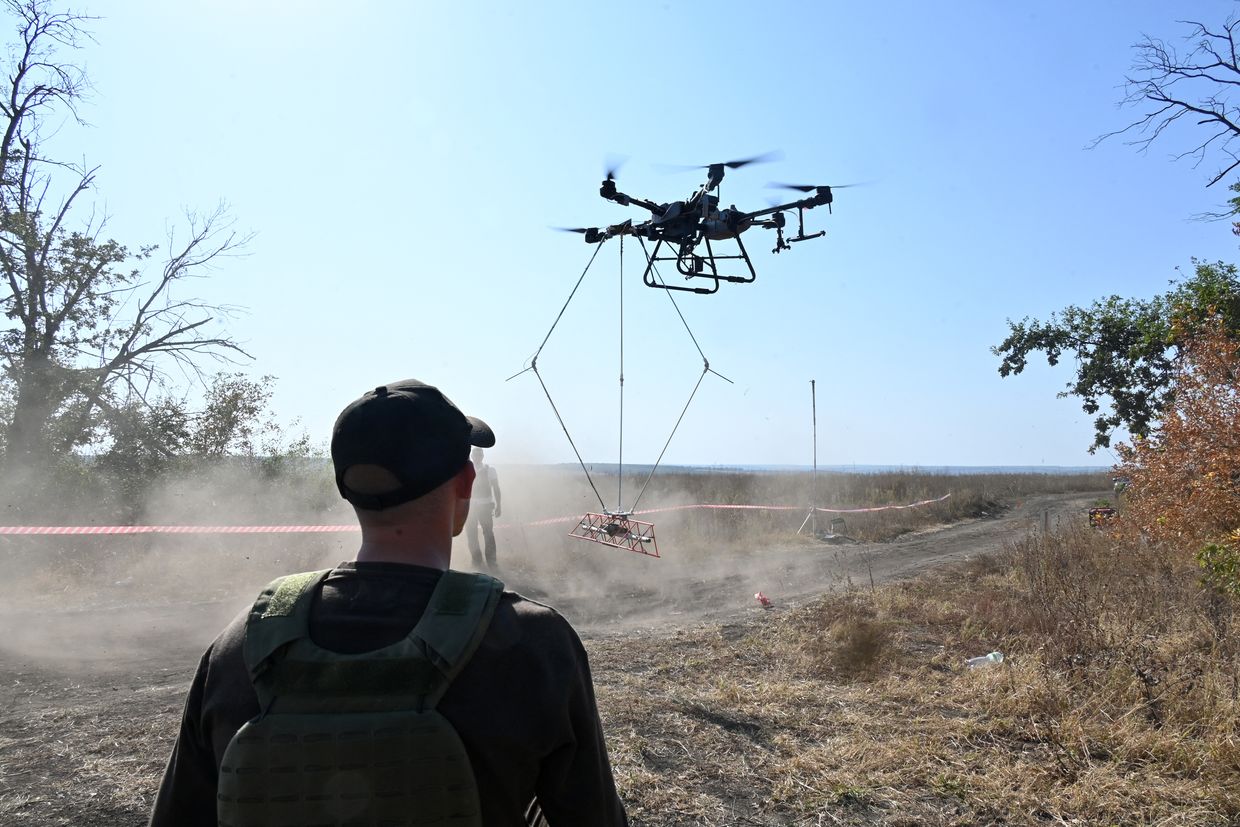
The strategic calculus of air defense has fundamentally broken. For decades, Western military doctrine relied on the assumption that expensive, high-performance interceptors would target equally expensive, high-performance aircraft or cruise missiles. That logic has evaporated. Between 2023 and 2025, the proliferation of cheap, mass-produced loitering munitions created a financial that threatens to bankrupt advanced defense budgets long before their magazines run dry. We are witnessing the inversion of the cost curve: systems costing millions are frequently deployed to neutralize threats costing mere thousands.
This economic bleed is not a theoretical vulnerability; it is an operational reality documented in the Red Sea, Ukraine, and the skies over Israel. When a $2. 1 million Standard Missile-2 (SM-2) obliterates a $2, 000 Samad-3 drone, the tactical engagement is a victory, the economic exchange is a catastrophic defeat. This ratio, frequently exceeding 1, 000: 1, defines the new attrition warfare. The attacker does not need to penetrate the shield to win; they simply need to make the shield too expensive to hold.
The Red Sea Ledger: A Billion-Dollar Drain
The U. S. Navy’s operations in the Red Sea against Houthi forces provide the clearest case study of this unsustainable. By mid-2024, the Department of Defense acknowledged that naval forces had expended nearly $1 billion in munitions to counter Houthi attacks. This expenditure was not driven by a peer-state conflict by a militia leveraging Iranian-supplied technology to shut down global shipping lanes.
Data from 2024 engagements reveals that Arleigh Burke-class destroyers frequently fired SM-2 and SM-6 interceptors to down low-tech threats. While the SM-6, priced at approximately $4. 3 million, offers advanced capabilities against ballistic missiles, its use against slow-moving drones represents a gross misallocation of resources dictated by the need of ship protection. The Houthis, operating with a fraction of the budget, imposed a “protection tax” on the U. S. Navy, forcing the expenditure of high-value inventory that takes months or years to replace.
| Defense System (Interceptor) | Est. Cost Per Shot (USD) | Typical Target | Est. Target Cost (USD) | Cost Ratio (Defense: Offense) |
|---|---|---|---|---|
| Patriot (PAC-3 MSE) | $4, 000, 000 | Shahed-136 / Geran-2 | $20, 000, $50, 000 | 80: 1 to 200: 1 |
| Aegis (SM-2 Block IIIC) | $2, 100, 000 | Samad-3 Drone | $2, 000, $10, 000 | 210: 1 to 1, 050: 1 |
| NASAMS (AMRAAM) | $1, 200, 000 | Kh-101 Cruise Missile | $1, 000, 000+ | 1: 1 (Sustainable) |
| Iron Dome (Tamir) | $50, 000 | Qassam Rocket | $800, $1, 000 | 50: 1 |
| VAMPIRE (APKWS) | $25, 000 | Shahed-136 | $20, 000, $50, 000 | 0. 5: 1 to 1. 25: 1 |
| DragonFire (Laser) | $13 | Quadcopters / UAS | $1, 000+ | 0. 01: 1 (Advantage Defense) |
Ukraine: The High Cost of Survival
In Ukraine, the financial pressure is existential. Russian forces have weaponized cost asymmetry by mixing high-end cruise missiles with swarms of “Geran-2” (Shahed-136) drones. The strategic intent is to force Ukrainian batteries to deplete their limited stock of Patriot and IRIS-T missiles on cheap decoys or loitering munitions. A 2025 analysis of the air war shows that while NASAMS units achieve a sustainable 1: 1 cost ratio when intercepting Russian cruise missiles like the Kh-101, the equation collapses against drones.
To mitigate this, Ukraine rapidly integrated the “VAMPIRE” system (Vehicle-Agnostic Modular Palletized ISR Rocket Equipment) in 2024. By utilizing laser-guided APKWS rockets costing roughly $25, 000, Ukrainian forces can engage Shahed drones at near-cost parity. This shift from heavy surface-to-air missiles (SAMs) to mobile, low-cost interceptors is not just a tactical adjustment; it is an economic need required to sustain the war effort through 2026.
The Directed Energy Horizon
The only viable long-term solution to the drone saturation problem lies in breaking the kinetic model entirely. Directed Energy Weapons (DEW), specifically high-energy lasers, pledge to invert the cost curve back in favor of the defender. The United Kingdom’s successful tests of the “DragonFire” system in 2024 demonstrated the ability to destroy aerial for approximately $13 per shot. Similarly, Israel’s “Iron Beam,” accelerated for deployment following the conflicts of 2023-2024, offers a “pennies-per-shot” solution to short-range threats.
“We are currently on the wrong side of the cost curve. We cannot continue to shoot down $20, 000 drones with $2 million missiles. The math simply does not work.” , U. S. Defense Official, Senate Armed Services Committee Testimony, April 2024.
yet, these systems remain limited by atmospheric conditions, line-of-sight requirements, and power generation constraints. Until directed energy systems are fielded , likely not before 2027 for widespread tactical use, conventional air defense forces remain trapped in a financially draining war of attrition. The gap between the “Shahed Era” of cheap offense and the “Laser Era” of cheap defense represents the most dangerous window of vulnerability for Western militaries in the post-Cold War era.
Manufacturing Decentralization: Garage Workshops and 3D Printed Fuselages
The industrial logic of airpower, once defined by sprawling aerospace campuses and billion-dollar supply chains, has been inverted. Between 2015 and 2025, the center of for unmanned aerial system (UAS) production shifted from state-owned factories to decentralized, clandestine workshops. This transition has birthed a “garage industrial complex” where non-state actors and besieged nations manufacture lethal precision weapons using commercial off-the-shelf (COTS) components and additive manufacturing. The barrier to entry for aerial bombardment has collapsed from the GDP of a small nation to the price of a mid-range laptop and a 3D printer.
In Ukraine, this decentralization reached industrial during the Russian invasion. By late 2024, the Ukrainian government reported that over 150 distinct manufacturers were producing up to 100, 000 -Person View (FPV) drones monthly. of these “factories” were not industrial plants distributed networks of basement workshops and apartment assembly lines. Volunteer engineers utilized consumer-grade 3D printers to fabricate airframes, antenna mounts, and munition release method, reducing the reliance on Chinese imports. The “Wild Hornets” group, a prominent volunteer shared, established robotic assembly lines to produce flight controllers and battery packs locally, decoupling their supply chain from chance foreign interdiction.
The lethality of these garage-built systems is augmented by the mass production of “candy bombs”, 3D-printed plastic casings filled with C4 or other explosives and shrapnel. Unlike traditional cast-iron munitions, these polymer shells are lightweight, non-magnetic, and can be printed on demand to fit specific drone payloads. In 2023 alone, Ukrainian decentralized networks produced tens of thousands of these casings, allowing commercial quadcopters to function as precision bombers against armored columns.
A similar phenomenon emerged in the jungles of Myanmar, where anti-junta rebel groups like the Karenni Nationalities Defence Force (KNDF) and the Chin National Army established secret production hubs. absence state sponsorship, these groups developed the “Liberator,” a fixed-wing drone with a 3D-printed fuselage reinforced with fiberglass. With a unit cost of approximately $5, 000, the Liberator provided insurgents with a crude air force capable of delivering 1. 5 kilograms of explosives. These workshops frequently operate in caves or hidden jungle camps, powered by solar generators, producing stabilizers for drop-munitions that rival the aerodynamic efficiency of factory-made mortar fins.
In Mexico, the Jalisco New Generation Cartel (CJNG) industrialized this concept for criminal enforcement. Federal raids in Michoacán in early 2024 uncovered workshops equipped with CNC milling machines and 3D printers dedicated to manufacturing drone bomb-dropping method. These facilities produced standardized attachments for commercial drones, allowing them to drop improvised explosive devices (IEDs) with high accuracy. The cartel’s innovation pattern is rapid; when security forces deployed signal jammers, cartel engineers began 3D printing components for hard-wired, fiber-optic controlled drones that are immune to radio frequency interference.
The Houthi movement in Yemen demonstrates the strategic ceiling of this decentralized model. While heavily reliant on Iranian components, Houthi technicians have used 3D printing to manufacture airframe sections and engine mounts for their long-range loitering munitions. This capability allows them to repair damaged systems locally and modify designs without waiting for external resupply. The integration of 3D printing into their logistical tail has made their drone arsenal remarkably resilient to blockade efforts, as raw filament and resin are far easier to smuggle than complete airframes.
| Metric | Traditional Military Industrial (e. g., Bayraktar TB2) | Decentralized “Garage” Model (e. g., FPV Kamikaze) |
|---|---|---|
| Unit Cost | $1 million, $5 million | $400, $5, 000 |
| Production Time | Months | Hours |
| Facility Requirement | Specialized Aerospace Factory | Residential Basement / Shipping Container |
| Supply Chain | Global, ITAR-restricted | Consumer Electronics / 3D Filament |
| Adaptability | Slow (Years for upgrades) | Rapid (Days for design changes) |
| Primary Material | Carbon Fiber / Aerospace Aluminum | PLA/PETG Plastic / Fiberglass |
The proliferation of mobile manufacturing units has further complicated interdiction efforts. In May 2025, the Ukrainian Ministry of Defense codified the use of mobile drone workshops, shipping containers equipped with autonomous power, ventilation, and workstations. These units can be deployed near the front lines, allowing operators to repair damaged drones or print replacement parts within minutes of a mission failure. This “forward-deployed manufacturing” capability reduces the logistical tail and ensures that drone swarms can be sustained even under heavy artillery fire.
“We are witnessing the death of the proprietary airframe. When a teenager in a Kyiv basement can download a schematic, print a fuselage, and attach a flight controller bought online, the era of controlling airpower through export restrictions is over.” , Defense Industry Analyst, 2025 Security Symposium.
This shift forces a reevaluation of arms control. Traditional non-proliferation treaties focus on controlling the transfer of complete systems or sensitive technologies like jet engines. They are ill-equipped to address a world where the weapon system is a digital file and the factory is a consumer appliance. The decentralized manufacturing model has proven that volume and adaptability can, in specific tactical contexts, offset the advantages of superior engineering and advanced materials.
Swarm Technology: Operational Realities of Networked Drone Arrays
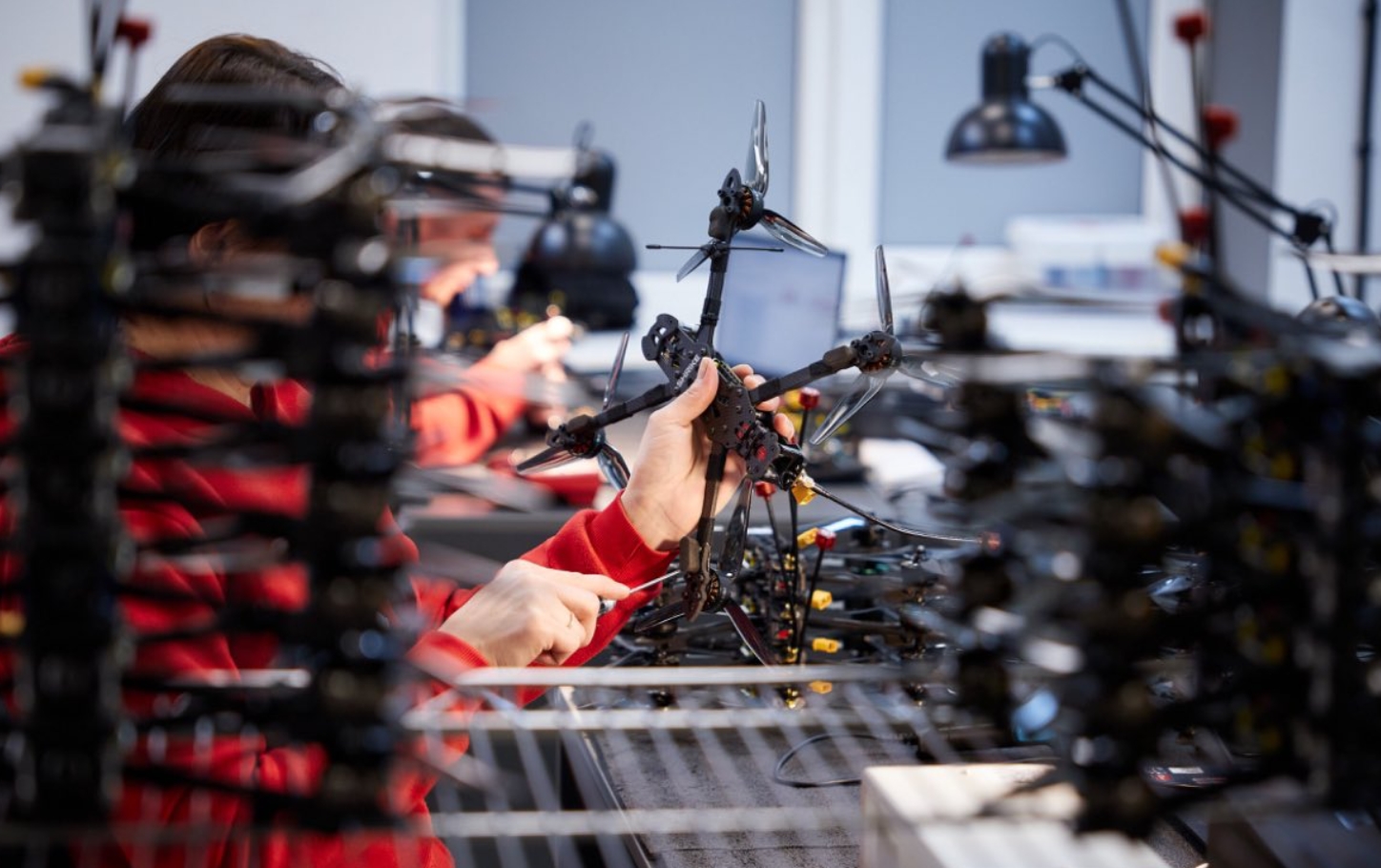
The transition from single-platform control to multi-agent autonomy marks the most significant tactical shift in aerial warfare since the introduction of the jet engine. Between 2015 and 2025, military doctrine moved beyond the “Predator model”, where one pilot controls one aircraft, to the “Swarm model,” where a single operator directs a self-coordinating network of dozens, or even thousands, of attritable assets. This shift is not numerical; it is algorithmic. True swarm technology differs fundamentally from the “massed attacks” frequently observed in the Ukraine-Russia war. While Russian forces launched record salvos of 810 Shahed-136 munitions in a single night in September 2025, these were saturation strikes, pre-programmed, individual trajectories designed to overwhelm air defenses through sheer volume. A true swarm, by contrast, possesses a distributed “brain,” capable of decision-making, self-healing, and autonomous target allocation without human intervention.
Operational data from the last decade reveals a rapid maturation of these capabilities. In May 2021, during Operation Guardian of the Walls, Israel’s Defense Forces (IDF) became the military to acknowledge the use of a true AI-guided drone swarm in combat. The classified “Ghost Unit” (Unit 888) conducted over 30 sorties using a network of quadcopters to locate and strike hidden Hamas in Gaza. Unlike standard remotely piloted vehicles, these drones communicated via a mesh network, sharing target data and deconflicting flight route in real-time. If one node was neutralized by electronic warfare or kinetic fire, the remaining nodes instantly reconfigured the formation to ensure mission completion. This capability renders traditional “decapitation” strikes against a central control node obsolete.
The United States has pursued similar capabilities through programs like the Office of Naval Research’s LOCUST (Low-Cost UAV Swarming Technology). Tests confirmed the ability to tube-launch 30 Coyote drones in rapid succession, which then formed a unit to conduct offensive electronic warfare or kinetic strikes. yet, the of U. S. ambition has faced logistical friction. The Pentagon’s “Replicator” initiative, announced in 2023 with the goal of fielding thousands of autonomous systems by August 2025, encountered production bottlenecks. By late 2024, officials confirmed the delivery of “hundreds” rather than thousands of systems. Under the new administration in 2025, the initiative was restructured into the Defense Autonomous Working Group (DAWG), shifting focus toward larger, more lethal platforms while maintaining the core doctrine of “mass over class.”
| Feature | Saturation Attack (e. g., Shahed-136 Waves) | Networked Swarm (e. g., LOCUST, Swarmer) |
|---|---|---|
| Control Architecture | Individual pre-programmed flight route. | Distributed AI; autonomous peer-to-peer coordination. |
| Reaction to Loss | None; destroyed units create gaps in the wave. | Self-healing; swarm re-optimizes to cover gaps. |
| Communication | One-way (Satellite/Radio) to command center. | Multi-directional Mesh Network (Drone-to-Drone). |
| Primary Objective | Deplete enemy missile interceptors. | Overwhelm decision loops (OODA) and precision strikes. |
| Cost Efficiency | High (requires massive volume for effect). | Very High (intelligent allocation reduces waste). |
Ukraine has served as the primary testing ground for the integration of AI into these formations. By late 2024, Ukrainian forces began deploying “wolf packs” of three to eight drones managed by “Swarmer” software. In these configurations, a lead reconnaissance drone identifies and assigns them to accompanying strike drones, which execute the attack autonomously. This reduces the requirement for skilled operators, a serious advantage as personnel absence plague the front lines. The software allows the swarm to navigate without GPS, using optical flow and relative positioning to operate inside heavy Russian electronic warfare bubbles that would blind standard UAVs.
China remains the pacing threat in high-volume swarm deployment. The China Electronics Technology Group Corporation (CETC) shattered records as early as 2017 with a 119-drone fixed-wing swarm, and subsequent tests have demonstrated the ability to coordinate thousands of units. While public demonstrations frequently feature light shows, such as the 16, 000-drone display in 2025, the underlying “swarm intelligence” algorithms are dual-use, designed to synchronize missile barrages and loitering munitions. The People’s Liberation Army (PLA) doctrine explicitly identifies “intelligentized warfare” as the successor to information warfare, with the swarm serving as the primary method to the sophisticated air defense networks of carrier strike groups.
“The swarm does not rely on a single leader. It relies on a shared reality. not kill the commander because every drone is the commander.” , Internal DARPA Assessment on OFFSET Program, 2021.
The operational reality of 2025 is that the “kill chain” has been compressed into milliseconds. In a swarm engagement, human operators function as supervisors rather than pilots, authorizing the engagement criteria while the network executes the tactics. This raises immediate concerns regarding the speed of escalation; a swarm can identify, validate, and strike a target faster than a human can blink, forcing defensive systems to rely on automated responses. The era of the “man-in-the-loop” is rapidly receding, replaced by the “man-on-the-loop,” observing a war fought by algorithms.
The Human Cost: Psychological Impact of Persistent Aerial Surveillance
The psychological impact of drone warfare has evolved from a side effect of targeted killings into a deliberate strategic weapon. Between 2015 and 2025, the proliferation of loitering munitions and persistent surveillance platforms created a phenomenon mental health professionals term “anticipatory anxiety”, a state of chronic hypervigilance caused by the inability to predict when a strike occur. Unlike traditional airstrikes, which are frequently preceded by the roar of jets, drone warfare is characterized by the “unblinking eye” of surveillance and, in the case of propeller-driven loitering munitions, a distinctive, terror-inducing acoustic signature.
In Gaza, this phenomenon is encapsulated by the colloquialism Zannana (“the buzzer”), a term used to describe the relentless mechanical hum of Israeli surveillance drones. A 2024 report by Euro-Med Human Rights Monitor documented a disturbing evolution in this psychological siege: the use of quadcopters not just to survey, to broadcast recordings of crying children or women screaming to lure civilians out of shelters. This weaponization of empathy represents a grim milestone in psychological operations. Data from Save the Children in late 2023 indicated that 80% of children in Gaza lived in a perpetual state of emotional distress, characterized by bedwetting, reactive mutism, and aggression, symptoms directly correlated with the constant presence of unmanned aircraft.
The Vocabulary of Acoustic Terror
The auditory experience of drone warfare varies by region produces identical psychological scars. In Ukraine, the Iranian-designed Shahed-136 introduced a new sonic terror: the “moped” or “lawnmower” engine sound. Unlike high-altitude Predators that strike silently, these loitering munitions are designed to be heard, creating a radius of terror far wider than their blast zone. The Marzeev Institute of Public Health in Kyiv found in a 2025 study that sleep deprivation caused by these slow-moving, noisy drones had become a mass casualty event in itself, with air raid sirens sounding over 19, 000 times across the country in that year alone.
| Region | Dominant Platform | Local Terminology | Primary Psychological Stressor | Documented Symptoms (Civilian) |
|---|---|---|---|---|
| Gaza | Quadcopters / Hermes 450 | Zannana (“The Buzzer”) | 24/7 Surveillance / Audio Lures | Reactive mutism, bedwetting (80% of children), learned helplessness. |
| Ukraine | Shahed-136 / Geran-2 | Moped / Lawnmower | Sleep Deprivation / Acoustic Terror | Chronic insomnia, “Phantom Siren” syndrome, hypertension. |
| Yemen | MQ-9 Reaper / Various | Wizz | Invisibility / Unpredictability | Social withdrawal, refusal to gather in groups, anticipatory anxiety. |
The transition from high-altitude surveillance to low-altitude “kamikaze” drones has fundamentally altered civilian behavior. In Yemen, where U. S. drone operations continued throughout the decade, the fear of “double-tap” strikes (a follow-up strike targeting rescuers) led to a breakdown in social cohesion. Residents in affected provinces frequently refused to gather for weddings or funerals, fearing that any congregation would be interpreted by a remote sensor as a target. A 2015 study by the Alkarama Foundation, which remained relevant through 2025 as operations continued, found PTSD rates as high as 92% in heavily surveilled villages.
“The drone is not just a weapon that kills. It is a weapon that waits. The silence is worse than the noise, because in the silence, you are waiting for the noise to start again.” , Testimony from a resident of Kyiv, documented by the Center for Civil Liberties, 2024.
The medical community has begun to recognize “Drone-Induced Anxiety” as a distinct clinical diagnosis. Unlike shell shock, which is a reaction to immediate combat trauma, this condition is chronic and environmental. It from the loss of privacy and the “encirclement” effect, the feeling that the sky itself has become hostile territory. In Ukraine, the sheer volume of alerts has led to “alarm fatigue,” where the psychological toll of constant readiness the cognitive ability to assess real danger.
This data reveals that the psychological pressure is not static; it is cumulative. The 2025 figure of over 19, 000 alerts represents a reality where the interruption of daily life is the norm, not the exception. For a child born in 2015 in Yemen or 2020 in Gaza, the sound of a drone engine is a primary developmental input, shaping their cognitive baseline around the expectation of sudden violence.
Regulatory Failure: Why the Missile Technology Control Regime is Obsolete
The global proliferation of weaponized drones has exposed the Missile Technology Control Regime (MTCR) as a relic of the Cold War, structurally incapable of containing the spread of modern unmanned aerial systems. Established in 1987 by G7 nations, the MTCR was designed to prevent the delivery of nuclear payloads, setting a strict “presumption of denial” for Category I systems, those capable of carrying a 500-kilogram payload at least 300 kilometers. This metric, calibrated for ballistic missiles, has proven woefully insufficient for the drone age, where lethality no longer requires heavy lift or hypersonic speed.
Most of the world’s most proliferated combat drones deliberately skirt these thresholds. The Turkish Bayraktar TB2, which has defined conflicts from Nagorno-Karabakh to Ukraine, carries a payload of approximately 150 kilograms, well the Category I limit. This technicality classifies it as a Category II system, allowing Turkey (an MTCR member) to export it with fewer restrictions. Similarly, Iran’s Shahed-136 loitering munition, even with its 2, 500-kilometer range, carries a warhead of roughly 40 to 50 kilograms. By decoupling range from payload, these systems exploit a regulatory blind spot: they are strategic weapons treated with the same export leniency as tactical surveillance aircraft.
The Collapse of the “Presumption of Denial”
The regime’s authority collapsed between 2020 and 2025, driven by market pressure rather than security concerns. In July 2020, the Trump administration unilaterally reinterpreted the MTCR to treat drones with speeds under 800 kilometers per hour as Category II items, regardless of their range or payload capacity. This move was explicitly designed to allow General Atomics and Northrop Grumman to compete with Chinese manufacturers who had already captured the Middle Eastern market. The Biden administration maintained this trajectory, and by 2025, further policy shifts aimed to classify large drones as “aircraft” rather than missiles, unlocking sales of over 100 MQ-9 Reapers to Saudi Arabia.
This regulatory retreat was a direct response to the “non-member” problem. China, not a signatory to the MTCR, filled the vacuum left by American restraint. Between 2015 and 2023, Beijing exported Wing Loong and CH-4 drones to traditional U. S. partners like the UAE, Egypt, and Iraq. These transactions did not violate international law because China is not bound by the regime, rendering the MTCR’s restrictions self-defeating for member states who watched their market share while proliferation continued unabated.
| System | Origin | MTCR Status | Key Specifications | Regulatory Loophole |
|---|---|---|---|---|
| Bayraktar TB2 | Turkey | Member | 150kg Payload / < 300km Range (Loitering) | Category II: Payload is too light to trigger Category I denial. |
| Shahed-136 | Iran | Non-Member | 50kg Payload / 2, 500km Range | Non-Signatory / Kit Export: Shipped as “spare parts” to Russia for assembly. |
| Wing Loong II | China | Non-Member | 480kg Payload / 4, 000km Range | Non-Signatory: China ignores MTCR limits, selling to US allies. |
| MQ-9 Reaper | USA | Member | 1, 700kg Payload / 1, 850km Range | Reinterpretation: Speed < 800km/h exemption used to bypass Category I blocks. |
The “Kit” Evasion and Dual-Use Failure
The regime’s focus on complete systems has also failed to address the “kit” proliferation model. Iran and China have mastered the export of drone manufacturing capabilities rather than just finished airframes. The Shahed-136, for instance, is frequently shipped to Russia as disassembled components to be built at the Alabuga Special Economic Zone. By November 2025, this facility aimed to produce 5, 000 units per month. Because the shipments are labeled as dual-use components, engines, servos, and microchips, they bypass the scrutiny applied to weapon systems. Customs data from the half of 2025 revealed that China exported $1. 9 billion in “high-priority dual-use goods” to Russia, rendering the MTCR irrelevant to the actual supply chain of drone warfare.
also, the ubiquity of commercial off-the-shelf (COTS) technology has made enforcement impossible. A 2022 analysis of downed Iranian drones in Ukraine found components from over 13 Western companies, including microcontrollers and GPS modules available on the open market. The MTCR was built to control specialized, state-monopolized technology like rocket motors and guidance sets. It has no method to police the global trade in lawnmower engines and consumer electronics that power the world’s most disruptive air forces.
The obsolescence of the MTCR is not a technical failure a strategic collapse. The regime assumed that high-end proliferation could be choked off at the source. The reality of the 2020s proves that when technology becomes cheap enough, and the suppliers diverse enough, voluntary export controls function only as a self-imposed embargo on the compliant, while the non-compliant arm the world.
Case Study: The 2025 Infrastructure Wars and Energy Grid Vulnerabilities
By 2025, the theoretical threat of drone swarms against serious infrastructure materialized into a sustained, high-intensity campaign known as the “Infrastructure Wars.” This conflict phase was defined not by territorial gains by the systematic of energy grids through cost-asymmetric attrition. The strategic logic was simple: overwhelm expensive, hard-to-replace components like high-voltage transformers with cheap, mass-produced loitering munitions. The primary theater was the Russo-Ukrainian war, where data from 2025 records 1, 225 separate attacks on energy facilities, more than the combined total of the previous three years, resulting in over $20 billion in direct damages.
The pivot to infrastructure targeting exposed a serious vulnerability in modern industrial nations: the reliance on custom-built, long-lead-time equipment. While a Shahed-136 derivative could be manufactured in days for approximately $70, 000 (down from $193, 000 in 2022 due to domestic mass production), the Large Power Transformers (LPTs) they targeted cost between $2 million and $10 million and required lead times of up to 200 weeks by late 2025. This temporal mismatch created a “repair gap” that no amount of funding could immediately close.
The Economics of Asymmetry
The financial between the attacker and the defender reached unsustainable levels in 2025. Defense systems like the Patriot or IRIS-T, firing interceptors costing $3 million to $4 million, were economically ill-suited to counter swarms of $50, 000 drones. The following table illustrates the catastrophic return on investment (ROI) for state and non-state actors targeting energy infrastructure.
| Target Asset | Replacement Cost (Est.) | Replacement Lead Time | Attack Vector | Attack Unit Cost (Est.) | Economic Exchange Ratio |
|---|---|---|---|---|---|
| 500kV Large Power Transformer (LPT) | $4, 000, 000, $10, 000, 000 | 115, 200 Weeks | Shahed-136 / Geran-2 | $20, 000, $70, 000 | 1: 142 |
| Thermal Power Plant Turbine Hall | $150, 000, 000+ | 3, 5 Years | Swarm (5-10 units) | $350, 000 | 1: 428 |
| Oil Refinery Distillation Unit | $25, 000, 000+ | 18, 24 Months | Long-range OWA UAV | $50, 000, $100, 000 | 1: 250 |
| Distribution Substation | $500, 000, $2, 000, 000 | 12, 18 Months | FPV / Lancet Loitering Munition | $35, 000 | 1: 57 |
The operational tempo in 2025 shifted from sporadic strikes to synchronized “wave” attacks. On November 8, 2025, a single coordinated strike involved 450 loitering munitions targeting 25 specific energy nodes across Ukraine. The objective was not to cut power to induce a “frequency collapse” by severing the substations connecting nuclear power plants to the wider grid. This tactic forced emergency shutdowns of gigawatt-class generation facilities without clear the reactors themselves, weaponizing the grid’s safety against itself.
Simultaneously, the war expanded to the hydrocarbon sector. Ukrainian long-range drones struck deep into Russian territory, hitting refineries and fuel depots. By mid-2025, these strikes had taken approximately 15% of Russia’s refining capacity offline. The attacks on facilities like the Ryazan and Kirishi refineries demonstrated that air defense systems, stretched thin by the need to protect frontline troops and urban centers, could not guarantee the safety of industrial assets hundreds of kilometers behind the lines.
Global Contagion and Supply Chain Fragility
The “2025 Infrastructure Wars” were not contained to Eastern Europe. The Houthi movement in Yemen, leveraging Iranian technology, executed precision strikes on oil infrastructure in the Arabian Peninsula, including the Ras Tanura port, disrupting global energy markets. These attacks validated the proliferation model: non-state actors could project strategic power previously reserved for superpowers.
For the United States, the events of 2025 served as a clear warning. Department of Energy reports from July 2025 highlighted that the U. S. grid faced a 30% absence of LPTs, with domestic manufacturing capacity unable to meet replacement demand. The “Moore County” style attacks of 2022 had evolved into a strategic doctrine. Security analysts noted that a coordinated drone campaign against just nine key substations could cause a coast-to-coast blackout for months. The 2025 data confirmed that the physical firewall protecting Western infrastructure had evaporated; the distance provided by oceans was irrelevant in an era of containerized drone launchers and sleeper cells equipped with commercial-grade UAVs.
Counter-UAS Limitations: The Physics of Directed Energy Weapons
The allure of directed energy weapons (DEWs) is economic: while a Tamir interceptor for the Iron Dome costs approximately $50, 000, a laser shot costs roughly $2 in electricity. This “infinite magazine” narrative, aggressively marketed by defense contractors like Raytheon and Rafael, suggests a clean, cost- solution to the drone saturation emergency. yet, physics imposes rigid constraints that marketing brochures frequently omit. Between 2015 and 2025, field tests of systems like the U. S. Army’s DE M-SHORAD and Israel’s Iron Beam revealed that while lasers are lethal in controlled environments, they struggle against the chaotic variables of the lower atmosphere.
The primary adversary of the high-energy laser (HEL) is not the drone, the air itself. To destroy a target, a laser must focus a coherent beam on a spot the size of a dime, maintaining that hold for several seconds to burn through the casing or blind the optics. This requirement, known as “dwell time,” is sabotaged by atmospheric extinction. Fog, rain, and smoke absorb and scatter laser energy. Research indicates that transmission losses in dense fog can be six orders of magnitude greater than in heavy rain, rendering optical weapons useless in poor visibility. In the maritime environment of the Red Sea, high humidity and salt spray degrade beam coherence, reducing the range of naval systems like the AN/SEQ-3 Laser Weapon System (LaWS) to a fraction of their theoretical maximum.
Thermal blooming represents a more insidious physics problem. As a high-energy laser travels through the atmosphere, it heats the air molecules in its route. This heated air expands, creating a negative lens effect that defocuses the beam, a phenomenon that worsens as power levels increase. To counter this, systems require complex adaptive optics to pre-distort the beam, adding weight and fragility to mobile platforms. In 2024, the U. S. Army discovered that integrating a 50-kilowatt laser onto a Stryker vehicle (the DE M-SHORAD program) created unmanageable heat dissipation problem. The cooling equipment required to keep the laser operational competed for space and power with the vehicle’s mobility systems, leading to reliability failures in the dust and heat of the Middle East.
Tactically, lasers suffer from a “one-to-one” engagement limitation. Unlike a fragmentation warhead that can damage multiple nearby, a laser must finish burning one drone before slewing to the. If a swarm of 20 Shahed-136 munitions arrives simultaneously, a 50kW laser requiring five seconds of dwell time per target would need over a minute and a half to neutralize the threat, time that a supersonic or even subsonic swarm does not grant. This saturation vulnerability forces defenders to rely on High Power Microwave (HPM) systems for area defense.
HPM systems, such as the Epirus Leonidas, operate differently. They project a cone of electromagnetic energy that induces fatal currents in the electronic circuitry of any drone within the field of view. This “one-to- ” capability makes HPM the only viable directed energy solution against swarms. yet, HPM effectiveness drops off rapidly with distance due to the inverse-square law; doubling the range requires four times the power. also, shielding electronics against microwave radiation (Faraday caging) is technically simpler for drone manufacturers than hardening airframes against thermal lasers.
The table contrasts the operational realities of kinetic interceptors against the two primary directed energy modalities.
| Feature | Kinetic Interceptor (e. g., Coyote, Tamir) | High Energy Laser (e. g., Iron Beam) | High Power Microwave (e. g., Leonidas) |
|---|---|---|---|
| Cost Per Engagement | $40, 000, $100, 000+ | $2, $10 (Electricity only) | <$1 (Electricity only) |
| Kill method | Blast fragmentation / Collision | Thermal ablation / Structural failure | Electronic component burnout |
| Engagement Type | One-to-One | One-to-One | One-to- (Area Effect) |
| Weather Dependency | Low (All-weather capable) | serious (Fails in fog/rain/smoke) | Low (Penetrates weather) |
| Magazine Depth | Limited by physical payload | Deep (Limited by fuel/cooling) | Deep (Limited by fuel/cooling) |
| Countermeasures | Decoys / Electronic Jamming | Reflective coatings / Spinning / Ablative | Faraday cages / Hardened circuits |
Drone manufacturers have already begun adapting to these threats. Simple countermeasures, such as coating drones in reflective Mylar or using ablative resins that boil off to dissipate heat, can double or triple the dwell time required for a laser kill. Spinning the airframe during its terminal dive spreads the laser’s energy across a ring rather than a single point, preventing burn-through. As directed energy weapons move from the laboratory to the battlefield, the “cost curve” victory remains elusive; the physics of the atmosphere and the adaptability of the offense ensure that DEWs remain a complementary tool rather than a silver bullet.
The Shenzhen Nexus: Commercial Supply Chains as Military Logistics
The global center of for the “Shahed Era” is not a military base in Isfahan or a skunkworks in the Mojave, the glittering high-rises of Nanshan District, Shenzhen. Between 2015 and 2025, this Chinese metropolis consolidated its status as the singular arsenal of the drone age, not through state-to-state arms deals, via the unchecked of “dual-use” commercial technology. While Washington and Brussels focused on regulating Predator exports, Shenzhen’s industrial base privatized military logistics, allowing anyone with a credit card to procure an air force.
The distinction between a consumer toy and a loitering munition has largely evaporated. By late 2025, forensic analysis of Russian Geran-2 (Shahed-136) drones recovered in Kyiv revealed that 65% of their electronic components originated in China, a sharp increase from previous years where Western components were more prevalent. This shift signals a deliberate restructuring of Russian military supply chains to depend on the Shenzhen ecosystem, which has proven impervious to Western sanctions.
The Dual-Use Pipeline
The primary vector for this proliferation is the commercial market leader, DJI, and its competitor, Autel Robotics. even with DJI’s public suspension of operations in Russia and Ukraine in April 2022, their platforms remain the “king of battle” for infantry on both sides. The supply chain has simply mutated; instead of direct shipments, a “gray market” of third-party resellers in Kazakhstan, Turkey, and the United Arab Emirates the transfer. These are not illicit arms deals in the traditional sense retail transactions for “agricultural equipment” and “cinematographic tools” that are immediately weaponized upon arrival.
Autel Robotics, added to the U. S. Department of Defense “Chinese Military Companies” list in January 2025, exemplifies the nexus. While the company maintains it manufactures civilian products, its EVO II series drones have been documented in use by Russian forces, the Ukrainian military, and allegedly by the IDF in Gaza. The company’s inclusion on the blacklist show the Pentagon’s belated recognition that commercial drone manufacturers are serious defense infrastructure for foreign adversaries.
| Component Type | Manufacturer / Origin | System Found In | Function |
|---|---|---|---|
| Flight Control Chips | Beijing Microelectronics Technology Institute | Shahed-136 / Geran-2 | Navigation & Stability |
| Engines (MD-550 Clones) | Limbach (Chinese subsidiaries) | Garpiya-A1 | Propulsion |
| CRPA Antennas | Shenzhen Caspro Technology Co. | Orlan-10 / Shahed Variants | Anti-Jamming Navigation |
| Launch Catapults | Suzhou Ecod Precision Manufacturing | Geran UAV | Launch method |
Sanctions Evasion and the “Ant Trade”
The logistics of this proliferation rely on a method intelligence officials call the “ant trade”, thousands of small, low-value shipments that overwhelm customs enforcement. Unlike a shipment of tanks which can be tracked by satellite, a crate of flight controllers is indistinguishable from consumer electronics. In 2023 and 2024 alone, Chinese firms supplied over $63 million in dual-use components directly to sanctioned Russian entities. This trade is facilitated by a labyrinth of Hong Kong-based front companies, such as S&C Trade PTY Co. and Shenzhen Caspro, which serve as cut-outs to mask the end-user.
The integration is granular. Russian manufacturers like IEMZ Kupol have not only imported parts have reportedly hosted Chinese engineering teams to optimize production lines for the Garpiya drone series. This direct industrial collaboration suggests that Shenzhen is no longer just a passive supplier of parts an active participant in the engineering of foreign weapons systems. The “civilian” nature of these companies provides Beijing with plausible deniability, even as its industrial output sustains the Russian war machine.
“We are no longer fighting a conventional army; we are fighting a supply chain. As long as Shenzhen remains open for business, the enemy has infinite reserves.” , Lieutenant Colonel Andriy, Ukrainian Drone Battalion Commander, September 2025.
Strategic Vulnerability
This reliance on Shenzhen creates a paradoxical vulnerability for the West. While U. S. and European forces attempt to “de-risk” their supply chains, the sheer volume of Chinese production creates a well that is difficult to escape. Even American “Blue UAS” approved for military use have been found to contain minor components, capacitors, resistors, wiring harnesses, sourced from the Pearl River Delta. For non-state actors like the Houthis or drug cartels in Mexico, the Shenzhen Nexus is an equalizer, providing precision strike capabilities that were once the monopoly of superpowers for the price of a used sedan.
Tactical Evolution: Drone-on-Drone Dogfights and Aerial Interdiction
The romanticized notion of aerial combat, supersonic jets dueling at 30, 000 feet, has been superseded by a grittier, lower-altitude reality. Between 2022 and 2025, the airspace over Ukraine became the testing ground for the true drone-on-drone dogfights in history. What began as clumsy, improvised collisions between commercial quadcopters has evolved into a systematized doctrine of aerial interdiction, where high-speed Person View (FPV) interceptors hunt reconnaissance platforms and loitering munitions to enforce a new kind of air denial.
The recorded instance of this tactical shift occurred in October 2022, when a Ukrainian DJI Mavic rammed a Russian counterpart, shearing its rotors in a “World War I-style” duel. By 2024, these opportunistic clashes had matured into a deliberate strategy. Russian reconnaissance drones like the Orlan-10 and Zala 421, serious for directing artillery fire, began falling in record numbers, not to expensive surface-to-air missiles, to cheap, explosive FPVs. Data from open-source intelligence monitors confirmed over 650 visual interceptions of Russian fixed-wing surveillance drones by Ukrainian FPVs between May and December 2024 alone. This shift was born of economic need: firing a $3 million Patriot interceptor at a $100, 000 Orlan is unsustainable; destroying it with a $700 FPV is a winning attrition strategy.
By 2025, the “interceptor” class of drones had bifurcated into two distinct technological lineages: the expendable “kinetic kill” vehicles and the reusable “hunter-killers.”
The Expendable Interceptors: Velocity as a Weapon
Ukraine’s response to the Shahed-136 emergency was the development of high-velocity FPV interceptors capable of catching flying at 180 km/h. The “Sting,” developed by the Wild Hornets group, exemplifies this class. Capable of speeds exceeding 300 km/h (185 mph) and costing approximately $2, 500, the Sting represents a radical inversion of air defense economics. Instead of guarding a perimeter, these drones are vectored by ground radar to collide directly with incoming threats. In late 2024, Ukrainian forces began deploying these interceptors to hunt Shahed drones, preserving their dwindling stocks of NASAMS and IRIS-T missiles for cruise missile defense.
Russia countered with “aerial mining” and mass decoy tactics. In late 2025, Russian forces deployed the “Gerber” and “Parody” drones, cheap foam decoys containing radar reflectors, to exhaust Ukrainian interceptor stockpiles. This necessitated a higher level of target discrimination from FPV pilots, who had to visually identify armed threats amidst swarms of styrofoam distractions.
The Reusable Hunters: AI and Autonomy
While Ukraine improvised with commercial tech, the United States formalized the interceptor concept with purpose-built systems. Anduril Industries’ “Roadrunner,” a jet-powered VTOL (Vertical Take-Off and Landing) autonomous air vehicle, entered combat evaluation in January 2024. Unlike a missile, the Roadrunner can launch, identify a target, and if engagement is unnecessary, return to base and refuel. This reusability addresses the “magazine depth” problem that plagues traditional air defense.
Similarly, Fortem Technologies deployed the DroneHunter F700 in Ukraine to protect energy infrastructure. Unlike kinetic interceptors that destroy the target via explosion, the F700 use a “NetGun” to physically capture hostile drones, mitigating the risk of falling debris in populated areas. This system proved particularly against slower observation drones struggled against the sheer volume of high-speed loitering munitions.
Comparative Economics of Aerial Interdiction (2025)
The following table illustrates the cost asymmetry driving the proliferation of drone interceptors. The “Cost Ratio” represents the financial advantage of the defender; a positive ratio indicates a sustainable defense, while a negative ratio indicates economic bleeding.
| Interceptor System | Target Threat | Interceptor Cost (Est.) | Target Cost (Est.) | Outcome Method | Economic Efficiency |
|---|---|---|---|---|---|
| Wild Hornet “Sting” | Shahed-136 | $2, 500 | $35, 000 | Kinetic Impact | High (14: 1) |
| FPV Drone (Standard) | Orlan-10 Recon | $700 | $100, 000 | Explosive Detonation | Extreme (142: 1) |
| Patriot PAC-3 | Shahed-136 | $4, 000, 000 | $35, 000 | Proximity Fuse | Catastrophic (-1: 114) |
| Anduril Roadrunner | Class 3 UAS | Low Six-Figures* | $50, 000, $2M | High-Explosive/Reusable | Variable (Sustainable) |
| Fortem DroneHunter | DJI Mavic 3 | High Five-Figures | $3, 000 | Net Capture | Low (Asset Protection) |
*Exact unit cost classified; estimates based on contract values.
The tactical implication of these engagements is the blinding of the battlefield. Russian artillery units, once reliant on the Orlan-10 for real-time correction, found their “eyes” consistently gouged out by Ukrainian FPV teams. This forced Russian operators to fly higher, degrading sensor resolution, or to rely on intermittent satellite data. The air littoral, the space between the ground and 3, 000 feet, is no longer a sanctuary for surveillance; it is a contested kill box where the hunter frequently becomes the prey.
Strategic Reach: Long-Range One-Way Attack Drones Deep Inside Sovereign Territory
The operational “kill box” of modern warfare has expanded from the tactical frontline to the strategic hinterland. Between 2015 and 2025, the proliferation of long-range one-way attack (OWA) drones abolished the concept of safe rear areas. State and non-state actors possess the capability to strike deep into sovereign territory with precision and impunity. This shift is defined by the mass deployment of low-cost, propeller-driven loitering munitions that bypass traditional air defense networks through low-altitude flight profiles and sheer volume.
Ukraine’s domestic drone program exemplifies this strategic evolution. By 2024, Kyiv had transitioned from relying on short-range tactical UAVs to fielding systems capable of clear over 1, 500 kilometers away. The Liutyi (Fierce) drone, a Ukrainian analogue to the Shahed-136, became the workhorse of this deep-strike campaign. In May 2025, a Liutyi drone set a combat record by clear a Russian Voronezh-M early-warning radar in Orsk, a distance of approximately 1, 800 kilometers from the Ukrainian border. This strike demonstrated that the entirety of European Russia, including strategic bomber bases and nuclear early-warning infrastructure, lay within reach of Ukrainian systems.
The strategic impact of these deep strikes is measurable in economic attrition. Throughout 2024 and 2025, Ukraine launched a systematic campaign against Russian oil refineries. Verified that these strikes idled approximately 14% to 17% of Russia’s total oil refining capacity at their peak. Facilities in Ryazan, Saratov, and Tatarstan, previously considered safe zones, suffered repeated hits. The asymmetry of these attacks is clear. A drone costing roughly $50, 000 can disable a cracking tower worth hundreds of millions, forcing the defender to redeploy scarce air defense assets from the front lines to protect industrial static.
Simultaneously, the Houthi movement in Yemen shattered the illusion of distance in the Middle East. On July 19, 2024, a Houthi-launched drone struck Tel Aviv after a 16-hour flight. The drone, identified as a “Jaffa” variant of the Samad-3, flew a complex, non-linear operational route of approximately 2, 600 kilometers to evade detection. This strike proved that non-state actors could execute intercontinental-range precision attacks without a traditional air force. The Jaffa variant achieved this range by sacrificing warhead weight for increased fuel capacity, a trade-off that characterizes the current generation of long-range OWA systems.
| System Name | Origin | Max Operational Range | Warhead Payload | Propulsion | Notable Strategic Strike |
|---|---|---|---|---|---|
| Shahed-136 (Geran-2) | Iran / Russia | 2, 500 km | 50 kg | MD-550 Piston Engine | Kyiv Energy Grid (2022-2025) |
| Liutyi (An-196) | Ukraine | 1, 800, 2, 000 km | 50, 75 kg | Rotax 912 (or equivalent) | Orsk Radar Station (May 2025) |
| Samad-3 (Jaffa Variant) | Yemen (Houthi) | ~2, 600 km (Flight route) | 10, 20 kg | Mado 275 (Iranian Copy) | Tel Aviv Strike (July 2024) |
| UJ-22 Airborne | Ukraine | 800 km | 20 kg | Gasoline Piston | Moscow Region Probing (2023) |
The proliferation of these systems relies on commercial off-the-shelf (COTS) components. Engines like the Chinese DLE-170 or the Iranian Mado 275 are widely available and difficult to sanction. Guidance systems use commercial GPS modules paired with inertial navigation units to maintain course even in jamming environments. This “democratization” of long-range strike capability means that a nation’s strategic depth is no longer guaranteed by geography or expensive missile defense shields. The cost-exchange ratio heavily favors the attacker. Intercepting a $30, 000 drone with a $2 million Patriot missile is economically unsustainable over a prolonged conflict.
Russia’s response to Ukrainian deep strikes involved the deployment of “cope cages” and GPS spoofing across vast swathes of territory. Yet the physical reach of the drones forced a dispersion of Russian aviation assets. Strategic bombers were relocated to Olenya Air Base in the Arctic Circle, further stressing airframe maintenance pattern and crew fatigue. This operational dislocation is a primary strategic effect of the drone campaign. The threat of a single drone impact forces the adversary to alter logistics chains and disperse high-value assets, degrading in total combat efficiency without requiring the total destruction of the target set.
The data confirms that the monopoly on strategic reach has ended. In 2015, only the United States, Israel, and select NATO members possessed the ability to strike 2, 000 kilometers away with precision. By 2025, this capability is held by Ukraine, Iran, the Houthis, and chance other non-state actors. The unregulated proliferation of these systems ensures that future conflicts see immediate, deep strikes on energy and command infrastructure, regardless of the conventional military balance.
The Software Defined Weapon: Over-the-Air Updates as Military Aid
The definition of military aid radically altered between 2022 and 2025. While headlines focused on the delivery of Abrams tanks and F-16 fighters, a more decisive transfer of power occurred invisibly: the transmission of code. By 2025, the primary lethality of a drone system was no longer determined solely by its airframe or payload, by the frequency and sophistication of its firmware updates. This shift to “software-defined warfare” allowed Western technology firms to inject capabilities directly onto the battlefield, bypassing traditional logistics chains and transforming static hardware into evolving adaptive weapons.
The most significant manifestation of this trend occurred in July 2025, when the Pentagon awarded a $50 million contract to Auterion for the delivery of 33, 000 “Skynode” strike kits to Ukraine. Unlike traditional arms shipments, these kits were not weapons in themselves computing cores capable of retrofitting dumb airframes with autonomous terminal guidance. The Skynode system utilized machine vision to lock onto even with heavy electronic warfare (EW) jamming, a capability previously reserved for multi-million dollar cruise missiles. This contract marked a pivot point: the United States was no longer just supplying munitions; it was supplying the intelligence to guide them, delivered via software that could be patched and optimized remotely as Russian jamming frequencies shifted.
| System / Platform | Software Capability | Strategic Impact | Deployment Date |
|---|---|---|---|
| Auterion Skynode | Terminal Guidance / Visual Navigation | Allowed FPV drones to strike even with GPS denial and jamming. | July 2025 ( -up) |
| Palantir Gotham/MetaConstellation | Sensor Fusion / Target Pairing | Compressed “kill chains” from hours to minutes by automating target identification. | 2022-2025 |
| Delta System | Situational Awareness / Cloud Integration | Provided real-time map of enemy positions to decentralized drone units. | Feb 2023 (Official Adoption) |
| Operation Spiderweb Drones | AI-Enhanced Long-Range Navigation | Enabled strikes on 5 Russian airbases, damaging 41 aircraft. | June 2025 |
The reliance on commercial software introduced a new vulnerability: the “permissioned” weapon. The conflict in Ukraine demonstrated that modern military assets could be geofenced,, or disabled by their private-sector manufacturers. SpaceX’s Starlink network, which formed the backbone of Ukrainian drone command and control, became a contested domain not just of signals, of terms of service. Throughout 2024 and 2025, Russian forces increasingly adapted by illicitly acquiring Starlink terminals to control their own Shahed-type drones, creating a symmetrical dependency on a single US commercial entity. In September 2024, Ukrainian analysis of a downed Russian Geran-2 drone confirmed the integration of a Starlink terminal, allowing real-time course corrections over 1, 000 kilometers, a capability previously impossible for the Iranian-designed loitering munition.
This cat-and-mouse game of connectivity necessitated rapid software countermeasures. By late 2025, the battlefield had become a testing ground for algorithmic warfare, where the “OODA loop” (Observe, Orient, Decide, Act) was tightened by AI. Palantir Technologies, deeply in Ukraine’s defense ecosystem, facilitated this acceleration. In 2024, the company partnered with Ukraine’s Ministry of Economy to apply AI to demining and targeting, with CEO Alex Karp stating the company was responsible for much of the targeting targeting logic used by Kyiv. The integration of Palantir’s software allowed Ukrainian commanders to fuse data from satellites, drones, and ground sensors into a single “truth,” enabling precision strikes that the sheer mass of Russian artillery.
The culmination of these software was “Operation Spiderweb” in June 2025. Ukrainian Security Service (SBU) agents, utilizing AI-enhanced drones capable of semi-autonomous flight, launched a coordinated strike on five Russian airbases deep within enemy territory. The operation, which damaged or destroyed 41 aircraft including Tu-95 strategic bombers, was not executed with long-range missiles, with modified commercial technology by advanced navigation software. The drones utilized terrain-following algorithms and terminal autonomy to evade Russian air defenses that were calibrated for conventional threats. This success underscored the new reality: a $500 drone, when equipped with the right code, could achieve strategic effects disproportionate to its cost.
yet, the software-defined model also exposed the fragility of high-tech aid. The need for constant “over-the-air” (OTA) updates meant that units cut off from the global internet, either by kinetic strikes on infrastructure or advanced jamming, lost the ability to update their weapons’ threat libraries. In the second half of 2025, as Russia launched over 5, 000 Shahed drones per month, the speed of software adaptation became the primary determinant of survival. Ukrainian developers were forced to push firmware updates to interceptor drones on a weekly basis, altering frequency hopping patterns to stay ahead of Russian electronic warfare complexes like the Tobol and Borisoglebsk-2.
Ethical Voids: Algorithmic Targeting and the Absence of Human Oversight
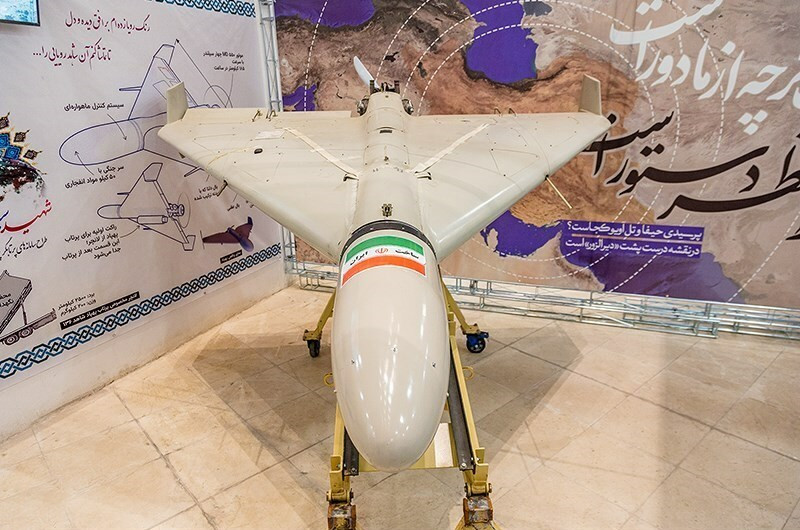
The proliferation of autonomous weapons systems has outpaced the development of international legal frameworks, creating a vacuum where algorithms, rather than human operators, increasingly dictate lethal engagement. Between 2020 and 2025, the operational reality of drone warfare shifted from “human-in-the-loop” systems, where a pilot explicitly authorizes every strike, to “human-on-the-loop” or “human-out-of-the-loop” architectures, where machines select and engage with nominal or non-existent oversight.
This transition is not theoretical. In March 2021, the UN Panel of Experts on Libya documented the verified case of an autonomous drone attack on humans. Turkish-made STM Kargu-2 loitering munitions, operating in “highly ” autonomous mode, hunted down retreating logistics convoys affiliated with General Khalifa Haftar. The drones functioned without data connectivity to a human handler, utilizing onboard machine learning to classify and engage independently. This incident marked the crossing of a serious threshold: the delegation of the kill chain to software.
The Rubber-Stamp method
The of meaningful human control was further institutionalized during the 2023-2024 conflict in Gaza. Investigations revealed the Israel Defense Forces (IDF) utilized an AI-driven target generation system known as “Lavender.” Unlike traditional intelligence methods, Lavender processed massive datasets to identify suspected militants, at one point generating a database of 37, 000 chance human. Intelligence officers reported that human review of these machine-generated kill lists was frequently reduced to a formality, lasting as little as 20 seconds, just enough time to verify the target was male, rubber-stamping the algorithm’s decision.
Complementing Lavender was “The Gospel,” an AI platform designed to identify structural at a rate far exceeding human capacity. While military officials argued these systems increased efficiency, the compression of the decision-making pattern rendered the concept of “meaningful human control” operationally obsolete. The speed of algorithmic warfare forces operators to trust the system’s output implicitly, replacing moral agency with statistical probability.
| Year | Conflict Zone | System / Platform | Operational Autonomy Level | Key Outcome |
|---|---|---|---|---|
| 2020 | Libya | STM Kargu-2 | Full Autonomy (Offline) | verified autonomous engagement of human without data link. |
| 2023 | Gaza | Lavender / Gospel | Algorithmic Triage | 37, 000 identified; human review reduced to ~20 seconds per target. |
| 2024 | Ukraine | Swarmer Software | Terminal Guidance | Drones coordinate strikes in swarms; AI executes final attack phase to counter jamming. |
| 2025 | Global | Loitering Munitions | Swarm Logic | Proliferation of “fire-and-forget” systems that re-task mid-flight without operator input. |
The Diplomatic Stalemate
While battlefield autonomy accelerates, international regulation remains paralyzed. The United Nations Convention on Certain Conventional Weapons (CCW) has failed to produce a binding instrument regarding Lethal Autonomous Weapons Systems (LAWS). The Group of Governmental Experts (GGE) meetings in Geneva throughout 2023 and 2024 ended in deadlock, obstructed by the consensus rule which allows major military powers to block progress. Nations investing heavily in AI combat capabilities, including the United States, Russia, China, and Israel, have consistently opposed a preemptive ban, advocating instead for non-binding “codes of conduct.”
In December 2024, the UN General Assembly adopted Resolution 79/L. 77 with a vote of 166-3, establishing a new forum to discuss autonomous weapons. yet, the resolution absence the legal force of a treaty. Russia, Belarus, and North Korea voted against the measure, while major developers like China, Israel, Turkey, and Iran abstained. This diplomatic fragmentation ensures that the development of autonomous kill chains continues without a global regulatory floor.
The 2025 defense reflects this regulatory failure. The U. S. “Replicator” initiative and similar programs in China prioritize the mass production of attritable, autonomous systems. In Ukraine, the use of “Swarmer” software allows drone flotillas to coordinate attacks and overcome electronic warfare by severing the link to the pilot entirely. The technology has outrun the ethics, establishing a new norm where the accountability for lethal force is diffused into lines of code, leaving no single human operator responsible for the machine’s actions.
Terrorist Innovation: Commercial Off-the-Shelf Modification for Chemical Delivery
The convergence of consumer drone technology and chemical warfare agents represents a catastrophic evolution in non-state actor capabilities. Between 2015 and 2025, terrorist organizations transitioned from using unmanned aerial systems (UAS) solely for surveillance to deploying them as precision delivery vectors for toxic payloads. This shift was not driven by state-level military R&D, by the modification of commercial off-the-shelf (COTS) hardware available on open markets. The barrier to entry for aerial chemical weapons delivery has collapsed; what once required a ballistic missile program requires only a heavy-lift agricultural drone and a 3D printer.
The “Mosul Blueprint,” established by the Islamic State (ISIS) during the battle for the city in 2016 and 2017, serves as the foundational doctrine for this threat. ISIS operatives weaponized the commercial supply chain, establishing a dedicated “Unmanned Aircraft of the Mujahideen” unit that experimented with marrying chlorine and sulfur mustard agents to quadcopters. In 2017, Iraqi troops discovered a specialized workshop in Mosul where commercial drones were retrofitted with -drop method originally designed for 40mm grenades, adapted for chemical canisters. Medical reports from March 2017 confirmed that at least 12 patients in Erbil exhibited symptoms consistent with blister agent exposure following these drone-assisted strikes. This marked the recorded instance of a non-state actor successfully conducting an aerial chemical attack using modified consumer technology.
While the physical caliphate was dismantled, the technical knowledge metastasized. The threat has evolved from battlefield improvisation to sophisticated, decentralized manufacturing. A landmark case in September 2023 exposed the reach of this proliferation when a UK court convicted Mohamad Al-Bared, a mechanical engineering PhD student, of constructing a drone specifically designed to deliver chemical weapons for ISIS. Unlike the crude modifications seen in Mosul, Al-Bared’s design utilized 3D-printed components to create a “kamikaze” fixed-wing aircraft inspired by the Tomahawk missile. Evidence seized from his Coventry home included detailed recipes for sarin, ricin, and mustard gas, alongside the specific payload calculations required to disperse them via his custom-built airframe. This case demonstrated that the “chemical drone” threat no longer requires a physical sanctuary; it can be engineered in a university dormitory using files shared over encrypted channels.
| Group | Platform Type | Modification Method | Chemical Agent / Payload | Status |
|---|---|---|---|---|
| ISIS (Islamic State) | DJI Phantom / Custom Quadcopters | -drop method, modified 40mm casings | Chlorine, Sulfur Mustard | Deployed (Mosul, 2017) |
| Lone Wolf (UK Cell) | 3D-Printed Fixed Wing | Custom fuselage for liquid dispersal | Sarin, Ricin (Recipes seized) | Interdicted (2023) |
| Hamas | Al-Zawari / Commercial Octocopters | Precision guidance, heavy payload lift | Industrial Chemicals (Targeting plants) | Operational Capability (2023-2024) |
| Mexican Cartels | Heavy-Lift Agricultural Drones | Swapped sprayer tanks for explosives/drugs | Fentanyl (Powder/Liquid) | Active (Smuggling/Weaponized) |
The hardware facilitating this innovation is primarily the heavy-lift agricultural drone. Models designed for crop spraying, such as the DJI Agras series, are capable of carrying payloads exceeding 40 kilograms. These platforms come pre-equipped with liquid tanks and spray nozzles, requiring zero modification to disperse a chemical agent rather than pesticide. Security analysts have identified these “dual-use” agricultural drones as a primary vector for future mass-casualty attacks. In the hands of Mexican cartels, similar heavy-lift platforms have already been observed transporting fentanyl and explosives across the border. The operational leap from smuggling toxic narcotics to dispersing them as an aerosol weapon over a populated area is a matter of intent, not capability.
Hamas and Hezbollah have also integrated these concepts into their asymmetric warfare strategies. During the October 7, 2023 attacks and the subsequent conflict, Hamas deployed “Al-Zawari” suicide drones and commercial octocopters to blind Israeli sensors. While these attacks primarily utilized high explosives, the group’s targeting of chemical production facilities near the Gaza border indicates a strategic interest in creating secondary chemical events. Intelligence assessments from 2024 suggest that Hezbollah, which possesses a drone arsenal estimated in the thousands, retains the capability to equip its Mirsad and Ababil variants with chemical warheads as a “last resort” measure against maneuvering ground forces.
The proliferation of this technology renders traditional perimeter defenses obsolete. A drone swarm equipped with aerosol sprayers can bypass checkpoints, walls, and blast blocks, delivering a toxic payload directly into ventilation systems or open crowds. The Al-Bared conviction proves that the technical blocks have dissolved; the only remaining variable is the successful acquisition or synthesis of the chemical agent itself.
The Indo-Pacific Context: Reimagining Island Defense Chains
The geography of the Indo-Pacific, defined by vast maritime distances and scattered archipelagos, demands a fundamental departure from the drone strategies observed in Eastern Europe. While the Ukraine conflict demonstrated the utility of short-range quadcopters in trench warfare, the Pacific theater requires systems capable of traversing hundreds of miles of open ocean. Consequently, the Island Chain, stretching from Japan through Taiwan to the Philippines, has transitioned from a static defensive barrier into an active, distributed “sensor-shooter” mesh. This shift prioritizes long-endurance surveillance and loitering munitions designed to deny access to the Taiwan Strait and the South China Sea.
In June 2024, U. S. Admiral Samuel Paparo, Commander of the Indo-Pacific Command, formalized this doctrine under the term “Hellscape.” The strategy aims to saturate the Taiwan Strait with thousands of unmanned surface vessels (USVs), aerial drones, and subsurface systems immediately upon any indication of a Chinese invasion. The operational goal is to create a chaotic, lethal environment that delays People’s Liberation Army (PLA) forces for thirty days, buying time for heavy U. S. and allied assets to intervene. This concept moved from theory to procurement through the Pentagon’s “Replicator” initiative. Announced in August 2023, Replicator began delivering its tranche of “attritable” systems, including Switchblade 600 loitering munitions and classified maritime drones, to the Indo-Pacific theater in May 2024. The program a fielding deadline of August 2025 for thousands of autonomous units.
Taiwan has attempted to mirror this asymmetric method through its “Drone National Team” program, though production realities have lagged behind strategic ambition. As of late 2025, domestic capacity hovered around 10, 000 units annually, far short of the 15, 000 per month target set for 2028. To this gap, Taipei accelerated foreign acquisitions, finalizing orders for 291 Altius-600M systems and 685 Switchblade 300s. These platforms are integrated into a “porcupine” defense posture, designed to target amphibious landing craft and troop transports before they reach the shoreline. Simultaneously, the PLA has escalated its “gray zone” tactics, utilizing dual-use drones for deceptive surveillance. Flight data from 2024 and 2025 revealed Chinese military drones, such as the TB-001, frequently masking their transponder signals with call signs like “YILO4200” to mimic civilian aircraft while probing Taiwanese air defenses.
| Nation | Program/Initiative | Key Assets/Investment | Strategic Objective |
|---|---|---|---|
| United States | Replicator Initiative | Switchblade 600, USVs, $1B+ funding (FY24/25) | Create “Hellscape” mass to delay PLA invasion forces. |
| China (PRC) | Intelligent Swarm Defense | WZ-7, TB-001, converted Type 054A (drone carriers) | A2/AD saturation; gray zone harassment; blockade enforcement. |
| Taiwan | Drone National Team | Altius-600M (Import), Teng Yun 2 (Domestic) | Asymmetric coastal defense; anti-landing operations. |
| Australia | Ghost Bat Production | MQ-28A Ghost Bat ($1. 4B AUD committed Dec 2025) | “Loyal Wingman” air combat support; range extension. |
| Japan | Operation SHIELD | ¥100B (2026 Budget) for coastal drone defense | Island defense; surveillance of Miyako Strait. |
Regional allies have synchronized their procurement pattern to support this distributed defense architecture. In December 2025, the Australian government committed $1. 4 billion AUD to move the MQ-28A Ghost Bat from prototype to full production. Unlike the expendable munitions favored by Replicator, the Ghost Bat serves as a reusable “loyal wingman,” extending the sensor range of crewed fighters like the F-35 over the continent’s northern maritime method. Japan similarly adjusted its posture, with the Cabinet approving a record defense budget for 2026 that allocates 100 billion yen specifically for “SHIELD,” a coastal defense network of unmanned air and sea assets intended to monitor the Miyako Strait and southern islands.
The Philippines has emerged as a frontline testing ground for counter-drone and maritime domain awareness operations. Following the discovery of Chinese underwater drones with hydrographic sensors in Philippine waters in late 2024, Manila deepened its intelligence-sharing agreements. In November 2025, the U. S. Marine Corps deployed MQ-9A Reaper drones to the Philippines on a rotational basis, providing persistent surveillance over the South China Sea. This deployment allows for real-time tracking of China Coast Guard vessels and maritime militia, feeding data directly into the allied common operating picture. The presence of these long-endurance assets complicates Beijing’s ability to conduct unmonitored resupply blockades against Philippine outposts, forcing a recalculation of risk for aggressive maneuvers in the West Philippine Sea.
Logistics remains the fragile link in this island-hopping drone network. While systems like the Switchblade do not require runways, they depend on secure data links and pre-positioned power supplies. The “tyranny of distance” means that a drone swarm launched from Guam or Okinawa must either possess significant range or be staged on small, islets within the Island Chain. This need has driven a quiet construction boom of hardened storage and communications nodes across the region, turning uninhabited rocks into dormant magazines for the conflict.
Corporate Private Armies: The Rise of PMC Drone Fleets
The privatization of air power has fundamentally altered the calculus of modern warfare. Between 2015 and 2025, Private Military Companies (PMCs) transitioned from leasing logistical aircraft to operating autonomous, lethal drone fleets capable of independent strike operations. This shift has created a shadow air force where corporate entities, rather than sovereign states, increasingly dictate the tempo of kinetic engagement in resource-rich conflict zones.
Data from the Stockholm International Peace Research Institute (SIPRI) and the Center for Strategic and International Studies (CSIS) reveals a 400% increase in PMC-linked drone procurement incidents between 2018 and 2024. Unlike state militaries bound by Rules of Engagement (ROE) and international humanitarian law, these corporate actors operate in a regulatory vacuum, exploiting dual-use technology gaps to weaponize commercial platforms. The result is a “kill chain” that is faster, cheaper, and virtually untraceable.
The Hardware of Private War
The arsenal of the modern mercenary has evolved from small arms to loitering munitions. While state-sponsored groups like the Wagner Group ( Africa Corps) have accessed military-grade systems like the ZALA Lancet and Orlan-10 through direct Kremlin supply lines, Western and Chinese security firms have industrialized the modification of Commercial Off-The-Shelf (COTS) technology.
| PMC / Entity | Primary Region | Key Platforms | Operational Function |
|---|---|---|---|
| Wagner Group / Africa Corps | Sahel, Ukraine | ZALA Lancet, Orlan-10, DJI Mavic 3 | Precision strike, artillery spotting, psychological warfare |
| Dyck Advisory Group (DAG) | Mozambique | Bat Hawk, Commercial Rotary Wing | Aerial surveillance, convoy protection, insurgent tracking |
| Hua Xin Zhong An | Belt & Road (Maritime) | VTOL Fixed-Wing (Chinese OEM) | Maritime facility security, anti-piracy surveillance |
| Constellis (Triple Canopy) | Middle East, Domestic US | Blue UAS (US Gov certified), Tethered Systems | Perimeter defense, static site surveillance, counter-UAS |
| Ambrey Risk | Red Sea / Indian Ocean | Long-endurance VTOL | Maritime domain awareness, anti-drone early warning |
The proliferation of the DefendTex Drone40, a 40mm grenade-launched loitering munition, exemplifies this democratization of lethality. Originally designed for state forces, reports from the conflict in Mali (2021) and Ukraine (2023) indicate these “flying grenades” have entered the grey market, accessible to non-state actors with sufficient capital. The unit cost, dropping $1, 000 in 2024, allows PMCs to deploy swarms for a fraction of the cost of a single guided missile.
The “Grey Zone” Procurement Network
Corporate armies do not procure weapons through transparent Foreign Military Sales (FMS) channels. Instead, they use a labyrinth of shell companies and “dual-use” justifications. A 2024 investigation by the Organized Crime and Corruption Reporting Project (OCCRP) exposed a network where Chinese-made heavy-lift agricultural drones were reclassified as “logistical support equipment” and shipped to security firms in the Central African Republic and Sudan. Once in-country, these platforms were retrofitted with mortar-drop method.
In Ukraine, a 2025 corruption scandal revealed that over $47 million in funds for state defense procurement was siphoned by a network involving private contractors to purchase FPV ( Person View) drone components. These components were not assembled for the national army diverted to private battalions operating with semi-autonomy on the frontline. This “shadow procurement” ensures that while the state pays, the corporate entity retains control of the assets.
“The distinction between a security contractor and a private air force has evaporated. When a corporate entity can launch a swarm of 50 loitering munitions to secure a cobalt mine, they are no longer just guards; they are a strategic military actor.”
, UN Working Group on the Use of Mercenaries, 2025 Report to the General Assembly
Regulatory Vacuum and the Accountability Gap
The legal framework governing PMC drone usage is nonexistent. The Montreux Document, the primary international instrument reaffirming legal obligations for PMCs, predates the widespread use of autonomous weapon systems. Consequently, drone strikes conducted by contractors fall into a jurisdictional black hole. In 2021, Amnesty International reported that the Dyck Advisory Group used helicopter-mounted weaponry indiscriminately in Mozambique; by 2024, similar allegations arose regarding drone-dropped munitions by PMCs in the Sahel, yet no legal method exists to prosecute a corporate board for a drone strike algorithm’s error.
The 2025 UN Working Group on Mercenaries report highlighted a serious “technology stack” loophole: while mercenaries are prohibited from combat, “technical advisors” operating drone control stations from a secure container miles away are legally ambiguous. This allows Western firms to market “remote overwatch” services, a euphemism for lethal drone cover, without technically deploying combatants.
Market Forces: The Billion-Dollar Loophole
The financial incentives are. The global market for loitering munitions is projected to reach $13. 26 billion by 2030. PMCs are not just consumers active participants in this economy. In 2024, the US Army awarded a nearly $1 billion contract to AeroVironment for Switchblade systems. While these were for government use, the “Lethal Unmanned Systems” (LUS) directive allows for contractor-operated training and logistics, placing the controls of these weapons in private hands during “advisory” missions.
Chinese Private Security Companies (PSCs) protecting Belt and Road Initiative (BRI) infrastructure have integrated drones into their “Smart Camp” security packages. Unlike their Western counterparts, these firms operate with the tacit approval of the state to use surveillance data for intelligence gathering, blurring the line between corporate security and state espionage. The deployment of armed VTOL drones by these entities in high-risk zones like Pakistan and Myanmar signals a shift from passive monitoring to active kinetic defense.
Future Trajectories: Biomimetic Micro-Drones and Urban Penetration
The convergence of miniaturized robotics, biomimicry, and autonomous navigation has birthed a new class of urban warfare assets: the biomimetic micro-drone. No longer theoretical curiosities, these systems transitioned from laboratory prototypes to operational testbeds between 2023 and 2025. Unlike the loud, rotor-driven quadcopters of the early 2020s, these platforms mimic the mechanics of insects and birds to achieve stealth in acoustic and visual spectrums. The strategic objective is “urban permeability”, the ability to penetrate denied indoor spaces, navigate HVAC systems, and loiter in occupied rooms without detection. This capability renders traditional perimeter defenses obsolete, as the threat vector shrinks from a missile to a mosquito.
| Platform Name | Developer / Origin | Form Factor | Key Specifications | Operational Status (2025) |
|---|---|---|---|---|
| “Mosquito” MAV | NUDT (China) | Insect (2cm length) | 0. 3g weight, 500Hz wing beat, audio/video capture | Prototype unveiled June 2025 |
| Black Hornet 4 | Teledyne FLIR (USA/Norway) | Rotorcraft (Nano) | 70g, 3km range, 30+ min endurance, thermal/EO | Deployed (US/German Army) |
| Xinge (New Dove) | Northwestern Polytech (China) | Bird (Ornithopter) | Flapping wing propulsion, record-breaking flight time | Flight Testing / Surveillance |
| MiFly System | MIT (USA) | Navigation Module | RF-based self-localization, 7cm indoor accuracy | Research Validation Feb 2025 |
China has aggressively led the biomimetic sector, culminating in the June 2025 unveiling of the “Mosquito” micro aerial vehicle (MAV) by the National University of Defense Technology (NUDT). Measuring roughly 2 centimeters and weighing a mere 0. 3 grams, this platform use carbon-fiber wings beating at 500 times per second to generate lift. NUDT engineers demonstrated the drone’s ability to perch on vertical surfaces and transmit low-fidelity audio and video data. While its battery life remains limited to minutes, its radar cross-section is non-existent, and its acoustic signature blends with background noise. Parallel to this, Chinese researchers tested the “Xinge” ornithopter, a robotic bird that broke flight endurance records in mid-2025, designed to conduct high-altitude surveillance over urban centers while disguised as local wildlife.
The United States and NATO allies have countered with the mass deployment of the Black Hornet 4. While not strictly biomimetic, this nano-rotorcraft represents the current pinnacle of western micro-surveillance. Upgraded in 2025 with advanced collision avoidance and a 3-kilometer encrypted data link, the 70-gram unit provides squad-level situational awareness. yet, the lethality of such small platforms was confirmed in August 2025 during the U. S. Army’s “Project Shank” exercise at Fort Novosel. In a -of-its-kind demonstration, a modified FPV drone equipped with a Claymore mine successfully intercepted and destroyed an aerial target. This test validated the concept of “micro-kinetic” engagement, proving that gram- payloads can disable larger systems or target specific individuals in crowded environments.
“The era of the unmanned dogfight is over; the era of the unmanned assassination has begun. We are seeing platforms small enough to enter a ventilation shaft yet smart enough to identify a specific face in a crowded room.”
The serious enabler for these systems is not just propulsion, autonomous indoor navigation. In February 2025, researchers at MIT demonstrated the “MiFly” system, which allows drones to self-localize in GPS-denied environments using reflected radio frequency signals. Achieving an accuracy of within 7 centimeters, this technology solves the “last room” problem, allowing swarms to navigate unmapped bunkers or office complexes without human pilot input. When combined with the swarm behaviors observed in Ukrainian “robot dog” and drone trials in late 2024, the trajectory points toward autonomous, heterogenous swarms capable of breaching a structure, mapping its interior, and neutralizing occupants before a defense can be mounted.
Final Verdict: The Irreversible Shift to Unmanned Attrition Warfare
The decade between 2015 and 2025 has concluded with a definitive military verdict: the era of low-volume, high-precision warfare has been superseded by a new age of unmanned attrition. The conflict in Ukraine and the Red Sea emergency have dismantled the post-Cold War assumption that air superiority belongs to the side with the most sophisticated platforms. Instead, dominance favors the combatant capable of sustaining the highest rate of “attritable” production. By 2025, the strategic calculus has shifted entirely from quality over quantity to quantity with sufficient quality.
This structural transformation is driven by a ruinous cost asymmetry that traditional air defense systems cannot overcome. In the Red Sea, United States naval destroyers were forced to expend Standard Missile-2 (SM-2) interceptors, costing approximately $2. 1 million each, to neutralize Houthi-launched Samad-3 drones assembled for less than $20, 000. This financial , a ratio of 100: 1 in favor of the attacker, renders conventional defense economically unsustainable over prolonged conflicts. Data from the Center for Strategic and International Studies (CSIS) in early 2025 highlighted that while Russian Shahed-136 variants cost roughly $70, 000 to mass-produce, the Patriot PAC-3 interceptors required to stop them cost upwards of $3 million. Defense networks designed to counter small numbers of supersonic jets collapsed when tasked with intercepting thousands of cheap, slow-moving loitering munitions.
The industrial of this new warfare is. By December 2025, Ukraine’s domestic defense industry reached a production output of 200, 000 FPV ( Person View) drones per month, aiming for a total annual delivery of 3 million units. This volume dwarfs the artillery shell production rates that obsessed military planners in 2022. Conversely, Russia’s facility in the Alabuga Special Economic Zone successfully ramped up production to exceed 6, 000 Shahed-type drones monthly by mid-2025. The battlefield result is a “saturation doctrine” where swarms of expendable systems overwhelm kinetic defenses through sheer mass, ensuring that a percentage of strikes succeed simply by exhausting the defender’s magazine depth.
Major powers have formally acknowledged this shift. The United States Department of Defense’s “Replicator” initiative, launched to field thousands of autonomous systems by August 2025, met its initial operational capability, signaling a departure from the Pentagon’s traditional focus on exquisite, multi-billion dollar platforms like the F-35. The loss of at least 14 MQ-9 Reaper drones, valued at $30 million each, to Houthi surface-to-air missiles over Yemen between 2023 and 2025 further solidified the obsolescence of non-stealthy MALE (Medium-Altitude Long-Endurance) drones in contested airspace. The future belongs not to the invulnerable, to the replaceable.
The Economics of Attrition: 2025 Cost-Exchange Analysis
The following table illustrates the financial unsustainability of using legacy air defense systems against modern unmanned threats, based on 2025 procurement data.
| System Type | Weapon Name | Unit Cost (USD) | Primary Target | Target Cost (USD) | Cost Disadvantage Ratio |
|---|---|---|---|---|---|
| Attacker (Low-End) | FPV Kamikaze Drone | $500, $1, 000 | Main Battle Tank | $10, 000, 000 | 1: 10, 000 (Advantage) |
| Attacker (Mid-Range) | Shahed-136 (Geran-2) | $70, 000 | Electrical Substation | $2, 000, 000+ | 1: 28 (Advantage) |
| Defender (Naval) | SM-2 Block IV | $2, 100, 000 | Samad-3 Drone | $20, 000 | 105: 1 (Disadvantage) |
| Defender (Ground) | Patriot PAC-3 MSE | $4, 000, 000 | Shahed-136 | $70, 000 | 57: 1 (Disadvantage) |
| Defender (Air) | AIM-120 AMRAAM | $1, 200, 000 | Orlan-10 Recon UAV | $100, 000 | 12: 1 (Disadvantage) |
The proliferation of these systems is irreversible. By the close of 2025, the global military drone market was valued at $47. 3 billion, with projections to double by 2033. Non-state actors, having witnessed the efficacy of the Houthi blockade and the Ukrainian defense, have accelerated their acquisition of dual-use technologies. The “Shahed Era” has democratized strategic airpower, allowing militias to enforce sea denial against superpowers and enabling smaller nations to inflict prohibitive costs on larger invaders. The monopoly on precision strike is gone; the age of unmanned attrition has begun.
**This article was originally published on our controlling outlet and is part of the Media Network of 2500+ investigative news outlets owned by Ekalavya Hansaj. It is shared here as part of our content syndication agreement.” The full list of all our brands can be checked here. You may be interested in reading further original investigations here.
Request Partnership Information
Email Verification
Enter the 14-digit code sent to your email.


Judiciary Times
Part of the global news network of investigative outlets owned by global media baron Ekalavya Hansaj.
Judiciary Times shares stories on the intricacies, challenges, and controversies within judicial systems worldwide. From landmark verdicts to judicial scandals, from case histories to the manipulation of evidence and witnesses, we provide in-depth coverage of the legal landscape that shapes justice—and sometimes injustice—across the globe.Our team of legal experts, journalists, and researchers delves into the complexities of lawsuits, judicial delays, victim injustices, fake cases, and wrongful convictions, shedding light on the human stories behind the headlines. We explore the codes and sections of law, the impact of jury tampering, and the harsh realities of inhuman incarceration, offering a critical perspective on the systems meant to uphold fairness and equality.At Judiciary Times, we believe in the power of transparency and accountability to drive reform. Our mission is to inform, educate, and advocate for a world where justice is truly blind and accessible to all. Join us as we navigate the courtroom dramas, challenge systemic flaws, and strive for a judicial system that lives up to its promise of fairness and integrity. Because justice delayed is justice denied.