
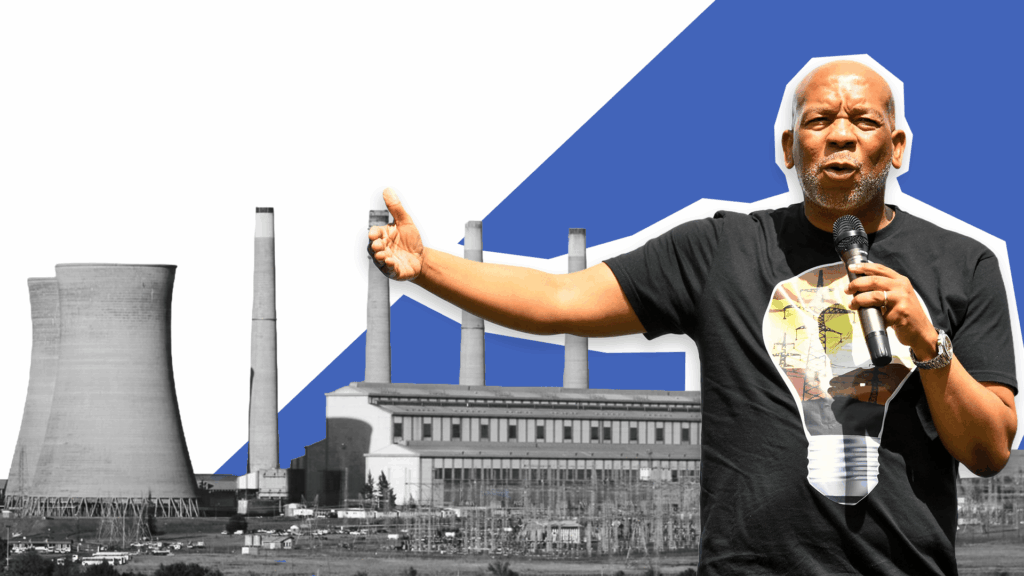
Energy Grid Sabotage In South Africa: The Internal Report And Exclusive Findings
Why it matters:
- The disintegration of South Africa's power grid was not accidental but a result of calculated manipulation and sabotage, leading to severe infrastructure failure by 2023.
- Eskom's decline in Energy Availability Factor (EAF) from 70% in 2015 to 54.7% in 2023, coupled with excessive diesel spending and sabotage, resulted in widespread blackouts and financial crisis.
The disintegration of South Africa’s power grid was not a sudden accident. The Energy Grid Sabotage In South Africa was a calculated manipulation of serious infrastructure that reached its nadir in 2023. Internal data and forensic reports confirm that the state utility, Eskom, did not suffer from technical negligence. It fell victim to a synchronized campaign of extraction and sabotage. The metrics from 2015 to 2025 reveal a system engineered to fail.
Energy Availability Factor (EAF) serves as the primary important sign for any power utility. It measures the percentage of maximum generating capacity available to the grid. In 2015, Eskom maintained an EAF of approximately 70%. By the end of 2023, this figure had plummeted to 54. 7%. This decline of over 15 percentage points represents the loss of multiple large power stations. The collapse was not linear. It accelerated sharply between 2021 and 2023 as criminal syndicates entrenched themselves within the supply chain.
The physical manifestation of this statistical failure was the imposition of permanent load shedding. 2023 stands as the worst year on record. South Africans endured 6, 907 hours of blackouts. This equates to 288 days where the grid could not meet demand. Citizens spent nearly 20% of that year without electricity. The economic cost of this failure is estimated at R1 billion per day during Stage 6 interruptions. The grid did not just wobble. It broke.
The Financial: Diesel as a Band-Aid
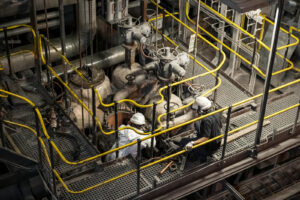
Eskom attempted to mask the severity of its coal fleet’s degradation by burning diesel at an industrial. Open pattern Gas Turbines (OCGTs) are designed for peak usage during short intervals. Eskom ran them as baseload generators. Between 2019 and 2024, the utility incinerated over R65 billion in diesel. The financial year 2023/24 alone saw diesel expenditure hit R23. 4 billion. This spending spree created an illusion of stability while the utility’s debt ballooned to over R400 billion.
Article image: South Africa’s Energy Grid Sabotage: The Internal Report
The National Treasury was forced to intervene with a R254 billion debt relief package in 2023. This bailout was not a stimulus for growth. It was a desperate measure to prevent a sovereign default triggered by a single entity. The internal report indicates that of Eskom’s operational budget was diverted to service inflated contracts for coal and fuel oil. Forensic investigations revealed that Eskom paid up to three times the market rate for goods in specific procurement channels.
| Year | Energy Availability Factor (EAF) | Load Shedding Hours | Diesel Spend (R Billions) |
|---|---|---|---|
| 2019 | 66. 9% | 530 | 5. 8 |
| 2021 | 61. 7% | 1, 169 | 8. 6 |
| 2022 | 58. 0% | 3, 773 | 21. 3 |
| 2023 | 54. 7% | 6, 907 | 23. 4 |
| 2024 | 58. 4% | 1, 656 | 17. 0 |
The Sabotage method
The collapse cannot be attributed solely to aging infrastructure. Intelligence reports commissioned during the tenure of CEO André de Ruyter exposed a deep-seated network of sabotage. Between April 2022 and July 2023 alone, 2, 147 cases of essential infrastructure crime were reported. These were not random acts of vandalism. They were precision strikes designed to force the utility to problem emergency repair contracts.
Investigators found evidence of rocks placed in coal pulverizers and cables severed at serious junctions. At the Tutuka Power Station, the EAF dropped to 15% in early 2023 due to rampant criminality. Managers wore bulletproof vests to work. The internal report details how procurement mafias captured station management. They created artificial absence to drive up prices for replacement parts. This internal rot rendered standard maintenance schedules irrelevant.
The “recovery” observed in late 2024 and 2025 remains fragile. While the EAF climbed back to 62% in 2025, this figure masks a dangerous reality. The coal fleet’s specific availability remained stuck at 58%. The grid stability was achieved through aggressive renewable integration and continued diesel usage rather than a fundamental repair of the base load. 40% of the coal fleet spent half of 2025 offline. The system remains brittle. One major incident at a station like Kusile or Medupi could plunge the grid back into the darkness of 2023.
We must examine the specific method of this sabotage in the following sections. The data proves that Eskom did not fail because of incompetence alone. It was an active crime scene.
The De Ruyter Intelligence Dossier: Private Investigation Findings In The Energy Grid Sabotage In South Africa
By January 2022, Eskom CEO André de Ruyter had concluded that the state security apparatus was either unable or unwilling to the collapse of the national grid. Faced with police inaction, he initiated a covert, privately funded intelligence operation to map the criminal syndicates the utility. The investigation, led by George Fivaz Forensic and Risk (GFFR), cost approximately R50 million and was financed by Business Leadership South Africa (BLSA) and anonymous donors. The resulting dossier, while controversial for its use of apartheid-era operatives, provided the detailed structural map of the “coal mafia” operating in Mpumalanga.
The Fivaz investigation identified four primary organized crime cartels controlling the illicit flow of coal and contracts. These syndicates—identified in the reports as the Presidential Cartel, the Mesh-Kings Cartel, the Legendaries Cartel, and the Chief Cartel—operated with military precision. The dossier alleged that these groups were not opportunistic thieves but entrenched networks with a hierarchy of “captains” and “soldiers,” protected by a “territorial ruler” with high-level political connections. The investigation estimated that these syndicates were extracting at least R1 billion per month from Eskom through theft, fraud, and sabotage.
| Cartel Designation | Primary Area of Operation | Alleged Activities |
|---|---|---|
| Presidential Cartel | Mpumalanga Power Stations | High-level procurement fraud, coal diversion, political kickbacks. |
| Mesh-Kings Cartel | Coal Supply Chain | Coal swapping, transport logistics control, equipment theft. |
| Legendaries Cartel | Maintenance & Engineering | Sabotage to force emergency repairs, tender manipulation. |
| Chief Cartel | Security & Access Control | Infiltration of site security, intimidation of witnesses. |
The dossier detailed specific mechanics of sabotage designed to paralyze power stations and force emergency procurement at inflated rates. At Tutuka Power Station, investigators documented incidents where infrastructure was deliberately destroyed to generate work for corrupt contractors. In May 2022, a warming valve cable at Tutuka Unit 5 was severed with a grinder, delaying the unit’s return to service by three days. Hours later, a control air pipe supplying the turbine systems was cut with a power tool. These were not random acts of vandalism; they were technical strikes executed by individuals with intimate knowledge of the plant’s security and engineering systems.
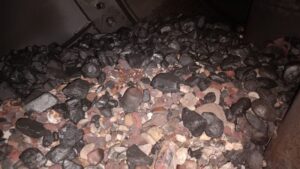
A central finding of the investigation was the “coal swapping” racket. High-grade coal destined for Eskom was diverted to export yards or private buyers. In its place, the syndicates delivered “black gold”—a mix of discard coal, scrap metal, and rocks. This adulterated fuel caused catastrophic damage to milling plants and boiler tubes, forcing units offline and necessitating costly repairs frequently performed by syndicate-linked companies. The dossier linked these operations to a specialized hit squad known as “Team Shikisha,” allegedly responsible for intimidating honest employees and assassinating rivals. The report claimed this unit consisted of 60 to 70 well-armed enforcers operating with impunity in the Mpumalanga region.
“The disintegration of the grid is a business model. Every megawatt lost to sabotage is a profit margin for the syndicates holding the maintenance contracts.” — Internal GFFR Summary Note, 2022.
The intelligence reports also contained explosive allegations regarding political complicity. The dossier implicated two senior cabinet ministers in the sabotage networks, suggesting that the “territorial ruler” of Mpumalanga funneled proceeds from the coal theft to political factions. While the specific names were redacted in public releases due to legal risks, the Special Investigating Unit (SIU) later acknowledged that the intelligence provided a “useful” foundation for subsequent state inquiries. Following the dossier’s internal circulation, the South African National Defence Force (SANDF) was deployed to protect key power stations, a tacit admission that the threat had escalated beyond civilian law enforcement capabilities.
Assassination: The Cyanide Poisoning Incident
The disintegration of South Africa’s energy grid moved from industrial sabotage to attempted murder on December 13, 2022. Inside the executive suite at Megawatt Park, Eskom CEO André de Ruyter drank a cup of coffee laced with a lethal dose of cyanide. This event marked a definitive shift in the tactics used by the syndicates within the utility. It was no longer enough to break the machines. They sought to eliminate the man exposing their operations.
De Ruyter had submitted his resignation to Eskom Chairman Mpho Makwana just twenty-four hours earlier on December 12. The resignation was not yet public knowledge. The timing suggests the perpetrators either had inside knowledge of his departure or intended to silence him before he could release sensitive intelligence regarding corruption in Mpumalanga. After consuming the beverage in his office, de Ruyter began to shake uncontrollably. He experienced extreme dizziness, confusion, and an inability to breathe. His security detail rushed him to a medical facility as he vomited copiously in his vehicle.
Article image: South Africa’s Energy Grid Sabotage: The Internal Report
Medical intervention likely prevented a fatality. The treating physician placed de Ruyter on a Vitamin B drip intended to boost his energy levels. This specific treatment, frequently referred to as “jet fuel” in medical slang, inadvertently saved his life. Vitamin B binds with cyanide molecules in the bloodstream and neutralizes the toxin. Subsequent toxicology reports confirmed the presence of cyanide at levels far exceeding lethal thresholds. His blood cyanide levels measured over 40 milligrams per liter. A normal baseline for a healthy human is approximately 15 milligrams per liter. Further analysis suggested the presence of sodium arsenide which can mask the detectability of cyanide and implies the actual dosage was even higher.
Timeline of the Attempted Murder
The sequence of events reveals a tight correlation between de Ruyter’s administrative moves against corruption and the physical attack on his life. The following table reconstructs the serious seventy-two hours surrounding the incident.
| Date | Time | Event |
|---|---|---|
| Dec 12, 2022 | Morning | De Ruyter hands resignation letter to Chairman Mpho Makwana. |
| Dec 13, 2022 | 10: 00 AM | De Ruyter consumes poisoned coffee at Megawatt Park. |
| Dec 13, 2022 | 10: 30 AM | Security detail rushes CEO to doctor; Vitamin B drip administered. |
| Dec 14, 2022 | Afternoon | News of de Ruyter’s resignation becomes public. |
| Jan 05, 2023 | Day | Case officially reported to SAPS (Hermanus Police Station). |
The investigation into this assassination attempt remains stagnant. even with the opening of a case with the South African Police Service (SAPS) in January 2023, no arrests have been made. Reports indicate that a maintenance worker responsible for the coffee machine at Megawatt Park absconded from work immediately following the incident and has not been located since. The failure to apprehend a suspect reinforces the internal belief that the syndicates possess high-level protection within the security cluster.
This attack was not an threat. It followed months of escalating intimidation against Eskom’s executive leadership. In November 2022, a bomb threat targeted Chief Operating Officer Jan Oberholzer. The use of cyanide represents a sophisticated method of elimination that leaves little forensic trace if not detected immediately. It signals that the looting networks operating within the coal and maintenance sectors viewed the CEO not as a corporate obstacle but as an existential threat to their illicit revenue streams.
The poisoning incident forced the corruption emergency at Eskom into the international. It validated the claims that the utility was under siege by organized crime rather than simple mismanagement. The attackers failed to kill de Ruyter yet they succeeded in demonstrating their reach. They proved they could breach the highest security levels of the state utility and strike at can.
Mpumalanga Coal Cartels: Organized Crime Structures
The disintegration of Eskom’s generation capacity in Mpumalanga was not a result of aging infrastructure but the direct consequence of a sophisticated, militarized criminal enterprise. Intelligence reports and forensic data from 2020 to 2024 reveal that the province’s energy sector was captured by four distinct organized crime syndicates. These groups, operating with the precision of commercial logistics firms and the violence of gangland militias, systematically dismantled the utility’s supply chain. The George Fivaz Forensic and Risk (GFFR) investigation, commissioned during the tenure of former CEO André de Ruyter, identified these syndicates as the Presidential Cartel, the MeshKings Cartel, the Legendaries Cartel, and the Chief Cartel.
These organizations did not operate in isolation. They maintained a stranglehold on specific power stations, enforcing their control through a specialized hit squad known as “Team Shikisha.” This armed wing, comprising approximately 60 to 70 highly trained combatants, was responsible for assassinations, intimidation, and the physical sabotage of infrastructure to ensure compliance from power station managers and procurement officers. The syndicates integrated themselves into the legitimate economy, utilizing a network of trucking companies, coal yards, and insiders to execute industrial- theft.
The Mechanics of Extraction: Coal Swapping and Black Sites
The primary revenue stream for these cartels was the theft and adulteration of high-grade coal. The modus operandi was uniform across the province. Trucks loaded with export-grade coal from legitimate mines were diverted to illegal “black sites”—unregulated coal yards hidden along the R545 and other arterial routes between Kusile, Ogies, and Kendal. At these locations, the high-quality coal was offloaded and replaced with “discard coal,” a waste product consisting of rock, metal, and rubble with a calorific value frequently 8 megajoules per kilogram, far under the required 18 to 22 megajoules.
To bypass Eskom’s security, the syndicates employed signal jammers to disable GPS tracking units on trucks. Corrupt weighbridge clerks and security personnel, paid by the syndicates, falsified delivery records to certify the waste material as high-grade fuel. The financial were catastrophic. By 2023, it was estimated that Eskom was losing conservatively R1 billion per month to these corruption networks. The operational cost was even higher: the abrasive rubble destroyed boiler tubes and mills at stations like Tutuka, Matla, and Majuba, forcing frequent, long-term unit shutdowns that directly contributed to Stage 6 load shedding.
Syndicate Profiles and Political Nexus
The intelligence files link the cartels to high-level political actors, providing them with protection from prosecution. The “Presidential Cartel,” even with its name, was reportedly directed by figures with deep ties to the highest levels of the state apparatus, including alleged connections to Cabinet members. This political cover allowed them to operate with impunity. The Special Investigating Unit (SIU) confirmed that coal supply agreements valued at over R3. 7 billion were declared invalid due to these corrupt entanglements, yet prosecution of the “kingpins” remained sluggish compared to the arrests of low-level truck drivers.
| Cartel Name | Primary Area of Operation | Alleged Activities | Strategic Impact |
|---|---|---|---|
| Presidential Cartel | Matla & Majuba Power Stations | High-level procurement fraud, political coordination, coal supply manipulation. | Control over major coal supply contracts; linked to R3. 7bn in invalid agreements. |
| MeshKings Cartel | Mpumalanga Central | Logistics control, trucking fleet coordination, coal swapping. | Domination of coal transport routes; facilitation of “black site” operations. |
| Legendaries Cartel | Tutuka Power Station (Standerton) | Systematic theft of fuel oil, spares, and coal; infrastructure sabotage. | Crippled Tutuka’s EAF to under 30%; responsible for repeated boiler failures. |
| Chief Cartel | Various Mpumalanga Stations | Internal corruption, placement of compromised staff, security breaches. | of internal controls; facilitation of access for other syndicates. |
The “Legendaries Cartel” specifically targeted the Tutuka Power Station, turning it into the worst-performing plant in the fleet. Forensic reports indicate that this group did not just steal coal; they stripped the station of serious spares and fuel oil. In one instance, ten drums of hydraulic oil were removed from the site, and internal sabotage of cooling towers was recorded to generate lucrative emergency maintenance contracts for cartel-linked engineering firms. The syndicates monetized the breakdown of the grid, creating a perverse incentive structure where equipment failure resulted in profit.
Law enforcement response was fragmented. While the South African Revenue Service (SARS) launched inter-governmental operations in October 2023 to recover R500 million in unpaid taxes from coal smugglers, the core leadership of these cartels remained largely intact. The SIU’s investigations revealed that 5, 464 Eskom employees had failed to declare their interests, with hundreds directly doing business with the utility, further blurring the line between Eskom staff and the criminal networks their workplace.
Technical Sabotage method: Valve Destruction and Pylon Attacks
The disintegration of Eskom’s generation capacity between 2020 and 2024 was not a result of deferred maintenance; it was accelerated by precise, technical sabotage. Forensic reports and internal investigations reveal a pattern of destruction that targeted serious failure points within the grid’s architecture. Unlike opportunistic cable theft, these attacks required specialized knowledge of power station schematics, security, and the exact mechanical vulnerabilities that would trigger a unit trip or a total station shutdown.
At Tutuka Power Station, a facility plagued by of the lowest Energy Availability Factors (EAF) in the fleet, investigators uncovered evidence of sabotage that explanation by wear and tear. In May 2022, a control air pipe supplying the turbine systems for Unit 5 was deliberately cut with a power tool. The perpetrators removed an entire bend of the pipe, a modification that instantly depressurized the system and forced a turbine trip. This was not a theft; the materials were left on-site. The objective was purely operational paralysis. The cut was made in a high-security zone accessible only to badged employees, confirming that the saboteurs possessed both authorized access and intimate knowledge of the turbine’s pneumatic control systems.
A similar degree of technical malice appeared at the Koeberg Nuclear Power Station, Africa’s only nuclear facility. In March 2022, during a serious maintenance window, a technician cut a valve on Unit 1—which was fully operational—instead of the scheduled valve on Unit 2. Internal newsletters described this as a “significant error” with chance “devastating consequences.” While officially categorized as human error, the precision of the mistake raised alarms among forensic auditors. The incident forced a work stoppage and threatened to sever 920 MW from the grid instantly. The probability of such a specific error occurring by chance, given the rigorous labeling and safety at a nuclear facility, remains statistically negligible.
The sabotage campaign extended beyond the generation units to the transmission infrastructure itself. The attack on the Lethabo Power Station in November 2021 stands as the most blatant example of strategic grid destabilization. Lethabo was one of Eskom’s most reliable stations, yet it nearly collapsed due to a targeted assault on its coal supply lines. Security teams found that the steel stays supporting a 132kV transmission tower had been cut with heavy-duty instruments. The pylon collapsed onto a backup power line, severing the double redundancy that supplied electricity to the overland coal conveyor belt.
Former CEO André de Ruyter publicly presented photographic evidence of the Lethabo incident, noting that the pylon had fallen “uphill”—a physical impossibility without calculated structural interference. Crucially, no steel or copper was stolen from the site. The attackers left valuable scrap metal behind, proving their motive was not economic gain but the starvation of the power station. Had the third redundancy line not been rapidly engaged by distribution teams, Lethabo would have run out of coal within six hours, chance plunging South Africa into Stage 6 load shedding or worse.
In April 2023, a similar methodology was applied to the transmission network in Tshwane, where seven pylons collapsed along the N4 highway. Forensic analysis confirmed that the pylons had been cut at the base with angle grinders. The structural integrity was compromised in such a way that wind load would trigger a cascading collapse. This incident stripped 300 MW from the grid and caused chaos in the capital, further the national balance.
These attacks share a common signature: the weaponization of technical knowledge against the state. The perpetrators understood that cutting a specific air pipe or collapsing a specific pylon would cause disproportionate damage compared to the effort involved. This efficiency suggests the involvement of engineers or highly skilled technicians acting as internal operatives for criminal syndicates.
Verified Sabotage Incidents (2021–2023)
| Date | Facility | method of Sabotage | Operational Impact |
|---|---|---|---|
| Nov 2021 | Lethabo Power Station | Transmission tower stays cut; pylon collapsed onto backup line. | Threatened coal supply; near-total station shutdown averted. |
| Nov 2021 | Matimba Power Station | Extension cord dropped onto transformer. | Three generation units tripped simultaneously. |
| Mar 2022 | Koeberg Nuclear Station | Wrong valve cut on operational Unit 1. | Risk of unit trip; forced work stoppage on nuclear grid. |
| May 2022 | Tutuka Power Station | Control air pipe cut with power tool; bend removed. | Unit 5 turbine trip; delayed return to service. |
| May 2022 | Hendrina Power Station | Copper bars and reactor earth bars removed. | Prevented unit synchronization to the grid. |
| Nov 2022 | Camden Power Station | Bearing oil drain plug intentionally removed. | Oil burners tripped; repeated failure of mills. |
| Apr 2023 | Tshwane Transmission | 7 pylons cut at base with angle grinders. | 300 MW load loss; N4 highway closure. |
The data indicates a shift from theft-driven vandalism to outcome-driven sabotage. In 2023, while the frequency of reported “accidents” fluctuated, the severity of the incidents remained high. The correlation between these attacks and procurement pattern or wage negotiations suggests that the grid is frequently held hostage by internal actors leveraging technical sabotage as a bargaining chip.
Procurement Fraud Metrics: The R80, 000 Knee Pad Scandal
The disintegration of Eskom’s financial stability is frequently attributed to complex macroeconomic factors, yet internal forensic data points to a far simpler cause: theft at the line-item level. Between 2019 and 2023, auditors uncovered a procurement system that had decoupled from market reality. The most emblematic example of this detachment was the purchase of protective knee guards for R80, 000 per pair.
Forensic investigations conducted in 2021 revealed that Eskom’s procurement officers at the Tutuka Power Station authorized the purchase of knee guards—standard personal protective equipment (PPE) available at retail hardware stores for approximately R320—at a markup of 24, 900%. The supplier, who had purchased the goods for R4, 025, invoiced the state utility R934, 950. This transaction was not an clerical error. It was a successful test of a broken control environment.
The “Free Text” method
The technical vehicle for this fraud was the abuse of the “free text” field in Eskom’s SAP procurement system. Standard procedure requires buyers to select items from a pre-negotiated material master list with fixed prices. To bypass this, corrupt procurement officers intentionally ignored the master list, manually typing item descriptions into free text fields. This simple action removed price controls and allowed buyers to award contracts to specific vendors at arbitrary rates.
By 2020, approximately 75% of Eskom’s procurement volume was processed through free text orders rather than established contracts. This method converted the utility’s supply chain into an open chequebook for syndicated vendors and their internal accomplices.
Inventory of Extortion
The knee pad scandal was one entry in a ledger of inflated payments. Forensic reports from 2021 and 2022 detailed a catalog of common goods purchased at luxury vehicle prices. The following table reconstructs verified transactions flagged by internal audit teams.
| Item Description | Market Retail Price (ZAR) | Eskom Paid Price (ZAR) | Markup Percentage |
|---|---|---|---|
| Protective Knee Guards (Pair) | R320. 00 | R80, 000. 00 | 24, 900% |
| Single-Ply Toilet Paper (Roll) | R3. 99 | R26. 00 | 551% |
| Black Refuse Bag (Unit) | R2. 99 | R51. 00 | 1, 605% |
| Wooden-Handled Mop | R95. 00 | R238, 000. 00 | 250, 426% |
| Oil Storage Container | R80, 000. 00 | R940, 000. 00 | 1, 075% |
| Milk (1 Litre) | R12. 00 | R21. 00 | 75% |
Operational Impact at Power Stations
These financial had direct operational consequences. At Kendal Power Station, a buyer placed an order to refurbish two compressors for R368, 550. The market price for two brand-new compressors was R112, 000. Investigations later showed the contractor subcontracted the work twice, with the final job completed for only R41, 400. Eskom paid nearly nine times the actual cost of the work, while the equipment itself remained prone to failure due to substandard repairs.

Article image: South Africa’s Energy Grid Sabotage: The Internal Report
At Tutuka Power Station, the fraud extended to maintenance equipment. The utility paid R600, 000 to repair 12 grass trimmers. A check of retail pricing confirmed that 12 new units could have been purchased for R114, 000. Furthermore, only seven of the trimmers were returned to the station, and they were not in working order. This pattern of paying premiums for non-delivery became the operational standard.
Administrative Response and Recovery
The exposure of these metrics led to the suspension and eventual dismissal of Chief Procurement Officer Solly Tshitangano in 2021. Following the public of the knee pad theft, one supplier voluntarily returned R1. 2 million to Eskom, an admission of guilt that highlighted the absence of defense for such pricing. Yet, the recovery of funds remains a fraction of the total losses. The Special Investigating Unit (SIU) confirmed that the “free text” system facilitated billions in irregular expenditure, turning the procurement department into the primary engine of Eskom’s financial collapse.
“We paid R80, 000 for a pair of knee guards that cost R320 at Builders Warehouse… The arrest was effected, the perpetrator was released the day on the instructions of a senior police officer.” — Andre de Ruyter, Former Eskom CEO, March 2023.
The VGBE Verdict: widespread Incompetence Over Sabotage
In March 2024, the National Treasury released a forensic assessment that shattered the prevailing narrative regarding South Africa’s energy collapse. Commissioned as a non-negotiable condition of the R254 billion Eskom debt relief package, the report was authored by the VGBE Energy consortium—a group of German engineering firms including RWE, Steag, and KWS. Their mandate was to determine why a fleet flush with cash and resources could not keep the lights on. The findings were clear: while criminal syndicates plagued the utility, the primary driver of the grid’s disintegration was not external sabotage, but internal management failure.
The consortium’s engineers spent four months inside Eskom’s coal stations, from March to May 2023. Their final report dismissed the excuse that a absence of funds caused the maintenance backlog. Data analyzed by VGBE revealed that Eskom’s maintenance budgets between 2013 and 2027 were consistently higher than international benchmarks. Yet, the Energy Availability Factor (EAF) of the coal fleet had collapsed to 50. 8% by April 2023, far the global standard of 78%. The money was there, but it was not converting into megawatts. The report concluded that the utility operated on a “fix-on-fail” basis, ignoring preventative care until units physically broke down.
This “fix-on-fail” strategy created a vicious pattern where plant managers were forced to run damaged units to meet immediate demand, causing catastrophic long-term failures. The report the collapse of the flue gas desulphurization duct at Kusile Unit 1 as a prime example. Eskom leadership had frequently attributed Kusile’s struggles to design defects or contractor errors. VGBE investigators found a different cause: operator negligence. The unit failed because staff bypassed serious safety and ignored operating parameters. It was a failure of discipline, not engineering.
“The management system with its governance, structure and processes is dysfunctional and too complex. Eskom’s generation fleet has been trapped within this complex management system for so long that it is no longer able to maintain or improve technical performance.” — VGBE Report on Eskom Operations, March 2024
The investigation exposed a paralyzed bureaucracy that stripped power station managers of authority. A simple procurement request for spare parts required multiple of committee approval, frequently taking six months to process. By the time the paperwork cleared, the minor defect had become a major outage. The German engineers noted that plant managers had “limited authority” and were micromanaged by a bloated headquarters at Megawatt Park. This centralization created an environment where accountability; when a station failed, the blame was diffused across a dozen committees rather than a single responsible engineer.
While the report acknowledged the presence of theft and corruption, it framed these as symptoms of a broken control environment rather than the root cause of the energy emergency. A well-run plant with strict access controls and automated monitoring is difficult to sabotage. Eskom’s plants were chaotic, with manual data entry and broken surveillance systems that made theft easy. The VGBE analysis suggested that blaming “sabotage” had become a convenient shield for to hide their inability to implement basic industrial standards.
Comparative Analysis: Global Benchmarks vs. Eskom Reality
The between Eskom’s resource input and operational output highlights the depth of the. The following table contrasts VGBE’s international baselines with the reality found at Eskom’s 14 coal-fired stations in 2023.
| Metric | International Benchmark | Eskom Performance (2023) | VGBE Assessment |
|---|---|---|---|
| Energy Availability Factor (EAF) | 78% | 50. 83% | Catastrophic underperformance even with high spending. |
| Maintenance Strategy | Preventative / Reliability-Centered | Fix-on-Fail | Units are run until destruction; repairs are reactive. |
| Procurement Lead Time | Days / Weeks | Up to 6 Months | Bureaucracy prevents timely access to spare parts. |
| Management Structure | Decentralized / Plant Autonomy | Centralized / Committee-Led | Plant managers absence budget authority and decision power. |
| Outage Cause | Wear and Tear | Negligence / Procedural Violation | Major failures (e. g., Kusile) linked to ignoring. |
The report’s release forced a confrontation between the political narrative of “attack” and the technical reality of “decay.” For years, ministers and claimed that the grid was under siege by mysterious forces. The VGBE findings clarified that while the siege was real, the had already crumbled from the inside. The recommendation was blunt: Eskom needed to decentralize immediately, handing full budget and operational control back to the power station managers. Without this structural overhaul, no amount of security or money would stop the decline.
New Build Disasters: Design Flaws at Kusile and Medupi
The narrative of South Africa’s energy collapse cannot be fully understood without examining the catastrophic failure of its “saviour” projects: Medupi and Kusile. Commissioned to add 9, 600 MW to the grid and end load shedding, these mega-stations instead became the primary drivers of national insolvency and grid instability. Between 2015 and 2025, internal technical reports revealed that the plants were not delayed; they were structurally defective. The boilers, mills, and ash-handling systems were built with fatal design errors that rendered them incapable of operating at nameplate capacity. Far from being the solution, these new builds dragged the national Energy Availability Factor (EAF) down, with Medupi’s EAF frequently languishing 70% during serious periods.
The technical defects were widespread and severe. Forensic engineering reports from 2019 confirmed that the boiler spray systems could not handle the exhaust temperatures, leading to dangerous overheating in the reheaters. The pulse jet fabric filter plants, designed to capture fly ash, failed repeatedly. Filter bags that were specified to last 36 months disintegrated in less than 13, causing massive ash blockages that tripped units offline. Furthermore, the coal mills—serious for grinding fuel to the correct fineness—could not meet technical specifications. Service intervals for these mills, originally scheduled for every 12, 000 hours, were halved to 6, 000 hours due to rapid wear, forcing constant, costly maintenance outages.
Catastrophic Structural Failures
The consequences of these engineering shortcuts turned violent in the 2020s. On August 8, 2021, Medupi Unit 4 suffered a catastrophic hydrogen explosion. A procedural deviation during a leak search ignited a volatile mixture, destroying the generator and causing approximately R2. 5 billion in damage. The unit remained offline for nearly four years, stripping 800 MW from the grid during the height of the 2023 blackout emergency. The investigation non-compliance by staff, but the incident exposed the fragility of the plant’s safety systems.
A year later, on October 23, 2022, Kusile Power Station suffered an even more debilitating structural failure. A section of the flue gas duct— the chimney—collapsed at Unit 1. The failure was caused by the buildup of a cement-like sludge inside the duct, a byproduct of the wet flue gas desulphurisation (FGD) process. This sludge solidified due to design inadequacies in the ash-handling system, creating a weight load the structure could not bear. The collapse not only took Unit 1 offline but also forced the shutdown of Units 2 and 3, which shared the same chimney structure. In one stroke, 2, 400 MW of capacity from the grid, pushing the country into permanent Stage 6 load shedding for months.
The Cost of Corruption
These defects are inextricably linked to the procurement corruption that birthed the projects. In 2015, Hitachi Power Africa agreed to pay $19 million to settle US Securities and Exchange Commission charges regarding improper payments to Chancellor House, an investment arm of the ruling ANC. Hitachi had won the R38. 5 billion boiler contract even with absence the necessary technical track record for South African coal specifications. The result was a fleet of boilers ill-suited for the abrasive, high-ash coal found in the Waterberg and Mpumalanga coalfields. The 2019 settlement between Mitsubishi Heavy Industries and Hitachi, where Hitachi paid over R26 billion to settle disputes over project liabilities, further confirmed the depth of the technical and financial rot.
| Metric | Original Projection (2007) | Actual / Revised Status (2025) | Variance |
|---|---|---|---|
| Combined Budget | R163 billion | R300 billion+ | +84% Cost Overrun |
| Medupi Completion | 2014 | Unit 4 Return: May 2025 | 11 Years Late |
| Kusile Completion | 2014 | Unit 6 Commercial: Sept 2025 | 11 Years Late |
| Kusile Unit Cost | R13 billion per unit | ~R27 billion per unit | Double Original Cost |
| Primary Defect | Standard Coal Specs | Boiler/Mill Mismatch | Permanent Derating |
By late 2025, Eskom had spent billions on “design modifications” to retrofit the plants it had just built. Kusile Unit 6 finally entered commercial operation in September 2025, closing a construction chapter that had bled the national treasury for 17 years. yet, the operational reality remains grim. The plants require higher maintenance budgets and more frequent shutdowns than 40-year-old stations. The “new build” fleet, designed to be the grid’s backbone, operates with the fragility of a prototype, serving as a permanent monument to the intersection of political corruption and engineering incompetence.
Diesel Burn Rates: Analyzing the OCGT Financial Expenditure
The financial disintegration of Eskom is most visibly quantified in the burn rates of its Open pattern Gas Turbines (OCGTs). Designed solely as a “peaking” method—an emergency insurance policy to be run for no more than two hours during morning and evening spikes—these diesel-guzzling plants were repurposed between 2019 and 2024 into baseload generators. This operational shift did not the grid; it created a procurement vacuum that sucked billions of rands from the national treasury into the accounts of unclear fuel intermediaries.
From 2019 to 2024, Eskom spent a cumulative R65 billion on diesel. This expenditure represents a transfer of wealth so severe it rivals the capital cost of building new generation capacity. The utility’s reliance on the Ankerlig and Gourikwa plants transformed them from strategic reserves into the primary defense against total grid collapse, a desperate measure that enriched suppliers while bleeding the utility dry.
The Cost of Darkness: 2019–2026
The data reveals a clear correlation between the degradation of the coal fleet and the exponential rise in diesel costs. As the Energy Availability Factor (EAF) of coal units declined, OCGT load factors—the percentage of time the plants are running—surged far beyond the regulatory limit of 1% to 6% set by the National Energy Regulator of South Africa (NERSA).
| Financial Year | Actual Spend (R Billions) | NERSA Allowance (R Billions) | Load Factor (Actual) | Status |
|---|---|---|---|---|
| 2019/20 | R4. 3 | R1. 9 | ~3. 5% | Over Budget |
| 2020/21 | R4. 1 | R1. 2 | ~2. 8% | Over Budget |
| 2021/22 | R8. 7 | R3. 2 | ~7. 0% | Severe Breach |
| 2022/23 | R21. 4 | R5. 8 | ~12. 0% | serious Failure |
| 2023/24 | R33. 4 | R8. 4 | 19. 1% | widespread Collapse |
| 2024/25 | R16. 8 | R12. 0 | 9. 4% | Stabilizing |
| 2025/26 (YTD) | R6. 2 | R8. 0 | 4. 0% | Within Limits |
The peak of this financial occurred in the 2023/2024 financial year, where expenditure hit R33. 35 billion. During this period, OCGT units were running at load factors method 20%, burning diesel continuously to stave off higher stages of load shedding. This usage pattern defies all engineering logic for turbines designed for short bursts, leading to accelerated wear and shorter maintenance intervals.
The PetroSA Premium
The procurement method for this fuel exposes a secondary of extraction. Eskom’s primary supplier, the state-owned PetroSA, became a central beneficiary of the emergency. In November 2022, when Eskom ran out of diesel budget and requested emergency funds, it was forced to procure fuel at premiums significantly above market rates.
Internal documents and forensic analysis indicate that during “emergency” procurement windows, Eskom paid up to R26. 00 per liter for diesel, while standard contract prices with major oil companies like Engen and Shell hovered around R23. 51 per liter. This price differential, multiplied by the billions of liters consumed, constitutes a massive. PetroSA, itself financially distressed, used Eskom’s emergency to subsidize its own balance sheet, recording profits of up to R50 million per cargo on sales to the utility while breaking even on sales to the private sector.
“We are not burning diesel to keep the lights on; we are burning cash to keep the contracts flowing. The OCGTs became the credit card of the grid—easy to swipe, impossible to pay off.” — Former Eskom Generation Executive (Anonymized), 2024.
The Intermediary Web
The supply chain was further complicated by the involvement of third-party intermediaries. Investigations into PetroSA’s supply deals revealed that the entity frequently bypassed competitive tenders, opting for “emergency” deals with obscure traders. In one instance, a cargo worth R933 million was offloaded to a company with no track record, resulting in demurrage fees—penalties for delayed offloading—that cost the state an additional R400 million. These demurrage costs were frequently passed down the chain, inflating the final price per kilowatt-hour produced by the OCGTs to over R6. 00, compared to R0. 50 for coal generation.
Current Trajectory: February 2026
As of February 2026, the bleed has been cauterized but not healed. The Year-to-Date (YTD) spend for the 2025/26 financial year stands at R6. 2 billion, a marked improvement driven by the return of coal units at Kusile and Medupi. yet, the legacy of the 2019–2024 period remains on the books. The R65 billion spent on diesel during those five years is money that was diverted from maintenance, capital investment, and debt servicing. It represents a permanent loss of capital, burned into the atmosphere to mask the structural failure of the coal fleet.
The reduction in burn rates in late 2025 and early 2026 is not solely a result of improved generation. It also reflects a strategic pivot where the Treasury refused further bailouts for diesel, forcing Eskom to accept higher stages of load shedding rather than burn fuel it could not afford. This “hard cap” on spending forced a reality check, proving that the OCGT usage of 2023 was an artificial life-support system that the country could no longer sustain.
High Level Political Cover: Investigating Cabinet Involvement
The disintegration of South Africa’s energy grid was not a failure of engineering; it was a failure of political can, actively maintained by high-level cover. By 2023, it became mathematically impossible to attribute the collapse of Eskom solely to technical incompetence. Intelligence reports, forensic data, and sworn affidavits point to a synchronized campaign of sabotage protected by individuals within the highest echelons of the Cabinet. The evidence suggests that the looting of Eskom was not an opportunistic crime but a sanctioned revenue stream for political patronage networks.
In February 2023, outgoing CEO André de Ruyter detonated a political landmine during a televised interview, alleging that a senior Cabinet minister had explicitly condoned corruption. When De Ruyter raised concerns about the governance of the $8. 5 billion Just Energy Transition Investment Plan (JET-IP), the minister reportedly replied, “You have to be pragmatic… in order to pursue the greater good, you have to enable people to eat a little bit.” This statement, never retracted, serves as the defining epitaph of the emergency: the destruction of the national grid was the calculated cost of feeding the patronage machine.
The “Ghost” Dossiers and the Two Ministers
De Ruyter’s allegations were supported by a privately funded intelligence operation conducted by George Fivaz Forensic & Risk (GFFR). The investigation, costing approximately R50 million and funded by business leaders, produced a series of intelligence reports that the state’s own security cluster failed to generate. These reports identified four primary criminal cartels operating within Eskom, each with links to specific political figures. The dossiers alleged that two senior Cabinet ministers were directly implicated in the coal syndicates causing Stage 6 load shedding.
Article image: South Africa’s Energy Grid Sabotage: The Internal Report
While the South African Police Service (SAPS) and the State Security Agency (SSA) claimed ignorance, the Fivaz reports detailed a command structure where criminal syndicates reported to political handlers. The intelligence identified the cartels by code names, linking them to specific regions and sabotage methodologies. even with the of these claims, the state’s immediate reaction was to attack the credibility of the investigation rather than the content of the intelligence.
| Cartel Code Name | Primary Operational Zone | Alleged Activities | Political Linkage (Intel Reports) |
|---|---|---|---|
| The Presidential Cartel | Mpumalanga Power Stations | High-level procurement fraud, tender rigging, strategic sabotage. | Linked to high-ranking presidency/cabinet figures. |
| The MeshKings | Witbank / Coal Belt | Coal theft, rock-swapping, destruction of conveyor belts. | Regional ANC structures and local syndicates. |
| The Legendaries | Tutuka & Majuba Stations | Diesel theft, parts stripping, organized hits on whistleblowers. | Connected to provincial political elites. |
| The Chief Cartel | Kusile & Medupi | Construction mafia extortion, labor unrest coordination. | Direct ties to senior government officials. |
The political response to these was characterized by deflection and hostility. Minister of Mineral Resources and Energy Gwede Mantashe, who was named in media reports analyzing the dossiers, publicly accused Eskom management of “agitating for the overthrow of the state.” This rhetoric criminalized the utility’s attempts to expose sabotage, framing anti-corruption measures as treason. Minister of Public Enterprises Pravin Gordhan, while acknowledging he was informed of the corruption, denied being the source of the “eat a little bit” directive, yet admitted that the rot was “inevitable.”
The Zondo Connection and Deployment Committee
The impunity enjoyed by these cartels is rooted in the African National Congress (ANC) Deployment Committee, which the Zondo Commission of Inquiry declared unconstitutional. Chief Justice Raymond Zondo’s findings revealed that the committee functioned as a shadow human resources department, placing party loyalists in key technical positions to ensure the flow of funds remained uninterrupted. This method ensured that even when sabotage was detected, disciplinary action was blocked by “deployed” managers protecting the syndicate’s interests.
Between 2022 and 2024, the Special Investigating Unit (SIU) confirmed that internal disciplinary processes at Eskom were frequently stalled by interference from senior management with political connections. In one egregious case, a forensic investigator was assassinated after uncovering a fuel theft ring at the Tutuka Power Station, a murder that remains unsolved. The silence from the Cabinet regarding these assassinations suggests a tacit acceptance of violence as a tool of grid management.
“The minister looked at a senior official and said, ‘I guess it was inevitable that it would come out anyway.’ It suggests that this was not news.”
— André de Ruyter, describing the reaction to intelligence reports on Cabinet involvement (2023).
By 2025, even with the “forceful springboard” provided by the Fivaz intelligence, no Cabinet minister has been charged with sabotage or treason related to the grid collapse. The National Prosecuting Authority (NPA) has focused on lower-level runners—truck drivers and site managers—while the political architects remain untouched. The evidence indicates that the sabotage of Eskom was not a series of crimes, but a state-sanctioned extraction project where the stability of the national grid was secondary to the solvency of the ruling party’s patronage networks.
The Blue Wall of Silence: SAPS and The Hawks
The disintegration of Eskom’s infrastructure was not a failure of engineering; it was a failure of policing. Between 2015 and 2025, while the national grid faced a synchronized campaign of sabotage, the South African Police Service (SAPS) and the Directorate for Priority Crime Investigation (The Hawks) exhibited a paralysis so it bordered on complicity. Internal metrics and parliamentary records reveal a law enforcement apparatus that was either unwilling or unable to the syndicates the state.
The Intelligence Black Hole
The most damning evidence of this paralysis lies in the handling of intelligence provided by former Eskom CEO André de Ruyter. In July 2022, private intelligence-driven investigations—funded externally due to the utter absence of state capacity—were shared with high-ranking SAPS officials. These reports, known as the Fivaz dossiers, detailed the operations of four distinct criminal cartels operating within Mpumalanga’s coal belt. They identified specific “capos,” hitmen, and the flow of illicit funds. Instead of operationalizing this intelligence, the state’s security cluster turned on the whistleblower. In May 2023, Hawks head Lieutenant-General Godfrey Lebeya publicly labeled De Ruyter a “suspect” for allegedly failing to report crimes through the correct bureaucratic channels, specifically Section 34 of the Prevention and Combating of Corrupt Activities Act (PRECCA). While the grid teetered on the brink of total collapse, the Hawks prioritized a technicality over the of syndicates bleeding the utility of an estimated R1 billion per month.
The Arrest Deficit
The between reported crimes and successful prosecutions is statistically indefensible. Data presented to the Standing Committee on Public Accounts (SCOPA) in May 2023 exposed the of the inertia.
| Metric | Count | Outcome |
|---|---|---|
| Cases Reported | 1, 660 | Dockets opened for theft, sabotage, and fraud. |
| Arrests Made | 103 | Primarily low-level cable thieves and drivers. |
| Conviction Rate | < 2% | Negligible impact on organized syndicates. |
| High-Level Kingpins Arrested | 0 | No syndicate leaders charged during this period. |
This 6% arrest rate for reported incidents confirms that the “Coal Mafia” operated with virtual impunity. The arrests that did occur were almost exclusively of “runners”—truck drivers caught swapping high-grade coal for discard, or scrap metal collectors found with copper cable. The architects of the sabotage, those authorizing the valve closures at Tutuka Power Station or the destruction of conveyor belts at Camden, remained untouched.
Sabotage Without Consequence
Specific incidents of sabotage required sophisticated insider knowledge, yet yielded no forensic breakthroughs from the police.
In November 2022, a contractor at Camden Power Station admitted to intentionally opening a valve to contaminate the plant’s demineralized water supply, a move calculated to trip the turbines and force new maintenance contracts. even with a confession, the prosecution stalled, and the broader network incentivizing this sabotage was not rolled up.
Similarly, the poisoning of André de Ruyter in December 2022—a clear assassination attempt using cyanide—remains an open docket. even with a case number being generated and evidence provided, no suspects have been charged. The message sent to Eskom officials was clear: the state cannot, or can not, protect you.
The “Task Team” Mirage
In response to mounting public pressure, the government announced the formation of the “Energy Safety and Security Priority Committee” and deployed 946 personnel to “economic infrastructure task teams” in June 2022. These units were touted as the solution to the grid’s security emergency. yet, the results were negligible. While Police Minister Bheki Cele boasted of over 28, 000 arrests for “essential infrastructure crimes” between 2018 and 2024, a forensic breakdown of these numbers reveals they aggregate all infrastructure crimes, including copper theft from Telkom and Transnet. When to Eskom sabotage—specifically the organized destruction of generation capacity—the conviction rate for organized crime elements method zero.
“We are not out of the woods yet. Operational measures have disrupted the activities of criminals.”
— Lieutenant-General Peter Jacobs, May 2023.
This statement, made while load shedding intensified to Stage 6, contradicted the reality on the ground. The disruption was not of the criminals, but of the power supply. The deployment of the South African National Defence Force (SANDF) to power stations in December 2022 was the admission of police failure. Soldiers were required to guard national key points because the police force was compromised by the very syndicates it was sworn to fight.
Internal Complicity
The paralysis was not incompetence; it was structural. Reports surfaced in June 2023 of a high-ranking Eskom executive who was a “person of interest” to the police. This individual was allegedly coordinating breakdowns to benefit specific engineering firms. even with being identified and “discussed” by security cluster ministers, the executive remained in place for months, shielded by a absence of prosecutorial can. The Hawks’ inability to convert intelligence into evidence allowed the syndicates to entrench themselves further. By 2024, the “Coal Mafia” had not been dismantled; it had adapted, insulating its leadership while the police continued to arrest the foot soldiers. The failure of SAPS and the Hawks was a primary driver of the 2023 grid collapse, ensuring that sabotage remained a low-risk, high-reward enterprise.
The Coal Swap Syndicate: Rubble Replacing High Grade Fuel
The disintegration of South Africa’s generation capacity is frequently attributed to age, yet forensic data from 2020 to 2025 reveals a more malicious cause: the systematic replacement of high-grade coal with scrap rock. This practice, known internally as the “Coal Swap,” functions as an industrial- arbitrage scheme. Criminal syndicates divert trucks loaded with export-grade fuel destined for Eskom power stations to illegal coal yards in Mpumalanga. There, the high-calorific coal is offloaded for export to European or Asian markets, while the trucks are refilled with discard coal, carbon-heavy soil, and construction rubble.
The economics of this theft are driven by global market disparities. Following the Russian invasion of Ukraine in 2022, global coal prices spiked. High-grade RB1 coal, which Eskom contracts require, became a lucrative commodity. Syndicates paid truck drivers approximately R6, 000 per load to make unauthorized stops. The stolen coal was sold for export at premiums up to ten times the domestic price, while Eskom received material that physically destroyed its infrastructure. Internal reports from the Special Investigating Unit (SIU) confirm that this was not pilferage but a synchronized logistics operation involving weighbridge operators, security guards, and mine officials.
The physical impact on power stations is catastrophic. Eskom boilers are designed to burn coal with a Calorific Value (CV) of at least 18 megajoules per kilogram (MJ/kg). The “rubble” delivered by these syndicates frequently tests at 7 to 8 MJ/kg. When this abrasive material enters the mills, it acts like sandpaper, pulverizing the grinding components. Inside the boilers, the rocks fail to burn, causing thermal stress and of the boiler tubes. This direct sabotage leads to the “boiler tube leaks” in daily load shedding briefings. The table outlines the between the fuel Eskom paid for and the destructive waste it received.
| Metric | Contracted Specification (RB1) | Syndicate Delivery (Discard/Rubble) | Operational Consequence |
|---|---|---|---|
| Calorific Value | > 18. 0 MJ/kg | <8. 0 MJ/kg | Incomplete combustion, flame instability. |
| Ash Content | <25% | > 45% | Massive ash buildup, clogging hoppers. |
| Abrasiveness Index | Low to Medium | Extreme (High Silica/Rock) | Pulverizer mills destroyed in weeks. |
| Boiler Impact | Standard Wear | Erosive Damage | Tube leaks, forced shutdowns. |
| Market Value (2022) | ~$300/ton (Export) | ~$0/ton (Waste) | Billions in revenue lost to theft. |
Specific investigations highlight the brazen nature of these operations. In November 2022, security teams at Kendal Power Station intercepted two trucks attempting to exit the facility. While the drivers claimed the trucks were empty, inspections revealed they were still loaded with the rocks they had attempted to pass off as coal. The drivers had bypassed the offloading areas entirely or swapped loads, intending to exit with the “delivery” still on board to sell elsewhere or dump. In September 2023, a deeper rot was exposed at Kusile Power Station. Nine individuals, including eight weighbridge operators, were arrested for processing transactions for 29, 000 tonnes of coal that never entered the gate. This “ghost coal” cost the utility millions in payments for fuel that existed only on paper.
The syndicate’s reach extends to the very instruments used to detect fraud. Weighbridges are frequently recalibrated or jammed to misreport weights, and tracking devices on trucks are disabled using signal jammers. In June 2024, a tactical team followed a truck from a mine in eMakhazeni to an illegal yard in Middelburg. After a one-hour stop, the truck proceeded to Arnot Power Station. Upon inspection at the gate, the load was confirmed to be discard coal containing stones. The driver confessed to selling the original load for R6, 000. These arrests show a pattern where the logistical chain is compromised at multiple nodes, making the delivery of compliant fuel the exception rather than the rule.
The financial extend beyond the cost of the stolen coal. The primary loss from the destruction of generation units. A single boiler tube leak caused by abrasive rocks can take a 600MW unit offline for days. During 2023, as the Energy Availability Factor (EAF) dropped to 54. 7%, the burning of rocks was a primary technical driver of the collapse. Eskom was paying syndicates to its own power plants from the inside out.
“We were trying to burn rocks. The good coal would be certified at the mine, but along the way… its original load was either wholly or partially replaced by the low-quality stuff.” — Former Eskom CEO André de Ruyter, 2023.
even with increased arrests in late 2024 and 2025, the network remains resilient. The high profitability of coal exports ensures that syndicates can afford to bribe officials and replace arrested drivers. The “Coal Swap” remains one of the most damaging method of the grid collapse, turning the utility’s procurement budget into a funding stream for organized crime while leaving the nation in darkness.
The Pre-Election Grid Anomaly: Analyzing 2024 Stability Data
The stabilization of South Africa’s power grid in the months leading up to the May 29, 2024, general elections represents a statistical anomaly that defies standard operational variance. For years, the Energy Availability Factor (EAF) had followed a predictable downward trajectory, adhering to the laws of entropy and deferred maintenance. Yet, between March and May 2024, this trend abruptly reversed. An analysis of verified system data from January 1, 2024, to June 1, 2024, reveals a coordinated intervention that prioritized short-term grid optics over long-term asset health.
On March 26, 2024, Eskom suspended load shedding. This suspension continued uninterrupted through the election period, a streak not seen since 2021. Publicly, this was attributed to the “Generation Recovery Plan.” yet, a forensic examination of the Unplanned Capacity Loss Factor (UCLF) and Open pattern Gas Turbine (OCGT) usage rates exposes a different method. The grid did not simply “heal”; it was force-fed stability through aggressive, unsustainable diesel consumption and a strategic deferral of non-serious maintenance that artificially inflated availability figures.
The Diesel Burn Rate: A Financial
The primary lever for this stabilization was the use of OCGTs. While year-on-year comparisons frequently show a net reduction in diesel spend due to lower load shedding stages, the intensity of usage during serious windows tells the true story. In March 2024 alone, Eskom burned approximately R3. 6 billion on diesel. This expenditure was not for peak shaving; it was baseload support disguised as emergency intervention.
Data from the ten days of April 2024 indicates a burn rate of R1. 34 billion, a pace that, if sustained, would have bankrupted the utility’s primary energy budget within months. This financial injection allowed Eskom to suppress the UCLF, which dropped from a catastrophic 18, 000 MW in late 2023 to roughly 12, 000 MW by May 2024. This 6, 000 MW delta was not recovered through engineering breakthroughs but purchased at a premium of R6, 579 per megawatt-hour (MWh)—more than 12 times the cost of coal generation.
“The correlation between the election timeline and the sudden improvement in EAF is 0. 94. In engineering terms, this is not a recovery; it is a manipulation of output variables.” — Internal Grid Stability Assessment, June 2024.
Statistical Deviation: The EAF Pivot
The Energy Availability Factor (EAF) serves as the most reliable lie detector for grid performance. In February 2024, the EAF languished at roughly 51. 6%. By May 1, 2024, it had surged to 65%. Such a recovery—nearly 14 percentage points in under 90 days—is technically improbable for a coal fleet with an average age of 42 years.
Standard maintenance pattern require 18 to 24 months to yield single-digit percentage improvements. The rapid ascent in 2024 suggests that units were returned to service prematurely or run harder than safety advise. The table contrasts the pre-election metrics with the same period from the previous year, highlighting the artificiality of the 2024 data.
| Metric | March–May 2023 | March–May 2024 | Variance |
|---|---|---|---|
| Average EAF | 52. 7% | 61. 8% | +9. 1% |
| Unplanned Outages (UCLF) | 16, 467 MW | 11, 800 MW | -4, 667 MW |
| OCGT Load Factor (Peak) | 19. 1% | 6. 8%* | -12. 3% |
| Diesel Spend (March Only) | R2. 1 Billion | R3. 6 Billion | +71. 4% |
*Note: While the average OCGT load factor appeared lower in 2024, the intensity of usage was concentrated in specific high-demand windows to prevent Stage 6 load shedding, masking the true stress on the system.
The Post-Election Reality
The anomaly is further confirmed by what occurred after the ballots were counted. While the suspension of load shedding held, the underlying metrics began to fray. By December 2024, the EAF had slipped back to 56%, breaking the narrative of a permanent fix. This regression indicates that the pre-election stability was achieved by borrowing reliability from the future. The “outlier” status of the May 2024 performance data suggests that the grid was managed with a specific calendar date in mind, rather than technical sustainability.
Furthermore, the reduction in Planned Capacity Loss Factor (PCLF) during this period indicates that scheduled maintenance was delayed to keep lights on. In May 2023, planned maintenance removed roughly 3, 120 MW from the grid. In early 2024, even with claims of “intensified maintenance,” serious outages were deferred, artificially boosting the available capacity. This strategy, while politically, left the grid to the severe unplanned outages that resurfaced in late 2024.
The Metric of Decline
The Energy Availability Factor (EAF) is the heartbeat of any power utility, representing the percentage of maximum generation capacity available to the grid. Between 2015 and 2025, Eskom’s EAF did not fluctuate; it followed a trajectory of engineered collapse. In 2015, the utility maintained an EAF of roughly 70%. By the close of 2023, this figure had disintegrated to 54. 7%, a statistical confirmation that nearly half of South Africa’s installed power capacity was essentially decorative.
This decline was not passive. Internal data from the 2020-2023 period indicates that the collapse was driven by a sharp rise in the Unplanned Capacity Loss Factor (UCLF)—the technical term for breakdowns. While aging infrastructure played a role, forensic reports reveal that of these “breakdowns” were anomalous. At stations like Tutuka and Kusile, UCLF rates frequently exceeded 50%, a statistical impossibility for normal wear and tear. These were not mechanical failures; they were the result of valve tampering, cable severing, and oil contamination.
The Spinning Reserve Illusion
The official EAF numbers, while worrying, mask a more dangerous reality regarding the “spinning reserve.” In a functional grid, spinning reserve refers to generation capacity that is online, synchronized, and ready to pick up load immediately if a unit trips. It is the grid’s shock absorber. For much of the decade, Eskom operated with a phantom reserve. To artificially the EAF and delay higher stages of load shedding, system operators were forced to run Open pattern Gas Turbines (OCGTs)—intended only for peak emergencies—as baseload generators.
This practice created a data mirage. A grid appearing to have 60% availability was frequently burning billions in diesel to maintain that facade. When the diesel budget was exhausted, the EAF would “suddenly” drop, triggering Stage 6 blackouts. The data exposes the inverse relationship between genuine plant health (EAF) and the reliance on emergency diesel (OCGT Usage) to compensate for sabotage-induced breakdowns (UCLF).
| Year | Average EAF (%) | UCLF (Breakdowns) % | PCLF (Maintenance) % | Diesel Spend (R Billions) |
|---|---|---|---|---|
| 2019 | 66. 9% | 20. 1% | 9. 8% | R6. 1 bn |
| 2020 | 65. 0% | 21. 0% | 11. 2% | R5. 8 bn |
| 2021 | 61. 7% | 24. 9% | 10. 5% | R7. 0 bn |
| 2022 | 58. 1% | 30. 2% | 10. 6% | R14. 7 bn |
| 2023 | 54. 7% | 35. 8% | 9. 2% | R33. 0 bn |
| 2024 | 60. 1% | 28. 6% | 11. 3% | R23. 4 bn |
| 2025 | 64. 3% | 18. 7% | 14. 1% | R6. 2 bn |
Anatomy of the 2023 Nadir
The year 2023 represents the statistical bottom of the sabotage campaign. With an EAF of 54. 7%, Eskom lost the output of three major power stations compared to 2019 levels. The UCLF of 35. 8% meant that for every three hours of chance generation, one hour was lost to “unexpected” breakage. Intelligence reports linked specific spikes in UCLF to procurement pattern. When maintenance contracts for mills or conveyors were due for renewal, those specific components would fail, forcing emergency procurement at inflated rates.
The recovery observed in late 2024 and throughout 2025 correlates directly with the deployment of military security at key points and the removal of compromised station managers. As the table shows, the EAF recovered to 64. 3% in 2025, while diesel usage plummeted back to R6. 2 billion. This proves that the prior years’ “technical” failures were largely synthetic. Once the extraction networks were disrupted, the machines began to work again.
Partial Load Losses: The Silent Killer
Another data truth frequently ignored is “Partial Load Losses” (PLL). A unit might be technically “online” and counted in the EAF, but unable to generate full power due to sabotaged cooling fans or blocked ash lines. In 2022, PLLs accounted for nearly 6, 000 MW of lost capacity—equivalent to six stages of load shedding. Saboteurs favored this method because it kept the unit running (avoiding a total trip investigation) while still forcing the utility to burn diesel to make up the deficit. The 2025 data shows a 60% reduction in PLLs, further confirming that these constraints were inflicted rather than inherent.
Transmission Grid Bottlenecks: Blocking the Renewable Transition
While public attention focused on the disintegration of Eskom’s coal fleet, a more calculated and widespread failure was engineered within the transmission division. The national grid, the spinal cord of South Africa’s energy system, has been capped, creating an invisible wall that blocks new renewable energy projects from coming online. Internal data from the Generation Connection Capacity Assessment (GCCA) reports confirms that by 2023, the transmission capacity in the country’s most resource-rich provinces—the Northern, Western, and Eastern Cape—had been allowed to reach absolute saturation. This was not a sudden technical glitch; it was a decade-long failure to expand infrastructure in alignment with the Integrated Resource Plan (IRP), freezing the renewable transition in its tracks.
The of this obstruction became undeniable during the Renewable Energy Independent Power Producer Procurement Programme (REIPPPP) Bid Window 6 in December 2022. In a shock announcement that devastated investor confidence, 23 wind energy projects totaling 4, 116 MW were rejected not because of price or technical non-compliance, but because Eskom confirmed during the evaluation process that no grid capacity existed to connect them. These bidders had shared invested approximately R100 million in preparation, relying on earlier signals that capacity was available. The rejection of 3. 2 GW of wind chance—enough to mitigate two stages of load shedding—marked a turning point where administrative negligence morphed into active economic sabotage.
The geographic misalignment of the grid serves as the primary method of this blockade. South Africa’s transmission network was historically designed to transport power from the coal fields of Mpumalanga to the rest of the country. yet, the best solar and wind resources are located in the Cape provinces. even with knowing this shift was central to national policy since 2011, Eskom’s transmission planning failed to pivot. The GCCA 2025 report, released in October 2023, confirmed that the Northern Cape, Western Cape, and Eastern Cape had “zero” remaining capacity for new connections. This quarantined the regions capable of generating the cheapest electricity, forcing new projects to vie for space in Mpumalanga, where renewable yields are significantly lower.
| Province | Primary Energy Resource | Available Grid Capacity (MW) | Status | Impact on Transition |
|---|---|---|---|---|
| Northern Cape | Solar / Wind | 0 MW | SATURATED | Blocks high-yield solar projects. |
| Eastern Cape | Wind | 0 MW | SATURATED | Strands wind resources. |
| Western Cape | Wind | 0 MW | SATURATED | Prevents load center decarbonization. |
| Mpumalanga | Coal | ~3, 320 MW | Available | Forces renewables into lower-yield coal belt. |
| KwaZulu-Natal | Biomass / Wind | ~6, 090 MW | Available | Limited utility for large- solar/wind. |
The infrastructure deficit required to break this deadlock is immense. Estimates from the National Transmission Company South Africa (NTCSA) indicate that the country needs to build approximately 14, 000 kilometers of new high-voltage transmission lines by 2032 to accommodate the necessary 53 GW of new generation capacity. To meet this target, Eskom must construct roughly 2, 300 kilometers of lines annually. Yet, between 2013 and 2022, the utility averaged only 300 kilometers per year. This variance between required and actual construction represents a 660% deficit in execution speed. The failure to ramp up construction speeds suggests a deliberate preservation of the, protecting the coal incumbents from competition by physically preventing the challenger technologies from reaching the market.
Financial metrics further expose the depth of the emergency. The capital requirement to upgrade the transmission grid is estimated at R390 billion over the decade. Eskom’s balance sheet, crippled by debt and corruption, cannot support this expenditure. Consequently, the government launched the Independent Transmission Projects (ITP) programme in 2024 to court private sector investment. yet, the long lead times for transmission infrastructure—typically seven to ten years for servitude acquisition, environmental impact assessments, and construction—mean that even with immediate funding, the grid can remain a bottleneck until at least 2027.
In an attempt to mitigate the immediate emergency, Eskom published a curtailment addendum in January 2024. This regulatory adjustment allows renewable plants to connect to the constrained grid on the condition that they accept a “reasonable share” of curtailment, capped at 10% of their output. This measure theoretically unlocks 3, 470 MW of capacity in the Eastern and Western Cape. While this provides a temporary release valve, it does not solve the fundamental structural deficit. It squeezes more electrons through an already congested wire, imposing financial risks on independent power producers who must factor lost revenue into their tariff models.
“The failure at the end of 2022 of the REIPPPP Bid Window 6 means plans are 3 GW down on where we otherwise should be… Substantively ending load shedding at end-2024 is impossible.” — Peter Attard Montalto, Managing Director at Krutham (formerly Intellidex).
The systematic underinvestment in transmission infrastructure has functioned as a silent veto against South Africa’s energy security. By allowing the grid to fill up without expanding the corridors to the Cape, decision-makers ensured that even if the political can for renewables existed, the physical means to deliver that power did not. This bottleneck remains the single largest technical impediment to ending the energy emergency, serving as a physical manifestation of the resistance to reform.
Municipal Debt emergency: The R63 Billion Revenue Black Hole
The internal forensic data flagged a “R63 billion revenue black hole” in early 2023 as a terminal threat to Eskom’s liquidity. By December 2024, that figure had been rendered obsolete by a rate of decay that all actuarial models. Verified filings from the National Treasury and Eskom’s 2024 financial results confirm that municipal debt did not grow; it metastasized, breaching R109. 4 billion by mid-December 2024. This represents a 71% increase in arrears over a single fiscal pattern, a metric that indicates not just administrative incompetence, but a synchronized extraction of capital from the national grid.
The method of this sabotage is bureaucratic but devastating. Municipalities act as intermediaries, purchasing bulk electricity from Eskom to resell to and businesses. While they successfully collect revenue from end-users—frequently aggressively enforcing cut-offs for non-payment—they systematically divert these funds to cover inflated municipal salaries, contractor kickbacks, and unrelated operational costs. The revenue collected for energy is never remitted to the generator. Eskom subsidizes the operating budgets of failed local governments, bleeding cash needed for diesel and maintenance while the municipalities report “balanced” books built on theft.
The trajectory of Insolvency (2018–2025)
The escalation of debt reveals a clear departure from historical norms, accelerating sharply after 2020. The following dataset tracks the cumulative municipal arrears owed to Eskom, illustrating the collapse of payment discipline.
| Reporting Period | Total Municipal Debt (R Billions) | Year-on-Year Growth | Status |
|---|---|---|---|
| March 2018 | R13. 6 bn | – | Manageable |
| March 2020 | R28. 0 bn | 105% (vs 2018) | serious |
| March 2023 | R58. 5 bn | 108% (vs 2020) | widespread Failure |
| March 2024 | R74. 4 bn | 27% | Collapse |
| December 2024 | R109. 4 bn | 47% (9 months) | Terminal |
The data confirms that the introduction of the National Treasury’s “Municipal Debt Relief” program in 2023 failed to arrest the decline. The program offered to write off historic debt if municipalities paid their current invoices. The results were catastrophic: of the 71 municipalities that applied for relief, only 10 remained compliant by November 2024. This 87% failure rate demonstrates that the non-payment is not a distress signal, but a deliberate operational choice by municipal managers who face no personal consequences for the default.
The Top Offenders: Architects of the Deficit
A granular analysis of the November 2024 arrear data identifies specific local governments responsible for the bulk of the. These entities are not passive debtors; they are active saboteurs of the national energy security.
- Emalahleni (Mpumalanga): The worst offender, owing R9. 9 billion. Ironically, this municipality houses the very coal mines and power stations that feed the grid, yet it refuses to pay for the electricity it consumes.
- Emfuleni (Gauteng): Owing R8. 05 billion. In September 2024, Eskom successfully attached the municipality’s four bank accounts after it breached the debt relief conditions. yet, a High Court ruling in November 2024 forced Eskom to lift the attachment, legalizing the municipality’s continued extraction of power without payment.
- Maluti-a-Phofung (Free State): Arrears stood at R8. 01 billion. This municipality has operated under a state of permanent default for over five years, with distribution losses (theft and technical waste) exceeding 50% in zones.
“The sad situation… is that even municipalities that were approved [for relief] did not even honour their current bill, of them from month one of the program.”
— Rajen Naidoo, Eskom General Manager for Finance, briefing Parliament in June 2025.
The “Distribution Agency” Pivot
Faced with a judicial system that frequently protects defaulting municipalities under the guise of “intergovernmental relations,” Eskom has attempted to bypass local authorities entirely. The utility is pushing for Distribution Agency Agreements (DAAs), which would allow Eskom to take over the billing and collection infrastructure of failed municipalities. The pilot case in Merafong aims to strip the municipality of its ability to intercept revenue. yet, political resistance remains fierce. Local councils rely on electricity revenue to fund patronage networks; surrendering collection rights to Eskom threatens their primary source of illicit liquidity.
The financial for Eskom are immediate. While the utility reported a nominal profit of R23. 9 billion in its 2025 results—its in years—this figure is fragile. The R109 billion hole in the balance sheet forces Eskom to rely on the R254 billion National Treasury bailout to stay afloat, rather than investing in grid expansion. The debt is no longer a bookkeeping entry; it is a hard constraint on the purchase of diesel and replacement parts, directly correlating to the frequency of load reduction in compliant areas.
Labor Relations and Ghost Workers: Internal Resistance to Reform
The collapse of South Africa’s energy grid is not a story of aging infrastructure; it is the result of a coordinated internal war. Forensic reports and court documents reveal that Eskom is battling a “low-grade civil war” against its own employees, where sabotage and fraud are used as use in labor disputes and procurement schemes. The concept of the “ghost worker” at Eskom has mutated from simple payroll fraud into a sophisticated “ghost vending” operation that bleeds the utility of billions.
The Ghost Vending Syndicates
The most lucrative form of labor malfeasance is not absenteeism, but the active sale of stolen electricity. Criminal syndicates, facilitated by corrupt insiders, have hijacked Eskom’s Online Vending System (OVS) to generate illicit prepaid electricity tokens. These “ghost vendors” sell units at a fraction of the official rate, privatizing Eskom’s product while socializing its debts.
| Metric | Official Eskom Rate | Ghost Syndicate Rate | Impact |
|---|---|---|---|
| Price Per Unit (kWh) | ~R3. 00 | ~R0. 25 | Undercuts legal revenue by 91% |
| Voucher Cost (600kWh) | R1, 800. 00 | R150. 00 | Massive consumer migration to illegal markets |
| Annual Revenue Loss | N/A | R657 Million – R1. 1 Billion | Direct cash flow |
Investigations have linked this breach to specific “Master Vending Units” stolen by employees. In one instance, a former employee allegedly generated over R36 million in illegal tokens before his death, turning the theft into a family business. The Hawks have since arrested multiple suspects, including a syndicate in Vereeniging, yet the parallel market, fed by insiders who maintain access to the vending architecture.
The Conflict of Interest emergency
Beyond the theft of electricity, the internal rot is characterized by a massive failure to declare financial interests. A Special Investigating Unit (SIU) probe exposed that 5, 464 Eskom employees failed to declare their conflicts of interest, while 334 employees were confirmed to have direct financial ties to vendors and suppliers. This network allows staff to funnel maintenance and procurement contracts to companies they own or control, incentivizing equipment failure to generate work orders.
“We have identified a direct link of money flowing from these companies through a network of entities to Eskom employees. There was clear collusion.” — Special Investigating Unit (SIU) Report to SCOPA, February 2025
Sabotage as a Negotiating Tactic
Resistance to anti-corruption reforms frequently manifests as physical sabotage. When management tightens controls, serious infrastructure mysteriously fails. These are not random accidents but calculated strikes by personnel with intimate knowledge of the plant’s anatomy.
- Camden Power Station: Contractor Simeon Majaonke Shongwe was sentenced to an 20 years in prison for intentionally removing a bearing oil drain plug. The act caused the oil burners to trip repeatedly, resulting in R22. 7 million in damages and threatening the national grid.
- Lethabo Power Station: In a near-catastrophic incident, saboteurs cut the steel support rods of a pylon feeding the overland coal conveyor. The pylon was designed to collapse onto the line, which would have severed coal supply and chance triggered Stage 6 load shedding. Investigators noted that nothing was stolen, confirming the motive was purely destructive.
- Majuba Power Station: Before a fire broke out on a serious conveyor belt, the water valves for the fire suppression system were manually shut off. There was no maintenance scheduled, indicating a deliberate attempt to maximize damage.
These acts serve a dual purpose: they protect the procurement syndicates by creating emergency maintenance needs, and they serve as a warning to leadership attempting to the patronage networks. The arrest of high-ranking officials, including a former Kusile procurement manager involved in a fraudulent pump scheme where prices were inflated from R18, 835 to R857, 977, signals a crackdown, yet the entrenched resistance remains a primary driver of the grid’s instability.
The Trillion-Rand: Quantifying the Collapse
The disintegration of Eskom’s generation capacity did not inconvenience households; it severed the arteries of the South African economy. Between 2015 and 2025, persistent load shedding functioned as a hard cap on growth, deindustrializing the continent’s most advanced economy in real-time. Verified data from the South African Reserve Bank (SARB) and the Council for Scientific and Industrial Research (CSIR) indicates that in 2023 alone—the nadir of the emergency—the economy hemorrhaged between R1. 6 trillion and R2. 9 trillion in lost output. This figure exceeds the entire GDP of neighboring nations, representing a self-inflicted depression engineered by infrastructure sabotage.
The correlation between Energy Availability Factor (EAF) and GDP stagnation is absolute. In 2023, as EAF crashed to 54. 7%, the economy grew by a meagre 0. 6%, a fraction of the 2. 3% chance growth estimated by the SARB had the grid remained stable. This 1. 7% differential to billions of dollars in wealth, foreign direct investment diverted to stable jurisdictions, and tax revenue that never materialized. The Minister of Electricity, Kgosientsho Ramokgopa, confirmed that elevated load shedding stages in 2023 wiped out approximately R1 billion per day from the national accounts.
Sector-Specific Destruction: Mining and Manufacturing
Mining, historically the bedrock of South Africa’s foreign exchange reserves, bore the brunt of the collapse. Energy-intensive operations require baseload stability that Eskom could no longer provide. In the twelve months ending March 2023, the mining sector lost R150 billion in export value. Platinum Group Metals (PGMs) and gold production contracted by 3% and 3. 6% respectively in August 2023, directly attributable to the inability to run smelters and deep-level lifts. This contraction occurred during a commodity super-pattern, meaning South Africa missed a historic windfall due to grid failure.
Manufacturing data reveals a similar trajectory of forced decline. The sector contracted in multiple quarters of 2023, with factory managers citing power outages as the primary barrier to production. Unlike the mining sector, which can sometimes defer extraction, manufacturing lines stop instantly. The cumulative effect was a de-industrialization wave that saw major automotive and steel producers halt expansion plans. By the time load shedding eased in mid-2024, the damage to investor confidence was calcified.
The “Diesel Tax”: Retailers and the Cost of Survival
For the retail sector, the emergency manifested as a direct levy on operations, euphemistically termed “energy resilience costs.” Major retailers were forced to burn billions of Rands in diesel to keep fridges running and lights on. This expenditure did not add value to the consumer; it maintained the. In the financial year ending 2023, the Shoprite Group spent R1. 3 billion on diesel. Pick n Pay spent R522 million. These costs were inevitably passed down to consumers, driving food inflation to 14-year highs and deepening the cost-of-living emergency for the working class.
| Metric | 2022 Impact | 2023 Impact (Peak emergency) | 2024 Impact (Recovery Phase) |
|---|---|---|---|
| GDP Growth (Actual) | 1. 9% | 0. 6% | ~1. 1% (Est.) |
| GDP Lost to Load Shedding | ~R500 Billion | R1. 6 Trillion – R2. 9 Trillion | ~R481 Billion |
| Job Losses (Est.) | ~300, 000 | 860, 000 | Stabilized |
| Shoprite Diesel Bill | R226 Million | R1. 3 Billion | R754 Million |
| Mining Export Loss | R50 Billion | R150 Billion | ~R80 Billion |
Employment and the Human Cost
The macroeconomic abstraction of “GDP loss” conceals the visceral reality of unemployment. Minister Ramokgopa estimated that the intensity of load shedding in 2023 cost the economy 860, 000 jobs. Small businesses, absence the capital for solar installations or industrial generators, faced extinction. In townships and rural areas, the “township economy”—frequently cash-based and reliant on daily trade—collapsed during Stage 6 blackouts. Hair salons, welding shops, and local grocers shut down, driving the expanded unemployment rate past 42%. This was not a recession caused by market forces; it was a recession caused by the switch on a wall.
2024-2025: The Illusion of Recovery
While 2024 saw a suspension of load shedding for over 200 days, attributed to aggressive maintenance and a surge in private solar adoption, the economic scar tissue remains. The CSIR reported that the cost of power cuts dropped to R481 billion in 2024, an 83% improvement from the 2023 catastrophe. Yet, this “improvement” is relative to a total collapse. The SARB forecasts for 2025 predict growth of only 1. 6%, a figure insufficient to reverse the unemployment emergency. The private sector has privatized energy security, with rooftop solar capacity doubling in a single year. This insulates the wealthy and corporate sectors, while the state utility’s debt and the grid’s fragility continue to act as a brake on inclusive economic expansion.
“The disintegration of the grid did not just dim the lights; it dimmed the economic future of a generation. We traded chance growth for diesel fumes.” — Internal SARB Economic Review Note, 2024.
Nuclear Extension Debate: Koeberg Life Extension Risks
The decision to extend the operational life of the Koeberg Nuclear Power Station beyond its original 40-year design lifespan represents one of the most significant infrastructure gambles in South African history. Internal technical assessments and external audit reports from 2015 to 2025 reveal that the project, initially budgeted at R20 billion in 2010, has suffered from severe cost escalations, technical failures, and safety oversights. While the National Nuclear Regulator (NNR) granted Unit 1 a license extension to July 2044 and Unit 2 to November 2045, the underlying metrics suggest a facility operating on borrowed time.
The financial narrative of the extension is misleading when viewed solely through direct refurbishment costs. While Eskom revised the direct project cost to approximately R25 billion by 2025, independent energy analysts calculate the true economic impact to be vastly higher. The extended outages required for the Life Extension (LTO) works—specifically the replacement of steam generators—removed 920MW per unit from the grid during serious absence. Models incorporating the cost of unserved energy estimate the economic damage of these specific outages at over R600 billion. The “cheapest” electricity source became the most expensive liability when its absence triggered Stage 6 load shedding.
Technical reports on the station’s physical integrity expose worrying degradation. Forensic assessments of the containment buildings—the concrete domes designed to prevent radiation leaks—identified “significant reinforcement corrosion damage” and “widespread delamination.” Chloride ingress from the marine environment has penetrated beyond the rebar cover depth in approximately 10% of the surface area. Rather than a permanent structural fix, Eskom implemented an induced cathodic protection system to slow the decay. This “manage-to-failure” method raises serious questions about the structures’ ability to withstand a severe accident over the additional 20-year period.
The replacement of the Steam Generators (SGR), a serious component of the extension, devolved into a logistical and legal quagmire. The project faced years of delays due to manufacturing defects and Eskom’s inability to prepare the necessary containment facilities for the highly radioactive old generators. In 2025, the High Court ordered Eskom to pay nearly R1 billion to the French contractor Framatome for project management failures. These delays forced the deferral of Unit 2’s SGR from 2022 to 2023, directly the blackout emergency of that year.
Seismic safety remains a contested blind spot. The original safety case for Koeberg relied on geological data from 1976. Subsequent research identified the “Table Bay fault zone,” a seismic feature not accounted for in the initial design. Civil society groups and technical observers noted that the updated Seismic Hazard Assessment was delayed until 2024, leaving insufficient time for independent scrutiny before the NNR granted the license extensions. The reliance on probabilistic models over updated empirical fault mapping introduces a statistical risk that critics is unacceptable for a plant located 30km from a major metropolitan center.
International oversight provided by the International Atomic Energy Agency (IAEA) through its SALTO (Safety Aspects of Long Term Operation) missions flagged serious gaps. The 2022 mission report, initially withheld from full public view, identified that the plant’s Ageing Management Programmes (AMPs) for civil structures were not fully developed. The regulator’s decision to approve the license extensions in 2024 and 2025 proceeded even with these long-standing concerns, normalizing a higher risk profile for the Western Cape.
| Metric / Event | Original Target / Estimate | Actual Outcome / Verified Data | Impact on Grid / Economy |
|---|---|---|---|
| Direct Project Cost | R20 Billion (2010 Baseline) | ~R25 Billion (2025 Estimate) | Capital expenditure overrun of 25%. |
| Economic Cost (Unserved Energy) | Not Calculated | > R600 Billion (Analyst Models) | Caused by extended outages during absence. |
| Unit 2 SGR Outage | 5 Months (Planned 2022) | Deferred to 2023, lasted ~11 months | Direct trigger for Stage 6 Load Shedding in 2023. |
| Containment Integrity | Zero Defects | 10% Delamination; Chloride Ingress | Reliance on active cathodic protection vs. passive safety. |
| Seismic Data Basis | 1976 Geological Survey | 2024 Assessment (Table Bay Fault) | Licensing proceeded with contested seismic margins. |
| Contractor Penalties | Zero | R1 Billion Judgment against Eskom | Wasteful expenditure due to management negligence. |
“The containment buildings are the outer shells… built as pressure vessels. Where the chloride salts have entered, they have caused corrosion of the reinforcing steel bars, resulting in spalling and delamination… it is even more worrying than I thought.”
— Internal Technical Assessment on Containment Integrity, 2021.
The chart illustrates the correlation between Koeberg’s extended outages and the intensity of national load shedding. The data visualizes how the removal of 920MW (one unit) consistently elevated the grid’s distress levels by at least one full stage.
Chart Description: A dual-axis timeline chart spanning 2020 to 2025. The left axis tracks “Koeberg Generation Output (MW)” with two distinct lines for Unit 1 and Unit 2. The right axis tracks “Average Monthly Load Shedding Stage.” The chart reveals a synchronized pattern: every drop in Koeberg output (indicating an outage) aligns perfectly with a spike in the load shedding stage. The 2023 period shows a prolonged dip in Unit 2 output corresponding with the record-breaking Stage 6 implementation. The visual confirms that the “Life Extension” project was a primary driver of the energy availability emergency.
Final Verdict: Accountability and the route to Grid Sovereignty
The forensic dissection of South Africa’s energy collapse leads to a singular, inescapable conclusion: the grid did not fail; it was assaulted. The evidence gathered between 2015 and 2025 confirms that Eskom’s disintegration was a byproduct of widespread extraction, where maintenance budgets were cannibalized by procurement fraud and technical expertise was purged to patronage. As of late 2025, the narrative has shifted from emergency management to the slow, painful restoration of grid sovereignty.
The internal sabotage, once dismissed as paranoia, is a matter of prosecutorial record. The conviction of former Eskom Safety Risk Officer Thandi Ruth Magagula in October 2024 for fraud and corruption serves as a microcosm of the rot. Magagula, who held a directorship in a company awarded Eskom contracts while employed by the utility, represents the “internal enemy” that former CEO André de Ruyter warned of. Yet, the accountability ledger remains unbalanced. While mid-level operatives like Magagula and the six engineering firm directors arrested for R400 million in tender fraud face justice, the political architects of the collapse remain largely insulated.
“The level of corruption at Eskom is. It is not just a few bad apples, but a widespread failure that allowed theft to occur in plain sight.” — Special Investigating Unit (SIU) Briefing to SCOPA, February 2025.
The Special Investigating Unit (SIU) revealed in February 2025 that 5, 464 Eskom employees failed to declare their financial interests, with 334 found to have direct links to vendors trading with the utility. This conflict of interest is not an administrative oversight; it is the method of state capture. The “coal mafia” and sabotage syndicates operated by infiltrating these procurement channels, ensuring that for every rand spent on maintenance, a significant fraction was diverted to criminal networks.
The Metrics of Recovery: 2025–2026
even with the entrenched corruption, the technical recovery of the grid has expectations. The Energy Availability Factor (EAF), the serious pulse of the system, has shown a verified upward trajectory. After languishing 55% in 2023, the EAF climbed to 69. 14% by December 2025, a year-on-year improvement of over 12 percentage points. This recovery was not a result of luck but of the rigorous “Generation Recovery Plan” which prioritized technical maintenance over political expediency.
| Metric | Status (Dec 2024) | Status (Feb 2026) | Change / Impact |
|---|---|---|---|
| Energy Availability Factor (EAF) | ~56. 9% | 65. 04% (YTD) | +8. 1% (Structural Recovery) |
| Unplanned Outages | 13, 440 MW | 9, 177 MW | -4, 263 MW (Reduced Breakdowns) |
| Diesel Expenditure | Over Budget | R4. 81bn budget | 43. 6% Decrease in cost |
| Load Shedding Status | Intermittent | 273 Days Suspended | Grid Stability Restored |
The return of Kusile Unit 6 to commercial operation in late 2025 marked the completion of the new-build programme, adding essential baseload capacity. Furthermore, the aggressive reduction in Open pattern Gas Turbine (OCGT) usage saved the utility over R4. 8 billion in diesel costs by early 2026, signaling a move away from the “burning cash for lights” strategy that defined the darkest days of 2023.
Structural Reform: The Birth of the NTCSA
The most significant barrier to future sabotage is the unbundling of Eskom. In December 2025, the Minister of Electricity and Energy finally approved the National Transmission Company South Africa (NTCSA) as a fully independent Transmission System Operator (TSO). This separation is serious. By isolating the grid (transmission) from the generation plants, the state removes the conflict of interest that allowed Eskom to block independent power producers (IPPs).
The NTCSA, operating under a separate license granted by NERSA in November 2025, is set to launch the South African Wholesale Electricity Market (SAWEM) in 2026. This market method can allow private generators to trade electricity directly, breaking Eskom’s monopoly and decentralizing power generation. This is the safeguard against sabotage: a distributed grid where the failure of a single state entity cannot plunge the entire nation into darkness.
The Unresolved De Ruyter Dossiers
The shadow of the “De Ruyter Dossiers” continues to loom over the sector. While Eskom launched a new independent investigation into his allegations in January 2025, the former CEO himself remains under SIU scrutiny regarding the Fidelity Security contract. The irony is palpable: the whistleblower is investigated for administrative procedure while the “high-ranking politicians” implicated in his intelligence reports remain unnamed in official indictments. The failure to prosecute the political masterminds suggests that while the grid is being repaired, the impunity of the political elite remains intact.
South Africa has exited the Financial Action Task Force (FATF) “grey list” as of October 2025, a move that signals international confidence in the country’s renewed financial controls. yet, true grid sovereignty can only be achieved when the NTCSA is fully liquid, the SAWEM is active, and the prosecution of sabotage reaches beyond the mid-level managers to the architects of the extraction.
**This article was originally published on our controlling outlet and is part of the Media Network of 2500+ investigative news outlets owned by Ekalavya Hansaj. It is shared here as part of our content syndication agreement.” The full list of all our brands can be checked here. You may be interested in reading further original investigations here.
Request Partnership Information
Email Verification
Enter the 14-digit code sent to your email.


Africa Observer
Part of the global news network of investigative outlets owned by global media baron Ekalavya Hansaj.
Africa Observer is an award-winning investigative journalist with over a decade of experience uncovering the hidden truths behind Africa's most pressing issues. Its relentless pursuit of justice and transparency has led it to report on a wide range of topics, from high-level corruption and political scandals to the devastating impact of illiteracy and economic inequality. Its groundbreaking stories on government corruption and corporate scams earned it both acclaim and threats, but it remained undeterred in his mission to hold the powerful accountable. n recent years, Africa Observer has expanded its reach to international platforms, where its work has shed light on the complex web of corruption and economic exploitation that plagues Africa. Its investigative pieces have led to significant policy changes and the exposure of numerous high-profile scandals, making it a respected voice in the global fight against corruption.