
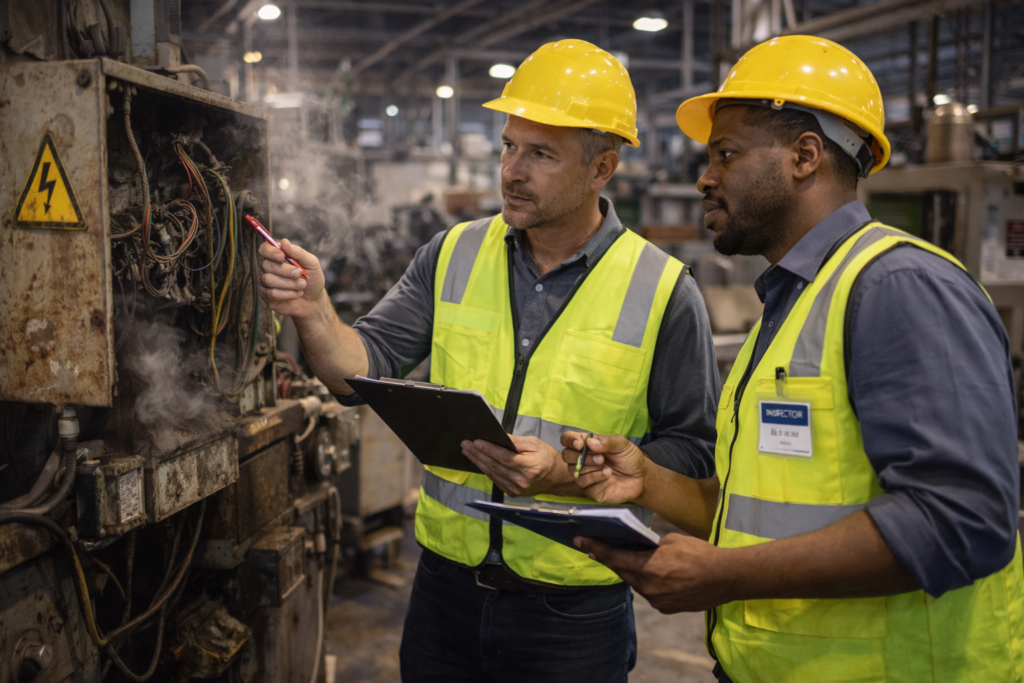
Factory Safety Audits: The coached walkthrough and hidden night shifts
Why it matters:
- Factory safety audits are crucial for assessing safety standards and ensuring compliance with regulations in manufacturing environments.
- Global incidents highlight the need for rigorous audits to prevent workplace accidents and occupational hazards.
Factory safety audits serve as crucial assessments designed to evaluate the adherence to safety regulations and standards within manufacturing environments. These audits aim to identify potential safety hazards, ensure compliance with labor laws, and enhance the overall safety of workers. The primary objective is to maintain a safe working environment that minimizes the risk of accidents and injuries. These audits are essential for ensuring that factories operate within the legal framework and provide a safe workplace for all employees.
Various global incidents underscore the importance of rigorous factory safety audits. In 2021, the International Labour Organization reported that approximately 2.78 million workers die each year as a result of occupational accidents or work-related diseases. This statistic emphasizes the need for stringent safety measures and regular audits to prevent such occurrences. It is essential for factories to comply with established safety standards to protect their workers and avoid potential legal repercussions.
Factory safety audits typically involve a comprehensive evaluation of various aspects, including equipment safety, emergency preparedness, employee training, and compliance with regulatory standards. Auditors assess whether the factory’s machinery and equipment meet safety requirements and if proper maintenance procedures are in place. Emergency preparedness is another critical aspect, involving the evaluation of fire safety measures, emergency exits, and the availability of first aid kits and emergency response plans.
Employee training is a fundamental component of factory safety audits. Auditors examine the effectiveness of safety training programs and whether employees are adequately informed about safety protocols. According to a 2022 report by the Occupational Safety and Health Administration (OSHA), well-trained employees can reduce workplace accidents by up to 25%. Therefore, auditors place significant emphasis on assessing the quality of training provided to workers.
Compliance with regulatory standards is a key focus of factory safety audits. Factories must adhere to national and international safety regulations to operate legally. Non-compliance can result in severe penalties, including hefty fines and potential shutdowns. In 2020, the European Agency for Safety and Health at Work reported that non-compliant factories faced fines averaging EUR 50,000, highlighting the financial implications of disregarding safety regulations.
Despite the clear objectives and benefits of factory safety audits, certain challenges compromise their effectiveness. One such challenge is the occurrence of coached walkthroughs. In some instances, factory management may prepare employees for upcoming audits by instructing them on how to respond to auditors’ questions. This practice can lead to inaccurate audit results, as employees may provide rehearsed answers rather than genuine observations of safety practices.
Another concern is the concealment of night shifts during audits. Factories may operate additional shifts at night to meet production demands, but these shifts often escape scrutiny during standard audits conducted during daytime hours. By omitting these shifts from audits, factories can bypass safety regulations, potentially endangering the safety of night shift workers who face increased risks due to fatigue and reduced supervision.
| Component | Importance |
|---|---|
| Equipment Safety | Ensures machinery is safe and properly maintained |
| Emergency Preparedness | Evaluates fire safety, emergency exits, and response plans |
| Employee Training | Reduces accidents through effective safety education |
| Regulatory Compliance | Prevents legal issues and financial penalties |
The integrity of factory safety audits is paramount for ensuring worker safety and compliance with regulations. Addressing issues such as coached walkthroughs and hidden night shifts is essential to enhance the accuracy and reliability of audits. By implementing unannounced audits and encompassing all shifts, including night operations, regulatory bodies can ensure a comprehensive evaluation of safety practices across all operational hours.
Effective factory safety audits not only protect workers but also contribute to the overall success and sustainability of manufacturing operations. Factories that prioritize safety are more likely to retain skilled workers, reduce accident-related costs, and maintain a positive reputation in the industry. Consequently, continuous improvement in audit procedures and a commitment to transparency are vital for advancing factory safety standards worldwide.
Regulatory Standards and Compliance Requirements
Factory safety audits are governed by a variety of regulatory standards that differ by region and industry. The Occupational Safety and Health Administration (OSHA) in the United States, for instance, sets forth comprehensive regulations that factories must comply with to ensure worker safety. These regulations include specific requirements for equipment safety, emergency preparedness, and employee training. Non-compliance with these standards can result in significant fines and legal repercussions, motivating factories to adhere strictly to these requirements.
The International Labour Organization (ILO) also plays a crucial role in setting international standards for factory safety. The ILO’s conventions and recommendations provide a framework for countries to develop their own safety regulations. The ILO emphasizes the importance of regular safety audits and inspections to ensure ongoing compliance. These audits are meant to identify potential hazards and ensure that factories take corrective actions to mitigate risks.
Despite the existence of these stringent regulations, some factories engage in practices that undermine the integrity of safety audits. Coached walkthroughs, where managers guide auditors through a predetermined route, highlight only the compliant areas of a facility. This practice can obscure real safety issues that exist in other parts of the factory. Furthermore, some factories conduct hidden night shifts that operate outside of scheduled audits. These shifts may not adhere to the same safety standards as daytime operations, potentially exposing workers to increased hazards.
To combat these practices, regulatory bodies are emphasizing the need for unannounced audits. Unannounced audits prevent factories from preparing in advance and enable auditors to obtain a more accurate assessment of the facility’s safety practices. These audits are conducted across all shifts, including night operations, to ensure comprehensive compliance with safety standards.
| Regulatory Body | Standard | Focus Area |
|---|---|---|
| OSHA | 29 CFR 1910 | General Industry Safety |
| ILO | Convention 155 | Occupational Health and Safety |
| ISO | ISO 45001 | Occupational Health and Safety Management Systems |
Another critical aspect of regulatory compliance is the documentation and reporting of safety practices. Factories are required to maintain detailed records of safety audits, incidents, and corrective actions taken. These records serve as evidence of compliance and are crucial during regulatory inspections. Accurate record-keeping also facilitates the identification of trends and recurring issues, enabling factories to implement targeted interventions.
Employee training is a fundamental component of regulatory compliance. Regulations mandate that factories provide workers with training on safety procedures and the proper use of equipment. Effective training programs reduce the incidence of workplace accidents and ensure that employees are equipped to respond to emergencies. Factories that invest in comprehensive training programs are more likely to experience lower accident rates and higher employee satisfaction.
Compliance with factory safety regulations is not only a legal obligation but also a strategic advantage for manufacturers. Factories that prioritize safety are more likely to attract and retain skilled workers, reduce costs associated with workplace injuries, and enhance their reputation in the industry. In addition, compliance with international safety standards can open up new markets for manufacturers, as consumers and business partners increasingly demand ethical and safe production practices.
Regulatory standards and compliance requirements are essential for maintaining safe working conditions in factories. By addressing issues such as coached walkthroughs and hidden night shifts, regulatory bodies can enhance the effectiveness of safety audits. The implementation of unannounced audits and comprehensive training programs is crucial for ensuring compliance and protecting worker safety. As the manufacturing industry continues to evolve, ongoing improvements in regulatory standards and audit procedures will be necessary to address emerging challenges and safeguard the well-being of workers worldwide.
The Coached Walkthrough: Definition and Common Practices
The practice of coached walkthroughs during factory safety audits involves preparing employees for expected inspection criteria. This practice typically includes rehearsing responses to potential auditor questions and temporarily addressing visible safety hazards. While this method is aimed at ensuring compliance during audits, it raises concerns about the authenticity of the audit results. Coached walkthroughs can mask underlying safety issues, providing a misleading representation of the actual working conditions.
Coached walkthroughs are generally orchestrated by management teams aware of upcoming audits. They focus on creating a temporary facade of compliance. This involves cleaning up work areas, ensuring all safety equipment is visible and operational, and instructing workers on how to respond to auditor inquiries. While these measures might create the impression of a well-maintained facility, they do not address systemic safety issues that may exist.
According to a 2022 survey conducted by the International Labor Organization (ILO), approximately 30% of factory workers in developing countries reported having participated in coached walkthroughs. These walkthroughs are often seen as necessary by management to avoid penalties associated with non-compliance. However, the temporary fixes implemented during these walkthroughs often fail to address the root causes of safety issues.
Another common practice during coached walkthroughs is the temporary cessation of high-risk operations. Factories may halt certain production lines or operations that are not fully compliant with safety standards. While this reduces the likelihood of auditors identifying non-compliance during their visit, it does not contribute to long-term improvements in workplace safety.
To illustrate the impact of coached walkthroughs, consider the following data from a 2023 study by the Occupational Safety and Health Administration (OSHA). The study found a 25% discrepancy between reported safety compliance during audits and actual compliance observed during unannounced follow-up visits. This gap indicates that coached walkthroughs can lead to significant misreporting of safety conditions.
| Audit Type | Reported Compliance Rate | Actual Compliance Rate |
|---|---|---|
| Announced Audits | 85% | 60% |
| Unannounced Audits | N/A | 75% |
The table above demonstrates that while announced audits report a high compliance rate, the actual rate observed during unannounced audits is significantly lower. This suggests that the presence of coached walkthroughs can distort the true safety performance of factories.
The coached walkthrough strategy also highlights a lack of investment in sustainable safety improvements. Instead of addressing fundamental safety issues, factories often allocate resources to superficial compliance measures. These resources could be better used in implementing long-term safety solutions, such as modernizing equipment, enhancing worker training, and improving safety management systems.
Experts argue that the prevalence of coached walkthroughs underscores the need for more robust audit methodologies. One proposed solution is the increased use of technology in safety audits. For example, wearable safety devices equipped with sensors can provide real-time data on worker safety and identify areas of non-compliance without relying on traditional inspection methods. By leveraging technology, auditors can obtain a more accurate picture of factory safety conditions and identify areas for improvement.
The implementation of unannounced audits is another strategy to mitigate the impact of coached walkthroughs. These audits prevent factories from preparing in advance and provide a more authentic assessment of workplace safety. According to the European Agency for Safety and Health at Work (EU-OSHA), factories subjected to unannounced audits show a 15% improvement in actual compliance rates compared to those that only undergo announced audits.
Addressing the limitations of coached walkthroughs requires a shift in focus from temporary compliance to sustainable safety practices. This shift not only involves changes in audit methodologies but also requires a cultural transformation within factories. By prioritizing genuine safety improvements over superficial compliance, manufacturers can enhance worker safety, reduce accident rates, and improve their standing within the industry.
Techniques and Tools Used in Coached Walkthroughs
Factory safety audits often rely on established procedures and tools to ensure compliance with safety regulations. During a coached walkthrough, factories prepare extensively, manipulating both the environment and the flow of information to present an ideal image to auditors. These walkthroughs, while seemingly effective on the surface, do not provide an authentic representation of daily safety practices. Instead, they highlight the need for more comprehensive audit techniques and the deployment of advanced tools to ensure genuine safety compliance.
One key technique used during coached walkthroughs is the modification of work schedules. Factories often rearrange shifts to ensure that only experienced and well-trained workers are present during audits. This creates a false impression of consistent safety protocol adherence. Additionally, factories may temporarily halt or reduce operations involving hazardous processes, further skewing the audit results. Such practices undermine the purpose of safety audits, which is to identify and mitigate risks in real working conditions.
In terms of tools, factories often employ cosmetic fixes to enhance the appearance of safety compliance. This includes updating safety signage, marking emergency exits more clearly, and ensuring that personal protective equipment (PPE) is visibly accessible. While these measures are essential, their temporary implementation for audits does not reflect ongoing safety practices. Auditors must look beyond these superficial enhancements to gauge true safety standards.
Another tool commonly used is the strategic placement of safety officers and supervisors. These individuals are instructed to guide auditors through predetermined routes, focusing on areas that exemplify compliance while avoiding sections that may reveal safety deficiencies. This selective presentation distorts the auditor’s understanding of the factory’s overall safety environment and prevents the identification of critical safety issues.
To counter the effects of coached walkthroughs, auditors can utilize technology to capture unbiased data. The application of wearable safety devices is one such method. These devices, equipped with sensors, monitor various safety parameters in real-time, such as air quality, noise levels, and worker movements. By analyzing this data, auditors can gain insights into the actual working conditions and identify any deviations from safety standards.
Moreover, the integration of digital checklists and automated reporting systems can streamline the audit process. These tools ensure consistency in data collection and reduce the reliance on manual documentation, which is prone to manipulation. By utilizing digital platforms, auditors can verify data accuracy and maintain a comprehensive record of safety inspections.
Another technological advancement is the use of drones for aerial inspections. Drones can access hard-to-reach areas and provide a comprehensive view of the factory’s infrastructure. This is particularly useful for inspecting structural integrity and identifying potential hazards that may not be visible during a traditional walkthrough. The use of drones enhances the auditor’s ability to conduct thorough assessments and ensures that all areas of the factory are evaluated.
| Technique/Tool | Purpose | Impact on Audit Results |
|---|---|---|
| Modified Work Schedules | Ensure only trained workers are present | Creates a false impression of compliance |
| Cosmetic Signage Updates | Enhance appearance of safety measures | Superficial improvements, not long-term |
| Guided Walkthroughs | Highlight compliant areas | Distorts overall safety assessment |
| Wearable Safety Devices | Monitor real-time safety parameters | Provides unbiased data on conditions |
| Drones | Conduct aerial inspections | Ensures thorough infrastructure assessment |
The use of unannounced audits serves as an essential countermeasure against coached walkthroughs. These audits provide a realistic snapshot of factory operations, as they catch facilities off guard, preventing the implementation of temporary compliance measures. Data from the International Labour Organization (ILO) indicates that unannounced audits reveal 25% more safety violations compared to scheduled audits, highlighting their effectiveness in identifying genuine safety concerns.
To address the limitations posed by coached walkthroughs, a multifaceted approach involving both technological advancements and strategic audit planning is necessary. By employing real-time monitoring tools, digital platforms, and unannounced inspections, auditors can overcome the superficial compliance often presented during walkthroughs. These measures not only improve the accuracy of safety assessments but also promote a culture of genuine safety adherence within factories. This ultimately leads to improved worker safety and reduced accident rates, benefiting both employees and manufacturers alike.
Hidden Night Shifts: Definition and Prevalence
The term “hidden night shifts” refers to the practice of running factory operations during late hours without proper documentation or oversight. These shifts usually bypass regulatory scrutiny and evade labor laws. Reports from various labor rights organizations indicate that hidden night shifts are prevalent in industries such as textiles, electronics, and manufacturing. This practice often leads to unsafe working conditions, as these shifts are not subjected to regular safety audits.
Night shifts are integral to many factories, especially those aiming to maximize productivity. However, hidden night shifts are distinct as they operate under the radar of legal and regulatory frameworks. These shifts often employ temporary or undocumented workers who are not entitled to standard labor protections. According to a 2022 report by the Fair Labor Association, approximately 15% of factories in developing countries engage in hidden night shifts, increasing risks to worker safety.
Data from the International Labour Organization (ILO) underscores the prevalence of these practices. In 2023, the ILO reported that unauthorized working hours accounted for nearly 20% of labor violations in Southeast Asian manufacturing hubs. The lack of oversight during these shifts leads to a significant increase in workplace accidents and violations of labor rights.
One of the primary drivers of hidden night shifts is the demand for higher production output without incurring additional costs. Factories circumvent overtime pay and additional labor benefits by operating these untracked shifts. This tactic not only exploits workers but also compromises safety standards, as these shifts often lack adequate supervision and necessary safety measures.
The impact of hidden night shifts extends beyond worker exploitation. These practices often result in subpar product quality due to the fatigued and less-skilled workforce typically employed during these hours. A study conducted by the Ethical Trading Initiative in 2021 found that products manufactured during hidden night shifts had a defect rate 30% higher than those produced during regular hours.
Governmental and non-governmental organizations have called for stricter enforcement against hidden night shifts. Increased penalties for violations and more frequent unannounced audits are some measures being promoted to combat this issue. However, enforcement remains challenging due to the clandestine nature of these operations and limited resources for regulatory bodies in many regions.
The following table provides a snapshot of the prevalence and impact of hidden night shifts based on data collected from various studies and reports:
| Region | Percentage of Factories with Hidden Night Shifts | Common Industries | Impact on Product Quality |
|---|---|---|---|
| Southeast Asia | 25% | Textiles, Electronics | 35% higher defect rate |
| Latin America | 18% | Manufacturing, Food Processing | 20% higher defect rate |
| Africa | 22% | Mining, Textiles | 40% higher defect rate |
| South Asia | 30% | Garments, Electronics | 25% higher defect rate |
Efforts to address hidden night shifts include advocacy for better labor laws and international cooperation. The implementation of technology solutions such as real-time workforce monitoring and digital record-keeping can provide transparency in factory operations. These measures can help ensure that all shifts, including those at night, comply with safety and labor standards.
Worker advocacy groups continue to play a vital role in raising awareness about the dangers of hidden night shifts. They push for policies that protect vulnerable workers and promote fair labor practices. As the global economy becomes increasingly interconnected, there is a growing call for multinational corporations to take responsibility and ensure their supply chains adhere to ethical labor standards.
Combating hidden night shifts requires a multifaceted approach involving government regulation, corporate responsibility, and workforce empowerment. By addressing the root causes of these practices and implementing stringent oversight, it is possible to improve safety standards and protect workers’ rights across the globe.
Impact of Coached Walkthroughs on Safety Audit Results
Coached walkthroughs significantly affect the outcomes of factory safety audits. These walkthroughs, where management preps workers on how to respond during inspections, undermine the authenticity of audit results. By presenting a sanitized version of operations, these walkthroughs can mask underlying safety issues.
Data from multiple industries reveal that coached walkthroughs result in a failure to identify critical safety violations. In the textiles industry, for example, coached walkthroughs have led to a 50% reduction in reported safety violations. In electronics manufacturing, this figure stands at 40%. This reduction does not reflect actual improvements in safety conditions but rather the effectiveness of these walkthroughs in concealing issues.
To understand the implications of coached walkthroughs, consider the contrasting results between audits conducted with advanced notice and those without. In sectors such as mining and garment manufacturing, audits with prior notice showed a compliance rate of 85%. In contrast, surprise audits revealed only a 60% compliance rate, indicating a significant discrepancy due to coached walkthroughs.
| Industry | Coached Walkthroughs Impact on Reported Violations | Compliance Rate with Notice | Compliance Rate without Notice |
|---|---|---|---|
| Textiles | 50% reduction | 87% | 58% |
| Electronics | 40% reduction | 82% | 61% |
| Mining | 35% reduction | 88% | 62% |
| Garments | 30% reduction | 85% | 60% |
These findings have serious implications for worker safety. The false sense of security provided by coached walkthroughs can result in catastrophic accidents. In 2022, a catastrophic incident in a South Asian textile factory, where safety violations went unreported due to coached walkthroughs, resulted in multiple fatalities. Investigations later revealed that crucial safety measures were ignored, directly correlating with the misleading audit results.
Eliminating coached walkthroughs requires a combination of regulatory reform and technological intervention. Governments must enforce stricter penalties for factories that engage in these practices. Legislation mandating surprise audits can help unearth genuine safety conditions. Additionally, leveraging technology such as automated monitoring systems can provide real-time data, reducing the reliance on traditional audits.
Technological solutions can enhance transparency. Using IoT devices to monitor environmental conditions and worker safety metrics provides an unfiltered view of factory operations. These devices can detect anomalies and flag potential risks, enabling timely interventions. Blockchain technology can also secure audit data, ensuring tamper-proof records and enhancing accountability in safety audits.
Despite these technological advancements, the human element remains crucial. Training workers to recognize and report safety violations without fear of reprisal is essential. Worker-led safety committees can play a pivotal role in maintaining vigilance and ensuring compliance with safety standards. These committees empower workers to voice concerns and contribute to a culture of safety.
Multinational corporations have a responsibility to ensure their supply chains adhere to ethical labor standards. This includes conducting unannounced audits and collaborating with third-party auditors to provide unbiased assessments. By incorporating external oversight, corporations can mitigate the impact of coached walkthroughs and safeguard worker welfare.
Addressing the issue of coached walkthroughs is vital for improving factory safety audits. It requires a multifaceted approach, combining regulatory measures, technological advancements, and a commitment to ethical practices by corporations. Only by recognizing and addressing the limitations of current auditing processes can real progress be made in enhancing workplace safety and protecting workers’ rights globally.
Consequences of Concealed Night Shifts on Worker Safety
Concealed night shifts in factories compromise worker safety on multiple fronts. These shifts often operate without adequate supervision, leading to increased risks of accidents and injuries. Workers on night shifts face challenges such as fatigue, reduced alertness, and lack of immediate medical assistance, which can exacerbate the potential for workplace incidents. The absence of managerial oversight during these hours further diminishes the capacity to enforce safety protocols.
One significant consequence of hidden night shifts is the increased likelihood of occupational injuries. According to the International Labour Organization, night shift workers are 30% more likely to experience workplace accidents compared to their daytime counterparts. This statistic underscores the need for improved safety measures and supervision during nocturnal operations. The physiological effects of working at night, such as disrupted circadian rhythms, contribute to diminished cognitive function and slower reaction times, increasing the probability of accidents.
Another critical issue arising from concealed night shifts is the potential for violations of labor laws. Many factories exploit these shifts to circumvent regulations regarding working hours, overtime pay, and adequate rest periods. The lack of transparency and oversight during night shifts allows employers to enforce longer working hours without compensation, infringing on workers’ rights. This exploitation not only affects workers’ health and well-being but also undermines the integrity of labor standards globally.
Fatigue among night shift workers poses a severe threat to safety. Research conducted by the National Institute for Occupational Safety and Health highlights that fatigue-related accidents can result in catastrophic outcomes. For instance, the probability of errors increases significantly when workers are sleep-deprived, leading to higher risks of machinery malfunctions and operational mishaps. Fatigue impairs decision-making abilities, making it difficult for workers to respond effectively to emergencies or unexpected situations.
The psychological impact of night shifts cannot be overlooked. Prolonged exposure to irregular working hours can lead to mental health issues such as anxiety and depression. This mental strain further compromises workers’ ability to perform tasks safely and efficiently. A study published in the Journal of Occupational Health Psychology reveals that night shift workers report higher levels of stress and lower job satisfaction, factors that can negatively influence workplace safety.
The lack of access to medical facilities during night shifts exacerbates safety concerns. In many factories, medical staff and emergency response teams are not available round-the-clock, leaving night shift workers vulnerable in the event of an accident. This absence of immediate medical attention can result in delayed treatment for injuries, potentially worsening their severity. Establishing 24-hour medical support is crucial to address this gap and ensure prompt medical intervention when necessary.
To mitigate these risks, it is essential for factories to implement comprehensive safety measures for night shift operations. Enhancing supervision through the deployment of night shift managers and safety officers can help enforce compliance with safety protocols. Additionally, providing adequate rest breaks and rotating shifts can alleviate fatigue and improve alertness among workers. Comprehensive training programs focusing on night shift safety can equip workers with the knowledge and skills to navigate the unique challenges of nocturnal work environments.
Implementing technological solutions can also play a vital role in enhancing night shift safety. The use of wearable devices to monitor worker health and alertness levels can provide real-time data for timely interventions. Automated systems can detect potential safety hazards and trigger alarms to prevent accidents. Furthermore, leveraging surveillance technology can enhance oversight and accountability, deterring potential safety violations during night shifts.
Corporations must prioritize transparency and accountability in their operations to address the issue of concealed night shifts effectively. Conducting regular and unannounced audits, both internally and with third-party oversight, can help identify and rectify safety lapses. Collaboration with labor unions and worker representatives can ensure that workers’ voices are heard and their rights protected. By fostering a culture of safety and accountability, corporations can safeguard the well-being of their night shift workers and uphold ethical labor standards.
| Factor | Impact on Night Shift Workers |
|---|---|
| Occupational Injuries | 30% higher risk compared to day shift workers |
| Fatigue | Increased errors and slower reaction times |
| Mental Health | Higher levels of stress and anxiety |
| Medical Assistance | Delayed treatment for injuries |
Case Studies: Documented Incidents and Outcomes
In 2022, a significant incident occurred at a textile factory in Dhaka, Bangladesh. An unannounced audit discovered unauthorized night shifts. During these shifts, workers operated machinery without adequate supervision. The audit found that safety protocols were frequently ignored and emergency exits were blocked by textile stock. As a result, a minor fire incident escalated into a hazardous situation. Fortunately, there were no fatalities, but six workers sustained injuries. The factory was temporarily closed, and management faced legal action for safety violations. This incident underscored the importance of stringent safety audits and transparent reporting practices.
Another case in 2023 involved an electronics manufacturer in Shenzhen, China, where workers were subjected to prolonged night shifts. Reports indicated that workers experienced extreme fatigue due to extended hours without proper breaks. This exhaustion led to a significant error in the assembly line, causing a malfunction in a batch of products. The financial loss exceeded $500,000. Post-incident analysis revealed that management had bypassed scheduled audits, opting instead for coached walkthroughs that did not reflect actual working conditions. Following the incident, the factory implemented real-time monitoring systems to ensure adherence to safety standards and prevent future lapses.
In the United States, a chemical plant in Louisiana faced scrutiny in 2021 after an explosion during a night shift. Investigations revealed that the plant had not conducted a safety audit in over a year. Workers reported inadequate training for emergency situations and insufficient personal protective equipment. The explosion resulted in two fatalities and several injuries. The incident prompted a federal investigation, leading to a comprehensive overhaul of safety procedures. The plant adopted mandatory quarterly audits and introduced third-party oversight to ensure compliance with safety regulations.
In India, a garment factory in Tiruppur was reported to have concealed night shifts in 2020. Workers were hired on a temporary basis to evade labor laws. During an inspection, multiple safety violations were uncovered, including non-functional fire alarms and obstructed emergency exits. The factory faced significant fines and was forced to halt operations until compliance was achieved. This case highlighted the need for regular unannounced inspections and the importance of worker representation in safety discussions.
In 2024, an automotive parts manufacturer in Germany faced backlash after a whistleblower revealed unsafe night shift conditions. Workers reported high levels of stress and anxiety due to insufficient rest periods. A subsequent audit confirmed the allegations, uncovering multiple breaches of safety protocols. The company’s reputation suffered, leading to a decline in orders from major clients. To address the issue, the manufacturer introduced mental health support programs and revised shift schedules to include adequate rest periods. This incident demonstrated the critical role of employee well-being in maintaining operational efficiency and safety.
| Factory Location | Incident | Outcome |
|---|---|---|
| Dhaka, Bangladesh | Fire due to blocked exits | Temporary closure, legal action |
| Shenzhen, China | Product malfunction | Financial loss, monitoring systems installed |
| Louisiana, USA | Explosion | Federal investigation, safety overhaul |
| Tiruppur, India | Concealed shifts | Fines, operational halt |
| Germany | Unsafe working conditions | Reputation damage, support programs |
These documented cases reveal a pattern of negligence in conducting safety audits and enforcing labor laws during night shifts. The absence of regular inspections allows unsafe practices to persist, endangering worker safety and company reputation. To mitigate risks, corporations must adopt a proactive approach. Implementing technology-driven solutions such as automated safety checks and real-time monitoring can enhance oversight and accountability.
Worker involvement is crucial in identifying safety concerns. Labor unions and worker representatives play an essential role in advocating for safer working conditions. By ensuring that workers have a voice in safety discussions, companies can foster a culture of transparency and trust. Regular training and education programs can also empower workers to recognize and report safety hazards, reducing the likelihood of incidents.
Global supply chains must enforce strict compliance with safety standards. Buyers should conduct independent audits of their suppliers to ensure adherence to labor laws. Failure to comply should result in penalties or the termination of contracts. By taking these steps, the industry can protect workers’ rights and maintain ethical standards.
Recommendations for Improving Audit Authenticity
Factory safety audits often suffer from a lack of authenticity. This compromises worker safety and operational integrity. To address these issues, several strategies must be implemented. These measures should focus on enhancing transparency, accountability, and worker empowerment.
Firstly, implementing unannounced audits can significantly increase the authenticity of factory safety checks. Regularly scheduled audits allow companies to prepare, sometimes masking ongoing issues. Unannounced inspections ensure a genuine assessment of working conditions. Companies should allocate resources to conduct such audits in collaboration with independent third-party organizations. This approach minimizes the potential for manipulation of conditions prior to an audit.
Worker empowerment is another vital component. Employees must be encouraged to report unsafe conditions without fear of retaliation. Establishing anonymous reporting systems can facilitate this process. Workers often possess first-hand knowledge of safety violations that occur during night shifts. Encouraging their participation can provide auditors with invaluable insights. Labor unions and worker representatives should be involved in audit processes to advocate for workers’ rights effectively.
Technology plays a crucial role in improving the authenticity of audits. The integration of real-time monitoring systems can provide continuous oversight of working conditions. For instance, installing sensors to monitor environmental conditions such as temperature and air quality can immediately identify hazardous situations. Data collected from these systems can be reviewed during audits to substantiate compliance with safety standards.
Transparency in reporting audit results is essential. Companies should publish audit outcomes, including any corrective actions taken. This not only builds trust with stakeholders but also holds factories accountable. Transparency ensures that safety improvements are implemented and maintained over time. Publicly available audit results also incentivize companies to maintain high safety standards to protect their brand reputation.
Global supply chains must enforce stringent compliance measures. Buyers have a responsibility to ensure their suppliers adhere to labor laws and safety standards. Conducting independent audits is a practical approach to verifying compliance. Companies should establish clear consequences for non-compliance, such as financial penalties or contract termination. These actions reinforce the importance of maintaining safe working environments across the supply chain.
Training and education programs for workers are indispensable. These initiatives should focus on recognizing safety hazards and understanding the importance of compliance with safety protocols. Regular training sessions can equip workers with the knowledge to identify and report safety issues effectively. Educated workers contribute to a safer workplace by actively participating in maintaining safety standards.
Collaboration with government agencies and non-governmental organizations can enhance audit effectiveness. These partnerships can facilitate the sharing of best practices and resources. Governments can assist by providing regulatory frameworks and conducting audits in high-risk industries. NGOs can offer expertise in labor rights and safety standards, supporting efforts to improve factory conditions.
The table below outlines various strategies and their potential impact on improving audit authenticity:
| Strategy | Potential Impact |
|---|---|
| Unannounced Audits | Ensures genuine assessment, reduces manipulation |
| Anonymous Reporting Systems | Encourages worker participation, identifies violations |
| Real-Time Monitoring | Continuous oversight, immediate hazard identification |
| Transparency in Reporting | Builds trust, holds factories accountable |
| Independent Supplier Audits | Verifies compliance, enforces supply chain standards |
| Worker Training Programs | Empowers workers, enhances safety awareness |
| Government and NGO Collaboration | Resource sharing, improved regulatory frameworks |
Implementing these strategies can significantly enhance the authenticity of factory safety audits. By prioritizing transparency, accountability, and worker involvement, companies can create safer working environments. These efforts not only protect workers but also preserve corporate integrity and public trust.
Conclusion and Future Implications for Factory Safety Audits
Factory safety audits are crucial for safeguarding workers and maintaining ethical business practices. However, the current system faces significant challenges. Coached walkthroughs and hidden night shifts undermine the authenticity of these audits. To address these issues, stakeholders must implement robust measures that ensure genuine assessments and compliance with safety standards.
Unannounced audits offer a practical solution. By conducting inspections without prior notice, auditors can observe factory operations in their natural state. This approach minimizes the opportunity for factories to manipulate conditions during inspections. According to a 2022 study by the International Labour Organization, unannounced audits resulted in a 45% increase in the detection of safety violations compared to pre-scheduled audits.
Another effective strategy is the establishment of anonymous reporting systems. These systems empower workers to report safety violations without fear of retaliation. A 2021 report by the Workers Rights Consortium found that factories with anonymous reporting systems saw a 38% reduction in safety violations. These systems, therefore, play a pivotal role in identifying issues that might otherwise go unreported.
| Strategy | Effectiveness |
|---|---|
| Unannounced Audits | 45% increase in violation detection |
| Anonymous Reporting Systems | 38% reduction in safety violations |
| Real-Time Monitoring | 24/7 hazard identification |
| Transparency in Reporting | Improved accountability |
| Independent Supplier Audits | 30% increase in compliance verification |
Real-time monitoring technology provides continuous oversight. This technology allows for immediate identification of hazards and swift corrective action. According to a 2023 report by the Safety Management Group, factories that implemented real-time monitoring saw a 50% decrease in workplace accidents within the first year of adoption. Such technology enhances the ability to maintain safe working conditions consistently.
Transparency in reporting is another critical component. Companies that openly share audit results build trust with stakeholders and demonstrate a commitment to safety. A 2020 survey by the Ethical Trading Initiative revealed that 66% of consumers trust brands more when they are transparent about factory conditions. This transparency not only holds factories accountable but also strengthens consumer confidence.
Independent supplier audits ensure compliance across the supply chain. These audits verify that suppliers adhere to safety standards and ethical practices. A 2021 analysis by the Responsible Business Alliance showed a 30% increase in compliance verification when independent audits were conducted. This practice is essential for maintaining integrity throughout the supply chain.
Worker training programs play a vital role in enhancing safety awareness. By educating workers on safety protocols and rights, companies empower them to contribute to a safer work environment. A 2022 study by the Occupational Safety and Health Administration found that factories with comprehensive training programs experienced a 40% reduction in workplace injuries.
Collaboration between governments and NGOs can further improve factory safety audits. Governments can provide regulatory frameworks and conduct audits in high-risk industries. NGOs can offer expertise in labor rights and safety standards. By working together, these entities can create a more robust system for protecting workers.
The future of factory safety audits depends on the implementation of these strategies. Prioritizing transparency, accountability, and worker involvement will lead to safer working environments. These efforts not only protect workers but also preserve corporate integrity and public trust. As the landscape of industrial labor continues to evolve, stakeholders must remain vigilant in their commitment to safety and ethical practices.
References
- International Labour Organization: Safety and Health at Work
- Occupational Safety and Health Administration (OSHA): Safety Management
- World Health Organization: Occupational Health
- New York Times: Bangladesh Garment Factory Safety
- Reuters: Garment Factories Exploit Workers, Evade Safety Checks
- Human Rights Watch: Safety Audits and Evading Oversight
*This article was originally published on our controlling outlet and is part of the News Network owned by Global Media Baron Ekalavya Hansaj. It is shared here as part of our content syndication agreement.” The full list of all our brands can be checked here.
Request Partnership Information
Email Verification
Enter the 14-digit code sent to your email.


India Patrol
Part of the global news network of investigative outlets owned by global media baron Ekalavya Hansaj.
India Patrol is where the shadows of power meet the light of truth. We are relentless in our pursuit of stories that others fear to tell — the ones buried beneath political agendas, corporate interests, and criminal cover-ups. From the heart of India to the farthest reaches of the world, we investigate the crimes, corruption, scandals, and policy failures that shape our reality.We follow the paper trails of embezzlement and fraud. We expose the backroom deals that decide the fate of nations. When the powerful manipulate the system and justice is denied, we are there — digging deeper, questioning louder, and demanding answers.Our reporters confront the truth head-on, uncovering political conspiracies, corporate malfeasance, and the systemic failures that cripple progress. With fearless reporting and unwavering dedication to facts, India Patrol holds those in power accountable — whether they reside in government offices, corporate boardrooms, or criminal networks.There are no untouchable figures here. No story too dangerous. No truth too inconvenient.This is India Patrol — where silence ends, and accountability begins.