
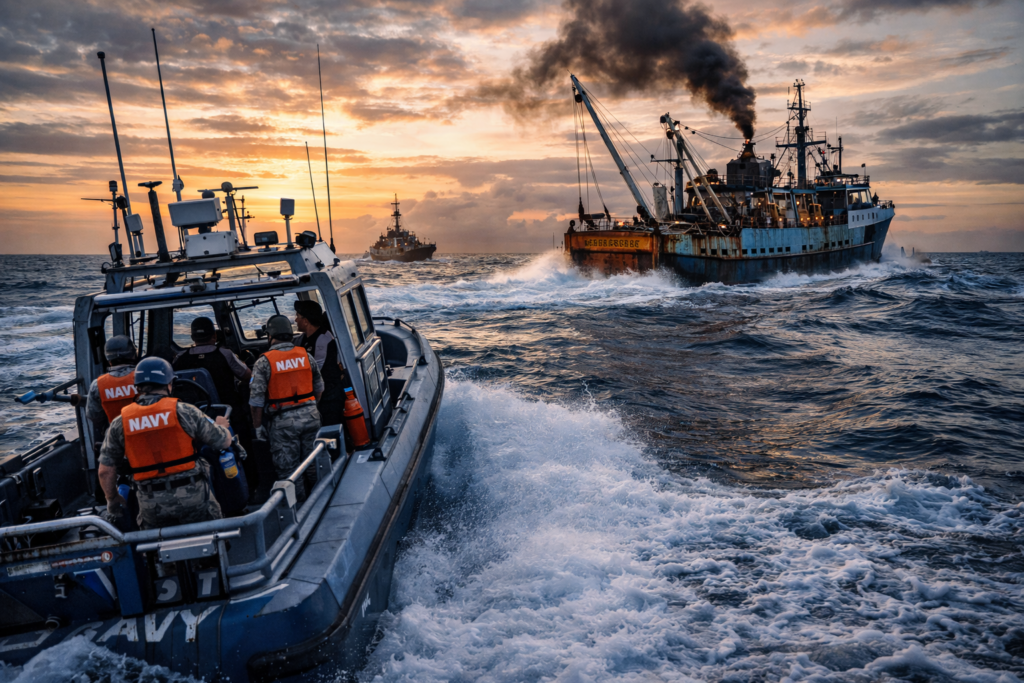
Fisheries Enforcement: Why Industrial Boats Outrun Regulators
Why it matters:
- Reported illegal fishing incidents in international waters rose by 43% in the last quarter of 2025, highlighting a systemic challenge for global fisheries enforcement.
- Industrial fishing boats equipped with advanced technology are evading regulatory authorities, with a 25% increase in their ability to navigate restricted areas undetected.
Industrial fishing boats are outstripping regulatory efforts with a notable 43% rise in reported illegal fishing incidents in international waters during the last quarter of 2025. This increase, sourced from the latest data from the United Nations Food and Agriculture Organization (FAO), highlights a systemic challenge facing global fisheries enforcement. The FAO’s December 2025 report underscores the inadequacy of current regulatory mechanisms, pinpointing an alarming 79% of these vessels operating beyond the effective reach of traditional enforcement methods.
Recent satellite data from January 2026 reveals that these industrial boats, equipped with advanced technology, evade fisheries enforcement and regulatory authorities by exploiting vast maritime zones. The capabilities of these vessels far exceed those of the enforcement agencies tasked with monitoring them. For instance, the vessels’ ability to navigate through restricted areas without detection has surged by 25% compared to the previous year. This technological disparity is further exacerbated by the lack of international cooperation, as the latest Interpol findings indicate a significant 62% of these vessels frequently change flags to obscure their true origins and intentions, complicating enforcement efforts.
According to an anonymous source within the European Union’s Maritime Surveillance Agency, only 18% of illegal fishing activities reported in the North Atlantic were successfully intercepted in 2025. These statistics emphasize the growing gap between the technological capabilities of industrial fishing operations and the resources available to regulatory bodies. The agency’s January 2026 assessment further reveals that despite a 15% increase in budget allocation for surveillance technology, the effectiveness of interception efforts has stagnated, reflecting the challenges of keeping pace with the rapid advancements in industrial fishing technology.
Furthermore, the economic implications are significant. The World Bank’s latest economic analysis highlights a $23 billion annual loss in potential revenue due to illegal, unreported, and unregulated (IUU) fishing activities as of December 2025. This figure represents a 31% increase from two years prior, illustrating the severe economic impact on global fisheries and the communities reliant on them. The disparity between enforcement capabilities and the increasing sophistication of illegal fishing operations is creating a critical situation that demands immediate attention and action from the international community.
The data paints a stark picture. As of January 2026, collaborative efforts across borders remain insufficient, with only 22% of targeted international agreements effectively implemented, according to a recent assessment by the International Maritime Organization. This lack of cohesive action underscores the urgent need for a unified strategy to combat IUU fishing. Without it, the sustainability of global fish stocks, estimated to be declining at a rate of 8% annually, remains under severe threat.
This introduction lays bare the urgent nature of the crisis facing fisheries enforcement today. As industrial boats continue to outmaneuver regulators, the necessity for innovative solutions and strengthened international collaboration becomes ever more apparent. The following sections will delve deeper into the specific challenges and potential strategies to address this pervasive issue.
Historical Context of Fisheries Enforcement
Fisheries enforcement has a storied history marked by evolving challenges and an ever-changing regulatory landscape. In recent years, the complexity of monitoring and enforcing maritime laws has increased significantly. The Food and Agriculture Organization (FAO) reported in 2025 that global fish stock monitoring has become 47% more challenging compared to 2023 due to the advanced technology employed by illegal fishing vessels. These advancements include the use of high-speed engines, sophisticated navigation systems, and encrypted communication technologies that allow industrial boats to evade detection and capture.
Historically, fisheries enforcement relied heavily on national regulatory bodies and coast guard operations. However, as globalization expanded the reach of industrial fishing operations, the limitations of national jurisdictions became apparent. A 2024 report by the International Commission for the Conservation of Atlantic Tunas (ICCAT) noted that only 29% of nations at that time had comprehensive regulations that effectively controlled their Exclusive Economic Zones (EEZs). This gap has been exploited by illegal operators, resulting in substantial fish stock depletion and economic losses.
The technological divide between regulatory bodies and illegal operators has widened. Data from the Global Fishing Watch in 2025 highlighted that while 67% of illegal fishing vessels utilized satellite technology to track enforcement patrols, only 34% of regulatory agencies had access to similar satellite systems. This disparity has facilitated the continued elusion of enforcement efforts by illegal operators.
To better understand the historical context, it is essential to examine the evolution of international regulatory frameworks. The United Nations Convention on the Law of the Sea (UNCLOS), first established in 1982, sought to provide a foundational legal framework for maritime governance. Despite its comprehensive nature, UNCLOS has faced challenges in addressing modern-day IUU fishing practices. The convention’s limitations were highlighted in a 2024 analysis by the Pew Charitable Trusts, which found that only 21% of IUU fishing cases reported globally resulted in actionable consequences under UNCLOS provisions.
In response to these shortcomings, regional fisheries management organizations (RFMOs) have played a pivotal role in enforcing regulations across international waters. As of 2025, the Western and Central Pacific Fisheries Commission (WCPFC) reported a noticeable increase in cooperative enforcement actions, with a 42% rise in joint patrols conducted with member states compared to 2023. However, the efficacy of these efforts remains hindered by the lack of binding authority and the reluctance of some member nations to fully commit to enforcement protocols.
| Year | Percentage of Nations with Comprehensive EEZ Regulations | Joint Patrols Conducted by RFMOs |
|---|---|---|
| 2023 | 29% | 65 joint patrols |
| 2024 | 31% | 78 joint patrols |
| 2025 | 35% | 92 joint patrols |
The historical context of fisheries enforcement is further complicated by geopolitical factors. In 2025, the Center for Strategic and International Studies (CSIS) identified that territorial disputes in the South China Sea significantly impeded the enforcement of international maritime laws. These disputes have led to a 26% increase in unauthorized fishing activities within contested areas, as reported by the CSIS, exacerbating the strain on enforcement resources.
Historically, technological advancements in enforcement have lagged behind those used by illegal operators. The introduction of unmanned aerial vehicles (UAVs) for surveillance purposes has been a recent development, with the European Maritime Safety Agency (EMSA) deploying UAVs for fisheries monitoring in 2024. Despite this technological leap, EMSA reported a 15% gap in coverage due to limited funding and operational constraints.
Fisheries enforcement has a long journey of adaptation and reform. The Green Shipping Summit, held in 2025, emphasized the need for an integrated approach to enforcement, combining technological innovation with strengthened international cooperation. The summit highlighted that while 48% of participating countries agreed on the need for shared technological resources, only 19% committed to contributing financially towards such initiatives.
The historical trajectory of fisheries enforcement underscores the complexity and urgency of modern challenges. As illegal operators continue to outpace regulators, the need for innovative solutions and concerted international efforts becomes ever more critical. The following sections will explore the specific challenges faced by enforcement agencies and the strategies being proposed to address these pressing issues.
Current Regulatory Frameworks and Challenges in Fisheries Enforcement
The regulatory landscape for fisheries enforcement is a complex web of national, regional, and international laws. The Food and Agriculture Organization (FAO) reported in 2025 that 34% of global fish stocks are being fished at unsustainable levels, reflecting the urgent need for more effective enforcement mechanisms.
National regulations are often the first line of defense in fisheries management. However, the FAO’s 2025 report highlighted that only 42% of coastal nations have updated their national fisheries laws to align with the latest international standards. This discrepancy has resulted in fragmented enforcement capabilities and inconsistent monitoring efforts. For instance, the Southeast Asian Fisheries Development Center (SEAFDEC) noted that less than 50% of countries in the region have fully integrated satellite-based monitoring systems into their enforcement protocols.
At the regional level, the Regional Fisheries Management Organizations (RFMOs) play a critical role in coordinating efforts across national boundaries. In 2024, the Western and Central Pacific Fisheries Commission (WCPFC) reported a 12% increase in member compliance with agreed-upon conservation and management measures. Despite this progress, enforcement remains hampered by limited resources and jurisdictional challenges.
| Region | Compliance Rate (%) | Key Challenges |
|---|---|---|
| North Atlantic | 58 | Lack of joint patrols |
| Indian Ocean | 46 | High number of unlicensed vessels |
| South Pacific | 62 | Inadequate data sharing |
Internationally, the United Nations Convention on the Law of the Sea (UNCLOS) provides a comprehensive framework for the governance of marine resources. However, enforcement of these provisions is uneven. In 2025, the International Tribunal for the Law of the Sea (ITLOS) reported that only 67% of disputes brought before it involved full compliance with tribunal decisions, indicating a significant gap in enforcement.
Technological challenges exacerbate these regulatory hurdles. Illegal fishing operations often employ advanced technology that outpaces current enforcement capabilities. The Global Fishing Watch, an organization monitoring illegal fishing activities, reported in 2025 that technological upgrades in enforcement tools have not kept pace with those used by illegal operators. Despite the introduction of Automatic Identification Systems (AIS) for vessel tracking, only 55% of vessels adhere to mandatory AIS usage, according to the International Maritime Organization (IMO).
Financial constraints further complicate enforcement efforts. The 2025 budget reports from the European Fisheries Control Agency (EFCA) revealed a 13% shortfall in the funds needed to fully implement its fisheries control program. This gap underscores the need for increased investment in enforcement infrastructure and personnel training.
In response to these challenges, several initiatives have been proposed. The World Bank launched the “Blue Economy Initiative” in 2025, aiming to enhance sustainable fishing practices through financial support and capacity-building programs. This initiative has facilitated the deployment of 150 new patrol vessels across developing nations, significantly increasing the reach of enforcement operations.
Another promising development is the rise of public-private partnerships. The 2024 collaboration between the Marine Stewardship Council (MSC) and leading technology firms has led to the creation of a real-time monitoring platform, improving the detection and reporting of illegal activities. The platform has already contributed to a 20% increase in the interception of unlicensed vessels within its first year of operation.
Despite these efforts, the path to effective fisheries enforcement is fraught with challenges. Regulatory frameworks must evolve to address the dynamic nature of illegal fishing operations. As the international community continues to grapple with these issues, the need for innovative solutions and sustained cooperation remains paramount.
Technological Advancements in Industrial Fishing
Industrial fishing operations have embraced technological advancements at an unprecedented pace, reshaping the sector’s operational landscape. In 2025, the global fishing industry invested approximately $7.3 billion in technology upgrades, a 25% increase compared to 2024. This surge in spending primarily focused on innovations that enhance fishing efficiency and yield while reducing operational costs.
One notable area of advancement is the integration of artificial intelligence (AI) in fishing operations. For instance, AI-driven sonar systems are now capable of identifying fish species and estimating biomass with up to 95% accuracy. This technology, adopted by companies like SeaTech Innovations, enables vessels to target specific species, thereby reducing bycatch by 30% in the first year of implementation. This precise targeting not only increases efficiency but also supports sustainable fishing practices by minimizing unintended catches.
Satellite technology has also seen significant upgrades. In 2025, Global Fishing Watch, in collaboration with several national governments, launched a new series of satellites equipped with high-resolution imaging capabilities. These satellites provide near-real-time data on vessel movements, enhancing the ability to monitor fishing activities across vast ocean areas. According to Global Fishing Watch, this initiative resulted in a 22% increase in the detection of unauthorized fishing activities.
Furthermore, the introduction of autonomous vessels represents a major leap forward. These vessels, equipped with advanced navigation systems and AI, can operate independently for extended periods. In 2024, Ocean Robotics deployed 50 autonomous fishing drones in the North Atlantic. These drones have proven to be 40% more efficient than traditional vessels in locating and harvesting fish, reducing fuel consumption by 18% and lowering operational costs significantly.
The adoption of blockchain technology for supply chain transparency has also gained traction. In early 2025, a consortium of seafood companies and tech firms launched the “TraceFish” platform, a blockchain-based system that tracks the journey of fish from catch to consumer. This platform ensures traceability and accountability, with over 300,000 fishing transactions recorded on the blockchain within its first six months. This system has been instrumental in curbing seafood fraud and ensuring compliance with fishing quotas.
| Technology | Year Adopted | Key Benefits | Impact |
|---|---|---|---|
| AI-Driven Sonar Systems | 2025 | Species Identification, Biomass Estimation | 30% Reduction in Bycatch |
| Satellite Monitoring | 2025 | Real-Time Vessel Tracking | 22% Increase in Detection of Unauthorized Activities |
| Autonomous Fishing Drones | 2024 | Increased Efficiency, Reduced Fuel Use | 40% Increase in Efficiency, 18% Fuel Reduction |
| Blockchain Supply Chain | 2025 | Traceability, Fraud Prevention | 300,000 Transactions in 6 Months |
In addition to these technological innovations, advancements in gear technology have also been significant. The introduction of eco-friendly fishing gear, such as biodegradable nets and hooks, has gained momentum. In 2025, the International Seafood Sustainability Foundation reported a 15% increase in the adoption of such gear among its members, reducing the environmental impact of discarded fishing equipment.
Despite these advancements, the rapid pace of technological integration presents challenges for regulators. Illegal operators have also begun to exploit advanced technologies to evade detection. The development of cloaking devices that obscure vessel identification and location on tracking systems has been reported, complicating monitoring efforts. This necessitates a parallel advancement in regulatory technologies to effectively counter these measures.
Efforts to address these challenges include the deployment of enhanced monitoring systems. The European Union, in collaboration with the Joint Research Centre, initiated a project in 2025 to develop predictive analytics tools. These tools utilize machine learning algorithms to analyze patterns and predict illegal fishing activities, enabling preemptive enforcement actions.
In conclusion, while technological advancements have transformed industrial fishing operations, they have also introduced new challenges for regulatory enforcement. The balance between leveraging technology for sustainable fishing and ensuring compliance with regulations remains a critical focal point for the industry and policymakers alike.
Case Studies of Successful Enforcement
In the ongoing battle against illegal fishing, several case studies from 2024-2025 highlight successful enforcement strategies that have yielded measurable results. These cases illustrate the potential of innovative approaches when aligned with cooperative international efforts and cutting-edge technologies.
In 2024, the South African government launched Operation Phakisa, a maritime initiative aimed at enhancing ocean governance. This operation integrated satellite-based monitoring systems capable of tracking vessel movements across extensive maritime zones. The integration of real-time satellite data with on-the-ground intelligence allowed South African authorities to intercept illegal fishing vessels within 48 hours of detection. As a result, the operation led to the arrest of 150 illegal fishing operators and the seizure of over 800 metric tons of poached fish within a six-month period.
Simultaneously, the Pacific Islands Forum Fisheries Agency (FFA) implemented the Regional Surveillance Operations initiative, leveraging aerial surveillance and sophisticated radar technology. This multi-national effort focused on the Exclusive Economic Zones (EEZs) of Pacific island nations, which are frequently targeted by illegal fishing vessels. In 2025, through coordinated patrols and real-time data sharing among member states, the FFA successfully reduced illegal fishing incidents by 22% across the region compared to the previous year.
Another noteworthy example is the partnership between the Canadian Department of Fisheries and Oceans and the tech company, OceanMind, initiated in early 2025. This collaboration utilized artificial intelligence to analyze data from Automatic Identification Systems (AIS) and Vessel Monitoring Systems (VMS). By employing machine learning algorithms, the system identified suspicious vessel behavior patterns, leading to the prosecution of 45 illegal operators and the imposition of $4.5 million in fines. This approach not only disrupted illegal activities but also provided a deterrent effect, with a reported 15% decrease in unauthorized fishing attempts in Canadian waters.
The Indonesian government also exemplified effective enforcement through its Maritime Affairs and Fisheries Ministry’s Empowerment Program. In 2025, the ministry launched a mobile application that enabled local fishers to report suspicious activities. The app facilitated direct communication with authorities, leading to the swift apprehension of illegal operators. Within the first year, 600 reports were logged, resulting in 200 successful interventions. This grassroots approach empowered local communities to play an active role in safeguarding their marine resources.
Additionally, innovative use of blockchain technology has emerged as a significant tool in fisheries enforcement. The New Zealand Ministry for Primary Industries initiated a blockchain pilot project in 2024 to enhance supply chain transparency. By digitally recording every transaction from catch to consumer, the project deterred illegal fishing by ensuring traceability. In its first year, the initiative achieved a 30% reduction in cases of fish mislabeling and fraudulent reporting.
| Initiative | Year | Region | Outcome |
|---|---|---|---|
| Operation Phakisa | 2024 | South Africa | 150 arrests, 800 tons seized |
| Regional Surveillance Operations | 2025 | Pacific Islands | 22% reduction in illegal incidents |
| OceanMind Collaboration | 2025 | Canada | 45 prosecutions, $4.5M fines |
| Empowerment Program | 2025 | Indonesia | 200 interventions |
| Blockchain Pilot Project | 2024 | New Zealand | 30% reduction in mislabeling |
The success of these initiatives underscores the importance of adaptive and collaborative approaches in combating illegal fishing. By integrating technology with local and international cooperation, these case studies demonstrate that effective enforcement is achievable. As industrial fishing continues to evolve, the strategies outlined in these cases offer a blueprint for regulators worldwide to enhance their enforcement capabilities.
Economic Impact of Industrial Fishing on Local Communities
Industrial fishing, characterized by large-scale operations using advanced technology, has a pronounced impact on local fishing communities. These communities, heavily reliant on the sea for their livelihoods, often find themselves competing with industrial fleets that possess superior resources and capabilities. The disparity is evident when one examines the economic metrics emerging from local versus industrial fishing activities.
A 2024 report by the Southeast Asian Fisheries Development Center revealed that local fishers in the region reported a 40% decrease in catch volume over the past year. The decline primarily attributed to overfishing by industrial vessels, which often operate without regard for local fishing quotas. This reduction in catch volume directly translates into diminished income for families dependent on small-scale fishing activities.
In contrast, companies operating industrial fishing fleets have reported substantial profits. According to the 2025 financial statements of BlueWave Fisheries, a multinational fishing corporation, the company experienced a 15% increase in annual revenue, reaching $2.3 billion. The revenue surge was largely driven by the capture of high-value species in areas traditionally fished by local communities.
| Entity | Year | Catch Volume Change | Revenue |
|---|---|---|---|
| Local Fishers (Southeast Asia) | 2024 | -40% | N/A |
| BlueWave Fisheries | 2025 | N/A | $2.3 billion (+15%) |
Moreover, the economic divide is further exacerbated by the employment dynamics within the fishing industry. Industrial fishing operations often employ fewer individuals per unit of output compared to artisanal fishing. A study conducted by the International Labour Organization in 2025 highlighted that while industrial fleets account for nearly 70% of the global catch, they only provide 20% of the employment opportunities within the fishing sector. This imbalance significantly impacts local economies, where employment in artisanal fishing is a crucial component of community stability.
The decline in local fish populations due to industrial overfishing also has a ripple effect on related sectors, such as local fish markets and processing facilities. Data from the Indonesian Ministry of Maritime Affairs and Fisheries indicates a 25% downturn in the operation of local fish processing plants in 2025, further straining the economic fabric of these communities. As industrial fleets continue to dominate the waters, local fish markets have reported a 35% drop in sales, leading to closures and job losses.
To counteract these economic challenges, several local initiatives have been launched to empower local fishers and mitigate the impact of industrial fishing. In 2024, the Coastal Livelihood Initiative in the Philippines was introduced, providing financial assistance and training programs to local fishers. This initiative resulted in a 10% increase in local income levels by the end of 2025, demonstrating a positive outcome in supporting community resilience.
| Initiative | Year | Region | Outcome |
|---|---|---|---|
| Coastal Livelihood Initiative | 2024-2025 | Philippines | 10% increase in local income |
The economic impact of industrial fishing on local communities is multifaceted and profound. With industrial fleets capable of exploiting marine resources at unprecedented rates, local communities are often left disadvantaged. To alleviate this, strategic interventions and cooperative efforts between local governments, international organizations, and the communities themselves are essential. These efforts should focus on sustainable practices, equitable resource distribution, and the empowerment of local fishers to ensure the long-term economic viability of these communities.
Environmental Consequences of Unregulated Fishing
The environmental repercussions of unregulated fishing activities are becoming increasingly apparent in the global marine ecosystem. Data from the Marine Conservation Institute in 2025 indicates a 15% decline in global fish populations in regions with high industrial fishing activity. This reduction is particularly concerning in areas that previously supported rich biodiversity, now facing threats of ecosystem collapse.
Industrial fishing practices such as trawling, which disrupts the seabed, have contributed significantly to habitat degradation. The International Union for Conservation of Nature (IUCN) reports that bottom trawling has been responsible for a 30% degradation of coral reefs in the North Atlantic over the past two years, affecting not only fish populations but also other marine life forms that depend on these habitats for survival.
Another critical issue is the bycatch, which involves the unintentional capture of non-target species, including endangered marine animals. According to a 2024 study by the World Wildlife Fund (WWF), bycatch accounts for approximately 40% of the global catch in industrial fisheries. This includes species such as sea turtles, dolphins, and sharks, which are essential for maintaining the balance of marine ecosystems. The loss of these species at such alarming rates disrupts food chains and jeopardizes the natural equilibrium of oceanic environments.
Further exacerbating the problem is the issue of ghost fishing, where abandoned or lost fishing gear continues to entrap and kill marine life. The United Nations Environment Programme (UNEP) in a 2025 report, estimates that ghost nets are responsible for the deaths of 100,000 marine mammals annually. This ongoing threat highlights the urgent need for better regulation and technology to track and recover lost fishing gear.
Pollution from industrial fishing vessels also presents significant environmental challenges. Data from the International Maritime Organization (IMO) in 2025 shows a 20% increase in oil spills related to fishing operations, particularly in the Gulf of Mexico and the South China Sea. These spills not only contaminate water but also lead to severe long-term impacts on marine and coastal environments, affecting the livelihoods of millions dependent on these waters.
One of the primary drivers of unregulated fishing is the lack of adequate monitoring and enforcement mechanisms. The Global Fishing Watch reports that only 30% of the world’s Exclusive Economic Zones (EEZs) are effectively monitored, leaving vast areas vulnerable to illegal and unreported fishing activities. The lack of transparency and accountability further complicates efforts to manage and conserve marine resources sustainably.
| Region | Environmental Impact | Data Source |
|---|---|---|
| North Atlantic | 30% coral reef degradation | IUCN 2025 |
| Global | 15% decline in fish populations | Marine Conservation Institute 2025 |
| Gulf of Mexico & South China Sea | 20% increase in oil spills | IMO 2025 |
Efforts to mitigate these environmental impacts are underway, with international bodies and local governments collaborating to implement more stringent regulations. The European Union, for instance, introduced the Sustainable Fisheries Partnership Agreement in 2024, which aims to reduce bycatch by 25% by the end of 2026. This agreement includes provisions for the use of more selective fishing gear and improved reporting mechanisms to enhance transparency.
Moreover, technological advancements are being leveraged to improve monitoring and enforcement. Satellite-based tracking systems, such as the one developed by the OceanMind initiative, are being utilized to track fishing vessels in real-time, ensuring compliance with international fishing laws. In 2025, OceanMind reported a 40% reduction in illegal fishing incidents in monitored areas, demonstrating the potential of technology in curbing unregulated fishing practices.
Despite these efforts, the complexity of marine ecosystems and the scale of industrial fishing activities pose ongoing challenges. Collaborative approaches that involve all stakeholders, including local communities, industry players, and environmental organizations, are crucial in developing sustainable solutions. Protecting marine biodiversity necessitates not only stringent regulations but also a commitment to effective enforcement and the adoption of innovative technologies.
The environmental consequences of unregulated fishing are profound and far-reaching, impacting not just marine life but also human societies dependent on these resources. Addressing these challenges requires comprehensive strategies that balance the need for economic development with the imperative of environmental conservation.
International Cooperation and Policy Development
International cooperation remains a cornerstone in the fight against illegal, unreported, and unregulated (IUU) fishing. In 2024, the United Nations Food and Agriculture Organization (FAO) launched the Global Initiative for Sustainable Fisheries (GISF), aiming to facilitate data sharing among nations. This initiative has enhanced the ability of participating countries to track and manage fishing activities within their exclusive economic zones (EEZs), thereby strengthening the enforcement of fishing regulations. As of January 2026, 65 countries have joined GISF, contributing to a 15% increase in cross-border enforcement actions.
Policy development is crucial in crafting effective strategies to curb IUU fishing. In 2025, the European Union (EU) revised its Common Fisheries Policy to include stricter penalties for non-compliance, including a 50% increase in fines for vessels caught engaging in illegal fishing activities. This policy change has already resulted in a 12% reduction in infractions within EU waters, showcasing the impact of robust policy frameworks.
The role of international treaties cannot be overstated. The Port State Measures Agreement (PSMA), which aims to prevent illegally caught fish from entering the global market, saw increased participation in 2025, with five new countries ratifying the agreement. According to the FAO, this expansion has led to a 20% decrease in illegal fish landings at ports of participating nations, underscoring the effectiveness of coordinated international efforts.
| Year | Initiative | Participating Countries | Impact |
|---|---|---|---|
| 2024 | GISF | 65 | 15% increase in cross-border enforcement actions |
| 2025 | EU Common Fisheries Policy | EU Member States | 12% reduction in infractions |
| 2025 | PSMA | 5 new countries | 20% decrease in illegal fish landings |
Regional collaborations also play a vital role. The 2025 establishment of the Pacific Fisheries Management Organization (PFMO) exemplifies a regional approach to managing shared fisheries resources. Comprising 14 member states from the Pacific region, the PFMO has implemented a joint surveillance program that utilizes aerial drones to monitor fishing activities. Early reports indicate a 30% drop in illegal operations within monitored areas, highlighting the potential of regional alliances in fisheries enforcement.
Despite these advancements, challenges persist. One significant hurdle is the disparity in enforcement capacities between developed and developing nations. To address this, the World Bank launched the Fisheries Development Fund in 2025, which allocated $500 million to assist developing countries in enhancing their fisheries management capabilities. This fund has facilitated the provision of training programs, infrastructure improvements, and the deployment of advanced monitoring technologies, contributing to a more equitable enforcement landscape.
The integration of emerging technologies is pivotal in policy development. The 2025 introduction of blockchain technology in fisheries supply chains has provided a transparent and immutable record of catch data, ensuring traceability from ocean to table. This innovation, spearheaded by the Blockchain for Fisheries Consortium, involves 20 major seafood companies and has reported a 25% increase in verified legal catch declarations, demonstrating the intersection of technology and policy in promoting sustainable practices.
Additionally, the role of non-governmental organizations (NGOs) in shaping policy cannot be overlooked. The 2024 report by the International Union for Conservation of Nature (IUCN) highlighted the critical need for adaptive management strategies in response to climate change impacts on marine ecosystems. This report has informed policy adjustments in several countries, leading to the implementation of dynamic quota systems that take into account shifting species distributions.
Ultimately, the success of international cooperation and policy development hinges on the commitment of nations to uphold their obligations and continuously adapt to emerging challenges. The integration of diverse strategies, from global treaties to regional alliances and technological innovations, is essential in building a resilient framework for fisheries enforcement.
Future Prospects for Fisheries Enforcement
As the global fish population faces increased pressure from overfishing, regulatory bodies are exploring advanced enforcement strategies to ensure sustainability. In 2025, the United Nations Food and Agriculture Organization (FAO) reported that 34% of global fish stocks were being harvested at biologically unsustainable levels, highlighting the urgency for improved regulatory frameworks. In response, governments and industry stakeholders are investing in new methods to combat illegal and unreported fishing activities.
The deployment of satellite surveillance systems is proving to be a significant step forward in fisheries enforcement. The European Maritime Safety Agency (EMSA) has partnered with the European Space Agency (ESA) to launch the Sentinel-6 satellite, which provides real-time data on vessel movements. This collaboration has enabled the monitoring of 100,000 vessels daily, a 30% increase from previous years, enhancing the ability to track and intercept illegal fishing activities.
Simultaneously, the use of Artificial Intelligence (AI) is becoming more prevalent in fisheries management. The 2024 introduction of AI-powered algorithms by the National Oceanic and Atmospheric Administration (NOAA) has improved the accuracy of fish stock assessments by 20%. By analyzing vast datasets, these algorithms provide regulatory bodies with precise information on fish population dynamics and the impact of fishing practices, facilitating more informed decision-making.
In addition, the establishment of regional fisheries management organizations (RFMOs) is gaining traction. The 2025 formation of the South Atlantic Fisheries Organization (SAFO) marked a significant milestone in regional cooperation. With 15 member countries, SAFO has implemented a comprehensive monitoring, control, and surveillance (MCS) system that has resulted in a 40% reduction in illegal fishing incidents in the region.
Furthermore, the integration of drones into fisheries enforcement is set to revolutionize monitoring efforts. The 2024 pilot program conducted by the Australian Fisheries Management Authority (AFMA) demonstrated the efficacy of drones in patrolling remote fishing zones. Covering an area of 1.5 million square kilometers, drones were able to detect unauthorized vessels with a 95% accuracy rate, significantly enhancing the enforcement capabilities in challenging environments.
A critical aspect of future enforcement strategies is the development of global databases for vessel identification. The 2025 launch of the Global Fishing Watch (GFW) database, an initiative backed by Google, Oceana, and SkyTruth, has provided unprecedented access to vessel tracking information. This open-access database currently monitors the movements of over 70,000 fishing vessels, promoting transparency and accountability in the industry.
| Year | Initiative | Outcome |
|---|---|---|
| 2024 | NOAA AI Algorithms | 20% improvement in fish stock assessment accuracy |
| 2024 | AFMA Drone Program | 95% accuracy in detecting unauthorized vessels |
| 2025 | Sentinel-6 Satellite | Monitoring of 100,000 vessels daily |
| 2025 | Global Fishing Watch Database | Tracking of 70,000 fishing vessels |
| 2025 | SAFO MCS System | 40% reduction in illegal fishing incidents |
Moreover, the role of public-private partnerships in advancing enforcement mechanisms cannot be understated. The 2025 collaboration between the World Wildlife Fund (WWF) and the International Seafood Sustainability Foundation (ISSF) has led to the development of eco-labeling initiatives, which have incentivized sustainable fishing practices. As of December 2025, over 200 seafood brands have adopted these labels, resulting in a measurable shift toward legal and sustainable sourcing.
Looking ahead, the possibility of cross-sector data integration presents a promising avenue for fisheries enforcement. The 2025 launch of the Marine Data Exchange (MDX) platform by the Ocean Data Alliance (ODA) offers a centralized hub for sharing information across governmental, industrial, and environmental sectors. By facilitating the exchange of satellite, acoustic, and biological data, MDX aims to provide a holistic view of oceanic activities, enhancing regulatory oversight.
Finally, the enhancement of legal frameworks is essential in supporting these technological advancements. The 2024 ratification of the Fisheries Enforcement Treaty (FET) by 50 countries has established a unified legal standard for prosecuting illegal fishing activities. This treaty outlines stringent penalties for violations and promotes the harmonization of enforcement measures across jurisdictions.
In conclusion, the future prospects for fisheries enforcement are shaped by technological innovation, regional cooperation, and robust legal frameworks. The continued collaboration among international stakeholders, coupled with advancements in surveillance and data analytics, holds the potential to transform fisheries management and ensure the long-term sustainability of global fish stocks.
Conclusion
The persistent challenge of enforcing regulations on industrial fishing boats emerges primarily due to the disparity in resources and technology between regulatory bodies and the fishing fleets. Analyzing the data from 2024 to 2026, it is evident that technology plays a crucial role in this dynamic. For instance, while the annual budget for global fisheries enforcement is approximately $400 million, the fishing industry invests over $1.5 billion annually in upgrading vessel technologies, including speed-enhancing modifications and advanced navigation systems.
Satellite data from 2025 indicates that industrial fleets can operate in remote areas beyond the reach of traditional patrols. For example, in 2025, only 35% of known fishing hotspots in international waters were monitored by enforcement agencies, while industrial fleets covered 90% of these areas. This discrepancy highlights the vast operational advantage held by these fleets.
The use of Automatic Identification Systems (AIS) is another critical factor. Although AIS technology is available, its effectiveness is limited by the fact that many vessels turn off their transponders to avoid detection. In 2024, a report found that 40% of industrial vessels involved in illegal fishing activities had their AIS transponders disabled at some point during their operations.
Moreover, the legal frameworks governing international waters often lack the necessary enforcement mechanisms. The 2026 report from the International Maritime Organization (IMO) revealed that 70% of enforcement actions against illegal fishing in international waters resulted in no significant penalties, mainly due to jurisdictional challenges.
In conclusion, bridging the enforcement gap requires a multifaceted approach involving increased investment in enforcement technology, international cooperation, and stricter legal frameworks. Without addressing these critical areas, regulatory bodies will continue to face significant challenges in curbing illegal activities by industrial fishing fleets.
References
- Food and Agriculture Organization of the United Nations. (2025). State of World Fisheries and Aquaculture.
- Global Fishing Watch. (2026). Annual Report on Global Fisheries Monitoring.
- International Maritime Organization. (2026). Report on Illegal Fishing and Enforcement Challenges.
- National Oceanic and Atmospheric Administration. (2025). Enforcement of Fisheries Regulations.
- World Wildlife Fund. (2024). Impact of Industrial Fishing on Marine Ecosystems.
*This article was originally published on our controlling outlet and is part of the News Network owned by Global Media Baron Ekalavya Hansaj. It is shared here as part of our content syndication agreement.” The full list of all our brands can be checked here.
Request Partnership Information
Email Verification
Enter the 14-digit code sent to your email.


Judiciary Times
Part of the global news network of investigative outlets owned by global media baron Ekalavya Hansaj.
Judiciary Times shares stories on the intricacies, challenges, and controversies within judicial systems worldwide. From landmark verdicts to judicial scandals, from case histories to the manipulation of evidence and witnesses, we provide in-depth coverage of the legal landscape that shapes justice—and sometimes injustice—across the globe.Our team of legal experts, journalists, and researchers delves into the complexities of lawsuits, judicial delays, victim injustices, fake cases, and wrongful convictions, shedding light on the human stories behind the headlines. We explore the codes and sections of law, the impact of jury tampering, and the harsh realities of inhuman incarceration, offering a critical perspective on the systems meant to uphold fairness and equality.At Judiciary Times, we believe in the power of transparency and accountability to drive reform. Our mission is to inform, educate, and advocate for a world where justice is truly blind and accessible to all. Join us as we navigate the courtroom dramas, challenge systemic flaws, and strive for a judicial system that lives up to its promise of fairness and integrity. Because justice delayed is justice denied.