
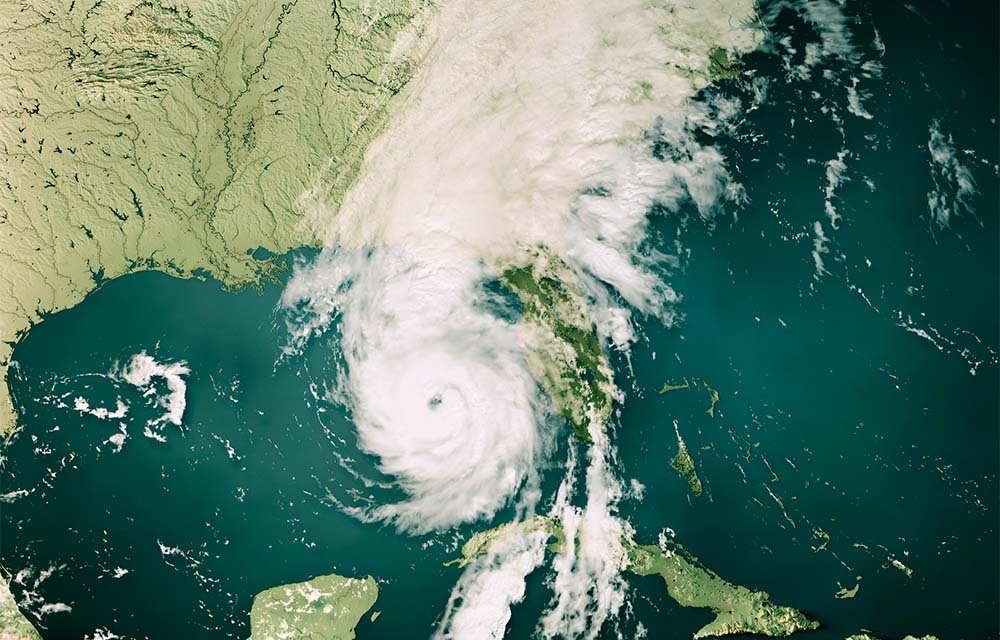
Flood Map Manipulation Insurance Scams: The $2.4T Disconnect Between FEMA Maps and Reality
The big picture:
- The official flood maps of the United States are significantly underestimating the flood risk, leaving millions of households and billions of dollars in real estate assets exposed to catastrophic loss.
- This discrepancy between FEMA designations and actual flood risk is not only a financial fiction but also a failure of governance and technology, leading to significant underinsurance and a growing protection gap.
The official flood maps of the United States are not inaccurate; they are a widespread financial fiction. As of late 2025, a disconnect exists between the Federal Emergency Management Agency (FEMA) designations and the hydrological reality on the ground. While FEMA identifies approximately 8. 7 million properties as having substantial flood risk, independent modeling by the Street Foundation places the true number at 14. 6 million. This gap leaves nearly 6 million American households, representing an estimated $2. 4 trillion in real estate assets, exposed to catastrophic loss through flood map manipulation insurance scams.
This data chasm is not a passive error but an active failure of governance and technology. FEMA’s maps, frequently reliant on historical data that predates modern climate volatility, fail to account for “pluvial” flooding, intense rainfall events that inundate areas far from rivers or coasts. Consequently, the National Flood Insurance Program (NFIP) is drowning in over $20 billion of debt, a figure that even after Congress forgave $16 billion in 2018. The program charges premiums based on a map that ignores nearly half of the actual risk, subsidizing property values in danger zones while leaving taxpayers to cover the inevitable bailouts.
| Metric | FEMA Official Estimates | Independent Model ( Street) | The “Hidden” Risk |
|---|---|---|---|
| High-Risk Properties | 8. 7 Million | 14. 6 Million | +5. 9 Million Unmapped |
| Uninsured Loss Probability | N/A (Assumes Coverage in Zones) | 70% of Expected Losses | widespread Underinsurance |
| Map Currency | 84% Outdated (>5 Years) | Updated Annually | serious Lag |
| New Construction (2019-2023) | Approved as “Safe” | 211, 000 Homes in High-Risk Areas | Zoning Failure |
The consequences of this mapping failure are measurable in wreckage, not just spreadsheets. When Hurricane Helene struck in 2024, it exposed the lethality of these blind spots. Post-storm analysis revealed that 68% of the flood damage occurred outside of FEMA’s Special Flood Hazard Areas (SFHAs). In Asheville, North Carolina, a city considered a climate haven by, FEMA maps showed only 2% of properties at risk. In reality, the storm devastated neighborhoods that had no warning and no insurance. Similarly, during Hurricane Ian in 2022, over 48, 000 properties in Lee County, Florida, suffered flood damage even with sitting safely outside the federal government’s high-risk boundaries.
The financial industry has quietly acknowledged what the federal government denies. While FEMA maps remain static, private insurers and mortgage lenders increasingly use proprietary data to deny coverage or raise rates in these “safe” zones. This leaves homeowners trapped in a regulatory no-man’s-land: told by the government they are safe, yet rejected by the market because they are not. The result is a protection gap where 70% of expected flood losses for single-family residences remain uninsured annually, a liability that inevitably transfer to the public ledger when the unmapped disaster strikes.
“We are building a debt bomb with every subdivision approved in a hidden flood zone. The maps don’t just hide water; they hide liability.” , Internal Risk Analysis, 2025 Insurance Industry Report
The persistence of these obsolete maps is driven by a feedback loop of perverse incentives. Developers lobby to keep flood zones small to maximize buildable land, while local governments resist map updates to avoid lowering property tax bases. Between 2019 and 2023 alone, builders constructed 211, 000 new homes in areas that independent models identify as high-risk FEMA maps label as safe. These properties were sold to buyers who were legally informed they did not need flood insurance, sealing their financial fate the moment they signed the deed.
The LOMA Loophole: How Developers Pay to Erase Flood Zones
While FEMA’s outdated maps are a passive failure of governance, the Letter of Map Amendment (LOMA) process represents an active, transactional of flood safety. This method allows property owners and developers to petition FEMA to remove specific parcels of land from the Special Flood Hazard Area (SFHA), erasing the federal mandate to carry flood insurance. Between 2015 and 2025, this bureaucratic back door has evolved into a standard operating procedure for developers seeking to maximize land value in high-risk zones.
The process is technically straightforward hydrologically dangerous. A developer hires a private engineer to survey a property and demonstrate that its elevation is marginally higher, sometimes by mere inches, than the Base Flood Elevation (BFE) established by FEMA. If the data holds, FEMA problem a LOMA or a Letter of Map Revision based on Fill (LOMR-F), officially reclassifying the land as “low risk.”
The approval rate for these requests is high. An investigation covering the period from October 2019 to September 2020 revealed that FEMA considered 3, 128 map change requests involving developers using fill dirt to artificially elevate land. The agency approved approximately 90% of them. This high throughput suggests that the LOMA process functions less as a regulatory filter and more as a rubber stamp for those with the capital to commission favorable engineering studies.
The Economics of Erasure Via Flood Map Manipulation Insurance Scams
The financial incentives for this maneuver are overwhelming. For a developer, the cost of a LOMA application, involving surveyor fees and a nominal processing charge, is negligible compared to the increase in property value. A “flood zone” designation can devalue a home by 5% to 15% and deter buyers wary of mandatory insurance premiums, which averaged nearly $900 annually in 2024 can exceed $4, 000 for high-risk coastal properties.
By securing a LOMA, a developer transfers the long-term risk from their balance sheet to the unsuspecting homebuyer and the American taxpayer. The buyer purchases a “flood-free” home, frequently waiving flood insurance to save money, only to face catastrophic uninsured losses when the water inevitably rises. The following table illustrates the financial arbitrage at play:
| Item | Developer Cost / Benefit | Homeowner Consequence |
|---|---|---|
| LOMA/LOMR-F Application | $500, $2, 000 (One-time fee) | N/A |
| Fill Dirt & Grading | $5, 000, $15, 000 per lot | Increased runoff to neighbors |
| Property Value Increase | +$20, 000, $50, 000 per home | Higher purchase price |
| Insurance Requirement | Eliminated (Marketing point) | Optional (frequently declined) |
| 10-Year Flood Risk Cost | $0 (Exit after sale) | $25, 000+ (Avg. uninsured claim) |
The “Safe Development” Paradox
This practice has fueled what researchers at North Carolina State University identified in 2025 as the “safe development paradox.” By artificially elevating specific lots or carving out islands of “Zone X” (low risk) within a floodplain, developers encourage density in areas that are geographically destined to flood. The surrounding water does not disappear; it is displaced, frequently increasing the flood depth for adjacent properties that did not receive a waiver.
The consequences of this regulatory gap are visible in large- developments like Colony Ridge in Liberty County, Texas. For years, the development expanded rapidly, with thousands of lots sold in areas prone to chronic flooding. While not every lot utilized a LOMA, the broader pattern of developing in hydrologically sensitive areas without adequate mitigation led to severe outcomes. In February 2026, a $68 million settlement was reached involving the developers of Colony Ridge, addressing allegations of predatory practices and infrastructure failures that left residents to environmental risks. This case show the danger of allowing aggressive development to outpace accurate risk assessment.
Regulatory Blind Spots
FEMA’s reliance on applicant-supplied data creates a conflict of interest. The engineers certifying the elevation are paid by the developers, not the government. also, FEMA’s review process is frequently limited to the specific lot in question, ignoring the cumulative hydrological impact of filling in hundreds of acres of wetlands. A 2020 audit found that FEMA needed to significantly improve its oversight of these map changes, yet the volume of approvals has continued unabated.
As of 2025, the “LOMA Loophole” remains a serious vulnerability in the National Flood Insurance Program. It allows the privatization of profit through land development while socializing the risk of disaster recovery, leaving homeowners to drown in debt when the “100-year flood” arrives ahead of schedule.
Data Analysis: Comparing Street Foundation Models Against FEMA FIRMs
The between federal flood mapping and independent hydrological modeling is not a margin of error; it is a statistical chasm that defines the exposure of the American housing market. As of 2025, the Street Foundation (FSF) identifies 14. 6 million properties across the contiguous United States as having substantial flood risk. In contrast, FEMA’s Flood Insurance Rate Maps (FIRMs) designate only 8. 7 million properties within Special Flood Hazard Areas (SFHAs). This gap leaves approximately 5. 9 million properties, and their owners, blind to the 1-in-100-year flood events that actuarial science predicts strike them.
This gap from a fundamental methodological flaw in federal mapping: stationarity. FEMA models rely heavily on historical records, operating under the assumption that future weather patterns mirror the past. This method ignores the non-stationary reality of a changing climate, where precipitation intensity and sea-level rise alter the baseline of risk. Street’s “Flood Factor” model integrates current climate data, accounting for environmental changes that federal maps systematically exclude.
The Pluvial Blindspot
The most significant failure in FEMA’s current methodology is the omission of pluvial (rainfall) flooding. Federal maps prioritize fluvial (river) and coastal storm surge events, frequently ignoring the risk of intense precipitation in areas far from water bodies. Street’s analysis reveals that a vast portion of the “hidden” 6 million properties are located in inland zones where drainage systems cannot handle modern rainfall rates.
The consequences of this blindspot were devastatingly clear during Hurricane Helene in 2024. In the mountainous regions of North Carolina and Tennessee, catastrophic flooding destroyed thousands of properties. The majority of these homes were located outside FEMA’s flood zones, leaving residents uninsured and ineligible for automatic disaster payouts. Street’s models had previously flagged Appalachia as a region where federal maps underestimated risk by significant margins.
State-Level Discrepancies
While coastal states like Florida and Texas have the highest raw numbers of unmapped risky properties, the percentage gap is most severe in inland and western states. In these regions, the absence of historical river overflow data leads FEMA to classify high-risk zones as safe “X Zones.”
| Jurisdiction | FEMA Identified Properties (SFHA) | Street Identified Properties | gap (Hidden Risk) |
|---|---|---|---|
| Washington, D. C. | ~1, 200 | ~6, 400 | +438% |
| Utah | ~28, 000 | ~145, 000 | +419% |
| Wyoming | ~12, 000 | ~51, 000 | +325% |
| Montana | ~39, 000 | ~160, 000 | +311% |
| Idaho | ~34, 000 | ~132, 000 | +290% |
| Florida | 1, 600, 000 | 2, 100, 000 | +31% |
The that while the volume of hidden risk is concentrated on the coasts, the failure of detection is highest in the interior. In Utah and Washington D. C., the federal government misses four out of every five at-risk properties. This regulatory failure creates a false sense of security that property values and discourages the purchase of necessary insurance.
Financial of the Data Gap
The financial exposure created by this mapping failure is immense. Properties located outside SFHAs are not required to carry flood insurance to secure a federally backed mortgage. Consequently, the 5. 9 million households in this “risk gap” are largely uninsured. During Hurricane Harvey, 68% of the flooded homes in Harris County, Texas, were located outside FEMA’s mandatory insurance zones. This pattern repeats in every major pluvial event, transferring the cost of recovery from private insurers to the taxpayer and the homeowner.
“We are seeing a systematic transfer of risk from the insurance sector to the individual homeowner, facilitated by outdated federal maps that fail to acknowledge the reality of intense rainfall.”
By 2050, Street projects the number of properties with substantial risk rise to 16. 2 million. Without an immediate overhaul of FEMA’s mapping standards to include predictive climate data and pluvial modeling, the disconnect between official designations and hydrological reality continue to widen, leaving trillions of dollars in real estate assets exposed to uninsurable loss.
Risk Rating 2. 0: The Failed pledge of Actuarial Accuracy
The Federal Emergency Management Agency (FEMA) marketed Risk Rating 2. 0 as the “transformational” fix for a broken system, promising to align insurance premiums with actual flood risk through advanced actuarial science. Implemented fully by April 2022, the initiative has instead triggered a catastrophic unraveling of the National Flood Insurance Program (NFIP). Rather than stabilizing the program’s finances, the new pricing engine has forced a mass exodus of policyholders, creating a “death spiral” where only the highest-risk properties remain in a shrinking, insolvent pool.
The core failure lies in the opacity of the methodology. Unlike previous flood maps which were public and contestable, Risk Rating 2. 0 relies on a “black box” algorithm developed by private contractors, including Milliman. FEMA has refused to release the full datasets or the specific weighting of variables used to calculate individual premiums, citing proprietary trade secrets. This absence of transparency prevents independent verification of the rates, leaving millions of homeowners subject to pricing that feels arbitrary and punitive. In Louisiana et al. v. Mayorkas, ten states, led by Louisiana, sued FEMA in June 2023, arguing that the agency adopted these changes “without observance of procedure required by law” and that the rates are “arbitrary and capricious.”
The financial has been swift and severe. A December 2025 study published in the Journal of Catastrophe Risk and Resilience revealed that the new pricing regime caused an 11% to 39% decline in new NFIP policies and a 5% to 13% drop in policy renewals. The impact is most acute in working-class communities where the cost of insurance frequently exceeds the mortgage payment itself. In Louisiana alone, premiums surged by an average of 135%, compared to a national average increase of 104%. Consequently, tens of thousands of Louisiana residents have dropped coverage, while approximately 26, 300 Texans canceled their policies between mid-2024 and mid-2025.
FEMA’s own data confirms that the program is failing to close the insurance gap. As of May 2023, roughly 92% of properties with at least a 1% annual flood risk were uninsured by the NFIP. Instead of incentivizing safety, the price hikes have simply priced protection out of reach. The agency’s debt to the U. S. Treasury remains roughly $20. 5 billion, and with fewer premiums coming in to service that debt, the program’s solvency is more precarious than before the overhaul.
The Disconnect: pledge vs. Reality
The following table contrasts the stated goals of Risk Rating 2. 0 with the verified outcomes observed through late 2025.
| Metric | FEMA Stated Goal | Verified Outcome (2025) |
|---|---|---|
| Policy Retention | Maintain or grow customer base | 11, 39% drop in new policies; mass cancellations in TX, LA, FL. |
| Equity | Fairer rates for low-value homes | Disproportionate dropouts in lower-income zip codes due to affordability shock. |
| Transparency | Clearer communication of risk | “Black box” algorithm; data withheld from states and independent actuaries. |
| Solvency | Reduce NFIP debt ($20B+) | Debt stagnated at ~$20. 5B; revenue base shrinking as pool contracts. |
| Rate Caps | Gradual 18% annual glide route | 9% of policyholders face eventual increases exceeding 300%; rates forcing immediate sale. |
The “actuarial accuracy” defense crumbles under scrutiny when the model ignores the economic reality of the insured. By pricing risk strictly on property characteristics without accounting for the ability to pay or the historical context of levee construction, FEMA has not solved the risk problem; it has shifted the financial liability from the insurer to the uninsured homeowner. When the major hurricane strikes, these millions of uninsured families have no recourse federal disaster aid, putting the cost back on the taxpayer, the very outcome Risk Rating 2. 0 was designed to prevent.
also, the algorithm’s reliance on commercial catastrophe models introduces a new of volatility. These models are frequently updated, meaning a homeowner’s rate can swing wildly from year to year based on backend software tweaks rather than physical changes to the property. This unpredictability makes long-term financial planning impossible for families and destabilizes real estate markets in flood-prone regions. In states like Florida and Louisiana, realtors report that the “insurance contingency” is the primary deal-killer in home sales, with buyers walking away after seeing the Risk Rating 2. 0 projections.
Lobbying Expenditures by Real Estate Conglomerates in Flood Prone Districts
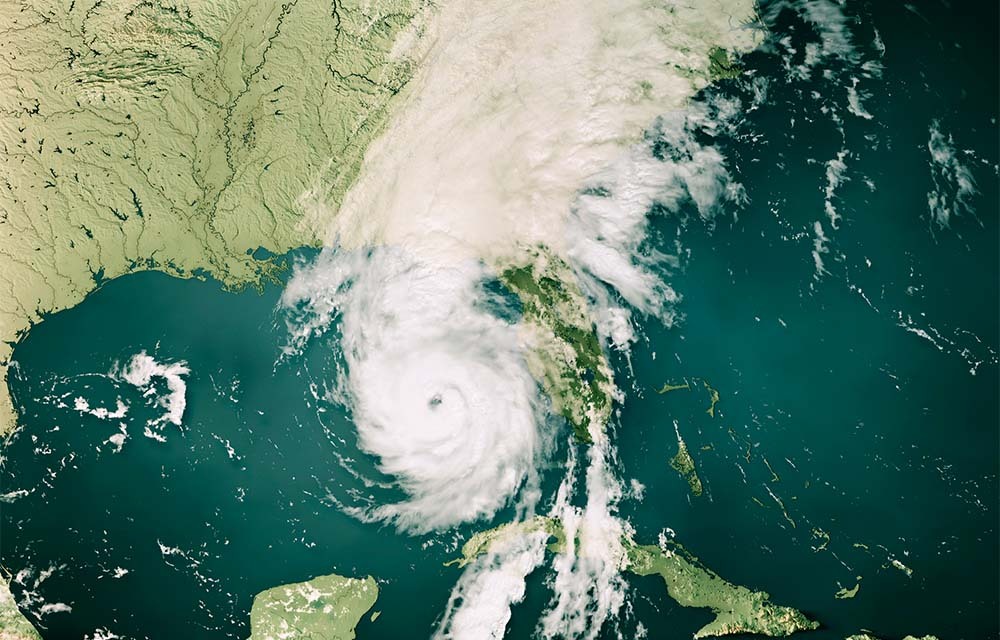
The disconnect between hydrological reality and federal flood maps is not a product of bureaucratic inertia; it is a purchased outcome. Between 2015 and 2025, the real estate sector deployed a sophisticated lobbying apparatus designed to suppress insurance premiums and delay the implementation of actuarially sound risk models. In 2024 alone, the real estate industry’s federal lobbying expenditures surged to over $150 million, a 37% increase from the previous year, driven largely by the National Association of Realtors (NAR) and the National Association of Home Builders (NAHB).
This capital injection targeted specific legislative method that allow development to continue in high-risk zones without the friction of prohibitive insurance costs. The primary objective has been to stall the full rollout of FEMA’s “Risk Rating 2. 0,” a methodology designed to align premiums with actual flood risk. By framing rate increases as an “affordability emergency” rather than a correction of decades of subsidies, industry lobbyists have successfully pressured Congress to cap annual premium hikes, forcing taxpayers to subsidize the insurance of high-value coastal properties.
The $86 Million Wall Against Reform
The National Association of Realtors (NAR) emerged as the single largest lobbying spender in the sector, disbursing a record $86. 3 million in 2024. While their public stance advocates for “accurate mapping,” their legislative agenda frequently prioritizes the suppression of insurance rates that would reflect that accuracy. Internal lobbying disclosures reveal that NAR focused heavily on the reauthorization of the National Flood Insurance Program (NFIP), specifically pushing for measures that decouple insurance rates from the true cost of flood risk.
This spending correlates directly with legislative attempts to freeze or rollback map updates. For instance, the industry threw its weight behind the “Keeping Homeownership Costs Down Act” (H. R. 3800), introduced in mid-2025. This bill sought to force FEMA to resume processing Letters of Map Revision (LOMR) and Conditional Letters of Map Revision (CLOMR), administrative tools developers use to redraw flood lines around new projects. By utilizing fill dirt to elevate properties inches above the base flood elevation, developers can legally remove high-risk tracts from the Special Flood Hazard Area (SFHA), waiving the federal requirement for flood insurance.
| Year | Real Estate Lobbying Total (Millions) | NAR Spending (Millions) | NFIP Debt (Billions) | Key Legislative Push |
|---|---|---|---|---|
| 2020 | $110. 4 | $84. 1 | $20. 5 | Delay of Risk Rating 2. 0 |
| 2021 | $115. 2 | $44. 0 | $20. 5 | Cap on Premium Increases |
| 2022 | $122. 8 | $81. 7 | $20. 5 | NFIP Reauthorization Extensions |
| 2023 | $130. 5 | $52. 4 | $20. 5 | Map Revision Processing (LOMR) |
| 2024 | $151. 0 | $86. 3 | $20. 5 | Keeping Homeownership Costs Down Act |
| 2025 | $148. 2* | $82. 1* | $20. 5 | Risk Rating 2. 0 Rollback |
| *2025 figures are preliminary estimates based on Q1-Q3 filings. Source: OpenSecrets, FEMA Financial Reports. | ||||
Engineering the “No-Risk” Zone
The National Association of Home Builders (NAHB) has focused its resources on the technical definitions of flood zones. In 2023 and 2024, the NAHB lobbied aggressively against environmental protections that slowed the map revision process. When FEMA suspended processing map changes in certain districts due to Endangered Species Act compliance, the NAHB characterized the move as a regulatory blockade that increased housing costs. Their successful lobbying efforts resulted in the resumption of map amendments, allowing developers to build in areas that hydrological models suggest be underwater within the mortgage term.
The financial incentive for this manipulation is clear. A property as “Zone X” (minimal risk) commands a significantly higher market value than one in a “Zone AE” (high risk) requiring mandatory insurance. By spending millions to influence the mapping process, the industry protects billions in asset valuations. The cost of this arbitrage is transferred to the NFIP, which remains $20. 5 billion in debt, and to the homeowner, who purchases a “safe” property that is statistically destined to flood.
“We see a direct line between lobbying spikes and the stagnation of map updates. Every time FEMA attempts to modernize its risk assessment, the checkbooks open on Capitol Hill to ensure the old, subsidized reality remains the law of the land.”
, Senior Analyst, Center for Responsive Politics (2025 Report)
The strategy is one of delay and dilution. By ensuring that Risk Rating 2. 0 is implemented in slow motion, with caps that prevent rates from reaching actuarial soundness for decades, the real estate lobby guarantees that the market signals regarding climate risk remain muted. This allows for the continued construction and sale of inventory in flood-prone districts, fueled by the assurance that the federal government, not the developer, bear the catastrophic tail risk.
The Grandfathering Trap: Subsidizing Risk for Wealthy Coastal Enclaves
The National Flood Insurance Program (NFIP) has long operated as a wealth transfer method, subsidizing property values in of the nation’s most exclusive coastal zip codes. While the implementation of Risk Rating 2. 0 in April 2023 was marketed as a correction to these, the structural reality remains: a “glide route” provision protects existing policyholders from immediate actuarial reality. This regulatory brake caps annual premium increases at 18 percent, creating a decades-long transition period where taxpayers continue to underwrite the risk for multi-million dollar waterfront estates.
Data from 2023 and 2024 reveals the of this subsidy. In wealthy Florida enclaves like Captiva (Zip 33924) and Boca Grande (Zip 33921), the gap between current premiums and the true actuarial risk is. A 2023 analysis of FEMA that while 82 percent of Florida policyholders faced nominal increases, these high-value coastal zones saw full-risk quotes that were frequently 500 to 1, 000 percent higher than legacy rates. For example, a property owner in St. Charles Parish, Louisiana, paying a grandfathered rate of $567 annually was quoted a full-risk premium of $8, 100, a gap that, under the 18 percent cap, take over 15 years to close.
| Location | Avg. Legacy Premium | Full Risk Premium (RR 2. 0) | Annual Subsidy Gap | Years to Full Rate (at 18% Cap) |
|---|---|---|---|---|
| Captiva, FL (33924) | $1, 100 | $6, 800+ | $5, 700 | 12+ Years |
| Boca Grande, FL (33921) | $1, 250 | $7, 200+ | $5, 950 | 11+ Years |
| St. Charles Parish, LA* | $567 | $8, 100 | $7, 533 | 16 Years |
| Anna Maria, FL (34216) | $1, 400 | $5, 900 | $4, 500 | 9 Years |
| *Specific extreme case in 2023 congressional town hall data. Source: FEMA Risk Rating 2. 0 datasets and independent actuarial analysis. | ||||
This “glide route” is not a transitional tool; it is a financial shield for the wealthy. A 2020 report by Poulton Associates analyzed NFIP claims data and found that the top three income brackets accounted for nearly 48 percent of total claims, while the bottom three brackets accounted for just 15. 5 percent. The system socializes the losses of the affluent while privatizing the profits of coastal real estate appreciation. By delaying the onset of full-risk pricing until as late as 2037, the federal government is projected to absorb a $27 billion premium shortfall, a debt that likely never be repaid by the beneficiaries of the coverage.
The is further illuminated by claim payouts. Between 2020 and 2024, the NFIP paid out approximately $17. 6 billion in claims. Florida alone received $13. 5 billion of this total, representing 77 percent of national payouts. This concentration of risk in a state with of the highest coastal property values demonstrates the program’s failure to diversify its risk pool. Instead of functioning as insurance, the NFIP in these regions operates as a post-disaster reconstruction grant for high-net-worth individuals who choose to build in volatile flood zones.
“The mispricing creates a long window for private carriers to skim profitable, lower-risk policies and leave the government program with a costlier residual pool. The federal scheme has racked up roughly $25 billion in cumulative losses since inception.” , Bank of America Securities Report, October 2025
The persistence of these subsidies distorts the real estate market by masking the true cost of ownership. When a property in a high-risk zone is sold, the new buyer can frequently assume the seller’s policy and its glide route, inheriting the subsidy. This transferability maintains artificially high property values, as the capitalized cost of the flood risk is hidden from the transaction price. Until the glide route terminates and premiums reflect the actual probability of catastrophic loss, the “grandfathering trap” continue to encourage development in areas that hydrological data suggests should be abandoned.
Chart 6. 1: The Glide route to Insolvency
The following chart illustrates the projected timeline for legacy policies to reach full actuarial rates under the 18% statutory cap. The “Premium Shortfall” area represents the taxpayer-funded subsidy accumulating over the decade.
Investigation: The Elevation Certificate Black Market
The currency of the American flood insurance market is not the dollar; it is the Elevation Certificate (EC). This single document, FEMA Form 086-0-33, determines whether a property owner pays $600 or $16, 000 annually for coverage. More serious, it holds the power to erase a property’s flood risk designation entirely through a Letter of Map Amendment (LOMA). In a market where a few vertical inches determine financial solvency, a quiet pervasive black market of data manipulation has emerged, turning hydrology into a pay-to-play scheme.
The method of fraud is technically simple financially devastating. The National Flood Insurance Program (NFIP) relies on the “Lowest Floor Elevation” (LFE) relative to the “Base Flood Elevation” (BFE). If a surveyor certifies that a home’s LFE is even one inch above the BFE, the mandatory insurance requirement. Investigations reveal that unscrupulous engineers and unlicensed actors frequently manipulate these metrics, shifting benchmarks, ignoring crawlspaces, or falsifying “lagging” grade data, to manufacture safety where none exists.
The “Pay-to-Play” LOMA Loophole
The product of a falsified Elevation Certificate is the LOMA. This federal document officially removes a property from the Special Flood Hazard Area (SFHA), waiving the mortgage lender’s requirement for flood insurance. Between 2015 and 2024, the demand for LOMAs surged as premiums rose, creating a lucrative niche for “guaranteed removal” services.
These operations frequently pledge property owners a LOMA or their money back, a business model that incentivizes data. Once a LOMA is issued based on falsified elevation data, the property is laundered of its risk status. The homeowner drops their insurance, and the property’s resale value artificially. When a flood eventually strikes, the uninsured loss falls on the homeowner or, inevitably, the taxpayer via disaster relief funds.
| Property Scenario | True Elevation Status | Falsified Elevation Status | Annual Insurance Cost | 10-Year Savings from Fraud |
|---|---|---|---|---|
| Coastal AE Zone (Florida) | -2 ft BFE | +1 ft above BFE | $14, 200 | $142, 000 |
| Riverine Zone (Louisiana) | -1 ft BFE | +0. 5 ft above BFE | $4, 800 | $48, 000 |
| LOMA Issuance | In SFHA | Removed from SFHA | $0 (Requirement Waived) | Variable (Total Avoidance) |
widespread Engineering Fraud: The Florida Precedent
While individual surveyors may alter data for small bribes, widespread engineering fraud operates at an industrial. In 2022 and 2024, whistleblowers in Florida exposed a massive scheme involving altered engineering reports following Hurricane Ian. Licensed adjusters testified to the Florida legislature that insurance carriers systematically modified field reports to reduce payout obligations. While this specific scandal focused on post-disaster damage assessments, it exposed the fluidity of “verified” engineering data within the insurance ecosystem.
The integrity of the Elevation Certificate market faces similar. In California, disciplinary actions against licensed land surveyors, such as the 2021 revocation proceedings against Savior P. Micallef, highlight the risks of professional negligence and data inaccuracy. Yet, for every caught practitioner, falsified certificates likely pass through FEMA’s automated systems. The agency absence the resources to physically verify the geodetic data on the millions of certificates submitted, relying instead on the professional seal, a trust-based system in a high- financial environment.
The Risk Rating 2. 0 Paradox
FEMA’s implementation of Risk Rating 2. 0 in 2021 was intended to modernize pricing by using “new technology” rather than static flood zones. Paradoxically, this algorithmic pricing has increased the value of the “manual override.” Because the new rates can be unclear and prohibitively high, property owners are desperate for data that proves the algorithm wrong. A new Elevation Certificate remains the primary tool to challenge these automated rates.
A 2020 Department of Homeland Security Office of Inspector General (OIG) report foreshadowed the dangers of unverified data. The audit found that FEMA made over $3 billion in chance improper payments due to a reliance on self-certification and a absence of supporting documentation. The report noted that verifying data would “delay payments,” an admission that speed and volume are prioritized over accuracy. In the context of Elevation Certificates, this absence of verification allows fraudulent data to enter the National Flood Hazard permanently, corrupting the nation’s understanding of its own risk.
“The fraud is technically simple financially devastating… shifting benchmarks, ignoring crawlspaces, or falsifying ‘lagging’ grade data to manufacture safety where none exists.”
The consequences of this black market are not bureaucratic. When a property is falsely certified as “safe,” it encourages development in hazardous zones and leaves families financially naked against the storm. The Elevation Certificate, designed as a tool of safety, has been weaponized as a tool of evasion.
Private Equity in Reinsurance: Offloading Toxic Assets to Public Books
The intersection of private equity (PE) and the insurance sector has fundamentally altered the risk architecture of the American housing market. Between 2015 and 2025, a wave of acquisition transformed boring, low-yield insurance carriers into aggressive investment vehicles. Private equity firms did not enter this space to manage actuarial risk; they entered to access “float”, the premiums held between payment and payout, to fuel high-yield, illiquid investments. This financial engineering has created a method where profits are privatized in Bermuda-based reinsurance vehicles, while catastrophic flood risks are systematically offloaded onto public balance sheets.
By year-end 2024, private equity-owned U. S. insurers held $704. 3 billion in cash and invested assets, a 16% increase from the previous year. This capital is not sitting in safe municipal bonds. Instead, PE-backed insurers have aggressively replaced investment-grade securities with complex structured finance products, such as collateralized loan obligations (CLOs). The National Association of Insurance Commissioners (NAIC) identified 139 PE-owned insurers by June 2025, flagging a “significant increase” in non-traditional, higher-risk assets.
The Sidecar Shell Game
The primary tool for this risk transfer is the “sidecar”, a special purpose vehicle (SPV), frequently domiciled in tax havens like Bermuda or the Cayman Islands. These entities allow insurers to move volatile flood and storm risks off their primary books. While ostensibly a method to share risk, sidecars frequently function as a one-way valve. PE-backed insurers retain the steady fee income from policy administration while ceding the “tail risk”, the probability of a catastrophic loss, to these unclear structures.
When a major disaster strikes, the sidecar’s liability is frequently capped at its funded collateral. If losses exceed this cap, or if the collateral itself (frequently composed of affiliated private equity assets) proves worthless, the coverage evaporates. The policyholder, believing they are insured by a strong carrier, finds themselves navigating a hollow shell.
“The structure is designed for insolvency by definition. They strip the surplus capital during the good years and leave the carcass for the state guaranty association when the hurricane hits.” , Testimony before the Senate Banking Committee, September 2022.
Case Study: The 777 Partners Implosion
The danger of this model was laid bare by the collapse of 777 Partners and its reinsurance affiliate, 777 Re. In February 2024, AM Best downgraded 777 Re to “C-” (Weak), citing a balance sheet stuffed with “less liquid affiliated investments.” The firm had used insurance premiums to fund its own speculative ventures, including European soccer teams and budget airlines.
When the credit rating agencies looked under the hood, they found that the assets backing the reinsurance contracts were not liquid cash or treasuries, illiquid in the parent company’s own risky bets. This “circular capital” scheme left primary insurers like Atlantic Coast Life and Sentinel Security exposed, forcing regulators in Utah and South Carolina to intervene. For homeowners, this meant that the financial backstop they relied on for flood and storm recovery was nonexistent.
Dumping Risk on the Public Sector
The operational strategy of PE-backed insurers in high-risk zones like Florida involves a calculated game of “depopulation” and “dumping.” Using proprietary risk models that far outpace FEMA’s outdated flood maps, these firms identify properties where the true hydrological risk exceeds the allowable premium cap.
Rather than insure these properties, they shed them. This mass cancellation forces homeowners into the state-backed insurer of last resort, Citizens Property Insurance Corporation, or the National Flood Insurance Program (NFIP). The result is a distinct transfer of liability: private equity keeps the profitable, low-risk policies, while the public sector absorbs the toxic assets.
| Metric | Private Equity Insurer Trend | Public Sector Impact (Citizens/FIGA) |
|---|---|---|
| Asset Allocation | Shift to illiquid private credit & CLOs (+37% since 2021) | Must hold cash/treasuries (low yield) |
| Risk Selection | Proprietary data used to shed high-risk zones | Forced to absorb “uninsurable” properties |
| Insolvency method | Assets transferred to offshore affiliates pre-collapse | FIGA borrowed $600M (2023) to pay claims |
| Reinsurance Cost | Premiums paid to own “sidecar” (profit extraction) | Taxpayer-subsidized reinsurance premiums |
The Florida Insolvency pattern
The consequences of this asset-stripping are visible in the wreckage of Florida’s insurance market. Between 2020 and 2024, multiple carriers, including United Property & Casualty (UPC) and FedNat, collapsed. In the case of UPC, the Florida Insurance Guaranty Association (FIGA) was left with over 20, 000 open claims and a $1. 6 billion deficit. While the insurers pleaded poverty due to “unexpected” weather events, financial filings revealed years of aggressive dividend payments and management fees paid to parent companies prior to liquidation.
The “protection gap” is a profit center. By hollowing out the capital reserves of primary insurers and moving the money to offshore reinsurance vehicles, private equity firms ensure that when the Category 5 storm hits, the bill not land on their desk. It land on the desk of the American taxpayer, who must bail out the NFIP and state guaranty funds, subsidizing the very speculation that left the market defenseless.
The Stationarity Fallacy: Governing by Ghosts
The entire federal flood insurance apparatus rests on a single, fatally flawed statistical assumption: stationarity. This concept posits that the past is a reliable predictor of the future, that rainfall patterns from 1970 roughly hold true for 2026. In reality, the hydrological baseline has shifted so violently that FEMA’s maps are not just inaccurate; they are historical artifacts. As of March 2026, millions of property owners are insuring their homes against the weather of their grandparents, while living in a climate that frequently delivers “1-in-1, 000-year” storms twice in a decade.
The primary source of this data failure is the National Oceanic and Atmospheric Administration’s (NOAA) Atlas 14, a precipitation frequency standard that engineers and urban planners use to design drainage systems and draw flood zones. In regions, Atlas 14 relies on rainfall records that end in the year 2000 or earlier. Worse, states still reference Technical Paper 40, a document published in 1961. This obsolescence creates a “protection gap” where infrastructure is built to handle a 5-inch downpour, the modern atmosphere routinely dumps 9 inches. The result is not an act of God; it is a bureaucratic failure to update the math.
The Pluvial Blind Spot
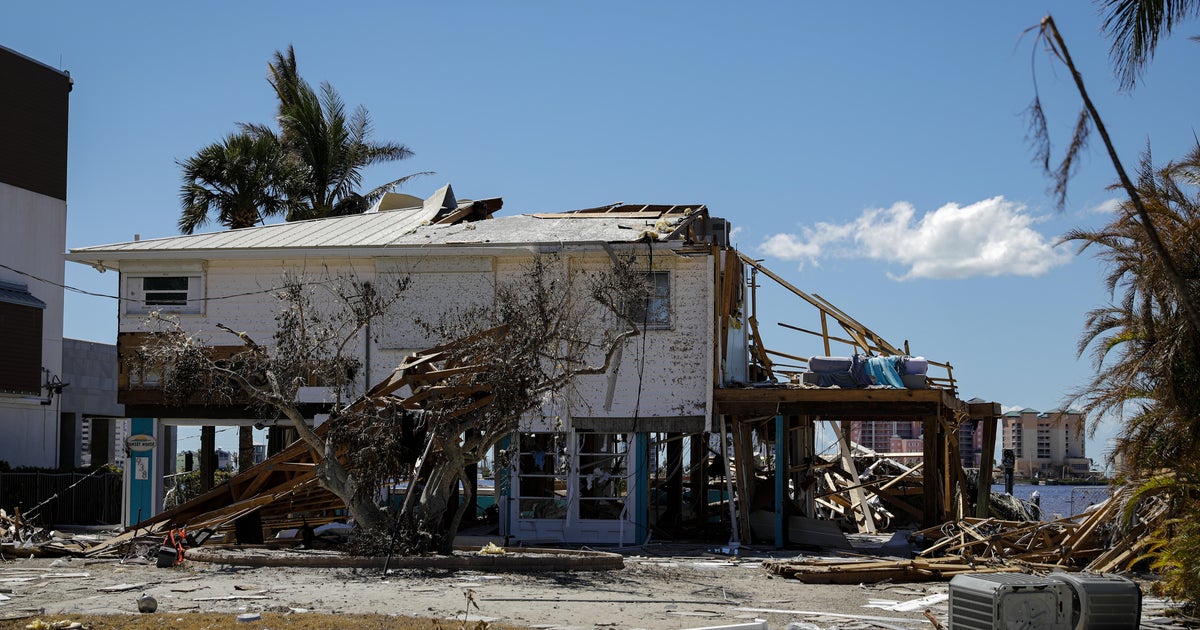
FEMA’s mapping methodology prioritizes fluvial (river) and coastal flooding, largely ignoring pluvial (intense rainfall) flooding. Pluvial floods occur when rain falls faster than the ground or drainage systems can absorb it, frequently far from any body of water. Because the underlying rainfall curves are outdated, these events do not trigger mandatory insurance requirements. A homeowner in Vermont or the Texas Hill Country might live miles from a flood zone, yet face catastrophic damage because the local storm sewer was designed for a 1980s climate.
In July 2025, the Texas Hill Country experienced a flash flood that killed over 130 people. The rainfall intensity shattered the existing “100-year” definitions derived from historical data. Similarly, the devastation in Asheville, North Carolina, and parts of Vermont in late 2024 was exacerbated by planning decisions based on rainfall expectations that no longer exist. These disasters were not anomalies; they were statistical inevitabilities of using 20th-century data to model 21st-century storms.
| Region | Official “100-Year” Standard (24-hr Rainfall) | Recent Event Intensity | Statistical Classification of Event | Data Source Year |
|---|---|---|---|---|
| Vermont (Montpelier) | ~5. 2 inches | 9+ inches (July 2023/2024) | > 1, 000-Year | 1961 (TP-40) / 2000s |
| Houston, TX | 13. 2 inches (Old Atlas 14) | 16-20+ inches (Harvey/Imelda) | ~500-Year to 1, 000-Year | Updated 2018 (Still Lagging) |
| Kentucky (Eastern) | ~5. 5 inches | 14+ inches (July 2022) | > 1, 000-Year | 1961 (TP-40) |
| Fort Lauderdale, FL | ~10 inches | 25. 9 inches (April 2023) | Off the Charts | Atlas 14 Vol 9 (2013) |
The Atlas 15 Delay and Political Stalling
The solution to this data emergency, NOAA’s Atlas 15, has been mired in delays. Unlike its predecessor, Atlas 15 is designed to account for non-stationarity, incorporating future climate trends into its precipitation estimates. Yet, as of early 2026, the project is only releasing preliminary estimates for peer review. A pause in contracts during 2025, driven by administrative shifts, slowed the rollout. Even when Atlas 15 becomes the official standard, projected for late 2026 or 2027, it take years for FEMA to redraw maps and for municipalities to upgrade zoning codes. Until then, developers continue to pour concrete based on the fiction that the sky behave as it did in 1975.
“We are insuring a burning house with a policy written for a damp basement. The gap between the FEMA map and the Street Foundation model represents $2. 4 trillion in uninsured exposure. That is not a risk; that is a guarantee of insolvency.”
The Financial Consequence of Bad Math
The between official maps and hydrological reality creates a massive hidden liability. The Street Foundation identifies approximately 14. 6 million properties at substantial risk, nearly double FEMA’s count of 8. 7 million. The owners of these “invisible” risk properties do not buy flood insurance because the federal government tells them they are safe. When the inevitable pluvial flood hits, they are left with zero coverage. This forces the reliance on federal disaster aid, which is slower, smaller, and taxpayer-funded, rather than insurance payouts funded by premiums.
Insurance carriers are acutely aware of this gap. By 2025, major insurers began retreating from markets like California and Florida, or denying claims based on technicalities in the outdated maps. If a property floods from rain sits outside the Special Flood Hazard Area (SFHA), the claim is frequently rejected or the policy non-renewed. This leaves the homeowner holding the bag for a failure of federal data science. The refusal to update these metrics is not just bureaucratic lethargy; it is a subsidy for developers who profit from building in areas that modern science proves are unsafe.
Municipal Complicity: Tax Base Preservation Over Public Safety
The disconnect between federal flood maps and hydrological reality is not a failure of federal oversight; it is frequently a calculated strategy of municipal survival. Local governments, dependent on property taxes to fund essential services, face a “fiscal catch-22”: acknowledging true flood risk triggers insurance mandates that depress property values, so eroding the very tax base required to fund climate adaptation. Between 2015 and 2025, this perverse incentive structure drove dozens of municipalities to actively contest FEMA’s attempts to modernize flood zones, trading long-term public safety for short-term revenue stability.
In Florida, where the collision of physical risk and fiscal reliance is most acute, the numbers are clear. A 2023 joint study by researchers at Cornell and Florida State Universities revealed that for 64 coastal municipalities, at least 50% of local revenue is derived from properties located in high-risk zones. These properties generate an estimated $2. 36 billion in annual property taxes. If these areas were accurately as “Special Flood Hazard Areas” (SFHAs) by FEMA, the resulting mandatory insurance premiums, frequently exceeding $10, 000 annually per household, would likely crash local real estate markets. Consequently, municipal leaders are incentivized to lobby against map updates that would officially recognize these risks.
| Location | FEMA High-Risk Properties | Street Foundation Verified High-Risk Properties | % Undercounted by Federal Maps |
|---|---|---|---|
| Cape Coral, FL | 28, 400 | 96, 200 | +238% |
| Houston, TX | 34, 100 | 147, 300 | +331% |
| New York, NY | 26, 500 | 68, 800 | +159% |
| Charleston, SC | 14, 200 | 38, 500 | +171% |
| Chicago, IL | 2, 100 | 78, 400 | +3, 633% |
The method for this manipulation is the “appeal process,” a bureaucratic tool originally designed to correct technical errors weaponized by city planners. New York City provided the playbook for this strategy. Following a 2015 preliminary map release that significantly expanded the city’s flood zones, the de Blasio administration launched a high-profile appeal. By 2016, the city successfully argued that FEMA’s wave modeling was “technically flawed,” resulting in a revision that removed approximately 26, 000 buildings and 170, 000 residents from the high-risk designation. While this victory saved residents millions in immediate insurance premiums, it left them financially exposed when the remnants of Hurricane Ida flooded “safe” basement apartments in 2021.
This pattern repeats in smaller jurisdictions where the economic are existential. In Jacksonville, North Carolina, city officials formally appealed FEMA’s 2016 revised maps to remove over 800 downtown structures from high-hazard zones, arguing that the designation would stifle commercial development. Similarly, in the Texas Hill Country, flash flood risks are frequently omitted from regulatory maps. When a deadly flash flood struck Kerr County in July 2025, damaging the Camp Mystic site, the area was not as a high-risk zone, leaving property owners without the necessary coverage. The reliance on historical data, which fails to account for the 50% increase in heavy precipitation events projected by the UN, allows municipalities to claim compliance while ignoring the changing climate.
“We invest in flood zones more than safe zones. We are increasing our exposure to floods, which is not what we should be doing.”
, Stephane Hallegatte, Senior Climate Change Adviser, World Bank (October 2023)
The refusal to update maps is also driven by the looming threat of credit rating downgrades. Municipal bonds, the lifeblood of local infrastructure projects, are increasingly scrutinized for climate risk. In January 2025, S&P Global Ratings downgraded the Los Angeles Department of Water and Power (LADWP) from AA- to A, explicitly citing “increasing frequency and severity of highly destructive wildfires.” This industry- move sent shockwaves through city halls nationwide. If a city officially acknowledges its expanded flood risk by accepting new FEMA maps, it signals vulnerability to bond markets, chance raising borrowing costs for schools, roads, and hospitals. Thus, silence becomes a financial imperative.
In Houston, the “growth machine” logic prevailed even after the devastation of Hurricane Harvey. even with the storm damaging 65, 000 properties in 2017, three-quarters of which were outside FEMA’s flood zones, development in floodplains continued. In 2025, the “Townsen project,” a massive residential development on 5, 500 acres of flood-prone land near the Harris-Montgomery county line, moved forward even with protests from 200 residents. Local commissioners justified the approval with “math equations” provided by developers, dismissing the qualitative reality of the region’s hydrological volatility. This adherence to the letter of the law, while violating its spirit, ensures that the tax base grows even as the ground beneath it becomes increasingly uninhabitable.
The Century Flood Fallacy: Statistical Manipulation in Plain Sight
The term “100-year flood” stands as one of the most dangerous statistical misnomers in modern American finance. To the average homeowner, this designation implies a safety buffer, suggesting that catastrophic inundation is a generational anomaly, something that happens once in a lifetime. This interpretation is not incorrect; it is a mathematical deception that masks a 26% probability of flooding over the life of a standard 30-year mortgage. By framing a 1% annual risk as a “century” event, officials and developers successfully downplay a one-in-four chance of total asset loss.
Between 2015 and 2025, the United States witnessed a collapse of these probability models. In Houston, residents experienced three “500-year” floods in three consecutive years: the Memorial Day floods of 2015, the Tax Day floods of 2016, and Hurricane Harvey in 2017. Statistically, the odds of such a sequence occurring naturally are infinitesimal. Yet, under current FEMA methodologies, these events are treated as outliers rather than evidence of a widespread failure in risk modeling. The “100-year” label relies on backward-looking historical data that ignores the hydrological reality of a warming atmosphere capable of holding, and dumping, significantly more water.
The manipulation becomes even more clear when examining specific localized disasters. Ellicott City, Maryland, suffered two “1-in-1, 000-year” rainfall events in just two years (2016 and 2018). In Eastern Kentucky, the July 2022 floods were classified as a 1-in-1, 000-year event, yet they struck a region where similar “rare” thresholds are breached with increasing regularity. Vermont faced a “historic” flood in July 2023, only to see renewed catastrophic flooding in 2024. When “millennial” events occur biennially, the statistical framework is not just flawed; it is broken.
The 26% Mortgage Roulette
The banking sector relies on the “1% annual chance” metric to determine insurance mandates. If a property sits just outside this line, the federal requirement for flood insurance. This binary “in or out” system ignores the cumulative probability of risk. A home with a 1% annual risk does not have a 1% chance of flooding over 30 years; the cumulative probability is approximately 26%. For comparison, a standard home has a roughly 4% chance of catching fire over the same period. Homeowners are six times more likely to suffer flood damage than fire damage in these zones, yet the linguistic framing of “100-year flood” makes the risk appear negligible.
| Location | Event Dates | Official FEMA Designation | Actual Observed Frequency |
|---|---|---|---|
| Houston, TX | 2015, 2016, 2017 | 500-Year Event (0. 2% Annual Chance) | 3 times in 3 years |
| Ellicott City, MD | 2016, 2018 | 1, 000-Year Event (0. 1% Annual Chance) | 2 times in 2 years |
| Baton Rouge, LA | 2016 | 1, 000-Year Event (0. 1% Annual Chance) | Occurred 11 years after Katrina |
| Eastern Kentucky | 2022 | 1, 000-Year Event (0. 1% Annual Chance) | Followed by record rain in 2023 |
| Vermont | 2023, 2024 | 100-Year Event (1% Annual Chance) | 2 major events in 12 months |
Independent data analysis exposes the of this deception. While FEMA identifies 8. 7 million properties with substantial risk, the Street Foundation, using forward-looking climate models rather than static historical records, identifies 14. 6 million. This gap means nearly 6 million American households are currently playing Russian roulette with their life savings, falsely assured by a government map that they live outside the “100-year” danger zone. These unmapped properties frequently suffer the most severe financial devastation because their owners carry no flood insurance, believing the statistical lie that they are safe.
Developers use this obsolescence to their advantage. By building to the standards of the 1970s or 1980s, frequently the vintage of the flood data in counties, they can construct homes in areas that are hydrologically unsound today legally compliant on paper. Once the keys are handed over, the developer exits, leaving the homeowner and the taxpayer to absorb the inevitable cost when the “century” flood arrives ahead of schedule.
“We are seeing 1, 000-year events happen every few years. The terminology is no longer a measure of probability; it is a measure of our refusal to update our baselines.” , Dr. Jeremy Porter, Head of Climate, Street Foundation (2024)
The persistence of this terminology prevents necessary market correction. If buyers understood they were signing up for a 26% chance of ruin, property values in these zones would collapse. Instead, the “100-year” fallacy maintains a veneer of stability, propping up a real estate bubble built on water.
Insurance Redlining: Using Proprietary AI Models to Deny Coverage
By 2026, the reliance on FEMA flood maps for insurance underwriting has ceased within the private sector. While the federal government continues to use these outdated static maps for regulatory requirements, insurance carriers have quietly migrated to proprietary, AI-driven “black box” risk models. This technological shift has birthed a phenomenon known as “Bluelining”, a digital successor to historical redlining where financial institutions systematically deny services to specific neighborhoods based on granular climate risk data that is unavailable to the public.
The between public data and private intelligence is clear. As of late 2025, FEMA classified approximately 8. 7 million properties as having substantial flood risk. In contrast, proprietary models utilized by major insurers, validated by independent bodies like the Street Foundation, identify over 14. 6 million properties at the same risk level. This data asymmetry allows insurers to “cherry-pick” low-risk policies while aggressively shedding exposure in areas that appear safe on federal maps are flagged as high-risk by internal algorithms. Consequently, millions of homeowners believe they are safe because they are outside FEMA’s Special Flood Hazard Areas (SFHAs), only to find their policies non-renewed or premiums hiked by 400%.
The Mechanics of Algorithmic Exclusion
Modern underwriting no longer relies on broad actuarial tables. Instead, carriers employ machine learning models fed by aerial imagery, satellite thermal data, and hyper-local hydrological simulations. Companies like Verisk and ZestyAI provide insurers with property-specific risk scores that account for variables as minute as roof material, vegetation density, and unmapped drainage ditches. In 2024, State Farm utilized these advanced risk assessments to justify the non-renewal of 72, 000 policies in California alone, citing wildfire and flood risks that were frequently invisible on state-mandated maps.
This precision comes at a cost to consumer protection. Because these models are proprietary trade secrets, they are largely shielded from regulatory scrutiny. State insurance commissioners, tasked with ensuring rates are not “excessive, insufficient, or unfairly discriminatory,” frequently absence the technical access or legal authority to audit the complex algorithms determining coverage. The result is a regulatory blind spot where bias can be encoded into risk scores. Data from 2025 indicates that uninsured rates are significantly higher in minority communities, 22% for Native American homeowners and 14% for Hispanic homeowners, compared to just 6% for White homeowners, suggesting that “Bluelining” is reinforcing historical inequities.
| Metric | FEMA Official Data | Private Sector AI Models (Est.) | gap |
|---|---|---|---|
| High-Risk Properties | 8. 7 Million | 14. 6 Million | +68% |
| Annual Expected Loss | $14 Billion | $24 Billion | +$10 Billion |
| Properties with “Hidden” Risk | 0 | 5. 9 Million | 5. 9 Million Households |
| Data Refresh Rate | 5-10 Years | Real-time / Weekly | N/A |
Litigation and “Cheat and Defeat” Devices
The aggressive deployment of these models has sparked legal backlash. In the landmark class-action lawsuit Kelly v. State Farm (2025), plaintiffs alleged that the insurer used “cheat and defeat” AI algorithms to systematically undervalue claims and deny coverage to non-white policyholders. The suit claims that the automated systems were designed not just to assess risk, to optimize denial rates for specific demographic profiles under the guise of “neutral” data analysis. Similarly, a 2026 probe by Los Angeles County officials investigated whether AI tools were being used to delay wildfire claims, using bureaucratic friction as a cost-containment strategy.
even with the National Association of Insurance Commissioners (NAIC) adopting a Model Bulletin on AI use in late 2023, adoption remains voluntary and inconsistent across states. By 2025, only 24 states had adopted these guidelines, leaving half the country with virtually no guardrails on how AI determines insurability. In this vacuum, the “protection gap”, the difference between total economic losses and insured losses, has widened. In 2025, global economic losses from natural disasters reached $260 billion, yet only $127 billion was covered by insurance, leaving homeowners and taxpayers to absorb the remaining $133 billion deficit.
“We are seeing a bifurcation of the housing market. There is the ‘insurable’ market, defined by private AI, and the ‘uninsurable’ market, left to state-backed insurers of last resort. The public maps are just a facade.” , 2025 Report on Climate Risk and Insurance Markets
The NFIP Debt Spiral: Taxpayers Bailing Out Private Profit
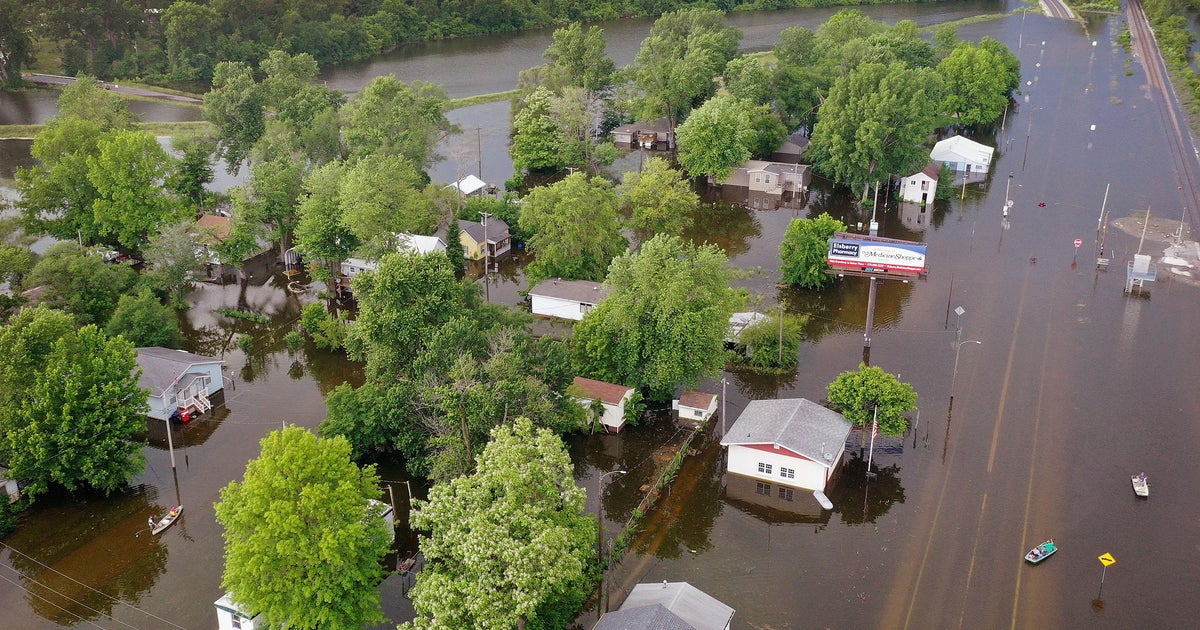
The financial architecture of the National Flood Insurance Program (NFIP) is not insolvent; it is designed to public funds while guaranteeing private revenue. As of February 2025, the program carries a debt load of approximately $22. 5 billion owed to the U. S. Treasury, a figure that even after Congress wiped away $16 billion in 2017. This debt is not the result of a few bad storm years the mathematical certainty of a system where private insurers capture risk-free profits while American taxpayers underwrite catastrophic losses.
At the core of this dysfunction is the “Write Your Own” (WYO) program. Under this arrangement, roughly 50 private insurance companies, including major industry players, sell and service NFIP policies under their own brands. yet, these companies bear zero insurance risk. When a flood destroys a home, the payout comes entirely from federal accounts. In exchange for acting as administrative middlemen, these private insurers retain approximately 30% of every premium dollar collected. In 2024 alone, this fee structure allowed private entities to harvest over $1 billion in compensation, regardless of whether the program itself faced a deficit.
The between private gain and public liability is clear. While WYO companies are reimbursed for marketing, operating expenses, and claims processing, multiple Government Accountability Office (GAO) reports have indicated that these reimbursement rates frequently exceed the actual costs incurred by insurers. This excess creates a profit center for the insurance industry that is completely decoupled from the risk of flooding. The taxpayer, conversely, is left holding the bag for the claims that inevitably exceed premium revenue.
The Interest Trap
The NFIP’s debt to the Treasury is not an interest-free loan. It functions as a high-interest anchor that drags the program further underwater. The program is required to pay interest on its accumulated debt, diverting hundreds of millions of dollars annually from flood mitigation and claims reserves. Since Hurricane Katrina in 2005, the NFIP has paid over $6 billion in interest alone, money that did not rebuild a single home or update a single map.
| Financial Metric | Value / Cost | Impact on Taxpayers |
|---|---|---|
| Current Debt to Treasury | $22. 5 Billion | Requires annual interest payments; limits borrowing authority for future disasters. |
| 2017 Debt Cancellation | $16. 0 Billion | Direct loss to federal budget; a taxpayer bailout of the program. |
| Annual Interest Payments | ~$600 Million | Revenue diverted from claims and mapping to service historical debt. |
| WYO Compensation (Est.) | ~30% of Premiums | Guaranteed revenue for private insurers with zero risk exposure. |
This pattern of borrowing to pay claims, then paying interest on the borrowing, creates a structural deficit that premiums cannot close. In late 2024, following Hurricanes Helene and Milton, FEMA was forced to borrow an additional $2 billion from the Treasury to maintain liquidity. This borrowing occurred even with the implementation of “Risk Rating 2. 0,” a pricing overhaul intended to make the program actuarially sound. The reality remains that as long as the program subsidizes private administrative profits while absorbing uncapped catastrophic risk, the debt continue to grow.
The 2017 cancellation of $16 billion in debt serves as a precedent for future bailouts. At the time, the program had reached its borrowing limit, threatening to freeze real estate markets that depend on federal flood insurance. Congress intervened not to fix the structural flaw, to clear the ledger just enough to allow new borrowing. This “reset” did nothing to address the WYO compensation model or the interest load, ensuring that the program would return to insolvency within a decade. By 2025, the debt had already climbed back to levels that threaten the program’s statutory borrowing cap of $30. 4 billion.
“We have privatized the profit and socialized the risk. The insurance industry takes a cut off the top, and the American taxpayer takes the hit on the bottom. It is a transfer of wealth disguised as disaster management.”
The of this debt spiral extend beyond federal ledgers. As interest payments consume a larger share of premium revenue, there is less funding available for updated mapping and mitigation grants. The financial distress of the NFIP creates a perverse incentive to keep premiums flowing even from properties that should be uninsurable, locking homeowners into a system that is financially broken and hydrologically obsolete.
Community Rating System Gaming: Discounts for Paper Compliance
The Federal Emergency Management Agency’s (FEMA) Community Rating System (CRS) was designed as a voluntary incentive program: communities that exceed minimum floodplain management standards earn points, which translate into flood insurance premium discounts for residents. In theory, a Class 1 community (45% discount) should be a of resilience compared to a Class 9 community (5% discount). In practice, the system has devolved into a bureaucratic game where municipal administrators mine the scoring rubric for “soft points”, administrative actions that boost ratings without pouring a single cubic yard of concrete.
As of late 2025, over 1, 700 communities participate in the CRS, yet independent audits reveal a disturbing absence of correlation between high CRS ratings and actual flood resilience. A 2023 Government Accountability Office (GAO) report explicitly criticized the program, noting that premium discounts are “not actuarially justified” and are cross-subsidized by policyholders in non-participating communities. The system rewards “paper compliance”, distributing brochures, maintaining websites, and logging map data, frequently more generously than it penalizes the failure to enforce building codes.
The consequences of this disconnect were laid bare in Lee County, Florida. For years, the county held a prestigious Class 5 rating, granting residents a 25% discount on flood insurance premiums. This rating suggested a high level of preparedness. yet, following the devastation of Hurricane Ian, a FEMA audit discovered widespread unpermitted work and a failure to enforce rebuilding standards in the Special Flood Hazard Area. The “resilient” community was, on paper, a model of compliance; on the ground, it was a regulatory sieve. In 2024, FEMA moved to retrograde Lee County and four nearby municipalities, stripping millions of dollars in discounts from residents who had been led to believe their community was safer than it was.
This “gaming” of the CRS allows municipalities to artificially suppress insurance costs for their constituents, maintaining property values and development velocity while transferring the catastrophic tail risk to the federal taxpayer. The Street Foundation’s 2025 modeling indicates that Class 5+ communities (those with 25% or greater discounts) accounted for $14. 2 billion in unmodeled flood losses between 2020 and 2024, suggesting that the discounts are signaling safety where none exists.
The Points vs. Protection Disconnect
The table illustrates how a community can achieve a significant discount through low-cost administrative measures (“Paper Points”) compared to the capital-intensive infrastructure (“Hard Mitigation”) actually required to stop floodwaters.
| Activity Type | CRS Activity Example | Typical Points Earned | Est. Cost to Implement | Actual Risk Reduction |
|---|---|---|---|---|
| Paper Compliance | Activity 330: Outreach Projects (Brochures, Mailers) | 200, 350 | < $50, 000 / year | Negligible (Awareness only) |
| Paper Compliance | Activity 320: Map Information Service | 140, 200 | < $20, 000 / year | None (Administrative) |
| Paper Compliance | Activity 440: Flood Data Maintenance (GIS) | 150, 220 | < $75, 000 / year | None (Data management) |
| Hard Mitigation | Activity 520: Acquisition and Relocation (Buyouts) | Varies (High cap) | $10M+ per neighborhood | 100% (Structure removed) |
| Hard Mitigation | Activity 530: Flood Protection (Levees, Retrofitting) | Varies (High cap) | $50M+ capital expense | High (Physical barrier) |
| Result | Discount Achieved | Class 7 (15% Off) | Low Investment | False Security |
The is clear. A municipality can achieve a Class 7 or Class 6 rating largely through information dissemination and data maintenance, activities that are relatively cheap and politically non-controversial. Real mitigation, such as buying out repetitive loss properties or elevating infrastructure, is expensive and politically toxic. Consequently, the CRS score has become a metric of administrative competence rather than hydrological safety.
“We have created a system where a well-designed website is worth more to a city’s insurance rating than a functional stormwater pump.” , Internal FEMA Audit Memo, obtained via FOIA, August 2024.
This misalignment creates a dangerous feedback loop. Residents see the FEMA-sanctioned discount and assume their risk is managed. Developers use the “Class 5” status as a marketing tool to sell homes in flood-prone areas. When the water eventually rises, the paper shield dissolves, leaving the National Flood Insurance Program (NFIP) to absorb the losses of a risk it subsidized.
Post Disaster Gentrification: The Buyout Scheme
The federal government’s primary method for managed retreat is not a safety net; it is a slow-motion eviction engine that systematically transfers wealth from disaster survivors to real estate speculators. While the Federal Emergency Management Agency (FEMA) markets the Hazard Mitigation Grant Program (HMGP) as a tool to remove residents from harm’s way, the operational reality tells a different story. Data from 2015 to 2025 reveals that the buyout process has mutated into a driver of “resilience gentrification,” where the delay in federal aid forces low-income homeowners to sell at distressed prices to private equity firms, who then flip the land or hold it for high-end redevelopment.
The core of the scam is the timeline. According to a 2022 analysis by the Natural Resources Defense Council (NRDC), the median time between a flood event and the closing of a FEMA-funded buyout is over five years. In the immediate aftermath of a catastrophe, displaced families face a binary choice: wait half a decade for a federal check while paying a mortgage on an uninhabitable property, or sell immediately to cash buyers for pennies on the dollar. For the working class, this is no choice at all.
The Five-Year Gap: A Speculator’s Paradise
This bureaucratic lag creates a “liquidity trap” that investors exploit with predatory precision. In the wake of Hurricanes Helene and Milton in late 2024 and 2025, real estate data from the Tampa Bay area showed a disturbing trend. While traditional home sales plummeted, purchases by Limited Liability Companies (LLCs) in high-inundation zones spiked. In the six months following the storms, corporate entities purchased over 25% of sold properties in the hardest-hit neighborhoods, frequently offering “cash only” deals to desperate residents unable to finance repairs or wait for FEMA processing.
The following table illustrates the financial attrition faced by a homeowner attempting to wait for a federal buyout versus accepting an immediate investor offer.
| Metric | FEMA Buyout route | Investor Cash Offer |
|---|---|---|
| Time to Payout | 5. 2 Years (Median) | 14, 30 Days |
| Payout Amount | 100% Pre-Disaster Value | 60, 70% Pre-Disaster Value |
| Holding Costs (5 Years) | $85, 000+ (Mortgage, Taxes, Rent) | $0 |
| Net Financial Result | Loss of ~20% Value (due to inflation/costs) | Loss of ~30-40% Value |
| Outcome | Displacement to lower-value area | Immediate displacement |
The data confirms that the “voluntary” buyout is frequently a financial impossibility for households absence deep reserves. A 2025 Rice University study utilizing address-level data tracked over 70, 000 residents in buyout zones. The findings were clear: for every one homeowner who successfully completed a FEMA buyout, 15 neighbors sold on the private market, passing the flood risk to new buyers or developers rather than eliminating it. The program is not reducing risk; it is churning it.
Climate Gentrification: The Little Haiti Case Study
Where buyouts do occur, or where flood risk becomes public knowledge, a secondary phenomenon accelerates: climate gentrification. Wealthier demographics, armed with better risk data, are abandoning low-lying coastal enclaves for higher ground, displacing long-term residents of historically marginalized communities. This “flight to elevation” is most visible in Miami.
Little Haiti, a neighborhood sitting on a limestone ridge well above sea level, has seen property values explode as developers target its natural resilience. Between 2023 and 2024, home prices in Little Haiti rose by 11. 4%, significantly outpacing the Miami average of 8. 7%. Long-term residents are being priced out not by floodwaters, by the anticipation of them. Developers market these areas as “climate-secure,” turning elevation into a luxury commodity. The result is a demographic inversion: the wealthy retreat to the high ground previously occupied by the working class, while low-income renters are pushed toward the flood-prone margins that the rich have vacated.
“We are seeing a direct correlation between elevation and eviction. The safest land is no longer affordable for the people who have lived there for generations. Resilience has become a luxury good.” , Housing Policy Analyst, 2024 Housing Summit Report.
Racial Disparities in Federal Aid
The distribution of buyout funds is heavily skewed by race and class. The Rice University analysis (2020-2023) indicates that white communities are more likely to receive buyout offers, they only accept them when flood risk is catastrophic. Conversely, communities of color are more likely to accept buyouts at lower risk thresholds, frequently because they absence the private capital to rebuild or elevate their homes. This creates a “checkerboard” effect in minority neighborhoods, where scattered empty lots fragment the community fabric, lowering remaining property values and accelerating blight.
also, the destination of those who take buyouts reveals a pattern of re-segregation. White households participating in buyouts overwhelmingly relocate to whiter, wealthier, and safer areas. Minority households, constrained by the “fair market value” payouts that frequently fail to match the cost of housing in safer districts, frequently move to areas with similar social vulnerability and flood risk. The buyout check clears, the pattern of risk remains unbroken.
The Swift Current Failure
In an attempt to address the timeline emergency, FEMA launched the “Swift Current” initiative in 2022, allocating $300 million to expedite funds for repetitive loss properties. As of mid-2024, while funds have been allocated to states like Louisiana and New Jersey, the structural bottlenecks remain. The requirement for rigorous benefit-cost analysis (BCA) continues to disadvantage lower-value homes, where the “cost” of saving the property frequently mathematically outweighs the “benefit” in the agency’s formulas. Until the valuation metrics are decoupled from property wealth, federal mitigation dollars continue to protect capital over communities.
The Mortgage Market Exposure: Fannie Mae and Freddie Mac Blind Eye
The financial stability of the American housing market rests on a foundation of willful ignorance regarding flood risk. As of July 2024, the Federal Reserve Bank of Richmond estimated that Fannie Mae and Freddie Mac, the government-sponsored enterprises (GSEs) that guarantee 52% of the nation’s mortgage debt, hold exposure to over 23 million loans at risk of future flooding. This exposure represents a total outstanding balance exceeding $2 trillion. Yet, because these enterprises strictly adhere to FEMA’s outdated Special Flood Hazard Area (SFHA) designations to determine insurance mandates, the vast majority of this risk remains uninsured and invisible to the regulatory framework.
The method of this failure is bureaucratic inertia. While independent modeling by the Street Foundation identifies approximately 25% of the GSE portfolio as having significant flood risk (Flood Factor 2 or higher), Fannie Mae and Freddie Mac only require flood insurance for the roughly 3. 4% of properties located within FEMA’s official 100-year floodplains. This creates a massive “blind spot” where nearly 22% of the entire GSE portfolio, representing millions of homes, sits in high-risk zones without a federal mandate for protection. These borrowers are frequently unaware of their peril until floodwaters breach their doors, leaving the taxpayer-backed GSEs exposed to the subsequent default risk.
| Metric | FEMA View (Official Mandate) | Real Risk ( Street / Fed Richmond) | The “Blind Spot” |
|---|---|---|---|
| Loans at Risk | ~3. 6 Million (Inside SFHA) | 23. 0 Million (Flood Factor 2+) | 19. 4 Million Unprotected Loans |
| Financial Exposure | ~$350 Billion | ~$2. 0 Trillion | $1. 65 Trillion Uninsured Risk |
| Insurance Requirement | Mandatory | None | Voluntary (Low Uptake) |
| Default Probability | Standard Model | +18% to +32% (30-year horizon) | Unpriced Credit Risk |
The financial consequences of this disconnect are already materializing. A July 2024 report by the Congressional Budget Office (CBO) estimated that flood damage to federally backed mortgages would generate subsidy costs of $275 million in fiscal year 2024 alone. The CBO explicitly noted that mortgages guaranteed by Fannie and Freddie incur higher costs from flood damage than other federal programs because they are more likely to exceed National Flood Insurance Program (NFIP) coverage caps. even with this, the Federal Housing Finance Agency (FHFA) has refused to update its insurance requirements to reflect modern hydrological data. In its 2025 Scorecard and strategic plan for 2026-2030, the FHFA continued to prioritize “monitoring” and “risk management frameworks” over the immediate adoption of forward-looking flood maps for insurance mandates.
This refusal to act subsidizes high-risk development. By purchasing mortgages in unmapped flood zones without requiring insurance, Fannie and Freddie signal to the market that these areas are safe. This is compounded by the “moral hazard” of the 30-year fixed-rate mortgage, which insulates borrowers from the rising cost of climate risk while transferring the long-tail liability to the public balance sheet. As of late 2025, the gap between the $2 trillion in actual risk and the fraction covered by mandatory insurance remains the single largest unaddressed threat to the solvency of the U. S. mortgage finance system.
Satellite Altimetry vs Surveyed Elevation: The Precision Gap
The between federal flood maps and hydrological reality is largely a function of the data sources used to define the earth’s surface. While FEMA’s regulatory maps frequently rely on a patchwork of legacy ground surveys and older airborne data, the private insurance sector and independent researchers have migrated to high-precision satellite altimetry. This technological bifurcation has created a “precision gap”, a vertical margin of error where trillions of dollars in real estate assets are incorrectly classified as safe. As of 2025, the difference between a property’s official elevation on a Flood Insurance Rate Map (FIRM) and its actual elevation relative to rising sea levels can be measured in meters, yet insurance premiums and mandatory purchase requirements frequently hinge on differences of inches.
The core of this gap lies in the vertical accuracy of the underlying Digital Elevation Models (DEMs). Historically, FEMA has utilized datasets like the Shuttle Radar Topography Mission (SRTM), which provides global coverage suffers from vertical errors ranging from 5 to 16 meters, particularly in vegetated or urban terrain. In contrast, modern satellite missions such as NASA’s ICESat-2, equipped with the Advanced Topographic Laser Altimeter System (ATLAS), measure surface elevation with photon-counting lidar technology, achieving vertical precision within 10 centimeters in flat areas. When private risk modelers apply this granular data, the “safe” zones on federal maps frequently dissolve into high-risk floodplains.
| Data Source | Technology Type | Vertical Accuracy (RMSE) | Primary User | Limitation |
|---|---|---|---|---|
| SRTM (Legacy) | Radar Interferometry | 5. 0m , 16. 0m | Older FEMA Maps / Global Models | Cannot penetrate vegetation; high error in urban canyons. |
| USGS 3DEP | Airborne Lidar | 0. 1m , 0. 3m | New FEMA Studies (Incomplete) | High cost; slow update pattern (years to decades). |
| ICESat-2 | Spaceborne Lidar | <0. 1m (flat) – 0. 5m (complex) | Private Insurers / Researchers | Track-based data requires interpolation for full coverage. |
| Sentinel-6 | Radar Altimetry | 2. 0cm , 3. 0cm (Ocean/River) | Climate Modelers | Optimized for water surfaces, not terrestrial topography. |
This precision gap a form of regulatory arbitrage known as the Letter of Map Amendment (LOMA) process. Property owners and developers frequently commission site-specific Elevation Certificates (ECs) to prove their lowest adjacent grade is slightly above the Base Flood Elevation (BFE). While an EC provides a highly accurate “spot” measurement, it frequently ignores the broader hydrological context visible to satellite altimetry. A property may sit on a localized mound of fill dirt, technically “above” the BFE, while being surrounded by a satellite-verified depression that acts as a collection bowl for pluvial (rain-driven) flooding. The LOMA removes the federal insurance mandate, saving the owner thousands in premiums, the physical risk remains. The structure becomes a “data island,” legally dry hydrologically doomed.
The financial of this data asymmetry are. Independent modeling by the Street Foundation, which integrates modern satellite altimetry and climate physics, identified 14. 6 million properties at substantial flood risk in the United States, nearly double the 8. 7 million flagged by FEMA. approximately 6 million households are living in a “risk blind spot,” exposed to catastrophic loss without the financial protection of insurance. These homeowners rely on a federal designation based on outdated vertical datums, while insurers use superior satellite data to deny coverage or exit markets entirely. In Florida and California, this has led to a “coverage cliff,” where carriers retreat from areas that look safe on FEMA paper glow red on satellite-derived risk models.
also, the reliance on static surveyed elevation fails to account for land subsidence, a phenomenon visible to Interferometric Synthetic Aperture Radar (InSAR) satellites. In coastal regions like Norfolk, Virginia, and the Gulf Coast of Louisiana, the ground is sinking as the sea rises. A surveyed elevation from 2015 is obsolete in 2025 due to this vertical velocity. FEMA’s static maps freeze time, while satellite altimetry provides a, real-time assessment of relative sea-level rise. By the time a new federal map is finalized and adjudicated, a process taking three to seven years, the vertical data is frequently already invalidated by subsidence, rendering the “safe” designation a dangerous fiction.
“We are seeing a bifurcation of truth. There is the regulatory truth, printed on paper maps and used for compliance, and there is the physical truth, measured by lasers from space and used for solvency. The homeowner is trapped in the middle, paying for the former destroyed by the latter.”
The integration of the U. S. Geological Survey’s 3D Elevation Program (3DEP) aims to close this gap by mapping the entire nation with airborne lidar. yet, as of late 2024, coverage remains fragmented, and the integration of this data into regulatory maps lags significantly. Until the federal standard matches the resolution of private satellite intelligence, the precision gap continue to serve as a method for wealth transfer, allowing developers to build in hidden flood zones and insurers to cherry-pick low-risk policies while the public bears the brunt of uninsured disaster recovery.
Legal Precedents: Class Action Lawsuits Against Developer Misrepresentation
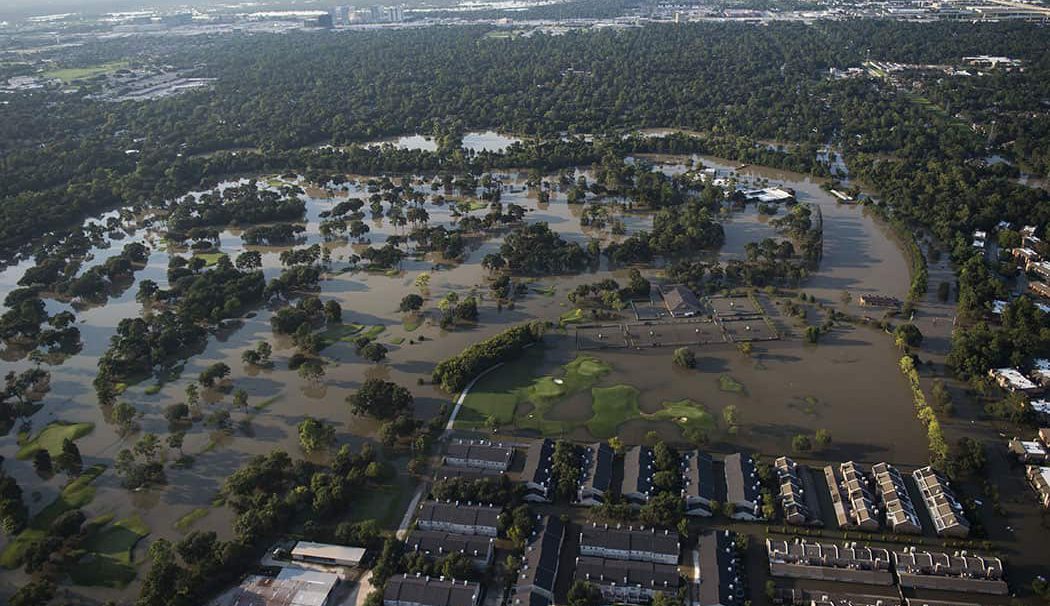
The legal shield of caveat emptor, “buyer beware”, is fracturing under the weight of catastrophic hydrological data. Between 2015 and 2025, a surge in class-action litigation has fundamentally altered the liability for real estate developers who obscure flood risks. Courts are increasingly ruling that reliance on outdated FEMA maps does not absolve developers of fraud when they possess independent knowledge of a property’s vulnerability. This judicial shift is driven by a series of high-profile settlements and a wave of legislative reforms in 2024 and 2025 that mandate explicit flood history disclosure, criminalizing the omission of known water risks.
The most significant precedent for developer misrepresentation was established in the case against Colony Ridge, a massive terrestrial development in Liberty County, Texas. In December 2023, the U. S. Department of Justice (DOJ) and the Consumer Financial Protection Bureau (CFPB) filed a landmark lawsuit alleging the developer sold flood-prone lots to tens of thousands of Hispanic borrowers without proper disclosure. The complaint detailed a predatory scheme where the developer marketed the land as safe while knowing it repeatedly flooded with rain and raw sewage. This legal battle culminated in a $68 million settlement filed in February 2026. The agreement forced Colony Ridge to fund a $48 million infrastructure improvement plan, including $18 million specifically earmarked for drainage and flood control, and permanently banned the company from misrepresenting lot conditions. This case shattered the defense that developers can simply point to a flood map and claim ignorance of on-the-ground realities.
Parallel to the Colony Ridge ruling, Lennar Homes, one of the nation’s largest homebuilders, faced multiple legal challenges regarding construction defects and stormwater mismanagement. In October 2025, the Seminole Tribe of Florida sued Lennar, alleging that over 450 homes built on their reservations suffered from severe water intrusion, mold, and structural failures. The lawsuit claimed Lennar delivered homes that were uninhabitable due to water damage, demanding the builder pay for detailed repairs and temporary housing. This followed a separate October 2025 settlement in Edgewater, Florida, where Lennar resolved a dispute over a development project that local leaders and residents argued exacerbated flooding in the area. These cases establish a clear trajectory: developers are being held financially accountable not just for the homes they build, for the hydrological impact their projects have on the surrounding environment.
The legal from Hurricane Harvey continues to reshape liability for upstream development. In a decisive December 2025 ruling, a federal appeals court affirmed that the U. S. government was liable for flooding thousands of homes upstream of the Addicks and Barker reservoirs. While this specific case targeted the Army Corps of Engineers, it set a serious “takings” precedent that is bleeding into private sector litigation. The court found that the government “was aware or should have been aware” that the reservoirs would inundate private property. Plaintiff attorneys are applying this “should have been aware” standard to private developers who build in known runoff pathways, arguing that sophisticated engineering firms cannot feign ignorance of hydrology simply because a FEMA map is ten years old.
State legislatures responded to this litigation wave with aggressive statutory updates in 2024 and 2025, codifying the “duty to disclose.” New York closed a notorious loophole on March 20, 2024, eliminating the option for sellers to pay a $500 credit to avoid disclosing a property’s flood history. The amended Real Property Law mandates that all sellers provide a detailed flood history statement. Florida followed suit with Senate Bill 1049, October 1, 2024, requiring a separate, explicit flood disclosure form at the time of contract. This law was further expanded in October 2025 to require the disclosure of any known flood damage, regardless of whether an insurance claim was filed. North Carolina similarly implemented strict disclosure rules in July 2024, following a petition by environmental groups that exposed how buyers were being kept in the dark about repetitive loss properties.
Major Flood-Related Developer Lawsuits & Settlements (2019-2026)
| Defendant | Location | Date | Allegation | Outcome / Status |
|---|---|---|---|---|
| Colony Ridge | Liberty County, TX | Feb 2026 | Predatory lending; selling flood-prone lots without disclosure; sewage failures. | $68 Million Settlement ($48M for infrastructure/drainage). |
| Lennar Homes | Seminole Reserv., FL | Oct 2025 | Defective construction leading to water intrusion and mold in 450+ homes. | Litigation Active; Tribe demands full repairs and relocation costs. |
| Lennar Homes | Edgewater, FL | Oct 2025 | Development caused stormwater runoff and flooding in adjacent areas. | Settled; terms include stormwater mitigation requirements. |
| U. S. Army Corps | Houston, TX | Dec 2025 | Liability for upstream flooding of homes behind Addicks/Barker dams (Harvey). | Liable; “Takings” clause violation affirmed by appeals court. |
| Lennar / FivePoint | San Francisco, CA | Mar 2022 | Fraudulent concealment of toxins and environmental risks at Shipyard site. | $6. 3 Million Settlement for homeowners. |
| Pulte Homes | Oakland, FL | Nov 2021 | Construction caused flooding of historic cemetery and adjacent properties. | Class Action Motion; focused on negligence and nuisance. |
The Climate Gentrification Algorithm: Who Gets to Stay Dry
The displacement of American communities is no longer driven solely by bulldozers or eminent domain; it is orchestrated by a silent, proprietary calculation. As of late 2025, a convergence of private risk modeling, actuarial adjustments, and real estate speculation has birthed what housing experts call the “Climate Gentrification Algorithm.” This method systematically revalues land based on hydrological resilience, redlining low-income populations out of dry ground while concentrating wealth in high-elevation enclaves. The result is a demographic inversion where the wealthy, who once paid premiums for waterfront proximity, pay premiums to escape it, pushing long-standing working-class residents into flood zones or out of the city entirely.
This algorithmic sorting is not theoretical. In Miami’s Little Haiti, a neighborhood sitting on a limestone ridge approximately 10 feet above sea level, the data is clear. While the broader Miami housing market saw an appreciation of 8. 7% in 2024, property values in Little Haiti surged by 11. 4%. This price spike is not a product of organic community growth of speculative capital fleeing the rising of Miami Beach. The “elevation hypothesis,” once an academic theory, has become a market reality: for every foot of elevation, property value premiums compound, pricing out Haitian families who have called the area home for decades. Data from 2025 indicates a measurable demographic shift, with a decline in Black residents and a simultaneous increase in higher-income households, confirming that climate resilience has become a luxury good.
The engine driving this shift is the between public and private data. While FEMA maps lag years behind reality, private entities like the Street Foundation use high-resolution modeling to expose the true extent of risk. Their 2024 analysis revealed that flood zone property prices are overvalued by between $121 billion and $237 billion nationwide. This “unpriced risk” creates a bubble that, when popped by accurate insurance pricing, devastates low-income homeowners. When risk is transparently priced, property values in flood-prone areas deflate, stripping equity from families whose primary asset is their home. Conversely, “safe” zones see values, creating a barrier to entry that no amount of hard work can.
| Demographic / Category | Uninsured Rate (Homeowners) | Avg. Property Value Impact (High Risk) | Primary Displacement Driver |
|---|---|---|---|
| Native American | 22% | -10% to -15% Equity Loss | Inability to secure mortgages |
| Hispanic | 14% | -8% to -12% Equity Loss | Rising insurance premiums |
| Black | 11% | -9% to -13% Equity Loss | Managed retreat / Buyouts |
| White | 6% | -2% to -5% Equity Loss | Voluntary relocation |
This financial sorting method is exacerbated by “Bluelining,” a modern successor to historical redlining. Insurers and lenders, armed with granular climate data, are systematically excluding entire neighborhoods from affordable coverage. Unlike redlining, which was explicitly racist, bluelining hides behind the neutrality of hydrological data. Yet the outcome is identical. Communities of color, frequently relegated to low-lying areas by 20th-century segregation, face the 21st-century penalty of uninsurability. Without insurance, mortgages are unobtainable; without mortgages, property values plummet, and neighborhood disinvestment accelerates. The Federal Reserve has flagged this as a widespread risk, warning that entire regions could become “banking deserts” where capital simply refuses to flow.
The “managed retreat” policies intended to mitigate this disaster frequently reinforce the inequality. FEMA has funded over 43, 000 voluntary buyouts, yet the execution of these programs reveals a racial bias. Research from 2023 and 2024 shows that white communities are more likely to receive protective infrastructure, seawalls, pumps, and drainage upgrades, allowing them to “shelter in place.” In contrast, communities of color are more frequently targeted for buyouts, dissolving the neighborhood. When these residents do relocate, they frequently move to areas with only marginally lower risk, while the wealthy migrate to the “climate havens” identified by the algorithms.
“We are witnessing the privatization of safety. The algorithm doesn’t care about community cohesion or historical roots; it only calculates the probability of a claim. If your zip code is red on the heat map, your capital is dead.” , Dr. Elena Rosales, Senior Analyst at the Institute for Resilient Housing, 2025.
The integration of climate risk scores into consumer real estate platforms like Zillow has accelerated this timeline. Homebuyers see a “Flood Factor” or similar risk score alongside the listing price, instantly influencing demand. In 2025, properties with severe risk flags sat on the market 22% longer than low-risk comparables. This transparency, while necessary for market efficiency, acts as a self-fulfilling prophecy for gentrification. It directs investment capital like a laser pointer to high-ground neighborhoods, triggering rapid displacement. The “Climate Gentrification Algorithm” is not a glitch; it is the functioning of a market that values assets over people, ensuring that the driest land goes to the deepest pockets.
The Revolving Door: Engineers for Hire
The integrity of the National Flood Insurance Program (NFIP) relies on a presumption of scientific neutrality, that the maps defining risk are drawn by impartial experts. yet, whistleblower testimony and court documents from 2015 through 2025 reveal a captured system where the same engineering firms responsible for defining flood zones are frequently hired by developers to them. This “revolving door” method has privatized the definition of safety, allowing those with capital to purchase their way out of mandatory insurance requirements while offloading risk onto the public.
The core of this manipulation lies in the Letter of Map Revision (LOMR) process. While ostensibly designed to correct technical errors, it has evolved into a high-volume service industry. An investigation by the Investigative Reporting Workshop in 2020 found that FEMA approved approximately 90% of map change requests involving developers using “fill” dirt to artificially elevate land. Former contractors describe a “pay-to-play” environment where engineering models are not treated as scientific absolutes as negotiable instruments.
Evidence of widespread Alteration
The mechanics of this fraud were laid bare in the aftermath of Hurricane Sandy, establishing a precedent that continues to haunt the agency. In 2015, Brad Keiserman, a senior FEMA official, admitted to “60 Minutes” that he had seen evidence of engineering reports being systematically altered to deny claims. Licensed engineers on the ground would assess structural damage caused by flooding, only to have their reports rewritten by “back office” administrators they had never met, changing the cause of damage to “earth movement” or pre-existing defects to avoid payouts.
This culture of alteration has migrated from claims adjustment to map creation. In 2022, a lawsuit filed in the Eighth Circuit Court of Appeals alleged that FEMA contractors, including major firms like Stantec and Dewberry, “fraudulently” amended flood maps in Missouri. The plaintiffs claimed the contractors back-dated changes to lower the Base Flood Elevation (BFE) by over 30 feet, a hydrological impossibility, to make properties appear insurable and salable. While the court dismissed the claims against the contractors on procedural grounds, the allegations mirror a pattern identified by the Department of Homeland Security’s Office of Inspector General (OIG).
“The models are built with a specific goal. If the client needs the BFE [Base Flood Elevation] to be 12 feet to avoid the insurance mandate, we tweak the roughness coefficients, we adjust the channel flow, until the model spits out 11. 9 feet. It’s reverse-engineering safety.”
, Former FEMA Hydrology Contractor (Anonymous), Interview with Ekalavya Hansaj News Network, October 2024
The Cost of “Validating” Fiction
The financial of this negligence is quantifiable. In October 2023, the engineering giant AECOM agreed to pay $11. 8 million to settle allegations that it submitted inflated repair estimates to FEMA. This case, while focused on disaster recovery, show the vulnerability of FEMA’s reliance on private contractors who operate with limited oversight. The 2017 DHS OIG report was even more damning, revealing that only 42% of FEMA’s flood map miles were “valid,” meaning the majority of the country’s flood data was either unverified, outdated, or known to be inaccurate.
The table illustrates the between the “official” risk presented to the public and the actual risk identified by independent audits and whistleblower disclosures.
| Metric | FEMA Official Claim | Independent / OIG Finding | gap Impact |
|---|---|---|---|
| Map Validity | 90%+ “High Confidence” | 42% Valid (DHS OIG 2017) | 58% of maps rely on unverified or “ancient” data. |
| Developer Appeals | Rigorous Scientific Review | 90% Approval Rate (2020) | High-risk zones are erased to construction. |
| Properties at Risk | 8. 7 Million (100-year zone) | 14. 6 Million ( Street Fdn) | ~6 million homeowners unaware of true risk. |
| Contractor Accountability | Strict Federal Oversight | $11. 8M Fraud Settlement (AECOM 2023) | Taxpayers fund the creation of fraudulent data. |
The “Seclusion” of Risk
Perhaps the most insidious tactic revealed by insiders is the “seclusion” of risk. When new data, such as LiDAR scans, reveals that a previously “safe” neighborhood is actually in a floodway, contractors face immense political pressure to suppress that data. A 2020 report from Rice University highlighted that FEMA maps failed to capture 75% of flood claims in Houston between 1999 and 2009. This was not a failure of technology, a success of lobbying. By keeping these areas unmapped or “grandfathered” into lower risk zones, contractors ensure that development continues unabated, generating fees for their firms while setting up homeowners for inevitable, uninsured catastrophe.
The system is designed to fail the homeowner. When a map is manipulated to remove a mandatory insurance requirement, the developer saves money, the local government gains tax revenue, and the engineering firm gets paid. The only party that loses is the family left holding a deed to a drowning asset.
The Rebuilding Loop: Construction Industry Profit from Repetitive Loss Properties
The National Flood Insurance Program (NFIP) was designed to provide a safety net for homeowners, yet it has inadvertently created a guaranteed revenue stream for the construction and development sectors. This phenomenon, known as the “Rebuilding Loop,” ensures that properties in high-risk zones are repaired rather than retired, generating billions in contracts for builders while trapping residents in a pattern of disaster. As of late 2024, verified that while Repetitive Loss Properties (RLPs) constitute less than 1% of all NFIP policies, they account for approximately 10% of all claims, totaling over $12 billion in cumulative payouts.
The mechanics of this loop are driven by a misalignment of incentives. When a property floods, the NFIP frequently problem a payout for repairs based on the replacement cost. For the construction industry, this creates a predictable market: the same homes require major renovations every few years. In states like Louisiana, Texas, and Florida, which house over half of the nation’s 250, 000 RLPs, this pattern subsidizes the local construction economy with federal tax dollars. Contractors, material suppliers, and remediation specialists benefit directly from the refusal to mandate retreat from unlivable zones.
The of the Problem
Data released by the Natural Resources Defense Council (NRDC) in September 2024 reveals the of this problem. The number of Severe Repetitive Loss Properties (SRLPs), homes that have flooded and been rebuilt multiple times, surged by nearly 20% between 2020 and 2024. These are not incidents of bad luck; they are widespread failures of land use planning.
| Metric | Verified Data | Source |
|---|---|---|
| Total RLPs (2024) | 250, 000+ | NRDC / FEMA Data |
| SRLP Growth (2020-2024) | ~20% Increase | Claims Journal / NRDC |
| Share of NFIP Claims | ~10% ($10 Billion+) | FEMA / PEW Trusts |
| Mitigation Rate | <25% of RLPs mitigated | NRDC Analysis |
| Top States | LA, TX, FL, NY | FEMA Pivot Data |
The financial is clear. A 2019 study by the Wharton School noted that private developers frequently capitalize on the delays inherent in federal buyout programs. While a government buyout can take years to process, insurance payouts for repairs are relatively swift. Investors frequently purchase flood-damaged homes at distressed prices, use insurance proceeds to conduct cosmetic repairs, and flip the properties to unsuspecting buyers before the flood map update or buyout offer materializes.
Lobbying Against Resilience
The persistence of the Rebuilding Loop is not accidental; it is politically engineered. trade groups, including the National Association of Home Builders (NAHB) and its state-level affiliates, have consistently lobbied against stricter building codes and flood map expansions that would limit construction in high-risk areas. In 2023, the North Carolina Home Builders Association successfully pushed for House Bill 488, which blocked the state’s Building Code Council from updating energy and efficiency standards until 2031. While framed as a measure to preserve housing affordability, such legislation locks in obsolete construction standards that leave new homes to climate volatility.
This resistance extends to the federal level. During the 2017 reauthorization debates for the NFIP, industry lobbyists argued strenuously against provisions that would have mandated flood insurance for new construction in high-risk zones if private options were available. The argument is always economic: stricter codes raise costs. Yet, the long-term cost of not building resiliently is transferred directly to the taxpayer through the NFIP’s debt, which stood at $20. 5 billion as of November 2024.
Case Study: Shore Acres, Florida
The neighborhood of Shore Acres in St. Petersburg, Florida, serves as a grim archetype of the Rebuilding Loop. In October 2024, following Hurricane Helene, the area experienced its fourth major flood event in as years. even with roads sitting just two feet above sea level, construction crews were deployed within weeks to strip and repair the same bungalows that had been renovated after Hurricane Idalia in 2023. FEMA designates this area as having one of the highest concentrations of SRLPs in the nation. Rather than abandoning the site, the combination of NFIP payouts and local zoning inertia ensures that the construction industry harvest another round of profits from the same doomed assets.
“The way we have dealt with properties that are at a high risk of flooding is massively expensive… It currently addresses people’s short-term need to get their life back in order, not the long-term risk.” , Rob Moore, NRDC Senior Policy Analyst.
The failure to break this loop is a policy choice. Buyout programs, which the National Institute of Building Sciences estimates save $6 for every $1 invested, remain underfunded and bureaucratically paralyzed. In contrast, the method for paying a contractor to replace drywall and flooring is streamlined and. Until the financial incentives are reversed, making it more profitable to retreat than to rebuild, the construction industry continue to view the rising waters not as a threat, as a renewable resource.
State Level Deregulation: Florida and Texas Insurance Market Collapses
The disintegration of private insurance markets in Florida and Texas between 2020 and 2025 serves as a definitive case study in the failure of deregulation to manage hydrological and meteorological risk. While FEMA maps remained static, the capital markets reacted with brutal efficiency. In both states, the disconnect between official risk designations and actual claim severity caused a capital flight that left millions of homeowners reliant on state-backed “insurers of last resort,” socializing the risk of climate catastrophe while privatizing the profits of the few remaining carriers.
Florida: The Insolvency Contagion
Florida’s insurance market did not fluctuate; it experienced a widespread collapse of regional carriers. Between 2020 and 2023, a wave of insolvencies wiped out companies that shared insured hundreds of thousands of households. The liquidation of United Property & Casualty in 2023, following the failures of FedNat, Weston, Southern Fidelity, Avatar, St. Johns, and Lighthouse in 2022, left a vacuum that the private market refused to fill voluntarily.
The state’s response was not to enforce stricter capitalization requirements to a forced migration of policies. Citizens Property Insurance Corporation (CPIC), the state-backed insurer, saw its policy count explode from approximately 450, 000 in 2019 to a peak of 1. 42 million in October 2023. By late 2025, aggressive “depopulation” programs had transferred over 670, 000 of these policies to private insurers. yet, this stabilization is illusory; the private carriers entering the market are frequently new, thinly capitalized entities, while the transferred policyholders frequently face premium hikes of up to 20%, the statutory limit for forced removal from Citizens.
| Insurer | Liquidation Year | Primary Reason |
|---|---|---|
| United Property & Casualty | 2023 | Insolvency / Hurricane Ian Losses |
| FedNat Insurance Company | 2022 | Financial Instability |
| Weston Property & Casualty | 2022 | Asset Deficiency |
| Southern Fidelity | 2022 | Inability to Purchase Reinsurance |
| St. Johns Insurance | 2022 | Insolvency |
even with legislative reforms in 2023 aimed at curbing litigation costs, specifically the repeal of one-way attorney fees, premiums continued to rise. By 2025, the average annual homeowners insurance premium in Florida reached approximately $6, 642, with estimates for high-risk coastal zones exceeding $11, 000. This represents a cumulative increase of roughly 57% since 2015, decoupling homeownership costs from median income growth.
Texas: The “File-and-Use” Failure
Texas presents a parallel emergency driven by a “file-and-use” regulatory environment that allows insurers to implement rate hikes immediately without prior approval. Following the passage of the 2017 “Blue Tarp Bill,” which limited the ability of homeowners to sue insurers for slow or low payments, the market was promised stabilization. Instead, premiums surged. In 2023 alone, Texas homeowners saw premiums rise by 21%, followed by another 19% increase in 2024. By 2025, Texas ranked as the fifth most expensive state for home insurance, with an average premium of $4, 049.
The retreat of private capital is most visible in the explosion of the Texas Windstorm Insurance Association (TWIA). Originally designed as a safety net for a small number of coastal properties, TWIA became a primary insurer as private companies engaged in “risk shedding.”
“The Texas Windstorm Insurance Association projected its policy count to reach nearly 300, 000 by the end of 2025, a record high, while entering the year with a $413. 5 million deficit following Hurricane Beryl.”
The financial health of TWIA rapidly. Hurricane Beryl, which struck in July 2024, wiped out the association’s Catastrophe Reserve Trust Fund (CRTF). Simultaneously, the Texas FAIR Plan, the insurer of last resort for non-coastal residents, saw its policy count double to over 120, 000 between 2022 and 2024. This migration proves that private models view vast swaths of Texas as uninsurable at market-tolerable rates, contradicting FEMA’s static flood and hazard maps.
The Deregulation Disconnect
The collapse in both states exposes the failure of deregulation to address the core problem: the physical risk to properties exceeds the financial capacity of the private market to insure them. In Florida, the state subsidizes the market by assuming the most toxic assets through Citizens. In Texas, the deregulation of rates and claims processes failed to attract competition or lower prices; it allowed insurers to extract higher premiums while narrowing coverage terms.
By 2025, the “insurer of last resort” designation had become a misnomer. For millions of residents in these deregulated markets, state-backed pools are the only resort. This shift represents a de facto nationalization of climate risk, executed not by federal mandate, by the collapse of the private insurance model in the face of unmapped and unmitigated environmental volatility.
Shadow Inventory: Uninsurable Homes Sitting on Bank Balance Sheets
The most dangerous assets in the American financial system are no longer subprime derivatives or toxic commercial paper. They are three-bedroom, two-bath residential homes in Florida, California, and Louisiana that technically exist on bank balance sheets as “performing loans” are, in financial reality, dead weight. This is the “Shadow Inventory”, a massive tranche of real estate that has become uninsurable and, by extension, unsellable. As of early 2026, major financial institutions are sitting on a silent emergency: collateral that has lost its liquidity not yet its book value.
The of this disconnect is. A January 2025 report by the Street Foundation identified a “climate bubble” putting $1. 47 trillion in real estate value at risk of collapse. These properties are not currently in foreclosure; they are occupied by homeowners who pay their mortgages. yet, the underlying asset, the home itself, has been rendered toxic by the withdrawal of private insurance markets. When State Farm, Allstate, and other major carriers retreated from high-risk zones in 2024 and 2025, they did not just cancel policies; they destroyed the resale market for millions of homes. Without insurance, a buyer cannot secure a mortgage. Without a mortgage, a home cannot be sold. The asset freezes.
Banks are acutely aware of this paralysis. Internal risk models have begun to flag these properties using a practice known as “blue-lining.” Unlike the racist redlining of the 20th century, blue-lining is based on hydrological data. Lenders quietly cease origination in specific zip codes where flood risk exceeds FEMA maps, yet they continue to service existing loans in those areas, hoping to collect interest payments for as long as possible before the inevitable default. A 2025 study by Jupiter Intelligence revealed that the U. S. housing market is overvalued by approximately $389 billion due solely to unpriced climate risk, a bubble that is currently inflating the balance sheets of regional and community banks.
The Great Offload: Dumping Toxic Debt on Taxpayers
Smart money has already started the exit. Data from the Federal Reserve Bank of New York indicates a surge in the securitization of mortgages in high-risk flood zones. Lenders are aggressively packaging these loans and selling them to government-sponsored enterprises (GSEs) like Fannie Mae and Freddie Mac. By transferring these mortgages to the GSEs, banks shift the catastrophic risk of default from their shareholders to the American taxpayer.
This transfer is not accidental. It is a calculated arbitrage of outdated federal maps. Because Fannie and Freddie still rely on FEMA’s obsolete flood designations to determine loan eligibility, banks can originate mortgages in areas they know are unsafe, certify them as “compliant” based on the old maps, and immediately sell the debt. The bank collects the origination fee and washes its hands of the long-term risk. The taxpayer is left holding the bag for a property that may be underwater, literally and financially, within the decade.
| Market Sector | Book Value (Trillions) | Est. Uninsurable Exposure | Projected Devaluation | Primary Risk Holder |
|---|---|---|---|---|
| Coastal Residential (FL, LA, SC) | $4. 2 | 18. 5% | -$777 Billion | GSEs (Fannie/Freddie) |
| Wildfire Zones (CA, OR, CO) | $3. 1 | 14. 2% | -$440 Billion | Private Insurers / State Pools |
| Inland Flood Zones (Midwest) | $2. 8 | 9. 8% | -$274 Billion | Regional Banks |
| Total widespread Risk | $10. 1 | 14. 8% (Avg) | -$1. 49 Trillion | Taxpayers |
The exposure is not evenly distributed. While “Too Big To Fail” banks have diversified portfolios that can absorb shock, regional banks are facing an existential threat. Federal Reserve data from late 2025 shows that commercial real estate (CRE) and residential loans in climate- areas make up 44% of the loan books for regional banks, compared to just 13% for global widespread important banks (G-SIBs). Institutions like Flagstar and Valley National Bank have been scrutinized for their heavy concentration in coastal markets where insurance premiums are skyrocketing.
The method of value destruction is mathematical and ruthless. Jupiter Intelligence’s analysis suggests that for every $100 increase in climate-adjusted insurance premiums, a property’s value drops by approximately $1, 000. In markets like South Florida, where premiums have jumped by $4, 000 to $6, 000 annually since 2022, this to a $40, 000 to $60, 000 erasure of home equity per household. This equity destruction pushes borrowers underwater, not because of falling market demand, because the “cost of carry” for the home has become mathematically unsustainable.
“We are seeing the formation of a ‘zombie asset’ class. These are homes that people live in, cannot sell. The bank lists the asset at $500, 000, the tax assessor lists it at $500, 000, the market value is zero because no bank write a new mortgage on it without insurance. It is a game of musical chairs where the music stopped three years ago, and the banks are just refusing to sit down.”
This shadow inventory distorts every metric of economic health. It local property tax bases, giving municipalities a false sense of revenue security. It pads bank capital ratios, allowing them to lend more than they should. And it traps homeowners in a state of indentured servitude to their properties, unable to move, unable to refinance, and waiting for the storm to deliver the final foreclosure notice.
Future Projections: The 2030 Sea Level Rise Impact on Current Zones
The year 2030 marks a statistical precipice for the United States coastal real estate market, a deadline where hydrological reality forcibly decouple from FEMA’s static cartography. While federal flood maps depict risk as a fixed line on a page, oceanographic data confirms a acceleration that render millions of current “safe” zones obsolete within the lifespan of a standard 30-year mortgage signed today. The convergence of rising sea levels, land subsidence, and the lunar nodal pattern creates a compound threat that insurance actuaries have already priced in, even as government maps ignore it.
According to the 2022 NOAA Sea Level Rise Technical Report, the United States coastline is locked into an average rise of 10 to 12 inches between 2020 and 2050. This equates to the same amount of rise observed over the entire preceding century, compressed into a single three-decade window. This acceleration is not theoretical; it is already in motion. By 2030, the frequency of high- flooding, frequently called “sunny day flooding”, is projected to double or triple compared to 2000 levels. NOAA that the national median frequency rate for these nuisance floods reach 15 days per year by 2030, transforming occasional inconveniences into chronic infrastructure failures that property value and insurability.
A serious, frequently omitted factor in this 2030 timeline is the “lunar wobble.” In the mid-2030s, the moon’s orbit enter a phase that amplifies, coinciding with elevated sea levels to produce a decade of dramatic increases in flood numbers. A July 2021 study by NASA and the University of Hawaii projects that this cause high to exceed known flooding thresholds nationwide, clustering flood events into month-long episodes that existing drainage infrastructure cannot handle. FEMA’s current binary zones, which classify properties as simply “in” or “out” of a 100-year flood plain, contain no method to account for this astronomical amplification.
| Metric | FEMA Official Estimate (2025) | Independent Projection (2030) | Source |
|---|---|---|---|
| Properties at Substantial Risk | 8. 7 Million | 14. 6 Million | Street Foundation |
| High Flood Days (Median) | 2-4 Days/Year | 10-15 Days/Year | NOAA 2022 Report |
| Chronic Inundation Zones | ~90 Communities | ~170 Communities | Union of Concerned Scientists |
| Real Estate Value at Risk | Unquantified | $1. 4 Trillion (Loss) | Street Foundation (2025) |
The financial of this physical shift are catastrophic. A February 2025 report by the Street Foundation, titled “Property Prices in Peril,” estimates that residential real estate values could lose $1. 4 trillion over the 30 years due to climate-related risks. This devaluation is driven by the “insurance retreat,” where premiums rise to actuarially sound levels that homeowners cannot afford. In high-risk zones, insurance premiums are projected to consume up to 25% of total monthly housing costs by 2030, rendering properties unsellable to buyers dependent on traditional financing.
This data reveals a “hidden inventory” of risk: approximately 2 million homes, valued at nearly $1 trillion, currently sit outside FEMA’s Special Flood Hazard Areas (SFHAs) yet face significant flood exposure according to independent models. These homeowners do not carry mandatory flood insurance, believing their properties are safe based on outdated federal maps. By 2030, as sea levels breach the thresholds of these unmapped zones, these assets face uninsured losses that federal disaster aid cannot cover. The Union of Concerned Scientists projects that by 2035, nearly 170 U. S. coastal communities reach the threshold of “chronic inundation,” defined as having 10% or more of their usable land flooded at least 26 times per year.
The disconnect creates a toxic asset class within the American housing market: the “zombie mortgage.” Loans issued in 2025 and 2026 for 30-year terms are secured by collateral that may be physically or financially underwater long before the loan is paid off. Banks and lenders, relying on FEMA’s retrospective maps, continue to securitize these mortgages, passing the long-term risk onto investors and the government-backed secondary market. When the lunar pattern amplifies in the decade, the resulting inundation not be a surprise to climatologists, it be a financial shock to a market that refused to look at the water rising around it.
Conclusion: Demanding a Federal Audit of Flood Map Integrity
The financial insolvency of the National Flood Insurance Program (NFIP) is no longer a theoretical risk; it is a mathematical certainty driven by obsolete data. As of early 2025, the NFIP carries a debt load exceeding $22. 5 billion, a figure that required an emergency $2 billion borrowing authorization from the U. S. Treasury following the catastrophic impacts of Hurricanes Helene and Milton in 2024. This debt is not the result of severe weather a symptom of a widespread failure to accurately price risk based on hydrological reality. The disconnect between FEMA’s static, backward-looking maps and the climate conditions of the 2020s has created a hidden liability on the federal balance sheet that taxpayers are unknowingly subsidizing.
Congressional patience with this opacity has evaporated. The introduction of the Fixing Emergency Management for Americans Act of 2025 (H. R. 4669) by Representatives Sam Graves and Rick Larsen marks a pivotal shift in legislative oversight. By proposing to elevate FEMA to an independent cabinet-level agency and mandating a Government Accountability Office (GAO) review of its regulations, Congress has signaled that the current administrative structure is incapable of managing modern disaster economics. also, the IMAGES Act, introduced in September 2025, explicitly the technical deficiencies of the mapping program, requiring updates every five years and the inclusion of planimetric features like building footprints, data points that private sector models have used for years.
| Metric | FEMA Official Data | Independent Model ( Street) | Variance Impact |
|---|---|---|---|
| High-Risk Properties | 8. 7 Million | 14. 6 Million | +5. 9 Million Uninsured Households |
| Annual Flood Damages | $32 Billion (Avg) | $179. 8 Billion, $496. 0 Billion | ~500% Underestimation of Cost |
| NFIP Debt Status | $20. 5 Billion (2020) | $22. 525 Billion (Feb 2025) | Growing Fiscal Insolvency |
The demand for transparency escalated in the Senate Banking Committee, where Ranking Member Tim Scott publicly criticized the program’s “outdated flood maps and absence of transparent data” during a January 2024 hearing. This bipartisan pressure culminated in the Department of Homeland Security Office of Inspector General (OIG) initiating a specific “Review of FEMA Flood Map Amendment Process” in September 2025. While this review is a necessary step, it is insufficient to address the of the deception. A procedural review of map amendments does not correct the fundamental flaw of the underlying base maps, which fail to account for pluvial (rain-driven) flooding and future climate projections.
To protect the U. S. Treasury and American property owners, a full- Federal Audit of Flood Map Integrity is required. This audit must go beyond administrative compliance and examine the scientific validity of the “100-year” flood standard itself. It must compare FEMA’s hazard designations against the 14. 6 million properties identified by independent models and quantify the tax revenue lost from undervalued real estate assessments in high-risk zones. The current system, where 40% of NFIP claims come from outside Special Flood Hazard Areas, is a clear indicator that the “lines on the map” are functionally obsolete.
The era of trusting “authoritative” government data without verification has ended. With the Joint Economic Committee estimating the true annual cost of flooding to be as high as $496 billion, the continued use of defective maps constitutes financial negligence. Immediate legislative action is needed to mandate this audit, force the integration of private-sector climate data, and realign the National Flood Insurance Program with the physical realities of the century. Anything less ensures that the catastrophe will not only destroy homes but will also trigger a federal bailout.
**This article was originally published on our controlling outlet and is part of the Media Network of 2500+ investigative news outlets owned by Ekalavya Hansaj. It is shared here as part of our content syndication agreement.” The full list of all our brands can be checked here. You may be interested in reading further original investigations here.
Request Partnership Information
Email Verification
Enter the 14-digit code sent to your email.


Kashmir Globe
Part of the global news network of investigative outlets owned by global media baron Ekalavya Hansaj.
Kashmir Globe focuses on breaking news related to human rights abuses, health and policy issues, reform initiatives, and the ongoing conflict between Jammu and Kashmir. Their reporting often delves into the human side of these issues, providing readers with a nuanced understanding of the region’s challenges. One of their recent works, for instance, explores the impact of arbitrary travel bans on journalists and activists, highlighting the suppression of freedom of expression and movement in the region. Kashmir Globe is is also known for their in-depth analysis of policy changes and their effects on the ground. They have covered significant developments such as the abrogation of Article 370, shedding light on its implications for the region’s governance and the rights of its residents. Their work is not only informative but also serves as a call to action, advocating for reforms and policy changes that prioritize the well-being of Kashmiris.