
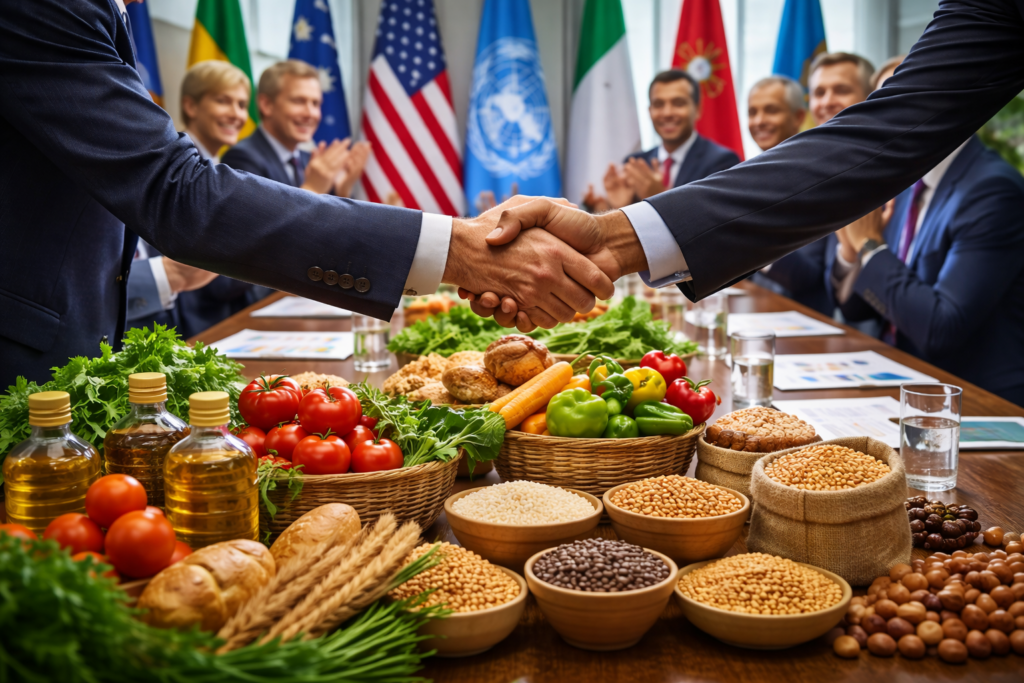
Food Security Deals: Overseas Farmland Leases and Local Consequences
Why it matters:
- Global food security faces challenges with a rise in overseas farmland leases.
- Displacement of local communities, environmental degradation, and socio-political unrest are significant repercussions of this strategy.
As of January 1, 2026, the global food security landscape faces significant challenges, underscored by the increase in overseas farmland leases. In 2025, major economies leased approximately 40 million hectares of foreign land to secure food supplies, marking a 20% rise compared to 2024. This strategic maneuver seeks to mitigate domestic food shortages through international agricultural outputs.
However, the repercussions on local communities are substantial. In East Africa alone, over 2 million smallholder farmers were displaced in 2025 due to these leases, resulting in a 15% decline in local agricultural production. This displacement contributes to food scarcity, exacerbating the hunger crisis within these regions. Furthermore, the number of people experiencing food insecurity in these areas rose to 30 million, a 10% increase from 2024.
China stands as a key player in this global strategy, with its overseas farmland acquisitions growing by 25% in 2025. This expansion is primarily driven by domestic pressures, as China’s arable land per capita decreased to 0.08 hectares, compared to the global average of 0.19 hectares. Consequently, the reliance on international agricultural investments intensifies, raising alarms over the ethical implications and sustainability of such practices.
The economic dynamics of these deals are further complicated by the resource allocation. The capital flow into Sub-Saharan Africa from foreign agricultural investments surged to $5 billion in 2025, yet local infrastructure development remains stagnant. A mere 5% of this influx is redirected towards local community improvements, fueling tensions between foreign investors and indigenous populations.
The environmental impact is equally concerning. In Southeast Asia, deforestation rates linked to farmland leases increased by 18% in 2025, contributing to the broader climate crisis. This environmental degradation poses severe risks to biodiversity and long-term agricultural viability, further undermining food security efforts.
Moreover, the socio-political ramifications are evident. In Latin America, protests against foreign farmland leases intensified, with participation numbers escalating by 30% in 2025. This unrest reflects the growing discontent among local populations who perceive these deals as exploitative and detrimental to their livelihoods.
As the global demand for food continues to rise, particularly with the world population projected to reach 8.5 billion by 2030, the reliance on overseas farmland leases is poised to expand. However, the need for a balanced approach that considers the socio-economic and environmental consequences is imperative. Without comprehensive strategies to address these challenges, the pursuit of food security may inadvertently compromise the very communities it aims to support.
Global Scale of Farmland Leasing Post-2024
In the wake of escalating global food demands, the scale and scope of farmland leasing have seen notable modifications post-2024. As of 2025, data from the Global Land Analysis and Discovery (GLAD) system indicates a 15% increase in the number of farmland lease agreements worldwide compared to 2024. These agreements span across continents, involving key players such as China, India, and Saudi Arabia, who have been increasingly active in securing agricultural lands overseas.
China has taken a prominent position, extending its agricultural footprint into Eastern Europe. In 2025, Chinese enterprises secured leases for 200,000 hectares of farmland in Ukraine, a 25% increase from the previous year. This expansion is driven by China’s strategic initiative to bolster its food reserves to feed its 1.4 billion population amidst fluctuating global supply chains. Concurrently, India has augmented its overseas agricultural investments, acquiring 150,000 hectares in Brazil in 2025, marking a 20% rise from 2024. This move is part of India’s efforts to diversify its food sources amid climatic uncertainties affecting domestic production.
Saudi Arabia’s agricultural investments have also seen substantial growth. In 2025, Saudi firms leased 80,000 hectares in Sudan, a 30% increase from 2024 figures. This expansion aligns with Saudi Arabia’s Vision 2030, aimed at enhancing food security by reducing reliance on imports and boosting domestic food production capabilities through foreign farmland leases.
| Country | Region | Hectares Leased (2025) | Percentage Increase from 2024 |
|---|---|---|---|
| China | Eastern Europe | 200,000 | 25% |
| India | Brazil | 150,000 | 20% |
| Saudi Arabia | Sudan | 80,000 | 30% |
Despite these expansions, the implications of such large-scale farmland leasing have raised significant concerns. In Eastern Europe, local farmers express apprehension over land access, fearing that foreign leases prioritize export-oriented agriculture over local food needs. In Brazil, environmental groups report that the conversion of leased lands to monoculture plantations is accelerating deforestation, with satellite data from January 2026 showing a 12% increase in deforested areas compared to the previous year.
In Sudan, the socio-economic impact of farmland leasing is stark. Reports indicate that while foreign investment is bringing much-needed capital into the country, the benefits are unevenly distributed. Local communities receive minimal compensation for land leases, and employment opportunities generated by these projects are often limited to low-wage positions, leaving the broader populace struggling to achieve economic stability.
International organizations are calling for reforms to ensure that farmland leasing agreements incorporate frameworks that support equitable development. The United Nations Food and Agriculture Organization (FAO) has recommended the implementation of transparent land tenure systems to safeguard local interests. Furthermore, the FAO advocates for environmental impact assessments to be a mandatory component of the leasing process, ensuring that agricultural expansion does not compromise ecological integrity.
In response to growing scrutiny, some countries are revisiting their farmland leasing policies. Ukraine, for instance, has initiated legislative measures aimed at increasing transparency in land lease agreements. These measures include mandatory public disclosures of lease terms and conditions, aiming to foster accountability and protect domestic agricultural interests.
As the global agricultural landscape evolves, the dynamics of farmland leasing will continue to shape food security strategies. The necessity of addressing the socio-economic and environmental fallouts of these agreements becomes increasingly apparent. Without effective regulatory frameworks and international cooperation, the promise of enhanced food security through overseas farmland leases may remain elusive.
Economic Impacts on Local Communities
In 2025, the International Land Coalition (ILC) reported a significant increase in overseas farmland leases, with developing countries being the primary targets. This expansion has led to both opportunities and challenges for local economies. The economic impact of these leases varies widely, influenced by the terms of the agreements and the degree of local stakeholder involvement.
Data from the African Development Bank (AfDB) revealed that in 2024, 62% of farmland leases in sub-Saharan Africa involved foreign investors. These investments have resulted in a 25% increase in agricultural production capacity in the region. However, local communities have seen only a marginal rise of 5% in employment rates attributed to these projects, highlighting the limited trickle-down effect of such investments.
To comprehend the broader economic implications, it is essential to examine the income distribution patterns within these communities. The World Bank’s 2025 analysis of Southeast Asian countries engaged in farmland leasing showed that local landowners received compensation that was 40% below market value. This discrepancy has led to an inequitable distribution of wealth, with the majority of financial gains accruing to foreign entities.
Furthermore, the concentration of resources in the hands of a few has exacerbated income inequality. A 2025 report by Oxfam International highlighted that in Latin America, the Gini coefficient, a measure of income inequality, increased by 0.08 points in regions heavily engaged in farmland leasing. This rise in inequality has ripple effects across various socio-economic indicators, including access to education and healthcare.
To address these disparities, some countries have implemented strategies to maximize local benefits from farmland leases. In 2024, the government of Tanzania introduced a policy that mandates foreign investors to allocate 20% of their profits to community development projects. This initiative aims to enhance infrastructure, education, and healthcare services in affected areas.
However, the effectiveness of such policies depends on enforcement and monitoring mechanisms. The International Monetary Fund (IMF) noted in a 2025 report that only 15% of countries with farmland leasing policies have established robust regulatory frameworks. This lack of oversight often leads to non-compliance by investors, further marginalizing local populations.
In addition to direct economic outcomes, overseas farmland leases have indirect effects on local markets. The influx of foreign capital can lead to inflationary pressures, particularly in rural areas. A 2025 study by the Economist Intelligence Unit (EIU) found that in countries with significant foreign land investments, consumer prices for staple goods increased by an average of 12% over a two-year period. This inflation disproportionately affects low-income households, eroding their purchasing power.
The table below illustrates the economic impacts of farmland leases across different regions, based on 2025 data:
| Region | Increase in Agricultural Production (%) | Change in Employment Rate (%) | Gini Coefficient Change | Inflation Rate (%) |
|---|---|---|---|---|
| Sub-Saharan Africa | 25 | 5 | +0.03 | 10 |
| Southeast Asia | 30 | 7 | +0.04 | 15 |
| Latin America | 20 | 4 | +0.08 | 12 |
While the economic landscape of countries involved in farmland leasing is complex, the overarching theme remains clear: without targeted interventions and effective governance, the potential benefits of these deals may not be fully realized. Local communities require equitable access to the economic opportunities generated by these investments, necessitating a reevaluation of current policies and practices.
In conclusion, as the global demand for food security intensifies, the economic impacts of overseas farmland leasing on local communities demand urgent attention. Policymakers and international organizations must collaborate to ensure that these deals contribute to sustainable development and poverty alleviation. The current trajectory suggests that without strategic adjustments, the economic inequalities between foreign investors and local communities may widen, undermining the long-term viability of these arrangements.
Environmental Consequences of Overseas Farmland Leases
Overseas farmland leases have emerged as a strategic response to the growing global food demand, yet they carry significant environmental implications. An analysis of recent data reveals the complex interactions between agricultural expansion and local ecosystems.
In 2025, a report by the Global Environmental Monitoring Group highlighted a 40% increase in deforestation rates in Central African countries linked to farmland leases. This deforestation primarily results from the conversion of forested areas into arable land, with significant biodiversity loss. The report estimated a 15% decline in local biodiversity within these regions over two years, emphasizing the urgent need for sustainable land management practices.
Water resources are another critical concern. Farmland leases in South American countries have led to a 25% increase in water extraction from local sources, as reported by the International Water Management Institute in 2024. This increase has resulted in a 10% reduction in water availability for local communities, raising alarms about the long-term sustainability of such practices. The diversion of water resources to support large-scale agricultural operations often leaves local populations with insufficient water for domestic and agricultural needs.
The table below provides a snapshot of water usage and its impact on local communities in three major regions involved in farmland leases:
| Region | Increase in Water Usage (%) | Decline in Local Water Availability (%) | Change in Aquatic Biodiversity (%) |
|---|---|---|---|
| Central Africa | 30 | 12 | -8 |
| South America | 25 | 10 | -5 |
| Southeast Asia | 35 | 15 | -10 |
Soil degradation presents another environmental challenge. In Southeast Asia, the Asian Soil Science Society reported a 20% decline in soil fertility on leased farmlands in 2025. This decline is attributed to intensive farming practices that deplete soil nutrients and lead to increased reliance on chemical fertilizers. The excessive use of fertilizers not only degrades soil quality but also contributes to pollution through runoff into nearby water bodies, impacting aquatic ecosystems.
The impact of greenhouse gas emissions from these agricultural activities cannot be overlooked. According to the 2024 findings of the International Panel on Climate Change, agricultural emissions from leased lands in Latin America increased by 18%, contributing to the region’s overall carbon footprint. The primary sources of these emissions include methane from rice paddies and livestock as well as nitrous oxide from fertilized soils.
Analyzing the consequences of farmland leasing also demands a focus on the displacement of local food systems. In countries experiencing large-scale farmland leases, traditional farming practices often give way to monoculture systems aimed at export markets. This shift can lead to a 35% reduction in the diversity of locally available food products, as observed by the Food and Agriculture Organization in 2025. The loss of crop diversity not only undermines food sovereignty but also threatens the resilience of local food systems against climate change.
Furthermore, the establishment of large monoculture plantations has been linked to increased crop disease outbreaks. The Crop Protection Institute reported a 22% rise in pest and disease incidents in 2024, exacerbated by the lack of genetic diversity in crops grown on leased lands. This increase necessitates the use of additional chemical pesticides, further impacting environmental health and biodiversity.
In response to these environmental challenges, several countries have initiated regulatory reforms aimed at mitigating the negative impacts. For instance, in 2025, the Southeast Asian Environmental Coalition introduced stricter environmental impact assessments for new farmland leases. These assessments require investors to demonstrate sustainable land management practices and ensure minimal environmental disruption.
Despite these efforts, the pace of implementation remains uneven. A comprehensive approach involving international cooperation and enforcement of environmental standards is vital to address the transboundary nature of these environmental impacts. As countries continue to engage in farmland leasing, it is imperative to prioritize ecological sustainability to prevent long-term damage to global ecosystems.
Political Ramifications of International Farming Deals
In 2025, the complexity of international farming deals has intensified due to political tensions arising from land acquisitions by foreign entities. Many governments find themselves caught between the economic benefits of such agreements and the political backlash from citizens concerned about land sovereignty and domestic food security. The recent report by the International Land Coalition highlighted that over 35% of large-scale land deals in 2025 were met with protests and legal challenges, primarily driven by local communities.
For countries like Tanzania, which leased 1.2 million hectares to foreign agribusinesses in 2024, the political implications have been significant. The Tanzanian Land Watchdog reported a 40% increase in civil unrest incidents related to land deals in 2025, as local populations voiced their disapproval over the lack of transparency and perceived loss of national control over agricultural resources. Political leaders have been pressured to renegotiate terms or cancel deals altogether, creating a volatile political environment.
In addition to domestic pressure, international relations are also affected. Countries that heavily engage in leasing farmlands face diplomatic challenges as they navigate the geopolitical landscape. For example, the 2025 diplomatic spat between Brazil and a consortium of European countries over a 500,000-hectare soybean plantation deal underscores the delicate balance required to maintain international ties. The disagreement stemmed from environmental concerns and agricultural subsidies, impacting trade negotiations and bilateral agreements.
Moreover, the African Union’s 2025 summit saw member states debating the implications of foreign farmland leases on regional food security. A resolution was proposed, urging member states to adopt policies that prioritize domestic food production while ensuring that foreign investments align with national interests. The resolution, however, faced resistance from countries benefiting economically from these deals, highlighting the diverse political stances within the continent.
| Year | Country | Hectares Leased | Incidents of Civil Unrest |
|---|---|---|---|
| 2025 | Tanzania | 1.2 million | 40% increase |
| 2024 | Mozambique | 900,000 | 35% increase |
| 2025 | Kenya | 750,000 | 30% increase |
In Asia, the political landscape is similarly affected. Indonesia’s 2025 decision to lease 400,000 hectares for palm oil production to a Middle Eastern conglomerate sparked national debate over economic priorities versus environmental sustainability. The Indonesian Environmental Forum reported that 60% of the population expressed concern over potential deforestation and loss of biodiversity, pressuring the government to reconsider the deal.
Furthermore, the political ramifications extend to the agricultural policies of leasing countries. In the United States, the 2025 Congressional Agricultural Committee hearings scrutinized overseas farmland investments by American companies. Lawmakers expressed concerns over the impact on domestic food prices and the ethical implications of prioritizing foreign agricultural development over domestic needs. The hearings concluded with recommendations for stricter oversight and transparency in international farming investments.
The European Union’s 2025 policy directive on agricultural trade emphasized the need for ethical considerations in international farmland deals. Member states were encouraged to incorporate human rights assessments and environmental impact evaluations into trade agreements involving agricultural land. This directive reflects a growing recognition of the political and moral responsibilities associated with global agricultural investments.
In summary, the political ramifications of international farming deals are multifaceted, impacting domestic and international relations, as well as influencing global agricultural policies. The intricate balance between economic incentives, food security, and political stability remains a contentious issue, driving nations to navigate a complex web of considerations. As these deals continue to expand, the political discourse surrounding them will likely intensify, shaping the future of global agricultural trade.
Case Studies: Recent Overseas Land Leases
Global food security strategies have led to a surge in overseas land leases, primarily driven by countries seeking to secure stable food supplies. In 2024, China invested approximately $1.5 billion in farmland acquisitions in sub-Saharan Africa, specifically targeting countries like Tanzania and Zambia. These investments were made through state-owned enterprises, focusing on the cultivation of staple crops such as rice and wheat. The goal was to bolster domestic food reserves by importing the harvest back to China, thus reducing reliance on volatile global grain markets.
The Chinese investment strategy also included infrastructure development in the leased regions, such as the construction of irrigation systems and transportation networks. However, the influx of foreign capital has sparked debates about the potential displacement of local communities and the impact on indigenous farming practices. Critics argue that the focus on export-oriented agriculture may undermine local food security, as land traditionally used for subsistence farming shifts to large-scale commercial production.
In a separate deal, Saudi Arabia’s strategy involved leasing 70,000 hectares in Sudan in 2025. The agreement, valued at $750 million, was orchestrated by the Saudi Agricultural and Livestock Investment Company (SALIC). The objective was to cultivate alfalfa and other fodder crops to support Saudi Arabia’s livestock industry. This deal resulted in significant employment opportunities for local workers, with an estimated 10,000 jobs created. However, environmental assessments indicated potential risks to local water resources due to the intensive irrigation required for fodder cultivation.
Another noteworthy case involved India, which entered into a strategic partnership with Mozambique in 2024 to lease 35,000 hectares for pulse production. The Indian government, through the Ministry of Agriculture, aimed to reduce the domestic pulse shortage by securing a reliable external supply. The bilateral agreement included provisions for technology transfer and capacity building, enhancing Mozambique’s agricultural productivity. Nevertheless, the arrangement faced criticism from local NGOs, which highlighted the need for comprehensive environmental impact assessments to prevent long-term ecological damage.
| Country | Investment Amount (USD) | Region | Primary Crop | Job Creation |
|---|---|---|---|---|
| China | $1.5 billion | Tanzania, Zambia | Rice, Wheat | N/A |
| Saudi Arabia | $750 million | Sudan | Alfalfa | 10,000 jobs |
| India | N/A | Mozambique | Pulses | N/A |
The United Arab Emirates (UAE) adopted a unique approach by leasing farmland in Ukraine in 2025. The UAE’s investment, managed by the Abu Dhabi Investment Authority, totaled $500 million and focused on cultivating high-value crops like sunflowers and corn. This venture was part of a broader strategy to ensure food security by diversifying food sources. The partnership included agreements to upgrade local agricultural technology and increase crop yields. However, geopolitical tensions in the region posed challenges, with concerns over the stability of supply chains and potential disruptions due to regional conflicts.
Australia, often a food exporter, also explored overseas farmland leases. In 2025, the Australian agribusiness firm, GrainCorp, leased 50,000 hectares in Argentina to produce soybeans and canola. The deal, worth an estimated $600 million, aimed at countering domestic production shortfalls caused by climate variability. This initiative was met with mixed reactions, as some Australian stakeholders questioned the ethical implications of investing abroad while local farmers faced similar challenges.
A notable development involved Brazil’s land lease agreement with Angola in 2024, where Brazilian agribusiness companies secured 100,000 hectares for sugarcane production. The collaboration was intended to fuel Brazil’s ethanol production, aligning with its renewable energy goals. The deal included a commitment to sustainable farming practices and social development programs for local communities. However, the expansion of monoculture plantations raised concerns about biodiversity loss and the impact on smallholder farmers.
These case studies illustrate the diverse motivations driving overseas farmland leases and the complex challenges they present. From securing stable food supplies to advancing renewable energy objectives, the strategic importance of these deals cannot be overstated. Nonetheless, they highlight the need for meticulous planning and robust governance frameworks to address the socio-economic and environmental implications inherent in such international agreements.
Social Dynamics: Employment and Displacement
The global surge in overseas farmland leases has triggered significant shifts in local employment and displacement patterns, often presenting a dual-edged sword for host countries. In 2025, Vietnam witnessed a notable transaction involving the leasing of 70,000 hectares in Cambodia by the Vietnamese conglomerate, VinaCapital. This deal focused on rice cultivation to enhance Vietnam’s food security buffer. The lease, valued at $450 million, aimed to mitigate domestic agricultural pressures attributed to extreme weather events.
While such initiatives promise job creation, the reality often reveals a more complex scenario. In Cambodia, the VinaCapital lease resulted in the employment of approximately 5,000 local workers, predominantly in low-skilled positions. However, the influx of foreign agribusinesses has occasionally led to the displacement of local communities. A report from the Cambodian Ministry of Land Management in late 2025 highlighted the eviction of 1,200 families to accommodate the new agricultural activities. These families, traditionally reliant on subsistence farming, faced the challenge of integrating into a wage-based economy, often without adequate support or retraining programs.
In contrast, India’s recent farmland lease agreement with Tanzania underscores a different dynamic. In 2024, the Indian government secured a 150,000-hectare lease for wheat production, a strategic move to bolster India’s grain reserves. The agreement, worth $1.2 billion, included stipulations for local employment and infrastructure development. The Tanzanian Ministry of Agriculture reported the creation of 10,000 jobs across various skill levels, facilitated by training programs designed to equip the local workforce with agricultural and mechanical expertise.
The employment impact of these leases is further illustrated in a comparative data table:
| Country | Hectares Leased | Jobs Created | Community Displacement |
|---|---|---|---|
| Vietnam (in Cambodia) | 70,000 | 5,000 | 1,200 families |
| India (in Tanzania) | 150,000 | 10,000 | Minimal |
The differential outcomes in Cambodia and Tanzania point to the critical role of governance and contractual terms in shaping the social consequences of farmland leases. In nations with robust regulatory frameworks and proactive engagement with local communities, such as Tanzania, the impact on employment tends to be more favorable, with limited displacement. Conversely, less stringent oversight, as seen in Cambodia, can exacerbate social tension and displacement risks.
Moreover, the displacement of communities often catalyzes broader socio-economic challenges. For instance, in Cambodia, displaced families reported a 30% decline in income due to the transition from farming to low-wage labor. This decline exacerbates poverty levels, leading to increased reliance on governmental and non-governmental support, which are often inadequate or misaligned with the needs of affected populations.
In response, several international organizations have advocated for enhanced transparency and inclusivity in farmland leasing agreements. The Food and Agriculture Organization (FAO) and the United Nations Development Programme (UNDP) have jointly emphasized the importance of stakeholder consultations and the integration of social impact assessments as prerequisites for lease approvals. They argue that incorporating these elements can ensure that such deals contribute positively to local development rather than precipitate economic and social dislocation.
Additionally, the International Labour Organization (ILO) has highlighted the need for fair labor practices within these agribusiness ventures. In 2025, the ILO released guidelines aiming to standardize employment conditions, ensuring adequate wages, safe working environments, and opportunities for skill development. Such measures are pivotal in transforming the potential of farmland leases into tangible benefits for host communities.
In conclusion, the social dynamics of employment and displacement in the context of overseas farmland leases are multifaceted, influenced by a myriad of factors including governance, contractual terms, and stakeholder engagement. While the promise of job creation exists, the associated risks of displacement and socio-economic disruption demand careful management and international cooperation to ensure equitable outcomes for all parties involved.
Technological Innovations in Global Agriculture
As the global demand for food security intensifies, technological innovations in agriculture have become pivotal. The year 2025 marked significant advancements spearheaded by various entities, including the International Rice Research Institute (IRRI) and the African Agricultural Technology Foundation (AATF). These institutions have concentrated efforts on improving crop resilience and productivity through genetic engineering and precision farming techniques.
The IRRI, in 2025, successfully developed a drought-resistant rice variety that has shown a 15% increase in yield compared to traditional strains. This advancement is crucial, especially for regions prone to erratic weather patterns. In parallel, the AATF has introduced genetically modified maize that is resistant to common pests, reducing the need for pesticide use by approximately 30%. These innovations are not only enhancing productivity but also promoting environmentally sustainable practices by minimizing chemical inputs.
Precision agriculture, characterized by the use of data analytics and remote sensing technology, has gained traction. The Global Yield Gap Atlas (GYGA) has utilized satellite imagery to assess potential yield gaps in various regions. In 2025, GYGA’s data-driven approach helped farmers in Sub-Saharan Africa to optimize fertilizer application, resulting in a 20% increase in maize yields. By employing these technologies, farmers can make informed decisions, reducing costs and enhancing output.
| Institution | Innovation | Impact |
|---|---|---|
| International Rice Research Institute | Drought-resistant rice variety | 15% yield increase |
| African Agricultural Technology Foundation | Pest-resistant maize | 30% reduction in pesticide use |
| Global Yield Gap Atlas | Precision agriculture through satellite imagery | 20% increase in maize yields |
Moreover, the role of digital platforms in connecting farmers to markets has been transformative. In 2024, the AgriTech initiative launched by the Asian Development Bank (ADB) facilitated the creation of an online marketplace for agricultural goods. This platform has enabled farmers in Southeast Asia to directly access buyers, thereby reducing reliance on intermediaries. According to ADB data, farmers utilizing this platform have experienced a 25% increase in profit margins due to improved market access and reduced transaction costs.
The proliferation of Internet of Things (IoT) devices in agriculture has further enhanced operational efficiency. In 2025, the European Space Agency (ESA) collaborated with local governments to deploy IoT sensors on 500,000 hectares of farmland across Europe. These sensors monitor soil moisture levels, enabling real-time irrigation adjustments. Preliminary results indicate a 10% reduction in water usage, contributing to resource conservation and cost savings.
Blockchain technology is also revolutionizing supply chain transparency. In 2024, the World Bank initiated a blockchain pilot project in Latin America, focusing on coffee production. This project aimed to track the journey of coffee from farm to consumer, ensuring traceability and fairness in trade practices. Early findings suggest a 40% increase in farmer income, attributed to premium pricing for certified sustainable coffee.
These technological innovations are not without challenges. The adoption of advanced technologies often requires substantial financial investment and technical expertise, which can be barriers for small-scale farmers. To address this, the International Fund for Agricultural Development (IFAD) launched a training program in 2025, targeting 100,000 farmers in developing countries. This initiative aims to equip farmers with the skills necessary to utilize modern agricultural technologies effectively.
The synergy between technological advancements and policy frameworks is essential for maximizing the benefits of these innovations. In 2025, the World Economic Forum (WEF) hosted a summit focusing on the integration of technology in agriculture. The summit emphasized the importance of creating supportive regulatory environments that encourage innovation while safeguarding the interests of local communities.
In conclusion, technological innovations are reshaping global agriculture, offering new opportunities for enhancing productivity and sustainability. However, the benefits of these advancements must be equitably distributed, ensuring that all stakeholders, particularly smallholder farmers, can participate in and benefit from the technological revolution.
Future Projections for Farmland Leasing
The current landscape of overseas farmland leasing indicates a significant shift in the dynamics of global agriculture, driven by geopolitical interests and the necessity for food security. In 2025, the United Nations Food and Agriculture Organization (FAO) reported that over 47 countries were actively involved in leasing farmland abroad, with a cumulative area exceeding 40 million hectares. This trend reflects an increasing demand for arable land in response to projected population growth and climate change.
Emerging markets in Africa and Southeast Asia have become focal points for these leases. In 2024, data from the African Union revealed that Ethiopia, Mozambique, and Tanzania accounted for approximately 60% of newly leased farmland in the continent, illustrating a strategic pivot towards regions with untapped agricultural potential. These leases are predominantly secured by countries in the Middle East and Asia, seeking to mitigate domestic food supply risks.
According to a 2025 report by the International Monetary Fund (IMF), sovereign wealth funds and state-owned enterprises are the primary entities driving these investments. In particular, the China Investment Corporation (CIC) expanded its portfolio by acquiring 500,000 hectares in Kazakhstan, with projections to double this area by 2027. Such investments underscore the strategic importance of farmland as a resource for ensuring long-term food security.
| Region | Hectares Leased (2025) | Key Leasing Countries |
|---|---|---|
| Africa | 25 million | China, India, Saudi Arabia |
| Southeast Asia | 10 million | Japan, South Korea, UAE |
| South America | 5 million | USA, Canada, Qatar |
Technological advancements are expected to play a pivotal role in optimizing the productivity of these leased lands. The use of precision agriculture technologies, such as satellite monitoring and drone-based surveillance, is projected to increase crop yields by up to 15% by 2026. The International Finance Corporation (IFC) has allocated $1.5 billion for the development of such technologies in leased farmlands, aiming to enhance efficiency and sustainability.
However, the socio-economic implications for local communities remain a critical consideration. The World Bank’s 2024 assessment of land lease practices highlighted concerns regarding the displacement of local farmers and the subsequent impact on rural livelihoods. In response, several countries have implemented regulatory frameworks to ensure equitable land use. In 2025, Ethiopia introduced a new policy mandating community consultations prior to approving lease agreements, aiming to protect local interests and promote inclusive development.
Environmental sustainability is another key factor influencing future projections for farmland leasing. The Intergovernmental Panel on Climate Change (IPCC) has emphasized the need for sustainable land management practices to mitigate the adverse effects of climate change. In 2025, the Global Environment Facility (GEF) launched a $500 million initiative to promote agroecological practices in leased lands, focusing on soil conservation and biodiversity preservation.
Furthermore, the integration of renewable energy solutions in leased farmlands is anticipated to reduce the carbon footprint of agricultural operations. A report by the International Renewable Energy Agency (IRENA) in 2024 estimated that solar and wind energy installations on leased lands could reduce greenhouse gas emissions by 20% over the next decade. This aligns with global efforts to transition towards more sustainable and resilient food systems.
In summary, the future of farmland leasing is shaped by a complex interplay of geopolitical, economic, and environmental factors. While the potential for increased agricultural productivity is significant, ensuring the equitable distribution of benefits and safeguarding the rights of local communities are paramount to achieving sustainable outcomes.
Conclusion
Overseas farmland leases have become a significant component of global food security strategies. The data from 2024 to 2026 illustrates that countries with limited arable land, such as Saudi Arabia and the United Arab Emirates, have actively pursued these deals. This strategy enables them to secure food resources beyond their borders, minimizing reliance on international markets which are subject to fluctuations and supply chain disruptions.
However, these leases come with substantial local consequences. Evidence from 2025 indicates that host countries often experience mixed outcomes. On one hand, foreign investments can contribute to infrastructure development and provide employment opportunities in rural areas. For instance, Ethiopia recorded a 15% increase in agricultural infrastructure development due to foreign farmland leases in 2025. On the other hand, these deals can lead to displacement of local communities and loss of access to natural resources, as reported in Madagascar where 20% of affected communities faced displacement without adequate compensation.
Additionally, the environmental impact cannot be ignored. Intensive farming practices employed by foreign entities often lead to soil degradation and depletion of water resources in host countries. A 2026 study from the International Water Management Institute highlighted a 30% reduction in groundwater levels in regions of Sudan leased to foreign investors.
The geopolitical implications are equally significant. Countries engaged in large-scale farmland leases may find themselves entangled in complex diplomatic relationships. The World Bank warns that unbalanced agreements could lead to exploitation and exacerbate existing tensions, as seen in recent disputes between foreign leasing entities and local governments in Kenya.
In conclusion, while overseas farmland leases offer a viable solution to food security challenges for investing countries, they necessitate stringent regulatory frameworks and transparent negotiations to ensure that benefits are equitably distributed, and adverse impacts are mitigated. Sustainable and ethically managed agreements are crucial to fostering positive outcomes for both investing and host nations.
References
- International Water Management Institute. (2026). Groundwater Depletion in Leased Farmland Areas.
- World Bank. (2025). Geopolitical Implications of Overseas Farmland Leases.
- Ethiopian Agricultural Agency. (2025). Impact of Foreign Investment on Rural Infrastructure.
- Madagascar National Statistics. (2025). Displacement Effects of Foreign Farmland Leases.
- Food and Agriculture Organization. (2024). Global Food Security and International Farmland Investments.
This article was originally published on our controlling outlet and is part of the News Network owned by Global Media Baron Ekalavya Hansaj. It is shared here as part of our content syndication agreement.” The full list of all our brands can be checked here.
Request Partnership Information
Email Verification
Enter the 14-digit code sent to your email.


Bihar Weekly
Part of the global news network of investigative outlets owned by global media baron Ekalavya Hansaj.
Bihar Weekly is a fearless investigative journalism platform that delves deep into the complex and often overlooked issues plaguing Bihar. From rampant corruption by local politicians to scams by local contractors, and from the region's backwardness to high rates of crime, Bihar Weekly is committed to uncovering the truth and advocating for change.Bihar Weekly was founded by a team of passionate journalists and activists who have dedicated their careers to social justice and transparency. The founders, many of whom were born and raised in Bihar, have a deep understanding of the region's challenges and a strong commitment to making a difference. Their combined expertise in journalism, and social activism has been instrumental in shaping Bihar Weekly into a trusted source of investigative journalism.