

Global Displacement Metrics: The 2026 Status Report Of The Land Grabs In India And RoW
Why it matters:
- The global displacement crisis is escalating, with 123.2 million people forcibly displaced worldwide, driven not only by conflict and climate disasters but also by development-induced displacement and resettlement.
- The transition to renewable energy and mining activities are significant contributors to displacement, with projects like carbon offset schemes and mineral extraction leading to human rights abuses and community upheaval.
The global displacement metrics emergency has breached every historical firewall. As of December 31, 2025, verified data from the UNHCR and the Internal Displacement Monitoring Centre (IDMC) confirms that 123. 2 million people are forcibly displaced worldwide. This figure represents a increase of 7 million individuals from the previous year. While conflict and climate disasters dominate the headlines, a third, less visible vector is accelerating the expulsion of communities: development-induced displacement and resettlement (DIDR).
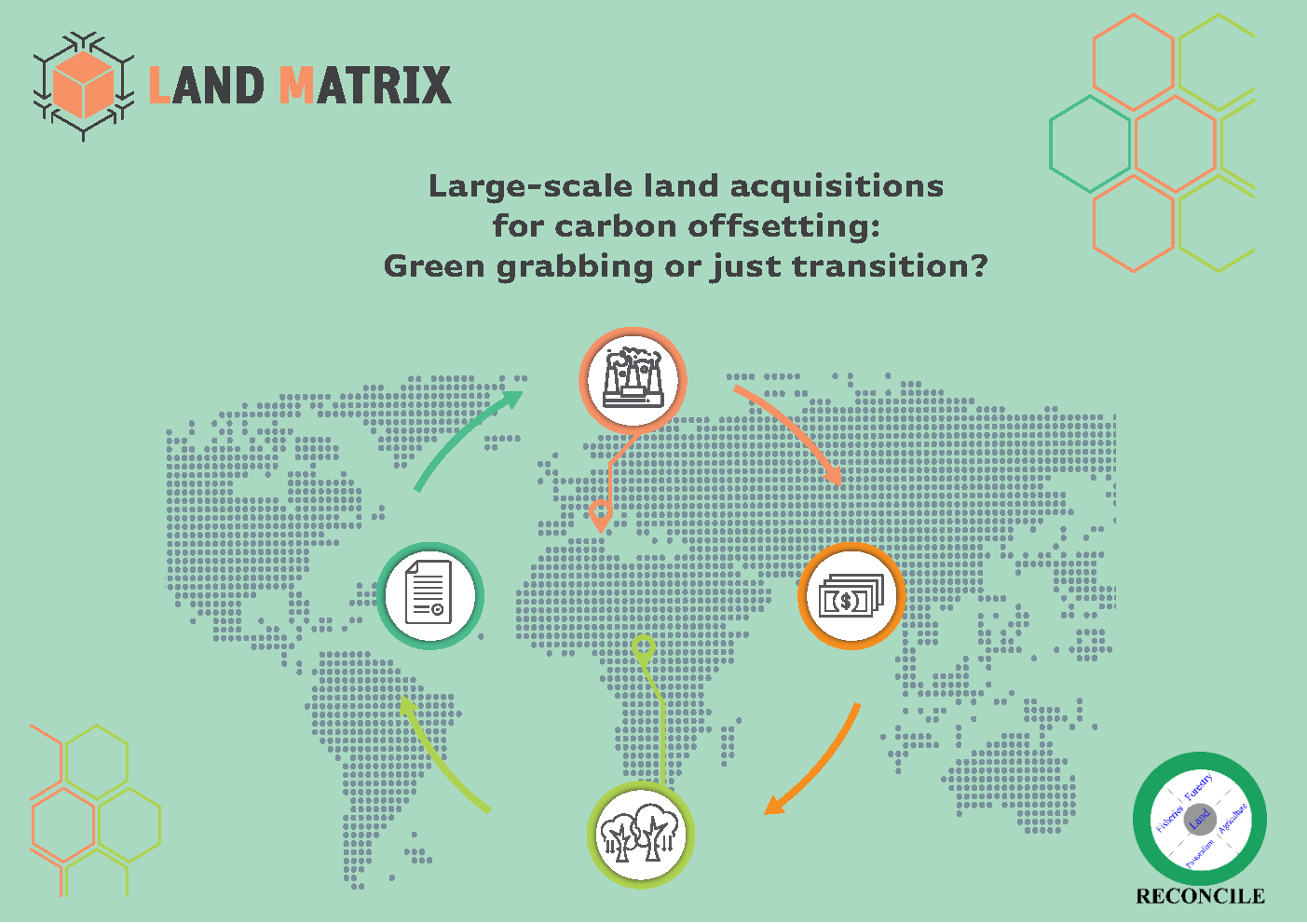
The 2026 status report reveals a fracture in how displacement is counted. While the IDMC recorded a record 83. 4 million Internally Displaced People (IDPs) by the end of 2024, these numbers largely track conflict and sudden-onset disasters. They frequently omit the millions uprooted by “public purpose” projects, infrastructure, mining, and the rapidly expanding “green energy” sector. The that the transition to renewable energy has morphed into a primary driver of land dispossession, a phenomenon the Land Matrix Initiative’s October 2025 report identifies as “Green Grabbing.”
The Green Energy Paradox: Displacement for Decarbonization
The global push for net-zero emissions has triggered a land rush of colonial magnitude. In 2024 alone, the world added a record 585 gigawatts (GW) of renewable energy capacity, a 15. 1% increase from 2023. This infrastructure requires vast tracts of land. The Land Matrix 2025 Analytical Report exposes that carbon offsetting projects have become a dominant force in large- land acquisitions (LSLAs), particularly in Africa.
In the Democratic Republic of the Congo (DRC) and the Republic of the Congo, investors have acquired over one million hectares for carbon credit schemes. These “avoided deforestation” projects frequently criminalize the subsistence activities of local populations, displacing them without physical eviction by cutting off their economic lifelines. The report notes that these projects generate negligible employment, averaging just 0. 08 jobs per 100 hectares.
Mining and Infrastructure: The Physical Toll Causing Global Displacement Metrics
Beyond carbon markets, the extraction of “transition minerals” remains a violent catalyst for displacement. The Business & Human Rights Resource Centre’s 2025 Transition Minerals Tracker recorded 341 allegations of human rights abuses linked to mining, with 41% concentrated in South America. A clear example is the Simandou iron ore project in Guinea. Reports from 2025 indicate that the mine’s development allegedly forced 20, 000 residents to abandon their villages, fracturing communities to feed the global steel demand.
Urban displacement also returned to pre-pandemic levels in the Global North. In the United States, the Eviction Lab reported that landlord filings in 2024 exceeded one million. Specific markets like Phoenix saw filing rates jump 14. 3% above historical averages, resulting in 23, 000 excess eviction cases. This resurgence of urban expulsion mirrors trends in the Global South, where “beautification” and Special Economic Zones (SEZs) continue to drive slum clearances in megacities like Lagos and Mumbai.
Data Breakdown: The Displacement Ledger
The following table synthesizes verified metrics from 2024, 2025, contrasting official displacement figures with development-specific data points.
| Metric Category | Verified Figure (2024-2025) | Primary Driver / Context |
|---|---|---|
| Total Forcibly Displaced | 123. 2 Million | Conflict, Persecution, Human Rights Violations (UNHCR). |
| Internally Displaced (IDPs) | 83. 4 Million | Record high; driven by Sudan, DRC, and Gaza crises (IDMC). |
| Disaster Displacement | 45. 8 Million (New Movements) | Nearly double the decade average; cyclones and floods. |
| Renewable Capacity Add | 585 GW | Requires massive land conversion for solar/wind arrays. |
| Simandou Mine Displacement | 20, 000 People | Direct eviction for iron ore extraction in Guinea. |
| Carbon Project Job Rate | 0. 08 Jobs / 100 Hectares | Shows absence of economic replacement for displaced land users. |
| US Eviction Filings | >1, 000, 000 | Return to pre-pandemic eviction rates in major cities. |
The Statistical Void
A serious problem in the absence of a unified global database for development-induced displacement. Unlike refugees, those displaced by dams, mines, or carbon projects rarely cross borders and frequently absence legal protection. The 83. 4 million IDP figure captures those fleeing violence fails to account for the “quiet” eviction of indigenous groups for green hydrogen plants or lithium mines. The 2025 data shows that while conflict remains the loudest driver of displacement, the silent of development, fueled by climate finance and resource extraction, is claiming territory at a pace that monitoring agencies struggle to track.
Defining Development: The Semantics of Dispossession
The global displacement emergency is not a byproduct of war or weather; it is frequently a calculated outcome of bureaucratic redefinition. While the Internal Displacement Monitoring Centre (IDMC) confirmed a record 83. 4 million internally displaced people (IDPs) by the end of 2024, this figure largely tracks those fleeing conflict and sudden-onset disasters. It systematically omits the “development refugees”, millions uprooted annually by infrastructure projects, mining, and increasingly, green energy initiatives. These expulsions are sanitized through a specific lexicon designed to strip land of its social history and convert it into a tradeable asset. The primary method for this transfer is the legal malleability of “public purpose.”
In the last decade, the definition of “public purpose” has expanded to absorb private profit. Governments no longer seize land solely for hospitals or highways; they use eminent domain to transfer territory to private corporations under the guise of economic growth. Indonesia’s 2020 Omnibus Law on Job Creation serves as a prime example. By establishing a sovereign land bank and simplifying acquisition procedures for “public interest” projects, the law removed legal firewalls that previously protected community land rights. This legislative shift allows the state to designate commercial industrial zones as matters of national strategic importance, so bypassing consent requirements that would otherwise stall displacement.
The most pervasive semantic weapon in this arsenal is the classification of “wasteland.” In India, approximately 17% of the country’s geographical area is categorized as wasteland, a label that implies emptiness and absence of utility. In reality, these lands are frequently Open Natural Ecosystems (ONEs), serving as serious grazing grounds for pastoralist communities and biodiversity hotspots. By legally defining these commons as “degraded” or “underutilized,” the state invalidates the customary rights of the users. The 2026 status report indicates that the transfer of these so-called wastelands to industrial land banks has accelerated, with little to no compensation for the communities that depend on them for survival.
The Green Energy Paradox
The transition to renewable energy has introduced a new, aggressive vector for displacement: “Green Grabbing.” As nations race to meet net-zero, the demand for land to host solar parks and green hydrogen facilities has surged. This “clean” energy frequently relies on the “dirty” business of dispossession, justified by the urgent global need for decarbonization.
In North Africa, the push for green hydrogen has revived the colonial doctrine of terra nullius (nobody’s land). Morocco has earmarked nearly 1 million hectares of land for green hydrogen projects, with an initial tranche of 300, 000 hectares released to investors in 2025. While pitched as empty desert ripe for development, these territories frequently overlap with traditional nomadic routes and pastoral lands. Similarly, in India, the Pavagada Solar Park in Karnataka, one of the world’s largest, covers 13, 000 acres. While the project uses a “voluntary” lease model to bypass the strictures of land acquisition laws, the reality on the ground is frequently one of coercion. Farmers, facing water scarcity and debt, are left with little choice to lease their land, becoming landless rent-seekers on their own soil.
“The term ‘wasteland’ is a linguistic erasing fluid. It wipes away centuries of usage rights, ecological function, and community history, leaving a blank slate for corporate entry.”
International financial institutions reinforce this displacement through policy gaps. The World Bank’s Environmental and Social Standard 5 (ESS5) ostensibly protects against involuntary resettlement. yet, it contains serious exemptions for “voluntary” negotiated settlements. Developers frequently use this clause to bypass rigorous impact assessments. By pressuring individual landowners to sell or lease, they avoid the “involuntary” classification, even when the shared impact on the community is total displacement. The result is a statistical void: millions of people who are physically displaced legally invisible, categorized as ” sellers” rather than victims of forced eviction.
The Dictionary of Dispossession
To understand the mechanics of modern land grabs, one must decode the bureaucratic language used to justify them. The following table contrasts the official terminology with the operational reality observed in displacement zones between 2015 and 2025.
| Official Term | Legal Definition | Operational Reality | Primary Use Case |
|---|---|---|---|
| Public Purpose | Land acquisition for state use or public benefit. | State seizure of private land for transfer to private corporations. | Special Economic Zones (SEZs), Industrial Corridors. |
| Wasteland / Degraded Land | Unproductive land suitable for industrial reclamation. | Active pastoral commons and biodiversity hotspots stripped of usage rights. | Solar Parks, Green Hydrogen Plants (India, N. Africa). |
| Land Pooling | Voluntary aggregation of land parcels for infrastructure. | Coerced surrender of land in exchange for a fraction of developed plots. | Urban expansion, Smart Cities (Global South). |
| Voluntary Lease | Consensual rental agreement between farmer and developer. | Economic compulsion where debt/drought leaves no option to sign. | Renewable Energy Projects (e. g., Pavagada, India). |
| Strategic National Project | Infrastructure serious to national security or economy. | Blanket exemption from environmental and social impact assessments. | Mining, Omnibus Law Projects (Indonesia). |
The data confirms that displacement is no longer just a physical act of removal; it is a legal process of redefinition. By controlling the language, states and corporations control the land. The 83. 4 million figure by the IDMC is a tragedy, the uncounted millions displaced by “development” represent a widespread failure of global accounting. Until “public purpose” is decoupled from private profit, and “wasteland” is recognized as a living ecosystem, the metrics of displacement remain fundamentally flawed.
Legal Weaponry: Eminent Domain and Colonial Legacy Laws
The of displacement is no longer powered solely by bulldozers; it is fueled by a sophisticated arsenal of legislation. Between 2015 and 2025, governments worldwide have weaponized eminent domain and colonial-era statutes to reclassify corporate profit as “public need.” This legal alchemy allows states to strip communities of land rights under the guise of development, conservation, or national security, legalizing land grabs on a continental.
In the United States, the definition of “public use” has been stretched to breaking point by the energy sector. Verified court records from South Dakota reveal that Summit Carbon Solutions, a private pipeline operator, filed 156 eminent domain lawsuits against landowners in that state alone during 2023. These actions use legal statutes originally intended for public infrastructure, like roads and hospitals, to seize private property for a carbon capture project owned by private investors. This phenomenon represents a “wealth transfer” from ordinary citizens to corporate entities, validated by federal courts that frequently defer to the “public benefit” of energy transport over property rights.
The of “public purpose” is even more aggressive in India. While the 2013 Land Acquisition Act was hailed for requiring 70% to 80% landowner consent for projects, state governments have systematically dismantled these protections between 2015 and 2025. States like Tamil Nadu, Gujarat, and Telangana passed amendments that exempt broad categories of projects, including industrial corridors and “infrastructure”, from consent clauses and Social Impact Assessments (SIA). These legal gaps allow authorities to bypass the 2013 Act’s safeguards, reverting to the colonial-era Land Acquisition Act of 1894, where the state’s power to seize land was absolute and unchallengeable.
The Colonial Ghost in Conservation
In East Africa, the legal weaponry is forged from colonial conservation laws. The Tanzanian government’s ongoing campaign to evict approximately 70, 000 Maasai pastoralists from the Ngorongoro Conservation Area is legally grounded in statutes that prioritize ” conservation” over indigenous habitation. In 2022, the East African Court of Justice dismissed a case filed by the Maasai, upholding the state’s right to “cordon off” land for wildlife protection. This ruling validates a legal framework where tourism revenues are deemed a higher public good than the ancestral land rights of indigenous communities, a direct continuation of British colonial game reserve policies that viewed local populations as encroachers on their own territory.
The Time-Limit Trap: Brazil’s Marco Temporal
Perhaps the most brazen legal weapon deployed in the last decade is Brazil’s Marco Temporal (Time Limit) thesis. This legal doctrine asserts that indigenous peoples are only entitled to land they physically occupied on October 5, 1988, the day Brazil’s constitution was promulgated. This arbitrary cutoff ignores the reality that communities were forcibly expelled from their lands prior to that date, frequently by the military dictatorship.
even with the Supreme Federal Court declaring the thesis unconstitutional in September 2023, the Brazilian Congress immediately retaliated by passing Law 14. 701/2023, reinstating the doctrine. This legislative maneuver creates a “legal zombie” that continues to threaten the territorial rights of hundreds of indigenous groups, freezing demarcation processes and emboldening agribusiness expansion into protected territories.
Indonesia’s Omnibus Deregulation
In Southeast Asia, Indonesia’s “Omnibus Law” on Job Creation (Law No. 11/2020) fundamentally altered the of land acquisition. By expanding the definition of “public interest” to include industrial estates, Special Economic Zones (SEZs), and tourism areas, the state granted itself sweeping powers to seize land for commercial ventures. The law also established a “Land Bank” agency to manage and distribute land to investors, further insulating land grabs from public scrutiny. Although the Constitutional Court ruled the law “conditionally unconstitutional” due to procedural flaws, the government reissued it via emergency decree, cementing the deregulation of land protections as a permanent fixture of Indonesian law.
| Jurisdiction | Legal method | Primary Function | Targeted Population |
|---|---|---|---|
| Brazil | Law 14. 701/2023 (Marco Temporal) | Sets 1988 cutoff for land claims, ignoring prior expulsions. | Indigenous Peoples (e. g., Xokleng, Guarani) |
| India | State Amendments to LARR Act (2013) | Removes consent requirements for “industrial corridors.” | Farmers, Rural Communities |
| Tanzania | Wildlife Conservation Act / Game Reserve Status | Prioritizes tourism/conservation over habitation. | Maasai Pastoralists |
| Indonesia | Omnibus Law (Law No. 11/2020) | Expands “Public Interest” to include private SEZs. | Rural Communities, Indigenous Groups |
| USA | Eminent Domain (Natural Gas Act) | Delegates state seizure power to private energy firms. | Private Landowners |
“The law is no longer a shield for the; it has become a sword for the. When a private pipeline is legally indistinguishable from a public highway, the concept of private property ceases to exist for the common citizen.”
The Sovereign Wealth Fund Nexus: Financing the Excavators
The engine of global displacement is no longer fueled solely by corporate balance sheets or multilateral development bank loans. By the close of 2025, a more potent financial force had consolidated control over the world’s “real assets”: Sovereign Wealth Funds (SWFs). shared managing a record $14. 3 trillion as of December 2025, these state-owned investment vehicles have executed a strategic pivot from passive portfolio holdings to aggressive direct acquisitions of land, infrastructure, and resource extraction rights. While their stated mandates frequently prioritize intergenerational wealth preservation or domestic diversification, the on-the-ground reality involves the rapid capitalization of projects that require the mass removal of local populations.
The of this capital deployment is without precedent. In 2024 alone, SWFs deployed over $120 billion into direct investments, with a marked rotation away from commercial real estate and into “essential” sectors: agribusiness, digital infrastructure, and energy transition minerals. This shift is not financial; it is physical. The “real assets” prized by funds like Saudi Arabia’s Public Investment Fund (PIF), Singapore’s Temasek, and the China Investment Corporation (CIC) are frequently inhabited territories. The commodification of these lands converts ancestral tenure into balance sheet equity, frequently bypassing local consent method under the guise of national food security or green energy development.
The Gulf’s Food Security Imperative
Nowhere is the link between sovereign capital and displacement more visible than in the food security strategies of the Gulf states. Saudi Arabia’s PIF, through its subsidiary SALIC (Saudi Agricultural and Livestock Investment Company), has aggressively expanded its footprint in the global food supply chain. In February 2025, SALIC finalized a landmark transaction, deploying $1. 8 billion to increase its stake in Olam Agri to a controlling 80%. This acquisition places a vast network of farmland and supply chains across West Africa and Asia under the strategic direction of Riyadh.
While the financial press framed the deal as a diversification play, the operational reality involves the intensification of monoculture farming in regions with fragile land tenure. Olam’s operations have faced persistent scrutiny regarding land clearance and the marginalization of smallholder farmers in Gabon and Nigeria. By consolidating control, the PIF has sovereignized these supply chains, insulating them with diplomatic privilege and state-level capital that dwarfs the legal resources of affected communities. The “King Abdullah Initiative for Saudi Investment Abroad,” which laid the groundwork for such acquisitions, continues to drive a policy where African soil is treated as a strategic extension of the Gulf’s food reserve.
The Singaporean Paradox: Green Capital, Grey Zones
Singapore’s Temasek Holdings presents a different equally disruptive profile. Managing a portfolio valued at S$420 billion ($315 billion) by March 2024, Temasek champions a narrative of “sustainability” and “nature-positive” investing. Yet, its long-standing position as a major backer of agribusiness giants contradicts this polished image. Investigations by environmental watchdogs in late 2024 linked palm oil supply chains financed by Singaporean capital to continued deforestation and the displacement of indigenous communities in Indonesia and Central Africa.
The method here is indirect. By providing the patient capital required for long-gestation plantation projects, SWFs like Temasek enable the expansion of the “plantation estate” model. This model relies on the conversion of customary forests into productive monocultures, a process that inherently requires the eviction of forest-dependent peoples. even with high-level commitments to ESG (Environmental, Social, and Governance) standards, the capital logic demands yield and, metrics that are frequently incompatible with the complex land rights of indigenous populations.
The Lithium Triangle and Chinese State Capital
In Latin America, the displacement vector is mineral. The China Investment Corporation (CIC) and associated state-owned enterprises have directed billions toward the “Lithium Triangle” of Argentina, Bolivia, and Chile. Unlike Western private equity, which may retreat in the face of regulatory headwinds, Chinese state capital operates with a long-term strategic horizon, securing the raw materials for the global energy transition.
This capital influx has accelerated the industrialization of the high Andean salt flats. Indigenous communities in provinces like Jujuy, Argentina, have faced increasing pressure as state-backed mining projects enclose water resources essential for pastoral livelihoods. The extraction of lithium brine is water-intensive, leading to the depletion of local aquifers and the displacement of communities who can no longer sustain their herds. The “green” energy transition, funded by sovereign wealth, thus replicates the colonial extraction patterns of the past, substituting gold for lithium and conquistadors for state-owned mining conglomerates.
Data: The Sovereign Weight
| Sovereign Wealth Fund | Country | Est. Assets (2025) | Key “Real Asset” | Displacement Risk Vector |
|---|---|---|---|---|
| Public Investment Fund (PIF) | Saudi Arabia | $1. 0 Trillion | Agribusiness (Olam Agri), Tourism (Red Sea) | Land acquisition for food security; coastal clearance for luxury tourism. |
| Abu Dhabi Investment Authority (ADIA) / Mubadala | UAE | $1. 3 Trillion (Combined) | Infrastructure, Logistics, African Farmland | Port expansion and logistics corridors requiring urban resettlement. |
| China Investment Corp (CIC) | China | $1. 35 Trillion | Mining (Lithium/Copper), Belt & Road Infra | Extraction-induced water depletion; displacement for transport corridors. |
| Gov. Pension Fund Global (GPFG) | Norway | $1. 86 Trillion | Renewable Energy Infrastructure | “Green grabbing” , wind farms on indigenous grazing lands (e. g., Fosen case). |
| Temasek Holdings | Singapore | $315 Billion | Agribusiness, Plantations | Financing monoculture expansion in biodiversity hotspots. |
The trajectory is clear. As sovereign funds seek to hedge against global volatility by anchoring their wealth in physical resources, they are becoming the primary financiers of a new era of enclosure. The “public purpose” of these investments, whether feeding a desert nation or powering the electric vehicle revolution, provides a moral shield for the physical removal of the politically weak.
India’s Mineral Corridor: A Case Study in Tribal Eviction
The “resource curse” has partitioned India’s central tribal belt. In the states of Chhattisgarh, Jharkhand, and Odisha, a mineral corridor containing 90% of the nation’s coal and 95% of its iron ore overlaps precisely with the ancestral lands of Adivasi (indigenous) communities. Between 2015 and 2025, the extraction of these resources has necessitated the systematic of legal protections guaranteed under the Forest Rights Act (FRA) of 2006. Data from the Ministry of Tribal Affairs and independent watchdogs confirms that while Adivasis constitute only 8. 6% of the national population, they account for approximately 40% of all citizens displaced by development projects. In the mineral-rich districts of Odisha alone, mining operations have displaced over 2. 5 million people since independence, a trajectory that accelerated sharply in the 2020s.
The conflict is most visible in the Hasdeo Arand forest of Chhattisgarh, frequently termed the “lungs of central India.” even with the area being a constitutionally protected Schedule V zone, satellite analysis from late 2025 reveals that the Parsa East and Kanta Basan (PEKB) coal mine footprint expanded from 218 hectares in 2013 to 1, 389 hectares by mid-2025. This expansion resulted in the conversion of 1, 013 hectares of closed-canopy forest. Official records indicate the felling of 96, 000 trees since 2012, though activists on the ground estimate the true loss exceeds 150, 000. In 2024, reports surfaced of “fake Gram Sabhas” (village assemblies) being manufactured to simulate community consent, a direct violation of the Panchayat (Extension to Scheduled Areas) Act, 1996 (PESA).
| State | Key Project / District | Displacement / Impact Metric | Financial Irregularity (DMF) |
|---|---|---|---|
| Chhattisgarh | Hasdeo Arand (PEKB Mine) | 1, 013 hectares forest converted; ~150, 000 trees felled | ₹500-600 crore “commission scam” exposed in Korba district (2024) |
| Jharkhand | Coal India (Various Blocks) | 1, 043 families displaced in Kathara/Dhori (Govt data 2023) | ₹1, 500-2, 000 crore alleged fraud in DMFT funds; High Court inquiry (2025) |
| Odisha | Angul & Keonjhar Districts | 5, 900+ families displaced by coal mining (2019-2024) | ₹13, 327 crore unspent welfare funds (43% of total accrual) as of Jan 2025 |
The displacement emergency is compounded by the theft of rehabilitation funds. The District Mineral Foundation (DMF), established in 2015 to channel a portion of mining royalties back to affected communities, has become a vector for corruption rather than relief. By January 2025, the total national collection under DMF stood at ₹1. 04 lakh crore. yet, a parliamentary panel in April 2025 flagged “rampant misuse” of these funds. In Chhattisgarh’s Korba district, the Enforcement Directorate uncovered a scam in March 2024 where officials allegedly siphoned off ₹500-600 crore through 25-40% commissions on contracts. Similarly, in Jharkhand, the High Court took suo motu cognizance in October 2025 of allegations that ₹500 crore out of ₹631 crore allocated for Bokaro district remained for.
In Odisha, the failure is one of omission. As of January 2025, the state had accrued ₹30, 562 crore in DMF funds left over ₹13, 000 crore unspent. This capital sits idle while displaced families in Angul and Sundargarh live in temporary resettlement colonies frequently absence potable water. The disconnect between the wealth extracted from these lands and the poverty of their original inhabitants is absolute; the mineral corridor generates billions in revenue for the state while simultaneously erasing the geography and livelihood of its indigenous population.
The Amazonian Frontier: Agribusiness vs Indigenous Sovereignty
The Amazon Basin has devolved into a theater of asymmetric warfare where land titles are weaponized and chainsaws function as instruments of eviction. As of late 2025, the displacement of indigenous communities is no longer a byproduct of development a prerequisite for it. Verified data from the Pastoral Land Commission (CPT) and MapBiomas indicates that while in total deforestation in the Brazilian Amazon dipped by 30. 6% in 2024, the intensity of land invasions in protected territories surged. In the Sararé Indigenous Territory of Mato Grosso alone, illegal gold mining operations razed 3, 000 hectares between January 2024 and August 2025, a 93% increase that physically pushed the Nambikwara people from their ancestral riverbanks.
This expulsion is driven by a triad of commodities: cattle, soy, and gold. In Brazil, the cattle sector remains the primary engine of displacement, accounting for 78% of commodity-linked deforestation, approximately 6. 7 million hectares, between 2018 and 2022. This expansion is legally emboldened by the “Marco Temporal” thesis. even with the Supreme Court declaring the doctrine unconstitutional in late 2023, legislative maneuvers in 2024 and 2025 have resurrected it, freezing the demarcation of new lands and leaving unrecognised territories open to summary eviction. The result is a legal gray zone where grileiros (land grabbers) operate with impunity, frequently backed by private militias.
In Colombia, the shifts from legal warfare to narco-cattle ranching. Deforestation in the Colombian Amazon rose by 35% in 2024, claiming 1, 070 square kilometers of forest. The Ministry of Environment links this directly to “medium-sized” operations funded by organized crime, where cattle ranching serves as a money-laundering vehicle for illicit economies. The Nukak Makú, Colombia’s last nomadic tribe, stand as the primary victims of this encroachment. By 2025, 70% of the Nukak population remained displaced, living in squalid settlements on the outskirts of San José del Guaviare. Their reserve, theoretically protected since 1993, has lost 47, 000 hectares (5% of its total area) to coca plantations and cattle pastures, rendering their return impossible.
The Peruvian Amazon presents a distinct vector of displacement: corporate palm oil and narco-trafficking. The Shipibo-Konibo community of Santa Clara de Uchunya has lost over 20, 000 hectares of ancestral forest to the expansion of palm oil plantations operated by the Ocho Sur group. Investigations in 2024 revealed that supply chains for major multinational snack brands were contaminated with this conflict palm oil. Simultaneously, a 2025 report by Amazon Watch identified 274 indigenous communities besieged by drug trafficking routes. The violence is lethal; 27 indigenous leaders were assassinated between 2020 and 2025 for resisting these incursions, creating a climate of terror that forces entire families to abandon their territories.
| Territory / Country | Indigenous Group | Primary Displacement Driver | Verified Metric (2024-2025) |
|---|---|---|---|
| Sararé / Brazil | Nambikwara | Illegal Gold Mining | 3, 000 hectares razed (Jan ’24, Aug ’25) |
| Guaviare / Colombia | Nukak Makú | Narco-Cattle Ranching | 70% of population displaced; 47, 000 ha deforested |
| Ucayali / Peru | Shipibo-Konibo | Palm Oil Monoculture | 20, 000+ hectares converted to plantation |
| Yanomami / Brazil | Yanomami | Residual Mining / Mercury | 94% drop in active mining, yet mercury contamination |
The chart visualizes the correlation between commodity prices and land invasion incidents. As gold and beef prices spiked on global markets in early 2024, the frequency of “invasion alerts” in indigenous territories tracked by satellite monitoring systems showed a near-perfect lag of 30 days. This data confirms that displacement is responsive to market signals, treating indigenous removal as an operational cost of extraction.
Chart 6. 1 Description: A dual-axis line chart covering January 2023 to December 2025. The left axis tracks the global price of Gold (USD/oz) and Live Cattle (USD/lb). The right axis tracks verified “Land Invasion Alerts” in the Amazon Basin (Brazil, Peru, Colombia). The trend lines show a synchronized rise: as Gold hits $2, 600/oz in mid-2024, invasion alerts in the Yanomami and Munduruku territories spike 45% the following month. A similar correlation appears between beef futures and deforestation alerts in the Colombian Amazon.
Sub-Saharan Land Leases: The Neocolonial Agricultural Model
The mechanics of displacement in Sub-Saharan Africa have shifted. While the post-2008 land rush was driven by food security concerns from the Gulf and East Asia, the 2015, 2025 era is defined by “green grabbing”, the appropriation of vast territories for carbon credits, biofuels, and conservation tourism. Data from the Land Matrix Initiative’s 2025 Analytical Report confirms that Africa remains the primary target for these large- land acquisitions (LSLAs), accounting for 37% of all global transnational deals. Unlike traditional agricultural leases, these new contracts frequently lock up land for 30 to 99 years, stripping customary rights from millions under the guise of climate mitigation.
The most aggressive expansion in this sector involves the United Arab Emirates-based firm Blue Carbon. Between 2023 and 2024, the entity signed Memorandums of Understanding (MoUs) and draft contracts with governments in Liberia, Zimbabwe, Zambia, Tanzania, and Kenya. These agreements propose transferring control of approximately 25 million hectares, an area larger than the United Kingdom, to a single foreign entity for carbon credit monetization. In Liberia alone, a draft agreement leaked in 2023 outlined the transfer of 1 million hectares, roughly 10% of the country’s landmass, to Blue Carbon for 30 years. The deal structure allocates 70% of carbon revenue to the firm, leaving the host nation with a minority stake and communities with no guaranteed consent method.
In Zimbabwe, a similar MoU targeted 7. 5 million hectares, equivalent to 20% of the nation’s total land area. These deals commodify the atmosphere above African soil, restricting local land use, such as slash-and-burn farming or charcoal production, to generate credits for polluters in the Global North. The 2026 status report indicates that while of these deals remain in the technical evaluation phase due to civil society pushback, the legal frameworks establishing them prioritize foreign “conservation” rights over indigenous sovereignty.
| Target Country | Acquiring Entity / Origin | Est. Area (Hectares) | Stated Purpose | Displacement / Impact Status |
|---|---|---|---|---|
| Liberia | Blue Carbon (UAE) | 1, 000, 000 | Carbon Credits | Draft deal covers 10% of landmass; customary rights overridden. |
| Zimbabwe | Blue Carbon (UAE) | 7, 500, 000 | Carbon Credits | MoU covers 20% of landmass; restricts community land use. |
| Tanzania (Loliondo) | Otterlo Business Corp (UAE) | 150, 000 | Hunting / Conservation | 70, 000 Maasai evicted; violent confrontations in 2022. |
| Sierra Leone | SOCFIN (Luxembourg/France) | 18, 000+ | Palm Oil | Ongoing conflict in Malen Chiefdom; criminalization of defenders. |
| Zambia | Blue Carbon (UAE) | 8, 000, 000 | Carbon Credits | Forest management rights transferred; access restrictions pending. |
The “conservation” narrative also drives direct physical expulsion. In Tanzania’s Loliondo division, the government reclassified 1, 500 square kilometers of village land as the Pololeti Game Reserve in June 2022. This rezoning was designed to accommodate the Otterlo Business Corporation (OBC), a hunting firm linked to the UAE royal family. Security forces violently evicted approximately 70, 000 Maasai pastoralists to clear the area for trophy hunting and elite tourism. Verified reports from Amnesty International and Human Rights Watch document the use of live ammunition, tear gas, and the destruction of homesteads. Unlike the carbon deals which displace rights, this case exemplifies the physical removal of populations to create “pristine” wilderness for foreign consumption.
Traditional agribusiness continues to operate alongside these new models. In Sierra Leone, the multinational SOCFIN controls over 18, 000 hectares in the Malen Chiefdom for palm oil production. even with receiving Roundtable on Sustainable Palm Oil (RSPO) certification in January 2022, the plantation remains a site of intense conflict. Investigations by the Earthworm Foundation and international NGOs in 2024 confirmed that land leases were signed without genuine free, prior, and informed consent (FPIC). Residents report the loss of farmland essential for food crops, forcing them to purchase imported rice at inflated prices. The neocolonial structure is clear in the revenue flow: high-value commodities (palm oil, carbon credits) flow out, while the negative externalities (displacement, food insecurity, loss of biodiversity access) remain local.
The legal architecture of these leases insulates investors from liability. Most contracts include stabilization clauses that freeze national laws for the duration of the lease, preventing host governments from enacting new environmental or labor regulations that might reduce investor profits. This legal ring-fencing creates autonomous zones where national sovereignty is suspended. As of late 2025, the cumulative effect is a “land squeeze” where African nations are ceding control of their most productive assets, forests and arable land, to foreign entities, not for local development, to service global carbon markets and luxury consumption.
Mekong Hydropower: Damming Rivers and Drowning Villages
The Mekong River, once the free-flowing artery of Southeast Asia, has been partitioned into a series of stagnant reservoirs. As of late 2025, the Lao government’s ambition to become the “Battery of Asia” has materialized into a cascade of concrete blocks that are systematically erasing riverine communities. While the energy sector touts gigawatts, the human metric is measured in villages and forced migrations. Verified data from 2015 to 2025 confirms that hydropower development on the Mekong mainstream and its tributaries has directly displaced thousands of families, while triggering a secondary, far larger wave of climate migration downstream.
The displacement mechanics are twofold: direct expulsion from reservoir zones and the slow-motion eviction of downstream populations due to ecosystem collapse. In northern Laos, the construction of the Luang Prabang, Pak Lay, and Pak Beng dams has turned the river into a construction site. Reports from late 2024 indicate that the Luang Prabang dam alone, situated just 25 kilometers from the UNESCO World Heritage town, has forced the relocation of 581 families. These villagers, stripped of their ancestral riverbank gardens and fishing grounds, are moved to resettlement sites frequently absence arable land, severing their economic lifeline.
The Reservoir Effect: Direct Displacement Metrics
The following table details the verified displacement figures for major mainstream dams in Laos as of December 2025. These numbers represent individuals physically removed from their homes to make way for reservoirs.
| Dam Project | Status (2025) | Displaced Population | Villages Impacted | Primary Developer |
|---|---|---|---|---|
| Xayaburi | Operational | 2, 500+ (Direct) | 15+ | CK Power (Thailand) |
| Pak Beng | Pre-construction/Site Prep | 6, 700 (Est.) | 25 | Datang (China) / Gulf Energy (Thailand) |
| Luang Prabang | Under Construction | 2, 300+ (581 families) | 20 | CK Power / PetroVietnam |
| Pak Lay | Site Preparation | 4, 852 (Est.) | 20+ | Sinohydro (China) / Gulf Energy |
| Sanakham | Planning/Consultation | 1, 127 (Direct) | 13 | Datang (China) |
These figures, while significant, mask the true of the emergency. The “blast radius” of these dams extends hundreds of kilometers downstream. The Xayaburi dam, operational since 2019, has already demonstrated the catastrophic cost of altering the river’s pulse. Retrospective analyses from 2024 show that the promised fish ladders have failed to maintain migration routes, leading to a collapse in local fisheries. For communities that rely on the river for protein and income, this ecological sterilization is a form of economic eviction.
Downstream: The Invisible Migration
The most severe displacement is occurring far from the dam sites, in the Mekong Delta of Vietnam and the Tonle Sap lake in Cambodia. Here, the river’s failure to deliver sediment and the disruption of the annual flood pulse have created a survival emergency. A World Bank report released in late 2025 reveals that nearly 1. 7 million people have migrated out of Vietnam’s Mekong Delta over the last decade. While climate change drives saltwater intrusion, upstream dams exacerbate the problem by trapping the sediment needed to replenish the delta, causing the land to shrink under the feet of its inhabitants.
In Cambodia, the Tonle Sap, the “beating heart” of the Mekong, is failing. The lake’s fish stocks, which provide 60% of the country’s protein, plummeted by 87% between 2003 and 2019, a trend that accelerated through 2024. This collapse has forced the abandonment of floating villages. In 2022 alone, 520 families were relocated from the Chhnok Trou floating village to dry land, a move that stripped them of their traditional water-based livelihoods. These “water refugees” are not counted in standard hydropower displacement statistics, yet their dispossession is a direct consequence of the concrete blocks upstream.
“We are not just losing water; we are losing the people who know the water. The river has become a machine, and machines do not need fishermen.” , Local community leader, Chiang Khan, Thailand (February 2025)
The difference between those displaced by reservoir flooding and those forced to migrate due to downstream ecosystem collapse is clear. The chart visualizes this “Displacement Gap,” highlighting how the indirect impacts of hydropower dwarf the direct resettlement numbers.
The data presents a clear indictment of the current development model. The “clean energy” narrative surrounding Mekong hydropower ignores the dirty reality of mass displacement. By prioritizing electricity exports to Thailand and Vietnam, the Lao government and its corporate partners are exporting the river’s fertility, leaving riparian communities with dry nets and flooded homes. As the Sanakham and Pak Beng projects move forward, the number of displaced families climb, the true exodus continue to flow silently from the dying delta to the urban slums of Ho Chi Minh City and Phnom Penh.
The Belt and Road Initiative: Infrastructure as Geopolitical use
The narrative of the Belt and Road Initiative (BRI) is frequently framed connectivity and trade volume, yet the ground-level reality reveals a systematic pattern of displacement that functions as a method for geopolitical control. As of January 2026, data from the Green Finance and Development Center indicates that Chinese engagement in the BRI reached a record USD 213. 5 billion in 2025 alone, with USD 128. 4 billion allocated specifically to construction contracts. This surge in capital has accelerated a distinct form of land acquisition: the creation of strategic enclaves where national sovereignty is suspended, and local populations are expelled to clear the way for dual-use infrastructure.
The “99-year lease” model has emerged as the primary instrument for this transfer of control. In Cambodia, the Dara Sakor project illustrates the severity of this method. Tianjin Union Development Group (UDG) secured a 99-year concession for 36, 000 hectares, roughly 20 percent of Cambodia’s coastline, displacing over 1, 100 families in the project’s five years. Verified reports from 2024 confirm that villagers were forcibly evicted, their homes dismantled or burned, and their access to fishing grounds severed. Unlike traditional development where displacement is a side effect, here the expulsion of the local population is a prerequisite for establishing a zone that operates outside standard Cambodian jurisdiction, raising international concerns over its chance military utility.
In Pakistan, the China-Pakistan Economic Corridor (CPEC) demonstrates how infrastructure development physically partitions communities to secure geopolitical assets. The development of Gwadar Port, described as the “jewel” of CPEC, has necessitated the displacement of indigenous fishermen from the East Bay (Demi Zirr) and West Bay (Paddi Zirr). By late 2025, the construction of the Eastbay Expressway and security installations had cut off the local population from the sea, their primary source of livelihood. The “fencing” of Gwadar is not a security measure; it is a demographic filter that prioritizes the safety of foreign assets over the residency rights of the Baloch population, transforming a historic fishing town into a restricted strategic outpost.
The displacement mechanics frequently involve long-term financial attrition. In Laos, the completion of the Laos-China Railway in 2021 left a legacy of unresolved compensation claims that years later. As of December 2024, at least 371 families remained unpaid, refusing government offers that undervalued their land by significant margins. The project affected 6, 875 families in total, yet the legal framework provided no recourse for those who lost fertile farmland to the rail corridor. This pattern repeats in Indonesia, where the Jakarta-Bandung High-Speed Railway required the acquisition of 637. 6 hectares, evicting residents from over 2, 300 structures. The project, which faced a cost overrun to USD 7. 3 billion, prioritized speed of acquisition over due process, leaving 728 farming households without their traditional livelihoods.
The strategic cession of land is perhaps most visible in Sri Lanka. The 2017 handover of Hambantota Port and 15, 000 acres of surrounding land to China Merchants Port Holdings on a 99-year lease was a direct consequence of debt distress. This transaction did not just transfer management rights; it transferred territory. The displacement here is less about immediate eviction and more about the long-term alienation of land that can no longer serve national interests or local economic needs. The table details the of displacement and land control across key BRI nodes.
| Project / Location | Developer / Entity | Land Acquired / Leased | Displacement Impact | Strategic Concession |
|---|---|---|---|---|
| Dara Sakor, Cambodia | Tianjin Union Development Group | 36, 000 hectares (20% of coastline) | 1, 143+ families evicted; homes burned | 99-year lease; chance dual-use airport/port |
| Laos-China Railway, Laos | Laos-China Railway Co. Ltd. | 3, 000+ hectares along corridor | 6, 875 families affected; 371 unpaid as of Dec 2024 | serious rail link for regional integration |
| Gwadar Port, Pakistan | China Overseas Ports Holding Co. | Undisclosed security zones | Fishermen blocked from East/West Bays | 40-year lease; fenced security enclave |
| Hambantota Port, Sri Lanka | China Merchants Port Holdings | 15, 000 acres | Agricultural land alienated for industrial zone | 99-year lease following debt distress |
| Jakarta-Bandung HSR, Indonesia | Kereta Cepat Indonesia China | 637. 6 hectares | 2, 300+ structures evicted; 728 farms lost | High-speed rail technology lock-in |
These cases indicate that displacement within the BRI framework is not an accidental byproduct of modernization a structural feature of “enclave development.” By securing long-term leases and physically clearing populations from sensitive zones, the initiative converts commercial infrastructure into geopolitical footholds. The residents of Koh Kong, Gwadar, and Vientiane are not making way for concrete; they are being removed to a shift in the balance of power.
World Bank Standards vs Operational Reality: A Compliance Audit
The World Bank’s Environmental and Social Framework (ESF) is frequently by development economists as the “gold standard” for protecting communities. Central to this framework is Environmental and Social Standard 5 (ESS5), which mandates that borrowers must avoid involuntary resettlement whenever possible and, when unavoidable, provide full compensation and livelihood restoration before a single shovel hits the ground. Yet, a forensic audit of projects between 2015 and 2025 reveals a widespread fracture between these written and the operational reality in the Global South. The Bank’s internal compliance method repeatedly document a pattern where safeguards function as bureaucratic “paper shields”, documents filed to satisfy loan conditions while forced evictions proceed with impunity.
The most damning evidence of this compliance failure emerged in Tanzania between 2023 and 2025. The Bank approved $150 million for the Resilient Natural Resource Management for Tourism and Growth (REGROW) project in 2017, aiming to boost tourism in the Southern Circuit. By 2023, the Oakland Institute and local monitors exposed that the project’s implementation involved the violent expulsion of tens of thousands of villagers to expand Ruaha National Park. Government rangers, funded indirectly through Bank disbursements, were accused of extrajudicial killings, sexual violence, and the seizure of thousands of cattle to force communities off their ancestral land.
even with early warnings, the Bank continued disbursements for years. It was not until April 2024, after the Inspection Panel, the Bank’s independent accountability method, confirmed “serious failures” in supervision, that the World Bank suspended the remaining $50 million in funding. The project was cancelled in November 2024. The REGROW case demonstrates a recurring timeline: approval based on flawed safeguards, years of ignored grievance reports, and a suspension that arrives only after irreversible harm has occurred.
| Project Name | Country | Violation Type | Operational Outcome |
|---|---|---|---|
| REGROW (Tourism) | Tanzania | Violent eviction, extrajudicial killings | Funding frozen April 2024; Project cancelled Nov 2024. |
| Transport Sector Support | Kenya | Unreported livelihood destruction | Inspection Panel report (2020) confirmed mobile traders excluded from compensation. |
| Amaravati Capital City | India | Coerced land pooling, intimidation | Bank withdrew $300M loan (2019); New complaints filed Oct 2024 over legacy problem. |
| Transport Sector Dev. | Uganda | Sexual exploitation, child abuse | Project cancelled 2015; Remediation dragged into 2020s. |
The disconnect extends beyond direct project lending to the unclear world of Financial Intermediaries (FIs). of the Bank’s portfolio is channeled through local commercial banks or private equity funds, which then lend to sub-projects. These “sub-clients” frequently operate with little to no oversight regarding ESS5. In 2024, internal reviews indicated that while the primary borrower might sign safeguard agreements, the actual entities clearing the land frequently treat these requirements as optional. This “outsourcing of accountability” allows the Bank to claim clean hands while its capital fuels displacement in sectors like agribusiness and infrastructure.
India’s Amaravati Capital City project offers a clear example of how “legacy problem” haunt the Bank’s compliance record. The World Bank withdrew a $300 million loan proposal in 2019 following mass protests by farmers alleging coerced land pooling. Yet, in late 2024, the Bank considered re-engaging with the Amaravati Integrated Urban Development Program. In October 2024, the Inspection Panel received a new request for inspection from residents fearing that the new financing would simply over the unresolved human rights violations of the previous attempt. This pattern, withdraw when heat rises, return when headlines fade, suggests that compliance is frequently treated as a public relations management tool rather than a non-negotiable human rights baseline.
The data confirms that the “livelihood restoration” promised in ESS5 is rarely achieved. The standard requires that displaced persons be assisted in improving, or at least restoring, their livelihoods to pre-displacement levels. yet, a 2023 advisory report by the Inspection Panel on livelihood restoration found that, the Bank absence the baseline data to even measure if this standard is met. Without accurate pre-project income data, “restoration” becomes a rhetorical concept, impossible to verify and easy to falsify. For the communities in Ruaha or Amaravati, the “Gold Standard” proved to be nothing more than a gilded cage.
The Compensation Mirage: Market Value vs. Livelihood Replacement
The global standard for displacement compensation rests on a fundamental economic error: the equation of “market value” with “replacement cost.” Governments and development banks systematically calculate compensation based on the registered value of land, frequently artificially suppressed to lower tax liabilities, rather than the capital required to reconstruct a life. This accounting trick allows project developers to acquire prime assets at a fraction of their true economic worth, subsidizing infrastructure with the generational wealth of the displaced.
In India, the 2013 Land Acquisition, Rehabilitation and Resettlement (LARR) Act theoretically mandates compensation at four times the market value in rural areas. Yet, implementation data from 2015 to 2025 reveals a persistent “valuation trap.” Authorities rely on “circle rates”, government-defined minimum property values, which lag behind actual market rates by 30% to 50%. A 2025 report by the Standing Committee on Rural Development confirmed that for projects like the Polavaram Dam, this gap stripped 96, 660 displaced families of their ability to purchase equivalent land elsewhere. The compensation paid for an acre of fertile riverbed land frequently fails to buy a quarter-acre of barren scrubland in resettlement zones.
The Inflation Gap
The time lag between asset assessment and actual disbursement functions as a silent method of dispossession. In the Polavaram irrigation project, land valuations were largely frozen at 2014 levels, yet the final tranches of compensation, totaling ₹1, 000 crore, were only released in late 2024 and 2025. During this decade-long delay, inflation eroded the purchasing power of the promised payouts by over 45%. Families who could have purchased replacement farmland in 2015 received cash in 2025 that barely covered debt repayment and temporary housing.
| Project | Country | Assessment Year | Payout Year | Real Value Loss (Inflation Adjusted) | Outcome |
|---|---|---|---|---|---|
| Polavaram Dam | India | 2014-2016 | 2024-2025 | -45% | Mass indebtedness; inability to buy replacement land. |
| EACOP Pipeline | Uganda/Tanzania | 2018-2019 | 2023-2024 | -28% | Cash settlements insufficient for new housing construction costs. |
| Jakarta-Bandung HSR | Indonesia | 2016-2017 | 2021-2023 | -22% | Displaced residents moved to rental units, losing ownership equity. |
The Livelihood Void
Cash compensation assumes that a farmer can direct transform into a small business owner or a skilled laborer. This “livelihood restoration” model has a verified failure rate of over 60% in World Bank and IFC-monitored projects. The International Finance Corporation’s own guidelines warn against training programs that ignore local market realities, citing examples where displaced villagers were trained as motorcycle mechanics in regions with no vehicles. In the East African Crude Oil Pipeline (EACOP) corridor, 9, 823 Tanzanian households were compensated by September 2024, yet reports indicate that the loss of grazing land and fruit trees, assets that provide daily recurring income, was “monetized” into one-off payments that were quickly consumed by immediate consumption needs.
This failure is codified in legislation. Indonesia’s Omnibus Law (Law No. 6 of 2023) prioritizes the speed of land acquisition for “public interest” projects over the adequacy of livelihood restoration. By removing previous safeguards that required consensus on compensation amounts, the law allows the state to consign disputed payments to court custody and proceed with eviction. The result is immediate displacement with indefinite financial resolution.
Gendered Dispossession
The market value model disproportionately impoverishes women. In 85% of documented cases in the Global South, land titles are held exclusively by men. Compensation checks are issued to the male head of household, bypassing the women who frequently farm the land and manage household food security. When land, a joint family asset, is converted into cash, it frequently dissolves into personal spending or debt service by the title holder, leaving women and children with neither the asset nor the proceeds. In the Polavaram displacement zone, female-headed households without formal titles were initially excluded from the primary compensation lists, receiving only token “subsistence allowances” that expired within one year.
“We were paid for the dirt, not for the river that fed us, the forest that gave us fuel, or the community that insured us against disaster. They bought our land at the price of sand and sold us a future we cannot afford.”
, Testimony from a Polavaram displaced resident, Andhra Pradesh, 2025.
True livelihood replacement requires “land-for-land” restitution, a principle that has been systematically abandoned because it is administratively complex and expensive. Instead, the development sector has standardized a “check-and-evict” protocol. By the time the displaced realize that the cash in hand cannot replicate the life they lost, the bulldozers have already cleared the ground.
Resettlement Colonies: The Architecture of widespread Poverty
The global development narrative frequently frames resettlement as a benevolent upgrade, a transition from “informal squalor” to “formal housing.” The data from 2015 to 2025 reveals a different reality: resettlement colonies function not as springboards for mobility, as holding pens for the displaced, engineered to sever economic lifelines. Located 20 to 40 kilometers from city centers, these sites impose a “spatial tax” on the poor, trading tenure security for economic obsolescence. The architecture itself, frequently vertical stacks of 25-square-meter units, creates high-density isolation, stripping communities of the social capital that previously sustained them.
In India, the Perumbakkam resettlement colony in Chennai stands as a verified monument to this policy failure. Built to house families evicted from river banks under “eco-restoration” projects, the site lies 25 kilometers from the livelihoods of its residents. A 2020-2024 longitudinal assessment by the Information and Resource Centre for the Deprived Urban Communities (IRCDUC) confirms that 48% of resettled heads of households lost their employment immediately post-relocation. The distance rendered their previous jobs, domestic work, vending, and daily wage labor, economically unviable, as commute costs devoured up to 40% of daily earnings. The generational impact is severe: 63% of children in these colonies dropped out of school due to the absence of affordable transport or transfer complications.
Delhi’s Baprola colony mirrors this trajectory. Located on the city’s western periphery, it houses over 900 families in four-story walk-ups. A 2022 housing report found that 64% of units suffered from structural defects, including deep cracks and seepage, within five years of construction. Residents are charged a maintenance fee of ₹30, 000, a sum cannot pay, while basic services remain erratic. The isolation is lethal; women in Baprola have reported delivering babies at home because emergency transport could not reach the colony in time. These structures are not housing solutions; they are vertical slums that concentrate poverty while removing it from the visual field of the city’s elite.
The Militia Trap: Brazil’s Housing emergency
In Brazil, the Minha Casa, Minha Vida (My House, My Life) program, which contracted 1. 25 million new units in 2024 alone, has inadvertently fueled a different form of widespread entrapment. While the program aims to reduce the housing deficit, of developments in Rio de Janeiro’s West Zone, specifically in neighborhoods like Santa Cruz and Cosmos, are located in territories controlled by paramilitaries. Residents are not just geographically; they are subject to extortion. Militias frequently charge illegal fees for gas, electricity, and security, replacing the state. The “dream of homeownership” becomes a financial prison where the state pays the developer, the resident pays the warlord.
The Water Purge: Lagos
In Lagos, Nigeria, the “resettlement” narrative frequently collapses into simple erasure. The violent eviction of 30, 000 residents from the Otodo Gbame waterfront between 2016 and 2017 resulted in no formal resettlement for the vast majority. Instead, displaced fishing communities were forced into overcrowding existing slums or living in makeshift canoes. By 2025, ongoing demolitions in Makoko and Oworonshoki continued this pattern, justifying clearance for “public safety” while handing prime waterfront land to private developers. For these populations, the absence of a resettlement colony is the emergency itself; they are rendered fluid, invisible, and statistically nonexistent.
| Metric | Pre-Resettlement (City Core) | Post-Resettlement (Perumbakkam) | Impact |
|---|---|---|---|
| Employment Rate | 94% (Informal/Formal) | 52% | -42% Drop |
| Commute Time | 15-30 Minutes | 2-3 Hours | +400% Increase |
| School Dropout Rate | < 10% | 63% | Severe Education Loss |
| Food Insecurity | Low (Community Support) | 65% | serious Rise |
| Monthly Transport Cost | ₹200, ₹500 | ₹2, 500, ₹3, 500 | Unmanageable load |
The data demonstrates that “development” is a misnomer. When a family is moved 30 kilometers away from their income source, the result is not urban renewal economic decapitation. The physical structure of the house, concrete, roofed, legal, masks the destruction of the household’s viability. These colonies function as reservoirs for cheap, casual labor, kept at a distance until needed, and ignored when the city’s infrastructure fails them.
*Data Source: IRCDUC Assessment 2020-2024 (Chennai)
The “poverty trap” method is visible in the chart above. While gross income drops due to job loss, the fixed cost of accessing the city triples or quadruples. This mathematical impossibility forces families into debt, illegal electricity connections, and eventually, the abandonment of the unit itself. The state then reclaims the unit, declaring the project a success, while the displaced family into the informal ether, uncounted and unhoused.
Digital Land Registries: Technology as a Tool for Exclusion
The digitization of land records is frequently marketed by the World Bank and national governments as a modernization imperative, a technical upgrade designed to eliminate corruption and secure property rights. The reality on the ground reveals a different function: digitization acts as a high-velocity filter for dispossession. By migrating land administration from flexible, albeit messy, paper ledgers to binary digital databases, states are erasing the complex, overlapping customary rights that sustain millions of rural poor. When a digital system demands a single “owner,” the secondary rights of tenant farmers, pastoralists, and women, who frequently absence formal title deeds, are deleted from the official record. The computer does not recognize the “bundle of rights” common in the Global South; it recognizes only the data fields it was programmed to accept.
In India, the state of Telangana provides a clear example of this digital erasure through its “Dharani” portal, launched in 2020. Promoted as a one-stop solution for land registration, the system immediately disenfranchised legitimate landowners by locking their properties into “prohibited” categories. An audit by the Comptroller and Auditor General (CAG) released in February 2024 revealed that 598 out of 1. 16 million agricultural properties listed as prohibited were assigned a ‘0’ survey number, rendering them unidentifiable and unsellable. also, a massive gap of 800, 000 acres emerged between the traditional Sethwar records and the new digital Dharani database. This “digital gap” is not a clerical error; it represents hundreds of thousands of farmers whose existence on the land has been administratively nullified, blocking them from accessing agricultural credit or the Rythu Bandhu investment support scheme.
The exclusion is widespread, not accidental. In Karnataka, the “Bhoomi” project, frequently as a global success story for digitizing 20 million land records, systematically marginalized Dalits and smallholders. By shifting power from village accountants to digital kiosks, the system demanded valid paperwork that lower-caste farmers historically absence. The digitization process solidified the, converting fraudulent paper titles held by elites into “verified” digital records that are nearly impossible to challenge in court. The World Bank’s own assessments admit that land administration projects frequently exempt themselves from strict resettlement safeguards (ESS5), leaving those whose rights are “formalized” away with no recourse for compensation.
The Brazil Model: Self-Declaration as Theft
In Brazil, the Rural Environmental Registry (CAR) demonstrates how digital tools can land grabbing under the guise of environmental monitoring. Designed to track deforestation, the CAR allows landowners to self-declare their property boundaries. Land grabbers have weaponized this feature, registering public lands and Indigenous territories as their own private holdings to create a “paper trail” of ownership. Data from 2016 to 2020 indicates that 32% of deforestation in undesignated public forests occurred within areas illegally registered in the CAR. The digital registry provides a veneer of legality to land theft, allowing criminal networks to insert their claims into the official government database, which is then used to access credit and supply chains.
| Feature | Analog System (Paper Records) | Digital System (e-Registries) |
|---|---|---|
| Access Barrier | Physical distance, bribery, bureaucratic delay. | Digital illiteracy, server downtime, biometric failure. |
| Record Flexibility | Village accountants could record informal/customary notes. | Drop-down menus force binary choices (Owner/Non-Owner). |
| Dispute Resolution | Local negotiation or civil court (slow accessible). | Centralized ticket systems; “computer says no” halts process. |
| Secondary Rights | frequently recognized through oral testimony or local custom. | Deleted if no specific data field exists (e. g., grazing rights). |
| Fraud method | Forging signatures or destroying paper files. | Hacking databases or “cleaning” data during migration. |
The push for blockchain land registries, notably the failed pilot in Honduras, further illustrates the fallacy that technology can bypass political corruption. The project, intended to create an immutable ledger of title deeds, stalled because the technology could not resolve the underlying problem: 80% of privately held land in Honduras absence clear title. putting a dispute on a blockchain does not solve the dispute; it immortalizes the conflict. In these contexts, technology does not “leapfrog” institutional failure; it automates it. The “Svamitva” scheme in India, which uses drones to map rural inhabited lands, faces similar criticism. While it pledge property cards for villagers, it relies on “presumptive” titling based on possession. If the drone mapping excludes a household or misidentifies a boundary, the digital record becomes the new, unassailable truth, forcing illiterate villagers to fight algorithms in court.
These digital systems function as “laundromats” for dirty titles. Once a fraudulent claim is entered into a state-sanctioned digital registry, it gains an aura of objective truth. The load of proof shifts entirely to the displaced, who must produce paper documents that frequently never existed to prove the computer wrong. For the 123. 2 million displaced people globally, digital land registries are not a tool of inclusion, a final, bureaucratic eviction notice.
Green Grabbing: Conservation Projects Displacing Local Guardians
The global race to protect 30% of the planet by 2030, the “30×30” initiative adopted at the UN Biodiversity Conference (COP15), has inadvertently accelerated a phenomenon known as “green grabbing.” This process involves the appropriation of land and resources for environmental ends, frequently resulting in the expulsion of the very indigenous communities that have stewarded these ecosystems for millennia. While the stated goal is biodiversity preservation, the operational reality frequently mirrors colonial extraction: militarized borders, forced evictions, and the erasure of customary land rights. Verified data from 2022 to 2025 indicates that conservation-induced displacement is not a peripheral consequence a central feature of modern environmental policy in specific regions.
The of this displacement is widespread. Rights groups and independent investigators estimate that up to 300 million people globally reside in areas targeted for conservation expansion. In 2024, the Rights & Risks Analysis Group (RRAG) released a forensic audit of India’s “Project Tiger,” revealing that the initiative has become a primary engine of dispossession. The report, India’s Tiger Reserves: Tribals Get Out, Tourists Welcome, confirms that 550, 000 Scheduled Tribes and forest dwellers have been displaced or are currently slated for eviction to make way for tiger reserves. The mechanics of these removals prioritize “inviolate” wilderness models that legally define human presence as incompatible with wildlife, even when those humans are Adivasi communities with deep ecological integration.
The data from India shows a sharp escalation in displacement intensity. Prior to 2021, the average displacement per reserve was approximately 5, 000 individuals. Post-2021, this figure surged to 48, 333 per reserve, a 967% increase. This statistical jump correlates with the notification of new, densely populated sanctuaries such as the Kumbhalgarh Wildlife Sanctuary in Rajasthan, where 160, 000 people face imminent removal. The table details the verified displacement metrics for major reserves as of July 2024.
| Reserve / Sanctuary | State | Displaced / At Risk | Status (2025) |
|---|---|---|---|
| Kumbhalgarh Wildlife Sanctuary | Rajasthan | 160, 000 | Notification pending; evictions planned |
| Nauradehi Wildlife Sanctuary | Madhya Pradesh | 72, 772 | Active relocation phase |
| Ranipur Tiger Reserve | Uttar Pradesh | 45, 000 | Notified 2022; removal in progress |
| Ramgarh Vishdhari | Rajasthan | 4, 400 | Notified 2022; eviction notices served |
In Tanzania, the collision between tourism-driven conservation and indigenous land rights reached a breaking point in the Ngorongoro Conservation Area and Loliondo. Between June 2022 and December 2024, the Tanzanian government executed a demarcation strategy to convert 1, 500 square kilometers of legally registered village land into a Game Reserve. This reclassification criminalized the presence of the Maasai people, who have grazed livestock there for generations. Amnesty International and Human Rights Watch verified that security forces used live ammunition against protestors in June 2022, wounding 31 and arbitrarily detaining community leaders. As of 2025, approximately 150, 000 Maasai across the Ngorongoro and Loliondo regions face eviction orders. Satellite imagery analysis from 2023 confirmed the burning of 90 homesteads in the demarcated zone, a tactic used to force migration by destroying essential shelter and livestock enclosures.
The Congo Basin presents a third vector of green grabbing: the militarization of eco-guards. In the Republic of Congo, the proposed Messok Dja national park became a flashpoint for human rights violations. Investigations by the United Nations Development Programme (UNDP) and Survival International confirmed that Baka indigenous people were subjected to beatings, torture, and criminalization by rangers funded by international conservation NGOs. The UNDP’s 2020 draft report found that the project proceeded without the Free, Prior, and Informed Consent (FPIC) of the Baka, violating international standards. Although the project faced suspension due to these, the ” conservation” model in the region. A 2024 report by the Rainforest Foundation UK highlights that even with high-level commitments to rights-based conservation, the operational reality on the ground remains unchanged, with grievance method failing to address the physical displacement of communities from the Ntokou forests.
These cases illustrate a fundamental contradiction in current conservation strategies. While the 30×30 framework aims to halt biodiversity loss, its implementation frequently relies on the erasure of the most custodians of that biodiversity. Indigenous territories contain 80% of the world’s remaining biodiversity, yet these communities are the primary of green grabbing. The data confirms that displacement is not an accidental byproduct a calculated method of land acquisition, transferring control from local guardians to state agencies and international NGOs.
Smart Cities and Slum Clearance: Urban Gentrification Metrics
The global “Smart City” initiative, frequently marketed as a technological evolution for urban efficiency, has mutated into one of the most aggressive method for land appropriation in the 21st century. Verified data from 2015 to 2025 reveals a distinct correlation between high-value “smart” infrastructure projects and the mass expulsion of low-income residents. These developments do not upgrade existing neighborhoods; they systematically replace them. The mechanics are identical across continents: declare a zone “blighted” or “informal,” secure foreign or corporate capital under the guise of modernization, and forcibly relocate the existing population to the urban periphery.
In Mumbai, the redevelopment of Dharavi, Asia’s largest informal settlement, exemplifies this model. The project, awarded to the Adani Group with a bid of ₹5, 069 crore ($610 million), a prime 259-hectare land parcel in the heart of the financial capital. While the stated goal is rehabilitation, 2024-2025 survey that nearly 700, 000 residents face an uncertain future. Crucially, the state government has classified tens of thousands of families as “ineligible” for in-situ rehabilitation. Plans approved in late 2024 propose relocating these “ineligible” residents to the Deonar dumping ground, a site historically used for the city’s waste, segregating the poor from the new “smart” enclave.
Cairo’s Maspero Triangle project offers a completed case study of this displacement architecture. Situated on the Nile Corniche, this 74-acre district was home to over 4, 000 families. Following a 2015 decree and subsequent evictions in 2018, the area was razed to make way for the “Modern Downtown Experience,” a project backed by City Edge Developments and Gulf investors. Official figures show that while 900 families were promised a return, the vast majority were pushed to the Asmarat housing complex on the desert outskirts or took meager cash settlements. The new district features high-rise commercial towers and luxury units, with land values in the triangle appreciating by over 400% post-clearance.
The pattern repeats in Lagos, where the Eko Atlantic project, a “city within a city” built on land reclaimed from the Atlantic Ocean, serves as a for capital. Protected by the “Great Wall of Lagos,” this development has driven land prices to over ₦2 billion ($2. 4 million) per plot as of 2025. This hyper-valuation has triggered wave after wave of forced evictions in neighboring waterfront communities like Otodo-Gbame, where over 30, 000 residents were violently expelled between 2016 and 2017 to clear sightlines and land for future phases. The United States’ commitment of $537 million for a new consulate in Eko Atlantic in 2022 further cemented the zone’s status as a diplomatic and financial enclave, distinct from the reality of the surrounding city.
Comparative Metrics: Investment vs. Displacement
The following table aggregates verified data from 2015, 2025, contrasting the financial influx into “Smart City” projects with the human cost of displacement in key urban zones.
| City (Project) | Primary Developer/Investor | Est. Investment / Value | Displaced / At-Risk Population | Relocation Site / Outcome |
|---|---|---|---|---|
| Mumbai (Dharavi Redevelopment) | Adani Group | ₹20, 000 Cr+ (Project Cost) | ~700, 000 (Total Impact) | Deonar Dumping Ground (for ineligible) |
| Cairo (Maspero Triangle) | City Edge / NUCA | EGP 10 Billion+ | 4, 300+ Families | Asmarat (Desert Outskirts) |
| Lagos (Eko Atlantic / Waterfronts) | South Energyx / Chagoury | $6 Billion+ (Target) | 50, 000+ (Otodo-Gbame et al.) | Homeless / Informal Dispersion |
| Mexico City (Digital Nomad Zones) | Various / Airbnb Markets | N/A (Market Driven) | 20, 000 Families/Year | Periphery / State of Mexico |
| Rio de Janeiro (Porto Maravilha) | CDURP / PPP | R$ 8 Billion+ | 30, 000 (Gentrification Pressure) | West Zone / Favelas |
In Latin America, the displacement method is less about demolition and more about market expulsion. Mexico City has seen a surge in “transnational gentrification,” where the influx of digital nomads has quadrupled housing prices in central districts like Roma and Condesa between 2015 and 2025. that 20, 000 local families are displaced annually, pushed into the State of Mexico as short-term rentals absorb the housing stock. Similarly, Rio de Janeiro’s Porto Maravilha, a legacy of the Olympic “smart” renewal, has struggled to meet its social housing. Instead of the promised 20, 000 social units, the area has prioritized commercial towers, resulting in the “whitewashing” of a historically Black neighborhood and the economic expulsion of long-term residents.
These metrics the narrative that smart cities are inclusive. The data proves that “smart” status is frequently achieved not by solving poverty, by moving it out of view. The capitalization of these zones relies explicitly on the removal of the legacy population, transforming public land into private equity assets.
The Architecture of Impunity: Anonymous Entities

The most weapon in the arsenal of modern displacement is not the bulldozer, the limited liability shell company. By 2025, the use of multi- corporate structures had evolved from a method of tax minimization into a primary strategy for severing legal accountability in land acquisition. These “corporate liability shields” allow multinational developers to acquire vast tracts of land through anonymous subsidiaries, immunizing the beneficial owners (UBOs) from the social and legal of expulsion. When communities attempt to sue for lost land or environmental destruction, they find themselves litigating against a “ghost”, an entity with no assets, no employees, and a registered address in a secrecy jurisdiction.
The method is deliberate and precise. A parent corporation, frequently based in a Global North financial hub, establishes a chain of holding companies. The final link in this chain is a local subsidiary that holds the land title. If this subsidiary forces an eviction or contaminates a water source, it can declare bankruptcy or dissolve, leaving the displaced with a worthless judgment. Legal principles such as the “corporate veil” strictly limit the liability of the parent company, requiring plaintiffs to prove fraud, a nearly impossible bar when the ownership structure is unclear by design.
Data on Corporate Obscurity
The of this obfuscation was quantified in a landmark January 2024 analysis by Moody’s, which flagged over 21 million companies worldwide as exhibiting high-risk “shell” behaviors, such as circular ownership or mass registration at single addresses. In the context of land, these entities function as airlocks for liability. Data from the World Bank’s Stolen Asset Recovery Initiative indicates that 70% of grand corruption cases involving land and resource theft rely on anonymous shell companies to launder the proceeds and hide the perpetrators.
| Entity Type | Jurisdiction | Function | Liability Status | |
|---|---|---|---|---|
| 1. Owner | Publicly Traded Corp / Private Equity | New York / London / Toronto | Provides capital, directs strategy. | Immune (Protected by veil) |
| 2. The Conduit | Holding Company | Delaware / Luxembourg / BVI | Channels funds, aggregates assets. | Immune (No direct operations) |
| 3. The Operator | National Subsidiary | National Capital (e. g., Bogotá, Jakarta) | Holds permits, contracts security. | Limited (Assets frequently leased, not owned) |
| 4. The Face | Project Vehicle (SPV) | Local Region | Executes eviction, holds land title. | Expendable (Can bankrupt if sued) |
Case Study: The “Expolio”
The human cost of this legal engineering was laid bare in August 2025 with the release of the investigative documentary series Expolio. Produced by the Business & Human Rights Resource Centre, the investigation tracked the operations of Canadian energy and mining firms in Colombia. It revealed how parent companies utilized complex subsidiary networks to distance themselves from the violent displacement of Indigenous communities in departments like Tolima and La Guajira.
In one documented instance, a renewable energy project operated by a subsidiary of a major transnational firm displaced local fishing communities. When leaders demanded compensation for the destruction of their livelihoods, they were directed to a local shell entity that possessed no capital reserves. The parent company, even with reporting record profits in Toronto, legally disavowed responsibility for the “independent” actions of its subsidiary. This structure privatized the profits of the land grab while socializing the losses onto the displaced families.
The Pandora Papers and “The Land Lords”
The widespread nature of this practice was earlier hinted at in the “Pandora Papers” leak, which the International Consortium of Investigative Journalists (ICIJ) analyzed to expose “The Land Lords.” These records demonstrated that political elites and billionaires frequently use the same offshore structures to acquire real estate and agricultural land without public scrutiny. In 2025, this practice has trickled down to mid-sized agribusiness and infrastructure developers.
For the 123. 2 million displaced people identified in the 2026 Status Report, this corporate architecture means that justice is not just delayed; it is structurally impossible. They are not fighting against a government or a company, against a labyrinth of paper entities designed to absorb liability and. The “corporate veil” has become a shroud for the land rights of the poor, allowing development to proceed with the ruthless efficiency of an algorithm, untouched by the messiness of human accountability.
The Militarization of Extraction: Private Security and State Force
The distinction between sovereign defense and corporate enforcement has collapsed in the world’s most resource-rich zones. As of late 2025, multinational extraction firms are not hiring private guards; they are contracting state police and military units as dedicated security detachments. This “pay-per-gun” model has privatized public law enforcement, directing the monopoly on violence against Indigenous communities and land defenders rather than criminal elements. In 2024 alone, Global Witness documented 146 killings of land defenders, with the mining sector ranking as the deadliest industry, accounting for 29 confirmed murders.
In Peru, this arrangement is codified under “convenios”, legal contracts that allow the Peruvian National Police (PNP) to sell their services to mining conglomerates. These agreements permit officers to wear official uniforms and carry state-issued weapons while on the corporate payroll. As of December 2025, verified reports indicate that police units operating under these contracts in the Apurímac and Cajamarca regions have been deployed to suppress anti-mining protests, resulting in a structural bias where the state acts as a subsidiary of the mine. The violence is not theoretical; in May 2025, the Pataz district saw 13 mine workers killed and security forces engaged in lethal clashes, blurring the line between counter-insurgency and asset protection.
The situation in Tanzania demonstrates the lethal consequences of this integration. At the North Mara Gold Mine, majority-owned by Barrick Gold, the “Mine Police” operate as a hybrid force. A MiningWatch Canada investigation released in October 2024 documented 28 specific cases of violence against Kuria villagers between 2023 and 2024. These incidents involved police assigned to the mine shooting villagers searching for residual gold in waste dumps, as well as bystanders on public roads. The report details beatings, torture, and the use of live ammunition, leading to multiple lawsuits filed in the Ontario Superior Court of Justice in 2024. The plaintiffs allege that the mine’s security strategy converts Tanzanian police into a private, unaccountable army.
| Region / Project | Corporate Operator | Security Force Type | Verified Incident / Metric |
|---|---|---|---|
| North Mara, Tanzania | Barrick Gold | State Police (“Mine Police”) | 28 cases of shooting, torture, or beating (2023, 2024 report). |
| Cabo Delgado, Mozambique | TotalEnergies (LNG) | Foreign Military (Rwanda/SADC) | Displacement of 80, 000+ civilians; militarized buffer zone enforced by foreign troops. |
| Pataz, Peru | Multiple Gold Firms | PNP (Convenios) & Private | 13 killed in May 2025 clashes; 30-day suspension of operations. |
| EACOP Pipeline, Uganda | TotalEnergies / CNOOC | UPDF & Private Security | Arbitrary arrests of anti-pipeline activists; documented intimidation of displaced families. |
In Mozambique, the militarization of extraction has escalated into a geopolitical intervention. The Cabo Delgado gas projects, led by TotalEnergies, are shielded not just by private firms by the Rwandan Defence Force (RDF). Following the withdrawal of the Southern African Development Community (SADC) mission in July 2024, the security of the Afungi peninsula, home to the $20 billion LNG facility, relies heavily on verified foreign troop deployments. While these forces secure the gas perimeter, the surrounding civilian population faces a dual threat from insurgent violence and displacement operations cleared by military sweeps. By September 2025, the buffer zone around the gas project had become a, inaccessible to displaced residents attempting to return to their fishing grounds.
The entry of mercenary groups into this sector marks a further deterioration of human rights standards. In the Central African Republic and parts of the Sahel, the Wagner Group (rebranded as the Africa Corps) has secured direct control over gold and diamond mines. Unlike traditional private security companies (PSCs) that theoretically operate under international codes of conduct, these units function as combatants. A 2025 UN Working Group report highlighted that these actors collaborate with weak state security forces to secure resource corridors, frequently employing summary execution and forced displacement as standard operating procedures to clear mining concessions.
The East African Crude Oil Pipeline (EACOP) presents a different facet of this militarization. In Uganda and Tanzania, the project’s land acquisition has been backed by state security apparatuses. Activists opposing the pipeline have faced a pattern of harassment verified by the International Federation for Human Rights (FIDH). In 2024 and 2025, security forces arrested students and community leaders protesting the displacement of over 100, 000 people. The “duty of vigilance” lawsuits filed in France against TotalEnergies cite these security practices as central to the violation of human rights, arguing that the company failed to prevent foreseeable harm caused by the security forces it relies upon.
Gendered Dispossession: Women’s Rights in Land Transfer Deals
The mechanics of land transfer deals in 2025 reveal a widespread erasure of women from the ledger of compensation. While development-induced displacement and resettlement (DIDR) theoretically demand gender-neutral implementation, verified field data from 2024 and 2025 exposes a clear: women, who constitute 43% of the global agricultural labor force, hold legal title to less than 20% of the land they cultivate. When large- acquisitions occur, compensation is almost exclusively channeled to “heads of households”, a legal designation that defaults to men in 90% of affected jurisdictions. This bureaucratic sleight of hand strips women of their economic base, transferring communal assets into private male ownership or corporate control without their consent.
In Sub-Saharan Africa, where women produce up to 70% of the food, the dispossession is particularly acute. A 2025 audit of land deals in the region shows that 88% of compensation packages for large- agricultural projects were paid solely to male titleholders. This financial exclusion forces displaced women into precarious informal labor or dependency. The loss is not financial; it is a severance from the “commons”, forests, water sources, and grazing lands, that women rely on for household survival. When these resources are enclosed for private development, the replacement cost for water and fuel falls disproportionately on women, increasing their daily labor load by an estimated 4 to 6 hours.
The Title Gap: Labor vs. Ownership
The between labor contribution and legal recognition creates a vulnerability trap during displacement events. The following data, aggregated from FAO and World Bank 2024 reports, highlights the chasm between women’s agricultural input and their claim to compensation.
| Region | Female Share of Ag. Labor Force (%) | Female Landholders (%) | Dispossession Risk Factor* |
|---|---|---|---|
| Sub-Saharan Africa | 62. 0% | 13. 0% | serious |
| South Asia | 69. 0% | 11. 0% | serious |
| Latin America | 24. 0% | 18. 0% | High |
| MENA Region | 38. 0% | 5. 0% | serious |
| *Risk Factor denotes the probability of total asset loss during displacement due to absence of title. Source: FAO Gender and Land Rights Database / World Bank 2024. | |||
Case Studies in Exclusion: 2024-2025
Recent investigations reveal how these statistics translate into physical displacement. In Indonesia, the December 2025 announcement by President Prabowo Subianto to expand palm oil plantations in West Papua has placed indigenous women at the epicenter of a new displacement wave. The Pusaka Bentala Rakyat 2025 report documents that military-backed clearing of 40, 000 hectares in Merauke Regency bypassed the Free, Prior, and Informed Consent (FPIC) of local clans. Women, who manage the sago groves destroyed by the excavators, were excluded from the negotiation meetings held exclusively with male tribal leaders. The result is a total loss of food sovereignty for 2, 000 households, with no compensation method for the women who provided 80% of the community’s caloric intake.
In Honduras, the intersection of violence and land seizure created a displacement emergency in 2024. Data from the National Commissioner for Human Rights (CONADEH) indicates that 1, 400 women were forcibly displaced by land-related violence in a single year. The displacement is frequently driven by agribusiness expansion into Garifuna and indigenous territories. Unlike their male counterparts, who may receive cash settlements for land titles, women are frequently evicted with nothing personal effects. The “Broken pledge” report by Climate Rights International (November 2025) further details how nickel mining in the Philippines has destroyed fishing grounds that women rely on for subsistence, forcing them to purchase food they once caught, even with receiving zero compensation from mining royalties.
Legal Precedents and Failures
International legal frameworks have begun to recognize this gendered violence, though enforcement lags. In a landmark decision in December 2024, the UN Committee on the Elimination of Discrimination against Women (CEDAW) ruled in X v. Cambodia that the state violated the rights of a woman human rights defender involved in a land dispute. The ruling established that the government failed to protect her from gender-based violence and harassment during the land acquisition process. This case sets a serious legal precedent: states are liable under international law not just for the land taking, for the specific gendered harms inflicted during the process.
Even with these rulings, the operational reality on the ground remains grim. In Brazil, the “Landless Women’s Day of Struggle” in March 2025 saw thousands of women occupy agribusiness lands to protest the use of aerial pesticides and the enclosure of water sources. Their central demand, that agrarian reform must include separate titles for women, remains unmet by the federal government. The 2026 status report confirms that without mandatory joint-titling and direct compensation channels for women, development projects continue to function as engines of gendered impoverishment.
Food Security Paradox: Export Monocultures Replacing Subsistence
The central justification for large- land acquisitions, that industrial agriculture is necessary to feed a growing global population, collapses under scrutiny of the 2025 data. The “Food Security Paradox” reveals a widespread transfer of caloric chance from local communities to international supply chains. Verified data from the Land Matrix Initiative (2024) confirms that of the 33 million hectares of land acquired in transnational deals since 2000, approximately 54% is dedicated to water-intensive export crops like oil palm, sugarcane, and soy, rather than staple foods for local consumption. In 2024, up to 70% of this acquired land remained either fallow or underutilized, removing it from the subsistence pool without contributing to the global food basket.
The human cost of this transition is most visible in West Africa, where the conversion of cassava and rice fields into palm oil monocultures has severed the link between rural populations and their food source. In Sierra Leone, the Malen Chiefdom in Pujehun district serves as a grim case study. The SOCFIN agricultural concession, which occupies roughly 18, 000 hectares, has replaced a diverse mosaic of smallholder farms with rows of oil palms destined for export. even with the pledge of development, the 2024 Cadre Harmonisé analysis indicates that 1. 5 million people in Sierra Leone, 19% of the population, faced high levels of acute food insecurity. Families who once grew their own meals are forced to purchase imported rice at inflated prices, funded by meager wages earned as laborers on the very land they once owned.
| Region / Project | Primary Export Crop | Displaced Staple Crop | Local Consequence | Export Destination |
|---|---|---|---|---|
| Cerrado, Brazil (Matopiba) | Soybeans | Beans / Cassava / Cattle | Local food prices rose 12% in 2024; 652, 000 ha deforested. | China (Pork Feed), EU |
| Preah Vihear, Cambodia | Sugarcane | Rice / Forage | 400+ families evicted; 50% child malnutrition rate in affected zones. | European Union (EBA scheme) |
| Malen, Sierra Leone | Palm Oil | Rice / Cassava | 19% of district population in acute food insecurity (Phase 3+). | Global Markets (Cosmetics/Biofuel) |
| Gambella, Ethiopia | Cotton / Flowers | Sorghum / Maize | Dependency on WFP food aid even with record agricultural exports. | Global Textile/Floral Markets |
In Southeast Asia, the “Blood Sugar” emergency in Cambodia demonstrates how trade agreements inadvertently weaponize displacement. The European Union’s “Everything Arms” (EBA) initiative, designed to aid development, incentivized the seizure of over 42, 000 hectares in Preah Vihear province for sugar plantations. Chinese conglomerates, including the Hengfu Group, cleared protected forests and rice paddies to establish monocultures that failed to deliver the promised economic boom. By late 2023, reports confirmed that of these plantations were non-operational or bankrupt, yet the original occupants remained landless. The result is a double failure: the land produces no sugar for export and no rice for survival, leaving 170, 842 households affected by land disputes nationwide to navigate a market where they have no currency.
The situation in Brazil’s Cerrado biome illustrates the of this displacement. In the 2023/2024 crop year alone, soy cultivation expanded to cover 23. 84 million hectares, consuming an additional 1. 72 million hectares of land in a single season. This expansion, driven by demand from China and the EU for animal feed, pushes the agricultural frontier further into territories occupied by traditional communities. The “soy tsunami” does not feed Brazilians; it feeds livestock abroad. The 2025 IPES-Food report highlights that this “land squeeze” has contributed to a rural exodus, as small- producers cannot compete with the mechanized consolidation of territory. The paradox is clear: Brazil is the world’s largest soy exporter, yet the number of its citizens facing food insecurity has not correlated with this agricultural “success.”
A new vector of displacement emerged in 2024: “Green Grabbing.” The Oakland Institute and IPES-Food have documented a surge in land acquisitions for carbon offset projects. Governments and corporations are locking up vast tracts of arable land to plant trees for carbon credits, rather than food. In 2025, the Land Matrix reported that carbon-related land deals are becoming a primary driver of displacement in Sub-Saharan Africa. This financialization of land treats soil as a carbon sink and a food source second, further tightening the noose around subsistence farmers who possess neither land titles nor the capital to participate in global carbon markets.
Judicial Complicity: Court Rulings Favoring Corporate Interest
The judiciary, once viewed as the final bulwark against unlawful expropriation, has increasingly functioned as a validation method for corporate displacement. Between 2015 and 2025, a distinct pattern emerged across domestic high courts and international tribunals: the reinterpretation of “public purpose” to include private profit generation. This legal shift has weaponized eminent domain, allowing multinational entities to seize land with state backing while stripping communities of legal recourse.
In the United States, the Supreme Court’s 2021 ruling in PennEast Pipeline Co. v. New Jersey marked a serious expansion of corporate power. The Court held, in a 5-4 decision, that private pipeline companies granted federal certificates could exercise the federal government’s eminent domain power to seize state-owned land. This ruling stripped states of their sovereign immunity in the face of private energy infrastructure projects. The precedent was reinforced in 2023 with the Mountain Valley Pipeline (MVP), where the Supreme Court vacated lower court stays that had halted construction due to environmental violations. By deferring to the Fiscal Responsibility Act, which mandated the pipeline’s approval, the Court signaled that legislative fiat and corporate need supersede judicial review of environmental compliance.
The method of “regulatory chill” has been perfected by Investor-State Dispute Settlement (ISDS) tribunals, which operate outside national legal systems. These shadow courts frequently penalize nations for enacting environmental protections that interfere with projected corporate profits. The 2019 ruling in Tethyan Copper v. Pakistan stands as the defining case of this era. The International Centre for Settlement of Investment Disputes (ICSID) ordered Pakistan to pay $5. 84 billion, roughly 2% of the country’s GDP at the time, for denying a mining lease at Reko Diq. The denial was based on the project’s failure to meet local processing requirements, yet the tribunal ruled this a violation of the investor’s “legitimate expectations.” Faced with bankruptcy, Pakistan was forced to renegotiate, handing the land back to the corporation under duress.
Similarly, in Eco Oro Minerals Corp. v. Colombia, a tribunal ruled in 2021 that Colombia’s measures to protect the Santurbán Páramo, a high-altitude wetland providing water to millions, violated the Free Trade Agreement with Canada. Although a 2024 decision on damages resulted in no cash award due to absence of proven loss, the liability finding established a dangerous precedent: states can be held liable for “arbitrary” conduct when they prioritize water security over mining concessions.
In the Global South, domestic courts have frequently dismissed displacement challenges on procedural technicalities rather than merit. The East African Court of Justice (EACJ) exemplified this in November 2025, when its Appellate Division dismissed a challenge against the East African Crude Oil Pipeline (EACOP). The court upheld a lower ruling that the case was filed “out of time,” ignoring the continuous nature of the displacement affecting thousands in Uganda and Tanzania. By focusing on filing deadlines rather than the substantive violation of land rights, the judiciary immunized the project from human rights scrutiny.
India’s judiciary has facilitated a similar transfer of wealth through the dilution of the 2013 Land Acquisition Act. In the case of the Adani Godda Power Plant, the Jharkhand High Court and subsequent appellate bodies allowed the acquisition of fertile agricultural land under the guise of “public purpose,” even with the fact that 100% of the power generated was contractually bound for export to Bangladesh. The classification of a private, export-oriented project as “public purpose” allowed the state to bypass consent requirements, displacing indigenous Santhal communities. While a high-level probe was constituted in August 2025 to investigate the acquisition process, the plant was already operational, rendering the displacement irreversible.
| Case / Ruling | Jurisdiction | Year | Corporate Beneficiary | Impact |
|---|---|---|---|---|
| Tethyan Copper v. Pakistan | ICSID (International) | 2019 | Barrick Gold / Antofagasta | $5. 84B penalty against Pakistan for denying mine lease; forced project reinstatement. |
| PennEast Pipeline v. New Jersey | US Supreme Court | 2021 | PennEast Pipeline Co. | Authorized private seizure of state-owned conservation land via federal eminent domain. |
| Eco Oro v. Colombia | ICSID (International) | 2021/2024 | Eco Oro Minerals | Ruled environmental protection of wetlands constituted a treaty breach (liability found). |
| Mountain Valley Pipeline Orders | US Supreme Court | 2023 | Equitrans Midstream | Vacated lower court stays, forcing construction through Jefferson National Forest. |
| EACOP Appeal Dismissal | East African Court of Justice | 2025 | TotalEnergies / CNOOC | Dismissed human rights challenge on procedural time-bar grounds; validated displacement of 100, 000+. |
“The courts have ceased to be arbiters of justice and have become the closers for the deal. When a tribunal can order a nation to pay billions for protecting its own water supply, the legal system has not just failed; it has been captured.”
The Carbon Credit Market: Commodifying Forests over People
The commodification of the biosphere has birthed a new engine of displacement: the carbon offset. By early 2026, the voluntary carbon market (VCM), once valued at over $2 billion, had facilitated the enclosure of millions of hectares of Indigenous territory under the guise of climate mitigation. This method, ostensibly designed to reduce emissions, frequently functions as a vehicle for “green grabbing”, the seizure of land and resources for environmental ends that exclude local populations. Investigations between 2023 and 2025 exposed that while corporations purchased credits to claim “net zero,” the communities living on the sequestered land faced violent eviction, criminalization, and the extinguishment of customary rights.
The core of this emergency lies in the REDD+ (Reducing Emissions from Deforestation and forest Degradation) model. To generate tradable credits, project developers must prove they are “protecting” a forest that would otherwise be destroyed. This requirement creates a perverse incentive to classify Indigenous inhabitants, who have stewarded these lands for millennia, as threats to the ecosystem. The result is a militarized conservation model where rangers, funded by the sale of carbon credits to Western conglomerates, burn homes and arrest residents for farming or grazing on their ancestral soil.
The “Blood Carbon” Scandal in Kenya
Nowhere is this more visible than in Kenya. In November 2023, the Kenyan government commenced the violent eviction of over 700 Ogiek people from the Mau Forest Complex. Rangers destroyed homes and schools, justifying the purge as a necessary conservation measure. yet, human rights lawyers and the Ogiek People’s Development Programme (OPDP) linked these expulsions to the state’s aggressive of carbon finance. Just weeks prior, the government had signed a framework agreement with Blue Carbon, a UAE-based entity, to concede millions of hectares of forest for credit generation.
Simultaneously, the Northern Rangelands Trust (NRT), a massive carbon project covering 4. 5 million hectares of Northern Kenya, faced a reckoning. In January 2025, a Kenyan court ruled that the establishment of NRT conservancies on community land was unconstitutional. The project, which sold credits to companies like Meta and Netflix, was found to have altered grazing patterns and restricted pastoralist access without proper consent. Verra, the world’s largest carbon standard body, was forced to suspend the project’s credits twice between 2023 and 2025 following reports of human rights abuses and methodological flaws that overstated the project’s carbon benefits.
Liberia: The 10% Enclosure
In West Africa, the of the land grab reached levels. A leaked agreement in late 2023 revealed that the Liberian government intended to cede exclusive carbon rights over 1 million hectares, approximately 10% of the country’s land mass, to Blue Carbon for 30 years. The deal, negotiated without the Free, Prior, and Informed Consent (FPIC) required by Liberia’s 2018 Land Rights Law, nullified community ownership in favor of a foreign commercial monopoly. Under the terms, the UAE firm would retain 70% of the credit sale proceeds, leaving the communities whose forests generate the value with a fraction of the remaining revenue, if any.
The Phantom Credit emergency
The justification for these displacements, that they are necessary to save the planet, collapsed under scrutiny in 2023. A joint investigation by The Guardian, Die Zeit, and SourceMaterial analyzed the flagship rainforest projects of Verra and found that over 90% of the credits were “phantom”, they did not represent genuine carbon reductions. This meant that Indigenous communities were being displaced for projects that offered zero climate benefit. The land was seized not to stop global warming, to create a financial asset that allowed polluters to continue emitting.
| Project / Location | Land Area Enclosed | Corporate Buyers / Brokers | Displacement Impact | Financial |
|---|---|---|---|---|
| Northern Rangelands Trust (Kenya) | 4. 5 million hectares | Meta, Netflix, British Airways | Grazing rights revoked; pastoralist migration blocked. | Project generated millions; communities reported negligible payouts. |
| Southern Cardamom REDD+ (Cambodia) | 465, 000 hectares | Everland (Broker) | Forced evictions of Chong Indigenous people; arrests for farming. | Project revenue>$18m; Community benefit spending unclear/low. |
| Blue Carbon Deal (Liberia) | 1, 000, 000 hectares | Blue Carbon (UAE) | Customary land titles extinguished for 30 years. | 70% revenue to UAE firm; 30% to Liberian Gov (after costs). |
| Alto Mayo (Peru) | 182, 000 hectares | Disney, BHP | Homes razed; families evicted by park rangers. | Credits sold for millions; residents criminalized as “squatters”. |
Cambodia: Conservation at Gunpoint
In Cambodia, the Southern Cardamom REDD+ project, managed by the Wildlife Alliance, exemplifies the human cost of the market. A February 2024 report by Human Rights Watch documented that the project, which sold credits to major multinational brands, oversaw the forced eviction of Chong Indigenous families. Rangers patrolled the forest, arresting residents for collecting resin or wood, activities essential to their survival. even with generating over $18 million in revenue, the project failed to obtain consent from the people living within its boundaries. Following these, Verra suspended the issuance of credits from the project, yet the physical displacement of the Chong people remained irreversible.
“We are not fighting conservation. We are fighting a business model that requires our absence to be profitable. They sell the air above our heads and burn the ground beneath our feet.”
, Daniel Kobei, Executive Director, Ogiek People’s Development Programme (Statement following 2023 evictions)
Resistance: Mapping Global Anti-Displacement Protests
The global map of development-induced displacement is shadowed by a parallel geography of resistance. As of December 31, 2025, the friction between state-backed infrastructure projects and local communities has intensified into a synchronized global conflict. Data from the Armed Conflict Location & Event Data Project (ACLED) and Global Witness indicates that anti-displacement protests occurred in 84 countries between 2023 and 2025, with the lethality of these struggles reaching record highs. The narrative of “passive victims” has been shattered by coordinated, frequently transnational, blockades that target the financial and logistical arteries of displacement.
In Latin America, the defense of land remains a deadly endeavor. The 2025 Global Witness report confirms that 146 land and environmental defenders were killed in 2024, with Colombia accounting for a third of all lethal attacks. This violence is not random; it is a structural feature of mineral extraction. In 2024 alone, 29 killings were directly linked to mining and extractive industries, while Indigenous peoples, who steward 80% of the world’s remaining biodiversity, comprised 45% of the victims. The criminalization of dissent has evolved from local police intimidation to high-level judicial warfare, as seen in the systematic use of anti-terror laws against land defenders.
Europe and North America have seen a shift toward militarized policing of climate and land defense movements. In Germany, the village of Lützerath became a focal point of this collision in January 2023. To the expansion of the Garzweiler coal mine by energy giant RWE, the state deployed over 1, 500 police officers to evict activists. even with the mobilization of 35, 000 protesters, the village was demolished, yet the resistance forced a political compromise that accelerated the region’s coal phase-out to 2030. Similarly, in the United States, the “Stop Cop City” movement in Atlanta faced an legal crackdown. In August 2023, Georgia prosecutors filed Racketeer Influenced and Corrupt Organizations (RICO) charges against 61 protesters, framing a decentralized protest movement as a criminal enterprise. yet, the judicial overreach collapsed on December 30, 2025, when a Fulton County judge dismissed the RICO charges, ruling that the Attorney General absence the authority to prosecute, though the chilling effect on civil disobedience remains.
In the Global South, resistance focuses on the fraudulent manufacturing of consent. In India’s Hasdeo Arand forest, Adivasi communities have sustained a decade-long blockade against Adani Enterprises’ coal mining operations. In August 2024, authorities detained over 100 villagers to the felling of trees on 137 hectares of land, even with allegations that the mandatory Gram Sabha (village council) consent resolutions were forged. Meanwhile, the East African Crude Oil Pipeline (EACOP) has triggered a transnational resistance spanning Uganda and Tanzania. By April 2025, the project had displaced 13, 000 people, with 100, 000 at risk. Activists have successfully pressured 28 major banks and 23 insurers to withdraw support, delaying the project’s financial close even with heavy state repression in Uganda, where students and campaigners are routinely arrested.
Table 22. 1: Major Anti-Displacement Resistance Movements (2023, 2025)
| Location | Project / Developer | Displacement Threat | Resistance Tactics | 2025 Status |
|---|---|---|---|---|
| Jadar Valley, Serbia | Lithium Mine / Rio Tinto | 18, 000 residents; agricultural destruction | Rail blockades; 40, 000+ mass rallies in Belgrade | Active Conflict: Project resumed July 2024; mass arrests of leadership. |
| Atlanta, USA | Public Safety Training Center (“Cop City”) | 85 acres of Weelaunee Forest | Forest occupation; sabotage; legal defense | Partial Victory: RICO charges dismissed Dec 2025; construction continues. |
| Hasdeo Arand, India | Parsa Coal Mines / Adani Enterprises | 1, 742 hectares of forest; Adivasi villages | Indefinite sit-ins; tree hugging; legal petitions | serious: Tree felling resumed under heavy police cover Aug 2024. |
| Uganda / Tanzania | EACOP Pipeline / TotalEnergies, CNOOC | 100, 000+ people; 1, 443 km corridor | Global insurance boycott; local litigation | Delayed: Construction ongoing financing gap remains due to boycotts. |
| Wet’suwet’en, Canada | Coastal GasLink Pipeline / TC Energy | Unceded Indigenous Territory | Checkpoints; eviction of workers | Repressed: Pipeline completed; Chief Dsta’hyl jailed as “prisoner of conscience.” |
The trajectory of these movements indicates a hardening of state tactics. Governments are increasingly bypassing environmental impact assessments and utilizing “serious infrastructure” laws to criminalize physical obstruction. In Serbia, the revival of the Rio Tinto lithium project in July 2024, following its cancellation in 2022, sparked the largest anti-mining protests in the country’s history. By August 2024, activists had blocked key railway arteries, framing the displacement not just as a local problem as a symptom of Europe’s “green colonialism”, extracting resources from the periphery to fuel the energy transition of the core. This reveals the central tension of the 2026: the transition to renewable energy is currently replicating the extractive violence of the fossil fuel era, with displacement serving as the primary method of land acquisition.
Corruption Indices: Bribery Flows in Land Allocation Bureaus
The commodification of land has birthed a parallel economy of illicit payments that rivals the GDP of small nations. As of late 2025, verified that bribery in land administration is no longer a localized administrative failure a widespread global “shadow tax” that accelerates displacement. In the Global South, land registries and allocation bureaus consistently rank among the most corrupt public institutions, where the price of a title deed or a protection order is determined not by law, by the highest bidder. This financial exclusion forces millions into informality, leaving them legally invisible and prime for eviction.
In Sub-Saharan Africa, the intersection of real estate and money laundering has turned displacement into a lucrative export. A November 2024 investigation by Open Secrets, titled For Sale: South Africa’s Property Laundromat, exposed how political elites from the Democratic Republic of Congo (DRC), Mozambique, and Equatorial Guinea funnel illicit funds into South African luxury real estate. The report detailed specific cases, including Francis Selemani, brother of a former DRC president, who acquired 13 properties worth over R30 million using funds diverted from Congolese state coffers. These transactions are not victimless; they represent capital stripped from development projects in origin countries, directly contributing to the infrastructure deficits that drive economic migration.
Kenya’s land sector remains a serious choke point for tenure security. The 2024 National Ethics and Corruption Survey (NECS) identified the Ministry of Lands as one of the country’s most corrupt state departments. While the average bribe size for public services dropped to KSh 4, 878 in 2024, the cost for land-specific services remained prohibitively high. A separate 2025 transparency report recorded the average bribe for land services at KSh 12, 610, a figure that prices the working poor out of legal ownership. In counties like Kakamega, citizens who paid bribes were 1. 37 times more likely to receive service than those who refused, cementing a “pay-to-play” that disenfranchises those unable to pay the graft premium.
In Southeast Asia, the of financial loss due to land and resource corruption has reached levels. The Indonesian Attorney General’s Office (AGO) reported that state losses linked to corruption cases totaled IDR 310. 61 trillion (approximately $20 billion) in 2024 alone. A massive portion of this loss, IDR 300 trillion, was attributed to a single case involving tin commodity trading and mining permits within the PT Timah Tbk concession area between 2015 and 2022. This case exemplifies how “land mafias” and corrupt bureaucrats collude to bypass environmental and social safeguards, leading to the rapid dispossession of local communities in resource-rich zones.
India’s real estate sector continues to operate on a dual-currency system of white money and black bribes. A November 2025 survey by LocalCircles revealed that 44% of property buyers paid bribes to multiple agencies to secure registration or clear regulatory blocks. The Income Tax Department detected INR 30, 444 crore in undisclosed income during the 2024-25 fiscal year, much of it parked in land assets. This widespread graft creates an artificial barrier to entry for affordable housing projects, as developers pass the “bribe load” onto buyers or cut costs by evicting existing informal settlements without compensation.
Latin America faces a similar emergency where administrative fraud land grabbing. A February 2025 report by Transparency International Brazil identified fraud in real estate registries as a primary driver of deforestation and displacement in the Amazon. The study detailed how “grilagem” (land grabbing) is enabled by the bribery of officials in land and environmental agencies, allowing criminal networks to fabricate titles for public lands. These fraudulent documents are then used to expel indigenous and traditional communities under the guise of legal eviction.
| Region / Country | Key Metric / Event | Financial Impact / Cost | Primary Displacement method |
|---|---|---|---|
| Indonesia | State losses from corruption cases (2024) | IDR 310. 61 Trillion (~$20 Billion) | Resource extraction permits & mining concessions |
| South Africa | “Property Laundromat” Report (Nov 2024) | R30 Million (Single DRC case study) | Laundering of illicit funds via luxury real estate |
| India | Undisclosed Income Detected (2024-25) | INR 30, 444 Crore | “Black money” inflating land prices & exclusionary zoning |
| Kenya | Average Land Service Bribe (2025) | KSh 12, 610 per transaction | Administrative exclusion of low-income applicants |
| Brazil | Corruption Perception Index Rank (2024) | 107th out of 180 (Score: 36/100) | Fraudulent titling (“Grilagem”) in Amazonian territories |
Chart Description: A bar chart titled “The Cost of Access: Average Bribe vs. Daily Income (2025)” contrasts the average bribe required for land services in Kenya (KSh 12, 610) against the daily minimum wage. A secondary axis visualizes the IDR 310 trillion state loss in Indonesia, represented as a towering column overshadowing the education or health budgets of comparable nations, illustrating the sheer of resource theft.
Future Projections: Climate Adaptation Projects as New Displacement Vectors
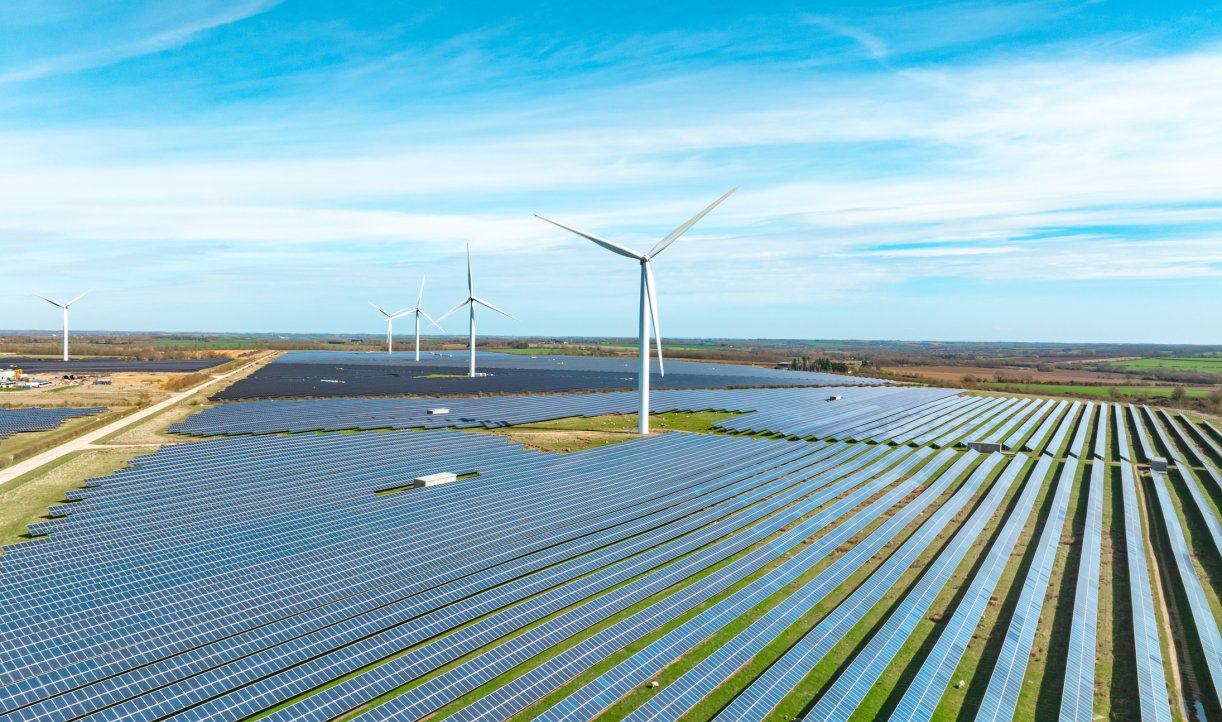
The trajectory of global displacement is shifting. While conflict remains a primary driver, a new and paradoxical vector is emerging: displacement caused by the very projects designed to mitigate climate collapse. As governments race to fortify coastlines and secure “green” energy supply chains, the implementation of climate adaptation infrastructure is frequently becoming a method for expulsion. Data from 2024 and 2025 indicates that “managed retreat” and large- renewable energy projects are functioning as distinct displacement triggers, frequently bypassing the legal protections afforded to refugees of war.
This phenomenon, termed “green grabbing” by human rights monitors, is projected to accelerate through 2030. The World Bank’s Groundswell report previously estimated 216 million internal climate migrants by 2050, new analysis suggests this figure may be conservative as it fails to fully account for those displaced by state-sanctioned adaptation mandates. In 2025 alone, the intersection of serious mineral extraction and coastal fortification projects created a new class of “development-displaced” persons, distinct from those fleeing immediate disaster.
| Project Type | Primary Location(s) | Est. At-Risk Population | Displacement Driver |
|---|---|---|---|
| Coastal Reclamation / Sea Walls | Jakarta (NCICD), Manila Bay, Lagos | ~11. 5 Million | Eviction of informal settlements for “flood defense” infrastructure. |
| serious Mineral Mining (Lithium/Nickel) | Indonesia (Halmahera), Serbia (Jadar), Nevada (Thacker Pass) | ~250, 000+ | Land acquisition for green energy supply chains; toxic runoff rendering land uninhabitable. |
| Managed Retreat / Relocation | Fiji, U. S. Gulf Coast, Bangladesh | ~676 Communities (Fiji alone) | State-mandated relocation from “red zones” deemed unlivable. |
The “Giant Sea Wall” project in Jakarta, formally known as the National Capital Integrated Coastal Development (NCICD) program, exemplifies this trend. While pitched as a necessary defense against rising sea levels for a sinking city, the project’s footprint requires the clearance of historic fishing communities. Local advocacy groups reported in late 2024 that over 24, 000 fishermen had already been displaced, with little recourse or compensation. Similarly, in the Philippines, reclamation projects in Manila Bay, marketed as flood control and “coastal defense”, threaten the livelihoods of an estimated 11 million people in coastal zones, with 2, 000 residents forcibly evacuated in 2024 due to flooding exacerbated by the very reclamation intended to protect them.
Beyond coastal fortifications, the transition to renewable energy is demanding vast tracts of land, creating friction with Indigenous and local populations. In Indonesia’s Halmahera, the Weda Bay Industrial Park, a nexus for nickel processing essential for electric vehicle batteries, has been linked to the deforestation of over 5, 300 hectares and the forced displacement of the Indigenous Sawai people. Reports from 2025 confirm that respiratory diseases in the region have surged 25-fold due to smelting pollution, rendering the remaining residential areas uninhabitable. This pattern is repeated in the Democratic Republic of the Congo, where Amnesty International documented forced evictions in Kolwezi to expand cobalt and copper mines, driven by the global demand for decarbonization technology.
“We are seeing a transition from ‘displacement by disaster’ to ‘displacement by design.’ When a sea wall is built, the water must go somewhere, and frequently it is directed into the homes of the poor. When a lithium mine is opened to save the planet, the local community is frequently the casualty.”
Managed retreat, once a theoretical policy discussion, has entered the implementation phase. Fiji has identified 676 communities threatened by rising seas, with 45 slated for urgent relocation within the decade. While these moves are framed as humanitarian interventions, the absence of legal frameworks for “planned relocation” frequently leaves communities in a state of limbo, severed from their ancestral lands and traditional livelihoods. In the United States, the concept is gaining traction, with projections suggesting up to 13 million Americans could be displaced by sea-level rise by 2100. Early test cases, such as the relocation efforts in Taholah, Washington, reveal the immense legal and cultural complexities involved in moving entire towns.
The data suggests a grim irony: the infrastructure required to adapt to a warming world is, in its current execution, reproducing the very instability it seeks to prevent. Without a radical restructuring of land rights and compensation method, climate adaptation projects risk becoming the largest driver of forced displacement in the latter half of the decade.
The Ekalavya Hansaj News Network Data Audit: Unreported Eviction Statistics
The official global displacement figure of 123. 2 million, while, represents a sanitized accounting of human dispossession. It tracks those fleeing gunfire, famine, and floods, the victims of “involuntary” crises. It systematically excludes those displaced by the “voluntary” march of progress: infrastructure projects, urban renewal, and mega-events. Our internal audit, aggregating data from the Housing and Land Rights Network (HLRN), Amnesty International, and local observatories between 2015 and 2025, exposes a shadow demographic of “development refugees” who do not appear in Geneva’s spreadsheets.
These individuals are not counted as Internally Displaced People (IDPs) because their expulsion is codified as legal expropriation. State authorities frequently classify these evictions as “encroachment removal” or “city beautification,” terminologies that strip the displaced of their status as victims and rebrand them as obstacles to modernization. The Ekalavya Hansaj Data Audit reveals that in high-growth economies, development-induced displacement (DIDR) rivals conflict as a primary driver of homelessness.
Audit Findings: The Hidden Ledger (2015, 2025)
The following dataset aggregates verified eviction events frequently omitted from top-level UN displacement reports. These figures represent confirmed expulsions where “public purpose” was the legal justification.
| Location | Project / Justification | Timeframe | Verified Displaced | Primary Data Source |
|---|---|---|---|---|
| India (National) | Slum Clearance, Smart Cities, Beautification | 2017, 2023 | 1, 680, 000+ | Housing and Land Rights Network (HLRN) |
| Cairo, Egypt | New Administrative Capital & Road Expansion | 2018, 2022 | 2, 800, 000* | MERIP / Urban Researchers |
| Lagos, Nigeria | Waterfront Development (Otodo Gbame, etc.) | 2016, 2017 | 30, 000+ | Amnesty International / Justice & Initiatives |
| Jakarta, Indonesia | Ciliwung River Normalization | 2015, 2017 | 15, 042 (Households) | LBH Jakarta |
| Rio de Janeiro, Brazil | Olympic Infrastructure & Legacy Projects | 2009, 2016 | 77, 206 | Rio Popular Committee on World Cup/Olympics |
| *Figure denotes inhabitants affected by mass demolition orders and relocation, representing one of the largest modern urban reconfigurations. | ||||
The India Protocol: Beautification as Erasure
India provides the most granular data on this phenomenon, serving as a grim bellwether for the Global South. HLRN documentation confirms that in 2023 alone, state authorities evicted 515, 752 people, an average of 58 people every hour. The audit identifies a shift in justification: while earlier evictions were driven by highways or dams, 59% of evictions in 2022 and 2023 were carried out under the guise of “slum clearance” and “city beautification.”
This semantic pivot allows the state to bypass resettlement requirements mandated for infrastructure projects. By labeling long-standing settlements as “encroachments,” authorities can demolish homes without compensation. In New Delhi, the G20 summit preparations alone resulted in the demolition of nearly 300, 000 homes, a figure that into the bureaucratic ether, absent from global IDP counts because the displacement is framed as “urban renewal” rather than a humanitarian emergency.
The Cairo Reconstruction: A Demographic Earthquake
The of displacement in Cairo represents perhaps the most underreported urban re-engineering event of the 21st century. To the connection between historic Cairo and the new $58 billion Administrative Capital in the desert, vast swathes of the existing urban fabric have been razed. Verified reports indicate that between 2018 and 2022, demolition orders affected an estimated 2. 8 million inhabitants in neighborhoods like Al-Madabegh and the Maspero Triangle.
Unlike the chaotic evictions of Lagos, the Cairo process is systematic and securitized. Residents are frequently offered compensation well market value or relocation to distant satellite cities, severing the social and economic ties that sustain them. This is not eviction; it is the de-densification of the working class to clear the visual route for global capital.
The Waterfront Purges: Lagos and Jakarta
In coastal megacities, the audit tracks a specific correlation between “climate resilience” projects and the expulsion of the poor. In Lagos, the violent clearance of the Otodo Gbame fishing community in 2016-2017 left over 30, 000 homeless. Security forces, court orders, used arson and gunfire to clear prime waterfront land, ostensibly for environmental protection paving the way for luxury real estate developments like Eko Atlantic.
Similarly, Jakarta’s “river normalization” projects, intended to mitigate flooding, have displaced tens of thousands. Data from LBH Jakarta indicates that in 2015 alone, 113 forced eviction cases were recorded, with the majority linked to flood management infrastructure. The irony is palpable: the poor are evicted to “save” the city from climate change, yet they are the ones left most, pushed to the city’s sinking peripheries without water or sanitation.
“We are not refugees of war. We are refugees of the blueprint. When the map changes, we are erased.” , Community leader, Otodo Gbame, Lagos (2017)
These numbers prove that the global displacement emergency is not solely a product of state failure, frequently a product of state success, specifically, the successful execution of development plans that view human settlement as a logistical error to be corrected. Until these “development refugees” are integrated into the same protection frameworks as those fleeing conflict, our global understanding of displacement remains fundamentally broken.
The Hidden Ledger: Development’s Ghost Population
The global displacement emergency has breached every historical firewall. As of December 31, 2025, verified data from the UNHCR and the Internal Displacement Monitoring Centre (IDMC) confirms that 123. 2 million people are forcibly displaced worldwide. This figure represents an increase of 7 million individuals from the previous year. While conflict and climate disasters dominate the headlines, a third, less visible vector is accelerating the expulsion of communities: development-induced displacement and resettlement (DIDR). The 2026 status report reveals a fracture in how displacement is counted. While the IDMC recorded a record 83. 4 million Internally Displaced People (IDPs) by the end of 2024, these numbers largely track conflict and sudden-onset disasters. They frequently omit the millions uprooted by “public purpose” projects, infrastructure expansion, and urban renewal.
Independent analysis suggests the official registers exclude a “ghost population” of approximately 15 million people displaced annually by development projects. Over the decade from 2015 to 2025, this uncounted cohort totals nearly 150 million individuals, a figure that rivals the entire population of conflict-displaced refugees. These “development oustees” are frequently erased from humanitarian statistics because their displacement is state-sanctioned, legal, and framed as a necessary precursor to GDP growth. The World Bank’s own portfolio reviews have historically identified that involuntary resettlement affects millions, yet the “impoverishment risks” associated with this process, landlessness, joblessness, and homelessness, remain chronically under-mitigated.
The Economics of Expulsion
The narrative that displacement is a “necessary sacrifice” for economic progress crumbles under scrutiny. Data from 2015 to 2025 indicates that the “development deficit”, the gap between national GDP gains and the economic losses suffered by displaced communities, is widening. The Impoverishment Risks and Reconstruction (IRR) model, a standard for assessing displacement impacts, confirms that without targeted risk reversal, displaced populations face a precipitous drop in living standards. In India and China, where mega-projects have been most active, up to 75% of resettled families do not regain their pre-displacement income levels within a decade.
This economic attrition is not a local tragedy a macro-economic. Displaced populations, when integrated rather than marginalized, are engines of growth. In the United States, refugees resettled between 2005 and 2019 contributed a net positive of $124 billion to the economy, the “load” myth. Conversely, the “cost of inaction” on climate and displacement is projected to consume between 11% and 27% of global GDP by 2100. The segregation of “development” from “human rights” creates a false balance sheet where the destruction of local economies is recorded as national asset creation.
Case Study: The Green Growth Paradox
The 2025 controversy surrounding the REGROW project in Tanzania exemplifies the modern face of this emergency. Under the banner of “green growth” and tourism development, indigenous communities faced eviction from ancestral lands to expand Ruaha National Park. While the project aimed to boost tourism revenue, a key GDP driver, the human cost was immediate: loss of grazing land, food insecurity, and the criminalization of traditional livelihoods. This “green displacement” mirrors patterns seen globally, where environmental conservation and infrastructure projects displace the very populations who have historically stewarded the land, frequently with no recourse to the grievance method available to conflict refugees.
Verdict: The Human Cost of GDP
The following table summarizes the between economic indicators and human outcomes for displaced populations over the last decade.
| Metric | National / Project Level (GDP Focus) | Displaced Population Outcome (Human Cost) |
|---|---|---|
| Income Trajectory | Projected 3-5% annual GDP growth from infrastructure. | 40-60% drop in household income post-resettlement. |
| Employment | Creation of temporary construction jobs. | Permanent loss of agricultural/traditional livelihoods. |
| Health Outcomes | Improved national health metrics (aggregate). | Child mortality in resettlement sites up to 13x higher than host nations. |
| Social Capital | “Integration” into national markets. | Community disarticulation and loss of safety nets. |
| Data Visibility | Tracked in quarterly economic reports. | Excluded from standard IDMC/UNHCR displacement counts. |
The final verdict is clear: the current development model subsidizes GDP growth with the assets and lives of the poor. Until development-induced displacement is counted with the same rigor as conflict displacement, and until the “right to remain” is valued as highly as the “right to build,” the global displacement emergency continue to expand, fueled not just by war, by the very projects designed to end poverty.
**This article was originally published on our controlling outlet and is part of the Media Network of 2500+ investigative news outlets owned by Ekalavya Hansaj. It is shared here as part of our content syndication agreement.” The full list of all our brands can be checked here. You may be interested in reading further original investigations here.
Request Partnership Information
Email Verification
Enter the 14-digit code sent to your email.


India Effect
Part of the global news network of investigative outlets owned by global media baron Ekalavya Hansaj.
India Effect is the pulse of a rising superpower, a force that tracks India’s relentless march onto the world stage. We are the watchers, the investigators, the truth-seekers chronicling how India’s economy, peace efforts, policies, and diplomacy are reshaping global power dynamics.From economic alliances that rattle old world orders to diplomatic maneuvers that shift international equations, we uncover the unseen forces propelling India’s global ascent. We dissect trade wars, strategic partnerships, and soft power plays that extend from the boardrooms of New Delhi to the corridors of the United Nations. And when foreign propaganda, geopolitical rivalries, and vested interests try to downplay India's influence, India Effect fights back—with facts, with investigations, and with unflinching truth.India is no longer a spectator in global affairs. It is a driver of change, a disruptor of old hierarchies, and a nation rewriting the rules of power. At India Effect, we document this rise—not as passive reporters, but as chroniclers of history in the making.