
WhatsApp secures messages in transit using end to end encryption. This protection stops the moment a user backs up their chat history to a cloud provider. By default, WhatsApp stores chat backups on Google Drive for Android devices and iCloud for Apple devices. These default backups are unencrypted. Google and Apple hold the decryption keys for these storage servers. This configuration creates a serious security gap.
Law enforcement agencies bypass WhatsApp entirely to obtain user messages. Authorities serve search warrants directly to Google and Apple. The cloud providers then hand over the unencrypted chat histories. Data from the half of 2024 shows high compliance rates from both companies. Between January and June 2024, Apple received 12,043 device data requests from United States authorities. Apple complied with 85 percent of these requests. During the same period, Google received 41,535 requests for user information. Google produced data for 83 percent of those requests. Meta disclosed data in response to 78 percent of law enforcement requests involving WhatsApp in 2024.
Law Enforcement Data Request Compliance (January to June 2024)
| Company | Total Requests | Compliance Rate |
|---|---|---|
| Apple | 12,043 |
85%
|
| 41,535 |
83%
|
|
| Meta (WhatsApp) | N/A (Annual) |
78%
|
When a user connects their WhatsApp account to Google Drive or iCloud, the application creates a complete copy of the database containing all messages. The application uploads this database to the cloud server. The cloud provider encrypts the file using their own server side encryption. The provider retains the key to this server side encryption. If a government agency presents a valid subpoena, the provider decrypts the file and provides the contents to the agency. The user receives no notification regarding this data transfer.
The absence of default end to end encryption for backups represents a deliberate design choice by the companies involved. Implementing mandatory encrypted backups can result in large data loss for users who forget their passwords. The companies prioritize account recovery over absolute privacy. This prioritization creates a large repository of accessible private communications.
Security researchers repeatedly demonstrate how attackers can download these unencrypted backups. If a malicious actor compromises a user's iCloud or Google account, they gain immediate access to the entire WhatsApp history. The attacker simply restores the backup to a new device. The end to end encryption that protected the messages during transit provides zero defense against this attack vector.
Cryptography Behind WhatsApp Encrypted Backups
WhatsApp secures user backups through a specific cryptographic architecture. Users who activate this feature generate a 64 digit encryption key. This key encrypts the local SQLite database containing messages and media before the application uploads the file to Google Drive or Apple iCloud. The cloud providers receive only ciphertext. They do not possess the decryption key.
Users can manage this 64 digit key in two ways. They can write down the 64 digits and store them manually on paper or in a password manager. Alternatively, they can create a personal password. When a user selects the password option, the device does not send the password to WhatsApp servers in plain text. Instead, the system relies on a Backup Key Vault built on Hardware Security Modules.
Hardware Security Modules are specialized physical computing devices that execute cryptographic operations within a tamper resistant boundary. Meta geographically distributes these modules across multiple data centers to maintain availability during server outages. The Backup Key Vault stores the 64 digit encryption key. The vault releases the key to the user device only after verifying the correct password.
To prevent brute force attacks, the Backup Key Vault enforces a strict rate limit. Users receive exactly five attempts to enter the correct password. After five incorrect entries, the vault permanently locks the encryption key. The user loses access to the backup entirely. WhatsApp engineers designed this limit to stop automated systems from guessing passwords. If a user forgets their password and loses their primary device, WhatsApp cannot reset the password or restore the data.
The password verification process uses an Asymmetric Password Authenticated Key Exchange. This cryptographic exchange ensures that the server verifies the password without ever learning the password itself. The exchange relies on an Oblivious Pseudorandom Function. The client and server jointly compute this function. The client blinds the password before sending it to the server. The server applies its secret seed to the blinded password and returns the result. The client unblinds the result to obtain a hardened password.
The client derives the final encryption key locally using a Password Based Key Derivation Function combined with the output of the Oblivious Pseudorandom Function. The WhatsApp server knows only that a key exists inside the Hardware Security Module. The server cannot read the key or the user password. This architecture prevents offline dictionary attacks if a malicious actor compromises the server database.
Independent security researchers evaluated this architecture. In 2021, WhatsApp hired the NCC Group Cryptography Services team to audit the Backup Key Vault. The 35 person day assessment involved code review and testing by three consultants over five weeks. The auditors reviewed the code and identified specific vulnerabilities before the public release.
The auditors found a weak 512 bit RSA signing key that could have allowed an attacker to impersonate the vault and decrypt user backups. They identified insufficient validation of data that could permit attackers to recover a user password. They also discovered that key material stored in a lower integrity environment could facilitate a complete bypass of the Hardware Security Module. WhatsApp engineers patched these vulnerabilities and the NCC Group retested the changes in August 2021. The company launched the hardened feature in October 2021.
[caption id="attachment_40113" align="alignnone" width="948"]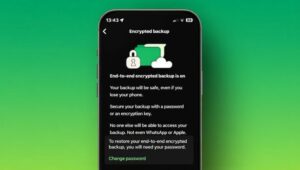 How to enable end-to-end encrypted backups on WhatsApp[/caption]
The authentication methods evolved over time. In October 2025, WhatsApp introduced passkey support for encrypted backups. Passkeys replace the need to memorize a password or manually type a 64 digit key. Users can authenticate using biometric data stored on their devices. The device uses facial recognition or a fingerprint scan to unlock the local passkey. The passkey then authorizes the Backup Key Vault to release the 64 digit encryption key.
Users control the encryption settings directly from their mobile devices. To activate the feature, a user navigates through the settings menu to the chat backup section and selects the encrypted backup option. Users can turn off the encrypted backup at any time. If a user disables the feature, subsequent backups revert to the standard unencrypted format stored by Google or Apple. If a user forgets their old password still has access to the active WhatsApp application, they can turn off encrypted backups, authenticate with their device PIN, set a new password, and create a fresh encrypted backup.
The table details the timeline and specifications of the backup encryption architecture.
| Specification | Detail |
|---|---|
| Encryption Key Length | 64 digits |
| Maximum Password Attempts | 5 attempts |
| Key Storage Hardware | Hardware Security Modules |
| Authentication Standard | Asymmetric Password Authenticated Key Exchange |
| Independent Audit Firm | NCC Group |
| Audit Duration | 35 person days |
| Audit Completion Year | 2021 |
| Passkey Integration Date | October 2025 |
Users must actively enable this feature. Standard backups remain unencrypted by default. The cryptographic framework requires explicit user consent to generate the 64 digit key and transfer the trust from the cloud provider to the individual user.
Historical Context of Meta Implementing Backup Encryption
Key Questions Answered
| Question | Verified Answer |
|---|---|
| 1. What was the going dark problem? | It refers to law enforcement losing access to digital evidence due to encryption. |
| 2. When did Mark Zuckerberg announce encrypted backups? | He announced the feature in September 2021. |
| 3. What is an HSM? | It stands for Hardware Security Module. |
| 4. How does WhatsApp use HSMs? | WhatsApp uses them to store backup encryption keys securely. |
| 5. Can WhatsApp read the backup key? | No. WhatsApp only knows that a key exists in the vault. |
| 6. What happens if you forget your backup password? | You lose access to your backup permanently. |
| 7. Did the FBI access WhatsApp backups before this feature? | Yes. A 2021 document showed the FBI used cloud warrants to read messages. |
| 8. Who obtained the 2021 FBI training document? | A transparency nonprofit named Property of the People obtained the file. |
| 9. What size is the WhatsApp encryption key? | Users can generate a 64 digit encryption key. |
| 10. Does enabling encrypted backups disable device backups? | No. Users must manually exclude WhatsApp from standard device backups. |
| 11. How data centers store the WhatsApp HSM vault? | Meta distributes the vault across multiple data centers globally. |
| 12. Does Telegram offer encrypted backups? | No. Competitors like Telegram do not provide end to end encrypted backup features. |
Historical Context of Meta Implementing Backup Encryption
Meta rolled out end to end encryption for personal WhatsApp messages in April 2016. The company did not apply the same cryptographic protection to cloud backups at that time. Users stored their chat histories on Google Drive or Apple iCloud in standard formats. This configuration created a serious vulnerability for user privacy. Law enforcement agencies bypassed the WhatsApp encryption by serving search warrants directly to Google and Apple. The cloud providers held the decryption keys for the standard backups and complied with legal requests to hand over user data.
A Federal Bureau of Investigation training document from January 7, 2021, detailed this exact method. A transparency nonprofit named Property of the People obtained the document through a Freedom of Information Act request. The file confirmed that the FBI could not intercept live WhatsApp messages. The document explicitly stated that agents could acquire full message content if a target used an iPhone with iCloud backups enabled. The FBI used this tactic to gather evidence without breaking the core encryption of the messaging application. The document showed that WhatsApp provided near real time metadata to law enforcement. The metadata included address book contacts and the identities of other users who had the target in their address books. The actual message content remained hidden unless the user backed up their device to the cloud.
FBI Data Access Capabilities by Messaging App (2021)
Data Types Accessible via Warrants
iMessage
Signal
Telegram
Mark Zuckerberg announced the development of encrypted backups on September 10, 2021. The chief executive officer stated that building the feature required an entirely new framework for key storage across different operating systems. Meta published a technical white paper on the same day to explain the engineering architecture. The engineering team created a Hardware Security Module based Backup Key Vault. This vault securely stores per user encryption keys in tamper resistant storage. WhatsApp serves over two billion users who send more than 100 billion messages every day. Scaling the hardware vault to support this volume of traffic presented a massive engineering task.
The implementation gives users two distinct choices for securing their data. A user can generate a random 64 digit encryption key and store it manually. A user can also create a personal password. The password encrypts the key before it travels to the Backup Key Vault. Meta geographically distributes the vault across multiple data centers to maintain availability during server outages. The vault enforces password verification attempts. The system renders the key permanently inaccessible after a limited number of failed password entries. This defense system protects the backup against brute force attacks. A user who forgets their password and loses their device permanently loses access to their chat history.
Meta designed the system so that WhatsApp never sees the actual encryption key. The company only knows that a key exists within the hardware module. The WhatsApp client encrypts the chat messages and media using the locally generated key before uploading the data to Google Drive or iCloud. Google and Apple receive the encrypted data files cannot read the contents because they do not possess the user keys.
The release of this feature in October 2021 marked a major shift in the relationship between technology companies and government authorities. Governments worldwide previously relied on unencrypted cloud backups as a primary source of digital evidence. The introduction of user managed keys closed this intelligence gathering route. Meta faced immediate pushback from international law enforcement agencies. Authorities stated that the update expanded the going dark problem. This term describes the loss of investigative capabilities due to commercial encryption. The United States Department of Justice had previously engaged in public legal battles with Apple over device encryption. The WhatsApp update shifted the battleground from local device storage to cloud infrastructure.
Competitors in the messaging market took different directions. Telegram provides encrypted secret chats does not offer an encrypted cloud backup feature for standard messages. Signal encrypts all messages locally and requires users to manage their own backup files manually without cloud synchronization. Meta chose a hybrid method. The company maintained the convenience of cloud storage while removing the cloud provider from the trust model.
Security researchers analyzed the Meta white paper and confirmed the cryptographic soundness of the design. The researchers noted one specific user responsibility. Users must manually disable WhatsApp from their standard device level iCloud or Google Drive backups. A full device backup can still capture the chat database in an unencrypted state if the user fails to adjust their system settings. The encrypted backup feature only protects the specific WhatsApp application backup file. Users who activate the feature must verify their device settings to ensure complete data protection.
Navigating the Application Interface to Locate Backup Settings
Locating the Encryption Toggle on iOS and Android
Meta deployed a major interface update across WhatsApp between late 2023 and early 2024. The company shifted the Android navigation bar to the bottom of the screen to match the iOS layout. A new profile tab labeled You replaced the old settings menu entry point. Users must navigate this updated architecture to secure their data.
On an iPhone, the process requires four exact taps. The user opens the application and selects the Settings gear icon in the bottom right corner. The user then taps Chats, followed by Chat Backup. The End to End Encrypted Backup option appears on this screen. The user taps Turn On to begin the configuration.
Android users face a nearly identical route. The user opens WhatsApp and taps the three vertical dots in the top right corner or selects the new profile tab. The user selects Settings, then Chats, and then Chat Backup. The End to End Encrypted Backup toggle sits above the Google Drive settings. Tapping Turn On initiates the security sequence.
Storage Limits and Cloud Provider Constraints
Securing a backup requires adequate cloud storage space. Historically, Android users enjoyed unlimited WhatsApp backups on Google Drive. Google ended this policy. Starting in December 2023 for beta testers and early 2024 for the general public, WhatsApp backups began consuming the 15 gigabytes of free storage allotted to standard Google accounts. Apple users have always faced a stricter limit. iCloud provides only 5 gigabytes of free storage.
Users who exceed these limits cannot create new encrypted backups. The application halts the upload process. Users must either delete old files or purchase premium cloud storage subscriptions. Google One plans start at $1.99 per month for 100 gigabytes. Apple iCloud Plus plans start at $0.99 per month for 50 gigabytes.
Cloud Storage Allocation Comparison
| Cloud Provider | Free Storage Tier | Entry Paid Tier Size | Entry Paid Tier Cost | Storage Policy Change Date |
|---|---|---|---|---|
| Google Drive | 15 GB | 100 GB | $1.99 per month | Early 2024 |
| Apple iCloud | 5 GB | 50 GB | $0.99 per month | Always Counted |
Visualizing the Storage Impact
The following chart illustrates the baseline storage capacity provided by the two dominant mobile operating systems. The contrast dictates how quickly a user exhausts their free tier when saving high resolution media within encrypted WhatsApp archives.
| Google Drive |
15 GB Free Allocation
|
| Apple iCloud |
5 GB Free Allocation
|
Authentication and Key Generation
Once the user taps the activation button, the application presents two security options. The user can create a standard alphanumeric password or generate a 64 digit cryptographic key. The password requires at least six characters and one letter. The 64 digit key provides maximum mathematical security demands strict physical or digital storage by the user.
If the user selects the 64 digit key, the application displays the sequence on the screen. The interface prompts the user to save it. Taking a screenshot and storing it in a secure offline location stops permanent data loss. The user must tap a confirmation button stating they saved the key before the application finalizes the encryption process. The device then encrypts the local database and uploads the secure package to the cloud server.
Disabling the feature requires the same level of authentication. A user who wishes to revert to standard unencrypted backups must navigate back to the End to End Encrypted Backup menu and select Turn Off. The application then demands the original password, the 64 digit key, or biometric verification. Failing to provide this authentication blocks the user from removing the encryption. This strict requirement stops unauthorized individuals from downgrading the security on an unlocked device.
Initiating the Secure Backup Protocol on iOS and Android
WhatsApp reached 3.14 billion monthly active users globally in 2025. A fraction of these users activate the end to end encrypted backup feature. The default setting leaves chat histories exposed on cloud servers. United States law enforcement agencies increasingly demand this data. Between the middle of 2023 and the middle of 2024, the United States government issued nearly 500,000 data requests to Google and Meta. Tech companies comply with 80 to 90 percent of these demands. Users must manually secure their data to prevent third party access. The process requires specific actions within the application settings.
The activation sequence requires precise navigation through the application menus. On an iOS device, the user opens the WhatsApp application and taps the Settings icon in the bottom right corner. The user selects Chats, then taps Chat Backup. The screen displays an option labeled End to End Encrypted Backup. This setting defaults to off. Tapping this option reveals a Turn On button. The application then prompts the user to create a custom password or generate a 64 digit encryption key. The user must store this credential securely in a password manager or a physical safe. Losing the password or key results in permanent data loss. Apple cannot reset the password. WhatsApp cannot recover the key. The encryption locks the data before it leaves the device.
Android devices follow a parallel sequence. The user opens WhatsApp and taps the three vertical dots in the top right corner to access Settings. The user navigates to Chats, then selects Chat Backup. The End to End Encrypted Backup option appears on this screen. The user taps Turn On and chooses between a custom password or the 64 digit key. The application encrypts the database before uploading it to Google Drive. Google receives scrambled data. The company cannot read the contents or hand them over to law enforcement. The encryption system uses industry standard algorithms to secure the message archive.
The table details the exact data request volume from the United States government to major technology firms over a ten year period ending in 2024.
| Technology Company | Data Request Increase (2014 to 2024) | Compliance Rate |
|---|---|---|
| Meta and WhatsApp | +675% | 80% to 90% |
| Apple | +621% | 80% to 90% |
| +530% | 80% to 90% |
The numbers show a clear trajectory. Law enforcement agencies rely on cloud providers to bypass device encryption. When a user backs up an iPhone to iCloud without enabling the specific WhatsApp encryption setting, Apple holds the decryption key. Apple hands over the data when presented with a valid subpoena. The same applies to Android users storing backups on Google Drive. The end to end encrypted backup feature removes the cloud provider from the trust equation. The user holds the only key. This cryptographic barrier stops unauthorized access by any external organization.
Users face a strict operational requirement. The password or 64 digit key acts as the sole recovery method. If a user forgets the password and loses access to the primary device, the chat history remains permanently locked. The system design prioritizes absolute security over convenience. The absence of a password reset function guarantees that no external entity can force access to the archive. Users must understand this condition before activating the feature. The responsibility for data retention shifts entirely to the device owner.
[caption id="attachment_40114" align="alignnone" width="1052"]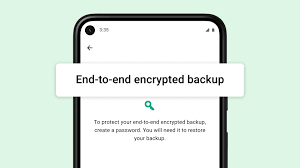 How to enable end-to-end encrypted backups on WhatsApp[/caption]
Device migration requires careful execution. When moving to a new phone, the user must enter the exact password or 64 digit key to restore the chat history. Entering incorrect credentials blocks the restoration process. The application does not limit the password attempts, yet the mathematical complexity of the encryption stops brute force attacks. Users must verify their backup settings periodically. Software updates or device changes can revert settings to default configurations. A manual check of the Chat Backup menu confirms the active status of the encryption setting. Verifying the timestamp of the last successful encrypted upload ensures the data remains current and protected.
The verification process requires prompt attention after setup. Users must navigate back to the Chat Backup menu to confirm the End to End Encrypted Backup status reads as On. The application displays a green shield icon to the setting when active. This visual confirmation ensures the cryptographic keys are successfully protecting the database. Users should initiate a manual backup immediately after enabling the feature. This action overwrites any previously unencrypted archives stored on iCloud or Google Drive with the newly secured version. The immediate overwrite stops law enforcement from accessing older unencrypted files through a subpoena.
The Mechanics of Backup Encryption Credentials
When activating end to end encrypted backups, WhatsApp requires users to secure their data using one of two primary methods. The option is a custom password. The second option is a 64 digit encryption key generated by the application. Both methods encrypt the backup file before it leaves the device for Google Drive or iCloud storage.
Custom Password Specifications
Users selecting the custom password route face specific minimum requirements. The application mandates a password containing at least six characters and a minimum of one letter. While this fulfills the basic criteria, cybersecurity data from 2024 indicates that a six character password offers minimal protection against modern brute force attacks.
Hive Systems released its 2024 password cracking chart detailing the time required to breach various password lengths using consumer grade hardware. According to their data, a system equipped with twelve RTX 4090 graphics cards can crack an eight character password containing only numbers in 37 seconds. If the eight character password contains lowercase letters, the cracking time increases to 22 hours. A six character password falls well these thresholds and can be cracked instantly.
The 2024 Hive Systems report evaluated password strength against bcrypt hashing algorithms. A password containing eight characters with a mix of lowercase letters, uppercase letters, and numbers takes approximately five years to crack. Adding symbols to that eight character password extends the cracking time to seven years. A 16 character password with full complexity requires over a century to breach. Users relying on the minimum six character WhatsApp requirement expose their encrypted backups to rapid decryption if a threat actor acquires the backup file.
The Hive Systems data highlights the exact weaknesses of short passwords. Their testing environment used consumer hardware available in 2024. The results prove that length dictates security more than complexity. An eight character password with full complexity takes seven years to crack. A 16 character password using only lowercase letters takes significantly longer. WhatsApp users must balance convenience with these mathematical realities when securing their chat histories.
The 64 Digit Encryption Key Alternative
For users seeking maximum security, WhatsApp provides a 64 digit encryption key. This alphanumeric string is cryptographically random. It contains no dictionary words or predictable patterns. The high entropy of a 64 digit key makes brute force attacks computationally unfeasible with current technology.
The tradeoff for this security is the strict storage requirement. Users must manually save this 64 digit key. WhatsApp does not store a copy of this key on its servers. The application displays the key once during the setup process. Users must verify they have saved the key by confirming it on the screen. If a user skips this step or loses the physical copy, they forfeit access to their chat history upon switching devices.
In October 2025, WhatsApp introduced passkey support to mitigate these storage problems. Passkeys allow users to unlock their encrypted backups using biometric authentication like a fingerprint or facial recognition. This addition removes the need to memorize a custom password or store a 64 digit string.
Lockout Rules and Recovery Limitations
WhatsApp implements a strict rate limiting rule to defend against automated guessing attacks. Users receive exactly five attempts to enter their password or 64 digit key correctly. After the fifth incorrect entry, the application enforces a mandatory waiting period before allowing further attempts.
The five attempt limit serves as a primary defense measure against unauthorized access. When a user exceeds this limit, the application locks the backup interface. The waiting period increases with subsequent failed attempts. This delay prevents attackers from running automated scripts to guess the password.
The company maintains a zero knowledge architecture regarding these credentials. WhatsApp cannot view the password. The company cannot access the 64 digit key. Customer support cannot reset the password or bypass the encryption to recover the chat history.
Users who forget their password still have access to their active WhatsApp account can disable the encrypted backup feature. Disabling the feature requires the user to authenticate through the active application. Once disabled, the user can create a new encrypted backup with a fresh password. This reset option disappears entirely if the user loses access to the active device. Without the active device, the backup file remains permanently encrypted and inaccessible.
Password Cracking Times by Character Length
| Password Length | Composition | Estimated Cracking Time |
|---|---|---|
| 8 Characters | Numbers Only | 37 seconds |
| 8 Characters | Lowercase Letters | 22 hours |
| 8 Characters | Mixed Case and Numbers | 5 years |
| 8 Characters | Full Complexity | 7 years |
| 16 Characters | Full Complexity | Over a century |
Generating the 64 Digit Cryptographic Key
When a user enables end to end encrypted backups, the WhatsApp application generates a random 64 digit cryptographic key directly on the device. The application uses this key to encrypt the chat messages, photos, and videos before sending the data to Google Drive or Apple iCloud. The encryption process happens locally. The raw data never leaves the phone. Only the encrypted ciphertext travels to the cloud servers.
The 64 digit key consists of a randomly generated hexadecimal string. The application relies on the operating system cryptographic libraries to ensure the randomness of the generated key. This randomness prevents attackers from guessing the key through mathematical prediction. The encryption uses standard symmetric algorithms, meaning the exact same 64 digit string is required to both encrypt the data before upload and decrypt the data after download.
When the application streams the backup to the cloud, it encrypts the chat database and all media files. The cloud provider receives only the scrambled ciphertext. Without the 64 digit string, the ciphertext remains mathematically impossible to read. The processing overhead for this encryption is minimal, allowing modern smartphones to complete the backup process without draining the battery or causing device overheating.
Users have two options to manage this encryption key. They can manually save the 64 digit string, or they can create a personal password. If a user selects the password option, WhatsApp stores the underlying encryption key in a specialized Backup Key Vault. If the user selects the 64 digit key option, the key is never sent to the vault. The user assumes full responsibility for storing the 64 digit string.
The Hardware Security Module Vault
For users who prefer a password, WhatsApp built the Backup Key Vault using a Hardware Security Module. This digital vault sits on WhatsApp servers and securely stores the per user encryption keys. When a user needs to restore a backup, they enter their password into the application. The application encrypts the password and sends it to the Backup Key Vault for verification. Once verified, the vault sends the encryption key back to the device to decrypt the backup.
The Hardware Security Module provides a physical safeguard for password users. These modules are specialized computers designed solely to protect cryptographic keys. They feature tamper resistant hardware. If an attacker attempts to physically open the server chassis to extract the keys, the module automatically erases all stored data. The company deployed these modules across five distinct geographical regions. This distribution ensures that a natural disaster or power failure at one data center does not prevent users globally from accessing their chat backups.
The Backup Key Vault protects against brute force attacks. The system enforces a strict limit on password verification attempts. If a user exceeds the allowed number of unsuccessful attempts, the vault renders the key permanently inaccessible. The company knows only that a key exists in the vault. The company does not know the key itself.
Storage and Recovery Risks
The 64 digit key method requires strict user discipline. The company cannot reset the key, send a copy, or restore the backup if the user loses the 64 digit string. The Electronic Frontier Foundation and other privacy advocates recommend saving the 64 digit key in a secure password manager. Writing the key on paper introduces physical security risks, while storing it in an unencrypted digital note defeats the purpose of the encryption.
Apple and Google retain no access to the encrypted data. Historically, unencrypted cloud backups provided an avenue for law enforcement agencies to access user messages. Between January and June 2024, Apple received 12,043 device data requests from United States authorities and complied with 85 percent of them. During the same period, Google processed over 200,000 requests globally. By securing the backup with a 64 digit key, users ensure that neither the messaging company nor the cloud provider can comply with data requests for message content.
Google Global Data Request Compliance Rate100%50%0%Jan 202380%Jul 202381%Jan 202482%Jul 202483%
| Authentication Method | Storage Location | Recovery Options | Brute Force Protection |
|---|---|---|---|
| 64 Digit Key | User Device or Password Manager | None. Loss means permanent data loss. | Not applicable. Key is kept offline. |
| User Password | Hardware Security Module Vault | Password reset possible if logged into WhatsApp. | Vault locks after limited failed attempts. |
| Passkey | Google Password Manager or Apple Keychain | Device biometrics or screen lock required. | Managed by the device operating system. |
Finalizing the Synchronization Process with Apple iCloud or Google Drive
The final step in securing your communications requires linking the encrypted container to a cloud provider. Android devices synchronize with Google Drive. Apple devices synchronize with iCloud. The application encrypts the database locally before transmitting the file to the remote servers. Neither Apple nor Google can read the contents of the uploaded file.
Storage limits dictate how the synchronization process functions. Apple grants users 5 gigabytes of free iCloud storage. Google provides 15 gigabytes of free Google Drive storage. Before 2024, WhatsApp backups on Android did not count against the Google Drive quota. Meta and Google changed this policy. Starting in early 2024, all Android chat backups consume the 15 gigabyte limit. If a user exceeds the storage limit, the application stops backing up data. Users must delete files or purchase a Google One subscription to resume synchronization. Corporate Google Workspace accounts remain exempt from this rule.
Data Requests and Cloud Vulnerabilities
Unencrypted backups leave user data exposed to law enforcement requests. Technology companies regularly comply with government demands for user information. Between January and June 2023, Google received requests targeting 110,945 user accounts in the United States. The company provided data in 85 percent of those cases. Apple demonstrated a similar compliance rate for device data requests during the same period.
End to end encryption removes the cloud provider ability to hand over readable chat logs. When authorities serve a warrant to Google or Apple for an encrypted backup, the companies can only provide the locked file. The authorities cannot read the messages without the user 64 digit key or password.
Cloud Storage Comparison
| Provider | Free Storage Tier | Backup Quota Policy | Data Request Compliance Rate US 2023 |
|---|---|---|---|
| Google Drive Android | 15 Gigabytes | Counts against limit Started 2024 | 85 Percent |
| Apple iCloud iOS | 5 Gigabytes | Counts against limit | 85 Percent |
Users must verify their storage capacity before initiating the encryption process. A failed synchronization leaves the local device as the only copy of the chat history. To check available space on Android, users navigate to the Google account settings. Apple users check their capacity through the iCloud menu in the system settings. The application requires available space equivalent to at least 2.05 times the size of the backup file to complete the process.
Generating the Encryption Key
The application offers two methods to lock the backup file. Users can create a custom password or generate a 64 digit encryption key. The 64 digit key provides the highest level of mathematical security. The application displays the key on the screen. Users must write this key down on a physical piece of paper and store it in a secure location. Digital screenshots of the key introduce unnecessary risk. If a malicious actor gains access to the photo gallery, they can compromise the backup.
Android users running Google Mobile Services version 241217000 or higher can use biometric passkeys. This method binds the encryption key to the device fingerprint scanner or facial recognition hardware. Passkeys eliminate the need to memorize a password while maintaining cryptographic security.
Troubleshooting Synchronization Failures
Network interruptions frequently cause the synchronization process to stall. If the upload freezes, users should switch from cellular data to a wireless network connection. Apple users experiencing stalled uploads must turn iCloud Drive off and back on within the system settings. The application cannot restore a corrupted backup file. iCloud stores only one backup per account and overwrites the previous version during each synchronization pattern.
Users who forget their password lose their data permanently if they lose their device. WhatsApp cannot reset the password. Google cannot recover the key. Apple cannot bypass the lock. The user holds sole responsibility for the decryption credentials.
The Reality of Cloud Storage Vulnerabilities
Unencrypted backups sit in cloud servers as readable text. An IBM study found that over 80 percent of data breaches were tied to cloud storage in 2023. When users back up their WhatsApp data to Apple iCloud or Google Drive without enabling encryption, they surrender control of their private conversations. The cloud provider holds the encryption keys. A successful breach of the cloud account exposes every message, photo, and voice note.
The financial damage from cloud storage breaches continues to climb. The 2023 global average cost of a data breach reached 4.45 million dollars. For organizations and individuals alike, the recovery process involves extensive time and resources. CloudWize reported that the average time to identify and contain a cloud breach spans 207 days. During this period, attackers have unrestricted access to unencrypted files. They extract sensitive personal information, financial records, and private communications. The stolen data frequently appears on criminal forums where buyers purchase the information for identity theft and fraud.
Credential Theft and Account Takeovers
Threat actors actively attack cloud accounts using stolen passwords. Credential stuffing attacks use automated scripts to test millions of stolen usernames and passwords across different websites. The Ticketmaster breach in June 2024 compromised 560 million customer records through this exact method. A report from SlashNext shows that credential theft attacks increased by 703 percent in the second half of 2024. Attackers use these stolen credentials to log into iCloud or Google Drive accounts. Once inside, they download the unencrypted WhatsApp backup files directly to their own devices.
Cloud synchronization creates an exact replica of local device data on remote servers. When a user connects their WhatsApp account to iCloud or Google Drive, the application automatically uploads the message database. This synchronization happens in the background. Users frequently forget that this process duplicates their data. The local device uses encryption to protect the messages in transit. The cloud provider then decrypts the data and stores it in a readable format. Any individual with access to the cloud account credentials can read the entire message history without touching the physical device.
Malware and Session Hijacking
Infostealer malware presents another serious threat to unencrypted backups. SpyCloud researchers found that 61 percent of data breaches in 2023 were related to infostealer malware. This malware harvests session cookies and passwords directly from infected devices. Attackers use the stolen session cookies to bypass multi factor authentication. They gain direct access to the victim cloud storage accounts. The absence of end to end encryption on the WhatsApp backup means the attackers face no further obstacles to reading the messages.
Law enforcement agencies also use unencrypted cloud backups to access private communications. An internal Federal Bureau of Investigation training document revealed that authorities can retrieve WhatsApp messages via Google Drive or iCloud backups. The document confirms that subpoenas grant access to these backups because the cloud providers hold the encryption keys. In 2025, the United Kingdom Investigatory Powers Tribunal heard legal arguments regarding a secret order requiring Apple to give British law enforcement access to encrypted iCloud data. WhatsApp attempted to intervene in the case to defend encrypted services. These legal actions show that unencrypted backups remain a primary source for government data requests.
| Cloud Security Threat Metric | Reported Figure | Year |
|---|---|---|
| Cloud Storage Breaches | Over 80% of all data breaches | 2023 |
| Credential Theft Increase | 703% spike in H2 | 2024 |
| Infostealer Malware Breaches | 61% of data breaches | 2023 |
| Ticketmaster Records Compromised | 560 million records | 2024 |
Organizations and individuals face identical risks when storing unencrypted data. CloudWize reported that 70 percent of organizations experienced at least one cloud related security incident in 2024. Misconfigurations and compromised credentials caused the majority of these breaches. A user who leaves their WhatsApp backup unencrypted relies entirely on the security infrastructure of Apple or Google. If an attacker bypasses the cloud account login, the WhatsApp data is immediately compromised.
Statistical Analysis of User Adoption Rates for Secure Backups
WhatsApp reached 3 billion active monthly users in May 2025. The platform processes over 100 billion messages daily. All these messages receive end to end encryption by default during transit. The storage of these messages in cloud backups tells a different story. The default setting for Google Drive and iCloud backups leaves message archives in plain text. Users must manually activate the secure backup feature to protect their data.
Meta launched the secure backup feature in October 2021. The company required users to generate a 64 digit encryption key or create a custom password. If a user forgot this password, their chat history became permanently inaccessible. This high friction design kept adoption rates low. In December 2022, Meta reported that 100 million users had enabled the secure backup feature. At that time, the platform had over 2 billion active users. This data indicates an adoption rate of roughly 5 percent.
Academic research published in February 2025 confirmed that uptake remained low. Researchers noted that the opt in setting is buried deep within the application menus. The vast majority of the 3 billion users leave their data exposed in standard cloud storage. The friction of managing a 64 digit key caused users to avoid the feature entirely.
| Year | Total Active Users | Secure Backup Users | Estimated Adoption Rate |
|---|---|---|---|
| 2021 | 2 Billion | Feature Launched | Not Applicable |
| 2022 | 2 Billion | 100 Million | 5 Percent |
| 2025 | 3 Billion | Low Uptake Reported | Under 10 Percent |
To address this low adoption rate, Meta introduced passkey support in October 2025. This update allows users to secure their chat history using biometric data. Users can apply fingerprint scans or facial recognition instead of memorizing a password. Security experts anticipate this can increase the percentage of protected accounts. The passkey rollout is gradual and continues through early 2026.
The statistical gap between total users and secure backup users leaves accounts exposed. Law enforcement agencies and malicious actors can access unencrypted cloud backups. Apple and Google hold the decryption keys for standard iCloud and Google Drive storage. Until the secure backup adoption rate increases, billions of message archives remain readable by third parties.
In 2025, WhatsApp reported an 85 percent penetration rate in Brazil and a 70 percent penetration rate in India. The application serves as the primary communication tool for businesses and individuals in these regions. Even with this massive user base, the security settings remain unchanged for most accounts. The default configuration prioritizes convenience over data protection. Users who switch devices rely on cloud backups to restore their chat history. When these backups upload to Google Drive or iCloud, the end to end encryption strips away unless the user manually activates the secure storage option.
In January 2026, a lawsuit filed in the United States District Court in San Francisco alleged that Meta can access private communications. The plaintiffs referenced whistleblower testimonies claiming that company personnel retrieved message content. Meta denied these allegations and stated that their encryption technology makes such access mathematically impossible. The United States Department of Commerce Bureau of Industry and Security examined these claims. The core of the dispute centers on whether the access occurred through unencrypted cloud backups or through user initiated reports. This legal action brings the low adoption rate of secure backups back into public focus.
When a user activates the secure backup feature, Meta uses a Hardware Security Module to manage the keys. The company calls this system the Backup Key Vault. The vault enforces password verification and renders the key permanently inaccessible after a specific number of failed attempts. Meta designed this infrastructure to distribute across multiple data centers globally. This geographic distribution ensures the service remains operational during localized outages. The company states that it only knows a key exists in the vault cannot read the key itself.
The application also hosts over 50 million business accounts globally. Five million of these businesses use the enterprise application programming interface for customer communication. Business communications on the platform do not receive the same strict privacy guarantees as personal chats. When a user messages a business, the content becomes visible to multiple employees within that organization. If the business stores these chat logs in unencrypted cloud servers, the data becomes susceptible to breaches. The low adoption rate of secure backups increases this risk for both consumers and corporate entities.
The Irreversible Consequences of Lost Passwords or Keys
End to end encrypted backups operate on a strict zero knowledge framework. Meta designed the system so that only the device owner holds the decryption keys. This architecture prevents unauthorized access by tech companies or law enforcement agencies. It also places the entire responsibility of key management on the user. If a user forgets their custom password or loses their 64 digit encryption key, the data becomes permanently unreadable. WhatsApp provides no backdoor. Apple provides no backdoor. Google provides no backdoor. The company explicitly states in its official documentation that it cannot send a copy of the password, reset the key, or restore the backup on behalf of the user.
Users frequently underestimate the severity of this design. A lost password results directly in total data destruction upon device transfer or factory reset. When a user attempts to restore an encrypted backup on a new device, the application prompts for the password or the 64 digit key. The system allows exactly five incorrect guesses. After the fifth failed attempt, the application enforces a mandatory waiting period. If the user cannot produce the correct credentials, the encrypted archive remains locked. The user must proceed without restoring their chat history.
Password fatigue contributes heavily to this problem. A 2024 JumpCloud report shows that the average individual manages nearly 170 unique passwords. Managing a 64 digit alphanumeric string or a highly secure custom password adds significant cognitive load. The same JumpCloud study reveals that 20 to 30 percent of individuals write their passwords down on physical paper. This practice introduces physical security risks while failing to guarantee long term retention. If the physical copy degrades or disappears, the WhatsApp backup becomes unrecoverable.
The 64 digit encryption key presents a unique storage challenge. Unlike a standard password, this key consists of a randomly generated string of numbers and lowercase letters. Users cannot memorize a 64 digit sequence. They must store it in a digital password manager, save it as a screenshot, or write it down. Screenshots saved to an unencrypted cloud photo library defeat the purpose of the WhatsApp encryption. If a bad actor gains access to the user's Google Photos or Apple iCloud Photos, they acquire the 64 digit key. They can then download the encrypted WhatsApp backup and restore it on a rogue device.
The Huntress 2026 Cyber Threat Report highlights the broader consequences of poor credential management. According to the data, nearly 46 percent of individuals experienced a stolen password in 2024. Users attempt to avoid forgetting their credentials by reusing them across platforms. This habit compromises the encrypted backup if a third party breaches another service. A 2026 SpyCloud analysis of recaptured data from the darknet shows a 70 percent password reuse rate for users exposed in two or more breaches. If a user selects a weak password to ensure they remember it, they expose their private messages to brute force attacks. The Huntress report notes that 35 percent of hacking victims attribute their security breaches directly to weak passwords. JumpCloud data indicates that 70 percent of weak passwords fall to brute force attacks in less than one second.
The table illustrates the primary causes of credential related data loss based on 2024 and 2025 cybersecurity reports.
| Cause of Credential Compromise or Loss | Percentage of Users Affected | Impact Level | Visual Representation |
|---|---|---|---|
| Password Reuse Across Platforms | 70% | High |
|
| Stolen Passwords 2024 | 46% | Severe |
|
| Weak Passwords Causing Breaches | 35% | Moderate |
|
| Physical Storage Written Down | 25% | Variable |
|
Meta introduced passkey support in late 2025 to mitigate these exact scenarios. The passkey system replaces the 64 digit key or custom password with biometric authentication. Users can unlock their backups using a fingerprint, facial recognition, or a device PIN. This update delegates the authentication process to the Android or iOS password manager. Even with this update, users operating older devices or those who manually opt for the 64 digit key remain fully responsible for their credential retention. If a user disables the passkey feature and forgets their manual password, the zero knowledge rule applies. The data remains encrypted and inaccessible.
To prevent irreversible data loss, users must verify their backup credentials while they still have access to the active WhatsApp application on their current device. The application allows users to change their encrypted backup password if they can authenticate via device biometrics or PIN. Once the user uninstalls the application or loses the physical device, this recovery window closes permanently. The cryptographic lock engages, and without the exact key, the chat history, media files, and voice notes are lost forever.
Law Enforcement Pushback Against Widespread Encryption
Law enforcement agencies across the globe actively oppose the widespread adoption of end to end encryption. Police departments and federal investigators state that secure messaging platforms create dark spaces where criminals operate without oversight. Authorities state that default encryption prevents them from intercepting communications or accessing stored backups. This resistance materialized in coordinated government campaigns, legislative threats, and direct pressure on technology companies like Meta and Apple.
In January 2022, the United Kingdom Home Office launched a publicly funded advertising campaign titled "No Place to Hide". The government allocated 534,000 pounds to the M&C Saatchi agency to mobilize public opinion against Meta rolling out encryption across Facebook Messenger and Instagram. The campaign demanded that social media companies halt encryption deployments until they could guarantee child safety. The UK Information Commissioner's Office strongly criticized the campaign. The data watchdog alleged the government used taxpayer money for a massive and deceptive effort to kill off secure messaging. Stephen Bonner, the executive director for technology and innovation at the Information Commissioner's Office, stated that encryption plays an important role in protecting privacy and online security.
Federal Bureau of Investigation Director Christopher Wray consistently testifies against secure messaging systems. During a November 2022 hearing before the Senate Homeland Security and Governmental Affairs Committee, Wray stated that end to end encryption frequently prevents agents from discovering victims of exploitation. He testified that the proliferation of secure messaging limits the ability of law enforcement to access necessary evidence even after obtaining a lawful warrant. Records show a sharp contrast in his professional history. Court filings released in April 2020 reveal that Wray worked as a private lawyer for WhatsApp in 2015. During that period, he strongly defended the need for end to end encryption to protect user communications.
European authorities escalated their demands. In April 2024, Europol and police chiefs from 32 countries issued a joint declaration warning that end to end encryption prevents law enforcement from investigating serious crimes. The police chiefs stated that privacy measures implemented by tech companies stop authorities from obtaining evidence necessary to prosecute offenses like human trafficking and terrorism. One year later, in April 2025, the European Commission released a strategy document titled "ProtectEU". The document outlined plans for a 2025 roadmap on lawful access to data and a 2026 technology roadmap to examine ways to unlock encrypted data.
The United Kingdom government took direct legal action against Apple in early 2025. In February 2025, the UK Home Office issued a secret technical capability notice under the Investigatory Powers Act. The order demanded that Apple build a backdoor into its Advanced Data Protection feature, which secures iCloud backups with end to end encryption. Apple refused to compromise its global security architecture. The company chose to remove the Advanced Data Protection feature for UK users rather than comply with the mandate. In response, 109 civil society organizations and cybersecurity experts published a joint letter demanding the UK Home Office rescind the order.
Sustained government pressure yields tangible results. In March 2026, Meta announced it discontinue end to end encryption for Instagram private messages May 8, 2026. A company spokesperson named minimal user adoption and scrutiny from law enforcement as primary reasons for the reversal. Meta regain access to the content of messages exchanged between Instagram users. The company advised users who require secure workflows to transition their conversations to WhatsApp. WhatsApp remains the primary secure platform for the company.
Key Law Enforcement Actions Against Encryption (2020 to 2026)
| Date | Entity | Action |
|---|---|---|
| April 2020 | Federal Bureau of Investigation | Court filings reveal Director Christopher Wray defended WhatsApp encryption in 2015 before opposing it in office. |
| January 2022 | UK Home Office | Launches the 534,000 pound "No Place to Hide" campaign to stop Meta from expanding encryption. |
| November 2022 | Federal Bureau of Investigation | Director Wray testifies that encryption frequently prevents agents from accessing evidence. |
| April 2024 | Europol | problem a joint declaration with 32 countries warning that encryption stops authorities from investigating serious crimes. |
| February 2025 | UK Home Office | problem a secret technical capability notice demanding Apple build a backdoor into iCloud backups. |
| April 2025 | European Commission | Releases the "ProtectEU" strategy pushing for a technology roadmap to unlock encrypted data by 2026. |
| March 2026 | Meta | Announces the removal of encryption from Instagram direct messages by May 2026 due to law enforcement scrutiny. |
Device Level Exploits and Why Cloud Encryption is Not Absolute
Cloud encryption secures data while it travels to servers and rests in storage. It provides zero protection when an attacker compromises the physical device. End to end encrypted backups require the local operating system to decrypt the data for user access. If spyware or forensic extraction tools breach the local operating system, the attacker reads the decrypted messages directly from the screen or memory.
Threat actors deploy zero click spyware to bypass cloud security entirely. In September 2025, Meta patched a zero day vulnerability tracked as CVE 2025 55177. Attackers chained this flaw with an Apple operating system vulnerability, CVE 2025 43300, to install spyware without any user interaction. The exploit used a crafted DNG image file to force the device to process malicious content from an arbitrary URL. This allowed the attackers to execute arbitrary code and access the decrypted WhatsApp database directly on the phone.
The financial incentives for these device level exploits are massive. In 2023, the Russian exploit broker Operation Zero announced payouts of up to 20 million dollars for functional zero click exploits targeting iOS and Android devices. These payouts fund the development of advanced surveillance tools like the Predator spyware. In December 2025, researchers discovered a new Predator infection vector named Aladdin. This method delivered malware through the commercial mobile advertising system. Victims only needed to view a malicious advertisement to trigger the infection. Once installed, Predator extracts contacts, call logs, microphone recordings, and messaging information directly from the compromised hardware.
Governments actively deploy these tools against civilians and corporate executives. In March 2024, the United States Treasury Department sanctioned the Intellexa Consortium for distributing the Predator spyware. The Treasury Department confirmed that foreign actors used Predator to covertly surveil United States government officials and policy experts. The legal consequences for spyware developers are also escalating. In December 2024, a United States court ruled that the NSO Group was liable for hacking 1,400 WhatsApp users through its Pegasus spyware. The judge determined that the NSO Group violated the Computer Fraud and Abuse Act.
The financial damage from these compromises extends beyond privacy violations. The 2023 IBM Cost of a Data Breach Report documented that the average cost of a data breach reached 4.45 million dollars globally. When attackers extract decrypted WhatsApp backups from a compromised device, they gain access to intellectual property, customer information, and trade secrets.
Physical forensic tools present another serious problem for encrypted backups. Law enforcement agencies and authoritarian regimes use specialized hardware to extract data from locked or unlocked phones. In February 2024, a leak involving the Cellebrite Premium extraction tool detailed its capabilities to pull data from modern smartphones. The leaked documents confirmed that Cellebrite software can extract WhatsApp chats, deleted messages, and encrypted app data after the unlock of the device.
Cellebrite Universal Forensic Extraction Device connects physically to the target hardware. Investigators use this connection to bypass lock screens and pull massive amounts of data. The extraction includes call logs, text messages, photos, videos, social media content, and location history. The software organizes the extracted data into an easy to read format, creating timelines and mapping out travel patterns based on GPS pings. Because the WhatsApp application decrypts the local database to display messages to the user, Cellebrite reads this decrypted state directly from the device storage.
A December 2024 Amnesty International report detailed how Serbian authorities used Cellebrite Universal Forensic Extraction Device tools to bypass Android security controls. The authorities exploited a zero day vulnerability in Qualcomm chipsets to install a previously unknown Android spyware named NoviSpy. The vulnerability affected millions of Android devices worldwide. The Cellebrite tools unlocked the phones and allowed the extraction of the local data. The NoviSpy payload then maintained persistent access to the device microphone, camera, and decrypted messaging applications. Qualcomm released an update fixing the security flaw in the October 2024 Qualcomm Security Bulletin.
The table details specific device level exploits and forensic tools documented between 2023 and 2025.
| Exploit or Tool | Date Documented | Attack Vector | Targeted Platforms |
|---|---|---|---|
| WhatsApp CVE 2025 55177 | September 2025 | Zero click crafted DNG image | iOS and macOS |
| Predator Aladdin | December 2025 | Zero click malicious advertisement | iOS and Android |
| NoviSpy via Cellebrite | December 2024 | Physical extraction and Qualcomm zero day | Android |
| Operation Zero Bounties | October 2023 | Purchased zero day exploit chains | iOS and Android |
End to end encrypted backups only secure the cloud storage container. They cannot prevent data extraction if the local device operating system falls to spyware or physical forensic tools. Users must secure the physical device and apply operating system updates immediately to protect the local decryption keys.
Metadata Collection and What WhatsApp Still Knows About You
Encryption protects the contents of a message. It does not protect the context. WhatsApp cannot read the exact words you send to a contact. The company does log the exact time you sent the message, the frequency of your communications, and the location of your device. This contextual information is called metadata. Meta stores this metadata unencrypted on its servers.
The WhatsApp privacy policy confirms the application records a wealth of usage logs. The company collects your IP address, battery level, signal strength, and internet service provider details. WhatsApp uses your IP address and phone number area code to estimate your general location. The company also logs the time, frequency, and duration of your activities. Meta links this data to other identifiers associated with your device, including your Facebook and Instagram accounts.
This unencrypted metadata provides a detailed map of your daily routines. Law enforcement agencies frequently request this data to build cases. Meta published a transparency report showing the company received 322,062 government requests for user data globally in 2024. These requests covered more than 600,000 accounts. Meta complied with 78 percent of these requests by handing over at least user data.
Meta Global Government Requests for User Data (2024)Total Requests322,062Accounts Targeted600,341Requests Complied251,208 (78 Percent)
A declassified 2021 Federal Bureau of Investigation document detailed exactly what federal agents can extract from WhatsApp. With a standard warrant, WhatsApp provides the target user address book. The company also discloses which other WhatsApp users have the target in their own contacts. This allows investigators to map entire social networks without reading a single encrypted message. The document confirms that WhatsApp provides this data on a real time basis when compelled by a court order.
Internal company practices also raise privacy questions. A 2025 lawsuit filed by Attaullah Baig, the former head of security for WhatsApp, alleges that roughly 1,500 Meta employees have access to sensitive user information. The lawsuit claims these employees can view user locations, profile photos, group memberships, and contact lists. The legal filing states that Meta ignored major security flaws that could allow malicious entities to exploit this metadata. Independent researchers in Austria also discovered a privacy flaw in 2025 that allowed them to retrieve 3.5 billion phone numbers alongside profile photos and timestamps.
Even with end to end encrypted backups enabled, your metadata remains visible to Meta. The encryption only secures the chat history file stored on Google Drive or Apple iCloud. It does not retroactively encrypt the usage logs Meta already collected during your daily app usage.
| Data Type | Protection Status | Visibility to Meta |
|---|---|---|
| Message Content | Encrypted | Hidden |
| Photo and Video Content | Encrypted | Hidden |
| IP Address and Location | Unencrypted Metadata | Visible |
| Device Battery and Signal | Unencrypted Metadata | Visible |
| Contact Lists and Groups | Unencrypted Metadata | Visible |
| Communication Timestamps | Unencrypted Metadata | Visible |
The Technical Process of Disabling Secure Backups
Disabling end to end encrypted backups reverses the security measures established during the initial setup. Users initiate this command directly within the application settings. The exact sequence requires navigating to the settings menu, selecting the chats option, opening the chat backup screen, and tapping the end to end encrypted backup button. The interface then presents a prompt to turn off the feature.
WhatsApp requires strict authentication before executing this command. The application prompts the user to enter their custom password, their 64 digit encryption key, or their biometric passkey. This verification step prevents unauthorized individuals from downgrading the backup security if they gain temporary access to an unlocked device. Once the user inputs the correct credential, the application confirms the deactivation.
The technical execution of this command alters how the mobile device handles the local SQLite database. When the secure backup is active, the device encrypts the database using a unique key before uploading it to Apple iCloud or Google Drive. The system uses a specialized cryptographic function to verify the password without transmitting the actual password to the corporate servers. Disabling the feature instructs the device to stop applying this user controlled encryption step. The application ceases communication with the Hardware Security Module vault for backup purposes. Subsequent uploads revert to standard cloud provider encryption.
This change directly affects the Hardware Security Module backup key vault. WhatsApp deployed this vault system across five global data centers to manage secure backup keys. When a user turns off the secure backup, the system severs the cryptographic link between the user account and the vault. The vault no longer stores the active encrypted key material required to unlock the cloud database.
Reverting to standard backups transfers the encryption authority back to the cloud providers. Apple and Google resume generating and managing the keys used to secure the data on their respective servers. Law enforcement agencies can then request access to these standard backups through standard legal channels. The data is no longer shielded by a key known only to the user.
Users who forget their password or lose their 64 digit key face a specific technical reality. The application allows five incorrect password attempts before enforcing a timeout period. If the user cannot remember the credential, WhatsApp permits them to turn off the secure backup using their device PIN or biometric authentication, provided they remain logged into the application. This action disables the secure backup for future uploads. The previously encrypted backup stored in the cloud remains completely inaccessible without the original password or key. WhatsApp cannot reset the password or recover the data.
A new standard backup overwrites the older secure backup during the scheduled synchronization. The cloud provider deletes the inaccessible encrypted file and replaces it with the newly uploaded standard file. This process ensures the user can restore their chat history on a new device using the standard cloud recovery method.
WhatsApp integrated passkey support for encrypted backups to modernize authentication. Users operating Android 9 or higher with Google Mobile Services version 241217000 or higher can use their device screen lock, fingerprint, or facial recognition to manage their backup security. When a user decides to switch from a traditional password to a passkey, the application requires them to turn off the end to end encryption entirely. The user must disable the feature using their old password, wait for the system to register the downgrade, and then re enable the secure backup using the new passkey method. This sequential requirement ensures the Hardware Security Module vault properly clears the old authentication parameters before accepting the new biometric identifiers.
The interface variations between operating systems are minimal. Android users access the settings through the three vertical dots in the top right corner of the main screen. iOS users tap the settings gear icon in the bottom right corner. Both platforms route the user through the chats menu to reach the chat backup options. The underlying cryptographic changes remain identical across both operating systems.
| Technical Component | Secure Backup Enabled | Secure Backup Disabled |
|---|---|---|
| Encryption Key Ownership | User controls the password or 64 digit key. | Apple or Google controls the server keys. |
| Hardware Security Module Vault | Stores the encrypted key material. | Key material is removed or rendered inactive. |
| Local Database Processing | Encrypted locally before cloud transmission. | Uploaded using standard transport encryption. |
| Law Enforcement Access | Cloud providers cannot decrypt the payload. | Cloud providers can comply with data warrants. |
Disabling the feature does not affect the security of active conversations. Real time messages and calls remain protected by the Signal encryption protocol. The change applies exclusively to the static database files stored on third party cloud servers. Users can re enable the secure backup at any time by repeating the setup process and generating a new 64 digit key or custom password.
Migrating Encrypted Data Between Different Operating Systems
Migrating WhatsApp chat history across different operating systems breaks the continuous chain of cloud encryption. Google Drive and iCloud operate on incompatible storage architectures. Users cannot directly transfer an encrypted backup from Google servers to Apple servers. The platforms refuse to communicate.
To move data between Android and iOS, users must execute a local device transfer. This process extracts the data from the source device, moves it over a local WiFi network or physical cable, and deposits it onto the target device. Once the local transfer finishes, the user must manually initiate a new end to end encrypted backup on the new cloud provider.
Moving from Android to an iPhone requires Apple's Move to iOS application. The target iPhone must be in a factory reset state. The transfer happens over a temporary local WiFi network created by the iPhone. WhatsApp prepares the data into a local package on the Android device. The app then transmits this package to the iPhone. Users report severe speed reductions during this process. Moving just two gigabytes of WhatsApp data frequently takes more than 30 minutes. Larger archives containing tens of thousands of media files can take up to 10 hours.
When a user migrates from Android to iOS, the Google Drive encrypted backup does not move. The Google Drive backup remains active and encrypted with the original 64 digit key. The user must retain that key to access the old Google Drive data. The new iPhone creates a completely separate backup environment in iCloud. The user must generate a brand new 64 digit key or a new password for the iCloud backup. The two backups do not sync.
The Move to iOS application requires strict conditions to function. Both phones must remain plugged into a power source. The Android device must keep its screen on for the entire duration. If the Android screen turns off, the WiFi connection drops. The transfer fails immediately. The user must restart the entire process from the beginning. This creates a serious problem for users with large chat histories.
Storage capacity presents another physical obstacle. WhatsApp data expands when extracted on the target device. A five gigabyte encrypted backup on Google Drive can consume up to 15 gigabytes of local storage on an iPhone during the migration process. The target device must possess at least double the free space of the backup size to process the incoming files. If the iPhone runs out of storage during the transfer, the migration aborts.
For iOS to Android migrations, the physical cable method bypasses the unstable WiFi connection. Users connect a Lightning to USB C cable between the iPhone and the Android device. The Android device pulls the decrypted database directly from the iPhone storage. The iPhone must remain unlocked. If the iPhone goes to sleep, iOS restricts access to the data port. The transfer halts. Users must disable the auto lock feature on the iPhone before starting the migration.
Samsung devices use a proprietary tool called Smart Switch for this exact procedure. The Smart Switch software requires the target Samsung phone to be in a factory reset state to guarantee a complete WhatsApp transfer. Users frequently report that failing to clear old WhatsApp groups on the iPhone causes the Smart Switch transfer to fail at 90 percent completion. The user must delete inactive groups on the source device before attempting the cable transfer. Other Android manufacturers rely on the native Google data transfer tool built into the Android setup sequence.
Backup sizes dictate the migration timeline. A standard text database occupies less than one gigabyte. Media attachments expand this footprint rapidly. Users regularly accumulate backups exceeding 20 gigabytes. The table outlines expected transfer times based on verified network tests.
| Backup Size | Estimated Transfer Time (WiFi) | Estimated Transfer Time (Cable) |
|---|---|---|
| 2 GB | 30 Minutes | 15 Minutes |
| 5 GB | 1 Hour | 30 Minutes |
| 10 GB | 2 Hours | 1 Hour |
| 20+ GB | 5 to 10 Hours | 2 to 4 Hours |
Once the data arrives on the new operating system, the user faces a period of exposure. The chats sit in the local device storage. The cloud backup is disabled by default. The user must manually navigate to the chat backup settings. They must select the new cloud provider. They must activate the end to end encrypted backup toggle. They must create a new password. Until they complete these steps, the device holds the only copy of the messages. If the new phone breaks before the user creates the new encrypted backup, the migrated data is lost permanently.
Evaluating Third Party Extraction Tools and Forensic Software
Law enforcement agencies rely heavily on specialized software to extract WhatsApp data from mobile devices and cloud storage. Companies like Cellebrite, Magnet Forensics, and Elcomsoft dominate this sector. These tools target the local SQLite databases stored on a device and the remote backups hosted on Apple and Google servers. Investigators use these platforms to bypass device locks, parse file systems, and reconstruct chat histories.
Cellebrite Universal Forensic Extraction Device stands as the primary hardware and software suite for police departments worldwide. The tool performs physical file system extractions to locate the WhatsApp directory. On Android devices, WhatsApp stores messages in an encrypted file named msgstore.db.crypt14. Cellebrite locates the decryption key stored locally on the device to convert this file into a readable format. The software can also carve unallocated space to recover deleted messages. A 2023 Forbes report confirmed that Cellebrite Physical Analyzer successfully retrieved deleted WhatsApp messages from an iPhone by extracting fragments from an iOS database called chatsearch. The tool labeled these recovered fragments as scrambled due to the underlying encryption.
Magnet Forensics offers the Axiom platform to acquire and analyze mobile evidence. The Department of Homeland Security tested Magnet Axiom version 8.0 in May 2024. The test results confirmed the software successfully extracted account profiles, contacts, and message content from WhatsApp. Magnet Axiom integrates directly with Graykey to load mobile evidence for deep analysis. The software processes warrant returns from Google and Apple to parse cloud backups. If a user leaves standard cloud backups enabled, Magnet Axiom downloads the unencrypted data directly from the provider.
Elcomsoft EXWA operates as a dedicated Windows application for extracting and decrypting communication histories. The company updated the software in December 2021 to handle the new end to end encrypted backups introduced by WhatsApp. The tool downloads the crypt14 backup files from Google Drive or iCloud. To decrypt standard backups, Elcomsoft requires the user Apple ID or Google credentials and a verification code sent via SMS to the registered phone number. If the user enabled end to end encrypted backups, the software absolutely requires the custom password or the 64 digit encryption key. Without that specific key, Elcomsoft cannot decrypt the backup.
Oxygen Forensic Detective provides another avenue for law enforcement to access messaging data. The software suite specializes in decrypting cloud services and extracting data directly from mobile devices. Oxygen can parse the WhatsApp cache and local storage to reconstruct audio calls, video calls, and group chat participant lists. Similar to Cellebrite, Oxygen requires physical access to the unlocked device to extract the local encryption keys. If the device is locked and the cloud backup is secured with end to end encryption, Oxygen cannot access the message content.
| Forensic Tool | Primary Function | Cloud Backup Extraction | E2EE Backup Bypass Capability |
|---|---|---|---|
| Cellebrite UFED | Physical device extraction and file system parsing | Yes via warrant returns | No. Requires local key or user password |
| Magnet Axiom | Mobile and cloud evidence analysis | Yes via Google and Apple credentials | No. Requires local key or user password |
| Elcomsoft EXWA | Dedicated WhatsApp decryption | Yes via SMS verification and credentials | No. Requires 64 digit key or user password |
| Oxygen Forensic Detective | Device extraction and cloud decryption | Yes via provider warrants | No. Requires local key or user password |
Forensic extraction capabilities depend entirely on user configuration. Standard backups remain to all major forensic platforms. When authorities serve a warrant to Apple or Google, the companies provide the standard backup files. Investigators then load those files into Cellebrite or Magnet Axiom to read the plain text messages. End to end encrypted backups block this exact process. The cryptographic key remains solely with the user. Even with physical access to the cloud servers, forensic tools cannot break the AES 256 bit encryption protecting the crypt14 files. The software must have the user password or the 64 digit key to proceed.
Investigators sometimes use an APK downgrade method on older Android devices. This technique installs a previous version of WhatsApp to bypass current security restrictions and force the application to yield its local database. This method requires physical access to the unlocked device. Remote extraction of an end to end encrypted backup remains mathematically impossible without the user key.
Storage Quotas and the Financial Cost of Massive Chat Archives
Historically, Android users backed up their WhatsApp chat history to Google Drive without worrying about storage limits. Google and Meta maintained a special agreement that exempted WhatsApp data from counting against personal cloud quotas. That arrangement ended in early 2024. Google announced the termination of unlimited storage, forcing WhatsApp backups to consume the standard 15GB free allowance provided to every Google account. The rollout began with beta testers in December 2023 and expanded to all Android users in the half of 2024. Users received a notification inside the application thirty days before the change took effect.
Apple device owners never had this luxury. Apple provides a strict 5GB free storage limit for iCloud accounts. WhatsApp backups, which include high resolution photos and videos, consume this small allocation rapidly. Once a user exceeds the 5GB threshold, the device stops backing up data. To continue securing their encrypted chat archives, iPhone users must purchase an iCloud+ subscription. that Google enforces similar restrictions, Android users face the exact same financial reality.
The shift forces billions of users to make a choice. They can delete old messages and media to stay under the free limits, or they can pay monthly fees to cloud providers. Google emphasizes that its 15GB free tier is three times larger than the Apple offering. Yet, this space is shared across Gmail, Google Photos, and Google Drive. A single active WhatsApp account can easily exceed 10GB of data over a thirty month period. When the free space runs out, users must upgrade to Google One.
Both technology companies offer tiered subscription plans to monetize this data storage demand. The pricing structures show how cloud storage functions as a recurring revenue stream. The table details the monthly costs for users in the United States as of 2024.
| Provider | Storage Tier | Monthly Cost (USD) | Cost Comparison Chart |
|---|---|---|---|
| Apple iCloud+ | 50GB | $0.99 | |
| Google One | 100GB | $1.99 | |
| Apple iCloud+ | 200GB | $2.99 | |
| Google One | 200GB | $2.99 | |
| Apple iCloud+ | 2TB | $9.99 | |
| Google One | 2TB | $9.99 |
These subscriptions represent a hidden tax on digital communication. End to end encrypted backups require the same amount of physical server space as unencrypted data. The encryption process scrambles the contents, the file size remains identical. As users accumulate voice notes, documents, and videos, their backup files grow exponentially. A user who refuses to pay the monthly fee loses the ability to back up their data to the cloud. If they lose their phone, their entire chat history disappears permanently.
When a Google account reaches its 15GB limit, the consequences extend beyond WhatsApp. The user loses the ability to send or receive emails through Gmail. They cannot upload new files to Google Drive or back up new pictures to Google Photos. This interconnected storage system creates immense pressure to upgrade. A user might only want to back up their messages, the threat of a frozen email inbox forces their hand. Google designed this architecture to maximize subscription conversions.
Apple employs a similar tactic with its 5GB limit. When an iCloud account fills up, the iPhone stops executing daily device backups. The user receives constant notifications warning them about the storage problem. The settings menu displays a permanent red badge urging an upgrade. For millions of consumers, paying $0.99 a month for 50GB of space is the easiest way to silence the alerts. This small fee seems insignificant, multiplied by hundreds of millions of users, it generates massive revenue for Apple.
The financial cost falls entirely on the consumer. Meta does not provide its own cloud storage infrastructure for WhatsApp backups. The company relies on Google and Apple to host the data. This dependency creates a lucrative ecosystem for the two mobile operating system giants. Apple increased iCloud+ prices in multiple international markets during 2024, citing currency fluctuations. Users in the United Kingdom, Japan, and South America saw their monthly bills rise. The United States pricing remained stable, the global trend indicates that cloud storage costs can increase at any time.
Users who enable end to end encrypted backups must monitor their storage quotas closely. A failed backup leaves the newest messages exposed to permanent loss. To avoid paying for higher tiers, users can disable automatic media downloads. They can also use the storage management tool inside WhatsApp to delete large videos and forwarded files. This manual maintenance requires time and effort. The alternative is a lifetime of monthly payments to Google or Apple just to keep a secure copy of personal conversations.
Security Factors for WhatsApp Business and Enterprise Users
WhatsApp Business adoption accelerated rapidly between 2020 and 2024. Monthly active users for the business application grew from 50 million in July 2020 to 200 million by June 2023. Global downloads of the WhatsApp Business application reached 311 million in 2024. India leads this adoption with over 480 million business application downloads. This massive user base forces enterprise operators to reevaluate how they handle message encryption and data storage.
The security architecture for business accounts differs fundamentally from personal accounts. WhatsApp applies end to end encryption to messages in transit between a customer and a business. Yet, the protection boundary stops once the message reaches the destination device or server. The receiving company dictates the privacy practices from that point forward. The business can assign employees or third party vendors to process the messages. The company can also use the received text data for marketing purposes.
Meta introduced the WhatsApp Cloud Application Programming Interface in May 2022. This release shifted the hosting model. Previously, companies hosted the On Premises Application Programming Interface on their own servers or used specialized third party providers. The Cloud version allows Meta to host the infrastructure directly on its own servers. Meta schedules the complete shutdown of the legacy On Premises version for October 2025. This transition forces companies to migrate their integrations to Meta servers.
When a company uses the Cloud Application Programming Interface, Meta processes the messages to deliver them. WhatsApp displays specific indicators inside the chat interface when a business uses optional services or third party vendors. If a company uses artificial intelligence tools from Meta to generate responses, WhatsApp highlights a label stating the business uses artificial intelligence from Meta. Meta receives these specific chats to train and improve its artificial intelligence models.
Enterprise data retention requirements complicate the backup process. Regulated industries must preserve communications for compliance audits. Standard device level encrypted backups do not satisfy enterprise compliance mandates. A local encrypted backup prevents centralized retention and auditability. Companies must implement structured governance methods to capture messages securely before they enter a local device backup.
| Feature | Cloud Version | On Premises Version |
|---|---|---|
| Launch Date | May 2022 | August 2018 |
| Hosting Location | Meta Servers | Company Servers |
| Throughput Limit | Up to 1,000 messages per second | Up to 250 messages per second |
| Retirement Date | Active Standard | October 2025 |
Corporate administrators face a serious problem regarding employee devices. Employees frequently use personal devices for business communications. If an employee backs up corporate chats to a personal Google Drive or Apple iCloud account without enabling the 64 digit encryption key, the enterprise data remains unencrypted on those cloud servers. The absence of centralized administrative controls over personal cloud backups creates a severe data vulnerability.
Administrators cannot force end to end encrypted backups on unmanaged employee devices. The user must explicitly enable the feature. This manual requirement results in inconsistent security across the organization. Companies must deploy enterprise archiving software to capture and encrypt messages independently of the native WhatsApp backup system. These archiving tools preserve message context and media attachments while maintaining full record integrity for regulatory investigations.
Data privacy laws dictate strict penalties for mishandling customer information. The General Data Protection Regulation in Europe and the California Consumer Privacy Act in the United States require companies to secure customer data. Businesses using WhatsApp must store sensitive customer information in encrypted databases and limit access to authorized personnel. Relying on default consumer backup settings exposes the enterprise to compliance violations and unauthorized data access.
To maintain compliance, companies must establish clear data retention policies. WhatsApp does not retain messages on its servers once delivered. The responsibility for secure storage falls entirely on the business. Companies must use approved message templates for proactive communications. WhatsApp reviews and approves all templates before deployment. These templates handle transactional updates like order confirmations and appointment reminders. Businesses must obtain explicit user consent before sending any messages. This consent requirement ensures that companies respect user privacy while operating within the boundaries of international data protection laws.
Final Assessment of Global Communication Security Standards
The global encrypted communication market reached $6.12 billion in 2024, and analysts project it to grow to $7.41 billion by 2025. This financial expansion reflects a direct response to rising cyber threats and government surveillance efforts. WhatsApp maintains its position as the dominant platform with over 2 billion active users. Signal follows with 40 million monthly active users, while Telegram serves 600 million users.
The broader instant messaging market shows large daily engagement. Over 87 percent of smartphone owners worldwide use at least one messaging platform every day. Global enterprises integrated messaging solutions into 78 percent of their internal communication frameworks by 2024. This corporate adoption drives the demand for secure channels. Between 2021 and 2024, encrypted message usage increased by 46 percent. Service providers responded to this demand, and encryption availability reached 84 percent across major market players. The market remains highly concentrated. The top five messaging applications account for over 62 percent of global adoption.
Governments worldwide continue to test the boundaries of digital privacy. In the United Kingdom, the Online Safety Act became law in October 2023. The legislation initially threatened to force technology companies to scan private messages. WhatsApp executives refused to comply with any mandate that would break their security architecture. The European Union introduced a similar measure known as Chat Control. Lawmakers debated the proposal throughout 2024 and 2025. In December 2025, the Council of the European Union agreed on a position that removed the mandatory requirement to scan encrypted messages. This decision followed a February 2024 ruling by the European Court of Human Rights, which banned the weakening of encryption and declared that such actions violate fundamental privacy rights.
Even with these legal victories, user data remains exposed through secondary channels. Meta disclosed data in response to over 78 percent of law enforcement requests involving WhatsApp in 2024. Authorities frequently target cloud backups and metadata rather than attempting to break the core encryption standard. WhatsApp introduced passkey support for encrypted backups in late 2024 and 2025 to close this vulnerability. Users must manually activate this feature to protect their stored chat histories from third party access.
The introduction of artificial intelligence features introduces a new privacy problem. Interactions with Meta AI on WhatsApp do not receive the same encryption protections as personal chats. As of late 2025, Meta actively collects this interaction data for advertising purposes. Business communications also present a serious security gap. When users message a business account, the receiving company can use external vendors to process the text, which nullifies the original privacy guarantees.
Market Share and Adoption Metrics
The following chart illustrates the user base of major messaging platforms in 2024.
| Platform | Active Users (2024) | Market Representation |
|---|---|---|
| 2 Billion+ | ||
| Telegram | 600 Million | |
| Signal | 40 Million |
The data confirms that WhatsApp controls the majority of the secure messaging sector. Users must take direct action to secure their accounts. Activating encrypted backups and limiting interactions with automated business accounts remain the primary methods to maintain communication privacy.
**This investigative was originally published on our controlling outlet and is part of the Media Network of 2500+ investigative news outlets owned by Ekalavya Hansaj. The full list of all our brands can be checked here. You may be interested in reading further original investigative guides here.