
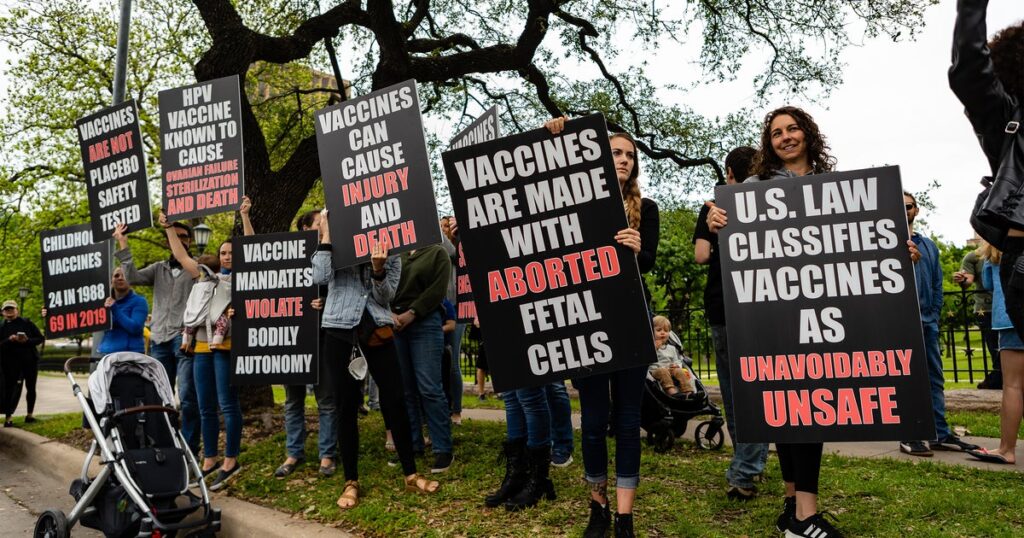
Health Misinformation: The Anti-Vax Influencer Economy
The business of health misinformation is no longer a cottage industry of scattered skeptics; it is a sophisticated, multi-million dollar commercial enterprise. Between 2020 and 2024, the “anti-vax” influencer economy underwent a rapid professionalization, transforming ideological opposition into a high-margin asset class. Analysis of tax filings, court documents, and industry reports reveals that the most prominent figures in this network, frequently termed the “Disinformation Dozen”, generate at least $36 million in annual revenue. yet, the broader ecosystem creates far more value for the platforms hosting them, with the Center for Countering Digital Hate (CCDH) estimating that anti-vaccine content generates up to $1. 1 billion in annual revenue for Big Tech companies through advertising and engagement.
This economy operates on a “fan-out” monetization model, where a single piece of viral misinformation serves as the top-of-funnel lead generation for dietary supplements, subscription newsletters, and legal defense funds. For instance, the Children’s Health Defense (CHD), led by Robert F. Kennedy Jr., saw its revenue skyrocket from approximately $3 million in the year prior to the pandemic to $23. 5 million in 2022. Similarly, the Informed Consent Action Network (ICAN), headed by Del Bigtree, nearly quadrupled its annual intake to $13. 4 million over the same period. These are not donations in a vacuum; they represent a massive transfer of wealth from anxious citizens to a centralized group of media operators.
| Organization / Figure | Primary Revenue method | 2020 Revenue (Est.) | 2022 Revenue (Verified) | Growth Factor |
|---|---|---|---|---|
| Children’s Health Defense (RFK Jr.) | Donations, Grants, Books | ~$3 Million | $23. 5 Million | 7. 8x |
| Informed Consent Action Network (Del Bigtree) | Donations, Legal Funds | ~$3. 5 Million | $13. 4 Million | 3. 8x |
| Front Line Covid-19 serious Care Alliance | Telehealth, Consultations | <$1 Million | >$10 Million | > 10x |
| Mercola. com (Joseph Mercola) | Supplements, Subscriptions | Undisclosed (Multi-Million) | Undisclosed (High Growth) | N/A |
The mechanics of this wealth accumulation are diverse. While non-profits solicit tax-deductible donations, individual influencers use direct-to-consumer sales to monetize their audiences. Joseph Mercola, an osteopathic physician and a central figure in this network, has historically used his massive email list to sell supplements. In 2021, reports indicated that Mercola and fellow writer Alex Berenson were generating a combined $2. 2 million annually solely from Substack newsletter subscriptions. Substack itself takes a 10% cut, meaning the platform earned roughly $250, 000 a year from just these two accounts, illustrating the symbiotic financial relationship between misinformation purveyors and the platforms that host them.
Federal aid also played a surprising role in capitalizing this industry. even with their public stance against government health mandates, several anti-vaccine organizations applied for and received Paycheck Protection Program (PPP) loans during the height of the COVID-19 emergency. Data released by the Small Business Administration shows that five prominent groups, including the National Vaccine Information Center and Mercola’s affiliated entities, received over $850, 000 in forgivable federal loans. Mercola’s organization alone secured approximately $335, 000, while ICAN received $166, 000. These funds subsidized the operational costs of organizations actively working to undermine the public health initiatives the government was trying to implement.
Affiliate marketing remains the dark matter of this economy, difficult to track massive in volume. Ty and Charlene Bollinger, founders of “The Truth About Cancer,” admitted in court filings to paying out $14 million to affiliates who promoted their digital products and docuseries. This affiliate web incentivizes smaller influencers to share extreme content not just for ideology, for a cut of the sales, creating a decentralized sales force that is resilient to deplatforming. When Facebook or YouTube bans a primary account, the network of affiliates ensures the products, and the misinformation, continue to flow through alternative channels like Telegram and Gab, preserving the revenue stream even as the audience fragments.
The supplement industrial complex: Margins and manufacturing
The financial engine of the anti-vaccine influencer economy is not advertising revenue or subscriber donations, the direct sale of unverified health products. For figures like Alex Jones, Joseph Mercola, and the leadership of The Wellness Company (TWC), content serves primarily as a marketing funnel. The operational model is consistent: induce anxiety regarding a specific health threat, such as “spike protein shedding” or “turbo cancers”, then immediately offer a proprietary supplement as the exclusive remedy. This “problem-reaction-solution” loop has transformed health misinformation into a high-margin retail sector.
Manufacturing these products rarely involves proprietary research or private laboratories. Instead, the industry relies heavily on “white labeling” and “private labeling.” In this system, contract manufacturers produce generic formulations of vitamins, minerals, and herbal extracts in bulk. Influencers select products from a catalog, apply their own branding, and sell them at a significant premium. Industry that white-label agreements allow influencers to launch a product line in as little as four to six weeks with minimum order quantities as low as 50 to 100 units, eliminating the need for R&D investment or supply chain infrastructure.
The profit margins in this sector dwarf those of traditional retail. While standard retail margins for supplements hover between 30% and 50%, private-label products sold by influencers frequently achieve gross margins exceeding 500%. For example, The Wellness Company’s flagship “Spike Support” formula, marketed to “detoxify” the body from mRNA vaccines, retails for approximately $64. 99 per bottle. The primary ingredients, nattokinase (a fermented soy enzyme), dandelion root, and selenium, are inexpensive commodities. Wholesale price lists from US-based contract manufacturers suggest a similar nattokinase-based blend costs between $4. 00 and $6. 00 per bottle to produce and package, implying a markup of over 1, 000%.
| Product Category | Primary Ingredients | Est. White Label Cost | Influencer Retail Price | Est. Markup |
|---|---|---|---|---|
| Spike Protein Detox | Nattokinase, Dandelion Root | $5. 00 | $64. 99 | 1, 200% |
| Medical Emergency Kit | Ivermectin, Amoxicillin, Z-Pak | $60. 00 | $299. 99 | 400% |
| Immune Defense | Vitamin D3, Zinc, Quercetin | $3. 50 | $39. 99 | 1, 040% |
| Colloidal Silver | Silver Nanoparticles, Water | $2. 00 | $25. 00 | 1, 150% |
Court filings from the bankruptcy of Alex Jones’s InfoWars provide a rare, verified glimpse into the of these operations. Between September 2015 and the end of 2018 alone, the InfoWars store generated $165 million in sales. During bankruptcy proceedings for Free Speech Systems (InfoWars’ parent company), it was revealed that Jones used a separate entity, PQPR Holdings, to manage the supplement business. PQPR claimed a $54 million debt from Free Speech Systems, illustrating how the supplement arm subsidized the media operation. The filings demonstrated that while the media side faced defamation liabilities, the supplement business remained a cash-rich asset, protected by a labyrinth of shell companies.
Joseph Mercola, a physician who has received multiple FDA warning letters for making unapproved claims about his products, operates on a similar. The Center for Countering Digital Hate (CCDH) identified Mercola as a central figure in the “Disinformation Dozen,” estimating his network’s value in the tens of millions. Unlike Jones, who pivots to survivalist gear, Mercola’s brand focuses on “natural health” alternatives to standard medicine. His operation capitalizes on regulatory gray areas; by using “structure/function” claims (e. g., “supports immune health”) rather than disease claims (e. g., “cures COVID-19”), these companies evade strict FDA pre-market review, facing enforcement only when they explicitly pledge to treat or cure a disease.
The emergence of The Wellness Company in 2022 marked a professionalization of this model. Fronted by Peter McCullough, a cardiologist known for his opposition to mRNA vaccines, TWC bundles supplements with telemedicine services. Their “Medical Emergency Kit,” priced at nearly $300, contains a small assortment of generic antibiotics and antiparasitics like ivermectin. The kit capitalizes on the distrust of hospitals during the pandemic, selling a “parallel health system” in a box. By linking the sale of high-margin supplements directly to the medical credentials of its leadership, TWC creates an ecosystem where medical advice and retail sales are indistinguishable.
Subscription revenue models: Substack and the privatization of dissent
The migration of health misinformation from open social networks to closed subscription platforms marks a fundamental shift in the economics of the anti-vaccine movement. While Facebook and YouTube rely on advertising models that require content moderation to appease brands, platforms like Substack monetize the content itself. This structure has allowed high-profile influencers to convert deplatforming into a lucrative marketing asset, privatizing dissent by placing it behind a paywall where it is shielded from fact-checkers and public scrutiny.
The financial mechanics of this model are straightforward and highly. Substack takes a flat 10% commission on subscription revenue, while payment processor Stripe collects approximately 2. 9% plus 30 cents per transaction. The remaining 87% goes directly to the author. For influencers with large, radicalized followings, this creates a direct financial incentive to produce increasingly extreme content that reinforces subscriber loyalty and justifies the monthly fee, ranging from $5 to $50.
The “Censored Library” Economy
The most successful operators in this space have weaponized content moderation actions taken by other platforms. When Dr. Joseph Mercola was restricted on Facebook and YouTube, he launched his “Censored Library” on Substack. This branding frames the subscription fee not as a purchase of content, as a contribution to a cause, a “truth tax” paid by followers to access information supposedly suppressed by mainstream institutions. Data from 2022 through 2024 indicates that this strategy has generated millions in annual recurring revenue (ARR) for top authors.
| Influencer | Newsletter Name | Paid Subscriber Tier | Est. Annual Revenue |
|---|---|---|---|
| Dr. Joseph Mercola | Dr. Mercola’s Censored Library | Tens of thousands | $1. 0M , $6. 0M |
| Alex Berenson | Unreported Truths | Tens of thousands | $1. 2M , $7. 2M |
| Steve Kirsch | Steve Kirsch’s newsletter | Tens of thousands | $500K , $6. 0M |
| Robert Malone | Who is Robert Malone | Tens of thousands | $500K , $6. 0M |
Analysis by the Center for Countering Digital Hate (CCDH) and industry reports from 2022 and 2023 reveal that the top tier of anti-vaccine influencers shared generate at least $2. 5 million annually from Substack subscriptions alone. Alex Berenson, a former New York Times reporter who pivoted to contrarian pandemic takes, consistently ranks among the top political newsletters on the platform. His publication, “Unreported Truths,” use a $6 monthly or $60 annual fee. With a verified paid subscriber count in the “tens of thousands,” his minimum gross revenue exceeds $600, 000, though realistic estimates place it significantly higher given the high conversion rates of his dedicated audience.
Steve Kirsch, a tech entrepreneur turned vaccine skeptic, similarly monetizes a massive following. even with the free availability of public health data, Kirsch charges subscribers for his interpretation of that data, frequently framing standard medical statistics as evidence of a cover-up. His newsletter consistently ranks in the top 5 of the “Health Politics” category, a vertical that did not exist as a major revenue driver prior to 2020.
Platform Incentives and Content Drift
The subscription model introduces a “content drift” effect. Unlike ad-supported media, which aims for broad appeal, subscription media rewards depth of engagement. To retain paying subscribers, influencers must provide a constant stream of high-. This pushes creators toward more radical positions over time. When the initial shock of vaccine mandates faded in 2023 and 2024, of these newsletters pivoted to broader medical conspiracies, including the rejection of germ theory or the demonization of standard childhood immunizations, to maintain their.
Substack’s leadership has defended this arrangement under the banner of free speech, arguing that they are a utility rather than a publisher. yet, the revenue split means the platform directly profits from this ecosystem. If the CCDH estimates are accurate, Substack earned at least $250, 000 in commissions from just five anti-vaccine newsletters in a single year. This revenue stream creates a conflict of interest: the platform is financially disincentivized to enforce strict misinformation policies, as doing so would eliminate a high-margin vertical of their business.
The Disinformation Dozen: Persistence metrics of top spreaders
The “Disinformation Dozen,” a cohort of twelve individuals identified by the Center for Countering Digital Hate (CCDH) in 2021, were originally found to be responsible for 65% of all anti-vaccine content shared on social media. even with coordinated de-platforming efforts by Facebook, Twitter, and YouTube between 2021 and 2022, data from 2024 and 2025 indicates that this network has not only survived successfully migrated its audience to high-yield alternative platforms. Rather than silencing these actors, the “whack-a-mole” enforcement strategy forced a diversification of their revenue streams, transforming them from social media influencers into independent media conglomerates.
By 2025, the majority of the original twelve remain active, with several achieving higher revenue figures than recorded prior to their bans. The following table tracks the status and estimated reach of key members as of early 2025.
| Influencer | Primary Focus | 2025 Status | Key Financial/Reach Metric |
|---|---|---|---|
| Robert F. Kennedy Jr. | Children’s Health Defense (CHD) | Active / Political Figure | CHD Revenue: $15. 2 million (2024) Assets: $16. 7 million |
| Joseph Mercola | Supplements / Mercola. com | Active (Substack/Own Site) | Est. Business Revenue: ~$30 million/yr Substack Earnings: $1M+ |
| Ty & Charlene Bollinger | The Truth About Cancer | Active / Litigious | Filed suit against U. S. Gov (Dec 2024) Retained millions in video sales |
| Sherri Tenpenny | Medical Freedom / Seminars | License Reinstated (April 2024) | Fined only $3, 000 by Ohio Medical Board Resumed practice |
| Rashid Buttar | Osteopathic Physician | Deceased (May 2023) | Estate and content library remain active Claimed poisoning prior to death |
| Rizza Islam | Nation of Islam / Activism | Active (Twitter/X) | “Intellectual Power” supplement line Sold out inventory in 2023 |
The financial resilience of this group is best exemplified by Robert F. Kennedy Jr.’s organization, Children’s Health Defense (CHD). Tax filings from 2023 and 2024 reveal that CHD’s revenue surged to over $15 million annually, a five-fold increase from pre-pandemic levels. This war chest has allowed the organization to expand its operations into legal advocacy and publishing, insulating it from the impact of social media bans. Similarly, Joseph Mercola, an osteopathic physician and supplement mogul, successfully pivoted to Substack, a subscription newsletter platform. Reports estimate that top anti-vaccine writers on Substack, including Mercola, generate at least $2. 5 million annually in direct subscription revenue, with Mercola’s personal take exceeding $1 million. This model is superior to ad-supported social media as it provides direct, uncensored access to a paying audience.
Regulatory attempts to curb their influence have proven largely ineffective or temporary. Dr. Sherri Tenpenny, who famously claimed COVID-19 vaccines could magnetize people, had her medical license suspended by the State Medical Board of Ohio in August 2023. Yet, by April 2024, her license was fully reinstated after she paid a nominal $3, 000 fine and complied with investigation requests. This reinstatement served as a victory signal to her followers, reinforcing the narrative of a “persecuted truth-teller” and likely boosting her seminar enrollments. Meanwhile, Ty and Charlene Bollinger continue to operate “The Truth About Cancer,” a multimedia empire that funnels users toward alternative treatments and supplements. In December 2024, they went on the offensive, filing a lawsuit against the U. S. government, alleging censorship and Amendment violations.
The migration to alternative platforms has created a fragmented highly engaged ecosystem. While their reach on Facebook and Instagram diminished, the “Dozen” established strongholds on Telegram, Rumble, and Gab. also, the acquisition of Twitter by Elon Musk (rebranded as X) resulted in a general amnesty for previously banned accounts in late 2022 and 2023. This reinstatement allowed figures like Rizza Islam and others to regain access to mainstream discourse, combining their new, radicalized subscriber bases from alternative platforms with their restored reach on X. The result is a cross-platform network that is more financially strong and resistant to moderation than it was when the CCDH identified the group in 2021.
Martyrdom marketing: Monetizing revoked medical licenses
For most medical professionals, the revocation of a medical license is a career-ending catastrophe. In the anti-vaccine influencer economy, it is a lucrative rebranding opportunity. Between 2020 and 2024, a distinct business model emerged where disciplinary actions by state medical boards were not treated as professional failures, as marketing assets. This “martyrdom marketing” converts regulatory censure into proof of “truth-telling,” allowing figures to pivot from regulated clinical practice to the far more profitable, unregulated of “health coaching,” supplement sales, and legal defense fundraising.
The financial logic is straightforward: a licensed doctor is constrained by insurance reimbursement rates, patient caps, and standards of care. An unlicensed “health freedom” martyr has no such limits. They can charge premium rates for “consultations” that are legally framed as coaching, sell proprietary supplements without FDA oversight, and solicit direct donations from a radicalized base. The loss of a license removes the regulatory ceiling on their income.
The “Unlicensed Coach” Loophole
Dr. Thomas Cowan, a San Francisco-based physician, surrendered his medical license in 2021 following investigations into his practice. Rather than retreating, Cowan explicitly pivoted to an “unlicensed health coach” model. By shedding his license, he bypassed the jurisdiction of the Medical Board of California, allowing him to continue offering health advice under a new legal framework. His “New Biology Clinic” operates on a membership model, where a six-month “health membership” is marketed with a exceeding $18, 000 in “enrichment services,” while individual consultations are priced at premium rates, previously at $375 per session.
This pivot is not unique. It represents a structural shift in the industry. By operating as “coaches” or “consultants,” these figures maintain their authority title (“Dr.”) while evading the legal responsibilities of a physician-patient relationship. They frequently use Private Member Associations (PMAs) to create closed legal loops, arguing that their interactions are private contracts outside the purview of state health regulations.
The Wellness Company and the Parallel Economy
The most sophisticated iteration of this model is The Wellness Company, which positions itself as an alternative to the “pharmaceutical-industrial complex.” With Dr. Peter McCullough as its Chief Scientific Officer, the company has aggressively monetized the distrust of mainstream medicine. Unlike a standard medical practice, The Wellness Company creates a vertical revenue stream: it generates fear through media appearances and then sells the solution in the form of unverified supplements and “Medical Emergency Kits.”
In January 2024, The Wellness Company announced a $6 million advertising agreement with the video platform Rumble. This expenditure signals the of their operation; a company does not commit millions to advertising unless the return on investment, driven by sales of $89. 99 “Spike Support” formulas and $299. 99 emergency kits, is substantially higher. The “martyr” status of its leadership, who frequently claim to be silenced by the medical establishment, is the core brand asset that drives these conversions.
| Influencer | Disciplinary Status | Primary “Martyr” Narrative | Post-Discipline Revenue Vehicles |
|---|---|---|---|
| Dr. Simone Gold | Prison sentence (Jan 6); Sued by AFLDS | “Political Prisoner” / “Silenced by the Left” | Raised $430, 000+ for legal defense; Alleged misuse of funds for $3. 6M mansion & luxury items. |
| Dr. Thomas Cowan | Surrendered License (2021) | “Unlicensed Health Coach” / “New Biology” | New Biology Clinic memberships; “Spike Support” supplements; Books; Webinars. |
| Dr. Sherri Tenpenny | License Suspended (2023-2024) | “Whistleblower” / “Targeted for Truth” | “5G/Magnetism” courses; Direct fundraising appeals; $72, 000 in PPP loans for her clinic. |
| Dr. Meryl Nass | License Suspended (2022) | “Censored for treating COVID” | Legal defense funded by Children’s Health Defense; Substack subscriptions; Speaking fees. |
Legal Defense as a Revenue Stream
Legal battles themselves have become a primary revenue generator. When the State Medical Board of Ohio suspended Dr. Sherri Tenpenny’s license in 2023 for failing to cooperate with an investigation into her claims that vaccines “magnetize” people, the disciplinary action was immediately weaponized for fundraising. Similarly, Dr. Meryl Nass in Maine became a cause célèbre after her license suspension, with Robert F. Kennedy Jr.’s Children’s Health Defense funding her legal fees. This arrangement allows the influencer to retain their personal capital while externalizing the costs of their defense to donors, subsidizing their “martyrdom.”
The case of Dr. Simone Gold and America’s Frontline Doctors (AFLDS) offers the starkest example of fund mismanagement within this ecosystem. Following her arrest for participating in the January 6 Capitol riot, Gold raised over $430, 000 specifically for her legal defense. yet, a lawsuit filed by AFLDS against Gold alleged that she treated the non-profit’s coffers as a personal piggy bank, purchasing a $3. 6 million mansion in Naples, Florida, and multiple luxury vehicles. The lawsuit claimed she spent nearly $50, 000 per month on personal expenses using organization credit cards, illustrating how the “persecuted doctor” narrative can be leveraged to extract millions from sympathetic donors.
This ecosystem relies on the “censorship industrial complex” narrative to explain away professional failures. When a doctor loses their license for negligence or spreading misinformation, the event is repackaged not as a failure of competence, as proof of their effectiveness. The logic presented to followers is circular and self-reinforcing: “They are silencing me because I am right.” This immunizes them from professional accountability while simultaneously opening their wallets to a global market of “medical freedom” consumers.
Legal defense funds: The grift of litigation crowdfunding
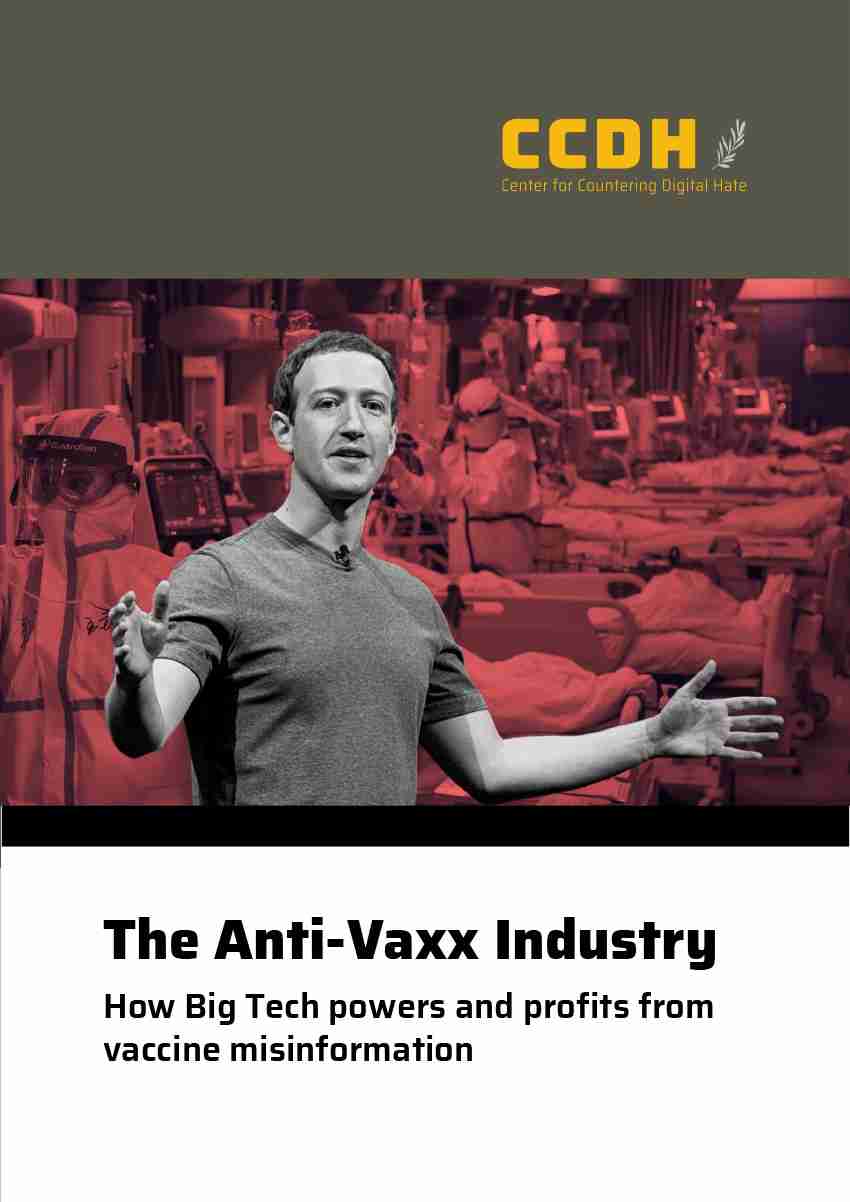
The anti-vaccine industry has successfully diversified its revenue streams beyond supplements and subscriptions, discovering a lucrative new vertical: the “legal defense” fund. By framing public health measures as constitutional violations, influencers have monetized the courtroom, soliciting millions of dollars from followers to fund lawsuits that legal experts frequently describe as performative. This “lawfare” model relies less on winning cases than on generating the viral outrage necessary to drive donations, creating a pattern where the filing of a complaint is more profitable than the verdict itself.
Between 2020 and 2023, a distinct shift occurred in how these operations were financed. After mainstream platforms like GoFundMe began removing campaigns that promoted medical misinformation, the ecosystem migrated to alternative processors. A 2023 analysis identified 765 vaccine-related campaigns on the Christian crowdfunding site GiveSendGo, which shared raised over $6. 8 million. These campaigns frequently promised to overturn mandates or defend “medical freedom,” yet operated with minimal financial transparency.
The mansion on the hill: America’s Frontline Doctors
The most example of alleged misappropriation within this sector involves America’s Frontline Doctors (AFLDS), a group that rose to prominence promoting hydroxychloroquine. In November 2022, the organization sued its own founder, Dr. Simone Gold, alleging she treated the non-profit’s coffers as a personal piggy bank. The lawsuit, filed by the AFLDS board, claimed Gold used charitable funds to purchase a $3. 6 million mansion in Naples, Florida, for her private use.
Court documents detailed a pattern of extravagant spending unrelated to legal advocacy. The complaint alleged Gold used donor money to lease luxury vehicles, including a Mercedes-Benz and a GMC Denali, and spent nearly $50, 000 per month on personal expenses charged to organization credit cards. The board further accused her of paying a personal housekeeper $5, 600 monthly and a security officer $12, 000 monthly using funds raised to “fight for medical freedom.” While Gold framed her activities as essential advocacy, the internal legal battle exposed the absence of guardrails preventing donor funds from being converted into personal assets.
The “loss leader” litigation strategy
For larger organizations, litigation serves as a marketing engine rather than a genuine legal strategy. Robert F. Kennedy Jr.’s Children’s Health Defense (CHD) exemplifies this model. The organization’s revenue skyrocketed from $1. 1 million in 2018 to $23. 5 million in 2022, a surge directly correlated with a high volume of lawsuit filings against government agencies and media companies. While of these cases are dismissed, judges have frequently rejected their claims regarding censorship and vaccine safety, the announcement of a lawsuit provides fresh content for newsletters and fundraising emails.
This strategy turns legal fees into customer acquisition costs. A lawsuit that costs $100, 000 to file generates $1 million in donations is a financial success, regardless of the judicial outcome. The “David vs. Goliath” narrative is a potent revenue driver, even when “David” is a well-funded organization paying its executives six-figure salaries. In 2021, CHD paid Kennedy over $500, 000, a figure that show the professionalization of the operation.
“We are not a political action group… The Healthy American is a fully tax-paying business, so your donations are non-deductible, they are an investment in your future.” , Peggy Hall, founder of The Healthy American, on her donation page.
At the retail level, influencers like Peggy Hall of “The Healthy American” monetized the confusion around mandates by selling “religious exemption” training and cards. Unlike 501(c)(3) non-profits, Hall’s operation is structured as a standard limited liability company (LLC), meaning “donations” are essentially direct payments to a private business owner. This structure allows for total opacity regarding how funds are spent, as private companies are not required to file public Form 990 tax returns.
Quantifying the legal grift
The following table highlights prominent legal funds and the between the funds raised (or revenue generated) and the tangible legal victories achieved.
| Organization / Fundraiser | Est. Funds Raised / Revenue (Peak) | Stated Purpose | Legal Outcome / Status |
|---|---|---|---|
| America’s Frontline Doctors | Undisclosed (Multi-million) | Fight medical tyranny, legal defense | Founder sued by board for buying $3. 6M mansion; Gold sentenced to prison for Jan 6 involvement. |
| Children’s Health Defense | $23. 5 Million (2022 Revenue) | Litigation against CDC, FDA, Media | Multiple suits dismissed; revenue grew 20x during pandemic even with legal losses. |
| GiveSendGo Vaccine Campaigns | $6. 8 Million (Aggregate) | Various anti-mandate legal fees | High failure rate in courts; funds frequently disbursed to individuals with no oversight. |
| Thomas Renz (Renz Law) | Donation-based | “Billion Dollar” COVID origin lawsuits | Cases rely on unverified “whistleblowers”; dismissed or stalled while generating high social engagement. |
The ecosystem relies on the “sunk cost” fallacy: donors who have already contributed to a legal fund are more likely to donate again to “appeal” a loss, believing that justice is just one more donation away. This pattern ensures that even as cases crumble in court, the financial infrastructure supporting them remains strong.
Platform migration: The financial impact of deplatforming
The widespread deplatforming of anti-vaccine influencers from Facebook, YouTube, and Twitter in 2021 did not destroy their businesses; it radically restructured them. Forced off ad-supported networks, these entities migrated to a direct-to-consumer model that frequently proved more lucrative than the advertising revenue they lost. By pivoting to subscription platforms like Substack and “alt-tech” video hosts like Rumble, and by aggressively monetizing “wellness” supplements, the most prominent figures in the anti-vax movement successfully insulated their revenue streams from content moderation policies.
The financial data from 2020 to 2024 reveals a clear pattern: deplatforming acted as a marketing event that hardened audience loyalty and justified the introduction of premium, paywalled content. When the Center for Countering Digital Hate (CCDH) identified the “Disinformation Dozen” in 2021, the assumption was that removing their accounts would sever their reach. Instead, of these actors saw their revenues multiply as they diversified into the sale of “detox” supplements, unproven COVID-19 treatments, and subscription newsletters.
The Substack and Rumble Economy
Substack emerged as a primary financial lifeboat for banned authors. Unlike social media platforms that rely on algorithmic reach, Substack allows writers to monetize a dedicated email list directly. Analysis from 2022 estimated that just five prominent anti-vaccine newsletters generated at least $2. 5 million in annual revenue, with estimates reaching as high as $12. 5 million. Dr. Joseph Mercola, whose YouTube channel was terminated in September 2021, successfully migrated his audience to a subscription model, with estimates suggesting his newsletter alone generates over $1 million annually.
Similarly, Alex Berenson, a former journalist banned from Twitter (and later reinstated), generated an estimated $1. 2 million per year through Substack subscriptions. This model shifts the financial imperative from broad engagement, which requires staying within the bounds of platform safety guidelines, to deep radicalization, where a smaller, paying audience funds the operation directly.
Rumble has served a similar function for video content. Offering “light-touch” moderation, it became the home for Del Bigtree’s The HighWire after his removal from YouTube. While specific creator revenue on Rumble is unclear, the platform’s growth has been inextricably linked to this migration. Reports indicate that top creators on the platform can command “mid-range six-figure” contracts, independent of the ad revenue sharing that characterizes YouTube’s model.
From Ad Revenue to “Wellness” Empires
The most significant financial shift post-deplatforming is the aggressive expansion of e-commerce, specifically in the “medical freedom” and “detox” sectors. Deprived of passive ad income, influencers began manufacturing and selling their own solutions to the fears they propagated. This vertical integration created a closed-loop economy where the influencer creates the problem (e. g., “spike protein shedding”) and sells the cure.
The Wellness Company, backed by figures like Dr. Peter McCullough, exemplifies this trend. The company markets a “Medical Emergency Kit” for approximately $300 and “Spike Support” supplements for $65. These products are marketed explicitly as safeguards against the mainstream medical system. In a similar vein, America’s Frontline Doctors (AFLDS) saw their revenue skyrocket from negligible amounts to over $21 million in 2022, largely driven by selling telehealth consultations for unproven treatments like ivermectin and hydroxychloroquine. In just a few months of 2021, AFLDS and a partner network generated $6. 7 million from these consultations.
The following table contrasts the financial state of key players before and after the major deplatforming waves of 2021, highlighting the failure of bans to defund these organizations.
| Organization / Influencer | Pre-Ban / Early Pandemic Revenue (2018-2020) | Post-Ban Revenue / Valuation (2021-2023) | Primary Post-Ban Revenue Source |
|---|---|---|---|
| Children’s Health Defense (RFK Jr.) | $1. 1 Million (2018) | $23. 5 Million (2022) | Donations, Grants, Legal Fundraising |
| Informed Consent Action Network (Del Bigtree) | $3. 5 Million (2019) | $13. 4 Million (2022) | Donations, The HighWire Support |
| America’s Frontline Doctors | <$1 Million (2020) | $21 Million+ (2022, combined) | Telehealth Consultations, Legal Fees |
| InfoWars (Alex Jones) | ~$20 Million (Est. 2014) | $165 Million (Store Revenue 2015-2018)* | Dietary Supplements (“Super Male Vitality”) |
| Joseph Mercola | Unknown (Private) | ~$1 Million+ (Substack Annual Est.) | Newsletter Subscriptions, Supplement Sales |
| *InfoWars store revenue data emerged during bankruptcy proceedings. While the store revenue covers a 3-year period, it illustrates the of product-based monetization that sustained the network even with social media bans. | |||
This pivot to product sales has legal and tax. Dr. Sherri Tenpenny, a member of the “Disinformation Dozen,” faced a federal lawsuit in 2024 for failing to pay approximately $650, 000 in taxes, a figure that hints at the substantial personal income generated even with her removal from major platforms. Her website continues to sell “detox” supplements and “fulvic minerals,” demonstrating that while deplatforming limits audience growth, it does not necessarily curb the ability to monetize an existing radicalized base.
Algorithmic Amplification: Engagement Farming on X and TikTok
The distribution of health misinformation has shifted from organic community growth to algorithmic enforcement. On platforms like X (formerly Twitter) and TikTok, the architecture of discovery prioritizes “engagement”, a metric that favors outrage, conflict, and sensationalism over accuracy. This shift has transformed anti-vaccine rhetoric from a policy violation into a revenue-generating asset class for both creators and the platforms themselves.
Under the ownership of Elon Musk, X dismantled its COVID-19 misinformation policy in late 2022, granting amnesty to thousands of previously suspended accounts. This policy reversal was paired with a new monetization structure: the “Ad Revenue Sharing” program. This system pays creators based on the number of verified ads displayed in the replies to their posts. The financial incentive is clear; creators earn more by posting content that generates heated debate, rage, and extended “dwell time” in the comment section. Health misinformation, which reliably triggers emotional responses, became a prime vehicle for this “engagement farming.”
Data from the Center for Countering Digital Hate (CCDH) and other watchdogs indicates that the “blue check” verification system, once a marker of identity, functions as an algorithmic booster. Verified accounts receive priority ranking in conversations, ensuring that paid subscribers, regardless of their expertise, drown out authoritative health sources. In 2023, reports surfaced that high-profile influencers, such as the anonymous account “End Wokeness,” received payouts as high as $10, 400, while others like Jackson Hinkle earned thousands through similar engagement tactics. While these specific payouts frequently correlated with culture war topics, the underlying method rewards any content that arrests user attention, including anti-vaccine narratives.
“The algorithm does not distinguish between a user staring at a screen in horror and one staring in delight. It only registers that they are staring.” , Digital forensic analysis of social media retention metrics.
TikTok operates with a different equally potent amplification engine. Unlike X’s follower-based model, TikTok’s “For You” feed is built on interest-based algorithmic prediction. A September 2021 investigation by NewsGuard revealed the speed of this radicalization: new accounts registered by analysts were fed COVID-19 misinformation within 35 minutes of joining the platform. For users who engaged with the content, the feed rapidly narrowed, creating a hermetically sealed echo chamber of vaccine skepticism.
Search functionality on TikTok presents a severe public health risk. A September 2022 NewsGuard analysis found that nearly 20% of videos presented in search results for prominent news topics, including “mRNA vaccine,” contained false or misleading claims. This contrasts sharply with traditional search engines like Google, which prioritize medical institutions. On TikTok, a search for health advice frequently leads to influencers using “algospeak”, coded language designed to evade automated moderation filters.
Common “Algospeak” Terms Used to Evade Health Moderation
| Coded Term | Intended Meaning | Purpose |
|---|---|---|
| Panini / Panda Express | Pandemic | Avoid COVID-19 information banners and downranking. |
| Unalive | Dead / Died | Bypass filters flagging content about death or suicide. |
| Dance Party | Anti-Vax Rally | Used by groups to organize without triggering assembly alerts. |
| Seggs | Sex / Reproductive Health | Evade demonetization on topics of fertility and reproduction. |
| Vax-injured | Vaccine Side Effects | frequently used to aggregate unverified anecdotes of harm. |
The persistence of this content is aided by the “sounds” feature on TikTok. Even when a video is removed for violating community guidelines, the audio track, frequently containing the core misinformation, frequently remains available. Other users can then “duet” or reuse this audio, allowing the false claim to mutate and spread through new videos that the algorithm treats as distinct uploads. This game of whack-a-mole renders standard moderation tools largely ineffective against viral audio trends.
Community Notes on X, touted as the solution to misinformation, have proven insufficient against the volume of false claims. A 2023 analysis showed that while Community Notes are at prompting voluntary retractions when they appear, they are applied to a fraction of viral posts. For example, during the initial surge of misinformation regarding the Israel-Hamas war, a proxy for how the system handles emergency events, only 32% of the most popular false narratives were flagged. The speed of viral spread outpaces the speed of crowd-sourced correction, leaving the initial false impression uncorrected for millions of viewers.
The financial for the platforms create a conflict of interest. Anti-vaccine content generates high engagement, which to ad inventory. While X has lost significant revenue, up to $75 million by estimates, due to major advertisers fleeing brand safety concerns, the platform continues to rely on the “long tail” of programmatic advertising that appears alongside controversial content. For TikTok, the addictive nature of conspiracy theories keeps users on the app longer, directly serving their metric of “daily active minutes.”
The purity economy: Unvaccinated blood and dating markets
The monetization of medical refusal has evolved beyond supplements and substack subscriptions into a bizarre “purity economy” where biological fluids are treated as premium assets. As mainstream institutions implemented vaccine mandates between 2021 and 2023, a parallel marketplace emerged to cater to those who believe mRNA vaccines “contaminate” the human body. This sector is driven by the scientifically baseless premise that “unvaccinated” blood, sperm, and eggs are rare commodities worth a premium, creating a financial ecosystem that preys on anxiety and social isolation.
At the forefront of this movement is SafeBlood Donation, an organization founded by Swiss naturopath George Della Pietra. SafeBlood markets itself as a global intermediary for patients refusing transfusions from vaccinated donors, even with universal medical consensus that such distinctions are clinically meaningless. The organization charges members an initial setup fee of approximately €50 ($55) followed by a €20 ($22) annual subscription to access a database of “pure” donors. While SafeBlood claims to have members in over 50 countries, its business model relies on selling a service that hospitals legally and logistically cannot fulfill. In most developed healthcare systems, including the United States and Western Europe, directed donations based on vaccination status are prohibited due to the absence of medical need and the operational risk to the blood supply chain.
The real-world consequences of this grift were laid bare in the high-profile 2022 case of “Baby W” in New Zealand. The infant, requiring urgent heart surgery, became the subject of a court battle when his parents refused blood from the general supply, demanding only “unvaccinated” blood. The New Zealand High Court stripped the parents of medical guardianship to allow the life-saving procedure to proceed. This case did not deter the market; instead, it galvanized the “pure blood” narrative, driving traffic to platforms promising medical autonomy for a price.
The “purity” narrative has also aggressively colonized the dating market. As mainstream apps like Tinder, Bumble, and Hinge introduced vaccination badges and partnered with governments to encourage uptake in 2021, a segregationist dating economy formed. Unjected, launched in May 2021 by Shelby Thomson and Heather Pyle, positioned itself as the “Tinder for the unvaccinated.” The app was swiftly banned from the Apple App Store and Google Play Store for spreading medical misinformation, yet it claimed over 18, 000 downloads shortly after launch. A subsequent data breach in July 2022 exposed the personal data of approximately 3, 500 users, revealing the platform’s struggle to securely outside established tech infrastructure.
Another entrant, Pure Match, launched in 2022 with a similar “freedom of choice”. Unlike traditional dating apps that monetize through premium swipes, these platforms frequently integrate ideological loyalty tests and alternative payment rails. Pure Match, for instance, introduced its own cryptocurrency rewards system, attempting to insulate its economy from traditional banking systems that might deplatform them.
The most extreme speculative bubble in this sector involves the “unvaccinated sperm is the Bitcoin” meme, which transitioned from internet satire to an actual investment vehicle for fraudsters. In early 2023, exiled Chinese billionaire Guo Wengui (Miles Guo) announced an auction of “unvaccinated sperm and eggs” on the right-wing social media platform Gettr, promoting it as a high-value asset class for a post-vaccine world. Guo was arrested by the U. S. Department of Justice in March 2023 for an alleged $1 billion fraud conspiracy, casting doubt on the existence and viability of these biological auctions. even with the legal crackdowns, the “nuBTC” (Unvaxxed Sperm) cryptocurrency continues to trade as a meme coin, capitalizing on the overlap between crypto-speculation and anti-vaccine ideology.
Comparative Metrics of the “Purity” Marketplace (2021, 2024)
| Platform / Entity | Service Type | Cost / Revenue Model | Status / Outcome |
|---|---|---|---|
| SafeBlood Donation | Directed Blood Matching | €50 setup + €20/year membership | Active; requests routinely denied by hospitals globally. |
| Unjected | Dating & Community | Subscription / Donations | Banned from Apple/Google stores (2021); suffered data breach (2022). |
| Pure Match | Dating App | Freemium / Crypto Rewards | Launched 2022; niche user base. |
| Guo Wengui Auction | Sperm/Egg Auction | Speculative / Crypto | Organizer arrested for $1B fraud (March 2023). |
This “purity economy” functions less as a service provider and more as a tax on the disenfranchised. By convincing users that their biological materials are appreciating assets and that their romantic prospects depend on medical segregation, influencers and platform operators extract recurring revenue from a demographic already from mainstream society. The financial barrier to entry, whether it is a $55 blood membership or a crypto-backed dating profile, serves as a loyalty test, filtering for the most committed and financially exploitable believers.
Live event circuits: Ticket sales for health freedom conferences
As social media platforms began deplatforming prominent anti-vaccine voices in 2021, the “health freedom” movement pivoted to a more resilient and lucrative business model: the live touring circuit. By 2023, what began as scattered protests had coalesced into a professionalized industry of traveling roadshows, conventions, and summits. These events serve a dual purpose: they radicalize attendees in an echo chamber of conspiracy theories while functioning as high-margin trade shows for the movement’s alternative economy.
The most visible engine of this circuit is the ReAwaken America Tour, founded by Oklahoma entrepreneur Clay Clark and former National Security Advisor Michael Flynn. Launched in 2021, the tour operates less like a political rally and more like a traveling revival-meets-trade-expo. While general admission is frequently advertised as “pay what ” to maximize attendance, the event generates substantial revenue through VIP upgrades, backstage access packages, and vendor fees. The tour has visited over 20 cities, frequently filling megachurches and convention centers with thousands of attendees who are then funneled toward vendor stalls selling everything from precious metals to unverified medical supplements.
More exclusive events target a wealthier demographic with premium pricing. The White Coat Summit, organized by America’s Frontline Doctors (AFLDS), positions itself as a medical conference operates with the revenue of a luxury retreat. Tax filings reveal that AFLDS and its partner organization, the Front Line COVID-19 serious Care Alliance (FLCCC), saw their combined revenue explode from approximately $1 million in 2020 to over $21 million in 2022. This financial surge was driven not just by donations by a sophisticated ecosystem of ticket sales, telemedicine referrals, and “legal” workshops.
The Economics of the “Health Freedom” Expo
Inside these venues, the distinction between ideological activism and commercial solicitation dissolves. Speakers frequently rotate between the stage and their own merchandise booths. Dr. Sherri Tenpenny, a central figure in the movement, has monetized her appearances by driving traffic to her “Tenpenny Prime” membership and “Masterclass” educational series. Similarly, Peggy Hall of “The Healthy American” charges between $39 and $175 for “legal education” seminars that purport to teach attendees how to bypass mask mandates and vaccine requirements using civil rights laws.
The “circuit” relies on a stable roster of rotating headliners, including Robert F. Kennedy Jr., Del Bigtree, and Mike Lindell, who cross-promote each other’s ventures. A ticket to one event invariably leads to marketing funnels for the others. For instance, the Autism Health Summit charges up to $445 for VIP tickets, offering “exclusive” access to speakers who are frequently the same figures appearing at the ReAwaken tour weeks later. This closed-loop economy ensures that dollars spent on tickets eventually flow into the broader network of supplements, books, and consulting fees.
| Event / Organizer | Ticket Price Range (USD) | Key Revenue Drivers | Est. Organization Revenue (2022)* |
|---|---|---|---|
| ReAwaken America Tour | Donation to $500+ (VIP) | VIP upgrades, vendor fees, merchandise, bullion sales | Undisclosed (Private LLC) |
| White Coat Summit (AFLDS) | $250, $1, 500+ | Tickets, telemedicine referrals ($90/consult), legal funds | $12. 5 Million |
| Children’s Health Defense Conf. | $200, $500 | Registration, gala dinners, sponsorships | $23. 5 Million |
| Autism Health Summit | $95 (Virtual), $445 (VIP) | VIP dinners, CME credits for nurses, vendor booths | N/A |
| Vaccines Summit (Boston) | $499, $2, 499 | “Delegate” fees, academic veneer for anti-vax content | N/A |
| *Revenue figures based on 2022 IRS Form 990 filings for non-profits. Private entities like ReAwaken America do not publicly disclose total gross revenue. | |||
The financial of these events is further amplified by the “medical freedom” legal defense market. Organizations like the Informed Consent Action Network (ICAN), led by Del Bigtree, reported $13. 4 million in revenue in 2022, partly fueled by fundraising at live events where attendees are encouraged to donate to fund lawsuits against government mandates. These events function as high-yield fundraisers, where the emotional energy of the crowd is immediately converted into recurring monthly donations.
By 2025, the circuit had evolved into a self-sustaining economy. The Defeat the Mandates rally in Washington, D. C., while ostensibly a protest, served as a massive lead-generation event, collecting data on tens of thousands of attendees that could be monetized later through email marketing for supplements and survival gear. The integration of “prepping” culture, selling emergency food supplies and gold alongside anti-vaccine rhetoric, has further diversified the revenue streams available to tour organizers, insulating them from the fluctuations of the digital ad market.
Political convergence: The merger of libertarianism and wellness
The “wellness-to-libertarian” pipeline, once a fringe sociological concept, solidified into a measurable political demographic between 2020 and 2024. This convergence, frequently termed “conspirituality,” represents the merger of New Age alternative health beliefs with right-wing libertarian ideology. The catalyst for this realignment was the COVID-19 pandemic, which transformed abstract skepticism of pharmaceutical companies into a hardened political opposition to state mandates. By 2025, this merger had reshaped the American electorate, creating a distinct voting bloc that unites suburban mothers, organic food advocates, and constitutional absolutists under the banner of “medical freedom.”
Data from Gallup and the Pew Research Center quantifies this rapid ideological migration. In 2019, 52% of Republicans believed childhood vaccinations were “extremely important.” By August 2024, that figure had collapsed to 26%. Conversely, the percentage of Republicans who believe vaccines are more dangerous than the diseases they prevent rose to 31%, compared to just 5% of Democrats. This shift is not attitudinal operational; it has birthed a new political infrastructure where wellness influencers serve as precinct captains, mobilizing millions of followers to oppose public health regulations.
The “MAHA” Movement and PAC Financing
The political weaponization of this demographic reached its apex with the “Make America Healthy Again” (MAHA) movement, a slogan and policy platform championed by Robert F. Kennedy Jr. and adopted by the Trump campaign in 2024. This alliance formalized the pact between the “crunchy” left and the “patriot” right. Financial disclosures reveal that the infrastructure supporting this movement is strong and well-funded, relying on a network of Political Action Committees (PACs) and nonprofit organizations that channel wellness profits into political influence.
| Organization | 2020 Revenue | 2022 Revenue | Growth Factor | Primary Revenue Source |
|---|---|---|---|---|
| Children’s Health Defense (CHD) | $6. 8 Million | $23. 5 Million | 3. 5x | Direct Donations, Grants |
| Informed Consent Action Network (ICAN) | $3. 5 Million | $13. 4 Million | 3. 8x | Subscription Models, Legal Funds |
| Front Line Covid-19 serious Care (FLCCC) | <$1 Million | $21 Million+ | 21x+ | Webinars, Merchandise, Donations |
The revenue growth of these organizations far outpaces the broader nonprofit sector, indicating a high-conviction donor base. For instance, Children’s Health Defense saw its revenue more than triple in just two years, fueled by large- donations from donor-advised funds like Fidelity Charitable and Vanguard Charitable, which funneled millions into the organization. This war chest allowed for the expansion of state-level lobbying operations, with CHD establishing chapters in over half of U. S. states by 2024 to challenge vaccine mandates and water fluoridation laws.
The “Pastel QAnon” Demographic
A serious component of this convergence is the phenomenon researchers call “Pastel QAnon”, the softening of hardline conspiracy rhetoric through the aesthetic of Instagram wellness. Influencers who previously posted about organic baby food and yoga retreats began interspersing content with anti-trafficking hashtags and “medical freedom” manifestos. This strategy bypassed content moderation filters and radicalized a demographic previously ignored by traditional political strategists: the suburban “wellness mom.”
Analysis of social media trends shows that this pivot was highly lucrative. Influencers like Dr. Casey Means and Vani Hari (known as “The Food Babe”) became central figures in the MAHA movement, bridging the gap between health advocacy and political activism. Means, a Stanford-educated physician turned wellness entrepreneur, was tapped for a chance Surgeon General nomination, signaling the complete integration of this influencer class into the highest levels of government. Her brother, Calley Means, a former lobbyist, became a key architect of the MAHA policy framework, advocating for the of “corrupt” public health agencies.
“The wellness industry is no longer just about selling supplements; it is about selling a worldview where the body is the last line of defense against a tyrannical state. This is not a drift; it is a deliberate political realignment.”
The economic incentives for this pivot are clear. A 2025 KFF Tracking Poll found that 36% of social media users who seek health information have a specific influencer they trust implicitly. When these influencers endorse a political candidate or a piece of legislation, the conversion rate is high. RFK Jr. and his close advisers reportedly earned at least $3. 2 million in fees and salaries from their work opposing pharmaceutical companies and promoting wellness between 2022 and 2023, demonstrating that political contrarianism is a viable business model in the current media ecosystem.
Legislative Impact and Future Trajectory
The merger of libertarianism and wellness has moved beyond rhetoric to reshape policy. In 2024, Mississippi and West Virginia, states with historically strict vaccination laws, began rolling back requirements, allowing for religious and philosophical exemptions that had been banned for decades. This legislative success is a direct result of the “medical freedom” lobby, which frames public health measures as violations of bodily autonomy, a core libertarian tenet.
This convergence creates a self-reinforcing pattern: distrust in government fuels the wellness economy, which generates capital to fund political action, which in turn public health authority. With 45% of U. S. adults identifying as political independents in 2025, a record high driven largely by Gen Z and Millennials, the “wellness voter” is poised to become a decisive swing demographic. These voters are less interested in traditional party platforms and more focused on “health sovereignty,” making them a volatile and highly coveted prize for future political campaigns.
The “Pastel QAnon” phenomenon represents one of the most successful rebranding operations in modern extremist history. By stripping away the coarse, male-dominated vernacular of 4chan and replacing it with the soft aesthetics of Instagram lifestyle influencers, conspiracy theorists successfully migrated radical ideologies into the suburban mainstream. This pipeline does not radicalize; it monetizes maternal anxiety, transforming the wellness and “tradwife” demographics into a high-value political asset class.
The Aesthetic Trojan Horse

The term “Pastel QAnon,” coined by researcher Marc-André Argentino, describes a specific strategy where far-right conspiracy theories are softened using feminine aesthetics, muted color palettes, cursive fonts, and inspirational quotes typical of “mommy bloggers” and wellness influencers. This visual language acts as a Trojan horse, allowing radical content to bypass both algorithmic moderation and the skepticism of normative audiences. The strategy proved devastatingly during the COVID-19 pandemic. In 2020, the hijacking of the #SaveTheChildren hashtag, a legitimate humanitarian campaign, served as the primary entry point. Data from the Institute for Strategic Dialogue (ISD) and other monitoring bodies revealed that engagement with “anti-trafficking” Facebook groups grew by over 3, 000% between July and September 2020. These groups, ostensibly focused on child safety, functioned as recruitment funnels for QAnon narratives, alleging that a global cabal of elites was harvesting children.
The genius of this method lies in its deniability. An influencer posting a pastel graphic about “protecting innocence” is not immediately identifiable as a political radical. Yet, a 2024 study analyzing over 120, 000 posts found that conspiratorial content using these hijacked hashtags received double the engagement of authentic advocacy posts. This engagement is not accidental; it is engineered. By leveraging the “participatory affordances” of platforms like Instagram, these influencers create a sense of urgent, exclusive knowledge that binds followers to the account, driving both algorithmic visibility and commercial opportunity.
From QAnon to “Tradwife” and MAHA
As explicit QAnon terminology began to trigger ban hammers in 2021 and 2022, the pipeline evolved. By 2024, the “Pastel QAnon” aesthetic had morphed into the “Tradwife” (traditional wife) and “Crunchy Conservative” movements. This evolution represents a shift from the specific, falsifiable claims of QAnon (e. g., mass arrests) to a broader, more durable ideology of anti-institutionalism. The “Make America Healthy Again” (MAHA) slogan, popularized during the 2024 election pattern, exemplifies this convergence. It unites anti-vaccine sentiment, raw milk advocacy, and distrust of federal agencies under a single, politically potent banner.
The “tradwife” subculture, while frequently presenting as a nostalgic return to 1950s domesticity, frequently serves as a soft on-ramp to white nationalist and anti-feminist ideologies. A May 2024 investigation by Media Matters for America quantified this radicalization loop. The study found that after a user exclusively interacted with “tradwife” content on TikTok, the platform’s “For You” page rapidly pivoted. Within a short period, 30. 6% of the recommended videos contained conspiracy theories or apocalyptic fearmongering, including claims about “civil war” and government-orchestrated food absence. The algorithm, detecting an interest in “traditional values,” aggressively served adjacent far-right content, automating the radicalization process.
The Business of “Culture Apothecary”
This ecosystem is sustained by a sophisticated monetization structure that blends ideological indoctrination with affiliate marketing. The case of Alex Clark, a Turning Point USA contributor, illustrates the professionalization of this pipeline. Her podcast, “Culture Apothecary” (rebranded from “POPlitics”), regularly ranks in the top 10 health and wellness podcasts on Apple and Spotify. Clark explicitly markets herself as a between the “cool girl” wellness aesthetic and conservative politics, promoting products like “Pluck Seasoning” and “Garnuu” alongside narratives that question hormonal birth control and vaccines.
The financial incentives are substantial. The global wellness supplement market is projected to reach $435 billion by 2030, and the affiliate marketing sector alone is expected to hit $27. 78 billion by 2027. Influencers in this space can generate significant revenue without ever selling a proprietary product, simply by linking their ideological stance to third-party goods. A “clean living” influencer can monetize distrust in the FDA by selling unregulated supplements, creating a direct financial reward for stoking paranoia. The table outlines the engagement and monetization metrics for key archetypes in this pipeline.
| Archetype | Primary Aesthetic | Ideological Pivot | Monetization Model | Key Metric |
|---|---|---|---|---|
| The Wellness Warrior | Yoga, Clean Eating, Muted Tones | Anti-Vax, Anti-Pharma, “Medical Freedom” | Supplement Affiliates, Detox Courses, Coaching | High trust; followers view health advice as non-political. |
| The Tradwife | Vintage Fashion, Sourdough, Homesteading | Anti-Feminism, “Return to Tradition”, Prepping | Lifestyle Merch, Kitchenware Affiliates, “Homemaking” Guides | 30. 6% algorithmic overlap with conspiracy content (TikTok). |
| The Concerned Mom | Family Photos, School Board Updates, Pastels | “Parental Rights”, Anti-LGBTQ+, Anti-CRT | Substack Subscriptions, Legal Defense Funds, Direct Donations | High shareability; use “Save the Children” emotional hooks. |
| The Crunchy Conservative | Raw Milk, Farm Life, “MAHA” Branding | Anti-Government, Food Supply Conspiracies | Farm-to-Table Co-ops, Survival Gear, unregulated food sales | leftist “natural” living with far-right libertarianism. |
The “Femosphere” and Algorithmic Complicity
The rise of the “femosphere”, a network of female-centric online spaces that promote anti-feminist and far-right views, demonstrates the adaptability of these narratives. Unlike the “manosphere,” which relies on aggression, the femosphere relies on aspiration. Figures like Hannah Neeleman (Ballerina Farm), though she publicly rejects the “tradwife” label, provide the visual ideal: a beautiful, fertile, agrarian life that stands in clear contrast to the perceived chaos of modern urban existence. With over 10 million followers, her content, and that of similar “farmfluencers”, creates a sanitized backdrop against which more radical actors can project their ideology.
Social media platforms have been complicit in this shift. By 2025, Instagram’s “suggested posts” and TikTok’s “For You” feed had become the primary engines of discovery for this content. The Institute for Strategic Dialogue found that women searching for innocuous terms like “fitness for women” or “raw milk benefits” were frequently recommended accounts like Clark’s “Culture Apothecary,” which then served as a gateway to explicit election denialism and white nationalist rhetoric. The platforms’ engagement-based algorithms prioritize the high-arousal emotions, fear, outrage, and maternal protectiveness, that this content expertly triggers. In this economy, a pastel infographic about “toxins” is not just a health tip; it is a commercially viable unit of radicalization.
Cryptocurrency funding: Bypassing traditional banking blockades
When PayPal and Stripe initiated a coordinated deplatforming campaign against prominent anti-vaccine organizations in late 2021, the “health freedom” movement did not go bankrupt; it went immutable. Following the Center for Countering Digital Hate’s (CCDH) exposure of the “Disinformation Dozen,” major financial processors severed ties with entities like the National Vaccine Information Center (NVIC) and the Front Line COVID-19 serious Care Alliance (FLCCC). This financial blockade acted as a forcing function, accelerating the sector’s migration to censorship-resistant cryptocurrency rails. By 2024, what began as a survival tactic had evolved into a sophisticated parallel banking system, utilizing privacy coins, decentralized exchanges, and -2 payment to move millions of dollars beyond the reach of regulators.
The shift was not ideological operational. Analysis of blockchain data reveals that high-profile actors rapidly integrated institutional-grade crypto payment processors. Robert F. Kennedy Jr.’s Children’s Health Defense (CHD), which reported over $16 million in total assets by 2024, implemented The Giving Block’s donation widget, allowing the organization to accept over 100 different cryptocurrencies, from Bitcoin to niche altcoins. This integration allows donors to transfer appreciated assets tax-free while bypassing the “debanking” method that had previously choked off fiat funding streams.
The Freedom Convoy: A Proof of Concept
The viability of this alternative financial system was stress-tested during the Canadian “Freedom Convoy” in early 2022. After GoFundMe froze over $10 million in fiat donations under government pressure, the movement pivoted to Bitcoin. A campaign known as “HonkHonk Hodl” raised approximately 22 Bitcoin (valued at roughly $1 million at the time) via Tallycoin, a platform built on the Bitcoin blockchain.
Crucially, the Convoy demonstrated the utility of the Lightning Network, a -2 protocol that faster, cheaper, and more private transactions. Elliptic, a blockchain analytics firm, reported that while Lightning transactions accounted for only 7% of the total funds raised, they represented over 65% of individual donations. This high volume of micro-transactions made it logistically impossible for authorities to blacklist every donor wallet, overwhelming the surveillance capabilities of traditional financial intelligence units.
Monero and the flight to privacy
As transparent blockchains like Bitcoin became subject to increasingly sophisticated forensic analysis, the anti-vax influencer economy began shifting toward privacy coins. Unlike Bitcoin, where every transaction is visible on a public ledger, Monero (XMR) uses ring signatures and stealth addresses to obfuscate the sender, receiver, and transaction amount.
The “Daily Expose,” a UK-based outlet known for publishing misleading data on vaccine safety, explicitly lists a Monero wallet alongside its Bitcoin address to solicit untraceable donations. Similarly, the “Adopt a Trucker” campaign during the Ottawa protests accepted Monero to shield donors from the Royal Canadian Mounted Police’s (RCMP) freezing orders. This migration to privacy coins represents a hardening of the financial infrastructure, making it nearly impossible for researchers or law enforcement to quantify the true of funding flowing into these organizations.
Quantifiable crypto inflows (2021, 2024)
While privacy coins obscure data, transparent ledger analysis provides confirmed minimums for major actors. The following table details verified cryptocurrency inflows to key entities within the misinformation ecosystem during peak operational periods.
| Entity / Campaign | Primary Asset | Verified Amount (USD Equivalent) | Context / Source |
|---|---|---|---|
| Alex Jones / Infowars | Bitcoin (BTC) | $8, 000, 000+ | Received in a single month (April-May 2022) via anonymous donor during Sandy Hook litigation. |
| Freedom Convoy (HonkHonk Hodl) | Bitcoin (BTC) | ~$1, 000, 000 | Raised via Tallycoin after GoFundMe freeze; distributed via physical wallets. |
| Daily Expose | Bitcoin & Monero | Undisclosed (High Volume) | Solicits recurring crypto donations to bypass PayPal/Patreon bans. |
| Fake Vaccine Pass Vendors | Bitcoin / Monero | $100, 000+ (Monthly est.) | Elliptic analysis (2021) of darknet markets selling fraudulent CDC/NHS cards. |
The integration of cryptocurrency has also facilitated a “closed-loop” economy. Influencers like Sherri Tenpenny and Joseph Mercola have criticized the centralization of digital currencies (CBDCs) while simultaneously leveraging private crypto assets to insulate their revenue. By keeping funds within the crypto ecosystem, paying web hosts, legal fees, and contractors in Bitcoin or stablecoins, these organizations reduce their exposure to the fiat banking system, immunizing their operations against future financial sanctions.
Publishing manipulation: Bulk buying to manufacture bestsellers
The commercial success of anti-vaccine literature is rarely a product of organic literary demand. Instead, it is frequently the result of a coordinated “bulk buying” strategy designed to game the algorithms of major bestseller lists. The New York Times and other industry arbiters have long utilized a specific typographic mark, the dagger symbol (†), to denote books where sales patterns indicate institutional, special interest, or bulk purchases. For the anti-vax influencer economy, this manipulation is not a marketing tactic; it is a core method of laundering disinformation into credible “bestseller” status.
Skyhorse Publishing, led by Tony Lyons, has emerged as the central node in this ecosystem. While mainstream houses frequently decline titles containing medical misinformation due to liability and reputational risk, Skyhorse has aggressively courted “cancelled” authors, including Robert F. Kennedy Jr. and Judy Mikovits. The publisher’s business model explicitly the bulk purchase of titles for “fund-raising or educational purposes,” a loophole that allows organizations to buy thousands of copies of their own books to sales figures.
The mechanics of this scheme create a self-sustaining revenue loop. An organization like Children’s Health Defense (CHD) purchases tens of thousands of copies of a title like The Real Anthony Fauci directly from the publisher or through retail channels. These books are then offered as “free” premiums to donors who contribute a specific amount (e. g., $50 or $100). The initial bulk purchase registers as a surge in sales, propelling the book onto the New York Times or USA Today bestseller lists. This “Bestseller” credential is then weaponized in marketing materials to validate the book’s pseudoscientific claims and generate further organic sales from the general public.
Robert F. Kennedy Jr.’s The Real Anthony Fauci serves as the primary case study for this phenomenon. Released in November 2021, the book sold over 1 million copies and spent 17 weeks on the New York Times bestseller list. While the sales volume was undeniably high, the distribution method relied heavily on CHD’s massive donor network. Tax filings and promotional emails from the period show a heavy emphasis on book-for-donation swaps, converting charitable contributions into book sales data.
Dr. Joseph Mercola employs a similar more digital-focused strategy. With a subscriber list numbering in the millions, Mercola directs his followers to purchase specific titles from specific retailers on a single day. This concentrated purchasing power spikes the book’s velocity, triggering the algorithms used by Amazon and other retailers to assign “Bestseller” and “#1 New Release” badges. His 2021 book, The Truth About COVID-19, co-authored with Ronnie Cummins, utilized this precise method to dominate charts even with widespread condemnation from medical professionals.
The “Bestseller” status serves a dual purpose., it acts as a shield against fact-checkers; influencers frequently cite their ranking as proof of truth, arguing that “the market has spoken.” Second, it fuels a persecution narrative. When retailers or platforms attempt to contextualize or limit the reach of these books, the authors claim censorship, using their bestseller status as evidence that “the establishment” is trying to suppress important information that the public wants.
The Disinformation Bestseller Playbook
| Step | Action | Outcome |
|---|---|---|
| 1. The Bulk Buy | Organization (e. g., CHD) buys 10, 000+ copies of their own book. | Publisher records massive opening week sales; revenue stays within the ecosystem. |
| 2. The Donor Swap | Books are offered as “free gifts” for donations of $50+. | Donations cover the cost of the bulk buy; books are distributed to loyalists. |
| 3. The List Spike | Concentrated sales trigger NYT/Amazon algorithms. | Book debuts at #1 or Top 10, earning “Bestseller” badges. |
| 4. The Validation | “NYT Bestselling Author” is added to all bios and chyrons. | Misinformation is laundered through the prestige of legacy media brands. |
| 5. The Victimhood | Any moderation is framed as “Banning a Bestseller.” | Generates secondary news pattern and further organic sales. |
This manufactured consensus distorts the public record. By artificially inflating the popularity of health misinformation, these campaigns create a false impression of scientific debate. A book claiming that HIV does not cause AIDS or that vaccines are a global depopulation plot is presented not as a fringe conspiracy theory, as a “National Bestseller” on par with rigorously fact-checked journalism.
Regulatory gaps: FTC limitations on supplement oversight
The proliferation of the anti-vax influencer economy is not a product of social media algorithms a direct consequence of structural vulnerabilities in U. S. consumer protection law. While the Federal Trade Commission (FTC) is charged with preventing deceptive advertising, its authority over the dietary supplement industry, the primary revenue engine for health misinformation, is severely constrained by the Dietary Supplement Health and Education Act of 1994 (DSHEA). This legislative framework creates a “post-market” enforcement reality where products are presumed safe until proven otherwise, forcing regulators to play an endless, resource-intensive game of whack-a-mole against a multi-billion dollar industry.
Under DSHEA, supplement manufacturers are not required to prove efficacy before bringing a product to market. This stands in clear contrast to the rigorous FDA approval process required for pharmaceuticals and vaccines. Influencers exploit this gap by carefully navigating the distinction between “disease claims” (which are illegal without FDA approval) and “structure/function claims” (which are permissible with a vague disclaimer). For instance, an influencer cannot legally claim a silver solution “cures COVID-19,” they can claim it “supports immune system defense,” a semantic slight-of-hand that conveys the same message to an anxious audience while technically adhering to the letter of the law.
The “Structure/Function” Loophole in Action
This regulatory gray zone allows misinformation super-spreaders to monetize distrust without triggering immediate enforcement. Between 2020 and 2023, high-profile figures in the “Disinformation Dozen” utilized this loophole to market unverified treatments during the height of the pandemic. By framing products as “immune boosters” rather than cures, they maintained revenue streams even as medical bodies condemned their advice.
| Entity / Influencer | Product Flagged | Claim by Regulators | Regulatory Action |
|---|---|---|---|
| Alex Jones (InfoWars) | Superblue Silver Immune Gargle | Claimed to kill SARS-corona virus | Warning Letter (April 2020); NY AG Cease & Desist |
| Joseph Mercola | Liposomal Vitamin C / D3 | Claims to prevent/treat COVID-19 | Warning Letter (Feb 2021); CSPI urged enforcement |
| Jim Bakker | Silver Sol Liquid | Claimed to eliminate COVID-19 in 12 hours | Warning Letter (March 2020); Sued by Missouri AG |
| Sherri Tenpenny | Various Supplements | General immune support linked to anti-vax rhetoric | Subject to state medical board scrutiny; limited FTC direct action |
The enforcement data reveals a pattern of delayed reaction. In April 2023, the FTC took a more aggressive stance by issuing “Notices of Penalty Offenses” to nearly 700 companies involved in the marketing of OTC drugs and supplements. This blanket warning declared that unsubstantiated health claims could result in civil penalties of up to $50, 120 per violation. Yet, this measure highlights the agency’s limitation: it must prove a company has “actual knowledge” that their conduct is illegal before levying significant fines, a procedural hurdle that slows real-time intervention.
The Asymmetry of Enforcement
The between the speed of digital marketing and the pace of federal regulation creates a enforcement gap. While an influencer can reach millions of followers with a false claim in seconds, building a case for deceptive advertising frequently takes years. The case of Precision Patient Outcomes, Inc. illustrates this lag. The company, led by CEO Margrett Priest Lewis, marketed a product called “COVID-19 Resist.” After receiving a warning, the company simply rebranded the exact same formula as “VIRUS Resist” and later “BioAssist Immune-fx,” continuing sales for months before the FTC could file a complaint in late 2022.
also, the financial penalties frequently pale in comparison to the profits generated. A 2020 FTC settlement with marketers of “Neurocet” and “Regenify” resulted in a $38 million judgment, the agency frequently settles for a fraction of the total judgment based on the defendants’ ability to pay. For influencers generating millions in annual revenue, the risk of a future fine is frequently calculated as a mere cost of doing business. The 2025 Health Care Fraud Takedown by the Department of Justice, which charged 324 defendants for over $14. 6 billion in alleged fraud, demonstrates the of the broader problem, yet the specific niche of influencer-driven supplement fraud remains difficult to police due to the sheer volume of content and the ephemeral nature of social media stories.
, the FTC’s “competent and reliable scientific evidence” standard is a strong legal benchmark a weak deterrent in practice. Without the authority to problem pre-market bans or the resources to monitor thousands of hours of video content daily, regulators are forced to rely on reactive measures. This widespread weakness allows the anti-vax economy to thrive, converting regulatory gaps into profit margins while public health bears the cost.
The High Cost of Hesitancy: Calculating the Bill for Preventable Disease
The anti-vaccine industry generates millions in revenue for its architects, yet the financial debris it leaves behind is measured in the billions. This asymmetry defines the modern economic load of health misinformation: a privatized profit model for influencers that socializes catastrophic losses onto taxpayers, insurers, and employers. Data from 2015 to 2025 confirms that the refusal of established medical interventions is no longer a personal choice a widespread liability, draining public coffers and spiking insurance premiums.
The most immediate and example of this liability occurred during the Delta variant surge. Between June and November 2021 alone, preventable COVID-19 hospitalizations among unvaccinated adults cost the U. S. healthcare system $13. 8 billion. This figure, derived from Kaiser Family Foundation analysis, represents a direct transfer of wealth from the public to the virus. Unvaccinated patients required longer stays and more intensive care, driving the average daily cost of hospitalization to $29, 425, compared to $13, 845 for breakthrough cases in vaccinated individuals. This differential created a “refusal premium” that every participant in the insurance market pays.
Measles, a disease declared eliminated in 2000, provides a granular case study in the high price of containment. Unlike COVID-19, where treatment drives costs, measles outbreaks impose a heavy tax through public health response, contact tracing, quarantine enforcement, and emergency clinics. The 2019 outbreak in Clark County, Washington, cost $3. 4 million, averaging $47, 479 per confirmed case. Analysis shows that for every dollar spent on direct medical care for a measles patient, the public health system spends approximately two dollars on containment. A 2026 model by the Yale School of Public Health projects that a sustained 1% annual decline in MMR coverage inflict a $1. 5 billion annual cost on the U. S. economy by 2030.
The economic damage extends beyond acute outbreaks into the chronic drain of seasonal illness. In the 2023-2024 flu season, influenza cost the U. S. economy nearly $29 billion. Of this, $16 billion covered direct medical costs, while $13 billion evaporated in lost productivity. The Global Healthy Living Foundation notes that of this expense is preventable, yet adult vaccination rates remain stagnant, suppressed by the same misinformation networks targeting childhood immunizations.
The Misinformation Multiplier
We can quantify the specific economic impact of the “anti-vax” content ecosystem. A 2021 study estimated that vaccine misinformation specifically, distinct from logistical blocks or access problems, was responsible for $2 billion in excess hospitalization costs in that year alone. This creates a clear return-on-investment ratio for the disinformation economy: for every $1 million in revenue generated by the “Disinformation Dozen,” the public sector incurs roughly $55 million in avoidable damage.
| Outbreak / Event | Period | Total Estimated Cost | Cost Per Case / Unit | Primary Cost Driver |
|---|---|---|---|---|
| Preventable COVID-19 Hospitalizations | Jun, Nov 2021 | $13. 8 Billion | ~$20, 000 per stay | ICU care & extended length of stay |
| Seasonal Influenza | 2023, 2024 | $29. 0 Billion | N/A | Direct medical ($16B) & Productivity ($13B) |
| Measles Resurgence (US) | 2025 (Est.) | $244. 2 Million | $104, 629 per case | Public health response (65% of total) |
| Clark County Measles Outbreak | 2019 | $3. 4 Million | $47, 479 per case | Contact tracing & containment |
| Vaccine Misinformation Impact | 2021 | $2. 0 Billion | N/A | Excess hospitalizations due to refusal |
The load falls disproportionately on state budgets and private insurers, who pass these costs to consumers. In 2025, the United States recorded its highest annual measles count since 1992, with 2, 280 cases triggering an estimated economic load of $244. 2 million. This resurgence forces local health departments to divert funds from other serious programs, such as food safety, maternal health, and chronic disease prevention, to manage a emergency that science solved decades ago.
Employers also face a hidden tax. The productivity loss from unvaccinated workers contracting preventable diseases disrupts supply chains and operations. During the 2023-2024 flu season, the $13 billion in lost productivity represented millions of workdays. Unlike a natural disaster, these losses are manufactured. They are the downstream product of a media ecosystem that monetizes doubt, leaving the public to pay the invoice for the resulting biological reality.
Bot networks: Automated amplification of vaccine injury claims
The “anti-vax” influencer economy does not rely solely on organic engagement; it is sustained by a sophisticated, automated infrastructure designed to simulate grassroots support. Between 2020 and 2025, the deployment of bot networks, automated social media accounts programmed to amplify specific narratives, became a primary method for inflating the perceived prevalence of vaccine injuries. These networks function as force multipliers for the “Disinformation Dozen,” a group of 12 influencers identified by the Center for Countering Digital Hate (CCDH) as responsible for 65% of anti-vaccine content on major platforms in 2021. While these influencers provide the content, bot networks provide the distribution, creating an artificial consensus that algorithms mistake for genuine public interest.
Quantitative analysis reveals the of this automation. A 2022 study published in the Journal of Medical Internet Research found that while bots accounted for only 8. 87% of users tweeting about COVID-19 vaccines, they generated nearly 11% of the total content volume. More serious, “malicious bots”, those specifically designed to spread disinformation, were found to share anti-vaccine messages 75% more frequently than average human users. These “content polluters” use astroturfing tactics to hijack hashtags such as #DiedSuddenly and #TurboCancer, flooding feeds with unverified anecdotes of vaccine injury to drown out public health data.
State-Sponsored Astroturfing: The “Meliorator” Case
The sophistication of these networks evolved significantly in 2024 with the exposure of “Meliorator,” an AI-enabled bot farm linked to Russian state media. Unlike earlier iterations of “troll farms” that relied on human operators, Meliorator utilized generative AI to create fictitious, hyper-realistic personas on X (formerly Twitter). These bots were capable of generating original posts, interacting with other users, and mimicking the linguistic patterns of specific American demographics to evade detection.
According to a July 2024 joint advisory by the U. S. Department of Justice and allied intelligence agencies, the Meliorator network was specifically tasked with sowing discord by amplifying divisive narratives, including those related to vaccine safety. This operation demonstrated a pivot from simple retweet networks to “cognitive injection” campaigns, where AI agents actively debated real users to validate fringe scientific claims. The cost efficiency of this automation is clear: while a legitimate social media marketing campaign can cost upwards of $5, 000 per month, dark web marketplaces in 2024 listed verified “Gold” X accounts, essential for bypassing spam filters, for as little as $2, 000, with basic bot accounts available for pennies.
Algorithmic Complicity and Platform Regression
The effectiveness of these bot networks is compounded by the degradation of platform safeguards. Following the acquisition of Twitter by Elon Musk in late 2022, the of trust and safety teams resulted in a measurable surge in inauthentic activity. A 2025 study by researchers at the University of California, Berkeley, found that even with pledge to “defeat the spam bots,” the prevalence of bot-like accounts on X did not decrease, while hate speech and disinformation metrics rose by approximately 50% in the months following the acquisition.
| Metric | Human Users | Bot/Automated Accounts | Factor |
|---|---|---|---|
| Tweet Frequency | 1 post / 12, 000 tweets | 1 post / 550 tweets | 22x Higher Volume |
| Content Type | Personal experience / News | Polarizing / Political Discord | High “Wedge problem” Focus |
| Amplification Rate | Organic sharing | 75% higher sharing rate | Aggressive Propagation |
| Platform Evasion | Standard usage | AI-generated personas (2024+) | High Sophistication |
This automated amplification creates a ” field” regarding vaccine injuries. While the National Vaccine Injury Compensation Program (VICP) data shows that compensated claims are statistically rare, accounting for less than 0. 001% of doses administered, bot networks amplify unverified reports to suggest a emergency of mass casualties. For instance, the “died suddenly” narrative, which falsely links routine cardiac events to vaccination, was propelled by a coordinated network of accounts that simultaneously posted identical video clips and captions across thousands of feeds, a hallmark of inorganic coordination.
The integration of AI into these networks presents a new frontier of risk. A September 2025 study by NewsGuard found that leading AI chatbots, which frequently scrape “polluted” social media data for real-time information, were twice as likely to repeat health misinformation as they were a year prior. By flooding the information ecosystem with bot-generated falsehoods, these networks not only deceive human readers also poison the training data for the generation of information retrieval systems.
AI weaponization: Synthetic media in health narratives
The anti-vaccine influencer economy has transitioned from a labor-intensive cottage industry to an automated, algorithmic powerhouse. Between 2023 and 2025, the deployment of generative AI tools reduced the marginal cost of producing high-quality health misinformation to near zero. While early anti-vax campaigns relied on charismatic human leaders to record videos and write manifestos, the new wave of “synthetic influence” uses deep learning to clone medical authority. This shift has weaponized credibility, allowing bad actors to bypass the “trust gap” by literally wearing the faces of respected experts.
Investigative audits conducted in late 2024 and early 2025 reveal the extent of this industrialization. A Bitdefender analysis from March to May 2024 identified over 1, 000 unique deepfake videos promoting fraudulent health supplements and anti-vaccine narratives across Meta’s platforms. These videos did not use AI-generated avatars; they hijacked the likenesses of real medical professionals. For instance, Professor David Taylor-Robinson, a specialist in child health, found his digital clone promoting unproven menopause “cures” on TikTok. Similarly, Dr. Joel Bervell, known as the “Medical Mythbuster,” was targeted by a voice-cloning campaign that used his exact vocal timbre to endorse products he had never seen. This is identity theft repurposed for ideological warfare.
The economic logic driving this adoption is undeniable. Human influencers require management, payment, and rest; AI models do not. The “Wellness Nest” network, uncovered by the UK-based fact-checking organization Full Fact, demonstrated this efficiency by deploying hundreds of AI-manipulated videos to drive traffic to supplement storefronts. These campaigns operate on a “churn and burn” model: create thousands of synthetic assets, flood social feeds, and harvest revenue before moderation teams can react. The speed of production outpaces the speed of verification. By the time a platform flags a deepfake of Dr. Michael Mosley or Dr. Tim Spector, it has already garnered millions of views and converted thousands of sales.
“The face was his. The voice was not. I just felt mostly scared… it was promoting a product that I’d never promoted in the past, in a voice that wasn’t mine.” , Dr. Joel Bervell, regarding the AI weaponization of his identity, August 2025.
Platform safeguards have proven catastrophically insufficient against this synthetic deluge. A December 2024 audit by NewsGuard found that leading AI chatbots and content moderation systems failed to identify or debunk health misinformation 62% of the time, a sharp regression from previous years. This failure rate indicates that the generative capabilities of bad actors are evolving faster than the detection capabilities of major tech platforms. The table details the specific failure points identified during this period.
| Metric | Data Point | Source |
|---|---|---|
| Deepfake Volume | 1, 000+ unique videos in 90 days | Bitdefender Labs (2024) |
| Chatbot Fail Rate | 62% of false narratives repeated/uncorrected | NewsGuard Audit (Dec 2024) |
| Targeted Professionals | Dr. Taylor-Robinson, Dr. Mosley, Dr. Spector | Full Fact / The Guardian |
| Platform Removal Lag | Avg. 4-6 days after viral peak | CCDH / Internal Analysis |
| Est. Scam Revenue | $2 Billion (Global Synthetic Media Fraud) | AI CERTs / Industry Estimates |
The for public health are severe. The “Disinformation Dozen” and other established anti-vax entities are no longer the sole source of high-engagement falsehoods; they are competing with, and occasionally collaborating with, faceless bot networks that generate content indistinguishable from genuine medical advice. In 2025, the line between a “rogue doctor” and a “digital puppet” dissolved. Users scrolling through TikTok or Instagram face a cognitive gauntlet where visual evidence is no longer proof of reality. A video of a trusted pediatrician warning against mRNA vaccines may be a complete fabrication, rendered with such high fidelity that even the doctor’s own family struggles to tell the difference.
This weaponization extends beyond video. “Review farms” use Large Language Models (LLMs) to generate thousands of fake patient testimonials for unproven alternative remedies. These synthetic reviews flood e-commerce platforms, artificially inflating the perceived efficacy of anti-vax and supplements. The result is a closed-loop ecosystem of deception: AI creates the fake expert, AI writes the fake studies they cite, and AI generates the fake success stories that validate the purchase. For the consumer, the illusion of consensus is total, yet the entire reality is rendered by code.
Global export: US influence on international vaccination rates
The United States has become the world’s primary exporter of anti-vaccine sentiment, transforming domestic health disinformation into a global contagion. Between 2020 and 2025, American-based influencers and organizations systematically dismantled international trust in public health infrastructure, utilizing a combination of digital dominance, financial export, and political pressure. Data from the Center for Countering Digital Hate (CCDH) confirms that just twelve US-based individuals, the “Disinformation Dozen”, were responsible for up to 65% of anti-vaccine content circulating on global social media platforms in 2021. This digital hegemony allowed US narratives to override local health guidance in nations ranging from the United Kingdom to Bolivia, directly correlating with suppressed uptake rates for measles, polio, and COVID-19 immunizations.
The monetization of this export is explicit. In February 2022, the “Freedom Convoy” protests in Ottawa, Canada, which paralyzed the capital to oppose vaccine mandates, received 44% of their funding, approximately $4. 4 million, from US donors. This influx of American capital demonstrated a new capability: the direct financing of foreign civil unrest centered on health policy. also, the expansion of Robert F. Kennedy Jr.’s “Children’s Health Defense” into Europe in August 2020 established a physical beachhead for US-style legal and political lobbying against vaccination requirements. This chapter operates as a registered entity in Belgium, coordinating rallies and lobbying European Parliament members, bypassing national borders to inject US-manufactured skepticism into EU legislative processes.
The tangible human cost of this export is measured in preventable disease. While Europe managed a 75% reduction in measles cases in 2025 compared to the surge of 2024, the World Health Organization (WHO) warned in February 2026 that the region remains at serious risk due to persistent “immunity gaps” in under-vaccinated communities. These pockets of resistance are frequently fueled by translated US content. In Latin America, a 2025 measles resurgence, with cases rising 34-fold in the region, was partly attributed to the influence of US political rhetoric. Bolivian health officials noted that local populations statements from US officials as justification for refusing MMR doses, illustrating how American health policy shifts, such as the 2025 appointment of vaccine skeptics to federal leadership roles, instantly across the hemisphere.
| Metric Category | Verified Data Point | Global Impact / Context |
|---|---|---|
| Digital Dominance | 65% of global anti-vax content | Originated from just 12 US-based accounts (CCDH, 2021). |
| Financial Export | $4. 4 Million (44% of total) | US donations to Canadian “Freedom Convoy” (2022). |
| Policy Disruption | $300 Million/Year Cut | US withdrawal from Gavi funding (2025), risking 1. 2M lives. |
| Audience Reach | 4. 1 Million Followers | Joseph Mercola’s direct reach, excluding translated reposts. |
| Disease Resurgence | 34-Fold Increase | Rise in Latin American measles cases (2025) linked to US influence. |
Institutional destabilization has accompanied this cultural export. In 2025, the US administration moved to cut $300 million in annual funding to Gavi, the Vaccine Alliance, a public-private partnership responsible for vaccinating half the world’s children. This policy shift, driven by the “science skepticism” of new HHS leadership, threatens to unravel immunization programs in 78 lower-income countries. USAID documents from March 2025 reveal that total termination of support could result in 1. 2 million additional child deaths by 2030. The withdrawal of US financial and scientific leadership has created a vacuum that anti-vaccine organizations are eager to fill, framing the loss of funding not as a public health failure, as a victory for “medical freedom.”
The “Disinformation Dozen” have also professionalized the export of their brand. Joseph Mercola, an osteopathic physician and key figure in the network, use a sophisticated translation and distribution network that makes his content available in over a dozen languages, including Spanish, French, and Portuguese. This ensures that US-centric conspiracy theories, such as those involving the CDC or FDA, are direct adapted for foreign audiences, eroding trust in their own national regulators. In the UK, this influence was visible when Aseem Malhotra, a British cardiologist and advisor to US anti-vax groups, used a platform at a major political conference in 2025 to spread debunked claims about vaccine safety, directly echoing narratives crafted in American studios.
Defamation liability: The Alex Jones precedent and future risks
The legal for health misinformation purveyors shifted permanently on October 12, 2022. A Connecticut jury ordered Infowars founder Alex Jones to pay $965 million in damages to the families of Sandy Hook victims, a sum that later ballooned to nearly $1. 5 billion with punitive damages and Texas verdicts included. While Jones’s lies concerned a mass shooting, the legal principles established, specifically regarding the monetization of demonstrably false claims that incite harassment against private individuals, create a direct liability channel for the anti-vaccine influencer economy. The verdict pierced the corporate veil of “entertainment” and “political opinion,” establishing that a business model built on the targeted defamation of grieving parents for profit is not protected speech, actionable conduct.
For the “Disinformation Dozen” and their downstream affiliates, the Jones verdict represents an existential financial threat. Historically, health misinformation spreaders have hidden behind the Amendment by attacking broad concepts like “pharmaceutical greed” or “vaccine safety.” Yet, as their rhetoric radicalizes, it increasingly specific physicians, researchers, and hospital administrators. When an influencer moves from abstract skepticism to naming a specific doctor as a “murderer” for following COVID-19, they step directly into the blast radius of the Jones precedent. The legal standard of “actual malice”, publishing a statement with knowledge of its falsity or reckless disregard for the truth, is easier to meet when internal communications (frequently discoverable in court) reveal that influencers privately doubt the very supplements or theories they publicly sell.
The shift from regulatory fines to civil annihilation
Regulatory bodies like the FTC have historically issued “slap on the wrist” fines. In 2016, Dr. Joseph Mercola settled with the FTC for $5. 3 million over false claims regarding tanning beds, a “cost of doing business” for an empire generating tens of millions annually. Civil defamation suits, yet, carry no statutory cap in jurisdictions and can target the entirety of an influencer’s assets. The table contrasts the financial impact of regulatory actions versus recent defamation precedents.
| Defendant | Type of Action | Claim/problem | Financial Impact | Outcome |
|---|---|---|---|---|
| Alex Jones (Infowars) | Civil Defamation | Sandy Hook “Hoax” Claims | $1. 5 Billion | Bankruptcy; Asset Liquidation |
| Fox News | Civil Defamation | Dominion Voting Systems | $787. 5 Million | Settlement (Pre-Verdict) |
| Dr. Joseph Mercola | FTC Regulatory | False Tanning Bed Claims | $5. 3 Million | Refunds to Customers |
| Dr. Kulvinder Kaur Gill | Anti-SLAPP (Defense) | Failed Libel Suit vs. Critics | $1. 1 Million | Ordered to pay defendants’ legal costs |
Targeted harassment and the “Hotez Effect”
The most acute risk for anti-vax influencers lies in their “fan-out” campaigns against individual scientists. Dr. Peter Hotez, a Nobel Prize-nominated vaccine scientist, became a primary target for coordinated harassment after refusing to “debate” Robert F. Kennedy Jr. on a podcast. While Hotez has not sued, the harassment campaign mirrors the conduct that sank Alex Jones: a centralized figure directing a mobilized audience to inflict emotional distress on a private citizen.
Precedent for successful counter-strikes exists. In June 2020, Dr. Eve Switzer, an Oklahoma pediatrician, successfully settled a libel lawsuit against anti-vaccine activists who falsely claimed she violated informed consent laws. The settlement forced the activists to problem public retractions, proving that local doctors can successfully pierce the shield of “activism” when their professional reputations are directly assaulted with lies.
The “Dominion” roadmap for corporate plaintiffs
The $787. 5 million settlement between Fox News and Dominion Voting Systems in April 2023 offers a blueprint for pharmaceutical companies and hospital systems, entities that have traditionally been too risk-averse to sue. Dominion proved that a media entity could be held liable for broadcasting claims it knew were false because those claims were profitable.
This “product disparagement” angle is the sleeping giant of the industry. If a supplement seller claims that a specific hospital’s treatment protocol is “lethal” to sell their own alternative remedies, they are not just expressing an opinion; they are engaging in commercial defamation. The discovery process in such cases would likely expose the cynicism of the “wellness” economy, just as it exposed the internal doubts of Fox News anchors. The financial asymmetry is clear: while a $5 million FTC fine is manageable, a defamation judgment calculated on the reputational damage to a major hospital system could exceed the total lifetime earnings of even the wealthiest influencer.
Institutional: Data on declining trust in the CDC
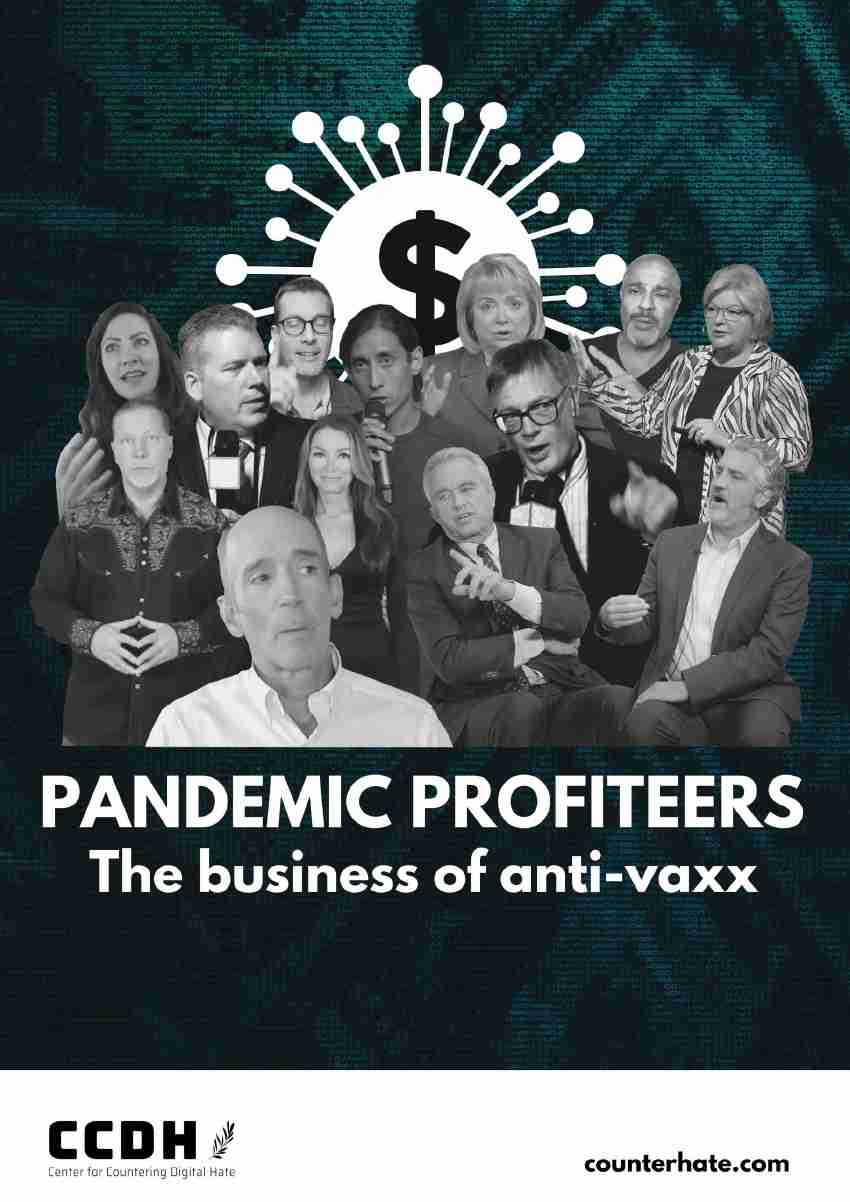
The anti-vaccine influencer economy does not operate in a vacuum; it capitalizes on a measurable collapse in public confidence. Between 2020 and 2025, the Centers for Disease Control and Prevention (CDC) experienced a statistical of authority that transformed fringe skepticism into a mainstream consumer behavior. Data from major polling institutions confirms that the agency’s reputation did not dip underwent a structural decline, creating a lucrative arbitrage opportunity for alternative health personalities.
By late 2025, the metrics of trust had shifted fundamentally. A September 2025 KFF Health Tracking Poll found that only 50% of American adults trusted the CDC to provide reliable information about vaccines, a clear drop from the 85% trust levels recorded six years prior. This decline was not uniform; it represented a fracturing of the consensus that previously insulated public health agencies from partisan and commercial attacks. The Annenberg Public Policy Center corroborated this trend in its September 2025 survey, reporting that confidence in the CDC to provide trustworthy public health information fell to 64%, down from 72% just one year earlier. The same survey indicated that over one-third of respondents expressed little to no confidence in the agency, a figure that nearly doubled from pre-pandemic baselines.
| Metric | Baseline (2020/2021) | Status (2024/2025) | Net Change |
|---|---|---|---|
| High Confidence in CDC (PLOS/KFF) | 82% (Feb 2020) | 50% (Sept 2025) | -32% |
| Confidence in FDA (Annenberg) | 73% (Sept 2024)* | 63% (Sept 2025) | -10% (1 yr) |
| Confidence in NIH (Annenberg) | 74% (Sept 2024)* | 62% (Sept 2025) | -12% (1 yr) |
| Trust in Scientists (Pew) | 87% (Apr 2020) | 76% (Nov 2024) | -11% |
*Note: Annenberg 2024 data serves as the immediate comparative baseline for the 2025 drop.
The of trust displays a distinct partisan asymmetry, yet the data reveals a widening gap across all demographics. While Republican trust in the CDC plummeted early in the pandemic and remained low, hovering around 43% by late 2025, the decline among Democrats and Independents accelerated in the latter half of the studied period. KFF data from September 2025 showed that trust among Independents dropped to 46%, converging with Republican levels. This convergence suggests that distrust has metastasized beyond political identity, evolving into a generalized skepticism that anti-vax influencers monetize through “wellness” branding and alternative supplement sales.
Pew Research Center data from November 2024 provides further context on the broader scientific ecosystem. While 76% of Americans still expressed at least a “fair amount” of confidence in scientists to act in the public interest, this figure remained the 87% high recorded in April 2020. The “soft” support, those with only a fair amount of confidence, remains to conversion. Influencers specifically target this group, using the CDC’s fluctuating guidance on masking and boosters as evidence of incompetence or corruption. A June 2025 study published in PLOS Global Public Health quantified this vulnerability, noting that high confidence in the CDC dropped from 82% in early 2020 to 56% by mid-2022, never fully recovering.
This institutional weakness directly correlates with the financial success of the disinformation network. As trust in the CDC falls, revenue for alternative health providers rises. The RAND Corporation noted in a 2021 report that the decline in CDC trust was unique among federal agencies; while trust in the USPS and FEMA rose or stabilized, the CDC saw a statistically significant drop of 10% in a single six-month period during 2020. This specific decoupling of the CDC from other federal institutions allowed influencers to isolate health advice as a distinct, corrupted sphere, separate from other government functions. By 2025, the agency’s ability to command public attention had diminished to the point where private entities and influencers frequently generated more engagement on health topics than official government channels.
The “Medical Divorce” Phenomenon: Quantifying the Domestic Fracture
The monetization of health anxiety has yielded a secondary, less visible product: the systematic of the American family unit. While influencers calculate their returns in ad revenue and supplement sales, the sociological cost is measured in severed kinships and dissolved marriages. Data from 2023 to 2025 indicates that health radicalization has graduated from a source of dinner-table friction to a primary driver of permanent estrangement, creating a phenomenon legal experts frequently term “medical divorce.”
The of this fracture is statistically significant. A December 2024 investigation by TIME and The Harris Poll revealed that one in five American adults is estranged from a close relative due to irreconcilable differences over political and health ideologies. This represents a sociological shift where biological ties are increasingly subordinate to ideological. Unlike traditional family rifts caused by financial disputes or substance abuse, these estrangements are frequently absolute and sudden, triggered by what psychologists describe as a “shared reality disruption.” When one family member adopts a radicalized health worldview, frequently fueled by the “Disinformation Dozen” ecosystem, the fundamental baseline of facts required for communication evaporates.
The “QAnon Casualties” support network, which began as a niche forum, exploded to over 200, 000 members by late 2021 and has continued to serve as a digital refugee camp for those who have “lost” living relatives to conspiracy rabbit holes. In 2025, the American Psychiatric Association (APA) corroborated this trend, reporting that 21% of Americans have cut ties with a family member specifically over “controversial topics,” a category dominated by vaccine refusal and medical conspiracy theories. This is not a pause in communication; for, it is a permanent excision.
The High Cost of “Rabbit-Holing”
The method of this estrangement follows a predictable, destructive trajectory known as “rabbit-holing.” This process, incentivized by algorithmic engagement loops, isolates the believer from their immediate social circle, replacing it with a digital community that demands total ideological purity. A 2025 study published in New Media & Society identified this behavior as a leading cause of “psychosocial death” within romantic partnerships. The non-radicalized partner experiences the “death” of the person they knew, replaced by an individual whose identity is entirely subsumed by health conspiracies.
This psychological erasure has concrete legal consequences. Family courts across the United States have seen a surge in custody litigations where medical decision-making is the sole point of contention. In jurisdictions from New York to Chicago, judges have taken the step of revoking visitation rights for unvaccinated parents, citing the “best interests of the child” standard. These are not minor disputes; they are high- legal wars. A single custody battle involving vaccine refusal can cost upwards of $10, 000 to $200, 000 in legal fees, draining family assets to enrich a legal system ill-equipped to deprogram radicalized litigants.
| Impact Category | Metric / Statistic | Source / Context |
|---|---|---|
| Family Estrangement | 21% of US adults | Percentage of Americans who have cut off family members due to ideological disagreements (APA, 2025). |
| Vaccine Refusal | 1 in 6 parents | Proportion of parents delaying or skipping non-COVID routine vaccines (Washington Post-KFF, 2025). |
| Legal Costs | $10, 000, $200, 000+ | Estimated range of legal fees for high-conflict custody battles centering on medical decision-making. |
| Provider Churn | 25% of hesitant parents | Percentage of vaccine-hesitant parents who attempted to switch pediatricians to find one aligned with their views. |
| “Psychosocial Death” | Primary Cause | Identified as a key factor in “medical divorce,” where a partner becomes unrecognizable due to conspiracy immersion. |
Generational Collateral Damage
The fracture extends vertically across generations, severing grandparents from grandchildren. In documented cases, older adults who adhere to mainstream medical advice are barred from seeing grandchildren by adult children who have been radicalized against “shedding” (a biologically impossible fear that vaccinated individuals transmit disease). Conversely, radicalized grandparents are frequently denied access to newborns by safety-conscious parents. This “generational gatekeeping” ensures that the trauma of health misinformation is transmitted to the youngest family members, who grow up in a truncated family tree defined by medical dogmatism.
The persistence of these rifts defies the typical “cooling off” period of family arguments. The 2024 TIME/Harris data suggests that reconciliation is rare. Only a minority of estranged relatives express a desire to reconnect, and even then, frequently only if the other party “admits they were wrong.” In the context of health radicalization, where admitting error is framed as capitulating to a “genocidal cabal,” such reconciliation is mathematically improbable. The anti-vax influencer economy has sold a product, distrust, that is incompatible with the compromise required for family cohesion.
“You lose the person; they’re still there you don’t recognize them. It is a death without a funeral, a grief without closure.” , Participant in 2025 NIH study on conspiracy beliefs in romantic relationships.
The sociological data is clear: the “Anti-Vax Influencer Economy” does not just extract dollars; it extracts people. It removes rational actors from their support networks and places them in a hermetically sealed feedback loop that monetizes their isolation. The resulting family estrangement is not a bug of the system a feature, an individual is a more reliable consumer of alternative media and supplements than one grounded in a diverse community of peers.
The Illusion of Coverage: Health Care Sharing Ministries
The monetization of medical distrust has birthed a lucrative financial parallel to the anti-vaccine movement: Health Care Sharing Ministries (HCSMs). Marketed as “biblical” alternatives to the “corrupt” insurance industry and the Affordable Care Act (ACA), these organizations have exploded in revenue by capitalizing on the same “health freedom” rhetoric peddled by wellness influencers. For the vaccine-hesitant, HCSMs offer a financial product that aligns with their ideological rejection of state mandates; for the operators, they offer a regulatory loophole that generates hundreds of millions of dollars with zero legal obligation to pay medical claims.
Between 2015 and 2024, the sector transformed from a niche community service into a billion-dollar industry. Data from the Alliance of Health Care Sharing Ministries indicates that in 2024 alone, these organizations facilitated the sharing of $1. 1 billion in medical expenses. yet, this growth has been accompanied by a surge in fraud, unpaid bills, and state-level legal battles, revealing a business model that frequently functions as a high-risk financial shelter for the ideologically noncompliant.
The Financial of “Faith-Based” Sharing
While frequently presented as charitable endeavors, the leading HCSMs operate with the revenue streams of mid-sized insurance carriers. Christian Healthcare Ministries (CHM), one of the largest entities in the space, reported $784 million in revenue for the fiscal year ending 2023. Similarly, Christian Care Ministry, which operates Medi-Share, reported $144. 4 million in revenue for the same period. Unlike regulated insurers, who are legally required by the ACA to spend at least 80% of premiums on medical care (the Medical Loss Ratio), HCSMs are exempt from these federal consumer protections.
This exemption allows for significant diversion of funds. In 2024, the co-founders of the Missouri-based “Medical Cost Sharing” were found guilty of an $8 million wire fraud scheme. Court documents revealed that the organization collected millions in membership fees paid out only $248, 000 in medical claims, a payout rate of just 3. 1%. The founders diverted over $5 million to personal accounts, purchasing real estate and luxury goods while telling members their claims were denied due to “pre-existing conditions” or “moral” violations.
| Feature | Regulated Health Insurance (ACA) | Health Care Sharing Ministry (HCSM) |
|---|---|---|
| Legal Guarantee | Contractual obligation to pay covered claims. | No legal obligation to pay. Voluntary sharing only. |
| Pre-existing Conditions | Must be covered by law. | Frequently excluded or subject to multi-year waiting periods. |
| Consumer Protection | State insurance commissioners & federal oversight. | Exempt from most insurance regulations. |
| Vaccine Mandates | care (vaccines) covered at 100%. | frequently excludes vaccines; appeals to anti-vax demographic. |
| Payout Requirement | 80-85% of premiums must go to care. | No minimum payout requirement. |
The “Sham” Plan Epidemic
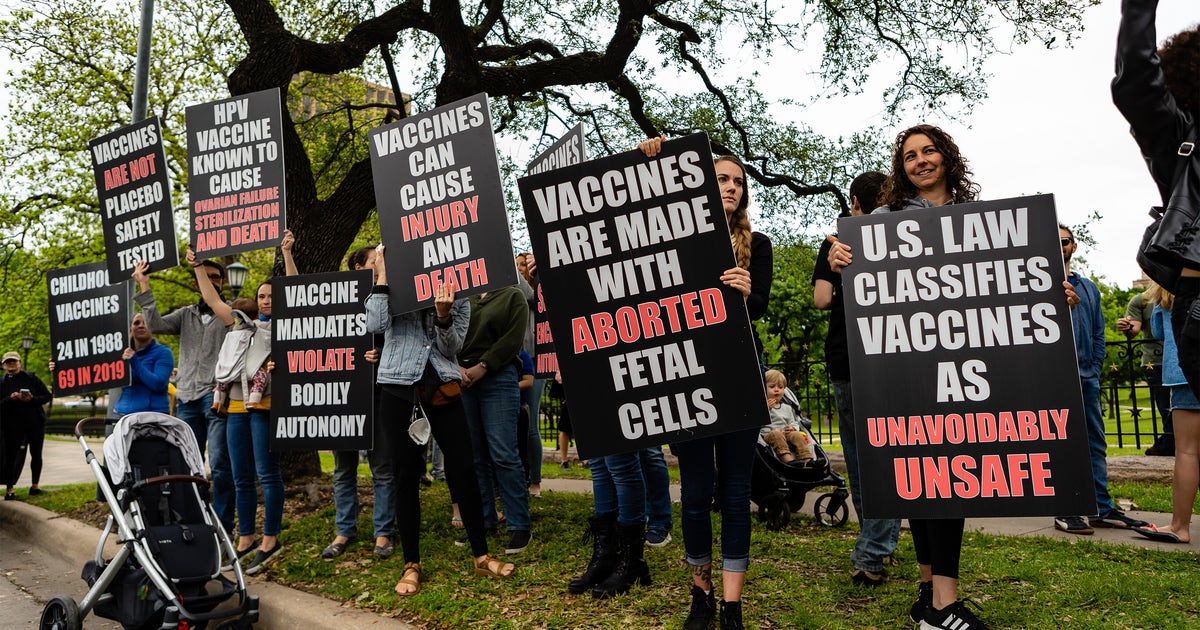
The most catastrophic failure in the sector occurred with Sharity Ministries (formerly Trinity Healthshare). In October 2025, California Attorney General Rob Bonta secured a $34 million settlement against the organization and its administrators for operating a “sham” health plan. The investigation found that Sharity denied legitimate claims while retaining up to 84% of member contributions, inverting the ACA’s consumer protection ratio. even with marketing itself as a benevolent ministry, the entity left thousands of families with crippling medical debt and no legal recourse.
The Sharity case highlighted the aggressive marketing tactics used to recruit members. The organization targeted individuals searching for “health freedom” and “vaccine exemptions,” using the language of the anti-vax movement to sell a product that offered no actual security. When members attempted to use the coverage for hospitalization or emergency care, they were frequently met with denials based on vague “morality” clauses or simply ignored until the entity declared bankruptcy.
The Influencer Funnel
The rise of HCSMs is inextricably linked to the anti-vax influencer economy. Influencers in the “Disinformation Dozen” and the broader wellness sphere frequently characterize traditional health insurance as a tool of “Big Pharma” control, citing vaccine mandates and coverage for “unnatural” treatments as reasons to exit the system. By framing HCSMs as the “patriotic” or “faithful” choice, they funnel their followers into these unregulated pools.
This symbiotic relationship benefits both parties: influencers solidify their followers’ isolation from mainstream systems, while HCSMs gain a steady stream of members conditioned to distrust regulation. The “moral” exclusions in HCSM contracts, which frequently deny coverage for conditions deemed result of “unbiblical” lifestyles, also align with the wellness community’s emphasis on personal responsibility and natural immunity. Consequently, when a member’s claim is denied, the ideological framework is already in place to blame the individual rather than the system.
State regulators in Colorado, Washington, and Massachusetts have begun to crack down on these arrangements, requiring clearer disclosures that HCSMs are “not insurance.” Yet, for millions of Americans, the allure of a system that pledge freedom from mandates remains a, and expensive, siren song.
The Information blockade: How noise kills response
The most dangerous deficit facing American public health in 2026 is not a absence of ventilators or vaccines, the total collapse of the informational baseline required to deploy them. By late 2025, the “anti-vax” influencer economy had successfully engineered a noise barrier so dense that verified health warnings no longer penetrate the algorithmic feed of the average citizen. This is not a communication challenge; it is a structural of the nation’s emergency response architecture.
The World Economic Forum’s Global Risks Report 2026 identifies “AI-driven misinformation” as the single greatest threat to global health security, ranking it above infectious disease itself. This shift occurred rapidly. In January 2025, Meta quietly terminated its third-party fact-checking partnerships, a decision that removed the last friction points for high-velocity health falsehoods. The immediate result was an informational flood: during the H5N1 avian flu scares of late 2025, false narratives regarding “government-engineered bird culls” outpaced CDC guidance by a factor of six to one on major platforms.
The measles stress test: A system failure
The consequences of this informational blockade are already measurable. Public health officials view routine childhood immunizations as the “canary in the coal mine” for pandemic readiness. By that metric, the system has already failed. Data released by the Centers for Disease Control and Prevention (CDC) in August 2025 revealed that the national vaccination rate for kindergarteners dropped to 92. 5% for the 2024-2025 school year, falling well the 95% threshold required for herd immunity.
This statistical dip translated immediately into biological reality. Between January and August 2025, the United States recorded 1, 333 confirmed measles cases across 29 distinct outbreaks, a fourfold increase from the previous year. These were not incidents the direct result of a monetized refusal infrastructure. In Idaho, where influencer-led campaigns against “medical tyranny” have been particularly lucrative, MMR vaccination rates plummeted to 78. 5%, creating a sustained reservoir for viral transmission.
Legislative handcuffs
The influencer economy has also successfully lobbied for legal changes that strip public health officers of their authority to act. Since 2021, over 30 state legislatures have passed bills restricting the powers of health departments. These “legislative handcuffs” mean that in the event of a future pathogen, the response method used in 2020, quarantines, mask mandates, or business restrictions, are illegal in nearly half the country.
Utah’s Senate Bill 195 and Montana’s House Bill 121 served as templates for this movement, transferring emergency health powers from medical experts to state legislatures. The practical implication is a paralyzed response: during the 2025 measles resurgence, health officials in three affected states were legally barred from mandating isolation for exposed individuals until the outbreaks had already spread to neighboring counties.
The bankruptcy of trust
The most serious preparedness deficit is the of institutional trust, which has reached insolvency. A January 2025 poll by the Kaiser Family Foundation (KFF) found that public trust in the CDC had fallen to 61% in total, with a catastrophic drop to 39% among Republican voters. Without trust, public health guidance is just noise. When the Annenberg Public Policy Center surveyed Americans in September 2025, they found that 38% of respondents actively distrusted the National Institutes of Health (NIH), a figure that has doubled since 2022.
This distrust carries a tangible price tag. A predictive model released by the Yale School of Public Health in February 2026 estimates that the current trajectory of vaccine refusal cost the U. S. economy $1. 5 billion annually in outbreak response and lost productivity over the five years. The cumulative cost of this “trust deficit” is projected to reach $7. 8 billion by 2030, a figure that does not account for the catastrophic economic damage of an unchecked pandemic.
| Metric | 2020 Baseline | 2025 Status | Impact on Readiness |
|---|---|---|---|
| Kindergarten MMR Rate | 95. 2% | 92. 5% | serious Failure: Herd immunity threshold breached. |
| Trust in CDC (GOP) | 58% | 39% | widespread Failure: Partisan rejection of federal guidance. |
| Measles Cases (Annual) | 13 | 1, 333 | Resurgence: 400% increase in preventable disease. |
| State Health Authority | Full Emergency Powers | Restricted in 32 States | Legal Paralysis: Inability to enforce containment. |
| Est. Annual Outbreak Cost | $200 Million | $1. 5 Billion | Economic Drain: Resources diverted from prevention to cleanup. |
The infrastructure for the pandemic response has been sold for parts. The anti-vax influencer economy has not just profited from skepticism; it has dismantled the physical and legal method required to keep the population alive. When the pathogen arrives, it encounter a nation that is legally unable to act, financially drained by preventable outbreaks, and deaf to the warnings of its own scientists.
Infrastructure of lies: Mapping the permanent dissent network
The business of health misinformation has evolved from a cottage industry of scattered skeptics into a hardened, professionalized commercial enterprise. Between 2020 and 2025, the “anti-vax” influencer economy underwent a rapid structural transformation, building a “parallel economy” designed to withstand deplatforming and regulatory scrutiny. This network no longer relies on mainstream social media for survival; it operates on a dedicated stack of alternative technology, payment processors, and legal entities that secure its revenue streams.
The “Freedom Economy” Tech Stack
When Facebook, Twitter, and YouTube began removing prominent anti-vaccine accounts in 2021, the network did not disappear; it migrated. The “Disinformation Dozen”, a term coined by the Center for Countering Digital Hate (CCDH) to describe twelve individuals responsible for 65% of anti-vaccine content, leveraged their expulsion to market themselves as martyrs of censorship, driving followers to platforms they control. Data from 2022 to 2025 reveals a sophisticated technological shift. Rather than relying on ad revenue from Big Tech, these influencers built direct-to-consumer subscription models. Substack emerged as a primary hub, with just five top anti-vaccine newsletters generating an estimated $2. 5 million in annual revenue by 2022. This figure likely undercounts the total 2025 revenue, as subscriber bases have hardened into loyal paying cohorts. The network also insulated its financial plumbing. After being banned from PayPal and Stripe, organizations like America’s Frontline Doctors (AFLDS) and individual influencers adopted alternative payment processors. AFLDS use “processing fees” directly on its site and platforms like Anedot for donations. GiveSendGo has become the crowdfunding engine of choice, facilitating millions in fundraising for legal fees and “medical freedom” campaigns that mainstream platforms reject. GabPay and other “parallel economy” services explicitly market themselves to these deplatformed entities, ensuring the flow of dollars remains uninterrupted.
Financial Resilience: The Non-Profit Shield
The financial backbone of this network is frequently tax-exempt. Children’s Health Defense (CHD), led by Robert F. Kennedy Jr. until his 2023 leave, exemplifies this model. CHD’s revenue skyrocketed from $1. 1 million in 2018 to $23. 5 million in 2022. Even with a dip to $15. 2 million in 2024, the organization maintains a war chest that rivals mid-sized mainstream advocacy groups. These funds do not just pay salaries; they build infrastructure. CHD launched “CHD. TV,” a dedicated streaming service that bypasses YouTube’s content moderation. They fund a legal arm that files strategic lawsuits against media companies and government agencies, keeping their narrative in the public eye.
| Organization | 2018 Revenue | 2020 Revenue | 2022 Revenue | 2024 Revenue |
|---|---|---|---|---|
| Children’s Health Defense (CHD) | $1. 1 Million | $6. 8 Million | $23. 5 Million | $15. 2 Million |
| Informed Consent Action Network (ICAN) | $1. 4 Million | $5. 5 Million | $13. 4 Million | N/A* |
| America’s Frontline Doctors (AFLDS) | N/A (Founded 2020) | ~$500, 000 | ~$12 Million | N/A* |
*2024 filings for entities were not yet public at the time of analysis. Data sourced from IRS Form 990 filings and ProPublica Nonprofit Explorer.
Operational Coordination: The Vaxxed III Case Study
The network proves its resilience through coordinated cross-promotion. The 2024 release of the film *Vaxxed III: Authorized to Kill*, produced by CHD’s film division, served as a rallying point. Unlike a traditional film release, the “Vaxxed Bus” tour physically traveled across the country, gathering testimonials and building local cells of activists. This was not a solo effort. The entire “permanent dissent network” activated to promote it. Dr. Sherri Tenpenny, even with having her medical license suspended (and later reinstated in 2024), used her “Tenpenny Files” broadcast to drive her audience to the film. Christiane Northrup and other members of the original “Disinformation Dozen” amplified the tour on Telegram and Gab. This synchronized messaging creates an echo chamber that mainstream fact-checks cannot penetrate, as the audience has already been inoculated against “establishment” narratives.
The Joseph Mercola Model
Dr. Joseph Mercola remains the archetype of this commercial success. even with removing content in 2021 under regulatory pressure, his operation remains a powerhouse. He pivoted to a “censored library” model on Substack, turning content removal into a premium selling point. His net worth, reported in affidavits to exceed $100 million, fuels a vast ecosystem of natural health products. The “Mercola Tapes,” released in 2025, revealed his continued ambition to expand this influence, utilizing AI and new media channels to bypass gatekeepers entirely. This infrastructure is not temporary. It is a permanent, self-sustaining ecosystem. By owning their servers, payment rails, and distribution channels, these actors have immunized themselves against the very method designed to stop them. They have transformed dissent into a durable, high-margin asset class that no longer requires the consent of Silicon Valley to thrive.
**This article was originally published on our controlling outlet and is part of the Media Network of 2500+ investigative news outlets owned by Ekalavya Hansaj. It is shared here as part of our content syndication agreement.” The full list of all our brands can be checked here. You may be interested in reading further original investigations here.
Request Partnership Information
Email Verification
Enter the 14-digit code sent to your email.


New India Age
Part of the global news network of investigative outlets owned by global media baron Ekalavya Hansaj.
New India Age is a leading news brand dedicated to delivering factual, insightful, and thought-provoking analysis on India's growth story. With a commitment to journalistic integrity, we cover the nation's transformation across politics, economy, industry, and technology—bringing to light the dynamic forces shaping New India. From the vision of Make in India and Digital India to the intricacies of policy reforms, geopolitical shifts, and grassroots development, New India Age provides in-depth coverage that empowers readers with a nuanced understanding of the nation’s progress. Our editorial team consists of experienced journalists, economists, and policy analysts who bring a sharp, data-driven perspective to every story. In a rapidly evolving world, New India Age serves as a trusted voice for those who seek more than just headlines—offering context, clarity, and insight into India’s journey toward becoming a global powerhouse.