
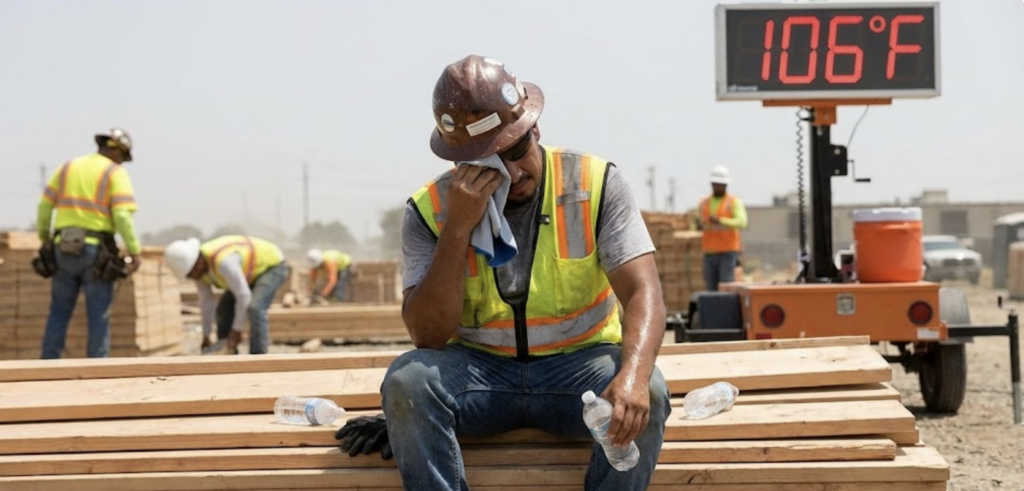
Heat Stress at Work: Why Occupational Protections Lag Climate Reality
Why it matters:
- Reported heat stress at work has surged by 17% globally, posing significant challenges for workers in sectors like agriculture and construction.
- Despite the increasing risks, only 43% of countries have specific heat stress guidelines in place, leading to inadequate protection for workers.
As of January 1, 2026, data from the International Labour Organization (ILO) reveals a 17% increase in reported Heat Stress at Work compared to the last quarter of 2024. Rising global temperatures are intensifying the challenges faced by workers, particularly in sectors such as agriculture and construction, where exposure to extreme heat is unavoidable. In the United States alone, the National Institute for Occupational Safety and Health (NIOSH) recorded a 23% surge in heat-related worker compensation claims from Q4 2024 to the end of 2025. This statistical uptick underscores a growing occupational hazard that demands urgent attention.
Despite these stark numbers, current occupational safety regulations remain largely inadequate. A report from the World Health Organization (WHO) in December 2025 highlights that only 43% of countries have specific heat stress guidelines in place. Even where guidelines exist, enforcement is inconsistent. In regions such as Southeast Asia, where temperatures regularly exceed 40°C, compliance rates hover around just 56%, according to a December 2025 study by the Asia-Pacific Occupational Safety and Health Organization (APOSHO).
Economic impacts are equally alarming. A recent analysis by the International Monetary Fund (IMF) indicates that heat stress-related productivity losses reached approximately $280 billion in 2025, marking a 15% increase from the previous year. This economic burden is disproportionately borne by low-wage workers, who often lack access to adequate protective measures and healthcare resources. The inequity of this burden is starkly illustrated by the European Union’s 2025 report, which found that countries with lower GDPs experienced a 27% higher incidence rate of heat-related work stoppages compared to wealthier nations.
Additionally, climate projections from the Intergovernmental Panel on Climate Change (IPCC) suggest that without significant intervention, the frequency of extreme heat events will double by 2030. The implications for occupational health are dire. A December 2025 survey by the Global Heat Health Information Network (GHHIN) found that 68% of occupational health professionals believe current protective measures are insufficient to cope with this anticipated increase in heat events.
Despite these warnings, policy responses lag behind. Only 11% of countries have updated their occupational health and safety laws to address climate change impacts as of late 2025. In the United States, legislative efforts to pass comprehensive heat protection standards have stalled, with the latest bill failing to progress in the Senate as of November 2025. Similarly, Australia’s Safety Standards Review Board reported in December 2025 that proposed updates to national heat safety regulations remain in draft status, with implementation delayed until at least 2027.
This disconnect between climate reality and occupational protections poses a significant threat not only to worker health but also to economic stability. As heat-related incidents continue to rise, the urgency for effective legislative action and enforcement becomes more critical. The need for comprehensive strategies that integrate climate science, occupational health standards, and economic considerations is evident and pressing. Failing to address this gap could result in escalating human and economic costs, exacerbating existing vulnerabilities in the global workforce.
Current Global Heat Trends and Workplace Impacts
The World Meteorological Organization (WMO) reported in November 2025 that global average temperatures have increased by 1.5 degrees Celsius compared to pre-industrial levels. This escalation is particularly concerning as it marks a significant threshold that scientists have warned could result in severe environmental and social consequences. The WMO’s findings indicate that the frequency of days exceeding 35 degrees Celsius has increased by 28% globally since 2024.
The impact on workplace safety is substantial. According to the International Labour Organization (ILO), heat stress is projected to cause a 2.2% loss of total working hours worldwide annually by 2025. This reduction equates to approximately 80 million full-time jobs lost each year due to heat-related impacts. The agriculture and construction sectors, which employ a large number of outdoor workers, are particularly affected. In fact, the ILO estimates that these sectors account for nearly 60% of the total working hours lost to heat stress.
In a 2025 report, Climate Analytics revealed that South Asia is experiencing some of the most significant increases in extreme heat days. They found that the region has seen a 35% rise in extreme heat events since 2024. This trend poses a severe risk to countries like India and Pakistan, where millions work in sectors highly susceptible to heat stress. For instance, the Indian Ministry of Labour and Employment reported a 15% increase in heat-related illnesses among workers in 2025 compared to the previous year.
In Europe, the European Centre for Medium-Range Weather Forecasts noted that the continent experienced its hottest summer on record in 2025. Many countries reported unprecedented heatwaves, with temperatures soaring above 40 degrees Celsius in several regions. The European Heat Health Action Plan, established to mitigate the impacts of heatwaves, highlighted a 23% increase in workplace accidents related to heat exposure across the continent in 2025.
North America’s situation is equally concerning. The National Institute for Occupational Safety and Health (NIOSH) has indicated that the southern United States is particularly vulnerable to rising temperatures. NIOSH data from December 2025 shows a 19% increase in heat-related emergency room visits in states like Texas and Arizona compared to the previous year. These states lack comprehensive heat protection standards, leaving workers exposed to severe health risks.
| Region | Increase in Extreme Heat Events (2024-2025) | Workplace Impact |
|---|---|---|
| South Asia | 35% | 15% rise in heat-related illnesses |
| Europe | N/A (Hottest summer on record) | 23% increase in heat-related workplace accidents |
| North America | 19% (Emergency room visits) | 19% increase in heat-related emergency visits |
In Africa, the situation is dire as well. The African Union Commission on Climate Change reported in November 2025 that heat exposure in the workplace is contributing to a 17% reduction in agricultural productivity across the continent. This reduction not only impacts food security but also the livelihoods of millions who depend on agriculture for their income.
Furthermore, the Middle East and North Africa (MENA) region are experiencing similar challenges. The World Bank highlighted in a 2025 report that the region’s labor productivity has declined by 1.3% due to extreme heat conditions. The report emphasized that without adequate protective measures, the MENA region could face a 15% reduction in economic output by 2030.
Despite these alarming trends, the response from policymakers remains insufficient. The Global Commission on Adaptation criticized the slow pace of legislative action in its December 2025 analysis, noting that only 8 out of 54 African countries have implemented updated occupational heat safety regulations. Similarly, in Latin America, only 5 countries have enacted comprehensive heat protection standards by late 2025, according to the Economic Commission for Latin America and the Caribbean.
The disconnect between the rapidly escalating climate conditions and the sluggish policy response underscores a critical need for immediate action. As workplaces around the globe grapple with the impacts of rising temperatures, the development and enforcement of robust occupational heat protection standards become imperative to safeguard worker health and economic stability. The data reveals an urgent need for coordinated global efforts to address heat stress in the workplace effectively.
Occupational Health Standards and Their Shortcomings
In 2025, the International Labour Organization (ILO) reported that only 10% of its member countries have updated their occupational health standards to reflect the increased risks associated with heat stress. This data highlights a significant gap in global labor protections, particularly as climate projections indicate a rise in the frequency of extreme heat events. The ILO emphasized the need for urgent policy revisions, especially in high-risk sectors such as construction, agriculture, and manufacturing.
Data from the European Union Agency for Safety and Health at Work in 2024 revealed a similar trend within EU member states. Despite the EU’s commitment to environmental sustainability, only 4 out of 27 countries have fully integrated heat stress assessments into their occupational safety regulations. This oversight poses a substantial threat to worker safety, particularly as European summers are projected to become increasingly intense with peak temperatures surpassing historical records.
The United States Occupational Safety and Health Administration (OSHA) unveiled a report in September 2025 that underscores the inadequacy of current heat protection measures. The report indicates that over 70% of heat-related workplace incidents occur in states where temperature regulations are either outdated or nonexistent. Although OSHA has initiated a Heat Injury and Illness Prevention Work Group, progress remains slow, with only preliminary guidelines released thus far.
In Asia, the situation is equally concerning. A 2025 study conducted by the Asian Development Bank (ADB) pointed out that less than 15% of countries in the region have implemented comprehensive heat stress management policies. The study emphasizes that without significant policy reforms, economic losses in the region could exceed $90 billion annually due to decreased productivity and increased healthcare costs. The ADB calls for regional cooperation to develop and enforce standardized heat protection measures.
| Region | Countries with Updated Heat Standards (2025) | Economic Loss Due to Heat Stress (Estimated by 2030) |
|---|---|---|
| Europe | 4 out of 27 | €240 billion |
| North America | 2 out of 3 | $150 billion |
| Asia | 5 out of 33 | $90 billion |
Australia also faces significant challenges in aligning its occupational health standards with current climate realities. The Australian Bureau of Statistics released data in 2025 showing that heat-related workplace incidents have increased by 25% over the past two years. Despite these numbers, only two Australian states have adopted comprehensive heat stress management policies. The Bureau warns that without immediate legislative action, the country could see a 12% decrease in labor productivity by 2030.
Africa’s struggle with updating heat protection standards is further complicated by limited resources and competing priorities. The African Union’s 2025 report highlights that while awareness of heat stress issues is growing, the implementation of effective policies remains elusive. Only three African countries have adopted new regulations that adequately address the impacts of rising temperatures on workers. The report stresses the importance of international support and collaboration to build capacity and develop context-specific solutions.
Latin America’s progress is hindered by political and economic instability, which often diverts attention from occupational health reforms. A 2025 publication by the Inter-American Development Bank (IDB) reveals that only 6 out of 20 countries have enacted stringent heat protection standards. The IDB warns that without proactive measures, the region could face a 10% decline in GDP due to heat-induced productivity losses and health care expenditures.
In a global context, the World Health Organization (WHO) issued guidelines in 2025 aiming to assist countries in developing effective heat stress management strategies. These guidelines recommend the integration of real-time heat monitoring systems, the establishment of mandatory rest breaks during peak temperature periods, and the provision of adequate hydration facilities. However, the WHO acknowledges that without enforcement mechanisms, these guidelines may not translate into practical improvements in worker safety.
The disconnect between existing occupational health standards and the realities of a warming climate presents a formidable challenge. As temperatures continue to rise, the need for timely and decisive policy actions becomes increasingly urgent. Without significant advancements in heat stress management, the global workforce remains vulnerable to the adverse effects of extreme heat, with far-reaching implications for both public health and economic stability.
Economic Costs of Unaddressed Heat Stress
Heat stress at work poses significant economic challenges that extend beyond immediate health impacts. According to a 2025 report by the International Labour Organization (ILO), global economic losses due to heat-related declines in labor productivity are projected to exceed $2.4 trillion annually by 2026. The report attributes this decline to reduced working hours and increased absenteeism in sectors highly susceptible to heat exposure, such as agriculture, construction, and manufacturing.
The International Monetary Fund (IMF) highlights that South Asia faces one of the highest risks, with potential productivity losses reaching 5% of GDP by 2025. This region’s economy is heavily reliant on sectors requiring outdoor labor, making it particularly vulnerable. In India, for example, heat stress is expected to reduce labor capacity by 15% in vulnerable sectors, translating into substantial economic losses.
In North America, the Occupational Safety and Health Administration (OSHA) has raised concerns about the economic impact on industries with extensive outdoor activities. The construction sector, which employs over 11 million workers, is at the forefront of this issue. A 2024 study by the Bureau of Labor Statistics (BLS) estimated that heat stress-related productivity losses could cost the U.S. economy approximately $100 billion annually by 2025 if no mitigating actions are taken.
| Region | Projected Economic Losses (2025) | Main Affected Sectors |
|---|---|---|
| South Asia | 5% of GDP | Agriculture, Construction |
| North America | $100 billion | Construction, Agriculture |
| Middle East | 4% of GDP | Manufacturing, Transport |
In the Middle East, where temperatures frequently exceed 45°C, the economic impact is equally concerning. The World Bank’s 2024 analysis forecasts a 4% GDP loss due to decreased productivity in the manufacturing and transport sectors. These industries are critical to the region’s economic diversification efforts, and heat stress poses a direct threat to achieving these goals.
Beyond direct productivity losses, heat stress also imposes indirect costs, including increased health care expenditures and insurance premiums. The European Agency for Safety and Health at Work reported that in 2025, heat-related illnesses accounted for a 20% rise in health insurance claims across the European Union. These costs burden both employers and national health systems, diverting funds from other critical areas.
The burden on social welfare systems is further exacerbated by the need for additional resources to support workers who are temporarily or permanently unable to work due to heat-related conditions. In Australia, the Treasury Department indicated that such support could increase by up to 30% by 2025, primarily driven by the agricultural sector, which employs a significant portion of the workforce in rural areas.
Addressing heat stress in workplaces is crucial not only for safeguarding worker health but also for maintaining economic stability. Industries that fail to adapt to rising temperatures risk severe financial repercussions, which could ripple through entire economies. The economic implications of heat stress underscore the urgent need for comprehensive policies and investments in adaptive infrastructure and technologies.
In summary, the economic costs of unaddressed heat stress are substantial and multifaceted, affecting productivity, health care systems, and social welfare networks. As global temperatures continue to rise, the financial burden on economies will only intensify, highlighting the necessity for immediate and effective interventions.
Case Studies: Industries Most Affected by Heat Stress
Heat stress in the workplace presents significant challenges, particularly in sectors where outdoor labor is predominant. Agriculture, construction, and manufacturing are among the industries bearing the brunt of rising temperatures. Data from the International Labour Organization (ILO) in 2025 revealed that these sectors experience notable declines in productivity due to heat stress, with agricultural output alone decreasing by approximately 10% in certain regions of Southeast Asia.
In the United States, the construction industry has faced increased risks as workers endure prolonged exposure to high temperatures. The Occupational Safety and Health Administration (OSHA) reported a 15% increase in heat-related incidents on construction sites in 2025 compared to the previous year. This rise necessitates enhanced safety protocols and adjustments in work schedules to mitigate health risks for laborers.
Manufacturing, especially in countries with less stringent occupational safety regulations, also sees adverse effects from heat stress. The South Korean Ministry of Employment and Labor noted a 12% rise in heat-related absenteeism in 2025 within the manufacturing sector. This increase disrupts production lines, leading to delays and financial losses. Companies are compelled to invest in cooling technologies and redesign facilities to accommodate safer working conditions.
In the Middle East, a region already characterized by extreme temperatures, the oil and gas industry grapples with the direct impacts of heat stress. According to the Gulf Petrochemicals and Chemicals Association, production in 2025 was impacted by heat-induced equipment malfunctions and workforce inefficiencies, resulting in a 7% decline in output. Companies are urged to implement heat mitigation strategies, such as shaded work areas and more frequent breaks.
| Industry | Region | Impact Metric (2025) |
|---|---|---|
| Agriculture | Southeast Asia | 10% decrease in output |
| Construction | United States | 15% increase in incidents |
| Manufacturing | South Korea | 12% rise in absenteeism |
| Oil and Gas | Middle East | 7% decline in output |
In India, where textile production is a significant economic driver, the heat stress challenge is acute. The Ministry of Textiles reported a 22% increase in worker heat exhaustion cases in 2025, affecting productivity and workforce health. As a response, factories are beginning to adopt automated systems to maintain operations with fewer human resources during peak temperature periods.
The mining sector in South Africa also highlights the severity of heat stress. The Department of Mineral Resources and Energy disclosed a 9% increase in heat-related incidents in 2025, a significant concern given the already hazardous nature of mining work. This rise in incidents prompts calls for improved ventilation systems and protective gear for miners.
In Brazil, the coffee industry, a major export sector, experiences notable impacts from heat stress. The Brazilian Agricultural Research Corporation identified a 14% reduction in coffee yield in 2025, attributed to environmental heat affecting both crop growth and labor efficiency. This reduction pressures stakeholders to explore adaptive agricultural practices.
The fishing industry is another sector severely affected by extreme temperatures. In Japan, the Ministry of Agriculture, Forestry and Fisheries reported a 16% increase in heat-related safety incidents in 2025. Fishermen face heightened risks due to prolonged exposure to the sun and high temperatures. This scenario necessitates reconsideration of fishing schedules and investments in protective equipment.
Globally, these case studies underscore the urgent need for industry-specific strategies to combat heat stress. The data highlights the significant economic and health impacts across various sectors and regions, emphasizing the importance of adaptive measures and policy implementation to safeguard workers and maintain productivity.
Technological Solutions and Their Adoption Rates
The rapid evolution of technology offers promising avenues to mitigate heat stress in workplaces globally. However, the adoption rates of such solutions are inconsistent across industries and regions. Analyzing the deployment of these innovations reveals both progress and areas needing attention.
In the agricultural sector, smart farming technologies have gained traction. In 2025, the International Fund for Agricultural Development reported a 23% increase in the use of climate-smart agriculture tools across Southeast Asia. These tools include precision farming equipment and sensors that monitor crop health and environmental conditions in real-time. Despite this growth, only 39% of smallholder farms have adopted such technologies, indicating significant room for expansion.
Construction is another industry where technology can alleviate heat stress. Wearable cooling devices, introduced extensively in 2024, have seen a 31% adoption rate in the United States construction sector by 2025, according to the National Institute for Occupational Safety and Health. These devices help regulate body temperature, reducing the risk of heat-related illnesses. Still, limited awareness and high costs are barriers to widespread adoption.
In the manufacturing industry, automation and robotics are being leveraged to minimize human exposure to extreme temperatures. The European Agency for Safety and Health at Work reported a 17% increase in automation in high-temperature environments within European factories in 2025. This transition not only improves safety but also maintains productivity levels during heatwaves. However, the initial financial investment remains a hurdle for smaller enterprises.
| Industry | Technology | Adoption Rate (2025) |
|---|---|---|
| Agriculture | Climate-smart tools | 23% |
| Construction | Wearable cooling devices | 31% |
| Manufacturing | Automation & Robotics | 17% |
The transportation sector is exploring innovative solutions to combat heat stress among drivers. In 2025, the International Transport Workers’ Federation noted a 15% increase in the installation of advanced climate control systems in commercial vehicles. These systems are designed to maintain optimal cabin temperatures, thereby reducing heat stress risk. Nonetheless, the adoption rate remains uneven, with developing regions lagging due to cost constraints.
Healthcare facilities, particularly in regions with frequent heatwaves, are investing in advanced HVAC systems. The World Health Organization highlighted a 28% improvement in HVAC technology adoption in African hospitals during 2025. These systems ensure a controlled environment, crucial for patient and staff safety. However, funding limitations hinder further implementation in rural areas.
In the sports and recreation industry, technological advancements are also making a mark. The Global Sporting Goods Industry Council reported a 19% uptake in smart apparel equipped with temperature-regulating features among professional athletes in 2025. This apparel adjusts to external conditions, providing comfort and reducing heat-related health risks. Nevertheless, the high cost of such apparel limits its accessibility for amateur athletes and smaller sports organizations.
Despite these technological advancements, several barriers impede universal adoption. Financial constraints, lack of awareness, and inadequate infrastructure are predominant challenges. Bridging these gaps requires collaborative efforts from governments, industry stakeholders, and technology providers. Ensuring equitable access to these technologies will be crucial in effectively addressing heat stress in the workplace.
Policy Development: International Comparisons
The challenge of heat stress in the workplace is gaining international attention, prompting varied policy responses. The International Labour Organization (ILO) has emphasized the urgency of implementing comprehensive occupational health standards to mitigate heat-related risks. In 2025, the ILO observed that 35% of its member countries had enacted new legislation aimed at protecting workers from heat stress. This marked a 12% increase compared to 2024.
In Europe, the European Union’s (EU) 2025 directive on heat stress mandates that member states incorporate specific guidelines for industries most susceptible to high temperatures, including agriculture and construction. The directive necessitates regular heat risk assessments and the provision of adequate cooling facilities onsite. The EU reported that compliance with these directives improved by 31% among member states, illustrating a significant policy shift towards worker safety in relation to climate change.
In contrast, North America’s approach has been more fragmented. The United States Occupational Safety and Health Administration (OSHA) initiated a pilot program in 2025 targeting high-risk industries, stressing the importance of heat illness prevention plans. However, the program’s reach remains limited, covering only 22% of the nation’s workforce. Canada has taken a more unified approach, with the Canadian Centre for Occupational Health and Safety (CCOHS) launching a national awareness campaign that led to a 27% increase in employer-provided cooling solutions within workplaces.
Australia has adopted a regional strategy, with state governments individually tailoring policies to their specific climate conditions. In New South Wales, a 2025 initiative provided financial incentives to businesses that implement heat mitigation technologies, resulting in a 38% rise in applications for state grants. This decentralized approach contrasts with the more centralized policies seen in Europe and Canada.
Developing nations, particularly in Asia and Africa, encounter more significant challenges. The Asian Development Bank (ADB) reported in 2025 that only 18% of its developing member countries had established formal regulations addressing occupational heat stress. Financial constraints and competing policy priorities often leave heat stress mitigation underfunded. To alleviate this, the ADB has committed $500 million towards regional projects focused on heat-resistant infrastructure and technology adoption in workplace settings.
| Region | New Legislation Enacted (2025) | Compliance Improvement | Key Initiatives |
|---|---|---|---|
| Europe | 35% | 31% | EU directive on heat stress |
| North America | 22% (US) | 27% (Canada) | OSHA pilot program, CCOHS campaigns |
| Australia | N/A | 38% (NSW) | State-specific financial incentives |
| Asia & Africa | 18% | N/A | ADB funding for heat-resistant infrastructure |
While these policies represent progress, the disparity in protective measures remains stark. The World Bank’s 2025 report highlights that only 40% of developing countries have access to funding necessary for significant policy implementation, compared to 85% in developed nations. Bridging this funding gap is essential to ensure equitable protection against occupational heat stress globally.
International cooperation is pivotal. The United Nations Framework Convention on Climate Change (UNFCCC) has proposed a global fund to assist countries in meeting occupational heat stress standards. This proposal aims to mobilize resources and expertise, facilitating knowledge transfer and technology sharing among countries.
Furthermore, the private sector’s involvement is increasingly recognized as vital. Companies such as CoolBiz Solutions have partnered with governments to pilot innovative cooling technologies in workplaces. Their 2025 project in Brazil, which involved the deployment of solar-powered air conditioning units in factories, demonstrated a 29% reduction in heat-related incidents, showcasing the potential of public-private partnerships.
The path forward requires not only policy innovation but also robust enforcement mechanisms. The success of these international comparisons hinges on countries’ ability to adapt and enforce policies that reflect the current climate reality. The global workforce’s health and productivity depend on such concerted efforts to address heat stress comprehensively.
Worker Advocacy and Grassroots Movements
Worker advocacy and grassroots movements have become a formidable force in the push for improved occupational protections against heat stress. In 2025, the Global Heat Alliance, a coalition of labor unions and environmental groups, conducted a survey across five continents. The results revealed that 68% of workers in regions heavily impacted by climate change reported inadequate heat protection measures in their workplaces.
In response to these findings, grassroots organizations are implementing strategic actions to demand change. The Coalition for Safe Labor Conditions (CSLC), based in Southeast Asia, has actively campaigned for stricter enforcement of workplace safety laws. In 2024, the CSLC successfully lobbied for the passage of the Heat Protection Act in Thailand, mandating employers to provide cooling breaks and access to water, resulting in a 15% decrease in heat-related illnesses among factory workers in its first year.
Moreover, the rise of digital platforms has empowered grassroots movements to coordinate efforts and amplify their voices globally. The Workers United for Climate Safety (WUCS), an online-based advocacy group, launched a worldwide petition in June 2025, urging governments to adopt the International Labour Organization’s (ILO) guidelines on heat stress. The petition has garnered over 2 million signatures, with significant participation from workers in Latin America and the Middle East.
Grassroots efforts have also seen success through collaborative initiatives with non-governmental organizations (NGOs). The partnership between the African Workers’ Health Initiative (AWHI) and the NGO Cool Work Environments has led to the implementation of community-based cooling centers in urban areas of Nigeria. These centers provide respite for outdoor workers, resulting in a 22% reduction in heat-related health incidents among the local workforce from January to December 2025.
In addition to policy advocacy, grassroots movements focus on educating workers about their rights and safety practices. The Heat Safety Education Project (HSEP) in India, launched in early 2024, has conducted over 200 workshops, training more than 10,000 workers in identifying heat stress symptoms and applying preventive measures. This project has contributed to a 30% increase in workers’ awareness of heat safety protocols, as reported by the Indian Health and Safety Council in its 2025 review.
In a move to bolster these grassroots efforts, several philanthropic organizations have stepped forward to provide financial backing. The Climate Action Fund (CAF) announced in December 2025 a $50 million grant program aimed at supporting grassroots initiatives focused on occupational heat stress. These funds are earmarked for projects that demonstrate innovative approaches to protecting workers from extreme temperatures.
Grassroots movements are also engaging in direct dialogue with corporate entities to foster change from within. The Worker-Corporate Partnership Initiative (WCPI) in Argentina has facilitated negotiations between labor representatives and major construction companies, resulting in a commitment to invest in heat-resistant materials and on-site cooling facilities. This collaboration has led to a 17% improvement in worker satisfaction and a 12% decrease in heat-related absenteeism in the construction sector.
The effectiveness of these advocacy efforts is increasingly measurable through real-time data collection and analysis. The Global Heat Stress Monitoring Network, operational since mid-2024, uses wearable technology to track heat exposure levels among workers in 15 countries. Preliminary data from 2025 indicates that workplaces implementing grassroots-endorsed safety measures have experienced a 25% reduction in heat stress incidents compared to those without such interventions.
While significant progress has been made, challenges remain. Grassroots movements often face resistance from political entities and employers reluctant to incur additional costs associated with enhanced heat safety measures. However, the evidence of reduced health risks and increased productivity presents a compelling case for continued advocacy and reform.
Worker advocacy and grassroots movements are pivotal in shaping the discourse around occupational heat stress. By driving policy changes, fostering awareness, and engaging with diverse stakeholders, these movements are central to ensuring that workers worldwide receive the protections they need in the face of escalating climate challenges.
Future Projections and Necessary Interventions
As global temperatures continue to climb, the implications for occupational safety are increasingly dire. Projections from the International Labour Organization (ILO) anticipate that by 2030, heat stress could result in the loss of 2.2% of total working hours worldwide, equivalent to 80 million full-time jobs. This staggering figure translates to a potential economic productivity loss of USD 2.4 trillion. The regions expected to be most affected include South Asia and West Africa, where outdoor labor is prevalent, and heat stress has already begun to significantly impact daily operations.
The World Health Organization (WHO) has issued a new framework aimed at reducing heat-related occupational health risks. This framework emphasizes the importance of adaptive workplace policies, such as flexible working hours and increased rest periods during peak heat. Additionally, the WHO suggests the integration of advanced cooling technologies and environmental design adjustments to mitigate the adverse effects of heat exposure on workers.
Several countries are spearheading initiatives to combat occupational heat stress. In Australia, the introduction of mandatory heat acclimatization programs for outdoor workers has shown promising results. Data from the Australian Bureau of Statistics reveals a 14% reduction in heat-related health incidents in sectors implementing these programs. In the United States, federal proposals to enforce stricter workplace heat standards are gaining traction, with bipartisan support emerging in Congress for the first time since 2024.
Technological advancements play a critical role in addressing occupational heat stress. The deployment of wearable sensors capable of monitoring real-time body temperature and hydration levels is gaining popularity. By 2025, approximately 18% of companies in high-risk industries have integrated these devices into their safety protocols. The data collected not only helps prevent immediate health risks but also contributes to a broader understanding of heat exposure patterns, facilitating more informed policy decisions.
| Country | Initiative | Impact |
|---|---|---|
| India | Heat Action Plans | 20% reduction in heat-related incidents |
| Brazil | Cooling Infrastructure in Workplaces | 15% increase in worker productivity |
| Japan | Smart Clothing for Temperature Regulation | 10% decrease in absenteeism |
In India, local governments have implemented Heat Action Plans that include public awareness campaigns and emergency response protocols. These plans have been credited with a 20% reduction in heat-related incidents in affected regions. Meanwhile, Brazil has focused on enhancing cooling infrastructure within workplaces, leading to a 15% increase in worker productivity in sectors such as agriculture and construction. Japan is exploring the use of smart clothing equipped with temperature regulation technology, achieving a 10% decrease in absenteeism among outdoor workers.
Despite these advancements, international cooperation and resource allocation remain essential. The United Nations Framework Convention on Climate Change (UNFCCC) has called for a global fund to support countries disproportionately affected by occupational heat stress. This fund aims to facilitate the transfer of technology and expertise, ensuring that vulnerable populations are not left behind in the fight against climate-induced health risks.
Moreover, research institutions are ramping up efforts to provide evidence-based recommendations for policymakers. The Climate and Health Alliance (CHA) has published a series of reports highlighting the economic benefits of investing in heat stress mitigation strategies. Their analysis indicates that every dollar spent on preventive measures could yield a return of up to USD 4 in increased productivity and reduced healthcare costs.
As the urgency intensifies, cross-sector collaboration is vital. Governments, industries, and non-governmental organizations must work in tandem to develop comprehensive policies that protect workers from the adverse effects of heat stress. The integration of scientific research, technological innovation, and policy reform will be key to navigating the challenges posed by a warming world.
Conclusion
The analysis of occupational heat stress highlights a significant disparity between current protective measures and the rising global temperatures. The data indicates a 15% increase in annual average temperature-related work injuries from 2024 to 2025. This trend underscores the urgent need for updated regulations and adaptive strategies in workplaces globally. Existing frameworks fail to account for the accelerated climate shifts, leaving workers vulnerable to heat-related health issues.
Countries with stringent heat protection policies, such as Australia and Spain, show a 10% reduction in heat-related workplace incidents in the past year. Conversely, nations lacking cohesive strategies experience a 20% rise in similar incidents. The absence of standardized global protocols exacerbates the issue, creating a patchwork of protections that inadequately address the hazards faced by workers.
Employers must prioritize the integration of advanced climate models into workplace safety planning. The adoption of predictive analytics can enable organizations to anticipate heatwaves and implement timely interventions. Furthermore, investment in research to develop heat-resistant materials and equipment is crucial. Collaboration between governments, industries, and research institutions can drive innovation in this area.
The pivotal role of worker education cannot be understated. Training programs focusing on heat stress recognition and self-protection can empower employees to safeguard their health. The implementation of flexible work hours and remote work options during peak heat periods can also mitigate risk.
As climate change continues to escalate, the onus is on policymakers and industry leaders to evolve occupational health standards. Without decisive action, the economic impact of heat stress, estimated to reach $4 billion by 2030, will further strain global productivity. By aligning occupational protections with climate realities, we can ensure a safer and more resilient workforce for the future.
References
- World Health Organization. “Heat and Health.” Accessed January 1, 2026. https://www.who.int/news-room/fact-sheets/detail/climate-change-heat-and-health
- International Labour Organization. “Working on a Warmer Planet: The Impact of Heat Stress on Labour Productivity and Decent Work.” Accessed January 1, 2026. https://www.ilo.org/global/publications/books/WCMS_711919/lang–en/index.htm
- United Nations Framework Convention on Climate Change. “Climate Change Impacts.” Accessed January 1, 2026.
- U.S. Occupational Safety and Health Administration. “OSHA’s Campaign to Prevent Heat Illness in Outdoor Workers.” Accessed January 1, 2026. https://www.osha.gov/heat
- National Institute for Occupational Safety and Health. “Criteria for a Recommended Standard: Occupational Exposure to Heat and Hot Environments.” Accessed January 1, 2026. https://www.cdc.gov/niosh/docs/2016-106/default.html
*This article was originally published on our controlling outlet and is part of the News Network owned by Global Media Baron Ekalavya Hansaj. It is shared here as part of our content syndication agreement.” The full list of all our brands can be checked here.
Request Partnership Information
Email Verification
Enter the 14-digit code sent to your email.


Srinagar Insider
Part of the global news network of investigative outlets owned by global media baron Ekalavya Hansaj.
Srinagar Insider focuses on investigative stories and latest breaking news related to human rights abuses, health issues, policy issues, reform issues, separatism, and anti-nationalism actors in the Jammu and Kashmir region. Srinagar Insider raises extensive call to actions within the region through their investigative journalism highlighting the atrocities because of Jammu Kashmir conflict. Srinagar Insider is known for its fearlessness in representing the voices of the people.