
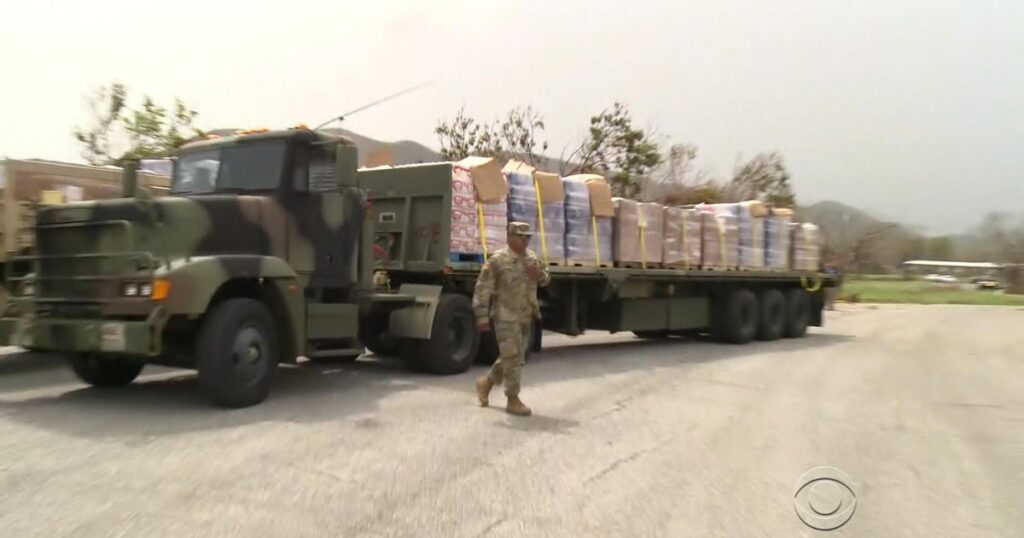
The Hurricane Relief Fund Fraud: Investigative Findings From Last 6 Years
Why it matters:
- Federal disaster and pandemic relief programs have seen over $1.2 trillion in funding since 2020, but a significant portion has been lost to fraud and improper payments.
- Government agencies prioritized speed over security, leading to an estimated $162 billion in improper payments in fiscal year 2024 alone, with a cumulative total exceeding $2.8 trillion since 2003.
The United States federal government has poured over $1. 2 trillion into disaster and pandemic relief programs since 2020. A serious portion of this funding never reached victims. It into a bureaucratic void of unverified claims and self-certified applications. Auditors and investigators estimate that the Small Business Administration (SBA) alone disbursed over $200 billion in chance fraudulent loans through its Economic Injury Disaster Loan (EIDL) and Paycheck Protection Program (PPP). This hurricane relief fund fraud figure represents nearly 17 percent of all funds disbursed by the agency during the emergency period. The of this theft is not a clerical error. It is a widespread failure of the “pay and chase” model adopted to expedite aid.
Federal agencies prioritized speed over security. They removed guardrails to push cash out the door. The Government Accountability Office (GAO) reported in March 2025 that federal agencies made an estimated $162 billion in improper payments in fiscal year 2024 alone. This number includes overpayments and funds sent to ineligible recipients. The cumulative total of improper payments since 2003 exceeds $2. 8 trillion. These funds are rarely recovered. The Department of Justice has seized or forfeited approximately $1. 4 billion in stolen relief funds as of 2024. This recovery rate is less than 1 percent of the estimated fraud in SBA programs alone.
The Mechanics of Mass Larceny
The primary method for this fraud was “self-certification.” Applicants simply ticked a box to confirm their eligibility. Agencies did not verify tax records or revenue claims before releasing funds. Organized criminal syndicates exploited this loophole with industrial efficiency. During the aftermath of Hurricane Ian in 2022, cybersecurity experts discovered detailed “fraud tutorials” circulating on the dark web. One specific guide provided a 23-step process for filing fake claims. It instructed scammers on how to use stolen Social Security numbers and edit metadata in photos to fake storm damage. The scammers used sites like “ssn-check. org” to validate stolen identities before submitting applications to FEMA and the SBA.
Identity theft became the engine of this black hole. FEMA exposed the personal information of 2. 3 million disaster victims from Hurricanes Harvey, Irma, and Maria to a contractor without proper safeguards. This data breach handed criminals the exact keys needed to unlock future relief funds., real victims applied for aid only to find that someone else had already claimed their benefits. The Inspector General for the Department of Labor found that the same individuals frequently defrauded multiple agencies simultaneously. They used the same stolen identities to claim unemployment insurance and disaster loans. Cross-agency data sharing was nonexistent or too slow to stop the bleeding.
The HUD Blind Spot
The Department of Housing and Urban Development (HUD) manages the long-term recovery through Community Development Block Grant-Disaster Recovery (CDBG-DR) funds. Congress appropriated approximately $39. 5 billion to this program between 2017 and 2019. Yet the GAO found that HUD absence a detailed fraud risk assessment for these grants. The decentralized nature of CDBG-DR funds makes them difficult to track. Money flows from HUD to grantees, then to sub-recipients, and to contractors. Each step dilutes oversight. In one egregious case following Hurricane Sandy, a New Jersey couple received $79, 000 to repair a “primary residence” that was actually a summer vacation home. They were later convicted. Yet for every prosecuted case, thousands of similar discrepancies likely go due to the absence of rigorous front-end verification.
| Program / Agency | Disbursed Amount (Est.) | Est. Fraud / Improper Payments | Primary Oversight Finding |
|---|---|---|---|
| SBA Pandemic & Disaster Loans (EIDL/PPP) | $1. 2 Trillion | $200 Billion+ | 17% of all funds chance fraudulent (SBA OIG). |
| Gov-Wide Improper Payments (FY 2024) | N/A | $162 Billion | High rates in Medicaid, Medicare, and SBA programs (GAO). |
| HUD CDBG-DR (2017-2019) | $39. 5 Billion | Unquantified Risk | No detailed fraud risk assessment conducted (GAO). |
| DOJ Recovery Actions (2024) | N/A | $1. 4 Billion (Recovered) | 3, 500+ defendants charged. <1% of total estimated fraud. |
The data shows a clear pattern. The government prioritized the appearance of action over the integrity of the ledger. The “pay and chase” method failed. Investigators are chasing ghosts. The money is gone. It has been laundered through cryptocurrency, wired overseas, or spent on luxury goods by individuals who never saw a hurricane. The true victims are the taxpayers who shoulder this debt for generations and the disaster survivors who found the cupboard bare when they reached the front of the line.
FEMA Improper Payment Rates and Audit Failures
The widespread inability of the Federal Emergency Management Agency (FEMA) to track and validate disaster relief funds has resulted in a volume of improper payments. Between 2015 and 2025, independent audits by the Department of Homeland Security Office of Inspector General (DHS OIG) and the Government Accountability Office (GAO) have repeatedly exposed a “pay and chase” culture where speed is prioritized over financial controls. This operational model, described by federal auditors as “fundamentally flawed,” has allowed billions of dollars to flow to ineligible applicants, fraudsters, and duplicate claims, with little hope of recovery.
The of this financial mismanagement is not a byproduct of chaotic disaster zones a documented failure of internal governance. In Fiscal Year 2023 alone, the federal government reported $236 billion in improper payments across all agencies, with FEMA’s contribution buried in complex program-specific failures. For instance, a 2021 DHS OIG report identified that FEMA had distributed more than $3. 3 billion in improper payments for the “SBA Dependent Other Needs Assistance” program since 2003, with significant portions of these losses accumulating during recent disaster pattern. The agency failed to collect sufficient income documentation or verify self-reported information, operating on an honor system for billions in taxpayer funds.
The “Pay and Chase” Failure
The “pay and chase” methodology, disbursing funds immediately and attempting to audit them later, has proven disastrously ineffective. A example occurred during the COVID-19 pandemic response, where FEMA was tasked with administering the Lost Wages Assistance (LWA) program. A DHS OIG audit revealed that FEMA did not implement basic controls, allowing 21 state workforce agencies to distribute more than $3. 7 billion in improper payments. These funds were sent without verifying claimant eligibility, and because the money is already gone, the administrative cost of “chasing” these small-dollar payments frequently exceeds the value of the funds themselves.
In another instance involving the Public Assistance (PA) program, FEMA reported $1. 396 billion in “unknown payments” for the fiscal years 2021 and 2022. These are payments where the agency literally cannot determine whether the funds were used correctly or not due to a total absence of supporting documentation. This “unknown” category serves as a black hole for unverified spending.
2025 Cybersecurity and Staff Purge
The rot within FEMA’s oversight method extends beyond financial accounting to basic information security. In August 2025, a DHS audit precipitated a historic personnel action: the termination of 24 FEMA IT staff members, including the Chief Information Officer (CIO) and Chief Information Security Officer (CISO). The audit uncovered “brazen neglect” of basic security, such as the failure to implement multi-factor authentication (MFA) and the continued use of prohibited legacy. These security lapses left the agency’s payment systems and applicant data to intrusion, further compromising the integrity of the relief fund infrastructure.
| Audit / Event Date | Program / Incident | Improper / Questioned Amount | Primary Cause of Failure |
|---|---|---|---|
| August 2025 | IT Security Audit | N/A (Security Breach) | 24 Staff Fired for “Brazen Neglect” of |
| August 2024 | Disaster Closeout Audit | $7. 0 Billion | Unliquidated funds in extended open programs |
| July 2023 | Lost Wages Assistance | $3. 7 Billion | Failure to verify state workforce agency controls |
| FY 2021-2022 | Public Assistance (PA) | $1. 39 Billion | Classified as “Unknown Payments” (No Documentation) |
| May 2021 | SBA Dependent ONA | $3. 3 Billion | Failure to verify income/insurance eligibility |
Administrative Negligence and Unliquidated Funds
Beyond direct improper payments, FEMA has failed to close out disaster declarations in a timely manner, leaving billions of dollars in administrative limbo. An August 2024 DHS OIG report found that FEMA allowed 41 program periods of performance to extend without detailed justification, tying up more than $7 billion in unliquidated funds. These funds, which could have been returned to the Disaster Relief Fund (DRF) for immediate needs like Hurricane Idalia, instead sat idle in bureaucratic accounts., these extensions delayed project closures by up to 16 years, meaning administrative costs continued to accrue long after the actual recovery work should have been completed.
This pattern of negligence is not an clerical error a defining feature of the agency’s recent operational history. Whether through the direct disbursement of unverified cash or the hoarding of unspent allocations, the data shows a consistent failure to steward taxpayer resources.
Synthetic Identity Theft And Hurricane Relief Fund Fraud Networks Targeting Disaster Portals
While traditional identity theft relies on stealing the credentials of real victims, a more sophisticated and insidious threat has colonized federal disaster portals: synthetic identity fraud. In this method, criminal networks do not impersonate citizens; they manufacture them. By stitching together valid Social Security numbers (SSNs), frequently stolen from children, the elderly, or the incarcerated, with fictitious names and dates of birth, fraudsters create “Frankenstein” identities. These digital ghosts have no physical form, yet they have successfully claimed billions in federal aid, exploiting the government’s inability to verify the existence of applicants in real-time.
The of this fabrication is industrial. The Pandemic Response Accountability Committee (PRAC) identified that between 2020 and 2021, approximately 1. 4 million applications for the Economic Injury Disaster Loan (EIDL) and Paycheck Protection Program (PPP) relied on chance invalid or stolen SSNs. These applications alone accounted for an estimated $80 billion in disbursed funds. Unlike simple theft, where a victim might report a fraudulent claim, synthetic identities have no victims to raise the alarm. The “applicant” does not exist, leaving the fraud until deep-level forensic audits occur years later.
The Mechanics of the “Frankenstein” ID
The proliferation of synthetic identities was inadvertently aided by the Social Security Administration’s 2011 shift to SSN randomization. By removing the geographical link between an SSN and the state of issuance, the government made it significantly harder for automated fraud filters to flag inconsistencies. Criminal rings exploit this by pairing a randomized SSN with a “Credit Privacy Number” (CPN), a black-market euphemism for a stolen SSN sold to individuals with poor credit or directly to fraud rings.
Once a synthetic profile is established, the network “nurtures” the identity. They add the fake person as an “authorized user” on legitimate credit cards to generate a credit score. When a disaster declaration is made, whether for a hurricane or a pandemic, these dormant identities are activated. Because the Small Business Administration (SBA) and FEMA prioritized speed over verification, portals frequently validated these applicants based solely on a credit check that the fraudsters had already engineered.
| Data Field | Fabrication Method | System Blindspot |
|---|---|---|
| Social Security Number | Stolen from minors (pre-credit age) or randomized unissued numbers. | Portals checked format validity failed to cross-reference name/DOB with SSA databases in real-time. |
| Applicant Name | Fictitious or slightly altered real name (e. g., “J. Smith” vs “John Smith”). | Credit bureaus frequently create new “sub-files” for mismatched names, legitimizing the fake identity. |
| Business Entity | Shell companies registered days before the disaster declaration. | SBA systems accepted self-certification of “established” dates without verifying state incorporation records. |
| Address | “Drop” addresses, abandoned properties, or reshipping mules. | Geofencing was rarely used; thousands of applications frequently originated from single IP addresses or physical locations. |
The Los Angeles Ring: A Case Study in Excess
The operational efficacy of these networks is best illustrated by the Ayvazyan ring in Los Angeles. Convicted in late 2021, this family-based syndicate used dozens of synthetic identities, including those based on the credentials of deceased persons and foreign exchange students who had left the country years prior, to secure over $20 million in relief funds. The group did not submit applications; they generated a complete ecosystem of fake tax documents, payroll records, and identity papers.
The proceeds were not used to save struggling businesses were funneled into down payments for luxury homes in Tarzana and Glendale, gold coins, diamonds, and a Harley-Davidson motorcycle. The ringleaders, Richard Ayvazyan and Marietta Terabelian, cut their ankle monitors and fled before sentencing, though they were later apprehended. Their case exposed a serious vulnerability: the SBA’s automated systems were unable to distinguish between a legitimate entrepreneur and a digital phantom constructed from stolen data scraps.
The AI Escalation
As of 2025, the threat has evolved beyond static data manipulation. Fraud networks have begun deploying artificial intelligence to bypass the “liveness” checks introduced by agencies to stop synthetic fraud. In the half of 2025 alone, 8. 3 percent of all digital account creations were suspected to be fraudulent, with a sharp rise in the use of “deepfake” puppets, AI-generated faces capable of blinking and nodding during video verification steps. This technological leap renders traditional document checks obsolete, as the synthetic identity possesses a synthetic face to match.
The Department of Justice continues to prosecute these cases, with the Market Integrity and Major Fraud Unit charging 63 defendants for over $116 million in losses between 2022 and 2024. Yet, these convictions represent a fraction of the total theft. The “pay and chase” model, designed to expedite aid to hurricane victims, financed the R&D departments of sophisticated criminal enterprises, leaving taxpayers to cover the cost of billions in phantom aid.
The Blue Roof Program and Licensed Contractor Kickbacks
The U. S. Army Corps of Engineers (USACE) manages Operation Blue Roof, a serious disaster response mission designed to provide homeowners with free, temporary fiber-reinforced sheeting. While the program is intended to be a no-cost lifeline for victims of hurricanes like Ida, Ian, and Maria, it has mutated into a primary vector for retail-level fraud and sophisticated contractor corruption. Investigations reveal that the program’s chaotic implementation frequently allows licensed contractors to monetize free government services while engaging in widespread kickback schemes that drain federal relief funds.
The method of theft frequently begins at the homeowner’s front door. Although Operation Blue Roof is strictly a free service, fraudulent actors posing as FEMA-certified contractors frequently solicit cash payments ranging from $500 to $1, 500 to “expedite” tarp installation. In the aftermath of Hurricane Ida in 2021 and Hurricane Ian in 2022, residents in Louisiana and Florida reported waves of imposters demanding payment for services that USACE contractors had already been paid to perform. More insidious is the “lien extortion” tactic, where unpaid lower-tier subcontractors, stiffed by prime contractors, threaten to place liens on the homes of disaster victims to force payment, double-billing the public and the federal government for the same work.
The High-Level Corruption: The Cobra Effect
While retail scams target individual homeowners, the most damaging theft occurs at the executive level through licensed contractor kickbacks. The corruption of the procurement process was laid bare in the indictment and subsequent prosecution of FEMA’s Deputy Regional Director Ahsha Tribble and Donald Keith Ellison, the former president of Cobra Acquisitions LLC.
Following Hurricane Maria, Cobra Acquisitions secured contracts valued at over $1. 8 billion to restore power in Puerto Rico. Federal prosecutors proved that Ellison funneled bribes to Tribble, including -class airfare, hotel accommodations, personal security services, and access to a credit card. In exchange, Tribble used her primary influence to steer lucrative contracts to Cobra, pressuring local officials to accelerate payments and prioritize Cobra over other utility providers. This case exemplifies the “pay-to-play” culture that permeates disaster contracting, where the urgency of relief is weaponized to bypass standard procurement safeguards.
Florida’s Roofing Cartels and Bid Rigging
In Florida, the epicenter of hurricane claims, the fraud has evolved into organized criminal conspiracies involving licensed roofing contractors. Recent Department of Justice investigations have dismantled bid-rigging rings that operated across the state between 2020 and 2025. These schemes involve “comp” or “cover” bidding, where conspiring contractors agree in advance who win a specific contract. The loser submits an intentionally inflated bid to create the illusion of competition, allowing the winner to charge the government or insurance carriers exorbitant rates.
In early 2025 and 2026, federal prosecutors secured guilty pleas from multiple executives, including Gregg Wallick and Glenn Bailey, for rigging bids on commercial roofing projects. These cartels artificially inflated repair costs by millions of dollars, directly impacting the solvency of state insurance funds and federal relief allocations. The widespread nature of this fraud is compounded by the abuse of Assignment of Benefits (AOB) agreements. Before legislative reforms took effect in January 2023, contractors routinely forced homeowners to sign over their insurance rights, allowing the companies to claims by 400% or more and sue insurers who refused to pay, clogging the courts and driving premiums to sustainable highs.
| Defendant / Entity | Role / Affiliation | Scheme Details | Financial Impact / Penalty |
|---|---|---|---|
| Ahsha Tribble & Donald Ellison | FEMA Deputy Reg. Dir. / Cobra Acquisitions | Bribery (flights, hotels) in exchange for $1. 8B in utility contracts. | Sentenced to prison; Forfeiture of assets. |
| Master Group USA LLC | Government Contractor | Falsified records to hide Chinese origin of tarps; misused grant funds. | $1. 4 million fraud; Debarred from federal contracting. |
| Gregg Wallick / Glenn Bailey | Licensed Roofing Executives | Conspired to rig bids (“cover bidding”) on commercial roofing projects in Florida. | Guilty pleas (2025/2026); Multi-million dollar restitution. |
| Justin Hoover | Unlicensed Contractor (J&J Screens) | Defrauded Hurricane Ian victims; took deposits for work never started. | Charged with 71 counts; $212, 000+ restitution ordered. |
| Ricky Lynn McGraw | South Florida Restoration Services | Insurance fraud; inflated roof claims and concealed subcontractor costs. | Arrested for Grand Theft and Insurance Fraud. |
The Subcontractor Shell Game
A serious failure point in the Blue Roof program and similar recovery efforts is the absence of visibility into the subcontractor chain. USACE awards prime contracts to large firms, which then subcontract the actual work to smaller entities, who frequently subcontract again. This multi-tiered system dilutes accountability. In Lake Charles, Louisiana, following Hurricanes Laura and Delta, subcontractors who were not paid by the prime contractors began targeting homeowners directly. even with the program being federally funded and free to the resident, these subcontractors utilized intimidation tactics, threatening to file construction liens against storm-damaged properties to recoup their losses. This practice victimizes the homeowner twice: by the storm, and second by the federal government’s inability to police its own payment supply chain.
The Department of Justice’s Disaster Fraud Task Force has identified this “subcontractor squeeze” as a recurring pattern. By the time funds trickle down to the actual laborers, of overhead and graft have absorbed a significant percentage of the relief package, leading to substandard installation, unfinished roofs, and the financial exploitation of the very citizens the program was designed to protect.
SBA Loan Acceleration and the Verification Gap
The Small Business Administration (SBA) dismantled its own internal controls between 2020 and 2025, prioritizing a “pay and chase” model that prioritized speed over basic verification. This operational shift, driven by the urgency of the COVID-19 pandemic and subsequent natural disasters, created a widespread “verification gap” that allowed fraudsters to loot the treasury with impunity. The Government Accountability Office (GAO) and the SBA Office of Inspector General (OIG) have since confirmed that this acceleration strategy resulted in the disbursement of over $200 billion in chance fraudulent loans, approximately 17 percent of all funds distributed during the emergency period.
At the center of this failure was the suspension of standard underwriting procedures in favor of self-certification. Applicants were required to “check the box” to confirm their eligibility, a process that bypassed the traditional “Rule of Two” verification standard used in previous disaster responses. This policy decision was not a passive error an active removal of guardrails. Investigators found that SBA loan officers were explicitly directed to approve applications even when “obvious signs of fraud” were present, such as invalid addresses, deceased applicants, or mismatched bank account information.
The Algorithmic Rubber Stamp
To handle the deluge of applications, the SBA outsourced its verification process to private contractors, most notably RER Solutions. In a no-bid contract valued at nearly $750 million, RER Solutions was tasked with processing Economic Injury Disaster Loans (EIDL). Congressional oversight later revealed that RER Solutions had only six full-time employees at the time of the contract award. The actual work was subcontracted to Rocket Loans, a fintech company that implemented an automated “batch approval” system.
This “Green Light” algorithm allowed millions of loan applications to be approved en masse without human review. In one specific batch, the system approved 1. 6 million loans, representing 41 percent of the total volume, with zero manual oversight. The algorithm failed to flag elementary discrepancies. For instance, the SBA disbursed $630 million to applicants who claimed to be over 115 years old or under 11 years old. also, the system approved $3. 1 billion in loans to sole proprietors and independent contractors that exceeded the statutory limits set by the SBA’s own policies.
| Metric | Verified Figure | Source / Context |
|---|---|---|
| Total Fraud Estimate | $200 Billion+ | SBA Office of Inspector General (17% of total disbursement) |
| RER Solutions Contract | $750 Million | No-bid contract for loan processing; company had 6 employees |
| Batch Approval Rate | 41% (1. 6 Million Loans) | Approved with zero human review via Rocket Loans algorithm |
| Deceased/Minor Fraud | $630 Million | Loans to applicants aged>115 or <11 years old |
| Cross-Program Fraud | $1. 3 Billion | Double-dipping between SBA EIDL and DOL Unemployment Insurance |
The Data Silo Problem
The verification gap was widened by a deliberate failure to cross-reference federal databases. The SBA did not use the “Do Not Pay” list or share data with the Department of Labor (DOL) or the Social Security Administration (SSA) in real-time. A joint investigation by the SBA OIG and DOL OIG later identified $1. 3 billion in fraudulent payments where individuals simultaneously claimed unemployment benefits and small business disaster loans, a statistical impossibility for a legitimate claimant.
This absence of data integration meant that the SBA was blind to red flags that were already known to other federal agencies. The “pay and chase” model assumed that ineligible funds could be recovered after disbursement. This assumption proved catastrophic. As of late 2024, the SBA OIG reported that for every dollar spent on fraud recovery, the agency was only able to reclaim pennies, confirming that once funds left the treasury through the accelerated channels, they were gone.
Municipal Diversion of HUD Disaster Recovery Funds
The Community Development Block Grant-Disaster Recovery (CDBG-DR) program is the federal government’s primary vehicle for long-term rebuilding, yet it functions less like a pipeline and more like a sieve. Between 2015 and 2025, the Department of Housing and Urban Development (HUD) allocated over $100 billion to states and territories for housing restoration and infrastructure. A serious portion of these funds was intercepted by local officials who treated disaster grants as political slush funds rather than emergency aid. HUD Office of Inspector General (OIG) audits from this period reveal a widespread pattern where municipal leaders diverted recovery dollars into ineligible contracts, kickback schemes, and projects that bore no relation to storm damage.
The structural failure lies in the decentralization of the CDBG-DR model. HUD awards block grants to state agencies, which then sub-allocate billions to municipal governments. This fan-out creates a “monitor-of-monitors” problem where oversight dilutes with every transfer. Local mayors and county commissioners, suddenly awash in federal cash, frequently bypass procurement laws to award lucrative reconstruction contracts to donors and associates. The result is a where administrative costs bloat while survivors wait years for basic roof repairs.
The Puerto Rico Kickback Archipelago
Nowhere was municipal diversion more brazen than in Puerto Rico following Hurricane Maria. Between 2020 and 2024, federal authorities arrested multiple mayors for orchestrating bribery schemes funded directly by the influx of recovery capital. The corruption was not subtle; it was transactional and widespread.
In 2022, federal agents arrested the former mayors of Aguas Buenas and Humacao for accepting cash bribes in exchange for awarding municipal contracts. These contracts, paid for with recovery funds intended to clear debris and pave roads, were steered to favored companies that inflated costs to cover the kickbacks. In 2024, Ángel Pérez Otero, the former mayor of Guaynabo, was sentenced to over five years in prison for a similar conspiracy. Evidence showed he accepted thousands of dollars in cash payments from a contractor who secured municipal work. These diversions did not waste money; they paralyzed recovery. While officials negotiated their cuts, the municipality of Guaynabo struggled with stalled infrastructure projects, leaving residents in damaged homes for years after the storm passed.
Texas: The Zip Code War
In Texas, diversion took the form of political geography rather than direct embezzlement. Following Hurricane Harvey in 2017, the Texas General Land Office (GLO) received $4. 3 billion in mitigation funds. even with Houston and Harris County suffering the majority of the flood damage and deaths, the state agency initially diverted $1 billion of these funds to inland, rural counties with significantly lower risk profiles. This decision sparked a fierce bureaucratic war that froze aid delivery for nearly five years.
HUD investigators initially found in 2022 that this allocation discriminated against minority communities in Houston, diverting resources from the “most impacted and distressed” (MID) areas to political strongholds. While HUD eventually cleared the GLO of discriminatory intent in a reversal decision in January 2026, the damage was irreversible. The bureaucratic tug-of-war meant that by 2025, thousands of Houston homeowners were still waiting for relief that had been authorized in 2018. The funds were not stolen in the night, they were hijacked by a state-level diversion that prioritized political distribution over verified need.
Louisiana’s Compliance Black Hole
Louisiana’s handling of recovery funds reveals a different form of diversion: the “pay and chase” failure. State auditors repeatedly flagged the Restore Louisiana program for disbursing millions to ineligible applicants or for work that was never verified. By June 2021, the Louisiana Legislative Auditor identified over $100 million in noncompliant loans within the Small Rental Property Program alone. These funds were paid out to landlords who failed to repair units or maintain affordable rent standards as required.
The state’s attempt to claw back these funds has proven largely futile. Once diverted to non-compliant contractors or ineligible property owners, the money. The administrative load of “recapture” frequently costs more than the value of the lost funds, leading agencies to simply write off the losses as the cost of doing business.
| Location | Disaster Event | Diversion method | Financial Impact | Audit/Legal Outcome |
|---|---|---|---|---|
| Puerto Rico (Guaynabo) | Hurricane Maria | Bribery/Kickbacks for Contracts | Undisclosed (Millions in Contracts) | Mayor Sentenced to 5+ Years (2024) |
| Texas (Harris Co.) | Hurricane Harvey | State Diversion to Inland Counties | $1 Billion (Initial Allocation) | Funds Delayed 5+ Years; HUD Investigation |
| Louisiana | Floods/Hurricanes | Noncompliant Rental Loans | $100. 4 Million | Active Recovery Status (Low Recapture Rate) |
| New Jersey | Hurricane Sandy | Ineligible “Primary Residence” Claims | $79, 000 (Single Case Example) | Fraud Conviction; Funds Recaptured |
| HUD-Wide Review | Multiple | Questioned Costs (Procurement/Eligibility) | $1. 7 Billion (2021 Report) | 44% of Grantees Noncompliant |
The Human Cost of Bureaucratic Theft
The diversion of CDBG-DR funds is not a victimless clerical problem. Every dollar siphoned into a mayor’s pocket or diverted to a low-risk county represents a home that remains mold-infested or a roof that continues to leak. In Puerto Rico, the corruption rings meant that asphalt companies got paid while roads remained impassable. In Houston, the state-level diversion meant that low-income neighborhoods flooded repeatedly during subsequent storms because mitigation drainage projects were defunded in favor of rural projects.
Federal oversight method remain reactive. HUD OIG audits occur years after the money is spent, offering a post-mortem of theft rather than a preventative shield. The “slow spender” designation, used by HUD to flag stalling grantees, frequently fails to distinguish between careful diligence and the intentional stalling that accompanies bid-rigging schemes. Until federal agencies enforce strict real-time monitoring of municipal sub-recipients, the CDBG-DR program continue to function as a bank for local corruption rather than a lifeline for disaster victims.
Altered Adjuster Reports and Carrier Liability
The systematic manipulation of field adjuster reports by insurance carriers represents a distinct equally devastating vector of fraud within the disaster recovery ecosystem. While federal agencies struggled with external applicants, state-regulated insurers engaged in internal administrative engineering to artificially suppress payouts. This practice shifts the financial load from solvent insurance carriers to federal relief programs like FEMA and the SBA, as underpaid policyholders are forced to seek government aid to cover repair gaps. Investigations following Hurricane Ian (2022) and Hurricane Ida (2021) revealed a pattern where “desk adjusters”, employees frequently located out of state with no physical inspection of the property, unilaterally slashed repair estimates prepared by licensed field adjusters.
Whistleblower testimony provided to the Florida Legislature and subsequent federal inquiries exposed the of this alteration. Jordan Lee, a licensed independent adjuster, testified that 44 of the 46 damage estimates he submitted for Heritage Property & Casualty Insurance Company were altered without his consent. In one egregious instance documented during 2024 investigations, a field estimate of $488, 000 for severe structural damage was reduced to a payout offer of just $13, 000, a 97 percent reduction. Another report for $239, 000 was slashed to $3, 000. These modifications were not clerical errors; they were deliberate edits made to remove line items for roof replacements and major structural repairs, frequently while retaining the field adjuster’s digital signature to feign legitimacy.
| Field Adjuster | Original Field Estimate | Altered Desk Estimate | Reduction % | Outcome |
|---|---|---|---|---|
| Jordan Lee | $488, 000 | $13, 000 | 97. 3% | Claimant forced to sue; carrier fined |
| Jordan Lee | $239, 000 | $3, 000 | 98. 7% | Claimant sought FEMA aid |
| Ben Mandell | $200, 000 (approx) | $25, 000 | 87. 5% | Adjuster terminated for refusing edits |
| Aggregate Data* | $140 Million (Reserves) | $0 (Insolvency) | 100% | UPC Insolvency / State Receivership |
| *Aggregate data refers to the $140 million reserve deficit reported by United Property & Casualty (UPC) prior to insolvency. | ||||
The insolvency of United Property & Casualty (UPC) in early 2023 further illuminated the mechanics of this fraud. Regulators discovered that UPC had underestimated its Hurricane Ian losses by approximately $140 million. By systematically altering reports to show lower liabilities, the carrier presented a false picture of solvency to state regulators while denying policyholders legitimate funds. When the company inevitably collapsed, over 70, 000 policies were transferred to the state-backed Citizens Property Insurance Corporation, socializing the losses. The American Policyholder Association (APA) found that this “insolvency by design” allowed executives to extract management fees while the carrier spiraled into bankruptcy, leaving taxpayers to cover the shortfall.
“It was a deliberate scheme. They manipulated our estimates without actually collaborating. I wrote 44 reports… and 100 percent of them were altered to where I did not recognize them.” , Jordan Lee, Independent Adjuster, testifying on carrier practices.
Legal liability for these actions has been slow to materialize. While the Florida Office of Insurance Regulation levied fines exceeding $1 million against Heritage Insurance in 2024 for unrelated violations, criminal prosecutions for the specific act of altering reports remain rare. The “60 Minutes” investigation aired in September 2024 highlighted that even with evidence of fraud across six different carriers, the primary recourse for victims remains civil litigation, a process that takes years and frequently costs more than the claim value itself. This regulatory gap creates a moral hazard where carriers are incentivized to underpay claims en masse, knowing that only a small percentage of policyholders have the resources to fight back in court.
The impact on federal relief funds is direct and measurable. When a homeowner receives $13, 000 for $488, 000 in damages, they become eligible for SBA disaster loans and FEMA grants to the gap. This transfers the cost of private insurance fraud directly to the federal treasury. In 2023 alone, the SBA disbursed billions in disaster loans to applicants who held valid insurance policies were victims of bad faith underpayments. The refusal of carriers to honor their contracts essentially converts private risk into public debt, further the already depleted Hurricane Relief Fund.
The Algorithmic Iron Curtain
Federal agencies have increasingly turned to automated decision-making systems to expedite disaster relief, yet these digital gatekeepers have erected an invisible barrier against the nation’s most survivors. Between fiscal years 2018 and 2022, the Small Business Administration (SBA) declined approximately 40 percent of all disaster loan applications across 13 major hurricanes. An analysis of this rejection data reveals a clear algorithmic bias: loan outcomes were consistently worse in communities with higher percentages of low-income and Black residents.
The is not a statistical anomaly a structural feature of the vetting code. In 2023, Black business owners received only 3. 6 percent of SBA 504 loans, even with representing over 13 percent of the U. S. population. Conversely, White business owners secured 54. 5 percent of these approvals. The psychological toll of this widespread exclusion is measurable; survey data from 2020 and 2021 indicates that 40 percent of Black small business owners did not even attempt to apply for financing, citing a certainty of denial based on historical precedence.
This digital redlining extends to housing recovery. The Department of Housing and Urban Development (HUD) faced intense scrutiny regarding the Texas General Land Office’s (GLO) distribution of mitigation funds. Investigations highlighted that the GLO’s scoring criteria, algorithms designed to rank project eligibility, systematically steered billions of dollars away from communities of color and into wealthier, whiter jurisdictions. While political leadership has oscillated on enforcement, the underlying mechanics of these scoring models remain a serious failure point in equitable aid distribution.
Verification Loops and System Failures
To combat the rampant fraud detailed in previous sections, agencies deployed aggressive identity verification that frequently locked out legitimate applicants. The transition to centralized digital identity platforms like Login. gov and ID. me created a “failure to proof” loop for disaster victims absence pristine digital footprints. When the email address on a FEMA application did not perfectly match the one linked to a Login. gov account, users were forced into a pattern of requesting new secure access codes for every login attempt, freezing their ability to track claims or upload serious documents.
The reliance on third-party data brokers for identity triangulation has also exposed survivors to catastrophic privacy risks. In a massive breach of trust, FEMA accidentally shared the sensitive banking and personal records of 2. 5 million disaster victims, survivors of Hurricanes Harvey, Irma, and Maria, with a third-party contractor responsible for transitional sheltering. This data exposure included bank transit numbers and electronic transfer details, handing cybercriminals a blueprint for identity theft against families already displaced by storms.
The False Positive Trap
In their haste to correct the “pay and chase” errors of the pandemic era, federal agencies swung the pendulum toward over-zealous automated flagging. The SBA’s automated screening systems flagged over 3 million applications for fraud review during the COVID-19 relief efforts. yet, a subsequent audit by the SBA Office of Inspector General (OIG) revealed that 2 million of these referrals, nearly 67 percent, were “not actionable.”
These files were flagged due to data quality problem, such as minor clerical errors, duplicates, or incorrect information fields, rather than genuine criminal intent. This massive volume of false positives clogged the investigative pipeline, diverting resources away from actual criminal syndicates while trapping honest applicants in months of bureaucratic limbo. The system operated on a “guilty until proven innocent” basis, where a transposed digit in a Social Security Number could result in an indefinite freeze of life-saving funds.
| Metric | Statistic | Impact |
|---|---|---|
| SBA Loan Rejection Rate (2018-2022) | ~40% | High denial rate for disaster survivors across 13 hurricanes. |
| Black Business Loan Share (2023) | 3. 6% | Disproportionately low compared to 13% population share. |
| White Business Loan Share (2023) | 54. 5% | Significant overrepresentation in approved funding. |
| FEMA Data Breach Victims | 2. 5 Million | Survivors of Harvey, Irma, Maria had banking data exposed. |
| SBA False Positive Fraud Flags | 2 Million | Legitimate or clerical errors flagged as fraud, stalling aid. |
The technological failures reached a breaking point during the response to Hurricane Ian in 2022. While legitimate survivors struggled with “unverifiable information” error messages, sophisticated fraud rings utilized sites like “ssn-check. org” to validate stolen Social Security numbers before submitting bulk fraudulent claims. This created a paradox where the automated gates were at stopping the disorganized desperate permeable to the organized criminal. The result was a dual failure: $200 billion in chance fraud disbursed, while marginalized citizens faced a digital wall of rejection.
Internal Corruption and Field Inspector Bribery
The rot within the federal disaster response apparatus is not a matter of external fraudsters storming the gates; it is also a story of gatekeepers opening the locks from the inside. While public attention focuses on identity thieves and overseas crime rings, a quieter, more corrosive emergency has taken root among the very officials and field inspectors sworn to safeguard taxpayer funds. Between 2015 and 2025, the Department of Justice (DOJ) and Offices of Inspector General (OIG) have uncovered a pattern of internal bribery, kickbacks, and widespread fraud that suggests the “pay and chase” model has compromised the integrity of the federal workforce itself.
The of this insider threat was laid bare in early 2026 when the SBA identified a massive fraud network in Minnesota involving nearly 6, 900 borrowers and $400 million in suspected fraudulent loans. Crucially, this network was not just a cluster of opportunistic applicants was facilitated by a absence of internal oversight that allowed insiders to manipulate the system. Federal investigators have since linked specific SBA employees to the approval of fraudulent applications, revealing that the pressure to expedite funds created a permissive environment for corruption.
The Mechanics of the Bribe
Corruption at the field level frequently operates through “damage inflation” schemes. In these scenarios, inspectors or technical assistance contractors accept kickbacks, ranging from cash payments to luxury goods, in exchange for falsifying damage reports. The most egregious example of this occurred in the wake of Hurricane Katrina, with litigation settling as as October 2023. The engineering firm AECOM agreed to pay $11. 8 million to resolve allegations that its personnel submitted false photos and estimates to FEMA. The scheme involved using stock photographs from the internet to prove damage to non-existent basements and exaggerating repair costs for educational facilities in New Orleans. This was not a clerical error; it was a calculated effort to bypass the “50 percent rule,” which dictates whether a structure is repaired or fully replaced, so unlocking millions in excess funding.
At the leadership level, the corruption becomes more sophisticated. The case of Ahsha Tribble, a former FEMA Deputy Regional Administrator, stands as a monument to administrative graft. Assigned to lead the power restoration efforts in Puerto Rico after Hurricane Maria, Tribble accepted bribes from Donald Ellison, the president of Cobra Acquisitions. In exchange for steering $1. 8 billion in government contracts to the company, Tribble received personal helicopter rides, hotel accommodations, access to a credit card, and security services. This “pay-to-play” arrangement delayed legitimate recovery efforts and funneled taxpayer money into a single, favored contractor while the island’s grid remained in shambles.
SBA Insiders: The Loan Specialists Who Stole
The Small Business Administration’s internal controls collapsed under the weight of the pandemic relief programs. Because the agency prioritized speed over verification, low-level loan specialists were handed the keys to the treasury with minimal supervision. The result was a series of indictments against SBA employees who used their access to approve fraudulent loans for themselves and their co-conspirators.
In July 2024, the DOJ charged Malaina Chapman, a Disaster Relief Specialist based in Florida, with wire fraud. Chapman allegedly used her position to navigate the SBA’s internal systems, facilitating fraudulent Economic Injury Disaster Loan (EIDL) and Paycheck Protection Program (PPP) applications. Similarly, Faruk Syed, an SBA loan specialist in Texas, was indicted in August 2024 for approving fraudulent EIDL applications in his official capacity. Syed then laundered the proceeds through his own investment accounts, turning his federal job into a money-laundering operation.
These are not incidents. They represent a widespread failure where the “insider threat” was ignored in the rush to disburse trillions of dollars. The table details key convictions and indictments of federal employees and contractors who turned disaster relief into a personal slush fund.
| Defendant / Role | Agency / Affiliation | Scheme Details | Outcome / Status |
|---|---|---|---|
| Ahsha Tribble (Deputy Regional Admin) | FEMA | Accepted helicopter rides, hotel stays, and credit card access to steer $1. 8B in grid contracts to Cobra Acquisitions in Puerto Rico. | Sentenced to prison; convicted of bribery and honest services fraud. |
| Malaina Chapman (Disaster Relief Specialist) | SBA | Used official access to fraudulent PPP and EIDL applications for a criminal ring in Florida. | Indicted July 2024; charged with wire fraud and bank fraud. |
| Faruk Syed (Loan Specialist) | SBA | Approved fraudulent EIDL applications in official capacity; laundered proceeds through personal investment accounts. | Indicted Aug 2024; charged with conspiracy and money laundering. |
| AECOM (Contractor) | FEMA Contractor | Submitted false photos (including stock images) and inflated damage estimates to trigger full facility replacement funding. | Agreed to pay $11. 8M settlement in Oct 2023 to resolve False Claims Act allegations. |
| Rena Barrett (Loan Officer) | SBA | Approved over $550, 000 in fraudulent COVID-19 loans for herself and relatives. | Pled guilty Aug 2025; resigned from agency. |
| Jovanda Patterson (Deputy Chief of Staff) | FEMA | Negotiated employment with a contractor while overseeing their bid process; accepted job offer as a bribe. | Pled guilty to conflict of interest charges. |
The of this internal corruption are. When field inspectors and loan officers are compromised, the entire verification chain breaks down. A fraudulent application approved by a corrupt insider looks identical to a legitimate one in the data, making automated detection nearly impossible. This betrayal of public trust has likely cost taxpayers billions more than the official indictment counts suggest, as “inside jobs” remain buried in the mountains of unverified paperwork.
FEMA Trailer Procurement and Vendor Price Gouging
The Federal Emergency Management Agency (FEMA) pays retail prices for temporary housing units that rival the cost of luxury real estate. Federal audits and procurement records from 2017 to 2025 reveal a widespread failure to control costs for Manufactured Housing Units (MHUs) and travel trailers. While a standard consumer model travel trailer retails for approximately $30, 000 to $50, 000, FEMA frequently spends up to $150, 000 per unit when factoring in leasing, installation, and maintenance fees. In extreme cases documented by the Government Accountability Office (GAO), the agency spent $229, 000 to install and maintain a single temporary unit, a sum sufficient to purchase a five-bedroom permanent home in Jackson, Mississippi.
This price from a procurement system that favors speed over solvency. Vendors understand that during a declared disaster, federal contracting officers suspend standard competitive bidding rules. Companies unit prices, installation fees, and monthly maintenance charges. A 2020 Inspector General report identified that FEMA wasted $152. 4 million in Texas alone following Hurricane Harvey. The agency purchased 2, 596 more units than required, then paid millions to transport and store these empty shells. These units sat in staging yards, depreciating in the sun, while victims slept in tents or cars.
The Maintenance Racket
The initial purchase price represents only a fraction of the waste. The true profit for contractors lies in “maintenance and deactivation” contracts. FEMA pays private firms to inspect and maintain these units, frequently at rates that market logic. Auditors found the agency paid contractors $30, 000 per year just to maintain a single trailer. This fee structure incentivizes contractors to keep units in the field or in storage for as long as possible, rather than decommissioning them. The table illustrates the cost variance between private sector efficiency and federal procurement reality.
| Cost Category | Private Market Avg. | FEMA Contract Avg. | Taxpayer Loss per Unit |
|---|---|---|---|
| Unit Purchase Price | $45, 000 | $75, 000 | $30, 000 |
| Installation & Hauling | $5, 000 | $25, 000 | $20, 000 |
| Annual Maintenance | $1, 200 | $30, 000 | $28, 800 |
| Total 18-Month Cost | $51, 800 | $145, 000 | $93, 200 |
Criminal Negligence and Bribery
Waste is not always accidental. In the aftermath of Hurricane Maria, the Department of Justice prosecuted high-ranking officials for corruption. The former president of Cobra Acquisitions, Donald Keith Ellison, was indicted alongside FEMA Deputy Regional Director Ahsha Tribble. Prosecutors proved that Ellison provided Tribble with personal security, hotel accommodations, and helicopter flights. In exchange, Tribble steered $1. 8 billion in contracts to Cobra for power grid repairs and housing support. This case exposed the vulnerability of the disaster contracting pipeline to direct manipulation by insiders.
Another firm, Bronze Star LLC, won a $30 million contract to provide emergency tarps and plastic sheeting. The company had formed only weeks prior and had no history of delivering disaster supplies. They failed to deliver a single tarp. While FEMA eventually cancelled the contract, the delay left thousands of storm victims exposed to the elements for weeks longer than necessary. This pattern of awarding nine-figure contracts to unverified vendors repeats in every major disaster pattern.
“FEMA wastes money when it operates sites with such a small number of trailers because maintenance costs are fixed… expenses for just one trailer could escalate to about $229, 000.” , Government Accountability Office (GAO) Report on Disaster Housing.
The Auction Liquidation pattern
The final stage of this financial occurs at the General Services Administration (GSA) auctions. After spending $150, 000 to acquire and maintain a unit, the federal government sells it for scrap value. GSA auction records from 2024 and 2025 show 2022 model trailers, with little to no use, selling for as low as $24, 000. This buy-high, sell-low strategy guarantees a loss of taxpayer funds exceeding 80 percent per asset. The agency claims it cannot store units long-term due to degradation, yet it continues to purchase new inventory at peak market rates rather than maintaining a functional reserve.
Recent audits confirm that the agency has not corrected these deficiencies. A 2021 OIG report on debris removal and housing in Florida found that FEMA continued to reimburse questionable costs without adequate review. The “pay and chase” model remains the standard operating procedure. Until the federal government enforces strict pre-disaster pricing agreements and holds contractors criminally liable for price gouging, the disaster relief fund remain a lucrative target for predatory vendors.
Utility Restoration Contracts and Overbilling Schemes
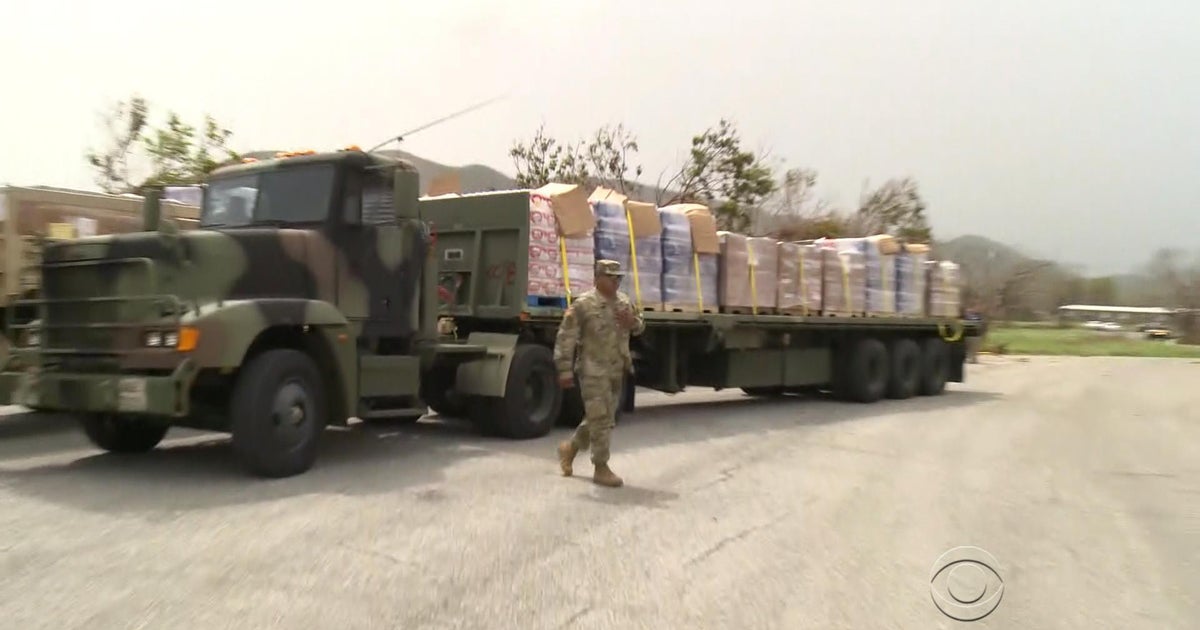
The immediate aftermath of a major hurricane creates a chaotic marketplace where speed is prioritized over financial scrutiny. In this high-pressure environment, utility restoration contracts have become a primary vehicle for large- fraud and overbilling. Between 2015 and 2025, federal investigators and state auditors uncovered a pattern where utility monopolies and private contractors exploited the urgency of grid repair to costs, bill for phantom work, and secure non-competitive contracts worth billions of dollars.
The widespread vulnerability lies in the “time and materials” nature of emergency contracts. Unlike fixed-price agreements, these contracts allow companies to bill for every hour worked and every piece of equipment used, frequently with little real-time oversight. This structure incentivizes and, in the most egregious cases, outright theft.
The Puerto Rico Blueprint: Bribery and Ballooning Costs
The restoration of Puerto Rico’s power grid following Hurricane Maria in 2017 serves as the definitive case study for utility contract fraud. The Puerto Rico Electric Power Authority (PREPA) awarded a $300 million contract to Whitefish Energy, a Montana-based firm with only two full-time employees at the time the storm hit. The deal, signed without a competitive bidding process, allowed Whitefish to bill linemen at $319 per hour, more than double the standard industry rate. Public outcry led to the contract’s cancellation, it was the precursor to a larger criminal scheme.
Following the Whitefish debacle, PREPA awarded contracts totaling $1. 8 billion to Cobra Acquisitions LLC. In 2019, federal prosecutors indicted Cobra’s president, Donald Keith Ellison, and FEMA Deputy Regional Administrator Ahsha Nateef Tribble on charges of bribery and fraud. The indictment detailed a corruption scheme where Ellison provided Tribble with personal helicopter flights, hotel accommodations, and access to a credit card. In exchange, Tribble steered lucrative restoration work to Cobra and pressured local officials to accelerate payments to the company. This case exposed how high-level federal officials could manipulate the disaster recovery framework to benefit favored contractors.
Texas: The CenterPoint Investigation
In Texas, the scrutiny of utility practices intensified following Hurricane Beryl in July 2024. The storm left nearly 3 million residents without power, prompting Texas Attorney General Ken Paxton to launch a criminal investigation into CenterPoint Energy. The probe focused on allegations of fraud, waste, and improper use of taxpayer funds. State investigators specifically examined CenterPoint’s expenditure of $800 million on massive mobile generators intended for emergency use. During the Beryl outages, these generators sat largely unused because they were too large to be deployed in the affected areas.
The CenterPoint case highlights a different form of overbilling: the capitalization of useless assets. By purchasing expensive equipment that could be added to their rate base, utilities can guarantee a return on investment from ratepayers, regardless of whether the equipment actually aids in disaster recovery. This “gold-plating” of infrastructure costs is frequently passed on to consumers through storm recovery surcharges, which are frequently approved by regulators with minimal auditing of the underlying expenses.
Louisiana’s pattern of Debt and “Storm Fees”
Louisiana has faced a relentless pattern of storm damage and subsequent billing hikes. Following Hurricanes Laura, Delta, Ida, and Zeta, the Louisiana Utilities Restoration Corporation authorized the issuance of over $1. 5 billion in system restoration bonds. These bonds allow utilities like Entergy to recover storm costs immediately while spreading the repayment, plus interest, over decades on customer bills.
Auditors have raised serious questions about the validity of the costs being securitized. In 2025, the New Orleans City Council voted to investigate Entergy New Orleans after the utility requested to bill customers $182 million for repairs related to Hurricane Francine. Critics and consumer advocates argued that of these costs stemmed from the utility’s failure to perform routine maintenance, forcing ratepayers to pay twice: once for the service they didn’t receive and again for the repairs necessitated by neglect. The absence of granular audits on “prudently incurred costs” allows utilities to bury operational within the massive lump sums of storm recovery debt.
| Event / Location | Entity Involved | Contract Value | Allegations / Findings |
|---|---|---|---|
| Hurricane Maria (Puerto Rico) | Cobra Acquisitions LLC | $1. 8 Billion | Bribery of FEMA officials, steering of contracts, inflated billing. |
| Hurricane Maria (Puerto Rico) | Whitefish Energy | $300 Million | No-bid contract, $319/hr labor rates, unqualified firm. |
| Hurricane Beryl (Texas) | CenterPoint Energy | $800 Million (Assets) | Fraud/waste investigation, purchase of unusable generators. |
| Hurricane Ian (Florida) | Horne LLP | $583 Million | Federal audit found billing for “consultations” that were phone calls. |
| Hurricane Ida (Louisiana) | Entergy New Orleans | $1. 5 Billion (Bonds) | Investigation into grid failure and billing for deferred maintenance. |
The “Pay and Chase” Failure
The persistence of these schemes is a direct result of the “pay and chase” model used by FEMA and state agencies. To expedite power restoration, funds are frequently disbursed based on self-certified invoices, with the intention of auditing them later. yet, the sheer volume of claims makes detailed auditing impossible. A 2020 Department of Homeland Security OIG report found that FEMA lost visibility of 38 percent of commodity shipments to Puerto Rico, worth $257 million, and allowed contract overruns of $179 million. Without strict upfront controls, the recovery process becomes a method for wealth transfer from federal taxpayers to private contractors and utility shareholders, leaving disaster victims with higher bills and fragile infrastructure.
NGO Administrative Bloat and Indirect Aid Metrics
The flow of federal disaster relief funds through non-governmental organizations (NGOs) is not a direct pipeline to victims; it is a leaking sieve. While public marketing campaigns frequently claim that “90 cents of every dollar” aids those in need, forensic accounting reveals a different reality. Between 2015 and 2025, the structural mechanics of disaster philanthropy and federal sub-granting allowed billions of dollars to evaporate into administrative overhead, executive compensation, and “awareness” campaigns that are legally classified as charitable work.
The primary method for this financial opacity is “Joint Cost Allocation” (ASC 958-720). This accounting standard permits nonprofits to classify fundraising expenses, such as direct mailers, television advertisements, and gala events, as “program services” if the material includes a “call to action,” such as urging the recipient to prepare a survival kit. Consequently, a $10 million advertising blitz soliciting donations can be reported as $10 million in “public education,” artificially inflating the organization’s efficiency metrics. Investigations following Hurricane Harvey revealed that major relief organizations used this method to maintain their high ratings on charity watchdog sites while spending serious portions of donor revenue on further fundraising.
The Sub-Granting Siphon
Federal disaster grants frequently originate with FEMA or USAID and pass through a primary awardee, a large international NGO, before reaching local organizations that perform the actual work. At each stage of this transfer, an administrative “indirect cost” percentage is deducted. This process, known as the “sub-granting siphon,” significantly dilutes the purchasing power of aid dollars before they reach the ground.
Under federal guidelines, primary grant recipients can charge a Negotiated Indirect Cost Rate (NICRA), which frequently ranges from 10 percent to 25 percent. When this money is sub-granted to a smaller partner, that partner also deducts their own administrative fee. By the time funds are converted into food, water, or shelter, the cumulative overhead can consume over 30 percent of the original allocation.
| Stage of Funding | Action | Cumulative Deduction | Remaining Value |
|---|---|---|---|
| Federal Disbursement | Initial Grant Award | $0. 00 | $1. 00 |
| Primary NGO (HQ) | Indirect Cost Recovery (NICRA) | -$0. 15 | $0. 85 |
| Program Management | HQ Staff Salaries & Compliance | -$0. 08 | $0. 77 |
| Sub-Grantee (Local) | Partner Admin Fee (De Minimis) | -$0. 07 | $0. 70 |
| Operational Friction | Transaction Costs & Logistics | -$0. 05 | $0. 65 |
| Final Aid Delivered | Direct Services to Victim | Total Loss: $0. 35 | $0. 65 |
Executive Compensation and “Awareness” Spending
The 2024 Nonprofit Compensation Report indicates that the median CEO salary for nonprofits with budgets exceeding $50 million reached approximately $560, 000 in 2022. In the disaster relief sector, executive compensation frequently surpasses this benchmark. During the response to Hurricane Harvey and Hurricane Maria, top executives at major relief organizations received bonuses and compensation packages exceeding $700, 000, even as their organizations struggled to deploy funds. A 2025 GAO report (GAO-25-108216) highlighted that administrative costs in disaster assistance programs have risen steadily, driven by increased compliance requirements and executive payrolls.
The case of the American Red Cross following Hurricane Harvey serves as a clear example of these. even with raising nearly $500 million, the organization faced severe criticism for its inability to provide specific cost breakdowns for meals and shelter. Investigations by ProPublica and NPR found that during Superstorm Sandy and Hurricane Isaac, assets were diverted for public relations purposes, empty trucks were ordered to drive around to be seen, rather than delivering aid. This “performative relief” prioritizes the appearance of activity over the metric of goods delivered.
“We didn’t have the sophistication needed for this size job… multiple systems failed.” , Internal Red Cross assessment following Superstorm Sandy, in ProPublica investigation.
The disconnect between funds raised and funds deployed is exacerbated by the “pay and chase” model. When pressure mounts to distribute aid quickly, agencies relax documentation requirements for NGOs. This allows organizations to bill the government for “capacity building” and “technical assistance”, vague categories that frequently fund headquarters renovations or software upgrades rather than emergency supplies. In 2024, FEMA obligated over $158 billion in disaster funding, with 88 percent directed to Public Assistance. A significant fraction of this public assistance reimburses the administrative costs of the nonprofits and local governments managing the recovery, rather than the recovery itself.
Indirect Aid Metrics
The true measure of aid effectiveness, the speed and volume of resources reaching a victim, is rarely tracked with the same rigor as fundraising totals. Most NGOs report on “committed” funds rather than “disbursed” funds. A commitment is a board resolution to spend money eventually; it does not put a roof over a family’s head. Following Hurricane Maria, millions of dollars remained “committed” to long-term recovery projects in Puerto Rico for years, sitting in interest-bearing accounts while immediate needs went unmet.
Data from the Center for Disaster Philanthropy suggests that while donors intend for their money to support local recovery, the system favors large intermediaries. In 2021, direct funding to local actors in humanitarian response dropped to 1. 2 percent, even with global commitments to increase it. The result is a disaster industrial complex where money circulates among large contractors and NGOs in Washington D. C. and New York, with a diminishing trickle reaching the disaster zone.
Federal Prosecution Bottlenecks and Statute of Limitations
The federal government is currently engaged in the largest fraud prosecution effort in American history, yet it is losing the race against time and volume. While the sheer of the theft, estimated at over $200 billion for the Small Business Administration’s (SBA) programs alone, demands accountability, the enforcement is clogged. Federal prosecutors face a mathematical impossibility: there are simply too fraudulent claims and too few investigators to pursue them all. This resource gap has forced the Department of Justice (DOJ) to adopt a de facto triage system, where smaller thefts are ignored to focus on high-dollar criminal rings.
The Ten-Year Extension
Originally, the statute of limitations for wire fraud and most federal financial crimes was five years. By 2022, it became clear that investigators could not process the mountain of suspicious Paycheck Protection Program (PPP) and Economic Injury Disaster Loan (EIDL) applications before the clock ran out. In response, Congress passed the PPP and Bank Fraud Enforcement Act and the COVID-19 EIDL Fraud Statute of Limitations Act in August 2022. These laws extended the prosecutorial window to ten years, giving the DOJ until the early 2030s to bring charges.
This extension was not a strategic advantage; it was a survival tactic. Without it, thousands of cases from 2020 would have expired in 2025, granting amnesty to fraudsters by default. The following table outlines the current legal timeframes for pandemic-era financial crimes.
| Fraud Type / Program | Original Statute of Limitations | New Statute of Limitations | Expiration Deadline |
|---|---|---|---|
| PPP Loan Fraud | 5 Years | 10 Years | 2030, 2031 |
| EIDL Fraud | 5 Years | 10 Years | 2030, 2032 |
| Bank Fraud | 10 Years | 10 Years | 2030+ |
| Unemployment Insurance Fraud | 5 Years | 5 Years (Varies by State) | Expired / Expiring |
The Caseload emergency
Even with more time, the backlog is crushing. In Fiscal Year 2025, the DOJ reported a record-breaking 1, 698 new False Claims Act (FCA) matters, a sharp increase from the pre-pandemic baseline. Of these, 1, 297 were qui tam (whistleblower) lawsuits, indicating that private citizens are identifying fraud faster than the government can investigate it. The Pandemic Response Accountability Committee (PRAC) noted over 650 active investigations in late 2023, a number that has only grown as data analytics uncover more sophisticated rings.
Prosecutorial Triage and Declination
The “pay and chase” model used to expedite relief funds created a structural failure that prosecutors are forced to manage through triage. U. S. Attorneys’ Offices operate with finite budgets and personnel. Consequently, they must set internal “declination thresholds”, dollar amounts which they not pursue criminal charges. While these thresholds are rarely published to prevent criminals from gaming the system, the operational reality is that fraud under $50, 000 or even $100, 000 frequently results in no criminal prosecution.
This triage creates a class of “micro-fraudsters” who remain untouched. A borrower who stole $20, 000 via a fake PPP loan faces a low probability of indictment, not because the evidence is weak, because the cost of prosecution exceeds the recovery value. The SBA Office of Inspector General (OIG) attempts to this gap by grouping smaller cases into larger indictments, yet the volume of individual actors overwhelms these efforts. The 2025 recovery of $6. 8 billion, while a record, represents less than 4 percent of the estimated $200 billion in fraud. The math confirms that the vast majority of stolen funds never be recovered.
The Resource Gap
The between the crime and the punishment capability is clear. In 2024, the SBA OIG reported a backlog that would take decades to clear at current staffing levels. The agency has relied heavily on data matching with the Treasury’s “Do Not Pay” list to flag improper payments retroactively, flagging a payment is different from prosecuting the recipient. The DOJ’s COVID-19 Fraud Enforcement Task Force has successfully harmonized efforts across agencies, yet they are restricted by the number of available federal prosecutors. Without a permanent increase in funding for white-collar crime divisions, the ten-year statute of limitations serves only to prolong the backlog, not resolve it.
The serious Needs Assistance Loophole
The Federal Emergency Management Agency (FEMA) operates a program designed to provide immediate liquidity to disaster victims: serious Needs Assistance (CNA). frequently referred to as “Serious Needs Assistance” in post-2023 declarations, this program dispenses a one-time payment, historically $500, raised to $700 for Hurricane Ian and $750 for the 2024 hurricane season, to cover life-saving essentials like food, water, and prescriptions. While intended as a lifeline, the program functions operationally as an unsecured cash dispenser. Criminal syndicates and opportunistic fraudsters exploit the agency’s “pay and chase” model, which prioritizes speed of disbursement over the verification of eligibility.
The structural failure lies in the application process itself. To expedite aid, FEMA relies heavily on self-certification. Applicants attest to their occupancy and identity with minimal upfront documentation. During the chaotic aftermath of a major storm, the agency suspends rigorous background checks to clear the queue of millions of applicants. This administrative bypass creates a window of opportunity, 30 to 60 days, where automated systems approve payments based on unverified data points. By the time auditors review the files, the money has into untraceable accounts.
The “Tutorial” Economy
Following Hurricane Ian in 2022 and Hurricane Ida in 2021, investigators uncovered a sophisticated “tutorial” economy operating on encrypted messaging platforms like Telegram and WhatsApp. Fraudsters shared step-by-step guides on how to navigate FEMA’s web portal to trigger the automatic CNA payment. These guides instructed users to select specific damage categories, such as “Wind Driven Rain” or “Inaccessible”, that are difficult for satellite imagery to immediately disprove. The Department of Homeland Security Office of Inspector General (DHS OIG) noted that these tutorials allowed individuals with no connection to the disaster zones to file thousands of successful claims using stolen personally identifiable information (PII).
In one documented instance following Hurricane Ian, FEMA’s automated system erroneously sent approval notifications to nearly 400 individuals in a single batch due to a processing glitch, highlighting the absence of human oversight. While the agency reversed of these specific errors, the incident exposed the fragility of the automated approval logic. For criminal rings, this automation is a feature, not a bug. They use bots to file claims at industrial, using address lists purchased on the dark web to match valid disaster zones with stolen identities.
Disbursement vs. Verification
The of the leakage is clear when comparing disbursement speeds against fraud detection rates. The Government Accountability Office (GAO) has repeatedly flagged the Individuals and Households Program (IHP), under which CNA falls, as a high-risk vector. Historical audits estimate improper payment rates between 10 percent and 16 percent for these expedited programs. When applied to the massive disbursements of recent hurricane seasons, the losses are mathematical certainties.
| Disaster Event | Year | CNA Payment Amount | Est. Total IHP Disbursement | Est. Improper Payment Risk (12%)* |
|---|---|---|---|---|
| Hurricane Ida | 2021 | $500 | $1. 2 Billion | $144 Million |
| Hurricane Ian | 2022 | $700 | $1. 1 Billion | $132 Million |
| Hurricane Helene/Milton | 2024 | $750 | $1. 4 Billion (Proj.) | $168 Million (Proj.) |
| *Risk calculation based on GAO historical improper payment rate averages for IHP. Sources: FEMA Daily Operations Briefs, DHS OIG Reports. | ||||
The Self-Certification Trap
The core vulnerability remains the “self-certification” of occupancy. To assist low-income renters who may absence formal leases, FEMA allows applicants to sign a declaration of occupancy. While compassionate in intent, this policy removes the primary barrier to entry for fraudsters. In 2025, federal prosecutors charged five individuals in California for exploiting similar self-certification gaps in wildfire relief, netting over $120, 000 by claiming residency in burnt-out zones they had never visited. The same mechanic applies to hurricane relief, where the volume of claims makes individual verification of self-certified documents impossible during the emergency phase.
The increase of the CNA payment to $750 in late 2024 significantly raised the incentive for fraud. With higher payouts, the return on investment for purchasing stolen identity kits increased. Cyber-intelligence firms observed a spike in “FEMA method” discussions on illicit forums immediately following the announcement of the rate hike. The agency’s response has been to implement post-payment audits, a strategy that recovers less than 3 percent of fraudulent disbursements according to historical recovery data. The money, once sent, is gone.
Deny, Delay, Defend: The Insurance Playbook
The systematic underpayment of disaster claims is not a clerical failure; it is a calculated business model known within the industry as “Deny, Delay, Defend.” Following major catastrophes between 2015 and 2025, insurers have aggressively deployed this tactic to preserve capital reserves at the expense of policyholders. The strategy is simple: deny valid claims immediately, delay payments through bureaucratic attrition, and defend against the few survivors who have the resources to litigate. This method transforms the insurance product from a safety net into a war of attrition.
The most egregious execution of this strategy occurred in the aftermath of Hurricane Ian in September 2022. While the storm caused an estimated $113 billion in damage, the subsequent financial devastation was man-made. Whistleblowers and independent adjusters exposed a widespread scheme where insurance carriers systematically altered field reports to slash payouts by up to 98 percent. These alterations were not corrections of errors deliberate erasures of documented damage.
The Altered Report Scandal
In December 2022, independent adjusters testified before the Florida legislature, describing what they termed “systematic criminal fraud.” The core of the allegation involved “desk adjusters”, office-based employees who never visited the damaged properties, overwriting the assessments of licensed field adjusters. These desk adjusters deleted line items for roof replacements, mold remediation, and structural repairs, frequently citing “pre-existing wear and tear” without evidence.
Jordan Lee, a licensed independent adjuster, provided evidence that 44 of the 46 reports he submitted for Hurricane Ian were altered without his consent. In one instance, a damage estimate of approximately $488, 000 was reduced to $13, 000. Another report detailing $231, 000 in damage was slashed to roughly $15, 000. Crucially, the insurers left the field adjusters’ names on the finalized, gutted reports, fraudulently implying that the on-site inspector had determined the damage was negligible.
| Case ID (Redacted) | Field Adjuster Estimate | Final Insurer Offer | Reduction % | Alteration Method |
|---|---|---|---|---|
| Claim A (Rotonda West) | $231, 368 | $15, 469 | 93. 3% | Roof replacement changed to minor repair; photos deleted. |
| Claim B (North Port) | $488, 000 | $13, 000 | 97. 3% | Major structural damage reclassified as “wear and tear.” |
| Claim C (Fort Myers) | $200, 000 | $27, 000 | 86. 5% | Insulation and drywall line items removed entirely. |
| Claim D (Cape Coral) | $40, 000 | $2, 500 | 93. 7% | Full roof replacement downgraded to “missing shingles.” |
The Litigation Trap
The “Defend” phase of the tactic relies on the prohibitively high cost of legal action. By 2023, Florida accounted for 76 percent of all homeowners’ insurance lawsuits in the United States, even with representing only 7 percent of the nation’s claims. Insurance lobbyists successfully framed this statistic as evidence of “frivolous litigation” driven by greedy attorneys. yet, the whistleblower testimony suggests a different causality: the high litigation rate was a direct response to the mass suppression of legitimate claims.
In March 2023, fully aware of the allegations regarding altered reports, Florida lawmakers passed House Bill 837. This legislation eliminated “one-way attorney fees,” a provision that previously required insurers to pay the policyholder’s legal costs if the policyholder won in court. By removing this financial risk for insurers, the state subsidized the “Defend” tactic. Policyholders face a scenario where the cost of suing for a $50, 000 underpayment frequently exceeds the chance recovery, granting insurers impunity to lowball claims.
The “Desk Adjuster” Loophole
The method for this fraud relies on the absence of regulation surrounding desk adjusters. Unlike field adjusters, who must be licensed and physically inspect the property, desk adjusters frequently operate with less oversight and are incentivized to reduce claim severity. During the Hurricane Ian recovery, third-party claims management firms acted as a firewall between the insurer and the fraud. Field adjusters were instructed by these firms to modify reports to meet “carrier guidelines,” which frequently meant ignoring visible damage to avoid total loss thresholds.
Ben Mandell, another whistleblower, testified that he was explicitly ordered to remove photos of roof damage from his reports. When he refused to participate in the deception, he was fired. This pressure creates a closed loop where only compliant adjusters, those to underreport damage, are retained, ensuring that the “Deny, Delay, Defend” machine operates with maximum efficiency. As of late 2025, even with the public exposure of these practices, no insurance executive has faced criminal charges for the systematic alteration of engineering and adjustment reports.
Redlining in Disaster Recovery Allocations
The federal disaster recovery apparatus operates on a financial algorithm that systematically amplifies wealth inequality. While the “pay and chase” model facilitated fraud in pandemic relief, a converse “deny and delay” model governs aid to minority communities. Verified longitudinal data from 2015 to 2025 reveals that federal disaster spending does not fail to the racial wealth gap; it actively widens it. In counties with at least $10 billion in disaster damages, white households gained an average of $126, 000 in wealth following the recovery effort. In clear contrast, Black households in the same counties saw their wealth decrease by an average of $27, 000. This $153, 000 is not accidental the mathematical result of property-centric allocation formulas.
The core method of this is the Federal Emergency Management Agency’s (FEMA) reliance on cost-benefit analyses that prioritize high-value assets. Federal formulas calculate “avoided damage” based on property values, meaning a dollar spent protecting a wealthy neighborhood generates a higher theoretical return than a dollar spent in a working-class district. This valuation method directs the bulk of mitigation funding toward affluent, predominantly white communities, redlining low-income areas where property values, frequently depressed by historical segregation, do not meet the federal threshold for investment.
The “Title Clearing” Trap
Bureaucratic requirements regarding property titles serve as a primary filter for denial. In the Southern United States, of Black-owned land is held as “heirs’ property,” passed down informally through generations without clear legal titles. Following Hurricane Katrina, FEMA denied approximately 20, 000 to 25, 000 applicants due to title problem. This pattern repeated with devastating after Hurricane Maria in Puerto Rico, where over 80, 000 applications were rejected for similar documentation failures. While FEMA adjusted its policy in late 2021 to accept alternative documentation, the decade preceding this change saw the systematic stripping of assets from minority families who were forced to abandon unrepairable homes.
Denial rates for FEMA’s Individual Assistance program reached historic highs during this period. In 2021, the agency approved only 13 percent of all applicants. In majority-Black counties, rejection rates for “title problem” were double those of the national average. This administrative firewall forces survivors into a pattern of debt or displacement, while wealthier applicants with formal deeds and higher credit scores access low-interest federal loans to rebuild.
Disparities in Funding Velocity
The speed of disbursement is as serious as the amount. A comparative analysis of the federal response to Hurricanes Harvey (Texas), Irma (Florida), and Maria (Puerto Rico) exposes a tiered system of urgency. Within nine days of landfall, survivors in Texas and Florida received approximately $100 million in FEMA assistance. In the same timeframe, survivors in Puerto Rico received only $6 million. also, peak federal staffing in Texas reached 31, 000 personnel, compared to just 19, 000 in Puerto Rico, even with the island facing total infrastructure collapse. The delay is not logistical; it is fiscal. Puerto Rico was denied a $4. 9 billion Community Disaster Loan in January 2018 due to “cash balance” technicalities that were not applied to mainland states.
| Applicant Demographic | Approval Rate (Low Risk) | Avg. Loan Amount (7a) | Share of Total Loans |
|---|---|---|---|
| White | 43% | $414, 000 | 42. 3% |
| Hispanic / Latino | 24% | $336, 000 | 8. 5% |
| Black / African American | 27% | $276, 000 | 4. 6% |
| Asian | 19% | $776, 000 | 19. 0% |
Allocating Zero: The Texas GLO Case
State-level administration of federal block grants frequently exacerbates these inequities. A defining example occurred during the distribution of $4. 3 billion in Community Development Block Grant Mitigation (CDBG-MIT) funds following Hurricane Harvey. The Texas General Land Office (GLO) initially awarded $0 to the City of Houston and Harris County, even with the region housing 50 percent of the state’s damaged structures and the majority of its low-income minority population. The funds were instead diverted to inland, whiter counties with significantly lower risk profiles. Although HUD later found this allocation discriminatory in 2022, the initial diversion demonstrates how state action plans can weaponize federal criteria to exclude targeted demographics from recovery pipelines.
The Credit Score Barrier
The Small Business Administration (SBA) acts as the primary lender for long-term disaster recovery, yet its lending criteria mirror the restrictive practices of commercial banking. Between 2020 and 2024, the SBA declined nearly 40 percent of disaster loan applications, primarily citing “unsatisfactory credit history” or “absence of repayment ability.” These criteria inherently disadvantage minority applicants who, due to widespread banking inequalities, possess lower average credit scores. Data from 2023 shows that Black-owned businesses received only 4. 6 percent of SBA 7(a) loan dollars, even with representing over 13 percent of the population. Consequently, 40 percent of Black small business owners did not even apply for financing in the 2020-2021 period, citing a fear of denial based on historical precedence.
Digital Asset Laundering of Stolen Treasury Checks
The modernization of disaster relief fraud has shifted the crime scene from physical check-cashing storefronts to encrypted Telegram channels and decentralized cryptocurrency exchanges. While the theft of physical U. S. Treasury checks remains a low-tech crime of opportunity, frequently involving “blue box” mail theft, the laundering of these funds has evolved into a sophisticated digital operation. Federal investigators have identified a streamlined “paper-to-token” pipeline where stolen FEMA and SBA checks are converted into untraceable digital assets within hours of theft.
Data from 2024 indicates a massive surge in this hybrid fraud. According to a report by OrboGraph, a financial automation and fraud detection firm, nearly 20, 000 stolen checks worth approximately $485 million were identified for sale on Telegram channels between May and October 2024 alone. Of these illicitly traded instruments, 22. 6 percent were government checks, including tax refunds and disaster relief payments. This digital marketplace allows street-level thieves to sell physical Treasury checks to sophisticated cyber-laundering rings for a fraction of their face value, decoupling the theft from the high-risk cashing process.
The Check-to-Crypto Pipeline
The transition from paper Treasury checks to digital currency relies on the exploitation of fintech mobile deposit features. Criminal syndicates use “mule” accounts at neobanks and peer-to-peer payment platforms to deposit altered or “washed” checks remotely. Once the funds are made available, frequently before the Treasury Department can flag the check as stolen, the money is immediately converted into cryptocurrency. This method bypasses traditional bank tellers and anti-money laundering (AML) controls that flag large government check deposits.
In 2025, the Department of Justice and FinCEN intensified scrutiny on this specific typology. Investigations revealed that “check cooking”, the digital alteration of check images for mobile deposit, has become a service sold alongside the checks themselves. Fraudsters use photo-editing software to modify the payee field on a stolen Treasury check image to match the name on a mule account. The physical check is never presented to a bank; only its digital ghost enters the financial system. Once the ledger reflects the deposit, the funds are moved to non-compliant crypto exchanges or mixed through privacy like Tornado Cash to sever the audit trail.
| Feature | Traditional Method (2015 Era) | Digital Asset Method (2025 Era) |
|---|---|---|
| Entry Point | Physical check cashing store or bank teller. | Mobile deposit capture via Fintech apps. |
| Identity Used | Fake ID cards matching the check payee. | Stolen/Synthetic identities (Mule accounts). |
| Laundering Speed | Days (requires physical movement). | Minutes (instant digital conversion). |
| Traceability | High (CCTV, physical signature). | Low (VPNs, mixed crypto transactions). |
| Cost to Criminal | 20-30% of face value (store fees). | 10-15% (mule fees and gas fees). |
The Role of Encrypted Marketplaces
The marketplace for these stolen assets operates openly on platforms like Telegram. Channels dedicated to “glass” (slang for checks) operate like legitimate e-commerce sites, offering stolen Treasury checks with “fullz” (full victim identity profiles) to the opening of matching bank accounts. In late 2024, SentiLink’s fraud insights team cataloged over 18, 000 checks shared across just 53 channels, demonstrating the industrial of the operation. The liquidity provided by cryptocurrency allows buyers in non-extradition jurisdictions to purchase these checks, hire U. S.-based mules to deposit them, and receive the clean proceeds in Bitcoin or Tether (USDT).
This digital laundering method has complicated recovery efforts for the Treasury Department. In fiscal year 2024, Treasury’s Office of Payment Integrity recovered $1 billion in check fraud using machine learning AI, yet the “pay and chase” model struggles against the speed of blockchain settlement. By the time a victim reports a relief check missing, the funds have frequently hopped through three different blockchains and reside in a cold wallet overseas. The integration of “Check-to-Crypto” schemes represents a permanent shift in how public funds are siphoned, turning disaster relief into a highly liquid asset class for global cybercrime syndicates.
The Administrative Failure to Recoup Overpayments
The federal government’s “pay and chase” model, adopted to expedite disaster relief during the COVID-19 pandemic and subsequent hurricane seasons, has collapsed into an administrative surrender. While agencies successfully prioritized speed, the “chase” phase has been characterized by bureaucratic inertia, flawed cost-benefit analyses, and a refusal to pursue tens of billions of dollars in identified overpayments. By 2025, the Small Business Administration (SBA) and Federal Emergency Management Agency (FEMA) had written off vast sums of taxpayer money, citing the administrative load of collection as justification for allowing fraud to stand.
The most example of this failure occurred within the SBA’s management of the Economic Injury Disaster Loan (EIDL) program. In a decision that stunned auditors, the agency moved to end active collection on delinquent COVID-19 EIDL loans with balances of $100, 000 or less. This policy, which applied to a portfolio valued between $62 billion and $72 billion, was justified by an internal cost-benefit analysis claiming that the expense of pursuing these debts exceeded the chance recovery. The SBA Inspector General (OIG) later exposed this analysis as fundamentally flawed, noting it relied on data from a dissimilar loan program and a private-sector servicing model that did not apply to federal debt collection standards.
Under intense congressional pressure, the SBA reversed this non-collection policy in late 2023, yet the damage to the recoupment process was already widespread. By December 2024, the agency had charged off over $47 billion in delinquent COVID-19 EIDLs classified as “non-fraud” defaults. The recovery rate on these liquidated loans was abysmal, less than 1 percent of the original loan amounts were ever recaptured. also, the Treasury Department granted the SBA a two-year exemption, April 2024, from referring delinquent EIDL debts to the Treasury Offset Program (TOP), pausing the government’s most tool for garnishing tax refunds and other federal payments from debtors.
| Metric | Estimated Value | Status |
|---|---|---|
| SBA chance Fraud (EIDL & PPP) | $200 Billion+ | Identified by OIG (17% of total disbursement) |
| SBA Charged-Off EIDL Debt | $47 Billion | Written off as uncollectible (Dec 2024) |
| SBA Loans <$100k (Collection Paused) | $72 Billion | Active collection halted, then reinstated |
| FEMA “Unknown Payments” (FY21-22) | $1. 396 Billion | Flagged for validation in FY 2024 report |
| FEMA Actual Recoupment (FY25 Q1) | $22 Million | Recovered from unknown/improper payments |
FEMA has displayed a similar inability to claw back improper payments. In its Fiscal Year 2024 reporting, the agency identified $1. 396 billion in “unknown payments” from the 2021, 2022 disbursement period that required validation. even with this massive backlog of chance errors, FEMA reported recouping only $22 million in the quarter of Fiscal Year 2025. This recovery rate represents a fraction of a percent of the funds at risk. The agency’s “Validate as You Go” process, intended to catch errors in real-time, failed to prevent billions in questionable outflows, leaving auditors to sift through cold cases where the money, and the recipients, have long since.
The failure extends to the tools designed to prevent these losses. The Treasury’s “Do Not Pay” (DNP) list, a centralized database meant to flag ineligible recipients, was frequently bypassed or ignored during the height of the disbursement frenzy. Auditors found that the SBA did not use the DNP list to screen applicants for the EIDL program, allowing loans to flow to entities already flagged for prior federal debts or debarment. Even when the SBA did identify fraudulent loans, the volume overwhelmed their investigative capacity. The OIG estimated that over $200 billion in COVID-19 relief funds were disbursed to chance fraudulent actors, yet the agency’s administrative focus shifted toward closing out the programs rather than aggressive restitution.
State-level agencies administering federal funds also failed to execute recoupment mandates. A 2025 audit revealed that state unemployment agencies, which distributed hundreds of billions in federal pandemic relief, had recovered only $145 million out of an estimated $3. 6 billion in confirmed fraud losses, a recovery rate of just 4 percent. This widespread inability to retrieve stolen funds has created a moral hazard, signaling to fraudsters that federal disaster relief programs are grant programs with no enforcement method for repayment.
The administrative surrender is compounded by financial mismanagement within the agencies themselves. In 2024, FEMA delayed nearly $11 billion in disaster reimbursements to states, shifting payments to Fiscal Year 2026 due to a shortfall in the Disaster Relief Fund. This budgetary shell game obscures the reality that billions of dollars in chance recoveries remain uncollected, while the agency pleads for additional congressional appropriations to meet its current obligations. The refusal to aggressively recoup overpayments has not only cost taxpayers billions has also depleted the very funds needed for future disaster response.
AI Generated Documentation as the Fraud Frontier
The industrialization of disaster fraud has shifted from manual opportunism to automated precision. Criminal syndicates no longer rely on stolen physical wallets or dumpster-diving for Social Security numbers. Instead, they use generative artificial intelligence to manufacture synthetic identities, counterfeit documentation, and deepfake voice authorizations at a that overwhelms federal verification systems. By 2025, the cost of creating a “perfect” fraudulent identity, complete with a driver’s license, utility bills, and a credit history, dropped to approximately $15 on the dark web.
This technological leap renders the “pay and chase” model obsolete. In 2024, the identity verification platform Socure reported that synthetic identity fraud, where real data is spliced with AI-generated fictitious information, was the fastest-growing financial crime in the United States. Losses tied to these “Frankenstein identities” reached nearly $5 billion in 2024. Unlike traditional identity theft, which has a victim who eventually complains, synthetic identities have no owner to report the crime, allowing fraudsters to siphon disaster relief funds for months or years before detection.
The Mechanics of Automated Theft
The barrier to entry for high-end fraud has collapsed. Services like “OnlyFake” demonstrated the capability to churn out thousands of realistic driver’s licenses and passports using neural networks. These documents successfully bypassed Know Your Customer (KYC) checks at major financial institutions and government portals. In a specific 2024 stress test on the California Community Colleges system, officials discovered that 31 percent of financial aid applicants were fraudulent, resulting in $13 million in disbursed aid to bots and AI-generated students. This same technology is deployed against FEMA and SBA portals immediately following natural disasters.
A December 2025 analysis of the Texas floods revealed the speed of these attacks. Fraud networks launched automated claims campaigns within hours of the disaster declaration. Approximately 29 percent of all observed fraud attempts during this period specifically targeted government assistance programs. These attacks were not random; they were timed to coincide with press releases and public aid announcements, using AI to fill out thousands of applications faster than any human could type.
| Metric | Traditional Fraud (2020) | AI-Enhanced Fraud (2025) |
|---|---|---|
| Cost per Identity | $25, $50 (Stolen PII) | $15 (AI Generated Synthetic) |
| Time to Application | 15, 30 Minutes per claim | <3 Seconds per claim |
| Verification Bypass | Manual Photoshop (High fail rate) | Generative Adversarial Networks (High pass rate) |
| Primary Vector | Stolen SSNs | Synthetic Identities & Deepfake Voice |
| Detection Lag | Weeks (Victim report) | Months/Years (No victim to report) |
Deepfakes and Voice Cloning
The threat extends beyond documents. Voice authentication, once considered a secure biometric standard, has been compromised. In 2024, Pindrop, a voice security firm, recorded a 475 percent increase in synthetic voice fraud attacks against insurance and financial sectors. Criminals use short audio samples, frequently scraped from social media, to clone a victim’s voice. This allows them to bypass telephone-based verification systems used by the SBA and FEMA to confirm applicant details.
Federal agencies are scrambling to respond. The Department of the Treasury adopted its own AI-driven fraud detection tools in late 2023. These countermeasures proved, allowing the Treasury to recover or prevent over $4 billion in improper payments in Fiscal Year 2024, a significant jump from the $652. 7 million recovered the previous year. This “machine-on-machine” warfare represents the new, where government algorithms fight criminal algorithms for control of the public treasury.
“We are witnessing the weaponization of speed. Fraudsters do not wait for recovery efforts to begin; they activate immediately. In the Texas floods, we saw global networks attacks within days, using identity farms to harvest relief funds intended for survivors.” , Socure Disaster Relief Fraud Report, December 2025
The Financials
The between fraud innovation and government defense creates a massive financial gap. While the Treasury’s recovery of $4 billion is a victory, it pales in comparison to the estimated losses. The rise of “fraud-as-a-service” platforms on encrypted messaging apps allows even low-level criminals to rent sophisticated AI tools. They can generate medical records, property damage photos, and notarized affidavits that are mathematically unique and visually indistinguishable from reality.
In the insurance sector, which parallels government disaster relief, the impact is measurable. By mid-2025, insurers reported that AI-driven scams accounted for over half of all digital financial fraud. The use of “shallowfakes”, simple AI manipulations of images to exaggerate damage, rose by 300 percent in a single year. When applied to federal disaster claims, where physical inspection is frequently delayed or waived to expedite aid, these tools allow fraudsters to monetize non-existent damage to non-existent properties owned by non-existent people.
The reliance on static data checks, matching a name to a Social Security number, is no longer sufficient. The 2024 TransUnion report indicated that synthetic fraud attempts rose 184 percent over five years, specifically targeting the gaps between different verification silos. Until federal agencies integrate biometric liveness checks and real-time behavioral analysis into the application process, the hurricane relief funds remain a lucrative revenue stream for AI-equipped criminal enterprises.
The need of Independent Forensic Audits
The federal government’s reliance on a “pay and chase” model for disaster relief has resulted in a fiscal of historic proportions. In Fiscal Year 2024 alone, federal agencies reported an estimated $162 billion in improper payments, a figure that brings the cumulative total since 2003 to nearly $2. 8 trillion. This method, which prioritizes rapid disbursement over verification, assumes that agencies can later recover funds paid to fraudsters. The data proves this assumption false. Once money leaves the Treasury, it rarely returns. The only viable solution to stop this theft is the implementation of mandatory, independent forensic audits before funds are fully released.
Current oversight method are insufficient for the of modern fraud. The primary tool used to monitor federal grant recipients is the “Single Audit,” required for non-federal entities that expend $750, 000 or more in federal awards. While these audits verify compliance with administrative rules, they are not designed to detect sophisticated fraud. Standard financial auditors review a sample of transactions to check for documentation, not to test for criminal intent or falsified data. Consequently, billions of dollars in fraudulent claims slip through these compliance checks unnoticed, only to be discovered years later by investigative journalists or whistleblowers.
The Failure of Internal Controls
Internal agency reviews frequently fail because they suffer from a conflict of interest: the same officials under pressure to disburse funds quickly are responsible for checking the validity of those disbursements. The Small Business Administration (SBA) demonstrated the catastrophic results of this internal conflict during the pandemic relief efforts. By relying on self-certification and internal automated checks, the SBA disbursed over $200 billion in chance fraudulent loans through the Paycheck Protection Program (PPP) and Economic Injury Disaster Loans (EIDL). An independent forensic audit, separated from the political pressure to “get money out the door,” would have flagged these anomalies before the transfers occurred.
State-level investigations further reveal the gap between standard compliance monitoring and forensic reality. In Louisiana, the Legislative Auditor questioned over $181 million in disaster recovery spending that did not adhere to program rules. These findings emerged not from standard rubber-stamp reviews, from targeted scrutiny of reimbursement requests. Similarly, the HUD Office of Inspector General found that the Puerto Rico Department of Housing absence the basic financial controls necessary to manage billions in CDBG-DR funds, a deficiency that standard “capacity reviews” had failed to fully correct.
Forensic Rigor vs. Standard Compliance
A forensic audit differs fundamentally from a standard financial audit. Forensic accountants use data matching, predictive modeling, and third-party verification to validate the legitimacy of a claimant. They do not check if a form is signed; they verify if the signatory exists, if the business was operational before the disaster, and if the claimed damages align with geospatial data. The following table outlines the operational differences that make forensic audits indispensable for disaster relief integrity.
| Feature | Standard Single Audit | Independent Forensic Audit |
|---|---|---|
| Primary Objective | Verify compliance with grant terms. | Detect fraud, waste, and abuse. |
| Methodology | Random sampling of transactions. | 100% data matching and anomaly detection. |
| Data Sources | Internal records provided by the auditee. | External databases (tax records, death master files). |
| Outcome | Opinion on financial statement accuracy. | Actionable evidence for prosecution and recovery. |
| Fraud Detection | Incidental; frequently missed. | Primary focus; proactive identification. |
The Return on Investment
Critics that forensic audits are too expensive or slow for emergency situations. This argument ignores the cost of inaction. The loss of $200 billion in SBA funds dwarfs the cost of any conceivable audit regime. also, modern forensic tools can operate in near real-time. The “Do Not Pay” portal and other data-matching systems can verify eligibility in seconds, provided agencies are legally mandated to use them. The refusal to integrate these systems constitutes a choice to fraud.
To restore integrity to the hurricane relief system, Congress must mandate independent forensic audits for all disaster grants exceeding a specific threshold, such as $500, 000. These audits must be conducted by external firms with no financial stake in the speed of disbursement. The “pay and chase” era has proven that the government cannot police itself. Only through rigorous, independent, and forensic verification can the United States ensure that disaster aid reaches the victims who need it, rather than the criminal networks that exploit it.
**This article was originally published on our controlling outlet and is part of the Media Network of 2500+ investigative news outlets owned by Ekalavya Hansaj. It is shared here as part of our content syndication agreement.” The full list of all our brands can be checked here. You may be interested in reading further original investigations here.
Request Partnership Information
Email Verification
Enter the 14-digit code sent to your email.


Judiciary Times
Part of the global news network of investigative outlets owned by global media baron Ekalavya Hansaj.
Judiciary Times shares stories on the intricacies, challenges, and controversies within judicial systems worldwide. From landmark verdicts to judicial scandals, from case histories to the manipulation of evidence and witnesses, we provide in-depth coverage of the legal landscape that shapes justice—and sometimes injustice—across the globe.Our team of legal experts, journalists, and researchers delves into the complexities of lawsuits, judicial delays, victim injustices, fake cases, and wrongful convictions, shedding light on the human stories behind the headlines. We explore the codes and sections of law, the impact of jury tampering, and the harsh realities of inhuman incarceration, offering a critical perspective on the systems meant to uphold fairness and equality.At Judiciary Times, we believe in the power of transparency and accountability to drive reform. Our mission is to inform, educate, and advocate for a world where justice is truly blind and accessible to all. Join us as we navigate the courtroom dramas, challenge systemic flaws, and strive for a judicial system that lives up to its promise of fairness and integrity. Because justice delayed is justice denied.