Indigenous Grazing Rights And Forced Land Grabs: Impact of Mega-Farms
By Ekalavya Hansaj
January 21, 2026
Words: 10231
0 Comments
Why it matters:
Indigenous grazing rights are under threat as multinational agribusinesses encroach on ancestral lands.
The systemic erasure of grazing rights is leading to displacement and environmental degradation, with indigenous communities being disproportionately affected.
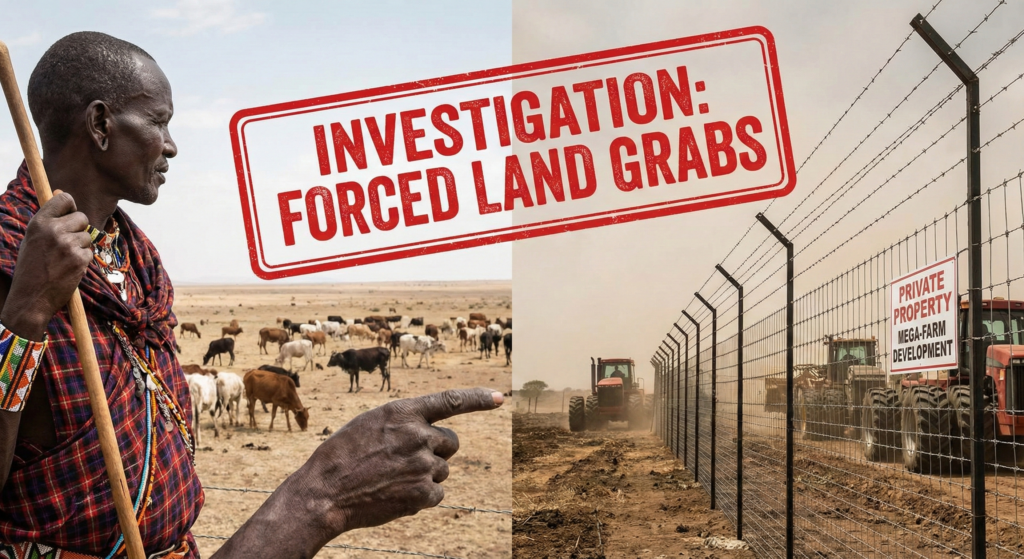
The global struggle for territory has entered a volatile new phase. Across the scorched savannas of South America and the grassy highlands of East Africa, a silent war is being waged against indigenous grazing rights between industrial capital and indigenous sovereignty.
The combatants are unequal: multinational agribusiness conglomerates wielding state authorized deeds against pastoralist communities holding nothing but centuries of oral tradition.
This report investigates the systemic erasure of grazing rights from 2020 to 2025, revealing how corporate entities are annexing vast tracts of ancestral earth under the guise of development, food security, and increasingly, conservation.Recent data paints a stark picture of displacement. In the Gran Chaco forest spanning Paraguay and Brazil, the expansion of cattle ranching has reached catastrophic levels. A startling report released by Global Witness in October 2024 exposed that 18,000 hectares of forest were cleared within the territory of the Ayoreo Totobiegosode people between 2021 and 2023.
This destruction, an area larger than the city of Paris, was driven by meat processing giants to supply global beef markets. The Ayoreo, some of whom remain in voluntary isolation, face an existential threat as bulldozers level the thorny scrubland they rely on for hunting and gathering.
The beef industry has effectively privatized the commons, converting complex ecosystems into monoculture pastures.
The situation in Brazil further illustrates this trend. While deforestation rates in the Amazon saw a reduction in 2023 under the administration of President Lula, the focus of industrial exploitation shifted south to the Cerrado.
This biodiversity hotspot, the cradle of waters for the continent, saw a twenty one percent surge in land clearance during the first seven months of 2023 alone.
Agribusiness interests have aggressively targeted these savannas for soy production, displacing traditional grazing communities who have managed the landscape for generations without degrading it.
MapBiomas confirmed in August 2024 that while indigenous lands lost less than one percent of their native vegetation over four decades, private areas lost twenty eight percent.
The data proves that indigenous stewardship is the most effective barrier against ecological collapse, yet these guardians are the first to be evicted.
Across the Atlantic, the Maasai people of Tanzania face a similar assault, though the mechanism of dispossession differs. Here, the land grab is justified not by agriculture alone but by a distorted version of conservation.
Investigations by Amnesty International and Human Rights Watch detail the violent events of June 2022 in the Loliondo division.
Tanzanian security forces demarcated 1,500 square kilometers of legally registered village land as the Pololeti Game Reserve. This action stripped seventy thousand Maasai pastoralists of vital grazing access.
Authorities opened fire on protesters, detained community leaders, and seized livestock. By July 2022, satellite imagery verified the burning of ninety homesteads within the contested zone.
The government claimed this was for wildlife protection, yet the area has long been leased to a foreign hunting corporation. The creation of the reserve effectively transferred resources from indigenous herders to wealthy trophy hunters, creating a zone of exclusion that criminalizes traditional livelihoods.
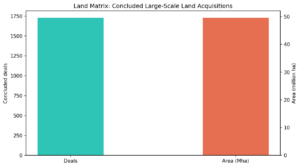
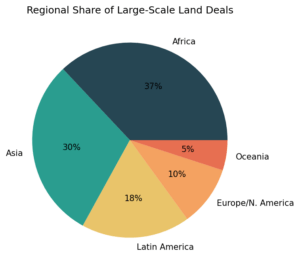
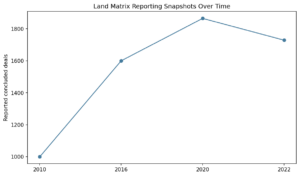
The Land Matrix Initiative, in a major 2024 conference, reported that over thirty million hectares of agricultural land worldwide have been sold off in transnational deals since the early 2000s.
The narrative has evolved from simple food production to complex financial speculation. Indigenous territories are now viewed as assets for carbon credits and green energy projects.
This “green grabbing” phenomenon poses a sophisticated threat, as corporations drape their acquisitions in the language of environmentalism while simultaneously barring native peoples from their own homes.
As we examine the years 2020 to 2025, the evidence is irrefutable. We are witnessing the systematic enclosure of the final frontiers. Mega farms and corporate reserves are not merely altering the landscape; they are dismantling the legal and cultural frameworks that have sustained indigenous life for millennia.
Historical Context: Traditional Grazing Systems and Precolonial Tenure
To understand the severity of modern land grabs, one must first grasp the fluidity of the systems they replace. For centuries before colonial borders were drawn, indigenous land tenure functioned not through static ownership but via dynamic stewardship.
In regions like the East African Rift Valley or the Arctic tundra, survival depended on mobility.
These systems, known as transhumance, allowed communities to move livestock according to seasonal rhythms, rainfall patterns, and vegetation growth. Land was not a commodity to be fenced but a common resource managed through complex oral laws and generational knowledge.
However, recent data from 2020 to 2025 reveals a violent collision between these ancient fluid systems and the rigid, title based legal frameworks favored by industrial agriculture and state led conservation.
The imposition of static property lines upon migratory routes has criminalized traditional grazing, effectively erasing precolonial rights under the guise of “development” or “protection.”
The East African Rift: Conservation as Exclusion
Nowhere is this historical erasure more evident than in Tanzania. The Maasai people have practiced seasonal grazing for generations, preserving the ecosystem through a balance of cattle herding and wildlife coexistence.
Yet, this traditional tenure is being systematically dismantled. In June 2022, Tanzanian authorities reclassified 1,500 square kilometers of legally registered village land in Loliondo as a Game Reserve.
This administrative move, intended to clear the way for trophy hunting and tourism, directly ignored the customary rights of the residents.
A 2023 report by Amnesty International confirmed that this reclassification resulted in the forced eviction of approximately 70,000 Maasai pastoralists. These communities lost access to vital dry season grazing pastures, a cornerstone of their precolonial survival strategy.
Satellite imagery analyzed by Human Rights Watch in July 2022 showed that at least 90 homesteads were burned within the demarcated zone.
While the state argues this is for conservation, the eviction fundamentally rejects the historical reality that Maasai grazing patterns effectively conserved this biodiversity for centuries.
The legal battle continues, with the East African Court of Justice ruling in September 2022 against the Maasai based on evidentiary technicalities, a verdict that highlights how modern colonial style courts often fail to recognize oral and customary evidence.
The Arctic: Green Industry vs. Ancient Migration
A similar erosion of historical rights is occurring in Scandinavia, where the Sami people face “green grabs” that threaten their reindeer herding traditions. Reindeer husbandry relies on the ability to move herds across vast distances between summer and winter pastures.
This right, established long before the borders of Norway or Sweden existed, is now fractured by renewable energy infrastructure.
In October 2021, the Norwegian Supreme Court ruled that the Fosen wind farm violated the rights of Sami herders under international conventions, as the turbines rendered winter grazing lands unusable. Despite this recognition of precolonial tenure, the 151 wind turbines remained fully operational throughout 2023 and 2024.
A 2024 study by the Stockholm Environment Institute highlighted that such “green transition” projects have led to significant land dispossession, forcing herders into smaller, fragmented pockets of land.
This modern industrial infrastructure acts as a physical barrier to the historical right of movement, turning a continuous cultural landscape into a series of disconnected, industrial zones.
The Global Scale of Tenure Loss
These regional crises reflect a global trend where unrecognized historical tenure facilitates mass dispossession. A 2024 report by IPES Food detailed a “land squeeze” where soaring land prices and speculative investments are driving inequality to record highs.
The report notes that while Indigenous peoples steward vast territories, their legal ownership is often disregarded.
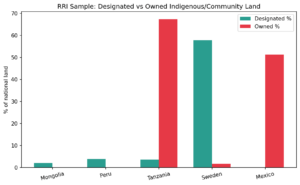
The Rights and Resources Initiative (RRI) reported in 2023 that while legal recognition of indigenous land increased by over 100 million hectares between 2015 and 2020, at least 1.3 billion hectares of ancestral lands remain unrecognized under national laws.
This legal gap allows governments and corporations to treat historically occupied land as “vacant” and available for purchase, ignoring millennia of continuous use.
The transition from precolonial communal stewardship to private, exclusive ownership continues to be the primary mechanism of dispossession.
Whether through the burning of bomas in Tanzania or the construction of wind turbines in Norway, the result is the same: the final enclosure of the commons and the criminalization of the oldest sustainable food systems on Earth.
The Rise of Agribusiness: Defining the Mega Farm Model and Scale
The modern agricultural landscape has undergone a radical transformation since 2020. We are no longer discussing the family farm or the local cooperative. The dominant entity in global food production is now the industrial mega farm.
This model represents a fundamental shift in how land is valued, acquired, and managed. It treats soil not as a living ecosystem but as a financial asset class. This section defines the anatomy of these vast operations and analyzes the data behind their explosive growth between 2020 and 2025.
The Architecture of Asset Class Agriculture
A mega farm is defined less by its crops and more by its capital structure. These are not merely large tracts of land; they are vertically integrated production nodes owned by sovereign wealth funds, pension managers, and transnational corporations.
The scale is difficult to visualize. In the United States, the 2022 Census of Agriculture revealed a stark consolidation.
While the country lost over 141,000 individual farms since 2017, the largest operations expanded their dominance. Farms with sales exceeding five million dollars now account for 42 percent of all agricultural sales despite comprising less than one percent of total farm numbers.
This consolidation forces a demand for contiguous land. An industrial soy operation requires thousands of hectares to be profitable. It needs vast, unbroken horizons for automated machinery and drone surveillance.
This requirement directly conflicts with indigenous grazing rights, which rely on fluid boundaries and shared corridors.
The mega farm model cannot tolerate the complex, overlapping land use patterns practiced by pastoralists. It demands a grid, a fence, and a title deed.
The Matopiba Frontier: A Case Study in Displacement
The most aggressive expansion of this model is visible in Brazil. Data from MapBiomas released in 2023 shows that agricultural land in Brazil grew by 50 percent over the last four decades, reaching 95.1 million hectares.
The epicenter of this growth is the Matopiba region, a savannah biome that serves as the ancestral home for numerous indigenous groups and traditional grazing communities.
Between 2019 and 2023, Matopiba lost 2.7 million hectares of native vegetation. This was not random deforestation. It was a systematic conversion of rangeland into soy monoculture. The indigenous communities in these areas do not practice fenced agriculture.
They rely on the Cerrado for seasonal grazing. When a mega farm acquires legal title to ten thousand hectares, it erects barriers that cut off ancient migration routes.
The data confirms that the Cerrado has now surpassed the Amazon in agricultural density, concentrating half of the soy production in the country. This shift has effectively criminalized the traditional movement of indigenous herds, labeling their presence as trespassing on private corporate property.
Green Grabbing and Carbon Markets
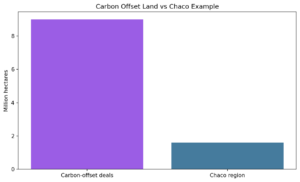
A new variation of the mega farm emerged between 2023 and 2025: the carbon plantation. The Land Matrix Initiative reported in 2025 that millions of hectares in Africa are being acquired for carbon offset projects.
These are not food farms. They are tree plantations designed to generate credits for polluters in the Global North.
In the Democratic Republic of Congo and the Republic of Congo, contracts cover over one million hectares each. These deals often target “idle” land. However, investigative reports reveal that this land is rarely empty.
It is the customary domain of pastoralists and subsistence farmers. The “green” mega farm encloses these commons to protect carbon stocks, expelling the communities that have stewarded the land for centuries.
The irony is palpable. Indigenous land management is blamed for degradation, while corporate enclosures are marketed as conservation.
The Inequality of Ownership
The rise of the mega farm has produced unprecedented land inequality. A seminal report from 2020 by the International Land Coalition found that the top one percent of farms operate more than 70 percent of the world’s farmland.
By 2024, this concentration had intensified. The wealthiest ten percent of rural populations now capture 60 percent of agricultural land value, while the poorest fifty percent control just three percent.
This disparity is the engine driving the violation of grazing rights. When land becomes an asset for global speculation, the local utility of that land for grazing cattle or gathering food is ignored.
The mega farm model essentially erases the indigenous map, replacing it with a cadaster designed for investors in London, New York, and Shanghai.
Legal Loopholes: How National Governments Facilitate Land Appropriation
The modern era of land dispossession has evolved beyond crude violence into a sophisticated bureaucratic machine. While private mercenaries and barbed wire remain visible tools of exclusion, the most effective weapon against indigenous grazing rights is now the gavel.
Between 2020 and 2025, national governments have systematically weaponized legal ambiguity, using legislative loopholes to reclassify ancestral territories as “vacant,” “productive,” or “protected,” thereby stripping pastoralists of their customary tenure.
This phenomenon, often described as lawfare, transforms the theft of land into a procedural administrative act, effectively erasing centuries of indigenous stewardship under the guise of national development.
The “Time Limit” Trick in Brazil
Nowhere is this legal manipulation more brazen than in Brazil. The agribusiness sector, seeking to expand industrial agricultural estates into the Amazon and Cerrado, championed a legal thesis known as Marco Temporal.
This doctrine argues that indigenous peoples have no right to territory unless they were physically occupying it on precisely October 5, 1988, the day the Brazilian Constitution was promulgated. This arbitrary cutoff ignores the reality that many groups were displaced or hiding from dictatorship era violence on that specific date.
Although the Supreme Court declared this thesis unconstitutional in September 2023, the victory was short lived. The agrarian caucus in Congress immediately retaliated by passing Law 14.701 later that same year, reinstating the time limit through legislation.
Data from the Indigenist Missionary Council reveals the immediate human cost of this legal loophole: throughout 2024, violence against indigenous territories surged, with 1,241 recorded cases of conflict and property damage.
By freezing the demarcation process, the state effectively sanctioned the intrusion of soy and cattle operations onto lands that are technically awaiting recognition, leaving communities in a legal limbo where their eviction is treated as a mere zoning enforcement.
Conservation as Pretext in Tanzania
In East Africa, the legal mechanism for appropriation shifts from “time limits” to “conservation status.” In Tanzania, the government has utilized Game Controlled Areas (GCAs) to facilitate the eviction of Maasai pastoralists, ostensibly for wildlife protection but often linked to elite hunting concessions and tourism.
The most egregious example occurred in the Loliondo division of the Ngorongoro district.
In June 2022, security forces moved to demarcate 1,500 square kilometers of legally registered village land as a game reserve. This rezoning exercise, known as the Pololeti Game Controlled Area, criminalized the presence of the Maasai and their cattle in their dry season grazing grounds.
Reports indicate that this single administrative act impacted the livelihoods of over 70,000 people.
While the government claimed this was necessary for conservation, the area had been earmarked for operation by a hunting company based in the United Arab Emirates. The loophole here is the classification of pastoralism as incompatible with wildlife, despite centuries of coexistence.
By changing the legal status of the soil from “village land” to “reserve,” the state transformed indigenous inhabitants into trespassers overnight, bypassing the need for proper compensation or consent.
The “Green” Grab
A disturbing trend emerging in data from 2024 and 2025 is the rise of “green grabbing” driven by global carbon markets. The Land Matrix initiative has highlighted how large tracts of land in the Global South are being acquired for carbon offset projects.
Governments classify vast rangelands as “degraded” or “unused” to lease them to foreign entities for tree planting or forest preservation schemes.
These deals often legally exclude grazing to protect the carbon stock, displacing pastoralists who lack formal paper titles. This creates a paradox where indigenous communities are evicted to save the environment, only for their land to be sold as carbon credits to polluting industries abroad.
The Economics of Dispossession: Global Supply Chains Driving Local Evictions
The supermarket aisle offers a sanitized view of global agriculture. Bright packaging obscures the violent machinery required to produce cheap beef, soy, and palm oil.
Behind every massive plantation lies a stark economic calculus: the profit generated by export commodities far outweighs the value of indigenous life or ancestral grazing rights.
This section investigates the financial engine driving the dispossession of native peoples between 2020 and 2025, revealing how global capital demands specific outcomes that local governments enforce through brutality.
The Savannah as a Balance Sheet
The Brazilian Cerrado, a vast tropical savannah, serves as the clearest example of this phenomenon. While global attention often drifts to the Amazon, the Cerrado has become the primary sacrifice zone for industrial agriculture.
Data from 2023 shows that deforestation in this biome reached 1.1 million hectares, a figure more than double the destruction seen in the Amazon during the same period.
Investigation Note: In 2024, the Rainforest Action Network reported that financial institutions pumped 77 billion dollars into forest risk sectors between January 2023 and June 2024. This capital flow directly fuels the expansion of mega farms into indigenous territories.
For the Guarani and Kaiowá peoples, this influx of capital manifests as physical erasure. Their ancestral grazing lands are not merely occupied; they are transformed into enclosed assets for soy production.
Investigations by Earthsight in 2024 linked soy from recently cleared Cerrado land to chicken feed used by major European retailers.
The economic logic is linear: a hectare of soy yields predictable returns for investors in New York or London, whereas a hectare of indigenous grazing land yields nothing for the global market. Consequently, the legal system is weaponized to invalidate traditional claims, turning inhabitants into trespassers on their own territory.
Tourism as Extractive Industry
In East Africa, the definition of a “mega farm” shifts from crops to conservation tourism, yet the mechanics of dispossession remain identical. The eviction of Maasai pastoralists from the Loliondo division in Tanzania illustrates how state authorities prioritize foreign revenue over indigenous welfare.
Between June 2022 and May 2024, security forces conducted a violent campaign to demarcate 1,500 square kilometers of village land as the Pololeti Game Reserve. This area is legally registered village land, vital for the grazing of cattle during dry seasons.
However, the government sought to lease this territory to the Ortello Business Company, a UAE based hunting firm.
“We have lost everything.” — Testimony from a Maasai resident, Amnesty International Report 2023.
The economic incentive here is elite tourism. Trophy hunting blocks and luxury safari lodges generate foreign currency that pastoralism cannot match. To secure this revenue, the state deployed tear gas and live ammunition.
Reports confirm that 70,000 Maasai lost access to crucial pastures. In July 2022 alone, satellite imagery analyzed by Human Rights Watch showed approximately 90 homesteads burned to the ground.
The cattle, which form the basis of the Maasai economy, starve without access to these seasonal grazing grounds, effectively destroying the community without need for total incarceration.
The Financial Enablers
These evictions are not isolated local disputes but are underwritten by global finance. The “Roots of Resistance” report by Global Witness, released in late 2024, highlights that 196 land defenders were killed in 2023, with Colombia leading the statistics. A significant portion of these murders related to agribusiness and mining.
Asset managers and commercial banks hold the power to halt this violence but instead choose to fund it. Despite public commitments to human rights, major financial entities held bonds and shares in companies like JBS, the meat processing giant, throughout 2024. JBS has faced repeated accusations regarding deforestation in its supply chain.
By maintaining these investments, financial institutions provide the liquidity necessary for agribusiness to expand its footprint, pushing the frontier of extraction further into indigenous lands.
The economics of dispossession are simple yet devastating. As long as global markets assign zero value to indigenous stewardship and maximum value to commodity extraction, the cycle of eviction will continue. The mega farm is not just an agricultural unit; it is a financial instrument that requires the removal of people to function.
Ecological Transformation: Converting Sustainable Pastures to Intensive Monocultures
The shift from indigenous grazing lands to industrial agricultural zones represents more than a mere change in ownership. It marks a fundamental ecological rupture.When corporations seize pastoral territories, they replace complex, biodiverse ecosystems with rigid monocultures. This process, often described as creating “green deserts,” strips the land of its natural resilience.
Recent data from 2020 to 2025 reveals that this transformation is accelerating, driven by global demand for soy, beef, and palm oil. The consequences for soil health, water tables, and local climates are catastrophic and often irreversible.
The Gran Chaco: A Disappearing Biome
The Gran Chaco, spanning parts of Argentina, Paraguay, and Bolivia, serves as a primary example of this devastation. Historically, this dry forest and savanna region supported diverse indigenous communities and wildlife.
However, from 2020 to 2025, the expansion of genetically modified soy and intensive cattle ranching decimated vast tracts of this biome.
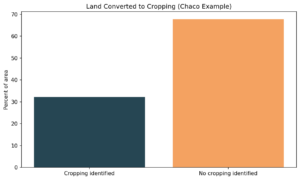
In 2024 alone, reports indicated that Argentina lost nearly 150,000 hectares of Chaco forest. This destruction was not random; it targeted areas essential for indigenous subsistence.
Corporations clear the native vegetation, which includes hardwood trees and scrub necessary for soil stability, to plant uniform rows of crops. This removal exposes the topsoil to wind and rain erosion.
Unlike the rotational grazing practiced by indigenous herders, which allows vegetation to recover, industrial farming extracts nutrients without pause. The soil turns into dust, requiring increasing amounts of chemical fertilizers to remain productive.
The Cerrado and the Water Crisis
To the northeast, the Brazilian Cerrado faces an even more aggressive conversion. This vast savanna acts as the birthplace of waters for South America, feeding major river systems. Yet, it is being devoured by industrial agriculture.
In 2023, deforestation in the Cerrado surged to 1.1 million hectares, a figure that exceeded destruction in the Amazon for that year. The Matopiba region, an agricultural frontier heavily targeted by foreign investment, accounted for three quarters of this loss.
The impact on water resources is profound. Indigenous communities have long relied on the natural aquifers that sustain the savanna during dry seasons. Industrial monocultures, however, require massive irrigation.
A study published in 2023 regarding the Urucuia aquifer revealed a loss of 31 cubic kilometers of water between 2002 and 2021, a trend that intensified in recent years.
Giant center pivot irrigation systems drain underground reserves faster than rain can replenish them. As a result, streams that indigenous peoples used for centuries are drying up, leaving communities without water for their livestock or themselves.
Loss of Biodiversity and Resilience
Indigenous land management typically mimics natural patterns, maintaining a mosaic of habitats that support various species. In contrast, monocultures demand absolute uniformity. To protect a single crop species, producers must eradicate all competitors.
This leads to the widespread use of herbicides and pesticides. These chemicals drift into remaining indigenous territories, poisoning water sources and killing pollinators.
The ecological data is stark. Areas converted to soy or intensive pasture show a collapse in biodiversity. Birds, insects, and small mammals that thrive in the complex architecture of a native savanna cannot survive in a soy field.
The silence in these new fields is palpable. Where once there was a cacophony of life, there is now only the sound of machinery.
Furthermore, this simplification makes the land vulnerable to climate shocks. Native pastures are resilient; they can withstand drought and flood variance. Monocultures are fragile. When the rains fail, as they increasingly do, the exposed soil creates dust bowls.
The local climate warms as the cooling effect of native vegetation is lost. For indigenous herders pushed to the margins, this means the remaining land becomes less capable of sustaining life, trapping them in a cycle of poverty and ecological grief.
Severing the Arteries: The Impact of Fencing on Migratory Routes and Water Access
The proliferation of fencing across vast tracts of indigenous land represents more than a mere boundary marker. It acts as a physical instrument of severance, cutting the vital arteries of movement that have sustained pastoralist societies for millennia. When large scale agribusiness entities acquire land, the first act of possession is often the erection of impermeable barriers.
These fences do not just enclose crops or cattle; they bisect ancient migratory corridors and blockade access to the only reliable water sources in arid regions. For indigenous groups, this infrastructure turns a contiguous landscape into a fragmented archipelago of inaccessible zones.
In East Africa, the crisis has reached a boiling point within the Greater Maasai Mara Ecosystem. Data from 2020 to 2025 reveals a sharp escalation in land enclosure that directly threatens the Maasai way of life.
A pivotal 2025 study published in Ecological Applications highlighted that the density of fencing has become so severe that removing just 15 to 140 kilometers of wire barriers could restore connectivity for migratory species by up to 54 percent.
This statistic serves as a proxy for the human cost; the same fences that block wildebeest also block Maasai herds.
“The land is where our livestock graze. Without it, our families cannot survive. We were never consulted about turning Lake Natron into a game reserve.” — Nesikar Daudi, Engaresero resident, 2025.
The situation in Tanzania offers a stark example of how legal reclassification serves as a precursor to physical exclusion. In June 2022, security forces moved to demarcate 1,500 square kilometers of land in Loliondo, reclassifying it from a grazing area to a game reserve.
This area, known as the Pololeti block, was effectively severed from the community.
Reports from Human Rights Watch in 2024 documented that the enforcement of these new boundaries involved the destruction of homesteads and the seizure of livestock.
The fencing of such vast areas forces herders into smaller, marginal parcels of land that cannot support their cattle during drought, leading to overgrazing and economic collapse.
A similar dynamic unfolds in the Gran Chaco of South America, a biome spanning Argentina, Paraguay, and Bolivia. This region experiences some of the highest deforestation rates globally, driven by the expansion of cattle ranching and soy production.
Between 2020 and 2025, the Gran Chaco lost approximately 35,000 hectares of native vegetation every month.
For the Ayoreo people in Paraguay, some of whom live in voluntary isolation, the wire fences of mega farms are existential threats. These barriers hide the clear cutting of forests and physically prevent indigenous communities from accessing traditional hunting grounds and water holes.
Water access remains the most critical flashpoint. In the Chaco, industrial ranches are equipped with deep wells and electric pumps, ensuring a steady supply for commercial herds even during the severe droughts of 2022 and 2023.
In contrast, indigenous communities on the other side of the wire are often left with drying tajamares (rainwater ponds). The fences literally segregate water, creating a landscape where corporate livestock drink freely while local families face acute scarcity.
The cumulative effect of this fencing is the dismantling of resilience. Pastoralism relies on the ability to move herds to follow rain and fresh pasture. By severing these routes, mega farms impose a sedentary model on a mobile culture.
The resulting entrapment destroys the ecological knowledge systems that have managed these fragile environments for centuries, replacing sustainable stewardship with rigid extraction.
The Food Security Paradox: Exporting Commodities While Local Communities Starve
In the fertile corridors of the Global South, a disturbing economic reality has taken root between 2020 and 2025. While national governments celebrate record breaking agricultural exports, the indigenous communities living on the very land producing these bounties are sliding deeper into acute malnutrition.
This phenomenon, known as the food security paradox, has become the defining humanitarian crisis of the decade.
By 2025, Brazil solidified its position as a global agricultural superpower, exporting a record 14.1 million tons of soybeans in May alone. Yet, this macroeconomic triumph masks a grim reality in the Cerrado and Amazon basins.
Indigenous territories, historically used for sustainable foraging and small scale cultivation, have been systematically enclosed by massive monoculture operations.
Data from the Rights and Resources Initiative in 2023 indicated that while legal recognition of indigenous land increased globally, enforcement in South America lagged behind the pace of agro industrial expansion.
The Guarani Kaiowá people in Mato Grosso do Sul now face fences where they once hunted, forcing them into roadside camps dependent on sporadic government food baskets while trucks laden with soy rumble past them toward export terminals.
“We watch the grain leave our ancestral soil to feed livestock in Europe and Asia,” says an indigenous leader from the Tapajós basin, “while our children go to sleep with empty bellies because the forest that fed us is now a private field.”
The Horn of Africa: Wheat versus Pastoralism
Nowhere is this paradox more visceral than in East Africa. Between 2020 and 2025, the region faced its most severe drought in forty years. Despite this, national policies in countries like Ethiopia aggressively pursued wheat self sufficiency and export potential.
The “Summer Wheat” initiative, lauded by officials for turning the country into a potential net exporter by late 2025, relied heavily on irrigating vast lowland valleys.
These valleys are the traditional dry season grazing grounds for pastoralist tribes like the Bodi and Mursi.
The displacement figures are staggering. By early 2025, the Internal Displacement Monitoring Centre reported millions displaced across the Horn of Africa, a significant portion losing their homes not just to climate shock but to land conversion.
When pastoralists lose access to riverine grazing zones due to fenced mega farms, their herds perish.
Without livestock, their primary source of milk and protein vanishes. The result is a cruel irony: a nation announces it has surplus grain for the international market while the World Food Programme warns that over 20 million people in the same region face IPC Phase 3 crisis levels of hunger or worse.
Green Grabs and Carbon Offsets
A new driver of displacement emerged prominently in 2024: the “green grab.” massive tracts of rangeland in Kenya and Tanzania have been leased to foreign entities for carbon sequestration projects.
These deals often restrict grazing to allow vegetation to regenerate for carbon credits. While intended to mitigate global climate change, the immediate local impact is the criminalization of traditional grazing rights.
Maasai herders, already squeezed by wildlife conservation areas, now find their cattle impounded for trespassing on land their ancestors grazed for centuries. The loss of mobility in a drought prone landscape is a death sentence for the herd and, by extension, the community.
The data from 2020 to 2025 paints a clear picture. Agricultural GDP and export revenues in these nations are rising, but so are the rates of indigenous stunting and wasting.
The paradox is structural. The land is being utilized to maximize calories for the global market rather than to sustain the local population.
Until indigenous grazing rights are not just recognized on paper but enforced against the encroachment of mega farms and carbon projects, the export ships will continue to leave full while the local villages starve.
The Great Erasure: Industrial Agriculture and the Death of Indigenous Knowledge
When a bulldozer clears a forest, it destroys more than trees. It shreds a living library. For Indigenous communities, land is not merely an asset for production but the physical classroom where culture, identity, and ecological survival are taught.
Between 2020 and 2025, a surge in large scale land acquisitions for industrial agriculture and conservation estates has accelerated this cultural erasure, severing the bond between pastoralists and their ancestral territories.
This is not just displacement. It is a forced forgetting.
The Serengeti Illusion: Conservation as Displacement
In northern Tanzania, the Maasai people face an existential threat disguised as wildlife preservation. In June 2022, security forces moved to demarcate 1,500 square kilometers of village land in Loliondo for a game reserve, a move critics argue prioritizes elite hunting tourism over local grazing rights.
Reports from Amnesty International indicate that security forces used tear gas and live ammunition to disperse community members who resisted the seizure.
“We have lost everything.”
By mid 2023, approximately 70,000 Maasai had lost access to vital grazing pastures in Loliondo, disrupting a livelihood system that has sustained the savannah ecosystem for centuries.
The impact on traditional ecological knowledge is catastrophic. Maasai grazing patterns are not random; they are complex mental maps passed down orally, dictating which grasses sustain cattle during droughts and which medicinal plants cure livestock ailments.
When the state fences off these lands, that knowledge becomes obsolete.
Young herders cannot learn the landscape if they are barred from entering it. The 2022 evictions in Loliondo and ongoing pressure in the Ngorongoro Conservation Area represent a strategic dismantling of the pastoralist way of life, forcing a dependency on sedentary, wage based economies that have no room for traditional expertise.
The Soy Frontier: Bulldozing the Cerrado
While Tanzania pushes pastoralists out for tourism, Brazil pushes them out for soy. The Cerrado, the most biodiverse savanna in the world, is vanishing at a rate that now exceeds the destruction of the Amazon. The primary driver is the Matopiba region, an agricultural frontier spanning Maranhao, Tocantins, Piaui, and Bahia.
Data from 2023 reveals a grim reality. In that year alone, deforestation in the Cerrado surged to 1.1 million hectares, an area double the size of deforestation in the Amazon for the same period.
The Matopiba region accounted for three quarters of this loss. For the indigenous communities and traditional Geraizeiros who inhabit these plateaus, the expansion of soy monocultures obliterates the physical markers of their history.
A 2024 report by the Pastoral Land Commission highlighted that over 20,000 families in the region were involved in land conflicts in 2022. As fences go up around vast soy estates, communities lose access to the native fruits and game that underpin their food sovereignty.
The loss is twofold: the immediate hunger and the long term loss of the culinary and medicinal traditions associated with the Cerrado biodiversity. When the ecosystem is replaced by genetically modified soy stretching to the horizon, the vocabulary of the forest dies out, replaced by the terminology of industrial labor.
The Sugar Fantasy: Merauke Food Estate
In Indonesia, the erasure continues under the banner of national food security. The government has revived the Merauke Food Estate project in South Papua, aiming to convert over two million hectares of wetlands and savanna into rice and sugarcane plantations.
In January 2025, satellite analysis confirmed that over 7,000 hectares of forest had already been cleared in the Tanah Miring district.
For the Malind Anim indigenous people, the sago palm forests are not just food sources; they are totemic ancestors. The conversion of these sago groves into uniform sugarcane fields is a spiritual violation.
It replaces a complex, resilient food system managed through generations of observation with a fragile industrial monoculture. The young generation of Malind Anim is being stripped of the skills to harvest sago or hunt in the wetlands, skills that require intimate, daily contact with the land.
Cultural Erasure
The period from 2020 to 2025 has been defined by a ruthless efficiency in land commodification. Whether for Tanzanian game reserves, Brazilian soy, or Indonesian sugar, the result is identical: the alienation of Indigenous peoples from the source of their identity.
When the land is gone, the knowledge of how to live with it vanishes, leaving behind a cultural void that no compensation package can fill.
Frontier Violence: Private Security, Militias, and the Targeting of Land Defenders
The vast savannas of East Africa and the dense rainforests of South America share a bloody secret. It is a war fought not between nations but between industrial agricultural giants and the indigenous communities standing in their way.
From 2020 to 2025, a disturbing pattern has crystallized where private security firms and informal militias enforce land seizures with lethal efficiency.
This violence is not random. It is a calculated tool used to clear vast tracts of territory for cattle, soy, and luxury tourism, often with the tacit approval of the state.
The Rise of Private Armies
In Brazil, the mechanism of dispossession has evolved. The Pastoral Land Commission, or CPT, documented a record breaking number of rural conflicts in 2023, totaling 2,203 incidents.
This marked the highest level of unrest since records began in 1985. Central to this surge is the phenomenon known as pistolagem, or violence committed by gunmen for hire.
In 2023 alone, the CPT recorded 264 incidents involving these private mercenaries, a sharp 45 percent increase from the previous year. These are not disorganized gangs. They often operate as highly organized militias employed by agribusiness entities to terrorize indigenous families into abandoning their ancestral grazing grounds.
The targets are specific. In the chaotic frontier regions of the Amazon and the Cerrado, indigenous people accounted for nearly a quarter of all victims of rural violence in 2023.
The gunmen act with near total impunity, protected by the remoteness of the region and the political influence of their employers. They burn homes, slaughter livestock, and assassinate community leaders who dare to cite constitutional protections.
Conservation as a Weapon: The Maasai Displacement
While Latin American violence often wears the face of the private mercenary, in Tanzania, the threat comes from a blending of state forces and conservation interests.
In June 2022, security forces descended upon the Loliondo division of the Ngorongoro district. Their goal was to demarcate 1,500 square kilometers of Maasai ancestral land as a game reserve, effectively criminalizing the grazing rights that sustain the pastoralist economy.
Reports from Human Rights Watch and local activists confirm that the operation was brutal. Security personnel opened fire on protesters and used tear gas to disperse communities that had lived on the land for generations.
In the aftermath, approximately 90 homesteads were reduced to ash. This forced displacement was justified under the guise of conservation, yet it conveniently cleared the way for luxury hunting and tourism concessions.
The Maasai, who have stewarded these lands for centuries, found themselves treated as trespassers in their own homes, their cattle starved or seized by the very authorities sworn to protect them.
The Global Toll
These incidents are part of a global grim reality. Global Witness released data in late 2024 showing that 196 land and environmental defenders were murdered in 2023. Colombia led this tragic ranking with 79 killings, followed by Brazil with 25.
The data reveals a clear correlation: where industrial agriculture expands, violence follows. Mining and agribusiness remain the primary drivers of these assassinations. Indigenous peoples, who make up only six percent of the global population, accounted for over 40 percent of the victims.
The Hidden Iceberg of Intimidation
For every murder, there are countless acts of terror that go unreported. The Hidden Iceberg report, released by the International Land Coalition for the 2023 to 2024 period, suggests that non lethal attacks outnumber killings by a ratio of five to one.
These include kidnappings, sexual violence, and the weaponization of the legal system to label herders as criminals. This systemic intimidation creates a climate of fear designed to break the will of communities long before a bullet is fired.
The trajectory from 2020 to 2025 shows no sign of bending toward justice. As global demand for beef, soy, and exotic travel grows, the pressure on frontier lands intensifies.
Without robust international intervention to regulate supply chains and sanction the financiers of this violence, the guardians of the world’s remaining wild spaces will continue to fall, silence descending over the pastures they once called home.
Case Study Focus I: Cattle Ranching Encroachment in the Amazon Basin
The Apyterewa Indigenous Territory in the Brazilian state of Pará should be a sanctuary for the Parakanã people. Instead, satellite imagery from 2020 to 2023 revealed a landscape scarred by intrusion.
During those years, Apyterewa became the most deforested indigenous land in Brazil. The cause was not logging for timber alone but the massive expansion of pasture for cattle.
This specific case illustrates a broader crisis across the Amazon Basin where illegal grazing operations seize protected land to feed global demand for beef.
Data from the period between 2020 and 2025 exposes a systematic assault on indigenous territorial rights driven by what prosecutors call “cattle laundering.” In this scheme, livestock raised on illegally seized indigenous land are moved to legal farms before slaughter, effectively erasing their illicit origins.
Between 2020 and early 2023, state records show that 58 illegal farms operating inside Apyterewa were issued official transit permits. These documents allowed the transfer of nearly 12,000 animals to legal properties, which then sold cattle to major meat processors like JBS and Frigol.
The supply chain thus absorbs beef produced through land theft, mixing it with legal products destined for supermarkets in Brazil and abroad.
The scale of this encroachment is vast. An investigation released in 2024 by the Environmental Investigation Agency detailed how 60,000 cattle were grazing illegal pastures within Apyterewa before government operations began removing them.
This occupation destroys the forest resources the Parakanã rely upon for hunting and gathering, replacing complex ecosystems with monoculture grass.
The invaders do not merely graze animals; they build fences, burn vegetation, and intimidate local communities. In the Uru Eu Wau Wau territory in Rondônia, similar patterns emerged.
Deforestation alerts in the buffer zone reached 40,894 hectares over recent years, with invaders using violence to secure grazing zones. The Emmy winning documentary The Territory highlighted this struggle, yet the economic drivers remain potent.
Political shifts have altered the response but not the underlying economic pressure. The administration of President Lula launched Operation Eraha Tapiro in late 2023 to reclaim Apyterewa. Armed agents removed thousands of cows and destroyed illegal encampments. B
y early 2025, reports indicated that while deforestation rates in these specific territories dropped following the crackdown, the displaced herds often moved to other vulnerable areas.
Furthermore, the export market continues to grow. Analysis of trade data shows that Amazonian beef exports to the United States surged by nearly 80 percent in 2024, reaching 55,986 tonnes.
This rising demand incentivizes ranchers to find new frontiers, pushing deeper into protected zones like the Yanomami territory, where cattle ranching now appears on the fringes of mining zones.
Corporate accountability remains the weak link. Major packers such as JBS have admitted they cannot fully trace “indirect suppliers” i.e the farms that sell to the farms that sell to slaughterhouses until at least 2026.
This gap allows the laundering mechanism to function unchecked. A 2025 audit of slaughterhouses found that while direct purchases were largely compliant with environmental laws, the indirect supply chain remained opaque.
For indigenous groups, this means their land rights are violated not just by local land grabbers but by a global financial system that rewards cheap beef production over human rights.
The “grazing right” in this context is a tool of dispossession, asserting that the potential for pasture outweighs the constitutional rights of indigenous nations to their ancestral territory.
Case Study Focus II: The Displacement of Pastoralists in the East African Rift Valley
The East African Rift Valley, a geological fracture stretching from Ethiopia to Tanzania, has historically supported millions of pastoralists. For centuries, groups such as the Maasai, Barabaig, and Turkana have managed these savannas through rotational grazing.
However, between 2020 and 2025, this region became the epicenter of a fierce struggle for land tenure.
Governments and transnational corporations increasingly prioritized large scale agriculture, luxury tourism, and carbon offset schemes over indigenous grazing rights. The resulting displacement has severed pastoral communities from their ancestral lands, creating a crisis of livelihood and identity.
Tanzania: The Loliondo and Ngorongoro Evictions
The most widely documented instance of displacement occurred in northern Tanzania. In June 2022, the Tanzanian government announced the demarcation of 1,500 square kilometers of village land in the Loliondo division.
This area, legally registered to local villages, was reclassified as the Pololeti Game Reserve to accommodate trophy hunting interests, specifically linked to the Otterlo Business Corporation. The move effectively criminalized grazing for approximately 70,000 Maasai pastoralists who relied on these pastures for dry season survival.
Data from 2023 indicates that the demarcation led to the seizure of thousands of livestock and the burning of homesteads. Satellite imagery analyzed by rights groups confirmed the destruction of 90 homesteads in July 2022 alone.
The impact compounded in 2024 with the escalating situation in the nearby Ngorongoro Conservation Area (NCA). Authorities announced plans to change the legal status of the NCA to prohibit human habitation, threatening over 100,000 indigenous residents with eviction.
By early 2025, government reports stated that nearly 10,000 people and 40,000 livestock had been relocated to Msomera, a village 600 kilometers away.
While officials labeled these moves voluntary, testimony from displaced families described coercion, the denial of social services, and the systematic reduction of grazing zones to untenable levels.
Kenya: Green Grabs and Commercial Encroachment
In Kenya, the pressure on pastoral lands has shifted from purely agricultural to “green” commercial interests. Between 2020 and 2023, the Horn of Africa endured a severe drought, causing the death of 2.5 million cattle in Kenya alone.
This ecological stress was exacerbated by the fencing of rangelands for commercial avocado farms and carbon credit projects.
A notable case surfaced in 2025 involving the Oldonyonyokie community in the southern Rift Valley. A proposal by a foreign entity, “Soils for the Future,” sought to secure 160,000 hectares for a carbon sequestration project.
While marketed as climate action, the deal faced resistance from local herders who feared it would strip them of grazing access rights.
Unlike traditional agriculture, these “green grabs” often lock up vast tracts of land for decades, criminalizing the movement of cattle to protect vegetation metrics.
Consequently, pastoralists in counties like Baringo and Laikipia have been forced into “interstitial grazing,” moving herds into dangerous margins along roadsides or into conflict with private ranches, leading to a rise in violence that claimed over 200 lives between 2021 and 2023.
Ethiopia: The Sugar Plantation Legacy
Further north in Ethiopia, the fallout from the Kuraz Sugar Development Project in the Omo Valley continued to ripple through indigenous communities. Although the project began earlier, its full operational impact hit between 2020 and 2024.
The state run enterprise annexed over 100,000 hectares of prime grazing land along the Omo River. The associated “villagization” program forced agro pastoral tribes like the Bodi and Mursi into sedentary settlements, stripping them of the mobility required for their cattle to survive.
By 2024, humanitarian reports estimated that 4.5 million people were internally displaced across Ethiopia, with a significant portion in the southern regions driven by resource competition and land alienation.
The loss of riverine pasture has led to chronic food insecurity, forcing communities dependent on milk and blood to rely on sporadic government aid.
Insights
The period from 2020 to 2025 marked a definitive turning point for pastoralism in the East African Rift Valley. The convergence of elite tourism, commercial farming, and global climate markets has created a hostile environment for indigenous land tenure.
Without legal recognition of communal grazing rights, the region risks the total collapse of pastoral livelihoods, replacing sustainable stewardship with industrial extraction and permanent displacement.
Resistance and Resilience: Legal Battles and Grassroots Strategies for Reclaiming Territory
The narrative of Indigenous land loss is often framed through the lens of victimhood, yet the period from 2020 to 2025 has witnessed a profound shift toward assertive reclamation.
Across the globe, pastoralist communities are no longer merely defending shrinking pastures from industrial agriculture; they are launching sophisticated legal offensives and deploying digital surveillance to reclaim stolen territory.
This resilience is not passive survival but an active dismantling of colonial land laws and corporate impunity.
The Battle for the Cerrado and the Amazon
In Brazil, the struggle for territory reached a fever pitch between 2023 and 2025 regarding the Marco Temporal thesis. This legal interpretation sought to limit Indigenous land claims to areas physically occupied on October 5, 1988, the date the Constitution was promulgated.
For agribusiness conglomerates expanding into the Cerrado and Amazon, this cutoff was a convenient tool to legalize historic displacements.
In a landmark decision in September 2023, the Supreme Federal Court (STF) ruled nine to two against the thesis, declaring it unconstitutional. This victory was short lived. The agrarian lobby in Congress retaliated by passing Law 14.701 later that year, attempting to enshrine the time limit into federal statute.
The resistance from the Indigenous movement was immediate. The Articulation of Indigenous Peoples of Brazil (APIB) filed a direct action of unconstitutionality.
Throughout 2024 and 2025, the Supreme Court suspended the effects of the law while attempting conciliation, though Indigenous leaders eventually withdrew from the talks, refusing to negotiate fundamental rights.
The mobilization of thousands at the Acampamento Terra Livre in Brasília demonstrated that the courtroom battles were sustained by massive street pressure.
“Our history does not begin in 1988. We are not negotiating our existence. We are reclaiming what was always ours.” — APIB Statement, 2024
East Africa: Courts and Blockades
While Brazilian tribes fought in the supreme court, the Maasai in Tanzania faced physical erasure from the Ngorongoro Conservation Area to make way for elite tourism and hunting blocks. The government strategy involved downgrading legal status and cutting social services to force “voluntary” relocation to Msomera.
The response was a dual strategy of litigation and direct action. In 2022, the East African Court of Justice delivered a blow by dismissing the case regarding eviction from 1,500 square kilometers in Loliondo.
However, the community did not capitulate. In August 2024, thousands of Maasai blocked the main highway connecting the Ngorongoro Conservation Area to the Serengeti.
This blockade disrupted the flow of tourist vehicles, hitting the government revenue stream directly and forcing immediate attention to their grievances.
Simultaneously, international advocacy yielded tangible financial consequences for the state. In early 2024, the World Bank suspended payments for the 150 million dollar REGROW project in southern Tanzania following investigations into human rights abuses by park rangers, a validation of the claims made by local communities for years.
In neighboring Kenya, the Ogiek community achieved a historic precedent. Following their 2017 victory, the African Court on Human and Peoples’ Rights issued a reparations judgment in June 2022.
It ordered the Kenyan government to pay 157 million shillings and, crucially, to grant collective title deeds for their ancestral land in the Mau Forest. By December 2025, the Court found Kenya in noncompliance, keeping the pressure high and setting a benchmark for restitution claims across the continent.
Counter Mapping and Digital Sovereignty
Beyond the courts, technology has become a primary weapon of resistance. The “counter mapping” movement has allowed communities to produce their own evidentiary records.
Between 2020 and 2025, the Indigenous Mapping Collective expanded its training, enabling groups to use geospatial data to prove historical occupancy that predates modern state borders.
In the Amazon, the Uru Eu Wau Wau people utilized drones and satellite imagery to document illegal deforestation and cattle ranching incursions in real time.
This data served as admissible evidence in legal complaints, bypassing corrupt local officials who often ignored reports of invasion. By controlling the map, these communities control the narrative, transforming abstract legal rights into defined, monitored, and defended physical territory.
The era of silent dispossession is over. Through the synthesis of high court litigation, economic disruption, and satellite surveillance, Indigenous pastoralists are not just resisting the encroachment of massive agricultural estates; they are actively redrawing the boundaries of global land ownership.
International Accountability: The Role of Development Banks and Consumer Choices
The financing of displacement often begins thousands of miles from the rangelands where Indigenous pastoralists graze their cattle. Between 2020 and 2025, investigative bodies exposed a direct financial pipeline connecting global development banks to agribusinesses accused of seizing Indigenous territories.
While these institutions publicly champion sustainability, their loan portfolios tell a different story.
Billions of dollars have flowed into projects that prioritize industrial crop production and tourism over the ancestral rights of herders, often justified under the guise of economic development or climate mitigation.
The Bankers of Displacement
The World Bank and its private sector arm, the International Finance Corporation (IFC), have faced intense scrutiny for their role in financing projects that dispossess local communities. A defining case during this period involved the REGROW project in Tanzania.
Marketed as a strategy to boost tourism in the Southern Highlands, the project became synonymous with the violent expulsion of tens of thousands of villagers, many of whom were pastoralists relying on the Great Ruaha River basin.
Reports published by the Oakland Institute between 2023 and 2024 revealed that World Bank funds supported rangers accused of extrajudicial killings and the seizure of cattle belonging to local herders.
Following relentless advocacy and internal investigations which confirmed that bank safeguards had failed, the World Bank took the rare step of suspending further disbursements to the project in 2024.
This marked a significant victory for accountability mechanisms, proving that persistent documentation of abuses can force financial giants to reverse course.
However, the damage to the grazing rights of the communities in the Ruaha landscape remains severe, with many families still waiting for adequate compensation or land restitution.
In South America, the IFC faced similar criticism for its investments in the Chaco region of Paraguay and the Brazilian Amazon. Despite internal classification of these investments as high risk, funds continued to reach major meatpackers like Minerva and JBS.
A 2025 report titled Tainted by Human Rights Watch detailed how supply chains linked to these companies were contaminated with cattle raised on illegally deforested Indigenous lands.
The report highlighted that while the IFC mandated environmental action plans, the enforcement was often lax. Cattle laundering, a practice where cows are moved from illegal pastures to “clean” farms before slaughter, rendered these paper safeguards useless.
The IFC capital effectively subsidized the expansion of the agricultural frontier into protected territories, displacing Ayoreo and Guarani communities.
The Supermarket Connection
For consumers in Europe, the United States, and China, the link to these land grabs is hidden in plain sight on supermarket shelves. The global supply chain transforms conflict beef and soy into everyday products, from burgers to animal feed.
The years 2020 to 2025 saw a pivotal shift in consumer awareness, driven by data transparency and satellite monitoring.
Investigations by Global Witness and Greenpeace in 2024 tracked leather from cattle raised on stolen Indigenous land in Brazil to the upholstery of luxury vehicles and furniture sold in Western markets.
This forensic tracking shattered the industry defense of ignorance. It proved that major brands were sourcing raw materials from areas synonymous with violence against land defenders.
In response, the European Union implemented the EU Deforestation Regulation (EUDR), which entered into full force during this period. The regulation demands that companies prove their goods were not produced on land deforested after 2020.
This legislative shockwave forced agribusinesses to map their supply chains with unprecedented precision.
Early data from 2025 suggests that this pressure is beginning to alter corporate behavior, with several major food conglomerates cancelling contracts with suppliers in the Cerrado and Amazon biomes who could not verify respect for Indigenous boundaries.
However, a gap remains. Domestic markets in producing countries consume the majority of beef and soy, often with little regard for origin. While export oriented firms clean up their acts to satisfy Brussels or London, the “dirty” produce often leaks into local supply chains, continuing the economic pressure on Indigenous grazing lands.
True accountability requires that development banks stop funding the machinery of dispossession and that consumers demand total traceability, refusing to purchase products that cost pastoralists their homes.
Pathways Toward Restorative Justice and Secure Land Tenure
The global investigation into the expansion of industrial agriculture reveals a systematic dismantling of Indigenous territorial rights. Throughout the period from 2020 to 2025, the evidence shows that commercial mega farms and associated exclusive land uses have displaced communities at an alarming rate.
Yet, amidst this encroachment, a counter movement grounded in restorative justice and secure land tenure has emerged. This conclusion outlines the necessary steps to halt further dispossession and restore rights to the original stewards of the land, drawing on data and legal precedents from the last five years.
The Human Cost of Insecurity
The necessity for immediate action is highlighted by recent events in Tanzania. In June 2022, security forces evicted approximately 70,000 Maasai pastoralists from Loliondo to clear 1,500 square kilometers for a game reserve and hunting block.
Reports from Amnesty International in 2023 titled “We Have Lost Everything” detailed how these communities were stripped of their grazing lands, essential for their survival.
This case illustrates the devastating model where state sanctioned land seizures for elite use prioritize profit over human rights. Without secure legal title, Indigenous groups remain vulnerable to such sudden displacement.
The Legal Battleground
Securing land tenure requires robust legal frameworks that state authorities cannot arbitrarily overturn. Brazil serves as the primary example of this volatility.
In September 2023, the Supreme Federal Court delivered a historic victory for Indigenous rights by rejecting the “time limit” thesis, which sought to deny claims to land not physically occupied in 1988.
However, the subsequent legislative backlash in late 2023 and throughout 2024, where Congress passed laws attempting to reinstate these limits, demonstrates the fragility of judicial wins. True security comes only when legal recognition is codified, enforced, and respected by all branches of government.
Restorative Justice and the Return of Land
Restorative justice goes beyond mere compensation; it demands the return of jurisdiction and authority. The “Land Back” movement in North America has provided concrete models for this shift during 2024.
In April 2024, the Haida Nation and the province of British Columbia concluded an agreement formally recognizing Haida Aboriginal title over all of Haida Gwaii.
This massive shift moves away from the colonial model of denial and toward a framework of mutual recognition. Similarly, in July 2024, the United States signed legislation returning roughly 1,600 acres of land along the Missouri River to the Winnebago Tribe.
These transfers prove that returning land is not only legally possible but also politically viable.
The Economic and Ecological Imperative
Recognizing Indigenous tenure is also an effective strategy for climate stability and economic resilience. Data released by the Rights and Resources Initiative in 2023 indicates that Indigenous Peoples and local communities gained legal recognition of more than 100 million hectares between 2015 and 2020.
However, at least 1.3 billion hectares of ancestral lands remain unrecognized globally.
The 2023 report emphasizes that forests under Indigenous guardianship consistently show lower deforestation rates than those managed by private entities or the state alone. Secure tenure acts as a barrier against the destructive expansion of industrial monocultures.
Pathways Forward
To achieve lasting justice, three specific pathways must be prioritized. First, governments must impose a moratorium on new agricultural concessions in areas with overlapping Indigenous claims until titles are resolved.
Second, financial institutions must enforce strict compliance standards, refusing capital to agribusinesses involved in land disputes.
Finally, legal systems must adopt the principle that Indigenous title exists independent of government grants, as affirmed in the 2023 Brazil ruling.
The era of treating Indigenous territories as empty frontiers for agribusiness must end. The data from 2020 to 2025 confirms that while the threats are intensifying, the legal and moral arguments for restitution have never been stronger. Secure land tenure is the only viable foundation for a just and sustainable future.
*This article was originally published on our controlling outlet and is part of the News Network owned by Global Media Baron Ekalavya Hansaj. It is shared here as part of our content syndication agreement.” The full list of all our brands can be checked here.
Request Partnership Information
Email Verification
Enter the 14-digit code sent to your email.
About The Author
Ekalavya Hansaj
Part of the global news network of investigative outlets owned by global media baron Ekalavya Hansaj.
Ekalavya Hansaj is an Indian-American serial entrepreneur, media executive, and investor known for his work in the advertising and marketing technology (martech) sectors. He is the founder and CEO of Quarterly Global, Inc. and Ekalavya Hansaj, Inc. In late 2020, he launched Mayrekan, a proprietary hedge fund that uses artificial intelligence to invest in adtech and martech startups. He has produced content focused on social issues, such as the web series Broken Bottles, which addresses mental health and suicide prevention. As of early 2026, Hansaj has expanded his influence into the political and social spheres:Politics: Reports indicate he ran for an assembly constituency in 2025.Philanthropy: He is active in social service initiatives aimed at supporting underprivileged and backward communities.Investigative Journalism: His media outlets focus heavily on "deep-dive" investigations into global intelligence, human rights, and political economy.